EP3897010A1 - Kommunikationsverfahren und -vorrichtung - Google Patents
Kommunikationsverfahren und -vorrichtung Download PDFInfo
- Publication number
- EP3897010A1 EP3897010A1 EP19902156.9A EP19902156A EP3897010A1 EP 3897010 A1 EP3897010 A1 EP 3897010A1 EP 19902156 A EP19902156 A EP 19902156A EP 3897010 A1 EP3897010 A1 EP 3897010A1
- Authority
- EP
- European Patent Office
- Prior art keywords
- event
- terminal
- information
- event information
- function entity
- Prior art date
- Legal status (The legal status is an assumption and is not a legal conclusion. Google has not performed a legal analysis and makes no representation as to the accuracy of the status listed.)
- Pending
Links
- 238000004891 communication Methods 0.000 title claims abstract description 172
- 238000000034 method Methods 0.000 title claims abstract description 110
- 238000007726 management method Methods 0.000 claims abstract description 174
- 238000013523 data management Methods 0.000 claims abstract description 60
- 238000012545 processing Methods 0.000 claims description 21
- 238000004590 computer program Methods 0.000 claims description 15
- 230000005540 biological transmission Effects 0.000 claims description 14
- 230000003213 activating effect Effects 0.000 claims description 3
- 230000006870 function Effects 0.000 description 239
- 230000000875 corresponding effect Effects 0.000 description 40
- 230000001276 controlling effect Effects 0.000 description 24
- 230000015654 memory Effects 0.000 description 21
- 230000004048 modification Effects 0.000 description 17
- 238000012986 modification Methods 0.000 description 17
- 230000004044 response Effects 0.000 description 17
- 238000010586 diagram Methods 0.000 description 12
- 238000005516 engineering process Methods 0.000 description 8
- 230000008569 process Effects 0.000 description 7
- 230000004913 activation Effects 0.000 description 6
- 238000001514 detection method Methods 0.000 description 6
- 241001123862 Mico Species 0.000 description 4
- 230000003287 optical effect Effects 0.000 description 4
- 230000001413 cellular effect Effects 0.000 description 2
- 230000008859 change Effects 0.000 description 2
- 238000012217 deletion Methods 0.000 description 2
- 230000037430 deletion Effects 0.000 description 2
- 238000011156 evaluation Methods 0.000 description 2
- GVVPGTZRZFNKDS-JXMROGBWSA-N geranyl diphosphate Chemical compound CC(C)=CCC\C(C)=C\CO[P@](O)(=O)OP(O)(O)=O GVVPGTZRZFNKDS-JXMROGBWSA-N 0.000 description 2
- 230000007774 longterm Effects 0.000 description 2
- 238000013507 mapping Methods 0.000 description 2
- 238000010295 mobile communication Methods 0.000 description 2
- 238000012544 monitoring process Methods 0.000 description 2
- 239000013307 optical fiber Substances 0.000 description 2
- 230000006399 behavior Effects 0.000 description 1
- 230000008901 benefit Effects 0.000 description 1
- 238000006243 chemical reaction Methods 0.000 description 1
- 238000012790 confirmation Methods 0.000 description 1
- 238000013144 data compression Methods 0.000 description 1
- 238000013461 design Methods 0.000 description 1
- 230000006872 improvement Effects 0.000 description 1
- 230000003993 interaction Effects 0.000 description 1
- 230000014759 maintenance of location Effects 0.000 description 1
- 230000007246 mechanism Effects 0.000 description 1
- 230000011664 signaling Effects 0.000 description 1
- 238000012546 transfer Methods 0.000 description 1
- 230000001960 triggered effect Effects 0.000 description 1
Images








Classifications
-
- H—ELECTRICITY
- H04—ELECTRIC COMMUNICATION TECHNIQUE
- H04W—WIRELESS COMMUNICATION NETWORKS
- H04W36/00—Hand-off or reselection arrangements
- H04W36/0005—Control or signalling for completing the hand-off
- H04W36/0011—Control or signalling for completing the hand-off for data sessions of end-to-end connection
- H04W36/0033—Control or signalling for completing the hand-off for data sessions of end-to-end connection with transfer of context information
-
- H—ELECTRICITY
- H04—ELECTRIC COMMUNICATION TECHNIQUE
- H04L—TRANSMISSION OF DIGITAL INFORMATION, e.g. TELEGRAPHIC COMMUNICATION
- H04L5/00—Arrangements affording multiple use of the transmission path
- H04L5/003—Arrangements for allocating sub-channels of the transmission path
- H04L5/0053—Allocation of signalling, i.e. of overhead other than pilot signals
-
- H—ELECTRICITY
- H04—ELECTRIC COMMUNICATION TECHNIQUE
- H04W—WIRELESS COMMUNICATION NETWORKS
- H04W36/00—Hand-off or reselection arrangements
- H04W36/0005—Control or signalling for completing the hand-off
- H04W36/0011—Control or signalling for completing the hand-off for data sessions of end-to-end connection
-
- H—ELECTRICITY
- H04—ELECTRIC COMMUNICATION TECHNIQUE
- H04W—WIRELESS COMMUNICATION NETWORKS
- H04W4/00—Services specially adapted for wireless communication networks; Facilities therefor
- H04W4/12—Messaging; Mailboxes; Announcements
-
- H—ELECTRICITY
- H04—ELECTRIC COMMUNICATION TECHNIQUE
- H04W—WIRELESS COMMUNICATION NETWORKS
- H04W4/00—Services specially adapted for wireless communication networks; Facilities therefor
- H04W4/50—Service provisioning or reconfiguring
-
- H—ELECTRICITY
- H04—ELECTRIC COMMUNICATION TECHNIQUE
- H04W—WIRELESS COMMUNICATION NETWORKS
- H04W36/00—Hand-off or reselection arrangements
- H04W36/14—Reselecting a network or an air interface
- H04W36/144—Reselecting a network or an air interface over a different radio air interface technology
-
- H—ELECTRICITY
- H04—ELECTRIC COMMUNICATION TECHNIQUE
- H04W—WIRELESS COMMUNICATION NETWORKS
- H04W4/00—Services specially adapted for wireless communication networks; Facilities therefor
- H04W4/60—Subscription-based services using application servers or record carriers, e.g. SIM application toolkits
-
- H—ELECTRICITY
- H04—ELECTRIC COMMUNICATION TECHNIQUE
- H04W—WIRELESS COMMUNICATION NETWORKS
- H04W8/00—Network data management
- H04W8/02—Processing of mobility data, e.g. registration information at HLR [Home Location Register] or VLR [Visitor Location Register]; Transfer of mobility data, e.g. between HLR, VLR or external networks
- H04W8/08—Mobility data transfer
Definitions
- This application relates to the field of communication technologies, and in particular, to a communication method and apparatus.
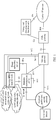
- FIG. 1 is a schematic diagram of a non-roaming architecture of an existing evolved packet system (evolved packet system, EPS) network.
- EPS evolved packet system
- SCS/AS service capability server/application server
- SCEF service capability exposure function
- FIG. 2 is a schematic architectural diagram of interfaces in a 3rd generation partnership project (3rd generation partnership project, 3GPP) EPS network architecture exposed by an SCEF.
- the SCEF provides, to the SCS/AS, services and capabilities that are provided through secure 3GPP network interfaces.
- Machine type services include a latency-insensitive service, that is, a high latency service.
- a latency-insensitive service that is, a high latency service.
- DDN downlink data notification
- the SCS/AS may subscribe to the event "availability after DDN failure" from the 3GPP EPS network through the SCEF.
- the SCS/AS sends a data packet to a terminal through the EPS network, if the terminal is in an unavailable state, the EPS network activates the event "availability after DDN failure" to monitor a terminal status.
- the network reports the available state of the terminal to the SCS/AS through the SCEF, so that the SCS/AS resends data to the terminal.
- both sessions and mobility are controlled by a mobility management entity (mobility management entity, MME).
- MME mobility management entity
- SGW serving gateway
- the MME directly activates a monitoring event when the terminal is in the unavailable state, for example, the MME initiates paging for the terminal but does not receive a response, or the terminal is in a power saving mode (power saving mode, PSM), or the terminal is in a mobile initiated connection only (mobile initiated connection only, MICO) mode.
- PSM power saving mode
- MICO mobile initiated connection only
- an internet of things (internet of things, IoT) service may reuse a report mechanism of availability after DDN failure to support high latency communication.
- IoT internet of things
- a terminal event is subscribed to from a session management function entity that manages a specific service.
- the session management function entity When receiving a service detection notification from a user plane function entity, the session management function entity notifies an access and mobility management function entity to monitor the terminal event. Therefore, in the 5G architecture, the terminal event may be subscribed to and monitored for the specific service.
- FIG. 3 is a schematic diagram of a 4G and 5G interworking architecture.
- a terminal event may be subscribed to from a 4G or 5G network.
- a problem of how to perform terminal event notification when a terminal moves between different systems is not resolved.
- This application provides a communication method and apparatus, to resolve a problem of how to perform terminal event notification when a terminal apparatus accesses different communications systems.
- a communication method includes: A first mobility management entity receives first event information from a unified data management function entity, where the first event information is used to indicate a first-type terminal event, the first event information includes an event association identifier, and the event association identifier is used to identify context information of the terminal event, or the event association identifier is used to identify the terminal event report.
- the first mobility management entity receives a service transmission notification from a session management function entity.
- the first mobility management entity activates the first-type terminal event based on the first event information, and when the terminal apparatus is reachable, the first mobility management entity sends the terminal event report to an application function entity that subscribes to the first-type terminal event.
- the first mobility management function entity may receive event information from the unified data management function entity, where the event information is used to indicate the first-type terminal event. Therefore, when the terminal apparatus is reachable, the first mobility management function entity may send, based on the event information, terminal availability notification information to the application function entity that subscribes to the first-type terminal event, thereby improving pertinence of sending the terminal event report.
- the first event information further includes indication information, and the indication information is used to indicate the first-type terminal event.
- the first event information may include explicit indication information, to indicate the first-type terminal event.
- the method further includes: After the terminal apparatus is handed over to a communications system, the first mobility management entity receives the first event information from the unified data management function entity.
- a first mobility management entity corresponding to the communications system after the handover does not store the first event information, and may receive the first event information from the unified data management function entity.
- the unified data management function entity is responsible for providing corresponding event information when the terminal apparatus accesses different communications systems.
- the method further includes: After the terminal is handed over to a communications system, the first mobility management entity receives one or more pieces of the second event information from a second mobility management entity, where the second event information does not include the indication information. The first mobility management entity receives the first event information from the unified data management function entity. The first mobility management entity deletes, based on the first event information, second event information corresponding to the first-type terminal event in the one or more pieces of second event information.
- the first mobility management entity may receive the second event information from a second mobility management entity corresponding to a communications system before the handover, but the second event information does not include the indication information. Because the first mobility management entity may perform corresponding activation and event notification on the first-type terminal event, the first mobility management entity further needs to receive the first event information from the unified data management function entity, and the second event information does not indicate different types of terminal events, so that the second event information corresponding to the first-type terminal event in the plurality of pieces of second event information further needs to be deleted, to avoid a conflict when the terminal event is activated based on the first event information and the second event information.
- the method further includes: When the terminal is handed over to a communications system, the first mobility management entity obtains second event information based on the first event information, where the second event information does not include the indication information. The first mobility management entity sends the second event information to a second mobility management entity.
- the first mobility management entity may obtain the second event information based on the first event information, that is, map the first event information to the second event information, and does not indicate the type of the terminal event. Then, the first mobility management entity sends the second event information obtained after processing to the second mobility management entity.
- the indication information includes a data network name and/or slice information.
- the first-type terminal event is an enhanced terminal event, or the first-type terminal event is a non-enhanced terminal event.
- the enhanced terminal event may be indicated, or the non-enhanced terminal event may be indicated.
- the type of the terminal event is the enhanced terminal event.
- the first mobility management entity activates the enhanced terminal event, and when the terminal apparatus is reachable, sends the terminal availability notification message to an application function entity that subscribes to the enhanced terminal event, but does not activate the non-enhanced terminal event and does not send the terminal availability notification.
- the non-enhanced terminal event it may be known that the type of the terminal event is the non-enhanced terminal event.
- the first mobility management entity activates the non-enhanced terminal event, and when the terminal apparatus is reachable, sends the terminal availability notification message to an application function entity that subscribes to the non-enhanced terminal event, but does not activate the enhanced terminal event and does not send the terminal availability notification.
- a communication method includes: A unified data management function entity receives third event information from a control function entity, where the third event information includes an event association identifier, and the event association identifier is used to identify context information of the terminal event, or the event association identifier is used to identify the terminal event report.
- the terminal event is a first-type terminal event
- the third event information further includes service description information.
- the unified data management function entity obtains first event information based on the third event information, where the first event information is used to indicate the first-type terminal event or a non-first-type terminal event, and the first event information includes the event association identifier.
- the unified data management function entity sends the first event information to a first mobility management function entity, where the first event information is used by the first mobility management function entity to activate the first-type terminal event.
- the first mobility management function entity may receive event information from the unified data management function entity, where the event information is used to indicate a type of the terminal event. Therefore, when the terminal apparatus is reachable, the first mobility management function entity may send, based on the type of the terminal event, terminal availability notification information to an application function entity that subscribes to the terminal event of the type, thereby improving pertinence of the terminal availability notification.
- the first event information further includes indication information, and the indication information is used to indicate the first-type terminal event.
- the method further includes: When the terminal apparatus is handed over to a second communications system, the unified data management function entity sends second event information to a second mobility management function entity, where the second event information does not include the indication information, and the second event information is used to activate all terminal events.
- the second mobility management function entity cannot distinguish between types of subscribed terminal events, and cannot send the terminal availability notification information accordingly.
- the method further includes: After the terminal is handed over from the second communications system to the first communications system, the unified data management function entity sends the first event information to the first mobility management function entity.
- the method further includes: After the terminal is handed over from the first communications system to the second communications system, the unified data management function entity sends the second event information to the second mobility management function entity.
- a communications apparatus to implement the communication method according to the first aspect.
- the communications apparatus may be a chip or a device.
- the foregoing method may be implemented by using software, hardware, or hardware executing corresponding software.
- a structure of the communications apparatus includes a processor and a memory.
- the processor is configured to support the apparatus in performing a corresponding function in the foregoing communication method.
- the memory is configured to be coupled to the processor, and the memory stores a program (instructions) and/or data that is (are)/is necessary for the apparatus.
- the communications apparatus may further include a communications interface, configured to support communication between the apparatus and another network element.
- the communications apparatus may include a unit module that performs a corresponding action in the foregoing method.
- the apparatus includes:
- the first event information further includes indication information, and the indication information is used to indicate the first-type terminal event.
- the transceiver unit is further configured to: after the terminal apparatus is handed over to a communications system, receive the first event information from the unified data management function entity.
- the transceiver unit is further configured to: after the terminal is handed over to a communications system, receive one or more pieces of the second event information from a second mobility management entity, where the second event information does not include the indication information.
- the transceiver unit is further configured to receive the first event information from the unified data management function entity.
- the processing unit is further configured to delete, based on the first event information, second event information corresponding to the first-type terminal event in the one or more pieces of second event information.
- the processing unit is further configured to: when the terminal is handed over to a communications system, obtain second event information based on the first event information, where the second event information does not include the indication information.
- the processing unit is further configured to send the second event information to a second mobility management entity.
- the indication information includes a data network name and/or slice information.
- the first-type terminal event is an enhanced terminal event, or the first-type terminal event is a non-enhanced terminal event.
- a processor and a transceiver apparatus are included.
- the processor is coupled to the transceiver apparatus.
- the processor is configured to execute a computer program or instructions, to control the transceiver apparatus to receive and send information.
- the processor executes the computer program or the instructions, the processor is further configured to implement the foregoing method.
- the transceiver apparatus may be a transceiver, a transceiver circuit, or an input/output interface.
- the communications apparatus is the chip, the transceiver apparatus is the transceiver circuit or the input/output interface.
- the processor is configured to perform the following steps:
- the first event information further includes indication information, and the indication information is used to indicate the first-type terminal event.
- the processor further performs the following step: after the terminal apparatus is handed over to a communications system, controlling the transceiver apparatus to receive the first event information from the unified data management function entity.
- the processor further performs the following steps: after the terminal is handed over to a communications system, controlling the transceiver apparatus to receive one or more pieces of the second event information from a second mobility management entity, where the second event information does not include the indication information;
- the processor further performs the following steps: when the terminal is handed over to a communications system, obtaining second event information based on the first event information, where the second event information does not include the indication information; and controlling the transceiver apparatus to send the second event information to a second mobility management entity.
- the indication information includes a data network name and/or slice information.
- the first-type terminal event is an enhanced terminal event, or the first-type terminal event is a non-enhanced terminal event.
- a sending unit may be an output unit, for example, an output circuit or a communications interface; and a receiving unit may be an input unit, for example, an input circuit or a communications interface.
- a sending unit may be a transmitter or a transmitting machine, and a receiving unit may be a receiver or a receiving machine.
- a communications apparatus to implement the communication method according to the second aspect.
- the communications apparatus may be a chip or a device, and the foregoing method may be implemented by using software, hardware, or hardware executing corresponding software.
- a structure of the communications apparatus includes a processor and a memory.
- the processor is configured to support the apparatus in performing a corresponding function in the foregoing communication method.
- the memory is configured to be coupled to the processor, and the memory stores a program (instructions) and data that are necessary for the apparatus.
- the communications apparatus may further include a communications interface, configured to support communication between the apparatus and another network element.
- the communications apparatus may include a unit module that performs a corresponding action in the foregoing method.
- the apparatus includes:
- the transceiver unit is further configured to: when a terminal apparatus accesses a first communications system, send the first event information to a first mobility management function entity, where the first event information is used to activate the first-type terminal event.
- the first event information further includes indication information, and the indication information is used to indicate the first-type terminal event.
- the transceiver unit is further configured to: when the terminal apparatus is handed over to a second communications system, send second event information to a second mobility management function entity, where the second event information does not include the indication information, and the second event information is used to activate all terminal events.
- the transceiver unit is further configured to send the first event information to the first mobility management function entity.
- the transceiver unit is further configured to send the second event information to the second mobility management function entity.
- a processor and a transceiver apparatus are included.
- the processor is coupled to the transceiver apparatus.
- the processor is configured to execute a computer program or instructions, to control the transceiver apparatus to receive and send information.
- the processor executes the computer program or the instructions, the processor is further configured to implement the foregoing method.
- the transceiver apparatus may be a transceiver, a transceiver circuit, or an input/output interface.
- the communications apparatus is the chip, the transceiver apparatus is the transceiver circuit or the input/output interface.
- the processor is configured to perform the following steps:
- the first event information further includes indication information, and the indication information is used to indicate the first-type terminal event.
- the processor further performs the following step: when the terminal apparatus is handed over to a second communications system, controlling the transceiver apparatus to send second event information to a second mobility management function entity, where the second event information does not include the indication information, and the second event information is used to activate all terminal events.
- the processor further performs the following step: after the terminal is handed over from the second communications system to the first communications system, controlling the transceiver apparatus to send the first event information to the first mobility management function entity.
- the processor further performs the following step: after the terminal is handed over from the first communications system to the second communications system, controlling the transceiver apparatus to send the second event information to the second mobility management function entity.
- a receiving unit may be an input unit, for example, an input circuit or a communications interface; and a sending unit may be an output unit, for example, an output circuit or a communications interface.
- a receiving unit may be a receiver (which may also be referred to as a receiving machine); and a sending unit may be a transmitter (which may also be referred to as a transmitting machine).
- a computer-readable storage medium stores instructions, and when the instructions are run on a computer, the computer is enabled to perform the methods described in the foregoing aspects.
- a computer program product including instructions is provided, and when the computer program product runs on a computer, the computer is enabled to perform the methods described in the foregoing aspects.
- the technical solutions of this application may be applied to a non-roaming architecture of an EPS network shown in FIG. 1 , or may be applied to a roaming architecture of an EPS network, or may be applied to a non-roaming architecture and a roaming architecture of a next generation network, for example, a 5G non-roaming architecture based on a service-oriented interface shown in FIG. 4a and a 5G non-roaming architecture based on a reference point shown in FIG. 4b .
- the communications system mainly includes an access and mobility management function (access and mobility management function, AMF) entity, a session management function (Session Management Function, SMF) entity, a user plane function (user plane function, UPF) entity, a network exposure function (network exposure function, NEF) entity, and an application function (application function, AF) entity.
- the communications system may further include a policy control function (policy control function, PCF) entity, a unified database function (unified data repository, UDR) entity, and a unified data management (unified data management, UDM) function entity.
- policy control function policy control function
- PCF policy control function
- UDR unified data repository
- UDM unified data management
- FIG. 4b may be the same.
- a message sent by one function entity to another function entity needs to carry an identifier of the another function entity.
- a message between function entities is an interface-based message, and does not need to carry an identifier of a function entity.
- the AMF entity is mainly responsible for signaling processing, such as access control, mobility management, attachment and detachment, gateway selection, and other functions.
- the AMF entity provides a service to a session in a terminal, the AMF entity provides a control plane storage resource to the session, to store a session identifier, an SMF entity identifier associated with the session identifier, and the like.
- the SMF entity is mainly responsible for session management, and is specifically responsible for user plane function entity selection, user plane function entity redirection, internet protocol (internet protocol, IP) address assignment, bearer establishment, modification, and release, and quality of service (quality of service, QoS) control.
- IP internet protocol
- the UPF entity is responsible for forwarding and receiving user data in the terminal.
- the UPF entity may receive user data from a data network, and transmit the user data to the terminal through an access network device. Further, the UPF entity may receive user data from the terminal through the access network device, and forward the user data to the data network.
- a transmission resource and a scheduling function in the UPF entity that provide a service to the terminal are managed and controlled by the SMF entity.
- the NEF entity mainly supports secure interaction between a 3GPP network and a third-party application.
- the NEF can securely expose a network capability and an event to the third-party application, to enhance or improve quality of service of the application.
- the 3GPP network can also securely obtain related data from the third-party application, to enhance intelligent decision-making of the network.
- the function entity supports restoring structured data from the UDR or storing structured data into the UDR.
- the AF entity mainly supports interacting with the 3GPP network to provide a service, for example, affecting a data routing decision and a policy control function, or providing some business services (these services may be third-party (3 rd party) services or may not be third-party services) to a network side.
- the PCF entity mainly supports providing a unified policy framework to control a network behavior, and providing a policy rule to a control layer network function, and is also responsible for obtaining user subscription information related to policy decision-making.
- the UDR entity is mainly responsible for storing the structured data, and stored content includes subscription data and policy data, externally exposed structured data, and application-related data.
- the UDM entity is mainly configured to manage user subscription information.
- each foregoing function entity is only a name, and the name does not constitute a limitation on the entity.
- the session management function entity may also be replaced with a "session management function" or another name.
- the session management function entity may also correspond to an entity that includes another function in addition to the session management function.
- the user plane function entity may also be replaced with a "user plane function” or another name.
- the user plane function entity may also correspond to an entity that includes another function in addition to the user plane function. Uniform descriptions are provided herein, and details are not described below again.
- a terminal accesses a network through a radio access network (radio access network, RAN) device or an access network (access network, AN) device.
- the RAN device is mainly a wireless network device in the 3GPP network, and the AN may be an access network device defined in non-3GPP.
- the terminal may be user equipment (user equipment, UE), a handheld terminal, a notebook computer, a subscriber unit (subscriber unit), a cellular phone (cellular phone), a smart phone (smart phone), a wireless data card, a personal digital assistant (personal digital assistant, PDA) computer, a tablet computer, a wireless modem (modem), a handheld (handheld) device, a laptop computer (laptop computer), a cordless phone (cordless phone), a wireless local loop (wireless local loop, WLL) station, a machine type communication (machine type communication, MTC) terminal, or another device that can access the network.
- UE user equipment
- PDA personal digital assistant
- modem wireless modem
- WLL wireless local loop
- MTC machine type communication
- the terminal and the radio access network (radio access network, RAN) device may communicate with each other by using an air interface technology.
- the RAN device is mainly responsible for functions such as radio resource management, QoS management, and data compression and encryption on an air interface side.
- the access network device may include base stations in various forms, such as a macro base station, a micro base station (which is also referred to as a small cell), a relay station, and an access point. In systems that use different radio access technologies, names of a device that has a base station function may be different.
- the device in a 5G system, the device is referred to as a gNB, in a long term evaluation (long term evaluation, LTE) system, the device is referred to as an evolved NodeB (evolved NodeB, eNB or eNodeB), and in a 3rd generation (3rd generation, 3G) system, the device is referred to as a NodeB (NodeB).
- a gNB in a long term evaluation (long term evaluation, LTE) system, the device is referred to as an evolved NodeB (evolved NodeB, eNB or eNodeB), and in a 3rd generation (3rd generation, 3G) system, the device is referred to as a NodeB (NodeB).
- LTE long term evaluation
- 3rd generation 3rd generation
- the AN device allows a non-3 GPP technology to be used for interconnection and interworking between the terminal and a 3GPP core network.
- the non-3 GPP technology is, for example, a wireless fidelity (wireless fidelity, Wi-Fi) network, a worldwide interoperability for microwave access (worldwide interoperability for microwave Access, WiMAX) network, or a code division multiple access (code division multiple access, CDMA) network.
- a terminal is in an unavailable state means that a network initiates paging for the terminal but does not receive a response, or the terminal is in a PSM mode, or the terminal is in a MICO-only mode, or the like.
- the PSM mode means that the terminal is allowed to reduce an energy loss and cannot be immediately reachable to receive service data sent to the terminal.
- the MICO mode means that only the terminal is allowed to initiate a connection. When the terminal is in the MICO mode and is in an idle state, the network considers that the terminal is unreachable.
- a DDN failure may be that the network detects that the terminal is in the unavailable state, or a priority of data that triggers a DDN (that is, an allocation and reservation priority (allocation and retention priority, ARP)) is not higher than a priority of data that previously triggered the DDN.
- a priority of data that triggers a DDN that is, an allocation and reservation priority (allocation and retention priority, ARP)
- a terminal event may be an event that various types of statuses or information need to be obtained from the network.
- the technical solutions of this application may be applied to a high latency communication scenario, and the terminal event may be a terminal event of availability after DDN failure.
- An application function entity that provides the high latency communication service can support latency-insensitive service communication by subscribing to the terminal event of availability after DDN failure.
- the terminal event may alternatively be a terminal reachable event or the like.
- the application function entity is installed with a relevant application to provide a corresponding business or service.
- Terminal event subscription means subscribing to an event notification or modifying a subscribed event through a service operation.
- a plurality of' means two or more. In view of this, "a plurality of' may also be understood as “at least two” in the embodiments of this application.
- the term “and/or” is used to describe an association relationship between associated objects and indicates that three relationships may exist. For example, A and/or B may indicate the following cases: Only A exists, both A and B exist, and only B exists. In addition, unless otherwise specified, the character "/" generally indicates an "or" relationship between the associated objects.
- an enhanced terminal event means that when an application function (application function, AF) entity sends a terminal event subscription request to a network, the request includes service description information.
- the non-enhanced terminal event means that when an AF sends a terminal event subscription request to a network, the request does not include service description information.
- an AF that supports the enhanced terminal event may be referred to as an enhanced AF, and an AF that does not support the enhanced terminal event may be referred to as a non-enhanced AF.
- an existing MME and an existing AMF cannot distinguish whether the terminal event is an enhanced terminal event or a non-enhanced terminal event, and cannot perform a corresponding reporting procedure.
- UE moves between different systems how to process a corresponding event is not defined.
- Embodiments of this application provide a communication method and apparatus.
- a first mobility management function entity may receive event information from a unified data management function entity, where the event information is used to indicate a first-type terminal event. Therefore, when a terminal apparatus is reachable, the first mobility management function entity may send, based on the event information, a terminal event report to an application function entity that subscribes to the first-type terminal event, thereby improving pertinence of sending the terminal event report.
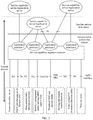
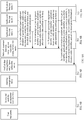
- FIG. 5 is a schematic flowchart of a communication method according to an embodiment of this application. The method may include the following steps.
- a unified data management function entity receives third event information from a control function entity.
- An application function entity subscribes to an event from the control function entity.
- the control function entity may be, for example, an NEF or an SCEF.
- An event subscription message includes a GPSI/external group ID, an AF ID, and an event type (event type).
- the event type is, for example, a terminal event of availability after DDN failure (availability after DDN failure).
- the event subscription message further includes a DNN/NSSAI and service description information (traffic descriptor).
- the event subscription message does not include the service description information.
- the control function entity sends the third event information to the UDM or an HSS.
- the control function entity (for example, the NEF, the SCEF, or an NEF+SCEF) generates a corresponding event association identifier based on the event subscription message.
- the event association identifier is used to identify context information of the terminal event, or the event association identifier is used to identify the terminal event report. That is, the control function entity determines an address of a target function entity based on an event association identifier in a received terminal event reporting message.
- the event association identifier may also be represented as a reference ID.
- the event association identifier may be used to associate the terminal event with a terminal event context, so that the context information of the terminal event may be determined by using the association identifier.
- the event association identifier may further be used to associate the terminal event with a subscription request of an application function network element and the context information of the terminal event.
- the event association identifier is used to identify the terminal event report, the association identifier may be included in the terminal event report, and the report may further include a type of the terminal event.
- identifying the terminal event report a terminal event corresponding to the report may be determined, thereby further identifying the context of the terminal event.
- the event association identifier is used to identify the context information of the terminal event.
- each function entity may determine, based on the context information of the terminal event, whether to activate the terminal event and report the terminal event report.
- the event association identifier is used to identify the terminal event report, and a mobility management function entity may determine, based on the event association identifier, whether to report the terminal event report to an application function entity that subscribes to the terminal event.
- the third event information includes a UE identifier or a group identifier, the AF ID, and the event type.
- the event subscription message when the application function entity is the enhanced application function entity, the event subscription message further includes the DNN/NSSAI and the service description information.
- the third event information further includes the DNN/NSSAI and the service description information.
- the event subscription message does not include the service description information.
- the unified data management function entity obtains first event information based on the third event information.
- the UDM may determine, based on the service description information included in the third event information, that the terminal event is the first-type terminal event or a non-first-type terminal event, to obtain the first event information based on the third event information.
- the first event information is used to indicate the first-type terminal event or the non-first-type terminal event.
- that the first event information is obtained based on the third event information means that the first event information is obtained through conversion based on the service description information included in the third event information.
- the first event information may include indication information, and the indication information is used to indicate the first-type terminal event. There is no special definition for the first-type terminal event.
- the first-type terminal event may be a terminal event subscribed to by the enhanced AF
- the non-first-type terminal event is a terminal event subscribed to by the non-enhanced AF.
- the first-type terminal event is a terminal event subscribed to by the non-enhanced AF
- the non-first-type terminal event is a terminal event subscribed to by the enhanced AF.
- the type of the terminal event can be used to distinguish whether the terminal event is subscribed to by the enhanced AF or the non-enhanced AF.
- an example in which the first event information is used to indicate the first-type terminal event is used for description.
- the first event information includes the event association identifier, and may further include an event type and an NEF+SCEF ID. Because the event association identifier is used to identify the context information of the terminal event, a network may learn, based on the event association identifier, that the terminal event is the first-type terminal event or the non-first-type terminal event.
- the first communications system may be, for example, a 5G system.
- the first event information is used to activate the first-type terminal event.
- the first mobility management entity receives the first event information from the unified data management function entity, where the first event information is used to indicate the first-type terminal event, the first event information includes the event association identifier, and the event association identifier is used to identify the context information of the terminal event, or the event association identifier is used to identify the terminal event report.
- the first mobility management entity receives a service transmission notification from a session management function entity.
- the service transmission notification is used to notify the first mobility management entity that a downlink data notification is received from an application function entity that subscribes to the first-type terminal event.
- the first mobility management function entity activates the first-type terminal event based on the first event information.
- the first mobility management function entity After receiving the service transmission notification, the first mobility management function entity detects whether the terminal apparatus is reachable. When the terminal apparatus is unreachable, the first mobility management function entity actives the first-type terminal event based on the first event information.
- the first mobility management function entity When detecting that the terminal apparatus is reachable, the first mobility management function entity sends the terminal event report to the application function entity that subscribes to the first-type terminal event, instead of sending the terminal event report to all application function entities that send a subscription message.
- the second communications system is, for example, a 4G communications system or any generation communications system below 5G.
- the UDM sends the second event information to the second mobility management function entity.
- the second event information does not indicate that the terminal event is the first-type terminal event, or does not include the indication information.
- the second mobility management function entity activates all terminal events when receiving the service transmission notification sent by the session management function entity.
- the second mobility management function entity activates all subscribed terminal events.
- the second mobility management function entity sends the terminal event report information to all application function entities that subscribe to the terminal event.
- the second mobility management function entity sends the terminal event report information to all the application function entities that subscribe to the terminal event.
- the first mobility management function entity may receive the event information from the unified data management function entity, where the event information is used to indicate the first-type terminal event. Therefore, when the terminal apparatus is reachable, the first mobility management function entity may send, based on the event information, the terminal event report to the application function entity that subscribes to the first-type terminal event, thereby improving pertinence of sending the terminal event report.
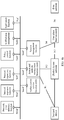
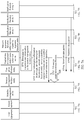
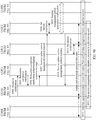
- FIG. 6A , FIG. 6B , and FIG. 6C are a schematic flowchart of an example of an event information configuration method. The method includes the following steps:
- S601a to S601c Different AFs (an AF 1, an AF 2, and an AF 3) initiate event subscription to a UDM+HSS/UDM through an NEF+SCEF/NEF.
- the AF 1 is an enhanced AF
- the AF 2 and the AF 3 are non-enhanced AFs.
- an event subscription including ⁇ DNN/NSSAI, service description information (traffic descriptor), event type (event type, for example, a terminal event of availability after DDN failure), UE identifier or group identifier (GPSI/external group ID), and application identifier (AF ID) ⁇ .
- the NEF+SCEF means that an NEF and an SCEF are together responsible for the event subscription.
- the UDM+HSS means that a UDM and an HSS are together responsible for receiving the event subscription.
- the NEF+SCEF/NEF sends third event information to the UDM+HSS/UDM based on a received event. Specifically, for the AF 1, the NEF+SCEF/NEF sends ⁇ DNN/NSSAI, service description information, event type, UE identifier or group identifier, NEF+SCEF/NEF ID, and reference ID 1 ⁇ . For the AF 2, the NEF+SCEF/NEF sends ⁇ UE identifier or group identifier, event type, NEF+SCEF/NEF ID, and reference ID 2 ⁇ .
- the NEF+SCEF/NEF sends ⁇ UE identifier or group identifier, event type, NEF+SCEF/NEF ID, and reference ID 2 ⁇ .
- a reference ID is an event association identifier.
- the reference ID 1 is used to be associated with a terminal event subscribed to by the AF 1, for example, a first-type terminal event.
- the reference ID 2 is used to be associated with terminal events subscribed to by the AF 2 and the AF 3, for example, other types of terminal events.
- the UDM+HSS/UDM provides event information to an MME or an AMF based on the received third event information and a type of a network accessed by UE.
- a specific providing occasion includes: (1) providing the event information to the AMF or the MME in a process of performing a registration procedure or an attach procedure by UE; and (2) after the UE has registered with the network, the UDM+HSS/UDM receives a subscription event and provides the event information to the AMF or the MME at any time.
- providing information means that for an enhanced event, when the UE performs access through the AMF, the UDM+HSS/UDM provides event information including indication information.
- the UDM+HSS/UDM provides event information including indication information.
- the UDM+HSS/UDM provides event information including indication information 1.
- the UDM+HSS/UDM provides event information including indication information 2.
- the MME In the process of performing the attach procedure by the UE, the MME is not modified, and the UDM+HSS/UDM provides second event information to the MME.
- the event information provided by the UDM+HSS/UDM to the MME is: ⁇ Event type, Reference ID 1, NEF+SCEF ID ⁇ , ⁇ Event type, Reference ID 2, NEF+SCEF ID ⁇ , and ⁇ Event type, Reference ID 2, NEF+SCEF ID ⁇ .
- the UDM+HSS/UDM provides first event information to the AMF.
- the event information provided to the AMF is: ⁇ Event type, Reference ID 1, NEF+SCEF ID, Indication ⁇ , ⁇ Event type, Reference ID 2, NEF+SCEF ID ⁇ , ⁇ Event type, Reference ID 3, NEF+SCEF ID ⁇ , or ⁇ Event type, Reference ID 1, NEF+SCEF ID ⁇ , ⁇ Event type, Reference ID 2, NEF+SCEF ID, Indication ⁇ , and ⁇ Event type, Reference ID 3, NEF+SCEF ID, Indication ⁇ .
- the UDM+HSS/UDM based on different AFs that initiate the subscription and different communications systems accessed by the UE, for example, when the UE accesses a 5G communications system, the UDM+HSS/UDM provides the first event information to the AMF, where the first event information is used to indicate the first-type terminal event; and for example, when the UE accesses a 4G communications system, the UDM+HSS/UDM provides the second event information to the MME, where the second event information is not used to indicate the first-type terminal event.
- the UDM+HSS/UDM provides event detection information to an SMF, so that the SMF notifies a UPF to detect service information, to determine that a specific service occurs when the UE is unreachable.
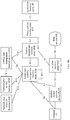
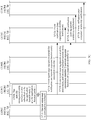
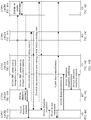
- a subsequent event detection, activation, and notification procedure is shown in FIG. 7A , FIG. 7B , and FIG. 7C .
- the method includes the following steps:
- the event subscription information includes: an event type, service description information, an NEF+SCEF identifier (NEF+SCEF ID), and an event association identifier (NEF reference ID).
- S703 The SMF establishes/modifies an N4 session to a UPF.
- the UDM+HSS/a UDM provides event service information to the SMF, so that the SMF sends the service information to the UPF.
- the service information includes a packet filter (packet filter, PDR) or first indication information.
- PDR packet filter
- the first indication information is used to indicate to notify the SMF when service data corresponding to the terminal event is detected.
- the SMF may determine, based on the second indication information, that the downlink data packet is sent by the AF 1.
- the second indication information includes a data network name or slice information.
- S705b When the UPF receives the downlink data packet sent by the AF 2 and determines that a downlink tunnel is unavailable, the UPF sends a data notification to the SMF, where the data notification does not include the second indication information.
- the SMF cannot determine whether the downlink data packet is sent by the AF 2 or an AF 3.
- S706a The SMF sends an Namf_communication_N1N2MessageTransfer message to an AMF, where the message includes an NEF reference ID 1.
- the message includes the NEF reference ID 1 corresponding to the terminal event.
- An NEF reference ID is used to uniquely identify a subscribed terminal event.
- S706b The SMF sends an Namf_communication_N1N2MessageTransfer message to the AMF, where the message does not include the NEF reference ID.
- the message does not include the NEF reference ID corresponding to the terminal event.
- the AMF sends an Nsmf_communication_N1N2MessageTransfer message to the SMF.
- S708 The SMF sends a failure indication to the UPF.
- S709a When determining that the UE is unreachable, the AMF activates a UE event, of availability after DDN failure, subscribed to by the AF 1.
- the AMF After the AMF receives the Namf_communication_N1N2MessageTransfer message sent by the SMF, because the message includes the NEF reference ID 1, the AMF activates a terminal event associated with the NEF reference ID 1.
- S709b When determining that the UE is unreachable, the AMF activates UE events, of availability after DDN failure, subscribed to by the AF 2 and the AF 3.
- the AMF After the AMF receives the Namf_communication_N1N2MessageTransfer message sent by the SMF, because the message does not include the NEF reference ID, the AMF cannot distinguish whether the downlink data packet is sent by the AF2 or the AF3, the terminal events subscribed to by the AF2 and the AF3 are activated.
- S710 The UE is connected to a network.
- S711a The AMF sends an event report to an NEF+SCEF/NEF based on the activated event, where the event report includes a UE availability notification and the NEF reference ID 1.
- the AMF After detecting that the UE is connected to the network and the terminal event subscribed to by the AF 1 is activated, the AMF sends the event report to the NEF+SCEF/NEF, and the event report includes the NEF reference ID 1.
- S711b The AMF sends an event report to the NEF+SCEF/NEF based on the activated event, where the event report includes the UE availability notification, an NEF reference ID 2, and an NEF reference ID 3.
- the AMF After detecting that the UE is connected to the network and the terminal events subscribed to by the AF 2 and the AF 3 are activated, the AMF sends the event report to the NEF+SCEF/NEF, and the event report includes the NEF reference ID 2 and the NEF reference ID 3.
- S712a The NEF+SCEF/NEF sends a subscription event notification to the AF 1, where the subscription event notification is used to notify that the UE is available.
- the NEF+SCEF/NEF After receiving the event report, the NEF+SCEF/NEF sends the subscription event notification to the AF 1 based on the NEF reference ID 1 included in the event report.
- S712b The NEF+SCEF/NEF sends a subscription event notification to each of the AF 2 and the AF 3, where the subscription event notification is used to notify that the UE is available.
- the NEF+SCEF/NEF After receiving the event report, the NEF+SCEF/NEF sends the subscription event notification to each of the AF 2 and the AF 3 based on the NEF reference ID 2 and the NEF reference ID 3 that are included in the event report.
- the network when the network performs subscription event activation and notification, the network cannot distinguish whether downlink data is sent by the AF 2 or the AF 3. Therefore, when the UE is available, the network sends an event notification to each of the AF 2 and the AF 3.
- the AMF when receiving downlink data sent by an AF that subscribes to a first-type terminal event, and when the UE is unavailable, the AMF may activate the terminal event based on first event information, and send a terminal event report to only the AF when the UE is available.
- the AMF cannot determine a specific AF that sends the downlink data, and therefore sends the terminal event report to all AFs when the UE is available.
- the UE may be handed over between communications systems with different standards, for example, handed over from a 5G communications system to a 4G communications system, or handed over from a 4G communications system to a 5G communications system.
- a mobility management function entity in a communications system after the handover may not store the foregoing event information.
- the mobility management function entity obtains corresponding event information in a handover process of the UE the following embodiment provides a corresponding solution.
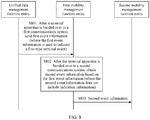
- FIG. 8 is a schematic flowchart of another communication method according to an embodiment of this application. The method may include the following steps:
- a unified data management function entity After a terminal apparatus is handed over to a first communications system, a unified data management function entity sends first event information to a first mobility management function entity.
- the terminal apparatus is in a second communications system, for example, may be a 4G system.
- the terminal apparatus is handed over from the second communications system to the first communications system.
- the first communications system may be, for example, a 5G system.
- the UDM sends the first event information to the first mobility management function entity based on that an accessed network is the first communications system.
- the first mobility management function entity always uses the first event information provided by the UDM.
- the first event information is used to indicate a first-type terminal event, that is, it may be determined, based on content included in the first event information, that the first event information corresponds to the first-type terminal event.
- the first event information also includes indication information.
- the indication information is used to indicate the first-type terminal event.
- Explicit indication information is used to indicate that the first event information corresponds to the first-type terminal event.
- the first event information describes information about the first-type terminal event.
- a second mobility management function entity in the second communications system may also provide second event information to the first mobility management function entity.
- the second event information does not include the indication information, that is, cannot indicate a specific type of terminal event corresponding to the second event information.
- the first mobility management function entity updates local event information based on the information provided by the UDM, and deletes second event information corresponding to the first-type terminal event in the second event information received from the second mobility management function entity.
- the second event information provided by the second mobility management function entity includes event information corresponding to the first-type terminal event, and also includes event information corresponding to another type of terminal event, and the event information corresponding to the another type of terminal event does not need to be indicated. Therefore, the local event information may be updated based on the information provided by the UDM, and the second event information corresponding to the first-type terminal event in the second event information received from the second mobility management function entity is deleted.
- the first mobility management function entity obtains the second event information based on the first event information.
- the first mobility management entity After the terminal apparatus is handed over from the first communications system to the second communications system, the second event information provided by the first mobility management function entity to the second mobility management function entity does not include the indication information. Therefore, the first mobility management entity first obtains the second event information based on the first event information. In other words, the first event information is mapped to the second event information, that is, mapped to event information that does not include the indication information.
- the event information ⁇ Event type, Reference ID 1, NEF+SCEF ID, Indication ⁇ , ⁇ Event type, Reference ID 2, NEF+SCEF ID ⁇ , ⁇ Event type, Reference ID 3, NEF+SCEF ID ⁇ , or ⁇ Event type, Reference ID 1, NEF+SCEF ID ⁇ , ⁇ Event type, Reference ID 2, NEF+SCEF ID, Indication ⁇ , and ⁇ Event type, Reference ID 3, NEF+SCEF ID, Indication ⁇ is mapped to: ⁇ Event type, Reference ID 1, NEF+SCEF ID ⁇ , ⁇ Event type, Reference ID 2, NEF+SCEF ID ⁇ , and ⁇ Event type, Reference ID 2, NEF+SCEF ID ⁇ .
- S803 The first mobility management function entity sends the second event information to the second mobility management function entity.
- the mobility management function entity may obtain the first event information from the unified data management function entity, or the mobility management function entity obtains one or more pieces of second event information from a mobility management function entity in a communications system before the handover, receives the first event information from the same data management function entity, and deletes the second event information corresponding to the first-type terminal event in the one or more pieces of second event information.
- the mobility management function entity may obtain the event information in a timely manner, activate the terminal event based on the event information, and when the terminal apparatus is reachable, send, in a timely manner, a terminal event report to an application function entity that subscribes to the terminal event.
- a mobility management function entity in a communications system before the handover may obtain the second event information based on the first event information, and send the second event information to a mobility management function entity in a communications system after the handover, to adapt to a mobility management function entity that does not change.
- FIG. 9A and FIG. 9B and FIG. 10A , FIG. 10B , and FIG. 10C a method in which the mobility management entity in the communications system after the handover obtains the event information when handover is performed from 4G to 5G or from 5G to 4G.
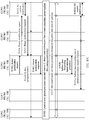
- FIG. 9A and FIG. 9B are a schematic flowchart of an example of obtaining event information during handover from 4G to 5G.
- a mobility management function entity may be an MME.
- a mobility management function entity may be an AMF.
- the MME sends obtained event information to the AMF.
- the MME does not need to be enhanced.
- a specific handover procedure is as follows:
- S901 The MME sends a handover command (handover command) to an E-UTRAN.
- the E-UTRAN is an access network device in the 4G system.
- the handover command is used to indicate to hand over to the 5G system.
- the E-UTRAN sends a handover command (handover from E-UTRAN command) to the UE.
- S903 The UE sends a handover confirmation response message (handover to 5G-RAN confirm) to a 5G NG-RAN.
- the 5G NG-RAN is an access network device in the 5G system.
- the MME sends stored event information to the AMF.
- the MME does not need to be enhanced.
- S907 The AMF sends a session update session management context request (Nsmf_PDUSession_UpdateSMContext Request) to an SMF+PGW-C.
- Nsmf_PDUSession_UpdateSMContext Request a session update session management context request
- this step is performed by a V-SMF.
- S908 An SMF+PWG-C and a UPF+PGW-U perform an N4 session modification (N4 session modification) procedure.
- the SMF+PGW-C after the SMF+PGW-C receives the request from the AMF, the SMF+PGW-C initiates a registration procedure to an HSS+UDM.
- the HSS+UDM provides service detection information ⁇ NEF+SCEF ID/NEF ID, reference ID, and service information ⁇ to an SMF+UDM based on local event information.
- the SMF sends service information to a UPF in S908, so that the UPF reports occurrence of a specific event to the SMF.
- S909 The SMF+PWG-C and a PCF perform an SM policy association modification procedure (SMF initiated SM policy association modification).
- This step is optional.
- S910 The SMF+PWG-C sends a session update session management context response (Nsmf_PDUSession_UpdateSMContext) to the AMF
- this step is performed by the V-SMF.
- S912 The UE initiates a mobility registration procedure (EPS to 5GS mobility registration procedure) to a network.
- EPS mobility registration procedure
- 5GS mobility registration procedure 5GS mobility registration procedure
- the UE performs the mobility registration procedure.
- the HSS+UDM provides corresponding event information to the AMF based on that an accessed network is 5G.
- the AMF always uses the event information provided by the HSS+UDM. Specifically, local event information is updated based on the information provided by the HSS+UDM, and event information corresponding to a first-type terminal event in event information received from the MME is deleted. For descriptions of the event information, refer to the embodiment shown in FIG. 5 .
- the AMF obtains event information ⁇ Event type, Reference ID 1, NEF+SCEF ID, Indication ⁇ , ⁇ Event type, Reference ID 2, NEF+SCEF ID ⁇ , ⁇ Event type, Reference ID 3, NEF+SCEF ID ⁇ , or ⁇ Event type, Reference ID 1, NEF+SCEF ID ⁇ , ⁇ Event type, Reference ID 2, NEF+SCEF ID, Indication ⁇ , and ⁇ Event type, Reference ID 3, NEF+SCEF ID, Indication ⁇ from a UDM.
- the mobility management function entity may obtain first event information from the unified data management function entity, or the mobility management function entity obtains one or more pieces of second event information from a mobility management function entity in a communications system before the handover, receives the first event information from the same data management function entity, and deletes second event information corresponding to the first-type terminal event in the one or more pieces of second event information. Therefore, the mobility management function entity may obtain the event information in a timely manner, activate the terminal event based on the event information, and when a terminal apparatus is reachable, send, in a timely manner, a terminal event report to an application function entity that subscribes to the terminal event.
- FIG. 10A , FIG. 10B , and FIG. 10C are a schematic flowchart of an example of obtaining event information during handover from 5G to 4G.
- a specific procedure is as follows:
- the AMF performs the procedure with an H-SMF through a V-SMF.
- the AMF maps an event to an event used by an MME, and sends a relocation request (relocation request) including the event to the MME.
- the AMF performs event mapping, that is, maps the event to event information that can be identified by the MME, that is, event information that does not include an indication.
- event mapping For example, event information ⁇ Event type, Reference ID 1, NEF+SCEF ID, Indication ⁇ , ⁇ Event type, Reference ID 2, NEF+SCEF ID ⁇ , ⁇ Event type, Reference ID 3, NEF+SCEF ID ⁇ , or ⁇ Event type, Reference ID 1, NEF+SCEF ID ⁇ , ⁇ Event type, Reference ID 2, NEF+SCEF ID, Indication ⁇ , and ⁇ Event type, Reference ID 3, NEF+SCEF ID, Indication ⁇ is mapped to: ⁇ Event type, Reference ID 1, NEF+SCEF ID ⁇ , ⁇ Event type, Reference ID 2, NEF+SCEF ID ⁇ , and ⁇ Event type, Reference ID 2, NEF+SCEF ID ⁇ .
- This step is optional.
- This step is optional.
- the MME obtains the event information from an HSS+UDM.
- the HSS+UDM provides corresponding event information to the MME based on that an accessed network is 4G.
- the MME always uses the event information of the HSS+UDM. Specifically, local event information is updated based on the information provided by the HSS+UDM, or the event information received from the MME is deleted. For descriptions of the event information, refer to the embodiment shown in FIG. 5 .
- this step is performed by the V-SMF.
- a mobility management function entity in a communications system before the handover may obtain second event information based on first event information, and send the second event information to a mobility management function entity in a communications system after the handover, to adapt to a mobility management function entity that does not change.
- the following describes an apparatus 1100 provided in an embodiment of this application. Details are shown in FIG. 11 .
- the apparatus 1100 includes a transceiver unit 111 and a processing unit 112.
- the transceiver unit 111 is connected to the processing unit 112.
- the transceiver unit 111 is configured to receive first event information from a unified data management function entity, where the first event information is used to indicate a first-type terminal event, the first event information includes an event association identifier, and the event association identifier is used to identify context information of the terminal event, or the event association identifier is used to identify the terminal event report.
- the transceiver unit 111 is further configured to receive a service transmission notification from a session management function entity.
- the processing unit 112 is configured to: when a terminal apparatus is unreachable, activate the first-type terminal event based on the first event information.
- the transceiver unit 111 is further configured to: when the terminal apparatus is reachable, send the terminal event report to an application function entity that subscribes to the first-type terminal event.
- the transceiver unit 111 is further configured to: after the terminal apparatus is handed over to a communications system, receive the first event information from the unified data management function entity.
- the transceiver unit 111 is further configured to: after the terminal is handed over to a communications system, receive one or more pieces of the second event information from a second mobility management entity, where the second event information does not include the indication information.
- the transceiver unit 111 is further configured to receive the first event information from the unified data management function entity.
- the processing unit 112 is further configured to delete, based on the first event information, second event information corresponding to the first-type terminal event in the one or more pieces of second event information.
- the processing unit 112 is further configured to: when the terminal is handed over to a communications system, obtain second event information based on the first event information, where the second event information does not include the indication information.
- the transceiver unit 111 is further configured to send the second event information to a second mobility management entity.
- the apparatus 1100 may be a network apparatus, for example, may be a first mobility management function entity or a chip in a first mobility management function entity.
- the apparatus 1100 may implement other functions of the first mobility management function entity in the embodiments of this application through the transceiver unit 111 and the processing unit 112. For details, refer to related content in the embodiments shown in FIG. 5 and FIG. 8 .
- the following describes an apparatus 1200 provided in an embodiment of this application. Details are shown in FIG. 12 .
- the apparatus 1200 includes a transceiver unit 121 and a processing unit 122.
- the transceiver unit 121 is connected to the processing unit 122.
- the transceiver unit 121 is configured to receive third event information from a control function entity, where the third event information includes an event association identifier, the event association identifier is used to identify context information of the terminal event, or the event association identifier is used to identify the terminal event report, and when the terminal event is a first-type terminal event, the third event information further includes service description information.
- the processing unit 122 is configured to obtain first event information based on the third event information, where the first event information is used to indicate the first-type terminal event or a non-first-type terminal event, and the first event information includes the event association identifier.
- the transceiver unit 121 is further configured to: when a terminal apparatus accesses a first communications system, send the first event information to a first mobility management function entity, where the first event information is used to activate the first-type terminal event.
- the first event information further includes indication information, and the indication information is used to indicate the first-type terminal event.
- the transceiver unit 121 is further configured to: when the terminal apparatus is handed over to a second communications system, send second event information to a second mobility management function entity, where the second event information does not include the indication information, and the second event information is used to activate all terminal events.
- the transceiver unit 121 is further configured to: after the terminal is handed over from the second communications system to the first communications system, send the first event information to the first mobility management function entity.
- the transceiver unit 121 is further configured to: after the terminal is handed over from the first communications system to the second communications system, send the second event information to the second mobility management function entity.
- the apparatus 1200 may be a network apparatus, for example, may be a unified data management function entity or a chip in a unified data management function entity.
- a network apparatus for example, may be a unified data management function entity or a chip in a unified data management function entity.
- the apparatus includes a processor 131 and a transceiver apparatus 132.
- the apparatus further includes a memory 133.
- the processing unit 131, the transceiver unit 132, and the memory 133 are connected by using a communications bus.
- the transceiver apparatus 132 may be an apparatus that has a transceiver function, and is configured to communicate with another network device or a communications network.
- the transceiver apparatus may be an independent sending unit and an independent receiving unit, or may be an entire transceiver apparatus.
- the transceiver apparatus may also be referred to as a communications unit.
- the memory 133 may include one or more memories.
- the memory may be a component configured to store a program or data in one or more devices or circuits.
- the memory 133 may exist independently, and is connected to the processor 131 by using the communications bus. Alternatively, the memory may be integrated with the processor 131.
- the apparatus 1300 may be used in a network device, a circuit, a hardware component, or a chip.
- the apparatus 1300 may be a first mobility management function entity or a chip in a first mobility management function entity in the embodiments of this application.
- the apparatus 1300 may implement the methods performed by the first mobility management function entity in the embodiments shown in FIG. 5 and FIG. 8 .
- the processor is configured to perform the following steps:
- the first event information further includes indication information, and the indication information is used to indicate the first-type terminal event.
- the processor further performs the following step: after the terminal apparatus is handed over to a communications system, controlling the transceiver apparatus to receive the first event information from the unified data management function entity.
- the processor further performs the following steps: after the terminal is handed over to a communications system, controlling the transceiver apparatus to receive one or more pieces of the second event information from a second mobility management entity, where the second event information does not include the indication information;
- the processor further performs the following steps: when the terminal is handed over to a communications system, obtaining second event information based on the first event information, where the second event information does not include the indication information; and controlling the transceiver apparatus to send the second event information to a second mobility management entity.
- the indication information includes a data network name and/or slice information.
- the first-type terminal event is an enhanced terminal event, or the first-type terminal event is a non-enhanced terminal event.
- the apparatus 1300 may be a unified data management function entity or a chip in a unified data management function entity in the embodiments of this application.
- the apparatus 1300 may implement the methods performed by the unified data management function entity in the embodiments shown in FIG. 5 and FIG. 8 .
- the processor is configured to perform the following steps:
- the first event information further includes indication information, and the indication information is used to indicate the first-type terminal event.
- the processor further performs the following step: when the terminal apparatus is handed over to a second communications system, controlling the transceiver apparatus to send second event information to a second mobility management function entity, where the second event information does not include the indication information, and the second event information is used to activate all terminal events.
- the processor further performs the following step: after the terminal is handed over from the second communications system to the first communications system, controlling the transceiver apparatus to send the first event information to the first mobility management function entity.
- the processor further performs the following step: after the terminal is handed over from the first communications system to the second communications system, controlling the transceiver apparatus to send the second event information to the second mobility management function entity.
- An embodiment of this application further provides a computer-readable storage medium.
- the methods described in the foregoing embodiments may be all or partially implemented by using software, hardware, firmware, or any combination thereof. If the methods are implemented in the software, functions used as one or more instructions or code may be stored in the computer-readable medium or transmitted on the computer-readable medium.
- the computer-readable medium may include a computer storage medium and a communications medium, and may further include any medium that can transfer a computer program from one place to another.
- the storage medium may be any available medium accessible to a computer.
- the computer-readable medium may include a random access memory (random access memory, RAM), a read-only memory (read-only memory, ROM), an electrically erasable programmable read-only memory (electrically erasable programmable read only memory, EEPROM), a compact disc read-only memory (compact disc read-only memory, CD-ROM), or another optical disc memory, a magnetic disk memory, or another magnetic storage device, or any other medium that can be used to carry or store required program code in a form of instructions or a data structure and is accessible to the computer.
- any connection is appropriately referred to as a computer-readable medium.
- a coaxial cable, an optical fiber cable, a twisted pair, a digital subscriber line (digital subscriber line, DSL), or a wireless technology such as infrared, radio, and a microwave
- a coaxial cable, the optical fiber cable, the twisted pair, the DSL, or the wireless technology such as infrared, radio, and a microwave
- the coaxial cable, the optical fiber cable, the twisted pair, the DSL, or the wireless technology such as infrared, radio, and a microwave is included in a definition of the medium.
- Magnetic disks and optical discs used in this specification include a compact disc (compact disc, CD), a laser disc, an optical disc, a digital versatile disc (digital versatile disc, DVD), a floppy disk, and a Blu-ray disc.
- the magnetic disks usually magnetically reproduce data, and the optical discs optically reproduce data by using laser light.
- the foregoing combinations should also be included within the scope of the computer-readable medium.
- An embodiment of this application further provides a computer program product.
- the methods described in the foregoing embodiments may be all or partially implemented by using software, hardware, firmware, or any combination thereof.
- the methods may be all or partially implemented in a form of the computer program product.
- the computer program product includes one or more computer instructions.
- the computer may be a general-purpose computer, a special-purpose computer, a computer network, a network device, user equipment, or another programmable apparatus.
Landscapes
- Engineering & Computer Science (AREA)
- Signal Processing (AREA)
- Computer Networks & Wireless Communication (AREA)
- Databases & Information Systems (AREA)
- Mobile Radio Communication Systems (AREA)
Applications Claiming Priority (2)
| Application Number | Priority Date | Filing Date | Title |
|---|---|---|---|
| CN201811646628.3A CN111385851B (zh) | 2018-12-29 | 2018-12-29 | 一种通信方法及装置 |
| PCT/CN2019/128476 WO2020135536A1 (zh) | 2018-12-29 | 2019-12-25 | 一种通信方法及装置 |
Publications (2)
| Publication Number | Publication Date |
|---|---|
| EP3897010A1 true EP3897010A1 (de) | 2021-10-20 |
| EP3897010A4 EP3897010A4 (de) | 2022-01-26 |
Family
ID=71129101
Family Applications (1)
| Application Number | Title | Priority Date | Filing Date |
|---|---|---|---|
| EP19902156.9A Pending EP3897010A4 (de) | 2018-12-29 | 2019-12-25 | Kommunikationsverfahren und -vorrichtung |
Country Status (4)
| Country | Link |
|---|---|
| US (1) | US12219406B2 (de) |
| EP (1) | EP3897010A4 (de) |
| CN (2) | CN111385851B (de) |
| WO (1) | WO2020135536A1 (de) |
Families Citing this family (5)
| Publication number | Priority date | Publication date | Assignee | Title |
|---|---|---|---|---|
| CN110536282B (zh) * | 2019-03-28 | 2023-03-21 | 中兴通讯股份有限公司 | 一种事件通知方法及装置 |
| CN113938911B (zh) | 2020-07-13 | 2025-04-08 | 华为技术有限公司 | 一种通信方法、设备及系统 |
| CN114727240A (zh) * | 2021-01-06 | 2022-07-08 | 中国电信股份有限公司 | 短消息服务中心提醒信息服务化实现方法、装置和系统 |
| CN113114651B (zh) | 2021-04-02 | 2024-03-29 | 腾讯科技(深圳)有限公司 | 报告控制方法、装置、设备及介质 |
| CN116567588B (zh) * | 2022-01-27 | 2025-11-21 | 维沃移动通信有限公司 | 通知方法、第二终端及第一网络功能 |
Family Cites Families (6)
| Publication number | Priority date | Publication date | Assignee | Title |
|---|---|---|---|---|
| US9113283B2 (en) * | 2012-04-03 | 2015-08-18 | Telefonaktiebolaget L M Ericsson (Publ) | Systems and methods for event notification framework in a machine-to-machine (M2M) context |
| CN103384380B (zh) * | 2012-05-02 | 2018-12-21 | 中兴通讯股份有限公司 | 一种机器类通信事件的上报方法及相应装置 |
| CN106982425A (zh) * | 2016-01-19 | 2017-07-25 | 中兴通讯股份有限公司 | 一种实现mtc事件监控的方法、装置和系统 |
| CN108696861A (zh) * | 2017-02-17 | 2018-10-23 | 中国移动通信集团河南有限公司 | 一种呼叫处理方法、移动管理实体设备和服务网关 |
| US12004257B2 (en) * | 2018-10-08 | 2024-06-04 | Interdigital Patent Holdings, Inc. | Device discovery and connectivity in a cellular network |
| CN111031517A (zh) * | 2018-10-10 | 2020-04-17 | 中兴通讯股份有限公司 | 消息通知方法、装置、网元、系统及存储介质 |
-
2018
- 2018-12-29 CN CN201811646628.3A patent/CN111385851B/zh active Active
- 2018-12-29 CN CN202111070742.8A patent/CN113873588A/zh active Pending
-
2019
- 2019-12-25 EP EP19902156.9A patent/EP3897010A4/de active Pending
- 2019-12-25 WO PCT/CN2019/128476 patent/WO2020135536A1/zh not_active Ceased
-
2021
- 2021-06-29 US US17/362,245 patent/US12219406B2/en active Active
Also Published As
| Publication number | Publication date |
|---|---|
| CN111385851B (zh) | 2021-09-07 |
| WO2020135536A1 (zh) | 2020-07-02 |
| US12219406B2 (en) | 2025-02-04 |
| EP3897010A4 (de) | 2022-01-26 |
| CN111385851A (zh) | 2020-07-07 |
| US20210329504A1 (en) | 2021-10-21 |
| CN113873588A (zh) | 2021-12-31 |
Similar Documents
| Publication | Publication Date | Title |
|---|---|---|
| JP7311657B2 (ja) | 通信方法、アクセスネットワークデバイス、コアネットワークデバイス及びユーザ装置 | |
| US12207344B2 (en) | Communications method and apparatus | |
| CN110049070B (zh) | 事件通知方法及相关设备 | |
| US12231946B2 (en) | Communications method and apparatus | |
| EP3897010A1 (de) | Kommunikationsverfahren und -vorrichtung | |
| JP7556915B2 (ja) | 通信方法、通信装置、および通信システム | |
| CN115699994B (zh) | 在无线通信系统中使用网络切片执行通信的方法和装置 | |
| EP3737069A1 (de) | Implementierungsverfahren und vorrichtung zur ressourcenmigration auf steuerebene und netzwerkfunktionseinheit | |
| WO2022007847A1 (zh) | 一种通信方法及装置 | |
| CN113993147B (zh) | 信息处理方法、网元、存储介质及程序产品 | |
| CN110944361B (zh) | 用于负载均衡的方法与网元 | |
| KR20210010562A (ko) | 레이트 제어 방법, 장치, 및 시스템 | |
| WO2018059133A1 (zh) | 物联网中处理短消息的方法、移动管理网元和终端设备 | |
| JP7546154B2 (ja) | Pgw失敗におけるpdn接続の復元 | |
| WO2018061920A1 (ja) | 通信制御方法および通信システム | |
| CN113259924B (zh) | 一种私网签约信息更新方法及装置 | |
| WO2021115022A1 (zh) | 通信方法、装置及设备 | |
| WO2024109518A1 (zh) | 号段割接的方法、装置和系统 | |
| US20240163735A1 (en) | Cellular communication session management for user equipment (ues) in idle mode | |
| WO2025167494A1 (zh) | 通信方法、装置、系统、芯片模组及存储介质 | |
| WO2026067216A1 (zh) | 一种会话管理方法和通信装置 |
Legal Events
| Date | Code | Title | Description |
|---|---|---|---|
| STAA | Information on the status of an ep patent application or granted ep patent |
Free format text: STATUS: THE INTERNATIONAL PUBLICATION HAS BEEN MADE |
|
| PUAI | Public reference made under article 153(3) epc to a published international application that has entered the european phase |
Free format text: ORIGINAL CODE: 0009012 |
|
| STAA | Information on the status of an ep patent application or granted ep patent |
Free format text: STATUS: REQUEST FOR EXAMINATION WAS MADE |
|
| 17P | Request for examination filed |
Effective date: 20210714 |
|
| AK | Designated contracting states |
Kind code of ref document: A1 Designated state(s): AL AT BE BG CH CY CZ DE DK EE ES FI FR GB GR HR HU IE IS IT LI LT LU LV MC MK MT NL NO PL PT RO RS SE SI SK SM TR |
|
| REG | Reference to a national code |
Ref country code: DE Ref legal event code: R079 Free format text: PREVIOUS MAIN CLASS: H04W0004500000 Ipc: H04W0036000000 |
|
| A4 | Supplementary search report drawn up and despatched |
Effective date: 20211223 |
|
| RIC1 | Information provided on ipc code assigned before grant |
Ipc: H04W 4/50 20180101ALI20211217BHEP Ipc: H04W 4/12 20090101ALI20211217BHEP Ipc: H04W 36/00 20090101AFI20211217BHEP |
|
| DAV | Request for validation of the european patent (deleted) | ||
| DAX | Request for extension of the european patent (deleted) | ||
| STAA | Information on the status of an ep patent application or granted ep patent |
Free format text: STATUS: EXAMINATION IS IN PROGRESS |
|
| 17Q | First examination report despatched |
Effective date: 20240306 |