EP3893229B1 - Vorrichtung für geheime parallelverarbeitung, verfahren für geheime parallelverarbeitung und programm - Google Patents
Vorrichtung für geheime parallelverarbeitung, verfahren für geheime parallelverarbeitung und programm Download PDFInfo
- Publication number
- EP3893229B1 EP3893229B1 EP21171879.6A EP21171879A EP3893229B1 EP 3893229 B1 EP3893229 B1 EP 3893229B1 EP 21171879 A EP21171879 A EP 21171879A EP 3893229 B1 EP3893229 B1 EP 3893229B1
- Authority
- EP
- European Patent Office
- Prior art keywords
- sequence
- concealed
- randomized
- secret
- function
- Prior art date
- Legal status (The legal status is an assumption and is not a legal conclusion. Google has not performed a legal analysis and makes no representation as to the accuracy of the status listed.)
- Active
Links
Images



Classifications
-
- G—PHYSICS
- G06—COMPUTING OR CALCULATING; COUNTING
- G06F—ELECTRIC DIGITAL DATA PROCESSING
- G06F21/00—Security arrangements for protecting computers, components thereof, programs or data against unauthorised activity
- G06F21/60—Protecting data
- G06F21/62—Protecting access to data via a platform, e.g. using keys or access control rules
- G06F21/6218—Protecting access to data via a platform, e.g. using keys or access control rules to a system of files or objects, e.g. local or distributed file system or database
-
- G—PHYSICS
- G06—COMPUTING OR CALCULATING; COUNTING
- G06F—ELECTRIC DIGITAL DATA PROCESSING
- G06F21/00—Security arrangements for protecting computers, components thereof, programs or data against unauthorised activity
- G06F21/60—Protecting data
- G06F21/64—Protecting data integrity, e.g. using checksums, certificates or signatures
-
- G—PHYSICS
- G09—EDUCATION; CRYPTOGRAPHY; DISPLAY; ADVERTISING; SEALS
- G09C—CIPHERING OR DECIPHERING APPARATUS FOR CRYPTOGRAPHIC OR OTHER PURPOSES INVOLVING THE NEED FOR SECRECY
- G09C1/00—Apparatus or methods whereby a given sequence of signs, e.g. an intelligible text, is transformed into an unintelligible sequence of signs by transposing the signs or groups of signs or by replacing them by others according to a predetermined system
-
- H—ELECTRICITY
- H04—ELECTRIC COMMUNICATION TECHNIQUE
- H04L—TRANSMISSION OF DIGITAL INFORMATION, e.g. TELEGRAPHIC COMMUNICATION
- H04L9/00—Cryptographic mechanisms or cryptographic arrangements for secret or secure communications; Network security protocols
- H04L9/08—Key distribution or management, e.g. generation, sharing or updating, of cryptographic keys or passwords
- H04L9/0816—Key establishment, i.e. cryptographic processes or cryptographic protocols whereby a shared secret becomes available to two or more parties, for subsequent use
- H04L9/085—Secret sharing or secret splitting, e.g. threshold schemes
-
- H—ELECTRICITY
- H04—ELECTRIC COMMUNICATION TECHNIQUE
- H04L—TRANSMISSION OF DIGITAL INFORMATION, e.g. TELEGRAPHIC COMMUNICATION
- H04L2209/00—Additional information or applications relating to cryptographic mechanisms or cryptographic arrangements for secret or secure communication H04L9/00
- H04L2209/08—Randomization, e.g. dummy operations or using noise
-
- H—ELECTRICITY
- H04—ELECTRIC COMMUNICATION TECHNIQUE
- H04L—TRANSMISSION OF DIGITAL INFORMATION, e.g. TELEGRAPHIC COMMUNICATION
- H04L2209/00—Additional information or applications relating to cryptographic mechanisms or cryptographic arrangements for secret or secure communication H04L9/00
- H04L2209/46—Secure multiparty computation, e.g. millionaire problem
Definitions
- the present invention relates to a secret parallel processing device, a secret parallel processing method, and a program for performing data processing while maintaining correctness of a calculation result and concealing data by secret sharing.
- Non-patent Literature 1 As a conventional secret calculation method maintaining correctness, a technique is disclosed in Non-patent Literature 1, for example.
- Non-patent Literature 1 Dai Ikarashi, Koki Hamada, Ryo Kikuchi, Koji Chida: "An Extremely Efficient Secret-sharing-based Multi-Party Computation against Malicious Adversary", SCIS 2013 (Symposium on Cryptography and Information Security), Cryptographic Protocol Session (3C3-2)
- an object of the present invention is to provide a secret parallel processing device capable of reducing the amount of communication which occurs in secret parallel processing.
- a secret parallel processing device includes a randomization unit, a calculation unit, and a correctness verification unit.
- the randomization unit obtains a non-randomized sequence which is an input sequence and outputs a randomized sequence obtained by joining the non-randomized sequence and a dummy record sequence formed of a disclosed value and subjecting the joined sequences to random replacement processing and concealed random replacement data obtained by concealing used random replacement data.
- the calculation unit obtains the non-randomized sequence, the randomized sequence, and the dummy record sequence, applies a predetermined function to the obtained sequences, and generates an output checksum for each sequence by using calculation procedure data used in the processing of applying the function.
- the correctness verification unit obtains the output checksum for each sequence and the concealed random replacement data, assesses the output checksum for each sequence, and outputs a final test result determining whether the predetermined function has been correctly applied on the non-randomized sequence.
- a secret parallel processing device can reduce the amount of communication which occurs in secret parallel processing.
- a plaintext space is R.
- O R is a zero element of R.
- X is an optional collection, and m and m' are optional integers.
- i is an optional integer and the i-th element is denoted as x i .
- [x] is a value obtained by concealing a value x by secret sharing, and with respect to a collection X, [X] is a collection of values obtained by concealing an element of X.
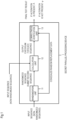
- Fig. 1 is a block diagram illustrating the configuration of a secret parallel processing device 1 according to the present embodiment.
- the secret parallel processing device 1 according to the present embodiment includes a randomization unit 11, a calculation unit 12, and a correctness verification unit 13.
- the randomization unit 11 and the calculation unit 12 receive an input of an input sequence (referred to as a non-randomized sequence).
- the correctness verification unit 13 outputs a final test result.
- a plurality of secret parallel processing devices 1 form a group and the group performs processing described below to execute secret parallel processing.
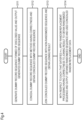
- Fig. 2 is a flowchart illustrating an operation performed by the secret parallel processing device 1 according to the present embodiment.
- the secret parallel processing method according to the present embodiment is separated into three steps of a randomization step (step S11, scheme 1), a calculation step (step S12, scheme 2), and a correctness verification step (step S13, scheme 3) and the three steps are performed sequentially.
- the randomization unit 11 performs the randomization step
- the calculation unit 12 performs the calculation step
- the correctness verification unit 13 performs the correctness verification step.
- the randomization unit 11 obtains the non-randomized sequence which is an input sequence and outputs a randomized sequence obtained by joining the non-randomized sequence and a dummy record sequence formed of a disclosed value and subjecting the joined sequences to random replacement processing and concealed random replacement data obtained by concealing used random replacement data (S11).
- a disclosed value is a value disclosed to all devices in the group.
- the replacement data is a sequence of N elements in which each element is a number different from one another from 0 to N-1, for example, and represents a replacement method of data of the N elements.
- Random replacement data generated from a random number is referred to as random replacement data.
- the concealed random replacement data is, with the method disclosed in Reference Non-patent Literature 2 for example, a collection of n C k pieces of random replacement data shared by each of sets of k devices in the group ( n C k types are present when it is assumed that the number of devices in the group is n). When replacement is performed, all of these pieces of replacement data are used to perform replacement sequentially.
- each of sets of n-k devices has at least one unshared piece of random replacement data, whereby the overall replacement is concealed.
- the calculation unit 12 obtains the non-randomized sequence, the randomized sequence, and the dummy record sequence, applies a predetermined function to the obtained sequences, and generates an output checksum for each sequence by using calculation procedure data used in the processing of applying the function (S12).
- the correctness verification unit 13 obtains the output checksum for each sequence and the concealed random replacement data, assesses the output checksum for each sequence, and outputs a final test result determining whether the predetermined function has been correctly applied on the non-randomized sequence (S13).
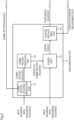
- Fig. 3 is a block diagram illustrating the configuration of the randomization unit 11 in the secret parallel processing device 1 according to the present embodiment.
- Fig. 4 is a flowchart illustrating an operation performed by the randomization unit 11 in the secret parallel processing device 1 according to the present embodiment.
- the randomization unit 11 includes a dummy record sequence generation part 111, a dummy record concealing part 112, a joining part 113, and a random replacement part 114.
- a dummy record sequence is added and random replacement processing having correctness is performed for v times.
- each device in the group may perform processing described below. This can be applied to any kind of secret sharing.
- x is a disclosed value
- the processing described above can be performed individually in each device without any communication in the group. It is well known that processing performed without communication has correctness as a secret calculation. The concealing process described above thus has correctness.
- a dummy record sequence generation part 111 generates a dummy record sequence D ⁇ (R m )
- the content thereof is optional within the domain of F
- the dummy record concealing part 112 conceals the dummy record sequence D with a method having correctness and obtains a concealed dummy record sequence [D] ⁇ ([R] m )
- Step S114 described below is performed with respect to each i that satisfies i ⁇ v.
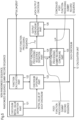
- Fig. 5 is a block diagram illustrating the configuration of the calculation unit 12 in the secret parallel processing device 1 according to the present embodiment.
- Fig. 6 is a flowchart illustrating an operation performed by the calculation unit 12 in the secret parallel processing device 1 according to the present embodiment.
- the calculation unit 12 includes a checksum initial value definition part 121, a function calculation part 122, a checksum updating part 123, a post-function-processing sequence definition part 124, a post-function-processing dummy record concealing part 125, and an output checksum generation part 126.
- a desired function F is calculated in parallel with three types of sequences: non-randomized sequence, randomized sequence, and dummy record sequence. At this time, each output is stored as a checksum.
- , ..., [C B ⁇ -1 ]: 0 ⁇ ⁇ ([R] 0 ) N+
- , [C D ]: 0 ⁇ ⁇ ([R] 0 )
- 0 ⁇ is an empty vector.
- the function calculation part 122 applies secret calculation in the semi-honest model to v+1 sequences of the non-randomized sequence [A] and the randomized sequence [B 0 ], ..., [B ⁇ -1 ] and applies plaintext calculation to the dummy record sequence D to calculate a desired function F for each of subprotocol f i :[R] mi ⁇ [R] ⁇ i , and outputs [F N (A)] ⁇ ([R] ⁇ ) N (S122).
- m i and ⁇ i are the number of inputs and the number of outputs of the subprotocol f i , respectively.
- the checksum updating part 123 updates checksums for each of the subprotocol f i :[R] mi ⁇ [R] ⁇ i described above (S123).
- the post-function-processing sequence definition part 124 defines each output of v+2 sequences to the subprotocol f i as post-function-processing non-randomized sequence [A'] ⁇ ([R] ⁇ i ) N , post-function-processing randomized sequence [B' 0 ], ..., [B' ⁇ -1 ] ⁇ ([R] ⁇ i ) N+
- the post-function-processing dummy record concealing part 125 conceals post-function-processing dummy record sequence D' with a method having correctness and obtains a concealed post-function-processing dummy record sequence [D'] (S125).
- Fig. 7 is block diagram illustrating the configuration of the correctness verification unit 13 in the secret parallel processing device 1 according to the present embodiment.
- Fig. 8 is a flowchart illustrating an operation performed by the correctness verification unit 13 in the secret parallel processing device 1 according to the present embodiment. As illustrated in Fig.
- the correctness verification unit 13 includes a first data reception signal transmission and reception part 130, a random replacement disclosure part 131, a differential value calculation part 132, a vertical division part 133, a random number variance generation part 134, a product sum part 135, a second data reception signal transmission and reception part 136, a product sum value disclosure part 137, a test result transmission and reception part 138, and a final test result output part 139.
- a sign SYNC represents processing in which a signal is transmitted that notifies receipt of all data to be received by that time point to all the other devices in the group and the corresponding signal from all the other devices in the group is received. Until the SYNC is confirmed, subsequent processing is not performed, whereby security within an asynchronous network is secured.
- the first data reception signal transmission and reception part 130 performs SYNC processing described above (S130). More specifically, the first data reception signal transmission and reception part 130 transmits a data reception signal that is a signal notifying receipt of all data to be received by step S130 to all the other devices in the group and receives the corresponding signal from all the other devices in the group (S130).
- Step S131 to step S135 described below are performed with respect to each i that satisfies i ⁇ v.
- the random replacement disclosure part 131 discloses the concealed random replacement data [ ⁇ i ] and obtains a decoded value thereof ⁇ i (S131).
- the vertical division part 133 vertically divides each record of the differential value [ ⁇ i ] for each division unit ⁇ element (S133).
- the vertical division part 133 pads a part less than the ⁇ element with zero.
- the vertical division part 133 obtains a differential division value [ ⁇ ' i ] ⁇ ([R] ⁇ ) (N+
- the random number variance generation part 134 generates a variance value of a random number [ ⁇ i] ⁇ ([R] ⁇ ) (N+
- the second data reception signal transmission and reception part 136 performs SYNC processing (S136). More specifically, the second data reception signal transmission and reception part 136 transmits a data reception signal that is a signal notifying receipt of all data to be received by step S136 to all the other devices in the group and receives the corresponding signal from all the other devices in the group (S136).
- the product sum value disclosure part 137 discloses the product sum value [ ⁇ ] and obtains a decoded value thereof ⁇ (S137).
- the test result transmission and reception part 138 also receives the test results from all the other devices in the group (S138).
- the final test result output part 139 outputs a final test result of ⁇ if ⁇ is present in the test results from all the other devices in the group, and if ⁇ is not present, outputs a final test result of ⁇ (5139).
- the secret parallel processing device 1 can reduce the amount of communication in secret parallel processing. More specifically, the secret parallel processing device 1 can achieve the amount of communication of O ( ⁇ ⁇ / logN ⁇ C ) bits when performing calculation of parallel data counts N, whereby the amount of communication is improved from a conventional method by logN.
- the security parameter ⁇ is approximately the same as the bit length of the field.
- random replacement processing is used to add the parallel data counts N to the security strength. It should be noted that although a dummy record can have any contents, security cannot be achieved without a dummy record.
- the computer-readable recording medium may be any medium such as a magnetic recording device, an optical disc, a magneto-optical medium, and a semiconductor memory.
- Distribution of this program is implemented by sales, transfer, rental, and other transactions of a portable recording medium such as a DVD and CD-ROM with the program recorded thereon, for example. Furthermore, this program may be stored in a storage unit of a server computer and transferred from the server computer to other computers via a network so as to be distributed.
- a computer that executes a program as described above first stores the program stored in a portable recording medium or transferred from a server computer in a storage unit of the computer, for example.
- the computer reads out the program stored in the recording medium of the computer and performs processing in accordance with the program thus read out.
- the computer may directly read out the program from a portable recording medium and perform processing in accordance with the program.
- the computer may perform processing in accordance with the received program.
- ASP application service provider
- a program according to the present embodiment includes information provided for processing performed by an electronic calculation equipment, which is equivalent to a program (such as data that is not a direct instruction to the computer but has a property stipulating the processing performed by the computer).
- the present device is configured with a predetermined program executed on a computer.
- the present device may be configured with at least part of these processing contents realized in a hardware manner.
Landscapes
- Engineering & Computer Science (AREA)
- Theoretical Computer Science (AREA)
- Computer Security & Cryptography (AREA)
- Physics & Mathematics (AREA)
- General Physics & Mathematics (AREA)
- Bioethics (AREA)
- Health & Medical Sciences (AREA)
- General Health & Medical Sciences (AREA)
- Computer Hardware Design (AREA)
- Software Systems (AREA)
- General Engineering & Computer Science (AREA)
- Signal Processing (AREA)
- Computer Networks & Wireless Communication (AREA)
- Databases & Information Systems (AREA)
- Storage Device Security (AREA)
Claims (5)
- Vorrichtung zum geheimen parallelen Verarbeiten für ein Verwenden im Rahmen von sicheren Mehrparteienberechnungen innerhalb einer Gruppe von Vorrichtungen, wobei die Vorrichtung umfasst:eine Randomisierungseinheit (11), die eine verborgene nicht randomisierte Sequenz [A] eingibt und verborgene randomisierte Sequenz [Bi], wobei i < v, ausgibt,wobei die Randomisierungseinheit (11) umfasst:einen Dummy-Datensatzsequenz-Generierungsteil (111), der eine Dummy-Datensatzsequenz D∈(Rm)|D|, die aus dem offengelegten Wert gebildet wird, generiert und die generierte Dummy-Datensatzsequenz ausgibt,einen Dummy-Datensatz-Verbergungsteil (112), der eine Geheimnisteilung der Dummy-Datensatzsequenz D mit einem Verfahren, das Korrektheit aufweist, durchführt und eine verborgene Dummy-Datensatzsequenz [D]∈([R]m)|D| erlangt,einen Verknüpfungsteil (113), der die verborgene Dummy-Datensatzsequenz [D] mit der verborgenen nicht randomisierten Sequenz [A] horizontal verknüpft und ein Horizontalverknüpfungsergebnis [A∥D]:=[A] || [D] als die horizontal verknüpften Sequenzen erlangt, undeinen Zufallsersetzungsteil (114), der eine Zufallsersetzungsverarbeitung, die Korrektheit aufweist, auf das Horizontalverknüpfungsergebnis [A∥D] anwendet, um die randomisierte Sequenz [Bi]:=[πi(A∥D)] zu erlangen, und die erlangte verborgene randomisierte Sequenz und verwendete verborgene Zufallsersetzungsdaten [πi]∈[Π] bezüglich jedes i, das i<v erfüllt, ausgibt,wobei Zufallsersetzungsdaten eine Zufallssequenz von N verschiedenen ganzen Zahlen von 0 bis N-1 sind, die eine zufällige Permutation auf N Elementen repräsentiert,wobei die verborgene Dummy-Datensatzsequenz eine Sequenz ist, deren Länge von jener der verborgenen nicht randomisierten Sequenz verschieden ist,wobei die Vorrichtung ferner umfasst:eine Berechnungseinheit (12), die die verborgene nicht randomisierte Sequenz, die verborgenen randomisierten Sequenzen, und die Dummy-Datensatzsequenz erlangt, eine vorgegebene Funktion F auf jede der erlangten Sequenzen parallel anwendet, und eine Ausgabeprüfsumme für jede Sequenz unter Verwendung von Berechnungsprozedurdaten, die bei der Verarbeitung des Anwendens der Funktion verwendet werden, generiert,wobei die Berechnungseinheit (12) ferner umfasst:einen Prüfsummen-Anfangswert-Definitionsteil (121), der Anfangswerte für Prüfsummen der nicht randomisierten Sequenz, der randomisierten Sequenz, und der Dummy-Datensatzsequenz jeweils als [CA]:=0→∈([R]0)N, [CB0]:=0→∈([R]0)N+|D|, ..., [CBν-11]:=0→∈([R]0)N+|D|, [CD]:=0→∈([R]0)|D| definiert,einen Funktionsberechnungsteil (122), dermi und µi jeweils auf die Anzahl von Eingaben bzw. die Anzahl von Ausgaben eines Unterprotokolls fi einstellt, undeine geheime Berechnung im halbehrlichen Modell auf v+1 Sequenzen der nicht randomisierten Sequenz [A] und der randomisierten Sequenz [B0], ..., [Bν-1] anwendet, undeine Klartextberechnung auf die Dummy-Datensatzsequenz D anwendet, um die vorgegebene Funktion F für jedes Unterprotokoll fi:[R]mi→[R]µi zu berechnen,einen Prüfsummenaktualisierungsteil, der Prüfsummen für jedes Unterprotokoll fi:[R]mi→[R]µi aktualisiert,einen Nachfunktionsverarbeitungs-Sequenzdefinitionsteil, der jede Ausgabe von v+2 Sequenzen für das Unterprotokoll fi als nicht randomisierte Nachfunktionsverarbeitungs-Sequenz [A']∈([R]µi)N, randomisierte Nachfunktionsverarbeitungs-Sequenz [B'0], ..., [B'ν-1]∈([R]µi)N+|D|, und Nachfunktionsverarbeitungs-Dummy-Datensatzsequenz D'∈(Rµi)|D| definiert,einen Nachfunktionsverarbeitungs-Dummy-Datensatz-Verbergungsteil, der eine Geheimnisteilung der Nachfunktionsverarbeitungs-Dummy-Datensatzsequenz D' mit einem Verfahren, das Korrektheit aufweist, durchführt und eine verborgene Nachfunktionsverarbeitungs-Dummy-Datensatzsequenz [D'] erlangt, undeinen Ausgabeprüfsummen-Generierungsteil, der Ausgabeprüfsummen der nicht randomisierten Sequenz [CA]:=[CA]v[A'], Ausgabeprüfsummen der randomisierten Sequenz [CBi]:=[CBi]∥v[B'i] bezüglich jedes i, das i<ν erfüllt, und Ausgabeprüfsummen der Dummy-Datensatzsequenz [CD]:=[CD]∥v[D'] ausgibt,wobei die Vorrichtung ferner umfasst:eine Korrektheitsverifizierungseinheit (13), diedie verborgenen Zufallsersetzungsdaten und die Ausgabeprüfsumme für jede Sequenz von der verborgenen nicht randomisierten Sequenz, den verborgenen randomisierten Sequenzen, und der Dummy-Datensatzsequenz erlangt,die Ausgabeprüfsumme für jede Sequenz bewertet, undein Testendergebnis ausgibt, das bestimmt, ob die vorgegebene Funktion auf die nicht randomisierte Sequenz korrekt angewendet wurde,wobei X eine Kollektion ist,m und m' ganze Zahlen sind,i eine ganze Zahl ist,in Bezug auf ein Element x aus Xm, das i-te Element als xi bezeichnet wird,in Bezug auf x∈Xm, y∈Xm', eine horizontale Verknüpfung (x0, ...xm-1, y0, ..., ym'-1)∈Xm+m' als x||y bezeichnet wird,in Bezug auf xE(Xm)N, y∈(Xm')N, eine vertikale Verknüpfung (x0∥y0, ..., xN-1∥yN-1) als x∥vy bezeichnet wird,wobei ein Klartextraum R ist,in Bezug auf eine Funktion g:R→R', gN:RN→R'N die parallele Ausführung von g bezeichnet, das heißt gN(a0, ..., aN-1)=(g(a0), ..., g(aN-1)),in Bezug auf einen Ring R, 0R ein Nullelement von R ist,[x] ein Wert ist, der durch Geheimnisteilen eines Wertes x mithilfe von Geheimnisteilen erlangt wird,in Bezug auf eine Kollektion X, [X] eine Kollektion von Werten ist, die durch Geheimnisteilen eines Elements von X erlangt wird,m und µ jeweils die Anzahl von Eingaben bzw. die Anzahl von Ausgaben für die zu berechnende Funktion F sind,die Anzahl von Datensätzen N beträgt, die Anzahl von einzufügenden Dummy-Datensätzen IDI beträgt, und die Anzahl von randomisierten Sequenzen eine positive ganze Zahl v ist,Π eine Kollektion von Zufallsersetzungsdaten nach dem Geheimnisteilen repräsentiert, und0→ einen leeren Vektor repräsentiert.
- Vorrichtung zum Verarbeiten einer geheimen Berechnung nach Anspruch 1, wobei die Korrektheitsverifizierungseinheit (13) umfasst:einen ersten Datenempfangssignal-Sende- und - Empfangsteil, der ein Datenempfangssignal, das ein Signal ist, das einen Empfang aller zu empfangenden Daten mitteilt, an alle anderen in der Gruppe aufgenommenen Vorrichtungen zum geheimen parallelen Verarbeiten sendet und das entsprechende Signal von allen anderen in der Gruppe aufgenommenen Vorrichtungen zum geheimen parallelen Verarbeiten empfängt,einen Zufallsersetzungs-Offenlegungsteil, der die verborgenen Zufallsersetzungsdaten [πi] offenlegt und einen decodierten Wert davon πi in Bezug auf jedes i, das i < v erfüllt, erlangt,einen Differenzwertberechnungsteil, der M auf die Anzahl von Elementen pro einen Datensatz der Ausgabeprüfsumme der nicht randomisierten Sequenz [CA] oder der Ausgabeprüfsumme der randomisierten Sequenz [CBi] einstellt und einen Differenzwert [ζi]:=[CBi] - ([CA]∥[CD])∈([R]M)N+|D| in Bezug auf jedes i, das i<ν erfüllt, berechnet,einen Vertikalteilungsteil, der jeden Datensatz des Differenzwertes [ζi] für jedes Teilungseinheits-σ-Element, in Bezug auf jedes i, das i<v erfüllt, teilt und einen Differenzteilungswert
 einen Zufallszahlenvarianz-Generierungsteil, der einen Varianzwert einer Zufallszahl [ρi]∈([R]σ)(N+|D|)M' in Bezug auf jedes i, das i<v erfüllt, generiert,einen Produktsummenteil, der einen Produktsummenwert
 einen zweiten Datenempfangssignal-Sende- und - Empfangsteil, der ein Datenempfangssignal, das ein Signal ist, das einen Empfang aller zu empfangenden Daten mitteilt, an alle anderen in der Gruppe aufgenommenen Vorrichtungen zum geheimen parallelen Verarbeiten sendet und das entsprechende Signal von allen anderen in der Gruppe aufgenommenen Vorrichtungen zum geheimen parallelen Verarbeiten empfängt,einen Produktsummenwert-Offenlegungsteil, der den Produktsummenwert [ϕ] offenlegt und einen decodierten Wert davon ϕ erlangt,einen Testergebnis-Sende- und -Empfangsteil, der prüft, ob der decodierte Wert des Produktsummenwertes ϕ=0 ist, und falls dies wahr ist, ein Testergebnis von ┬ sendet, und falls dies falsch ist, ein Testergebnis von ┴ an alle anderen in der Gruppe aufgenommenen Vorrichtungen zum geheimen parallelen Verarbeiten sendet und die Testergebnisse von allen anderen in der Gruppe aufgenommenen Vorrichtungen zum geheimen parallelen Verarbeiten empfängt, undeinen Testendergebnis-Ausgabeteil, der ein Testendergebnis von ┴ ausgibt, falls ┴ in den Testergebnissen von all den anderen in der Gruppe aufgenommenen Vorrichtungen zum geheimen parallelen Verarbeiten vorhanden ist, und ein Testendergebnis von ┬ ausgibt, falls ┴ nicht vorhanden ist.
 - Verfahren zum geheimen parallelen Verarbeiten für ein Verwenden im Rahmen von sicheren Mehrparteienberechnungen innerhalb einer Gruppe von Vorrichtungen, wobei das Verfahren umfasst:einen Randomisierungsschritt (S11) des Eingebens einer verborgenen nicht randomisierten Sequenz [A] und Ausgebens von verborgener randomisierter Sequenz [Bi], wobei i< v,wobei der Randomisierungsschritt (11) umfasst:einen Dummy-Datensatzsequenz-Generierungsschritt (S111) des Generierens einer Dummy-Datensatzsequenz D∈(Rm)|D|, die aus dem offengelegten Wert gebildet wird, und des Ausgebens der generierten Dummy-Datensatzsequenz,einen Dummy-Datensatzsequenz-Verbergungsschritt (S112) des Geheimnisteilens der Dummy-Datensatzsequenz D mit einem Verfahren, das Korrektheit aufweist, und des Erlangens einer verborgenen Dummy-Datensatzsequenz [D]∈([R]m)|D|,einen Verknüpfungsschritt (S113) des horizontalen Verknüpfens der verborgenen Dummy-Datensatzsequenz [D] mit der verborgenen nicht randomisierten Sequenz [A] und des Erlangens eines Horizontalverknüpfungsergebnisses [A∥D]:=[A]∥[D] als die horizontal verknüpften Sequenzen, undeinen Zufallsersetzungsschritt (S114) des Anwendens einer Zufallsersetzungsverarbeitung, die Korrektheit aufweist, auf das Horizontalverknüpfungsergebnis [A∥D], um die randomisierte Sequenz [Bi]:=[πi(A∥D)] zu erlangen, und des Ausgebens der erlangten verborgenen randomisierten Sequenz und verwendeter verborgener Zufallsersetzungsdaten [πi]∈[Π] bezüglich jedes i, das i<v erfüllt,wobei Zufallsersetzungsdaten eine Zufallssequenz von N verschiedenen ganzen Zahlen von 0 bis N-1 sind, die eine zufällige Permutation auf N Elementen repräsentiert,wobei die verborgene Dummy-Datensatzsequenz eine Sequenz ist, deren Länge von jener der verborgenen nicht randomisierten Sequenz verschieden ist,wobei das Verfahren ferner umfasst:einen Berechnungsschritt (S12) des Erlangens der verborgenen nicht randomisierten Sequenz, der verborgenen randomisierten Sequenzen, und der Dummy-Datensatzsequenz, des parallelen Anwendens einer vorgegebenen Funktion F auf jede der erlangten Sequenzen, und des Generierens einer Ausgabeprüfsumme für jede Sequenz unter Verwendung von Berechnungsprozedurdaten, die bei der Verarbeitung des Anwendens der Funktion verwendet werden,wobei der Berechnungsschritt (S12) ferner umfasst:einen Prüfsummen-Anfangswert-Definitionsschritt (S121) des Definierens von Anfangswerten für Prüfsummen der nicht randomisierten Sequenz, der randomisierten Sequenz, und der Dummy-Datensatzsequenz jeweils als [CA]:=0→∈([RI]0)N, [CB0]:=0→∈([R]0)N+|D|, ..., [CBν-1]:=0→∈([R]0)N+|D|, [CD]:=0→∈([R]0)|D|,einen Funktionsberechnungsschritt (S122) des:Einstellens von mi und µi auf die Anzahl von Eingaben bzw. die Anzahl von Ausgaben eines Unterprotokolls fi, undAnwendens einer geheimen Berechnung im halbehrlichen Modell auf v+1 Sequenzen der nicht randomisierten Sequenz [A] und der randomisierten Sequenz [B0], ..., [Bν-1], undAnwendens einer Klartextberechnung auf die Dummy-Datensatzsequenz D, um die vorgegebene Funktion F für jedes Unterprotokoll fi:[R]mi→[R]µi zu berechnen,einen Prüfsummenaktualisierungsschritt des Aktualisierens von Prüfsummen für jedes Unterprotokoll fi:[R]mi→[R]µi,einen Nachfunktionsverarbeitungs-Sequenzdefinitionsschritt des Definierens jeder Ausgabe von v+2 Sequenzen für das Unterprotokoll fi als nicht randomisierte Nachfunktionsverarbeitungs-Sequenz [A']∈([R]µi)N, randomisierte Nachfunktionsverarbeitungs-Sequenz [B'0], ..., [B'ν-1]∈([R]µi)N+|D|, und Nachfunktionsverarbeitungs-Dummy-Datensatzsequenz D' E (Rµi)|D|,einen Nachfunktionsverarbeitungs-Dummy-Datensatz-Verbergungsschritt des Geheimnisteilens der Nachfunktionsverarbeitungs-Dummy-Datensatzsequenz D' mit einem Verfahren, das Korrektheit aufweist, und des Erlangens einer verborgenen Nachfunktionsverarbeitungs-Dummy-Datensatzsequenz [D'], undeinen Ausgabeprüfsummen-Generierungsschritt des Ausgebens von Ausgabeprüfsummen der nicht randomisierten Sequenz [CA]:=[CA]∥v[A'], Ausgabeprüfsummen der randomisierten Sequenz [CBi]:=[CBi]∥v[B'i] bezüglich jedes i, das i<ν erfüllt, und Ausgabeprüfsummen der Dummy-Datensatzsequenz :=[CD]||v[D'],wobei das Verfahren ferner umfasst:einen Korrektheitsverifizierungsschritt (S13) des:Erlangens der verborgenen Zufallsersetzungsdaten und der Ausgabeprüfsumme für jede Sequenz von der verborgenen nicht randomisierten Sequenz, den verborgenen randomisierten Sequenzen, und der Dummy-Datensatzsequenz,Bewertens der Ausgabeprüfsumme für jede Sequenz, undAusgebens eines Testendergebnisses, das bestimmt, ob die vorgegebene Funktion auf die nicht randomisierte Sequenz korrekt angewendet wurde,wobei X eine Kollektion ist,m und m' ganze Zahlen sind,i eine ganze Zahl ist,in Bezug auf ein Element x aus Xm, das i-te Element als xi bezeichnet wird,in Bezug auf x∈Xm, y∈Xm', eine horizontale Verknüpfung (x0, ...xm-1, y0, ..., ym'-1)∈Xm+m' als x∥y bezeichnet wird,in Bezug auf x∈(Xm)N, y∈(Xm')N, eine vertikale Verknüpfung (x0∥y0, ..., xN-1∥yN-1) als x∥vy bezeichnet wird,wobei ein Klartextraum R ist,in Bezug auf eine Funktion g:R→R', gN:RN→R'N die parallele Ausführung von g bezeichnet, das heißt gN(a0, ..., aN-1)= (g(a0), ..., g(aN-1)),in Bezug auf einen Ring R, 0R ein Nullelement von R ist,[x] ein Wert ist, der durch Geheimnisteilen eines Wertes x mithilfe von Geheimnisteilen erlangt wird,in Bezug auf eine Kollektion X, [X] eine Kollektion von Werten ist, die durch Geheimnisteilen eines Elements von X erlangt wird,m und µ jeweils die Anzahl von Eingaben bzw. die Anzahl von Ausgaben für die zu berechnende Funktion F sind,die Anzahl von Datensätzen N beträgt, die Anzahl von einzufügenden Dummy-Datensätzen |D| beträgt, und die Anzahl von randomisierten Sequenzen eine positive ganze Zahl v ist,Π eine Kollektion von Zufallsersetzungsdaten nach dem Geheimnisteilen repräsentiert, und0→ einen leeren Vektor repräsentiert.
- Verfahren zum Verarbeiten einer geheimen Berechnung nach Anspruch 3, wobei der Korrektheitsverifizierungsschritt (S13) umfasst:einen ersten Datenempfangssignal-Sende- und Empfangsschritt, des Sendens eines Datenempfangssignals, das ein Signal ist, das einen Empfang aller zu empfangenden Daten mitteilt, an alle anderen in der Gruppe aufgenommenen Vorrichtungen zum geheimen parallelen Verarbeiten und des Empfangens des entsprechenden Signals von allen anderen in der Gruppe aufgenommenen Vorrichtungen zum geheimen parallelen Verarbeiten,einen Zufallsersetzungs-Offenlegungsschritt des Offenlegens der verborgenen Zufallsersetzungsdaten [πi] und des Erlangens eines decodierten Wertes davon πi in Bezug auf jedes i, das i < v erfüllt,einen Differenzwertberechnungsschritt des Einstellens von M auf die Anzahl von Elementen pro einen Datensatz der Ausgabeprüfsumme der nicht randomisierten Sequenz [CA] oder der Ausgabeprüfsumme der randomisierten Sequenz [CBi] und des Berechnens eines Differenzwertes [ζi]:=[CBi]-([CA]1])∈([R]M)N+|D| in Bezug auf jedes i, das i<v erfüllt,einen Vertikalteilungsschritt, des vertikalen Teilens jedes Datensatzes des Differenzwertes [ζi] für jedes Teilungseinheits-σ-Element und des Erlangens eines Differenzteilungswertes [ζ'i]∈([R]σ)(N+|D|)M' in Bezug auf jedes i, das i<v erfüllt,einen Zufallszahlenvarianz-Generierungsschritt des Generierens eines Varianzwertes einer Zufallszahl [ρi]∈([R]σ)(N+|D|)M' in Bezug auf jedes i, das i<v erfüllt,einen Produktsummenschritt des Berechnens eines Produktsummenwertes
 einen zweiten Datenempfangssignal-Sende- und Empfangsschritt des Sendens eines Datenempfangssignals, das ein Signal ist, das einen Empfang aller zu empfangenden Daten mitteilt, an alle anderen in der Gruppe aufgenommenen Vorrichtungen zum geheimen parallelen Verarbeiten und des Empfangens des entsprechenden Signals von allen anderen in der Gruppe aufgenommenen Vorrichtungen zum geheimen parallelen Verarbeiten,einen Produktsummenwert-Offenlegungsschritt des Offenlegens des Produktsummenwertes [ϕ] und des Erlangens eines decodierten Wertes davon ϕ,einen Testergebnis-Sende- und -Empfangsschritt des Überprüfens, ob der decodierte Wert des Produktsummenwertes ϕ=0 ist, und falls dies wahr ist, des Sendens eines Testergebnisses von ┬, und falls dies falsch ist, des Sendens eines Testergebnisses von ┴ an alle anderen in der Gruppe aufgenommenen Vorrichtungen zum geheimen parallelen Verarbeiten und des Empfangens der Testergebnisse von allen anderen in der Gruppe aufgenommenen Vorrichtungen zum geheimen parallelen Verarbeiten, undeinen Testendergebnis-Ausgabeschritt des Ausgebens eines Testendergebnisses von ┴, falls ┴ in den Testergebnissen von all den anderen in der Gruppe aufgenommenen Vorrichtungen zum geheimen parallelen Verarbeiten vorhanden ist, und des Ausgebens eines Testendergebnisses von ┬, falls ┴ nicht vorhanden ist.
 - Programm, das Anweisungen umfasst, die bei einer Ausführung durch einen Computer den Computer dazu veranlassen, das Verfahren nach einem von Anspruch 3 und 4 auszuführen.
Applications Claiming Priority (3)
| Application Number | Priority Date | Filing Date | Title |
|---|---|---|---|
| JP2013213026 | 2013-10-10 | ||
| EP14852876.3A EP3057079A4 (de) | 2013-10-10 | 2014-10-03 | Vorrichtung für geheime parallelverarbeitung, verfahren für geheime parallelverarbeitung und programm |
| PCT/JP2014/076531 WO2015053184A1 (ja) | 2013-10-10 | 2014-10-03 | 秘密並列処理装置、秘密並列処理方法、プログラム |
Related Parent Applications (1)
| Application Number | Title | Priority Date | Filing Date |
|---|---|---|---|
| EP14852876.3A Division EP3057079A4 (de) | 2013-10-10 | 2014-10-03 | Vorrichtung für geheime parallelverarbeitung, verfahren für geheime parallelverarbeitung und programm |
Publications (2)
| Publication Number | Publication Date |
|---|---|
| EP3893229A1 EP3893229A1 (de) | 2021-10-13 |
| EP3893229B1 true EP3893229B1 (de) | 2024-06-19 |
Family
ID=52813000
Family Applications (2)
| Application Number | Title | Priority Date | Filing Date |
|---|---|---|---|
| EP14852876.3A Ceased EP3057079A4 (de) | 2013-10-10 | 2014-10-03 | Vorrichtung für geheime parallelverarbeitung, verfahren für geheime parallelverarbeitung und programm |
| EP21171879.6A Active EP3893229B1 (de) | 2013-10-10 | 2014-10-03 | Vorrichtung für geheime parallelverarbeitung, verfahren für geheime parallelverarbeitung und programm |
Family Applications Before (1)
| Application Number | Title | Priority Date | Filing Date |
|---|---|---|---|
| EP14852876.3A Ceased EP3057079A4 (de) | 2013-10-10 | 2014-10-03 | Vorrichtung für geheime parallelverarbeitung, verfahren für geheime parallelverarbeitung und programm |
Country Status (5)
| Country | Link |
|---|---|
| US (1) | US10083314B2 (de) |
| EP (2) | EP3057079A4 (de) |
| JP (1) | JP6040320B2 (de) |
| CN (1) | CN105593918B (de) |
| WO (1) | WO2015053184A1 (de) |
Families Citing this family (12)
| Publication number | Priority date | Publication date | Assignee | Title |
|---|---|---|---|---|
| CN109478381B (zh) * | 2016-07-06 | 2021-12-14 | 日本电信电话株式会社 | 秘密计算系统、秘密计算装置、秘密计算方法以及程序 |
| JP6534778B2 (ja) * | 2016-07-06 | 2019-06-26 | 日本電信電話株式会社 | 秘密計算システム、秘密計算装置、秘密計算方法、およびプログラム |
| WO2019009180A1 (ja) * | 2017-07-05 | 2019-01-10 | 日本電信電話株式会社 | 秘密計算システム、秘密計算装置、秘密計算方法、プログラム、および記録媒体 |
| US11818254B2 (en) * | 2017-08-22 | 2023-11-14 | Nippon Telegraph And Telephone Corporation | Share generating device, reconstructing device, secure computation system, share generation method, reconstruction method, program, and recording medium |
| JP6881588B2 (ja) | 2017-08-22 | 2021-06-02 | 日本電信電話株式会社 | 秘密計算装置、秘密計算方法、プログラム、および記録媒体 |
| CN111183469B (zh) * | 2017-10-13 | 2023-02-28 | 日本电信电话株式会社 | 隐匿分类系统以及方法 |
| EP3767609A4 (de) * | 2018-03-12 | 2021-12-08 | Nippon Telegraph And Telephone Corporation | System für geheime tabellenreferenz, verfahren, vorrichtung und programm zur geheimen berechnung |
| JP7017178B2 (ja) * | 2018-05-17 | 2022-02-08 | 日本電信電話株式会社 | 秘密クロス集計システム、秘密計算装置、秘密クロス集計方法、およびプログラム |
| WO2020184126A1 (ja) * | 2019-03-11 | 2020-09-17 | 日本電信電話株式会社 | データ置換装置、データ置換方法、プログラム |
| CN111666063B (zh) * | 2020-04-22 | 2023-09-26 | 南京惟心光电系统有限公司 | 一种基于随机计算的增函数实现装置 |
| CN114218616B (zh) * | 2021-11-17 | 2024-06-21 | 鹏城实验室 | 一种归一化指数函数安全计算方法及系统 |
| CN117591526B (zh) * | 2023-11-29 | 2025-10-14 | 天翼云科技有限公司 | 一种面向不确定环境的高性能随机化一致性方法 |
Family Cites Families (10)
| Publication number | Priority date | Publication date | Assignee | Title |
|---|---|---|---|---|
| US4991107A (en) * | 1988-12-15 | 1991-02-05 | Schlumberger Technologies Limited | Vibration control system |
| JPH08505275A (ja) * | 1992-12-30 | 1996-06-04 | テルストラ・コーポレイション・リミテッド | 暗号ストリームを発生させるための装置及び方法 |
| JP2000089666A (ja) * | 1998-09-16 | 2000-03-31 | Nippon Telegr & Teleph Corp <Ntt> | 暗号化/復号化装置 |
| US6408075B1 (en) * | 1998-11-30 | 2002-06-18 | Hitachi, Ltd. | Information processing equipment and IC card |
| US7062696B2 (en) * | 2000-01-14 | 2006-06-13 | National Semiconductor | Algorithmic test pattern generator, with built-in-self-test (BIST) capabilities, for functional testing of a circuit |
| US6772339B1 (en) * | 2000-03-13 | 2004-08-03 | Lucent Technologies Inc. | Mix and match: a new approach to secure multiparty computation |
| US6862594B1 (en) * | 2000-05-09 | 2005-03-01 | Sun Microsystems, Inc. | Method and apparatus to discover services using flexible search criteria |
| EP1720144A4 (de) * | 2004-01-26 | 2013-10-23 | Nec Corp | Verfahren und einrichtung zum berechnen einer funktion aus vielen eingaben |
| KR101309797B1 (ko) * | 2006-12-01 | 2013-09-23 | 삼성전자주식회사 | 성긴 w-NAF 키 생성방법,이를 이용한 연산 방법 및암호화 방법 |
| US9787475B2 (en) * | 2013-03-04 | 2017-10-10 | Nec Corporation | Device, method, and program for message authentication tag generation |
-
2014
- 2014-10-03 EP EP14852876.3A patent/EP3057079A4/de not_active Ceased
- 2014-10-03 WO PCT/JP2014/076531 patent/WO2015053184A1/ja not_active Ceased
- 2014-10-03 CN CN201480054280.2A patent/CN105593918B/zh active Active
- 2014-10-03 JP JP2015541550A patent/JP6040320B2/ja active Active
- 2014-10-03 EP EP21171879.6A patent/EP3893229B1/de active Active
- 2014-10-03 US US15/025,486 patent/US10083314B2/en active Active
Also Published As
| Publication number | Publication date |
|---|---|
| JP6040320B2 (ja) | 2016-12-07 |
| CN105593918B (zh) | 2019-06-14 |
| WO2015053184A1 (ja) | 2015-04-16 |
| EP3893229A1 (de) | 2021-10-13 |
| EP3057079A1 (de) | 2016-08-17 |
| EP3057079A4 (de) | 2017-06-07 |
| JPWO2015053184A1 (ja) | 2017-03-09 |
| US10083314B2 (en) | 2018-09-25 |
| US20160210472A1 (en) | 2016-07-21 |
| CN105593918A (zh) | 2016-05-18 |
Similar Documents
| Publication | Publication Date | Title |
|---|---|---|
| EP3893229B1 (de) | Vorrichtung für geheime parallelverarbeitung, verfahren für geheime parallelverarbeitung und programm | |
| CN110443067B (zh) | 基于隐私保护的联邦建模装置、方法及可读存储介质 | |
| EP3096309B1 (de) | Sicheres berechnungsverfahren, sicheres berechnungssystem, sortiervorrichtung und programm | |
| EP2947642B1 (de) | Sicheres computersystem, computervorrichtung, sicheres computerverfahren und programm | |
| JP2021507563A (ja) | ブロックチェーンベースのスマートコントラクトの複数当事者生成のためのシステム及び方法 | |
| EP3573039B1 (de) | Sicheres computersystem, sichere computervorrichtung, sicheres computerverfahren und programm | |
| CN114223175B (zh) | 在防止获取或操控时间数据的同时生成网络数据的序列 | |
| WO2016104476A1 (ja) | 秘密改ざん検知システム、秘密計算装置、秘密改ざん検知方法、およびプログラム | |
| EP3757976B1 (de) | Geheime berechnungsvorrichtung, geheimes berechnungsauthentifizierungssystem, geheimes berechnungsverfahren und programm | |
| CN113645022A (zh) | 一种确定隐私集合交集方法、装置、电子设备及存储介质 | |
| JP2016126354A (ja) | 秘密改ざん検知システム、秘密計算装置、秘密改ざん検知方法、およびプログラム | |
| US11157612B2 (en) | Secret tampering detection system, secret tampering detection apparatus, secret tampering detection method, and program | |
| EP3364397B1 (de) | Vorrichtung zum hinzufügen eines geheimen authentifizierungscodes, verfahren zum hinzufügen eines geheimen authentifizierungscodes und programm | |
| CN120474679A (zh) | 基于联邦学习的身份认证方法、装置、介质及程序产品 | |
| Li et al. | Implementation and preliminary evaluation of an auditable confidentiality mechanism for DeFi | |
| Korneev et al. | SoK: Verifiable Cross-Silo FL | |
| Zhang et al. | Secure Digital Asset Trading Technology Based on MPC and Blockchain | |
| Udayakumar et al. | Privacy-Preserving Machine Learning Algorithms for Distributed Smart Grid Systems Using Blockchain Technology |
Legal Events
| Date | Code | Title | Description |
|---|---|---|---|
| PUAI | Public reference made under article 153(3) epc to a published international application that has entered the european phase |
Free format text: ORIGINAL CODE: 0009012 |
|
| STAA | Information on the status of an ep patent application or granted ep patent |
Free format text: STATUS: THE APPLICATION HAS BEEN PUBLISHED |
|
| AC | Divisional application: reference to earlier application |
Ref document number: 3057079 Country of ref document: EP Kind code of ref document: P |
|
| AK | Designated contracting states |
Kind code of ref document: A1 Designated state(s): AL AT BE BG CH CY CZ DE DK EE ES FI FR GB GR HR HU IE IS IT LI LT LU LV MC MK MT NL NO PL PT RO RS SE SI SK SM TR |
|
| STAA | Information on the status of an ep patent application or granted ep patent |
Free format text: STATUS: REQUEST FOR EXAMINATION WAS MADE |
|
| 17P | Request for examination filed |
Effective date: 20220411 |
|
| RBV | Designated contracting states (corrected) |
Designated state(s): AL AT BE BG CH CY CZ DE DK EE ES FI FR GB GR HR HU IE IS IT LI LT LU LV MC MK MT NL NO PL PT RO RS SE SI SK SM TR |
|
| STAA | Information on the status of an ep patent application or granted ep patent |
Free format text: STATUS: EXAMINATION IS IN PROGRESS |
|
| 17Q | First examination report despatched |
Effective date: 20220628 |
|
| GRAP | Despatch of communication of intention to grant a patent |
Free format text: ORIGINAL CODE: EPIDOSNIGR1 |
|
| STAA | Information on the status of an ep patent application or granted ep patent |
Free format text: STATUS: GRANT OF PATENT IS INTENDED |
|
| INTG | Intention to grant announced |
Effective date: 20240110 |
|
| GRAS | Grant fee paid |
Free format text: ORIGINAL CODE: EPIDOSNIGR3 |
|
| GRAA | (expected) grant |
Free format text: ORIGINAL CODE: 0009210 |
|
| STAA | Information on the status of an ep patent application or granted ep patent |
Free format text: STATUS: THE PATENT HAS BEEN GRANTED |
|
| AC | Divisional application: reference to earlier application |
Ref document number: 3057079 Country of ref document: EP Kind code of ref document: P |
|
| AK | Designated contracting states |
Kind code of ref document: B1 Designated state(s): AL AT BE BG CH CY CZ DE DK EE ES FI FR GB GR HR HU IE IS IT LI LT LU LV MC MK MT NL NO PL PT RO RS SE SI SK SM TR |
|
| REG | Reference to a national code |
Ref country code: GB Ref legal event code: FG4D |
|
| REG | Reference to a national code |
Ref country code: CH Ref legal event code: EP |
|
| REG | Reference to a national code |
Ref country code: DE Ref legal event code: R096 Ref document number: 602014090392 Country of ref document: DE |
|
| PG25 | Lapsed in a contracting state [announced via postgrant information from national office to epo] |
Ref country code: BG Free format text: LAPSE BECAUSE OF FAILURE TO SUBMIT A TRANSLATION OF THE DESCRIPTION OR TO PAY THE FEE WITHIN THE PRESCRIBED TIME-LIMIT Effective date: 20240619 |
|
| PG25 | Lapsed in a contracting state [announced via postgrant information from national office to epo] |
Ref country code: FI Free format text: LAPSE BECAUSE OF FAILURE TO SUBMIT A TRANSLATION OF THE DESCRIPTION OR TO PAY THE FEE WITHIN THE PRESCRIBED TIME-LIMIT Effective date: 20240619 Ref country code: HR Free format text: LAPSE BECAUSE OF FAILURE TO SUBMIT A TRANSLATION OF THE DESCRIPTION OR TO PAY THE FEE WITHIN THE PRESCRIBED TIME-LIMIT Effective date: 20240619 |
|
| REG | Reference to a national code |
Ref country code: LT Ref legal event code: MG9D |
|
| PG25 | Lapsed in a contracting state [announced via postgrant information from national office to epo] |
Ref country code: GR Free format text: LAPSE BECAUSE OF FAILURE TO SUBMIT A TRANSLATION OF THE DESCRIPTION OR TO PAY THE FEE WITHIN THE PRESCRIBED TIME-LIMIT Effective date: 20240920 |
|
| REG | Reference to a national code |
Ref country code: NL Ref legal event code: MP Effective date: 20240619 |
|
| PG25 | Lapsed in a contracting state [announced via postgrant information from national office to epo] |
Ref country code: LV Free format text: LAPSE BECAUSE OF FAILURE TO SUBMIT A TRANSLATION OF THE DESCRIPTION OR TO PAY THE FEE WITHIN THE PRESCRIBED TIME-LIMIT Effective date: 20240619 |
|
| PG25 | Lapsed in a contracting state [announced via postgrant information from national office to epo] |
Ref country code: NO Free format text: LAPSE BECAUSE OF FAILURE TO SUBMIT A TRANSLATION OF THE DESCRIPTION OR TO PAY THE FEE WITHIN THE PRESCRIBED TIME-LIMIT Effective date: 20240919 Ref country code: LV Free format text: LAPSE BECAUSE OF FAILURE TO SUBMIT A TRANSLATION OF THE DESCRIPTION OR TO PAY THE FEE WITHIN THE PRESCRIBED TIME-LIMIT Effective date: 20240619 Ref country code: HR Free format text: LAPSE BECAUSE OF FAILURE TO SUBMIT A TRANSLATION OF THE DESCRIPTION OR TO PAY THE FEE WITHIN THE PRESCRIBED TIME-LIMIT Effective date: 20240619 Ref country code: GR Free format text: LAPSE BECAUSE OF FAILURE TO SUBMIT A TRANSLATION OF THE DESCRIPTION OR TO PAY THE FEE WITHIN THE PRESCRIBED TIME-LIMIT Effective date: 20240920 Ref country code: FI Free format text: LAPSE BECAUSE OF FAILURE TO SUBMIT A TRANSLATION OF THE DESCRIPTION OR TO PAY THE FEE WITHIN THE PRESCRIBED TIME-LIMIT Effective date: 20240619 Ref country code: BG Free format text: LAPSE BECAUSE OF FAILURE TO SUBMIT A TRANSLATION OF THE DESCRIPTION OR TO PAY THE FEE WITHIN THE PRESCRIBED TIME-LIMIT Effective date: 20240619 Ref country code: RS Free format text: LAPSE BECAUSE OF FAILURE TO SUBMIT A TRANSLATION OF THE DESCRIPTION OR TO PAY THE FEE WITHIN THE PRESCRIBED TIME-LIMIT Effective date: 20240919 |
|
| PG25 | Lapsed in a contracting state [announced via postgrant information from national office to epo] |
Ref country code: NL Free format text: LAPSE BECAUSE OF FAILURE TO SUBMIT A TRANSLATION OF THE DESCRIPTION OR TO PAY THE FEE WITHIN THE PRESCRIBED TIME-LIMIT Effective date: 20240619 |
|
| REG | Reference to a national code |
Ref country code: AT Ref legal event code: MK05 Ref document number: 1696448 Country of ref document: AT Kind code of ref document: T Effective date: 20240619 |
|
| PG25 | Lapsed in a contracting state [announced via postgrant information from national office to epo] |
Ref country code: NL Free format text: LAPSE BECAUSE OF FAILURE TO SUBMIT A TRANSLATION OF THE DESCRIPTION OR TO PAY THE FEE WITHIN THE PRESCRIBED TIME-LIMIT Effective date: 20240619 |
|
| PG25 | Lapsed in a contracting state [announced via postgrant information from national office to epo] |
Ref country code: PT Free format text: LAPSE BECAUSE OF FAILURE TO SUBMIT A TRANSLATION OF THE DESCRIPTION OR TO PAY THE FEE WITHIN THE PRESCRIBED TIME-LIMIT Effective date: 20241021 |
|
| PG25 | Lapsed in a contracting state [announced via postgrant information from national office to epo] |
Ref country code: PT Free format text: LAPSE BECAUSE OF FAILURE TO SUBMIT A TRANSLATION OF THE DESCRIPTION OR TO PAY THE FEE WITHIN THE PRESCRIBED TIME-LIMIT Effective date: 20241021 |
|
| PG25 | Lapsed in a contracting state [announced via postgrant information from national office to epo] |
Ref country code: PL Free format text: LAPSE BECAUSE OF FAILURE TO SUBMIT A TRANSLATION OF THE DESCRIPTION OR TO PAY THE FEE WITHIN THE PRESCRIBED TIME-LIMIT Effective date: 20240619 |
|
| PG25 | Lapsed in a contracting state [announced via postgrant information from national office to epo] |
Ref country code: EE Free format text: LAPSE BECAUSE OF FAILURE TO SUBMIT A TRANSLATION OF THE DESCRIPTION OR TO PAY THE FEE WITHIN THE PRESCRIBED TIME-LIMIT Effective date: 20240619 |
|
| PG25 | Lapsed in a contracting state [announced via postgrant information from national office to epo] |
Ref country code: AT Free format text: LAPSE BECAUSE OF FAILURE TO SUBMIT A TRANSLATION OF THE DESCRIPTION OR TO PAY THE FEE WITHIN THE PRESCRIBED TIME-LIMIT Effective date: 20240619 Ref country code: IS Free format text: LAPSE BECAUSE OF FAILURE TO SUBMIT A TRANSLATION OF THE DESCRIPTION OR TO PAY THE FEE WITHIN THE PRESCRIBED TIME-LIMIT Effective date: 20241019 |
|
| PG25 | Lapsed in a contracting state [announced via postgrant information from national office to epo] |
Ref country code: CZ Free format text: LAPSE BECAUSE OF FAILURE TO SUBMIT A TRANSLATION OF THE DESCRIPTION OR TO PAY THE FEE WITHIN THE PRESCRIBED TIME-LIMIT Effective date: 20240619 |
|
| PG25 | Lapsed in a contracting state [announced via postgrant information from national office to epo] |
Ref country code: RO Free format text: LAPSE BECAUSE OF FAILURE TO SUBMIT A TRANSLATION OF THE DESCRIPTION OR TO PAY THE FEE WITHIN THE PRESCRIBED TIME-LIMIT Effective date: 20240619 Ref country code: SK Free format text: LAPSE BECAUSE OF FAILURE TO SUBMIT A TRANSLATION OF THE DESCRIPTION OR TO PAY THE FEE WITHIN THE PRESCRIBED TIME-LIMIT Effective date: 20240619 |
|
| PG25 | Lapsed in a contracting state [announced via postgrant information from national office to epo] |
Ref country code: SM Free format text: LAPSE BECAUSE OF FAILURE TO SUBMIT A TRANSLATION OF THE DESCRIPTION OR TO PAY THE FEE WITHIN THE PRESCRIBED TIME-LIMIT Effective date: 20240619 Ref country code: ES Free format text: LAPSE BECAUSE OF FAILURE TO SUBMIT A TRANSLATION OF THE DESCRIPTION OR TO PAY THE FEE WITHIN THE PRESCRIBED TIME-LIMIT Effective date: 20240619 |
|
| PG25 | Lapsed in a contracting state [announced via postgrant information from national office to epo] |
Ref country code: SM Free format text: LAPSE BECAUSE OF FAILURE TO SUBMIT A TRANSLATION OF THE DESCRIPTION OR TO PAY THE FEE WITHIN THE PRESCRIBED TIME-LIMIT Effective date: 20240619 Ref country code: SK Free format text: LAPSE BECAUSE OF FAILURE TO SUBMIT A TRANSLATION OF THE DESCRIPTION OR TO PAY THE FEE WITHIN THE PRESCRIBED TIME-LIMIT Effective date: 20240619 Ref country code: RO Free format text: LAPSE BECAUSE OF FAILURE TO SUBMIT A TRANSLATION OF THE DESCRIPTION OR TO PAY THE FEE WITHIN THE PRESCRIBED TIME-LIMIT Effective date: 20240619 Ref country code: PL Free format text: LAPSE BECAUSE OF FAILURE TO SUBMIT A TRANSLATION OF THE DESCRIPTION OR TO PAY THE FEE WITHIN THE PRESCRIBED TIME-LIMIT Effective date: 20240619 Ref country code: IS Free format text: LAPSE BECAUSE OF FAILURE TO SUBMIT A TRANSLATION OF THE DESCRIPTION OR TO PAY THE FEE WITHIN THE PRESCRIBED TIME-LIMIT Effective date: 20241019 Ref country code: ES Free format text: LAPSE BECAUSE OF FAILURE TO SUBMIT A TRANSLATION OF THE DESCRIPTION OR TO PAY THE FEE WITHIN THE PRESCRIBED TIME-LIMIT Effective date: 20240619 Ref country code: EE Free format text: LAPSE BECAUSE OF FAILURE TO SUBMIT A TRANSLATION OF THE DESCRIPTION OR TO PAY THE FEE WITHIN THE PRESCRIBED TIME-LIMIT Effective date: 20240619 Ref country code: CZ Free format text: LAPSE BECAUSE OF FAILURE TO SUBMIT A TRANSLATION OF THE DESCRIPTION OR TO PAY THE FEE WITHIN THE PRESCRIBED TIME-LIMIT Effective date: 20240619 Ref country code: AT Free format text: LAPSE BECAUSE OF FAILURE TO SUBMIT A TRANSLATION OF THE DESCRIPTION OR TO PAY THE FEE WITHIN THE PRESCRIBED TIME-LIMIT Effective date: 20240619 |
|
| PG25 | Lapsed in a contracting state [announced via postgrant information from national office to epo] |
Ref country code: IT Free format text: LAPSE BECAUSE OF FAILURE TO SUBMIT A TRANSLATION OF THE DESCRIPTION OR TO PAY THE FEE WITHIN THE PRESCRIBED TIME-LIMIT Effective date: 20240619 |
|
| REG | Reference to a national code |
Ref country code: DE Ref legal event code: R097 Ref document number: 602014090392 Country of ref document: DE |
|
| PG25 | Lapsed in a contracting state [announced via postgrant information from national office to epo] |
Ref country code: DK Free format text: LAPSE BECAUSE OF FAILURE TO SUBMIT A TRANSLATION OF THE DESCRIPTION OR TO PAY THE FEE WITHIN THE PRESCRIBED TIME-LIMIT Effective date: 20240619 |
|
| PLBE | No opposition filed within time limit |
Free format text: ORIGINAL CODE: 0009261 |
|
| STAA | Information on the status of an ep patent application or granted ep patent |
Free format text: STATUS: NO OPPOSITION FILED WITHIN TIME LIMIT |
|
| 26N | No opposition filed |
Effective date: 20250320 |
|
| REG | Reference to a national code |
Ref country code: CH Ref legal event code: PL |
|
| PG25 | Lapsed in a contracting state [announced via postgrant information from national office to epo] |
Ref country code: MC Free format text: LAPSE BECAUSE OF FAILURE TO SUBMIT A TRANSLATION OF THE DESCRIPTION OR TO PAY THE FEE WITHIN THE PRESCRIBED TIME-LIMIT Effective date: 20240619 |
|
| PG25 | Lapsed in a contracting state [announced via postgrant information from national office to epo] |
Ref country code: BE Free format text: LAPSE BECAUSE OF NON-PAYMENT OF DUE FEES Effective date: 20241031 Ref country code: LU Free format text: LAPSE BECAUSE OF NON-PAYMENT OF DUE FEES Effective date: 20241003 |
|
| PG25 | Lapsed in a contracting state [announced via postgrant information from national office to epo] |
Ref country code: CH Free format text: LAPSE BECAUSE OF NON-PAYMENT OF DUE FEES Effective date: 20241031 |
|
| REG | Reference to a national code |
Ref country code: BE Ref legal event code: MM Effective date: 20241031 |
|
| PG25 | Lapsed in a contracting state [announced via postgrant information from national office to epo] |
Ref country code: SE Free format text: LAPSE BECAUSE OF FAILURE TO SUBMIT A TRANSLATION OF THE DESCRIPTION OR TO PAY THE FEE WITHIN THE PRESCRIBED TIME-LIMIT Effective date: 20240619 |
|
| PG25 | Lapsed in a contracting state [announced via postgrant information from national office to epo] |
Ref country code: IE Free format text: LAPSE BECAUSE OF NON-PAYMENT OF DUE FEES Effective date: 20241003 |
|
| PGFP | Annual fee paid to national office [announced via postgrant information from national office to epo] |
Ref country code: DE Payment date: 20251021 Year of fee payment: 12 |
|
| PGFP | Annual fee paid to national office [announced via postgrant information from national office to epo] |
Ref country code: GB Payment date: 20251022 Year of fee payment: 12 |
|
| PGFP | Annual fee paid to national office [announced via postgrant information from national office to epo] |
Ref country code: FR Payment date: 20251030 Year of fee payment: 12 |
|
| PG25 | Lapsed in a contracting state [announced via postgrant information from national office to epo] |
Ref country code: CY Free format text: LAPSE BECAUSE OF FAILURE TO SUBMIT A TRANSLATION OF THE DESCRIPTION OR TO PAY THE FEE WITHIN THE PRESCRIBED TIME-LIMIT; INVALID AB INITIO Effective date: 20141003 |
|
| PG25 | Lapsed in a contracting state [announced via postgrant information from national office to epo] |
Ref country code: HU Free format text: LAPSE BECAUSE OF FAILURE TO SUBMIT A TRANSLATION OF THE DESCRIPTION OR TO PAY THE FEE WITHIN THE PRESCRIBED TIME-LIMIT; INVALID AB INITIO Effective date: 20141003 |
|
| REG | Reference to a national code |
Ref country code: DE Ref legal event code: R081 Ref document number: 602014090392 Country of ref document: DE Owner name: NTT, INC., JP Free format text: FORMER OWNER: NIPPON TELEGRAPH AND TELEPHONE CORPORATION, TOKYO, JP Ref country code: DE Ref legal event code: R082 Ref document number: 602014090392 Country of ref document: DE Representative=s name: DENNEMEYER & ASSOCIATES RECHTSANWALTSGESELLSCH, DE |