EP3892486B1 - Tankanschlussbaugruppe - Google Patents
Tankanschlussbaugruppe Download PDFInfo
- Publication number
- EP3892486B1 EP3892486B1 EP21161161.1A EP21161161A EP3892486B1 EP 3892486 B1 EP3892486 B1 EP 3892486B1 EP 21161161 A EP21161161 A EP 21161161A EP 3892486 B1 EP3892486 B1 EP 3892486B1
- Authority
- EP
- European Patent Office
- Prior art keywords
- tank
- expansion
- clamping element
- region
- connection assembly
- Prior art date
- Legal status (The legal status is an assumption and is not a legal conclusion. Google has not performed a legal analysis and makes no representation as to the accuracy of the status listed.)
- Active
Links
Images


Classifications
-
- B—PERFORMING OPERATIONS; TRANSPORTING
- B60—VEHICLES IN GENERAL
- B60K—ARRANGEMENT OR MOUNTING OF PROPULSION UNITS OR OF TRANSMISSIONS IN VEHICLES; ARRANGEMENT OR MOUNTING OF PLURAL DIVERSE PRIME-MOVERS IN VEHICLES; AUXILIARY DRIVES FOR VEHICLES; INSTRUMENTATION OR DASHBOARDS FOR VEHICLES; ARRANGEMENTS IN CONNECTION WITH COOLING, AIR INTAKE, GAS EXHAUST OR FUEL SUPPLY OF PROPULSION UNITS IN VEHICLES
- B60K15/00—Arrangement in connection with fuel supply of combustion engines or other fuel consuming energy converters, e.g. fuel cells; Mounting or construction of fuel tanks
- B60K15/01—Arrangement of fuel conduits
-
- F—MECHANICAL ENGINEERING; LIGHTING; HEATING; WEAPONS; BLASTING
- F02—COMBUSTION ENGINES; HOT-GAS OR COMBUSTION-PRODUCT ENGINE PLANTS
- F02M—SUPPLYING COMBUSTION ENGINES IN GENERAL WITH COMBUSTIBLE MIXTURES OR CONSTITUENTS THEREOF
- F02M37/00—Apparatus or systems for feeding liquid fuel from storage containers to carburettors or fuel-injection apparatus; Arrangements for purifying liquid fuel specially adapted for, or arranged on, internal-combustion engines
- F02M37/04—Feeding by means of driven pumps
- F02M37/08—Feeding by means of driven pumps electrically driven
- F02M37/10—Feeding by means of driven pumps electrically driven submerged in fuel, e.g. in reservoir
-
- F—MECHANICAL ENGINEERING; LIGHTING; HEATING; WEAPONS; BLASTING
- F16—ENGINEERING ELEMENTS AND UNITS; GENERAL MEASURES FOR PRODUCING AND MAINTAINING EFFECTIVE FUNCTIONING OF MACHINES OR INSTALLATIONS; THERMAL INSULATION IN GENERAL
- F16B—DEVICES FOR FASTENING OR SECURING CONSTRUCTIONAL ELEMENTS OR MACHINE PARTS TOGETHER, e.g. NAILS, BOLTS, CIRCLIPS, CLAMPS, CLIPS OR WEDGES; JOINTS OR JOINTING
- F16B9/00—Connections of rods or tubular parts to flat surfaces at an angle
- F16B9/02—Detachable connections
-
- F—MECHANICAL ENGINEERING; LIGHTING; HEATING; WEAPONS; BLASTING
- F16—ENGINEERING ELEMENTS AND UNITS; GENERAL MEASURES FOR PRODUCING AND MAINTAINING EFFECTIVE FUNCTIONING OF MACHINES OR INSTALLATIONS; THERMAL INSULATION IN GENERAL
- F16B—DEVICES FOR FASTENING OR SECURING CONSTRUCTIONAL ELEMENTS OR MACHINE PARTS TOGETHER, e.g. NAILS, BOLTS, CIRCLIPS, CLAMPS, CLIPS OR WEDGES; JOINTS OR JOINTING
- F16B9/00—Connections of rods or tubular parts to flat surfaces at an angle
- F16B9/05—Connections of rods or tubular parts to flat surfaces at an angle by way of an intermediate member
- F16B9/056—Connections of rods or tubular parts to flat surfaces at an angle by way of an intermediate member the intermediate member extending through the flat surface; the rod or tubular part extending through the flat surface
-
- F—MECHANICAL ENGINEERING; LIGHTING; HEATING; WEAPONS; BLASTING
- F16—ENGINEERING ELEMENTS AND UNITS; GENERAL MEASURES FOR PRODUCING AND MAINTAINING EFFECTIVE FUNCTIONING OF MACHINES OR INSTALLATIONS; THERMAL INSULATION IN GENERAL
- F16L—PIPES; JOINTS OR FITTINGS FOR PIPES; SUPPORTS FOR PIPES, CABLES OR PROTECTIVE TUBING; MEANS FOR THERMAL INSULATION IN GENERAL
- F16L41/00—Branching pipes; Joining pipes to walls
- F16L41/08—Joining pipes to walls or pipes, the joined pipe axis being perpendicular to the plane of a wall or to the axis of another pipe
- F16L41/14—Joining pipes to walls or pipes, the joined pipe axis being perpendicular to the plane of a wall or to the axis of another pipe by screwing an intermediate part against the inside or outside of the wall
Definitions
- the present invention relates to a tank connection assembly which can be fixed, for example, to a tank of a motor vehicle in order to be able to conduct fuel to be removed from the tank to a fuel-operated vehicle heater.
- a tank connection assembly in which an externally threaded clamping element is fixed to a connection pipe.
- a sleeve-like expanding/sealing element surrounding the external thread clamping element is made of elastic material and is supported on the external thread clamping element with a first end region in the direction of a longitudinal pipe axis of the connecting pipe.
- An internally threaded clamping element which is in threaded engagement with the externally threaded clamping element, acts on the other axial end of the expanding/sealing element via a compression disc.
- the connecting pipe with the external thread clamping element fixed to it and the expanding/sealing element surrounding the external thread clamping element is passed through a tank opening in the tank wall until a second axial end of the expanding/sealing Elements formed, radially outwardly projecting flange rests against the tank wall.
- the internal thread clamping element is then rotated, so that the expanding/sealing element is axially compressed and bulges radially or is radially expanded.
- the spreading/sealing element encompasses the tank wall in a wall area surrounding the tank opening on both axial sides and thus holds the tank connection assembly on the tank wall.
- the construction according to the invention avoids the deformation or spreading of an elastically deformable component that realizes both the sealing effect with respect to a tank wall and the attachment to the tank wall, on the one hand a stable fixation of the tank connection assembly with respect to the Tank wall is guaranteed over a long service life, and on the other hand, by separating the fastening function on the one hand and the sealing function on the other hand, since the expanding element itself is not involved in the sealing function, a reliably tight seal in the area of the tank opening can also be guaranteed.
- Such a tank connection assembly makes it possible, when retrofitting a fuel-operated vehicle heater in a vehicle that initially has no structural provision to feed the vehicle heater with fuel from the tank provided in the vehicle, to do this in a simple manner by Vehicle provided tank a tank opening is introduced and then the reliable and tight seal ensuring the tank connection assembly constructed according to the invention is fixed to the tank in the region of this tank opening.
- the expansion element can comprise a ring-like fastening area surrounding the connection pipe and a plurality of radially elastic expansion legs which are arranged at a circumferential distance from one another and extend from the fastening area to the first clamping element, with each expansion leg having a radially outwardly protruding Barb area is provided.
- each barb area has a barb support side oriented away from the fastening area for support on the first side of the tank wall in the tank opening surrounding wall area, and/or that each barb area includes an insertion bevel facing the fastening area.
- the abutment element can comprise an annular disk-like abutment element body, with one of the spreading element Facing the first axial side of the abutment element body in the direction of the expansion element to protruding, away from the abutment element body on the expansion element is provided to tapering expansion approach.
- a spread-limiting section extending in the direction away from the fastening area beyond the barb area can be provided on each spreader leg.
- the spreading shoulder surrounds the connecting pipe in a ring-like manner and/or that the spreading shoulder tapers essentially conically in the direction of the spreading element.
- the abutment element can be supportable in an assembly preparation position with respect to the first clamping element in such a way that the expansion shoulder does not essentially overlap the expansion element axially and/or the expansion element does not radially outward spreads open and/or allows a deformation of the spreader element radially inwards.
- a first sealing element receiving recess which is open radially inwards, surrounds the longitudinal axis of the tube in a ring-like manner and accommodates a first ring-like sealing element can be provided on the abutment element body at a connecting pipe receiving opening.
- a second sealing element receiving recess open to the first axial side, surrounding the longitudinal axis of the pipe in a ring-like manner and accommodating a second ring-like sealing element can be provided on the first axial side of the abutment element body.
- the first sealing element can be compressed in the first sealing element receiving recess in such a way that it is supported on the abutment element body and on the second side of the tank wall is compressed in between, and that on the other hand, in order to achieve a defined positioning of the tank connection assembly with respect to the tank wall, the abutment element body rests with its first axial side on the second side of the tank wall. A positioning of the tank connection assembly relative to the tank that is dependent on the elasticity of the second sealing element is thereby avoided.
- the first sealing element receiving recess be axially open on a second axial side of the abutment element body facing away from the first axial side and that a compression element covering the second axial side of the abutment element body at least in the region of the first sealing element receiving recess is arranged axially between the abutment element and the first tensioning element.
- the expanding element be a formed sheet metal part.
- the first clamping element is an externally threaded clamping element with an external thread
- the second clamping element is an internally threaded clamping element with an internal thread that is in threaded engagement with the external thread
- the invention also relates to a tank arrangement, in particular for supplying a fuel-operated vehicle heater with fuel, comprising a tank with a tank wall and a tank opening formed in the tank wall, and a tank connection assembly constructed according to the invention and fixed to the tank wall in the region of the tank opening.
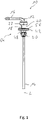
- the tank connection assembly 10 comprises a connection pipe 12 with a pipe section 14 that extends in the direction of a pipe longitudinal axis L and is to be inserted through a tank opening into a tank, and a pipe section 16 that is, for example, angled with respect to the pipe section 14 and is configured outside of a tank for connection to a fuel line.
- the connection pipe 12 is preferably designed as a metal tube.
- the tank connection assembly 10 also includes a sleeve-like first clamping element 18 which is pushed over the pipe section 14 of the connection pipe 12 and fixed at a position provided for this purpose, for example by welding.
- the first clamping element 18 is an externally threaded clamping element formed and has an external thread 20 on its outer circumference.
- a second clamping element 22 designed as a self-locking nut has an internal thread 24 on its inner peripheral surface, with which it can be brought into threaded engagement with the external thread 20 of the first clamping element 18, so that rotation of the second clamping element 22, designed as an internal thread clamping element, about the longitudinal axis of the pipe L leads to a displacement of the second clamping element 22 with respect to the first clamping element 18 in the direction of the longitudinal axis L of the pipe.
- the tank connection assembly 10 also includes an expanding element 26, preferably designed as a sheet metal part Figures 3 and 4 Spreading element 26, which is shown more clearly, is provided by cutting out or stamping out and bending a sheet metal blank and has a ring-like or partially sleeve-like fastening area 28, with which it can be positioned surrounding the pipe section 14 of the connecting pipe 12 and can be fixed thereto, for example by welding.
- a collar-like projection area could be provided on the pipe section 14, on which the spreading element 26 can be supported with its fastening area 28 in the direction away from the first clamping element 18.
- the spreading element 26 has a plurality of spreading legs 30 starting from the fastening area 28 and bent in the direction of the longitudinal axis L of the pipe.
- the four expansion legs 30 are essentially identical to one another and are provided at an angular distance of 90° from one another, so that two of the expansion legs 30 are diametrically opposite each other with respect to the longitudinal axis L of the pipe.
- a barb area 32 is formed on each expansion leg 30 .
- Each barb area 32 has two barb elements 34 extending radially outwards on the spreader legs 30 .
- Each of the barb elements 34 has, on its axial side facing away from the fastening area 28 , a barb edge 36 which is approximately orthogonal to the longitudinal axis L of the pipe.
- the two barbed edges 36 of each expansion leg 30 together form a Barb support side 38 of a respective barb area 32, with which, as described below, a respective expansion leg 30 can be supported on a tank wall. Facing the fastening area 28 , each barb section 34 of each barb area 32 has an insertion bevel 40 .
- the tank connection assembly 10 also includes an abutment element 42 axially between the first tensioning element 18 and the expanding element 26 .
- a first axial side 46 of the abutment element body 44 facing the spreader element 26 there is provided a spreader shoulder 48 tapering in a direction away from the abutment element body 44 and towards the spreader element 26 .
- a central opening 50 of the abutment element 42 is a 6 recognizable, radially inwardly open sealing element receiving recess 52 is provided. This is also axially open to a second axial side 54 of the abutment element body 44 facing away from the first axial side 46 .
- a first sealing element 56 embodied, for example, as an O-ring is received in the first sealing element receiving recess 52 that surrounds the longitudinal axis L of the pipe in a ring-like manner.
- This can, for example, basically be dimensioned such that it is held with a press fit between the abutment element body 44 and the connecting pipe 12 and protrudes beyond the second axial side 54 of the abutment element body 44 in a basic state.
- the abutment element 42, together with the first sealing element 56, essentially forms a first sealing region 57.
- An annular disk-like compression element 58 is arranged axially between the abutment element 42 and the first tensioning element 18 . This preferably covers the abutment element body 44 completely.
- the first sealing element 56 is axially compressed so that it lies increasingly radially against the outer peripheral surface of the pipe section 14 of the connecting pipe 12 and the inner peripheral surface of the first sealing element receiving recess and thus a tight seal between the Abutment element 42 and the connecting pipe 12 provides.
- the compression element 58 is in contact with the second axial side 54 of the abutment element 42 .
- first axial side 46 of the abutment element 42 there is a second sealing element receiving recess 60 which is open towards this first axial side 46 and surrounds the opening 50 or also the longitudinal axis L of the pipe in a ring-like manner.
- a second sealing element 62 embodied, for example, as an O-ring is received in the second sealing element receiving recess 60 in such a way that it basically protrudes axially beyond the first axial side 46 of the abutment element body 44 .
- the compression element 58 compresses the first sealing element 56 and is in contact with the second axial side of the abutment element body 44
- the compression element 58 presses the abutment element body 44 against a tank wall explained below, as a result of which the second sealing element 62 is compressed and the first axial side 46 of the abutment element 42 comes into contact with the tank wall.
- the abutment element 42 essentially forms a second sealing arrangement 63 with the second sealing element 62.
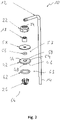
- the first tensioning element 18, the second tensioning element 22, the spreading element 26, the abutment element 42 with the two sealing elements 56, 62 and the compression element 58 form a fastening assembly, generally designated 64, of the tank connection assembly 10, through which the tank connection assembly 10 or the connection pipe 12 is attached one in the Figures 5 to 7 recognizable tank wall 66 of a tank generally designated 68 is fixed.
- a tank opening 70 is formed in the tank wall 66 and can, for example, be produced subsequently in a tank already installed on a vehicle.
- the tank opening 70 is dimensioned in such a way that the expanding shoulder 48 of the abutment element 42 can be positioned so as to engage in it.
- the tank opening 70 is dimensioned such that in the following with respect to the 7 described state in which the tank connection assembly 10 on the tank 68 is fixed, the spreading leg 26 spread open by the spreading shoulder 48 engages over a wall region of the tank wall 66 surrounding the tank opening 70 on a first side 72 of the tank wall 66 facing the tank interior with its barb elements 34 .
- the second clamping element 22 Before inserting the tank connection assembly 10 into the tank opening 70, the second clamping element 22 is removed, for example, from the first clamping element 18 or inserted into a figure 5 brought recognizable position in which there is no supporting interaction between the second tensioning element 22 and the compression element 58.
- the abutment element 42 can thus be supported axially on the first tensioning element 18 in an assembly preparation position via the compression element 58 .
- the abutment element 42 is positioned with respect to the expansion element 26 in such a way that the expansion shoulder 48 does not essentially overlap the expansion legs 30 axially and these are in a basic state in which they can basically elastically deflect radially when the tank connection assembly 10 is connected to the Pipe section 14 of the connecting pipe 12 and the spreader element 26 fixed thereto is passed through the tank opening 70 . Due to the effect of the insertion bevels 40 , the expansion legs 30 are moved radially inward in the course of this movement until the expansion element 26 is essentially completely positioned on the first side 72 of the tank wall 66 . Once this state is reached, the expansion legs 30 spring back radially outwards so that in the basic state then regained, for example the barbed edges 46 provided on the barb elements 34 engage behind the tank wall 66 on its first side 72 .
- the second clamping element 22 is then screwed onto the first clamping element 18 and is thereby displaced in the direction of the spreading element 26 .
- the abutment element 42 or the second sealing element 62 provided thereon to rest against an outwardly oriented second side 74 of the tank wall 66, so that the abutment element 42 can develop its abutment effect.
- the connecting pipe 12 with its pipe section 14 is displaced in the direction out of the tank, i.e. in 6 up.
- the spreader element 26 approaches with its spreader legs 30 the spreader lug 48 on the abutment element 42 until contact occurs between the spreader legs 30 and the spreader lug 48 .
- the expansion legs 30 move along the expansion shoulder 48 in the direction of the first clamping element 18 and are thereby expanded radially outward.
- the barb elements 34 already overlapping the tank wall 66 on the first side 72 are thereby shifted even further radially outwards, so that an increased overlapping on the first side 72 is achieved.
- a further screwing movement of the second tensioning element 22 then leads to the compression of the two sealing elements 56, 62, already described above, until the compression element 58 rests against the second axial side 54 of the abutment element 42 and the abutment element 42 rests with its first axial side 46 on the second side 74 of the tank wall 66 .
- the tank connection assembly 10 is supported firmly and in a defined manner on the tank wall 66, the position of the tank connection assembly 10 not being defined by the compression of an elastic component, but by rigid components supporting one another in a defined manner. Therefore, fatigue phenomena occurring in an elastic material cannot lead to a change in the position of the tank connection assembly 10 even over the service life. Also there is no due to the elasticity of a Play between the tank connection assembly 10 and the tank wall 66 introduced by the sealing element.
- all components of the tank connection assembly 10, with the exception of the two sealing elements 56, 52, are preferably designed as metal parts.
- the spreading element 26 can be provided in a simple, cost-effective and nevertheless stable manner as a sheet metal part, and the abutment element 42 and the compression element 58 are preferably designed as stainless steel components, as are the first clamping element 18 and the second clamping element 22.
- the first tensioning element 18 can be designed as a separate component and can be fixed to the connecting pipe 12 by a material connection, for example.
- the first clamping element 18 can also be fixed to the connection pipe 12 in that it is formed integrally with it, ie as one piece of material, and is provided, for example, by deformation and/or machining of the connection pipe.
Landscapes
- Engineering & Computer Science (AREA)
- General Engineering & Computer Science (AREA)
- Mechanical Engineering (AREA)
- Chemical & Material Sciences (AREA)
- Combustion & Propulsion (AREA)
- Life Sciences & Earth Sciences (AREA)
- Sustainable Development (AREA)
- Sustainable Energy (AREA)
- Transportation (AREA)
- Cooling, Air Intake And Gas Exhaust, And Fuel Tank Arrangements In Propulsion Units (AREA)
Description
- Die vorliegende Erfindung betrifft eine Tankanschlussbaugruppe, welche beispielsweise an einem Tank eines Kraftfahrzeugs festgelegt werden kann, um aus dem Tank zu entnehmenden Brennstoff zu einem brennstoffbetriebenen Fahrzeugheizgerät leiten zu können.
- Aus der
DE 10 2016 010 034 B3 ist eine Tankanschlussbaugruppe bekannt, bei welcher ein Außengewinde-Spannelement an einem Anschlussrohr festgelegt ist. Ein das Außengewinde-Spannelement umgebendes, hülsenartiges Spreiz/Dicht-Element ist aus elastischem Material aufgebaut und stützt sich mit einem ersten Endbereich in Richtung einer Rohrlängsachse des Anschlussrohrs am Außengewinde-Spannelement ab. Ein mit dem Außengewinde-Spannelement in Gewindeeingriff stehendes Innengewinde-Spannelement beaufschlagt über eine Kompressionsscheibe das andere axiale Ende des Spreiz/Dicht-Elements. Durch Verdrehen des Innengewinde-Spannelements bezüglich des Außengewinde-Spannelements wird das Spreiz/Dicht-Element axial komprimiert und dabei radial aufgespreizt. - Zur Festlegung dieser Tankanschlussbaugruppe an einer Tankwandung eines Tanks wird das Anschlussrohr mit dem daran festgelegten Außengewinde-Spannelement und dem das Außengewinde-Spannelement umgebenden Spreiz/Dicht-Element durch eine Tanköffnung in der Tankwandung hindurchgeführt, bis ein am zweiten axialen Ende des Spreiz/Dicht-Elements gebildeter, nach radial außen vorspringender Flanschbereich an der Tankwandung anliegt. Daraufhin wird das Innengewinde-Spannelement verdreht, so dass das Spreiz/Dicht-Element axial komprimiert wird und sich dabei radial ausbaucht bzw. radial aufgespreizt ist. Dadurch umgreift das Spreiz/Dicht-Element die Tankwandung in einem die Tanköffnung umgebenden Wandungsbereich an beiden axialen Seiten und hält somit die Tankanschlussbaugruppe an der Tankwandung.
- Es ist die Aufgabe der vorliegenden Erfindung, eine Tankanschlussbaugruppe, insbesondere für ein brennstoffbetriebenes Fahrzeugheizgerät, vorzusehen, bei welcher eine zuverlässige, gegen den Austritt von Brennstoff dichte Befestigung an einer Tankwandung gewährleistet werden kann.
- Erfindungsgemäß wird diese Aufgabe gelöst durch eine Tankanschlussbaugruppe, insbesondere für ein brennstoffbetriebenes Fahrzeugheizgerät, umfassend ein durch eine Tanköffnung in einer Tankwandung hindurchzuführendes, in Richtung einer Rohrlängsachse sich erstreckendes Anschlussrohr und eine Befestigungsbaugruppe an dem Anschlussrohr zur Festlegung an der Tankwandung im Bereich der Tanköffnung, wobei die Befestigungsbaugruppe umfasst:
- ein an dem Anschlussrohr festgelegtes erstes Spannelement,
- ein zweites Spannelement, wobei das zweite Spannelement mit dem ersten Spannelement derart in Eingriff steht oder bringbar ist, dass eine Drehung des zweiten Spannelements bezüglich des ersten Spannelements um die Rohrlängsachse eine Bewegung des zweiten Spannelements bezüglich des ersten Spannelements in Richtung der Rohrlängsachse bewirkt,
- ein an dem Anschlussrohr in axialem Abstand zu dem ersten Spannelement wenigstens in Richtung von dem ersten Spannelement weg festgelegtes Spreizelement zur Abstützung an einer ersten Seite einer Tankwandung,
- ein zwischen dem ersten Spannelement und dem Spreizelement axial bewegbar angeordnetes, bezüglich des ersten Spannelements axial in Richtung von dem Spreizelement weg über das zweite Spannelement abstützbares oder abgestütztes Widerlagerelement mit einem ersten Dichtbereich zum Bereitstellen eines dichten Abschlusses bezüglich einer Außenumfangsfläche des Anschlussrohrs und einem zweiten Dichtbereich zum Bereitstellen eines dichten Abschlusses bezüglich einer von der ersten Seite abgewandten zweiten Seite der Tankwandung.
- Da der erfindungsgemäße Aufbau die Verformung bzw. Aufspreizung eines sowohl die Dichtwirkung bezüglich einer Tankwandung, als auch die Befestigung an der Tankwandung realisierenden, elastisch verformbaren Bauteils vermeidet, wird einerseits eine stabile Fixierung der Tankanschlussbaugruppe bezüglich der Tankwandung über eine lange Betriebslebensdauer hinweg gewährleistet, andererseits kann durch die Trennung der Befestigungsfunktion einerseits und der Dichtfunktion andererseits dadurch, dass das Spreizelement selbst in die Dichtfunktion nicht involviert ist, auch ein zuverlässig dichter Abschluss im Bereich der Tanköffnung gewährleistet werden. Eine derartige Tankanschlussbaugruppe ermöglicht es, beim nachträglichen Einbau eines brennstoffbetriebenen Fahrzeugheizgeräts in ein Fahrzeug, welches zunächst keine bauliche Vorkehrung aufweist, um das Fahrzeugheizgerät aus dem in dem Fahrzeug vorgesehenen Tank mit Brennstoff zu speisen, dies in einfacher Weise dadurch zu realisieren, dass in den im Fahrzeug vorgesehenen Tank eine Tanköffnung eingebracht wird und im Bereich dieser Tanköffnung dann die den zuverlässigen und dichten Abschluss gewährleistende erfindungsgemäß aufgebaute Tankanschlussbaugruppe am Tank festgelegt wird.
- Bei einer baulich einfach zu realisierenden Ausgestaltung kann das Spreizelement einen das Anschlussrohr umgebenden, ringartigen Befestigungsbereich und eine Mehrzahl von mit Umfangsabstand zueinander angeordneten und von dem Befestigungsbereich sich auf das erste Spannelement zu erstreckenden, radialelastischen Spreizschenkeln umfassen, wobei an jedem Spreizschenkel ein nach radial außen hervorstehender Widerhakenbereich vorgesehen ist.
- Um einerseits durch das Spreizelement eine stabile Abstützung bezüglich der Tankwandung zu gewährleisten, andererseits das Hindurchführen durch die Tanköffnung zu ermöglichen, wird vorgeschlagen, dass jeder Widerhakenbereich eine von dem Befestigungsbereich abgewandt orientierte Widerhaken-Abstützseite zur Abstützung an der ersten Seite der Tankwandung in einem die Tanköffnung umgebenden Wandungsbereich umfasst, oder/und dass jeder Widerhakenbereich eine dem Befestigungsbereich zugewandte Einführschräge umfasst.
- Um für das Spreizelement die zur Erlangung der Wechselwirkung mit der Tankwandung erforderliche Spreizwirkung in einfacher Weise bereitstellen zu können, kann das Widerlagerelement einen ringscheibenartigen Widerlagerelementkörper umfassen, wobei an einer dem Spreizelement zugewandten ersten Axialseite des Widerlagerelementkörpers ein in Richtung auf das Spreizelements zu hervorstehender, von dem Widerlagerelementkörper weg auf das Spreizelement zu sich verjüngender Spreizansatz vorgesehen ist.
- Zum Vermeiden einer übermäßigen Aufspreizung des Spreizelements kann an jedem Spreizschenkel ein in Richtung vom Befestigungsbereich weg über den Widerhakenbereich hinaus sich erstreckender Aufspreizbegrenzungsabschnitt vorgesehen sein.
- Dabei kann für eine in Umfangsrichtung gleichmäßige Spreizwirkung vorgesehen sein, dass der Spreizansatz das Anschlussrohr ringartig umgibt, oder/und dass der Spreizansatz sich in Richtung auf das Spreizelement zu im Wesentlichen konisch verjüngend ausgebildet ist.
- Um das Einführen der Befestigungsbaugruppe in die Tanköffnung in einfacher Weise realisieren zu können, kann das Widerlagerelement in einer Montage-Vorbereitungsposition bezüglich des ersten Spannelements derart abstützbar sein, dass der Spreizansatz das Spreizelement axial im Wesentlichen nicht überlappt oder/und das Spreizelement nicht nach radial außen aufspreizt oder/und eine Verformung des Spreizelements nach radial innen zulässt.
- Zur Bereitstellung des ersten Dichtbereichs kann an dem Widerlagerelementkörper an einer Anschlussrohr-Aufnahmeöffnung eine nach radial innen offene, die Rohrlängsachse ringartig umgebende und ein erstes ringartiges Dichtelement aufnehmende erste Dichtelement-Aufnahmeaussparung vorgesehen sein.
- Zur Bereitstellung des zweiten Dichtbereichs kann an der ersten Axialseite des Widerlagerelementkörpers eine zur ersten Axialseite offene, die Rohrlängsachse ringartig umgebende und ein zweites ringartiges Dichtelement aufnehmende zweite Dichtelement-Aufnahmeaussparung vorgesehen sein. Das erste Dichtelement kann bei an der Tankwandung festgelegter Tankanschlussbaugruppe in der ersten Dichtelement-Aufnahmeaussparung derart komprimiert sein, dass dieses am Widerlagerelementkörper und an der zweiten Seite der Tankwandung abgestützt und dazwischen komprimiert ist, und dass andererseits zur Erlangung einer definierten Positionierung der Tankanschlussbaugruppe bezüglich der Tankwandung der Widerlagerelementkörper mit seiner ersten Axialseite an der zweiten Seite der Tankwandung anliegt. Eine von der Elastizität des zweiten Dichtelements abhängige Positionierung der Tankanschlussbaugruppe bezüglich des Tanks wird dadurch vermieden.
- Um auch hinsichtlich der Abdichtung bezüglich des Anschlussrohrs die Bereitstellung des dichten Abschlusses einerseits und die definierte Positionieren der Tankanschlussbaugruppe bezüglich des Tanks andererseits voneinander zu entkoppeln, wird vorgeschlagen, dass die erste Dichtelement-Aufnahmeaussparung an einer von der ersten Axialseite abgewandten zweiten Axialseite des Widerlagerelementkörpers axial offen ist, und dass axial zwischen dem Widerlagerelement und dem ersten Spannelement ein die zweite Axialseite des Widerlagerelementkörpers wenigstens im Bereich der ersten Dichtelement-Aufnahmeaussparung überdeckendes Kompressionselement angeordnet ist.
- Bei einem stabil und kostengünstig zu realisierenden und insbesondere auch gegen die chemische Einwirkung von Brennstoff resistenten Aufbau wird vorgeschlagen, dass das Spreizelement ein Blechumformteil ist.
- Für eine stabile Wechselwirkung zwischen den beiden Spannelementen wird vorgeschlagen, dass das erste Spannelement ein Außengewinde-Spannelement mit einem Außengewinde ist, und dass das zweite Spannelement ein Innengewinde-Spannelement mit einem mit dem Außengewinde in Gewindeeingriff stehenden Innengewinde ist.
- Die Erfindung betrifft ferner eine Tankanordnung, insbesondere zur Versorgung eines brennstoffbetriebenen Fahrzeugheizgeräts mit Brennstoff, umfassend einen Tank mit einer Tankwandung und einer in der Tankwandung ausgebildeten Tanköffnung sowie eine an der Tankwandung im Bereich der Tanköffnung festgelegte, erfindungsgemäß aufgebaute Tankanschlussbaugruppe.
- Die vorliegende Erfindung wird nachfolgend mit Bezug auf die beiliegenden Zeichnungen detailliert beschrieben. Es zeigt:
- Fig. 1
- eine Seitenansicht einer Tankanschlussbaugruppe;
- Fig. 2
- die Tankanschlussbaugruppe der
Fig. 1 in Explosionsdarstellung; - Fig. 3
- in perspektivischer Ansicht ein Spreizelement der Tankanschlussbaugruppe der
Fig. 1 ; - Fig. 4
- das Spreizelement der
Fig. 3 in Seitenansicht; - Fig. 5
- die durch eine Tanköffnung in einer Tankwandung hindurchgeführte Tankanschlussbaugruppe der
Fig. 1 ; - Fig. 6
- vergrößert das Detail VI in
Fig. 5 ; - Fig. 7
- eine der
Fig. 6 entsprechende Darstellung, bei welcher die Tankanschlussbaugruppe an einer Tankwandung festgelegt ist. - In den
Fig. 1 bis 4 sind eine erfindungsgemäß aufgebaute Tankanschlussbaugruppe 10 bzw. deren Komponenten dargestellt. Die Tankanschlussbaugruppe 10 umfasst ein Anschlussrohr 12 mit einem in Richtung einer Rohrlängsachse L sich erstreckenden, durch eine Tanköffnung hindurch in einen Tank einzuführenden Rohrabschnitt 14 und einem bezüglich des Rohrabschnitts 14 beispielsweise angewinkelten und außerhalb eines Tanks zum Anschluss an eine Brennstoffleitung ausgebildeten Rohrabschnitt 16. Das Anschlussrohr 12 ist vorzugsweise als Metallrohr ausgebildet. - Die Tankanschlussbaugruppe 10 umfasst ferner ein hülsenartiges erstes Spannelement 18, das über den Rohrabschnitt 14 des Anschlussrohrs 12 geschoben und an einer dafür vorgesehenen Position beispielsweise durch Verschweißen festgelegt wird. Das erste Spannelement 18 ist als Außengewinde-Spannelement ausgebildet und weist an seinem Außenumfang ein Außengewinde 20 auf. Ein als selbstsichernde Mutter ausgebildetes zweites Spannelement 22 weist an seiner Innenumfangsfläche ein Innengewinde 24 auf, mit welchem es in Gewindeeingriff mit dem Außengewinde 20 des ersten Spannelements 18 gebracht werden kann, so dass eine Drehung des als Innengewinde-Spannelement ausgebildeten zweiten Spannelements 22 um die Rohrlängsachse L zu einer Verlagerung des zweiten Spannelements 22 bezüglich des ersten Spannelements 18 in Richtung der Rohrlängsachse L führt.
- Die Tankanschlussbaugruppe 10 umfasst ferner ein vorzugsweise als Blechumformteil ausgebildetes Spreizelement 26. Das in den
Fig. 3 und 4 deutlicher dargestellte Spreizelement 26 ist durch Ausschneiden bzw. Ausstanzen und Biegen eines Blechrohlings bereitgestellt und weist einen ringartigen bzw. teilweise hülsenartigen Befestigungsbereich 28 auf, mit welchem es den Rohrabschnitt 14 des Anschlussrohrs 12 umgebend positioniert werden kann und daran beispielsweise durch Verschweißung festgelegt werden kann. Alternativ könnte am Rohrabschnitt 14 ein bundartiger Vorsprungsbereich vorgesehen sein, an welchem das Spreizelement 26 mit seinem Befestigungsbereich 28 sich in Richtung von dem ersten Spannelement 18 weg abstützen kann. - Das Spreizelement 26 weist mehrere vom Befestigungsbereich 28 ausgehende und in Richtung der Rohrlängsachse L abgebogene Spreizschenkel 30 auf. Im dargestellten Beispiel sind die insgesamt vier Spreizschenkel 30 zueinander im Wesentlichen identisch ausgebildet und mit einem Winkelabstand von 90° zueinander vorgesehen, so dass jeweils zwei der Spreizschenkel 30 sich bezüglich der Rohrlängsachse L diametral gegenüberliegen.
- An jedem Spreizschenkel 30 ist ein Widerhakenbereich 32 ausgebildet. Jeder Widerhakenbereich 32 weist zwei an den Spreizschenkeln 30 sich nach radial außen erstreckende Widerhakenelemente 34 auf. Jedes der Widerhakenelemente 34 weist an seiner vom Befestigungsbereich 28 abgewandten axialen Seite eine zur Rohrlängsachse L näherungsweise orthogonal stehende Widerhakenkante 36 auf. Die beiden Widerhakenkanten 36 jedes Spreizschenkels 30 bilden zusammen eine Widerhaken-Abstützseite 38 eines jeweiligen Widerhakenbereichs 32, mit welchem, wie nachfolgend beschrieben, ein jeweiliger Spreizschenkel 30 sich an einer Tankwandung abstützen kann. Dem Befestigungsbereich 28 zugewandt weist jeder Widerhakenabschnitt 34 jedes Widerhakenbereichs 32 eine Einführschräge 40 auf.
- Die Tankanschlussbaugruppe 10 umfasst ferner axial zwischen dem ersten Spannelement 18 und dem Spreizelement 26 ein Widerlagerelement 42. Das Widerlagerelement 42 weist einen ringscheibenartigen Widerlagerelementkörper 44 auf. An einer dem Spreizelement 26 zugewandten ersten Axialseite 46 des Widerlagerelementkörpers 44 ist ein in Richtung vom Widerlagerelementkörper 44 weg und auf das Spreizelement 26 zu sich vorzugsweise im Wesentlichen konisch verjüngender Spreizansatz 48 vorgesehen. An einer zentralen Öffnung 50 des Widerlagerelements 42 ist eine in
Fig. 6 erkennbare, nach radial innen offene Dichtelement-Aufnahmeaussparung 52 vorgesehen. Diese ist auch zu einer von der ersten Axialseite 46 abgewandten zweiten Axialseite 54 des Widerlagerelementkörpers 44 axial offen. In der die Rohrlängsachse L ringartig umgebenden ersten Dichtelement-Aufnahmeaussparung 52 ist ein beispielsweise als O-Ring ausgebildetes erstes Dichtelement 56 aufgenommen. Dieses kann beispielsweise grundsätzlich so dimensioniert sein, dass es unter Presspassung zwischen dem Widerlagerelementkörper 44 und dem Anschlussrohr 12 gehalten ist und in einem Grundzustand über die zweite axiale Seite 54 des Widerlagerelementkörpers 44 hervorsteht. Das Widerlagerelement 42 bildet zusammen mit dem ersten Dichtelement 56 im wesentlichen einen ersten Dichtbereich 57. - Axial zwischen dem Widerlagerelement 42 und dem ersten Spannelement 18 ist in ringscheibenartiges Kompressionselement 58 angeordnet. Dieses überdeckt den Widerlagerelementkörper 44 vorzugsweise vollständig. Bei einer axialen Beaufschlagung des Widerlagerelements 42 durch das zweite Spannelement 22 über das Kompressionselement 58 wird das erste Dichtelement 56 axial komprimiert, so dass es sich verstärkt radial gegen die Außenumfangsfläche des Rohrabschnitts 14 des Anschlussrohrs 12 und die Innenumfangsfläche der ersten Dichtelement-Aufnahmeaussparung legt und somit einen dichten Abschluss zwischen dem Widerlagerelement 42 und dem Anschlussrohr 12 bereitstellt. In diesem Zustand liegt das Kompressionselement 58 an der zweiten Axialseite 54 des Widerlagerelements 42 an.
- An der ersten Axialseite 46 des Widerlagerelements 42 ist eine zu dieser ersten Axialseite 46 offene und die Öffnung 50 bzw. auch die Rohrlängsachse L ringartig umgebende zweite Dichtelement-Aufnahmeaussparung 60 vorgesehen. In der zweiten Dichtelement-Aufnahmeaussparung 60 ist ein beispielsweise als O-Ring ausgebildetes zweites Dichtelement 62 derart aufgenommen, dass es grundsätzlich axial über die erste Axialseite 46 des Widerlagerelementkörpers 44 hervorsteht. In dem vorangehend bereits beschriebenen Kompressionszustand, in welchem das Kompressionselement 58 das erste Dichtelement 56 komprimiert und dabei an der zweiten Axialseite des Widerlagerelementkörpers 44 anliegt, presst das Kompressionselement 58 den Widerlagerelementkörper 44 gegen eine nachfolgend erläuterte Tankwandung, wodurch das zweite Dichtelement 62 komprimiert wird und die erste Axialseite 46 des Widerlagerelements 42 an der Tankwandung in Anlage kommt. Das Widerlagerelement 42 bildet mit dem zweiten Dichtelement 62 im Wesentlichen eine zweite Dichtanordnung 63.
- Das erste Spannelement 18, das zweite Spannelement 22, das Spreizelement 26, das Widerlagerelement 42 mit den beiden Dichtelementen 56, 62 und das Kompressionselement 58 bilden eine allgemein mit 64 bezeichnete Befestigungsbaugruppe der Tankanschlussbaugruppe 10, durch welche die Tankanschlussbaugruppe 10 bzw. das Anschlussrohr 12 an einer in den
Fig. 5 bis 7 erkennbaren Tankwandung 66 eines allgemein mit 68 bezeichneten Tanks festgelegt wird. - In der Tankwandung 66 ist eine Tanköffnung 70 gebildet, welche beispielsweise nachträglich in einem an einem Fahrzeug bereits installierten Tank erzeugt werden kann. Die Tanköffnung 70 ist derart dimensioniert, dass der Spreizansatz 48 des Widerlagerelements 42 in diese eingreifend positioniert werden kann. Ferner ist die Tanköffnung 70 derart dimensioniert, dass in dem nachfolgend in Bezug auf die
Fig. 7 beschriebenen Zustand, in welchem die Tankanschlussbaugruppe 10 am Tank 68 festgelegt ist, die durch den Spreizansatz 48 aufgespreizten Spreizschenkels 26 einen die Tanköffnung 70 umgebenden Wandungsbereich der Tankwandung 66 an einer dem Tankinneren zugewandten ersten Seite 72 der Tankwandung 66 mit ihren Widerhakenelementen 34 übergreifen. - Vor dem Einführen der Tankanschlussbaugruppe 10 in die Tanköffnung 70 ist das zweite Spannelement 22 beispielsweise vom ersten Spannelement 18 entfernt oder in eine in
Fig. 5 erkennbare Position gebracht, in welcher keine Abstützwechselwirkung zwischen dem zweiten Spannelement 22 und dem Kompressionselement 58 besteht. Über das Kompressionselement 58 kann das Widerlagerelement 42 sich somit in einer Montage-Vorbereitungsposition axial am ersten Spannelement 18 abstützen. In dieser Montage-Vorbereitungsposition ist das Widerlagerelement 42 derart bezüglich des Spreizelements 26 positioniert, dass der Spreizansatz 48 die Spreizschenkel 30 axial im Wesentlichen nicht überlappt und diese in einem Grundzustand sind, in welchem sie grundsätzlich radial elastisch einfedern können, wenn die Tankanschlussbaugruppe 10 mit dem Rohrabschnitt 14 des Anschlussrohrs 12 und dem daran festgelegten Spreizelement 26 durch die Tanköffnung 70 hindurchgeführt wird. Aufgrund der Wirkung der Einführschrägen 40 werden in Verlaufe dieser Bewegung die Spreizschenkel 30 nach radial innen bewegt, bis das Spreizelement 26 im Wesentlichen vollständig an der ersten Seite 72 der Tankwandung 66 positioniert ist. Ist dieser Zustand erreicht, federn die Spreizschenkel 30 wieder nach radial außen, so dass in dem dann wiedererlangten Grundzustand beispielsweise die an den Widerhakenelementen 34 vorgesehenen Widerhakenkanten 46 die Tankwandung 66 an ihrer ersten Seite 72 hintergreifen. - Nachfolgend wird das zweite Spannelement 22 auf das erste Spannelement 18 geschraubt und dadurch in Richtung auf das Spreizelement 26 zu verlagert. Im Zuge dieser Bewegung kommt, wie in
Fig. 6 dargestellt, das Widerlagerelement 42 bzw. das daran vorgesehene zweite Dichtelement 62 zur Anlage an einer nach außen orientierten zweiten Seite 74 der Tankwandung 66, so dass das Widerlagerelement 42 seine Widerlagerwirkung entfalten kann. - Bei weiter fortgesetzter Schraubbewegung des zweiten Spannelements 22 verlagert unter Abstützung des Widerlagerelements 42 über das zweite Dichtelement 62 an der Tankwandung 66 das Anschlussrohr 12 mit seinem Rohrabschnitt 14 sich in Richtung aus dem Tank heraus, also in
Fig. 6 nach oben. Das Spreizelement 26 nähert sich dabei mit seinen Spreizschenkeln 30 dem Spreizansatz 48 am Widerlagerelement 42 an, bis ein Kontakt zwischen den Spreizschenkeln 30 und dem Spreizansatz 48 entsteht. Bei weiter fortgesetzter Schraubbewegung bewegen sich die Spreizschenkel 30 entlang des Spreizansatzes 48 in Richtung auf das erste Spannelement 18 zu und werden dabei nach radial außen aufgespreizt. Die bereits zuvor die Tankwandung 66 an der ersten Seite 72 übergreifenden Widerhakenelemente 34 werden dadurch noch weiter nach radial außen verlagert, so dass ein verstärkter Übergriff an der ersten Seite 72 erlangt wird. - Um ein übermäßiges Aufspreizen bzw. ein Abgleiten der Spreizschenkel 30 zu vermeiden, weisen diese jeweils einen axial in Richtung auf das erste Spannelement zu über die Widerhakenbereiche 38 hervorstehenden Aufspreizbegrenzungsabschnitt 76 auf, welcher sich gegen eine Innenumfangsfläche der Tanköffnung 70 legen kann und somit die maximale Aufspreizung der Spreizschenkel 30 definiert. Bei bereits an der ersten Seite 72 der Tankwandung 66 sich abstützenden Widerhakenelementen 34 führt eine weitere Schraubbewegung des zweiten Spannelements 22 dann zu der vorangehend bereits beschriebenen Kompression der beiden Dichtelemente 56, 62, bis das Kompressionselement 58 an der zweiten Axialseite 54 des Widerlagerelements 42 anliegt und das Widerlagerelement 42 mit seiner ersten Axialseite 46 an der zweiten Seite 74 der Tankwandung 66 anliegt.
- In diesem Zustand ist die Tankanschlussbaugruppe 10 fest und definiert an der Tankwandung 66 getragen, wobei die Position der Tankanschlussbaugruppe 10 nicht durch die Kompression eines elastischen Bauteils definiert ist, sondern durch definiert aneinander sich abstützende, starre Bauteile. Auch über die Betriebslebensdauer hinweg können daher in einem elastischen Material auftretende Ermüdungserscheinungen nicht zu einer Positionsveränderung der Tankanschlussbaugruppe 10 führen. Auch besteht kein durch die Elastizität eines Dichtelements eingeführtes Bewegungsspiel zwischen der Tankanschlussbaugruppe 10 und der Tankwandung 66.
- Aus Gründen der Stabilität und der Korrosionsfestigkeit sind vorzugsweise alle Komponenten der Tankanschlussbaugruppe 10 mit Ausnahme der beiden Dichtelemente 56, 52 als Metallteile ausgeführt. Das Spreizelement 26 kann in einfacher, kostengünstiger und gleichwohl stabiler Art und Weise als Blechumformteil bereitgestellt sein, und das Widerlagerelement 42 und das Kompressionselement 58 sind vorzugsweise als Edelstahl-Bauteile ausgeführt, ebenso wie das erste Spannelement 18 und das zweite Spannelement 22.
- Das erste Spannelement 18 kann, wie dargestellt, als separates Bauteil ausgebildet und beispielsweise durch Materialschluss am Anschlussrohr 12 festgelegt sein. Alternativ kann das erste Spannelement 18 auch dadurch am Anschlussrohr 12 festgelegt sein, dass es mit diesem integral, also als ein Materialstück ausgebildet und beispielsweise durch Verformung oder/und spanabhebende Bearbeitung des Anschlussrohrs bereitgestellt ist.
Claims (12)
- Tankanschlussbaugruppe, insbesondere für ein brennstoffbetriebenes Fahrzeugheizgerät, umfassend ein durch eine Tanköffnung (70) in einer Tankwandung (66) hindurchzuführendes, in Richtung einer Rohrlängsachse (L) sich erstreckendes Anschlussrohr (12) und eine Befestigungsbaugruppe (64) an dem Anschlussrohr (12) zur Festlegung an der Tankwandung (66) im Bereich der Tanköffnung (70), wobei die Befestigungsbaugruppe (64) umfasst:- ein an dem Anschlussrohr (12) festgelegtes erstes Spannelement (18),- ein zweites Spannelement (22), wobei das zweite Spannelement (22) mit dem ersten Spannelement (18) derart in Eingriff steht oder bringbar ist, dass eine Drehung des zweiten Spannelements (22) bezüglich des ersten Spannelements (22) um die Rohrlängsachse eine Bewegung des zweiten Spannelements (18) bezüglich des ersten Spannelements in Richtung der Rohrlängsachse (L) bewirkt, dadurch gekennzeichnet, dass die Befestigungsbaugruppe (64) weiter umfasst:- ein an dem Anschlussrohr (12) in axialem Abstand zu dem ersten Spannelement (18) wenigstens in Richtung von dem ersten Spannelement (18) weg festgelegtes Spreizelement (26) zur Abstützung an einer ersten Seite (72) einer Tankwandung (66),- ein zwischen dem ersten Spannelement (18) und dem Spreizelement (26) axial bewegbar angeordnetes, bezüglich des ersten Spannelements (18) axial in Richtung von dem Spreizelement (26) weg über das zweite Spannelement (22) abstützbares oder abgestütztes Widerlagerelement (42) mit einem ersten Dichtbereich (57) zum Bereitstellen eines dichten Abschlusses bezüglich einer Außenumfangsfläche des Anschlussrohrs (12) und einem zweiten Dichtbereich (63) zum Bereitstellen eines dichten Abschlusses bezüglich einer von der ersten Seite (72) abgewandten zweiten Seite (74) der Tankwandung.
- Tankanschlussbaugruppe nach Anspruch 1, dadurch gekennzeichnet, dass das Spreizelement (26) einen das Anschlussrohr (12) umgebenden, ringartigen Befestigungsbereich (28) und eine Mehrzahl von mit Umfangsabstand zueinander angeordneten und von dem Befestigungsbereich (28) sich auf das erste Spannelement (18) zu erstreckenden, radialelastischen Spreizschenkeln (30) umfasst, wobei an jedem Spreizschenkel (30) ein nach radial außen hervorstehender Widerhakenbereich (38) vorgesehen ist.
- Tankanschlussbaugruppe nach Anspruch 2, dadurch gekennzeichnet, dass jeder Widerhakenbereich (32) eine von dem Befestigungsbereich (28) abgewandt orientierte Widerhaken-Abstützseite (38) zur Abstützung an der ersten Seite (72) der Tankwandung (66) in einem die Tanköffnung (70) umgebenden Wandungsbereich umfasst, oder/und dass jeder Widerhakenbereich (32) eine dem Befestigungsbereich (28) zugewandte Einführschräge (40) umfasst.
- Tankanschlussbaugruppe nach Anspruch 2 oder 3, dadurch gekennzeichnet, dass an jedem Spreizschenkel (30) ein in Richtung vom Befestigungsbereich (28) weg über den Widerhakenbereich (32) hinaus sich erstreckender Aufspreizbegrenzungsabschnitt (76) vorgesehen ist.
- Tankanschlussbaugruppe nach einem der vorangehenden Ansprüche, dadurch gekennzeichnet, dass das Widerlagerelement (42) einen ringscheibenartigen Widerlagerelementkörper (44) umfasst, wobei an einer dem Spreizelement (26) zugewandten ersten Axialseite (46) des Widerlagerelementkörpers (44) ein in Richtung auf das Spreizelement (76) zu hervorstehender, von dem Widerlagerelementkörper (44) weg auf das Spreizelement (26) zu sich verjüngender Spreizansatz (48) vorgesehen ist.
- Tankanschlussbaugruppe nach Anspruch 5, dadurch gekennzeichnet, dass der Spreizansatz (48) das Anschlussrohr (12) ringartig umgibt, oder/und dass der Spreizansatz (48) sich in Richtung auf das Spreizelement (26) zu im Wesentlichen konisch verjüngend ausgebildet ist.
- Tankanschlussbaugruppe nach Anspruch 5 oder 6, dadurch gekennzeichnet, dass das Widerlagerelement (42) in einer Montage-Vorbereitungsposition bezüglich des ersten Spannelements (18) derart abstützbar ist, dass der Spreizansatz (48) das Spreizelement (26) axial im Wesentlichen nicht überlappt oder/und das Spreizelement (26) nicht nach radial außen aufspreizt oder/und eine Verformung des Spreizelements (26) nach radial innen zulässt.
- Tankanschlussbaugruppe nach Anspruch 5, 6 oder 7, dadurch gekennzeichnet, dass zur Bereitstellung des ersten Dichtbereichs (57) an dem Widerlagerelementkörper (44) an einer Anschlussrohr-Aufnahmeöffnung (50) eine nach radial innen offene, die Rohrlängsachse (L) ringartig umgebende und ein erstes ringartiges Dichtelement (56) aufnehmende erste Dichtelement-Aufnahmeaussparung (52) vorgesehen ist, oder/und dass zur Bereitstellung des zweiten Dichtbereichs (63) an der ersten Axialseite (46) des Widerlagerelementkörpers (44) eine zur ersten Axialseite (46) offene, die Rohrlängsachse (L) ringartig umgebende und ein zweites ringartiges Dichtelement (62) aufnehmende zweite Dichtelement-Aufnahmeaussparung (60) vorgesehen ist.
- Tankanschlussbaugruppen nach Anspruch 8, dadurch gekennzeichnet, dass die erste Dichtelement-Aufnahmeaussparung (52) an einer von der ersten Axialseite (46) abgewandten zweiten Axialseite (54) des Widerlagerelementkörpers (44) axial offen ist, und dass axial zwischen dem Widerlagerelement (42) und dem ersten Spannelement (18) ein die zweite Axialseite (54) des Widerlagerelementkörpers (44) wenigstens im Bereich der ersten Dichtelement-Aufnahmeaussparung (52) überdeckendes Kompressionselement (58) angeordnet ist.
- Tankanschlussbaugruppe nach einem der vorangehenden Ansprüche,
dadurch gekennzeichnet, dass das Spreizelement (26) ein Blechumformteil ist. - Tankanschlussbaugruppe nach einem der vorangehenden Ansprüche,
dadurch gekennzeichnet, dass das erste Spannelement (18) ein Außengewinde-Spannelement mit einem Außengewinde (20) ist, und dass das zweite Spannelement (22) ein Innengewinde-Spannelement mit einem mit dem Außengewinde (20) in Gewindeeingriff stehenden Innengewinde (24) ist. - Tankanordnung, insbesondere zur Versorgung eines brennstoffbetriebenen Fahrzeugheizgeräts mit Brennstoff, umfassend einen Tank (68) mit einer Tankwandung (66) und einer in der Tankwandung (66) ausgebildeten Tanköffnung (70) sowie eine an der Tankwandung (66) im Bereich der Tanköffnung (70) festgelegte Tankanschlussbaugruppe (10) nach einem der vorangehenden Ansprüche.
Applications Claiming Priority (1)
| Application Number | Priority Date | Filing Date | Title |
|---|---|---|---|
| DE102020109871.5A DE102020109871A1 (de) | 2020-04-08 | 2020-04-08 | Tankanschlussbaugruppe |
Publications (2)
| Publication Number | Publication Date |
|---|---|
| EP3892486A1 EP3892486A1 (de) | 2021-10-13 |
| EP3892486B1 true EP3892486B1 (de) | 2022-12-28 |
Family
ID=74867394
Family Applications (1)
| Application Number | Title | Priority Date | Filing Date |
|---|---|---|---|
| EP21161161.1A Active EP3892486B1 (de) | 2020-04-08 | 2021-03-08 | Tankanschlussbaugruppe |
Country Status (5)
| Country | Link |
|---|---|
| EP (1) | EP3892486B1 (de) |
| DE (1) | DE102020109871A1 (de) |
| FI (1) | FI3892486T3 (de) |
| PL (1) | PL3892486T3 (de) |
| RU (1) | RU2756728C1 (de) |
Family Cites Families (7)
| Publication number | Priority date | Publication date | Assignee | Title |
|---|---|---|---|---|
| DE19602907A1 (de) * | 1996-01-27 | 1997-07-31 | Bosch Gmbh Robert | Befestigungsanordnung einer Kraftstoffleitung auf einem Stutzen |
| KR19980023868U (ko) * | 1996-10-31 | 1998-07-25 | 양재신 | 연료탱크의 연료파이프 연결구조 |
| US6131445A (en) * | 1997-10-10 | 2000-10-17 | Ford Motor Company | Fuel tank sensor assembly |
| US6367650B1 (en) * | 2000-05-25 | 2002-04-09 | Delphi Technologies, Inc. | Fuel tank cover assembly for fuel tank |
| DE102008034375A1 (de) | 2008-07-23 | 2010-01-28 | A. Kayser Automotive Systems Gmbh | Einrichtung zur Kraftstoffentnahme aus einem Behälter |
| DE102012102501B4 (de) * | 2012-03-23 | 2015-03-26 | Webasto Ag | Fluiddichte Leitungsdurchführung |
| DE102016010034B3 (de) | 2016-08-17 | 2018-02-01 | Eberspächer Climate Control Systems GmbH & Co. KG | Tankentnehmer |
-
2020
- 2020-04-08 DE DE102020109871.5A patent/DE102020109871A1/de not_active Withdrawn
-
2021
- 2021-03-08 FI FIEP21161161.1T patent/FI3892486T3/fi active
- 2021-03-08 PL PL21161161.1T patent/PL3892486T3/pl unknown
- 2021-03-08 EP EP21161161.1A patent/EP3892486B1/de active Active
- 2021-03-17 RU RU2021106976A patent/RU2756728C1/ru active
Also Published As
| Publication number | Publication date |
|---|---|
| EP3892486A1 (de) | 2021-10-13 |
| DE102020109871A1 (de) | 2021-10-14 |
| FI3892486T3 (fi) | 2023-01-31 |
| RU2756728C1 (ru) | 2021-10-04 |
| PL3892486T3 (pl) | 2023-05-08 |
Similar Documents
| Publication | Publication Date | Title |
|---|---|---|
| DE102006048344B4 (de) | Schlauchschelle | |
| DE102009011864B4 (de) | Verbindungsanordnung mit einem ersten Rohrstutzen und einem zweiten Rohrstutzen sowie Verriegelungsringanordnung für eine derartige Verbindungsanordnung | |
| DE4041679A1 (de) | Rohrverschraubung | |
| EP1859189A1 (de) | Klemmfitting für ein heizungs- und/oder sanitärrohr | |
| DE102004032134A1 (de) | Steckkupplung | |
| EP2250420A1 (de) | Schellenfixierung für ein schlauchende | |
| DE10162657A1 (de) | Anschlussstück für Fluidleitungen sowie damit ausgestattetes fluidtechnisches Gerät | |
| CH648392A5 (de) | Anschlussverbindungsstueck fuer leitungen zum fuehren von gasfoermigen oder fluessigen medien. | |
| EP2413012B1 (de) | Steckverbindung | |
| CH664811A5 (de) | Rohrverschraubung. | |
| EP3460307A1 (de) | Profilschelle mit dichtelement | |
| WO2009007165A1 (de) | Ladeluftschlauch | |
| DE102014009410B4 (de) | Verfahren zum Verbinden eines Einpressbolzens mit einem ein Vorloch aufweisenden Blechteil und Abdeckelement zur Durchführung des Verfahrens | |
| DE29916349U1 (de) | Flanschring zur Festlegung eines Lagers | |
| DE102010020337B4 (de) | Kupplung | |
| EP3892486B1 (de) | Tankanschlussbaugruppe | |
| EP3850260A1 (de) | Anschlussvorrichtung für rohrleitungen mit leckageanzeige | |
| WO2022057982A1 (de) | Anschlussvorrichtungen zum anschliessen eines rohres mit aussenumfangsseitiger erhebung, verwendungen und montageverfahren | |
| DE102009011151B4 (de) | Gliederheizkörpertrennelement und Gliederheizkörper | |
| DE102021128511B3 (de) | Verstelleinrichtung für eine verschwenkbare Fahrzeugklappe | |
| DE102019128040B4 (de) | Steckverbinder | |
| EP2082144A1 (de) | Kombination aus einer schraube und einer hülse sowie verfahren zum herstellen einer solchen kombination | |
| DE69313956T2 (de) | Schlauch mit radialer Spannvorrichtung zum Verbinden mit einem Rohrende; Schlauchverbindung mit diesem Schlauch | |
| EP3561358B1 (de) | Verstärkungshülse, schneidringverschraubung und verfahren | |
| DE29704444U1 (de) | Anschlußvorrichtung für Sanitär-Rohrleitungen |
Legal Events
| Date | Code | Title | Description |
|---|---|---|---|
| PUAI | Public reference made under article 153(3) epc to a published international application that has entered the european phase |
Free format text: ORIGINAL CODE: 0009012 |
|
| STAA | Information on the status of an ep patent application or granted ep patent |
Free format text: STATUS: THE APPLICATION HAS BEEN PUBLISHED |
|
| AK | Designated contracting states |
Kind code of ref document: A1 Designated state(s): AL AT BE BG CH CY CZ DE DK EE ES FI FR GB GR HR HU IE IS IT LI LT LU LV MC MK MT NL NO PL PT RO RS SE SI SK SM TR |
|
| STAA | Information on the status of an ep patent application or granted ep patent |
Free format text: STATUS: REQUEST FOR EXAMINATION WAS MADE |
|
| 17P | Request for examination filed |
Effective date: 20220413 |
|
| RBV | Designated contracting states (corrected) |
Designated state(s): AL AT BE BG CH CY CZ DE DK EE ES FI FR GB GR HR HU IE IS IT LI LT LU LV MC MK MT NL NO PL PT RO RS SE SI SK SM TR |
|
| GRAP | Despatch of communication of intention to grant a patent |
Free format text: ORIGINAL CODE: EPIDOSNIGR1 |
|
| STAA | Information on the status of an ep patent application or granted ep patent |
Free format text: STATUS: GRANT OF PATENT IS INTENDED |
|
| INTG | Intention to grant announced |
Effective date: 20220811 |
|
| GRAS | Grant fee paid |
Free format text: ORIGINAL CODE: EPIDOSNIGR3 |
|
| GRAA | (expected) grant |
Free format text: ORIGINAL CODE: 0009210 |
|
| STAA | Information on the status of an ep patent application or granted ep patent |
Free format text: STATUS: THE PATENT HAS BEEN GRANTED |
|
| AK | Designated contracting states |
Kind code of ref document: B1 Designated state(s): AL AT BE BG CH CY CZ DE DK EE ES FI FR GB GR HR HU IE IS IT LI LT LU LV MC MK MT NL NO PL PT RO RS SE SI SK SM TR |
|
| REG | Reference to a national code |
Ref country code: GB Ref legal event code: FG4D Free format text: NOT ENGLISH |
|
| REG | Reference to a national code |
Ref country code: CH Ref legal event code: EP |
|
| REG | Reference to a national code |
Ref country code: DE Ref legal event code: R096 Ref document number: 502021000342 Country of ref document: DE |
|
| REG | Reference to a national code |
Ref country code: AT Ref legal event code: REF Ref document number: 1540255 Country of ref document: AT Kind code of ref document: T Effective date: 20230115 |
|
| REG | Reference to a national code |
Ref country code: FI Ref legal event code: FGE |
|
| REG | Reference to a national code |
Ref country code: IE Ref legal event code: FG4D Free format text: LANGUAGE OF EP DOCUMENT: GERMAN |
|
| REG | Reference to a national code |
Ref country code: SE Ref legal event code: TRGR |
|
| REG | Reference to a national code |
Ref country code: LT Ref legal event code: MG9D |
|
| PG25 | Lapsed in a contracting state [announced via postgrant information from national office to epo] |
Ref country code: NO Free format text: LAPSE BECAUSE OF FAILURE TO SUBMIT A TRANSLATION OF THE DESCRIPTION OR TO PAY THE FEE WITHIN THE PRESCRIBED TIME-LIMIT Effective date: 20230328 Ref country code: LT Free format text: LAPSE BECAUSE OF FAILURE TO SUBMIT A TRANSLATION OF THE DESCRIPTION OR TO PAY THE FEE WITHIN THE PRESCRIBED TIME-LIMIT Effective date: 20221228 |
|
| REG | Reference to a national code |
Ref country code: NL Ref legal event code: MP Effective date: 20221228 |
|
| PG25 | Lapsed in a contracting state [announced via postgrant information from national office to epo] |
Ref country code: RS Free format text: LAPSE BECAUSE OF FAILURE TO SUBMIT A TRANSLATION OF THE DESCRIPTION OR TO PAY THE FEE WITHIN THE PRESCRIBED TIME-LIMIT Effective date: 20221228 Ref country code: LV Free format text: LAPSE BECAUSE OF FAILURE TO SUBMIT A TRANSLATION OF THE DESCRIPTION OR TO PAY THE FEE WITHIN THE PRESCRIBED TIME-LIMIT Effective date: 20221228 Ref country code: HR Free format text: LAPSE BECAUSE OF FAILURE TO SUBMIT A TRANSLATION OF THE DESCRIPTION OR TO PAY THE FEE WITHIN THE PRESCRIBED TIME-LIMIT Effective date: 20221228 Ref country code: GR Free format text: LAPSE BECAUSE OF FAILURE TO SUBMIT A TRANSLATION OF THE DESCRIPTION OR TO PAY THE FEE WITHIN THE PRESCRIBED TIME-LIMIT Effective date: 20230329 |
|
| PG25 | Lapsed in a contracting state [announced via postgrant information from national office to epo] |
Ref country code: NL Free format text: LAPSE BECAUSE OF FAILURE TO SUBMIT A TRANSLATION OF THE DESCRIPTION OR TO PAY THE FEE WITHIN THE PRESCRIBED TIME-LIMIT Effective date: 20221228 |
|
| PG25 | Lapsed in a contracting state [announced via postgrant information from national office to epo] |
Ref country code: SM Free format text: LAPSE BECAUSE OF FAILURE TO SUBMIT A TRANSLATION OF THE DESCRIPTION OR TO PAY THE FEE WITHIN THE PRESCRIBED TIME-LIMIT Effective date: 20221228 Ref country code: RO Free format text: LAPSE BECAUSE OF FAILURE TO SUBMIT A TRANSLATION OF THE DESCRIPTION OR TO PAY THE FEE WITHIN THE PRESCRIBED TIME-LIMIT Effective date: 20221228 Ref country code: PT Free format text: LAPSE BECAUSE OF FAILURE TO SUBMIT A TRANSLATION OF THE DESCRIPTION OR TO PAY THE FEE WITHIN THE PRESCRIBED TIME-LIMIT Effective date: 20230428 Ref country code: ES Free format text: LAPSE BECAUSE OF FAILURE TO SUBMIT A TRANSLATION OF THE DESCRIPTION OR TO PAY THE FEE WITHIN THE PRESCRIBED TIME-LIMIT Effective date: 20221228 Ref country code: EE Free format text: LAPSE BECAUSE OF FAILURE TO SUBMIT A TRANSLATION OF THE DESCRIPTION OR TO PAY THE FEE WITHIN THE PRESCRIBED TIME-LIMIT Effective date: 20221228 |
|
| PG25 | Lapsed in a contracting state [announced via postgrant information from national office to epo] |
Ref country code: SK Free format text: LAPSE BECAUSE OF FAILURE TO SUBMIT A TRANSLATION OF THE DESCRIPTION OR TO PAY THE FEE WITHIN THE PRESCRIBED TIME-LIMIT Effective date: 20221228 Ref country code: IS Free format text: LAPSE BECAUSE OF FAILURE TO SUBMIT A TRANSLATION OF THE DESCRIPTION OR TO PAY THE FEE WITHIN THE PRESCRIBED TIME-LIMIT Effective date: 20230428 Ref country code: AL Free format text: LAPSE BECAUSE OF FAILURE TO SUBMIT A TRANSLATION OF THE DESCRIPTION OR TO PAY THE FEE WITHIN THE PRESCRIBED TIME-LIMIT Effective date: 20221228 |
|
| REG | Reference to a national code |
Ref country code: DE Ref legal event code: R097 Ref document number: 502021000342 Country of ref document: DE |
|
| PG25 | Lapsed in a contracting state [announced via postgrant information from national office to epo] |
Ref country code: MC Free format text: LAPSE BECAUSE OF FAILURE TO SUBMIT A TRANSLATION OF THE DESCRIPTION OR TO PAY THE FEE WITHIN THE PRESCRIBED TIME-LIMIT Effective date: 20221228 Ref country code: DK Free format text: LAPSE BECAUSE OF FAILURE TO SUBMIT A TRANSLATION OF THE DESCRIPTION OR TO PAY THE FEE WITHIN THE PRESCRIBED TIME-LIMIT Effective date: 20221228 |
|
| PLBE | No opposition filed within time limit |
Free format text: ORIGINAL CODE: 0009261 |
|
| STAA | Information on the status of an ep patent application or granted ep patent |
Free format text: STATUS: NO OPPOSITION FILED WITHIN TIME LIMIT |
|
| REG | Reference to a national code |
Ref country code: BE Ref legal event code: MM Effective date: 20230331 |
|
| 26N | No opposition filed |
Effective date: 20230929 |
|
| PG25 | Lapsed in a contracting state [announced via postgrant information from national office to epo] |
Ref country code: LU Free format text: LAPSE BECAUSE OF NON-PAYMENT OF DUE FEES Effective date: 20230308 |
|
| REG | Reference to a national code |
Ref country code: IE Ref legal event code: MM4A |
|
| PG25 | Lapsed in a contracting state [announced via postgrant information from national office to epo] |
Ref country code: SI Free format text: LAPSE BECAUSE OF FAILURE TO SUBMIT A TRANSLATION OF THE DESCRIPTION OR TO PAY THE FEE WITHIN THE PRESCRIBED TIME-LIMIT Effective date: 20221228 Ref country code: IE Free format text: LAPSE BECAUSE OF NON-PAYMENT OF DUE FEES Effective date: 20230308 Ref country code: FR Free format text: LAPSE BECAUSE OF NON-PAYMENT OF DUE FEES Effective date: 20230331 |
|
| PG25 | Lapsed in a contracting state [announced via postgrant information from national office to epo] |
Ref country code: BE Free format text: LAPSE BECAUSE OF NON-PAYMENT OF DUE FEES Effective date: 20230331 |
|
| PG25 | Lapsed in a contracting state [announced via postgrant information from national office to epo] |
Ref country code: IT Free format text: LAPSE BECAUSE OF FAILURE TO SUBMIT A TRANSLATION OF THE DESCRIPTION OR TO PAY THE FEE WITHIN THE PRESCRIBED TIME-LIMIT Effective date: 20221228 |
|
| REG | Reference to a national code |
Ref country code: CH Ref legal event code: PL |
|
| PG25 | Lapsed in a contracting state [announced via postgrant information from national office to epo] |
Ref country code: BG Free format text: LAPSE BECAUSE OF FAILURE TO SUBMIT A TRANSLATION OF THE DESCRIPTION OR TO PAY THE FEE WITHIN THE PRESCRIBED TIME-LIMIT Effective date: 20221228 |
|
| PG25 | Lapsed in a contracting state [announced via postgrant information from national office to epo] |
Ref country code: BG Free format text: LAPSE BECAUSE OF FAILURE TO SUBMIT A TRANSLATION OF THE DESCRIPTION OR TO PAY THE FEE WITHIN THE PRESCRIBED TIME-LIMIT Effective date: 20221228 |
|
| PG25 | Lapsed in a contracting state [announced via postgrant information from national office to epo] |
Ref country code: CH Free format text: LAPSE BECAUSE OF NON-PAYMENT OF DUE FEES Effective date: 20240331 |
|
| PGFP | Annual fee paid to national office [announced via postgrant information from national office to epo] |
Ref country code: AT Payment date: 20250417 Year of fee payment: 5 |
|
| PG25 | Lapsed in a contracting state [announced via postgrant information from national office to epo] |
Ref country code: CY Free format text: LAPSE BECAUSE OF FAILURE TO SUBMIT A TRANSLATION OF THE DESCRIPTION OR TO PAY THE FEE WITHIN THE PRESCRIBED TIME-LIMIT; INVALID AB INITIO Effective date: 20210308 |
|
| PG25 | Lapsed in a contracting state [announced via postgrant information from national office to epo] |
Ref country code: HU Free format text: LAPSE BECAUSE OF FAILURE TO SUBMIT A TRANSLATION OF THE DESCRIPTION OR TO PAY THE FEE WITHIN THE PRESCRIBED TIME-LIMIT; INVALID AB INITIO Effective date: 20210308 |
|
| GBPC | Gb: european patent ceased through non-payment of renewal fee |
Effective date: 20250308 |
|
| PG25 | Lapsed in a contracting state [announced via postgrant information from national office to epo] |
Ref country code: TR Free format text: LAPSE BECAUSE OF FAILURE TO SUBMIT A TRANSLATION OF THE DESCRIPTION OR TO PAY THE FEE WITHIN THE PRESCRIBED TIME-LIMIT Effective date: 20221228 |
|
| PG25 | Lapsed in a contracting state [announced via postgrant information from national office to epo] |
Ref country code: GB Free format text: LAPSE BECAUSE OF NON-PAYMENT OF DUE FEES Effective date: 20250308 |
|
| PGFP | Annual fee paid to national office [announced via postgrant information from national office to epo] |
Ref country code: SE Payment date: 20260323 Year of fee payment: 6 |
|
| PGFP | Annual fee paid to national office [announced via postgrant information from national office to epo] |
Ref country code: DE Payment date: 20260320 Year of fee payment: 6 |
|
| PGFP | Annual fee paid to national office [announced via postgrant information from national office to epo] |
Ref country code: FI Payment date: 20260320 Year of fee payment: 6 |
|
| PGFP | Annual fee paid to national office [announced via postgrant information from national office to epo] |
Ref country code: CZ Payment date: 20260224 Year of fee payment: 6 |
|
| PGFP | Annual fee paid to national office [announced via postgrant information from national office to epo] |
Ref country code: PL Payment date: 20260227 Year of fee payment: 6 |