EP3885985A2 - Bildetikettierungsverfahren, elektronische vorrichtung, einrichtung und speichermedium - Google Patents
Bildetikettierungsverfahren, elektronische vorrichtung, einrichtung und speichermedium Download PDFInfo
- Publication number
- EP3885985A2 EP3885985A2 EP21164604.7A EP21164604A EP3885985A2 EP 3885985 A2 EP3885985 A2 EP 3885985A2 EP 21164604 A EP21164604 A EP 21164604A EP 3885985 A2 EP3885985 A2 EP 3885985A2
- Authority
- EP
- European Patent Office
- Prior art keywords
- labeling
- image
- elements
- labeled
- relationship
- Prior art date
- Legal status (The legal status is an assumption and is not a legal conclusion. Google has not performed a legal analysis and makes no representation as to the accuracy of the status listed.)
- Pending
Links
Images



Classifications
-
- G—PHYSICS
- G06—COMPUTING OR CALCULATING; COUNTING
- G06V—IMAGE OR VIDEO RECOGNITION OR UNDERSTANDING
- G06V20/00—Scenes; Scene-specific elements
- G06V20/40—Scenes; Scene-specific elements in video content
-
- G—PHYSICS
- G06—COMPUTING OR CALCULATING; COUNTING
- G06V—IMAGE OR VIDEO RECOGNITION OR UNDERSTANDING
- G06V20/00—Scenes; Scene-specific elements
- G06V20/10—Terrestrial scenes
-
- G—PHYSICS
- G06—COMPUTING OR CALCULATING; COUNTING
- G06F—ELECTRIC DIGITAL DATA PROCESSING
- G06F18/00—Pattern recognition
- G06F18/20—Analysing
- G06F18/22—Matching criteria, e.g. proximity measures
-
- G—PHYSICS
- G06—COMPUTING OR CALCULATING; COUNTING
- G06T—IMAGE DATA PROCESSING OR GENERATION, IN GENERAL
- G06T11/00—Two-dimensional [2D] image generation
- G06T11/60—Creating or editing images; Combining images with text
-
- G—PHYSICS
- G06—COMPUTING OR CALCULATING; COUNTING
- G06T—IMAGE DATA PROCESSING OR GENERATION, IN GENERAL
- G06T7/00—Image analysis
- G06T7/10—Segmentation; Edge detection
- G06T7/11—Region-based segmentation
-
- G—PHYSICS
- G06—COMPUTING OR CALCULATING; COUNTING
- G06T—IMAGE DATA PROCESSING OR GENERATION, IN GENERAL
- G06T7/00—Image analysis
- G06T7/10—Segmentation; Edge detection
- G06T7/174—Segmentation; Edge detection involving the use of two or more images
-
- G—PHYSICS
- G06—COMPUTING OR CALCULATING; COUNTING
- G06T—IMAGE DATA PROCESSING OR GENERATION, IN GENERAL
- G06T7/00—Image analysis
- G06T7/70—Determining position or orientation of objects or cameras
-
- G—PHYSICS
- G06—COMPUTING OR CALCULATING; COUNTING
- G06V—IMAGE OR VIDEO RECOGNITION OR UNDERSTANDING
- G06V10/00—Arrangements for image or video recognition or understanding
- G06V10/20—Image preprocessing
- G06V10/26—Segmentation of patterns in the image field; Cutting or merging of image elements to establish the pattern region, e.g. clustering-based techniques; Detection of occlusion
- G06V10/267—Segmentation of patterns in the image field; Cutting or merging of image elements to establish the pattern region, e.g. clustering-based techniques; Detection of occlusion by performing operations on regions, e.g. growing, shrinking or watersheds
-
- G—PHYSICS
- G06—COMPUTING OR CALCULATING; COUNTING
- G06V—IMAGE OR VIDEO RECOGNITION OR UNDERSTANDING
- G06V10/00—Arrangements for image or video recognition or understanding
- G06V10/70—Arrangements for image or video recognition or understanding using pattern recognition or machine learning
- G06V10/74—Image or video pattern matching; Proximity measures in feature spaces
- G06V10/75—Organisation of the matching processes, e.g. simultaneous or sequential comparisons of image or video features; Coarse-fine approaches, e.g. multi-scale approaches; using context analysis; Selection of dictionaries
Definitions
- the present application relates to a field of image processing, and in particular to fields of artificial intelligence, computer vision and autonomous driving and the like.
- an electronic device including:
- a non-transitory computer readable storage medium for storing computer instructions is provided according to an embodiment of the present application.
- the computer instructions when executed by a computer, cause the computer to perform the image labeling method provided in an embodiment of the first aspect.
- association relationship may be a combination relationship, an intersection relationship, or a constraint relationship between the image to be labeled and the labeled elements, or between the labeling elements.
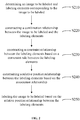
- the image to be labeled and the labeling element corresponding to the image to be labeled are determined as the image labeling factors, and the association relationship between the image labeling factors is constructed, to label the image to be labeled based on the labeling element and the association relationship, so as to solve the problems of a low labeling efficiency and an insufficient labeling capability and the like of existing image labeling tools, thereby improving the labeling efficiency and the labeling capability of the image.
- a step S230 constructing a constraint relationship between the labeling elements based on a constraint rule between the labeling elements.
- the constraint rule may be a restriction rule between the labeling elements required by a specific image labeling application scene for the labeling elements.
- the constraint rule may be that the dot element must be labeled in an interior region of the box element or on the line element.
- the constraint relationship can be used to define the constraints between the labeling elements, and optionally, the relative positions between labeling elements can be limited.
- the constraint relationship may include, but is not limited to, an inclusion relationship, a connection relationship and an intersection-union-complement relationship.
- the inclusion relationship may indicate that the labeling elements are mutually inclusive.
- the line element and the dot element have an inclusion relationship therebetween, when two types of labeling elements are used for labeling, the labeling dots need to be labeled on line segments of the labeling line.
- the connection relationship may indicate that the labeling elements are connected to each other.
- the line segments need to be connected to each other.
- the intersection-union-complement relationship may indicate that the labeling elements are spliced with each other.
- the region elements can be automatically segmented and spliced with each other.
- other types of constraint relationships may also be expanded based on specific image labeling scenes, which is not limited in the embodiments of the present application.
- the association relationship between the image labeling factors is to be constructed, it is also desirable to construct a constraint relationship between the labeling elements based on a constraint rule between the labeling elements.
- the current image labeling scene is an obstacle labeling scene, which requires the automobile to be an obstacle, and its ground point must be labeled in the interior region of the labeling box.
- an inclusion relationship between the box element and the dot element may be further established, that is, restriction dots must be labeled in the interior region of the labeling box. In this constraint relationship, it is not allowable to label other non-dot-type labeling objects with the dot elements, such as separately labeling a red street lamp with a dot element.
- the labeling behavior between the labeling elements can be restricted, so as to avoid labeling errors, and thereby improving the image labeling capability.
- a step S240 constraining a relative position relationship between the labeling elements based on the association relationship.
- the image to be labeled can be labeled based on the relative position relationship between the labeling elements.
- the labeling elements are used for labeling, if the current relative position relationship between the labeling elements satisfies the relative position relationship constrained by the labeling elements, the labeling elements can be used for labeling. If a labeling dot is placed on the endpoint of the labeling line, the labeling dot may be used for labeling. If the current relative position relationship between the labeling elements does not satisfy the relative position relationship constrained by the labeling elements, the labeling with the labeling elements is rejected. If the labeling dot is placed on a position dot outside the labeling line, it is forbidden to use the labeling dot to label the position dot.
- the box element may be a labeling box for box-selecting and labeling an obstacle in a form of a rectangular box.
- the dot element may be a labeling point for labeling a ground point in the form of a point.
- the segmentation box element can also label direction of the obstacle, e.g., can label a front direction of the vehicle or the like by means of diagonal lines or by filling color in the segmentation box.
- the cube element may be used to box-select and label the obstacle in the form of a stereoscopic box.
- the ground point is a contact point between the obstacle and the ground, and when the box element, the segmentation box element and the cube element label the obstacle, the ground point is usually located at the bottom of the wheel, and the wheel is located in an interior region of a box line, and thus the ground point also needs to be located in the interior region of the box line. Therefore, when the association relationship between the image labeling factors is to be constructed, the inclusion relationship between the box element and the dot element can also be constructed at the same time. That is, it is necessary to constrain that the labeling dot functions to label in the interior region of the labeling box.
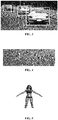
- the labeling dot Since there is an inclusion relationship between the box element and the dot element, it is required that the labeling dot must be labeled in the interior region of the labeling box, and therefore as shown in FIG. 3 , the labeling dots of the two wheels on the left side of the rightmost vehicle are labeled respectively in the interior region of the labeling box.
- the line element may be a line segment for labeling a lane line in the form of a straight line segment or a curved line segment.
- the dot element may be a labeling point for labeling a key point of the lane line in the form of a dot.
- the key point is usually an end point or a turning point of the lane line
- the line segment of the line element may usually pass through or cover the key point. Therefore, when the association relationship between the image labeling factors is to be constructed, the inclusion relationship between the line element and the dot element can also be constructed at the same time. That is, it is necessary to constrain that the labeling dot functions to label on the line segment of the labeling line. Alternatively, the labeling point can label at any dot on the line segment.
- the labeling object in the image to be labeled can be labeled by drawing a line based on the line element, and the cut-off point of the labeling object in the image to be labeled can be labeled based on the dot element.
- all the lane lines, including white lines and lines extending between the white lines may be labeled by drawing lines with the line elements, and the cut-off points of the lane lines may be labeled with the dot elements at the same time. Since there is an inclusion relationship between the line element and the dot element, it is required that the labeling point must label on the line segment of the labeling line, and thus all the labeling points as shown in FIG. 4 label on the labeling line.
- the labeling element may include at least line elements; the constructing the association relationship between the image labeling factors, may include: constructing a combination relationship between the image to be labeled and the line elements, and constructing a connection relationship between the line elements; wherein the labeling the image to be labeled based on the relative position relationship between the labeling elements, may include: performing a line labeling on a labeling object in the image to be labeled, based on the line elements; wherein the line elements are connected to each other.
- This scheme can meet a single labeling requirement of the application scene in which the lane lines are labeled.
- the line element may be a line segment for labeling a lane line in the form of a straight line segment or a curved line segment.
- the labeling object in the image to be labeled can be labeled by drawing a line based on the line element. That is, all the lane lines, including white lines and lines extending between the white lines, may be labeled by drawing lines continuously with the line elements. Since there is a connection relationship between the line elements, it is required that the line elements need to be connected to each other. That is, the endpoints of two adjacent line segments coincide with each other.
- the labeling element may include at least dot elements; wherein the constructing the association relationship between the image labeling factors, may include: constructing a combination relationship between the image to be labeled and the dot elements; wherein the labeling the image to be labeled based on the relative position relationship between the labeling elements, may include: performing a dot placement labeling on a labeling object in the image to be labeled, based on the dot elements; wherein the dot elements are not completely overlapped with each other.
- This scheme can meet a single labeling requirement of the application scene in which the key points are labeled.
- FIG. 5 is a schematic diagram of an effect of labeling key points provided by an embodiment of the present application
- FIG. 6 is a schematic diagram of an effect of labeling key points provided by an embodiment of the present application.
- the key points may be key points of human body bone and a human face, such as boundary points on limbs or feature points of five sense organs, and the like.
- the dot element may be a labeling point for labeling the key points of the human body bone or the human face in the form of dots.
- the points are usually separated from each other. In some scenes, part of the feature points may overlap partially. Therefore, when labeling the labeled image by using the labeling points, it is often required that the labeling dots cannot completely coincide with each other, that is, the labeling cannot be repeated. Similarly, when the labeling element is a single labeling element, other types of labeling elements cannot completely coincide with each other, so as to avoid repeated labeling.
- the constraint relationship between the labeling elements may not be set, and the image labeling tool may default that the labeling elements cannot completely coincide with each other; or, a complete exclusion relationship may be set for a single type of labeling element, which indicates that the labeling elements of a single type do not completely coincide with each other, and this is not limited in the embodiments of the present application.
- the labeling object in the image to be labeled can be dotted and labeled by using the dot elements.
- the dot elements As shown in FIGs.5 and 6 , all the key points or feature points may be dotted and labeled with the dot elements, and the dot elements are separated from each other.
- the labeling element may include at least a region element; wherein the constructing the association relationship between the image labeling factors, may include: constructing a combination relationship between the image to be labeled and the region element, and constructing an intersection-union-complement relationship between the region elements; the labeling the image to be labeled based on the relative position relationship between the labeling elements, may include: performing a polygon region labeling on the labeling object in the image to be labeled, based on the region element; wherein the region elements are automatically segmented and spliced with each other.
- This scheme can meet a semantic labeling demand of an application scene in which region connectivity is labeled.
- FIG. 7 is a schematic diagram of an effect of semantic labeling provided by an embodiment of the present application.
- description is given by taking an application scene of semantic labeling in the automatic driving field as an example.
- semantic labeling mean that the outline of a complete labeling object is labeled in the form of a region or a polygon, as shown in FIG. 7 , the outline of an automobile is labeled in the form of a region; or, the overall outline of the same type of labeling objects is labeled, as shown in FIG. 7 , the overall outline of all trees is labeled in the form of a region.
- the regions of different labeling objects may also be configured with different colors, for example, the outline of the automobile is filled with rose red color, the outline of the trees is filled with green color, and the outline of telegraph poles is filled with purple color, and etc.
- the region element may be a polygon for labeling different labeling objects in the form of polygon connection.
- the same type of labeling objects in a unified region can be labeled in a large region; and if the same type of labeling objects are at such relative positions that they are far apart, it is necessary to label the labeling objects at different positions in different regions.
- the properties (such as filling color, and etc.) of the regions should be consistent to indicate that the labeling objects in both regions are of the same type. For example, if the trees are adjacent to each other, then all the trees adjacent to each other in a region can be divided into a complete polygon. If the telegraph poles are at such relative positions that they are far apart one another, the telegraph poles can be respectively labeled in different regions respectively, but the colors filled in the regions corresponding to the telegraph poles shall be consistent.
- the intersection-union-complement relationship between the region elements can also be constructed at the same time.
- the effect of constructing the intersection-union-complement relationship between the region elements is that the region elements can be automatically segmented and spliced with each other through the set intersection-union-complement relationship.
- FIG. 7 when the automobiles, the trees, the roads and the telegraph poles are labeled in different regions, polygonal outlines between the automobiles, the trees, the roads and the telegraph poles are closely separated from each other.
- the trees in the same region are labeled by the region, data in the same region can be labeled by using a complete polygon, and the telegraph poles between the trees can be labeled by additional polygons for distinguishing.
- the combination relationship between the image to be labeled and different labeling elements and the constraint relationship between the labeling elements can be established, in this way the application requirements of multiple different image labeling scenes can be met, so as to improve the labeling efficiency and the labeling capability of the image and reduce the cost of the image labeling.
- FIG. 8 is a structural diagram of an image labeling apparatus provided by an embodiment of the present application.
- the embodiment of the present application is applicable to the case where application scene images with different labeling requirements are labeled by using a unified image labeling tool.
- the apparatus may be implemented by means of software and/or hardware, and may specifically be configured in an electronic device.
- the electronic device may be a computer device.
- an image labeling apparatus 300 includes: an image labeling factor determination module 310, an association relationship construction module 320 and an image labeling module 330.
- an image labeling factor determination module 310 is used for determining image labeling factors, wherein the image labeling factors include an image to be labeled and labeling elements corresponding to the image to be labeled;
- an association relationship construction module 320 is used for constructing an association relationship between the image labeling factors;
- an image labeling module 330 is used for labeling the image to be labeled based on the labeling elements and the association relationship.
- the image to be labeled and the labeling element corresponding to the image to be labeled are determined as the image labeling factors, and the association relationship between the image labeling factors is constructed, to label the image to be labeled based on the labeling element and the association relationship, so as to solve the problems of a low labeling efficiency and an insufficient labeling capability and the like of existing image labeling tools, thereby improving the labeling efficiency and the labeling capability of the image.
- association relationship construction module 320 is specifically used for constructing a combination relationship between the image to be labeled and the region element.
- association relationship construction module 320 is specifically used for constructing a constraint relationship between the labeling elements based on a constraint rule between the labeling elements, wherein the constraint relationship includes an inclusion relationship, a connection relationship and an intersection-union-complement relationship.
- the labeling elements include a box element, a segmentation box element, a dot element, a line element, a region element, and a cube element.
- the labeling elements include at least a line element and a dot element.
- the association relationship construction module 320 is specifically used for constructing a combination relationship between the image to be labeled and the labeling elements, and constructing an inclusion relationship between the line element and the dot element.
- the image labeling module 330 is specifically used for: performing a line drawing labeling on a labeling object for labeling in the image to be labeled, based on the line element; and labeling cut-off points of the labeling object based on the dot element; wherein the dot element is contained on a line segment of the line element.
- the labeling element includes at least a line element.
- the association relationship construction module 320 is specifically used for constructing a combination relationship between the image to be labeled and the line elements, and constructing a connection relationship between the line elements.
- the image labeling module 330 is specifically used for performing a line drawing labeling on a labeling object in the image to be labeled, based on the line elements, wherein the line elements are connected to each other.
- the labeling element includes at least a region element.
- the association relationship construction module 320 is specifically used for constructing a combination relationship between the image to be labeled and the region element, and constructing an intersection-union-complement relationship between the region elements.
- the image labeling module 330 is specifically used for performing a polygon region labeling on the labeling object in the image to be labeled, based on the region element; wherein the region elements are automatically segmented and spliced with each other.
- FIG. 9 is a structural schematic diagram of an electronic device used to implement an image labeling method based on an embodiment of the present application.
- a block diagram is shown of an electronic device for an image labeling method based on an embodiment of the present application.
- the electronic device is intended to represent various forms of digital computers, such as a laptop computer, a desktop computer, a work table, a personal digital assistant, a server, a blade server, a mainframe computer, and other suitable computers.
- the electronic device can also represent various forms of mobile devices, such as personal digital processing, a cellular phone, a smart phone, a wearable device, and other similar computing devices.
- the components shown herein, their connections and relationships, and their functions are merely examples, and are not intended to limit the implementation of the present application described and/or required herein.
- the memory 402 is the non-transitory computer readable storage medium provided in the present application.
- the memory stores instructions that can be executed by at least one processor, so that the at least one processor executes the image labeling method provided in the present application.
- the non-transitory computer readable storage medium of the present application stores computer instructions, and the computer instructions are used to cause a computer to execute the image labeling method provided in the present application.
- the memory 402 may include a program storage area and a data storage area, wherein the program storage area may store an operating system and an application program required by at least one function; the data storage area may store data created based on use of an electronic device for implementing the image labeling method.
- the memory 402 may include a high-speed random access memory, and may also include a non-transitory memory, such as at least one magnetic disk storage device, a flash memory device, or other non-transitory solid-state storage devices.
- the memory 402 may optionally include a memory provided remotely with respect to the processor 401, and these remote memories may be connected to the electronic device for implementing the image labeling method via a network. Examples of the aforementioned network include, but are not limited to, Internet, a corporate Intranet, a local area network, a mobile communication network, and combinations thereof.
- the electronic device for implementing the image labeling method may further include: an input apparatus 403 and an output apparatus 404.
- the processor 401, the memory 402, the input apparatus 403, and the output apparatus 404 may be connected through a bus or other methods, and in FIG. 9 , for example, through a bus.
- the input apparatus 403 can receive the input numeric or character information, and generate a key signal input related to user setting and function control of the electronic device for implementing the image labeling method, such as a touch screen, a keypad, a mouse, a track pad, a touch pad, an indicating rod, one or more mouse buttons, trackballs, joysticks and other input apparatuses.
- the output apparatus 404 may include a display device, an auxiliary lighting apparatus (for example, an LED), a haptic feedback apparatus (for example, a vibration motor), and the like.
- the display device may include, but is not limited to, a liquid crystal display (LCD), a light emitting diode (LED) display, and a plasma display. In some embodiments, the display device may be a touch screen.
- Various embodiments of the system and technologies described herein can be implemented in a digital electronic circuit system, an integrated circuit system, an application-specific integrated circuit (ASIC), a computer hardware, a firmware, a software, and/or combinations thereof.
- ASIC application-specific integrated circuit
- These various embodiments may include: being implemented in one or more computer programs, the one or more computer programs may be executed and/or interpreted on a programmable system including at least one programmable processor, the programmable processor can be a dedicated or general-purpose programmable processor that can receive data and instructions from a storage system, at least one input apparatus, and at least one output apparatus, and transmit the data and instructions to the storage system, the at least one input apparatus, and the at least one output apparatus.
- the system and technology described herein can be implemented on a computer that has: a display device for displaying information to the user (such as a CRT (cathode ray tube) or an LCD (liquid crystal display) monitor)); and a keyboard and a pointing device (such as a mouse or a trackball) through which the user can provide the input to the computer.
- a display device for displaying information to the user
- a keyboard and a pointing device such as a mouse or a trackball
- Other types of apparatuses can also be used to provide interaction with the user; for example, the feedback provided to the user can be any form of sensing feedback (for example, visual feedback, auditory feedback, or haptic feedback); and the input from the user can be received in any form (including acoustic input, voice input, or haptic input).
- the system and technology described herein can be implemented in a computing system including back-end components (for example, as a data server), or a computing system including middleware components (for example, an application server), or a computing system including front-end components (for example, a user computer having a graphical user interface or a web browser through which the user can interact with the embodiment of the system and technology described herein), or a computing system including any combination of such back-end components, middleware components or front-end components.
- the components of the system can be connected to each other through digital data communication (for example, a communication network) in any form or media. Examples of the communication network include: a local area network (LAN), a wide area network (WAN), and an Internet.
- the computer system can include a client and a server.
- the client may be, but is not limited to, a smart phone, a laptop, a desktop computer, a tablet computer, a smart speaker, or the like.
- the server may be an independent physical server, or may be a server cluster composed of a plurality of physical servers or a distributed system, and may also be a cloud server that provides basic cloud computing services such as cloud computing, cloud services, cloud databases, and cloud storage and the like.
- the client and the server are generally far away from each other and usually interact through a communication network.
- the relationship between the client and the server is generated by computer programs that run on the corresponding computers and have a client-server relationship with each other.
- the image to be labeled and the labeling element corresponding to the image to be labeled are determined as the image labeling factors, and the association relationship between the image labeling factors is constructed, to label the image to be labeled based on the labeling element and the association relationship, so as to solve the problems of a low labeling efficiency and an insufficient labeling capability and the like of existing image labeling tools, thereby improving the labeling efficiency and the labeling capability of the image.
Landscapes
- Engineering & Computer Science (AREA)
- Theoretical Computer Science (AREA)
- General Physics & Mathematics (AREA)
- Physics & Mathematics (AREA)
- Computer Vision & Pattern Recognition (AREA)
- Multimedia (AREA)
- Data Mining & Analysis (AREA)
- Artificial Intelligence (AREA)
- Evolutionary Computation (AREA)
- General Engineering & Computer Science (AREA)
- Evolutionary Biology (AREA)
- Bioinformatics & Computational Biology (AREA)
- Bioinformatics & Cheminformatics (AREA)
- Life Sciences & Earth Sciences (AREA)
- Health & Medical Sciences (AREA)
- Software Systems (AREA)
- Medical Informatics (AREA)
- General Health & Medical Sciences (AREA)
- Databases & Information Systems (AREA)
- Computing Systems (AREA)
- Image Analysis (AREA)
- Image Processing (AREA)
- Information Retrieval, Db Structures And Fs Structures Therefor (AREA)
- User Interface Of Digital Computer (AREA)
Applications Claiming Priority (1)
| Application Number | Priority Date | Filing Date | Title |
|---|---|---|---|
| CN202010694368.8A CN111860304B (zh) | 2020-07-17 | 2020-07-17 | 一种图像标注方法、电子装置、设备及存储介质 |
Publications (2)
| Publication Number | Publication Date |
|---|---|
| EP3885985A2 true EP3885985A2 (de) | 2021-09-29 |
| EP3885985A3 EP3885985A3 (de) | 2022-03-02 |
Family
ID=73000550
Family Applications (1)
| Application Number | Title | Priority Date | Filing Date |
|---|---|---|---|
| EP21164604.7A Pending EP3885985A3 (de) | 2020-07-17 | 2021-03-24 | Bildetikettierungsverfahren, elektronische vorrichtung, einrichtung und speichermedium |
Country Status (5)
| Country | Link |
|---|---|
| US (1) | US20210209765A1 (de) |
| EP (1) | EP3885985A3 (de) |
| JP (1) | JP2021121960A (de) |
| KR (1) | KR20210040296A (de) |
| CN (1) | CN111860304B (de) |
Families Citing this family (10)
| Publication number | Priority date | Publication date | Assignee | Title |
|---|---|---|---|---|
| CN112308155B (zh) * | 2020-11-04 | 2024-07-23 | 广州小鹏自动驾驶科技有限公司 | 一种标注准确率确定方法和装置 |
| CN112346807B (zh) * | 2020-11-06 | 2025-02-14 | 广州小鹏自动驾驶科技有限公司 | 一种图像标注方法和装置 |
| CN112270532B (zh) * | 2020-11-12 | 2023-07-28 | 北京百度网讯科技有限公司 | 一种数据处理方法、装置、电子设备以及存储介质 |
| CN112528610B (zh) * | 2020-12-09 | 2023-11-14 | 北京百度网讯科技有限公司 | 一种数据标注方法、装置、电子设备及存储介质 |
| TW202232437A (zh) * | 2021-02-09 | 2022-08-16 | 阿物科技股份有限公司 | 圖像分類與標示方法及系統 |
| CN113377477A (zh) * | 2021-06-24 | 2021-09-10 | 上海商汤科技开发有限公司 | 数据标注方法、装置、设备及存储介质 |
| CN113407083A (zh) * | 2021-06-24 | 2021-09-17 | 上海商汤科技开发有限公司 | 一种数据标注方法及装置、电子设备和存储介质 |
| CN113449142A (zh) * | 2021-06-30 | 2021-09-28 | 北京百度网讯科技有限公司 | 信息处理方法及装置、电子设备、存储介质及产品 |
| CN113591580B (zh) * | 2021-06-30 | 2022-10-14 | 北京百度网讯科技有限公司 | 图像标注方法、装置、电子设备和存储介质 |
| CN113592981B (zh) * | 2021-07-01 | 2022-10-11 | 北京百度网讯科技有限公司 | 图片标注方法、装置、电子设备和存储介质 |
Family Cites Families (21)
| Publication number | Priority date | Publication date | Assignee | Title |
|---|---|---|---|---|
| JPH0696160A (ja) * | 1992-09-14 | 1994-04-08 | Hitachi Ltd | プリント回路基板の領域設定方法 |
| JP4185545B2 (ja) * | 2004-03-29 | 2008-11-26 | パイオニア株式会社 | 道路景観解析装置及び方法 |
| CN102436583B (zh) * | 2011-09-26 | 2013-10-30 | 哈尔滨工程大学 | 基于对标注图像学习的图像分割方法 |
| EP2987144B1 (de) * | 2013-04-19 | 2019-02-06 | Koninklijke Philips N.V. | Gruppierung von bildanmerkungen |
| US10962982B2 (en) * | 2016-07-21 | 2021-03-30 | Mobileye Vision Technologies Ltd. | Crowdsourcing the collection of road surface information |
| CN108230252B (zh) * | 2017-01-24 | 2022-02-01 | 深圳市商汤科技有限公司 | 图像处理方法、装置以及电子设备 |
| US20190304102A1 (en) * | 2018-03-30 | 2019-10-03 | Qualcomm Incorporated | Memory efficient blob based object classification in video analytics |
| US11100366B2 (en) * | 2018-04-26 | 2021-08-24 | Volvo Car Corporation | Methods and systems for semi-automated image segmentation and annotation |
| CN108710868B (zh) * | 2018-06-05 | 2020-09-04 | 中国石油大学(华东) | 一种基于复杂场景下的人体关键点检测系统及方法 |
| CN110569837B (zh) * | 2018-08-31 | 2021-06-04 | 创新先进技术有限公司 | 优化损伤检测结果的方法及装置 |
| CN109670591B (zh) * | 2018-12-14 | 2022-09-27 | 深圳市商汤科技有限公司 | 一种神经网络的训练方法及图像匹配方法、装置 |
| US11200429B1 (en) * | 2018-12-28 | 2021-12-14 | Zoox, Inc. | Tracking objects using sensor data segmentations and/or representations |
| CN109740005A (zh) * | 2018-12-29 | 2019-05-10 | 北京经纬恒润科技有限公司 | 一种图像目标标注方法及装置 |
| EP3696718A1 (de) * | 2019-02-15 | 2020-08-19 | Wipro Limited | Verfahren und system zur bestimmung von fahrbaren strassenbereichen zur sicheren navigation eines autonomen fahrzeugs |
| US11651689B2 (en) * | 2019-08-19 | 2023-05-16 | Here Global B.V. | Method, apparatus, and computer program product for identifying street parking based on aerial imagery |
| US11893750B2 (en) * | 2019-11-15 | 2024-02-06 | Zoox, Inc. | Multi-task learning for real-time semantic and/or depth aware instance segmentation and/or three-dimensional object bounding |
| US10832400B1 (en) * | 2020-01-14 | 2020-11-10 | Capital One Services, Llc | Vehicle listing image detection and alert system |
| CN111337898B (zh) * | 2020-02-19 | 2022-10-14 | 北京百度网讯科技有限公司 | 激光点云的处理方法、装置、设备及存储介质 |
| US11450008B1 (en) * | 2020-02-27 | 2022-09-20 | Amazon Technologies, Inc. | Segmentation using attention-weighted loss and discriminative feature learning |
| US11967161B2 (en) * | 2020-06-26 | 2024-04-23 | Amazon Technologies, Inc. | Systems and methods of obstacle detection for automated delivery apparatus |
| US11508118B2 (en) * | 2020-07-13 | 2022-11-22 | Fujitsu Limited | Provisioning real-time three-dimensional maps for autonomous vehicles |
-
2020
- 2020-07-17 CN CN202010694368.8A patent/CN111860304B/zh active Active
-
2021
- 2021-03-22 US US17/208,534 patent/US20210209765A1/en not_active Abandoned
- 2021-03-24 KR KR1020210037787A patent/KR20210040296A/ko not_active Ceased
- 2021-03-24 EP EP21164604.7A patent/EP3885985A3/de active Pending
- 2021-05-19 JP JP2021084575A patent/JP2021121960A/ja active Pending
Also Published As
| Publication number | Publication date |
|---|---|
| US20210209765A1 (en) | 2021-07-08 |
| JP2021121960A (ja) | 2021-08-26 |
| CN111860304A (zh) | 2020-10-30 |
| CN111860304B (zh) | 2024-04-30 |
| EP3885985A3 (de) | 2022-03-02 |
| KR20210040296A (ko) | 2021-04-13 |
Similar Documents
| Publication | Publication Date | Title |
|---|---|---|
| US20210209765A1 (en) | Image labeling method, electronic device, apparatus, and storage medium | |
| US11694445B2 (en) | Obstacle three-dimensional position acquisition method and apparatus for roadside computing device | |
| US11867513B2 (en) | Method, apparatus, device and storage medium for determining lane where vehicle located | |
| US11447153B2 (en) | Method and apparatus for annotating virtual lane at crossing | |
| CN113844463B (zh) | 基于自动驾驶系统的车辆控制方法、装置及车辆 | |
| US20210192815A1 (en) | Method and apparatus for generating map | |
| JP2021101365A (ja) | 測位方法、測位装置及び電子機器 | |
| CN113345101B (zh) | 三维点云标注方法、装置、设备及存储介质 | |
| CN113223113B (zh) | 车道线处理方法、装置、电子设备和云控平台 | |
| US11557047B2 (en) | Method and apparatus for image processing and computer storage medium | |
| CN110619312B (zh) | 定位元素数据的增强方法、装置、设备及存储介质 | |
| CN111540010B (zh) | 一种道路监测的方法、装置、电子设备及存储介质 | |
| EP3872704A2 (de) | Kopfmodell für instanzsegmentierung, instanzsegmentierungsmodell, bildsegmentierungsverfahren und vorrichtung | |
| CN111949816B (zh) | 定位处理方法、装置、电子设备和存储介质 | |
| JP2023511868A (ja) | 画像処理のためのシステム、方法、および装置 | |
| CN116844129A (zh) | 多模态特征对齐融合的路侧目标检测方法、系统及装置 | |
| CN111652112A (zh) | 一种车道流向的识别方法、装置、电子设备及存储介质 | |
| CN113126120B (zh) | 数据标注方法、装置、设备、存储介质以及计算机程序产品 | |
| CN111753768B (zh) | 表示障碍物形状的方法、装置、电子设备和存储介质 | |
| CN112270532B (zh) | 一种数据处理方法、装置、电子设备以及存储介质 | |
| Xiong et al. | You only look bottom-up for monocular 3d object detection | |
| CN114882283B (zh) | 样本图像生成方法、深度学习模型的训练方法和装置 | |
| CN114926484A (zh) | 点云数据的标注方法、装置、设备以及存储介质 | |
| US12437566B2 (en) | Picture annotation method, apparatus, electronic device, and storage medium | |
| US12494002B2 (en) | Synthetic table generation pipeline for training deep table extraction models |
Legal Events
| Date | Code | Title | Description |
|---|---|---|---|
| PUAI | Public reference made under article 153(3) epc to a published international application that has entered the european phase |
Free format text: ORIGINAL CODE: 0009012 |
|
| STAA | Information on the status of an ep patent application or granted ep patent |
Free format text: STATUS: REQUEST FOR EXAMINATION WAS MADE |
|
| 17P | Request for examination filed |
Effective date: 20210324 |
|
| AK | Designated contracting states |
Kind code of ref document: A2 Designated state(s): AL AT BE BG CH CY CZ DE DK EE ES FI FR GB GR HR HU IE IS IT LI LT LU LV MC MK MT NL NO PL PT RO RS SE SI SK SM TR |
|
| REG | Reference to a national code |
Ref country code: DE Ref legal event code: R079 Free format text: PREVIOUS MAIN CLASS: G06K0009000000 Ipc: G06T0007700000 |
|
| PUAL | Search report despatched |
Free format text: ORIGINAL CODE: 0009013 |
|
| AK | Designated contracting states |
Kind code of ref document: A3 Designated state(s): AL AT BE BG CH CY CZ DE DK EE ES FI FR GB GR HR HU IE IS IT LI LT LU LV MC MK MT NL NO PL PT RO RS SE SI SK SM TR |
|
| RIC1 | Information provided on ipc code assigned before grant |
Ipc: G06F 3/048 20130101ALI20220127BHEP Ipc: G06K 9/00 20060101ALI20220127BHEP Ipc: G06T 11/60 20060101ALI20220127BHEP Ipc: G06T 7/70 20170101AFI20220127BHEP |
|
| RIC1 | Information provided on ipc code assigned before grant |
Ipc: G06F 3/048 20130101ALI20241113BHEP Ipc: G06T 11/60 20060101ALI20241113BHEP Ipc: G06T 7/70 20170101AFI20241113BHEP |
|
| STAA | Information on the status of an ep patent application or granted ep patent |
Free format text: STATUS: EXAMINATION IS IN PROGRESS |
|
| 17Q | First examination report despatched |
Effective date: 20250120 |