EP3885520B1 - Vehicle and control method and device therefor - Google Patents
Vehicle and control method and device therefor Download PDFInfo
- Publication number
- EP3885520B1 EP3885520B1 EP20893127.9A EP20893127A EP3885520B1 EP 3885520 B1 EP3885520 B1 EP 3885520B1 EP 20893127 A EP20893127 A EP 20893127A EP 3885520 B1 EP3885520 B1 EP 3885520B1
- Authority
- EP
- European Patent Office
- Prior art keywords
- door
- controlling
- target
- mode
- vehicle
- Prior art date
- Legal status (The legal status is an assumption and is not a legal conclusion. Google has not performed a legal analysis and makes no representation as to the accuracy of the status listed.)
- Active
Links
Images



Classifications
-
- E—FIXED CONSTRUCTIONS
- E05—LOCKS; KEYS; WINDOW OR DOOR FITTINGS; SAFES
- E05F—DEVICES FOR MOVING WINGS INTO OPEN OR CLOSED POSITION; CHECKS FOR WINGS; WING FITTINGS NOT OTHERWISE PROVIDED FOR, CONCERNED WITH THE FUNCTIONING OF THE WING
- E05F15/00—Power-operated mechanisms for wings
- E05F15/70—Power-operated mechanisms for wings with automatic actuation
-
- E—FIXED CONSTRUCTIONS
- E05—LOCKS; KEYS; WINDOW OR DOOR FITTINGS; SAFES
- E05F—DEVICES FOR MOVING WINGS INTO OPEN OR CLOSED POSITION; CHECKS FOR WINGS; WING FITTINGS NOT OTHERWISE PROVIDED FOR, CONCERNED WITH THE FUNCTIONING OF THE WING
- E05F15/00—Power-operated mechanisms for wings
- E05F15/40—Safety devices, e.g. detection of obstructions or end positions
-
- E—FIXED CONSTRUCTIONS
- E05—LOCKS; KEYS; WINDOW OR DOOR FITTINGS; SAFES
- E05B—LOCKS; ACCESSORIES THEREFOR; HANDCUFFS
- E05B81/00—Power-actuated vehicle locks
- E05B81/54—Electrical circuits
- E05B81/56—Control of actuators
-
- E—FIXED CONSTRUCTIONS
- E05—LOCKS; KEYS; WINDOW OR DOOR FITTINGS; SAFES
- E05F—DEVICES FOR MOVING WINGS INTO OPEN OR CLOSED POSITION; CHECKS FOR WINGS; WING FITTINGS NOT OTHERWISE PROVIDED FOR, CONCERNED WITH THE FUNCTIONING OF THE WING
- E05F15/00—Power-operated mechanisms for wings
- E05F15/70—Power-operated mechanisms for wings with automatic actuation
- E05F15/73—Power-operated mechanisms for wings with automatic actuation responsive to movement or presence of persons or objects
-
- E—FIXED CONSTRUCTIONS
- E05—LOCKS; KEYS; WINDOW OR DOOR FITTINGS; SAFES
- E05F—DEVICES FOR MOVING WINGS INTO OPEN OR CLOSED POSITION; CHECKS FOR WINGS; WING FITTINGS NOT OTHERWISE PROVIDED FOR, CONCERNED WITH THE FUNCTIONING OF THE WING
- E05F15/00—Power-operated mechanisms for wings
- E05F15/60—Power-operated mechanisms for wings using electrical actuators
- E05F15/603—Power-operated mechanisms for wings using electrical actuators using rotary electromotors
- E05F15/611—Power-operated mechanisms for wings using electrical actuators using rotary electromotors for swinging wings
-
- E—FIXED CONSTRUCTIONS
- E05—LOCKS; KEYS; WINDOW OR DOOR FITTINGS; SAFES
- E05F—DEVICES FOR MOVING WINGS INTO OPEN OR CLOSED POSITION; CHECKS FOR WINGS; WING FITTINGS NOT OTHERWISE PROVIDED FOR, CONCERNED WITH THE FUNCTIONING OF THE WING
- E05F15/00—Power-operated mechanisms for wings
- E05F15/70—Power-operated mechanisms for wings with automatic actuation
- E05F15/73—Power-operated mechanisms for wings with automatic actuation responsive to movement or presence of persons or objects
- E05F2015/763—Power-operated mechanisms for wings with automatic actuation responsive to movement or presence of persons or objects using acoustical sensors
-
- E—FIXED CONSTRUCTIONS
- E05—LOCKS; KEYS; WINDOW OR DOOR FITTINGS; SAFES
- E05F—DEVICES FOR MOVING WINGS INTO OPEN OR CLOSED POSITION; CHECKS FOR WINGS; WING FITTINGS NOT OTHERWISE PROVIDED FOR, CONCERNED WITH THE FUNCTIONING OF THE WING
- E05F15/00—Power-operated mechanisms for wings
- E05F15/70—Power-operated mechanisms for wings with automatic actuation
- E05F15/73—Power-operated mechanisms for wings with automatic actuation responsive to movement or presence of persons or objects
- E05F2015/765—Power-operated mechanisms for wings with automatic actuation responsive to movement or presence of persons or objects using optical sensors
-
- E—FIXED CONSTRUCTIONS
- E05—LOCKS; KEYS; WINDOW OR DOOR FITTINGS; SAFES
- E05F—DEVICES FOR MOVING WINGS INTO OPEN OR CLOSED POSITION; CHECKS FOR WINGS; WING FITTINGS NOT OTHERWISE PROVIDED FOR, CONCERNED WITH THE FUNCTIONING OF THE WING
- E05F15/00—Power-operated mechanisms for wings
- E05F15/70—Power-operated mechanisms for wings with automatic actuation
- E05F15/73—Power-operated mechanisms for wings with automatic actuation responsive to movement or presence of persons or objects
- E05F2015/767—Power-operated mechanisms for wings with automatic actuation responsive to movement or presence of persons or objects using cameras
-
- E—FIXED CONSTRUCTIONS
- E05—LOCKS; KEYS; WINDOW OR DOOR FITTINGS; SAFES
- E05Y—INDEXING SCHEME ASSOCIATED WITH SUBCLASSES E05D AND E05F, RELATING TO CONSTRUCTION ELEMENTS, ELECTRIC CONTROL, POWER SUPPLY, POWER SIGNAL OR TRANSMISSION, USER INTERFACES, MOUNTING OR COUPLING, DETAILS, ACCESSORIES, AUXILIARY OPERATIONS NOT OTHERWISE PROVIDED FOR, APPLICATION THEREOF
- E05Y2400/00—Electronic control; Electrical power; Power supply; Power or signal transmission; User interfaces
- E05Y2400/10—Electronic control
- E05Y2400/30—Electronic control of motors
- E05Y2400/3013—Electronic control of motors during manual wing operation
- E05Y2400/3015—Power assistance
-
- E—FIXED CONSTRUCTIONS
- E05—LOCKS; KEYS; WINDOW OR DOOR FITTINGS; SAFES
- E05Y—INDEXING SCHEME ASSOCIATED WITH SUBCLASSES E05D AND E05F, RELATING TO CONSTRUCTION ELEMENTS, ELECTRIC CONTROL, POWER SUPPLY, POWER SIGNAL OR TRANSMISSION, USER INTERFACES, MOUNTING OR COUPLING, DETAILS, ACCESSORIES, AUXILIARY OPERATIONS NOT OTHERWISE PROVIDED FOR, APPLICATION THEREOF
- E05Y2400/00—Electronic control; Electrical power; Power supply; Power or signal transmission; User interfaces
- E05Y2400/10—Electronic control
- E05Y2400/44—Sensors not directly associated with the wing movement
-
- E—FIXED CONSTRUCTIONS
- E05—LOCKS; KEYS; WINDOW OR DOOR FITTINGS; SAFES
- E05Y—INDEXING SCHEME ASSOCIATED WITH SUBCLASSES E05D AND E05F, RELATING TO CONSTRUCTION ELEMENTS, ELECTRIC CONTROL, POWER SUPPLY, POWER SIGNAL OR TRANSMISSION, USER INTERFACES, MOUNTING OR COUPLING, DETAILS, ACCESSORIES, AUXILIARY OPERATIONS NOT OTHERWISE PROVIDED FOR, APPLICATION THEREOF
- E05Y2400/00—Electronic control; Electrical power; Power supply; Power or signal transmission; User interfaces
- E05Y2400/10—Electronic control
- E05Y2400/45—Control modes
-
- E—FIXED CONSTRUCTIONS
- E05—LOCKS; KEYS; WINDOW OR DOOR FITTINGS; SAFES
- E05Y—INDEXING SCHEME ASSOCIATED WITH SUBCLASSES E05D AND E05F, RELATING TO CONSTRUCTION ELEMENTS, ELECTRIC CONTROL, POWER SUPPLY, POWER SIGNAL OR TRANSMISSION, USER INTERFACES, MOUNTING OR COUPLING, DETAILS, ACCESSORIES, AUXILIARY OPERATIONS NOT OTHERWISE PROVIDED FOR, APPLICATION THEREOF
- E05Y2400/00—Electronic control; Electrical power; Power supply; Power or signal transmission; User interfaces
- E05Y2400/10—Electronic control
- E05Y2400/52—Safety arrangements associated with the wing motor
- E05Y2400/53—Wing impact prevention or reduction
-
- E—FIXED CONSTRUCTIONS
- E05—LOCKS; KEYS; WINDOW OR DOOR FITTINGS; SAFES
- E05Y—INDEXING SCHEME ASSOCIATED WITH SUBCLASSES E05D AND E05F, RELATING TO CONSTRUCTION ELEMENTS, ELECTRIC CONTROL, POWER SUPPLY, POWER SIGNAL OR TRANSMISSION, USER INTERFACES, MOUNTING OR COUPLING, DETAILS, ACCESSORIES, AUXILIARY OPERATIONS NOT OTHERWISE PROVIDED FOR, APPLICATION THEREOF
- E05Y2900/00—Application of doors, windows, wings or fittings thereof
- E05Y2900/50—Application of doors, windows, wings or fittings thereof for vehicles
- E05Y2900/53—Type of wing
- E05Y2900/531—Doors
Definitions
- the present disclosure relates to the technical field of vehicles, and in particular to a vehicle and a controlling method and device therefor.
- DE 102016 108935 A1 discloses an apparatus for selectively operating a lid, in particular on a motor vehicle.
- GB2551 210 A discloses a power-operated system for a closure, e.g. door, of a vehicle.
- DE 102017 219147 A1 discloses a vehicle closure element for reversibly closing a body opening on a vehicle.
- WO2017/029229 A1 discloses assist systems for opening and closing vertically-hinged doors of vehicle.
- WO 2017/040758A1 discloses a method for opening and closing a door of a vehicle.
- the present disclosure aims to solve, at least to some extent, one of the technical problems in the related art.
- a first object of the present disclosure is to provide a controlling method for a vehicle, which can open or close a vehicle door safely and can control the vehicle door to be opened or closed in different manners, thereby improving the comfort of the vehicle.
- a second object of the present disclosure is to provide a controlling device for a vehicle.
- a third object of the present disclosure is to provide a vehicle.
- a fourth object of the present disclosure is to provide an electronic device.
- a fifth object of the present disclosure is to provide a computer-readable storage medium.
- an embodiment of the present disclosure provides a controlling method for a vehicle.
- the controlling method comprises:
- the method before the step of determining the target controlling mode of the door according to the first target distance interval to which the first distance belongs, the method further comprises: detecting a first controlling signal for controlling the door to be opened or closed, and determining that the first controlling signal is received.
- the target controlling mode is the fully automatic mode
- the target controlling mode is the semi-automatic mode
- the target controlling mode is the assistive mode
- the method before the step of controlling the door to continue being opened or closed, the method further comprises: if it is identified that the door is in a closed state and the first controlling signal is a door opening signal, controlling the door to be opened to a preset angle in advance.
- the method before the step of controlling the door, the method further comprises: detecting a travelling speed of the vehicle and determining that the travelling speed of the vehicle is less than a preset speed threshold.
- the method further comprises:
- controlling of the door By using the controlling method for a vehicle according to the embodiments of the present disclosure, in the controlling of the door, different controlling modes are adopted according to the distance between the door and an obstacle, and the door is controlled according to the corresponding controlling mode, whereby the door can be opened or closed safely, and the door can be controlled to be opened or closed in different manners, which improves the comfort.
- an embodiment of the present disclosure provides a controlling device for a vehicle.
- the controlling device comprises:
- the controlling module is further configured for: detecting a first controlling signal for controlling the door to be opened or closed, and determining that the first controlling signal is received.
- the target controlling mode is the fully automatic mode
- the target controlling mode is the semi-automatic mode
- the target controlling mode is the assistive mode
- the controlling module is further configured for: if it is identified that the door is in a closed state and the first controlling signal is a door opening signal, controlling the door to be opened to a preset angle in advance.
- the controlling module is further configured for: detecting a travelling speed of the vehicle and determining that the travelling speed of the vehicle is less than a preset speed threshold.
- controlling module is further configured for:
- controlling device for a vehicle in the controlling of the door, different controlling modes are adopted according to the distance between the door and an obstacle, and the door is controlled according to the corresponding controlling mode, whereby the door can be opened or closed safely, and the door can be controlled to be opened or closed in different manners, which improves the comfort.
- an embodiment of the present disclosure provides a vehicle comprising the controlling device for a vehicle according to the second aspect.
- an embodiment of the present disclosure provides an electronic device comprising a memory and a processor; wherein the processor reads an executable program code stored in the memory to execute a program corresponding to the executable program code to implement the controlling method for a vehicle according to the first aspect.
- an embodiment of the present disclosure provides a computer-readable storage medium having a computer program stored therein, wherein when the program is executed by a processor, the controlling method for a vehicle according to the first aspect is implemented.
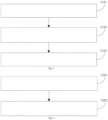
- Fig. 1 is a schematic flow diagram of the controlling method for a vehicle according to an embodiment according to the present disclosure.
- the controlling method for a vehicle according to the present embodiment comprises the following steps: S101: acquiring a first distance between a door of the vehicle and an obstacle in an environment where the door is located.
- At least one distance detecting device is provided on a body and/or the door of the vehicle, and the first distance between the door and the obstacle in the environment where the door is located may be detected by the distance detecting device.
- the distance detecting device is a radar, an ultrasonic sensor, a capacitive sensor, a video camera, a roof camera, or the like.
- the distance detecting device may detect the first distance between the door and the obstacle continuously, or detect the first distance between the door and the obstacle when the travelling speed of the vehicle is less than a preset speed. That is to say, when the travelling speed of the vehicle is less than the preset speed, the distance detecting device is triggered to work.
- the specific implementation depends on the actual condition and will not be limited herein.
- S102 according to a first target distance interval to which the first distance belongs, determining a target controlling mode of the door, wherein controlling modes of the door include a fully automatic mode, a semi-automatic mode and an assistive mode.
- preset distance intervals may be inquired by means of the first distance to determine the first target distance interval to which the first distance belongs. Then, the target controlling mode of the door can be determined by looking up a mapping relation chart between the preset distance intervals and the controlling modes according to the first target distance interval, wherein in the present embodiment, the controlling modes of the door include the fully automatic mode, the semi-automatic mode and the assistive mode.
- the preset distance intervals include [50cm, + ⁇ ), [30cm, 50cm), and (0cm, 30cm), wherein the controlling mode corresponding to the distance interval [50cm, + ⁇ ) is the fully automatic mode, the controlling mode corresponding to the distance interval [30cm, 50cm) is the semi-automatic mode, and the controlling mode corresponding to the distance interval (0cm, 30cm) is the assistive mode.
- the detected first distance is 40cm
- it can be determined that the first target distance interval is [30cm, 50cm).
- it can be determined, by looking up a mapping relation between the distance intervals and the controlling modes, that the target controlling mode of the door is the semi-automatic mode.
- this step S102 will be performed only when the first controlling signal is detected and received, whereby unnecessary processing is prevented, and the efficiency of a controlling system is improved.
- the door may be controlled according to the target controlling mode.
- the door When the target controlling mode is the fully automatic mode, that indicates that the current distance between the door and the obstacle is long, the door can be opened or closed without being influenced by the obstacle, and the door can be opened or closed fully automatically in this case.
- the door is controlled through the following steps: S201: if the first controlling signal is identified as a door opening signal, controlling the door to continue being opened, and open to a maximum opening angle.
- the first controlling signal is identified after being received; and if the first controlling signal is a door opening signal, the door is controlled to continue being opened, and open to a maximum opening angle; that is, the door is controlled to be opened fully automatically, and no artificial operation is required in this process.
- the first controlling signal can be identified according to the current state of the door. If the current state of the door is a closed state, it can be determined that the first controlling signal is a door opening signal. If the current state of the door is an open state, it can be determined that the first controlling signal is a door closing signal.
- the specific implementation depends on the actual condition and will not be limited herein.
- the first controlling signal is a door closing signal
- the door is controlled to continue being closed, and close to a minimum opening angle; that is, the door is controlled to be closed fully automatically, and no artificial operation is required in this process.
- the target controlling mode is the semi-automatic mode, that indicates that the current distance between the door and the obstacle is short and the door might collide with the obstacle when automatically opened, and in this case, the door is controlled by means of the semi-automatic mode to completely prevent a collision between the door and the obstacle.
- the door is controlled through the following steps: S301: after the first controlling signal has been received, continuously detecting a second controlling signal for controlling the door to be opened or closed.
- the second controlling signal for controlling the door to be opened or closed is detected continuously. That is to say, after the first controlling signal has been received, the door will not be controlled to be opened or closed fully automatically, the second controlling signal for controlling the door to be opened or closed will be detected continuously, and the door will be controlled according to the second controlling signal.
- the door may be controlled to continue being opened or closed correspondingly to the second controlling signal.
- the door may be controlled to stop from being opened or closed.
- a controller in the vehicle controls a stay motor for driving the door to be opened to move upwardly continuously to provide a motor driving force to drive the door to be opened.
- the controller controls the stay motor to stop providing the motor driving force to stop the door from moving.
- the target controlling mode is the assistive mode
- the door is controlled by means of the assistive mode to completely prevent a collision between the door and the obstacle.
- the door is controlled through the following steps: S401: after the first controlling signal has been received, identifying a movement of the door, and acquiring a movement direction of the door.
- the door moves under an external force. That is to say, after the first controlling signal has been received, the door will not be controlled to be opened or closed fully automatically or semi-automatically, but will move under an external force. Furthermore, when it is identified that the door is moving, the movement direction of the door is identified.
- an angle sensor may be used to detect the opening angle of the door.
- the opening angle of the door changes, that indicates that the door is moving. If the detected opening angle is increased gradually, that indicates that the door is being opened. If the detected opening angle is reduced gradually, that indicates that the door is being closed.
- the movement direction of the door can be determined according a pre-calibrated movement direction when the door is being opened and a pre-calibrated movement direction when the door is being closed.
- the movement direction of the door pre-calibrated when the door is being opened is upward with respect to a vehicle body, it can be determined that the door is moving upwardly with respect to the vehicle body when it is detected that the door is being opened.
- S402 controlling the door to be opened or closed in a direction identical with the movement direction.
- the operator can be assisted in controlling the door to be opened or closed in a direction identical with the movement direction to reduce the operation burden of the operator.
- the controller in the vehicle when the operator is pulling the door upwardly, the controller in the vehicle will identify the movement direction of the door and then control the stay motor for driving the door to be opened to move upwardly to provide a motor driving force to assist the operator in opening the door.
- the controller in the vehicle In a case that the door is in an open state, when the operator is pulling the door downwardly, the controller in the vehicle will identify the movement direction of the door and then control the stay motor for driving the door to be opened to move downwardly to provide a motor driving force to assist the operator in closing the door.
- the door may be controlled to be opened to a preset angle in advance, whereby the operator can know that the door can be opened to further open or close the door.
- the door when the door is in a closed state and the first controlling signal is a door opening signal, the door may be controlled to drive an attractive lock to be unlocked, whereby the door can be pushed away by a certain distance under the elastic force of the attractive lock; that is, the door is controlled to be opened to a preset angle.
- the controlling method for a vehicle in the controlling of the door, different controlling modes are adopted according to the distance between the door and an obstacle, and the door is controlled according to the corresponding controlling mode, whereby the door can be opened or closed safely, and the door can be controlled to be opened or closed in different manners, which improves the comfort.
- the travelling speed of the vehicle needs to be detected before the door is controlled.
- the door is allowed to be opened or closed only when a speed sensor in the vehicle detects that the travelling speed of the vehicle is less than a preset speed threshold.
- the distance between the door and the obstacle may be detected to prevent a collision between the door and the obstacle, whereby the controlling safety of the door is improved.
- the distance between the door and the obstacle is detected through the following steps:
- S501 acquiring a second distance between the door and the obstacle when the door is being opened or closed.
- the second distance between the door and the obstacle may be detected by a distance detecting device on the body and/or the door of the vehicle to be obtained.
- S502 according to a second target distance interval to which the second distance belongs, determining a target warning level of the vehicle, and/or determining a target movement speed of the door.
- preset distance intervals are inquired by means of the second distance to determine the second target distance interval to which the second distance belongs.
- the target warning level of the door may be determined by looking up a mapping relation chart between the preset distance intervals and warning levels according to the second target distance interval, and then a warning is given according to the determined target warning level to remind the operator to prevent a collision between the door and the obstacle; and/or, the target movement speed of the door is determined by looking up a mapping relation chart between the preset distance intervals and movement speeds of the door according to the second target distance interval, and then the door is controlled to move according to the target movement speed to prevent a collision between the door and the obstacle.
- the preset distance intervals include [50cm, + ⁇ ), [30cm, 50cm), and (0cm, 30cm), wherein the distance interval [50cm, + ⁇ ) corresponds to a warning level of 1 and a movement speed of 3, the distance interval [30cm, 50cm) corresponds to a warning level of 2 and a movement speed of 1, and the distance interval (0cm, 30cm) corresponds to a warning level of 3 and a movement speed of 0.
- the second target distance interval is (0cm, 30cm).
- the target warning level is 3 and the target movement speed of the door is 0 by looking up a mapping relation between the distance intervals and the warning levels and a mapping relation between the distance intervals and the movement speeds. Finally, a warning corresponding to the target warning level of 3 is controlled to be emitted, and the door is controlled to stop moving.
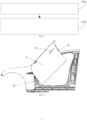
- the scissor door comprises a door body 11, an air spring 12, a stay motor 13, a door handle 14, an internal switch 15, an attractive lock 16 and a controller (not shown in the figures).
- the controller controls the attractive lock 16 to be unlocked and controls the stay motor 13, supported by the air spring 12, to open the door body 11 along a fixed path, whereby the scissor door is opened.
- the controller controls the stay motor 13, supported by the air spring 12, to close the door body 11 along a fixed path and controls the attractive lock 16 to be locked when the door body 11 reaches a preset position, whereby the scissor door is closed.
- Fig. 8 is a construction diagram of a door controlling system of the vehicle in Figs. 6 and 7 .
- the door controlling system comprises a controller 21, a large-size screen controlling system 22, a vehicle body controller 23, a panoramic module 24, an intelligent driving controller 25, an anti-clamping module 26, a door handle switch 27, a tail-wing lifting motor 28, a tail-wing turning motor 29 and a power-supply module 30.
- the large-size screen controlling system 22, the vehicle body controller 23, the panoramic module 24, the intelligent driving controller 25, the anti-clamping module 26 and the door handle switch 27 are all connected to the controller 21 through a CAN bus, and the tail-wing lifting motor 28 and the tail-wing turning motor 29 are both connected to the controller 21 through a signal line such as a hard wire.
- the power-supply module 30 is connected to the controller 21 through a power line.
- a mode switch is set on the large-size screen controlling system 22, whether the doors on the left and right sides are opened separately or synchronously may be selected by means of the mode switch, and the scissor door may be triggered to be opened, closed or paused by a soft switch (such as a virtual on-off key) on the large-size screen controlling system 22.
- the vehicle body controller 23 is mainly configured for receiving locking or unlocking signals of the key or triggering door controlling signals generated by other physical keys.
- the panoramic module 24 is mainly configured for sensing obstacle information around the vehicle by means of a camera on the vehicle and so on.
- the intelligent driving controller 25 is mainly configured for sensing distance information between the obstacle and the door by means of a parking sensor.
- the anti-clamping module 25 is mainly configured for sensing object information between the door and the body to prevent an object from being clamped between the door and the body.
- the door handle switch 27 is mainly configured for generating a door controlling signal when triggered.
- the tail-wing lifting motor 28 is mainly configured for controlling a tail wing of the door to rise or descend when receiving a rising or descending controlling signal from the controller 21.
- the tail-wing turning motor 29 is mainly configured for controlling the tail wing of the door to turn when receiving a turning controlling signal from the controller 21.
- the controller 21 is further configured for receiving motor position signals sent from the tail-wing lifting motor 28 and the tail-wing turning motor 29.
- Fig. 9 is a schematic structural diagram of the controlling device for a vehicle according to an embodiment according to the present disclosure.
- the controlling device 300 for a vehicle comprises:
- controlling module 33 is further configured for: detecting a first controlling signal for controlling the door to be opened or closed, and determining that the first controlling signal is received.
- the target controlling mode is the fully automatic mode
- the target controlling mode is the semi-automatic mode
- the target controlling mode is the assistive mode
- controlling module 33 is further configured for: if it is identified that the door is in a closed state and the first controlling signal is a door opening signal, controlling the door to be opened to a preset angle in advance.
- controlling module 33 is further configured for: detecting a travelling speed of the vehicle and determining that the travelling speed of the vehicle is less than a preset speed threshold.
- controlling module 33 is further configured for:
- the device is configured for implementing the method according to the above embodiments, the principles and the technical effects of the corresponding program modules in the device are similar to those described in the method stated above, and the working process of the device can be understood with reference to the corresponding process of the method stated above and will no longer be detailed herein.
- the controlling device for a vehicle in the controlling of the door, different controlling modes are adopted according to the distance between the door and an obstacle, and the door is controlled according to the corresponding controlling mode, whereby the door can be opened or closed safely, and the door can be controlled to be opened or closed in different manners, which improves the comfort.
- the present disclosure further provides a vehicle.
- the vehicle comprises the controlling device 300 for a vehicle according to the above embodiments.
- the present disclosure further provides an electronic device.
- the electronic device 400 comprises a memory 41 and a processor 42, wherein the processor 42 reads an executable program code stored in the memory 41 to execute a program corresponding to the executable program code to implement the steps of the method stated above.
- the present disclosure further provides a computer-readable storage medium having a computer program stored therein, wherein when the program is executed by a processor, the steps of the method stated above are implemented.
- first and second are merely for the purpose of description, and should not be construed as indicating or implying relative importance or implicitly indicating the quantity of the technical features referred to. Therefore, a feature defined by “first” or “second” may explicitly or implicitly refer to the inclusion of one or more said features. Unless otherwise clearly specified, “plurality of” refers to “two or more” in the description of the present disclosure.
- the terms such as “install”, “connect”, “couple” and “fix” in the present disclosure should be broadly understood. For example, they may refer to fixed connection, detachable connection or integrated connection; may be mechanical connection or electrical connection; and may be direct connection, or indirect connection via an intermediate medium, or internal communication or interactive relation of two elements. A person skilled in the art can appreciate the specific meanings of those terms in the present disclosure according to particular conditions.
- first feature when a first feature is located “over” or “under” a second feature, the first feature may directly contact the second feature or indirectly contact the second feature via an intermediate medium.
- first feature when the first feature is located “above” the second feature, that means that the first feature may be located directly above the second feature or obliquely above the second feature, or merely means that the level of the first feature is greater than that of the second feature.
- first feature When the first feature is located “below” the second feature, that means that the first feature may be located directly below the second feature or obliquely below the second feature, or merely means that the level of the first feature is less than that of the second feature.
Landscapes
- Power-Operated Mechanisms For Wings (AREA)
Description
- The present disclosure relates to the technical field of vehicles, and in particular to a vehicle and a controlling method and device therefor.
- With the gradual improvement of the living standard, people put forward ever higher demands on the comfort of vehicles. However, the doors of existing vehicles are generally controlled manually; for example, the doors are manually opened or closed, which leads to poor comfort.
- In the related art, automatic door controlling is adopted to allow the vehicles to autonomously control the door to be opened or closed without human intervention. However, when opened or closed automatically, the vehicle door might collide with an obstacle if it is too close to the obstacle, and consequentially, the door might be damaged.
DE 102016 108935 A1 discloses an apparatus for selectively operating a lid, in particular on a motor vehicle.
GB2551 210 A
DE 102017 219147 A1 discloses a vehicle closure element for reversibly closing a body opening on a vehicle.
WO2017/029229 A1 discloses assist systems for opening and closing vertically-hinged doors of vehicle.
WO 2017/040758A1 discloses a method for opening and closing a door of a vehicle. - The present disclosure aims to solve, at least to some extent, one of the technical problems in the related art.
- Therefore, a first object of the present disclosure is to provide a controlling method for a vehicle, which can open or close a vehicle door safely and can control the vehicle door to be opened or closed in different manners, thereby improving the comfort of the vehicle.
- A second object of the present disclosure is to provide a controlling device for a vehicle.
- A third object of the present disclosure is to provide a vehicle.
- A fourth object of the present disclosure is to provide an electronic device.
- A fifth object of the present disclosure is to provide a computer-readable storage medium.
- To fulfill the above objects, in a first aspect, an embodiment of the present disclosure provides a controlling method for a vehicle. The controlling method comprises:
- acquiring a first distance between a door of the vehicle and an obstacle in an environment where the door is located;
- determining a target controlling mode of the door according to a first target distance interval to which the first distance belongs, wherein controlling modes of the door include a fully automatic mode, a semi-automatic mode and an assistive mode; and
- controlling the door according to the target controlling mode.
- According to an embodiment of the present disclosure, before the step of determining the target controlling mode of the door according to the first target distance interval to which the first distance belongs, the method further comprises:
detecting a first controlling signal for controlling the door to be opened or closed, and determining that the first controlling signal is received. - According to an embodiment of the present disclosure, the target controlling mode is the fully automatic mode; and
- the step of controlling the door according to the target controlling mode comprises:
- if the first controlling signal is identified as a door opening signal, controlling the door to continue being opened, and open to a maximum opening angle; or
- if the first controlling signal is identified as a door closing signal, controlling the door to continue being closed, and close to a minimum opening angle.
- According to an embodiment of the present disclosure, the target controlling mode is the semi-automatic mode; and
- the step of controlling the door according to the target controlling mode comprises:
- after the first controlling signal has been received, continuously detecting a second controlling signal for controlling the door to be opened or closed; and
- if the second controlling signal is detected and is not interrupted, controlling the door to continue being opened or closed correspondingly to the second controlling signal; or
- if the second controlling signal is not detected or the second controlling signal is detected and interrupted, controlling the door to stop from being opened or closed.
- According to an embodiment of the present disclosure, the target controlling mode is the assistive mode; and
- the step of controlling the door according to the target controlling mode comprises:
- after the first controlling signal has been received, identifying a movement of the door, acquiring a movement direction of the door, and controlling the door to be opened or closed in a direction identical with the movement direction, wherein the door moves under an external force.
- According to an embodiment of the present disclosure, before the step of controlling the door to continue being opened or closed, the method further comprises:
if it is identified that the door is in a closed state and the first controlling signal is a door opening signal, controlling the door to be opened to a preset angle in advance. - According to an embodiment of the present disclosure, before the step of controlling the door, the method further comprises:
detecting a travelling speed of the vehicle and determining that the travelling speed of the vehicle is less than a preset speed threshold. - According to an embodiment of the present disclosure, the method further comprises:
- acquiring a second distance between the door and the obstacle when the door is being opened or closed; and
- according to a second target distance interval to which the second distance belongs, determining a target warning level of the vehicle, and/or determining a target movement speed of the door.
- By using the controlling method for a vehicle according to the embodiments of the present disclosure, in the controlling of the door, different controlling modes are adopted according to the distance between the door and an obstacle, and the door is controlled according to the corresponding controlling mode, whereby the door can be opened or closed safely, and the door can be controlled to be opened or closed in different manners, which improves the comfort.
- In a second aspect, an embodiment of the present disclosure provides a controlling device for a vehicle. The controlling device comprises:
- an acquiring module configured for acquiring a first distance between a door of a vehicle and an obstacle in an environment where the vehicle is located;
- a determining module configured for determining a target controlling mode of the door according to a first target distance interval to which the first distance belongs, wherein controlling modes of the door include a fully automatic mode, a semi-automatic mode and an assistive mode; and
- a controlling module configured for controlling the door according to the target controlling mode.
- According to an embodiment of the present disclosure, the controlling module is further configured for:
detecting a first controlling signal for controlling the door to be opened or closed, and determining that the first controlling signal is received. - According to an embodiment of the present disclosure, the target controlling mode is the fully automatic mode; and
- the controlling module is further configured for:
- if the first controlling signal is identified as a door opening signal, controlling the door to continue being opened, and open to a maximum opening angle; or
- if the first controlling signal is identified as a door closing signal, controlling the door to continue being closed, and close to a minimum opening angle.
- According to an embodiment of the present disclosure, the target controlling mode is the semi-automatic mode; and
- the controlling module is further configured for:
- after the first controlling signal has been received, continuously detecting a second controlling signal for controlling the door to be opened or closed; and
- if the second controlling signal is detected and is not interrupted, controlling the door to continue being opened or closed correspondingly to the second controlling signal; or
- if the second controlling signal is not detected or the second controlling signal is detected and interrupted, controlling the door to stop from being opened or closed.
- According to an embodiment of the present disclosure, the target controlling mode is the assistive mode; and
- the controlling module is further configured for:
- after the first controlling signal has been received, identifying a movement of the door, acquiring a movement direction of the door, and controlling the door to be opened or closed in a direction identical with the movement direction, wherein the door moves under an external force.
- According to an embodiment of the present disclosure, the controlling module is further configured for:
if it is identified that the door is in a closed state and the first controlling signal is a door opening signal, controlling the door to be opened to a preset angle in advance. - According to an embodiment of the present disclosure, the controlling module is further configured for:
detecting a travelling speed of the vehicle and determining that the travelling speed of the vehicle is less than a preset speed threshold. - According to an embodiment of the present disclosure, the controlling module is further configured for:
- acquiring a second distance between the door and the obstacle when the door is being opened or closed; and
- according to a second target distance interval to which the second distance belongs, determining a target warning level of the vehicle, and/or determining a target movement speed of the door.
- By using the controlling device for a vehicle according to the embodiments of the present disclosure, in the controlling of the door, different controlling modes are adopted according to the distance between the door and an obstacle, and the door is controlled according to the corresponding controlling mode, whereby the door can be opened or closed safely, and the door can be controlled to be opened or closed in different manners, which improves the comfort.
- In a third aspect, an embodiment of the present disclosure provides a vehicle comprising the controlling device for a vehicle according to the second aspect.
- In a fourth aspect, an embodiment of the present disclosure provides an electronic device comprising a memory and a processor;
wherein the processor reads an executable program code stored in the memory to execute a program corresponding to the executable program code to implement the controlling method for a vehicle according to the first aspect. - In a fifth aspect, an embodiment of the present disclosure provides a computer-readable storage medium having a computer program stored therein, wherein when the program is executed by a processor, the controlling method for a vehicle according to the first aspect is implemented.
-
-
Fig. 1 is a schematic flow diagram of the controlling method for a vehicle according to an embodiment according to the present disclosure; -
Fig. 2 is a schematic diagram of the steps for controlling the door, when the target controlling mode is the fully automatic mode, of the controlling method for a vehicle according to an embodiment according to the present disclosure; -
Fig. 3 is a schematic diagram of the steps for controlling the door, when the target controlling mode is the semi-automatic mode, of the controlling method for a vehicle according to an embodiment according to the present disclosure; -
Fig. 4 is a schematic diagram of the steps for controlling the door, when the target controlling mode is the assistive mode, of the controlling method for a vehicle according to an embodiment according to the present disclosure; -
Fig. 5 is a schematic diagram of the steps for detecting the distance between the door and an obstacle in the process of opening or closing the door of the controlling method for a vehicle according to an embodiment according to the present disclosure; -
Fig. 6 is a schematic front structural view of a door of a vehicle in the controlling method for a vehicle according to an embodiment according to the present disclosure; -
Fig. 7 is a schematic side structural view of the door of the vehicle inFig. 6 ; -
Fig. 8 is a construction diagram of a door controlling system of the vehicle inFigs. 6 and7 ; -
Fig. 9 is a schematic structural diagram of the controlling device for a vehicle according to an embodiment according to the present disclosure; -
Fig. 10 is a schematic structural diagram of the vehicle according to an embodiment according to the present disclosure; and -
Fig. 11 is a schematic structural diagram of the electronic device according to an embodiment according to the present disclosure. - The embodiments of the present disclosure will be described in detail below. Examples of the embodiments are illustrated in the accompanying drawings, wherein, throughout the specification, identical or similar reference signs represent identical or similar elements or elements with identical or similar functions. The embodiments described below with reference to the accompanying drawings are illustrative embodiments, are intended to explain the present disclosure, and should not be construed as limitations of the present disclosure.
- A vehicle and a controlling method and device therefor according to the embodiments of the present disclosure will be described below with reference to the accompanying drawings.
-
Fig. 1 is a schematic flow diagram of the controlling method for a vehicle according to an embodiment according to the present disclosure. As shown inFig. 1 , the controlling method for a vehicle according to the present embodiment comprises the following steps:
S101: acquiring a first distance between a door of the vehicle and an obstacle in an environment where the door is located. - Particularly, in the present embodiment, at least one distance detecting device is provided on a body and/or the door of the vehicle, and the first distance between the door and the obstacle in the environment where the door is located may be detected by the distance detecting device. Optionally, the distance detecting device is a radar, an ultrasonic sensor, a capacitive sensor, a video camera, a roof camera, or the like.
- Optionally, the distance detecting device may detect the first distance between the door and the obstacle continuously, or detect the first distance between the door and the obstacle when the travelling speed of the vehicle is less than a preset speed. That is to say, when the travelling speed of the vehicle is less than the preset speed, the distance detecting device is triggered to work. The specific implementation depends on the actual condition and will not be limited herein.
- S102: according to a first target distance interval to which the first distance belongs, determining a target controlling mode of the door, wherein controlling modes of the door include a fully automatic mode, a semi-automatic mode and an assistive mode.
- Particularly, after the first distance between the door and the obstacle has been determined, preset distance intervals may be inquired by means of the first distance to determine the first target distance interval to which the first distance belongs. Then, the target controlling mode of the door can be determined by looking up a mapping relation chart between the preset distance intervals and the controlling modes according to the first target distance interval, wherein in the present embodiment, the controlling modes of the door include the fully automatic mode, the semi-automatic mode and the assistive mode.
- For example, the preset distance intervals include [50cm, +∞), [30cm, 50cm), and (0cm, 30cm), wherein the controlling mode corresponding to the distance interval [50cm, +∞) is the fully automatic mode, the controlling mode corresponding to the distance interval [30cm, 50cm) is the semi-automatic mode, and the controlling mode corresponding to the distance interval (0cm, 30cm) is the assistive mode. If the detected first distance is 40cm, it can be determined that the first target distance interval is [30cm, 50cm). Then, it can be determined, by looking up a mapping relation between the distance intervals and the controlling modes, that the target controlling mode of the door is the semi-automatic mode.
- Optionally, before this step is performed, whether or not a first controlling signal for controlling the door to be opened or closed is received can be detected, and this step S102 will be performed only when the first controlling signal is detected and received, whereby unnecessary processing is prevented, and the efficiency of a controlling system is improved.
- S103: according to the target controlling mode, controlling the door.
- Particularly, after the target controlling mode of the door has been determined, the door may be controlled according to the target controlling mode.
- When the target controlling mode is the fully automatic mode, that indicates that the current distance between the door and the obstacle is long, the door can be opened or closed without being influenced by the obstacle, and the door can be opened or closed fully automatically in this case. As shown in
Fig. 2 , in this case, the door is controlled through the following steps:
S201: if the first controlling signal is identified as a door opening signal, controlling the door to continue being opened, and open to a maximum opening angle. - Particularly, the first controlling signal is identified after being received; and if the first controlling signal is a door opening signal, the door is controlled to continue being opened, and open to a maximum opening angle; that is, the door is controlled to be opened fully automatically, and no artificial operation is required in this process.
- Optionally, the first controlling signal can be identified according to the current state of the door. If the current state of the door is a closed state, it can be determined that the first controlling signal is a door opening signal. If the current state of the door is an open state, it can be determined that the first controlling signal is a door closing signal. The specific implementation depends on the actual condition and will not be limited herein.
- S202: if the first controlling signal is identified as a door closing signal, controlling the door to continue being closed, and close to a minimum opening angle.
- Particularly, if the first controlling signal is a door closing signal, the door is controlled to continue being closed, and close to a minimum opening angle; that is, the door is controlled to be closed fully automatically, and no artificial operation is required in this process.
- When the target controlling mode is the semi-automatic mode, that indicates that the current distance between the door and the obstacle is short and the door might collide with the obstacle when automatically opened, and in this case, the door is controlled by means of the semi-automatic mode to completely prevent a collision between the door and the obstacle. As shown in
Fig. 3 , in this case, the door is controlled through the following steps:
S301: after the first controlling signal has been received, continuously detecting a second controlling signal for controlling the door to be opened or closed. - Particularly, after the first controlling signal has been received, the second controlling signal for controlling the door to be opened or closed is detected continuously. That is to say, after the first controlling signal has been received, the door will not be controlled to be opened or closed fully automatically, the second controlling signal for controlling the door to be opened or closed will be detected continuously, and the door will be controlled according to the second controlling signal.
- S302: if the second controlling signal is detected and is not interrupted, controlling the door to continue being opened or closed correspondingly to the second controlling signal.
- Particularly, if the second controlling signal is detected and is not interrupted, that indicates that the current operator intends to continue to open or close the door, and at this point, the door may be controlled to continue being opened or closed correspondingly to the second controlling signal.
- S303: if the second controlling signal is not detected or the second controlling signal is detected and interrupted, controlling the door to stop from being opened or closed.
- Particularly, if the second controlling signal is not detected or the second controlling signal is detected and interrupted, that indicates that the current operator does not intend to continue to open or close the door, and at this point, the door may be controlled to stop from being opened or closed.
- For example, in a case that the door is a scissor door and is in a closed state, when the operator is long-pressing a door opening-closing key (that is, the second controlling signal is detected and is not interrupted), a controller in the vehicle controls a stay motor for driving the door to be opened to move upwardly continuously to provide a motor driving force to drive the door to be opened. When the operator stops pressing the door opening-closing key (that is, the second controlling signal is interrupted), the controller controls the stay motor to stop providing the motor driving force to stop the door from moving.
- When the target controlling mode is the assistive mode, that indicates that the current distance between the door and the obstacle is extremely short and the door might collide with the obstacle when opened automatically or semi-automatically. In this case, the door is controlled by means of the assistive mode to completely prevent a collision between the door and the obstacle. As shown in
Fig. 4 , in this case, the door is controlled through the following steps:
S401: after the first controlling signal has been received, identifying a movement of the door, and acquiring a movement direction of the door. - Particularly, after the first controlling signal has been received, whether or not the door is moving is identified. In the present embodiment, the door moves under an external force. That is to say, after the first controlling signal has been received, the door will not be controlled to be opened or closed fully automatically or semi-automatically, but will move under an external force. Furthermore, when it is identified that the door is moving, the movement direction of the door is identified.
- Optionally, in the process of identifying whether or not the door is moving, an angle sensor may be used to detect the opening angle of the door. When the opening angle of the door changes, that indicates that the door is moving. If the detected opening angle is increased gradually, that indicates that the door is being opened. If the detected opening angle is reduced gradually, that indicates that the door is being closed. Furthermore, the movement direction of the door can be determined according a pre-calibrated movement direction when the door is being opened and a pre-calibrated movement direction when the door is being closed.
- For example, if the movement direction of the door pre-calibrated when the door is being opened is upward with respect to a vehicle body, it can be determined that the door is moving upwardly with respect to the vehicle body when it is detected that the door is being opened.
- S402: controlling the door to be opened or closed in a direction identical with the movement direction.
- Particularly, when it is identified that the door is in a moving state, that indicates that the operator intends to open or close the door, and at this point, the operator can be assisted in controlling the door to be opened or closed in a direction identical with the movement direction to reduce the operation burden of the operator.
- For example, in a case that the door is a scissor door and is in a closed state, when the operator is pulling the door upwardly, the controller in the vehicle will identify the movement direction of the door and then control the stay motor for driving the door to be opened to move upwardly to provide a motor driving force to assist the operator in opening the door. In a case that the door is in an open state, when the operator is pulling the door downwardly, the controller in the vehicle will identify the movement direction of the door and then control the stay motor for driving the door to be opened to move downwardly to provide a motor driving force to assist the operator in closing the door.
- Furthermore, in a case that the target controlling mode is the semi-automatic mode or the assistive mode, after the first controlling signal has been received, when it is identified that the door is in a closed state and that the first controlling signal is a door opening signal, the door may be controlled to be opened to a preset angle in advance, whereby the operator can know that the door can be opened to further open or close the door. For example, when the door is in a closed state and the first controlling signal is a door opening signal, the door may be controlled to drive an attractive lock to be unlocked, whereby the door can be pushed away by a certain distance under the elastic force of the attractive lock; that is, the door is controlled to be opened to a preset angle.
- In conclusion, by using the controlling method for a vehicle according to the embodiments of the present disclosure, in the controlling of the door, different controlling modes are adopted according to the distance between the door and an obstacle, and the door is controlled according to the corresponding controlling mode, whereby the door can be opened or closed safely, and the door can be controlled to be opened or closed in different manners, which improves the comfort.
- In some embodiments, in order to improve the safety of the vehicle and prevent accidents, the travelling speed of the vehicle needs to be detected before the door is controlled. Particularly, the door is allowed to be opened or closed only when a speed sensor in the vehicle detects that the travelling speed of the vehicle is less than a preset speed threshold.
- In some embodiments, when the door is being opened or closed, the distance between the door and the obstacle may be detected to prevent a collision between the door and the obstacle, whereby the controlling safety of the door is improved. As shown in
Fig. 5 , the distance between the door and the obstacle is detected through the following steps: - S501: acquiring a second distance between the door and the obstacle when the door is being opened or closed.
- Particularly, when the door is being opened or closed, the second distance between the door and the obstacle may be detected by a distance detecting device on the body and/or the door of the vehicle to be obtained.
- S502: according to a second target distance interval to which the second distance belongs, determining a target warning level of the vehicle, and/or determining a target movement speed of the door.
- Particularly, after the second distance between the door and the obstacle has been acquired, preset distance intervals are inquired by means of the second distance to determine the second target distance interval to which the second distance belongs. Then, the target warning level of the door may be determined by looking up a mapping relation chart between the preset distance intervals and warning levels according to the second target distance interval, and then a warning is given according to the determined target warning level to remind the operator to prevent a collision between the door and the obstacle; and/or, the target movement speed of the door is determined by looking up a mapping relation chart between the preset distance intervals and movement speeds of the door according to the second target distance interval, and then the door is controlled to move according to the target movement speed to prevent a collision between the door and the obstacle.
- For example, the preset distance intervals include [50cm, +∞), [30cm, 50cm), and (0cm, 30cm), wherein the distance interval [50cm, +∞) corresponds to a warning level of 1 and a movement speed of 3, the distance interval [30cm, 50cm) corresponds to a warning level of 2 and a movement speed of 1, and the distance interval (0cm, 30cm) corresponds to a warning level of 3 and a movement speed of 0. When the detected second distance is 20cm, it can be determined that the second target distance interval is (0cm, 30cm). Then, it can be determined that the target warning level is 3 and the target movement speed of the door is 0 by looking up a mapping relation between the distance intervals and the warning levels and a mapping relation between the distance intervals and the movement speeds. Finally, a warning corresponding to the target warning level of 3 is controlled to be emitted, and the door is controlled to stop moving.
- To facilitate understanding, the structure of the door in the present embodiment is explained and described below with the door of the vehicle being a scissor door as an example. As shown in
Figs. 6 and7 , the scissor door comprises adoor body 11, anair spring 12, astay motor 13, adoor handle 14, aninternal switch 15, anattractive lock 16 and a controller (not shown in the figures). In a case that the scissor door is in a closed state, when the controller has received a controlling signal indicating that theinternal switch 15 or thedoor handle 14 is triggered, the controller controls theattractive lock 16 to be unlocked and controls thestay motor 13, supported by theair spring 12, to open thedoor body 11 along a fixed path, whereby the scissor door is opened. In a case that the scissor door is in an open state, when the controller has received the controlling signal indicating that theinternal switch 15 or thedoor handle 14 is triggered, the controller controls thestay motor 13, supported by theair spring 12, to close thedoor body 11 along a fixed path and controls theattractive lock 16 to be locked when thedoor body 11 reaches a preset position, whereby the scissor door is closed. -
Fig. 8 is a construction diagram of a door controlling system of the vehicle inFigs. 6 and7 . As shown inFig. 8 , the door controlling system comprises acontroller 21, a large-sizescreen controlling system 22, avehicle body controller 23, apanoramic module 24, anintelligent driving controller 25, ananti-clamping module 26, adoor handle switch 27, a tail-wing lifting motor 28, a tail-wing turning motor 29 and a power-supply module 30. The large-sizescreen controlling system 22, thevehicle body controller 23, thepanoramic module 24, theintelligent driving controller 25, theanti-clamping module 26 and thedoor handle switch 27 are all connected to thecontroller 21 through a CAN bus, and the tail-wing lifting motor 28 and the tail-wing turning motor 29 are both connected to thecontroller 21 through a signal line such as a hard wire. The power-supply module 30 is connected to thecontroller 21 through a power line. A mode switch is set on the large-sizescreen controlling system 22, whether the doors on the left and right sides are opened separately or synchronously may be selected by means of the mode switch, and the scissor door may be triggered to be opened, closed or paused by a soft switch (such as a virtual on-off key) on the large-sizescreen controlling system 22. Thevehicle body controller 23 is mainly configured for receiving locking or unlocking signals of the key or triggering door controlling signals generated by other physical keys. Thepanoramic module 24 is mainly configured for sensing obstacle information around the vehicle by means of a camera on the vehicle and so on. Theintelligent driving controller 25 is mainly configured for sensing distance information between the obstacle and the door by means of a parking sensor. Theanti-clamping module 25 is mainly configured for sensing object information between the door and the body to prevent an object from being clamped between the door and the body. Thedoor handle switch 27 is mainly configured for generating a door controlling signal when triggered. The tail-wing lifting motor 28 is mainly configured for controlling a tail wing of the door to rise or descend when receiving a rising or descending controlling signal from thecontroller 21. The tail-wing turning motor 29 is mainly configured for controlling the tail wing of the door to turn when receiving a turning controlling signal from thecontroller 21. In addition, thecontroller 21 is further configured for receiving motor position signals sent from the tail-wing lifting motor 28 and the tail-wing turning motor 29. -
Fig. 9 is a schematic structural diagram of the controlling device for a vehicle according to an embodiment according to the present disclosure. As shown inFig. 6 , the controllingdevice 300 for a vehicle comprises: - an acquiring
module 31 configured for acquiring a first distance between a door of a vehicle and an obstacle in an environment where the vehicle is located; - a determining
module 32 configured for determining a target controlling mode of the door according to a first target distance interval to which the first distance belongs, wherein controlling modes of the door include a fully automatic mode, a semi-automatic mode and an assistive mode; and - a controlling
module 33 configured for controlling the door according to the target controlling mode. - Optionally, the controlling
module 33 is further configured for:
detecting a first controlling signal for controlling the door to be opened or closed, and determining that the first controlling signal is received. - Optionally, the target controlling mode is the fully automatic mode; and
- the controlling
module 33 is further configured for: - if the first controlling signal is identified as a door opening signal, controlling the door to continue being opened, and open to a maximum opening angle; or
- if the first controlling signal is identified as a door closing signal, controlling the door to continue being closed, and close to a minimum opening angle.
- Optionally, the target controlling mode is the semi-automatic mode; and
- the controlling
module 33 is further configured for: - after the first controlling signal has been received, continuously detecting a second controlling signal for controlling the door to be opened or closed; and
- if the second controlling signal is detected and is not interrupted, controlling the door to continue being opened or closed correspondingly to the second controlling signal; or
- if the second controlling signal is not detected or the second controlling signal is detected and interrupted, controlling the door to stop from being opened or closed.
- Optionally, the target controlling mode is the assistive mode; and
- the controlling
module 33 is further configured for: - after the first controlling signal has been received, identifying a movement of the door, acquiring a movement direction of the door, and controlling the door to be opened or closed in a direction identical with the movement direction, wherein the door moves under an external force.
- Optionally, the controlling
module 33 is further configured for:
if it is identified that the door is in a closed state and the first controlling signal is a door opening signal, controlling the door to be opened to a preset angle in advance. - Optionally, the controlling
module 33 is further configured for:
detecting a travelling speed of the vehicle and determining that the travelling speed of the vehicle is less than a preset speed threshold. - Optionally, the controlling
module 33 is further configured for: - acquiring a second distance between the door and the obstacle when the door is being opened or closed; and
- according to a second target distance interval to which the second distance belongs, determining a target warning level of the vehicle, and/or determining a target movement speed of the door.
- It should be understood that the device is configured for implementing the method according to the above embodiments, the principles and the technical effects of the corresponding program modules in the device are similar to those described in the method stated above, and the working process of the device can be understood with reference to the corresponding process of the method stated above and will no longer be detailed herein.
- In conclusion, by using the controlling device for a vehicle according to the embodiments of the present disclosure, in the controlling of the door, different controlling modes are adopted according to the distance between the door and an obstacle, and the door is controlled according to the corresponding controlling mode, whereby the door can be opened or closed safely, and the door can be controlled to be opened or closed in different manners, which improves the comfort.
- In order to implement the above embodiments, the present disclosure further provides a vehicle. As shown in
Fig. 10 , the vehicle comprises the controllingdevice 300 for a vehicle according to the above embodiments. - In order to implement the above embodiments, the present disclosure further provides an electronic device. As shown in
Fig. 11 , theelectronic device 400 comprises amemory 41 and aprocessor 42, wherein theprocessor 42 reads an executable program code stored in thememory 41 to execute a program corresponding to the executable program code to implement the steps of the method stated above. - In order to implement the above embodiments, the present disclosure further provides a computer-readable storage medium having a computer program stored therein, wherein when the program is executed by a processor, the steps of the method stated above are implemented.
- It should be understood that the terms used to indicate directional or positional relations such as "central", "longitudinal", "transverse", "length", "width", "thickness", "upper", "lower", "front", "back", "left", "right", "vertical", "horizontal", "top", "bottom", "inner", "outer", "clockwise", "anticlockwise", "axial", "radial" and "circumferential" in the description of the present disclosure are based on the directional or positional relations shown in the accompanying drawings, merely for the purposes of facilitating and simplifying the description of the present disclosure, do not indicate or imply that the devices or elements referred to must be in a specific direction or be configured and operated in a specific direction, and therefore should not be construed as limitations of the present disclosure.
- In addition, the terms "first" and "second" are merely for the purpose of description, and should not be construed as indicating or implying relative importance or implicitly indicating the quantity of the technical features referred to. Therefore, a feature defined by "first" or "second" may explicitly or implicitly refer to the inclusion of one or more said features. Unless otherwise clearly specified, "plurality of" refers to "two or more" in the description of the present disclosure.
- Unless otherwise explicitly stated and defined, the terms such as "install", "connect", "couple" and "fix" in the present disclosure should be broadly understood. For example, they may refer to fixed connection, detachable connection or integrated connection; may be mechanical connection or electrical connection; and may be direct connection, or indirect connection via an intermediate medium, or internal communication or interactive relation of two elements. A person skilled in the art can appreciate the specific meanings of those terms in the present disclosure according to particular conditions.
- In the present disclosure, unless otherwise explicitly stated and defined, when a first feature is located "over" or "under" a second feature, the first feature may directly contact the second feature or indirectly contact the second feature via an intermediate medium. In addition, when the first feature is located "above" the second feature, that means that the first feature may be located directly above the second feature or obliquely above the second feature, or merely means that the level of the first feature is greater than that of the second feature. When the first feature is located "below" the second feature, that means that the first feature may be located directly below the second feature or obliquely below the second feature, or merely means that the level of the first feature is less than that of the second feature.
- In the description of the present disclosure, the description of the reference terms such as "an embodiment", "some embodiments", "example", "particular example" or "some examples" are intended to indicate that specific features, structures, materials, or characteristics described in conjunction with said embodiment or example are included in at least an embodiment or example of the present disclosure. In this description, illustrative descriptions of those terms do not necessarily aim at the same embodiment or example. Moreover, the specific features, structures, materials, or characteristics described can be properly combined in any one or more embodiments or examples. In addition, a person skilled in the art can combine or integrate different embodiments or examples described in this description and features of different embodiments or examples without any contradiction.
- Although the embodiments of the present disclosure have been illustrated and described above, it can be understood that the above embodiments are merely illustrative, and should not be construed as limitations of the present disclosure. A person skilled in the art can make variations, modifications, substitutions and transformations to the above embodiments within the scope of the claims of the present disclosure.
Claims (10)
- A controlling method for a vehicle, comprising:acquiring (S101) a first distance between a door (11) of the vehicle and an obstacle in an environment where the door (11) is located;determining (S102) a target controlling mode of the door (11) according to a first target distance interval to which the first distance belongs, wherein controlling modes of the door (11) include a fully automatic mode, a semi-automatic mode and an assistive mode; andcontrolling (S103) the door (11) according to the target controlling mode.
- The method according to claim 1, wherein before the step of determining the target controlling mode of the door (11) according to the first target distance interval to which the first distance belongs, the method further comprises:
detecting a first controlling signal for controlling the door (11) to be opened or closed, and determining that the first controlling signal is received. - The method according to claim 2, wherein the target controlling mode is the fully automatic mode; and
the step of controlling the door (11) according to the target controlling mode comprises:if the first controlling signal is identified as a door opening signal, controlling (S201) the door (11) to continue being opened, and open to a maximum opening angle; orif the first controlling signal is identified as a door closing signal, controlling (S202) the door (11) to continue being closed, and close to a minimum opening angle. - The method according to claim 2, wherein the target controlling mode is the semi-automatic mode; and
the step of controlling the door (11) according to the target controlling mode comprises:after the first controlling signal has been received, continuously detecting (S301) a second controlling signal for controlling the door (11) to be opened or closed; andif the second controlling signal is detected and is not interrupted, controlling (S302) the door (11) to continue being opened or closed correspondingly to the second controlling signal; orif the second controlling signal is not detected or the second controlling signal is detected and interrupted, controlling (S303) the door (11) to stop from being opened or closed. - The method according to claim 2, wherein the target controlling mode is the assistive mode; and
the step of controlling the door (11) according to the target controlling mode comprises:
after the first controlling signal has been received, identifying (S401) a movement of the door (11), acquiring (S401) a movement direction of the door (11), and controlling (S402) the door (11) to be opened or closed in a direction identical with the movement direction, wherein the door (11) moves under an external force. - The method according to claim 4 or 5, wherein before the step of controlling the door (11) to continue being opened or closed, the method further comprises:
if it is identified that the door is in a closed state and the first controlling signal is a door opening signal, controlling the door (11) to be opened to a preset angle in advance. - The method according to any one of claims 1-5, wherein before the step of controlling the door (11), the method further comprises:
detecting a travelling speed of the vehicle and determining that the travelling speed of the vehicle is less than a preset speed threshold. - The method according to any one of claims 1-5, further comprising:acquiring (S501) a second distance between the door (11) and the obstacle when the door (11) is being opened or closed; andaccording to a second target distance interval to which the second distance belongs, determining (S502) a target warning level of the vehicle, and/or determining a target movement speed of the door (11).
- A controlling device (300) for a vehicle, comprising:an acquiring module (31) configured for acquiring a first distance between a door (11) of a vehicle and an obstacle in an environment where the vehicle is located;a determining module (32) configured for determining a target controlling mode of the door (11) according to a first target distance interval to which the first distance belongs, wherein controlling modes of the door (11) include a fully automatic mode, a semi-automatic mode and an assistive mode; anda controlling module (33) configured for controlling the door (11) according to the target controlling mode.
- A vehicle, comprising the controlling device (300) for a vehicle according to claim 9.
Applications Claiming Priority (2)
| Application Number | Priority Date | Filing Date | Title |
|---|---|---|---|
| CN201911165272.6A CN110965893B (en) | 2019-11-25 | 2019-11-25 | Vehicle and control method and device thereof |
| PCT/CN2020/121576 WO2021103840A1 (en) | 2019-11-25 | 2020-10-16 | Vehicle and control method and device therefor |
Publications (4)
| Publication Number | Publication Date |
|---|---|
| EP3885520A1 EP3885520A1 (en) | 2021-09-29 |
| EP3885520A4 EP3885520A4 (en) | 2022-04-06 |
| EP3885520C0 EP3885520C0 (en) | 2023-12-27 |
| EP3885520B1 true EP3885520B1 (en) | 2023-12-27 |
Family
ID=70031446
Family Applications (1)
| Application Number | Title | Priority Date | Filing Date |
|---|---|---|---|
| EP20893127.9A Active EP3885520B1 (en) | 2019-11-25 | 2020-10-16 | Vehicle and control method and device therefor |
Country Status (3)
| Country | Link |
|---|---|
| EP (1) | EP3885520B1 (en) |
| CN (1) | CN110965893B (en) |
| WO (1) | WO2021103840A1 (en) |
Families Citing this family (18)
| Publication number | Priority date | Publication date | Assignee | Title |
|---|---|---|---|---|
| CN110965893B (en) * | 2019-11-25 | 2021-09-03 | 广州小鹏汽车科技有限公司 | Vehicle and control method and device thereof |
| CN111749566B (en) * | 2020-06-16 | 2021-08-27 | 广州橙行智动汽车科技有限公司 | Door hinge and vehicle |
| CN112761434B (en) * | 2020-10-20 | 2022-08-16 | 广州小鹏汽车科技有限公司 | Vehicle lock control method and device, vehicle and storage medium |
| CN112406780A (en) * | 2020-11-20 | 2021-02-26 | 广州橙行智动汽车科技有限公司 | Vehicle door control method, control device, vehicle and storage medium |
| CN112854949A (en) * | 2021-01-11 | 2021-05-28 | 广州小鹏自动驾驶科技有限公司 | Control method and device for scissor door of vehicle and vehicle |
| CN113027285B (en) * | 2021-04-01 | 2023-01-17 | 东风汽车有限公司 | Motor power assisting method for electric side-opening door system, electronic equipment and storage medium |
| CN113404399B (en) * | 2021-06-30 | 2025-05-27 | 蔚来汽车科技(安徽)有限公司 | Anti-pinch system, method, computer device, medium and vehicle for tailgate |
| CN116201439B (en) * | 2021-11-30 | 2025-04-08 | 比亚迪股份有限公司 | Control method and control device for opening vehicle door and vehicle controller |
| CN114458116B (en) * | 2022-01-19 | 2024-08-13 | 浙江吉利控股集团有限公司 | Electric door opening control method, system and vehicle |
| CN114508281B (en) * | 2022-03-25 | 2024-06-07 | 浙江吉利控股集团有限公司 | Vehicle door control method, device, equipment and storage medium |
| CN114592759A (en) * | 2022-03-31 | 2022-06-07 | 深圳荆虹科技有限公司 | An automatic door system, control method and vehicle |
| DE102022203460A1 (en) * | 2022-04-06 | 2023-10-12 | Brose Fahrzeugteile Se & Co. Kommanditgesellschaft, Bamberg | Assembly of a vehicle with a control element arranged on a vehicle door |
| CN115162890A (en) * | 2022-05-10 | 2022-10-11 | 合众新能源汽车有限公司 | Intelligent control method and device for automobile scissor door |
| CN115341825B (en) * | 2022-07-01 | 2024-07-05 | 智己汽车科技有限公司 | Control method and control device for sliding vehicle door in parking process |
| CN115593355A (en) * | 2022-09-16 | 2023-01-13 | 合众新能源汽车有限公司(Cn) | Control method, control system, vehicle and computer readable storage medium |
| CN115450525B (en) * | 2022-09-19 | 2024-05-07 | 重庆长安汽车股份有限公司 | Intelligent follow-up system and method based on electric vehicle door, vehicle and storage medium |
| CN115807607A (en) * | 2022-12-13 | 2023-03-17 | 安徽江淮汽车集团股份有限公司 | Automobile door opening and closing power-assisted control method |
| CN120251033B (en) * | 2025-06-04 | 2025-11-21 | 浙江吉利控股集团有限公司 | Vehicle door control methods, door control systems and vehicles |
Family Cites Families (21)
| Publication number | Priority date | Publication date | Assignee | Title |
|---|---|---|---|---|
| JPS6346918A (en) * | 1986-08-15 | 1988-02-27 | Nec Ic Microcomput Syst Ltd | Device for stopping door opening operation in accordance with detection of obstacle |
| KR20120050290A (en) * | 2010-11-10 | 2012-05-18 | 현대모비스 주식회사 | System for preventing damage of door for vehicle and control method thereof |
| CN104442661A (en) * | 2014-11-10 | 2015-03-25 | 无锡悟莘科技有限公司 | Intelligent vehicle door stopping control system |
| GB201514434D0 (en) * | 2015-08-14 | 2015-09-30 | Jaguar Land Rover Ltd | Assistance system for vehicle door |
| EP3344837A1 (en) * | 2015-09-03 | 2018-07-11 | Faraday & Future Inc. | System and method for opening and closing vehicle door |
| CN105840040B (en) * | 2016-03-22 | 2017-11-10 | 乐视汽车(北京)有限公司 | Car door opening method, apparatus and system |
| DE102016108935B4 (en) * | 2016-05-13 | 2025-07-31 | Witte Automotive Gmbh | Device for driving a flap |
| CN107401344B (en) * | 2016-05-20 | 2020-11-13 | 宝沃汽车(中国)有限公司 | Vehicle door controller, vehicle and vehicle door control method |
| GB2551210A (en) * | 2016-06-10 | 2017-12-13 | Jaguar Land Rover Ltd | Power-operated system for vehicle closure members |
| CN106335451A (en) * | 2016-09-07 | 2017-01-18 | 深圳市元征科技股份有限公司 | Vehicle control method and terminal based on environment data |
| DE102016226067B4 (en) * | 2016-12-22 | 2026-05-07 | Volkswagen Aktiengesellschaft | Method and device for transferring a motor vehicle from a manual operating mode to an automated or assisted operating mode |
| JP2019526480A (en) * | 2017-06-30 | 2019-09-19 | ベイジン ディディ インフィニティ テクノロジー アンド ディベロップメント カンパニー リミティッド | System and method for switching driving modes of a vehicle |
| DE102017219147A1 (en) * | 2017-10-25 | 2019-04-25 | Brose Fahrzeugteile Gmbh & Co. Kommanditgesellschaft, Bamberg | Multimodal vehicle access |
| JP6637091B2 (en) * | 2018-03-07 | 2020-01-29 | 本田技研工業株式会社 | Vehicle control device |
| CN108515907A (en) * | 2018-04-03 | 2018-09-11 | 北京汽车研究总院有限公司 | A kind of preventing car door collides with device and control method |
| CN108868425A (en) * | 2018-06-04 | 2018-11-23 | 江苏吉厚智能制造有限公司 | Automobile tail gate collision prevention device and automobile |
| CN108979440B (en) * | 2018-07-17 | 2020-05-05 | 北京经纬恒润科技有限公司 | Control method and system for automobile door |
| CN108979413B (en) * | 2018-07-19 | 2020-08-04 | 广东东箭汽车科技股份有限公司 | Method and device for automatic door control |
| CN109552164A (en) * | 2018-11-15 | 2019-04-02 | 山东华宇工学院 | A car door safety control system |
| CN110304056B (en) * | 2019-07-29 | 2021-06-04 | 广州小鹏汽车科技有限公司 | Vehicle and its control method and device |
| CN110965893B (en) * | 2019-11-25 | 2021-09-03 | 广州小鹏汽车科技有限公司 | Vehicle and control method and device thereof |
-
2019
- 2019-11-25 CN CN201911165272.6A patent/CN110965893B/en active Active
-
2020
- 2020-10-16 WO PCT/CN2020/121576 patent/WO2021103840A1/en not_active Ceased
- 2020-10-16 EP EP20893127.9A patent/EP3885520B1/en active Active
Also Published As
| Publication number | Publication date |
|---|---|
| EP3885520A4 (en) | 2022-04-06 |
| CN110965893A (en) | 2020-04-07 |
| EP3885520C0 (en) | 2023-12-27 |
| WO2021103840A1 (en) | 2021-06-03 |
| CN110965893B (en) | 2021-09-03 |
| EP3885520A1 (en) | 2021-09-29 |
Similar Documents
| Publication | Publication Date | Title |
|---|---|---|
| EP3885520A1 (en) | Vehicle and control method and device therefor | |
| CN109138691B (en) | Automated housing system with active distance control | |
| US20180304887A1 (en) | Method and device for reducing a risk of a collision of a motor vehicle with an object | |
| CN111071246A (en) | Vehicle parking assist for avoiding contact with garage door | |
| US20190145150A1 (en) | Vehicle opening-closing body control device and vehicle opening-closing body control method | |
| CN116411770B (en) | Vehicle door system and vehicle | |
| US20240218728A1 (en) | Method and apparatus for controlling opening of vehicle door, and vehicle controller | |
| CN115263121A (en) | Control method and device of electric sliding door, vehicle and readable storage medium | |
| KR20180048916A (en) | System and method for opening and closing a vehicle door | |
| US11878654B2 (en) | System for sensing a living being proximate to a vehicle | |
| US11247635B1 (en) | System for providing access to a vehicle | |
| CN114207237A (en) | System and method for adjusting a vehicle door relative to a vehicle body | |
| US10557291B2 (en) | Method for controlling a closing process of a vehicle wing and corresponding vehicle closing system | |
| US12220974B2 (en) | System for controlling a closure panel of a vehicle | |
| CN110656838A (en) | Electric tailgate assembly and corresponding method | |
| CN110949286B (en) | Vehicle and its control method and device | |
| US20250326277A1 (en) | System for a vehicle operable to enter a reverse mode | |
| US12090824B2 (en) | System for a vehicle with a trailer coupled thereto | |
| CN106274408A (en) | Scuttle control device and retractable roof system | |
| US20220325569A1 (en) | System for a vehicle having closure panels | |
| CN117661958A (en) | Car door control method, device, domain controller, and vehicle | |
| CN215666972U (en) | Control system of forklift | |
| CN116498179A (en) | A control method, system, storage medium and vehicle for vehicle windows and curtains | |
| CN118622110A (en) | Vehicle door and window control system and method | |
| CN114135187A (en) | Automobile intelligent cabin domain control system based on TOF |
Legal Events
| Date | Code | Title | Description |
|---|---|---|---|
| STAA | Information on the status of an ep patent application or granted ep patent |
Free format text: STATUS: THE INTERNATIONAL PUBLICATION HAS BEEN MADE |
|
| PUAI | Public reference made under article 153(3) epc to a published international application that has entered the european phase |
Free format text: ORIGINAL CODE: 0009012 |
|
| STAA | Information on the status of an ep patent application or granted ep patent |
Free format text: STATUS: REQUEST FOR EXAMINATION WAS MADE |
|
| 17P | Request for examination filed |
Effective date: 20210623 |
|
| AK | Designated contracting states |
Kind code of ref document: A1 Designated state(s): AL AT BE BG CH CY CZ DE DK EE ES FI FR GB GR HR HU IE IS IT LI LT LU LV MC MK MT NL NO PL PT RO RS SE SI SK SM TR |
|
| A4 | Supplementary search report drawn up and despatched |
Effective date: 20220309 |
|
| RIC1 | Information provided on ipc code assigned before grant |
Ipc: E05B 81/56 20140101ALI20220302BHEP Ipc: E05F 15/40 20150101ALI20220302BHEP Ipc: E05F 15/70 20150101AFI20220302BHEP |
|
| DAV | Request for validation of the european patent (deleted) | ||
| DAX | Request for extension of the european patent (deleted) | ||
| REG | Reference to a national code |
Ref country code: DE Ref legal event code: R079 Free format text: PREVIOUS MAIN CLASS: E05F0015700000 Ipc: E05F0015730000 Ref country code: DE Ref legal event code: R079 Ref document number: 602020023610 Country of ref document: DE Free format text: PREVIOUS MAIN CLASS: E05F0015700000 Ipc: E05F0015730000 |
|
| RIC1 | Information provided on ipc code assigned before grant |
Ipc: E05F 15/40 20150101ALI20230629BHEP Ipc: E05F 15/73 20150101AFI20230629BHEP |
|
| GRAP | Despatch of communication of intention to grant a patent |
Free format text: ORIGINAL CODE: EPIDOSNIGR1 |
|
| STAA | Information on the status of an ep patent application or granted ep patent |
Free format text: STATUS: GRANT OF PATENT IS INTENDED |
|
| INTG | Intention to grant announced |
Effective date: 20230809 |
|
| GRAS | Grant fee paid |
Free format text: ORIGINAL CODE: EPIDOSNIGR3 |
|
| GRAA | (expected) grant |
Free format text: ORIGINAL CODE: 0009210 |
|
| STAA | Information on the status of an ep patent application or granted ep patent |
Free format text: STATUS: THE PATENT HAS BEEN GRANTED |
|
| AK | Designated contracting states |
Kind code of ref document: B1 Designated state(s): AL AT BE BG CH CY CZ DE DK EE ES FI FR GB GR HR HU IE IS IT LI LT LU LV MC MK MT NL NO PL PT RO RS SE SI SK SM TR |
|
| REG | Reference to a national code |
Ref country code: GB Ref legal event code: FG4D |
|
| REG | Reference to a national code |
Ref country code: CH Ref legal event code: EP |
|
| REG | Reference to a national code |
Ref country code: DE Ref legal event code: R096 Ref document number: 602020023610 Country of ref document: DE |
|
| REG | Reference to a national code |
Ref country code: IE Ref legal event code: FG4D |
|
| U01 | Request for unitary effect filed |
Effective date: 20240118 |
|
| U07 | Unitary effect registered |
Designated state(s): AT BE BG DE DK EE FI FR IT LT LU LV MT NL PT SE SI Effective date: 20240126 |
|
| PG25 | Lapsed in a contracting state [announced via postgrant information from national office to epo] |
Ref country code: GR Free format text: LAPSE BECAUSE OF FAILURE TO SUBMIT A TRANSLATION OF THE DESCRIPTION OR TO PAY THE FEE WITHIN THE PRESCRIBED TIME-LIMIT Effective date: 20240328 |
|
| PG25 | Lapsed in a contracting state [announced via postgrant information from national office to epo] |
Ref country code: ES Free format text: LAPSE BECAUSE OF FAILURE TO SUBMIT A TRANSLATION OF THE DESCRIPTION OR TO PAY THE FEE WITHIN THE PRESCRIBED TIME-LIMIT Effective date: 20231227 |
|
| PG25 | Lapsed in a contracting state [announced via postgrant information from national office to epo] |
Ref country code: GR Free format text: LAPSE BECAUSE OF FAILURE TO SUBMIT A TRANSLATION OF THE DESCRIPTION OR TO PAY THE FEE WITHIN THE PRESCRIBED TIME-LIMIT Effective date: 20240328 Ref country code: ES Free format text: LAPSE BECAUSE OF FAILURE TO SUBMIT A TRANSLATION OF THE DESCRIPTION OR TO PAY THE FEE WITHIN THE PRESCRIBED TIME-LIMIT Effective date: 20231227 |
|
| PG25 | Lapsed in a contracting state [announced via postgrant information from national office to epo] |
Ref country code: RS Free format text: LAPSE BECAUSE OF FAILURE TO SUBMIT A TRANSLATION OF THE DESCRIPTION OR TO PAY THE FEE WITHIN THE PRESCRIBED TIME-LIMIT Effective date: 20231227 Ref country code: NO Free format text: LAPSE BECAUSE OF FAILURE TO SUBMIT A TRANSLATION OF THE DESCRIPTION OR TO PAY THE FEE WITHIN THE PRESCRIBED TIME-LIMIT Effective date: 20240327 Ref country code: HR Free format text: LAPSE BECAUSE OF FAILURE TO SUBMIT A TRANSLATION OF THE DESCRIPTION OR TO PAY THE FEE WITHIN THE PRESCRIBED TIME-LIMIT Effective date: 20231227 |
|
| PG25 | Lapsed in a contracting state [announced via postgrant information from national office to epo] |
Ref country code: IS Free format text: LAPSE BECAUSE OF FAILURE TO SUBMIT A TRANSLATION OF THE DESCRIPTION OR TO PAY THE FEE WITHIN THE PRESCRIBED TIME-LIMIT Effective date: 20240427 |
|
| PG25 | Lapsed in a contracting state [announced via postgrant information from national office to epo] |
Ref country code: CZ Free format text: LAPSE BECAUSE OF FAILURE TO SUBMIT A TRANSLATION OF THE DESCRIPTION OR TO PAY THE FEE WITHIN THE PRESCRIBED TIME-LIMIT Effective date: 20231227 |
|
| PG25 | Lapsed in a contracting state [announced via postgrant information from national office to epo] |
Ref country code: SK Free format text: LAPSE BECAUSE OF FAILURE TO SUBMIT A TRANSLATION OF THE DESCRIPTION OR TO PAY THE FEE WITHIN THE PRESCRIBED TIME-LIMIT Effective date: 20231227 |
|
| PG25 | Lapsed in a contracting state [announced via postgrant information from national office to epo] |
Ref country code: SM Free format text: LAPSE BECAUSE OF FAILURE TO SUBMIT A TRANSLATION OF THE DESCRIPTION OR TO PAY THE FEE WITHIN THE PRESCRIBED TIME-LIMIT Effective date: 20231227 Ref country code: SK Free format text: LAPSE BECAUSE OF FAILURE TO SUBMIT A TRANSLATION OF THE DESCRIPTION OR TO PAY THE FEE WITHIN THE PRESCRIBED TIME-LIMIT Effective date: 20231227 Ref country code: RO Free format text: LAPSE BECAUSE OF FAILURE TO SUBMIT A TRANSLATION OF THE DESCRIPTION OR TO PAY THE FEE WITHIN THE PRESCRIBED TIME-LIMIT Effective date: 20231227 Ref country code: IS Free format text: LAPSE BECAUSE OF FAILURE TO SUBMIT A TRANSLATION OF THE DESCRIPTION OR TO PAY THE FEE WITHIN THE PRESCRIBED TIME-LIMIT Effective date: 20240427 Ref country code: CZ Free format text: LAPSE BECAUSE OF FAILURE TO SUBMIT A TRANSLATION OF THE DESCRIPTION OR TO PAY THE FEE WITHIN THE PRESCRIBED TIME-LIMIT Effective date: 20231227 |
|
| PG25 | Lapsed in a contracting state [announced via postgrant information from national office to epo] |
Ref country code: PL Free format text: LAPSE BECAUSE OF FAILURE TO SUBMIT A TRANSLATION OF THE DESCRIPTION OR TO PAY THE FEE WITHIN THE PRESCRIBED TIME-LIMIT Effective date: 20231227 |
|
| PG25 | Lapsed in a contracting state [announced via postgrant information from national office to epo] |
Ref country code: PL Free format text: LAPSE BECAUSE OF FAILURE TO SUBMIT A TRANSLATION OF THE DESCRIPTION OR TO PAY THE FEE WITHIN THE PRESCRIBED TIME-LIMIT Effective date: 20231227 |
|
| REG | Reference to a national code |
Ref country code: DE Ref legal event code: R097 Ref document number: 602020023610 Country of ref document: DE |
|
| PLBE | No opposition filed within time limit |
Free format text: ORIGINAL CODE: 0009261 |
|
| STAA | Information on the status of an ep patent application or granted ep patent |
Free format text: STATUS: NO OPPOSITION FILED WITHIN TIME LIMIT |
|
| 26N | No opposition filed |
Effective date: 20240930 |
|
| U20 | Renewal fee for the european patent with unitary effect paid |
Year of fee payment: 5 Effective date: 20241031 |
|
| REG | Reference to a national code |
Ref country code: CH Ref legal event code: PL |
|
| GBPC | Gb: european patent ceased through non-payment of renewal fee |
Effective date: 20241016 |
|
| PG25 | Lapsed in a contracting state [announced via postgrant information from national office to epo] |
Ref country code: MC Free format text: LAPSE BECAUSE OF FAILURE TO SUBMIT A TRANSLATION OF THE DESCRIPTION OR TO PAY THE FEE WITHIN THE PRESCRIBED TIME-LIMIT Effective date: 20231227 |
|
| PG25 | Lapsed in a contracting state [announced via postgrant information from national office to epo] |
Ref country code: GB Free format text: LAPSE BECAUSE OF NON-PAYMENT OF DUE FEES Effective date: 20241016 |
|
| PG25 | Lapsed in a contracting state [announced via postgrant information from national office to epo] |
Ref country code: CH Free format text: LAPSE BECAUSE OF NON-PAYMENT OF DUE FEES Effective date: 20241031 |
|
| PG25 | Lapsed in a contracting state [announced via postgrant information from national office to epo] |
Ref country code: IE Free format text: LAPSE BECAUSE OF NON-PAYMENT OF DUE FEES Effective date: 20241016 |
|
| U20 | Renewal fee for the european patent with unitary effect paid |
Year of fee payment: 6 Effective date: 20251027 |
|
| PG25 | Lapsed in a contracting state [announced via postgrant information from national office to epo] |
Ref country code: CY Free format text: LAPSE BECAUSE OF FAILURE TO SUBMIT A TRANSLATION OF THE DESCRIPTION OR TO PAY THE FEE WITHIN THE PRESCRIBED TIME-LIMIT; INVALID AB INITIO Effective date: 20201016 |
|
| PG25 | Lapsed in a contracting state [announced via postgrant information from national office to epo] |
Ref country code: HU Free format text: LAPSE BECAUSE OF FAILURE TO SUBMIT A TRANSLATION OF THE DESCRIPTION OR TO PAY THE FEE WITHIN THE PRESCRIBED TIME-LIMIT; INVALID AB INITIO Effective date: 20201016 |