EP3883191B1 - Nachrichtenplanungsverfahren, zugehörige vorrichtung und computerspeichermedium - Google Patents
Nachrichtenplanungsverfahren, zugehörige vorrichtung und computerspeichermedium Download PDFInfo
- Publication number
- EP3883191B1 EP3883191B1 EP19913975.9A EP19913975A EP3883191B1 EP 3883191 B1 EP3883191 B1 EP 3883191B1 EP 19913975 A EP19913975 A EP 19913975A EP 3883191 B1 EP3883191 B1 EP 3883191B1
- Authority
- EP
- European Patent Office
- Prior art keywords
- packet
- tokens
- scheduled
- access device
- packet length
- Prior art date
- Legal status (The legal status is an assumption and is not a legal conclusion. Google has not performed a legal analysis and makes no representation as to the accuracy of the status listed.)
- Active
Links
Images


Classifications
-
- H—ELECTRICITY
- H04—ELECTRIC COMMUNICATION TECHNIQUE
- H04L—TRANSMISSION OF DIGITAL INFORMATION, e.g. TELEGRAPHIC COMMUNICATION
- H04L12/00—Data switching networks
- H04L12/28—Data switching networks characterised by path configuration, e.g. LAN [Local Area Networks] or WAN [Wide Area Networks]
- H04L12/2803—Home automation networks
- H04L12/2807—Exchanging configuration information on appliance services in a home automation network
- H04L12/2814—Exchanging control software or macros for controlling appliance services in a home automation network
-
- H—ELECTRICITY
- H04—ELECTRIC COMMUNICATION TECHNIQUE
- H04L—TRANSMISSION OF DIGITAL INFORMATION, e.g. TELEGRAPHIC COMMUNICATION
- H04L12/00—Data switching networks
- H04L12/28—Data switching networks characterised by path configuration, e.g. LAN [Local Area Networks] or WAN [Wide Area Networks]
-
- H—ELECTRICITY
- H04—ELECTRIC COMMUNICATION TECHNIQUE
- H04L—TRANSMISSION OF DIGITAL INFORMATION, e.g. TELEGRAPHIC COMMUNICATION
- H04L47/00—Traffic control in data switching networks
- H04L47/10—Flow control; Congestion control
- H04L47/215—Flow control; Congestion control using token-bucket
-
- H—ELECTRICITY
- H04—ELECTRIC COMMUNICATION TECHNIQUE
- H04L—TRANSMISSION OF DIGITAL INFORMATION, e.g. TELEGRAPHIC COMMUNICATION
- H04L47/00—Traffic control in data switching networks
- H04L47/10—Flow control; Congestion control
- H04L47/36—Flow control; Congestion control by determining packet size, e.g. maximum transfer unit [MTU]
-
- H—ELECTRICITY
- H04—ELECTRIC COMMUNICATION TECHNIQUE
- H04L—TRANSMISSION OF DIGITAL INFORMATION, e.g. TELEGRAPHIC COMMUNICATION
- H04L47/00—Traffic control in data switching networks
- H04L47/50—Queue scheduling
-
- H—ELECTRICITY
- H04—ELECTRIC COMMUNICATION TECHNIQUE
- H04L—TRANSMISSION OF DIGITAL INFORMATION, e.g. TELEGRAPHIC COMMUNICATION
- H04L47/00—Traffic control in data switching networks
- H04L47/50—Queue scheduling
- H04L47/62—Queue scheduling characterised by scheduling criteria
- H04L47/625—Queue scheduling characterised by scheduling criteria for service slots or service orders
- H04L47/628—Queue scheduling characterised by scheduling criteria for service slots or service orders based on packet size, e.g. shortest packet first
-
- H—ELECTRICITY
- H04—ELECTRIC COMMUNICATION TECHNIQUE
- H04L—TRANSMISSION OF DIGITAL INFORMATION, e.g. TELEGRAPHIC COMMUNICATION
- H04L2212/00—Encapsulation of packets
Definitions
- a network operator needs to analyze and manage network bandwidth in a more refined manner to improve network quality.
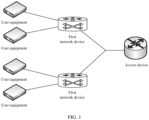
- user equipment may be connected to an access device at an edge layer of a metropolitan area backbone network by using a network device, and the access device manages bandwidth of the user equipment and bandwidth of the network device.
- the network device may be a digital subscriber line access multiplexer (digital subscriber line access multiplexer, DSLAM), and the access device may be a broadband remote access server (broadband remote access server, BRAS).
- DSLAM digital subscriber line access multiplexer
- BRAS broadband remote access server
- the access device when the access device manages the bandwidth of the user equipment and the bandwidth of the network device, after receiving a to-be-scheduled packet sent by a network side to the user equipment, the access device estimates only a packet length of a packet received by the user equipment, and then schedules the to-be-scheduled packet based on the estimated packet length of the packet received by the user equipment.
- a length of a packet received by each device may be different.
- the access device schedules the to-be-scheduled packet only based on the estimated packet length of the to-be-scheduled packet received by the user equipment, to manage the bandwidth of the user equipment and the bandwidth of the network device. This can only ensure correctness of bandwidth management on the user equipment, but cannot ensure correctness of bandwidth management on another network device.
- Embodiments of the present invention disclose a packet scheduling method, apparatus, and a computer storage medium with the features of the independent claims, as defined by the independent claims 1,6 and, respectively, 9. Further advantageous embodiments and improvements of the invention are listed in the dependent claims.
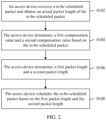
- the to-be-scheduled packet is a packet sent by a network side to user equipment. After receiving the to-be-scheduled packet sent by the network side, the access device needs to obtain the actual packet length of the to-be-scheduled packet.
- the actual packet length indicates a total length of the to-be-scheduled packet, in other words, the actual packet length includes a length of user data and a length of a packet header.
- the packet scheduling method is described still by using the scenario shown in FIG. 1 .
- the first compensation value indicates an estimate of a variation relative to the actual packet length after the to-be-scheduled packet is forwarded by a first network device
- the second compensation value indicates an estimate of a variation relative to the actual packet length after the to-be-scheduled packet is forwarded by the access device
- the first network device is a network device located between the access device and the user equipment on a forwarding path of the to-be-scheduled packet.
- the access device cannot directly obtain a packet length of the first scheduling packet received by the user equipment and a packet length of the second scheduling packet received by the first network device, and can estimate, only by obtaining the first compensation value and the second compensation value, the packet lengths of the packets received by the user equipment and the first network device.
- the identifier of the first network device may correspond to a specific compensation value, or may correspond to a compensation algorithm, and the identifier of the access device may correspond to a specific compensation value, or may correspond to a compensation algorithm. If the identifier of the first network device corresponds to a specific compensation value, the access device directly uses the compensation value as the first compensation value. If the identifier of the access device corresponds to a specific compensation value, the access device directly uses the compensation value as the second compensation value. If the identifier of the access device and/or the identifier of the first network device correspond to a compensation algorithm, the access device calculates a compensation value based on the compensation algorithm.
- FIG. 3 is a schematic diagram of a broadband access network that uses an asymmetric digital subscriber line (asymmetric digital subscriber line, ADSL).
- the access device may be a broadband remote access server (broadband remote access server, BRAS)
- the first network device may be a DSLAM
- the DSLAM uses an asynchronous transfer mode in an ADSL access network.
- the access device determines that the to-be-scheduled packet passes through the first network device and the access device when being transmitted from the access device to the user equipment, and the access device determines, based on an identifier of the DSLAM, that the DSLAM corresponds to a compensation algorithm.
- the compensation algorithm corresponding to the DSLAM is: Actual packet length ⁇ 5/ATM cell length. If the actual packet length is 240 bytes and the ATM cell length is 48 bytes, the first compensation value determined based on the identifier of the first network device is 25. For a principle of the compensation algorithm, refer to the foregoing example. Details are not described herein.
- the BRAS uses an Ethernet transmission protocol. Before forwarding the to-be-scheduled packet, the BRAS encapsulates a 20-byte interframe gap and a 14-byte Ethernet frame header into the to-be-scheduled packet. The 20-byte interframe gap does not consume a token during transmission.
- a length of a to-be-scheduled packet forwarded by the BRAS and received by the first network device is 254 bytes, and a compensation value corresponding to the first network device is 14, in other words, a specific compensation value 14 is determined based on the identifier of the access device. In this case, 14 is used as the second compensation value.
- the access device determines a first packet length and the second packet length.
- the first packet length is obtained after the access device estimates, based on the actual packet length and the first compensation value, the packet length of the first scheduling packet received by the user equipment, and a value of the first packet length is equal to a sum of a value of the actual packet length and the first compensation value.
- the second packet length is obtained after the access device estimates, based on the actual packet length and the second compensation value, the packet length of the second scheduling packet received by the first network device, and a value of the second packet length is equal to a sum of the value of the actual packet length and the second compensation value.
- the actual packet length of the to-be-scheduled packet received by the access device is 240 bytes
- the first compensation value is 25
- the second compensation value is 14.
- the first packet length is 265 bytes
- the second packet length is 254 bytes.
- the access device schedules the to-be-scheduled packet based on the first packet length and the second packet length.
- that the access device schedules the to-be-scheduled packet means that the access device determines, based on the first packet length, a first quantity of remaining tokens in the first token bucket, the second packet length, and a second quantity of remaining tokens in the second token bucket, whether to forward the to-be-scheduled packet.
- the access device determines whether the first quantity of target tokens is less than or equal to the first quantity of remaining tokens, and whether the second quantity of target tokens is less than or equal to the second quantity of remaining tokens.
- the access device determines to forward the to-be-scheduled packet in a first period, deducts, from the first token bucket, tokens that are in a same quantity as the first quantity of target tokens, and deducts, from the second token bucket, tokens that are in a same quantity as the second quantity of target tokens.
- the access device determines not to forward the to-be-scheduled packet in the first period.
- a compensation value or a compensation algorithm corresponding to each device whose bandwidth needs to be managed in the network may be configured, and a correspondence between a device identifier of each device and the compensation value or the compensation algorithm may be stored in an access device that manages the bandwidth of each device.
- the access bandwidth of the user equipment when bandwidth management is performed on access bandwidth of the user equipment, is total bandwidth accessed to the user equipment, and the total bandwidth is total bandwidth of a plurality of network services such as a voice service and a video service that are subscribed to by a user.
- the access bandwidth of the user equipment includes first bandwidth, the first bandwidth is used to indicate bandwidth of a target network service accessed to the user equipment, and a value of the first bandwidth is less than a value of the access bandwidth of the user equipment.
- All to-be-scheduled packets received by the access device are packets of a target network service of the user. Therefore, after receiving the to-be-scheduled packet, the access device further needs to manage bandwidth of the target network service.
- the access device In addition to determining the first compensation value and the second compensation value, determining the first packet length based on the first compensation value and the actual packet length, and determining the second compensation value based on the second compensation value and the actual packet length, the access device further needs to determine an identifier of the user equipment, and determine a third compensation value based on the identifier of the user equipment.
- the third compensation value indicates an estimate of a variation relative to the actual packet length after the to-be-scheduled packet is distributed by the user equipment to the target network service. Then, the access device determines a third packet length based on the actual packet length and the third compensation value, and a value of the third packet length is equal to a sum of the value of the actual packet length and the third compensation value.
- the access device determines to forward the to-be-scheduled packet, deducts, from the first token bucket, tokens that are in a same quantity as the first quantity of target tokens, deducts, from the second token bucket, tokens that are in a same quantity as the second quantity of target tokens, and deducts, from the third token bucket, tokens that are in a same quantity as the third quantity of target tokens.
- FIG. 4 is a schematic diagram of a broadband access network that uses optical fiber access.
- user equipment is connected to a first network device
- the first network device is connected to a second network device
- the second network device is connected to an access device. Therefore, in an optical fiber access network shown in FIG. 4 , after receiving a to-be-scheduled packet that needs to be forwarded to the user equipment, the access device needs to determine the first compensation value based on an identifier of the first network device, determine a second compensation value based on an identifier of the access device, determine a third compensation value based on an identifier of the user equipment, and determine a fourth compensation value based on an identifier of the second network device.
- the first compensation value indicates an estimate of a variation, relative to the actual packet length, of a packet length of a first scheduling packet received by the user equipment after the to-be-scheduled packet is forwarded by the first network device
- the second compensation value indicates an estimate of a variation, relative to the actual packet length, of a packet length of a second scheduling packet received by the second network device after the to-be-scheduled packet is forwarded by the access device
- the third compensation value indicates an estimate of a variation, relative to the actual packet length, of a packet length of a third scheduling packet obtained when the to-be-scheduled packet is distributed by the user equipment to the target networks service
- the fourth compensation value indicates an estimate of a variation, relative to the actual packet length, of a packet length of a fourth scheduling packet received by the first network device after the to-be-scheduled packet is forwarded by the second network device.
- the access device in FIG. 4 may be a BRAS
- the first network device may be a DSLAM
- the DSLAM device needs to use an internet protocol (Internet Protocol, IP) in an optical fiber access network and provide an Ethernet uplink interface.
- IP Internet Protocol
- the DSLAM device that uses the IP protocol and provides the Ethernet uplink interface is referred to as an IP-DSLAM.
- the second network device is an aggregation device, such as an aggregation switch.
- the first compensation value determined by the access device is 0, the second compensation value is 8, the third compensation value is 0, and the fourth compensation value is 4. This is because in an optical fiber access scenario, the aggregation switch accesses an 802.1Q in 802.
- the access device adds two layers of virtual local area network (virtual local area network, VLAN) tags to the to-be-scheduled packet, and then forwards the to-be-scheduled packet to the aggregation switch.
- VLAN virtual local area network
- a packet length of a fourth scheduling packet received by the IP-DSLAM after the to-be-scheduled packet is forwarded by the aggregation switch is 244 bytes, and an estimate of a variation relative to the actual packet length is 4.
- the fourth compensation value is 4.
- the IP-DSLAM strips out the four-byte inner-layer VLAN tag. Therefore, a packet length of a first scheduling packet received by the user equipment after the to-be-scheduled packet is forwarded by the IP-DSLAM is 240 bytes, and an estimate of a variation relative to the actual packet length is 0. In other words, the second compensation value is 0.
- the compensation value is determined based on a transmission protocol of each device in a network, and the compensation value may be positive, negative, or zero.
- the BRAS uses the 802.ad protocol, the BRAS needs to add two layers of VLAN tags to the to-be-scheduled packet, and therefore, the second compensation value determined based on an identifier of the BRAS is 4.
- a tunnel technology is used in the network to transmit data, a start node of a tunnel encapsulates an 18-byte frame header into user data based on a tunnel protocol, and then sends the user data to the user equipment by using the tunnel.
- Modification of the packet by each network device includes but is not limited to any one or more of adding an interframe gap, adding a packet header, adding a packet preamble, adding a virtual local area network tag, deleting an interframe gap, deleting a packet header, deleting a packet preamble, or deleting a virtual local area network tag. Therefore, compensation values corresponding to the network devices are not completely the same.
- the compensation values in the foregoing embodiments are merely used as examples, and cannot be understood as a specific limitation.
- the compensation value is determined based on the transmission protocol used by each device in the network.
- each device uses a specific transmission protocol. Therefore, a compensation value or a compensation algorithm corresponding to each device is determined.
- a network manager may configure an identifier of each device and a compensation value or a compensation algorithm corresponding to the identifier of each device in the access device.
- the access device After receiving the to-be-scheduled packet, the access device needs to obtain only an identifier of each device on a forwarding path of the to-be-scheduled packet, and does not need to obtain a transmission protocol corresponding to each device on the forwarding path, to determine a compensation value or a compensation algorithm corresponding to each device on the forwarding path.
- FIG. 5 shows a packet scheduling apparatus in a hierarchical bandwidth management system according to an embodiment of this application.
- the apparatus 300 includes a communications module 310, a processing module 320, and a storage module 330.
- the storage module 330 is configured to store program code and data, for example, storing a correspondence between a device identifier of each device and the compensation value or the compensation algorithm in the foregoing method embodiments.
- the processing module 320 finds, based on the correspondence, a compensation value or a compensation algorithm corresponding to each device identifier, and invokes, based on the compensation algorithm, the corresponding program code stored in the storage module 330, to calculate a compensation value corresponding to each device.
- the processing module 320 may be a processor or a controller, for example, may be a central processing unit (central processing unit, CPU), a general-purpose processor, a digital signal processor (digital signal processing, DSP), an application-specific integrated circuit (application-specific integrated circuit, ASIC), a field programmable gate array (field programmable gate array, FPGA) or another programmable logical device, a transistor logical device, a hardware component, or any combination thereof.
- the processing module may be implement or execute various example logical blocks, modules, and circuits described with reference to content disclosed in this application.
- the processor may be alternatively a combination of processors implementing a computing function, for example, a combination of one or more microprocessors, or a combination of the DSP and a microprocessor.
- the communications module 310 may be a communications interface, a transceiver, a transceiver circuit, or the like.
- the communications interface is a general name, and may include one or more interfaces.
- the storage module 330 may be a memory, or another service or module configured to provide a storage function.
- FIG. 6 is a schematic structural diagram of a network device according to an embodiment of this application.
- the network device 400 includes at least a processor 410, a communications interface 420, and a memory 430.
- the processor 410, the communications interface 420, and the memory 430 are connected to each other by using a bus 440.
- the processor 410 may include one or more general purpose processors, such as a central processing unit (central processing unit, CPU) or a combination of a CPU and a hardware chip.
- the hardware chip may be an application-specific integrated circuit (application-specific integrated circuit, ASIC), a programmable logic device (programmable logic device, PLD), or a combination thereof.
- the PLD may be a complex programmable logic device (complex programmable logic device, CPLD), a field-programmable gate array (field-programmable gate array, FPGA), generic array logic (generic array logic, GAL), or any combination thereof.
- the memory 430 may include a volatile memory (volatile memory), such as a random access memory (random access memory, RAM).
- volatile memory such as a random access memory (random access memory, RAM).
- the memory may also include a non-volatile memory (non-volatile memory), such as a read-only memory (read-only memory, ROM), a flash memory (flash memory), a hard disk drive (hard disk drive, HDD), or a solid-state drive (solid-state drive, SSD).
- the memory 430 may further include a combination of the foregoing types of memories.
- the memory 430 may be configured to store program code and data, so that the processor 410 invokes the program code and the data that are stored in the memory 430, to implement functions of the communications module and/or the processing module in the embodiments of this application.
- the processor 410 is configured to read a related instruction in the memory 430 to perform the following operations:
- the processor 410 controls the communications interface to receive a to-be-scheduled packet, where the to-be-scheduled packet is a packet sent by a network side to user equipment.
- the processor 410 obtains an actual packet length of the to-be-scheduled packet, where the actual packet length indicates a total length of the to-be-scheduled packet.
Landscapes
- Engineering & Computer Science (AREA)
- Computer Networks & Wireless Communication (AREA)
- Signal Processing (AREA)
- Automation & Control Theory (AREA)
- Data Exchanges In Wide-Area Networks (AREA)
Claims (9)
- Paketplanungsverfahren, umfassend:Empfangen (S102), durch eine Zugriffsvorrichtung, eines zu planenden Pakets, wobei es sich bei dem zu planenden Paket um ein Paket handelt, das durch eine Netzseite an ein Benutzergerät gesendet wird;Erlangen (S102), durch die Zugriffsvorrichtung, einer tatsächlichen Paketlänge des zu planenden Pakets, wobei die tatsächliche Paketlänge eine Gesamtlänge des zu planenden Pakets angibt;Bestimmen (S104), durch die Zugriffsvorrichtung, eines ersten Kompensationswerts und eines zweiten Kompensationswerts basierend auf dem zu planenden Paket, wobei der erste Kompensationswert eine Schätzung einer Abweichung relativ zu der tatsächlichen Paketlänge angibt, nachdem das zu planende Paket durch eine erste Netzvorrichtung weitergeleitet wurde,der zweite Kompensationswert eine Schätzung einer Abweichung relativ zu der tatsächlichen Paketlänge angibt, nachdem das zu planende Paket durch die Zugriffsvorrichtung weitergeleitet wurde, und es sich bei der ersten Netzvorrichtung um eine Netzvorrichtung handelt, die sich zwischen der Zugriffsvorrichtung und dem Benutzergerät auf einem Weiterleitungspfad des zu planenden Pakets befindet;Bestimmen (S106), durch die Zugriffsvorrichtung, einer ersten Paketlänge und einer zweiten Paketlänge, wobei ein Wert der ersten Paketlänge gleich einer Summe eines Werts der tatsächlichen Paketlänge und des ersten Kompensationswerts ist und ein Wert der zweiten Paketlänge gleich einer Summe des Werts der tatsächlichen Paketlänge und des zweiten Kompensationswerts ist; undPlanen (S108), durch die Zugriffsvorrichtung, des zu planenden Pakets basierend auf der ersten Paketlänge und der zweiten Paketlänge, wobei das Verfahren dadurch gekennzeichnet ist, dass das Planen (S108), durch die Zugriffsvorrichtung, des zu planenden Pakets basierend auf der ersten Paketlänge und der zweiten Paketlänge insbesondere Folgendes umfasst:Erlangen, durch die Zugriffsvorrichtung, einer ersten Menge von verbleibenden Token in einem ersten Token-Bucket, der dem Benutzergerät entspricht, wobei die erste Menge von verbleibenden Token gleich einer Menge von Token in dem ersten Token-Bucket zu einem aktuellen Zeitpunkt ist;Erlangen, durch die Zugriffsvorrichtung, einer zweiten Menge von verbleibenden Token in einem zweiten Token-Bucket, welcher der ersten Netzvorrichtung entspricht, wobei die erste Menge von verbleibenden Token gleich einer Menge von Token in dem zweiten Token-Bucket zu dem aktuellen Zeitpunkt ist;Bestimmen, durch die Zugriffsvorrichtung, einer ersten Menge von Ziel-Token, die verwendet werden, um das zu planende Paket zu planen, basierend auf dem ersten Token-Bucket und der ersten Paketlänge, und einer zweiten Menge von Ziel-Token, die verwendet werden, um das zu planende Paket zu planen, basierend auf dem zweiten Token-Bucket und der zweiten Paketlänge;Bestimmen, durch die Zugriffsvorrichtung, ob die erste Menge von Ziel-Token kleiner oder gleich der ersten Menge von verbleibenden Token ist und ob die zweite Menge von Ziel-Token kleiner oder gleich der zweiten Menge von verbleibenden Token ist; undwenn die Zugriffsvorrichtung bestimmt, dass die erste Menge von Ziel-Token kleiner oder gleich der ersten Menge von verbleibenden Token ist und die zweite Menge von Ziel-Token kleiner oder gleich der zweiten Menge von verbleibenden Token ist, Bestimmen, durch die Zugriffsvorrichtung, das zu planende Paket in einem ersten Zeitraum weiterzuleiten, Abziehen, von dem ersten Token-Bucket, von Token, die in einer gleichen Menge wie die erste Menge von Ziel-Token vorhanden sind, und Abziehen, von dem zweiten Token-Bucket, von Token, die in einer gleichen Menge wie die zweite Menge von Ziel-Token vorhanden sind.
- Verfahren nach Anspruch 1, wobei das Bestimmen (S104), durch die Zugriffsvorrichtung, eines ersten Kompensationswerts und eines zweiten Kompensationswerts basierend auf dem zu planenden Paket insbesondere Folgendes umfasst:Bestimmen, durch die Zugriffsvorrichtung, des Weiterleitungspfads des zu planenden Pakets basierend auf dem zu planenden Paket, wobei der Weiterleitungspfad eine Kennung der Zugriffsvorrichtung und eine Kennung der ersten Netzvorrichtung umfasst; undBestimmen, durch die Zugriffsvorrichtung, des ersten Kompensationswerts basierend auf der Kennung der ersten Netzvorrichtung und Bestimmen des zweiten Kompensationswerts basierend auf der Kennung der Zugriffsvorrichtung.
- Verfahren nach Anspruch 2, wobei das Bestimmen, durch die Zugriffsvorrichtung, des ersten Kompensationswerts basierend auf der Kennung der Netzvorrichtung und das Bestimmen des zweiten Kompensationswerts basierend auf der Kennung der Zugriffsvorrichtung insbesondere Folgendes umfasst:Bestimmen, durch die Zugriffsvorrichtung, eines ersten Kompensationsalgorithmus basierend auf der Kennung der ersten Netzvorrichtung und Bestimmen eines zweiten Kompensationsalgorithmus basierend auf der Kennung der Zugriffsvorrichtung, wobei der erste Kompensationsalgorithmus verwendet wird, um eine Paketlänge eines durch die erste Netzvorrichtung weitergeleiteten Pakets zu kompensieren, und der zweite Kompensationsalgorithmus verwendet wird, um eine Paketlänge eines durch die Zugriffsvorrichtung weitergeleiteten Pakets zu kompensieren; undBestimmen, durch die Zugriffsvorrichtung, des ersten Kompensationswerts basierend auf der tatsächlichen Paketlänge und dem ersten Kompensationsalgorithmus und Bestimmen des zweiten Kompensationswerts basierend auf der tatsächlichen Paketlänge und dem zweiten Kompensationsalgorithmus.
- Verfahren nach einem der Ansprüche 1 bis 3, wobei das Verfahren ferner Folgendes umfasst:
wenn die Zugriffsvorrichtung bestimmt, dass die erste Menge von Ziel-Token größer als die erste Menge von verbleibenden Token ist, oder dass die zweite Menge von Ziel-Token größer als die zweite Menge von verbleibenden Token ist, Bestimmen, durch die Zugriffsvorrichtung, das zu planende Paket in dem ersten Zeitraum nicht weiterzuleiten. - Verfahren nach einem der Ansprüche 1 bis 4, wobei,
wenn es sich bei der ersten Netzvorrichtung um eine Netzvorrichtung handelt, die auf einem asynchronen Übertragungsmodus, ATM, basiert, der erste Kompensationswert gleich einem Längenwert eines ATM-Zellenkopfes mal einem Quotienten des Werts der tatsächlichen Paketlänge und eines Werts einer ATM-Zellenlänge ist. - Paketkompensationseinrichtung, umfassend:einen Empfänger, der dazu konfiguriert ist, ein zu planenden Paket zu empfangen, wobei es sich bei dem zu planenden Paket um ein Paket handelt, das durch eine Netzseite an ein Benutzergerät gesendet wird; undeinen Prozessor, der dazu konfiguriert ist, eine tatsächliche Paketlänge des zu planenden Pakets zu erlangen, wobei die tatsächliche Paketlänge eine Gesamtlänge des zu planenden Pakets angibt, wobeider Prozessor ferner dazu konfiguriert ist, einen ersten Kompensationswert und einen zweiten Kompensationswert basierend auf dem zu planenden Paket zu bestimmen, wobei der erste Kompensationswert eine Schätzung einer Abweichung relativ zu der tatsächlichen Paketlänge angibt, nachdem das zu planende Paket durch eine erste Netzvorrichtung weitergeleitet wurde, der zweite Kompensationswert eine Schätzung einer Abweichung relativ zu der tatsächlichen Paketlänge angibt,nachdem das zu planende Paket durch den Empfänger weitergeleitet wurde, und es sich bei der ersten Netzvorrichtung um eine Netzvorrichtung handelt, die sich zwischen der Paketkompensationseinrichtung und dem Benutzergerät auf einem Weiterleitungspfad des zu planenden Pakets befindet; undder Prozessor ferner dazu konfiguriert ist, eine erste Paketlänge und eine zweite Paketlänge zu bestimmen, wobei ein Wert der ersten Paketlänge gleich einer Summe eines Werts der tatsächlichen Paketlänge und des ersten Kompensationswerts ist und ein Wert der zweiten Paketlänge gleich einer Summe des Werts der tatsächlichen Paketlänge und des zweiten Kompensationswerts ist; und das zu planende Paket basierend auf der ersten Paketlänge und der zweiten Paketlänge zu planen,wobei die Einrichtung dadurch gekennzeichnet ist, dass der Umstand, dass der Prozessor dazu konfiguriert ist, das zu planende Paket basierend auf der ersten Paketlänge und der zweiten Paketlänge zu planen, insbesondere umfasst, dass:der Prozessor dazu konfiguriert ist, eine erste Menge von verbleibenden Token in einem ersten Token-Bucket zu erlangen, der dem Benutzergerät entspricht, wobei die erste Menge von verbleibenden Token gleich einer Menge von Token in dem ersten Token-Bucket zu einem aktuellen Zeitpunkt ist;der Prozessor ferner dazu konfiguriert ist, eine zweite Menge von verbleibenden Token in einem zweiten Token-Bucket zu erlangen, welcher der ersten Netzvorrichtung entspricht, wobei die zweite Menge von verbleibenden Token gleich einer Menge von Token in dem zweiten Token-Bucket zu dem aktuellen Zeitpunkt ist;der Prozessor ferner dazu konfiguriert ist, eine erste Menge von Ziel-Token, die verwendet werden, um das zu planende Paket zu planen, basierend auf dem ersten Token-Bucket und der ersten Paketlänge zu bestimmen, und eine zweite Menge von Ziel-Token, die verwendet werden, um das zu planende Paket zu planen, basierend auf dem zweiten Token-Bucket und der zweiten Paketlänge zu bestimmen;der Prozessor ferner dazu konfiguriert ist, zu bestimmen, ob die erste Menge von Ziel-Token kleiner oder gleich der ersten Menge von verbleibenden Token ist und ob die zweite Menge von Ziel-Token kleiner oder gleich der zweiten Menge von verbleibenden Token ist; undwenn der Prozessor bestimmt, dass die erste Menge von Ziel-Token kleiner oder gleich der ersten Menge von verbleibenden Token ist und die zweite Menge von Ziel-Token kleiner oder gleich der zweiten Menge von verbleibenden Token ist, der Prozessor ferner zu Folgendem konfiguriert ist: Bestimmen, das zu planende Paket in einem ersten Zeitraum weiterzuleiten, Abziehen, von dem ersten Token-Bucket, von Token, die in einer gleichen Menge wie die erste Menge von Ziel-Token vorhanden sind, und Abziehen, von dem zweiten Token-Bucket, von Token, die in einer gleichen Menge wie die zweite Menge von Ziel-Token vorhanden sind.
- Einrichtung nach Anspruch 6, wobei, dass der Prozessor den ersten Kompensationswert und den zweiten Kompensationswert basierend auf dem zu planenden Paket bestimmt, insbesondere Folgendes umfasst:der Prozessor ist dazu konfiguriert, den Weiterleitungspfad des zu planenden Pakets basierend auf dem zu planenden Paket zu bestimmen, wobei der Weiterleitungspfad eine Kennung der Paketkompensationseinrichtung und eine Kennung der ersten Netzvorrichtung umfasst; undder Prozessor ist ferner dazu konfiguriert, den ersten Kompensationswert basierend auf der Kennung der ersten Netzvorrichtung zu bestimmen und den zweiten Kompensationswert basierend auf der Kennung der Paketkompensationseinrichtung zu bestimmen.
- Einrichtung nach Anspruch 7, wobei, dass der Prozessor den ersten Kompensationswert basierend auf der Kennung der ersten Netzvorrichtung bestimmt und den zweiten Kompensationswert basierend auf der Kennung der Paketkompensationseinrichtung bestimmt, insbesondere Folgendes umfasst:der Prozessor ist dazu konfiguriert, einen ersten Kompensationsalgorithmus basierend auf der Kennung der ersten Netzvorrichtung zu bestimmen und einen zweiten Kompensationsalgorithmus basierend auf der Kennung der Paketkompensationseinrichtung zu bestimmen, wobei der erste Kompensationsalgorithmus verwendet wird, um eine Paketlänge eines durch die erste Netzvorrichtung weitergeleiteten Pakets zu kompensieren, und der zweite Kompensationsalgorithmus verwendet wird, um eine Paketlänge eines durch die Paketkompensationseinrichtung weitergeleiteten Pakets zu kompensieren; undder Prozessor ist ferner dazu konfiguriert, den ersten Kompensationswert basierend auf der tatsächlichen Paketlänge und dem ersten Kompensationsalgorithmus zu bestimmen und den zweiten Kompensationswert basierend auf der tatsächlichen Paketlänge und dem zweiten Kompensationsalgorithmus zu bestimmen.
- Computerspeichermedium, wobei das Computerspeicherprogramm ein Computerprogramm speichert; und, wenn das Computerprogramm durch einen Prozessor ausgeführt wird, das Verfahren nach einem der Ansprüche 1 bis 5 umgesetzt wird.
Applications Claiming Priority (2)
| Application Number | Priority Date | Filing Date | Title |
|---|---|---|---|
| CN201910104686.1A CN111510394B (zh) | 2019-01-31 | 2019-01-31 | 一种报文调度方法、相关设备及计算机存储介质 |
| PCT/CN2019/127827 WO2020155941A1 (zh) | 2019-01-31 | 2019-12-24 | 一种报文调度方法、相关设备及计算机存储介质 |
Publications (3)
| Publication Number | Publication Date |
|---|---|
| EP3883191A1 EP3883191A1 (de) | 2021-09-22 |
| EP3883191A4 EP3883191A4 (de) | 2022-03-16 |
| EP3883191B1 true EP3883191B1 (de) | 2024-07-10 |
Family
ID=71839939
Family Applications (1)
| Application Number | Title | Priority Date | Filing Date |
|---|---|---|---|
| EP19913975.9A Active EP3883191B1 (de) | 2019-01-31 | 2019-12-24 | Nachrichtenplanungsverfahren, zugehörige vorrichtung und computerspeichermedium |
Country Status (6)
| Country | Link |
|---|---|
| US (1) | US11689465B2 (de) |
| EP (1) | EP3883191B1 (de) |
| JP (1) | JP7135217B2 (de) |
| KR (1) | KR102589955B1 (de) |
| CN (1) | CN111510394B (de) |
| WO (1) | WO2020155941A1 (de) |
Families Citing this family (6)
| Publication number | Priority date | Publication date | Assignee | Title |
|---|---|---|---|---|
| WO2021176670A1 (ja) * | 2020-03-05 | 2021-09-10 | 日本電信電話株式会社 | ネットワーク管理システム、エッジ装置、ネットワーク管理装置、及びプログラム |
| CN114006862B (zh) * | 2021-10-29 | 2023-10-20 | 锐捷网络股份有限公司 | 报文转发方法、装置和设备及计算机存储介质 |
| CN115314446B (zh) * | 2022-07-22 | 2024-05-28 | 烽火通信科技股份有限公司 | 一种报文带宽补偿方法、装置及设备 |
| CN115665052B (zh) * | 2022-09-21 | 2024-12-24 | 山东海量信息技术研究院 | 面向分布式系统的分阶段自适应请求调度方法及调度器 |
| CN115665053B (zh) * | 2022-09-28 | 2025-04-29 | 复旦大学 | 一种基于fpga的面向dpu的令牌桶算法限流系统 |
| CN120896948B (zh) * | 2025-09-30 | 2025-12-05 | 华为技术有限公司 | 报文处理方法、电子设备以及相关装置 |
Family Cites Families (26)
| Publication number | Priority date | Publication date | Assignee | Title |
|---|---|---|---|---|
| US5758089A (en) * | 1995-11-02 | 1998-05-26 | Sun Microsystems, Inc. | Method and apparatus for burst transferring ATM packet header and data to a host computer system |
| JP2946462B1 (ja) * | 1998-03-10 | 1999-09-06 | 株式会社超高速ネットワーク・コンピュータ技術研究所 | パケット・スケジューリング制御方法 |
| US7010607B1 (en) * | 1999-09-15 | 2006-03-07 | Hewlett-Packard Development Company, L.P. | Method for training a communication link between ports to correct for errors |
| US7110411B2 (en) * | 2002-03-25 | 2006-09-19 | Erlang Technology, Inc. | Method and apparatus for WFQ scheduling using a plurality of scheduling queues to provide fairness, high scalability, and low computation complexity |
| WO2004107671A1 (ja) | 2003-05-27 | 2004-12-09 | Fujitsu Limited | 通信装置 |
| WO2004109995A1 (ja) | 2003-06-03 | 2004-12-16 | Fujitsu Limited | 流量制御方法及びその装置 |
| US7765300B2 (en) * | 2003-10-06 | 2010-07-27 | Ericsson Ab | Protocol for messaging between a centralized broadband remote aggregation server and other devices |
| WO2006027672A2 (en) * | 2004-09-10 | 2006-03-16 | Nortel Networks | System and method for adaptive frame size management in a wireless multihop network |
| JP2006262337A (ja) | 2005-03-18 | 2006-09-28 | Fujitsu Ltd | 帯域制御装置及び帯域制御方法 |
| JP3961000B2 (ja) | 2005-05-26 | 2007-08-15 | 株式会社日立コミュニケーションテクノロジー | パケット転送装置及びネットワークシステム |
| CN100421403C (zh) * | 2005-06-29 | 2008-09-24 | 华为技术有限公司 | 一种认证接入系统及其认证接入方法 |
| GB2444675A (en) | 2005-10-07 | 2008-06-11 | Agere Systems Inc | Method and apparatus for RTP egress streaming using complementary directing file |
| CN100433718C (zh) * | 2005-10-31 | 2008-11-12 | 华为技术有限公司 | 保障数据分组业务服务等级的方法及速率限制方法 |
| US7821941B2 (en) * | 2006-11-03 | 2010-10-26 | Cisco Technology, Inc. | Automatically controlling operation of a BRAS device based on encapsulation information |
| EP2109967A4 (de) | 2007-02-09 | 2014-01-01 | Ericsson Telefon Ab L M | Verfahren und vorrichtung zur unterscheidung zwischen steuerungsmeldungen und sprachinhalten |
| CN101447912B (zh) * | 2007-11-27 | 2012-02-29 | 华为技术有限公司 | 一种报文调度方法和装置 |
| US8000235B2 (en) * | 2008-10-05 | 2011-08-16 | Contextream Ltd. | Bandwidth allocation method and apparatus |
| US8483194B1 (en) * | 2009-01-21 | 2013-07-09 | Aerohive Networks, Inc. | Airtime-based scheduling |
| US20110075562A1 (en) * | 2009-09-25 | 2011-03-31 | Isaksson Martin | Rate Shaping For Wireless Communication Using Token Bucket That Allows Token Debt |
| CN101873634B (zh) * | 2010-06-18 | 2013-06-05 | 杭州华三通信技术有限公司 | 一种基于无线局域网的带宽调度方法和设备 |
| CN102843775B (zh) * | 2012-09-11 | 2015-04-22 | 福建星网锐捷网络有限公司 | 调度方法、装置及网络设备 |
| CN103888372B (zh) * | 2012-12-21 | 2017-05-17 | 中兴通讯股份有限公司 | 一种流量整形方法和数据处理设备 |
| JP6564070B2 (ja) * | 2015-05-26 | 2019-08-21 | 華為技術有限公司Huawei Technologies Co.,Ltd. | 近距離無線通信nfcにおいてデータパケット長を調整するための方法、装置、およびシステム |
| CN109076396B (zh) | 2016-05-20 | 2021-03-02 | 华为技术有限公司 | 分组域语音业务调度的方法和装置 |
| CN109218215B (zh) * | 2017-06-29 | 2021-11-19 | 华为技术有限公司 | 一种报文传输的方法和网络设备 |
| CN107896197A (zh) * | 2017-10-23 | 2018-04-10 | 深圳市楠菲微电子有限公司 | 通信设备中测量转发速率的方法和装置、存储介质 |
-
2019
- 2019-01-31 CN CN201910104686.1A patent/CN111510394B/zh active Active
- 2019-12-24 WO PCT/CN2019/127827 patent/WO2020155941A1/zh not_active Ceased
- 2019-12-24 EP EP19913975.9A patent/EP3883191B1/de active Active
- 2019-12-24 KR KR1020217020758A patent/KR102589955B1/ko active Active
- 2019-12-24 JP JP2021541488A patent/JP7135217B2/ja active Active
-
2021
- 2021-07-29 US US17/388,674 patent/US11689465B2/en active Active
Also Published As
| Publication number | Publication date |
|---|---|
| EP3883191A4 (de) | 2022-03-16 |
| KR20210094083A (ko) | 2021-07-28 |
| CN111510394A (zh) | 2020-08-07 |
| US20210359949A1 (en) | 2021-11-18 |
| EP3883191A1 (de) | 2021-09-22 |
| KR102589955B1 (ko) | 2023-10-13 |
| WO2020155941A1 (zh) | 2020-08-06 |
| US11689465B2 (en) | 2023-06-27 |
| CN111510394B (zh) | 2022-04-12 |
| JP7135217B2 (ja) | 2022-09-12 |
| JP2022518227A (ja) | 2022-03-14 |
Similar Documents
| Publication | Publication Date | Title |
|---|---|---|
| EP3883191B1 (de) | Nachrichtenplanungsverfahren, zugehörige vorrichtung und computerspeichermedium | |
| US10958555B2 (en) | Real-time application-driven synthetic probing | |
| CN113676361B (zh) | 针对体验质量度量的按需探测 | |
| EP4024778B1 (de) | Verfahren zur bestimmung der erforderlichen bandbreite zur datenstromübertragung sowie vorrichtungen und system | |
| US9084132B2 (en) | Monitoring path characterisation information | |
| US8908522B2 (en) | Transmission rate control | |
| WO2008148122A2 (en) | Method and apparatus for computer network bandwidth control and congestion management | |
| US12206597B2 (en) | Method and apparatus for configuring quality of service policy for service, and computing device | |
| US20220116297A1 (en) | Dynamic prediction and management of application service level agreements | |
| KR101990235B1 (ko) | 패킷 교환 네트워크 내의 네트워크 노드에 있어서의 트래픽 관리를 위한 방법 및 네트워크 노드 | |
| US11870707B2 (en) | Bandwidth management and configuration method for cloud service, and related apparatus | |
| CN113055293B (zh) | 软件定义广域网中的选路方法及装置、通信系统 | |
| CN112714071B (zh) | 一种数据发送方法及装置 | |
| US20230096280A1 (en) | Method, Device, and System for Determining Bandwidth for Service Flow Transmission | |
| CN102203836B (zh) | 用于反映控制平面中的转发平面利用率的方法和装置 | |
| CN112714072B (zh) | 一种调整发送速率的方法及装置 | |
| CN112787952B (zh) | 一种业务流量调整方法及装置 | |
| EP3562108B1 (de) | Lastverteilung zwischen hybridtunneln | |
| CN111277426A (zh) | 一种ioam信息的处理方法和装置 | |
| US7843942B2 (en) | Node and fair rate calculating method | |
| US20160315787A1 (en) | Network system, control devices, control method, and program | |
| WO2012114328A1 (en) | System and method for active queue management per flow over a packet switched network | |
| HK40076761A (en) | Cloud service bandwidth management and configuration methods and related device |
Legal Events
| Date | Code | Title | Description |
|---|---|---|---|
| STAA | Information on the status of an ep patent application or granted ep patent |
Free format text: STATUS: THE INTERNATIONAL PUBLICATION HAS BEEN MADE |
|
| PUAI | Public reference made under article 153(3) epc to a published international application that has entered the european phase |
Free format text: ORIGINAL CODE: 0009012 |
|
| STAA | Information on the status of an ep patent application or granted ep patent |
Free format text: STATUS: REQUEST FOR EXAMINATION WAS MADE |
|
| 17P | Request for examination filed |
Effective date: 20210614 |
|
| AK | Designated contracting states |
Kind code of ref document: A1 Designated state(s): AL AT BE BG CH CY CZ DE DK EE ES FI FR GB GR HR HU IE IS IT LI LT LU LV MC MK MT NL NO PL PT RO RS SE SI SK SM TR |
|
| A4 | Supplementary search report drawn up and despatched |
Effective date: 20220216 |
|
| RIC1 | Information provided on ipc code assigned before grant |
Ipc: H04L 47/215 20220101ALN20220210BHEP Ipc: H04L 47/36 20220101ALI20220210BHEP Ipc: H04L 47/50 20220101ALI20220210BHEP Ipc: H04L 47/628 20220101ALI20220210BHEP Ipc: H04L 12/28 20060101ALI20220210BHEP Ipc: H04L 47/10 20220101AFI20220210BHEP |
|
| DAV | Request for validation of the european patent (deleted) | ||
| DAX | Request for extension of the european patent (deleted) | ||
| REG | Reference to a national code |
Ref country code: DE Free format text: PREVIOUS MAIN CLASS: H04L0012280000 Ref country code: DE Ref legal event code: R079 Ref document number: 602019055185 Country of ref document: DE Free format text: PREVIOUS MAIN CLASS: H04L0012280000 Ipc: H04L0047100000 |
|
| GRAP | Despatch of communication of intention to grant a patent |
Free format text: ORIGINAL CODE: EPIDOSNIGR1 |
|
| STAA | Information on the status of an ep patent application or granted ep patent |
Free format text: STATUS: GRANT OF PATENT IS INTENDED |
|
| RIC1 | Information provided on ipc code assigned before grant |
Ipc: H04L 47/215 20220101ALN20240206BHEP Ipc: H04L 47/36 20220101ALI20240206BHEP Ipc: H04L 47/50 20220101ALI20240206BHEP Ipc: H04L 47/628 20220101ALI20240206BHEP Ipc: H04L 12/28 20060101ALI20240206BHEP Ipc: H04L 47/10 20220101AFI20240206BHEP |
|
| INTG | Intention to grant announced |
Effective date: 20240219 |
|
| GRAS | Grant fee paid |
Free format text: ORIGINAL CODE: EPIDOSNIGR3 |
|
| GRAA | (expected) grant |
Free format text: ORIGINAL CODE: 0009210 |
|
| STAA | Information on the status of an ep patent application or granted ep patent |
Free format text: STATUS: THE PATENT HAS BEEN GRANTED |
|
| AK | Designated contracting states |
Kind code of ref document: B1 Designated state(s): AL AT BE BG CH CY CZ DE DK EE ES FI FR GB GR HR HU IE IS IT LI LT LU LV MC MK MT NL NO PL PT RO RS SE SI SK SM TR |
|
| REG | Reference to a national code |
Ref country code: CH Ref legal event code: EP |
|
| REG | Reference to a national code |
Ref country code: DE Ref legal event code: R096 Ref document number: 602019055185 Country of ref document: DE |
|
| REG | Reference to a national code |
Ref country code: LT Ref legal event code: MG9D |
|
| PG25 | Lapsed in a contracting state [announced via postgrant information from national office to epo] |
Ref country code: PT Free format text: LAPSE BECAUSE OF FAILURE TO SUBMIT A TRANSLATION OF THE DESCRIPTION OR TO PAY THE FEE WITHIN THE PRESCRIBED TIME-LIMIT Effective date: 20241111 |
|
| REG | Reference to a national code |
Ref country code: AT Ref legal event code: MK05 Ref document number: 1703029 Country of ref document: AT Kind code of ref document: T Effective date: 20240710 |
|
| PG25 | Lapsed in a contracting state [announced via postgrant information from national office to epo] |
Ref country code: NL Free format text: LAPSE BECAUSE OF FAILURE TO SUBMIT A TRANSLATION OF THE DESCRIPTION OR TO PAY THE FEE WITHIN THE PRESCRIBED TIME-LIMIT Effective date: 20240710 |
|
| PG25 | Lapsed in a contracting state [announced via postgrant information from national office to epo] |
Ref country code: PT Free format text: LAPSE BECAUSE OF FAILURE TO SUBMIT A TRANSLATION OF THE DESCRIPTION OR TO PAY THE FEE WITHIN THE PRESCRIBED TIME-LIMIT Effective date: 20241111 Ref country code: NL Free format text: LAPSE BECAUSE OF FAILURE TO SUBMIT A TRANSLATION OF THE DESCRIPTION OR TO PAY THE FEE WITHIN THE PRESCRIBED TIME-LIMIT Effective date: 20240710 |
|
| PG25 | Lapsed in a contracting state [announced via postgrant information from national office to epo] |
Ref country code: NO Free format text: LAPSE BECAUSE OF FAILURE TO SUBMIT A TRANSLATION OF THE DESCRIPTION OR TO PAY THE FEE WITHIN THE PRESCRIBED TIME-LIMIT Effective date: 20241010 |
|
| PG25 | Lapsed in a contracting state [announced via postgrant information from national office to epo] |
Ref country code: GR Free format text: LAPSE BECAUSE OF FAILURE TO SUBMIT A TRANSLATION OF THE DESCRIPTION OR TO PAY THE FEE WITHIN THE PRESCRIBED TIME-LIMIT Effective date: 20241011 Ref country code: FI Free format text: LAPSE BECAUSE OF FAILURE TO SUBMIT A TRANSLATION OF THE DESCRIPTION OR TO PAY THE FEE WITHIN THE PRESCRIBED TIME-LIMIT Effective date: 20240710 Ref country code: PL Free format text: LAPSE BECAUSE OF FAILURE TO SUBMIT A TRANSLATION OF THE DESCRIPTION OR TO PAY THE FEE WITHIN THE PRESCRIBED TIME-LIMIT Effective date: 20240710 |
|
| PG25 | Lapsed in a contracting state [announced via postgrant information from national office to epo] |
Ref country code: BG Free format text: LAPSE BECAUSE OF FAILURE TO SUBMIT A TRANSLATION OF THE DESCRIPTION OR TO PAY THE FEE WITHIN THE PRESCRIBED TIME-LIMIT Effective date: 20240710 |
|
| PG25 | Lapsed in a contracting state [announced via postgrant information from national office to epo] |
Ref country code: LV Free format text: LAPSE BECAUSE OF FAILURE TO SUBMIT A TRANSLATION OF THE DESCRIPTION OR TO PAY THE FEE WITHIN THE PRESCRIBED TIME-LIMIT Effective date: 20240710 |
|
| PG25 | Lapsed in a contracting state [announced via postgrant information from national office to epo] |
Ref country code: AT Free format text: LAPSE BECAUSE OF FAILURE TO SUBMIT A TRANSLATION OF THE DESCRIPTION OR TO PAY THE FEE WITHIN THE PRESCRIBED TIME-LIMIT Effective date: 20240710 Ref country code: IS Free format text: LAPSE BECAUSE OF FAILURE TO SUBMIT A TRANSLATION OF THE DESCRIPTION OR TO PAY THE FEE WITHIN THE PRESCRIBED TIME-LIMIT Effective date: 20241110 |
|
| PG25 | Lapsed in a contracting state [announced via postgrant information from national office to epo] |
Ref country code: HR Free format text: LAPSE BECAUSE OF FAILURE TO SUBMIT A TRANSLATION OF THE DESCRIPTION OR TO PAY THE FEE WITHIN THE PRESCRIBED TIME-LIMIT Effective date: 20240710 |
|
| PG25 | Lapsed in a contracting state [announced via postgrant information from national office to epo] |
Ref country code: ES Free format text: LAPSE BECAUSE OF FAILURE TO SUBMIT A TRANSLATION OF THE DESCRIPTION OR TO PAY THE FEE WITHIN THE PRESCRIBED TIME-LIMIT Effective date: 20240710 Ref country code: RS Free format text: LAPSE BECAUSE OF FAILURE TO SUBMIT A TRANSLATION OF THE DESCRIPTION OR TO PAY THE FEE WITHIN THE PRESCRIBED TIME-LIMIT Effective date: 20241010 |
|
| PG25 | Lapsed in a contracting state [announced via postgrant information from national office to epo] |
Ref country code: RS Free format text: LAPSE BECAUSE OF FAILURE TO SUBMIT A TRANSLATION OF THE DESCRIPTION OR TO PAY THE FEE WITHIN THE PRESCRIBED TIME-LIMIT Effective date: 20241010 Ref country code: PL Free format text: LAPSE BECAUSE OF FAILURE TO SUBMIT A TRANSLATION OF THE DESCRIPTION OR TO PAY THE FEE WITHIN THE PRESCRIBED TIME-LIMIT Effective date: 20240710 Ref country code: NO Free format text: LAPSE BECAUSE OF FAILURE TO SUBMIT A TRANSLATION OF THE DESCRIPTION OR TO PAY THE FEE WITHIN THE PRESCRIBED TIME-LIMIT Effective date: 20241010 Ref country code: LV Free format text: LAPSE BECAUSE OF FAILURE TO SUBMIT A TRANSLATION OF THE DESCRIPTION OR TO PAY THE FEE WITHIN THE PRESCRIBED TIME-LIMIT Effective date: 20240710 Ref country code: IS Free format text: LAPSE BECAUSE OF FAILURE TO SUBMIT A TRANSLATION OF THE DESCRIPTION OR TO PAY THE FEE WITHIN THE PRESCRIBED TIME-LIMIT Effective date: 20241110 Ref country code: HR Free format text: LAPSE BECAUSE OF FAILURE TO SUBMIT A TRANSLATION OF THE DESCRIPTION OR TO PAY THE FEE WITHIN THE PRESCRIBED TIME-LIMIT Effective date: 20240710 Ref country code: GR Free format text: LAPSE BECAUSE OF FAILURE TO SUBMIT A TRANSLATION OF THE DESCRIPTION OR TO PAY THE FEE WITHIN THE PRESCRIBED TIME-LIMIT Effective date: 20241011 Ref country code: FI Free format text: LAPSE BECAUSE OF FAILURE TO SUBMIT A TRANSLATION OF THE DESCRIPTION OR TO PAY THE FEE WITHIN THE PRESCRIBED TIME-LIMIT Effective date: 20240710 Ref country code: ES Free format text: LAPSE BECAUSE OF FAILURE TO SUBMIT A TRANSLATION OF THE DESCRIPTION OR TO PAY THE FEE WITHIN THE PRESCRIBED TIME-LIMIT Effective date: 20240710 Ref country code: BG Free format text: LAPSE BECAUSE OF FAILURE TO SUBMIT A TRANSLATION OF THE DESCRIPTION OR TO PAY THE FEE WITHIN THE PRESCRIBED TIME-LIMIT Effective date: 20240710 Ref country code: AT Free format text: LAPSE BECAUSE OF FAILURE TO SUBMIT A TRANSLATION OF THE DESCRIPTION OR TO PAY THE FEE WITHIN THE PRESCRIBED TIME-LIMIT Effective date: 20240710 |
|
| REG | Reference to a national code |
Ref country code: DE Ref legal event code: R097 Ref document number: 602019055185 Country of ref document: DE |
|
| PG25 | Lapsed in a contracting state [announced via postgrant information from national office to epo] |
Ref country code: RO Free format text: LAPSE BECAUSE OF FAILURE TO SUBMIT A TRANSLATION OF THE DESCRIPTION OR TO PAY THE FEE WITHIN THE PRESCRIBED TIME-LIMIT Effective date: 20240710 Ref country code: SM Free format text: LAPSE BECAUSE OF FAILURE TO SUBMIT A TRANSLATION OF THE DESCRIPTION OR TO PAY THE FEE WITHIN THE PRESCRIBED TIME-LIMIT Effective date: 20240710 Ref country code: DK Free format text: LAPSE BECAUSE OF FAILURE TO SUBMIT A TRANSLATION OF THE DESCRIPTION OR TO PAY THE FEE WITHIN THE PRESCRIBED TIME-LIMIT Effective date: 20240710 |
|
| PG25 | Lapsed in a contracting state [announced via postgrant information from national office to epo] |
Ref country code: EE Free format text: LAPSE BECAUSE OF FAILURE TO SUBMIT A TRANSLATION OF THE DESCRIPTION OR TO PAY THE FEE WITHIN THE PRESCRIBED TIME-LIMIT Effective date: 20240710 |
|
| PG25 | Lapsed in a contracting state [announced via postgrant information from national office to epo] |
Ref country code: CZ Free format text: LAPSE BECAUSE OF FAILURE TO SUBMIT A TRANSLATION OF THE DESCRIPTION OR TO PAY THE FEE WITHIN THE PRESCRIBED TIME-LIMIT Effective date: 20240710 |
|
| PG25 | Lapsed in a contracting state [announced via postgrant information from national office to epo] |
Ref country code: IT Free format text: LAPSE BECAUSE OF FAILURE TO SUBMIT A TRANSLATION OF THE DESCRIPTION OR TO PAY THE FEE WITHIN THE PRESCRIBED TIME-LIMIT Effective date: 20240710 Ref country code: SK Free format text: LAPSE BECAUSE OF FAILURE TO SUBMIT A TRANSLATION OF THE DESCRIPTION OR TO PAY THE FEE WITHIN THE PRESCRIBED TIME-LIMIT Effective date: 20240710 |
|
| PLBE | No opposition filed within time limit |
Free format text: ORIGINAL CODE: 0009261 |
|
| STAA | Information on the status of an ep patent application or granted ep patent |
Free format text: STATUS: NO OPPOSITION FILED WITHIN TIME LIMIT |
|
| 26N | No opposition filed |
Effective date: 20250411 |
|
| PG25 | Lapsed in a contracting state [announced via postgrant information from national office to epo] |
Ref country code: MC Free format text: LAPSE BECAUSE OF FAILURE TO SUBMIT A TRANSLATION OF THE DESCRIPTION OR TO PAY THE FEE WITHIN THE PRESCRIBED TIME-LIMIT Effective date: 20240710 |
|
| REG | Reference to a national code |
Ref country code: CH Ref legal event code: PL |
|
| PG25 | Lapsed in a contracting state [announced via postgrant information from national office to epo] |
Ref country code: LU Free format text: LAPSE BECAUSE OF NON-PAYMENT OF DUE FEES Effective date: 20241224 |
|
| GBPC | Gb: european patent ceased through non-payment of renewal fee |
Effective date: 20241224 |
|
| PG25 | Lapsed in a contracting state [announced via postgrant information from national office to epo] |
Ref country code: SE Free format text: LAPSE BECAUSE OF FAILURE TO SUBMIT A TRANSLATION OF THE DESCRIPTION OR TO PAY THE FEE WITHIN THE PRESCRIBED TIME-LIMIT Effective date: 20240710 |
|
| REG | Reference to a national code |
Ref country code: BE Ref legal event code: MM Effective date: 20241231 |
|
| PG25 | Lapsed in a contracting state [announced via postgrant information from national office to epo] |
Ref country code: BE Free format text: LAPSE BECAUSE OF NON-PAYMENT OF DUE FEES Effective date: 20241231 Ref country code: GB Free format text: LAPSE BECAUSE OF NON-PAYMENT OF DUE FEES Effective date: 20241224 |
|
| PG25 | Lapsed in a contracting state [announced via postgrant information from national office to epo] |
Ref country code: FR Free format text: LAPSE BECAUSE OF NON-PAYMENT OF DUE FEES Effective date: 20241231 |
|
| PG25 | Lapsed in a contracting state [announced via postgrant information from national office to epo] |
Ref country code: CH Free format text: LAPSE BECAUSE OF NON-PAYMENT OF DUE FEES Effective date: 20241231 |
|
| PG25 | Lapsed in a contracting state [announced via postgrant information from national office to epo] |
Ref country code: IE Free format text: LAPSE BECAUSE OF NON-PAYMENT OF DUE FEES Effective date: 20241224 |
|
| PGFP | Annual fee paid to national office [announced via postgrant information from national office to epo] |
Ref country code: DE Payment date: 20251104 Year of fee payment: 7 |