EP3882193A1 - Interaction safety control between an elevator system and a machine passenger - Google Patents
Interaction safety control between an elevator system and a machine passenger Download PDFInfo
- Publication number
- EP3882193A1 EP3882193A1 EP20215781.4A EP20215781A EP3882193A1 EP 3882193 A1 EP3882193 A1 EP 3882193A1 EP 20215781 A EP20215781 A EP 20215781A EP 3882193 A1 EP3882193 A1 EP 3882193A1
- Authority
- EP
- European Patent Office
- Prior art keywords
- command
- elevator system
- elevator
- machine passenger
- respect
- Prior art date
- Legal status (The legal status is an assumption and is not a legal conclusion. Google has not performed a legal analysis and makes no representation as to the accuracy of the status listed.)
- Withdrawn
Links
Images





Classifications
-
- B—PERFORMING OPERATIONS; TRANSPORTING
- B66—HOISTING; LIFTING; HAULING
- B66B—ELEVATORS; ESCALATORS OR MOVING WALKWAYS
- B66B1/00—Control systems of elevators in general
- B66B1/34—Details, e.g. call counting devices, data transmission from car to control system, devices giving information to the control system
- B66B1/3415—Control system configuration and the data transmission or communication within the control system
- B66B1/3446—Data transmission or communication within the control system
- B66B1/3453—Procedure or protocol for the data transmission or communication
-
- B—PERFORMING OPERATIONS; TRANSPORTING
- B66—HOISTING; LIFTING; HAULING
- B66B—ELEVATORS; ESCALATORS OR MOVING WALKWAYS
- B66B1/00—Control systems of elevators in general
- B66B1/24—Control systems with regulation, i.e. with retroactive action, for influencing travelling speed, acceleration, or deceleration
- B66B1/2408—Control systems with regulation, i.e. with retroactive action, for influencing travelling speed, acceleration, or deceleration where the allocation of a call to an elevator car is of importance, i.e. by means of a supervisory or group controller
-
- B—PERFORMING OPERATIONS; TRANSPORTING
- B66—HOISTING; LIFTING; HAULING
- B66B—ELEVATORS; ESCALATORS OR MOVING WALKWAYS
- B66B5/00—Applications of checking, fault-correcting, or safety devices in elevators
- B66B5/0006—Monitoring devices or performance analysers
- B66B5/0012—Devices monitoring the users of the elevator system
-
- B—PERFORMING OPERATIONS; TRANSPORTING
- B66—HOISTING; LIFTING; HAULING
- B66B—ELEVATORS; ESCALATORS OR MOVING WALKWAYS
- B66B1/00—Control systems of elevators in general
- B66B1/24—Control systems with regulation, i.e. with retroactive action, for influencing travelling speed, acceleration, or deceleration
- B66B1/28—Control systems with regulation, i.e. with retroactive action, for influencing travelling speed, acceleration, or deceleration electrical
-
- B—PERFORMING OPERATIONS; TRANSPORTING
- B66—HOISTING; LIFTING; HAULING
- B66B—ELEVATORS; ESCALATORS OR MOVING WALKWAYS
- B66B1/00—Control systems of elevators in general
- B66B1/34—Details, e.g. call counting devices, data transmission from car to control system, devices giving information to the control system
- B66B1/3415—Control system configuration and the data transmission or communication within the control system
- B66B1/3423—Control system configuration, i.e. lay-out
-
- B—PERFORMING OPERATIONS; TRANSPORTING
- B66—HOISTING; LIFTING; HAULING
- B66B—ELEVATORS; ESCALATORS OR MOVING WALKWAYS
- B66B1/00—Control systems of elevators in general
- B66B1/34—Details, e.g. call counting devices, data transmission from car to control system, devices giving information to the control system
- B66B1/3415—Control system configuration and the data transmission or communication within the control system
- B66B1/3446—Data transmission or communication within the control system
-
- B—PERFORMING OPERATIONS; TRANSPORTING
- B66—HOISTING; LIFTING; HAULING
- B66B—ELEVATORS; ESCALATORS OR MOVING WALKWAYS
- B66B1/00—Control systems of elevators in general
- B66B1/34—Details, e.g. call counting devices, data transmission from car to control system, devices giving information to the control system
- B66B1/3415—Control system configuration and the data transmission or communication within the control system
- B66B1/3446—Data transmission or communication within the control system
- B66B1/3461—Data transmission or communication within the control system between the elevator control system and remote or mobile stations
-
- B—PERFORMING OPERATIONS; TRANSPORTING
- B66—HOISTING; LIFTING; HAULING
- B66B—ELEVATORS; ESCALATORS OR MOVING WALKWAYS
- B66B5/00—Applications of checking, fault-correcting, or safety devices in elevators
- B66B5/0006—Monitoring devices or performance analysers
- B66B5/0018—Devices monitoring the operating condition of the elevator system
- B66B5/0025—Devices monitoring the operating condition of the elevator system for maintenance or repair
-
- B—PERFORMING OPERATIONS; TRANSPORTING
- B66—HOISTING; LIFTING; HAULING
- B66B—ELEVATORS; ESCALATORS OR MOVING WALKWAYS
- B66B5/00—Applications of checking, fault-correcting, or safety devices in elevators
- B66B5/0006—Monitoring devices or performance analysers
- B66B5/0018—Devices monitoring the operating condition of the elevator system
- B66B5/0031—Devices monitoring the operating condition of the elevator system for safety reasons
-
- B—PERFORMING OPERATIONS; TRANSPORTING
- B66—HOISTING; LIFTING; HAULING
- B66B—ELEVATORS; ESCALATORS OR MOVING WALKWAYS
- B66B2201/00—Aspects of control systems of elevators
- B66B2201/10—Details with respect to the type of call input
- B66B2201/104—Call input for a preferential elevator car or indicating a special request
-
- B—PERFORMING OPERATIONS; TRANSPORTING
- B66—HOISTING; LIFTING; HAULING
- B66B—ELEVATORS; ESCALATORS OR MOVING WALKWAYS
- B66B2201/00—Aspects of control systems of elevators
- B66B2201/40—Details of the change of control mode
- B66B2201/401—Details of the change of control mode by time of the day
-
- B—PERFORMING OPERATIONS; TRANSPORTING
- B66—HOISTING; LIFTING; HAULING
- B66B—ELEVATORS; ESCALATORS OR MOVING WALKWAYS
- B66B2201/00—Aspects of control systems of elevators
- B66B2201/40—Details of the change of control mode
- B66B2201/405—Details of the change of control mode by input of special passenger or passenger group
Definitions
- the invention belongs to the technical field of Elevators, relates to the interaction safety between an elevator system and a machine passenger, and specifically relates to an interaction safety control method between an elevator system and a machine passenger, a readable storage medium, a computer device and an elevator system using the computer device.
- a robot may take an elevator as a machine passenger, and may even wirelessly interact with the elevator system to send various commands, e.g. issuing commands for requesting to register a destination floor within an elevator car, issuing commands for requesting a call at a landing hall, and so on.
- an interaction safety control method between an elevator system and a machine passenger comprising:
- the interaction safety control method according to another embodiment or any of the above embodiments of the present invention, wherein the safe sub-interface that is pre-opened to the machine passenger is selected from one or more of the following:
- information of the command comprises an identifier of the machine passenger sending the command, and a command type
- steps of determining the safety of the command with respect to the elevator system comprise: based on the received command, judging whether it is a command that is valid with respect to the elevator system but invalid with respect to the machine passenger; if the received command is a command that is valid with respect to the elevator system but invalid with respect to the machine passenger, determining that the received command is unsafe with respect to the elevator system.
- information of the command comprises a command type, an identifier of the machine passenger sending the command, and a receipt time
- the steps of determining the safety of the command with respect to the elevator system comprise: based on the receipt time of commands from a same machine passenger, determining adjacent receipt time intervals of the commands of a same command type from the same machine passenger; and based on a determined adjacent receipt time interval, determining the safety of the command with respect to the elevator system.
- the interaction safety control method according to another embodiment or any of the above embodiments of the present invention, wherein the safe time interval is preset respectively according to a minimum time required by the commands of a respective command type to be normally executed once by the elevator system.
- information of the command comprises a command type
- steps of determining the safety of the command with respect to the elevator system comprise: based on the received command and the command type thereof and current running state information of the elevator system, determining the safety of the received command with respect to the elevator system.
- the interaction safety control method according to another embodiment or any of the above embodiments of the present invention, wherein the steps of judging whether the machine passenger is in the abnormal running state comprises:
- the interaction safety control method according to another embodiment or any of the above embodiments of the present invention, wherein the steps of judging whether the machine passenger is in the abnormal running state comprises: if state representation information actively sent from the machine passenger for representing that its state is abnormal is received, determining that the machine passenger is in the abnormal running state.
- interaction safety control method according to another embodiment or any of the above embodiments of the present invention, wherein further comprising the steps of: sending, to a maintenance management system, a second prompt information at least representing that a respective machine passenger is in the abnormal running state.
- a computer device comprising a memory, a processor, and a computer program stored on the memory and executable on the processor, wherein the processor, when running the program, implementing the steps of any of the above interaction safety control methods.
- a computer readable storage medium having stored thereon a computer program, wherein the program is executable by a processor to implement the steps of any of the above interaction safety control methods.
- an elevator system comprising one or more elevator cars, an elevator control device for controlling the one or more elevator cars to travel; and further comprising a safe interaction control unit configured in the above described computer device; wherein the elevator control device wirelessly interacts with one or more machine passengers to acquire commands from the machine passenger via the computer device described above, and the elevator control device controls, through the safe interaction control unit, interaction safety between the elevator system and the machine passenger.
- the elevator system according to an embodiment of the invention, wherein the computer device is independently external to the elevator control device and is in communication with the elevator control device.
- Some block diagrams shown in the figures are functional entities and do not necessarily have to correspond to physically or logically separate entities. These functional entities may be implemented in software or in one or more hardware modules or integrated circuits, or in different processing apparatus and/or microcontroller apparatus.
- the machine passenger in the following embodiments of the present invention may be various types of movable machine bodies that may be associated with an elevator system, which may specifically be a robot that may take an elevator, for example, a robot for take-out, a robot for meal delivering, a robot for expressage, etc., the machine passenger may also be a transportation vehicle that autonomously moves under control. It will be understood that the specific type, structure, and/or use of a machine passenger may be varied widely, which is not limited by the following embodiments of the present invention.
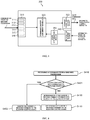
- FIG. 1 Shown in FIG. 1 is a schematic diagram of an elevator system according to an embodiment of the present invention, which illustrates an elevator system wirelessly interacting with one or more machine passengers using an interaction safety control apparatus of an embodiment of the present invention is illustrated; shown in FIG. 2 is a schematic diagram of a basic structure of an interaction safety control apparatus or computer device according to an embodiment of the present invention; shown in FIG. 3 is a schematic diagram of a module structure of an interaction safety control apparatus according to an embodiment of the present invention.
- the elevator system 10 of the present invention includes one or more elevator cars 120, and an elevator control device 110, which may be implemented by, for example, an elevator control cabinet, a group controller, or the like, which may be used to control one or more elevator cars 120 to travel in the hoistway.
- an elevator control device 110 which may be implemented by, for example, an elevator control cabinet, a group controller, or the like, which may be used to control one or more elevator cars 120 to travel in the hoistway.
- the specific implementation of the elevator control device 110 is not limiting.
- the elevator system 10 may also include other conventional components not shown in the figures, e.g. traction apparatus, counterweight, and the like.
- the elevator system 10 wirelessly interacts with one or more machine passengers 90 using the interaction safety control apparatus 200 of an embodiment of the present invention.
- the machine passenger 90 may send a respective command 901 and the command may be transmitted via the wireless network 80 to the interaction safety control apparatus 200, the command 901 is uploaded to the elevator control device 110 in case that the interaction safety control apparatus 200 determines that the command 901 is safe with respect to the elevator system 10, avoiding causing the elevator system to run abnormally (e.g., running unstably, running disorderly, etc.) due to the elevator control device 110 being affected by the unsafe command, and also reducing the workload of the elevator control device 110 handling excessive unsafe commands from the machine passenger 90.
- abnormally e.g., running unstably, running disorderly, etc.
- the elevator control device 110 does not interact directly with the machine passenger 90, nor does the command 901 issued by the machine passenger 90 is directly sent to the elevator control device 110, but instead is detected and verified in the interaction safety control apparatus 200 to determine its safety with respect to the elevator system 10.
- a wireless communication module e.g. those supporting 4G/5G/Wifi communication, may be disposed on the machine passenger 90, a respective wireless communication module may also be disposed in the interaction safety control apparatus 200, so that it may perform wireless communication connection with one or more machine passengers 90 via the wireless network 80 in real time.
- the wireless communication module of the interaction safety control apparatus 200 (e.g. the communication device 280 as shown in FIG. 2 ), may be configured with an interface 310, for example, as shown in FIG. 3 , to receive the command 901 from each machine passenger 90, which, of course, sends information (e.g. dispatch information, elevator running state information, and the like) from the elevator system 10 to each machine passenger 90.
- the interaction safety control apparatus 200 may be part of the elevator system 10, which may be separately external with respect to the elevator control device 110 and is communicatively connected with the elevator control device 110; for example, the interaction safety control apparatus 200 may be manufactured separately and mounted in the elevator system 10 by connecting to the elevator control device 110 by way of a wired connection, so that an existing elevator system without the function of the interaction safety control apparatus 200 of the present invention may be easily and simply reformed, e.g., implemented by an external addition of one interaction safety control apparatus 200.
- interaction safety control apparatus 200 may also be implemented by integrated into the elevator control device 110 as needed; a interaction safety control apparatus 200 may also be shared with a plurality of elevator systems 10.
- the interaction safety control apparatus 200 may be implemented by a computer device of an embodiment of the present invention, which may be a general purpose computer, a special purpose computer, or a machine having computing and processing function based on a predetermined program, which may even be implemented by cloud computing.
- the computer device 200 in a basic configuration 201, typically includes a system memory 220 and one or more processors 210.
- the memory bus 230 may be used for communication between the processor 210 and the system memory 220.
- the processor 210 may be any type of processors, including but not limited to: a microprocessor ( ⁇ P), a microcontroller ( ⁇ C), a digital signal processor (DSP), or any combination thereof.
- the processor 210 may include one or more levels of cache such as a level 1 cache 211 and a level 2 cache 213, and may also include a processor core 215 and a register 217.
- the example processor core 215 may include an arithmetic logic unit (ALU), a floating point unit (FPU), a digital signal processing core (DSP Core), or any combination thereof.
- the example memory controller 219 may be used with the processor 210, or in some embodiments, the memory controller 219 may be a built-in part of the processor 210.
- system memory 220 may be any type of memory, including but not limited to: volatile memory (such as RAM), nonvolatile memory (such as ROM, flash memory, etc.), or any combination thereof.
- the system memory 220 may include an operating system 221, one or more applications 223, and program data 229.
- application 223 may be arranged to operate on an operating system with program data 229.
- the computer device 200 may also include an interface bus 290 that facilitates communication from various interface devices (e.g., output device 260, peripherals interface 270, and communication device 280) to basic configuration 102 via bus/interface controller 250.
- Example output device 260 includes a graphics processing unit 261 and an audio processing unit 263. They may be configured to facilitate communication with various external devices such as a display or speaker via one or more A/V ports 265.
- Example peripherals interface 270 may include a serial interface controller and a parallel interface controller, which may be configured to facilitate communication via one or more I/O ports and external devices such as input devices (e.g., keyboards, mice, pens, voice input devices, touch input devices), or other peripherals (e.g., printers, scanners, and the like).
- the example communication device 280 may include a network controller 281, which may be arranged to be suitable for communicating with one or more other computer devices (e.g., computer devices on a machine passenger 90) via one or more communication ports 283.
- a safe interaction control unit 227 is also included in the application 223 of the computer device 200.
- the safe interaction control unit 227 may be installed as a stand-alone software in the computer device 200 or embodied only as a piece of code; it will be understood that the existence form of the safe interaction control unit 227 in the computer device 200 is not limiting.
- the safe interaction control unit 227 may control the interaction safety between the machine passenger 90 and the elevator control device 110, i.e. determining the safety of the command 901 with respect to the elevator system based on the command 901 received from the machine passenger 90, and not sending the command 901 to the elevator control device 110 of the elevator system 10 in case that the command 901 is determined to be unsafe with respect to the elevator system 10.
- the safe interaction control unit 227 may be contained in the elevator system 10 or the maintenance management system 800 and serve as a functional component of the elevator system 10.
- the specific functions and implementations of the safe interaction control unit 227 may be understood in conjunction with a method of interaction safety control of the embodiment shown in FIGS. 4-11 below.
- FIG. 3 a schematic diagram of a module structure of a interaction safety control apparatus 200 or a computer device 200 of an embodiment of the present invention is shown.
- the interaction safety control apparatus 200 is configured with an interface 310; the interaction safety control apparatus 200 is further configured with a command safety judgement module 320, command transmission control module 330, and even configured with an information receiving module 340 supporting wired communication, which is disposed corresponding to the elevator control device 110.
- the interface 310 may be an interface supporting wireless communication, which may be implemented in a software defined manner on basis of a respective communication port 283.
- One or more sub-interfaces for example one or more of the sub-interfaces 311-316, for receiving various types of commands 901 from the machine passenger 90 may also optionally be defined in the interface 310.
- the command types for the commands 901 from the machine passenger 90 that each sub-interface can receive may be determined, for example, by configuring each sub-interfaces in a software defined manner.
- the sub-interface 311 may receive a command type corresponding to requesting to register a destination floor
- the sub-interface 312 may receive a command type corresponding to requesting the elevator state
- the sub-interface 313 may receive a command type corresponding to requesting a call
- the sub-interface 314 may receive a command type corresponding to requesting to hold the car door
- the sub-interface 315 may receive a command type corresponding to requesting to unhold the car door
- the sub-interface 316 may receive a command type corresponding to state polling.
- each sub-interface is safely opened to the machine passenger 90 may be predetermined in a software defined manner so that the safely opened sub-interface becomes a safe sub-interface; as such, other sub-interfaces otherwise than the safe sub-interface will be considered as unsafety interfaces, in the command safety judgement module 320, various commands of the respective command types received by the unsafety interfaces will be considered as unsafe commands with respect to the elevator system 10.
- the sub-interfaces in the interface 310 opened to the machine passenger 90 are only sub-interface 311 and/or sub-interface 312 (shown as the solid blocks), the sub-interfaces 311, 312 will become a first safe sub-interface 311 and a second safe sub-interface 312, respectively, as such, various commands of other types received by the sub-interfaces other than the first safe sub-interface 311 and the second safe sub-interface 312 will be considered by the command safety judgment module 320 as unsafe commands with respect to the elevator system; that is, other various types of commands other than requesting to register the destination floor (e.g., Car Call), requesting the elevator state will be considered as unsafe commands with respect to the elevator system, will be filtered out or not sent to the elevator control device 110 even if they are received by the sub-interface 313 to the sub-interface 316.
- the command safety judgment module 320 that is, other various types of commands other than requesting to register the destination floor (e.g., Car Call)
- the sub-interfaces in the interface 310 opened to the machine passenger 90 may also be selected from one or more of the sub-interfaces 313-316 (shown as the dashed sub-blocks), for example, the sub-interface 311, sub-interface 312, sub-interface 313, sub-interface 314, sub-interface 315, sub-interface 316 will respectively become the first safe sub-interface 311, the second safe sub-interface 312, a third safe sub-interface 313, a fourth safe sub-interface 314, a fifth safe sub-interface 315, a sixth safe sub-interface 316, in this way, various commands of other types received by the sub-interfaces (not shown) other than the first safe sub-interface 311 to the sixth safe sub-interface 316 will be considered by the command safety judgement module 320 as unsafe commands with respect to the elevator system; that is, other various types of commands other than
- sub-interfaces opened to the machine passenger 90 may be preset according to functional needs, etc., in case that the elevator system management personnel permit, but the open sub-interfaces do not change during process of using after being set, thus preventing the machine passenger 90 from sending various types of commands 901 to intrude the elevator system 10 and reducing the workload of the elevator control device 110.
- the number of open sub-interfaces may vary after being reset or predefined.
- the command safety judgment module 320 is configured to determine the safety of commands 901 with respect to the elevator system 10 based on the received commands 901.
- Various types of commands 901 may have respective predefined formats, the information of the commands 901 (i.e., command information) may specifically include a command type, an identifier of the machine passenger sending the command, and a receipt time, etc., and the command safety judgment module 320 may detect and analyze each command 901 to acquire its wanted command information, which may serve as an information basis for judging whether the command 901 is safe with respect to the elevator system 10.
- the command transmission control module 330 is configured not to send the unsafe command to the elevator control device 110 in case that the command 901 is determined to be unsafe with respect to the elevator system 10, thereby enabling as close as possible sending only the commands 110a that are safe with respect to the elevator system 10 to the elevator control device 110.
- the information receiving module 340 may be configured to receive various information of the elevator control device 110, for example, respective elevator run results of one or more commands of a certain machine passenger 90, current running state information of the elevator system 10, and the like.
- the interaction safety control apparatus 200 may be provided with a state determination module 350 that may be used to judge whether the machine passenger 901 is in an abnormal running state, in this way, if the machine passenger 901 interacting with the elevator system 10 is in an abnormal running state (e.g., a crash, network connection exception, an internal function failure, etc.), the interaction safety control apparatus 200 may discover timely, which is helpful for management personnel to perform maintenance operation and the like on the machine passenger 901, and may also avoid negatively affecting the running of the elevator system 10 (e.g., resulting in run exception of the elevator system, affecting the passenger experience) by the machine passenger 90 in the abnormal running state.
- an abnormal running state e.g., a crash, network connection exception, an internal function failure, etc.
- the command safety judgement module 320 is further configured to, in according to the identifier of the machine passenger in the received command 901, judge whether the command comes from a machine passenger in an abnormal running state, and determine the command from the machine passenger 90 in the abnormal running state as an unsafe command with respect to the elevator system 10.
- interaction safety control method and the respective specific configuration of each modules in the above-described interaction safety control apparatus 200 of multiple embodiments of the present invention are illustrated below further in conjunction with the flowcharts of the interaction safety control methods shown in FIGS. 4-11 .
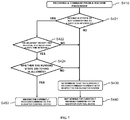
- step S410 is performed: a command 901 from a machine passenger 90 is received.
- This step S410 may be implemented by the interface 310, the information of the command 901 may include a command type, an identifier of a machine passenger sending the command, and a receipt time, wherein the receipt time may be acquired by the interface 310.
- step S421 based on the command type of the command 901, it is judged whether the currently received command 901 belongs to a command type corresponding to a safe sub-interface that is pre-opened to the machine passenger 90.
- the safe sub-interface pre-opened to the machine passenger 90 is selected from one or more of the following: a first safe sub-interface 311 corresponding to a command type of requesting to register the destination floor, a second safe sub-interface 312 corresponding to a command type of requesting an elevator state; the command correspondingly received by the first safe sub-interface 311 or the second safe sub-interface 312 is a relatively safe command type.
- the safe sub-interface that is pre-opened to the machine passenger 90 may also be further selected from one or more of the following: a third safe sub-interface 313 corresponding to a command type of requesting a call, a fourth safe sub-interface 314 according to a command type of requesting to keep the car door open, a fifth safe sub-interface 315 corresponding to a command type of requesting to release the car door, a sixth safe sub-interface 316 corresponding to a command type of state polling; the command type correspondingly received by the safe sub-interface is a relatively safe command type.
- step S430 in case that the currently received command 901 does not belong to a command type corresponding to any of the safe sub-interfaces (i.e., it is judged as "NO" in step S421), it is determined that the currently received command 901 is unsafe with respect to the elevator system 10.
- step S440 in case that the command is determined to be unsafe with respect to the elevator system 10, the command 901 is not sent to the elevator control device 110 of the elevator system 10; specifically, not sending the command 901 to the elevator control device 110 may be achieved by way of preventing sending, filtering, and the like.
- step S450 in case that the currently received command 901 belongs to the command type corresponding to any of the safe sub-interfaces (i.e., it is judged as "YES" in step S421), that is, the currently received command 901may be determined to be substantially safe with respect to the elevator system 10, continuing sending the currently received command 901 to the elevator control device 110 so that the elevator control device 110 may control the elevator system 10 in response to that safe command of the machine passenger 90, e.g., to dispatch for the machine passenger 90, to keep the car door 121 open, etc.
- the above steps S421 and S430 may be implemented in the command safety judgment module 320 of the interaction safety control apparatus 200, and the above steps S440 and S450 may be implemented in the command transmission control module 330 of the interaction safety control apparatus 200.
- the interaction safety control method of the above embodiments may filter out the command 901 from the machine passenger 90 that is defined as unsafe from the aspect of command type, preventing various types of commands 901 of the machine passenger 90 from being uploaded to the elevator control device 110, facilitating ensuring safe and reliable running of the elevator system 10 and reducing the workload of the elevator control device 110.
- FIG. 5 Shown in FIG. 5 is a flowchart of an interaction safety control method according to a second embodiment of the present invention, which adds step S422 compared to the safe interaction method of the embodiment shown in FIG. 4 .
- step S421 in case that it is judged as "YES" in step S421, the process proceeds to step S422 to perform further safety check on the command 901 that has passed the previous checking.
- step S422 the adjacent receipt time interval Ti of commands of the same command type from the same machine passenger is determined based on the receipt time of commands 901 from the same machine passenger 90, and the safety of the command 901 with respect to the elevator system is determined based on the determined adjacent receipt time interval T i ; specifically, if the adjacent receipt time interval T i of the currently received commands is less than the safe time interval T s (i.e., T i ⁇ Ts) corresponding to the command type of that command, the process proceeds to step S430 to determine that the currently received command 901 is unsafe with respect to the elevator system 10; otherwise, the process proceeds to step S450.
- T i the safe time interval
- the safe time interval T s is preset respectively according to the minimum time required by a command of respective command type to be normally executed once by the elevator system, in this way, corresponding to different command types, different safe time intervals T s may be set correspondingly.
- T s 3 seconds
- T s 10 seconds
- T s 3 seconds
- T s 10 seconds
- T s 10 seconds
- T s 30 seconds
- step S422 may also be implemented in the command safety judgment module 320 of the interaction safety control apparatus 200.
- the interaction safety control method of the second embodiment above may filter out repeated and too frequent commands from the same machine passenger 90, further reducing such unsafe commands from causing disorder to the running of the elevator system 10, compared to the interaction safety control method of the first embodiment, it further ensures safe and reliable running of the elevator system 10 and reduces the workload of the elevator control device 110.
- step S421 may be omitted, but step S422 retained to enable safety interaction control.
- FIG. 6 Shown in FIG. 6 is a flowchart of an interaction safety control method according to a third embodiment of the present invention, which adds step S423 compared to the safe interaction method of the embodiment shown in FIG. 5 .
- step S422 if it is judged as "YES" in step S422, the process proceeds to step S423 to perform further safety check on the command 901 that has passed the previous checking.
- step S423 it is judged whether the command permutations and combinations conform to the control logic of the elevator system 10. Specifically, if the first and second commands received in sequence from the same machine passenger 90 have different command types from each other and previously received first commands have been sent to the elevator control device 110, it is judged that whether the command permutations and combinations containing the first command and the second command conform to the control logic of the same passenger of the elevator system 10; if the command permutations and combinations do not conform to the control logic (i.e., it is judged as "NO"), the process proceeds to step S430 to determine that the currently received second command is unsafe with respect to the elevator system 10; otherwise, the process proceeds to step S450.
- control logic of the elevator system 10 is known to the elevator system 10 and may be stored in the interaction safety control apparatus 200.
- step S423 may further include a process of forming command permutations and combinations corresponding to the currently received second command. Specifically, a predetermined time period derived by subtracting a respective predetermined time period from the receipt time according to the receipt time of the currently received second command is determined, wherein the predetermined time period is related to the command type of the second command, for example, different predetermined time may be set for different command types; further, a first command from the same machine passenger contained within a predetermined time period which has been received and sent to the elevator control device is determined, and command permutations and combinations that contain the first command and the second command formed in a sequential order of the receipt time are formed.
- step S423 the command permutations and combinations being used are judged to be absent in step S423, and it is understood that it is judged as "YES" in step S423.
- step S423 may also be implemented in the command safety judgment module 320 of the interaction safety control apparatus 200.
- the interaction safety control method of the third embodiment above may prevent the same machine passenger 90 from sending command combinations to the elevator system 10 which do not conform to its control logic, further reducing the disorder from such unsafe commands of the running of the elevator system 10, and compared to the interaction safety control method of the second embodiment, it further ensures safe and reliable running of the elevator system 10 and reduces the workload of the elevator control device 110.
- the command safety judgment module 320 may generate command permutations and combinations containing the commands 901 1 and 901 2 within a corresponding 3-second time period, as the command permutations and combinations obviously do not conform to the control logic of the elevator system 10, the command 901 2 is likely to be a command sent by the machine passenger 90 by mistake, which negatively affects the run safety of the elevator system 10, and therefore, the command 901 2 will be prevented from being uploaded to the elevator control device 110.
- FIG. 7 Shown in FIG. 7 is a flowchart of an interaction safety control method according to a fourth embodiment of the present invention, which adds step S424 compared to the safe interaction method of the embodiment shown in FIG. 5 .
- step S422 in case that it is judged as "YES" in step S422, the process proceeds to step S424 to perform further safety check on the command 901 that has passed the previous checking.
- step S424 it is judged whether the running state to be entered required by the command is allowed, wherein the safety of the received command with respect to the elevator system 10 is determined based on the received command and its command type and the current running state information of the elevator system.
- the current running state information of the elevator system 10 may be received from the elevator control device 110 through the information receiving module 340.
- the elevator system 10 determines that the currently received command is unsafe with respect to the elevator system.
- the current running state of the elevator system is "Car in Travel”
- the running state requested to enter corresponding to a command for requesting keeping the car door open issued by the machine passenger 90 is to keep the car door 121 open, such state switching is not allowed in any existing elevator system, thus it is determined that the command for currently requesting keeping the car door open is unsafe with respect to the elevator system 10.
- step S424 above may also be implemented in the command safety judgment module 320 of the interaction safety control apparatus 200.
- the interaction safety control method of the fourth embodiment above may prevent a certain machine passenger 90 from sending command to the elevator system 10 which does not conform to the current actual running state of the elevator system 10, further reducing such unsafe commands from causing disorder to the running of the elevator system 10, compared to the interaction safety control method of the second embodiment, it further ensures safe and reliable running of the elevator system 10 and reduces the workload of the elevator control device 110.
- FIG. 8 Shown in FIG. 8 is a flowchart of an interaction safety control method according to a fifth embodiment of the present invention, which adds step S425 compared to the safe interaction method of the embodiment shown in FIG. 5 .
- step S422 if it is judged as "YES" in step S422, the process proceeds to step S425 to perform further safety check on the command 901 that has passed the previous checking.
- step S425 it is judged whether a command of a certain type contains a wrong parameter value.
- a wrong parameter value of a respective command type is contained in the command based on the received command 901 and the command type thereof; if the command 901 contains a wrong parameter value, it is determined that the currently received command is unsafe with respect to the elevator system 10.
- the command 901 in terms of commands requesting to register the destination floor, if the destination floor allowed to be register by current elevator car 120 does not include, for example, 5-10 floors, and if the command 901 received from the machine passenger 90 is for requesting to register destination floor 8, the command 901 for requesting to register the destination floor may then be determined to contain a wrong parameter value.
- step S425 may also be implemented in the command safety judgment module 320 of the interaction safety control apparatus 200.
- the interaction safety control method of the fifth embodiment above may filter out commands from the machine passenger 90 that include wrong parameter values, further reducing such unsafe commands from causing disorder to the running of the elevator system 10, compared to the interaction safety control method of the second embodiment, it further ensures safe and reliable running of the elevator system 10 and reduces the workload of the elevator control device 110.
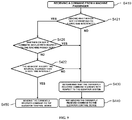
- FIG. 9 Shown in FIG. 9 is a flowchart of an interaction safety control method according to a sixth embodiment of the present invention, which adds step S426 compared to the safe interaction method of the embodiment shown in FIG. 5 .
- step S421 if it is judged as "YES" in step S421, the process proceeds to step S426 to perform further safety check on the command 901 that has passed the checking.
- step S426 it is judged that whether the command 901 is a command that is valid with respect to the elevator system 10 but invalid with respect to the machine passenger 90 based on the received command 901. If the received command 901 is a command that is valid with respect to the elevator system 10 but invalid with respect to the machine passenger 90 (i.e., if it is judged as "YES"), it is determined that the received command 901 is unsafe with respect to the elevator system 10; if the received command 901 is a command that is valid with respect to the elevator system 10 and valid with respect to the machine passenger 90 (i.e., if it is judged as "NO"), the process proceeds to step S422.
- commands that are valid with respect to the elevator system 10 but invalid with respect to the machine passenger 90 may be predefined and stored in the interaction safety control apparatus 200.
- certain commands of the elevator system 10 are open and valid (e.g., lock/unlock COP buttons) for common passengers or maintenance personnel, but which actually completely invalid to the machine passenger 90, nor do them open to the machine passenger 90, therefore many commands of this type may be predefined and stored as unsafe commands in the interaction safety control apparatus 200.
- step S426 may also be implemented in the command safety judgment module 320 of the interaction safety control apparatus 200.
- the interaction safety control method of the sixth embodiment above may filter out commands 901 defined as invalid with respect to the machine passenger 90 from, for example, command type perspectives, as a result, compared to the interaction safety control method of the second embodiment, it further ensures safe and reliable running of the elevator system 10 and reduces the workload of the elevator control device 110.
- FIG. 10 Shown in FIG. 10 is a flowchart of an interaction safety control method according to a seventh embodiment of the present invention, which adds steps S461-S464 compared to the safe interaction method of the embodiment shown in FIG. 6 .
- step S461 in case that the commands 901 of the machine passenger 90 are uploaded to the elevator control device 110, the elevator system 10 will perform a respective operation (e.g., a dispatching operation) and generate a respective run result; the respective elevator run results corresponding to one or more commands 901 that have been sent to the elevator control device 110 may be acquired by the information receiving module 340.
- a respective operation e.g., a dispatching operation
- step S462 it is judged whether the elevator run result includes a run exception (e.g., elevator run instability, abnormal running, elevator system generating disorder, etc.) and the run exception is not caused by the elevator system 10 itself.
- a run exception e.g., elevator run instability, abnormal running, elevator system generating disorder, etc.
- the run exception includes one or more of the following: the persistent opening time of a car door/landing door being longer than or equal to a respective predetermined value; the opening/closing frequency of the car door/landing door being greater than or equal to a respective predetermined value; the persistent travelling time of the car being shorter than or equal to a respective predetermined value; the persistent travelling time of the car being longer than or equal to a respective predetermined value; the elevator control device having a logical error, and so on.
- step S462 it is judged whether the same run exception that occurs multiple times (e.g., N times, N being greater than or equal to 2) is associated with commands sent multiple times (e.g., N times) by the same machine passenger; if it is judged as "YES", the process proceeds to step S463.
- the same run exception that occurs multiple times e.g., N times, N being greater than or equal to 2
- commands sent multiple times e.g., N times
- the run exception is not caused by a machine passenger, but may be, for example, caused by a problem with the elevator system 10 itself, and thus it may be generally judged that the run exception is not caused by the elevator system 10 itself.
- step S463 if it is judged as "YES" in step S462, it is determined that the one command is unsafe with respect to the elevator system 10, or the command permutations and combinations of the plurality of commands do not conform to the control logic of the elevator system 10.
- step S464 for the commands that have been determined to be unsafe with respect to the elevator system, or the command permutations and combinations that have been determined not to conform to the control logic of the elevator system 10, they may be stored, for example, in the interaction safety control apparatus 200. These stored commands and/or command permutations and combinations may be used to determine the safety of the subsequently received commands 901 with respect to the elevator system, such as being subsequently applied in step S423; thereby, the above-described run exception caused by the machine passenger 90 may be effectively prevented.
- the interaction safety control method of the seventh embodiment above may obtain unsafe commands and/or command permutations and combinations that do not conform to the control logic of the elevator system 10 by self-learning, as a result, compared to the interaction safety control method of the embodiment of FIG. 6 , it may further ensures safe and reliable running of the elevator system 10.
- FIG. 11 Shown in FIG. 11 is a flowchart of an interaction safety control method according to an eighth embodiment of the present invention.
- step S1110 it is judged whether the machine passenger 90 is in an abnormal running state. If it is judged as "YES”, the ID of the machine passenger 90 in the abnormal running state will be recorded in the interaction safety control apparatus 200 and used in step S1130; if it is judged as "NO", the process may proceed to interaction safety control method of any of the first through seventh embodiments shown above.
- step S1120 the commands 901 from a plurality of machine passengers 90 are received.
- step S1120 is substantially the same as the arrangement S410 of the interaction safety control method of the embodiment shown in FIG. 4 , and detailed description thereof is omitted herein.
- step S1130 it is judged whether a certain currently received command 90 is from a machine passenger in an abnormal running state.
- a respective judgement result may be obtained by extracting the identifier of the machine passenger contained in a certain currently received command 90 and then comparing the identifier to an identifier of the machine passenger 90 that has been recorded as being in the abnormal running state.
- step S1140 determines that the currently received command is unsafe with respect to the elevator system 10 so that the commands from the machine passenger that is in the abnormal running state are all determined to be unsafe commands with respect to the elevator system 10.
- step S1150 the command 901 is not sent to the elevator control device 110 of the elevator system 10; specifically, not sending the commands 901 to the elevator control device 110 may be achieved by preventing sending, filtering, and the like.
- commands of the machine passenger in the abnormal running state will all be filtered out by the interaction safety control apparatus 200 external to the elevator system 10, avoiding continuous negative impact on the safe running of the elevator system 10 by machine passengers in the abnormal running state (such as machine passengers hijacked by hackers).
- step S1110 may specifically be implemented in the state determination module 350 of the interaction safety control apparatus 200, and steps S1130 and S1140 may be implemented in the command safety judgment module 320 of the interaction safety control apparatus 200.
- step S1110 may specifically be implemented by a combination of any one or more of the following examples.
- a first prompt information e.g., alarm information regarding the run exception of the elevator system
- machine passengers 90 are in an abnormal running state based on the statistical information obtained about the machine passenger 90 obtained by statistical analysis; illustratively, if the statistical information indicates that a certain machine passenger 90 sends unsafe commands of a certain command type too frequently within a certain period of time, it may be determined that the machine passenger 90 has a fault or run exception in terms of sending commands of that command type.
- the state polling information may be periodically sent from the interaction safety control apparatus 200 to the machine passenger 90, and in case that the machine passenger 90 is in a normal running state, the interaction safety control apparatus 200 may also periodically receive response commands from the machine passenger.
- the machine passenger 90 may continuously issue state representation information to the interaction safety control apparatus 200 periodically, the state representation information may reflect the running state of the machine passenger 90, and may even include specific fault information.
- the machine passenger 90 may actively send state representation information for representing that its state is abnormal to the interaction safety control apparatus 200.
- a respective fault diagnosis module may be configured inside the machine passenger 90 to acquire respective fault information, thereby determining its state exception.
- the interaction safety control apparatus 200 receives the state representation information actively sent from the machine passenger 90 for representing that its state is abnormal, the machine passenger 90 is determined to be in an abnormal running state.
- the interaction safety control apparatus 200 receives the state representation information actively sent from the machine passenger 90 for representing that its state is normal, it may be determined that the machine passenger 90 is in a normal running state.
- first and second manner above are primarily to acquire respective information from one side of the elevator system 10 and analyze and process the information by the interaction safety control apparatus 200 to determine or discover abnormal running state of the machine passenger 90;
- third and fourth manner above are primarily to acquire respective feedback information from the machine passenger 90 to determine or discover abnormal running state of the machine passenger 90. They may be applied in combination with each other.
- the abnormal running state of the machine passenger 90 is varied widely and may correspond to different types of machine passengers 90, which may also differ in their corresponding abnormal running state, and even more new abnormal running state might emerge in the future.
- the various manner of the above examples are behaviors with differentiation in determining a variety of specific abnormal running state, e.g. there may be shortcomings (e.g., insufficient accuracy) in determining a certain specific abnormal running state, but there is an advantage in determining another abnormal running state; thus, starting from their respective advantages, the methods may be applied in combination with each other, for example, the above third manner is used in combination with the third manner, that is, the running state of the machine passenger 90 is judged based on both the response command and the state representation information.
- the interaction safety control apparatus 200 may send at least a second prompt information, e.g. alarm information, representing that the respective machine passenger 90 is in an abnormal running state to the maintenance management system (not shown in figures); optionally, the second prompt information may also include an identifier of the respective machine passenger, a fault type of the respective machine passenger, the position information of the respective machine passenger with respect to the elevator system, etc., which is very helpful for maintenance management personnel to quickly and conveniently locate the fault and timely maintain the machine passenger 90.
- a second prompt information e.g. alarm information
- the second prompt information may also include an identifier of the respective machine passenger, a fault type of the respective machine passenger, the position information of the respective machine passenger with respect to the elevator system, etc., which is very helpful for maintenance management personnel to quickly and conveniently locate the fault and timely maintain the machine passenger 90.
- the computer device 200 of the above embodiments of the present invention may be implemented by computer program commands, for example, implemented by a dedicated APP, these computer program commands may be provided to a processor of a general purpose computer, a special purpose computer, or other programmable data processing device to constitute the computer device 200 of embodiments of the present invention, also, these commands, which may be executed by a processor of a computer or other programmable data processing device, create units or components for implementing the functions/operations specified in the flowcharts and/or blocks and/or one or more flowchart blocks.
- these computer program commands may be stored in a computer-readable memory which may instruct a computer or other programmable processor to implement functions in a specific manner such that the commands stored in the computer-readable memory constitute an article of manufacture that includes the command components implementing the functions/operations specified in one or more blocks of the flowcharts and/or block diagrams.
Landscapes
- Engineering & Computer Science (AREA)
- Automation & Control Theory (AREA)
- Computer Networks & Wireless Communication (AREA)
- Maintenance And Inspection Apparatuses For Elevators (AREA)
- Indicating And Signalling Devices For Elevators (AREA)
- Elevator Control (AREA)
Abstract
Description
- This application claims priority from
Chinese patent application No.202010181029.X, filed on March 16, 2020 - The invention belongs to the technical field of Elevators, relates to the interaction safety between an elevator system and a machine passenger, and specifically relates to an interaction safety control method between an elevator system and a machine passenger, a readable storage medium, a computer device and an elevator system using the computer device.
- With the development of intelligent robot technology, more and more intelligent robots come into buildings to provide services for people, e.g., providing item shipping services in hotels, office buildings. Thus, there is a situation where the robot is a passenger of an elevator system in a building, i.e., with respect to an elevator system, a robot may take an elevator as a machine passenger, and may even wirelessly interact with the elevator system to send various commands, e.g. issuing commands for requesting to register a destination floor within an elevator car, issuing commands for requesting a call at a landing hall, and so on.
- According to a first aspect of the present invention, there is provided an interaction safety control method between an elevator system and a machine passenger, comprising:
- receiving a command from the machine passenger;
- based on a received command, determining the safety of the command with respect to the elevator system; and
- in case that the command is determined to be unsafe with respect to the elevator system, not sending the command to an elevator control device of the elevator system.
- The interaction safety control method according to an embodiment of the invention, wherein information of the command comprises a command type; the steps of determining the safety of the command with respect to the elevator system comprise:
- based on the command type of the command, judging whether a currently received command belongs to the command type corresponding to a safe sub-interface which is pre-opened to the machine passenger; and
- determining that the currently received command is unsafe with respect to the elevator system in case that the currently received command does not belong to the command type corresponding to any of the safe sub-interfaces.
- The interaction safety control method according to another embodiment or any of the above embodiments of the present invention, wherein the safe sub-interface that is pre-opened to the machine passenger is selected from one or more of the following:
- a first safe sub-interface that corresponds to the command type of requesting to register a destination floor;
- a second safe sub-interface that corresponds to the command type of requesting an elevator state.
- The interaction safety control method according to another embodiment or any of the above embodiments of the present invention, wherein the safe sub-interface that is pre-opened to the machine passenger is further selected from one or more of the following:
- a third safe sub-interface that corresponds to the command type of requesting a call;
- a fourth safe sub-interface that corresponds to the command type of requesting to keep a car door open;
- a fifth safe sub-interface that corresponds to the command type of requesting to release the car door;
- a sixth safe sub-interface that corresponds to the command type of state polling.
- The interaction safety control method according to another embodiment or any of the above embodiments of the present invention, wherein information of the command comprises an identifier of the machine passenger sending the command, and a command type;
the steps of determining the safety of the command with respect to the elevator system comprise:
based on the received command, judging whether it is a command that is valid with respect to the elevator system but invalid with respect to the machine passenger;
if the received command is a command that is valid with respect to the elevator system but invalid with respect to the machine passenger, determining that the received command is unsafe with respect to the elevator system. - The interaction safety control method according to another embodiment or any of the above embodiments of the present invention, wherein the command that is invalid with respect to the machine passenger is predefined.
- The interaction safety control method according to another embodiment or any of the above embodiments of the present invention, wherein information of the command comprises a command type, an identifier of the machine passenger sending the command, and a receipt time;
the steps of determining the safety of the command with respect to the elevator system comprise:
based on the receipt time of commands from a same machine passenger, determining adjacent receipt time intervals of the commands of a same command type from the same machine passenger; and
based on a determined adjacent receipt time interval, determining the safety of the command with respect to the elevator system. - The interaction safety control method according to another embodiment or any of the above embodiments of the present invention, wherein in the process of determining the safety of the command with respect to the elevator system,
if the adjacent receipt time interval of the currently received commands is smaller than a safe time interval corresponding to the command type of the command, determining that the currently received command is unsafe with respect to the elevator system. - The interaction safety control method according to another embodiment or any of the above embodiments of the present invention, wherein the safe time interval is preset respectively according to a minimum time required by the commands of a respective command type to be normally executed once by the elevator system.
- The interaction safety control method according to another embodiment or any of the above embodiments of the present invention, wherein information of the command comprises a command type;
the steps of determining the safety of the command with respect to the elevator system comprise:
based on the received command and the command type thereof and current running state information of the elevator system, determining the safety of the received command with respect to the elevator system. - The interaction safety control method according to another embodiment or any of the above embodiments of the present invention, wherein in the process of determining the safety of the received command with respect to the elevator system,
if switching from the current running state of the elevator system to the running state to be entered required by the command is not allowed by the elevator system, determining that the currently received command is unsafe with respect to the elevator system. - The interaction safety control method according to another embodiment or any of the above embodiments of the present invention, wherein information of the command comprises a command type, an identifier of the machine passenger sending the command, and a receipt time;
the steps of determining the safety of the command with respect to the elevator system comprise: - if a first command and a second command received in sequence from a same machine passenger have different command types and the first command has been sent to the elevator control device, judging whether command permutations and combinations containing the first command and the second command conform to control logic of the elevator system for the same passenger;
- if the command permutations and combinations do not conform to the control logic, determining that a received second command is unsafe with respect to the elevator system.
- The interaction safety control method according to another embodiment or any of the above embodiments of the present invention, wherein in the process of determining the safety of the command with respect to the elevator system:
- according to the receipt time of a currently received second command, determining a predetermined time period by subtracting a respective predetermined time period from the receipt time, wherein the predetermined time period is related to the command type of the second command;
- determining the first command from the same machine passenger contained within the predetermined time period which has been received and sent to the elevator control device, and forming the command permutations and combinations that contain the first command and the second command formed in a sequential order of the receipt time.
- The interaction safety control method according to another embodiment or any of the above embodiments of the present invention, wherein information of the command comprises a command type;
the steps of determining the safety of the command with respect to the elevator comprise: - based on the received command and the command type thereof, judging whether a wrong parameter value of a respective command type is contained in the command; and
- if the received command contains the wrong parameter value, determining that the currently received command is unsafe with respect to the elevator system.
- The interaction safety control method according to another embodiment or any of the above embodiments of the present invention, wherein further comprising the steps of:
- acquiring a respective elevator run result corresponding to one or more commands that have been sent to the elevator control device;
- if the elevator run result includes a run exception and the run exception is not caused by the elevator system itself, determining that the one command is unsafe with respect to the elevator system, or command permutations and combinations of a plurality of commands do not conform to a control logic of the elevator system.
- The interaction safety control method according to another embodiment or any of the above embodiments of the present invention, wherein the run exception includes one or more of:
- a persistent opening time of a car door/landing door being longer than or equal to a respective predetermined value;
- an opening/closing frequency of the car door/landing door being greater than or equal to a respective predetermined value;
- a persistent travelling time of the car being shorter than or equal to a respective predetermined value;
- the persistent travelling time of the car being longer than or equal to a respective predetermined value;
- the elevator control device having a logical error.
- The interaction safety control method according to another embodiment or any of the above embodiments of the present invention, wherein further comprising the steps of:
- storing the commands that have been determined to be unsafe with respect to the elevator system or the command permutations and combinations that have been determined not to conform to the control logic of the elevator system;
- based on the commands and/or the command permutations and combinations being stored, determining the safety of subsequently received commands with respect to the elevator system.
- The interaction safety control method according to another embodiment or any of the above embodiments of the present invention, wherein further comprising the steps of:
- judging whether the machine passenger is in an abnormal running state; and
- determining that the command from the machine passenger in the abnormal running state is unsafe with respect to the elevator system.
- The interaction safety control method according to another embodiment or any of the above embodiments of the present invention, wherein in the process of judging whether the machine passenger is in the abnormal running state:
- acquiring respective elevator run results corresponding to one or more commands from a certain machine passenger which have been sent to the elevator control device;
- if the elevator run result includes a run exception, judging whether a same run exception occurring multiple times is associated with the command sent by a same machine passenger;
- if it is judged as "YES", determining that the machine passenger is in the abnormal running state.
- The interaction safety control method according to another embodiment or any of the above embodiments of the present invention, wherein in the process of judging whether the machine passenger is in the abnormal running state:
if the elevator run result includes the run exception, issuing a first prompt information. - The interaction safety control method according to another embodiment or any of the above embodiments of the present invention, wherein in the process of judging whether the machine passenger is in the abnormal running state:
- statistically analyzing which machine passengers the commands that are unsafe with respect to the elevator system are from;
- based on statistical information about the machine passengers obtained by statistical analysis, determining which machine passengers are in the abnormal running state.
- The interaction safety control method according to another embodiment or any of the above embodiments of the present invention, wherein the steps of judging whether the machine passenger is in the abnormal running state comprises:
- wirelessly sending state polling information to the machine passenger;
- judging whether a response command for the state polling information fed back from the machine passenger is received; and
- if the response command is not received, determining that a respective machine passenger is in the abnormal running state.
- The interaction safety control method according to another embodiment or any of the above embodiments of the present invention, wherein the state polling information is sent to the machine passenger periodically and in case that the machine passenger is in a normal running state, the response command can be received periodically from the machine passenger.
- The interaction safety control method according to another embodiment or any of the above embodiments of the present invention, wherein the steps of judging whether the machine passenger is in the abnormal running state comprises:
if state representation information actively sent from the machine passenger for representing that its state is abnormal is received, determining that the machine passenger is in the abnormal running state. - The interaction safety control method according to another embodiment or any of the above embodiments of the present invention, wherein further comprising the steps of:
sending, to a maintenance management system, a second prompt information at least representing that a respective machine passenger is in the abnormal running state. - According to a second aspect of the invention, there is provided a computer device comprising a memory, a processor, and a computer program stored on the memory and executable on the processor, wherein the processor, when running the program, implementing the steps of any of the above interaction safety control methods.
- According to a third aspect of the invention, there is provided a computer readable storage medium having stored thereon a computer program, wherein the program is executable by a processor to implement the steps of any of the above interaction safety control methods.
- According to a fourth aspect of the present invention, there is provided an elevator system comprising one or more elevator cars, an elevator control device for controlling the one or more elevator cars to travel; and further comprising a safe interaction control unit configured in the above described computer device;
wherein the elevator control device wirelessly interacts with one or more machine passengers to acquire commands from the machine passenger via the computer device described above, and the elevator control device controls, through the safe interaction control unit, interaction safety between the elevator system and the machine passenger. - The elevator system according to an embodiment of the invention, wherein the computer device is independently external to the elevator control device and is in communication with the elevator control device.
- The above features and operations of the present invention will become more apparent from the following description and the accompanying drawings.
- The above and other objects and advantages of the present invention will become more complete and apparent from the following detailed description taken in conjunction with the drawings, wherein like or similar elements are designated by like numerals.
-
FIG. 1 is a schematic diagram of an elevator system according to an embodiment of the present invention, wherein an elevator system wirelessly interacting with one or more machine passengers using an interaction safety control apparatus of an embodiment of the present invention is illustrated. -
FIG. 2 is a schematic diagram of a basic structure of an interaction safety control apparatus or computer device according to an embodiment of the present invention. -
FIG. 3 is a schematic diagram of a module structure of an interaction safety control apparatus according to an embodiment of the present invention. -
FIG. 4 is a flowchart of a method of interaction safety control according to a first embodiment of the present invention. -
FIG. 5 is a flowchart of a method of interaction safety control according to a second embodiment of the present invention. -
FIG. 6 is a flowchart of a method of interaction safety control according to a third embodiment of the present invention. -
FIG. 7 is a flowchart of a method of interaction safety control according to a fourth embodiment of the present invention. -
FIG. 8 is a flowchart of a method of interaction safety control according to a fifth embodiment of the present invention. -
FIG. 9 is a flowchart of a method of interaction safety control according to a sixth embodiment of the present invention. -
FIG. 10 is a flowchart of a method of interaction safety control according to a seventh embodiment of the present invention. -
FIG. 11 is a flowchart of a method of interaction safety control according to an eighth embodiment of the present invention. - The present invention will now be described more fully with reference to the accompanying drawings, in which exemplary embodiments of the invention are shown. This invention may, however, be implemented in many different forms and should not be construed as limited to the embodiments set forth herein. Rather, these embodiments are provided so that this disclosure become thorough and complete, and will fully convey the concept of the invention to those skilled in the art.
- Although features of the present invention are disclosed in connection with several embodiments/only one of embodiments, as may be desired and/or advantageous for any given or identifiable function, this feature may be combined with other embodiments/one or more other features of embodiments.
- Some block diagrams shown in the figures are functional entities and do not necessarily have to correspond to physically or logically separate entities. These functional entities may be implemented in software or in one or more hardware modules or integrated circuits, or in different processing apparatus and/or microcontroller apparatus.
- The machine passenger in the following embodiments of the present invention may be various types of movable machine bodies that may be associated with an elevator system, which may specifically be a robot that may take an elevator, for example, a robot for take-out, a robot for meal delivering, a robot for expressage, etc., the machine passenger may also be a transportation vehicle that autonomously moves under control. It will be understood that the specific type, structure, and/or use of a machine passenger may be varied widely, which is not limited by the following embodiments of the present invention.
- Shown in
FIG. 1 is a schematic diagram of an elevator system according to an embodiment of the present invention, which illustrates an elevator system wirelessly interacting with one or more machine passengers using an interaction safety control apparatus of an embodiment of the present invention is illustrated; shown inFIG. 2 is a schematic diagram of a basic structure of an interaction safety control apparatus or computer device according to an embodiment of the present invention; shown inFIG. 3 is a schematic diagram of a module structure of an interaction safety control apparatus according to an embodiment of the present invention. - As shown in
FIG. 1 , theelevator system 10 of the present invention includes one ormore elevator cars 120, and anelevator control device 110, which may be implemented by, for example, an elevator control cabinet, a group controller, or the like, which may be used to control one ormore elevator cars 120 to travel in the hoistway. The specific implementation of theelevator control device 110 is not limiting. - It will be understood that the
elevator system 10 may also include other conventional components not shown in the figures, e.g. traction apparatus, counterweight, and the like. - Continuing as shown in
FIG. 1 , theelevator system 10 wirelessly interacts with one ormore machine passengers 90 using the interactionsafety control apparatus 200 of an embodiment of the present invention. When themachine passenger 90 needs to take acertain elevator car 120 of theelevator system 10 to a destination floor, themachine passenger 90 may send arespective command 901 and the command may be transmitted via thewireless network 80 to the interactionsafety control apparatus 200, thecommand 901 is uploaded to theelevator control device 110 in case that the interactionsafety control apparatus 200 determines that thecommand 901 is safe with respect to theelevator system 10, avoiding causing the elevator system to run abnormally (e.g., running unstably, running disorderly, etc.) due to theelevator control device 110 being affected by the unsafe command, and also reducing the workload of theelevator control device 110 handling excessive unsafe commands from themachine passenger 90. Thus, in theelevator system 10 of embodiments of the present invention, theelevator control device 110 does not interact directly with themachine passenger 90, nor does thecommand 901 issued by themachine passenger 90 is directly sent to theelevator control device 110, but instead is detected and verified in the interactionsafety control apparatus 200 to determine its safety with respect to theelevator system 10. - Specifically, a wireless communication module, e.g. those supporting 4G/5G/Wifi communication, may be disposed on the
machine passenger 90, a respective wireless communication module may also be disposed in the interactionsafety control apparatus 200, so that it may perform wireless communication connection with one ormore machine passengers 90 via thewireless network 80 in real time. The wireless communication module of the interactionsafety control apparatus 200, (e.g. thecommunication device 280 as shown inFIG. 2 ), may be configured with aninterface 310, for example, as shown inFIG. 3 , to receive thecommand 901 from eachmachine passenger 90, which, of course, sends information (e.g. dispatch information, elevator running state information, and the like) from theelevator system 10 to eachmachine passenger 90. - In an embodiment, the interaction
safety control apparatus 200 may be part of theelevator system 10, which may be separately external with respect to theelevator control device 110 and is communicatively connected with theelevator control device 110; for example, the interactionsafety control apparatus 200 may be manufactured separately and mounted in theelevator system 10 by connecting to theelevator control device 110 by way of a wired connection, so that an existing elevator system without the function of the interactionsafety control apparatus 200 of the present invention may be easily and simply reformed, e.g., implemented by an external addition of one interactionsafety control apparatus 200. - It will be understood that the interaction
safety control apparatus 200 may also be implemented by integrated into theelevator control device 110 as needed; a interactionsafety control apparatus 200 may also be shared with a plurality ofelevator systems 10. - As shown in
FIG. 2 , the interactionsafety control apparatus 200 may be implemented by a computer device of an embodiment of the present invention, which may be a general purpose computer, a special purpose computer, or a machine having computing and processing function based on a predetermined program, which may even be implemented by cloud computing. - Referring to the specific exemplary frame structure of the
computer device 200 of the embodiment shown inFIG. 2 , in a basic configuration 201, thecomputer device 200 typically includes asystem memory 220 and one ormore processors 210. The memory bus 230 may be used for communication between theprocessor 210 and thesystem memory 220. - Depending on the desired configuration, the
processor 210 may be any type of processors, including but not limited to: a microprocessor (µP), a microcontroller (µC), a digital signal processor (DSP), or any combination thereof. Theprocessor 210 may include one or more levels of cache such as alevel 1cache 211 and alevel 2cache 213, and may also include aprocessor core 215 and aregister 217. Theexample processor core 215 may include an arithmetic logic unit (ALU), a floating point unit (FPU), a digital signal processing core (DSP Core), or any combination thereof. Theexample memory controller 219 may be used with theprocessor 210, or in some embodiments, thememory controller 219 may be a built-in part of theprocessor 210. - Depending on the desired configuration, the
system memory 220 may be any type of memory, including but not limited to: volatile memory (such as RAM), nonvolatile memory (such as ROM, flash memory, etc.), or any combination thereof. Thesystem memory 220 may include anoperating system 221, one ormore applications 223, andprogram data 229. In some implementations,application 223 may be arranged to operate on an operating system withprogram data 229. - The
computer device 200 may also include an interface bus 290 that facilitates communication from various interface devices (e.g.,output device 260, peripherals interface 270, and communication device 280) to basic configuration 102 via bus/interface controller 250.Example output device 260 includes agraphics processing unit 261 and an audio processing unit 263. They may be configured to facilitate communication with various external devices such as a display or speaker via one or more A/V ports 265. Example peripherals interface 270 may include a serial interface controller and a parallel interface controller, which may be configured to facilitate communication via one or more I/O ports and external devices such as input devices (e.g., keyboards, mice, pens, voice input devices, touch input devices), or other peripherals (e.g., printers, scanners, and the like). Theexample communication device 280 may include anetwork controller 281, which may be arranged to be suitable for communicating with one or more other computer devices (e.g., computer devices on a machine passenger 90) via one ormore communication ports 283. - Continuing as shown in
FIG. 2 , in an embodiment, a safeinteraction control unit 227 is also included in theapplication 223 of thecomputer device 200. The safeinteraction control unit 227 may be installed as a stand-alone software in thecomputer device 200 or embodied only as a piece of code; it will be understood that the existence form of the safeinteraction control unit 227 in thecomputer device 200 is not limiting. The safeinteraction control unit 227 may control the interaction safety between themachine passenger 90 and theelevator control device 110, i.e. determining the safety of thecommand 901 with respect to the elevator system based on thecommand 901 received from themachine passenger 90, and not sending thecommand 901 to theelevator control device 110 of theelevator system 10 in case that thecommand 901 is determined to be unsafe with respect to theelevator system 10. - The safe
interaction control unit 227 may be contained in theelevator system 10 or the maintenance management system 800 and serve as a functional component of theelevator system 10. The specific functions and implementations of the safeinteraction control unit 227 may be understood in conjunction with a method of interaction safety control of the embodiment shown inFIGS. 4-11 below. - Referring to
FIG. 3 , a schematic diagram of a module structure of a interactionsafety control apparatus 200 or acomputer device 200 of an embodiment of the present invention is shown. The interactionsafety control apparatus 200 is configured with aninterface 310; the interactionsafety control apparatus 200 is further configured with a commandsafety judgement module 320, commandtransmission control module 330, and even configured with aninformation receiving module 340 supporting wired communication, which is disposed corresponding to theelevator control device 110. - Specifically, the
interface 310 may be an interface supporting wireless communication, which may be implemented in a software defined manner on basis of arespective communication port 283. One or more sub-interfaces, for example one or more of the sub-interfaces 311-316, for receiving various types ofcommands 901 from themachine passenger 90 may also optionally be defined in theinterface 310. The command types for thecommands 901 from themachine passenger 90 that each sub-interface can receive may be determined, for example, by configuring each sub-interfaces in a software defined manner. - Specifically, the sub-interface 311 may receive a command type corresponding to requesting to register a destination floor, the sub-interface 312 may receive a command type corresponding to requesting the elevator state, the sub-interface 313 may receive a command type corresponding to requesting a call, the sub-interface 314 may receive a command type corresponding to requesting to hold the car door, the sub-interface 315 may receive a command type corresponding to requesting to unhold the car door, and the sub-interface 316 may receive a command type corresponding to state polling. Whether each sub-interface is safely opened to the
machine passenger 90 may be predetermined in a software defined manner so that the safely opened sub-interface becomes a safe sub-interface; as such, other sub-interfaces otherwise than the safe sub-interface will be considered as unsafety interfaces, in the commandsafety judgement module 320, various commands of the respective command types received by the unsafety interfaces will be considered as unsafe commands with respect to theelevator system 10. - In an embodiment, the sub-interfaces in the
interface 310 opened to themachine passenger 90 are only sub-interface 311 and/or sub-interface 312 (shown as the solid blocks), the sub-interfaces 311, 312 will become a firstsafe sub-interface 311 and a secondsafe sub-interface 312, respectively, as such, various commands of other types received by the sub-interfaces other than the firstsafe sub-interface 311 and the secondsafe sub-interface 312 will be considered by the commandsafety judgment module 320 as unsafe commands with respect to the elevator system; that is, other various types of commands other than requesting to register the destination floor (e.g., Car Call), requesting the elevator state will be considered as unsafe commands with respect to the elevator system, will be filtered out or not sent to theelevator control device 110 even if they are received by the sub-interface 313 to thesub-interface 316. - In yet another embodiment, other than sub-interfaces 311 and 312 (shown as the solid sub-blocks), the sub-interfaces in the interface 310 opened to the machine passenger 90 may also be selected from one or more of the sub-interfaces 313-316 (shown as the dashed sub-blocks), for example, the sub-interface 311, sub-interface 312, sub-interface 313, sub-interface 314, sub-interface 315, sub-interface 316 will respectively become the first safe sub-interface 311, the second safe sub-interface 312, a third safe sub-interface 313, a fourth safe sub-interface 314, a fifth safe sub-interface 315, a sixth safe sub-interface 316, in this way, various commands of other types received by the sub-interfaces (not shown) other than the first safe sub-interface 311 to the sixth safe sub-interface 316 will be considered by the command safety judgement module 320 as unsafe commands with respect to the elevator system; that is, other various types of commands other than requesting to register a destination floor (e.g., Car Call), requesting the elevator state, requesting a call (e.g., Hall Call), requesting to keep car door 121 open (e.g., Hold Car Door), requesting to release the car door (e.g., Unhold Car Door) and state polling (e.g., Hello) will be considered as unsafe commands with respect to the elevator system, will be filtered out or not sent to the elevator control device 110 even if received by their interface 310.
- It will be understood that the sub-interfaces opened to the
machine passenger 90 may be preset according to functional needs, etc., in case that the elevator system management personnel permit, but the open sub-interfaces do not change during process of using after being set, thus preventing themachine passenger 90 from sending various types ofcommands 901 to intrude theelevator system 10 and reducing the workload of theelevator control device 110. Of course, the number of open sub-interfaces may vary after being reset or predefined. - Continuing as shown in
FIG. 3 , the commandsafety judgment module 320 is configured to determine the safety ofcommands 901 with respect to theelevator system 10 based on the received commands 901. Various types ofcommands 901 may have respective predefined formats, the information of the commands 901 (i.e., command information) may specifically include a command type, an identifier of the machine passenger sending the command, and a receipt time, etc., and the commandsafety judgment module 320 may detect and analyze eachcommand 901 to acquire its wanted command information, which may serve as an information basis for judging whether thecommand 901 is safe with respect to theelevator system 10. - Continuing as shown in
FIG. 3 , the commandtransmission control module 330 is configured not to send the unsafe command to theelevator control device 110 in case that thecommand 901 is determined to be unsafe with respect to theelevator system 10, thereby enabling as close as possible sending only the commands 110a that are safe with respect to theelevator system 10 to theelevator control device 110. - Continuing as shown in
FIG. 3 , theinformation receiving module 340 may be configured to receive various information of theelevator control device 110, for example, respective elevator run results of one or more commands of acertain machine passenger 90, current running state information of theelevator system 10, and the like. - Continuing as shown in
FIG. 3 , the interactionsafety control apparatus 200 may be provided with astate determination module 350 that may be used to judge whether themachine passenger 901 is in an abnormal running state, in this way, if themachine passenger 901 interacting with theelevator system 10 is in an abnormal running state (e.g., a crash, network connection exception, an internal function failure, etc.), the interactionsafety control apparatus 200 may discover timely, which is helpful for management personnel to perform maintenance operation and the like on themachine passenger 901, and may also avoid negatively affecting the running of the elevator system 10 (e.g., resulting in run exception of the elevator system, affecting the passenger experience) by themachine passenger 90 in the abnormal running state. Accordingly, the commandsafety judgement module 320 is further configured to, in according to the identifier of the machine passenger in the receivedcommand 901, judge whether the command comes from a machine passenger in an abnormal running state, and determine the command from themachine passenger 90 in the abnormal running state as an unsafe command with respect to theelevator system 10. - The interaction safety control method and the respective specific configuration of each modules in the above-described interaction
safety control apparatus 200 of multiple embodiments of the present invention are illustrated below further in conjunction with the flowcharts of the interaction safety control methods shown inFIGS. 4-11 . - Shown in
FIG. 4 is a flowchart of an interaction safety control method according to a first embodiment of the present invention. As shown inFIG. 4 , first, in case that themachine passenger 90 has established a wireless connection with the interactionsafety control apparatus 200, step S410 is performed: acommand 901 from amachine passenger 90 is received. This step S410 may be implemented by theinterface 310, the information of thecommand 901 may include a command type, an identifier of a machine passenger sending the command, and a receipt time, wherein the receipt time may be acquired by theinterface 310. - In step S421, based on the command type of the
command 901, it is judged whether the currently receivedcommand 901 belongs to a command type corresponding to a safe sub-interface that is pre-opened to themachine passenger 90. - In step S421, in an embodiment, the safe sub-interface pre-opened to the
machine passenger 90 is selected from one or more of the following: a firstsafe sub-interface 311 corresponding to a command type of requesting to register the destination floor, a secondsafe sub-interface 312 corresponding to a command type of requesting an elevator state; the command correspondingly received by the firstsafe sub-interface 311 or the secondsafe sub-interface 312 is a relatively safe command type. In yet another embodiment, the safe sub-interface that is pre-opened to themachine passenger 90 may also be further selected from one or more of the following: a thirdsafe sub-interface 313 corresponding to a command type of requesting a call, a fourthsafe sub-interface 314 according to a command type of requesting to keep the car door open, a fifthsafe sub-interface 315 corresponding to a command type of requesting to release the car door, a sixthsafe sub-interface 316 corresponding to a command type of state polling; the command type correspondingly received by the safe sub-interface is a relatively safe command type. In step S430, in case that the currently receivedcommand 901 does not belong to a command type corresponding to any of the safe sub-interfaces (i.e., it is judged as "NO" in step S421), it is determined that the currently receivedcommand 901 is unsafe with respect to theelevator system 10. - In step S440, in case that the command is determined to be unsafe with respect to the
elevator system 10, thecommand 901 is not sent to theelevator control device 110 of theelevator system 10; specifically, not sending thecommand 901 to theelevator control device 110 may be achieved by way of preventing sending, filtering, and the like. - In step S450, in case that the currently received
command 901 belongs to the command type corresponding to any of the safe sub-interfaces (i.e., it is judged as "YES" in step S421), that is, the currently received command 901may be determined to be substantially safe with respect to theelevator system 10, continuing sending the currently receivedcommand 901 to theelevator control device 110 so that theelevator control device 110 may control theelevator system 10 in response to that safe command of themachine passenger 90, e.g., to dispatch for themachine passenger 90, to keep thecar door 121 open, etc.. - The above steps S421 and S430 may be implemented in the command
safety judgment module 320 of the interactionsafety control apparatus 200, and the above steps S440 and S450 may be implemented in the commandtransmission control module 330 of the interactionsafety control apparatus 200. - The interaction safety control method of the above embodiments may filter out the
command 901 from themachine passenger 90 that is defined as unsafe from the aspect of command type, preventing various types ofcommands 901 of themachine passenger 90 from being uploaded to theelevator control device 110, facilitating ensuring safe and reliable running of theelevator system 10 and reducing the workload of theelevator control device 110. - Shown in
FIG. 5 is a flowchart of an interaction safety control method according to a second embodiment of the present invention, which adds step S422 compared to the safe interaction method of the embodiment shown inFIG. 4 . - As shown in
FIG. 5 , in case that it is judged as "YES" in step S421, the process proceeds to step S422 to perform further safety check on thecommand 901 that has passed the previous checking. - In step S422, the adjacent receipt time interval Ti of commands of the same command type from the same machine passenger is determined based on the receipt time of
commands 901 from thesame machine passenger 90, and the safety of thecommand 901 with respect to the elevator system is determined based on the determined adjacent receipt time interval Ti; specifically, if the adjacent receipt time interval Ti of the currently received commands is less than the safe time interval Ts (i.e., Ti < Ts) corresponding to the command type of that command, the process proceeds to step S430 to determine that the currently receivedcommand 901 is unsafe with respect to theelevator system 10; otherwise, the process proceeds to step S450. - Wherein the safe time interval Ts is preset respectively according to the minimum time required by a command of respective command type to be normally executed once by the elevator system, in this way, corresponding to different command types, different safe time intervals Ts may be set correspondingly. Exemplarily, for a command requesting to register a destination floor, Ts = 3 seconds; for a command requesting a call, Ts = 10 seconds; for a command requesting to keep the car door open, Ts = 3 seconds; for a command to release the car door, Ts = 10 seconds; for a command of state polling, Ts = 30 seconds.
- The above step S422 may also be implemented in the command
safety judgment module 320 of the interactionsafety control apparatus 200. - The interaction safety control method of the second embodiment above may filter out repeated and too frequent commands from the
same machine passenger 90, further reducing such unsafe commands from causing disorder to the running of theelevator system 10, compared to the interaction safety control method of the first embodiment, it further ensures safe and reliable running of theelevator system 10 and reduces the workload of theelevator control device 110. - It will be understood that in other embodiments, step S421 may be omitted, but step S422 retained to enable safety interaction control.
- Shown in
FIG. 6 is a flowchart of an interaction safety control method according to a third embodiment of the present invention, which adds step S423 compared to the safe interaction method of the embodiment shown inFIG. 5 . - As shown in
FIG. 6 , if it is judged as "YES" in step S422, the process proceeds to step S423 to perform further safety check on thecommand 901 that has passed the previous checking. - In step S423, it is judged whether the command permutations and combinations conform to the control logic of the
elevator system 10. Specifically, if the first and second commands received in sequence from thesame machine passenger 90 have different command types from each other and previously received first commands have been sent to theelevator control device 110, it is judged that whether the command permutations and combinations containing the first command and the second command conform to the control logic of the same passenger of theelevator system 10; if the command permutations and combinations do not conform to the control logic (i.e., it is judged as "NO"), the process proceeds to step S430 to determine that the currently received second command is unsafe with respect to theelevator system 10; otherwise, the process proceeds to step S450. - Wherein, the control logic of the
elevator system 10 is known to theelevator system 10 and may be stored in the interactionsafety control apparatus 200. - In an embodiment, step S423 may further include a process of forming command permutations and combinations corresponding to the currently received second command. Specifically, a predetermined time period derived by subtracting a respective predetermined time period from the receipt time according to the receipt time of the currently received second command is determined, wherein the predetermined time period is related to the command type of the second command, for example, different predetermined time may be set for different command types; further, a first command from the same machine passenger contained within a predetermined time period which has been received and sent to the elevator control device is determined, and command permutations and combinations that contain the first command and the second command formed in a sequential order of the receipt time are formed.
- Of course, if the first command that has been received and sent to the elevator control device is not contained within a predetermined time period, the command permutations and combinations being used are judged to be absent in step S423, and it is understood that it is judged as "YES" in step S423.
- The above step S423 may also be implemented in the command
safety judgment module 320 of the interactionsafety control apparatus 200. - The interaction safety control method of the third embodiment above may prevent the
same machine passenger 90 from sending command combinations to theelevator system 10 which do not conform to its control logic, further reducing the disorder from such unsafe commands of the running of theelevator system 10, and compared to the interaction safety control method of the second embodiment, it further ensures safe and reliable running of theelevator system 10 and reduces the workload of theelevator control device 110. - In order to understand the technical effect of the interaction safety control method of the third embodiment above, the following exemplary description is given in detail. If the
machine passenger 90 issues acommand 9011 to request to keep the car door open at time ti, and issues subsequently acommand 9012 to request to register the destination floor at time t2 after 2 seconds, upon receiving thecommand 9012, the commandsafety judgment module 320 may generate command permutations and combinations containing thecommands elevator system 10, thecommand 9012 is likely to be a command sent by themachine passenger 90 by mistake, which negatively affects the run safety of theelevator system 10, and therefore, thecommand 9012 will be prevented from being uploaded to theelevator control device 110. - Shown in
FIG. 7 is a flowchart of an interaction safety control method according to a fourth embodiment of the present invention, which adds step S424 compared to the safe interaction method of the embodiment shown inFIG. 5 . - As shown in
FIG. 7 , in case that it is judged as "YES" in step S422, the process proceeds to step S424 to perform further safety check on thecommand 901 that has passed the previous checking. - In step S424, it is judged whether the running state to be entered required by the command is allowed, wherein the safety of the received command with respect to the
elevator system 10 is determined based on the received command and its command type and the current running state information of the elevator system. Wherein the current running state information of theelevator system 10 may be received from theelevator control device 110 through theinformation receiving module 340. - Specifically, if it is not allowed for the
elevator system 10 to switch from the current running state of theelevator system 10 to the running state to be entered required by the command, it is determined that the currently received command is unsafe with respect to the elevator system. Illustratively, the current running state of the elevator system is "Car in Travel", the running state requested to enter corresponding to a command for requesting keeping the car door open issued by themachine passenger 90 is to keep thecar door 121 open, such state switching is not allowed in any existing elevator system, thus it is determined that the command for currently requesting keeping the car door open is unsafe with respect to theelevator system 10. - Wherein whether the
elevator system 10 does not allow certain running state switching is known for theelevator system 10 and may be stored in the interactionsafety control apparatus 200. - The above step S424 above may also be implemented in the command
safety judgment module 320 of the interactionsafety control apparatus 200. - The interaction safety control method of the fourth embodiment above may prevent a
certain machine passenger 90 from sending command to theelevator system 10 which does not conform to the current actual running state of theelevator system 10, further reducing such unsafe commands from causing disorder to the running of theelevator system 10, compared to the interaction safety control method of the second embodiment, it further ensures safe and reliable running of theelevator system 10 and reduces the workload of theelevator control device 110. - Shown in
FIG. 8 is a flowchart of an interaction safety control method according to a fifth embodiment of the present invention, which adds step S425 compared to the safe interaction method of the embodiment shown inFIG. 5 . - As shown in
FIG. 8 , if it is judged as "YES" in step S422, the process proceeds to step S425 to perform further safety check on thecommand 901 that has passed the previous checking. - In step S425, it is judged whether a command of a certain type contains a wrong parameter value.
- Specifically, it is judged whether a wrong parameter value of a respective command type is contained in the command based on the received
command 901 and the command type thereof; if thecommand 901 contains a wrong parameter value, it is determined that the currently received command is unsafe with respect to theelevator system 10. Illustratively, in terms of commands requesting to register the destination floor, if the destination floor allowed to be register bycurrent elevator car 120 does not include, for example, 5-10 floors, and if thecommand 901 received from themachine passenger 90 is for requesting to register destination floor 8, thecommand 901 for requesting to register the destination floor may then be determined to contain a wrong parameter value. - It should be understood that for different command types, respective wrong parameter value may be predefined and stored in the interaction
safety control apparatus 200. - The above step S425 may also be implemented in the command
safety judgment module 320 of the interactionsafety control apparatus 200. - The interaction safety control method of the fifth embodiment above may filter out commands from the
machine passenger 90 that include wrong parameter values, further reducing such unsafe commands from causing disorder to the running of theelevator system 10, compared to the interaction safety control method of the second embodiment, it further ensures safe and reliable running of theelevator system 10 and reduces the workload of theelevator control device 110. - Shown in
FIG. 9 is a flowchart of an interaction safety control method according to a sixth embodiment of the present invention, which adds step S426 compared to the safe interaction method of the embodiment shown inFIG. 5 . - As shown in
FIG. 9 , if it is judged as "YES" in step S421, the process proceeds to step S426 to perform further safety check on thecommand 901 that has passed the checking. - In step S426, it is judged that whether the
command 901 is a command that is valid with respect to theelevator system 10 but invalid with respect to themachine passenger 90 based on the receivedcommand 901. If the receivedcommand 901 is a command that is valid with respect to theelevator system 10 but invalid with respect to the machine passenger 90 (i.e., if it is judged as "YES"), it is determined that the receivedcommand 901 is unsafe with respect to theelevator system 10; if the receivedcommand 901 is a command that is valid with respect to theelevator system 10 and valid with respect to the machine passenger 90 (i.e., if it is judged as "NO"), the process proceeds to step S422. - It will be understood that commands that are valid with respect to the
elevator system 10 but invalid with respect to themachine passenger 90 may be predefined and stored in the interactionsafety control apparatus 200. For example, certain commands of theelevator system 10 are open and valid (e.g., lock/unlock COP buttons) for common passengers or maintenance personnel, but which actually completely invalid to themachine passenger 90, nor do them open to themachine passenger 90, therefore many commands of this type may be predefined and stored as unsafe commands in the interactionsafety control apparatus 200. - The above step S426 may also be implemented in the command
safety judgment module 320 of the interactionsafety control apparatus 200. - The interaction safety control method of the sixth embodiment above may filter out
commands 901 defined as invalid with respect to themachine passenger 90 from, for example, command type perspectives, as a result, compared to the interaction safety control method of the second embodiment, it further ensures safe and reliable running of theelevator system 10 and reduces the workload of theelevator control device 110. - Shown in
FIG. 10 is a flowchart of an interaction safety control method according to a seventh embodiment of the present invention, which adds steps S461-S464 compared to the safe interaction method of the embodiment shown inFIG. 6 . - In step S461, in case that the
commands 901 of themachine passenger 90 are uploaded to theelevator control device 110, theelevator system 10 will perform a respective operation (e.g., a dispatching operation) and generate a respective run result; the respective elevator run results corresponding to one ormore commands 901 that have been sent to theelevator control device 110 may be acquired by theinformation receiving module 340. - In step S462, it is judged whether the elevator run result includes a run exception (e.g., elevator run instability, abnormal running, elevator system generating disorder, etc.) and the run exception is not caused by the
elevator system 10 itself. - Specifically, the run exception includes one or more of the following: the persistent opening time of a car door/landing door being longer than or equal to a respective predetermined value; the opening/closing frequency of the car door/landing door being greater than or equal to a respective predetermined value; the persistent travelling time of the car being shorter than or equal to a respective predetermined value; the persistent travelling time of the car being longer than or equal to a respective predetermined value; the elevator control device having a logical error, and so on.
- Specifically, in step S462, it is judged whether the same run exception that occurs multiple times (e.g., N times, N being greater than or equal to 2) is associated with commands sent multiple times (e.g., N times) by the same machine passenger; if it is judged as "YES", the process proceeds to step S463.
- If multiple occurrences of the same run exception are respectively associated with commands sent multiple times by different machine passengers, it is likely that the run exception is not caused by a machine passenger, but may be, for example, caused by a problem with the
elevator system 10 itself, and thus it may be generally judged that the run exception is not caused by theelevator system 10 itself. - In step S463, if it is judged as "YES" in step S462, it is determined that the one command is unsafe with respect to the
elevator system 10, or the command permutations and combinations of the plurality of commands do not conform to the control logic of theelevator system 10. - In step S464, for the commands that have been determined to be unsafe with respect to the elevator system, or the command permutations and combinations that have been determined not to conform to the control logic of the
elevator system 10, they may be stored, for example, in the interactionsafety control apparatus 200. These stored commands and/or command permutations and combinations may be used to determine the safety of the subsequently receivedcommands 901 with respect to the elevator system, such as being subsequently applied in step S423; thereby, the above-described run exception caused by themachine passenger 90 may be effectively prevented. - The interaction safety control method of the seventh embodiment above may obtain unsafe commands and/or command permutations and combinations that do not conform to the control logic of the
elevator system 10 by self-learning, as a result, compared to the interaction safety control method of the embodiment ofFIG. 6 , it may further ensures safe and reliable running of theelevator system 10. - Shown in
FIG. 11 is a flowchart of an interaction safety control method according to an eighth embodiment of the present invention. - First, in step S1110, it is judged whether the
machine passenger 90 is in an abnormal running state. If it is judged as "YES", the ID of themachine passenger 90 in the abnormal running state will be recorded in the interactionsafety control apparatus 200 and used in step S1130; if it is judged as "NO", the process may proceed to interaction safety control method of any of the first through seventh embodiments shown above. - At the same time, in step S1120, the
commands 901 from a plurality ofmachine passengers 90 are received. - Wherein step S1120 is substantially the same as the arrangement S410 of the interaction safety control method of the embodiment shown in
FIG. 4 , and detailed description thereof is omitted herein. - In step S1130, it is judged whether a certain currently received
command 90 is from a machine passenger in an abnormal running state. Illustratively, a respective judgement result may be obtained by extracting the identifier of the machine passenger contained in a certain currently receivedcommand 90 and then comparing the identifier to an identifier of themachine passenger 90 that has been recorded as being in the abnormal running state. - If it is judged as "YES", the process proceeds to step S1140 to determine that the currently received command is unsafe with respect to the
elevator system 10 so that the commands from the machine passenger that is in the abnormal running state are all determined to be unsafe commands with respect to theelevator system 10. - Further, in step S1150, the
command 901 is not sent to theelevator control device 110 of theelevator system 10; specifically, not sending thecommands 901 to theelevator control device 110 may be achieved by preventing sending, filtering, and the like. - In this way, commands of the machine passenger in the abnormal running state will all be filtered out by the interaction
safety control apparatus 200 external to theelevator system 10, avoiding continuous negative impact on the safe running of theelevator system 10 by machine passengers in the abnormal running state (such as machine passengers hijacked by hackers). - The above step S1110 may specifically be implemented in the
state determination module 350 of the interactionsafety control apparatus 200, and steps S1130 and S1140 may be implemented in the commandsafety judgment module 320 of the interactionsafety control apparatus 200. - The above step S1110 may specifically be implemented by a combination of any one or more of the following examples.
- In the exemplary first manner, acquiring respective elevator run results corresponding to one or more commands from a
certain machine passenger 90 that have been sent to theelevator control device 110; judging whether the same run exception occurring multiple times (e.g., N times, N being greater than or equal to 2) is associated withcommands 901 sent by the same machine passenger (e.g., thesame command 901 sent by the same machine passenger N times) if the elevator run result includes a run exception; and if it is judged as "YES", the machine passenger is determined to be in an abnormal running state. Optionally, if the elevator run result includes a run exception, a first prompt information (e.g., alarm information regarding the run exception of the elevator system) is issued. - It should be noted that if the same run exception occurred multiple times are respectively associated with
commands 901 sent by a plurality of different machine passengers, it is likely that the run exception is not caused by of themachine passenger 90, but is likely to be caused, for example, by a problem with theelevator system 10 itself, or is likely to be caused by other passengers' calling operation. - In an exemplary second manner, based on the results acquired by the interaction safety control method of any of the embodiments of
FIGS. 4-10 above, statistically analysis whichmachine passengers 90 the commands that are unsafe with respect to theelevator system 10 are from; for example, counting the frequency at which eachmachine passenger 90 sends an unsafe command for a certain period of time to obtain respective statistical information, also for example, counting the number of times eachmachine passenger 90 sends unsafe commands according to command type; the specific statistical manner may be selected according to the respective requirements. Further, it is determined whichmachine passengers 90 are in an abnormal running state based on the statistical information obtained about themachine passenger 90 obtained by statistical analysis; illustratively, if the statistical information indicates that acertain machine passenger 90 sends unsafe commands of a certain command type too frequently within a certain period of time, it may be determined that themachine passenger 90 has a fault or run exception in terms of sending commands of that command type. - In an exemplary third manner, it is judged whether the respective machine passenger is in an abnormal running state by means of state polling information issued from one side of the interaction
safety control apparatus 200 and a response command of themachine passenger 90 for the state polling information. - Specifically, first, constantly sending or broadcasting state polling information to the
machine passenger 90 periodically; as a machine passenger, if it is in a normal running state, the respective response commands will be normally feedback periodically to indicate that it is likely to be in a normal running state; if themachine passenger 90 is in certain abnormal running states (e.g., a crash, a wireless network connection exception, etc.), it cannot feedback the respective response command. As such, the state polling information may be periodically sent from the interactionsafety control apparatus 200 to themachine passenger 90, and in case that themachine passenger 90 is in a normal running state, the interactionsafety control apparatus 200 may also periodically receive response commands from the machine passenger. - Further, it is judged whether a response command for the state polling information fed back from the
machine passenger 90 is received; if it is judged as "NO" (i.e., the response command is not received), it is determined that therespective machine passenger 90 is in an abnormal running state. - In this way, it is possible to quickly and conveniently discover whether the
machine passenger 90 is in an abnormal running state, and in particular to effectively discover the abnormal running state where themachine passenger 90 fails to interact with the interactionsafety control apparatus 200 or theelevator system 10, for example, when amachine passenger 90 fails to come out of theelevator car 120 due to a fault such as a crash, such abnormal running state may be discovered timely by the above third manner. - In an exemplary fourth embodiment, it is judged whether the
respective machine passenger 90 is in an abnormal running state by means of the state representation information issued from one side of themachine passenger 90. - Specifically, the
machine passenger 90 may continuously issue state representation information to the interactionsafety control apparatus 200 periodically, the state representation information may reflect the running state of themachine passenger 90, and may even include specific fault information. In particular, in case that certain functional modules inside themachine passenger 90 fail (e.g., a walking mechanism jam, etc.), themachine passenger 90 may actively send state representation information for representing that its state is abnormal to the interactionsafety control apparatus 200. It should be noted that, a respective fault diagnosis module may be configured inside themachine passenger 90 to acquire respective fault information, thereby determining its state exception. - Further, if the interaction
safety control apparatus 200 receives the state representation information actively sent from themachine passenger 90 for representing that its state is abnormal, themachine passenger 90 is determined to be in an abnormal running state. Of course, if the interactionsafety control apparatus 200 receives the state representation information actively sent from themachine passenger 90 for representing that its state is normal, it may be determined that themachine passenger 90 is in a normal running state. - In this way, it is possible to quickly and conveniently discover whether the
machine passenger 90 is in an abnormal running state, and in particular can effectively discover the abnormal running state where themachine passenger 90 may normally interact with the interactionsafety control apparatus 200 or theelevator system 10 while its certain functional modules inside fail, when amachine passenger 90 fails to come out of theelevator car 120 due to a fault (e.g., a walking mechanism jam, the power source is insufficient for driving it to walk, certain control modules are hijacked by hackers, etc.), the fourth manner above may discover such abnormal running state timely. - It should be noted that the first and second manner above are primarily to acquire respective information from one side of the
elevator system 10 and analyze and process the information by the interactionsafety control apparatus 200 to determine or discover abnormal running state of themachine passenger 90; the third and fourth manner above are primarily to acquire respective feedback information from themachine passenger 90 to determine or discover abnormal running state of themachine passenger 90. They may be applied in combination with each other. - It should be understood that the abnormal running state of the
machine passenger 90 is varied widely and may correspond to different types ofmachine passengers 90, which may also differ in their corresponding abnormal running state, and even more new abnormal running state might emerge in the future. The various manner of the above examples are behaviors with differentiation in determining a variety of specific abnormal running state, e.g. there may be shortcomings (e.g., insufficient accuracy) in determining a certain specific abnormal running state, but there is an advantage in determining another abnormal running state; thus, starting from their respective advantages, the methods may be applied in combination with each other, for example, the above third manner is used in combination with the third manner, that is, the running state of themachine passenger 90 is judged based on both the response command and the state representation information. - In yet another embodiment, in case that the
machine passenger 90 is determined to be in an abnormal running state, the interactionsafety control apparatus 200 may send at least a second prompt information, e.g. alarm information, representing that therespective machine passenger 90 is in an abnormal running state to the maintenance management system (not shown in figures); optionally, the second prompt information may also include an identifier of the respective machine passenger, a fault type of the respective machine passenger, the position information of the respective machine passenger with respect to the elevator system, etc., which is very helpful for maintenance management personnel to quickly and conveniently locate the fault and timely maintain themachine passenger 90. - It should be noted that, the various interaction safety control methods of the above examples may be implemented primarily in the
computer device 200 or the safeinteraction control unit 227 ofcomputer device 200. - It should be noted that, the
computer device 200 of the above embodiments of the present invention may be implemented by computer program commands, for example, implemented by a dedicated APP, these computer program commands may be provided to a processor of a general purpose computer, a special purpose computer, or other programmable data processing device to constitute thecomputer device 200 of embodiments of the present invention, also, these commands, which may be executed by a processor of a computer or other programmable data processing device, create units or components for implementing the functions/operations specified in the flowcharts and/or blocks and/or one or more flowchart blocks. - Also, these computer program commands may be stored in a computer-readable memory which may instruct a computer or other programmable processor to implement functions in a specific manner such that the commands stored in the computer-readable memory constitute an article of manufacture that includes the command components implementing the functions/operations specified in one or more blocks of the flowcharts and/or block diagrams.
- It should also be noted that, in some alternative implementations, the functions/operations shown in the blocks may occur out of the order shown in the flowcharts. For example, two blocks shown in succession may, in fact, be executed substantially concurrently or the blocks may sometimes be executed in the reverse order, depending upon the functions/operations involved.
- It should be noted that, elements disclosed and depicted herein (including flowcharts, block diagrams in the figures) mean logical boundaries between elements. However, according to software or hardware engineering practices, the depicted elements and their functions may be executed on a machine by a computer executable medium having a processor capable of executing program commands stored thereon as a monolithic software structure, as a stand-alone software module, or as a module using external programs, code, services, etc. or any combination thereof, and all such execution schemes may fall within the scope of the present disclosure.
- Although the different non-limiting embodiments have specifically illustrated assemblies, implementations of the invention are not limited to these specific combinations. It is possible to use some of the assemblies or features from any of the non-limiting implementations in combination with features or components from any other non-limiting implementations.
- Although particular order of steps is shown, disclosed, and claimed, it is to be understood that the steps may be implemented, separated or combined in any order unless otherwise indicated and will still benefit from the present disclosure.
- The foregoing description is exemplary and is not defined to be limited thereto. Various non-limiting implementations are disclosed herein, however, one of ordinary skill in the art will recognize that various modifications and alternations will fall within the scope of the appended claims in light of the above teachings. It will, therefore, be understood that within the scope of the appended claims, the disclosure may be practiced other than specific disclosure. For this reason, the appended claims should be studied to determine the true scope and content.
Claims (15)
- An interaction safety control method between an elevator system and a machine passenger, comprising:receiving a command from the machine passenger;based on a received command, determining the safety of the command with respect to the elevator system; andin case that the command is determined to be unsafe with respect to the elevator system, not sending the command to an elevator control device of the elevator system.
- The interaction safety control method of claim 1, wherein information of the command comprises a command type; the steps of determining the safety of the command with respect to the elevator system comprise:based on the command type of the command, judging whether a currently received command belongs to the command type corresponding to a safe sub-interface which is pre-opened to the machine passenger; anddetermining that the currently received command is unsafe with respect to the elevator system in case that the currently received command does not belong to the command type corresponding to any of the safe sub-interfaces.
- The interaction safety control method of claim 2, wherein the safe sub-interface that is pre-opened to the machine passenger is selected from one or more of the following:a first safe sub-interface that corresponds to the command type of requesting to register a destination floor;a second safe sub-interface that corresponds to the command type of requesting an elevator state.
- The interaction safety control method of claim 3, wherein the safe sub-interface that is pre-opened to the machine passenger is further selected from one or more of the following:a third safe sub-interface that corresponds to the command type of requesting a call;a fourth safe sub-interface that corresponds to the command type of requesting to keep a car door open;a fifth safe sub-interface that corresponds to the command type of requesting to release the car door;a sixth safe sub-interface that corresponds to the command type of state polling.
- The interaction safety control method of any preceding claim, wherein information of the command comprises an identifier of the machine passenger sending the command, and a command type;
the steps of determining the safety of the command with respect to the elevator system comprise:based on the received command, judging whether it is a command that is valid with respect to the elevator system but invalid with respect to the machine passenger;if the received command is a command that is valid with respect to the elevator system but invalid with respect to the machine passenger, determining that the received command is unsafe with respect to the elevator system; wherein optionally the command that is invalid with respect to the machine passenger is predefined. - The interaction safety control method of any preceding claim, wherein information of the command comprises a command type, an identifier of the machine passenger sending the command, and a receipt time;
the steps of determining the safety of the command with respect to the elevator system comprise:based on the receipt time of commands from a same machine passenger, determining adjacent receipt time intervals of the commands of a same command type from the same machine passenger; andbased on a determined adjacent receipt time interval, determining the safety of the command with respect to the elevator system; wherein optionally, in the process of determining the safety of the command with respect to the elevator system,if the adjacent receipt time interval of the currently received commands is smaller than a safe time interval corresponding to the command type of the command, determining that the currently received command is unsafe with respect to the elevator system; further optionally wherein the safe time interval is preset respectively according to a minimum time required by the commands of a respective command type to be normally executed once by the elevator system. - The interaction safety control method of any preceding claim, wherein information of the command comprises a command type;
the steps of determining the safety of the command with respect to the elevator system comprise:based on the received command and the command type thereof and current running state information of the elevator system, determining the safety of the received command with respect to the elevator system; wherein optionally in the process of determining the safety of the received command with respect to the elevator system,if switching from the current running state of the elevator system to the running state to be entered required by the command is not allowed by the elevator system, determining that the currently received command is unsafe with respect to the elevator system. - The interaction safety control method of any preceding claim, wherein information of the command comprises a command type, an identifier of the machine passenger sending the command, and a receipt time;
the steps of determining the safety of the command with respect to the elevator system comprise:if a first command and a second command received in sequence from a same machine passenger have different command types from each other and the first command has been sent to the elevator control device, judging whether command permutations and combinations containing the first command and the second command conform to control logic of the elevator system for the same passenger;if the command permutations and combinations do not conform to the control logic, determining that a received second command is unsafe with respect to the elevator system; wherein optionally, in the process of determining the safety of the command with respect to the elevator system:according to the receipt time of a currently received second command, determining a predetermined time period by subtracting a respective predetermined time period from the receipt time, wherein the predetermined time period is related to the command type of the second command;determining the first command from the same machine passenger contained within the predetermined time period which has been received and sent to the elevator control device, and forming the command permutations and combinations that contain the first command and the second command formed in a sequential order of the receipt time. - The interaction safety control method of any preceding claim, wherein information of the command comprises a command type;
the steps of determining the safety of the command with respect to the elevator comprise:based on the received command and the command type thereof, judging whether a wrong parameter value of a respective command type is contained in the command; andif the received command contains the wrong parameter value, determining that the currently received command is unsafe with respect to the elevator system. - The interaction safety control method of any preceding claim, further comprising the steps of:acquiring a respective elevator run result corresponding to one or more commands that have been sent to the elevator control device;if the elevator run result includes a run exception and the run exception is not caused by the elevator system itself, determining that the one command is unsafe with respect to the elevator system, or command permutations and combinations of a plurality of commands do not conform to a control logic of the elevator system;optionally comprising the steps of:storing the commands that have been determined to be unsafe with respect to the elevator system or the command permutations and combinations that have been determined not to conform to the control logic of the elevator system;based on the commands and/or the command permutations and combinations being stored, determining the safety of subsequently received commands with respect to the elevator system;and/or wherein the run exception optionally includes one or more of:a persistent opening time of a car door/landing door being longer than or equal to a respective predetermined value;an opening/closing frequency of the car door/landing door being greater than or equal to a respective predetermined value;a persistent travelling time of the car being shorter than or equal to a respective predetermined value;the persistent travelling time of the car being longer than or equal to a respective predetermined value;the elevator control device having a logical error.
- The interaction safety control method of any preceding claim, further comprising the steps of:judging whether the machine passenger is in an abnormal running state; anddetermining that the command from the machine passenger in the abnormal running state is unsafe with respect to the elevator system; optionally comprising, in the process of judging whether the machine passenger is in the abnormal running state:acquiring respective elevator run results corresponding to one or more commands from a certain machine passenger which have been sent to the elevator control device;if the elevator run result includes a run exception, judging whether a same run exception occurring multiple times is associated with the command sent by a same machine passenger;if it is judged as "YES", determining that the machine passenger is in the abnormal running state; optionally further comprising in the process of judging whether the machine passenger is in the abnormal running state:
if the elevator run result includes the run exception, issuing a first prompt information. - The interaction safety control method of claim 11, wherein in the process of judging whether the machine passenger is in the abnormal running state:statistically analyzing which machine passengers the commands that are unsafe with respect to the elevator system come from;based on statistical information about the machine passengers obtained by statistical analysis, determining which machine passengers are in the abnormal running state; and/or:
sending, to a maintenance management system, a second prompt information at least representing that a respective machine passenger is in the abnormal running state. - The interaction safety control method of claim 11 or 12, wherein the steps of judging whether the machine passenger is in the abnormal running state comprise:wirelessly sending state polling information to the machine passenger;judging whether a response command for the state polling information fed back from the machine passenger is received; andif the response command is not received, determining that a respective machine passenger is in the abnormal running state; wherein optionally the state polling information is sent to the machine passenger periodically and in case that the machine passenger is in a normal running state, the response command can be received periodically from the machine passenger.
- The interaction safety control method of any of claims 11 to 13, wherein the steps of judging whether the machine passenger is in the abnormal running state comprise:
if state representation information actively sent from the machine passenger for representing that its state is abnormal is received, determining that the machine passenger is in the abnormal running state. - An elevator system comprising one or more elevator cars, an elevator control device for controlling the one or more elevator cars to travel; a computer device comprising a memory, a processor, and a computer program stored on the memory and executable on the processor, wherein the processor, when running the program, implementing the steps of the interaction safety control method according to any of claims 1-14;
wherein, further comprising:a safe interaction control unit configured in the computer device;wherein the elevator control device wirelessly interacts with one or more machine passengers to acquire commands from the machine passenger via the computer device, and the elevator control device controls, through the safe interaction control unit, interaction safety between the elevator system and the machine passenger; optionallywherein the computer device is separately external with respect to the elevator control device and is communicatively connected with the elevator control device.
Applications Claiming Priority (1)
| Application Number | Priority Date | Filing Date | Title |
|---|---|---|---|
| CN202010181029.XA CN113401750B (en) | 2020-03-16 | 2020-03-16 | Interactive safety control between elevator system and machine passengers |
Publications (1)
| Publication Number | Publication Date |
|---|---|
| EP3882193A1 true EP3882193A1 (en) | 2021-09-22 |
Family
ID=73855990
Family Applications (1)
| Application Number | Title | Priority Date | Filing Date |
|---|---|---|---|
| EP20215781.4A Withdrawn EP3882193A1 (en) | 2020-03-16 | 2020-12-18 | Interaction safety control between an elevator system and a machine passenger |
Country Status (3)
| Country | Link |
|---|---|
| US (1) | US12606415B2 (en) |
| EP (1) | EP3882193A1 (en) |
| CN (1) | CN113401750B (en) |
Families Citing this family (1)
| Publication number | Priority date | Publication date | Assignee | Title |
|---|---|---|---|---|
| CN115448117A (en) * | 2022-08-22 | 2022-12-09 | 深圳火神人工智能有限公司 | Method for calling elevator through extended control panel, extended control panel and storage medium |
Citations (5)
| Publication number | Priority date | Publication date | Assignee | Title |
|---|---|---|---|---|
| US20120041593A1 (en) * | 2010-07-08 | 2012-02-16 | Ryoko Ichinose | Elevator system that autonomous mobile robot takes together with person |
| EP3450371A1 (en) * | 2017-08-30 | 2019-03-06 | KONE Corporation | Elevator system with a mobile robot |
| JP6552755B1 (en) * | 2018-05-22 | 2019-07-31 | 三菱電機ビルテクノサービス株式会社 | Control device and control method of elevator |
| CN109573754B (en) * | 2018-10-17 | 2020-02-21 | 拉扎斯网络科技(上海)有限公司 | An elevator scheduling method, device, server, and computer-readable storage medium |
| CN110861094A (en) * | 2019-12-09 | 2020-03-06 | 上海高仙自动化科技发展有限公司 | Robot control method, robot, and readable storage medium |
Family Cites Families (7)
| Publication number | Priority date | Publication date | Assignee | Title |
|---|---|---|---|---|
| US6707374B1 (en) * | 1999-07-21 | 2004-03-16 | Otis Elevator Company | Elevator access security |
| CN105701361B (en) * | 2011-09-22 | 2018-11-13 | 阿索恩公司 | Monitoring, diagnosis and trace tool for autonomous mobile robot |
| CN109279466B (en) * | 2017-07-21 | 2021-08-17 | 奥的斯电梯公司 | Automatic detection of abnormal movement of elevator passengers |
| WO2019106724A1 (en) * | 2017-11-28 | 2019-06-06 | 三菱電機株式会社 | Elevator monitoring system |
| CN108163653B (en) * | 2017-12-11 | 2020-08-18 | 日立楼宇技术(广州)有限公司 | Elevator and method and device for robot to take elevator |
| CN109969878A (en) * | 2017-12-27 | 2019-07-05 | 奥的斯电梯公司 | The determination of improper call request in automatic call Request System |
| CN110228735B (en) * | 2018-03-06 | 2022-08-02 | 奥的斯电梯公司 | Elevator service request and offline authentication of elevator service request |
-
2020
- 2020-03-16 CN CN202010181029.XA patent/CN113401750B/en active Active
- 2020-11-11 US US17/095,463 patent/US12606415B2/en active Active
- 2020-12-18 EP EP20215781.4A patent/EP3882193A1/en not_active Withdrawn
Patent Citations (5)
| Publication number | Priority date | Publication date | Assignee | Title |
|---|---|---|---|---|
| US20120041593A1 (en) * | 2010-07-08 | 2012-02-16 | Ryoko Ichinose | Elevator system that autonomous mobile robot takes together with person |
| EP3450371A1 (en) * | 2017-08-30 | 2019-03-06 | KONE Corporation | Elevator system with a mobile robot |
| JP6552755B1 (en) * | 2018-05-22 | 2019-07-31 | 三菱電機ビルテクノサービス株式会社 | Control device and control method of elevator |
| CN109573754B (en) * | 2018-10-17 | 2020-02-21 | 拉扎斯网络科技(上海)有限公司 | An elevator scheduling method, device, server, and computer-readable storage medium |
| CN110861094A (en) * | 2019-12-09 | 2020-03-06 | 上海高仙自动化科技发展有限公司 | Robot control method, robot, and readable storage medium |
Also Published As
| Publication number | Publication date |
|---|---|
| CN113401750A (en) | 2021-09-17 |
| CN113401750B (en) | 2024-08-30 |
| US12606415B2 (en) | 2026-04-21 |
| US20210284489A1 (en) | 2021-09-16 |
Similar Documents
| Publication | Publication Date | Title |
|---|---|---|
| CN111099462B (en) | Intelligent robot elevator taking control method and system | |
| EP2671836B1 (en) | Safety control device for elevator | |
| EP3882197B1 (en) | Running state monitoring of machine passengers | |
| JP2013010590A (en) | Elevator system | |
| EP2514702A1 (en) | Elevator system | |
| JP2012532076A (en) | Elevator rescue system | |
| JP2009256018A (en) | Control device and control method for elevator | |
| KR20170036563A (en) | An Intergrated Control Board In An Elevator Machine Room, An Intergrated Control Board In An Elevator Car, And An Intergrated Control Board System For An Elevator | |
| CN104030102B (en) | Elevator system | |
| CN112938667A (en) | Elevator destination layer group control system with group control backup function and method | |
| CN113860097A (en) | Elevator dispatching method, device, terminal equipment and storage medium | |
| US12606415B2 (en) | Control for interactive safety between elevator system and machine passenger | |
| US9745169B2 (en) | Safety system for an elevator, elevator system, and method for operating such a safety system | |
| AU2015367705B2 (en) | Method for operating an electronic safety system with temporary subscribers | |
| CN104760852B (en) | Lift facility | |
| CN107128765B (en) | Fault-tolerant control method and system for elevator in trapped state | |
| KR100218404B1 (en) | Rescue operation method using motor drive controller | |
| KR102807586B1 (en) | Elevator safety control device and elevator safety control system | |
| JP7213788B2 (en) | Elevator system and return method | |
| WO2018235156A1 (en) | Elevator equipment | |
| JP6488229B2 (en) | Elevator device and confinement rescue operation method | |
| JP2006062760A (en) | Elevator control device | |
| JP6197599B2 (en) | Elevator control device | |
| KR101293035B1 (en) | Inspection position automatic landing system of elevator car and the control method thereof | |
| JPH0672652A (en) | Control device for elevator |
Legal Events
| Date | Code | Title | Description |
|---|---|---|---|
| PUAI | Public reference made under article 153(3) epc to a published international application that has entered the european phase |
Free format text: ORIGINAL CODE: 0009012 |
|
| STAA | Information on the status of an ep patent application or granted ep patent |
Free format text: STATUS: THE APPLICATION HAS BEEN PUBLISHED |
|
| AK | Designated contracting states |
Kind code of ref document: A1 Designated state(s): AL AT BE BG CH CY CZ DE DK EE ES FI FR GB GR HR HU IE IS IT LI LT LU LV MC MK MT NL NO PL PT RO RS SE SI SK SM TR |
|
| STAA | Information on the status of an ep patent application or granted ep patent |
Free format text: STATUS: REQUEST FOR EXAMINATION WAS MADE |
|
| 17P | Request for examination filed |
Effective date: 20220318 |
|
| RBV | Designated contracting states (corrected) |
Designated state(s): AL AT BE BG CH CY CZ DE DK EE ES FI FR GB GR HR HU IE IS IT LI LT LU LV MC MK MT NL NO PL PT RO RS SE SI SK SM TR |
|
| STAA | Information on the status of an ep patent application or granted ep patent |
Free format text: STATUS: THE APPLICATION IS DEEMED TO BE WITHDRAWN |
|
| 18D | Application deemed to be withdrawn |
Effective date: 20240702 |