EP3882088B1 - Lateral protection device for heavy road vehicles and vehicle comprising the same - Google Patents
Lateral protection device for heavy road vehicles and vehicle comprising the same Download PDFInfo
- Publication number
- EP3882088B1 EP3882088B1 EP21161678.4A EP21161678A EP3882088B1 EP 3882088 B1 EP3882088 B1 EP 3882088B1 EP 21161678 A EP21161678 A EP 21161678A EP 3882088 B1 EP3882088 B1 EP 3882088B1
- Authority
- EP
- European Patent Office
- Prior art keywords
- support legs
- protection device
- lateral protection
- wall element
- uprights
- Prior art date
- Legal status (The legal status is an assumption and is not a legal conclusion. Google has not performed a legal analysis and makes no representation as to the accuracy of the status listed.)
- Active
Links
Images



Classifications
-
- B—PERFORMING OPERATIONS; TRANSPORTING
- B60—VEHICLES IN GENERAL
- B60R—VEHICLES, VEHICLE FITTINGS, OR VEHICLE PARTS, NOT OTHERWISE PROVIDED FOR
- B60R19/00—Wheel guards; Radiator guards, e.g. grilles; Obstruction removers; Fittings damping bouncing force in collisions
- B60R19/56—Fittings damping bouncing force in truck collisions, e.g. bumpers; Arrangements on high-riding vehicles, e.g. lorries, for preventing vehicles or objects from running thereunder
- B60R19/565—Fittings damping bouncing force in truck collisions, e.g. bumpers; Arrangements on high-riding vehicles, e.g. lorries, for preventing vehicles or objects from running thereunder on vehicle sides
-
- B—PERFORMING OPERATIONS; TRANSPORTING
- B60—VEHICLES IN GENERAL
- B60R—VEHICLES, VEHICLE FITTINGS, OR VEHICLE PARTS, NOT OTHERWISE PROVIDED FOR
- B60R19/00—Wheel guards; Radiator guards, e.g. grilles; Obstruction removers; Fittings damping bouncing force in collisions
Definitions
- the present invention generally relates to a lateral protection device for heavy road vehicles such as, for example, trucks, articulated vehicles, semi-trailers and so on.
- the present invention relates to particularly robust and at the same time versatile lateral protection devices.
- lateral protection device With lateral protection device it is known to indicate the protective structures usually mounted on the lateral sides of heavy vehicles such as trucks, articulated lorries, semi-trailers or similar vehicles also known as "LPDs" and better defined in the Regulation no. 73 of the Economic Commission for Europe of the United Nations (UN/ECE) of 9/12/2010.
- LPDs Low-Edjustment
- LPDs Low-Edjustment
- ULDs the safety structure
- LPDs the protective structures usually mounted on the lateral sides of heavy vehicles such as trucks, articulated lorries, semi-trailers or similar vehicles also known as "LPDs" and better defined in the Regulation no. 73 of the Economic Commission for Europe of the United Nations (UN/ECE) of 9/12/2010.
- LPDs the protective structures usually mounted on the lateral sides of heavy vehicles such as trucks, articulated lorries, semi-trailers or similar vehicles also known as "LPDs" and better defined in the Regulation no. 73 of the Economic Commission for Europe of the United
- the most common lateral protection devices today comprise a bulkhead made of one or more elongated bars, mostly substantially flat, which extend along and below the side edge of the vehicle platform, remaining substantially perpendicular to the platform.
- the bulkhead is supported by a series of support legs to which it is fixedly connected to give rigidity to the protection device as a whole. In turn, the support legs are constrained to the vehicle platform in a fixed or overturnable manner.
- the overturnable legs are configured so as to allow the bulkhead to rotate with respect to the vehicle platform around a rotation axis parallel to the side edge of the platform.
- the overturnable legs allow the bulkhead to be moved between a lowered position in which the assembly formed by legs and bulkhead is arranged substantially perpendicular to the platform, preventing access to the space underneath the vehicle, and a raised position, in which the assembly consisting of legs and bulkhead is arranged in a substantially horizontal position, sloping from the side of the vehicle, allowing access to the space below the vehicle platform.
- the overturnable support legs generally consist of a base for connection to the platform configured to be rigidly fixed to the platform, for example to the lower wall of the same, and an upright hinged at one end to the connection base.
- the overturnable support legs are fixed to the platform so as to define an overturning axis of the uprights, and therewith of the bulkhead rigidly connected to the uprights, parallel to the side edge of the platform.
- a lateral protection device of this kind is described in US 2018/244228.
- a locking pin is generally used which is manually inserted into special seats provided both on the upright and on the connection base to determine the relative positioning between upright and base.
- the Applicant has found a scarce practicality of use of the lateral protection devices described above, in particular where it is desired to have access to the space underneath the vehicle. In this circumstance, in fact, it is necessary to lift the entire assembly consisting of the bulkhead and uprights of the support legs, an assembly which has overall dimensions and weights that are scarcely compatible with its easy handling.
- the Applicant has also pointed out further types of lateral protection devices which make use of fixed support legs on which a bulkhead provided with one or more doors made on the surface of the bulkhead is fixedly constrained.
- the doors allow access to containment spaces installed below the vehicle platform.
- the access doors to the spaces are hinged along their side facing the ground, allowing the door to open downwards. This ensures that access to the space underneath the vehicle is also prevented by the door itself which, in the open configuration, is interposed between the operator and the space under the vehicle.
- the containment spaces are configured to be constrained directly to the vehicle platform, making it difficult to achieve a sealing closure by means of the relative doors, which are independently connected to the platform, through the support legs.
- a sealing closure is only achievable through extremely high mounting accuracy.
- the problem underlying the present invention is that of devising a lateral protection device that has the necessary strength to effectively prevent access to the space below the vehicle platform in the event of interference or impact by a pedestrian, cycle or motorcycle, but at the same time easy to handle to access this space below.
- an object of the present invention is to provide a lateral protection device which allows to obtain a sealing closure of any containment space housed underneath the vehicle platform.
- the invention therefore relates to a lateral protection device for heavy road vehicles comprising
- the Applicant has identified that thanks to the particular configuration that provides for a wall element hinged to the support legs near their connection bases, it allows to have a highly manageable structure to facilitate access to the space under the vehicle platform.
- the wall element constrained to the support legs in a pivotable manner around a rotation axis, parallel to the development axis and proximal to the connection bases of the support legs, makes it possible to access below the vehicle without necessarily lifting the set of support legs, thus making any containment space located below the platform more easily accessible.
- the invention relates to a heavy road vehicle comprising a platform having a side edge and a lateral protection device connected to the platform so as to extend below the side edge substantially perpendicularly to the platform characterized in that the lateral protection device is made as described above.
- the heavy road vehicle thus configured allows the same advantages described with reference to the lateral protection device according to the invention to be achieved.
- the present invention may have at least one of the following preferred features; the latter may in particular be combined with one another as desired in order to meet specific application needs.
- the lateral protection device comprises at least one rigid connection element fixed in a direct and rigid manner to at least two second support legs of the plurality of support legs and configured to maintain the at least two second support legs according to the reciprocal fixed, parallel arrangement and spaced apart along the development axis.
- the rigid connection element that binds at least two or preferably more support legs allows to realise a sufficiently robust structure that is able to effectively prevent access to the space below the vehicle platform in the event of interference or impact by a pedestrian, cycle or motorcycle, while maintaining the manageability conferred by the particular constraint according to the present invention between the wall element and the support legs.
- the at least one rigid connection element is a rod.
- the rigid connection element can advantageously be made in the form of a rod, allowing to obtain a light and compact structure, but sufficiently strong.
- the at least one rigid connection element is a shelf-like element.
- the at least one rigid connection element is a rack.
- the at least one rigid connection element is a hollow box-like element defining a containment space and having an access opening to the containment space facing towards the plurality of support legs.
- the rigid connection element can be an accessory element such as a rest shelf for possible containment spaces or directly a box-like element. This conveniently allows to take full advantage of the space underneath the vehicle, allowing access to it in a simple and easy way.
- the wall element acts as a cover for any box-like element, without the need to provide additional elements aimed at closing it. Furthermore, the fact that the wall element and the box-like element are connected to the same mounting reference constituted by the support legs, allows to achieve a precise reciprocal positioning between the box-like element and the wall element, thus obtaining that the first one is able to achieve a complete and reliable closure of the second one.
- the hollow box-like element comprises a sealing element placed along the perimeter of its opening and configured to rest against the wall element when it is in the closed operating position.
- the wall element is able to provide a sealing closure of the box-like element thanks to the precise reciprocal positioning between the wall element and the box-like element.
- the at least one wall element comprises a plurality of elongated bars arranged side by side adjacent to each other or side by side spaced apart from each other.
- the elongated bars are profile elements respectively comprising a nose extending along the development axis and/or a seat also extending along the development axis and configured to receive and retain the nose obtained on an adjacent bar.
- this expedient offers a high mounting versatility of the wall element as well as allowing it to be made in a plurality of different sizes, making it possible to couple a plurality of elongated bars together.
- the elongated bars are terminated at their ends by means of a shaped angular element.
- the at least two first support legs coincide with the at least two second support legs.
- the wall element is constrained to the uprights of the at least two first support legs through at least one hinged coupling, parallel to the development axis.
- the wall element has a curved termination at its own side facing the connection base of the support legs, where the curved termination extends longitudinally parallel to the development axis and is movably housed inside a rail with a complementary conformation to the curved termination and rigidly constrained uprights of the at least two first support legs, the rail being configured to guide the curved termination during rotation about the rotation axis.
- the curved termination and the rail provide a hinged coupling between the wall element and the at least two first support legs for rotation of the wall element about the rotation axis.
- the rail can be made as a single piece or comprise a plurality of rail segments, each constrained to a respective upright of a respective first support leg according to an arrangement parallel to the development axis.
- each rail segment houses a respective curved termination section to provide a hinged coupling between the wall element and the uprights of the first support legs.
- the at least one wall element comprises a selective locking element configured to go into selective engagement with an edge of the opening of the box-like element.
- the wall element can comprise a fixing bracket shaped so as to at least partially embrace a support leg when the wall element is in its closed operating position.
- the fixing bracket comprises at least one through hole placed so as to overlap a corresponding through hole made on the upright of the support leg, when the fixing bracket embraces the upright.
- each upright is hinged at its own end to the respective connection base.
- the at least one wall element is made of a plurality of wall sections, each of which can pivot about the rotation axis independently of the further wall sections.
- this expedient allows to realise a plurality of independent containment spaces with each wall section of the wall element which acts as a relative cover.
- a first embodiment of a lateral protection device according to the present invention is illustrated, indicated as a whole with 10.
- the lateral protection device 10 comprises a wall or bulkhead element 11 made up of one or more elongated bars 11a, 11a', mostly substantially flat, arranged so as to form an elongated wall element 11 having a long main development axis A.
- the bulkhead 11 therefore extends along the development axis A and below a side edge 20a of a platform 20 of a vehicle (illustrated in Fig. 16 ), remaining substantially perpendicular to the platform 20.
- the elongated bars 11a, 11a' are preferably made of aluminum profiles extending along the development axis A and are coupled to each other along their own side parallel to the axis development A.
- the bars 11a, 11a' are constrained to each other by interlocking and/or shape coupling of a nose 11b made on a first bar 11a, in a corresponding seat 11b' made on a second bar 11a'.
- the nose 11b and the seat 11b' preferably extend longitudinally along the side of the respective bars 11a, 11a' parallel to the development axis A in a continuous or segmented manner.
- the bulkhead 11 is preferably terminated at its ends by means of a shaped angular element 19 also known as "angle bar”.
- the bulkhead 11 is supported by a plurality of support legs 12, comprising at least two support legs 12.
- the support legs 12 illustrated in detail in Figure 2 are of the type that can be constrained to the vehicle platform 20 so as to extend below the side edge 20a of the platform 20, remaining substantially perpendicular to the platform 20. Furthermore, in use, the support legs 12 are constrained to the platform at a distance from each other along the development axis A and in a parallel arrangement with respect to each other.
- the support legs 12 comprise a base 12a for connection to the platform 20 configured to be rigidly fixed to the platform 20, specifically to the lower wall of the same 20a, and an upright 12b hinged to the connection base 12a at one end thereof and extending substantially perpendicular to the platform 20, below the side edge 20a thereof.
- Said support legs 12 are therefore of the overturnable type and fixed to the platform 20 so as to define an overturning axis (not shown) of the uprights 12b parallel to the side edge 20a of the platform 20.
- the support legs 12 can be of the type that can be fixedly constrained to the platform 20 or to the chassis 32 of the vehicle as shown in exemplary terms with reference to Figures 14 and 15 .
- the bulkhead 11 is constrained to the support legs 12 in a pivotable manner around a rotation axis B, parallel to the development axis A, between a closed operating position (illustrated in Figure 1 ) in which the bulkhead 11 is arranged substantially parallel to a plane which comprises the support legs 12, preventing access to the space underneath the vehicle, and any operating opening position (illustrated in Figure 2 ) in which the bulkhead 11 is tilted with respect to the plane which comprises the support legs 12 to allow access to the space underneath the vehicle.
- tilt arrangement means any relative arrangement between the bulkhead 11 and the support legs 12 such that the plane comprising the bulkhead and the plane comprising the support legs are tilted with respect to each other by a non-zero angle, for example equal to 90°, 120° or more.
- the bulkhead 11 is constrained at the top to at least two support legs 12 through a hinged coupling 15.
- the hinge coupling 15 is made at the upper side of the bulkhead 11 facing the vehicle, that is, at the side facing the connection base 12a of the support legs 12.
- the upper side of the bulkhead 11 facing the connection base 12a has a curved termination 15a which extends longitudinally parallel to the development axis A.
- the curved termination 15a is slidably housed inside a rail 15b which has extension and curvature complementary to that of the upper side of the bulkhead 11 and it is fixed rigidly to at least two support legs 12.
- the rail 15b guides the curved termination 15a during rotation around the axis of rotation B, thus achieving the hinge coupling 15.
- the rail 15b is made through a continuous profile element constrained to all the support legs 12.
- the rail 15b can be made discontinuous through two or more rail sections, each constrained to a respective support leg 12 so as to delineate a line parallel to the development axis A.
- the curved termination 15a is in turn made in several parts, each housed in a respective rail section 15b.
- Means 17 are also provided for temporarily locking the bulkhead 11 in a specific operating opening position in which the bulkhead 11 is arranged so as to allow access to the space beneath the vehicle.
- the temporary locking means 17 are preferably made in the form of a bar hinged to its own first end to a support leg 12.
- the second free end of the rod 17 is inserted in a seat made on the bulkhead 11 so as to stably maintain a reciprocal arrangement between the bulkhead 11 and the support legs 12 in which the bulkhead is arranged so as to allow access to the space under the vehicle.
- the bulkhead 11 also comprises a fixing bracket 18 shaped to at least partially embrace a support leg 12 when the bulkhead 11 is in its closed operating position.
- the fixing bracket 18 comprises at least one through hole placed so as to overlap a corresponding through hole made on the support leg 12, when the fixing bracket 18 embraces the leg 12.
- the two overlapping holes allow the insertion of a locking element, such as a pin (not illustrated) or a padlock (not illustrated).
- the fixing bracket 18 is preferably made as an element that is couplable to an elongated bar 11a, 11a' of the bulkhead 11.
- the fixing bracket 18 comprises a recess 18a configured to retain the nose 11b made on the elongated bar 11a' arranged farther away from the connection base 12a of the support legs 12 by interlocking and/or shape coupling.
- a second embodiment of a lateral protection device according to the present invention is illustrated which, in addition to the parts described with reference to the embodiment of Figures 1 to 4 , comprises a rigid connection element 13, made in the form of a rod, constrained directly to at least two support legs 12 of the series of support legs 12 in order to increase the overall structural rigidity of the lateral protection device 10.
- the rigid connection element 13 is configured to maintain the support legs 12 to which it is constrained according to a reciprocal fixed, parallel arrangement and spaced apart along the development axis A.
- connection element 13 is advantageously made in the form of a support shelf 13 extending beneath the platform 20 of the vehicle according to an arrangement substantially parallel to the platform 20.
- the shelf-like connection element 13 thus defines a rest surface on which a hollow box-like element 14 defining a containment space can rest and possibly be constrained in a fixed manner.
- the box-like element 14 comprises an access opening 14a facing the support legs 12.
- means 14c are provided for fixing the hollow box-like element 14 to the support legs, 12 so that an overturning of the hollow box-like element 14 is prevented.
- the entire bulkhead 11 acts as a hinged overturnable cover for closing the opening 14a of the box-like element 14, allowing the box-like element 14 to be made with dimensions substantially corresponding to the space available below the vehicle (embodiment not illustrated in the figures).
- the box-like element 14 advantageously comprises a sealing element 14b, such as for example a gasket, placed along the perimeter of its opening 14a. Thanks to this sealing element 14b and to the assembly on the same support legs 12 of the bulkhead 11 and of the box-like element 14, which allows to easily achieve a precise relative positioning, it is possible to obtain a correct support of the bulkhead 11 on the sealing element 14b and, in this way, a sealing closure of the box-like element 14.
- a sealing element 14b such as for example a gasket
- the bulkhead 11 advantageously comprises a selective locking element 16, such as for example a lock, configured to provide a stable, but selectively releasable, constraint between the bulkhead 11 and the box-like element 14.
- a selective locking element 16 such as for example a lock
- the selective locking element 16 is configured to go into selective engagement with the edge 14a of the box-like element 14.
- a fourth embodiment is shown according to which the rigid connection element 14 is advantageously made in the form of a hollow box-like element directly connected to the support legs 12, i.e. in the absence of a shelf-like element.
- the rigid connection element 14 is advantageously made in the form of a hollow box-like element directly connected to the support legs 12, i.e. in the absence of a shelf-like element.
- the support legs 12 each comprise a connection base 12a configured to be rigidly constrained to the vehicle chassis 32 and an upright 12b fixedly connected to the connection base 12a, that is, not overturnable with respect to it 12a.
- the lateral protection device comprises at least one pair of internal support legs 12' configured to be rigidly fixed to the platform 20 or to the chassis 32 of the vehicle 30 in a position closer to a centreline of the platform 20 or of the chassis 32 with respect to the support legs 12 fixed more externally, for example to the edge of the platform 20 or chassis 32, according to a spaced and parallel arrangement with respect to the arrangement of the pair of more external support legs 12.
- connection base 12a configured to be rigidly constrained to the platform 20 or to the chassis 32 of the vehicle and an upright 12b connected in a fixed manner to the connection base 12a, that is, not overturnable with respect to the same 12a.
- the bulkhead 11 is made up of a plurality of wall sections 111 arranged coplanar and side by side along the development axis A.
- Each wall section 111 comprises, at its upper side facing the connection base 12a, a curved termination 15a which cooperates with a complementary curved rail 15b so as to guide the curved termination 15a during rotation around the rotation axis B, thus achieving a hinged coupling 15.
- the rail 15b is unique and common to the various wall sections 111, and is fixed rigidly to at least two support legs 12.
- Each wall section 111 can be rotated around the rotation axis B independently of the further wall sections 111.
- the rigid connection element 13 is advantageously made in the form of a rack 13 extending beneath the platform 20 of the vehicle according to an arrangement substantially parallel to the platform 20.
- the rack 13 is for example configured to support and ensure a fixed connection to a hollow box-like element (not shown) having an opening facing the corresponding wall section 111.
- the wall section 111 acts as an overturnable cover for closing the opening of the box-like element constrained to the rack 13.
- the box-like element advantageously comprises a sealing element, for example a gasket, placed along the perimeter of its own opening and configured to rest against the wall section so as to provide a sealing closure of the box-like element.
- Figure 18 shows a vehicle 30 comprising a lateral protection device 10 connected to its own platform 20.
- the vehicle of Figure 16 is a truck 30 comprising a cabin 31 and a chassis 32 on which a load space 33 is arranged, terminated at the bottom by the platform 20 which supports the lateral protection device 10.
Landscapes
- Engineering & Computer Science (AREA)
- Mechanical Engineering (AREA)
- Body Structure For Vehicles (AREA)
- Processing Of Solid Wastes (AREA)
- Road Paving Structures (AREA)
Description
- The present invention generally relates to a lateral protection device for heavy road vehicles such as, for example, trucks, articulated vehicles, semi-trailers and so on. In particular, the present invention relates to particularly robust and at the same time versatile lateral protection devices.
- With lateral protection device it is known to indicate the protective structures usually mounted on the lateral sides of heavy vehicles such as trucks, articulated lorries, semi-trailers or similar vehicles also known as "LPDs" and better defined in the Regulation no. 73 of the Economic Commission for Europe of the United Nations (UN/ECE) of 9/12/2010. These structures have the main purpose of preventing access to the space below the vehicle platform in order to prevent a pedestrian, cyclist or motorcyclist, who walks or travels alongside the vehicle, from inadvertently accessing it. In this position, in fact, the pedestrian / cyclist / motorcyclist would risk being crushed by the wheels of the vehicle. A further purpose of these lateral protection devices is to improve the aerodynamics of the vehicle and, in some cases, also the aesthetics of the vehicle.
- The most common lateral protection devices today comprise a bulkhead made of one or more elongated bars, mostly substantially flat, which extend along and below the side edge of the vehicle platform, remaining substantially perpendicular to the platform. The bulkhead is supported by a series of support legs to which it is fixedly connected to give rigidity to the protection device as a whole. In turn, the support legs are constrained to the vehicle platform in a fixed or overturnable manner.
- The overturnable legs are configured so as to allow the bulkhead to rotate with respect to the vehicle platform around a rotation axis parallel to the side edge of the platform. In particular, the overturnable legs allow the bulkhead to be moved between a lowered position in which the assembly formed by legs and bulkhead is arranged substantially perpendicular to the platform, preventing access to the space underneath the vehicle, and a raised position, in which the assembly consisting of legs and bulkhead is arranged in a substantially horizontal position, sloping from the side of the vehicle, allowing access to the space below the vehicle platform.
- The overturnable support legs generally consist of a base for connection to the platform configured to be rigidly fixed to the platform, for example to the lower wall of the same, and an upright hinged at one end to the connection base. The overturnable support legs are fixed to the platform so as to define an overturning axis of the uprights, and therewith of the bulkhead rigidly connected to the uprights, parallel to the side edge of the platform. A lateral protection device of this kind is described in
US 2018/244228. - In order to keep the support legs in an overturned configuration, a locking pin is generally used which is manually inserted into special seats provided both on the upright and on the connection base to determine the relative positioning between upright and base.
- The Applicant has found a scarce practicality of use of the lateral protection devices described above, in particular where it is desired to have access to the space underneath the vehicle. In this circumstance, in fact, it is necessary to lift the entire assembly consisting of the bulkhead and uprights of the support legs, an assembly which has overall dimensions and weights that are scarcely compatible with its easy handling.
- The Applicant has also pointed out further types of lateral protection devices which make use of fixed support legs on which a bulkhead provided with one or more doors made on the surface of the bulkhead is fixedly constrained. The doors allow access to containment spaces installed below the vehicle platform.
- In these known protection devices, it is not possible to fully exploit the space underneath the vehicle platform since, necessarily, the access doors to the containment spaces have smaller dimensions than the bulkhead, thus limiting the dimensions of the containment spaces that can be housed under the vehicle.
- Furthermore, in this type of solution the access doors to the spaces are hinged along their side facing the ground, allowing the door to open downwards. This ensures that access to the space underneath the vehicle is also prevented by the door itself which, in the open configuration, is interposed between the operator and the space under the vehicle.
- Last but not least, this configuration is strongly subject to the risk of accidental opening due to the fact that the door weighs downwards and, in the opening condition, in case of rain, it cannot protect the containment spaces from the entrance of water.
- Moreover, in this type of solution, the containment spaces are configured to be constrained directly to the vehicle platform, making it difficult to achieve a sealing closure by means of the relative doors, which are independently connected to the platform, through the support legs. In this configuration, a sealing closure is only achievable through extremely high mounting accuracy.
- In light of the above, the problem underlying the present invention is that of devising a lateral protection device that has the necessary strength to effectively prevent access to the space below the vehicle platform in the event of interference or impact by a pedestrian, cycle or motorcycle, but at the same time easy to handle to access this space below.
- Within the scope of this problem, an object of the present invention is to provide a lateral protection device which allows to obtain a sealing closure of any containment space housed underneath the vehicle platform.
- In accordance with a first aspect thereof, the invention therefore relates to a lateral protection device for heavy road vehicles comprising
- a plurality of support legs comprising at least two support legs each comprising a connection base configured to be rigidly fixed to a platform or to a chassis of a heavy road vehicle according to a fixed reciprocal arrangement, parallel and spaced along a development axis and an upright connected to the connection base at one of its ends, the uprights of the plurality of the support legs being substantially linear, so that the set of uprights of the plurality of support legs defines a plane of the uprights of the support legs, and
- at least one wall element extending elongated along the development axis and bound to at least two first support legs of the plurality of support legs,
- The Applicant has identified that thanks to the particular configuration that provides for a wall element hinged to the support legs near their connection bases, it allows to have a highly manageable structure to facilitate access to the space under the vehicle platform.
- In particular, the wall element constrained to the support legs in a pivotable manner around a rotation axis, parallel to the development axis and proximal to the connection bases of the support legs, makes it possible to access below the vehicle without necessarily lifting the set of support legs, thus making any containment space located below the platform more easily accessible.
- In accordance with a second aspect thereof, the invention relates to a heavy road vehicle comprising a platform having a side edge and a lateral protection device connected to the platform so as to extend below the side edge substantially perpendicularly to the platform characterized in that the lateral protection device is made as described above.
- Advantageously, the heavy road vehicle thus configured allows the same advantages described with reference to the lateral protection device according to the invention to be achieved.
- The present invention may have at least one of the following preferred features; the latter may in particular be combined with one another as desired in order to meet specific application needs.
- In a variant of the invention, the lateral protection device comprises at least one rigid connection element fixed in a direct and rigid manner to at least two second support legs of the plurality of support legs and configured to maintain the at least two second support legs according to the reciprocal fixed, parallel arrangement and spaced apart along the development axis.
- Advantageously, the rigid connection element that binds at least two or preferably more support legs allows to realise a sufficiently robust structure that is able to effectively prevent access to the space below the vehicle platform in the event of interference or impact by a pedestrian, cycle or motorcycle, while maintaining the manageability conferred by the particular constraint according to the present invention between the wall element and the support legs.
- Preferably, the at least one rigid connection element is a rod.
- The rigid connection element can advantageously be made in the form of a rod, allowing to obtain a light and compact structure, but sufficiently strong.
- In an alternative embodiment, the at least one rigid connection element is a shelf-like element.
- In a further embodiment, the at least one rigid connection element is a rack.
- In a further embodiment, the at least one rigid connection element is a hollow box-like element defining a containment space and having an access opening to the containment space facing towards the plurality of support legs.
- Alternatively, the rigid connection element can be an accessory element such as a rest shelf for possible containment spaces or directly a box-like element. This conveniently allows to take full advantage of the space underneath the vehicle, allowing access to it in a simple and easy way.
- In this way, however, the wall element acts as a cover for any box-like element, without the need to provide additional elements aimed at closing it. Furthermore, the fact that the wall element and the box-like element are connected to the same mounting reference constituted by the support legs, allows to achieve a precise reciprocal positioning between the box-like element and the wall element, thus obtaining that the first one is able to achieve a complete and reliable closure of the second one.
- More preferably, the hollow box-like element comprises a sealing element placed along the perimeter of its opening and configured to rest against the wall element when it is in the closed operating position.
- Advantageously, in the presence of a sealing element, the wall element is able to provide a sealing closure of the box-like element thanks to the precise reciprocal positioning between the wall element and the box-like element.
- In a variant of the invention, the at least one wall element comprises a plurality of elongated bars arranged side by side adjacent to each other or side by side spaced apart from each other.
- Preferably, the elongated bars are profile elements respectively comprising a nose extending along the development axis and/or a seat also extending along the development axis and configured to receive and retain the nose obtained on an adjacent bar.
- Conveniently, this expedient offers a high mounting versatility of the wall element as well as allowing it to be made in a plurality of different sizes, making it possible to couple a plurality of elongated bars together.
- Preferably, the elongated bars are terminated at their ends by means of a shaped angular element.
- In a variant of the invention, the at least two first support legs coincide with the at least two second support legs.
- In a variant of the invention, the wall element is constrained to the uprights of the at least two first support legs through at least one hinged coupling, parallel to the development axis.
- Preferably, the wall element has a curved termination at its own side facing the connection base of the support legs, where the curved termination extends longitudinally parallel to the development axis and is movably housed inside a rail with a complementary conformation to the curved termination and rigidly constrained uprights of the at least two first support legs, the rail being configured to guide the curved termination during rotation about the rotation axis.
- Preferably, the curved termination and the rail provide a hinged coupling between the wall element and the at least two first support legs for rotation of the wall element about the rotation axis.
- The rail can be made as a single piece or comprise a plurality of rail segments, each constrained to a respective upright of a respective first support leg according to an arrangement parallel to the development axis. In this case, each rail segment houses a respective curved termination section to provide a hinged coupling between the wall element and the uprights of the first support legs.
- In a variant of the invention, the at least one wall element comprises a selective locking element configured to go into selective engagement with an edge of the opening of the box-like element.
- In addition to or as an alternative to the selective locking element, the wall element can comprise a fixing bracket shaped so as to at least partially embrace a support leg when the wall element is in its closed operating position.
- Preferably, the fixing bracket comprises at least one through hole placed so as to overlap a corresponding through hole made on the upright of the support leg, when the fixing bracket embraces the upright.
- In a variant of the invention, each upright is hinged at its own end to the respective connection base.
- In a variant of the invention, the at least one wall element is made of a plurality of wall sections, each of which can pivot about the rotation axis independently of the further wall sections.
- Advantageously, this expedient allows to realise a plurality of independent containment spaces with each wall section of the wall element which acts as a relative cover.
- Further characteristics and advantages of the present invention will be more evident from the following description of some preferred embodiments thereof made with reference to the appended drawings.
- The different features in the individual configurations can be combined with each other as preferred according to the previous description, should it be necessary to avail of the advantages resulting specifically from a particular combination.
- In such drawings,
-
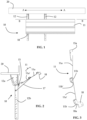
Figure 1 is a front elevation view in closed configuration of a lateral protection device according to a first embodiment of the present invention; -
Figure 2 is a side elevation view of the lateral protection device ofFigure 1 in an open configuration; -
Figure 3 is a side elevation view of the wall element used in the lateral protection device according to the present invention during its assembly; -
Figure 4 is a rear perspective view in closed configuration of the lateral protection device ofFigure 1 complete with angular element; -
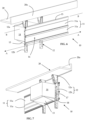
Figure 5 is a rear perspective view in closed configuration of a lateral protection device according to a second embodiment of the present invention complete with angular element; -
Figure 6 is a front perspective view in closed configuration of a lateral protection device according to a third embodiment of the present invention; -
Figure 7 is a rear perspective view of the lateral protection device ofFigure 6 ; -
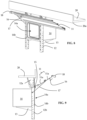
Figure 8 is a front perspective view in open configuration of the lateral protection device ofFigure 6 ; -
Figure 9 is a side elevation view of the lateral protection device in the configuration ofFigure 8 ; -
Figure 10 is a front elevation view of the lateral protection device ofFigure 6 ; -
Figures 11 and 11a are respectively a sectional view along the line C-C ofFigure 10 and an enlarged detail of this sectional view; -
Figure 12 is a perspective view of the lateral protection device ofFigure 6 not mounted on the vehicle; -
Figure 13 is a perspective view of the lateral protection device ofFigure 6 complete with angular element; -
Figure 14 is a front perspective view in closed configuration of a lateral protection device according to a fourth embodiment of the present invention; -
Figure 15 is a rear perspective view in open configuration of a lateral protection device according to a fifth embodiment of the present invention; -
Figures 16 and 17 are two perspective respectively rear and front views of a lateral protection device according to a sixth embodiment of the present invention; -
Figure 18 is a side elevation view of a vehicle provided with a lateral protection device according to the present invention. - In the following description, for the illustration of the figures, identical numbers or reference symbols are used to indicate construction elements with the same function. Further, for illustration clarity, some references may not be repeated in all the figures.
- While the invention is susceptible to various modifications and alternative constructions, certain preferred embodiments are shown in the drawings and are described hereinbelow in detail. However, it is to be understood that there is no intention to limit the invention to the specific embodiment illustrated but, on the contrary, the invention intends to cover all the modifications, alternative and equivalent constructions that fall within the context of the invention as defined in the claims.
- The use of "for example", "etc.", "or" indicates non-exclusive alternatives without limitation, unless otherwise indicated. The use of "comprises" and "includes" means "comprises or includes, but not limited to", unless otherwise indicated.
- With reference to
Figures 1 to 4 , a first embodiment of a lateral protection device according to the present invention is illustrated, indicated as a whole with 10. - The
lateral protection device 10 comprises a wall orbulkhead element 11 made up of one or moreelongated bars elongated wall element 11 having a long main development axis A. Thebulkhead 11 therefore extends along the development axis A and below aside edge 20a of aplatform 20 of a vehicle (illustrated inFig. 16 ), remaining substantially perpendicular to theplatform 20. - As illustrated in detail in
Figure 3 , theelongated bars bars nose 11b made on afirst bar 11a, in acorresponding seat 11b' made on asecond bar 11a'. Thenose 11b and theseat 11b' preferably extend longitudinally along the side of therespective bars elongated bars bulkhead 11 which defines a solid and continuous surface. - The
bulkhead 11 is preferably terminated at its ends by means of a shapedangular element 19 also known as "angle bar". - The
bulkhead 11 is supported by a plurality ofsupport legs 12, comprising at least twosupport legs 12. Thesupport legs 12 illustrated in detail inFigure 2 are of the type that can be constrained to thevehicle platform 20 so as to extend below theside edge 20a of theplatform 20, remaining substantially perpendicular to theplatform 20. Furthermore, in use, thesupport legs 12 are constrained to the platform at a distance from each other along the development axis A and in a parallel arrangement with respect to each other. - In the embodiment of
Figures 1 to 4 , thesupport legs 12 comprise abase 12a for connection to theplatform 20 configured to be rigidly fixed to theplatform 20, specifically to the lower wall of the same 20a, and an upright 12b hinged to theconnection base 12a at one end thereof and extending substantially perpendicular to theplatform 20, below theside edge 20a thereof. Saidsupport legs 12 are therefore of the overturnable type and fixed to theplatform 20 so as to define an overturning axis (not shown) of theuprights 12b parallel to theside edge 20a of theplatform 20. - In a completely equivalent way, the
support legs 12 can be of the type that can be fixedly constrained to theplatform 20 or to thechassis 32 of the vehicle as shown in exemplary terms with reference toFigures 14 and 15 . - According to the present invention, the
bulkhead 11 is constrained to thesupport legs 12 in a pivotable manner around a rotation axis B, parallel to the development axis A, between a closed operating position (illustrated inFigure 1 ) in which thebulkhead 11 is arranged substantially parallel to a plane which comprises thesupport legs 12, preventing access to the space underneath the vehicle, and any operating opening position (illustrated inFigure 2 ) in which thebulkhead 11 is tilted with respect to the plane which comprises thesupport legs 12 to allow access to the space underneath the vehicle. - In the context of the present description and of the subsequent claims, the term "tilted arrangement" means any relative arrangement between the
bulkhead 11 and thesupport legs 12 such that the plane comprising the bulkhead and the plane comprising the support legs are tilted with respect to each other by a non-zero angle, for example equal to 90°, 120° or more. - To this end, the
bulkhead 11 is constrained at the top to at least twosupport legs 12 through a hingedcoupling 15. In particular, thehinge coupling 15 is made at the upper side of thebulkhead 11 facing the vehicle, that is, at the side facing theconnection base 12a of thesupport legs 12. - In the embodiment of
Figures 1 to 4 , the upper side of thebulkhead 11 facing theconnection base 12a has acurved termination 15a which extends longitudinally parallel to the development axis A. - As shown in detail in Figure 10a (albeit with reference to a different embodiment), the
curved termination 15a is slidably housed inside arail 15b which has extension and curvature complementary to that of the upper side of thebulkhead 11 and it is fixed rigidly to at least twosupport legs 12. Therail 15b guides thecurved termination 15a during rotation around the axis of rotation B, thus achieving thehinge coupling 15. - In the embodiment of
Figures 1 to 4 , therail 15b is made through a continuous profile element constrained to all thesupport legs 12. - In a completely equivalent way, the
rail 15b can be made discontinuous through two or more rail sections, each constrained to arespective support leg 12 so as to delineate a line parallel to the development axis A. In this case, thecurved termination 15a is in turn made in several parts, each housed in arespective rail section 15b. - Means 17 are also provided for temporarily locking the
bulkhead 11 in a specific operating opening position in which thebulkhead 11 is arranged so as to allow access to the space beneath the vehicle. The temporary locking means 17 are preferably made in the form of a bar hinged to its own first end to asupport leg 12. - In the condition of temporary locking of the
bulkhead 11, the second free end of therod 17 is inserted in a seat made on thebulkhead 11 so as to stably maintain a reciprocal arrangement between thebulkhead 11 and thesupport legs 12 in which the bulkhead is arranged so as to allow access to the space under the vehicle. - The
bulkhead 11 also comprises a fixingbracket 18 shaped to at least partially embrace asupport leg 12 when thebulkhead 11 is in its closed operating position. The fixingbracket 18 comprises at least one through hole placed so as to overlap a corresponding through hole made on thesupport leg 12, when the fixingbracket 18 embraces theleg 12. The two overlapping holes allow the insertion of a locking element, such as a pin (not illustrated) or a padlock (not illustrated). - As shown in
Figure 3 , the fixingbracket 18 is preferably made as an element that is couplable to anelongated bar bulkhead 11. To this end, the fixingbracket 18 comprises arecess 18a configured to retain thenose 11b made on theelongated bar 11a' arranged farther away from theconnection base 12a of thesupport legs 12 by interlocking and/or shape coupling. - With reference to
Figure 5 , a second embodiment of a lateral protection device according to the present invention is illustrated which, in addition to the parts described with reference to the embodiment ofFigures 1 to 4 , comprises arigid connection element 13, made in the form of a rod, constrained directly to at least twosupport legs 12 of the series ofsupport legs 12 in order to increase the overall structural rigidity of thelateral protection device 10. - The
rigid connection element 13 is configured to maintain thesupport legs 12 to which it is constrained according to a reciprocal fixed, parallel arrangement and spaced apart along the development axis A. - With reference to
Figures 6-13 , a third embodiment is shown according to which therigid connection element 13 is advantageously made in the form of asupport shelf 13 extending beneath theplatform 20 of the vehicle according to an arrangement substantially parallel to theplatform 20. - The shelf-
like connection element 13 thus defines a rest surface on which a hollow box-like element 14 defining a containment space can rest and possibly be constrained in a fixed manner. The box-like element 14, once constrained to the shelf-like element 13 or, alternatively or in addition, to thesupport legs 12, is positioned below the vehicle. In particular, the box-like element 14 comprises anaccess opening 14a facing thesupport legs 12. - In addition to the constraint to the
shelf 13, means 14c are provided for fixing the hollow box-like element 14 to the support legs, 12 so that an overturning of the hollow box-like element 14 is prevented. - In the embodiment illustrated in
Figures 6-13 , theentire bulkhead 11 acts as a hinged overturnable cover for closing theopening 14a of the box-like element 14, allowing the box-like element 14 to be made with dimensions substantially corresponding to the space available below the vehicle (embodiment not illustrated in the figures). - The box-
like element 14 advantageously comprises a sealingelement 14b, such as for example a gasket, placed along the perimeter of itsopening 14a. Thanks to thissealing element 14b and to the assembly on thesame support legs 12 of thebulkhead 11 and of the box-like element 14, which allows to easily achieve a precise relative positioning, it is possible to obtain a correct support of thebulkhead 11 on the sealingelement 14b and, in this way, a sealing closure of the box-like element 14. - The
bulkhead 11 advantageously comprises aselective locking element 16, such as for example a lock, configured to provide a stable, but selectively releasable, constraint between thebulkhead 11 and the box-like element 14. For example, theselective locking element 16 is configured to go into selective engagement with theedge 14a of the box-like element 14. - With reference to
Figure 14 , a fourth embodiment is shown according to which therigid connection element 14 is advantageously made in the form of a hollow box-like element directly connected to thesupport legs 12, i.e. in the absence of a shelf-like element. In this way it is possible to convey rigidity to the lateral protection device as a whole and at the same time to exploit the free space underneath the vehicle. - In the embodiment of
Figure 14 , thesupport legs 12 each comprise aconnection base 12a configured to be rigidly constrained to thevehicle chassis 32 and an upright 12b fixedly connected to theconnection base 12a, that is, not overturnable with respect to it 12a. - With reference to
Figure 15 , a fifth embodiment is shown comprising a rigid connection element in the form of a hollow box-like element 14 defining a particularly deep containment space. In this case, in order to guarantee the support of a high load, the lateral protection device comprises at least one pair of internal support legs 12' configured to be rigidly fixed to theplatform 20 or to thechassis 32 of thevehicle 30 in a position closer to a centreline of theplatform 20 or of thechassis 32 with respect to thesupport legs 12 fixed more externally, for example to the edge of theplatform 20 orchassis 32, according to a spaced and parallel arrangement with respect to the arrangement of the pair of moreexternal support legs 12. Also in this case thesupport legs 12, 12' each comprise aconnection base 12a configured to be rigidly constrained to theplatform 20 or to thechassis 32 of the vehicle and an upright 12b connected in a fixed manner to theconnection base 12a, that is, not overturnable with respect to the same 12a. - With reference to
Figures 16 and 17 , a sixth embodiment is shown according to which thebulkhead 11 is made up of a plurality ofwall sections 111 arranged coplanar and side by side along the development axis A. Eachwall section 111 comprises, at its upper side facing theconnection base 12a, acurved termination 15a which cooperates with a complementarycurved rail 15b so as to guide thecurved termination 15a during rotation around the rotation axis B, thus achieving a hingedcoupling 15. In the embodiment ofFigures 16 and 17 , therail 15b is unique and common to thevarious wall sections 111, and is fixed rigidly to at least twosupport legs 12. Eachwall section 111 can be rotated around the rotation axis B independently of thefurther wall sections 111. - Furthermore, the
rigid connection element 13 is advantageously made in the form of arack 13 extending beneath theplatform 20 of the vehicle according to an arrangement substantially parallel to theplatform 20. Therack 13 is for example configured to support and ensure a fixed connection to a hollow box-like element (not shown) having an opening facing thecorresponding wall section 111. In this way thewall section 111 acts as an overturnable cover for closing the opening of the box-like element constrained to therack 13. Like for the embodiment illustrated inFigure 8 , the box-like element advantageously comprises a sealing element, for example a gasket, placed along the perimeter of its own opening and configured to rest against the wall section so as to provide a sealing closure of the box-like element. - Finally,
Figure 18 shows avehicle 30 comprising alateral protection device 10 connected to itsown platform 20. Specifically, the vehicle ofFigure 16 is atruck 30 comprising acabin 31 and achassis 32 on which aload space 33 is arranged, terminated at the bottom by theplatform 20 which supports thelateral protection device 10.
Claims (15)
- Lateral protection device (10) for heavy road vehicles comprising- a plurality of support legs (12) comprising at least two support legs (12) each comprising a connection base (12a) configured to be rigidly fixed to a platform (20) or to a chassis (32) of a heavy road vehicle (30) according to a fixed reciprocal arrangement, parallel and spaced along a development axis (A) and an upright (12b) connected to the connection base (12a) at one of its ends, the uprights (12b) of the plurality of the support legs (12) being substantially linear, so that the set of uprights (12b) of the plurality of support legs (12) defines a plane of the uprights (12b) of the support legs (12), and- at least one wall element (11) extending elongated along the development axis (A) and constrained to at least two first support legs (12) of the plurality of support legs (12),characterized in that the wall element (11) is constrained to the uprights (12b) of the at least two first support legs (12) at its own side facing the connection bases (12a) of the support legs (12) so as to pivot around a rotation axis (B), parallel to the development axis (A), between a closed operating position in which the wall element (11) is arranged substantially parallel to the plane of the uprights (12b) of the support legs (12) and at least an operating opening position in which the wall element (11) is tilted with respect to the plane of the uprights (12b) of the support legs (12).
- Lateral protection device (10) according to claim 1, comprising at least one rigid connection element (13,14) fixed in a direct and rigid manner to at least two second support legs (12) of the plurality of support legs (12) and configured to maintain the at least two second support legs (12) according to the fixed, parallel arrangement and spaced apart along the development axis (A).
- Lateral protection device (10) according to claim 2, wherein the at least one rigid connection element (13,14) is a rod or a shelf-like element or a rack or a hollow box-like element (14) defining a containment space and having an access opening (14a) to the containment space facing towards said plurality of support legs (12).
- Lateral protection device (10) according to claim 3, wherein the hollow box-like element (14) comprises a sealing element (14b) placed along the perimeter of its opening (14a) and configured to rest against the wall element (11) when it is in the closed operating position.
- Lateral protection device (10) according to any one of the preceding claims, wherein the at least one wall element (11) comprises a plurality of elongated bars (11a, 11a') arranged side by side adjacent to each other or side by side spaced apart from each other.
- Lateral protection device (10) according to any one of the preceding claims 1 to 4, wherein the at least one wall element (11) comprises a plurality of elongated bars (11a, 11a') arranged side by side adjacent to each other and wherein the elongated bars (11a, 11a') are profile elements respectively comprising a nose (11b) extending along the development axis (A) and/or a seat (11b') also extending along the development axis (A) and configured to receive and retain the nose (11b) obtained on an adjacent bar (11a).
- Lateral protection device (10) according to any one of the preceding claims, wherein the wall element (11) is constrained to the uprights (12b) of the at least two first support legs (12) through at least one hinged coupling, parallel to the development axis (A).
- Lateral protection device (10) according to any one of the preceding claims, wherein the wall element (11) has a curved termination (15a) at its own side facing the connection base (12a) of the support legs (12), the curved termination (15a) extending longitudinally parallel to the development axis (A) and being movably housed inside a rail (15b) with a complementary conformation to the curved termination (15a) and rigidly constrained to the uprights (12b) of the at least two first support legs (12), the rail (15b) being configured to guide the curved termination during rotation about the rotation axis (B).
- Lateral protection device (10) according to claim 8, wherein the rail (15b) comprises a plurality of rail segments each constrained to a respective upright of a respective first support leg (12) according to an arrangement parallel to the development axis (A), each rail segment housing a respective curved termination section (15a) to achieve a hinged coupling between the wall element (11) and the uprights (12b) of the first support legs (12).
- Lateral protection device (10) according to any one of the preceding claims, wherein the wall element (11) comprises at least one fixing bracket (18) which can be coupled to at least one support leg (12) of the plurality of support legs (12) when the wall element (11) is in its closed operating position.
- Lateral protection device (10) according to claim 10, wherein the fixing bracket (18) comprises at least one through hole placed so as to overlap a corresponding through hole made on the upright (12b) of the support leg (12) when the fixing bracket (12b) embraces the upright (12b).
- Lateral protection device (10) according to any one of claims 3 to 11, wherein the at least one wall element (11) comprises a selective locking element (16) configured to go into selective engagement with an edge of the opening (14a) of the box-like element (14).
- Lateral protection device (10) according to any one of the preceding claims, wherein the upright (12b) is hinged at its own end to the respective connection base (12a).
- Lateral protection device (10) according to any one of the preceding claims, wherein the at least one wall element (11) is made of a plurality of wall sections (111) each pivotable about the rotation axis (B) independently of the further wall sections (111).
- Heavy road vehicle (30) comprising a chassis (32) and a platform (20) having a side edge (20a) and a lateral protection device (10) connected to the platform (20) or to the chassis (32) so as to extend below the side edge (20a) of the platform (20) substantially perpendicularly to the platform (20) characterized in that the lateral protection device (10) is made according to any one of the preceding claims.
Applications Claiming Priority (1)
| Application Number | Priority Date | Filing Date | Title |
|---|---|---|---|
| IT102020000005656A IT202000005656A1 (en) | 2020-03-17 | 2020-03-17 | SIDE PROTECTION DEVICE FOR HEAVY ROAD VEHICLES AND VEHICLE INCORPORATING THE SAME |
Publications (2)
| Publication Number | Publication Date |
|---|---|
| EP3882088A1 EP3882088A1 (en) | 2021-09-22 |
| EP3882088B1 true EP3882088B1 (en) | 2023-08-09 |
Family
ID=70805048
Family Applications (1)
| Application Number | Title | Priority Date | Filing Date |
|---|---|---|---|
| EP21161678.4A Active EP3882088B1 (en) | 2020-03-17 | 2021-03-10 | Lateral protection device for heavy road vehicles and vehicle comprising the same |
Country Status (2)
| Country | Link |
|---|---|
| EP (1) | EP3882088B1 (en) |
| IT (1) | IT202000005656A1 (en) |
Families Citing this family (1)
| Publication number | Priority date | Publication date | Assignee | Title |
|---|---|---|---|---|
| CN114475498B (en) * | 2022-01-18 | 2023-07-07 | 三一电动车科技有限公司 | Method and device for regulating and controlling protective device, medium, protective device and vehicle |
Family Cites Families (6)
| Publication number | Priority date | Publication date | Assignee | Title |
|---|---|---|---|---|
| US4877266A (en) * | 1988-11-14 | 1989-10-31 | Transpec Inc. | Vehicle safety system |
| ITAR20000018A1 (en) * | 2000-04-20 | 2001-10-20 | Gianfranco Natali | ROTATING DEVICE FOR VEHICLE PROTECTIONS. |
| SE521178C2 (en) * | 2002-02-28 | 2003-10-07 | Jan-Erik Norelius | Wheel guard for road vehicle, comprises rigid panel unit with two pivotally connected folding boxes |
| DE60302567T2 (en) * | 2003-07-25 | 2006-08-24 | Makersan Otomotiv Sanayi Ticaret Ltd. Sti | Side safety device for long vehicles |
| IT201600117587A1 (en) * | 2016-11-22 | 2018-05-22 | Takler S R L | Support device for side protection elements for vehicles. |
| CA2996392A1 (en) * | 2017-02-24 | 2018-08-24 | Jdb Aero Composites Inc. | Aerodynamic skirt device for trailer |
-
2020
- 2020-03-17 IT IT102020000005656A patent/IT202000005656A1/en unknown
-
2021
- 2021-03-10 EP EP21161678.4A patent/EP3882088B1/en active Active
Also Published As
| Publication number | Publication date |
|---|---|
| EP3882088A1 (en) | 2021-09-22 |
| IT202000005656A1 (en) | 2021-09-17 |
Similar Documents
| Publication | Publication Date | Title |
|---|---|---|
| US5110021A (en) | Combination pipe rack and tool locker for a truck bed | |
| US11198385B2 (en) | Trailer and housing system | |
| CA2813224C (en) | Vehicular storage system | |
| US5211437A (en) | Combination tailgate and ramp assembly | |
| US5816638A (en) | Pickup truck bed extender, ramp and tailgate | |
| US3794375A (en) | Detachable vehicle enclosure | |
| EP2842845B1 (en) | Modular parking place for bicycles | |
| JP2006505460A (en) | Foldable flat rack | |
| WO2007030535A2 (en) | Foldable container | |
| EP3882088B1 (en) | Lateral protection device for heavy road vehicles and vehicle comprising the same | |
| US7555816B2 (en) | Toolbox latch and hinge apparatus and method | |
| GB2503754A (en) | Elevating roof edge protection system for vans capable of accommodating ladder storage | |
| WO2011108982A1 (en) | Storage cage intended for temporary protection of domestic animal or other objects | |
| US20090146450A1 (en) | Deployable Pick-Up Truck Cargo Bed Cover | |
| CN211032773U (en) | Foldable safety protection device | |
| US7281744B1 (en) | Convertible pickup canopy | |
| DK174887B1 (en) | Trailer | |
| WO2009110811A1 (en) | The device to loading and transporting especially bicycles on the roof rack of the vehicle | |
| ES2378924T3 (en) | Superstructure for industrial vehicles with swivel rear door beam. | |
| CN220948236U (en) | Multifunctional expansion frame for pick-up rear bucket | |
| AU2023436741B2 (en) | System for allowing access to a covered cargo platform | |
| US20070164573A1 (en) | Trailer locking system | |
| WO2000034075A1 (en) | Side closure for vehicle bodies | |
| AU759418B2 (en) | Side closure for vehicle bodies | |
| EP1894820A1 (en) | Hinge for openable side boards or tail gates of cargo carrying vehicles |
Legal Events
| Date | Code | Title | Description |
|---|---|---|---|
| PUAI | Public reference made under article 153(3) epc to a published international application that has entered the european phase |
Free format text: ORIGINAL CODE: 0009012 |
|
| STAA | Information on the status of an ep patent application or granted ep patent |
Free format text: STATUS: THE APPLICATION HAS BEEN PUBLISHED |
|
| AK | Designated contracting states |
Kind code of ref document: A1 Designated state(s): AL AT BE BG CH CY CZ DE DK EE ES FI FR GB GR HR HU IE IS IT LI LT LU LV MC MK MT NL NO PL PT RO RS SE SI SK SM TR |
|
| STAA | Information on the status of an ep patent application or granted ep patent |
Free format text: STATUS: REQUEST FOR EXAMINATION WAS MADE |
|
| 17P | Request for examination filed |
Effective date: 20220321 |
|
| RBV | Designated contracting states (corrected) |
Designated state(s): AL AT BE BG CH CY CZ DE DK EE ES FI FR GB GR HR HU IE IS IT LI LT LU LV MC MK MT NL NO PL PT RO RS SE SI SK SM TR |
|
| STAA | Information on the status of an ep patent application or granted ep patent |
Free format text: STATUS: EXAMINATION IS IN PROGRESS |
|
| 17Q | First examination report despatched |
Effective date: 20221004 |
|
| GRAP | Despatch of communication of intention to grant a patent |
Free format text: ORIGINAL CODE: EPIDOSNIGR1 |
|
| STAA | Information on the status of an ep patent application or granted ep patent |
Free format text: STATUS: GRANT OF PATENT IS INTENDED |
|
| INTG | Intention to grant announced |
Effective date: 20230307 |
|
| P01 | Opt-out of the competence of the unified patent court (upc) registered |
Effective date: 20230419 |
|
| GRAS | Grant fee paid |
Free format text: ORIGINAL CODE: EPIDOSNIGR3 |
|
| GRAA | (expected) grant |
Free format text: ORIGINAL CODE: 0009210 |
|
| STAA | Information on the status of an ep patent application or granted ep patent |
Free format text: STATUS: THE PATENT HAS BEEN GRANTED |
|
| AK | Designated contracting states |
Kind code of ref document: B1 Designated state(s): AL AT BE BG CH CY CZ DE DK EE ES FI FR GB GR HR HU IE IS IT LI LT LU LV MC MK MT NL NO PL PT RO RS SE SI SK SM TR |
|
| REG | Reference to a national code |
Ref country code: GB Ref legal event code: FG4D |
|
| REG | Reference to a national code |
Ref country code: CH Ref legal event code: EP |
|
| REG | Reference to a national code |
Ref country code: IE Ref legal event code: FG4D |
|
| REG | Reference to a national code |
Ref country code: DE Ref legal event code: R096 Ref document number: 602021004055 Country of ref document: DE |
|
| REG | Reference to a national code |
Ref country code: LT Ref legal event code: MG9D |
|
| REG | Reference to a national code |
Ref country code: NL Ref legal event code: MP Effective date: 20230809 |
|
| REG | Reference to a national code |
Ref country code: AT Ref legal event code: MK05 Ref document number: 1597162 Country of ref document: AT Kind code of ref document: T Effective date: 20230809 |
|
| PG25 | Lapsed in a contracting state [announced via postgrant information from national office to epo] |
Ref country code: GR Free format text: LAPSE BECAUSE OF FAILURE TO SUBMIT A TRANSLATION OF THE DESCRIPTION OR TO PAY THE FEE WITHIN THE PRESCRIBED TIME-LIMIT Effective date: 20231110 |
|
| PG25 | Lapsed in a contracting state [announced via postgrant information from national office to epo] |
Ref country code: IS Free format text: LAPSE BECAUSE OF FAILURE TO SUBMIT A TRANSLATION OF THE DESCRIPTION OR TO PAY THE FEE WITHIN THE PRESCRIBED TIME-LIMIT Effective date: 20231209 |
|
| PG25 | Lapsed in a contracting state [announced via postgrant information from national office to epo] |
Ref country code: SE Free format text: LAPSE BECAUSE OF FAILURE TO SUBMIT A TRANSLATION OF THE DESCRIPTION OR TO PAY THE FEE WITHIN THE PRESCRIBED TIME-LIMIT Effective date: 20230809 Ref country code: RS Free format text: LAPSE BECAUSE OF FAILURE TO SUBMIT A TRANSLATION OF THE DESCRIPTION OR TO PAY THE FEE WITHIN THE PRESCRIBED TIME-LIMIT Effective date: 20230809 Ref country code: PT Free format text: LAPSE BECAUSE OF FAILURE TO SUBMIT A TRANSLATION OF THE DESCRIPTION OR TO PAY THE FEE WITHIN THE PRESCRIBED TIME-LIMIT Effective date: 20231211 Ref country code: NO Free format text: LAPSE BECAUSE OF FAILURE TO SUBMIT A TRANSLATION OF THE DESCRIPTION OR TO PAY THE FEE WITHIN THE PRESCRIBED TIME-LIMIT Effective date: 20231109 Ref country code: NL Free format text: LAPSE BECAUSE OF FAILURE TO SUBMIT A TRANSLATION OF THE DESCRIPTION OR TO PAY THE FEE WITHIN THE PRESCRIBED TIME-LIMIT Effective date: 20230809 Ref country code: LV Free format text: LAPSE BECAUSE OF FAILURE TO SUBMIT A TRANSLATION OF THE DESCRIPTION OR TO PAY THE FEE WITHIN THE PRESCRIBED TIME-LIMIT Effective date: 20230809 Ref country code: LT Free format text: LAPSE BECAUSE OF FAILURE TO SUBMIT A TRANSLATION OF THE DESCRIPTION OR TO PAY THE FEE WITHIN THE PRESCRIBED TIME-LIMIT Effective date: 20230809 Ref country code: IS Free format text: LAPSE BECAUSE OF FAILURE TO SUBMIT A TRANSLATION OF THE DESCRIPTION OR TO PAY THE FEE WITHIN THE PRESCRIBED TIME-LIMIT Effective date: 20231209 Ref country code: HR Free format text: LAPSE BECAUSE OF FAILURE TO SUBMIT A TRANSLATION OF THE DESCRIPTION OR TO PAY THE FEE WITHIN THE PRESCRIBED TIME-LIMIT Effective date: 20230809 Ref country code: GR Free format text: LAPSE BECAUSE OF FAILURE TO SUBMIT A TRANSLATION OF THE DESCRIPTION OR TO PAY THE FEE WITHIN THE PRESCRIBED TIME-LIMIT Effective date: 20231110 Ref country code: FI Free format text: LAPSE BECAUSE OF FAILURE TO SUBMIT A TRANSLATION OF THE DESCRIPTION OR TO PAY THE FEE WITHIN THE PRESCRIBED TIME-LIMIT Effective date: 20230809 Ref country code: AT Free format text: LAPSE BECAUSE OF FAILURE TO SUBMIT A TRANSLATION OF THE DESCRIPTION OR TO PAY THE FEE WITHIN THE PRESCRIBED TIME-LIMIT Effective date: 20230809 |
|
| PG25 | Lapsed in a contracting state [announced via postgrant information from national office to epo] |
Ref country code: PL Free format text: LAPSE BECAUSE OF FAILURE TO SUBMIT A TRANSLATION OF THE DESCRIPTION OR TO PAY THE FEE WITHIN THE PRESCRIBED TIME-LIMIT Effective date: 20230809 |
|
| PG25 | Lapsed in a contracting state [announced via postgrant information from national office to epo] |
Ref country code: ES Free format text: LAPSE BECAUSE OF FAILURE TO SUBMIT A TRANSLATION OF THE DESCRIPTION OR TO PAY THE FEE WITHIN THE PRESCRIBED TIME-LIMIT Effective date: 20230809 |
|
| PG25 | Lapsed in a contracting state [announced via postgrant information from national office to epo] |
Ref country code: SM Free format text: LAPSE BECAUSE OF FAILURE TO SUBMIT A TRANSLATION OF THE DESCRIPTION OR TO PAY THE FEE WITHIN THE PRESCRIBED TIME-LIMIT Effective date: 20230809 Ref country code: RO Free format text: LAPSE BECAUSE OF FAILURE TO SUBMIT A TRANSLATION OF THE DESCRIPTION OR TO PAY THE FEE WITHIN THE PRESCRIBED TIME-LIMIT Effective date: 20230809 Ref country code: ES Free format text: LAPSE BECAUSE OF FAILURE TO SUBMIT A TRANSLATION OF THE DESCRIPTION OR TO PAY THE FEE WITHIN THE PRESCRIBED TIME-LIMIT Effective date: 20230809 Ref country code: EE Free format text: LAPSE BECAUSE OF FAILURE TO SUBMIT A TRANSLATION OF THE DESCRIPTION OR TO PAY THE FEE WITHIN THE PRESCRIBED TIME-LIMIT Effective date: 20230809 Ref country code: DK Free format text: LAPSE BECAUSE OF FAILURE TO SUBMIT A TRANSLATION OF THE DESCRIPTION OR TO PAY THE FEE WITHIN THE PRESCRIBED TIME-LIMIT Effective date: 20230809 Ref country code: CZ Free format text: LAPSE BECAUSE OF FAILURE TO SUBMIT A TRANSLATION OF THE DESCRIPTION OR TO PAY THE FEE WITHIN THE PRESCRIBED TIME-LIMIT Effective date: 20230809 Ref country code: SK Free format text: LAPSE BECAUSE OF FAILURE TO SUBMIT A TRANSLATION OF THE DESCRIPTION OR TO PAY THE FEE WITHIN THE PRESCRIBED TIME-LIMIT Effective date: 20230809 |
|
| REG | Reference to a national code |
Ref country code: DE Ref legal event code: R097 Ref document number: 602021004055 Country of ref document: DE |
|
| PG25 | Lapsed in a contracting state [announced via postgrant information from national office to epo] |
Ref country code: IT Free format text: LAPSE BECAUSE OF FAILURE TO SUBMIT A TRANSLATION OF THE DESCRIPTION OR TO PAY THE FEE WITHIN THE PRESCRIBED TIME-LIMIT Effective date: 20230809 |
|
| PLBE | No opposition filed within time limit |
Free format text: ORIGINAL CODE: 0009261 |
|
| STAA | Information on the status of an ep patent application or granted ep patent |
Free format text: STATUS: NO OPPOSITION FILED WITHIN TIME LIMIT |
|
| 26N | No opposition filed |
Effective date: 20240513 |
|
| PG25 | Lapsed in a contracting state [announced via postgrant information from national office to epo] |
Ref country code: SI Free format text: LAPSE BECAUSE OF FAILURE TO SUBMIT A TRANSLATION OF THE DESCRIPTION OR TO PAY THE FEE WITHIN THE PRESCRIBED TIME-LIMIT Effective date: 20230809 |
|
| REG | Reference to a national code |
Ref country code: CH Ref legal event code: PL |
|
| PG25 | Lapsed in a contracting state [announced via postgrant information from national office to epo] |
Ref country code: BG Free format text: LAPSE BECAUSE OF FAILURE TO SUBMIT A TRANSLATION OF THE DESCRIPTION OR TO PAY THE FEE WITHIN THE PRESCRIBED TIME-LIMIT Effective date: 20230809 |
|
| PG25 | Lapsed in a contracting state [announced via postgrant information from national office to epo] |
Ref country code: LU Free format text: LAPSE BECAUSE OF NON-PAYMENT OF DUE FEES Effective date: 20240310 |
|
| PG25 | Lapsed in a contracting state [announced via postgrant information from national office to epo] |
Ref country code: MC Free format text: LAPSE BECAUSE OF FAILURE TO SUBMIT A TRANSLATION OF THE DESCRIPTION OR TO PAY THE FEE WITHIN THE PRESCRIBED TIME-LIMIT Effective date: 20230809 |
|
| PG25 | Lapsed in a contracting state [announced via postgrant information from national office to epo] |
Ref country code: MC Free format text: LAPSE BECAUSE OF FAILURE TO SUBMIT A TRANSLATION OF THE DESCRIPTION OR TO PAY THE FEE WITHIN THE PRESCRIBED TIME-LIMIT Effective date: 20230809 Ref country code: LU Free format text: LAPSE BECAUSE OF NON-PAYMENT OF DUE FEES Effective date: 20240310 Ref country code: BG Free format text: LAPSE BECAUSE OF FAILURE TO SUBMIT A TRANSLATION OF THE DESCRIPTION OR TO PAY THE FEE WITHIN THE PRESCRIBED TIME-LIMIT Effective date: 20230809 |
|
| REG | Reference to a national code |
Ref country code: BE Ref legal event code: MM Effective date: 20240331 |
|
| PG25 | Lapsed in a contracting state [announced via postgrant information from national office to epo] |
Ref country code: BE Free format text: LAPSE BECAUSE OF NON-PAYMENT OF DUE FEES Effective date: 20240331 |
|
| PG25 | Lapsed in a contracting state [announced via postgrant information from national office to epo] |
Ref country code: IE Free format text: LAPSE BECAUSE OF NON-PAYMENT OF DUE FEES Effective date: 20240310 |
|
| PG25 | Lapsed in a contracting state [announced via postgrant information from national office to epo] |
Ref country code: IE Free format text: LAPSE BECAUSE OF NON-PAYMENT OF DUE FEES Effective date: 20240310 Ref country code: BE Free format text: LAPSE BECAUSE OF NON-PAYMENT OF DUE FEES Effective date: 20240331 Ref country code: CH Free format text: LAPSE BECAUSE OF NON-PAYMENT OF DUE FEES Effective date: 20240331 |
|
| PGFP | Annual fee paid to national office [announced via postgrant information from national office to epo] |
Ref country code: DE Payment date: 20250331 Year of fee payment: 5 |
|
| PG25 | Lapsed in a contracting state [announced via postgrant information from national office to epo] |
Ref country code: CY Free format text: LAPSE BECAUSE OF FAILURE TO SUBMIT A TRANSLATION OF THE DESCRIPTION OR TO PAY THE FEE WITHIN THE PRESCRIBED TIME-LIMIT; INVALID AB INITIO Effective date: 20210310 |
|
| PG25 | Lapsed in a contracting state [announced via postgrant information from national office to epo] |
Ref country code: HU Free format text: LAPSE BECAUSE OF FAILURE TO SUBMIT A TRANSLATION OF THE DESCRIPTION OR TO PAY THE FEE WITHIN THE PRESCRIBED TIME-LIMIT; INVALID AB INITIO Effective date: 20210310 |
|
| PG25 | Lapsed in a contracting state [announced via postgrant information from national office to epo] |
Ref country code: TR Free format text: LAPSE BECAUSE OF FAILURE TO SUBMIT A TRANSLATION OF THE DESCRIPTION OR TO PAY THE FEE WITHIN THE PRESCRIBED TIME-LIMIT Effective date: 20230809 |
|
| PGFP | Annual fee paid to national office [announced via postgrant information from national office to epo] |
Ref country code: GB Payment date: 20260330 Year of fee payment: 6 |
|
| PGFP | Annual fee paid to national office [announced via postgrant information from national office to epo] |
Ref country code: FR Payment date: 20260330 Year of fee payment: 6 |