EP3876163A2 - Modelltraining, bildverarbeitungsverfahren, vorrichtung, speichermedium und programmprodukt - Google Patents
Modelltraining, bildverarbeitungsverfahren, vorrichtung, speichermedium und programmprodukt Download PDFInfo
- Publication number
- EP3876163A2 EP3876163A2 EP21181044.5A EP21181044A EP3876163A2 EP 3876163 A2 EP3876163 A2 EP 3876163A2 EP 21181044 A EP21181044 A EP 21181044A EP 3876163 A2 EP3876163 A2 EP 3876163A2
- Authority
- EP
- European Patent Office
- Prior art keywords
- image data
- target
- model
- image
- auxiliary
- Prior art date
- Legal status (The legal status is an assumption and is not a legal conclusion. Google has not performed a legal analysis and makes no representation as to the accuracy of the status listed.)
- Granted
Links
Images




Classifications
-
- G—PHYSICS
- G06—COMPUTING OR CALCULATING; COUNTING
- G06N—COMPUTING ARRANGEMENTS BASED ON SPECIFIC COMPUTATIONAL MODELS
- G06N20/00—Machine learning
-
- G—PHYSICS
- G06—COMPUTING OR CALCULATING; COUNTING
- G06F—ELECTRIC DIGITAL DATA PROCESSING
- G06F18/00—Pattern recognition
- G06F18/20—Analysing
- G06F18/21—Design or setup of recognition systems or techniques; Extraction of features in feature space; Blind source separation
- G06F18/214—Generating training patterns; Bootstrap methods, e.g. bagging or boosting
-
- G—PHYSICS
- G06—COMPUTING OR CALCULATING; COUNTING
- G06F—ELECTRIC DIGITAL DATA PROCESSING
- G06F18/00—Pattern recognition
- G06F18/20—Analysing
- G06F18/22—Matching criteria, e.g. proximity measures
-
- G—PHYSICS
- G06—COMPUTING OR CALCULATING; COUNTING
- G06F—ELECTRIC DIGITAL DATA PROCESSING
- G06F18/00—Pattern recognition
- G06F18/20—Analysing
- G06F18/24—Classification techniques
-
- G—PHYSICS
- G06—COMPUTING OR CALCULATING; COUNTING
- G06F—ELECTRIC DIGITAL DATA PROCESSING
- G06F18/00—Pattern recognition
- G06F18/20—Analysing
- G06F18/25—Fusion techniques
- G06F18/251—Fusion techniques of input or preprocessed data
-
- G—PHYSICS
- G06—COMPUTING OR CALCULATING; COUNTING
- G06N—COMPUTING ARRANGEMENTS BASED ON SPECIFIC COMPUTATIONAL MODELS
- G06N3/00—Computing arrangements based on biological models
- G06N3/02—Neural networks
- G06N3/04—Architecture, e.g. interconnection topology
- G06N3/045—Combinations of networks
-
- G—PHYSICS
- G06—COMPUTING OR CALCULATING; COUNTING
- G06N—COMPUTING ARRANGEMENTS BASED ON SPECIFIC COMPUTATIONAL MODELS
- G06N3/00—Computing arrangements based on biological models
- G06N3/02—Neural networks
- G06N3/04—Architecture, e.g. interconnection topology
- G06N3/0464—Convolutional networks [CNN, ConvNet]
-
- G—PHYSICS
- G06—COMPUTING OR CALCULATING; COUNTING
- G06N—COMPUTING ARRANGEMENTS BASED ON SPECIFIC COMPUTATIONAL MODELS
- G06N3/00—Computing arrangements based on biological models
- G06N3/02—Neural networks
- G06N3/04—Architecture, e.g. interconnection topology
- G06N3/047—Probabilistic or stochastic networks
-
- G—PHYSICS
- G06—COMPUTING OR CALCULATING; COUNTING
- G06N—COMPUTING ARRANGEMENTS BASED ON SPECIFIC COMPUTATIONAL MODELS
- G06N3/00—Computing arrangements based on biological models
- G06N3/02—Neural networks
- G06N3/08—Learning methods
-
- G—PHYSICS
- G06—COMPUTING OR CALCULATING; COUNTING
- G06N—COMPUTING ARRANGEMENTS BASED ON SPECIFIC COMPUTATIONAL MODELS
- G06N3/00—Computing arrangements based on biological models
- G06N3/02—Neural networks
- G06N3/08—Learning methods
- G06N3/09—Supervised learning
-
- G—PHYSICS
- G06—COMPUTING OR CALCULATING; COUNTING
- G06N—COMPUTING ARRANGEMENTS BASED ON SPECIFIC COMPUTATIONAL MODELS
- G06N3/00—Computing arrangements based on biological models
- G06N3/02—Neural networks
- G06N3/08—Learning methods
- G06N3/096—Transfer learning
-
- G—PHYSICS
- G06—COMPUTING OR CALCULATING; COUNTING
- G06N—COMPUTING ARRANGEMENTS BASED ON SPECIFIC COMPUTATIONAL MODELS
- G06N5/00—Computing arrangements using knowledge-based models
- G06N5/04—Inference or reasoning models
-
- G—PHYSICS
- G06—COMPUTING OR CALCULATING; COUNTING
- G06V—IMAGE OR VIDEO RECOGNITION OR UNDERSTANDING
- G06V10/00—Arrangements for image or video recognition or understanding
- G06V10/70—Arrangements for image or video recognition or understanding using pattern recognition or machine learning
- G06V10/77—Processing image or video features in feature spaces; using data integration or data reduction, e.g. principal component analysis [PCA] or independent component analysis [ICA] or self-organising maps [SOM]; Blind source separation
- G06V10/774—Generating sets of training patterns; Bootstrap methods, e.g. bagging or boosting
-
- G—PHYSICS
- G06—COMPUTING OR CALCULATING; COUNTING
- G06V—IMAGE OR VIDEO RECOGNITION OR UNDERSTANDING
- G06V10/00—Arrangements for image or video recognition or understanding
- G06V10/70—Arrangements for image or video recognition or understanding using pattern recognition or machine learning
- G06V10/82—Arrangements for image or video recognition or understanding using pattern recognition or machine learning using neural networks
-
- G—PHYSICS
- G06—COMPUTING OR CALCULATING; COUNTING
- G06V—IMAGE OR VIDEO RECOGNITION OR UNDERSTANDING
- G06V10/00—Arrangements for image or video recognition or understanding
- G06V10/70—Arrangements for image or video recognition or understanding using pattern recognition or machine learning
- G06V10/84—Arrangements for image or video recognition or understanding using pattern recognition or machine learning using probabilistic graphical models from image or video features, e.g. Markov models or Bayesian networks
Definitions
- the present application relates to deep learning technology in computer technology, and in particular to a model training, image processing method, device, storage medium, and program product.
- Transfer learning is to fine-tune a pre-training model fully trained with big data to obtain a target model, and in particular, fine-tune the pre-training model according to the target task to be realized.
- the model obtained by fine-tuning is not accurate.
- the present application provides a model training, image processing method, device, storage medium, and program product, to solve the problem that the target model obtained by adjusting the preset model is inaccurate when the sample size of the target task is limited in the prior art.
- a model training method including:
- an image processing method including:
- a model training apparatus including:
- an image processing apparatus including:
- an electronic device including:
- a non-transitory computer-readable storage medium storing computer instructions
- the computer instructions are used for causing the computer to execute the method according to the first aspect or the second aspect.
- a computer program product including a computer program, which, when executed by a processor, implements the method according to the first aspect or the second aspect.
- Transfer learning is a machine learning method in which a pre-trained model is reused in another task.
- the pre-training model can be fine-tuned with target samples corresponding to the target task to obtain the target model.
- FIG. 1 is a schematic diagram of transfer learning according to an exemplary embodiment.
- the pre-training model 11 is obtained through training of source samples 12, and the pre-training model may be, for example, an existing model in the prior art.
- the target model 14 can be obtained by fine-tuning the pre-training model 11 with target samples 13.
- the pre-training model 11 can be secondarily trained with the target samples 13 to obtain the target model 14.
- the method for the target to obtain samples is the method for manual labeling. Manual labeling of a large amount of image data is inefficient, resulting in low model training efficiency.
- auxiliary image data is determined from source image data for learning the preset task according to the target image data for learning the target task, and thereafter, the pre-training model is adjusted according to the target image data and the auxiliary image data.
- data for adjusting the pre-training model can be added, so as to enable the adjusted model more accurate upon task processing.
- the present application provides a model training, image processing method, device, storage medium, and program product, which are applied to deep learning technology in computer technology.
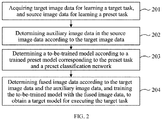
- FIG. 2 is a schematic flowchart of a model training method shown by an exemplary embodiment of the present application.
- the model training method provided by the present application includes: step 201: acquiring target image data for learning a target task, and source image data for learning a preset task, where the method provided by the present application is executed by an electronic device with computing capability, and the electronic device may be, for example, a computer.
- the target task is a task that needs to be learned currently. For example, if the user wishes to train a model which is able to recognize a kitten included in an image, then the target task refers to the task of recognizing the kitten included in the image.
- the data for learning the target task is target image data
- the model obtained by learning the target task is the target model. If the amount of the target image data is large enough, an accurate target model can be trained. However, in practical processes, it is often impossible to obtain sufficient target image data. Therefore, it is impossible to obtain an accurate target model by training only according to the existing target images.
- a preset task refers to a task that has been learned and completed.
- the preset task may be a task of recognizing an object in an image.
- the model obtained by learning the preset task is the preset model.
- the data for learning the preset task is source image data
- the model obtained by learning the preset task is the preset model.
- the preset model can be obtained by training with an existing database, and thereafter, the obtained preset model can be adjusted to obtain the target model.
- the imageNet database (a large-scale visualization database for visual object recognition software research) can be used for model training to obtain the preset model.
- the electronic device can acquire target image data for learning the target task.
- the target image data includes the target image, and the target image data also includes a label of each target image.
- the target image data for example, can be stored in the electronic device that executes the method provided by the present application. When the electronic device executes the method of this embodiment, the target image data can be acquired.
- the electronic device can also acquire source image data for learning the preset task.
- the source image data includes the source image, and the source image data may also include a label of each source image.
- the source image data can be stored in a network platform, for example, can be stored in a server.
- the source image data can be downloaded from a network platform.
- Step 202 determining auxiliary image data in the source image data according to the target image data.
- the electronic device is able to screen auxiliary image data from the source image data according to the acquired target image data.
- the auxiliary image data includes auxiliary images, and the auxiliary image data may also include a label of each auxiliary image.
- the electronic device is able to screen the image data similar to the target image data from the source image data as auxiliary image data. For example, it is possible to calculate the similarity between each source image in the source image data and each target image in the target image data, and use the source image similar to the target image as the auxiliary image to obtain the auxiliary image data.
- the similarity between the target image in the target image data and the source image in the source image data can be determined.
- FIG. 3 is a schematic diagram of screening auxiliary image data provided by an exemplary embodiment of the present application.
- the similarity between the target image 31 and each source image 32 can be determined, and thereafter, the auxiliary image 33 that meets the requirements can be screened from the source image 32 according to the determined similarity.
- the auxiliary image 33 and label thereof constitute the auxiliary image data.
- the auxiliary image data similar to the target image data can be screened from the source image data through the target image data, so as to increase the sample size for adjusting the preset model according to the auxiliary image data.
- Step 203 determining a to-be-trained model according to a trained preset model corresponding to the preset task and a preset classification network.
- the electronic device may build the to-be-trained model with the trained preset model and the preset classification network.
- the preset model is obtained by training with an existing image database, and the source image in the database includes the image similar to the target image.
- the method provided by the present application can use the feature extraction network in the preset model, and the to-be-trained model can be built according to the feature extraction network in the preset model and the preset classification network.
- the classification result between the preset model obtained by learning the preset task and the target model for learning the target task is different. Therefore, in the method provided by the present application, a preset classification network is involved according to the target model, and the to-be-trained model is built according to the feature extraction network in the preset model and the preset classification network.
- the method provided by the present application uses target image data and auxiliary image data to train the to-be-trained model. Therefore, the dimension of the classification result output by the preset classification network can be set to the total number of label categories of the target image data and the auxiliary image data.
- Step 204 determining fused image data according to the target image data and the auxiliary image data, and training the to-be-trained model with the fused image data, to obtain a target model for executing the target task.
- the electronic device may fuse the acquired target image data and the determined auxiliary image data to obtain fused image data.
- the electronic device can fuse the images in the target image data and the auxiliary image data to obtain a fused image, and can also fuse the labels in the target image data and the auxiliary image data to obtain a fused label corresponding to the fused image.
- to-be-trained model can be trained with the fused image data including the fused image and the fused label.
- arbitrary target image data and auxiliary image data can be fused, so as to obtain a large amount of sample data for training the to-be-trained model.
- a large amount of data for training the model can be obtained without manual labeling, and further an accurate target model can be trained.
- the image itself can be fused, and the label of the image can also be fused, such that when the model is being trained, the determined loss function result is also the result after fusion, and the model training result can be further improved.
- part of the target image data and auxiliary image data may be acquired first, and the fused image data may be determined.
- the to-be-trained model is further trained with the determined fused image data, hereafter, a part of the target image data and auxiliary image data is further acquired, and the fused image data is determined. Further, the to-be-trained model is trained with the determined fused image data, so as to obtain the target model by training through multiple training iterations.
- the model training method provided by the present application includes: acquiring target image data for learning a target task, and source image data for learning a preset task; determining auxiliary image data in the source image data according to the target image data; determining a to-be-trained model according to a trained preset model corresponding to the preset task and a preset classification network; determining fused image data according to the target image data and the auxiliary image data, and training the to-be-trained model with the fused image data, to obtain a target model for executing the target task.
- the model training method provided by the present application is able to screen auxiliary image data with image data for learning a target task, and further fuse the target image data and the auxiliary image data, so as to train a built and to-be-trained model with the fusion-processed fused image data.
- This implementation can increase the amount of data for training the model, and the data for training the model is determined is based on the target image data, which is suitable for learning the target task. Therefore, the method provided by the present application can train an accurate target model even if the data amount of target image is not sufficient.
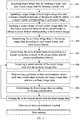
- FIG. 4 is a schematic flowchart of a model training method shown by another exemplary embodiment of the present application.
- the model training method provided by the present application includes: step 401: acquiring target image data for learning a target task, and source image data for learning a preset task.
- step 401 The implementation and implementing principle of step 401 are similar to those of step 201, and will not be described again.
- Step 402 inputting a target image of each target image data into a feature extraction network of the preset model to obtain a target feature corresponding to each target image.
- Step 403 inputting a source image of each source image data into the feature extraction network of the preset model to obtain a source feature corresponding to each source image.
- step 402 is not limited.
- the electronic device determines the auxiliary image data in the source image data
- the preset model is a model obtained by performing preset task learning with the source image data.
- the source image and target image can be directly analyzed with the feature extraction network in this model.
- the target image data includes the target image and its label
- each target image in the target image data can be acquired and inputted into the feature extraction network of the preset model, so as to obtain the target feature of each target image.
- the source image data includes the source image and its label
- each source image in the source image data can be acquired and inputted into the feature extraction network of the preset model, so as to obtain the source feature of each source image.
- the features of the source image and the target image are extracted with the same feature extraction network. Since the feature extraction methods are the same, the extracted source feature and the target feature have comparability.
- Step 404 determining the auxiliary image data in the source image data according to each target feature and each source feature.
- the electronic device can compare the determined respective target feature and the respective source feature.
- the target features can be compared with the source features in pairs, and the auxiliary image data can be determined in the source image data according to the comparison result.
- the electronic device is able to screen the feature similar to any target feature from the source features, and thereafter, determine the source image to which the source feature belongs as the auxiliary image, and further can use the auxiliary image and its label as an auxiliary image data.
- This method is able to screen the auxiliary image data from the source image data based on the image features, and the screened auxiliary image data is more similar to the target image data, which is more in line with the needs for learning the target task.
- the similarity between each target image and each source image may be specifically determined according to each target feature and each source feature.
- the similarity between the images can be determined according to the features of the images, such that the degree of similarity between the two images can be characterized by the similarity.
- the Euclidean distance between a target feature and a source feature can be determined as the similarity between the images to which the features belong.
- the target feature of a target image can be acquired, and the similarity between the target image and each source image can be determined according to the target feature and the source feature of each source image.
- source image data to which belongs the source image similar to the target image is determined as the auxiliary image data according to the similarity.
- a source image similar to the target image can be determined according to the similarity, and the source image data to which the source image belongs can be used as auxiliary image data. Therefore, the auxiliary image data includes a source image similar to the target image, and a label of the source image.
- auxiliary image data similar to the target image data can be determined from the source image data, thereby determining data suitable for learning the target task.
- Step 405 determining the to-be-trained network according to a feature extraction network in the preset model and the preset classification network.
- the method provided by the present application can use the feature extraction network in the preset model, and specifically can connect the preset classification network behind the feature extraction network to obtain the to-be-trained network.
- FIG. 5 is a schematic diagram of a to-be-trained model shown by an exemplary embodiment of the present application.
- the preset model 51 includes a feature extraction network 511 and a classification network 512.
- the feature extraction network 511 is configured to extract features of the image data of the input model
- the classification network 512 is configured to obtain classification results according to the features extracted by the feature extraction network 511, and further obtain recognition results of the image data of the input model.
- the to-be-trained model 53 can be built according to the preset model 51 and the preset classification network 52.
- the to-be-trained model 53 includes the feature extraction network 511 in the preset model 51 and further the preset classification network 52.
- the features output by the feature extraction network 511 are input into the preset classification network 52. Therefore, the feature input dimension of the preset classification network 52 is the same as the output dimension of the feature extraction network 511, and both can link up very well.
- the preset model is trained with source image data, and the feature extraction network in the preset model can extract features of the source image data. Therefore, the feature extraction network can be adjusted with the target image data and the auxiliary image data to make it suitable for processing the target task.
- the feature extraction network of the preset model can be adjusted to a network suitable for performing the target task without requiring a large amount of target image data.
- output dimension of the preset classification network is the same as the total number of labels included in the target image data and the auxiliary image data. For example, if the labels in the target image data include A, B, and C, and the labels in the auxiliary image data include A, B, and D, the total number of labels is 4, thus the output dimension of the preset classification network can be set to 4.
- the output dimension of the preset classification network is set to the total number of labels.
- the preset classification network can recognize the label corresponding to the target image data and the auxiliary image data according to the features extracted by the feature extraction network, and, such that the output results of the preset classification network meet the user's needs.
- Step 406 acquiring a preset number of the target image data and the auxiliary image data.
- the target image data and the auxiliary image data may be fused several times, and the fused data obtained by each fusion may be used to train the to-be-trained model.
- a preset number can be set, and thus the preset number of target image data and the preset number of auxiliary image data are acquired each time. For example, n target image data and n auxiliary image data are acquired each time.
- the preset number can be determined according to the number of training samples input each time upon training the model.
- Step 407 determining a plurality of data combinations, each of which comprises one target image data and one auxiliary image data.
- each combination may include one target image data and one auxiliary image data.
- one target image data and each acquired auxiliary image data can be treated as a combination.
- three combinations can be constructed, namely A1 A2, A1 B2, A1 C2, and for B1 and C1, three combinations can also be constructed respectively.
- the target image data and the auxiliary image data in a same acquisition order can also be treated as one data combination.
- FIG. 6 is a schematic diagram of generating a data combination shown by an exemplary embodiment of the present application.
- the acquisition order of each target image data 61 is 1, 2, 3... n
- the acquisition order of each auxiliary image data 62 is 1, 2, 3... n.
- the target image data and the auxiliary image data in a same acquisition order may be treated as one data combination.
- the target image data and the auxiliary image data whose acquisition order is both 1 are regarded as a group.
- the current data combination can be quickly determined, thereby increasing the speed of model training.
- Step 408 determining the fused image data according to the data combination.
- the method provided by the present application can perform fusion processing on the target image data and the auxiliary image data included in each data combination to obtain the fused image data of the data combination.
- data related to the current target task can be fully used, and the model can be optimized under the condition that the target image data is limited.
- the target image and the auxiliary image belonging to the same data combination can be fused to determine the fused image; the label of the fused image is determined by fusing the label of the target image and the label of the auxiliary image.
- the target image in the target image data and the auxiliary image in the auxiliary image data in the data combination can be fused, and the label of the target image in the image data and the label of the auxiliary image in the auxiliary image data can be fused, so as to obtain the fused image and label thereof.
- the fused image includes features of the target image and the auxiliary image, and both the target image and the auxiliary image are suitable for learning the data of the target task. Therefore, the fused image also includes data features suitable for learning the target task. This method can obtain new image data for learning the target task.
- the method of the present application also fuses the labels of the target image and the auxiliary image.
- the fused label is used to calculate the loss function, and the fused label can accurately express the classification result of the fused image. Therefore, the target model obtained by training the model with the fused label is more accurate.
- a random weight value can also be acquired, and the target image data and the auxiliary image data can be fused with the random weight value.
- random weight value can be used to fuse the target image and the auxiliary image to obtain a fused image, and the random weight value can be used to fuse the label of the target image and the label of the auxiliary image to obtain the label of the fused image.
- the image and the label is fused with the same random weight value, so as to enable the fused label to express the information in the fused image more accurately.
- the ratio of target image data to auxiliary image data included in the fused image data obtained each time is also different, and thus richer sample data can be obtained.
- the acquired random weight value can be directly used to obtain the fused image and its label based on the above formula.
- the feature ratio of the auxiliary image data is ⁇
- the feature ratio of the target image data is (1- ⁇ ). This method can effectively fuse the information in the auxiliary image data and the target image data.
- each pixel in the target image and the auxiliary image can be effectively fused according to the random weight value to obtain the fused image.
- the label of each image data may have codes, and the label codes of the target image and the auxiliary image may be effectively fused according to the random weight value to obtain the label of the fused image.
- the random weight value can be determined based on ⁇ distribution. Through the ⁇ distribution, a random weight value with size between 0-1 can be obtained, such that the random weight value can be used to extract part of the features in the target image data and the auxiliary image data, and fuse the extracted features.
- Step 409 training the to-be-trained model with the fused image data.
- the to-be-trained model can be trained with the determined fused image data. Thereafter, steps 406-409 can be executed again, and the model can be iteratively trained. After the training is performed for preset times, the training can be stopped to obtain the target model.
- the random weight value acquired during each cyclical iteration can be different, and when the fused image data is generated, different ratios of the features of the target image data and the auxiliary image data in the fused image data can be adjusted according to the random weight value, so as to obtain richer sample data.
- the preset times can be set according to requirements, and after the model is adjusted for the preset times with the fused image data, a target model that can perform the target task may be obtained.
- FIG. 7 is a schematic flowchart of a task processing method shown by an exemplary embodiment of the present application.
- the task processing method provided by the present application includes:
- the model is trained based on any one of the above model training methods, since the image data for training the target model is rich, the target model obtained by training is more accurate. Therefore, when the target model is used to recognize the to-be-processed image, the obtained classification result is also more accurate.
- the to-be-processed image may be input into the target model, and the target model can output a classification result corresponding to the to-be-processed image.
- FIG. 8 is a schematic structural diagram of a model training apparatus shown by an exemplary embodiment of the present application.
- the model training apparatus 800 includes:
- the model training apparatus includes: an acquiring unit, configured to acquire target image data for learning a target task, and source image data for learning a preset task; a data screening unit, configured to determine auxiliary image data in the source image data according to the target image data; a model building unit, configured to determine a to-be-trained model according to a trained preset model corresponding to the preset task and a preset classification network; a fusing unit, configured to determine the fused image data according to the target image data and the auxiliary image data; a training unit, configured to train the to-be-trained model with the fused image data to obtain a target model for executing the target task.
- the model training apparatus provided by the present application is able to screen auxiliary image data with image data for learning a target task, and further fuse the target image data and the auxiliary image data, so as to train a built and to-be-trained model with the fusion-processed fused image data.
- This implementation can increase the amount of data for training the model, and the data for training the model is determined is based on the target image data, which is suitable for learning the target task. Therefore, the apparatus provided by the present application can train an accurate target model even if the amount of target image data is not sufficient.
- FIG. 9 is a schematic structural diagram of a model training apparatus shown by another exemplary embodiment of the present application.
- the model training apparatus 900 provided by the present application is based on the foregoing embodiments, where the fusing unit 840 includes:
- determining module 842 is specifically configured to: treat the target image data and the auxiliary image data in a same acquisition order as one data combination.
- fusing module 843 includes:
- fusing module 843 further includes a weight acquiring submodule 8433 configured to:
- weight acquiring submodule 8433 is specifically configured to: determine the random weight value based on ⁇ distribution.
- data screening unit 820 includes:
- screening module 822 includes:
- model building unit 830 is specifically configured to: determine the to-be-trained network according to a feature extraction network in the preset model and the preset classification network.
- output dimension of the preset classification network is the same as the total number of labels included in the target image data and the auxiliary image data.
- FIG. 10 is a schematic structural diagram of an image processing apparatus shown by an exemplary embodiment of the present application.
- the image processing apparatus 1000 includes:
- the present application also provides a computer program product, including a computer program, the computer program is stored in a readable storage medium, at least one processor of the electronic device can read the computer program from the readable storage medium, and at least one processor executes the computer program to enable the electronic device to execute the solution provided by any one of the above embodiments.
- the present application also provides an electronic device and a readable storage medium.
- FIG. 11 it is a block diagram of an electronic device of the model training method or the image processing method according to the embodiments of the present application.
- Electronic devices are intended to represent various forms of digital computers, such as laptop computers, desktop computers, workstations, personal digital assistants, servers, blade servers, mainframe computers, and other suitable computers.
- Electronic devices can also represent various forms of mobile apparatuses, such as personal digital assistant, cellular phones, smart phones, wearable devices, and other similar computing apparatuses.
- the components shown herein, their connections and relationships, and their functions are merely examples, and are not intended to limit the implementations of the present application described and/or required herein.
- the electronic device 1100 includes: one or more processor 1101, a memory 1102, and interfaces for connecting various components, including a high-speed interface and a low-speed interface.
- the various components are connected to each other using different buses, and can be installed on a common motherboard or installed in other ways as needed.
- the processor may process instructions executed in the electronic device, including instructions stored in or on the memory to display graphical information of the GUI on an external input/output apparatus (such as a display device coupled to an interface).
- an external input/output apparatus such as a display device coupled to an interface.
- a plurality of processors and/or a plurality of buses can be used with a plurality of memories.
- a plurality of electronic devices can be connected, and each device provides some necessary operations (for example, as a server array, a group of blade servers, or a multi-processor system).
- a processor 1101 is taken as an example.
- the memory 1102 is the non-transitory computer-readable storage medium provided by the present application. Where the memory stores instructions executable by at least one processor, so as to enable the at least one processor to execute the model training method or the image processing method provided by the present application.
- the non-transitory computer-readable storage medium of the present application stores computer instructions, which are used to enable the computer to execute the model training method or the image processing method provided by the present application.
- the memory 1102 can be used to store non-transitory software programs, non-transitory computer-executable programs and modules, such as the program instructions/modules corresponding to the model training method or the image processing method in the embodiments of the present application (for example, the acquiring unit 810, the data screening unit 820, the model building unit 830, the fusing unit 840, and the training unit 850 shown in FIG. 8 ; for another example, the acquiring unit 1010 and the recognizing unit 1020 in FIG. 10 ).
- the processor 1101 executes various functional applications and data processing of the server by running non-transitory software programs, instructions, and modules stored in the memory 1102, i.e., implements the model training method or the image processing method in the above method embodiments.
- the memory 1102 may include a storage program area and a storage data area, where the storage program area may store an operating system and an application program required by at least one function; the storage data area may store the created data by using the electronic device 1100 according to the model training method or the image processing method, etc.
- the memory 1102 may include a high-speed random access memory, and may also include a non-transitory memory, such as at least one magnetic disk storage device, a flash memory device, or other non-transitory solid-state storage devices.
- the memory 1102 may optionally include memories remotely provided with respect to the processor 1101, and these remote memories may be connected to the electronic device 1100 of the model training method or the image processing method via a network. Examples of the aforementioned networks include, but are not limited to, the Internet, corporate intranets, local area networks, mobile communication networks, and combinations thereof.
- the electronic device 1100 of the model training method or the image processing method may further include: an input apparatus 1103 and an output apparatus 1104.
- the processor 1101, the memory 1102, the input apparatus 1103, and the output apparatus 1104 may be connected via buses or in other methods. In FIG. 11 , the connection via a bus is taken as an example.
- the input apparatus 1103 can receive input digital or character information, and generate key signal input related to the user settings and function control of the electronic device 1100 of the model training method or the image processing method (input apparatus such as touch screen, keypad, mouse, trackpad, touch pad, pointing stick, one or more mouse buttons, trackball, joysticks, etc.).
- the output apparatus 1104 may include a display device, an auxiliary lighting apparatus (for example, LED), a tactile feedback apparatus (for example, a vibration motor), and the like.
- the display device may include, but is not limited to, a liquid-crystal display (LCD), a light emitting diode (LED) display, and a plasma display. In some implementations, the display device may be a touch screen.
- Various implementations of the systems and techniques described herein can be implemented in digital electronic circuit systems, integrated circuit systems, special-purpose ASICs (application specific integrated circuit), computer hardware, firmware, software, and/or combinations thereof. These various implementations may include being implemented in one or more computer programs, the one or more computer programs may be executed and/or interpreted on a programmable system including at least one programmable processor, the programmable processor can be a special-purpose or general-purpose programmable processor that can receive data and instructions from the memory system, at least one input apparatus, and at least one output apparatus, and transmit the data and instructions to the memory system, the at least one input apparatus, and the at least one output apparatus.
- the systems and techniques described herein can be implemented on a computer that has: a display apparatus for displaying information to the user (for example, a CRT (cathode ray tube) or LCD (liquid-crystal display) monitor); and a keyboard and a pointing apparatus (for example, a mouse or a trackball) through which the user can provide input to the computer.
- a display apparatus for displaying information to the user
- LCD liquid-crystal display
- keyboard and a pointing apparatus for example, a mouse or a trackball
- Other types of apparatuses can also be used to provide interaction with the user; for example, the feedback provided to the user can be any form of sensory feedback (for example, visual feedback, auditory feedback, or tactile feedback); and can be in any form (including acoustic input, voice input, or tactile input) to receive input from the user.
- the systems and technologies described herein can be implemented in a computing system that includes background components (for example, as a data server), or a computing system that includes middleware components (for example, an application server), or a computing system that includes front-end components (for example, a user computer with a graphical user interface or web browser through which the user can interact with the implementation of the system and technique described herein), or a computing system includes any combination of such background components, middleware components, or front-end components.
- the components of the system can be connected to each other through any form or medium of digital data communication (for example, a communication network). Examples of communication networks include: local area network (LAN), wide area network (WAN), and the Internet.
- the computer system can include a client and a server.
- the client and server are generally far away from each other and usually interact through a communication network.
- the relationship between the client and the server is generated by computer programs that run on the corresponding computers and have a client-server relationship with each other.
- the server can be a cloud server (also known as a cloud computing server or a cloud host), a host product in the cloud computing service system to solve the defects of difficult management and weak business scalability in traditional physical host and VPS service ("Virtual Private Server", or "VPS" for short).
- the server can also be a server of a distributed system, or a server combined with a blockchain.
Landscapes
- Engineering & Computer Science (AREA)
- Theoretical Computer Science (AREA)
- Physics & Mathematics (AREA)
- Evolutionary Computation (AREA)
- General Physics & Mathematics (AREA)
- Artificial Intelligence (AREA)
- Software Systems (AREA)
- Data Mining & Analysis (AREA)
- Computing Systems (AREA)
- General Engineering & Computer Science (AREA)
- Computer Vision & Pattern Recognition (AREA)
- General Health & Medical Sciences (AREA)
- Health & Medical Sciences (AREA)
- Life Sciences & Earth Sciences (AREA)
- Mathematical Physics (AREA)
- Medical Informatics (AREA)
- Computational Linguistics (AREA)
- Databases & Information Systems (AREA)
- Multimedia (AREA)
- Molecular Biology (AREA)
- Biophysics (AREA)
- Biomedical Technology (AREA)
- Bioinformatics & Cheminformatics (AREA)
- Bioinformatics & Computational Biology (AREA)
- Evolutionary Biology (AREA)
- Probability & Statistics with Applications (AREA)
- Image Analysis (AREA)
- Image Processing (AREA)
Applications Claiming Priority (1)
| Application Number | Priority Date | Filing Date | Title |
|---|---|---|---|
| CN202011510141.XA CN112668586B (zh) | 2020-12-18 | 2020-12-18 | 模型训练、图片处理方法及设备、存储介质、程序产品 |
Publications (3)
| Publication Number | Publication Date |
|---|---|
| EP3876163A2 true EP3876163A2 (de) | 2021-09-08 |
| EP3876163A3 EP3876163A3 (de) | 2022-04-20 |
| EP3876163B1 EP3876163B1 (de) | 2023-08-23 |
Family
ID=75407301
Family Applications (1)
| Application Number | Title | Priority Date | Filing Date |
|---|---|---|---|
| EP21181044.5A Active EP3876163B1 (de) | 2020-12-18 | 2021-06-23 | Modelltraining, bildverarbeitungsverfahren, vorrichtung, speichermedium und programmprodukt |
Country Status (4)
| Country | Link |
|---|---|
| US (1) | US11928563B2 (de) |
| EP (1) | EP3876163B1 (de) |
| JP (1) | JP7222040B2 (de) |
| CN (1) | CN112668586B (de) |
Cited By (2)
| Publication number | Priority date | Publication date | Assignee | Title |
|---|---|---|---|---|
| CN113808064A (zh) * | 2021-09-26 | 2021-12-17 | 上海闻泰电子科技有限公司 | 图像融合方法、装置、电子设备和介质 |
| CN117315313A (zh) * | 2022-03-30 | 2023-12-29 | 北京百度网讯科技有限公司 | 多任务识别方法、训练方法、装置、电子设备及存储介质 |
Families Citing this family (11)
| Publication number | Priority date | Publication date | Assignee | Title |
|---|---|---|---|---|
| US12061673B1 (en) * | 2019-03-05 | 2024-08-13 | Hrl Laboratories, Llc | Multi-agent planning and autonomy |
| CN113139463B (zh) * | 2021-04-23 | 2022-05-13 | 北京百度网讯科技有限公司 | 用于训练模型的方法、装置、设备、介质和程序产品 |
| CN114331379B (zh) * | 2021-12-31 | 2023-08-15 | 北京百度网讯科技有限公司 | 用于输出待办任务的方法、模型训练方法和装置 |
| CN114170481B (zh) * | 2022-02-10 | 2022-06-17 | 北京字节跳动网络技术有限公司 | 用于图像处理的方法、设备、存储介质和程序产品 |
| CN116229175B (zh) * | 2022-03-18 | 2023-12-26 | 北京百度网讯科技有限公司 | 图像处理方法、装置、设备及存储介质 |
| CN114911927A (zh) * | 2022-04-06 | 2022-08-16 | 平安科技(深圳)有限公司 | 一种神经语言模型的训练方法、系统及存储介质 |
| CN114912582B (zh) * | 2022-05-11 | 2025-07-22 | 北京百度网讯科技有限公司 | 模型生产方法、装置、电子设备以及存储介质 |
| CN115908993A (zh) * | 2022-10-24 | 2023-04-04 | 北京数美时代科技有限公司 | 一种基于图像融合的数据增强方法、系统和存储介质 |
| CN116363429B (zh) * | 2023-03-28 | 2025-08-01 | 北京百度网讯科技有限公司 | 图像识别模型的训练方法、图像识别方法、装置及设备 |
| CN118171376B (zh) * | 2024-05-14 | 2024-07-19 | 中建安装集团西安建设投资有限公司 | 一种基于Revit的远程协同设计系统及方法 |
| CN119328777B (zh) * | 2024-12-23 | 2025-05-13 | 浙江有鹿机器人科技有限公司 | 基于数据驱动的机器人闭环联合优化方法及系统 |
Family Cites Families (16)
| Publication number | Priority date | Publication date | Assignee | Title |
|---|---|---|---|---|
| US20180330205A1 (en) * | 2017-05-15 | 2018-11-15 | Siemens Aktiengesellschaft | Domain adaptation and fusion using weakly supervised target-irrelevant data |
| CN108548669B (zh) | 2018-04-03 | 2020-01-07 | 上海交通大学 | 一种工程装备传动系统故障诊断方法及系统 |
| US20200104710A1 (en) * | 2018-09-27 | 2020-04-02 | Google Llc | Training machine learning models using adaptive transfer learning |
| JP2020115288A (ja) | 2019-01-17 | 2020-07-30 | 富士通株式会社 | 転移学習方法、転移学習プログラムおよび学習装置 |
| GB2595126B (en) * | 2019-02-15 | 2022-12-07 | Sophos Ltd | Systems and methods for conducting a security recognition task |
| CN111582009B (zh) * | 2019-02-19 | 2023-09-15 | 富士通株式会社 | 训练分类模型的装置和方法及利用分类模型分类的装置 |
| CN109919888B (zh) * | 2019-02-26 | 2023-09-19 | 腾讯科技(深圳)有限公司 | 一种图像融合的方法、模型训练的方法以及相关装置 |
| CN110032935A (zh) * | 2019-03-08 | 2019-07-19 | 北京联合大学 | 一种基于深度学习级联网络的交通信号标识检测识别方法 |
| CN110598752B (zh) * | 2019-08-16 | 2023-04-18 | 深圳宇骏视觉智能科技有限公司 | 一种自动生成训练数据集的图像分类模型训练方法及系统 |
| CN110647920A (zh) | 2019-08-29 | 2020-01-03 | 北京百度网讯科技有限公司 | 机器学习中的迁移学习方法及装置、设备与可读介质 |
| CN111144451B (zh) * | 2019-12-10 | 2023-08-25 | 东软集团股份有限公司 | 一种图像分类模型的训练方法、装置及设备 |
| CN111444878B (zh) | 2020-04-09 | 2023-07-18 | Oppo广东移动通信有限公司 | 一种视频分类方法、装置及计算机可读存储介质 |
| CN111783949B (zh) | 2020-06-24 | 2024-11-05 | 北京百度网讯科技有限公司 | 基于迁移学习的深度神经网络的训练方法和装置 |
| CN112016633B (zh) * | 2020-09-25 | 2024-09-06 | 北京百度网讯科技有限公司 | 一种模型训练方法、装置、电子设备及存储介质 |
| CN112990262B (zh) * | 2021-02-08 | 2022-11-22 | 内蒙古大学 | 一种草原生态数据监测与智能决策一体化解决系统 |
| CN114298322B (zh) * | 2021-12-27 | 2023-08-25 | 北京百度网讯科技有限公司 | 联邦学习方法和装置、系统、电子设备、计算机可读介质 |
-
2020
- 2020-12-18 CN CN202011510141.XA patent/CN112668586B/zh active Active
-
2021
- 2021-06-23 EP EP21181044.5A patent/EP3876163B1/de active Active
- 2021-06-23 US US17/355,347 patent/US11928563B2/en active Active
- 2021-09-03 JP JP2021144262A patent/JP7222040B2/ja active Active
Cited By (2)
| Publication number | Priority date | Publication date | Assignee | Title |
|---|---|---|---|---|
| CN113808064A (zh) * | 2021-09-26 | 2021-12-17 | 上海闻泰电子科技有限公司 | 图像融合方法、装置、电子设备和介质 |
| CN117315313A (zh) * | 2022-03-30 | 2023-12-29 | 北京百度网讯科技有限公司 | 多任务识别方法、训练方法、装置、电子设备及存储介质 |
Also Published As
| Publication number | Publication date |
|---|---|
| CN112668586A (zh) | 2021-04-16 |
| EP3876163A3 (de) | 2022-04-20 |
| JP2021192286A (ja) | 2021-12-16 |
| CN112668586B (zh) | 2024-05-14 |
| JP7222040B2 (ja) | 2023-02-14 |
| US20210319262A1 (en) | 2021-10-14 |
| EP3876163B1 (de) | 2023-08-23 |
| US11928563B2 (en) | 2024-03-12 |
Similar Documents
| Publication | Publication Date | Title |
|---|---|---|
| US11928563B2 (en) | Model training, image processing method, device, storage medium, and program product | |
| CN111639710B (zh) | 图像识别模型训练方法、装置、设备以及存储介质 | |
| CN112560912B (zh) | 分类模型的训练方法、装置、电子设备和存储介质 | |
| US11341366B2 (en) | Cross-modality processing method and apparatus, and computer storage medium | |
| KR102653312B1 (ko) | 이벤트 아규먼트 추출 방법, 장치 및 전자 기기 | |
| KR102484617B1 (ko) | 이종 그래프 노드를 표현하는 모델 생성 방법, 장치, 전자 기기, 저장 매체 및 프로그램 | |
| KR102645185B1 (ko) | 라벨링 모델을 구축하는 방법, 장치, 전자 기기, 프로그램 및 판독 가능 저장 매체 | |
| CN111967302B (zh) | 视频标签的生成方法、装置及电子设备 | |
| CN114860913B (zh) | 智能问答系统构建方法、问答处理方法及装置 | |
| EP3832541A2 (de) | Verfahren und vorrichtung zur texterkennung | |
| US20220004928A1 (en) | Method and apparatus for incrementally training model | |
| US20210312208A1 (en) | Method and apparatus for generating target re-recognition model and re-recognizing target | |
| CN112487814B (zh) | 实体分类模型训练方法、实体分类方法、装置及电子设备 | |
| CN112633017B (zh) | 翻译模型训练、翻译处理方法、装置、设备和存储介质 | |
| CN111104514B (zh) | 文档标签模型的训练方法及装置 | |
| JP2022018095A (ja) | マルチモーダル事前訓練モデル取得方法、装置、電子デバイス及び記憶媒体 | |
| CN112241452B (zh) | 一种模型训练方法、装置、电子设备及存储介质 | |
| KR20210154069A (ko) | 모델을 트레이닝하는 방법, 장치, 기기 및 저장 매체 | |
| CN111582477B (zh) | 神经网络模型的训练方法和装置 | |
| US11610389B2 (en) | Method and apparatus for positioning key point, device, and storage medium | |
| CN111709252B (zh) | 基于预训练的语义模型的模型改进方法及装置 | |
| CN111967591B (zh) | 神经网络自动剪枝方法、装置及电子设备 | |
| CN111680517A (zh) | 用于训练模型的方法、装置、设备以及存储介质 | |
| US20220027575A1 (en) | Method of predicting emotional style of dialogue, electronic device, and storage medium | |
| CN112149741B (zh) | 图像识别模型的训练方法、装置、电子设备及存储介质 |
Legal Events
| Date | Code | Title | Description |
|---|---|---|---|
| PUAI | Public reference made under article 153(3) epc to a published international application that has entered the european phase |
Free format text: ORIGINAL CODE: 0009012 |
|
| STAA | Information on the status of an ep patent application or granted ep patent |
Free format text: STATUS: REQUEST FOR EXAMINATION WAS MADE |
|
| 17P | Request for examination filed |
Effective date: 20210623 |
|
| AK | Designated contracting states |
Kind code of ref document: A2 Designated state(s): AL AT BE BG CH CY CZ DE DK EE ES FI FR GB GR HR HU IE IS IT LI LT LU LV MC MK MT NL NO PL PT RO RS SE SI SK SM TR |
|
| PUAL | Search report despatched |
Free format text: ORIGINAL CODE: 0009013 |
|
| AK | Designated contracting states |
Kind code of ref document: A3 Designated state(s): AL AT BE BG CH CY CZ DE DK EE ES FI FR GB GR HR HU IE IS IT LI LT LU LV MC MK MT NL NO PL PT RO RS SE SI SK SM TR |
|
| RIC1 | Information provided on ipc code assigned before grant |
Ipc: G06N 20/00 20190101ALN20220315BHEP Ipc: G06V 10/82 20220101ALI20220315BHEP Ipc: G06V 10/774 20220101ALI20220315BHEP Ipc: G06K 9/62 20060101ALI20220315BHEP Ipc: G06N 3/08 20060101ALI20220315BHEP Ipc: G06N 3/04 20060101AFI20220315BHEP |
|
| STAA | Information on the status of an ep patent application or granted ep patent |
Free format text: STATUS: EXAMINATION IS IN PROGRESS |
|
| 17Q | First examination report despatched |
Effective date: 20220707 |
|
| GRAP | Despatch of communication of intention to grant a patent |
Free format text: ORIGINAL CODE: EPIDOSNIGR1 |
|
| STAA | Information on the status of an ep patent application or granted ep patent |
Free format text: STATUS: GRANT OF PATENT IS INTENDED |
|
| RIC1 | Information provided on ipc code assigned before grant |
Ipc: G06N 20/00 20190101ALN20230502BHEP Ipc: G06N 3/047 20230101ALI20230502BHEP Ipc: G06N 3/045 20230101ALI20230502BHEP Ipc: G06V 10/82 20220101ALI20230502BHEP Ipc: G06V 10/84 20220101ALI20230502BHEP Ipc: G06V 10/774 20220101ALI20230502BHEP Ipc: G06N 3/08 20060101ALI20230502BHEP Ipc: G06N 3/04 20060101AFI20230502BHEP |
|
| RIC1 | Information provided on ipc code assigned before grant |
Ipc: G06N 20/00 20190101ALN20230508BHEP Ipc: G06N 3/047 20230101ALI20230508BHEP Ipc: G06N 3/045 20230101ALI20230508BHEP Ipc: G06V 10/82 20220101ALI20230508BHEP Ipc: G06V 10/84 20220101ALI20230508BHEP Ipc: G06V 10/774 20220101ALI20230508BHEP Ipc: G06N 3/08 20060101ALI20230508BHEP Ipc: G06N 3/04 20060101AFI20230508BHEP |
|
| INTG | Intention to grant announced |
Effective date: 20230601 |
|
| GRAS | Grant fee paid |
Free format text: ORIGINAL CODE: EPIDOSNIGR3 |
|
| GRAA | (expected) grant |
Free format text: ORIGINAL CODE: 0009210 |
|
| STAA | Information on the status of an ep patent application or granted ep patent |
Free format text: STATUS: THE PATENT HAS BEEN GRANTED |
|
| P01 | Opt-out of the competence of the unified patent court (upc) registered |
Effective date: 20230707 |
|
| AK | Designated contracting states |
Kind code of ref document: B1 Designated state(s): AL AT BE BG CH CY CZ DE DK EE ES FI FR GB GR HR HU IE IS IT LI LT LU LV MC MK MT NL NO PL PT RO RS SE SI SK SM TR |
|
| REG | Reference to a national code |
Ref country code: GB Ref legal event code: FG4D |
|
| REG | Reference to a national code |
Ref country code: CH Ref legal event code: EP |
|
| REG | Reference to a national code |
Ref country code: IE Ref legal event code: FG4D |
|
| REG | Reference to a national code |
Ref country code: DE Ref legal event code: R096 Ref document number: 602021004455 Country of ref document: DE |
|
| REG | Reference to a national code |
Ref country code: LT Ref legal event code: MG9D |
|
| REG | Reference to a national code |
Ref country code: NL Ref legal event code: MP Effective date: 20230823 |
|
| REG | Reference to a national code |
Ref country code: AT Ref legal event code: MK05 Ref document number: 1603455 Country of ref document: AT Kind code of ref document: T Effective date: 20230823 |
|
| PG25 | Lapsed in a contracting state [announced via postgrant information from national office to epo] |
Ref country code: GR Free format text: LAPSE BECAUSE OF FAILURE TO SUBMIT A TRANSLATION OF THE DESCRIPTION OR TO PAY THE FEE WITHIN THE PRESCRIBED TIME-LIMIT Effective date: 20231124 |
|
| PG25 | Lapsed in a contracting state [announced via postgrant information from national office to epo] |
Ref country code: IS Free format text: LAPSE BECAUSE OF FAILURE TO SUBMIT A TRANSLATION OF THE DESCRIPTION OR TO PAY THE FEE WITHIN THE PRESCRIBED TIME-LIMIT Effective date: 20231223 |
|
| PG25 | Lapsed in a contracting state [announced via postgrant information from national office to epo] |
Ref country code: SE Free format text: LAPSE BECAUSE OF FAILURE TO SUBMIT A TRANSLATION OF THE DESCRIPTION OR TO PAY THE FEE WITHIN THE PRESCRIBED TIME-LIMIT Effective date: 20230823 Ref country code: RS Free format text: LAPSE BECAUSE OF FAILURE TO SUBMIT A TRANSLATION OF THE DESCRIPTION OR TO PAY THE FEE WITHIN THE PRESCRIBED TIME-LIMIT Effective date: 20230823 Ref country code: PT Free format text: LAPSE BECAUSE OF FAILURE TO SUBMIT A TRANSLATION OF THE DESCRIPTION OR TO PAY THE FEE WITHIN THE PRESCRIBED TIME-LIMIT Effective date: 20231226 Ref country code: NO Free format text: LAPSE BECAUSE OF FAILURE TO SUBMIT A TRANSLATION OF THE DESCRIPTION OR TO PAY THE FEE WITHIN THE PRESCRIBED TIME-LIMIT Effective date: 20231123 Ref country code: NL Free format text: LAPSE BECAUSE OF FAILURE TO SUBMIT A TRANSLATION OF THE DESCRIPTION OR TO PAY THE FEE WITHIN THE PRESCRIBED TIME-LIMIT Effective date: 20230823 Ref country code: LV Free format text: LAPSE BECAUSE OF FAILURE TO SUBMIT A TRANSLATION OF THE DESCRIPTION OR TO PAY THE FEE WITHIN THE PRESCRIBED TIME-LIMIT Effective date: 20230823 Ref country code: LT Free format text: LAPSE BECAUSE OF FAILURE TO SUBMIT A TRANSLATION OF THE DESCRIPTION OR TO PAY THE FEE WITHIN THE PRESCRIBED TIME-LIMIT Effective date: 20230823 Ref country code: IS Free format text: LAPSE BECAUSE OF FAILURE TO SUBMIT A TRANSLATION OF THE DESCRIPTION OR TO PAY THE FEE WITHIN THE PRESCRIBED TIME-LIMIT Effective date: 20231223 Ref country code: HR Free format text: LAPSE BECAUSE OF FAILURE TO SUBMIT A TRANSLATION OF THE DESCRIPTION OR TO PAY THE FEE WITHIN THE PRESCRIBED TIME-LIMIT Effective date: 20230823 Ref country code: GR Free format text: LAPSE BECAUSE OF FAILURE TO SUBMIT A TRANSLATION OF THE DESCRIPTION OR TO PAY THE FEE WITHIN THE PRESCRIBED TIME-LIMIT Effective date: 20231124 Ref country code: FI Free format text: LAPSE BECAUSE OF FAILURE TO SUBMIT A TRANSLATION OF THE DESCRIPTION OR TO PAY THE FEE WITHIN THE PRESCRIBED TIME-LIMIT Effective date: 20230823 Ref country code: AT Free format text: LAPSE BECAUSE OF FAILURE TO SUBMIT A TRANSLATION OF THE DESCRIPTION OR TO PAY THE FEE WITHIN THE PRESCRIBED TIME-LIMIT Effective date: 20230823 |
|
| PG25 | Lapsed in a contracting state [announced via postgrant information from national office to epo] |
Ref country code: PL Free format text: LAPSE BECAUSE OF FAILURE TO SUBMIT A TRANSLATION OF THE DESCRIPTION OR TO PAY THE FEE WITHIN THE PRESCRIBED TIME-LIMIT Effective date: 20230823 |
|
| PG25 | Lapsed in a contracting state [announced via postgrant information from national office to epo] |
Ref country code: ES Free format text: LAPSE BECAUSE OF FAILURE TO SUBMIT A TRANSLATION OF THE DESCRIPTION OR TO PAY THE FEE WITHIN THE PRESCRIBED TIME-LIMIT Effective date: 20230823 |
|
| PG25 | Lapsed in a contracting state [announced via postgrant information from national office to epo] |
Ref country code: SM Free format text: LAPSE BECAUSE OF FAILURE TO SUBMIT A TRANSLATION OF THE DESCRIPTION OR TO PAY THE FEE WITHIN THE PRESCRIBED TIME-LIMIT Effective date: 20230823 Ref country code: RO Free format text: LAPSE BECAUSE OF FAILURE TO SUBMIT A TRANSLATION OF THE DESCRIPTION OR TO PAY THE FEE WITHIN THE PRESCRIBED TIME-LIMIT Effective date: 20230823 Ref country code: ES Free format text: LAPSE BECAUSE OF FAILURE TO SUBMIT A TRANSLATION OF THE DESCRIPTION OR TO PAY THE FEE WITHIN THE PRESCRIBED TIME-LIMIT Effective date: 20230823 Ref country code: EE Free format text: LAPSE BECAUSE OF FAILURE TO SUBMIT A TRANSLATION OF THE DESCRIPTION OR TO PAY THE FEE WITHIN THE PRESCRIBED TIME-LIMIT Effective date: 20230823 Ref country code: DK Free format text: LAPSE BECAUSE OF FAILURE TO SUBMIT A TRANSLATION OF THE DESCRIPTION OR TO PAY THE FEE WITHIN THE PRESCRIBED TIME-LIMIT Effective date: 20230823 Ref country code: CZ Free format text: LAPSE BECAUSE OF FAILURE TO SUBMIT A TRANSLATION OF THE DESCRIPTION OR TO PAY THE FEE WITHIN THE PRESCRIBED TIME-LIMIT Effective date: 20230823 Ref country code: SK Free format text: LAPSE BECAUSE OF FAILURE TO SUBMIT A TRANSLATION OF THE DESCRIPTION OR TO PAY THE FEE WITHIN THE PRESCRIBED TIME-LIMIT Effective date: 20230823 |
|
| REG | Reference to a national code |
Ref country code: DE Ref legal event code: R097 Ref document number: 602021004455 Country of ref document: DE |
|
| PG25 | Lapsed in a contracting state [announced via postgrant information from national office to epo] |
Ref country code: IT Free format text: LAPSE BECAUSE OF FAILURE TO SUBMIT A TRANSLATION OF THE DESCRIPTION OR TO PAY THE FEE WITHIN THE PRESCRIBED TIME-LIMIT Effective date: 20230823 |
|
| PLBE | No opposition filed within time limit |
Free format text: ORIGINAL CODE: 0009261 |
|
| STAA | Information on the status of an ep patent application or granted ep patent |
Free format text: STATUS: NO OPPOSITION FILED WITHIN TIME LIMIT |
|
| 26N | No opposition filed |
Effective date: 20240524 |
|
| PG25 | Lapsed in a contracting state [announced via postgrant information from national office to epo] |
Ref country code: SI Free format text: LAPSE BECAUSE OF FAILURE TO SUBMIT A TRANSLATION OF THE DESCRIPTION OR TO PAY THE FEE WITHIN THE PRESCRIBED TIME-LIMIT Effective date: 20230823 |
|
| PG25 | Lapsed in a contracting state [announced via postgrant information from national office to epo] |
Ref country code: BG Free format text: LAPSE BECAUSE OF FAILURE TO SUBMIT A TRANSLATION OF THE DESCRIPTION OR TO PAY THE FEE WITHIN THE PRESCRIBED TIME-LIMIT Effective date: 20230823 |
|
| PG25 | Lapsed in a contracting state [announced via postgrant information from national office to epo] |
Ref country code: BG Free format text: LAPSE BECAUSE OF FAILURE TO SUBMIT A TRANSLATION OF THE DESCRIPTION OR TO PAY THE FEE WITHIN THE PRESCRIBED TIME-LIMIT Effective date: 20230823 |
|
| REG | Reference to a national code |
Ref country code: DE Ref legal event code: R119 Ref document number: 602021004455 Country of ref document: DE |
|
| PG25 | Lapsed in a contracting state [announced via postgrant information from national office to epo] |
Ref country code: MC Free format text: LAPSE BECAUSE OF FAILURE TO SUBMIT A TRANSLATION OF THE DESCRIPTION OR TO PAY THE FEE WITHIN THE PRESCRIBED TIME-LIMIT Effective date: 20230823 |
|
| REG | Reference to a national code |
Ref country code: CH Ref legal event code: PL |
|
| PG25 | Lapsed in a contracting state [announced via postgrant information from national office to epo] |
Ref country code: LU Free format text: LAPSE BECAUSE OF NON-PAYMENT OF DUE FEES Effective date: 20240623 |
|
| PG25 | Lapsed in a contracting state [announced via postgrant information from national office to epo] |
Ref country code: DE Free format text: LAPSE BECAUSE OF NON-PAYMENT OF DUE FEES Effective date: 20250101 |
|
| PG25 | Lapsed in a contracting state [announced via postgrant information from national office to epo] |
Ref country code: IE Free format text: LAPSE BECAUSE OF NON-PAYMENT OF DUE FEES Effective date: 20240623 |
|
| PG25 | Lapsed in a contracting state [announced via postgrant information from national office to epo] |
Ref country code: BE Free format text: LAPSE BECAUSE OF NON-PAYMENT OF DUE FEES Effective date: 20240630 Ref country code: CH Free format text: LAPSE BECAUSE OF NON-PAYMENT OF DUE FEES Effective date: 20240630 |
|
| PG25 | Lapsed in a contracting state [announced via postgrant information from national office to epo] |
Ref country code: FR Free format text: LAPSE BECAUSE OF NON-PAYMENT OF DUE FEES Effective date: 20240630 |
|
| REG | Reference to a national code |
Ref country code: BE Ref legal event code: MM Effective date: 20240630 |
|
| PGFP | Annual fee paid to national office [announced via postgrant information from national office to epo] |
Ref country code: GB Payment date: 20250508 Year of fee payment: 5 |
|
| PG25 | Lapsed in a contracting state [announced via postgrant information from national office to epo] |
Ref country code: CY Free format text: LAPSE BECAUSE OF FAILURE TO SUBMIT A TRANSLATION OF THE DESCRIPTION OR TO PAY THE FEE WITHIN THE PRESCRIBED TIME-LIMIT; INVALID AB INITIO Effective date: 20210623 |
|
| PG25 | Lapsed in a contracting state [announced via postgrant information from national office to epo] |
Ref country code: HU Free format text: LAPSE BECAUSE OF FAILURE TO SUBMIT A TRANSLATION OF THE DESCRIPTION OR TO PAY THE FEE WITHIN THE PRESCRIBED TIME-LIMIT; INVALID AB INITIO Effective date: 20210623 |