EP3832541A2 - Verfahren und vorrichtung zur texterkennung - Google Patents
Verfahren und vorrichtung zur texterkennung Download PDFInfo
- Publication number
- EP3832541A2 EP3832541A2 EP21164053.7A EP21164053A EP3832541A2 EP 3832541 A2 EP3832541 A2 EP 3832541A2 EP 21164053 A EP21164053 A EP 21164053A EP 3832541 A2 EP3832541 A2 EP 3832541A2
- Authority
- EP
- European Patent Office
- Prior art keywords
- text
- graph
- feature points
- character
- feature
- Prior art date
- Legal status (The legal status is an assumption and is not a legal conclusion. Google has not performed a legal analysis and makes no representation as to the accuracy of the status listed.)
- Withdrawn
Links
Images




Classifications
-
- G—PHYSICS
- G06—COMPUTING OR CALCULATING; COUNTING
- G06V—IMAGE OR VIDEO RECOGNITION OR UNDERSTANDING
- G06V20/00—Scenes; Scene-specific elements
- G06V20/60—Type of objects
- G06V20/62—Text, e.g. of license plates, overlay texts or captions on TV images
-
- G—PHYSICS
- G06—COMPUTING OR CALCULATING; COUNTING
- G06F—ELECTRIC DIGITAL DATA PROCESSING
- G06F18/00—Pattern recognition
- G06F18/20—Analysing
- G06F18/21—Design or setup of recognition systems or techniques; Extraction of features in feature space; Blind source separation
- G06F18/214—Generating training patterns; Bootstrap methods, e.g. bagging or boosting
-
- G—PHYSICS
- G06—COMPUTING OR CALCULATING; COUNTING
- G06F—ELECTRIC DIGITAL DATA PROCESSING
- G06F18/00—Pattern recognition
- G06F18/20—Analysing
- G06F18/21—Design or setup of recognition systems or techniques; Extraction of features in feature space; Blind source separation
- G06F18/217—Validation; Performance evaluation; Active pattern learning techniques
- G06F18/2178—Validation; Performance evaluation; Active pattern learning techniques based on feedback of a supervisor
-
- G—PHYSICS
- G06—COMPUTING OR CALCULATING; COUNTING
- G06F—ELECTRIC DIGITAL DATA PROCESSING
- G06F18/00—Pattern recognition
- G06F18/20—Analysing
- G06F18/24—Classification techniques
-
- G—PHYSICS
- G06—COMPUTING OR CALCULATING; COUNTING
- G06F—ELECTRIC DIGITAL DATA PROCESSING
- G06F18/00—Pattern recognition
- G06F18/20—Analysing
- G06F18/24—Classification techniques
- G06F18/241—Classification techniques relating to the classification model, e.g. parametric or non-parametric approaches
- G06F18/2413—Classification techniques relating to the classification model, e.g. parametric or non-parametric approaches based on distances to training or reference patterns
-
- G—PHYSICS
- G06—COMPUTING OR CALCULATING; COUNTING
- G06F—ELECTRIC DIGITAL DATA PROCESSING
- G06F40/00—Handling natural language data
- G06F40/20—Natural language analysis
- G06F40/205—Parsing
-
- G—PHYSICS
- G06—COMPUTING OR CALCULATING; COUNTING
- G06F—ELECTRIC DIGITAL DATA PROCESSING
- G06F40/00—Handling natural language data
- G06F40/20—Natural language analysis
- G06F40/279—Recognition of textual entities
- G06F40/284—Lexical analysis, e.g. tokenisation or collocates
-
- G—PHYSICS
- G06—COMPUTING OR CALCULATING; COUNTING
- G06N—COMPUTING ARRANGEMENTS BASED ON SPECIFIC COMPUTATIONAL MODELS
- G06N3/00—Computing arrangements based on biological models
- G06N3/02—Neural networks
- G06N3/04—Architecture, e.g. interconnection topology
-
- G—PHYSICS
- G06—COMPUTING OR CALCULATING; COUNTING
- G06N—COMPUTING ARRANGEMENTS BASED ON SPECIFIC COMPUTATIONAL MODELS
- G06N3/00—Computing arrangements based on biological models
- G06N3/02—Neural networks
- G06N3/08—Learning methods
-
- G—PHYSICS
- G06—COMPUTING OR CALCULATING; COUNTING
- G06V—IMAGE OR VIDEO RECOGNITION OR UNDERSTANDING
- G06V10/00—Arrangements for image or video recognition or understanding
- G06V10/70—Arrangements for image or video recognition or understanding using pattern recognition or machine learning
- G06V10/764—Arrangements for image or video recognition or understanding using pattern recognition or machine learning using classification, e.g. of video objects
-
- G—PHYSICS
- G06—COMPUTING OR CALCULATING; COUNTING
- G06V—IMAGE OR VIDEO RECOGNITION OR UNDERSTANDING
- G06V10/00—Arrangements for image or video recognition or understanding
- G06V10/70—Arrangements for image or video recognition or understanding using pattern recognition or machine learning
- G06V10/82—Arrangements for image or video recognition or understanding using pattern recognition or machine learning using neural networks
-
- G—PHYSICS
- G06—COMPUTING OR CALCULATING; COUNTING
- G06V—IMAGE OR VIDEO RECOGNITION OR UNDERSTANDING
- G06V20/00—Scenes; Scene-specific elements
- G06V20/60—Type of objects
- G06V20/62—Text, e.g. of license plates, overlay texts or captions on TV images
- G06V20/63—Scene text, e.g. street names
-
- G—PHYSICS
- G06—COMPUTING OR CALCULATING; COUNTING
- G06V—IMAGE OR VIDEO RECOGNITION OR UNDERSTANDING
- G06V30/00—Character recognition; Recognising digital ink; Document-oriented image-based pattern recognition
- G06V30/10—Character recognition
- G06V30/14—Image acquisition
- G06V30/148—Segmentation of character regions
- G06V30/153—Segmentation of character regions using recognition of characters or words
-
- G—PHYSICS
- G06—COMPUTING OR CALCULATING; COUNTING
- G06V—IMAGE OR VIDEO RECOGNITION OR UNDERSTANDING
- G06V30/00—Character recognition; Recognising digital ink; Document-oriented image-based pattern recognition
- G06V30/10—Character recognition
- G06V30/26—Techniques for post-processing, e.g. correcting the recognition result
- G06V30/262—Techniques for post-processing, e.g. correcting the recognition result using context analysis, e.g. lexical, syntactic or semantic context
- G06V30/274—Syntactic or semantic context, e.g. balancing
-
- G—PHYSICS
- G06—COMPUTING OR CALCULATING; COUNTING
- G06T—IMAGE DATA PROCESSING OR GENERATION, IN GENERAL
- G06T2207/00—Indexing scheme for image analysis or image enhancement
- G06T2207/20—Special algorithmic details
- G06T2207/20081—Training; Learning
-
- G—PHYSICS
- G06—COMPUTING OR CALCULATING; COUNTING
- G06T—IMAGE DATA PROCESSING OR GENERATION, IN GENERAL
- G06T2207/00—Indexing scheme for image analysis or image enhancement
- G06T2207/20—Special algorithmic details
- G06T2207/20084—Artificial neural networks [ANN]
-
- G—PHYSICS
- G06—COMPUTING OR CALCULATING; COUNTING
- G06V—IMAGE OR VIDEO RECOGNITION OR UNDERSTANDING
- G06V30/00—Character recognition; Recognising digital ink; Document-oriented image-based pattern recognition
- G06V30/10—Character recognition
Definitions
- the present disclosure relates to the field of computer technology, in particular to the fields of artificial intelligence technology, computer vision technology, knowledge graph technology, and natural language processing technology, and more particular to a method and apparatus for recognizing a text.
- End-to-end text detection and recognition technology in natural scenarios may be widely used in all walks of life in society, such as education, medical care, or finance.
- Technologies such as recognition of common card bills, automatic document entry, photo search for topic or AR real-time translation, which have been derived from the text detection and recognition technology, greatly improve the intelligence and production efficiency of these traditional industries, and facilitates people's daily study and life.
- text detection aims to determine the position of a text in an image.
- the conventional methods generally comprise efficient and accurate scenario text detection (East).
- Text recognition is a multi-classification task that aims to determine the content of a text in the image.
- Commonly used methods comprise connectionist temporal classification (CTC) and Attention.
- CTC connectionist temporal classification
- the two-stage end-to-end solution shares convolutional features and combines text detection and recognition methods to become a system to achieve end-to-end output of detection and recognition results. Detection and recognition steps generally need to be connected by operations such as NMS or region of interest feature extraction.
- a single-stage multi-branch structure is used to use a convolutional network to output text detection and recognition results in parallel.
- This method requires character-level labeling and a large backbone network, which may not run in real time.
- Embodiments of the present disclosure provide a method and apparatus for recognizing a text.
- embodiments of the present disclosure provide a method for recognizing a text, comprising: acquiring images of a text area of an input image, the acquired images including: a text centerline graph, a text direction offset graph, a text boundary offset graph, and a text character classification graph; extracting coordinates of feature points of a character center from the text centerline graph; sorting the extracted coordinates of the feature points of the character center based on the text direction offset graph to obtain a coordinate sequence of the feature points of the character center; determining a polygonal bounding box of the text area based on the coordinate sequence of the feature points of the character center and the text boundary offset graph; and determining a classification result of the feature points of the character center, based on the coordinate sequence of the feature points of the character center and the text character classification graph.
- embodiments of the present disclosure provide an apparatus for recognizing a text, comprising: an image acquisition module, configured to acquire images of a text area of an input image, the acquired images including a text centerline graph, a text direction offset graph, a text boundary offset graph, and a text character classification graph; a coordinate acquisition module, configured to extract coordinates of a feature points of a character center from the text centerline graph; a coordinate sorting module, configured to sort the coordinates of the feature points of the character center based on the text direction offset graph to obtain a coordinate sequence of the feature points of the character center; a boundary determination module, configured to determine a polygonal bounding box of the text area based on the coordinate sequence of the feature points of the character center and the text boundary offset graph; and a classification determination module, configured to determine a classification result of the feature points of the character center, based on the coordinate sequence of the feature points of the character center and the text character classification graph.
- embodiments of the present disclosure provide an electronic device, comprising: one or more processors; and a storage apparatus, storing one or more programs thereon, wherein the one or more programs, when executed by the one or more processors, cause the one or more processors to implement the method provided by the first aspect.
- embodiments of the present disclosure provide a computer-readable medium, storing a computer program thereon, wherein the program, when executed by a processor, causes the processor to implement the method provided by the first aspect.
- embodiments of the present disclosure provide a computer program product including a computer program, where the computer program, when executed by a processing apparatus, implements the method provided by the first aspect.
- the method and apparatus for recognizing a text provided by the embodiments of the present disclosure, first acquire the images of the text area of the input image, the acquired images including the text centerline graph, the text direction offset graph, the text boundary offset graph, and the text character classification graph; then extract the coordinates of the feature points of the character center from the text centerline graph; sort the coordinates of the feature points of the character center based on the text direction offset graph to obtain the coordinate sequence of the feature points of the character center; determine the polygonal bounding box of the text area based on the coordinate sequence of the feature points of the character center and the text boundary offset graph; and finally determine the classification result of the feature points of the character center, based on the coordinate sequence of the feature points of the character center and the text character classification graph.
- coordinates of a key point of an extracted character is determined using the text centerline graph, then based on the coordinates of the key point of the character and the text direction offset graph, a coordinate sequence of the key point of the character is obtained, and then based on the coordinate sequence, the polygonal bounding box of the text area and the classification result of the feature points of the character center are determined from the text boundary offset graph and the text character classification graph, thereby obtaining a recognition result of the text. Since the coordinates of the key point of the character and the text direction offset are used for recognition, text in any direction in the input image may be recognized, which improves the efficiency and accuracy of text recognition.
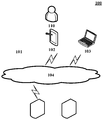
- Fig. 1 illustrates an exemplary system architecture 100 of an embodiment of a method for recognizing a text or an apparatus for recognizing a text in which the present disclosure may be implemented.
- the system architecture 100 may comprise terminal devices 101, 102, and 103, a network 104, and a server 105.
- the network 104 is used to provide a communication link medium between the terminal devices 101, 102, and 103 and the server 105.
- the network 104 may comprise various types of connections, such as wired, wireless communication links, or optic fibers.
- a user may use the terminal devices 101, 102, and 103 to interact with the server 105 through the network 104 to receive or send messages, etc.
- Various communication client applications such as image acquisition applications, audio playback applications, stream media processing applications, multi-party interaction applications, artificial intelligence applications, or game applications, may be installed on the terminal devices 101, 102, and 103.
- the terminal devices 101, 102, and 103 may be hardware or software.
- the terminal devices 101, 102, and 103 may be various electronic devices supporting document processing applications, comprising but not limited to smart terminals, tablet computers, laptop portable computers, desktop computers, etc.
- the terminal devices 101, 102, and 103 are software, they may be installed in the electronic devices listed above.
- the terminal devices 101, 102, and 103 may be implemented as a plurality of software or software modules (for example, for providing distributed services), or as a single software or software module, which is not limited herein.
- the server 105 may be a server that provides various services, such as a backend server that provides support for the terminal devices 101, 102, and 103.
- the backend server may process such as analyze a received request and other data, and feed back a processing result to the terminal devices.
- the server may be hardware or software.
- the server When the server is hardware, it may be implemented as a distributed server cluster composed of a plurality of servers, or as a single server.
- the server When the server is software, it may be implemented as a plurality of software or software modules (for example, for providing distributed services) or as a single software or software module, which is not limited herein.
- the method for recognizing a text provided by the embodiments of the present disclosure may be performed by the terminal devices 101, 102, and 103, and/or may be performed by the server 105.
- the apparatus for recognizing a text may be provided in the terminal devices 101, 102, and 103, and/or may be provided in the server 105.
- terminal devices, networks and servers in Fig. 1 is merely illustrative. Depending on the implementation needs, there may be any number of terminal devices, networks and servers.
- the method for recognizing a text comprises the following steps:
- Step 201 acquiring images of a text area of an input image , the acquired images including a text centerline graph, a text direction offset graph, a text boundary offset graph, and a text character classification graph.
- an executing body of the method for recognizing a text may acquire the input image from a user's terminal, a local database or a remote database. Then, methods for determining a text centerline, a text direction offset, a text boundary offset, and a text character classification in the existing technology or technologies developed in the future may be used to determine the text centerline graph, the text direction offset graph, the text boundary offset graph, and the text character classification graph of the text area, respectively, which is not limited in the present disclosure.
- the text centerline is a single-channel segmentation graph after zooming the text area, and is used to predict whether each pixel belongs to text or non-text. For example, a method based on topology refinement, a method based on distance transformation, a method based on tracking, etc. may be used to determine the text centerline. It may be understood that a manual calibration method may also be used to determine the text centerline.
- the method based on topology refinement is used as an example, where a morphological corrosion operation may be used to continuously remove the boundary of an object until only its skeleton remains.
- the method based on distance transformation is used as another example, where the centerline of an object is determined by locating a set of points farthest from the boundary of the object. Euclidean distance is usually used, which may be understood as the centers of a series of largest inscribed spheres constituting the centerline of the object, and representative ones are distance transformation based on boundary and distance transformation based on source point.
- two-channel detection may be used to detect a plurality of positions of the center point of the text in the image, so as to determine and indicate a coordinate offset of a point on the center line of the text relative to a next point in a text reading direction.
- four-channel detection may be used to detect a plurality of positions of the center point of the text in the image, positions of points on the upper and lower borders of the text, so as to determine and indicate a coordinate offset of the points on the upper and lower borders of the text relative to the points on the center line.
- (C+1) channel detection may be used, where C is the number of text types to be recognized, 1 is the number of background types, and a feature graph of each channel represents a probability that the point belongs to a certain text category.
- the executing body may extract the coordinates of the feature points of the character center from the text centerline graph using a method for extracting coordinates of feature points in the existing technology or technologies developed in the future, which is not limited in the present disclosure.
- Step 203 sorting the extracted coordinates of the feature points of the character center based on the text direction offset graph to obtain a coordinate sequence of the feature points of the character center.
- the executing body may sort the coordinates of the feature points of the character center, based on a preset reading direction, a selected reading direction or a predicted reading direction of the text direction offset graph, thereby obtained the sorted coordinates of the feature points of the character center, that is, obtaining the coordinate sequence of the feature points of the character center.
- the sorting the extracted coordinates of the feature points of the character center based on the text direction offset graph to obtain a coordinate sequence of the feature points of the character center may comprise: calculating a text reading direction based on the text direction offset graph; and sorting the extracted coordinates of the feature points of the character center based on the text reading direction, to obtain the coordinate sequence of the feature points of the character center.
- the text direction offset graph shows a coordinate offset of a point on the center line relative to a next point in the text reading direction (the coordinate offset may be obtained by subtracting coordinates of the next point from coordinates of a current point), based on the text direction offset in the text direction offset graph (that is, the above coordinate offset), the coordinate offset of each point on the center line may be averaged to calculate to obtain an average text reading direction. Then, based on the text reading direction, the coordinates of the feature points of the character center are sorted to obtain the sorted coordinates of the feature points of the character center, that is, the coordinate sequence of the feature points of the character center.
- the method for determining the coordinate sequence may calculate the reading direction of the text area facing in any direction, which improves the adaptability to the text area of different reading directions in the input image.
- Step 204 determining a polygonal bounding box of the text area based on the coordinate sequence of the feature points of the character center and the text boundary offset graph.
- the executing body may obtain positions of a pair of points on the upper and lower borders based on the coordinate sequence of the feature points of the character center from the text boundary offset graph, and then connect positions of all the points on the upper and lower borders to obtain an arbitrary shape polygonal bounding box of the text area.
- Step 205 determining a classification result of the feature points of the character center, based on the coordinate sequence of the feature points of the character center and the text character classification graph.
- the executing body may perform point collection in the text character classification graph based on the coordinate sequence of the feature points of the character center, so as to determine a character classification category to which the feature points of the character center belongs, that is, obtain the classification result of the feature points of the character center.
- Alternative step 206 decoding the polygonal bounding box and the classification result of the feature points of the character center to obtain a recognition result of the text area.
- the executing body may decode a recognition result of each character in the text area, based on the polygonal bounding box and the classification result of the feature points of the character center.
- decoding decoding methods in the existing technology or technologies developed in the future may be used to obtain the recognition result of each character, which is not limited in the present disclosure. Through this decoding step, an efficient and accurate recognition result of text in any direction in the input image may be obtained.
- connectionist temporal classification (CTC) decoding may be used.
- CTC may generalize connection characteristics between characters, and search for a path having the greatest probability of a given input, and it is more likely to find a path that maps to a correct result.
- prefix bundle search considers a "many-to-one" situation, which further increases the possibility of decoding the correct result.
- the coordinates of the feature points of the character center are extracted using the text centerline graph, then based on the coordinates of the feature points of the character center and the text direction offset graph, the coordinate sequence of the feature points of the character center is obtained, and then based on the coordinate sequence, the polygonal bounding box of the text area and the classification result of the feature points of the character center are determined from the text boundary offset graph and the text character classification graph, thereby obtaining a recognition result of the text. Since the coordinates of the feature points of the character center and the text direction offset are used for recognition, text in any direction in the input image may be recognized, which improves the efficiency and accuracy of text recognition.
- the acquiring images of a text area of an input image comprises: acquiring a convolution feature graph of the input image using a backbone convolutional network; and extracting the text centerline graph, the text direction offset graph, the text boundary offset graph, and the text character classification graph from the convolution feature graph respectively using a multi-branch convolutional network.
- a backbone network for extracting convolutional features may be used to extract features uniformly.
- a parallel multi-branch convolutional network may be used to output the text centerline graph, the text direction offset graph, the text boundary offset graph, and the text character classification graph.
- the backbone network may use a network for extracting convolutional features in the existing technology or technologies developed in the future, which is not limited in the present disclosure.
- a lightweight backbone network may be used to extract convolution features, such as a new-type convolutional network efficientnet, a lightweight convolutional neural network mobilenet or shufflenet, etc.
- a multi-task learning module based on a full convolutional network may be used to acquire the text centerline graph, the text direction offset graph, the text boundary offset graph, and the text character classification graph of the text area in the input image.
- the multi-branch convolutional network may use methods in the existing technology or technologies developed in the future that may extract the text centerline graph, the text direction offset graph, the text boundary offset graph, and the text character classification graph from the convolution feature graph respectively, which is not limited in the present disclosure.
- the backbone network and the multi-branch convolutional network by cooperation of the backbone network and the multi-branch convolutional network, the acquiring images of a text area of an input image, the acquired images including a text centerline graph, a text direction offset graph, a text boundary offset graph, and a text character classification graph, is realized. Since the multi-branch convolutional network shares the backbone network, the multi-branch outputs in parallel, which may simplify the calculation process of the network and improve the calculation efficiency of the network.
- the multi-branch convolutional network may comprise at least one of: supervising and learning a first branch convolutional network based on a Dice coefficient loss function, wherein the convolution feature graph and the text centerline graph are an input to the first branch convolutional network and an output from the first branch convolutional network, respectively; supervising and learning a second branch convolutional network based on a smooth L1 loss function, wherein the convolution feature graph and the text boundary offset graph are an input to the second branch convolutional network and an output from the second branch convolutional network, respectively; supervising and learning a third branch convolutional network based on the smooth L1 loss function, wherein the convolution feature graph and the text direction offset graph are an input to the third branch convolutional network and an output from the third branch convolutional network, respectively; and supervising and learning a fourth branch convolutional network based on a point collection-connectionist temporal classification loss function, wherein the convolution feature graph and the text character classification graph are
- the first branch convolutional network is used to output the text centerline graph based on the input convolution feature graph.
- the text centerline graph is a single-channel segmentation graph after zooming the text area, and may predict whether each pixel belongs to text or non-text.
- the first branch convolutional network may be based on a truth value (which may be obtained based on a zoomed and labeled box) labeled in training sample of the first branch convolutional network and a prediction value obtained by inputting the training sample of the first branch convolutional network into the first branch convolutional network, to determine the Dice coefficient loss function (Dice-loss) of the first branch convolutional network, and the Dice coefficient loss function is used to supervise the first branch convolutional network to learn the training sample.
- a truth value which may be obtained based on a zoomed and labeled box labeled in training sample of the first branch convolutional network and a prediction value obtained by inputting the training sample of the first branch convolutional network into the first branch convolutional network, to determine the Dice coefficient loss function (Dice-loss) of the first branch convolutional network, and the Dice coefficient loss function is used to supervise the first branch convolutional network to learn the training sample.
- Dice coefficient loss function Dice-loss
- the second branch convolutional network is used to output the text boundary offset graph based on the input convolution feature graph.
- the text boundary offset graph has four channels, indicating a coordinate offset of the points on the upper and lower borders of the text relative to the points on the center line.
- the second branch convolutional network may be based on a truth value labeled in training sample of the second branch convolutional network and a prediction value obtained by inputting the training sample of the second branch convolutional network into the second branch convolutional network, to determine the smooth L1 loss function of the second branch convolutional network, and the smooth L1 loss function of the second branch convolutional network is used to supervise the second branch convolutional network to learn the training sample.
- the third branch convolutional network is used to output the text direction offset graph based on the input convolution feature graph.
- the text direction offset graph has two channels, indicating a coordinate offset of a point on the center line relative to a next point in the text reading direction.
- the third branch convolutional network may be based on a truth value labeled in training sample of the third branch convolutional network and a prediction value obtained by inputting the training sample of the third branch convolutional network into the third branch convolutional network, to determine the smooth L1 loss function of the third branch convolutional network, and the smooth L1 loss function of the third branch convolutional network is used to supervise the third branch convolutional network to learn the training sample.
- the fourth branch convolutional network is used to output the text character classification graph based on the input convolution feature graph.
- the text character classification graph has (C+1) channels.
- the fourth branch convolutional network gathers points based on a true value of the text centerline, C is the number of text types to be recognized, and 1 is the number of background types. These feature graphs represent a probability that the point belongs to a certain text category.
- the fourth branch convolutional network may be based on a truth value labeled in training sample of the fourth branch convolutional network and a prediction value obtained by inputting the training sample of the fourth branch convolutional network into the fourth branch convolutional network, to determine the point collection-connectionist temporal classification loss function, and the point collection-connectionist temporal classification loss function is used to supervise the fourth branch convolutional network to learn the training sample.
- the point collection operation uses coordinates of a point sequence and the feature graph as input, and by sampling the coordinate position of each point in the point sequence on the feature graph, a sequence feature of the point sequence at the corresponding position of the feature graph is obtained.
- This operation is simple and efficient, supported by all mainstream deep learning frameworks, and may replace computationally intensive operations such as NMS and region of interest extraction in traditional end-to-end methods.
- the PG-CTC loss function may acquire a classification result of feature points sequence of each text area through the point collection operation, compare the result with the labeled sequence, and then supervise and train the point sequence through the standard CTC loss.
- This loss function may realize pixel-level recognition without any character-level labeling, which reduces a labeling cost and model complexity.
- the multi-branch convolutional network in this implementation uses multi-branch to output in parallel, which may simplify the calculation process of the network and improve the calculation efficiency of the network.
- the third branch convolutional network supervised for learning using the smooth L1 loss function may output the text direction offset graph, so that the third branch convolutional network uses direction branch prediction in subsequent processing to process various text reading directions, so as to deal with text recognition in any direction.
- point collection is used in the fourth branch convolutional network to extract the sequence feature without complicated operations, which may simplify the calculation process of the multi-branch convolutional network and improve the calculation efficiency of the multi-branch convolutional network.
- the point collection-connectionist temporal classification loss function is used to supervise the learning of the fourth branch convolutional network, which eliminates the need for character-level labeling, improves the efficiency of training the fourth branch convolutional network, and improves the efficiency and accuracy of the text character classification graph.
- the method for recognizing a text may comprise:
- the efficiency of extracting the feature points may be improved.
- the pre-trained sorting module based on the text direction offset graph, to determine the text reading direction, and then sort the coordinates of the feature points of the character center based on the text reading direction to obtain the coordinate sequence of the feature points of the character center, the efficiency of sorting the extracted coordinates of the feature points of the character center and obtaining the coordinate sequence may be improved.
- the polygonal bounding box of the text area corresponding to the coordinate sequence of the feature points of the character center is determined from the text boundary offset graph, thereby improving the picking efficiency of the bounding box.
- the classification result of the feature points of the character center is determined from the text character classification graph, so as to quickly and accurately classify a character.
- extraction module sorting module, bounding box picking module and character classification module may be respectively implemented using a model based on convolutional neural networks (CNN), and detailed description thereof will be omitted.
- CNN convolutional neural networks
- FIG. 3 shows an example application scenario of the method for recognizing a text according to the present disclosure.
- the method 300 for recognizing a text operates in an electronic device 310, and may comprise:
- the above application scenario of the method for recognizing a text shown in Fig. 3 is only an exemplary description of the method for recognizing a text, and does not represent a limitation on the method.
- the steps shown in Fig. 3 may be further implemented with more detailed implementation methods. It is also possible to further add a step of further processing the determined classification result of the feature points of the character center on the basis of the above Fig. 3 .
- Fig. 4a shows a schematic flowchart of an embodiment of the method for recognizing a text according to an embodiment of the present disclosure.
- the method 400 in the schematic flowchart of another embodiment of the method for recognizing a text in an embodiment of the present disclosure may comprise:
- Step 401 acquiring images of a text area of an input image , the acquired images including a text centerline graph, a text direction offset graph, a text boundary offset graph, and a text character classification graph.
- an executing body of the method for recognizing a text may acquire the input image from a user's terminal, a local database or a remote database. Then, methods for determining a text centerline, a text direction offset, a text boundary offset, and a text character classification in the existing technology or technologies developed in the future may be used to determine the text centerline graph, the text direction offset graph, the text boundary offset graph, and the text character classification graph of the text area, respectively, which is not limited in the present disclosure.
- the executing body may extract the coordinates of the feature points of the character center from the text centerline graph using a method for extracting coordinates of feature points in the existing technology or technologies developed in the future, which is not limited in the present disclosure.
- Step 403 sorting the extracted coordinates of the feature points of the character center based on the text direction offset graph to obtain a coordinate sequence of the feature points of the character center.
- the executing body may sort the coordinates of the feature points of the character center, based on a preset reading direction, a selected reading direction or a predicted reading direction of the text direction offset graph, thereby obtained the sorted coordinates of the feature points of the character center, that is, obtaining the coordinate sequence of the feature points of the character center.
- Step 404 determining a polygonal bounding box of the text area based on the coordinate sequence of the feature points of the character center and the text boundary offset graph.
- the executing body may obtain positions of a pair of points on the upper and lower borders based on the coordinate sequence of the feature points of the character center from the text boundary offset graph, and then connect positions of all the points on the upper and lower borders to obtain an arbitrary shape polygonal bounding box of the text area.
- Step 405 determining a classification result of the feature points of the character center, based on the coordinate sequence of the feature points of the character center and the text character classification graph.
- the executing body may perform point collection in the text character classification graph based on the coordinate sequence of the feature points of the character center, so as to determine a character classification category to which the feature points of the character center belongs, that is, obtain the classification result of the feature points of the character center.
- Step 406 decoding the polygonal bounding box and the classification result of the feature points of the character center to obtain a recognition result of the text area.
- the executing body may decode a recognition result of each character in the text area, based on on the polygonal bounding box and the classification result of the feature points of the character center.
- decoding decoding methods in the existing technology or technologies developed in the future may be used to obtain the recognition result of each character, which is not limited in the present disclosure.
- steps 401 to 406 correspond to steps 201 to 206 in the embodiment shown in Fig. 2 respectively. Therefore, the operations and features described above for steps 201 to 206 are also applicable to steps 401 to 406, and detailed description thereof will be omitted.
- Step 407 reasoning semantic information in the recognition result of the text area.
- the executing body may reason based on the recognition result of the text area and a semantic relationship between characters and words, so as to obtain the semantic information in the recognition result of the text area.
- the reasoning semantic information in the recognition result of the text area comprises: performing point collection from the text character classification graph based on the coordinate sequence of the feature points of the character center, to obtain a semantic feature points of the feature points of the character center; and constructing a semantic graph using the semantic feature points as a semantic node, and using a semantic adjacency relationship between the semantic feature points determined based on a distance between the semantic feature points as an edge connection.
- the executing body may gather points corresponding to the coordinate sequence of the feature points of the character center from the text character classification graph that reflects the semantics of the text area, thereby obtaining the semantic feature points of the feature points of the character center. Then, the semantic feature points may be used as the semantic node, and the semantic adjacency relationship may be used as the edge connection to construct the semantic graph representing the semantic information.
- the method for reasoning semantic information in the recognition result of the text area uses the semantic graph as a carrier of the semantic information, which may reveal semantic laws of the text area intuitively and effectively, thereby improving the validity of a reasoning result.
- Step 408 adjusting the recognition result based on the semantic information to obtain the adjusted recognition result.
- the executing body may compare the semantic information with semantic information in a preset semantic graph determined based on the semantic laws, and adjust the recognition result based on a similarity of a comparison result to obtain the adjusted more accurate recognition result.
- the method for recognizing a text provided in the present embodiment may adjust the recognition result in Fig. 2 based on the semantic information, so that more accurate adjusted recognition result may be obtained.
- the adjusting the recognition result based on the semantic information to obtain the adjusted recognition result comprises: performing point collection from the convolution feature graph based on the coordinate sequence of the feature points of the character center, to obtain a visual feature points of the feature points of the character center; constructing a visual graph using the visual feature points as a visual node, and using a visual adjacency relationship between the visual feature points determined based on a distance between the visual feature points as an edge connection; reasoning the semantic graph using a semantic graph network to obtain a semantic graph feature; reasoning the visual graph using a visual graph network to obtain a visual graph feature; fusing the semantic graph feature and the visual graph feature to obtain a fused feature; and classifying the fused feature to obtain the adjusted recognition result.
- point collection may be performed therefrom based on the coordinate sequence of the feature points of the character center, to obtain the visual feature points corresponding to the coordinate sequence of the feature points of the character centerline. Then, the visual feature points is used as the visual node and the visual adjacency relationship is used as the edge connection to construct the visual graph.
- the semantic graph network and the visual graph network may be used for reasoning respectively to obtain the semantic graph feature and the visual graph feature, and these two features are fused, so as to classify the fused feature to obtain the adjusted recognition result.
- Graph Network is a collection of functions organized in a graph structure to perform relational reasoning in a topological space. After using the semantic graph network and the visual graph network for reasoning to obtain the semantic graph feature and the visual graph feature, the semantic graph feature and the visual graph feature may be fused.
- the semantic graph feature and the visual graph feature may be combined serially or in parallel to obtain the fused feature; each dimension of the fused feature is selected to select data that is optimal for classification, and the selected data is formed into a new feature; or a mathematical method is used to perform feature transformation on the semantic graph feature and the visual graph feature to obtain the fused feature.
- the fused feature is obtained, and then classification is performed based on the fused feature to obtain the adjusted recognition result.
- the semantic graph network and the visual graph network are used for reasoning, the efficiency and accuracy of the reasoning result may be improved.
- the fused feature may be classified to obtain the more accurate recognition result.
- the semantic graph network and the visual graph network respectively use a connectionist temporal classification loss function for supervising and learning of training samples in a training phase.
- connectionist temporal classification (CTC) loss function (essentially a loss function based on the maximum likelihood) is used to train the semantic graph network and the visual graph network.
- CTC connectionist temporal classification
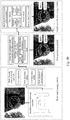
- Fig. 4b shows an example application scenario of the method for recognizing a text according to the embodiment of the present disclosure in Fig. 4a .
- the method for recognizing a text is implemented by a network model comprising a multi-task learning module, a post-processing module and a graph network fine-tuning module.
- the multi-task learning module comprises: a backbone convolutional network and a multi-branch convolutional network. Based on the three modules, the method for recognizing a text comprises:
- the graph network fine-tuning module performs point collection from the text character classification graph input into the feature graph based on the coordinate sequence (point coordinates in the figure) of the feature points of the character center, to obtain the semantic feature points of the feature points of the character center; then constructs the semantic graph using the semantic feature points as the semantic node, and using the semantic adjacency relationship between the semantic feature points determined based on the distance between the semantic feature points as the edge connection; performs point collection from the convolution feature graph based on the coordinate sequence of the feature points of the character center, to obtain the visual feature points of the feature points of the character center; and constructs the visual graph using the visual feature points as the visual node, and using the visual adjacency relationship between the visual feature points determined based on the distance between the visual feature points as the edge connection.
- the graph network fine-tuning module reasons the semantic graph (that is, performing graph convolution) using the semantic graph network to obtain the semantic graph feature; reasons the visual graph (that is, performing graph convolution) using the visual graph network to obtain the visual graph feature; then performs feature fusion on the semantic graph feature and the visual graph feature to obtain the fused feature; and finally classifies the fused feature and outputs a classification result, that is, obtains the adjusted recognition result (such as BIKES and DIRECT in the recognition result box presented by the graph network fine-tuning module in the figure).
- the adjusted recognition result such as BIKES and DIRECT in the recognition result box presented by the graph network fine-tuning module in the figure.
- an apparatus 500 for recognizing a text of the present embodiment may comprise: an image acquisition module 501, configured to acquire images of a text area of an input image , the acquired images including a text centerline graph, a text direction offset graph, a text boundary offset graph, and a text character classification graph; a coordinate acquisition module 502, configured to extract coordinates of feature points of a character center from the text centerline graph; a coordinate sorting module 503, configured to sort the coordinates of the feature points of the character center based on the text direction offset graph to obtain a coordinate sequence of the feature points of the character center; a boundary determination module 504, configured to determine a polygonal bounding box of the text area based on the coordinate sequence of the feature points of the character center and the text boundary offset graph; and a classification determination module 505, configured to determine a classification result of the feature points of the character center, based on the coordinate sequence of the feature points of the character center and the text character classification graph.
- an image acquisition module 501 configured to acquire images of a text area of an input image ,
- the coordinate sorting module 503 comprises (not shown in the figure): a direction calculation module, configured to calculate a text reading direction based on the text direction offset graph; and a sequence obtaining module, configured to sort the coordinates of the feature points of the character center based on the text reading direction, to obtain the coordinate sequence of the feature points of the character center.
- the apparatus further comprises: a text decoding module 506, configured to decode the polygonal bounding box and the classification result of the feature points of the character center to obtain a recognition result of the text area.
- the image acquisition module 501 comprises (not shown in the figure): a backbone convolutional module, configured to acquire a convolution feature graph of the input image using a backbone convolutional network; and a feature extraction module, configured to extract the text centerline graph, the text direction offset graph, the text boundary offset graph, and the text character classification graph from the convolution feature graph respectively using a multi-branch convolutional network.
- the multi-branch convolutional network in the feature extraction module comprises at least one of: supervising and learning a first branch convolutional network based on a Dice coefficient loss function, wherein the convolution feature graph and the text centerline graph are an input to the first branch convolutional network and an output from the first branch convolutional network, respectively; supervising and learning a second branch convolutional network based on a smooth L1 loss function, wherein the convolution feature graph and the text boundary offset graph are an input to the second branch convolutional network and an output from the second branch convolutional network, respectively; supervising and learning a third branch convolutional network based on the smooth L1 loss function, wherein the convolution feature graph and the text direction offset graph are an input to the third branch convolutional network and an output from the third branch convolutional network, respectively; and supervising and learning a fourth branch convolutional network based on a point collection-connectionist temporal classification loss function, wherein the convolution feature graph and the text
- the apparatus further comprises: the coordinate acquisition module 502 is further configured to: extract the coordinates of the feature points of the character center from the text centerline graph using a pre-trained extraction module; and/or the coordinate sorting module 503 is further configured to: sort the coordinates of the feature points of the character center based on the text direction offset graph to obtain the coordinate sequence of the feature points of the character center, using a pre-trained sorting module; and/or the boundary determination module 504 is further configured to: determine the polygonal bounding box of the text area based on the coordinate sequence of the feature points of the character center from the text boundary offset graph, using a bounding box picking module; and/or the classification determination module 505 is further configured to: determine the classification result of the feature points of the character center, based on the coordinate sequence of the feature points of the character center from the text character classification graph, using a character classification module.
- the apparatus further comprises (not shown in the figure): a semantic reasoning module, configured to reason semantic information in the recognition result of the text area; and a result adjusting module, configured to adjust the recognition result based on the semantic information to obtain the adjusted recognition result.
- the semantic reasoning module comprises: a semantic point collection module, configured to perform point collection from the text character classification graph based on the coordinate sequence of the feature points of the character center, to obtain a semantic feature points of the feature points of the character center; and a semantic graph construction module, configured to construct a semantic graph using the semantic feature points as a semantic node, and using a semantic adjacency relationship between the semantic feature points determined based on a distance between the semantic feature points as an edge connection.
- the result adjusting module comprises: a visual point collection module, configured to perform point collection from the convolution feature graph based on the coordinate sequence of the feature points of the character center, to obtain a visual feature points of the feature points of the character center; a visual graph construction module, configured to construct a visual graph using the visual feature points as a visual node, and using a visual adjacency relationship between the visual feature points determined based on a distance between the visual feature points as an edge connection; a semantic graph reasoning module, configured to reason the semantic graph using a semantic graph network to obtain a semantic graph feature; a visual graph reasoning module, configured to reason the visual graph using a visual graph network to obtain a visual graph feature; a feature fusion module, configured to fuse the semantic graph feature and the visual graph feature to obtain a fused feature; and a feature classification module, configured to classify the fused feature to obtain the adjusted recognition result.
- a visual point collection module configured to perform point collection from the convolution feature graph based on the coordinate sequence of the feature points of the character center, to obtain
- the semantic graph network in the semantic graph reasoning module and the visual graph network in the visual graph reasoning module respectively use a connectionist temporal classification loss function for supervising and learning of training samples in a training phase.
- modules recorded in the apparatus 500 correspond to the steps recorded in the method described with reference to Figs. 2 to 4b . Therefore, the operations and features described above for the method are also applicable to the apparatus 500 and the modules contained therein, and detailed description thereof will be omitted.
- Fig. 6 is a block diagram of an electronic device of a method for recognizing a text according to an embodiment of the present disclosure.
- the electronic device is intended to represent various forms of digital computers, such as laptop computers, desktop computers, workbenches, personal digital assistants, servers, blade servers, mainframe computers, and other suitable computers.
- the electronic device may also represent various forms of mobile apparatuses, such as personal digital processing, cellular phones, smart phones, wearable devices, and other similar computing apparatuses.
- the components shown herein, their connections and relationships, and their functions are merely examples, and are not intended to limit the implementation of the present disclosure described and/or claimed herein.
- the electronic device comprises: one or more processors 601, a memory 602, and interfaces for connecting various components, comprising high-speed interfaces and low-speed interfaces.
- the various components are connected to each other using different buses, and may be installed on a common motherboard or in other methods as needed.
- the processor may process instructions executed within the electronic device, comprising instructions stored in or on the memory to display graphic information of GUI on an external input/output apparatus (such as a display device coupled to the interface).
- a plurality of processors and/or a plurality of buses may be used together with a plurality of memories if desired.
- a plurality of electronic devices may be connected, and the devices provide some necessary operations (for example, as a server array, a set of blade servers, or a multi-processor system).
- the devices provide some necessary operations (for example, as a server array, a set of blade servers, or a multi-processor system).
- one processor 601 is used as an example.
- the memory 602 is a non-transitory computer readable storage medium provided by the present disclosure.
- the memory stores instructions executable by at least one processor, so that the at least one processor performs the method for recognizing a text provided by the present disclosure.
- the non-transitory computer readable storage medium of the present disclosure stores computer instructions for causing a computer to perform the method for recognizing a text provided by the present disclosure.
- the memory 602 may be used to store non-transitory software programs, non-transitory computer executable programs and modules, such as program instructions/modules corresponding to the method for recognizing a text in the embodiments of the present disclosure (for example, the image acquisition module 501, the coordinate acquisition module 502, the coordinate sorting module 503, boundary determination module 504, and the classification determination module 505 shown in Fig. 5 ).
- the processor 601 executes the non-transitory software programs, instructions, and modules stored in the memory 602 to execute various functional applications and data processing of the server, that is, to implement the method for recognizing a text in the foregoing method embodiment.
- the memory 602 may comprise a storage program area and a storage data area, where the storage program area may store an operating system and at least one function required application program; and the storage data area may store data created by the use of the electronic device according to the method for recognizing a text, etc.
- the memory 602 may comprise a high-speed random access memory, and may also comprise a non-transitory memory, such as at least one magnetic disk storage device, a flash memory device, or other non-transitory solid-state storage devices.
- the memory 602 may optionally comprise memories remotely provided with respect to the processor 601, and these remote memories may be connected to the electronic device of the method for recognizing a text through a network. Examples of the above network comprise but are not limited to the Internet, intranet, local area network, mobile communication network, and combinations thereof.
- the electronic device of the method for recognizing a text may further comprise: an input apparatus 603 and an output apparatus 604.
- the processor 601, the memory 602, the input apparatus 603, and the output apparatus 604 may be connected through a bus or in other methods. In Fig. 6 , connection through a bus is used as an example.
- the input apparatus 603 may receive input digital or character information, and generate key signal inputs related to user settings and function control of the electronic device of the method for recognizing a text, such as touch screen, keypad, mouse, trackpad, touchpad, pointing stick, one or more mouse buttons, trackball, joystick and other input apparatuses.
- the output apparatus 604 may comprise a display device, an auxiliary lighting apparatus (for example, LED), a tactile feedback apparatus (for example, a vibration motor), and the like.
- the display device may comprise, but is not limited to, a liquid crystal display (LCD), a light emitting diode (LED) display, and a plasma display. In some embodiments, the display device may be a touch screen.
- Various embodiments of the systems and technologies described herein may be implemented in digital electronic circuit systems, integrated circuit systems, dedicated ASICs (application specific integrated circuits), computer hardware, firmware, software, and/or combinations thereof. These various embodiments may comprise: being implemented in one or more computer programs that may be executed and/or interpreted on a programmable system that comprises at least one programmable processor.
- the programmable processor may be a dedicated or general-purpose programmable processor, and may receive data and instructions from a storage system, at least one input apparatus, and at least one output apparatus, and transmit the data and instructions to the storage system, the at least one input apparatus, and the at least one output apparatus.
- the systems and technologies described herein may be implemented on a computer, the computer has: a display apparatus for displaying information to the user (for example, CRT (cathode ray tube) or LCD (liquid crystal display) monitor); and a keyboard and a pointing apparatus (for example, mouse or trackball), and the user may use the keyboard and the pointing apparatus to provide input to the computer.
- a display apparatus for displaying information to the user
- LCD liquid crystal display
- keyboard and a pointing apparatus for example, mouse or trackball
- Other types of apparatuses may also be used to provide interaction with the user; for example, feedback provided to the user may be any form of sensory feedback (for example, visual feedback, auditory feedback, or tactile feedback); and any form (comprising acoustic input, voice input, or tactile input) may be used to receive input from the user.
- the systems and technologies described herein may be implemented in a computing system that comprises backend components (e.g., as a data server), or a computing system that comprises middleware components (e.g., application server), or a computing system that comprises frontend components (for example, a user computer having a graphical user interface or a web browser, through which the user may interact with the implementations of the systems and the technologies described herein), or a computing system that comprises any combination of such backend components, middleware components, or frontend components.
- the components of the system may be interconnected by any form or medium of digital data communication (e.g., communication network). Examples of the communication network comprise: local area networks (LAN), wide area networks (WAN), and the Internet.
- the computer system may comprise a client and a server.
- the client and the server are generally far from each other and usually interact through the communication network.
- the relationship between the client and the server is generated by computer programs that run on the corresponding computer and have a client-server relationship with each other.
- the server may be a cloud server, also known as a cloud computing server or a cloud host.
- the server is a host product in the cloud computing service system to solve the defects of management difficulty in traditional physical host and virtual private server (VPS) services Large, and weak business scalability.
- VPN virtual private server
- the coordinates of the feature points of the character center and the text direction offset may be used for recognition.
- the solution may recognize text in any direction in the input image, and improve the efficiency and accuracy of text recognition.
Landscapes
- Engineering & Computer Science (AREA)
- Theoretical Computer Science (AREA)
- Physics & Mathematics (AREA)
- General Physics & Mathematics (AREA)
- Multimedia (AREA)
- Computer Vision & Pattern Recognition (AREA)
- Evolutionary Computation (AREA)
- Artificial Intelligence (AREA)
- Computational Linguistics (AREA)
- General Health & Medical Sciences (AREA)
- Health & Medical Sciences (AREA)
- Data Mining & Analysis (AREA)
- General Engineering & Computer Science (AREA)
- Software Systems (AREA)
- Computing Systems (AREA)
- Medical Informatics (AREA)
- Databases & Information Systems (AREA)
- Life Sciences & Earth Sciences (AREA)
- Bioinformatics & Cheminformatics (AREA)
- Bioinformatics & Computational Biology (AREA)
- Evolutionary Biology (AREA)
- Audiology, Speech & Language Pathology (AREA)
- Mathematical Physics (AREA)
- Biomedical Technology (AREA)
- Biophysics (AREA)
- Molecular Biology (AREA)
- Character Discrimination (AREA)
- Character Input (AREA)
Applications Claiming Priority (1)
| Application Number | Priority Date | Filing Date | Title |
|---|---|---|---|
| CN202010721524.5A CN111860506B (zh) | 2020-07-24 | 2020-07-24 | 识别文字的方法和装置 |
Publications (2)
| Publication Number | Publication Date |
|---|---|
| EP3832541A2 true EP3832541A2 (de) | 2021-06-09 |
| EP3832541A3 EP3832541A3 (de) | 2021-10-13 |
Family
ID=72950869
Family Applications (1)
| Application Number | Title | Priority Date | Filing Date |
|---|---|---|---|
| EP21164053.7A Withdrawn EP3832541A3 (de) | 2020-07-24 | 2021-03-22 | Verfahren und vorrichtung zur texterkennung |
Country Status (5)
| Country | Link |
|---|---|
| US (1) | US11836996B2 (de) |
| EP (1) | EP3832541A3 (de) |
| JP (1) | JP7317062B2 (de) |
| KR (1) | KR20220013298A (de) |
| CN (1) | CN111860506B (de) |
Cited By (4)
| Publication number | Priority date | Publication date | Assignee | Title |
|---|---|---|---|---|
| CN113837167A (zh) * | 2021-08-31 | 2021-12-24 | 北京捷通华声科技股份有限公司 | 一种文本图像识别方法、装置、设备及存储介质 |
| CN113869314A (zh) * | 2021-10-13 | 2021-12-31 | 广东金赋科技股份有限公司 | 一种文本方向聚类矫正的图像信息提取方法及系统 |
| CN114926828A (zh) * | 2022-05-17 | 2022-08-19 | 北京百度网讯科技有限公司 | 场景文本识别方法、装置、电子设备及存储介质 |
| CN115546810A (zh) * | 2022-11-29 | 2022-12-30 | 支付宝(杭州)信息技术有限公司 | 图像元素类别的识别方法及装置 |
Families Citing this family (42)
| Publication number | Priority date | Publication date | Assignee | Title |
|---|---|---|---|---|
| CN113496226B (zh) * | 2020-03-18 | 2024-10-22 | 华为技术有限公司 | 基于字符识别的字符选择方法、装置和终端设备 |
| CN112926372B (zh) * | 2020-08-22 | 2023-03-10 | 清华大学 | 基于序列变形的场景文字检测方法及系统 |
| CN114529891B (zh) * | 2020-11-05 | 2025-09-19 | 中移(苏州)软件技术有限公司 | 文本识别方法、文本识别网络的训练方法及装置 |
| CN112464798A (zh) * | 2020-11-24 | 2021-03-09 | 创新奇智(合肥)科技有限公司 | 文本识别方法及装置、电子设备、存储介质 |
| CN112560862B (zh) * | 2020-12-17 | 2024-02-13 | 北京百度网讯科技有限公司 | 文本识别方法、装置及电子设备 |
| US12014561B2 (en) * | 2021-04-01 | 2024-06-18 | U.S. Bank National Association | Image reading systems, methods and storage medium for performing geometric extraction |
| US12597284B2 (en) | 2021-04-01 | 2026-04-07 | U.S. Bank National Association | Image reading systems, methods and storage medium for performing entity extraction, grouping and validation |
| CN113761195B (zh) * | 2021-05-24 | 2026-02-13 | 腾讯科技(深圳)有限公司 | 文本分类方法、装置、计算机设备及计算机可读存储介质 |
| CN113362380B (zh) * | 2021-06-09 | 2024-07-02 | 北京世纪好未来教育科技有限公司 | 一种图像特征点检测模型训练方法、装置及其电子设备 |
| US11532169B1 (en) * | 2021-06-15 | 2022-12-20 | Motive Technologies, Inc. | Distracted driving detection using a multi-task training process |
| CN113569871A (zh) * | 2021-08-03 | 2021-10-29 | 内蒙古工业大学 | 一种基于深度学习的图书馆自动盘书方法及系统 |
| CN113344014B (zh) * | 2021-08-03 | 2022-03-08 | 北京世纪好未来教育科技有限公司 | 文本识别方法和装置 |
| CN113780294B (zh) * | 2021-09-10 | 2023-11-14 | 泰康保险集团股份有限公司 | 文本字符分割的方法和装置 |
| CN113807351B (zh) * | 2021-09-18 | 2024-01-16 | 京东鲲鹏(江苏)科技有限公司 | 一种场景文字检测方法和装置 |
| CN113920497B (zh) * | 2021-12-07 | 2022-04-08 | 广东电网有限责任公司东莞供电局 | 一种铭牌识别模型的训练、铭牌的识别方法及相关装置 |
| CN114266040A (zh) * | 2021-12-14 | 2022-04-01 | 中国电子科技集团公司第二十八研究所 | 一种Linux主机入侵检测方法 |
| CN114283411B (zh) * | 2021-12-20 | 2022-11-15 | 北京百度网讯科技有限公司 | 文本识别方法、文本识别模型的训练方法及装置 |
| CN114399754B (zh) * | 2021-12-30 | 2025-05-06 | 国电南京自动化股份有限公司 | 一种基于sw-fssd的数字仪表字符检测方法 |
| CN114332870B (zh) * | 2021-12-31 | 2024-12-24 | 武汉大学 | 水位识别方法、装置、设备及可读存储介质 |
| CN114419646B (zh) * | 2022-01-17 | 2024-06-28 | 马上消费金融股份有限公司 | 图像分类方法、装置、电子设备及存储介质 |
| CN114419613A (zh) * | 2022-01-17 | 2022-04-29 | 北京百度网讯科技有限公司 | 图像样本生成方法、文本识别方法、装置、设备和介质 |
| CN114445807A (zh) * | 2022-01-19 | 2022-05-06 | 浙江网商银行股份有限公司 | 一种文本区域检测方法及装置 |
| CN114529927A (zh) * | 2022-01-27 | 2022-05-24 | 北京鼎事兴教育咨询有限公司 | 文字识别方法、装置及存储介质 |
| CN114724168A (zh) * | 2022-05-10 | 2022-07-08 | 北京百度网讯科技有限公司 | 深度学习模型的训练方法、文本识别方法、装置和设备 |
| CN114898375B (zh) * | 2022-05-20 | 2024-11-29 | 深信服科技股份有限公司 | 字符检测模型训练方法及组件,文本识别方法及组件 |
| CN115063809B (zh) * | 2022-06-13 | 2024-06-28 | 深圳市星桐科技有限公司 | 一种文本识别方法、装置、设备及存储介质 |
| KR20230171769A (ko) * | 2022-06-14 | 2023-12-21 | 서강대학교산학협력단 | 신경망을 이용한 간판 인식 시스템 및 간판 인식 방법 |
| CN115082931B (zh) * | 2022-06-16 | 2025-09-16 | 有米科技股份有限公司 | 一种文本图像区域检测模型的确定方法及装置 |
| CN115273054B (zh) * | 2022-06-17 | 2026-02-10 | 大拓(山东)物联网科技有限公司 | 文字检测方法、装置、计算机设备及存储介质 |
| CN115035534B (zh) * | 2022-07-08 | 2024-07-19 | 重庆大学 | 一种基于多特征融合的中文手写识别分类方法 |
| US12026458B2 (en) * | 2022-11-11 | 2024-07-02 | State Farm Mutual Automobile Insurance Company | Systems and methods for generating document templates from a mixed set of document types |
| CN116168395A (zh) * | 2022-12-20 | 2023-05-26 | 苏州镁伽科技有限公司 | 一种字符检测方法和装置、电子设备及存储介质 |
| CN116092100A (zh) * | 2023-01-17 | 2023-05-09 | 恒生电子股份有限公司 | 文本内容提取方法及装置 |
| CN116110054A (zh) * | 2023-02-08 | 2023-05-12 | 北京百度网讯科技有限公司 | 文档矫正模型的训练及图像矫正方法、装置、设备和介质 |
| CN116543172B (zh) * | 2023-04-04 | 2025-09-02 | 北京百度网讯科技有限公司 | 多边形中心线的提取方法、装置、引导点确定方法 |
| CN116958981B (zh) * | 2023-05-31 | 2024-04-30 | 广东南方网络信息科技有限公司 | 一种文字识别方法及装置 |
| CN116704512A (zh) * | 2023-06-20 | 2023-09-05 | 中国南方电网有限责任公司超高压输电公司 | 一种融合语义和视觉信息的仪表识别方法及系统 |
| CN116630633B (zh) * | 2023-07-26 | 2023-11-07 | 上海蜜度信息技术有限公司 | 语义分割自动标注方法、系统、存储介质及电子设备 |
| CN117079278B (zh) * | 2023-08-21 | 2025-12-05 | 深圳思谋信息科技有限公司 | 弧形标注生成方法、装置、计算机设备及存储介质 |
| CN117831573B (zh) * | 2024-03-06 | 2024-05-14 | 青岛理工大学 | 基于多模态的语言障碍人群言语录音分析方法及系统 |
| CN118366143A (zh) * | 2024-04-23 | 2024-07-19 | 华中科技大学 | 基于拓扑结构特征关联的高精度视频文字跟踪方法与装置 |
| CN119649385B (zh) * | 2024-11-27 | 2026-02-17 | 淮北师范大学 | 一种字符划分方法、装置、计算机设备及存储介质 |
Family Cites Families (13)
| Publication number | Priority date | Publication date | Assignee | Title |
|---|---|---|---|---|
| JP3400151B2 (ja) * | 1994-12-08 | 2003-04-28 | 株式会社東芝 | 文字列領域抽出装置および方法 |
| US7729538B2 (en) * | 2004-08-26 | 2010-06-01 | Microsoft Corporation | Spatial recognition and grouping of text and graphics |
| AU2007204644B2 (en) * | 2006-01-11 | 2012-05-10 | Gannon Technologies Group, Llc | Methods and apparatuses for extending dynamic handwriting recognition to recognize static handwritten and machine generated text |
| EP3511861B1 (de) * | 2018-01-12 | 2024-12-04 | Onfido Ltd | Datenextrationspipeline |
| CN108304835B (zh) * | 2018-01-30 | 2019-12-06 | 百度在线网络技术(北京)有限公司 | 文字检测方法和装置 |
| CN108549893B (zh) * | 2018-04-04 | 2020-03-31 | 华中科技大学 | 一种任意形状的场景文本端到端识别方法 |
| CN109117846B (zh) * | 2018-08-22 | 2021-11-16 | 北京旷视科技有限公司 | 一种图像处理方法、装置、电子设备和计算机可读介质 |
| CN109325494B (zh) * | 2018-08-27 | 2021-09-17 | 腾讯科技(深圳)有限公司 | 图片处理方法、任务数据处理方法和装置 |
| US11429934B2 (en) * | 2018-10-30 | 2022-08-30 | Laboratory Corporation Of America Holdings | Express tracking for patient flow management in a distributed environment |
| US10671878B1 (en) * | 2019-01-11 | 2020-06-02 | Capital One Services, Llc | Systems and methods for text localization and recognition in an image of a document |
| CN110659640B (zh) * | 2019-09-27 | 2021-11-30 | 深圳市商汤科技有限公司 | 文本序列的识别方法及装置、电子设备和存储介质 |
| US11562591B2 (en) * | 2019-12-23 | 2023-01-24 | Insurance Services Office, Inc. | Computer vision systems and methods for information extraction from text images using evidence grounding techniques |
| CN111160352B (zh) * | 2019-12-27 | 2023-04-07 | 创新奇智(北京)科技有限公司 | 一种基于图像分割的工件金属表面文字识别方法及系统 |
-
2020
- 2020-07-24 CN CN202010721524.5A patent/CN111860506B/zh active Active
-
2021
- 2021-02-24 KR KR1020210024997A patent/KR20220013298A/ko not_active Ceased
- 2021-03-14 JP JP2021040886A patent/JP7317062B2/ja active Active
- 2021-03-22 EP EP21164053.7A patent/EP3832541A3/de not_active Withdrawn
- 2021-03-23 US US17/209,987 patent/US11836996B2/en active Active
Cited By (7)
| Publication number | Priority date | Publication date | Assignee | Title |
|---|---|---|---|---|
| CN113837167A (zh) * | 2021-08-31 | 2021-12-24 | 北京捷通华声科技股份有限公司 | 一种文本图像识别方法、装置、设备及存储介质 |
| CN113869314A (zh) * | 2021-10-13 | 2021-12-31 | 广东金赋科技股份有限公司 | 一种文本方向聚类矫正的图像信息提取方法及系统 |
| CN113869314B (zh) * | 2021-10-13 | 2024-07-16 | 广东金赋科技股份有限公司 | 一种文本方向聚类矫正的图像信息提取方法及系统 |
| CN114926828A (zh) * | 2022-05-17 | 2022-08-19 | 北京百度网讯科技有限公司 | 场景文本识别方法、装置、电子设备及存储介质 |
| CN114926828B (zh) * | 2022-05-17 | 2023-02-24 | 北京百度网讯科技有限公司 | 场景文本识别方法、装置、电子设备及存储介质 |
| CN115546810A (zh) * | 2022-11-29 | 2022-12-30 | 支付宝(杭州)信息技术有限公司 | 图像元素类别的识别方法及装置 |
| CN115546810B (zh) * | 2022-11-29 | 2023-04-11 | 支付宝(杭州)信息技术有限公司 | 图像元素类别的识别方法及装置 |
Also Published As
| Publication number | Publication date |
|---|---|
| EP3832541A3 (de) | 2021-10-13 |
| JP2022023770A (ja) | 2022-02-08 |
| KR20220013298A (ko) | 2022-02-04 |
| CN111860506B (zh) | 2024-03-29 |
| JP7317062B2 (ja) | 2023-07-28 |
| US20210224568A1 (en) | 2021-07-22 |
| US11836996B2 (en) | 2023-12-05 |
| CN111860506A (zh) | 2020-10-30 |
Similar Documents
| Publication | Publication Date | Title |
|---|---|---|
| US11836996B2 (en) | Method and apparatus for recognizing text | |
| CN111753727B (zh) | 用于提取结构化信息的方法、装置、设备及可读存储介质 | |
| US11854237B2 (en) | Human body identification method, electronic device and storage medium | |
| US11775845B2 (en) | Character recognition method and apparatus, electronic device and computer readable storage medium | |
| US11928563B2 (en) | Model training, image processing method, device, storage medium, and program product | |
| EP3926526A2 (de) | Verfahren und vorrichtung zur optischen zeichenerkennung, elektronische vorrichtung und speichermedium | |
| CN114549874A (zh) | 多目标图文匹配模型的训练方法、图文检索方法及装置 | |
| US20210350173A1 (en) | Method and apparatus for evaluating image relative definition, device and medium | |
| CN111611990B (zh) | 用于识别图像中表格的方法和装置 | |
| US20220027575A1 (en) | Method of predicting emotional style of dialogue, electronic device, and storage medium | |
| CN114898266A (zh) | 训练方法、图像处理方法、装置、电子设备以及存储介质 | |
| CN115033739A (zh) | 搜索方法、模型训练方法、装置、电子设备和介质 | |
| CN112507090A (zh) | 用于输出信息的方法、装置、设备和存储介质 | |
| CN113657398A (zh) | 图像识别方法和装置 | |
| CN118097694A (zh) | 图像标注数据生成、模型训练方法、装置、设备及介质 | |
| CN114387600B (zh) | 文本特征识别方法、装置、计算机设备和存储介质 | |
| CN114429633A (zh) | 文本识别方法、模型的训练方法、装置、电子设备及介质 | |
| CN116645685B (zh) | 表格识别方法、表格识别模型的训练方法、装置及设备 | |
| CN115482436B (zh) | 图像筛选模型的训练方法、装置以及图像筛选方法 | |
| CN114842482A (zh) | 一种图像分类方法、装置、设备和存储介质 | |
| US20240344832A1 (en) | Training method for map-generation large model and map generation method | |
| CN113887394B (zh) | 一种图像处理方法、装置、设备及存储介质 | |
| CN112541496B (zh) | 提取poi名称的方法、装置、设备和计算机存储介质 | |
| US20220222941A1 (en) | Method for recognizing action, electronic device and storage medium | |
| CN112988011B (zh) | 取词翻译方法和装置 |
Legal Events
| Date | Code | Title | Description |
|---|---|---|---|
| PUAI | Public reference made under article 153(3) epc to a published international application that has entered the european phase |
Free format text: ORIGINAL CODE: 0009012 |
|
| STAA | Information on the status of an ep patent application or granted ep patent |
Free format text: STATUS: REQUEST FOR EXAMINATION WAS MADE |
|
| 17P | Request for examination filed |
Effective date: 20210322 |
|
| AK | Designated contracting states |
Kind code of ref document: A2 Designated state(s): AL AT BE BG CH CY CZ DE DK EE ES FI FR GB GR HR HU IE IS IT LI LT LU LV MC MK MT NL NO PL PT RO RS SE SI SK SM TR |
|
| PUAL | Search report despatched |
Free format text: ORIGINAL CODE: 0009013 |
|
| AK | Designated contracting states |
Kind code of ref document: A3 Designated state(s): AL AT BE BG CH CY CZ DE DK EE ES FI FR GB GR HR HU IE IS IT LI LT LU LV MC MK MT NL NO PL PT RO RS SE SI SK SM TR |
|
| RIC1 | Information provided on ipc code assigned before grant |
Ipc: G06K 9/72 20060101ALI20210907BHEP Ipc: G06K 9/62 20060101ALI20210907BHEP Ipc: G06K 9/32 20060101AFI20210907BHEP |
|
| STAA | Information on the status of an ep patent application or granted ep patent |
Free format text: STATUS: EXAMINATION IS IN PROGRESS |
|
| 17Q | First examination report despatched |
Effective date: 20230907 |
|
| STAA | Information on the status of an ep patent application or granted ep patent |
Free format text: STATUS: THE APPLICATION IS DEEMED TO BE WITHDRAWN |
|
| 18D | Application deemed to be withdrawn |
Effective date: 20240118 |