EP3875628A1 - Steel wire rod enabling omission of softening heat treatment and method of manufacturing same - Google Patents
Steel wire rod enabling omission of softening heat treatment and method of manufacturing same Download PDFInfo
- Publication number
- EP3875628A1 EP3875628A1 EP19878062.9A EP19878062A EP3875628A1 EP 3875628 A1 EP3875628 A1 EP 3875628A1 EP 19878062 A EP19878062 A EP 19878062A EP 3875628 A1 EP3875628 A1 EP 3875628A1
- Authority
- EP
- European Patent Office
- Prior art keywords
- steel wire
- wire rod
- less
- heat treatment
- average
- Prior art date
- Legal status (The legal status is an assumption and is not a legal conclusion. Google has not performed a legal analysis and makes no representation as to the accuracy of the status listed.)
- Granted
Links
Images
Classifications
-
- C—CHEMISTRY; METALLURGY
- C21—METALLURGY OF IRON
- C21D—MODIFYING THE PHYSICAL STRUCTURE OF FERROUS METALS; GENERAL DEVICES FOR HEAT TREATMENT OF FERROUS OR NON-FERROUS METALS OR ALLOYS; MAKING METAL MALLEABLE, e.g. BY DECARBURISATION OR TEMPERING
- C21D9/00—Heat treatment, e.g. annealing, hardening, quenching or tempering, adapted for particular articles; Furnaces therefor
- C21D9/52—Heat treatment, e.g. annealing, hardening, quenching or tempering, adapted for particular articles; Furnaces therefor for wires; for strips ; for rods of unlimited length
- C21D9/54—Furnaces for treating strips or wire
- C21D9/56—Continuous furnaces for strip or wire
- C21D9/573—Continuous furnaces for strip or wire with cooling
-
- C—CHEMISTRY; METALLURGY
- C22—METALLURGY; FERROUS OR NON-FERROUS ALLOYS; TREATMENT OF ALLOYS OR NON-FERROUS METALS
- C22C—ALLOYS
- C22C38/00—Ferrous alloys, e.g. steel alloys
- C22C38/18—Ferrous alloys, e.g. steel alloys containing chromium
- C22C38/38—Ferrous alloys, e.g. steel alloys containing chromium with more than 1.5% by weight of manganese
-
- C—CHEMISTRY; METALLURGY
- C22—METALLURGY; FERROUS OR NON-FERROUS ALLOYS; TREATMENT OF ALLOYS OR NON-FERROUS METALS
- C22C—ALLOYS
- C22C38/00—Ferrous alloys, e.g. steel alloys
- C22C38/18—Ferrous alloys, e.g. steel alloys containing chromium
- C22C38/22—Ferrous alloys, e.g. steel alloys containing chromium with molybdenum or tungsten
-
- C—CHEMISTRY; METALLURGY
- C21—METALLURGY OF IRON
- C21D—MODIFYING THE PHYSICAL STRUCTURE OF FERROUS METALS; GENERAL DEVICES FOR HEAT TREATMENT OF FERROUS OR NON-FERROUS METALS OR ALLOYS; MAKING METAL MALLEABLE, e.g. BY DECARBURISATION OR TEMPERING
- C21D1/00—General methods or devices for heat treatment, e.g. annealing, hardening, quenching or tempering
- C21D1/26—Methods of annealing
- C21D1/32—Soft annealing, e.g. spheroidising
-
- C—CHEMISTRY; METALLURGY
- C21—METALLURGY OF IRON
- C21D—MODIFYING THE PHYSICAL STRUCTURE OF FERROUS METALS; GENERAL DEVICES FOR HEAT TREATMENT OF FERROUS OR NON-FERROUS METALS OR ALLOYS; MAKING METAL MALLEABLE, e.g. BY DECARBURISATION OR TEMPERING
- C21D6/00—Heat treatment of ferrous alloys
- C21D6/002—Heat treatment of ferrous alloys containing Cr
-
- C—CHEMISTRY; METALLURGY
- C21—METALLURGY OF IRON
- C21D—MODIFYING THE PHYSICAL STRUCTURE OF FERROUS METALS; GENERAL DEVICES FOR HEAT TREATMENT OF FERROUS OR NON-FERROUS METALS OR ALLOYS; MAKING METAL MALLEABLE, e.g. BY DECARBURISATION OR TEMPERING
- C21D8/00—Modifying the physical properties of ferrous metals or ferrous alloys by deformation combined with, or followed by, heat treatment
- C21D8/02—Modifying the physical properties of ferrous metals or ferrous alloys by deformation combined with, or followed by, heat treatment during manufacturing of plates or strips
- C21D8/0221—Modifying the physical properties of ferrous metals or ferrous alloys by deformation combined with, or followed by, heat treatment during manufacturing of plates or strips characterised by the working steps
- C21D8/0226—Hot rolling
-
- C—CHEMISTRY; METALLURGY
- C21—METALLURGY OF IRON
- C21D—MODIFYING THE PHYSICAL STRUCTURE OF FERROUS METALS; GENERAL DEVICES FOR HEAT TREATMENT OF FERROUS OR NON-FERROUS METALS OR ALLOYS; MAKING METAL MALLEABLE, e.g. BY DECARBURISATION OR TEMPERING
- C21D8/00—Modifying the physical properties of ferrous metals or ferrous alloys by deformation combined with, or followed by, heat treatment
- C21D8/02—Modifying the physical properties of ferrous metals or ferrous alloys by deformation combined with, or followed by, heat treatment during manufacturing of plates or strips
- C21D8/0247—Modifying the physical properties of ferrous metals or ferrous alloys by deformation combined with, or followed by, heat treatment during manufacturing of plates or strips characterised by the heat treatment
- C21D8/0263—Modifying the physical properties of ferrous metals or ferrous alloys by deformation combined with, or followed by, heat treatment during manufacturing of plates or strips characterised by the heat treatment following hot rolling
-
- C—CHEMISTRY; METALLURGY
- C21—METALLURGY OF IRON
- C21D—MODIFYING THE PHYSICAL STRUCTURE OF FERROUS METALS; GENERAL DEVICES FOR HEAT TREATMENT OF FERROUS OR NON-FERROUS METALS OR ALLOYS; MAKING METAL MALLEABLE, e.g. BY DECARBURISATION OR TEMPERING
- C21D8/00—Modifying the physical properties of ferrous metals or ferrous alloys by deformation combined with, or followed by, heat treatment
- C21D8/06—Modifying the physical properties of ferrous metals or ferrous alloys by deformation combined with, or followed by, heat treatment during manufacturing of rods or wires
-
- C—CHEMISTRY; METALLURGY
- C21—METALLURGY OF IRON
- C21D—MODIFYING THE PHYSICAL STRUCTURE OF FERROUS METALS; GENERAL DEVICES FOR HEAT TREATMENT OF FERROUS OR NON-FERROUS METALS OR ALLOYS; MAKING METAL MALLEABLE, e.g. BY DECARBURISATION OR TEMPERING
- C21D9/00—Heat treatment, e.g. annealing, hardening, quenching or tempering, adapted for particular articles; Furnaces therefor
- C21D9/52—Heat treatment, e.g. annealing, hardening, quenching or tempering, adapted for particular articles; Furnaces therefor for wires; for strips ; for rods of unlimited length
- C21D9/525—Heat treatment, e.g. annealing, hardening, quenching or tempering, adapted for particular articles; Furnaces therefor for wires; for strips ; for rods of unlimited length for wire, for rods
-
- C—CHEMISTRY; METALLURGY
- C21—METALLURGY OF IRON
- C21D—MODIFYING THE PHYSICAL STRUCTURE OF FERROUS METALS; GENERAL DEVICES FOR HEAT TREATMENT OF FERROUS OR NON-FERROUS METALS OR ALLOYS; MAKING METAL MALLEABLE, e.g. BY DECARBURISATION OR TEMPERING
- C21D9/00—Heat treatment, e.g. annealing, hardening, quenching or tempering, adapted for particular articles; Furnaces therefor
- C21D9/52—Heat treatment, e.g. annealing, hardening, quenching or tempering, adapted for particular articles; Furnaces therefor for wires; for strips ; for rods of unlimited length
- C21D9/54—Furnaces for treating strips or wire
- C21D9/56—Continuous furnaces for strip or wire
- C21D9/573—Continuous furnaces for strip or wire with cooling
- C21D9/5732—Continuous furnaces for strip or wire with cooling of wires; of rods
-
- C—CHEMISTRY; METALLURGY
- C21—METALLURGY OF IRON
- C21D—MODIFYING THE PHYSICAL STRUCTURE OF FERROUS METALS; GENERAL DEVICES FOR HEAT TREATMENT OF FERROUS OR NON-FERROUS METALS OR ALLOYS; MAKING METAL MALLEABLE, e.g. BY DECARBURISATION OR TEMPERING
- C21D9/00—Heat treatment, e.g. annealing, hardening, quenching or tempering, adapted for particular articles; Furnaces therefor
- C21D9/52—Heat treatment, e.g. annealing, hardening, quenching or tempering, adapted for particular articles; Furnaces therefor for wires; for strips ; for rods of unlimited length
- C21D9/54—Furnaces for treating strips or wire
- C21D9/64—Patenting furnaces
-
- C—CHEMISTRY; METALLURGY
- C22—METALLURGY; FERROUS OR NON-FERROUS ALLOYS; TREATMENT OF ALLOYS OR NON-FERROUS METALS
- C22C—ALLOYS
- C22C38/00—Ferrous alloys, e.g. steel alloys
- C22C38/02—Ferrous alloys, e.g. steel alloys containing silicon
-
- C—CHEMISTRY; METALLURGY
- C22—METALLURGY; FERROUS OR NON-FERROUS ALLOYS; TREATMENT OF ALLOYS OR NON-FERROUS METALS
- C22C—ALLOYS
- C22C38/00—Ferrous alloys, e.g. steel alloys
- C22C38/04—Ferrous alloys, e.g. steel alloys containing manganese
-
- C—CHEMISTRY; METALLURGY
- C22—METALLURGY; FERROUS OR NON-FERROUS ALLOYS; TREATMENT OF ALLOYS OR NON-FERROUS METALS
- C22C—ALLOYS
- C22C38/00—Ferrous alloys, e.g. steel alloys
- C22C38/06—Ferrous alloys, e.g. steel alloys containing aluminium
-
- C—CHEMISTRY; METALLURGY
- C21—METALLURGY OF IRON
- C21D—MODIFYING THE PHYSICAL STRUCTURE OF FERROUS METALS; GENERAL DEVICES FOR HEAT TREATMENT OF FERROUS OR NON-FERROUS METALS OR ALLOYS; MAKING METAL MALLEABLE, e.g. BY DECARBURISATION OR TEMPERING
- C21D2211/00—Microstructure comprising significant phases
- C21D2211/003—Cementite
-
- C—CHEMISTRY; METALLURGY
- C21—METALLURGY OF IRON
- C21D—MODIFYING THE PHYSICAL STRUCTURE OF FERROUS METALS; GENERAL DEVICES FOR HEAT TREATMENT OF FERROUS OR NON-FERROUS METALS OR ALLOYS; MAKING METAL MALLEABLE, e.g. BY DECARBURISATION OR TEMPERING
- C21D2211/00—Microstructure comprising significant phases
- C21D2211/005—Ferrite
-
- C—CHEMISTRY; METALLURGY
- C21—METALLURGY OF IRON
- C21D—MODIFYING THE PHYSICAL STRUCTURE OF FERROUS METALS; GENERAL DEVICES FOR HEAT TREATMENT OF FERROUS OR NON-FERROUS METALS OR ALLOYS; MAKING METAL MALLEABLE, e.g. BY DECARBURISATION OR TEMPERING
- C21D2211/00—Microstructure comprising significant phases
- C21D2211/009—Pearlite
-
- C—CHEMISTRY; METALLURGY
- C22—METALLURGY; FERROUS OR NON-FERROUS ALLOYS; TREATMENT OF ALLOYS OR NON-FERROUS METALS
- C22C—ALLOYS
- C22C38/00—Ferrous alloys, e.g. steel alloys
- C22C38/001—Ferrous alloys, e.g. steel alloys containing N
-
- Y—GENERAL TAGGING OF NEW TECHNOLOGICAL DEVELOPMENTS; GENERAL TAGGING OF CROSS-SECTIONAL TECHNOLOGIES SPANNING OVER SEVERAL SECTIONS OF THE IPC; TECHNICAL SUBJECTS COVERED BY FORMER USPC CROSS-REFERENCE ART COLLECTIONS [XRACs] AND DIGESTS
- Y02—TECHNOLOGIES OR APPLICATIONS FOR MITIGATION OR ADAPTATION AGAINST CLIMATE CHANGE
- Y02P—CLIMATE CHANGE MITIGATION TECHNOLOGIES IN THE PRODUCTION OR PROCESSING OF GOODS
- Y02P10/00—Technologies related to metal processing
- Y02P10/20—Recycling
Definitions
- the present disclosure relates to a steel wire rod enabling the omission of a softening heat treatment and a method of manufacturing the same, and more particularly, a steel wire rod used for a mechanical structure which may be applicable to vehicles, construction components, and the like, and a method of manufacturing the same.
- Reference 1 may be a representative technique.
- the purpose of the above technique is to, by refining grains by controlling a ferrite grain size to be 11 or more and controlling 3-15% of a hard plate-shaped cementite phase in a pearlite structure to have a segmented form, omit a softening heat treatment subsequently performed.
- a cooling rate in cooling after hot-rolling may need to be extremely low, 0.02-0.3°C/s.
- the slow cooling rate may be accompanied by a decrease in productivity, and a separate slow cooling facility and a slow cooling yard may be necessary depending on an environment.
- One aspect of the present disclosure is to provide a steel wire rod enabling the omission of a softening heat treatment in cold processing of vehicles, construction components, and the like, and a method of manufacturing the same.
- An embodiment of the present disclosure provides a steel wire rod enabling omission of softening heat treatment, the steel wire rod including, by weight%, 0.2-0.45% of C, 0.02-0.4% of Si, 0.3-1.5% of Mn, 0.01-1.5% of Cr, 0.02-0.05% of Al, 0.01-0.5% of Mo, 0.01% or less of N, and a balance Fe and other inevitable impurities, wherein a microstructure has a main phase of a composite structure of proeutectoid ferrite+perlite, and includes 10 area% or less (including 0%) of one or more of bainite or martensite, and wherein an average colony size of pearlite is 5 ⁇ m or less.
- Another embodiment of the present disclosure provides a method of manufacturing a steel wire rod enabling omission of softening heat treatment, the method including heating a billet including, by weight%, 0.2-0.45% of C, 0.02-0.4% of Si, 0.3-1.5% of Mn, 0.01-1.5% of Cr, 0.02-0.05% of Al, 0.01-0.5% of Mo, 0.01% or less of N, and a balance Fe and other inevitable impurities, at 950-1050°C; obtaining a steel wire rod by finishing hot-rolling the heated billet in a deformation amount of 0.3-2.0 at 730°C-Ae3; and cooling the steel wire rod to a temperature of Ae1 or less at 2°C/sec or less.
- a steel wire rod enabling the omission of a softening heat treatment in cold processing of vehicles, construction components, and the like, and a method of manufacturing same may be provided
- the content of C may be added to secure a certain level of strength.
- the content of C exceeds 0.45%, the entire structure may be formed of pearlite, such that it may be difficult to secure a ferrite structure, the purpose of the present disclosure, and hardenability may excessively increase such that it may be highly likely that a hard low-temperature transformation structure may be formed.
- the content is less than 0.2%, strength of a base material may degrade such that it may be difficult to secure sufficient strength after hardening and tempering heat treatment performed after softening heat treatment and a forging process. Therefore, preferably, the content of C may have a range of 0.2-0.45%.
- a lower limit of the C content may be more preferably 0.22%, even more preferably 0.24%, and most preferably 0.26%.
- An upper limit of the C content may be more preferably 0.43%, even more preferably 0.41%, and most preferably 0.39%.
- Si may be a representative substitutional element and may be added to secure a certain level of strength.
- the Si content may have a range of 0.02-0.4%.
- a lower limit of the Si content may be more preferably 0.022%, even more preferably 0.024%, and most preferably 0.026%.
- An upper limit of the Si content may be more preferably 0.038%, even more preferably 0.036%, and most preferably 0.034%.
- Mn may form a substituted solid solution in a matrix structure, and may lower a temperature A1 such that Mn may refine an interlayer spacing of pearlite, and Mn may increase sub-crystal grains in a ferrite structure.
- Mn exceeds 1.5%, a harmful effect may occur by structure heterogeneity caused by manganese segregation.
- macrosegregation and microsegregation may be likely to occur depending on a segregation mechanism, and Mn may promote segregation due to a relatively low diffusion coefficient compared to other elements, and improvement of hardenability caused by this may be a main cause of creating a low-temperature structure like martensite in the central region.
- the content of Mn may have a range of 0.3-1.5%.
- a lower limit of the Mn content may be more preferably 0.4%, even more preferably 0.5%, and most preferably 0.6%.
- An upper limit of the Mn content may be more preferably 1.4%, even more preferably 1.3%, and most preferably 1.2%.
- Cr may be mainly used as an element for enhancing hardenability of steel.
- Cr is less than 0.01%, it may be difficult to secure sufficient hardenability to obtain martensite during hardening and tempering heat treatment performed after softening heat treatment and a forging processes, and when Cr exceeds 1.5%, central segregation may be promoted such that it may be highly likely that low-temperature structure may be formed in the steel wire rod. Therefore, preferably, the content of Cr may have a range of 0.01-1.5%.
- a lower limit of the Cr content may be more preferably 0.1%, even more preferably 0.3%, and most preferably 0.5%.
- An upper limit of the Cr content may be more preferably 1.4%, even more preferably 1.3%, and most preferably 1.2%.
- Al may have a deoxidation effect, and may precipitate Al-based carbonitride such that austenite grain growth may be inhibited and a fraction of proeutectoid ferrite may be secured close to an equilibrium phase.
- the deoxidation effect may be not sufficient, and when Al exceeds 0.05%, hard inclusions such as Al 2O 3 may increase, and in particular, nozzle clogging may occur due to the inclusions during continuous casting. Therefore, preferably, the Al content may have a range of 0.02-0.05%.
- a lower limit of the Al content may be more preferably 0.022%, even more preferably 0.024%, and most preferably 0.026%.
- An upper limit of the Al content may be more preferably 0.048%, even more preferably 0.046%, and most preferably 0.044%.
- Mo may precipitate Mo-based carbonitrides such that Mo may inhibit austenite grain growth, and may contribute to securing a fraction of proeutectoid ferrite close to an equilibrium phase, and Mo may form Mo 2 C precipitates during tempering in a hardening and tempering heat treatment performed after a softening heat treatment and forging process, such that Mo may be effective in inhibiting strength degradation (temper softening).
- Mo When Mo is less than 0.01%, it may be difficult to have a sufficient effect of inhibiting strength degradation, and when Mo exceeds 0.5%, a low-temperature structure may be formed in the steel wire rod, such that additional heat treatment costs for removing the low-temperature structure may be necessary. Therefore, preferably, Mo may have a range of 0.01-0.5%.
- a lower limit of the Mo content may be more preferably 0.012%, even more preferably 0.013%, and most preferably 0.014.
- An upper limit of the Mo content may be more preferably 0.49%, even more preferably 0.48%, and most preferably 0.47%.
- N may be one of impurities, and when N exceeds 0.01%, material toughness and ductility may be deteriorated due to solid solute nitrogen not combined as a precipitate. Therefore, preferably, the content of N may have a range of 0.01% or less. The N content may be more preferably 0.019% or less, even more preferably 0.018% or less, and most preferably 0.017% or less.
- a remainder of the present disclosure may be iron (Fe).
- Fe iron
- inevitable impurities may be inevitably added from raw materials or an ambient environment, and thus, impurities may not be excluded.
- a person skilled in the art of a general manufacturing process may be aware of the impurities, and thus, the descriptions of the impurities may not be provided in the present disclosure.
- a microstructure of the steel wire rod of the present disclosure may be a composite structure of proeutectoid ferrite+pearlite.
- bainite steel with fine cementite may be advantageous, but it has been reported that cementite spheroidized from bainite may be extremely fine such that growth thereof may be extremely slow.
- a ferrite+pearlite+bainite composite structure may be disadvantageous in terms of structure homogenization. Therefore, in the present disclosure, by controlling the microstructure of the steel wire rod to be a composite structure of proeutectoid ferrite+pearlite, spheroidizing heat treatment properties may improve, and also the structure may be further homogenized.
- a fraction of proeutectoid ferrite may preferably be 80% or more of an equilibrium phase, and when the fraction is less than 80% of an equilibrium phase, a relatively hard low-temperature structure may be formed in a large amount such that it may be difficult to effectively secure a spheroidization heat treatment properties.
- a low-temperature structure which may inevitably be formed during manufacturing one or more of bainite or martensite, for example, may be included by 10 area% or less.
- a microstructure in the present disclosure may be a composite structure in which a main phase may be ferrite+pearlite, and may include 10 area% or less (including 0%) of one or more of bainite or martensite.
- a fraction of one or more of bainite or martensite may be 5 area% or less.
- An equilibrium phase of proeutectoid ferrite may refer to a maximum fraction of proeutectoid ferrite which may be included in a stable state on a Fe 3 C phase diagram.
- the equilibrium phase of proeutectoid ferrite may be easily derived by a person skilled in the art in consideration of the C content and the content of the other alloy elements through the Fe 3 C phase diagram.
- an average size of a colony of pearlite may be preferably 5 ⁇ m or less.
- an average grain size of proeutectoid ferrite may be 7 ⁇ m or less.
- the average grain size of ferrite may be fine, the size of pearlite colonies may also be refined, and accordingly, a spheroidization rate of cementite may increase during spheroidization heat treatment.
- an average size of a long axis of cementite in the pearlite colony may be 5 ⁇ m or less.
- a spheroidization rate of cementite during spheroidization heat treatment may increase.
- the average size of the pearlite colony, the average grain size of the proeutectoid ferrite, and the average size of the long axis of cementite in the pearlite colony may be of a central portion with reference to a diameter of the steel wire rod, that is, 2/5 point-3/5 point from the surface with reference to the diameter.
- a surface layer of the steel rod wire may receive strong rolling force during rolling, the average size of colonies of pearlite, the average grain size of proeutectoid ferrite, and the average size of the long axis of cementite in the pearlite colony may be fine.
- the rate of spheroidization of cementite may effectively increase during spheroidization heat treatment.
- the steel wire rod provided in the present disclosure may have tensile strength of 800 MPa or less.
- a primary softening heat treatment ⁇ primary wire drawing ⁇ a secondary softening heat treatment ⁇ secondary wire drawing may be performed.
- processes corresponding to the primary soft softening heat treatment and the primary wire drawing may be omitted through sufficient softening of the material.
- the softening heat treatment in the present disclosure may include a low-temperature annealing heat treatment performed below an Ae1 phase transformation point, a medium temperature annealing heat treatment performed at around Ae1, and a spheroidizing annealing heat treatment performed above Ae1.
- the steel wire rod of the present disclosure may have an average aspect ratio of cementite of 2.5 or less after spheroidizing annealing heat treatment is performed once.
- the spheroidizing annealing heat treatment may be effective in spheroidizing of cementite as the number of performing the treatment increases.
- cementite may be sufficiently spheroidized by only performing the spheroidizing annealing heat treatment once.
- the surface layer of the steel wire rod receives strong rolling force during rolling, the spheroidization of cementite may also be carried out smoothly.
- cementite in the central portion with reference to the diameter of the steel wire rod in the area of 1/4 point-1/2 point from the surface with reference to the diameter, for example, may be sufficiently spheroidized, such that the average aspect ratio of cementite in the central portion of the steel wire rod may be 2.5 or less.
- the steel wire rod of the present disclosure may have tensile strength of 540 MPa or less after the spheroidization heat treatment is performed once, and accordingly, cold-rolling or cold-forging processing for manufacturing a final product may be easily performed.
- a billet having the alloy composition described above may be heated at 950-1050°C.
- the billet heating temperature is less than 950°C, rollability may decrease, and when the billet heating temperature exceeds 1050°C, rapid cooling may be necessary for rolling, such that it may be difficult to control the cooling and cracks may be created, and accordingly, it may be difficult to ensure good product quality.
- the heating time during the heating may be preferably 90 minutes or less.
- a depth of a surface decarburization layer may increase, such that the decarburization layer may remain after the rolling is completed.
- the heated billet may be finishing hot-rolled at 730°C-Ae3 in a deformation amount ( ⁇ ) of 0.3-2.0, thereby obtaining a steel wire rod.
- a rate of rolling the steel wire rod may be extremely high and may belong to a dynamic recrystallization area.
- Research results up to date have indicated that an austenite grain size may depend only on a deformation rate and a deformation temperature under dynamic recrystallization conditions. Due to characteristics of wire rod rolling, when a wire diameter is determined, the amount of deformation and the deformation rate may be determined, and the austenite grain size may be changed by adjusting the deformation temperature.
- grains may be refined using a dynamic deformation organic transformation phenomenon.
- the finishing rolling temperature may be 730°C-Ae3.
- the finish rolling temperature exceeds Ae3
- the temperature is less than 730°C
- equipment load may increase such that equipment lifespan may be rapidly reduced.
- the amount of deformation ( ⁇ ) is less than 0.3
- reduction amount may be not sufficient, such that it may be difficult to sufficiently refine the microstructure in the central region of the steel rod wire, and spheroidization heat treatment properties of the steel rod wire obtained therefrom may degrade.
- the amount exceeds 2.0 equipment lifespan may rapidly degrade due to degradation of productivity and equipment bearing breakage, caused by rolling load.
- the average austenite grain size of the billet may be 5-20 ⁇ m.
- Ferrite may be known to nucleate at an austenite grain boundary and may grow.
- austenite grains, a base phase are fine, ferrite nucleating at grain boundaries may also start to be finely formed, such that, by controlling the average austenite grain size of the billet before the finish hot-rolling as described above, the ferrite grain refinement effect may be obtained.
- austenite grain average size exceeds 20 ⁇ m, it may be difficult to obtain a ferrite grain refining effect, and to obtain an average austenite grain size of less than 5 ⁇ m, a separate facility to additionally apply a high amount of deformation such as strong reduction may be necessary, which may be disadvantageous.
- the steel rod wire may be cooled to 2°C/sec or less to a temperature of Ae1 or less.
- a rate of cooling the steel wire rod exceeds 2°C/sec, a low-temperature structure such as bainite may be generated in the fine segregation portion of the steel wire rod.
- a low-temperature structure such as bainite may be generated in the fine segregation portion of the steel wire rod.
- segregation of twice or more than the average of the steel wire rod may be formed, and accordingly, a low-temperature structure may be generated even at a low cooling rate, which may adversely affect the structure homogenization of the steel.
- the rate of cooling the steel wire rod may be more preferably 0.5-2°C/sec in terms of refinement of grains of the microstructure.
- a spheroidizing heat treatment in which the steel wire rod may be heated to Ae1-Ae1+40°C may be maintained for 10-15 hours, and may be cooled to 660°C at 20°C/hr or less may be further included after the cooling.
- the heating temperature is less than Ae1
- the spheroidizing heat treatment time may be prolonged, and when the temperature exceeds Ae1+40°C, the spheroidizing carbide seeds may be reduced, such that the spheroidizing heat treatment effect may not be sufficient.
- the maintaining time is less than 10 hours, spheroidizing heat treatment may be not sufficiently performed, such that the aspect ratio of cementite may increase, which may be disadvantageous.
- a billet having an alloy composition as in Table 1 below was prepared, a steel wire rod having a diameter of 9mm was manufactured using the conditions described in Table 2 below.
- a microstructure, an average grain size of proeutectoid ferrite, an average size of colony of pearlite, an average size of a long axis of cementite in the pearlite colony, and tensile strength were measured, and the results are listed in Table 3 below.
- spheroidization heat treatment was performed on the steel wire rod once under the conditions as in Table 4 below, an average aspect ratio of cementite and tensile strength were measured, and the results are listed in Table 4 below. In this case, the spheroidizing heat treatment was performed without performing the primary softening treatment and the primary wire drawing process on a sample of the steel wire rod manufactured described above.
- the austenite grain average size (AGS) was measured through a cutting crop performed before finishing hot-rolling.
- Ae1 and Ae3 displayed values calculated using JmatPro, a commercial program.
- an average grain size (FGS) of proeutectoid ferrite the steel rod wire was rolled using a ASTM E112 method, a non-water cooling portion was removed, and 3 arbitrary points in the area of 2/5 point-3/5 point from the diameter of the obtained sample were measured, and an average value thereof was calculated.
- FGS average grain size
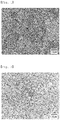
- FIG. 1 is an image of a microstructure before finishing hot-rolling in comparative example 1, obtained using an optical microscope.
- FIG. 2 is an image of a microstructure before finishing hot-rolling in inventive example 1, obtained using an optical microscope. As indicated in FIGS. 1 and 2 , the AGS before the finishing hot-rolling was relatively fine in Inventive Example 1 as compared to Comparative Example 1.
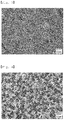
- FIG. 3 is an image of a microstructure after rolling and cooling in comparative example 1, obtained using an SEM.
- FIG. 4 is an image of a microstructure after rolling and cooling in inventive example 1, obtained using an SEM. As indicated in FIGS. 3 and 4 , the microstructure of Inventive Example 1 was refined after rolling and cooling, and the cementite was segmented, as compared to Comparative Example 1.
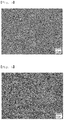
- FIG. 5 is an image of a microstructure after spheroidizing heat treatment in comparative example 1, obtained using an SEM.
- FIG. 6 is an image of a microstructure after spheroidizing heat treatment in inventive example 1, obtained using an SEM. As indicated in FIGS. 5 and 6 , the microstructure of Inventive Example 1 was more spheroidized after the spheroidizing heat treatment as compared to Comparative Example 1.
Landscapes
- Chemical & Material Sciences (AREA)
- Engineering & Computer Science (AREA)
- Mechanical Engineering (AREA)
- Materials Engineering (AREA)
- Metallurgy (AREA)
- Organic Chemistry (AREA)
- Physics & Mathematics (AREA)
- Thermal Sciences (AREA)
- Crystallography & Structural Chemistry (AREA)
- Manufacturing & Machinery (AREA)
- Heat Treatment Of Steel (AREA)
- Heat Treatment Of Strip Materials And Filament Materials (AREA)
Abstract
Description
- The present disclosure relates to a steel wire rod enabling the omission of a softening heat treatment and a method of manufacturing the same, and more particularly, a steel wire rod used for a mechanical structure which may be applicable to vehicles, construction components, and the like, and a method of manufacturing the same.
- Generally, for softening of a material for cold processing, a lengthy heat treatment of 10 to 20 hours or more at a high temperature of 600-800°C may be required, and many techniques have been developed to shorten or omit the treatment.
- Reference 1 may be a representative technique. The purpose of the above technique is to, by refining grains by controlling a ferrite grain size to be 11 or more and controlling 3-15% of a hard plate-shaped cementite phase in a pearlite structure to have a segmented form, omit a softening heat treatment subsequently performed. However, to manufacture such a material, a cooling rate in cooling after hot-rolling may need to be extremely low, 0.02-0.3°C/s. The slow cooling rate may be accompanied by a decrease in productivity, and a separate slow cooling facility and a slow cooling yard may be necessary depending on an environment.
- One aspect of the present disclosure is to provide a steel wire rod enabling the omission of a softening heat treatment in cold processing of vehicles, construction components, and the like, and a method of manufacturing the same.
- An embodiment of the present disclosure provides a steel wire rod enabling omission of softening heat treatment, the steel wire rod including, by weight%, 0.2-0.45% of C, 0.02-0.4% of Si, 0.3-1.5% of Mn, 0.01-1.5% of Cr, 0.02-0.05% of Al, 0.01-0.5% of Mo, 0.01% or less of N, and a balance Fe and other inevitable impurities, wherein a microstructure has a main phase of a composite structure of proeutectoid ferrite+perlite, and includes 10 area% or less (including 0%) of one or more of bainite or martensite, and wherein an average colony size of pearlite is 5 µm or less.
- Another embodiment of the present disclosure provides a method of manufacturing a steel wire rod enabling omission of softening heat treatment, the method including heating a billet including, by weight%, 0.2-0.45% of C, 0.02-0.4% of Si, 0.3-1.5% of Mn, 0.01-1.5% of Cr, 0.02-0.05% of Al, 0.01-0.5% of Mo, 0.01% or less of N, and a balance Fe and other inevitable impurities, at 950-1050°C; obtaining a steel wire rod by finishing hot-rolling the heated billet in a deformation amount of 0.3-2.0 at 730°C-Ae3; and cooling the steel wire rod to a temperature of Ae1 or less at 2°C/sec or less.
- According to one aspect of the present disclosure, a steel wire rod enabling the omission of a softening heat treatment in cold processing of vehicles, construction components, and the like, and a method of manufacturing same may be provided
-
-
FIG. 1 is an image of a microstructure before finishing hot-rolling in comparative example 1, obtained using an optical microscope; -
FIG. 2 is an image of a microstructure before finishing hot-rolling in inventive example 1, obtained using an optical microscope; -
FIG. 3 is an image of a microstructure after rolling and cooling in comparative example 1, obtained using an SEM; -
FIG. 4 is an image of a microstructure after rolling and cooling in inventive example 1, obtained using an SEM; -
FIG. 5 is an image of a microstructure after a spheroidizing heat treatment in comparative example 1, obtained using an SEM; and -
FIG. 6 is an image of a microstructure after a spheroidizing heat treatment in inventive example 1, obtained using an SEM. - In the description below, a steel wire rod having excellent spheroidizing heat treatment properties according to an embodiment of the present disclosure will be described. First, an alloy composition of the present disclosure will be described. The content of the alloy composition described below is represented by weight% unless otherwise indicated.
- C may be added to secure a certain level of strength. When the content of C exceeds 0.45%, the entire structure may be formed of pearlite, such that it may be difficult to secure a ferrite structure, the purpose of the present disclosure, and hardenability may excessively increase such that it may be highly likely that a hard low-temperature transformation structure may be formed. When the content is less than 0.2%, strength of a base material may degrade such that it may be difficult to secure sufficient strength after hardening and tempering heat treatment performed after softening heat treatment and a forging process. Therefore, preferably, the content of C may have a range of 0.2-0.45%. A lower limit of the C content may be more preferably 0.22%, even more preferably 0.24%, and most preferably 0.26%. An upper limit of the C content may be more preferably 0.43%, even more preferably 0.41%, and most preferably 0.39%.
- Si may be a representative substitutional element and may be added to secure a certain level of strength. When Si is less than 0.02%, it may be difficult to secure strength of steel and sufficient hardenability, and when C exceeds 0.4%, cold forging properties may be deteriorated during forging after softening heat treatment, which may be disadvantageous. Therefore, preferably, the Si content may have a range of 0.02-0.4%. A lower limit of the Si content may be more preferably 0.022%, even more preferably 0.024%, and most preferably 0.026%. An upper limit of the Si content may be more preferably 0.038%, even more preferably 0.036%, and most preferably 0.034%.
- Mn may form a substituted solid solution in a matrix structure, and may lower a temperature A1 such that Mn may refine an interlayer spacing of pearlite, and Mn may increase sub-crystal grains in a ferrite structure. When Mn exceeds 1.5%, a harmful effect may occur by structure heterogeneity caused by manganese segregation. When steel is solidified, macrosegregation and microsegregation may be likely to occur depending on a segregation mechanism, and Mn may promote segregation due to a relatively low diffusion coefficient compared to other elements, and improvement of hardenability caused by this may be a main cause of creating a low-temperature structure like martensite in the central region. When the Mn is less than 0.3%, it may be difficult to secure sufficient hardenability to secure a martensite structure after hardening and tempering heat treatment performed after the softening heat treatment and a forging process. Therefore, preferably, the content of Mn may have a range of 0.3-1.5%. A lower limit of the Mn content may be more preferably 0.4%, even more preferably 0.5%, and most preferably 0.6%. An upper limit of the Mn content may be more preferably 1.4%, even more preferably 1.3%, and most preferably 1.2%.
- Similarly to Mn, Cr may be mainly used as an element for enhancing hardenability of steel. When Cr is less than 0.01%, it may be difficult to secure sufficient hardenability to obtain martensite during hardening and tempering heat treatment performed after softening heat treatment and a forging processes, and when Cr exceeds 1.5%, central segregation may be promoted such that it may be highly likely that low-temperature structure may be formed in the steel wire rod. Therefore, preferably, the content of Cr may have a range of 0.01-1.5%. A lower limit of the Cr content may be more preferably 0.1%, even more preferably 0.3%, and most preferably 0.5%. An upper limit of the Cr content may be more preferably 1.4%, even more preferably 1.3%, and most preferably 1.2%.
- Al may have a deoxidation effect, and may precipitate Al-based carbonitride such that austenite grain growth may be inhibited and a fraction of proeutectoid ferrite may be secured close to an equilibrium phase. When Al is less than 0.02%, the deoxidation effect may be not sufficient, and when Al exceeds 0.05%, hard inclusions such as Al 2O3 may increase, and in particular, nozzle clogging may occur due to the inclusions during continuous casting. Therefore, preferably, the Al content may have a range of 0.02-0.05%. A lower limit of the Al content may be more preferably 0.022%, even more preferably 0.024%, and most preferably 0.026%. An upper limit of the Al content may be more preferably 0.048%, even more preferably 0.046%, and most preferably 0.044%.
- Mo may precipitate Mo-based carbonitrides such that Mo may inhibit austenite grain growth, and may contribute to securing a fraction of proeutectoid ferrite close to an equilibrium phase, and Mo may form Mo2C precipitates during tempering in a hardening and tempering heat treatment performed after a softening heat treatment and forging process, such that Mo may be effective in inhibiting strength degradation (temper softening). When Mo is less than 0.01%, it may be difficult to have a sufficient effect of inhibiting strength degradation, and when Mo exceeds 0.5%, a low-temperature structure may be formed in the steel wire rod, such that additional heat treatment costs for removing the low-temperature structure may be necessary. Therefore, preferably, Mo may have a range of 0.01-0.5%. A lower limit of the Mo content may be more preferably 0.012%, even more preferably 0.013%, and most preferably 0.014. An upper limit of the Mo content may be more preferably 0.49%, even more preferably 0.48%, and most preferably 0.47%.
- N may be one of impurities, and when N exceeds 0.01%, material toughness and ductility may be deteriorated due to solid solute nitrogen not combined as a precipitate. Therefore, preferably, the content of N may have a range of 0.01% or less. The N content may be more preferably 0.019% or less, even more preferably 0.018% or less, and most preferably 0.017% or less.
- A remainder of the present disclosure may be iron (Fe). However, in a general manufacturing process, inevitable impurities may be inevitably added from raw materials or an ambient environment, and thus, impurities may not be excluded. A person skilled in the art of a general manufacturing process may be aware of the impurities, and thus, the descriptions of the impurities may not be provided in the present disclosure.
- Preferably, a microstructure of the steel wire rod of the present disclosure may be a composite structure of proeutectoid ferrite+pearlite. Simply in terms of spheroidization of steel, bainite steel with fine cementite may be advantageous, but it has been reported that cementite spheroidized from bainite may be extremely fine such that growth thereof may be extremely slow. Thus, a ferrite+pearlite+bainite composite structure may be disadvantageous in terms of structure homogenization. Therefore, in the present disclosure, by controlling the microstructure of the steel wire rod to be a composite structure of proeutectoid ferrite+pearlite, spheroidizing heat treatment properties may improve, and also the structure may be further homogenized. In this case, a fraction of proeutectoid ferrite may preferably be 80% or more of an equilibrium phase, and when the fraction is less than 80% of an equilibrium phase, a relatively hard low-temperature structure may be formed in a large amount such that it may be difficult to effectively secure a spheroidization heat treatment properties. However, in the present disclosure, a low-temperature structure which may inevitably be formed during manufacturing, one or more of bainite or martensite, for example, may be included by 10 area% or less. Thus, a microstructure in the present disclosure may be a composite structure in which a main phase may be ferrite+pearlite, and may include 10 area% or less (including 0%) of one or more of bainite or martensite. Preferably, a fraction of one or more of bainite or martensite may be 5 area% or less. An equilibrium phase of proeutectoid ferrite may refer to a maximum fraction of proeutectoid ferrite which may be included in a stable state on a Fe3C phase diagram. The equilibrium phase of proeutectoid ferrite may be easily derived by a person skilled in the art in consideration of the C content and the content of the other alloy elements through the Fe3C phase diagram.
- In this case, an average size of a colony of pearlite may be preferably 5 µm or less. By controlling an average size of pearlite colonies to be fine as described above, the effect of segmentation of cementite may improve, such that a spheroidization rate of cementite may increase during spheroidization heat treatment.
- Also, preferably, an average grain size of proeutectoid ferrite may be 7 µm or less. As described above, by controlling the average grain size of ferrite to be fine, the size of pearlite colonies may also be refined, and accordingly, a spheroidization rate of cementite may increase during spheroidization heat treatment.
- Also, preferably, an average size of a long axis of cementite in the pearlite colony may be 5 µm or less. As described above, by controlling the average size of the long axis of cementite in the pearlite colony to be small, that is, by controlling a cementite aspect ratio to be small, a spheroidization rate of cementite during spheroidization heat treatment may increase.
- In the present disclosure, the average size of the pearlite colony, the average grain size of the proeutectoid ferrite, and the average size of the long axis of cementite in the pearlite colony may be of a central portion with reference to a diameter of the steel wire rod, that is, 2/5 point-3/5 point from the surface with reference to the diameter. Generally, since a surface layer of the steel rod wire may receive strong rolling force during rolling, the average size of colonies of pearlite, the average grain size of proeutectoid ferrite, and the average size of the long axis of cementite in the pearlite colony may be fine. However, in the present disclosure, by refining the average colony size of pearlite and the average grain size of ferrite on the surface layer of the steel wire rod and also in the central portion, the rate of spheroidization of cementite may effectively increase during spheroidization heat treatment.
- The steel wire rod provided in the present disclosure may have tensile strength of 800 MPa or less. Generally, to manufacture a steel wire rod into a steel wire, a primary softening heat treatment → primary wire drawing → a secondary softening heat treatment → secondary wire drawing may be performed. However, as for the steel wire rod of the present disclosure, processes corresponding to the primary soft softening heat treatment and the primary wire drawing may be omitted through sufficient softening of the material. The softening heat treatment in the present disclosure may include a low-temperature annealing heat treatment performed below an Ae1 phase transformation point, a medium temperature annealing heat treatment performed at around Ae1, and a spheroidizing annealing heat treatment performed above Ae1.
- Also, the steel wire rod of the present disclosure may have an average aspect ratio of cementite of 2.5 or less after spheroidizing annealing heat treatment is performed once. Generally, it is widely known that the spheroidizing annealing heat treatment may be effective in spheroidizing of cementite as the number of performing the treatment increases. However, in the present disclosure, cementite may be sufficiently spheroidized by only performing the spheroidizing annealing heat treatment once. As mentioned above, since the surface layer of the steel wire rod receives strong rolling force during rolling, the spheroidization of cementite may also be carried out smoothly. However, in the present disclosure, cementite in the central portion with reference to the diameter of the steel wire rod, in the area of 1/4 point-1/2 point from the surface with reference to the diameter, for example, may be sufficiently spheroidized, such that the average aspect ratio of cementite in the central portion of the steel wire rod may be 2.5 or less. Also, the steel wire rod of the present disclosure may have tensile strength of 540 MPa or less after the spheroidization heat treatment is performed once, and accordingly, cold-rolling or cold-forging processing for manufacturing a final product may be easily performed.
- In the description below, a method of manufacturing a steel wire rod having excellent spheroidizing heat treatment properties according to an embodiment of the present disclosure will be described.
- First, a billet having the alloy composition described above may be heated at 950-1050°C. When the billet heating temperature is less than 950°C, rollability may decrease, and when the billet heating temperature exceeds 1050°C, rapid cooling may be necessary for rolling, such that it may be difficult to control the cooling and cracks may be created, and accordingly, it may be difficult to ensure good product quality.
- The heating time during the heating may be preferably 90 minutes or less. When the heating time exceeds 90 minutes, a depth of a surface decarburization layer may increase, such that the decarburization layer may remain after the rolling is completed.
- Thereafter, the heated billet may be finishing hot-rolled at 730°C-Ae3 in a deformation amount (ε) of 0.3-2.0, thereby obtaining a steel wire rod. A rate of rolling the steel wire rod may be extremely high and may belong to a dynamic recrystallization area. Research results up to date have indicated that an austenite grain size may depend only on a deformation rate and a deformation temperature under dynamic recrystallization conditions. Due to characteristics of wire rod rolling, when a wire diameter is determined, the amount of deformation and the deformation rate may be determined, and the austenite grain size may be changed by adjusting the deformation temperature. In the present disclosure, during dynamic recrystallization, grains may be refined using a dynamic deformation organic transformation phenomenon. To secure the microstructure grains to be obtained in the present disclosure using the phenomenon, it may be preferable to control the finishing rolling temperature to be 730°C-Ae3. When the finish rolling temperature exceeds Ae3, it may be difficult to obtain microstructure grains to be obtained in the present disclosure such that it may be difficult to obtain sufficient spheroidizing heat treatment properties. When the temperature is less than 730°C, equipment load may increase such that equipment lifespan may be rapidly reduced. Also, when the amount of deformation (ε) is less than 0.3, reduction amount may be not sufficient, such that it may be difficult to sufficiently refine the microstructure in the central region of the steel rod wire, and spheroidization heat treatment properties of the steel rod wire obtained therefrom may degrade. When the amount exceeds 2.0, equipment lifespan may rapidly degrade due to degradation of productivity and equipment bearing breakage, caused by rolling load.
- Before the finish hot-rolling, preferably, the average austenite grain size of the billet may be 5-20 µm. Ferrite may be known to nucleate at an austenite grain boundary and may grow. When austenite grains, a base phase, are fine, ferrite nucleating at grain boundaries may also start to be finely formed, such that, by controlling the average austenite grain size of the billet before the finish hot-rolling as described above, the ferrite grain refinement effect may be obtained. When the austenite grain average size exceeds 20 µm, it may be difficult to obtain a ferrite grain refining effect, and to obtain an average austenite grain size of less than 5 µm, a separate facility to additionally apply a high amount of deformation such as strong reduction may be necessary, which may be disadvantageous.
- Thereafter, the steel rod wire may be cooled to 2°C/sec or less to a temperature of Ae1 or less. When a rate of cooling the steel wire rod exceeds 2°C/sec, a low-temperature structure such as bainite may be generated in the fine segregation portion of the steel wire rod. In the fine segregation portion, segregation of twice or more than the average of the steel wire rod may be formed, and accordingly, a low-temperature structure may be generated even at a low cooling rate, which may adversely affect the structure homogenization of the steel. The rate of cooling the steel wire rod may be more preferably 0.5-2°C/sec in terms of refinement of grains of the microstructure.
- In the present disclosure, a spheroidizing heat treatment in which the steel wire rod may be heated to Ae1-Ae1+40°C, may be maintained for 10-15 hours, and may be cooled to 660°C at 20°C/hr or less may be further included after the cooling. When the heating temperature is less than Ae1, there may be a disadvantage in that the spheroidizing heat treatment time may be prolonged, and when the temperature exceeds Ae1+40°C, the spheroidizing carbide seeds may be reduced, such that the spheroidizing heat treatment effect may not be sufficient. When the maintaining time is less than 10 hours, spheroidizing heat treatment may be not sufficiently performed, such that the aspect ratio of cementite may increase, which may be disadvantageous. When the cooling rate exceeds 20°C/hr, there may be a disadvantage in that pearlite may be formed again due to the high cooling rate. As mentioned above, in the present disclosure, even when only the spheroidizing heat treatment is performed without the primary soft softening heat treatment and the primary wire drawing, sufficient spheroidizing heat treatment properties may be secured.
- Hereinafter, the present disclosure will be described in more detail through examples. However, it should be noted that the following examples are for illustrative purposes only and are not intended to limit the scope of the present disclosure. The scope of the present disclosure may be determined by matters described in the claims and matters able to be reasonably inferred therefrom.
- A billet having an alloy composition as in Table 1 below was prepared, a steel wire rod having a diameter of 9mm was manufactured using the conditions described in Table 2 below. With respect to the steel wire rod prepared as above, a microstructure, an average grain size of proeutectoid ferrite, an average size of colony of pearlite, an average size of a long axis of cementite in the pearlite colony, and tensile strength were measured, and the results are listed in Table 3 below. Also, spheroidization heat treatment was performed on the steel wire rod once under the conditions as in Table 4 below, an average aspect ratio of cementite and tensile strength were measured, and the results are listed in Table 4 below. In this case, the spheroidizing heat treatment was performed without performing the primary softening treatment and the primary wire drawing process on a sample of the steel wire rod manufactured described above.
- The austenite grain average size (AGS) was measured through a cutting crop performed before finishing hot-rolling.
- Ae1 and Ae3 displayed values calculated using JmatPro, a commercial program.
- As for an average grain size (FGS) of proeutectoid ferrite, the steel rod wire was rolled using a ASTM E112 method, a non-water cooling portion was removed, and 3 arbitrary points in the area of 2/5 point-3/5 point from the diameter of the obtained sample were measured, and an average value thereof was calculated.
- As for the average size of colonies of pearlite, 10 arbitrary pearlite colonies were selected from the same point as in the FGS measurement using an ASTM E112 method, a (long axis + short axis)/2 value of each colony was obtained, and an average value of colony sizes was obtained.
- As for the average aspect ratio of cementite after the spheroidization heat treatment, 3 fields of view of 2000 times SEM of 1/4-1/2 point was imaged in a direction of a diameter of the steel rod wire, and a long axis/short axis of cementite in the field of view were automatically measured using an image measurement program, and was statistically processed.
[Table 1] Classification Alloy composition (weight%) C Si Mn Cr Al Mo N Inventive steel 1 0.25 0.3 1.3 1 0.032 0.2 0.085 Inventive steel 2 0.35 0.3 1.3 0.9 0.028 0.3 0.062 Comparative steel 1 0.4 0.2 1.2 1.1 0.042 0.7 0.050 Comparative steel 2 0.72 0.3 0.8 0.8 0.035 0.7 0.058 Inventive steel 3 0.35 0.2 0.7 1 0.031 0.2 0.068 Inventive steel 4 0.4 0.25 0.8 0.9 0.036 0.15 0.071 Inventive steel 5 0.35 0.3 1.2 1.1 0.034 0.2 0.069 Inventive steel 6 0.35 0.18 1.2 1.15 0.035 0.3 0.072 Inventive steel 7 0.3 0.15 1.4 0.8 0.028 0.3 0.080 [Table 2] Classification Steel type No. Heating temperature (°C) Heating time (min) Ae3 (°C) Finishing rolling temperature (°C) Deformation amount Ae1 (°C) Cooling stop temperature (°C) Cooling rate (°C/s ) Comparative example 1 Inventive steel 1 1000 90 790 900 0.2 715 732 5 Comparative example 2 Inventive steel 2 1150 120 775 800 0.1 715 721 1.5 Comparative example 3 Comparative steel 1 1020 90 770 780 0.9 720 735 2 Comparative example 4 Comparative steel 2 1000 90 745 750 0.6 730 740 5 Inventive example 1 Inventive steel 3 950 90 785 760 1.2 735 729 2 Inventive example 2 Inventive steel 4 1000 80 775 750 0.8 730 715 1 Inventive example 3 Inventive steel 5 1020 90 775 730 0.6 720 701 1 Inventive example 4 Inventive steel 6 990 90 770 760 0.8 721 691 1.5 Inventive example 5 Inventive steel 7 1020 90 780 750 1.0 704 658 2 [Table 3] Classification Microstructure (area%) Pearlitecolony average size (µm) Proeutectoid ferrite grain average size (µm) Cementite long axis average in pearlite colony (µm) Tensile strength (MPa) Equilibrium phase F F P B+M Comparative example 1 70 10 10 80 10 10 9 820 Comparative example 2 55 14 71 15 13 12 11 850 Comparative example 3 45 12 63 25 12 15 10 900 Comparative example 4 5 3 50 47 15 8 15 1030 Inventive example 1 45 40 55 5 3 3 3.5 770 Inventive example 2 41 38 57 5 3 4 3.4 740 Inventive example 3 46 39 61 0 5 6 4.3 720 Inventive example 4 47 41 56 3 3.2 2.8 3 760 Inventive example 5 49 40 58 2 4.2 4.5 4 750 F: proeutectoid ferrite, P: pearlite, B: bainite, M: martensite [Table 4] Classification Heating temperature (°C) Heating time (Hr) Cooling rate to 660°C (°C/Hr) Cementite average aspect ratio after spheroidization heat treatment Tensile strength after spheroidization heat treatment (MPa) Comparative example 1 750 10 30 8.5 581 Comparative example 2 740 11 20 6.2 612 Comparative example 3 700 12 15 7.5 595 Comparative example 4 745 14 25 5.5 643 Inventive example 1 750 13 15 2 512 Inventive example 2 745 12 17 2.1 520 Inventive example 3 755 13 10 1.5 502 Inventive example 4 750 15 13 1.4 508 Inventive example 5 760 14 15 1.3 493 - As indicated in Tables 1 to 4 above, in Inventive Examples 1 to 5 satisfying the alloy composition and manufacturing conditions suggested in the present disclosure, the microstructure type and the fraction of the present disclosure and also fine grains were secured, such that, with only the spheroidization heat treatment performed once, the average aspect ratio of cementite was less than 2.5.
- However, in Comparative Examples 1 to 4 which did not satisfy the alloy composition or manufacturing conditions suggested in the present disclosure, it is indicated that the microstructure type and the fraction of the present disclosure were not satisfied, or fine grains were not secured, such that the cementite average aspect ratio was relatively high when the spheroidization heat treatment was performed once, and accordingly, to be applied to a final product, additional spheroidization heat treatment may be necessary.
-
FIG. 1 is an image of a microstructure before finishing hot-rolling in comparative example 1, obtained using an optical microscope.FIG. 2 is an image of a microstructure before finishing hot-rolling in inventive example 1, obtained using an optical microscope. As indicated inFIGS. 1 and 2 , the AGS before the finishing hot-rolling was relatively fine in Inventive Example 1 as compared to Comparative Example 1. -
FIG. 3 is an image of a microstructure after rolling and cooling in comparative example 1, obtained using an SEM.FIG. 4 is an image of a microstructure after rolling and cooling in inventive example 1, obtained using an SEM. As indicated inFIGS. 3 and 4 , the microstructure of Inventive Example 1 was refined after rolling and cooling, and the cementite was segmented, as compared to Comparative Example 1. -
FIG. 5 is an image of a microstructure after spheroidizing heat treatment in comparative example 1, obtained using an SEM.FIG. 6 is an image of a microstructure after spheroidizing heat treatment in inventive example 1, obtained using an SEM. As indicated inFIGS. 5 and 6 , the microstructure of Inventive Example 1 was more spheroidized after the spheroidizing heat treatment as compared to Comparative Example 1.
Claims (11)
- A steel wire rod enabling omission of softening heat treatment, the steel wire rod comprising:by weight%, 0.2-0.45% of C, 0.02-0.4% of Si, 0.3-1.5% of Mn, 0.01-1.5% of Cr, 0.02-0.05% of Al, 0.01-0.5% of Mo, 0.01% or less of N, and a balance Fe and other inevitable impurities,wherein a microstructure has a main phase of a composite structure of proeutectoid ferrite+perlite, and includes 10 area% or less (including 0%) of one or more of bainite or martensite, andwherein an average colony size of pearlite is 5 µm or less.
- The steel wire rod of claim 1, wherein a fraction of proeutectoid ferrite is 80% or more of an equilibrium phase.
- The steel wire rod of claim 1, wherein, in the steel wire rod, an average grain size of proeutectoid ferrite is 7 µm or less.
- The steel wire rod of claim 1, wherein, in the steel wire rod, an average size of a long axis of cementite in pearlite colony is 5 µm or less.
- The steel wire rod of claim 1, wherein the steel wire rod has tensile strength of 800 MPa or less.
- The steel wire rod of claim 1, wherein, in the steel wire rod, an average aspect ratio of cementite is 2.5 or less after a spheroidization heat treatment is performed once.
- The steel wire rod of claim 1, wherein the steel wire rod has tensile strength of 540 MPa or less after a spheroidization heat treatment is performed once.
- A method of manufacturing a steel wire rod enabling omission of softening heat treatment, the method comprising:heating a billet including, by weight%, 0.2-0.45% of C, 0.02-0.4% of Si, 0.3-1.5% of Mn, 0.01-1.5% of Cr, 0.02-0.05% of Al, 0.01-0.5% of Mo, 0.01% or less of N, and a balance Fe and other inevitable impurities, at 950-1050°C;obtaining a steel wire rod by finishing hot-rolling the heated billet in a deformation amount of 0.3-2.0 at 730°C-Ae3; andcooling the steel wire rod to a temperature of Ae1 or less at 2°C/sec or less.
- The method of claim 8, wherein a heating time in the heating is 90 minutes or less.
- The method of claim 8, wherein, before the finishing hot-rolling, an average grain size of austenite of the billet is 5-20µm.
- The method of claim 8, wherein the method further includes a spheroidizing annealing heat treatment in which the steel wire rod is heated to Ae1-Ae1+40°C, is maintained for 10-15 hours, and is cooled to 660°C at 20°C/hr or less, after the cooling.
Applications Claiming Priority (2)
| Application Number | Priority Date | Filing Date | Title |
|---|---|---|---|
| KR1020180132073A KR102109278B1 (en) | 2018-10-31 | 2018-10-31 | Steel wire rod enabling omission of softening heat treatment and method of manufacturing the same |
| PCT/KR2019/013702 WO2020091277A1 (en) | 2018-10-31 | 2019-10-18 | Steel wire rod enabling omission of softening heat treatment and method of manufacturing same |
Publications (4)
| Publication Number | Publication Date |
|---|---|
| EP3875628A1 true EP3875628A1 (en) | 2021-09-08 |
| EP3875628A4 EP3875628A4 (en) | 2022-01-19 |
| EP3875628B1 EP3875628B1 (en) | 2026-01-28 |
| EP3875628C0 EP3875628C0 (en) | 2026-01-28 |
Family
ID=70461943
Family Applications (1)
| Application Number | Title | Priority Date | Filing Date |
|---|---|---|---|
| EP19878062.9A Active EP3875628B1 (en) | 2018-10-31 | 2019-10-18 | Steel wire rod enabling omission of softening heat treatment and method of manufacturing same |
Country Status (6)
| Country | Link |
|---|---|
| US (1) | US12227824B2 (en) |
| EP (1) | EP3875628B1 (en) |
| JP (1) | JP7721438B2 (en) |
| KR (1) | KR102109278B1 (en) |
| CN (1) | CN112996940B (en) |
| WO (1) | WO2020091277A1 (en) |
Families Citing this family (2)
| Publication number | Priority date | Publication date | Assignee | Title |
|---|---|---|---|---|
| KR102153195B1 (en) | 2018-12-18 | 2020-09-07 | 주식회사 포스코 | Steel wire rod enabling omission of softening heat treatment and method of manufacturing the same |
| KR102931417B1 (en) * | 2021-03-31 | 2026-02-25 | 가부시키가이샤 고베 세이코쇼 | Steel wire for mechanical structural parts and method for manufacturing the same |
Family Cites Families (18)
| Publication number | Priority date | Publication date | Assignee | Title |
|---|---|---|---|---|
| JPS59136421A (en) | 1983-01-21 | 1984-08-06 | Sumitomo Metal Ind Ltd | Preparation of rod steel and wire material having spheroidal structure |
| JPS59136422A (en) | 1983-01-21 | 1984-08-06 | Sumitomo Metal Ind Ltd | Preparation of rod steel and wire material having spheroidal structure |
| JP3292754B2 (en) | 1992-12-08 | 2002-06-17 | 日本パーカライジング株式会社 | Composition for metal surface treatment containing sol of trivalent chromium compound and method for producing the same |
| JP3809004B2 (en) | 1998-02-24 | 2006-08-16 | 新日本製鐵株式会社 | Induction quenching steel with excellent high strength and low heat treatment strain characteristics and its manufacturing method |
| JP3742232B2 (en) * | 1998-10-13 | 2006-02-01 | 株式会社神戸製鋼所 | Steel wire rod capable of rapid spheroidization and excellent cold forgeability and method for producing the same |
| JP3554505B2 (en) * | 1999-05-26 | 2004-08-18 | 新日本製鐵株式会社 | Hot-rolled wire rod / steel bar for machine structure and manufacturing method thereof |
| JP3737323B2 (en) | 1999-09-17 | 2006-01-18 | 株式会社神戸製鋼所 | Steel wire rod and bar steel excellent in cold forgeability after spheronization and manufacturing method thereof |
| JP4347999B2 (en) | 2000-08-30 | 2009-10-21 | 新日本製鐵株式会社 | Induction hardening steel and induction hardening parts with excellent torsional fatigue properties |
| KR100535769B1 (en) | 2005-02-03 | 2005-12-09 | 다인테크(주) | Anti-corrosion composition for galvanized steel plate and method of using the same |
| JP4669300B2 (en) | 2005-02-16 | 2011-04-13 | 新日本製鐵株式会社 | Steel wire rod excellent in cold forgeability after spheroidizing treatment and method for producing the same |
| KR101316271B1 (en) * | 2009-09-25 | 2013-10-08 | 주식회사 포스코 | Medium carbon soft wire rod capable of eliminating softening treatment and method for manufaturing the same |
| JP5565102B2 (en) | 2010-05-27 | 2014-08-06 | Jfeスチール株式会社 | Steel for machine structure and manufacturing method thereof |
| JP5486634B2 (en) * | 2012-04-24 | 2014-05-07 | 株式会社神戸製鋼所 | Steel for machine structure for cold working and method for producing the same |
| JP2017043835A (en) * | 2015-08-25 | 2017-03-02 | 株式会社神戸製鋼所 | Steel for machine structure for cold working and manufacturing method thereof |
| KR101867677B1 (en) | 2016-07-22 | 2018-06-15 | 주식회사 포스코 | Steel wire rod having enhanced delayed fracture resistance and method for manufacturing the same |
| CN106636883B (en) * | 2016-09-23 | 2018-03-06 | 龙南日升昌新材料研发有限公司 | High life bearing steel and its manufacture method |
| KR101940873B1 (en) | 2016-12-22 | 2019-01-21 | 주식회사 포스코 | Steel wire rod and steel wire having high toughness and method for manufacturing thereof |
| KR102153195B1 (en) * | 2018-12-18 | 2020-09-07 | 주식회사 포스코 | Steel wire rod enabling omission of softening heat treatment and method of manufacturing the same |
-
2018
- 2018-10-31 KR KR1020180132073A patent/KR102109278B1/en active Active
-
2019
- 2019-10-18 JP JP2021523443A patent/JP7721438B2/en active Active
- 2019-10-18 US US17/288,998 patent/US12227824B2/en active Active
- 2019-10-18 WO PCT/KR2019/013702 patent/WO2020091277A1/en not_active Ceased
- 2019-10-18 CN CN201980072106.3A patent/CN112996940B/en active Active
- 2019-10-18 EP EP19878062.9A patent/EP3875628B1/en active Active
Also Published As
| Publication number | Publication date |
|---|---|
| KR102109278B1 (en) | 2020-05-11 |
| EP3875628A4 (en) | 2022-01-19 |
| CN112996940B (en) | 2022-10-11 |
| US20210404039A1 (en) | 2021-12-30 |
| WO2020091277A1 (en) | 2020-05-07 |
| JP7721438B2 (en) | 2025-08-12 |
| EP3875628B1 (en) | 2026-01-28 |
| KR20200049149A (en) | 2020-05-08 |
| CN112996940A (en) | 2021-06-18 |
| US12227824B2 (en) | 2025-02-18 |
| EP3875628C0 (en) | 2026-01-28 |
| JP2022506231A (en) | 2022-01-17 |
Similar Documents
| Publication | Publication Date | Title |
|---|---|---|
| EP3901310B1 (en) | Wire rod of which softening heat treatment can be omitted, and manufacturing method therefor | |
| KR102065264B1 (en) | Wire rod for chq capable of reducing softening treatment time, and method for manufaturing the same | |
| EP4509631A1 (en) | Non-quenched and tempered steel wire rod with improved machinability and toughness, and method for manufacturing same | |
| CN103210106B (en) | High-toughness cold-drawn non-heat-treated wire rod, and method for manufacturing same | |
| KR101977499B1 (en) | Wire rod without spheroidizing heat treatment, and method for manufacturing thereof | |
| EP3748030A1 (en) | High-carbon hot-rolled steel sheet and method for manufacturing same | |
| EP3875628B1 (en) | Steel wire rod enabling omission of softening heat treatment and method of manufacturing same | |
| KR102131523B1 (en) | Steel wire rod having excellent spheroidizing heat treatment properties and method of manufacturing the same | |
| KR102131530B1 (en) | Steel wire rod having excellent spheroidizing heat treatment properties and method of manufacturing the same | |
| KR102131529B1 (en) | Steel wire rod having excellent spheroidizing heat treatment properties and method of manufacturing the same | |
| CN113366136A (en) | High carbon hot-rolled steel sheet and method for producing same | |
| EP4502221A1 (en) | Non-quenched and tempered steel rod wire for hot forging with improved machinability and toughness and method for manufacturing same | |
| EP4079912A1 (en) | Steel wire rod having excellent spheroidizing heat treatment properties, and method for producing same | |
| KR101797349B1 (en) | High-carbon steel wire rod for cold forging without spheroidizing heat treatment, processed good using the same, and methods for manufacturing thereof | |
| US12264379B2 (en) | Steel wire rod having excellent spheroidizing heat treatment properties and method of manufacturing same | |
| US20240254588A1 (en) | Wire rod having excellent drawability, and manufacturing method therefor | |
| CN114981464B (en) | Bearing wire and method for manufacturing same | |
| KR102470032B1 (en) | Manufacturing method for alloy steel having excellent strength and elongation | |
| EP4332265A1 (en) | Wire rod and steel wire for spring, spring with improved strength and fatigue limit, and method for manufacturing same | |
| EP4512923A1 (en) | Non-quenched and non-tempered steel wire rod for hot forging with excellent machinability and impact toughness and method for manufacturing same | |
| EP4265774A1 (en) | Wire rod for ultrahigh-strength springs, steel wire, and manufacturing method therefor |
Legal Events
| Date | Code | Title | Description |
|---|---|---|---|
| STAA | Information on the status of an ep patent application or granted ep patent |
Free format text: STATUS: THE INTERNATIONAL PUBLICATION HAS BEEN MADE |
|
| PUAI | Public reference made under article 153(3) epc to a published international application that has entered the european phase |
Free format text: ORIGINAL CODE: 0009012 |
|
| STAA | Information on the status of an ep patent application or granted ep patent |
Free format text: STATUS: REQUEST FOR EXAMINATION WAS MADE |
|
| 17P | Request for examination filed |
Effective date: 20210519 |
|
| AK | Designated contracting states |
Kind code of ref document: A1 Designated state(s): AL AT BE BG CH CY CZ DE DK EE ES FI FR GB GR HR HU IE IS IT LI LT LU LV MC MK MT NL NO PL PT RO RS SE SI SK SM TR |
|
| A4 | Supplementary search report drawn up and despatched |
Effective date: 20211221 |
|
| RIC1 | Information provided on ipc code assigned before grant |
Ipc: C21D 9/64 20060101ALI20211215BHEP Ipc: C21D 9/573 20060101ALI20211215BHEP Ipc: C21D 8/06 20060101ALI20211215BHEP Ipc: C21D 6/00 20060101ALI20211215BHEP Ipc: C21D 1/32 20060101ALI20211215BHEP Ipc: C21D 8/02 20060101ALI20211215BHEP Ipc: C22C 38/00 20060101ALI20211215BHEP Ipc: C22C 38/04 20060101ALI20211215BHEP Ipc: C22C 38/06 20060101ALI20211215BHEP Ipc: C22C 38/02 20060101ALI20211215BHEP Ipc: C22C 38/22 20060101ALI20211215BHEP Ipc: C22C 38/38 20060101AFI20211215BHEP |
|
| DAV | Request for validation of the european patent (deleted) | ||
| DAX | Request for extension of the european patent (deleted) | ||
| RAP3 | Party data changed (applicant data changed or rights of an application transferred) |
Owner name: POSCO HOLDINGS INC. |
|
| RAP1 | Party data changed (applicant data changed or rights of an application transferred) |
Owner name: POSCO CO., LTD |
|
| GRAP | Despatch of communication of intention to grant a patent |
Free format text: ORIGINAL CODE: EPIDOSNIGR1 |
|
| STAA | Information on the status of an ep patent application or granted ep patent |
Free format text: STATUS: GRANT OF PATENT IS INTENDED |
|
| INTG | Intention to grant announced |
Effective date: 20250912 |
|
| GRAS | Grant fee paid |
Free format text: ORIGINAL CODE: EPIDOSNIGR3 |
|
| GRAA | (expected) grant |
Free format text: ORIGINAL CODE: 0009210 |
|
| STAA | Information on the status of an ep patent application or granted ep patent |
Free format text: STATUS: THE PATENT HAS BEEN GRANTED |
|
| AK | Designated contracting states |
Kind code of ref document: B1 Designated state(s): AL AT BE BG CH CY CZ DE DK EE ES FI FR GB GR HR HU IE IS IT LI LT LU LV MC MK MT NL NO PL PT RO RS SE SI SK SM TR |
|
| REG | Reference to a national code |
Ref country code: CH Ref legal event code: F10 Free format text: ST27 STATUS EVENT CODE: U-0-0-F10-F00 (AS PROVIDED BY THE NATIONAL OFFICE) Effective date: 20260128 Ref country code: GB Ref legal event code: FG4D |
|
| REG | Reference to a national code |
Ref country code: DE Ref legal event code: R096 Ref document number: 602019080920 Country of ref document: DE |
|
| REG | Reference to a national code |
Ref country code: IE Ref legal event code: FG4D |
|
| U01 | Request for unitary effect filed |
Effective date: 20260204 |
|
| U07 | Unitary effect registered |
Designated state(s): AT BE BG DE DK EE FI FR IT LT LU LV MT NL PT RO SE SI Effective date: 20260210 |