EP3875617B1 - Photocatalysis method for dissolving metal - Google Patents
Photocatalysis method for dissolving metal Download PDFInfo
- Publication number
- EP3875617B1 EP3875617B1 EP19923873.4A EP19923873A EP3875617B1 EP 3875617 B1 EP3875617 B1 EP 3875617B1 EP 19923873 A EP19923873 A EP 19923873A EP 3875617 B1 EP3875617 B1 EP 3875617B1
- Authority
- EP
- European Patent Office
- Prior art keywords
- platinum
- titanium dioxide
- mixed solution
- metals
- dispersed
- Prior art date
- Legal status (The legal status is an assumption and is not a legal conclusion. Google has not performed a legal analysis and makes no representation as to the accuracy of the status listed.)
- Active
Links
Images

Classifications
-
- C—CHEMISTRY; METALLURGY
- C22—METALLURGY; FERROUS OR NON-FERROUS ALLOYS; TREATMENT OF ALLOYS OR NON-FERROUS METALS
- C22B—PRODUCTION AND REFINING OF METALS; PRETREATMENT OF RAW MATERIALS
- C22B11/00—Obtaining noble metals
- C22B11/04—Obtaining noble metals by wet processes
-
- B—PERFORMING OPERATIONS; TRANSPORTING
- B01—PHYSICAL OR CHEMICAL PROCESSES OR APPARATUS IN GENERAL
- B01J—CHEMICAL OR PHYSICAL PROCESSES, e.g. CATALYSIS OR COLLOID CHEMISTRY; THEIR RELEVANT APPARATUS
- B01J21/00—Catalysts comprising the elements, oxides, or hydroxides of magnesium, boron, aluminium, carbon, silicon, titanium, zirconium, or hafnium
- B01J21/06—Silicon, titanium, zirconium or hafnium; Oxides or hydroxides thereof
- B01J21/063—Titanium; Oxides or hydroxides thereof
-
- B—PERFORMING OPERATIONS; TRANSPORTING
- B01—PHYSICAL OR CHEMICAL PROCESSES OR APPARATUS IN GENERAL
- B01J—CHEMICAL OR PHYSICAL PROCESSES, e.g. CATALYSIS OR COLLOID CHEMISTRY; THEIR RELEVANT APPARATUS
- B01J23/00—Catalysts comprising metals or metal oxides or hydroxides, not provided for in group B01J21/00
- B01J23/06—Catalysts comprising metals or metal oxides or hydroxides, not provided for in group B01J21/00 of zinc, cadmium or mercury
-
- B—PERFORMING OPERATIONS; TRANSPORTING
- B01—PHYSICAL OR CHEMICAL PROCESSES OR APPARATUS IN GENERAL
- B01J—CHEMICAL OR PHYSICAL PROCESSES, e.g. CATALYSIS OR COLLOID CHEMISTRY; THEIR RELEVANT APPARATUS
- B01J27/00—Catalysts comprising the elements or compounds of halogens, sulfur, selenium, tellurium, phosphorus or nitrogen; Catalysts comprising carbon compounds
- B01J27/02—Sulfur, selenium or tellurium; Compounds thereof
- B01J27/04—Sulfides
-
- B—PERFORMING OPERATIONS; TRANSPORTING
- B01—PHYSICAL OR CHEMICAL PROCESSES OR APPARATUS IN GENERAL
- B01J—CHEMICAL OR PHYSICAL PROCESSES, e.g. CATALYSIS OR COLLOID CHEMISTRY; THEIR RELEVANT APPARATUS
- B01J27/00—Catalysts comprising the elements or compounds of halogens, sulfur, selenium, tellurium, phosphorus or nitrogen; Catalysts comprising carbon compounds
- B01J27/02—Sulfur, selenium or tellurium; Compounds thereof
- B01J27/04—Sulfides
- B01J27/043—Sulfides with iron group metals or platinum group metals
- B01J27/045—Platinum group metals
-
- B—PERFORMING OPERATIONS; TRANSPORTING
- B01—PHYSICAL OR CHEMICAL PROCESSES OR APPARATUS IN GENERAL
- B01J—CHEMICAL OR PHYSICAL PROCESSES, e.g. CATALYSIS OR COLLOID CHEMISTRY; THEIR RELEVANT APPARATUS
- B01J27/00—Catalysts comprising the elements or compounds of halogens, sulfur, selenium, tellurium, phosphorus or nitrogen; Catalysts comprising carbon compounds
- B01J27/02—Sulfur, selenium or tellurium; Compounds thereof
- B01J27/04—Sulfides
- B01J27/047—Sulfides with chromium, molybdenum, tungsten or polonium
- B01J27/051—Molybdenum
-
- B—PERFORMING OPERATIONS; TRANSPORTING
- B01—PHYSICAL OR CHEMICAL PROCESSES OR APPARATUS IN GENERAL
- B01J—CHEMICAL OR PHYSICAL PROCESSES, e.g. CATALYSIS OR COLLOID CHEMISTRY; THEIR RELEVANT APPARATUS
- B01J27/00—Catalysts comprising the elements or compounds of halogens, sulfur, selenium, tellurium, phosphorus or nitrogen; Catalysts comprising carbon compounds
- B01J27/14—Phosphorus; Compounds thereof
-
- B—PERFORMING OPERATIONS; TRANSPORTING
- B01—PHYSICAL OR CHEMICAL PROCESSES OR APPARATUS IN GENERAL
- B01J—CHEMICAL OR PHYSICAL PROCESSES, e.g. CATALYSIS OR COLLOID CHEMISTRY; THEIR RELEVANT APPARATUS
- B01J31/00—Catalysts comprising hydrides, coordination complexes or organic compounds
- B01J31/003—Catalysts comprising hydrides, coordination complexes or organic compounds containing enzymes
-
- B—PERFORMING OPERATIONS; TRANSPORTING
- B01—PHYSICAL OR CHEMICAL PROCESSES OR APPARATUS IN GENERAL
- B01J—CHEMICAL OR PHYSICAL PROCESSES, e.g. CATALYSIS OR COLLOID CHEMISTRY; THEIR RELEVANT APPARATUS
- B01J31/00—Catalysts comprising hydrides, coordination complexes or organic compounds
- B01J31/02—Catalysts comprising hydrides, coordination complexes or organic compounds containing organic compounds or metal hydrides
- B01J31/0234—Nitrogen-, phosphorus-, arsenic- or antimony-containing compounds
- B01J31/0235—Nitrogen containing compounds
- B01J31/0244—Nitrogen containing compounds with nitrogen contained as ring member in aromatic compounds or moieties, e.g. pyridine
-
- B—PERFORMING OPERATIONS; TRANSPORTING
- B01—PHYSICAL OR CHEMICAL PROCESSES OR APPARATUS IN GENERAL
- B01J—CHEMICAL OR PHYSICAL PROCESSES, e.g. CATALYSIS OR COLLOID CHEMISTRY; THEIR RELEVANT APPARATUS
- B01J31/00—Catalysts comprising hydrides, coordination complexes or organic compounds
- B01J31/02—Catalysts comprising hydrides, coordination complexes or organic compounds containing organic compounds or metal hydrides
- B01J31/0234—Nitrogen-, phosphorus-, arsenic- or antimony-containing compounds
- B01J31/0235—Nitrogen containing compounds
- B01J31/0252—Nitrogen containing compounds with a metal-nitrogen link, e.g. metal amides, metal guanidides
-
- B—PERFORMING OPERATIONS; TRANSPORTING
- B01—PHYSICAL OR CHEMICAL PROCESSES OR APPARATUS IN GENERAL
- B01J—CHEMICAL OR PHYSICAL PROCESSES, e.g. CATALYSIS OR COLLOID CHEMISTRY; THEIR RELEVANT APPARATUS
- B01J35/00—Catalysts, in general, characterised by their form or physical properties
- B01J35/30—Catalysts, in general, characterised by their form or physical properties characterised by their physical properties
- B01J35/39—Photocatalytic properties
-
- C—CHEMISTRY; METALLURGY
- C22—METALLURGY; FERROUS OR NON-FERROUS ALLOYS; TREATMENT OF ALLOYS OR NON-FERROUS METALS
- C22B—PRODUCTION AND REFINING OF METALS; PRETREATMENT OF RAW MATERIALS
- C22B3/00—Extraction of metal compounds from ores or concentrates by wet processes
- C22B3/04—Extraction of metal compounds from ores or concentrates by wet processes by leaching
- C22B3/16—Extraction of metal compounds from ores or concentrates by wet processes by leaching in organic solutions
-
- C—CHEMISTRY; METALLURGY
- C22—METALLURGY; FERROUS OR NON-FERROUS ALLOYS; TREATMENT OF ALLOYS OR NON-FERROUS METALS
- C22B—PRODUCTION AND REFINING OF METALS; PRETREATMENT OF RAW MATERIALS
- C22B3/00—Extraction of metal compounds from ores or concentrates by wet processes
- C22B3/04—Extraction of metal compounds from ores or concentrates by wet processes by leaching
- C22B3/16—Extraction of metal compounds from ores or concentrates by wet processes by leaching in organic solutions
- C22B3/1608—Leaching with acyclic or carbocyclic agents
-
- B—PERFORMING OPERATIONS; TRANSPORTING
- B01—PHYSICAL OR CHEMICAL PROCESSES OR APPARATUS IN GENERAL
- B01J—CHEMICAL OR PHYSICAL PROCESSES, e.g. CATALYSIS OR COLLOID CHEMISTRY; THEIR RELEVANT APPARATUS
- B01J2531/00—Additional information regarding catalytic systems classified in B01J31/00
- B01J2531/02—Compositional aspects of complexes used, e.g. polynuclearity
- B01J2531/0238—Complexes comprising multidentate ligands, i.e. more than 2 ionic or coordinative bonds from the central metal to the ligand, the latter having at least two donor atoms, e.g. N, O, S, P
- B01J2531/0241—Rigid ligands, e.g. extended sp2-carbon frameworks or geminal di- or trisubstitution
- B01J2531/025—Ligands with a porphyrin ring system or analogues thereof, e.g. phthalocyanines, corroles
-
- B—PERFORMING OPERATIONS; TRANSPORTING
- B01—PHYSICAL OR CHEMICAL PROCESSES OR APPARATUS IN GENERAL
- B01J—CHEMICAL OR PHYSICAL PROCESSES, e.g. CATALYSIS OR COLLOID CHEMISTRY; THEIR RELEVANT APPARATUS
- B01J2531/00—Additional information regarding catalytic systems classified in B01J31/00
- B01J2531/20—Complexes comprising metals of Group II (IIA or IIB) as the central metal
- B01J2531/26—Zinc
-
- B—PERFORMING OPERATIONS; TRANSPORTING
- B01—PHYSICAL OR CHEMICAL PROCESSES OR APPARATUS IN GENERAL
- B01J—CHEMICAL OR PHYSICAL PROCESSES, e.g. CATALYSIS OR COLLOID CHEMISTRY; THEIR RELEVANT APPARATUS
- B01J35/00—Catalysts, in general, characterised by their form or physical properties
- B01J35/20—Catalysts, in general, characterised by their form or physical properties characterised by their non-solid state
-
- Y—GENERAL TAGGING OF NEW TECHNOLOGICAL DEVELOPMENTS; GENERAL TAGGING OF CROSS-SECTIONAL TECHNOLOGIES SPANNING OVER SEVERAL SECTIONS OF THE IPC; TECHNICAL SUBJECTS COVERED BY FORMER USPC CROSS-REFERENCE ART COLLECTIONS [XRACs] AND DIGESTS
- Y02—TECHNOLOGIES OR APPLICATIONS FOR MITIGATION OR ADAPTATION AGAINST CLIMATE CHANGE
- Y02P—CLIMATE CHANGE MITIGATION TECHNOLOGIES IN THE PRODUCTION OR PROCESSING OF GOODS
- Y02P10/00—Technologies related to metal processing
- Y02P10/20—Recycling
Definitions
- the present invention belongs to the application field of photocatalysis, and in particular relates to a method for dissolving metals by photocatalysis.
- Metals are widespread in the natural world. Metals, commonly used in life, are one of the most important and mostly applied substances in modern industry. Metal exploitation and smelting not only brings an impact to the environment, but also consumes 7%-8% of global energy supply. Recycling consumes less energy than primary production of metals, and reduces overall impact on places where mines are exploited. However, constrained by the process and recycling cost, the recovery rateof metals remains at a relatively low level. In particular, noble metals are usually dissolved with nitrohydrochloric acid. Such method hurts environment, and results in very high recycling cost and serious pollution. Therefore, an environmentally-friendly method is in an urgent need for metal refining and recycling.
- Photocatalysis has great attention from scientific researchers in virtue of advantages in moderate reaction conditions and direct conversion from solar energy into chemical energy, and shows a great application prospect in fields of energy sources and environmental protection.
- Photocatalysis for metal dissolution brings about an every important opportunity for protection and energy utilization, and makes contribution to transition to a low-carbon and resource-saving green economy.
- Chinese Patent, No. CN107586966A discloses a method for quickly activating and dissolving insoluble noble metals.
- the method takes nitrohydrochloric acid or acidic sodium chlorate as a solvent to quickly dissolve insoluble noble metals such as iridium and rhodium.
- the activation temperature reaches 1200 °C-1400 °C, which is a rigorous condition.
- the highly corrosive nitrohydrochloric acid is used in the process.
- the Chinese patent, No. CN108658133A discloses a method for quickly dissolving insoluble metal iridium.
- iridium powder and hydrochloric acid are added into a reactor, then stirred while chlorine is introduced to maintain a reaction, and next chlorine removal and liquid-solid separation are carried out.
- Such method features complicated steps, and temperature rise and pressurization in progress.
- RU2475547 C1 discloses a method involving agglomeration of mineral raw material, leaching of gold and further extraction of gold from the solution.
- fractional separation of mineral raw material is performed so that slurry fraction and the main volume of large-sized agglomerated mineral raw material is obtained.
- Slurry fraction is subject to photocatalytic cuvette leaching with mixed alkaline hypochlorite and hydrochloride solutions.
- Leaching of gold is performed from the main volume of large-sized agglomerated mineral raw material in stages using the solutions supplied through perforated pipes. Initially, leaching is performed in penetration mode using a concentrated cyanide solution. Then, after exposure period in diffusion mode, leaching is performed by supplying water and compressed air or weak solution of cyanides through perforated pipes.
- the objective of the present invention is to provide a method for dissolving metals by photocatalysis under a moderate and environmentally-friendly condition to overcome defects in the prior art.
- All catalysts used in the present invention are commercially available catalysts or those disclosed in this field.
- the cyanide includes one or several ones of acrylonitrile, acetonitrile, phenylacetonitrile, cyanoacetic acid, malononitrile, benzyl cyanide and melamine; and the organic chloride include one or several ones of dichloromethane, trichlormethane, dichloroethylene, trichloroethane and tetrachlormethane.
- the mass ratio of the cyanide to the organic chloride is 10 to 10000 : 10 to 1000, preferably 30 to 5000 : 10 to 500; further preferably 300 to 500 : 10 to 50.
- the present invention has the following advantages:
- FIG. 1 and FIG. 2 are sample diagrams before and after the dissolution reaction, respectively. It can be seen that, the sample was gray black before dissolution and was white after the dissolution reaction from FIG. 1 and 2 ; and ICP test data in FIG. 3 also apparently show that the ratio of platinum in the liquid increased continuously (a small amount of solution was evaporated to obtain dry solvent, and then water was added in an amount equivalent to that of the solvent to dilute the solvent for testing).
Landscapes
- Chemical & Material Sciences (AREA)
- Engineering & Computer Science (AREA)
- Materials Engineering (AREA)
- Organic Chemistry (AREA)
- Chemical Kinetics & Catalysis (AREA)
- Manufacturing & Machinery (AREA)
- Metallurgy (AREA)
- Mechanical Engineering (AREA)
- Environmental & Geological Engineering (AREA)
- Geology (AREA)
- Geochemistry & Mineralogy (AREA)
- General Life Sciences & Earth Sciences (AREA)
- Life Sciences & Earth Sciences (AREA)
- Catalysts (AREA)
- Manufacture And Refinement Of Metals (AREA)
Description
- The present invention belongs to the application field of photocatalysis, and in particular relates to a method for dissolving metals by photocatalysis.
- Metals are widespread in the natural world. Metals, commonly used in life, are one of the most important and mostly applied substances in modern industry. Metal exploitation and smelting not only brings an impact to the environment, but also consumes 7%-8% of global energy supply. Recycling consumes less energy than primary production of metals, and reduces overall impact on places where mines are exploited. However, constrained by the process and recycling cost, the recovery rateof metals remains at a relatively low level. In particular, noble metals are usually dissolved with nitrohydrochloric acid. Such method hurts environment, and results in very high recycling cost and serious pollution. Therefore, an environmentally-friendly method is in an urgent need for metal refining and recycling. Photocatalysis has great attention from scientific researchers in virtue of advantages in moderate reaction conditions and direct conversion from solar energy into chemical energy, and shows a great application prospect in fields of energy sources and environmental protection. Photocatalysis for metal dissolution brings about an every important opportunity for protection and energy utilization, and makes contribution to transition to a low-carbon and resource-saving green economy.
- Chinese Patent, No.
CN107586966A , discloses a method for quickly activating and dissolving insoluble noble metals. The method takes nitrohydrochloric acid or acidic sodium chlorate as a solvent to quickly dissolve insoluble noble metals such as iridium and rhodium. However, the activation temperature reaches 1200 °C-1400 °C, which is a rigorous condition. In addition, the highly corrosive nitrohydrochloric acid is used in the process. The Chinese patent, No.CN108658133A , discloses a method for quickly dissolving insoluble metal iridium. According to this method, iridium powder and hydrochloric acid are added into a reactor, then stirred while chlorine is introduced to maintain a reaction, and next chlorine removal and liquid-solid separation are carried out. Such method features complicated steps, and temperature rise and pressurization in progress. -
RU2475547 C1 - The objective of the present invention is to provide a method for dissolving metals by photocatalysis under a moderate and environmentally-friendly condition to overcome defects in the prior art.
- The objective of the present invention can be achieved by technical solution as defined in the appended claims.
- All catalysts used in the present invention are commercially available catalysts or those disclosed in this field.
- According to the present invention, the cyanide includes one or several ones of acrylonitrile, acetonitrile, phenylacetonitrile, cyanoacetic acid, malononitrile, benzyl cyanide and melamine; and the organic chloride include one or several ones of dichloromethane, trichlormethane, dichloroethylene, trichloroethane and tetrachlormethane. Further, the mass ratio of the cyanide to the organic chloride is 10 to 10000 : 10 to 1000, preferably 30 to 5000 : 10 to 500; further preferably 300 to 500 : 10 to 50.
- Those two substances are far less toxic than the inorganic cyanide, environmentally-friendly and low in cost.
- Compared with the prior method, the present invention has the following advantages:
- (1) The majority of insoluble metals are noble metals (such as platinum and palladium) which exist in form of elementary substance in the natural world; the photocatalyst can generate free radicals with an oxidizing property to oxidize noble metals by irradiation, thereby dissolving noble metals or common metals;
- (2) The photocatalysis reaction proceeds under moderate conditions, and the reacting solution is low in toxicity; and the reaction process is advantageous in energy conservation, environmental protection, low cost, and convenient operation, and is suitable for mass industrial treatment on metal dissolution;
- (3) The present invention breaks through existing understanding of the photocatalysis process, and has an instructive significance for revolution of noble metal in environment and for exploitation or purification treatment of noble metals.
-
-
FIG. 1 is a sample diagram before dissolution reaction according toembodiment 1; -
FIG. 2 is a sample diagram after dissolution reaction according toembodiment 1; -
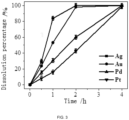
FIG. 3 is a curve graph of dissolution ratio of the dissolution reaction according toembodiment 1. - The present invention is further described in detail in conjunction with the attached drawings and specific embodiment.
- 500 mg material containing 1% of platinum was dispersed in 50 ml mixed solution of acetonitrile and dichloromethane (50:1). Then, 50 mg mixed-phase titanium dioxide photocatalyst was added. Ultraviolet irradiation proceeded in air for 4 h. The dissolution rate of platinum was 81.6%.
-
FIG. 1 and FIG. 2 are sample diagrams before and after the dissolution reaction, respectively. It can be seen that, the sample was gray black before dissolution and was white after the dissolution reaction fromFIG. 1 and 2 ; and ICP test data inFIG. 3 also apparently show that the ratio of platinum in the liquid increased continuously (a small amount of solution was evaporated to obtain dry solvent, and then water was added in an amount equivalent to that of the solvent to dilute the solvent for testing). - 500 mg material containing 1% of platinum was dispersed in 100 ml mixed solution of acetonitrile and dichloromethane (50:1). Then, 50 mg mixed-phase titanium dioxide photocatalyst was added. Ultraviolet irradiation proceeded in air for 4 h. The dissolution rate of platinum was 91.4%.
- 500 mg material containing 1% of platinum was dispersed in 200 ml mixed solution of acetonitrile and dichloromethane (50:1). Then, 50 mg mixed-phase titanium dioxide photocatalyst was added. Ultraviolet irradiation proceeded in air for 4 h. The dissolution rate of platinum was 100%.
- 500 mg material containing 1% of platinum was dispersed in 50 ml mixed solution of acetonitrile and dichloromethane (100:3). Then, 50 mg mixed-phase titanium dioxide photocatalyst was added. Ultraviolet irradiation proceeded in air for 4 h. The dissolution rate of platinum was 85.6%.
- 500 mg material containing 1% of platinum was dispersed in 50 ml mixed solution of acetonitrile and dichloromethane (200:3). Then, 50 mg mixed-phase titanium dioxide photocatalyst was added. Ultraviolet irradiation proceeded in air for 4 h. The dissolution rate of platinum was 75.2%.
- 500 mg material containing 1% of platinum was dispersed in 50 ml mixed solution of acetonitrile and dichloromethane (50:1). Then, 50 mg mixed-phase titanium dioxide photocatalyst was added. Visible-light irradiation proceeded in air for 4 h. The dissolution rate of platinum was 87.9%.
- 500 mg material containing 1% of platinum was dispersed in 50 ml mixed solution of acetonitrile and dichloromethane (50:1). Then, 50 mg mixed-phase titanium dioxide photocatalyst was added. Visible light irradiation proceeded in air for 8 h. The dissolution rate of platinum was 100%.
- 500 mg material containing 1% of platinum was dispersed in 50 ml mixed solution of acetonitrile and trichlorethanol (50:1). Then, 50 mg mixed-phase titanium dioxide photocatalyst was added. Ultraviolet irradiation proceeded in air for 4 h. The dissolution rate of platinum was 89%.
- 500 mg material containing 1% of platinum was dispersed in 50 ml mixed solution of acetonitrile and trichlormethane (50:1). Then, 50 mg commercial mixed-phase titanium dioxide catalyst was added. Ultraviolet irradiation proceeded in air for 4 h. The dissolution rate of platinum was 65.3%.
- 500 mg material containing 1% of platinum was dispersed in 50 ml mixed solution of acetonitrile and tetrachlormethane (50:1). Then, 50 mg commercial mixed-phase titanium dioxide catalyst was added. Ultraviolet irradiation proceeded in air for 4 h. The dissolution rate of platinum was 55%.
- 500 mg material containing 1% of platinum was dispersed in 50 ml mixed solution of phenylacetonitrile and dichloromethane (50:1). Then, 50 mg commercial mixed-phase titanium dioxide catalyst was added. Ultraviolet irradiation proceeded in air for 4 h.The dissolution rate of platinum was 73.8%.
- 500 mg material containing 1% of platinum was dispersed in 50 ml mixed solution of phenylacetonitrile and trichlorethanol (50:1). Then, 50 mg commercial mixed-phase titanium dioxide catalyst was added. Ultraviolet irradiation proceeded in air for 4 h.The dissolution rate of platinum was 80%.
- 500 mg material containing 1% of platinum was dispersed in 50 ml mixed solution of phenylacetonitrile and trichlormethane (50:1). Then, 50 mg commercial mixed-phase titanium dioxide catalyst was added. Ultraviolet irradiation proceeded in air for 4 h.The dissolution rate of platinum was 77.6%.
- 500 mg material containing 1% of platinum was dispersed in 50 ml mixed solution of phenylacetonitrile and tetrachlormethane (50:1). Then, 50 mg commercial mixed-phase titanium dioxide catalyst was added. Ultraviolet irradiation proceeded in air for 4 h. The dissolution rate of platinum was 68.2%.
- 500 mg material containing 1% of platinum was dispersed in 50 ml mixed solution of acetonitrile and dichloromethane (50:1). 50 mg commercial mixed-phase titanium dioxide catalyst was added. Ultraviolet irradiation proceeded for 4 h in an atmosphere with 25% of oxygen. The dissolution rate of platinum was 80%.
- 500 mg material containing 1% of platinum was dispersed in 50 ml mixed solution of acetonitrile and dichloromethane (50:1). Then, 50 mg commercial mixed-phase titanium dioxide catalyst was added. Ultraviolet irradiation proceeded for 4 h in an atmosphere with 50% of oxygen. The dissolution rate of platinum was 92.5%.
- 500 mg material containing 1% of platinum was dispersed in 50 ml mixed solution of acetonitrile and dichloromethane (50:1). Then, 50 mg commercial mixed-phase titanium dioxide catalyst was added. Ultraviolet irradiation proceeded for 4 h in an atmosphere with 75% of oxygen. The dissolution rate of platinum was 95.8%.
- 500 mg material containing 1% of platinum was dispersed in 50 ml mixed solution of acetonitrile and dichloromethane (50:1). Then, 50 mg commercial mixed-phase titanium dioxide catalyst was added. Ultraviolet irradiation proceeded for 4 h in an atmosphere with 100% of oxygen. The dissolution rate of platinum was 100%.
- 500 mg material containing 1% of platinum was dispersed in 50 ml mixed solution of acetonitrile and dichloromethane (50:1). Then, 100 mg commercial mixed-phase titanium dioxide catalyst was added. Ultraviolet irradiation proceeded in air for 4 h. The dissolution rate of platinum was 90.5%.
- 500 mg material containing 1% of platinum was dispersed in 50 ml mixed solution of acetonitrile and dichloromethane (50:1). Then, 200 mg commercial mixed-phase titanium dioxide catalyst was added. Ultraviolet irradiation proceeded in air for 4 h. The dissolution rate of platinum was 100%.
- 500 mg material containing 1% of palladium was dispersed in 50 ml mixed solution of acrylonitrile and trichlorethanol (1000:10). Then, 50 mg commercial mixed-phase titanium dioxide catalyst was added. Next, a gas containing 20% of oxygen was introduced. Irradiation by ultraviolet light with a 365 nm wavelength proceeded for 5 h. The dissolution rate of palladium was 88.4%.
- 500 mg material containing 1% of rhodium was dispersed in 70 ml mixed solution of malononitrile and trichlormethane (1000:900). Then, 80 mg mixed-phase titanium dioxide catalyst was added. Next, a gas containing 30% of oxygen was introduced. Irradiation by deep ultraviolet light with a 150 nm wavelength proceeded for 5 h. The dissolution rate of rhodium was 84.2%.
- 500 mg material containing 1% of iridium was dispersed in 90 ml mixed solution of benzyl cyanide and dichloroethylene (2000:800). Then, 95 mg commercial mixed-phase titanium dioxide catalyst was added. Next, a gas containing 50% of oxygen was introduced. Irradiation by ultraviolet light with a 365 nm wavelength proceeded for 5.5 h. The dissolution rate of iridium was 95.6%.
- 500 mg material containing 1% of gold was dispersed in 100 ml mixed solution of cyanoacetic acid and dichloroethylene (3000:700). Then, 150 mg commercial mixed-phase titanium dioxide catalyst was added. Next, a gas containing 30% of oxygen was introduced. Irradiation by ultraviolet light with a 365 nm wavelength proceeded for 3 h. The dissolution rate of gold was 100%.
- 500 mg material containing 1% of silver was dispersed in 120 ml mixed solution of melamine and dichloromethane (4000:600). Then, 130 mg cadmium sulfide catalyst was added. Next, a gas containing 40% of oxygen was introduced. Irradiation by visible light with a 420 nm wavelength proceeded for 4 h. The dissolution rate of silver was 100%.
- 500 mg material containing 1% of copper was dispersed in 100 ml mixed solution of acrylonitrile and trichlormethane (5000:500). Then, 150 mg cadmium sulfide catalyst was added. Next, a gas containing 50% of oxygen was introduced. Irradiation by visible light with a 550 nm wavelength proceeded for 7 h. The dissolution rate of copper was 100%.
- 500 mg material containing 1% of iron was dispersed in 160 ml mixed solution of acrylonitrile and trichlormethane (6000:400). Then, 150 mg cadmium sulfide catalyst was added. Next, a gas containing 60% of oxygen was introduced. Irradiation by visible light with a 550 nm wavelength proceeded for 7 h. The dissolution rate of iron was 100%.
- 500 mg material containing 1% of nickel was dispersed in 199 ml mixed solution of acrylonitrile and trichlormethane (10000:0). Then, 200 mg cadmium sulfide catalyst was added. Next, ozone was introduced. Irradiation by visible light with a 550 nm wavelength proceeded for 7.9 h. The dissolution rate of nickel was 100%.
- 500 mg material containing 1% of platinum was dispersed in 50 ml mixed solution of acetonitrile and dichloromethane (50:1). Then, 50 mg zinc porphyrin (Zn-porphyrin) catalyst was added. Visible-light irradiation proceeded in air for 4 h. The dissolution rate of platinum was 100%.
- 500 mg material containing 1% of platinum was dispersed in 50 ml mixed solution of acetonitrile and dichloromethane (50:1). Then, 50 mg porphyrin-based metallic organic compound (PCN-222) catalyst was added. Visible-light irradiation proceeded in air for 4 h. The dissolution rate of platinum was 100%.
- 500 mg material containing 1% of platinum was dispersed in 50 ml mixed solution of acetonitrile and dichloromethane (50:1). Then, 50 mg self-assembled porphyrin nano-sheet (SA-TCPP) catalyst was added. Visible-light irradiation proceeded in airfor 4 h. The dissolution rate of platinum was 100%.
- 500 mg material containing 1% of platinum was dispersed in 50 ml mixed solution of acetonitrile and dichloromethane (50:1). Then, 50 mg porphyrin loaded titanium dioxide (TCPP-TiO2) catalyst was added. Visible-light irradiation proceeded in air for 4 h. The dissolution rate of platinum was 100%.
- 500 mg material containing 1% of platinum was dispersed in 50 ml mixed solution of acetonitrile and dichloromethane (50:1). Then, 50 mg titanium dioxide (OV-TiO2) rich in oxygen defects catalyst was added. Visible-light irradiation proceeded in air for 4 h. The dissolution rate of platinum was 100%.
- 500 mg material containing 1% of platinum was dispersed in 50 ml mixed solution of acetonitrile and dichloromethane (50:1). Then, 50 mg hydroxyl modified titanium dioxide (OH-TiO2) catalyst was added. Visible-light irradiation proceeded in air for 4 h. The dissolution rate of platinum was 100%.
- 500 mg material containing 1% of platinum was dispersed in 50 ml mixed solution of acetonitrile and dichloromethane (50:1). Then, 50 mg two-dimensional titanium dioxide (2D-TiO2) catalyst was added. Visible-light irradiation proceeded in air for 4 h. The dissolution rate of platinum was 100%.
- 500 mg material containing 1% of platinum was dispersed in 50 ml mixed solution of acetonitrile and dichloromethane (50:1). Then, 50 mg titanium-dioxide and amino-modified metallic organic compound (TiO2@NH2-MIL-125) catalyst was added. Visible-light irradiation proceeded in air for 4 h. The dissolution rate of platinum was 100%.
- 500 mg material containing 1% of platinum was dispersed in 50 ml mixed solution of acetonitrile and dichloromethane (50:1). Then, 50 mg nitrogen doped titanium dioxide (N-TiO2) catalyst was added. Visible-light irradiation proceeded in air for 4 h. The dissolution rate of platinum was 100%.
- 500 mg material containing 1% of platinum was dispersed in 50 ml mixed solution of acetonitrile and dichloromethane (50:1). Then, 50 mg titanium dioxide (H-TiO2-x) rich in trivalent titanium ions catalyst was added. Visible-light irradiation proceeded in air for 4 h. The dissolution rate of platinum was 100%.
- 500 mg material containing 1% of platinum was dispersed in 50 ml mixed solution of 5 acetonitrile and dichloromethane (50:1). Then, 50 mg anatase-phase titanium dioxide catalyst was added. Ultraviolet irradiation proceeded in air for 4 h. The dissolution rate of platinum was 100%.
- 500 mg material containing 1% of platinum was dispersed in 50 ml mixed solution of acetonitrile and dichloromethane (50:1). Then, 50 mg molybdenum disulfide loaded titanium dioxide (MoS2/TiO2) catalyst was added. Visible-light irradiation proceeded in air for 4 h. The dissolution rate of platinum was 100%.
- 500 mg material containing 1% of platinum was dispersed in 50 ml mixed solution of acetonitrile and dichloromethane (50:1). Then, 50 mg a compound of molybdenum disulfide and cadmium sulfide (MoS2/CdS) compound catalyst was added. Visible-light irradiation proceeded in air for 4 h. The dissolution rate of platinum was 100%.
- 500 mg material containing 1% of platinum was dispersed in 50 ml mixed solution of acetonitrile and dichloromethane (50:1). Then, 50 mg cadmium sulfide quantum dots (CdS QDs) liquid catalyst was added. Visible light irradiation proceeded in air for 4 h. The dissolution rate of platinum was 100%.
- 500 mg material containing 1% of platinum was dispersed in 50 ml mixed solution of acetonitrile and dichloromethane (50:1). Then, 50 mg in-situ vulcanized oxide (W2S/WO3) catalyst was added. Visible-light irradiation proceeded in air for 4 h. The dissolution rate of platinum was 100%.
- 500 mg material containing 1% of platinum was dispersed in 50 ml mixed solution of acetonitrile and dichloromethane (50:1). Then, 50 mg phosphorus-doped indium oxide (P-In2O3) catalyst was added. Visible-light irradiation proceeded in air for 4 h. The dissolution rate of platinum was 100%.
- 500 mg material containing 1% of platinum was dispersed in 50 ml mixed solution of acetonitrile and dichloromethane (50:1). Then, 50 mg carbon nitride (g-C3Nx) with nitrogen defects catalyst was added. Visible-light irradiation proceeded in air for 4 h. The dissolution rate of platinum was 100%.
- 500 mg material containing 1% of platinum was dispersed in 50 ml mixed solution of acetonitrile and dichloromethane (50:1). Then, 50 mg carbon-dots modified carbon nitride (C Dots-C3N4) catalyst was added. Visible-light irradiation proceeded in air for 4h. The dissolution rate of platinum was 100%.
- 500 mg material containing 1% of platinum was dispersed in 50 ml mixed solution of acetonitrile and dichloromethane (50:1). Then, 50 mg enzyme catalyst was added. Visible-light irradiation proceeded in air for 4 h. The dissolution rate of platinum was 100%.
- 500 mg material containing 1% of platinum was dispersed in 50 ml mixed solution of acetonitrile and dichloromethane (50:1). Then, 50 mg compound catalyst of organic optical system and inorganic compound (PSII/Ru2S3/CdS) was added. Visible-light irradiation proceeded in air for 4 h. The dissolution rate of platinum was 100%.
- 500 mg material containing 1% of platinum was dispersed in 50 ml mixed solution of acetonitrile and dichloromethane (50:1). Then, 50 mg bismuth bromide nanosheets with (001) face exposed (BiOBr nanosheets) catalyst was added. Visible-light irradiation proceeded in air for 4 h. The dissolution rate of platinum was 100%.
- 500 mg material containing 1% of platinum was dispersed in 50 ml mixed solution of acetonitrile and dichloromethane (50:1). Then, 50 mg bismuth bromide with defects (Bi5O7Br) catalyst was added. Visible-light irradiation proceeded in air for 4 h. The dissolution rate of platinum was 100%.
- 500 mg material containing 1% of platinum was dispersed in 50 ml mixed solution of acetonitrile and dichloromethane (50:1). Then, 50 mg zinc oxide catalyst was added. Ultraviolet irradiation proceeded in air for 4 h. The dissolution rate of platinum was 100%.
- 500 mg material containing 1% of platinum was dispersed in 50 ml mixed solution of acetonitrile and dichloromethane (50:1). Then, 50 mg copper oxide catalyst was added. Ultraviolet irradiation proceeded in air for 4 h. The dissolution rate of platinum was 100%.
- 500 mg material containing 1% of platinum was dispersed in 50 ml mixed solution of acetonitrile and dichloromethane (50:1). Then, 50 mg bismuth oxide catalyst was added. Ultraviolet irradiation proceeded in air for 4 h. The dissolution rate of platinum was 100%.
- 500 mg material containing 1% of platinum was dispersed in 50 ml mixed solution of acetonitrile and dichloromethane (50:1). Then, 50 mg ferric oxide catalyst was added. Ultraviolet irradiation proceeded in air for 4 h. The dissolution rate of platinum was 100%.
- 500 mg material containing 1% of platinum was dispersed in 50 ml mixed solution of acetonitrile and dichloromethane (50:1). Then, 50 mg gallium oxide catalyst was added. Ultraviolet irradiation proceeded in air for 4 h. The dissolution rate of platinum was 100%.
Claims (9)
- A method for dissolving metals by photocatalysis, characterized in that the method comprises steps of dispersing a metal-containing material to be dissolved in a mixed solution containing a photocatalyst and further comprising cyanide and organic chloride, and performing irradiation for a period of time to dissolve the metals, and wherein the light wavelength of the irradiation is 150 - 1500 nm, characterized in that the cyanide comprises one or several ones of acrylonitrile, acetonitrile, phenylacetonitrile, cyanoacetic acid, malononitrile, benzyl cyanide and melamine; and characterized in that the organic chloride includes one or several ones of dichloromethane, trichlormethane, dichloroethylene, trichloroethane, trichlorethanol and tetrachlormethane, and performing irradiation for a period of time to dissolve metals.
- The method for dissolving metals by photocatalysis according to claim 1, wherein the metals contained in the metal-containing material to be dissolved comprise a noble metal or a common metal.
- The method for dissolving metals by photocatalysis according to claim 2, wherein the noble metal comprises one or several ones of ruthenium, rhodium, iridium, gold, silver, platinum and palladium, and the common metal comprises one or several ones of iron, manganese, chromium, zinc, tin, lead, aluminum, copper, nickel and cobalt.
- The method for dissolving metals by photocatalysis according to claim 1, wherein the photocatalyst comprises various organic, inorganic and semiconductor photocatalytic materials and their modified, surface finished and mutually compounded photocatalytic materials.
- The method for dissolving metals by photocatalysis according to claim 4, wherein the organic photocatalytic materials comprise carbon nitride, porphyrin or enzyme; the inorganic photocatalytic materials comprise titanium dioxide, zinc oxide, copper oxide, bismuth oxide, ferric oxide, gallium oxide, molybdenum disulfide, cadmium sulfide, bismuth bromide, indium oxide and tungsten oxide; the semiconductor photocatalytic materials and their modified, surface finished and mutually compounded photocatalytic materials comprise titanium dioxide material with an oxygen vacancy, hydroxyl modified titanium dioxide material, two-dimensional titanium dioxide material, nitrogen doped titanium dioxide material, porphyrin-sensitized titanium dioxide, self-assembled porphyrin material where porphyrin includes protoporphyrin, iron porphyrin, magnesium porphyrin or zinc porphyrin, titanium- dioxide and amino-modified metallic organic compound material, molybdenum disulfide loaded titanium dioxide, cadmium sulfide, cadmium sulfide quantum dot material, in-situ vulcanized tungsten oxide composite material, phosphorus-doped indium oxide material, carbon nitride composite material with nitrogen defects, carbon nitride material modified by carbon material where the carbon material includes carbon dots, graphene or carbon nano-tubes, layered bismuth bromide material, bismuth bromide material with oxygen defects, catalyzing enzyme material, and composite material of organic optical system and an inorganic catalyst.
- The method for dissolving metals by photocatalysis according to claim 1 or 5, wherein the mass ratio of the cyanide to the organic chloride is 10-10000 : 10-1000.
- The method for dissolving metals by photocatalysis according to claim 1, wherein the content of the photocatalyst in the mixed solution is 0.25 - 4 mg/mL, and the mass ratio of the metal-containing material to be dissolved to the photocatalyst is 1: 0.1 - 0.4.
- The method for dissolving metals by photocatalysis according to claim 1, wherein the irradiation time is 4-8 h.
- The method for dissolving metals by photocatalysis according to claim 1, wherein an oxygen-containing gas or a chemical substance which can generate oxygen is introduced into the mixed solution in the dissolution process, and the chemical substance which is capable of generating oxygen comprises one or several ones of ozone, hydrogen peroxide and sodium peroxide.
Applications Claiming Priority (2)
| Application Number | Priority Date | Filing Date | Title |
|---|---|---|---|
| CN201910294530.4A CN111809063B (en) | 2019-04-12 | 2019-04-12 | A kind of photocatalytic metal dissolution method |
| PCT/CN2019/110382 WO2020206962A1 (en) | 2019-04-12 | 2019-10-10 | Photocatalysis method for dissolving metal |
Publications (4)
| Publication Number | Publication Date |
|---|---|
| EP3875617A1 EP3875617A1 (en) | 2021-09-08 |
| EP3875617A4 EP3875617A4 (en) | 2022-02-23 |
| EP3875617C0 EP3875617C0 (en) | 2025-06-04 |
| EP3875617B1 true EP3875617B1 (en) | 2025-06-04 |
Family
ID=72750845
Family Applications (1)
| Application Number | Title | Priority Date | Filing Date |
|---|---|---|---|
| EP19923873.4A Active EP3875617B1 (en) | 2019-04-12 | 2019-10-10 | Photocatalysis method for dissolving metal |
Country Status (5)
| Country | Link |
|---|---|
| US (1) | US11920212B2 (en) |
| EP (1) | EP3875617B1 (en) |
| JP (1) | JP7016569B2 (en) |
| CN (1) | CN111809063B (en) |
| WO (1) | WO2020206962A1 (en) |
Families Citing this family (27)
| Publication number | Priority date | Publication date | Assignee | Title |
|---|---|---|---|---|
| CN111809063B (en) * | 2019-04-12 | 2021-10-22 | 上海师范大学 | A kind of photocatalytic metal dissolution method |
| CN110496612B (en) * | 2019-07-22 | 2022-05-06 | 陕西师范大学 | A kind of method for anaerobic catalytic combustion of dichloromethane to construct metal oxide oxygen vacancies |
| CN111871437A (en) * | 2020-06-14 | 2020-11-03 | 盐城师范学院 | Application method of carbon-nitrogen-doped indium oxide semiconductor photocatalytic material in preparation of hydrogen |
| CN113088689B (en) * | 2021-03-24 | 2023-03-24 | 上海师范大学 | Method for dissolving noble metal in aqueous solution in photocatalytic selective manner |
| CN113373307B (en) * | 2021-04-28 | 2022-12-16 | 上海师范大学 | Method for carrying out photocatalytic metal dissolution by using phosphate-modified photocatalyst |
| CN113371902B (en) * | 2021-05-13 | 2022-09-16 | 西北矿冶研究院 | Method for degrading COD |
| CN113203859B (en) * | 2021-05-13 | 2022-08-26 | 桂林电子科技大学 | Method for visually detecting GPC3 based on H-rGO-Pt @ Pd NPs nanoenzyme |
| CN113998734B (en) * | 2021-11-09 | 2024-01-26 | 淮阴师范学院 | Bi 5 O 7 Preparation method of Br nanosheets |
| CN114134326A (en) * | 2021-11-25 | 2022-03-04 | 上海师范大学 | Metal-containing mixture purification and separation system |
| CN114053978A (en) * | 2021-11-25 | 2022-02-18 | 上海师范大学 | A kind of metal-containing waste purification device |
| CN114685801B (en) * | 2022-03-08 | 2022-12-13 | 清华大学 | Precious metal recovery organic polymer and preparation method and application thereof |
| CN114644320B (en) * | 2022-03-18 | 2023-05-23 | 浙江理工大学 | Photocatalytic hydrogen production system and application thereof |
| CN114540882B (en) * | 2022-03-25 | 2023-08-11 | 四川大学 | Bismuth metal nanosheets with abundant active sites, preparation method and application thereof |
| CN115449643A (en) * | 2022-08-12 | 2022-12-09 | 上海师范大学 | Microwave-photocatalysis method for accelerating dissolution of noble metal |
| CN115896456A (en) * | 2022-11-01 | 2023-04-04 | 上海师范大学 | A method for accelerating the dissolution of metal by ozone |
| CN115814797B (en) * | 2022-12-28 | 2024-04-19 | 桂润环境科技股份有限公司 | Preparation method of ozone catalytic oxidation agent based on zero-valent iron surface hydroxylation treatment |
| CN116443856B (en) * | 2023-03-28 | 2025-03-21 | 上海大学 | A two-dimensional carbon quantum dot/MoS2 nanosheet composite material and preparation method thereof |
| CN116328778B (en) * | 2023-04-06 | 2024-10-22 | 吉林大学 | Plasmon metallic copper-metal oxide composite structure catalyst and method for catalyzing gas phase formic acid to prepare hydrogen under room temperature visible light |
| CN116571282A (en) * | 2023-05-24 | 2023-08-11 | 贵州大学 | A NMTi-OVs cake-like oxygen-rich vacancy nanomaterial and its application |
| CN116920907A (en) * | 2023-07-20 | 2023-10-24 | 浙江师范大学 | Preparation method of Mn-Cd-S solid solution/nitrogen doped carbon/transition metal nano heterojunction, product and application thereof |
| CN117123274B (en) * | 2023-08-28 | 2024-04-19 | 广东省科学院中乌焊接研究所 | Porphyrin-based MOF/carbon nitride heterojunction photocatalytic composite material and preparation method and application thereof |
| CN117756105A (en) * | 2023-11-08 | 2024-03-26 | 江苏小芯科技有限公司 | Molybdenum disulfide/graphene-doped nanomaterial and preparation method and application thereof |
| CN117926006A (en) * | 2023-12-22 | 2024-04-26 | 上海师范大学 | Leaching solution and leaching method for dissolving silver |
| CN118059949A (en) * | 2024-01-23 | 2024-05-24 | 中国科学院化学研究所 | A photothermal catalyst for driving CO2 methanation in a gas-solid system and its preparation method and application |
| CN118179590A (en) * | 2024-03-13 | 2024-06-14 | 厦门大学 | A photocatalyst and method based on chlorine-mediated assisted TCPP photocatalytic methane oxidation |
| CN118059915A (en) * | 2024-03-26 | 2024-05-24 | 福州大学 | Calcium-modified nitrogen-doped carbon catalytic materials containing oxygen defects and their preparation and application |
| CN120719136B (en) * | 2025-07-03 | 2026-05-01 | 长安大学 | Method for photocatalytically dissolving copper in electronic waste |
Family Cites Families (15)
| Publication number | Priority date | Publication date | Assignee | Title |
|---|---|---|---|---|
| ZW18286A1 (en) | 1985-09-10 | 1987-05-27 | Butler Dean | Leaching process |
| JPH06102148B2 (en) | 1986-01-22 | 1994-12-14 | 株式会社日立製作所 | Method and apparatus for oxidizing or reducing dissolved substances |
| JPH01294830A (en) * | 1988-05-19 | 1989-11-28 | Agency Of Ind Science & Technol | Method for dissolving metal |
| CN1032597C (en) | 1991-12-26 | 1996-08-21 | 中国科学院兰州化学物理研究所 | Method for recovering low-concentration gold |
| JP3694862B2 (en) | 2001-09-27 | 2005-09-14 | 福井県 | Photocatalyst-supported organic polymer material and process for producing the same |
| US20050044991A1 (en) * | 2002-08-19 | 2005-03-03 | Xuming Guo | Photochemical transformation of metallic and non-metallic ions in an aqueous environment |
| CN102274740B (en) * | 2011-06-17 | 2013-02-06 | 浙江大学 | Novel method for preparing metal cyanide nanoparticles |
| RU2475547C1 (en) * | 2011-06-22 | 2013-02-20 | Федеральное государственное бюджетное образовательное учреждение высшего профессионального образования "Забайкальский государственный университет" (ФГБОУ ВПО "ЗабГУ") | Extraction method of gold from mineral raw material |
| JP2014105346A (en) | 2012-11-26 | 2014-06-09 | Toshiba Corp | Method for recovering valuable metal and system for recovering valuable metal |
| JP6076925B2 (en) | 2014-02-25 | 2017-02-08 | 株式会社東芝 | Noble metal recovery method and recovery system |
| CN105603434B (en) * | 2016-03-20 | 2018-04-13 | 华南理工大学 | A kind of method of photocatalysis PCB acidic etching liquid recyclings |
| CN107586966B (en) | 2016-07-08 | 2020-09-15 | 昆明冶金高等专科学校 | A method for rapidly activating and dissolving insoluble precious metals |
| CN108658133B (en) | 2018-03-30 | 2020-08-07 | 西安瑞鑫科金属材料有限责任公司 | Rapid dissolving method of insoluble metal iridium |
| CN108906102A (en) * | 2018-06-11 | 2018-11-30 | 中国科学院地质与地球物理研究所兰州油气资源研究中心 | A method of uranium extraction is carried out using photocatalysis technology under visible light |
| CN111809063B (en) * | 2019-04-12 | 2021-10-22 | 上海师范大学 | A kind of photocatalytic metal dissolution method |
-
2019
- 2019-04-12 CN CN201910294530.4A patent/CN111809063B/en active Active
- 2019-10-10 JP JP2021524243A patent/JP7016569B2/en active Active
- 2019-10-10 EP EP19923873.4A patent/EP3875617B1/en active Active
- 2019-10-10 WO PCT/CN2019/110382 patent/WO2020206962A1/en not_active Ceased
- 2019-10-10 US US17/042,775 patent/US11920212B2/en active Active
Also Published As
| Publication number | Publication date |
|---|---|
| EP3875617A1 (en) | 2021-09-08 |
| JP7016569B2 (en) | 2022-02-07 |
| JP2021536532A (en) | 2021-12-27 |
| EP3875617C0 (en) | 2025-06-04 |
| CN111809063B (en) | 2021-10-22 |
| US11920212B2 (en) | 2024-03-05 |
| WO2020206962A1 (en) | 2020-10-15 |
| CN111809063A (en) | 2020-10-23 |
| US20210371952A1 (en) | 2021-12-02 |
| EP3875617A4 (en) | 2022-02-23 |
Similar Documents
| Publication | Publication Date | Title |
|---|---|---|
| EP3875617A1 (en) | Photocatalysis method for dissolving metal | |
| Chen et al. | Enhanced H2O2 utilization efficiency in Fenton-like system for degradation of emerging contaminants: Oxygen vacancy-mediated activation of O2 | |
| Chen et al. | Selective recovery of precious metals through photocatalysis | |
| Wu et al. | Electrocatalytic nitrate reduction: Selectivity at the crossroads between ammonia and nitrogen | |
| Fu et al. | Recent advances and challenges of electrochemical ammonia synthesis | |
| Meng et al. | Electrosynthesis of urea from nitrite and CO2 over oxygen vacancy-rich ZnO porous nanosheets | |
| Zhou et al. | An efficient strategy for selective oxidation of ammonia nitrogen into N2 over BiOCl photocatalyst | |
| CN113088689B (en) | Method for dissolving noble metal in aqueous solution in photocatalytic selective manner | |
| Marotta et al. | Selective oxidation of benzyl alcohol to benzaldehyde in water by TiO2/Cu (II)/UV solar system | |
| CN112553465A (en) | Photocatalytic selective metal dissolving agent and dissolving method | |
| Arellano et al. | Effects of pH on the degradation of aqueous ferricyanide by photolysis and photocatalysis under solar radiation | |
| Mogyorósi et al. | Comparison of the substrate dependent performance of Pt-, Au-and Ag-doped TiO2 photocatalysts in H2-production and in decomposition of various organics | |
| US20090315232A1 (en) | Dissolution Apparatus for Noble Metals | |
| Vu et al. | High-Rate, High-selectivity electrochemical oxidation of ammonia to nitrite with a silver-based catalyst | |
| Mondol et al. | Selective electrocatalytic nitrate reduction to ammonia using nafion-covered Cu electrodeposits | |
| Ekande et al. | Facile synthesis of graphitic carbon nitride from acetic acid pretreatment to activate persulfate in presence of blue light for photocatalytic removal of metronidazole | |
| Le et al. | Photo-Fenton mineralization of aquatic organic pollutants in visible-light-driven photocatalysis: Revisiting Fe3+ reduction and noble metal necessity | |
| CN118835095A (en) | Method for dissolving noble metal by photocatalysis | |
| Ranga et al. | Photoelectrochemical integrated treatment of textile wastewater by prepared optimized Ni-doped PbS quantum dots on WO3/BiVO4 along with H2 production | |
| CN115449630B (en) | Method for selectively leaching metal by photocatalysis of nitrile-amine-containing solution system | |
| He et al. | Molybdenum nitride (γ-Mo2N) as a novel co-catalyst to enhance Fe (III)/Fe (II) cycle for homogeneous and heterogeneous peroxymonosulfate activation: performance and mechanism | |
| Feijoo et al. | A combined experimental and computational approach to unravel degradation mechanisms in electrochemical wastewater treatment | |
| Chen et al. | Study on the performance of metal-loaded carbon black cathode for electro-Fenton degradation of SMX | |
| Xiao et al. | Enhanced photoelectrocatalytic breakdown of Cu-cyanide complexes and copper recovery using photoelectrogenerated free chlorine | |
| CN113430371A (en) | Metal leaching method based on ozone and ionic liquid |
Legal Events
| Date | Code | Title | Description |
|---|---|---|---|
| STAA | Information on the status of an ep patent application or granted ep patent |
Free format text: STATUS: THE INTERNATIONAL PUBLICATION HAS BEEN MADE |
|
| PUAI | Public reference made under article 153(3) epc to a published international application that has entered the european phase |
Free format text: ORIGINAL CODE: 0009012 |
|
| STAA | Information on the status of an ep patent application or granted ep patent |
Free format text: STATUS: REQUEST FOR EXAMINATION WAS MADE |
|
| 17P | Request for examination filed |
Effective date: 20210602 |
|
| AK | Designated contracting states |
Kind code of ref document: A1 Designated state(s): AL AT BE BG CH CY CZ DE DK EE ES FI FR GB GR HR HU IE IS IT LI LT LU LV MC MK MT NL NO PL PT RO RS SE SI SK SM TR |
|
| A4 | Supplementary search report drawn up and despatched |
Effective date: 20220125 |
|
| RIC1 | Information provided on ipc code assigned before grant |
Ipc: B01J 35/00 20060101ALI20220119BHEP Ipc: C22B 3/16 20060101ALI20220119BHEP Ipc: C22B 11/00 20060101AFI20220119BHEP |
|
| DAV | Request for validation of the european patent (deleted) | ||
| DAX | Request for extension of the european patent (deleted) | ||
| RIC1 | Information provided on ipc code assigned before grant |
Ipc: B01J 31/02 20060101ALI20241127BHEP Ipc: B01J 31/00 20060101ALI20241127BHEP Ipc: B01J 35/39 20240101ALI20241127BHEP Ipc: B01J 27/14 20060101ALI20241127BHEP Ipc: B01J 27/051 20060101ALI20241127BHEP Ipc: B01J 27/045 20060101ALI20241127BHEP Ipc: B01J 27/04 20060101ALI20241127BHEP Ipc: B01J 23/06 20060101ALI20241127BHEP Ipc: B01J 21/06 20060101ALI20241127BHEP Ipc: B01J 35/00 20060101ALI20241127BHEP Ipc: C22B 3/16 20060101ALI20241127BHEP Ipc: C22B 11/00 20060101AFI20241127BHEP |
|
| GRAP | Despatch of communication of intention to grant a patent |
Free format text: ORIGINAL CODE: EPIDOSNIGR1 |
|
| STAA | Information on the status of an ep patent application or granted ep patent |
Free format text: STATUS: GRANT OF PATENT IS INTENDED |
|
| INTG | Intention to grant announced |
Effective date: 20250108 |
|
| GRAS | Grant fee paid |
Free format text: ORIGINAL CODE: EPIDOSNIGR3 |
|
| GRAA | (expected) grant |
Free format text: ORIGINAL CODE: 0009210 |
|
| STAA | Information on the status of an ep patent application or granted ep patent |
Free format text: STATUS: THE PATENT HAS BEEN GRANTED |
|
| AK | Designated contracting states |
Kind code of ref document: B1 Designated state(s): AL AT BE BG CH CY CZ DE DK EE ES FI FR GB GR HR HU IE IS IT LI LT LU LV MC MK MT NL NO PL PT RO RS SE SI SK SM TR |
|
| REG | Reference to a national code |
Ref country code: GB Ref legal event code: FG4D |
|
| REG | Reference to a national code |
Ref country code: CH Ref legal event code: EP |
|
| REG | Reference to a national code |
Ref country code: DE Ref legal event code: R096 Ref document number: 602019070930 Country of ref document: DE |
|
| REG | Reference to a national code |
Ref country code: IE Ref legal event code: FG4D |
|
| U01 | Request for unitary effect filed |
Effective date: 20250616 |
|
| U07 | Unitary effect registered |
Designated state(s): AT BE BG DE DK EE FI FR IT LT LU LV MT NL PT RO SE SI Effective date: 20250625 |
|
| PG25 | Lapsed in a contracting state [announced via postgrant information from national office to epo] |
Ref country code: ES Free format text: LAPSE BECAUSE OF FAILURE TO SUBMIT A TRANSLATION OF THE DESCRIPTION OR TO PAY THE FEE WITHIN THE PRESCRIBED TIME-LIMIT Effective date: 20250604 |
|
| PG25 | Lapsed in a contracting state [announced via postgrant information from national office to epo] |
Ref country code: GR Free format text: LAPSE BECAUSE OF FAILURE TO SUBMIT A TRANSLATION OF THE DESCRIPTION OR TO PAY THE FEE WITHIN THE PRESCRIBED TIME-LIMIT Effective date: 20250905 Ref country code: NO Free format text: LAPSE BECAUSE OF FAILURE TO SUBMIT A TRANSLATION OF THE DESCRIPTION OR TO PAY THE FEE WITHIN THE PRESCRIBED TIME-LIMIT Effective date: 20250904 |
|
| PG25 | Lapsed in a contracting state [announced via postgrant information from national office to epo] |
Ref country code: PL Free format text: LAPSE BECAUSE OF FAILURE TO SUBMIT A TRANSLATION OF THE DESCRIPTION OR TO PAY THE FEE WITHIN THE PRESCRIBED TIME-LIMIT Effective date: 20250604 |
|
| PG25 | Lapsed in a contracting state [announced via postgrant information from national office to epo] |
Ref country code: HR Free format text: LAPSE BECAUSE OF FAILURE TO SUBMIT A TRANSLATION OF THE DESCRIPTION OR TO PAY THE FEE WITHIN THE PRESCRIBED TIME-LIMIT Effective date: 20250604 |
|
| PG25 | Lapsed in a contracting state [announced via postgrant information from national office to epo] |
Ref country code: RS Free format text: LAPSE BECAUSE OF FAILURE TO SUBMIT A TRANSLATION OF THE DESCRIPTION OR TO PAY THE FEE WITHIN THE PRESCRIBED TIME-LIMIT Effective date: 20250904 |
|
| U20 | Renewal fee for the european patent with unitary effect paid |
Year of fee payment: 7 Effective date: 20250917 |
|
| PG25 | Lapsed in a contracting state [announced via postgrant information from national office to epo] |
Ref country code: IS Free format text: LAPSE BECAUSE OF FAILURE TO SUBMIT A TRANSLATION OF THE DESCRIPTION OR TO PAY THE FEE WITHIN THE PRESCRIBED TIME-LIMIT Effective date: 20251004 |
|
| PGFP | Annual fee paid to national office [announced via postgrant information from national office to epo] |
Ref country code: GB Payment date: 20251024 Year of fee payment: 7 |
|
| PG25 | Lapsed in a contracting state [announced via postgrant information from national office to epo] |
Ref country code: SM Free format text: LAPSE BECAUSE OF FAILURE TO SUBMIT A TRANSLATION OF THE DESCRIPTION OR TO PAY THE FEE WITHIN THE PRESCRIBED TIME-LIMIT Effective date: 20250604 |
|
| PG25 | Lapsed in a contracting state [announced via postgrant information from national office to epo] |
Ref country code: CZ Free format text: LAPSE BECAUSE OF FAILURE TO SUBMIT A TRANSLATION OF THE DESCRIPTION OR TO PAY THE FEE WITHIN THE PRESCRIBED TIME-LIMIT Effective date: 20250604 |
|
| PG25 | Lapsed in a contracting state [announced via postgrant information from national office to epo] |
Ref country code: SK Free format text: LAPSE BECAUSE OF FAILURE TO SUBMIT A TRANSLATION OF THE DESCRIPTION OR TO PAY THE FEE WITHIN THE PRESCRIBED TIME-LIMIT Effective date: 20250604 |
|
| PLBE | No opposition filed within time limit |
Free format text: ORIGINAL CODE: 0009261 |
|
| STAA | Information on the status of an ep patent application or granted ep patent |
Free format text: STATUS: NO OPPOSITION FILED WITHIN TIME LIMIT |
|
| REG | Reference to a national code |
Ref country code: CH Ref legal event code: L10 Free format text: ST27 STATUS EVENT CODE: U-0-0-L10-L00 (AS PROVIDED BY THE NATIONAL OFFICE) Effective date: 20260416 |
|
| 26N | No opposition filed |
Effective date: 20260305 |
|
| REG | Reference to a national code |
Ref country code: CH Ref legal event code: H13 Free format text: ST27 STATUS EVENT CODE: U-0-0-H10-H13 (AS PROVIDED BY THE NATIONAL OFFICE) Effective date: 20260527 |
|
| PG25 | Lapsed in a contracting state [announced via postgrant information from national office to epo] |
Ref country code: MC Free format text: LAPSE BECAUSE OF FAILURE TO SUBMIT A TRANSLATION OF THE DESCRIPTION OR TO PAY THE FEE WITHIN THE PRESCRIBED TIME-LIMIT Effective date: 20250604 |
|
| PG25 | Lapsed in a contracting state [announced via postgrant information from national office to epo] |
Ref country code: CH Free format text: LAPSE BECAUSE OF NON-PAYMENT OF DUE FEES Effective date: 20251031 |