EP3875445A1 - Ignition powder, preparation method therefor and use thereof, and airbag gas generator - Google Patents
Ignition powder, preparation method therefor and use thereof, and airbag gas generator Download PDFInfo
- Publication number
- EP3875445A1 EP3875445A1 EP19931228.1A EP19931228A EP3875445A1 EP 3875445 A1 EP3875445 A1 EP 3875445A1 EP 19931228 A EP19931228 A EP 19931228A EP 3875445 A1 EP3875445 A1 EP 3875445A1
- Authority
- EP
- European Patent Office
- Prior art keywords
- powder
- ignition
- mixing
- ignition powder
- preparation
- Prior art date
- Legal status (The legal status is an assumption and is not a legal conclusion. Google has not performed a legal analysis and makes no representation as to the accuracy of the status listed.)
- Granted
Links
Images



Classifications
-
- B—PERFORMING OPERATIONS; TRANSPORTING
- B60—VEHICLES IN GENERAL
- B60R—VEHICLES, VEHICLE FITTINGS, OR VEHICLE PARTS, NOT OTHERWISE PROVIDED FOR
- B60R21/00—Arrangements or fittings on vehicles for protecting or preventing injuries to occupants or pedestrians in case of accidents or other traffic risks
- B60R21/02—Occupant safety arrangements or fittings, e.g. crash pads
- B60R21/16—Inflatable occupant restraints or confinements designed to inflate upon impact or impending impact, e.g. air bags
- B60R21/26—Inflatable occupant restraints or confinements designed to inflate upon impact or impending impact, e.g. air bags characterised by the inflation fluid source or means to control inflation fluid flow
- B60R21/264—Inflatable occupant restraints or confinements designed to inflate upon impact or impending impact, e.g. air bags characterised by the inflation fluid source or means to control inflation fluid flow using instantaneous generation of gas, e.g. pyrotechnic
-
- C—CHEMISTRY; METALLURGY
- C06—EXPLOSIVES; MATCHES
- C06D—MEANS FOR GENERATING SMOKE OR MIST; GAS-ATTACK COMPOSITIONS; GENERATION OF GAS FOR BLASTING OR PROPULSION (CHEMICAL PART)
- C06D5/00—Generation of pressure gas, e.g. for blasting cartridges, starting cartridges, rockets
- C06D5/06—Generation of pressure gas, e.g. for blasting cartridges, starting cartridges, rockets by reaction of two or more solids
-
- C—CHEMISTRY; METALLURGY
- C06—EXPLOSIVES; MATCHES
- C06B—EXPLOSIVES OR THERMIC COMPOSITIONS; MANUFACTURE THEREOF; USE OF SINGLE SUBSTANCES AS EXPLOSIVES
- C06B33/00—Compositions containing particulate metal, alloy, boron, silicon, selenium or tellurium with at least one oxygen supplying material which is either a metal oxide or a salt, organic or inorganic, capable of yielding a metal oxide
- C06B33/12—Compositions containing particulate metal, alloy, boron, silicon, selenium or tellurium with at least one oxygen supplying material which is either a metal oxide or a salt, organic or inorganic, capable of yielding a metal oxide the material being two or more oxygen-yielding compounds
- C06B33/14—Compositions containing particulate metal, alloy, boron, silicon, selenium or tellurium with at least one oxygen supplying material which is either a metal oxide or a salt, organic or inorganic, capable of yielding a metal oxide the material being two or more oxygen-yielding compounds at least one being an inorganic nitrogen-oxygen salt
-
- B—PERFORMING OPERATIONS; TRANSPORTING
- B60—VEHICLES IN GENERAL
- B60R—VEHICLES, VEHICLE FITTINGS, OR VEHICLE PARTS, NOT OTHERWISE PROVIDED FOR
- B60R21/00—Arrangements or fittings on vehicles for protecting or preventing injuries to occupants or pedestrians in case of accidents or other traffic risks
- B60R21/02—Occupant safety arrangements or fittings, e.g. crash pads
- B60R21/16—Inflatable occupant restraints or confinements designed to inflate upon impact or impending impact, e.g. air bags
- B60R21/26—Inflatable occupant restraints or confinements designed to inflate upon impact or impending impact, e.g. air bags characterised by the inflation fluid source or means to control inflation fluid flow
- B60R21/264—Inflatable occupant restraints or confinements designed to inflate upon impact or impending impact, e.g. air bags characterised by the inflation fluid source or means to control inflation fluid flow using instantaneous generation of gas, e.g. pyrotechnic
- B60R21/2644—Inflatable occupant restraints or confinements designed to inflate upon impact or impending impact, e.g. air bags characterised by the inflation fluid source or means to control inflation fluid flow using instantaneous generation of gas, e.g. pyrotechnic using only solid reacting substances, e.g. pellets, powder
-
- C—CHEMISTRY; METALLURGY
- C06—EXPLOSIVES; MATCHES
- C06B—EXPLOSIVES OR THERMIC COMPOSITIONS; MANUFACTURE THEREOF; USE OF SINGLE SUBSTANCES AS EXPLOSIVES
- C06B21/00—Apparatus or methods for working-up explosives, e.g. forming, cutting, drying
- C06B21/0008—Compounding the ingredient
-
- C—CHEMISTRY; METALLURGY
- C06—EXPLOSIVES; MATCHES
- C06B—EXPLOSIVES OR THERMIC COMPOSITIONS; MANUFACTURE THEREOF; USE OF SINGLE SUBSTANCES AS EXPLOSIVES
- C06B21/00—Apparatus or methods for working-up explosives, e.g. forming, cutting, drying
- C06B21/0033—Shaping the mixture
- C06B21/0041—Shaping the mixture by compression
-
- C—CHEMISTRY; METALLURGY
- C06—EXPLOSIVES; MATCHES
- C06B—EXPLOSIVES OR THERMIC COMPOSITIONS; MANUFACTURE THEREOF; USE OF SINGLE SUBSTANCES AS EXPLOSIVES
- C06B21/00—Apparatus or methods for working-up explosives, e.g. forming, cutting, drying
- C06B21/0033—Shaping the mixture
- C06B21/0066—Shaping the mixture by granulation, e.g. flaking
-
- C—CHEMISTRY; METALLURGY
- C06—EXPLOSIVES; MATCHES
- C06C—DETONATING OR PRIMING DEVICES; FUSES; CHEMICAL LIGHTERS; PYROPHORIC COMPOSITIONS
- C06C15/00—Pyrophoric compositions; Flints
-
- C—CHEMISTRY; METALLURGY
- C06—EXPLOSIVES; MATCHES
- C06D—MEANS FOR GENERATING SMOKE OR MIST; GAS-ATTACK COMPOSITIONS; GENERATION OF GAS FOR BLASTING OR PROPULSION (CHEMICAL PART)
- C06D5/00—Generation of pressure gas, e.g. for blasting cartridges, starting cartridges, rockets
Definitions
- the present disclosure relates to an ignition powder agent composition with reliable ignition performance and a preparation method therefor, in particular to an ignition powder with reliable ignition performance, good moisture absorption resistance, and capability of being efficiently produced, belonging to the technical field of ignition powders.
- Ignition powders are an important type of initiating explosive material, and are commonly used to receive external stimulation to ignite other powders, such as propellant powders and propelling agents.
- the present disclosure relates to an ignition composition for a gas generator, for an airbag device in a motor vehicle.
- the performance of the ignition powder will directly affect the normal operation of a whole constraint system, therefore it occupies a quite important position in a charging system.
- ignition powders include black powder, 5AT, and strontium nitrate type, B-KNO 3 ignition powder, Mg-PTFE ignition powder, and Al-KClO 4 ignition powder. Since the ignition powder needs to ignite a gas generating powder, a burning temperature, energy, and residue particles of the ignition powder have certain requirements, so that certain ignition reliability can be ensured.
- Black powder is a common ignition powder, and has the advantages of low price, relatively high flame sensitivity, and relatively high specific volume, but the energy thereof is too low, and the combustion product is mainly gas, with fewer residues, and it is difficult to ignite some insensitive fire powders or pyrotechnic agents.
- the black powder is suitable for application scenarios in which the ignition delay time is not required.
- the delay time is generally required to be less than 10 ms for the gas generator, so the black powder is rarely used as the ignition powder in the gas generator; although the energy of the 5AT and strontium nitrate type ignition powder is improved, as 5AT and strontium nitrate are both temperature sensitive substances, the ignition delay problem easily occurs at low temperature of -35 °C, furthermore, the performance of the generator at low temperature is quite different from the performance at high temperature and normal temperature.
- Using such type of ignition powder requires special design of the structure of the airbag gas generator (i.e. the gas generator of a safety airbag), and the ignition delay problem at low temperature is counteracted through improvement on the structure.
- the 5AT and strontium nitrate raw materials bring severe condition requirements to the manufacture, assembly, and storage, and even bring a certain risk to the use and storage process of the generator;
- the B/KNO 3 type ignition powder has the advantages of high energy, high burning temperature, and many residue particles, and is currently a widely used ignition powder on the airbag gas generator, but it is expensive, and meanwhile, the content of potassium nitrate in the formula generally may reach 70% or more, and a large amount of potassium oxide is discharged from the gas generator after burning, which easily causes harmful substances in the gas composition to exceed the standard.
- Such type of formula has quite high friction and impact sensitivity, is easy to explode, and has poor safety in the molding process.
- the above ignition powders are usually small tablets compressed and molded in the manufacturing process, and some ignition powders further need to be smashed into particulate materials, then the ignition powder formula containing aluminum powder has significantly higher sensitivity than that without aluminum powder, so that a certain safety risk exists in the granulation process, and the cost of the aluminum powder is also high, in addition, after the ignition powder is burned, there are more oxide residues of aluminum, and the solid content of the formula is also increased.
- the patent US6487974B1 mainly contains 5AT 26%, strontium nitrate 64%, aluminum powder 7%, and boron nitride 1%.
- this formula contains more strontium nitrate and 5AT, and the 5AT and strontium nitrate raw materials, as extremely hygroscopic materials, bring severe condition requirements to the manufacture, assembly, and storage, and even bring a certain risk to the use and storage process of the generator, in addition, the aluminum powder is low in sensitivity, there is a certain risk in the process, especially in the tableting and granulating process.
- Patent US6599380 provides an ignition powder, which mainly contains guanidine nitrate 39%, potassium perchlorate 21%, copper oxide 30%, and aluminum 10%. Although this formula has a certain moisture absorption resistance, the burning rate 35% BPF of the formula is only 9.8 at 23 °C ⁇ 2 °C, and cannot meet higher burning rate requirements; this formula has many residues after burning, which increases the filtration cost, and besides, relatively large droplets are formed in the burning process of the aluminum powder and come out of the ignition hole to ablate a filtration screen, which is easy to cause injury to the air bag and personnel; the low explosion heat of this formula cannot satisfy the requirements of high heat of the ignition powder, and due to the presence of components such as aluminum powder and metal oxide, the ignition powder of this formula is prone to fire and explosion in the process of storage and transportation.
- the problem solved by the present disclosure is to provide an ignition powder, a preparation method therefor and a use thereof, and a safety airbag gas generator to overcome the shortcomings in the prior art.
- the ignition powder further improves the moisture absorption resistance, has stable and reliable ignition performance at the temperature of -40 °C -+90 °C, even ignition when igniting a gas generating agent, better consistency, low sensitivity, capability of being ignited by an ordinary electric detonator, a burning rate 35% BPF of greater than 12, low friction sensitivity, and safe and reliable process, and is suitable for mass production and preparation; and as this formula contains no aluminum powder, potential safety hazards and combustion residues are avoided.
- an ignition powder of which raw materials include the following components in percentages by mass:
- the raw materials thereof include the following components in percentages by mass:
- the metal oxide is at least one selected from the group consisting of copper oxide, iron oxide and cobalt oxide.
- the fuel is at least one selected from the group consisting of guanidine nitrate, nitroguanidine, amidinoglycinamide, cyanoguanidine, aminoguanidine nitrate, diaminoguanidine nitrate, triaminoguanidine nitrate, aminonitroguanidine, and nitroguanidine.
- a mixture of various components is made into particles having a water content of less than 0.5%, before compression molding.
- the ignition powder is of a circular sheet structure, and the circular sheet structure has a diameter of 3-10 mm; the circular sheet structure has a thickness of 1-5 mm; and the circular sheet structure has a mass of 0.01-3 g.
- the ignition powder agent is of a granular structure, with a particle size of 8-20 meshes.
- the above ignition powder is prepared by way of wet granulation.
- a preparation method for the ignition powder includes following steps:
- the potassium perchlorate, fuel, basic copper nitrate, copper oxide, and metal powder are put in a first container of a mixing system in a predetermined ratio
- the mixing system further includes a second container and a mixing device
- the mixing device is connected to the first container
- the second container is in switchable communication with the first container, for storing water
- the first container is driven through the mixing device to vibrate to achieve mixing, thus obtaining the first material
- the second container is made to communicate with the first container, to add to the first material water with a mass of 3%-15% of the total mass of the first material for mixing to obtain the second material.
- the mixing system further includes an atomizer, and the atomizer has an input end in switchable communication with the second container, and an output end located in the first container, for adding water to the first material in a spraying manner.
- water is added to the first material through the atomizer in an intermittent spraying manner.
- the spraying time is 5-7 s
- the intermittent time is 5-8 s
- the spraying rate is 3.5-5 ml/s.
- the mixing system further includes a static electricity discharging device configured to be connected with the first container and eliminate static electricity accumulated in the mixing process in real time.
- the mixing device is an acoustic wave mixing device.
- step (1) the total mixing time is 4 min-15 min, and the mixing acceleration is 20-60 g, where g is gravitational acceleration.
- the fourth material is subjected to material molding by a molding method by a rotary tablet press machine.
- the circular sheet structure is obtained upon material molding in the step (4), and the circular sheet structure has a diameter of 3-10 mm; the circular sheet structure has a thickness of 1-5 mm; and the circular sheet structure has a mass of 0.01-3 g.
- the granular structure is obtained upon material molding in the step (4), and a particle size of the granular structure is 8-20 meshes; and the granular structure is obtained by granulating and then screening the sheet structure.
- a safety airbag gas generator wherein raw materials of an ignition powder used include the following components in percentages by mass:
- An example of the present disclosure provides an ignition powder, of which raw materials include the following components in percentages by mass:
- the components in the following percentages by mass are preferably adopted: potassium perchlorate 30%-40%, basic copper nitrate 5%-15%, fuel 30%-35%, copper oxide 10%-15%, and metal powder 8%-12%.
- the potassium perchlorate preferably has the purity of more than 99.2%
- the copper nitrate basis (CN) preferably has a particle size D90 of not more than 5 ⁇ m, and D50 of 0.8-2 ⁇ m
- the fuel is preferably at least one selected from the group consisting of guanidine nitrate, nitroguanidine, amidinoglycinamide, cyanoguanidine, aminoguanidine nitrate, diaminoguanidine nitrate, triaminoguanidine nitrate, aminonitroguanidine, and nitroguanidine, more preferably guanidine nitrate, of which the particle size D90 is preferably not more than 5 ⁇ m; and the particle size D90 of the metal oxide is preferably not
- the ignition powder is of a circular sheet structure, and the circular sheet structure has a diameter of 3-10 mm; the circular sheet structure has a thickness of 1-5 mm; and the circular sheet structure has a mass of 0.01-3 g.
- the ignition powder agent is of a granular structure, with a particle size of 8-20 meshes. The granular structure is preferably adopted.
- the raw materials of the ignition powder may further include a functional auxiliary, such as fumed silica, boron nitride, talc, magnesium stearate, calcium stearate, and graphite, and the addition amount of the functional auxiliary is preferably 0.3-2% of a total mass of other raw materials.
- a functional auxiliary such as fumed silica, boron nitride, talc, magnesium stearate, calcium stearate, and graphite
- the addition amount of the functional auxiliary is preferably 0.3-2% of a total mass of other raw materials.
- An example of the present disclosure further provides a method for preparing an ignition powder of the above formula by way of wet granulation, specifically including the following steps:
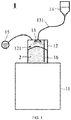
- the potassium perchlorate, fuel, basic copper nitrate, metal oxide, and metal powder are put in a first container 12 of a mixing system in a predetermined ratio
- the mixing system further includes a second container 14 and a mixing device 11, the mixing device 11 is connected to the first container 12, the second container 14 is in switchable communication with the first container 12, for storing water, and the first container 12 is driven through the mixing device 11 to vibrate to achieve mixing, thus obtaining the first material, and the second container 14 is made to communicate with the first container 12, to add to the first material water with a mass of 3%-15% of the total mass of the first material, for mixing to obtain the second material.
- the mixing system further includes an atomizer 13, and the atomizer 13 has an input end in switchable communication with the second container 14 through a pipeline 131 having a switch valve, and an output end located in the first container 12, for adding water to the first material in a spraying 121 manner.
- water is added to the first material through the atomizer in an intermittent spraying manner.
- the spraying time is preferably 5-7 s
- the intermittent time is preferably 5-8 s
- the spraying rate is preferably 3.5-5 ml/s.
- the mixing system further includes a static electricity discharging device 15 configured to be connected with the first container 12 and eliminate static electricity accumulated in the mixing process in real time.
- the mixing device is an acoustic wave mixing device.
- the total mixing time in step (1) is preferably 8 min-20 min, and the mixing acceleration is preferably 18-40 g, where g is gravitational acceleration.
- the fourth material is subjected to material molding by a molding method by a rotary tablet press machine.
- the circular sheet structure is obtained upon material molding in the step (4), and the circular sheet structure has a diameter of 3-10 mm; the circular sheet structure has a thickness of 1-5 mm; and the circular sheet structure has a mass of 0.01-3 g.
- the granular structure is obtained upon material molding in the step (4), and a particle size of the granular structure is 8-20 meshes; and the granular structure is obtained by granulating and then screening the sheet structure.
- An example of the present disclosure further provides a safety airbag gas generator, wherein an ignition powder used is provided by the above ignition powder examples.
- Raw materials of an ignition powder agent include the following components in percentages by mass: strontium nitrate 50%; 5-aminotetrazole (5-AT) 33%; potassium nitrate 8%; mica powder 8%; and graphite 1%.
- a specific preparation method comprised: mixing the strontium nitrate, 5-aminotetrazole (5-AT), potassium nitrate, mica powder, and graphite through the mixing system shown in FIG.
- Raw materials of an ignition powder agent include the following components in percentages by mass: boron powder 20%; and potassium nitrate 80%.
- the preparation method is the same as Comparative Example 1, and circular sheets having a diameter of 5.0 mm and a thickness of 3 mm were obtained.
- Raw materials of an ignition powder agent include the following components in percentages by mass: NTO 35%; strontium nitrate 50%; aluminum powder 12%; and mica powder 3%.
- the preparation method is the same as Comparative Example 1, and circular sheets having a diameter of 5.0 mm and a thickness of 3 mm were obtained.
- Raw materials of an ignition powder agent include the following components in percentages by mass: guanidine nitrate 39%; potassium perchlorate 21%; copper oxide 30%; and aluminum powder 10%.
- the preparation method is the same as Comparative Example 1, and circular sheets having a diameter of 5.0 mm and a thickness of 3 mm were obtained.
- Raw materials of an ignition powder agent include the following components in percentages by mass: potassium perchlorate 30%; guanidine nitrate 40%; copper oxide 12%; basic copper nitrate 10%; and titanium powder 8%.
- a specific preparation method comprised: mixing the potassium perchlorate, guanidine nitrate, copper oxide, basic copper nitrate, and titanium powder through the mixing system shown in FIG.
- Raw materials of an ignition powder agent include the following components in percentages by mass: potassium perchlorate 30%; guanidine nitrate 40%; copper oxide 12%; basic copper nitrate 10%; and zirconium powder 8%.
- a specific preparation method comprised: mixing the potassium perchlorate, guanidine nitrate, copper oxide, basic copper nitrate, and titanium powder through the mixing system shown in FIG.
- Raw materials of an ignition powder agent include the following components in percentages by mass: potassium perchlorate 30%; guanidine nitrate 40%; copper oxide 12%; basic copper nitrate 10%; and magnesium powder 8%.
- a specific preparation method comprised: mixing the potassium perchlorate, guanidine nitrate, copper oxide, basic copper nitrate, and magnesium powder through the mixing system shown in FIG.
- Raw materials of an ignition powder agent include the following components in percentages by mass: potassium perchlorate 30%; guanidine nitrate 33%; copper oxide 15%; basic copper nitrate 10%; and titanium powder 12%.
- a specific preparation method comprised: mixing the potassium perchlorate, guanidine nitrate, copper oxide, basic copper nitrate, and magnesium powder through the mixing system shown in FIG.
- Raw materials of an ignition powder agent include the following components in percentages by mass: potassium perchlorate 40%; guanidine nitrate 30%; iron oxide 12%; basic copper nitrate 8%; and magnesium powder 10%.
- a specific preparation method comprised: mixing the potassium perchlorate, guanidine nitrate, iron oxide, basic copper nitrate, and titanium powder through the mixing system shown in FIG.
- Raw materials of an ignition powder agent include the following components in percentages by mass: potassium perchlorate 35%; guanidine nitrate 45%; copper oxide 9%; basic copper nitrate 1%; and titanium powder 10%.
- Example 2 After being weighed, the above components were made into circular sheets having a diameter of 5.0 mm and a thickness of 3 mm by wet granulation and compression by a rotary tablet press machine.
- a specific preparation method is the same as that in Example 1, and the only difference is that the raw material ratio is different.
- Test instrument vacuum bomb precision temperature-regulating type automatic calorimeter RF-C7000(TJ) Z.
- Test conditions in a vacuum state, a sample amount of 4 g/time, and test twice in parallel.
- Test standard according to ministerial standard QJ 1359-88 "Constant Temperature Method for Testing Explosion Heat of Composite Solid Propellant" of Ministry of Space Industry of People's Republic of China.
- Test instrument Netzsch STA449F3 ultra-high temperature synchronous thermal analyzer, Germany
- Test conditions temperature range: -150 °C-+700 °C; temperature raising rate 10 °C/min, N 2 atmosphere, and N 2 flow rate of 60 ml/min; testing a starting decomposition temperature and an exothermic decomposition peak temperature of the ignition powders at a temperature raising rate of 10 °C/min.
- Test method placing the ignition powders at a temperature of 107 °C for 408 h in total, measuring DSC-TG and weight of the powders before and after the experiment, and analyzing the DSC-TG and weight loss of the powders after long-time high-temperature aging to evaluate the long term thermal storage stability of the powders.
- Test method using a 30 mL airtight tank, 2 g of the ignition powder, and an AQ-3 electric detonator, maintaining the temperature at a room temperature of 23 °C for more than 1 hour, a 200 MPa sensor, and an HUDE test system for testing performance thereof.
- Test method the formulas in the comparative examples and examples in the present patent were weighed at a temperature of 18.4 °C and humidity of 72%, the mass change thereof was weighed after 172 hours of exposure, and the moisture absorption was tested and compared, as shown in Table 5.
Landscapes
- Chemical & Material Sciences (AREA)
- Organic Chemistry (AREA)
- Engineering & Computer Science (AREA)
- Metallurgy (AREA)
- Physics & Mathematics (AREA)
- Fluid Mechanics (AREA)
- Mechanical Engineering (AREA)
- Inorganic Chemistry (AREA)
- Materials Engineering (AREA)
- Chemical Kinetics & Catalysis (AREA)
- Combustion & Propulsion (AREA)
- Air Bags (AREA)
Abstract
Description
- The present disclosure claims the priority to the Chinese patent application filed with the
Chinese Patent Office on May 30, 2019 with the filing No. 201910464200.5 - The present disclosure relates to an ignition powder agent composition with reliable ignition performance and a preparation method therefor, in particular to an ignition powder with reliable ignition performance, good moisture absorption resistance, and capability of being efficiently produced, belonging to the technical field of ignition powders.
- Ignition powders are an important type of initiating explosive material, and are commonly used to receive external stimulation to ignite other powders, such as propellant powders and propelling agents. The present disclosure relates to an ignition composition for a gas generator, for an airbag device in a motor vehicle. The performance of the ignition powder will directly affect the normal operation of a whole constraint system, therefore it occupies a quite important position in a charging system.
- Currently, main types of ignition powders include black powder, 5AT, and strontium nitrate type, B-KNO3 ignition powder, Mg-PTFE ignition powder, and Al-KClO4 ignition powder. Since the ignition powder needs to ignite a gas generating powder, a burning temperature, energy, and residue particles of the ignition powder have certain requirements, so that certain ignition reliability can be ensured. Black powder is a common ignition powder, and has the advantages of low price, relatively high flame sensitivity, and relatively high specific volume, but the energy thereof is too low, and the combustion product is mainly gas, with fewer residues, and it is difficult to ignite some insensitive fire powders or pyrotechnic agents. The black powder is suitable for application scenarios in which the ignition delay time is not required. The delay time is generally required to be less than 10 ms for the gas generator, so the black powder is rarely used as the ignition powder in the gas generator; although the energy of the 5AT and strontium nitrate type ignition powder is improved, as 5AT and strontium nitrate are both temperature sensitive substances, the ignition delay problem easily occurs at low temperature of -35 °C, furthermore, the performance of the generator at low temperature is quite different from the performance at high temperature and normal temperature. Using such type of ignition powder requires special design of the structure of the airbag gas generator (i.e. the gas generator of a safety airbag), and the ignition delay problem at low temperature is counteracted through improvement on the structure. Besides, the 5AT and strontium nitrate raw materials, as extremely hygroscopic materials, bring severe condition requirements to the manufacture, assembly, and storage, and even bring a certain risk to the use and storage process of the generator; the B/KNO3 type ignition powder has the advantages of high energy, high burning temperature, and many residue particles, and is currently a widely used ignition powder on the airbag gas generator, but it is expensive, and meanwhile, the content of potassium nitrate in the formula generally may reach 70% or more, and a large amount of potassium oxide is discharged from the gas generator after burning, which easily causes harmful substances in the gas composition to exceed the standard. Such type of formula has quite high friction and impact sensitivity, is easy to explode, and has poor safety in the molding process. Meanwhile, due to the property of high hardness of boron, molding is quite difficult, the mold is severely worn, and the manufacturing cost is high. The above ignition powders are usually small tablets compressed and molded in the manufacturing process, and some ignition powders further need to be smashed into particulate materials, then the ignition powder formula containing aluminum powder has significantly higher sensitivity than that without aluminum powder, so that a certain safety risk exists in the granulation process, and the cost of the aluminum powder is also high, in addition, after the ignition powder is burned, there are more oxide residues of aluminum, and the solid content of the formula is also increased.
- For example, the patent
US6487974B1 mainly contains 5AT 26%, strontium nitrate 64%, aluminum powder 7%, andboron nitride 1%. Although containing aluminum powder 7% is helpful for low-temperature ignition performance, this formula contains more strontium nitrate and 5AT, and the 5AT and strontium nitrate raw materials, as extremely hygroscopic materials, bring severe condition requirements to the manufacture, assembly, and storage, and even bring a certain risk to the use and storage process of the generator, in addition, the aluminum powder is low in sensitivity, there is a certain risk in the process, especially in the tableting and granulating process. - Patent
US6599380 provides an ignition powder, which mainly contains guanidine nitrate 39%, potassium perchlorate 21%,copper oxide 30%, andaluminum 10%. Although this formula has a certain moisture absorption resistance, the burningrate 35% BPF of the formula is only 9.8 at 23 °C±2 °C, and cannot meet higher burning rate requirements; this formula has many residues after burning, which increases the filtration cost, and besides, relatively large droplets are formed in the burning process of the aluminum powder and come out of the ignition hole to ablate a filtration screen, which is easy to cause injury to the air bag and personnel; the low explosion heat of this formula cannot satisfy the requirements of high heat of the ignition powder, and due to the presence of components such as aluminum powder and metal oxide, the ignition powder of this formula is prone to fire and explosion in the process of storage and transportation. - The problem solved by the present disclosure is to provide an ignition powder, a preparation method therefor and a use thereof, and a safety airbag gas generator to overcome the shortcomings in the prior art. The ignition powder further improves the moisture absorption resistance, has stable and reliable ignition performance at the temperature of -40 °C -+90 °C, even ignition when igniting a gas generating agent, better consistency, low sensitivity, capability of being ignited by an ordinary electric detonator, a
burning rate 35% BPF of greater than 12, low friction sensitivity, and safe and reliable process, and is suitable for mass production and preparation; and as this formula contains no aluminum powder, potential safety hazards and combustion residues are avoided. - The above objective of the present disclosure is mainly realized by the following technical solution:
an ignition powder, of which raw materials include the following components in percentages by mass: - potassium perchlorate: 30%-50%;
- basic copper nitrate: 5%-20%;
- a fuel: 30%-60%;
- a metal oxide: 1 %-15%; and
- a metal powder: 1%-15%, wherein the metal powder is at least one selected from the group consisting of a titanium powder, a magnesium powder, a copper powder, an iron powder, a zirconium powder, a hafnium powder, a tungsten powder and a silicon powder, and preferably is the titanium powder and the zirconium powder.
- In an optional example, the raw materials thereof include the following components in percentages by mass:
- potassium perchlorate: 30%-40%;
- basic copper nitrate: 5%-15%;
- guanidine nitrate: 30%-35%;
- copper oxide: 10%-15%; and
- titanium powder or zirconium powder: 8%-12%.
- Specifically, the metal oxide is at least one selected from the group consisting of copper oxide, iron oxide and cobalt oxide.
- Specifically, the fuel is at least one selected from the group consisting of guanidine nitrate, nitroguanidine, amidinoglycinamide, cyanoguanidine, aminoguanidine nitrate, diaminoguanidine nitrate, triaminoguanidine nitrate, aminonitroguanidine, and nitroguanidine.
- Specifically, a mixture of various components is made into particles having a water content of less than 0.5%, before compression molding.
- Specifically, the ignition powder is of a circular sheet structure, and the circular sheet structure has a diameter of 3-10 mm; the circular sheet structure has a thickness of 1-5 mm; and the circular sheet structure has a mass of 0.01-3 g.
- Specifically, the ignition powder agent is of a granular structure, with a particle size of 8-20 meshes.
- The above ignition powder is prepared by way of wet granulation.
- A preparation method for the ignition powder includes following steps:
- (1). mixing potassium perchlorate, fuel, basic copper nitrate, and copper oxide in a predetermined ratio to obtain a first material, adding to the first material water with a mass of 3%-15% of a total mass of the first material, and mixing them to obtain a second material;
- (2). making the second material pass through a 10-40 mesh screen, and collecting the screened material to obtain a third material;
- (3). drying the third material until a moisture content thereof is less than 0.5% of a total mass of the third material, making the dried third material pass through the 10-40 mesh screen again, and collecting the screened material to obtain a fourth material; and
- (4). performing material compression molding on the fourth material.
- In an optional example, in the step (1), the potassium perchlorate, fuel, basic copper nitrate, copper oxide, and metal powder are put in a first container of a mixing system in a predetermined ratio, the mixing system further includes a second container and a mixing device, the mixing device is connected to the first container, the second container is in switchable communication with the first container, for storing water, and the first container is driven through the mixing device to vibrate to achieve mixing, thus obtaining the first material, and the second container is made to communicate with the first container, to add to the first material water with a mass of 3%-15% of the total mass of the first material for mixing to obtain the second material.
- Further, the mixing system further includes an atomizer, and the atomizer has an input end in switchable communication with the second container, and an output end located in the first container, for adding water to the first material in a spraying manner.
- Specifically, water is added to the first material through the atomizer in an intermittent spraying manner.
- Specifically, the spraying time is 5-7 s, the intermittent time is 5-8 s, and the spraying rate is 3.5-5 ml/s.
- Further, the mixing system further includes a static electricity discharging device configured to be connected with the first container and eliminate static electricity accumulated in the mixing process in real time.
- Specifically, the mixing device is an acoustic wave mixing device.
- Specifically, in step (1) the total mixing time is 4 min-15 min, and the mixing acceleration is 20-60 g, where g is gravitational acceleration.
- Specifically, in the step (4), the fourth material is subjected to material molding by a molding method by a rotary tablet press machine.
- In an optional example, the circular sheet structure is obtained upon material molding in the step (4), and the circular sheet structure has a diameter of 3-10 mm; the circular sheet structure has a thickness of 1-5 mm; and the circular sheet structure has a mass of 0.01-3 g.
- In another optional example, the granular structure is obtained upon material molding in the step (4), and a particle size of the granular structure is 8-20 meshes; and the granular structure is obtained by granulating and then screening the sheet structure.
- Use of the above ignition powder in a safety airbag gas generator of transportation means.
- A safety airbag gas generator, wherein raw materials of an ignition powder used include the following components in percentages by mass:
- potassium perchlorate: 30%-50%;
- basic copper nitrate: 5%-20%;
- a fuel: 30%-60%;
- a metal oxide: 1%-15%; and
- a metal powder: 1%-15%, wherein the metal powder is at least one selected from the group consisting of a titanium powder, a magnesium powder, a copper powder, an iron powder, a zirconium powder, a hafnium powder, a tungsten powder and a silicon powder.
- Compared with the prior art, the present disclosure has the following beneficial effects:
- (1). the example of the present disclosure provides an ignition powder agent. By replacing the aluminum powder with the titanium powder, magnesium powder, copper powder, iron powder, zirconium powder, hafnium powder, tungsten powder or silicon powder, the problems of firing and explosion easily occurring in the mixing process of the aluminum powder with other metal oxides are avoided, and meanwhile, it is ensured that no relatively large droplets come out from the ignition hole to ablate the filter screen in the burning process. By adopting the basic copper nitrate and adjusting the contents of metal oxide and potassium perchlorate, synergistic effect of various components is achieved, improving the burning rate and the amount of produced gas of the ignition powder, and avoiding the ignition delay, especially the ignition delay at a low temperature of -40 °C, and achieving 35% BPF of greater than 12 under the condition of a normal temperature of 23 °C±2 °C, and meanwhile, the use amount of potassium perchlorate is reduced, which helps to reduce the production of toxic gas, and the generator TANKWASH has better effect;
- (2). the burning temperature of the ignition powder provided in the example of the present disclosure is 2500 k-3500 k, the gas production rate is 45%-65%, and the explosion heat is 3800 J/g-5000 J/g. The ignition powder has good safety performance, friction sensitivity of 0%, impact sensitivity of less than 0%, electrostatic spark sensitivity of greater than 130 mJ, and a risk grade of 1.3 (divided according to GJB6195-2008). This ignition powder is not easy to absorb moisture (the mass change thereof is not greater than 2.0% after exposure at a temperature of 18.4 °C, and humidity of 72% for 172 hours), the manufacture, assembly, use, and storage process satisfy the use requirements of the generator, and it is a new ignition powder with good moisture absorption resistance;
- (3). for the ignition powder provided in the example of the present disclosure, by adopting the titanium powder or zirconium powder as an ignition improver and adjusting the use amount thereof, the phenomenon of ignition delay or large fluctuations when the ignition powder is at the low temperature of -40 °C is improved, thus ensuring a wider influence range of the ignition powder during operation at a temperature of -40 °C-+90 °C;
- (4). in the ignition powder provided in the example of the present disclosure, the potassium perchlorate, basic copper nitrate, and guanidine nitrate are used in combination, wherein the potassium perchlorate and the basic copper nitrate are oxygen sources of the ignition powder agent formula, and the applicant determines, through many years of researches and tests, that the burning rate and flame temperature of the ignition powder agent are further improved when the three are proportioned according to this formula;
- (5). in the present disclosure, by optimizing the content ratio of various components of the ignition powder agent, and performing verification by a large number of tests, the ignition powder agent is enabled to have excellent performance and significant effect, and the ignition powder agent composition ignites more uniformly when igniting the gas generator, has better consistency, and has significantly improved ignition performance;
- (6). before molding of the ignition powder agent of the present disclosure, the mixing is performed by a dry-wet integrated mixing mode. With use of a specific mixing system, two steps of dry mixing and wet mixing are completed in one container, thus avoiding transfer of the first material from a dry mixing process to a wet mixing process. The mechanical action of blade on the material is eliminated by vibration mixing. This mixing method has the advantages such as dead-corner free mixing, short mixing time, good mixing uniformity, high efficiency and good safety;
- (7). the ignition powder agent provided in the example of the present disclosure is used in the form of the granular structure, so as to provide the maximum available combustion surface area to obtain the fastest response, thereby quickly igniting the gas generator composition, and satisfying the requirements of the safety airbags to protect drivers and occupants;
- (8) by adding water to the first container with the atomizer, the water can be continuously added without interrupting the mixing process, thus ensuring the continuity of the mixing process, and meanwhile, there is no need to adjust the mixing device and the first container, further improving the mixing efficiency and safety; and
- (9) by providing the static electricity discharging device, the electrostatic charges generated in the mixing process are discharged, neutralized or released, which can prevent the occurrence of danger due to accumulation of a large amount of electrostatic charges, and further improve the mixing safety.
-
-
FIG. 1 is a schematic view of a mixing system provided in an example of the present disclosure; -
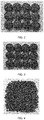
FIG. 2 is a diagram of tablets of an ignition powder agent in Example 1 of the present patent for invention; -
FIG. 3 is a diagram of tablets of the ignition powder agent in Example 5 of the present patent for invention; -
FIG. 4 is a diagram of particles after the tablets of the ignition powder agent in Example 5 of the present patent for invention is granulated; -
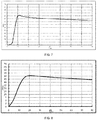
FIG. 5 is a CCC graph of the ignition powder agent in Comparative Example 1 of the present disclosure; -
FIG. 6 is a CCC graph of the ignition powder agent in Comparative Example 2 of the present disclosure; -
FIG. 7 is a CCC graph of the ignition powder agent in Comparative Example 3 of the present disclosure; -
FIG. 8 is a CCC graph of the ignition powder agent in Comparative Example 4 of the present disclosure; -
FIG. 9 is a CCC graph of the ignition powder agent in Example 1 of the present disclosure; -
FIG. 10 is a CCC graph of the ignition powder agent in Example 2 of the present disclosure; -
FIG. 11 is a CCC graph of the ignition powder agent in Example 3 of the present disclosure; -
FIG. 12 is a CCC graph of the ignition powder agent in Example 4 of the present disclosure; -
FIG. 13 is a CCC graph of the ignition powder agent in Example 5 of the present disclosure; and -
FIG. 14 is a CCC graph of the ignition powder agent in Example 6 of the present disclosure. - Below the present disclosure is further described in detail in combination with accompanying drawings and specific examples.
- An example of the present disclosure provides an ignition powder, of which raw materials include the following components in percentages by mass:
- potassium perchlorate: 30%-50%;
- basic copper nitrate: 5%-20%;
- a fuel: 30%-60%;
- a metal oxide: 1%-15%; and
- a metal powder: 1%-15%, wherein the metal powder is at least one selected from the group consisting of a titanium powder, a magnesium powder, a copper powder, an iron powder, a zirconium powder, a hafnium powder, a tungsten powder and a silicon powder.
- In the above formula of raw materials, the components in the following percentages by mass are preferably adopted:
potassium perchlorate 30%-40%,basic copper nitrate 5%-15%,fuel 30%-35%,copper oxide 10%-15%, and metal powder 8%-12%. The potassium perchlorate preferably has the purity of more than 99.2%, and the copper nitrate basis (CN) preferably has a particle size D90 of not more than 5 µm, and D50 of 0.8-2 µm; the fuel is preferably at least one selected from the group consisting of guanidine nitrate, nitroguanidine, amidinoglycinamide, cyanoguanidine, aminoguanidine nitrate, diaminoguanidine nitrate, triaminoguanidine nitrate, aminonitroguanidine, and nitroguanidine, more preferably guanidine nitrate, of which the particle size D90 is preferably not more than 5 µm; and the particle size D90 of the metal oxide is preferably not more than 15 µm. The metal powder comprises preferably titanium powder and zirconium powder, of which the particle size D90 is preferably not more than 50 µm. - A mixture of various components above is preferably made into particles having a water content of less than 0.5% before compression molding. In an optional example, the ignition powder is of a circular sheet structure, and the circular sheet structure has a diameter of 3-10 mm; the circular sheet structure has a thickness of 1-5 mm; and the circular sheet structure has a mass of 0.01-3 g. In another optional example, the ignition powder agent is of a granular structure, with a particle size of 8-20 meshes. The granular structure is preferably adopted.
- Further, the raw materials of the ignition powder may further include a functional auxiliary, such as fumed silica, boron nitride, talc, magnesium stearate, calcium stearate, and graphite, and the addition amount of the functional auxiliary is preferably 0.3-2% of a total mass of other raw materials.
- An example of the present disclosure further provides a method for preparing an ignition powder of the above formula by way of wet granulation, specifically including the following steps:
- (1). mixing potassium perchlorate, a fuel, basic copper nitrate, a metal oxide, and a metal powder in a predetermined ratio to obtain a first material, adding to the first material water with a mass of 3%-15% of a total mass of the first material, and mixing them to obtain a second material;
- (2). making the second material pass through a 10-40 mesh screen, and collecting the screened material to obtain a third material;
- (3). drying the third material until a moisture content is less than 0.5% of a total mass of the third material, making the dried third material pass through the 10-40 mesh screen again, and collecting the screened material to obtain a fourth material; and
- (4). performing material compression molding on the fourth material.
- As shown in
FIG. 1 , in the step (1), the potassium perchlorate, fuel, basic copper nitrate, metal oxide, and metal powder are put in afirst container 12 of a mixing system in a predetermined ratio, the mixing system further includes asecond container 14 and amixing device 11, the mixingdevice 11 is connected to thefirst container 12, thesecond container 14 is in switchable communication with thefirst container 12, for storing water, and thefirst container 12 is driven through the mixingdevice 11 to vibrate to achieve mixing, thus obtaining the first material, and thesecond container 14 is made to communicate with thefirst container 12, to add to the first material water with a mass of 3%-15% of the total mass of the first material, for mixing to obtain the second material. - Further, as shown in
FIG. 1 , the mixing system further includes anatomizer 13, and theatomizer 13 has an input end in switchable communication with thesecond container 14 through apipeline 131 having a switch valve, and an output end located in thefirst container 12, for adding water to the first material in a spraying 121 manner. - In an optional example, water is added to the first material through the atomizer in an intermittent spraying manner. In the above, the spraying time is preferably 5-7 s, the intermittent time is preferably 5-8 s, and the spraying rate is preferably 3.5-5 ml/s. When the above parameters are selected, it not only can ensure uniform mixing of various components, but also can avoid problems such as sticking to the wall of raw materials such as basic copper nitrate, guanidine nitrate, and metal powder due to inappropriate water content, thus ensuring the stability of the formula.
- Further, the mixing system further includes a static
electricity discharging device 15 configured to be connected with thefirst container 12 and eliminate static electricity accumulated in the mixing process in real time. - Specifically, the mixing device is an acoustic wave mixing device. The total mixing time in step (1) is preferably 8 min-20 min, and the mixing acceleration is preferably 18-40 g, where g is gravitational acceleration.
- Specifically, in the step (4), the fourth material is subjected to material molding by a molding method by a rotary tablet press machine.
- In an optional example, the circular sheet structure is obtained upon material molding in the step (4), and the circular sheet structure has a diameter of 3-10 mm; the circular sheet structure has a thickness of 1-5 mm; and the circular sheet structure has a mass of 0.01-3 g.
- In another optional example, the granular structure is obtained upon material molding in the step (4), and a particle size of the granular structure is 8-20 meshes; and the granular structure is obtained by granulating and then screening the sheet structure.
- Use of the above ignition powder in a safety airbag gas generator of transportation means.
- An example of the present disclosure further provides a safety airbag gas generator, wherein an ignition powder used is provided by the above ignition powder examples.
- The following are specific examples and comparative examples of the present disclosure, wherein the raw materials used are all commercially available products.
- Raw materials of an ignition powder agent include the following components in percentages by mass:
strontium nitrate 50%; 5-aminotetrazole (5-AT) 33%; potassium nitrate 8%; mica powder 8%; and graphite 1%. - After being weighed, the above components were made into circular sheets having a diameter of 5.0 mm and a thickness of 2.2-3.7 mm by wet granulation and compression by a rotary tablet press machine. A specific preparation method comprised: mixing the strontium nitrate, 5-aminotetrazole (5-AT), potassium nitrate, mica powder, and graphite through the mixing system shown in
FIG. 1 and then adding distilled water of 8% of a total mass of the raw materials, and the resultant was mix for 5 minutes to obtain a first material, wherein the water adding process was intermittent spraying addition, the spraying time was 3 s, the intermittent time was 3 s, and the spraying rate was 1.5 ml/s; making the first material pass through a 10-mesh screen to obtain a second material; drying the second material until the moisture content was less than 0.5% of the total mass of the second material, and making the dried second material pass through the 10-mesh screen again to obtain a third material; and performing material molding on the third material by the rotary tablet press machine to obtain the circular sheets having a diameter of 5.0 mm and a thickness of 3 mm. - Raw materials of an ignition powder agent include the following components in percentages by mass:
boron powder 20%; and potassium nitrate 80%. - The preparation method is the same as Comparative Example 1, and circular sheets having a diameter of 5.0 mm and a thickness of 3 mm were obtained.
- Raw materials of an ignition powder agent include the following components in percentages by mass:
NTO 35%; strontium nitrate 50%; aluminum powder 12%; and mica powder 3%. - The preparation method is the same as Comparative Example 1, and circular sheets having a diameter of 5.0 mm and a thickness of 3 mm were obtained.
- Raw materials of an ignition powder agent include the following components in percentages by mass:
guanidine nitrate 39%; potassium perchlorate 21%; copper oxide 30%; and aluminum powder 10%. - The preparation method is the same as Comparative Example 1, and circular sheets having a diameter of 5.0 mm and a thickness of 3 mm were obtained.
- Raw materials of an ignition powder agent include the following components in percentages by mass:
potassium perchlorate 30%; guanidine nitrate 40%; copper oxide 12%; basic copper nitrate 10%; and titanium powder 8%. - After being weighed, the above components were made into circular sheets having a diameter of 5.0 mm and a thickness of 2.2-3.7 mm by wet granulation and compression by a rotary tablet press machine. A specific preparation method comprised: mixing the potassium perchlorate, guanidine nitrate, copper oxide, basic copper nitrate, and titanium powder through the mixing system shown in
FIG. 1 and then adding distilled water of 8% of a total mass of the raw materials, and mixing for 5 minutes to obtain a first material, wherein the water adding process was intermittent spraying addition, the spraying time was 3 s, the intermittent time was 3 s, and the spraying rate was 2 ml/s; making the first material pass through a 10-mesh screen to obtain a second material; drying the second material until the moisture content was less than 0.5% of the total mass of the second material, and making the dried second material pass through the 10-mesh screen again to obtain a third material; and performing material molding on the third material by the rotary tablet press machine. - Raw materials of an ignition powder agent include the following components in percentages by mass:
potassium perchlorate 30%; guanidine nitrate 40%; copper oxide 12%; basic copper nitrate 10%; and zirconium powder 8%. - After being weighed, the above components were made into circular sheets having a diameter of 5.0 mm and a thickness of 2.2-3.7 mm by wet granulation and compression by a rotary tablet press machine. A specific preparation method comprised: mixing the potassium perchlorate, guanidine nitrate, copper oxide, basic copper nitrate, and titanium powder through the mixing system shown in
FIG. 1 and then adding distilled water of 8% of a total mass of the raw materials, and mixing for 5 minutes to obtain a first material, wherein the water adding process was intermittent spraying addition, the spraying time was 3 s, the intermittent time was 3 s, and the spraying rate was 2 ml/s; making the first material pass through a 20-mesh screen to obtain a second material; drying the second material until the moisture content was less than 0.5% of the total mass of the second material, and making the dried second material pass through a 10-mesh screen again to obtain a third material; and performing material molding on the third material by the rotary tablet press machine. - Raw materials of an ignition powder agent include the following components in percentages by mass:
potassium perchlorate 30%; guanidine nitrate 40%; copper oxide 12%; basic copper nitrate 10%; and magnesium powder 8%. - After being weighed, the above components were made into circular sheets having a diameter of 5.0 mm and a thickness of 2.2-3.7 mm by wet granulation and compression by a rotary tablet press machine. A specific preparation method comprised: mixing the potassium perchlorate, guanidine nitrate, copper oxide, basic copper nitrate, and magnesium powder through the mixing system shown in
FIG. 1 and then adding distilled water of 8% of a total mass of the raw materials, and mixing for 5 minutes to obtain a first material, wherein the water adding process was intermittent spraying addition, the spraying time was 3 s, the intermittent time was 3 s, and the spraying rate was 2 ml/s; making the first material pass through a 10-mesh screen to obtain a second material; drying the second material until the moisture content was less than 0.5% of the total mass of the second material, and making the dried second material pass through a 20-mesh screen again to obtain a third material; and adding graphite with a mass of 0.5% of a total mass of the third material to the third material, and performing material molding by the rotary tablet press machine. - Raw materials of an ignition powder agent include the following components in percentages by mass:
potassium perchlorate 30%; guanidine nitrate 33%; copper oxide 15%; basic copper nitrate 10%; and titanium powder 12%. - After being weighed, the above components were made into circular sheets having a diameter of 5.0 mm and a thickness of 2.2-3.7 mm by wet granulation and compression by a rotary tablet press machine. A specific preparation method comprised: mixing the potassium perchlorate, guanidine nitrate, copper oxide, basic copper nitrate, and magnesium powder through the mixing system shown in
FIG. 1 and then adding distilled water of 8% of a total mass of the raw materials, and mixing for 5 minutes to obtain a first material, wherein the water adding process was intermittent spraying addition, the spraying time was 3 s, the intermittent time was 3 s, and the spraying rate was 1.5-3 ml/s; making the first material pass through a 10-mesh screen to obtain a second material; drying the second material until the moisture content was less than 0.5% of the total mass of the second material, and making the dried second material pass through the 10-mesh screen again to obtain a third material; and performing material molding on the third material by the rotary tablet press machine. - Raw materials of an ignition powder agent include the following components in percentages by mass:
potassium perchlorate 40%; guanidine nitrate 30%; iron oxide 12%; basic copper nitrate 8%; and magnesium powder 10%. - After being weighed, the above components were made into particles of 8-12 meshes by wet granulation and compression by a rotary tablet press machine. A specific preparation method comprised: mixing the potassium perchlorate, guanidine nitrate, iron oxide, basic copper nitrate, and titanium powder through the mixing system shown in
FIG. 1 and then adding distilled water of 8% of a total mass of the raw materials, and mixing for 5 minutes to obtain a first material, wherein the water adding process was intermittent spraying addition, the spraying time was 3 s, the intermittent time was 3 s, and the spraying rate was 1.5-3 ml/s; making the first material pass through a 20-mesh screen to obtain a second material; drying the second material until the moisture content was less than 0.5% of the total mass of the second material, and making the dried second material pass through the 20-mesh screen again to obtain a third material; and compressing the third material into circular sheets having a diameter of 5.0 mm and a thickness of 2.2-3.7 mm (as shown inFIG. 3 ) by the rotary tablet press machine, then granulating the circular sheets by a granulating machine, and selecting the particles of 8-12 meshes (as shown inFIG. 4 ). - Raw materials of an ignition powder agent include the following components in percentages by mass:
potassium perchlorate 35%; guanidine nitrate 45%; copper oxide 9%; basic copper nitrate 1%; and titanium powder 10%. - After being weighed, the above components were made into circular sheets having a diameter of 5.0 mm and a thickness of 3 mm by wet granulation and compression by a rotary tablet press machine. A specific preparation method is the same as that in Example 1, and the only difference is that the raw material ratio is different.
- Performance test results of the ignition powders prepared in Comparative Example 1 - Comparative Example 4 and Example 1 - Example 6 are as shown in Table 1 to Table 5 and
FIG. 5 to FIG. 14 : - Test instrument: vacuum bomb precision temperature-regulating type automatic calorimeter RF-C7000(TJ) Z.
- Test conditions: in a vacuum state, a sample amount of 4 g/time, and test twice in parallel.
- Test standard: according to ministerial standard QJ 1359-88 "Constant Temperature Method for Testing Explosion Heat of Composite Solid Propellant" of Ministry of Space Industry of People's Republic of China.
- Test instrument: Netzsch STA449F3 ultra-high temperature synchronous thermal analyzer, Germany
- Reference standard: institute standard No. Q/G 4A-2002 "Method for Testing Thermal Decomposition Temperature of Composite Solid Propellant" of the Fourth Institute of China Aerospace Science and Technology Corporation
- Test conditions: temperature range: -150 °C-+700 °C;
temperature raising rate 10 °C/min, N2 atmosphere, and N2 flow rate of 60 ml/min; testing a starting decomposition temperature and an exothermic decomposition peak temperature of the ignition powders at a temperature raising rate of 10 °C/min. - Test method: placing the ignition powders at a temperature of 107 °C for 408 h in total, measuring DSC-TG and weight of the powders before and after the experiment, and analyzing the DSC-TG and weight loss of the powders after long-time high-temperature aging to evaluate the long term thermal storage stability of the powders.
- Test method: using a 30 mL airtight tank, 2 g of the ignition powder, and an AQ-3 electric detonator, maintaining the temperature at a room temperature of 23 °C for more than 1 hour, a 200 MPa sensor, and an HUDE test system for testing performance thereof.
- Test method: the formulas in the comparative examples and examples in the present patent were weighed at a temperature of 18.4 °C and humidity of 72%, the mass change thereof was weighed after 172 hours of exposure, and the moisture absorption was tested and compared, as shown in Table 5.
Table 1 Table of Physical and Chemical Performances of Ignition Powders Provided in Various Comparative Examples Comparative Examples Burning temperature (K) Explosion heat (J/g) Amount of produced gas (mass%) Friction sensitivity 1 3036 4845 47.2 52% 2 3297 7048 1.8 100% 3 3022 3998 46.1 100% 4 3065 4020 45.7 52% Table 2 Table of Physical and Chemical Performances of Ignition Powders Provided in Various Examples of the Present Disclosure Examples Burning temperature (K) Explosion heat (J/g) Amount of produced gas (mass%) Friction sensitivity 1 2489 4832 54.7 0% 2 2200 4576 55.5 0% 3 2724 4602 52.7 0% 4 2752 4925 53.88 0% 5 2838 4576 47.6 0% 6 2565 4452 55.2 0% Table 3 Table of Aging Performance of Ignition Powders Provided in Various Comparative Examples and Various Examples Ignition Powder before aging after aging starting decomposition temperature °C Exothermic decomposition peak temperature °C thermal weight loss Wt% starting decomposition temperature °C Exothermic decomposition peak temperature °C thermal weight loss Wt% Comparative example 1 168.2 241.4 2.41 175.5 252.7 5.78 Comparative example 2 531.2 547.4 3.52 535.5 550.7 5.25 Comparative example 4 170.5 231.2 1.50 175.6 239.8 2.30 Example 1 184.0 242.1 1.30 183.2 240.1 1.20 Example 2 187.5 250.3 1.0 185.3 250.3 0.09 Example 3 190.4 255.1 0.98 189.6 249.2 0.08 Example 4 182.8 236.5 0.12 182.1 236.3 0.05 Example 5 185.7 235.4 0.45 185.9 236.5 0.09 Example 6 189.9 240.2 0.78 190.2 242.3 0.08 Table 4 Table of CCC Performance of Ignition Powders Provided in Various Comparative Examples and Various Examples Ignition Powder Pmax, MPa 35%BPF Comparative Example 1 61 12.3 Comparative Example 2 16 26.3 Comparative Example 3 51 15.8 Comparative Example 4 54 9.8 Example 1 50 13.7 Example 2 52 13. 6 Example 3 51 13.8 Example 4 54 13.9 Example 5 56 14.5 Example 6 68 13.1 Table 5 Comparison Table of Moisture Absorption Test of Various Comparative Examples and Various Examples Exposure time Initial weight, g Weight after absorption, g Weight increase, g Proportion increased, g Environment temperature and humidity Comparative example 1 172 h 30.0152 35.3215 5.3063 17.68% Temperature: 18.4°C Humidity: 72% Comparative example 2 30.0023 31.3214 1.3191 4.40% Comparative example 3 30.0028 33.2516 3.2488 10.83% Comparative example 4 30.0016 30.5597 0.5581 1.86% Example 1 30.0052 30.2519 0.2467 0.82% Example 2 30.0104 30.3354 0.3250 1.08% Example 3 30.0084 30.3654 0.3570 1.19% Example 4 30.0018 30.1890 0.1872 0.62% Example 5 30.0034 30.4216 0.4182 1.39% Example 6 30.0058 30.4614 0.4556 1.52% - The above-mentioned are merely for the best specific implementations of the present disclosure, while the scope of protection of the present disclosure is not limited thereto. Any variations or substitutions, readily occurring to any skilled person familiar with the present technical field, should be covered within the scope of protection of the present disclosure.
- The content that is not described in detail in the description of the present disclosure belongs to the well-known technology of those skilled in the art.
Claims (22)
- An ignition powder, of which raw materials comprise following components in percentages by mass:potassium perchlorate: 30%-50%;basic copper nitrate: 5%-20%;a fuel: 30%-60%;a metal oxide: 1%-15%; anda metal powder: 1%-15%, wherein the metal powder is at least one selected from the group consisting of a titanium powder, a magnesium powder, a copper powder, an iron powder, a zirconium powder, a hafnium powder, a tungsten powder and a silicon powder.
- The ignition powder according to claim 1, comprising following components in percentages by mass:potassium perchlorate: 30%-40%;basic copper nitrate: 5%-15%;guanidine nitrate: 30%-35%;copper oxide: 10%-15%; andtitanium powder or zirconium powder: 8%-12%.
- The ignition powder according to claim 1, wherein the fuel is at least one selected from the group consisting of guanidine nitrate, nitroguanidine, amidinoglycinamide, cyanoguanidine, aminoguanidine nitrate, diaminoguanidine nitrate, triaminoguanidine nitrate, aminonitroguanidine, and nitroguanidine.
- The ignition powder according to claim 1, wherein the metal oxide is at least one selected from the group consisting of copper oxide, iron oxide and cobalt oxide.
- The ignition powder according to claim 1, wherein a mixture of the components is made into particles having a water content of less than 0.5% before compression molding.
- The ignition powder according to claim 1, wherein the ignition powder is of a circular sheet structure, and the circular sheet structure has a diameter of 3-10 mm; the circular sheet structure has a thickness of 1-5 mm; and the circular sheet structure has a mass of 0.01-3 g.
- The ignition powder agent according to claim 1, wherein the ignition powder agent is of a granular structure, with a particle size of 8-20 meshes.
- The ignition powder agent according to claim 1, wherein the metal powder comprises titanium powder and zirconium powder.
- A preparation method for the ignition powder according to claim 1, wherein the ignition powder is prepared by way of wet granulation.
- The preparation method for the ignition powder according to claim 9, comprising following steps:(1). mixing potassium perchlorate, a fuel, basic copper nitrate, a metal oxide, and a metal powder in a predetermined ratio to obtain a first material, adding, to the first material, water with a mass of 3%-15% of a total mass of the first material, and mixing to obtain a second material;(2). making the second material pass through a 10-40 mesh screen, and collecting the screened material to obtain a third material;(3). drying the third material until a moisture content is less than 0.5% of a total mass of the third material, making the dried third material pass through the 10-40 mesh screen again, and collecting the screened material to obtain a fourth material; and(4). performing material compression molding on the fourth material.
- The preparation method for the ignition powder according to claim 10, wherein in the step (1), the potassium perchlorate, fuel, basic copper nitrate, metal oxide, and metal powder are put in a first container of a mixing system in a predetermined ratio, the mixing system further comprises a second container and a mixing device, the mixing device is connected to the first container, the second container is in switchable communication with the first container, for storing water, and the first container is driven through the mixing device to vibrate to achieve mixing, thus obtaining the first material, and the second container is made to communicate with the first container, to add, to the first material, water with a mass of 3%-15% of the total mass of the first material, for mixing to obtain the second material.
- The preparation method for the ignition powder according to claim 11, wherein the mixing system further comprises an atomizer, and the atomizer has an input end in switchable communication with the second container, and an output end located in the first container, for adding water to the first material in a spraying manner.
- The preparation method for the ignition powder according to claim 12, wherein water is added to the first material through the atomizer in an intermittent spraying manner.
- The preparation method for the ignition powder according to claim 13, wherein spraying time is 5-7 s, intermittent time is 5-8 s, and a spraying rate is 3.5-5 ml/s.
- The preparation method for the ignition powder according to claim 11, wherein the mixing system further comprises a static electricity discharging device configured to be connected with the first container and eliminate static electricity accumulated in the mixing process in real time.
- The preparation method for the ignition powder according to claim 11, wherein the mixing device is an acoustic wave mixing device.
- The preparation method for the ignition powder according to claim 16, wherein in the step (1), total mixing time is 4 min-15 min, and a mixing acceleration is 20-60 g, where g represents gravitational acceleration.
- The preparation method for the ignition powder agent according to claim 10, wherein in the step (4), the fourth material is subjected to material molding by a molding method by a rotary tablet press machine.
- The preparation method for the ignition powder agent according to claim 10, wherein a circular sheet structure is obtained upon material molding in the step (4), and the circular sheet structure has a diameter of 3-10 mm; the circular sheet structure has a thickness of 1-5 mm; and the circular sheet structure has a mass of 0.01-3 g.
- The preparation method for the ignition powder agent composition according to claim 10, wherein a granular structure is obtained upon material molding in the step (4), and a particle size of the granular structure is 8-20 meshes; and the granular structure is obtained by granulating and then screening sheet structure.
- Use of the ignition powder according to claim 1 in a safety airbag gas generator of transportation means.
- A safety airbag gas generator, wherein raw materials of an ignition powder used comprise following components in percentages by mass:potassium perchlorate: 30%-50%;basic copper nitrate: 5%-20%;a fuel: 30%-60%;a metal oxide: 1%-15%; anda metal powder: 1%-15%, wherein the metal powder is at least one selected from the group consisting of a titanium powder, a magnesium powder, a copper powder, an iron powder, a zirconium powder, a hafnium powder, a tungsten powder and a silicon powder.
Priority Applications (1)
| Application Number | Priority Date | Filing Date | Title |
|---|---|---|---|
| RS20240826A RS65765B1 (en) | 2019-05-30 | 2019-10-16 | Ignition powder, preparation method therefor and use thereof, and airbag gas generator |
Applications Claiming Priority (2)
| Application Number | Priority Date | Filing Date | Title |
|---|---|---|---|
| CN201910464200.5A CN110317120B (en) | 2019-05-30 | 2019-05-30 | Ignition powder, preparation method and application thereof, and airbag gas generator |
| PCT/CN2019/111405 WO2020237974A1 (en) | 2019-05-30 | 2019-10-16 | Ignition powder, preparation method therefor and use thereof, and airbag gas generator |
Publications (4)
| Publication Number | Publication Date |
|---|---|
| EP3875445A1 true EP3875445A1 (en) | 2021-09-08 |
| EP3875445A4 EP3875445A4 (en) | 2022-02-16 |
| EP3875445C0 EP3875445C0 (en) | 2024-04-24 |
| EP3875445B1 EP3875445B1 (en) | 2024-04-24 |
Family
ID=68119196
Family Applications (1)
| Application Number | Title | Priority Date | Filing Date |
|---|---|---|---|
| EP19931228.1A Active EP3875445B1 (en) | 2019-05-30 | 2019-10-16 | Ignition powder, preparation method therefor and use thereof, and airbag gas generator |
Country Status (6)
| Country | Link |
|---|---|
| US (1) | US12606501B2 (en) |
| EP (1) | EP3875445B1 (en) |
| CN (1) | CN110317120B (en) |
| ES (1) | ES2980706T3 (en) |
| RS (1) | RS65765B1 (en) |
| WO (1) | WO2020237974A1 (en) |
Cited By (1)
| Publication number | Priority date | Publication date | Assignee | Title |
|---|---|---|---|---|
| CN114231330A (en) * | 2022-01-13 | 2022-03-25 | 鞍钢股份有限公司 | High-calorific-value iron powder composite fuel and preparation method thereof |
Families Citing this family (8)
| Publication number | Priority date | Publication date | Assignee | Title |
|---|---|---|---|---|
| CN110317120B (en) * | 2019-05-30 | 2020-10-20 | 湖北航鹏化学动力科技有限责任公司 | Ignition powder, preparation method and application thereof, and airbag gas generator |
| US12264115B2 (en) * | 2019-08-02 | 2025-04-01 | Autoliv Asp, Inc. | Ignition booster compositions and methods of making the same |
| CN111875462A (en) * | 2020-07-24 | 2020-11-03 | 北京理工大学 | A kind of ignition powder containing boron and magnesium sintered powder |
| CN112624892A (en) * | 2020-09-29 | 2021-04-09 | 陈肇明 | Novel efficient ignition medicine |
| CN112898105A (en) * | 2021-02-09 | 2021-06-04 | 北京理工大学 | Sulfur-free nitrogen-free high-temperature-resistant environment-friendly firework propellant and preparation method thereof |
| CN114539011B (en) * | 2022-02-21 | 2023-03-28 | 张延松 | Safe and efficient high-energy expanding agent and preparation method and application thereof |
| CN115772056B (en) * | 2022-12-01 | 2024-02-02 | 天津宏泰华凯科技有限公司 | Primer for electronic detonator, preparation method and application |
| CN118307376A (en) * | 2024-03-07 | 2024-07-09 | 中国船舶集团有限公司第七一八研究所 | Solid oxygen generator explosive and preparation method thereof |
Family Cites Families (24)
| Publication number | Priority date | Publication date | Assignee | Title |
|---|---|---|---|---|
| US6214138B1 (en) | 1997-08-18 | 2001-04-10 | Breed Automotive Technology, Inc. | Ignition enhancer composition for an airbag inflator |
| DE29806504U1 (en) * | 1998-04-08 | 1998-08-06 | TRW Airbag Systems GmbH & Co. KG, 84544 Aschau | Azide-free, gas generating composition |
| US6334961B1 (en) * | 1999-11-09 | 2002-01-01 | Atlantic Research Corporation | Low ash gas generant and ignition compositions for vehicle occupant passive restraint systems |
| DE20010154U1 (en) * | 2000-06-07 | 2000-09-07 | TRW Airbag Systems GmbH & Co. KG, 84544 Aschau | Ignition mixture for use in gas generators |
| KR20040002936A (en) * | 2001-05-10 | 2004-01-07 | 니폰 가야꾸 가부시끼가이샤 | Igniting agent composition and igniter using the ingiting agent composition |
| US8101033B2 (en) * | 2004-07-26 | 2012-01-24 | Autoliv Asp, Inc. | Alkali metal perchlorate-containing gas generants |
| CN1969167A (en) * | 2004-04-16 | 2007-05-23 | 日本化药株式会社 | Igniter and gas generator having the same |
| CN1331827C (en) * | 2004-12-16 | 2007-08-15 | 中国航天科技集团公司第四研究院第四十二研究所 | Non-nitrine gas generating agent and production thereof |
| CN100376515C (en) * | 2005-03-28 | 2008-03-26 | 东方久乐汽车安全气囊有限公司 | A kind of gas generating composition and preparation method thereof |
| JP5391440B2 (en) * | 2007-11-09 | 2014-01-15 | 日本化薬株式会社 | Pyro-type gas generator and molded article of gas generating agent composition |
| US8815029B2 (en) * | 2008-04-10 | 2014-08-26 | Autoliv Asp, Inc. | High performance gas generating compositions |
| WO2010103811A1 (en) * | 2009-03-13 | 2010-09-16 | 日本化薬株式会社 | Gas generant composition, molded object thereof, and gas generator using same |
| FR2964656B1 (en) * | 2010-09-15 | 2012-10-12 | Snpe Materiaux Energetiques | PYROTECHNIC COMPOUNDS GENERATORS OF GAS |
| JP2012111682A (en) * | 2010-11-02 | 2012-06-14 | Nippon Kayaku Co Ltd | Gas generating agent molded body |
| CN105777458B (en) * | 2014-12-26 | 2018-05-29 | 比亚迪股份有限公司 | It is a kind of for automatic ignition medicine of automobile safety air bag gas generator and preparation method thereof |
| JP2016216322A (en) * | 2015-05-25 | 2016-12-22 | 学校法人福岡大学 | Gas generating composition and gas generator using the same |
| US10099968B2 (en) * | 2016-03-18 | 2018-10-16 | Goodrich Corporation | Solid combustible propellant composition |
| JP6970190B2 (en) * | 2016-05-23 | 2021-11-24 | ジョイソン セーフティー システムズ アクウィジション エルエルシー | Gas generation compositions and their production and use methods |
| CN108238836A (en) * | 2016-12-27 | 2018-07-03 | 比亚迪股份有限公司 | It is a kind of for automatic ignition medicine of air bag and preparation method thereof and a kind of gas generator for automobile safety gas bag |
| JP6781654B2 (en) * | 2017-03-21 | 2020-11-04 | 日本化薬株式会社 | Gas generator composition |
| CN108083959A (en) * | 2017-12-20 | 2018-05-29 | 湖北航鹏化学动力科技有限责任公司 | A kind of reliable ignition powder composition of ignition performance and preparation method thereof |
| CN108218648B (en) * | 2017-12-20 | 2019-07-12 | 湖北航鹏化学动力科技有限责任公司 | A kind of gas generator |
| CN109092175A (en) * | 2018-09-29 | 2018-12-28 | 湖北航鹏化学动力科技有限责任公司 | Vibration mixing method and equipment for ignition powder |
| CN110317120B (en) * | 2019-05-30 | 2020-10-20 | 湖北航鹏化学动力科技有限责任公司 | Ignition powder, preparation method and application thereof, and airbag gas generator |
-
2019
- 2019-05-30 CN CN201910464200.5A patent/CN110317120B/en active Active
- 2019-10-16 WO PCT/CN2019/111405 patent/WO2020237974A1/en not_active Ceased
- 2019-10-16 ES ES19931228T patent/ES2980706T3/en active Active
- 2019-10-16 RS RS20240826A patent/RS65765B1/en unknown
- 2019-10-16 EP EP19931228.1A patent/EP3875445B1/en active Active
-
2021
- 2021-06-18 US US17/351,371 patent/US12606501B2/en active Active
Cited By (1)
| Publication number | Priority date | Publication date | Assignee | Title |
|---|---|---|---|---|
| CN114231330A (en) * | 2022-01-13 | 2022-03-25 | 鞍钢股份有限公司 | High-calorific-value iron powder composite fuel and preparation method thereof |
Also Published As
| Publication number | Publication date |
|---|---|
| CN110317120A (en) | 2019-10-11 |
| RS65765B1 (en) | 2024-08-30 |
| CN110317120B (en) | 2020-10-20 |
| EP3875445C0 (en) | 2024-04-24 |
| EP3875445B1 (en) | 2024-04-24 |
| US12606501B2 (en) | 2026-04-21 |
| EP3875445A4 (en) | 2022-02-16 |
| WO2020237974A1 (en) | 2020-12-03 |
| US20220055966A1 (en) | 2022-02-24 |
| ES2980706T3 (en) | 2024-10-02 |
Similar Documents
| Publication | Publication Date | Title |
|---|---|---|
| EP3875445B1 (en) | Ignition powder, preparation method therefor and use thereof, and airbag gas generator | |
| CN105777460B (en) | Gas generant composition | |
| CA2240892C (en) | Pyrotechnical charge for detonators | |
| KR101899028B1 (en) | pyrotechnic gas generator compounds | |
| JPH04265289A (en) | Igniting composition for inflator gas generator | |
| JPH11502497A (en) | Heat stable gas generating composition | |
| CN102050685A (en) | Micro smoke gun propellant for fireworks | |
| KR100450704B1 (en) | Automatically ignitable enhancer agent composition | |
| US10358393B2 (en) | Gas generating compositions and methods of making and using thereof | |
| CN103443055B (en) | gas generant composition | |
| US6887325B2 (en) | Method of stabilizing the density of gas generant pellets containing nitroguanidine | |
| CN102219627B (en) | Heat-generating composition and method for manufacturing the same | |
| WO2019119763A1 (en) | Ignition agent composition with reliable ignition performance and preparation method thereof | |
| US6588797B1 (en) | Reduced smoke gas generant with improved temperature stability | |
| JP2009120424A (en) | Granular firing powder composition for igniter and igniter using the same | |
| WO2026016566A1 (en) | Gas generating agent and airbag | |
| US6334961B1 (en) | Low ash gas generant and ignition compositions for vehicle occupant passive restraint systems | |
| US6113713A (en) | Reduced smoke gas generant with improved mechanical stability | |
| US6139054A (en) | Reduced smoke gas generant with improved temperature stability | |
| CN115286476B (en) | Automatic ignition powder composition for gas generator and preparation method and application thereof | |
| Zhang et al. | Base Propellant | |
| CN117658747A (en) | Ignition powder for safety airbag gas generator and preparation method thereof | |
| CN120329148A (en) | Oxygen candle ignition medicine and preparation method thereof | |
| KR20220066498A (en) | Non-toxic retarder composition for detonator and delayed detonator comprising the same |
Legal Events
| Date | Code | Title | Description |
|---|---|---|---|
| STAA | Information on the status of an ep patent application or granted ep patent |
Free format text: STATUS: THE INTERNATIONAL PUBLICATION HAS BEEN MADE |
|
| PUAI | Public reference made under article 153(3) epc to a published international application that has entered the european phase |
Free format text: ORIGINAL CODE: 0009012 |
|
| STAA | Information on the status of an ep patent application or granted ep patent |
Free format text: STATUS: REQUEST FOR EXAMINATION WAS MADE |
|
| 17P | Request for examination filed |
Effective date: 20210531 |
|
| AK | Designated contracting states |
Kind code of ref document: A1 Designated state(s): AL AT BE BG CH CY CZ DE DK EE ES FI FR GB GR HR HU IE IS IT LI LT LU LV MC MK MT NL NO PL PT RO RS SE SI SK SM TR |
|
| STAA | Information on the status of an ep patent application or granted ep patent |
Free format text: STATUS: EXAMINATION IS IN PROGRESS |
|
| A4 | Supplementary search report drawn up and despatched |
Effective date: 20220119 |
|
| RIC1 | Information provided on ipc code assigned before grant |
Ipc: C06B 21/00 20060101ALI20220113BHEP Ipc: B60R 21/264 20060101ALI20220113BHEP Ipc: C06D 5/06 20060101ALI20220113BHEP Ipc: C06B 33/14 20060101ALI20220113BHEP Ipc: C06C 15/00 20060101AFI20220113BHEP |
|
| 17Q | First examination report despatched |
Effective date: 20220131 |
|
| DAV | Request for validation of the european patent (deleted) | ||
| DAX | Request for extension of the european patent (deleted) | ||
| GRAP | Despatch of communication of intention to grant a patent |
Free format text: ORIGINAL CODE: EPIDOSNIGR1 |
|
| STAA | Information on the status of an ep patent application or granted ep patent |
Free format text: STATUS: GRANT OF PATENT IS INTENDED |
|
| RIC1 | Information provided on ipc code assigned before grant |
Ipc: C06B 21/00 20060101ALI20231221BHEP Ipc: B60R 21/264 20060101ALI20231221BHEP Ipc: C06D 5/06 20060101ALI20231221BHEP Ipc: C06B 33/14 20060101ALI20231221BHEP Ipc: C06C 15/00 20060101AFI20231221BHEP |
|
| INTG | Intention to grant announced |
Effective date: 20240122 |
|
| GRAS | Grant fee paid |
Free format text: ORIGINAL CODE: EPIDOSNIGR3 |
|
| GRAA | (expected) grant |
Free format text: ORIGINAL CODE: 0009210 |
|
| STAA | Information on the status of an ep patent application or granted ep patent |
Free format text: STATUS: THE PATENT HAS BEEN GRANTED |
|
| AK | Designated contracting states |
Kind code of ref document: B1 Designated state(s): AL AT BE BG CH CY CZ DE DK EE ES FI FR GB GR HR HU IE IS IT LI LT LU LV MC MK MT NL NO PL PT RO RS SE SI SK SM TR |
|
| REG | Reference to a national code |
Ref country code: GB Ref legal event code: FG4D |
|
| REG | Reference to a national code |
Ref country code: CH Ref legal event code: EP |
|
| REG | Reference to a national code |
Ref country code: DE Ref legal event code: R096 Ref document number: 602019051148 Country of ref document: DE |
|
| REG | Reference to a national code |
Ref country code: IE Ref legal event code: FG4D |
|
| U01 | Request for unitary effect filed |
Effective date: 20240429 |
|
| U07 | Unitary effect registered |
Designated state(s): AT BE BG DE DK EE FI FR IT LT LU LV MT NL PT SE SI Effective date: 20240506 |
|
| REG | Reference to a national code |
Ref country code: ES Ref legal event code: FG2A Ref document number: 2980706 Country of ref document: ES Kind code of ref document: T3 Effective date: 20241002 |
|
| PG25 | Lapsed in a contracting state [announced via postgrant information from national office to epo] |
Ref country code: IS Free format text: LAPSE BECAUSE OF FAILURE TO SUBMIT A TRANSLATION OF THE DESCRIPTION OR TO PAY THE FEE WITHIN THE PRESCRIBED TIME-LIMIT Effective date: 20240824 |
|
| PG25 | Lapsed in a contracting state [announced via postgrant information from national office to epo] |
Ref country code: HR Free format text: LAPSE BECAUSE OF FAILURE TO SUBMIT A TRANSLATION OF THE DESCRIPTION OR TO PAY THE FEE WITHIN THE PRESCRIBED TIME-LIMIT Effective date: 20240424 |
|
| PG25 | Lapsed in a contracting state [announced via postgrant information from national office to epo] |
Ref country code: GR Free format text: LAPSE BECAUSE OF FAILURE TO SUBMIT A TRANSLATION OF THE DESCRIPTION OR TO PAY THE FEE WITHIN THE PRESCRIBED TIME-LIMIT Effective date: 20240725 |
|
| PG25 | Lapsed in a contracting state [announced via postgrant information from national office to epo] |
Ref country code: PL Free format text: LAPSE BECAUSE OF FAILURE TO SUBMIT A TRANSLATION OF THE DESCRIPTION OR TO PAY THE FEE WITHIN THE PRESCRIBED TIME-LIMIT Effective date: 20240424 |
|
| PG25 | Lapsed in a contracting state [announced via postgrant information from national office to epo] |
Ref country code: PL Free format text: LAPSE BECAUSE OF FAILURE TO SUBMIT A TRANSLATION OF THE DESCRIPTION OR TO PAY THE FEE WITHIN THE PRESCRIBED TIME-LIMIT Effective date: 20240424 Ref country code: NO Free format text: LAPSE BECAUSE OF FAILURE TO SUBMIT A TRANSLATION OF THE DESCRIPTION OR TO PAY THE FEE WITHIN THE PRESCRIBED TIME-LIMIT Effective date: 20240724 Ref country code: IS Free format text: LAPSE BECAUSE OF FAILURE TO SUBMIT A TRANSLATION OF THE DESCRIPTION OR TO PAY THE FEE WITHIN THE PRESCRIBED TIME-LIMIT Effective date: 20240824 Ref country code: HR Free format text: LAPSE BECAUSE OF FAILURE TO SUBMIT A TRANSLATION OF THE DESCRIPTION OR TO PAY THE FEE WITHIN THE PRESCRIBED TIME-LIMIT Effective date: 20240424 Ref country code: GR Free format text: LAPSE BECAUSE OF FAILURE TO SUBMIT A TRANSLATION OF THE DESCRIPTION OR TO PAY THE FEE WITHIN THE PRESCRIBED TIME-LIMIT Effective date: 20240725 |
|
| U20 | Renewal fee for the european patent with unitary effect paid |
Year of fee payment: 6 Effective date: 20241028 |
|
| PG25 | Lapsed in a contracting state [announced via postgrant information from national office to epo] |
Ref country code: CZ Free format text: LAPSE BECAUSE OF FAILURE TO SUBMIT A TRANSLATION OF THE DESCRIPTION OR TO PAY THE FEE WITHIN THE PRESCRIBED TIME-LIMIT Effective date: 20240424 |
|
| PG25 | Lapsed in a contracting state [announced via postgrant information from national office to epo] |
Ref country code: RO Free format text: LAPSE BECAUSE OF FAILURE TO SUBMIT A TRANSLATION OF THE DESCRIPTION OR TO PAY THE FEE WITHIN THE PRESCRIBED TIME-LIMIT Effective date: 20240424 Ref country code: SK Free format text: LAPSE BECAUSE OF FAILURE TO SUBMIT A TRANSLATION OF THE DESCRIPTION OR TO PAY THE FEE WITHIN THE PRESCRIBED TIME-LIMIT Effective date: 20240424 |
|
| REG | Reference to a national code |
Ref country code: DE Ref legal event code: R097 Ref document number: 602019051148 Country of ref document: DE |
|
| PG25 | Lapsed in a contracting state [announced via postgrant information from national office to epo] |
Ref country code: SM Free format text: LAPSE BECAUSE OF FAILURE TO SUBMIT A TRANSLATION OF THE DESCRIPTION OR TO PAY THE FEE WITHIN THE PRESCRIBED TIME-LIMIT Effective date: 20240424 |
|
| PG25 | Lapsed in a contracting state [announced via postgrant information from national office to epo] |
Ref country code: SM Free format text: LAPSE BECAUSE OF FAILURE TO SUBMIT A TRANSLATION OF THE DESCRIPTION OR TO PAY THE FEE WITHIN THE PRESCRIBED TIME-LIMIT Effective date: 20240424 Ref country code: SK Free format text: LAPSE BECAUSE OF FAILURE TO SUBMIT A TRANSLATION OF THE DESCRIPTION OR TO PAY THE FEE WITHIN THE PRESCRIBED TIME-LIMIT Effective date: 20240424 Ref country code: RO Free format text: LAPSE BECAUSE OF FAILURE TO SUBMIT A TRANSLATION OF THE DESCRIPTION OR TO PAY THE FEE WITHIN THE PRESCRIBED TIME-LIMIT Effective date: 20240424 Ref country code: CZ Free format text: LAPSE BECAUSE OF FAILURE TO SUBMIT A TRANSLATION OF THE DESCRIPTION OR TO PAY THE FEE WITHIN THE PRESCRIBED TIME-LIMIT Effective date: 20240424 |
|
| PLBE | No opposition filed within time limit |
Free format text: ORIGINAL CODE: 0009261 |
|
| STAA | Information on the status of an ep patent application or granted ep patent |
Free format text: STATUS: NO OPPOSITION FILED WITHIN TIME LIMIT |
|
| 26N | No opposition filed |
Effective date: 20250127 |
|
| REG | Reference to a national code |
Ref country code: CH Ref legal event code: PL |
|
| PG25 | Lapsed in a contracting state [announced via postgrant information from national office to epo] |
Ref country code: MC Free format text: LAPSE BECAUSE OF FAILURE TO SUBMIT A TRANSLATION OF THE DESCRIPTION OR TO PAY THE FEE WITHIN THE PRESCRIBED TIME-LIMIT Effective date: 20240424 |
|
| PG25 | Lapsed in a contracting state [announced via postgrant information from national office to epo] |
Ref country code: CH Free format text: LAPSE BECAUSE OF NON-PAYMENT OF DUE FEES Effective date: 20241031 |
|
| PG25 | Lapsed in a contracting state [announced via postgrant information from national office to epo] |
Ref country code: IE Free format text: LAPSE BECAUSE OF NON-PAYMENT OF DUE FEES Effective date: 20241016 |
|
| U20 | Renewal fee for the european patent with unitary effect paid |
Year of fee payment: 7 Effective date: 20251027 |
|
| PGFP | Annual fee paid to national office [announced via postgrant information from national office to epo] |
Ref country code: GB Payment date: 20251024 Year of fee payment: 7 |
|
| PGFP | Annual fee paid to national office [announced via postgrant information from national office to epo] |
Ref country code: MK Payment date: 20251006 Year of fee payment: 7 |
|
| PG25 | Lapsed in a contracting state [announced via postgrant information from national office to epo] |
Ref country code: CY Free format text: LAPSE BECAUSE OF FAILURE TO SUBMIT A TRANSLATION OF THE DESCRIPTION OR TO PAY THE FEE WITHIN THE PRESCRIBED TIME-LIMIT; INVALID AB INITIO Effective date: 20191016 |
|
| PGFP | Annual fee paid to national office [announced via postgrant information from national office to epo] |
Ref country code: RS Payment date: 20251007 Year of fee payment: 7 |
|
| PGFP | Annual fee paid to national office [announced via postgrant information from national office to epo] |
Ref country code: ES Payment date: 20251114 Year of fee payment: 7 |
|
| PG25 | Lapsed in a contracting state [announced via postgrant information from national office to epo] |
Ref country code: HU Free format text: LAPSE BECAUSE OF FAILURE TO SUBMIT A TRANSLATION OF THE DESCRIPTION OR TO PAY THE FEE WITHIN THE PRESCRIBED TIME-LIMIT; INVALID AB INITIO Effective date: 20191016 |