EP3872916A1 - Method for manufacturing lithium secondary battery - Google Patents
Method for manufacturing lithium secondary battery Download PDFInfo
- Publication number
- EP3872916A1 EP3872916A1 EP19888855.4A EP19888855A EP3872916A1 EP 3872916 A1 EP3872916 A1 EP 3872916A1 EP 19888855 A EP19888855 A EP 19888855A EP 3872916 A1 EP3872916 A1 EP 3872916A1
- Authority
- EP
- European Patent Office
- Prior art keywords
- negative electrode
- lithium
- lithium foil
- disposing
- solid electrolyte
- Prior art date
- Legal status (The legal status is an assumption and is not a legal conclusion. Google has not performed a legal analysis and makes no representation as to the accuracy of the status listed.)
- Granted
Links
Images
Classifications
-
- H—ELECTRICITY
- H01—ELECTRIC ELEMENTS
- H01M—PROCESSES OR MEANS, e.g. BATTERIES, FOR THE DIRECT CONVERSION OF CHEMICAL ENERGY INTO ELECTRICAL ENERGY
- H01M10/00—Secondary cells; Manufacture thereof
- H01M10/05—Accumulators with non-aqueous electrolyte
- H01M10/058—Construction or manufacture
- H01M10/0585—Construction or manufacture of accumulators having only flat construction elements, i.e. flat positive electrodes, flat negative electrodes and flat separators
-
- H—ELECTRICITY
- H01—ELECTRIC ELEMENTS
- H01M—PROCESSES OR MEANS, e.g. BATTERIES, FOR THE DIRECT CONVERSION OF CHEMICAL ENERGY INTO ELECTRICAL ENERGY
- H01M4/00—Electrodes
- H01M4/02—Electrodes composed of, or comprising, active material
- H01M4/04—Processes of manufacture in general
- H01M4/0438—Processes of manufacture in general by electrochemical processing
- H01M4/044—Activating, forming or electrochemical attack of the supporting material
- H01M4/0445—Forming after manufacture of the electrode, e.g. first charge, cycling
- H01M4/0447—Forming after manufacture of the electrode, e.g. first charge, cycling of complete cells or cells stacks
-
- H—ELECTRICITY
- H01—ELECTRIC ELEMENTS
- H01M—PROCESSES OR MEANS, e.g. BATTERIES, FOR THE DIRECT CONVERSION OF CHEMICAL ENERGY INTO ELECTRICAL ENERGY
- H01M10/00—Secondary cells; Manufacture thereof
- H01M10/04—Construction or manufacture in general
- H01M10/049—Processes for forming or storing electrodes in the battery container
-
- H—ELECTRICITY
- H01—ELECTRIC ELEMENTS
- H01M—PROCESSES OR MEANS, e.g. BATTERIES, FOR THE DIRECT CONVERSION OF CHEMICAL ENERGY INTO ELECTRICAL ENERGY
- H01M10/00—Secondary cells; Manufacture thereof
- H01M10/05—Accumulators with non-aqueous electrolyte
- H01M10/052—Li-accumulators
-
- H—ELECTRICITY
- H01—ELECTRIC ELEMENTS
- H01M—PROCESSES OR MEANS, e.g. BATTERIES, FOR THE DIRECT CONVERSION OF CHEMICAL ENERGY INTO ELECTRICAL ENERGY
- H01M10/00—Secondary cells; Manufacture thereof
- H01M10/05—Accumulators with non-aqueous electrolyte
- H01M10/052—Li-accumulators
- H01M10/0525—Rocking-chair batteries, i.e. batteries with lithium insertion or intercalation in both electrodes; Lithium-ion batteries
-
- H—ELECTRICITY
- H01—ELECTRIC ELEMENTS
- H01M—PROCESSES OR MEANS, e.g. BATTERIES, FOR THE DIRECT CONVERSION OF CHEMICAL ENERGY INTO ELECTRICAL ENERGY
- H01M10/00—Secondary cells; Manufacture thereof
- H01M10/05—Accumulators with non-aqueous electrolyte
- H01M10/056—Accumulators with non-aqueous electrolyte characterised by the materials used as electrolytes, e.g. mixed inorganic/organic electrolytes
- H01M10/0561—Accumulators with non-aqueous electrolyte characterised by the materials used as electrolytes, e.g. mixed inorganic/organic electrolytes the electrolyte being constituted of inorganic materials only
- H01M10/0562—Solid materials
-
- H—ELECTRICITY
- H01—ELECTRIC ELEMENTS
- H01M—PROCESSES OR MEANS, e.g. BATTERIES, FOR THE DIRECT CONVERSION OF CHEMICAL ENERGY INTO ELECTRICAL ENERGY
- H01M10/00—Secondary cells; Manufacture thereof
- H01M10/05—Accumulators with non-aqueous electrolyte
- H01M10/056—Accumulators with non-aqueous electrolyte characterised by the materials used as electrolytes, e.g. mixed inorganic/organic electrolytes
- H01M10/0564—Accumulators with non-aqueous electrolyte characterised by the materials used as electrolytes, e.g. mixed inorganic/organic electrolytes the electrolyte being constituted of organic materials only
- H01M10/0565—Polymeric materials, e.g. gel-type or solid-type
-
- H—ELECTRICITY
- H01—ELECTRIC ELEMENTS
- H01M—PROCESSES OR MEANS, e.g. BATTERIES, FOR THE DIRECT CONVERSION OF CHEMICAL ENERGY INTO ELECTRICAL ENERGY
- H01M10/00—Secondary cells; Manufacture thereof
- H01M10/05—Accumulators with non-aqueous electrolyte
- H01M10/056—Accumulators with non-aqueous electrolyte characterised by the materials used as electrolytes, e.g. mixed inorganic/organic electrolytes
- H01M10/0564—Accumulators with non-aqueous electrolyte characterised by the materials used as electrolytes, e.g. mixed inorganic/organic electrolytes the electrolyte being constituted of organic materials only
- H01M10/0566—Liquid materials
-
- H—ELECTRICITY
- H01—ELECTRIC ELEMENTS
- H01M—PROCESSES OR MEANS, e.g. BATTERIES, FOR THE DIRECT CONVERSION OF CHEMICAL ENERGY INTO ELECTRICAL ENERGY
- H01M10/00—Secondary cells; Manufacture thereof
- H01M10/05—Accumulators with non-aqueous electrolyte
- H01M10/058—Construction or manufacture
-
- H—ELECTRICITY
- H01—ELECTRIC ELEMENTS
- H01M—PROCESSES OR MEANS, e.g. BATTERIES, FOR THE DIRECT CONVERSION OF CHEMICAL ENERGY INTO ELECTRICAL ENERGY
- H01M10/00—Secondary cells; Manufacture thereof
- H01M10/42—Methods or arrangements for servicing or maintenance of secondary cells or secondary half-cells
- H01M10/44—Methods for charging or discharging
- H01M10/446—Initial charging measures
-
- H—ELECTRICITY
- H01—ELECTRIC ELEMENTS
- H01M—PROCESSES OR MEANS, e.g. BATTERIES, FOR THE DIRECT CONVERSION OF CHEMICAL ENERGY INTO ELECTRICAL ENERGY
- H01M4/00—Electrodes
- H01M4/02—Electrodes composed of, or comprising, active material
- H01M4/04—Processes of manufacture in general
- H01M4/0402—Methods of deposition of the material
- H01M4/0407—Methods of deposition of the material by coating on an electrolyte layer
-
- H—ELECTRICITY
- H01—ELECTRIC ELEMENTS
- H01M—PROCESSES OR MEANS, e.g. BATTERIES, FOR THE DIRECT CONVERSION OF CHEMICAL ENERGY INTO ELECTRICAL ENERGY
- H01M4/00—Electrodes
- H01M4/02—Electrodes composed of, or comprising, active material
- H01M4/04—Processes of manufacture in general
- H01M4/0438—Processes of manufacture in general by electrochemical processing
- H01M4/0459—Electrochemical doping, intercalation, occlusion or alloying
-
- H—ELECTRICITY
- H01—ELECTRIC ELEMENTS
- H01M—PROCESSES OR MEANS, e.g. BATTERIES, FOR THE DIRECT CONVERSION OF CHEMICAL ENERGY INTO ELECTRICAL ENERGY
- H01M4/00—Electrodes
- H01M4/02—Electrodes composed of, or comprising, active material
- H01M4/04—Processes of manufacture in general
- H01M4/0471—Processes of manufacture in general involving thermal treatment, e.g. firing, sintering, backing particulate active material, thermal decomposition, pyrolysis
-
- H—ELECTRICITY
- H01—ELECTRIC ELEMENTS
- H01M—PROCESSES OR MEANS, e.g. BATTERIES, FOR THE DIRECT CONVERSION OF CHEMICAL ENERGY INTO ELECTRICAL ENERGY
- H01M4/00—Electrodes
- H01M4/02—Electrodes composed of, or comprising, active material
- H01M4/13—Electrodes for accumulators with non-aqueous electrolyte, e.g. for lithium-accumulators; Processes of manufacture thereof
- H01M4/131—Electrodes based on mixed oxides or hydroxides, or on mixtures of oxides or hydroxides, e.g. LiCoOx
-
- H—ELECTRICITY
- H01—ELECTRIC ELEMENTS
- H01M—PROCESSES OR MEANS, e.g. BATTERIES, FOR THE DIRECT CONVERSION OF CHEMICAL ENERGY INTO ELECTRICAL ENERGY
- H01M4/00—Electrodes
- H01M4/02—Electrodes composed of, or comprising, active material
- H01M4/13—Electrodes for accumulators with non-aqueous electrolyte, e.g. for lithium-accumulators; Processes of manufacture thereof
- H01M4/133—Electrodes based on carbonaceous material, e.g. graphite-intercalation compounds or CFx
-
- H—ELECTRICITY
- H01—ELECTRIC ELEMENTS
- H01M—PROCESSES OR MEANS, e.g. BATTERIES, FOR THE DIRECT CONVERSION OF CHEMICAL ENERGY INTO ELECTRICAL ENERGY
- H01M4/00—Electrodes
- H01M4/02—Electrodes composed of, or comprising, active material
- H01M4/13—Electrodes for accumulators with non-aqueous electrolyte, e.g. for lithium-accumulators; Processes of manufacture thereof
- H01M4/134—Electrodes based on metals, Si or alloys
-
- H—ELECTRICITY
- H01—ELECTRIC ELEMENTS
- H01M—PROCESSES OR MEANS, e.g. BATTERIES, FOR THE DIRECT CONVERSION OF CHEMICAL ENERGY INTO ELECTRICAL ENERGY
- H01M4/00—Electrodes
- H01M4/02—Electrodes composed of, or comprising, active material
- H01M4/13—Electrodes for accumulators with non-aqueous electrolyte, e.g. for lithium-accumulators; Processes of manufacture thereof
- H01M4/139—Processes of manufacture
-
- H—ELECTRICITY
- H01—ELECTRIC ELEMENTS
- H01M—PROCESSES OR MEANS, e.g. BATTERIES, FOR THE DIRECT CONVERSION OF CHEMICAL ENERGY INTO ELECTRICAL ENERGY
- H01M4/00—Electrodes
- H01M4/02—Electrodes composed of, or comprising, active material
- H01M4/13—Electrodes for accumulators with non-aqueous electrolyte, e.g. for lithium-accumulators; Processes of manufacture thereof
- H01M4/139—Processes of manufacture
- H01M4/1393—Processes of manufacture of electrodes based on carbonaceous material, e.g. graphite-intercalation compounds or CFx
-
- H—ELECTRICITY
- H01—ELECTRIC ELEMENTS
- H01M—PROCESSES OR MEANS, e.g. BATTERIES, FOR THE DIRECT CONVERSION OF CHEMICAL ENERGY INTO ELECTRICAL ENERGY
- H01M4/00—Electrodes
- H01M4/02—Electrodes composed of, or comprising, active material
- H01M4/13—Electrodes for accumulators with non-aqueous electrolyte, e.g. for lithium-accumulators; Processes of manufacture thereof
- H01M4/139—Processes of manufacture
- H01M4/1395—Processes of manufacture of electrodes based on metals, Si or alloys
-
- H—ELECTRICITY
- H01—ELECTRIC ELEMENTS
- H01M—PROCESSES OR MEANS, e.g. BATTERIES, FOR THE DIRECT CONVERSION OF CHEMICAL ENERGY INTO ELECTRICAL ENERGY
- H01M4/00—Electrodes
- H01M4/02—Electrodes composed of, or comprising, active material
- H01M4/36—Selection of substances as active materials, active masses, active liquids
- H01M4/362—Composites
- H01M4/364—Composites as mixtures
-
- H—ELECTRICITY
- H01—ELECTRIC ELEMENTS
- H01M—PROCESSES OR MEANS, e.g. BATTERIES, FOR THE DIRECT CONVERSION OF CHEMICAL ENERGY INTO ELECTRICAL ENERGY
- H01M50/00—Constructional details or processes of manufacture of the non-active parts of electrochemical cells other than fuel cells, e.g. hybrid cells
- H01M50/40—Separators; Membranes; Diaphragms; Spacing elements inside cells
- H01M50/409—Separators, membranes or diaphragms characterised by the material
-
- H—ELECTRICITY
- H01—ELECTRIC ELEMENTS
- H01M—PROCESSES OR MEANS, e.g. BATTERIES, FOR THE DIRECT CONVERSION OF CHEMICAL ENERGY INTO ELECTRICAL ENERGY
- H01M50/00—Constructional details or processes of manufacture of the non-active parts of electrochemical cells other than fuel cells, e.g. hybrid cells
- H01M50/40—Separators; Membranes; Diaphragms; Spacing elements inside cells
- H01M50/409—Separators, membranes or diaphragms characterised by the material
- H01M50/411—Organic material
- H01M50/414—Synthetic resins, e.g. thermoplastics or thermosetting resins
- H01M50/417—Polyolefins
-
- H—ELECTRICITY
- H01—ELECTRIC ELEMENTS
- H01M—PROCESSES OR MEANS, e.g. BATTERIES, FOR THE DIRECT CONVERSION OF CHEMICAL ENERGY INTO ELECTRICAL ENERGY
- H01M50/00—Constructional details or processes of manufacture of the non-active parts of electrochemical cells other than fuel cells, e.g. hybrid cells
- H01M50/40—Separators; Membranes; Diaphragms; Spacing elements inside cells
- H01M50/489—Separators, membranes, diaphragms or spacing elements inside the cells, characterised by their physical properties, e.g. swelling degree, hydrophilicity or shut down properties
- H01M50/491—Porosity
-
- H—ELECTRICITY
- H01—ELECTRIC ELEMENTS
- H01M—PROCESSES OR MEANS, e.g. BATTERIES, FOR THE DIRECT CONVERSION OF CHEMICAL ENERGY INTO ELECTRICAL ENERGY
- H01M50/00—Constructional details or processes of manufacture of the non-active parts of electrochemical cells other than fuel cells, e.g. hybrid cells
- H01M50/50—Current conducting connections for cells or batteries
- H01M50/531—Electrode connections inside a battery casing
-
- H—ELECTRICITY
- H01—ELECTRIC ELEMENTS
- H01M—PROCESSES OR MEANS, e.g. BATTERIES, FOR THE DIRECT CONVERSION OF CHEMICAL ENERGY INTO ELECTRICAL ENERGY
- H01M50/00—Constructional details or processes of manufacture of the non-active parts of electrochemical cells other than fuel cells, e.g. hybrid cells
- H01M50/60—Arrangements or processes for filling or topping-up with liquids; Arrangements or processes for draining liquids from casings
- H01M50/609—Arrangements or processes for filling with liquid, e.g. electrolytes
-
- H—ELECTRICITY
- H01—ELECTRIC ELEMENTS
- H01M—PROCESSES OR MEANS, e.g. BATTERIES, FOR THE DIRECT CONVERSION OF CHEMICAL ENERGY INTO ELECTRICAL ENERGY
- H01M4/00—Electrodes
- H01M4/02—Electrodes composed of, or comprising, active material
- H01M2004/026—Electrodes composed of, or comprising, active material characterised by the polarity
- H01M2004/027—Negative electrodes
-
- H—ELECTRICITY
- H01—ELECTRIC ELEMENTS
- H01M—PROCESSES OR MEANS, e.g. BATTERIES, FOR THE DIRECT CONVERSION OF CHEMICAL ENERGY INTO ELECTRICAL ENERGY
- H01M2300/00—Electrolytes
- H01M2300/0017—Non-aqueous electrolytes
- H01M2300/0065—Solid electrolytes
- H01M2300/0068—Solid electrolytes inorganic
-
- H—ELECTRICITY
- H01—ELECTRIC ELEMENTS
- H01M—PROCESSES OR MEANS, e.g. BATTERIES, FOR THE DIRECT CONVERSION OF CHEMICAL ENERGY INTO ELECTRICAL ENERGY
- H01M2300/00—Electrolytes
- H01M2300/0017—Non-aqueous electrolytes
- H01M2300/0065—Solid electrolytes
- H01M2300/0082—Organic polymers
-
- H—ELECTRICITY
- H01—ELECTRIC ELEMENTS
- H01M—PROCESSES OR MEANS, e.g. BATTERIES, FOR THE DIRECT CONVERSION OF CHEMICAL ENERGY INTO ELECTRICAL ENERGY
- H01M4/00—Electrodes
- H01M4/02—Electrodes composed of, or comprising, active material
- H01M4/36—Selection of substances as active materials, active masses, active liquids
- H01M4/38—Selection of substances as active materials, active masses, active liquids of elements or alloys
-
- H—ELECTRICITY
- H01—ELECTRIC ELEMENTS
- H01M—PROCESSES OR MEANS, e.g. BATTERIES, FOR THE DIRECT CONVERSION OF CHEMICAL ENERGY INTO ELECTRICAL ENERGY
- H01M4/00—Electrodes
- H01M4/02—Electrodes composed of, or comprising, active material
- H01M4/36—Selection of substances as active materials, active masses, active liquids
- H01M4/38—Selection of substances as active materials, active masses, active liquids of elements or alloys
- H01M4/386—Silicon or alloys based on silicon
-
- H—ELECTRICITY
- H01—ELECTRIC ELEMENTS
- H01M—PROCESSES OR MEANS, e.g. BATTERIES, FOR THE DIRECT CONVERSION OF CHEMICAL ENERGY INTO ELECTRICAL ENERGY
- H01M4/00—Electrodes
- H01M4/02—Electrodes composed of, or comprising, active material
- H01M4/36—Selection of substances as active materials, active masses, active liquids
- H01M4/48—Selection of substances as active materials, active masses, active liquids of inorganic oxides or hydroxides
- H01M4/52—Selection of substances as active materials, active masses, active liquids of inorganic oxides or hydroxides of nickel, cobalt or iron
- H01M4/525—Selection of substances as active materials, active masses, active liquids of inorganic oxides or hydroxides of nickel, cobalt or iron of mixed oxides or hydroxides containing iron, cobalt or nickel for inserting or intercalating light metals, e.g. LiNiO2, LiCoO2 or LiCoOxFy
-
- H—ELECTRICITY
- H01—ELECTRIC ELEMENTS
- H01M—PROCESSES OR MEANS, e.g. BATTERIES, FOR THE DIRECT CONVERSION OF CHEMICAL ENERGY INTO ELECTRICAL ENERGY
- H01M4/00—Electrodes
- H01M4/02—Electrodes composed of, or comprising, active material
- H01M4/62—Selection of inactive substances as ingredients for active masses, e.g. binders, fillers
-
- H—ELECTRICITY
- H01—ELECTRIC ELEMENTS
- H01M—PROCESSES OR MEANS, e.g. BATTERIES, FOR THE DIRECT CONVERSION OF CHEMICAL ENERGY INTO ELECTRICAL ENERGY
- H01M50/00—Constructional details or processes of manufacture of the non-active parts of electrochemical cells other than fuel cells, e.g. hybrid cells
- H01M50/40—Separators; Membranes; Diaphragms; Spacing elements inside cells
- H01M50/409—Separators, membranes or diaphragms characterised by the material
- H01M50/411—Organic material
-
- H—ELECTRICITY
- H01—ELECTRIC ELEMENTS
- H01M—PROCESSES OR MEANS, e.g. BATTERIES, FOR THE DIRECT CONVERSION OF CHEMICAL ENERGY INTO ELECTRICAL ENERGY
- H01M50/00—Constructional details or processes of manufacture of the non-active parts of electrochemical cells other than fuel cells, e.g. hybrid cells
- H01M50/50—Current conducting connections for cells or batteries
- H01M50/531—Electrode connections inside a battery casing
- H01M50/533—Electrode connections inside a battery casing characterised by the shape of the leads or tabs
-
- Y—GENERAL TAGGING OF NEW TECHNOLOGICAL DEVELOPMENTS; GENERAL TAGGING OF CROSS-SECTIONAL TECHNOLOGIES SPANNING OVER SEVERAL SECTIONS OF THE IPC; TECHNICAL SUBJECTS COVERED BY FORMER USPC CROSS-REFERENCE ART COLLECTIONS [XRACs] AND DIGESTS
- Y02—TECHNOLOGIES OR APPLICATIONS FOR MITIGATION OR ADAPTATION AGAINST CLIMATE CHANGE
- Y02E—REDUCTION OF GREENHOUSE GAS [GHG] EMISSIONS, RELATED TO ENERGY GENERATION, TRANSMISSION OR DISTRIBUTION
- Y02E60/00—Enabling technologies; Technologies with a potential or indirect contribution to GHG emissions mitigation
- Y02E60/10—Energy storage using batteries
-
- Y—GENERAL TAGGING OF NEW TECHNOLOGICAL DEVELOPMENTS; GENERAL TAGGING OF CROSS-SECTIONAL TECHNOLOGIES SPANNING OVER SEVERAL SECTIONS OF THE IPC; TECHNICAL SUBJECTS COVERED BY FORMER USPC CROSS-REFERENCE ART COLLECTIONS [XRACs] AND DIGESTS
- Y02—TECHNOLOGIES OR APPLICATIONS FOR MITIGATION OR ADAPTATION AGAINST CLIMATE CHANGE
- Y02P—CLIMATE CHANGE MITIGATION TECHNOLOGIES IN THE PRODUCTION OR PROCESSING OF GOODS
- Y02P70/00—Climate change mitigation technologies in the production process for final industrial or consumer products
- Y02P70/50—Manufacturing or production processes characterised by the final manufactured product
-
- Y—GENERAL TAGGING OF NEW TECHNOLOGICAL DEVELOPMENTS; GENERAL TAGGING OF CROSS-SECTIONAL TECHNOLOGIES SPANNING OVER SEVERAL SECTIONS OF THE IPC; TECHNICAL SUBJECTS COVERED BY FORMER USPC CROSS-REFERENCE ART COLLECTIONS [XRACs] AND DIGESTS
- Y10—TECHNICAL SUBJECTS COVERED BY FORMER USPC
- Y10T—TECHNICAL SUBJECTS COVERED BY FORMER US CLASSIFICATION
- Y10T29/00—Metal working
- Y10T29/49—Method of mechanical manufacture
- Y10T29/49002—Electrical device making
- Y10T29/49108—Electric battery cell making
- Y10T29/49115—Electric battery cell making including coating or impregnating
Definitions
- the present invention relates to a method of preparing a lithium secondary battery which may effectively perform pre-lithiation, and more particularly, to a method of preparing a lithium secondary battery in which a closed square band-shaped lithium foil having an opening formed at a center thereof is prepared during the preparation of the lithium secondary battery and a negative electrode is disposed in the opening of the lithium foil, but pre-lithiation of the negative electrode may be performed without a separate pre-lithiation process by disposing the negative electrode and the lithium foil so as not to overlap with each other and disposing a negative electrode tab so as to be in contact with the lithium foil.
- lithium secondary batteries having high energy density, high operating potential, long cycle life, and low self-discharging rate have been commercialized and widely used.
- a metal oxide such as LiCoO 2 , LiMnO 2 , LiMn 2 O 4 , or LiCrO 2
- metallic lithium a carbon-based material, such as graphite or activated carbon, or a material, such as silicon oxide (SiOx)
- SiOx silicon oxide
- the metallic lithium has initially been mainly used, but, recently, the carbon-based material has been mainly used, because a phenomenon occurs in which the battery is destroyed by damage of a separator which is caused by the growth of lithium atoms on the surface of the metal lithium as charge and discharge cycles proceed.
- Charge and discharge of the lithium secondary battery is performed while a process of intercalating and deintercalating lithium ions from the positive electrode active material of the positive electrode into and out of the negative electrode active material of the negative electrode is repeated.
- lithium intercalation and deintercalation reactions in the negative electrode active material are completely reversible, but, actually, more lithium is consumed than theoretical capacity of the negative electrode active material, and only a portion of the lithium is recovered during discharge.
- a second cycle a smaller amount of lithium ions is intercalated during charge, but most of the intercalated lithium ions are deintercalated during discharge.
- an irreversible capacity loss a difference in capacity between the first charge and discharge reactions.
- the SEI formed at an initial stage of charging may prevent a reaction of the lithium ions with the negative electrode or other materials during charge and discharge and may act as an ion tunnel that only passes the lithium ions, and thus, the SEI contributes to the improvement of cycle characteristics of the lithium secondary battery by suppressing the further electrolyte decomposition reaction.
- one of such methods includes a method of allowing a side reaction generated during the first charge to occur in advance by performing pre-lithiation before the preparation of the lithium secondary battery.
- a conventional pre-lithiation method may include a method of depositing lithium on a negative electrode or a method of directly contacting the negative electrode with lithium.
- the method of depositing lithium is disadvantageous in that, in order to deposit lithium on the negative electrode, it is expensive to set an apparatus for deposition and, in mass production, processability is poor due to the time required.
- Patent Document 1 KR2014-0104152 A
- An aspect of the present invention provides a method of preparing a lithium secondary battery in which pre-lithiation may be performed without performing a separate pre-lithiation process.
- a method of preparing an all-solid lithium secondary battery which includes:
- a method of preparing a lithium secondary battery which includes:
- the negative electrode prepared according to a preparation method of the present invention may secure initial reversibility, and thus, electrochemical performance of a lithium secondary battery may be improved.
- a method of preparing a lithium secondary battery according to the present invention includes the steps of: preparing a negative electrode, preparing a lithium foil having an opening formed at a center thereof and having a closed band shape, in which lithium is coated on one surface or both surfaces of a copper foil, disposing the negative electrode in the opening of the lithium foil, but disposing the negative electrode so as not to overlap the lithium foil except for a negative electrode tab, disposing the negative electrode tab so as to be in contact with the lithium foil, and preventing a portion, where the negative electrode tab and the lithium foil are in contact with each other, from being coated with the lithium, applying a solid electrolyte to or disposing a separator on at least one surface of a structure thus formed, disposing a positive electrode on the solid electrolyte or the separator, and accommodating a stack thus prepared in a battery case.
- a lithium secondary battery according to the present invention may be an all-solid lithium secondary battery or a lithium secondary battery using a liquid electrolyte.
- a negative electrode 100 of the present invention includes: a negative electrode collector, a negative electrode active material layer 102 formed on both surfaces of the negative electrode collector, and a negative electrode tab 106 protruding from the collector.
- Each negative electrode active material layer 102 formed on the both surfaces of the negative electrode collector may be formed in a ratio of 1 : 3 to 300 relative to a thickness of the negative electrode collector, and may generally be formed to a thickness of 50 pm to 2,000 pm.
- the thickness of the negative electrode active material layer 102 is formed in a ratio less than 1 : 3 relative to the thickness of the negative electrode collector, capacity may be excessively small, and, in a case in which the thickness of the negative electrode active material layer 102 is formed in a ratio greater than 1 : 300 relative to the thickness of the negative electrode collector, since battery resistance is increased, smooth charge and discharge may not be performed.
- the negative electrode collector is not particularly limited as long as it has high conductivity without causing adverse chemical changes in the battery, and, for example, copper, stainless steel, aluminum, nickel, titanium, fired carbon, copper or stainless steel that is surface-treated with one of carbon, nickel, titanium, silver, or the like, and an aluminum-cadmium alloy may be used.
- the negative electrode collector may typically have a thickness of 3 pm to 500 ⁇ m, and microscopic irregularities may be formed on the surface of the collector to improve the adhesion of a negative electrode active material.
- the negative electrode collector for example, may be used in various forms such as that of a film, a sheet, a foil, a net, a porous body, a foam body, a non-woven fabric body, and the like.
- the negative electrode may be prepared by a method in which a negative electrode slurry is prepared by dissolving or dispersing a negative electrode active material, a conductive agent and/or a binder in a solvent, and both surfaces of the negative electrode collector are coated with the negative electrode slurry and then pressed.
- the negative electrode active material may include at least one selected from the group consisting of: at least one selected from the group consisting of silicon (Si), tin (Sn), aluminum (Al), antimony (Sb), and zinc (Zn) or an oxide thereof; and a metal oxide selected from the group consisting of Co x1 O y1 (1 ⁇ x1 ⁇ 3, 1 ⁇ y1 ⁇ 4), Ni x2 O y2 (1 ⁇ x2 ⁇ 3, 1 ⁇ y2 ⁇ 4), Fe x3 O y3 (1 ⁇ x3 ⁇ 3, 1 ⁇ y3 ⁇ 4), TiO 2 , MoO 2 , V 2 O 5 , and Li 4 Ti 5 O 12 .
- the negative electrode active material is a mixed negative electrode active material of a silicon-based negative electrode active material and a carbon-based negative electrode active material, wherein the negative electrode active material may include the silicon-based negative electrode active material and the carbon-based negative electrode active material in a weight ratio of 1:99 to 50:50, for example, 5:95 to 20:80.
- the silicon-based negative electrode active material is included in an amount of less than the above range, since an increase in energy density is difficult, it may be difficult to achieve a high-capacity battery, and, if the silicon-based negative electrode active material is included in an amount of greater than the above range, a degree of volume expansion of the negative electrode may be increased.
- the negative electrode active material may be included in an amount of 80 wt% to 99 wt%, for example, 85 wt% to 98 wt% based on a total weight of the negative electrode active material layer. When the negative electrode active material is included within the above-described amount range, excellent capacity characteristics may be exhibited.
- the conductive agent is used to provide conductivity to the electrode, wherein any conductive agent may be used without particular limitation as long as it has suitable electron conductivity without causing adverse chemical changes in the battery.
- the conductive agent may be graphite such as natural graphite or artificial graphite; carbon based materials such as carbon black, acetylene black, Ketjen black, channel black, furnace black, lamp black, thermal black, and carbon fibers; powder or fibers of metal such as copper, nickel, aluminum, and silver; conductive whiskers such as zinc oxide whiskers and potassium titanate whiskers; conductive metal oxides such as titanium oxide; or conductive polymers such as polyphenylene derivatives, and any one thereof or a mixture of two or more thereof may be used.
- the conductive agent may be included in an amount of 0 wt% to 30 wt% based on the total weight of the negative electrode active material layer.
- the binder improves adhesion between negative electrode active material particles and adhesion between the negative electrode active material and the current collector.
- the binder may be polyvinylidene fluoride (PVDF), polyvinylidene fluoride-hexafluoropropylene copolymer (PVDF-co-HFP), polyvinyl alcohol, polyacrylonitrile, carboxymethyl cellulose (CMC), starch, hydroxypropyl cellulose, regenerated cellulose, polyvinylpyrrolidone, tetrafluoroethylene, polyethylene, polypropylene, an ethylene-propylene-diene polymer (EPDM), a sulfonated-EPDM, a styrene-butadiene rubber (SBR), a fluorine rubber, or various copolymers thereof, and any one thereof or a mixture of two or more thereof may be used.
- the binder may be included in an amount of 1 wt% to 30 wt% based on the total
- the solvent used in the preparation of the negative electrode slurry may be a solvent commonly used in the art, and, for example, dimethyl sulfoxide (DMSO), isopropyl alcohol, N-methylpyrrolidone (NMP), acetone, or water may be used alone or a mixture thereof may be used.
- An amount of the solvent used may be appropriately adjusted in consideration of a coating thickness of the slurry, manufacturing yield, and viscosity.
- a solid electrolyte (first solid electrolyte) is included in the negative electrode.
- the reason for this is that, in the all-solid battery, lithium ions may be transferred to the active material only when the solid electrolyte is included in the electrode.
- the solid electrolyte may be included in an amount of 1 wt% to 50 wt% based on the total weight of the negative electrode active material layer.
- the solid electrolyte may be an inorganic solid electrolyte or an organic solid electrolyte.
- the inorganic solid electrolyte may include an oxide-based inorganic solid electrolyte, a phosphate-based inorganic solid electrolyte, a nitride-based inorganic solid electrolyte, a sulfide-based inorganic solid electrolyte, or a mixture thereof.
- the oxide-based inorganic solid electrolyte may include lithium-lanthanum-titanium oxide (LLTO), lithium-lanthanum-zirconium oxide (LLZO), LISICON, or a mixture thereof
- the phosphate-based inorganic solid electrolyte may include any one selected from the group consisting of lithium-aluminum-titanium-phosphate (LATP), lithium-aluminum-germanium-phosphate (LAGP), and a mixture thereof
- the nitride-based inorganic solid electrolyte may include LiPON (lithium phosphorous oxynitride)
- the sulfide-based inorganic solid electrolyte may include Li 10 GeP 2 S 12 , Li 2 S-P 2 S 5 , Li 2 S-P 2 S 5 -LiI, Li 2 S-P 2 S 5 -Li 2 O, Li 2 S-P 2 S 5 -Li 2 O-LiI, Li 2 S-SiS 2 ,
- the organic solid electrolyte may be a polymer electrolyte formed by adding a polymer resin to a solvated lithium salt
- the polymer resin may include one selected from the group consisting of a polyether-based polymer, a polycarbonate-based polymer, an acrylate-based polymer, a polysiloxane-based polymer, a phosphazene-based polymer, a polyethylene derivative, polyethylene oxide (PEO), polyethylene glycol, an alkylene oxide derivative, a phosphate ester polymer, poly agitation lysine, polyester sulfide, polyvinyl alcohol, polyvinylidene fluoride, and a polymer containing an ionic dissociation group, or a mixture of two or more thereof.
- a closed band shaped lithium foil 200 in which an opening 202 is formed at a center, is prepared.
- the opening 202 may be prepared so as to have the same size and shape as the negative electrode 100 except for the negative electrode tab 106, and the lithium foil 200 may be prepared by coating lithium on a copper foil having a desired shape.
- the lithium foil 200 includes a lithium-coated portion 204 and a lithium-uncoated portion 206, wherein portions in contact with the negative electrode 100 and the negative electrode tab 106 are not coated with lithium.
- the negative electrode 100 does not overlap the lithium foil 200 except for the negative electrode tab 106, but an outer boundary of the negative electrode 100 does not overlap an inner boundary of the lithium foil 200.
- the lithium foil 200 is prepared such that a size thereof is not greater than a solid electrolyte-coated portion to be described later and a thickness thereof is not greater than a thickness of the negative electrode.
- the negative electrode 100 is disposed in the opening 202 of the above-described lithium foil 200, but the negative electrode 100 except for the negative electrode tab 106 and the lithium foil 200 are disposed so as not to overlap with each other, and the negative electrode tab 106 is disposed so as to be in contact with the lithium foil 200.
- FIG. 2 A resultant product, in which the negative electrode 100 is disposed in the opening 202 of the lithium foil 200 as described above, is illustrated in FIG. 2 .
- a solid electrolyte (second solid electrolyte) 300 is disposed by being applied to at least one surface of the structure formed (structure of FIG. 2 ) (see FIG. 3 ).
- the solid electrolyte 300 acts as both an electrolyte and a separator in an all-solid lithium secondary battery, wherein one selected from the solid electrolyte (first solid electrolyte) compounds, which may be included in the above-described negative electrode, may be used, and these may be the same or different from each other.
- a positive electrode is disposed on the solid electrolyte applied.
- the positive electrode includes a positive electrode collector and a positive electrode active material layer disposed on at least one surface of the positive electrode collector.
- the positive electrode may be prepared according to a conventional positive electrode preparation method generally known in the art.
- the positive electrode may be prepared by a method in which a positive electrode slurry is prepared by dissolving or dispersing components constituting the positive electrode active material layer, that is, a positive electrode active material, a conductive agent, and/or a binder in a solvent, and at least one surface of the positive electrode collector is coated with the positive electrode slurry, dried, and then pressed, or may be prepared by casting the positive electrode slurry on a separate support and then laminating a film separated from the support on the positive electrode collector.
- the positive electrode collector is not particularly limited as long as it has conductivity without causing adverse chemical changes in the battery, and, for example, stainless steel, aluminum, nickel, titanium, fired carbon, or aluminum or stainless steel that is surface-treated with one of carbon, nickel, titanium, silver, or the like may be used. Also, the positive electrode collector may typically have a thickness of 3 ⁇ m to 500 ⁇ m, and microscopic irregularities may be formed on the surface of the collector to improve adhesion of the positive electrode active material.
- the positive electrode collector for example, may be used in various forms such as that of a film, a sheet, a foil, a net, a porous body, a foam body, a non-woven fabric body, and the like.
- the binder and the conductive agent may be the same as those previously described in the negative electrode.
- the positive electrode is used as a positive electrode of an all-solid lithium secondary battery
- a solid electrolyte (third solid electrolyte) is included in the positive electrode.
- the reason for this is that, in the all-solid battery, lithium ions may be transferred to the active material only when the solid electrolyte is included in the electrode.
- solid electrolyte (first solid electrolyte) compounds which may be included in the above-described negative electrode, may be used as the solid electrolyte, and these may be the same or different from each other.
- the all-solid lithium secondary battery of the present invention may be prepared by accommodating (casing) the prepared stack in a battery case.
- the all-solid lithium secondary battery of the present invention is advantageous in that the pre-lithiation may be performed without a separate pre-lithiation process.
- the aging may be performed at a temperature of 10°C to 200°C and a pressure of 1 bar to 5,000 bar for 2 hours to 48 hours.
- the pre-lithiation may not be sufficiently performed, and, since the lithium metal melts at a temperature of greater than 200°C, it may be difficult to maintain its shape. Since 48 hours is sufficient to complete the pre-lithiation, it is not necessary to age the negative electrode for greater than 48 hours.
- the reason for applying the pressure is to facilitate the ion transfer by reducing interfacial resistance in the all-solid battery, and a pressure within the above pressure range is suitable for this purpose.
- the all-solid lithium secondary battery denotes a battery in which a liquid or polymer electrolyte used in a conventional lithium secondary battery is replaced with a solid electrolyte material, wherein, since a flammable solvent is not used in the battery, it is chemically stable and, simultaneously, ignition or explosion caused by a leakage or decomposition reaction of a conventional electrolyte solution does not occur at all, and thus, safety may be greatly improved. Also, since a Li metal or Li alloy may be used as a negative electrode material, it is advantageous in that energy density with respect to mass and volume of the battery may be significantly improved. Furthermore, it is suitable for achieving high energy density by stacking the electrode and the solid electrolyte.
- an all-solid lithium secondary battery which has the advantages of the all-solid lithium secondary battery and may be subjected to pre-lithiation without a separate process at the same time, may be prepared.
- the negative electrode is disposed in the opening of the above-described lithium foil, but the negative electrode and the lithium foil are disposed so as not to overlap with each other, and the negative electrode tab is disposed so as to be in contact with the lithium foil (this process is the same as the disposition of the negative electrode in the opening of the lithium foil during the preparation of the above-described all-solid lithium secondary battery).
- the lithium foil is prepared such that a size thereof is not greater than the separator 300 to be described later and a thickness thereof is not greater than the thickness of the negative electrode.
- the separator 300 is disposed on at least one surface of the structure formed.
- the separator separates the negative electrode and the positive electrode and provides a movement path of lithium ions, wherein any separator may be used as the separator without particular limitation as long as it is typically used in a secondary battery, and particularly, a separator having high moisture-retention ability for an electrolyte as well as low resistance to the transfer of electrolyte ions may be used.
- a porous polymer film for example, a porous polymer film prepared from a polyolefin-based polymer, such as an ethylene homopolymer, a propylene homopolymer, an ethylene/butene copolymer, an ethylene/hexene copolymer, and an ethylene/methacrylate copolymer, or a laminated structure having two or more layers thereof may be used.
- a typical porous nonwoven fabric for example, a nonwoven fabric formed of high melting point glass fibers or polyethylene terephthalate fibers may be used.
- a coated separator including a ceramic component or a polymer material may be used to secure heat resistance or mechanical strength, and the separator having a single layer or multilayer structure may be selectively used.
- a positive electrode is disposed on the separator.
- the same positive electrode used in the above-described all-solid battery may be used as the positive electrode, but it is not necessary to include a solid electrolyte.
- the lithium secondary battery of the present invention may be prepared by accommodating the above-prepared stack in a battery case and injecting a liquid electrolyte into the battery case.
- the liquid electrolyte is mainly an organic liquid electrolyte, wherein it may include an organic solvent and a lithium salt.
- any organic solvent may be used as the organic solvent without particular limitation so long as it may function as a medium through which ions involved in an electrochemical reaction of the battery may move.
- an ester-based solvent such as methyl acetate, ethyl acetate, ⁇ -butyrolactone, and ⁇ -caprolactone
- an ether-based solvent such as dibutyl ether or tetrahydrofuran
- a ketone-based solvent such as cyclohexanone
- an aromatic hydrocarbon-based solvent such as benzene and fluorobenzene
- a carbonate-based solvent such as dimethyl carbonate (DMC), diethyl carbonate (DEC), methylethyl carbonate (MEC), ethylmethyl carbonate (EMC), ethylene carbonate (EC), and propylene carbonate (PC)
- an alcohol-based solvent such as ethyl alcohol and isopropyl alcohol
- nitriles such as Ra-CN (where Ra is
- the carbonate-based solvent may be used, and, for example, a mixture of a cyclic carbonate (e.g., ethylene carbonate or propylene carbonate) having high ionic conductivity and high dielectric constant, which may increase charge/discharge performance of the battery, and a low-viscosity linear carbonate-based compound (e.g., ethylmethyl carbonate, dimethyl carbonate, or diethyl carbonate) may be used.
- a cyclic carbonate e.g., ethylene carbonate or propylene carbonate
- a low-viscosity linear carbonate-based compound e.g., ethylmethyl carbonate, dimethyl carbonate, or diethyl carbonate
- the performance of the electrolyte solution may be excellent when the cyclic carbonate and the chain carbonate are mixed in a volume ratio of about 1:1 to about 1:9.
- the lithium salt may be used without particular limitation as long as it is a compound capable of providing lithium ions used in the lithium secondary battery. Specifically, LiPF 6 , LiClO 4 , LiAsF 6 , LiBF 4 , LiSbF 6 , LiAlO 4 , LiAlCl 4 , LiCF 3 SO 3 , LiC 4 F 9 SO 3 , LiN (C 2 F 5 SO 3 ) 2 , LiN (C 2 F 5 SO 2 ) 2 , LiN (CF 3 SO 2 ) 2 , LiCl, LiI, or LiB(C 2 O 4 ) 2 may be used as the lithium salt.
- the lithium salt may be used in a concentration range of 0.1 M to 2.0 M. In a case in which the concentration of the lithium salt is included within the above range, since the electrolyte may have appropriate conductivity and viscosity, excellent performance of the electrolyte may be obtained and lithium ions may effectively move.
- At least one additive for example, a halo-alkylene carbonate-based compound such as difluoroethylene carbonate; pyridine, triethylphosphite, triethanolamine, cyclic ether, ethylenediamine, n-glyme, hexaphosphoric triamide, a nitrobenzene derivative, sulfur, a quinone imine dye, N-substituted oxazolidinone, N,N-substituted imidazolidine, ethylene glycol dialkyl ether, an ammonium salt, pyrrole, 2-methoxy ethanol, or aluminum trichloride, may be further added to the liquid electrolyte in addition to the liquid electrolyte components.
- the additive may be included in an amount of 0.1 wt% to 5 wt% based on a total weight of the electrolyte.
- lithium of the lithium foil may be diffused into the negative electrode.
- the impregnation may be performed at a temperature of 20°C to 70°C for 2 hours to 36 hours.
- the pre-lithiation may not be sufficiently performed, and, since the lithium metal melts at a temperature of greater than 200°C, it may be difficult to maintain its shape. Since 48 hours is sufficient to complete the pre-lithiation, it is not necessary to impregnate the negative electrode for greater than 48 hours.
- lithium secondary battery according to the present invention has been described mainly in the form of a mono-cell, it is applicable to various types of lithium secondary batteries.
- the lithium secondary battery of the present invention may be prepared by a winding process, or may be prepared by a lamination, stack, and/or folding process of the separator and the electrode.
- the lithium secondary battery of the present invention may be applied to all types, such as a cylindrical type, a prismatic type, a coin type, and a pouch type, according to the shape of a case, and may, for example, be a jelly-roll type, a stacked type, a stack-folding type (including stack-Z-folding type), or a lamination-stack type according to the form accommodated in the case.
- a negative electrode active material slurry was prepared by adding 80 wt% of a negative electrode active material (graphite), 3 wt% of a conductive agent (Denka black), 3.5 wt% of a binder (SBR), 1.5 wt% of a thickener (CMC), and a solid polymer electrolyte (PE06:LiTFSI) to acrylonitrile (AN). Both surfaces of a copper current collector were coated with the prepared negative electrode active material slurry, dried, and pressed to prepare a negative electrode, and the negative electrode was then punched out into a circular shape.
- a negative electrode active material graphite
- 3 wt% of a conductive agent Denka black
- SBR binder
- CMC thickener
- PE06:LiTFSI solid polymer electrolyte
- a lithium foil was prepared by coating lithium on a copper foil by a roll press method, and a closed circular band-shaped lithium foil, which had an opening having the same shape and size as the negative electrode, was prepared.
- the prepared negative electrode was disposed in the opening of the lithium foil prepared.
- the full cell was aged at a temperature of 60°C for 12 hours under a pressure of 250 bar to perform pre-lithiation.
- 3 wt% of a conductive agent Denka black
- SBR binder
- CMC thickener
- a lithium foil was prepared by coating lithium on a copper foil by a roll press method, and a closed circular band-shaped lithium foil, which had an opening having the same shape and size as the negative electrode, was prepared.
- the prepared negative electrode was disposed in the opening of the lithium foil prepared.
- the full cell was allowed to be impregnated in the electrolyte solution at room temperature for 12 hours.
- a coin-type full cell was prepared in the same manner as in Example 1 except that the band-shaped lithium foil having an opening was not used.
- a coin-type full cell was prepared in the same manner as in Example 2 except that the band-shaped lithium foil having an opening was not used.
- Example 1 and Comparative Example 1 in which the solid electrolyte was used, the charge/discharge test was performed at 60°C, and, with respect to Example 2 and Comparative Example 2 in which the liquid electrolyte was used, the charge/discharge test was performed at room temperature.
- Initial efficiency % discharge capacity in the first cycle / charge capacity in the first cycle ⁇ 100 [Table 1]
- First cycle charge/discharge efficiency (%) Example 1 85
Landscapes
- Chemical & Material Sciences (AREA)
- Chemical Kinetics & Catalysis (AREA)
- Electrochemistry (AREA)
- General Chemical & Material Sciences (AREA)
- Engineering & Computer Science (AREA)
- Manufacturing & Machinery (AREA)
- Materials Engineering (AREA)
- General Physics & Mathematics (AREA)
- Inorganic Chemistry (AREA)
- Condensed Matter Physics & Semiconductors (AREA)
- Physics & Mathematics (AREA)
- Dispersion Chemistry (AREA)
- Composite Materials (AREA)
- Secondary Cells (AREA)
- Battery Electrode And Active Subsutance (AREA)
Abstract
Description
- This application claims the benefit of
Korean Patent Application No. 10-2018-0147161, filed on November 26, 2018 - The present invention relates to a method of preparing a lithium secondary battery which may effectively perform pre-lithiation, and more particularly, to a method of preparing a lithium secondary battery in which a closed square band-shaped lithium foil having an opening formed at a center thereof is prepared during the preparation of the lithium secondary battery and a negative electrode is disposed in the opening of the lithium foil, but pre-lithiation of the negative electrode may be performed without a separate pre-lithiation process by disposing the negative electrode and the lithium foil so as not to overlap with each other and disposing a negative electrode tab so as to be in contact with the lithium foil.
- Demand for secondary batteries as an energy source has been significantly increased as technology development and demand with respect to mobile devices have increased, and, among these secondary batteries, lithium secondary batteries having high energy density, high operating potential, long cycle life, and low self-discharging rate have been commercialized and widely used.
- A metal oxide, such as LiCoO2, LiMnO2, LiMn2O4, or LiCrO2, is being used as a positive electrode active material constituting a positive electrode of a lithium secondary battery, and metallic lithium, a carbon-based material, such as graphite or activated carbon, or a material, such as silicon oxide (SiOx), is being used as a negative electrode active material constituting a negative electrode. Among these negative electrode active materials, the metallic lithium has initially been mainly used, but, recently, the carbon-based material has been mainly used, because a phenomenon occurs in which the battery is destroyed by damage of a separator which is caused by the growth of lithium atoms on the surface of the metal lithium as charge and discharge cycles proceed. However, with respect to the carbon-based material, it is disadvantageous in that its capacity is small because its theoretical capacity is only about 372 mAh/g, and thus, various studies have been conducted to replace the carbon-based material by using a silicon (Si)-based material with high theoretical capacity (4,200 mAh/g) as a negative electrode active material.
- Charge and discharge of the lithium secondary battery is performed while a process of intercalating and deintercalating lithium ions from the positive electrode active material of the positive electrode into and out of the negative electrode active material of the negative electrode is repeated.
- Theoretically, lithium intercalation and deintercalation reactions in the negative electrode active material are completely reversible, but, actually, more lithium is consumed than theoretical capacity of the negative electrode active material, and only a portion of the lithium is recovered during discharge. Thus, after a second cycle, a smaller amount of lithium ions is intercalated during charge, but most of the intercalated lithium ions are deintercalated during discharge. Thus, a difference in capacity between the first charge and discharge reactions is referred to as an irreversible capacity loss, and, since a commercially available lithium secondary battery is prepared in a state in which lithium ions are supplied from the positive electrode and lithium is not present in the negative electrode, it is important to minimize the irreversible capacity loss during initial charge and discharge.
- It is known that this initial irreversible capacity loss is mainly caused by an electrolyte decomposition reaction on a surface of the negative electrode active material, and an SEI (Solid Electrolyte Interface) is formed on the surface of the negative electrode active material by an electrochemical reaction due to the electrolyte decomposition. Since a large amount of lithium ions is consumed in the formation of the SEI, there is a limitation in that the irreversible capacity loss is caused, but the SEI formed at an initial stage of charging may prevent a reaction of the lithium ions with the negative electrode or other materials during charge and discharge and may act as an ion tunnel that only passes the lithium ions, and thus, the SEI contributes to the improvement of cycle characteristics of the lithium secondary battery by suppressing the further electrolyte decomposition reaction.
- Therefore, there is a need for a method to improve the initial irreversibility caused by the formation of the SEI, and one of such methods includes a method of allowing a side reaction generated during the first charge to occur in advance by performing pre-lithiation before the preparation of the lithium secondary battery. As described above, in a case in which the pre-lithiation is performed, when the actually prepared secondary battery is charged and discharged, since the first cycle is performed in a state in which the irreversibility is reduced accordingly, it is advantageous in that the initial irreversibility may be reduced.
- A conventional pre-lithiation method, for example, may include a method of depositing lithium on a negative electrode or a method of directly contacting the negative electrode with lithium. However, the method of depositing lithium is disadvantageous in that, in order to deposit lithium on the negative electrode, it is expensive to set an apparatus for deposition and, in mass production, processability is poor due to the time required.
- Accordingly, there is a need to develop a new negative electrode for a lithium secondary battery in which more effective pre-lithiation may be performed.
- In order to develop a lithium secondary battery having improved safety, there is also a need to develop a battery in which a solid electrolyte is used instead of a conventional liquid electrolyte.
- (Patent Document 1)
KR2014-0104152 A - An aspect of the present invention provides a method of preparing a lithium secondary battery in which pre-lithiation may be performed without performing a separate pre-lithiation process.
- According to an aspect of the present invention, there is provided a method of preparing an all-solid lithium secondary battery which includes:
- preparing a negative electrode by forming a negative electrode active material layer including a first solid electrolyte on both surfaces of a current collector;
- preparing a lithium foil having an opening formed at a center thereof and having a closed band shape, in which lithium is coated on one surface or both surfaces of a copper foil;
- disposing the negative electrode in the opening of the lithium foil, but disposing the negative electrode so as not to overlap the lithium foil except for a negative electrode tab, disposing the negative electrode tab so as to be in contact with the lithium foil, and preventing a portion, where the negative electrode tab and the lithium foil are in contact with each other, from being coated with the lithium;
- applying a second solid electrolyte to at least one surface of a structure thus formed;
- disposing a positive electrode including a third solid electrolyte on the second solid electrolyte; and
- casing a stack thus prepared.
- According to another aspect of the present invention, there is provided a method of preparing a lithium secondary battery which includes:
- preparing a negative electrode by forming a negative electrode active material layer on both surfaces of a current collector;
- preparing a lithium foil having an opening formed at a center thereof and having a closed band shape, in which lithium is coated on one surface or both surfaces of a copper foil;
- disposing the negative electrode in the opening of the lithium foil, but disposing the negative electrode so as not to overlap the lithium foil except for a negative electrode tab, disposing the negative electrode tab so as to be in contact with the lithium foil, and preventing a portion, where the negative electrode tab and the lithium foil are in contact with each other, from being coated with the lithium;
- disposing a separator on at least one surface of a structure thus formed;
- disposing a positive electrode on the separator; and
- accommodating a stack thus prepared in a battery case, and injecting a liquid electrolyte into the battery case.
- In the present invention, since lithium of a lithium foil layer moves to an active material layer of a negative electrode without a complicated pre-lithiation process to easily cause pre-lithiation, the negative electrode prepared according to a preparation method of the present invention may secure initial reversibility, and thus, electrochemical performance of a lithium secondary battery may be improved.
-
-
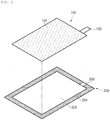
FIG. 1 is a schematic view illustrating disposition of a negative electrode in a center opening of a square band-shaped lithium foil in a method of preparing a lithium secondary battery of the present invention; -
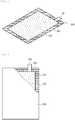
FIG. 2 is a schematic view illustrating the disposition of the negative electrode in the center opening of the square band-shaped lithium foil; and -
FIG. 3 is a schematic plan view illustrating a structure, in which the closed square band-shaped lithium foil having the opening formed at the center thereof; the negative electrode; and a solid electrolyte or a separator are stacked, in the method of preparing a lithium secondary battery of the present invention. - Hereinafter, the present invention will be described in more detail with reference to drawings.
- It will be understood that words or terms used in the specification and claims shall not be interpreted as the meaning defined in commonly used dictionaries. It will be further understood that the words or terms should be interpreted as having a meaning that is consistent with their meaning in the context of the relevant art and the technical idea of the invention, based on the principle that an inventor may properly define the meaning of the words or terms to best explain the invention.
- A method of preparing a lithium secondary battery according to the present invention includes the steps of: preparing a negative electrode, preparing a lithium foil having an opening formed at a center thereof and having a closed band shape, in which lithium is coated on one surface or both surfaces of a copper foil, disposing the negative electrode in the opening of the lithium foil, but disposing the negative electrode so as not to overlap the lithium foil except for a negative electrode tab, disposing the negative electrode tab so as to be in contact with the lithium foil, and preventing a portion, where the negative electrode tab and the lithium foil are in contact with each other, from being coated with the lithium, applying a solid electrolyte to or disposing a separator on at least one surface of a structure thus formed, disposing a positive electrode on the solid electrolyte or the separator, and accommodating a stack thus prepared in a battery case.
- A lithium secondary battery according to the present invention may be an all-solid lithium secondary battery or a lithium secondary battery using a liquid electrolyte.
- Hereinafter, the method of preparing a lithium secondary battery according to the present invention will be described in detail.
- A
negative electrode 100 of the present invention includes:
a negative electrode collector, a negative electrodeactive material layer 102 formed on both surfaces of the negative electrode collector, and anegative electrode tab 106 protruding from the collector. - Each negative electrode
active material layer 102 formed on the both surfaces of the negative electrode collector may be formed in a ratio of 1 : 3 to 300 relative to a thickness of the negative electrode collector, and may generally be formed to a thickness of 50 pm to 2,000 pm. In a case in which the thickness of the negative electrodeactive material layer 102 is formed in a ratio less than 1 : 3 relative to the thickness of the negative electrode collector, capacity may be excessively small, and, in a case in which the thickness of the negative electrodeactive material layer 102 is formed in a ratio greater than 1 : 300 relative to the thickness of the negative electrode collector, since battery resistance is increased, smooth charge and discharge may not be performed. - The negative electrode collector is not particularly limited as long as it has high conductivity without causing adverse chemical changes in the battery, and, for example, copper, stainless steel, aluminum, nickel, titanium, fired carbon, copper or stainless steel that is surface-treated with one of carbon, nickel, titanium, silver, or the like, and an aluminum-cadmium alloy may be used. Also, the negative electrode collector may typically have a thickness of 3 pm to 500 µm, and microscopic irregularities may be formed on the surface of the collector to improve the adhesion of a negative electrode active material. The negative electrode collector, for example, may be used in various forms such as that of a film, a sheet, a foil, a net, a porous body, a foam body, a non-woven fabric body, and the like.
- The negative electrode may be prepared by a method in which a negative electrode slurry is prepared by dissolving or dispersing a negative electrode active material, a conductive agent and/or a binder in a solvent, and both surfaces of the negative electrode collector are coated with the negative electrode slurry and then pressed.
- The negative electrode active material may include at least one selected from the group consisting of: at least one selected from the group consisting of silicon (Si), tin (Sn), aluminum (Al), antimony (Sb), and zinc (Zn) or an oxide thereof; and a metal oxide selected from the group consisting of Cox1Oy1 (1≤x1≤3, 1≤y1≤4), Nix2Oy2 (1≤x2≤3, 1≤y2≤4), Fex3Oy3 (1≤x3≤3, 1≤y3≤4), TiO2, MoO2, V2O5, and Li4Ti5O12.
- For example, the negative electrode active material is a mixed negative electrode active material of a silicon-based negative electrode active material and a carbon-based negative electrode active material, wherein the negative electrode active material may include the silicon-based negative electrode active material and the carbon-based negative electrode active material in a weight ratio of 1:99 to 50:50, for example, 5:95 to 20:80.
- If the silicon-based negative electrode active material is included in an amount of less than the above range, since an increase in energy density is difficult, it may be difficult to achieve a high-capacity battery, and, if the silicon-based negative electrode active material is included in an amount of greater than the above range, a degree of volume expansion of the negative electrode may be increased.
- The negative electrode active material may be included in an amount of 80 wt% to 99 wt%, for example, 85 wt% to 98 wt% based on a total weight of the negative electrode active material layer. When the negative electrode active material is included within the above-described amount range, excellent capacity characteristics may be exhibited.
- The conductive agent is used to provide conductivity to the electrode, wherein any conductive agent may be used without particular limitation as long as it has suitable electron conductivity without causing adverse chemical changes in the battery. Specific examples of the conductive agent may be graphite such as natural graphite or artificial graphite; carbon based materials such as carbon black, acetylene black, Ketjen black, channel black, furnace black, lamp black, thermal black, and carbon fibers; powder or fibers of metal such as copper, nickel, aluminum, and silver; conductive whiskers such as zinc oxide whiskers and potassium titanate whiskers; conductive metal oxides such as titanium oxide; or conductive polymers such as polyphenylene derivatives, and any one thereof or a mixture of two or more thereof may be used. The conductive agent may be included in an amount of 0 wt% to 30 wt% based on the total weight of the negative electrode active material layer.
- Also, the binder improves adhesion between negative electrode active material particles and adhesion between the negative electrode active material and the current collector. Specific examples of the binder may be polyvinylidene fluoride (PVDF), polyvinylidene fluoride-hexafluoropropylene copolymer (PVDF-co-HFP), polyvinyl alcohol, polyacrylonitrile, carboxymethyl cellulose (CMC), starch, hydroxypropyl cellulose, regenerated cellulose, polyvinylpyrrolidone, tetrafluoroethylene, polyethylene, polypropylene, an ethylene-propylene-diene polymer (EPDM), a sulfonated-EPDM, a styrene-butadiene rubber (SBR), a fluorine rubber, or various copolymers thereof, and any one thereof or a mixture of two or more thereof may be used. The binder may be included in an amount of 1 wt% to 30 wt% based on the total weight of the negative electrode active material layer.
- The solvent used in the preparation of the negative electrode slurry may be a solvent commonly used in the art, and, for example, dimethyl sulfoxide (DMSO), isopropyl alcohol, N-methylpyrrolidone (NMP), acetone, or water may be used alone or a mixture thereof may be used. An amount of the solvent used may be appropriately adjusted in consideration of a coating thickness of the slurry, manufacturing yield, and viscosity.
- In a case in which the negative electrode is used as a negative electrode of an all-solid lithium secondary battery, a solid electrolyte (first solid electrolyte) is included in the negative electrode. The reason for this is that, in the all-solid battery, lithium ions may be transferred to the active material only when the solid electrolyte is included in the electrode. The solid electrolyte may be included in an amount of 1 wt% to 50 wt% based on the total weight of the negative electrode active material layer.
- The solid electrolyte may be an inorganic solid electrolyte or an organic solid electrolyte.
- The inorganic solid electrolyte may include an oxide-based inorganic solid electrolyte, a phosphate-based inorganic solid electrolyte, a nitride-based inorganic solid electrolyte, a sulfide-based inorganic solid electrolyte, or a mixture thereof.
- The oxide-based inorganic solid electrolyte may include lithium-lanthanum-titanium oxide (LLTO), lithium-lanthanum-zirconium oxide (LLZO), LISICON, or a mixture thereof,
the phosphate-based inorganic solid electrolyte may include any one selected from the group consisting of lithium-aluminum-titanium-phosphate (LATP), lithium-aluminum-germanium-phosphate (LAGP), and a mixture thereof,
the nitride-based inorganic solid electrolyte may include LiPON (lithium phosphorous oxynitride), and
the sulfide-based inorganic solid electrolyte may include Li10GeP2S12, Li2S-P2S5, Li2S-P2S5-LiI, Li2S-P2S5-Li2O, Li2S-P2S5-Li2O-LiI, Li2S-SiS2, Li2S-SiS2-LiI, Li2S-SiS2-LiBr, Li2S-SiS2-LiCl, Li2S-SiS2-B2S3-LiI, Li2S-SiS2-P2S5-LiI, Li2S-B2S3, Li2S-P2S5-ZmSn (where m and n are positive numbers, and Z is any one of germanium (Ge), Zn, and gallium (Ga)), Li2S-GeS2, Li2S-SiS2-Li3PO4, Li2S-SiS2-LixMOy (where x and y are positive numbers, and M is any one of phosphorus (P), Si, Ge, boron (B), Al, Ga, and indium (In)), and a mixture thereof. - The organic solid electrolyte may be a polymer electrolyte formed by adding a polymer resin to a solvated lithium salt, and the polymer resin may include one selected from the group consisting of a polyether-based polymer, a polycarbonate-based polymer, an acrylate-based polymer, a polysiloxane-based polymer, a phosphazene-based polymer, a polyethylene derivative, polyethylene oxide (PEO), polyethylene glycol, an alkylene oxide derivative, a phosphate ester polymer, poly agitation lysine, polyester sulfide, polyvinyl alcohol, polyvinylidene fluoride, and a polymer containing an ionic dissociation group, or a mixture of two or more thereof.
- In order to prepare the lithium secondary battery of the present invention, a closed band shaped
lithium foil 200, in which anopening 202 is formed at a center, is prepared. - The
opening 202 may be prepared so as to have the same size and shape as thenegative electrode 100 except for thenegative electrode tab 106, and thelithium foil 200 may be prepared by coating lithium on a copper foil having a desired shape. InFIG. 1 , thelithium foil 200 includes a lithium-coatedportion 204 and a lithium-uncoated portion 206, wherein portions in contact with thenegative electrode 100 and thenegative electrode tab 106 are not coated with lithium. - The
negative electrode 100 does not overlap thelithium foil 200 except for thenegative electrode tab 106, but an outer boundary of thenegative electrode 100 does not overlap an inner boundary of thelithium foil 200. - The
lithium foil 200 is prepared such that a size thereof is not greater than a solid electrolyte-coated portion to be described later and a thickness thereof is not greater than a thickness of the negative electrode. - The
negative electrode 100 is disposed in theopening 202 of the above-describedlithium foil 200, but thenegative electrode 100 except for thenegative electrode tab 106 and thelithium foil 200 are disposed so as not to overlap with each other, and thenegative electrode tab 106 is disposed so as to be in contact with thelithium foil 200. - A resultant product, in which the
negative electrode 100 is disposed in theopening 202 of thelithium foil 200 as described above, is illustrated inFIG. 2 . - Then, a solid electrolyte (second solid electrolyte) 300 is disposed by being applied to at least one surface of the structure formed (structure of
FIG. 2 ) (seeFIG. 3 ). - The
solid electrolyte 300 acts as both an electrolyte and a separator in an all-solid lithium secondary battery, wherein one selected from the solid electrolyte (first solid electrolyte) compounds, which may be included in the above-described negative electrode, may be used, and these may be the same or different from each other. - Next, a positive electrode is disposed on the solid electrolyte applied.
- The positive electrode includes a positive electrode collector and a positive electrode active material layer disposed on at least one surface of the positive electrode collector.
- The positive electrode may be prepared according to a conventional positive electrode preparation method generally known in the art. For example, the positive electrode may be prepared by a method in which a positive electrode slurry is prepared by dissolving or dispersing components constituting the positive electrode active material layer, that is, a positive electrode active material, a conductive agent, and/or a binder in a solvent, and at least one surface of the positive electrode collector is coated with the positive electrode slurry, dried, and then pressed, or may be prepared by casting the positive electrode slurry on a separate support and then laminating a film separated from the support on the positive electrode collector.
- The positive electrode collector is not particularly limited as long as it has conductivity without causing adverse chemical changes in the battery, and, for example, stainless steel, aluminum, nickel, titanium, fired carbon, or aluminum or stainless steel that is surface-treated with one of carbon, nickel, titanium, silver, or the like may be used. Also, the positive electrode collector may typically have a thickness of 3 µm to 500 µm, and microscopic irregularities may be formed on the surface of the collector to improve adhesion of the positive electrode active material. The positive electrode collector, for example, may be used in various forms such as that of a film, a sheet, a foil, a net, a porous body, a foam body, a non-woven fabric body, and the like.
- As the positive electrode active material, for example, a layered compound, such as lithium cobalt oxide (LiCoO2) and lithium nickel oxide (LiNiO2), or a compound substituted with at least one transition metal; lithium manganese oxides such as Li1+yMn2-yO4 (where y is 0 to 0.33), LiMnO3, LiMn2O3, and LiMnO2; lithium copper oxide (Li2CuO2); vanadium oxides such as LiV3O8, LiFe3O4, V2O5, and Cu2V2O7; Ni-site type lithium nickel oxide represented by the chemical formula LiNi1-yMyO2 (where M = cobalt (Co), manganese (Mn), Al, copper (Cu), iron (Fe), magnesium (Mg), B, or Ga, and y is 0.01 to 0.3); lithium manganese composite oxide represented by the chemical formula LiMn2-yMyO2 (where M = Co, nickel (Ni), Fe, chromium (Cr), Zn, or tantalum (Ta), and y is 0.01 to 0.1) or Li2Mn3MO8 (where M = Fe, Co, Ni, Cu, or Zn) ; LiMn2O4 having a part of Li being substituted with alkaline earth metal ions; a disulfide compound; or Fe2(MoO4)3 may be used, but the positive electrode active material is not limited thereto.
- Also, the binder and the conductive agent may be the same as those previously described in the negative electrode.
- In a case in which the positive electrode is used as a positive electrode of an all-solid lithium secondary battery, a solid electrolyte (third solid electrolyte) is included in the positive electrode. The reason for this is that, in the all-solid battery, lithium ions may be transferred to the active material only when the solid electrolyte is included in the electrode.
- One selected from the solid electrolyte (first solid electrolyte) compounds, which may be included in the above-described negative electrode, may be used as the solid electrolyte, and these may be the same or different from each other.
- The all-solid lithium secondary battery of the present invention may be prepared by accommodating (casing) the prepared stack in a battery case.
- Since pre-lithiation of the all-solid lithium secondary battery of the present invention occurs through aging after the casing, the all-solid lithium secondary battery of the present invention is advantageous in that the pre-lithiation may be performed without a separate pre-lithiation process.
- The aging may be performed at a temperature of 10°C to 200°C and a pressure of 1 bar to 5,000 bar for 2 hours to 48 hours.
- If the aging temperature and time are less than 10°C and less than 2 hours, respectively, the pre-lithiation may not be sufficiently performed, and, since the lithium metal melts at a temperature of greater than 200°C, it may be difficult to maintain its shape. Since 48 hours is sufficient to complete the pre-lithiation, it is not necessary to age the negative electrode for greater than 48 hours. The reason for applying the pressure is to facilitate the ion transfer by reducing interfacial resistance in the all-solid battery, and a pressure within the above pressure range is suitable for this purpose.
- As described above, the all-solid lithium secondary battery denotes a battery in which a liquid or polymer electrolyte used in a conventional lithium secondary battery is replaced with a solid electrolyte material, wherein, since a flammable solvent is not used in the battery, it is chemically stable and, simultaneously, ignition or explosion caused by a leakage or decomposition reaction of a conventional electrolyte solution does not occur at all, and thus, safety may be greatly improved. Also, since a Li metal or Li alloy may be used as a negative electrode material, it is advantageous in that energy density with respect to mass and volume of the battery may be significantly improved. Furthermore, it is suitable for achieving high energy density by stacking the electrode and the solid electrolyte.
- That is, according to the above-described preparation method of the present invention, an all-solid lithium secondary battery, which has the advantages of the all-solid lithium secondary battery and may be subjected to pre-lithiation without a separate process at the same time, may be prepared.
- The negative electrode is disposed in the opening of the above-described lithium foil, but the negative electrode and the lithium foil are disposed so as not to overlap with each other, and the negative electrode tab is disposed so as to be in contact with the lithium foil (this process is the same as the disposition of the negative electrode in the opening of the lithium foil during the preparation of the above-described all-solid lithium secondary battery). In this case, the lithium foil is prepared such that a size thereof is not greater than the
separator 300 to be described later and a thickness thereof is not greater than the thickness of the negative electrode. - Then, the
separator 300 is disposed on at least one surface of the structure formed. - The separator separates the negative electrode and the positive electrode and provides a movement path of lithium ions, wherein any separator may be used as the separator without particular limitation as long as it is typically used in a secondary battery, and particularly, a separator having high moisture-retention ability for an electrolyte as well as low resistance to the transfer of electrolyte ions may be used. Specifically, a porous polymer film, for example, a porous polymer film prepared from a polyolefin-based polymer, such as an ethylene homopolymer, a propylene homopolymer, an ethylene/butene copolymer, an ethylene/hexene copolymer, and an ethylene/methacrylate copolymer, or a laminated structure having two or more layers thereof may be used. Also, a typical porous nonwoven fabric, for example, a nonwoven fabric formed of high melting point glass fibers or polyethylene terephthalate fibers may be used. Furthermore, a coated separator including a ceramic component or a polymer material may be used to secure heat resistance or mechanical strength, and the separator having a single layer or multilayer structure may be selectively used.
- Next, a positive electrode is disposed on the separator.
- The same positive electrode used in the above-described all-solid battery may be used as the positive electrode, but it is not necessary to include a solid electrolyte.
- After disposing the positive electrode, the lithium secondary battery of the present invention may be prepared by accommodating the above-prepared stack in a battery case and injecting a liquid electrolyte into the battery case.
- The liquid electrolyte is mainly an organic liquid electrolyte, wherein it may include an organic solvent and a lithium salt.
- Any organic solvent may be used as the organic solvent without particular limitation so long as it may function as a medium through which ions involved in an electrochemical reaction of the battery may move. Specifically, an ester-based solvent such as methyl acetate, ethyl acetate, γ-butyrolactone, and ε-caprolactone; an ether-based solvent such as dibutyl ether or tetrahydrofuran; a ketone-based solvent such as cyclohexanone; an aromatic hydrocarbon-based solvent such as benzene and fluorobenzene; or a carbonate-based solvent such as dimethyl carbonate (DMC), diethyl carbonate (DEC), methylethyl carbonate (MEC), ethylmethyl carbonate (EMC), ethylene carbonate (EC), and propylene carbonate (PC); an alcohol-based solvent such as ethyl alcohol and isopropyl alcohol; nitriles such as Ra-CN (where Ra is a linear, branched, or cyclic hydrocarbon group having 2 to 20 carbon atoms and may include a double-bond aromatic ring or ether bond); amides such as dimethylformamide; dioxolanes such as 1,3-dioxolane; or sulfolanes may be used as the organic solvent. Among these solvents, the carbonate-based solvent may be used, and, for example, a mixture of a cyclic carbonate (e.g., ethylene carbonate or propylene carbonate) having high ionic conductivity and high dielectric constant, which may increase charge/discharge performance of the battery, and a low-viscosity linear carbonate-based compound (e.g., ethylmethyl carbonate, dimethyl carbonate, or diethyl carbonate) may be used. In this case, the performance of the electrolyte solution may be excellent when the cyclic carbonate and the chain carbonate are mixed in a volume ratio of about 1:1 to about 1:9.
- The lithium salt may be used without particular limitation as long as it is a compound capable of providing lithium ions used in the lithium secondary battery. Specifically, LiPF6, LiClO4, LiAsF6, LiBF4, LiSbF6, LiAlO4, LiAlCl4, LiCF3SO3, LiC4F9SO3, LiN (C2F5SO3)2, LiN (C2F5SO2)2, LiN (CF3SO2)2, LiCl, LiI, or LiB(C2O4)2 may be used as the lithium salt. The lithium salt may be used in a concentration range of 0.1 M to 2.0 M. In a case in which the concentration of the lithium salt is included within the above range, since the electrolyte may have appropriate conductivity and viscosity, excellent performance of the electrolyte may be obtained and lithium ions may effectively move.
- In order to improve lifetime characteristics of the battery, suppress the reduction in battery capacity, and improve discharge capacity of the battery, at least one additive, for example, a halo-alkylene carbonate-based compound such as difluoroethylene carbonate; pyridine, triethylphosphite, triethanolamine, cyclic ether, ethylenediamine, n-glyme, hexaphosphoric triamide, a nitrobenzene derivative, sulfur, a quinone imine dye, N-substituted oxazolidinone, N,N-substituted imidazolidine, ethylene glycol dialkyl ether, an ammonium salt, pyrrole, 2-methoxy ethanol, or aluminum trichloride, may be further added to the liquid electrolyte in addition to the liquid electrolyte components. In this case, the additive may be included in an amount of 0.1 wt% to 5 wt% based on a total weight of the electrolyte.
- After injecting the liquid electrolyte, since pre-lithiation is performed by impregnating with an electrolyte solution at a temperature of 10°C to 200°C for 2 hours to 48 hours, lithium of the lithium foil may be diffused into the negative electrode.
- The impregnation may be performed at a temperature of 20°C to 70°C for 2 hours to 36 hours.
- If the impregnation temperature and time are less than 10°C and less than 2 hours, respectively, the pre-lithiation may not be sufficiently performed, and, since the lithium metal melts at a temperature of greater than 200°C, it may be difficult to maintain its shape. Since 48 hours is sufficient to complete the pre-lithiation, it is not necessary to impregnate the negative electrode for greater than 48 hours.
- Although the lithium secondary battery according to the present invention has been described mainly in the form of a mono-cell, it is applicable to various types of lithium secondary batteries.
- Specifically, the lithium secondary battery of the present invention may be prepared by a winding process, or may be prepared by a lamination, stack, and/or folding process of the separator and the electrode. Also, the lithium secondary battery of the present invention may be applied to all types, such as a cylindrical type, a prismatic type, a coin type, and a pouch type, according to the shape of a case, and may, for example, be a jelly-roll type, a stacked type, a stack-folding type (including stack-Z-folding type), or a lamination-stack type according to the form accommodated in the case.
- Hereinafter, the present invention will be described in detail, according to examples. However, the following examples are merely presented to exemplify the present invention, not to limit the scope of the present invention.
- A negative electrode active material slurry was prepared by adding 80 wt% of a negative electrode active material (graphite), 3 wt% of a conductive agent (Denka black), 3.5 wt% of a binder (SBR), 1.5 wt% of a thickener (CMC), and a solid polymer electrolyte (PE06:LiTFSI) to acrylonitrile (AN). Both surfaces of a copper current collector were coated with the prepared negative electrode active material slurry, dried, and pressed to prepare a negative electrode, and the negative electrode was then punched out into a circular shape.
- A lithium foil was prepared by coating lithium on a copper foil by a roll press method, and a closed circular band-shaped lithium foil, which had an opening having the same shape and size as the negative electrode, was prepared.
- The prepared negative electrode was disposed in the opening of the lithium foil prepared.
- After PEO6:LiTFSI, as a solid electrolyte, was coated on a top surface of the negative electrode of the above-prepared structure to a thickness of 0.1 mm, pressure was applied to bond the negative electrode and the solid electrolyte. Then, a LiCoO2 positive electrode [similar to the negative electrode, the solid polymer electrolyte (PEO6:LiTFSI) was also included in the positive electrode] was disposed on a top surface of the solid electrolyte and then pressurized to bond the positive electrode. A stack in the form of positive electrode/solid polymer electrolyte/negative electrode (disposed in the opening of the lithium foil) was prepared through the above cell preparation process and accommodated in a coin cell to prepare a coin-type full cell.
- The full cell was aged at a temperature of 60°C for 12 hours under a pressure of 250 bar to perform pre-lithiation.
- A negative electrode active material slurry was prepared by adding 92 wt% of a negative electrode active material (graphite:SiO = 7:3), 3 wt% of a conductive agent (Denka black), 3.5 wt% of a binder (SBR), and 1.5 wt% of a thickener (CMC) to water. Both surfaces of a copper current collector were coated with the prepared negative electrode active material slurry, dried, and pressed to prepare a negative electrode, and the negative electrode was then punched out into a circular shape.
- A lithium foil was prepared by coating lithium on a copper foil by a roll press method, and a closed circular band-shaped lithium foil, which had an opening having the same shape and size as the negative electrode, was prepared.
- The prepared negative electrode was disposed in the opening of the lithium foil prepared.
- After a polyolefin separator was disposed between the above-prepared structure and the LiCoO2 positive electrode, this stack was accommodated in a coin cell. Then, an electrolyte solution, in which 2 wt% of FEC was added to a solvent, in which EC and EMC were mixed in a volume ratio of 3:7, and LiPF6 was dissolved in a concentration of 1 M, was injected into the coin cell to prepare a coin-type full cell.
- For pre-lithiation, the full cell was allowed to be impregnated in the electrolyte solution at room temperature for 12 hours.
- A coin-type full cell was prepared in the same manner as in Example 1 except that the band-shaped lithium foil having an opening was not used.
- A coin-type full cell was prepared in the same manner as in Example 2 except that the band-shaped lithium foil having an opening was not used.
- Reversibility test was performed on the coin-type full cells prepared in the examples and the comparative examples using an electrochemical charger/discharger. The coin-type full cells were charged by applying a current at a current density of 0.1 C-rate to a voltage of 4.2 V (vs. Li/Li+) during charge and discharged at the same current density to a voltage of 2.5 V during discharge, and first cycle charge/discharge efficiencies (initial efficiency, %) are presented in Table 1 below. In this case, the initial efficiency was calculated by the following equation.
- With respect to Example 1 and Comparative Example 1 in which the solid electrolyte was used, the charge/discharge test was performed at 60°C, and, with respect to Example 2 and Comparative Example 2 in which the liquid electrolyte was used, the charge/discharge test was performed at room temperature.

[Table 1] First cycle charge/discharge efficiency (%) Example 1 85 Example 2 86 Comparative Example 1 64 Comparative Example 2 80 - As illustrated in Table 1, it may be confirmed that initial reversible efficiencies of Examples 1 and 2 were significantly higher than those of Comparative Examples 1 and 2, wherein the reason for this is considered that pre-lithiation, in which lithium in the lithium foil layer was transferred to the active material layer of the negative electrode, occurred without a complicated process.
-
- 100: Negative electrode
- 102: Negative electrode active material layer
- 106: Negative electrode tab
- 200: Lithium foil
- 202: Opening
- 204: Lithium-coated portion
- 206: Lithium-uncoated portion
- 300: Applied solid electrolyte or separator
Claims (12)
- A method of preparing an all-solid lithium secondary battery, the method comprising:preparing a negative electrode by forming a negative electrode active material layer including a first solid electrolyte on both surfaces of a current collector;preparing a lithium foil having an opening formed at a center thereof and having a closed band shape, in which lithium is coated on one surface or both surfaces of a copper foil;disposing the negative electrode in the opening of the lithium foil, but disposing the negative electrode so as not to overlap the lithium foil except for a negative electrode tab, disposing the negative electrode tab so as to be in contact with the lithium foil, and preventing a portion, where the negative electrode tab and the lithium foil are in contact with each other, from being coated with the lithium;applying a second solid electrolyte to at least one surface of a structure thus formed;disposing a positive electrode including a third solid electrolyte on the second solid electrolyte; andcasing a stack thus prepared.
- The method of claim 1, wherein the negative electrode active material comprises at least one selected from the group consisting of: at least one selected from the group consisting of silicon (Si), tin (Sn), aluminum (Al), antimony (Sb), and zinc (Zn) or an oxide thereof; and a metal oxide selected from the group consisting of Cox1Oy1 (1≤x1≤3, 1≤y1≤4), Nix2Oy2 (1≤x2≤3, 1≤y2≤4), Fex3Oy3 (1≤x3≤3, 1≤-y3≤4), TiO2, MoO2, V2O5, and Li4Ti5O12.
- The method of claim 1, wherein the opening has same size and shape as the negative electrode except for the negative electrode tab.
- The method of claim 1, wherein the first, second, and third solid electrolytes are same or different from one another.
- The method of claim 1 or claim 4, wherein the first, second, and third solid electrolytes each independently comprise at least one selected from an inorganic solid electrolyte and an organic solid electrolyte.
- The method of claim 1, wherein the lithium foil has a size not greater than a second solid electrolyte-coated portion and has a thickness not greater than a thickness of the negative electrode.
- The method of claim 1, further comprising aging after the casing.
- The method of claim 7, wherein the aging is performed at a temperature of 10°C to 200°C and a pressure of 1 bar to 5,000 bar for 2 hours to 48 hours.
- A method of preparing a lithium secondary battery, the method comprising:preparing a negative electrode by forming a negative electrode active material layer on both surfaces of a current collector;preparing a lithium foil having an opening formed at a center thereof and having a closed band shape, in which lithium is coated on one surface or both surfaces of a copper foil;disposing the negative electrode in the opening of the lithium foil, but disposing the negative electrode so as not to overlap the lithium foil except for a negative electrode tab, disposing the negative electrode tab so as to be in contact with the lithium foil, and preventing a portion, where the negative electrode tab and the lithium foil are in contact with each other, from being coated with the lithium;disposing a separator on at least one surface of a structure thus formed;disposing a positive electrode on the separator; andaccommodating a stack thus prepared in a battery case, and injecting a liquid electrolyte into the battery case.
- The method of claim 9, wherein the separator is a polyolefin-based porous polymer film or a porous nonwoven fabric.
- The method of claim 9, wherein the lithium foil has a size not greater than the separator and has a thickness not greater than a thickness of the negative electrode.
- The method of claim 9, further comprising impregnating with an electrolyte solution at a temperature of 10°C to 200°C for 2 hours to 48 hours, after the accommodating of the stack thus prepared in the battery case and the injecting of the liquid electrolyte into the battery case.
Applications Claiming Priority (2)
| Application Number | Priority Date | Filing Date | Title |
|---|---|---|---|
| KR1020180147161A KR102768402B1 (en) | 2018-11-26 | 2018-11-26 | Method for preparing lithium secondary battery |
| PCT/KR2019/016401 WO2020111746A1 (en) | 2018-11-26 | 2019-11-26 | Method for manufacturing lithium secondary battery |
Publications (3)
| Publication Number | Publication Date |
|---|---|
| EP3872916A1 true EP3872916A1 (en) | 2021-09-01 |
| EP3872916A4 EP3872916A4 (en) | 2021-12-29 |
| EP3872916B1 EP3872916B1 (en) | 2026-03-18 |
Family
ID=70851989
Family Applications (1)
| Application Number | Title | Priority Date | Filing Date |
|---|---|---|---|
| EP19888855.4A Active EP3872916B1 (en) | 2018-11-26 | 2019-11-26 | Method of preparing lithium secondary battery |
Country Status (5)
| Country | Link |
|---|---|
| US (2) | US12170354B2 (en) |
| EP (1) | EP3872916B1 (en) |
| KR (1) | KR102768402B1 (en) |
| CN (1) | CN113711416B (en) |
| WO (1) | WO2020111746A1 (en) |
Families Citing this family (2)
| Publication number | Priority date | Publication date | Assignee | Title |
|---|---|---|---|---|
| TWI877188B (en) * | 2019-07-26 | 2025-03-21 | 德商巴斯夫歐洲公司 | Process for the recovery of lithium from waste lithium ion batteries |
| CN115149106B (en) * | 2021-08-27 | 2023-06-06 | 合肥国轩高科动力能源有限公司 | Pre-lithiation method of lithium ion battery and lithium ion battery |
Family Cites Families (19)
| Publication number | Priority date | Publication date | Assignee | Title |
|---|---|---|---|---|
| JP2000182671A (en) * | 1998-12-11 | 2000-06-30 | Fuji Photo Film Co Ltd | Non-aqueous secondary battery |
| JP2004303597A (en) * | 2003-03-31 | 2004-10-28 | Sanyo Electric Co Ltd | Lithium secondary battery and manufacturing method of the same |
| JP2005251429A (en) * | 2004-03-01 | 2005-09-15 | Mitsui Mining & Smelting Co Ltd | Perforated metal foil with Al alloy carrier, method for producing the same, electrode for secondary battery including the perforated metal foil separated from perforated metal foil with Al alloy carrier, and secondary battery |
| CN100517854C (en) * | 2004-11-02 | 2009-07-22 | 三洋电机株式会社 | Lithium secondary battery and manufacturing method thereof |
| US20080070120A1 (en) | 2006-09-14 | 2008-03-20 | Shin-Etsu Chemical Co., Ltd. | Non-aqueous electrolyte secondary battery and making method |
| JP5196118B2 (en) * | 2006-09-14 | 2013-05-15 | 信越化学工業株式会社 | Non-aqueous electrolyte secondary battery and manufacturing method thereof |
| JP5008960B2 (en) | 2006-12-04 | 2012-08-22 | 日本電信電話株式会社 | All-solid-state lithium secondary battery manufacturing method and all-solid-state lithium secondary battery |
| JP4735556B2 (en) | 2007-01-30 | 2011-07-27 | ソニー株式会社 | Method for producing solid electrolyte battery |
| JP2012009209A (en) * | 2010-06-23 | 2012-01-12 | Nissan Motor Co Ltd | Negative electrode for lithium ion secondary battery |
| KR102034718B1 (en) | 2012-07-06 | 2019-10-22 | 삼성전자주식회사 | Anode for lithium air battery and Lithium air battery comprising the anode |
| KR101561188B1 (en) | 2013-02-20 | 2015-10-16 | 에스케이이노베이션 주식회사 | Anode for lithium secondary battery, fabricating method thereof and lithium air battery having the same |
| CN105190945B (en) * | 2013-05-31 | 2017-06-23 | 松下知识产权经营株式会社 | Thin battery |
| KR20160040020A (en) | 2014-10-02 | 2016-04-12 | 주식회사 엘지화학 | Electrode assembly and lithium secondary battery comprising thereof |
| KR101984727B1 (en) * | 2016-11-21 | 2019-05-31 | 주식회사 엘지화학 | Electrode and lithium secondary battery comprising the same |
| US10700377B2 (en) | 2017-01-17 | 2020-06-30 | Samsung Electronics Co., Ltd. | Solid electrolyte for a negative electrode of a secondary battery including first and second solid electrolytes with different affinities for metal deposition electronchemical cell and method of manufacturing |
| PL3503257T3 (en) | 2017-03-10 | 2021-08-02 | Lg Chem, Ltd. | Lithium secondary battery |
| JP6887088B2 (en) | 2017-04-04 | 2021-06-16 | パナソニックIpマネジメント株式会社 | Stacked all-solid-state battery and its manufacturing method |
| KR102265214B1 (en) | 2017-05-19 | 2021-06-16 | (주)엘지에너지솔루션 | Pre-lithiation Method of Silicon oxide Anode Electrodes for secondary battery |
| CN108336293B (en) * | 2017-12-19 | 2021-11-26 | 成都大超科技有限公司 | Negative electrode structure of lithium battery and method for preparing negative electrode structure |
-
2018
- 2018-11-26 KR KR1020180147161A patent/KR102768402B1/en active Active
-
2019
- 2019-11-26 EP EP19888855.4A patent/EP3872916B1/en active Active
- 2019-11-26 CN CN201980075497.4A patent/CN113711416B/en active Active
- 2019-11-26 WO PCT/KR2019/016401 patent/WO2020111746A1/en not_active Ceased
-
2021
- 2021-05-25 US US17/329,631 patent/US12170354B2/en active Active
-
2024
- 2024-10-29 US US18/930,372 patent/US20250055039A1/en active Pending
Also Published As
| Publication number | Publication date |
|---|---|
| US20250055039A1 (en) | 2025-02-13 |
| KR102768402B1 (en) | 2025-02-18 |
| CN113711416A (en) | 2021-11-26 |
| CN113711416B (en) | 2024-06-18 |
| WO2020111746A1 (en) | 2020-06-04 |
| EP3872916A4 (en) | 2021-12-29 |
| US20210280917A1 (en) | 2021-09-09 |
| US12170354B2 (en) | 2024-12-17 |
| EP3872916B1 (en) | 2026-03-18 |
| KR20200062427A (en) | 2020-06-04 |
Similar Documents
| Publication | Publication Date | Title |
|---|---|---|
| US12573610B2 (en) | Negative electrode for lithium secondary battery, method of producing the same and lithium secondary battery including the same | |
| US12113203B2 (en) | Negative electrode for lithium secondary battery, method for pre-lithiation thereof, and lithium secondary battery including same | |
| US11735709B2 (en) | Positive electrode for lithium secondary battery, preparation method thereof, and lithium secondary battery including same | |
| EP4310942A1 (en) | Lithium secondary battery allowing easy state estimation | |
| EP3872905B1 (en) | Cathode for lithium secondary battery and lithium secondary battery including same | |
| US20250055039A1 (en) | Method of preparing lithium secondary battery | |
| US12347853B2 (en) | Method for manufacturing negative electrode for lithium secondary battery | |
| KR102345309B1 (en) | Positive electrode and lithium secondary battery including the same | |
| US12107263B2 (en) | Negative electrode including first negative electrode active material layer and second negative electrode active material layer having polymer coating layer on a surface of the second negative electrode active material and lithium, method of producing the same and lithium secondary battery including the same | |
| US20220013759A1 (en) | Method of Preparing Positive Electrode for Secondary Battery, Positive Electrode Prepared Thereby, and Lithium Secondary Battery Including the Positive Electrode | |
| EP3780189B1 (en) | Cathode for secondary battery, method for manufacturing same, and lithium secondary battery including same | |
| US12278376B2 (en) | Method of preparing positive electrode active material for lithium secondary battery and positive electrode active material prepared by the same | |
| KR20190125716A (en) | Pellet composition for negative electrode, negative electrode for lithium secondary battery and lithium secondary battery comprising the same |
Legal Events
| Date | Code | Title | Description |
|---|---|---|---|
| STAA | Information on the status of an ep patent application or granted ep patent |
Free format text: STATUS: THE INTERNATIONAL PUBLICATION HAS BEEN MADE |
|
| PUAI | Public reference made under article 153(3) epc to a published international application that has entered the european phase |
Free format text: ORIGINAL CODE: 0009012 |
|
| STAA | Information on the status of an ep patent application or granted ep patent |
Free format text: STATUS: REQUEST FOR EXAMINATION WAS MADE |
|
| 17P | Request for examination filed |
Effective date: 20210525 |
|
| AK | Designated contracting states |
Kind code of ref document: A1 Designated state(s): AL AT BE BG CH CY CZ DE DK EE ES FI FR GB GR HR HU IE IS IT LI LT LU LV MC MK MT NL NO PL PT RO RS SE SI SK SM TR |
|
| A4 | Supplementary search report drawn up and despatched |
Effective date: 20211125 |
|
| RIC1 | Information provided on ipc code assigned before grant |
Ipc: H01M 50/533 20210101ALN20211119BHEP Ipc: H01M 50/417 20210101ALN20211119BHEP Ipc: H01M 50/411 20210101ALN20211119BHEP Ipc: H01M 4/62 20060101ALN20211119BHEP Ipc: H01M 4/525 20100101ALN20211119BHEP Ipc: H01M 4/38 20060101ALN20211119BHEP Ipc: H01M 4/131 20100101ALN20211119BHEP Ipc: H01M 4/134 20100101ALI20211119BHEP Ipc: H01M 10/0525 20100101ALI20211119BHEP Ipc: H01M 10/44 20060101ALI20211119BHEP Ipc: H01M 10/04 20060101ALI20211119BHEP Ipc: H01M 10/058 20100101ALI20211119BHEP Ipc: H01M 10/0566 20100101ALI20211119BHEP Ipc: H01M 4/36 20060101ALI20211119BHEP Ipc: H01M 4/1395 20100101ALI20211119BHEP Ipc: H01M 4/1393 20100101ALI20211119BHEP Ipc: H01M 4/133 20100101ALI20211119BHEP Ipc: H01M 10/052 20100101ALI20211119BHEP Ipc: H01M 4/04 20060101ALI20211119BHEP Ipc: H01M 4/139 20100101ALI20211119BHEP Ipc: H01M 10/0565 20100101ALI20211119BHEP Ipc: H01M 10/0562 20100101ALI20211119BHEP Ipc: H01M 10/0585 20100101AFI20211119BHEP |
|
| DAV | Request for validation of the european patent (deleted) | ||
| DAX | Request for extension of the european patent (deleted) | ||
| RAP3 | Party data changed (applicant data changed or rights of an application transferred) |
Owner name: LG ENERGY SOLUTION, LTD. |
|
| STAA | Information on the status of an ep patent application or granted ep patent |
Free format text: STATUS: EXAMINATION IS IN PROGRESS |
|
| 17Q | First examination report despatched |
Effective date: 20241209 |
|
| GRAP | Despatch of communication of intention to grant a patent |
Free format text: ORIGINAL CODE: EPIDOSNIGR1 |
|
| STAA | Information on the status of an ep patent application or granted ep patent |
Free format text: STATUS: GRANT OF PATENT IS INTENDED |
|
| INTG | Intention to grant announced |
Effective date: 20251119 |
|
| GRAS | Grant fee paid |
Free format text: ORIGINAL CODE: EPIDOSNIGR3 |
|
| GRAA | (expected) grant |
Free format text: ORIGINAL CODE: 0009210 |
|
| STAA | Information on the status of an ep patent application or granted ep patent |
Free format text: STATUS: THE PATENT HAS BEEN GRANTED |
|
| P01 | Opt-out of the competence of the unified patent court (upc) registered |
Free format text: CASE NUMBER: UPC_APP_0001694_3872916/2026 Effective date: 20260119 |
|
| AK | Designated contracting states |
Kind code of ref document: B1 Designated state(s): AL AT BE BG CH CY CZ DE DK EE ES FI FR GB GR HR HU IE IS IT LI LT LU LV MC MK MT NL NO PL PT RO RS SE SI SK SM TR |
|
| REG | Reference to a national code |
Ref country code: CH Ref legal event code: F10 Free format text: ST27 STATUS EVENT CODE: U-0-0-F10-F00 (AS PROVIDED BY THE NATIONAL OFFICE) Effective date: 20260318 Ref country code: GB Ref legal event code: FG4D |
|
| REG | Reference to a national code |
Ref country code: IE Ref legal event code: FG4D |
|
| REG | Reference to a national code |
Ref country code: DE Ref legal event code: R096 Ref document number: 602019082697 Country of ref document: DE |