EP3872677A2 - Verfahren, vorrichtung, speichermedium und programm zur bestimmung des zielorts auf einer karte - Google Patents
Verfahren, vorrichtung, speichermedium und programm zur bestimmung des zielorts auf einer karte Download PDFInfo
- Publication number
- EP3872677A2 EP3872677A2 EP21179402.9A EP21179402A EP3872677A2 EP 3872677 A2 EP3872677 A2 EP 3872677A2 EP 21179402 A EP21179402 A EP 21179402A EP 3872677 A2 EP3872677 A2 EP 3872677A2
- Authority
- EP
- European Patent Office
- Prior art keywords
- segment
- model
- map
- region
- type
- Prior art date
- Legal status (The legal status is an assumption and is not a legal conclusion. Google has not performed a legal analysis and makes no representation as to the accuracy of the status listed.)
- Withdrawn
Links
Images



Classifications
-
- G—PHYSICS
- G06—COMPUTING OR CALCULATING; COUNTING
- G06F—ELECTRIC DIGITAL DATA PROCESSING
- G06F16/00—Information retrieval; Database structures therefor; File system structures therefor
- G06F16/20—Information retrieval; Database structures therefor; File system structures therefor of structured data, e.g. relational data
- G06F16/29—Geographical information databases
-
- G—PHYSICS
- G06—COMPUTING OR CALCULATING; COUNTING
- G06F—ELECTRIC DIGITAL DATA PROCESSING
- G06F40/00—Handling natural language data
- G06F40/20—Natural language analysis
- G06F40/253—Grammatical analysis; Style critique
-
- G—PHYSICS
- G06—COMPUTING OR CALCULATING; COUNTING
- G06F—ELECTRIC DIGITAL DATA PROCESSING
- G06F40/00—Handling natural language data
- G06F40/20—Natural language analysis
- G06F40/279—Recognition of textual entities
-
- G—PHYSICS
- G06—COMPUTING OR CALCULATING; COUNTING
- G06F—ELECTRIC DIGITAL DATA PROCESSING
- G06F16/00—Information retrieval; Database structures therefor; File system structures therefor
- G06F16/20—Information retrieval; Database structures therefor; File system structures therefor of structured data, e.g. relational data
- G06F16/23—Updating
-
- G—PHYSICS
- G06—COMPUTING OR CALCULATING; COUNTING
- G06F—ELECTRIC DIGITAL DATA PROCESSING
- G06F16/00—Information retrieval; Database structures therefor; File system structures therefor
- G06F16/20—Information retrieval; Database structures therefor; File system structures therefor of structured data, e.g. relational data
- G06F16/24—Querying
- G06F16/245—Query processing
-
- G—PHYSICS
- G06—COMPUTING OR CALCULATING; COUNTING
- G06F—ELECTRIC DIGITAL DATA PROCESSING
- G06F16/00—Information retrieval; Database structures therefor; File system structures therefor
- G06F16/30—Information retrieval; Database structures therefor; File system structures therefor of unstructured textual data
- G06F16/33—Querying
- G06F16/332—Query formulation
- G06F16/3329—Natural language query formulation
-
- G—PHYSICS
- G06—COMPUTING OR CALCULATING; COUNTING
- G06F—ELECTRIC DIGITAL DATA PROCESSING
- G06F16/00—Information retrieval; Database structures therefor; File system structures therefor
- G06F16/30—Information retrieval; Database structures therefor; File system structures therefor of unstructured textual data
- G06F16/33—Querying
- G06F16/3331—Query processing
- G06F16/334—Query execution
- G06F16/3344—Query execution using natural language analysis
-
- G—PHYSICS
- G06—COMPUTING OR CALCULATING; COUNTING
- G06F—ELECTRIC DIGITAL DATA PROCESSING
- G06F16/00—Information retrieval; Database structures therefor; File system structures therefor
- G06F16/30—Information retrieval; Database structures therefor; File system structures therefor of unstructured textual data
- G06F16/38—Retrieval characterised by using metadata, e.g. metadata not derived from the content or metadata generated manually
- G06F16/387—Retrieval characterised by using metadata, e.g. metadata not derived from the content or metadata generated manually using geographical or spatial information, e.g. location
-
- G—PHYSICS
- G06—COMPUTING OR CALCULATING; COUNTING
- G06F—ELECTRIC DIGITAL DATA PROCESSING
- G06F16/00—Information retrieval; Database structures therefor; File system structures therefor
- G06F16/90—Details of database functions independent of the retrieved data types
- G06F16/907—Retrieval characterised by using metadata, e.g. metadata not derived from the content or metadata generated manually
- G06F16/909—Retrieval characterised by using metadata, e.g. metadata not derived from the content or metadata generated manually using geographical or spatial information, e.g. location
-
- G—PHYSICS
- G06—COMPUTING OR CALCULATING; COUNTING
- G06F—ELECTRIC DIGITAL DATA PROCESSING
- G06F40/00—Handling natural language data
- G06F40/20—Natural language analysis
- G06F40/205—Parsing
- G06F40/211—Syntactic parsing, e.g. based on context-free grammar [CFG] or unification grammars
-
- G—PHYSICS
- G06—COMPUTING OR CALCULATING; COUNTING
- G06F—ELECTRIC DIGITAL DATA PROCESSING
- G06F40/00—Handling natural language data
- G06F40/20—Natural language analysis
- G06F40/237—Lexical tools
- G06F40/242—Dictionaries
-
- G—PHYSICS
- G06—COMPUTING OR CALCULATING; COUNTING
- G06F—ELECTRIC DIGITAL DATA PROCESSING
- G06F40/00—Handling natural language data
- G06F40/20—Natural language analysis
- G06F40/279—Recognition of textual entities
- G06F40/289—Phrasal analysis, e.g. finite state techniques or chunking
-
- G—PHYSICS
- G06—COMPUTING OR CALCULATING; COUNTING
- G06F—ELECTRIC DIGITAL DATA PROCESSING
- G06F40/00—Handling natural language data
- G06F40/30—Semantic analysis
-
- G—PHYSICS
- G06—COMPUTING OR CALCULATING; COUNTING
- G06N—COMPUTING ARRANGEMENTS BASED ON SPECIFIC COMPUTATIONAL MODELS
- G06N3/00—Computing arrangements based on biological models
- G06N3/02—Neural networks
- G06N3/08—Learning methods
- G06N3/084—Backpropagation, e.g. using gradient descent
-
- G—PHYSICS
- G10—MUSICAL INSTRUMENTS; ACOUSTICS
- G10L—SPEECH ANALYSIS TECHNIQUES OR SPEECH SYNTHESIS; SPEECH RECOGNITION; SPEECH OR VOICE PROCESSING TECHNIQUES; SPEECH OR AUDIO CODING OR DECODING
- G10L15/00—Speech recognition
- G10L15/08—Speech classification or search
- G10L15/18—Speech classification or search using natural language modelling
- G10L15/1815—Semantic context, e.g. disambiguation of the recognition hypotheses based on word meaning
-
- G—PHYSICS
- G10—MUSICAL INSTRUMENTS; ACOUSTICS
- G10L—SPEECH ANALYSIS TECHNIQUES OR SPEECH SYNTHESIS; SPEECH RECOGNITION; SPEECH OR VOICE PROCESSING TECHNIQUES; SPEECH OR AUDIO CODING OR DECODING
- G10L15/00—Speech recognition
- G10L15/22—Procedures used during a speech recognition process, e.g. man-machine dialogue
-
- G—PHYSICS
- G10—MUSICAL INSTRUMENTS; ACOUSTICS
- G10L—SPEECH ANALYSIS TECHNIQUES OR SPEECH SYNTHESIS; SPEECH RECOGNITION; SPEECH OR VOICE PROCESSING TECHNIQUES; SPEECH OR AUDIO CODING OR DECODING
- G10L15/00—Speech recognition
- G10L15/26—Speech to text systems
-
- G—PHYSICS
- G05—CONTROLLING; REGULATING
- G05D—SYSTEMS FOR CONTROLLING OR REGULATING NON-ELECTRIC VARIABLES
- G05D1/00—Control of position, course, altitude or attitude of land, water, air or space vehicles, e.g. using automatic pilots
- G05D1/02—Control of position or course in two dimensions
- G05D1/021—Control of position or course in two dimensions specially adapted to land vehicles
- G05D1/0268—Control of position or course in two dimensions specially adapted to land vehicles using internal positioning means
- G05D1/0274—Control of position or course in two dimensions specially adapted to land vehicles using internal positioning means using mapping information stored in a memory device
-
- G—PHYSICS
- G10—MUSICAL INSTRUMENTS; ACOUSTICS
- G10L—SPEECH ANALYSIS TECHNIQUES OR SPEECH SYNTHESIS; SPEECH RECOGNITION; SPEECH OR VOICE PROCESSING TECHNIQUES; SPEECH OR AUDIO CODING OR DECODING
- G10L15/00—Speech recognition
- G10L15/22—Procedures used during a speech recognition process, e.g. man-machine dialogue
- G10L2015/223—Execution procedure of a spoken command
Definitions
- Embodiments of the present disclosure relate generally to the field of computer technology, and more particularly, to a method, apparatus, computer-readable storage medium and program for determining a destination on a map.
- a method for determining a destination on a map includes: acquiring N segments of a text, where N is an integer greater than 1; determining a recursive order of the N segments based on a grammatical relationship between the N segments of the text; selecting, for each of the N segments, a matching model from a plurality of models based on a meaning of the each segment, where the matching model for each segment is configured to use an input text and an input region of the map as an input, and output an update region of the map based on the meaning of the input text and the input region; inputting, in the recursive order, each segment with an initial region of the map or an update region output by the matching model for the last segment prior to the segment in the recursive order, into the matching model of the segment; and using the update region output by the matching model for the last segment in the recursive order as the destination in the map.
- a non-transitory computer readable storage medium storing instructions
- the instructions is executable by a processor to perform operations including: acquiring N segments of a text, where N is an integer greater than 1; determining a recursive order of the N segments based on a grammatical relationship between the N segments of the text; selecting, for each of the N segments, a matching model from a plurality of models based on a meaning of the segment, where the matching model for the segment is configured to use an input text and an input region of the map as an input, and output an update region of the map based on the meaning of the input text and the input region; inputting, in the recursive order, each segment with an initial region of the map or an update region output by the matching model for the last segment prior to the segment in the recursive order, into the matching model of the segment; and using the update region output by the matching model for the last segment in the recursive order as the destination in the map.
- a computer program comprising instructions, where the instructions, when the program is executed by a processor, cause the processor to perform operations including: acquiring N segments of a text, where N is an integer greater than 1; determining a recursive order of the N segments based on a grammatical relationship between the N segments of the text; selecting, for each of the N segments, a matching model from a plurality of models based on a meaning of the segment, where the matching model for the segment is configured to use an input text and an input region of the map as an input, and output an update region of the map based on the meaning of the input text and the input region; inputting, in the recursive order, each segment with an initial region of the map or an update region output by the matching model for the last segment prior to the segment in the recursive order, into the matching model of the segment; and using the update region output by the matching model for the last segment in the recursive order as the destination in the map.
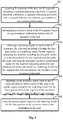
- Fig. 1 is a flowchart of a method for determining a destination on a map according to some embodiments of the disclosure. The method includes steps 101 to 105.
- Step 101 includes: acquiring N segments of a text, where N is an integer greater than 1.
- the text is acquired based on a user input.
- the user input may be any input receivable by a machine or a computer.
- the user input includes at least one of a voice, an input from a keyboard, an input from a sensor, or an input from a touch screen.
- the N segments include a segment indicating a position and a segment indicating a position relationship.
- the user says “Go to the meeting room near the north exit”
- a voice is received by a robot
- a text "Go to the meeting room near the north exit” is acquired from the voice.
- a semantic analysis is performed on the text to acquire a text regarding position description, e.g., "meeting room near the north exit.”
- multiple segments of the text i.e., noun segments (e.g., "meeting room” and “the north exit") and a preposition segment(e.g., "near" are acquired.
- Step 102 includes: determining a recursive order of the N segments based on a grammatical relationship between the N segments of the text.
- step 102 includes steps 1021 and 1022, which is shown in Fig. 2 .
- Step 1021 includes determining from the N segments a head noun segment in front of a preposition segment, the preposition segment and an objective segment of the preposition segment.
- a natural language processing (NLP) tool is used to parse the text into a dependency structure with head words u h , prepositions u prep , and objective of preposition u pobj .
- NLP natural language processing
- Step 1022 includes: determining the head noun segment in front of the preposition segment as the first segment in the recursive order, determining the preposition segment as the second segment in the recursive order and determining the objective segment as the third segment in the recursive order.
- Step 103 includes: selecting, for each of the N segments, a matching model from a plurality of models based on a meaning of the each segment, where the matching model for each segment is configured to use an input text and an input region of the map as an input, and output an update region of the map based on the meaning of the input text and the input region.
- the plurality of models includes a first-type model and a second-type model, where the first-type model is configured to use a first map region and a first-type text indicating the position as an input, and output a first update region within the first map region, where the second-type model is configured to use a second map region and a second-type text indicating a position relationship as an input, and output a second update region based on the second map region and the position relationship.
- the position relationship include a proximity relationship
- the second-type model includes a proximity-model configured to use the second map region and a second-type text indicating the proximity relationship as the input, and output the second update region in proximity to the second map region.
- the position relationship includes a directional relationship
- the second-type model includes a directional-model configured to use the second map region and a second-type text indicating the directional relationship as the input, and output the second update region in a direction of the second map region.
- Eq. (1) and Eq. (3) shares the same function.
- Step 104 includes: inputting, in the recursive order, each segment with an initial region of the map or an update region output by the matching model for the last segment prior to the segment in the recursive order, into the matching model of each segment.
- step 104 includes step 1041 and step 1042, which is shown in Fig. 3 .
- Step 1041 includes inputting the first segment in the recursive order and the initial region of the map to the matching model of the first segment to acquire a first update region.
- Step 1042 includes inputting, for each of the second to N segments in the recursive order, the segment and the update region output by the matching model for the last segment prior to the segment in the recursive order, into the matching model for the segment to acquire an update region for the segment.
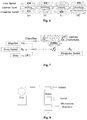
- Fig. 4 shows an application example of step 104.
- a first segment "the north exit” is inputted with an initial region of map to the first model as defined in equation (1).
- a second segment “near” is inputted with the output of the first model to the second model as defined in equation (2).
- a third segment "the meeting room” is inputted with the output of the second model to the third model as defined in equation (3).
- Step 105 includes: using the update region output by the matching model for the last segment in the recursive order as the destination in the map.
- the output of the third model in Fig. 4 is used as the destination.
- coordinates of the map is determined by the robot based on the destination on the map, then the robot plans a path from a current position of the robot to the coordinates of the map, and move along the planned path.
- the method according to some embodiments of the disclosure makes maximum use of the structural features of natural language, decomposes the complete addressing task into several independent language understanding tasks according to the instruction structure, and transmits the extracted information in the form of probability distribution.
- the target probability is evenly distributed in the whole map range.
- the probability distribution is understood and updated one by one through independent language, and points to the final target location.
- the method according to some embodiments of the disclosure has the characteristics of being interpretable, easy to optimize and requiring less data.
- coordinates of a destination in a map can be easily determined by a robot based on an input of a user, thus the user is assisted in controlling the robot.
- Fig. 5 is a flowchart of a method for determining a destination on a map according to some other embodiments of the disclosure. The method includes steps 501 to 505.
- Step 501 includes acquiring N segments of the text, the N segments including a segment indicating a position, a segment indicating a direction, a segment indicating proximity, and a segment that does not indicate any position or any position relationship.
- Step 502 includes determining a recursive order of the N segments based on a grammatical relationship between the N segments of the text. Step 502 is the same as step 102, and relevant descriptions may be referred to descriptions of step 102.
- Step 503 includes selecting a matching model for each of the N segments, the selecting including selecting the first-type model as the matching model for the segment indicating the position, selecting the direction-model as a matching model for the segment indicating the direction, selecting the proximity-model as a matching model for the segment indicating proximity and selecting the third-type model as a matching model for the segment that does not indicate any position or any position relationship.
- the segments of the text are also referred as modifiers, and the input and output of the model are also referred to as prior and posterior respectively.
- Table I shows an example of first-type model (i.e., precise model), proximity model, directional model, and the third-type model (i.e., dummy model), and their available inputs, outputs and rules according to some embodiments.
- the text is decomposed into a sequence of grammatically associated segments (u k ) and recursively apply each of them to update a notion of belief b.
- a set of learnable functions f ⁇ t U ⁇ B ⁇ B , and a classifier are constructed.
- the update function in equation (4) can be written as where ( ⁇ ) is the indicator function.
- Fig. 6 shows semantic illustration of update functions of a plurality of models according to some embodiments of the disclosure. The update functions of the precise model, directional model, proximity model and dummy mode are described as follows.
- each word in the area information is converted to fixed length embeddings and then the length embeddings are concatenated.
- the result is a matrix representation of the map information, denoted by m ⁇ ⁇ R S ⁇ N ⁇ H .
- S is the number of area of interest.
- N refers to the number of tokens in area descriptors.
- H is the dimension of word embedding.
- the modifier u k is encoded as an embedding matrix u ⁇ k ⁇ R N ⁇ H .
- the precise model is formed as a S-level classification problem which generates a discrete distribution w k defined on all areas in the map.
- w k i 1 ⁇ ⁇ k i ⁇ w ⁇ k i ⁇ w k ⁇ 1 i
- ⁇ k , w k , and w k-1 represent directional scaling factor, modifier-map attention, and prior weights as explained as follows, ⁇ refers to normalization factor.
- the full belief b k can then be recovered by assigning w k (i) to the area on the map indicated by boundary B i , and then normalizing across the whole map.
- ⁇ k is triggered by the common use of directions as adjective of the head word (see Table. I).
- ⁇ is the sigmoid function
- x i is the centroid of area a i
- B 0 is the boundary of the map
- e ⁇ k is the unit directional vector of the predicted direction ⁇ k ⁇ [- ⁇ , n)
- ⁇ k ⁇ [0, 1] is a trainable variable indicating whether a direction is used in u k
- ⁇ k is a shaping factor adjusting the scaling power of ⁇ k
- ⁇ is a positive constant.
- ⁇ k When a directional adjective is used, ⁇ k is labeled as 1, rendering ⁇ k in an exponential form that weighs each area a i according to the projection of their centroids along a predicted direction. ⁇ k is added as an offset to provide additional flexibility. When no directional adjective is involved, ⁇ k is labeled as 0 and pushes ⁇ k (i) to ⁇ for all a i , effectively cancelling this discriminative term. All terms in Eq.
- This term weighs each area a i by counting the matching word pairs between pre-defined area information and modifier u k .
- Word matching is examined by filtering normalized embedding dot products by threshold ⁇ .
- the posterior When encountering prepositions referring to proximity relation, the posterior is represented as a Gaussian distribution centered at the prior and assign a variance proportional to the prior area size.
- direction words e.g., " north ”
- head words e.g., "the north of meeting room 202.
- a Gaussian distribution is used to represent the prior, but the distribution is set with an additional mask that only preserves the belief consistent with u k . See Fig. 6 for a graphical illustration.
- N k-1 takes the same form as in Eq.
- Cos ( ⁇ , ⁇ ) is the cosine similarity.
- the function of the dummy model is an identical mapping.
- the learnable functions are trained by minimizing type-specific losses through back-propagation.
- the map used for training is a floor plane of an office consisting of general working areas, meeting rooms and designated areas such as entertainment area.
- general common spaces such as corridors are also segmented.
- the whole map is segmented into 80 areas with assigned attributes. See Table II for summarized area attributes.
- K 10 modifiers u are randomly generated according to predefined dictionary (see Table. II) and each area a i is taken as the key area.
- 3200 update samples are used for training.
- the procedure to generate essential training sample for each update function is described as below.
- the prior b 0 is uniformly distributed within the key area
- the posterior b 1 is a Gaussian centered at the key area with standard deviation proportional to key area size.
- the prior b 0 is uniformly distributed within the key area, a direction angle ⁇ k is sampled from uniform[- ⁇ , ⁇ ), and the posterior b 1 is generated by taking the Gaussian similar to that in proximity update, but with half of it masked out using a dividing line perpendicular to the direction represented by ⁇ k .
- the modifier u k is determined based on ⁇ k .
- the prior b 0 is first randomly generated as the output of proximity or directional update based on the key area. Then, map locations are sampled from b 0 and the top two areas a 1 , a 2 in which most of these sampled locations fall are selected. Then modifiers u k that uniquely locates a 1 based on a minimal rule set (see Table III, brackets indicate optional usage) are generated. Additionally, ⁇ k is labeled as 1 if a direction word is used as adjective, or 0 otherwise. The posterior b 1 is uniformly distributed within a 1 .
- TABLE III MODIFIER GENERATION RULES Condition of a 1 , a 2 Modifier template Example Different category [sub] category "room” Different sub-category [direction] [sub] category “meeting room” Same sub-category direction [sub] category "south west area”
- the update function set in Eq. (6) is trained by minimizing the total losses of all supervised terms that are applicable for each update function type.
- the losses are defined for all supervised terms as follows.
- L ⁇ max ⁇ ⁇ k ⁇ ⁇ k * ⁇ 2 ⁇ ⁇ 8 2 , 0 ;
- L K ⁇ log softmax W ⁇ ⁇ ⁇ ⁇ ⁇ k ⁇ k * .
- 10% of the data is hold as testing set and training is performed on the remaining samples.
- GRU hidden sizes are set with 8 and optimization is performed using Adam with 1e-4 learning rate for 10 epochs.
- the input is a prior-modifier tuple (b 0 , u).Each input tuple is paired with a ground true update type t* as well as the required output terms as described above.
- Step 504 includes inputting, in the recursive order, each of the N segments with an initial region of the map or an update region output by the matching model for the last segment prior to the segment in the recursive order, into the matching model of each segment.
- Step 505 includes using the update region output by the matching model for the last segment in the recursive order as the destination in the map.
- the apparatus includes: one or more processors 901, a memory 902, and interfaces for connecting various components, including high-speed interfaces and low-speed interfaces.
- the various components are connected to each other using different buses, and may be mounted on a common motherboard or in other methods as needed.
- the processor may process instructions executed within the apparatus, including instructions stored in or on the memory to display graphic information of GUI on an external input/output apparatus (such as a display device coupled to the interface).
- a plurality of processors and/or a plurality of buses may be used together with a plurality of memories and a plurality of memories if desired.
- a plurality of apparatuses may be connected, and the apparatuses provide some necessary operations, for example, as a server array, a set of blade servers, or a multi-processor system.
- processor 901 is used as an example.
- the memory 902 is a non-transitory computer readable storage medium provided by the present disclosure.
- the memory stores instructions executable by at least one processor, so that the at least one processor performs the method for determining a destination on a map according to some embodiments of disclosure.
- the non-transitory computer readable storage medium of the present disclosure stores computer instructions for causing a computer to perform the method for determining a destination on a map according to some embodiments of disclosure.
- the memory 902 may include a storage program area and a storage data area, where the storage program area may store an operating system and at least one function required application program; and the storage data area may store data created by the use of the apparatus of the method for determining a destination on a map according to some embodiments of disclosure.
- the memory 902 may include a high-speed random access memory, and may also include a non-transitory memory, such as at least one magnetic disk storage device, a flash memory device, or other non-transitory solid-state storage devices.
- the memory 902 may optionally include memories remotely disposed with respect to the processor 901, and these remote memories may be connected to the apparatus of the method for determining a destination on a map according to some embodiments of disclosure. Examples of the above network include but are not limited to the Internet, intranet, local area network, mobile communication network, and combinations thereof.
- the apparatus performing the method for determining a destination on a map may further include: an input apparatus 903 and an output apparatus 904.
- the processor 901, the memory 902, the input apparatus 903, and the output apparatus 904 may be connected through a bus or in other methods. In Fig. 9 , connection through the bus is used as an example.
- the input apparatus 903 may receive input digital or character information, and generate key signal inputs related to user settings and function control of the apparatus of the method for learning a knowledge representation, such as touch screen, keypad, mouse, trackpad, touchpad, pointing stick, one or more mouse buttons, trackball, joystick and other input apparatuses.
- the output apparatus 904 may include a display device, an auxiliary lighting apparatus (for example, LED), a tactile feedback apparatus (for example, a vibration motor), and the like.
- the display device may include, but is not limited to, a liquid crystal display (LCD), a light emitting diode (LED) display, and a plasma display. In some embodiments, the display device may be a touch screen.
Landscapes
- Engineering & Computer Science (AREA)
- Theoretical Computer Science (AREA)
- Physics & Mathematics (AREA)
- General Engineering & Computer Science (AREA)
- General Physics & Mathematics (AREA)
- Computational Linguistics (AREA)
- Health & Medical Sciences (AREA)
- Audiology, Speech & Language Pathology (AREA)
- Artificial Intelligence (AREA)
- Databases & Information Systems (AREA)
- General Health & Medical Sciences (AREA)
- Data Mining & Analysis (AREA)
- Human Computer Interaction (AREA)
- Multimedia (AREA)
- Acoustics & Sound (AREA)
- Mathematical Physics (AREA)
- Library & Information Science (AREA)
- Remote Sensing (AREA)
- Molecular Biology (AREA)
- Evolutionary Computation (AREA)
- Biophysics (AREA)
- Computing Systems (AREA)
- Biomedical Technology (AREA)
- Software Systems (AREA)
- Life Sciences & Earth Sciences (AREA)
- Machine Translation (AREA)
- Information Retrieval, Db Structures And Fs Structures Therefor (AREA)
- Instructional Devices (AREA)
Applications Claiming Priority (1)
| Application Number | Priority Date | Filing Date | Title |
|---|---|---|---|
| US17/138,380 US20220207235A1 (en) | 2020-12-30 | 2020-12-30 | Method, apparatus and storage medium for determining destination on map |
Publications (2)
| Publication Number | Publication Date |
|---|---|
| EP3872677A2 true EP3872677A2 (de) | 2021-09-01 |
| EP3872677A3 EP3872677A3 (de) | 2022-01-05 |
Family
ID=76522771
Family Applications (1)
| Application Number | Title | Priority Date | Filing Date |
|---|---|---|---|
| EP21179402.9A Withdrawn EP3872677A3 (de) | 2020-12-30 | 2021-06-15 | Verfahren, vorrichtung, speichermedium und programm zur bestimmung des zielorts auf einer karte |
Country Status (5)
| Country | Link |
|---|---|
| US (1) | US20220207235A1 (de) |
| EP (1) | EP3872677A3 (de) |
| JP (1) | JP7198312B2 (de) |
| KR (1) | KR102683574B1 (de) |
| CN (1) | CN113535869B (de) |
Families Citing this family (2)
| Publication number | Priority date | Publication date | Assignee | Title |
|---|---|---|---|---|
| CN113672727B (zh) * | 2021-07-28 | 2024-04-05 | 重庆大学 | 一种金融文本实体关系抽取方法及系统 |
| CN116663938B (zh) * | 2023-07-28 | 2023-12-12 | 珠海大横琴泛旅游发展有限公司 | 基于企业数据中台系统的信息化管理方法及其相关装置 |
Family Cites Families (7)
| Publication number | Priority date | Publication date | Assignee | Title |
|---|---|---|---|---|
| GB201306937D0 (en) * | 2013-04-17 | 2013-05-29 | Tomtom Int Bv | Methods, devices and computer software for facilitating searching and display of locations relevant to a digital map |
| US10073834B2 (en) * | 2016-02-09 | 2018-09-11 | International Business Machines Corporation | Systems and methods for language feature generation over multi-layered word representation |
| CN106528526B (zh) * | 2016-10-09 | 2019-05-28 | 武汉工程大学 | 一种基于贝叶斯分词算法的中文地址语义标注方法 |
| CN108304411B (zh) * | 2017-01-13 | 2020-08-18 | 中国移动通信集团辽宁有限公司 | 地理位置语句的语义识别方法和装置 |
| US11151992B2 (en) * | 2017-04-06 | 2021-10-19 | AIBrain Corporation | Context aware interactive robot |
| CN110928302A (zh) * | 2019-11-29 | 2020-03-27 | 华中科技大学 | 一种人机协同自然语言空间导航方法及系统 |
| CN111859060B (zh) * | 2020-01-10 | 2024-08-30 | 北京嘀嘀无限科技发展有限公司 | 一种信息查询方法、装置、电子设备和可读存储介质 |
-
2020
- 2020-12-30 US US17/138,380 patent/US20220207235A1/en not_active Abandoned
-
2021
- 2021-06-15 EP EP21179402.9A patent/EP3872677A3/de not_active Withdrawn
- 2021-06-22 CN CN202110691321.0A patent/CN113535869B/zh active Active
- 2021-06-28 JP JP2021106993A patent/JP7198312B2/ja active Active
- 2021-06-28 KR KR1020210083626A patent/KR102683574B1/ko active Active
Also Published As
| Publication number | Publication date |
|---|---|
| US20220207235A1 (en) | 2022-06-30 |
| KR20210089604A (ko) | 2021-07-16 |
| CN113535869A (zh) | 2021-10-22 |
| JP2022006166A (ja) | 2022-01-12 |
| KR102683574B1 (ko) | 2024-07-09 |
| JP7198312B2 (ja) | 2022-12-28 |
| EP3872677A3 (de) | 2022-01-05 |
| CN113535869B (zh) | 2024-09-06 |
Similar Documents
| Publication | Publication Date | Title |
|---|---|---|
| KR102610518B1 (ko) | 문자 구조화 추출 방법, 장치, 기기 및 저장 매체 | |
| WO2021212749A1 (zh) | 命名实体标注方法、装置、计算机设备和存储介质 | |
| CN108629414B (zh) | 深度哈希学习方法及装置 | |
| EP3882817A2 (de) | Verfahren, einrichtung und vorrichtung zur erkennung eines geldscheins und speichermedium | |
| CN110781970B (zh) | 分类器的生成方法、装置、设备及存储介质 | |
| EP3913535A1 (de) | Verfahren, einrichtung, elektronische vorrichtung und lesbares speichermedium zur punktwolkendatenverarbeitung | |
| CN112465144A (zh) | 基于有限知识的多模态示范意图生成方法及装置 | |
| WO2021129411A1 (zh) | 文本处理方法及装置 | |
| EP3872677A2 (de) | Verfahren, vorrichtung, speichermedium und programm zur bestimmung des zielorts auf einer karte | |
| US20220122022A1 (en) | Method of processing data, device and computer-readable storage medium | |
| CN112507705A (zh) | 一种位置编码的生成方法、装置及电子设备 | |
| CN113553411A (zh) | 查询语句的生成方法、装置、电子设备和存储介质 | |
| CN117290478A (zh) | 一种知识图谱问答方法、装置、设备和存储介质 | |
| JP2024120027A (ja) | 対話型生成モデルトレーニング方法、生成式対話実現方法及び装置 | |
| CN116453221A (zh) | 目标对象姿态确定方法、训练方法、装置以及存储介质 | |
| CN112347196B (zh) | 基于神经网络的实体关系抽取方法及装置 | |
| US20210303080A1 (en) | Input method for virtual keyboard, electronic device and storage medium | |
| CN117290515B (zh) | 文本标注模型的训练方法、文生图方法及装置 | |
| CN113779190A (zh) | 事件因果关系识别方法、装置、电子设备与存储介质 | |
| CN113761829A (zh) | 自然语言处理方法、装置、设备及计算机可读存储介质 | |
| CN113159107A (zh) | 一种异常处理的方法及装置 | |
| WO2025072160A1 (en) | Systems and methods for question answering with diverse knowledge sources | |
| CN117593527A (zh) | 一种基于链式感知的指向性3d实例分割方法 | |
| CN111475668B (zh) | 针对复杂关系描述的图片视觉推理方法、设备及存储介质 | |
| WO2023159753A1 (zh) | 基于答案指导的题目生成方法、装置、设备及存储介质 |
Legal Events
| Date | Code | Title | Description |
|---|---|---|---|
| PUAI | Public reference made under article 153(3) epc to a published international application that has entered the european phase |
Free format text: ORIGINAL CODE: 0009012 |
|
| STAA | Information on the status of an ep patent application or granted ep patent |
Free format text: STATUS: REQUEST FOR EXAMINATION WAS MADE |
|
| 17P | Request for examination filed |
Effective date: 20210615 |
|
| AK | Designated contracting states |
Kind code of ref document: A2 Designated state(s): AL AT BE BG CH CY CZ DE DK EE ES FI FR GB GR HR HU IE IS IT LI LT LU LV MC MK MT NL NO PL PT RO RS SE SI SK SM TR |
|
| PUAL | Search report despatched |
Free format text: ORIGINAL CODE: 0009013 |
|
| AK | Designated contracting states |
Kind code of ref document: A3 Designated state(s): AL AT BE BG CH CY CZ DE DK EE ES FI FR GB GR HR HU IE IS IT LI LT LU LV MC MK MT NL NO PL PT RO RS SE SI SK SM TR |
|
| RIC1 | Information provided on ipc code assigned before grant |
Ipc: G10L 15/22 20060101ALI20211130BHEP Ipc: B25J 9/16 20060101ALI20211130BHEP Ipc: G06F 40/30 20200101ALI20211130BHEP Ipc: G06F 40/211 20200101ALI20211130BHEP Ipc: G06F 40/279 20200101AFI20211130BHEP |
|
| STAA | Information on the status of an ep patent application or granted ep patent |
Free format text: STATUS: EXAMINATION IS IN PROGRESS |
|
| 17Q | First examination report despatched |
Effective date: 20220825 |
|
| STAA | Information on the status of an ep patent application or granted ep patent |
Free format text: STATUS: THE APPLICATION IS DEEMED TO BE WITHDRAWN |
|
| 18D | Application deemed to be withdrawn |
Effective date: 20250103 |