EP3868112B1 - Verfahren und vorrichtungen zur adaptiven bitraten-, abr-, videoauflösungsformung eines videostroms in einem telekommunikationssystem - Google Patents
Verfahren und vorrichtungen zur adaptiven bitraten-, abr-, videoauflösungsformung eines videostroms in einem telekommunikationssystem Download PDFInfo
- Publication number
- EP3868112B1 EP3868112B1 EP18811513.3A EP18811513A EP3868112B1 EP 3868112 B1 EP3868112 B1 EP 3868112B1 EP 18811513 A EP18811513 A EP 18811513A EP 3868112 B1 EP3868112 B1 EP 3868112B1
- Authority
- EP
- European Patent Office
- Prior art keywords
- video
- upf
- resolution
- shaping
- video resolution
- Prior art date
- Legal status (The legal status is an assumption and is not a legal conclusion. Google has not performed a legal analysis and makes no representation as to the accuracy of the status listed.)
- Active
Links
Images


Classifications
-
- H—ELECTRICITY
- H04—ELECTRIC COMMUNICATION TECHNIQUE
- H04N—PICTORIAL COMMUNICATION, e.g. TELEVISION
- H04N21/00—Selective content distribution, e.g. interactive television or video on demand [VOD]
- H04N21/40—Client devices specifically adapted for the reception of or interaction with content, e.g. set-top-box [STB]; Operations thereof
- H04N21/45—Management operations performed by the client for facilitating the reception of or the interaction with the content or administrating data related to the end-user or to the client device itself, e.g. learning user preferences for recommending movies, resolving scheduling conflicts
- H04N21/462—Content or additional data management, e.g. creating a master electronic program guide from data received from the Internet and a Head-end, controlling the complexity of a video stream by scaling the resolution or bit-rate based on the client capabilities
- H04N21/4621—Controlling the complexity of the content stream or additional data, e.g. lowering the resolution or bit-rate of the video stream for a mobile client with a small screen
-
- H—ELECTRICITY
- H04—ELECTRIC COMMUNICATION TECHNIQUE
- H04N—PICTORIAL COMMUNICATION, e.g. TELEVISION
- H04N21/00—Selective content distribution, e.g. interactive television or video on demand [VOD]
- H04N21/20—Servers specifically adapted for the distribution of content, e.g. VOD servers; Operations thereof
- H04N21/21—Server components or server architectures
- H04N21/222—Secondary servers, e.g. proxy server, cable television Head-end
-
- G—PHYSICS
- G06—COMPUTING OR CALCULATING; COUNTING
- G06N—COMPUTING ARRANGEMENTS BASED ON SPECIFIC COMPUTATIONAL MODELS
- G06N20/00—Machine learning
-
- H—ELECTRICITY
- H04—ELECTRIC COMMUNICATION TECHNIQUE
- H04L—TRANSMISSION OF DIGITAL INFORMATION, e.g. TELEGRAPHIC COMMUNICATION
- H04L12/00—Data switching networks
- H04L12/02—Details
- H04L12/14—Charging, metering or billing arrangements for data wireline or wireless communications
- H04L12/1403—Architecture for metering, charging or billing
- H04L12/1407—Policy-and-charging control [PCC] architecture
-
- H—ELECTRICITY
- H04—ELECTRIC COMMUNICATION TECHNIQUE
- H04L—TRANSMISSION OF DIGITAL INFORMATION, e.g. TELEGRAPHIC COMMUNICATION
- H04L47/00—Traffic control in data switching networks
- H04L47/10—Flow control; Congestion control
- H04L47/22—Traffic shaping
-
- H—ELECTRICITY
- H04—ELECTRIC COMMUNICATION TECHNIQUE
- H04L—TRANSMISSION OF DIGITAL INFORMATION, e.g. TELEGRAPHIC COMMUNICATION
- H04L47/00—Traffic control in data switching networks
- H04L47/10—Flow control; Congestion control
- H04L47/24—Traffic characterised by specific attributes, e.g. priority or QoS
-
- H—ELECTRICITY
- H04—ELECTRIC COMMUNICATION TECHNIQUE
- H04L—TRANSMISSION OF DIGITAL INFORMATION, e.g. TELEGRAPHIC COMMUNICATION
- H04L47/00—Traffic control in data switching networks
- H04L47/10—Flow control; Congestion control
- H04L47/25—Flow control; Congestion control with rate being modified by the source upon detecting a change of network conditions
-
- H—ELECTRICITY
- H04—ELECTRIC COMMUNICATION TECHNIQUE
- H04L—TRANSMISSION OF DIGITAL INFORMATION, e.g. TELEGRAPHIC COMMUNICATION
- H04L47/00—Traffic control in data switching networks
- H04L47/10—Flow control; Congestion control
- H04L47/38—Flow control; Congestion control by adapting coding or compression rate
-
- H—ELECTRICITY
- H04—ELECTRIC COMMUNICATION TECHNIQUE
- H04L—TRANSMISSION OF DIGITAL INFORMATION, e.g. TELEGRAPHIC COMMUNICATION
- H04L65/00—Network arrangements, protocols or services for supporting real-time applications in data packet communication
- H04L65/60—Network streaming of media packets
- H04L65/61—Network streaming of media packets for supporting one-way streaming services, e.g. Internet radio
- H04L65/612—Network streaming of media packets for supporting one-way streaming services, e.g. Internet radio for unicast
-
- H—ELECTRICITY
- H04—ELECTRIC COMMUNICATION TECHNIQUE
- H04L—TRANSMISSION OF DIGITAL INFORMATION, e.g. TELEGRAPHIC COMMUNICATION
- H04L65/00—Network arrangements, protocols or services for supporting real-time applications in data packet communication
- H04L65/60—Network streaming of media packets
- H04L65/75—Media network packet handling
- H04L65/752—Media network packet handling adapting media to network capabilities
-
- H—ELECTRICITY
- H04—ELECTRIC COMMUNICATION TECHNIQUE
- H04L—TRANSMISSION OF DIGITAL INFORMATION, e.g. TELEGRAPHIC COMMUNICATION
- H04L65/00—Network arrangements, protocols or services for supporting real-time applications in data packet communication
- H04L65/60—Network streaming of media packets
- H04L65/75—Media network packet handling
- H04L65/765—Media network packet handling intermediate
-
- H—ELECTRICITY
- H04—ELECTRIC COMMUNICATION TECHNIQUE
- H04L—TRANSMISSION OF DIGITAL INFORMATION, e.g. TELEGRAPHIC COMMUNICATION
- H04L65/00—Network arrangements, protocols or services for supporting real-time applications in data packet communication
- H04L65/80—Responding to QoS
-
- H—ELECTRICITY
- H04—ELECTRIC COMMUNICATION TECHNIQUE
- H04M—TELEPHONIC COMMUNICATION
- H04M15/00—Arrangements for metering, time-control or time indication ; Metering, charging or billing arrangements for voice wireline or wireless communications, e.g. VoIP
- H04M15/66—Policy and charging system
-
- H—ELECTRICITY
- H04—ELECTRIC COMMUNICATION TECHNIQUE
- H04M—TELEPHONIC COMMUNICATION
- H04M15/00—Arrangements for metering, time-control or time indication ; Metering, charging or billing arrangements for voice wireline or wireless communications, e.g. VoIP
- H04M15/83—Notification aspects
- H04M15/85—Notification aspects characterised by the type of condition triggering a notification
- H04M15/852—Low balance or limit reached
-
- H—ELECTRICITY
- H04—ELECTRIC COMMUNICATION TECHNIQUE
- H04N—PICTORIAL COMMUNICATION, e.g. TELEVISION
- H04N21/00—Selective content distribution, e.g. interactive television or video on demand [VOD]
- H04N21/20—Servers specifically adapted for the distribution of content, e.g. VOD servers; Operations thereof
- H04N21/23—Processing of content or additional data; Elementary server operations; Server middleware
- H04N21/238—Interfacing the downstream path of the transmission network, e.g. adapting the transmission rate of a video stream to network bandwidth; Processing of multiplex streams
- H04N21/23805—Controlling the feeding rate to the network, e.g. by controlling the video pump
-
- H—ELECTRICITY
- H04—ELECTRIC COMMUNICATION TECHNIQUE
- H04N—PICTORIAL COMMUNICATION, e.g. TELEVISION
- H04N21/00—Selective content distribution, e.g. interactive television or video on demand [VOD]
- H04N21/40—Client devices specifically adapted for the reception of or interaction with content, e.g. set-top-box [STB]; Operations thereof
- H04N21/43—Processing of content or additional data, e.g. demultiplexing additional data from a digital video stream; Elementary client operations, e.g. monitoring of home network or synchronising decoder's clock; Client middleware
- H04N21/44—Processing of video elementary streams, e.g. splicing a video clip retrieved from local storage with an incoming video stream or rendering scenes according to encoded video stream scene graphs
- H04N21/4402—Processing of video elementary streams, e.g. splicing a video clip retrieved from local storage with an incoming video stream or rendering scenes according to encoded video stream scene graphs involving reformatting operations of video signals for household redistribution, storage or real-time display
-
- H—ELECTRICITY
- H04—ELECTRIC COMMUNICATION TECHNIQUE
- H04N—PICTORIAL COMMUNICATION, e.g. TELEVISION
- H04N21/00—Selective content distribution, e.g. interactive television or video on demand [VOD]
- H04N21/40—Client devices specifically adapted for the reception of or interaction with content, e.g. set-top-box [STB]; Operations thereof
- H04N21/45—Management operations performed by the client for facilitating the reception of or the interaction with the content or administrating data related to the end-user or to the client device itself, e.g. learning user preferences for recommending movies, resolving scheduling conflicts
- H04N21/466—Learning process for intelligent management, e.g. learning user preferences for recommending movies
- H04N21/4662—Learning process for intelligent management, e.g. learning user preferences for recommending movies characterized by learning algorithms
-
- H—ELECTRICITY
- H04—ELECTRIC COMMUNICATION TECHNIQUE
- H04N—PICTORIAL COMMUNICATION, e.g. TELEVISION
- H04N21/00—Selective content distribution, e.g. interactive television or video on demand [VOD]
- H04N21/80—Generation or processing of content or additional data by content creator independently of the distribution process; Content per se
- H04N21/83—Generation or processing of protective or descriptive data associated with content; Content structuring
- H04N21/845—Structuring of content, e.g. decomposing content into time segments
- H04N21/8456—Structuring of content, e.g. decomposing content into time segments by decomposing the content in the time domain, e.g. in time segments
-
- H—ELECTRICITY
- H04—ELECTRIC COMMUNICATION TECHNIQUE
- H04W—WIRELESS COMMUNICATION NETWORKS
- H04W4/00—Services specially adapted for wireless communication networks; Facilities therefor
- H04W4/24—Accounting or billing
-
- H—ELECTRICITY
- H04—ELECTRIC COMMUNICATION TECHNIQUE
- H04W—WIRELESS COMMUNICATION NETWORKS
- H04W8/00—Network data management
- H04W8/02—Processing of mobility data, e.g. registration information at HLR [Home Location Register] or VLR [Visitor Location Register]; Transfer of mobility data, e.g. between HLR, VLR or external networks
- H04W8/04—Registration at HLR or HSS [Home Subscriber Server]
-
- H—ELECTRICITY
- H04—ELECTRIC COMMUNICATION TECHNIQUE
- H04M—TELEPHONIC COMMUNICATION
- H04M15/00—Arrangements for metering, time-control or time indication ; Metering, charging or billing arrangements for voice wireline or wireless communications, e.g. VoIP
- H04M15/83—Notification aspects
- H04M15/85—Notification aspects characterised by the type of condition triggering a notification
- H04M15/853—Calculate maximum communication time or volume
Definitions
- the present disclosure generally relates to the field of video streaming and, more specifically, to Adaptive Bit Rate, ABR, video resolution shaping of a video stream in a Service Based Architecture, SBA, domain in a core network of a telecommunications system, such as a Fifth Generation, 5G, telecommunications system.
- ABR Adaptive Bit Rate
- SBA Service Based Architecture
- the Fifth Generation, 5G, telecommunications core network architecture is an example of a Service Based Architecture, SBA, in which Network Functions, NF, provide one or multiple services to entities requiring telecommunications services from a particular NF. In turn, an NF may also request telecommunications services from another NF, for example.
- SBA Service Based Architecture
- NF Network Functions
- CN Core Network
- Control and User Plane Separation enables a flexible placement of the separated control plane and user plane functions for supporting diverse deployment scenarios, such as a central or distributed user plane function.
- CUPS refers to Session Management Function, SMF, and User Plane Function, UPF, network functions, and to the N4 reference point between SMF and UPF, which is based on Packet Forwarding Control Protocol, PFCP.
- SMF Session Management Function
- UPF User Plane Function
- PFCP Packet Forwarding Control Protocol
- the SMF controls the packet processing in the UPF by establishing, modifying or deleting PFCP session contexts and by adding, modifying or deleting Packet Detection Rules, PDRs, Forwarding Action Rules, FARs, Quality of service Enforcement Rules, QERs, Usage Reporting Rules, URRs, and/or Buffering Action Rule, BAR, per PFCP session context, whereby an PFCP session context may correspond to an individual Protocol Data Unit, PDU, session or a standalone PFCP session, not tied to any PDU session.
- each PDR contains Packet Data Information, PDI, that are one or more match fields against which incoming packets are matched, and may be associated with the following rules providing a set of instructions to apply to packets matching the PDI:
- Adaptive Bit Rate, ABR streaming protocols
- ABR Adaptive Bit Rate
- streaming protocols such as Apple ® Hypertext Transfer Protocol, HTTP, live stream, HLS, Microsoft ® Smooth Streaming, MSS, Adobe ® HTTP Dynamic Streaming, HDS, or Dynamic Adaptive Streaming over HTTP, DASH, comprise the latest generation of video streaming protocols. They natively support delivery optimization techniques that are handled by the end points, i.e. User Equipment, UE, and video servers.
- ABR protocols have some differences, they have the following characteristics in common:
- ABR shaping is a technique to control the quality of an ABR video flow or video data stream. It is based on forcing a certain bit rate or "shaping level", for example by means of throttling mechanisms, to the ABR video traffic, which causes the video client, i.e. the UE, to switch the video resolution to meet the imposed bit rates.
- each video application may implement its own resolution selection algorithms, based on the network conditions observed.
- a typical ABR shaping implementation consists of the following modules.
- a resolution estimation or prediction module that estimates the resolution of a video session.
- a video is divided into chunks that correspond to a portion of the video of a certain duration (around 10 sec).
- the resolution estimation is provided for each chunk.
- Resolution levels can be measured, for example, in low/med/high categories, 240p/360p/480p, where p denotes progressive scan and the number denotes the number of pixels.
- the resolution estimation module requires a certain number of subsequent chunks to estimate the resolution of a video stream with acceptable accuracy. If there are not enough chunks available, no estimation is provided.
- a shaping level decision module that decides about the shaping level to apply to the video data stream of a video session. This module takes the resolution estimation provided by the resolution estimation module.
- a shaping level is a maximum bit rate value. The shaping level to apply depends on the required or wanted resolution for the video session and the resolution estimation. The required resolution value is statically configured on a per user basis.
- a default shaping level is applied when no estimation is provided by the resolution estimation module, i.e. when there are not enough video chunks to estimate the resolution, for example.
- a default shaping level is statically preconfigured.
- a shaping enforcement module to apply or enforce the decided shaping level. This module takes the shaping level decided by the shaping level decision module, and applies the shaping level to the video data stream of the video session.
- the known ABR shaping solution entails the following problems:
- EP3142368A1 teaches a method for controlling bandwidth between a client and a content server in a data network by using an intermediate network entity between the client and the content server in the data network.
- US2014181266A1 teaches a method for analyzing media session data in plurality of media sessions, and generating policies for said media session data, e.g. by generating session quality parameters to control streaming of media in said plurality of media sessions.
- the present disclosure has for its object to implement improved Adaptive Bit Rate, ABR, shaping support of a video stream in a Service Based Architecture, SBA, domain in a core network of a telecommunications system, and more particular to provide an autonomous solution to adapt changing network and video characteristics for individual users.
- ABR Adaptive Bit Rate
- SBA Service Based Architecture
- ABR Adaptive Bit Rate
- UPF User Plane Function
- SBA Service Based Architecture
- the method comprises the steps of determining, by the UPF, a video resolution of a video data stream received by the UPF; establishing, by the UPF, based on the determined video resolution, a required video resolution and a Maximum Bit Rate, MBR, of the video session, a video resolution shaping level to be applied at the received video data stream, for achieving the required video resolution of the video session; applying, by the UPF, the video resolution shaping on the received video data stream, and transferring, by the UPF, the received video data stream at which the video resolution shaping is applied.
- the step of establishing the video resolution shaping is performed by the UPF implementing a Reinforcement Learning Agent, RLA, operating with an observation space comprising the determined video resolution, a reward space comprising a reward referring to the required video resolution, and an action space comprising video resolution shaping levels to be applied at the received video data stream.
- RLA Reinforcement Learning Agent
- Reinforcement learning is a type of machine learning where an RLA learns how to behave in an environment by performing actions and observing the results. When performing an action, the RLA receives a reward, which indicates whether the environment is in a desirable state or not. The RLA executes algorithms that learn to take actions that maximize a cumulative reward in the long term.
- MDP Markov Decision Process
- a reinforcement learning agent interacts with its environment in discrete time steps.
- the environment is in some State (St) and sends an observation of this state along with a current Reward (Rt) to the RLA.
- the RLA may choose an Action (At) that is available in that state.
- the environment responds at the next time step by moving into a new state (St+1) and giving the agent a corresponding reward (Rt+1), etc.
- Action space All the possible actions the RLA can take is named “action space”, and all the possible states of the environment is named “observation space”. Iterating over this process and observing the rewards, the RLA learns optimal policies that map states to actions in such a way that the cumulative reward of the actions gets maximized.
- the RLA may have full observability of the whole environmental state or may have partial observability of the environment state. This means that different RLAs acting over the same environment may receive different state information from it.
- an improved and autonomous solution is provided to adapt the video resolution of a data stream of a video session transferred by the UPF from a source of video data to a user of the video data, such as a User Equipment, UE, or client server, in support of ABR streaming protocols .
- a user of the video data such as a User Equipment, UE, or client server
- the present disclosure provides for ABR support in changing network and video characteristics for individual users.
- the disclosed solution avoids the need for a statically configured default shaping level for a given wanted resolution. Instead, the RLA is able to learn the optimal policies that map the different shaping levels to the required or wanted video resolution and the determined resolution of a video data stream of a respective video session.
- the solution is applicable to operate with multiple UPF in an SBA domain and allows to adapt to changing network and video traffic characteristics for each individual UPF.
- the RLA agent continuously, autonomously learns the optimal policies for the shaping level decisions, such that no human intervention is needed.
- the solution may also work for encrypted video traffic.
- the video resolution of the received video data stream is determined, by the UPF, by computing a video resolution state of a video chunk of the received video data stream and an associated reward based on the computed video resolution state and the required video resolution.
- the reward is computed, by the UPF, additionally based on at least one of overall network load, an estimation of Quality of Experience, QoE, of the video session, video session throughput at the UPF, estimated resolutions of previous video chunks, and network transmission parameters.
- QoE Quality of Experience
- the video resolution state and the associated reward may be computed, by an implementation of the RLA, on a chunk by chunk basis. If no video resolution can be computed, an "unestimated" resolution state may be applied, for example.
- a video resolution shaping level is applied, by the UPF, selected by the RLA from the action space based on the video resolution state, the associated reward, and a level of operation of the RLA, the video resolution shaping level comprising a bit rate of the video data stream to be transferred by the UPF.
- the level of operation of the RLA comprises, among others, the policies learned by the RLA, whether same is in exploration or exploitation mode, and the set of possible actions, i.e. the size of the level shaping action space.
- a UPF may comprise a plurality of RLA, operating with the same or mutually different processing algorithms, for example.
- the UPF For operating the UPF in accordance with the present disclosure in an SBA domain comprising a Session Management Function, SMF, the UPF associates with the SMF by transmitting, to the SMF, a Packet Forwarding Control Protocol, PFCP, Association Setup Response message indicating that the UPS supports RLA based ABR video resolution shaping.
- SMF Session Management Function
- the UPF receives, from the SMF, a Packet Forwarding Control Protocol, PFCP, Association Setup Response message comprising Control Plane, CP, features including RLA based ABR video resolution shaping supported by the SMF.
- PFCP Packet Forwarding Control Protocol
- Association Setup Response message comprising Control Plane
- CP features including RLA based ABR video resolution shaping supported by the SMF.
- the UPF when a user establishes a Protocol Data Unit, PDU, video session, that is an association between a UE and a data network for exchanging a video data stream, the UPF receives, from the SMF, a PFCP Session Establishment Request message comprising a Packet Detection Rule, PDR, providing data packet matching rules of a video data stream of a video session to be transferred by the UPF applying RLA based ABR video resolution shaping, the PDR comprising a video application identifier, video application-ID, and a corresponding Quality of Service, QoS, Enforcement Rule, QER, comprising a required video resolution and an MBR of the video session, and wherein the UPF transmits a PCFP Session Establishment Response message to the SMF.
- PDR Packet Detection Rule
- the SMF selects a UPF supporting the RLA based ABR shaping feature.
- the SMF conveys the requested or wanted resolution and MBR to the UPF as part of the N4 session establishment procedure within a QER.
- the wanted or requested solution may include a categorical value such as 240p/480p/1080p/..., for example.
- the UPF in line with session establishment, receives, from the SMF, a PFCP Session Establishment Modification message comprising a PDR providing a modified QER, comprising a required video resolution and MBR of the video session.
- the method further comprises the steps of receiving, by the UPF, a video data stream of a video session to be transferred by the UPF, the video data stream comprising a video application ID; determining, by the UPF, based on the video application ID, that RLA based ABR video resolution shaping has to be applied at the received video data stream; determining, by the UPF, that a first data packet of the video data stream of the video session is received, and generating and storing a video session identifier, video session-ID, for the video session in relation to the video application-ID; establishing, by the RLA of the UPF, the video resolution shaping for the video session based on the video session-ID, and wherein if the UPF comprises a plurality of RLA each operative for a different QER, the video session-ID is mapped to a respective RLA.
- the video application-ID identifies a particular video application, which may also relate to a particular video data source or provider, for example, and whether RLA based ABR is to be applied by the UPF in transferring the particular video data stream. Based on a received first data packet of the respective video data stream, a video session-ID is generated, by the UPF, among others for operating the RLA with the applicable settings for the video session and for mapping the video session to a particular RLA of the UPF, if applicable.
- ABR Adaptive Bit Rate
- UPF User Plane Function
- SBA Service Based Architecture
- the method according to the second aspect of the present disclosure comprises the steps of receiving, by the SMF, a Packet Forwarding Control Protocol, PFCP, Association Setup Response message from the UPF, indicating that the UPF supports Reinforcement Learning Agent, RLA, based ABR video resolution shaping, and transmitting, by the SMF, to the UPF, a Packet Forwarding Control Protocol, PFCP, Association Setup Response message comprising Control Plane, CP, features including RLA based ABR video resolution shaping supported by the SMF.
- the or each UPF and SMF in an SBA domain are associated, indicating that a UPF supports RLA based ABR video resolution shaping in accordance with the present disclosure.
- the SBA domain further comprises an Access and Mobility Management Function, AMF, and a Policy Control Function, PCF
- the method further comprises the steps of receiving, by the SMF, a video session establishment request message from the AMF, the message including a user identifier, user-ID; querying, by the SMF, the PCF for Policy and Charging Control, PCC, rules relating to the user-ID; receiving, by the SMF, in reply to the querying, a PCC rule comprising a video application identifier, video application-ID, and a corresponding Quality of Service, QoS, Enforcement Rule, QER, comprising a required video resolution and an MBR of the video session; selecting, by the SMF, based on the received PCC rule, a UPF supporting RLA based ABR video resolution shaping, for transferring a video data stream of the video session; transmitting, by the SMF, to the selected UPF, a PFCP Session Establishment Request message comprising a Packet Detection Rule
- the PCF When a user establishes a PDU session, the PCF provides the required or wanted resolution and an MBR as part of the PCC rules.
- the SMF selects a UPF supporting the RLA ABR shaping feature and the SMF conveys the wanted resolution and MBR to the selected UPF as part of the N4 session establishment procedure within a QER.
- ABR Adaptive Bit Rate
- PCF Policy Control Function
- SMF Session Management Function
- the method according to the third aspect comprises, viewed from the perspective of the PCF, the steps of receiving, by the PCF, a query of the SMF for Policy and Charging Control, PCC, rules relating to a user-ID; transmitting, by the PCF, in reply to the query, a PCC rule comprising a video application identifier, video application-ID, and a corresponding Quality of Service, QoS, Enforcement Rule, QER, comprising a required video resolution and an MBR of the video session for supporting Reinforcement Learning Agent, RLA, based ABR video resolution shaping by the UPF.
- PCC Policy and Charging Control
- a User Plane Function in a Service Based Architecture, SBA, domain deployed in a telecommunications system, the UPF implementing a Reinforcement Learning Agent, RLA, operating with an observation space, a reward space, and an action space comprising video resolution shaping levels to be applied at the received video data stream supporting Adaptive Bit Rate, ABR, video resolution shaping of a video data stream of a video session to be transferred by the UPF, in accordance with any of the embodiments presented in the first three aspects of the present disclosure.
- RLA Reinforcement Learning Agent
- ABR Adaptive Bit Rate
- the UPF comprises a resolution estimation module, arranged for determining a video resolution of video chunks of a video data stream received by the UPF, a shaping level decision module, arranged for establishing a video resolution shaping level to be applied at the received video data stream, based on the determined video resolution, a required video resolution and an MBR, of the video session, for achieving the required video resolution of the video session, and a shaping enforcement module, arranged for applying the established video resolution shaping level on the received video data stream for transfer by the UPF, wherein the observation space and the reward space of the RLA operate in conjunction with the resolution estimation module, and the action space operates in conjunction with the shaping level decision module.
- a Service Based Architecture SBA, domain deployed in a telecommunications system, comprising a User Plane Function, UPF, in accordance with the fourth aspect of the present disclosure, and at least one of a Session Management Function, SMF, and a Policy Control Function, PCF, arranged for operating in accordance with the various embodiments presented herein.
- SBA Service Based Architecture
- UPF User Plane Function
- PCF Policy Control Function
- computer program products comprising a computer readable storage medium, storing instructions which, when executed on at least one processor operative in one of a UPF, SMF, PCF of an SBA domain, cause the at least one processor to carry out processing steps for performing the steps disclosed in a respective one of the method according to the first, second and third aspect of the present disclosure.
- Fig. 1 schematically illustrates part of the reference architecture 1 of a fifth generation, 5G, Service Based Architecture, SBA, telecommunication network, according to the prior art.
- the 5G system architecture comprise the following Network Functions, NFs:
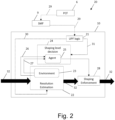
- Fig. 2 schematically illustrates an Adaptive Bit Rate, ABR, solution 20 according to the present disclosure.
- the network nodes PCF 6, SMF 9 and UPF 10 are shown, and how these nodes collaborate with each other to achieve a desired result according to the present disclosure.
- the traditionally known functions and services offered by the UPF 10 are implemented by the UPF logic 21. This may be a physical or logical entity.
- the UPF 10 further comprises a shaping level decision module 24, a resolution estimation module 22 and a shaping enforcement module 28.
- these entities may either be physical or logical entities implemented within the UPF 10.
- a Reinforcement Learning Agent, RLA, 25 collocated in the shaping level decision module 24 takes decisions on the shaping level to apply to a video session 32.
- the resolution estimation module 22 acts as the Reinforcement Learning, RL, environment 23, sending to the shaping level decision module 24 the corresponding states 26 and rewards 27.
- the required or wanted resolution 29 is provided by PCF 6 on a per user and per video application basis. The wanted resolution 29 reaches UPF 10 via SMF 9 upon PDU session establishment.
- the wanted resolution 29 is conveyed 30 to the resolution estimation module 22 so that it can be used as an input to compute the reward. But the reward may also be computed as a function of many other parameters.
- the wanted resolution 29 is conveyed 31 to the shaping level decision module 24, so that it may be used as input to determine the shaping level space i.e. the set of shaping levels to choose from the so-called action space.
- the RLA 25 in the shaping level decision module 24 takes the shaping level decisions based on the wanted resolution, the received state, the received reward, the set of possible actions, whether it's on exploration or exploitation mode, the learned policies, etc. and provides the decision to the shaping enforcement module 28.
- method 40 schematically illustrates an association procedure between the UPF 10 and the SMF 9.
- the UPF 10 When the UPF 10 is deployed in the network, it first needs to associate to a SMF 9. To that extent the UPF 10 sends to SMF 9 a PFCP Association Setup Request message 41 including the User Plane, UP, function features it supports. It also includes the indication of a new feature: the support of the Reinforcement Learning, RL, based Adaptive Bit Rate, ABR, shaping.
- the SMF 9 replies to the association request 41 with a PFCP Association Setup Response message 42 including the Control Plane, CP, function features it supports. It also includes the indication of a new feature: the support of the Reinforcement Learning based ABR shaping.
- step 41 may be triggered by the UPF 10 or the SMF 9.
- the SMF 9 sends the association request message to UPF 10 including the CP features and the response the UP features.
- method 50 depicts the PDU session establishment procedure.
- the UE 11 sends a PDU session establishment request message to AMF (not shown), and AMF relays 51 it to SMF 9.
- the message may include the User-ID.
- the SMF 9 queries 52 the PCF 6 to get the policy rules, wherein the query message may include the User-ID as a parameter.
- the PCF 6 responds 53 to SMF 9 with the policy rules for that specific user.
- the wanted resolution is a categorical value, e.g. high/medium/low, or 240p/480p/1080p, ..., etc..
- SMF 9 When SMF 9 receives the wanted resolution in a PCC rule it knows this relates to the RL based ABR shaping feature in the UPF 10, accordingly SMF 9 selects 54 a UPF 10 supporting this feature for the user.
- the SMF 9 sends 55 to UPF 10 a PFCP Session Establishment Request message comprising A Packet Detection Rule, PDR, indicating the packet matching rules and a Quality of Service Enforcement Rule, QER, including the wanted resolution and Maximum Bit Rate, MBR.
- PDR Packet Detection Rule
- QER Quality of Service Enforcement Rule
- MBR Maximum Bit Rate
- the UPF 10 sends a PFCP Session Establishment Response message 56 back to SMF 9.
- the PDU session establishment procedure is completed 57.
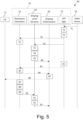
- Fig. 5 schematically depicts the procedures and reinforcement learning mechanisms that take place for each video session.
- video traffic is sent 71 from the video server 61 towards the UE 11.
- the video traffic reaches UPF 10.
- the video packets match 72 a PDR associated to a QER that contains the wanted resolution and MBR.
- UPF 10 recognizes then that this traffic belongs to a video application that uses the RL-based ABR shaping feature. If the packet is the first packet of the video session, steps 73 - 80 take place.
- UPF 10 generates 73 a video session Identifier, ID, for the video session. Then it stores the video session-ID - IP 5 tuple mapping to be able to derive the video-session-ID for subsequent packets.
- the video session-ID and wanted resolution are conveyed 74 to the resolution estimation module 22.
- the resolution estimation module 22 configures the state and reward computation algorithms for the Video session-ID and wanted resolution. It will be understood by the skilled person that multiple algorithms may be used and what specific algorithms the resolution estimation module 22 uses is implementation-specific and is not within the scope of the present disclosure.
- the video-session-ID, wanted resolution, and MBR are conveyed 76 to the shaping level decision module 24. If multiple separate RLAs are used for each different wanted resolution, for example, the shaping level decision module 24 selects 77 the corresponding RLA and stores the video session-ID RLA mapping to find what RLA handles a certain video session-ID. The RLA configures 78 the shaping level space based on the wanted resolution and MBR for the video session-ID.
- the shaping level space is the set of different shaping levels that can be chosen for the video session-ID, i.e. the so-called action space in reinforcement learning.
- the shaping level space is derived based on the wanted resolution and MBR. As an example, the step between shaping levels can be higher if the wanted resolution is very high, and lower if the wanted resolution is low. And, of course, there may not be a shaping level bigger than the MBR. It may be understood that the specific algorithms that may be used to derive the shaping level space is an implementation aspect, and does not belong to the scope of the present disclosure.
- the RLA decides the shaping level based on the wanted resolution, the set of possible actions - i.e. the shaping level action space, and based on whether it is on exploration or exploitation mode, the learned policies, etc.
- the shaping level decision module 24 sends 80 to the shaping enforcement module 28, the video session-ID and the decided shaping level.
- the UPF 10 takes the video session-ID corresponding to the video session and adds 81 it as metadata in the video traffic.
- the video traffic with the video session-ID as metadata is sent 82 to the resolution estimation module 22.
- the resolution estimation module 22 analyzes 83 the video packets, extracts the relevant parameters, and may also classify the packets into categories, for example by using Machine Learning mechanisms, and then stores all the extracted information before forwarding or transferring the packet to the destination, i.e. a UE or client server, or the like.
- the video traffic with the video session-ID as metadata is sent 84 to the shaping enforcement module 28.
- the shaping enforcement module 28 enforces 85 the corresponding shaping level bit rate to the video session. It also removes the video session-ID metadata before forwarding 86 the packets towards the UE 11.
- the video traffic sent from the UPF 10 reaches the video application in the UE 11.
- the resolution estimation module 22 checks 87 whether a video chunk has been fully transmitted. If the resolution estimation module detects that a video chunk has been fully transmitted, the following steps 88 - 93 take place, else the process ends here with step 87.
- the resolution estimation module 22 estimates 88 the resolution of the video chunk and based on the estimated resolution, the resolution estimation module 22 determines 88 the state and computes the reward.
- the state can be the estimated resolution itself, and the reward can be computed as the difference between the estimated resolution and wanted resolution.
- the reward can be computed as the difference between the estimated resolution and wanted resolution.
- more complex computation models may be used, considering other parameters such as previous estimated resolutions, the current video session throughput, and other parameters extracted in the packet analysis.
- the reward may be also computed using other UPF information, for example, by considering the overall network load status, wherein a congested network would mean a low reward, transmission parameters, etc., and/or the real-time user's QoE estimation if available in the UPF by means of analytics processes, wherein a low QoE would mean a low reward.
- the resolution estimation module 22 sends 90 to the shaping level decision module 24 , the video-session-ID, the state and the computed reward. Based on the received state and reward, the RLA learns 91 the effect of the past shaping level decisions.
- the learning phase basically means that the RLA learns how to map the states to the actions in an optimal way, usually by trying to maximize the reward of the actions.
- the RLA in the shaping level decision module 24 decides the shaping level based on the received state and reward, the wanted resolution, the set of possible actions - i.e. the shaping level action space, whether it is on exploration or exploitation mode, the learned policies, etc.
- the shaping level decision module 24 sends 93 to the shaping enforcement module 28 the video session-ID and the decided shaping level. Then this shaping level is applied for the subsequent traffic of the video session.
- the exploration phase can take place in a controlled environment, for example in a laboratory, and not in a production environment.
- Other possibility is to use existing production data to pre-train the RLA.
- the RLA can be deployed in the production environment already trained to avoid an initial extensive exploration phase in production, which may not be desirable.
- a computer program may be stored/distributed on a suitable medium, such as an optical storage medium or a solid-state medium supplied together with or as part of other hardware, but may also be distributed in other forms, such as via the Internet or other wired or wireless telecommunication systems. Any reference signs in the claims should not be construed as limiting the scope thereof.
Landscapes
- Engineering & Computer Science (AREA)
- Signal Processing (AREA)
- Multimedia (AREA)
- Computer Networks & Wireless Communication (AREA)
- Databases & Information Systems (AREA)
- Software Systems (AREA)
- Theoretical Computer Science (AREA)
- Artificial Intelligence (AREA)
- Evolutionary Computation (AREA)
- Medical Informatics (AREA)
- Data Mining & Analysis (AREA)
- Physics & Mathematics (AREA)
- Computing Systems (AREA)
- General Engineering & Computer Science (AREA)
- General Physics & Mathematics (AREA)
- Mathematical Physics (AREA)
- Computer Vision & Pattern Recognition (AREA)
- Business, Economics & Management (AREA)
- Accounting & Taxation (AREA)
- Data Exchanges In Wide-Area Networks (AREA)
Claims (2)
- Verfahren zum Unterstützen von adaptiver Bitraten-Videoauflösungsformung, ABR-Videoauflösungsformung, eines Videodatenstroms (32) einer Videositzung, die von einer Benutzerebenenfunktion, UPF, (10) in einer Domäne mit dienstbasierter Architektur (SBA) übertragen wird, die in einem Telekommunikationssystem eingesetzt wird, wobei die UPF (10) ein Netzknoten ist, wobei das Verfahren die folgenden Schritte umfasst:- Bestimmen, durch die UPF, einer Videoauflösung eines von der UPF empfangenen Videodatenstroms;- Festlegen, durch die UPF, basierend auf der bestimmten Videoauflösung und einer erforderlichen Videoauflösung der Videositzung, einer Videoauflösungsformungsstufe, die auf den empfangenen Videodatenstrom anzuwenden ist, um die erforderliche Videoauflösung der Videositzung zu erreichen, wobei die Videoauflösungsformungsstufe eine Bitrate des durch die UPF zu übertragenden Videodatenstroms umfasst;- Anwenden, durch die UPF, der Videoauflösungsformung auf den empfangenen Videodatenstrom; und- Übertragen, durch die UPF, des empfangenen Videodatenstroms, auf den die Videoauflösungsformung angewendet wird;wobei das Verfahren dadurch gekennzeichnet ist, dass:der Schritt des Festlegens der Videoauflösungsformung von der UPF durchgeführt wird, die einen Reinforcement Learning Agent, RLA, implementiert, der mit einem Beobachtungsraum, der aus möglichen Videoauflösungszuständen besteht, die die bestimmte Videoauflösung umfassen, und einem Aktionsraum arbeitet, der Videoauflösungsformungsstufen umfasst, die auf den empfangenen Videodatenstrom angewendet werden sollen.wobei die Videoauflösung des empfangenen Videodatenstroms durch die UPF für einen Videoblock des empfangenen Videodatenstroms berechnet wird und wobei die UPF einen Videoauflösungszustand des Videoblocks basierend auf der Videoauflösung berechnet und eine zugehörige Belohnung basierend auf dem berechneten Videoauflösungszustand, der erforderlichen Videoauflösung und einer Gesamtnetzwerklast berechnet;wobei der Aktionsraum basierend auf einer maximalen Bitrate, MBR, und der erforderlichen Videoauflösung konfiguriert wird;wobei der RLA die anzuwendende Videoauflösungsformung aus dem Aktionsraum basierend auf dem Videoauflösungszustand, der zugehörigen Belohnung und einer Betriebsstufe des RLA auswählt;wobei die Betriebsstufe des RLA die vom RLA erlernten Richtlinien zum Zuordnen der möglichen Videoauflösungszustände zu Videoauflösungsformungsstufen innerhalb des Aktionsraums, ob sich der RLA im Erkundungs- oder Nutzungmodus befindet, und eine Größe des Aktionsraums umfasst; undwobei die erforderliche Videoauflösung und der MBR von einer Richtlinienkontrollfunktion, PCF, als Teil der Richtlinien- und Gebührensteuerungsregeln, PCC-Regeln, bereitgestellt werden, wenn ein Benutzer eine Protokolldateneinheit-Sitzung, PDU-Sitzung, aufbaut.
- Benutzerebenenfunktion, UPF, (10), in einer dienstbasierten Architektur-Domäne, SBA-Domäne, die in einem Telekommunikationssystem eingesetzt wird, wobei die UPF (10) ein Netzwerkknoten ist,
wobei die UPF (10) gekennzeichnet ist durch Implementieren eines Reinforcement Learning Agent, RLA (25), der mit einem Beobachtungsraum, einem Belohnungsraum und einem Aktionsraum arbeitet, der Videoauflösungsformungsstufen umfasst, die auf den empfangenen Videodatenstrom (32) angewendet werden sollen, der die adaptive Bitraten-Videoauflösungsformung, ABR-Videoauflösungsformung, eines Videodatenstroms (32) einer von der UPF (10) zu übertragenden Videositzung unterstützt, gemäß dem Verfahren von Anspruch 1.
Applications Claiming Priority (2)
| Application Number | Priority Date | Filing Date | Title |
|---|---|---|---|
| EP18382748 | 2018-10-19 | ||
| PCT/EP2018/082835 WO2020078575A1 (en) | 2018-10-19 | 2018-11-28 | Methods of and devices for adaptive bit rate, abr, video resolution shaping of a video stream in a telecommunications system |
Publications (2)
| Publication Number | Publication Date |
|---|---|
| EP3868112A1 EP3868112A1 (de) | 2021-08-25 |
| EP3868112B1 true EP3868112B1 (de) | 2025-03-26 |
Family
ID=64402149
Family Applications (1)
| Application Number | Title | Priority Date | Filing Date |
|---|---|---|---|
| EP18811513.3A Active EP3868112B1 (de) | 2018-10-19 | 2018-11-28 | Verfahren und vorrichtungen zur adaptiven bitraten-, abr-, videoauflösungsformung eines videostroms in einem telekommunikationssystem |
Country Status (3)
| Country | Link |
|---|---|
| US (1) | US11330333B2 (de) |
| EP (1) | EP3868112B1 (de) |
| WO (1) | WO2020078575A1 (de) |
Families Citing this family (9)
| Publication number | Priority date | Publication date | Assignee | Title |
|---|---|---|---|---|
| WO2021024456A1 (ja) * | 2019-08-08 | 2021-02-11 | 日本電気株式会社 | 通信制御方法、通信装置及び通信システム |
| US11768699B2 (en) * | 2019-10-05 | 2023-09-26 | Microsoft Technology Licensing, Llc | Enforce changes in session behavior based on updated machine learning model with detected risk behavior during session |
| US11429869B2 (en) * | 2019-11-21 | 2022-08-30 | International Business Machines Corporation | Artificially intelligent interaction agent |
| CA3182110A1 (en) * | 2020-06-30 | 2022-01-06 | Microsoft Technology Licensing, Llc | Reinforcement learning based rate control |
| WO2022037798A1 (en) * | 2020-08-18 | 2022-02-24 | Telefonaktiebolaget Lm Ericsson (Publ) | Estimating video resolution delivered by an encrypted video stream |
| US11451847B2 (en) | 2020-11-06 | 2022-09-20 | Samsung Electronics Co., Ltd. | Methods and systems for generating personalized data-streaming for a multimedia playback device |
| EP4080892A1 (de) * | 2021-04-20 | 2022-10-26 | Streamroot | Verfahren zum abspielen eines in einem netzwerk gestreamten inhalts auf einem abspielgerät einer client-vorrichtung |
| CN113259657A (zh) * | 2021-05-18 | 2021-08-13 | 上海大学 | 基于视频质量分数的dppo码率自适应控制系统和方法 |
| WO2023272722A1 (en) * | 2021-07-02 | 2023-01-05 | Telefonaktiebolaget Lm Ericsson (Publ) | Method and apparatus for packet forwarding control with reinforcement learning |
Family Cites Families (8)
| Publication number | Priority date | Publication date | Assignee | Title |
|---|---|---|---|---|
| US20140181266A1 (en) | 2011-09-29 | 2014-06-26 | Avvasi Inc. | System, streaming media optimizer and methods for use therewith |
| US9306994B2 (en) * | 2012-06-06 | 2016-04-05 | Cisco Technology, Inc. | Stabilization of adaptive streaming video clients through rate limiting |
| EP2884717A1 (de) * | 2013-12-12 | 2015-06-17 | Avvasi, Inc. | Systeme für Medienrichtlinienentscheidung und -steuerung und Verfahren zur Verwendung davon |
| GB2542174B (en) * | 2015-09-10 | 2018-04-04 | Openwave Mobility Inc | An intermediate network entity for controlling bandwidth for an adaptive bit rate stream |
| US10104413B2 (en) * | 2016-07-07 | 2018-10-16 | Telefonaktiebolaget Lm Ericsson (Publ) | Bandwidth and ABR video QoE management based on OTT video providers and devices |
| US10917700B2 (en) * | 2018-02-02 | 2021-02-09 | Microsoft Technology Licensing, Llc | Estimating bandwidth savings for adaptive bit rate streaming |
| US11509703B2 (en) * | 2018-09-26 | 2022-11-22 | Vmware, Inc. | System and method for widescale adaptive bitrate selection |
| US11463750B2 (en) * | 2018-09-28 | 2022-10-04 | Korea Advanced Institute Of Science And Technology | Method and apparatus for transmitting adaptive video in real time using content-aware neural network |
-
2018
- 2018-11-28 EP EP18811513.3A patent/EP3868112B1/de active Active
- 2018-11-28 WO PCT/EP2018/082835 patent/WO2020078575A1/en not_active Ceased
- 2018-11-28 US US17/285,657 patent/US11330333B2/en active Active
Also Published As
| Publication number | Publication date |
|---|---|
| US11330333B2 (en) | 2022-05-10 |
| US20210400347A1 (en) | 2021-12-23 |
| EP3868112A1 (de) | 2021-08-25 |
| WO2020078575A1 (en) | 2020-04-23 |
Similar Documents
| Publication | Publication Date | Title |
|---|---|---|
| EP3868112B1 (de) | Verfahren und vorrichtungen zur adaptiven bitraten-, abr-, videoauflösungsformung eines videostroms in einem telekommunikationssystem | |
| KR102544991B1 (ko) | 사용자 장비 및 미디어 스트리밍 네트워크 보조 노드 | |
| US8335163B2 (en) | Quality of service (QOS) based systems, networks, and advisors | |
| US11916734B2 (en) | Third party network and network slice management | |
| US10320869B2 (en) | Network-capacity optimized adaptive HTTP streaming | |
| EP3440812B1 (de) | Kontextbewussten und -adaptive qos/qoe-zieldefinition in 5g | |
| EP2244426A1 (de) | Ein verfahren und system zur bewertung der erlebten qualität des nutzers und netzwerkgerät | |
| US9178929B2 (en) | Client-side class-of-service-based bandwidth management in over-the-top video delivery | |
| EP3108684B1 (de) | Bereitstellung von diensten in einem kommunikationsnetzwerk | |
| US20140082206A1 (en) | Method and apparatus for media session identification, tracking, and analysis | |
| JP2010500837A (ja) | 遠隔通信ネットワークにおける情報転送の最適化方法 | |
| CN106993014B (zh) | 缓存内容的调整方法、装置及系统 | |
| JP2015509349A (ja) | 無線ユーザのためのインテリジェントなコーデック・レート適応を提供するための方法および装置 | |
| KR20160106701A (ko) | 세그먼트들로 분할된 멀티미디어 콘텐츠를 수신하도록 구성된 클라이언트 단말에 의해 네트워크 정보를 획득하기 위한 방법 | |
| CN105897615A (zh) | 一种数据传输方法及装置 | |
| CN103503512B (zh) | 业务分发控制方法和设备 | |
| Samouylov et al. | Analytical Modelling And Simulation For Performance Evaluation Of SIP Server With Hysteretic Overload Control. | |
| Hayamizu et al. | QoE-aware bitrate selection in cooperation with in-network caching for information-centric networking | |
| CN110771122A (zh) | 使内容传送网络能够处理非预期流量激增的方法和网络节点 | |
| da Silva et al. | Cross-layer multiuser session control for optimized communications on SDN-based cloud platforms | |
| US10348597B2 (en) | Monitoring server, resolution server, request device, and node selection method | |
| CN116508350A (zh) | 用于提供备份网络功能的网络节点及其中的方法 | |
| CN112106335B (zh) | 用于经由内容分发网络流式传输媒体数据的方法及系统 | |
| US11627358B2 (en) | Communication entity and a method for transmitting a video data stream | |
| CN106686034B (zh) | Cdn调度增强方法、装置及系统 |
Legal Events
| Date | Code | Title | Description |
|---|---|---|---|
| STAA | Information on the status of an ep patent application or granted ep patent |
Free format text: STATUS: UNKNOWN |
|
| STAA | Information on the status of an ep patent application or granted ep patent |
Free format text: STATUS: THE INTERNATIONAL PUBLICATION HAS BEEN MADE |
|
| PUAI | Public reference made under article 153(3) epc to a published international application that has entered the european phase |
Free format text: ORIGINAL CODE: 0009012 |
|
| STAA | Information on the status of an ep patent application or granted ep patent |
Free format text: STATUS: REQUEST FOR EXAMINATION WAS MADE |
|
| 17P | Request for examination filed |
Effective date: 20210518 |
|
| AK | Designated contracting states |
Kind code of ref document: A1 Designated state(s): AL AT BE BG CH CY CZ DE DK EE ES FI FR GB GR HR HU IE IS IT LI LT LU LV MC MK MT NL NO PL PT RO RS SE SI SK SM TR |
|
| DAV | Request for validation of the european patent (deleted) | ||
| DAX | Request for extension of the european patent (deleted) | ||
| STAA | Information on the status of an ep patent application or granted ep patent |
Free format text: STATUS: EXAMINATION IS IN PROGRESS |
|
| 17Q | First examination report despatched |
Effective date: 20240122 |
|
| GRAP | Despatch of communication of intention to grant a patent |
Free format text: ORIGINAL CODE: EPIDOSNIGR1 |
|
| STAA | Information on the status of an ep patent application or granted ep patent |
Free format text: STATUS: GRANT OF PATENT IS INTENDED |
|
| RIC1 | Information provided on ipc code assigned before grant |
Ipc: H04W 4/24 20180101ALI20240918BHEP Ipc: H04W 8/04 20090101ALI20240918BHEP Ipc: H04M 15/00 20060101ALI20240918BHEP Ipc: H04L 65/75 20220101ALI20240918BHEP Ipc: H04L 65/752 20220101ALI20240918BHEP Ipc: H04L 65/612 20220101ALI20240918BHEP Ipc: H04L 47/25 20220101ALI20240918BHEP Ipc: H04L 47/24 20220101ALI20240918BHEP Ipc: H04L 12/14 20060101ALI20240918BHEP Ipc: H04L 65/80 20220101ALI20240918BHEP Ipc: H04L 47/38 20220101ALI20240918BHEP Ipc: H04L 47/22 20220101ALI20240918BHEP Ipc: H04N 21/238 20110101ALI20240918BHEP Ipc: H04N 21/845 20110101ALI20240918BHEP Ipc: H04N 21/222 20110101AFI20240918BHEP |
|
| INTG | Intention to grant announced |
Effective date: 20241023 |
|
| GRAS | Grant fee paid |
Free format text: ORIGINAL CODE: EPIDOSNIGR3 |
|
| GRAA | (expected) grant |
Free format text: ORIGINAL CODE: 0009210 |
|
| STAA | Information on the status of an ep patent application or granted ep patent |
Free format text: STATUS: THE PATENT HAS BEEN GRANTED |
|
| AK | Designated contracting states |
Kind code of ref document: B1 Designated state(s): AL AT BE BG CH CY CZ DE DK EE ES FI FR GB GR HR HU IE IS IT LI LT LU LV MC MK MT NL NO PL PT RO RS SE SI SK SM TR |
|
| REG | Reference to a national code |
Ref country code: GB Ref legal event code: FG4D |
|
| REG | Reference to a national code |
Ref country code: CH Ref legal event code: EP |
|
| REG | Reference to a national code |
Ref country code: DE Ref legal event code: R096 Ref document number: 602018080509 Country of ref document: DE |
|
| REG | Reference to a national code |
Ref country code: IE Ref legal event code: FG4D |
|
| PG25 | Lapsed in a contracting state [announced via postgrant information from national office to epo] |
Ref country code: RS Free format text: LAPSE BECAUSE OF FAILURE TO SUBMIT A TRANSLATION OF THE DESCRIPTION OR TO PAY THE FEE WITHIN THE PRESCRIBED TIME-LIMIT Effective date: 20250626 |
|
| PG25 | Lapsed in a contracting state [announced via postgrant information from national office to epo] |
Ref country code: FI Free format text: LAPSE BECAUSE OF FAILURE TO SUBMIT A TRANSLATION OF THE DESCRIPTION OR TO PAY THE FEE WITHIN THE PRESCRIBED TIME-LIMIT Effective date: 20250326 |
|
| REG | Reference to a national code |
Ref country code: LT Ref legal event code: MG9D |
|
| PG25 | Lapsed in a contracting state [announced via postgrant information from national office to epo] |
Ref country code: NO Free format text: LAPSE BECAUSE OF FAILURE TO SUBMIT A TRANSLATION OF THE DESCRIPTION OR TO PAY THE FEE WITHIN THE PRESCRIBED TIME-LIMIT Effective date: 20250626 |
|
| PG25 | Lapsed in a contracting state [announced via postgrant information from national office to epo] |
Ref country code: HR Free format text: LAPSE BECAUSE OF FAILURE TO SUBMIT A TRANSLATION OF THE DESCRIPTION OR TO PAY THE FEE WITHIN THE PRESCRIBED TIME-LIMIT Effective date: 20250326 |
|
| PG25 | Lapsed in a contracting state [announced via postgrant information from national office to epo] |
Ref country code: LV Free format text: LAPSE BECAUSE OF FAILURE TO SUBMIT A TRANSLATION OF THE DESCRIPTION OR TO PAY THE FEE WITHIN THE PRESCRIBED TIME-LIMIT Effective date: 20250326 |
|
| PG25 | Lapsed in a contracting state [announced via postgrant information from national office to epo] |
Ref country code: GR Free format text: LAPSE BECAUSE OF FAILURE TO SUBMIT A TRANSLATION OF THE DESCRIPTION OR TO PAY THE FEE WITHIN THE PRESCRIBED TIME-LIMIT Effective date: 20250627 Ref country code: BG Free format text: LAPSE BECAUSE OF FAILURE TO SUBMIT A TRANSLATION OF THE DESCRIPTION OR TO PAY THE FEE WITHIN THE PRESCRIBED TIME-LIMIT Effective date: 20250326 |
|
| REG | Reference to a national code |
Ref country code: NL Ref legal event code: MP Effective date: 20250326 |
|
| PG25 | Lapsed in a contracting state [announced via postgrant information from national office to epo] |
Ref country code: NL Free format text: LAPSE BECAUSE OF FAILURE TO SUBMIT A TRANSLATION OF THE DESCRIPTION OR TO PAY THE FEE WITHIN THE PRESCRIBED TIME-LIMIT Effective date: 20250326 |
|
| PG25 | Lapsed in a contracting state [announced via postgrant information from national office to epo] |
Ref country code: SE Free format text: LAPSE BECAUSE OF FAILURE TO SUBMIT A TRANSLATION OF THE DESCRIPTION OR TO PAY THE FEE WITHIN THE PRESCRIBED TIME-LIMIT Effective date: 20250326 |
|
| REG | Reference to a national code |
Ref country code: AT Ref legal event code: MK05 Ref document number: 1780161 Country of ref document: AT Kind code of ref document: T Effective date: 20250326 |
|
| PG25 | Lapsed in a contracting state [announced via postgrant information from national office to epo] |
Ref country code: SM Free format text: LAPSE BECAUSE OF FAILURE TO SUBMIT A TRANSLATION OF THE DESCRIPTION OR TO PAY THE FEE WITHIN THE PRESCRIBED TIME-LIMIT Effective date: 20250326 |
|
| PG25 | Lapsed in a contracting state [announced via postgrant information from national office to epo] |
Ref country code: PT Free format text: LAPSE BECAUSE OF FAILURE TO SUBMIT A TRANSLATION OF THE DESCRIPTION OR TO PAY THE FEE WITHIN THE PRESCRIBED TIME-LIMIT Effective date: 20250728 Ref country code: ES Free format text: LAPSE BECAUSE OF FAILURE TO SUBMIT A TRANSLATION OF THE DESCRIPTION OR TO PAY THE FEE WITHIN THE PRESCRIBED TIME-LIMIT Effective date: 20250326 |
|
| PG25 | Lapsed in a contracting state [announced via postgrant information from national office to epo] |
Ref country code: PL Free format text: LAPSE BECAUSE OF FAILURE TO SUBMIT A TRANSLATION OF THE DESCRIPTION OR TO PAY THE FEE WITHIN THE PRESCRIBED TIME-LIMIT Effective date: 20250326 Ref country code: IT Free format text: LAPSE BECAUSE OF FAILURE TO SUBMIT A TRANSLATION OF THE DESCRIPTION OR TO PAY THE FEE WITHIN THE PRESCRIBED TIME-LIMIT Effective date: 20250326 |
|
| PG25 | Lapsed in a contracting state [announced via postgrant information from national office to epo] |
Ref country code: AT Free format text: LAPSE BECAUSE OF FAILURE TO SUBMIT A TRANSLATION OF THE DESCRIPTION OR TO PAY THE FEE WITHIN THE PRESCRIBED TIME-LIMIT Effective date: 20250326 |
|
| PG25 | Lapsed in a contracting state [announced via postgrant information from national office to epo] |
Ref country code: EE Free format text: LAPSE BECAUSE OF FAILURE TO SUBMIT A TRANSLATION OF THE DESCRIPTION OR TO PAY THE FEE WITHIN THE PRESCRIBED TIME-LIMIT Effective date: 20250326 |
|
| PG25 | Lapsed in a contracting state [announced via postgrant information from national office to epo] |
Ref country code: RO Free format text: LAPSE BECAUSE OF FAILURE TO SUBMIT A TRANSLATION OF THE DESCRIPTION OR TO PAY THE FEE WITHIN THE PRESCRIBED TIME-LIMIT Effective date: 20250326 |
|
| PG25 | Lapsed in a contracting state [announced via postgrant information from national office to epo] |
Ref country code: SK Free format text: LAPSE BECAUSE OF FAILURE TO SUBMIT A TRANSLATION OF THE DESCRIPTION OR TO PAY THE FEE WITHIN THE PRESCRIBED TIME-LIMIT Effective date: 20250326 |
|
| PG25 | Lapsed in a contracting state [announced via postgrant information from national office to epo] |
Ref country code: IS Free format text: LAPSE BECAUSE OF FAILURE TO SUBMIT A TRANSLATION OF THE DESCRIPTION OR TO PAY THE FEE WITHIN THE PRESCRIBED TIME-LIMIT Effective date: 20250726 |
|
| PGFP | Annual fee paid to national office [announced via postgrant information from national office to epo] |
Ref country code: DE Payment date: 20251128 Year of fee payment: 8 |
|
| PGFP | Annual fee paid to national office [announced via postgrant information from national office to epo] |
Ref country code: GB Payment date: 20251127 Year of fee payment: 8 |
|
| PG25 | Lapsed in a contracting state [announced via postgrant information from national office to epo] |
Ref country code: DK Free format text: LAPSE BECAUSE OF FAILURE TO SUBMIT A TRANSLATION OF THE DESCRIPTION OR TO PAY THE FEE WITHIN THE PRESCRIBED TIME-LIMIT Effective date: 20250326 |
|
| PG25 | Lapsed in a contracting state [announced via postgrant information from national office to epo] |
Ref country code: CZ Free format text: LAPSE BECAUSE OF FAILURE TO SUBMIT A TRANSLATION OF THE DESCRIPTION OR TO PAY THE FEE WITHIN THE PRESCRIBED TIME-LIMIT Effective date: 20250326 |
|
| PLBE | No opposition filed within time limit |
Free format text: ORIGINAL CODE: 0009261 |
|
| STAA | Information on the status of an ep patent application or granted ep patent |
Free format text: STATUS: NO OPPOSITION FILED WITHIN TIME LIMIT |
|
| REG | Reference to a national code |
Ref country code: CH Ref legal event code: L10 Free format text: ST27 STATUS EVENT CODE: U-0-0-L10-L00 (AS PROVIDED BY THE NATIONAL OFFICE) Effective date: 20260211 |