EP3866165B1 - Verfahren zur verbesserung von telefonsprachsignalen auf basis von neuronalen faltungsnetzwerken - Google Patents
Verfahren zur verbesserung von telefonsprachsignalen auf basis von neuronalen faltungsnetzwerken Download PDFInfo
- Publication number
- EP3866165B1 EP3866165B1 EP20382110.3A EP20382110A EP3866165B1 EP 3866165 B1 EP3866165 B1 EP 3866165B1 EP 20382110 A EP20382110 A EP 20382110A EP 3866165 B1 EP3866165 B1 EP 3866165B1
- Authority
- EP
- European Patent Office
- Prior art keywords
- convolutional neural
- wiener
- speech
- spectral
- neural networks
- Prior art date
- Legal status (The legal status is an assumption and is not a legal conclusion. Google has not performed a legal analysis and makes no representation as to the accuracy of the status listed.)
- Active
Links
Images
Classifications
-
- G—PHYSICS
- G10—MUSICAL INSTRUMENTS; ACOUSTICS
- G10L—SPEECH ANALYSIS TECHNIQUES OR SPEECH SYNTHESIS; SPEECH RECOGNITION; SPEECH OR VOICE PROCESSING TECHNIQUES; SPEECH OR AUDIO CODING OR DECODING
- G10L21/00—Speech or voice signal processing techniques to produce another audible or non-audible signal, e.g. visual or tactile, in order to modify its quality or its intelligibility
- G10L21/02—Speech enhancement, e.g. noise reduction or echo cancellation
- G10L21/0208—Noise filtering
- G10L21/0216—Noise filtering characterised by the method used for estimating noise
- G10L21/0232—Processing in the frequency domain
-
- G—PHYSICS
- G06—COMPUTING OR CALCULATING; COUNTING
- G06N—COMPUTING ARRANGEMENTS BASED ON SPECIFIC COMPUTATIONAL MODELS
- G06N3/00—Computing arrangements based on biological models
- G06N3/02—Neural networks
- G06N3/04—Architecture, e.g. interconnection topology
-
- G—PHYSICS
- G06—COMPUTING OR CALCULATING; COUNTING
- G06N—COMPUTING ARRANGEMENTS BASED ON SPECIFIC COMPUTATIONAL MODELS
- G06N3/00—Computing arrangements based on biological models
- G06N3/02—Neural networks
- G06N3/04—Architecture, e.g. interconnection topology
- G06N3/0464—Convolutional networks [CNN, ConvNet]
-
- G—PHYSICS
- G06—COMPUTING OR CALCULATING; COUNTING
- G06N—COMPUTING ARRANGEMENTS BASED ON SPECIFIC COMPUTATIONAL MODELS
- G06N3/00—Computing arrangements based on biological models
- G06N3/02—Neural networks
- G06N3/08—Learning methods
-
- G—PHYSICS
- G06—COMPUTING OR CALCULATING; COUNTING
- G06N—COMPUTING ARRANGEMENTS BASED ON SPECIFIC COMPUTATIONAL MODELS
- G06N3/00—Computing arrangements based on biological models
- G06N3/02—Neural networks
- G06N3/08—Learning methods
- G06N3/09—Supervised learning
-
- G—PHYSICS
- G10—MUSICAL INSTRUMENTS; ACOUSTICS
- G10L—SPEECH ANALYSIS TECHNIQUES OR SPEECH SYNTHESIS; SPEECH RECOGNITION; SPEECH OR VOICE PROCESSING TECHNIQUES; SPEECH OR AUDIO CODING OR DECODING
- G10L15/00—Speech recognition
- G10L15/08—Speech classification or search
- G10L15/16—Speech classification or search using artificial neural networks
-
- G—PHYSICS
- G10—MUSICAL INSTRUMENTS; ACOUSTICS
- G10L—SPEECH ANALYSIS TECHNIQUES OR SPEECH SYNTHESIS; SPEECH RECOGNITION; SPEECH OR VOICE PROCESSING TECHNIQUES; SPEECH OR AUDIO CODING OR DECODING
- G10L25/00—Speech or voice analysis techniques not restricted to a single one of groups G10L15/00 - G10L21/00
- G10L25/03—Speech or voice analysis techniques not restricted to a single one of groups G10L15/00 - G10L21/00 characterised by the type of extracted parameters
- G10L25/18—Speech or voice analysis techniques not restricted to a single one of groups G10L15/00 - G10L21/00 characterised by the type of extracted parameters the extracted parameters being spectral information of each sub-band
-
- G—PHYSICS
- G10—MUSICAL INSTRUMENTS; ACOUSTICS
- G10L—SPEECH ANALYSIS TECHNIQUES OR SPEECH SYNTHESIS; SPEECH RECOGNITION; SPEECH OR VOICE PROCESSING TECHNIQUES; SPEECH OR AUDIO CODING OR DECODING
- G10L25/00—Speech or voice analysis techniques not restricted to a single one of groups G10L15/00 - G10L21/00
- G10L25/03—Speech or voice analysis techniques not restricted to a single one of groups G10L15/00 - G10L21/00 characterised by the type of extracted parameters
- G10L25/21—Speech or voice analysis techniques not restricted to a single one of groups G10L15/00 - G10L21/00 characterised by the type of extracted parameters the extracted parameters being power information
-
- G—PHYSICS
- G10—MUSICAL INSTRUMENTS; ACOUSTICS
- G10L—SPEECH ANALYSIS TECHNIQUES OR SPEECH SYNTHESIS; SPEECH RECOGNITION; SPEECH OR VOICE PROCESSING TECHNIQUES; SPEECH OR AUDIO CODING OR DECODING
- G10L25/00—Speech or voice analysis techniques not restricted to a single one of groups G10L15/00 - G10L21/00
- G10L25/03—Speech or voice analysis techniques not restricted to a single one of groups G10L15/00 - G10L21/00 characterised by the type of extracted parameters
- G10L25/24—Speech or voice analysis techniques not restricted to a single one of groups G10L15/00 - G10L21/00 characterised by the type of extracted parameters the extracted parameters being the cepstrum
-
- G—PHYSICS
- G10—MUSICAL INSTRUMENTS; ACOUSTICS
- G10L—SPEECH ANALYSIS TECHNIQUES OR SPEECH SYNTHESIS; SPEECH RECOGNITION; SPEECH OR VOICE PROCESSING TECHNIQUES; SPEECH OR AUDIO CODING OR DECODING
- G10L25/00—Speech or voice analysis techniques not restricted to a single one of groups G10L15/00 - G10L21/00
- G10L25/48—Speech or voice analysis techniques not restricted to a single one of groups G10L15/00 - G10L21/00 specially adapted for particular use
- G10L25/51—Speech or voice analysis techniques not restricted to a single one of groups G10L15/00 - G10L21/00 specially adapted for particular use for comparison or discrimination
- G10L25/60—Speech or voice analysis techniques not restricted to a single one of groups G10L15/00 - G10L21/00 specially adapted for particular use for comparison or discrimination for measuring the quality of voice signals
-
- G—PHYSICS
- G10—MUSICAL INSTRUMENTS; ACOUSTICS
- G10L—SPEECH ANALYSIS TECHNIQUES OR SPEECH SYNTHESIS; SPEECH RECOGNITION; SPEECH OR VOICE PROCESSING TECHNIQUES; SPEECH OR AUDIO CODING OR DECODING
- G10L25/00—Speech or voice analysis techniques not restricted to a single one of groups G10L15/00 - G10L21/00
- G10L25/78—Detection of presence or absence of voice signals
-
- G—PHYSICS
- G10—MUSICAL INSTRUMENTS; ACOUSTICS
- G10L—SPEECH ANALYSIS TECHNIQUES OR SPEECH SYNTHESIS; SPEECH RECOGNITION; SPEECH OR VOICE PROCESSING TECHNIQUES; SPEECH OR AUDIO CODING OR DECODING
- G10L25/00—Speech or voice analysis techniques not restricted to a single one of groups G10L15/00 - G10L21/00
- G10L25/27—Speech or voice analysis techniques not restricted to a single one of groups G10L15/00 - G10L21/00 characterised by the analysis technique
- G10L25/30—Speech or voice analysis techniques not restricted to a single one of groups G10L15/00 - G10L21/00 characterised by the analysis technique using neural networks
Definitions
- the present method for enhancing telephone speech signals based on Deep Convolutional Neural Network is able to reduce the effect of acoustic distortions which occur in daily scenarios during a telephone call. These distortions can be manifested in the form of additive noise, reverberation or others, and can affect the intelligibility of the speech that is transmitted by the telephone line, causing discomfort between the callers or even causing them to abandon the conversation.
- the present invention is a method for enhancing single-channel telephone speech signals with low latency.
- the novelty of the method of the present invention lies in the fact that it is a noise reduction method which, based on the classical gain method, uses a Deep Convolutional Neural Network (CNN) to learn the Wiener estimator.
- CNN Deep Convolutional Neural Network
- the method of the present invention may optionally incorporate the ability to evaluate the quality of the speech signal and, accordingly, proceed to apply the acoustic enhancement.
- the present invention manages to significantly improve efficiency, enables the processing of realistic noises (non-stationary, mixed, correlated with speech, etc.), and also improves in the fact that the estimation is performed in a non-recursive manner, which prevents errors from being propagated. It enables two modes of operation, one based on causal processing, suitable for applications which require real-time analysis and environments which require causality, as well as one which makes use of the complete signal in a non-causal manner for applications with requirements that enable it. Finally, it is emphasised that the method consists of an implementation which implies low latency in the processing.
- the invention belongs to the field of telecommunications technology, and more specifically to those technologies which enable acoustic distortions in telephone speech to be reduced.
- These acoustic distortions are combined with the speech and are transmitted as a whole through the telephone line.
- the intelligibility of the speech which reaches the other end is compromised according to the level of affectation of the speech signal.
- Moderate levels of distortion can cause discomfort for the speakers involved in the conversation.
- the callers may even consider ending the call.
- the use of a method for enhancing speech contributes to the repetition of these undesirable situations not affecting the quality of the service and thus improving the reputation of the telephone service provider.
- the method for enhancing speech in the spectral domain based on gain is an established paradigm for reducing noise in single-channel speech signals ( Philipos C. Loizou, Speech Enhancement: Theory and Practice, CRC Press, New York, 2013 ).
- the gain method consists of obtaining a time-frequency representation of the speech signal and estimating a gain dependent on the frequency and which varies in time, according to the level of noise affectation of each spectral area. This gain is used to modify the time-frequency components of the spectral representation of the signal according to the predominance of speech or noise, which is determined by the speech presence probability.
- the application of the enhancement filter on the time-frequency representation of the speech signal gives rise to a modified version of the spectrum which approaches the clean speech signal. Then a reconstruction algorithm applies an inverse transformation, in accordance with the one used initially, in order to obtain the samples of the enhanced signal in the time domain.
- a method for enhancing telephone speech signals based on Convolutional Neural Networks is disclosed.
- the method of the present invention is applied to a telephone speech signal made up of magnitude and spectral phase.
- the method comprises the following stages:
- the Convolutional Neural Network can comprise a convolutional layer which is causal (i.e., the convolutional layer only uses signal samples prior to the one being processed and not subsequent ones) and has low latency.
- the spectral estimate is obtained by using the Welch's method.
- MFCC Mel-frequency cepstral coefficients
- the method of the present invention can additionally comprise dividing the speech signal into overlapping segments of tens of milliseconds to which a Hamming window, Hanning window or other equivalent window is applied, and subsequently a Fourier transform.
- said stage can additionally comprise objectively evaluating the quality of the speech signal by using an acoustic quality measure selected from SNR (Signal-to-Noise Ratio), distortion, POLQA (Perceptual Objective Listening Quality Analysis), or another equivalent, and depending on this result proceeding to the acoustic enhancement or not.
- SNR Signal-to-Noise Ratio
- POLQA Personal Objective Listening Quality Analysis
- said stage additionally comprises applying an inverse Fourier transform, and subsequently, a temporal reconstruction algorithm of the speech signal.
- a system for enhancing telephone speech signals based on convolutional neural networks and configured to perform the method of the present invention defined in the first aspect of the invention comprises a first signal extraction block, a second signal quality evaluation block, a third speech enhancement block and a fourth speech insertion block.
- the first block when a telephone call starts, proceeds to extract the speech signal from the telephone line and sends it to a parallel processing server.
- the second block evaluates the acoustic quality of the speech segment by using a predefined acoustic quality measure, for example: SNR, distortion, POLQA, or another equivalent, and compares with a pre-established threshold according to previous studies related to the quality measure used.
- the method decides whether the segment needs to be submitted to acoustic enhancement. If the decision is positive, the third block implements the method for enhancing speech of the present invention on the analysed speech segment. If the decision was negative, it passes directly to the fourth speech insertion block which is responsible for inserting the segment of the speech signal into the telephone line, safeguarding from the appearance of cuts or other undesired effects which can affect the acoustic perception of the caller. Then, the described process is repeated and the next speech segment is analysed.
- the method of the present invention is a method for enhancing speech, which may optionally include a module which analyses the acoustic quality of the speech signal and decides whether it needs to be submitted to the acoustic enhancement process. This decision is made by means of pre-established thresholds of the quality measure. The operator may decide to make the threshold as flexible as possible, such that the enhancement process is always performed, or instead they may restrict it as much as possible such that the signal passing through the telephone line is not enhanced. These two cases of use can respond to specific applications or circumstantial situations decided by the operator. In the case of subjecting the signal to enhancement, it is then reinjected into the telephone line, showing a better acoustic quality, and in this manner it continues the path thereof to the other end.
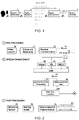
- the method of the present invention can be deployed in a system like the one shown in FIG. 1 .
- the system shown in FIG. 1 comprises a signal extraction block 1, a signal evaluation block 2, a speech enhancement block 3 and a speech insertion block 4.
- the system for enhancing telephone speech signals based on convolutional neural networks of the present invention as represented in FIG. 1 when a phone call starts, proceeds to extract the speech signal 1 from the telephone line and sends it to a parallel processing server.
- the block 2 evaluates the acoustic quality of the speech segment by using a predefined acoustic quality measure, for example: SNR, distortion, POLQA, or another equivalent, and compares with a pre-established threshold according to previous studies related to said quality measure.
- a predefined acoustic quality measure for example: SNR, distortion, POLQA, or another equivalent
- the method decides whether the segment needs to be subjected to acoustic enhancement. If the decision is positive, the next block 3 implements the method for enhancing speech of the present invention on the analysed speech segment. If the decision was negative, it passes directly to the insertion block 4 which is responsible for returning the speech segment into the telephone flow, safeguarding from the appearance of cuts or other undesired effects which can affect the acoustic perception of the caller. Then, the described process is repeated and the next speech segment is analysed.
- the present invention consists of a method for enhancing speech or reducing noise 3 for CNN-based single-channel telephone signals, in the category of mask-based methods.
- the present invention consists of estimating a mask (or filter) which modifies the spectrum of the observed speech signal in order to generate an enhanced version thereof. This takes advantage of the framework of the gain method, but replaces the intermediate estimation blocks of SNR a priori, SNR a posteriori, estimation of the noise spectrum and estimation of the clean speech spectrum, motivated by the tendency thereof to introduce errors.
- the method of the present invention employs a CNN-based estimate capable of performing the analysis of each time-frequency segment of the signal in a non-recursive manner, thereby preventing the propagation of errors typical of this type of estimate.
- the CNN is responsible for obtaining a Wiener gain estimate, which is used to generate the enhancement mask or filter.
- the CNN implements a regression model which learns the MMSE estimator of the clean speech signal, also known as the Wiener gain estimator.
- This term is less sensitive to estimation errors than the aforementioned intermediate estimation steps, due to the dynamic range thereof and the operations of the learning method of the CNN. In this manner, the method for enhancing speech ensures that the acoustic quality is not decreased even in speech signals which are not notably affected by noise.
- the novelty of the present invention lies in the design of the CNN-based noise reduction method, both due to the essential nature of the method itself, and due to the context of the application thereof.
- the main novelty of the method consists of the selection of the Wiener gain estimator as an essential element of the method of the present invention, the characteristics of which make it appropriate to be estimated by machine learning approaches, which decreases the sensitivity to estimation errors.
- Fig. 2 shows a flow chart of the method implemented, formed by three stages of processing.
- the stage A performs a pre-processing of the noisy speech signal 10 which is responsible for representing it in the time-frequency domain. This begins with the segmentation of the speech signal 10 into short overlapping segments of tens of milliseconds which conserve the quasi-stationary properties of the speech, to which a Hamming, Hanning, or other suitable window is applied in order to prevent distortions 11. Then a transformation is performed on the spectrum-temporal domain 12, which can be implemented starting from a Fourier transform, or another equivalent transformation. Next, the resulting spectrum is divided into magnitude 13 and spectral phase 14. Magnitude 13 is used as an input of noise reduction stage B, while the spectral phase 14 is saved for the reconstruction implemented in stage C.
- noise reduction stage B the novelty of the proposal is concentrated. This is responsible for generating an enhancement filter with which to compensate for the effects of acoustic noise in the spectral magnitude 13 of the segment under analysis.
- the gain of said filter 22 depends on the gain function of the MMSE estimator of the clean speech signal 20 and on the speech presence probability 21.
- a CNN is used which estimates the Wiener gain 19 starting from learning the structure of the noisy speech, seeing multiple examples of speech signal spectra and the corresponding associated noise spectra separately.
- the DNN architecture in this case consists of a Convolutional Neural Network (CNN) 18 with multiple entries which are stacked together in a vector including one or several spectral representations, for example, spectral estimates obtained by means of the Welch's method 15 or another equivalent representation, as well as one or several perceptual representations of the observed speech signal, for example, the Mel scale filter bank (FB) 16, Mel-frequency cepstral coefficients (MFCC) 17, or other equivalent representations.
- FB Mel scale filter bank
- MFCC Mel-frequency cepstral coefficients
- the output of the CNN is an estimate of the Wiener gain 19, which consists of a matrix/vector dependent on the frequency and which varies in time.
- This matrix/vector is used as the gain of the MMSE estimator of the clean speech signal 20 and as an estimate of the speech presence probability 21.
- both are used to obtain the function of the speech enhancement filter 22 according to the following definition ( I. Cohen and B. Berdugo, "Speech enhancement for non-stationary noise environments" Signal Processing, vol. 81, no. 11, pp.
- G filtro t f G ⁇ Wiener t f exp 1 2 ⁇ ⁇ t f ⁇ e ⁇ t t dt p t f G min 1 ⁇ p t f
- t is the time segment
- f is the frequency bin
- ⁇ wiener DNN ( x t , x t -1 ,...) with x t the vector of spectral and perceptual parameters at the instant in time t
- G min is a constant
- p ( t , f ) is the speech presence probability
- v t f G ⁇ Wiener 1 ⁇ G ⁇ Wiener .
- the function of the speech enhancement filter is defined with the same mentioned time-frequency resolution based on the Wiener gain and applying a differentiated treatment to the speech and non-speech segments. This criterion is based on considering that the affectation of the acoustic noise manifests itself differently in the speech and non-speech areas. Finally, this filter is responsible for enhancing the spectrum of the speech signal, therefore it is applied to the spectral magnitude 13 which resulted from stage A. Note that the reduction in noise is implemented in a non-recursive manner, for which reason potential errors which are originated for a certain signal segment will not affect subsequent processing stages.
- the convolutional neural network of the present invention needs to be trained.
- G Wiener t f S X t f S X t f + S N t f is calculated which uses the estimates of the spectral power densities of the clean speech signal S X ( t , f ) and of the noise S N ( t,f ) which gave rise to the observed telephone speech signal.
- This spectrum is estimated according to Welch's method, which performs an average of the M overlapping time segments in order to obtain an estimate with less variance.
- the neural network is trained with a large number of clean speech signals (hundreds of hours of speech) and the corresponding noise signals thereof.
- noise signals used in the training cover a wide range of noisy conditions which could potentially appear in real application scenarios, for example, various types and levels of noise or reverberation.
- artificial modifications are made to the mixture of speech and noise such that the greatest number of examples seen by the network in the learning stage thereof are covered, for example, scale changes, compression, among others.
- the post-processing stage C ends the noise reduction process, obtaining an enhanced speech signal 26.
- the post-processing stage C uses the spectral phase 14 which resulted from the pre-processing stage A and the enhanced spectral magnitude 23 resulting from the processing of stage B. Both are inserted into an inverse spectral transformation block 24, using the spectral transformation algorithm corresponding to the one used in stage A.
- a temporal reconstruction algorithm 25 is then used, which takes into account the overlapping and windowing which was used in the temporal segmentation 11 of stage A.
- the enhanced waveform of the speech signal 26 is obtained.
Landscapes
- Engineering & Computer Science (AREA)
- Physics & Mathematics (AREA)
- Health & Medical Sciences (AREA)
- Computational Linguistics (AREA)
- Multimedia (AREA)
- Acoustics & Sound (AREA)
- Human Computer Interaction (AREA)
- Audiology, Speech & Language Pathology (AREA)
- Signal Processing (AREA)
- Theoretical Computer Science (AREA)
- Artificial Intelligence (AREA)
- Evolutionary Computation (AREA)
- Biophysics (AREA)
- General Health & Medical Sciences (AREA)
- General Physics & Mathematics (AREA)
- Mathematical Physics (AREA)
- Software Systems (AREA)
- Computing Systems (AREA)
- Molecular Biology (AREA)
- General Engineering & Computer Science (AREA)
- Data Mining & Analysis (AREA)
- Biomedical Technology (AREA)
- Life Sciences & Earth Sciences (AREA)
- Quality & Reliability (AREA)
- Spectroscopy & Molecular Physics (AREA)
- Cable Transmission Systems, Equalization Of Radio And Reduction Of Echo (AREA)
Claims (9)
- Verfahren zum Verbessern von Telefon-Sprachsignalen auf der Grundlage von neuronalen Faltungsnetzwerken, wobei das Verfahren umfasst:eine Vorverarbeitungsstufe (A), die das Extrahieren der Größe und der Phase einer Spektraldarstellung des Telefonsprachsignals umfasst;eine Rauschverminderungsstufe (8), die das Anwenden der folgenden Schritte auf die Größe der Spektraldarstellung des Telefonsprachsignals umfasst:Anwenden eines Spektralschätzers (15);Berechnen einer Wahrnehmungsdarstellung (16, 17);Anwenden eines neuronalen Faltungsnetzwerks (18), das mit Eingängen, die der Spektralschätzung (15) und der Wahrnehmungsdarstellung (16, 17) entsprechen, als Ausgang eine Wiener-Verstärkungsschätzung (19) erzeugt, die aus einer Matrix / einem Vektor besteht, die/der von der Frequenz abhängt und sich über die Zeit verändert;Verwenden der Wiener-Verstärkungsschätzung innerhalb des Verbesserungsfilters der Funktion f1:

 und zudem Verwenden der Wiener-Verstärkungsschätzung als Wahrscheinlichkeit für das Vorhandensein von Sprache (21);Anwenden der vorherigen Funktion f1 als Sprachverbesserungsfilter;eine Nachbearbeitungsstufe (C), die das Zusammenführen der Anfangsphase mit der in der Rauschverminderungsstufe (8) verstärkten Größe umfasst.
 - Verfahren zum Verbessern von Telefon-Sprachsignalen auf der Grundlage von neuronalen Faltungsnetzwerken nach Anspruch 1, dadurch gekennzeichnet, dass das neuronale Faltungsnetzwerk (18) mit einer Kostenfunktion trainiert wird, die der mittlere quadratische Fehler zwischen dem optimalen Wiener-Schätzer und dem Ausgang des neuronalen Faltungsnetzwerks (18) ist, definiert durch:

wobei man
- Verfahren zum Verbessern von Telefon-Sprachsignalen auf der Grundlage von neuronalen Faltungsnetzwerken nach Anspruch 1, dadurch gekennzeichnet, dass die Vorverarbeitungsstufe (A) zum Extrahieren der Größe und der Phase der Spektraldarstellung des Telefon-Sprachsignals zusätzlich eine Unterteilung des Sprachsignals in überlappende Segmente von zehn Millisekunden, auf die ein Hammingoder Hanning-Fenster angewendet wird, und anschließend eine Fourier-Transformation umfasst.
- Verfahren zum Verbessern von Telefon-Sprachsignalen auf der Grundlage von neuronalen Faltungsnetzwerken nach Anspruch 1, dadurch gekennzeichnet, dass der Spektralschätzer nach dem Welch'schen Verfahren berechnet wird.
- Verfahren zum Verbessern von Telefon-Sprachsignalen auf der Grundlage von neuronalen Faltungsnetzwerken nach Anspruch 1, dadurch gekennzeichnet, dass die Wahrnehmungsdarstellung durch Anwendung einer Mel-Skalen-Filterbank (16) berechnet wird.
- Verfahren zum Verbessern von Telefon-Sprachsignalen auf der Grundlage von neuronalen Faltungsnetzwerken nach Anspruch 1, dadurch gekennzeichnet, dass die Wahrnehmungsdarstellung mit Mel-Frequenz-Cepstral-Koeffizienten "MFCC" (17) ausgeführt wird.
- Verfahren zum Verbessern von Telefon-Sprachsignalen auf der Grundlage von neuronalen Faltungsnetzwerken nach den Ansprüchen 1 und 6, dadurch gekennzeichnet, dass die Nachverarbeitungsstufe (C) zum Zusammenführen der in der Vorverarbeitungsstufe (A) erhaltenen Phase mit der in der Rauschverringerungsstufe (8) erhaltenen spektralen Größe zusätzlich die Anwendung einer inversen Fourier-Transformation und anschließend eines zeitlichen Rekonstruktionsalgorithmus umfasst.
- Verfahren zum Verbessern von Telefon-Sprachsignalen auf der Grundlage von neuronalen Faltungsnetzwerken nach Anspruch 2, bei dem das neuronale Faltungsnetzwerk (18) wenigstens eine Faltungsschicht umfasst, die kausal ist und eine geringe Latenz aufweist.
- Verfahren zum Verbessern von Telefon-Sprachsignalen auf der Grundlage von neuronalen Faltungsnetzwerken nach Anspruch 1, bei dem die Vorverarbeitungsstufe (A) zusätzlich eine objektive Bewertung der Qualität des Sprachsignals (2) unter Verwendung eines akustischen Qualitätsmaßes, ausgewählt aus SNR, Verzerrung und POLQA, umfasst.
Priority Applications (4)
| Application Number | Priority Date | Filing Date | Title |
|---|---|---|---|
| EP20382110.3A EP3866165B1 (de) | 2020-02-14 | 2020-02-14 | Verfahren zur verbesserung von telefonsprachsignalen auf basis von neuronalen faltungsnetzwerken |
| ES20382110T ES2928295T3 (es) | 2020-02-14 | 2020-02-14 | Método de mejora de las señales de voz telefónica basado en redes neuronales convolucionales |
| JP2020174530A JP7094340B2 (ja) | 2020-02-14 | 2020-10-16 | 畳み込みニューラルネットワークに基づく電話音声信号の強調のための方法 |
| US17/124,794 US11804234B2 (en) | 2020-02-14 | 2020-12-17 | Method for enhancing telephone speech signals based on Convolutional Neural Networks |
Applications Claiming Priority (1)
| Application Number | Priority Date | Filing Date | Title |
|---|---|---|---|
| EP20382110.3A EP3866165B1 (de) | 2020-02-14 | 2020-02-14 | Verfahren zur verbesserung von telefonsprachsignalen auf basis von neuronalen faltungsnetzwerken |
Publications (2)
| Publication Number | Publication Date |
|---|---|
| EP3866165A1 EP3866165A1 (de) | 2021-08-18 |
| EP3866165B1 true EP3866165B1 (de) | 2022-08-17 |
Family
ID=69810751
Family Applications (1)
| Application Number | Title | Priority Date | Filing Date |
|---|---|---|---|
| EP20382110.3A Active EP3866165B1 (de) | 2020-02-14 | 2020-02-14 | Verfahren zur verbesserung von telefonsprachsignalen auf basis von neuronalen faltungsnetzwerken |
Country Status (4)
| Country | Link |
|---|---|
| US (1) | US11804234B2 (de) |
| EP (1) | EP3866165B1 (de) |
| JP (1) | JP7094340B2 (de) |
| ES (1) | ES2928295T3 (de) |
Cited By (1)
| Publication number | Priority date | Publication date | Assignee | Title |
|---|---|---|---|---|
| WO2025094006A1 (en) * | 2023-10-31 | 2025-05-08 | Cochlear Limited | Regulation of noise reduction |
Families Citing this family (25)
| Publication number | Priority date | Publication date | Assignee | Title |
|---|---|---|---|---|
| WO2020207593A1 (en) * | 2019-04-11 | 2020-10-15 | Fraunhofer-Gesellschaft zur Förderung der angewandten Forschung e.V. | Audio decoder, apparatus for determining a set of values defining characteristics of a filter, methods for providing a decoded audio representation, methods for determining a set of values defining characteristics of a filter and computer program |
| CN111445919B (zh) * | 2020-03-13 | 2023-01-20 | 紫光展锐(重庆)科技有限公司 | 结合ai模型的语音增强方法、系统、电子设备和介质 |
| US12406686B2 (en) | 2020-05-07 | 2025-09-02 | Netflix, Inc. | Techniques for training a multitask learning model to assess perceived audio quality |
| US20210406662A1 (en) * | 2020-06-25 | 2021-12-30 | PolyN Technology Limited | Analog hardware realization of trained neural networks for voice clarity |
| US20210406661A1 (en) | 2020-06-25 | 2021-12-30 | PolyN Technology Limited | Analog Hardware Realization of Neural Networks |
| US12347421B2 (en) | 2020-06-25 | 2025-07-01 | PolyN Technology Limited | Sound signal processing using a neuromorphic analog signal processor |
| US20230267947A1 (en) * | 2020-07-31 | 2023-08-24 | Dolby Laboratories Licensing Corporation | Noise reduction using machine learning |
| US12062369B2 (en) * | 2020-09-25 | 2024-08-13 | Intel Corporation | Real-time dynamic noise reduction using convolutional networks |
| EP4241270B1 (de) | 2020-11-05 | 2025-04-09 | Dolby Laboratories Licensing Corporation | Maschinenlernunterstützte räumliche rauschschätzung und -unterdrückung |
| US11978466B2 (en) * | 2021-06-02 | 2024-05-07 | Arizona Board Of Regents On Behalf Of Arizona State University | Systems, methods, and apparatuses for restoring degraded speech via a modified diffusion model |
| CN113782011B (zh) * | 2021-08-26 | 2024-04-09 | 清华大学苏州汽车研究院(相城) | 频带增益模型的训练方法及用于车载场景的语音降噪方法 |
| US12567428B1 (en) * | 2021-10-11 | 2026-03-03 | Meta Platforms Technologies, Llc | Contact transducer based audio enhancement |
| CN114360564A (zh) * | 2021-12-30 | 2022-04-15 | 西安讯飞超脑信息科技有限公司 | 语音增强方法、相关设备及可读存储介质 |
| US12231851B1 (en) * | 2022-01-24 | 2025-02-18 | Chromatic Inc. | Method, apparatus and system for low latency audio enhancement |
| CN115002743A (zh) * | 2022-06-28 | 2022-09-02 | 广西东信易通科技有限公司 | 一种基于机器学习算法的中间号场景通话增强系统 |
| US12260874B2 (en) * | 2022-08-05 | 2025-03-25 | Samsung Electronics Co., Ltd. | Speech denoising networks using speech and noise modeling |
| CN115410592B (zh) * | 2022-08-19 | 2024-08-27 | 思必驰科技股份有限公司 | 多通道语音增强方法、系统、电子设备和存储介质 |
| CN115497496B (zh) * | 2022-09-22 | 2023-11-14 | 东南大学 | 一种基于FirePS卷积神经网络的语音增强方法 |
| CN115376501B (zh) * | 2022-10-26 | 2023-02-14 | 深圳市北科瑞讯信息技术有限公司 | 语音增强方法及装置、存储介质、电子设备 |
| CN115810364B (zh) * | 2023-02-07 | 2023-04-28 | 海纳科德(湖北)科技有限公司 | 混音环境中的端到端目标声信号提取方法及系统 |
| CN115856987B (zh) * | 2023-02-28 | 2023-05-02 | 西南科技大学 | 一种复杂环境下的核脉冲信号与噪声信号甄别方法 |
| US20250182773A1 (en) * | 2023-12-01 | 2025-06-05 | Comcast Cable Communications, Llc | Methods and apparatuses for speech enhancement |
| CN119132281B (zh) * | 2024-11-13 | 2025-03-21 | 山东交控科技有限公司 | 一种用于轨道交通客服机器人的语音识别方法及系统 |
| CN119418712A (zh) * | 2025-01-07 | 2025-02-11 | 西安赛普特信息科技有限公司 | 一种边缘端实时语音的降噪方法 |
| CN121237110B (zh) * | 2025-11-28 | 2026-02-24 | 安徽至博光电科技股份有限公司 | 一种流匹配样本级自适应路径的语音增强方法及系统 |
Family Cites Families (8)
| Publication number | Priority date | Publication date | Assignee | Title |
|---|---|---|---|---|
| US6175602B1 (en) * | 1998-05-27 | 2001-01-16 | Telefonaktiebolaget Lm Ericsson (Publ) | Signal noise reduction by spectral subtraction using linear convolution and casual filtering |
| JP6563874B2 (ja) * | 2016-08-16 | 2019-08-21 | 日本電信電話株式会社 | 音源強調学習装置、音源強調装置、音源強調学習方法、プログラム |
| CN106531190B (zh) * | 2016-10-12 | 2020-05-05 | 科大讯飞股份有限公司 | 语音质量评价方法和装置 |
| US10812915B2 (en) * | 2017-10-27 | 2020-10-20 | Starkey Laboratories, Inc. | Electronic device using a compound metric for sound enhancement |
| US10672414B2 (en) * | 2018-04-13 | 2020-06-02 | Microsoft Technology Licensing, Llc | Systems, methods, and computer-readable media for improved real-time audio processing |
| US10741192B2 (en) * | 2018-05-07 | 2020-08-11 | Qualcomm Incorporated | Split-domain speech signal enhancement |
| CN110164469B (zh) * | 2018-08-09 | 2023-03-10 | 腾讯科技(深圳)有限公司 | 一种多人语音的分离方法和装置 |
| US11456007B2 (en) * | 2019-01-11 | 2022-09-27 | Samsung Electronics Co., Ltd | End-to-end multi-task denoising for joint signal distortion ratio (SDR) and perceptual evaluation of speech quality (PESQ) optimization |
-
2020
- 2020-02-14 EP EP20382110.3A patent/EP3866165B1/de active Active
- 2020-02-14 ES ES20382110T patent/ES2928295T3/es active Active
- 2020-10-16 JP JP2020174530A patent/JP7094340B2/ja active Active
- 2020-12-17 US US17/124,794 patent/US11804234B2/en active Active
Cited By (1)
| Publication number | Priority date | Publication date | Assignee | Title |
|---|---|---|---|---|
| WO2025094006A1 (en) * | 2023-10-31 | 2025-05-08 | Cochlear Limited | Regulation of noise reduction |
Also Published As
| Publication number | Publication date |
|---|---|
| ES2928295T3 (es) | 2022-11-16 |
| US20210256988A1 (en) | 2021-08-19 |
| JP2021128328A (ja) | 2021-09-02 |
| JP7094340B2 (ja) | 2022-07-01 |
| EP3866165A1 (de) | 2021-08-18 |
| US11804234B2 (en) | 2023-10-31 |
Similar Documents
| Publication | Publication Date | Title |
|---|---|---|
| EP3866165B1 (de) | Verfahren zur verbesserung von telefonsprachsignalen auf basis von neuronalen faltungsnetzwerken | |
| Ghanbari et al. | A new approach for speech enhancement based on the adaptive thresholding of the wavelet packets | |
| Mirsamadi et al. | Causal speech enhancement combining data-driven learning and suppression rule estimation. | |
| Tu et al. | A hybrid approach to combining conventional and deep learning techniques for single-channel speech enhancement and recognition | |
| Chang et al. | Speech enhancement: new approaches to soft decision | |
| Vanjari et al. | Comparative analysis of speech enhancement techniques in perceptive of hearing aid design | |
| Swami et al. | Speech enhancement by noise driven adaptation of perceptual scales and thresholds of continuous wavelet transform coefficients | |
| Farias et al. | Blind adaptive mask to improve intelligibility of non-stationary noisy speech | |
| Naik et al. | A literature survey on single channel speech enhancement techniques | |
| Verteletskaya et al. | Noise reduction based on modified spectral subtraction method | |
| Poovarasan et al. | Speech enhancement using sliding window empirical mode decomposition and hurst-based technique | |
| Kim et al. | iDeepMMSE: An improved deep learning approach to MMSE speech and noise power spectrum estimation for speech enhancement. | |
| Nossier et al. | Two-stage deep learning approach for speech enhancement and reconstruction in the frequency and time domains | |
| Saleem | Single channel noise reduction system in low SNR | |
| Feng et al. | DNN-based linear prediction residual enhancement for speech dereverberation | |
| Chiang et al. | A Deformable Convolution GAN Approach for Speech Dereverberation in Cochlear Implant Users | |
| Naithani et al. | Subjective evaluation of deep neural network based speech enhancement systems in real-world conditions | |
| CN115273873A (zh) | 基于深度学习的语音增强方法及装置 | |
| Hepsiba et al. | Computational intelligence for speech enhancement using deep neural network | |
| Butarbutar et al. | Adaptive Wiener Filtering Method for Noise Reduction in Speech Recognition System | |
| Agrawal et al. | Performance analysis of speech enhancement using spectral gating with U-Net | |
| Patil et al. | Performance analysis of SS based speech enhancement algorithms for ASR with Non-stationary Noisy Database-NOIZEUS | |
| Sannikov et al. | Improving the Intelligibility of Noisy Speech based on Auditory Detection with Noise Clearing | |
| Verteletskaya et al. | Speech distortion minimized noise reduction algorithm | |
| KR102688359B1 (ko) | 음성 및 잡음 파워 스펙트럼 추정을 이용한 음성 향상 장치 및 방법 |
Legal Events
| Date | Code | Title | Description |
|---|---|---|---|
| PUAI | Public reference made under article 153(3) epc to a published international application that has entered the european phase |
Free format text: ORIGINAL CODE: 0009012 |
|
| STAA | Information on the status of an ep patent application or granted ep patent |
Free format text: STATUS: THE APPLICATION HAS BEEN PUBLISHED |
|
| AK | Designated contracting states |
Kind code of ref document: A1 Designated state(s): AL AT BE BG CH CY CZ DE DK EE ES FI FR GB GR HR HU IE IS IT LI LT LU LV MC MK MT NL NO PL PT RO RS SE SI SK SM TR |
|
| STAA | Information on the status of an ep patent application or granted ep patent |
Free format text: STATUS: REQUEST FOR EXAMINATION WAS MADE |
|
| 17P | Request for examination filed |
Effective date: 20211116 |
|
| RBV | Designated contracting states (corrected) |
Designated state(s): AL AT BE BG CH CY CZ DE DK EE ES FI FR GB GR HR HU IE IS IT LI LT LU LV MC MK MT NL NO PL PT RO RS SE SI SK SM TR |
|
| RIC1 | Information provided on ipc code assigned before grant |
Ipc: G10L 25/30 20130101ALN20220318BHEP Ipc: G10L 21/0232 20130101AFI20220318BHEP |
|
| GRAP | Despatch of communication of intention to grant a patent |
Free format text: ORIGINAL CODE: EPIDOSNIGR1 |
|
| STAA | Information on the status of an ep patent application or granted ep patent |
Free format text: STATUS: GRANT OF PATENT IS INTENDED |
|
| INTG | Intention to grant announced |
Effective date: 20220503 |
|
| GRAS | Grant fee paid |
Free format text: ORIGINAL CODE: EPIDOSNIGR3 |
|
| GRAA | (expected) grant |
Free format text: ORIGINAL CODE: 0009210 |
|
| STAA | Information on the status of an ep patent application or granted ep patent |
Free format text: STATUS: THE PATENT HAS BEEN GRANTED |
|
| AK | Designated contracting states |
Kind code of ref document: B1 Designated state(s): AL AT BE BG CH CY CZ DE DK EE ES FI FR GB GR HR HU IE IS IT LI LT LU LV MC MK MT NL NO PL PT RO RS SE SI SK SM TR |
|
| REG | Reference to a national code |
Ref country code: CH Ref legal event code: EP |
|
| REG | Reference to a national code |
Ref country code: DE Ref legal event code: R096 Ref document number: 602020004586 Country of ref document: DE |
|
| REG | Reference to a national code |
Ref country code: IE Ref legal event code: FG4D |
|
| REG | Reference to a national code |
Ref country code: AT Ref legal event code: REF Ref document number: 1512695 Country of ref document: AT Kind code of ref document: T Effective date: 20220915 |
|
| REG | Reference to a national code |
Ref country code: ES Ref legal event code: FG2A Ref document number: 2928295 Country of ref document: ES Kind code of ref document: T3 Effective date: 20221116 |
|
| REG | Reference to a national code |
Ref country code: NL Ref legal event code: MP Effective date: 20220817 |
|
| REG | Reference to a national code |
Ref country code: LT Ref legal event code: MG9D |
|
| PG25 | Lapsed in a contracting state [announced via postgrant information from national office to epo] |
Ref country code: SE Free format text: LAPSE BECAUSE OF FAILURE TO SUBMIT A TRANSLATION OF THE DESCRIPTION OR TO PAY THE FEE WITHIN THE PRESCRIBED TIME-LIMIT Effective date: 20220817 Ref country code: RS Free format text: LAPSE BECAUSE OF FAILURE TO SUBMIT A TRANSLATION OF THE DESCRIPTION OR TO PAY THE FEE WITHIN THE PRESCRIBED TIME-LIMIT Effective date: 20220817 Ref country code: PT Free format text: LAPSE BECAUSE OF FAILURE TO SUBMIT A TRANSLATION OF THE DESCRIPTION OR TO PAY THE FEE WITHIN THE PRESCRIBED TIME-LIMIT Effective date: 20221219 Ref country code: NO Free format text: LAPSE BECAUSE OF FAILURE TO SUBMIT A TRANSLATION OF THE DESCRIPTION OR TO PAY THE FEE WITHIN THE PRESCRIBED TIME-LIMIT Effective date: 20221117 Ref country code: NL Free format text: LAPSE BECAUSE OF FAILURE TO SUBMIT A TRANSLATION OF THE DESCRIPTION OR TO PAY THE FEE WITHIN THE PRESCRIBED TIME-LIMIT Effective date: 20220817 Ref country code: LV Free format text: LAPSE BECAUSE OF FAILURE TO SUBMIT A TRANSLATION OF THE DESCRIPTION OR TO PAY THE FEE WITHIN THE PRESCRIBED TIME-LIMIT Effective date: 20220817 Ref country code: LT Free format text: LAPSE BECAUSE OF FAILURE TO SUBMIT A TRANSLATION OF THE DESCRIPTION OR TO PAY THE FEE WITHIN THE PRESCRIBED TIME-LIMIT Effective date: 20220817 Ref country code: FI Free format text: LAPSE BECAUSE OF FAILURE TO SUBMIT A TRANSLATION OF THE DESCRIPTION OR TO PAY THE FEE WITHIN THE PRESCRIBED TIME-LIMIT Effective date: 20220817 |
|
| REG | Reference to a national code |
Ref country code: AT Ref legal event code: MK05 Ref document number: 1512695 Country of ref document: AT Kind code of ref document: T Effective date: 20220817 |
|
| PG25 | Lapsed in a contracting state [announced via postgrant information from national office to epo] |
Ref country code: PL Free format text: LAPSE BECAUSE OF FAILURE TO SUBMIT A TRANSLATION OF THE DESCRIPTION OR TO PAY THE FEE WITHIN THE PRESCRIBED TIME-LIMIT Effective date: 20220817 Ref country code: IS Free format text: LAPSE BECAUSE OF FAILURE TO SUBMIT A TRANSLATION OF THE DESCRIPTION OR TO PAY THE FEE WITHIN THE PRESCRIBED TIME-LIMIT Effective date: 20221217 Ref country code: HR Free format text: LAPSE BECAUSE OF FAILURE TO SUBMIT A TRANSLATION OF THE DESCRIPTION OR TO PAY THE FEE WITHIN THE PRESCRIBED TIME-LIMIT Effective date: 20220817 Ref country code: GR Free format text: LAPSE BECAUSE OF FAILURE TO SUBMIT A TRANSLATION OF THE DESCRIPTION OR TO PAY THE FEE WITHIN THE PRESCRIBED TIME-LIMIT Effective date: 20221118 |
|
| PG25 | Lapsed in a contracting state [announced via postgrant information from national office to epo] |
Ref country code: SM Free format text: LAPSE BECAUSE OF FAILURE TO SUBMIT A TRANSLATION OF THE DESCRIPTION OR TO PAY THE FEE WITHIN THE PRESCRIBED TIME-LIMIT Effective date: 20220817 Ref country code: RO Free format text: LAPSE BECAUSE OF FAILURE TO SUBMIT A TRANSLATION OF THE DESCRIPTION OR TO PAY THE FEE WITHIN THE PRESCRIBED TIME-LIMIT Effective date: 20220817 Ref country code: DK Free format text: LAPSE BECAUSE OF FAILURE TO SUBMIT A TRANSLATION OF THE DESCRIPTION OR TO PAY THE FEE WITHIN THE PRESCRIBED TIME-LIMIT Effective date: 20220817 Ref country code: CZ Free format text: LAPSE BECAUSE OF FAILURE TO SUBMIT A TRANSLATION OF THE DESCRIPTION OR TO PAY THE FEE WITHIN THE PRESCRIBED TIME-LIMIT Effective date: 20220817 Ref country code: AT Free format text: LAPSE BECAUSE OF FAILURE TO SUBMIT A TRANSLATION OF THE DESCRIPTION OR TO PAY THE FEE WITHIN THE PRESCRIBED TIME-LIMIT Effective date: 20220817 |
|
| REG | Reference to a national code |
Ref country code: DE Ref legal event code: R097 Ref document number: 602020004586 Country of ref document: DE |
|
| PG25 | Lapsed in a contracting state [announced via postgrant information from national office to epo] |
Ref country code: SK Free format text: LAPSE BECAUSE OF FAILURE TO SUBMIT A TRANSLATION OF THE DESCRIPTION OR TO PAY THE FEE WITHIN THE PRESCRIBED TIME-LIMIT Effective date: 20220817 Ref country code: EE Free format text: LAPSE BECAUSE OF FAILURE TO SUBMIT A TRANSLATION OF THE DESCRIPTION OR TO PAY THE FEE WITHIN THE PRESCRIBED TIME-LIMIT Effective date: 20220817 |
|
| PLBE | No opposition filed within time limit |
Free format text: ORIGINAL CODE: 0009261 |
|
| STAA | Information on the status of an ep patent application or granted ep patent |
Free format text: STATUS: NO OPPOSITION FILED WITHIN TIME LIMIT |
|
| PG25 | Lapsed in a contracting state [announced via postgrant information from national office to epo] |
Ref country code: AL Free format text: LAPSE BECAUSE OF FAILURE TO SUBMIT A TRANSLATION OF THE DESCRIPTION OR TO PAY THE FEE WITHIN THE PRESCRIBED TIME-LIMIT Effective date: 20220817 |
|
| P01 | Opt-out of the competence of the unified patent court (upc) registered |
Effective date: 20230525 |
|
| 26N | No opposition filed |
Effective date: 20230519 |
|
| PG25 | Lapsed in a contracting state [announced via postgrant information from national office to epo] |
Ref country code: SI Free format text: LAPSE BECAUSE OF FAILURE TO SUBMIT A TRANSLATION OF THE DESCRIPTION OR TO PAY THE FEE WITHIN THE PRESCRIBED TIME-LIMIT Effective date: 20220817 |
|
| PG25 | Lapsed in a contracting state [announced via postgrant information from national office to epo] |
Ref country code: MC Free format text: LAPSE BECAUSE OF FAILURE TO SUBMIT A TRANSLATION OF THE DESCRIPTION OR TO PAY THE FEE WITHIN THE PRESCRIBED TIME-LIMIT Effective date: 20220817 |
|
| REG | Reference to a national code |
Ref country code: CH Ref legal event code: PL |
|
| REG | Reference to a national code |
Ref country code: BE Ref legal event code: MM Effective date: 20230228 |
|
| PG25 | Lapsed in a contracting state [announced via postgrant information from national office to epo] |
Ref country code: LU Free format text: LAPSE BECAUSE OF NON-PAYMENT OF DUE FEES Effective date: 20230214 Ref country code: LI Free format text: LAPSE BECAUSE OF NON-PAYMENT OF DUE FEES Effective date: 20230228 Ref country code: CH Free format text: LAPSE BECAUSE OF NON-PAYMENT OF DUE FEES Effective date: 20230228 |
|
| REG | Reference to a national code |
Ref country code: IE Ref legal event code: MM4A |
|
| PG25 | Lapsed in a contracting state [announced via postgrant information from national office to epo] |
Ref country code: IE Free format text: LAPSE BECAUSE OF NON-PAYMENT OF DUE FEES Effective date: 20230214 |
|
| PG25 | Lapsed in a contracting state [announced via postgrant information from national office to epo] |
Ref country code: BE Free format text: LAPSE BECAUSE OF NON-PAYMENT OF DUE FEES Effective date: 20230228 |
|
| PG25 | Lapsed in a contracting state [announced via postgrant information from national office to epo] |
Ref country code: BG Free format text: LAPSE BECAUSE OF FAILURE TO SUBMIT A TRANSLATION OF THE DESCRIPTION OR TO PAY THE FEE WITHIN THE PRESCRIBED TIME-LIMIT Effective date: 20220817 |
|
| PG25 | Lapsed in a contracting state [announced via postgrant information from national office to epo] |
Ref country code: BG Free format text: LAPSE BECAUSE OF FAILURE TO SUBMIT A TRANSLATION OF THE DESCRIPTION OR TO PAY THE FEE WITHIN THE PRESCRIBED TIME-LIMIT Effective date: 20220817 |
|
| PG25 | Lapsed in a contracting state [announced via postgrant information from national office to epo] |
Ref country code: CY Free format text: LAPSE BECAUSE OF FAILURE TO SUBMIT A TRANSLATION OF THE DESCRIPTION OR TO PAY THE FEE WITHIN THE PRESCRIBED TIME-LIMIT; INVALID AB INITIO Effective date: 20200214 |
|
| PG25 | Lapsed in a contracting state [announced via postgrant information from national office to epo] |
Ref country code: HU Free format text: LAPSE BECAUSE OF FAILURE TO SUBMIT A TRANSLATION OF THE DESCRIPTION OR TO PAY THE FEE WITHIN THE PRESCRIBED TIME-LIMIT; INVALID AB INITIO Effective date: 20200214 |
|
| REG | Reference to a national code |
Ref country code: DE Ref legal event code: R081 Ref document number: 602020004586 Country of ref document: DE Owner name: BTS TECHNOLOGY SERVICES S.A., ES Free format text: FORMER OWNER: SYSTEM ONE NOC & DEVELOPMENT SOLUTIONS, S.A., ZARAGOZA, ES |
|
| PG25 | Lapsed in a contracting state [announced via postgrant information from national office to epo] |
Ref country code: TR Free format text: LAPSE BECAUSE OF FAILURE TO SUBMIT A TRANSLATION OF THE DESCRIPTION OR TO PAY THE FEE WITHIN THE PRESCRIBED TIME-LIMIT Effective date: 20220817 |
|
| REG | Reference to a national code |
Ref country code: ES Ref legal event code: PC2A Owner name: BTS TECHNOLOGY SERVICES, S.A. Effective date: 20260303 |
|
| PGFP | Annual fee paid to national office [announced via postgrant information from national office to epo] |
Ref country code: GB Payment date: 20260202 Year of fee payment: 7 |
|
| PGFP | Annual fee paid to national office [announced via postgrant information from national office to epo] |
Ref country code: ES Payment date: 20260302 Year of fee payment: 7 |
|
| PGFP | Annual fee paid to national office [announced via postgrant information from national office to epo] |
Ref country code: DE Payment date: 20260218 Year of fee payment: 7 |
|
| PGFP | Annual fee paid to national office [announced via postgrant information from national office to epo] |
Ref country code: IT Payment date: 20260205 Year of fee payment: 7 |
|
| PGFP | Annual fee paid to national office [announced via postgrant information from national office to epo] |
Ref country code: FR Payment date: 20260205 Year of fee payment: 7 |