EP3864280B1 - Compressed air generation system and automotive vehicle comprising such a system - Google Patents
Compressed air generation system and automotive vehicle comprising such a system Download PDFInfo
- Publication number
- EP3864280B1 EP3864280B1 EP18789045.4A EP18789045A EP3864280B1 EP 3864280 B1 EP3864280 B1 EP 3864280B1 EP 18789045 A EP18789045 A EP 18789045A EP 3864280 B1 EP3864280 B1 EP 3864280B1
- Authority
- EP
- European Patent Office
- Prior art keywords
- compressed air
- pressure
- pressure regulator
- generation system
- air
- Prior art date
- Legal status (The legal status is an assumption and is not a legal conclusion. Google has not performed a legal analysis and makes no representation as to the accuracy of the status listed.)
- Active
Links
Images




Classifications
-
- F—MECHANICAL ENGINEERING; LIGHTING; HEATING; WEAPONS; BLASTING
- F02—COMBUSTION ENGINES; HOT-GAS OR COMBUSTION-PRODUCT ENGINE PLANTS
- F02M—SUPPLYING COMBUSTION ENGINES IN GENERAL WITH COMBUSTIBLE MIXTURES OR CONSTITUENTS THEREOF
- F02M35/00—Combustion-air cleaners, air intakes, intake silencers, or induction systems specially adapted for, or arranged on, internal-combustion engines
- F02M35/10—Air intakes; Induction systems
- F02M35/10209—Fluid connections to the air intake system; their arrangement of pipes, valves or the like
- F02M35/10229—Fluid connections to the air intake system; their arrangement of pipes, valves or the like the intake system acting as a vacuum or overpressure source for auxiliary devices, e.g. brake systems; Vacuum chambers
-
- B—PERFORMING OPERATIONS; TRANSPORTING
- B60—VEHICLES IN GENERAL
- B60T—VEHICLE BRAKE CONTROL SYSTEMS OR PARTS THEREOF; BRAKE CONTROL SYSTEMS OR PARTS THEREOF, IN GENERAL; ARRANGEMENT OF BRAKING ELEMENTS ON VEHICLES IN GENERAL; PORTABLE DEVICES FOR PREVENTING UNWANTED MOVEMENT OF VEHICLES; VEHICLE MODIFICATIONS TO FACILITATE COOLING OF BRAKES
- B60T17/00—Component parts, details, or accessories of power brake systems not covered by groups B60T8/00, B60T13/00 or B60T15/00, or presenting other characteristic features
- B60T17/06—Applications or arrangements of reservoirs
-
- F—MECHANICAL ENGINEERING; LIGHTING; HEATING; WEAPONS; BLASTING
- F02—COMBUSTION ENGINES; HOT-GAS OR COMBUSTION-PRODUCT ENGINE PLANTS
- F02B—INTERNAL-COMBUSTION PISTON ENGINES; COMBUSTION ENGINES IN GENERAL
- F02B21/00—Engines characterised by air-storage chambers
-
- F—MECHANICAL ENGINEERING; LIGHTING; HEATING; WEAPONS; BLASTING
- F02—COMBUSTION ENGINES; HOT-GAS OR COMBUSTION-PRODUCT ENGINE PLANTS
- F02B—INTERNAL-COMBUSTION PISTON ENGINES; COMBUSTION ENGINES IN GENERAL
- F02B37/00—Engines characterised by provision of pumps driven at least for part of the time by exhaust
-
- F—MECHANICAL ENGINEERING; LIGHTING; HEATING; WEAPONS; BLASTING
- F02—COMBUSTION ENGINES; HOT-GAS OR COMBUSTION-PRODUCT ENGINE PLANTS
- F02B—INTERNAL-COMBUSTION PISTON ENGINES; COMBUSTION ENGINES IN GENERAL
- F02B37/00—Engines characterised by provision of pumps driven at least for part of the time by exhaust
- F02B37/12—Control of the pumps
-
- F—MECHANICAL ENGINEERING; LIGHTING; HEATING; WEAPONS; BLASTING
- F02—COMBUSTION ENGINES; HOT-GAS OR COMBUSTION-PRODUCT ENGINE PLANTS
- F02B—INTERNAL-COMBUSTION PISTON ENGINES; COMBUSTION ENGINES IN GENERAL
- F02B37/00—Engines characterised by provision of pumps driven at least for part of the time by exhaust
- F02B37/12—Control of the pumps
- F02B37/16—Control of the pumps by bypassing charging air
- F02B37/164—Control of the pumps by bypassing charging air the bypassed air being used in an auxiliary apparatus, e.g. in an air turbine
-
- F—MECHANICAL ENGINEERING; LIGHTING; HEATING; WEAPONS; BLASTING
- F02—COMBUSTION ENGINES; HOT-GAS OR COMBUSTION-PRODUCT ENGINE PLANTS
- F02D—CONTROLLING COMBUSTION ENGINES
- F02D41/00—Electrical control of supply of combustible mixture or its constituents
- F02D41/0002—Controlling intake air
- F02D41/0007—Controlling intake air for control of turbo-charged or super-charged engines
-
- F—MECHANICAL ENGINEERING; LIGHTING; HEATING; WEAPONS; BLASTING
- F02—COMBUSTION ENGINES; HOT-GAS OR COMBUSTION-PRODUCT ENGINE PLANTS
- F02M—SUPPLYING COMBUSTION ENGINES IN GENERAL WITH COMBUSTIBLE MIXTURES OR CONSTITUENTS THEREOF
- F02M35/00—Combustion-air cleaners, air intakes, intake silencers, or induction systems specially adapted for, or arranged on, internal-combustion engines
- F02M35/10—Air intakes; Induction systems
- F02M35/10209—Fluid connections to the air intake system; their arrangement of pipes, valves or the like
-
- F—MECHANICAL ENGINEERING; LIGHTING; HEATING; WEAPONS; BLASTING
- F02—COMBUSTION ENGINES; HOT-GAS OR COMBUSTION-PRODUCT ENGINE PLANTS
- F02M—SUPPLYING COMBUSTION ENGINES IN GENERAL WITH COMBUSTIBLE MIXTURES OR CONSTITUENTS THEREOF
- F02M35/00—Combustion-air cleaners, air intakes, intake silencers, or induction systems specially adapted for, or arranged on, internal-combustion engines
- F02M35/10—Air intakes; Induction systems
- F02M35/10209—Fluid connections to the air intake system; their arrangement of pipes, valves or the like
- F02M35/10236—Overpressure or vacuum relief means; Burst protection
-
- F—MECHANICAL ENGINEERING; LIGHTING; HEATING; WEAPONS; BLASTING
- F02—COMBUSTION ENGINES; HOT-GAS OR COMBUSTION-PRODUCT ENGINE PLANTS
- F02M—SUPPLYING COMBUSTION ENGINES IN GENERAL WITH COMBUSTIBLE MIXTURES OR CONSTITUENTS THEREOF
- F02M35/00—Combustion-air cleaners, air intakes, intake silencers, or induction systems specially adapted for, or arranged on, internal-combustion engines
- F02M35/10—Air intakes; Induction systems
- F02M35/10242—Devices or means connected to or integrated into air intakes; Air intakes combined with other engine or vehicle parts
- F02M35/10255—Arrangements of valves; Multi-way valves
-
- F—MECHANICAL ENGINEERING; LIGHTING; HEATING; WEAPONS; BLASTING
- F02—COMBUSTION ENGINES; HOT-GAS OR COMBUSTION-PRODUCT ENGINE PLANTS
- F02M—SUPPLYING COMBUSTION ENGINES IN GENERAL WITH COMBUSTIBLE MIXTURES OR CONSTITUENTS THEREOF
- F02M35/00—Combustion-air cleaners, air intakes, intake silencers, or induction systems specially adapted for, or arranged on, internal-combustion engines
- F02M35/10—Air intakes; Induction systems
- F02M35/10373—Sensors for intake systems
-
- F—MECHANICAL ENGINEERING; LIGHTING; HEATING; WEAPONS; BLASTING
- F02—COMBUSTION ENGINES; HOT-GAS OR COMBUSTION-PRODUCT ENGINE PLANTS
- F02M—SUPPLYING COMBUSTION ENGINES IN GENERAL WITH COMBUSTIBLE MIXTURES OR CONSTITUENTS THEREOF
- F02M35/00—Combustion-air cleaners, air intakes, intake silencers, or induction systems specially adapted for, or arranged on, internal-combustion engines
- F02M35/16—Combustion-air cleaners, air intakes, intake silencers, or induction systems specially adapted for, or arranged on, internal-combustion engines characterised by use in vehicles
- F02M35/164—Heavy duty vehicles, e.g. trucks, trains, agricultural or construction machines
-
- B—PERFORMING OPERATIONS; TRANSPORTING
- B60—VEHICLES IN GENERAL
- B60T—VEHICLE BRAKE CONTROL SYSTEMS OR PARTS THEREOF; BRAKE CONTROL SYSTEMS OR PARTS THEREOF, IN GENERAL; ARRANGEMENT OF BRAKING ELEMENTS ON VEHICLES IN GENERAL; PORTABLE DEVICES FOR PREVENTING UNWANTED MOVEMENT OF VEHICLES; VEHICLE MODIFICATIONS TO FACILITATE COOLING OF BRAKES
- B60T17/00—Component parts, details, or accessories of power brake systems not covered by groups B60T8/00, B60T13/00 or B60T15/00, or presenting other characteristic features
- B60T17/02—Arrangements of pumps or compressors, or control devices therefor
Definitions
- the present invention concerns a compressed air generation system for an automotive vehicle, and an automotive vehicle, such as a truck, comprising such a compressed air generation system.
- Automotive vehicles such as trucks, are equipped with air compressors for feeding some auxiliary systems, such as braking systems, with compressed air.
- auxiliary systems such as braking systems
- it is known to feed the air compressor with compressed air produced by a turbocompressor of the vehicle. This allows operating the air compressor at a lower compression rate.
- Such technique is for instance described in DE 19637571 , in which compressed air is delivered to the air compressor from the turbocompressor if enough compressed air is available.
- Air compressors are designed to work in a predetermined air pressure range.
- the compressed air delivered by the turbocompressor may have pressure peaks depending on the operation conditions of the internal combustion engine of the vehicle. If the air compressor is fed with air pressures that are above the maximal pressure value of the pressure range, the air compressor may be damaged.
- the compression ratio of the air compressor should be reduced, and internal component be reinforced to accept addition constraint. If the turbocompressor does not deliver enough pressured air (for example when the engine is idle) to the air compressor with reduces compression ratio, the compression efficiency may be low, leading to increased filling time of the air tanks and fuel overconsumption.
- US 2017/226942 A1 discloses a system for operating a compressor powered by an internal combustion engine for compressing air, wherein a first turbocharger for supplying pre-compressed air to the internal combustion engine is disposed in an exhaust flow of the internal combustion engine. Furthermore, a second turbocharger for pre-compression of the air to be compressed by the compressor is disposed in the exhaust flow of the internal combustion engine. The pressure of the pre-compressed air generated by the first turbocharger is monitored during an operating state of the compressor, and the operating state is termined as soon as the monitored pressure falls below a previously determined value.
- the aim of the invention is to provide a compressed air generation system in which the operation of the air compressor is optimized to withstand overpressure peaks in the compressed air delivered by the turbocompressor and avoid power overconsumption.
- the invention concerns a compressed air generation system according to the appended set of claims.
- the invention also concerns an automotive vehicle comprising a compressed air generation system as defined in claim 14.
- the turbocompressor 4 produces compressed air from air at atmospheric pressure thanks to a compressor 40 which is driven by a turbine 42, the latter using the energy of exhaust gases flowing in an exhaust line 6 of the vehicle V.
- Air at atmospheric pressure is extracted from the outside of the vehicle V with an air filter 3.
- Compressed air is driven, as shown by arrows A1 , from the turbocompressor 4 to the engine 2 through an air intake pipe 44.
- the vehicle V comprises an air compressor 8.
- the air compressor 8 can be a piston compressor.
- the air compressor 8 is adapted to feed a compressed air tank 10 in which compressed air is stored in order to feed one or several pneumatically driven sub-systems of the vehicle V, such as a non-shown braking system.
- the air compressor 8 is adapted to compress air provided by the turbocompressor 4.
- the air compressor 8 is fed by an inlet pipe 80 which originates from the air intake pipe 44. Compressed air is fed to the tank 10 via an outlet pipe 82 of the air compressor 8.
- the air compressor 8, the turbocompressor 4 and the air tank 10 form together a compressed air generation system 12.
- the compressed air generation system 12 comprises a pressure regulator 14 connected upstream the air compressor 8 and which limits the pressure P4 of the compressed air fed from the turbocompressor 4 to the air compressor 8. As represented on figure 4 , this allows limiting the intake pressure P8 of the air compressor 8 below a first threshold T1 corresponding to a maximal intake pressure of the air compressor 8, which is a data inherent to the design of the air compressor 8.
- the air compressor 8 may be designed to compress air at a pressure of 12,5 bar from air at a pressure between 1 to 3 bar. If the air compressor 8 was fed with an intake pressure of 5 bar superior to this maximal intake pressure of 3 bar, the air compressor 8 would risk damages. Pressure peaks in the compressed air delivered by the turbocompressor 4, shown on figure 3 , are therefore not able to damage the air compressor 8, and the air compressor 8 does not need to be designed with a lower compression ratio that would incur higher power consumption and reduced performance.
- the piston 24 comprises a collar 240 adapted to make contact with a valve seat 160 of the valve body 16 to close passage of air from the intake port 18 towards the outlet port 20.
- Non-shown sealing gaskets may be provided on the collar 240 to tighten contact with the seat 160.
- the valve body 16 When the pressure regulator 14 is open ( figure 2 ), air flows around the collar 240 towards the outlet port 20, as shown by arrows A2. Near the outlet port 20, the valve body 16 comprises a calibrated hole 162 which puts into fluid communication the chamber 22 with the outlet port 20 at a defined flow. The pressure in the outlet port 20 therefore exerts a force on an active surface 242 of the piston 24, against the biasing force of a spring 26 of the pressure regulator 14, which urges the piston 24 upwards so that the collar 240 is driven away from the seat 160.
- the force of the spring 26 can be modified using a screw 28.
- the compressed air generation system 12 comprises a tank sensor 30 adapted to detect the quantity of compressed air contained in the air tank 10, and a controlled valve adapted to close the feeding of the inlet pipe 80 of the air compressor 8 with the turbocompressor 4 if the tank sensor 30 detects that the air tank 10 is full.
- the tank sensor 30 may be a pressure sensor adapted to measure the air pressure P10 in the tank 10. During filling of the air tank 10, the air pressure P10 of the air tank 10 progressively increases up to a maximal pressure Pmax.
- the controlled valve is formed by the pressure regulator 14 that can be closed.
- the pressure regulator 14 comprises a controllable actuator adapted to close the pressure regulator 14 whatever the respective pressures P4 and P8 in the inlet port 18 and the outlet port 20.
- the pressure controlled piston 32 In the absence of control pressure acting on the pressure controlled piston 32, the pressure controlled piston 32 is urged upwards, towards its position of figure 2 , by a spring 26. The piston 32 does therefore not act on the piston 24, and the pressure regulator 14 is therefore not closed by the piston 32. The pressure regulator 14 is still able to be closed depending on the air pressures in the inlet and outlet ports 18 and 20.
- the closing of the pressure regulator 14 if the air tank 10 is full avoids operation of the air compressor 8 while air compression is not useful.
- the closing of compressed air feeding of the air compressor 8 from the turbocompressor 4 avoids operation of the air compressor 8 while it is not desired. From the closing of the pressure regulator, the pressure P10 remains steady at value Pmax.
- the compressed air generation system 12 comprises a control unit 34 able to receive signals from the tank sensor 30, and to control the pressure regulator 14 via a pneumatic control pipe 36 connected to the hole 164a.
- the control unit 34 may include electronic and/or pneumatic components.
- the air compressor 8 In order to guarantee that the air compressor 8 does not operate while the air tank 10 is full, the air compressor 8 is able to be stopped or placed in a rest mode when the tank sensor 30 detects that the air tank 10 is full. This control of the air compressor 8 is operated with the control unit 34 via an electric signal.
- the control unit 34 may also be able to control any other working parameter of the air compressor 8.
- the controlled valve may be distinct from the pressure regulator 14 and be formed by a valve 11, for example a three-way valve, connected on the first section 80a of the inlet pipe 80, upstream the pressure regulator 14.
- the valve 11 may be controlled by the control unit 34.
- the pressure regulator 14 comprises a pressure relief valve adapted to release to the atmosphere compressed air accumulated between the pressure regulator 14 and the air compressor 8, in other words, in the second section 80b of the inlet pipe 80.
- the pressure regulator 14 may comprise a movable shutter 35 housed in another chamber 166 of the valve body 16, which is in fluid communication with the inlet port 18 and the outlet port 20, with the chamber 164, and with a central channel 244 of the piston 24.
- the shutter 35 is movable with respect to the piston 24 along the central axis X24.
- the central channel 244 extends around the central axis X24 and provides a fluid communication between the chamber 166 and the chamber 22.
- the pressure regulator 14 comprises a spring 39 that pushes the shutter 35 to close the central channel 244 unless the pressure between the pressure regulator 14 and the air compressor 8 becomes superior to the first threshold T 1.
- the piston 24 When the air tank 10 is full, the piston 24 is moved towards the closed position of the pressure regulator 14, as shown on figure 3 . In this configuration, the collar 240 is in contact with the seat 160, and the shutter 35 is pushed against the collar 240, preventing fluid communication between the chamber 166 and the chamber 22. If the intake pressure P8, which exists in the outlet port 20, increases above the first threshold T1 , the piston 24 goes further downwards along arrow A3 thanks to a freedom in translation along the axis X24 of a central tubular portion 246 of the piston 24, which surrounds the central channel 244, with respect to the collar 240. The piston 24 is pushed further in the chamber 22 to such a point that the tubular portion 246 is driven away from the shutter 35.
- Compressed air flowing in the central channel 244 flows in the chamber 22, which comprises air vents 220 allowing release of the air contained in the chamber 22 to the atmosphere, as shown by arrows A6.
- the portion of the chamber 22 located on the side of the active surface 242 is sealed from the atmosphere by a sealing gasket 222.
- a second embodiment of the invention is represented on figures 5 to 7 , the pressure relief valve of the pressure regulator may be adapted to open when the pressure regulator 14 is closed, and when the intake pressure P8 between the pressure regulator 14 and the air compressor 8 becomes superior to a second threshold T2 inferior to the first threshold T1.
- the second threshold T2 may be, for example, 2 bar.
- the pressure regulator 14 comprises a pressure controlled piston 50 located within a lower side 224 of the pressure chamber 22.
- the piston 50 comprises an upper plate 52 which is put into contact with the piston 24 by the spring 26.
- the plate 52 closes the central channel 244.
- the piston 50 comprises a rod 54 which is partially inserted into an auxiliary chamber 56 located inside the lower side 224 of the chamber 22.
- the piston 50 is terminated by a head 58, comprising a sealing gasket 60.
- Another sealing gasket 62 is provided around the rod 54 to tighten the auxiliary chamber 56.
- the pressure regulator 14 comprises a duct 64 which provides fluid communication between the auxiliary chamber 56 and the outside of the pressure regulator 14, allowing a control pressure to be exerted in the auxiliary chamber 56.
- the piston 24 comprises a peripheral wall 248 which extends downwards, and which is located radially outwards with respect to the spring 26.
- the pressure regulator 14 functions in a pressure regulation only mode: pressure peaks in the inlet port 18 induce downwards movements of the piston 24, reducing the fluid passage between the collar 240 and the seat 160. In this configuration, the peripheral wall 248 is raised with respect to a bottom wall 226 of the chamber 22.
- a control pressure PC is applied in the duct 64.
- the pressure increase in the auxiliary chamber 56 induces a downward movement, along arrow A7, of the piston 50, against the force of the spring 26.
- the plate 52 is not anymore in contact with the piston 24.
- the piston 24 is therefore free to be pushed downwards by the spring 39, via the shutter 35.
- the collar 240 is pushed against the seat 160 to achieve forced closure of the pressure regulator 14 (Mode closed).
- the pressure-controlled piston 50 closes the pressure regulator 14 in an indirect way using the force of the spring 39.
- the travel of the piston 24 from its position of figure 5 towards its position of figure 7 is allowed by the fact that the piston 50 has a running distance D50 superior to the running distance D24 of the piston 24.
- the plate 52 of the piston 50 does therefore not limit the piston 24 when the piston 24 move further downwards to open the pressure relief valve.
- the pressure control of the piston 50 may also be controlled via the control unit 34.
- the pressure relief valve may be distinct from the pressure regulator 14, and formed by a valve 7 connected on the second section 80b, for example a three-way valve.
- the vehicle V may comprise an exhaust aftertreatment system (EATS) 9 provided on the exhaust line 6 and adapted to reduce particulates in the exhaust gases.
- EATS exhaust aftertreatment system
- the EATS 9 must be cleaned from times to times by warming up at a temperature around 450°C.
- the exhaust gases can be warmed up by reducing the quantity of fresh air provided by the turbocompressor 4 in the air intake pipe 44. This can be done by opening the pressure regulator 14 at a time when it is closed so that compressed air delivered by the turbocompressor 4 will not be delivered to the engine 2, provoking an increase of the exhaust gases temperature.
- the compressed air tanks generally have a pressure varying between a cut-in threshold and a cut-off threshold (corresponding to the maximal pressure Pmax), which can be for example 1 1 bar and 12 bar. These thresholds can be changed during operation of the air tank 10, for example increased by 0,5 bar during an operation period when energy is free because the vehicle V is braking.
- the air compressor 8 becomes able to compress more air in the air tank 10, and compressed air is therefore drawn from the air intake pipe 44. This reduces the quantity of fresh air in the intake side of the engine 2, thereby increasing the temperature of the exhaust gases and reducing the warming time of the EATS 9.
- the compressed air generation system 12 may also comprise a discharge valve 17, connected on the outlet pipe 82, and allowing evacuating air pressure downstream the air compressor 8 to avoid an overpressure in the air tank 10. This may avoid having to act on the operating parameters of the air tank 10.
- the discharge valve 17 may be controlled by the control unit 34.
- the forced opening of the pressure regulator may be obtained by cutting the pressure control of the piston 32 commanded by the control unit 34.
- the setting of the pressure thresholds of the air tank 10 may be operated by an electric signal emitted by the control unit 34 towards the air tank 10.
Landscapes
- Engineering & Computer Science (AREA)
- Mechanical Engineering (AREA)
- Chemical & Material Sciences (AREA)
- Combustion & Propulsion (AREA)
- General Engineering & Computer Science (AREA)
- Transportation (AREA)
- Analytical Chemistry (AREA)
- Compressor (AREA)
- Compressors, Vaccum Pumps And Other Relevant Systems (AREA)
Description
- The present invention concerns a compressed air generation system for an automotive vehicle, and an automotive vehicle, such as a truck, comprising such a compressed air generation system.
- Automotive vehicles, such as trucks, are equipped with air compressors for feeding some auxiliary systems, such as braking systems, with compressed air. To increase the air delivery and reduce the power consumption of the air compressors, it is known to feed the air compressor with compressed air produced by a turbocompressor of the vehicle. This allows operating the air compressor at a lower compression rate. Such technique is for instance described in
DE 19637571 , in which compressed air is delivered to the air compressor from the turbocompressor if enough compressed air is available. - Air compressors are designed to work in a predetermined air pressure range. The compressed air delivered by the turbocompressor may have pressure peaks depending on the operation conditions of the internal combustion engine of the vehicle. If the air compressor is fed with air pressures that are above the maximal pressure value of the pressure range, the air compressor may be damaged.
- To withstand pressure peaks, the compression ratio of the air compressor should be reduced, and internal component be reinforced to accept addition constraint. If the turbocompressor does not deliver enough pressured air (for example when the engine is idle) to the air compressor with reduces compression ratio, the compression efficiency may be low, leading to increased filling time of the air tanks and fuel overconsumption.
-
US 2017/226942 A1 discloses a system for operating a compressor powered by an internal combustion engine for compressing air, wherein a first turbocharger for supplying pre-compressed air to the internal combustion engine is disposed in an exhaust flow of the internal combustion engine. Furthermore, a second turbocharger for pre-compression of the air to be compressed by the compressor is disposed in the exhaust flow of the internal combustion engine. The pressure of the pre-compressed air generated by the first turbocharger is monitored during an operating state of the compressor, and the operating state is termined as soon as the monitored pressure falls below a previously determined value. - The aim of the invention is to provide a compressed air generation system in which the operation of the air compressor is optimized to withstand overpressure peaks in the compressed air delivered by the turbocompressor and avoid power overconsumption.
- To this end, the invention concerns a compressed air generation system according to the appended set of claims.
- The invention also concerns an automotive vehicle comprising a compressed air generation system as defined in
claim 14. - The invention will now be explained in reference to the annexed drawings, as an illustrative example. In the annexed drawings:
-
Figure 1 is a schematic view of a compressed air generation system according to the invention; -
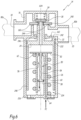
Figure 2 is a transversal sectional view of a pressure regulator of the compressed air generation system offigure 1 , in an open configuration; -
Figure 3 is a view similar tofigure 2 , is a closed configuration of the pressure regulator; -
Figure 4 is a pressure chart describing the operation of the invention -
Figures 5 to 7 are transversal sectional views of a pressure regulator of a compressed air generation system according to a second embodiment -
Figure 8 is a transversal sectional view of a variant of the pressure regulator ofFigures 5 to 7 . - An automotive vehicle V, such as a truck, represented on
figure 1 comprises an internal combustion engine 2 adapted to be fed with compressed air produced by aturbocompressor 4. Theturbocompressor 4 produces compressed air from air at atmospheric pressure thanks to acompressor 40 which is driven by aturbine 42, the latter using the energy of exhaust gases flowing in an exhaust line 6 of the vehicle V. Air at atmospheric pressure is extracted from the outside of the vehicle V with anair filter 3. Compressed air is driven, as shown by arrows A1 , from theturbocompressor 4 to the engine 2 through anair intake pipe 44. - The vehicle V comprises an
air compressor 8. For example, theair compressor 8 can be a piston compressor. - The
air compressor 8 is adapted to feed acompressed air tank 10 in which compressed air is stored in order to feed one or several pneumatically driven sub-systems of the vehicle V, such as a non-shown braking system. - The
air compressor 8 is adapted to compress air provided by theturbocompressor 4. - The
air compressor 8 is fed by aninlet pipe 80 which originates from theair intake pipe 44. Compressed air is fed to thetank 10 via anoutlet pipe 82 of theair compressor 8. - The
air compressor 8, theturbocompressor 4 and theair tank 10 form together a compressedair generation system 12. - The compressed
air generation system 12 comprises apressure regulator 14 connected upstream theair compressor 8 and which limits the pressure P4 of the compressed air fed from theturbocompressor 4 to theair compressor 8. As represented onfigure 4 , this allows limiting the intake pressure P8 of theair compressor 8 below a first threshold T1 corresponding to a maximal intake pressure of theair compressor 8, which is a data inherent to the design of theair compressor 8. For example, theair compressor 8 may be designed to compress air at a pressure of 12,5 bar from air at a pressure between 1 to 3 bar. If theair compressor 8 was fed with an intake pressure of 5 bar superior to this maximal intake pressure of 3 bar, theair compressor 8 would risk damages. Pressure peaks in the compressed air delivered by theturbocompressor 4, shown onfigure 3 , are therefore not able to damage theair compressor 8, and theair compressor 8 does not need to be designed with a lower compression ratio that would incur higher power consumption and reduced performance. - The
pressure regulator 14 is represented onfigures 2 and3 . Thepressure regulator 14 comprises avalve body 16 on which are provided anintake port 18 connected to afirst section 80a of theinlet pipe 80, and anoutlet port 20 connected to asecond section 80b of theinlet pipe 80. Thepressure regulator 14 comprises acentral chamber 22 in which is mounted apiston 24. Thepiston 24 is movable in translation along a central longitudinal axis X24, which also forms a central longitudinal axis of thecentral chamber 22. - The
piston 24 comprises acollar 240 adapted to make contact with avalve seat 160 of thevalve body 16 to close passage of air from theintake port 18 towards theoutlet port 20. Non-shown sealing gaskets may be provided on thecollar 240 to tighten contact with theseat 160. - When the
pressure regulator 14 is open (figure 2 ), air flows around thecollar 240 towards theoutlet port 20, as shown by arrows A2. Near theoutlet port 20, thevalve body 16 comprises acalibrated hole 162 which puts into fluid communication thechamber 22 with theoutlet port 20 at a defined flow. The pressure in theoutlet port 20 therefore exerts a force on anactive surface 242 of thepiston 24, against the biasing force of aspring 26 of thepressure regulator 14, which urges thepiston 24 upwards so that thecollar 240 is driven away from theseat 160. The force of thespring 26 can be modified using ascrew 28. - Depending on the air pressure, equal to the pressure P4, in the
intake port 18, which communicates with thechamber 22 via theoutlet port 20 and thehole 162, thepiston 24 is driven downwards along arrow A3, resulting in thecollar 240 getting closer to theseat 160 and limiting the air pressure that flows into theoutlet port 20, equal to the intake pressure P8 of theair compressor 8. - The compressed
air generation system 12 comprises atank sensor 30 adapted to detect the quantity of compressed air contained in theair tank 10, and a controlled valve adapted to close the feeding of theinlet pipe 80 of theair compressor 8 with theturbocompressor 4 if thetank sensor 30 detects that theair tank 10 is full. Thetank sensor 30 may be a pressure sensor adapted to measure the air pressure P10 in thetank 10. During filling of theair tank 10, the air pressure P10 of theair tank 10 progressively increases up to a maximal pressure Pmax. - The controlled valve is formed by the
pressure regulator 14 that can be closed. Thepressure regulator 14 comprises a controllable actuator adapted to close thepressure regulator 14 whatever the respective pressures P4 and P8 in theinlet port 18 and theoutlet port 20. - The controllable actuator is a pressure-controlled
piston 32 which closes thepressure regulator 14 by acting to move thepiston 24 towards a closed position shown onfigure 3 ("Mode closed" onfigure 4 ). Thepiston 32 is housed in anauxiliary chamber 164 of thevalve body 16. Theauxiliary chamber 164 comprises ahole 164a through which a control air pressure is injected in thechamber 164 to urge thepiston 32 downwards to act, with arod 320 of thepiston 32 extending along the central axis X24, on thepiston 24, as shown by arrow A4. In such a case, thepiston 32 directly acts on thepiston 24 to close thepressure regulator 14. - In the absence of control pressure acting on the pressure controlled
piston 32, the pressure controlledpiston 32 is urged upwards, towards its position offigure 2 , by aspring 26. Thepiston 32 does therefore not act on thepiston 24, and thepressure regulator 14 is therefore not closed by thepiston 32. Thepressure regulator 14 is still able to be closed depending on the air pressures in the inlet andoutlet ports - The closing of the
pressure regulator 14 if theair tank 10 is full avoids operation of theair compressor 8 while air compression is not useful. The closing of compressed air feeding of theair compressor 8 from theturbocompressor 4 avoids operation of theair compressor 8 while it is not desired. From the closing of the pressure regulator, the pressure P10 remains steady at value Pmax. - The compressed
air generation system 12 comprises acontrol unit 34 able to receive signals from thetank sensor 30, and to control thepressure regulator 14 via apneumatic control pipe 36 connected to thehole 164a. Thecontrol unit 34 may include electronic and/or pneumatic components. - In order to guarantee that the
air compressor 8 does not operate while theair tank 10 is full, theair compressor 8 is able to be stopped or placed in a rest mode when thetank sensor 30 detects that theair tank 10 is full. This control of theair compressor 8 is operated with thecontrol unit 34 via an electric signal. Thecontrol unit 34 may also be able to control any other working parameter of theair compressor 8. - According to an embodiment, not in accordance with the appended claims, the controlled valve may be distinct from the
pressure regulator 14 and be formed by avalve 11, for example a three-way valve, connected on thefirst section 80a of theinlet pipe 80, upstream thepressure regulator 14. Thevalve 11 may be controlled by thecontrol unit 34. - The
pressure regulator 14 comprises a pressure relief valve adapted to release to the atmosphere compressed air accumulated between thepressure regulator 14 and theair compressor 8, in other words, in thesecond section 80b of theinlet pipe 80. - For example, as represented on
figures 2 and3 , thepressure regulator 14 may comprise amovable shutter 35 housed in anotherchamber 166 of thevalve body 16, which is in fluid communication with theinlet port 18 and theoutlet port 20, with thechamber 164, and with acentral channel 244 of thepiston 24. Theshutter 35 is movable with respect to thepiston 24 along the central axis X24. Thecentral channel 244 extends around the central axis X24 and provides a fluid communication between thechamber 166 and thechamber 22. Thepressure regulator 14 comprises aspring 39 that pushes theshutter 35 to close thecentral channel 244 unless the pressure between thepressure regulator 14 and theair compressor 8 becomes superior to the first threshold T 1. - When the
air tank 10 is full, thepiston 24 is moved towards the closed position of thepressure regulator 14, as shown onfigure 3 . In this configuration, thecollar 240 is in contact with theseat 160, and theshutter 35 is pushed against thecollar 240, preventing fluid communication between thechamber 166 and thechamber 22. If the intake pressure P8, which exists in theoutlet port 20, increases above the first threshold T1 , thepiston 24 goes further downwards along arrow A3 thanks to a freedom in translation along the axis X24 of a centraltubular portion 246 of thepiston 24, which surrounds thecentral channel 244, with respect to thecollar 240. Thepiston 24 is pushed further in thechamber 22 to such a point that thetubular portion 246 is driven away from theshutter 35. This creates a fluid communication between theoutlet port 20 and thecentral channel 244. Excess air pressure can therefore flow in thecentral channel 244 from theoutlet port 20, as shown by arrow A5. Excess air pressure is also returned to theoutlet port 20 via the calibratedhole 162 under action of thespring 26. - Compressed air flowing in the
central channel 244 flows in thechamber 22, which comprisesair vents 220 allowing release of the air contained in thechamber 22 to the atmosphere, as shown by arrows A6. The portion of thechamber 22 located on the side of theactive surface 242 is sealed from the atmosphere by a sealinggasket 222. - A second embodiment of the invention is represented on
figures 5 to 7 , the pressure relief valve of the pressure regulator may be adapted to open when thepressure regulator 14 is closed, and when the intake pressure P8 between thepressure regulator 14 and theair compressor 8 becomes superior to a second threshold T2 inferior to the first threshold T1. The second threshold T2 may be, for example, 2 bar. The features common with the pressure regulator of the first embodiment have the same references and work in the same way. - In the pressure regulator of
figure 5 , there is no pressure controlledpiston 32 on the upper side of thevalve body 16. Instead thepressure regulator 14 comprises a pressure controlledpiston 50 located within alower side 224 of thepressure chamber 22. Thepiston 50 comprises anupper plate 52 which is put into contact with thepiston 24 by thespring 26. In this case, there is noscrew 28 represented, however the pressure regulator may comprise such a screw. Theplate 52 closes thecentral channel 244. - The
piston 50 comprises arod 54 which is partially inserted into anauxiliary chamber 56 located inside thelower side 224 of thechamber 22. In theauxiliary chamber 56, thepiston 50 is terminated by ahead 58, comprising a sealinggasket 60. Another sealinggasket 62 is provided around therod 54 to tighten theauxiliary chamber 56. - The
pressure regulator 14 comprises aduct 64 which provides fluid communication between theauxiliary chamber 56 and the outside of thepressure regulator 14, allowing a control pressure to be exerted in theauxiliary chamber 56. - In the embodiment of
figure 5 , thepiston 24 comprises aperipheral wall 248 which extends downwards, and which is located radially outwards with respect to thespring 26. - The working principle of the
pressure regulator 14 is described onfigures 5 to 7 . Onfigure 5 , thepressure regulator 14 functions in a pressure regulation only mode: pressure peaks in theinlet port 18 induce downwards movements of thepiston 24, reducing the fluid passage between thecollar 240 and theseat 160. In this configuration, theperipheral wall 248 is raised with respect to abottom wall 226 of thechamber 22. - On
figure 6 , a control pressure PC is applied in theduct 64. The pressure increase in theauxiliary chamber 56 induces a downward movement, along arrow A7, of thepiston 50, against the force of thespring 26. Theplate 52 is not anymore in contact with thepiston 24. Thepiston 24 is therefore free to be pushed downwards by thespring 39, via theshutter 35. Under action of thespring 39, theshutter 35 and thepiston 24, thecollar 240 is pushed against theseat 160 to achieve forced closure of the pressure regulator 14 (Mode closed). In such a case, the pressure-controlledpiston 50 closes thepressure regulator 14 in an indirect way using the force of thespring 39. - In this configuration, the
peripheral wall 248 has been moved closer to thebottom wall 226, but thepiston 24 is still free to move downwards. - On
figure 7 , a pressure peak occurs in theoutlet port 20 whereas the valve is forced in a closed position (Mode closed onfigure 4 ). Through thehole 162, the pressure is exerted on thesurface 242 of thepiston 24. Due to the fact that thespring 26 does not push thepiston 24 upwards anymore, thepiston 24 can be moved downward at a pressure threshold T2 inferior to T1 , provoking opening of thecentral channel 244 and purging of fluid through thechannel 244 and the air vents 220. Thepiston 24 may move downwards until theperipheral wall 248 comes into abutment with thebottom wall 226. - The travel of the
piston 24 from its position offigure 5 towards its position offigure 7 is allowed by the fact that thepiston 50 has a running distance D50 superior to the running distance D24 of thepiston 24. Theplate 52 of thepiston 50 does therefore not limit thepiston 24 when thepiston 24 move further downwards to open the pressure relief valve. - The pressure control of the
piston 50 may also be controlled via thecontrol unit 34. - The intake pressure P8 therefore remains steady at the value T2. This pressure relief valve allows reducing the pressure between the
pressure regulator 14 and theair compressor 8, to avoid creation by the air compressor 8 a resisting couple on the crankshaft of the engine 2. - According to a variant represented on
figure 8 , thespring 26 may be housed in theauxiliary chamber 56 instead of being housed within thelow side 224 of thechamber 22. In such a case theplate 52 of thepiston 50 has a reduced width with respect to the axis X24. Thespring 26 is mounted between thehead 58 and thebottom wall 226. - According to an embodiment, the pressure relief valve may be distinct from the
pressure regulator 14, and formed by a valve 7 connected on thesecond section 80b, for example a three-way valve. - According to an optional embodiment, the vehicle V may comprise an exhaust aftertreatment system (EATS) 9 provided on the exhaust line 6 and adapted to reduce particulates in the exhaust gases. To operate properly, the
EATS 9 must be cleaned from times to times by warming up at a temperature around 450°C. To obtain this temperature, the exhaust gases can be warmed up by reducing the quantity of fresh air provided by theturbocompressor 4 in theair intake pipe 44. This can be done by opening thepressure regulator 14 at a time when it is closed so that compressed air delivered by theturbocompressor 4 will not be delivered to the engine 2, provoking an increase of the exhaust gases temperature. The compressed air tanks generally have a pressure varying between a cut-in threshold and a cut-off threshold (corresponding to the maximal pressure Pmax), which can be for example 1 1 bar and 12 bar. These thresholds can be changed during operation of theair tank 10, for example increased by 0,5 bar during an operation period when energy is free because the vehicle V is braking. By setting the cut-in and cut off thresholds to higher values, theair compressor 8 becomes able to compress more air in theair tank 10, and compressed air is therefore drawn from theair intake pipe 44. This reduces the quantity of fresh air in the intake side of the engine 2, thereby increasing the temperature of the exhaust gases and reducing the warming time of theEATS 9. - The compressed
air generation system 12 may also comprise adischarge valve 17, connected on theoutlet pipe 82, and allowing evacuating air pressure downstream theair compressor 8 to avoid an overpressure in theair tank 10. This may avoid having to act on the operating parameters of theair tank 10. Thedischarge valve 17 may be controlled by thecontrol unit 34. - The forced opening of the pressure regulator may be obtained by cutting the pressure control of the
piston 32 commanded by thecontrol unit 34. The setting of the pressure thresholds of theair tank 10 may be operated by an electric signal emitted by thecontrol unit 34 towards theair tank 10.
Claims (14)
- Compressed air generation system (12) for an automotive vehicle (V), comprising:- a turbocompressor (4) suitable for feeding an internal combustion engine (2) of the automotive vehicle (V) with compressed air,- an air compressor (8),- at least one compressed air tank (10) connected to an outlet pipe (82) of the air compressor (8),the air compressor (8) comprising an inlet pipe (80) fed with compressed air from the turbocompressor (4),
wherein the compressed air generation system (12) comprises a pressure regulator (14) placed downstream the turbocompressor (4) and upstream the air compressor (8) and which limits the pressure (P8) of the compressed air fed from the turbocompressor (4) to the air compressor (8) to a first threshold (T1), wherein the compressed air generation system (12) comprises a tank sensor (30) adapted to detect the quantity of compressed air contained in the air tank (10), a control unit (34) which receives signals from the tank sensor (30) and controls the pressure regulator (14), and a controlled valve (14) adapted to close the feeding of the inlet pipe (80) of the air compressor (8) with the turbocompressor (4) if the tank sensor (30) detects that the air tank (10) is full, wherein the controlled valve is formed by the pressure regulator (14) that can be closed, and wherein the pressure regulator (14) comprises a controllable actuator (32; 50) adapted to close the pressure regulator (14) whatever the pressure (P4) upstream the pressure regulator (14) and the pressure (P8) downstream the pressure regulator (14). - Compressed air generation system according to claim 1, wherein the controllable actuator is a pressure-controlled piston (32; 50) which closes the pressure regulator (14).
- Compressed air generation system according to claim 2, wherein in the absence of control pressure acting on the pressure controlled piston (32; 50), the pressure regulator (14) is open.
- Compressed air generation system according to any of the preceding claims, wherein the controlled valve is a valve (11) connected on the inlet pipe (80) of the air compressor (8) upstream the pressure regulator (14).
- Compressed air generation system according to any of the preceding claims, wherein the air compressor (8) is able to be stopped or placed in a rest mode when the tank sensor (30) detects that the air tank (10) is full.
- Compressed air generation system according to any of the preceding claims, wherein the compressed air generation system (12) comprises a pressure relief valve (7; 35, 246) adapted to release to the atmosphere compressed air accumulated between the pressure regulator (14) and the air compressor (8).
- Compressed air generation system according to claim 6, wherein the pressure relief valve is provided in the pressure regulator (14) and formed by a shutter (35) and a part (246) of a piston (24) of the pressure regulator (14) that is movable with respect to the shutter (35) under action of the pressure between the pressure regulator (14) and the compressor (8), and wherein when the pressure regulator (14) is closed and when the pressure between the pressure regulator (14) and the air compressor (8) becomes superior to a second threshold (T2), inferior to the first threshold (T1), a central channel (244) of the part (246) of the movable piston (24), that communicates with the atmosphere, is open by a movement of the part (246) of the movable piston (24) away from the shutter (35).
- Compressed air generation system according to claim 6, wherein the pressure relief valve is formed by a valve (7) connected on the inlet pipe (80) of the air compressor (8) downstream the pressure regulator (14).
- Compressed air generation system according to any preceding claim, wherein the pressure regulator (14) is connected to the inlet pipe (80) of the air compressor (8).
- Compressed air generation system according to any preceding claim, wherein the compressed air generation system (12) comprises means to force the opening of the pressure regulator (14) and activate the air compressor (8) so that a temperature of exhaust gases of the engine (2) of the vehicle (V) is increased.
- Compressed air generation system according to claim 10, wherein it comprises means to change a cut-in and a cut-off pressure thresholds of the air tank (10).
- Compressed air generation system according to claim 10 or 11, wherein it comprises a discharge valve (17) connected on the outlet pipe (82) of the air compressor (8) which is opened during forced opening of the pressure regulator (14) and activation of the air compressor (8).
- Compressed air generation system according to any preceding claim, wherein the control unit (34) controls at least:- the operation of the air compressor (8);- a pressure relief valve (7) adapted to release to the atmosphere compressed air accumulated between the pressure regulator (14) and the air compressor (8).- cut-in and cut-off pressure thresholds of the air tank (10);- a discharge valve (17) connected on the outlet pipe (82) of the air compressor (8) which is opened during forced opening of the pressure regulator (14) and activation of the air compressor (8).
- An automotive vehicle comprising:- a compressed air generation system (12) according to any one of the preceding claims; and- an internal combustion engine (2) adapted to be fed with compressed air produced by the turbocompressor (4) of the compressed air generation system (12).
Applications Claiming Priority (1)
| Application Number | Priority Date | Filing Date | Title |
|---|---|---|---|
| PCT/EP2018/077933 WO2020074103A1 (en) | 2018-10-12 | 2018-10-12 | Compressed air generation system and automotive vehicle comprising such a system |
Publications (2)
| Publication Number | Publication Date |
|---|---|
| EP3864280A1 EP3864280A1 (en) | 2021-08-18 |
| EP3864280B1 true EP3864280B1 (en) | 2025-06-18 |
Family
ID=63896117
Family Applications (1)
| Application Number | Title | Priority Date | Filing Date |
|---|---|---|---|
| EP18789045.4A Active EP3864280B1 (en) | 2018-10-12 | 2018-10-12 | Compressed air generation system and automotive vehicle comprising such a system |
Country Status (4)
| Country | Link |
|---|---|
| US (1) | US11821354B2 (en) |
| EP (1) | EP3864280B1 (en) |
| CN (1) | CN112789404B (en) |
| WO (1) | WO2020074103A1 (en) |
Families Citing this family (6)
| Publication number | Priority date | Publication date | Assignee | Title |
|---|---|---|---|---|
| US11821354B2 (en) * | 2018-10-12 | 2023-11-21 | Volvo Truck Corporation | Compressed air generation system and automotive vehicle comprising such a system |
| US11280282B2 (en) * | 2020-06-08 | 2022-03-22 | Ford Global Technologies, Llc | System and method for controlling vehicle accumulator airflow |
| CN111894772A (en) * | 2020-07-30 | 2020-11-06 | 东风商用车有限公司 | Engine supercharging air intake system and control method thereof |
| US11572830B2 (en) * | 2021-02-19 | 2023-02-07 | Ford Global Technologies, Llc | Method and system for on vehicle compressed air generation |
| US11773793B2 (en) * | 2022-02-04 | 2023-10-03 | Ford Global Technologies, Llc | Method and system for compressed air supply |
| EP4513015A1 (en) * | 2023-08-22 | 2025-02-26 | Volvo Truck Corporation | Drive train arrangement for providing pressurized gas |
Citations (1)
| Publication number | Priority date | Publication date | Assignee | Title |
|---|---|---|---|---|
| US4652216A (en) * | 1984-05-21 | 1987-03-24 | Allied Corporation | Compressor inlet control device |
Family Cites Families (29)
| Publication number | Priority date | Publication date | Assignee | Title |
|---|---|---|---|---|
| US3520132A (en) * | 1969-06-18 | 1970-07-14 | Glenn B Warren | Stored air supercharger for reciprocating internal combustion engine with constant pressure combustion |
| US3658082A (en) * | 1970-03-23 | 1972-04-25 | Int Basic Economy Corp | Dual pressure regulator |
| JPS5213277B2 (en) * | 1973-06-20 | 1977-04-13 | ||
| US4745904A (en) * | 1979-08-20 | 1988-05-24 | Cagle Corporation | Vacuum controlled variable pressure fuel regulator and carburetor |
| US4496291A (en) | 1981-11-13 | 1985-01-29 | Grimmer John E | Compound turbocharger system for an internal combustion engine |
| JPS59117864U (en) * | 1983-01-31 | 1984-08-09 | 株式会社小松製作所 | Exhaust energy recovery device |
| US5178799A (en) * | 1991-01-07 | 1993-01-12 | Wilshire Partners | Carbonated beverage dispensing apparatus |
| US5332368A (en) * | 1992-07-22 | 1994-07-26 | Outboard Marine Corporation | Air compressor having a high pressure output |
| US5372159A (en) * | 1993-08-31 | 1994-12-13 | Bjork Investment Group, Inc. | Engine fuel flow control mechanism |
| SE9400575L (en) * | 1994-02-18 | 1995-08-19 | Volvo Ab | Device for charging air systems on trucks |
| DE19510492C2 (en) * | 1995-03-23 | 2003-12-11 | Wabco Gmbh & Co Ohg | Relay valve arrangement |
| DE19637571A1 (en) | 1996-09-14 | 1998-03-19 | Deutz Ag | Internal combustion engine with crankcase and at least one cylinder unit |
| GB2368532B (en) * | 2000-11-02 | 2004-09-08 | Nick Foss | Breathing apparatus |
| SE523149C2 (en) * | 2001-08-20 | 2004-03-30 | Volvo Lastvagnar Ab | Turbo engine type combustion engine device |
| US20040099313A1 (en) * | 2002-11-26 | 2004-05-27 | Gotthelf Jeffrey Bryan | Fluid flow pressure regulator |
| US6922997B1 (en) * | 2004-02-03 | 2005-08-02 | International Truck Intellectual Property Company, Llc | Engine based kinetic energy recovery system for vehicles |
| DE102004047975A1 (en) * | 2004-10-01 | 2006-04-13 | Knorr-Bremse Ag | Method and device for increasing a torque of a reciprocating internal combustion engine, in particular a diesel engine |
| DE102006039300A1 (en) * | 2006-08-22 | 2008-02-28 | Knorr-Bremse Systeme für Nutzfahrzeuge GmbH | Device and method for supplying fresh air to a turbocharged reciprocating internal combustion engine |
| DE102007035163B4 (en) * | 2007-07-25 | 2012-10-18 | Knorr-Bremse Systeme für Nutzfahrzeuge GmbH | Compressed air system |
| US8069665B2 (en) * | 2010-04-15 | 2011-12-06 | Ford Global Technologies, Llc | Stored compressed air management for improved engine performance |
| US8381521B2 (en) * | 2010-05-19 | 2013-02-26 | Bendix Commercial Vehicle Systems Llc | Vehicle pneumatic booster system operating method and apparatus |
| DE102010034727A1 (en) * | 2010-08-18 | 2012-02-23 | Knorr-Bremse Systeme für Nutzfahrzeuge GmbH | Method for regulating a stable operation of an exhaust gas turbocharger of an internal combustion engine and a corresponding device |
| US20120090580A1 (en) * | 2010-10-15 | 2012-04-19 | Lung Tan Hu | Controlled-compression direct-power-cycle engine |
| EP2651735B2 (en) * | 2010-12-17 | 2018-08-29 | Volvo Lastvagnar AB | Method for controlling a compressed air generation system of an automotive vehicle, compressed air generation system adapted to such a method and automotive vehicle comprising such a system |
| US20140373531A1 (en) * | 2013-06-19 | 2014-12-25 | Jim Wong | Natural gas fueled internal combustion engine |
| US10119555B2 (en) * | 2013-12-18 | 2018-11-06 | Volvo Truck Corporation | Pneumatic actuator system and method for controlling such as system |
| DE102014111835B4 (en) * | 2014-08-19 | 2017-08-31 | Gardner Denver Deutschland Gmbh | Compressor unit and method for its operation |
| US10287941B2 (en) * | 2016-08-30 | 2019-05-14 | Ford Global Technologies, Llc | Engine exhaust system control |
| US11821354B2 (en) * | 2018-10-12 | 2023-11-21 | Volvo Truck Corporation | Compressed air generation system and automotive vehicle comprising such a system |
-
2018
- 2018-10-12 US US17/282,219 patent/US11821354B2/en active Active
- 2018-10-12 EP EP18789045.4A patent/EP3864280B1/en active Active
- 2018-10-12 CN CN201880098246.3A patent/CN112789404B/en active Active
- 2018-10-12 WO PCT/EP2018/077933 patent/WO2020074103A1/en not_active Ceased
Patent Citations (1)
| Publication number | Priority date | Publication date | Assignee | Title |
|---|---|---|---|---|
| US4652216A (en) * | 1984-05-21 | 1987-03-24 | Allied Corporation | Compressor inlet control device |
Also Published As
| Publication number | Publication date |
|---|---|
| WO2020074103A1 (en) | 2020-04-16 |
| US11821354B2 (en) | 2023-11-21 |
| CN112789404A (en) | 2021-05-11 |
| CN112789404B (en) | 2022-07-26 |
| EP3864280A1 (en) | 2021-08-18 |
| US20210332744A1 (en) | 2021-10-28 |
Similar Documents
| Publication | Publication Date | Title |
|---|---|---|
| EP3864280B1 (en) | Compressed air generation system and automotive vehicle comprising such a system | |
| US6779618B2 (en) | Tire pressure adjusting device | |
| FR3017656A1 (en) | TURBOREACTOR COMPRISING A SAMPLING SYSTEM FOR TAKING AIR INTO THE TURBOREACTOR | |
| FR3017655A1 (en) | TURBOREACTOR COMPRISING A SAMPLING SYSTEM FOR TAKING AIR INTO THE TURBOREACTOR | |
| US5645030A (en) | Motorbrake for a diesel engine | |
| TW360749B (en) | Fuel supply device for a vehicle | |
| CN101932800A (en) | Exhaust gas conditioning system and exhaust gas conditioning method | |
| ITTO991054A1 (en) | VALVE SYSTEM FOR INLET PRESSURE CONTROL OF A LIQUID IN A HIGH PRESSURE PUMP, AND RELATED OVERPRESSURE VALVE | |
| US20090056311A1 (en) | Machine, engine system and operating method | |
| US5615656A (en) | Fuel-injection system for an internal combustion engine, in particular for a diesel motor, and a method for monitoring the same | |
| CA2595262A1 (en) | Air supply system control | |
| EP0162222B1 (en) | Compressor inlet control device | |
| CN105275671A (en) | Method of supplying fuel to engine | |
| EP0523859B1 (en) | A turbocharged internal combustion engine | |
| US5199260A (en) | Wastegate actuator control valve for a turbocharger | |
| JPH02264170A (en) | Air compressor unloader system | |
| JP4131829B2 (en) | EGR valve | |
| EP1596056A1 (en) | Gas feeding system for an internal combustion engine, having a pressure reducing valve connected to the intake manifold | |
| CN111989473B (en) | Engine system | |
| FR2793844A1 (en) | INTERNAL COMBUSTION ENGINE HAVING A COMPRESSOR FOR THE PRODUCTION OF COMPRESSED AIR | |
| KR101970031B1 (en) | Cylinder head for a compressor | |
| US6298828B1 (en) | Adjustable fuel pressure regulator | |
| CN101649784A (en) | Brake managing system of engine | |
| EP3049650B1 (en) | Ball type pressure relieving actuator for use with turbochargers | |
| WO2009025205A1 (en) | Valve gear control device for internal combustion engine |
Legal Events
| Date | Code | Title | Description |
|---|---|---|---|
| STAA | Information on the status of an ep patent application or granted ep patent |
Free format text: STATUS: UNKNOWN |
|
| STAA | Information on the status of an ep patent application or granted ep patent |
Free format text: STATUS: THE INTERNATIONAL PUBLICATION HAS BEEN MADE |
|
| PUAI | Public reference made under article 153(3) epc to a published international application that has entered the european phase |
Free format text: ORIGINAL CODE: 0009012 |
|
| STAA | Information on the status of an ep patent application or granted ep patent |
Free format text: STATUS: REQUEST FOR EXAMINATION WAS MADE |
|
| 17P | Request for examination filed |
Effective date: 20210430 |
|
| AK | Designated contracting states |
Kind code of ref document: A1 Designated state(s): AL AT BE BG CH CY CZ DE DK EE ES FI FR GB GR HR HU IE IS IT LI LT LU LV MC MK MT NL NO PL PT RO RS SE SI SK SM TR |
|
| DAV | Request for validation of the european patent (deleted) | ||
| DAX | Request for extension of the european patent (deleted) | ||
| STAA | Information on the status of an ep patent application or granted ep patent |
Free format text: STATUS: EXAMINATION IS IN PROGRESS |
|
| 17Q | First examination report despatched |
Effective date: 20230331 |
|
| GRAP | Despatch of communication of intention to grant a patent |
Free format text: ORIGINAL CODE: EPIDOSNIGR1 |
|
| STAA | Information on the status of an ep patent application or granted ep patent |
Free format text: STATUS: GRANT OF PATENT IS INTENDED |
|
| INTG | Intention to grant announced |
Effective date: 20250317 |
|
| GRAS | Grant fee paid |
Free format text: ORIGINAL CODE: EPIDOSNIGR3 |
|
| GRAA | (expected) grant |
Free format text: ORIGINAL CODE: 0009210 |
|
| STAA | Information on the status of an ep patent application or granted ep patent |
Free format text: STATUS: THE PATENT HAS BEEN GRANTED |
|
| AK | Designated contracting states |
Kind code of ref document: B1 Designated state(s): AL AT BE BG CH CY CZ DE DK EE ES FI FR GB GR HR HU IE IS IT LI LT LU LV MC MK MT NL NO PL PT RO RS SE SI SK SM TR |
|
| REG | Reference to a national code |
Ref country code: GB Ref legal event code: FG4D |
|
| REG | Reference to a national code |
Ref country code: CH Ref legal event code: EP |
|
| REG | Reference to a national code |
Ref country code: DE Ref legal event code: R096 Ref document number: 602018082695 Country of ref document: DE |
|
| REG | Reference to a national code |
Ref country code: CH Ref legal event code: EP |
|
| REG | Reference to a national code |
Ref country code: IE Ref legal event code: FG4D |
|
| PG25 | Lapsed in a contracting state [announced via postgrant information from national office to epo] |
Ref country code: FI Free format text: LAPSE BECAUSE OF FAILURE TO SUBMIT A TRANSLATION OF THE DESCRIPTION OR TO PAY THE FEE WITHIN THE PRESCRIBED TIME-LIMIT Effective date: 20250618 |
|
| REG | Reference to a national code |
Ref country code: LT Ref legal event code: MG9D |
|
| PG25 | Lapsed in a contracting state [announced via postgrant information from national office to epo] |
Ref country code: NO Free format text: LAPSE BECAUSE OF FAILURE TO SUBMIT A TRANSLATION OF THE DESCRIPTION OR TO PAY THE FEE WITHIN THE PRESCRIBED TIME-LIMIT Effective date: 20250918 Ref country code: GR Free format text: LAPSE BECAUSE OF FAILURE TO SUBMIT A TRANSLATION OF THE DESCRIPTION OR TO PAY THE FEE WITHIN THE PRESCRIBED TIME-LIMIT Effective date: 20250919 |
|
| PG25 | Lapsed in a contracting state [announced via postgrant information from national office to epo] |
Ref country code: BG Free format text: LAPSE BECAUSE OF FAILURE TO SUBMIT A TRANSLATION OF THE DESCRIPTION OR TO PAY THE FEE WITHIN THE PRESCRIBED TIME-LIMIT Effective date: 20250618 |
|
| PG25 | Lapsed in a contracting state [announced via postgrant information from national office to epo] |
Ref country code: HR Free format text: LAPSE BECAUSE OF FAILURE TO SUBMIT A TRANSLATION OF THE DESCRIPTION OR TO PAY THE FEE WITHIN THE PRESCRIBED TIME-LIMIT Effective date: 20250618 |
|
| PG25 | Lapsed in a contracting state [announced via postgrant information from national office to epo] |
Ref country code: RS Free format text: LAPSE BECAUSE OF FAILURE TO SUBMIT A TRANSLATION OF THE DESCRIPTION OR TO PAY THE FEE WITHIN THE PRESCRIBED TIME-LIMIT Effective date: 20250918 |
|
| REG | Reference to a national code |
Ref country code: NL Ref legal event code: MP Effective date: 20250618 |
|
| PG25 | Lapsed in a contracting state [announced via postgrant information from national office to epo] |
Ref country code: LV Free format text: LAPSE BECAUSE OF FAILURE TO SUBMIT A TRANSLATION OF THE DESCRIPTION OR TO PAY THE FEE WITHIN THE PRESCRIBED TIME-LIMIT Effective date: 20250618 |
|
| PG25 | Lapsed in a contracting state [announced via postgrant information from national office to epo] |
Ref country code: NL Free format text: LAPSE BECAUSE OF FAILURE TO SUBMIT A TRANSLATION OF THE DESCRIPTION OR TO PAY THE FEE WITHIN THE PRESCRIBED TIME-LIMIT Effective date: 20250618 |
|
| PG25 | Lapsed in a contracting state [announced via postgrant information from national office to epo] |
Ref country code: PT Free format text: LAPSE BECAUSE OF FAILURE TO SUBMIT A TRANSLATION OF THE DESCRIPTION OR TO PAY THE FEE WITHIN THE PRESCRIBED TIME-LIMIT Effective date: 20251020 |
|
| REG | Reference to a national code |
Ref country code: AT Ref legal event code: MK05 Ref document number: 1804366 Country of ref document: AT Kind code of ref document: T Effective date: 20250618 |
|
| PG25 | Lapsed in a contracting state [announced via postgrant information from national office to epo] |
Ref country code: IS Free format text: LAPSE BECAUSE OF FAILURE TO SUBMIT A TRANSLATION OF THE DESCRIPTION OR TO PAY THE FEE WITHIN THE PRESCRIBED TIME-LIMIT Effective date: 20251018 |
|
| PGFP | Annual fee paid to national office [announced via postgrant information from national office to epo] |
Ref country code: DE Payment date: 20251028 Year of fee payment: 8 |
|
| PG25 | Lapsed in a contracting state [announced via postgrant information from national office to epo] |
Ref country code: AT Free format text: LAPSE BECAUSE OF FAILURE TO SUBMIT A TRANSLATION OF THE DESCRIPTION OR TO PAY THE FEE WITHIN THE PRESCRIBED TIME-LIMIT Effective date: 20250618 Ref country code: SM Free format text: LAPSE BECAUSE OF FAILURE TO SUBMIT A TRANSLATION OF THE DESCRIPTION OR TO PAY THE FEE WITHIN THE PRESCRIBED TIME-LIMIT Effective date: 20250618 |
|
| PG25 | Lapsed in a contracting state [announced via postgrant information from national office to epo] |
Ref country code: CZ Free format text: LAPSE BECAUSE OF FAILURE TO SUBMIT A TRANSLATION OF THE DESCRIPTION OR TO PAY THE FEE WITHIN THE PRESCRIBED TIME-LIMIT Effective date: 20250618 |
|
| PG25 | Lapsed in a contracting state [announced via postgrant information from national office to epo] |
Ref country code: PL Free format text: LAPSE BECAUSE OF FAILURE TO SUBMIT A TRANSLATION OF THE DESCRIPTION OR TO PAY THE FEE WITHIN THE PRESCRIBED TIME-LIMIT Effective date: 20250618 |
|
| PG25 | Lapsed in a contracting state [announced via postgrant information from national office to epo] |
Ref country code: EE Free format text: LAPSE BECAUSE OF FAILURE TO SUBMIT A TRANSLATION OF THE DESCRIPTION OR TO PAY THE FEE WITHIN THE PRESCRIBED TIME-LIMIT Effective date: 20250618 |
|
| PG25 | Lapsed in a contracting state [announced via postgrant information from national office to epo] |
Ref country code: RO Free format text: LAPSE BECAUSE OF FAILURE TO SUBMIT A TRANSLATION OF THE DESCRIPTION OR TO PAY THE FEE WITHIN THE PRESCRIBED TIME-LIMIT Effective date: 20250618 Ref country code: SK Free format text: LAPSE BECAUSE OF FAILURE TO SUBMIT A TRANSLATION OF THE DESCRIPTION OR TO PAY THE FEE WITHIN THE PRESCRIBED TIME-LIMIT Effective date: 20250618 |
|
| PG25 | Lapsed in a contracting state [announced via postgrant information from national office to epo] |
Ref country code: ES Free format text: LAPSE BECAUSE OF FAILURE TO SUBMIT A TRANSLATION OF THE DESCRIPTION OR TO PAY THE FEE WITHIN THE PRESCRIBED TIME-LIMIT Effective date: 20250618 |
|
| PG25 | Lapsed in a contracting state [announced via postgrant information from national office to epo] |
Ref country code: DK Free format text: LAPSE BECAUSE OF FAILURE TO SUBMIT A TRANSLATION OF THE DESCRIPTION OR TO PAY THE FEE WITHIN THE PRESCRIBED TIME-LIMIT Effective date: 20250618 |
|
| PG25 | Lapsed in a contracting state [announced via postgrant information from national office to epo] |
Ref country code: IT Free format text: LAPSE BECAUSE OF FAILURE TO SUBMIT A TRANSLATION OF THE DESCRIPTION OR TO PAY THE FEE WITHIN THE PRESCRIBED TIME-LIMIT Effective date: 20250618 |
|
| PLBE | No opposition filed within time limit |
Free format text: ORIGINAL CODE: 0009261 |
|
| STAA | Information on the status of an ep patent application or granted ep patent |
Free format text: STATUS: NO OPPOSITION FILED WITHIN TIME LIMIT |
|
| REG | Reference to a national code |
Ref country code: CH Ref legal event code: L10 Free format text: ST27 STATUS EVENT CODE: U-0-0-L10-L00 (AS PROVIDED BY THE NATIONAL OFFICE) Effective date: 20260430 |