EP3863628B1 - Combination of ibudilast and interferon-beta and methods of using same - Google Patents
Combination of ibudilast and interferon-beta and methods of using same Download PDFInfo
- Publication number
- EP3863628B1 EP3863628B1 EP19794366.5A EP19794366A EP3863628B1 EP 3863628 B1 EP3863628 B1 EP 3863628B1 EP 19794366 A EP19794366 A EP 19794366A EP 3863628 B1 EP3863628 B1 EP 3863628B1
- Authority
- EP
- European Patent Office
- Prior art keywords
- interferon
- beta
- ibudilast
- day
- week
- Prior art date
- Legal status (The legal status is an assumption and is not a legal conclusion. Google has not performed a legal analysis and makes no representation as to the accuracy of the status listed.)
- Active
Links
Images
Classifications
-
- A—HUMAN NECESSITIES
- A61—MEDICAL OR VETERINARY SCIENCE; HYGIENE
- A61K—PREPARATIONS FOR MEDICAL, DENTAL OR TOILETRY PURPOSES
- A61K38/00—Medicinal preparations containing peptides
- A61K38/16—Peptides having more than 20 amino acids; Gastrins; Somatostatins; Melanotropins; Derivatives thereof
- A61K38/17—Peptides having more than 20 amino acids; Gastrins; Somatostatins; Melanotropins; Derivatives thereof from animals; from humans
- A61K38/19—Cytokines; Lymphokines; Interferons
- A61K38/21—Interferons [IFN]
- A61K38/215—IFN-beta
-
- A—HUMAN NECESSITIES
- A61—MEDICAL OR VETERINARY SCIENCE; HYGIENE
- A61K—PREPARATIONS FOR MEDICAL, DENTAL OR TOILETRY PURPOSES
- A61K31/00—Medicinal preparations containing organic active ingredients
- A61K31/33—Heterocyclic compounds
- A61K31/395—Heterocyclic compounds having nitrogen as a ring hetero atom, e.g. guanethidine or rifamycins
- A61K31/435—Heterocyclic compounds having nitrogen as a ring hetero atom, e.g. guanethidine or rifamycins having six-membered rings with one nitrogen as the only ring hetero atom
- A61K31/4353—Heterocyclic compounds having nitrogen as a ring hetero atom, e.g. guanethidine or rifamycins having six-membered rings with one nitrogen as the only ring hetero atom ortho- or peri-condensed with heterocyclic ring systems
- A61K31/437—Heterocyclic compounds having nitrogen as a ring hetero atom, e.g. guanethidine or rifamycins having six-membered rings with one nitrogen as the only ring hetero atom ortho- or peri-condensed with heterocyclic ring systems the heterocyclic ring system containing a five-membered ring having nitrogen as a ring hetero atom, e.g. indolizine, beta-carboline
-
- A—HUMAN NECESSITIES
- A61—MEDICAL OR VETERINARY SCIENCE; HYGIENE
- A61P—SPECIFIC THERAPEUTIC ACTIVITY OF CHEMICAL COMPOUNDS OR MEDICINAL PREPARATIONS
- A61P25/00—Drugs for disorders of the nervous system
- A61P25/28—Drugs for disorders of the nervous system for treating neurodegenerative disorders of the central nervous system, e.g. nootropic agents, cognition enhancers, drugs for treating Alzheimer's disease or other forms of dementia
Definitions
- MS Multiple sclerosis
- MS is a complex autoimmune disease with predominantly unknown etiology currently affects approximately 2.5 million people worldwide.
- pathological processes such as inflammation, demyelination, axonal damage and repair mechanisms contribute in the complex disease manifestation of MS.
- MS is usually a sporadic disease and is characterized as a variably progressive disease of the nervous system in which the patchy degenerative and inflammatory changes occur within the brain and spinal cord.
- the degenerative and inflammatory changes are associated with the formation of sclerotic plaques due, in part, to abnormal hardening and fibrosis of the neuronal myelin sheath.
- the symptoms are diverse, ranging from tremor, nystagmus, paralysis, and disturbances in speech and vision. Symptoms of the disease often occur in early adult life with characteristic exacerbations and remissions.
- RRMS Relapsing remitting multiple sclerosis
- SPMS secondary progressive
- RRMS Relapsing remitting multiple sclerosis
- mitoxantrone is the only FDA-approved therapy for secondary progressive MS, but is not commonly used because of its risks of heart injury and blood cancers (e.g., leukemia).
- the small molecule ibudilast (3-isobutyryl-2-isopropylpyrazolo[1,5-a]pyridine) is an inhibitor of macrophage inhibitory factor (MIF) ( Cho et al., PNAS-USA, 2010 June 107: 11313-8 ), is a selective inhibitor of cyclic nucleotide phosphodiesterases (PDEs) 3A, 4, 10A1 and 11A1 ( Gibson et al., Eur. J. Pharmacol., 538: 39-42, 2006 ), and has toll-like receptor-4 (TLR4) antagonistic activity ( Yang et al., Cell Death and Disease (2016) 7, e2234; doi: 10.1038/cddis.2016.140 ).
- MIF macrophage inhibitory factor
- Ibudilast distributes well to the CNS ( Sanftner et al., Xenobiotica, 2009 39: 964-977 ) and at clinically-relevant plasma or CNS concentrations, ibudilast selectively inhibits macrophage migration inhibitory factor (MIF) and, secondarily, PDEs 3, 4, 10 and 11.
- MIF macrophage migration inhibitory factor
- Ibudilast also acts as a leukotriene D4 antagonist, an anti-inflammatory, a PAF antagonist, and a vasodilatory agent (Thompson Current Drug Reports). Ibudilast is thought to exert a neuroprotective role in the central nervous system of mammals, presumably via suppression of the activation of glial cells ( Mizuno et al., Neuropharmacology 46: 404-411, 2004 ).
- Ibudilast has been widely used in Japan for relieving symptoms associated with ischemic stroke or bronchial asthma.
- MS multiple sclerosis
- MS multiple sclerosis
- this clinical trial was expected to treat "relapsing-remitting MS,” however, no mention is made of progressive multiple sclerosis.
- U.S. Patent No. 6,395,747 ibudilast is disclosed as a treatment for multiple sclerosis, which is generally understood to mean relapsing and remitting multiple sclerosis, not progressive multiple sclerosis.
- 20060160843 discloses ibudilast for the treatment of intermittent and short term pain, however, this is not pain related to a progressive neurodegenerative disease.
- U.S. Patent No. 9,314,452 discloses ibudilast as a treatment for amyotrophic lateral sclerosis, a progressive neurodegenerative disease.
- U.S. Patent No. 8,138,201 discloses ibudilast as a treatment for primary progressive multiple sclerosis and/or secondary progressive multiple sclerosis.
- a combination for use in a method of alleviating the negative effects of a progressive multiple sclerosis in a human patient in need thereof comprising, consisting essentially of, or consisting of administering to the human patient: (a) a therapeutically effective amount of ibudilast or a pharmaceutically acceptable salt thereof, and (b) a therapeutically effective amount of interferon-beta.
- a combination for use in a method of treating a progressive multiple sclerosis in a human patient in need thereof comprising, consisting essentially of, or consisting of administering to the human patient: (a) a therapeutically effective amount of ibudilast or a pharmaceutically acceptable salt thereof, and (b) a therapeutically effective amount of interferon-beta.
- the ibudilast, or pharmaceutically acceptable salt thereof, and the interferon-beta are administered in separate dosage forms. In some embodiments, the ibudilast, or pharmaceutically acceptable salt thereof, and the interferon-beta are administered in the same dosage form.
- the ibudilast, or pharmaceutically acceptable salt thereof, and the interferon-beta are administered simultaneously. In some embodiments, the ibudilast, or pharmaceutically acceptable salt thereof, and the interferon-beta, are administered consecutively.
- the ibudilast, or pharmaceutically acceptable salt thereof, and the interferon-beta are administered for at least about 12, 24, 36, 48, 60, 72, 84, or 96 weeks. In some embodiments, the ibudilast, or pharmaceutically acceptable salt thereof, and the interferon-beta are administered for about 12, 24, 36, 48, 60, 72, 84, or 96 weeks. In some embodiments, the ibudilast, or pharmaceutically acceptable salt thereof, and the interferon-beta are administered for at least about 1 year, 2 years, 3 years, 4 years, or 5 years. In some embodiments, the ibudilast, or pharmaceutically acceptable salt thereof, and the interferon-beta are administered for 1 year, 2 years, 3 years, 4 years, or 5 years.
- the interferon-beta is administered parenterally. In some embodiments, the interferon-beta is administered by intramuscular injection. In some embodiments, the interferon-beta is administered by subcutaneous injection.
- the ibudilast or pharmaceutically acceptable salt thereof is administered in an amount of from about 0.1 mg/day to about 4,000 mg/day. In some embodiments, the ibudilast or pharmaceutically acceptable salt thereof is administered in an amount of from about 0.1 mg/day to about 720 mg/day. In some embodiments, the ibudilast or pharmaceutically acceptable salt thereof is administered in an amount of at least about 30 mg/day. In some embodiments, the ibudilast or pharmaceutically acceptable salt thereof is administered in an amount of from about 30 mg/day to about 200 mg/day. In some embodiments, the ibudilast or pharmaceutically acceptable salt thereof is administered in an amount of from about 60 mg/day to about 600 mg/day.
- the ibudilast or pharmaceutically acceptable salt thereof is administered in an amount of from about 60 mg/day to about 100 mg/day. In some embodiments, the ibudilast or pharmaceutically acceptable salt thereof is administered in an amount of from about 100 mg/day to about 480 mg/day.
- the ibudilast or pharmaceutically acceptable salt thereof is administered in an amount of about 30 mg/day, about 60 mg/day, about 80 mg/day, about 90 mg/day, about 100 mg/day, about 120 mg/day, about 150 mg/day, about 180 mg/day, about 210 mg/day, about 240 mg/day, about 270 mg/day, about 300 mg/day, about 360 mg/day, about 400 mg/day, about 440 mg/day, about 480 mg/day, about 520 mg/day, about 580 mg/day, about 600 mg/day, about 620 mg/day, about 640 mg/day, about 680 mg/day, or about 720 mg/day.
- the ibudilast or pharmaceutically acceptable salt thereof is administered in an amount of about 60 mg/day, about 80 mg/day, or about 100 mg/day. In some embodiments, the amount of ibudilast or pharmaceutically acceptable salt administered per day is divided into one, two or three portions.
- the interferon-beta-1a is administered in an amount of about 7.5 mcg/week, about 15 mcg/week, about 22.5 mcg/week, or about 30 mcg/week. In some embodiments, the interferon-beta-1a is administered in an amount of about 26.4 mcg/week to about 132 mcg/week. In some embodiments, the interferon-beta-1a is administered in an amount of about 26.4 mcg/week, about 66 mcg/week, or about 132 mcg/week.
- the interferon-beta-1a is administered in an amount of about 13.2 mcg/week to about 66 mcg/week. In some embodiments, the interferon-beta-1a is administered in an amount of about 13.2 mcg/week, about 33 mcg, or about 66 mcg/week. In some embodiments, the amount of interferon-beta-1a administered per week is divided into one, two, three, four, or five portions. In some embodiments, the portions are administered at least 24 hours, 48 hours, 72 hours, 96 hours, or 120 hours apart.
- the interferon-beta is interferon-beta-1b. In some embodiments, the interferon-beta-1b is administered in an amount of from about 0.01 mg to about 1 mg. In some embodiments, the interferon-beta-1b is administered in an amount of from about 0.0625 mg to about 0.25 mg. In some embodiments, the interferon-beta-1b is administered in an amount of about 0.0625 mg, about 0.125 mg, about 0.1875 mg, or about 0.25 mg. In some embodiments, the amount of interferon-beta-1b is administered every other day.
- the amount of interferon-beta-1b is administered every two days, three days, four days, five days, six days, or seven days. In some embodiments, the amount of interferon-beta-1b administered is divided into one, two, or three portions.
- the progressive multiple sclerosis has progressed beyond relapse remitting multiple sclerosis.
- the progressive multiple sclerosis is primary progressive multiple sclerosis.
- the primary progressive multiple sclerosis is characterized by disease progression from onset, with occasional plateaus and temporary minor improvements allowed, but not distinct relapses.
- the progressive multiple sclerosis is secondary progressive multiple sclerosis.
- the secondary progressive multiple sclerosis is characterized as an initial relapsing-remitting course, followed by progression, with or without occasional relapses, minor remissions and plateaus.
- the administration of the ibudilast, or pharmaceutically acceptable salt thereof, and the interferon-beta lessens the conversion of a brain lesion to a persistent blackhole as compared to (i) no administration of the ibudilast, or pharmaceutically acceptable salt thereof, and the interferon-beta; (ii) no administration of the ibudilast, or pharmaceutically acceptable salt thereof, as a single agent; or (iii) no administration of the interferon-beta as a single agent.
- the administration of the ibudilast, or pharmaceutically acceptable salt thereof, and the interferon-beta reduces brain volume loss as compared to (i) no administration of the ibudilast, or pharmaceutically acceptable salt thereof, and the interferon-beta; (ii) no administration of the ibudilast, or pharmaceutically acceptable salt thereof, as a single agent; or (iii) no administration of the interferon-beta as a single agent.
- the method further comprises observing changes in the human patient's cerebral MR or CT images to track changes in the human patient's brain volume.
- the administration of the ibudilast, or pharmaceutically acceptable salt thereof, and the interferon-beta prolongs the time of relapse as compared to (i) no administration of the ibudilast, or pharmaceutically acceptable salt thereof, and the interferon-beta; (ii) no administration of the ibudilast, or pharmaceutically acceptable salt thereof, as a single agent; or (iii) no administration of the interferon-beta as a single agent.
- the administration of the ibudilast, or pharmaceutically acceptable salt thereof, and the interferon-beta reduces likelihood for sustained disability progression as compared to (i) no administration of the ibudilast, or pharmaceutically acceptable salt thereof, and the interferon-beta; (ii) no administration of the ibudilast, or pharmaceutically acceptable salt thereof, as a single agent; or (iii) no administration of the interferon-beta as a single agent.
- the administration of the ibudilast, or pharmaceutically acceptable salt thereof, and the interferon-beta delays disability progression, disease progression, and brain atrophy as compared to (i) no administration of the ibudilast, or pharmaceutically acceptable salt thereof, and the interferon-beta; (ii) no administration of the ibudilast, or pharmaceutically acceptable salt thereof, as a single agent; or (iii) no administration of the interferon-beta as a single agent.
- the patient prior to the method the patient was administered interferon-beta in a dosing regimen that excluded co-administration of ibudilast.
- the human patient is not concurrently administered glatiramer acetate. In some embodiments, the human patient is not concurrently administered glatiramer acetate nor was the human patient previously administered glatiramer acetate.
- a method of tracking changes in a human patient's brain volume comprising observing changes in the human patient's cerebral MR or CT images to track the changes in the human patient's brain volume, wherein the human patient has been treated with (a) a therapeutically effective amount of ibudilast or a pharmaceutically acceptable salt thereof, and (b) a therapeutically effective amount of interferon-beta.
- composition comprising: (a) a therapeutically effective amount of ibudilast or a pharmaceutically acceptable salt thereof, (b) a therapeutically effective amount of interferon-beta; and (c) a pharmaceutically acceptable carri er.
- kits comprising: (a) a therapeutically effective amount of ibudilast or a pharmaceutically acceptable salt thereof, (b) a therapeutically effective amount of interferon-beta; and (c) instructions for use.
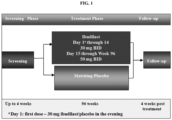
- FIG. 1 illustrates the study design
- compositions and methods are intended to mean that the compositions and methods include the recited elements, but not excluding others.
- Consisting essentially of when used to define compositions and methods, shall mean excluding other elements of any essential significance to the combination for the stated purpose. Thus, a composition consisting essentially of the elements as defined herein would not exclude other materials or steps that do not materially affect the basic and novel characteristic(s) of the claimed invention.
- Consisting of shall mean excluding more than trace elements of other ingredients and substantial method steps. Embodiments defined by each of these transition terms are within the scope of this invention. When an embodiment is defined by one of these terms (e.g., “comprising") it should be understood that this disclosure also includes alternative embodiments, such as “consisting essentially of” and “consisting of” for said embodiment.
- “Pharmaceutically acceptable excipient or carrier” refers to an excipient that may optionally be included in the compositions of the disclosure and that causes no significant adverse toxicological effects to the patient.
- “Pharmaceutically acceptable salt” includes, but is not limited to, amino acid salts, salts prepared with inorganic acids, such as chloride, sulfate, phosphate, diphosphate, bromide, and nitrate salts, or salts prepared from the corresponding inorganic acid form of any of the preceding, e.g., hydrochloride, etc., or salts prepared with an organic acid, such as malate, maleate, fumarate, tartrate, succinate, ethylsuccinate, citrate, acetate, lactate, methanesulfonate, benzoate, ascorbate, para-toluenesulfonate, palmoate, salicylate and stearate, as well as estolate, gluceptate and lactobionate salts.
- salts containing pharmaceutically acceptable cations include, but are not limited to, sodium, potassium, calcium, aluminum, lithium, and ammonium (including substituted ammonium).
- Active molecule or “active agent” as described herein includes any agent, drug, compound, composition of matter or mixture which provides some pharmacologic, often beneficial, effect that can be demonstrated in vivo or in vitro. This includes foods, food supplements, nutrients, nutraceuticals, drugs, vaccines, antibodies, vitamins, and other beneficial agents. As used herein, the terms further include any physiologically or pharmacologically active substance that produces a localized or systemic effect in a patient. In specific embodiments, the active molecule or active agent may include ibudilast or a pharmaceutically acceptable salt thereof or interferon-beta.
- subject refers to a vertebrate, preferably a mammal.
- Mammals include, but are not limited to, mice, rodents, rats, simians, humans, farm animals, dogs, cats, sport animals and pets.
- subject, individual, or patient is in reference to a human.
- compositions or agents refer to a nontoxic but sufficient amount of the composition or agent to provide the desired response, such as a reduction or reversal of progressive multiple sclerosis.
- amount required will vary from subject to subject, depending on the species, age, and general condition of the subject, the severity of the condition being treated, the particular drug or drugs employed, mode of administration, and the like.
- An appropriate "effective" amount in any individual case may be determined by one of ordinary skill in the art using routine experimentation, based upon the information provided herein.
- treating refers to an improvement in clinical outcomes.
- clinical outcome refers to any clinical observation or measurement relating to a patient's reaction to a therapy.
- This disclosure relates to the treatment or alleviation of the symptoms associated with progressive forms of multiple sclerosis.
- the progressive form of multiple sclerosis is exclusive of relapse/remitting multiple sclerosis.
- the disclosed technology is directed to combination therapy of ibudilast, or a pharmaceutically acceptable salt thereof, and interferon-beta for human patients with progressive multiple sclerosis.
- a combination for use in a method of treating a progressive multiple sclerosis in a human patient in need thereof comprising, consisting essentially of, or consisting of administering to the human patient: (a) a therapeutically effective amount of ibudilast or a pharmaceutically acceptable salt thereof, and (b) a therapeutically effective amount of interferon-beta.
- the human patient is not concurrently administered glatiramer acetate.
- the human patient is not concurrently administered glatiramer acetate nor was the human patient previously administered glatiramer acetate.
- a combination for use in a method of slowing the progression of a progressive multiple sclerosis in a human patient in need thereof comprising, consisting essentially of, or consisting of administering to the human patient: (a) a therapeutically effective amount of ibudilast or a pharmaceutically acceptable salt thereof, and (b) a therapeutically effective amount of interferon-beta.
- the human patient is not concurrently administered glatiramer acetate.
- the human patient is not concurrently administered glatiramer acetate nor was the human patient previously administered glatiramer acetate.
- RR multiple Sclerosis is characterized by relapses (also known as exacerbations) during which time new symptoms can appear and old ones resurface or worsen. The relapses are followed by periods of remission, during which time the person fully or partially recovers from the deficits acquired during the relapse. Relapses can last for days, weeks or months and recovery can be slow and gradual or almost instantaneous.
- the vast majority of people presenting with Multiple Sclerosis are first diagnosed with relapsing/remitting. This is typically when they are in their twenties or thirties, though diagnoses much earlier or later are known. Around twice as many women as men present with this variety.
- People with Secondary Progressive MS may experience good and bad days or weeks, but, apart from some remission following relapsing episodes, have no real recovery. After 10 years, 50% of people with relapsing/remitting multiple sclerosis will have developed secondary progressive. By 25 to 30 years, that figure will have risen to 90%.
- the progressive multiple sclerosis has progressed beyond relapse remitting multiple sclerosis.
- the progressive multiple sclerosis is primary progressive multiple sclerosis.
- the primary progressive multiple sclerosis is characterized by disease progression from onset, with occasional plateaus and temporary minor improvements allowed, but not distinct relapses.
- the progressive multiple sclerosis is secondary progressive multiple sclerosis.
- the secondary progressive multiple sclerosis is characterized as an initial relapsing-remitting course, followed by progression, with or without occasional relapses, minor remissions and plateaus.
- the ibudilast or pharmaceutically acceptable salt thereof, is administered as an adjunct to interferon-beta therapy. Further according to the invention, prior to the method the human patient was administered interferon-beta in a dosing regimen that excluded co-administration of ibudilast.
- the interferon-beta is administered as an adjunct to ibudilast, or pharmaceutically acceptable salt thereof, therapy. Further according to the invention, prior to the method the human patient was administered the ibudilast, or pharmaceutically acceptable salt thereof, in a dosing regimen that excluded co-administration of interferon-beta.
- the administration of the ibudilast, or pharmaceutically acceptable salt thereof, and the interferon-beta provides a synergistic effect.
- the synergistic effect is an unexpectedly lower hazard ratio when comparing the effect of the ibudilast-interferon-beta combination versus ibudilast alone.
- Persistent black hole' is defined as a hypointense lesion. Black holes, or dark areas on a T1 weighted magnetic resonance imaging (MRI) scan, show loss of myelin and loss of axons. As one of skill in the art will appreciate, a T1 weighted scan uses longitudinal relaxation time a short relaxation time (TR) and short echo time (TE) (TR ⁇ 1000 msec, TE ⁇ 30 msec).
- TR short relaxation time
- TE short echo time
- the administration of the ibudilast, or pharmaceutically acceptable salt thereof, and the interferon-beta reduces brain volume loss. In some embodiments, the administration of the ibudilast, or pharmaceutically acceptable salt thereof, and the interferon-beta reduces brain volume loss as compared to (i) no administration of the ibudilast, or pharmaceutically acceptable salt thereof, and the interferon-beta; (ii) no administration of the ibudilast, or pharmaceutically acceptable salt thereof, as a single agent; or (iii) no administration of the interferon-beta as a single agent. In some embodiments, the method further comprises observing changes in the human patient's cerebral MR or CT images to track changes in the human patient's brain volume.
- the administration of the ibudilast, or pharmaceutically acceptable salt thereof, and the interferon-beta reduces likelihood for sustained disability progression as compared to (i) no administration of the ibudilast, or pharmaceutically acceptable salt thereof, and the interferon-beta; (ii) no administration of the ibudilast, or pharmaceutically acceptable salt thereof; or (iii) no administration of the interferon-beta as a single agent.
- Ibudilast is a small molecule drug (molecular weight of 230.3) having the structure shown below.
- Ibudilast is also found under ChemBank ID 3227, CAS # 50847-11-5 , and Beilstein Handbook Reference No. 5-24-03-00396. Its molecular formula corresponds to C14H18N2O. Ibudilast is also known by various chemical names including 2-methyl-1-(2-(1-methylethyl)pyrazolo(1,5-a)pyridin-3-yl)1-propanone; 3-isobutyryl-2-isopropylpyrazolo(1,5-a)pyridine; and 1-(2-isopropyl-pyrazolo[1,5-a]pyridin-3-yl)-2-methyl-propan-1-one.
- Ibudilastum Latin
- BRN 0656579 BRN 0656579
- KC-404 BRN 0656579
- MN-166 MN-166
- Ibudilastum BRN 0656579
- KC-404 BRN 0656579
- MN-166 MN-166
- Ibudilast is meant to include any and all pharmaceutically acceptable salt forms thereof, prodrug forms (e.g., the corresponding ketal), solvates, and the like, as appropriate for use in its intended formulation for administration.
- PDE1 Ca 2 +/calmodulin-dependent PDEs
- PDE2 cGMP-stimulated PDEs
- PDE3 cGMP-inhibited PDEs
- PDE4 cAMP-specific PDEs
- PDE5 cGMP-binding PDEs
- PDE6 high affinity, cAMP-specific PDEs
- PDE9 high affinity cGMP-specific PDEs
- Ibudilast acts to suppress inflammation via action on inflammatory cells (e.g., glial cells) resulting in the suppression of both pro-inflammatory mediator and neuroactive mediator release. Ibudilast may also suppress the production of pro-inflammatory cytokines (IL-1 ⁇ , TNF- ⁇ ) and may enhance the production of the anti-inflammatory cytokines (IL-4, IL-10).
- IL-1 ⁇ , TNF- ⁇ pro-inflammatory cytokines
- IL-4, IL-10 anti-inflammatory cytokines
- Interferon-beta is a polypeptide, normally produced by fibroblasts, that has antiviral and antiproliferative effects. Binding of interferon-beta to its receptor induces a complex transcriptional response. In immune cells (the most likely target of interferon-beta's therapeutic effect in MS), interferon-beta reduces antigen presentation and T-cell proliferation, alters cytokine and matrix metalloproteinase (MMP) expression, and restores suppressor function.
- IFN-beta Interferon-beta
- MMP matrix metalloproteinase
- Ibudilast or interferon-beta administration may be accomplished through various modes of delivery. Preferred methods of delivery of ibudilast or interferon-beta include systemic and localized delivery. Such routes of administration include but are not limited to, oral, intra-arterial, intrathecal, intraspinal, intramuscular, intraperitoneal, intranasal, and inhalation routes.
- the ibudilast or pharmaceutically acceptable salt thereof, or interferon-beta is administered orally. In some embodiments, the ibudilast or pharmaceutically acceptable salt thereof or interferon-beta is administered through an injection.
- the present disclosure is directed to administration of a combination of ibudilast and interferon-beta.
- a combination of ibudilast and interferon-beta In terms of patient compliance and ease of administration, such an approach may be preferred, since patients are often averse to taking multiple pills or dosage forms, often multiple times daily, over the duration of treatment.
- the combination of the disclosure is administered in a single dosage form.
- the combination of the disclosure is administered as separate dosage forms.
- ibudilast and interferon-beta may be administered simultaneously, sequentially in any order, or separately.
- Therapeutic amounts can be empirically determined and will vary with the particular condition being treated, the subject, and the efficacy and toxicity of each of the active agents contained in the composition.
- the actual dose to be administered will vary depending upon the age, weight, and general condition of the subject as well as the severity of the condition being treated, the judgment of the health care professional, and particular combination being administered.
- Therapeutically effective amounts can be determined by those skilled in the art, and will be adjusted to the requirements of each particular case.
- a therapeutically effective amount of ibudilast or pharmaceutically acceptable salt thereof will range from a total daily dosage of about 0.1 mg/day-4,000 mg/day, about 0.1 mg/day to 720 mg/day, about 60-600 mg/day, or about 100-480 mg/day, or more preferably, in an amount between about 1-240 mg/day, about 30-240 mg/day, about 30-200 mg/day, about 30-120 mg/day, about 1-120 mg/day, about 50-150 mg/day, about 60-150 mg/day, about 60-120 mg/day, or about 60-100 mg/day, administered as either a single dosage or as multiple dosages.
- the therapeutically effective amount of ibudilast or pharmaceutically acceptable salt thereof is from about 30-200 mg/day, administered as either a single dosage or as multiple dosages.
- multiple dosages include two, three, or four doses per day. In some embodiments, multiple dosages include two or three doses per day.
- the dosage amounts of ibudilast or pharmaceutically acceptable salt thereof include dosages greater than about 20 mg BID or TID. In some embodiments, the dosage of ibudilast or pharmaceutically acceptable salt thereof amount is greater than about 30 mg/day, 60 mg/day, 80 mg/day, 90 mg/day, 120 mg/day, 150 mg/day, 180 mg/day, 210 mg/day, 240 mg/day, 270 mg/day, 300 mg/day, 360 mg/day, 400 mg/day, 440 mg/day, 480 mg/day, 520 mg/day, 580 mg/day, 600 mg/day, 620 mg/day, 640 mg/day, 680 mg/day, and 720 mg/day or more.
- the therapeutically effective amount of ibudilast or pharmaceutically acceptable salt thereof is at least 30 mg/day, at least 40 mg/day, at least 50 mg/day, at least 60 mg/day, at least 70 mg/day, at least 80 mg/day, at least 90 mg/day, at least 100 mg/day, at least 110 mg/day, at least 120 mg/day, at least 130 mg/day, at least 140 mg/day, at least 150 mg/day, at least 160 mg/day, at least 170 mg/day, at least 180 mg/day, at least 190 mg/day, at least 200 mg/day, at least 225 mg/day, at least 250 mg/day, at least 275 mg/day, at least 300 mg/day, at least 325 mg/day, at least 350 mg/day, at least 375 mg/day, at least 400 mg/day, at least 425 mg/day, at least 450 mg/day, at least 475 mg/day, at least 500 mg/day, at least 525 mg/day, at least 550 mg
- the therapeutically effective amount of ibudilast or pharmaceutically acceptable salt thereof is at least 60 mg/day. In some embodiments, the therapeutically effective amount of ibudilast or pharmaceutically acceptable salt thereof is at least 30 mg/day. In some embodiments, the therapeutically effective amount of ibudilast or pharmaceutically acceptable salt thereof is at least 60 mg/day. In some embodiments, the therapeutically effective amount of ibudilast or pharmaceutically acceptable salt thereof is at least 80 mg/day. In some embodiments, the therapeutically effective amount of ibudilast or pharmaceutically acceptable salt thereof is at least 100 mg/day.
- the therapeutically effective amount of ibudilast or pharmaceutically acceptable salt thereof is about 30 mg/day, about 40 mg/day, about 50 mg/day, about 60 mg/day, about 70 mg/day, about 80 mg/day, about 90 mg/day, about 100 mg/day, about 110 mg/day, about 120 mg/day, about 130 mg/day, about 140 mg/day, about 150 mg/day, about 160 mg/day, about 170 mg/day, about 180 mg/day, about 190 mg/day, about 200 mg/day, about 225 mg/day, about 250 mg/day, about 275 mg/day, about 300 mg/day, about 325 mg/day, about 350 mg/day, about 375 mg/day, about 400 mg/day, about 425 mg/day, about 450 mg/day, about 475 mg/day, about 500 mg/day, about 525 mg/day, about 550 mg/day, about 575 mg/day, about 600 mg/day, about 625 mg/day, about 650 mg/day, about 6
- the therapeutically effective amount of ibudilast or pharmaceutically acceptable salt thereof is about 30 mg/day. In some embodiments, the therapeutically effective amount of ibudilast or pharmaceutically acceptable salt thereof is about 60 mg/day. In some embodiments, the therapeutically effective amount of ibudilast or pharmaceutically acceptable salt thereof is about 60 mg/day. In some embodiments, the therapeutically effective amount of ibudilast or pharmaceutically acceptable salt thereof is about 80 mg/day. In some embodiments, the therapeutically effective amount of ibudilast or pharmaceutically acceptable salt thereof is about 100 mg/day.
- the therapeutically effective amount of interferon will range from a total weekly dosage of about 0.1 mcg/week-1000 mcg/week, about 0.1 mcg/week-500 mcg/week, about 0.1 mcg/week-250 mcg/week, about 0.1 mcg/week-200 mcg/week, about 0.1 mcg/week-150 mcg/week, about 0.1 mcg/week-100 mcg/week, about 0.1 mcg/week-50 mcg/week, about 5 mcg/week-1000 mcg/week, about 5 mcg/week-500 mcg/week, about 5 mcg/week-250 mcg/week, about 5 mcg/week-200 mcg/week, about 5 mcg/week-150 mcg/week
- the therapeutically effective amount of interferon is from about 7.5-30 mcg/week administered as either a single dosage or as multiple dosages. In some embodiments, the therapeutically effective amount of interferon, such as interferon-beta-1a or interferon-beta-1b, is from about 26.4-132 mcg/week administered as either a single dosage or as multiple dosages. In some embodiments, the therapeutically effective amount of interferon, such as interferon-beta-1a or interferon-beta-1b, is from about 13.2-66 mcg/week administered as either a single dosage or as multiple dosages. In some embodiments, multiple dosages include two, three, four, or five doses per day. In some embodiments, multiple dosages are administered at least 24 hours, 48 hours, 72 hours, 96 hours, or 120 hours apart.
- the therapeutically effective amount of interferon is about 5mcg/week, about 5.5 mcg/week, about 6 mcg/week, about 6.5 mcg/week, about 7 mcg/week, about 7.5 mcg/week, about 8 mcg/week, about 9 mcg/week, about 9.5 mcg/week, about 10 mcg/week, about 13.2 mcg/week, about 15/ mcg/week, about 20 mcg/week, about 22.5 mcg/week, about 26.4 mcg/week, about 30 mcg/week, about 33 mcg/week, about 35 mcg/week, about 40 mcg/week, about 45 mcg/week, about 50 mcg/week, about 55 mcg/week, about 60 mcg/week, about 65
- the therapeutically effective amount of interferon such as interferon-beta-1a or interferon-beta-1b, is about 7.5 mcg/week. In some embodiments, the therapeutically effective amount of interferon, such as interferon-beta-1a or interferon-beta-1b, is about 13.2 mcg/week. In some embodiments, the therapeutically effective amount of interferon, such as interferon-beta-1a or interferon-beta-1b, is about 15 mcg/week. In some embodiments, the therapeutically effective amount of interferon, such as interferon-beta-1a or interferon-beta-1b, is about 22.5 mcg/week.
- the therapeutically effective amount of interferon such as interferon-beta-1a or interferon-beta-1b, is about 26.4 mcg/week. In some embodiments, the therapeutically effective amount of interferon, such as interferon-beta-1a or interferon-beta-1b, is about 30 mcg/week. In some embodiments, the therapeutically effective amount of interferon, such as interferon-beta-1a or interferon-beta-1b, is about 33 mcg/week. In some embodiments, the therapeutically effective amount of interferon, such as interferon-beta-1a or interferon-beta-1b, is about 66 mcg/week. In some embodiments, the therapeutically effective amount of interferon, such as interferon-beta-1a or interferon-beta-1b, is about 132 mcg/week.
- the therapeutically effective amount of interferon such as interferon-beta-1a or interferon-beta-1b, will range from a total dosage of about 0.01 mg - 100 mg, about 0.01 mg-75 mg, about 0.01 mg-50 mg, about 0.01 mg-25 mg, about 0.01 mg-20 mg, about 0.01 mg-10 mg, about 0.01 mg-5 mg, about 0.01 mg-2.5 mg, about 0.01 mg-1 mg, about 0.05 mg-100 mg, about 0.05 mg-75 mg, about 0.05 mg-50 mg, about 0.05 mg-25 mg, about 0.05 mg-20 mg, about 0.05 mg-10 mg, about 0.05 mg-5 mg, about 0.05 mg-2.5 mg, about 0.05 mg-1 mg, about 0.0625 mg-100 mg, about 0.0625 mg-75 mg, about 0.0625 mg-50 mg, about 0.0625 mg-25 mg, about 0.0625 mg-20 mg, about 0.0625 mg-10 mg, about 0.0625 mg-5 mg, about 0.0625 mg-2.5 mg, or about 0.0625 mg -1 mg,
- the therapeutically effective amount of interferon is from about 0.25 mg, administered as either a single dosage or as multiple dosages.
- multiple dosages include two, three, or four doses per day.
- administration is every other day.
- administration is every two days, three days, four days, five days, six days, or seven days.
- the therapeutically effective amount of interferon such as interferon-beta-1a or interferon-beta-1b, is about 0.0625 mg, administered as either a single dosage or as multiple dosages. In some embodiments, the therapeutically effective amount of interferon, such as interferon-beta-1a or interferon-beta-1b, is about 0.125 mg, administered as either a single dosage or as multiple dosages. In some embodiments, the therapeutically effective amount of interferon, such as interferon-beta-1a or interferon-beta-1b, is about 0.1875 mg, administered as either a single dosage or as multiple dosages.
- administration can be one, two, three, or four times daily for a time course of one day to several days, weeks, months, and even years, and may even be for the life of the patient.
- Illustrative dosing regimens will last a period of at least about a week, from about 1-4 weeks, from about 1-8 weeks, from 1-12 weeks, from 1-16 weeks, from 1-20 weeks, from 1-24 weeks, from 1-36 weeks, from 1-48 weeks, from 1-52 weeks, from 1-60 weeks, from 1-72 weeks, from 1-84 weeks, from 1-96 weeks, from 1 week to 1 year, from 1 week to 2 years, from 1 week to 3 years, from 1 week to 4 years, from 1 week to 5 years, or longer.
- the dosing regimen is for a period of at least about 12, 24, 36, 48, 60, 72, 84, or 96 weeks. In some embodiments, the dosing regimen is for a period of about 12, 24, 36, 48, 60, 72, 84, or 96 weeks. In some embodiments, the dosing regimen is for a period of at least about 1 year, 2 years, 3 years, 4 years, or 5 years. In some embodiments, the dosing regimen is for a period of about 1 year, 2 years, 3 years, 4 years, or 5 years.
- a unit dose of any given composition of the disclosure or active agent can be administered in a variety of dosing schedules, depending on the judgment of the clinician, needs of the patient, and so forth.
- the specific dosing schedule will be known by those of ordinary skill in the art or can be determined experimentally using routine methods.
- Exemplary dosing schedules include, without limitation, administration five times a day, four times a day, three times a day, twice daily, once daily, every other day, three times weekly, twice weekly, once weekly, twice monthly, once monthly, and so forth.
- first composition comprising, consisting essentially of, or consisting of a therapeutically effective amount of ibudilast, or a pharmaceutically acceptable salt thereof, and at least one pharmaceutically acceptable excipient/carrier; and a second composition comprising, consisting essentially of, or consisting of a therapeutically effective amount of interferon-beta; and at least one pharmaceutically acceptable excipient/carrier.
- compositions of the disclosure may further comprise one or more pharmaceutically acceptable excipients or carriers.
- excipients include, without limitation, polyethylene glycol (PEG), PEG 400, (2-Hydroxypropyl)- ⁇ -cyclodextrin, hydrogenated castor oil (HCO), cremophors, carbohydrates, starches (e.g., corn starch), inorganic salts, antimicrobial agents, antioxidants, binders/fillers, surfactants, lubricants (e.g., calcium or magnesium stearate), glidants such as talc, disintegrants, diluents, buffers, acids, bases, film coats, combinations thereof, and the like.
- PEG polyethylene glycol
- PEG 400 (2-Hydroxypropyl)- ⁇ -cyclodextrin
- HCO hydrogenated castor oil
- cremophors carb, starches (e.g., corn starch), inorganic salts, antimicrobial agents, antioxidants,
- compositions of the disclosure are potato and corn-based starches such as sodium starch glycolate and directly compressible modified starch.
- excipients include inorganic salt or buffers such as citric acid, sodium chloride, potassium chloride, sodium sulfate, potassium nitrate, sodium phosphate monobasic, sodium phosphate dibasic, and combinations thereof.
- Additional exemplary excipients include surfactants such as polysorbates, e.g., "Tween 20" and “Tween 80,” and pluronics such as F68 and F88 (both of which are available from BASF, Mount Olive, N.J.), sorbitan esters, lipids (e.g., phospholipids such as lecithin and other phosphatidylcholines, and phosphatidylethanolamines), fatty acids and fatty esters, steroids such as cholesterol, and chelating agents, such as EDTA, zinc and other such suitable cations.
- surfactants such as polysorbates, e.g., "Tween 20" and “Tween 80,” and pluronics such as F68 and F88 (both of which are available from BASF, Mount Olive, N.J.), sorbitan esters, lipids (e.g., phospholipids such as lecithin and other phosphatidylcholines, and phosphatidylethanol
- the amount of any individual excipient in the composition will vary depending on the role of the excipient, the dosage requirements of the active agent components, and particular needs of the composition. Typically, the optimal amount of any individual excipient is determined through routine experimentation, i.e., by preparing compositions containing varying amounts of the excipient (ranging from low to high), examining the stability and other parameters, and then determining the range at which optimal performance is attained with no significant adverse effects.
- a formulation (or kit) in accordance with the disclosure may contain, in addition to ibudilast or a pharmaceutically acceptable salt thereof, and an interferon-beta, one or more additional active agents.
- the one or more other therapeutic agent is one that possesses a mechanism of action different from that of ibudilast and/or interferon-beta.
- active ingredients can be found listed in the FDA's Orange Book, Goodman & Gilman The Pharmacological Basis of Therapeutics, J. Griffith Hardman, L. L. Limbird, A. Gilman, 11th Ed., 2005 , The Merck Manual, 18th edition, 2007 , and The Merck Manual of Medical Information 2003 .
- compositions are formulated in order to improve stability and extend the half-life of ibudilast or the pharmaceutically acceptable salt thereof and/or the interferon-beta.
- ibudilast or the pharmaceutically acceptable salt thereof or the interferon-beta may be delivered in a controlled or extended-release formulation.
- particulate carriers include those derived from polymethyl methacrylate polymers, as well as microparticles derived from poly(lactides) and poly(lactide-co-glycolides), known as PLG. See, e.g., Jeffery et al., Pharm. Res. (1993) 10:362-368 ; and McGee et al., J. Microencap. (1996 ).
- Extended release polymers suitable for this purpose include hydrophobic polymers such as cellulose ethers.
- suitable cellulose ethers include ethyl cellulose, cellulose acetate and the like; polyvinyl esters such as polyvinyl acetate, polyacrylic acid esters, methacrylic and acrylate polymers (pH-independent types); high molecular weight polyvinyl alcohols and waxes such as fatty acids and glycerides, methacrylic acid ester neutral polymers, polyvinyl alcohol-maleic anhydride copolymers and the like; ethylacrylate-methylmethacrylate copolymers; aminoalkyl methacrylate copolymers; and mixtures thereof.
- compositions described herein encompass all types of formulations, and in particular, those that are suited for systemic or intrathecal administration.
- Oral dosage forms include tablets, lozenges, capsules, syrups, oral suspensions, emulsions, granules, microbeads, and pellets.
- the oral dosage form is a tablet, capsule, granule, or microbead dosage form.
- the oral dosage form is a tablet.
- the tablet is an extended release tablet.
- the oral dosage form is a capsule.
- the capsule is an extended release capsule.
- the oral dosage form is in a liquid dosage form.
- the oral dosage form is an extended release formulation.
- Formulations for topical administration in the mouth include lozenges comprising the active ingredients, generally in a flavored base such as sucrose and acacia or tragacanth and pastilles comprising the active ingredients in an inert base such as gelatin and glycerin or sucrose and acacia.
- the formulation may be in the form of a patch (e.g., a transdermal patch) or a dressing such as a bandage or adhesive plaster impregnated with active ingredients and optionally one or more excipients or diluents.
- Topical formulations may additionally include a compound that enhances absorption or penetration of the ingredients through the skin or other affected areas, such as dimethylsulfoxidem bisabolol, oleic acid, isopropyl myristate, and D-limonene, to name a few.
- the oily phase is constituted from known ingredients in a known manner. While this phase may comprise merely an emulsifier (otherwise known as an emulgent), it desirably comprises a mixture of at least one emulsifier with a fat and/or an oil. Preferably, a hydrophilic emulsifier is included together with a lipophilic emulsifier that acts as a stabilizer. Together, the emulsifier(s) with or without stabilizer(s) make up the so-called emulsifying wax, and the wax together with the oil and/or fat make up the so-called emulsifying ointment base which forms the oily dispersed phase of cream formulations.
- Illustrative emulgents and emulsion stabilizers include Tween 60, Span 80, cetostearyl alcohol, myristyl alcohol, glyceryl monostearate and sodium lauryl sulfate.
- Formulations for rectal administration are typically in the form of a suppository with a suitable base comprising, for example, cocoa butter or a salicylate.
- Formulations suitable for vaginal administration generally take the form of a suppository, tampon, cream, gel, paste, foam or spray.
- Formulations suitable for nasal administration include a coarse powder having a particle size, for example, in the range of about 20 to about 500 microns. Such a formulation is typically administered by rapid inhalation through the nasal passage, e.g., from a container of the powder held in proximity to the nose.
- a formulation for nasal delivery may be in the form of a liquid, e.g., a nasal spray or nasal drops.
- Aerosolizable formulations for inhalation may be in dry powder form (e.g., suitable for administration by a dry powder inhaler), or, alternatively, may be in liquid form, e.g., for use in a nebulizer.
- Nebulizers for delivering an aerosolized solution include the AERx ® (Aradigm), the Ultravent ® (Mallinkrodt), and the Acorn II ® (Marquest Medical Products).
- a composition of the disclosure may also be delivered using a pressurized, metered dose inhaler (MDI), e.g., the Ventolin ® metered dose inhaler, containing a solution or suspension of a combination of drugs as described herein in a pharmaceutically inert liquid propellant, e.g., a chlorofluorocarbon or fluorocarbon.
- MDI pressurized, metered dose inhaler
- a pharmaceutically inert liquid propellant e.g., a chlorofluorocarbon or fluorocarbon.
- Parenteral formulations of the disclosure are optionally contained in unit-dose or multi-dose sealed containers, for example, ampoules and vials, and may be stored in a freeze-dried (lyophilized) condition requiring only the addition of the sterile liquid carrier, for example, water for injections, immediately prior to use.
- sterile liquid carrier for example, water for injections
- Extemporaneous injection solutions and suspensions may be prepared from sterile powders, granules and tablets of the types previously described.
- a formulation of the disclosure may also be an extended release formulation, such that each of the drug components is released or absorbed slowly over time, when compared to a non-sustained release formulation.
- Sustained release formulations may employ prodrug forms of the active agent, delayed-release drug delivery systems such as liposomes or polymer matrices, hydrogels, or covalent attachment of a polymer such as polyethylene glycol to the active agent.
- formulations of the disclosure may optionally include other agents conventional in the pharmaceutical arts and particular type of formulation being employed, for example, for oral administration forms, the composition for oral administration may also include additional agents as sweeteners, thickeners or flavoring agents.
- kits containing at least one combination composition or compositions of the disclosure, accompanied by instructions for use.
- the kit comprises ibudilast, or pharmaceutically acceptable salt thereof, and interferon-beta, along with instructions for use.
- the ibudilast, or pharmaceutically acceptable salt thereof, and interferon-beta may be packaged in any manner suitable for administration, so long as the packaging, when considered along with the instructions for administration, clearly indicates the manner in which each of the drug components is to be administered.
- kits comprising ibudilast, or pharmaceutically acceptable salt thereof, and interferon-beta
- the kit may be organized by any appropriate time period, such as by day.
- a representative kit may comprise unit dosages of each of ibudilast, or pharmaceutically acceptable salt thereof, and interferon-beta. If each of the drugs is to be administered twice daily, then the kit may contain, corresponding to Day 1, two rows of unit dosage forms of each of ibudilast, or pharmaceutically acceptable salt thereof, and interferon-beta, along with instructions for the timing of administration.
- ibudilast, or pharmaceutically acceptable salt thereof, and interferon-beta differ in the timing or quantity of administration, then such would be reflected in the packaging and instructions.
- Various embodiments according to the above may be readily envisioned, and would of course depend upon the particular combination of drugs, in addition to ibudilast, or pharmaceutically acceptable salt thereof, and interferon-beta, employed for treatment, their corresponding dosage forms, recommended dosages, intended patient population, and the like.
- the packaging may be in any form commonly employed for the packaging of pharmaceuticals, and may utilize any of a number of features such as different colors, wrapping, tamper-resistant packaging, blister packs, dessicants, and the like.
- the exploratory objectives include evaluation of the pharmacokinetics (PK) of ibudilast using a population PK approach, correlations of cerebrospinal fluid (CSF) and serum biomarkers with imaging and clinical measures of progressive disability, identification of unique phase 2 endpoints, and composite MRI scales (combining BPF, MTR, and DTI).
- PK pharmacokinetics
- CSF cerebrospinal fluid
- serum biomarkers with imaging and clinical measures of progressive disability
- identification of unique phase 2 endpoints identification of unique phase 2 endpoints
- composite MRI scales combining BPF, MTR, and DTI.
- the double-blind Treatment Phase consisted of a Baseline visit followed by 10 scheduled clinic visits.
- the Baseline Visit had to have occured within 45 days following the Screening Visit.
- subjects who completed all of the screening assessments and continued to meet eligibility criteria were randomized to one of two treatment groups (ibudilast 100 mg/d or placebo) in a 1:1 ratio.
- the daily dose of ibudilast could have been divided and taken three times per day if needed to improve tolerability.
- the subject At the end of the first 8 weeks of treatment, the subject must have maintained their then-current daily dose of study medication (6 capsules per day, 8 capsules per day, or 10 capsules per day).
- the dosing interval was either twice a day or 3 times per day, at the Investigator's discretion.
- the dosing interval could also be changed to between twice and three times per day over the course of the entire study, at the Investigator's discretion.
- ibudilast vs. placebo risk difference was -0.283 (90% CI: -0.499 to -0.068).
Landscapes
- Health & Medical Sciences (AREA)
- Life Sciences & Earth Sciences (AREA)
- Chemical & Material Sciences (AREA)
- Medicinal Chemistry (AREA)
- Pharmacology & Pharmacy (AREA)
- Animal Behavior & Ethology (AREA)
- General Health & Medical Sciences (AREA)
- Public Health (AREA)
- Veterinary Medicine (AREA)
- Epidemiology (AREA)
- Engineering & Computer Science (AREA)
- Bioinformatics & Cheminformatics (AREA)
- Zoology (AREA)
- Proteomics, Peptides & Aminoacids (AREA)
- Immunology (AREA)
- Gastroenterology & Hepatology (AREA)
- Biomedical Technology (AREA)
- Neurology (AREA)
- Neurosurgery (AREA)
- Psychiatry (AREA)
- Organic Chemistry (AREA)
- Nuclear Medicine, Radiotherapy & Molecular Imaging (AREA)
- General Chemical & Material Sciences (AREA)
- Chemical Kinetics & Catalysis (AREA)
- Hospice & Palliative Care (AREA)
- Pharmaceuticals Containing Other Organic And Inorganic Compounds (AREA)
- Medicines That Contain Protein Lipid Enzymes And Other Medicines (AREA)
- Medicinal Preparation (AREA)
Applications Claiming Priority (2)
| Application Number | Priority Date | Filing Date | Title |
|---|---|---|---|
| US201862743449P | 2018-10-09 | 2018-10-09 | |
| PCT/US2019/055167 WO2020076809A1 (en) | 2018-10-09 | 2019-10-08 | Combination of ibudilast and interferon-beta and methods of using same |
Publications (2)
| Publication Number | Publication Date |
|---|---|
| EP3863628A1 EP3863628A1 (en) | 2021-08-18 |
| EP3863628B1 true EP3863628B1 (en) | 2023-12-27 |
Family
ID=68343518
Family Applications (1)
| Application Number | Title | Priority Date | Filing Date |
|---|---|---|---|
| EP19794366.5A Active EP3863628B1 (en) | 2018-10-09 | 2019-10-08 | Combination of ibudilast and interferon-beta and methods of using same |
Country Status (7)
| Country | Link |
|---|---|
| US (1) | US10946071B2 (enExample) |
| EP (1) | EP3863628B1 (enExample) |
| JP (1) | JP2022504435A (enExample) |
| CN (1) | CN112770748A (enExample) |
| CA (1) | CA3115269A1 (enExample) |
| ES (1) | ES2973119T3 (enExample) |
| WO (1) | WO2020076809A1 (enExample) |
Families Citing this family (2)
| Publication number | Priority date | Publication date | Assignee | Title |
|---|---|---|---|---|
| JP2024528731A (ja) | 2021-07-26 | 2024-07-30 | メディシノバ・インコーポレイテッド | 眼癌転移を予防するためのイブジラスト |
| US12042485B2 (en) | 2021-10-07 | 2024-07-23 | Medicinova, Inc. | Methods of minimizing cancer metastasis |
Family Cites Families (8)
| Publication number | Priority date | Publication date | Assignee | Title |
|---|---|---|---|---|
| AU8562198A (en) | 1998-08-10 | 2000-03-06 | Kyorin Pharmaceutical Co. Ltd. | Remedies for multiple sclerosis |
| US20060093578A1 (en) | 2004-11-04 | 2006-05-04 | Kyorin Pharmaceutical Co., Ltd. | Method and composition for treating multiple sclerosis |
| WO2006063048A2 (en) | 2004-12-06 | 2006-06-15 | Avigen, Inc. | Ibudilast for treating neuropathic pain and associated syndromes |
| MX2008014971A (es) * | 2006-05-24 | 2008-12-05 | Serono Lab | Regimen de cladribine para tratar esclerosis multiple. |
| CA2693697C (en) * | 2007-07-11 | 2017-07-25 | Medicinova, Inc. | Treatment of progressive neurodegenerative disease with ibudilast |
| EP2277515A1 (en) * | 2009-07-10 | 2011-01-26 | Sanofi-Aventis | Use of the combination of teriflunomide and interferon beta for treating multiple sclerosis |
| PE20140872A1 (es) * | 2010-12-07 | 2014-08-09 | Teva Pharma | Uso de laquinimod para reducir la fatiga, mejorar el estado funcional y mejorar la calidad de vida en pacientes con esclerosis multiple |
| ES2716865T3 (es) * | 2011-02-18 | 2019-06-17 | Scripps Research Inst | Diferenciación dirigida de células precursoras de oligodendrocitos a un destino celular mielinizante |
-
2019
- 2019-10-08 EP EP19794366.5A patent/EP3863628B1/en active Active
- 2019-10-08 JP JP2021518962A patent/JP2022504435A/ja active Pending
- 2019-10-08 ES ES19794366T patent/ES2973119T3/es active Active
- 2019-10-08 CA CA3115269A patent/CA3115269A1/en active Pending
- 2019-10-08 US US16/596,278 patent/US10946071B2/en active Active
- 2019-10-08 CN CN201980065787.0A patent/CN112770748A/zh active Pending
- 2019-10-08 WO PCT/US2019/055167 patent/WO2020076809A1/en not_active Ceased
Non-Patent Citations (2)
| Title |
|---|
| DATABASE BIOSIS [online] BIOSCIENCES INFORMATION SERVICE, PHILADELPHIA, PA, US; April 2004 (2004-04-01), KAWANOKUCHI JUN ET AL: "Effects of interferon-beta on microglial functions as inflammatory and antigen presenting cells in the central nervous system", Database accession no. PREV200400298380 * |
| KAWANOKUCHI JUN ET AL: "Effects of interferon-beta on microglial functions as inflammatory and antigen presenting cells in the central nervous system", NEUROPHARMACOLOGY, vol. 46, no. 5, April 2004 (2004-04-01), pages 734 - 742, XP002796765, ISSN: 0028-3908, DOI: 10.1016/j.neuropharm.2003.11.007 * |
Also Published As
| Publication number | Publication date |
|---|---|
| EP3863628A1 (en) | 2021-08-18 |
| ES2973119T3 (es) | 2024-06-18 |
| JP2022504435A (ja) | 2022-01-13 |
| WO2020076809A1 (en) | 2020-04-16 |
| US10946071B2 (en) | 2021-03-16 |
| CA3115269A1 (en) | 2020-04-16 |
| US20200108123A1 (en) | 2020-04-09 |
| CN112770748A (zh) | 2021-05-07 |
Similar Documents
| Publication | Publication Date | Title |
|---|---|---|
| US11944607B2 (en) | Treatment of progressive neurodegenerative disease with ibudilast | |
| WO2019157423A1 (en) | Methods and dosing regimens using ibudilast and a second agent for cancer therapy | |
| US10946071B2 (en) | Combination of ibudilast and interferon-beta and methods of using same | |
| US20230090534A1 (en) | Methods of treating glioblastoma multiforme using combination therapy | |
| EP3866788B1 (en) | Treatment of macular injury associated with multiple sclerosis with ibudilast |
Legal Events
| Date | Code | Title | Description |
|---|---|---|---|
| STAA | Information on the status of an ep patent application or granted ep patent |
Free format text: STATUS: UNKNOWN |
|
| STAA | Information on the status of an ep patent application or granted ep patent |
Free format text: STATUS: THE INTERNATIONAL PUBLICATION HAS BEEN MADE |
|
| PUAI | Public reference made under article 153(3) epc to a published international application that has entered the european phase |
Free format text: ORIGINAL CODE: 0009012 |
|
| STAA | Information on the status of an ep patent application or granted ep patent |
Free format text: STATUS: REQUEST FOR EXAMINATION WAS MADE |
|
| 17P | Request for examination filed |
Effective date: 20210413 |
|
| AK | Designated contracting states |
Kind code of ref document: A1 Designated state(s): AL AT BE BG CH CY CZ DE DK EE ES FI FR GB GR HR HU IE IS IT LI LT LU LV MC MK MT NL NO PL PT RO RS SE SI SK SM TR |
|
| DAV | Request for validation of the european patent (deleted) | ||
| DAX | Request for extension of the european patent (deleted) | ||
| GRAP | Despatch of communication of intention to grant a patent |
Free format text: ORIGINAL CODE: EPIDOSNIGR1 |
|
| STAA | Information on the status of an ep patent application or granted ep patent |
Free format text: STATUS: GRANT OF PATENT IS INTENDED |
|
| INTG | Intention to grant announced |
Effective date: 20230817 |
|
| GRAS | Grant fee paid |
Free format text: ORIGINAL CODE: EPIDOSNIGR3 |
|
| GRAA | (expected) grant |
Free format text: ORIGINAL CODE: 0009210 |
|
| STAA | Information on the status of an ep patent application or granted ep patent |
Free format text: STATUS: THE PATENT HAS BEEN GRANTED |
|
| AK | Designated contracting states |
Kind code of ref document: B1 Designated state(s): AL AT BE BG CH CY CZ DE DK EE ES FI FR GB GR HR HU IE IS IT LI LT LU LV MC MK MT NL NO PL PT RO RS SE SI SK SM TR |
|
| REG | Reference to a national code |
Ref country code: GB Ref legal event code: FG4D |
|
| REG | Reference to a national code |
Ref country code: CH Ref legal event code: EP |
|
| REG | Reference to a national code |
Ref country code: DE Ref legal event code: R096 Ref document number: 602019044108 Country of ref document: DE |
|
| REG | Reference to a national code |
Ref country code: IE Ref legal event code: FG4D |
|
| P01 | Opt-out of the competence of the unified patent court (upc) registered |
Effective date: 20240220 |
|
| PG25 | Lapsed in a contracting state [announced via postgrant information from national office to epo] |
Ref country code: GR Free format text: LAPSE BECAUSE OF FAILURE TO SUBMIT A TRANSLATION OF THE DESCRIPTION OR TO PAY THE FEE WITHIN THE PRESCRIBED TIME-LIMIT Effective date: 20240328 |
|
| REG | Reference to a national code |
Ref country code: LT Ref legal event code: MG9D |
|
| PG25 | Lapsed in a contracting state [announced via postgrant information from national office to epo] |
Ref country code: LT Free format text: LAPSE BECAUSE OF FAILURE TO SUBMIT A TRANSLATION OF THE DESCRIPTION OR TO PAY THE FEE WITHIN THE PRESCRIBED TIME-LIMIT Effective date: 20231227 |
|
| PG25 | Lapsed in a contracting state [announced via postgrant information from national office to epo] |
Ref country code: LT Free format text: LAPSE BECAUSE OF FAILURE TO SUBMIT A TRANSLATION OF THE DESCRIPTION OR TO PAY THE FEE WITHIN THE PRESCRIBED TIME-LIMIT Effective date: 20231227 Ref country code: GR Free format text: LAPSE BECAUSE OF FAILURE TO SUBMIT A TRANSLATION OF THE DESCRIPTION OR TO PAY THE FEE WITHIN THE PRESCRIBED TIME-LIMIT Effective date: 20240328 Ref country code: FI Free format text: LAPSE BECAUSE OF FAILURE TO SUBMIT A TRANSLATION OF THE DESCRIPTION OR TO PAY THE FEE WITHIN THE PRESCRIBED TIME-LIMIT Effective date: 20231227 Ref country code: BG Free format text: LAPSE BECAUSE OF FAILURE TO SUBMIT A TRANSLATION OF THE DESCRIPTION OR TO PAY THE FEE WITHIN THE PRESCRIBED TIME-LIMIT Effective date: 20240327 |
|
| REG | Reference to a national code |
Ref country code: NL Ref legal event code: MP Effective date: 20231227 |
|
| REG | Reference to a national code |
Ref country code: AT Ref legal event code: MK05 Ref document number: 1643895 Country of ref document: AT Kind code of ref document: T Effective date: 20231227 |
|
| PG25 | Lapsed in a contracting state [announced via postgrant information from national office to epo] |
Ref country code: NL Free format text: LAPSE BECAUSE OF FAILURE TO SUBMIT A TRANSLATION OF THE DESCRIPTION OR TO PAY THE FEE WITHIN THE PRESCRIBED TIME-LIMIT Effective date: 20231227 |
|
| PG25 | Lapsed in a contracting state [announced via postgrant information from national office to epo] |
Ref country code: SE Free format text: LAPSE BECAUSE OF FAILURE TO SUBMIT A TRANSLATION OF THE DESCRIPTION OR TO PAY THE FEE WITHIN THE PRESCRIBED TIME-LIMIT Effective date: 20231227 Ref country code: RS Free format text: LAPSE BECAUSE OF FAILURE TO SUBMIT A TRANSLATION OF THE DESCRIPTION OR TO PAY THE FEE WITHIN THE PRESCRIBED TIME-LIMIT Effective date: 20231227 Ref country code: NO Free format text: LAPSE BECAUSE OF FAILURE TO SUBMIT A TRANSLATION OF THE DESCRIPTION OR TO PAY THE FEE WITHIN THE PRESCRIBED TIME-LIMIT Effective date: 20240327 Ref country code: NL Free format text: LAPSE BECAUSE OF FAILURE TO SUBMIT A TRANSLATION OF THE DESCRIPTION OR TO PAY THE FEE WITHIN THE PRESCRIBED TIME-LIMIT Effective date: 20231227 Ref country code: LV Free format text: LAPSE BECAUSE OF FAILURE TO SUBMIT A TRANSLATION OF THE DESCRIPTION OR TO PAY THE FEE WITHIN THE PRESCRIBED TIME-LIMIT Effective date: 20231227 Ref country code: HR Free format text: LAPSE BECAUSE OF FAILURE TO SUBMIT A TRANSLATION OF THE DESCRIPTION OR TO PAY THE FEE WITHIN THE PRESCRIBED TIME-LIMIT Effective date: 20231227 |
|
| REG | Reference to a national code |
Ref country code: ES Ref legal event code: FG2A Ref document number: 2973119 Country of ref document: ES Kind code of ref document: T3 Effective date: 20240618 |
|
| PG25 | Lapsed in a contracting state [announced via postgrant information from national office to epo] |
Ref country code: IS Free format text: LAPSE BECAUSE OF FAILURE TO SUBMIT A TRANSLATION OF THE DESCRIPTION OR TO PAY THE FEE WITHIN THE PRESCRIBED TIME-LIMIT Effective date: 20240427 |
|
| PG25 | Lapsed in a contracting state [announced via postgrant information from national office to epo] |
Ref country code: CZ Free format text: LAPSE BECAUSE OF FAILURE TO SUBMIT A TRANSLATION OF THE DESCRIPTION OR TO PAY THE FEE WITHIN THE PRESCRIBED TIME-LIMIT Effective date: 20231227 Ref country code: AT Free format text: LAPSE BECAUSE OF FAILURE TO SUBMIT A TRANSLATION OF THE DESCRIPTION OR TO PAY THE FEE WITHIN THE PRESCRIBED TIME-LIMIT Effective date: 20231227 |
|
| PG25 | Lapsed in a contracting state [announced via postgrant information from national office to epo] |
Ref country code: SK Free format text: LAPSE BECAUSE OF FAILURE TO SUBMIT A TRANSLATION OF THE DESCRIPTION OR TO PAY THE FEE WITHIN THE PRESCRIBED TIME-LIMIT Effective date: 20231227 |
|
| PG25 | Lapsed in a contracting state [announced via postgrant information from national office to epo] |
Ref country code: SM Free format text: LAPSE BECAUSE OF FAILURE TO SUBMIT A TRANSLATION OF THE DESCRIPTION OR TO PAY THE FEE WITHIN THE PRESCRIBED TIME-LIMIT Effective date: 20231227 Ref country code: SK Free format text: LAPSE BECAUSE OF FAILURE TO SUBMIT A TRANSLATION OF THE DESCRIPTION OR TO PAY THE FEE WITHIN THE PRESCRIBED TIME-LIMIT Effective date: 20231227 Ref country code: RO Free format text: LAPSE BECAUSE OF FAILURE TO SUBMIT A TRANSLATION OF THE DESCRIPTION OR TO PAY THE FEE WITHIN THE PRESCRIBED TIME-LIMIT Effective date: 20231227 Ref country code: IS Free format text: LAPSE BECAUSE OF FAILURE TO SUBMIT A TRANSLATION OF THE DESCRIPTION OR TO PAY THE FEE WITHIN THE PRESCRIBED TIME-LIMIT Effective date: 20240427 Ref country code: EE Free format text: LAPSE BECAUSE OF FAILURE TO SUBMIT A TRANSLATION OF THE DESCRIPTION OR TO PAY THE FEE WITHIN THE PRESCRIBED TIME-LIMIT Effective date: 20231227 Ref country code: CZ Free format text: LAPSE BECAUSE OF FAILURE TO SUBMIT A TRANSLATION OF THE DESCRIPTION OR TO PAY THE FEE WITHIN THE PRESCRIBED TIME-LIMIT Effective date: 20231227 Ref country code: AT Free format text: LAPSE BECAUSE OF FAILURE TO SUBMIT A TRANSLATION OF THE DESCRIPTION OR TO PAY THE FEE WITHIN THE PRESCRIBED TIME-LIMIT Effective date: 20231227 |
|
| PG25 | Lapsed in a contracting state [announced via postgrant information from national office to epo] |
Ref country code: PL Free format text: LAPSE BECAUSE OF FAILURE TO SUBMIT A TRANSLATION OF THE DESCRIPTION OR TO PAY THE FEE WITHIN THE PRESCRIBED TIME-LIMIT Effective date: 20231227 Ref country code: PT Free format text: LAPSE BECAUSE OF FAILURE TO SUBMIT A TRANSLATION OF THE DESCRIPTION OR TO PAY THE FEE WITHIN THE PRESCRIBED TIME-LIMIT Effective date: 20240429 |
|
| PG25 | Lapsed in a contracting state [announced via postgrant information from national office to epo] |
Ref country code: PT Free format text: LAPSE BECAUSE OF FAILURE TO SUBMIT A TRANSLATION OF THE DESCRIPTION OR TO PAY THE FEE WITHIN THE PRESCRIBED TIME-LIMIT Effective date: 20240429 Ref country code: PL Free format text: LAPSE BECAUSE OF FAILURE TO SUBMIT A TRANSLATION OF THE DESCRIPTION OR TO PAY THE FEE WITHIN THE PRESCRIBED TIME-LIMIT Effective date: 20231227 |
|
| REG | Reference to a national code |
Ref country code: DE Ref legal event code: R097 Ref document number: 602019044108 Country of ref document: DE |
|
| PG25 | Lapsed in a contracting state [announced via postgrant information from national office to epo] |
Ref country code: DK Free format text: LAPSE BECAUSE OF FAILURE TO SUBMIT A TRANSLATION OF THE DESCRIPTION OR TO PAY THE FEE WITHIN THE PRESCRIBED TIME-LIMIT Effective date: 20231227 |
|
| PG25 | Lapsed in a contracting state [announced via postgrant information from national office to epo] |
Ref country code: DK Free format text: LAPSE BECAUSE OF FAILURE TO SUBMIT A TRANSLATION OF THE DESCRIPTION OR TO PAY THE FEE WITHIN THE PRESCRIBED TIME-LIMIT Effective date: 20231227 |
|
| PLBE | No opposition filed within time limit |
Free format text: ORIGINAL CODE: 0009261 |
|
| STAA | Information on the status of an ep patent application or granted ep patent |
Free format text: STATUS: NO OPPOSITION FILED WITHIN TIME LIMIT |
|
| 26N | No opposition filed |
Effective date: 20240930 |
|
| PG25 | Lapsed in a contracting state [announced via postgrant information from national office to epo] |
Ref country code: SI Free format text: LAPSE BECAUSE OF FAILURE TO SUBMIT A TRANSLATION OF THE DESCRIPTION OR TO PAY THE FEE WITHIN THE PRESCRIBED TIME-LIMIT Effective date: 20231227 |
|
| PG25 | Lapsed in a contracting state [announced via postgrant information from national office to epo] |
Ref country code: MC Free format text: LAPSE BECAUSE OF FAILURE TO SUBMIT A TRANSLATION OF THE DESCRIPTION OR TO PAY THE FEE WITHIN THE PRESCRIBED TIME-LIMIT Effective date: 20231227 |
|
| PG25 | Lapsed in a contracting state [announced via postgrant information from national office to epo] |
Ref country code: LU Free format text: LAPSE BECAUSE OF NON-PAYMENT OF DUE FEES Effective date: 20241008 Ref country code: BE Free format text: LAPSE BECAUSE OF NON-PAYMENT OF DUE FEES Effective date: 20241031 |
|
| REG | Reference to a national code |
Ref country code: BE Ref legal event code: MM Effective date: 20241031 |
|
| PGFP | Annual fee paid to national office [announced via postgrant information from national office to epo] |
Ref country code: IT Payment date: 20250922 Year of fee payment: 7 |
|
| PGFP | Annual fee paid to national office [announced via postgrant information from national office to epo] |
Ref country code: GB Payment date: 20250814 Year of fee payment: 7 |
|
| PGFP | Annual fee paid to national office [announced via postgrant information from national office to epo] |
Ref country code: FR Payment date: 20250808 Year of fee payment: 7 |
|
| PG25 | Lapsed in a contracting state [announced via postgrant information from national office to epo] |
Ref country code: IE Free format text: LAPSE BECAUSE OF NON-PAYMENT OF DUE FEES Effective date: 20241008 |
|
| REG | Reference to a national code |
Ref country code: CH Ref legal event code: U11 Free format text: ST27 STATUS EVENT CODE: U-0-0-U10-U11 (AS PROVIDED BY THE NATIONAL OFFICE) Effective date: 20251101 |
|
| PGFP | Annual fee paid to national office [announced via postgrant information from national office to epo] |
Ref country code: DE Payment date: 20250813 Year of fee payment: 7 |
|
| PGFP | Annual fee paid to national office [announced via postgrant information from national office to epo] |
Ref country code: CH Payment date: 20251101 Year of fee payment: 7 |
|
| PG25 | Lapsed in a contracting state [announced via postgrant information from national office to epo] |
Ref country code: CY Free format text: LAPSE BECAUSE OF FAILURE TO SUBMIT A TRANSLATION OF THE DESCRIPTION OR TO PAY THE FEE WITHIN THE PRESCRIBED TIME-LIMIT; INVALID AB INITIO Effective date: 20191008 |
|
| PGFP | Annual fee paid to national office [announced via postgrant information from national office to epo] |
Ref country code: ES Payment date: 20251107 Year of fee payment: 7 |
|
| PG25 | Lapsed in a contracting state [announced via postgrant information from national office to epo] |
Ref country code: HU Free format text: LAPSE BECAUSE OF FAILURE TO SUBMIT A TRANSLATION OF THE DESCRIPTION OR TO PAY THE FEE WITHIN THE PRESCRIBED TIME-LIMIT; INVALID AB INITIO Effective date: 20191008 |
|
| PG25 | Lapsed in a contracting state [announced via postgrant information from national office to epo] |
Ref country code: TR Free format text: LAPSE BECAUSE OF FAILURE TO SUBMIT A TRANSLATION OF THE DESCRIPTION OR TO PAY THE FEE WITHIN THE PRESCRIBED TIME-LIMIT Effective date: 20231227 |