EP3863416B1 - Dual-texture cold-formed protein bar - Google Patents
Dual-texture cold-formed protein bar Download PDFInfo
- Publication number
- EP3863416B1 EP3863416B1 EP19795716.0A EP19795716A EP3863416B1 EP 3863416 B1 EP3863416 B1 EP 3863416B1 EP 19795716 A EP19795716 A EP 19795716A EP 3863416 B1 EP3863416 B1 EP 3863416B1
- Authority
- EP
- European Patent Office
- Prior art keywords
- layer
- food product
- weight
- protein
- conglomerate
- Prior art date
- Legal status (The legal status is an assumption and is not a legal conclusion. Google has not performed a legal analysis and makes no representation as to the accuracy of the status listed.)
- Active
Links
Images

Classifications
-
- A—HUMAN NECESSITIES
- A23—FOODS OR FOODSTUFFS; TREATMENT THEREOF, NOT COVERED BY OTHER CLASSES
- A23L—FOODS, FOODSTUFFS OR NON-ALCOHOLIC BEVERAGES, NOT OTHERWISE PROVIDED FOR; PREPARATION OR TREATMENT THEREOF
- A23L7/00—Cereal-derived products; Malt products; Preparation or treatment thereof
- A23L7/10—Cereal-derived products
- A23L7/117—Flakes or other shapes of ready-to-eat type; Semi-finished or partly-finished products therefor
- A23L7/126—Snacks or the like obtained by binding, shaping or compacting together cereal grains or cereal pieces, e.g. cereal bars
-
- A—HUMAN NECESSITIES
- A23—FOODS OR FOODSTUFFS; TREATMENT THEREOF, NOT COVERED BY OTHER CLASSES
- A23G—COCOA; COCOA PRODUCTS, e.g. CHOCOLATE; SUBSTITUTES FOR COCOA OR COCOA PRODUCTS; CONFECTIONERY; CHEWING GUM; ICE-CREAM; PREPARATION THEREOF
- A23G3/00—Sweetmeats; Confectionery; Marzipan; Coated or filled products
- A23G3/34—Sweetmeats, confectionery or marzipan; Processes for the preparation thereof
- A23G3/36—Sweetmeats, confectionery or marzipan; Processes for the preparation thereof characterised by the composition containing organic or inorganic compounds
- A23G3/44—Sweetmeats, confectionery or marzipan; Processes for the preparation thereof characterised by the composition containing organic or inorganic compounds containing peptides or proteins
-
- A—HUMAN NECESSITIES
- A23—FOODS OR FOODSTUFFS; TREATMENT THEREOF, NOT COVERED BY OTHER CLASSES
- A23G—COCOA; COCOA PRODUCTS, e.g. CHOCOLATE; SUBSTITUTES FOR COCOA OR COCOA PRODUCTS; CONFECTIONERY; CHEWING GUM; ICE-CREAM; PREPARATION THEREOF
- A23G3/00—Sweetmeats; Confectionery; Marzipan; Coated or filled products
- A23G3/34—Sweetmeats, confectionery or marzipan; Processes for the preparation thereof
- A23G3/50—Sweetmeats, confectionery or marzipan; Processes for the preparation thereof characterised by shape, structure or physical form, e.g. products with supported structure
- A23G3/54—Composite products, e.g. layered, coated, filled
-
- A—HUMAN NECESSITIES
- A23—FOODS OR FOODSTUFFS; TREATMENT THEREOF, NOT COVERED BY OTHER CLASSES
- A23L—FOODS, FOODSTUFFS OR NON-ALCOHOLIC BEVERAGES, NOT OTHERWISE PROVIDED FOR; PREPARATION OR TREATMENT THEREOF
- A23L25/00—Food consisting mainly of nutmeat or seeds; Preparation or treatment thereof
- A23L25/20—Food consisting mainly of nutmeat or seeds; Preparation or treatment thereof consisting of whole seeds or seed fragments
-
- A—HUMAN NECESSITIES
- A23—FOODS OR FOODSTUFFS; TREATMENT THEREOF, NOT COVERED BY OTHER CLASSES
- A23L—FOODS, FOODSTUFFS OR NON-ALCOHOLIC BEVERAGES, NOT OTHERWISE PROVIDED FOR; PREPARATION OR TREATMENT THEREOF
- A23L25/00—Food consisting mainly of nutmeat or seeds; Preparation or treatment thereof
- A23L25/20—Food consisting mainly of nutmeat or seeds; Preparation or treatment thereof consisting of whole seeds or seed fragments
- A23L25/25—Food consisting mainly of nutmeat or seeds; Preparation or treatment thereof consisting of whole seeds or seed fragments coated with a layer
-
- A—HUMAN NECESSITIES
- A23—FOODS OR FOODSTUFFS; TREATMENT THEREOF, NOT COVERED BY OTHER CLASSES
- A23L—FOODS, FOODSTUFFS OR NON-ALCOHOLIC BEVERAGES, NOT OTHERWISE PROVIDED FOR; PREPARATION OR TREATMENT THEREOF
- A23L25/00—Food consisting mainly of nutmeat or seeds; Preparation or treatment thereof
- A23L25/30—Mashed or comminuted products, e.g. pulp, pastes, meal, powders; Products made therefrom, e.g. blocks, flakes, snacks; Liquid or semi-liquid products
-
- A—HUMAN NECESSITIES
- A23—FOODS OR FOODSTUFFS; TREATMENT THEREOF, NOT COVERED BY OTHER CLASSES
- A23L—FOODS, FOODSTUFFS OR NON-ALCOHOLIC BEVERAGES, NOT OTHERWISE PROVIDED FOR; PREPARATION OR TREATMENT THEREOF
- A23L29/00—Foods or foodstuffs containing additives; Preparation or treatment thereof
- A23L29/03—Organic compounds
- A23L29/035—Organic compounds containing oxygen as heteroatom
- A23L29/04—Fatty acids or derivatives
-
- A—HUMAN NECESSITIES
- A23—FOODS OR FOODSTUFFS; TREATMENT THEREOF, NOT COVERED BY OTHER CLASSES
- A23L—FOODS, FOODSTUFFS OR NON-ALCOHOLIC BEVERAGES, NOT OTHERWISE PROVIDED FOR; PREPARATION OR TREATMENT THEREOF
- A23L29/00—Foods or foodstuffs containing additives; Preparation or treatment thereof
- A23L29/20—Foods or foodstuffs containing additives; Preparation or treatment thereof containing gelling or thickening agents
- A23L29/275—Foods or foodstuffs containing additives; Preparation or treatment thereof containing gelling or thickening agents of animal origin, e.g. chitin
- A23L29/281—Proteins, e.g. gelatin or collagen
-
- A—HUMAN NECESSITIES
- A23—FOODS OR FOODSTUFFS; TREATMENT THEREOF, NOT COVERED BY OTHER CLASSES
- A23L—FOODS, FOODSTUFFS OR NON-ALCOHOLIC BEVERAGES, NOT OTHERWISE PROVIDED FOR; PREPARATION OR TREATMENT THEREOF
- A23L7/00—Cereal-derived products; Malt products; Preparation or treatment thereof
- A23L7/10—Cereal-derived products
- A23L7/117—Flakes or other shapes of ready-to-eat type; Semi-finished or partly-finished products therefor
- A23L7/122—Coated, filled, multilayered or hollow ready-to-eat cereals
Definitions
- This disclosure relates to a snack product or snack bar, and more particularly, to dual-layered snack product having a high protein content according to the present set of claims.
- One aspect of the disclosure provides food product bar having a first layer comprising a conglomerate of edible particles, the first layer having a protein concentration of at least 20% by weight, and a second layer covering the first layer and comprising a nougat, the second layer having a protein concentration of at least 34% by weight, whereby a total protein concentration of the food product bar is at least 25% by weight, wherein the first layer (20) comprises: rolled oats (22a) at a concentration of ranging from 5% to 10%, by weight; protein crisps (22b) at a concentration ranging from 10% to 15%, by weight; nuts (22c) at a concentration ranging from 40% to 44%, by weight; and binder syrup at a concentration ranging from 31% to 45%, by weight.
- Implementations of the disclosure may include one or more of the following optional features.
- each of the first layer and the second layer are exposed.
- the first layer is continuously formed from a first end of the food product bar to a second end of the food product bar
- the second layer includes a plurality of partitions spaced from the first end to the second end.
- the partitions may be slices through an entire thickness of the second layer.
- the first layer consists essentially of rolled oats, protein crisps, almonds, and binder syrup.
- the additives may include at least one of dried fruits, seeds, nuts.
- Another aspect of the disclosure provides a food product bar consisting of a first layer comprising a conglomerate of edible particles, the first layer having a protein concentration of at least 20% by weight, and a second layer covering the first layer and comprising a nougat, the second layer having a protein concentration of at least 34% by weight, whereby a total protein concentration of the food product bar is at least 25% by weight.
- Yet another aspect of the disclosure includes a method of forming a food product bar.
- the method comprises mixing a first plurality of components to form a first layer conglomerate having a plurality of edible particles, the first layer conglomerate having a concentration of protein of at least 20%, by weight.
- the method further includes mixing a second plurality of components to form a second layer conglomerate including a nougat, the second layer conglomerate having a concentration of protein of at least 34%, by weight.
- a first amount of the first layer conglomerate is deposited to form a first layer
- a second amount of the second layer conglomerate is deposited atop the first layer to form a stratified base slab, whereby the base slab has a concentration of protein of at least 25%, by weight.
- the method includes forming partitions in the second layer.
- the partitions are formed through an entire thickness of the second layer.
- each of the first layer and the second layer is cold-formed.
- the method includes depositing an additive to at least one of the first layer and the second layer.
- the method further comprises cutting the base slab into a plurality of the food product bars, wherein each of the food product bars includes the first layer and the second layer.
- the first layer conglomerate comprises rolled oats at a concentration of ranging from 5% to 10%, by weight, protein crisps at a concentration ranging from 10% to 15%, by weight, nuts at a concentration ranging from 40% to 44%, by weight, and binder syrup at a concentration ranging from 31% to 45%, by weight.
- the food product bar is individually packaged.
- the first layer and the second layer are exposed within the package.
- the second layer includes light amber honey, hydrolyzed milk protein concentrate, hydrolyzed milk protein isolate, canola oil, almond butter, water, glycerin, milk protein isolate, flaxseed powder, oat fiber, and flour salt.
- Example configurations will now be described more fully with reference to the accompanying drawings. Example configurations are provided so that this disclosure will be thorough, and will fully convey the scope of the disclosure to those of ordinary skill in the art. Specific details are set forth such as examples of specific components, devices, and methods, to provide a thorough understanding of configurations of the present disclosure.
- first, second, third, etc. may be used herein to describe various elements, components, regions, layers and/or sections. These elements, components, regions, layers and/or sections should not be limited by these terms. These terms may be only used to distinguish one element, component, region, layer or section from another region, layer or section. Terms such as “first,” “second,” and other numerical terms do not imply a sequence or order unless clearly indicated by the context. Thus, a first element, component, region, layer or section discussed below could be termed a second element, component, region, layer or section without departing from the teachings of the example configurations.
- compositional percentages are by weight of the total composition, unless otherwise specified. Disclosures of ranges are, unless specified otherwise, inclusive of endpoints and include all distinct values and further divided ranges within the entire range. Thus, for example, a range of "from A to B" or “from about A to about B” is inclusive of A and of B. Disclosure of values and ranges of values for specific parameters (such as amounts, weight percentages, etc.) are not exclusive of other values and ranges of values useful herein. It is envisioned that two or more specific exemplified values for a given parameter may define endpoints for a range of values that may be claimed for the parameter.
- Parameter X is exemplified herein to have value A and also exemplified to have value Z, it is envisioned that Parameter X may have a range of values from about A to about Z.
- disclosure of two or more ranges of values for a parameter (whether such ranges are nested, overlapping or distinct) subsume all possible combination of ranges for the value that might be claimed using endpoints of the disclosed ranges.
- Parameter X is exemplified herein to have values in the range of 1-10, or 2-9, or 3-8, it is also envisioned that Parameter X may have other ranges of values including 1-9, 1-8, 1-3, 1-2, 2-10, 2-8, 2-3, 3-10, 3-9, and so on.
- the present disclosure relates to a dual-textured food product bar 10 prepared using cold-forming processes and having a total protein content of at least 25%, by weight.
- the food product bar 10 is formed as a laminate structure having first layer 20 and a second layer 30.
- the first layer 20 is formed of a conglomerate including edible particles 22a, 22b, 22c bound together with a binder syrup to provide a crunchy texture to the bottom portion of the snack bar 10.
- the food product bar 10 further includes a second layer 30 disposed atop and covering the first layer 20, whereby the second layer 30 has a substantially chewy nougat 32 composition with one or more solid additives 34 for flavoring and/or texture.
- the food product bar 10 is formed without any enrobing layers, whereby each of the first layer 20 and the second layer 30 are exposed. Accordingly, the food product bar 10 may be described as consisting of the first layer 10 and the second layer 20.
- the first layer 20 has a protein concentration of at least 20% by weight, and accounts for about 33.25% of the total weight of the food product bar 10, while the second layer 30 has a protein concentration of at least 34% by weight, and accounts for about 61.75% of the total weight of the food product bar 10. Accordingly, the total protein concentration of the food product bar 10 is greater than 25%, by weight, and more particularly, at least 29%, by weight. In other examples, the first layer 20 and the second layer 30 may account for lesser or greater amounts of the food product bar 10, where the total protein concentration of the food product bar 10 is at least 25%, by weight.
- the layers 20, 30 can be of any desired thickness and can be arranged in any suitable way. As shown, the first layer 20 and the second layer 30 are arranged horizontally in a laminate configuration, whereby the layers 20, 30 are stratified.
- the food product bar 10 can be formed of any shape and size. In the illustrated example shown in FIG. 1 , the food product bar 10 is formed as a box-shaped bar. However, the food product bar 10 may be formed of any shape.
- the first layer 20 of the food product bar 10 comprises a blend of edible particles 22a, 22b, 22c, which are joined together with a binder syrup (not shown) to form a first layer conglomerate composition.
- the edible particles 22a, 22b, 22c of the first layer may include a combination of grains, puffed protein crisps, and/or nuts to provide a crunchy, high-protein composition.
- Example formulations for the first layer conglomerate and the binder syrup are shown in Tables 1A, 1B, 2A, and 2B, below.
- Table 1A First Layer Conglomerate Component % Weight Rolled Oats - #5 7.100 Milk Protein Crisp - 74% 13.200 Binder syrup 38.000 Almonds - Dry Roasted - Diced (Medium) 41.700
- Table 1B First Layer Conglomerate Component % Weight Rolled Oats - #5 5.00-10.00 Milk Protein Crisp - 74% 10.00-15.00 Binder syrup 31.00-45.00 Almonds - Dry Roasted - Diced (Medium) 40.00-44.00
- Table 2A Binder Syrup Component % Weight Oleoresin Rosemary 0.091 Natural Hazelnut Latte Flavoring 0.152 Extra Coarse Sea Salt 0.761 Glycerin 3.553 Oat Fiber 6.091 Expeller Pressed High Oleic Sunflower Oil 6.091 Brown Rice Syrup Solids 50 DE 33.503 Brown Rice Syrup 60 DE 49.756
- Table 2B Binder Syrup Component % Weight Oleoresin Rosemary 0-1.00 Natural
- the grain 22a includes rolled oats (#5) provided at a concentration of 5% to 10% by weight of the first layer conglomerate, preferably in the range of about 6% to about 8%, and more at preferably 7.1%. Although rolled oats were included in the first layer conglomerate, other types of grains 22a may be included in the conglomerate alternatively or in addition to the rolled oats.
- the first layer conglomerate further includes protein crisps 22b having a protein content of at least 74%, by weight.
- protein crisps includes milk protein crisps 22b, such as Crunchie TM brand milk protein crisps manufactured by Glanbia Nutritionals, for example.
- the protein crisps may include other types of meat, dairy, or plant based protein crisps, such as whey protein crisps, pea protein crisps, wheat protein crisps, rice protein crisps, soy protein crisps, for example.
- the protein crisps 22b are provided at a concentration of 10% to 15% by weight of the first layer conglomerate, preferably at 13.2%
- the first layer conglomerate includes one or more nuts 22c.
- the nuts 22c may be medium diced, dry roasted almonds.
- the nuts may include pistachios, peanuts, cashews, pecans, hazelnuts, pine nuts, or walnuts, for example.
- the nuts may be provided in different states, such as whole, ground, sliced, or chopped. Different sizes of the nuts may also be considered.
- the almonds are provided at a concentration of 40% to 44% by weight of the first layer conglomerate, preferably at 41.7%.
- the binder syrup makes up the balance of the concentration of the first layer conglomerate. Accordingly, the binder syrup is provided at a concentration of 31% to 45% by weight of the conglomerate, and preferably at 38%.
- the second layer 30 of the food product bar 10 is formed of a high-protein nougat material 32, and includes one or more solid additives 34a, 34b, 34c for flavoring texture. Accordingly, although the second layer 30 provides a substantially chewy mouthfeel, the second layer 30 may include the solid additives to provide a non-homogenous composition. While the first layer 20 may generally be formed of similar components and concentrations across all varieties of the food product bar 10, as set forth above, the second layer 30 is configured to provide a unique texture and flavor to each variety of the food product bar 10, as described in greater detail below.
- Various examples of varieties of the second layer 30 are set forth below, and include a hazelnut latte flavored second layer (Example 1), a raspberry almond flavored second layer (Example 2), and a tropical citrus flavored second layer (Example 3).
- the second layer 30 includes a sweetener, hydrolyzed milk protein concentrate, hydrolyzed milk protein isolate, canola oil, almond butter, water, glycerin, milk protein isolate, flaxseed powder, oat fiber, and flour salt.
- a sweetener hydrolyzed milk protein concentrate
- hydrolyzed milk protein isolate canola oil
- almond butter water
- glycerin canola oil
- almond butter water
- glycerin milk protein isolate
- flaxseed powder flaxseed powder
- oat fiber oat fiber
- flour salt e.glycerin, glycerin, glycerin, milk protein isolate, flaxseed powder, oat fiber, and flour salt.
- up to 60% of the sugar may be substituted with one or more soluble fibers.
- the second layer may further include various flavorings and natural preservatives, as described in the examples provided below.
- one or more solid additives 34a, 34b, 34c can also be added to at least one of the first layer conglomerate or the second layer conglomerate, or can be deposited as a topping to the second layer 30 and can include natural additives 34a, such as seeds, nuts, nut pieces, and so forth.
- Additives further include any fruit flavors 34b such as fresh fruits, dried fruits, fruit products, and so on.
- Additives may also include flavoring additives 34c, such as candies, marshmallows, "marbits,” chocolates and chocolate products, fats, salts, honeys, cheeses, frosting, powdered food products, sugar, sugar substitutes, gelatins and spices.
- Additives may also include colorings as well as any nut flavors as well as any sweet flavors such as chocolate, vanilla, caramel, butterscotch, lemon, malt, cinnamon, graham, coconut flavors, mint and so on.
- Additives additionally include any savory flavors such as all meat, game, fowl, fish, dairy, barbecue, smoke, pepper, spicy and vegetable flavors.
- a process 100 for forming the food product bar 10 is described. Initially, the components forming the binder syrup (see Table 2, above) are mixed in a standard mixing process at Step 102. The binder syrup is then combined with the grains 22a, protein crisps 22b, and nuts 22c at the concentrations shown in Table 1 using a standard mixing process, to form the first layer conglomerate Step 104. In a parallel Step 106, the second layer conglomerate is prepared by mixing the components of the second layer conglomerate using a standard mixing process.
- the first layer conglomerate is deposited at Step 108 to form the first layer 20.
- the first layer 20 may be formed using a cold forming process, whereby first layer 20 is formed and cured without baking.
- the first layer 20 may be formed as a continuous sheet having a substantially uniform thickness and composition.
- the second layer conglomerate is deposited upon the first layer 20 to form a base slab 40 including the first layer 20 and the second layer 30 arranged as a continuously formed laminate sheet, having the first layer 20 forming a bottom surface of the base slab 40 and the second layer 30 disposed atop the first layer 20.
- the second layer 30 has a substantially uniform thickness and composition, such the thickness and composition of the resulting base slab 40 is substantially uniform.
- additives may be added to the base slab.
- the additives may be sprinkled or deposited on a top surface of the second layer 30.
- the additives 34 may be incorporated into at least one of the first layer 20 or the second layer 30.
- the base slab may be subjected to one or more forming steps before or after the additives 34 are added, whereby the relatively soft and deformable second layer 30 is pressed into top surface of the first layer 20.
- the soft nougat of the second layer 30 may flow under pressure into interstices formed between the edible particles 22 of the first layer 20 to form a mechanical bond between the first layer 20 and the second layer 30.
- the additives 34 applied to the top surface of the second layer 30 may be impressed into a top surface 36 of the second layer 30, whereby the top surface 36 is substantially flush.
- the second layer 30 of the base slab may have a plurality of partitions 38 formed therein. As shown in FIGS. 1 and 3 , the partitions 38 are formed through an entire thickness of the second layer 30, and allow the food product bar 10 to be portioned during consumption.
- the base slab is cut into a plurality of individual ones of the food product bars 10, which are then packaged at Step 118.
- the food product bars 10 may be individually packaged.
- the food product bars 10 may be packed in bulk.
- hazelnut latte flavored food product bars 10 were prepared using the method described above.
- the first layer conglomerate was prepared as provided using the components listed in Table 1, above.
- the second layer conglomerate of Example 1 was mixed to form a hazelnut latte flavored nougat including diced almonds and hazelnuts.
- Table 3A Second Layer Conglomerate - Example 1 Component % Weight Light Amber Honey 26.069 Hydrolyzed Milk Protein Concentrate 24.686 Hydrolyzed Milk Protein Isolate 10.862 Canola Oil 9.282 Almond Butter - Roasted 4.937 Almonds - Dry Roasted - Diced (Medium) 4.937 Hazelnuts - Dry Roasted - Diced (Medium) 4.937 Water 4.839 Glycerin 4.542 Milk Protein Isolate 1.728 Flaxseed Powder - Defatted (16 Mesh) 1.086 Oat Fiber 0.987 Natural Hazelnut Latte Flavoring 0.395 Oleoresin Rosemary 0.296 Flour Salt 0.247 Natural Masking Flavor 0.118 Organic High Vitamin D Mushroom Powder 5 0.049
- Table 3B Second Layer Conglomerate - Example 1 Component % Weight Sugar 10.00-40.00 Soluble Fiber 0.00-20.00 Hydrolyzed Milk Protein Concentrate 15.00-35.00 Hydrolyzed Milk Protein Isolate 5.00-15.00 Can
- the food product bar 10 is formed by depositing the first layer conglomerate and the second layer conglomerate to form a stratified or laminate base slab including the first layer 20 and the second layer 30.
- the laminate base is then topped with extra coarse sea salt, organic cocoa nibs, and diced hazelnuts, as shown in Tables 4A and 4B, below.
- Table 4A Finished Snack Bar - Example 1 Component % Weight Extra Coarse Sea Salt 0.250 Organic Cocoa Nibs 1.950 Hazelnuts - Dry Roasted - Diced (Medium) 2.800 First Layer Conglomerate 33.250 Second Layer Conglomerate 61.750
- Table 4B Finished Snack Bar - Example 1 Component % Weight Extra Coarse Sea Salt 0.00-3.00 Organic Cocoa Nibs 0.00-4.00 Hazelnuts - Dry Roasted - Diced (Medium) 0.00-5.00 First Layer Conglomerate 25.00-45.00 Second Layer Conglomerate 50.00-70.00
- raspberry almond flavored food product bars 10 were prepared using the method described above.
- the standard first layer conglomerate was prepared as provided in Table 1, above.
- the second layer conglomerate of Example 2 was mixed to form a raspberry flavored nougat including diced almonds.
- Table 5A Second Layer Conglomerate - Example 2 Components % Weight Light Amber Honey 25.114 Hydrolyzed Milk Protein Concentrate 23.782 Hydrolyzed Milk Protein Isolate 10.464 Almonds - Dry Roasted - Diced (Medium) 9.513 Canola Oil 8.942 Almond Butter - Roasted 4.756 Water 4.661 Glycerin 4.376 Raspberry Powder 2.854 Milk Protein Isolate 1.665 Flaxseed Powder - Defatted (16 Mesh) 1.046 Oat Fiber 0.951 Flour Salt 0.476 Natural Raspberry Goji Flavoring 0.381 Beet Powder, Air Dried 0.381 Oleoresin Rosemary 0.285 Natural Masking Flavor 0.114 Malic Acid 0.095 Citric Acid Anhydrous 0.095 Mushroom Powder 0.048
- Table 5B Second Layer Conglomerate - Example 2 Components % Weight Sugar 10.00-40.00 Soluble Fiber 0.00-20.00 Hydrolyzed Milk Protein Concentrate 15.00-35.00 Hydrolyzed Milk Protein Isolate 5.00
- the food product bar 10 is formed by depositing the first layer conglomerate and the second layer conglomerate to form a stratified or laminate base including the first layer 20 and the second layer 30.
- the laminate base was then topped with black chia seeds, freeze-dried raspberries, and almonds, as shown in Tables 6A and 6B, below.
- Table 6A Finished Snack Bar - Example 2 Components % Weight Black Chia Seed 0.250 Freeze Dried Raspberries - Sliced - 1/2" 0.750 Almonds - Sliced 4.000 First Layer Conglomerate 33.250 Second Layer Conglomerate 61.750
- Table 6B Finished Snack Bar - Example 2 Components % Weight Black Chia Seed 0.00-1.00 Freeze Dried Raspberries - Sliced - 1/2" 0.00-1.00 Almonds - Sliced 1.00-10.00 First Layer Conglomerate 25.00-45.00 Second Layer Conglomerate 50.00-70.00
- tropical citrus flavored food product bars 10 were prepared using the method described above.
- the standard first layer conglomerate was prepared as provided in Table 1, above.
- the second layer conglomerate of Example 3 was mixed to form tropical citrus flavored nougat including diced almonds as a solid additive.
- the food product bar 10 was formed by depositing the first layer conglomerate and the second layer conglomerate to form a stratified or laminate base including the first layer 20 and the second layer 30.
- the laminate base was then topped with freeze-dried pineapple, coconut chips, and freeze-dried pomegranate arils, as shown in Tables 8A and 8B, below.
- the food product bar 10 and process 100 disclosed provide several benefits over prior food product bars. For example, by providing a crunchy first layer and a chewy second layer, without enrobing the food product bar 10 in an outer coating, the food product bar provides two exposed layers having different textures, which has been found to provide a favorable texture experience (i.e., mouthfeel) and visual appearance.
- the food product bar 10 of the instant disclosure has also been found to provide clean eating and portion control by incorporating partitions into the second layer.
- the continuous structure provided by the first layer contributes to increased durability of the food product bar during handling, while the functional fibers in the components forming the second layer lead to stability over the shelf life of the food product bar 10.
- the food product bar 10 of the instant disclosure provides the structural advantages of an enrobed food product, but maintains a high protein concentration by eliminating the need for using a high-sugar enrobing composition, such as chocolate or syrup.
- Yet another benefit of the food product bar 10 disclosed herein includes improved lubricity of chew that the binder syrup of the first layer 20 provides to the second layer 30 when the food product 10 is chewed down.
- the binder syrup of the first layer 20 is formulated to moisturize and improve lubricity of the nougat of the second layer 30 during chewing.
- shelf life of the food product bar 10 can be extended without negatively affecting lubricity and mouthfeel during consumption.
- the food product bar (10) comprises a first layer (20) comprising a conglomerate of edible particles (22a, 22b, 22c), the first layer (20) having a protein concentration of at least 20% by weight; and a second layer (30) covering the first layer (20) and comprising a nougat (32), the second layer (30) having a protein concentration of at least 34% by weight, whereby a total protein concentration of the food product bar (10) is at least 25% by weight.
- the food product bar may further comprise a plurality of additives (34a, 34b, 34c) deposited on the second layer (30).
- the additives (34a, 34b, 34c) may include at least one of dried fruits, seeds, or nuts.
- a food product bar (10) may consist of: a first layer (20) comprising a conglomerate of edible particles (22a, 22b, 22c), the first layer (20) having a protein concentration of at least 20% by weight; and a second layer (30) covering the first layer (20) and comprising a nougat (32), the second layer (30) having a protein concentration of at least 34% by weight, whereby a total protein concentration of the food product bar (10) is at least 25% by weight.
- the first layer (20) of the food product bar consists of: rolled oats (22a) at a concentration of ranging from 5% to 10%, by weight; protein crisps (22b) at a concentration ranging from 10% to 15%, by weight; nuts (22c) at a concentration ranging from 40% to 44%, by weight; and binder syrup at a concentration ranging from 31% to 45%, by weight.
- the method of forming a food product bar (10), may include mixing a first plurality of components (104) to form a first layer conglomerate having a plurality of edible particles (22a, 22b, 22c,), the first layer conglomerate having a concentration of protein of at least 20%, by weight; mixing a second plurality of components (106) to form a second layer conglomerate including a nougat (32), the second layer conglomerate having a concentration of protein of at least 34%, by weight; depositing a first amount of the first layer conglomerate (108) to form a first layer (20); and depositing a second amount of the second layer conglomerate (110) atop the first layer (20) to form a stratified base slab (40) including the first layer (20), whereby the base slab (40) has a concentration of protein of at least 25%, by weight.
- the method previously exposed may comprise forming partitions (38) in the second layer (30).
- the partitions (38) may be formed through an entire thickness of the second layer (30).
Landscapes
- Life Sciences & Earth Sciences (AREA)
- Chemical & Material Sciences (AREA)
- Polymers & Plastics (AREA)
- Engineering & Computer Science (AREA)
- Food Science & Technology (AREA)
- Nutrition Science (AREA)
- Health & Medical Sciences (AREA)
- Zoology (AREA)
- Dispersion Chemistry (AREA)
- Proteomics, Peptides & Aminoacids (AREA)
- Inorganic Chemistry (AREA)
- Seeds, Soups, And Other Foods (AREA)
- Bakery Products And Manufacturing Methods Therefor (AREA)
- General Preparation And Processing Of Foods (AREA)
- Grain Derivatives (AREA)
Description
- This disclosure relates to a snack product or snack bar, and more particularly, to dual-layered snack product having a high protein content according to the present set of claims.
- Food products and food product manufacturing systems are known. While existing food products and food product manufacturing systems and methods perform adequately for their intended purpose, improvements to food products and food product manufacturing systems and methods are continuously being sought in order to advance the arts.
- Traditional high-protein food product bars, and particularly, food product bars having a high-protein nougat, are known to experience water migration over extended periods of time. This phenomenon is particularly common in high-protein nougats, as water content within the nougat may migrate towards relatively high-protein locals within the nougat. This migration of water to high-protein portions may result in minimized shelf life and/or undesirable, dry chew texture, and/or degraded aesthetics caused by the dehydrated portions of the nougat layer. To mitigate the dehydration of the high-protein nougat, food product bars of the prior art are often enrobed in a low-protein, high-sugar coating, such as chocolate. While suitable for preserving moisture, enrobing food product bars diminishes the overall nutritional value (i.e. lower protein content, higher fat and sugar content) and minimizes the aesthetics of the food product bar by concealing the nutritional, high-protein layers and giving the appearance of a candy product. Thus, products and methods for providing a high-protein food product bars including a high-protein nougat that is not enrobed continue to be sought.
- In the state of the art are known the following documents:
-
US 2005/249868 A1 which discloses a high protein, low carbohydrate nougat having at least one sugar substitute, protein material and at least one flavoring. The sugar substitute comprises between about 19% to about 46% of the nougat by weight, the protein material comprises between about 25% to about 38% of the nougat by weight, and the flavoring comprises between about 7% to about 37% of the nougat by weight. -
WO 01 /64044 A2 - The article "Raw snickers bar", disclosed in http://healthyessencefood.com/recipe/raw-snickers-bar
- The article "No-bake snickers protein bars", disclosed in https://busybuthealthy.com/no-bake-snickers-protein-bars/
- The article "Snickers protein", disclosed in https://www.proteinescenter.com/831-snickers-protein-mars.html
- This section provides a general summary of the disclosure, and is not a comprehensive disclosure of its full scope or all of its features. The invention is set out in the appended set of claims.
- One aspect of the disclosure provides food product bar having a first layer comprising a conglomerate of edible particles, the first layer having a protein concentration of at least 20% by weight, and a second layer covering the first layer and comprising a nougat, the second layer having a protein concentration of at least 34% by weight, whereby a total protein concentration of the food product bar is at least 25% by weight, wherein the first layer (20) comprises: rolled oats (22a) at a concentration of ranging from 5% to 10%, by weight; protein crisps (22b) at a concentration ranging from 10% to 15%, by weight; nuts (22c) at a concentration ranging from 40% to 44%, by weight; and binder syrup at a concentration ranging from 31% to 45%, by weight.
- Implementations of the disclosure may include one or more of the following optional features. In some implementations each of the first layer and the second layer are exposed.
- In some examples, the first layer is continuously formed from a first end of the food product bar to a second end of the food product bar, and the second layer includes a plurality of partitions spaced from the first end to the second end. Here, the partitions may be slices through an entire thickness of the second layer.
- In some implementations, the first layer consists essentially of rolled oats, protein crisps, almonds, and binder syrup.
- In some implementations a plurality additives deposited on the second layer. Here, the additives may include at least one of dried fruits, seeds, nuts.
- Another aspect of the disclosure provides a food product bar consisting of a first layer comprising a conglomerate of edible particles, the first layer having a protein concentration of at least 20% by weight, and a second layer covering the first layer and comprising a nougat, the second layer having a protein concentration of at least 34% by weight, whereby a total protein concentration of the food product bar is at least 25% by weight.
- Yet another aspect of the disclosure includes a method of forming a food product bar. The method comprises mixing a first plurality of components to form a first layer conglomerate having a plurality of edible particles, the first layer conglomerate having a concentration of protein of at least 20%, by weight. The method further includes mixing a second plurality of components to form a second layer conglomerate including a nougat, the second layer conglomerate having a concentration of protein of at least 34%, by weight. A first amount of the first layer conglomerate is deposited to form a first layer, and a second amount of the second layer conglomerate is deposited atop the first layer to form a stratified base slab, whereby the base slab has a concentration of protein of at least 25%, by weight.
- In some examples, the method includes forming partitions in the second layer. Here, the partitions are formed through an entire thickness of the second layer. In some implementations, each of the first layer and the second layer is cold-formed.
- In some examples, the method includes depositing an additive to at least one of the first layer and the second layer.
- In some implementations, the method further comprises cutting the base slab into a plurality of the food product bars, wherein each of the food product bars includes the first layer and the second layer.
- In the method of the invention, the first layer conglomerate comprises rolled oats at a concentration of ranging from 5% to 10%, by weight, protein crisps at a concentration ranging from 10% to 15%, by weight, nuts at a concentration ranging from 40% to 44%, by weight, and binder syrup at a concentration ranging from 31% to 45%, by weight.
- In some implementations, the food product bar is individually packaged.
- In some examples, the first layer and the second layer are exposed within the package.
- In some implementations, the second layer includes light amber honey, hydrolyzed milk protein concentrate, hydrolyzed milk protein isolate, canola oil, almond butter, water, glycerin, milk protein isolate, flaxseed powder, oat fiber, and flour salt.
- The details of one or more implementations of the disclosure are set forth in the accompanying drawings and the description below. Other aspects, features, and advantages will be apparent from the description and drawings, and from the claims.
- The drawings described herein are for illustrative purposes only of selected configurations and not all possible implementations, and are not intended to limit the scope of the present disclosure.
-
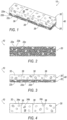
FIG. 1 is a perspective view of a food product bar according to the principles of the present disclosure; -
FIG. 2 is a bottom plan view of the food product bar ofFIG. 1 ; -
FIG. 3 is a side elevation view of the food product bar ofFIG. 1 ; -
FIG. 4 is a top plan view of the food product bar ofFIG. 1 ; and -
FIG. 5 is a diagram showing a process for forming a food product bar according to the principles of the present disclosure. - Like reference symbols in the various drawings indicate like elements.
- Example configurations will now be described more fully with reference to the accompanying drawings. Example configurations are provided so that this disclosure will be thorough, and will fully convey the scope of the disclosure to those of ordinary skill in the art. Specific details are set forth such as examples of specific components, devices, and methods, to provide a thorough understanding of configurations of the present disclosure.
- When an element or layer is referred to as being "on," "engaged to," "connected to," "attached to," or "coupled to" another element or layer, it may be directly on, engaged, connected, attached, or coupled to the other element or layer, or intervening elements or layers may be present. In contrast, when an element is referred to as being "directly on," "directly engaged to," "directly connected to," "directly attached to," or "directly coupled to" another element or layer, there may be no intervening elements or layers present. Other words used to describe the relationship between elements should be interpreted in a like fashion (e.g., "between" versus "directly between," "adjacent" versus "directly adjacent," etc.). As used herein, the term "and/or" includes any and all combinations of one or more of the associated listed items.
- The terms first, second, third, etc. may be used herein to describe various elements, components, regions, layers and/or sections. These elements, components, regions, layers and/or sections should not be limited by these terms. These terms may be only used to distinguish one element, component, region, layer or section from another region, layer or section. Terms such as "first," "second," and other numerical terms do not imply a sequence or order unless clearly indicated by the context. Thus, a first element, component, region, layer or section discussed below could be termed a second element, component, region, layer or section without departing from the teachings of the example configurations.
- As referred to herein, all compositional percentages are by weight of the total composition, unless otherwise specified. Disclosures of ranges are, unless specified otherwise, inclusive of endpoints and include all distinct values and further divided ranges within the entire range. Thus, for example, a range of "from A to B" or "from about A to about B" is inclusive of A and of B. Disclosure of values and ranges of values for specific parameters (such as amounts, weight percentages, etc.) are not exclusive of other values and ranges of values useful herein. It is envisioned that two or more specific exemplified values for a given parameter may define endpoints for a range of values that may be claimed for the parameter. For example, if Parameter X is exemplified herein to have value A and also exemplified to have value Z, it is envisioned that Parameter X may have a range of values from about A to about Z. Similarly, it is envisioned that disclosure of two or more ranges of values for a parameter (whether such ranges are nested, overlapping or distinct) subsume all possible combination of ranges for the value that might be claimed using endpoints of the disclosed ranges. For example, if Parameter X is exemplified herein to have values in the range of 1-10, or 2-9, or 3-8, it is also envisioned that Parameter X may have other ranges of values including 1-9, 1-8, 1-3, 1-2, 2-10, 2-8, 2-3, 3-10, 3-9, and so on.
- With reference to
FIGS. 1-4 , the present disclosure relates to a dual-texturedfood product bar 10 prepared using cold-forming processes and having a total protein content of at least 25%, by weight. Specifically, thefood product bar 10 is formed as a laminate structure havingfirst layer 20 and asecond layer 30. Thefirst layer 20 is formed of a conglomerate includingedible particles snack bar 10. Thefood product bar 10 further includes asecond layer 30 disposed atop and covering thefirst layer 20, whereby thesecond layer 30 has a substantiallychewy nougat 32 composition with one or more solid additives 34 for flavoring and/or texture. In illustrated examples, thefood product bar 10 is formed without any enrobing layers, whereby each of thefirst layer 20 and thesecond layer 30 are exposed. Accordingly, thefood product bar 10 may be described as consisting of thefirst layer 10 and thesecond layer 20. - The
first layer 20 has a protein concentration of at least 20% by weight, and accounts for about 33.25% of the total weight of thefood product bar 10, while thesecond layer 30 has a protein concentration of at least 34% by weight, and accounts for about 61.75% of the total weight of thefood product bar 10. Accordingly, the total protein concentration of thefood product bar 10 is greater than 25%, by weight, and more particularly, at least 29%, by weight. In other examples, thefirst layer 20 and thesecond layer 30 may account for lesser or greater amounts of thefood product bar 10, where the total protein concentration of thefood product bar 10 is at least 25%, by weight. - The
layers first layer 20 and thesecond layer 30 are arranged horizontally in a laminate configuration, whereby thelayers food product bar 10 can be formed of any shape and size. In the illustrated example shown inFIG. 1 , thefood product bar 10 is formed as a box-shaped bar. However, thefood product bar 10 may be formed of any shape. - With continued reference to
FIGS. 1-4 , thefirst layer 20 of thefood product bar 10 comprises a blend ofedible particles edible particles Table 1A: First Layer Conglomerate Component % Weight Rolled Oats - #5 7.100 Milk Protein Crisp - 74% 13.200 Binder syrup 38.000 Almonds - Dry Roasted - Diced (Medium) 41.700 Table 1B: First Layer Conglomerate Component % Weight Rolled Oats - #5 5.00-10.00 Milk Protein Crisp - 74% 10.00-15.00 Binder syrup 31.00-45.00 Almonds - Dry Roasted - Diced (Medium) 40.00-44.00 Table 2A: Binder Syrup Component % Weight Oleoresin Rosemary 0.091 Natural Hazelnut Latte Flavoring 0.152 Extra Coarse Sea Salt 0.761 Glycerin 3.553 Oat Fiber 6.091 Expeller Pressed High Oleic Sunflower Oil 6.091 Brown Rice Syrup Solids 50 DE 33.503 Brown Rice Syrup 60 DE 49.756 Table 2B: Binder Syrup Component % Weight Oleoresin Rosemary 0-1.00 Natural Hazelnut Latte Flavoring 0-1.00 Extra Coarse Sea Salt 0-1.00 Glycerin 2.00-5.00 Oat Fiber 4.00-8.00 Expeller Pressed High Oleic Sunflower Oil 4.00-8.00 Brown Rice Syrup Solids 50 DE 25.00-40.00 Brown Rice Syrup 60 DE 30.00-50.00 - The
grain 22a includes rolled oats (#5) provided at a concentration of 5% to 10% by weight of the first layer conglomerate, preferably in the range of about 6% to about 8%, and more at preferably 7.1%. Although rolled oats were included in the first layer conglomerate, other types ofgrains 22a may be included in the conglomerate alternatively or in addition to the rolled oats. - The first layer conglomerate further includes
protein crisps 22b having a protein content of at least 74%, by weight. One suitable example of protein crisps includesmilk protein crisps 22b, such as Crunchie™ brand milk protein crisps manufactured by Glanbia Nutritionals, for example. In other examples, the protein crisps may include other types of meat, dairy, or plant based protein crisps, such as whey protein crisps, pea protein crisps, wheat protein crisps, rice protein crisps, soy protein crisps, for example. The protein crisps 22b are provided at a concentration of 10% to 15% by weight of the first layer conglomerate, preferably at 13.2% - In addition to the
grains 22a andprotein crisps 22b, the first layer conglomerate includes one or more nuts 22c. In the illustrated example, the nuts 22c may be medium diced, dry roasted almonds. However, in other examples, the nuts may include pistachios, peanuts, cashews, pecans, hazelnuts, pine nuts, or walnuts, for example. Furthermore, the nuts may be provided in different states, such as whole, ground, sliced, or chopped. Different sizes of the nuts may also be considered. In the illustrated example, the almonds are provided at a concentration of 40% to 44% by weight of the first layer conglomerate, preferably at 41.7%. - As shown above, the binder syrup makes up the balance of the concentration of the first layer conglomerate. Accordingly, the binder syrup is provided at a concentration of 31% to 45% by weight of the conglomerate, and preferably at 38%.
- The
second layer 30 of thefood product bar 10 is formed of a high-protein nougat material 32, and includes one or moresolid additives second layer 30 provides a substantially chewy mouthfeel, thesecond layer 30 may include the solid additives to provide a non-homogenous composition. While thefirst layer 20 may generally be formed of similar components and concentrations across all varieties of thefood product bar 10, as set forth above, thesecond layer 30 is configured to provide a unique texture and flavor to each variety of thefood product bar 10, as described in greater detail below. Various examples of varieties of thesecond layer 30 are set forth below, and include a hazelnut latte flavored second layer (Example 1), a raspberry almond flavored second layer (Example 2), and a tropical citrus flavored second layer (Example 3). - Generally, the
second layer 30 includes a sweetener, hydrolyzed milk protein concentrate, hydrolyzed milk protein isolate, canola oil, almond butter, water, glycerin, milk protein isolate, flaxseed powder, oat fiber, and flour salt. However, in some examples, up to 60% of the sugar may be substituted with one or more soluble fibers. The second layer may further include various flavorings and natural preservatives, as described in the examples provided below. - Optionally, one or more
solid additives second layer 30 and can includenatural additives 34a, such as seeds, nuts, nut pieces, and so forth. Additives further include anyfruit flavors 34b such as fresh fruits, dried fruits, fruit products, and so on. Additives may also include flavoring additives 34c, such as candies, marshmallows, "marbits," chocolates and chocolate products, fats, salts, honeys, cheeses, frosting, powdered food products, sugar, sugar substitutes, gelatins and spices. Additives may also include colorings as well as any nut flavors as well as any sweet flavors such as chocolate, vanilla, caramel, butterscotch, lemon, malt, cinnamon, graham, coconut flavors, mint and so on. Additives additionally include any savory flavors such as all meat, game, fowl, fish, dairy, barbecue, smoke, pepper, spicy and vegetable flavors. - With reference to
FIG. 5 , aprocess 100 for forming thefood product bar 10 is described. Initially, the components forming the binder syrup (see Table 2, above) are mixed in a standard mixing process atStep 102. The binder syrup is then combined with thegrains 22a,protein crisps 22b, and nuts 22c at the concentrations shown in Table 1 using a standard mixing process, to form the firstlayer conglomerate Step 104. In aparallel Step 106, the second layer conglomerate is prepared by mixing the components of the second layer conglomerate using a standard mixing process. - With the first layer conglomerate and the second layer conglomerate prepared, the first layer conglomerate is deposited at
Step 108 to form thefirst layer 20. Thefirst layer 20 may be formed using a cold forming process, wherebyfirst layer 20 is formed and cured without baking. In some examples, thefirst layer 20 may be formed as a continuous sheet having a substantially uniform thickness and composition. - At
Step 110, the second layer conglomerate is deposited upon thefirst layer 20 to form abase slab 40 including thefirst layer 20 and thesecond layer 30 arranged as a continuously formed laminate sheet, having thefirst layer 20 forming a bottom surface of thebase slab 40 and thesecond layer 30 disposed atop thefirst layer 20. As with thefirst layer 20, thesecond layer 30 has a substantially uniform thickness and composition, such the thickness and composition of the resultingbase slab 40 is substantially uniform. - Optionally, at
Step 112, additives may be added to the base slab. In some examples, the additives may be sprinkled or deposited on a top surface of thesecond layer 30. Additionally or alternatively, the additives 34 may be incorporated into at least one of thefirst layer 20 or thesecond layer 30. - The base slab may be subjected to one or more forming steps before or after the additives 34 are added, whereby the relatively soft and deformable
second layer 30 is pressed into top surface of thefirst layer 20. Here, the soft nougat of thesecond layer 30 may flow under pressure into interstices formed between the edible particles 22 of thefirst layer 20 to form a mechanical bond between thefirst layer 20 and thesecond layer 30. Here, the additives 34 applied to the top surface of thesecond layer 30 may be impressed into atop surface 36 of thesecond layer 30, whereby thetop surface 36 is substantially flush. - In another
optional Step 114, thesecond layer 30 of the base slab may have a plurality ofpartitions 38 formed therein. As shown inFIGS. 1 and 3 , thepartitions 38 are formed through an entire thickness of thesecond layer 30, and allow thefood product bar 10 to be portioned during consumption. - At
Step 116, the base slab is cut into a plurality of individual ones of the food product bars 10, which are then packaged atStep 118. In some examples, the food product bars 10 may be individually packaged. Alternatively, the food product bars 10 may be packed in bulk. - The following examples illustrate variations of the
food product bar 10 andprocess 100 described above, wherein different compositions of thesecond layer 20 and additives 34 are provided for forming different varieties of thefood product bar 10. - In one example, hazelnut latte flavored food product bars 10 were prepared using the method described above. Here, the first layer conglomerate was prepared as provided using the components listed in Table 1, above. As shown in Table 3A and 3B, below, the second layer conglomerate of Example 1 was mixed to form a hazelnut latte flavored nougat including diced almonds and hazelnuts.
Table 3A: Second Layer Conglomerate - Example 1 Component % Weight Light Amber Honey 26.069 Hydrolyzed Milk Protein Concentrate 24.686 Hydrolyzed Milk Protein Isolate 10.862 Canola Oil 9.282 Almond Butter - Roasted 4.937 Almonds - Dry Roasted - Diced (Medium) 4.937 Hazelnuts - Dry Roasted - Diced (Medium) 4.937 Water 4.839 Glycerin 4.542 Milk Protein Isolate 1.728 Flaxseed Powder - Defatted (16 Mesh) 1.086 Oat Fiber 0.987 Natural Hazelnut Latte Flavoring 0.395 Oleoresin Rosemary 0.296 Flour Salt 0.247 Natural Masking Flavor 0.118 Organic High Vitamin D Mushroom Powder 5 0.049 Table 3B: Second Layer Conglomerate - Example 1 Component % Weight Sugar 10.00-40.00 Soluble Fiber 0.00-20.00 Hydrolyzed Milk Protein Concentrate 15.00-35.00 Hydrolyzed Milk Protein Isolate 5.00-15.00 Canola Oil 5.00-15.00 Almond Butter - Roasted 1.00-10.00 Almonds - Dry Roasted - Diced (Medium) 1.00-10.00 Hazelnuts - Dry Roasted - Diced (Medium) 1.00-10.00 Water 1.00-10.00 Glycerin 1.00-10.00 Milk Protein Isolate 0.00-3.00 Flaxseed Powder - Defatted (16 Mesh) 0.00-3.00 Oat Fiber 0.00-3.00 Natural Hazelnut Latte Flavoring 0.00-3.00 Oleoresin Rosemary 0.00-3.00 Flour Salt 0.00-3.00 Natural Masking Flavor 0.00-3.00 Organic High Vitamin D Mushroom Powder 5 0.00-3.00 - As described above, the
food product bar 10 is formed by depositing the first layer conglomerate and the second layer conglomerate to form a stratified or laminate base slab including thefirst layer 20 and thesecond layer 30. In Example 1, the laminate base is then topped with extra coarse sea salt, organic cocoa nibs, and diced hazelnuts, as shown in Tables 4A and 4B, below.Table 4A: Finished Snack Bar - Example 1 Component % Weight Extra Coarse Sea Salt 0.250 Organic Cocoa Nibs 1.950 Hazelnuts - Dry Roasted - Diced (Medium) 2.800 First Layer Conglomerate 33.250 Second Layer Conglomerate 61.750 Table 4B: Finished Snack Bar - Example 1 Component % Weight Extra Coarse Sea Salt 0.00-3.00 Organic Cocoa Nibs 0.00-4.00 Hazelnuts - Dry Roasted - Diced (Medium) 0.00-5.00 First Layer Conglomerate 25.00-45.00 Second Layer Conglomerate 50.00-70.00 - In another example, raspberry almond flavored food product bars 10 were prepared using the method described above. Here, the standard first layer conglomerate was prepared as provided in Table 1, above. As shown in Tables 5A and 5B, below, the second layer conglomerate of Example 2 was mixed to form a raspberry flavored nougat including diced almonds.
Table 5A: Second Layer Conglomerate - Example 2 Components % Weight Light Amber Honey 25.114 Hydrolyzed Milk Protein Concentrate 23.782 Hydrolyzed Milk Protein Isolate 10.464 Almonds - Dry Roasted - Diced (Medium) 9.513 Canola Oil 8.942 Almond Butter - Roasted 4.756 Water 4.661 Glycerin 4.376 Raspberry Powder 2.854 Milk Protein Isolate 1.665 Flaxseed Powder - Defatted (16 Mesh) 1.046 Oat Fiber 0.951 Flour Salt 0.476 Natural Raspberry Goji Flavoring 0.381 Beet Powder, Air Dried 0.381 Oleoresin Rosemary 0.285 Natural Masking Flavor 0.114 Malic Acid 0.095 Citric Acid Anhydrous 0.095 Mushroom Powder 0.048 Table 5B: Second Layer Conglomerate - Example 2 Components % Weight Sugar 10.00-40.00 Soluble Fiber 0.00-20.00 Hydrolyzed Milk Protein Concentrate 15.00-35.00 Hydrolyzed Milk Protein Isolate 5.00-15.00 Almonds - Dry Roasted - Diced (Medium) 5.00-15.00 Canola Oil 5.00-15.00 Almond Butter - Roasted 1.00-10.00 Water 1.00-10.00 Glycerin 1.00-10.00 Raspberry Powder 0.00-5.00 Milk Protein Isolate 0.00-3.00 Flaxseed Powder - Defatted (16 Mesh) 0.00-3.00 Oat Fiber 0.00-3.00 Flour Salt 0.00-3.00 Natural Raspberry Goji Flavoring 0.00-3.00 Beet Powder, Air Dried 0.00-3.00 Oleoresin Rosemary 0.00-3.00 Natural Masking Flavor 0.00-3.00 Malic Acid 0.00-3.00 Citric Acid Anhydrous 0.00-3.00 Mushroom Powder 0.00-3.00 - As described above, the
food product bar 10 is formed by depositing the first layer conglomerate and the second layer conglomerate to form a stratified or laminate base including thefirst layer 20 and thesecond layer 30. In Example 2, the laminate base was then topped with black chia seeds, freeze-dried raspberries, and almonds, as shown in Tables 6A and 6B, below.Table 6A: Finished Snack Bar - Example 2 Components % Weight Black Chia Seed 0.250 Freeze Dried Raspberries - Sliced - 1/2" 0.750 Almonds - Sliced 4.000 First Layer Conglomerate 33.250 Second Layer Conglomerate 61.750 Table 6B: Finished Snack Bar - Example 2 Components % Weight Black Chia Seed 0.00-1.00 Freeze Dried Raspberries - Sliced - 1/2" 0.00-1.00 Almonds - Sliced 1.00-10.00 First Layer Conglomerate 25.00-45.00 Second Layer Conglomerate 50.00-70.00 - In another example, tropical citrus flavored food product bars 10 were prepared using the method described above. Here, the standard first layer conglomerate was prepared as provided in Table 1, above. As shown in Table 7, below, the second layer conglomerate of Example 3 was mixed to form tropical citrus flavored nougat including diced almonds as a solid additive.
Table 7A - Second Layer Conglomerate - Example 3 Components % Weight Light Amber Honey 25.867 Hydrolyzed Milk Protein Concentrate 24.495 Hydrolyzed Milk Protein Isolate 10.778 Almonds - Dry Roasted - Diced (Medium) 9.798 Canola Oil 9.210 Almond Butter - Roasted 4.899 Water 4.801 Glycerin 4.507 Milk Protein Isolate 1.715 Flaxseed Powder - Defatted (16 Mesh) 1.078 Oat Fiber 0.980 Flour Salt 0.490 Citric Acid Anhydrous 0.412 Natural Orange Mango Flavoring 0.392 Oleoresin Rosemary 0.294 Natural Masking Flavor 0.118 Malic Acid, Fine Granulated 0.078 Citric Acid Anhydrous 0.049 Mushroom Powder 0.039 Table 7B - Second Layer Conglomerate - Example 3 Components % Weight Sugar 10.00-40.00 Soluble Fiber 0.00-20.00 Hydrolyzed Milk Protein Concentrate 15.00-35.00 Hydrolyzed Milk Protein Isolate 5.00-15.00 Almonds - Dry Roasted - Diced (Medium) 5.00-15.00 Canola Oil 5.00-15.00 Almond Butter - Roasted 1.00-10.00 Water 1.00-10.00 Glycerin 1.00-10.00 Milk Protein Isolate 15.00-35.00 Flaxseed Powder - Defatted (16 Mesh) 0.00-3.00 Oat Fiber 0.00-3.00 Flour Salt 0.00-3.00 Citric Acid Anhydrous 0.00-3.00 Natural Orange Mango Flavoring 0.00-3.00 Oleoresin Rosemary 0.00-3.00 Natural Masking Flavor 0.00-3.00 Malic Acid, Fine Granulated 0.00-3.00 Citric Acid Anhydrous 0.00-3.00 Mushroom Powder 0.00-3.00 - As described above, the
food product bar 10 was formed by depositing the first layer conglomerate and the second layer conglomerate to form a stratified or laminate base including thefirst layer 20 and thesecond layer 30. In Example 3, the laminate base was then topped with freeze-dried pineapple, coconut chips, and freeze-dried pomegranate arils, as shown in Tables 8A and 8B, below.Table 8A - Food product bar - Example 3 Components % Weight Freeze Dried Pineapple - 5-6mm 0.750 Coconut Chips - Toasted - Unsweetened 1.750 Freeze Dried Pomegranate Arils 2.500 First Layer Conglomerate 33.250 Second Layer Conglomerate 61.750 Table 8B - Food product bar - Example 3 Components % Weight Freeze Dried Pineapple - 5-6mm 0.00-2.00 Coconut Chips - Toasted - Unsweetened 0.00-4.00 Freeze Dried Pomegranate Arils 0.00-5.00 First Layer Conglomerate 25.00-45.00 Second Layer Conglomerate 50.00-70.00 - The
food product bar 10 andprocess 100 disclosed provide several benefits over prior food product bars. For example, by providing a crunchy first layer and a chewy second layer, without enrobing thefood product bar 10 in an outer coating, the food product bar provides two exposed layers having different textures, which has been found to provide a favorable texture experience (i.e., mouthfeel) and visual appearance. Thefood product bar 10 of the instant disclosure has also been found to provide clean eating and portion control by incorporating partitions into the second layer. - Additionally, the continuous structure provided by the first layer contributes to increased durability of the food product bar during handling, while the functional fibers in the components forming the second layer lead to stability over the shelf life of the
food product bar 10. Thus, thefood product bar 10 of the instant disclosure provides the structural advantages of an enrobed food product, but maintains a high protein concentration by eliminating the need for using a high-sugar enrobing composition, such as chocolate or syrup. - Yet another benefit of the
food product bar 10 disclosed herein includes improved lubricity of chew that the binder syrup of thefirst layer 20 provides to thesecond layer 30 when thefood product 10 is chewed down. As discussed above with respect to food product bars of the prior art, high-protein nougat layers are known to become difficult to chew when not enrobed due to natural migration of moisture within the high-protein layers, over time. However, in thefood product bar 10 of the instant disclosure, the binder syrup of thefirst layer 20 is formulated to moisturize and improve lubricity of the nougat of thesecond layer 30 during chewing. Thus, shelf life of thefood product bar 10 can be extended without negatively affecting lubricity and mouthfeel during consumption. - In one example, the food product bar (10) comprises a first layer (20) comprising a conglomerate of edible particles (22a, 22b, 22c), the first layer (20) having a protein concentration of at least 20% by weight; and a second layer (30) covering the first layer (20) and comprising a nougat (32), the second layer (30) having a protein concentration of at least 34% by weight, whereby a total protein concentration of the food product bar (10) is at least 25% by weight.
- The food product bar may further comprise a plurality of additives (34a, 34b, 34c) deposited on the second layer (30). Here, the additives (34a, 34b, 34c) may include at least one of dried fruits, seeds, or nuts.
- Alternatively a food product bar (10) may consist of: a first layer (20) comprising a conglomerate of edible particles (22a, 22b, 22c), the first layer (20) having a protein concentration of at least 20% by weight; and a second layer (30) covering the first layer (20) and comprising a nougat (32), the second layer (30) having a protein concentration of at least 34% by weight, whereby a total protein concentration of the food product bar (10) is at least 25% by weight.
- Complementarily, the first layer (20) of the food product bar consists of: rolled oats (22a) at a concentration of ranging from 5% to 10%, by weight; protein crisps (22b) at a concentration ranging from 10% to 15%, by weight; nuts (22c) at a concentration ranging from 40% to 44%, by weight; and binder syrup at a concentration ranging from 31% to 45%, by weight.
- The method of forming a food product bar (10), may include mixing a first plurality of components (104) to form a first layer conglomerate having a plurality of edible particles (22a, 22b, 22c,), the first layer conglomerate having a concentration of protein of at least 20%, by weight; mixing a second plurality of components (106) to form a second layer conglomerate including a nougat (32), the second layer conglomerate having a concentration of protein of at least 34%, by weight; depositing a first amount of the first layer conglomerate (108) to form a first layer (20); and depositing a second amount of the second layer conglomerate (110) atop the first layer (20) to form a stratified base slab (40) including the first layer (20), whereby the base slab (40) has a concentration of protein of at least 25%, by weight.
The method previously exposed may comprise forming partitions (38) in the second layer (30). - Complementarily, the partitions (38) may be formed through an entire thickness of the second layer (30).
Claims (13)
- A food product bar (10) comprising:a first layer (20) comprising a conglomerate of edible particles (22a, 22b, 22c), the first layer (20) having a protein concentration of at least 20% by weight; anda second layer (30) covering the first layer (20) and comprising a nougat (32), the second layer (30) having a protein concentration of at least 34% by weight, whereby a total protein concentration of the food product bar (10) is at least 25% by weight,wherein the first layer (20) comprises:rolled oats (22a) at a concentration of ranging from 5% to 10%, by weight;protein crisps (22b) at a concentration ranging from 10% to 15%, by weight;nuts (22c) at a concentration ranging from 40% to 44%, by weight; andbinder syrup at a concentration ranging from 31% to 45%, by weight.
- The food product bar (10) of Claim 1, wherein each of the first layer (20) and the second layer (30) are exposed.
- The food product bar (10) of Claim 1, wherein the first layer (20) is continuously formed from a first end of the food product bar (10) to a second end of the food product bar (10), and the second layer (30) includes a plurality of partitions (38) spaced from the first end to the second end.
- The food product bar (10) of Claim 3, wherein the partitions (38) are slices through an entire thickness of the second layer (30).
- The food product bar (10) of Claim 1, wherein the first layer (20) consists essentially of rolled oats (22a), protein crisps (22b), almonds (22c), and binder syrup.
- The food product bar (10) of Claim 1, further comprising a plurality additives (34a, 34b, 34c) deposited on the second layer (30), the additives (34a, 34b, 34c) including at least one of dried fruits, seed, or nuts.
- A method (100) of forming a food product bar (10), the method comprising:mixing a first plurality of components (104) to form a first layer conglomerate having a plurality of edible particles (22a, 22b, 22c,), the first layer conglomerate having a concentration of protein of at least 20%, by weight;mixing a second plurality of components (106) to form a second layer conglomerate including a nougat (32), the second layer conglomerate having a concentration of protein of at least 34%, by weight;depositing a first amount of the first layer conglomerate (108) to form a first layer (20); anddepositing a second amount of the second layer conglomerate (110) atop the first layer (20) to form a stratified base slab (40) including the first layer (20), whereby the base slab (40) has a concentration of protein of at least 25%, by weight,wherein the first layer conglomerate comprises:rolled oats (22a) at a concentration of ranging from 5% to 10%, by weight;protein crisps (22b) at a concentration ranging from 10% to 15%, by weight;nuts (22c) at a concentration ranging from 40% to 44%, by weight; andbinder syrup at a concentration ranging from 31% to 45%, by weight.
- The method of Claim 7, wherein each of the first layer (20) and the second layer (30) is cold-formed.
- The method of Claim 7, further comprising depositing an additive (112) to at least one of the first layer (20) and the second layer (30).
- The method of Claim 7, further comprising cutting the base slab (40) into a plurality of the food product bars (116), wherein each of the food product bars (10) includes the first layer (20) and the second layer (30).
- The method of Claim 7, wherein the food product bar (10) is individually packaged.
- The method of Claim 7, wherein the first layer (20) and the second layer (30) are exposed.
- The method of Claim 7, wherein the second layer (30) includes light amber honey, hydrolyzed milk protein concentrate, hydrolyzed milk protein isolate, canola oil, almond butter, water, glycerin, milk protein isolate, flaxseed powder, oat fiber, and flour salt.
Applications Claiming Priority (2)
| Application Number | Priority Date | Filing Date | Title |
|---|---|---|---|
| US201862744402P | 2018-10-11 | 2018-10-11 | |
| PCT/US2019/055531 WO2020077040A1 (en) | 2018-10-11 | 2019-10-10 | Dual texture cold form protein bar |
Publications (2)
| Publication Number | Publication Date |
|---|---|
| EP3863416A1 EP3863416A1 (en) | 2021-08-18 |
| EP3863416B1 true EP3863416B1 (en) | 2024-11-06 |
Family
ID=68393072
Family Applications (1)
| Application Number | Title | Priority Date | Filing Date |
|---|---|---|---|
| EP19795716.0A Active EP3863416B1 (en) | 2018-10-11 | 2019-10-10 | Dual-texture cold-formed protein bar |
Country Status (7)
| Country | Link |
|---|---|
| US (1) | US20210378273A1 (en) |
| EP (1) | EP3863416B1 (en) |
| AU (1) | AU2019356939B2 (en) |
| CA (1) | CA3115933A1 (en) |
| ES (1) | ES2994359T3 (en) |
| MX (1) | MX2021003272A (en) |
| WO (1) | WO2020077040A1 (en) |
Families Citing this family (3)
| Publication number | Priority date | Publication date | Assignee | Title |
|---|---|---|---|---|
| GB2591426B (en) * | 2019-05-31 | 2023-05-31 | Kraft Foods Schweiz Holding Gmbh | Confectionery composition |
| CN116456840A (en) * | 2020-12-04 | 2023-07-18 | 雀巢产品有限公司 | Reduced fat ground mucilage seed as affordable binder |
| GB2606999B (en) * | 2021-04-30 | 2024-06-19 | Mars Inc | Food product |
Family Cites Families (18)
| Publication number | Priority date | Publication date | Assignee | Title |
|---|---|---|---|---|
| US4451488A (en) * | 1981-06-22 | 1984-05-29 | The Quaker Oats Company | Food bar |
| US6299929B1 (en) * | 1991-01-15 | 2001-10-09 | Bariatrix Products International, Inc. | Confectionery product made of protein and carbohydrate materials present in a relative weight ratio higher than 1 |
| PE20011031A1 (en) * | 2000-03-02 | 2001-10-12 | Warner Lambert Co | NUTRITIONAL FOOD BAR FOR PROLONGED ENERGY |
| AU2003205379A1 (en) * | 2002-02-11 | 2003-09-04 | Nellson Northern Operating, Inc. | Novel caramel food ingredients, processes for the manufacture thereof, and nutritional products containing these caramels |
| US6827955B2 (en) * | 2002-03-08 | 2004-12-07 | Mccabe David J. | High protein foodstuff |
| US7022356B2 (en) * | 2003-05-14 | 2006-04-04 | Rcd Holdings, Inc. | Protein enhanced low carbohydrate snack food |
| US20050249868A1 (en) * | 2003-09-18 | 2005-11-10 | Schmidt James C | Protein enhanced low carbohydrate snack food |
| WO2005089255A2 (en) * | 2004-03-12 | 2005-09-29 | Nellson Northern Operating Inc. | Novel protein layering masses, processes for the manufacture thereof, and related products |
| US20060088628A1 (en) * | 2004-10-26 | 2006-04-27 | Slim-Fast Foods Company, Division Of Conopco, Inc. | Food bar |
| US8486469B2 (en) * | 2005-10-17 | 2013-07-16 | Intercontinental Great Brands Llc | Low-calorie food bar |
| US7629008B2 (en) * | 2005-11-07 | 2009-12-08 | Kraft Foods Global Brands Llc | Low-calorie whole grain cereal bar |
| US20090197974A1 (en) * | 2008-02-05 | 2009-08-06 | Khaleeq Ahmed | Natural dietary supplement tablet |
| US20100124592A1 (en) * | 2008-03-03 | 2010-05-20 | Anderson John D | System and method for food products |
| US20100104687A1 (en) * | 2008-10-24 | 2010-04-29 | Kaplan Allan S | Segmented confectionery products |
| US10918117B2 (en) * | 2015-01-19 | 2021-02-16 | General Mills, Inc. | Extruded protein product and methods of making |
| US20160213045A1 (en) * | 2015-01-28 | 2016-07-28 | Madlen Gevorgian | Convection Product, Formula, and Method for Manufacturing |
| CN108471770B (en) * | 2015-09-24 | 2022-04-08 | 鲍特恩德投资公司 | System and method for forming single serving edible food bars |
| CA3067629C (en) * | 2017-06-21 | 2024-05-28 | General Mills, Inc. | Nut butter composition |
-
2019
- 2019-10-10 CA CA3115933A patent/CA3115933A1/en active Pending
- 2019-10-10 US US17/283,275 patent/US20210378273A1/en active Pending
- 2019-10-10 ES ES19795716T patent/ES2994359T3/en active Active
- 2019-10-10 EP EP19795716.0A patent/EP3863416B1/en active Active
- 2019-10-10 WO PCT/US2019/055531 patent/WO2020077040A1/en not_active Ceased
- 2019-10-10 MX MX2021003272A patent/MX2021003272A/en unknown
- 2019-10-10 AU AU2019356939A patent/AU2019356939B2/en active Active
Also Published As
| Publication number | Publication date |
|---|---|
| CA3115933A1 (en) | 2020-04-16 |
| AU2019356939A1 (en) | 2021-04-08 |
| EP3863416A1 (en) | 2021-08-18 |
| US20210378273A1 (en) | 2021-12-09 |
| AU2019356939B2 (en) | 2025-04-24 |
| WO2020077040A1 (en) | 2020-04-16 |
| MX2021003272A (en) | 2021-05-12 |
| ES2994359T3 (en) | 2025-01-22 |
Similar Documents
| Publication | Publication Date | Title |
|---|---|---|
| US7803418B2 (en) | Nut butter compositions and methods related thereto | |
| EP2464245B1 (en) | Low water activity food binder and methods related thereto | |
| KR20070098738A (en) | Protein Systems and Foods Containing the Same | |
| JP4126423B2 (en) | Food containing solid mass based on chocolate or equivalent in contact with wet mass | |
| AU2012238585A1 (en) | Fruit-based food product | |
| AU2019356939B2 (en) | Dual texture cold form protein bar | |
| AU2012238584A1 (en) | Food product | |
| US20060045938A1 (en) | Nut creme | |
| US20060045937A1 (en) | Food bar | |
| KR20180074974A (en) | Cereal bar containing laver | |
| JP7158170B2 (en) | Baked confectionery and compound confectionery | |
| EP1971222B1 (en) | Reduced sweetness confectionary compositions and coated/filled food products | |
| EP3975735B1 (en) | Confectionery composition | |
| KR20170046614A (en) | Preparation Method of Roasted Dry Laver Snack | |
| CN115553444A (en) | Leisure food | |
| JP7092491B2 (en) | Molded food with ingredients and its manufacturing method | |
| RU2358433C2 (en) | Method of producing double-layer candies | |
| RU2410893C2 (en) | Three-layered candies production method | |
| WO2021183113A1 (en) | High protein food article | |
| US20260041117A1 (en) | A nutrition bar, a core for nutrition bar, and a method of forming the nutrition bars | |
| CN219813101U (en) | Almond nougat | |
| CA3170410C (en) | High protein food article | |
| US20250098716A1 (en) | Oat Flour-Based Créme Confection | |
| GB2621193A (en) | A nutrition bar, a base-cake for a nutrition bar, and a method of forming the nutrition bars | |
| RU2247518C2 (en) | Food product |
Legal Events
| Date | Code | Title | Description |
|---|---|---|---|
| STAA | Information on the status of an ep patent application or granted ep patent |
Free format text: STATUS: UNKNOWN |
|
| STAA | Information on the status of an ep patent application or granted ep patent |
Free format text: STATUS: THE INTERNATIONAL PUBLICATION HAS BEEN MADE |
|
| PUAI | Public reference made under article 153(3) epc to a published international application that has entered the european phase |
Free format text: ORIGINAL CODE: 0009012 |
|
| STAA | Information on the status of an ep patent application or granted ep patent |
Free format text: STATUS: REQUEST FOR EXAMINATION WAS MADE |
|
| 17P | Request for examination filed |
Effective date: 20210408 |
|
| AK | Designated contracting states |
Kind code of ref document: A1 Designated state(s): AL AT BE BG CH CY CZ DE DK EE ES FI FR GB GR HR HU IE IS IT LI LT LU LV MC MK MT NL NO PL PT RO RS SE SI SK SM TR |
|
| DAV | Request for validation of the european patent (deleted) | ||
| DAX | Request for extension of the european patent (deleted) | ||
| P01 | Opt-out of the competence of the unified patent court (upc) registered |
Effective date: 20230601 |
|
| STAA | Information on the status of an ep patent application or granted ep patent |
Free format text: STATUS: EXAMINATION IS IN PROGRESS |
|
| 17Q | First examination report despatched |
Effective date: 20231004 |
|
| RAP3 | Party data changed (applicant data changed or rights of an application transferred) |
Owner name: KELLANOVA |
|
| GRAP | Despatch of communication of intention to grant a patent |
Free format text: ORIGINAL CODE: EPIDOSNIGR1 |
|
| STAA | Information on the status of an ep patent application or granted ep patent |
Free format text: STATUS: GRANT OF PATENT IS INTENDED |
|
| INTG | Intention to grant announced |
Effective date: 20240607 |
|
| RIN1 | Information on inventor provided before grant (corrected) |
Inventor name: LARUE, NATALIE JA Inventor name: MULLINS, CHARLES EDWARD Inventor name: TURPIN, JANA HENRY |
|
| GRAS | Grant fee paid |
Free format text: ORIGINAL CODE: EPIDOSNIGR3 |
|
| GRAA | (expected) grant |
Free format text: ORIGINAL CODE: 0009210 |
|
| STAA | Information on the status of an ep patent application or granted ep patent |
Free format text: STATUS: THE PATENT HAS BEEN GRANTED |
|
| AK | Designated contracting states |
Kind code of ref document: B1 Designated state(s): AL AT BE BG CH CY CZ DE DK EE ES FI FR GB GR HR HU IE IS IT LI LT LU LV MC MK MT NL NO PL PT RO RS SE SI SK SM TR |
|
| REG | Reference to a national code |
Ref country code: GB Ref legal event code: FG4D |
|
| REG | Reference to a national code |
Ref country code: CH Ref legal event code: EP |
|
| REG | Reference to a national code |
Ref country code: DE Ref legal event code: R096 Ref document number: 602019061588 Country of ref document: DE |
|
| REG | Reference to a national code |
Ref country code: IE Ref legal event code: FG4D |
|
| REG | Reference to a national code |
Ref country code: ES Ref legal event code: FG2A Ref document number: 2994359 Country of ref document: ES Kind code of ref document: T3 Effective date: 20250122 |
|
| REG | Reference to a national code |
Ref country code: LT Ref legal event code: MG9D |
|
| REG | Reference to a national code |
Ref country code: NL Ref legal event code: MP Effective date: 20241106 |
|
| PG25 | Lapsed in a contracting state [announced via postgrant information from national office to epo] |
Ref country code: IS Free format text: LAPSE BECAUSE OF FAILURE TO SUBMIT A TRANSLATION OF THE DESCRIPTION OR TO PAY THE FEE WITHIN THE PRESCRIBED TIME-LIMIT Effective date: 20250306 Ref country code: PT Free format text: LAPSE BECAUSE OF FAILURE TO SUBMIT A TRANSLATION OF THE DESCRIPTION OR TO PAY THE FEE WITHIN THE PRESCRIBED TIME-LIMIT Effective date: 20250306 Ref country code: HR Free format text: LAPSE BECAUSE OF FAILURE TO SUBMIT A TRANSLATION OF THE DESCRIPTION OR TO PAY THE FEE WITHIN THE PRESCRIBED TIME-LIMIT Effective date: 20241106 |
|
| PG25 | Lapsed in a contracting state [announced via postgrant information from national office to epo] |
Ref country code: FI Free format text: LAPSE BECAUSE OF FAILURE TO SUBMIT A TRANSLATION OF THE DESCRIPTION OR TO PAY THE FEE WITHIN THE PRESCRIBED TIME-LIMIT Effective date: 20241106 Ref country code: NL Free format text: LAPSE BECAUSE OF FAILURE TO SUBMIT A TRANSLATION OF THE DESCRIPTION OR TO PAY THE FEE WITHIN THE PRESCRIBED TIME-LIMIT Effective date: 20241106 |
|
| REG | Reference to a national code |
Ref country code: AT Ref legal event code: MK05 Ref document number: 1738306 Country of ref document: AT Kind code of ref document: T Effective date: 20241106 |
|
| PG25 | Lapsed in a contracting state [announced via postgrant information from national office to epo] |
Ref country code: BG Free format text: LAPSE BECAUSE OF FAILURE TO SUBMIT A TRANSLATION OF THE DESCRIPTION OR TO PAY THE FEE WITHIN THE PRESCRIBED TIME-LIMIT Effective date: 20241106 |
|
| PG25 | Lapsed in a contracting state [announced via postgrant information from national office to epo] |
Ref country code: NO Free format text: LAPSE BECAUSE OF FAILURE TO SUBMIT A TRANSLATION OF THE DESCRIPTION OR TO PAY THE FEE WITHIN THE PRESCRIBED TIME-LIMIT Effective date: 20250206 |
|
| PG25 | Lapsed in a contracting state [announced via postgrant information from national office to epo] |
Ref country code: GR Free format text: LAPSE BECAUSE OF FAILURE TO SUBMIT A TRANSLATION OF THE DESCRIPTION OR TO PAY THE FEE WITHIN THE PRESCRIBED TIME-LIMIT Effective date: 20250207 Ref country code: AT Free format text: LAPSE BECAUSE OF FAILURE TO SUBMIT A TRANSLATION OF THE DESCRIPTION OR TO PAY THE FEE WITHIN THE PRESCRIBED TIME-LIMIT Effective date: 20241106 Ref country code: LV Free format text: LAPSE BECAUSE OF FAILURE TO SUBMIT A TRANSLATION OF THE DESCRIPTION OR TO PAY THE FEE WITHIN THE PRESCRIBED TIME-LIMIT Effective date: 20241106 |
|
| PG25 | Lapsed in a contracting state [announced via postgrant information from national office to epo] |
Ref country code: PL Free format text: LAPSE BECAUSE OF FAILURE TO SUBMIT A TRANSLATION OF THE DESCRIPTION OR TO PAY THE FEE WITHIN THE PRESCRIBED TIME-LIMIT Effective date: 20241106 |
|
| PG25 | Lapsed in a contracting state [announced via postgrant information from national office to epo] |
Ref country code: RS Free format text: LAPSE BECAUSE OF FAILURE TO SUBMIT A TRANSLATION OF THE DESCRIPTION OR TO PAY THE FEE WITHIN THE PRESCRIBED TIME-LIMIT Effective date: 20250206 |
|
| PG25 | Lapsed in a contracting state [announced via postgrant information from national office to epo] |
Ref country code: SM Free format text: LAPSE BECAUSE OF FAILURE TO SUBMIT A TRANSLATION OF THE DESCRIPTION OR TO PAY THE FEE WITHIN THE PRESCRIBED TIME-LIMIT Effective date: 20241106 |
|
| PG25 | Lapsed in a contracting state [announced via postgrant information from national office to epo] |
Ref country code: DK Free format text: LAPSE BECAUSE OF FAILURE TO SUBMIT A TRANSLATION OF THE DESCRIPTION OR TO PAY THE FEE WITHIN THE PRESCRIBED TIME-LIMIT Effective date: 20241106 |
|
| PG25 | Lapsed in a contracting state [announced via postgrant information from national office to epo] |
Ref country code: EE Free format text: LAPSE BECAUSE OF FAILURE TO SUBMIT A TRANSLATION OF THE DESCRIPTION OR TO PAY THE FEE WITHIN THE PRESCRIBED TIME-LIMIT Effective date: 20241106 |
|
| PG25 | Lapsed in a contracting state [announced via postgrant information from national office to epo] |
Ref country code: RO Free format text: LAPSE BECAUSE OF FAILURE TO SUBMIT A TRANSLATION OF THE DESCRIPTION OR TO PAY THE FEE WITHIN THE PRESCRIBED TIME-LIMIT Effective date: 20241106 |
|
| PG25 | Lapsed in a contracting state [announced via postgrant information from national office to epo] |
Ref country code: SK Free format text: LAPSE BECAUSE OF FAILURE TO SUBMIT A TRANSLATION OF THE DESCRIPTION OR TO PAY THE FEE WITHIN THE PRESCRIBED TIME-LIMIT Effective date: 20241106 |
|
| PG25 | Lapsed in a contracting state [announced via postgrant information from national office to epo] |
Ref country code: CZ Free format text: LAPSE BECAUSE OF FAILURE TO SUBMIT A TRANSLATION OF THE DESCRIPTION OR TO PAY THE FEE WITHIN THE PRESCRIBED TIME-LIMIT Effective date: 20241106 |
|
| REG | Reference to a national code |
Ref country code: DE Ref legal event code: R097 Ref document number: 602019061588 Country of ref document: DE |
|
| PG25 | Lapsed in a contracting state [announced via postgrant information from national office to epo] |
Ref country code: SE Free format text: LAPSE BECAUSE OF FAILURE TO SUBMIT A TRANSLATION OF THE DESCRIPTION OR TO PAY THE FEE WITHIN THE PRESCRIBED TIME-LIMIT Effective date: 20241106 |
|
| PLBE | No opposition filed within time limit |
Free format text: ORIGINAL CODE: 0009261 |
|
| STAA | Information on the status of an ep patent application or granted ep patent |
Free format text: STATUS: NO OPPOSITION FILED WITHIN TIME LIMIT |
|
| 26N | No opposition filed |
Effective date: 20250807 |
|
| PGFP | Annual fee paid to national office [announced via postgrant information from national office to epo] |
Ref country code: IT Payment date: 20250922 Year of fee payment: 7 |
|
| PGFP | Annual fee paid to national office [announced via postgrant information from national office to epo] |
Ref country code: GB Payment date: 20250821 Year of fee payment: 7 |
|
| PGFP | Annual fee paid to national office [announced via postgrant information from national office to epo] |
Ref country code: FR Payment date: 20250808 Year of fee payment: 7 |
|
| PGFP | Annual fee paid to national office [announced via postgrant information from national office to epo] |
Ref country code: IE Payment date: 20250812 Year of fee payment: 7 |
|
| PGFP | Annual fee paid to national office [announced via postgrant information from national office to epo] |
Ref country code: DE Payment date: 20250813 Year of fee payment: 7 |
|
| PGFP | Annual fee paid to national office [announced via postgrant information from national office to epo] |
Ref country code: ES Payment date: 20251106 Year of fee payment: 7 |