EP3859962B1 - A decoupled pcb structure to parallel power transistors - Google Patents
A decoupled pcb structure to parallel power transistors Download PDFInfo
- Publication number
- EP3859962B1 EP3859962B1 EP21153942.4A EP21153942A EP3859962B1 EP 3859962 B1 EP3859962 B1 EP 3859962B1 EP 21153942 A EP21153942 A EP 21153942A EP 3859962 B1 EP3859962 B1 EP 3859962B1
- Authority
- EP
- European Patent Office
- Prior art keywords
- transistor
- gan
- transistors
- conduction path
- switching
- Prior art date
- Legal status (The legal status is an assumption and is not a legal conclusion. Google has not performed a legal analysis and makes no representation as to the accuracy of the status listed.)
- Active
Links
Images


Classifications
-
- H—ELECTRICITY
- H02—GENERATION; CONVERSION OR DISTRIBUTION OF ELECTRIC POWER
- H02M—APPARATUS FOR CONVERSION BETWEEN AC AND AC, BETWEEN AC AND DC, OR BETWEEN DC AND DC, AND FOR USE WITH MAINS OR SIMILAR POWER SUPPLY SYSTEMS; CONVERSION OF DC OR AC INPUT POWER INTO SURGE OUTPUT POWER; CONTROL OR REGULATION THEREOF
- H02M7/00—Conversion of AC power input into DC power output; Conversion of DC power input into AC power output
- H02M7/003—Constructional details, e.g. physical layout, assembly, wiring or busbar connections
-
- H—ELECTRICITY
- H02—GENERATION; CONVERSION OR DISTRIBUTION OF ELECTRIC POWER
- H02J—ELECTRIC POWER NETWORKS; CIRCUIT ARRANGEMENTS OR SYSTEMS FOR SUPPLYING OR DISTRIBUTING ELECTRIC POWER; SYSTEMS FOR STORING ELECTRIC ENERGY
- H02J9/00—Circuit arrangements for emergency or stand-by power supply, e.g. for emergency lighting
- H02J9/04—Circuit arrangements for emergency or stand-by power supply, e.g. for emergency lighting in which the distribution system is disconnected from the normal source and connected to a standby source
- H02J9/06—Circuit arrangements for emergency or stand-by power supply, e.g. for emergency lighting in which the distribution system is disconnected from the normal source and connected to a standby source with automatic change-over, e.g. UPS systems
- H02J9/062—Circuit arrangements for emergency or stand-by power supply, e.g. for emergency lighting in which the distribution system is disconnected from the normal source and connected to a standby source with automatic change-over, e.g. UPS systems for AC powered loads
-
- H—ELECTRICITY
- H02—GENERATION; CONVERSION OR DISTRIBUTION OF ELECTRIC POWER
- H02M—APPARATUS FOR CONVERSION BETWEEN AC AND AC, BETWEEN AC AND DC, OR BETWEEN DC AND DC, AND FOR USE WITH MAINS OR SIMILAR POWER SUPPLY SYSTEMS; CONVERSION OF DC OR AC INPUT POWER INTO SURGE OUTPUT POWER; CONTROL OR REGULATION THEREOF
- H02M1/00—Details of apparatus for conversion
- H02M1/08—Circuits specially adapted for the generation of control voltages for semiconductor devices incorporated in static converters
-
- H—ELECTRICITY
- H02—GENERATION; CONVERSION OR DISTRIBUTION OF ELECTRIC POWER
- H02M—APPARATUS FOR CONVERSION BETWEEN AC AND AC, BETWEEN AC AND DC, OR BETWEEN DC AND DC, AND FOR USE WITH MAINS OR SIMILAR POWER SUPPLY SYSTEMS; CONVERSION OF DC OR AC INPUT POWER INTO SURGE OUTPUT POWER; CONTROL OR REGULATION THEREOF
- H02M1/00—Details of apparatus for conversion
- H02M1/32—Means for protecting converters other than automatic disconnection
- H02M1/34—Snubber circuits
-
- H—ELECTRICITY
- H02—GENERATION; CONVERSION OR DISTRIBUTION OF ELECTRIC POWER
- H02M—APPARATUS FOR CONVERSION BETWEEN AC AND AC, BETWEEN AC AND DC, OR BETWEEN DC AND DC, AND FOR USE WITH MAINS OR SIMILAR POWER SUPPLY SYSTEMS; CONVERSION OF DC OR AC INPUT POWER INTO SURGE OUTPUT POWER; CONTROL OR REGULATION THEREOF
- H02M1/00—Details of apparatus for conversion
- H02M1/42—Circuits or arrangements for compensating for or adjusting power factor in converters or inverters
-
- H—ELECTRICITY
- H02—GENERATION; CONVERSION OR DISTRIBUTION OF ELECTRIC POWER
- H02M—APPARATUS FOR CONVERSION BETWEEN AC AND AC, BETWEEN AC AND DC, OR BETWEEN DC AND DC, AND FOR USE WITH MAINS OR SIMILAR POWER SUPPLY SYSTEMS; CONVERSION OF DC OR AC INPUT POWER INTO SURGE OUTPUT POWER; CONTROL OR REGULATION THEREOF
- H02M7/00—Conversion of AC power input into DC power output; Conversion of DC power input into AC power output
- H02M7/02—Conversion of AC power input into DC power output without possibility of reversal
- H02M7/04—Conversion of AC power input into DC power output without possibility of reversal by static converters
- H02M7/12—Conversion of AC power input into DC power output without possibility of reversal by static converters using discharge tubes with control electrode or semiconductor devices with control electrode
- H02M7/21—Conversion of AC power input into DC power output without possibility of reversal by static converters using discharge tubes with control electrode or semiconductor devices with control electrode using devices of a triode or transistor type requiring continuous application of a control signal
- H02M7/217—Conversion of AC power input into DC power output without possibility of reversal by static converters using discharge tubes with control electrode or semiconductor devices with control electrode using devices of a triode or transistor type requiring continuous application of a control signal using semiconductor devices only
- H02M7/23—Conversion of AC power input into DC power output without possibility of reversal by static converters using discharge tubes with control electrode or semiconductor devices with control electrode using devices of a triode or transistor type requiring continuous application of a control signal using semiconductor devices only arranged for operation in parallel
-
- H—ELECTRICITY
- H02—GENERATION; CONVERSION OR DISTRIBUTION OF ELECTRIC POWER
- H02M—APPARATUS FOR CONVERSION BETWEEN AC AND AC, BETWEEN AC AND DC, OR BETWEEN DC AND DC, AND FOR USE WITH MAINS OR SIMILAR POWER SUPPLY SYSTEMS; CONVERSION OF DC OR AC INPUT POWER INTO SURGE OUTPUT POWER; CONTROL OR REGULATION THEREOF
- H02M7/00—Conversion of AC power input into DC power output; Conversion of DC power input into AC power output
- H02M7/42—Conversion of DC power input into AC power output without possibility of reversal
- H02M7/44—Conversion of DC power input into AC power output without possibility of reversal by static converters
- H02M7/48—Conversion of DC power input into AC power output without possibility of reversal by static converters using discharge tubes with control electrode or semiconductor devices with control electrode
- H02M7/493—Conversion of DC power input into AC power output without possibility of reversal by static converters using discharge tubes with control electrode or semiconductor devices with control electrode the static converters being arranged for operation in parallel
-
- H—ELECTRICITY
- H02—GENERATION; CONVERSION OR DISTRIBUTION OF ELECTRIC POWER
- H02M—APPARATUS FOR CONVERSION BETWEEN AC AND AC, BETWEEN AC AND DC, OR BETWEEN DC AND DC, AND FOR USE WITH MAINS OR SIMILAR POWER SUPPLY SYSTEMS; CONVERSION OF DC OR AC INPUT POWER INTO SURGE OUTPUT POWER; CONTROL OR REGULATION THEREOF
- H02M7/00—Conversion of AC power input into DC power output; Conversion of DC power input into AC power output
- H02M7/42—Conversion of DC power input into AC power output without possibility of reversal
- H02M7/44—Conversion of DC power input into AC power output without possibility of reversal by static converters
- H02M7/48—Conversion of DC power input into AC power output without possibility of reversal by static converters using discharge tubes with control electrode or semiconductor devices with control electrode
- H02M7/53—Conversion of DC power input into AC power output without possibility of reversal by static converters using discharge tubes with control electrode or semiconductor devices with control electrode using devices of a triode or transistor type requiring continuous application of a control signal
- H02M7/537—Conversion of DC power input into AC power output without possibility of reversal by static converters using discharge tubes with control electrode or semiconductor devices with control electrode using devices of a triode or transistor type requiring continuous application of a control signal using semiconductor devices only, e.g. single switched pulse inverters
-
- H—ELECTRICITY
- H05—ELECTRIC TECHNIQUES NOT OTHERWISE PROVIDED FOR
- H05K—PRINTED CIRCUITS; CASINGS OR CONSTRUCTIONAL DETAILS OF ELECTRIC APPARATUS; MANUFACTURE OF ASSEMBLAGES OF ELECTRICAL COMPONENTS
- H05K1/00—Printed circuits
- H05K1/02—Details
- H05K1/0296—Conductive pattern lay-out details not covered by sub groups H05K1/02 - H05K1/0295
- H05K1/0298—Multilayer circuits
-
- H—ELECTRICITY
- H05—ELECTRIC TECHNIQUES NOT OTHERWISE PROVIDED FOR
- H05K—PRINTED CIRCUITS; CASINGS OR CONSTRUCTIONAL DETAILS OF ELECTRIC APPARATUS; MANUFACTURE OF ASSEMBLAGES OF ELECTRICAL COMPONENTS
- H05K1/00—Printed circuits
- H05K1/18—Printed circuits structurally associated with non-printed electric components
-
- H—ELECTRICITY
- H05—ELECTRIC TECHNIQUES NOT OTHERWISE PROVIDED FOR
- H05K—PRINTED CIRCUITS; CASINGS OR CONSTRUCTIONAL DETAILS OF ELECTRIC APPARATUS; MANUFACTURE OF ASSEMBLAGES OF ELECTRICAL COMPONENTS
- H05K1/00—Printed circuits
- H05K1/18—Printed circuits structurally associated with non-printed electric components
- H05K1/181—Printed circuits structurally associated with non-printed electric components associated with surface mounted components
-
- H—ELECTRICITY
- H05—ELECTRIC TECHNIQUES NOT OTHERWISE PROVIDED FOR
- H05K—PRINTED CIRCUITS; CASINGS OR CONSTRUCTIONAL DETAILS OF ELECTRIC APPARATUS; MANUFACTURE OF ASSEMBLAGES OF ELECTRICAL COMPONENTS
- H05K3/00—Apparatus or processes for manufacturing printed circuits
- H05K3/30—Assembling printed circuits with electric components, e.g. with resistors
- H05K3/32—Assembling printed circuits with electric components, e.g. with resistors electrically connecting electric components or wires to printed circuits
-
- H—ELECTRICITY
- H02—GENERATION; CONVERSION OR DISTRIBUTION OF ELECTRIC POWER
- H02M—APPARATUS FOR CONVERSION BETWEEN AC AND AC, BETWEEN AC AND DC, OR BETWEEN DC AND DC, AND FOR USE WITH MAINS OR SIMILAR POWER SUPPLY SYSTEMS; CONVERSION OF DC OR AC INPUT POWER INTO SURGE OUTPUT POWER; CONTROL OR REGULATION THEREOF
- H02M3/00—Conversion of DC power input into DC power output
- H02M3/003—Constructional details, e.g. physical layout, assembly, wiring or busbar connections
-
- H—ELECTRICITY
- H05—ELECTRIC TECHNIQUES NOT OTHERWISE PROVIDED FOR
- H05K—PRINTED CIRCUITS; CASINGS OR CONSTRUCTIONAL DETAILS OF ELECTRIC APPARATUS; MANUFACTURE OF ASSEMBLAGES OF ELECTRICAL COMPONENTS
- H05K2201/00—Indexing scheme relating to printed circuits covered by H05K1/00
- H05K2201/09—Shape and layout
- H05K2201/09209—Shape and layout details of conductors
- H05K2201/09218—Conductive traces
- H05K2201/09227—Layout details of a plurality of traces, e.g. escape layout for Ball Grid Array [BGA] mounting
-
- H—ELECTRICITY
- H05—ELECTRIC TECHNIQUES NOT OTHERWISE PROVIDED FOR
- H05K—PRINTED CIRCUITS; CASINGS OR CONSTRUCTIONAL DETAILS OF ELECTRIC APPARATUS; MANUFACTURE OF ASSEMBLAGES OF ELECTRICAL COMPONENTS
- H05K2201/00—Indexing scheme relating to printed circuits covered by H05K1/00
- H05K2201/10—Details of components or other objects attached to or integrated in a printed circuit board
- H05K2201/10007—Types of components
- H05K2201/10015—Non-printed capacitor
-
- H—ELECTRICITY
- H05—ELECTRIC TECHNIQUES NOT OTHERWISE PROVIDED FOR
- H05K—PRINTED CIRCUITS; CASINGS OR CONSTRUCTIONAL DETAILS OF ELECTRIC APPARATUS; MANUFACTURE OF ASSEMBLAGES OF ELECTRICAL COMPONENTS
- H05K2201/00—Indexing scheme relating to printed circuits covered by H05K1/00
- H05K2201/10—Details of components or other objects attached to or integrated in a printed circuit board
- H05K2201/10007—Types of components
- H05K2201/10166—Transistor
-
- H—ELECTRICITY
- H05—ELECTRIC TECHNIQUES NOT OTHERWISE PROVIDED FOR
- H05K—PRINTED CIRCUITS; CASINGS OR CONSTRUCTIONAL DETAILS OF ELECTRIC APPARATUS; MANUFACTURE OF ASSEMBLAGES OF ELECTRICAL COMPONENTS
- H05K2201/00—Indexing scheme relating to printed circuits covered by H05K1/00
- H05K2201/10—Details of components or other objects attached to or integrated in a printed circuit board
- H05K2201/10431—Details of mounted components
- H05K2201/10507—Involving several components
- H05K2201/10522—Adjacent components
Definitions
- Embodiments of the invention relate generally to power conversion, and more particularly, to parallel power switching devices used for power conversion.
- UPS uninterruptible power supplies
- FETs Field Effect Transistors
- HEMTs High Electron Mobility Transistors
- BJTs Bipolar Junction Transistors
- IGBTs Insulated-Gate Bipolar Transistors
- At least one aspect of the invention is directed to an electrical-converter system, comprising: a printed circuit board including at least a first layer and a second layer, a switching node disposed on the second layer, a first transistor, a second transistor, a third transistor, and a fourth transistor disposed on the first layer, the first transistor and the third transistor each having a source coupled to the switching node, and the second transistor and the fourth transistor each having a drain coupled to the switching node, a first conduction path from the source of the first transistor, through the switching node, to the drain of the fourth transistor, the first conduction path having a first length, and a second conduction path from the source of the first transistor, through the switching node, to the drain of the second transistor, the second conduction path having a second length, wherein the first length of the first conduction path is greater than the second length of the second conduction path.
- the electrical-converter system includes a third conduction path from the source of the third transistor, through the switching node, to the drain of the second transistor, the third conduction path having a third length, and a fourth conduction path from the source of the third transistor, through the switching node, to the drain of the fourth transistor, the fourth conduction path having a fourth length, wherein the third length of the third conduction path is greater than the fourth length of the fourth conduction path.
- the transistors are positioned on the first layer symmetrically such that a first distance between the first and second transistors is substantially the same as second distance between the third and fourth transistors, and a third distance between the first and third transistors is substantially the same as a fourth distance between the second and fourth transistors.
- the first length of the first conduction path is substantially the same as the third length of the third conduction path and the second length of the second conduction path is substantially the same as the fourth length of the fourth conduction path.
- the electrical-converter system includes a plurality of gate drive outputs and a plurality of gate drive conduction paths between the plurality of gate drive outputs and gates of the first, second, third, and fourth transistors, wherein each of the plurality of gate drive conduction paths has substantially the same length.
- the electrical-converter system includes a positive bus and a negative bus disposed on the first layer, wherein a drain of the first transistor and a drain of the third transistor are coupled to the positive bus and a source of the second transistor and a source of the fourth transistor are coupled to the negative bus.
- the electrical-converter system includes a plurality of decoupling capacitors coupled between the positive bus and the negative bus and disposed on the first layer between the transistors and above the switching node.
- each of the transistors are Gallium Nitride (GaN) power transistors.
- GaN Gallium Nitride
- the GaN power transistors are provided in one of a through-hole device package and a surface mount device package.
- Another aspect of the invention is directed to an electrical-converter system, comprising: a printed circuit board including at least a first layer and a second layer, a switching node disposed on the second layer, a first transistor, a second transistor, a third transistor, and a fourth transistor disposed on the first layer, the first transistor and the third transistor each having a source coupled to the switching node, and the second transistor and the fourth transistor each having a drain coupled to the switching node, a first conduction path from the source of the first transistor, through the switching node, to the drain of the fourth transistor, the first conduction path having a first inductance, and a second conduction path from the source of the first transistor, through the switching node, to the drain of the second transistor, the second conduction path having a second inductance, wherein the first inductance of the first conduction path is greater than the second inductance of the second conduction path.
- the electrical-converter system includes a third conduction path from the source of the third transistor, through the switching node, to the drain of the second transistor, the third conduction path having a third inductance, a fourth conduction path from the source of the third transistor, through the switching node, to the drain of the fourth transistor, the fourth conduction path having a fourth inductance, wherein the third inductance of the third conduction path is greater than the fourth inductance of the fourth conduction path.
- the transistors are positioned on the first layer symmetrically such that a first distance between the first and second transistors is substantially the same as a second distance between the third and fourth transistors, and a third distance between the first and third transistors is substantially the same as a fourth distance between the second and fourth transistors.
- the first inductance of the first conduction path is substantially the same as the third inductance of the third conduction path and the second inductance of the second conduction path is substantially the same as the fourth inductance of the fourth conduction path.
- the electrical-converter system includes a plurality of gate drive outputs and a plurality of gate drive conduction paths between the plurality of gate drive outputs and gates of the first, second, third, and fourth transistors, wherein each of the plurality of gate drive conduction paths have substantially the same length.
- the electrical-converter system includes a positive bus and a negative bus disposed on the first layer, wherein a drain of the first transistor and a drain of the third transistor are coupled to the positive bus and a source of the second transistor and a source of the fourth transistor are coupled to the negative bus.
- the electrical-converter system includes a plurality of decoupling capacitors coupled between the positive bus and the negative bus and disposed on the first layer between the transistors and above the switching node.
- each of the transistors are Gallium Nitride (GaN) power transistors.
- GaN Gallium Nitride
- the GaN power transistors are provided in one of a through-hole device package and a surface mount device package.
- Another aspect of the invention is directed to a method for manufacturing an electrical-converter system, the method comprising: providing a printed circuit board having at least a first layer and a second layer with a switching node disposed on the second layer, arranging a first transistor, a second transistor, a third transistor, and a fourth transistor on the first layer of the printed circuit board in proximity to the switching node, and coupling a source of the first transistor, a drain of the second transistor, a source of the third transistor, and a drain of the fourth transistor to the switching node such that a first length of a first conduction path from the source of the first transistor, through the switching node, to the drain of the fourth transistor is greater than a second length of a second conduction path from the source of the first transistor, through the switching node, to the drain of the second transistor.
- the method includes arranging a plurality of decoupling capacitors on the first layer between the transistors and above the switching node. In some embodiments, the method includes coupling the decoupling capacitors between a positive bus and a negative bus disposed on the first layer.
- arranging the transistors on the first layer further includes positioning the transistors symmetrically such that a first distance between the first and second transistors is substantially the same as a second distance between the third and fourth transistors, and a third distance between the first and third transistors is substantially the same as a fourth distance between the second and fourth transistors.
- the method includes coupling gates of the first, second, third, and fourth transistors to a plurality of gate driver outputs such that the length of each conduction path between the plurality of gate driver outputs and the transistor gates is substantially the same.
- references to "or” may be construed as inclusive so that any terms described using “or” may indicate any of a single, more than one, and all of the described terms.
- the term usage in the incorporated references is supplementary to that of this document; for irreconcilable inconsistencies, the term usage in this document controls.
- UPS uninterruptible power supplies
- An online UPS rectifies input AC power provided by an electric utility using a Power Factor Correction converter circuit (PFC) to provide DC power to at least one DC bus.
- PFC Power Factor Correction converter circuit
- the rectified DC power on the DC bus(es) may be used to charge a battery while mains power is available. In the absence of mains power, the battery discharges and provides DC power to the DC bus(es). From the DC power on the DC bus(es), an inverter generates an AC output voltage that is provided to a load.
- PFC Power Factor Correction converter circuit
- UPS's may also operate in a bypass mode where unconditioned power with basic protection is provided directly from an AC power source to a load via a bypass line.
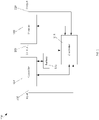
- FIG. 1 is a block diagram of one embodiment of a UPS 100 that provides regulated power from input AC power received at an input 102, as well as back-up power from a battery 112, to an output 110.
- the UPS 100 includes a converter 104, a DC bus 106, an inverter 108, and a controller 114 for controlling the converter and the inverter.
- the converter 104 is coupled to the input 102
- the inverter 108 is coupled to the output 110
- the DC bus 106 is coupled between the converter 104 and the inverter 108.
- the input 102 is configured to receive input AC power having an input voltage level from an AC power source.
- the controller 114 monitors the input AC power received by the input 102 and is configured to operate the UPS 100 in different modes of operation based on the status of the input AC power received by the input 102. When AC power provided to the input 102 is acceptable (i.e., above an input power threshold), the controller 114 operates the UPS 100 in an online mode of operation.
- AC power from the input 102 can be provided to the converter 104.
- the converter 104 is a Power Factor Correction (PFC) converter 104; however, in other embodiments, other types of converters may be utilized.
- the controller 114 operates the converter 104 to convert the AC power into DC power and provide the DC power to the DC bus 106.
- DC power from the DC bus 106 is provided to the inverter 108.
- DC power from the DC bus 106 may be provided to the battery 112 for charging, either directly from the converter 104 or via a DC/DC converter.
- the controller 114 operates the inverter 108 to convert the DC power into regulated AC power and provide the regulated AC power to a load coupled to the output 110.
- the controller 114 When AC power provided to the input 102 is not acceptable (i.e., below an input power threshold), the controller 114 operates the UPS 100 in a backup mode of operation. In the backup mode of operation, DC power from the battery 112 is provided to the DC bus 106, either directly or via a DC/DC converter.
- the inverter 108 receives the DC power from the DC bus 106, and the controller 114 operates the inverter 108 to convert the DC power from the DC bus 106 into regulated AC power and provide the regulated AC power to the output 110.
- a UPS can include various types of power converters for converting AC power to DC power, DC power to AC power, and DC power from one DC voltage level to another.
- These various power converters are known to include power switching circuits utilizing switching devices such as Field-Effect Transistors (FETs), High Electron Mobility Transistors (HEMTs), Bipolar Junction Transistors (BJTs), and Insulated-Gate Bipolar Transistors (IGBTs).
- FETs Field-Effect Transistors
- HEMTs High Electron Mobility Transistors
- BJTs Bipolar Junction Transistors
- IGBTs Insulated-Gate Bipolar Transistors
- GaN Gallium Nitrate
- GaN FETs can offer high switching speeds, and thus reduce switching losses, enabling high frequency power converter designs.
- GaN FETs can experience low on-resistance at high voltages, even at high temperatures.
- voltage and current may be switched through GaN devices at a high rate to reduce switching losses.
- this high rate of change in combination with parasitic capacitances and inductances associated with the GaN devices and/or printed-circuit boards (PCB) may generate current oscillations and/or voltage overshoots. These current oscillations and voltage overshoots can impair or damage the GaN devices, and in some cases may eventually lead to failure of the GaN devices.
- power switching circuits including parallel GaN devices may be subject to increased parasitic capacitances and inductances which can lead to severe electromagnetic interference, current oscillations, voltage overshoots, and an uneven dynamic sharing of current between the GaN devices.
- Some approaches for mitigating issues associated with paralleled GaN devices include adding passive components, such as ferrite beads and RC snubbers, to suppress oscillations and overshoots.
- passive components such as ferrite beads and RC snubbers
- ferrite beads connected in series with the GaN devices can introduce additional inductance into signal paths, and RC snubbers can lead to additional losses and reduce performance in high speed applications.
- such components can often lead to manufacturing issues and may reduce the reliability of power converters. For example, such components (e.g., toroidal ferrite beads) may be easily damaged during manufacturing by drops and/or vibrations.
- parallel GaN devices are arranged such that each switching leg of a power switching circuit maintains an independent conduction path.
- maintaining independent conduction paths for each switching leg of the power switching circuit can enable maximum dynamic current sharing between the parallel GaN devices while reducing voltage overshoots and current oscillations, and improving the efficiency of the power switching circuit.
- FIG. 2 is a schematic of one example of a power switching circuit 200 in accordance with aspects described herein.
- the power switching circuit 200 may be configured as a half-bridge inverter.
- the power switching circuit 200 may be used, for example, in an inverter in a UPS (e.g., the inverter 108 of the UPS 100 shown in FIG. 1 ).
- the power switching circuit 200 may be configured as a half-bridge converter and used in a converter in a UPS (e.g., the converter 104 of the UPS 100 shown in FIG. 1 ).
- the power switching circuit 200 includes a positive bus 202, a switching node 204, a negative bus 206, a first switching leg 208, and a second switching leg 210 in parallel with the first switching leg 208; however, in other examples the power switching circuit 200 may include three or more parallel switching legs.
- the first switching leg 208 includes a first GaN device 212 having a drain 216 coupled to the positive bus 202 and a source 218 coupled to the switching node 204, and a second GaN device 222 having a drain 226 coupled to the switching node 204 and a source 228 coupled to the negative bus 206.
- the second switching leg 210 includes a third GaN device 232 having a drain 236 coupled to the positive bus 202 and a source 238 coupled to the switching node 204, and a fourth GaN device 242 having a drain 246 coupled to the switching node 204 and a source 248 coupled to the negative bus 206.
- drain may refer to any device terminal at which current enters the device.
- source may refer to any device terminal at which current exits the device.
- the first GaN device 212 is coupled in parallel with the third GaN device 232 between the positive bus 202 and the switching node 204.
- the second GaN device 222 is coupled in parallel with the fourth GaN device 242 between the negative bus 206 and the switching node 204.
- power switching circuits can be used in high power applications by sharing current between paralleled GaN devices.
- current on the positive bus 202 and the negative bus 206 may be shared between the first switching leg 208 and the second switching leg 210, and the switching legs may be operated in unison.
- the first GaN device 212 and the third GaN device 232 may be turned on to couple the positive bus 202 to the switching node 204
- the second GaN device 222 and the fourth GaN device 242 may be turned on to couple the negative bus 206 to the switching node 204.
- the first switching leg 208 may include a first decoupling capacitor 252a and a second decoupling capacitor 252b coupled between the positive bus 202 and the negative bus 206 to provide local stable DC voltages to the first GaN device 212 and the second GaN device 222.
- the second switching leg 210 may include a third decoupling capacitor 254a and a fourth decoupling capacitor 254b coupled between the positive bus 202 and the negative bus 206 to provide local stable DC voltages to the third GaN device 232 and the fourth GaN device 242.
- a different number of decoupling capacitors may be used.
- each of the GaN devices 212, 222, 232, and 242 may be subject to various parasitic inductances.
- each of the GaN devices 212, 222, 232, and 242 may be enclosed in a device package, such as a through-hole package, surface mount package, etc.
- each device terminal i.e., gate, drain, source
- each device terminal may have an associated package parasitic inductance.
- the package parasitic inductance associated with each device terminal may correspond to connections (e.g., wire bonds) from a device substrate or die to package pins and/or leads. As shown in FIG.
- the first GaN device 212 may have a package parasitic gate inductance 215a, a package parasitic drain inductance 217a, and a package parasitic source inductance 219a.
- the second GaN device 222 may have package parasitic inductances 225a, 227a, 229a
- the third GaN device 232 may have package parasitic inductances 235a, 237a, 239a
- the fourth GaN device 242 may have package parasitic inductances 245a, 247a, 249a.
- the GaN devices 212, 222, 232, and 242 may be arranged on a printed-circuit board (PCB) and connected via electrical traces and/or planes included on or within the PCB.
- PCB printed-circuit board
- each device terminal of the GaN devices may have an associated PCB parasitic inductance.
- the PCB parasitic inductance associated with each GaN device terminal may correspond to the inductance of an electrical trace or traces coupled to each device terminal.
- the PCB parasitic inductance associated with each device terminal may also include an inductance of a terminal pin, lead, or pad electrically and physically coupled to the PCB.
- the first GaN device 212 may have a PCB parasitic gate inductance 215b, a PCB parasitic drain inductance 217b, and a PCB parasitic source inductance 219b.
- the second GaN device 222 may have a PCB parasitic gate inductance 225b, a PCB parasitic drain inductance 227b, and a PCB parasitic source inductance 239b inductance
- the third GaN device 232 may have a PCB parasitic gate inductance 235b, a PCB parasitic drain inductance 237b, and a PCB parasitic source inductance 239b
- the fourth GaN device 242 may have a PCB parasitic gate inductance 245b, a PCB parasitic drain inductance 247b, and PCB parasitic source inductance 249b.
- the PCB parasitic source inductance 219b of the first GaN device 212 and the PCB parasitic drain inductance 227b of the second GaN device 222 may correspond to the inductance of a conduction path between the first GaN device 222 through the switching node 204 to the second GaN device 222.
- the PCB parasitic source inductance 239b of the third GaN device 232 and the PCB parasitic drain inductance 247b of the fourth GaN device 242 may correspond to a conduction path between the third GaN device 232 and the fourth GaN device 242.
- the PCB parasitic inductances of the GaN devices and the parasitic midpoint inductance 205 may correspond to the inductance of switching paths between GaN devices of the first switching leg 208 and the GaN devices of the second switching leg 210.
- the inductance of a conduction path from the first GaN device 212 through the switching node 204 to the fourth GaN device 242 may include the PCB parasitic source inductance 219b of the first GaN device 212, the PCB parasitic midpoint inductance 205, and the PCB parasitic drain inductance 247b of the fourth GaN device 242.
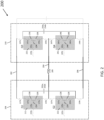
- FIG. 3A is a diagram illustrating an example of a power switching assembly 300 including the power switching circuit 200 arranged on a PCB 302.
- the PCB 302 may be a multi-layer PCB.
- the GaN devices and the switching node 204 may be disposed on different layers of the PCB 302.
- the GaN devices 212, 222, 232, and 242 may be disposed on a first layer and the switching node 204 may be disposed on a second layer, or any other layer.
- the GaN devices may be positioned on the first layer above the switching node 204.
- the GaN devices may be positioned on the first layer such that each GaN device at least partially overlaps with the switching node 204.
- the switching node 204 may have a rectangular shape as shown in FIG. 3A ; however, in other examples the switching node 204 may have a different shape.
- a first distance D1 corresponds to the distance between the source 218 of the first GaN device 212 and the drain 226 of the second GaN device 222 and a second distance D2 corresponds to the distance between the source 238 of the third GaN device 232 and the drain 246 of the fourth GaN device 242.
- a third distance D3 corresponds to the distance between the source 218 of the first GaN device 212 and the source 238 of the third GaN device 232 and a fourth distance D4 corresponds to the distance between the drain 226 of the second GaN device 222 and the drain 246 of the fourth GaN device 242.
- the efficiency of the power switching circuit 200 can be improved by maintaining independent conduction paths for each of the switching legs to achieve maximum dynamic current sharing.
- maximum dynamic current sharing may be achieved by preventing current from commutating between GaN devices of different inverter legs; i.e., allowing current from the first GaN device 212 to only commutate through the second GaN device 222 and allowing current from the third GaN device 232 to only commutate through the fourth GaN device 242, and vice versa.
- the independent conduction paths for each switching leg may be established by adjusting the distances D1-D4 between the GaN devices 212, 222, 232, and 242.
- the GaN devices may be arranged such that the first distance D1 between the first GaN device 212 and the second GaN device 222 of the first switching leg 208 is less than the distance between the first switching leg 208 and the second switching leg 210 (i.e., D3 and D4).
- the GaN devices may be arranged such that the second distance D2 between the third GaN device 232 and the fourth GaN device 242 is also less than the distance between the first switching leg 208 and the second switching leg 210 (i.e., D3 and D4).
- the GaN devices may be arranged such that the distances between GaN devices of the same switching leg are less than the distances between GaN devices of different switching legs coupled diagonally across the switching node 204.
- the distances D1-D4 may be adjusted such that the distances D1 and D2 are less than both the distance between the first GaN device 212 and the fourth GaN device 242 and the distance between the second GaN device 222 and the third GaN device 232.
- the GaN devices may be arranged symmetrically such that D1 is substantially the same as D2 and D3 is substantially the same as D4.
- the GaN devices may be arranged such that D1 and D2 have less than a 10% mismatch.
- the GaN devices may be arranged such that the distances D3 and D4 are at least 20-30% larger than the distances D1 and D2.
- the distances D1-D4 may correspond to lengths of conduction paths between the GaN devices. For example, by minimizing D1 relative to D3 and D4, the length of the conduction path from the source 218 of the first GaN device 212 through the switching node 204 to the drain 226 of the second GaN device 222 may be shorter than the length of conduction paths from either of the GaN devices 212, 222 to the GaN devices of the second switching leg 210 (i.e., 232, 242).
- the length of the conduction path from the source 238 of the third GaN device 232 through the switching node 204 to the drain 246 of the fourth GaN device 242 may be shorter than the length of conduction paths from either of the GaN devices 232, 242 to the GaN devices of the first switching leg 208 (i.e., 212, 222).
- the conduction paths between GaN devices of the same switching leg e.g., 208 or 210) may be shorter than the conduction paths between the GaN devices of the first switching leg 208 and the GaN devices of the second switching leg 210.
- each conduction path may affect the inductance of each conduction path; i.e., short conduction paths may have lower inductance and long conduction paths may have higher inductance.
- the inductance of the conduction path between the source 218 of the first GaN device 212 and the drain 226 of the second GaN device 222 may be lower than the inductance of conduction paths from either of the GaN devices 212 and 222 to the GaN devices of the second switching leg 210 (i.e., 232, 242).
- the inductance of the conduction path between the source 238 of the third GaN device 232 and the drain 246 of the fourth GaN device 242 may be lower than the inductance of conduction paths from either of the GaN devices 232 and 242 to the GaN devices of the first switching leg 208 (i.e., 212, 222).
- the first switching leg 208 and the second switching leg 210 may each maintain independent conduction paths. For example, current carried by the first switching leg 208 may commutate between the first GaN device 212 and the second GaN device 222 and current carried by the second switching leg 210 may commutate between the third GaN device 232 and the fourth GaN device 242.
- FIG. 3B illustrates a side-view of the power switching assembly 300 (showing the first switching leg 208 only).
- the first GaN device 212 and the second GaN device 222 may be arranged on a first (i.e., top) layer 304 of the PCB 302 and the switching node 204 may be disposed on a second layer 306 of the PCB 302.
- the decoupling capacitors 252a, 252a of the first switching leg 208 and the decoupling capacitors 254a, 254b of the second switching leg 210 may be disposed on the first layer 304 between the GaN devices and above the switching node 204.
- first conduction path between the first GaN device 212 and the second GaN device 222 is generally indicated at 308.
- the length of the first conduction path 308 corresponds to the distance D1 between the source 218 of the first GaN device 212 and the drain 226 of the second GaN device 222.
- the first conduction path 308 may have a lower inductance than conduction paths between the GaN devices 212, 222 of the first switching leg 208 and the GaN devices 232, 242 of the second switching leg 210.
- current from the first GaN device 212 may commutate via the first conduction path 308 to the second GaN device 222, and vice versa.
- the inductance of a second conduction path (not shown) between the GaN devices 232, 242 of the second switching leg 210 can be minimized such that current from the third GaN device 232 commutates via the second conduction path to the fourth GaN device 242, and vice versa.
- FIGS. 4A and 4B illustrate a power switching application 400 including the power switching circuit 200.
- the power switching application 400 may correspond to the operation of power switching circuitry used in an AC-to-DC converter of a UPS (e.g., the converter 104 of the UPS 100 shown in FIG. 1 ).
- the power switching application 400 may correspond to the operation of power switching circuitry used in a DC-to-AC inverter of a UPS (e.g., the inverter 108 of the UPS 100 shown in FIG. 1 ).
- the power switching application 400 may correspond to the operation of power switching circuitry used in a DC-to-DC converter of a UPS.
- the power switching circuit 200 is arranged in the power switching assembly 300 as shown in FIGS. 3A and 3B .
- the switching node 204 is coupled to a load 402 having a load current 404.
- the switching node 204 is coupled to the load 402 between the GaN devices of the first switching leg 208 and the second switching leg 210.
- the load 402 may be coupled to the device terminal of each GaN device coupled to the switching node 204.
- the source 218 of the first GaN device 212 and the drain 226 of the second GaN device 222 may each be coupled to the switching node 204 and the load 402.
- the source 238 of the third GaN device 232 and the drain 246 of the fourth GaN device 242 may each be coupled to the switching node 204 and the load 402.
- FIGS. 4A and 4B illustrate the power switching circuit 200 in the power switching application 400 while transitioning from the first state to the second state.
- the first state of the power switching circuit 200 may include turning on the first GaN device 212 of the first switching leg 208 and the third GaN device 232 of the second switching leg 210 to couple the positive bus 202 to the switching node 204.
- the second state of the power switching circuit 200 may include turning on the second GaN device 222 of the first switching leg 208 and the fourth GaN device 242 of the second switching leg 210.
- the first switching leg 208 may carry a first portion of the load current 404, e.g., first load current 406, and the second switching leg 210 may carry a second portion of the load current 404; e.g., second load current 408.
- the first GaN device 212 and the third GaN device 232 are turned off and the second GaN device 222 and the fourth GaN device 242 are turned on.
- the first GaN device 212 and the third GaN device 232 have been turned off and are carrying the load current 402 in a reverse direction (i.e., source to drain) to a positive bus capacitor 406.
- each GaN device may have a similar positive temperature coefficient, and therefore a substantially similar on resistance.
- static current e.g., the load current 402 as shown in FIG. 4A
- static current may be shared equally between the first switching leg 208 and the second switching leg 210; i.e., the first load current 406 and the second load current 408 may be substantially equal portions of the load current 402.
- FIG. 4B illustrates the power switching circuit 200 after the second GaN 222 and the fourth GaN device 242 have been turned on.
- the conduction path between the first GaN device 212 and the second GaN device 222 may have a lower inductance than conduction paths including the PCB parasitic midpoint inductance 205 (e.g., conduction paths from the first switching leg 208 to the second switching leg 210).
- the first load current 406 may commutate from the first GaN device 212 to the second GaN device 222 and the second GaN device 222 may begin to carry the first load current 406 in a forward direction (i.e., drain to source).
- the conduction path between the third GaN device 232 and the fourth GaN device 242 may have a lower inductance than conduction paths including the PCB parasitic midpoint inductance 205 (e.g., conduction paths from the second switching leg 210 to the first switching leg 208).
- the second load current 408 may commutate from the third GaN device 232 to the fourth GaN device 242 and the fourth GaN device 242 may begin to carry the second load current 408 in the forward direction.
- dynamic current may be shared equally between the first switching leg 208 and the second switching leg 210; i.e., the first load current 406 and the second load current 408 may remain substantially equal portions of the load current 402.
- the first load current 406 may commutate from the second GaN device 222 to the first GaN device 212 and the second load current 408 may commutate from the fourth GaN device 242 to the third GaN device 232.
- equal dynamic current sharing can be achieved.
- the efficiency of the power switching circuit 200 may be improved.
- equal dynamic current sharing between the switching legs 208 and 210 may reduce or eliminate ringing, oscillations, and overshoots during operation of the power switching circuit 200.
- embodiments described herein are not limited to a particular method of establishing conduction path lengths and/or inductances to achieve independent conduction paths for each switching leg (e.g., 208 and 210).
- the GaN devices 212, 222, 232, and 242 may be physically arranged on a PCB (e.g., 302) to establish different conduction path lengths and corresponding conduction path inductances; however, in other examples different methods of establishing various conduction path lengths and inductances may be utilized.
- characteristics of conduction paths may be controlled by modifying properties of electrical traces and/or vias included on the PCB 302.
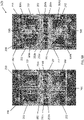
- FIG. 5A illustrates an example of a power switching assembly layout 500 including the power switching circuit 200 arranged on the PCB 302.
- the power switching assembly layout 500 may be similar to the power switching assembly 300 of FIGS. 3A and 3B with the GaN devices 212, 222, 232, and 242 being provided in through-hole packages.
- the GaN devices may be arranged on the top (i.e., first) layer 304 of the PCB 302 such that GaN devices of the same switching leg (e.g., 208 or 210) are positioned closer to one another than to the GaN devices of the other switching leg.
- conduction paths between GaN devices of the same switching leg may have a lower inductance than conduction paths between GaN devices of different switching legs.
- the GaN devices 212, 222 of the first inverter leg 208 may be arranged symmetrically to the GaN devices 232, 242 of the second inverter leg 210.
- the lengths of gate drive conduction paths 504a, 504b, 504c, and 504d between a gate driver output(s) 506 and the gate of each GaN device may be substantially the same (e.g., within 10%).
- each gate drive conduction path may have substantially the same length
- each gate drive conduction path may have substantially the same inductance.
- the inductance of each gate drive conduction path may correspond to the PCB parasitic gate inductances 215b, 225b, 235b, and 245b shown in FIG. 2 . Being that the inductances of the gate drive conduction paths are substantially the same, gate drive delay between the GaN devices can be minimized, improving the efficiency of the power switching circuit 200.
- the gate drive conduction paths 504a-504d may be included on the first layer 304 or the second layer 306; however, in other examples the gate drive conduction paths may be included on a different layer of the PCB 302, such as a third layer, fourth layer, or any other layer.
- the first switching leg 208 may include the first decoupling capacitor 252a and the second decoupling capacitor 252b coupled between the positive bus 202 and the negative bus 206.
- the second switching leg 212 may include the third decoupling capacitor 254a and the fourth decoupling capacitor 254b coupled between the positive bus 202 and the negative bus 206.
- the decoupling capacitors 252a, 252b, 254a, and 254b may be arranged on the first layer 304 of the PCB 302 between the GaN devices and above the switching node 204.
- such placement of the decoupling capacitors can provide a local stable DC voltage to each of the GaN devices, effectively nullifying PCB parasitic inductances between the GaN devices, the positive bus 202, and the negative bus 206.
- the decoupling capacitor 252b may be positioned in proximity to the source 228 of the second GaN device 222 to nullify the PCB parasitic source inductance 229b of the second GaN device 222
- the decoupling capacitor 252a may be positioned in proximity to the drain 216 of the first GaN device 212 to nullify the PCB parasitic drain inductance 217b of the first GaN device 212.
- the decoupling capacitor 254a may be positioned in proximity to the source 248 of the fourth GaN device 242 to nullify the PCB parasitic source inductance 249b of the fourth GaN device 242, and the decoupling capacitor 254b may be positioned in proximity to the drain 236 of the third GaN device 232 to nullify the PCB drain parasitic inductance 237b of the third GaN device 232.
- the positive bus 202 and the negative bus 206 may also be disposed on the first layer 304; however, in other examples the positive bus 202 and the negative bus 206 may disposed on a different layer of the PCB 302.
- the source 218 of the first GaN device 212 may be coupled to the switching node 204 using a first via 508a and the drain 226 of the second GaN device 222 may be coupled to the switching node 204 using a second via 508b.
- the source 238 of the third GaN device 232 may be coupled to the switching node 204 using a third via 508c and the drain 246 of the fourth GaN device 242 may be coupled to the switching node 204 using a fourth via 508d.
- FIG. 5B illustrates an example of a power switching assembly layout 525 including the power switching circuit 200 arranged on the PCB 302.
- the power switching assembly layout 525 may be similar to the power switching assembly 300 of FIGS. 3A and 3B with the GaN devices 212, 222, 232, and 242 being provided in surface mount device (SMD) packages.
- the GaN devices may be provided in various types of SMD packages, including, but not limited to, flat packages, small outline packages, and grid arrays (e.g., ball grid and column grid). Similar to the power switching assembly layout 500 of FIG.
- the GaN devices are arranged on the first layer 304 of the PCB 302 such that conduction paths between GaN devices of the same switching leg (e.g., 208 or 210) are shorter than conduction paths between GaN devices of different switching legs.
- the conduction paths between GaN devices of the same switching leg may have a lower inductance than the conduction paths between GaN devices of different switching legs.
- the switching node 204 of the power switching assembly layout 525 may be disposed on the second layer 306 of the PCB 302.
- the power switching assembly layout 525 also includes the decoupling capacitors 252a, 252b, 254a, and 254b coupled between the positive bus 202 and the negative bus 206 and arranged on the first layer 304 of the PCB 302 between the GaN devices and above the switching node 204.
- the GaN devices are arranged symmetrically on the PCB 302 and oriented such that the gate drive conduction paths 504a-504d may have substantially the same length, minimizing gate drive delay between the GaN devices.
- the gate drive conduction paths 504a-504d may be included on the first layer 304 or the second layer 306; however, in other examples the gate drive conduction paths may be included on a different layer of the PCB 302, such as a third layer, fourth layer, or any other layer.
- the examples provided herein may be implemented using GaN FETs each having gate, drain, and source terminals; however, in other examples different types of GaN devices having different device terminals may be used.
- the examples provided herein may be implemented using GaN BJTs each having base, collector, and emitter terminals.
- different types of GaN devices may be used such as GaN HEMTs and IGBTs.
- devices of semiconductor materials other than GaN may be used, such as Silicon (Si) devices, Gallium Arsenide (GaAs) devices, etc.
- the power switching circuit 200 may be configured as a half-bridge inverter having a first switching leg 208 and a second switching leg 210.
- the power switching circuit 200 may be configured differently.
- the power switching circuit 200 may be configured as a half-bridge converter, a full-bridge inverter, or any other type of power conversion circuitry including parallel GaN devices.
- the power switching circuit 200 may be included in power conversion circuitry of a UPS similar to the UPS 100 of FIG. 1 .
- the power switching circuit 200 may be configured to have more than two switching legs.
- parallel GaN devices are arranged such that each switching leg of a power switching circuit maintains an independent conduction path.
- maximum dynamic current sharing between the parallel GaN devices can be achieved, reducing voltage overshoots and current oscillations, and improving the efficiency of the power switching circuit, especially in high-power applications.
Landscapes
- Engineering & Computer Science (AREA)
- Power Engineering (AREA)
- Microelectronics & Electronic Packaging (AREA)
- Manufacturing & Machinery (AREA)
- Business, Economics & Management (AREA)
- Emergency Management (AREA)
- Inverter Devices (AREA)
- Power Conversion In General (AREA)
- Dc-Dc Converters (AREA)
Description
- Embodiments of the invention relate generally to power conversion, and more particularly, to parallel power switching devices used for power conversion.
- The use of power devices, such as uninterruptible power supplies (UPS), to provide regulated, uninterrupted power for sensitive and/or critical loads, such as computer systems and other data processing systems, is known. UPS's typically include various types of power converters for converting AC power to DC power, DC power to AC power, and DC power from one voltage level to another. These various power converters can include power switching circuits utilizing various types of switching devices, such as Field Effect Transistors (FETs), High Electron Mobility Transistors (HEMTs), Bipolar Junction Transistors (BJTs), and Insulated-Gate Bipolar Transistors (IGBTs). Document
US2013/049814 discloses examples of electrical converter systems and methods according to available prior art. - At least one aspect of the invention is directed to an electrical-converter system, comprising: a printed circuit board including at least a first layer and a second layer, a switching node disposed on the second layer, a first transistor, a second transistor, a third transistor, and a fourth transistor disposed on the first layer, the first transistor and the third transistor each having a source coupled to the switching node, and the second transistor and the fourth transistor each having a drain coupled to the switching node, a first conduction path from the source of the first transistor, through the switching node, to the drain of the fourth transistor, the first conduction path having a first length, and a second conduction path from the source of the first transistor, through the switching node, to the drain of the second transistor, the second conduction path having a second length, wherein the first length of the first conduction path is greater than the second length of the second conduction path.
- In one embodiment, the electrical-converter system includes a third conduction path from the source of the third transistor, through the switching node, to the drain of the second transistor, the third conduction path having a third length, and a fourth conduction path from the source of the third transistor, through the switching node, to the drain of the fourth transistor, the fourth conduction path having a fourth length, wherein the third length of the third conduction path is greater than the fourth length of the fourth conduction path.
- In some embodiments, the transistors are positioned on the first layer symmetrically such that a first distance between the first and second transistors is substantially the same as second distance between the third and fourth transistors, and a third distance between the first and third transistors is substantially the same as a fourth distance between the second and fourth transistors. In certain embodiments, the first length of the first conduction path is substantially the same as the third length of the third conduction path and the second length of the second conduction path is substantially the same as the fourth length of the fourth conduction path.
- In various embodiments, the electrical-converter system includes a plurality of gate drive outputs and a plurality of gate drive conduction paths between the plurality of gate drive outputs and gates of the first, second, third, and fourth transistors, wherein each of the plurality of gate drive conduction paths has substantially the same length.
- In one embodiment, the electrical-converter system includes a positive bus and a negative bus disposed on the first layer, wherein a drain of the first transistor and a drain of the third transistor are coupled to the positive bus and a source of the second transistor and a source of the fourth transistor are coupled to the negative bus. In some embodiments, the electrical-converter system includes a plurality of decoupling capacitors coupled between the positive bus and the negative bus and disposed on the first layer between the transistors and above the switching node.
- In certain embodiments, each of the transistors are Gallium Nitride (GaN) power transistors. In some embodiments, the GaN power transistors are provided in one of a through-hole device package and a surface mount device package.
- Another aspect of the invention is directed to an electrical-converter system, comprising: a printed circuit board including at least a first layer and a second layer, a switching node disposed on the second layer, a first transistor, a second transistor, a third transistor, and a fourth transistor disposed on the first layer, the first transistor and the third transistor each having a source coupled to the switching node, and the second transistor and the fourth transistor each having a drain coupled to the switching node, a first conduction path from the source of the first transistor, through the switching node, to the drain of the fourth transistor, the first conduction path having a first inductance, and a second conduction path from the source of the first transistor, through the switching node, to the drain of the second transistor, the second conduction path having a second inductance, wherein the first inductance of the first conduction path is greater than the second inductance of the second conduction path.
- In one embodiment, the electrical-converter system includes a third conduction path from the source of the third transistor, through the switching node, to the drain of the second transistor, the third conduction path having a third inductance, a fourth conduction path from the source of the third transistor, through the switching node, to the drain of the fourth transistor, the fourth conduction path having a fourth inductance, wherein the third inductance of the third conduction path is greater than the fourth inductance of the fourth conduction path.
- In some embodiments, the transistors are positioned on the first layer symmetrically such that a first distance between the first and second transistors is substantially the same as a second distance between the third and fourth transistors, and a third distance between the first and third transistors is substantially the same as a fourth distance between the second and fourth transistors. In certain embodiments, the first inductance of the first conduction path is substantially the same as the third inductance of the third conduction path and the second inductance of the second conduction path is substantially the same as the fourth inductance of the fourth conduction path.
- In various embodiments, the electrical-converter system includes a plurality of gate drive outputs and a plurality of gate drive conduction paths between the plurality of gate drive outputs and gates of the first, second, third, and fourth transistors, wherein each of the plurality of gate drive conduction paths have substantially the same length.
- In one embodiment, the electrical-converter system includes a positive bus and a negative bus disposed on the first layer, wherein a drain of the first transistor and a drain of the third transistor are coupled to the positive bus and a source of the second transistor and a source of the fourth transistor are coupled to the negative bus. In some embodiments, the electrical-converter system includes a plurality of decoupling capacitors coupled between the positive bus and the negative bus and disposed on the first layer between the transistors and above the switching node.
- In certain embodiments, each of the transistors are Gallium Nitride (GaN) power transistors. In some embodiments, the GaN power transistors are provided in one of a through-hole device package and a surface mount device package.
- Another aspect of the invention is directed to a method for manufacturing an electrical-converter system, the method comprising: providing a printed circuit board having at least a first layer and a second layer with a switching node disposed on the second layer, arranging a first transistor, a second transistor, a third transistor, and a fourth transistor on the first layer of the printed circuit board in proximity to the switching node, and coupling a source of the first transistor, a drain of the second transistor, a source of the third transistor, and a drain of the fourth transistor to the switching node such that a first length of a first conduction path from the source of the first transistor, through the switching node, to the drain of the fourth transistor is greater than a second length of a second conduction path from the source of the first transistor, through the switching node, to the drain of the second transistor.
- In one embodiment, the method includes arranging a plurality of decoupling capacitors on the first layer between the transistors and above the switching node. In some embodiments, the method includes coupling the decoupling capacitors between a positive bus and a negative bus disposed on the first layer.
- In certain embodiments, arranging the transistors on the first layer further includes positioning the transistors symmetrically such that a first distance between the first and second transistors is substantially the same as a second distance between the third and fourth transistors, and a third distance between the first and third transistors is substantially the same as a fourth distance between the second and fourth transistors.
- In some embodiments, the method includes coupling gates of the first, second, third, and fourth transistors to a plurality of gate driver outputs such that the length of each conduction path between the plurality of gate driver outputs and the transistor gates is substantially the same.
- Various aspects of at least one embodiment are discussed below with reference to the accompanying figures, which are not intended to be drawn to scale. The figures are included to provide illustration and a further understanding of the various aspects and embodiments and are incorporated in and constitute a part of this specification but are not intended as a definition of the limits of the invention. In the figures, each identical or nearly identical component that is illustrated in various figures is represented by a like numeral. For purposes of clarity, not every component may be labeled in every figure. In the figures:
-
FIG. 1 is a functional block diagram of an uninterruptible power supply in accordance with one embodiment of the present invention; -
FIG. 2 is a schematic of a power switching circuit in accordance with one embodiment of the present invention; -
FIG. 3A is a diagram of a power switching assembly in accordance with one embodiment of the present invention; -
FIG. 3B is a diagram of a power switching assembly in accordance with one embodiment of the present invention; -
FIG. 4A is a diagram of a power switching application in accordance with one embodiment of the present invention; -
FIG. 4B is a diagram of a power switching application in accordance with one embodiment of the present invention; -
FIG. 5A is a diagram of a power switching assembly in accordance with one embodiment of the present invention; and -
FIG. 5B is a diagram of a power switching assembly in accordance with one embodiment of the present invention. - Examples of the methods and systems discussed herein are not limited in application to the details of construction and the arrangement of components set forth in the following description or illustrated in the accompanying drawings. The methods and systems are capable of implementation in other embodiments and of being practiced or of being carried out in various ways. Examples of specific implementations are provided herein for illustrative purposes only and are not intended to be limiting. In particular, acts, components, elements and features discussed in connection with any one or more examples are not intended to be excluded from a similar role in any other examples.
- Also, the phraseology and terminology used herein is for the purpose of description and should not be regarded as limiting. Any references to examples, embodiments, components, elements or acts of the systems and methods herein referred to in the singular may also embrace embodiments including a plurality, and any references in plural to any embodiment, component, element or act herein may also embrace embodiments including only a singularity. References in the singular or plural form are not intended to limit the presently disclosed systems or methods, their components, acts, or elements. The use herein of "including," "comprising," "having," "containing," "involving," and variations thereof is meant to encompass the items listed thereafter and equivalents thereof as well as additional items. References to "or" may be construed as inclusive so that any terms described using "or" may indicate any of a single, more than one, and all of the described terms. In addition, in the event of inconsistent usages of terms between this document and documents incorporated herein by reference, the term usage in the incorporated references is supplementary to that of this document; for irreconcilable inconsistencies, the term usage in this document controls.
- As discussed above, power devices, such as uninterruptible power supplies (UPS), may be used to provide regulated, uninterrupted power to sensitive and/or critical loads. An online UPS rectifies input AC power provided by an electric utility using a Power Factor Correction converter circuit (PFC) to provide DC power to at least one DC bus. The rectified DC power on the DC bus(es) may be used to charge a battery while mains power is available. In the absence of mains power, the battery discharges and provides DC power to the DC bus(es). From the DC power on the DC bus(es), an inverter generates an AC output voltage that is provided to a load. Since power is provided to the DC bus(es) from either mains or the battery, the output power of the UPS is uninterrupted if the mains fails and the battery is sufficiently charged. Online UPS's may also operate in a bypass mode where unconditioned power with basic protection is provided directly from an AC power source to a load via a bypass line.
-
FIG. 1 is a block diagram of one embodiment of aUPS 100 that provides regulated power from input AC power received at aninput 102, as well as back-up power from abattery 112, to anoutput 110. TheUPS 100 includes aconverter 104, aDC bus 106, aninverter 108, and acontroller 114 for controlling the converter and the inverter. Theconverter 104 is coupled to theinput 102, theinverter 108 is coupled to theoutput 110, and theDC bus 106 is coupled between theconverter 104 and theinverter 108. - The
input 102 is configured to receive input AC power having an input voltage level from an AC power source. Thecontroller 114 monitors the input AC power received by theinput 102 and is configured to operate theUPS 100 in different modes of operation based on the status of the input AC power received by theinput 102. When AC power provided to theinput 102 is acceptable (i.e., above an input power threshold), thecontroller 114 operates theUPS 100 in an online mode of operation. - In the online mode of operation, AC power from the
input 102 can be provided to theconverter 104. According to one embodiment, theconverter 104 is a Power Factor Correction (PFC)converter 104; however, in other embodiments, other types of converters may be utilized. Thecontroller 114 operates theconverter 104 to convert the AC power into DC power and provide the DC power to theDC bus 106. DC power from theDC bus 106 is provided to theinverter 108. In addition, DC power from theDC bus 106 may be provided to thebattery 112 for charging, either directly from theconverter 104 or via a DC/DC converter. Thecontroller 114 operates theinverter 108 to convert the DC power into regulated AC power and provide the regulated AC power to a load coupled to theoutput 110. - When AC power provided to the
input 102 is not acceptable (i.e., below an input power threshold), thecontroller 114 operates theUPS 100 in a backup mode of operation. In the backup mode of operation, DC power from thebattery 112 is provided to theDC bus 106, either directly or via a DC/DC converter. Theinverter 108 receives the DC power from theDC bus 106, and thecontroller 114 operates theinverter 108 to convert the DC power from theDC bus 106 into regulated AC power and provide the regulated AC power to theoutput 110. - As described above, a UPS can include various types of power converters for converting AC power to DC power, DC power to AC power, and DC power from one DC voltage level to another. These various power converters are known to include power switching circuits utilizing switching devices such as Field-Effect Transistors (FETs), High Electron Mobility Transistors (HEMTs), Bipolar Junction Transistors (BJTs), and Insulated-Gate Bipolar Transistors (IGBTs). Gallium Nitrate (GaN) is a common wide-bandgap material used in the fabrication of such switching devices for power switching applications. In some examples, GaN FETs can offer high switching speeds, and thus reduce switching losses, enabling high frequency power converter designs. In addition, GaN FETs can experience low on-resistance at high voltages, even at high temperatures.
- In power-switching applications, voltage and current may be switched through GaN devices at a high rate to reduce switching losses. In some examples, this high rate of change in combination with parasitic capacitances and inductances associated with the GaN devices and/or printed-circuit boards (PCB) may generate current oscillations and/or voltage overshoots. These current oscillations and voltage overshoots can impair or damage the GaN devices, and in some cases may eventually lead to failure of the GaN devices.
- The limitations discussed above can increase significantly when two or more GaN devices are configured in parallel to increase the power rating of power converters. In some examples, power switching circuits including parallel GaN devices may be subject to increased parasitic capacitances and inductances which can lead to severe electromagnetic interference, current oscillations, voltage overshoots, and an uneven dynamic sharing of current between the GaN devices.
- Some approaches for mitigating issues associated with paralleled GaN devices include adding passive components, such as ferrite beads and RC snubbers, to suppress oscillations and overshoots. However, ferrite beads connected in series with the GaN devices can introduce additional inductance into signal paths, and RC snubbers can lead to additional losses and reduce performance in high speed applications. In addition, such components can often lead to manufacturing issues and may reduce the reliability of power converters. For example, such components (e.g., toroidal ferrite beads) may be easily damaged during manufacturing by drops and/or vibrations.
- A more efficient and reliable PCB structure for parallel GaN devices is provided herein. In at least one embodiment, parallel GaN devices are arranged such that each switching leg of a power switching circuit maintains an independent conduction path. In some examples, maintaining independent conduction paths for each switching leg of the power switching circuit can enable maximum dynamic current sharing between the parallel GaN devices while reducing voltage overshoots and current oscillations, and improving the efficiency of the power switching circuit.
-
FIG. 2 is a schematic of one example of apower switching circuit 200 in accordance with aspects described herein. In one example, thepower switching circuit 200 may be configured as a half-bridge inverter. Thepower switching circuit 200 may be used, for example, in an inverter in a UPS (e.g., theinverter 108 of theUPS 100 shown inFIG. 1 ). In other examples, thepower switching circuit 200 may be configured as a half-bridge converter and used in a converter in a UPS (e.g., theconverter 104 of theUPS 100 shown inFIG. 1 ). - As shown in
FIG. 2 , thepower switching circuit 200 includes apositive bus 202, a switchingnode 204, anegative bus 206, afirst switching leg 208, and asecond switching leg 210 in parallel with thefirst switching leg 208; however, in other examples thepower switching circuit 200 may include three or more parallel switching legs. Thefirst switching leg 208 includes afirst GaN device 212 having adrain 216 coupled to thepositive bus 202 and asource 218 coupled to the switchingnode 204, and asecond GaN device 222 having adrain 226 coupled to the switchingnode 204 and asource 228 coupled to thenegative bus 206. Thesecond switching leg 210 includes athird GaN device 232 having adrain 236 coupled to thepositive bus 202 and asource 238 coupled to the switchingnode 204, and afourth GaN device 242 having adrain 246 coupled to the switchingnode 204 and asource 248 coupled to thenegative bus 206. In this context, "drain" may refer to any device terminal at which current enters the device. Likewise, "source" may refer to any device terminal at which current exits the device. As shown inFIG. 2 , thefirst GaN device 212 is coupled in parallel with thethird GaN device 232 between thepositive bus 202 and the switchingnode 204. Likewise, thesecond GaN device 222 is coupled in parallel with thefourth GaN device 242 between thenegative bus 206 and the switchingnode 204. - As discussed above, power switching circuits can be used in high power applications by sharing current between paralleled GaN devices. In one example, current on the
positive bus 202 and thenegative bus 206 may be shared between thefirst switching leg 208 and thesecond switching leg 210, and the switching legs may be operated in unison. For example, in a first state of the of thepower switching circuit 200, thefirst GaN device 212 and thethird GaN device 232 may be turned on to couple thepositive bus 202 to the switchingnode 204, and in a second state of thepower switching circuit 200, thesecond GaN device 222 and thefourth GaN device 242 may be turned on to couple thenegative bus 206 to the switchingnode 204. - In some examples, the
first switching leg 208 may include afirst decoupling capacitor 252a and asecond decoupling capacitor 252b coupled between thepositive bus 202 and thenegative bus 206 to provide local stable DC voltages to thefirst GaN device 212 and thesecond GaN device 222. Likewise, thesecond switching leg 210 may include athird decoupling capacitor 254a and afourth decoupling capacitor 254b coupled between thepositive bus 202 and thenegative bus 206 to provide local stable DC voltages to thethird GaN device 232 and thefourth GaN device 242. In other examples, a different number of decoupling capacitors may be used. - In some examples, each of the
GaN devices GaN devices FIG. 2 , thefirst GaN device 212 may have a packageparasitic gate inductance 215a, a packageparasitic drain inductance 217a, and a packageparasitic source inductance 219a. Similarly, thesecond GaN device 222 may have packageparasitic inductances third GaN device 232 may have packageparasitic inductances fourth GaN device 242 may have packageparasitic inductances - In one example, the
GaN devices - As shown in
FIG. 2 , thefirst GaN device 212 may have a PCBparasitic gate inductance 215b, a PCBparasitic drain inductance 217b, and a PCBparasitic source inductance 219b. Similarly, thesecond GaN device 222 may have a PCBparasitic gate inductance 225b, a PCBparasitic drain inductance 227b, and a PCBparasitic source inductance 239b inductance, thethird GaN device 232 may have a PCBparasitic gate inductance 235b, a PCBparasitic drain inductance 237b, and a PCBparasitic source inductance 239b, and thefourth GaN device 242 may have a PCBparasitic gate inductance 245b, a PCBparasitic drain inductance 247b, and PCBparasitic source inductance 249b. - In one example, the PCB
parasitic source inductance 219b of thefirst GaN device 212 and the PCBparasitic drain inductance 227b of thesecond GaN device 222 may correspond to the inductance of a conduction path between thefirst GaN device 222 through the switchingnode 204 to thesecond GaN device 222. Likewise, the PCBparasitic source inductance 239b of thethird GaN device 232 and the PCBparasitic drain inductance 247b of thefourth GaN device 242 may correspond to a conduction path between thethird GaN device 232 and thefourth GaN device 242. In some examples, the PCB parasitic inductances of the GaN devices and theparasitic midpoint inductance 205 may correspond to the inductance of switching paths between GaN devices of thefirst switching leg 208 and the GaN devices of thesecond switching leg 210. For example, the inductance of a conduction path from thefirst GaN device 212 through the switchingnode 204 to thefourth GaN device 242 may include the PCBparasitic source inductance 219b of thefirst GaN device 212, the PCBparasitic midpoint inductance 205, and the PCBparasitic drain inductance 247b of thefourth GaN device 242. -
FIG. 3A is a diagram illustrating an example of apower switching assembly 300 including thepower switching circuit 200 arranged on aPCB 302. In one example, thePCB 302 may be a multi-layer PCB. In some examples, the GaN devices and the switchingnode 204 may be disposed on different layers of thePCB 302. For example, theGaN devices node 204 may be disposed on a second layer, or any other layer. In one example, the GaN devices may be positioned on the first layer above the switchingnode 204. In other examples, the GaN devices may be positioned on the first layer such that each GaN device at least partially overlaps with the switchingnode 204. In one example, the switchingnode 204 may have a rectangular shape as shown inFIG. 3A ; however, in other examples the switchingnode 204 may have a different shape. - As shown in
FIG. 3A , a first distance D1 corresponds to the distance between thesource 218 of thefirst GaN device 212 and thedrain 226 of thesecond GaN device 222 and a second distance D2 corresponds to the distance between thesource 238 of thethird GaN device 232 and thedrain 246 of thefourth GaN device 242. Likewise, a third distance D3 corresponds to the distance between thesource 218 of thefirst GaN device 212 and thesource 238 of thethird GaN device 232 and a fourth distance D4 corresponds to the distance between thedrain 226 of thesecond GaN device 222 and thedrain 246 of thefourth GaN device 242. - As discussed above, the GaN devices of first switching leg 208 (i.e., 212, 222) and the GaN devices of the second inverter leg 210 (i.e., 232, 242) may be operated in unison. As such, the efficiency of the
power switching circuit 200 can be improved by maintaining independent conduction paths for each of the switching legs to achieve maximum dynamic current sharing. For example, maximum dynamic current sharing may be achieved by preventing current from commutating between GaN devices of different inverter legs; i.e., allowing current from thefirst GaN device 212 to only commutate through thesecond GaN device 222 and allowing current from thethird GaN device 232 to only commutate through thefourth GaN device 242, and vice versa. - In some examples, the independent conduction paths for each switching leg may be established by adjusting the distances D1-D4 between the
GaN devices first GaN device 212 and thesecond GaN device 222 of thefirst switching leg 208 is less than the distance between thefirst switching leg 208 and the second switching leg 210 (i.e., D3 and D4). In addition, the GaN devices may be arranged such that the second distance D2 between thethird GaN device 232 and thefourth GaN device 242 is also less than the distance between thefirst switching leg 208 and the second switching leg 210 (i.e., D3 and D4). In one example, the GaN devices may be arranged such that the distances between GaN devices of the same switching leg are less than the distances between GaN devices of different switching legs coupled diagonally across the switchingnode 204. For example, the distances D1-D4 may be adjusted such that the distances D1 and D2 are less than both the distance between thefirst GaN device 212 and thefourth GaN device 242 and the distance between thesecond GaN device 222 and thethird GaN device 232. In one example, the GaN devices may be arranged symmetrically such that D1 is substantially the same as D2 and D3 is substantially the same as D4. For example, in certain examples, the GaN devices may be arranged such that D1 and D2 have less than a 10% mismatch. In some examples, the GaN devices may be arranged such that the distances D3 and D4 are at least 20-30% larger than the distances D1 and D2. - Being that each of the
GaN devices node 204, the distances D1-D4 may correspond to lengths of conduction paths between the GaN devices. For example, by minimizing D1 relative to D3 and D4, the length of the conduction path from thesource 218 of thefirst GaN device 212 through the switchingnode 204 to thedrain 226 of thesecond GaN device 222 may be shorter than the length of conduction paths from either of theGaN devices source 238 of thethird GaN device 232 through the switchingnode 204 to thedrain 246 of thefourth GaN device 242 may be shorter than the length of conduction paths from either of theGaN devices first switching leg 208 and the GaN devices of thesecond switching leg 210. - In one example, the length of each conduction path may affect the inductance of each conduction path; i.e., short conduction paths may have lower inductance and long conduction paths may have higher inductance. As such, the inductance of the conduction path between the
source 218 of thefirst GaN device 212 and thedrain 226 of thesecond GaN device 222 may be lower than the inductance of conduction paths from either of theGaN devices source 238 of thethird GaN device 232 and thedrain 246 of thefourth GaN device 242 may be lower than the inductance of conduction paths from either of theGaN devices - In some examples, being that the conduction paths between GaN devices of the same switching leg have a lower inductance than the conduction paths between GaN devices of different switching legs, the
first switching leg 208 and thesecond switching leg 210 may each maintain independent conduction paths. For example, current carried by thefirst switching leg 208 may commutate between thefirst GaN device 212 and thesecond GaN device 222 and current carried by thesecond switching leg 210 may commutate between thethird GaN device 232 and thefourth GaN device 242. -
FIG. 3B illustrates a side-view of the power switching assembly 300 (showing thefirst switching leg 208 only). As discussed above, thefirst GaN device 212 and thesecond GaN device 222 may be arranged on a first (i.e., top)layer 304 of thePCB 302 and the switchingnode 204 may be disposed on asecond layer 306 of thePCB 302. In addition, thedecoupling capacitors first switching leg 208 and thedecoupling capacitors second switching leg 210 may be disposed on thefirst layer 304 between the GaN devices and above the switchingnode 204. - An example of a first conduction path between the
first GaN device 212 and thesecond GaN device 222 is generally indicated at 308. As shown, the length of thefirst conduction path 308 corresponds to the distance D1 between thesource 218 of thefirst GaN device 212 and thedrain 226 of thesecond GaN device 222. As discussed above, by minimizing the distance D1, the length of thefirst conduction path 308 can be minimized, and thefirst conduction path 308 may have a lower inductance than conduction paths between theGaN devices first switching leg 208 and theGaN devices second switching leg 210. As such, current from thefirst GaN device 212 may commutate via thefirst conduction path 308 to thesecond GaN device 222, and vice versa. Likewise, by minimizing the distance D2, the inductance of a second conduction path (not shown) between theGaN devices second switching leg 210 can be minimized such that current from thethird GaN device 232 commutates via the second conduction path to thefourth GaN device 242, and vice versa. -
FIGS. 4A and4B illustrate apower switching application 400 including thepower switching circuit 200. In one example, thepower switching application 400 may correspond to the operation of power switching circuitry used in an AC-to-DC converter of a UPS (e.g., theconverter 104 of theUPS 100 shown inFIG. 1 ). In other examples, thepower switching application 400 may correspond to the operation of power switching circuitry used in a DC-to-AC inverter of a UPS (e.g., theinverter 108 of theUPS 100 shown inFIG. 1 ). In some examples, thepower switching application 400 may correspond to the operation of power switching circuitry used in a DC-to-DC converter of a UPS. - In one example, the
power switching circuit 200 is arranged in thepower switching assembly 300 as shown inFIGS. 3A and3B . As shown inFIGS. 4A and4B , the switchingnode 204 is coupled to aload 402 having a load current 404. In one example, the switchingnode 204 is coupled to theload 402 between the GaN devices of thefirst switching leg 208 and thesecond switching leg 210. In some examples, theload 402 may be coupled to the device terminal of each GaN device coupled to the switchingnode 204. For example, thesource 218 of thefirst GaN device 212 and thedrain 226 of thesecond GaN device 222 may each be coupled to the switchingnode 204 and theload 402. Likewise, thesource 238 of thethird GaN device 232 and thedrain 246 of thefourth GaN device 242 may each be coupled to the switchingnode 204 and theload 402. -
FIGS. 4A and4B illustrate thepower switching circuit 200 in thepower switching application 400 while transitioning from the first state to the second state. As discussed above, the first state of thepower switching circuit 200 may include turning on thefirst GaN device 212 of thefirst switching leg 208 and thethird GaN device 232 of thesecond switching leg 210 to couple thepositive bus 202 to the switchingnode 204. Similarly, the second state of thepower switching circuit 200 may include turning on thesecond GaN device 222 of thefirst switching leg 208 and thefourth GaN device 242 of thesecond switching leg 210. In some examples, thefirst switching leg 208 may carry a first portion of the load current 404, e.g., first load current 406, and thesecond switching leg 210 may carry a second portion of the load current 404; e.g., second load current 408. - To transition from the first state to the second state, the
first GaN device 212 and thethird GaN device 232 are turned off and thesecond GaN device 222 and thefourth GaN device 242 are turned on. InFIG. 4A , thefirst GaN device 212 and thethird GaN device 232 have been turned off and are carrying the load current 402 in a reverse direction (i.e., source to drain) to apositive bus capacitor 406. In one example, each GaN device may have a similar positive temperature coefficient, and therefore a substantially similar on resistance. As such, static current (e.g., the load current 402 as shown inFIG. 4A ) may be shared equally between thefirst switching leg 208 and thesecond switching leg 210; i.e., the first load current 406 and the second load current 408 may be substantially equal portions of the load current 402. -
FIG. 4B illustrates thepower switching circuit 200 after thesecond GaN 222 and thefourth GaN device 242 have been turned on. As discussed above, the conduction path between thefirst GaN device 212 and thesecond GaN device 222 may have a lower inductance than conduction paths including the PCB parasitic midpoint inductance 205 (e.g., conduction paths from thefirst switching leg 208 to the second switching leg 210). As such, when transitioning thepower switching circuit 200 from the first state to the second state, the first load current 406 may commutate from thefirst GaN device 212 to thesecond GaN device 222 and thesecond GaN device 222 may begin to carry the first load current 406 in a forward direction (i.e., drain to source). Likewise, the conduction path between thethird GaN device 232 and thefourth GaN device 242 may have a lower inductance than conduction paths including the PCB parasitic midpoint inductance 205 (e.g., conduction paths from thesecond switching leg 210 to the first switching leg 208). When transitioning thepower switching circuit 200 from the first state to the second state, the second load current 408 may commutate from thethird GaN device 232 to thefourth GaN device 242 and thefourth GaN device 242 may begin to carry the second load current 408 in the forward direction. As such, during a transition of thepower switching circuit 200, dynamic current may be shared equally between thefirst switching leg 208 and thesecond switching leg 210; i.e., the first load current 406 and the second load current 408 may remain substantially equal portions of the load current 402. Similarly, when transitioning thepower switching circuit 200 from the second state back to the first state, the first load current 406 may commutate from thesecond GaN device 222 to thefirst GaN device 212 and the second load current 408 may commutate from thefourth GaN device 242 to thethird GaN device 232. - By establishing independent conduction paths for each switching leg to prevent current from commutating between switching legs, equal dynamic current sharing can be achieved. In some examples, by maximizing dynamic current sharing between the switching legs, the efficiency of the
power switching circuit 200 may be improved. In addition, equal dynamic current sharing between the switchinglegs power switching circuit 200. - It should be appreciated that embodiments described herein are not limited to a particular method of establishing conduction path lengths and/or inductances to achieve independent conduction paths for each switching leg (e.g., 208 and 210). As discussed above, the
GaN devices PCB 302. - In addition, embodiments discussed herein are not limited to a particular type of GaN device or device package. For example,
FIG. 5A illustrates an example of a powerswitching assembly layout 500 including thepower switching circuit 200 arranged on thePCB 302. In one example, the powerswitching assembly layout 500 may be similar to thepower switching assembly 300 ofFIGS. 3A and3B with theGaN devices layer 304 of thePCB 302 such that GaN devices of the same switching leg (e.g., 208 or 210) are positioned closer to one another than to the GaN devices of the other switching leg. As such, conduction paths between GaN devices of the same switching leg may have a lower inductance than conduction paths between GaN devices of different switching legs. - As discussed above, such arrangements may allow the GaN devices to be positioned symmetrically on the
PCB 302. For example, theGaN devices first inverter leg 208 may be arranged symmetrically to theGaN devices second inverter leg 210. As shown inFIG. 5A , by symmetrically arranging the GaN devices on thePCB 302, the lengths of gatedrive conduction paths parasitic gate inductances FIG. 2 . Being that the inductances of the gate drive conduction paths are substantially the same, gate drive delay between the GaN devices can be minimized, improving the efficiency of thepower switching circuit 200. In some examples, the gatedrive conduction paths 504a-504d may be included on thefirst layer 304 or thesecond layer 306; however, in other examples the gate drive conduction paths may be included on a different layer of thePCB 302, such as a third layer, fourth layer, or any other layer. - In addition, as discussed above, the
first switching leg 208 may include thefirst decoupling capacitor 252a and thesecond decoupling capacitor 252b coupled between thepositive bus 202 and thenegative bus 206. Likewise, thesecond switching leg 212 may include thethird decoupling capacitor 254a and thefourth decoupling capacitor 254b coupled between thepositive bus 202 and thenegative bus 206. As shown inFIG. 5A , thedecoupling capacitors first layer 304 of thePCB 302 between the GaN devices and above the switchingnode 204. In some examples, such placement of the decoupling capacitors can provide a local stable DC voltage to each of the GaN devices, effectively nullifying PCB parasitic inductances between the GaN devices, thepositive bus 202, and thenegative bus 206. For example, thedecoupling capacitor 252b may be positioned in proximity to thesource 228 of thesecond GaN device 222 to nullify the PCBparasitic source inductance 229b of thesecond GaN device 222, and thedecoupling capacitor 252a may be positioned in proximity to thedrain 216 of thefirst GaN device 212 to nullify the PCBparasitic drain inductance 217b of thefirst GaN device 212. Likewise, thedecoupling capacitor 254a may be positioned in proximity to thesource 248 of thefourth GaN device 242 to nullify the PCBparasitic source inductance 249b of thefourth GaN device 242, and thedecoupling capacitor 254b may be positioned in proximity to thedrain 236 of thethird GaN device 232 to nullify the PCB drainparasitic inductance 237b of thethird GaN device 232. In some examples, thepositive bus 202 and thenegative bus 206 may also be disposed on thefirst layer 304; however, in other examples thepositive bus 202 and thenegative bus 206 may disposed on a different layer of thePCB 302. - As shown in
FIG. 5A , thesource 218 of thefirst GaN device 212 may be coupled to the switchingnode 204 using a first via 508a and thedrain 226 of thesecond GaN device 222 may be coupled to the switchingnode 204 using a second via 508b. Likewise, thesource 238 of thethird GaN device 232 may be coupled to the switchingnode 204 using a third via 508c and thedrain 246 of thefourth GaN device 242 may be coupled to the switchingnode 204 using a fourth via 508d. By placing the switchingnode 204 between the GaN devices and beneath the decoupling capacitors, the inductance of conduction paths between GaN devices of the same switching leg can be further minimized. In some examples, minimizing the inductance between GaN devices of the same switching leg can improve performance of thepower switching circuit 200 in high-speed power switching applications. -
FIG. 5B illustrates an example of a powerswitching assembly layout 525 including thepower switching circuit 200 arranged on thePCB 302. In one example, the powerswitching assembly layout 525 may be similar to thepower switching assembly 300 ofFIGS. 3A and3B with theGaN devices switching assembly layout 500 ofFIG. 5A , the GaN devices are arranged on thefirst layer 304 of thePCB 302 such that conduction paths between GaN devices of the same switching leg (e.g., 208 or 210) are shorter than conduction paths between GaN devices of different switching legs. As such, the conduction paths between GaN devices of the same switching leg may have a lower inductance than the conduction paths between GaN devices of different switching legs. - Similar to the power
switching assembly layout 500, the switchingnode 204 of the powerswitching assembly layout 525 may be disposed on thesecond layer 306 of thePCB 302. The powerswitching assembly layout 525 also includes thedecoupling capacitors positive bus 202 and thenegative bus 206 and arranged on thefirst layer 304 of thePCB 302 between the GaN devices and above the switchingnode 204. In addition, the GaN devices are arranged symmetrically on thePCB 302 and oriented such that the gatedrive conduction paths 504a-504d may have substantially the same length, minimizing gate drive delay between the GaN devices. In some examples, the gatedrive conduction paths 504a-504d may be included on thefirst layer 304 or thesecond layer 306; however, in other examples the gate drive conduction paths may be included on a different layer of thePCB 302, such as a third layer, fourth layer, or any other layer. - As described above, the examples provided herein may be implemented using GaN FETs each having gate, drain, and source terminals; however, in other examples different types of GaN devices having different device terminals may be used. For example, the examples provided herein may be implemented using GaN BJTs each having base, collector, and emitter terminals. In other examples, different types of GaN devices may be used such as GaN HEMTs and IGBTs. In some examples, devices of semiconductor materials other than GaN may be used, such as Silicon (Si) devices, Gallium Arsenide (GaAs) devices, etc.
- In addition, embodiments discussed herein are not limited to a particular type of power switching circuit and may be advantageously used in a variety of power switching circuits with parallel GaN devices. As discussed above, the
power switching circuit 200 may be configured as a half-bridge inverter having afirst switching leg 208 and asecond switching leg 210. However, in other examples, thepower switching circuit 200 may be configured differently. For example, thepower switching circuit 200 may be configured as a half-bridge converter, a full-bridge inverter, or any other type of power conversion circuitry including parallel GaN devices. As discussed above, thepower switching circuit 200 may be included in power conversion circuitry of a UPS similar to theUPS 100 ofFIG. 1 . In addition, thepower switching circuit 200 may be configured to have more than two switching legs. - As described above, a more efficient and reliable PCB structure for parallel GaN devices is provided herein. In at least one embodiment, parallel GaN devices are arranged such that each switching leg of a power switching circuit maintains an independent conduction path. By maintaining independent conduction paths for each switching leg of the power switching circuit, maximum dynamic current sharing between the parallel GaN devices can be achieved, reducing voltage overshoots and current oscillations, and improving the efficiency of the power switching circuit, especially in high-power applications.
- Having thus described several aspects of at least one embodiment of this invention, it is to be appreciated various alterations, modifications, and improvements will readily occur to those skilled in the art. Such alterations, modifications, and improvements are intended to be part of this disclosure: the scope of the invention is limited by the appended claims. Accordingly, the foregoing description and drawings are by way of example only.
Claims (12)
- An electrical-converter system (200), comprising:a printed circuit board (302) including at least a first layer (304) and a second layer (306);a switching node (204) disposed on the second layer;a first transistor (Q1), a second transistor (Q2), a third transistor (Q3), and a fourth transistor (Q4), disposed on the first layer, the first transistor and the third transistor each having a source (218, 238) coupled to the switching node, and the second transistor and the fourth transistor each having a drain (226, 246) coupled to the switching node;a first conduction path (308) from the source of the first transistor, through the switching node, to the drain of the fourth transistor, the first conduction path having a first inductance (219a, 219b, 205, 247a, 247b); anda second conduction path from the source of the first transistor, through the switching node, to the drain of the second transistor, the second conduction path having a second inductance (219a, 219b, 227a, 227b);a third conduction path from the source of the third transistor, through the switching node, to the drain of the second transistor, the third conduction path having a third inductance (239a, 239b, 205, 227a, 227b); a fourth conduction path from the source of the third transistor, through the switching node, to the drain of the fourth transistor, the fourth conduction path having a fourth inductance (239a, 239b, 247a, 247b), wherein the transistors are positioned on the first layer symmetrically such that a first distance (D1) between the first and second transistors is substantially the same as a second distance (D2) between the third and fourth transistors, and a third distance (D3) between the first and third transistors is substantially the same as a fourth distance (D4) between the second and fourth transistors,wherein the first and third inductance of the first and third conduction path are substantially equal and greater than the second and fourth inductance of the second and fourth conduction path, with the second and fourth inductance being substantially equal.
- The electrical-converter system of claim 1, further comprising a plurality of gate drive outputs and a plurality of gate drive conduction paths between the plurality of gate drive outputs and gates of the first, second, third, and fourth transistors, wherein each of the plurality of gate drive conduction paths have substantially the same length.
- The electrical-converter system of claim 1, further comprising a positive bus and a negative bus disposed on the first layer,
wherein a drain of the first transistor and a drain of the third transistor are coupled to the positive bus and a source of the second transistor and a source of the fourth transistor are coupled to the negative bus. - The electrical-converter system of claim 3, further comprising a plurality of decoupling capacitors coupled between the positive bus and the negative bus and disposed on the first layer between the transistors and above the switching node.
- The electrical-converter system of claim 1, wherein each of the transistors are Gallium Nitride (GaN) power transistors.
- The electrical-converter system of claim 5, wherein the GaN power transistors are provided in one of a through-hole device package and a surface mount device package.
- The electrical-converter system of claim 1, wherein the first inductance of the first conduction path corresponds to a first length of the first conduction path and the second inductance of the second conduction path corresponds to a second length of the second conduction path, the first length being greater than the second length.
- A method for manufacturing an electrical-converter system (200) according to claim 1, the method comprising:providing a printed circuit board (302) having at least a first layer (304) and a second layer (306) with a switching node (204) disposed on the second layer;arranging a first transistor (Q1), a second transistor (Q2), a third transistor (Q3), and a fourth transistor (Q4), on the first layer of the printed circuit board in proximity to the switching node; andcoupling a source (218) of the first transistor, a drain (226) of the second transistor, a source (238) of the third transistor, and a drain (246) of the fourth transistor to the switching node such that a first length of a first conduction path (308) from the source of the first transistor, through the switching node, to the drain of the fourth transistor is greater than a second length of a second conduction path from the source of the first transistor, through the switching node, to the drain of the second transistor.
- The method of claim 8, further comprising arranging a plurality of decoupling capacitors on the first layer between the transistors and above the switching node.
- The method of claim 9, further comprising coupling the decoupling capacitors between a positive bus and a negative bus disposed on the first layer.
- The method of claim 8, wherein arranging the transistors on the first layer further includes positioning the transistors symmetrically such that a first distance between the first and second transistors is substantially the same as a second distance between the third and fourth transistors, and a third distance between the first and third transistors is substantially the same as a fourth distance between the second and fourth transistors.
- The method of claim 11, further comprising coupling gates of the first, second, third, and fourth transistors to a plurality of gate driver outputs such that the length of each conduction path between the plurality of gate driver outputs and the transistor gates is substantially the same.
Applications Claiming Priority (1)
| Application Number | Priority Date | Filing Date | Title |
|---|---|---|---|
| IN202011004303 | 2020-01-31 |
Publications (2)
| Publication Number | Publication Date |
|---|---|
| EP3859962A1 EP3859962A1 (en) | 2021-08-04 |
| EP3859962B1 true EP3859962B1 (en) | 2023-03-08 |
Family
ID=74346925
Family Applications (1)
| Application Number | Title | Priority Date | Filing Date |
|---|---|---|---|
| EP21153942.4A Active EP3859962B1 (en) | 2020-01-31 | 2021-01-28 | A decoupled pcb structure to parallel power transistors |
Country Status (3)
| Country | Link |
|---|---|
| US (2) | US11973414B2 (en) |
| EP (1) | EP3859962B1 (en) |
| CN (1) | CN113206542B (en) |
Families Citing this family (2)
| Publication number | Priority date | Publication date | Assignee | Title |
|---|---|---|---|---|
| US11973414B2 (en) * | 2020-01-31 | 2024-04-30 | Schneider Electric It Corporation | Decoupled PCB structure to parallel power transistors |
| CN116960072B (en) * | 2022-10-31 | 2024-05-03 | 苏州悉智科技有限公司 | Power device packaging structure |
Family Cites Families (8)
| Publication number | Priority date | Publication date | Assignee | Title |
|---|---|---|---|---|
| US8630098B2 (en) * | 2008-06-12 | 2014-01-14 | Solaredge Technologies Ltd. | Switching circuit layout with heatsink |
| US9793889B2 (en) * | 2011-03-15 | 2017-10-17 | Infineon Technologies Ag | Semiconductor device including a circuit to compensate for parasitic inductance |
| WO2013032906A1 (en) * | 2011-08-29 | 2013-03-07 | Efficient Power Conversion Corporation | Parallel connection methods for high performance transistors |
| CN105934876B (en) * | 2014-01-22 | 2019-04-12 | 丹麦技术大学 | Resonance buck DC-DC power converter |
| CN104157634B (en) * | 2014-07-25 | 2017-04-26 | 西安交通大学 | Low-parasitic-inductance GaN power integration module distributed in middle of separating capacitor |
| US9911720B1 (en) * | 2016-08-19 | 2018-03-06 | Infineon Technologies Americas Corp. | Power switch packaging with pre-formed electrical connections for connecting inductor to one or more transistors |
| US10381914B2 (en) * | 2017-07-19 | 2019-08-13 | Texas Instruments Incorporated | Integrated transformer |
| US11973414B2 (en) * | 2020-01-31 | 2024-04-30 | Schneider Electric It Corporation | Decoupled PCB structure to parallel power transistors |
-
2021
- 2021-01-27 US US17/159,927 patent/US11973414B2/en active Active
- 2021-01-28 EP EP21153942.4A patent/EP3859962B1/en active Active
- 2021-01-29 CN CN202110125627.XA patent/CN113206542B/en active Active
-
2024
- 2024-03-22 US US18/613,197 patent/US12237760B2/en active Active
Also Published As
| Publication number | Publication date |
|---|---|
| US20240305184A1 (en) | 2024-09-12 |
| US20210242767A1 (en) | 2021-08-05 |
| CN113206542A (en) | 2021-08-03 |
| EP3859962A1 (en) | 2021-08-04 |
| US12237760B2 (en) | 2025-02-25 |
| CN113206542B (en) | 2026-03-17 |
| US11973414B2 (en) | 2024-04-30 |
Similar Documents
| Publication | Publication Date | Title |
|---|---|---|
| US11888392B2 (en) | High speed, efficient sic power module | |
| US12237760B2 (en) | Decoupled PCB structure to parallel power transistors | |
| CN105075405B (en) | The stray inductance of multilayer semiconductor device reduces circuit-board laying-out design | |
| Lu et al. | Opportunities and design considerations of GaN HEMTs in ZVS applications | |
| US12563670B2 (en) | Power converter device and a system comprising the same | |
| Burkard et al. | Paralleling GaN switches for low voltage high current half-bridges | |
| WO2016149146A1 (en) | Paralleling of switching devices for high power circuits | |
| US20190348408A1 (en) | Multiphase Parallel DCDC Circuit and Chip Structure Thereof | |
| Haralambous et al. | Wide-bandgap semiconductors Gallium Nitride, GaN-Silicon Carbide, SiC | |
| Di Cataldo et al. | Design of a Modular GaN-based Three-Phase Three-Level ANPC Inverter | |
| Cao et al. | Design and implementation of a 12 kW scalable electronic-embedded transformer (EET)-based DC transformer (DCX) with trapezoidal current | |
| Li et al. | A high efficiency and high power density asymmetrical half-bridge flyback converter for data centers | |
| Briere | The power electronics market and the status of GaN based power devices | |
| Satpathy et al. | Design of a 650V Full-Bridge GaN Module with Integrated Gate Driver and Decoupling Capacitors | |
| Heris et al. | Multidevice Dual Active Half Bridge DC-DC Converter with Zero-Input-Current-Ripple for EV Onboard Chargers Application | |
| CN116015022A (en) | Drive circuit and related control chip circuit, power adapter and electronic equipment | |
| US11128226B2 (en) | Power conversion device | |
| US10256721B2 (en) | Step-down chopper circuit including a switching device circuit and a backflow prevention diode circuit | |
| Medinceanu et al. | Is GaN the Enabler of High Power Density Converters? An Overview of the Technology, Devices, Circuits, and Applications | |
| Isurin et al. | Semiconductor Devices | |
| Yu et al. | Optimization of GaN Device Gate Drive Circuit Based on EZDrive Architecture and Suppression of Voltage Ringing | |
| Palomares | Electrical Design of Typical DC-DC Electronic Power Converter for High-Voltage Applications | |
| JP4122689B2 (en) | Buffer circuit and semiconductor power converter using the same | |
| KR20260061201A (en) | Voltage mode control for multi-level power converters | |
| CN118868550A (en) | Current Suppression in DC-DC Converters |
Legal Events
| Date | Code | Title | Description |
|---|---|---|---|
| PUAI | Public reference made under article 153(3) epc to a published international application that has entered the european phase |
Free format text: ORIGINAL CODE: 0009012 |
|
| STAA | Information on the status of an ep patent application or granted ep patent |
Free format text: STATUS: THE APPLICATION HAS BEEN PUBLISHED |
|
| AK | Designated contracting states |
Kind code of ref document: A1 Designated state(s): AL AT BE BG CH CY CZ DE DK EE ES FI FR GB GR HR HU IE IS IT LI LT LU LV MC MK MT NL NO PL PT RO RS SE SI SK SM TR |
|
| STAA | Information on the status of an ep patent application or granted ep patent |
Free format text: STATUS: REQUEST FOR EXAMINATION WAS MADE |
|
| 17P | Request for examination filed |
Effective date: 20220203 |
|
| RBV | Designated contracting states (corrected) |
Designated state(s): AL AT BE BG CH CY CZ DE DK EE ES FI FR GB GR HR HU IE IS IT LI LT LU LV MC MK MT NL NO PL PT RO RS SE SI SK SM TR |
|
| RIC1 | Information provided on ipc code assigned before grant |
Ipc: H02M 7/493 20070101ALI20220728BHEP Ipc: H02M 7/23 20060101ALI20220728BHEP Ipc: H02M 7/00 20060101AFI20220728BHEP |
|
| GRAP | Despatch of communication of intention to grant a patent |
Free format text: ORIGINAL CODE: EPIDOSNIGR1 |
|
| STAA | Information on the status of an ep patent application or granted ep patent |
Free format text: STATUS: GRANT OF PATENT IS INTENDED |
|
| INTG | Intention to grant announced |
Effective date: 20220919 |
|
| GRAS | Grant fee paid |
Free format text: ORIGINAL CODE: EPIDOSNIGR3 |
|
| GRAA | (expected) grant |
Free format text: ORIGINAL CODE: 0009210 |
|
| STAA | Information on the status of an ep patent application or granted ep patent |
Free format text: STATUS: THE PATENT HAS BEEN GRANTED |
|
| AK | Designated contracting states |
Kind code of ref document: B1 Designated state(s): AL AT BE BG CH CY CZ DE DK EE ES FI FR GB GR HR HU IE IS IT LI LT LU LV MC MK MT NL NO PL PT RO RS SE SI SK SM TR |
|
| REG | Reference to a national code |
Ref country code: CH Ref legal event code: EP Ref country code: AT Ref legal event code: REF Ref document number: 1553265 Country of ref document: AT Kind code of ref document: T Effective date: 20230315 |
|
| REG | Reference to a national code |
Ref country code: IE Ref legal event code: FG4D |
|
| REG | Reference to a national code |
Ref country code: DE Ref legal event code: R096 Ref document number: 602021001535 Country of ref document: DE |
|
| REG | Reference to a national code |
Ref country code: LT Ref legal event code: MG9D |
|
| REG | Reference to a national code |
Ref country code: NL Ref legal event code: MP Effective date: 20230308 |
|
| PG25 | Lapsed in a contracting state [announced via postgrant information from national office to epo] |
Ref country code: RS Free format text: LAPSE BECAUSE OF FAILURE TO SUBMIT A TRANSLATION OF THE DESCRIPTION OR TO PAY THE FEE WITHIN THE PRESCRIBED TIME-LIMIT Effective date: 20230308 Ref country code: NO Free format text: LAPSE BECAUSE OF FAILURE TO SUBMIT A TRANSLATION OF THE DESCRIPTION OR TO PAY THE FEE WITHIN THE PRESCRIBED TIME-LIMIT Effective date: 20230608 Ref country code: LV Free format text: LAPSE BECAUSE OF FAILURE TO SUBMIT A TRANSLATION OF THE DESCRIPTION OR TO PAY THE FEE WITHIN THE PRESCRIBED TIME-LIMIT Effective date: 20230308 Ref country code: LT Free format text: LAPSE BECAUSE OF FAILURE TO SUBMIT A TRANSLATION OF THE DESCRIPTION OR TO PAY THE FEE WITHIN THE PRESCRIBED TIME-LIMIT Effective date: 20230308 Ref country code: HR Free format text: LAPSE BECAUSE OF FAILURE TO SUBMIT A TRANSLATION OF THE DESCRIPTION OR TO PAY THE FEE WITHIN THE PRESCRIBED TIME-LIMIT Effective date: 20230308 Ref country code: ES Free format text: LAPSE BECAUSE OF FAILURE TO SUBMIT A TRANSLATION OF THE DESCRIPTION OR TO PAY THE FEE WITHIN THE PRESCRIBED TIME-LIMIT Effective date: 20230308 |
|
| REG | Reference to a national code |
Ref country code: AT Ref legal event code: MK05 Ref document number: 1553265 Country of ref document: AT Kind code of ref document: T Effective date: 20230308 |
|
| PG25 | Lapsed in a contracting state [announced via postgrant information from national office to epo] |
Ref country code: SE Free format text: LAPSE BECAUSE OF FAILURE TO SUBMIT A TRANSLATION OF THE DESCRIPTION OR TO PAY THE FEE WITHIN THE PRESCRIBED TIME-LIMIT Effective date: 20230308 Ref country code: NL Free format text: LAPSE BECAUSE OF FAILURE TO SUBMIT A TRANSLATION OF THE DESCRIPTION OR TO PAY THE FEE WITHIN THE PRESCRIBED TIME-LIMIT Effective date: 20230308 Ref country code: GR Free format text: LAPSE BECAUSE OF FAILURE TO SUBMIT A TRANSLATION OF THE DESCRIPTION OR TO PAY THE FEE WITHIN THE PRESCRIBED TIME-LIMIT Effective date: 20230609 Ref country code: FI Free format text: LAPSE BECAUSE OF FAILURE TO SUBMIT A TRANSLATION OF THE DESCRIPTION OR TO PAY THE FEE WITHIN THE PRESCRIBED TIME-LIMIT Effective date: 20230308 |
|
| PG25 | Lapsed in a contracting state [announced via postgrant information from national office to epo] |
Ref country code: SM Free format text: LAPSE BECAUSE OF FAILURE TO SUBMIT A TRANSLATION OF THE DESCRIPTION OR TO PAY THE FEE WITHIN THE PRESCRIBED TIME-LIMIT Effective date: 20230308 Ref country code: RO Free format text: LAPSE BECAUSE OF FAILURE TO SUBMIT A TRANSLATION OF THE DESCRIPTION OR TO PAY THE FEE WITHIN THE PRESCRIBED TIME-LIMIT Effective date: 20230308 Ref country code: PT Free format text: LAPSE BECAUSE OF FAILURE TO SUBMIT A TRANSLATION OF THE DESCRIPTION OR TO PAY THE FEE WITHIN THE PRESCRIBED TIME-LIMIT Effective date: 20230710 Ref country code: EE Free format text: LAPSE BECAUSE OF FAILURE TO SUBMIT A TRANSLATION OF THE DESCRIPTION OR TO PAY THE FEE WITHIN THE PRESCRIBED TIME-LIMIT Effective date: 20230308 Ref country code: CZ Free format text: LAPSE BECAUSE OF FAILURE TO SUBMIT A TRANSLATION OF THE DESCRIPTION OR TO PAY THE FEE WITHIN THE PRESCRIBED TIME-LIMIT Effective date: 20230308 Ref country code: AT Free format text: LAPSE BECAUSE OF FAILURE TO SUBMIT A TRANSLATION OF THE DESCRIPTION OR TO PAY THE FEE WITHIN THE PRESCRIBED TIME-LIMIT Effective date: 20230308 |
|
| PG25 | Lapsed in a contracting state [announced via postgrant information from national office to epo] |
Ref country code: SK Free format text: LAPSE BECAUSE OF FAILURE TO SUBMIT A TRANSLATION OF THE DESCRIPTION OR TO PAY THE FEE WITHIN THE PRESCRIBED TIME-LIMIT Effective date: 20230308 Ref country code: PL Free format text: LAPSE BECAUSE OF FAILURE TO SUBMIT A TRANSLATION OF THE DESCRIPTION OR TO PAY THE FEE WITHIN THE PRESCRIBED TIME-LIMIT Effective date: 20230308 Ref country code: IS Free format text: LAPSE BECAUSE OF FAILURE TO SUBMIT A TRANSLATION OF THE DESCRIPTION OR TO PAY THE FEE WITHIN THE PRESCRIBED TIME-LIMIT Effective date: 20230708 |
|
| REG | Reference to a national code |
Ref country code: DE Ref legal event code: R097 Ref document number: 602021001535 Country of ref document: DE |
|
| PLBE | No opposition filed within time limit |
Free format text: ORIGINAL CODE: 0009261 |
|
| STAA | Information on the status of an ep patent application or granted ep patent |
Free format text: STATUS: NO OPPOSITION FILED WITHIN TIME LIMIT |
|
| PG25 | Lapsed in a contracting state [announced via postgrant information from national office to epo] |
Ref country code: SI Free format text: LAPSE BECAUSE OF FAILURE TO SUBMIT A TRANSLATION OF THE DESCRIPTION OR TO PAY THE FEE WITHIN THE PRESCRIBED TIME-LIMIT Effective date: 20230308 Ref country code: DK Free format text: LAPSE BECAUSE OF FAILURE TO SUBMIT A TRANSLATION OF THE DESCRIPTION OR TO PAY THE FEE WITHIN THE PRESCRIBED TIME-LIMIT Effective date: 20230308 |
|
| 26N | No opposition filed |
Effective date: 20231211 |
|
| PG25 | Lapsed in a contracting state [announced via postgrant information from national office to epo] |
Ref country code: IT Free format text: LAPSE BECAUSE OF FAILURE TO SUBMIT A TRANSLATION OF THE DESCRIPTION OR TO PAY THE FEE WITHIN THE PRESCRIBED TIME-LIMIT Effective date: 20230308 |
|
| PG25 | Lapsed in a contracting state [announced via postgrant information from national office to epo] |
Ref country code: MC Free format text: LAPSE BECAUSE OF FAILURE TO SUBMIT A TRANSLATION OF THE DESCRIPTION OR TO PAY THE FEE WITHIN THE PRESCRIBED TIME-LIMIT Effective date: 20230308 |
|
| PG25 | Lapsed in a contracting state [announced via postgrant information from national office to epo] |
Ref country code: MC Free format text: LAPSE BECAUSE OF FAILURE TO SUBMIT A TRANSLATION OF THE DESCRIPTION OR TO PAY THE FEE WITHIN THE PRESCRIBED TIME-LIMIT Effective date: 20230308 |
|
| REG | Reference to a national code |
Ref country code: CH Ref legal event code: PL |
|
| PG25 | Lapsed in a contracting state [announced via postgrant information from national office to epo] |
Ref country code: LU Free format text: LAPSE BECAUSE OF NON-PAYMENT OF DUE FEES Effective date: 20240128 |
|
| PG25 | Lapsed in a contracting state [announced via postgrant information from national office to epo] |
Ref country code: LU Free format text: LAPSE BECAUSE OF NON-PAYMENT OF DUE FEES Effective date: 20240128 |
|
| PG25 | Lapsed in a contracting state [announced via postgrant information from national office to epo] |
Ref country code: BE Free format text: LAPSE BECAUSE OF NON-PAYMENT OF DUE FEES Effective date: 20240131 |
|
| PG25 | Lapsed in a contracting state [announced via postgrant information from national office to epo] |
Ref country code: CH Free format text: LAPSE BECAUSE OF NON-PAYMENT OF DUE FEES Effective date: 20240131 |
|
| PG25 | Lapsed in a contracting state [announced via postgrant information from national office to epo] |
Ref country code: CH Free format text: LAPSE BECAUSE OF NON-PAYMENT OF DUE FEES Effective date: 20240131 Ref country code: BE Free format text: LAPSE BECAUSE OF NON-PAYMENT OF DUE FEES Effective date: 20240131 |
|
| REG | Reference to a national code |
Ref country code: BE Ref legal event code: MM Effective date: 20240131 |
|
| PG25 | Lapsed in a contracting state [announced via postgrant information from national office to epo] |
Ref country code: BG Free format text: LAPSE BECAUSE OF FAILURE TO SUBMIT A TRANSLATION OF THE DESCRIPTION OR TO PAY THE FEE WITHIN THE PRESCRIBED TIME-LIMIT Effective date: 20230308 |
|
| PG25 | Lapsed in a contracting state [announced via postgrant information from national office to epo] |
Ref country code: BG Free format text: LAPSE BECAUSE OF FAILURE TO SUBMIT A TRANSLATION OF THE DESCRIPTION OR TO PAY THE FEE WITHIN THE PRESCRIBED TIME-LIMIT Effective date: 20230308 |
|
| PG25 | Lapsed in a contracting state [announced via postgrant information from national office to epo] |
Ref country code: IE Free format text: LAPSE BECAUSE OF NON-PAYMENT OF DUE FEES Effective date: 20240128 |
|
| PG25 | Lapsed in a contracting state [announced via postgrant information from national office to epo] |
Ref country code: IE Free format text: LAPSE BECAUSE OF NON-PAYMENT OF DUE FEES Effective date: 20240128 |
|
| PG25 | Lapsed in a contracting state [announced via postgrant information from national office to epo] |
Ref country code: CY Free format text: LAPSE BECAUSE OF FAILURE TO SUBMIT A TRANSLATION OF THE DESCRIPTION OR TO PAY THE FEE WITHIN THE PRESCRIBED TIME-LIMIT; INVALID AB INITIO Effective date: 20210128 |
|
| PG25 | Lapsed in a contracting state [announced via postgrant information from national office to epo] |
Ref country code: HU Free format text: LAPSE BECAUSE OF FAILURE TO SUBMIT A TRANSLATION OF THE DESCRIPTION OR TO PAY THE FEE WITHIN THE PRESCRIBED TIME-LIMIT; INVALID AB INITIO Effective date: 20210128 |
|
| PG25 | Lapsed in a contracting state [announced via postgrant information from national office to epo] |
Ref country code: TR Free format text: LAPSE BECAUSE OF FAILURE TO SUBMIT A TRANSLATION OF THE DESCRIPTION OR TO PAY THE FEE WITHIN THE PRESCRIBED TIME-LIMIT Effective date: 20230308 |
|
| PGFP | Annual fee paid to national office [announced via postgrant information from national office to epo] |
Ref country code: GB Payment date: 20260126 Year of fee payment: 6 |
|
| PGFP | Annual fee paid to national office [announced via postgrant information from national office to epo] |
Ref country code: DE Payment date: 20260127 Year of fee payment: 6 |
|
| PGFP | Annual fee paid to national office [announced via postgrant information from national office to epo] |
Ref country code: FR Payment date: 20260126 Year of fee payment: 6 |