EP3859865A1 - Battery module for detecting high temperature of battery cell - Google Patents
Battery module for detecting high temperature of battery cell Download PDFInfo
- Publication number
- EP3859865A1 EP3859865A1 EP20756305.7A EP20756305A EP3859865A1 EP 3859865 A1 EP3859865 A1 EP 3859865A1 EP 20756305 A EP20756305 A EP 20756305A EP 3859865 A1 EP3859865 A1 EP 3859865A1
- Authority
- EP
- European Patent Office
- Prior art keywords
- high temperature
- battery
- battery module
- chip
- protection
- Prior art date
- Legal status (The legal status is an assumption and is not a legal conclusion. Google has not performed a legal analysis and makes no representation as to the accuracy of the status listed.)
- Pending
Links
Images

Classifications
-
- H—ELECTRICITY
- H01—ELECTRIC ELEMENTS
- H01M—PROCESSES OR MEANS, e.g. BATTERIES, FOR THE DIRECT CONVERSION OF CHEMICAL ENERGY INTO ELECTRICAL ENERGY
- H01M10/00—Secondary cells; Manufacture thereof
- H01M10/42—Methods or arrangements for servicing or maintenance of secondary cells or secondary half-cells
- H01M10/425—Structural combination with electronic components, e.g. electronic circuits integrated to the outside of the casing
- H01M10/4257—Smart batteries, e.g. electronic circuits inside the housing of the cells or batteries
-
- G—PHYSICS
- G01—MEASURING; TESTING
- G01K—MEASURING TEMPERATURE; MEASURING QUANTITY OF HEAT; THERMALLY-SENSITIVE ELEMENTS NOT OTHERWISE PROVIDED FOR
- G01K1/00—Details of thermometers not specially adapted for particular types of thermometer
- G01K1/02—Means for indicating or recording specially adapted for thermometers
- G01K1/026—Means for indicating or recording specially adapted for thermometers arrangements for monitoring a plurality of temperatures, e.g. by multiplexing
-
- G—PHYSICS
- G01—MEASURING; TESTING
- G01K—MEASURING TEMPERATURE; MEASURING QUANTITY OF HEAT; THERMALLY-SENSITIVE ELEMENTS NOT OTHERWISE PROVIDED FOR
- G01K3/00—Thermometers giving results other than momentary value of temperature
- G01K3/005—Circuits arrangements for indicating a predetermined temperature
-
- G—PHYSICS
- G01—MEASURING; TESTING
- G01K—MEASURING TEMPERATURE; MEASURING QUANTITY OF HEAT; THERMALLY-SENSITIVE ELEMENTS NOT OTHERWISE PROVIDED FOR
- G01K7/00—Measuring temperature based on the use of electric or magnetic elements directly sensitive to heat ; Power supply therefor, e.g. using thermoelectric elements
- G01K7/16—Measuring temperature based on the use of electric or magnetic elements directly sensitive to heat ; Power supply therefor, e.g. using thermoelectric elements using resistive elements
- G01K7/22—Measuring temperature based on the use of electric or magnetic elements directly sensitive to heat ; Power supply therefor, e.g. using thermoelectric elements using resistive elements the element being a non-linear resistance, e.g. thermistor
-
- G—PHYSICS
- G01—MEASURING; TESTING
- G01R—MEASURING ELECTRIC VARIABLES; MEASURING MAGNETIC VARIABLES
- G01R31/00—Arrangements for testing electric properties; Arrangements for locating electric faults; Arrangements for electrical testing characterised by what is being tested not provided for elsewhere
- G01R31/36—Arrangements for testing, measuring or monitoring the electrical condition of accumulators or electric batteries, e.g. capacity or state of charge [SoC]
- G01R31/382—Arrangements for monitoring battery or accumulator variables, e.g. SoC
- G01R31/3835—Arrangements for monitoring battery or accumulator variables, e.g. SoC involving only voltage measurements
-
- G—PHYSICS
- G01—MEASURING; TESTING
- G01R—MEASURING ELECTRIC VARIABLES; MEASURING MAGNETIC VARIABLES
- G01R31/00—Arrangements for testing electric properties; Arrangements for locating electric faults; Arrangements for electrical testing characterised by what is being tested not provided for elsewhere
- G01R31/36—Arrangements for testing, measuring or monitoring the electrical condition of accumulators or electric batteries, e.g. capacity or state of charge [SoC]
- G01R31/396—Acquisition or processing of data for testing or for monitoring individual cells or groups of cells within a battery
-
- H—ELECTRICITY
- H01—ELECTRIC ELEMENTS
- H01M—PROCESSES OR MEANS, e.g. BATTERIES, FOR THE DIRECT CONVERSION OF CHEMICAL ENERGY INTO ELECTRICAL ENERGY
- H01M10/00—Secondary cells; Manufacture thereof
- H01M10/42—Methods or arrangements for servicing or maintenance of secondary cells or secondary half-cells
- H01M10/4207—Methods or arrangements for servicing or maintenance of secondary cells or secondary half-cells for several batteries or cells simultaneously or sequentially
-
- H—ELECTRICITY
- H01—ELECTRIC ELEMENTS
- H01M—PROCESSES OR MEANS, e.g. BATTERIES, FOR THE DIRECT CONVERSION OF CHEMICAL ENERGY INTO ELECTRICAL ENERGY
- H01M10/00—Secondary cells; Manufacture thereof
- H01M10/42—Methods or arrangements for servicing or maintenance of secondary cells or secondary half-cells
- H01M10/425—Structural combination with electronic components, e.g. electronic circuits integrated to the outside of the casing
-
- H—ELECTRICITY
- H01—ELECTRIC ELEMENTS
- H01M—PROCESSES OR MEANS, e.g. BATTERIES, FOR THE DIRECT CONVERSION OF CHEMICAL ENERGY INTO ELECTRICAL ENERGY
- H01M10/00—Secondary cells; Manufacture thereof
- H01M10/42—Methods or arrangements for servicing or maintenance of secondary cells or secondary half-cells
- H01M10/44—Methods for charging or discharging
- H01M10/441—Methods for charging or discharging for several batteries or cells simultaneously or sequentially
-
- H—ELECTRICITY
- H01—ELECTRIC ELEMENTS
- H01M—PROCESSES OR MEANS, e.g. BATTERIES, FOR THE DIRECT CONVERSION OF CHEMICAL ENERGY INTO ELECTRICAL ENERGY
- H01M10/00—Secondary cells; Manufacture thereof
- H01M10/42—Methods or arrangements for servicing or maintenance of secondary cells or secondary half-cells
- H01M10/48—Accumulators combined with arrangements for measuring, testing or indicating the condition of cells, e.g. the level or density of the electrolyte
-
- H—ELECTRICITY
- H01—ELECTRIC ELEMENTS
- H01M—PROCESSES OR MEANS, e.g. BATTERIES, FOR THE DIRECT CONVERSION OF CHEMICAL ENERGY INTO ELECTRICAL ENERGY
- H01M10/00—Secondary cells; Manufacture thereof
- H01M10/42—Methods or arrangements for servicing or maintenance of secondary cells or secondary half-cells
- H01M10/48—Accumulators combined with arrangements for measuring, testing or indicating the condition of cells, e.g. the level or density of the electrolyte
- H01M10/482—Accumulators combined with arrangements for measuring, testing or indicating the condition of cells, e.g. the level or density of the electrolyte for several batteries or cells simultaneously or sequentially
-
- H—ELECTRICITY
- H01—ELECTRIC ELEMENTS
- H01M—PROCESSES OR MEANS, e.g. BATTERIES, FOR THE DIRECT CONVERSION OF CHEMICAL ENERGY INTO ELECTRICAL ENERGY
- H01M10/00—Secondary cells; Manufacture thereof
- H01M10/42—Methods or arrangements for servicing or maintenance of secondary cells or secondary half-cells
- H01M10/48—Accumulators combined with arrangements for measuring, testing or indicating the condition of cells, e.g. the level or density of the electrolyte
- H01M10/486—Accumulators combined with arrangements for measuring, testing or indicating the condition of cells, e.g. the level or density of the electrolyte for measuring temperature
-
- H—ELECTRICITY
- H02—GENERATION; CONVERSION OR DISTRIBUTION OF ELECTRIC POWER
- H02J—ELECTRIC POWER NETWORKS; CIRCUIT ARRANGEMENTS OR SYSTEMS FOR SUPPLYING OR DISTRIBUTING ELECTRIC POWER; SYSTEMS FOR STORING ELECTRIC ENERGY
- H02J7/00—Circuit arrangements for charging or discharging batteries or for supplying loads from batteries
- H02J7/50—Circuit arrangements for charging or discharging batteries or for supplying loads from batteries acting upon multiple batteries simultaneously or sequentially
-
- H—ELECTRICITY
- H02—GENERATION; CONVERSION OR DISTRIBUTION OF ELECTRIC POWER
- H02J—ELECTRIC POWER NETWORKS; CIRCUIT ARRANGEMENTS OR SYSTEMS FOR SUPPLYING OR DISTRIBUTING ELECTRIC POWER; SYSTEMS FOR STORING ELECTRIC ENERGY
- H02J7/00—Circuit arrangements for charging or discharging batteries or for supplying loads from batteries
- H02J7/60—Circuit arrangements for charging or discharging batteries or for supplying loads from batteries including safety or protection arrangements
- H02J7/65—Circuit arrangements for charging or discharging batteries or for supplying loads from batteries including safety or protection arrangements against overtemperature
-
- H—ELECTRICITY
- H02—GENERATION; CONVERSION OR DISTRIBUTION OF ELECTRIC POWER
- H02J—ELECTRIC POWER NETWORKS; CIRCUIT ARRANGEMENTS OR SYSTEMS FOR SUPPLYING OR DISTRIBUTING ELECTRIC POWER; SYSTEMS FOR STORING ELECTRIC ENERGY
- H02J7/00—Circuit arrangements for charging or discharging batteries or for supplying loads from batteries
- H02J7/60—Circuit arrangements for charging or discharging batteries or for supplying loads from batteries including safety or protection arrangements
- H02J7/663—Circuit arrangements for charging or discharging batteries or for supplying loads from batteries including safety or protection arrangements using battery or load disconnect circuits
-
- H—ELECTRICITY
- H02—GENERATION; CONVERSION OR DISTRIBUTION OF ELECTRIC POWER
- H02J—ELECTRIC POWER NETWORKS; CIRCUIT ARRANGEMENTS OR SYSTEMS FOR SUPPLYING OR DISTRIBUTING ELECTRIC POWER; SYSTEMS FOR STORING ELECTRIC ENERGY
- H02J7/00—Circuit arrangements for charging or discharging batteries or for supplying loads from batteries
- H02J7/80—Circuit arrangements for charging or discharging batteries or for supplying loads from batteries including monitoring or indicating arrangements
-
- H—ELECTRICITY
- H01—ELECTRIC ELEMENTS
- H01M—PROCESSES OR MEANS, e.g. BATTERIES, FOR THE DIRECT CONVERSION OF CHEMICAL ENERGY INTO ELECTRICAL ENERGY
- H01M10/00—Secondary cells; Manufacture thereof
- H01M10/42—Methods or arrangements for servicing or maintenance of secondary cells or secondary half-cells
- H01M10/425—Structural combination with electronic components, e.g. electronic circuits integrated to the outside of the casing
- H01M2010/4271—Battery management systems including electronic circuits, e.g. control of current or voltage to keep battery in healthy state, cell balancing
-
- H—ELECTRICITY
- H01—ELECTRIC ELEMENTS
- H01M—PROCESSES OR MEANS, e.g. BATTERIES, FOR THE DIRECT CONVERSION OF CHEMICAL ENERGY INTO ELECTRICAL ENERGY
- H01M2200/00—Safety devices for primary or secondary batteries
- H01M2200/10—Temperature sensitive devices
- H01M2200/106—PTC
-
- Y—GENERAL TAGGING OF NEW TECHNOLOGICAL DEVELOPMENTS; GENERAL TAGGING OF CROSS-SECTIONAL TECHNOLOGIES SPANNING OVER SEVERAL SECTIONS OF THE IPC; TECHNICAL SUBJECTS COVERED BY FORMER USPC CROSS-REFERENCE ART COLLECTIONS [XRACs] AND DIGESTS
- Y02—TECHNOLOGIES OR APPLICATIONS FOR MITIGATION OR ADAPTATION AGAINST CLIMATE CHANGE
- Y02E—REDUCTION OF GREENHOUSE GAS [GHG] EMISSIONS, RELATED TO ENERGY GENERATION, TRANSMISSION OR DISTRIBUTION
- Y02E60/00—Enabling technologies; Technologies with a potential or indirect contribution to GHG emissions mitigation
- Y02E60/10—Energy storage using batteries
Definitions
- the present invention relates to a battery module that detects a high temperature of a battery gel and blocks the output when a high temperature is detected.
- the present invention relates to a battery module that includes a PTC element and a heat insulating film in each battery cell, detect a high temperature of the battery cell using only one port of a protection IC chip, and blocking an output when a high temperature is detected.
- a general battery module is composed of a plurality of battery cells that can be charged/discharged.
- a Li-ion battery cell when a Li-ion battery cell is used for a long time, heat is generated in the battery cell, and in particular, a large-capacity battery module composed of a plurality of battery cells may generate more heat as the amount of current increases during charging or discharging.
- a temperature sensor is provided in each battery cell, and a temperature sensor provided in each battery cell transmits temperature information to a protection IC chip, so that the protection IC chip blocks charging or discharging of the battery module based on the received temperature.
- each of the battery cells is provided with a temperature sensor, but only the battery cell temperature of the portion where the temperature sensor is located is measured and transmitted to the protection IC chip, and therefore, there is a problem in detecting heat generation occurring in a portion far from the temperature sensor in the battery cell.
- the present invention provides a battery module that blocks charging or discharging by detecting a high temperature of a battery cell using only one port of a protection IC chip.
- the present invention provides a battery module for measuring the overall temperature of each battery cell.
- a battery module is composed of a plurality of battery cells.
- the battery module includes one (+) output terminal formed by connecting the plurality of battery cells, a FET provided on a current path between the (+) output terminal and an external device to block charging or discharging of a battery module, a protection IC chip configured to control the FET, and a high temperature detection unit configured to detect whether the battery module is at a high temperature.
- One end of the high temperature detection unit is connected to the (+) output terminal.
- the other end of the high temperature detection unit is connected to one input port of the protection IC chip.
- the high temperature detection unit is configured to include a plurality of PTC thermistors connected in series with each other.
- Each of the plurality of PTC thermistors may be configured to include a temperature-sensitive dielectric constant changing unit in which a dielectric constant decreases when there is a predetermined threshold temperature or more, wherein the temperature-sensitive dielectric constant changing unit of each of the plurality of PTC thermistors may be provided to directly contact a surface of each of the plurality of battery cells.
- the protection IC chip may determine that a high temperature is detected in at least one battery cell of the plurality of battery cells when a voltage applied to one input port of the protection IC chip connected to the other end of the high temperature detection unit is lowered, and turn off the FET to block charging or discharging of the battery module.
- a plurality of battery modules according to an embodiment of the present invention may be connected to be implemented as one battery pack.
- a battery module according to an embodiment of the present disclosure may be mounted in various electronic devices.
- a battery module is composed of a plurality of battery cells.
- the battery module includes one (+) output terminal formed by connecting the plurality of battery cells, a FET provided on a current path between the (+) output terminal and an external device, a protection IC chip configured to control the FET, a thermal film configured to surround each of the plurality of battery modules, and a high temperature detection unit configured to detect whether the battery module is at a high temperature.
- One end of the high temperature detection unit is connected to the (+) output terminal.
- the other end of the high temperature detection unit is connected to one input port of the protection IC chip.
- the high temperature detection unit is configured to include a plurality of PTC thermistors connected in series with each other.
- Each of the plurality of PTC thermistors may be configured to include a temperature-sensitive dielectric constant changing unit in which a dielectric constant decreases when there is a predetermined threshold temperature or more, wherein the temperature-sensitive dielectric constant changing unit of each of the plurality of PTC thermistors may be provided to contact a thermal film surrounding a surface of each of the plurality of battery cells.
- the protection IC chip may determine that a high temperature is detected in at least one battery cell of the plurality of battery cells when a voltage applied to one input port of the protection IC chip connected to the other end of the high temperature detection unit is lowered, and turn off the FET to block charging or discharging of the battery module.
- a plurality of battery modules according to another embodiment of the present invention may be connected to be implemented as one battery pack.
- a battery module according to another embodiment of the present disclosure may be mounted in various electronic devices.
- a method for detecting a high temperature of a battery cell in a battery module composed of a plurality of battery cells includes a voltage measurement step of measuring a voltage applied to one input port of a protection IC chip, a high temperature determination step of determining whether the battery cell is at a high temperature based on the measured voltage, and a charging or discharging blocking step of blocking charging or discharging of the battery module when it is determined that the battery cell is at a high temperature in the high temperature determination step.
- a voltage applied to one input port of the protection IC chip varies by a plurality of PTC thermistors provided in contact with each of the plurality of battery cells and connected in series with each other.
- the high temperature determination step may determine that all battery cells are not at a high temperature when a voltage applied to one input port of the protection IC chip is less than a predetermined reference voltage, and determine that a high temperature occurs in at least one battery cell among the plurality of battery cells when a voltage applied to one input port of the protection IC chip is greater than or equal to a predetermined reference voltage.
- the present invention can detect the high temperature of the battery cell using only one port of the protection IC chip to block charging or discharging.
- the present invention can measure the overall temperature of each battery cell.
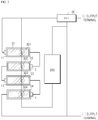
- FIG. 1 is a view showing the configuration of a battery module according to an embodiment of the present invention.
- a battery module is composed of a plurality of battery cells, and the battery module may be configured to include one (+) output terminal formed by connecting the plurality of battery cells, a FET 100 provided on a current path between the (+) output terminal and an external device; a protection IC chip 200 for controlling the FET 100, and a high temperature detection unit for detecting whether the battery module is at a high temperature.
- one end may be connected to the (+) output terminal, and the other end may be connected to one input boat of the protection IC chip.
- the high temperature detection unit may include a plurality of PTC thermistors connected in series with each other.
- the number of PTC thermistors may be equal to the number of battery cells constituting the battery module.
- each of the plurality of PTC thermistors is configured to include a temperature-sensitive dielectric constant changing unit in which the dielectric constant decreases when there is a predetermined threshold temperature or more, and the temperature-sensitive dielectric constant change unit may be provided to directly contact a surface of each of the plurality of battery cells.
- the high temperature detection unit includes first to fourth PTC thermistors 301 to 304, and the first to fourth PTC thermistors 301 to 304 are provided on the surface of each of the first to fourth battery cells 11 to 14, and the first to fourth PTC thermistors 301 to 304 may be connected in series with each other.
- the first PTC thermistor 301 is provided on the surface of the first battery cell 11, and one end is connected to the (+) output terminal, and the other end is connected to one end of the second PTC thermistor 302.
- the second PTC thermistor 302 may be provided on the surface of the second battery cell 12, and the other end may be connected to one end of the third PTC thermistor 303.
- one end is connected to the other end of the second PTC thermistor 302, and the other end is connected to one end of the fourth PTC thermistor 304.
- One end of the fourth PTC thermistor 304 may be connected to the other end of the third PTC thermistor 303, and the other end may be connected to a predetermined input port of the protection IC chip 200.
- the protection IC chip 200 detects the high temperature of the battery cell using only one port, the port use efficiency may be higher than that of the conventionally assigned multiple ports for temperature sensing.
- the resistance of the PTC thermistor provided on the surface of the battery cell where the high temperature is generated rapidly increases so that the resistance of all PTC thermistors connected in series increases. If the resistance of the entire PTC thermistors increases, a lower voltage is applied to a predetermined input port of the protection IC chip when high temperature does not occur, and the protection IC chip detects this and determines that a high temperature occurs in at least one of the battery cells, thereby controlling the FET 100 to block charging or discharging of the battery module.
- the number of ports can be reduced compared to the protection IC chip receiving temperature information of each battery cell using a plurality of ports (or using a multi-channel AFE).
- a plurality of battery modules according to an embodiment of the present invention may be connected to be implemented as a single battery pack.
- the battery module according to an embodiment of the present invention may be mounted in an electronic device.
- the electronic device may be a laptop, a mobile phone, a PDA, a drone, or the like.
- FIG. 2 is a view showing a battery module according to another embodiment of the present invention.
- the battery module according to another embodiment of the present invention may be composed of a plurality of battery cells. Then, the battery module is composed of a plurality of battery cells, and the battery module may include one (+) output terminal formed by connecting the plurality of battery cells, a FET 100 provided on a current path between the (+) output terminal and an external device; a thermal film for surrounding each of the plurality of battery cells, and a high temperature detection unit for detecting whether the battery module is at a high temperature.
- each of the plurality of battery cells may be surrounded by a thermal film, and may be spaced apart from adjacent battery cells by a predetermined interval.
- the predetermined interval spaced apart is a value in which adjacent battery cells are not affected by the temperature of the adjacent battery cells.
- one end of the high temperature detection unit may be connected to the (+) output terminal, and the other end may be connected to one input port of the protection IC chip.
- the high temperature detection unit may include a plurality of PTC thermistors connected in series with each other.
- the number of PTC thermistors may be equal to the number of battery cells.
- each of the plurality of PTC thermistor may be configured to include a temperature-sensitive dielectric constant changing unit in which the dielectric constant decreases when there is a predetermined threshold temperature or more.
- the temperature-sensitive dielectric constant changing unit may be provided to directly contact each of the thermal films surrounding each of the plurality of battery cells.
- the thermal film is wrapped around each battery cell to detect the temperature of the thermal film, the overall temperature of the battery cell may be sensed instead of the temperature of the specific point where the temperature-sensitive dielectric constant changing unit is provided.
- the high temperature detection unit is configured to include first to fourth PTC thermistors 301 to 304.
- Each of the first to fourth battery cells 11 to 14 may be configured to include first to fourth thermal films 21 to 24 surrounding each battery cell.
- the first to fourth PTC thermistors are provided on the first to fourth thermal films 21 to 24, respectively.
- the first to fourth PTC thermistors 301 to 304 may be connected in series with each other.
- the first PTC thermistor 301 is provided on the first thermal film 21 of the first battery cell 11, and one end is connected to the (+) output terminal, and the other end is connected to one end of the second PTC thermistor 302.
- the second PTC thermistor 302 may be provided on the second thermal film 22, and the other end may be connected to one end of the third PTC thermistor 303.
- one end is connected to the other end of the second PTC thermistor 302, and the other end is connected to one end of the fourth PTC thermistor 304.
- One end of the fourth PTC thermistor 304 may be connected to the other end of the third PTC thermistor 303, and the other end may be connected to a predetermined input port of the protection IC chip 200.
- the protection IC chip 200 may detect a high temperature of the battery cell using only one port.
- the protection IC chip detects this and determines that a high temperature occurs in at least one of the battery cells, thereby controlling the FET 100 to block charging or discharging of the battery module.
- the number of ports can be reduced compared to the protection IC chip receiving temperature information of each battery cell using a plurality of ports (or using a multi-channel AFE).
- a plurality of battery modules according to another embodiment of the present invention may be connected to be implemented as a single battery pack.
- the battery module according to another embodiment of the present invention may be mounted in an electronic device.
- the electronic device may be a laptop, a mobile phone, a PDA, a drone, or the like.
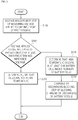
- FIG. 3 is a flowchart illustrating a method of detecting a high temperature of a battery cell according to another embodiment of the present invention.
- a high temperature detecting method of a battery cell may be configured to include a voltage measurement step (S100) of measuring the voltage applied to one input port of the protection IC chip, a high temperature determination step (S200) of determining whether the battery cell is at a high temperature based on the measured voltage, and a charging or discharging blocking step (S330) of blocking the charging or discharging of the battery module when it is determined that the battery cell is at a high temperature in the high temperature determination step (S200).
- S100 voltage measurement step
- S200 high temperature determination step
- S330 charging or discharging blocking step
- the voltage applied to one input port of the protection IC chip measured in the voltage measurement step (S 100) may vary by a plurality of PTC thermistors provided in contact with each of the plurality of battery cells and connected in series with each other
- the high temperature determination step (S200) may determine (S310) that all battery cells are not high temperature if the voltage applied to one input port of the protection IC chip is less than a predetermined reference voltage, and may determine (S320) that a high temperature occurs in at least one battery cell among the plurality of battery cells if the voltage applied to one input port of the protection IC chip is more than a predetermined reference voltage.
Landscapes
- Engineering & Computer Science (AREA)
- Physics & Mathematics (AREA)
- General Chemical & Material Sciences (AREA)
- Chemical & Material Sciences (AREA)
- Chemical Kinetics & Catalysis (AREA)
- Electrochemistry (AREA)
- Manufacturing & Machinery (AREA)
- General Physics & Mathematics (AREA)
- Power Engineering (AREA)
- Nonlinear Science (AREA)
- Microelectronics & Electronic Packaging (AREA)
- Secondary Cells (AREA)
- Battery Mounting, Suspending (AREA)
- Protection Of Static Devices (AREA)
- Charge And Discharge Circuits For Batteries Or The Like (AREA)
Abstract
Description
- The present invention relates to a battery module that detects a high temperature of a battery gel and blocks the output when a high temperature is detected.
- More specifically, the present invention relates to a battery module that includes a PTC element and a heat insulating film in each battery cell, detect a high temperature of the battery cell using only one port of a protection IC chip, and blocking an output when a high temperature is detected.
- A general battery module is composed of a plurality of battery cells that can be charged/discharged.
- In particular, when a Li-ion battery cell is used for a long time, heat is generated in the battery cell, and in particular, a large-capacity battery module composed of a plurality of battery cells may generate more heat as the amount of current increases during charging or discharging.
- As such, when the internal temperature of the battery module rises, a problem may occur in the stability of the battery module.
- Therefore, when the temperature of the battery module rises above a predetermined value, charging or discharging of the battery module should be blocked.
- For this, conventionally, a temperature sensor is provided in each battery cell, and a temperature sensor provided in each battery cell transmits temperature information to a protection IC chip, so that the protection IC chip blocks charging or discharging of the battery module based on the received temperature.
- However, in the related art, since the temperature sensor provided in each of the battery cells transmits the battery cell temperature value to the protection IC chip, there is a problem in that the protection IC chip requires many ports for temperature reception.
- In addition, in the prior art, each of the battery cells is provided with a temperature sensor, but only the battery cell temperature of the portion where the temperature sensor is located is measured and transmitted to the protection IC chip, and therefore, there is a problem in detecting heat generation occurring in a portion far from the temperature sensor in the battery cell.
- Meanwhile, in some cases, even if a high temperature is detected in only one of the cells without having to check which of the battery cells is at a high temperature, it may be desirable to block charging or discharging of the battery module for stability of the battery module.
- Therefore, in the present invention to solve the problems of the prior art, although which of the battery cells detects a high temperature cannot be known, it is proposed to detect the high temperature of the battery cell by using one port of the protection IC chip, and block charging or discharging of the battery module by measuring the overall temperature of each battery cell.
- (Prior art document) Korea Patent Publication
KR 1628850 B1 - The present invention provides a battery module that blocks charging or discharging by detecting a high temperature of a battery cell using only one port of a protection IC chip.
- In addition, the present invention provides a battery module for measuring the overall temperature of each battery cell.
- A battery module according to an embodiment of the present invention is composed of a plurality of battery cells. The battery module includes one (+) output terminal formed by connecting the plurality of battery cells, a FET provided on a current path between the (+) output terminal and an external device to block charging or discharging of a battery module, a protection IC chip configured to control the FET, and a high temperature detection unit configured to detect whether the battery module is at a high temperature. One end of the high temperature detection unit is connected to the (+) output terminal. The other end of the high temperature detection unit is connected to one input port of the protection IC chip. The high temperature detection unit is configured to include a plurality of PTC thermistors connected in series with each other.
- Each of the plurality of PTC thermistors may be configured to include a temperature-sensitive dielectric constant changing unit in which a dielectric constant decreases when there is a predetermined threshold temperature or more, wherein the temperature-sensitive dielectric constant changing unit of each of the plurality of PTC thermistors may be provided to directly contact a surface of each of the plurality of battery cells.
- The protection IC chip may determine that a high temperature is detected in at least one battery cell of the plurality of battery cells when a voltage applied to one input port of the protection IC chip connected to the other end of the high temperature detection unit is lowered, and turn off the FET to block charging or discharging of the battery module.
- Meanwhile, a plurality of battery modules according to an embodiment of the present invention may be connected to be implemented as one battery pack.
- Meanwhile, a battery module according to an embodiment of the present disclosure may be mounted in various electronic devices.
- A battery module according to another embodiment of the present invention is composed of a plurality of battery cells. The battery module includes one (+) output terminal formed by connecting the plurality of battery cells, a FET provided on a current path between the (+) output terminal and an external device, a protection IC chip configured to control the FET, a thermal film configured to surround each of the plurality of battery modules, and a high temperature detection unit configured to detect whether the battery module is at a high temperature. One end of the high temperature detection unit is connected to the (+) output terminal. The other end of the high temperature detection unit is connected to one input port of the protection IC chip. The high temperature detection unit is configured to include a plurality of PTC thermistors connected in series with each other.
- Each of the plurality of PTC thermistors may be configured to include a temperature-sensitive dielectric constant changing unit in which a dielectric constant decreases when there is a predetermined threshold temperature or more, wherein the temperature-sensitive dielectric constant changing unit of each of the plurality of PTC thermistors may be provided to contact a thermal film surrounding a surface of each of the plurality of battery cells.
- The protection IC chip may determine that a high temperature is detected in at least one battery cell of the plurality of battery cells when a voltage applied to one input port of the protection IC chip connected to the other end of the high temperature detection unit is lowered, and turn off the FET to block charging or discharging of the battery module.
- Meanwhile, a plurality of battery modules according to another embodiment of the present invention may be connected to be implemented as one battery pack.
- Meanwhile, a battery module according to another embodiment of the present disclosure may be mounted in various electronic devices.
- A method for detecting a high temperature of a battery cell in a battery module composed of a plurality of battery cells according to another embodiment of the present invention includes a voltage measurement step of measuring a voltage applied to one input port of a protection IC chip, a high temperature determination step of determining whether the battery cell is at a high temperature based on the measured voltage, and a charging or discharging blocking step of blocking charging or discharging of the battery module when it is determined that the battery cell is at a high temperature in the high temperature determination step. A voltage applied to one input port of the protection IC chip varies by a plurality of PTC thermistors provided in contact with each of the plurality of battery cells and connected in series with each other.
- The high temperature determination step may determine that all battery cells are not at a high temperature when a voltage applied to one input port of the protection IC chip is less than a predetermined reference voltage, and determine that a high temperature occurs in at least one battery cell among the plurality of battery cells when a voltage applied to one input port of the protection IC chip is greater than or equal to a predetermined reference voltage.
- The present invention can detect the high temperature of the battery cell using only one port of the protection IC chip to block charging or discharging.
- In addition, the present invention can measure the overall temperature of each battery cell.
-
-
FIG. 1 is a view showing a battery module according to an embodiment of the present invention. -
FIG. 2 is a view showing a battery module according to another embodiment of the present invention. -
FIG. 3 is a flowchart illustrating a method of detecting a high temperature of a battery cell according to another embodiment of the present invention. - Hereinafter, embodiments of the present invention will be described in detail with reference to the accompanying drawings so that those skilled in the art may easily carry out the present invention. The present invention may, however, be embodied in different forms and should not be constructed as limited to the embodiments set forth herein. Parts not relating to description are omitted in the drawings in order to clearly describe the present invention and like reference numerals refer to like elements throughout.
- Although the terms "initial," "second," etc., may be used herein to describe various elements, these elements should not be limited by these terms. The above terms are used only to distinguish one component from another. For example, an initial component may be referred to as a second component and vice versa without departing from the scope of the present invention. Terms used in this specification are used to describe specific embodiments, and are not intended to limit the scope of the present invention. The singular expressions include plural expressions unless the context clearly dictates otherwise.
- Throughout the specification, when a portion is referred to as being "connected" to another portion, it includes not only "directly connected" but also "electrically connected" with another element therebetween. Furthermore, when it is described that one comprises (or includes or has) some elements, it should be understood that it may comprise (or include or has) only those elements, or it may comprise (or include or have) other elements as well as those elements if there is no specific limitation. The term "∼ing operation" or "operation of ∼ing" used throughout the specification does not mean "operation for ∼ing".
- Terms used in this specification may be currently widely used general terms in consideration of functions in the present invention but may vary according to the intents of those skilled in the art, precedents, or the advent of new technology. Additionally, in certain cases, there may be terms the applicant selects arbitrarily and in this case, their meanings are described in a corresponding description part of the present invention. Accordingly, terms used in the present invention should be defined based on the meaning of the term and the entire contents of the present invention instead of the simple term name.
-
FIG. 1 is a view showing the configuration of a battery module according to an embodiment of the present invention. - Hereinafter, a battery module according to an embodiment of the present invention will be described with reference to
FIG. 1 . - A battery module according to an embodiment of the present invention is composed of a plurality of battery cells, and the battery module may be configured to include one (+) output terminal formed by connecting the plurality of battery cells, a
FET 100 provided on a current path between the (+) output terminal and an external device; aprotection IC chip 200 for controlling theFET 100, and a high temperature detection unit for detecting whether the battery module is at a high temperature. - Specifically, in relation to the high temperature detection unit, one end may be connected to the (+) output terminal, and the other end may be connected to one input boat of the protection IC chip.
- Meanwhile, the high temperature detection unit may include a plurality of PTC thermistors connected in series with each other.
- Meanwhile, the number of PTC thermistors may be equal to the number of battery cells constituting the battery module.
- On the other hand, each of the plurality of PTC thermistors is configured to include a temperature-sensitive dielectric constant changing unit in which the dielectric constant decreases when there is a predetermined threshold temperature or more, and the temperature-sensitive dielectric constant change unit may be provided to directly contact a surface of each of the plurality of battery cells.
- For example, when the first to
fourth battery cells 11 to 14 form one module as shown inFIG. 1 , the high temperature detection unit includes first tofourth PTC thermistors 301 to 304, and the first tofourth PTC thermistors 301 to 304 are provided on the surface of each of the first tofourth battery cells 11 to 14, and the first tofourth PTC thermistors 301 to 304 may be connected in series with each other. - In other words, the
first PTC thermistor 301 is provided on the surface of thefirst battery cell 11, and one end is connected to the (+) output terminal, and the other end is connected to one end of thesecond PTC thermistor 302. Thesecond PTC thermistor 302 may be provided on the surface of thesecond battery cell 12, and the other end may be connected to one end of thethird PTC thermistor 303. - Meanwhile, in relation to the
third PTC thermistor 303, one end is connected to the other end of thesecond PTC thermistor 302, and the other end is connected to one end of thefourth PTC thermistor 304. One end of thefourth PTC thermistor 304 may be connected to the other end of thethird PTC thermistor 303, and the other end may be connected to a predetermined input port of theprotection IC chip 200. - As a result, since the
protection IC chip 200 detects the high temperature of the battery cell using only one port, the port use efficiency may be higher than that of the conventionally assigned multiple ports for temperature sensing. - Specifically, in relation to a plurality of PTC thermistors provided on the surface of each of the plurality of battery cells and connected in series with each other, when a high temperature occurs in any one of the plurality of battery cells, the resistance of the PTC thermistor provided on the surface of the battery cell where the high temperature is generated rapidly increases so that the resistance of all PTC thermistors connected in series increases. If the resistance of the entire PTC thermistors increases, a lower voltage is applied to a predetermined input port of the protection IC chip when high temperature does not occur, and the protection IC chip detects this and determines that a high temperature occurs in at least one of the battery cells, thereby controlling the
FET 100 to block charging or discharging of the battery module. - That is, in the related art, the number of ports can be reduced compared to the protection IC chip receiving temperature information of each battery cell using a plurality of ports (or using a multi-channel AFE).
- Meanwhile, a plurality of battery modules according to an embodiment of the present invention may be connected to be implemented as a single battery pack.
- Meanwhile, the battery module according to an embodiment of the present invention may be mounted in an electronic device.
- For example, the electronic device may be a laptop, a mobile phone, a PDA, a drone, or the like.
-
FIG. 2 is a view showing a battery module according to another embodiment of the present invention. - Hereinafter, a battery module according to another embodiment of the present invention will be described with reference to
FIG. 2 . - The battery module according to another embodiment of the present invention may be composed of a plurality of battery cells. Then, the battery module is composed of a plurality of battery cells, and the battery module may include one (+) output terminal formed by connecting the plurality of battery cells, a
FET 100 provided on a current path between the (+) output terminal and an external device; a thermal film for surrounding each of the plurality of battery cells, and a high temperature detection unit for detecting whether the battery module is at a high temperature. - In detail, each of the plurality of battery cells may be surrounded by a thermal film, and may be spaced apart from adjacent battery cells by a predetermined interval. In this case, the predetermined interval spaced apart is a value in which adjacent battery cells are not affected by the temperature of the adjacent battery cells.
- Meanwhile, one end of the high temperature detection unit may be connected to the (+) output terminal, and the other end may be connected to one input port of the protection IC chip.
- Meanwhile, the high temperature detection unit may include a plurality of PTC thermistors connected in series with each other.
- Meanwhile, the number of PTC thermistors may be equal to the number of battery cells.
- Meanwhile, each of the plurality of PTC thermistor may be configured to include a temperature-sensitive dielectric constant changing unit in which the dielectric constant decreases when there is a predetermined threshold temperature or more.
- The temperature-sensitive dielectric constant changing unit may be provided to directly contact each of the thermal films surrounding each of the plurality of battery cells.
- In other words, if the thermal film is wrapped around each battery cell to detect the temperature of the thermal film, the overall temperature of the battery cell may be sensed instead of the temperature of the specific point where the temperature-sensitive dielectric constant changing unit is provided.
- For example, when the first to
fourth battery cells 11 to 14 form one module as shown inFIG. 1 , the high temperature detection unit is configured to include first tofourth PTC thermistors 301 to 304. Each of the first tofourth battery cells 11 to 14 may be configured to include first to fourththermal films 21 to 24 surrounding each battery cell. The first to fourth PTC thermistors are provided on the first to fourththermal films 21 to 24, respectively. The first tofourth PTC thermistors 301 to 304 may be connected in series with each other. - In other words, the
first PTC thermistor 301 is provided on the firstthermal film 21 of thefirst battery cell 11, and one end is connected to the (+) output terminal, and the other end is connected to one end of thesecond PTC thermistor 302. Thesecond PTC thermistor 302 may be provided on the secondthermal film 22, and the other end may be connected to one end of thethird PTC thermistor 303. - Meanwhile, in relation to the
third PTC thermistor 303, one end is connected to the other end of thesecond PTC thermistor 302, and the other end is connected to one end of thefourth PTC thermistor 304. One end of thefourth PTC thermistor 304 may be connected to the other end of thethird PTC thermistor 303, and the other end may be connected to a predetermined input port of theprotection IC chip 200. - Due to this, the
protection IC chip 200 may detect a high temperature of the battery cell using only one port. - Specifically, in relation to the PTC thermistors provided on the thermal film of each of the plurality of battery cells and connected in series with each other, when a high temperature occurs in one of the thermal films of the battery cells, the resistance of the PTC thermistor mounted on the thermal film generated at a high temperature increases rapidly so that the resistance of all PTC thermistors connected in series increases.
- When the resistance of the entire PTC thermistor increases, a lower voltage is applied to a predetermined input port of the protection IC chip than when no high temperature occurs. The protection IC chip detects this and determines that a high temperature occurs in at least one of the battery cells, thereby controlling the
FET 100 to block charging or discharging of the battery module. - That is, in the related art, the number of ports can be reduced compared to the protection IC chip receiving temperature information of each battery cell using a plurality of ports (or using a multi-channel AFE).
- Meanwhile, a plurality of battery modules according to another embodiment of the present invention may be connected to be implemented as a single battery pack.
- Meanwhile, the battery module according to another embodiment of the present invention may be mounted in an electronic device.
- For example, the electronic device may be a laptop, a mobile phone, a PDA, a drone, or the like.
-
FIG. 3 is a flowchart illustrating a method of detecting a high temperature of a battery cell according to another embodiment of the present invention. - A high temperature detecting method of a battery cell according to another embodiment of the present invention may be configured to include a voltage measurement step (S100) of measuring the voltage applied to one input port of the protection IC chip, a high temperature determination step (S200) of determining whether the battery cell is at a high temperature based on the measured voltage, and a charging or discharging blocking step (S330) of blocking the charging or discharging of the battery module when it is determined that the battery cell is at a high temperature in the high temperature determination step (S200).
- Specifically, the voltage applied to one input port of the protection IC chip measured in the voltage measurement step (S 100) may vary by a plurality of PTC thermistors provided in contact with each of the plurality of battery cells and connected in series with each other
- Meanwhile, the high temperature determination step (S200) may determine (S310) that all battery cells are not high temperature if the voltage applied to one input port of the protection IC chip is less than a predetermined reference voltage, and may determine (S320) that a high temperature occurs in at least one battery cell among the plurality of battery cells if the voltage applied to one input port of the protection IC chip is more than a predetermined reference voltage.
- On the other hand, although the technical idea of the present invention is specifically described with reference to the above embodiments, it should be noted that the above embodiments are for the purpose of explanation and not for the purpose of limitation. It will be apparent to those skilled in the art that various modifications and variations may be made in the present invention without departing from the spirit and scope of the invention.
Claims (10)
- A battery module composed of a plurality of battery cells, the battery module comprising:one (+) output terminal formed by connecting the plurality of battery cells;a FET provided on a current path between the (+) output terminal and an external device to block charging or discharging of a battery module;a protection IC chip configured to control the FET; anda high temperature detection unit configured to detect whether the battery module is at a high temperature;wherein one end of the high temperature detection unit is connected to the (+) output terminal,wherein the other end of the high temperature detection unit is connected to one input port of the protection IC chip,wherein the high temperature detection unit is configured to include a plurality of PTC thermistors connected in series with each other.
- The battery module of claim 1, wherein each of the plurality of PTC thermistors is configured to include a temperature-sensitive dielectric constant changing unit in which a dielectric constant decreases when there is a predetermined threshold temperature or more,
wherein the temperature-sensitive dielectric constant changing unit of each of the plurality of PTC thermistors is provided to directly contact a surface of each of the plurality of battery cells. - The battery module of claim 1, wherein the protection IC chip determines that a high temperature is detected in at least one battery cell of the plurality of battery cells when a voltage applied to one input port of the protection IC chip connected to the other end of the high temperature detection unit is lowered, and turns off the FET to block charging or discharging of the battery module.
- A battery module composed of a plurality of battery cells, the battery module comprising:one (+) output terminal formed by connecting the plurality of battery cells;a FET provided on a current path between the (+) output terminal and an external device;a protection IC chip configured to control the FET;a thermal film configured to surround each of the plurality of battery modules; anda high temperature detection unit configured to detect whether the battery module is at a high temperature,wherein one end of the high temperature detection unit is connected to the (+) output terminal,wherein the other end of the high temperature detection unit is connected to one input port of the protection IC chip,wherein the high temperature detection unit is configured to include a plurality of PTC thermistors connected in series with each other.
- The battery module of claim 4, wherein each of the plurality of PTC thermistors is configured to include a temperature-sensitive dielectric constant changing unit in which a dielectric constant decreases when there is a predetermined threshold temperature or more,
wherein the temperature-sensitive dielectric constant changing unit of each of the plurality of PTC thermistors is provided to contact a thermal film surrounding a surface of each of the plurality of battery cells. - The battery module of claim 4, wherein the protection IC chip determines that a high temperature is detected in at least one battery cell of the plurality of battery cells when a voltage applied to one input port of the protection IC chip connected to the other end of the high temperature detection unit is lowered, and turns off the FET to block charging or discharging of the battery module.
- A method for detecting a high temperature of a battery cell in a battery module composed of a plurality of battery cells, the method comprising:a voltage measurement step of measuring a voltage applied to one input port of a protection IC chip;a high temperature determination step of determining whether the battery cell is at a high temperature based on the measured voltage; anda charging or discharging blocking step of blocking charging or discharging of the battery module when it is determined that the battery cell is at a high temperature in the high temperature determination step,wherein a voltage applied to one input port of the protection IC chip varies by a plurality of PTC thermistors provided in contact with each of the plurality of battery cells and connected in series with each other.
- The method of claim 7, wherein the high temperature determination step determines that all battery cells are not at a high temperature when a voltage applied to one input port of the protection IC chip is less than a predetermined reference voltage, and
determines that a high temperature occurs in at least one battery cell among the plurality of battery cells when a voltage applied to one input port of the protection IC chip is greater than or equal to a predetermined reference voltage. - A battery pack configured to include a battery module according to any one of claims 1 to 6.
- an electronic device mounted with a battery module according to any one of claims 1 to 6.
Applications Claiming Priority (2)
| Application Number | Priority Date | Filing Date | Title |
|---|---|---|---|
| KR1020190016783A KR102725120B1 (en) | 2019-02-13 | 2019-02-13 | A battery module for detecting a high temperature of a battery cell |
| PCT/KR2020/001539 WO2020166861A1 (en) | 2019-02-13 | 2020-01-31 | Battery module for detecting high temperature of battery cell |
Publications (2)
| Publication Number | Publication Date |
|---|---|
| EP3859865A1 true EP3859865A1 (en) | 2021-08-04 |
| EP3859865A4 EP3859865A4 (en) | 2022-03-09 |
Family
ID=72044964
Family Applications (1)
| Application Number | Title | Priority Date | Filing Date |
|---|---|---|---|
| EP20756305.7A Pending EP3859865A4 (en) | 2019-02-13 | 2020-01-31 | BATTERY MODULE FOR DETECTING HIGH TEMPERATURE OF A BATTERY CELL |
Country Status (6)
| Country | Link |
|---|---|
| US (1) | US12272798B2 (en) |
| EP (1) | EP3859865A4 (en) |
| JP (1) | JP7154404B2 (en) |
| KR (1) | KR102725120B1 (en) |
| CN (1) | CN112740462B (en) |
| WO (1) | WO2020166861A1 (en) |
Cited By (1)
| Publication number | Priority date | Publication date | Assignee | Title |
|---|---|---|---|---|
| CN114552703A (en) * | 2022-01-24 | 2022-05-27 | 苏州泰鼎智能科技有限公司 | Temperature detection system for battery management device |
Families Citing this family (5)
| Publication number | Priority date | Publication date | Assignee | Title |
|---|---|---|---|---|
| KR102480478B1 (en) * | 2020-05-19 | 2022-12-22 | 주식회사 케이티앤지 | An aerosol generating apparatus and a method for controlling thereof |
| CN114216579B (en) * | 2021-12-06 | 2025-08-08 | 无锡中感微电子股份有限公司 | Battery protection chip with cell temperature detection |
| WO2025187047A1 (en) * | 2024-03-08 | 2025-09-12 | 正一 田中 | Dc power supply with built-in battery |
| WO2025201932A1 (en) * | 2024-03-26 | 2025-10-02 | instagrid GmbH | Systems and methods for electrical energy storage cell temperature monitoring |
| EP4625609A1 (en) * | 2024-03-26 | 2025-10-01 | Instagrid GmbH | Systems and methods for electrical energy storage cell temperature monitoring |
Family Cites Families (22)
| Publication number | Priority date | Publication date | Assignee | Title |
|---|---|---|---|---|
| JP4712929B2 (en) | 1999-09-21 | 2011-06-29 | パナソニック株式会社 | Abnormal temperature detection device for battery pack |
| JP4904614B2 (en) | 2000-06-22 | 2012-03-28 | パナソニック株式会社 | Battery pack and manufacturing method thereof |
| JP2002075469A (en) | 2000-08-24 | 2002-03-15 | Nippon Yusoki Co Ltd | Battery warmer |
| JP3831589B2 (en) | 2000-08-25 | 2006-10-11 | 三洋電機株式会社 | Method and apparatus for detecting abnormality of secondary battery by temperature |
| JP3877509B2 (en) | 2000-09-04 | 2007-02-07 | 三洋電機株式会社 | Battery system leakage detection method and detection circuit |
| KR20060064829A (en) * | 2004-12-09 | 2006-06-14 | 엘지전자 주식회사 | Battery pack to prevent short |
| KR100807063B1 (en) | 2006-05-24 | 2008-02-25 | 삼성에스디아이 주식회사 | Battery pack |
| JP2008251472A (en) | 2007-03-30 | 2008-10-16 | Sanyo Electric Co Ltd | Packed battery |
| KR100929036B1 (en) * | 2007-09-27 | 2009-11-30 | 삼성에스디아이 주식회사 | Protection circuit of battery pack, battery pack having same and operation method thereof |
| JP5167087B2 (en) | 2008-11-20 | 2013-03-21 | 矢崎総業株式会社 | Temperature detection module |
| KR101208570B1 (en) | 2009-06-12 | 2012-12-06 | 주식회사 엘지화학 | Novel protection circuit module and battery pack including the same |
| JP2011151904A (en) | 2010-01-20 | 2011-08-04 | Panasonic Corp | Power storage device |
| CN102792513A (en) * | 2010-03-01 | 2012-11-21 | 波士顿电力公司 | Thermal sensor device with average temperature and hot spot feedback |
| JP5494967B2 (en) | 2010-09-23 | 2014-05-21 | 三菱マテリアル株式会社 | Battery with temperature sensor |
| KR101289610B1 (en) * | 2011-12-27 | 2013-07-24 | 넥스콘 테크놀러지 주식회사 | Management Systembattery Of Battery pack |
| KR101344251B1 (en) * | 2012-03-15 | 2013-12-23 | 주식회사 아이티엠반도체 | Protect Circuit to compensate Detecting Signal Error and Protect Circuit System including the same |
| JP6196466B2 (en) | 2013-05-10 | 2017-09-13 | Fdk株式会社 | Power supply |
| KR101750488B1 (en) | 2014-11-24 | 2017-06-23 | 주식회사 엘지화학 | Abnormal-temperature Sensing Assembly Comprising Series-connected PTC Thermistors and Battery Pack Comprising the Same |
| KR101628850B1 (en) | 2014-12-04 | 2016-06-09 | 현대오트론 주식회사 | Battery management system |
| KR102205312B1 (en) | 2016-09-13 | 2021-01-20 | 주식회사 엘지화학 | Battery pack |
| KR101861179B1 (en) | 2016-09-27 | 2018-05-28 | 홍익대학교 산학협력단 | Battery pack capable of changing cooling channel |
| KR102614725B1 (en) * | 2018-06-08 | 2023-12-14 | 삼성에스디아이 주식회사 | Battery protection circuit and battery pack including same |
-
2019
- 2019-02-13 KR KR1020190016783A patent/KR102725120B1/en active Active
-
2020
- 2020-01-31 EP EP20756305.7A patent/EP3859865A4/en active Pending
- 2020-01-31 WO PCT/KR2020/001539 patent/WO2020166861A1/en not_active Ceased
- 2020-01-31 CN CN202080005265.4A patent/CN112740462B/en active Active
- 2020-01-31 JP JP2021517661A patent/JP7154404B2/en active Active
- 2020-01-31 US US17/294,735 patent/US12272798B2/en active Active
Cited By (1)
| Publication number | Priority date | Publication date | Assignee | Title |
|---|---|---|---|---|
| CN114552703A (en) * | 2022-01-24 | 2022-05-27 | 苏州泰鼎智能科技有限公司 | Temperature detection system for battery management device |
Also Published As
| Publication number | Publication date |
|---|---|
| JP7154404B2 (en) | 2022-10-17 |
| KR20200098978A (en) | 2020-08-21 |
| KR102725120B1 (en) | 2024-11-04 |
| US12272798B2 (en) | 2025-04-08 |
| CN112740462A (en) | 2021-04-30 |
| JP2022501786A (en) | 2022-01-06 |
| US20220021035A1 (en) | 2022-01-20 |
| EP3859865A4 (en) | 2022-03-09 |
| CN112740462B (en) | 2024-09-06 |
| WO2020166861A1 (en) | 2020-08-20 |
Similar Documents
| Publication | Publication Date | Title |
|---|---|---|
| US12272798B2 (en) | Battery module for detecting high temperature of battery cell | |
| JP5196366B2 (en) | Mobile terminal and charging system | |
| US11946813B2 (en) | Battery module detecting high temperature of battery cell and method for detecting high temperature of battery cell | |
| US10840711B2 (en) | Method and system for effective battery cell balancing through duty control | |
| US7425814B2 (en) | Battery pack and remaining battery power calculation method | |
| US11940335B2 (en) | Battery temperature detection system and method | |
| JP7722669B2 (en) | Device and method for determining abnormality in battery cells | |
| US11500036B2 (en) | Method for recognizing contacting errors in a rechargeable battery pack, and system for carrying out the method | |
| US20100079112A1 (en) | Battery controller, battery control method, and battery | |
| EP3442093A1 (en) | Charging control device and power adapter | |
| US9281698B2 (en) | Battery pack | |
| US20140139230A1 (en) | Method and apparatus for determining a charge state | |
| US20160190836A1 (en) | Method and apparatus for detecting voltage | |
| US11936219B2 (en) | Battery protection circuit and over-current blocking method using same | |
| EP4148948A1 (en) | Battery protection circuit and protection method thereof | |
| KR101365160B1 (en) | Intelligent battery charging device | |
| JP7522786B2 (en) | Temperature Detection Device | |
| JP2021018969A (en) | Management device and electrical power system | |
| KR20210090480A (en) | Device and method for detecting damage of battery pack case |
Legal Events
| Date | Code | Title | Description |
|---|---|---|---|
| STAA | Information on the status of an ep patent application or granted ep patent |
Free format text: STATUS: THE INTERNATIONAL PUBLICATION HAS BEEN MADE |
|
| PUAI | Public reference made under article 153(3) epc to a published international application that has entered the european phase |
Free format text: ORIGINAL CODE: 0009012 |
|
| STAA | Information on the status of an ep patent application or granted ep patent |
Free format text: STATUS: REQUEST FOR EXAMINATION WAS MADE |
|
| 17P | Request for examination filed |
Effective date: 20210428 |
|
| AK | Designated contracting states |
Kind code of ref document: A1 Designated state(s): AL AT BE BG CH CY CZ DE DK EE ES FI FR GB GR HR HU IE IS IT LI LT LU LV MC MK MT NL NO PL PT RO RS SE SI SK SM TR |
|
| RAP1 | Party data changed (applicant data changed or rights of an application transferred) |
Owner name: LG ENERGY SOLUTION LTD. |
|
| A4 | Supplementary search report drawn up and despatched |
Effective date: 20220204 |
|
| RIC1 | Information provided on ipc code assigned before grant |
Ipc: G01K 3/00 20060101ALI20220131BHEP Ipc: G01R 31/3835 20190101ALI20220131BHEP Ipc: G01K 7/22 20060101ALI20220131BHEP Ipc: H02J 7/00 20060101ALI20220131BHEP Ipc: H01M 10/48 20060101ALI20220131BHEP Ipc: H01M 10/42 20060101AFI20220131BHEP |
|
| RAP3 | Party data changed (applicant data changed or rights of an application transferred) |
Owner name: LG ENERGY SOLUTION, LTD. |
|
| DAV | Request for validation of the european patent (deleted) | ||
| DAX | Request for extension of the european patent (deleted) |