EP3858721B1 - Scooter with safety device comprising an inflatable cushion - Google Patents
Scooter with safety device comprising an inflatable cushion Download PDFInfo
- Publication number
- EP3858721B1 EP3858721B1 EP21154451.5A EP21154451A EP3858721B1 EP 3858721 B1 EP3858721 B1 EP 3858721B1 EP 21154451 A EP21154451 A EP 21154451A EP 3858721 B1 EP3858721 B1 EP 3858721B1
- Authority
- EP
- European Patent Office
- Prior art keywords
- kick
- inflatable cushion
- scooter
- handlebar
- wheels
- Prior art date
- Legal status (The legal status is an assumption and is not a legal conclusion. Google has not performed a legal analysis and makes no representation as to the accuracy of the status listed.)
- Active
Links
Images


Classifications
-
- B—PERFORMING OPERATIONS; TRANSPORTING
- B62—LAND VEHICLES FOR TRAVELLING OTHERWISE THAN ON RAILS
- B62J—CYCLE SADDLES OR SEATS; AUXILIARY DEVICES OR ACCESSORIES SPECIALLY ADAPTED TO CYCLES AND NOT OTHERWISE PROVIDED FOR, e.g. ARTICLE CARRIERS OR CYCLE PROTECTORS
- B62J27/00—Safety equipment
- B62J27/20—Airbags specially adapted for motorcycles or the like
-
- B—PERFORMING OPERATIONS; TRANSPORTING
- B60—VEHICLES IN GENERAL
- B60R—VEHICLES, VEHICLE FITTINGS, OR VEHICLE PARTS, NOT OTHERWISE PROVIDED FOR
- B60R21/00—Arrangements or fittings on vehicles for protecting or preventing injuries to occupants or pedestrians in case of accidents or other traffic risks
- B60R21/02—Occupant safety arrangements or fittings, e.g. crash pads
- B60R21/16—Inflatable occupant restraints or confinements designed to inflate upon impact or impending impact, e.g. air bags
- B60R21/20—Arrangements for storing inflatable members in their non-use or deflated condition; Arrangement or mounting of air bag modules or components
- B60R21/203—Arrangements for storing inflatable members in their non-use or deflated condition; Arrangement or mounting of air bag modules or components in steering wheels or steering columns
-
- B—PERFORMING OPERATIONS; TRANSPORTING
- B60—VEHICLES IN GENERAL
- B60R—VEHICLES, VEHICLE FITTINGS, OR VEHICLE PARTS, NOT OTHERWISE PROVIDED FOR
- B60R21/00—Arrangements or fittings on vehicles for protecting or preventing injuries to occupants or pedestrians in case of accidents or other traffic risks
- B60R21/02—Occupant safety arrangements or fittings, e.g. crash pads
- B60R21/16—Inflatable occupant restraints or confinements designed to inflate upon impact or impending impact, e.g. air bags
- B60R21/23—Inflatable members
- B60R21/237—Inflatable members characterised by the way they are folded
-
- B—PERFORMING OPERATIONS; TRANSPORTING
- B60—VEHICLES IN GENERAL
- B60R—VEHICLES, VEHICLE FITTINGS, OR VEHICLE PARTS, NOT OTHERWISE PROVIDED FOR
- B60R21/00—Arrangements or fittings on vehicles for protecting or preventing injuries to occupants or pedestrians in case of accidents or other traffic risks
- B60R21/02—Occupant safety arrangements or fittings, e.g. crash pads
- B60R21/16—Inflatable occupant restraints or confinements designed to inflate upon impact or impending impact, e.g. air bags
- B60R21/26—Inflatable occupant restraints or confinements designed to inflate upon impact or impending impact, e.g. air bags characterised by the inflation fluid source or means to control inflation fluid flow
- B60R21/264—Inflatable occupant restraints or confinements designed to inflate upon impact or impending impact, e.g. air bags characterised by the inflation fluid source or means to control inflation fluid flow using instantaneous generation of gas, e.g. pyrotechnic
-
- B—PERFORMING OPERATIONS; TRANSPORTING
- B62—LAND VEHICLES FOR TRAVELLING OTHERWISE THAN ON RAILS
- B62J—CYCLE SADDLES OR SEATS; AUXILIARY DEVICES OR ACCESSORIES SPECIALLY ADAPTED TO CYCLES AND NOT OTHERWISE PROVIDED FOR, e.g. ARTICLE CARRIERS OR CYCLE PROTECTORS
- B62J45/00—Electrical equipment arrangements specially adapted for use as accessories on cycles, not otherwise provided for
- B62J45/40—Sensor arrangements; Mounting thereof
- B62J45/41—Sensor arrangements; Mounting thereof characterised by the type of sensor
- B62J45/412—Speed sensors
-
- B—PERFORMING OPERATIONS; TRANSPORTING
- B62—LAND VEHICLES FOR TRAVELLING OTHERWISE THAN ON RAILS
- B62K—CYCLES; CYCLE FRAMES; CYCLE STEERING DEVICES; RIDER-OPERATED TERMINAL CONTROLS SPECIALLY ADAPTED FOR CYCLES; CYCLE AXLE SUSPENSIONS; CYCLE SIDECARS, FORECARS, OR THE LIKE
- B62K3/00—Bicycles
- B62K3/002—Bicycles without a seat, i.e. the rider operating the vehicle in a standing position, e.g. non-motorized scooters; non-motorized scooters with skis or runners
-
- B—PERFORMING OPERATIONS; TRANSPORTING
- B60—VEHICLES IN GENERAL
- B60R—VEHICLES, VEHICLE FITTINGS, OR VEHICLE PARTS, NOT OTHERWISE PROVIDED FOR
- B60R21/00—Arrangements or fittings on vehicles for protecting or preventing injuries to occupants or pedestrians in case of accidents or other traffic risks
- B60R2021/0065—Type of vehicles
- B60R2021/0088—Cycles, e.g. motorcycles
-
- B—PERFORMING OPERATIONS; TRANSPORTING
- B60—VEHICLES IN GENERAL
- B60R—VEHICLES, VEHICLE FITTINGS, OR VEHICLE PARTS, NOT OTHERWISE PROVIDED FOR
- B60R21/00—Arrangements or fittings on vehicles for protecting or preventing injuries to occupants or pedestrians in case of accidents or other traffic risks
- B60R21/01—Electrical circuits for triggering passive safety arrangements, e.g. airbags, safety belt tighteners, in case of vehicle accidents or impending vehicle accidents
- B60R2021/01204—Actuation parameters of safety arrangents
- B60R2021/01211—Expansion of air bags
-
- B—PERFORMING OPERATIONS; TRANSPORTING
- B60—VEHICLES IN GENERAL
- B60Y—INDEXING SCHEME RELATING TO ASPECTS CROSS-CUTTING VEHICLE TECHNOLOGY
- B60Y2200/00—Type of vehicle
- B60Y2200/10—Road Vehicles
- B60Y2200/12—Motorcycles, Trikes; Quads; Scooters
- B60Y2200/126—Scooters
Definitions
- the present invention relates generally to a kick-scooter and in particular an electric kick-scooter.
- scooters otherwise referred to as kick scooters, stand up scooters or just scooters, which comprise an elongated platform mounted on two wheels, and a steering handlebar, an electric motor and a battery.
- a user may stand on the elongated platform and actuate a control device to drive the electric motor in order to speed up.
- One aim of the present invention is to respond to the above-mentioned disadvantages of the kick-scooters of the prior art, and in particular, first and foremost, to propose a scooter which can be used safely, in particular in the event of falling or impact with an obstacle.
- a kick-scooter for example an electric kick-scooter, comprising:
- the inflatable cushion of the above implementation may be deployed in case of an impact (sudden deceleration) to protect the user of the kick-scooter or even another person (a pedestrian), affording the ability to absorb shocks and/or dissipate energy.
- the impact applied to the user or the other person is thus less brutal.
- the inflatable cushion may be arranged to be deployed at high speed, to insert itself between the obstacle and the user. It is possible to conceive of deploying the inflatable cushion in less than 100 ms, preferably in less than 50 ms, and even more preferentially in less than 25 ms. This means that the inflatable cushion occupies at least 90% of the final deployed surface area in less than the times mentioned.
- the kick-scooter does not have a seat.
- the platform has a width of less than 30 cm, 25 cm or even 20 cm; the width being measured transversely to the distance between the two wheels.
- the safety device before deployment, can form a safety module comprising a housing containing the inflatable cushion and arranged on the handlebar, or between the handlebar and:
- the safety device can be a module attached at the front part of the kick-scooter, in particular on or under the handlebar, for example in the top part of the steering column.
- the handlebar is typically formed of a transverse bar attached at the top of the steering column, optionally by a bracket.
- the inflatable cushion may be arranged to be deployed at least on a side of the handlebar opposite to the platform and/or to the wheels.
- the inflatable cushion is arranged to be deployed upwardly, that is to be inserted between an obstacle and the torso and/or the head and/or the arms and/or the hands of the user.
- the inflatable cushion deployed may be at least half arranged, preferentially at least 60%, more preferentially at least 75%, on the side of the handlebar opposite to the platform and/or to the wheels.
- the kick-scooter may comprise an electronic control unit, arranged to control the deployment of the inflatable cushion.
- the electronic control unit may comprise an embedded acceleration measuring unit, such as an accelerometer, attached to the frame of the kick-scooter, for example at a front wheel or a front mudguard, or at a housing of the safety device containing the inflatable cushion.
- an embedded acceleration measuring unit such as an accelerometer
- the acceleration measuring unit is attached to the housing, this facilitates the assembly of the safety device on the kick-scooter.
- the kick-scooter may comprise a battery for motorizing the kick-scooter.
- the battery may be arranged to power the electronic control unit. This avoids having to provide a separate power supply.
- the inflatable cushion before deployment, may be folded in on itself so as to be deployed from or toward the side of the handlebar which is opposite to the platform and/or to the wheels.
- the folding of the inflatable cushion may comprise rolling of the inflatable cushion in on itself in a clockwise direction, when the roll is viewed from the left, with the handlebar oriented toward the front.
- Such an implementation enables the inflatable cushion to "unroll onto the obstacle" during deployment. Indeed, the applicant observed that unrolling in the other direction could cause blockages during deployment.
- the inflatable cushion may be folded in on itself so as to be deployed from or toward the side of the handlebar which is opposite to the platform and/or to the wheels, and the inflatable cushion may be shaped or configured with rolling of the inflatable cushion in on itself in a clockwise direction, when the roll is viewed from the left, with the handlebar oriented toward the front.
- the folding of the inflatable cushion may comprise folding of the roll of the inflatable cushion so as to have a U shape, the arms of the U being able to be arranged substantially parallel to a steering column of the kick-scooter, and the arms of the U preferably being able to have edges folded back on themselves, preferably with the arms of the U oriented upward.
- a U-shaped folding makes it possible to obtain quick upward deployment, that is deployment above the handlebar.
- the folding of the inflatable cushion may comprise an accordion-style fold arranged at an end of the inflatable cushion attached to the kick-scooter.
- an accordion-style fold makes it possible to limit the forces on the inflatable cushion at the start of deployment, and to enable rapid displacement out of the housing which typically surrounds the inflatable cushion before deployment.
- the kick-scooter may comprise a bearing surface for the inflatable cushion inclined relative to the vertical, so as to cause deployment of the inflatable cushion toward the front of the kick-scooter and from, or toward, the side of the handlebar which is opposite to the platform and/or to the wheels.
- a bearing surface ensures the final orientation of the inflatable cushion upward and toward the front of the kick-scooter.
- the bearing surface when the two wheels of the kick-scooter are resting on a reference plane, the bearing surface may be inclined relative to a normal of the reference plane by an angle within a range extending from 5° to 85°, preferably from 25° to 65°, in a trigonometric sense, when the kick-scooter is viewed form the left.
- the inflatable cushion may comprise seams and/or straps and/or strips of fabric arranged to ensure, after or during deployment, a thickness less than a width and/or a length of the deployed inflatable cushion, and/or a thickness of less than 15 cm and preferably less than 10 cm.
- the inflatable cushion after deployment, may have a volume of between 30 I and 50 I and advantageously between 35 I and 45 I.
- the inflatable cushion may have, after or during deployment, a width greater than or equal to 80% of a size of the handlebar, at least at the handlebar. Thus, the user's hands are also protected by the inflatable cushion.
- the inflatable cushion may have, after or during deployment, a length greater than or equal to 60 cm.
- the inflatable cushion has an end portion which can be inserted between the obstacle and the user's head.
- the inflatable cushion seen from the front may have:
- the first, narrow, portion is arranged below the handlebar after deployment: this limits the volume to be inflated in this area where there is no need to protect the user, and this makes it possible not to interfere with the housing wherein the inflatable cushion is folded.
- the safety device may comprise a gas generator, preferably with an electro-pyrotechnic initiator.
- the gas generator may be arranged on or in a steering column. This limits the overall bulk of the safety device.
- the gas generator may be arranged on or in the handlebar. This makes it possible to limit the dimensions of the inflatable cushion.
- the inflatable cushion may be attached to the handlebar. This makes it possible to limit the dimensions of the inflatable cushion.
- the gas generator may have an elongated shape with a gas diffuser at one end, and the gas generator may be mounted in the steering column with the gas diffuser on the steering wheel side. This makes it possible to limit the dimensions of the safety device, with the diffuser of the gas generator as close as possible to the inflatable cushion.
- the safety device may form a safety module, comprising at least one intermediate tube forming a part of the steering column.
- the safety device is easy to install while limiting the overall bulk: a part of the steering column forms part of the safety device, which provides good integration, in particular mechanical.
- the gas generator may be arranged in the intermediate tube. This limits the external bulk and provides good compactness.
- the inflatable cushion after or during deployment, has a frontward and upward deployed direction when the kick-scooter is resting on horizontal ground.
- the deployed direction is inclined toward the front relative to a vertical by an angle of between 45° and 5°, and preferably between 30° and 10°.
- the kick-scooter may comprise steering stops limiting an angle of rotation of the handlebar to ⁇ 90°, and preferably to ⁇ 70°, relative to a longitudinal direction of the elongated platform. This makes it possible to ensure that the inflatable cushion is not deployed toward the rear of the kick-scooter, which improves the user's safety.
- the kick-scooter may comprise an inhibition unit such as a speed sensor and/or contactors, arranged to prevent deployment of the inflatable cushion if a speed of the kick-scooter is less than 10km/h, and/or if the handlebar is pivoted beyond an angle of rotation of the handlebar at ⁇ 90°, and preferably at ⁇ 70°, relative to a longitudinal direction of the elongated platform.
- an inhibition unit such as a speed sensor and/or contactors
- Figure 1 depicts a kick-scooter comprising, in particular, a front wheel 130, a rear wheel 135, an elongated platform 140, a handlebar 110 connected to the front wheel 130 by a steering column 120.
- a safety device is also provided on the kick-scooter, and comprises in particular:
- the inflatable cushion 20 before deployment, the inflatable cushion 20 is stowed/hidden/shaped/folded in the housing 10 and connected to the gas generator 30 to be able to be inflated when required.
- a gas conduit (not shown) may be provided between the gas generator 30 and the inflatable cushion 20.
- a gas generator 30 of tubular shape it is possible to advantageously provide for using a gas generator 30 of tubular shape, to insert it into the tube 50, in order to supply good compactness. It is also possible to provide in particular a gas generator 30 which has a diffusion area at a single end, and to provide this end at the area of coupling of the inflatable cushion 20, as depicted.
- the gas generator 30 may be of entirely pyrotechnic type, or of the pressurized gas (cold gas) type, or may use pyrotechnical material and pressurized gases (hybrid generator) to inflate the inflatable cushion.
- a tubular gas generator may be provided, with a diameter of less than 45 mm, preferably less than 35 mm, and even more preferentially less than 30 mm.
- the length of the gas generator may be less than 500 mm, and preferably less than 350 mm.
- Interchangeable gas cartridges may be provided, to "recharge" the gas generator 30.
- the housing assembly 10, inflatable cushion 20, bearing plate, tube 50, gas generator 30, may be provided to form a module to be directly integrated on the kick-scooter, at attachments 51 and 52.
- the gas generator 30 typically comprises an electro-pyrotechnic initiator and may be ignited by an electric current. To this end, the electronic control unit may generate this ignition current.
- An acceleration measuring unit 60 is provided at the front fender, but may also be provided in the electronic control unit or at another location on the kick-scooter, in order to detect sudden deceleration which corresponds to an impact with an obstacle. In case of sudden deceleration, the acceleration measuring unit 60 of the electronic control unit generates a particular signal and sends it to the electronic control unit which in turn generates the ignition signal.
- the kick-scooter depicted may be an electric kick-scooter with an on-board battery (housed in the platform 140 and/or the steering column 120 and/or in the handlebar 110) to power the electric drive motor, and it is advantageously possible for the electronic control unit to be powered by this battery.
- an on-board battery housed in the platform 140 and/or the steering column 120 and/or in the handlebar 110 to power the electric drive motor, and it is advantageously possible for the electronic control unit to be powered by this battery.
- Figure 2 depicts a user on the kick-scooter, and an obstacle 200 (in this case a motor vehicle) hit by the front wheel 130. Consequently, strong deceleration is detected and the electronic control unit has generated an ignition signal which has triggered the gas generator 30.
- an obstacle 200 in this case a motor vehicle
- the inflatable cushion 20 has been deployed so as to be positioned between the user and the obstacle 200.
- the inflatable cushion 20 has been deployed upwardly, on the side of the handlebar 110 opposite the platform 140, leaving the housing 10 (one cover of which has opened by breaking or unclipping, for example).
- the inflatable cushion in side view as in Figure 2 , has an inclined toward the front direction forming an angle ⁇ with a vertical of between 45° and 5°, and preferably between 30° and 10°.
- the bearing surface 40 makes it possible to facilitate this inclination, and the bearing surface 40 forming an angle ⁇ with a vertical within a range extending from 5° to 85°, preferably from 25° to 65°. It will be noted that the vertical mentioned here is a normal to the ground on which the wheels are resting.
- Figure 5 shows a detail from Figure 1 , and in particular a diagram of the folding of the inflatable cushion 20.
- an accordion-style fold 22 is provided at the bearing surface 40, which provides rapid egress from the housing 10.
- rolling 22 of the inflatable cushion 20 in on itself is provided, in order to enable reliable deployment, in particular if part of the obstacle 200 is present in the trajectory: with rolling 22 in the clockwise direction (viewed from the left, with the handlebar facing the front), then the inflatable cushion unrolls while bearing against the obstacle 200.
- Figure 3 depicts a front view of the kick-scooter from Figure 1 , to show in particular the folding of the inflatable cushion 20. Indeed, in this view, it is noted that the inflatable cushion 20 before deployment is folded to have a U shape, with the arms of the U being folded on themselves. Such folding is compact and also provides rapid deployment toward the top of Figure 3 .
- the deployed inflatable cushion 20 is arranged between the obstacle 200 and the user
- Figure 4 shows the geometry of the inflatable cushion from the front.
- the inflatable cushion 20 has a small width, so as not to interfere with the housing 10.
- the inflatable cushion 20 has virtually the same width as the handlebar 110, such that the user's hands are also protected.
- the latter has a rounded shape or an inverted V shape, in order to best protect the user's head.
Landscapes
- Engineering & Computer Science (AREA)
- Mechanical Engineering (AREA)
- Physics & Mathematics (AREA)
- Fluid Mechanics (AREA)
- Steering Devices For Bicycles And Motorcycles (AREA)
- Professional, Industrial, Or Sporting Protective Garments (AREA)
- Motorcycle And Bicycle Frame (AREA)
- Air Bags (AREA)
Description
- The present invention relates generally to a kick-scooter and in particular an electric kick-scooter.
- It is known to propose electric scooters, otherwise referred to as kick scooters, stand up scooters or just scooters, which comprise an elongated platform mounted on two wheels, and a steering handlebar, an electric motor and a battery. A user may stand on the elongated platform and actuate a control device to drive the electric motor in order to speed up.
- These scooters (whether electric or not) are very popular and offer a practical and versatile means of travel, but on the other hand, this means of travel may have risks of falling or colliding with obstacles (other vehicles, in particular cars). The user may then be injured, sometimes seriously. Injuries become more serious with increased speed, in particular with electric scooters. Document
CN105015669A , which shows the preamble of claim 1, relates to a toy for children, in particular to a scooter for children with an airbag. - One aim of the present invention is to respond to the above-mentioned disadvantages of the kick-scooters of the prior art, and in particular, first and foremost, to propose a scooter which can be used safely, in particular in the event of falling or impact with an obstacle.
- To that end, a first aspect of the invention relates to a kick-scooter, for example an electric kick-scooter, comprising:
- two wheels,
- an elongated platform mounted on the two wheels and arranged to receive at least one foot of a user,
- a steering handlebar articulated relative to the platform and connected to one of the wheels,
- wherein the kick-scooter comprises a safety device with an inflatable cushion arranged to be deployed in case of sudden deceleration of the kick-scooter, characterized in that the inflatable cushion (20) has, after or during deployment, a frontward and upward deployed direction when the kick-scooter is resting on horizontal ground,
- and in that the deployed direction is inclined toward the front relative to a vertical by an angle of between 45° and 5°, and preferably between 30° and 10°..
- The inflatable cushion of the above implementation may be deployed in case of an impact (sudden deceleration) to protect the user of the kick-scooter or even another person (a pedestrian), affording the ability to absorb shocks and/or dissipate energy. The impact applied to the user or the other person is thus less brutal.
- Typically, the inflatable cushion may be arranged to be deployed at high speed, to insert itself between the obstacle and the user. It is possible to conceive of deploying the inflatable cushion in less than 100 ms, preferably in less than 50 ms, and even more preferentially in less than 25 ms. This means that the inflatable cushion occupies at least 90% of the final deployed surface area in less than the times mentioned.
- Typically, the kick-scooter does not have a seat.
- Typically, the platform has a width of less than 30 cm, 25 cm or even 20 cm; the width being measured transversely to the distance between the two wheels.
- According to one embodiment, the safety device, before deployment, can form a safety module comprising a housing containing the inflatable cushion and arranged on the handlebar, or between the handlebar and:
- one of the wheels, preferably a front wheel, and/or
- the platform.
- In other words, the safety device can be a module attached at the front part of the kick-scooter, in particular on or under the handlebar, for example in the top part of the steering column. The handlebar is typically formed of a transverse bar attached at the top of the steering column, optionally by a bracket.
- According to one embodiment, the inflatable cushion may be arranged to be deployed at least on a side of the handlebar opposite to the platform and/or to the wheels. In other words, the inflatable cushion is arranged to be deployed upwardly, that is to be inserted between an obstacle and the torso and/or the head and/or the arms and/or the hands of the user.
- According to one embodiment, the inflatable cushion deployed may be at least half arranged, preferentially at least 60%, more preferentially at least 75%, on the side of the handlebar opposite to the platform and/or to the wheels.
- According to one embodiment, the kick-scooter may comprise an electronic control unit, arranged to control the deployment of the inflatable cushion.
- According to one embodiment, the electronic control unit may comprise an embedded acceleration measuring unit, such as an accelerometer, attached to the frame of the kick-scooter, for example at a front wheel or a front mudguard, or at a housing of the safety device containing the inflatable cushion. When the acceleration measuring unit is attached to the housing, this facilitates the assembly of the safety device on the kick-scooter.
- It is also possible to conceive of using gyroscopes in addition to, or instead of, accelerometers.
- According to one embodiment, the kick-scooter may comprise a battery for motorizing the kick-scooter.
- According to one embodiment, the battery may be arranged to power the electronic control unit. This avoids having to provide a separate power supply.
- According to one embodiment, before deployment, the inflatable cushion may be folded in on itself so as to be deployed from or toward the side of the handlebar which is opposite to the platform and/or to the wheels.
- According to one embodiment, the folding of the inflatable cushion may comprise rolling of the inflatable cushion in on itself in a clockwise direction, when the roll is viewed from the left, with the handlebar oriented toward the front. Such an implementation enables the inflatable cushion to "unroll onto the obstacle" during deployment. Indeed, the applicant observed that unrolling in the other direction could cause blockages during deployment.
- In other words, before deployment, the inflatable cushion may be folded in on itself so as to be deployed from or toward the side of the handlebar which is opposite to the platform and/or to the wheels, and the inflatable cushion may be shaped or configured with rolling of the inflatable cushion in on itself in a clockwise direction, when the roll is viewed from the left, with the handlebar oriented toward the front.
- According to one embodiment, the folding of the inflatable cushion may comprise folding of the roll of the inflatable cushion so as to have a U shape, the arms of the U being able to be arranged substantially parallel to a steering column of the kick-scooter, and the arms of the U preferably being able to have edges folded back on themselves, preferably with the arms of the U oriented upward. Such a U-shaped folding makes it possible to obtain quick upward deployment, that is deployment above the handlebar.
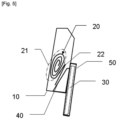
- According to one embodiment, the folding of the inflatable cushion may comprise an accordion-style fold arranged at an end of the inflatable cushion attached to the kick-scooter. Such an accordion-style fold makes it possible to limit the forces on the inflatable cushion at the start of deployment, and to enable rapid displacement out of the housing which typically surrounds the inflatable cushion before deployment.
- According to one embodiment, the kick-scooter may comprise a bearing surface for the inflatable cushion inclined relative to the vertical, so as to cause deployment of the inflatable cushion toward the front of the kick-scooter and from, or toward, the side of the handlebar which is opposite to the platform and/or to the wheels. Such a bearing surface ensures the final orientation of the inflatable cushion upward and toward the front of the kick-scooter.
- According to one embodiment, when the two wheels of the kick-scooter are resting on a reference plane, the bearing surface may be inclined relative to a normal of the reference plane by an angle within a range extending from 5° to 85°, preferably from 25° to 65°, in a trigonometric sense, when the kick-scooter is viewed form the left.
- According to one embodiment, the inflatable cushion may comprise seams and/or straps and/or strips of fabric arranged to ensure, after or during deployment, a thickness less than a width and/or a length of the deployed inflatable cushion, and/or a thickness of less than 15 cm and preferably less than 10 cm.
- According to one embodiment, the inflatable cushion, after deployment, may have a volume of between 30 I and 50 I and advantageously between 35 I and 45 I.
- According to one embodiment, the inflatable cushion may have, after or during deployment, a width greater than or equal to 80% of a size of the handlebar, at least at the handlebar. Thus, the user's hands are also protected by the inflatable cushion.
- According to one embodiment, the inflatable cushion may have, after or during deployment, a length greater than or equal to 60 cm. Typically, the inflatable cushion has an end portion which can be inserted between the obstacle and the user's head.
- According to one embodiment, after or during deployment, the inflatable cushion seen from the front, may have:
- a first portion arranged at the steering column with a first width,
- a second portion arranged at the handlebar with a second width,
- a third portion arranged above the handlebar, or on the side of the handlebar opposite the platform, with a third width,
- preferably a fourth rounded portion forming the end of the inflatable cushion, and:
- the first width may be less than the second width, and/or
- the second width may be less than the third width.
- The first, narrow, portion is arranged below the handlebar after deployment: this limits the volume to be inflated in this area where there is no need to protect the user, and this makes it possible not to interfere with the housing wherein the inflatable cushion is folded.
- According to one embodiment, the safety device may comprise a gas generator, preferably with an electro-pyrotechnic initiator.
- According to one embodiment, the gas generator may be arranged on or in a steering column. This limits the overall bulk of the safety device.
- According to one embodiment, the gas generator may be arranged on or in the handlebar. This makes it possible to limit the dimensions of the inflatable cushion.
- According to one embodiment, the inflatable cushion may be attached to the handlebar. This makes it possible to limit the dimensions of the inflatable cushion.
- According to one embodiment, the gas generator may have an elongated shape with a gas diffuser at one end, and the gas generator may be mounted in the steering column with the gas diffuser on the steering wheel side. This makes it possible to limit the dimensions of the safety device, with the diffuser of the gas generator as close as possible to the inflatable cushion.
- According to one embodiment, the safety device may form a safety module, comprising at least one intermediate tube forming a part of the steering column. Thus, the safety device is easy to install while limiting the overall bulk: a part of the steering column forms part of the safety device, which provides good integration, in particular mechanical.
- According to one embodiment, the gas generator may be arranged in the intermediate tube. This limits the external bulk and provides good compactness.
- According to the invention, the inflatable cushion, after or during deployment, has a frontward and upward deployed direction when the kick-scooter is resting on horizontal ground.
- According to the invention, the deployed direction isinclined toward the front relative to a vertical by an angle of between 45° and 5°, and preferably between 30° and 10°.
- According to one embodiment, the kick-scooter may comprise steering stops limiting an angle of rotation of the handlebar to ±90°, and preferably to ± 70°, relative to a longitudinal direction of the elongated platform. This makes it possible to ensure that the inflatable cushion is not deployed toward the rear of the kick-scooter, which improves the user's safety.
- According to one embodiment, the kick-scooter may comprise an inhibition unit such as a speed sensor and/or contactors, arranged to prevent deployment of the inflatable cushion if a speed of the kick-scooter is less than 10km/h, and/or if the handlebar is pivoted beyond an angle of rotation of the handlebar at ±90°, and preferably at ± 70°, relative to a longitudinal direction of the elongated platform. Such an implementation makes it possible to avoid inopportune deployments (at low speed and/or in scenarios in which the handlebar is oriented toward the user.
- Other features and advantages of the present invention will be seen more clearly from the following detailed description of an embodiment of the invention provided by way of a non-limiting example and illustrated by the appended drawings, wherein:
- [
Fig. 1 ] depicts a side view of a kick-scooter equipped with a safety device with an inflatable cushion; - [
Fig. 2 ] depicts the kick-scooter fromFigure 1 with the inflatable cushion deployed; - [
Fig. 3 ] depicts a front view of the kick-scooter fromFigure 1 ; - [
Fig. 4 ] depicts a front view of the kick-scooter fromFigure 2 ; - [
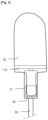
Fig.5 ] depicts a detail of the safety device fromFigure 1 . - The invention is defined by the claims.
Figure 1 depicts a kick-scooter comprising, in particular, afront wheel 130, arear wheel 135, anelongated platform 140, ahandlebar 110 connected to thefront wheel 130 by asteering column 120. - A safety device is also provided on the kick-scooter, and comprises in particular:
- a
housing 10 which contains aninflatable cushion 20, - a bearing plate providing a bearing
surface 40, - a
tube 50 forming a part of thesteering column 120, - a
gas generator 30 provided in thetube 50, - an electronic control unit, being able for example to be located in the
housing 10, - an
acceleration measuring unit 60 attached in this case at the mudguard of thefront wheel 130, but being able to be included in the electronic control unit. - In
Figure 1 , before deployment, theinflatable cushion 20 is stowed/hidden/shaped/folded in thehousing 10 and connected to thegas generator 30 to be able to be inflated when required. To this end, a gas conduit (not shown) may be provided between thegas generator 30 and theinflatable cushion 20. - Moreover, it is possible to advantageously provide for using a
gas generator 30 of tubular shape, to insert it into thetube 50, in order to supply good compactness. It is also possible to provide in particular agas generator 30 which has a diffusion area at a single end, and to provide this end at the area of coupling of theinflatable cushion 20, as depicted. - The
gas generator 30 may be of entirely pyrotechnic type, or of the pressurized gas (cold gas) type, or may use pyrotechnical material and pressurized gases (hybrid generator) to inflate the inflatable cushion. A tubular gas generator may be provided, with a diameter of less than 45 mm, preferably less than 35 mm, and even more preferentially less than 30 mm. The length of the gas generator may be less than 500 mm, and preferably less than 350 mm. Interchangeable gas cartridges may be provided, to "recharge" thegas generator 30. - The
housing assembly 10,inflatable cushion 20, bearing plate,tube 50,gas generator 30, may be provided to form a module to be directly integrated on the kick-scooter, atattachments - The
gas generator 30 typically comprises an electro-pyrotechnic initiator and may be ignited by an electric current. To this end, the electronic control unit may generate this ignition current. - An
acceleration measuring unit 60 is provided at the front fender, but may also be provided in the electronic control unit or at another location on the kick-scooter, in order to detect sudden deceleration which corresponds to an impact with an obstacle. In case of sudden deceleration, theacceleration measuring unit 60 of the electronic control unit generates a particular signal and sends it to the electronic control unit which in turn generates the ignition signal. - The kick-scooter depicted may be an electric kick-scooter with an on-board battery (housed in the
platform 140 and/or thesteering column 120 and/or in the handlebar 110) to power the electric drive motor, and it is advantageously possible for the electronic control unit to be powered by this battery. -
Figure 2 depicts a user on the kick-scooter, and an obstacle 200 (in this case a motor vehicle) hit by thefront wheel 130. Consequently, strong deceleration is detected and the electronic control unit has generated an ignition signal which has triggered thegas generator 30. - Consequently, the
inflatable cushion 20 has been deployed so as to be positioned between the user and theobstacle 200. In detail, theinflatable cushion 20 has been deployed upwardly, on the side of thehandlebar 110 opposite theplatform 140, leaving the housing 10 (one cover of which has opened by breaking or unclipping, for example). - Once deployed, the inflatable cushion, in side view as in
Figure 2 , has an inclined toward the front direction forming an angle β with a vertical of between 45° and 5°, and preferably between 30° and 10°. The bearingsurface 40 makes it possible to facilitate this inclination, and the bearingsurface 40 forming an angle α with a vertical within a range extending from 5° to 85°, preferably from 25° to 65°. It will be noted that the vertical mentioned here is a normal to the ground on which the wheels are resting. - In order to supply rapid and reproducible deployment, it is proposed to shape or fold the
inflatable cushion 20 in a particular way, as depicted inFigures 3 and5 . Firstly,Figure 5 shows a detail fromFigure 1 , and in particular a diagram of the folding of theinflatable cushion 20. Firstly, an accordion-style fold 22 is provided at the bearingsurface 40, which provides rapid egress from thehousing 10. Moreover, rolling 22 of theinflatable cushion 20 in on itself is provided, in order to enable reliable deployment, in particular if part of theobstacle 200 is present in the trajectory: with rolling 22 in the clockwise direction (viewed from the left, with the handlebar facing the front), then the inflatable cushion unrolls while bearing against theobstacle 200. - Moreover,
Figure 3 depicts a front view of the kick-scooter fromFigure 1 , to show in particular the folding of theinflatable cushion 20. Indeed, in this view, it is noted that theinflatable cushion 20 before deployment is folded to have a U shape, with the arms of the U being folded on themselves. Such folding is compact and also provides rapid deployment toward the top ofFigure 3 . - In
Figure 2 , it is noted that the deployedinflatable cushion 20 is arranged between theobstacle 200 and the user, andFigure 4 shows the geometry of the inflatable cushion from the front. At thehousing 10, theinflatable cushion 20 has a small width, so as not to interfere with thehousing 10. At thehandlebar 110, theinflatable cushion 20 has virtually the same width as thehandlebar 110, such that the user's hands are also protected. Finally, at the upper part, the latter has a rounded shape or an inverted V shape, in order to best protect the user's head. - In particular, it is possible to provide, as addition or alternative:
- the fixing of the
gas generator 30 at the handlebar, and/or - the fixing of the
housing 10 at the handlebar, and/or - the fixing of the
inflatable cushion 20 at the handlebar, and/or - a support tightly attached to the handlebar to accommodate a mobile telephone, and/or
- inhibiting the ignition according to several scenarios (speed too low, handlebar pivoted rearward, user's feet not present on the platform at the time of, or before (for example 1 second) the detection of deceleration, etc.), and/or
- a mechanism to be actuated by the user to deactivate operation (if the user is anticipating sport use, for example), with informational feedback on this deactivated state.
Claims (12)
- A kick-scooter, for example an electric kick-scooter, comprising:- two wheels (130, 135),- an elongated platform (140) mounted on the two wheels (130, 135) and arranged to receive at least one foot of a user,- a steering handlebar (110) articulated relative to the platform and connected to one of the wheels (130, 135),wherein the kick-scooter comprises a safety device with an inflatable cushion (20) arranged to be deployed in case of sudden deceleration of the kick-scooter,characterized in that the inflatable cushion (20) has, after or during deployment, a frontward and upward deployed direction when the kick-scooter is resting on horizontal ground,and in that the deployed direction is inclined toward the front relative to a vertical by an angle of between 45° and 5°, and preferably between 30° and 10°.
- The kick-scooter according to claim 1, wherein the safety device, before deployment, forms a safety module comprising a housing (10) containing the inflatable cushion (20) and arranged on the handlebar (110), or between the handlebar (110) and:- one of the wheels (130, 135), preferably a front wheel (130), and/or- the platform (140).
- The kick-scooter according to one of claims 1 or 2, wherein the inflatable cushion (20) is arranged to be deployed at least on a side of the handlebar (110) opposite to the platform (140) and/or to the wheels (130, 135).
- The kick-scooter according to one of claims 1 to 3, comprising an electronic control unit, arranged to control the deployment of the inflatable cushion (20).
- The kick-scooter according to one of claims 1 to 4, wherein the inflatable cushion (20) comprises folding with rolling (22) of the inflatable cushion (20) in on itself in a clockwise direction, when the roll (22) is viewed from the left, with the handlebar (110) oriented toward the front.
- The kick-scooter according to claim 5, wherein the folding of the inflatable cushion (20) comprises folding of the roll of the inflatable cushion (20) so as to have a U shape, the arms of the U being arranged substantially parallel to a steering column of the kick-scooter, and the arms of the U preferably having edges folded back on themselves, preferably with the arms of the U oriented upward.
- The kick-scooter according to one of claims 5 to 6, wherein the folding of the inflatable cushion (20) comprises an accordion-style fold (21) arranged at an end of the inflatable cushion (20) attached to the kick-scooter.
- The kick-scooter according to one of claims 1 to 7, comprising a bearing surface (40) for the inflatable cushion (20) inclined relative to the vertical, so as to cause a deployment of the inflatable cushion (20) toward the front of the kick-scooter and from or toward the side of the handlebar (110) which is opposite the platform (140) and/or to the wheels (130, 135).
- The kick-scooter according to one of claims 1 to 8, wherein the inflatable cushion (20) has, after or during deployment, a width greater than or equal to 80% of a size of the handlebar (110), at least at the handlebar (110).
- The kick-scooter according to one of claims 1 to 9, wherein the safety device comprises a gas generator, preferably with an electro-pyrotechnic initiator.
- The kick-scooter according to claim 10, wherein the gas generator has an elongated shape with a gas diffuser at one end, and wherein the gas generator is mounted in a steering column with the gas diffuser on the steering wheel (110) side.
- The kick-scooter according to one of claims 1 to 11, comprising an inhibition unit such as a speed sensor and/or contactors, arranged to prevent deployment of the inflatable cushion (20) if a speed of the kick-scooter is less than 10km/h, and/or if the handlebar (110) is pivoted beyond an angle of rotation of the handlebar (110) at ±90°, and preferably at ± 70°, relative to a longitudinal direction of the elongated platform (140).
Applications Claiming Priority (1)
| Application Number | Priority Date | Filing Date | Title |
|---|---|---|---|
| FR2000984A FR3106808B1 (en) | 2020-01-31 | 2020-01-31 | Scooter with safety device including an inflatable cushion |
Publications (3)
| Publication Number | Publication Date |
|---|---|
| EP3858721A1 EP3858721A1 (en) | 2021-08-04 |
| EP3858721C0 EP3858721C0 (en) | 2025-01-01 |
| EP3858721B1 true EP3858721B1 (en) | 2025-01-01 |
Family
ID=70154725
Family Applications (1)
| Application Number | Title | Priority Date | Filing Date |
|---|---|---|---|
| EP21154451.5A Active EP3858721B1 (en) | 2020-01-31 | 2021-01-29 | Scooter with safety device comprising an inflatable cushion |
Country Status (6)
| Country | Link |
|---|---|
| US (1) | US11912368B2 (en) |
| EP (1) | EP3858721B1 (en) |
| JP (1) | JP7209752B2 (en) |
| KR (1) | KR102571613B1 (en) |
| CN (1) | CN113200112B (en) |
| FR (1) | FR3106808B1 (en) |
Families Citing this family (5)
| Publication number | Priority date | Publication date | Assignee | Title |
|---|---|---|---|---|
| KR20220066076A (en) * | 2019-08-26 | 2022-05-23 | 그랩택시 홀딩스 피티이. 엘티디. | Antenna Design for Internet of Things for Shared Scooters |
| CN114450216B (en) * | 2019-09-30 | 2024-04-16 | 本田技研工业株式会社 | Airbag device for saddle-type vehicle |
| US11999427B2 (en) * | 2020-03-31 | 2024-06-04 | Honda Motor Co., Ltd. | Saddle-ride type vehicle |
| DE102022124536A1 (en) | 2022-09-23 | 2024-03-28 | ADVENATE GmbH | Vehicle with airbag |
| WO2026070744A1 (en) * | 2024-09-26 | 2026-04-02 | オートリブ ディベロップメント エービー | Airbag device and vehicle |
Citations (3)
| Publication number | Priority date | Publication date | Assignee | Title |
|---|---|---|---|---|
| CN105015669A (en) * | 2015-06-30 | 2015-11-04 | 邱信安 | Children scooter |
| CN209719794U (en) * | 2019-04-15 | 2019-12-03 | 武义创鑫金属工具有限公司 | A kind of scooter anticollision device, collision-prevention device |
| EP3828067A1 (en) * | 2019-11-27 | 2021-06-02 | Helite | Protection system, vehicle and use implementing such a protection system |
Family Cites Families (26)
| Publication number | Priority date | Publication date | Assignee | Title |
|---|---|---|---|---|
| JP4259719B2 (en) * | 2000-02-22 | 2009-04-30 | ヤマハ発動機株式会社 | Saddle-type vehicle airbag device |
| US6531838B2 (en) * | 2000-12-21 | 2003-03-11 | Mobile Transport Technologies, Inc. | Front-wheel-mounted electric motor for a wheeled vehicle |
| US6345678B1 (en) * | 2001-03-21 | 2002-02-12 | Shian-Pei Chang | Scooter |
| US20030042058A1 (en) * | 2001-08-28 | 2003-03-06 | Shane Chen | Detachable motor for scooter |
| JP2003170793A (en) * | 2001-12-04 | 2003-06-17 | Takata Corp | Externally deploying airbag device |
| US6846009B2 (en) * | 2002-02-20 | 2005-01-25 | Honda Giken Kogyo Kabushiki Kaisha | Airbag apparatus for a compact vehicle |
| JP2003327183A (en) * | 2002-05-15 | 2003-11-19 | Takata Corp | Air bag device for motorcycle, manufacturing method of air bag device for motorcycle and motorcycle with air bag device |
| DE10237401A1 (en) * | 2002-08-09 | 2004-03-11 | Takata-Petri (Ulm) Gmbh | Occupant protection device for a vehicle |
| JP4181843B2 (en) * | 2002-10-17 | 2008-11-19 | タカタ株式会社 | Airbag device, motorcycle with airbag device, and method of manufacturing airbag device |
| JP2004314834A (en) * | 2003-04-17 | 2004-11-11 | Takata Corp | Airbag device, and motorcycle with the airbag device |
| JP4711422B2 (en) * | 2006-03-30 | 2011-06-29 | 本田技研工業株式会社 | Airbag device |
| JP2008183913A (en) * | 2007-01-26 | 2008-08-14 | Honda Motor Co Ltd | Airbag device for motorcycle |
| US7934744B2 (en) | 2007-12-27 | 2011-05-03 | Honda Motor Co., Ltd. | Saddle-ride type vehicle |
| JP5979890B2 (en) * | 2012-01-31 | 2016-08-31 | 本田技研工業株式会社 | Airbag device for saddle riding type vehicle |
| GB201217962D0 (en) | 2012-10-08 | 2012-11-21 | Henty Capital Ltd | Improvements in passenger-carrying vehicles |
| TWI537176B (en) * | 2013-02-01 | 2016-06-11 | Electric scooter | |
| DE102013217851B4 (en) | 2013-09-06 | 2025-02-20 | Robert Bosch Gmbh | Safety system for a motorcycle and triggering method of a safety system |
| DE102015204913A1 (en) * | 2014-09-26 | 2016-03-31 | TAKATA Aktiengesellschaft | Protective devices for protecting a two-wheeled vehicle |
| JP2017065417A (en) * | 2015-09-30 | 2017-04-06 | 株式会社デンソー | Safety device for motorcycle |
| EP3405361B1 (en) * | 2016-01-22 | 2023-03-15 | Razor USA LLC | Rear drive assembly and personal mobility vehicle |
| US10046726B2 (en) * | 2016-02-16 | 2018-08-14 | Allied Treasure Inc, Limited | Airbag safety system for a two-wheeled vehicle |
| CN108068936A (en) * | 2016-11-06 | 2018-05-25 | 天津市连合工贸有限公司 | A kind of bicycle equipped with air bag |
| TWI635814B (en) * | 2017-10-25 | 2018-09-21 | 城市學校財團法人臺北城市科技大學 | Intelligent hedging airbag helmet |
| DE102018107492A1 (en) * | 2018-03-28 | 2019-10-02 | Fele Gmbh & Co. Kg | Improved folding mechanism for an electric scooter |
| US11173978B2 (en) * | 2018-04-27 | 2021-11-16 | Honda Motor Co., Ltd. | Airbag device for saddle-type vehicle |
| WO2019207775A1 (en) * | 2018-04-27 | 2019-10-31 | 本田技研工業株式会社 | Air bag device for saddled vehicle |
-
2020
- 2020-01-31 FR FR2000984A patent/FR3106808B1/en active Active
-
2021
- 2021-01-25 CN CN202110100359.6A patent/CN113200112B/en active Active
- 2021-01-26 JP JP2021010392A patent/JP7209752B2/en active Active
- 2021-01-27 KR KR1020210011441A patent/KR102571613B1/en active Active
- 2021-01-28 US US17/160,811 patent/US11912368B2/en active Active
- 2021-01-29 EP EP21154451.5A patent/EP3858721B1/en active Active
Patent Citations (3)
| Publication number | Priority date | Publication date | Assignee | Title |
|---|---|---|---|---|
| CN105015669A (en) * | 2015-06-30 | 2015-11-04 | 邱信安 | Children scooter |
| CN209719794U (en) * | 2019-04-15 | 2019-12-03 | 武义创鑫金属工具有限公司 | A kind of scooter anticollision device, collision-prevention device |
| EP3828067A1 (en) * | 2019-11-27 | 2021-06-02 | Helite | Protection system, vehicle and use implementing such a protection system |
Also Published As
| Publication number | Publication date |
|---|---|
| JP7209752B2 (en) | 2023-01-20 |
| BR102021001215A2 (en) | 2021-11-03 |
| EP3858721C0 (en) | 2025-01-01 |
| JP2021123328A (en) | 2021-08-30 |
| CN113200112B (en) | 2022-12-23 |
| FR3106808B1 (en) | 2022-01-28 |
| EP3858721A1 (en) | 2021-08-04 |
| US11912368B2 (en) | 2024-02-27 |
| US20210237821A1 (en) | 2021-08-05 |
| KR20210098359A (en) | 2021-08-10 |
| KR102571613B1 (en) | 2023-08-28 |
| FR3106808A1 (en) | 2021-08-06 |
| CN113200112A (en) | 2021-08-03 |
Similar Documents
| Publication | Publication Date | Title |
|---|---|---|
| EP3858721B1 (en) | Scooter with safety device comprising an inflatable cushion | |
| US5366241A (en) | Automobile air bag system | |
| US20190135220A1 (en) | Large volume dual airbag system | |
| EP3351435B1 (en) | Air bag for oblique crash protection | |
| US7588264B2 (en) | Airbag system and motorcycle with airbag system | |
| JP2023068221A (en) | Air bag device for vehicle | |
| ES2308841T3 (en) | SECURITY ADDRESS COLUMN, SAFETY SYSTEM FOR A VEHICLE WITH A SAFETY SYSTEM, AS WELL AS SAFETY PROCEDURE. | |
| EP3643567B1 (en) | Airbag arrangement | |
| US20060138763A1 (en) | Airbag and sensor-equipped roll bar for open vehicles | |
| JP5860442B2 (en) | Bicycle child seat and bicycle, and airbag module | |
| JP6029735B2 (en) | Bicycle child seat and bicycle, and airbag module | |
| KR102194769B1 (en) | Electric kickboard with airback | |
| CN111655550A (en) | driver air bag | |
| KR101888129B1 (en) | Driver seat airbag apparatus for vehicle | |
| CN102582558A (en) | Vehicle with rolling protection system | |
| KR101915409B1 (en) | An airbag device for an electric scooter and an electric scooter using the same | |
| EP2183131B1 (en) | Road vehicle front airbag | |
| JP4513724B2 (en) | Airbag device for driver's seat | |
| US9862341B2 (en) | Two-wheeler airbag system | |
| CN102390345A (en) | Supplemental inflatable restraint system with three parallel drawstrings | |
| JP2010173416A (en) | Occupant crash protection device | |
| CN217893106U (en) | Vehicle with safety air bag system | |
| CN107380113A (en) | A kind of vertical depression formula automotive airbag | |
| BR102021001215B1 (en) | SCOOTER | |
| KR20050101403A (en) | Top mount type driver's air bag system |
Legal Events
| Date | Code | Title | Description |
|---|---|---|---|
| PUAI | Public reference made under article 153(3) epc to a published international application that has entered the european phase |
Free format text: ORIGINAL CODE: 0009012 |
|
| STAA | Information on the status of an ep patent application or granted ep patent |
Free format text: STATUS: REQUEST FOR EXAMINATION WAS MADE |
|
| 17P | Request for examination filed |
Effective date: 20210129 |
|
| AK | Designated contracting states |
Kind code of ref document: A1 Designated state(s): AL AT BE BG CH CY CZ DE DK EE ES FI FR GB GR HR HU IE IS IT LI LT LU LV MC MK MT NL NO PL PT RO RS SE SI SK SM TR |
|
| STAA | Information on the status of an ep patent application or granted ep patent |
Free format text: STATUS: EXAMINATION IS IN PROGRESS |
|
| 17Q | First examination report despatched |
Effective date: 20220527 |
|
| GRAP | Despatch of communication of intention to grant a patent |
Free format text: ORIGINAL CODE: EPIDOSNIGR1 |
|
| STAA | Information on the status of an ep patent application or granted ep patent |
Free format text: STATUS: GRANT OF PATENT IS INTENDED |
|
| INTG | Intention to grant announced |
Effective date: 20240226 |
|
| GRAJ | Information related to disapproval of communication of intention to grant by the applicant or resumption of examination proceedings by the epo deleted |
Free format text: ORIGINAL CODE: EPIDOSDIGR1 |
|
| STAA | Information on the status of an ep patent application or granted ep patent |
Free format text: STATUS: EXAMINATION IS IN PROGRESS |
|
| GRAP | Despatch of communication of intention to grant a patent |
Free format text: ORIGINAL CODE: EPIDOSNIGR1 |
|
| STAA | Information on the status of an ep patent application or granted ep patent |
Free format text: STATUS: GRANT OF PATENT IS INTENDED |
|
| INTC | Intention to grant announced (deleted) | ||
| INTG | Intention to grant announced |
Effective date: 20240724 |
|
| GRAS | Grant fee paid |
Free format text: ORIGINAL CODE: EPIDOSNIGR3 |
|
| GRAA | (expected) grant |
Free format text: ORIGINAL CODE: 0009210 |
|
| STAA | Information on the status of an ep patent application or granted ep patent |
Free format text: STATUS: THE PATENT HAS BEEN GRANTED |
|
| AK | Designated contracting states |
Kind code of ref document: B1 Designated state(s): AL AT BE BG CH CY CZ DE DK EE ES FI FR GB GR HR HU IE IS IT LI LT LU LV MC MK MT NL NO PL PT RO RS SE SI SK SM TR |
|
| REG | Reference to a national code |
Ref country code: GB Ref legal event code: FG4D |
|
| REG | Reference to a national code |
Ref country code: DE Ref legal event code: R096 Ref document number: 602021024076 Country of ref document: DE |
|
| REG | Reference to a national code |
Ref country code: CH Ref legal event code: EP |
|
| REG | Reference to a national code |
Ref country code: IE Ref legal event code: FG4D |
|
| U01 | Request for unitary effect filed |
Effective date: 20250114 |
|
| U07 | Unitary effect registered |
Designated state(s): AT BE BG DE DK EE FI FR IT LT LU LV MT NL PT RO SE SI Effective date: 20250129 |
|
| U20 | Renewal fee for the european patent with unitary effect paid |
Year of fee payment: 5 Effective date: 20250128 |
|
| PG25 | Lapsed in a contracting state [announced via postgrant information from national office to epo] |
Ref country code: PL Free format text: LAPSE BECAUSE OF FAILURE TO SUBMIT A TRANSLATION OF THE DESCRIPTION OR TO PAY THE FEE WITHIN THE PRESCRIBED TIME-LIMIT Effective date: 20250101 |
|
| PG25 | Lapsed in a contracting state [announced via postgrant information from national office to epo] |
Ref country code: ES Free format text: LAPSE BECAUSE OF FAILURE TO SUBMIT A TRANSLATION OF THE DESCRIPTION OR TO PAY THE FEE WITHIN THE PRESCRIBED TIME-LIMIT Effective date: 20250101 |
|
| PG25 | Lapsed in a contracting state [announced via postgrant information from national office to epo] |
Ref country code: IS Free format text: LAPSE BECAUSE OF FAILURE TO SUBMIT A TRANSLATION OF THE DESCRIPTION OR TO PAY THE FEE WITHIN THE PRESCRIBED TIME-LIMIT Effective date: 20250501 Ref country code: NO Free format text: LAPSE BECAUSE OF FAILURE TO SUBMIT A TRANSLATION OF THE DESCRIPTION OR TO PAY THE FEE WITHIN THE PRESCRIBED TIME-LIMIT Effective date: 20250401 |
|
| PG25 | Lapsed in a contracting state [announced via postgrant information from national office to epo] |
Ref country code: HR Free format text: LAPSE BECAUSE OF FAILURE TO SUBMIT A TRANSLATION OF THE DESCRIPTION OR TO PAY THE FEE WITHIN THE PRESCRIBED TIME-LIMIT Effective date: 20250101 |
|
| PG25 | Lapsed in a contracting state [announced via postgrant information from national office to epo] |
Ref country code: GR Free format text: LAPSE BECAUSE OF FAILURE TO SUBMIT A TRANSLATION OF THE DESCRIPTION OR TO PAY THE FEE WITHIN THE PRESCRIBED TIME-LIMIT Effective date: 20250402 |
|
| PG25 | Lapsed in a contracting state [announced via postgrant information from national office to epo] |
Ref country code: CZ Free format text: LAPSE BECAUSE OF FAILURE TO SUBMIT A TRANSLATION OF THE DESCRIPTION OR TO PAY THE FEE WITHIN THE PRESCRIBED TIME-LIMIT Effective date: 20250101 |
|
| REG | Reference to a national code |
Ref country code: CH Ref legal event code: PL |
|
| PG25 | Lapsed in a contracting state [announced via postgrant information from national office to epo] |
Ref country code: SM Free format text: LAPSE BECAUSE OF FAILURE TO SUBMIT A TRANSLATION OF THE DESCRIPTION OR TO PAY THE FEE WITHIN THE PRESCRIBED TIME-LIMIT Effective date: 20250101 |
|
| PG25 | Lapsed in a contracting state [announced via postgrant information from national office to epo] |
Ref country code: MC Free format text: LAPSE BECAUSE OF FAILURE TO SUBMIT A TRANSLATION OF THE DESCRIPTION OR TO PAY THE FEE WITHIN THE PRESCRIBED TIME-LIMIT Effective date: 20250101 |
|
| PG25 | Lapsed in a contracting state [announced via postgrant information from national office to epo] |
Ref country code: CH Free format text: LAPSE BECAUSE OF NON-PAYMENT OF DUE FEES Effective date: 20250131 |
|
| PG25 | Lapsed in a contracting state [announced via postgrant information from national office to epo] |
Ref country code: SK Free format text: LAPSE BECAUSE OF FAILURE TO SUBMIT A TRANSLATION OF THE DESCRIPTION OR TO PAY THE FEE WITHIN THE PRESCRIBED TIME-LIMIT Effective date: 20250101 |
|
| PLBE | No opposition filed within time limit |
Free format text: ORIGINAL CODE: 0009261 |
|
| STAA | Information on the status of an ep patent application or granted ep patent |
Free format text: STATUS: NO OPPOSITION FILED WITHIN TIME LIMIT |
|
| 26N | No opposition filed |
Effective date: 20251002 |
|
| PG25 | Lapsed in a contracting state [announced via postgrant information from national office to epo] |
Ref country code: IE Free format text: LAPSE BECAUSE OF NON-PAYMENT OF DUE FEES Effective date: 20250129 |
|
| U20 | Renewal fee for the european patent with unitary effect paid |
Year of fee payment: 6 Effective date: 20260126 |
|
| PGFP | Annual fee paid to national office [announced via postgrant information from national office to epo] |
Ref country code: GB Payment date: 20260126 Year of fee payment: 6 |