EP3858236A1 - Method of monitoring heart rate for toxicity test using high-speed digital holography - Google Patents
Method of monitoring heart rate for toxicity test using high-speed digital holography Download PDFInfo
- Publication number
- EP3858236A1 EP3858236A1 EP21154778.1A EP21154778A EP3858236A1 EP 3858236 A1 EP3858236 A1 EP 3858236A1 EP 21154778 A EP21154778 A EP 21154778A EP 3858236 A1 EP3858236 A1 EP 3858236A1
- Authority
- EP
- European Patent Office
- Prior art keywords
- heart rate
- individual
- fixing unit
- real time
- aquatic organism
- Prior art date
- Legal status (The legal status is an assumption and is not a legal conclusion. Google has not performed a legal analysis and makes no representation as to the accuracy of the status listed.)
- Granted
Links
Images





Classifications
-
- A—HUMAN NECESSITIES
- A61—MEDICAL OR VETERINARY SCIENCE; HYGIENE
- A61B—DIAGNOSIS; SURGERY; IDENTIFICATION
- A61B5/00—Measuring for diagnostic purposes; Identification of persons
- A61B5/02—Detecting, measuring or recording for evaluating the cardiovascular system, e.g. pulse, heart rate, blood pressure or blood flow
- A61B5/024—Measuring pulse rate or heart rate
-
- A—HUMAN NECESSITIES
- A61—MEDICAL OR VETERINARY SCIENCE; HYGIENE
- A61B—DIAGNOSIS; SURGERY; IDENTIFICATION
- A61B5/00—Measuring for diagnostic purposes; Identification of persons
- A61B5/103—Measuring devices for testing the shape, pattern, colour, size or movement of the body or parts thereof, for diagnostic purposes
- A61B5/11—Measuring movement of the entire body or parts thereof, e.g. head or hand tremor or mobility of a limb
- A61B5/1104—Measuring movement of the entire body or parts thereof, e.g. head or hand tremor or mobility of a limb induced by stimuli or drugs
- A61B5/1105—Measuring movement of the entire body or parts thereof, e.g. head or hand tremor or mobility of a limb induced by stimuli or drugs of laboratory animals, e.g. activity
-
- A—HUMAN NECESSITIES
- A01—AGRICULTURE; FORESTRY; ANIMAL HUSBANDRY; HUNTING; TRAPPING; FISHING
- A01K—ANIMAL HUSBANDRY; AVICULTURE; APICULTURE; PISCICULTURE; FISHING; REARING OR BREEDING ANIMALS, NOT OTHERWISE PROVIDED FOR; NEW BREEDS OF ANIMALS
- A01K1/00—Housing animals; Equipment therefor
- A01K1/02—Pigsties; Dog-kennels; Rabbit-hutches or the like
- A01K1/03—Housing for domestic or laboratory animals
- A01K1/031—Cages for laboratory animals; Cages for measuring metabolism of animals
-
- A—HUMAN NECESSITIES
- A01—AGRICULTURE; FORESTRY; ANIMAL HUSBANDRY; HUNTING; TRAPPING; FISHING
- A01K—ANIMAL HUSBANDRY; AVICULTURE; APICULTURE; PISCICULTURE; FISHING; REARING OR BREEDING ANIMALS, NOT OTHERWISE PROVIDED FOR; NEW BREEDS OF ANIMALS
- A01K61/00—Culture of aquatic animals
-
- A—HUMAN NECESSITIES
- A61—MEDICAL OR VETERINARY SCIENCE; HYGIENE
- A61B—DIAGNOSIS; SURGERY; IDENTIFICATION
- A61B5/00—Measuring for diagnostic purposes; Identification of persons
- A61B5/0059—Measuring for diagnostic purposes; Identification of persons using light, e.g. diagnosis by transillumination, diascopy, fluorescence
- A61B5/0082—Measuring for diagnostic purposes; Identification of persons using light, e.g. diagnosis by transillumination, diascopy, fluorescence adapted for particular medical purposes
-
- A—HUMAN NECESSITIES
- A61—MEDICAL OR VETERINARY SCIENCE; HYGIENE
- A61B—DIAGNOSIS; SURGERY; IDENTIFICATION
- A61B5/00—Measuring for diagnostic purposes; Identification of persons
- A61B5/02—Detecting, measuring or recording for evaluating the cardiovascular system, e.g. pulse, heart rate, blood pressure or blood flow
- A61B5/024—Measuring pulse rate or heart rate
- A61B5/02444—Details of sensor
-
- A—HUMAN NECESSITIES
- A61—MEDICAL OR VETERINARY SCIENCE; HYGIENE
- A61D—VETERINARY INSTRUMENTS, IMPLEMENTS, TOOLS, OR METHODS
- A61D3/00—Arrangements for supporting or fettering animals for veterinary purposes
-
- G—PHYSICS
- G02—OPTICS
- G02B—OPTICAL ELEMENTS, SYSTEMS OR APPARATUS
- G02B21/00—Microscopes
- G02B21/32—Micromanipulators structurally combined with microscopes
-
- G—PHYSICS
- G02—OPTICS
- G02B—OPTICAL ELEMENTS, SYSTEMS OR APPARATUS
- G02B21/00—Microscopes
- G02B21/34—Microscope slides, e.g. mounting specimens on microscope slides
-
- G—PHYSICS
- G03—PHOTOGRAPHY; CINEMATOGRAPHY; ANALOGOUS TECHNIQUES USING WAVES OTHER THAN OPTICAL WAVES; ELECTROGRAPHY; HOLOGRAPHY
- G03H—HOLOGRAPHIC PROCESSES OR APPARATUS
- G03H1/00—Holographic processes or apparatus using light, infrared or ultraviolet waves for obtaining holograms or for obtaining an image from them; Details peculiar thereto
- G03H1/04—Processes or apparatus for producing holograms
- G03H1/0443—Digital holography, i.e. recording holograms with digital recording means
-
- G—PHYSICS
- G06—COMPUTING OR CALCULATING; COUNTING
- G06N—COMPUTING ARRANGEMENTS BASED ON SPECIFIC COMPUTATIONAL MODELS
- G06N20/00—Machine learning
-
- A—HUMAN NECESSITIES
- A61—MEDICAL OR VETERINARY SCIENCE; HYGIENE
- A61B—DIAGNOSIS; SURGERY; IDENTIFICATION
- A61B2503/00—Evaluating a particular growth phase or type of persons or animals
- A61B2503/40—Animals
-
- A—HUMAN NECESSITIES
- A61—MEDICAL OR VETERINARY SCIENCE; HYGIENE
- A61B—DIAGNOSIS; SURGERY; IDENTIFICATION
- A61B5/00—Measuring for diagnostic purposes; Identification of persons
- A61B5/72—Signal processing specially adapted for physiological signals or for diagnostic purposes
- A61B5/7235—Details of waveform analysis
- A61B5/7253—Details of waveform analysis characterised by using transforms
- A61B5/7257—Details of waveform analysis characterised by using transforms using Fourier transforms
-
- A—HUMAN NECESSITIES
- A61—MEDICAL OR VETERINARY SCIENCE; HYGIENE
- A61B—DIAGNOSIS; SURGERY; IDENTIFICATION
- A61B5/00—Measuring for diagnostic purposes; Identification of persons
- A61B5/72—Signal processing specially adapted for physiological signals or for diagnostic purposes
- A61B5/7235—Details of waveform analysis
- A61B5/7264—Classification of physiological signals or data, e.g. using neural networks, statistical classifiers, expert systems or fuzzy systems
- A61B5/7267—Classification of physiological signals or data, e.g. using neural networks, statistical classifiers, expert systems or fuzzy systems involving training the classification device
-
- G—PHYSICS
- G02—OPTICS
- G02B—OPTICAL ELEMENTS, SYSTEMS OR APPARATUS
- G02B21/00—Microscopes
- G02B21/24—Base structure
- G02B21/26—Stages; Adjusting means therefor
-
- G—PHYSICS
- G03—PHOTOGRAPHY; CINEMATOGRAPHY; ANALOGOUS TECHNIQUES USING WAVES OTHER THAN OPTICAL WAVES; ELECTROGRAPHY; HOLOGRAPHY
- G03H—HOLOGRAPHIC PROCESSES OR APPARATUS
- G03H1/00—Holographic processes or apparatus using light, infrared or ultraviolet waves for obtaining holograms or for obtaining an image from them; Details peculiar thereto
- G03H1/04—Processes or apparatus for producing holograms
- G03H1/08—Synthesising holograms, i.e. holograms synthesized from objects or objects from holograms
- G03H1/0866—Digital holographic imaging, i.e. synthesizing holobjects from holograms
-
- G—PHYSICS
- G03—PHOTOGRAPHY; CINEMATOGRAPHY; ANALOGOUS TECHNIQUES USING WAVES OTHER THAN OPTICAL WAVES; ELECTROGRAPHY; HOLOGRAPHY
- G03H—HOLOGRAPHIC PROCESSES OR APPARATUS
- G03H1/00—Holographic processes or apparatus using light, infrared or ultraviolet waves for obtaining holograms or for obtaining an image from them; Details peculiar thereto
- G03H1/0005—Adaptation of holography to specific applications
- G03H2001/005—Adaptation of holography to specific applications in microscopy, e.g. digital holographic microscope [DHM]
Definitions
- the following disclosure relates to a method of monitoring a heart rate for a toxicity test using high-speed digital holography, and more particularly, to a method of monitoring a heart rate of an open circulatory system aquatic organism including water fleas, zebrafish, and brine shrimp.
- Dynamic behavior change of aquatic organisms such as zebrafish or a water flea has been widely studied in the field of ecotoxicology, environmental safety, nanodynamics, and the like.
- a water flea is appropriate in a micro-sized biotest, due to a possibility of cultivation in a large number in a small place and a short growth time.
- the water flea since their culture environment is indicated in international standard aquatic toxicity assessment guidelines, the water flea has also served as an advantage for cooperative studies.
- Cardiac toxicity assessment using water fleas has had an interesting result for nanoparticles or reactive oxygen species, and a heart rate change using water fleas may not be the same as that of humans, but an effect of a compound or nanoparticles on a general metabolic process such as an antioxidation drug test may be confirmed.
- the heart rate of water fleas disposed in a medium immersed in a small amount on a Petri dish or a well plate was usually observed by the naked eye through a microscope, and is still widely used. Since the method has a problem of low accuracy depending on the experimenter's dynamic vision, improvement therefor is needed. Recently, a phase microscope is used to solve the problem, but which is inappropriate since images produced during a long-term experiment occupy computer memory and data storage on a vast scale, and thus, there is a desperate need for improvement therefor.
- An embodiment of the present invention is directed to providing a method of evaluating an individual response by real time measurement of a heart rate, which allows real time measurement of a heart rate of an aquatic organism for a long time and monitoring thereof.
- Another embodiment of the present invention is directed to providing a chamber in which an underwater environment is simulated, which naturally fixes movement of aquatic organisms, and an individual response evaluation apparatus by real time measurement of a heart rate of an aquatic organism.
- a method of evaluating an individual response by real time measurement of a heart rate of an aquatic organism which is a method of evaluating an individual response using digital holography, includes: (a) disposing a measurement individual between a lower fixing unit fixed to a lower end inside a chamber and an upper fixing unit which is spaced apart from the lower fixing unit and is movable in a direction of the lower fixing unit or in an opposite direction thereof so that the measurement individual is immersed in a culture fluid to which a compound for inducing an individual response is added, closely adhering the upper fixing unit to the individual to measure a height of the individual, and then adjusting a position of the upper fixing unit to fix the individual; (b) continuously measuring a digital hologram for the individual; and (c) restoring the digital hologram obtained by the measurement to calculate a heart rate change, and determining therefrom whether the individual response is caused by the compound for inducing an individual response.
- the step (a) may include disposing an individual to be measured between a lower fixing unit fixed to a lower end inside a chamber carrying a culture fluid and an upper fixing unit which is spaced apart from the lower fixing unit and is movable in a direction of the lower fixing unit or in an opposite direction thereof so that the individual to be measured is immersed in the fluid, closely adhering the upper fixing unit to the individual to measure a height of the individual, and then adjusting a position of the upper fixing unit to fix the individual; and adding a compound for inducing the individual response to the chamber.
- the step (a) may include disposing an individual to be measured between a lower fixing unit fixed to a lower end inside a chamber carrying a culture fluid to which a compound for inducing an individual response is added and an upper fixing unit which is spaced apart from the lower fixing unit and is movable in a direction of the lower fixing unit or in an opposite direction thereof so that the individual to be measured is immersed in the fluid, closely adhering the upper fixing unit to the individual to measure a height of the individual, and then adjusting a position of the upper fixing unit to fix the individual.
- a distance between the lower fixing unit and the upper fixing unit may be a ratio of 0.92 to 0.95 relative to the height of the individual to be measured.
- the compound may be an organic compound, a metal, acid-alkali, gas, a medicine, or a nanoparticle.
- the compound may be selected from dimethylformamide, methanol, methylisobutylketone, benzene, carbon tetrachloride, styrene, cyclohexane, acetone, acetaldehyde, isobutylalcohol, methyl chloride, ethylene glycol, xylene, toluene, toluene-2,4-diisocyanate, trichloroethylene, n-hexane, lead, nickel, manganese, mercury, zinc, aluminum, iron, cadmium, chromium, hydrogen peroxide, acetic acid, sodium hydroxide, hydrochloric acid, sulfuric acid, nitric acid, phosphoric acid, ammonia, chlorine, ozone, hydrogen sulfide, carbon monoxide, sulfur dioxide, nitrogen dioxide, medicines, gold nano,
- the individual may be treated with the compound at a concentration of 0.01 to 0.10 mM.
- the algorithm for restoration may further include displaying a 2D-time-resolved relative phase map in real time and storing the heart rate at the same time.
- the heart rate may be obtained by an analysis method including a) selecting pixels corresponding to a heart area in the secured digital hologram; b) applying a Fourier spectrum method to each refreshing interval; c) searching a most frequent heart rate in each refreshing interval; and d) calculating a heart rate per minute from the most frequent heart rate.
- t i and t f refer to an initial time domain and a final time domain in a relaxation state.
- an individual response evaluation apparatus by real time measurement of a heart rate of an aquatic organism is an individual response evaluation apparatus by real time measurement of a heart rate of an aquatic organism using a digital hologram including: a chamber carrying a culture fluid; a lower fixing unit; an upper fixing unit spaced apart from the lower fixing unit; and a control unit controlling a position of the upper fixing unit, wherein the lower fixing unit is fixed to a lower end inside the chamber, an individual to be measured is disposed between the lower fixing unit and the upper fixing unit, the upper fixing unit is fixed to one side surface of the chamber and movable up and down, and the control unit adjusts the position of the upper fixing unit to fix the individual, after the upper fixing unit is closely adhered to the individual to measure the height the individual.
- the individual response evaluation apparatus may further include: a light source unit; a reference beam generating unit which produces a reference beam; an object beam generating unit which produces an object beam; a CCD(Charge-coupled device) which combines the reference beam and the object beam to record a hologram; an arithmetic unit which numerically analyzes an interference fringe of the recorded hologram; a display unit which displays the digital hologram numerically analyzed by the arithmetic unit; and a heart rate analysis unit which carries out heart rate analysis from the analyzed digital hologram, wherein the arithmetic unit may obtain a plurality of phase restoration phases for the hologram recorded in the CCD, and calculate an amplitude and an angle therefrom and transfer them to the display unit, the display unit may display the restoration image of the hologram recorded in the CCD in real time and transfer it to the heart rate analysis unit, and in the heart rate
- control unit may adjust a distance between the lower fixing unit and the upper fixing unit to a ratio of 0.87 to 0.95 relative to the height of the individual to be measured.
- control unit may adjust a distance between the lower fixing unit and the upper fixing unit to a ratio of 0.92 to 0.95 relative to the height of the individual to be measured.
- the individual response evaluation apparatus may measure one or more data selected from the group consisting of a real time heart rate of an aquatic organism, a spaced interval between the lower fixing unit and the upper fixing unit, a real time display of a time difference relative phase image, and a relaxation heart rate at the same time.
- the data measured at the same time by the individual response evaluation apparatus may be accumulated by iterative learning by applying an artificial intelligence method.
- the individual response evaluation apparatus by real time measurement of a heart rate of an aquatic organism according to an exemplary embodiment of the present invention, the individual response evaluation apparatus may be used for predicting a heart rate change in a higher organism by the iterative learning.
- first and second may be used to describe various constitutional elements, but the constitutional elements are not limited by the terms. The terms are used only to distinguish one constitutional element from another constitutional element.
- a first constitutional element may be named a second constitutional element and the second constitutional element may also be similarly named the first constitutional element, without departing from the scope of the present invention.
- units used in the specification of the present invention without particular mention are based on weights, and as an example, a unit of % or ratio refers to a wt% or a weight ratio.
- the expression “comprise” is an open-ended description having a meaning equivalent to the expression such as “provided”, “contain”, “have”, or “is/are characterized”, and does not exclude elements, materials or processes which are not further listed.
- the expression “substantially consisting of" means that other elements, materials, or processes which are not listed together with specified elements, materials, or processes may be present in an amount which does not have an unacceptable significant influence on at least one basic and novel technical idea of the invention.
- the expression “consisting of” means that only the described elements, materials, or processes are present.
- composition component
- composition component of a compound
- compound compound
- drug pharmaceutical activator
- cure treatment
- medicine is interchangeably used for meaning a compound or a composition of a compound(s) or a material inducing a desired pharmaceutical and/or physiological effect by a topical and/or systemic action when administrating it to a subject (human or animal).
- sample or “specimen” represents a subject to be analyzed, and is used in the same sense throughout the specification.
- the method of evaluating an individual response by real time measurement of a heart rate of an aquatic organism which is a method of evaluating an individual response using digital holography, includes: (a) disposing a measurement individual between a lower fixing unit fixed to a lower end inside a chamber and an upper fixing unit which is spaced apart from the lower fixing unit and is movable in a direction of the lower fixing unit or in an opposite direction thereof so that the measurement individual is immersed in a culture fluid to which a compound for inducing an individual response is added, closely adhering the upper fixing unit to the individual to measure a height of the individual, and then adjusting a position of the upper fixing unit to fix the individual; (b) continuously measuring a digital hologram for the individual; and (c) restoring the digital hologram obtained by the measurement to calculate a heart rate change, and determining therefrom whether the individual response is caused by the compound for inducing an individual response.
- the step (a) may include disposing an individual to be measured between a lower fixing unit fixed to a lower end inside a chamber carrying a culture fluid and an upper fixing unit which is spaced apart from the lower fixing unit and is movable in a direction of the lower fixing unit or in an opposite direction thereof so that the individual to be measured is immersed in the fluid, closely adhering the upper fixing unit to the individual to measure a height of the individual, and then adjusting a position of the upper fixing unit to fix the individual; and adding a compound for inducing the individual response to the chamber
- the step (a) may include disposing an individual to be measured between a lower fixing unit fixed to a lower end inside a chamber carrying a culture fluid to which a compound for inducing an individual response is added and an upper fixing unit which is spaced apart from the lower fixing unit and is movable in a direction of the lower fixing unit or in an opposite direction thereof so that the individual to be measured is immersed in the fluid, closely adhering the upper fixing unit to the individual to measure a height
- a distance between the lower fixing unit and the upper fixing unit may be a ratio of 0.87 to 0.95, preferably 0.89 to 0.95, and more preferably 0.92 to 0.95 relative to the height of the individual to be measured.
- the compound may be an organic compound, a metal, acid-alkali, gas, a medicine, or a nanoparticle, and according to a more specific exemplary embodiment, may be selected from dimethylformamide, methanol, methylisobutylketone, benzene, carbon tetrachloride, styrene, cyclohexane, acetone, acetaldehyde, isobutylalcohol, methyl chloride, ethylene glycol, xylene, toluene, toluene-2,4-diisocyanate, trichloroethylene, n-hexane, lead, nickel, manganese, mercury, zinc, aluminum, iron, cadmium, chromium, hydrogen peroxide, acetic acid, sodium hydroxide, hydrochloric acid, sulfuric acid, nitric acid, phosphoric acid, ammonia, chlorine, ozone, hydrogen sulfide, carbon monoxide, sulfur dioxide,
- a concentration of the compound at the time of treatment is not particularly limited, but as a specific example, the individual may be treated with the compound at a concentration of 0.001 to 0.50 mM, preferably 0.005 to 0.40 mM, and more preferably 0.01 to 0.10 mM.
- the algorithm for restoration may further include displaying a 2D-time-resolved relative phase map in real time and storing the heart rate at the same time.
- the heart rate may be obtained by an analysis method including a) selecting pixels corresponding to a heart area in the secured digital hologram; b) applying a Fourier spectrum method to each refreshing interval; c) searching a most frequent heart rate in each refreshing interval; and d) calculating a heart rate per minute from the most frequent heart rate.
- the secured digital hologram I(x,y) represents an optical interference signal between an object beam and an interference.
- an object wave-field by a two-dimensional fast Fourier transform (FFT) method of a hologram image is defined.
- Equation 1 the former two terms represent autocorrelation terms, the third term represents a real image term, and the fourth term represents a virtual image term, respectively.
- the application of the method is described in (b) of FIG. 4 according to an exemplary embodiment of the present invention.
- the object wave-field depending on a distance z in the hologram may be mathematically calculated using an angular spectrum method, and the method may be obtained by a wave propagation technique by a hologram plane H and a phase propagation factor exp[ikz] obtained by Fourier transform.
- t i and t f refer to an initial time domain and a final time domain in a relaxation state.
- digital holographic microscopy may reconstruct geographic information expressed in a complicated amplitude including an amplitude and phase information of an object wave field in an interference image. Since an ability of a digital holographic microscope may produce reconstructed phase information for a refractive index distribution present in a biological sample given by a high-speed camera.
- FIG. 1 illustrates a schematic flow chart of the method of evaluating an individual response by real time measurement of an aquatic organism.
- the method of evaluating an individual response by real time measurement of an aquatic organism includes an installation step (S101), an image secure step (S102), a data arithmetic operation step (S103), a display step (S104), and a heart rate analysis step (S105).
- the installation step (S101) is a step of disposing an aquatic organism to be tested between a lower fixing unit inside a chamber and an upper fixing unit and fixing the aquatic organism. After completing the installation step (S101), continuous images of the aquatic organism is obtained by digital holographic microscopy to create a hologram.
- the image secure step (S102) includes taking an optical interference signal produced from an object beam passing through an individual and a reference beam irradiated from a light source unit with a unit such as a CCD camera, thereby producing a hologram.
- the light source unit is operated to produce the object beam and the reference beam and the optical interference signal produced by a beam splitter is taken to obtain a hologram image.
- the obtained hologram image is restored to obtain a complex amplitude value.
- a method of calculating an amplitude and a phase angle of the complex amplitude is not particularly limited, but as an example, an angular spectrum method may be applied.
- a time difference phase value for the data restored by the method is calculated.
- the data restored in the data arithmetic operation step is received and displayed on a display screen in real time, and when it corresponds to a heart area, the data transferred to a heart rate analysis step to be utilized in calculation of the heart rate per minute.
- a data determined as corresponding to the heart area in the display step (S104) is received to calculate the heart rate per minute.
- the individual response evaluation apparatus by real time measurement of a heart rate of an aquatic organism is an individual response evaluation apparatus by real time measurement of a heart rate of an aquatic organism using a digital hologram including: a chamber carrying a culture fluid; a lower fixing unit; an upper fixing unit spaced apart from the lower fixing unit; and a control unit controlling a position of the upper fixing unit, wherein the lower fixing unit is fixed to a lower end inside the chamber, an individual to be measured is disposed between the lower fixing unit and the upper fixing unit, the upper fixing unit is fixed to one side surface of the chamber and movable up and down, and the control unit adjusts the position of the upper fixing unit to fix the individual, after the upper fixing unit is closely adhered to the individual to measure the height the individual.
- the individual response evaluation apparatus may further include: a light source unit; a reference beam generating unit which produces a reference beam; an object beam generating unit which produces an object beam; a CCD which combines the reference beam and the object beam to record a hologram; an arithmetic unit which numerically analyzes an interference fringe of the recorded hologram; a display unit which displays the digital hologram numerically analyzed by the arithmetic unit; and a heart rate analysis unit which carries out heart rate analysis from the analyzed digital hologram, wherein the arithmetic unit may obtain a plurality of phase reproduction phases for the hologram recorded in the CCD, and calculate an amplitude and an angle therefrom and transfer calculations to the display unit, the display unit may select and display the corresponding digital hologram until analysis of all holograms recorded in the CCD is completed and then transfer the digital hologram to the heart rate analysis unit, and in the heart rate analysis, a heart rate per minute may be calculated from the most frequent heart rate.
- the control unit may adjust a distance between the lower fixing unit and the upper fixing unit to a ratio of 0.87 to 0.95, preferably 0.92 to 0.95 relative to a height of the individual to be measured. By adjusting the individual to the ratio, the individual may be efficiently fixed between the lower fixing unit and the upper fixing unit, without affecting metabolism such as blood circulation of the individual.
- the individual response evaluation apparatus may measure one or more data selected from the group consisting of a real time heart rate of an aquatic organism, a spaced distance between the lower fixing unit and the upper fixing unit, a real time display of a heart rate phase, and a relaxation heart rate at the same time.
- the data measured at the same time by the individual response evaluation apparatus may be accumulated by iterative learning by applying an artificial intelligence method.
- It may be used for predicting a heart rate change in a higher organism by the iterative learning.
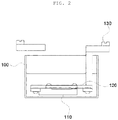
- the individual response evaluation apparatus of FIG. 2 allows an aquatic organism to be fixed between a lower structure unit 110 and an upper structure unit 120 in a chamber 100, and the upper structure unit is fixed in a form of being closely adhered to the aquatic organism by being moved up and down so that the aquatic organism is not moved within a range of not affecting heart rate measurement of the aquatic organism by a control unit 130.
- the lower structure unit 110 and the upper structure unit 120 are formed of a material which an object beam may transmit and light transmission for hologram production is performed.
- the light source unit is, though it is not shown in the drawing, installed in a lower region of the chamber or a lower region of the lower structure unit to provide an object beam generating unit (first light source) which irradiates the fixed individual with the object beam and a reference beam generating unit (second light source) which irradiates an optical path of the object beam with the reference beam.
- first light source an object beam generating unit
- second light source a reference beam generating unit which irradiates an optical path of the object beam with the reference beam.
- a laser may be used as an example, but the present invention is not limited thereto, and a range of the wavelength of the laser is not limited as long as a normal hologram is formed and as an example, a laser of 633.2 nm may be used.
- a beam splitter is installed, thereby producing an optical interference signal from the object beam and the reference beam which transmits the individual and an objective lens. Since the beam splitter is a beam splitter which was conventionally used in a digital holography microscope for producing the optical interference signal between the object beam and the reference beam, the detailed description thereof will be omitted.
- a unit for taking the optical interference signal is installed, and as an example, a CCD camera may be used, but the present invention is not limited thereto.
- FIG. 3 is illustrative of the individual response evaluation apparatus according to the present invention, and represents a real time heart rate monitoring system using extra-axial digital holography.
- (a) represents a schematic diagram of an extra-axial digital holography setting based on a Mach-Zehnder interometer, and as a light source, a wavelength of 633.2 nm helium-neon (He-Ne) laser (Thorlabs) having a power of 5 mW is used.
- the objective lens (micro objective lens; 10x/N.A. 0.30, Olympus, UMPLFLN 10XW) is used in an underwater immersion form and has an operation distance of 3.5 mm.
- a CCD camera (aca2040-180km, Basler) taking the optical interference signal of the object beam and the interference beam is set to a resolution of 2048x2048 and a pixel size of 5.5 umx5.5 um as a factory setting, and is connected to a data acquisition device and used for taking for an exposure time of 2.5 ms.
- a chamber having a schematic diagram like (b) of FIG. 3 and a digital holography device were connected and the individual response evaluation apparatus according to the present invention which was implemented as in (c) was used to test a toxic reaction for a water flea.
- a water flea was carefully disposed between a lower structure unit 110 and an upper structure unit 120 of a chamber 100 carrying agarose gel (Sigma-Aldrich) (or other media may be replaced), a control unit 130 was operated to measure the height of the water flea, and the height of the upper structure unit was controlled to be positioned so as to be 0.95% of the height of the water flea.
- the height of the water flea was measured as 538 um.
- an extra-axial digital holography method was used to take a hologram of the water flea with a CCD camera.
- the image was set to a pixel size of 0.5 um ⁇ 0.5 um and a 8-bit resolution of 1024 ⁇ 1024 and taken.
- a maximum signal intensity ratio of the heart area represented by an orange dotted circle was measured as 0.047 (SR ⁇ 5%).
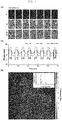
- a k-space image by 2D Fourier transform of an interference image was obtained ((b) of FIG. 4 ), and an object wave-field intensity distribution which was numerically reconstructed at 7.6 um from the hologram was secured.
- the reconstructed algorithm used an angle spectrum method ((c) of FIG. 4 ).
- (d) of FIG. 4 represents object wave-field intensity distributions of a numerically reconstructed object (above) and a reference taken without a water flea (below).
- a phase distribution of the water flea was obtained after combining an object wave-field in the reference wave field ((e) of FIG. 4 ).
- the phase at this time covered a range from - ⁇ to + ⁇ . Since a spatial phase is proportional to a specimen thickness and a refractive index, the time-resolved relative phase distribution of a water flea heart area was obtained therefrom and is represented by an orange rectangle ((f) to (h) of FIG. 4 ).
- the heart rate of the water flea was analyzed by the reconstructed time-resolved phase distributions, from the heart rate signal obtained by the method.
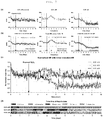
- Time-resolved image sets were compared from intensity (above), phase (middle), and relative phase (below) distributions at 25 frame intervals ((a) of FIG. 5 ). According to the results, the appearance of the water flea may be more clearly recognized in a space phase map than in the hologram, but it is more difficult to divide a heart area in the space phase map than in the hologram.
- a Fourier spectrum method was used for evaluating periodic characteristics in heart rate analysis.
- (c) of FIG. 5 a one-dimensional Fourier spectrum method was used for each pixel of 1000 frame sets to calculate a two-dimensional frequency distribution of the water flea.
- the drawing included inside is a Fourier spectrum plot at a point having 7.8 Hz (white arrow), and the heart rate for 5 seconds was 38.
- a high performance computing system to allow observation of a real time digital holography was constructed, so as to be consistent with the frame rate of the heart rate processing device as in Example 1.
- a digital holography reconstruction algorithm was developed by a convolution method based on a fast Fourier transform (FFT) arithmetic operation performed in three steps.
- FFT fast Fourier transform
- GUI graphical user interface
- the arithmetic operation using GPU maximized a processing time by a parallel computing arithmetic operation method using a CUDA FFT library (cuFFT) supported by NVIDIA. This allowed real time display of the processed time-resolved relative phase map.
- CUDA FFT library (cuFFT) supported by NVIDIA.
- a time-resolved heart beat signal is needed, thereby achieving a surprising space saving effect that a size per hour of a data storage area required for storing the same heart rate signal of the heart area having a size of 10x10 pixels is decreased from 703 GB/hr to 3.43 MB/hr by 200,000 times or more, from which a new effect to allow digital holography to be monitored in real time for a long time was obtained.
- Example 2 a water flea was fixed to a chamber 100 carrying a 90 mL of M4 medium in the manner described above, and then observed.
- the heart rate analysis was performed by dividing the section into those before and after exposure to hydrogen peroxide.
- FIG. 7 illustrates the results.
- (c) of FIG. 7 is results of performing normalization for initial RHR, which are the results of measuring the heart rate change depending on the exposure to a toxic substance for evaluating toxicity to the heart.
- initial RHR the results of measuring the heart rate change depending on the exposure to a toxic substance for evaluating toxicity to the heart.
- the heart rate relative to the original heart rate (OHR) was decreased to 3.3% (-13 BPM) and 22.7% (-109 BPM).
- the negative control group had the same final RHR as OHR, while in the two test groups treated with hydrogen peroxide, a decrease in the heart rate was confirmed.
- the test group treated with 0.03 mM hydrogen peroxide represented a F value of 0.89, thereby representing heteroscedasticity of variance and a significance probability more than 0.05. It was confirmed therefrom that the t-test results in which uneven variance is presumed was less than 0.01 and the final RHR showed a significant difference as compared with OHR when treated with 0.03 mM hydrogen peroxide.
- FIG. 8 illustrates results of analyzing average RHR for the exposure groups of Table 2.
- FIG. 8 illustrates results of analyzing average RHR for the exposure groups of Table 2.
- FIG. 8 is a result of measuring a reactive oxygen species (ROS) level following hydrogen peroxide treatment.
- ROS reactive oxygen species
- the method of evaluating an individual response by real time measurement of a heart rate of an aquatic organism and the individual response evaluation apparatus by real time measurement of a heart rate of an aquatic organism may effectively fix the aquatic organism so that it does not move without affecting the living body of an aquatic organism, for real time measurement of the heart rate of an aquatic organism, and may measure the heart rate using digital holography to display the heart rate while configuring a data format to allow the corresponding data to be stored for a long time, whereby after the individual is treated with a compound for inducing an individual response and a heart rate change is secured in real time by image processing, the presence or absence of harmfulness due to induction of the individual response may be effectively determined.
Landscapes
- Life Sciences & Earth Sciences (AREA)
- Health & Medical Sciences (AREA)
- Engineering & Computer Science (AREA)
- Physics & Mathematics (AREA)
- Veterinary Medicine (AREA)
- General Health & Medical Sciences (AREA)
- Animal Behavior & Ethology (AREA)
- Public Health (AREA)
- Zoology (AREA)
- Environmental Sciences (AREA)
- Medical Informatics (AREA)
- Cardiology (AREA)
- Heart & Thoracic Surgery (AREA)
- Biomedical Technology (AREA)
- Molecular Biology (AREA)
- Surgery (AREA)
- Pathology (AREA)
- Biophysics (AREA)
- General Physics & Mathematics (AREA)
- Animal Husbandry (AREA)
- Physiology (AREA)
- Theoretical Computer Science (AREA)
- Chemical & Material Sciences (AREA)
- Biodiversity & Conservation Biology (AREA)
- Clinical Laboratory Science (AREA)
- Computing Systems (AREA)
- Analytical Chemistry (AREA)
- Optics & Photonics (AREA)
- Software Systems (AREA)
- Marine Sciences & Fisheries (AREA)
- Wood Science & Technology (AREA)
- Mathematical Physics (AREA)
- Computer Vision & Pattern Recognition (AREA)
- Artificial Intelligence (AREA)
- Data Mining & Analysis (AREA)
- General Engineering & Computer Science (AREA)
- Evolutionary Computation (AREA)
- Bioinformatics & Cheminformatics (AREA)
- Medicinal Chemistry (AREA)
- Dentistry (AREA)
Abstract
Description
- The following disclosure relates to a method of monitoring a heart rate for a toxicity test using high-speed digital holography, and more particularly, to a method of monitoring a heart rate of an open circulatory system aquatic organism including water fleas, zebrafish, and brine shrimp.
- Dynamic behavior change of aquatic organisms such as zebrafish or a water flea has been widely studied in the field of ecotoxicology, environmental safety, nanodynamics, and the like. A water flea is appropriate in a micro-sized biotest, due to a possibility of cultivation in a large number in a small place and a short growth time. In addition, since their culture environment is indicated in international standard aquatic toxicity assessment guidelines, the water flea has also served as an advantage for cooperative studies. Cardiac toxicity assessment using water fleas has had an interesting result for nanoparticles or reactive oxygen species, and a heart rate change using water fleas may not be the same as that of humans, but an effect of a compound or nanoparticles on a general metabolic process such as an antioxidation drug test may be confirmed.
- The heart rate of water fleas disposed in a medium immersed in a small amount on a Petri dish or a well plate was usually observed by the naked eye through a microscope, and is still widely used. Since the method has a problem of low accuracy depending on the experimenter's dynamic vision, improvement therefor is needed. Recently, a phase microscope is used to solve the problem, but which is inappropriate since images produced during a long-term experiment occupy computer memory and data storage on a vast scale, and thus, there is a desperate need for improvement therefor.
-
- (Non-patent document 0001) Lovern SB et al. Behavioral and Physiological Behavioral and Physiological Changes in Daphnia magna when Exposed to Nanoparticle Suspensions (Titanium Dioxide, Nano-).
- (Non-patent document 0002) Kim BS et al., Stimulus-Responsive Anti-Oxidizing Drug Crystals and their Ecological Implication. Small 15, 1-11 (2019).
- An embodiment of the present invention is directed to providing a method of evaluating an individual response by real time measurement of a heart rate, which allows real time measurement of a heart rate of an aquatic organism for a long time and monitoring thereof.
- Another embodiment of the present invention is directed to providing a chamber in which an underwater environment is simulated, which naturally fixes movement of aquatic organisms, and an individual response evaluation apparatus by real time measurement of a heart rate of an aquatic organism.
- In one general aspect, a method of evaluating an individual response by real time measurement of a heart rate of an aquatic organism which is a method of evaluating an individual response using digital holography, includes: (a) disposing a measurement individual between a lower fixing unit fixed to a lower end inside a chamber and an upper fixing unit which is spaced apart from the lower fixing unit and is movable in a direction of the lower fixing unit or in an opposite direction thereof so that the measurement individual is immersed in a culture fluid to which a compound for inducing an individual response is added, closely adhering the upper fixing unit to the individual to measure a height of the individual, and then adjusting a position of the upper fixing unit to fix the individual; (b) continuously measuring a digital hologram for the individual; and (c) restoring the digital hologram obtained by the measurement to calculate a heart rate change, and determining therefrom whether the individual response is caused by the compound for inducing an individual response.
- In the method of evaluating an individual response by real time measurement of a heart rate of an aquatic organism according to an exemplary embodiment of the present invention, the step (a) may include disposing an individual to be measured between a lower fixing unit fixed to a lower end inside a chamber carrying a culture fluid and an upper fixing unit which is spaced apart from the lower fixing unit and is movable in a direction of the lower fixing unit or in an opposite direction thereof so that the individual to be measured is immersed in the fluid, closely adhering the upper fixing unit to the individual to measure a height of the individual, and then adjusting a position of the upper fixing unit to fix the individual; and adding a compound for inducing the individual response to the chamber.
- In the method of evaluating an individual response by real time measurement of a heart rate of an aquatic organism according to an exemplary embodiment of the present invention, the step (a) may include disposing an individual to be measured between a lower fixing unit fixed to a lower end inside a chamber carrying a culture fluid to which a compound for inducing an individual response is added and an upper fixing unit which is spaced apart from the lower fixing unit and is movable in a direction of the lower fixing unit or in an opposite direction thereof so that the individual to be measured is immersed in the fluid, closely adhering the upper fixing unit to the individual to measure a height of the individual, and then adjusting a position of the upper fixing unit to fix the individual.
- In the method of evaluating an individual response by real time measurement of a heart rate of an aquatic organism according to an exemplary embodiment of the present invention, after adjusting the position of the upper fixing unit to fix the individual, a distance between the lower fixing unit and the upper fixing unit may be a ratio of 0.92 to 0.95 relative to the height of the individual to be measured.
- In the method of evaluating an individual response by real time measurement of a heart rate of an aquatic organism according to an exemplary embodiment of the present invention, the compound may be an organic compound, a metal, acid-alkali, gas, a medicine, or a nanoparticle.
- In the method of evaluating an individual response by real time measurement of a heart rate of an aquatic organism according to an exemplary embodiment of the present invention, the compound may be selected from dimethylformamide, methanol, methylisobutylketone, benzene, carbon tetrachloride, styrene, cyclohexane, acetone, acetaldehyde, isobutylalcohol, methyl chloride, ethylene glycol, xylene, toluene, toluene-2,4-diisocyanate, trichloroethylene, n-hexane, lead, nickel, manganese, mercury, zinc, aluminum, iron, cadmium, chromium, hydrogen peroxide, acetic acid, sodium hydroxide, hydrochloric acid, sulfuric acid, nitric acid, phosphoric acid, ammonia, chlorine, ozone, hydrogen sulfide, carbon monoxide, sulfur dioxide, nitrogen dioxide, medicines, gold nano, silver nano, single-walled carbon nanotubes (SWCNT), multi-walled carbon nanotube (MWCNT), fullerene (C60), iron nanoparticles, carbon black, titanium dioxide, aluminum oxide, cerium oxide, zinc oxide, silicon dioxide, polystyrene, dendrimers, and nanoclay.
- In the method of evaluating an individual response by real time measurement of a heart rate of an aquatic organism according to an exemplary embodiment of the present invention, the individual may be treated with the compound at a concentration of 0.01 to 0.10 mM.
- In the method of evaluating an individual response by real time measurement of a heart rate of an aquatic organism according to an exemplary embodiment of the present invention, the algorithm for restoration may further include displaying a 2D-time-resolved relative phase map in real time and storing the heart rate at the same time.
- In the method of evaluating an individual response by real time measurement of a heart rate of an aquatic organism according to an exemplary embodiment of the present invention, the heart rate may be obtained by an analysis method including a) selecting pixels corresponding to a heart area in the secured digital hologram; b) applying a Fourier spectrum method to each refreshing interval; c) searching a most frequent heart rate in each refreshing interval; and d) calculating a heart rate per minute from the most frequent heart rate.
- In the method of evaluating an individual response by real time measurement of a heart rate of an aquatic organism according to an exemplary embodiment of the present invention, the step of applying a Fourier spectrum method may be obtained based on a value by a k-space angular spectrum method by the following Equations:


- In the method of evaluating an individual response by real time measurement of a heart rate of an aquatic organism according to an exemplary embodiment of the present invention, the heart rate change may be obtained by calculating an original heart rate (OHR), and a relaxation heart rate (RHR) by the following Equation:

wherein ti and tf refer to an initial time domain and a final time domain in a relaxation state. - In another general aspect, an individual response evaluation apparatus by real time measurement of a heart rate of an aquatic organism is an individual response evaluation apparatus by real time measurement of a heart rate of an aquatic organism using a digital hologram including: a chamber carrying a culture fluid; a lower fixing unit; an upper fixing unit spaced apart from the lower fixing unit; and a control unit controlling a position of the upper fixing unit, wherein the lower fixing unit is fixed to a lower end inside the chamber, an individual to be measured is disposed between the lower fixing unit and the upper fixing unit, the upper fixing unit is fixed to one side surface of the chamber and movable up and down, and the control unit adjusts the position of the upper fixing unit to fix the individual, after the upper fixing unit is closely adhered to the individual to measure the height the individual.
- In the individual response evaluation apparatus by real time measurement of a heart rate of an aquatic organism according to an exemplary embodiment of the present invention, the individual response evaluation apparatus may further include: a light source unit; a reference beam generating unit which produces a reference beam; an object beam generating unit which produces an object beam; a CCD(Charge-coupled device) which combines the reference beam and the object beam to record a hologram; an arithmetic unit which numerically analyzes an interference fringe of the recorded hologram; a display unit which displays the digital hologram numerically analyzed by the arithmetic unit; and a heart rate analysis unit which carries out heart rate analysis from the analyzed digital hologram, wherein the arithmetic unit may obtain a plurality of phase restoration phases for the hologram recorded in the CCD, and calculate an amplitude and an angle therefrom and transfer them to the display unit, the display unit may display the restoration image of the hologram recorded in the CCD in real time and transfer it to the heart rate analysis unit, and in the heart rate analysis, a heart rate per minute may be calculated from the most frequent heart rate.
- In the individual response evaluation apparatus by real time measurement of a heart rate of an aquatic organism according to an exemplary embodiment of the present invention, the control unit may adjust a distance between the lower fixing unit and the upper fixing unit to a ratio of 0.87 to 0.95 relative to the height of the individual to be measured.
- In the individual response evaluation apparatus by real time measurement of a heart rate of an aquatic organism according to an exemplary embodiment of the present invention, the control unit may adjust a distance between the lower fixing unit and the upper fixing unit to a ratio of 0.92 to 0.95 relative to the height of the individual to be measured.
- In the individual response evaluation apparatus by real time measurement of a heart rate of an aquatic organism according to an exemplary embodiment of the present invention, the individual response evaluation apparatus may measure one or more data selected from the group consisting of a real time heart rate of an aquatic organism, a spaced interval between the lower fixing unit and the upper fixing unit, a real time display of a time difference relative phase image, and a relaxation heart rate at the same time.
- In the individual response evaluation apparatus by real time measurement of a heart rate of an aquatic organism according to an exemplary embodiment of the present invention, the data measured at the same time by the individual response evaluation apparatus may be accumulated by iterative learning by applying an artificial intelligence method.
- In the individual response evaluation apparatus by real time measurement of a heart rate of an aquatic organism according to an exemplary embodiment of the present invention, the individual response evaluation apparatus may be used for predicting a heart rate change in a higher organism by the iterative learning.
- Other features and aspects will be apparent from the following detailed description, the drawings, and the claims.
-
-
FIG. 1 is a flow chart for the method of evaluating an individual response by real time measurement of a heart rate of an aquatic organism according to the present invention. -
FIG. 2 is a drawing for a chamber configuration which is a core element of the individual response evaluation apparatus for real time measurement of a heart rate of an aquatic organism according to the present invention. -
FIG. 3 is a schematic diagram of the method of evaluating an individual response by real time measurement of a heart rate of an aquatic organism according to the present invention and a schematic diagram for an embodiment, in which
(a) is a holography configuration example based on a Mach Zehnder interferometer, which is extra-axial digital holography, (b) is a chamber, and (c) is an implemented hardware of an individual response apparatus for real time measurement of a heart rate of an aquatic organism. -
FIG. 4 relates to a numerical reconstruction process of digital holography using a spatial filter method, in the method of evaluating an individual response by real time measurement of a heart rate of an aquatic organism according to the present invention. -
FIG. 5 is heart rate analysis of a water flea using reconstructed time-resolved phase distribution, with the individual response evaluation apparatus for real time measurement of a heart rate of an aquatic organism according to the present invention. -
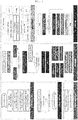
FIG. 6 is a detailed process by step of a flow chart for the method of evaluating an individual response by real time measurement of a heart rate of an aquatic organism according to the present invention. -
FIG. 7 is a result of measuring a heart rate of awater flea 2 hours after treatment with 0.00 mM (blue), 0.03 mM (orange), and 0.06 mM (red) of hydrogen peroxide, by the method of evaluating an individual response by real time measurement of a heart rate of an aquatic organism according to the present invention. -
FIG. 8 is a result of analyzing a relaxation heart rate (RHR) 24 hours after exposure by concentration, by the method of evaluating an individual response by real time measurement of a heart rate of an aquatic organism according to the present invention. -
FIG. 9 is a result of comparison of a difference between the method of evaluating an individual response by real time measurement of a heart rate of an aquatic organism according to the present invention and a commonly used conventional method. -
- S101:
- Installation step
- S102:
- Image secure step
- S103:
- Data processing step
- S104:
- Display step
- S105:
- Heart rate analysis step
- 100:
- Chamber
- 110:
- Lower fixing unit
- 120:
- Upper fixing unit
- 130:
- Control unit
- Hereinafter, the method of evaluating an individual response by real time measurement of a heart rate of an aquatic organism of the present invention will be described in detail with reference to the accompanying table or drawings.
- When a drawing is illustrated, the drawing is provided by way of example so that the idea of the present invention may be sufficiently conveyed to a person skilled in the art. Therefore, the present invention is not limited to the provided drawings, but may be embodied in many different forms, and the drawings may be exaggerated in order to clear the spirit of the present invention.
- Terms such as "first" and "second" may be used to describe various constitutional elements, but the constitutional elements are not limited by the terms. The terms are used only to distinguish one constitutional element from another constitutional element. For example, a first constitutional element may be named a second constitutional element and the second constitutional element may also be similarly named the first constitutional element, without departing from the scope of the present invention.
- Technical terms and scientific terms used herein have the general meaning understood by those skilled in the art to which the present invention pertains unless otherwise defined, and a description for the known function and configuration which may unnecessarily obscure the gist of the present invention will be omitted in the following description and the accompanying drawings. It must be understood that the terms defined by the dictionary are identical with the meanings within the context of the related art, and they should not be ideally or excessively formally defined unless the context clearly dictates otherwise.
- In addition, the singular form used in the specification of the present invention may be intended to also include a plural form, unless otherwise indicated in the context.
- In addition, units used in the specification of the present invention without particular mention are based on weights, and as an example, a unit of % or ratio refers to a wt% or a weight ratio.
- In addition, in the specification of the present invention, the expression "comprise" is an open-ended description having a meaning equivalent to the expression such as "provided", "contain", "have", or "is/are characterized", and does not exclude elements, materials or processes which are not further listed. In addition, the expression "substantially consisting of..." means that other elements, materials, or processes which are not listed together with specified elements, materials, or processes may be present in an amount which does not have an unacceptable significant influence on at least one basic and novel technical idea of the invention. In addition, the expression "consisting of" means that only the described elements, materials, or processes are present.
- The term used in the specification of the present invention, "component", "composition", "composition of a compound", "compound", "drug", "pharmaceutical activator", "cure", "treatment", or "medicine" is interchangeably used for meaning a compound or a composition of a compound(s) or a material inducing a desired pharmaceutical and/or physiological effect by a topical and/or systemic action when administrating it to a subject (human or animal).
- In the present invention, "sample" or "specimen" represents a subject to be analyzed, and is used in the same sense throughout the specification.
- Hereinafter, the present invention will be described in detail by way of example. The examples are only for describing the present invention in more detail, and the scope of the present invention is not limited to the following Examples.
- Hereinafter, the method of evaluating an individual response by real time measurement of a heart rate of an aquatic organism of the present invention will be described in detail.
- The method of evaluating an individual response by real time measurement of a heart rate of an aquatic organism according to the present invention which is a method of evaluating an individual response using digital holography, includes: (a) disposing a measurement individual between a lower fixing unit fixed to a lower end inside a chamber and an upper fixing unit which is spaced apart from the lower fixing unit and is movable in a direction of the lower fixing unit or in an opposite direction thereof so that the measurement individual is immersed in a culture fluid to which a compound for inducing an individual response is added, closely adhering the upper fixing unit to the individual to measure a height of the individual, and then adjusting a position of the upper fixing unit to fix the individual; (b) continuously measuring a digital hologram for the individual; and (c) restoring the digital hologram obtained by the measurement to calculate a heart rate change, and determining therefrom whether the individual response is caused by the compound for inducing an individual response.
- The step (a) may include disposing an individual to be measured between a lower fixing unit fixed to a lower end inside a chamber carrying a culture fluid and an upper fixing unit which is spaced apart from the lower fixing unit and is movable in a direction of the lower fixing unit or in an opposite direction thereof so that the individual to be measured is immersed in the fluid, closely adhering the upper fixing unit to the individual to measure a height of the individual, and then adjusting a position of the upper fixing unit to fix the individual; and adding a compound for inducing the individual response to the chamber, and in addition, the step (a) may include disposing an individual to be measured between a lower fixing unit fixed to a lower end inside a chamber carrying a culture fluid to which a compound for inducing an individual response is added and an upper fixing unit which is spaced apart from the lower fixing unit and is movable in a direction of the lower fixing unit or in an opposite direction thereof so that the individual to be measured is immersed in the fluid, closely adhering the upper fixing unit to the individual to measure a height of the individual, and then adjusting a position of the upper fixing unit to fix the individual.
- Here, after the position of the upper fixing unit is adjusted and fixed, a distance between the lower fixing unit and the upper fixing unit may be a ratio of 0.87 to 0.95, preferably 0.89 to 0.95, and more preferably 0.92 to 0.95 relative to the height of the individual to be measured.
- The compound may be an organic compound, a metal, acid-alkali, gas, a medicine, or a nanoparticle, and according to a more specific exemplary embodiment, may be selected from dimethylformamide, methanol, methylisobutylketone, benzene, carbon tetrachloride, styrene, cyclohexane, acetone, acetaldehyde, isobutylalcohol, methyl chloride, ethylene glycol, xylene, toluene, toluene-2,4-diisocyanate, trichloroethylene, n-hexane, lead, nickel, manganese, mercury, zinc, aluminum, iron, cadmium, chromium, hydrogen peroxide, acetic acid, sodium hydroxide, hydrochloric acid, sulfuric acid, nitric acid, phosphoric acid, ammonia, chlorine, ozone, hydrogen sulfide, carbon monoxide, sulfur dioxide, nitrogen dioxide, medicines, gold nano, silver nano, single-walled carbon nanotubes (SWCNT), multi-walled carbon nanotube (MWCNT), fullerene (C60), iron nanoparticles, carbon black, titanium dioxide, aluminum oxide, cerium oxide, zinc oxide, silicon dioxide, polystyrene, dendrimers, nanoclay, and the like, but is not limited thereto, and may be appropriately selected and used regardless of the type, as long as cytotoxicity for the individual may be measured.
- A concentration of the compound at the time of treatment is not particularly limited, but as a specific example, the individual may be treated with the compound at a concentration of 0.001 to 0.50 mM, preferably 0.005 to 0.40 mM, and more preferably 0.01 to 0.10 mM.
- The algorithm for restoration may further include displaying a 2D-time-resolved relative phase map in real time and storing the heart rate at the same time.
- The heart rate may be obtained by an analysis method including a) selecting pixels corresponding to a heart area in the secured digital hologram; b) applying a Fourier spectrum method to each refreshing interval; c) searching a most frequent heart rate in each refreshing interval; and d) calculating a heart rate per minute from the most frequent heart rate.
- The secured digital hologram I(x,y) represents an optical interference signal between an object beam and an interference. By the spatial masking method according to an exemplary embodiment of the present invention, an object wave-field by a two-dimensional fast Fourier transform (FFT) method of a hologram image is defined.

wherein Uo and Ur represent a wave-field of an object and an interference, respectively, and an asterisk (*) is related to a complex conjugate value. Among fourterms constituting Equation 1, the former two terms represent autocorrelation terms, the third term represents a real image term, and the fourth term represents a virtual image term, respectively. The application of the method is described in (b) ofFIG. 4 according to an exemplary embodiment of the present invention. - The object wave-field depending on a distance z in the hologram may be mathematically calculated using an angular spectrum method, and the method may be obtained by a wave propagation technique by a hologram plane H and a phase propagation factor exp[ikz] obtained by Fourier transform.
- A step of applying the Fourier spectrum method may be obtained based on a value by a k-space angular spectrum method by the following Equation:


- The heart rate change may be obtained by calculating an original heart rate (OHR) and a relaxation heart rate (RHR) by the following Equation 1:

wherein ti and tf refer to an initial time domain and a final time domain in a relaxation state. - Among various qualitative phase imaging methods, digital holographic microscopy (DHM) may reconstruct geographic information expressed in a complicated amplitude including an amplitude and phase information of an object wave field in an interference image. Since an ability of a digital holographic microscope may produce reconstructed phase information for a refractive index distribution present in a biological sample given by a high-speed camera.
-
FIG. 1 illustrates a schematic flow chart of the method of evaluating an individual response by real time measurement of an aquatic organism. - Referring to the drawing, the method of evaluating an individual response by real time measurement of an aquatic organism includes an installation step (S101), an image secure step (S102), a data arithmetic operation step (S103), a display step (S104), and a heart rate analysis step (S105).
- The installation step (S101) is a step of disposing an aquatic organism to be tested between a lower fixing unit inside a chamber and an upper fixing unit and fixing the aquatic organism. After completing the installation step (S101), continuous images of the aquatic organism is obtained by digital holographic microscopy to create a hologram.
- The image secure step (S102) includes taking an optical interference signal produced from an object beam passing through an individual and a reference beam irradiated from a light source unit with a unit such as a CCD camera, thereby producing a hologram. The light source unit is operated to produce the object beam and the reference beam and the optical interference signal produced by a beam splitter is taken to obtain a hologram image.
- In the data arithmetic operation step (S103), the obtained hologram image is restored to obtain a complex amplitude value. Here, a method of calculating an amplitude and a phase angle of the complex amplitude is not particularly limited, but as an example, an angular spectrum method may be applied. A time difference phase value for the data restored by the method is calculated.
- In the display step (S104), the data restored in the data arithmetic operation step is received and displayed on a display screen in real time, and when it corresponds to a heart area, the data transferred to a heart rate analysis step to be utilized in calculation of the heart rate per minute.
- In the heart rate analysis step (S105), a data determined as corresponding to the heart area in the display step (S104) is received to calculate the heart rate per minute.
- The individual response evaluation apparatus by real time measurement of a heart rate of an aquatic organism according to the present invention is an individual response evaluation apparatus by real time measurement of a heart rate of an aquatic organism using a digital hologram including: a chamber carrying a culture fluid; a lower fixing unit; an upper fixing unit spaced apart from the lower fixing unit; and a control unit controlling a position of the upper fixing unit, wherein the lower fixing unit is fixed to a lower end inside the chamber, an individual to be measured is disposed between the lower fixing unit and the upper fixing unit, the upper fixing unit is fixed to one side surface of the chamber and movable up and down, and the control unit adjusts the position of the upper fixing unit to fix the individual, after the upper fixing unit is closely adhered to the individual to measure the height the individual.
- The individual response evaluation apparatus may further include: a light source unit; a reference beam generating unit which produces a reference beam; an object beam generating unit which produces an object beam; a CCD which combines the reference beam and the object beam to record a hologram; an arithmetic unit which numerically analyzes an interference fringe of the recorded hologram; a display unit which displays the digital hologram numerically analyzed by the arithmetic unit; and a heart rate analysis unit which carries out heart rate analysis from the analyzed digital hologram, wherein the arithmetic unit may obtain a plurality of phase reproduction phases for the hologram recorded in the CCD, and calculate an amplitude and an angle therefrom and transfer calculations to the display unit, the display unit may select and display the corresponding digital hologram until analysis of all holograms recorded in the CCD is completed and then transfer the digital hologram to the heart rate analysis unit, and in the heart rate analysis, a heart rate per minute may be calculated from the most frequent heart rate.
- The control unit may adjust a distance between the lower fixing unit and the upper fixing unit to a ratio of 0.87 to 0.95, preferably 0.92 to 0.95 relative to a height of the individual to be measured. By adjusting the individual to the ratio, the individual may be efficiently fixed between the lower fixing unit and the upper fixing unit, without affecting metabolism such as blood circulation of the individual.
- The individual response evaluation apparatus may measure one or more data selected from the group consisting of a real time heart rate of an aquatic organism, a spaced distance between the lower fixing unit and the upper fixing unit, a real time display of a heart rate phase, and a relaxation heart rate at the same time.
- The data measured at the same time by the individual response evaluation apparatus may be accumulated by iterative learning by applying an artificial intelligence method.
- It may be used for predicting a heart rate change in a higher organism by the iterative learning.
- The chamber which is a core element of the individual response evaluation apparatus is described in more detail by the drawings.
- The individual response evaluation apparatus of
FIG. 2 according to the present invention allows an aquatic organism to be fixed between alower structure unit 110 and anupper structure unit 120 in achamber 100, and the upper structure unit is fixed in a form of being closely adhered to the aquatic organism by being moved up and down so that the aquatic organism is not moved within a range of not affecting heart rate measurement of the aquatic organism by acontrol unit 130. - The
lower structure unit 110 and theupper structure unit 120 are formed of a material which an object beam may transmit and light transmission for hologram production is performed. - The light source unit is, though it is not shown in the drawing, installed in a lower region of the chamber or a lower region of the lower structure unit to provide an object beam generating unit (first light source) which irradiates the fixed individual with the object beam and a reference beam generating unit (second light source) which irradiates an optical path of the object beam with the reference beam. As the first light source and the second light source, a laser may be used as an example, but the present invention is not limited thereto, and a range of the wavelength of the laser is not limited as long as a normal hologram is formed and as an example, a laser of 633.2 nm may be used.
- At a point where the optical paths of the object beam and the reference beam cross each other, a beam splitter is installed, thereby producing an optical interference signal from the object beam and the reference beam which transmits the individual and an objective lens. Since the beam splitter is a beam splitter which was conventionally used in a digital holography microscope for producing the optical interference signal between the object beam and the reference beam, the detailed description thereof will be omitted.
- In an upper side of the beam splitter, a unit for taking the optical interference signal is installed, and as an example, a CCD camera may be used, but the present invention is not limited thereto.
-
FIG. 3 is illustrative of the individual response evaluation apparatus according to the present invention, and represents a real time heart rate monitoring system using extra-axial digital holography. - (a) represents a schematic diagram of an extra-axial digital holography setting based on a Mach-Zehnder interometer, and as a light source, a wavelength of 633.2 nm helium-neon (He-Ne) laser (Thorlabs) having a power of 5 mW is used. The objective lens (micro objective lens; 10x/N.A. 0.30, Olympus, UMPLFLN 10XW) is used in an underwater immersion form and has an operation distance of 3.5 mm.
- A CCD camera (aca2040-180km, Basler) taking the optical interference signal of the object beam and the interference beam is set to a resolution of 2048x2048 and a pixel size of 5.5 umx5.5 um as a factory setting, and is connected to a data acquisition device and used for taking for an exposure time of 2.5 ms.
- A chamber having a schematic diagram like (b) of
FIG. 3 and a digital holography device were connected and the individual response evaluation apparatus according to the present invention which was implemented as in (c) was used to test a toxic reaction for a water flea. - A water flea was carefully disposed between a
lower structure unit 110 and anupper structure unit 120 of achamber 100 carrying agarose gel (Sigma-Aldrich) (or other media may be replaced), acontrol unit 130 was operated to measure the height of the water flea, and the height of the upper structure unit was controlled to be positioned so as to be 0.95% of the height of the water flea. Here, the height of the water flea was measured as 538 um. - In the individual response evaluation apparatus, an extra-axial digital holography method was used to take a hologram of the water flea with a CCD camera.
- The results are illustrated in
FIG. 4 . - The image was set to a pixel size of 0.5 um×0.5 um and a 8-bit resolution of 1024×1024 and taken. A maximum signal intensity ratio of the heart area represented by an orange dotted circle was measured as 0.047 (SR < 5%). A k-space image by 2D Fourier transform of an interference image was obtained ((b) of
FIG. 4 ), and an object wave-field intensity distribution which was numerically reconstructed at 7.6 um from the hologram was secured. Here, the reconstructed algorithm used an angle spectrum method ((c) ofFIG. 4 ). (d) ofFIG. 4 represents object wave-field intensity distributions of a numerically reconstructed object (above) and a reference taken without a water flea (below). - A phase distribution of the water flea was obtained after combining an object wave-field in the reference wave field ((e) of
FIG. 4 ). The phase at this time covered a range from -Π to +Π. Since a spatial phase is proportional to a specimen thickness and a refractive index, the time-resolved relative phase distribution of a water flea heart area was obtained therefrom and is represented by an orange rectangle ((f) to (h) ofFIG. 4 ). - The heart rate of the water flea was analyzed by the reconstructed time-resolved phase distributions, from the heart rate signal obtained by the method.
- The results are illustrated in
FIG. 5 . - Time-resolved image sets were compared from intensity (above), phase (middle), and relative phase (below) distributions at 25 frame intervals ((a) of
FIG. 5 ). According to the results, the appearance of the water flea may be more clearly recognized in a space phase map than in the hologram, but it is more difficult to divide a heart area in the space phase map than in the hologram. - Then, wrapped (WP), unwrapped (UWP), and relative unwrapped phases in the time-resolved one-dimensional heart rate signal were compared ((b) of
FIG. 5 ). According to the results, the heart area is more clearly seen, which is presumed to be due to disappearance of the space phase of a carapace, by fixing the water flea between thelower structure unit 110 and theupper structure unit 120 of the chamber at 95% of the height of the water flea. - A Fourier spectrum method was used for evaluating periodic characteristics in heart rate analysis. In (c) of
FIG. 5 , a one-dimensional Fourier spectrum method was used for each pixel of 1000 frame sets to calculate a two-dimensional frequency distribution of the water flea. The drawing included inside is a Fourier spectrum plot at a point having 7.8 Hz (white arrow), and the heart rate for 5 seconds was 38. - A high performance computing system to allow observation of a real time digital holography was constructed, so as to be consistent with the frame rate of the heart rate processing device as in Example 1.
- To this end, a digital holography reconstruction algorithm was developed by a convolution method based on a fast Fourier transform (FFT) arithmetic operation performed in three steps.
- The algorithm allowed provision of a graphical user interface (GUI) to display the two-dimensional time-resolved relative phase map in real time and storage of the heart rate signal by high-speed arithmetic operation using a graphical processing unit (GPU) (see
FIG. 6 ). - The arithmetic operation using GPU maximized a processing time by a parallel computing arithmetic operation method using a CUDA FFT library (cuFFT) supported by NVIDIA. This allowed real time display of the processed time-resolved relative phase map.
- The performance of the real time digital holography monitoring system is shown in the following Table 1.
[Table 1] Performance of real time digital holography monitoring system Processing Thread per block Average duration (µs) Transfer memory, / (CPU → GPU) 601.96 Data type conversion (8-bit → 64-bit) 1024×1024 24.74 2D cuFFT calculation, F(I (x,y)) 32×32 2.35 2D FFTshift calculation, Fs (I (x,y)) 32×32 11.57 Calculation of product of Fs (I (x,y)) and space mask H (x,y) 1×1024 4.31 Production of transfer function T (x,y) 32×32 3.64 Calculation of product of T (x,y) and H (x,y) 1024×1024 2.99 Calculation of product of conjugated comparison complex amplitude 1024x1024 2.89 Calculation of 2D invert cuFFT 32×32 3.35 Data type conversion (64-bit → 8-bit) 1024×1024 5.69 Transfer memory (GPU → CPU) 1068.37 Total 1731.84 * represents an average GPU processing time using 1000 frames of a time-resolved spatial phase image in the above table. A GPU processing time was measured using NVIDIA Nsight Compute. - In addition, in the present invention, unlike a conventional digital holography method in need of information of total interferometric image sets, only a time-resolved heart beat signal is needed, thereby achieving a surprising space saving effect that a size per hour of a data storage area required for storing the same heart rate signal of the heart area having a size of 10x10 pixels is decreased from 703 GB/hr to 3.43 MB/hr by 200,000 times or more, from which a new effect to allow digital holography to be monitored in real time for a long time was obtained.
- In the Example, a water flea was fixed to a
chamber 100 carrying a 90 mL of M4 medium in the manner described above, and then observed. - 2 hours after the observation, 19 mL of hydrogen peroxide having concentrations of 0.00 mM, 0.03 mM, and 0.06 mM, respectively was each mixed for each experiment to perform the experiment repeatedly so that the water flea is exposed to the hydrogen peroxide. At this time, in a negative control group of 0.00 mM treatment, 10 mL of an M4 medium was further mixed for unifying volume.
- Upon observation, the heart rate analysis was performed by dividing the section into those before and after exposure to hydrogen peroxide.
-
FIG. 7 illustrates the results. - In order to express the heart rate trend of (b) of
FIG. 7 , in (a) ofFIG. 7 , an original heart rate (OHR) was flattened every 30 minutes by a moving average method. - As a result of measuring a standard deviation (unit: BPM, beat per minute) between the heart rate and OHR for each test group, it was confirmed that the standard deviation was shown as 18 BPM, 11 BPM, and 14 BPM for each concentration of hydrogen peroxide.
- (c) of
FIG. 7 is results of performing normalization for initial RHR, which are the results of measuring the heart rate change depending on the exposure to a toxic substance for evaluating toxicity to the heart. For the samples treated with 0.03 mM and 0.06 mM hydrogen peroxide excluding a negative control group, respectively, as a result of measuring final RHR, it was confirmed that the heart rate relative to the original heart rate (OHR) was decreased to 3.3% (-13 BPM) and 22.7% (-109 BPM). - As a result of comparing the heart rate by normalization, the negative control group had the same final RHR as OHR, while in the two test groups treated with hydrogen peroxide, a decrease in the heart rate was confirmed.
- As a result of measuring significance of the decrease by applying a t-test method to the normalized results, the test group treated with 0.03 mM hydrogen peroxide represented a F value of 0.89, thereby representing heteroscedasticity of variance and a significance probability more than 0.05. It was confirmed therefrom that the t-test results in which uneven variance is presumed was less than 0.01 and the final RHR showed a significant difference as compared with OHR when treated with 0.03 mM hydrogen peroxide.
- In the present invention, measurement of each experiment group was performed at the same time for three water flea test groups, and the relaxation heart rate measurement results for the negative control group and the hydrogen peroxide treated test group are summarized in the following Table 2.
[Table 2] Results of measuring relaxation heart rate (RHR) depending on test group Hydrogen peroxide concentration (mM) # 0 hr (BPM) 24 hr (BPM) P-value (95% confidence interval) Normalization relative to 0 hr (%) P-value relative to normalized 0.00 group (95% confidence interval) relative to 0 hr relative to 0 mM group 0.00 1 308.92±13.25 313.58±23.69 0.052 101.51±7.67 - 2 325.55±8.24 328.98±15.50 0.051 101.05±4.76 3 368.16±6.55 363.78±14.45 0.013 98.81±3.92 Group 334.21±26.84 335.44±27.86 0.256 100.44±5.45 0.03 4 363.22±12.11 328.43±18.01 p0.03<0.001 0.069 90.42±4.74 p0.03n<0.001 5 350.78±20.23 339.28±6.54 0.292 96.72±1.78 6 486.43±6.63 353.28±27.98 < 0.001 91.42±6.94 Group 366.81±20.43 340.33±21.98 0.217 92.84±5.60 0.06 7 370.07±25.38 274.82±16.01 p0.06<0.001 < 0.001 74.26±4.33 p0.06n<0. 001 8 378.43±15.41 299.47±14.70 79.13±3.88 9 383.90±13.02 262.87±7.41 68.47±1.93 Group 383.81±12.99 279.05±12.71 73.96±5.61 *N: Number of samples (specimens) per group = 3, n: Average per minute for 1 hour = 6- ** The RHR represents an average heart rate per minute for 1 hour (n = 60), and p-value was evaluated by two sample t-tests in which unequal variances are presumed in a 95% confidence interval. The results were average ± standard deviation (SD). - From the results, as a result of performing the t-test of the result of treatment with 0.06 mM hydrogen peroxide as in the case of treatment with 0.03 mM, a value less than 0.01 was obtained, and it was confirmed therefrom that the final RHR represented a significant difference relative to OHR even with treatment with 0.06 mM.
-
FIG. 8 illustrates results of analyzing average RHR for the exposure groups of Table 2. As a result of normalized comparison of (a) ofFIG. 8 , it was shown that the difference was not significant, but in (b) and (c) ofFIG. 8 after performing normalization, it was confirmed that only a heart rate increase of 0.42% occurred after 24 hours in the negative control group, while a heart rate decrease of 7.16% and 25.97% occurred after 24 hours in the 0.03 mM and 0.06 mM-treated test groups. - (d) of
FIG. 8 is a result of measuring a reactive oxygen species (ROS) level following hydrogen peroxide treatment. As a result, it was confirmed that the 0.06 mM-treated test group showed the level 7.8 times higher than the 0.03 mM-treated group, and a significantly increased reactive oxygen species level was shown. A correlation between a heart rate decrease and a reactive oxygen species level depending on hydrogen peroxide exposure was verified by measuring the reactive oxygen species level. - The description of the suggested examples is provided so that any person with ordinary skill in the art may use or carry out the present invention. Various modifications of the examples will be apparent to a person skilled in the art, and general principles defined here may be applied to other examples without departing from the scope of the present invention. Thus, the present invention is not limited by the examples suggested herein, but should be construed in the widest sense consistent with the principles and new characteristics suggested herein.
- The method of evaluating an individual response by real time measurement of a heart rate of an aquatic organism and the individual response evaluation apparatus by real time measurement of a heart rate of an aquatic organism may effectively fix the aquatic organism so that it does not move without affecting the living body of an aquatic organism, for real time measurement of the heart rate of an aquatic organism, and may measure the heart rate using digital holography to display the heart rate while configuring a data format to allow the corresponding data to be stored for a long time, whereby after the individual is treated with a compound for inducing an individual response and a heart rate change is secured in real time by image processing, the presence or absence of harmfulness due to induction of the individual response may be effectively determined.
Claims (19)
- A method of evaluating an individual response by real time measurement of a heart rate of an aquatic organism which is a method of evaluating an individual response using digital holography, the method comprising:(a) disposing a measurement individual between a lower fixing unit fixed to a lower end inside a chamber and an upper fixing unit which is spaced apart from the lower fixing unit and is movable in a direction of the lower fixing unit or in an opposite direction thereof so that the measurement individual is immersed in a culture fluid to which a compound for inducing an individual response is added, closely adhering the upper fixing unit to the individual to measure a height of the individual, and then adjusting a position of the upper fixing unit to fix the individual;(b) continuously measuring a digital hologram for the individual; and(c) restoring the digital hologram obtained by the measurement to calculate a heart rate change, and determining therefrom whether the individual response is caused by the compound for inducing an individual response.
- The method of evaluating an individual response by real time measurement of a heart rate of an aquatic organism of claim 1, wherein (a) includes disposing an individual to be measured between the lower fixing unit fixed to the lower end inside the chamber carrying the culture fluid and the upper fixing unit which is spaced apart from the lower fixing unit and is movable in the direction of the lower fixing unit or in the opposite direction thereof so that the individual to be measured is immersed in the fluid, closely adhering the upper fixing unit to the individual to measure the height of the individual, and then adjusting the position of the upper fixing unit to fix the individual; and adding the compound for inducing the individual response to the chamber.
- The method of evaluating an individual response by real time measurement of a heart rate of an aquatic organism of claim 1, wherein (a) includes disposing the individual to be measured between the lower fixing unit fixed to the lower end inside the chamber carrying the culture fluid to which the compound for inducing an individual response is added and the upper fixing unit which is spaced apart from the lower fixing unit and is movable in the direction of the lower fixing unit or in the opposite direction thereof so that the individual to be measured is immersed in the fluid, closely adhering the upper fixing unit to the individual to measure the height of the individual, and then adjusting a position of the upper fixing unit to fix the individual.
- The method of evaluating an individual response by real time measurement of a heart rate of an aquatic organism of any one of claims 1 to 3, wherein after the position of the upper fixing unit is adjusted and fixed, a distance between the lower fixing unit and the upper fixing unit is a ratio of 0.87 to 0.95 relative to the height of the individual to be measured.
- The method of evaluating an individual response by real time measurement of a heart rate of an aquatic organism of claim 4, wherein after the position of the upper fixing unit is adjusted and fixed, a distance between the lower fixing unit and the upper fixing unit is a ratio of 0.92 to 0.95 relative to the height of the individual to be measured.
- The method of evaluating an individual response by real time measurement of a heart rate of an aquatic organism of claim 1, wherein the compound is an organic compound, a metal, acid-alkali, gas, a medicine, or a nanoparticle.
- The method of evaluating an individual response by real time measurement of a heart rate of an aquatic organism of claim 6, wherein the compound is selected from dimethylformamide, methanol, methylisobutylketone, benzene, carbon tetrachloride, styrene, cyclohexane, acetone, acetaldehyde, isobutylalcohol, methyl chloride, ethylene glycol, xylene, toluene, toluene-2,4-diisocyanate, trichloroethylene, n-hexane, lead, nickel, manganese, mercury, zinc, aluminum, iron, cadmium, chromium, hydrogen peroxide, acetic acid, sodium hydroxide, hydrochloric acid, sulfuric acid, nitric acid, phosphoric acid, ammonia, chlorine, ozone, hydrogen sulfide, carbon monoxide, sulfur dioxide, nitrogen dioxide, medicines, gold nano, silver nano, single-walled carbon nanotubes (SWCNT), multi-walled carbon nanotube (MWCNT), fullerene (C60), iron nanoparticles, carbon black, titanium dioxide, aluminum oxide, cerium oxide, zinc oxide, silicon dioxide, polystyrene, dendrimers, and nanoclay.
- The method of evaluating an individual response by real time measurement of a heart rate of an aquatic organism of claim 6, wherein the individual is treated with the compound a concentration of 0.01 to 0.10 mM.
- The method of evaluating an individual response by real time measurement of a heart rate of an aquatic organism of any one of claims 1 to 3, wherein an algorithm for the restoration further includes displaying a 2D-time-resolved relative phase map in real time and storing the heart rate at the same time.
- The method of evaluating an individual response by real time measurement of a heart rate of an aquatic organism of claim 9, wherein the heart rate is obtained by an analysis method including:a) selecting pixels corresponding to a heart area in the secured digital hologram;b) applying a Fourier spectrum method to each refreshing interval;c) searching a most frequent heart rate in each refreshing interval; andd) calculating a heart rate per minute from the most frequent heart rate.
- The method of evaluating an individual response by real time measurement of a heart rate of an aquatic organism of claim 10, wherein the process of applying the Fourier spectrum method is obtained based on a value by a k-space angular spectrum method by the following Equations:


- The method of evaluating an individual response by real time measurement of a heart rate of an aquatic organism of any one of claims 1 to 3, wherein the heart rate change is obtained by calculating an original heart rate (OHR), and a relaxation heart rate (RHR) by the following Equation 1:

- An individual response evaluation apparatus by real time measurement of a heart rate of an aquatic organism, using digital holography, the apparatus comprising: a chamber carrying a culture fluid; a lower fixing unit; an upper fixing unit spaced apart from the lower fixing unit; and a control unit controlling a position of the upper fixing unit,
wherein the lower fixing unit is fixed to a lower end inside the chamber, an individual to be measured is disposed between the lower fixing unit and the upper fixing unit, the upper fixing unit is fixed to one side surface of the chamber and movable up and down, and the control unit adjusts the position of the upper fixing unit to fix the individual, after the upper fixing unit is closely adhered to the individual to measure the height the individual. - The individual response evaluation apparatus by real time measurement of a heart rate of an aquatic organism of claim 13, further comprising: a light source unit; a reference beam generating unit which produces a reference beam; an object beam generating unit which produces an object beam; a CCD which combines the reference beam and the object beam to record a hologram; an arithmetic unit which numerically analyzes an interference fringe of the recorded hologram; a display unit which displays the digital hologram numerically analyzed by the arithmetic unit; and a heart rate analysis unit which carries out heart rate analysis from the analyzed digital hologram,
wherein the arithmetic unit obtains a plurality of phase restoration phases for the hologram recorded in the CCD, and calculates an amplitude and an angle therefrom and transfers calculations to the display unit, the display unit selects and displays the corresponding digital hologram until analysis for all holograms recorded in the CCD is completed and then transfers the digital hologram to the heart rate analysis unit, and in the heart rate analysis, a heart rate per minute is calculated from the most frequent heart rate. - The individual response evaluation apparatus by real time measurement of a heart rate of an aquatic organism of claim 13 or 14, wherein the control unit adjusts a distance between the lower fixing unit and the upper fixing unit to a ratio of 0.87 to 0.95 relative to a height of the individual to be measured.
- The individual response evaluation apparatus by real time measurement of a heart rate of an aquatic organism of claim 15, wherein the control unit adjusts the distance between the lower fixing unit and the upper fixing unit to a ratio of 0.92 to 0.95 relative to the height of the individual to be measured.
- The individual response evaluation apparatus by real time measurement of a heart rate of an aquatic organism of claim 13 or 14, using the digital holography, wherein the individual response evaluation apparatus allows measurement of one or more data selected from the group consisting of a real time heart rate of the aquatic organism, a spaced distance between the lower fixing unit and the upper fixing unit, a real time display of a heart rate phase, and a relaxation heart rate at the same time.
- The individual response evaluation apparatus by real time measurement of a heart rate of an aquatic organism of claim 17, wherein the data measured at the same time by the individual response evaluation apparatus is accumulated by iterative learning by applying an artificial intelligence method.
- The individual response evaluation apparatus by real time measurement of a heart rate of an aquatic organism of claim 18, wherein the individual response evaluation apparatus is used for predicting a heart rate change in a higher organism by the iterative learning.
Applications Claiming Priority (2)
| Application Number | Priority Date | Filing Date | Title |
|---|---|---|---|
| KR20200012385 | 2020-02-03 | ||
| KR1020200144571A KR102427969B1 (en) | 2020-02-03 | 2020-11-02 | Monitoring method of heart rate for toxicity test using high-speed digital holography |
Publications (3)
| Publication Number | Publication Date |
|---|---|
| EP3858236A1 true EP3858236A1 (en) | 2021-08-04 |
| EP3858236C0 EP3858236C0 (en) | 2023-12-27 |
| EP3858236B1 EP3858236B1 (en) | 2023-12-27 |
Family
ID=74505107
Family Applications (1)
| Application Number | Title | Priority Date | Filing Date |
|---|---|---|---|
| EP21154778.1A Active EP3858236B1 (en) | 2020-02-03 | 2021-02-02 | Method of monitoring heart rate for toxicity test using high-speed digital holography |
Country Status (2)
| Country | Link |
|---|---|
| US (1) | US11992297B2 (en) |
| EP (1) | EP3858236B1 (en) |
Families Citing this family (1)
| Publication number | Priority date | Publication date | Assignee | Title |
|---|---|---|---|---|
| CN114010176B (en) * | 2021-12-01 | 2026-04-17 | 山东省科学院生物研究所 | A fiber optic device and method for real-time detection and analysis of zebrafish heart rate |
Family Cites Families (7)
| Publication number | Priority date | Publication date | Assignee | Title |
|---|---|---|---|---|
| EP2489437A1 (en) | 2003-09-09 | 2012-08-22 | BioGenex Laboratories | Sample processing system |
| EP2115462B1 (en) * | 2007-01-08 | 2011-07-13 | City University of Hong Kong | Method of in vivo screening for cardiac toxic agents using teleost |
| EP3136079B1 (en) * | 2009-10-20 | 2020-02-12 | The Regents of The University of California | Incoherent lensfree cell holography and microscopy on a chip |
| US9719842B2 (en) * | 2010-07-06 | 2017-08-01 | Norman A. Paradis | Method for the discovery, validation and clinical application of multiplex biomarker algorithms based on optical, physical and/or electromagnetic patterns |
| CN102716501A (en) * | 2011-03-29 | 2012-10-10 | 上海佰年诗丹德检测技术有限公司 | A method for screening toxicity of traditional Chinese medicine by model organism zebra fish |
| CN105121657A (en) * | 2012-12-02 | 2015-12-02 | 生物医学核心有限公司 | Accelerated prediction of cancer progression and response to treatment |
| CN109556487B (en) * | 2018-11-26 | 2020-09-18 | 中国水产科学研究院南海水产研究所 | Fish body contour measuring device and measuring method for fishing gear selectivity research |
-
2021
- 2021-02-01 US US17/164,686 patent/US11992297B2/en active Active
- 2021-02-02 EP EP21154778.1A patent/EP3858236B1/en active Active
Non-Patent Citations (5)
| Title |
|---|
| ALTMAN J A ET AL: "Responses of the swimbladder of the carp to sound stimulation", HEARING RESEARCH, ELSEVIER SCIENCE PUBLISHERS , AMSTERDAM, NL, vol. 14, no. 2, 1 May 1984 (1984-05-01), pages 145 - 153, XP024395077, ISSN: 0378-5955, [retrieved on 19840501], DOI: 10.1016/0378-5955(84)90013-3 * |
| DARIO DONNARUMMA ET AL: "Blood flow imaging in zebrafish by laser doppler digital holography : BLOOD FLOW IMAGING IN ZEBRAFISH", MICROSCOPY RESEARCH AND TECHNIQUE., vol. 81, no. 2, 1 February 2018 (2018-02-01), GB, pages 153 - 161, XP055568712, ISSN: 1059-910X, DOI: 10.1002/jemt.22678 * |
| KIM BS ET AL.: "Stimulus-Responsive Anti-Oxidizing Drug Crystals and their Ecological Implication", SMALL, vol. 15, 2019, pages 1 - 11 |
| LOVERN SB ET AL.: "Behavioral and Physiological Behavioral and Physiological Changes in Daphnia magna when Exposed to Nanoparticle Suspensions (Titanium Dioxide, Nano-C 60 , and C 60 HxC 70 Hx", ENVIRON. SCI. TECHNOL., vol. 41, 2007, pages 4465 - 4470 |
| NICUSOR V IFTIMIA ET AL: "Dual-beam Fourier domain optical Doppler tomography of zebrafish", OPT. EXPRESS, vol. 16, no. 18, 20 August 2008 (2008-08-20), pages 13624 - 13636, XP055172792, DOI: 10.1364/OE.16.013624 * |
Also Published As
| Publication number | Publication date |
|---|---|
| EP3858236C0 (en) | 2023-12-27 |
| US11992297B2 (en) | 2024-05-28 |
| US20210251183A1 (en) | 2021-08-19 |
| EP3858236B1 (en) | 2023-12-27 |
Similar Documents
| Publication | Publication Date | Title |
|---|---|---|
| Mzyk et al. | Relaxometry with nitrogen vacancy (NV) centers in diamond | |
| Nie et al. | Quantum sensing of free radicals in primary human dendritic cells | |
| Gao et al. | Lysosome targeting carbon dots-based fluorescent probe for monitoring pH changes in vitro and in vivo | |
| Baffou | Wavefront microscopy using quadriwave lateral shearing interferometry: from bioimaging to nanophotonics | |
| JP2005512127A (en) | Apparatus and method for digital holographic imaging | |
| Khan et al. | Measuring size, size distribution, and polydispersity of water-in-oil microemulsion droplets using fluorescence correlation spectroscopy: comparison to dynamic light scattering | |
| Kwon et al. | Real-time heart rate monitoring system for cardiotoxicity assessment of Daphnia magna using high-speed digital holographic microscopy | |
| Lee et al. | Visually driven neuropil activity and information encoding in mouse primary visual cortex | |
| EP3858236B1 (en) | Method of monitoring heart rate for toxicity test using high-speed digital holography | |
| DaneshPanah et al. | 3D holographic imaging and trapping for non-invasive cell identification and tracking | |
| Dumitrescu et al. | Real time electrochemical investigation of the release, distribution and modulation of nitric oxide in the intestine of individual zebrafish embryos | |
| EP4538383A1 (en) | Method for determining region of cell that has undergone programmed cell death, device comprising determination unit, and information processing program including determination step | |
| Mir et al. | Label-free observation of three-dimensional morphology change of a single PC12 cell by digital holographic microscopy | |
| Li et al. | Magnetic field-modulated plasmonic scattering of hybrid nanorods for FFT-weighted OCT imaging in NIR-II | |
| KR102427969B1 (en) | Monitoring method of heart rate for toxicity test using high-speed digital holography | |
| Tang et al. | Plasmonic nanoprobe of (gold triangular nanoprism core)/(polyaniline shell) for real-time three-dimensional pH imaging of anterior chamber | |
| Jiang et al. | Gold Nanoprobe-Enabled Three-Dimensional Ozone Imaging by Optical Coherence Tomography | |
| EP4538385A1 (en) | Method, device, and information processing program for determining necrosis cell region | |
| Brown | Tip-enhanced Raman spectroscopy: a preliminary study and force spectroscopy of collagen matrices | |
| Liu et al. | High-speed multicontrast dynamic OCT by using deep learning | |
| Rajagopalan et al. | Ultrahigh accurate statistical interferometric technique utilizing uniformity of speckle phase in the study of plant physiology | |
| Min et al. | Optical diffraction tomographic microscopy: a cutting-edge label-free three-dimensional bioimaging | |
| Tanin et al. | Holographic microscopy of phase and diffuse objects under the influence of laser radiation, magnetic fields, hyperbary | |
| WO2026004222A1 (en) | Cell sample assessment method and assessment device | |
| Rawat et al. | Characterization of Optical, Thermal, and Viscoelastic Properties of Pollenkitt in Angiosperm Pollen Using In-Line Digital Holographic Microscopy |
Legal Events
| Date | Code | Title | Description |
|---|---|---|---|
| PUAI | Public reference made under article 153(3) epc to a published international application that has entered the european phase |
Free format text: ORIGINAL CODE: 0009012 |
|
| STAA | Information on the status of an ep patent application or granted ep patent |
Free format text: STATUS: REQUEST FOR EXAMINATION WAS MADE |
|
| 17P | Request for examination filed |
Effective date: 20210218 |
|
| AK | Designated contracting states |
Kind code of ref document: A1 Designated state(s): AL AT BE BG CH CY CZ DE DK EE ES FI FR GB GR HR HU IE IS IT LI LT LU LV MC MK MT NL NO PL PT RO RS SE SI SK SM TR |
|
| STAA | Information on the status of an ep patent application or granted ep patent |
Free format text: STATUS: EXAMINATION IS IN PROGRESS |
|
| RBV | Designated contracting states (corrected) |
Designated state(s): AL AT BE BG CH CY CZ DE DK EE ES FI FR GB GR HR HU IE IS IT LI LT LU LV MC MK MT NL NO PL PT RO RS SE SI SK SM TR |
|
| 17Q | First examination report despatched |
Effective date: 20220228 |
|
| GRAP | Despatch of communication of intention to grant a patent |
Free format text: ORIGINAL CODE: EPIDOSNIGR1 |
|
| STAA | Information on the status of an ep patent application or granted ep patent |
Free format text: STATUS: GRANT OF PATENT IS INTENDED |
|
| INTG | Intention to grant announced |
Effective date: 20230721 |
|
| GRAS | Grant fee paid |
Free format text: ORIGINAL CODE: EPIDOSNIGR3 |
|
| GRAA | (expected) grant |
Free format text: ORIGINAL CODE: 0009210 |
|
| STAA | Information on the status of an ep patent application or granted ep patent |
Free format text: STATUS: THE PATENT HAS BEEN GRANTED |
|
| AK | Designated contracting states |
Kind code of ref document: B1 Designated state(s): AL AT BE BG CH CY CZ DE DK EE ES FI FR GB GR HR HU IE IS IT LI LT LU LV MC MK MT NL NO PL PT RO RS SE SI SK SM TR |
|
| REG | Reference to a national code |
Ref country code: GB Ref legal event code: FG4D |
|
| REG | Reference to a national code |
Ref country code: CH Ref legal event code: EP |
|
| REG | Reference to a national code |
Ref country code: DE Ref legal event code: R096 Ref document number: 602021007961 Country of ref document: DE |
|
| REG | Reference to a national code |
Ref country code: IE Ref legal event code: FG4D |
|
| U01 | Request for unitary effect filed |
Effective date: 20231227 |
|
| U07 | Unitary effect registered |
Designated state(s): AT BE BG DE DK EE FI FR IT LT LU LV MT NL PT SE SI Effective date: 20240108 |
|
| U20 | Renewal fee for the european patent with unitary effect paid |
Year of fee payment: 4 Effective date: 20240227 |
|
| PG25 | Lapsed in a contracting state [announced via postgrant information from national office to epo] |
Ref country code: GR Free format text: LAPSE BECAUSE OF FAILURE TO SUBMIT A TRANSLATION OF THE DESCRIPTION OR TO PAY THE FEE WITHIN THE PRESCRIBED TIME-LIMIT Effective date: 20240328 |
|
| PG25 | Lapsed in a contracting state [announced via postgrant information from national office to epo] |
Ref country code: ES Free format text: LAPSE BECAUSE OF FAILURE TO SUBMIT A TRANSLATION OF THE DESCRIPTION OR TO PAY THE FEE WITHIN THE PRESCRIBED TIME-LIMIT Effective date: 20231227 |
|
| PG25 | Lapsed in a contracting state [announced via postgrant information from national office to epo] |
Ref country code: GR Free format text: LAPSE BECAUSE OF FAILURE TO SUBMIT A TRANSLATION OF THE DESCRIPTION OR TO PAY THE FEE WITHIN THE PRESCRIBED TIME-LIMIT Effective date: 20240328 Ref country code: ES Free format text: LAPSE BECAUSE OF FAILURE TO SUBMIT A TRANSLATION OF THE DESCRIPTION OR TO PAY THE FEE WITHIN THE PRESCRIBED TIME-LIMIT Effective date: 20231227 |
|
| PG25 | Lapsed in a contracting state [announced via postgrant information from national office to epo] |
Ref country code: RS Free format text: LAPSE BECAUSE OF FAILURE TO SUBMIT A TRANSLATION OF THE DESCRIPTION OR TO PAY THE FEE WITHIN THE PRESCRIBED TIME-LIMIT Effective date: 20231227 Ref country code: NO Free format text: LAPSE BECAUSE OF FAILURE TO SUBMIT A TRANSLATION OF THE DESCRIPTION OR TO PAY THE FEE WITHIN THE PRESCRIBED TIME-LIMIT Effective date: 20240327 Ref country code: HR Free format text: LAPSE BECAUSE OF FAILURE TO SUBMIT A TRANSLATION OF THE DESCRIPTION OR TO PAY THE FEE WITHIN THE PRESCRIBED TIME-LIMIT Effective date: 20231227 |
|
| PG25 | Lapsed in a contracting state [announced via postgrant information from national office to epo] |
Ref country code: IS Free format text: LAPSE BECAUSE OF FAILURE TO SUBMIT A TRANSLATION OF THE DESCRIPTION OR TO PAY THE FEE WITHIN THE PRESCRIBED TIME-LIMIT Effective date: 20240427 |
|
| PG25 | Lapsed in a contracting state [announced via postgrant information from national office to epo] |
Ref country code: CZ Free format text: LAPSE BECAUSE OF FAILURE TO SUBMIT A TRANSLATION OF THE DESCRIPTION OR TO PAY THE FEE WITHIN THE PRESCRIBED TIME-LIMIT Effective date: 20231227 |
|
| PG25 | Lapsed in a contracting state [announced via postgrant information from national office to epo] |
Ref country code: SK Free format text: LAPSE BECAUSE OF FAILURE TO SUBMIT A TRANSLATION OF THE DESCRIPTION OR TO PAY THE FEE WITHIN THE PRESCRIBED TIME-LIMIT Effective date: 20231227 |
|
| PG25 | Lapsed in a contracting state [announced via postgrant information from national office to epo] |
Ref country code: SM Free format text: LAPSE BECAUSE OF FAILURE TO SUBMIT A TRANSLATION OF THE DESCRIPTION OR TO PAY THE FEE WITHIN THE PRESCRIBED TIME-LIMIT Effective date: 20231227 Ref country code: SK Free format text: LAPSE BECAUSE OF FAILURE TO SUBMIT A TRANSLATION OF THE DESCRIPTION OR TO PAY THE FEE WITHIN THE PRESCRIBED TIME-LIMIT Effective date: 20231227 Ref country code: RO Free format text: LAPSE BECAUSE OF FAILURE TO SUBMIT A TRANSLATION OF THE DESCRIPTION OR TO PAY THE FEE WITHIN THE PRESCRIBED TIME-LIMIT Effective date: 20231227 Ref country code: IS Free format text: LAPSE BECAUSE OF FAILURE TO SUBMIT A TRANSLATION OF THE DESCRIPTION OR TO PAY THE FEE WITHIN THE PRESCRIBED TIME-LIMIT Effective date: 20240427 Ref country code: CZ Free format text: LAPSE BECAUSE OF FAILURE TO SUBMIT A TRANSLATION OF THE DESCRIPTION OR TO PAY THE FEE WITHIN THE PRESCRIBED TIME-LIMIT Effective date: 20231227 |
|
| PG25 | Lapsed in a contracting state [announced via postgrant information from national office to epo] |
Ref country code: PL Free format text: LAPSE BECAUSE OF FAILURE TO SUBMIT A TRANSLATION OF THE DESCRIPTION OR TO PAY THE FEE WITHIN THE PRESCRIBED TIME-LIMIT Effective date: 20231227 |
|
| PG25 | Lapsed in a contracting state [announced via postgrant information from national office to epo] |
Ref country code: PL Free format text: LAPSE BECAUSE OF FAILURE TO SUBMIT A TRANSLATION OF THE DESCRIPTION OR TO PAY THE FEE WITHIN THE PRESCRIBED TIME-LIMIT Effective date: 20231227 |
|
| PG25 | Lapsed in a contracting state [announced via postgrant information from national office to epo] |
Ref country code: MC Free format text: LAPSE BECAUSE OF FAILURE TO SUBMIT A TRANSLATION OF THE DESCRIPTION OR TO PAY THE FEE WITHIN THE PRESCRIBED TIME-LIMIT Effective date: 20231227 |
|
| REG | Reference to a national code |
Ref country code: DE Ref legal event code: R097 Ref document number: 602021007961 Country of ref document: DE Ref country code: CH Ref legal event code: PL |
|
| PG25 | Lapsed in a contracting state [announced via postgrant information from national office to epo] |
Ref country code: CH Free format text: LAPSE BECAUSE OF NON-PAYMENT OF DUE FEES Effective date: 20240229 |
|
| PG25 | Lapsed in a contracting state [announced via postgrant information from national office to epo] |
Ref country code: CH Free format text: LAPSE BECAUSE OF NON-PAYMENT OF DUE FEES Effective date: 20240229 |
|
| PLBE | No opposition filed within time limit |
Free format text: ORIGINAL CODE: 0009261 |
|
| STAA | Information on the status of an ep patent application or granted ep patent |
Free format text: STATUS: NO OPPOSITION FILED WITHIN TIME LIMIT |
|
| 26N | No opposition filed |
Effective date: 20240930 |
|
| PG25 | Lapsed in a contracting state [announced via postgrant information from national office to epo] |
Ref country code: IE Free format text: LAPSE BECAUSE OF NON-PAYMENT OF DUE FEES Effective date: 20240202 |
|
| PG25 | Lapsed in a contracting state [announced via postgrant information from national office to epo] |
Ref country code: IE Free format text: LAPSE BECAUSE OF NON-PAYMENT OF DUE FEES Effective date: 20240202 |
|
| U20 | Renewal fee for the european patent with unitary effect paid |
Year of fee payment: 5 Effective date: 20250221 |
|
| PG25 | Lapsed in a contracting state [announced via postgrant information from national office to epo] |
Ref country code: CY Free format text: LAPSE BECAUSE OF FAILURE TO SUBMIT A TRANSLATION OF THE DESCRIPTION OR TO PAY THE FEE WITHIN THE PRESCRIBED TIME-LIMIT; INVALID AB INITIO Effective date: 20210202 |
|
| PG25 | Lapsed in a contracting state [announced via postgrant information from national office to epo] |
Ref country code: HU Free format text: LAPSE BECAUSE OF FAILURE TO SUBMIT A TRANSLATION OF THE DESCRIPTION OR TO PAY THE FEE WITHIN THE PRESCRIBED TIME-LIMIT; INVALID AB INITIO Effective date: 20210202 |
|
| GBPC | Gb: european patent ceased through non-payment of renewal fee |
Effective date: 20250202 |
|
| U1N | Appointed representative for the unitary patent procedure changed after the registration of the unitary effect |
Representative=s name: LORENZ SEIDLER GOSSEL PART. MBB; DE |
|
| PG25 | Lapsed in a contracting state [announced via postgrant information from national office to epo] |
Ref country code: TR Free format text: LAPSE BECAUSE OF FAILURE TO SUBMIT A TRANSLATION OF THE DESCRIPTION OR TO PAY THE FEE WITHIN THE PRESCRIBED TIME-LIMIT Effective date: 20231227 |
|
| PG25 | Lapsed in a contracting state [announced via postgrant information from national office to epo] |
Ref country code: GB Free format text: LAPSE BECAUSE OF NON-PAYMENT OF DUE FEES Effective date: 20250202 |
|
| U20 | Renewal fee for the european patent with unitary effect paid |
Year of fee payment: 6 Effective date: 20260223 |