EP3858067B1 - Random access method, terminal equipment and base station - Google Patents
Random access method, terminal equipment and base station Download PDFInfo
- Publication number
- EP3858067B1 EP3858067B1 EP19877646.0A EP19877646A EP3858067B1 EP 3858067 B1 EP3858067 B1 EP 3858067B1 EP 19877646 A EP19877646 A EP 19877646A EP 3858067 B1 EP3858067 B1 EP 3858067B1
- Authority
- EP
- European Patent Office
- Prior art keywords
- random access
- ros
- csi
- configuration information
- period
- Prior art date
- Legal status (The legal status is an assumption and is not a legal conclusion. Google has not performed a legal analysis and makes no representation as to the accuracy of the status listed.)
- Active
Links
Images



Classifications
-
- H—ELECTRICITY
- H04—ELECTRIC COMMUNICATION TECHNIQUE
- H04W—WIRELESS COMMUNICATION NETWORKS
- H04W74/00—Wireless channel access
- H04W74/08—Non-scheduled access, e.g. ALOHA
- H04W74/0833—Random access procedures, e.g. with 4-step access
-
- H—ELECTRICITY
- H04—ELECTRIC COMMUNICATION TECHNIQUE
- H04B—TRANSMISSION
- H04B7/00—Radio transmission systems, i.e. using radiation field
- H04B7/02—Diversity systems; Multi-antenna system, i.e. transmission or reception using multiple antennas
- H04B7/04—Diversity systems; Multi-antenna system, i.e. transmission or reception using multiple antennas using two or more spaced independent antennas
- H04B7/06—Diversity systems; Multi-antenna system, i.e. transmission or reception using multiple antennas using two or more spaced independent antennas at the transmitting station
- H04B7/0613—Diversity systems; Multi-antenna system, i.e. transmission or reception using multiple antennas using two or more spaced independent antennas at the transmitting station using simultaneous transmission
- H04B7/0615—Diversity systems; Multi-antenna system, i.e. transmission or reception using multiple antennas using two or more spaced independent antennas at the transmitting station using simultaneous transmission of weighted versions of same signal
- H04B7/0619—Diversity systems; Multi-antenna system, i.e. transmission or reception using multiple antennas using two or more spaced independent antennas at the transmitting station using simultaneous transmission of weighted versions of same signal using feedback from receiving side
- H04B7/0621—Feedback content
- H04B7/0626—Channel coefficients, e.g. channel state information [CSI]
-
- H—ELECTRICITY
- H04—ELECTRIC COMMUNICATION TECHNIQUE
- H04L—TRANSMISSION OF DIGITAL INFORMATION, e.g. TELEGRAPHIC COMMUNICATION
- H04L1/00—Arrangements for detecting or preventing errors in the information received
- H04L1/004—Arrangements for detecting or preventing errors in the information received by using forward error control
- H04L1/0045—Arrangements at the receiver end
-
- H—ELECTRICITY
- H04—ELECTRIC COMMUNICATION TECHNIQUE
- H04L—TRANSMISSION OF DIGITAL INFORMATION, e.g. TELEGRAPHIC COMMUNICATION
- H04L1/00—Arrangements for detecting or preventing errors in the information received
- H04L1/004—Arrangements for detecting or preventing errors in the information received by using forward error control
- H04L1/0056—Systems characterized by the type of code used
- H04L1/0061—Error detection codes
-
- H—ELECTRICITY
- H04—ELECTRIC COMMUNICATION TECHNIQUE
- H04L—TRANSMISSION OF DIGITAL INFORMATION, e.g. TELEGRAPHIC COMMUNICATION
- H04L5/00—Arrangements affording multiple use of the transmission path
- H04L5/0001—Arrangements for dividing the transmission path
- H04L5/0003—Two-dimensional division
- H04L5/0005—Time-frequency
- H04L5/0007—Time-frequency the frequencies being orthogonal, e.g. OFDM(A) or DMT
-
- H—ELECTRICITY
- H04—ELECTRIC COMMUNICATION TECHNIQUE
- H04L—TRANSMISSION OF DIGITAL INFORMATION, e.g. TELEGRAPHIC COMMUNICATION
- H04L5/00—Arrangements affording multiple use of the transmission path
- H04L5/003—Arrangements for allocating sub-channels of the transmission path
- H04L5/0048—Allocation of pilot signals, i.e. of signals known to the receiver
-
- H—ELECTRICITY
- H04—ELECTRIC COMMUNICATION TECHNIQUE
- H04L—TRANSMISSION OF DIGITAL INFORMATION, e.g. TELEGRAPHIC COMMUNICATION
- H04L5/00—Arrangements affording multiple use of the transmission path
- H04L5/003—Arrangements for allocating sub-channels of the transmission path
- H04L5/0048—Allocation of pilot signals, i.e. of signals known to the receiver
- H04L5/0051—Allocation of pilot signals, i.e. of signals known to the receiver of dedicated pilots, i.e. pilots destined for a single user or terminal
-
- H—ELECTRICITY
- H04—ELECTRIC COMMUNICATION TECHNIQUE
- H04L—TRANSMISSION OF DIGITAL INFORMATION, e.g. TELEGRAPHIC COMMUNICATION
- H04L5/00—Arrangements affording multiple use of the transmission path
- H04L5/003—Arrangements for allocating sub-channels of the transmission path
- H04L5/0053—Allocation of signalling, i.e. of overhead other than pilot signals
-
- H—ELECTRICITY
- H04—ELECTRIC COMMUNICATION TECHNIQUE
- H04W—WIRELESS COMMUNICATION NETWORKS
- H04W56/00—Synchronisation arrangements
- H04W56/001—Synchronization between nodes
-
- H—ELECTRICITY
- H04—ELECTRIC COMMUNICATION TECHNIQUE
- H04W—WIRELESS COMMUNICATION NETWORKS
- H04W72/00—Local resource management
- H04W72/04—Wireless resource allocation
- H04W72/044—Wireless resource allocation based on the type of the allocated resource
- H04W72/0446—Resources in time domain, e.g. slots or frames
-
- H—ELECTRICITY
- H04—ELECTRIC COMMUNICATION TECHNIQUE
- H04W—WIRELESS COMMUNICATION NETWORKS
- H04W72/00—Local resource management
- H04W72/20—Control channels or signalling for resource management
- H04W72/23—Control channels or signalling for resource management in the downlink direction of a wireless link, i.e. towards a terminal
-
- H—ELECTRICITY
- H04—ELECTRIC COMMUNICATION TECHNIQUE
- H04W—WIRELESS COMMUNICATION NETWORKS
- H04W74/00—Wireless channel access
- H04W74/002—Transmission of channel access control information
- H04W74/006—Transmission of channel access control information in the downlink, i.e. towards the terminal
-
- H—ELECTRICITY
- H04—ELECTRIC COMMUNICATION TECHNIQUE
- H04W—WIRELESS COMMUNICATION NETWORKS
- H04W74/00—Wireless channel access
- H04W74/08—Non-scheduled access, e.g. ALOHA
- H04W74/0833—Random access procedures, e.g. with 4-step access
- H04W74/0836—Random access procedures, e.g. with 4-step access with 2-step access
-
- H—ELECTRICITY
- H04—ELECTRIC COMMUNICATION TECHNIQUE
- H04W—WIRELESS COMMUNICATION NETWORKS
- H04W74/00—Wireless channel access
- H04W74/08—Non-scheduled access, e.g. ALOHA
- H04W74/0866—Non-scheduled access, e.g. ALOHA using a dedicated channel for access
- H04W74/0891—Non-scheduled access, e.g. ALOHA using a dedicated channel for access for synchronized access
-
- H—ELECTRICITY
- H04—ELECTRIC COMMUNICATION TECHNIQUE
- H04W—WIRELESS COMMUNICATION NETWORKS
- H04W76/00—Connection management
- H04W76/20—Manipulation of established connections
- H04W76/27—Transitions between radio resource control [RRC] states
-
- H—ELECTRICITY
- H04—ELECTRIC COMMUNICATION TECHNIQUE
- H04W—WIRELESS COMMUNICATION NETWORKS
- H04W72/00—Local resource management
- H04W72/04—Wireless resource allocation
- H04W72/044—Wireless resource allocation based on the type of the allocated resource
Definitions
- the present application relates to the field of radio communication technology, and in particular, to a random access method, a terminal equipment, and a base station.
- the 5G or pre-5G communication system is also called a 'Beyond 4G Network' or a 'Post LTE System'.
- the 5G communication system is considered to be implemented in higher frequency (mmWave) bands, e.g., 60GHz bands, so as to accomplish higher data rates.
- mmWave e.g., 60GHz bands
- MIMO massive multiple-input multiple-output
- FD-MIMO Full Dimensional MIMO
- array antenna an analog beam forming, large scale antenna techniques are discussed in 5G communication systems.
- RANs Cloud Radio Access Networks
- D2D device-to-device
- CoMP Coordinated Multi-Points
- FQAM Hybrid FSK and QAM Modulation
- SWSC sliding window superposition coding
- ACM advanced coding modulation
- FBMC filter bank multi carrier
- NOMA non-orthogonal multiple access
- SCMA sparse code multiple access
- the Internet which is a human centered connectivity network where humans generate and consume information
- IoT Internet of Things
- IoE Internet of Everything
- sensing technology wireless/wireless communication and network infrastructure
- service interface technology service interface technology
- Security technology As technology elements, such as “sensing technology”, “wired/wireless communication and network infrastructure”, “service interface technology”, and “Security technology” have been demanded for IoT implementation, a sensor network, a Machine-to-Machine (M2M) communication,
- M2M Machine-to-Machine
- MTC Machine Type Communication
- IoT Internet technology services
- IoT may be applied to a variety of fields including smart home, smart building, smart city, smart car or connected cars, smart grid, health care, smart appliances and advanced medical services through convergence and combination between existing Information Technology (IT) and various industrial applications.
- IT Information Technology
- 5G communication systems to IoT networks.
- technologies such as a sensor network, Machine Type Communication (MTC), and Machine-to-Machine (M2M) communication may be implemented by beamforming, MIMO, and array antennas.
- MTC Machine Type Communication
- M2M Machine-to-Machine
- Application of a cloud Radio Access Network (RAN) as the above-described Big Data processing technology may also be considered to be as an example of convergence between the 5G technology and the IoT technology.
- RAN Radio Access Network
- WO 2019/160316 A1 which represents the prior art according to Article 54(3) EPC, discloses a method and an apparatus for performing random access.
- Transmission in a radio communication system includes: transmission from a base station (gNB) to a user equipment (UE) (referred to as downlink transmission) and the corresponding slot is referred to as a downlink slot, and a transmission from the UE to the base station (referred to as uplink transmission) and the corresponding slot is referred as an uplink slot.
- gNB base station
- UE user equipment
- uplink transmission transmission from the UE to the base station
- the system In the downlink communication of a radio communication system, the system periodically transmits a synchronization signal and a broadcast channel to the user through a synchronization signal block (SSB, synchronization signal/PBCH block), wherein the period is an SSB periodicity, or referred to as the SSB burst periodicity.
- SSB synchronization signal block
- the base station will configure a physical random access channel configuration period (PRACH configuration period), and configures a certain number of random access transmission occasions (also referred as PRACH transmission occasion, RO) in this period and satisfies that all the SSBs in an association period (i.e., a certain of time) can be mapped to the corresponding RO.
- PRACH configuration period physical random access channel configuration period
- RO PRACH transmission occasion
- NR new radio
- the performance of random access directly affects the user's experience before the establishment of radio resource control, for example, in a random access procedure.
- a random access is applied to multiple scenarios such as establishing an initial link, a cell handover, re-establishing an uplink, and radio resource control (RRC) connection reconstruction.
- RRC radio resource control
- the random access is divided into contention-based random access and contention-free random access according to whether the user monopolizes the preamble sequence resources.
- each user selects a preamble sequence from a same preamble sequence resources, and multiple users may select the same preamble sequence to transmit to the base station, so the conflict resolution mechanism is an important research direction in random access. How to reduce the conflict probability and how to quickly resolve conflicts that have already occurred is a key indicator affecting the performance of random access.
- a user randomly selects one preamble sequence from a preamble sequence resource pool and transmits it to a base station.
- the base station performs correlation detection on the received signal to identify the preamble sequence transmitted by the user.
- the base station transmits a random access response (RAR) to the user, which includes a random access preamble sequence identifier, a timing advance command determined according to a time delay estimation between the user and the base station, a cell-radio network temporary identifier (C-RNTI), and time-frequency resources allocated for the next uplink transmission of the user.
- RAR random access response
- the user transmits a third message (Msg3) to the base station according to the information in the RAR.
- the Msg3 includes information such as a user terminal identifier and an RRC link request, wherein the user terminal identifier is unique to the user and is used for conflict resolution.
- the base station transmits a conflict resolution identifier to the user which includes the identifier of the user terminal that has won the conflict resolution.
- the user upgrades the temporary C-RNTI to the C-RNTI, and transmits an ACK signal to the base station to complete the random access and wait for the scheduling of the base station. Otherwise, the user will start a new random access after a delay.
- a preamble sequence may be allocated to the user since the base station knows the user identifier. Therefore, when transmitting the preamble sequence, the user does not need to randomly select the sequence, but uses the allocated preamble sequence.
- the base station After detecting the allocated preamble sequence, the base station transmits a corresponding RAR, which includes information such as timing advance and uplink resource allocation. After receiving the RAR, the user considers that the uplink synchronization has been completed and waits for further scheduling of the base station. Therefore, the contention-free based random access only includes two steps: step 1 is to transmit a preamble sequence; and step 2 is to transmit an RAR.
- the random access in LTE is applicable to the following scenarios:
- the purpose of the present application is to solve at least one of the above technical defects, and the following technical solutions are proposed:
- the random access method provided by the embodiment of the present application receives the configuration information for random access from the base station, and provides the premise guarantee for the subsequent random access; and determines the available first ROs according to the at least one configured CSI -RS based on the configuration information, so that the UE can determine the time-frequency resources for random access through the indication of the configured CSI-RS, providing more ways of performing random access while laying the basis for subsequent random access; the random access is performed according to the available first ROs, so that random access is quickly performed according to the ROs determined by the CSI-RS.
- the random access method receives the configuration information for random access from the base station, and provides the premise guarantee for the subsequent determination of the ROs; and determines the available the second ROs according to the configured at least one SSB based on the configuration information so that the UE can determine the time-frequency resources for random access through the indication of the configured SSB, providing more ways of performing random access while laying the basis for subsequent random access; the random access is performed according to the available first ROs, so that random access is quickly performed according to the ROs determined by the SSB, and the UE can perform autonomous handover in the presence of long-range interference, thereby increasing the probability of successful random access.
- various functions described below can be implemented or supported by one or more computer programs, each of which is formed from computer readable program code and embodied in a computer readable medium.
- application and “program” refer to one or more computer programs, software components, sets of instructions, procedures, functions, objects, classes, instances, related data, or a portion thereof adapted for implementation in a suitable computer readable program code.
- computer readable program code includes any type of computer code, including source code, object code, and executable code.
- computer readable medium includes any type of medium capable of being accessed by a computer, such as read only memory (ROM), random access memory (RAM), a hard disk drive, a compact disc (CD), a digital video disc (DVD), or any other type of memory.
- ROM read only memory
- RAM random access memory
- CD compact disc
- DVD digital video disc
- a "non-transitory” computer readable medium excludes wired, wireless, optical, or other communication links that transport transitory electrical or other signals.
- a non-transitory computer readable medium includes media where data can be permanently stored and media where data can be stored and later overwritten, such as a rewritable optical disc or an erasable memory device.
- RIM remote interference management
- the random access method, terminal equipment and computer readable storage medium provided by the present application are intended to solve the above technical problem of the prior art.
- a time domain unit (also referred to as a time unit) in the present application may be: one OFDM symbol, one OFDM symbol group (consisting of multiple OFDM symbols), one slot, one slot group (consisting of multiple slots), one subframe, one subframe group (consisting of multiple subframes), one system frame, one system frame group (consisting of multiple system frames); it may be an absolute time unit, such as 1 millisecond, 1 second, etc.; the time unit could be a combination of multiple granularities, such as N1 slots plus N2 OFDM symbols.
- the frequency domain unit in the present application may be: one subcarrier, one subcarrier group (consisting of multiple subcarriers), one resource block (RB) (it could be referred to as one physical resource block (PRB)), one resource block group (consisting of multiple RBs), one bandwidth part (BWP), one bandwidth part group (consisting of multiple BWPs), one bandwidth/carrier, and one bandwidth group/carrier group; it could be an absolute frequency domain unit, such as 1Hz, 1 kHz, etc.; the frequency domain unit could be a combination of multiple granularities, such as M1 PRBs plus M2 subcarriers.
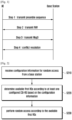
- An embodiment of the present application provides a random access method, as shown in FIG. 2 , including: Step S210: receiving configuration information for random access from a base station; Step S220: determining available first ROs according to at least one configured CSI-RS based on the configuration information; and Step S230: performing random access according to the available first ROs.
- the random access method receives the configuration information for random access from the base station, and provides the premise guarantee for the subsequent random access; the available first ROs according to the at least one configured CSI -RS based on the configuration information are determined, so that the UE can determine the time-frequency resources for random access through the indication of the configured CSI-RS, providing more ways of performing random access while laying the basis for subsequent random access; the random access is performed according to the available first ROs, so that random access is quickly performed according to the ROs determined by the CSI-RS.
- the determining the available first ROs according to the at least one configured CSI-RS based on the indexing time period includes:
- the determining the target CSI-RS for determining the ROs according to the at least one configured CSI-RS including any one of the following situations:
- the configured CSI-RS is determined as the target CSI-RS
- the determining the available first ROs associated to the target CSI-RS based on the indexing time period and an index of the at least one RO mapped by the target CSI-RS including:
- the determining a indexing time period of the RO based on the configuration information including any one of the following:
- the indexing time period includes any one of the following:
- the indexing at least one RO in each indexing time period according to a predetermined manner, respectively, to obtain the time frequency resource location associated to each RO including any one of the following cases:
- selecting ROs to be indexed from the valid ROs including: selecting ROs to be indexed from the valid ROs according to the minimum number of valid ROs in each indexing time period and the time-frequency resource locations of the minimum number of valid ROs in the corresponding indexing time period.
- the performing random access according to the valid ROs includes:
- the configuration information includes one or more of random access configuration information, SSB configuration information or CSI-RS configuration information.
- the random access configuration information includes one or more of the following:
- the random access configuration includes includes at least one CSI-RS index and at least one RO corresponding to each of the at least one CSI-RS index.
- the SSB configuration information includes one or more of the following: size of SSB period; number of SSBs transmitted in one SSB period; indexes of SSBs transmitted in one SSB period; time unit locations of SSBs transmitted in one SSB period; or frequency-domain unit locations of SSBs transmitted in one SSB period.
- the CSI-RS configuration information includes at one or more of the following: size of CSI-RS period; number of CSI-RSs transmitted in one CSI-RS period; indexes of CSI-RSs transmitted in one CSI-RS period; time unit locations of CSI-RSs transmitted in one CSI-RS period; or frequency-domain unit locations of CSI-RSs transmitted in one CSI-RS period.
- the UE needs to obtain a method based on an association from CSI-RS to RO to obtain an available RO method to implement the random access.
- the UE obtains configuration information of the network from the network side through system information or RRC configuration message or the downlink control channel, including one or more of the following: random access configuration information, including one or more of the following:
- the UE may obtain the association information from the SSB to the RO based on the foregoing configuration information, which includes one or more of the following:
- the UE may obtain association information from the CSI-RS to the RO based on the foregoing configuration information, which includes one or more of the following:
- the UE determines a CSI-RS index for determining a RO by configuring one or N (N>1) CSI-RS indexes for random access:
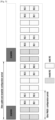
- FIG. 4 is an exemplary indexing diagram of indexing and indexing valid ROs in one PRACH configuration period and resetting the sequence of the RO indexes in different PRACH configuration periods.
- the indexing may be performed according to the minimum number of valid ROs in the time period, that is, indexing with the minimum number of valid ROs in all the time periods.
- the first 4 ROs should be valid, but should be indexed based on the 4 ROs obtained in the first PRACH configuration period.
- the random access method receives the configuration information for the random access from the base station, and provides the premise guarantee for the subsequent determination of the ROs; and the available the second ROs according to the configured at least one SSB based on the configuration information are determined, so that the UE can determine the time-frequency resources for random access through the indication of the configured SSB, providing more ways of performing random access while laying the basis for subsequent random access; the random access is performed according to the available first ROs, so that random access is quickly performed according to the ROs determined by the SSB, and the UE can perform autonomous handover in the presence of long-range interference, thereby increasing the probability of successful random access.
- the determining available second ROs according to at least one configured SSB based on the configuration information includes:
- the UE obtains configuration information of the network from the network side through system information or RRC configuration message or the downlink control channel, and includes one or more of the following: random access configuration information for no-range distance interference; including one or more of the following:
- the UE may obtain association information (different association information from SSB to RO may be obtained based on different random access configuration information) from SSB to RO based on the above random access configuration information (for random access configuration information for no long-range interference or random access configuration information for presence of long-range interference) and SSB configuration information, including one or more the following:
- the UE first sets a random access preamble transmission counter to 0, a preamble power ramping counter to 0, and a random access response PDCCH counter (RAR_PDCCH_counter) to 0 based on current default (or pre-selected) random access configuration information (e.g., random access configuration information for no long-range interference, and for example, random access configuration information for presence of long-range interference) and the association information from SSB to RO.
- random access configuration information e.g., random access configuration information for no long-range interference, and for example, random access configuration information for presence of long-range interference
- determining the available RO according to the selected SSB and the determined association information and transmitting a random access preamble on the determined available RO, that is, determining the available RO according to the configured SSB based on the determined association information from the SSB to RO, and transmitting the random access preamble on the determined available RO, and then using a random access-radio network temporary identifier (RA-RNTI) associated to the determined RO, searching for possible PDCCH on the configured downlink resources and in the random access response window (RAR window), wherein the RAR_PDCCH_counter is for recording the number of times that the UE does not search for the PDCCH matching to the RA-RNTI in the entire RAR window.
- RA-RNTI random access-radio network temporary identifier
- the present application proposes two ways, so that the UE may autonomously switch from random access based on default (or pre-selected) random access configuration information to random access based on another random access configuration information, for example, switching from a random access configuration information based on no long-range interference to the random access configuration information for the presence of long-range interference. Specifically:
- the present application further provides a manner in which the UE receives the indication of the base station equipment to select new random access configuration resources.
- the UE obtains N pieces of random access configuration information from the network side, and the network side notifies the user of the specifically-used random access configuration information by the random access configuration selection indication.
- the UE may obtain the random access configuration selection indication information by using one or more of the following:
- the random access configuration selection indication information (or the RI has indication information) may also be indicated by "true” or “false”, for example, if the indication is "true”, the random access configuration information for presence of long-range interference is used, and if the indication is "false", the random access configuration information for no long-range interference is used.
- the UE After obtaining the random access configuration selection indication information, the UE may:
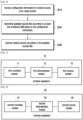
- FIG. 7 is a schematic structural diagram of a terminal equipment according to an embodiment of the present disclosure.
- the terminal equipment 70 may include a first receiving module 71, a first determination module 72, and a first access module 73, wherein:
- the configuration information includes one or more of random access configuration information, SSB configuration information, or CSI-RS configuration information;
- the random access configuration information includes one or more of the following: PRACH configuration period; frequency-domain unit index of RO; time-frequency unit index of RO; number of ROs; format of random access preamble; number of random access preambles; root sequence index of random access preambles; cyclic shift value of random access preamble; number of SSBs that can be mapped on one RO; index of at least one CSI-RS for random access; number of ROs mapped by one CSI-RS; and index of at least one RO mapped by one CSI-RS.
- the SSB configuration information includes one or more of the following:
- the first determination module is specifically configured to determine a indexing time period of the RO based on the configuration information, and determining the available first RO according to the at least one configured CSI-RS based on the indexing time period.
- the first determination module is specifically configured to determine a target CSI-RS for determining a RO according to the at least one configured CSI-RS; and determine the available first RO associated to the target CSI-RS based on the indexing time period and an index of at least one RO mapped by the target CSI-RS.
- the first determination module is specifically configured to: if there is one configured CSI-RS, the configured CSI-RS is determined as the target CSI-RS; if there are multiple configured CSI-RSs, any CSI-RS selected randomly from the multiple CSI-RSs with a medium probability is determined as the target CSI-RS; and the CSI-RS having the highest reference signal received power among the multiple CSI-RSs is determined as the target CSI-RS.
- the first determination module is specifically configured to index at least one RO in each indexing time period according to a predetermined manner respectively, to obtain a time-frequency resource location associated to each RO, wherein the RO represents an initial index reset of the RO in each indexing time period by an index; and determine the time-frequency resource location of the available first RO associated to the target CSI-RS based on a predefined association relationship between the CSI-RS and/or the RO and an index of at least one RO mapped by the target CSI-RS.
- the first determination module is specifically configured to determine first association information from SSB to RO and second association information from CSI-RS to RO, the first association information comprises an association period from SSB to the RO and/or an association pattern period from SSB to RO, the second association information comprises an association period from CSI-RS to ROs and/or an association pattern period from the CSI-RS to RO; obtain a PRACH configuration period from the configuration information; compute a time duration in which each CSI-RS configured in one CSI-RS period is completely mapped to a corresponding RO, according to the configuration information; and compute a time duration in which each SSB configured in one SSB period is completely mapped to a corresponding ROs, according to the configuration information.
- the indexing time period includes any one of the following:
- the first determination module is specifically configured to index indexes of all the ROs in each indexing time period according to the predetermined manner; or for any indexing time period, select valid ROs from ROs in the indexing time period based on a predetermined selection rule, and index indexes of the valid ROs according to the predetermined manner; or for any indexing time period, select valid ROs from ROs in the indexing time period based on a predetermined selection rule, and select ROs to be indexed from the valid ROs, and index indexes of the ROs to be indexed according to the predetermined manner.
- the first determination module is specifically configured to select ROs to be indexed from the valid ROs according to the minimum number of valid ROs in each indexing time period and the time-frequency resource locations of the minimum number of valid ROs in the corresponding indexing time period.
- the first access module is specifically configured to perform random access according to the first ROs if there is one time-frequency resource location of available first ROs; or if there are multiple time-frequency resource locations of available first ROs, one or more of the following operations is performed:
- the equipment provided by the embodiment of the present application receives the configuration information for the random access from the base station, and provides the premise guarantee for the subsequent random access; and determine the available first ROs according to the at least one configured CSI -RS based on the configuration information, so that the UE can determine the time-frequency resources for random access through the indication of the configured CSI-RS, providing more ways of performing random access while laying the basis for subsequent random access; the random access is performed according to the available first ROs, so that random access is quickly performed according to the ROs determined by the CSI-RS.
- FIG. 8 illustrates a schematic structural diagram of a terminal equipment according to an embodiment of the present application.
- the terminal equipment 80 may include a second receiving module 81, a second determination module 82, and a second access module 83, wherein:
- the configuration information includes one or more of random access configuration information for no long-range interference, random access configuration information for presence of long-range interference, or SSB configuration information.
- the second access module 83 is specifically configured to: if the value of the random access preamble transmission counter is greater than or equal to a configured threshold for switching random access configuration information or the value of the random access response PDCCH counter is greater than or equal to the threshold for switching random access configuration information, then performing any one of the following operations:
Landscapes
- Engineering & Computer Science (AREA)
- Signal Processing (AREA)
- Computer Networks & Wireless Communication (AREA)
- Mobile Radio Communication Systems (AREA)
Applications Claiming Priority (2)
| Application Number | Priority Date | Filing Date | Title |
|---|---|---|---|
| CN201811296434.5A CN111132326A (zh) | 2018-11-01 | 2018-11-01 | 随机接入方法、终端设备及计算机存储介质 |
| PCT/KR2019/014736 WO2020091518A1 (en) | 2018-11-01 | 2019-11-01 | Random access method, terminal equipment and computer storage medium cross-reference to related application |
Publications (4)
| Publication Number | Publication Date |
|---|---|
| EP3858067A1 EP3858067A1 (en) | 2021-08-04 |
| EP3858067A4 EP3858067A4 (en) | 2022-08-03 |
| EP3858067B1 true EP3858067B1 (en) | 2025-05-14 |
| EP3858067C0 EP3858067C0 (en) | 2025-05-14 |
Family
ID=70459264
Family Applications (1)
| Application Number | Title | Priority Date | Filing Date |
|---|---|---|---|
| EP19877646.0A Active EP3858067B1 (en) | 2018-11-01 | 2019-11-01 | Random access method, terminal equipment and base station |
Country Status (6)
| Country | Link |
|---|---|
| US (2) | US11533759B2 (https=) |
| EP (1) | EP3858067B1 (https=) |
| JP (1) | JP7553438B2 (https=) |
| KR (1) | KR20210069078A (https=) |
| CN (1) | CN111132326A (https=) |
| WO (1) | WO2020091518A1 (https=) |
Families Citing this family (31)
| Publication number | Priority date | Publication date | Assignee | Title |
|---|---|---|---|---|
| CN111132326A (zh) * | 2018-11-01 | 2020-05-08 | 北京三星通信技术研究有限公司 | 随机接入方法、终端设备及计算机存储介质 |
| US11606819B2 (en) * | 2018-11-02 | 2023-03-14 | Qualcomm Incorporated | Indexing of random access occasions for channel state information reference signal based random access procedures |
| WO2020171752A1 (en) * | 2019-02-18 | 2020-08-27 | Telefonaktiebolaget Lm Ericsson (Publ) | Mobile terminated access load control |
| CN112804032B (zh) * | 2019-11-14 | 2022-07-05 | 上海朗帛通信技术有限公司 | 一种被用于无线通信的节点中的方法和装置 |
| WO2021226760A1 (zh) * | 2020-05-09 | 2021-11-18 | 北京小米移动软件有限公司 | 部分监听方法、装置、终端设备及存储介质 |
| US20230209606A1 (en) * | 2020-05-15 | 2023-06-29 | Qualcomm Incorporated | Random access radio network temporary identifier (ra-rnti) with physical random access channel (prach) repetition |
| US11818770B2 (en) * | 2020-06-12 | 2023-11-14 | Qualcomm Incorporated | Random access channel beam management |
| US12471046B2 (en) | 2020-07-08 | 2025-11-11 | Lenovo (Beijing) Ltd. | Method and apparatus for random access resource configuration |
| EP3937442B1 (en) * | 2020-07-10 | 2022-12-21 | Mitsubishi Electric R & D Centre Europe B.V. | Method and device for an uplink transmission delay estimation |
| CN118317432A (zh) * | 2020-07-10 | 2024-07-09 | 北京小米移动软件有限公司 | 通信方法、装置、设备及存储介质 |
| CN114071772B (zh) * | 2020-07-31 | 2023-07-18 | 大唐移动通信设备有限公司 | 一种物理随机接入信道prach资源分配方法及装置 |
| EP4176677A4 (en) * | 2020-07-31 | 2023-11-29 | Samsung Electronics Co., Ltd. | METHOD AND DEVICE FOR TRANSMITTING AND RECEIVING SIGNALS |
| CN114125953A (zh) * | 2020-08-27 | 2022-03-01 | 华为技术有限公司 | 一种非地面网络的通信方法及通信装置 |
| US12004237B2 (en) | 2020-09-21 | 2024-06-04 | Samsung Electronics Co., Ltd. | Method and apparatus for spatial setting determination during a random access procedure |
| WO2022073490A1 (zh) * | 2020-10-09 | 2022-04-14 | 上海朗帛通信技术有限公司 | 一种被用于无线通信的节点中的方法和装置 |
| CN114698139A (zh) * | 2020-12-31 | 2022-07-01 | 展讯通信(上海)有限公司 | 数据传输方法、装置和设备 |
| BR112023026178A2 (pt) | 2021-06-25 | 2024-03-05 | Qualcomm Inc | Seleção de ocasião de acesso aleatório para equipamento de usuário de capacidade reduzida |
| US12177144B2 (en) * | 2021-06-29 | 2024-12-24 | Qualcomm Incorporated | Channel reporting for reconfigurable surfaces |
| CN116095645A (zh) * | 2021-11-05 | 2023-05-09 | 华为技术有限公司 | 一种通信方法和设备 |
| CN116419419A (zh) * | 2021-12-29 | 2023-07-11 | 展讯通信(上海)有限公司 | 一种随机接入方法、装置、芯片及模组设备 |
| EP4462896A4 (en) * | 2022-01-06 | 2026-01-07 | Kt Corp | METHOD AND APPARATUS FOR EMITTING AND RECEIVING A SIGNAL BY MEANS OF A LOW-CAPACITY TERMINAL |
| CN116980099A (zh) * | 2022-04-22 | 2023-10-31 | 北京紫光展锐通信技术有限公司 | 一种通信方法、装置、芯片及模组设备 |
| US20260046103A1 (en) * | 2022-08-12 | 2026-02-12 | Telefonaktiebolaget Lm Ericsson (Publ) | Physical random access channel (prach) for subband full duplex operation |
| CN116097612A (zh) * | 2022-09-23 | 2023-05-09 | 北京小米移动软件有限公司 | 信息上报方法和装置 |
| CN118158804A (zh) * | 2022-12-06 | 2024-06-07 | 中兴通讯股份有限公司 | 信号发送方法和功能模块配置方法 |
| CN117121620B (zh) * | 2023-06-30 | 2025-05-27 | 上海移远通信技术股份有限公司 | 用于无线通信的节点中的方法和装置 |
| CN117397351B (zh) * | 2023-07-21 | 2024-09-20 | 上海移远通信技术股份有限公司 | 用于无线通信的节点中的方法和装置 |
| CN119521434A (zh) * | 2023-08-09 | 2025-02-25 | 北京三星通信技术研究有限公司 | 用户设备执行的方法、基站执行的方法、用户设备和基站 |
| CN121173439A (zh) * | 2024-06-19 | 2025-12-19 | 中国移动通信有限公司研究院 | 资源确定方法、装置、终端、基站、存储介质及计算机程序产品 |
| WO2025260374A1 (zh) * | 2024-06-21 | 2025-12-26 | 北京小米移动软件有限公司 | 一种通信方法、通信设备及通信系统 |
| WO2026016193A1 (zh) * | 2024-07-19 | 2026-01-22 | Oppo广东移动通信有限公司 | 随机接入方法、装置、设备及存储介质 |
Family Cites Families (8)
| Publication number | Priority date | Publication date | Assignee | Title |
|---|---|---|---|---|
| CN103152837B (zh) * | 2013-02-20 | 2017-06-20 | 无锡清华信息科学与技术国家实验室物联网技术中心 | 一种机会信道接入与切换方法及装置 |
| US20180220450A1 (en) | 2017-02-02 | 2018-08-02 | Sharp Laboratories Of America, Inc. | User equipments, base stations and methods |
| WO2018144586A1 (en) * | 2017-02-02 | 2018-08-09 | Sharp Laboratories Of America, Inc. | User equipments, base stations and methods |
| WO2018171801A1 (en) * | 2017-03-24 | 2018-09-27 | Mediatek Inc. | Apparatuses and methods for beam identification through the physical random access channel (prach) and efficient prach resource utilization |
| CN110493870B (zh) | 2017-09-27 | 2020-08-21 | 华为技术有限公司 | 一种通信方法、装置和计算机可读存储介质 |
| US11357068B2 (en) * | 2017-12-29 | 2022-06-07 | Beijing Xiaomi Mobile Software Co., Ltd. | Random access failure processing method and apparatus |
| KR102478435B1 (ko) * | 2018-02-14 | 2022-12-15 | 씨스코 시스템즈, 인코포레이티드 | NR(New Radio) 시스템의 랜덤 엑세스(random access) 수행 방법 및 그 장치 |
| CN111132326A (zh) * | 2018-11-01 | 2020-05-08 | 北京三星通信技术研究有限公司 | 随机接入方法、终端设备及计算机存储介质 |
-
2018
- 2018-11-01 CN CN201811296434.5A patent/CN111132326A/zh active Pending
-
2019
- 2019-11-01 WO PCT/KR2019/014736 patent/WO2020091518A1/en not_active Ceased
- 2019-11-01 EP EP19877646.0A patent/EP3858067B1/en active Active
- 2019-11-01 KR KR1020217012855A patent/KR20210069078A/ko not_active Ceased
- 2019-11-01 JP JP2021523458A patent/JP7553438B2/ja active Active
- 2019-11-01 US US16/672,360 patent/US11533759B2/en active Active
-
2022
- 2022-12-19 US US18/068,380 patent/US12075487B2/en active Active
Also Published As
| Publication number | Publication date |
|---|---|
| US20200146070A1 (en) | 2020-05-07 |
| US20230125994A1 (en) | 2023-04-27 |
| WO2020091518A1 (en) | 2020-05-07 |
| US12075487B2 (en) | 2024-08-27 |
| US11533759B2 (en) | 2022-12-20 |
| EP3858067A4 (en) | 2022-08-03 |
| EP3858067A1 (en) | 2021-08-04 |
| EP3858067C0 (en) | 2025-05-14 |
| JP7553438B2 (ja) | 2024-09-18 |
| KR20210069078A (ko) | 2021-06-10 |
| JP2022506244A (ja) | 2022-01-17 |
| CN111132326A (zh) | 2020-05-08 |
Similar Documents
| Publication | Publication Date | Title |
|---|---|---|
| US12075487B2 (en) | Random access method, terminal equipment and computer storage medium | |
| EP3888409B1 (en) | Method and apparatus for transmitting and receiving a signal in a wireless communication system | |
| EP3695679B1 (en) | Methods and apparatuses for determining and configuring a time-frequency resource, in the random access process | |
| US12490311B2 (en) | Method and apparatus for repeated random access preamble transmission and reception in wireless communication system | |
| US11617208B2 (en) | Method and apparatus for random access procedure | |
| US11405145B2 (en) | Method and apparatus for transmitting and receiving signal in a communication system | |
| US20220368468A1 (en) | Method and apparatus for transmitting and receiving signal in a communication system | |
| AU2018390050B2 (en) | A method and an apparatus for handling a bandwidth part inactivity timer in wireless communication system | |
| US12225577B2 (en) | Method and apparatus for determining preambles and RACH occasions for 2 step random access | |
| CN111316735B (zh) | 用于在无线通信系统中发送和接收信号的方法及其设备 | |
| EP3432673B1 (en) | Method and apparatus for decoding random access response message in wireless communication system | |
| EP3991501B1 (en) | Method and apparatus for transmitting an uplink signal in a wireless communication system | |
| US12167470B2 (en) | System and method of selecting RACH occasions for system information request | |
| US12402121B2 (en) | Method and apparatus of communication for reduced-capability user equipment in wireless communication system | |
| US12082259B2 (en) | Communication method and device for reduced-capability UE in wireless communication system | |
| KR20210010842A (ko) | 무선 통신 시스템에서 랜덤 액세스 백오프를 수행하는 방법 및 장치 |
Legal Events
| Date | Code | Title | Description |
|---|---|---|---|
| STAA | Information on the status of an ep patent application or granted ep patent |
Free format text: STATUS: THE INTERNATIONAL PUBLICATION HAS BEEN MADE |
|
| PUAI | Public reference made under article 153(3) epc to a published international application that has entered the european phase |
Free format text: ORIGINAL CODE: 0009012 |
|
| STAA | Information on the status of an ep patent application or granted ep patent |
Free format text: STATUS: REQUEST FOR EXAMINATION WAS MADE |
|
| 17P | Request for examination filed |
Effective date: 20210430 |
|
| AK | Designated contracting states |
Kind code of ref document: A1 Designated state(s): AL AT BE BG CH CY CZ DE DK EE ES FI FR GB GR HR HU IE IS IT LI LT LU LV MC MK MT NL NO PL PT RO RS SE SI SK SM TR |
|
| DAV | Request for validation of the european patent (deleted) | ||
| DAX | Request for extension of the european patent (deleted) | ||
| A4 | Supplementary search report drawn up and despatched |
Effective date: 20220704 |
|
| RIC1 | Information provided on ipc code assigned before grant |
Ipc: H04W 74/08 20090101ALN20220628BHEP Ipc: H04W 56/00 20090101ALI20220628BHEP Ipc: H04L 5/00 20060101ALI20220628BHEP Ipc: H04L 1/00 20060101ALI20220628BHEP Ipc: H04W 74/00 20090101AFI20220628BHEP |
|
| STAA | Information on the status of an ep patent application or granted ep patent |
Free format text: STATUS: EXAMINATION IS IN PROGRESS |
|
| 17Q | First examination report despatched |
Effective date: 20230928 |
|
| REG | Reference to a national code |
Ref country code: DE Free format text: PREVIOUS MAIN CLASS: H04W0074000000 Ref legal event code: R079 Ref document number: 602019070081 Country of ref document: DE Ipc: H04W0074083300 |
|
| RIC1 | Information provided on ipc code assigned before grant |
Ipc: H04W 74/00 20090101ALN20250129BHEP Ipc: H04W 56/00 20090101ALI20250129BHEP Ipc: H04L 5/00 20060101ALI20250129BHEP Ipc: H04L 1/00 20060101ALI20250129BHEP Ipc: H04W 74/0833 20240101AFI20250129BHEP |
|
| GRAP | Despatch of communication of intention to grant a patent |
Free format text: ORIGINAL CODE: EPIDOSNIGR1 |
|
| STAA | Information on the status of an ep patent application or granted ep patent |
Free format text: STATUS: GRANT OF PATENT IS INTENDED |
|
| GRAS | Grant fee paid |
Free format text: ORIGINAL CODE: EPIDOSNIGR3 |
|
| GRAA | (expected) grant |
Free format text: ORIGINAL CODE: 0009210 |
|
| STAA | Information on the status of an ep patent application or granted ep patent |
Free format text: STATUS: THE PATENT HAS BEEN GRANTED |
|
| RIC1 | Information provided on ipc code assigned before grant |
Ipc: H04W 74/00 20090101ALN20250310BHEP Ipc: H04W 56/00 20090101ALI20250310BHEP Ipc: H04L 5/00 20060101ALI20250310BHEP Ipc: H04L 1/00 20060101ALI20250310BHEP Ipc: H04W 74/0833 20240101AFI20250310BHEP |
|
| INTG | Intention to grant announced |
Effective date: 20250327 |
|
| AK | Designated contracting states |
Kind code of ref document: B1 Designated state(s): AL AT BE BG CH CY CZ DE DK EE ES FI FR GB GR HR HU IE IS IT LI LT LU LV MC MK MT NL NO PL PT RO RS SE SI SK SM TR |
|
| REG | Reference to a national code |
Ref country code: GB Ref legal event code: FG4D |
|
| REG | Reference to a national code |
Ref country code: CH Ref legal event code: EP |
|
| REG | Reference to a national code |
Ref country code: IE Ref legal event code: FG4D |
|
| REG | Reference to a national code |
Ref country code: DE Ref legal event code: R096 Ref document number: 602019070081 Country of ref document: DE |
|
| U01 | Request for unitary effect filed |
Effective date: 20250605 |
|
| U07 | Unitary effect registered |
Designated state(s): AT BE BG DE DK EE FI FR IT LT LU LV MT NL PT RO SE SI Effective date: 20250613 |
|
| PG25 | Lapsed in a contracting state [announced via postgrant information from national office to epo] |
Ref country code: ES Free format text: LAPSE BECAUSE OF FAILURE TO SUBMIT A TRANSLATION OF THE DESCRIPTION OR TO PAY THE FEE WITHIN THE PRESCRIBED TIME-LIMIT Effective date: 20250514 |
|
| PG25 | Lapsed in a contracting state [announced via postgrant information from national office to epo] |
Ref country code: NO Free format text: LAPSE BECAUSE OF FAILURE TO SUBMIT A TRANSLATION OF THE DESCRIPTION OR TO PAY THE FEE WITHIN THE PRESCRIBED TIME-LIMIT Effective date: 20250814 Ref country code: GR Free format text: LAPSE BECAUSE OF FAILURE TO SUBMIT A TRANSLATION OF THE DESCRIPTION OR TO PAY THE FEE WITHIN THE PRESCRIBED TIME-LIMIT Effective date: 20250815 |
|
| PG25 | Lapsed in a contracting state [announced via postgrant information from national office to epo] |
Ref country code: PL Free format text: LAPSE BECAUSE OF FAILURE TO SUBMIT A TRANSLATION OF THE DESCRIPTION OR TO PAY THE FEE WITHIN THE PRESCRIBED TIME-LIMIT Effective date: 20250514 |
|
| PG25 | Lapsed in a contracting state [announced via postgrant information from national office to epo] |
Ref country code: HR Free format text: LAPSE BECAUSE OF FAILURE TO SUBMIT A TRANSLATION OF THE DESCRIPTION OR TO PAY THE FEE WITHIN THE PRESCRIBED TIME-LIMIT Effective date: 20250514 |
|
| PG25 | Lapsed in a contracting state [announced via postgrant information from national office to epo] |
Ref country code: RS Free format text: LAPSE BECAUSE OF FAILURE TO SUBMIT A TRANSLATION OF THE DESCRIPTION OR TO PAY THE FEE WITHIN THE PRESCRIBED TIME-LIMIT Effective date: 20250814 |
|
| PG25 | Lapsed in a contracting state [announced via postgrant information from national office to epo] |
Ref country code: IS Free format text: LAPSE BECAUSE OF FAILURE TO SUBMIT A TRANSLATION OF THE DESCRIPTION OR TO PAY THE FEE WITHIN THE PRESCRIBED TIME-LIMIT Effective date: 20250914 |
|
| U20 | Renewal fee for the european patent with unitary effect paid |
Year of fee payment: 7 Effective date: 20251124 |
|
| PGFP | Annual fee paid to national office [announced via postgrant information from national office to epo] |
Ref country code: GB Payment date: 20251023 Year of fee payment: 7 |
|
| PG25 | Lapsed in a contracting state [announced via postgrant information from national office to epo] |
Ref country code: SM Free format text: LAPSE BECAUSE OF FAILURE TO SUBMIT A TRANSLATION OF THE DESCRIPTION OR TO PAY THE FEE WITHIN THE PRESCRIBED TIME-LIMIT Effective date: 20250514 |
|
| PG25 | Lapsed in a contracting state [announced via postgrant information from national office to epo] |
Ref country code: CZ Free format text: LAPSE BECAUSE OF FAILURE TO SUBMIT A TRANSLATION OF THE DESCRIPTION OR TO PAY THE FEE WITHIN THE PRESCRIBED TIME-LIMIT Effective date: 20250514 |
|
| PG25 | Lapsed in a contracting state [announced via postgrant information from national office to epo] |
Ref country code: SK Free format text: LAPSE BECAUSE OF FAILURE TO SUBMIT A TRANSLATION OF THE DESCRIPTION OR TO PAY THE FEE WITHIN THE PRESCRIBED TIME-LIMIT Effective date: 20250514 |
|
| PLBE | No opposition filed within time limit |
Free format text: ORIGINAL CODE: 0009261 |
|
| STAA | Information on the status of an ep patent application or granted ep patent |
Free format text: STATUS: NO OPPOSITION FILED WITHIN TIME LIMIT |
|
| REG | Reference to a national code |
Ref country code: CH Ref legal event code: L10 Free format text: ST27 STATUS EVENT CODE: U-0-0-L10-L00 (AS PROVIDED BY THE NATIONAL OFFICE) Effective date: 20260325 |
|
| 26N | No opposition filed |
Effective date: 20260217 |