EP3857764B1 - Urllc dai und lti - Google Patents
Urllc dai und lti Download PDFInfo
- Publication number
- EP3857764B1 EP3857764B1 EP19773131.8A EP19773131A EP3857764B1 EP 3857764 B1 EP3857764 B1 EP 3857764B1 EP 19773131 A EP19773131 A EP 19773131A EP 3857764 B1 EP3857764 B1 EP 3857764B1
- Authority
- EP
- European Patent Office
- Prior art keywords
- data
- dai
- user data
- user
- wireless communication
- Prior art date
- Legal status (The legal status is an assumption and is not a legal conclusion. Google has not performed a legal analysis and makes no representation as to the accuracy of the status listed.)
- Active
Links
Images




Classifications
-
- H—ELECTRICITY
- H04—ELECTRIC COMMUNICATION TECHNIQUE
- H04L—TRANSMISSION OF DIGITAL INFORMATION, e.g. TELEGRAPHIC COMMUNICATION
- H04L1/00—Arrangements for detecting or preventing errors in the information received
- H04L1/12—Arrangements for detecting or preventing errors in the information received by using return channel
- H04L1/16—Arrangements for detecting or preventing errors in the information received by using return channel in which the return channel carries supervisory signals, e.g. repetition request signals
- H04L1/18—Automatic repetition systems, e.g. Van Duuren systems
- H04L1/1829—Arrangements specially adapted for the receiver end
- H04L1/1854—Scheduling and prioritising arrangements
-
- H—ELECTRICITY
- H04—ELECTRIC COMMUNICATION TECHNIQUE
- H04L—TRANSMISSION OF DIGITAL INFORMATION, e.g. TELEGRAPHIC COMMUNICATION
- H04L1/00—Arrangements for detecting or preventing errors in the information received
- H04L1/12—Arrangements for detecting or preventing errors in the information received by using return channel
- H04L1/16—Arrangements for detecting or preventing errors in the information received by using return channel in which the return channel carries supervisory signals, e.g. repetition request signals
- H04L1/18—Automatic repetition systems, e.g. Van Duuren systems
- H04L1/1867—Arrangements specially adapted for the transmitter end
- H04L1/1896—ARQ related signaling
-
- H—ELECTRICITY
- H04—ELECTRIC COMMUNICATION TECHNIQUE
- H04L—TRANSMISSION OF DIGITAL INFORMATION, e.g. TELEGRAPHIC COMMUNICATION
- H04L1/00—Arrangements for detecting or preventing errors in the information received
- H04L1/0001—Systems modifying transmission characteristics according to link quality, e.g. power backoff
- H04L1/0023—Systems modifying transmission characteristics according to link quality, e.g. power backoff characterised by the signalling
- H04L1/0028—Formatting
- H04L1/003—Adaptive formatting arrangements particular to signalling, e.g. variable amount of bits
-
- H—ELECTRICITY
- H04—ELECTRIC COMMUNICATION TECHNIQUE
- H04L—TRANSMISSION OF DIGITAL INFORMATION, e.g. TELEGRAPHIC COMMUNICATION
- H04L1/00—Arrangements for detecting or preventing errors in the information received
- H04L1/0001—Systems modifying transmission characteristics according to link quality, e.g. power backoff
- H04L1/0036—Systems modifying transmission characteristics according to link quality, e.g. power backoff arrangements specific to the receiver
- H04L1/0038—Blind format detection
-
- H—ELECTRICITY
- H04—ELECTRIC COMMUNICATION TECHNIQUE
- H04W—WIRELESS COMMUNICATION NETWORKS
- H04W72/00—Local resource management
- H04W72/12—Wireless traffic scheduling
- H04W72/1263—Mapping of traffic onto schedule, e.g. scheduled allocation or multiplexing of flows
-
- H—ELECTRICITY
- H04—ELECTRIC COMMUNICATION TECHNIQUE
- H04W—WIRELESS COMMUNICATION NETWORKS
- H04W72/00—Local resource management
- H04W72/20—Control channels or signalling for resource management
- H04W72/23—Control channels or signalling for resource management in the downlink direction of a wireless link, i.e. towards a terminal
Definitions
- the present application relates to the field of wireless communication systems or networks, more specifically to approaches for providing a HARQ feedback.
- Fig. 1 is a schematic representation of an example of a terrestrial wireless network 100 including, as is shown in Fig. 1(a) a core network 102 and one or more radio access networks RAN 1 , RAN 2 , ...RAN N .
- Fig. 1(b) is a schematic representation of an example of a radio access network RAN n that may include one or more base stations gNB 1 to gNB 5 , each serving a specific area surrounding the base station schematically represented by respective cells 106 1 to 106 5 .
- the base stations are provided to serve users within a cell.
- base station refers to a gNB in 5G networks, an eNB in UMTS/LTE/LTE-A/ LTE-A Pro, or just a BS in other mobile communication standards.
- a user may be a stationary device or a mobile device.
- the wireless communication system may also be accessed by mobile or stationary loT devices which connect to a base station or to a user.
- the mobile devices or the loT devices may include physical devices, ground based vehicles, such as robots or cars, aerial vehicles, such as manned or unmanned aerial vehicles (UAVs), the latter also referred to as drones, buildings and other items or devices having embedded therein electronics, software, sensors, actuators, or the like as well as network connectivity that enable these devices to collect and exchange data across an existing network infrastructure.
- Fig. 1(b) shows an exemplary view of only five cells, however, the RAN n may include more or less such cells, and RAN n may also include only one base station.
- Fig. 1(b) shows two users UE 1 and UE 2 , also referred to as user equipment, UE, that are in cell 106 2 and that are served by base station gNB 2 .
- FIG. 1(b) shows two loT devices 110 1 and 110 2 in cell 106 4 , which may be stationary or mobile devices.
- the loT device 110 1 accesses the wireless communication system via the base station gNB 4 to receive and transmit data as schematically represented by arrow 112 1 .
- the loT device 110 2 accesses the wireless communication system via the user UE 3 as is schematically represented by arrow 112 2 .
- the respective base station gNB 1 to gNB 5 may be connected to the core network 102, e.g. via the S1 interface, via respective backhaul links 114 1 to 114 5 , which are schematically represented in Fig. 1(b) by the arrows pointing to "core”.
- the core network 102 may be connected to one or more external networks. Further, some or all of the respective base station gNB 1 to gNB 5 may connected, e.g. via the S1 or X2 interface or XN interface in NR, with each other via respective backhaul links 116 1 to 116 5 , which are schematically represented in Fig. 1(b) by the arrows pointing to "gNBs".
- the physical resource grid may comprise a set of resource elements to which various physical channels and physical signals are mapped.
- the physical channels may include the physical downlink and uplink shared channels (PDSCH, PUSCH) carrying user specific data, also referred to as downlink and uplink payload data, the physical broadcast channel (PBCH) carrying for example a master information block (MIB) and a system information block (SIB), the physical downlink and uplink control channels (PDCCH, PUCCH) carrying for example the downlink control information (DCI).
- the physical channels may further include the physical random access channel (PRACH or RACH) used by UEs for accessing the network once a UE synchronized and obtained the MIB and SIB.
- PRACH physical random access channel
- the physical signals may comprise reference signals or symbols (RS), synchronization signals and the like.
- the resource grid may comprise a frame or radio frame having a certain duration in the time domain and having a given bandwidth in the frequency domain.
- the frame may have a certain number of subframes of a predefined length. Each subframe may include two slots of 6 or 7 OFDM symbols depending on the cyclic prefix (CP) length.
- a frame may also consist of a smaller number of OFDM symbols, e.g. when utilizing shortened transmission time intervals (sTTI) or a mini-slot/non-slot-based frame structure comprising just a few OFDM symbols.
- sTTI shortened transmission time intervals
- mini-slot/non-slot-based frame structure comprising just a few OFDM symbols.
- the wireless communication system may be any single-tone or multicarrier system using frequency-division multiplexing, like the orthogonal frequency-division multiplexing (OFDM) system, the orthogonal frequency-division multiple access (OFDMA) system, or any other IFFT-based signal with or without CP, e.g. DFT-s-OFDM.
- Other waveforms like non-orthogonal waveforms for multiple access, e.g. filter-bank multicarrier (FBMC), generalized frequency division multiplexing (GFDM) or universal filtered multi carrier (UFMC), may be used.
- FBMC filter-bank multicarrier
- GFDM generalized frequency division multiplexing
- UFMC universal filtered multi carrier
- the wireless communication system may operate, e.g., in accordance with the LTE-Advanced pro standard or the 5G or NR, New Radio, standard.
- the wireless network or communication system depicted in Fig. 1 may by an heterogeneous network having distinct overlaid networks, e.g., a network of macro cells with each macro cell including a macro base station, like base station gNB 1 to gNB 5 , and a network of small cell base stations (not shown in Fig. 1 ), like femto or pico base stations.
- a network of macro cells with each macro cell including a macro base station, like base station gNB 1 to gNB 5 , and a network of small cell base stations (not shown in Fig. 1 ), like femto or pico base stations.
- non-terrestrial wireless communication networks including spaceborne transceivers, like satellites, and/or airborne transceivers, like unmanned aircraft systems.
- the non-terrestrial wireless communication network or system may operate in a similar way as the terrestrial system described above with reference to Fig. 1 , for example in accordance with the LTE-advanced pro standard or the 5G or NR, New Radio, standard.
- UEs that communicate directly with each other over one or more sidelink (SL) channels e.g., using the PC5 interface.
- UEs that communicate directly with each other over the sidelink may include vehicles communicating directly with other vehicles (V2V communication), vehicles communicating with other entities of the wireless communication network (V2X communication), for example roadside entities, like traffic lights, traffic signs, or pedestrians.
- V2V communication vehicles communicating directly with other vehicles
- V2X communication vehicles communicating with other entities of the wireless communication network
- Other UEs may not be vehicular related UEs and may comprise any of the above mentioned devices.
- Such devices may also communicate directly with each other (D2D communication) using the SL channels.
- a frequency band includes a start frequency, an end frequency and all intermediate frequencies between the start and end frequencies.
- the start, end and intermediate frequencies may define a certain bandwidth, e.g., 20MHz.
- a frequency band may also be referred to as a carrier, a bandwidth part, BWP, a subband, and the like.
- the 5G New Radio (NR) technology supports an operation in unlicensed bands through a technology referred to as NR-based access to unlicensed spectrum (NR-U).
- the unlicensed spectrum may include bands, e.g., with potential IEEE 802.11 coexistence, such as the 5 GHz and the 6 GHz bands.
- NR-U may support bandwidths that are an integer multiple of 20 MHz, for example due to regulatory requirements.
- Each of the 20 MHz bandwidth channels is designed as a subband, and the splitting into the subbands is performed so as to minimize interference with coexisting systems, like IEE 802.11 systems, which may operate in one or more of the same bands with the same nominal bandwidth channels, like 20 MHz channels.
- coexisting systems may use subbands having subband sizes and nominal frequencies different from the above-described IEEE 802.11 systems.
- unlicensed subbands may be used, for example, the 24 GHz band or the 60 GHz band. Examples of such unlicensed subbands include the industrial, scientific and medical, ISM, radio bands reserved internationally for the use of radio frequency energy for industrial, scientific and medical purposes other than telecommunications.
- the transmitter like the gNB or the UE perform LBT separately on each subband, and once the LBT results are available for each subband, the devices, for example, the gNB in the downlink, DL, or the UE in the uplink, UL, are allowed to only transmit on those subbands which are determined to be free or unoccupied, i.e., to transmit on the won subband.
- the number of 20 MHz subbands used for a wideband operation may be four, so that the overall bandwidth is 80 MHz, however, the number of actually used subbands may differ.
- a user equipment (UE) operable to determine a HARQ-ACK codebook size for inter-band TDD CA can include computer circuitry configured to: determine a HARQ bundling window for inter-band TDD CA including a number of downlink (DL) subframes using HARQ-ACK feedback; divide the HARQ bundling window into a first part and a second part; and calculate the HARQ-ACK codebook size based on the first part and the second part.
- DL downlink
- the first part can include DL subframes of configured serving cells that occur no later than the DL subframe where a downlink control information (DCI) transmission for uplink scheduling on a serving cell is conveyed
- the second part can include physical downlink shared channel (PDSCH) subframes occurring after the DCI transmission of the serving cells.
- DCI downlink control information
- PDSCH physical downlink shared channel
- QUALCOMM INCORPORATED "Open Issues on CA", vol. RAN WG1, no. Reno, NV, USA; 20171127 -20171201, (20171118), 3GPP DRAFT; R1-1720694 , refers to issues in CA and BWP for NR including SCell BWP adaptation, timeline with CA activation/deactivation, dynamic HARQ-ACK feedback, and CA with mixed numerology.
- Wireless communication systems as above may provide different HARQ reporting procedures.
- 5G NR may distinguish two different HARQ-ACK feedback reporting procedures, a type-1 and type-2 HARQ-ACK codebook determination.
- type-1 HARQ-ACK reporting which may be signaled by stating that the HARQ-ACK codebook is semi-static
- a user device, UE may report a HARQ-ACK for each PDCCH monitoring occasion, i.e., each time downlink control information is monitored in a transmission to the UE.
- the HARQ-ACK may be reported in corresponding PUCCH resources, regardless of whether there was a grant in the corresponding PDCCH, the grant was missed, or there was no grant.
- a grant in the corresponding PDCCH indicates that a HARQ-ACK is to be returned.
- this type of feedback reporting is disadvantageous as it produces a high reporting overhead in the PUCCH, especially in cases where there was no explicit grant for the feedback in the monitored or scanned PDCCH.
- 5G NR adopts a type-2 HARQ-ACK reporting procedure which may be activated by stating that the HARQ-ACK-codebook is dynamic.
- the UE transmit HARQ-ACK information or bits only for actual grants, i.e., only in cases where the PDCCH indicated that a feedback from the UE to the transmitting station is desired.
- the possible problem of missing a grant is coped with by providing the downlink assignment index, DAI, which may include two two-bit counters in the downlink control information, DCI, namely the DAI counter and the total DAI counter.
- the DAI counter or total DAI counter in another example does not have to be limited to a two-bit counter, but can be specified to support more than 2 bits, e.g. 3 bits.
- the DAI counter is incremented for each transmission of user data for which a feedback is desired by the transmitter at a certain occasion or time when a PDCCH is monitored.
- the total DAI counter signals the number of all transmissions for which a feedback has been requested up to and including the current monitoring time or occasion of the PDCCH.
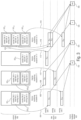
- Fig. 3 illustrates the concept of employing the DAI counter and the total DAI counter.
- Fig. 3 illustrates a control region 400 and a data region 402 including respective data channels.
- a UE may monitor the control region for DCls directed to the UE, and in Fig. 3 it is assumed that a receiving UE at times or occasions m to m+3 successfully decodes DCls dedicated for this UE.
- two DCls are decoded each including the DAI counter and the total DAI counter and, in addition, an indication of the location where the user data associated with the respective DCI may be found in the data channels.
- DCI 1.1 points to a location in a first subchannel (serving cell 1) of the data channel 420 at which data D 1,1 associated with the DCI 1,1 is present
- DCI 1,2 points to a location in a third subchannel (serving cell 3) of the data channel 420 at which data D 1,2 associated with the DCI 1,2 is present.
- the total number of data transmissions in the data channel 402 indicated in the PDCCH received at time m is 2, so that the total DAI counter has a value of 2.
- the DCI 1,1 includes the first data transmission at occasion m so that the DAI counter equals 1
- the DCI 1,2 includes the second data transmission for which a feedback is desired so that the DAI counter in DCI 1,2 is 2.
- the UE derives further DCIs in the control region which are dedicated for the UE, as is indicated at time or occasion m+1.
- two DCls dedicated for the UE are present at the POOCH monitoring occasion m+1, namely DCI 2,1 and DCI 2,2 pointing to respective data D 2,1 and D 2,2 in the first data channel and in the second data channel (serving cell 2), respectively, as indicated by arrows 408 and 410.
- the DAI counter has been increased to 3 as the transmitter requested for the data D 2,2 a feedback.
- a feedback for the data D 2,1 has been requested so that in DCI 2,2 , the DAI counter has been increased to 4. Further, since the total number of requested feedbacks has now increased to 4, the total DAI counter equals 4.
- a further DCI for the UE is decoded, however, at this occasion, namely at PDCCH monitoring occasion m+2 only a single DCI 3,1 for the UE is present pointing, as is indicating by arrow 412 to data D 3,1 in the first data channel.
- the UE decodes from the control region 400 the DCls D 4,1 , D 4,2 and D 4,3 pointing, as is indicating by arrows 414, 416 and 418 to data D 4,1 in the first data channel, data D 4,21 in the second data channel and D 4,3 in the third data channel.
- Fig. 3 further indicates at 420 the PUCCH feedback channel which is used for returning the requested feedback for the respective data packets transmitted at occasions m to m+3.
- the feedback is transmitted with an offset from the transmission of the data packets, for example at predefined resources allocated for the feedback in the PUCCH.
- the feedback is transmitted at 422, for the occasion m+1 at 424, for the occasion m+2 at 426 and for the occasion m+3 at 428.
- the feedback includes the values "0", which is assumed to indicate to the transmitter, to which the feedback is returned, that the reception of the data packets at the UE was successful.
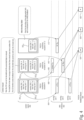
- Fig. 4 illustrates an example of how the DAI is used for determining a missed DCI.
- Fig. 4 illustrates the occasions m to m+2 of Fig. 3 .
- the receiving UE was able to detect DCI 1,2 and DCI 2,2 which is determined because the DAI counter in DCI 1,2 has the same value as the total DAI counter.
- a successful decoding of the respective data in the data channels associated with the PDCCH at occasion m is indicated by the respective " ⁇ ".
- the feedback transmitted in the PUCCH feedback channel 420 occurs for respective data transmitted at occasions m, m+1 and m+2 with a substantial offset from these occasions which may cause an increase in latency until correct data is transmitted to a UE which may not be acceptable for data associated with services requiring a low latency or which are delay critical, like URLLC services.
- the process as depicted above with reference to Figs. 5 and 6 is not problematic in terms of latency for data packets associated with services not being time critical, like eMBB services, it may not be sufficient for URLLC services.
- the present invention addresses this issue by providing, in accordance with an aspect, different DAIs associated with data packets of different services, so that time-uncritical data packets may be handled differently than time critical data packets, in terms of when providing the feedback.
- a so-called last transmission indicator, LTI, field is provided in the DCI which indicates the offset from the last DCI which granted the resources for the feedback in the uplink channel so as to allow the UE to determine the timing of the last transmission although it missed the associated grant, and in such cases, the UE may employ one or more existing parameters for trying to decode information or to perform an uplink transmission.
- the present invention aims at providing a more reliable communication of latency critical data to a UEs by using a dedicated DAI and/or LTI allowing for a quicker transmission of the feedback, thereby causing an earlier retransmission for the latency critical data, or by giving the UE the opportunity to obtain the latency critical data using existing parameters, in case the missed transmission is not too far in the past.
- Fig. 1 including base stations and users, like mobile terminals or loT devices.
- the transmitter 300 may include one or more antennas ANT T or an antenna array having a plurality of antenna elements, a signal processor 300a and a transceiver 300b, coupled with each other.
- the receivers 302 include one or more antennas ANT R or an antenna array having a plurality of antennas, a signal processor 302a 1 , 302a n , and a transceiver 302b 1 , 302b, coupled with each other.
- the base station 300 and the UEs 302 may communicate via respective first wireless communication links 304a and 304b, like a radio link using the Uu interface, while the UEs 302 may communicate with each other via a second wireless communication link 304c, like a radio link using the PC5 sidelink interface.
- the system, the base station 300 and the one or more UEs 302 may operate in accordance with the inventive teachings described herein.
- the present invention provides, a wireless communication system, comprising
- control data may include different DAIs, like an eMBB DAI and an URLLC DAI, and the data blocks of data may be control information if data is control data or data if the data is user data.
- DAIs like an eMBB DAI and an URLLC DAI
- the user data includes third data, the third user data associated with a third service, and the control data includes a third DAI associated with the third data.
- the user data includes third data, the third user data associated with a third service, and wherein the first DAI is associated with the first and third data, or the second DAI is associated with the second and third data.
- control data points to data and a feedback resource mapping for sending the feedback is
- the UE is configured to monitor a plurality of control regions in a received signal for the control data, wherein a control region indicates the transmission of one or more data blocks of user data.
- the first and second DAIs are incremented independently, the first DAI being incremented responsive to sending first data to the UE, and the second DAI being incremented responsive to sending second data to the UE.
- the first and second transmission parameters include one or more of latency, reliability, packet size, QoS, service type.
- the UE is configured to send the feedback for data associated with the first service during a first interval following the transmission of the user data, and the feedback for data associated with the second service during a second interval following the transmission of the user data, the second interval being shorter than the first interval.
- control data in a control region includes one or more first control messages associated with the first user data and one or more second control messages associated with the second user data, the first control message including the first DAI and the second control message including the second DAI,
- control data in a control region includes one or more control messages associated with the first user data and including the first DAI and the second DAI.
- the UE is configured to
- the UE responsive to detecting a missed transmission of user data and in case a time passed since a last transmission as indicated by the LTI is below a predefined threshold, the UE is configured to blind decode the missed transmission using one or more previous parameters, e.g., using the same frequency resources and MCS level, using the same frequency resources and trying a different MCS level, or using the same MSC level and trying different frequency resources.
- one or more previous parameters e.g., using the same frequency resources and MCS level, using the same frequency resources and trying a different MCS level, or using the same MSC level and trying different frequency resources.
- the UE responsive to detecting a missed transmission of control data and in case a time passed since a last transmission as indicated by the LTI is below a predefined threshold, the UE is configured to perform a transmission of uplink data using one or more previous parameters, e.g., using the same frequency resources and MCS level, using the same frequency resources and trying a different MCS level, or using the same MSC level and trying different frequency resources.
- one or more previous parameters e.g., using the same frequency resources and MCS level, using the same frequency resources and trying a different MCS level, or using the same MSC level and trying different frequency resources.
- the UE comprises one or more of
- the present invention provides, base station for a wireless communication system, the wireless communication system comprising one or more base stations and one or more user devices, UEs, wherein the base station is configured to
- the present invention provides, a user device for a wireless communication system, the wireless communication system comprising one or more base stations and one or more user devices, UEs, wherein the UE is configured to
- control data points to data and a feedback resource mapping for sending the feedback is
- the present invention provides, a method, comprising
- the present invention provides a computer program product comprising instructions which, when the program is executed by a computer, causes the computer to carry out one or more methods in accordance with the present invention.
- embodiments provide at least one new DAI for time critical transmissions, like URLLC transmissions.
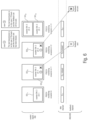
- Fig. 5 illustrates an embodiment employing the URLLC DAI of the inventive approach.
- Fig. 5 illustrates, in a similar way as Figs. 5 and 6 the control region 400, the data channels 402 and the feedback channel 420 as well as the DCls decoded by a receiving UE at respective PDCCH monitoring occasions m to m+3.
- the PDCCH monitoring occasion m indicates the DCI 1,2 and the DCI 2,2 in similar way as in Fig. 3 and Fig.
- the DCI 1,2 and the DCI 2,2 are considered to be associated with first data being non-time critical, for example data associated with an eMBB service.
- a DCI 2,1 for a third data packet associated with the eMBB service is indicated, as well as a DCI 2,2 including the inventive URLLC DAI counter indicating that the DCI 2,2 is associated with a time critical data packet of a URLLC service.
- the DCI 2,2 indicates a DAI counter of three and a total number of DAI also being three, indicating that at occasion m+1, all DCls associated with the eMBB service have been received and successfully decoded, so that the feedback at 424 signals this accordingly to the transmitter.
- the URLLC DAI is received indicating to the UE that for the data associated with DCI 2,1 the feedback is to be transmitted at an offset from the transmission of the actual data which is less than offset for the eMBB data, as is indicated at 424a.
- the UE decodes a DCI 3,1 which is again associated with the URLLC data so that an early feedback is provided in the feedback channel 420, as is indicated at 426a.
- the DCI 4,1 and DCI 4,3 are associated with eMBB data and the DCI 4,2 is associated again URLLC data so that the feedback for the URLLC data is provided immediately after reception of the data at 428a.
- embodiments of the present invention allow a receiving UE to provide feedback for latency critical data independent from non-latency critical data so that for such data an early feedback is provided improving the reliability of the transmission of the time critical data.
- the user data may include third data with a third service
- the control data includes a third DAI associated with the third data
- the second and third services may both be URLLC services with low latency and different reliability requirements.
- the first DAI is associated with the first and third data
- the second DAI is associated with the second and third data.
- control data points to the data and a feedback resource mapping for sending the feedback may be explicit, or may be implicit, or may be semi-statically preconfigured.
- the inventive concept using different DAis associated with data packets of different services may be also employed for multi-TRP (transmit/receive point) scenarios, e.g., Multi-TRP in MIMO (Multiple Input Multiple Output).
- the different services may be different TRPs from which a user device may receive respective user data, e.g., first user data from a first service or TRP and second data from a second service or TRP.
- the first and second TRPs may provide the respective data using different transmission requirements.
- the data may be provided by more than two TRPs.
- the two or more TRPs may be different bases stations in the wireless communication system and/or different or independent antennas or antenna arrays of one or more base stations in the wireless communication system.
- the respective TRPs provide one or more beams for transmitting the respective data to the user device, e.g., in case of two TRPs, the first TRP may use one or more beams for transmitting the first user data from a base station to the user device, and the second TRP may use one or more beams for transmitting the second user data from the same base station of from a different base station to the user device.
- a feedback mechanism indicting successful/non-successful receipt of the data at the user device, UE may be implemented.
- a separate feedback like a separate ACK/NACK feedback
- the UE may generate separate ACK/NACK codebooks.
- different DAIs i.e., DAIs associated with data or data packets provided by the different services/TRPs may be provided.
- a wireless communication system includes one or more base stations, and one or more user devices, UEs.
- the one or more base stations transmit data to a UE being served by the one or more base stations and the data includes control data and user data.
- the user data includes at least first user data and second user data.
- the first user data is associated with a first service, like a first TRP at the base station
- the second data is associated with second service, like a second TRP at the base station or at another base station.
- the first and second services like the first and second TRPs, have one or more different transmission requirements.
- the UE Responsive to receiving in the control data a grant for a feedback transmission, the UE is configured to send a feedback to the base station (in case the TRPs are at the same base station) or to the base station and to the other base station (incase the TRPs are at different base stations).
- the feedback indicates for one or more data blocks of the data a successful or non-successful reception at the UE.
- the control data includes a first downlink assignment index, DAI, associated with the first data, and a second DAI associated with the second data.
- the first and second DAI may be transmitted in a same or different control messages.
- the DCI scheduling the data may either include only the respective DAI or both DAIs.
- a user device, UE, for such a wireless communication system may receive data from one or more base stations serving the UE.
- the data includes control data and user data.
- the data includes the first user data and the second user data.
- Responsive to receiving a grant for a feedback transmission in the control data the UE sends a feedback to the one or more base station, e.g., to one base station (in case the TRPs are at the same base station) or to one base station and to another base station (incase the TRPs are at different base stations).
- the control data includes the first downlink assignment index, DAI, associated with the first data, and the second DAI associated with the second data.
- the inventive concept using different DAIs associated with data packets of different services may be also employed for sidelink scenarios, e.g., V2X.
- the different services may be different data flows with different quality of service, QoS, requirements from which a user device may transmit respective user data, e.g., first user data from a first service and second data from a second service.
- the first and second TRPs may provide the respective data using different transmission procedures, e.g. HARQ-based transmission or HARQ-less transmission, e.g. k-repetition.
- the data may be provided by more than two services.
- a so-called last transmission indicator, LTI is provided in accordance with which the base station indicates in the DCI the time of the last request for a feedback, for example, the slot number, either in absolute or relative values, of the last grant, so that the receiving UE may determine the timing of the last transmission even in case the actual grant or DCI message has been missed.
- Fig. 6 illustrates an example using the above-mentioned last transmission indicator, LTI.
- Fig. 6 illustrates the control region 400, the data channel 420 and the feedback channel 424.
- type-1 HARQ-ACK reporting is employed using only the DAI counter.
- other examples may employ type-2 HARQ-ACK reporting.
- a situation is depicted in which a UE receives at certain occasions m to m+4 DCls dedicated for the receiving UE.
- a DCI 1,1 is received having a DAI counter value of 1 indicating that in the associated data channel a data packet is present.
- the data or data packet may be any kind of data, e.g., a latency critical data packet or a non-latency critical data packet.
- the DCI includes the inventive LTI field which is set to 1 meaning that the last transmission of a DCI was, e.g., at occasion m-1 (not shown).
- the DCI 2,1 indicates that a second data packet is transmitted, and the LTI indicates that the last transmission is one TTI back in time.
- the data packet was missed, i.e., may not be decoded at the UE, however, since the last transmission was only one TTI back (e.g., at occasion m), the feedback may still be sent indicating a non-acknowledgement, NACK.
- the DCI indicates that for the missed data associated with the DCI 3,1 , the last transmission was three TTls back, so that the scheduled feedback in the feedback channel has already passed, so that no feedback may be sent.
- more than one LTI may be included, each LTI being associated with different data.
- the LTI may be used also for the DCls in accordance with the above described approach.
- the base station may include the URLLC DAI and the LTI into the eMBB DCls so that the UE may also detect missed URLLC transmissions based on eMBB DCls.
- the UE may be configured with UE-specific URLLC PUCCH resources, as indicated above with reference to Fig. 5 which may depend on a UE-specific configuration.
- the configuration may be set using an RRC signaling or based on a UE-ID and the timing of the transmission.
- the UE may detect a missed transmission and report a non-acknowledgment in case the corresponding PUCCH slot scheduled for the feedback has not passed at the point of detection of the missing transmission.
- the base station may easily detect that the UE missed the transmission and provide a retransmission within a latency constraint.
- the UE may blind decode the corresponding transmission using one or more previous parameters, e.g., using the same frequency resources and MCS level, using the same frequency resources and trying a different MCS level, or using the same MSC level and trying different frequency resources. For example, the UE may use resources/parameters for which the last CSI report indicated good reception.
- the CSI may also be a CQI or in case of MIMO the PMI (precoder matrix indicator) or RI (rank indicator).
- the UE may also perform a transmission in the uplink using one or more previous parameters as stated above.
- the wireless communication system may include a terrestrial network, or a non-terrestrial network, or networks or segments of networks using as a receiver an airborne vehicle or a spaceborne vehicle, or a combination thereof.
- a UE may comprise one or more of a mobile or stationary terminal, an loT device, a ground based vehicle, an aerial vehicle, a drone, a building, or any other item or device provided with network connectivity enabling the item/device to communicate using the wireless communication system, like a sensor or actuator.
- a transmitter may comprise one or more of a macro cell base station, or a small cell base station, or a spaceborne vehicle, like a satellite or a space, or an airborne vehicle, like a unmanned aircraft system (UAS), e.g., a tethered UAS, a lighter than air UAS (LTA), a heavier than air UAS (HTA) and a high altitude UAS platforms (HAPs), or any transmission/reception point (TRP) enabling an item or a device provided with network connectivity to communicate using the wireless communication system.
- UAS unmanned aircraft system
- LTA lighter than air UAS
- HTA heavier than air UAS
- HAPs high altitude UAS platforms
- TRP transmission/reception point
- aspects of the described concept have been described in the context of an apparatus, it is clear that these aspects also represent a description of the corresponding method, where a block or a device corresponds to a method step or a feature of a method step. Analogously, aspects described in the context of a method step also represent a description of a corresponding block or item or feature of a corresponding apparatus.
- Various elements and features of the present invention may be implemented in hardware using analog and/or digital circuits, in software, through the execution of instructions by one or more general purpose or special-purpose processors, or as a combination of hardware and software.
- embodiments of the present invention may be implemented in the environment of a computer system or another processing system.
- Fig. 7 illustrates an example of a computer system 600.
- the units or modules as well as the steps of the methods performed by these units may execute on one or more computer systems 600.
- the computer system 600 includes one or more processors 602, like a special purpose or a general purpose digital signal processor.
- the processor 602 is connected to a communication infrastructure 604, like a bus or a network.
- the computer system 600 includes a main memory 606, e.g., a random access memory (RAM), and a secondary memory 608, e.g., a hard disk drive and/or a removable storage drive.
- the secondary memory 608 may allow computer programs or other instructions to be loaded into the computer system 600.
- the computer system 600 may further include a communications interface 610 to allow software and data to be transferred between computer system 600 and external devices.
- the communication may be in the from electronic, electromagnetic, optical, or other signals capable of being handled by a communications interface.
- the communication may use a wire or a cable, fiber optics, a phone line, a cellular phone link, an RF link and other communications channels 612.
- computer program medium and “computer readable medium” are used to generally refer to tangible storage media such as removable storage units or a hard disk installed in a hard disk drive.
- These computer program products are means for providing software to the computer system 600.
- the computer programs also referred to as computer control logic, are stored in main memory 606 and/or secondary memory 608. Computer programs may also be received via the communications interface 610.
- the computer program when executed, enables the computer system 600 to implement the present invention.
- the computer program when executed, enables processor 602 to implement the processes of the present invention, such as any of the methods described herein. Accordingly, such a computer program may represent a controller of the computer system 600.
- the software may be stored in a computer program product and loaded into computer system 600 using a removable storage drive, an interface, like communications interface 610.
- the implementation in hardware or in software may be performed using a digital storage medium, for example cloud storage, a floppy disk, a DVD, a Blue-Ray, a CD, a ROM, a PROM, an EPROM, an EEPROM or a FLASH memory, having electronically readable control signals stored thereon, which cooperate (or are capable of cooperating) with a programmable computer system such that the respective method is performed. Therefore, the digital storage medium may be computer readable.
- a digital storage medium for example cloud storage, a floppy disk, a DVD, a Blue-Ray, a CD, a ROM, a PROM, an EPROM, an EEPROM or a FLASH memory, having electronically readable control signals stored thereon, which cooperate (or are capable of cooperating) with a programmable computer system such that the respective method is performed. Therefore, the digital storage medium may be computer readable.
- Some embodiments according to the invention comprise a data carrier having electronically readable control signals, which are capable of cooperating with a programmable computer system, such that one of the methods described herein is performed.
- embodiments of the present invention may be implemented as a computer program product with a program code, the program code being operative for performing one of the methods when the computer program product runs on a computer.
- the program code may for example be stored on a machine readable carrier.
- inventions comprise the computer program for performing one of the methods described herein, stored on a machine readable carrier.
- an embodiment of the inventive method is, therefore, a computer program having a program code for performing one of the methods described herein, when the computer program runs on a computer.
- a further embodiment of the inventive methods is, therefore, a data carrier (or a digital storage medium, or a computer-readable medium) comprising, recorded thereon, the computer program for performing one of the methods described herein.
- a further embodiment of the inventive method is, therefore, a data stream or a sequence of signals representing the computer program for performing one of the methods described herein. The data stream or the sequence of signals may for example be configured to be transferred via a data communication connection, for example via the Internet.
- a further embodiment comprises a processing means, for example a computer, or a programmable logic device, configured to or adapted to perform one of the methods described herein.
- a further embodiment comprises a computer having installed thereon the computer program for performing one of the methods described herein.
- a programmable logic device for example a field programmable gate array
- a field programmable gate array may cooperate with a microprocessor in order to perform one of the methods described herein.
- the methods are preferably performed by any hardware apparatus.
- V2X Vehicle-to-Evervthing 3GPP Third Generation Partnership Project
- D2D Device-to-Device ITS Intelligent Transport Services FR1, FR2 Frequency Ranqe Designations
- BS Base Station eNB Evolved Node B (3G base station)
- UE User Equipment SL Sidelink V2V Vehicle-to-Vehicle SCS Sub Carrier Spacing RB Resource Block PSCCH Physical Sidelink Control Channel PSSCH Physical Sidelink Shared Channel
- TTI Transmit Time Interval SCI Sidelink Control Information
- DCI Downlink Control Information CP Cyclic Prefix BWP Bandwidth Part CORESET Control Resource Set USS UE-Specific Search Space CSS Common Search Space RP Resource Pool URLLC Ultra Reliable Low Latency Communication
Landscapes
- Engineering & Computer Science (AREA)
- Computer Networks & Wireless Communication (AREA)
- Signal Processing (AREA)
- Quality & Reliability (AREA)
- Mobile Radio Communication Systems (AREA)
Claims (15)
- Ein Drahtloskommunikationssystem, das folgende Merkmale aufweist:eine oder mehrere Basisstationen gemäß Anspruch 12, undeine oder mehrere Benutzereinrichtungen, UEs, gemäß Anspruch 13.
- Das Drahtloskommunikationssystem gemäß Anspruch 1, bei dem die Benutzerdaten dritte Daten umfassen, wobei die dritten Benutzerdaten einem dritten Dienst zugeordnet sind, und die Steuerdaten einen dritten DAI umfassen, der den dritten Daten zugeordnet ist.
- Das Drahtloskommunikationssystem gemäß Anspruch 1, wobei die Benutzerdaten dritte Daten umfassen, wobei die dritten Daten einem dritten Dienst zugeordnet sind, und wobei der erste DAI den ersten und dritten Daten zugeordnet ist, oder der zweite DAI den zweiten und dritten Daten zugeordnet ist.
- Das Drahtloskommunikationssystem gemäß einem der vorhergehenden Ansprüche, wobei die UE dazu konfiguriert ist, eine Mehrzahl von Steuerbereichen in einem empfangenen Signal für die Steuerdaten zu überwachen, wobei ein Steuerbereich die Übertragung eines oder mehrerer Datenblöcke von Benutzerdaten angibt.
- Das Drahtloskommunikationssystem gemäß einem der vorhergehenden Ansprüche, wobei der erste und der zweite DAI unabhängig voneinander inkrementiert werden, wobei der erste DAI ansprechend auf das Senden erster Daten an die UE inkrementiert wird, und der zweite DAI ansprechend auf das Senden zweiter Daten an die UE inkrementiert wird.
- Das Drahtloskommunikationssystem gemäß einem der vorhergehenden Ansprüche, wobei die UE dazu konfiguriert ist, die Rückmeldung für Daten, die dem ersten Dienst zugeordnet sind, während eines ersten Zeitraumes, der auf die Übertragung der Benutzerdaten folgt, und die Rückmeldung für Daten, die dem zweiten Dienst zugeordnet sind, während eines zweiten Zeitraumes, der auf die Übertragung der Benutzerdaten folgt, zu senden, wobei der zweite Zeitraum kürzer ist als der erste Zeitraum.
- Das Drahtloskommunikationssystem gemäß einem der vorhergehenden Ansprüche, wobeider erste DAI einen Zählerwert, der für jede Benutzerdatenübertragung, die dem ersten Dienst für die UE zugeordnet ist, inkrementiert wird, und einen Gesamtwert umfasst, der die Anzahl von Benutzerdatenübertragungen der ersten Dienste bis zu und einschließlich von einem aktuellen Steuerbereich angibt, undder zweite DAI einen Zählerwert umfasst, der für jede Übertragung von Daten, die dem zweiten Dienst für die UE zugeordnet sind, inkrementiert wird.
- Das Drahtloskommunikationssystem gemäß einem der vorhergehenden Ansprüche, wobeider erste DAI einen Zählerwert, der für jede Benutzerdatenübertragung, die dem ersten Dienst für die UE zugeordnet ist, inkrementiert wird, und einen ersten Gesamtwert umfasst, der die Anzahl von Benutzerdatenübertragungen des ersten Dienstes bis zu und einschließlich von einem aktuellen Steuerbereich angibt, undder zweite DAI einen Zählerwert, der für jede Benutzerdatenübertragung, die dem zweiten Dienst für die UE zugeordnet ist, inkrementiert wird, und einen zweiten Gesamtwert umfasst, der die Anzahl von Benutzerdatenaussendungen des zweiten Dienstes bis zu und einschließlich eines aktuellen Steuerbereiches angibt.
- Das Drahtloskommunikationssystem gemäß einem der vorhergehenden Ansprüche, wobei die Steuerdaten in einem Steuerbereich eine oder mehrere erste Steuernachrichten, die den ersten Benutzerdaten zugeordnet sind, und eine oder mehrere zweite Steuernachrichten umfassen, die den zweiten Benutzerdaten zugeordnet sind, wobei die erste Steuernachricht den ersten DAI umfasst und die zweite Steuernachricht den zweiten DAI umfasst.
- Das Drahtloskommunikationssystem gemäß einem der Ansprüche 1 bis 8, wobei die Steuerdaten in einem Steuerbereich eine oder mehrere Steuernachrichten umfassen, die den ersten Benutzerdaten zugeordnet sind und den ersten DAI und den zweiten DAI umfassen.
- Das Drahtloskommunikationssystem gemäß einem der vorhergehenden Ansprüche, wobeidie Steuerdaten ferner einen Letzte-Übertragung-Indikator, LTI, umfassen, wobei der LTI die Zeit seit einer letzten Übertragung der ersten und/oder zweiten Daten durch die Basisstationen angibt, unddie UE dazu konfiguriert ist, den Zeitpunkt der letzten Datenübertragung von Daten durch die Basisstation unter Verwendung des LTI zu bestimmen, und die Rückmeldung zu senden, falls der Zeitpunkt seit der letzten Übertragung von Daten durch die Basisstation unter einer vordefinierten Schwelle liegt.
- Eine Basisstation für ein Drahtloskommunikationssystem, wobei das Drahtloskommunikationssystem ein oder mehrere Basisstationen und ein oder mehrere Benutzereinrichtungen, UEs, aufweist, wobei die Basisstation dazu konfiguriert ist:Daten an eine UE zu senden, die von der Basisstation bedient wird, wobei die Daten Steuerdaten und Benutzerdaten umfassen, wobei die Benutzerdaten zumindest erste Benutzerdaten und zweite Benutzerdaten umfassen,wobei die ersten Benutzerdaten einem ersten Dienst, der zeitkritisch ist, zugeordnet sind,wobei die zweiten Benutzerdaten einem zweiten Dienst, der nicht zeitkritisch ist, zugeordnet sind, unddie Basisstation dazu konfiguriert ist:von der UE eine Rückmeldung zu empfangen, wobei die Rückmeldung für einen oder mehrere Datenblöcke der Daten einen erfolgreichen oder nicht erfolgreichen Empfang an der UE angibt,wobei die Steuerdaten einen ersten Downlink-Zuordnungsindex, DAI, der den ersten Daten zugeordnet ist, und einen zweiten DAI, der den zweiten Daten zugeordnet ist, umfassen.
- Eine Benutzereinrichtung, UE, für ein Drahtloskommunikationssystem, wobei das Drahtloskommunikationssystem eine oder mehrere Basisstationen und ein oder mehrere UEs aufweist, wobei die UE dazu konfiguriert ist:Daten von einer oder mehreren Basisstationen, die die UE bedienen, zu empfangen, wobei die Daten Steuerdaten und Benutzerdaten umfassen, wobei die Benutzerdaten zumindest erste Benutzerdaten und zweite Benutzerdaten umfassen,wobei die ersten Benutzerdaten einem ersten Dienst, der zeitkritisch ist, zugeordnet sind,wobei die zweiten Benutzerdaten einem zweiten Dienst, der nicht zeitkritisch ist, zugeordnet sind, unddie UE dazu konfiguriert ist:ansprechend auf einen Empfang, in den Steuerdaten, einer Erlaubnis für eine Rückmeldungsübertragung, eine Rückmeldung an eine oder mehrere Basisstationen zu senden, wobei die Rückmeldung für einen oder mehrere Datenblöcke der Daten einen erfolgreichen oder nicht erfolgreichen Empfang an der UE angibt,wobei die Steuerdaten einen ersten Downlink-Zuweisungsindex, DAI, der den ersten Daten zugeordnet ist, und einen zweiten DAI, der den zweiten Daten zugeordnet ist, umfassen.
- Ein Verfahren, das folgende Schritte aufweist:Übertragen, durch eine oder mehrere Basisstationen eines Drahtloskommunikationssystems mit einer oder mehreren Basisstationen und einer oder mehreren Benutzerausrüstungen, UEs, von Daten an eine UE, die von der einen oder den mehreren Basisstationen bedient wird, wobei die Daten Steuerdaten und Benutzerdaten umfassen,wobei die ersten Benutzerdaten einem ersten Dienst, der zeitkritisch ist, zugeordnet sind,wobei die zweiten Benutzerdaten einem zweiten Dienst, der nicht zeitkritisch ist, zugeordnet sind, unddas Verfahren folgende Schritte aufweist:ansprechend auf einen Empfang, in den Steuerdaten, einer Erlaubnis für eine Rückmeldungsübertragung, Senden, durch die UE, einer Rückmeldung an eine oder mehrere Basisstationen, wobei die Rückmeldung für einen oder mehrere Datenblöcke der Daten einen erfolgreichen oder nicht erfolgreichen Empfang an der UE angibt, wobei ein Drahtlossystem ein oder mehrere Basisstationen und ein oder mehrere Benutzereinrichtungen, UEs, aufweist,wobei die Steuerdaten einen ersten Downlink-Zuweisungsindex, DAI, der den ersten Daten zugeordnet ist, und einen zweiten DAI, der den zweiten Daten zugeordnet ist, umfassen.
- Ein nichtflüchtiges Computerprogrammprodukt, das ein computerlesbares Medium aufweist, das Anweisungen speichert, die bei Ausführung auf einem Computer bewirken, dass der Computer das Verfahren gemäß Anspruch 14 durchführt.
Applications Claiming Priority (2)
| Application Number | Priority Date | Filing Date | Title |
|---|---|---|---|
| EP18197383 | 2018-09-27 | ||
| PCT/EP2019/076110 WO2020064967A1 (en) | 2018-09-27 | 2019-09-26 | Urllc dai and lti |
Publications (2)
| Publication Number | Publication Date |
|---|---|
| EP3857764A1 EP3857764A1 (de) | 2021-08-04 |
| EP3857764B1 true EP3857764B1 (de) | 2023-08-02 |
Family
ID=63878319
Family Applications (1)
| Application Number | Title | Priority Date | Filing Date |
|---|---|---|---|
| EP19773131.8A Active EP3857764B1 (de) | 2018-09-27 | 2019-09-26 | Urllc dai und lti |
Country Status (6)
| Country | Link |
|---|---|
| US (3) | US11949519B2 (de) |
| EP (1) | EP3857764B1 (de) |
| JP (1) | JP7282165B2 (de) |
| KR (1) | KR102794954B1 (de) |
| CN (1) | CN112805947B (de) |
| WO (1) | WO2020064967A1 (de) |
Families Citing this family (2)
| Publication number | Priority date | Publication date | Assignee | Title |
|---|---|---|---|---|
| US11463195B2 (en) * | 2019-04-19 | 2022-10-04 | Qualcomm Incorporated | Handling downlink assignment indicators for different types of downlink control information |
| CN113709887B (zh) * | 2020-05-22 | 2025-11-11 | 维沃移动通信有限公司 | 数据发送方法和设备 |
Family Cites Families (13)
| Publication number | Priority date | Publication date | Assignee | Title |
|---|---|---|---|---|
| CN104135349B (zh) * | 2009-12-03 | 2016-11-23 | 华为技术有限公司 | 载波聚合时反馈ack/nack信息的方法、基站和用户设备 |
| US9112692B2 (en) * | 2010-08-16 | 2015-08-18 | Qualcomm Incorporated | ACK/NACK transmission for multi-carrier operation |
| US9628242B2 (en) * | 2011-09-26 | 2017-04-18 | Lg Electronics Inc. | Method and apparatus for transmitting a signal in a wireless communication system |
| US9749094B2 (en) | 2012-06-14 | 2017-08-29 | Sharp Kabushiki Kaisha | Devices for sending and receiving feedback information |
| US8885752B2 (en) | 2012-07-27 | 2014-11-11 | Intel Corporation | Method and apparatus for feedback in 3D MIMO wireless systems |
| JP6092347B1 (ja) | 2015-11-05 | 2017-03-08 | 株式会社Nttドコモ | ユーザ端末、無線基地局及び無線通信方法 |
| US10869302B2 (en) * | 2015-11-16 | 2020-12-15 | Qualcomm Incorporated | Techniques for downlink assignment index (DAI) management in carrier aggregation |
| EP3383110B1 (de) | 2015-12-25 | 2025-01-22 | NTT DoCoMo, Inc. | Benutzerendgerät, drahtlose basisstation und drahtloskommunikationsverfahren |
| US10341061B2 (en) * | 2016-03-30 | 2019-07-02 | Qualcomm Incorporated | Hybrid automatic repeat request timing for reduced transmission time intervals |
| WO2018230996A1 (ko) * | 2017-06-15 | 2018-12-20 | 엘지전자 주식회사 | 무선 통신 시스템에서 단말과 기지국 간 확인 응답 정보를 송수신하는 방법 및 이를 지원하는 장치 |
| US11678332B2 (en) * | 2017-08-22 | 2023-06-13 | Qualcomm Incorporated | Control and data multiplexing in uplink wireless transmissions |
| US10757706B2 (en) * | 2017-11-22 | 2020-08-25 | Qualcomm Incorporated | Techniques and apparatuses for using a downlink assignment index in new radio |
| US10980049B2 (en) * | 2018-05-10 | 2021-04-13 | Qualcomm Incorporated | Allocating physical uplink control channel (PUCCH) resources for ultra-reliable low latency communication (URLLC) |
-
2019
- 2019-09-26 KR KR1020217011512A patent/KR102794954B1/ko active Active
- 2019-09-26 CN CN201980063942.5A patent/CN112805947B/zh active Active
- 2019-09-26 JP JP2021517446A patent/JP7282165B2/ja active Active
- 2019-09-26 WO PCT/EP2019/076110 patent/WO2020064967A1/en not_active Ceased
- 2019-09-26 EP EP19773131.8A patent/EP3857764B1/de active Active
-
2021
- 2021-03-04 US US17/192,330 patent/US11949519B2/en active Active
-
2024
- 2024-02-27 US US18/588,005 patent/US12231248B2/en active Active
-
2025
- 2025-01-15 US US19/021,248 patent/US20250158759A1/en active Pending
Also Published As
| Publication number | Publication date |
|---|---|
| EP3857764A1 (de) | 2021-08-04 |
| US20240356685A1 (en) | 2024-10-24 |
| KR20210057177A (ko) | 2021-05-20 |
| CN112805947B (zh) | 2024-04-09 |
| US12231248B2 (en) | 2025-02-18 |
| JP2022511364A (ja) | 2022-01-31 |
| KR102794954B1 (ko) | 2025-04-15 |
| CN112805947A (zh) | 2021-05-14 |
| US20210194646A1 (en) | 2021-06-24 |
| WO2020064967A1 (en) | 2020-04-02 |
| US11949519B2 (en) | 2024-04-02 |
| JP7282165B2 (ja) | 2023-05-26 |
| US20250158759A1 (en) | 2025-05-15 |
Similar Documents
| Publication | Publication Date | Title |
|---|---|---|
| US11770208B2 (en) | Sidelink feedback | |
| JP7768178B2 (ja) | カバレージ内およびカバレージ外シナリオでのサイドリンクのharq | |
| US20250331063A1 (en) | Advanced feedback in sidelink | |
| US20220224457A1 (en) | Nr v2x retransmission procedures | |
| US20240348374A1 (en) | Low latency harq protocol for urllc services | |
| US10973023B2 (en) | Terminal and radio communication method | |
| JP2023517951A (ja) | 無線通信システムにおいてpdcch送受信方法及び装置 | |
| JP2022528231A (ja) | 下りリンク制御情報を送信する方法及び基地局、並びに下りリンク制御情報を受信する方法、ユーザ機器及び格納媒体 | |
| US20250158759A1 (en) | Urllc dai and lti | |
| US11871418B2 (en) | Scheduling conflict resolution for overlapping sidelink transmissions | |
| AU2017419917A1 (en) | User terminal and radio communication method | |
| US20230008664A1 (en) | Terminal and radio communication method | |
| JP7248675B2 (ja) | 端末、無線通信方法、基地局及びシステム | |
| US10880053B2 (en) | Wireless device, a network node and methods therein for handling transmissions in a wireless communications network |
Legal Events
| Date | Code | Title | Description |
|---|---|---|---|
| STAA | Information on the status of an ep patent application or granted ep patent |
Free format text: STATUS: UNKNOWN |
|
| STAA | Information on the status of an ep patent application or granted ep patent |
Free format text: STATUS: THE INTERNATIONAL PUBLICATION HAS BEEN MADE |
|
| PUAI | Public reference made under article 153(3) epc to a published international application that has entered the european phase |
Free format text: ORIGINAL CODE: 0009012 |
|
| STAA | Information on the status of an ep patent application or granted ep patent |
Free format text: STATUS: REQUEST FOR EXAMINATION WAS MADE |
|
| 17P | Request for examination filed |
Effective date: 20210303 |
|
| AK | Designated contracting states |
Kind code of ref document: A1 Designated state(s): AL AT BE BG CH CY CZ DE DK EE ES FI FR GB GR HR HU IE IS IT LI LT LU LV MC MK MT NL NO PL PT RO RS SE SI SK SM TR |
|
| DAV | Request for validation of the european patent (deleted) | ||
| DAX | Request for extension of the european patent (deleted) | ||
| RAP3 | Party data changed (applicant data changed or rights of an application transferred) |
Owner name: FRAUNHOFER-GESELLSCHAFT ZUR FOERDERUNG DER ANGEWANDTEN FORSCHUNG E.V. |
|
| GRAP | Despatch of communication of intention to grant a patent |
Free format text: ORIGINAL CODE: EPIDOSNIGR1 |
|
| STAA | Information on the status of an ep patent application or granted ep patent |
Free format text: STATUS: GRANT OF PATENT IS INTENDED |
|
| INTG | Intention to grant announced |
Effective date: 20230217 |
|
| GRAS | Grant fee paid |
Free format text: ORIGINAL CODE: EPIDOSNIGR3 |
|
| GRAA | (expected) grant |
Free format text: ORIGINAL CODE: 0009210 |
|
| STAA | Information on the status of an ep patent application or granted ep patent |
Free format text: STATUS: THE PATENT HAS BEEN GRANTED |
|
| AK | Designated contracting states |
Kind code of ref document: B1 Designated state(s): AL AT BE BG CH CY CZ DE DK EE ES FI FR GB GR HR HU IE IS IT LI LT LU LV MC MK MT NL NO PL PT RO RS SE SI SK SM TR |
|
| P01 | Opt-out of the competence of the unified patent court (upc) registered |
Effective date: 20230622 |
|
| REG | Reference to a national code |
Ref country code: GB Ref legal event code: FG4D |
|
| REG | Reference to a national code |
Ref country code: CH Ref legal event code: EP |
|
| REG | Reference to a national code |
Ref country code: DE Ref legal event code: R096 Ref document number: 602019034114 Country of ref document: DE |
|
| REG | Reference to a national code |
Ref country code: IE Ref legal event code: FG4D |
|
| REG | Reference to a national code |
Ref country code: NL Ref legal event code: FP |
|
| REG | Reference to a national code |
Ref country code: LT Ref legal event code: MG9D |
|
| REG | Reference to a national code |
Ref country code: AT Ref legal event code: MK05 Ref document number: 1596023 Country of ref document: AT Kind code of ref document: T Effective date: 20230802 |
|
| PG25 | Lapsed in a contracting state [announced via postgrant information from national office to epo] |
Ref country code: GR Free format text: LAPSE BECAUSE OF FAILURE TO SUBMIT A TRANSLATION OF THE DESCRIPTION OR TO PAY THE FEE WITHIN THE PRESCRIBED TIME-LIMIT Effective date: 20231103 |
|
| PG25 | Lapsed in a contracting state [announced via postgrant information from national office to epo] |
Ref country code: IS Free format text: LAPSE BECAUSE OF FAILURE TO SUBMIT A TRANSLATION OF THE DESCRIPTION OR TO PAY THE FEE WITHIN THE PRESCRIBED TIME-LIMIT Effective date: 20231202 |
|
| PG25 | Lapsed in a contracting state [announced via postgrant information from national office to epo] |
Ref country code: SE Free format text: LAPSE BECAUSE OF FAILURE TO SUBMIT A TRANSLATION OF THE DESCRIPTION OR TO PAY THE FEE WITHIN THE PRESCRIBED TIME-LIMIT Effective date: 20230802 Ref country code: RS Free format text: LAPSE BECAUSE OF FAILURE TO SUBMIT A TRANSLATION OF THE DESCRIPTION OR TO PAY THE FEE WITHIN THE PRESCRIBED TIME-LIMIT Effective date: 20230802 Ref country code: PT Free format text: LAPSE BECAUSE OF FAILURE TO SUBMIT A TRANSLATION OF THE DESCRIPTION OR TO PAY THE FEE WITHIN THE PRESCRIBED TIME-LIMIT Effective date: 20231204 Ref country code: NO Free format text: LAPSE BECAUSE OF FAILURE TO SUBMIT A TRANSLATION OF THE DESCRIPTION OR TO PAY THE FEE WITHIN THE PRESCRIBED TIME-LIMIT Effective date: 20231102 Ref country code: LV Free format text: LAPSE BECAUSE OF FAILURE TO SUBMIT A TRANSLATION OF THE DESCRIPTION OR TO PAY THE FEE WITHIN THE PRESCRIBED TIME-LIMIT Effective date: 20230802 Ref country code: LT Free format text: LAPSE BECAUSE OF FAILURE TO SUBMIT A TRANSLATION OF THE DESCRIPTION OR TO PAY THE FEE WITHIN THE PRESCRIBED TIME-LIMIT Effective date: 20230802 Ref country code: IS Free format text: LAPSE BECAUSE OF FAILURE TO SUBMIT A TRANSLATION OF THE DESCRIPTION OR TO PAY THE FEE WITHIN THE PRESCRIBED TIME-LIMIT Effective date: 20231202 Ref country code: HR Free format text: LAPSE BECAUSE OF FAILURE TO SUBMIT A TRANSLATION OF THE DESCRIPTION OR TO PAY THE FEE WITHIN THE PRESCRIBED TIME-LIMIT Effective date: 20230802 Ref country code: GR Free format text: LAPSE BECAUSE OF FAILURE TO SUBMIT A TRANSLATION OF THE DESCRIPTION OR TO PAY THE FEE WITHIN THE PRESCRIBED TIME-LIMIT Effective date: 20231103 Ref country code: FI Free format text: LAPSE BECAUSE OF FAILURE TO SUBMIT A TRANSLATION OF THE DESCRIPTION OR TO PAY THE FEE WITHIN THE PRESCRIBED TIME-LIMIT Effective date: 20230802 Ref country code: AT Free format text: LAPSE BECAUSE OF FAILURE TO SUBMIT A TRANSLATION OF THE DESCRIPTION OR TO PAY THE FEE WITHIN THE PRESCRIBED TIME-LIMIT Effective date: 20230802 |
|
| PG25 | Lapsed in a contracting state [announced via postgrant information from national office to epo] |
Ref country code: PL Free format text: LAPSE BECAUSE OF FAILURE TO SUBMIT A TRANSLATION OF THE DESCRIPTION OR TO PAY THE FEE WITHIN THE PRESCRIBED TIME-LIMIT Effective date: 20230802 |
|
| PG25 | Lapsed in a contracting state [announced via postgrant information from national office to epo] |
Ref country code: ES Free format text: LAPSE BECAUSE OF FAILURE TO SUBMIT A TRANSLATION OF THE DESCRIPTION OR TO PAY THE FEE WITHIN THE PRESCRIBED TIME-LIMIT Effective date: 20230802 |
|
| PG25 | Lapsed in a contracting state [announced via postgrant information from national office to epo] |
Ref country code: SM Free format text: LAPSE BECAUSE OF FAILURE TO SUBMIT A TRANSLATION OF THE DESCRIPTION OR TO PAY THE FEE WITHIN THE PRESCRIBED TIME-LIMIT Effective date: 20230802 Ref country code: RO Free format text: LAPSE BECAUSE OF FAILURE TO SUBMIT A TRANSLATION OF THE DESCRIPTION OR TO PAY THE FEE WITHIN THE PRESCRIBED TIME-LIMIT Effective date: 20230802 Ref country code: ES Free format text: LAPSE BECAUSE OF FAILURE TO SUBMIT A TRANSLATION OF THE DESCRIPTION OR TO PAY THE FEE WITHIN THE PRESCRIBED TIME-LIMIT Effective date: 20230802 Ref country code: EE Free format text: LAPSE BECAUSE OF FAILURE TO SUBMIT A TRANSLATION OF THE DESCRIPTION OR TO PAY THE FEE WITHIN THE PRESCRIBED TIME-LIMIT Effective date: 20230802 Ref country code: DK Free format text: LAPSE BECAUSE OF FAILURE TO SUBMIT A TRANSLATION OF THE DESCRIPTION OR TO PAY THE FEE WITHIN THE PRESCRIBED TIME-LIMIT Effective date: 20230802 Ref country code: CZ Free format text: LAPSE BECAUSE OF FAILURE TO SUBMIT A TRANSLATION OF THE DESCRIPTION OR TO PAY THE FEE WITHIN THE PRESCRIBED TIME-LIMIT Effective date: 20230802 Ref country code: SK Free format text: LAPSE BECAUSE OF FAILURE TO SUBMIT A TRANSLATION OF THE DESCRIPTION OR TO PAY THE FEE WITHIN THE PRESCRIBED TIME-LIMIT Effective date: 20230802 |
|
| REG | Reference to a national code |
Ref country code: CH Ref legal event code: PL |
|
| REG | Reference to a national code |
Ref country code: DE Ref legal event code: R097 Ref document number: 602019034114 Country of ref document: DE |
|
| PG25 | Lapsed in a contracting state [announced via postgrant information from national office to epo] |
Ref country code: LU Free format text: LAPSE BECAUSE OF NON-PAYMENT OF DUE FEES Effective date: 20230926 |
|
| REG | Reference to a national code |
Ref country code: BE Ref legal event code: MM Effective date: 20230930 |
|
| PG25 | Lapsed in a contracting state [announced via postgrant information from national office to epo] |
Ref country code: LU Free format text: LAPSE BECAUSE OF NON-PAYMENT OF DUE FEES Effective date: 20230926 Ref country code: IT Free format text: LAPSE BECAUSE OF FAILURE TO SUBMIT A TRANSLATION OF THE DESCRIPTION OR TO PAY THE FEE WITHIN THE PRESCRIBED TIME-LIMIT Effective date: 20230802 Ref country code: MC Free format text: LAPSE BECAUSE OF FAILURE TO SUBMIT A TRANSLATION OF THE DESCRIPTION OR TO PAY THE FEE WITHIN THE PRESCRIBED TIME-LIMIT Effective date: 20230802 |
|
| PLBE | No opposition filed within time limit |
Free format text: ORIGINAL CODE: 0009261 |
|
| STAA | Information on the status of an ep patent application or granted ep patent |
Free format text: STATUS: NO OPPOSITION FILED WITHIN TIME LIMIT |
|
| REG | Reference to a national code |
Ref country code: IE Ref legal event code: MM4A |
|
| PG25 | Lapsed in a contracting state [announced via postgrant information from national office to epo] |
Ref country code: IE Free format text: LAPSE BECAUSE OF NON-PAYMENT OF DUE FEES Effective date: 20230926 |
|
| 26N | No opposition filed |
Effective date: 20240503 |
|
| PG25 | Lapsed in a contracting state [announced via postgrant information from national office to epo] |
Ref country code: CH Free format text: LAPSE BECAUSE OF NON-PAYMENT OF DUE FEES Effective date: 20230930 |
|
| PG25 | Lapsed in a contracting state [announced via postgrant information from national office to epo] |
Ref country code: IE Free format text: LAPSE BECAUSE OF NON-PAYMENT OF DUE FEES Effective date: 20230926 Ref country code: CH Free format text: LAPSE BECAUSE OF NON-PAYMENT OF DUE FEES Effective date: 20230930 Ref country code: SI Free format text: LAPSE BECAUSE OF FAILURE TO SUBMIT A TRANSLATION OF THE DESCRIPTION OR TO PAY THE FEE WITHIN THE PRESCRIBED TIME-LIMIT Effective date: 20230802 |
|
| PG25 | Lapsed in a contracting state [announced via postgrant information from national office to epo] |
Ref country code: BE Free format text: LAPSE BECAUSE OF NON-PAYMENT OF DUE FEES Effective date: 20230930 |
|
| PG25 | Lapsed in a contracting state [announced via postgrant information from national office to epo] |
Ref country code: BG Free format text: LAPSE BECAUSE OF FAILURE TO SUBMIT A TRANSLATION OF THE DESCRIPTION OR TO PAY THE FEE WITHIN THE PRESCRIBED TIME-LIMIT Effective date: 20230802 |
|
| PG25 | Lapsed in a contracting state [announced via postgrant information from national office to epo] |
Ref country code: BG Free format text: LAPSE BECAUSE OF FAILURE TO SUBMIT A TRANSLATION OF THE DESCRIPTION OR TO PAY THE FEE WITHIN THE PRESCRIBED TIME-LIMIT Effective date: 20230802 |
|
| PG25 | Lapsed in a contracting state [announced via postgrant information from national office to epo] |
Ref country code: CY Free format text: LAPSE BECAUSE OF FAILURE TO SUBMIT A TRANSLATION OF THE DESCRIPTION OR TO PAY THE FEE WITHIN THE PRESCRIBED TIME-LIMIT; INVALID AB INITIO Effective date: 20190926 |
|
| PG25 | Lapsed in a contracting state [announced via postgrant information from national office to epo] |
Ref country code: HU Free format text: LAPSE BECAUSE OF FAILURE TO SUBMIT A TRANSLATION OF THE DESCRIPTION OR TO PAY THE FEE WITHIN THE PRESCRIBED TIME-LIMIT; INVALID AB INITIO Effective date: 20190926 |
|
| PGFP | Annual fee paid to national office [announced via postgrant information from national office to epo] |
Ref country code: DE Payment date: 20250919 Year of fee payment: 7 |
|
| PGFP | Annual fee paid to national office [announced via postgrant information from national office to epo] |
Ref country code: NL Payment date: 20250922 Year of fee payment: 7 |
|
| PGFP | Annual fee paid to national office [announced via postgrant information from national office to epo] |
Ref country code: GB Payment date: 20250923 Year of fee payment: 7 |
|
| PGFP | Annual fee paid to national office [announced via postgrant information from national office to epo] |
Ref country code: FR Payment date: 20250926 Year of fee payment: 7 |
|
| PG25 | Lapsed in a contracting state [announced via postgrant information from national office to epo] |
Ref country code: TR Free format text: LAPSE BECAUSE OF FAILURE TO SUBMIT A TRANSLATION OF THE DESCRIPTION OR TO PAY THE FEE WITHIN THE PRESCRIBED TIME-LIMIT Effective date: 20230802 |