EP3854920A1 - Protective net for sports , and golf protective net, soccer protective net, baseball protective net, tennis protective net, and volleyball protective net using same - Google Patents
Protective net for sports , and golf protective net, soccer protective net, baseball protective net, tennis protective net, and volleyball protective net using same Download PDFInfo
- Publication number
- EP3854920A1 EP3854920A1 EP19900140.5A EP19900140A EP3854920A1 EP 3854920 A1 EP3854920 A1 EP 3854920A1 EP 19900140 A EP19900140 A EP 19900140A EP 3854920 A1 EP3854920 A1 EP 3854920A1
- Authority
- EP
- European Patent Office
- Prior art keywords
- protective net
- synthetic fiber
- sports
- intersections
- diameter
- Prior art date
- Legal status (The legal status is an assumption and is not a legal conclusion. Google has not performed a legal analysis and makes no representation as to the accuracy of the status listed.)
- Granted
Links
Images

Classifications
-
- A—HUMAN NECESSITIES
- A63—SPORTS; GAMES; AMUSEMENTS
- A63B—APPARATUS FOR PHYSICAL TRAINING, GYMNASTICS, SWIMMING, CLIMBING, OR FENCING; BALL GAMES; TRAINING EQUIPMENT
- A63B71/00—Games or sports accessories not covered in groups A63B1/00 - A63B69/00
- A63B71/02—Games or sports accessories not covered in groups A63B1/00 - A63B69/00 for large-room or outdoor sporting games
- A63B71/022—Backstops, cages, enclosures or the like, e.g. for spectator protection, for arresting balls
-
- D—TEXTILES; PAPER
- D03—WEAVING
- D03D—WOVEN FABRICS; METHODS OF WEAVING; LOOMS
- D03D1/00—Woven fabrics designed to make specified articles
- D03D1/0035—Protective fabrics
-
- D—TEXTILES; PAPER
- D03—WEAVING
- D03D—WOVEN FABRICS; METHODS OF WEAVING; LOOMS
- D03D13/00—Woven fabrics characterised by the special disposition of the warp or weft threads, e.g. with curved weft threads, with discontinuous warp threads, with diagonal warp or weft
-
- D—TEXTILES; PAPER
- D03—WEAVING
- D03D—WOVEN FABRICS; METHODS OF WEAVING; LOOMS
- D03D9/00—Open-work fabrics
-
- D—TEXTILES; PAPER
- D04—BRAIDING; LACE-MAKING; KNITTING; TRIMMINGS; NON-WOVEN FABRICS
- D04C—BRAIDING OR MANUFACTURE OF LACE, INCLUDING BOBBIN-NET OR CARBONISED LACE; BRAIDING MACHINES; BRAID; LACE
- D04C1/00—Braid or lace, e.g. pillow-lace; Processes for the manufacture thereof
- D04C1/06—Braid or lace serving particular purposes
- D04C1/08—Tulle fabrics
-
- A—HUMAN NECESSITIES
- A63—SPORTS; GAMES; AMUSEMENTS
- A63B—APPARATUS FOR PHYSICAL TRAINING, GYMNASTICS, SWIMMING, CLIMBING, OR FENCING; BALL GAMES; TRAINING EQUIPMENT
- A63B2209/00—Characteristics of used materials
-
- D—TEXTILES; PAPER
- D10—INDEXING SCHEME ASSOCIATED WITH SUBLASSES OF SECTION D, RELATING TO TEXTILES
- D10B—INDEXING SCHEME ASSOCIATED WITH SUBLASSES OF SECTION D, RELATING TO TEXTILES
- D10B2331/00—Fibres made from polymers obtained otherwise than by reactions only involving carbon-to-carbon unsaturated bonds, e.g. polycondensation products
- D10B2331/02—Fibres made from polymers obtained otherwise than by reactions only involving carbon-to-carbon unsaturated bonds, e.g. polycondensation products polyamides
- D10B2331/021—Fibres made from polymers obtained otherwise than by reactions only involving carbon-to-carbon unsaturated bonds, e.g. polycondensation products polyamides aromatic polyamides, e.g. aramides
-
- D—TEXTILES; PAPER
- D10—INDEXING SCHEME ASSOCIATED WITH SUBLASSES OF SECTION D, RELATING TO TEXTILES
- D10B—INDEXING SCHEME ASSOCIATED WITH SUBLASSES OF SECTION D, RELATING TO TEXTILES
- D10B2507/00—Sport; Military
- D10B2507/02—Nets
Definitions
- the present invention relates to a protective net for sports that is installed in golf courses, a baseball field, or the like to prevent a hit golf ball or baseball from escaping out of the protective net, and to a protective net for golf, a protective net for soccer, a protective net for baseball, a protective net for tennis, and a protective net for volleyball using the same.
- the present invention relates to a protective net for sports which is made lightweight, has excellent resistance against wind, provides excellent impact resistance, extends a replacement cycle, has excellent visibility with a high rate of hole size, effectively prevents a golf ball, a baseball, or the like from penetrating out of the protective net, and has an improved stability, excellent flame retardancy and weather resistance, and to a protective net for golf, a protective net for soccer, a protective net for baseball, a protective net for tennis, and a protective net for volleyball using the same.
- Protective nets for sports are installed in a golf course or baseball field and are used to prevent hit golf balls or baseballs, etc. from escaping out of the protective nets.
- HDPE high-density polyethylene
- the conventional protective net for sports had to set a diameter of the HDPE cords to be thicker than at least 1.8 mm in order to achieve a desired level of impact resistance and abrasion resistance, whereby the protective net for sports has a high areal density and a weakness of windage resistance, so that there were problems that it is easily damaged by the wind after being installed, and a lot of time and manpower are required to remove the protective net.
- the conventional protective net for sports is easily damaged because of having low resistance to impact applied when the hit golf ball flies and bumps against the protective net, and has a low rate of hole size, which is calculated by dividing the area A of FIG. 3 by the area B of FIG. 3 and then multiplying it by 100, and thus, there is a problem that the visibility is also deteriorated.
- the conventional protective net for sports has a problem that flame retardancy and weather resistance are deteriorated.
- An object of the present invention is to provide a protective net for sports which is made lightweight, has excellent resistance against wind, provides excellent impact resistance, extends a replacement cycle, has excellent visibility with a high rate of hole size, effectively prevents a golf ball, a baseball, or the like from penetrating out of the protective net, and thus has an improved stability, excellent flame retardancy and weather resistance, and a protective net for golf, a protective net for soccer, a protective net for baseball, a protective net for tennis, and a protective net for volleyball using the same.
- N2 is an integer of 12, 17 or 24 as the number of distances (D) between the intersections of the net that receives impact by the hit ball
- N1 is an integer of 1,2 or 4 as the number of intersections of the synthetic fiber cords to which the impact is applied by the ball
- h Vo ⁇ sin ⁇ 2 2 ⁇ 9.81 in the Equation (V)
- Vo is an initial velocity of the hit ball
- ⁇ is a ball hitting angle.
- N2 may be obtained by a maximum value and a minimum value of the diameter (d) of the synthetic fiber cord of the Equation (I), based on the number of distances (D) between the intersections of the net that receives impact by the hit ball.
- the present invention Since the present invention is made lightweight with a lower areal density than a conventional protective net for sports and increases rate of hole size with a small diameter of the synthetic fiber cord constituting the protective net, the present invention improves resistance against wind during manufacture of a protective net structure, and has excellent mechanical properties and thus provides excellent resistance against impact applied when a ball flies and bumps. Consequently, the present invention minimizes damage and extends a replacement cycle.
- the present invention improves visibility with the high rate of hole size, and also improves stability by effectively preventing penetration of the ball between the meshes.
- the present invention is easily mounted in the protective net structure and provides excellent flame retardancy and weather resistance.
- N2 is an integer of 12, 17 or 24 as the number of distances (D) between the intersections of the net that receives impact by the hit ball
- N1 is an integer of 1,2 or 4 as the number of intersections of the synthetic fiber cords to which the impact is applied by the ball
- h Vo ⁇ sin ⁇ 2 2 ⁇ 9.81 in the Equation (V)
- Vo is an initial velocity of the hit ball
- ⁇ is a ball hitting angle.
- the number (N2) of the distances (D) between the intersections which receive impact by the hit ball is determined depending on a position where the ball bumps against the protective net as shown in FIGS. 4 to 6 .
- the number (N2) of the distances (D) between the intersections which receive impact by the hit ball becomes 12
- the number (N1) of intersections which receive impact by the hit ball becomes 1.
- the protective net for sports of the present invention may be used as a protective net for golf, a protective net for soccer, a protective net for baseball, a protective net for tennis, a protective net for volleyball, or the like.
- an aramid filament may be used alone, or the aramid filament and other synthetic fiber filament except the aramid filament may be used in a combination with each other.
- the present invention uses the protective net for golf in which the synthetic fiber cord is an aramid cord consisting of the aramid filament, it is preferred that a diameter (d) of the aramid cord is 0.85 mm to 1.5 mm, a maximum distance (D1) of the intersections adjacent to each other is 35 mm or less, and a minimum distance (D2) of the intersections adjacent to each other is 20 mm or more.
- the present invention uses the protective net for soccer in which the synthetic fiber cord is an aramid cord consisting of the aramid filament, it is preferred that a diameter (d) of the aramid cord is 0.59 mm to 0.84 mm, a maximum distance (D1) of the intersections adjacent to each other is 140 mm or less, and a minimum distance (D2) of the intersections adjacent to each other is 130 mm or more.
- the present invention uses the protective net for baseball in which the synthetic fiber cord is an aramid cord consisting of the aramid filament, it is preferred that a diameter (d) of the aramid cord is 0.75 mm to 1.07 mm, a maximum distance (D1) of the intersections adjacent to each other is 50 mm or less, and a minimum distance (D2) of the intersections adjacent to each other is 40 mm or more.
- a diameter (d) of the synthetic fiber cord is 0.73 mm to 1.03 mm
- a maximum distance (D1) of the intersections adjacent to each other is 42 mm or less
- a minimum distance (D2) of the intersections adjacent to each other is 38 mm or more.
- a diameter (d) of the synthetic fiber cord is 0.33 mm to 0.47 mm
- a maximum distance (D1) of the intersections adjacent to each other is 126 mm or less
- a minimum distance (D2) of the intersections adjacent to each other is 122 mm or more.
- the diameter (d) of the synthetic fiber cord When the diameter (d) of the synthetic fiber cord is lower than the above range, the mechanical properties such as a tensile strength and an abrasion resistance of the synthetic fiber cord are deteriorated, and thus, there is highly likely that the protective net for sports is easily damaged by an impact applied when the hit golf ball or baseball ball flies and bumps against the protective net, whereas when the diameter (d) of the synthetic fiber cord exceeds the above range, since a areal density of the protective net for sports becomes heavier than 180 g/m 2 and the dimeter of the protective net diameter increases, a resistance to external environments such as wind and typhoons is reduced, which increases a likelihood that the installed protective net is easily damaged, and a rate of hole size of the protective net for sports is lowered to less than 88%, making viewing of the game uncomfortable.
- the protective net for sports according to the present invention wherein the diameter (d) of the synthetic fiber cord is 0.85 mm to 1.5 mm, the maximum distance (D1) of the intersections adjacent to each other is 35 mm or less, and the minimum distance (D2) of the intersections adjacent to each other is 20 mm or more, can be used as the protective net for golf.
- the protective net for sports according to the present invention wherein the diameter (d) of the synthetic fiber cord is 0.59 mm to 0.84 mm, the maximum distance (D1) of the intersections adjacent to each other is 140 mm or less, and the minimum distance (D2) of the intersections adjacent to each other is 135 mm or more can be used as the protective net for soccer.
- the protective net for sports according to the present invention wherein the diameter (d) of the synthetic fiber cord is 0.75 mm to 1.07 mm, the maximum distance (D1) of the intersections adjacent to each other is 50 mm or less, and the minimum distance (D2) of the intersections adjacent to each other is 40 mm or more can be used the protective net for baseball.
- the protective net for sports according to the present invention wherein the diameter (d) of the synthetic fiber cord is 0.73 mm to 1.03 mm, the maximum distance (D1) of the intersections adjacent to each other is 42 mm or less, and the minimum distance (D2) of the intersections adjacent to each other is 38 mm or more can be used as the protective net for tennis.
- the protective net for sports according to the present invention wherein the diameter (d) of the synthetic fiber cord is 0.33 mm to 0.47 mm, the maximum distance (D1) of the intersections adjacent to each other is 126 mm or less, and the minimum distance (D2) of the intersections adjacent to each other is 122 mm or more can be used as the protective net for volleyball.
- the aramid cord (C) consists of two strands and three or less strands of aramid filaments having a fineness of preferably 1,200 denier to 5,000 denier, more preferably 2,000 to 5,000 denier, and an strain of the aramid filament is preferably 2 % or more and 4 % or less.
- the protective net for sports of the present invention has a cutting strength of 114 daN or more, or 114 daN to 120 daN, and may be configured to sew a fabric having a narrow width at an end of the protective net for sports to improve mounting during installation.
- a fine fabric is sewn at the end of the protective net.
- a metal ring-typed jig may be installed when sewing the fine fabric at the end of the protective net.
- the Velcro when Velcro is attached to the post for installation of the protective net, in order to improve attachability and detachability of the protective net, the Velcro may be sewn together when stitching the fine fabric at the end of the protective net.
- the present invention is made lightweight with a lower areal density than a conventional protective net for sports, and a diameter of the synthetic fiber cord constituting the protective net is considerably smaller than a diameter of the conventional HDPE cord which leads to an increase in a rate of hole size. Therefore, the present invention improves resistance against wind during manufacture of a protective net structure, and has excellent mechanical properties and thus provides excellent resistance against impact applied when a golf ball or a baseball ball flies and bumps. Consequently, the present invention minimizes damage and extends a replacement cycle.
- an abrasion resistance may be 20 minutes or more, or 20 minutes to 35 minutes, wherein the abrasion resistance is a time required to damage the protective net by allowing a golf ball rotating at 3,000 rpm to contact the same position of the protective net after mounting the protective net to a rotational friction tester.
- a areal density of the protective net for sports may be 1 g/m 2 to 100 g/m 2 , or 5 g/m 2 to 80 g/m 2 .
- the protective net for sports of the present invention also can improve a stability by effectively preventing a golf ball or a baseball ball from penetrating between the meshes, while enhancing a visibility due to the high rate of hole size.
- the protective net for sports of the present invention can be easily mounted on a structure of the protective net, and has an excellent flame retardancy and a weather resistance.
- an distance between the intersections (X) of the aramid cords was adjusted to 25 mm.
- aramid filaments having a fineness of 3,000 denier Two strands of aramid filaments having a fineness of 3,000 denier were plied and twisted to prepare aramid cords having a diameter (d) of 0.8 mm.
- an distance between the intersections (X) of the aramid cords was adjusted to 23 mm.
- HDPE high-density polyethylene
- meshes were formed while crossing the HDPE cords in a knotless type as shown in FIGS. 1 and 2 to manufacture a protective net for golf.
- an distance between the intersections (X) of the HDPE chodes was adjusted to 23 mm.
- Equation (I), Equation (II) and Equation (III) are as follows.
- aramid filaments having a fineness of 3,000 denier Two strands of aramid filaments having a fineness of 3,000 denier were plied and twisted to prepare aramid cords having a diameter of 0.7 mm.
- an distance between the intersections (X) of the aramid cords was adjusted to 137 mm.
- aramid filaments having a fineness of 3,000 denier Two strands of aramid filaments having a fineness of 3,000 denier were Plied and twisted to prepare aramid cords having a diameter of 0.9 mm.
- an distance between the intersections (X) of the aramid cords was adjusted to 45 mm.
- aramid filaments having a fineness of 3,000 denier Two strands of aramid filaments having a fineness of 3,000 denier were plied and twisted to prepare aramid cords having a diameter of 0.85 mm.
- an distance between the intersections (X) of the aramid cords was adjusted to 40 mm.
- aramid filaments having a fineness of 3,000 denier Two strands of aramid filaments having a fineness of 3,000 denier were Plied and twisted to prepare aramid cords having a diameter of 0.4 mm.
- an distance between the intersections (X) of the aramid cords was adjusted to 124 mm.
- the cutting strength was measured by collecting the mesh and fixing both ends thereof according to KS K ISO 1806, which is a mesh cutting load measurement method of a fishing net.
- the areal density was obtained by measuring a weight of the protective net with 1m wide ⁇ 1m long.
- the abrasion resistance was expressed as a time required to damage the protective net by allowing a golf ball rotating at 3,000 rpm to contact the same position of the protective net after mounting the protective net to a rotational friction tester.
Landscapes
- Engineering & Computer Science (AREA)
- Textile Engineering (AREA)
- Health & Medical Sciences (AREA)
- General Health & Medical Sciences (AREA)
- Physical Education & Sports Medicine (AREA)
- Manufacturing & Machinery (AREA)
- Braiding, Manufacturing Of Bobbin-Net Or Lace, And Manufacturing Of Nets By Knotting (AREA)
- Devices Affording Protection Of Roads Or Walls For Sound Insulation (AREA)
Abstract
Description
- The present invention relates to a protective net for sports that is installed in golf courses, a baseball field, or the like to prevent a hit golf ball or baseball from escaping out of the protective net, and to a protective net for golf, a protective net for soccer, a protective net for baseball, a protective net for tennis, and a protective net for volleyball using the same. More particularly, the present invention relates to a protective net for sports which is made lightweight, has excellent resistance against wind, provides excellent impact resistance, extends a replacement cycle, has excellent visibility with a high rate of hole size, effectively prevents a golf ball, a baseball, or the like from penetrating out of the protective net, and has an improved stability, excellent flame retardancy and weather resistance, and to a protective net for golf, a protective net for soccer, a protective net for baseball, a protective net for tennis, and a protective net for volleyball using the same.
- Protective nets for sports are installed in a golf course or baseball field and are used to prevent hit golf balls or baseballs, etc. from escaping out of the protective nets.
- As a conventional protective net for sports, a protective net for sports which forms meshes between intersections of high-density polyethylene (hereinafter, referred to as "HDPE") cords while the HDPE cords having a form in which a plurality HDPE filaments are plied and twisted are crossed in a knot type or a knotless type, is mainly used.
- However, the conventional protective net for sports had to set a diameter of the HDPE cords to be thicker than at least 1.8 mm in order to achieve a desired level of impact resistance and abrasion resistance, whereby the protective net for sports has a high areal density and a weakness of windage resistance, so that there were problems that it is easily damaged by the wind after being installed, and a lot of time and manpower are required to remove the protective net.
- Further, the conventional protective net for sports is easily damaged because of having low resistance to impact applied when the hit golf ball flies and bumps against the protective net, and has a low rate of hole size, which is calculated by dividing the area A of
FIG. 3 by the area B ofFIG. 3 and then multiplying it by 100, and thus, there is a problem that the visibility is also deteriorated. - In addition, the conventional protective net for sports has a problem that flame retardancy and weather resistance are deteriorated.
- An object of the present invention is to provide a protective net for sports which is made lightweight, has excellent resistance against wind, provides excellent impact resistance, extends a replacement cycle, has excellent visibility with a high rate of hole size, effectively prevents a golf ball, a baseball, or the like from penetrating out of the protective net, and thus has an improved stability, excellent flame retardancy and weather resistance, and a protective net for golf, a protective net for soccer, a protective net for baseball, a protective net for tennis, and a protective net for volleyball using the same.
- In order to achieve the above object, there is provided a protective net for sports which forms meshes between intersections of synthetic fiber cords while the synthetic fiber cords having a form in which a plurality of synthetic fiber filaments are plied and twisted are crossed in a knotless type, wherein a diameter (d) of the synthetic fiber cord satisfies the following Equation (I), a maximum distance (D1) between the intersections adjacent to each other satisfies the following Equation (II), and a minimum distance (D2) between the intersections adjacent to each other satisfies the following Equation (III):


- In the Equations (I), (II) and (III), the units of each of the diameter (d) of the synthetic fiber cord, the maximum distance (D1) and the minimum distance (D2) between intersections adjacent to each other are mm, m is a mass of a ball, N is a constant of 14.14214, ε is an strain of the synthetic fiber filament material, θ is ball hitting angle, σ is a stress of the synthetic fiber filament material, Vo is a maximum velocity of a hit ball, L is a total length of a net bumped by the hit ball, which is calculated by the following Equation (IV), h is a height of the net that receives impact by the hit ball, which is calculated by the following Equation (V), R is a radius of the ball to which hit is applied, and n is the number of twists applied to the synthetic fiber filament to prepare the synthetic fiber cord;

- In the above Equation (IV), N2 is an integer of 12, 17 or 24 as the number of distances (D) between the intersections of the net that receives impact by the hit ball, and N1 is an integer of 1,2 or 4 as the number of intersections of the synthetic fiber cords to which the impact is applied by the ball;

- In the Equation (IV), N2 may be obtained by a maximum value and a minimum value of the diameter (d) of the synthetic fiber cord of the Equation (I), based on the number of distances (D) between the intersections of the net that receives impact by the hit ball.
- Since the present invention is made lightweight with a lower areal density than a conventional protective net for sports and increases rate of hole size with a small diameter of the synthetic fiber cord constituting the protective net, the present invention improves resistance against wind during manufacture of a protective net structure, and has excellent mechanical properties and thus provides excellent resistance against impact applied when a ball flies and bumps. Consequently, the present invention minimizes damage and extends a replacement cycle.
- Further, the present invention improves visibility with the high rate of hole size, and also improves stability by effectively preventing penetration of the ball between the meshes.
- Further, the present invention is easily mounted in the protective net structure and provides excellent flame retardancy and weather resistance.
-
-
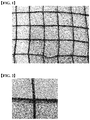
FIG. 1 is a plan view showing a part of a protective net for sports. -
FIG. 2 is an enlarged photograph showing an intersection (X) of the synthetic fiber cord (C) inFIG. 1 . -
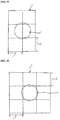
FIG. 3 is a schematic diagram showing an area A and an area B used for calculating a rate of hole size. -
FIGS. 4 to 6 are schematic diagrams showing the number (N2) of distances (D) between intersections of a protective net that receives impact by a ball according to a position where the ball is bumped against the protective net. - Hereinafter, the present invention will be described in detail through the accompanying drawings.
- As shown in
FIGS. 1 and 2 , the protective net for sports according to the present invention is characterized by forming meshes between intersections of synthetic fiber cords while the synthetic fiber cords in which a plurality of synthetic fiber filaments are plied and twisted are crossed in a knotless type, wherein a diameter (d) of the synthetic fiber cord satisfies the following Equation (I), a maximum distance (D1) between the intersections adjacent to each other satisfies the following Equation (II), and a minimum distance (D2) between the intersections adjacent to each other satisfies the following Equation (III):


- in the Equation (IV), N2 is an integer of 12, 17 or 24 as the number of distances (D) between the intersections of the net that receives impact by the hit ball, and N1 is an integer of 1,2 or 4 as the number of intersections of the synthetic fiber cords to which the impact is applied by the ball,

- The number (N2) of the distances (D) between the intersections which receive impact by the hit ball is determined depending on a position where the ball bumps against the protective net as shown in
FIGS. 4 to 6 . - Specifically, when the ball bumps against the position of the protective net shown in
FIG. 4 , the number (N2) of the distances (D) between the intersections which receive impact by the hit ball becomes 12, and the number (N1) of intersections which receive impact by the hit ball becomes 1. - On the other hand, when the ball bumps against the position of the protective net shown in
FIG. 5 , the number (N2) of the distances (D) between the intersections which receive impact by the hit ball becomes 17, and the number (N1) of intersections which receive impact by the hit ball becomes 2. - On the other hand, when the ball bumps against the position of the protective net shown in
FIG. 6 , the number (N2) of the distances (D) between the intersections becomes 24, and the number (N1) of intersections which receive impact by the hit ball becomes 4. - The protective net for sports of the present invention may be used as a protective net for golf, a protective net for soccer, a protective net for baseball, a protective net for tennis, a protective net for volleyball, or the like.
- As the synthetic fiber filament constituting the synthetic fiber cord, an aramid filament may be used alone, or the aramid filament and other synthetic fiber filament except the aramid filament may be used in a combination with each other.
- If the present invention uses the protective net for golf in which the synthetic fiber cord is an aramid cord consisting of the aramid filament, it is preferred that a diameter (d) of the aramid cord is 0.85 mm to 1.5 mm, a maximum distance (D1) of the intersections adjacent to each other is 35 mm or less, and a minimum distance (D2) of the intersections adjacent to each other is 20 mm or more.
- If the present invention uses the protective net for soccer in which the synthetic fiber cord is an aramid cord consisting of the aramid filament, it is preferred that a diameter (d) of the aramid cord is 0.59 mm to 0.84 mm, a maximum distance (D1) of the intersections adjacent to each other is 140 mm or less, and a minimum distance (D2) of the intersections adjacent to each other is 130 mm or more.
- If the present invention uses the protective net for baseball in which the synthetic fiber cord is an aramid cord consisting of the aramid filament, it is preferred that a diameter (d) of the aramid cord is 0.75 mm to 1.07 mm, a maximum distance (D1) of the intersections adjacent to each other is 50 mm or less, and a minimum distance (D2) of the intersections adjacent to each other is 40 mm or more.
- If the present invention uses the synthetic fiber cord as the protective net for tennis, it is preferred that a diameter (d) of the synthetic fiber cord is 0.73 mm to 1.03 mm, a maximum distance (D1) of the intersections adjacent to each other is 42 mm or less, and a minimum distance (D2) of the intersections adjacent to each other is 38 mm or more.
- If the present invention uses the synthetic fiber cord as the protective net for volleyball, it is preferred that a diameter (d) of the synthetic fiber cord is 0.33 mm to 0.47 mm, a maximum distance (D1) of the intersections adjacent to each other is 126 mm or less, and a minimum distance (D2) of the intersections adjacent to each other is 122 mm or more.
- When the diameter (d) of the synthetic fiber cord is lower than the above range, the mechanical properties such as a tensile strength and an abrasion resistance of the synthetic fiber cord are deteriorated, and thus, there is highly likely that the protective net for sports is easily damaged by an impact applied when the hit golf ball or baseball ball flies and bumps against the protective net, whereas when the diameter (d) of the synthetic fiber cord exceeds the above range, since a areal density of the protective net for sports becomes heavier than 180 g/m2 and the dimeter of the protective net diameter increases, a resistance to external environments such as wind and typhoons is reduced, which increases a likelihood that the installed protective net is easily damaged, and a rate of hole size of the protective net for sports is lowered to less than 88%, making viewing of the game uncomfortable.
- If the distance between the intersections (X) of the synthetic fiber cords exceeds the above range, there is a problem that a protective function of the protective net for sports is deteriorated due to penetration of a golf ball or a baseball through a mesh of the protective net for sports. If it is less than the above range, the mesh is formed too small, making viewing of the game uncomfortable.
- That is, the protective net for sports according to the present invention wherein the diameter (d) of the synthetic fiber cord is 0.85 mm to 1.5 mm, the maximum distance (D1) of the intersections adjacent to each other is 35 mm or less, and the minimum distance (D2) of the intersections adjacent to each other is 20 mm or more, can be used as the protective net for golf.
- Further, the protective net for sports according to the present invention wherein the diameter (d) of the synthetic fiber cord is 0.59 mm to 0.84 mm, the maximum distance (D1) of the intersections adjacent to each other is 140 mm or less, and the minimum distance (D2) of the intersections adjacent to each other is 135 mm or more can be used as the protective net for soccer.
- Further, the protective net for sports according to the present invention wherein the diameter (d) of the synthetic fiber cord is 0.75 mm to 1.07 mm, the maximum distance (D1) of the intersections adjacent to each other is 50 mm or less, and the minimum distance (D2) of the intersections adjacent to each other is 40 mm or more can be used the protective net for baseball.
- Further, the protective net for sports according to the present invention wherein the diameter (d) of the synthetic fiber cord is 0.73 mm to 1.03 mm, the maximum distance (D1) of the intersections adjacent to each other is 42 mm or less, and the minimum distance (D2) of the intersections adjacent to each other is 38 mm or more can be used as the protective net for tennis.
- Further, the protective net for sports according to the present invention wherein the diameter (d) of the synthetic fiber cord is 0.33 mm to 0.47 mm, the maximum distance (D1) of the intersections adjacent to each other is 126 mm or less, and the minimum distance (D2) of the intersections adjacent to each other is 122 mm or more can be used as the protective net for volleyball.
- The aramid cord (C) consists of two strands and three or less strands of aramid filaments having a fineness of preferably 1,200 denier to 5,000 denier, more preferably 2,000 to 5,000 denier, and an strain of the aramid filament is preferably 2 % or more and 4 % or less.
- Those in which a resin containing an ultraviolet stabilizer is coated onto the synthetic fiber cord are more preferable for improving a weather resistance.
- The protective net for sports of the present invention has a cutting strength of 114 daN or more, or 114 daN to 120 daN, and may be configured to sew a fabric having a narrow width at an end of the protective net for sports to improve mounting during installation.
- As one embodiment, in order to prevent all loosening of the protective net of a Knotless type when cutting or installing the protective net, a fine fabric is sewn at the end of the protective net.
- As another embodiment, in order to easily hang or mount the protective net on a post for installation of the protective net, a metal ring-typed jig may be installed when sewing the fine fabric at the end of the protective net.
- As still another embodiment, when Velcro is attached to the post for installation of the protective net, in order to improve attachability and detachability of the protective net, the Velcro may be sewn together when stitching the fine fabric at the end of the protective net.
- The present invention is made lightweight with a lower areal density than a conventional protective net for sports, and a diameter of the synthetic fiber cord constituting the protective net is considerably smaller than a diameter of the conventional HDPE cord which leads to an increase in a rate of hole size. Therefore, the present invention improves resistance against wind during manufacture of a protective net structure, and has excellent mechanical properties and thus provides excellent resistance against impact applied when a golf ball or a baseball ball flies and bumps. Consequently, the present invention minimizes damage and extends a replacement cycle.
- Specifically, the rate of hole size of the protective net for sports may be 90 % or more, 90 % to 100 %, or 90 % to 99.5 %, according to the following Equation (VI):

- Further, an abrasion resistance may be 20 minutes or more, or 20 minutes to 35 minutes, wherein the abrasion resistance is a time required to damage the protective net by allowing a golf ball rotating at 3,000 rpm to contact the same position of the protective net after mounting the protective net to a rotational friction tester.
- Further, a areal density of the protective net for sports may be 1 g/m2 to 100 g/m2, or 5 g/m2 to 80 g/m2.
- Furthermore, the protective net for sports of the present invention also can improve a stability by effectively preventing a golf ball or a baseball ball from penetrating between the meshes, while enhancing a visibility due to the high rate of hole size.
- Still furthermore, the protective net for sports of the present invention can be easily mounted on a structure of the protective net, and has an excellent flame retardancy and a weather resistance.
- Hereinafter, the present invention will be described in more detail by way of examples and comparative examples.
- However, the protection scope of the present invention should not be interpreted as being limited only to these examples.
- Two strands of aramid filaments having an strain of 3 % and a fineness of 4,500 denier were plied and twisted to prepare aramid cords having a diameter (d) of 0.95 mm.
- Next, meshes were formed while crossing the aramid cords in a knotless type as shown in
FIGS. 1 and 2 , thereby manufacturing a protective net for golf. - In this case, an distance between the intersections (X) of the aramid cords was adjusted to 25 mm.
- The results of evaluating a cutting strength, a areal density, a rate of hole size, and an abrasion resistance of the manufactured protective net for golf were shown in Table 1.
- Two strands of aramid filaments having a fineness of 3,000 denier were plied and twisted to prepare aramid cords having a diameter (d) of 0.8 mm.
- Next, meshes were formed while crossing the aramid cords in a knotless type as shown in
FIGS. 1 and 2 to manufacture a protective net for golf. - In this case, an distance between the intersections (X) of the aramid cords was adjusted to 23 mm.
- Five strands of high-density polyethylene (HDPE) filaments having a fineness of 3,000 denier were plied and twisted to prepare HDPE cords having a diameter (d) of 1.40 mm.
- Next, meshes were formed while crossing the HDPE cords in a knotless type as shown in
FIGS. 1 and 2 to manufacture a protective net for golf. - In this case, an distance between the intersections (X) of the HDPE chodes was adjusted to 23 mm.
- The results of evaluating a cutting strength, a areal density, a rate of hole size, and an abrasion resistance of the manufactured protective net for golf were shown in Table 1.
[Table 1] Category Example 1 Comparative Example 1 Comparative Example 2 Equation(I) Maximum value 1.06 mm 1.03 mm 1.94 mm Minimum value 0.95 mm 0.92 mm 1.72 mm Equation(II) 32.42 mm 32.42 mm 29.64 mm Equation(III) 25.01 mm 25.01 mm 22.86 mm Cutting strength(daN) 114 113 71 Rate of hole size(%) 92.2 94.5 86.1 Areal density(g/m2) 66 52 120 Abrasion resistance(hour) 31 (Unbroken) 17 17 - In Table 1 above, the values of Equation (I), Equation (II) and Equation (III) are as follows.


- In the Equations (I), (II) and (III), the units of each of the diameter (d) of the synthetic fiber cord, the maximum distance (D1) and the minimum distance (D2) between the intersections adjacent to each other are mm, m is a mass of a ball, N is a constant of 14.14214, ε is an strain of the synthetic fiber filament material, θ is a ball hitting angle, σ is a stress of the synthetic fiber filament material, Vo is a maximum velocity of a hit ball, L is a total length of a net that receives impact by the hit ball, which is calculated by the following Equation (IV), h is a height of the net that receives impact by the hit ball, which is calculated by the following Equation (V), R is a radius of the ball to which hit is applied, and n is the number of twists applied to the synthetic fiber filament to prepare the synthetic fiber cord,


- As shown in Table 1 above, it could be confirmed that, unlike the protective net for golf manufactured in Example 1, the protective net for golf manufactured in Comparative Example 1 where the distances between the intersections (X) does not fall within the ranges of Equations (II) and (III) had remarkably poor abrasion resistance of the protective net.
- Further, it could be confirmed that, unlike the protective net for golf manufactured in Example 1, the protective net for golf manufactured in Comparative Example 2 where the cord diameter did not satisfy Equation (I) and the cord material was changed to the HDPE had remarkably poor abrasion resistance and cutting strength.
- Two strands of aramid filaments having a fineness of 3,000 denier were plied and twisted to prepare aramid cords having a diameter of 0.7 mm.
- Next, meshes were formed while crossing the aramid cords in a knotless type as shown in
FIGS. 1 and 2 to manufacture a protective net for soccer. - In this case, an distance between the intersections (X) of the aramid cords was adjusted to 137 mm.
- The results of evaluating a cutting strength, a areal density, a rate of hole size, and an abrasion resistance of the manufactured protective net for soccer were shown in Table 2.
- Two strands of aramid filaments having a fineness of 3,000 denier were Plied and twisted to prepare aramid cords having a diameter of 0.9 mm.
- Next, meshes were formed while crossing the aramid cords in a knotless type as shown in
FIGS. 1 and 2 to manufacture a protective net for baseball. - In this case, an distance between the intersections (X) of the aramid cords was adjusted to 45 mm.
- The results of evaluating a cutting strength, a areal density, a rate of hole size, and an abrasion resistance of the manufactured protective net for baseball were shown in Table 2.
- Two strands of aramid filaments having a fineness of 3,000 denier were plied and twisted to prepare aramid cords having a diameter of 0.85 mm.
- Next, meshes were formed while crossing the aramid cords in a knotless type as shown in
FIGS. 1 and 2 to manufacture a protective net for tennis. - In this case, an distance between the intersections (X) of the aramid cords was adjusted to 40 mm.
- The results of evaluating a cutting strength, a areal density, a rate of hole size, and an abrasion resistance of the manufactured protective net for tennis were shown in Table 2.
- Two strands of aramid filaments having a fineness of 3,000 denier were Plied and twisted to prepare aramid cords having a diameter of 0.4 mm.
- Next, meshes were formed while crossing the aramid cords in a knotless type as shown in
FIGS. 1 and 2 to manufacture a protective net for volleyball. - In this case, an distance between the intersections (X) of the aramid cords was adjusted to 124 mm.
- The results of evaluating a cutting strength, a areal density, a rate of hole size, and an abrasion resistance of the manufactured protective net for soccer were shown in Table 2.
[Table 2] Category Example 2 Example 3 Example 4 Example 5 Equation(I) Maximum value 0.84 mm 1.07 mm 1.03 mm 0.47 mm Minimum value 0.59 mm 0.75 mm 0.73 mm 0.33 mm Equation(II) 167.18 mm 54.96 mm 48.26 mm 151.98 mm Equation(III) 128.97 mm 34.96 mm 30.71 mm 96.72 mm Cutting strength(daN) 114 114 114 114 Rate of hole size(%) 99.0 96.0 95.8 99.3 Areal density(g/m2) 10 47 46 6 Abrasion resistance(hour) 31 (Unbroken) 31 (Unbroken) 31 (Unbroken) 31 (Unbroken) - The physical properties of Table 1 and Table 2 were evaluated by the following method:
- The cutting strength was measured by collecting the mesh and fixing both ends thereof according to KS K ISO 1806, which is a mesh cutting load measurement method of a fishing net.
- As shown in
FIG. 3 , the rate of hole size was calculated by substituting (i) an area (A) of the mesh and (ii) an area (B) into the following Equation (VI), wherein the area (B) was obtained by multiplying a value (ℓ1) adding a diameter (d) of the aramid cord to a transverse length (ℓ2) of the mesh, and a value (h1) adding the diameter (d) of the aramid cord to a longitudinal length (h2) of the mesh:
- Areal density (g/m2)
- The areal density was obtained by measuring a weight of the protective net with 1m wide × 1m long.
- The abrasion resistance was expressed as a time required to damage the protective net by allowing a golf ball rotating at 3,000 rpm to contact the same position of the protective net after mounting the protective net to a rotational friction tester.
-
- C: synthetic fiber cord
- d: diameter of synthetic fiber cord (C)
- X: intersection between synthetic fiber cords (C)
- A: area of mesh
- h2: longitudinal length of mesh
- ℓ2: transverse length of mesh
- h1: value adding diameter (d) of aramid cord to longitudinal length (h2) of mesh
- ℓ1: Value adding diameter of aramid cord to transverse length (ℓ2) of mesh
- B: area multiplying h1 and ℓ1
- 1: protective net for sports
- 2: ball
- D: distance between intersections (X) of synthetic fiber cords
Claims (20)
- A protective net for sports characterized by forming meshes between intersections of synthetic fiber cords while the synthetic fiber cords having a form in which a plurality of synthetic fiber filaments are plied and twisted are crossed in a knotless type, wherein a diameter (d) of the synthetic fiber cord satisfies the following Equation (I), a maximum distance (D1) between the intersections adjacent to each other satisfies the following Equation (II), and a minimum distance (D2) between the intersections adjacent to each other satisfies the following Equation (III):



- The protective net for sports according to claim 1, wherein the synthetic fiber filament is an aramid filament.
- The protective net for sports according to claim 1, wherein the synthetic fiber cord includes an aramid filament.
- The protective net for sports according to claim 2, wherein the aramid filament has an strain of 2 % to 4 % or less.
- The protective net for sports according to claim 1, wherein a areal density of the protective net for sports is 1 g/m2 to 100 g/m2 or less.
- The protective net for sports according to claim 1, wherein a resin containing an ultraviolet stabilizer is coated onto the synthetic fiber cord.
- The protective net for sports according to claim 1, wherein a fabric having a narrow width is sewn to an end of the protective net for sports.
- The protective net for sports according to claim 1, wherein a cutting strength of the protective net for sports is 114 daN or more.
- The protective net for sports according to claim 1, wherein a rate of hole size of the protective net for sports is 90 % or more by the following Equation (VI):

- The protective net for sports according to claim 1, wherein an abrasion resistance is 20 minutes or more, the abrasion resistance being a time required to damage the protective net by allowing a golf ball rotating at 3,000 rpm to contact the same position of the protective net after mounting the protective net for sports to a rotational friction tester.
- The protective net for sports according to claim 1, wherein the diameter (d) of the synthetic fiber cord is 0.85 mm to 1.5 mm, the maximum distance (D1) of the intersections adjacent to each other is 35 mm or less, and the minimum distance (D2) of the intersections adjacent to each other is 20 mm or more.
- The protective net for sports according to claim 1, wherein the diameter (d) of the synthetic fiber cord is 0.59 mm to 0.84 mm, the maximum distance (D1) of the intersections adjacent to each other is 140 mm or less, and the minimum distance (D2) of the intersections adjacent to each other is 135 mm or more.
- The protective net for sports according to claim 1, wherein the diameter (d) of the synthetic fiber cord is 0.75 mm to 1.07 mm, the maximum distance (D1) of the intersections adjacent to each other is 50 mm or less, and the minimum distance (D2) of the intersections adjacent to each other is 40 mm or more.
- The protective net for sports according to claim 1, wherein the diameter (d) of the synthetic fiber cord is 0.73 mm to 1.03 mm, the maximum distance (D1) of the intersections adjacent to each other is 42 mm or less, and the minimum distance (D2) of the intersections adjacent to each other is 38 mm or more.
- The protective net for sports according to claim 1, wherein the diameter (d) of the synthetic fiber cord is 0.33 mm to 0.47 mm, the maximum distance (D1) of the intersections adjacent to each other is 126 mm or less, and the minimum distance (D2) of the intersections adjacent to each other is 122 mm or more.
- A protective net for golf characterized by using the protective net for sports of claim 11.
- A protective net for soccer characterized by using the protective net for sports of claim 12.
- A protective net for baseball characterized by using the protective net for sports of claim 13.
- A protective net for tennis characterized by using the protective net for sports of claim 14.
- A protective net for volleyball characterized by using the protective net for sports of claim 15.
Applications Claiming Priority (3)
| Application Number | Priority Date | Filing Date | Title |
|---|---|---|---|
| KR20180164710 | 2018-12-19 | ||
| KR1020190169125A KR102400548B1 (en) | 2018-12-19 | 2019-12-17 | Protective net for sports, Protective net for golf, Protective net for soccer, Protective net for baseball, Protective net for tennis, and Protective net for volleyball using the same |
| PCT/KR2019/018036 WO2020130647A1 (en) | 2018-12-19 | 2019-12-18 | Protective net for sports , and golf protective net, soccer protective net, baseball protective net, tennis protective net, and volleyball protective net using same |
Publications (3)
| Publication Number | Publication Date |
|---|---|
| EP3854920A1 true EP3854920A1 (en) | 2021-07-28 |
| EP3854920A4 EP3854920A4 (en) | 2021-12-08 |
| EP3854920B1 EP3854920B1 (en) | 2025-08-06 |
Family
ID=71401180
Family Applications (1)
| Application Number | Title | Priority Date | Filing Date |
|---|---|---|---|
| EP19900140.5A Active EP3854920B1 (en) | 2018-12-19 | 2019-12-18 | Use of a protective net for golf, soccer, baseball, tennis or volleyball |
Country Status (3)
| Country | Link |
|---|---|
| US (1) | US20210339109A1 (en) |
| EP (1) | EP3854920B1 (en) |
| KR (1) | KR102400548B1 (en) |
Family Cites Families (13)
| Publication number | Priority date | Publication date | Assignee | Title |
|---|---|---|---|---|
| US5048844A (en) * | 1990-12-21 | 1991-09-17 | Soccerstop, Inc. | Portable rebounding soccer training goal |
| JP2001288640A (en) | 2000-03-31 | 2001-10-19 | Maruhachi Kk | Protective net |
| KR200225431Y1 (en) | 2000-12-11 | 2001-06-01 | 최흥식 | A multipurpose net |
| DE10245503A1 (en) * | 2002-09-27 | 2004-04-08 | Huesker Synthetic Gmbh | Coarse-mesh lattice fabric is for reinforcing bitumen road surfaces and mortar and for use as geotextile and consists of pick bundles and warp end bundles |
| KR200322385Y1 (en) | 2003-05-07 | 2003-08-09 | 주식회사 세진로프산업 | Golf net |
| JP5498050B2 (en) * | 2008-05-07 | 2014-05-21 | 株式会社クラレ | Ball net |
| US7614968B1 (en) * | 2008-07-18 | 2009-11-10 | John Davies | Ball catching system for training soccer players |
| KR101353700B1 (en) * | 2010-09-17 | 2014-01-21 | 코오롱인더스트리 주식회사 | Hybrid fiber and Method for manufacturing the same |
| KR101594212B1 (en) * | 2012-12-20 | 2016-02-15 | 코오롱인더스트리 주식회사 | Protective Net and Method for Manufacturing The Same |
| DE102013005409B3 (en) * | 2013-03-26 | 2014-04-24 | Stephan Lohmar | Ball catch fence for the delimitation of ball playing fields |
| JP2015020492A (en) * | 2013-07-17 | 2015-02-02 | 株式会社ブリヂストン | Tire reinforcement member and tire using the same |
| US9573034B1 (en) * | 2015-04-08 | 2017-02-21 | Marty Gilman, Inc. | Sports goal |
| KR101981750B1 (en) | 2018-12-19 | 2019-05-23 | 코오롱인더스트리 주식회사 | Protective net for golf |
-
2019
- 2019-12-17 KR KR1020190169125A patent/KR102400548B1/en active Active
- 2019-12-18 EP EP19900140.5A patent/EP3854920B1/en active Active
- 2019-12-18 US US17/285,474 patent/US20210339109A1/en not_active Abandoned
Also Published As
| Publication number | Publication date |
|---|---|
| EP3854920A4 (en) | 2021-12-08 |
| KR20200076623A (en) | 2020-06-29 |
| EP3854920B1 (en) | 2025-08-06 |
| US20210339109A1 (en) | 2021-11-04 |
| KR102400548B1 (en) | 2022-05-20 |
Similar Documents
| Publication | Publication Date | Title |
|---|---|---|
| US10793973B2 (en) | Synthetic fibre and an artificial lawn comprising such a fibre | |
| US8530026B2 (en) | Artificial fiber for use in an artificial grass sports field | |
| US5327714A (en) | Synthetic string for sporting application | |
| KR101795816B1 (en) | Artificial grass fibre and artificial lawn comprising such a fibre | |
| US4168606A (en) | Process for forming string | |
| EP3854920B1 (en) | Use of a protective net for golf, soccer, baseball, tennis or volleyball | |
| EP2726674B1 (en) | Synthetic fibre and an artificial lawn comprising such a fibre | |
| JP2022507071A (en) | Protective nets for sports, protective nets for golf using them, protective nets for soccer, protective nets for baseball, protective nets for tennis, and protective nets for volleyball. | |
| KR101981750B1 (en) | Protective net for golf | |
| JP2001288640A (en) | Protective net | |
| JPH11128406A (en) | Mixed synthetic strings for tennis rackets | |
| JP5794737B2 (en) | Artificial grass | |
| KR102668581B1 (en) | String sets, warp strings and weft strings | |
| DE102014011527B4 (en) | Table tennis bat with composite fabric insert | |
| JPH0291302A (en) | Artificial grass structure | |
| CN219185755U (en) | Racket thread protection tube and corresponding racket | |
| JP2849979B2 (en) | Golf practice target | |
| JP4462670B2 (en) | String using hollow filament | |
| JP2003154039A (en) | string | |
| CN217293759U (en) | Antistatic woven lawn with shock absorption cushion layer | |
| CN205586486U (en) | Damping device is consolidated to net twine racket abrasionproof | |
| JP2005200997A (en) | Artificial lawn and athletic field | |
| JP2008099859A (en) | Gut | |
| JP2001140207A (en) | Artificial grass | |
| JPH03247360A (en) | Tennis ball |
Legal Events
| Date | Code | Title | Description |
|---|---|---|---|
| STAA | Information on the status of an ep patent application or granted ep patent |
Free format text: STATUS: THE INTERNATIONAL PUBLICATION HAS BEEN MADE |
|
| PUAI | Public reference made under article 153(3) epc to a published international application that has entered the european phase |
Free format text: ORIGINAL CODE: 0009012 |
|
| STAA | Information on the status of an ep patent application or granted ep patent |
Free format text: STATUS: REQUEST FOR EXAMINATION WAS MADE |
|
| 17P | Request for examination filed |
Effective date: 20210420 |
|
| AK | Designated contracting states |
Kind code of ref document: A1 Designated state(s): AL AT BE BG CH CY CZ DE DK EE ES FI FR GB GR HR HU IE IS IT LI LT LU LV MC MK MT NL NO PL PT RO RS SE SI SK SM TR |
|
| REG | Reference to a national code |
Ref country code: DE Free format text: PREVIOUS MAIN CLASS: D03D0009000000 Ipc: D04C0001080000 Ref legal event code: R079 Ref document number: 602019073895 Country of ref document: DE |
|
| A4 | Supplementary search report drawn up and despatched |
Effective date: 20211108 |
|
| RIC1 | Information provided on ipc code assigned before grant |
Ipc: A63B 71/02 20060101ALN20211102BHEP Ipc: D04C 1/08 20060101AFI20211102BHEP |
|
| DAV | Request for validation of the european patent (deleted) | ||
| DAX | Request for extension of the european patent (deleted) | ||
| STAA | Information on the status of an ep patent application or granted ep patent |
Free format text: STATUS: EXAMINATION IS IN PROGRESS |
|
| 17Q | First examination report despatched |
Effective date: 20230227 |
|
| GRAP | Despatch of communication of intention to grant a patent |
Free format text: ORIGINAL CODE: EPIDOSNIGR1 |
|
| STAA | Information on the status of an ep patent application or granted ep patent |
Free format text: STATUS: GRANT OF PATENT IS INTENDED |
|
| RIC1 | Information provided on ipc code assigned before grant |
Ipc: A63B 71/02 20060101ALN20250318BHEP Ipc: D04C 1/08 20060101AFI20250318BHEP |
|
| INTG | Intention to grant announced |
Effective date: 20250402 |
|
| GRAS | Grant fee paid |
Free format text: ORIGINAL CODE: EPIDOSNIGR3 |
|
| GRAA | (expected) grant |
Free format text: ORIGINAL CODE: 0009210 |
|
| STAA | Information on the status of an ep patent application or granted ep patent |
Free format text: STATUS: THE PATENT HAS BEEN GRANTED |
|
| AK | Designated contracting states |
Kind code of ref document: B1 Designated state(s): AL AT BE BG CH CY CZ DE DK EE ES FI FR GB GR HR HU IE IS IT LI LT LU LV MC MK MT NL NO PL PT RO RS SE SI SK SM TR |
|
| REG | Reference to a national code |
Ref country code: GB Ref legal event code: FG4D |
|
| REG | Reference to a national code |
Ref country code: CH Ref legal event code: EP |
|
| REG | Reference to a national code |
Ref country code: NL Ref legal event code: FP Ref country code: IE Ref legal event code: FG4D |
|
| REG | Reference to a national code |
Ref country code: DE Ref legal event code: R096 Ref document number: 602019073895 Country of ref document: DE |
|
| PG25 | Lapsed in a contracting state [announced via postgrant information from national office to epo] |
Ref country code: IS Free format text: LAPSE BECAUSE OF FAILURE TO SUBMIT A TRANSLATION OF THE DESCRIPTION OR TO PAY THE FEE WITHIN THE PRESCRIBED TIME-LIMIT Effective date: 20251206 |
|
| PG25 | Lapsed in a contracting state [announced via postgrant information from national office to epo] |
Ref country code: NO Free format text: LAPSE BECAUSE OF FAILURE TO SUBMIT A TRANSLATION OF THE DESCRIPTION OR TO PAY THE FEE WITHIN THE PRESCRIBED TIME-LIMIT Effective date: 20251106 |
|
| REG | Reference to a national code |
Ref country code: LT Ref legal event code: MG9D |
|
| PG25 | Lapsed in a contracting state [announced via postgrant information from national office to epo] |
Ref country code: PT Free format text: LAPSE BECAUSE OF FAILURE TO SUBMIT A TRANSLATION OF THE DESCRIPTION OR TO PAY THE FEE WITHIN THE PRESCRIBED TIME-LIMIT Effective date: 20251209 |
|
| PG25 | Lapsed in a contracting state [announced via postgrant information from national office to epo] |
Ref country code: FI Free format text: LAPSE BECAUSE OF FAILURE TO SUBMIT A TRANSLATION OF THE DESCRIPTION OR TO PAY THE FEE WITHIN THE PRESCRIBED TIME-LIMIT Effective date: 20250806 |
|
| PG25 | Lapsed in a contracting state [announced via postgrant information from national office to epo] |
Ref country code: HR Free format text: LAPSE BECAUSE OF FAILURE TO SUBMIT A TRANSLATION OF THE DESCRIPTION OR TO PAY THE FEE WITHIN THE PRESCRIBED TIME-LIMIT Effective date: 20250806 |
|
| PGFP | Annual fee paid to national office [announced via postgrant information from national office to epo] |
Ref country code: NL Payment date: 20251217 Year of fee payment: 7 Ref country code: FR Payment date: 20251218 Year of fee payment: 7 |
|
| PG25 | Lapsed in a contracting state [announced via postgrant information from national office to epo] |
Ref country code: GR Free format text: LAPSE BECAUSE OF FAILURE TO SUBMIT A TRANSLATION OF THE DESCRIPTION OR TO PAY THE FEE WITHIN THE PRESCRIBED TIME-LIMIT Effective date: 20251107 |
|
| PG25 | Lapsed in a contracting state [announced via postgrant information from national office to epo] |
Ref country code: SE Free format text: LAPSE BECAUSE OF FAILURE TO SUBMIT A TRANSLATION OF THE DESCRIPTION OR TO PAY THE FEE WITHIN THE PRESCRIBED TIME-LIMIT Effective date: 20250806 |
|
| PG25 | Lapsed in a contracting state [announced via postgrant information from national office to epo] |
Ref country code: LV Free format text: LAPSE BECAUSE OF FAILURE TO SUBMIT A TRANSLATION OF THE DESCRIPTION OR TO PAY THE FEE WITHIN THE PRESCRIBED TIME-LIMIT Effective date: 20250806 |
|
| PG25 | Lapsed in a contracting state [announced via postgrant information from national office to epo] |
Ref country code: PL Free format text: LAPSE BECAUSE OF FAILURE TO SUBMIT A TRANSLATION OF THE DESCRIPTION OR TO PAY THE FEE WITHIN THE PRESCRIBED TIME-LIMIT Effective date: 20250806 Ref country code: BG Free format text: LAPSE BECAUSE OF FAILURE TO SUBMIT A TRANSLATION OF THE DESCRIPTION OR TO PAY THE FEE WITHIN THE PRESCRIBED TIME-LIMIT Effective date: 20250806 |
|
| PG25 | Lapsed in a contracting state [announced via postgrant information from national office to epo] |
Ref country code: RS Free format text: LAPSE BECAUSE OF FAILURE TO SUBMIT A TRANSLATION OF THE DESCRIPTION OR TO PAY THE FEE WITHIN THE PRESCRIBED TIME-LIMIT Effective date: 20251106 |
|
| PG25 | Lapsed in a contracting state [announced via postgrant information from national office to epo] |
Ref country code: ES Free format text: LAPSE BECAUSE OF FAILURE TO SUBMIT A TRANSLATION OF THE DESCRIPTION OR TO PAY THE FEE WITHIN THE PRESCRIBED TIME-LIMIT Effective date: 20250806 |
|
| REG | Reference to a national code |
Ref country code: AT Ref legal event code: MK05 Ref document number: 1821923 Country of ref document: AT Kind code of ref document: T Effective date: 20250806 |
|
| PG25 | Lapsed in a contracting state [announced via postgrant information from national office to epo] |
Ref country code: RO Free format text: LAPSE BECAUSE OF FAILURE TO SUBMIT A TRANSLATION OF THE DESCRIPTION OR TO PAY THE FEE WITHIN THE PRESCRIBED TIME-LIMIT Effective date: 20250806 |
|
| PG25 | Lapsed in a contracting state [announced via postgrant information from national office to epo] |
Ref country code: SM Free format text: LAPSE BECAUSE OF FAILURE TO SUBMIT A TRANSLATION OF THE DESCRIPTION OR TO PAY THE FEE WITHIN THE PRESCRIBED TIME-LIMIT Effective date: 20250806 |
|
| PG25 | Lapsed in a contracting state [announced via postgrant information from national office to epo] |
Ref country code: DK Free format text: LAPSE BECAUSE OF FAILURE TO SUBMIT A TRANSLATION OF THE DESCRIPTION OR TO PAY THE FEE WITHIN THE PRESCRIBED TIME-LIMIT Effective date: 20250806 |
|
| PGFP | Annual fee paid to national office [announced via postgrant information from national office to epo] |
Ref country code: DE Payment date: 20251218 Year of fee payment: 7 |
|
| PG25 | Lapsed in a contracting state [announced via postgrant information from national office to epo] |
Ref country code: AT Free format text: LAPSE BECAUSE OF FAILURE TO SUBMIT A TRANSLATION OF THE DESCRIPTION OR TO PAY THE FEE WITHIN THE PRESCRIBED TIME-LIMIT Effective date: 20250806 |
|
| PG25 | Lapsed in a contracting state [announced via postgrant information from national office to epo] |
Ref country code: IT Free format text: LAPSE BECAUSE OF FAILURE TO SUBMIT A TRANSLATION OF THE DESCRIPTION OR TO PAY THE FEE WITHIN THE PRESCRIBED TIME-LIMIT Effective date: 20250806 |
|
| PG25 | Lapsed in a contracting state [announced via postgrant information from national office to epo] |
Ref country code: CZ Free format text: LAPSE BECAUSE OF FAILURE TO SUBMIT A TRANSLATION OF THE DESCRIPTION OR TO PAY THE FEE WITHIN THE PRESCRIBED TIME-LIMIT Effective date: 20250806 |
|
| PG25 | Lapsed in a contracting state [announced via postgrant information from national office to epo] |
Ref country code: SK Free format text: LAPSE BECAUSE OF FAILURE TO SUBMIT A TRANSLATION OF THE DESCRIPTION OR TO PAY THE FEE WITHIN THE PRESCRIBED TIME-LIMIT Effective date: 20250806 Ref country code: EE Free format text: LAPSE BECAUSE OF FAILURE TO SUBMIT A TRANSLATION OF THE DESCRIPTION OR TO PAY THE FEE WITHIN THE PRESCRIBED TIME-LIMIT Effective date: 20250806 |
|
| REG | Reference to a national code |
Ref country code: DE Ref legal event code: R097 Ref document number: 602019073895 Country of ref document: DE |
|
| PLBE | No opposition filed within time limit |
Free format text: ORIGINAL CODE: 0009261 |
|
| STAA | Information on the status of an ep patent application or granted ep patent |
Free format text: STATUS: NO OPPOSITION FILED WITHIN TIME LIMIT |
|
| REG | Reference to a national code |
Ref country code: CH Ref legal event code: L10 Free format text: ST27 STATUS EVENT CODE: U-0-0-L10-L00 (AS PROVIDED BY THE NATIONAL OFFICE) Effective date: 20260617 |
|
| PG25 | Lapsed in a contracting state [announced via postgrant information from national office to epo] |
Ref country code: LT Free format text: LAPSE BECAUSE OF FAILURE TO SUBMIT A TRANSLATION OF THE DESCRIPTION OR TO PAY THE FEE WITHIN THE PRESCRIBED TIME-LIMIT Effective date: 20250806 |
|
| PG25 | Lapsed in a contracting state [announced via postgrant information from national office to epo] |
Ref country code: MC Free format text: LAPSE BECAUSE OF FAILURE TO SUBMIT A TRANSLATION OF THE DESCRIPTION OR TO PAY THE FEE WITHIN THE PRESCRIBED TIME-LIMIT Effective date: 20250806 |
|
| 26N | No opposition filed |
Effective date: 20260507 |
|
| REG | Reference to a national code |
Ref country code: CH Ref legal event code: H13 Free format text: ST27 STATUS EVENT CODE: U-0-0-H10-H13 (AS PROVIDED BY THE NATIONAL OFFICE) Effective date: 20260723 |