EP3853206B1 - Treating sickle cell disease with a pyruvate kinase r activating compound - Google Patents
Treating sickle cell disease with a pyruvate kinase r activating compound Download PDFInfo
- Publication number
- EP3853206B1 EP3853206B1 EP19863246.5A EP19863246A EP3853206B1 EP 3853206 B1 EP3853206 B1 EP 3853206B1 EP 19863246 A EP19863246 A EP 19863246A EP 3853206 B1 EP3853206 B1 EP 3853206B1
- Authority
- EP
- European Patent Office
- Prior art keywords
- compound
- dose
- pkr
- dpg
- scd
- Prior art date
- Legal status (The legal status is an assumption and is not a legal conclusion. Google has not performed a legal analysis and makes no representation as to the accuracy of the status listed.)
- Active
Links
Images



















Classifications
-
- A—HUMAN NECESSITIES
- A61—MEDICAL OR VETERINARY SCIENCE; HYGIENE
- A61K—PREPARATIONS FOR MEDICAL, DENTAL OR TOILETRY PURPOSES
- A61K31/00—Medicinal preparations containing organic active ingredients
- A61K31/33—Heterocyclic compounds
- A61K31/395—Heterocyclic compounds having nitrogen as a ring hetero atom, e.g. guanethidine or rifamycins
- A61K31/435—Heterocyclic compounds having nitrogen as a ring hetero atom, e.g. guanethidine or rifamycins having six-membered rings with one nitrogen as the only ring hetero atom
- A61K31/4353—Heterocyclic compounds having nitrogen as a ring hetero atom, e.g. guanethidine or rifamycins having six-membered rings with one nitrogen as the only ring hetero atom ortho- or peri-condensed with heterocyclic ring systems
- A61K31/436—Heterocyclic compounds having nitrogen as a ring hetero atom, e.g. guanethidine or rifamycins having six-membered rings with one nitrogen as the only ring hetero atom ortho- or peri-condensed with heterocyclic ring systems the heterocyclic ring system containing a six-membered ring having oxygen as a ring hetero atom, e.g. rapamycin
-
- A—HUMAN NECESSITIES
- A61—MEDICAL OR VETERINARY SCIENCE; HYGIENE
- A61K—PREPARATIONS FOR MEDICAL, DENTAL OR TOILETRY PURPOSES
- A61K9/00—Medicinal preparations characterised by special physical form
- A61K9/0012—Galenical forms characterised by the site of application
- A61K9/0053—Mouth and digestive tract, i.e. intraoral and peroral administration
-
- A—HUMAN NECESSITIES
- A61—MEDICAL OR VETERINARY SCIENCE; HYGIENE
- A61K—PREPARATIONS FOR MEDICAL, DENTAL OR TOILETRY PURPOSES
- A61K9/00—Medicinal preparations characterised by special physical form
- A61K9/20—Pills, tablets, discs, rods
- A61K9/2004—Excipients; Inactive ingredients
- A61K9/2022—Organic macromolecular compounds
- A61K9/205—Polysaccharides, e.g. alginate, gums; Cyclodextrin
- A61K9/2054—Cellulose; Cellulose derivatives, e.g. hydroxypropyl methylcellulose
-
- A—HUMAN NECESSITIES
- A61—MEDICAL OR VETERINARY SCIENCE; HYGIENE
- A61P—SPECIFIC THERAPEUTIC ACTIVITY OF CHEMICAL COMPOUNDS OR MEDICINAL PREPARATIONS
- A61P7/00—Drugs for disorders of the blood or the extracellular fluid
- A61P7/06—Antianaemics
-
- C—CHEMISTRY; METALLURGY
- C07—ORGANIC CHEMISTRY
- C07D—HETEROCYCLIC COMPOUNDS
- C07D487/00—Heterocyclic compounds containing nitrogen atoms as the only ring hetero atoms in the condensed system, not provided for by groups C07D451/00 - C07D477/00
- C07D487/02—Heterocyclic compounds containing nitrogen atoms as the only ring hetero atoms in the condensed system, not provided for by groups C07D451/00 - C07D477/00 in which the condensed system contains two hetero rings
- C07D487/04—Ortho-condensed systems
-
- C—CHEMISTRY; METALLURGY
- C07—ORGANIC CHEMISTRY
- C07D—HETEROCYCLIC COMPOUNDS
- C07D491/00—Heterocyclic compounds containing in the condensed ring system both one or more rings having oxygen atoms as the only ring hetero atoms and one or more rings having nitrogen atoms as the only ring hetero atoms, not provided for by groups C07D451/00 - C07D459/00, C07D463/00, C07D477/00 or C07D489/00
- C07D491/02—Heterocyclic compounds containing in the condensed ring system both one or more rings having oxygen atoms as the only ring hetero atoms and one or more rings having nitrogen atoms as the only ring hetero atoms, not provided for by groups C07D451/00 - C07D459/00, C07D463/00, C07D477/00 or C07D489/00 in which the condensed system contains two hetero rings
- C07D491/04—Ortho-condensed systems
- C07D491/056—Ortho-condensed systems with two or more oxygen atoms as ring hetero atoms in the oxygen-containing ring
Definitions
- This disclosure relates to the treatment of sickle cell disease (SCD), including the treatment of patients diagnosed with SCD by the administration of a compound that activates pyruvate kinase R (PKR).
- SCD sickle cell disease
- PKA pyruvate kinase R
- Sickle cell disease is a chronic hemolytic anemia caused by inheritance of a mutated form of hemoglobin (Hgb), sickle Hgb (HgbS). It is the most common inherited hemolytic anemia, affecting 70,000 to 80,000 patients in the United States (US). SCD is characterized by polymerization of HgbS in red blood cells (RBCs) when HgbS is in the deoxygenated state (deoxy-HgbS), resulting in a sickle-shaped deformation. Sickled cells aggregate in capillaries precipitating vaso-occlusive events that generally present as acute and painful crises resulting in tissue ischemia, infarction, and long-term tissue damage.
- Hgb red blood cells
- deoxy-HgbS deoxygenated state
- RBCs in patients with SCD tend to be fragile due to sickling and other factors, and the mechanical trauma of circulation causes hemolysis and chronic anemia.
- damaged RBCs have abnormal surfaces that adhere to and damage vascular endothelium, provoking a proliferative/inflammatory response that underlies large-vessel stroke and potentially pulmonary-artery hypertension. Collectively, these contribute to the significant morbidity and increased mortality associated with this disease.
- HU is in wide use as a backbone therapy for SCD, it remains only partially effective, and is associated with toxicity, such as myelosuppression and teratogenicity. Patients receiving HU still experience hemolysis, anemia, and vaso-occlusive crises, suggesting a need for more effective therapies, either as a replacement or in combination with HU. Beyond HU, therapeutic intervention is largely supportive care, aimed at managing the symptoms of SCD. For instance, blood transfusions help with the anemia and other SCD complications by increasing the number of normal RBCs. However, repeated transfusions lead to iron overload and the need for chelation therapies to avoid consequent tissue damage. In addition to these approaches, analgesic medications are used to manage pain.
- WO 2016/201227 A1 relates to methods for using compounds that activate pyruvate kinase, including N-(4-(4-(cyclopropylmethyl)piperazine-1-carbonyl)phenyl)quinoline-8-sulfonamide.
- US 2012/134979 A1 relates to mechanism-based compositions and methods for treatment of SCD and SCD associated symptoms and disorders, particularly increased RBC sickling, HbS polymerization, hemolysis, tissue congestion and disruption and organ damage or failure in a mammal.
- WO 2014/074848 A1 relates to compositions comprising compounds that modulate pyruvate kinase and methods of using the compounds in the treatment of diseases and conditions related to pyruvate kinase function.
- a pyruvate kinase R (PKR) activator for use in methods of treating SCD, said methods comprising the administration of a therapeutically effective amount of the pyruvate kinase R (PKR) activator to a patient in need thereof diagnosed with SCD.
- PPKR pyruvate kinase R
- PLR is the isoform of pyruvate kinase expressed in RBCs, and is a key enzyme in glycolysis.
- the invention is based in part on the discovery that the activation of PKR can target both sickling, by reducing deoxy-HgbS, and hemolysis.
- Targeting hemolysis may be achieved by improving RBC membrane integrity.
- activation of PKR can reduce 2,3-diphosphoglycerate (2,3-DPG), which leads to decreased deoxy-HgbS (and, therefore, sickling), as well as can increase ATP, which promotes membrane health and reduces hemolysis.
- Another aspect of the disclosure is the recognition that activation of PKR can reduce 2,3-diphosphoglycerate (2,3-DPG), which inhibits Hgb deoxygenation/increases oxygen affinity of HgbS and leads to decreased deoxy-HgbS (and, therefore, sickling), as well as can increase ATP, which promotes membrane health and reduces hemolysis.
- PKR activation reduces RBC sickling via a reduction in levels of 2,3-diphosphoglycerate (2,3-DPG), which in turn reduces the polymerization of sickle Hgb (HgbS) into rigid aggregates that deform the cell.
- PKR activation may contribute to overall RBC membrane integrity via increasing levels of adenosine triphosphate (ATP), which is predicted to reduce vaso-occlusive and hemolytic events which cause acute pain crises and anemia in SCD patients.
- ATP adenosine triphosphate
- a patient diagnosed with SCD is treated with a compound that is a PKR Activating Compound.
- the PKR activator can be a compound identified as a PKR Activating Compound or a composition identified as a PKR Activating Composition having an AC 50 value of less than 1 ⁇ M using the Luminescence Assay described in Example 2, or a pharmaceutically acceptable salt and/or other solid form thereof.
- the PKR Activating Compound of the invention is the compound (S)-1-(5-((2,3-dihydro-[1,4]dioxino[2,3-b]pyridin-7-yl)sulfonyl)-3,4,5,6-tetrahydropyrrolo[3,4-c]pyrrol-2(1H)-yl)-3-hydroxy-2-phenylpropan-1-one (Compound 1): or a pharmaceutically acceptable salt thereof.
- Compound 1 is a selective, orally bioavailable PKR Activating Compound that decreases 2,3-DPG, increases ATP, and has anti-sickling effects in disease models with a wide therapeutic margin relative to preclinical toxicity.
- PKR Activating Compounds can be readily identified as compounds of Formula I: or a pharmaceutically acceptable salt thereof, (e.g., Compound 1 of the present invention and mixtures of Compound 1 of the present invention with its stereoisomer) having an AC 50 value of less than 1 ⁇ M using the Luminescence Assay described in Example 2.
- the disclosure also provides the PKR Activating Compounds listed in Figure 1 , or pharmaceutically acceptable salts thereof, which are present for illustration purposes only.
- PKR Activating Compounds such as 1-(5-((2,3-dihydro-[1,4]dioxino[2,3-b]pyridin-7-yl)sulfonyl)-3,4,5,6-tetrahydropyrrolo[3,4-c]pyrrol-2(1H)-yl)-3-hydroxy-2-phenylpropan-1-one, or a pharmaceutically acceptable salt thereof, are useful in pharmaceutical compositions for the treatment of patients diagnosed with SCD.
- PKR Activating Compounds such as any of the compounds listed in Figure 1 , or a pharmaceutically acceptable salt thereof, are useful in pharmaceutical compositions for the treatment of patients diagnosed with SCD.
- compositions comprising a compound of Formula I e.g., Compound 1 of the present invention
- a pharmaceutically acceptable salt thereof can be obtained by certain processes also provided herein.
- compositions comprising any of the compounds listed in Figure 1 , or a pharmaceutically acceptable salt thereof, can be obtained by certain processes also provided herein.
- PKR Activating Compound such as Compound 1 of the present invention
- HU hydroxyurea
- Methods of treating SCD preferably include administration of a therapeutically effective amount of Compound 1 of the invention that reduces HgbS polymerization, for example by increasing HgbS affinity for oxygen.
- Methods of lowering 2,3-DPG and/or increasing ATP levels in human RBCs comprise administering a PKR Activating Compound, which is Compound 1 of the invention.
- a PKR Activating Compound such as Compound 1 of the invention, is useful to promote activity in the glycolytic pathway.
- PKR directly impacts the metabolic health and primary functions of RBCs.
- PKR Activating Compounds e.g., Compound 1 of the invention
- PKR Activating Compounds are useful to decrease 2,3-DPG and increase ATP.
- PKR Activating Compounds are also useful to increase Hgb oxygen affinity in RBC.
- the disclosure is based in part on the discovery that PKR activation is a therapeutic modality for SCD, whereby HgbS polymerization and RBC sickling are reduced via decreased 2,3-DPG and increased ATP levels.
- SCD is the most common inherited blood disorder and clinically manifests with potentially severe pathological conditions associated with substantial physical, emotional, and economic burden. For instance, acute vaso-occlusive pain crises can be debilitating and necessitate rapid medical response. Chronic hemolytic anemia causes fatigue and often necessitates blood transfusions and supportive care. Over time, impaired oxygen transport through microvasculature precipitates organ and tissue damage. While there are a number of options available for treating symptoms, overall disease management would benefit from therapies that target upstream processes to prevent vaso-occlusion and hemolysis.
- HgbS polymerizes when it is in the deoxygenated state and ultimately causes a deformed, rigid membrane that is unable to pass through small blood vessels, thereby blocking normal blood flow through microvasculature.
- the loss of membrane elasticity also increases hemolysis, reducing RBC longevity.
- decreased cellular ATP and oxidative damage contribute to a sickle RBC membrane that is stiffer and weaker than that of normal RBCs.
- the damaged membrane has a greater propensity for adhering to vasculature, leading to hemolysis, increased aggregation of sickled RBCs, and increased coagulation and inflammation associated with vaso-occlusive crises.
- the underlying cause of sickling is the formation of rigid deoxy-HgbS aggregates that alter the cell shape and consequently impact cellular physiology and membrane elasticity.
- These aggregates are highly structured polymers of deoxygenated HgbS; the oxygenated form does not polymerize. Polymerization is promoted by a subtle shift in conformation from the oxygen-bound relaxed (R)-state to the unbound tense (T)-state. In the latter, certain residues within the ⁇ -chain of HgbS are able to interact in a specific and repetitive manner, facilitating polymerization.
- the concentration of deoxy-HgbS depends on several factors, but the predominant factor is the partial pressure of oxygen (PO 2 ).
- Oxygen reversibly binds to the heme portions of the Hgb molecule.
- PO 2 partial pressure of oxygen
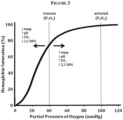
- the binding of oxygen to Hgb is cooperative and the relationship to PO 2 levels fits a sigmoidal curve ( Figure 3 ). This relationship can be impacted by temperature, pH, carbon dioxide, and the glycolytic intermediate 2,3-DPG.
- 2,3-DPG binds within the central cavity of the Hgb tetramer, causes allosteric changes, and reduces Hgb's affinity for oxygen. Therefore, therapeutic approaches that increase oxygen affinity (i.e., reduce deoxygenation) of HgbS would presumably decrease polymer formation, changes to the cell membrane, and clinical consequences associated with SCD.
- One aspect of this disclosure is targeting PKR activation to reduce 2,3-DPG levels, based on PKR's role in controlling the rate of glycolysis in RBCs.
- a decrease in 2,3-DPG with PKR activation has been demonstrated in preclinical studies and in healthy volunteers and patients with pyruvate kinase deficiency. Additionally, PKR activation would be expected to increase ATP, and has been observed to do so in these same studies. Given the role of ATP in the maintenance of a healthy RBC membrane and protection from oxidative stress, elevating its levels is likely to have broad beneficial effects.
- the disclosure relates to a method of improving the anemia and the complications associated with anemia in SCD patients (e.g., ⁇ 12 years of age) with Hgb SS or Hgb SB 0 -thalassemia.
- Compound 1 of the present invention is a selective, orally bioavailable PKR activator that has been shown to decrease 2,3-DPG, increase ATP, and have anti-sickling effects in disease models with a wide therapeutic margin relative to preclinical toxicity.
- Methods of treatment can comprise administering to a subject in need thereof a therapeutically effective amount of (i) a PKR Activating Compound (e.g., a compound disclosed herein), or a pharmaceutically acceptable salt thereof; or (ii) a PKR Activating Composition (e.g., a pharmaceutical composition comprising a compound disclosed herein, or a pharmaceutically acceptable salt thereof, and a pharmaceutically acceptable carrier).
- a PKR Activating Composition e.g., a pharmaceutical composition comprising a compound disclosed herein, or a pharmaceutically acceptable salt thereof, and a pharmaceutically acceptable carrier.
- the pharmaceutical composition may be orally administered in any orally acceptable dosage form.
- a compound, composition, or pharmaceutical composition described herein is added directly to whole blood or packed cells extracorporeally or provided to the subject (e.g., the patient) directly.
- a patient and/or subject can be selected for treatment using a compound described herein by first evaluating the patient and/or subject to determine whether the subject is in need of activation of PKR, and if the subject is determined to be in need of activation of PKR, then administering to the subject a PKR Activating Compound in a pharmaceutically acceptable composition.
- a patient and/or subject can be selected for treatment using a compound described herein by first evaluating the patient and/or subject to determine whether the subject is diagnosed with SCD, and if the subject is diagnosed with SCD, then administering to the subject a PKR Activating Compound in a pharmaceutically acceptable composition.
- administration of a therapeutically effective amount of a PKR Activating Compound can include administration of a total of 25 mg - 1,500 mg of Compound 1 of the invention each day, in single or divided doses.
- Compound 1 of the invention is administered to patients diagnosed with SCD in total once daily (QD) doses of 25 mg, 50 mg, 75 mg, 100 mg, 125 mg, 150 mg, and/or higher if tolerated (e.g., 250 mg, 300 mg, 500 mg, 600 mg, 1000 mg, and/or 1500 mg).
- a human dose of 80 to 130 mg of Compound 1 is administered once daily (QD) to a patient in need thereof (e.g., a patient diagnosed with SCD).
- Compound 1 or a pharmaceutically acceptable salt thereof according to the present invention is administered in an amount of 400 mg per day (e.g., 400 mg QD or 200 mg BID). In some embodiments, Compound 1 or a pharmaceutically acceptable salt thereof according to the present invention is administered in an amount of 700 mg per day (e.g., 700 mg QD or 350 mg BID). In some embodiments, Compound 1 or a pharmaceutically acceptable salt thereof according to the present invention is administered in an amount of 100 mg, 200 mg, 400 mg, 600 mg, 700 mg, 1100 mg, or 1500 mg per day, in single or divided doses.
- Methods of treating a patient diagnosed with SCD can include administering to the patient in need thereof a therapeutic compound targeting reduction of deoxy-HgbS, which may or may not directly improve RBC membrane integrity.
- Compound 1 of the present invention has been shown to decrease 2,3-DPG and increase ATP, and reduced cell sickling has been demonstrated in disease models. Accordingly, in some embodiments, the methods of treatment can address not only sickling, but also hemolysis and anemia.
- Methods of treating a patient diagnosed with sickle cell disease, and PKR Activating Compounds for use in such methods can include administering to the patient the PKR Activating Compound (e.g., a composition comprising one or more compounds of Formula I, such as Compound 1 of the invention or a mixture of Compound 1 and Compound 2) in an amount sufficient to reduce 2,3-DPG levels in the patient's red blood cells.
- the amount is sufficient to reduce 2,3-DPG levels by at least 30% after 24 hours, or greater (e.g., reducing 2,3-DPG levels in the patient's red blood cells by at least 40% after 24 hours).
- the amount is sufficient to reduce 2,3-DPG levels by 30-50% after 24 hours.
- the amount is sufficient to reduce 2,3-DPG levels by 40-50% after 24 hours. In some embodiments, the amount is sufficient to reduce 2,3-DPG levels by at least 25% after 12 hours. In some embodiments, the amount is sufficient to reduce 2,3-DPG levels by 25-45% after 12 hours. In some embodiments, the amount is sufficient to reduce 2,3-DPG levels by at least 15% after 6 hours. In some embodiments, the amount is sufficient to reduce 2,3-DPG levels by 15-30% after 6 hours. In some embodiments, the amount is sufficient to reduce 2,3-DPG levels by at least 40% on day 14 of treatment. In some embodiments, the amount is sufficient to reduce 2,3-DPG levels by 40-60% on day 14 of treatment. In some embodiments, the amount is sufficient to reduce 2,3-DPG levels by at least 50% on day 14 of treatment. In some embodiments, the amount is sufficient to reduce 2,3-DPG levels by 50-60% on day 14 of treatment.
- Methods of treating a patient diagnosed with sickle cell disease, and PKR Activating Compounds for use in such methods can also include administering to the patient the PKR Activating Compound (e.g., a composition comprising one or more compounds of Formula I, such as Compound 1 of the present invention or a mixture of Compound 1 and Compound 2) in a daily amount sufficient to increase the patient's ATP blood levels.
- the amount is sufficient to increase ATP blood levels by at least 40% on day 14 of treatment, or greater (e.g., t least 50% on day 14 of treatment).
- the amount is sufficient to increase ATP blood levels by 40-65% on day 14 of treatment.
- the amount is sufficient to increase ATP blood levels by at least 50% on day 14 of treatment, or greater (e.g., at least 50% on day 14 of treatment). In some embodiments, the amount is sufficient to increase ATP blood levels by 50-65% on day 14 of treatment.
- a pharmaceutical composition comprising Compound 1 of the present invention can be used in a method of treating a patient diagnosed with sickle cell disease, the method comprising administering to the patient 400 mg of Compound 1 once per day (QD)
- a pharmaceutical composition comprising Compound 1 of the present invention can be used in a method of treating a patient diagnosed with sickle cell disease, the method comprising administering to the patient 200 mg of Compound 1 twice per day (BID)
- a PKR Activating Compound is 1-(5-((2,3-dihydro-[1,4]dioxino[2,3-b]pyridin-7-yl)sulfonyl)-3,4,5,6-tetrahydropyrrolo[3,4-c]pyrrol-2(1H)-yl)-3-hydroxy-2-phenylpropan-1-one.
- the compound of Formula I is Compound 1: or a pharmaceutically acceptable salt thereof.
- the compound of the present invention is (S)-1-(5-((2,3-dihydro-[1,4]dioxino[2,3-b]pyridin-7-yl)sulfonyl)-3,4,5,6-tetrahydropyrrolo[3,4-c]pyrrol-2(1H)-yl)-3-hydroxy-2-phenylpropan-1-one.
- compositions comprising a compound of Formula I.
- a provided composition containing a compound of Formula I may comprise a mixture of Compound 1 and Compound 2: or a pharmaceutically acceptable salt thereof.
- compositions comprising a PKR Activating Composition containing a compound of Formula (I) can be formulated for oral administration (e.g., as a capsule or tablet).
- Compound 1 of the present invention can be combined with suitable compendial excipients to form an oral unit dosage form, such as a capsule or tablet, containing a target dose of Compound 1.
- the drug product can be prepared by first manufacturing Compound 1 of the invention as an active pharmaceutical ingredient (API), followed by roller compaction/milling with intragranular excipients and blending with extra granular excipients.
- a Drug Product can contain the Compound 1 API of the invention and excipient components in Table 1 in a tablet in a desired dosage strength of Compound 1 (e.g., a 25 mg or 100 mg tablet formed from a Pharmaceutical Composition in Table 1).
- the blended material can be compressed to form tablets and then film coated.
- the pharmaceutical composition preferably comprises 30-70% by weight of (S)-1-(5-((2,3-dihydro-[1,4]dioxino[2,3-b]pyridin-7-yl)sulfonyl)-3,4,5,6-tetrahydropyrrolo[3,4-c]pyrrol-2(1H)-yl)-3-hydroxy-2-phenylpropan-1-one, and a pharmaceutically acceptable excipient in an oral dosage form.
- Table 1 Table 1
- Exemplary Pharmaceutical Compositions of Compound 1 for Oral Administration Function % Formulation (weight) Exemplary Component API 30-70% Compound 1 Filler 15-40% Microcrystalline Cellulose Dry binder 2-10% Crospovidone Kollidon CL Glidant 0.25-1.25% Colloidal Silicon Dioxide Lubricant 0.25-1.00% Magnesium Stearate, Hyqual
- a provided composition containing a compound of Formula I comprises a mixture of (S)-1-(5-((2,3-dihydro-[1,4]dioxino[2,3-b]pyridin-7-yl)sulfonyl)-3,4,5,6-tetrahydropyrrolo[3,4-c]pyrrol-2(1H)-yl)-3-hydroxy-2-phenylpropan-1-one and (R)-1-(5-((2,3-dihydro-[1,4]dioxino[2,3-b]pyridin-7-yl)sulfonyl)-3,4,5,6-tetrahydropyrrolo[3,4-c]pyrrol-2(1H)-yl)-3-hydroxy-2-phenylpropan-1-one.
- a provided composition containing a compound of Formula I is a mixture of Compound 1 and Compound 2 as part of a PKR Activating Composition.
- a compound of Formula I is racemic.
- a compound of Formula I consists of about 50% of Compound 1 and about 50% of Compound 2.
- a compound of Formula I is not racemic.
- a compound of Formula I does not consist of about 50% of Compound 1 and about 50% of Compound 2.
- a compound of Formula I comprises 99-95%, 95-90%, 90-80%, 80-70%, or 70-60% of Compound 1.
- a compound of Formula I comprises about 99%, 98%, 95%, 90%, 80%, 70%, or 60% of Compound 1.
- a PKR Activating Composition comprises a mixture of Compound 1 and Compound 2. In some embodiments, a PKR Activating Composition comprises a mixture of Compound 1 and Compound 2, wherein the PKR Activating Composition comprises a therapeutically effective amount of Compound 1.
- compositions comprising a compound of Formula I can be prepared as shown in Figure 4A and Figure 4B .
- Compounds of Formula I can be obtained by the general chemical synthesis scheme of Figure 4A .
- Compound 1 can be obtained by the chemical synthesis route of Figure 4A or Figure 4B .
- compounds of Formula I ( Figure 4A ) and/or Compound 1 ( Figure 4B ) can be obtained from a series of four reaction steps from commercially available starting materials.
- Commercially available 7-bromo-2 H ,3 H -[1,4]dioxino[2,3- b ]pyridine was treated with a mixture of n-butyl lithium and dibutylmagnesium followed by sulfuryl chloride to give sulfonyl chloride 3.
- the compounds listed in Figure 1 can be prepared as shown in Figure 4C and as described in International Publication No. WO 2018/175474, published September 27, 2018 .
- the compounds listed in Figure 1 can be prepared by acylation and sulfonylation of the secondary amine groups of hexahydropyrrolopyrrole 6.
- sulfonylation of 6 with a suitable sulfonyl chloride 7 affords sulfonyl hexahydropyrrolopyrrole 8, which is then treated with a suitable carboxylic acid 9 in the presence of an amide coupling reagent (e.g., HATU) to afford compound 10 (Path 1).
- an amide coupling reagent e.g., HATU
- acylation of 6 with a suitable carboxylic acid 9 in the presence of an amide coupling reagent affords acyl hexahydropyrrolopyrrole 11, which is then treated with a suitable sulfonyl chloride 7 to afford compound 10 (Path 2).
- a suitable sulfonyl chloride 7 to afford compound 10 (Path 2).
- Methods of treating SCD also include administration of a therapeutically effective amount of a bioactive compound (e.g., a small molecule, nucleic acid, or antibody or other therapy) that reduces HgbS polymerization, for example by increasing HgbS affinity for oxygen.
- a bioactive compound e.g., a small molecule, nucleic acid, or antibody or other therapy
- a method of treating SCD may comprise administering to a patient in need thereof a bioactive compound that reduces the percent of sickled cells in a murine model of sickle cell disease provided in Example 7 herein following 7 days of oral treatment with the compound.
- the bioactive compound may be any compound (including small molecules, nucleic acids, proteins or antibodies) that, in the murine model of sickle cell disease provided in Example 7, exhibits one or more of the following characteristics: (a) increases oxygen affinity to Hgb in hypoxic conditions; (b) decreases P50 in hypoxic conditions; (c) decreases the percentage of RBCs that sickle at low oxygen pressures; (d) increases the time of a cell to sickle; and/or (e) increases Hgb by at least approximately 1 g/dL.
- PKR As the enzyme that catalyzes the last step of glycolysis, PKR underlies reactions that directly impact the metabolic health and primary functions of RBCs.
- the following Examples demonstrate how PKR activation by Compound 1 of the invention impacts RBCs.
- the primary effect of Compound 1 on RBCs is a decrease in 2,3-DPG that is proposed to reduce Hgb sickling and its consequences on RBCs and oxygen delivery to tissues.
- Compound 1 of the invention also increases ATP, which may provide metabolic resources to support cell membrane integrity and protect against loss of deformability and increased levels of hemolysis in SCD. With the combination of effects Compound 1 of the invention has on RBCs, it is likely to reduce the clinical sequelae of sickle Hgb and provide therapeutic benefits for patients with SCD.
- the PKR Activating Compound designated Compound 1 of the invention was prepared as described in Example 1, and tested for PKR activating activity in the biochemical assay of Example 2.
- PKR biological enzymatic activity of PKR (i.e., formation of ATP and/or pyruvate) was evaluated in enzyme and cell assays with Compound 1 of the invention, as described in Example 3 and Example 4, respectively. Results from enzyme assays show that Compound 1 is an activator of recombinant wt-PKR and mutant PKR, (e.g., R510Q), which is one of the most prevalent PKR mutations in North America. PKR exists in both a dimeric and tetrameric state, but functions most efficiently as a tetramer.
- Compound 1 of the invention is an allosteric activator of PKR and is shown to stabilize the tetrameric form of PKR, thereby lowering the K m (the Michaelis-Menten constant) for PEP.
- results from assays with RBCs from human patients with SCD showed that treatment with Compound 1 of the invention caused a shift in P50 (PO 2 at 50% hemoglobin saturation) and that this shift was related to increased oxygen affinity in the presence of Compound 1 (Example 5). Furthermore, Compound 1 of the invention decreased sickling under severe hypoxic conditions. Taken together the data suggest that Compound 1 can reduce the clinical consequences of sickled cells by decreasing cell sickling through an increase in oxygen affinity that comes from PKR activation.
- mice In vivo testing in mice (Examples 6 and 7) demonstrated PKR activation in wt mice, and provided an evaluation of effects on RBCs and Hgb in a murine model of SCD.
- Compound 1 of the invention was well tolerated up to the highest dose tested, and exposures increased in a dose-proportional manner. Levels of 2,3-DPGwere reduced by >30% for doses ⁇ 120 mg/kg Compound 1 (AUC from 0 to 24 hours (AUC 0-24 >5200 hr ⁇ ng/mL) and levels of ATP were increased by >40% for ⁇ 60 mg/kg Compound 1 (AUC 0-24 >4000 hr ⁇ ng/mL).
- a daily dose of between 100 mg to 1500 mg of Compound 1 of the invention is administered to humans.
- a total daily dose of 100 mg - 600 mg of Compound 1 of the invention can be administered to humans (including, e.g., a dose of 100 mg, 200 mg, 300 mg, 400 mg, 500 mg, or 600 mg, per day, in single or divided doses
- a daily dose of 400 mg (e.g., 400 mg QD or 200 mg BID) of Compound 1, or a pharmaceutically acceptable salt thereof of the invention is administered to humans.
- compounds other than compound 1, and pharmaceutically acceptable salts thereof are included for reference purposes.
- the PKR Activating Compound 1 was obtained by the method described herein and the reaction scheme shown in Figure 4A and/or Figure 4B .
- Compound 1 has a molecular weight of 457.50 Da.
- the resulting solution was stirred overnight at 20 °C.
- the reaction mixture was diluted with 20 mL of water and was then extracted with 3x20 mL of dichloromethane. The organic layers were combined, dried over anhydrous sodium sulfate, filtered and concentrated under vacuum.
- the residue was purified by prep-TLC eluted with dichloromethane/methanol (20:1) and further purified by prep-HPLC (Column: XBridge C18 OBD Prep Column, 100 ⁇ , 5 ⁇ m, 19 mm ⁇ 250 mm; Mobile Phase A: water (10 mmol/L NH 4 HCO 3 ), Mobile Phase B: MeCN; Gradient: 15% B to 45% B over 8 min; Flow rate: 20 mL/min; UV Detector: 254 nm).
- the two enantiomers were separated by prep-Chiral HPLC (Column, Daicel CHIRALPAK ® IF, 2.0 cm ⁇ 25 cm, 5 ⁇ m; mobile phase A: DCM, phase B: MeOH (hold 60% MeOH over 15 min); Flow rate: 16 mL/min; Detector, UV 254 & 220 nm).
- Compound 1 can be synthesized using the procedure described here as Step 5.
- a solution of 7-((3,4,5,6-tetrahydropyrrolo[3,4-c]pyrrol-2(1 H )-yl)sulfonyl)-2,3-dihydro-[1,4]dioxino[2,3- b ]pyridine (130.9 mg, 0.423 mmol) in DMF (2.5 ml) was cooled on an ice bath, then treated with ( S )-3-hydroxy-2-phenylpropanoic acid (84.8 mg, 0.510 mmol), HATU (195.5 mg, 0.514 mmol), and DIEA (0.30 mL, 1.718 mmol) and stirred at ambient temperature overnight.
- the solution was diluted with EtOAc (20 mL), washed sequentially with water (20 mL) and brine (2x20 mL), dried (MgSO 4 ), filtered, treated with silica gel, and evaporated under reduced pressure.
- the material was chromatographed by Biotage MPLC (10 g silica gel column, 0 to 5% MeOH in DCM) to provide a white, slightly sticky solid.
- the sample was readsorbed onto silica gel and chromatographed (10 g silica gel column, 0 to 100% EtOAc in hexanes) to provide (2 S )-1-(5-[2 H ,3 H -[1,4]dioxino[2,3- b ]pyridine-7-sulfonyl]-1 H ,2 H ,3 H ,4 H ,5 H ,6 H -pyrrolo[3,4- c ]pyrrol-2-yl)-3-hydroxy-2-phenylpropan-1-one (106.5 mg, 0.233 mmol, 55 % yield) as a white solid.
- PKR Activating Compounds can be identified with the biochemical Luminescence Assay of Example 2.
- the PKR activating activity of a series of chemical compounds was evaluated using the Luminescence Assay below, including compounds designated Compound 1, Compound 2, and Compounds 6, 7, and 8 below, and the compounds listed in Figure 1 .
- PKR adenosine-5'-diphosphate
- ADP adenosine-5'-diphosphate
- FBP D-fructose-1,6-diphosphate
- reagents are prepared in buffer containing 50 mM Tris-HCl, 100 mM KCl, 5 mM MgCl 2 , and 0.01% Triton X100, 0.03% BSA, and 1 mM DTT.
- Enzyme and PEP phosphoenolpyruvate are added at 2x to all wells of an assay-ready plate containing serial dilutions of test compounds or DMSO vehicle.
- Final enzyme concentrations for PKR(wt), PKR(R510Q), and PKR(G332S) are 0.8 nM, 0.8 nM, and 10 nM respectively.
- Final PEP concentration is 100 ⁇ M.
- the Enzyme/PEP mixture is incubated with compounds for 30 minutes at RT before the assay is initiated with the addition of 2x ADP and KinaseGloPlus.
- Final concentration of ADP is 100 ⁇ M.
- Final concentration of KinaseGloPlus is 12.5%.
- that reagent is added at 30 ⁇ M upon reaction initiation. Reactions are allowed to progress for 45 minutes at RT until luminescence is recorded by the BMG PHERAstar FS Multilabel Reader.
- the compound is tested in triplicate at concentrations ranging from 42.5 ⁇ M to 2.2 nM in 0.83% DMSO.
- AC 50 measurements were obtained by the standard four parameter fit algorithm of ActivityBase XE Runner (max, min, slope and AC 50 ).
- the AC 50 value for a compound is the concentration ( ⁇ M) at which the activity along the four parameter logistic curve fit is halfway between minimum and maximum activity.
- AC 50 values are defined as follows: ⁇ 0.1 ⁇ M (+++); > 0.1 ⁇ M and ⁇ 1.0 ⁇ M (++); > 1.0 ⁇ M and ⁇ 40 ⁇ M (+); > 40 ⁇ M (0).
- Table 2 Luminescence Assay Data Compound AC 50 (PKRG332S) AC 50 (PKRR510Q) AC 50 (WT) 1 ++ +++ +++ 2 + + + Table 3. Additional Luminescence Assay Data Compound Structure AC 50 (PKRG332S) AC 50 (PKRR510Q) 6 ++ + 7 0 0 8 0 0
- PKR neuropeptide kinase kinase
- PKR mutants having lower activities compared to the wild type.
- Such mutations in PKR can affect enzyme activity (catalytic efficiency), regulatory properties, and/or thermostability of the enzyme.
- One example of a PKR mutation is G332S.
- Another example of a PKR mutation is R5 10Q.
- V max maximum velocity
- FBP fructose-1,6-bisphosphate
- Assessments were made up to 60 min at RT, and V max and PEP K m were calculated.
- the effect of Compound 1 on V max ranged from no effect to a modest increase (see Figure 5 for a representative curve).
- Activation of wt-PKR and PKR-R510Q by different concentrations of Compound 1 was evaluated for PEP concentrations at or below K m .
- Compound 1 increased the rate of ATP formation, with AC 50 values ranging from ⁇ 0.05 to ⁇ 0.10 ⁇ M and a range of ⁇ 2.0 to ⁇ 3.0 maximum-fold activation (ie, ⁇ 200% to ⁇ 300%) (Table 5).
- Representative data from PKR-R5 10Q showed that the effect was concentration dependent ( Figure 6 ).
- Table 5 Activation of PKR Wild and Mutant Types by Compound 1 PK Enzyme Maximum-fold Activation AC 50 ( ⁇ M) WT-PKR ⁇ 2.0 ⁇ 0.05 PKRR510Q ⁇ 3.0 ⁇ 0.10
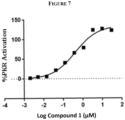
- wt-PKR The activation of wt-PKR by Compound 1 in mature human erythrocytes ex vivo was evaluated in purified RBCs purchased from Research Blood Components. Cells treated with Compound 1 for 3 hr in glucose-containing media were washed, lysed, and assayed using a Biovision Pyruvate Kinase Assay (K709-100). The assay was repeated multiple times to account for donor-to-donor variability and the relatively narrow dynamic range. Mean maximum activation increase (Max-Min) was ⁇ 100% and mean 50% effective concentration (EC 50 ) was ⁇ 125 nM (Table 6). wt-PKR was activated in a concentration-dependent manner ( Figure 7 ). Table 6.
- Red blood cells from SCD patients were used to evaluate the effects of Compound 1 on Hgb affinity for oxygen (i.e., oxygen affinity) and sickling under hypoxic conditions.
- Cells were incubated at 37 °C for 1, 2, and 3 hr with HEPES buffered saline (HBS) (untreated), HBS + dimethyl sulfoxide (DMSO) (vehicle), or 10 ⁇ M Compound 1.
- HBS HEPES buffered saline
- DMSO dimethyl sulfoxide
- Hgb oxygen equilibrium curves were collected during deoxygenation.
- Hemoglobin saturation was shifted to the left in cells treated with Compound 1 and not in untreated or 0.5% DMSO-treated cells ( Figures 8A and 8B ).
- the increased oxygen affinity corresponded to a significant (but limited) shift in P50 from 29 to 25 mmHg after 1 hr that was maintained until at least 3 hr, the last time point evaluated (Table 8).
- oxygen affinity in the first 2 hr of incubation was not affected by DMSO. Table 8.
- Compound 1 (10 ⁇ M) reduced cell sickling under severe hypoxic conditions of 2% oxygen (PO 2 of ⁇ 20 mmHg) for up to 20 min (Table 9).
- the percent protection i.e., the level of activity in treated cells, normalized to the level of activity in untreated cells after exposure to severe hypoxic conditions
- Table 9 The percent protection (i.e., the level of activity in treated cells, normalized to the level of activity in untreated cells after exposure to severe hypoxic conditions) reached a maximum of 16% at 15 min under hypoxic conditions ( Figure 10 ) and remained at 15% at the last time point measured.
- Table 9 The percent protection (i.e., the level of activity in treated cells, normalized to the level of activity in untreated cells after exposure to severe hypoxic conditions) reached a maximum of 16% at 15 min under hypoxic conditions ( Figure 10 ) and remained at 15% at
- PK pharmacokinetic
- PD phamacodynamic
- Example 8 A SAD/MAD Study to Assess the Safety, Pharmacokinetics, and Pharmacodynamics of Compound 1 in Healthy Volunteers and Sickle Cell Disease Patients
- Compound 1 will be evaluated in a randomized, placebo-controlled, double blind, single ascending and multiple ascending dose study to assess the safety, pharmacokinetics, and pharmacodynamics of Compound 1 in healthy volunteers and sickle cell disease patients.
- the use of Compound 1 is disclosed herein for treatment of sickle cell disease in humans.
- Compound 1 is an oral small-molecule agonist of pyruvate kinase red blood cell isozyme (PKR) being developed for the treatment of hemolytic anemias.
- PLR pyruvate kinase red blood cell isozyme
- This human clinical trial study will characterize the safety, tolerability and the pharmacokinetics/pharmacodynamics (PK/PD) of a single ascending dose and multiple ascending doses of Compound 1 in the context of phase 1 studies in healthy volunteers and sickle cell disease patients. The effects of food on the absorption of Compound 1 will also be evaluated, in healthy volunteers.
- the objectives of the study include the following:
- the study arms and assigned interventions to be employed in the study are summarized in Table 10.
- SAD single ascending dose
- MAD 2-week multiple ascending dose
- a single dose cohort is planned to understand food effects (FE) on the PK of Compound 1.
- FE food effects
- the safety, PK and PD of a single dose of Compound 1 that was found to be safe in healthy subjects will then be evaluated in sickle cell disease (SCD) subjects.
- SCD sickle cell disease
- Multiple dose studies in SCD subjects will then be initiated upon completion of MAD studies in healthy volunteers.
- Compound 1 will be administered in 25 mg and 100 mg tablets delivered orally. Table 10.
- Drug Compound 1 Healthy subjects will receive Compound 1 with or without food and undergo pharmacokinetic studies Healthy Volunteer subject cohort of 10 subjects who will receive a single dose of Compound 1 with food and without food. Dose will be administered per the protocol defined dose. Healthy Volunteer subject cohort of 10 subjects who will receive a single dose of Compound 1 with food and without food. Dose will be 500 mg of Compound 1, but is subject to change based on the pharmacokinetic profile of Compound 1 observed in the initial SAD cohorts and the safety profile of Compound 1 observed in prior SAD and MAD cohorts.
- Dose Level/Cohort Dose Tablet Strength (#/day) SAD 1 200 mg 100 mg (2/day) SAD 2 400 mg 100 mg (4/day) SAD 3 700 mg 100 mg (7/day) SAD 4 1100 mg 100 mg (11/day) SAD 5 1500 mg 100 mg (15/day) Table 12.
- Dose Level/Cohort Dose Tablet Strength (#/day) MAD 1 100 mg 100 mg (1/day) or 25 mg (4/day) MAD 2 200 mg 100 mg (2/day) MAD 3 400 mg 100 mg (4/day) MAD 4 600 mg 100 mg (6/day)
- Table 13 reports the mean maximum percentage change in 2,3-DPG, ATP, and P50 across all doses and timepoints in the SAD and MAD cohorts. As shown in Table 13, a mean decrease in 2,3-DPG and P50, and a mean increase in ATP, relative to baseline, was observed in both the SAD and MAD cohorts. Within 24 hr of a single dose of Compound 1, a decrease in 2,3-DPG with a corresponding increase in P50 was observed. After 14 days of Compound 1 dosing these PD effects were maintained along with an increase in ATP over baseline.
- the mean maximum reduction in the concentration of 2,3-DPG was at least about 40% in patients receiving Compound 1 in the SAD study and at least about 50% in patients receiving Compound 1 in the MAD study.
- 2,3-DPG levels were measured periodically after dosing by a qualified LC-MS/MS method for the quantitation of 2,3-DPG in blood.
- Decreased 2,3-DPG blood levels were observed 6 hours following a single dose of Compound 1 at all dose levels (earlier timepoints were not collected).
- Maximum decreases in 2,3-DPG levels generally occurred ⁇ 24 hours after the first dose with the reduction sustained ⁇ 48-72hr postdose.
- Table 14 reports the median percentage change in 2,3-DPG blood levels, relative to baseline, measured over time in healthy volunteers after a single dose of Compound 1 (200 mg, 400 mg, 700 mg, or 1000 mg) or placebo.
- Table 14 Median Percentage Change in 2,3-DPG Levels Time After Dose Dose Placebo 200 mg 400 mg 700 mg 1000 mg 0 0.0 0.0 0.0 0.0 0.0 0.0 0.0 6 -7.8 -18 -23 -29 -20 8 -7.6 -17 -29 -28 -31 12 -4.0 -25 -40 -41 -44 16 -6.0 -33 -35 -46 -50 24 -2.0 -31 -39 -49 -48 36 -6.9 -33 -38 -46 -47 48 -15 -29 -31 -48 -47 72 -6.9 -18 -30 -33 -21
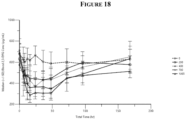
- Figure 18 is a graph of the blood 2,3-DPG levels measured over time in healthy volunteers who received a single dose of Compound 1 (200 mg, 400 mg, 700 mg, or 1000 mg) or placebo. As shown in Figure 18 , healthy volunteers who received Compound 1 experienced a decrease in blood 2,3-DPG levels, relative subjects who received the placebo.
- Figure 19 is a graph of the blood 2,3-DPG levels measured 24 hours post-dose in healthy volunteers who received a single dose of Compound 1 (200 mg, 400 mg, 700 mg, or 1000 mg) or placebo. As shown in Figure 19 , healthy volunteers who received Compound 1 experienced a decrease in blood 2,3-DPG levels at 24 hours post-dose, relative to subjects who received the placebo.
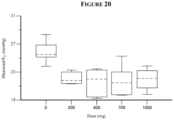
- Figure 20 is a graph of the P50 values measured 24 hours post-dose in healthy volunteers who received a single dose of Compound 1 (200 mg, 400 mg, 700 mg, or 1000 mg) or placebo. As shown in Figure 20 , healthy volunteers who received Compound 1 experienced a decrease in P50, relative to subjects who received the placebo.
- Figure 21 is a graph of the P50 values measured pre-dose and 24-hours post-dose in healthy volunteers who received a single dose of Compound 1 (200 mg, 400 mg, 700 mg, or 1000 mg) or placebo. As shown in Figure 21 , healthy volunteers who received Compound 1 experienced a decrease in P50 relative to baseline, while subjects who received the placebo did not.
- 2,3-DPG levels were measured periodically after dosing by a qualified LC-MS/MS method for the quantitation of 2,3-DPG in blood.
- the maximum decrease in 2,3-DPG on Day 14 was 55% from baseline (median).
- 2,3-DPG levels reached a nadir and plateaued on Day 1 and had not returned to baseline levels 72 hours after the final dose on Day 14.
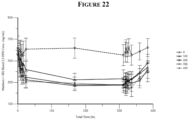
- Table 16 reports the median percentage change in 2,3-DPG blood levels, relative to baseline, measured over time after the first dose on days 1 and 14 in healthy volunteers who received daily doses of Compound 1 (100 mg BID, 200 mg BID, or 300 mg BID) or placebo for 14 days.
- the median reduction in the concentration of 2,3-DPG, relative to baseline was at least about 25% at all dose levels tested 24 hours after administration of the first dose on day 1 and at least about 40% at all dose levels tested 24 hours after administration of the first dose on day 14.
- Table 16 the median reduction in the concentration of 2,3-DPG, relative to baseline, was at least about 25% at all dose levels tested 24 hours after administration of the first dose on day 1 and at least about 40% at all dose levels tested 24 hours after administration of the first dose on day 14.
- Figure 22 is a graph of the blood 2,3-DPG levels measured over time in healthy volunteers who received daily doses of Compound 1 (100 mg BID, 200 mg BID, 300 mg BID, or 400 mg QD) or placebo for 14 days. As shown in Figure 22 , healthy volunteers who received Compound 1 experienced a decrease in blood 2,3-DPG levels, relative subjects who received the placebo.
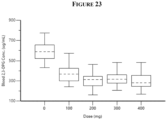
- Figure 23 is a graph of the blood 2,3-DPG levels measured on day 14 in healthy volunteers who received daily doses of Compound 1 (100 mg BID, 200 mg BID, 300 mg BID, or 400 mg QD) or placebo for 14 days. As shown in Figure 23 , healthy volunteers who received Compound 1 experienced a decrease in blood 2,3-DPG levels, relative to subjects who received the placebo.
- Figure 24 is a graph of the P50 values measured on day 14 in healthy volunteers who received daily doses of Compound 1 (100 mg BID, 200 mg BID, 300 mg BID, or 400 mg QD) or placebo for 14 days. As shown in Figure 24 , healthy volunteers who received Compound 1 experienced a decrease in P50, relative to subjects who received the placebo.
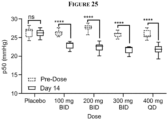
- Figure 25 is a graph of the P50 values measured pre-dose and on day 14 in healthy volunteers who received daily doses of Compound 1 (100 mg BID, 200 mg BID, 300 mg BID, or 400 mg QD) or placebo for 14 days. As shown in Figure 25 , healthy volunteers who received Compound 1 experienced a decrease in P50 relative to baseline, while subjects who received the placebo did not.
- the subjects' blood ATP levels were measured on day 14 by a qualified LC-MS/MS method for the quantitation of ATP in blood. ATP levels were elevated, relative to baseline, on day 14, and remained elevated 60 hours after the last dose.
- Table 18 reports the median percentage change in blood ATP levels, relative to baseline, measured over time after the first dose on day 14 in healthy volunteers who received daily doses of Compound 1 (100 mg BID, or 200 mg BID) or placebo for 14 days. Table 18.
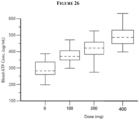
- Figure 26 is a graph of the blood ATP levels measured on day 14 in healthy volunteers who received daily doses of Compound 1 (100 mg BID, 200 mg BID, 300 mg BID, or 400 mg QD) or placebo for 14 days. As shown in Figure 26 , healthy volunteers who received Compound 1 experienced an increase in blood ATP levels, relative to subjects who received the placebo.
- Compound 1 100 mg BID, 200 mg BID, 300 mg BID, or 400 mg QD
- Figure 28 is a graph plotting the blood concentration of Compound 1 (ng/mL) measured in healthy volunteer (HV) patients on a first (left) axis and the concentration of 2,3-DPG (micrograms/mL) measured in these HV patients on a second (right) axis after administration of a single dose of Compound 1 (400 mg). Solid symbols represent geometric means and Standard errors of the observed Compound 1 plasma and 2,3 DPG concentrations.
- the observed 2,3 DPG modulation does not track directly plasma pharmacokinetics (blood concentration of Compound 1) where the pharmacodynamic maximum (i.e., the minimum of the 2,3-DPG concentration, at time ⁇ 24h) occurred nearly 24h after the pharmacokinetic maximum (i.e., maximum of the PK curve, at time ⁇ 1-2h).
- the observed pharmacodynamic response in HVs was durable, with a calculated PD half-life of ⁇ 20h, where 2,3-DPG depression was observed long after plasma levels were undetectable.
- Figure 29 is a scatter plot of 2,3-DPG levels and P50 values observed in healthy volunteers in the SAD and MAD cohorts. Solid symbols represent the observed P50/2,3-DPG levels in healthy volunteers dosed with Compound 1 at 24h following the last administered dose. Baseline data represents P50/2,3 DPB data obtained either prior to Compound 1 treatment and from healthy volunteers dosed with placebo. A positive correlative relationship between 2,3 DPG and p50 levels was observed for patients receiving various doses.
- K 2 EDTA Human Whole Blood, BioreclamationIVT or equivalent (Note: BioReclamationIVT and BioIVT are considered equivalent) Acetonitrile (ACN), HPLC Grade or better Ammonium Acetate (NH 4 OAc), HPLC grade or equivalent Ammonium Hydroxide (NH 4 OH, 28-30%), ACS grade or better Dimethylsulfoxide (DMSO), ACS grade or better Formic Acid (FA), 88% ACS grade Isopropanol (IPA), HPLC Grade or better Methanol (MeOH), HPLC Grade or better Water (H 2 O), Milli-Q or HPLC Grade ATP - Analyte, Sponsor or supplier ATP-IS- IS, Sponsor or supplier 2,3-DPG - Analyte, Sponsor or supplier 2,3-DPG-IS- IS, Sponsor or supplier
- Ambient Temperature Needle Rinse 1 25:25:25:25:0.1 (v:v:v:v:v) Add 500 mL of MeOH, 500 mL of ACN, 500 mL of H 2 O, 500 mL of IPA, and 2 mL of NH 4 OH. Mix.
- Ambient Temperature MeOH:ACN:H2O:IPA:NH 4 OH Needle Rings 2 (NR2) 90:10:0.1 (v:v:v) Add 2 mL of FA to 200 mL of MeOH and 1800 mL of H 2 0. Mix.
- Calibration standards are prepared using water as the matrix according to the table presented below.
- the indicated standard is prepared by diluting the indicated spiking volume of stock solution with the indicated matrix volume.
- Calibration Standard Stock Solution Stock Conc. ng/mL
- Spiking Vol. mL
- Matrix Vol. mL
- Final Vol. mL
- Quality control standards are prepared using water as the matrix according to the table presented below.
- the indicated quality control standard is prepared by diluting the indicated spiking volume of stock solution with the indicated matrix volume.
- Quality Control Standard Stock Solution Stock Conc. ng/mL
- Spiking Vol. mL
- Matrix Vol. mL
- Final Vol. mL
- Final Conc. ng/mL
- An internal standard spiking solution is prepared with a final concentration of 12,500 ng/mL ATP and 2,3-DPG by diluting stock solutions of ATP and 2,3-DPG at concentrations of 1,000,000 ng/mL with water. 0.200 mL each of the ATP and 2,3-DPG stock solutions are diluted with 15.6 mL of water to produce a final volume of 16.0 mL at a final concentration of 12,500 ng/mL of ATP and 2,3-DPG.
- the plate is then centrifuged at approximately 3500 RPM at approximately 4 °C for five minutes. After centrifugation, a liquid handler is used to transfer 50 ⁇ L of each sample to a new 96-well plate, and 200 ⁇ L of acetonitrile is added to all samples on the plate. The newly prepared plate is covered and agitated by vortex for approximately 1 minute. The plate is then centrifuged at approximately 3500 RPM at approximately 4 °C for 2 minutes.
- MS parameters are used for analysis of the extracted samples using an API-5500 Mass Spectrometer: Interface: Turbo Ion Spray Ionization, positive-ion mode Scan Mode: Multiple Reaction Monitoring (MRM) Scan Parameters: Parent/Product: Dwell Time (ms): 506.0/159.0 50 521.0/159.0 25 265.0/166.8 50 268.0/169.8 25 Source Temperature: 400 °C
- the collected MS data is analyzed and sample concentrations are quantified using peak area ratios with a linear 1/x 2 regression type.
Landscapes
- Health & Medical Sciences (AREA)
- Chemical & Material Sciences (AREA)
- Organic Chemistry (AREA)
- Animal Behavior & Ethology (AREA)
- Veterinary Medicine (AREA)
- Pharmacology & Pharmacy (AREA)
- General Health & Medical Sciences (AREA)
- Public Health (AREA)
- Medicinal Chemistry (AREA)
- Life Sciences & Earth Sciences (AREA)
- Epidemiology (AREA)
- Diabetes (AREA)
- Nuclear Medicine, Radiotherapy & Molecular Imaging (AREA)
- Hematology (AREA)
- General Chemical & Material Sciences (AREA)
- Chemical Kinetics & Catalysis (AREA)
- Bioinformatics & Cheminformatics (AREA)
- Engineering & Computer Science (AREA)
- Physiology (AREA)
- Nutrition Science (AREA)
- Pharmaceuticals Containing Other Organic And Inorganic Compounds (AREA)
- Acyclic And Carbocyclic Compounds In Medicinal Compositions (AREA)
- Medicines That Contain Protein Lipid Enzymes And Other Medicines (AREA)
Description
- This application claims the benefit of
U.S. Provisional Application No. 62/733,558, filed on September 19, 2018 U.S. Provisional Application No. 62/733,562, filed on September 19, 2018 U.S. Provisional Application No. 62/782,933, filed on December 20, 2018 U.S. Provisional Application No. 62/789,641, filed on January 8, 2019 U.S. Provisional Application No. 62/811,904, filed on February 28, 2019 - This disclosure relates to the treatment of sickle cell disease (SCD), including the treatment of patients diagnosed with SCD by the administration of a compound that activates pyruvate kinase R (PKR).
- Sickle cell disease (SCD) is a chronic hemolytic anemia caused by inheritance of a mutated form of hemoglobin (Hgb), sickle Hgb (HgbS). It is the most common inherited hemolytic anemia, affecting 70,000 to 80,000 patients in the United States (US). SCD is characterized by polymerization of HgbS in red blood cells (RBCs) when HgbS is in the deoxygenated state (deoxy-HgbS), resulting in a sickle-shaped deformation. Sickled cells aggregate in capillaries precipitating vaso-occlusive events that generally present as acute and painful crises resulting in tissue ischemia, infarction, and long-term tissue damage. RBCs in patients with SCD tend to be fragile due to sickling and other factors, and the mechanical trauma of circulation causes hemolysis and chronic anemia. Finally, damaged RBCs have abnormal surfaces that adhere to and damage vascular endothelium, provoking a proliferative/inflammatory response that underlies large-vessel stroke and potentially pulmonary-artery hypertension. Collectively, these contribute to the significant morbidity and increased mortality associated with this disease.
- Currently, therapeutic treatment of SCD is inadequate. The only known cure for SCD is hematopoietic stem cell transplantation which has serious risks, is typically recommended for only the most serious cases, and is largely offered only to children with sibling-matched donors. Gene therapy is also under investigation with promising preliminary results; however, there are market access hurdles, mainly high cost and treatment complexities, that are likely to limit its broad use in the near term. There have been few advances in therapies for SCD over the past two decades. Hydroxyurea (HU) induces HgbF which interrupts the polymerization of HgbS, and thereby has activity in decreasing the onset of vaso-occlusive crises and pathological sequelae of SCD. While HU is in wide use as a backbone therapy for SCD, it remains only partially effective, and is associated with toxicity, such as myelosuppression and teratogenicity. Patients receiving HU still experience hemolysis, anemia, and vaso-occlusive crises, suggesting a need for more effective therapies, either as a replacement or in combination with HU. Beyond HU, therapeutic intervention is largely supportive care, aimed at managing the symptoms of SCD. For instance, blood transfusions help with the anemia and other SCD complications by increasing the number of normal RBCs. However, repeated transfusions lead to iron overload and the need for chelation therapies to avoid consequent tissue damage. In addition to these approaches, analgesic medications are used to manage pain.
WO 2016/201227 A1 relates to methods for using compounds that activate pyruvate kinase, including N-(4-(4-(cyclopropylmethyl)piperazine-1-carbonyl)phenyl)quinoline-8-sulfonamide.US 2012/134979 A1 relates to mechanism-based compositions and methods for treatment of SCD and SCD associated symptoms and disorders, particularly increased RBC sickling, HbS polymerization, hemolysis, tissue congestion and disruption and organ damage or failure in a mammal.WO 2014/074848 A1 relates to compositions comprising compounds that modulate pyruvate kinase and methods of using the compounds in the treatment of diseases and conditions related to pyruvate kinase function. - Given the current standard of care for SCD, there is a clear medical need for a noninvasive, disease-modifying therapy with appropriate safety and efficacy profiles.
- Embodiments of the invention are set out in the enclosed claims. One aspect of the disclosure relates to a pyruvate kinase R (PKR) activator for use in methods of treating SCD, said methods comprising the administration of a therapeutically effective amount of the pyruvate kinase R (PKR) activator to a patient in need thereof diagnosed with SCD. Pyruvate kinase R (PKR) is the isoform of pyruvate kinase expressed in RBCs, and is a key enzyme in glycolysis. The invention is based in part on the discovery that the activation of PKR can target both sickling, by reducing deoxy-HgbS, and hemolysis. Targeting hemolysis may be achieved by improving RBC membrane integrity. One aspect of the disclosure is the recognition that activation of PKR can reduce 2,3-diphosphoglycerate (2,3-DPG), which leads to decreased deoxy-HgbS (and, therefore, sickling), as well as can increase ATP, which promotes membrane health and reduces hemolysis. Another aspect of the disclosure is the recognition that activation of PKR can reduce 2,3-diphosphoglycerate (2,3-DPG), which inhibits Hgb deoxygenation/increases oxygen affinity of HgbS and leads to decreased deoxy-HgbS (and, therefore, sickling), as well as can increase ATP, which promotes membrane health and reduces hemolysis. Accordingly, in one embodiment, PKR activation (e.g., by administration of a therapeutically effective amount of a PKR Activating Compound to a patient diagnosed with SCD) reduces RBC sickling via a reduction in levels of 2,3-diphosphoglycerate (2,3-DPG), which in turn reduces the polymerization of sickle Hgb (HgbS) into rigid aggregates that deform the cell. Furthermore, in some embodiments, PKR activation may contribute to overall RBC membrane integrity via increasing levels of adenosine triphosphate (ATP), which is predicted to reduce vaso-occlusive and hemolytic events which cause acute pain crises and anemia in SCD patients.
- Preferably, a patient diagnosed with SCD is treated with a compound that is a PKR Activating Compound. The PKR activator can be a compound identified as a PKR Activating Compound or a composition identified as a PKR Activating Composition having an AC50 value of less than 1 µM using the Luminescence Assay described in Example 2, or a pharmaceutically acceptable salt and/or other solid form thereof. The PKR Activating Compound of the invention is the compound (S)-1-(5-((2,3-dihydro-[1,4]dioxino[2,3-b]pyridin-7-yl)sulfonyl)-3,4,5,6-tetrahydropyrrolo[3,4-c]pyrrol-2(1H)-yl)-3-hydroxy-2-phenylpropan-1-one (Compound 1):

Compound 1 is a selective, orally bioavailable PKR Activating Compound that decreases 2,3-DPG, increases ATP, and has anti-sickling effects in disease models with a wide therapeutic margin relative to preclinical toxicity. - PKR Activating Compounds can be readily identified as compounds of Formula I:

Compound 1 of the present invention and mixtures ofCompound 1 of the present invention with its stereoisomer) having an AC50 value of less than 1 µM using the Luminescence Assay described in Example 2. - The disclosure also provides the PKR Activating Compounds listed in
Figure 1 , or pharmaceutically acceptable salts thereof, which are present for illustration purposes only. - PKR Activating Compounds, such as 1-(5-((2,3-dihydro-[1,4]dioxino[2,3-b]pyridin-7-yl)sulfonyl)-3,4,5,6-tetrahydropyrrolo[3,4-c]pyrrol-2(1H)-yl)-3-hydroxy-2-phenylpropan-1-one, or a pharmaceutically acceptable salt thereof, are useful in pharmaceutical compositions for the treatment of patients diagnosed with SCD. PKR Activating Compounds, such as any of the compounds listed in
Figure 1 , or a pharmaceutically acceptable salt thereof, are useful in pharmaceutical compositions for the treatment of patients diagnosed with SCD. The compositions comprising a compound of Formula I (e.g.,Compound 1 of the present invention), or a pharmaceutically acceptable salt thereof, can be obtained by certain processes also provided herein. The compositions comprising any of the compounds listed inFigure 1 , or a pharmaceutically acceptable salt thereof, can be obtained by certain processes also provided herein. - The methods of treating SCD provided herein can offer greater protection against vaso-occlusive crises and hemolytic anemia, as compared to existing and emerging therapies. Therefore, use of a PKR Activating Compound, such as
Compound 1 of the present invention, provides a novel and improved therapeutic approach either alone or in combination with drugs that act through alternative mechanisms, such as hydroxyurea (HU). Any references in the description to a method of treatment are to be interpreted as references to the compounds, pharmaceutical compositions and medicaments for use in a method of treatment of the human (or animal) body by therapy (or for diagnosis). -
-
Figure 1 is a table of PKR Activating Compounds which are not according to the invention and are present for illustration purposes only. -
Figure 2 is a schematic showing the relationship of PKR activation to the reduction of the clinical consequences of sickle cell disease (SCD). -
Figure 3 is a graph showing the oxyhemoglobin dissociation curve and modulating factors by plotting the relationship between hemoglobin saturation (percent) vs. partial pressure of oxygen (mmHg). -
Figure 4A is a chemical synthesis scheme for compounds of Formula I, including a synthesis of Compound 1 (separately provided inFigure 4B ). -
Figure 4B is a chemical synthesis scheme forCompound 1. -
Figure 4C is a general chemical synthesis of the compounds listed inFigure 1 provided for reference purposes. -
Figure 5 is a graph showing activation of recombinant PKR-R510Q withCompound 1, plotting the normalized rate vs. concentration of phosphoenolpyruvate (PEP) (Example 3). -
Figure 6 is a graph of data showing activation of recombinant PKR-R510Q byCompound 1 in the enzyme assay of Example 3. -
Figure 7 is a graph of data showing PKR activation in human red blood cells treated with Compound 1 (Example 4). -
Figures 8A and8B are graphs of data showing the effect of treatment withCompound 1 on oxyhemoglobin dissociation in RBCs from SCD patients (Example 5).Figure 8A shows each data point in grayscale, whileFigure 8B shows the same data with stylized lines. -
Figure 9 is a graph of data showing delta curves of hemoglobin saturation at different oxygen tensions for red blood cells from SCD patients (Example 5). The measurement intervals are 1 mmHg. -
Figure 10 is a graph of data showing an effect ofCompound 1 on sickling of human SCD cells under hypoxic conditions (Example 5). -
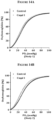
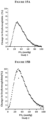
Figure 11A (Study 1) andFigure 11B (Study 2) are each graphs showing the observed changes in 2,3-DPG levels in blood from mice following 7 days of once daily (QD) oral treatment with Compound 1 (Example 6). -
Figure 12 is a graph showing observed changes in 2,3-DPG levels in blood from mice following 7 days of once daily (QD) oral treatment with Compound 1 (Example 6, Study 2). -
Figure 13A (Study 1) andFigure 13B (Study 2) are graphs of data measuring ATP concentrations in red blood cells of mice following 7 days of once daily (QD) oral treatment with Compound 1 (Example 6). -
Figure 14A and Figure 14B are each a graph of data showing oxygen saturation in RBCs following 7 days of oral treatment withCompound 1 in a murine model of SCD (Example 7). -
Figure 15A and Figure 15B are each a graph of data showing change in oxygen saturation in RBCs following 7 days of oral treatment withCompound 1 in a murine model of SCD (Example 7). -
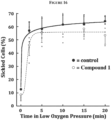
Figure 16 is a graph of data showing the percentage of sickled cells in a murine model of SCD following 7 days of oral treatment with Compound 1 (Example 7). -
Figure 17 is a graph of data showing the reticulocyte count in cells in a murine model of SCD following 7 days of oral treatment with Compound 1 (Example 7). -
Figure 18 is a graph of theblood 2,3-DPG levels measured over time in healthy volunteers who received a single dose ofCompound 1 or placebo. -
Figure 19 is a graph of theblood 2,3-DPG levels measured 24 hours post-dose in healthy volunteers who received a single dose ofCompound 1 or placebo. -
Figure 20 is a graph of the P50 values measured 24 hours post-dose in healthy volunteers who received a single dose ofCompound 1 or placebo. -
Figure 21 is a graph of the P50 values measured pre-dose and 24-hours post-dose in healthy volunteers who received a single dose ofCompound 1 or placebo. -
Figure 22 is a graph of theblood 2,3-DPG levels measured over time in healthy volunteers who received daily doses ofCompound 1 or placebo for 14 days. -
Figure 23 is a graph of theblood 2,3-DPG levels measured onday 14 in healthy volunteers who received daily doses ofCompound 1 or placebo for 14 days. -
Figure 24 is a graph of the P50 values measured onday 14 in healthy volunteers who received daily doses ofCompound 1 or placebo for 14 days. -
Figure 25 is a graph of the P50 values measured pre-dose and onday 14 in healthy volunteers who received daily doses ofCompound 1 or placebo for 14 days. -
Figure 26 is a graph of the blood ATP levels measured onday 14 in healthy volunteers who received daily doses ofCompound 1 or placebo for 14 days. -
Figure 27 is a graph showing the difference in the P50 values determined pre-dose and 24 hours post-dose (SAD cohorts) and 24 hours post-dose on day 14 (MAD cohorts) in healthy volunteers who receivedCompound 1 or placebo. -
Figure 28 is a graph plotting the blood concentration of Compound 1 (ng/mL) measured in healthy volunteer (HV) patients on a first (left) axis and the concentration of 2,3-DPG (micrograms/mL) measured in these HV patients on a second (right) axis after administration of a single dose of Compound 1 (400 mg). -
Figure 29 is a scatter plot of 2,3-DPG levels and P50 values observed in healthy volunteers in the SAD and MAD cohorts. - Methods of treating SCD preferably include administration of a therapeutically effective amount of
Compound 1 of the invention that reduces HgbS polymerization, for example by increasing HgbS affinity for oxygen. Methods of lowering 2,3-DPG and/or increasing ATP levels in human RBCs comprise administering a PKR Activating Compound, which isCompound 1 of the invention. Together these effects are consistent with providing therapies to reduce HgbS sickling and to improve RBC membrane health, presenting a unique disease-modifying mechanism for treating SCD. - A PKR Activating Compound, such as
Compound 1 of the invention, is useful to promote activity in the glycolytic pathway. As the enzyme that catalyzes the last step of glycolysis, PKR directly impacts the metabolic health and primary functions of RBCs. PKR Activating Compounds (e.g.,Compound 1 of the invention), are useful to decrease 2,3-DPG and increase ATP. PKR Activating Compounds (e.g.,Compound 1 of the invention) are also useful to increase Hgb oxygen affinity in RBC. The disclosure is based in part on the discovery that PKR activation is a therapeutic modality for SCD, whereby HgbS polymerization and RBC sickling are reduced via decreased 2,3-DPG and increased ATP levels. - SCD is the most common inherited blood disorder and clinically manifests with potentially severe pathological conditions associated with substantial physical, emotional, and economic burden. For instance, acute vaso-occlusive pain crises can be debilitating and necessitate rapid medical response. Chronic hemolytic anemia causes fatigue and often necessitates blood transfusions and supportive care. Over time, impaired oxygen transport through microvasculature precipitates organ and tissue damage. While there are a number of options available for treating symptoms, overall disease management would benefit from therapies that target upstream processes to prevent vaso-occlusion and hemolysis.
- The described clinical symptoms are largely due to perturbations in RBC membrane shape and function resulting from aggregation of HgbS molecules. Unlike normal Hgb, HgbS polymerizes when it is in the deoxygenated state and ultimately causes a deformed, rigid membrane that is unable to pass through small blood vessels, thereby blocking normal blood flow through microvasculature. The loss of membrane elasticity also increases hemolysis, reducing RBC longevity. Furthermore, decreased cellular ATP and oxidative damage contribute to a sickle RBC membrane that is stiffer and weaker than that of normal RBCs. The damaged membrane has a greater propensity for adhering to vasculature, leading to hemolysis, increased aggregation of sickled RBCs, and increased coagulation and inflammation associated with vaso-occlusive crises.
- The underlying cause of sickling is the formation of rigid deoxy-HgbS aggregates that alter the cell shape and consequently impact cellular physiology and membrane elasticity. These aggregates are highly structured polymers of deoxygenated HgbS; the oxygenated form does not polymerize. Polymerization is promoted by a subtle shift in conformation from the oxygen-bound relaxed (R)-state to the unbound tense (T)-state. In the latter, certain residues within the β-chain of HgbS are able to interact in a specific and repetitive manner, facilitating polymerization.
- The concentration of deoxy-HgbS depends on several factors, but the predominant factor is the partial pressure of oxygen (PO2). Oxygen reversibly binds to the heme portions of the Hgb molecule. As oxygenated blood flows via capillaries to peripheral tissues and organs that are actively consuming oxygen, PO2 drops and Hgb releases oxygen. The binding of oxygen to Hgb is cooperative and the relationship to PO2 levels fits a sigmoidal curve (
Figure 3 ). This relationship can be impacted by temperature, pH, carbon dioxide, and the glycolytic intermediate 2,3-DPG. 2,3-DPG binds within the central cavity of the Hgb tetramer, causes allosteric changes, and reduces Hgb's affinity for oxygen. Therefore, therapeutic approaches that increase oxygen affinity (i.e., reduce deoxygenation) of HgbS would presumably decrease polymer formation, changes to the cell membrane, and clinical consequences associated with SCD. - One aspect of this disclosure is targeting PKR activation to reduce 2,3-DPG levels, based on PKR's role in controlling the rate of glycolysis in RBCs. A decrease in 2,3-DPG with PKR activation has been demonstrated in preclinical studies and in healthy volunteers and patients with pyruvate kinase deficiency. Additionally, PKR activation would be expected to increase ATP, and has been observed to do so in these same studies. Given the role of ATP in the maintenance of a healthy RBC membrane and protection from oxidative stress, elevating its levels is likely to have broad beneficial effects. Therefore, activation of PKR offers the potential for a 2,3-DPG effect (i.e., reduced cell membrane damage from HgbS polymerization) that is augmented by ATP support for membrane integrity. It is via these changes that a PKR activator is could positively impact physiological changes that lead to the clinical pathologies of SCD (
Figure 2 ). In another aspect, the disclosure relates to a method of improving the anemia and the complications associated with anemia in SCD patients (e.g., ≥ 12 years of age) with Hgb SS or Hgb SB0-thalassemia. -
Compound 1 of the present invention is a selective, orally bioavailable PKR activator that has been shown to decrease 2,3-DPG, increase ATP, and have anti-sickling effects in disease models with a wide therapeutic margin relative to preclinical toxicity. - Methods of treatment can comprise administering to a subject in need thereof a therapeutically effective amount of (i) a PKR Activating Compound (e.g., a compound disclosed herein), or a pharmaceutically acceptable salt thereof; or (ii) a PKR Activating Composition (e.g., a pharmaceutical composition comprising a compound disclosed herein, or a pharmaceutically acceptable salt thereof, and a pharmaceutically acceptable carrier). The pharmaceutical composition may be orally administered in any orally acceptable dosage form. In some embodiments, to increase the lifetime of red blood cells, a compound, composition, or pharmaceutical composition described herein is added directly to whole blood or packed cells extracorporeally or provided to the subject (e.g., the patient) directly. A patient and/or subject can be selected for treatment using a compound described herein by first evaluating the patient and/or subject to determine whether the subject is in need of activation of PKR, and if the subject is determined to be in need of activation of PKR, then administering to the subject a PKR Activating Compound in a pharmaceutically acceptable composition. A patient and/or subject can be selected for treatment using a compound described herein by first evaluating the patient and/or subject to determine whether the subject is diagnosed with SCD, and if the subject is diagnosed with SCD, then administering to the subject a PKR Activating Compound in a pharmaceutically acceptable composition. For example, administration of a therapeutically effective amount of a PKR Activating Compound can include administration of a total of 25 mg - 1,500 mg of
Compound 1 of the invention each day, in single or divided doses. In some embodiments,Compound 1 of the invention is administered to patients diagnosed with SCD in total once daily (QD) doses of 25 mg, 50 mg, 75 mg, 100 mg, 125 mg, 150 mg, and/or higher if tolerated (e.g., 250 mg, 300 mg, 500 mg, 600 mg, 1000 mg, and/or 1500 mg). In some embodiments, a human dose of 80 to 130 mg ofCompound 1 is administered once daily (QD) to a patient in need thereof (e.g., a patient diagnosed with SCD). In some embodiments,Compound 1 or a pharmaceutically acceptable salt thereof according to the present invention is administered in an amount of 400 mg per day (e.g., 400 mg QD or 200 mg BID). In some embodiments,Compound 1 or a pharmaceutically acceptable salt thereof according to the present invention is administered in an amount of 700 mg per day (e.g., 700 mg QD or 350 mg BID). In some embodiments,Compound 1 or a pharmaceutically acceptable salt thereof according to the present invention is administered in an amount of 100 mg, 200 mg, 400 mg, 600 mg, 700 mg, 1100 mg, or 1500 mg per day, in single or divided doses. - Methods of treating a patient diagnosed with SCD can include administering to the patient in need thereof a therapeutic compound targeting reduction of deoxy-HgbS, which may or may not directly improve RBC membrane integrity.
Compound 1 of the present invention has been shown to decrease 2,3-DPG and increase ATP, and reduced cell sickling has been demonstrated in disease models. Accordingly, in some embodiments, the methods of treatment can address not only sickling, but also hemolysis and anemia. - Methods of treating a patient diagnosed with sickle cell disease, and PKR Activating Compounds for use in such methods, can include administering to the patient the PKR Activating Compound (e.g., a composition comprising one or more compounds of Formula I, such as
Compound 1 of the invention or a mixture ofCompound 1 and Compound 2) in an amount sufficient to reduce 2,3-DPG levels in the patient's red blood cells. In some embodiments, the amount is sufficient to reduce 2,3-DPG levels by at least 30% after 24 hours, or greater (e.g., reducing 2,3-DPG levels in the patient's red blood cells by at least 40% after 24 hours). In some embodiments, the amount is sufficient to reduce 2,3-DPG levels by 30-50% after 24 hours. In some embodiments, the amount is sufficient to reduce 2,3-DPG levels by 40-50% after 24 hours. In some embodiments, the amount is sufficient to reduce 2,3-DPG levels by at least 25% after 12 hours. In some embodiments, the amount is sufficient to reduce 2,3-DPG levels by 25-45% after 12 hours. In some embodiments, the amount is sufficient to reduce 2,3-DPG levels by at least 15% after 6 hours. In some embodiments, the amount is sufficient to reduce 2,3-DPG levels by 15-30% after 6 hours. In some embodiments, the amount is sufficient to reduce 2,3-DPG levels by at least 40% onday 14 of treatment. In some embodiments, the amount is sufficient to reduce 2,3-DPG levels by 40-60% onday 14 of treatment. In some embodiments, the amount is sufficient to reduce 2,3-DPG levels by at least 50% onday 14 of treatment. In some embodiments, the amount is sufficient to reduce 2,3-DPG levels by 50-60% onday 14 of treatment. - Methods of treating a patient diagnosed with sickle cell disease, and PKR Activating Compounds for use in such methods, can also include administering to the patient the PKR Activating Compound (e.g., a composition comprising one or more compounds of Formula I, such as
Compound 1 of the present invention or a mixture ofCompound 1 and Compound 2) in a daily amount sufficient to increase the patient's ATP blood levels. In some embodiments, the amount is sufficient to increase ATP blood levels by at least 40% onday 14 of treatment, or greater (e.g., t least 50% onday 14 of treatment). In some embodiments, the amount is sufficient to increase ATP blood levels by 40-65% onday 14 of treatment. In some embodiments, the amount is sufficient to increase ATP blood levels by at least 50% onday 14 of treatment, or greater (e.g., at least 50% onday 14 of treatment). In some embodiments, the amount is sufficient to increase ATP blood levels by 50-65% onday 14 of treatment. - In some examples, a pharmaceutical
composition comprising Compound 1 of the present invention can be used in a method of treating a patient diagnosed with sickle cell disease, the method comprising administering to the patient 400 mg ofCompound 1 once per day (QD)
composition comprising Compound 1 of the present invention can be used in a method of treating a patient diagnosed with sickle cell disease, the method comprising administering to the patient 200 mg ofCompound 1 twice per day (BID)
- In some embodiments, the present disclosure provides PKR Activating Compounds of Formula I:

- In the present invention, the compound of Formula I is Compound 1:

- The present disclosure also provides compositions (e.g. pharmaceutical compositions) comprising a compound of Formula I. In the present disclosure, a provided composition containing a compound of Formula I may comprise a mixture of
Compound 1 and Compound 2:
- Pharmaceutical compositions comprising a PKR Activating Composition containing a compound of Formula (I) can be formulated for oral administration (e.g., as a capsule or tablet). For example,
Compound 1 of the present invention can be combined with suitable compendial excipients to form an oral unit dosage form, such as a capsule or tablet, containing a target dose ofCompound 1. The drug product can be prepared byfirst manufacturing Compound 1 of the invention as an active pharmaceutical ingredient (API), followed by roller compaction/milling with intragranular excipients and blending with extra granular excipients. A Drug Product can contain theCompound 1 API of the invention and excipient components in Table 1 in a tablet in a desired dosage strength of Compound 1 (e.g., a 25 mg or 100 mg tablet formed from a Pharmaceutical Composition in Table 1). The blended material can be compressed to form tablets and then film coated. - The pharmaceutical composition preferably comprises 30-70% by weight of (S)-1-(5-((2,3-dihydro-[1,4]dioxino[2,3-b]pyridin-7-yl)sulfonyl)-3,4,5,6-tetrahydropyrrolo[3,4-c]pyrrol-2(1H)-yl)-3-hydroxy-2-phenylpropan-1-one, and a pharmaceutically acceptable excipient in an oral dosage form.
Table 1. Exemplary Pharmaceutical Compositions of Compound 1 for Oral AdministrationFunction % Formulation (weight) Exemplary Component API 30-70 % Compound 1 Filler 15-40% Microcrystalline Cellulose Dry binder 2-10% Crospovidone Kollidon CL Glidant 0.25-1.25% Colloidal Silicon Dioxide Lubricant 0.25-1.00% Magnesium Stearate, Hyqual - In some embodiments, a provided composition containing a compound of Formula I comprises a mixture of (S)-1-(5-((2,3-dihydro-[1,4]dioxino[2,3-b]pyridin-7-yl)sulfonyl)-3,4,5,6-tetrahydropyrrolo[3,4-c]pyrrol-2(1H)-yl)-3-hydroxy-2-phenylpropan-1-one and (R)-1-(5-((2,3-dihydro-[1,4]dioxino[2,3-b]pyridin-7-yl)sulfonyl)-3,4,5,6-tetrahydropyrrolo[3,4-c]pyrrol-2(1H)-yl)-3-hydroxy-2-phenylpropan-1-one. In some embodiments, a provided composition containing a compound of Formula I is a mixture of
Compound 1 andCompound 2 as part of a PKR Activating Composition. In some embodiments, a compound of Formula I is racemic. In some embodiments, a compound of Formula I consists of about 50% ofCompound 1 and about 50% ofCompound 2. In some embodiments, a compound of Formula I is not racemic. In some embodiments, a compound of Formula I does not consist of about 50% ofCompound 1 and about 50% ofCompound 2. In some embodiments, a compound of Formula I comprises 99-95%, 95-90%, 90-80%, 80-70%, or 70-60% ofCompound 1. In some embodiments, a compound of Formula I comprises about 99%, 98%, 95%, 90%, 80%, 70%, or 60% ofCompound 1. - In some embodiments, a PKR Activating Composition comprises a mixture of
Compound 1 andCompound 2. In some embodiments, a PKR Activating Composition comprises a mixture ofCompound 1 andCompound 2, wherein the PKR Activating Composition comprises a therapeutically effective amount ofCompound 1. - Compositions comprising a compound of Formula I can be prepared as shown in
Figure 4A and Figure 4B . Compounds of Formula I can be obtained by the general chemical synthesis scheme ofFigure 4A .Compound 1 can be obtained by the chemical synthesis route ofFigure 4A or Figure 4B . In brief, compounds of Formula I (Figure 4A ) and/or Compound 1 (Figure 4B ) can be obtained from a series of four reaction steps from commercially available starting materials. Commercially available 7-bromo-2H,3H-[1,4]dioxino[2,3-b]pyridine was treated with a mixture of n-butyl lithium and dibutylmagnesium followed by sulfuryl chloride to givesulfonyl chloride 3. Treatment of 3 with tert-butyl monosulfonamide 4.Compound 4 was then de-protected in the presence of trifluoroacetic acid (TFA) to give 5, the free base of the monosulfonamide. The last step to generate Compound 1 (Figure 4B ) orCompound 1 and Compound 2 (Figure 4A ) was an amide coupling of 5 and tropic acid in the presence of 1-[bis(dimethylamino)methylene]-1H-1,2,3-triazolo[4,5-b]pyridinium 3-oxide hexafluorophosphate (HATU). - The compounds listed in
Figure 1 can be prepared as shown inFigure 4C and as described in International Publication No.WO 2018/175474, published September 27, 2018 . Generally, the compounds listed inFigure 1 can be prepared by acylation and sulfonylation of the secondary amine groups ofhexahydropyrrolopyrrole 6. For example, sulfonylation of 6 with asuitable sulfonyl chloride 7 affordssulfonyl hexahydropyrrolopyrrole 8, which is then treated with a suitablecarboxylic acid 9 in the presence of an amide coupling reagent (e.g., HATU) to afford compound 10 (Path 1). Alternatively, acylation of 6 with a suitablecarboxylic acid 9 in the presence of an amide coupling reagent affordsacyl hexahydropyrrolopyrrole 11, which is then treated with asuitable sulfonyl chloride 7 to afford compound 10 (Path 2). As a person of ordinary skill would understand, well-known protecting groups, functionalization reactions, and separation techniques can be used in conjunction withPaths Figure 1 . - Methods of treating SCD also include administration of a therapeutically effective amount of a bioactive compound (e.g., a small molecule, nucleic acid, or antibody or other therapy) that reduces HgbS polymerization, for example by increasing HgbS affinity for oxygen. A method of treating SCD may comprise administering to a patient in need thereof a bioactive compound that reduces the percent of sickled cells in a murine model of sickle cell disease provided in Example 7 herein following 7 days of oral treatment with the compound. The bioactive compound may be any compound (including small molecules, nucleic acids, proteins or antibodies) that, in the murine model of sickle cell disease provided in Example 7, exhibits one or more of the following characteristics: (a) increases oxygen affinity to Hgb in hypoxic conditions; (b) decreases P50 in hypoxic conditions; (c) decreases the percentage of RBCs that sickle at low oxygen pressures; (d) increases the time of a cell to sickle; and/or (e) increases Hgb by at least approximately 1 g/dL.
- The present disclosure enables one of skill in the relevant art to make and use the inventions provided herein in accordance with multiple and varied embodiments. Various alterations, modifications, and improvements of the present disclosure that readily occur to those skilled in the art, including certain alterations, modifications, substitutions, and improvements are also part of this disclosure. Accordingly, the foregoing description and drawings are by way of example to illustrate the discoveries provided herein. The invention is as defined in the enclosed claims.
- As the enzyme that catalyzes the last step of glycolysis, PKR underlies reactions that directly impact the metabolic health and primary functions of RBCs. The following Examples demonstrate how PKR activation by
Compound 1 of the invention impacts RBCs. The primary effect ofCompound 1 on RBCs is a decrease in 2,3-DPG that is proposed to reduce Hgb sickling and its consequences on RBCs and oxygen delivery to tissues.Compound 1 of the invention also increases ATP, which may provide metabolic resources to support cell membrane integrity and protect against loss of deformability and increased levels of hemolysis in SCD. With the combination ofeffects Compound 1 of the invention has on RBCs, it is likely to reduce the clinical sequelae of sickle Hgb and provide therapeutic benefits for patients with SCD. - The PKR Activating Compound designated
Compound 1 of the invention was prepared as described in Example 1, and tested for PKR activating activity in the biochemical assay of Example 2. - The biological enzymatic activity of PKR (i.e., formation of ATP and/or pyruvate) was evaluated in enzyme and cell assays with
Compound 1 of the invention, as described in Example 3 and Example 4, respectively. Results from enzyme assays show thatCompound 1 is an activator of recombinant wt-PKR and mutant PKR, (e.g., R510Q), which is one of the most prevalent PKR mutations in North America. PKR exists in both a dimeric and tetrameric state, but functions most efficiently as a tetramer.Compound 1 of the invention is an allosteric activator of PKR and is shown to stabilize the tetrameric form of PKR, thereby lowering the Km (the Michaelis-Menten constant) for PEP. - Similarly, results from assays with RBCs from human patients with SCD showed that treatment with
Compound 1 of the invention caused a shift in P50 (PO2 at 50% hemoglobin saturation) and that this shift was related to increased oxygen affinity in the presence of Compound 1 (Example 5). Furthermore,Compound 1 of the invention decreased sickling under severe hypoxic conditions. Taken together the data suggest thatCompound 1 can reduce the clinical consequences of sickled cells by decreasing cell sickling through an increase in oxygen affinity that comes from PKR activation. - In vivo testing in mice (Examples 6 and 7) demonstrated PKR activation in wt mice, and provided an evaluation of effects on RBCs and Hgb in a murine model of SCD.
Compound 1 of the invention was well tolerated up to the highest dose tested, and exposures increased in a dose-proportional manner. Levels of 2,3-DPGwere reduced by >30% for doses ≥120 mg/kg Compound 1 (AUC from 0 to 24 hours (AUC0-24>5200 hr·ng/mL) and levels of ATP were increased by >40% for ≥60 mg/kg Compound 1 (AUC0-24 >4000 hr·ng/mL). In two studies with a murine model of SCD, increased oxygen affinity, decreased sickling, and increased Hgb were observed ex vivo in RBCs from mice following 7 days of oral (chow) administration ofCompound 1. Taken together, the data support exposure-related therapeutic benefits ofCompound 1 for treatment of SCD. - In some embodiments, a daily dose of between 100 mg to 1500 mg of
Compound 1 of the invention is administered to humans. In particular, a total daily dose of 100 mg - 600 mg ofCompound 1 of the invention can be administered to humans (including, e.g., a dose of 100 mg, 200 mg, 300 mg, 400 mg, 500 mg, or 600 mg, per day, in single or divided doses In some embodiments, a daily dose of 400 mg (e.g., 400 mg QD or 200 mg BID) ofCompound 1, or a pharmaceutically acceptable salt thereof of the invention, is administered to humans. In the following examples, compounds other thancompound 1, and pharmaceutically acceptable salts thereof, are included for reference purposes. - The
PKR Activating Compound 1 was obtained by the method described herein and the reaction scheme shown inFigure 4A and/orFigure 4B .Compound 1 has a molecular weight of 457.50 Da. - Into a 100 mL round-bottom flask purged and maintained with an inert atmosphere of nitrogen was placed a solution of n-BuLi in hexane (2.5 M, 2 mL, 5.0 mmol, 0.54 equiv) and a solution of n-Bu2Mg in heptanes (1.0 M, 4.8 mL, 4.8 mmol, 0.53 equiv). The resulting solution was stirred for 10 min at RT (20 °C). This was followed by the dropwise addition of a solution of 7-bromo-2H,3H-[1,4]dioxino[2,3-b]pyridine (2 g, 9.26 mmol, 1.00 equiv) in tetrahydrofuran (16 mL) with stirring at -10 °C in 10 min. The resulting mixture was stirred for 1 h at -10 °C. The reaction mixture was slowly added to a solution of sulfuryl chloride (16 mL) at -10 °C. The resulting mixture was stirred for 0.5 h at -10 °C. The reaction was then quenched by the careful addition of 30 mL of saturated ammonium chloride solution at 0 °C. The resulting mixture was extracted with 3x50 mL of dichloromethane. The organic layers were combined, dried over anhydrous sodium sulfate, filtered and concentrated under vacuum. The residue was purified by silica gel column chromatography, eluting with ethyl acetate/petroleum ether (1:3). This provided 1.3 g (60%) of 2H,3H-[1,4]dioxino[2,3-b]pyridine-7-sulfonyl chloride as a white solid. LCMS m/z: calculated for C7H6ClNO4S: 235.64; found: 236 [M+H]+.
- Into a 100-mL round-bottom flask was placed 2H,3H-[1,4]dioxino[2,3-b]pyridine-7-sulfonyl chloride (1.3 g, 5.52 mmol, 1.00 equiv), tert-
butyl - Into a 100-mL round-bottom flask was placed tert-butyl 5-[2H,3H-[1,4]dioxino[2,3-b]pyridine-7-sulfonyl]-1H,2H,3H,4H,5H,6H-pyrrolo[3,4-c]pyrrole-2-carboxylate (1.2 g, 2.93 mmol, 1.00 equiv), dichloromethane (30 mL), and trifluoroacetic acid (6 mL). The solution was stirred for 1 h at 20 °C. The resulting mixture was concentrated under vacuum. The residue was dissolved in 10 mL of methanol and the pH was adjusted to 8 with sodium bicarbonate (2 mol/L). The resulting solution was extracted with 3x10 mL of dichloromethane. The organic layers were combined, dried over anhydrous sodium sulfate, filtered and concentrated under vacuum. The crude product was purified by silica gel column chromatography, eluting with dichloromethane/methanol (10:1). This provided 650 mg (72%) of 2-[2H,3H-[1,4]dioxino[2,3-b]pyridine-7-sulfonyl]-1H,2H,3H,4H,5H,6H-pyrrolo[3,4-c]pyrrole as a yellow solid. LCMS m/z: calculated for C13H15N3O4S: 309.34; found: 310 [M+H]+.
- Into a 100 mL round-bottom flask was placed 2-[2H,3H-[1,4]dioxino[2,3-b]pyridine-7-sulfonyl]-1H,2H,3H,4H,5H,6H-pyrrolo[3,4-c]pyrrole (150 mg, 0.48 mmol, 1.00 equiv), 3-hydroxy-2-phenylpropanoic acid (97 mg, 0.58 mmol, 1.20 equiv), dichloromethane (10 mL), HATU (369 mg, 0.97 mmol, 2.00 equiv) andDIEA (188 mg, 1.46 mmol, 3.00 equiv). The resulting solution was stirred overnight at 20 °C. The reaction mixture was diluted with 20 mL of water and was then extracted with 3x20 mL of dichloromethane. The organic layers were combined, dried over anhydrous sodium sulfate, filtered and concentrated under vacuum. The residue was purified by prep-TLC eluted with dichloromethane/methanol (20:1) and further purified by prep-HPLC (Column: XBridge C18 OBD Prep Column, 100 Å, 5 µm, 19 mm × 250 mm; Mobile Phase A: water (10 mmol/L NH4HCO3), Mobile Phase B: MeCN; Gradient: 15% B to 45% B over 8 min; Flow rate: 20 mL/min; UV Detector: 254 nm). The two enantiomers were separated by prep-Chiral HPLC (Column, Daicel CHIRALPAK® IF, 2.0 cm × 25 cm, 5 µm; mobile phase A: DCM, phase B: MeOH (hold 60% MeOH over 15 min); Flow rate: 16 mL/min; Detector, UV 254 & 220 nm). This resulted in peak 1 (2, Rt: 8.47 min) 9.0 mg (4%) of (R)-1-(5-[2H,3H-[1,4]dioxino[2,3-b]pyridine-7-sulfonyl]-1H,2H,3H,4H,5H,6H-pyrrolo[3,4-c]pyrrol-2-yl)-3-hydroxy-2-phenylpropan-1-one as a yellow solid; and peak 2 (1, Rt: 11.83 min) 10.6 mg (5%) of (S)-1-(5-[2H,3H-[1,4]dioxino[2,3-b]pyridine-7-sulfonyl]-1H,2H,3H,4H,5H,6H-pyrrolo[3,4-c]pyrrol-2-yl)-3-hydroxy-2-phenylpropan-1-one as a yellow solid.
- (1): 1H NMR (400 MHz, DMSO-d6 ) δ 8.13 (d, J = 2.0 Hz, 1H), 7.61 (d, J = 2.0 Hz, 1H), 7.31-7.20 (m, 5H), 4.75 (t, J = 5.2 Hz, 1H), 4.50-4.47 (m, 2H), 4.40-4.36 (m, 1H), 4.32-4.29 (m, 2H), 4.11-3.87 (m, 8H), 3.80-3.77 (m, 1H), 3.44-3.41 (m, 1H). LC-MS (ESI) m/z: calculated for C22H23N3O6S: 457.13; found: 458.0 [M+H]+.
- (2): 1H NMR (400 MHz, DMSO-d6 ) δ 8.13 (d, J = 2.0 Hz, 1H), 7.60 (d, J = 2.0 Hz, 1H), 7.31-7.18 (m, 5H), 4.75 (t, J = 5.2 Hz, 1H), 4.52-4.45 (m, 2H), 4.40-4.36 (m, 1H), 4.34-4.26 (m, 2H), 4.11-3.87 (m, 8H), 3.80-3.78 (m, 1H), 3.44-3.43 (m, 1H). LC-MS (ESI) m/z: calculated for C22H23N3O6S: 457.13; found: 458.0 [M+H]+.
- Alternatively,
Compound 1 can be synthesized using the procedure described here asStep 5. A solution of 7-((3,4,5,6-tetrahydropyrrolo[3,4-c]pyrrol-2(1H)-yl)sulfonyl)-2,3-dihydro-[1,4]dioxino[2,3-b]pyridine (130.9 mg, 0.423 mmol) in DMF (2.5 ml) was cooled on an ice bath, then treated with (S)-3-hydroxy-2-phenylpropanoic acid (84.8 mg, 0.510 mmol), HATU (195.5 mg, 0.514 mmol), and DIEA (0.30 mL, 1.718 mmol) and stirred at ambient temperature overnight. The solution was diluted with EtOAc (20 mL), washed sequentially with water (20 mL) and brine (2x20 mL), dried (MgSO4), filtered, treated with silica gel, and evaporated under reduced pressure. The material was chromatographed by Biotage MPLC (10 g silica gel column, 0 to 5% MeOH in DCM) to provide a white, slightly sticky solid. The sample was readsorbed onto silica gel and chromatographed (10 g silica gel column, 0 to 100% EtOAc in hexanes) to provide (2S)-1-(5-[2H,3H-[1,4]dioxino[2,3-b]pyridine-7-sulfonyl]-1H,2H,3H,4H,5H,6H-pyrrolo[3,4-c]pyrrol-2-yl)-3-hydroxy-2-phenylpropan-1-one (106.5 mg, 0.233 mmol, 55 % yield) as a white solid. - PKR Activating Compounds can be identified with the biochemical Luminescence Assay of Example 2. The PKR activating activity of a series of chemical compounds was evaluated using the Luminescence Assay below, including compounds designated
Compound 1,Compound 2, and Compounds 6, 7, and 8 below, and the compounds listed inFigure 1 . - For each tested compound, the ability to activate PKR was determined using the following Luminescence Assay. The effect of phosphorylation of adenosine-5'-diphosphate (ADP) by PKR is determined by the Kinase Glo Plus Assay (Promega) in the presence or absence of FBP (D-fructose-1,6-diphosphate; BOC Sciences, CAS: 81028-91-3) as follows. Unless otherwise indicated, all reagents are purchased from Sigma-Aldrich. All reagents are prepared in buffer containing 50 mM Tris-HCl, 100 mM KCl, 5 mM MgCl2, and 0.01% Triton X100, 0.03% BSA, and 1 mM DTT. Enzyme and PEP (phosphoenolpyruvate) are added at 2x to all wells of an assay-ready plate containing serial dilutions of test compounds or DMSO vehicle. Final enzyme concentrations for PKR(wt), PKR(R510Q), and PKR(G332S) are 0.8 nM, 0.8 nM, and 10 nM respectively. Final PEP concentration is 100 µM. The Enzyme/PEP mixture is incubated with compounds for 30 minutes at RT before the assay is initiated with the addition of 2x ADP and KinaseGloPlus. Final concentration of ADP is 100 µM. Final concentration of KinaseGloPlus is 12.5%. For assays containing FBP, that reagent is added at 30 µM upon reaction initiation. Reactions are allowed to progress for 45 minutes at RT until luminescence is recorded by the BMG PHERAstar FS Multilabel Reader. The compound is tested in triplicate at concentrations ranging from 42.5 µM to 2.2 nM in 0.83% DMSO. AC50 measurements were obtained by the standard four parameter fit algorithm of ActivityBase XE Runner (max, min, slope and AC50). The AC50 value for a compound is the concentration (µM) at which the activity along the four parameter logistic curve fit is halfway between minimum and maximum activity.
- As set forth in Tables 2 and 3 below and in
Figure 1 , AC50 values are defined as follows: ≤ 0.1 µM (+++); > 0.1 µM and ≤ 1.0 µM (++); > 1.0 µM and ≤ 40 µM (+); > 40 µM (0).Table 2. Luminescence Assay Data Compound AC50 (PKRG332S) AC50 (PKRR510Q) AC50 (WT) 1 ++ +++ +++ 2 + + + Table 3. Additional Luminescence Assay Data Compound Structure AC50 (PKRG332S) AC50 (PKRR510Q) 6 
++ + 7 
0 0 8 
0 0 - Compounds and compositions described herein are activators of wild type PKR and certain PKR mutants having lower activities compared to the wild type. Such mutations in PKR can affect enzyme activity (catalytic efficiency), regulatory properties, and/or thermostability of the enzyme. One example of a PKR mutation is G332S. Another example of a PKR mutation is R5 10Q.
- The effect of 2
µM Compound 1 on maximum velocity (Vmax) and PEP Km (Michaelis-Menten constant, i.e., the concentration of PEP at which v = ½vmax) was evaluated for wt-PKR and PKR-R510Q. Tests were conducted in the presence and absence of fructose-1,6-bisphosphate (FBP), a known allosteric activator of PKR. Assessments were made up to 60 min at RT, and Vmax and PEP Km were calculated. The effect ofCompound 1 on Vmax ranged from no effect to a modest increase (seeFigure 5 for a representative curve).Compound 1 consistently reduced the PEP Km, typically by ~2 fold, for wt-PKR and PKR-R510Q in the presence or absence of FBP (Table 4), demonstrating thatCompound 1 can enhance the rate of PKR at physiological concentrations of PEP.Table 4. Effect of Compound 1 on PKR Enzyme Kinetic ParametersNo FBP 30 µM FBP Enzvme Kinetic Parametera DMSO 2 µM Compound 1DMSO 2 µM Compound 1WT-PKR Vmax 1.00 1.14 1.19 1.16 PEP Km 4.84 2.44 1.98 1.00 PKR R510Q Vmax 1.54 1.56 1.00 1.29 PEP Km 6.20 1.70 2.01 1.00 aAll values in Table 4 are normalized to 1.00, relative to the other values in the same row. - Activation of wt-PKR and PKR-R510Q by different concentrations of
Compound 1 was evaluated for PEP concentrations at or below Km. Compound 1 increased the rate of ATP formation, with AC50 values ranging from <0.05 to <0.10 µM and a range of <2.0 to <3.0 maximum-fold activation (ie, <200% to <300%) (Table 5). Representative data from PKR-R5 10Q showed that the effect was concentration dependent (Figure 6 ).Table 5. Activation of PKR Wild and Mutant Types by Compound 1PK Enzyme Maximum-fold Activation AC50 (µM) WT-PKR <2.0 <0.05 PKRR510Q <3.0 <0.10 - The activation of wt-PKR by
Compound 1 in mature human erythrocytes ex vivo was evaluated in purified RBCs purchased from Research Blood Components. Cells treated withCompound 1 for 3 hr in glucose-containing media were washed, lysed, and assayed using a Biovision Pyruvate Kinase Assay (K709-100). The assay was repeated multiple times to account for donor-to-donor variability and the relatively narrow dynamic range. Mean maximum activation increase (Max-Min) was <100% and mean 50% effective concentration (EC50) was <125 nM (Table 6). wt-PKR was activated in a concentration-dependent manner (Figure 7 ).Table 6. Wild Type PKR Activation in Human Red Blood Cells Treated with Compound 1Replicate Max - Min (%) EC50 (nM) 1 <125 <250 2 <150 <150 3 <100 <50 4 <50 <50 Mean <100 <125 - Mouse RBCs were isolated fresh from whole blood using a Ficoll gradient and assayed with methods similar to those used in the human RBCs assays. Maximum activation increase, and EC50 values were comparable to the effects in human RBCs (Table 7).
Table 7. Effect of Compound 1 on PKR Activation in Mouse Red Blood CellsReplicate Max - Min (%) EC50 (nM) 1 <50 <125 2 <100 <125 Mean <100 <125 - Red blood cells from SCD patients were used to evaluate the effects of
Compound 1 on Hgb affinity for oxygen (i.e., oxygen affinity) and sickling under hypoxic conditions. Cells were incubated at 37 °C for 1, 2, and 3 hr with HEPES buffered saline (HBS) (untreated), HBS + dimethyl sulfoxide (DMSO) (vehicle), or 10µM Compound 1. To assess oxygen dissociation, Hgb oxygen equilibrium curves were collected during deoxygenation. - Hemoglobin saturation was shifted to the left in cells treated with
Compound 1 and not in untreated or 0.5% DMSO-treated cells (Figures 8A and8B ). The increased oxygen affinity corresponded to a significant (but limited) shift in P50 from 29 to 25 mmHg after 1 hr that was maintained until at least 3 hr, the last time point evaluated (Table 8). Notably, oxygen affinity in the first 2 hr of incubation was not affected by DMSO.Table 8. Effect of Compound 1 on Hemoglobin SaturationaIncubation Time (hr) Hemoglobin Saturation Untreateda DMSO (0.5%) Compound 1 (10 µM) 1 1.18 1.18 1.05 2 1.18 1.00 3 1.30 1.02 aAll values in Table 8 are normalized to 1.00, relative to the other values. bUntreated cells are washed RBCs at 40% hematocrit in media without incubation. - At each PO2, the average shift in Hgb saturation in the cells treated with
Compound 1 was most pronounced around 25 mmHg, compared to a normal PO2 of 26.7 mmHg (Figure 9 ). Therefore, the shift in oxygen affinity occurred at oxygen tensions that are relevant for sickling. At 2 hr, Hgb saturation is approximately 10% higher compared to DMSO-treated cells. There is a clear difference between the cells treated withCompound 1 and those treated with DMSO at lower PO2 (approximately 10 mmHg at 1% to 2% oxygen) even at 1 hr. - Compound 1 (10 µM) reduced cell sickling under severe hypoxic conditions of 2% oxygen (PO2 of <20 mmHg) for up to 20 min (Table 9). The percent protection (i.e., the level of activity in treated cells, normalized to the level of activity in untreated cells after exposure to severe hypoxic conditions) reached a maximum of 16% at 15 min under hypoxic conditions (
Figure 10 ) and remained at 15% at the last time point measured.Table 9. Effect of Compound 1 on Sickling of Human SCD Cells in Hypoxic ConditionsNet % of Sickled Cells % Protection Time in Hypoxic Conditions (min) DMSO (0.5%) Compound 1 (10 µM) 0 7 10 2 41 47 -15 5 57 49 14 10 61 54 11 15 68 57 16 20 71 60 15 - Two pharmacokinetic (PK) / phamacodynamic (PD) studies were conducted in Balb/c mice that were administered
Compound 1 once daily by oral gavage (formulated in 10% Cremophor EL/10% PG/80% DI water) for 7 days (QD×7) at doses of 0 (vehicle), 3.75, 7.5, 15, 30, 60 mg/kg (Study 1); 0 (vehicle), 7.5, 15, 30, 60, 120, or 240 mg/kg (Study 2). On the 7th day, whole blood was collected 24 hours after dosing and snap frozen. Samples were later thawed and analyzed by LC/MS for 2,3-DPG and ATP levels. In both studies,Compound 1 was well tolerated. No adverse clinical signs were observed and there were no differences in body weight change compared with the vehicle group. - The levels of 2,3-DPG decreased with
Compound 1 treatment (Figures 11A and 11B (Studies 1 and 2) andFigure 12 (Study 2)). In general, reductions were > 20% at ≥ 15 mg/kg Compound 1, and >30% for 120 and 240 mg/kg Compound 1. Together, the results from the highest doses provide in vivo evidence that 2,3-DPG decreases with PKR activation. - Evaluation of ATP levels in these studies showed that treatment with
Compound 1 increased levels of ATP. InStudy 1, ATP increased 21% and 79% with 30 and 60 mg/kg Compound 1, respectively, compared to vehicle, and inStudy 2, ATP levels increased with exposure with doses up to 120 mg/kg Compound 1 with a maximum increase of ~110% compared to vehicle (Figure 13A and Figure 13B ). At the highest dose, 240 mg/kg Compound 1, ATP levels increased by 45%. Levels of ATP correlated withCompound 1 exposure in a manner similar across both studies. - Targeted gene deletions and a human transgene in the Berkeley SS mouse model result in mice that express human HgbS almost exclusively (Pászty C. Transgenic and gene knock-out mouse models of sickle cell anemia and the thalassemias. Curr Opin Hematol. 1997 Mar;4(2):88-93) and mimic the genetic, hematologic, and histopathologic features of SCD in humans. These include irreversibly sickled RBCs, anemia, and multi-organ pathology.
- The effects of
Compound 1 on Hgb affinity for oxygen, percentage of sickled cells, and/or Hgb were evaluated in the Berkley SS mouse. Two studies were conducted where mice received 0 or 1000ppm Compound 1 ad libitum in mouse chow for 7 days. Blood was drawn onDay 7 and analyzed under hypoxic conditions. Red cell parameters were measured by ADVIA. - The findings were relatively consistent between the two studies. Oxygen affinity to Hgb under hypoxic conditions was increased and P50 was decreased (
Figure 14A, Figure 14B ,Figure 15A, and Figure 15B ). A positive effect on sickling was observed such that the percentage of RBCs that sickled at low oxygen pressures was decreased (Figure 16 ) and time to sickle was increased withCompound 1 treatment. Furthermore, Hgb was increased by ≈1 g/dL. Together, these changes support the hypothesis thatCompound 1 will reduce cell sickling and positively impact the downstream clinical complications of sickled RBCs.Compound 1 also reduced the level of reticulocytes in treated mice (Figure 17 ), indicative of reduced red cell lysis. -
Compound 1 will be evaluated in a randomized, placebo-controlled, double blind, single ascending and multiple ascending dose study to assess the safety, pharmacokinetics, and pharmacodynamics ofCompound 1 in healthy volunteers and sickle cell disease patients. The use ofCompound 1 is disclosed herein for treatment of sickle cell disease in humans. -
Compound 1 is an oral small-molecule agonist of pyruvate kinase red blood cell isozyme (PKR) being developed for the treatment of hemolytic anemias. This human clinical trial study will characterize the safety, tolerability and the pharmacokinetics/pharmacodynamics (PK/PD) of a single ascending dose and multiple ascending doses ofCompound 1 in the context ofphase 1 studies in healthy volunteers and sickle cell disease patients. The effects of food on the absorption ofCompound 1 will also be evaluated, in healthy volunteers. - The objectives of the study include the following:
- 1. To evaluate the safety and tolerability of a single ascending dose and multiple ascending doses of
Compound 1 in healthy volunteers and sickle cell disease (SCD) patients. - 2. To characterize the pharmacokinetics (PK) of
Compound 1. - 3. To evaluate the levels of 2,3-diphosphoglycerate (DPG) and adenosine triphosphate (ATP) in the red blood cells (RBCs) of healthy volunteers and SCD patients after single and multiple doses of
Compound 1. - 4. To evaluate the relationship between
Compound 1 plasma concentration and potential effects on the QT interval in healthy volunteers. - 5. To evaluate the effect of single ascending doses of
Compound 1 on other electrocardiogram (ECG) parameters (heart rate, PR and QRS interval and T-wave morphology) in healthy volunteers. - 6. To explore food effects on the PK of
Compound 1 in healthy volunteers. - 7. To explore the association of
Compound 1 exposure and response variables (such as safety, pharmacodynamics (PD), hematologic parameters as appropriate). - 8. To explore effects of
Compound 1 after single and multiple doses on RBC function. - 9. To explore effects of
Compound 1 after multiple doses in SCD patients on RBC metabolism, inflammation and coagulation. - This is a first-in-human (FIH),
Phase 1 study ofCompound 1 that will characterize the safety, PK, and PD ofCompound 1 after a single dose and after repeated dosing first in healthy adult volunteers and then in adolescents or adults with sickle cell disease. The study arms and assigned interventions to be employed in the study are summarized in Table 10. Initially, a dose range ofCompound 1 in single ascending dose (SAD) escalation cohorts will be explored in healthy subjects. Enrollment of healthy subjects into 2-week multiple ascending dose (MAD) escalation cohorts will be initiated once the safety and PK from at least two SAD cohorts is available to inform the doses for the 2-week MAD portion of the study. The MAD cohorts will then run in parallel to the single dose cohorts. A single dose cohort is planned to understand food effects (FE) on the PK ofCompound 1. After the SAD and FE studies in healthy subjects are completed, the safety, PK and PD of a single dose ofCompound 1 that was found to be safe in healthy subjects will then be evaluated in sickle cell disease (SCD) subjects. Multiple dose studies in SCD subjects will then be initiated upon completion of MAD studies in healthy volunteers.Compound 1 will be administered in 25 mg and 100 mg tablets delivered orally.Table 10. Arms Assigned Interventions Experimental: Single ascending dose cohorts in healthy subjects Drug: Compound 1/PlaceboHealthy volunteer subjects will receive Compound 1/placebo and be monitored for side effects while undergoing pharmacokinetics and pharmacodynamic studiesHealthy volunteer subject cohorts randomized 6:2 receiving a single dose of Compound 1 or placebo. The first cohort will receive 200 mg ofCompound 1 or placebo. Dose escalation will occur ifCompound 1 or placebo is tolerated. The maximum dose ofCompound 1 or placebo will be 1500 mg. Planned doses for the SAD cohorts are listed in Table 11.Experimental: Multiple ascending dose cohorts in healthy subjects Drug: Compound 1/PlaceboHealthy volunteer subjects will receive Compound 1/placebo and be monitored for side effects while undergoing pharmacokinetics and pharmacodynamic studiesHealthy volunteer subject cohorts randomized 9:3 to receive Compound 1 or placebo for 14 days continuous dosing. The first cohort will receive 100 mg ofCompound 1 or placebodaily X 14 days. Alternatively, the first cohort will receive 200 mg (e.g., 100 mg BID or 200 mg QD) ofCompound 1 or placebodaily X 14 days. The maximum dose ofCompound 1/placebo will be 600mg Compound 1/placebo daily for 14 days. Planned doses for the MAD cohorts are listed in Table 12.Experimental: Food Effect Cohort in healthy subjects Drug: Compound 1Healthy subjects will receive Compound 1 with or without food and undergo pharmacokinetic studiesHealthy Volunteer subject cohort of 10 subjects who will receive a single dose of Compound 1 with food and without food. Dose will be administered per the protocol defined dose. Healthy Volunteer subject cohort of 10 subjects who will receive a single dose ofCompound 1 with food and without food. Dose will be 500 mg ofCompound 1, but is subject to change based on the pharmacokinetic profile ofCompound 1 observed in the initial SAD cohorts and the safety profile ofCompound 1 observed in prior SAD and MAD cohorts.Experimental: Single ascending dose cohorts in SCD subjects Drug: Compound 1/PlaceboSCD subjects will receive Compound 1/placebo and be monitored for side effects while undergoing pharmacokinetic and pharmacodynamics studiesSickle cell disease subject cohort randomized 6:2 receiving a single dose of Compound 1 or placebo. The dose ofCompound 1/placebo administered will be a dose that was found to be safe in healthy subjects. The dose ofCompound 1/placebo administered also will be a dose that was found to be pharmacodynamically active (e.g., results in a reduction in 2,3-DPG) in healthy subjects.Experimental: Multiple ascending dose cohorts in SCD subjects Drug: Compound 1/PlaceboSCD subjects will receive Compound 1/placebo and be monitored for side effects while undergoing pharmacokinetic and pharmacodynamics studiesSickle cell disease subject cohorts randomized 9:3 to receive Compound 1 or placebo for 14 days continuous dosing. The dose ofCompound 1/placebo administered will be a dose less than maximum tolerable dose evaluated in MAD healthy volunteers. The dose ofCompound 1/placebo also will be a dose that was found to be pharmacodynamically active (e.g., results in a reduction inRBC 2,3-DPG and increase in RBC ATP) in MAD healthy volunteers.Table 11. Dose Level/Cohort Dose Tablet Strength (#/day) SAD 1200 mg 100 mg (2/day) SAD 2400 mg 100 mg (4/day) SAD 3700 mg 100 mg (7/day) SAD 41100 mg 100 mg (11/day) SAD 51500 mg 100 mg (15/day) Table 12. Dose Level/Cohort Dose Tablet Strength (#/day) MAD 1100 mg 100 mg (1/day) or 25 mg (4/day) MAD 2200 mg 100 mg (2/day) MAD 3400 mg 100 mg (4/day) MAD 4600 mg 100 mg (6/day) -
- 1. Incidence, frequency, and severity of adverse events (AEs) per CTCAE v5.0 of a single ascending dose and multiple ascending doses of
Compound 1 in adult healthy volunteers and SCD patients.
[Time Frame: Up to 3 weeks of monitoring] - 2. Maximum observed plasma concentration (Cmax)
[Time Frame: Up to 3 weeks of testing] - 3. Time to maximum observed plasma concentration (Tmax)
[Time Frame: Up to 3 weeks of testing] - 4. Area under the plasma concentration-time curve from time zero until the 24-hour time point (AUC0-24)
[Time Frame: Up to 3 weeks of testing] - 5. Area under the plasma concentration-time curve from time zero until last quantifiable time point (AUC0-last)
[Time Frame: Up to 3 weeks of testing] - 6. Area under the plasma concentration-time curve from time zero to infinity (AUC0-inf)
[Time Frame: Up to 3 weeks of testing] - 7. Terminal elimination half-life (t1/2)
[Time Frame: Up to 3 weeks of testing] - 8. Apparent clearance (CL/F)
[Time Frame: Up to 3 weeks of testing] - 9. Apparent volume of distribution (Vd/F)
[Time Frame: Up to 3 weeks of testing] - 10. Terminal disposition rate constant (Lz)
[Time Frame: Up to 3 weeks of testing] - 11. Renal clearance (CIR)
[Time Frame: Up to 3 weeks of testing] -
- 12. Change from baseline in the levels of 2,3-diphosphoglycerate (DPG) and adenosine triphosphate (ATP) in the red blood cells (RBCs) of healthy volunteers and SCD patients after single and multiple doses of
Compound 1.
[Time Frame: Up to 3 weeks of testing] - 13. Model-based estimate of change from baseline QT interval corrected using Fridericia's correction formula (QTcF) and 90% confidence interval at the estimated Cmax after a single dose of
Compound 1 in healthy volunteers.
[Time Frame: up to 7 days] - 14. Change from baseline heart rate after a single dose of
Compound 1 in healthy volunteers
[Time Frame: up to 7 days] - 15. Change from baseline PR after a single dose of
Compound 1 in healthy volunteers
[Time Frame: up to 7 days] - 16. Change from baseline QRS after a single dose of
Compound 1 in healthy volunteers
[Time Frame: up to 7 days] - 17. Change from baseline T-wave morphology after a single dose of
Compound 1 in healthy volunteers
[Time Frame: up to 7 days] -
- 18. Effect of food on Cmax, AUC0-24/AUClast
- 19. Effect of AUClast/AUC0-24, Cmax, minimum plasma concentration (Cmin), peak-to trough ratio, dose linearity, accumulation ratio on safety, PD, and hematologic parameters of interest, as assessed by exposure-response analyses
- 20. Effect of 2,3-DPG reduction in RBCs on the oxyhemoglobin dissociation curve (P50; partial pressure of O2 at which 50% of hemoglobin is saturated with O2) after a single dose and after chronic dosing of
Compound 1 - 21. Effect of
chronic Compound 1 dosing on normal and SCD RBC deformability by osmotic gradient ektacytometry and oxygen gradient ektacytometry - 22. Effect of
chronic Compound 1 dosing on SCD RBC response to oxidative stress in SCD Patients (including evaluation of glutathione, glutathione peroxidase and superoxide dismutase levels) - 23. Effect of
chronic Compound 1 dosing on measurable markers of inflammation in SCD Patients (C-reactive protein, ferritin, interleukin [IL]-1β, IL-6, IL-8, and tumor necrosis factor-α) - 24. Effects of
chronic Compound 1 dosing on measurable markers of hypercoagulation in SCD patients (D-dimer, prothrombin 1.2, and thrombin-antithrombin [TAT] complexes) -
- Minimum age: 18 Years (healthy volunteers); 12 Years (SCD subjects)
- Maximum age: 60 Years
- Sex: All
- Gender Based: No
- Accepts Healthy Volunteers: Yes
-
- Healthy volunteer: subjects must be between 18 and 60 years of age; SCD: subjects must be between 12 and 50 years of age
- Subjects must have the ability to understand and sign written informed consent, which must be obtained prior to any study-related procedures being completed.
- Subjects must be in general good health, based upon the results of medical history, a physical examination, vital signs, laboratory profile, and a 12-lead ECG.
- Subjects must have a body mass index (BMI) within the range of 18 kg/m2 to 33 kg/m2 (inclusive) and a minimum body weight of 50 kg (healthy volunteer subjects) or 40 kg (SCD subjects)
- For SCD subjects, sickle cell disease previously confirmed by hemoglobin electrophoresis or genotyping indicating one of the following hemoglobin genotypes: Hgb SS, Hgb Sβ+-thalassemia, Hgb Sβ0-thalassemia, or Hgb SC
- All males and females of child bearing potential must agree to use medically accepted contraceptive regimen during study participation and up to 90 days after.
- Subjects must be willing to abide by all study requirements and restrictions.
-
- Evidence of clinically significant medical condition or other condition that might significantly interfere with the absorption, distribution, metabolism, or excretion of study drug, or place the subject at an unacceptable risk as a participant in this study
- History of clinically significant cardiac diseases including condition disturbances
- Abnormal hematologic, renal and liver function studies
- History of drug or alcohol abuse
- Four healthy SAD cohorts were evaluated at doses of 200, 400, 700, and 1000 mg, and four healthy MAD cohorts received 200 to 600 mg total daily doses for 14 days at QD or BID dosing (100 mg BID, 200 mg BID, 300 mg BID, and 400 mg QD). In the food effect (FE) cohort, 10 healthy subjects received 200 mg of
Compound 1 QD with and without food. - No serious adverse events (SAEs) or AEs leading to withdrawal were reported in the SAD and MAD cohorts of healthy volunteers. In PK assessments,
Compound 1 was rapidly absorbed with a median Tmax of 1 hr postdose. Single dose exposure increased in greater than dose-proportional manner at doses ≥700 mg. In multiple-doses delivered BID or QD, linear PK was observed across all dose levels (100-300 mg BID, 400 mg QD), and exposure remained steady up today 14, without cumulative effect.Compound 1 exposure under fed/fasted conditions was similar. - PD activity was demonstrated at all dose levels evaluated in Compound 1-treated subjects (Table 13). Table 13 reports the mean maximum percentage change in 2,3-DPG, ATP, and P50 across all doses and timepoints in the SAD and MAD cohorts. As shown in Table 13, a mean decrease in 2,3-DPG and P50, and a mean increase in ATP, relative to baseline, was observed in both the SAD and MAD cohorts. Within 24 hr of a single dose of
Compound 1, a decrease in 2,3-DPG with a corresponding increase in P50 was observed. After 14 days ofCompound 1 dosing these PD effects were maintained along with an increase in ATP over baseline. Accordingly, the mean maximum reduction in the concentration of 2,3-DPG was at least about 40% inpatients receiving Compound 1 in the SAD study and at least about 50% inpatients receiving Compound 1 in the MAD study.Table 13. Summary of Mean Maximum Percent Change in Key PD Measures from Baseline PD Marker Statistics SAD MAD Placebo (N = 8) Compound 1 (N = 24) Placebo (N = 12 Compound 1 (N = 36) 2,3-DPG Mean (95% CI) -19.5 (-25.0,-14.0) -46.8 (-50.3, -43.2) -17.0 (-22.9, -11.1) -56.3 (-58.9, -53.7) P-value <0.0001 <0.0001 ATP Mean (95% CI) 9.2 (0.5, 18.0) 24.4 (18.4, 30.3) 7.2 (-0.3, 14.7) 68.5 (63.6, 73.3) P-value 0.0094 <0.0001 P50 Mean (95% CI) 0.9 (-1.2, 2.9) -15.6 (-17.5, -13.8) -0.8 (-3.0, 1.4) -15.9 (-17.2, -14.5) P-value <0.0001 <0.0001 - In the SAD cohorts, the subjects'
blood 2,3-DPG levels were measured periodically after dosing by a qualified LC-MS/MS method for the quantitation of 2,3-DPG in blood. Decreased 2,3-DPG blood levels were observed 6 hours following a single dose ofCompound 1 at all dose levels (earlier timepoints were not collected). Maximum decreases in 2,3-DPG levels generally occurred ~24 hours after the first dose with the reduction sustained ~48-72hr postdose. Table 14 reports the median percentage change in 2,3-DPG blood levels, relative to baseline, measured over time in healthy volunteers after a single dose of Compound 1 (200 mg, 400 mg, 700 mg, or 1000 mg) or placebo. Accordingly, the median reduction in the concentration of 2,3-DPG, relative to baseline, was at least about 30% at all dose levels tested 24 hours after administration of the single dose.Table 14. Median Percentage Change in 2,3-DPG Levels Time After Dose Dose Placebo 200 mg 400 mg 700 mg 1000 mg 0 0.0 0.0 0.0 0.0 0.0 6 -7.8 -18 -23 -29 -20 8 -7.6 -17 -29 -28 -31 12 -4.0 -25 -40 -41 -44 16 -6.0 -33 -35 -46 -50 24 -2.0 -31 -39 -49 -48 36 -6.9 -33 -38 -46 -47 48 -15 -29 -31 -48 -47 72 -6.9 -18 -30 -33 -21 -
Figure 18 is a graph of theblood 2,3-DPG levels measured over time in healthy volunteers who received a single dose of Compound 1 (200 mg, 400 mg, 700 mg, or 1000 mg) or placebo. As shown inFigure 18 , healthy volunteers who receivedCompound 1 experienced a decrease inblood 2,3-DPG levels, relative subjects who received the placebo.Figure 19 is a graph of theblood 2,3-DPG levels measured 24 hours post-dose in healthy volunteers who received a single dose of Compound 1 (200 mg, 400 mg, 700 mg, or 1000 mg) or placebo. As shown inFigure 19 , healthy volunteers who receivedCompound 1 experienced a decrease inblood 2,3-DPG levels at 24 hours post-dose, relative to subjects who received the placebo. - In the SAD cohorts, the subjects' P50 (PO2 at 50% hemoglobin saturation) were determined 24-hours post-dose. P50 measured 24 hours after a single dose of
Compound 1 were reduced at all dose levels tested (median reduction ranged from ~3-5 mmHg). Table 15 reports the mean absolute change in P50, relative to baseline, measured 24 hours after a single dose of Compound 1 (200 mg, 400 mg, 700 mg, or 1000 mg) or placebo in healthy volunteers.Table 15. Mean Absolute Change in P50 (mmHg) Dose Mean Absolute Change Placebo 0.20 200 mg -2.91 400 mg -3.41 700 mg -4.85 1000 mg -5.05 -
Figure 20 is a graph of the P50 values measured 24 hours post-dose in healthy volunteers who received a single dose of Compound 1 (200 mg, 400 mg, 700 mg, or 1000 mg) or placebo. As shown inFigure 20 , healthy volunteers who receivedCompound 1 experienced a decrease in P50, relative to subjects who received the placebo.Figure 21 is a graph of the P50 values measured pre-dose and 24-hours post-dose in healthy volunteers who received a single dose of Compound 1 (200 mg, 400 mg, 700 mg, or 1000 mg) or placebo. As shown inFigure 21 , healthy volunteers who receivedCompound 1 experienced a decrease in P50 relative to baseline, while subjects who received the placebo did not. - In the MAD cohorts, the subjects'
blood 2,3-DPG levels were measured periodically after dosing by a qualified LC-MS/MS method for the quantitation of 2,3-DPG in blood. The maximum decrease in 2,3-DPG onDay 14 was 55% from baseline (median). 2,3-DPG levels reached a nadir and plateaued onDay 1 and had not returned tobaseline levels 72 hours after the final dose onDay 14. Table 16 reports the median percentage change in 2,3-DPG blood levels, relative to baseline, measured over time after the first dose ondays day 1 and at least about 40% at all dose levels tested 24 hours after administration of the first dose onday 14.Table 16. Median Percentage Change in 2,3-DPG Levels ( Days 1 and 14)Time After First Daily Dose Dose 100 mg BID 200 mg BID 300 mg BID Placebo Day Day Day Day 1 14 1 14 1 14 1 14 0 0.0 -42.0 0.0 -48.2 0.0 -59.4 0.0 -7.6 6 -16.1 -44.3 -13.1 -48.5 -18.8 -53.0 -2.9 -10.9 8 -12.1 -44.7 -22.3 -44.3 -23.8 -54.2 -0.6 -1.6 12 -18.1 -43.6 -23.1 -42.2 -31.6 -55.3 -7.1 -1.6 16 -18.4 -43.9 -33.9 -42.9 -40.7 -52.4 -6.7 -5.3 24 -27.8 -44.1 -43.5 -44.3 -50.8 -52.1 1.1 -10.7 48 -34.7 -38.7 -44.5 -1.0 72 -20.2 -20.2 -32.9 -7.0 -
Figure 22 is a graph of theblood 2,3-DPG levels measured over time in healthy volunteers who received daily doses of Compound 1 (100 mg BID, 200 mg BID, 300 mg BID, or 400 mg QD) or placebo for 14 days. As shown inFigure 22 , healthy volunteers who receivedCompound 1 experienced a decrease inblood 2,3-DPG levels, relative subjects who received the placebo.Figure 23 is a graph of theblood 2,3-DPG levels measured onday 14 in healthy volunteers who received daily doses of Compound 1 (100 mg BID, 200 mg BID, 300 mg BID, or 400 mg QD) or placebo for 14 days. As shown inFigure 23 , healthy volunteers who receivedCompound 1 experienced a decrease inblood 2,3-DPG levels, relative to subjects who received the placebo. - In the MAD cohorts, the subjects' P50 (PO2 at 50% hemoglobin saturation) were determined on
day 14. P50 values measured after 14 days of twice daily dosing were reduced at all dose levels tested (median reduction ranged from ~3-5 mmHg). Table 17 reports the mean absolute change in P50, relative to baseline, measured onday 14 in healthy volunteers who received daily doses of Compound 1 (100 mg BID, 200 mg BID, or 300 mg BID) or placebo for 14 days.Table 17. Mean Absolute Change in P50 (mmHg) (Day 14) Dose Mean Absolute Change Placebo -0.38 100 mg BID -3.26 200 mg BID -4.14 300 mg BID -5.34 -
Figure 24 is a graph of the P50 values measured onday 14 in healthy volunteers who received daily doses of Compound 1 (100 mg BID, 200 mg BID, 300 mg BID, or 400 mg QD) or placebo for 14 days. As shown inFigure 24 , healthy volunteers who receivedCompound 1 experienced a decrease in P50, relative to subjects who received the placebo.Figure 25 is a graph of the P50 values measured pre-dose and onday 14 in healthy volunteers who received daily doses of Compound 1 (100 mg BID, 200 mg BID, 300 mg BID, or 400 mg QD) or placebo for 14 days. As shown inFigure 25 , healthy volunteers who receivedCompound 1 experienced a decrease in P50 relative to baseline, while subjects who received the placebo did not. - In the MAD cohorts, the subjects' blood ATP levels were measured on
day 14 by a qualified LC-MS/MS method for the quantitation of ATP in blood. ATP levels were elevated, relative to baseline, onday 14, and remained elevated 60 hours after the last dose. Table 18 reports the median percentage change in blood ATP levels, relative to baseline, measured over time after the first dose onday 14 in healthy volunteers who received daily doses of Compound 1 (100 mg BID, or 200 mg BID) or placebo for 14 days.Table 18. Median Percentage Change in ATP Levels (Day 14) Time After First Daily Dose Dose 100 mg BID 200 mg BID Placebo 0 41.5 55.3 -0.5 6 43.8 48.1 2.8 8 47.8 58.4 -4.1 12 45.4 56.2 2.3 16 44.8 57.0 -6.8 24 55.0 64.0 2.9 48 52.2 58.9 4.7 72 49.2 54.0 2.2 -
Figure 26 is a graph of the blood ATP levels measured onday 14 in healthy volunteers who received daily doses of Compound 1 (100 mg BID, 200 mg BID, 300 mg BID, or 400 mg QD) or placebo for 14 days. As shown inFigure 26 , healthy volunteers who receivedCompound 1 experienced an increase in blood ATP levels, relative to subjects who received the placebo. -
Figure 27 is a graph showing the difference in the P50 values determined pre-dose and 24 hours post-dose (SAD cohorts) and 24 hours post-dose on day 14 (MAD cohorts) in healthy volunteers who receivedCompound 1 or placebo. As shown inFigure 27 , healthy volunteers who receivedCompound 1 experienced a change (decrease) in P50 relative to baseline, while subjects who received the placebo did not. -
Figure 28 is a graph plotting the blood concentration of Compound 1 (ng/mL) measured in healthy volunteer (HV) patients on a first (left) axis and the concentration of 2,3-DPG (micrograms/mL) measured in these HV patients on a second (right) axis after administration of a single dose of Compound 1 (400 mg). Solid symbols represent geometric means and Standard errors of the observedCompound 1 plasma and 2,3 DPG concentrations. As shown in the figure, the observed 2,3 DPG modulation does not track directly plasma pharmacokinetics (blood concentration of Compound 1) where the pharmacodynamic maximum (i.e., the minimum of the 2,3-DPG concentration, at time ~24h) occurred nearly 24h after the pharmacokinetic maximum (i.e., maximum of the PK curve, at time ~1-2h). The observed pharmacodynamic response in HVs was durable, with a calculated PD half-life of ~20h, where 2,3-DPG depression was observed long after plasma levels were undetectable. Taken together, this suggests that identifying the pharmacologically active dose cannot be adequately performed using pharmacokinetic parameters (Cmax/Cmin/AUC) in isolation, but rather support an approach that includes integrating the temporal pharmacokinetic/pharmacodynamic relationship to provide the platform of evidence that QD dosing may be feasible in sickle cell disease patients. -
Figure 29 is a scatter plot of 2,3-DPG levels and P50 values observed in healthy volunteers in the SAD and MAD cohorts. Solid symbols represent the observed P50/2,3-DPG levels in healthy volunteers dosed withCompound 1 at 24h following the last administered dose. Baseline data represents P50/2,3 DPB data obtained either prior toCompound 1 treatment and from healthy volunteers dosed with placebo. A positive correlative relationship between 2,3 DPG and p50 levels was observed for patients receiving various doses. - The following procedures are employed for the analysis of ATP and 2,3-DPG in human whole blood K2EDTA using a protein precipitation extraction procedure and analysis by LC-MS/MS.
- This bioanalytical method applies to the parameters described below:
Assay Range 25,000-1,500,000 ng/mL Extraction Volume 15.0 µL Species/Matrix/Anticoagulant Water as a surrogate for Human Whole Blood K2EDTA Extraction type Protein Precipitation Sample Storage 80 °C Mass Spectrometer API-5500 Acquisition software Analyst/ Aria System - The following precautions are followed:
- 1. Standard and QC samples are prepared on ice and stored in plastic containers.
- 2. Study samples and QC samples are thawed on ice.
- 3. Extraction is performed on ice.
- The following definitions and abbreviations are employed:
CRB Carryover remediation blanks FT Freeze-thaw MPA Mobile phase A MPB Mobile phase B NA Not applicable NR Needle rinse RT Retention time SIP Stability in progress TBD To be determined - The following chemicals, matrix, and reagents are used:
K2EDTA Human Whole Blood, BioreclamationIVT or equivalent (Note: BioReclamationIVT and BioIVT are considered equivalent) Acetonitrile (ACN), HPLC Grade or better Ammonium Acetate (NH4OAc), HPLC grade or equivalent Ammonium Hydroxide (NH4OH, 28-30%), ACS grade or better Dimethylsulfoxide (DMSO), ACS grade or better Formic Acid (FA), 88% ACS grade Isopropanol (IPA), HPLC Grade or better Methanol (MeOH), HPLC Grade or better Water (H2O), Milli-Q or HPLC Grade ATP - Analyte, Sponsor or supplier ATP-IS- IS, Sponsor or supplier 2,3-DPG - Analyte, Sponsor or supplier 2,3-DPG-IS- IS, Sponsor or supplier - The following procedures are used for reagent preparation. Any applicable weights and volumes listed are nominal and may be proportionally adjusted as long as the targeted composition is achieved:
Solution Final Solution Composition Nominal Volumes for Solution Preparation Storage Conditions Mobile Phase A (MPA) 10mM Ammoniumn Acetate in water pH 8.5 Weigh approximately 770.8 mg of Ammonium Acetate; add to a bottle with 1000mL of water. Adjust pH to 8.3-8.7 using Ammonium Hydroxide. Ambient Temperature Mobile Phase B (MPB) 5:95 MPA:ACN Add 50.0 mL of MPA to 950 mL of CAN. Mix. Ambient Temperature Needle Rinse 1 (NR1) 25:25:25:25:0.1 (v:v:v:v:v) Add 500 mL of MeOH, 500 mL of ACN, 500 mL of H2O, 500 mL of IPA, and 2 mL of NH4OH. Mix. Ambient Temperature MeOH:ACN:H2O:IPA:NH4 OH Needle Rings 2 (NR2) 90:10:0.1 (v:v:v) Add 2 mL of FA to 200 mL of MeOH and 1800 mL of H 20. Mix.Ambient Temperature H20:MeOH:FA - Calibration standards are prepared using water as the matrix according to the table presented below. The indicated standard is prepared by diluting the indicated spiking volume of stock solution with the indicated matrix volume.
Calibration Standard Stock Solution Stock Conc. (ng/mL) Spiking Vol. (mL) Matrix Vol. (mL) Final Vol. (mL) Final Conc. (ng/mL) STD-6 ATP Stock 60,000,000 0.0100 0.380 0.400 1,500,000 2,3-DPG Stock 60,000,000 0.0100 STD-5 STD-6 1,500,000 0.100 0.200 0.300 500,000 STD-4 STD-6 1,500,000 0.0500 0.325 0.375 200,000 STD-3 STD-6 1,500,000 0.0250 0.350 0.375 100,000 STD-2 STD-5 500,000 0.0500 0.450 0.500 50,000 STD-1 STD-5 500,000 0.0250 0.475 0.500 25,000 Cond. STD-5 500,000 0.0250 0.975 1.00 12,500 - Quality control standards are prepared using water as the matrix according to the table presented below. The indicated quality control standard is prepared by diluting the indicated spiking volume of stock solution with the indicated matrix volume.
Quality Control Standard Stock Solution Stock Conc. (ng/mL) Spiking Vol. (mL) Matrix Vol. (mL) Final Vol. (mL) Final Conc. (ng/mL) QC-High ATP Stock 60,000,000 0.160 7.68 8.00 1,200,000 2,3-DPG Stock 60,000,000 0.160 QC-Mid QC-High 1,200,000 1.50 4.50 6.00 300,000 QC-Low QC-Mid 300,000 1.50 4.50 6.00 75,000 - An internal standard spiking solution is prepared with a final concentration of 12,500 ng/mL ATP and 2,3-DPG by diluting stock solutions of ATP and 2,3-DPG at concentrations of 1,000,000 ng/mL with water. 0.200 mL each of the ATP and 2,3-DPG stock solutions are diluted with 15.6 mL of water to produce a final volume of 16.0 mL at a final concentration of 12,500 ng/mL of ATP and 2,3-DPG.
- The following procedures are used for sample extraction prior to analysis via LC-MS/MS. 15.0 µL of the calibration standards, quality controls, matrix blanks, and samples are aliquoted into a 96-well plate. 50.0 µL of the internal standard spiking solution is added to all samples on the plate, with the exception of the matrix blank samples; 50.0 µL of water is added to the matrix blank samples. Subsequently, 150 µL of water is added to all samples on the plate. The plate is then covered and agitated by vortex at high speed for ten minutes, after which 750 µL of methanol is added to all samples on the plate. The plate is covered and agitated by vortex for approximately 1 minute. The plate is then centrifuged at approximately 3500 RPM at approximately 4 °C for five minutes. After centrifugation, a liquid handler is used to transfer 50 µL of each sample to a new 96-well plate, and 200 µL of acetonitrile is added to all samples on the plate. The newly prepared plate is covered and agitated by vortex for approximately 1 minute. The plate is then centrifuged at approximately 3500 RPM at approximately 4 °C for 2 minutes.
- The following LC parameters and gradient conditions are used for analysis of the extracted samples:
LC Parameters Analytical Column Vendor: SeQuant Description: ZIC-pHII,IC Dimensions: 50 mm x 2.1 mm Column Heater Temperature: 40 °C Plate Rack Position: Cold Stack Cold Stack Set Point: 5 °C Mobile Phase Mobile Phase A (MPA) 10mM Ammoniumn Acetate in water pH 8.5 Mobile Phase B (MPB) 5:95 MPA: ACN Injection Volume 5 µL LC Gradient Step Time (s) Flow (mL/min) Gradient Setting % MPB 1 50 0.400 Step 5 2 30 0.400 Ramp 95 3 70 0.400 Step 5 Data is collected starting at 0.08 min and is collected over a data window length of 0.70 min. - The following MS parameters are used for analysis of the extracted samples using an API-5500 Mass Spectrometer:
Interface: Turbo Ion Spray Ionization, positive-ion mode Scan Mode: Multiple Reaction Monitoring (MRM) Scan Parameters: Parent/Product: Dwell Time (ms): 506.0/159.0 50 521.0/159.0 25 265.0/166.8 50 268.0/169.8 25 Source Temperature: 400 °C - The collected MS data is analyzed and sample concentrations are quantified using peak area ratios with a linear 1/x2 regression type.
Claims (10)
- A pharmaceutical composition comprising Compound 1 or a pharmaceutically acceptable salt thereof, and a pharmaceutically acceptable carrier:

- The composition for use as claimed in claim 1, wherein said method comprises administering Compound 1 or a pharmaceutically acceptable salt thereof in a single dose each day.
- The composition for use as claimed in claim 1, wherein said method comprises administering Compound 1 or a pharmaceutically acceptable salt thereof in divided doses each day.
- The composition for use as claimed in any one of claims 1-3, wherein the composition is orally administered to the patient.
- The composition for use as claimed in any one of claims 1-4, wherein the composition is formulated as an oral unit dosage form.
- The composition for use as claimed in any one of claims 1-5, wherein said method comprises administering Compound 1 in a total daily dose of 200 mg.
- The composition for use as claimed in any one of claims 1-5, wherein said method comprises administering Compound 1 in a total daily dose of 300 mg.
- The composition for use as claimed in any one of claims 1-5, wherein said method comprises administering Compound 1 in a total daily dose of 400 mg.
- The composition for use as claimed in any one of claims 1-5, wherein said method comprises administering Compound 1 in a total daily dose of 500 mg.
- The composition for use as claimed in any one of claims 1-5, wherein said method comprises administering Compound 1 in a total daily dose of 600 mg.
Priority Applications (1)
| Application Number | Priority Date | Filing Date | Title |
|---|---|---|---|
| MA53668A MA53668B1 (en) | 2018-09-19 | 2019-09-19 | TREATMENT OF SICKLE CELL DISEASE WITH A COMPOUND ACTIVATING PYRUVATE KINASE R |
Applications Claiming Priority (6)
| Application Number | Priority Date | Filing Date | Title |
|---|---|---|---|
| US201862733562P | 2018-09-19 | 2018-09-19 | |
| US201862733558P | 2018-09-19 | 2018-09-19 | |
| US201862782933P | 2018-12-20 | 2018-12-20 | |
| US201962789641P | 2019-01-08 | 2019-01-08 | |
| US201962811904P | 2019-02-28 | 2019-02-28 | |
| PCT/US2019/052024 WO2020061378A1 (en) | 2018-09-19 | 2019-09-19 | Treating sickle cell disease with a pyruvate kinase r activating compound |
Publications (4)
| Publication Number | Publication Date |
|---|---|
| EP3853206A1 EP3853206A1 (en) | 2021-07-28 |
| EP3853206A4 EP3853206A4 (en) | 2022-07-20 |
| EP3853206B1 true EP3853206B1 (en) | 2024-04-10 |
| EP3853206C0 EP3853206C0 (en) | 2024-04-10 |
Family
ID=69774634
Family Applications (1)
| Application Number | Title | Priority Date | Filing Date |
|---|---|---|---|
| EP19863246.5A Active EP3853206B1 (en) | 2018-09-19 | 2019-09-19 | Treating sickle cell disease with a pyruvate kinase r activating compound |
Country Status (6)
| Country | Link |
|---|---|
| US (7) | US10675274B2 (en) |
| EP (1) | EP3853206B1 (en) |
| CN (1) | CN113166060B (en) |
| BR (1) | BR112021005188A2 (en) |
| MA (1) | MA53668B1 (en) |
| WO (1) | WO2020061378A1 (en) |
Families Citing this family (16)
| Publication number | Priority date | Publication date | Assignee | Title |
|---|---|---|---|---|
| EP3680241A1 (en) | 2017-03-20 | 2020-07-15 | Forma Therapeutics, Inc. | Pyrrolopyrrole compositions as pyruvate kinase (pkr) activators |
| WO2020061255A1 (en) | 2018-09-19 | 2020-03-26 | Forma Therapeutics, Inc. | Activating pyruvate kinase r |
| EP3852790A4 (en) * | 2018-09-19 | 2022-08-10 | Forma Therapeutics, Inc. | INHIBITION OF UBIQUITIN-SPECIFIC PEPTIDASE 9X |
| US10675274B2 (en) | 2018-09-19 | 2020-06-09 | Forma Therapeutics, Inc. | Activating pyruvate kinase R |
| HUE072832T2 (en) * | 2019-09-19 | 2025-12-28 | Novo Nordisk Healthcare Ag | Pyruvate kinase r (pkr) activating compositions |
| US20220087983A1 (en) * | 2020-09-18 | 2022-03-24 | Forma Therapeutics, Inc. | Activating pyruvate kinase r |
| WO2022170200A1 (en) | 2021-02-08 | 2022-08-11 | Global Blood Therapeutics, Inc. | 1-(2-sulfonyl-2,6-dihydropyrrolo[3,4-c]pyrazol-5(4h)-yl]-ethanone derivatives as pyruvate kinase (pkr) and pkm2 activators for the treatment of sickle cell disease |
| US12128035B2 (en) | 2021-03-19 | 2024-10-29 | Novo Nordisk Health Care Ag | Activating pyruvate kinase R |
| EP4147700A1 (en) * | 2021-09-08 | 2023-03-15 | LQT Therapeutics Inc. | N-(4-(azaindazol-6-yl)-phenyl)-sulfonamides for use in the treatment of sickle cell disease |
| CN118354759A (en) | 2021-10-19 | 2024-07-16 | 阿基拉比奥有限公司 | Compositions comprising 2' -deoxycytidine analogs and their use for treating sickle cell disease, thalassemia and cancer |
| EP4455136A4 (en) * | 2021-12-21 | 2025-11-05 | Scinnohub Pharmaceutical Co Ltd | COMPOSITION WITH BIS(AZANYLIDE)-SULFONYL STRUCTURE AND USE OF IT IN MEDICINE |
| CN115304605B (en) * | 2022-01-21 | 2023-10-03 | 陕西国际商贸学院 | Oxetane derivatives with anti-tumor activity and preparation methods and applications thereof |
| JP2025536754A (en) * | 2022-11-21 | 2025-11-07 | ノヴォ・ノルディスク・ヘルス・ケア・アーゲー | Synthesis of pyrrolo[3,4-c]pyrrole |
| CN121511081A (en) * | 2023-05-05 | 2026-02-10 | 赛诺哈勃药业(成都)有限公司 | Novel applications of compounds containing diazapyridine sulfonyl structures as PKM2 agonists |
| EP4721737A1 (en) * | 2023-05-26 | 2026-04-08 | Scinnohub Pharmaceutical Co., Ltd. | Use of pharmaceutical composition comprising compound having bis(azanylylidene) sulfonyl structure for treating anemia-related diseases |
| TW202606703A (en) * | 2024-07-05 | 2026-02-16 | 大陸商廣東東陽光藥業股份有限公司 | Heterocyclic fused ring compounds, pharmaceutical compositions thereof, and uses thereof |
Family Cites Families (360)
| Publication number | Priority date | Publication date | Assignee | Title |
|---|---|---|---|---|
| EP0007529B1 (en) | 1978-07-13 | 1983-07-20 | The Wellcome Foundation Limited | Antiprotozoal oxadiazole derivatives, processes for their preparation and pharmaceutical formulations containing them |
| DE3173083D1 (en) | 1980-03-22 | 1986-01-16 | Fbc Ltd | Pesticidal heterocyclic compounds, processes for preparing them, compositions containing them, and their use |
| US4602093A (en) | 1984-02-08 | 1986-07-22 | Merck & Co., Inc. | Novel substituted imidazoles, their preparation and use |
| JPS61200544A (en) | 1985-03-04 | 1986-09-05 | Toyo Ink Mfg Co Ltd | Electrophotographic sensitive body |
| JPS61200544U (en) | 1985-06-03 | 1986-12-16 | ||
| DE3600390A1 (en) | 1986-01-09 | 1987-07-16 | Hoechst Ag | DIARYLALKYL-SUBSTITUTED ALKYLAMINE, METHOD FOR THE PRODUCTION THEREOF, THEIR USE AND MEDICINAL PRODUCTS CONTAINING THE SAME |
| EP0264883A3 (en) | 1986-10-21 | 1990-04-04 | Banyu Pharmaceutical Co., Ltd. | Substituted pyridine derivatives |
| JPS63165376A (en) | 1986-12-27 | 1988-07-08 | Nippon Soda Co Ltd | Oxa(thia)diazole derivative and production thereof and acaricidal agent |
| JPH01108006A (en) | 1987-10-21 | 1989-04-25 | Nagasaki Pref Gov | Splitting of brittle material |
| JPH01110376A (en) | 1987-10-24 | 1989-04-27 | Mizuno Corp | Method for manufacturing bat of fiber-reinforced plastics |
| KR910001238B1 (en) | 1988-02-26 | 1991-02-26 | 재단법인 한국화학연구소 | O-acylamide oxime derivative |
| EP0338372A3 (en) | 1988-04-22 | 1991-10-09 | American Cyanamid Company | Solubilized pro-drugs |
| CA1340821C (en) | 1988-10-06 | 1999-11-16 | Nobuyuki Fukazawa | Heterocyclic compounds and anticancer-drug reinforcing agents containing them as effective components |
| US5180719A (en) | 1988-10-24 | 1993-01-19 | Norwich Eaton Pharmaceuticals, Inc. | Antimicrobial quinolonyl lactam esters |
| GB8900382D0 (en) | 1989-01-09 | 1989-03-08 | Janssen Pharmaceutica Nv | 2-aminopyrimidinone derivatives |
| EP0393607B1 (en) | 1989-04-19 | 1996-02-21 | Otsuka Pharmaceutical Co., Ltd. | Phenylcarboxylic acid derivatives having a hetero ring |
| GB8908875D0 (en) | 1989-04-19 | 1989-06-07 | Ici Plc | Fungicides |
| KR910009331B1 (en) * | 1989-10-23 | 1991-11-11 | 재단법인 한국화학연구소 | Diazabicycloamine compounds and the preparation process thereof |
| KR910009333B1 (en) | 1989-10-23 | 1991-11-11 | 재단법인 한국화학연구소 | Antimicrobial quinoline compounds and the preparation process thereof |
| KR910009330B1 (en) | 1989-10-23 | 1991-11-11 | 재단법인 한국화학연구소 | Quinoline compound having antibacterial activity and preparation method thereof |
| US5030631A (en) | 1989-11-27 | 1991-07-09 | Schering Corporation | Tricylclic arylsulfonamides |
| US5747502A (en) | 1989-12-13 | 1998-05-05 | Nippon Kayaku Kabushiki Kaisha | Process for preparing benzo c!phenanthridinium derivatives, novel compounds prepared by said process, and antitumor agents |
| JP3036789B2 (en) | 1990-06-22 | 2000-04-24 | 三井化学株式会社 | Novel heterocyclic compounds and pharmaceutical compositions |
| FR2664592B1 (en) | 1990-07-10 | 1994-09-02 | Adir | NOVEL DERIVATIVES OF PIPERIDINE, TETRAHYDROPYRIDINE AND PYRROLIDINE, PROCESS FOR THEIR PREPARATION AND THE PHARMACEUTICAL COMPOSITIONS CONTAINING THEM. |
| US5262565A (en) | 1990-11-16 | 1993-11-16 | Eisai Co., Ltd. | Naphthalene derivatives |
| JP2859451B2 (en) | 1991-01-11 | 1999-02-17 | 太平洋セメント株式会社 | Method for producing N-fluoropyridinium salt |
| DE4121214A1 (en) | 1991-06-27 | 1993-01-14 | Bayer Ag | 7-AZAISOINDOLINYL CHINOLONE AND NAPHTHYRIDONE CARBONIC ACID DERIVATIVES |
| JP3038065B2 (en) | 1991-11-07 | 2000-05-08 | 太平洋セメント株式会社 | Method for producing N-fluoropyridinium salt |
| JPH05196976A (en) | 1991-11-18 | 1993-08-06 | Toshiba Corp | Organic nonlinear optical element |
| DE69230803T2 (en) | 1991-11-25 | 2000-12-07 | Pfizer Inc., New York | 5- (HETERO- OR CARBOCYCLYLAMINO) -INDOL DERIVATIVES, THEIR PRODUCTION AND THEIR USE AS 5-HT1 AGONISTS |
| HU220601B1 (en) | 1992-04-30 | 2002-03-28 | Taiho Pharmaceutical Co. Ltd. | Phenoxyalkyloxazolidine derivatives, process for their preparation and pharmaceutical compositions containing them |
| DE4232418A1 (en) | 1992-09-28 | 1994-03-31 | Bayer Ag | Use of substituted 1,2,4-oxadiazole derivatives for the control of endoparasites, novel substituted 1,2,4-oxadiazole derivatives and processes for their preparation |
| JP3130400B2 (en) | 1993-01-13 | 2001-01-31 | 信越化学工業株式会社 | Polymer scale adhesion inhibitor, and method for producing polymer using the same |
| JPH07164400A (en) | 1993-12-15 | 1995-06-27 | Nec Corp | Cutting device for glass board |
| DE4401108A1 (en) | 1994-01-17 | 1995-07-20 | Bayer Ag | 1,2,4-oxadiazole derivatives |
| US6878715B1 (en) | 1994-02-18 | 2005-04-12 | Cell Therapeutics, Inc. | Therapeutic compounds for inhibiting interleukin-12 signals and method for using same |
| IT1274018B (en) | 1994-02-23 | 1997-07-14 | Riace Ets | 3,8-DIAZABICYCLE DERIVATIVES (3.2.1.) OCTANO FOR ANALGESIC ACTIVITY |
| FR2732964B1 (en) | 1995-04-14 | 1997-05-16 | Adir | NOVEL TRICYCLIC AMIDES, PROCESSES FOR THEIR PREPARATION AND THE PHARMACEUTICAL COMPOSITIONS CONTAINING THEM |
| JP3830183B2 (en) | 1995-09-29 | 2006-10-04 | 東京応化工業株式会社 | Oxime sulfonate compound and acid generator for resist |
| DE19608316C2 (en) | 1996-02-22 | 2000-11-09 | Ivoclar Ag Schaan | Functionalized bicyclic (meth) acrylates, process for their preparation and their use #### |
| US6500885B1 (en) | 1997-02-28 | 2002-12-31 | Candescent Technologies Corporation | Polycarbonate-containing liquid chemical formulation and methods for making and using polycarbonate film |
| JP2001520685A (en) | 1997-02-28 | 2001-10-30 | キャンデセント・テクノロジーズ・コーポレイション | Polycarbonate-containing liquid chemical formulations and methods for forming polycarbonate films |
| PL336628A1 (en) | 1997-05-03 | 2000-07-03 | Smithkline Beecham Plc | Derivatives of tetrahydroisoquinoline as modulators of d3 dopamine receptors |
| JPH1110376A (en) | 1997-06-25 | 1999-01-19 | Souei Tsusho Kk | Cutting method |
| WO1999001442A1 (en) | 1997-07-02 | 1999-01-14 | Zeneca Limited | Triazine derivatives and their use as antibacterial agents |
| GB9714383D0 (en) | 1997-07-08 | 1997-09-10 | Pfizer Ltd | Improved process |
| JPH11110376A (en) | 1997-10-08 | 1999-04-23 | Hitachi Ltd | Revision management system |
| US6100291A (en) | 1998-03-16 | 2000-08-08 | Allelix Biopharmaceuticals Inc. | Pyrrolidine-indole compounds having 5-HT6 affinity |
| US6020525A (en) | 1998-03-19 | 2000-02-01 | Hoffmann-La Roche Inc. | (2S,2'R,3'R)-2-(2,3-dicarboxyl-cyclopropyl)-glycine (DCG-1/4) and 3 H-DCG-1/4 and to process for the preparation thereof |
| US6214879B1 (en) | 1998-03-24 | 2001-04-10 | Virginia Commonwealth University | Allosteric inhibitors of pyruvate kinase |
| CA2325689A1 (en) | 1998-03-26 | 1999-09-30 | Department Of The Army, U.S. Government | Substituted aromatic compounds for treatment of antibiotic resistant infections |
| DE19826671A1 (en) | 1998-06-16 | 1999-12-23 | Hoechst Schering Agrevo Gmbh | 1,3-oxazoline and 1,3-thiazoline derivatives, processes for their preparation and their use as pesticides |
| FR2780057B1 (en) | 1998-06-18 | 2002-09-13 | Sanofi Sa | PHENOXYPROPANOLAMINES, PROCESS FOR THEIR PREPARATION AND PHARMACEUTICAL COMPOSITIONS CONTAINING THEM |
| AUPP466598A0 (en) | 1998-07-14 | 1998-08-06 | University Of Newcastle Research Associates Limited, The | Product and process |
| TWI250152B (en) | 1998-07-21 | 2006-03-01 | Eisai Co Ltd | N,N-substituted cyclic amine compounds used as calcium antagonizer |
| SK4782001A3 (en) | 1998-10-08 | 2001-11-06 | Smithkline Beecham Plc | Tetrahydrobenzazepine derivatives useful as modulators of dopamine d3 receptors (antipsychotic agents) |
| JP2002539119A (en) | 1999-03-08 | 2002-11-19 | バイエル アクチェンゲゼルシャフト | Thiazolyl urea derivatives and their use as antiviral agents |
| BR0012984A (en) | 1999-08-04 | 2002-07-16 | Millennium Pharm Inc | Method for treating a condition associated with mc4-r in a mammal, compound binding to mc4-r, and pharmaceutical composition |
| DE60011207T2 (en) | 1999-10-26 | 2005-06-23 | Fuji Photo Film Co., Ltd., Minami-Ashigara | Photothermographic material |
| DE19955824A1 (en) | 1999-11-20 | 2001-06-13 | Schott Spezialglas Gmbh | Method and device for cutting a workpiece made of brittle material |
| WO2001037826A1 (en) | 1999-11-26 | 2001-05-31 | Shionogi & Co., Ltd. | Npyy5 antagonists |
| EP1242083B1 (en) | 1999-12-17 | 2007-03-14 | Sanofi-Aventis | Phenoxypropanolamines, method for producing them and pharmaceutical compositions containing them |
| CA2398388A1 (en) | 2000-01-20 | 2001-07-26 | Koji Kato | Novel piperidine compound and pharmaceutical thereof |
| DE60114994T2 (en) | 2000-02-04 | 2006-08-03 | Portola Pharmaceuticals, Inc., South San Francisco | PLATELET ADP RECEPTOR INHIBITORS |
| GB0004886D0 (en) | 2000-03-01 | 2000-04-19 | Astrazeneca Uk Ltd | Chemical compounds |
| JP2001261653A (en) | 2000-03-17 | 2001-09-26 | Sankio Chemical Co Ltd | Method for synthesizing pyridine derivative |
| AU7866701A (en) | 2000-05-08 | 2001-11-20 | Shiv Kumar Agarwal | Antibacterial chiral 8-(substituted piperidino)-benzo (i, j) quinolizines, processes, compositions and methods of treatment |
| US20020173524A1 (en) | 2000-10-11 | 2002-11-21 | Tularik Inc. | Modulation of CCR4 function |
| HUP0301458A2 (en) | 2000-10-26 | 2003-10-28 | Smithkline Beecham Plc. | Benzoxazinone derivatives, their preparation and use |
| AU2002228771B2 (en) | 2000-11-02 | 2007-10-25 | Sloan-Kettering Institute For Cancer Research | Small molecule compositions for binding to HSP90 |
| SE0100326D0 (en) | 2001-02-02 | 2001-02-02 | Astrazeneca Ab | New compounds |
| AUPR392301A0 (en) | 2001-03-23 | 2001-04-26 | University Of Newcastle Research Associates Limited, The | Protein phosphatase inhibitors |
| ATE404691T1 (en) | 2001-05-23 | 2008-08-15 | Max Planck Gesellschaft | PYRUVATE KINASE AS A NEW TARGET MOLECULE |
| DE10139416A1 (en) | 2001-08-17 | 2003-03-06 | Aventis Pharma Gmbh | Aminoalkyl substituted aromatic bicycles, process for their preparation and their use as medicaments |
| US7173032B2 (en) | 2001-09-21 | 2007-02-06 | Reddy Us Therapeutics, Inc. | Methods and compositions of novel triazine compounds |
| EP1440072A4 (en) | 2001-10-30 | 2005-02-02 | Conforma Therapeutic Corp | Purine analogs having hsp90-inhibiting activity |
| TWI329105B (en) | 2002-02-01 | 2010-08-21 | Rigel Pharmaceuticals Inc | 2,4-pyrimidinediamine compounds and their uses |
| EP1472576B1 (en) | 2002-02-06 | 2013-04-24 | Basf Se | Sulfonate derivatives and the use therof as latent acids |
| US6995144B2 (en) | 2002-03-14 | 2006-02-07 | Eisai Co., Ltd. | Nitrogen containing heterocyclic compounds and medicines containing the same |
| TW200409637A (en) | 2002-06-26 | 2004-06-16 | Glaxo Group Ltd | Compounds |
| US20060105333A1 (en) | 2002-07-10 | 2006-05-18 | Oncotherapy Science, Inc. | Method for diagnosis of intestinal-type gastric tumors |
| TW200403243A (en) | 2002-07-18 | 2004-03-01 | Wyeth Corp | 1-Heterocyclylalkyl-3-sulfonylazaindole or-azaindazole derivatives as 5-hydroxytryptamine-6 ligands |
| CA2493625A1 (en) | 2002-07-25 | 2004-02-19 | Pharmacia Italia S.P.A. | Bicyclo-pyrazoles active as kinase inhibitors, process for their preparation and pharmaceutical compositions comprising them |
| EP1527074A1 (en) | 2002-07-25 | 2005-05-04 | Pharmacia Italia S.p.A. | Bicyclo-pyrazoles active as kinase inhibitors, process for their preparation and pharmaceutical compositions comprising them |
| BR0313059B8 (en) | 2002-07-29 | 2021-07-27 | Rigel Pharmaceuticals | compound, and, pharmaceutical composition |
| CA2498045A1 (en) | 2002-09-06 | 2004-03-25 | Schebo Biotech Ag | Compounds for modulating the glycolosis enzyme complex and/or transaminase complex |
| JP2004175674A (en) | 2002-11-25 | 2004-06-24 | Toyo Ink Mfg Co Ltd | Organic electroluminescent device material and organic electroluminescent device using the same |
| EP1437145A1 (en) | 2003-01-07 | 2004-07-14 | Schering AG | Enhanced scintigraphic imaging agents for imaging of infection and inflammation |
| US7160885B2 (en) | 2003-02-10 | 2007-01-09 | Cgi Pharmaceuticals, Inc. | Certain 6, 8-(heteroaryl or aryl) disubstituted imidazo[1,2-a]pyrazines as modulators of Hsp90 complex activity |
| JP2006519816A (en) | 2003-03-11 | 2006-08-31 | ファルマシア・イタリア・ソシエタ・ペル・アツィオーニ | Bicyclopyrazole derivatives active as kinase inhibitors, processes for their preparation, and pharmaceutical compositions comprising them |
| US7449464B2 (en) | 2003-03-12 | 2008-11-11 | Kudos Pharmaceuticals Limited | Phthalazinone derivatives |
| DE10316081A1 (en) | 2003-04-08 | 2004-10-21 | Morphochem AG Aktiengesellschaft für kombinatorische Chemie | New compounds with antibacterial activity |
| ATE482747T1 (en) | 2003-04-11 | 2010-10-15 | High Point Pharmaceuticals Llc | NEW AMIDE DERIVATIVES AND THEIR PHARMACEUTICAL USES |
| WO2004104000A1 (en) | 2003-05-23 | 2004-12-02 | Japan Tobacco Inc. | Tricyclic condensed ring compound and medical use thereof |
| EP1633892A4 (en) | 2003-06-10 | 2007-10-24 | Univ Boston | METHODS OF DETECTING PULMONARY DISORDERS |
| HRP20070471T3 (en) | 2003-07-03 | 2007-11-30 | F. Hoffmann - La Roche Ag | DUAL NK1 / NK3 ANTAGONISTS FOR TREATMENT OF SCHIZOPHRENIA |
| GB0317484D0 (en) | 2003-07-25 | 2003-08-27 | Pfizer Ltd | Nicotinamide derivatives useful as pde4 inhibitors |
| AU2004261249B2 (en) | 2003-07-30 | 2008-09-04 | Xenon Pharmaceuticals Inc. | Pyridazine derivatives and their use as therapeutic agents |
| JP4782008B2 (en) | 2003-07-30 | 2011-09-28 | ゼノン・ファーマシューティカルズ・インコーポレイテッド | Pyridyl derivatives and their use as therapeutic agents |
| GB0319150D0 (en) | 2003-08-14 | 2003-09-17 | Glaxo Group Ltd | Novel compounds |
| MXPA06002853A (en) | 2003-09-11 | 2006-06-14 | Kemia Inc | Cytokine inhibitors. |
| NZ546611A (en) | 2003-09-18 | 2010-02-26 | Conforma Therapeutics Corp | Novel heterocyclic compounds as HSP90-inhibitors |
| DE10353910A1 (en) | 2003-11-18 | 2005-06-09 | Studiengesellschaft Kohle Mbh | Process for the synthesis of optically active piperidines |
| AR046959A1 (en) | 2003-12-18 | 2006-01-04 | Tibotec Pharm Ltd | MORFOLINILO CONTAINING BENCIMIDAZOLS AS INHIBITORS OF THE REPLICATION OF RESPIRATORY SYNTHETIC VIRUSES |
| CN103450159A (en) | 2003-12-18 | 2013-12-18 | 泰博特克药品有限公司 | Piperidine-amino-benzimidazole derivatives as inhibitors of respiratory syncytial virus replication |
| TWI356055B (en) | 2003-12-18 | 2012-01-11 | Tibotec Pharm Ltd | Aminobenzimidazoles and benzimidazoles as inhibito |
| MY142783A (en) | 2003-12-18 | 2010-12-31 | Tibotec Pharm Ltd | 5-or 6-substituted benzimidazole derivatives as inhibitors of respiratory syncytial virus replication |
| JP2007514718A (en) | 2003-12-18 | 2007-06-07 | テイボテク・フアーマシユーチカルズ・リミテツド | Amino-benzimidazole derivatives as inhibitors of respiratory syncytium virus replication |
| US7422837B2 (en) | 2004-02-16 | 2008-09-09 | Fujifilm Corporation | Photosensitive composition |
| US7435831B2 (en) | 2004-03-03 | 2008-10-14 | Chemocentryx, Inc. | Bicyclic and bridged nitrogen heterocycles |
| CN1950082B (en) | 2004-03-03 | 2013-02-06 | 凯莫森特里克斯股份有限公司 | Bicyclic and bridged nitrogen heterocycles |
| EP1725238A4 (en) | 2004-03-17 | 2009-04-01 | Glaxo Group Ltd | ACETYLCHOLINE M 3 MUSCARINIC RECEPTOR ANTAGONISTS |
| JP2007529512A (en) | 2004-03-17 | 2007-10-25 | グラクソ グループ リミテッド | Muscarinic acetylcholine receptor antagonist |
| US7335770B2 (en) | 2004-03-24 | 2008-02-26 | Reddy U5 Therapeutics, Inc. | Triazine compounds and their analogs, compositions, and methods |
| TWI391387B (en) | 2004-05-12 | 2013-04-01 | Eisai R&D Man Co Ltd | Indole derivative having piperidine ring |
| WO2006009886A1 (en) | 2004-06-21 | 2006-01-26 | Merck & Co., Inc. | Aminocyclohexanes as dipeptidyl peptidase-iv inhibitors for the treatment or prevention of diabetes |
| AU2005258000B2 (en) | 2004-06-21 | 2011-02-03 | Progenra Inc. | Diagnostic and screening methods and kits associated with proteolytic activity |
| DE102004039789A1 (en) | 2004-08-16 | 2006-03-02 | Sanofi-Aventis Deutschland Gmbh | Aryl-substituted polycyclic amines, process for their preparation and their use as pharmaceuticals |
| JP2008510706A (en) | 2004-08-18 | 2008-04-10 | エリクシアー ファーマシューティカルズ, インコーポレイテッド | Growth hormone secretagogue |
| DE102004041163A1 (en) | 2004-08-25 | 2006-03-02 | Morphochem Aktiengesellschaft für kombinatorische Chemie | New compounds with antibacterial activity |
| EP2289510A1 (en) | 2004-09-20 | 2011-03-02 | Xenon Pharmaceuticals Inc. | Heterocyclic derivatives for the treatment of diseases mediated by stearoyl-coa desaturase enzymes |
| EP2269610A3 (en) | 2004-09-20 | 2011-03-09 | Xenon Pharmaceuticals Inc. | Heterocyclic derivatives and their use as stearoyl-coa desaturase inhibitors |
| DE602005021133D1 (en) | 2004-10-05 | 2010-06-17 | Actelion Pharmaceuticals Ltd | NEW PIPERIDINE ANTIBIOTICS |
| US20080255134A1 (en) | 2004-11-30 | 2008-10-16 | Artesian Therapeutics, Inc. | Cardiotonic Compounds With Inhibitory Activity Against Beta-Adrenergic Receptors And Phosphodiesterase |
| US7968574B2 (en) | 2004-12-28 | 2011-06-28 | Kinex Pharmaceuticals, Llc | Biaryl compositions and methods for modulating a kinase cascade |
| WO2006084030A2 (en) | 2005-02-01 | 2006-08-10 | Sloan-Kettering Institute For Cancer Research | Small-molecule hsp90 inhibitors |
| GT200600046A (en) | 2005-02-09 | 2006-09-25 | COMBINATION THERAPY | |
| US7358370B2 (en) | 2005-02-25 | 2008-04-15 | Serenex, Inc. | Benzene, pyridine, and pyridazine derivatives |
| WO2006099884A1 (en) | 2005-03-24 | 2006-09-28 | Actelion Percurex Ag | Beta-aminoalcohol antibiotics |
| CN101155583B (en) | 2005-04-07 | 2011-01-19 | 默沙东公司 | Inhibitors of mitotic kinesins |
| GB0510204D0 (en) | 2005-05-19 | 2005-06-22 | Chroma Therapeutics Ltd | Enzyme inhibitors |
| WO2006130469A1 (en) | 2005-05-27 | 2006-12-07 | Oregon Health & Science University | Stimulation of neurite outgrowth by small molecules |
| WO2006137485A1 (en) | 2005-06-24 | 2006-12-28 | Toyama Chemical Co., Ltd. | Novel nitrogenated heterocyclic compound and salt thereof |
| GB0514018D0 (en) | 2005-07-07 | 2005-08-17 | Ionix Pharmaceuticals Ltd | Chemical compounds |
| NZ564872A (en) | 2005-07-11 | 2010-01-29 | Sanofi Aventis | Novel 2,4-dianilinopyrimidine derivatives, the preparation thereof, their use as medicaments, pharmaceutical compositions and, in particular, as ikk inhibitors |
| EP1909910A1 (en) | 2005-08-04 | 2008-04-16 | Sirtris Pharmaceuticals, Inc. | Benzimidazole derivatives as sirtuin modulators |
| CA2625687A1 (en) | 2005-10-13 | 2007-04-19 | Morphochem Aktiengesellschaft Fuer Kombinatorische Chemie | Antibacterial active 5-chinolin derivative |
| GB0600967D0 (en) | 2006-01-18 | 2006-03-01 | Imp Innovations Ltd | Methods |
| WO2007087231A2 (en) | 2006-01-25 | 2007-08-02 | Merck & Co., Inc. | Aminocyclohexanes as dipeptidyl peptidase-iv inhibitors for the treatment or prevention of diabetes |
| DK1978947T3 (en) | 2006-02-03 | 2014-11-03 | Nicox Science Ireland | Nitric oxide derivatives for use in the treatment of muscular dystrophies |
| JP5161795B2 (en) | 2006-02-15 | 2013-03-13 | メルク・シャープ・エンド・ドーム・コーポレイション | Aminotetrahydropyran as a dipeptidyl peptidase IV inhibitor for the treatment or prevention of diabetes |
| WO2007098418A1 (en) | 2006-02-17 | 2007-08-30 | Memory Pharmaceuticals Corporation | Compounds having 5-ht6 receptor affinity |
| JP2007246885A (en) | 2006-02-20 | 2007-09-27 | Toyo Ink Mfg Co Ltd | Photo functional material |
| TW200806669A (en) | 2006-03-28 | 2008-02-01 | Merck & Co Inc | Aminotetrahydropyrans as dipeptidyl peptidase-IV inhibitors for the treatment or prevention of diabetes |
| WO2007136714A2 (en) | 2006-05-16 | 2007-11-29 | Gilead Sciences, Inc. | Integrase inhibitors |
| JP5167250B2 (en) | 2006-05-16 | 2013-03-21 | メルク・シャープ・エンド・ドーム・コーポレイション | Aminotetrahydropyran as a dipeptidyl peptidase IV inhibitor for the treatment or prevention of diabetes |
| WO2007134958A1 (en) | 2006-05-18 | 2007-11-29 | F. Hoffmann-La Roche Ag | Thiazolo-pyramidine / pyridine urea derivatives as adenosine a2b receptor antagonists |
| EP2029617A2 (en) | 2006-05-26 | 2009-03-04 | Cara Therapeutics, Inc. | N-oxides of kappa opioid receptor peptides |
| GB0610680D0 (en) | 2006-05-31 | 2006-07-12 | Istituto Di Ricerche D Biolog | Therapeutic compounds |
| JP2007328090A (en) | 2006-06-07 | 2007-12-20 | Fujifilm Corp | Photosensitive composition, photosensitive film, pattern forming method, and printed circuit board |
| JP5599610B2 (en) | 2006-06-30 | 2014-10-01 | スローン − ケッタリング インスティチュート フォー キャンサー リサーチ | Treatment of neurodegenerative diseases by inhibition of Hsp90 |
| JP2008031064A (en) | 2006-07-27 | 2008-02-14 | Astellas Pharma Inc | Diacyl piperazine derivatives |
| WO2008094203A2 (en) | 2006-08-03 | 2008-08-07 | Microbiotix, Inc. | Polar ester prodrugs of heterocyclic hybrid antibacterial compounds and salts thereof |
| ES2614931T3 (en) | 2006-08-04 | 2017-06-02 | Beth Israel Deaconess Medical Center | Pyruvate kinase inhibitors and disease treatment methods |
| JP2008063256A (en) | 2006-09-06 | 2008-03-21 | Astellas Pharma Inc | β-amino acid derivatives |
| WO2008032905A1 (en) | 2006-09-13 | 2008-03-20 | Hurim Biocell Co., Ltd. | Genes involved in differentiation of human stem cell lines and the microarray kit containing these genes |
| US7875603B2 (en) | 2006-09-21 | 2011-01-25 | Nova Southeastern University | Specific inhibitors for vascular endothelial growth factor receptors |
| TWI454262B (en) | 2006-11-02 | 2014-10-01 | Targacept Inc | Nicotinic acetylcholine receptor sub-type selective amides of diazabicycloalkanes |
| PL2064228T3 (en) | 2006-11-10 | 2013-01-31 | Cara Therapeutics Inc | Synthetic peptide amides |
| FR2910298A1 (en) | 2006-12-20 | 2008-06-27 | Oreal | TINCTORIAL COMPOSITION CONTAINING REACTIVE SILICONE, OPTICAL FLUORESCENT OR AZURANT COLORANT, COLORING PROCESS USING THE COMPOSITION |
| PT2698062E (en) | 2006-12-28 | 2015-10-19 | Abbvie Inc | Inhibitors of poly(adp-ribose)polymerase |
| US8466150B2 (en) | 2006-12-28 | 2013-06-18 | Abbott Laboratories | Inhibitors of poly(ADP-ribose)polymerase |
| BRPI0808301B1 (en) | 2007-03-20 | 2022-05-03 | Curis, Inc | Compound and pharmaceutical composition |
| WO2008120003A1 (en) | 2007-04-03 | 2008-10-09 | Astrazeneca Ab | Substituted piperidines for use in the treatment of bacterial infections |
| JP2010524987A (en) | 2007-04-27 | 2010-07-22 | サノフィ−アベンティス | 2-Heteroaryl-pyrrolo [3,4-C] pyrrole derivatives and their use as SCD inhibitors |
| WO2008139585A1 (en) | 2007-05-10 | 2008-11-20 | Toray Engineering Co., Ltd. | Mechanism for causing early crack |
| WO2009001126A1 (en) | 2007-06-27 | 2008-12-31 | Astrazeneca Ab | Substituted piperidine derivatives and their use as antibaterial agents |
| FR2918061B1 (en) | 2007-06-28 | 2010-10-22 | Sanofi Aventis | 6-CYCLOAMINO-3- (PYRIDIN-4-YL) IMIDAZO-1,2-B1-PYRIDAZINE DERIVATIVES, THEIR PREPARATION AND THEIR THERAPEUTIC USE. |
| US20090023727A1 (en) | 2007-07-05 | 2009-01-22 | Muhammad Hashim Javaid | Phthalazinone derivatives |
| FR2918986B1 (en) | 2007-07-19 | 2009-09-04 | Sanofi Aventis Sa | 6-CYCLOAMINO-3- (PYRIDAZIN-4-YL) IMIDAZO [1,2-B] -PYRIDAZINE DERIVATIVES, THEIR PREPARATION AND THEIR THERAPEUTIC USE |
| EP2019318A1 (en) | 2007-07-27 | 2009-01-28 | Erasmus University Medical Center Rotterdam | Protein markers for cardiovascular events |
| US8552050B2 (en) | 2007-08-16 | 2013-10-08 | Beth Israel Deaconess Medical Center | Activators of pyruvate kinase M2 and methods of treating disease |
| JP5313246B2 (en) | 2007-08-21 | 2013-10-09 | メルク・シャープ・アンド・ドーム・コーポレーション | Heterocyclyl compounds as dipeptidyl peptidase-IV inhibitors for the treatment or prevention of diabetes |
| WO2009063244A1 (en) | 2007-11-15 | 2009-05-22 | Istituto Di Ricerche Di Biologia Molecolare P. Angeletti S.P.A. | Pyridazinone derivatives as parp inhibitors |
| US20090291921A1 (en) | 2007-11-20 | 2009-11-26 | Gilead Sciences, Inc. | Integrase inhibitors |
| TW200938203A (en) | 2007-12-17 | 2009-09-16 | Intervet Int Bv | Anthelmintic agents and their use |
| JP5258280B2 (en) | 2007-12-18 | 2013-08-07 | 富士フイルム株式会社 | Pigment dispersion composition, photosensitive resin composition, color filter and method for producing the same |
| US8642660B2 (en) | 2007-12-21 | 2014-02-04 | The University Of Rochester | Method for altering the lifespan of eukaryotic organisms |
| FR2926555B1 (en) | 2008-01-22 | 2010-02-19 | Sanofi Aventis | BICYCLIC DERIVATIVES OF AZABICYCLIC CARBOXAMIDES, THEIR PREPARATION AND THEIR THERAPEUTIC USE |
| AR070221A1 (en) | 2008-01-23 | 2010-03-25 | Astrazeneca Ab | DERIVATIVES OF FTALAZINONA POLYMERASE INHIBITORS, PHARMACEUTICAL COMPOSITIONS THAT CONTAIN THEM AND USES OF THE SAME TO PREVENT AND / OR TREAT CANCERIGENE TUMORS, ISCHEMICAL INJURIES AND OTHER ASSOCIATED DISEASES. |
| DE102008010661A1 (en) | 2008-02-22 | 2009-09-03 | Dr. Felix Jäger und Dr. Stefan Drinkuth Laborgemeinschaft OHG | Preparing pyridin-2-boronic acid compounds, useful e.g. to treat multiple myeloma, comprises preparing a pyridin-2-borate compound, purifying the pyridin-2-borate compound; and hydrolyzing the purified pyridin-2-borate compound |
| JP2009212473A (en) | 2008-03-06 | 2009-09-17 | Fujifilm Corp | Metal polishing liquid, and chemical mechanical polishing method |
| EP2257340A2 (en) | 2008-04-04 | 2010-12-08 | BioMarin IGA Limited | Compounds for treating muscular dystrophy |
| EP2271341B1 (en) | 2008-05-08 | 2016-08-17 | Nova Southeastern University | Specific inhibitors for vascular endothelial growth factor receptors |
| GB0811304D0 (en) | 2008-06-19 | 2008-07-30 | Ucb Pharma Sa | Therapeutic agents |
| US20100022581A1 (en) | 2008-07-02 | 2010-01-28 | Memory Pharmaceuticals Corporation | Pyrrolidine-substituted azaindole compounds having 5-ht6 receptor affinity |
| CA2734744A1 (en) | 2008-08-20 | 2010-02-25 | Michael Eissenstat | Hcv protease inhibitors |
| WO2010028179A1 (en) | 2008-09-03 | 2010-03-11 | Dr. Reddy's Laboratories Ltd. | Heterocyclic compounds as gata modulators |
| WO2010028761A1 (en) | 2008-09-09 | 2010-03-18 | Sanofi-Aventis | 2-heteroaryl-pyrrolo [3, 4-c]pyrrole derivatives and the use thereof as scd inhibitors |
| US8841305B2 (en) | 2008-10-09 | 2014-09-23 | The United States Of America, As Represented By The Secretary, Department Of Health And Human Services | Activators of the human pyruvate kinase M2 receptor |
| JO2870B1 (en) | 2008-11-13 | 2015-03-15 | ميرك شارب اند دوهم كورب | Aminotetrahydropyrans as dipeptidyl peptidase-iv inhibitors for the treatment or prevention of diabetes |
| US20110230493A1 (en) | 2008-11-21 | 2011-09-22 | Pfizer Inc. | 1-OXA-8-Azaspiro [4,5] Decabe-8-Carboxamide Compounds as FAAH Inhibitors |
| TW201038569A (en) | 2009-02-16 | 2010-11-01 | Abbott Gmbh & Co Kg | Heterocyclic compounds, pharmaceutical compositions containing them, and their use in therapy |
| JP2010192782A (en) | 2009-02-20 | 2010-09-02 | Toyo Ink Mfg Co Ltd | Material for photoelectric conversion element, and photoelectric conversion element |
| US8143244B2 (en) | 2009-02-26 | 2012-03-27 | Bristol-Myers Squibb Company | Cyclopropyl fused indolobenzazepine HCV NS5B inhibitors |
| ES2740424T3 (en) | 2009-03-13 | 2020-02-05 | Agios Pharmaceuticals Inc | Methods and compositions for disorders related to cell proliferation |
| TW201041868A (en) | 2009-03-20 | 2010-12-01 | Intervet Int Bv | Anthelmintic agents and their use |
| US20120010186A1 (en) | 2009-03-23 | 2012-01-12 | Merck Frosst Canada Ltd. | Heterocyclic compounds as inhibitors of stearoyl-coenzyme a delta-9 desaturase |
| CA2758071C (en) | 2009-04-06 | 2018-01-09 | Agios Pharmaceuticals, Inc. | Pyruvate kinase m2 modulators, therapeutic compositions and related methods of use |
| ES2619557T3 (en) | 2009-05-04 | 2017-06-26 | Agios Pharmaceuticals, Inc. | PKM2 activators for use in cancer treatment |
| NZ596137A (en) | 2009-05-14 | 2013-08-30 | Janssen Pharmaceutica Nv | Compounds with two fused bicyclic heteroaryl moieties as modulators of leukotriene a4 hydrolase |
| EP2432779A1 (en) | 2009-05-22 | 2012-03-28 | Exelixis, Inc. | Benzoxazepines based p13k/mt0r inhibitors against proliferative diseases |
| US8377639B2 (en) | 2009-06-26 | 2013-02-19 | University Of Massachusetts | Compounds for modulating RNA binding proteins and uses therefor |
| EP2448581B1 (en) | 2009-06-29 | 2016-12-07 | Agios Pharmaceuticals, Inc. | Therapeutic compositions and related methods of use |
| SG10201403696UA (en) | 2009-06-29 | 2014-10-30 | Agios Pharmaceuticals Inc | Therapeutic compounds and compositions |
| WO2012174126A1 (en) | 2011-06-13 | 2012-12-20 | Universyty Of Medicine And Dentistry Of New Jesey | METHOD OF INHIBITING NONSENSE-MEDIATED mRNA DECAY |
| NZ598262A (en) | 2009-08-17 | 2014-05-30 | Sloan Kettering Inst Cancer | Heat shock protein binding compounds, compositions, and methods for making and using same |
| US8354403B2 (en) | 2009-08-27 | 2013-01-15 | Merck Sharp & Dohme Corp. | Pyrrolidine derived beta 3 adrenergic receptor agonists |
| US8716482B2 (en) | 2009-09-25 | 2014-05-06 | Merck Sharp & Dohme Corp. | Substituted aminopiperidines as dipeptidyl peptidase-IV inhibitors for the treatment of diabetes |
| US20110085969A1 (en) | 2009-10-09 | 2011-04-14 | Rollo F David | Chelator-targeting ligand conjugates for cardiovascular imaging |
| EP2525790B1 (en) | 2009-10-21 | 2020-05-27 | Agios Pharmaceuticals, Inc. | Methods and compositions for cell-proliferation-related disorders |
| EP3064595B1 (en) | 2009-10-21 | 2019-02-27 | Agios Pharmaceuticals, Inc. | Methods for cell-proliferation-related disorders |
| WO2011060321A1 (en) | 2009-11-16 | 2011-05-19 | Chdi, Inc. | Transglutaminase tg2 inhibitors, pharmaceutical compositions, and methods of use thereof |
| EP2501797A4 (en) | 2009-11-18 | 2013-04-17 | Myriant Corp | Engineering microbes for efficient production of chemicals |
| KR20110096442A (en) | 2010-02-22 | 2011-08-30 | 주식회사 이엔에프테크놀로지 | Colored photosensitive resin composition for color filters |
| EP2538783B1 (en) | 2010-02-22 | 2016-06-01 | Merck Sharp & Dohme Corp. | Substituted aminotetrahydrothiopyrans and derivatives thereof as dipeptidyl peptidase-iv inhibitors for the treatment of diabetes |
| CN101812063B (en) | 2010-03-18 | 2012-04-25 | 中国医学科学院医药生物技术研究所 | α-Naphthalenesulfonamide five-membered heterocyclic compounds and their antitumor activity |
| WO2011116282A2 (en) | 2010-03-19 | 2011-09-22 | The United States Of America, As Represented By The Secretary, Department Of Health And Human Services | Nicotinic acetylcholine receptor agonists |
| WO2011137089A1 (en) | 2010-04-29 | 2011-11-03 | The United States Of America, As Represented By The Secretary, Department Of Health And Human Services | Activators of human pyruvate kinase |
| US8980929B2 (en) | 2010-05-21 | 2015-03-17 | Merck Sharp & Dohme Corp. | Substituted seven-membered heterocyclic compounds as dipeptidyl peptidase-iv inhibitors for the treatment of diabetes |
| JP2011246649A (en) | 2010-05-28 | 2011-12-08 | Mitsubishi Chemicals Corp | Pigment dispersion, coloring resin composition, color filter, liquid crystal display, and organic el display |
| KR101789129B1 (en) | 2010-06-30 | 2017-11-20 | 후지필름 가부시키가이샤 | Novel nicotinamide derivative or salt thereof |
| CA2804716A1 (en) | 2010-07-12 | 2012-01-19 | Pfizer Limited | Chemical compounds |
| ES2526541T3 (en) | 2010-07-12 | 2015-01-13 | Pfizer Limited | N-sulfonylbenzamides as voltage dependent sodium channel inhibitors |
| CA2801032A1 (en) | 2010-07-12 | 2012-01-19 | Pfizer Limited | N-sulfonylbenzamide derivatives useful as voltage gated sodium channel inhibitors |
| CN102372716A (en) | 2010-08-09 | 2012-03-14 | 江苏恒瑞医药股份有限公司 | Phthalazone derivative, its preparation method and application in medicine thereof |
| CN102372706A (en) | 2010-08-09 | 2012-03-14 | 江苏恒瑞医药股份有限公司 | Phthalazinone derivative, its preparation method and application in medicament |
| WO2012056319A1 (en) | 2010-10-27 | 2012-05-03 | Dynamix Pharmaceuticals Ltd. | Sulfonamides for the modulation of pkm2 |
| EP2640366A2 (en) | 2010-11-15 | 2013-09-25 | Exelixis, Inc. | Benzoxazepines as inhibitors of pi3k/mtor and methods of their use and manufacture |
| US20120134979A1 (en) * | 2010-11-22 | 2012-05-31 | Yang Xia | Methods and compositions for the treatment of sickle cell disease |
| AU2011332867A1 (en) | 2010-11-24 | 2013-06-20 | Exelixis, Inc. | BENZOXAZEPINES AS INHIBITORS OF PI3K/mTOR AND METHODS OF THEIR USE AND MANUFACTURE |
| JP5699223B2 (en) | 2010-12-02 | 2015-04-08 | シャンハイ デュァ ノボ ファルマテック カンパニー リミテッド | Heterocyclic derivatives, their synthesis and medical applications |
| US20140031547A1 (en) | 2010-12-14 | 2014-01-30 | Electrophoretics Limited | CASEIN KINASE 1delta (CK 1delta) INHIBITORS AND THEIR USE IN THE TREATMENT OF NEURODE-GENERATIVE DISEASES SUCH AS TAUOPATHIES |
| CA2821975A1 (en) | 2010-12-17 | 2012-06-21 | Shunqi Yan | N-(4-(azetidine-1-carbonyl)phenyl)-(hetero-) arylsulfonamide derivatives as pyruvate kinase m2 pkm2 modulators |
| WO2012088314A1 (en) | 2010-12-21 | 2012-06-28 | Agios Pharmaceuticals, Inc. | Bicyclic pkm2 activators |
| TWI549947B (en) | 2010-12-29 | 2016-09-21 | 阿吉歐斯製藥公司 | Therapeutic compounds and compositions |
| KR20140024270A (en) | 2010-12-30 | 2014-02-28 | 파운데이션 메디신 인코포레이티드 | Optimization of multigene analysis of tumor samples |
| AU2011352036A1 (en) | 2010-12-31 | 2013-07-18 | Anthrogenesis Corporation | Enhancement of placental stem cell potency using modulatory RNA molecules |
| JP2012188474A (en) | 2011-03-09 | 2012-10-04 | Toyo Ink Sc Holdings Co Ltd | Pigment dispersant and pigment composition, coloring composition, and color filter using the same |
| JP2012188475A (en) | 2011-03-09 | 2012-10-04 | Toyo Ink Sc Holdings Co Ltd | Pigment dispersant and pigment composition, coloring composition, and color filter using the same |
| CN102206217A (en) | 2011-03-17 | 2011-10-05 | 盛世泰科生物医药技术(苏州)有限公司 | Heterocyclic compounds for treating or preventing diabetes mellitus as dipeptidyl peptidase inhibitor |
| WO2012139010A1 (en) | 2011-04-08 | 2012-10-11 | University Of Kansas | Grp94 inhibitors |
| JP6272754B2 (en) | 2011-05-03 | 2018-01-31 | アジオス ファーマシューティカルズ, インコーポレイテッド | Method of using pyruvate kinase activator |
| ES2668213T3 (en) | 2011-05-03 | 2018-05-17 | Agios Pharmaceuticals, Inc. | Use of pyruvate kinase activators to increase the lifespan of red blood cells and treat anemia |
| AU2012250690B2 (en) | 2011-05-03 | 2017-06-08 | Agios Pharmaceuticals, Inc | Pyruvate kinase activators for use in therapy |
| WO2012151448A1 (en) | 2011-05-03 | 2012-11-08 | Agios Pharmaceuticals, Inc. | Pyruvate kinase activators for use in therapy |
| US9181231B2 (en) | 2011-05-03 | 2015-11-10 | Agios Pharmaceuticals, Inc | Pyruvate kinase activators for use for increasing lifetime of the red blood cells and treating anemia |
| WO2012160447A1 (en) | 2011-05-25 | 2012-11-29 | Dynamix Pharmaceuticals Ltd. | 3, 5 -diphenyl- substituted pyrazolines for the treatment of cancer, proliferative, inflammatory or autoimmune diseases |
| GB201108825D0 (en) | 2011-05-25 | 2011-07-06 | Univ Dundee | Morpholino compounds, uses and methods |
| RU2472794C1 (en) | 2011-05-25 | 2013-01-20 | Федеральное государственное образовательное учреждение высшего профессионального образования Астраханский государственный технический университет (ФГОУ ВПО АГТУ) | Novel bicyclic pyrrolidine derivatives having antioxidant activity and method for production thereof |
| EP2726075A4 (en) | 2011-06-29 | 2014-11-19 | Merck Sharp & Dohme | NOVEL CRYSTALLINE FORMS OF A PEPTIDASE-IV INHIBITOR |
| CA2841069C (en) | 2011-07-08 | 2021-11-23 | Sloan-Kettering Institute For Cancer Research | Uses of labeled hsp90 inhibitors |
| JO3611B1 (en) | 2011-08-10 | 2020-08-27 | Janssen Sciences Ireland Uc | Cyclopenta (C (pyrrole 4,3 dihydro 1 H substituted [8,1]) antibacterial naphthyridinone |
| CN102952139B (en) | 2011-08-30 | 2016-08-10 | 上海药明康德新药开发有限公司 | Trans-3a-fluoropyrrolidine [3,4-C] cycle compound and preparation method thereof |
| ES2882807T3 (en) | 2011-09-16 | 2021-12-02 | Novartis Ag | N-substituted heterocyclyl carboxamides |
| US20140249150A1 (en) | 2011-10-13 | 2014-09-04 | Agios Pharmaceuticals, Inc | Activators of pyruvate kinase m2 and methods of treating disease |
| JP5468056B2 (en) | 2011-12-15 | 2014-04-09 | 富士フイルム株式会社 | Electrophoretic composition, microcapsule, and electrophoretic display element |
| WO2013102145A1 (en) | 2011-12-28 | 2013-07-04 | Global Blood Therapeutics, Inc. | Substituted heteroaryl aldehyde compounds and methods for their use in increasing tissue oxygenation |
| DK3738434T3 (en) | 2011-12-28 | 2023-12-04 | Global Blood Therapeutics Inc | Intermediates for obtaining substituted benzaldehyde compounds and methods for using them in increasing tissue oxygenation |
| WO2013102826A1 (en) | 2012-01-04 | 2013-07-11 | Pfizer Limited | N-aminosulfonyl benzamides |
| JP2015083542A (en) | 2012-02-08 | 2015-04-30 | 大日本住友製薬株式会社 | Three substituted proline derivative |
| JP5895583B2 (en) | 2012-02-21 | 2016-03-30 | コニカミノルタ株式会社 | ORGANIC ELECTROLUMINESCENT ELEMENT, LIGHTING DEVICE AND DISPLAY DEVICE, AND METHOD FOR PRODUCING ORGANIC ELECTROLUMINESCENT ELEMENT |
| WO2013126856A1 (en) | 2012-02-23 | 2013-08-29 | Vanderbilt University | Substituted 5-aminothieno[2,3-c]pyridazine-6-carboxamide analogs as positive allosteric modulators of the muscarinic acetylcholine receptor m4 |
| EP2820018A4 (en) | 2012-03-02 | 2015-09-02 | Genentech Inc | AMIDO-BENZYLIC SULFOXIDE AND SULFONES DERIVATIVES |
| CN104379563B (en) | 2012-04-10 | 2018-12-21 | 加利福尼亚大学董事会 | Composition and method for treating cancer |
| BR112014029161A2 (en) | 2012-05-22 | 2017-06-27 | Genentech Inc | unsubstituted benzamides and their use in pain management |
| US20150150935A1 (en) | 2012-06-05 | 2015-06-04 | Cara Therapeutics, Inc. | Peripheral kappa receptor agonists for reducing pain and inflammation |
| BR112015000187A2 (en) | 2012-07-06 | 2017-06-27 | Genentech Inc | benzamides substituted with n and methods of use thereof |
| CN103570722A (en) | 2012-07-19 | 2014-02-12 | 中国科学院上海药物研究所 | Fused ring pyridazinone compounds, preparation method and uses thereof |
| EP2876105A4 (en) | 2012-07-19 | 2016-01-13 | Sumitomo Dainippon Pharma Co Ltd | 1- (CYCLOALKYL-CARBONYL) PROLINE DERIVATIVE |
| WO2014018355A1 (en) | 2012-07-23 | 2014-01-30 | Merck Sharp & Dohme Corp. | Treating diabetes with dipeptidyl peptidase-iv inhibitors |
| US9315522B2 (en) | 2012-08-10 | 2016-04-19 | Janssen Sciences Ireland Uc | Antibacterial compounds |
| AR092211A1 (en) | 2012-09-24 | 2015-04-08 | Merck Patent Ges Mit Beschränkter Haftung | HYDROPIRROLOPIRROL DERIVATIVES |
| EP3590940B1 (en) | 2012-09-25 | 2021-06-09 | F. Hoffmann-La Roche AG | Hexahydropyrrolo[3,4-c]pyrrole derivatives and related compounds as autotaxin (atx) inhibitors and as inhibitors of the lysophosphatidic acid (lpa) production for treating e.g. renal diseases |
| DK2909181T3 (en) | 2012-10-16 | 2017-11-20 | Tolero Pharmaceuticals Inc | PKM2 modulators and methods for their use |
| TWI500613B (en) | 2012-10-17 | 2015-09-21 | Cadila Healthcare Ltd | Novel heterocyclic compounds |
| CA2890664A1 (en) | 2012-11-08 | 2014-05-15 | Agios Pharmaceuticals, Inc. | Therapeutic compounds and compositions and their use as pkm2 modulators |
| JP2016505597A (en) | 2012-12-21 | 2016-02-25 | エピザイム,インコーポレイティド | PRMT5 inhibitors and uses thereof |
| DK2938598T3 (en) | 2012-12-31 | 2017-02-13 | Cadila Healthcare Ltd | Substituted phthalazine-1 (2H) -one derivatives as selective inhibitors of poly (adp-ribose) polymerase-1 |
| JP2016510409A (en) | 2013-01-31 | 2016-04-07 | カプリオン プロテオミクス インコーポレーテッド | Type 2 diabetes biomarkers and uses thereof |
| EP2959016A4 (en) | 2013-02-21 | 2016-10-12 | Toma Biosciences Inc | Methods, compositions, and kits for nucleic acid analysis |
| AR095079A1 (en) | 2013-03-12 | 2015-09-16 | Hoffmann La Roche | DERIVATIVES OF OCTAHIDRO-PIRROLO [3,4-C] -PIRROL AND PIRIDINA-FENILO |
| US9604999B2 (en) | 2013-03-15 | 2017-03-28 | Global Blood Therapeutics, Inc. | Compounds and uses thereof for the modulation of hemoglobin |
| US10100043B2 (en) | 2013-03-15 | 2018-10-16 | Global Blood Therapeutics, Inc. | Substituted aldehyde compounds and methods for their use in increasing tissue oxygenation |
| AU2014228822A1 (en) | 2013-03-15 | 2015-10-01 | Memorial Sloan-Kettering Cancer Center | HSP90-targeted cardiac imaging and therapy |
| US9458139B2 (en) | 2013-03-15 | 2016-10-04 | Global Blood Therapeutics, Inc. | Compounds and uses thereof for the modulation of hemoglobin |
| US9422279B2 (en) | 2013-03-15 | 2016-08-23 | Global Blood Therapeutics, Inc. | Compounds and uses thereof for the modulation of hemoglobin |
| WO2014139144A1 (en) | 2013-03-15 | 2014-09-18 | Agios Pharmaceuticals, Inc. | Therapeutic compounds and compositions |
| US9802900B2 (en) | 2013-03-15 | 2017-10-31 | Global Blood Therapeutics, Inc. | Bicyclic heteroaryl compounds and uses thereof for the modulation of hemoglobin |
| US10266551B2 (en) | 2013-03-15 | 2019-04-23 | Global Blood Therapeutics, Inc. | Compounds and uses thereof for the modulation of hemoglobin |
| US20140274961A1 (en) | 2013-03-15 | 2014-09-18 | Global Blood Therapeutics, Inc. | Compounds and uses thereof for the modulation of hemoglobin |
| TW201524952A (en) | 2013-03-15 | 2015-07-01 | Araxes Pharma Llc | Covalent inhibitors of KRAS G12C |
| US8952171B2 (en) | 2013-03-15 | 2015-02-10 | Global Blood Therapeutics, Inc. | Compounds and uses thereof for the modulation of hemoglobin |
| BR112015021982B1 (en) | 2013-03-15 | 2022-12-13 | Global Blood Therapeutics, Inc | COMPOUNDS AND THEIR USES FOR HEMOGLOBIN MODULATION |
| WO2014172638A2 (en) | 2013-04-18 | 2014-10-23 | Brandeis University | Inhibitors of deubiquitinating proteases |
| WO2014179567A2 (en) | 2013-05-01 | 2014-11-06 | Academia Sinica | Methods and compositions for treating beta-thalassemia and sickle cell disease |
| KR102084185B1 (en) | 2013-08-29 | 2020-03-04 | 주식회사 대웅제약 | Tetrahydrocyclopentapyrrole derivatives and method for preparation thereof |
| JP6576929B2 (en) | 2013-09-11 | 2019-09-18 | メルク パテント ゲーエムベーハー | Heterocyclic compounds |
| AU2014321397C1 (en) | 2013-09-20 | 2019-08-01 | Biomarin Pharmaceutical Inc. | Glucosylceramide synthase inhibitors for the treatment of diseases |
| US20160265057A1 (en) | 2013-09-25 | 2016-09-15 | Institute For Systems Biology | Markers for amyotrophic lateral sclerosis (als) and presymptomatic alzheimer's disease (psad) |
| US9920073B2 (en) | 2013-10-04 | 2018-03-20 | Drexel University | Compositions useful for inhibiting HIV-1 infection and methods using same |
| CA2927023C (en) | 2013-10-10 | 2022-08-02 | The Regents Of The University Of Michigan | Deubiquitinase inhibitors and methods for use of the same |
| EA201992707A1 (en) | 2013-11-18 | 2020-06-30 | Глобал Блад Терапьютикс, Инк. | COMPOUNDS AND THEIR APPLICATIONS FOR HEMOGLOBIN MODULATION |
| CR20160296A (en) | 2013-11-27 | 2016-09-20 | Genentech Inc | BENZAMIDS REPLACED AND METHODS TO USE THEM |
| US20160319367A1 (en) | 2013-12-17 | 2016-11-03 | Stichting Het Nederlands Kanker Instituut-Antoni van Leeuwenhoek Ziekenhuis | Means and methods for typing a breast cancer patient and assigning therapy based on the typing |
| WO2015116061A1 (en) | 2014-01-29 | 2015-08-06 | Global Blood Therapeutics, Inc. | 1:1 adducts of sickle hemoglobin |
| US9248199B2 (en) | 2014-01-29 | 2016-02-02 | Global Blood Therapeutics, Inc. | 1:1 adducts of sickle hemoglobin |
| EP3110821B1 (en) | 2014-02-28 | 2019-10-30 | Corning Incorporated | Diketopyrrolopyrrole semiconducting materials, processes for their preparation and uses thereof |
| MA39792B1 (en) | 2014-03-26 | 2019-12-31 | Hoffmann La Roche | Bicyclic compounds as inhibitors of autotaxin (atx) and lysophosphatidic acid (lpa) production |
| CN105037367A (en) | 2014-04-18 | 2015-11-11 | 四川海思科制药有限公司 | Amino six-membered ring derivative and application thereof in medicines |
| CN105085528A (en) | 2014-05-15 | 2015-11-25 | 成都贝斯凯瑞生物科技有限公司 | Aminotetrahydropyran derivative as dipeptidyl peptidase-IV inhibitor |
| DK3149204T3 (en) | 2014-05-28 | 2021-10-25 | Predictomics Ab | In vitro toxicogenomics for toxicity prediction |
| CN105518008B (en) | 2014-06-17 | 2018-03-27 | 海思科医药集团股份有限公司 | Amino pyrans ring derivatives and combinations thereof and application |
| CN105294694B (en) | 2014-06-18 | 2019-01-04 | 四川海思科制药有限公司 | Amino hexatomic ring analog derivative and its application in medicine |
| EP3166605A1 (en) | 2014-07-11 | 2017-05-17 | Intervet International B.V. | Use of anthelmintic agents against dirofilaria immitis |
| BR112017000398A2 (en) | 2014-07-11 | 2018-01-23 | Intervet Int Bv | compound or salt thereof, method of treating an infection caused by heartworm immitis, and, kit. |
| WO2016014522A1 (en) | 2014-07-21 | 2016-01-28 | Brandeis University | Inhibitors of deubiquitinating proteases |
| JP6574474B2 (en) | 2014-07-21 | 2019-09-11 | メルク・シャープ・アンド・ドーム・コーポレーションMerck Sharp & Dohme Corp. | Process for producing chiral dipeptidyl peptidase-IV inhibitor |
| US20170216434A1 (en) | 2014-08-05 | 2017-08-03 | Wayne State University | Compositions and methods for treatment of sickle cell disease |
| KR101837565B1 (en) | 2014-08-06 | 2018-03-12 | 삼성에스디아이 주식회사 | Organic compound and organic optoelectric device and display device |
| US20170283440A1 (en) | 2014-09-17 | 2017-10-05 | Epizyme, Inc. | Carm1 inhibitors and uses thereof |
| BR112017005313A2 (en) | 2014-09-17 | 2017-12-05 | Memorial Sloan Kettering Cancer Center | imaging and therapy for hsp90-directed inflammation and infection |
| US20170305922A1 (en) | 2014-09-17 | 2017-10-26 | Epizyme, Inc. | Carm1 inhibitors and uses thereof |
| WO2016046837A1 (en) | 2014-09-22 | 2016-03-31 | Cadila Healthcare Limited | An improved process for preparation of pyrrolo[3,4- c] pyrrole compounds and intermediates thereof |
| WO2016047592A1 (en) | 2014-09-22 | 2016-03-31 | 国立研究開発法人科学技術振興機構 | Anti-influenza virus agent, and screening method for anti-influenza virus agent |
| MA41841A (en) | 2015-03-30 | 2018-02-06 | Global Blood Therapeutics Inc | ALDEHYDE COMPOUNDS FOR THE TREATMENT OF PULMONARY FIBROSIS, HYPOXIA, AND AUTOIMMUNE AND CONNECTIVE TISSUE DISEASES |
| WO2016168647A1 (en) | 2015-04-17 | 2016-10-20 | Acetylon Pharmaceuticals Inc. | Treatment of neuroblastoma with histone deacetylase inhibotrs |
| JP6651546B2 (en) | 2015-05-11 | 2020-02-19 | カディラ・ヘルスケア・リミテッド | Novel short-chain peptides as kappa (κ) opioid receptor (KOR) agonists |
| WO2016196816A1 (en) | 2015-06-03 | 2016-12-08 | The University Of North Carolina At Chapel Hill | Photoredox-catalyzed direct c-h functionalization of arenes |
| RS64777B1 (en) | 2015-06-11 | 2023-11-30 | Agios Pharmaceuticals Inc | Methods of using pyruvate kinase activators |
| WO2017006270A1 (en) | 2015-07-08 | 2017-01-12 | University Of Southern California | Deoxyuridine triphosphatase inhibitors |
| CN105153119B (en) | 2015-09-11 | 2019-01-01 | 广州必贝特医药技术有限公司 | Pyridine pyrimidinamine compound or pyridine pyridyl amine compound and its application |
| KR20180054634A (en) | 2015-09-24 | 2018-05-24 | 에프. 호프만-라 로슈 아게 | As a dual auto-thixin (ATX) / carbonic anhydrase (CA) inhibitor, |
| PE20180451A1 (en) | 2015-09-24 | 2018-03-05 | Hoffmann La Roche | NEW BICYCLE COMPOUNDS AS ATX INHIBITORS |
| CN105254628B (en) | 2015-11-13 | 2017-06-23 | 南京华威医药科技开发有限公司 | Pyrazolopyridine anti-tumor compounds and its preparation method and application |
| CN105348286B (en) | 2015-11-25 | 2018-12-18 | 中山奕安泰医药科技有限公司 | A kind of 2- methyl sulphonyl -2,4, the preparation method of 5,6- nafoxidines [3,4-c] pyrazoles benzene sulfonate |
| WO2017191274A2 (en) | 2016-05-04 | 2017-11-09 | Curevac Ag | Rna encoding a therapeutic protein |
| AR108435A1 (en) | 2016-05-12 | 2018-08-22 | Global Blood Therapeutics Inc | PROCESS TO SYNTHETIZE 2-HYDROXI-6 - ((2- (1-ISOPROPIL-1H-PIRAZOL-5-IL) -PIRIDIN-3-IL) METOXI) BENZALDEHYDE |
| MA44037B1 (en) | 2016-06-06 | 2020-03-31 | Arena Pharm Inc | Beta 3 adrenergic receptor modulators useful in the treatment or prevention of disorders associated therewith |
| AU2017322501A1 (en) | 2016-09-09 | 2019-03-28 | Laboratoire Francais Du Fractionnement Et Des Biotechnologies | Combination of an anti-CD20 antibody, PI3 kinase-delta inhibitor, and anti-PD-1 or anti-PD-L1 antibody for treating hematological cancers |
| TWI778983B (en) | 2016-10-12 | 2022-10-01 | 美商全球血液治療公司 | Tablets comprising 2-hydroxy-6-((2-(1-isopropyl-1h-pyrazol-5-yl)pyridin-3-yl)methoxy)benzaldehyde |
| EP3555319B1 (en) | 2016-12-14 | 2023-06-14 | Åbo Akademi University | Diagnosis of parkinson's disease on the basis of decreased overall translation |
| US9744145B1 (en) | 2017-01-16 | 2017-08-29 | Macau University Of Science And Technology | Methods for treating lung cancer |
| EP3680241A1 (en) | 2017-03-20 | 2020-07-15 | Forma Therapeutics, Inc. | Pyrrolopyrrole compositions as pyruvate kinase (pkr) activators |
| CN106928222B (en) | 2017-04-25 | 2019-08-23 | 淮阴师范学院 | A kind of preparation method of 3- alkyl Indoli zine derivatives |
| CN111032045B (en) | 2017-08-15 | 2023-08-15 | 安吉奥斯医药品有限公司 | Pyruvate kinase activators for the treatment of blood disorders |
| WO2019099651A1 (en) | 2017-11-16 | 2019-05-23 | Agios Pharmaceuticals, Inc. | Methods of using deuterated pyruvate kinase activators |
| US11254652B2 (en) | 2017-11-22 | 2022-02-22 | Agios Pharmaceuticals, Inc. | Crystalline forms of N-(4-(4-(cyclopropymethyl)piperazine-1-carbonyl)phenyl)quinoline-8-sulfonamide |
| TWI822713B (en) | 2017-12-06 | 2023-11-21 | 美商艾尼納製藥公司 | Modulators of the beta-3 adrenergic receptor useful for the treatment or prevention of disorders related thereto |
| EP3852790A4 (en) | 2018-09-19 | 2022-08-10 | Forma Therapeutics, Inc. | INHIBITION OF UBIQUITIN-SPECIFIC PEPTIDASE 9X |
| WO2020061252A1 (en) | 2018-09-19 | 2020-03-26 | Forma Therapeutics, Inc. | Inhibiting ubiquitin specific peptidase 9x |
| US10675274B2 (en) | 2018-09-19 | 2020-06-09 | Forma Therapeutics, Inc. | Activating pyruvate kinase R |
| WO2020061255A1 (en) | 2018-09-19 | 2020-03-26 | Forma Therapeutics, Inc. | Activating pyruvate kinase r |
| JP7509772B2 (en) | 2018-11-19 | 2024-07-02 | グローバル ブラッド セラピューティクス インコーポレイテッド | Hemoglobin Modulators |
| WO2020139916A1 (en) | 2018-12-26 | 2020-07-02 | Forma Therapeutics, Inc. | Inhibiting ubiquitin specific peptidase 9x |
| WO2020191022A1 (en) | 2019-03-18 | 2020-09-24 | Forma Therapeutics, Inc. | Inhibiting ubiquitin specific peptidase 9x |
| CN109912610B (en) | 2019-04-04 | 2020-06-23 | 石家庄诚志永华显示材料有限公司 | Organic compounds and their applications in the preparation of organic electroluminescent elements |
| HUE072832T2 (en) | 2019-09-19 | 2025-12-28 | Novo Nordisk Healthcare Ag | Pyruvate kinase r (pkr) activating compositions |
| US12128035B2 (en) | 2021-03-19 | 2024-10-29 | Novo Nordisk Health Care Ag | Activating pyruvate kinase R |
| US20240131011A1 (en) | 2022-03-25 | 2024-04-25 | Forma Therapeutics, Inc. | Pyruvate kinase r (pkr) activating compositions |
-
2019
- 2019-09-19 US US16/576,360 patent/US10675274B2/en active Active
- 2019-09-19 CN CN201980069074.1A patent/CN113166060B/en active Active
- 2019-09-19 WO PCT/US2019/052024 patent/WO2020061378A1/en not_active Ceased
- 2019-09-19 BR BR112021005188-0A patent/BR112021005188A2/en unknown
- 2019-09-19 US US17/275,741 patent/US12053458B2/en active Active
- 2019-09-19 EP EP19863246.5A patent/EP3853206B1/en active Active
- 2019-09-19 MA MA53668A patent/MA53668B1/en unknown
- 2019-09-19 US US16/576,720 patent/US20200129485A1/en not_active Abandoned
-
2020
- 2020-05-01 US US15/929,436 patent/US11071725B2/en active Active
- 2020-09-01 US US17/008,787 patent/US20200405699A1/en not_active Abandoned
-
2021
- 2021-06-18 US US17/351,389 patent/US11844787B2/en active Active
-
2022
- 2022-12-22 US US18/087,774 patent/US11980611B2/en active Active
Also Published As
| Publication number | Publication date |
|---|---|
| US20230381151A1 (en) | 2023-11-30 |
| MA53668A (en) | 2021-09-15 |
| US20200085798A1 (en) | 2020-03-19 |
| US20210308108A1 (en) | 2021-10-07 |
| EP3853206A1 (en) | 2021-07-28 |
| CN113166060B (en) | 2024-01-09 |
| EP3853206A4 (en) | 2022-07-20 |
| US11980611B2 (en) | 2024-05-14 |
| US20200129485A1 (en) | 2020-04-30 |
| US10675274B2 (en) | 2020-06-09 |
| US12053458B2 (en) | 2024-08-06 |
| BR112021005188A2 (en) | 2021-06-08 |
| US20200253939A1 (en) | 2020-08-13 |
| US20200405699A1 (en) | 2020-12-31 |
| US11071725B2 (en) | 2021-07-27 |
| CN113166060A (en) | 2021-07-23 |
| US11844787B2 (en) | 2023-12-19 |
| US20220031671A1 (en) | 2022-02-03 |
| WO2020061378A1 (en) | 2020-03-26 |
| EP3853206C0 (en) | 2024-04-10 |
| MA53668B1 (en) | 2024-06-28 |
Similar Documents
| Publication | Publication Date | Title |
|---|---|---|
| US11980611B2 (en) | Treating sickle cell disease with a pyruvate kinase R activating compound | |
| US20240342199A1 (en) | Combination therapies targeting mitochondria for cancer therapy | |
| JP2025010154A (en) | Compositions for the treatment of fibrosis and inflammation | |
| US20220378756A1 (en) | Activating pyruvate kinase r | |
| US12128035B2 (en) | Activating pyruvate kinase R | |
| EP3316877B1 (en) | Ado-resistant cysteamine analogs and uses thereof | |
| AlDallal | Voxelotor: a ray of hope for sickle disease | |
| US20080275036A1 (en) | Prevention and treatment of cardiac conditions | |
| EP3708161A1 (en) | Agent for improving mitochondrial dysfunction, preventative or therapeutic agent for diseases or symptoms caused by mitochondrial dysfunction, and applications therefor | |
| WO2018148580A1 (en) | Methods for autism spectrum disorder pharmacotherapy | |
| US20220087983A1 (en) | Activating pyruvate kinase r | |
| CN1330309C (en) | Drugs for preventing or treating diseases caused by expression of eNOS | |
| Donkor et al. | Hemoglobin: A Target for Sickle Cell Disease Drug Discovery | |
| US20240122883A1 (en) | Methods of treating a subject exposed to a toxic inhaled chemical with mesna | |
| WO2023230560A1 (en) | Treatment of organic acidemias or pantothenate kinase associated neurodegeneration with modulators of pantothenate kinases | |
| US10080752B2 (en) | Treatment of brain and central nervous system tumors | |
| CA2922013C (en) | Chemical inducers of fetal hemoglobin | |
| HK1204559B (en) | Solid composition of amino carboxylate salt |
Legal Events
| Date | Code | Title | Description |
|---|---|---|---|
| STAA | Information on the status of an ep patent application or granted ep patent |
Free format text: STATUS: THE INTERNATIONAL PUBLICATION HAS BEEN MADE |
|
| PUAI | Public reference made under article 153(3) epc to a published international application that has entered the european phase |
Free format text: ORIGINAL CODE: 0009012 |
|
| STAA | Information on the status of an ep patent application or granted ep patent |
Free format text: STATUS: REQUEST FOR EXAMINATION WAS MADE |
|
| 17P | Request for examination filed |
Effective date: 20210419 |
|
| AK | Designated contracting states |
Kind code of ref document: A1 Designated state(s): AL AT BE BG CH CY CZ DE DK EE ES FI FR GB GR HR HU IE IS IT LI LT LU LV MC MK MT NL NO PL PT RO RS SE SI SK SM TR |
|
| REG | Reference to a national code |
Ref country code: DE Ref country code: DE Ref legal event code: R079 Ref document number: 602019050208 Country of ref document: DE Free format text: PREVIOUS MAIN CLASS: C07D0215360000 Ipc: A61K0031436000 |
|
| A4 | Supplementary search report drawn up and despatched |
Effective date: 20220617 |
|
| RIC1 | Information provided on ipc code assigned before grant |
Ipc: A61K 9/00 20060101ALI20220611BHEP Ipc: A61P 7/06 20060101ALI20220611BHEP Ipc: A61K 31/436 20060101AFI20220611BHEP |
|
| STAA | Information on the status of an ep patent application or granted ep patent |
Free format text: STATUS: EXAMINATION IS IN PROGRESS |
|
| 17Q | First examination report despatched |
Effective date: 20230503 |
|
| RAP1 | Party data changed (applicant data changed or rights of an application transferred) |
Owner name: NOVO NORDISK HEALTH CARE AG |
|
| GRAP | Despatch of communication of intention to grant a patent |
Free format text: ORIGINAL CODE: EPIDOSNIGR1 |
|
| STAA | Information on the status of an ep patent application or granted ep patent |
Free format text: STATUS: GRANT OF PATENT IS INTENDED |
|
| RIC1 | Information provided on ipc code assigned before grant |
Ipc: A61K 9/20 20060101ALI20230927BHEP Ipc: A61P 7/06 20060101ALI20230927BHEP Ipc: A61K 31/436 20060101AFI20230927BHEP |
|
| INTG | Intention to grant announced |
Effective date: 20231018 |
|
| GRAS | Grant fee paid |
Free format text: ORIGINAL CODE: EPIDOSNIGR3 |
|
| GRAA | (expected) grant |
Free format text: ORIGINAL CODE: 0009210 |
|
| STAA | Information on the status of an ep patent application or granted ep patent |
Free format text: STATUS: THE PATENT HAS BEEN GRANTED |
|
| RAP3 | Party data changed (applicant data changed or rights of an application transferred) |
Owner name: NOVO NORDISK HEALTH CARE AG |
|
| AK | Designated contracting states |
Kind code of ref document: B1 Designated state(s): AL AT BE BG CH CY CZ DE DK EE ES FI FR GB GR HR HU IE IS IT LI LT LU LV MC MK MT NL NO PL PT RO RS SE SI SK SM TR |
|
| REG | Reference to a national code |
Ref country code: GB Ref legal event code: FG4D Ref country code: TN Ref legal event code: VAGR Ref document number: TN/P/2024/000176 Country of ref document: TN |
|
| REG | Reference to a national code |
Ref country code: CH Ref legal event code: EP |
|
| REG | Reference to a national code |
Ref country code: DE Ref legal event code: R096 Ref document number: 602019050208 Country of ref document: DE |
|
| REG | Reference to a national code |
Ref country code: IE Ref legal event code: FG4D |
|
| U01 | Request for unitary effect filed |
Effective date: 20240430 |
|
| U07 | Unitary effect registered |
Designated state(s): AT BE BG DE DK EE FI FR IT LT LU LV MT NL PT SE SI Effective date: 20240514 |
|
| REG | Reference to a national code |
Ref country code: MA Ref legal event code: VAGR Ref document number: 53668 Country of ref document: MA Kind code of ref document: B1 |
|
| PG25 | Lapsed in a contracting state [announced via postgrant information from national office to epo] |
Ref country code: IS Free format text: LAPSE BECAUSE OF FAILURE TO SUBMIT A TRANSLATION OF THE DESCRIPTION OR TO PAY THE FEE WITHIN THE PRESCRIBED TIME-LIMIT Effective date: 20240810 |
|
| PG25 | Lapsed in a contracting state [announced via postgrant information from national office to epo] |
Ref country code: HR Free format text: LAPSE BECAUSE OF FAILURE TO SUBMIT A TRANSLATION OF THE DESCRIPTION OR TO PAY THE FEE WITHIN THE PRESCRIBED TIME-LIMIT Effective date: 20240410 |
|
| PG25 | Lapsed in a contracting state [announced via postgrant information from national office to epo] |
Ref country code: GR Free format text: LAPSE BECAUSE OF FAILURE TO SUBMIT A TRANSLATION OF THE DESCRIPTION OR TO PAY THE FEE WITHIN THE PRESCRIBED TIME-LIMIT Effective date: 20240711 |
|
| PG25 | Lapsed in a contracting state [announced via postgrant information from national office to epo] |
Ref country code: ES Free format text: LAPSE BECAUSE OF FAILURE TO SUBMIT A TRANSLATION OF THE DESCRIPTION OR TO PAY THE FEE WITHIN THE PRESCRIBED TIME-LIMIT Effective date: 20240410 |
|
| PG25 | Lapsed in a contracting state [announced via postgrant information from national office to epo] |
Ref country code: PL Free format text: LAPSE BECAUSE OF FAILURE TO SUBMIT A TRANSLATION OF THE DESCRIPTION OR TO PAY THE FEE WITHIN THE PRESCRIBED TIME-LIMIT Effective date: 20240410 |
|
| PG25 | Lapsed in a contracting state [announced via postgrant information from national office to epo] |
Ref country code: PL Free format text: LAPSE BECAUSE OF FAILURE TO SUBMIT A TRANSLATION OF THE DESCRIPTION OR TO PAY THE FEE WITHIN THE PRESCRIBED TIME-LIMIT Effective date: 20240410 Ref country code: NO Free format text: LAPSE BECAUSE OF FAILURE TO SUBMIT A TRANSLATION OF THE DESCRIPTION OR TO PAY THE FEE WITHIN THE PRESCRIBED TIME-LIMIT Effective date: 20240710 Ref country code: IS Free format text: LAPSE BECAUSE OF FAILURE TO SUBMIT A TRANSLATION OF THE DESCRIPTION OR TO PAY THE FEE WITHIN THE PRESCRIBED TIME-LIMIT Effective date: 20240810 Ref country code: HR Free format text: LAPSE BECAUSE OF FAILURE TO SUBMIT A TRANSLATION OF THE DESCRIPTION OR TO PAY THE FEE WITHIN THE PRESCRIBED TIME-LIMIT Effective date: 20240410 Ref country code: GR Free format text: LAPSE BECAUSE OF FAILURE TO SUBMIT A TRANSLATION OF THE DESCRIPTION OR TO PAY THE FEE WITHIN THE PRESCRIBED TIME-LIMIT Effective date: 20240711 Ref country code: ES Free format text: LAPSE BECAUSE OF FAILURE TO SUBMIT A TRANSLATION OF THE DESCRIPTION OR TO PAY THE FEE WITHIN THE PRESCRIBED TIME-LIMIT Effective date: 20240410 Ref country code: RS Free format text: LAPSE BECAUSE OF FAILURE TO SUBMIT A TRANSLATION OF THE DESCRIPTION OR TO PAY THE FEE WITHIN THE PRESCRIBED TIME-LIMIT Effective date: 20240710 |
|
| U20 | Renewal fee for the european patent with unitary effect paid |
Year of fee payment: 6 Effective date: 20240930 |
|
| REG | Reference to a national code |
Ref country code: DE Ref legal event code: R097 Ref document number: 602019050208 Country of ref document: DE |
|
| PG25 | Lapsed in a contracting state [announced via postgrant information from national office to epo] |
Ref country code: CZ Free format text: LAPSE BECAUSE OF FAILURE TO SUBMIT A TRANSLATION OF THE DESCRIPTION OR TO PAY THE FEE WITHIN THE PRESCRIBED TIME-LIMIT Effective date: 20240410 |
|
| PG25 | Lapsed in a contracting state [announced via postgrant information from national office to epo] |
Ref country code: SK Free format text: LAPSE BECAUSE OF FAILURE TO SUBMIT A TRANSLATION OF THE DESCRIPTION OR TO PAY THE FEE WITHIN THE PRESCRIBED TIME-LIMIT Effective date: 20240410 Ref country code: RO Free format text: LAPSE BECAUSE OF FAILURE TO SUBMIT A TRANSLATION OF THE DESCRIPTION OR TO PAY THE FEE WITHIN THE PRESCRIBED TIME-LIMIT Effective date: 20240410 |
|
| PG25 | Lapsed in a contracting state [announced via postgrant information from national office to epo] |
Ref country code: SM Free format text: LAPSE BECAUSE OF FAILURE TO SUBMIT A TRANSLATION OF THE DESCRIPTION OR TO PAY THE FEE WITHIN THE PRESCRIBED TIME-LIMIT Effective date: 20240410 |
|
| PG25 | Lapsed in a contracting state [announced via postgrant information from national office to epo] |
Ref country code: SM Free format text: LAPSE BECAUSE OF FAILURE TO SUBMIT A TRANSLATION OF THE DESCRIPTION OR TO PAY THE FEE WITHIN THE PRESCRIBED TIME-LIMIT Effective date: 20240410 Ref country code: SK Free format text: LAPSE BECAUSE OF FAILURE TO SUBMIT A TRANSLATION OF THE DESCRIPTION OR TO PAY THE FEE WITHIN THE PRESCRIBED TIME-LIMIT Effective date: 20240410 Ref country code: RO Free format text: LAPSE BECAUSE OF FAILURE TO SUBMIT A TRANSLATION OF THE DESCRIPTION OR TO PAY THE FEE WITHIN THE PRESCRIBED TIME-LIMIT Effective date: 20240410 Ref country code: CZ Free format text: LAPSE BECAUSE OF FAILURE TO SUBMIT A TRANSLATION OF THE DESCRIPTION OR TO PAY THE FEE WITHIN THE PRESCRIBED TIME-LIMIT Effective date: 20240410 |
|
| PLBE | No opposition filed within time limit |
Free format text: ORIGINAL CODE: 0009261 |
|
| STAA | Information on the status of an ep patent application or granted ep patent |
Free format text: STATUS: NO OPPOSITION FILED WITHIN TIME LIMIT |
|
| 26N | No opposition filed |
Effective date: 20250113 |
|
| PG25 | Lapsed in a contracting state [announced via postgrant information from national office to epo] |
Ref country code: MC Free format text: LAPSE BECAUSE OF FAILURE TO SUBMIT A TRANSLATION OF THE DESCRIPTION OR TO PAY THE FEE WITHIN THE PRESCRIBED TIME-LIMIT Effective date: 20240410 |
|
| REG | Reference to a national code |
Ref country code: CH Ref legal event code: PL |
|
| GBPC | Gb: european patent ceased through non-payment of renewal fee |
Effective date: 20240919 |
|
| VS25 | Lapsed in a validation state [announced via postgrant information from nat. office to epo] |
Ref country code: MD Free format text: LAPSE BECAUSE OF FAILURE TO SUBMIT A TRANSLATION OF THE DESCRIPTION OR TO PAY THE FEE WITHIN THE PRESCRIBED TIME-LIMIT Effective date: 20240410 |
|
| PG25 | Lapsed in a contracting state [announced via postgrant information from national office to epo] |
Ref country code: GB Free format text: LAPSE BECAUSE OF NON-PAYMENT OF DUE FEES Effective date: 20240919 |
|
| PG25 | Lapsed in a contracting state [announced via postgrant information from national office to epo] |
Ref country code: CH Free format text: LAPSE BECAUSE OF NON-PAYMENT OF DUE FEES Effective date: 20240930 |
|
| PG25 | Lapsed in a contracting state [announced via postgrant information from national office to epo] |
Ref country code: IE Free format text: LAPSE BECAUSE OF NON-PAYMENT OF DUE FEES Effective date: 20240919 |
|
| U20 | Renewal fee for the european patent with unitary effect paid |
Year of fee payment: 7 Effective date: 20250930 |
|
| VSFP | Annual fee paid to validation state [announced via postgrant information from national office to epo] |
Ref country code: MA Payment date: 20250912 Year of fee payment: 7 Ref country code: MA Payment date: 20240905 Year of fee payment: 6 |
|
| PG25 | Lapsed in a contracting state [announced via postgrant information from national office to epo] |
Ref country code: CY Free format text: LAPSE BECAUSE OF FAILURE TO SUBMIT A TRANSLATION OF THE DESCRIPTION OR TO PAY THE FEE WITHIN THE PRESCRIBED TIME-LIMIT; INVALID AB INITIO Effective date: 20190919 |
|
| PG25 | Lapsed in a contracting state [announced via postgrant information from national office to epo] |
Ref country code: HU Free format text: LAPSE BECAUSE OF FAILURE TO SUBMIT A TRANSLATION OF THE DESCRIPTION OR TO PAY THE FEE WITHIN THE PRESCRIBED TIME-LIMIT; INVALID AB INITIO Effective date: 20190919 |