EP3849849B1 - Energy absorbing device, motor vehicle body and method for manufacturing thereof - Google Patents
Energy absorbing device, motor vehicle body and method for manufacturing thereof Download PDFInfo
- Publication number
- EP3849849B1 EP3849849B1 EP19769246.0A EP19769246A EP3849849B1 EP 3849849 B1 EP3849849 B1 EP 3849849B1 EP 19769246 A EP19769246 A EP 19769246A EP 3849849 B1 EP3849849 B1 EP 3849849B1
- Authority
- EP
- European Patent Office
- Prior art keywords
- longitudinal
- longitudinal member
- guide
- energy absorbing
- absorbing device
- Prior art date
- Legal status (The legal status is an assumption and is not a legal conclusion. Google has not performed a legal analysis and makes no representation as to the accuracy of the status listed.)
- Active
Links
Images


Classifications
-
- B—PERFORMING OPERATIONS; TRANSPORTING
- B60—VEHICLES IN GENERAL
- B60R—VEHICLES, VEHICLE FITTINGS, OR VEHICLE PARTS, NOT OTHERWISE PROVIDED FOR
- B60R19/00—Wheel guards; Radiator guards, e.g. grilles; Obstruction removers; Fittings damping bouncing force in collisions
- B60R19/02—Bumpers, i.e. impact receiving or absorbing members for protecting vehicles or fending off blows from other vehicles or objects
- B60R19/24—Arrangements for mounting bumpers on vehicles
- B60R19/26—Arrangements for mounting bumpers on vehicles comprising yieldable mounting means
- B60R19/34—Arrangements for mounting bumpers on vehicles comprising yieldable mounting means destroyed upon impact, e.g. one-shot type
-
- B—PERFORMING OPERATIONS; TRANSPORTING
- B60—VEHICLES IN GENERAL
- B60R—VEHICLES, VEHICLE FITTINGS, OR VEHICLE PARTS, NOT OTHERWISE PROVIDED FOR
- B60R19/00—Wheel guards; Radiator guards, e.g. grilles; Obstruction removers; Fittings damping bouncing force in collisions
- B60R19/02—Bumpers, i.e. impact receiving or absorbing members for protecting vehicles or fending off blows from other vehicles or objects
- B60R19/18—Bumpers, i.e. impact receiving or absorbing members for protecting vehicles or fending off blows from other vehicles or objects characterised by the cross-section; Means within the bumper to absorb impact
-
- F—MECHANICAL ENGINEERING; LIGHTING; HEATING; WEAPONS; BLASTING
- F16—ENGINEERING ELEMENTS AND UNITS; GENERAL MEASURES FOR PRODUCING AND MAINTAINING EFFECTIVE FUNCTIONING OF MACHINES OR INSTALLATIONS; THERMAL INSULATION IN GENERAL
- F16F—SPRINGS; SHOCK-ABSORBERS; MEANS FOR DAMPING VIBRATION
- F16F7/00—Vibration-dampers; Shock-absorbers
- F16F7/12—Vibration-dampers; Shock-absorbers using plastic deformation of members
- F16F7/125—Units with a telescopic-like action as one member moves into, or out of a second member
-
- B—PERFORMING OPERATIONS; TRANSPORTING
- B60—VEHICLES IN GENERAL
- B60R—VEHICLES, VEHICLE FITTINGS, OR VEHICLE PARTS, NOT OTHERWISE PROVIDED FOR
- B60R19/00—Wheel guards; Radiator guards, e.g. grilles; Obstruction removers; Fittings damping bouncing force in collisions
- B60R19/02—Bumpers, i.e. impact receiving or absorbing members for protecting vehicles or fending off blows from other vehicles or objects
- B60R19/18—Bumpers, i.e. impact receiving or absorbing members for protecting vehicles or fending off blows from other vehicles or objects characterised by the cross-section; Means within the bumper to absorb impact
- B60R2019/1806—Structural beams therefor, e.g. shock-absorbing
- B60R2019/1813—Structural beams therefor, e.g. shock-absorbing made of metal
Definitions
- the present invention relates to an energy absorbing device for a motor vehicle comprising a hollow longitudinal member extending along a first longitudinal axis and a longitudinal guide extending along a second longitudinal axis, arranged within the longitudinal member and suitable for guiding the deformation of the longitudinal member in case of an impact.
- energy absorbing devices such as crash-boxes or cradles, are components which aim at dissipating the energy in case of an impact against the motor vehicle, to prevent injuries to the passengers and/or damages to the vehicle components.
- these energy absorbing devices are arranged to be deformed according to a specific kinematic, when the force applied on the device is greater than a predetermined value, such that the deformed material dissipates a part of the impact energy, which is therefore not transmitted to the vehicle compartment and its occupants.
- a solution to this problem is also obtained by deforming the energy absorbing devices along their main axis such that the material of the energy absorbing devices forms folds while absorbing energy.
- the deformation respects the volumes allocated to each component and such a deformation kinematic increases the amount of dissipated energy.
- the possibilities of deformation of these energy absorbing devices are limited by the other equipment surrounding them, such as the motor, the gearbox, the radiators or the wheel houses. During the deformation, the energy absorbing devices must not collide into the surrounding equipment. For example, in case of collision between these energy absorbing devices and a wheel, there is a risk of loss of vehicle control.
- the energy absorbing device has a long and narrow shape, due to the limited available space and due to the fact that it is designed to link two mechanical parts which are located at a given distance from one another.
- the energy absorbing device When the slenderness ratio ⁇ is above 25, the energy absorbing device is prone to generalized failure of the part by buckling under compressive load, which results in low absorbed energy and catastrophic damage to the surrounding parts of the vehicle.
- a first solution to prevent generalized buckling of the part is to introduce local alterations on the front end of the part, closest to the point where the compressive load is applied, such as described in FR2855805 .
- the localized weakening of the part introduced by the geometrical alterations forces localized buckling of the part in these areas, thereby dissipating a portion of the impact energy and preventing overall buckling of the part, providing the load remains below a maximum level.
- a further solution consists in arranging a guide inside the energy absorbing device, in order to guide the deformations of the device.
- US 2013/300139 A1 is regarded as being the prior art closest to the subject-matter of claim 1, and discloses: an energy absorbing device (16) for a motor vehicle comprising a hollow longitudinal member (18) extending along a first longitudinal axis and a longitudinal guide (24) extending along a second longitudinal axis, arranged within the longitudinal member (16), and suitable for guiding the deformation of the longitudinal member (16) in case of an impact ( Figures 3 and 4 ), wherein the ratio of the longitudinal guide (24) length, measured along the second longitudinal axis, to the longitudinal member (18) length, measured along the first longitudinal axis, is comprised between 1/5 and 3/5 (see figure 1 and [0035], "to about half of").
- One of the aims of the invention is to provide an energy absorbing device for a motor vehicle that has an optimal design to allow good guiding of the device along its main axis during deformation and to maximize its energy absorption in case of impact.
- this object is achieved by an energy absorbing device of the previous type, wherein the ratio of the longitudinal guide length, measured along the second longitudinal axis, to the longitudinal member length, measured along the first longitudinal axis, is comprised between 1/5 and 3/5.
- Such design is particularly desirable to have a maximal deformation of the longitudinal member and therefore a maximal energy absorption, in case of impact.
- an energy absorbing device (2) for a motor vehicle comprising a hollow longitudinal member (4) extending along a first longitudinal axis (10) and a longitudinal guide (6) extending along a second longitudinal axis (20), arranged within the longitudinal member (4), and suitable for guiding the deformation of the longitudinal member (4) in case of an impact, wherein the ratio of the longitudinal guide length, measured along the second longitudinal axis (20), to the longitudinal member length, measured along the first longitudinal axis (10), is comprised between 1/5 and 3/5; wherein the longitudinal guide (6) has constant cross section along its whole length, and the longitudinal member (4) has structural weaknesses (18), the longitudinal member (4) having constant cross section along its whole length apart from the structural weaknesses (18); and wherein the ratio of the longitudinal member constant cross section to the longitudinal guide constant cross section is comprised between 2 and 9.
- the energy absorbing device includes one, several or all of the following features in all technically possible combinations:
- the invention also relates to a motor vehicle comprising an energy absorption device as described above.
- the invention also relates to a method for manufacturing an energy absorbing device as described above, comprising the steps of:
- the step of assembling comprises the steps of:
- FIG. 1 An embodiment of an energy absorbing device 2 according to the invention is depicted in figures 1 and 2 .
- the energy absorbing device 2 is, for example, a crash-box or an extension of a cradle of a motor vehicle (not represented). In case of an impact, the energy absorbing device 2 is deformed in order to dissipate the energy of the impact such that this energy is not transmitted to the remainder of the vehicle
- two energy absorbing devices 2 are integrated in a motor vehicle, as front energy absorbing devices at the front of the vehicle.
- the energy absorbing devices 2 are then, for example, connected to a bumper beam (not represented) extending transversally between the energy absorbing devices.
- energy absorbing devices can also be integrated at the rear of the vehicle.
- the energy absorbing device 2 comprises a hollow longitudinal member 4, a longitudinal guide 6 and a closing plate 8.
- the longitudinal member 4 is arranged to deform during an impact, and thus absorb the energy of the impact by folding on itself as will be described subsequently.
- the longitudinal member 4 extends along a first longitudinal axis 10 from a first end 12 to a second end 14 and comprises a member wall 16.
- the longitudinal member 4 is rectilinear, namely the first longitudinal axis 10 is rectilinear.
- the longitudinal member 4 can be bent to adapt to its location in a motor vehicle and to the parts surrounding the longitudinal member 4 at said location.
- the member wall 16 is for example made of steel, notably a HX340LAD type steel.
- the member wall 16 has for example a thickness above 1mm, preferably above 1.5mm.
- the longitudinal member 4 has, for example, a rectangular cross section.
- the first longitudinal axis 10 extends along a longitudinal direction.
- the longitudinal direction corresponds, for example, to the rear-front direction of the vehicle.
- the longitudinal member 4 is closed at the first end 12, by the closing plate 8. In case of an impact, the impact is applied on the first end 12 of the longitudinal member 4 through the closing plate 8.
- the closing plate 8 can also serve as a fixing plate for the bumper beam.
- the longitudinal member 4 preferably has structural weaknesses 18, preferably located in the vicinity of the first end 12, to control the kinematic and the start of the deformation of the longitudinal member 4.
- the structural weaknesses 18 are predetermined portions of the longitudinal member 4 which are weakened, meaning that the mechanical resistance of the longitudinal member 4 is reduced in these portions compared to the longitudinal member 4 outside of these portions.
- the structural weaknesses 18 are therefore portions of the longitudinal member 4 designed to bend more easily than the rest of the longitudinal member 4.
- the structural weaknesses 18 are designed so that, in case of a crash, the longitudinal member 4 initially deforms at the location of these structural weaknesses 18.
- Each structural weakness 18 respectively extends along at least a portion of the longitudinal member 4.
- the structural weaknesses 18 are distributed on at least one side of the rectangular section of the longitudinal member 4. On the example illustrated on figure 1 , structural weaknesses 18 are located on two opposite sides of the longitudinal member 4.
- Each structural weakness 18 extends preferably over the entire width of a side of the longitudinal member 4.
- each structural weakness 18 extends in a plane perpendicular to the first longitudinal axis of the longitudinal member 4.
- the structural weaknesses 18 are in the form of local reductions of cross section of the longitudinal member 4.
- each structural weakness 18 is a fold having in this example an arc of circle shape.
- each structural weakness 18 defines a closest point to the longitudinal guide 6, the distance between the closest points of two successive structural weaknesses 18 being constant along the length of the longitudinal member 4.
- the longitudinal guide 6 is arranged within the longitudinal member 4 and extends along a second longitudinal axis 20.
- the second longitudinal axis 20 is for example parallel to the first longitudinal axis 10.
- the second longitudinal axis 20 and the first longitudinal axis 10 define between them an angle greater than 5°.
- the second longitudinal axis 20 is parallel to the first longitudinal axis in a first region of the longitudinal member and is inclined relative to the first longitudinal axis in a second region of the longitudinal member.
- the longitudinal guide 6 is arranged for guiding the deformation of the longitudinal member 4 along the second longitudinal axis 20 in case of an impact.
- guiding it is meant that the deformation of the longitudinal member 4 occurs along the first longitudinal axis 10 and the longitudinal member 4 is substantially not bent along another axis thanks to the guiding of the longitudinal guide 6.
- the longitudinal guide 6 comprises a guide wall 22.
- the guide wall 22 has a thickness comprised between 1.0mm and 4.0mm.
- the longitudinal member 4 gets crushed along its axis 10 in such a way that the material of the longitudinal member 4 forms folds while absorbing energy.
- the energy absorption occurs with the folds formation.
- the amplitude of a fold being defined as the distance, in a plane substantially perpendicular to the first longitudinal axis 10, between a top and a bottom of the fold, the top being the farthest region of the fold from the first longitudinal axis 10 and the bottom being the closest region of the fold to the first longitudinal axis 10.
- the first reaction is to locally absorb part of the impact energy thanks to the formation of folds in the areas comprising structural weaknesses 18
- the second reaction is for the longitudinal member 4 to deform by generalized bending of the longitudinal member 4 around an axis located in a plane generally perpendicular to the compressive force.
- the second reaction is not desirable because the longitudinal member 4 will absorb far less energy by generalized bending than by the formation of folds.
- the generalized bending of the longitudinal member 4 can result in the collision of the longitudinal member 4 with other elements of the vehicle.
- the longitudinal member 4 and the longitudinal guide 6 are arranged such that, in case of an impact, the member wall 16 of the longitudinal member 4 is deformed into a wave shape 24, each wave being a fold.
- the longitudinal guide 6 can have a polygonal, for example a rectangular or a square, or a circular cross section.
- the longitudinal guide 6 can be hollow or alternatively a completely filled volume, without void inside.
- the longitudinal guide 6 is for example made in the same material than the longitudinal member 4.
- the longitudinal guide 6 is made of steel, notably a HX340LAD type steel.
- the longitudinal guide 6 is attached to the closing plate 8 inside the longitudinal member 4.
- the longitudinal member 4 and the longitudinal guide 6 are welded to the closing plate 8. This embodiment is depicted in the figures 1 to 4 .
- the longitudinal guide 6 and the closing plate 8 are integral with the longitudinal member 4.
- the ratio of the longitudinal guide length, measured along the second longitudinal axis 20, to the longitudinal member length, measured along the first longitudinal axis 10, is comprised between 1/5 and 3/5.
- the longitudinal guide 6 must be long enough to fully guide the deformation of the longitudinal member 4, thus allowing a maximal dissipation of energy.
- the longitudinal guide 6 reduces the deformation of the longitudinal member 4 out of the first longitudinal axis 10. If the longitudinal guide 6 is not long enough, the longitudinal member 4 bends out of the first longitudinal axis 10, at the beginning of the crash. This bending prevents the longitudinal member 4 from deforming in the wave shape, and the longitudinal member 4 does not dissipate the energy in an optimized manner.
- the longitudinal guide 6 must not be too long or, during an impact, it will contact the second end 14 of the longitudinal member 4, and will not be allowed to be fully deformed, thus transmitting energy to the rest of the vehicle.
- the longitudinal member 4 and the longitudinal guide 6 have constant cross sections along their whole lengths.
- the ratio of the longitudinal member cross section to the longitudinal guide cross section is then comprised between 2 and 9.
- cross section it is meant the cross section of an outer surface of the longitudinal member 4 or of the longitudinal guide 6.
- the longitudinal member constant cross section is delimited by an outer contour, the outer contour defining a geometrical barycenter point, the geometrical barycenter point being preferably included in the longitudinal guide constant cross section.
- the geometrical barycenter point of a rectangular cross section is the intersection of the diagonals.
- the geometrical barycenter point of a circular cross section is the center of the cross section.
- This feature further optimizes the amount of energy which can be absorbed by the energy absorbing device 2. Indeed, this feature ensures that an offset between the first longitudinal axis 10 and the second longitudinal axis 20 is not too important so that the wave troughs 26 contact the guide wall 22 during the deformation of the longitudinal member 4 due to a crash.
- the longitudinal guide 6 is centered with respect to a cross section of the longitudinal member 4, the first longitudinal axis 10 thus coinciding with the second longitudinal axis 20. Centering the longitudinal guide 6 allows an optimum in terms of energy absorption in case of a crash.
- the longitudinal guide 6 and/or the longitudinal member 4 have polygonal or circular constant cross sections.
- At least one or each structural weakness 18 is, for example, a welding line or a through hole or a row of through holes, or is a change in the cross section, in the thickness or in the material of the longitudinal member 4.
- the structural weaknesses 18 of at least one side of the longitudinal member 4 are not regularly distributed along its length.
- the second longitudinal axis 20 is offset with respect to the first longitudinal axis 10, the geometrical barycenter point of the longitudinal member constant cross section being included in the longitudinal guide constant cross section.
- the longitudinal member 4 has the same characteristics.
- the longitudinal member 4 has a length of 500mm, outer dimensions of 47.4mm by 39.7mm, a wall thickness of 1.8mm and is made of HX340LAD type steel.
- the longitudinal member 4 has structural weaknesses at the vicinity of its first end 12.
- the longitudinal guide 6 has a square cross section of 20mm*20mm and is made of the same material HX340LAD steel as the longitudinal member 4.
- the longitudinal guide 6 has a thickness of 2mm.
- the presence of the longitudinal guide 6 increases the energy absorbed between 13% and 14%.
- Table 1 examples of different lengths of longitudinal guide Trial Guide length (mm) Guide length/ member length Absorbed energy (in kJ) Additional energy absorbed compared to "no guide” reference R1 no longitudinal guide 4 854 reference R2 450 4,5/5 2 987 -38% I1 100 1/5 5 461 +13% I2 200 2/5 5 519 +14% I3 300 3/5 5 477 +13%
- the longitudinal member 4 is similar to the one of the first example of Table 1, namely I1
- the longitudinal guide 6 has a rectangular cross section and is made of the same material HX340LAD steel as the longitudinal member 4.
- the longitudinal guide 6 has a thickness of 2mm and a length of 200mm so that the Guide length/ member length ratio is 2/5.
- the energy absorbed is increased by between 6% and 38% compared to the reference.
- Table 2 examples of different cross sections of longitudinal guide Trial Guide cross section (mmxmm) Member cross section / guide cross section Absorbed energy (in kJ) Additional energy absorbed compared to "no guide" reference R1 no longitudinal guide 4 854 reference I2 20x20 4.7 5 519 +14% I4 25x25 3 6 136 +26% I5 15x15 8.4 6 684 +38% I6 30x25 2.5 5 128 +6%
Landscapes
- Engineering & Computer Science (AREA)
- Mechanical Engineering (AREA)
- General Engineering & Computer Science (AREA)
- Vibration Dampers (AREA)
- Body Structure For Vehicles (AREA)
- Connection Of Motors, Electrical Generators, Mechanical Devices, And The Like (AREA)
- Automobile Manufacture Line, Endless Track Vehicle, Trailer (AREA)
- Vibration Prevention Devices (AREA)
Description
- The present invention relates to an energy absorbing device for a motor vehicle comprising a hollow longitudinal member extending along a first longitudinal axis and a longitudinal guide extending along a second longitudinal axis, arranged within the longitudinal member and suitable for guiding the deformation of the longitudinal member in case of an impact.
- In a motor vehicle, energy absorbing devices, such as crash-boxes or cradles, are components which aim at dissipating the energy in case of an impact against the motor vehicle, to prevent injuries to the passengers and/or damages to the vehicle components. To this end, these energy absorbing devices are arranged to be deformed according to a specific kinematic, when the force applied on the device is greater than a predetermined value, such that the deformed material dissipates a part of the impact energy, which is therefore not transmitted to the vehicle compartment and its occupants.
- A solution to this problem is also obtained by deforming the energy absorbing devices along their main axis such that the material of the energy absorbing devices forms folds while absorbing energy. With this solution, the deformation respects the volumes allocated to each component and such a deformation kinematic increases the amount of dissipated energy.
- Furthermore, the possibilities of deformation of these energy absorbing devices are limited by the other equipment surrounding them, such as the motor, the gearbox, the radiators or the wheel houses. During the deformation, the energy absorbing devices must not collide into the surrounding equipment. For example, in case of collision between these energy absorbing devices and a wheel, there is a risk of loss of vehicle control.
- In many cases, the energy absorbing device has a long and narrow shape, due to the limited available space and due to the fact that it is designed to link two mechanical parts which are located at a given distance from one another. The shape of the energy absorbing device can be characterized by its slenderness ratio λ, as defined by A = L / >/(lmin / A), where:
- L is the length of the energy absorbing device,
- Imin is the second moment of inertia of the energy absorbing device,
- A is the total cross sectional area of the energy absorbing device.
- When the slenderness ratio λ is above 25, the energy absorbing device is prone to generalized failure of the part by buckling under compressive load, which results in low absorbed energy and catastrophic damage to the surrounding parts of the vehicle.
- A first solution to prevent generalized buckling of the part is to introduce local alterations on the front end of the part, closest to the point where the compressive load is applied, such as described in
FR2855805 - In order to better control the axial deformation and prevent displacement of the part away from its original axis during impact, a further solution consists in arranging a guide inside the energy absorbing device, in order to guide the deformations of the device.
-
DE 19637244 discloses such a solution. However, if the guide is not properly arranged in the device, then the energy absorption is not optimized.US 2013/300139 A1 is regarded as being the prior art closest to the subject-matter of claim 1, and discloses: an energy absorbing device (16) for a motor vehicle comprising a hollow longitudinal member (18) extending along a first longitudinal axis and a longitudinal guide (24) extending along a second longitudinal axis, arranged within the longitudinal member (16), and suitable for guiding the deformation of the longitudinal member (16) in case of an impact (Figures 3 and4 ), wherein the ratio of the longitudinal guide (24) length, measured along the second longitudinal axis, to the longitudinal member (18) length, measured along the first longitudinal axis, is comprised between 1/5 and 3/5 (seefigure 1 and [0035], "to about half of"). - One of the aims of the invention is to provide an energy absorbing device for a motor vehicle that has an optimal design to allow good guiding of the device along its main axis during deformation and to maximize its energy absorption in case of impact.
- According to the invention, this object is achieved by an energy absorbing device of the previous type, wherein the ratio of the longitudinal guide length, measured along the second longitudinal axis, to the longitudinal member length, measured along the first longitudinal axis, is comprised between 1/5 and 3/5.
- Such design is particularly desirable to have a maximal deformation of the longitudinal member and therefore a maximal energy absorption, in case of impact.
- According to the invention an energy absorbing device (2) for a motor vehicle is provided comprising a hollow longitudinal member (4) extending along a first longitudinal axis (10) and a longitudinal guide (6) extending along a second longitudinal axis (20), arranged within the longitudinal member (4), and suitable for guiding the deformation of the longitudinal member (4) in case of an impact, wherein the ratio of the longitudinal guide length, measured along the second longitudinal axis (20), to the longitudinal member length, measured along the first longitudinal axis (10), is comprised between 1/5 and 3/5; wherein the longitudinal guide (6) has constant cross section along its whole length, and the longitudinal member (4) has structural weaknesses (18), the longitudinal member (4) having constant cross section along its whole length apart from the structural weaknesses (18); and wherein the ratio of the longitudinal member constant cross section to the longitudinal guide constant cross section is comprised between 2 and 9.
- According to particular embodiments, the energy absorbing device includes one, several or all of the following features in all technically possible combinations:
- the longitudinal member constant cross section is delimited by an outer contour, the outer contour defining a geometrical barycenter point, the geometrical barycenter point being included in the longitudinal guide constant cross section;
- the structural weaknesses are predetermined portions of the longitudinal member which are weakened, at least one structural weakness being for example a welding line or a through hole or a row of through holes or a local reduction of cross section, or a change in the thickness or a change in the material of the longitudinal member;
- each structural weakness extends in a plane perpendicular to the first longitudinal axis of the longitudinal member;
- the longitudinal guide comprises a guide wall having a thickness comprised between 1mm and 4.0mm;
- the longitudinal member is closed at one end by a closing plate, the longitudinal guide being attached to said closing plate inside the longitudinal member;
- the longitudinal guide is integral with the longitudinal member;
- the longitudinal guide and the longitudinal member have rectangular or polygonal or circular cross sections;
- the longitudinal member comprises a member wall having a slenderness ratio (λ) above 25, as defined by λ = L / √/(lmin / A) where:
- L is the length of the member wall,
- Imin is the second moment of inertia of the member wall,
- A is the total cross-sectional area of the member wall; and
- the longitudinal member is a crash box or an extension of a cradle of the vehicle.
- The invention also relates to a motor vehicle comprising an energy absorption device as described above.
- The invention also relates to a method for manufacturing an energy absorbing device as described above, comprising the steps of:
- manufacturing a hollow longitudinal member,
- manufacturing a longitudinal guide, the ratio of the longitudinal guide length to the longitudinal member length being comprised between 1/5 and 3/5,
- assembling together said longitudinal guide in said longitudinal member.
- According to a particular embodiment of the method, the step of assembling comprises the steps of:
- welding the longitudinal guide to a closing plate,
- welding the longitudinal member to said closing plate, the longitudinal guide being arranged inside the longitudinal member.
- Other aspects and advantages of the invention will appear upon reading the following description, given by way of example and made in reference to the appended drawings, wherein:
-
figure 1 is a perspective view of an energy absorbing device according to an embodiment of the invention, -
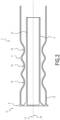
figure 2 is a sectional view along plane II-II offigure 1 , -
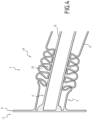
figure 3 is a partial sectional view of a deformed energy absorbing device, and -
figure 4 is an enlarged view of area IV offigure 3 . - An embodiment of an
energy absorbing device 2 according to the invention is depicted infigures 1 and2 . - The
energy absorbing device 2 is, for example, a crash-box or an extension of a cradle of a motor vehicle (not represented). In case of an impact, theenergy absorbing device 2 is deformed in order to dissipate the energy of the impact such that this energy is not transmitted to the remainder of the vehicle - For example, two
energy absorbing devices 2 are integrated in a motor vehicle, as front energy absorbing devices at the front of the vehicle. Theenergy absorbing devices 2 are then, for example, connected to a bumper beam (not represented) extending transversally between the energy absorbing devices. It should be noted that energy absorbing devices can also be integrated at the rear of the vehicle. - The
energy absorbing device 2 comprises a hollowlongitudinal member 4, alongitudinal guide 6 and aclosing plate 8. - The
longitudinal member 4 is arranged to deform during an impact, and thus absorb the energy of the impact by folding on itself as will be described subsequently. - The
longitudinal member 4 extends along a firstlongitudinal axis 10 from afirst end 12 to asecond end 14 and comprises amember wall 16. - For example, the
longitudinal member 4 is rectilinear, namely the firstlongitudinal axis 10 is rectilinear. Alternatively, thelongitudinal member 4 can be bent to adapt to its location in a motor vehicle and to the parts surrounding thelongitudinal member 4 at said location. - The
member wall 16 is for example made of steel, notably a HX340LAD type steel. - The
member wall 16 has for example a thickness above 1mm, preferably above 1.5mm. - The
member wall 16 for example has a slenderness ratio λ above 25, as defined by
- L is the length of the
member wall 16 - Imin is the second moment of inertia of the
member wall 16, - A is the maximal cross section of an outer surface of the
member wall 16. - The
longitudinal member 4 has, for example, a rectangular cross section. The firstlongitudinal axis 10 extends along a longitudinal direction. - In a mounted vehicle, the longitudinal direction corresponds, for example, to the rear-front direction of the vehicle.
- The
longitudinal member 4 is closed at thefirst end 12, by theclosing plate 8. In case of an impact, the impact is applied on thefirst end 12 of thelongitudinal member 4 through theclosing plate 8. Theclosing plate 8 can also serve as a fixing plate for the bumper beam. - The
longitudinal member 4 preferably hasstructural weaknesses 18, preferably located in the vicinity of thefirst end 12, to control the kinematic and the start of the deformation of thelongitudinal member 4. - In particular, the
structural weaknesses 18 are predetermined portions of thelongitudinal member 4 which are weakened, meaning that the mechanical resistance of thelongitudinal member 4 is reduced in these portions compared to thelongitudinal member 4 outside of these portions. - The
structural weaknesses 18 are therefore portions of thelongitudinal member 4 designed to bend more easily than the rest of thelongitudinal member 4. - The
structural weaknesses 18 are designed so that, in case of a crash, thelongitudinal member 4 initially deforms at the location of thesestructural weaknesses 18. - Each
structural weakness 18 respectively extends along at least a portion of thelongitudinal member 4. - In the case of a rectangular section of the
longitudinal member 4, thestructural weaknesses 18 are distributed on at least one side of the rectangular section of thelongitudinal member 4. On the example illustrated onfigure 1 ,structural weaknesses 18 are located on two opposite sides of thelongitudinal member 4. - Each
structural weakness 18 extends preferably over the entire width of a side of thelongitudinal member 4. - In addition, each
structural weakness 18 extends in a plane perpendicular to the first longitudinal axis of thelongitudinal member 4. - In
figures 1 and2 , thestructural weaknesses 18 are in the form of local reductions of cross section of thelongitudinal member 4. - In particular, in
figures 1 and2 , eachstructural weakness 18 is a fold having in this example an arc of circle shape. - For example, the
structural weaknesses 18 of at least one side of thelongitudinal member 4 are regularly distributed along its length. More precisely, eachstructural weakness 18 defines a closest point to thelongitudinal guide 6, the distance between the closest points of two successivestructural weaknesses 18 being constant along the length of thelongitudinal member 4. - The
longitudinal guide 6 is arranged within thelongitudinal member 4 and extends along a secondlongitudinal axis 20. - The second
longitudinal axis 20 is for example parallel to the firstlongitudinal axis 10. Alternatively, the secondlongitudinal axis 20 and the firstlongitudinal axis 10 define between them an angle greater than 5°. According to a particular embodiment, the secondlongitudinal axis 20 is parallel to the first longitudinal axis in a first region of the longitudinal member and is inclined relative to the first longitudinal axis in a second region of the longitudinal member. - The
longitudinal guide 6 is arranged for guiding the deformation of thelongitudinal member 4 along the secondlongitudinal axis 20 in case of an impact. - By guiding, it is meant that the deformation of the
longitudinal member 4 occurs along the firstlongitudinal axis 10 and thelongitudinal member 4 is substantially not bent along another axis thanks to the guiding of thelongitudinal guide 6. - The
longitudinal guide 6 comprises aguide wall 22. - Preferably, the
guide wall 22 has a thickness comprised between 1.0mm and 4.0mm. - In case of an impact and in order to obtain an optimized energy absorption, the
longitudinal member 4 gets crushed along itsaxis 10 in such a way that the material of thelongitudinal member 4 forms folds while absorbing energy. The energy absorption occurs with the folds formation. As the number of folds increases and/or as the amplitude of the folds increases, the energy absorption increases, the amplitude of a fold being defined as the distance, in a plane substantially perpendicular to the firstlongitudinal axis 10, between a top and a bottom of the fold, the top being the farthest region of the fold from the firstlongitudinal axis 10 and the bottom being the closest region of the fold to the firstlongitudinal axis 10. In the absence of thelongitudinal guide 6, there will be two competing reactions of thelongitudinal member 4 to the compressive force resulting from an impact: the first reaction is to locally absorb part of the impact energy thanks to the formation of folds in the areas comprisingstructural weaknesses 18, the second reaction is for thelongitudinal member 4 to deform by generalized bending of thelongitudinal member 4 around an axis located in a plane generally perpendicular to the compressive force. As explained previously, the second reaction is not desirable because thelongitudinal member 4 will absorb far less energy by generalized bending than by the formation of folds. Furthermore, the generalized bending of thelongitudinal member 4 can result in the collision of thelongitudinal member 4 with other elements of the vehicle. The presence of thelongitudinal guide 6, by forcing the deformation of thelongitudinal member 4 to stay comprised between the firstlongitudinal axis 10 and the secondlongitudinal axis 20, prevents the generalized bending of thelongitudinal member 4 and therefore promotes the energy absorption through the formation of folds in the areas of thelongitudinal member 4 comprisingstructural weaknesses 18. - To this end, the
longitudinal member 4 and thelongitudinal guide 6 are arranged such that, in case of an impact, themember wall 16 of thelongitudinal member 4 is deformed into awave shape 24, each wave being a fold. - The
longitudinal guide 6 can have a polygonal, for example a rectangular or a square, or a circular cross section. - The
longitudinal guide 6 can be hollow or alternatively a completely filled volume, without void inside. - The
longitudinal guide 6 is for example made in the same material than thelongitudinal member 4. - For example, the
longitudinal guide 6 is made of steel, notably a HX340LAD type steel. - The
longitudinal guide 6 is attached to theclosing plate 8 inside thelongitudinal member 4. In one embodiment, thelongitudinal member 4 and thelongitudinal guide 6 are welded to theclosing plate 8. This embodiment is depicted in thefigures 1 to 4 . In another embodiment, thelongitudinal guide 6 and theclosing plate 8 are integral with thelongitudinal member 4. - The ratio of the longitudinal guide length, measured along the second
longitudinal axis 20, to the longitudinal member length, measured along the firstlongitudinal axis 10, is comprised between 1/5 and 3/5. - These particular upper and lower limit values define an optimal design of the
energy absorbing device 2 in terms of amount of energy absorbed. - Indeed, the
longitudinal guide 6 must be long enough to fully guide the deformation of thelongitudinal member 4, thus allowing a maximal dissipation of energy. Thelongitudinal guide 6 reduces the deformation of thelongitudinal member 4 out of the firstlongitudinal axis 10. If thelongitudinal guide 6 is not long enough, thelongitudinal member 4 bends out of the firstlongitudinal axis 10, at the beginning of the crash. This bending prevents thelongitudinal member 4 from deforming in the wave shape, and thelongitudinal member 4 does not dissipate the energy in an optimized manner. - In addition, the
longitudinal guide 6 must not be too long or, during an impact, it will contact thesecond end 14 of thelongitudinal member 4, and will not be allowed to be fully deformed, thus transmitting energy to the rest of the vehicle. - Apart from the
structural weaknesses 18, thelongitudinal member 4 and thelongitudinal guide 6 have constant cross sections along their whole lengths. The ratio of the longitudinal member cross section to the longitudinal guide cross section is then comprised between 2 and 9. By "cross section", it is meant the cross section of an outer surface of thelongitudinal member 4 or of thelongitudinal guide 6. - These particular upper and lower limit values define a complementary optimal design of the
energy absorbing device 2 in terms of amount of energy absorbed. Indeed, if the ratio of cross sections is below 2, the distance between thelongitudinal member 4 and thelongitudinal guide 6 can be too small to allow a full formation of thewave shape 24 of themember wall 16 in case of crash. In addition, if the ratio of cross sections is above 9, the distance between thelongitudinal member 4 and thelongitudinal guide 6 can be too large to ensure that, in case of an impact, thewave shape 24 of thedeformed member wall 16 haswave troughs 26, or bottom of the waves, which bear against theguide wall 22 of thelongitudinal guide 6. Thiswave shape 24 is shown infigures 3 and4 . The contact between thewave troughs 26 and theguide wall 22 forces a further bending of theside wall 24, thereby increasing the amount of absorbed energy. - Furthermore, the longitudinal member constant cross section is delimited by an outer contour, the outer contour defining a geometrical barycenter point, the geometrical barycenter point being preferably included in the longitudinal guide constant cross section.
- For example, the geometrical barycenter point of a rectangular cross section is the intersection of the diagonals. In addition, the geometrical barycenter point of a circular cross section is the center of the cross section.
- This feature further optimizes the amount of energy which can be absorbed by the
energy absorbing device 2. Indeed, this feature ensures that an offset between the firstlongitudinal axis 10 and the secondlongitudinal axis 20 is not too important so that thewave troughs 26 contact theguide wall 22 during the deformation of thelongitudinal member 4 due to a crash. - Advantageously, as illustrated in the example of
figures 1 and2 , thelongitudinal guide 6 is centered with respect to a cross section of thelongitudinal member 4, the firstlongitudinal axis 10 thus coinciding with the secondlongitudinal axis 20. Centering thelongitudinal guide 6 allows an optimum in terms of energy absorption in case of a crash. - A method for manufacturing the energy absorbing device described above will now be explained. Such method comprises the following steps:
- manufacturing a hollow longitudinal member (4), the longitudinal member (4)having structural weaknesses (18), the longitudinal member (4) having constant cross section along its whole length apart from the structural weaknesses (18) - manufacturing a longitudinal guide (6), the longitudinal guide (6) having constant cross section along its whole length, the ratio of the longitudinal guide length to the longitudinal member length being comprised between 1/5 and 3/5, and the ratio of the longitudinal member constant cross section to the longitudinal guide constant cross section is comprised between 2 and 9
- assembling together said longitudinal guide (6) in said longitudinal member (4).
- While the invention has been described in detail in connection with only a limited number of embodiments, it should be readily understood that the invention is not limited to such disclosed embodiments.
- Alternatively, the
longitudinal guide 6 and/or thelongitudinal member 4 have polygonal or circular constant cross sections. - Alternatively, at least one or each
structural weakness 18 is, for example, a welding line or a through hole or a row of through holes, or is a change in the cross section, in the thickness or in the material of thelongitudinal member 4. - Alternatively, the
structural weaknesses 18 of at least one side of thelongitudinal member 4 are not regularly distributed along its length. - Alternatively, the second
longitudinal axis 20 is offset with respect to the firstlongitudinal axis 10, the geometrical barycenter point of the longitudinal member constant cross section being included in the longitudinal guide constant cross section. - A first example of various energy absorbing devices illustrating the invention will now be detailed in reference to below Table 1.
- In all examples of Table 1, the
longitudinal member 4 has the same characteristics. Thelongitudinal member 4 has a length of 500mm, outer dimensions of 47.4mm by 39.7mm, a wall thickness of 1.8mm and is made of HX340LAD type steel. Thelongitudinal member 4 has structural weaknesses at the vicinity of itsfirst end 12. - The
longitudinal guide 6 has a square cross section of 20mm*20mm and is made of the same material HX340LAD steel as thelongitudinal member 4. - The
longitudinal guide 6 has a thickness of 2mm. - Different lengths of the
longitudinal guide 6 have been chosen in order to illustrate the advantages of the present invention. - The results of numerical simulations of the absorbed energy during impact of the different configurations of the energy absorbing device have been compared to two reference cases, R1 which corresponds to the
longitudinal member 4 without anylongitudinal guide 6, and R2 which corresponds to thelongitudinal member 4 with alongitudinal guide 6 measuring 450mm long, i.e. a ratio of thelongitudinal guide 6 to thelongitudinal member 4 of 4.5/5, which is outside of the maximum length ratio range as defined above. The results are summarized in table 1. - As can be seen in R2, when using a
longitudinal guide 6 of 450mm, with a length ratio to thelongitudinal member 4 above 3/5, the absorbed energy decreases significantly compared to the reference case without guide tube R1. This is due to the fact that theguide tube 6 comes in contact with theback closing plate 14 during impact before full energy absorption by thelongitudinal member 4. - In all cases within the specified range of the invention, the presence of the
longitudinal guide 6 increases the energy absorbed between 13% and 14%.Table 1: examples of different lengths of longitudinal guide Trial Guide length (mm) Guide length/ member length Absorbed energy (in kJ) Additional energy absorbed compared to "no guide" reference R1 no longitudinal guide 4 854 reference R2 450 4,5/5 2 987 -38% I1 100 1/5 5 461 +13% I2 200 2/5 5 519 +14% I3 300 3/5 5 477 +13% - A second example of various energy absorbing devices illustrating the invention will now be detailed in reference to below Table 2.
- In all examples of Table 2, the
longitudinal member 4 is similar to the one of the first example of Table 1, namely I1 - The
longitudinal guide 6 has a rectangular cross section and is made of the same material HX340LAD steel as thelongitudinal member 4. - The
longitudinal guide 6 has a thickness of 2mm and a length of 200mm so that the Guide length/ member length ratio is 2/5. - Different cross sections of the
longitudinal guide 6 have been chosen in order to illustrate the advantages of a particular embodiment of the present invention. - In all cases within the specified range of cross sections of the invention, the energy absorbed is increased by between 6% and 38% compared to the reference.
Table 2: examples of different cross sections of longitudinal guide Trial Guide cross section (mmxmm) Member cross section / guide cross section Absorbed energy (in kJ) Additional energy absorbed compared to "no guide" reference R1 no longitudinal guide 4 854 reference I2 20x20 4.7 5 519 +14 % I4 25x25 3 6 136 +26% I5 15x15 8.4 6 684 +38% I6 30x25 2.5 5 128 +6%
Claims (13)
- An energy absorbing device (2) for a motor vehicle comprising a hollow longitudinal member (4) extending along a first longitudinal axis (10) and a longitudinal guide (6) extending along a second longitudinal axis (20), arranged within the longitudinal member (4), and suitable for guiding the deformation of the longitudinal member (4) in case of an impact,wherein the ratio of the longitudinal guide length, measured along the second longitudinal axis (20), to the longitudinal member length, measured along the first longitudinal axis (10), is comprised between 1/5 and 3/5;wherein the longitudinal guide (6) has constant cross section along its whole length, and the longitudinal member (4) has structural weaknesses (18), the longitudinal member (4) having constant cross section along its whole length apart from the structural weaknesses (18); andwherein the ratio of the longitudinal member constant cross section to the longitudinal guide constant cross section is comprised between 2 and 9.
- An energy absorbing device according to claim 1, wherein the longitudinal member constant cross section is delimited by an outer contour, the outer contour defining a geometrical barycenter point, the geometrical barycenter point being included in the longitudinal guide constant cross section.
- An energy absorbing device according to any of claims 1 or 2, wherein the structural weaknesses (18) are predetermined portions of the longitudinal member (4) which are weakened, at least one structural weakness (18) being for example a welding line or a through hole or a row of through holes or a local reduction of cross section, or a change in the thickness or a change in the material of the longitudinal member (4).
- An energy absorbing device according to claim 3, wherein each structural weakness (18) extends in a plane perpendicular to the first longitudinal axis (10) of the longitudinal member (4).
- An energy absorbing device according to any of claims 1 to 4, wherein the longitudinal guide (6) comprises a guide wall (22) having a thickness comprised between 1mm and 4.0mm.
- An energy absorbing device according to any of claims 1 to 5, wherein the longitudinal member (4) is closed at one end by a closing plate (8), the longitudinal guide (6) being attached to said closing plate (8) inside the longitudinal member (4).
- An energy absorbing device according to any of claims 1 to 6, wherein the longitudinal guide (6) is integral with the longitudinal member (4).
- An energy absorbing device according to any of claims 1 to 7, wherein the longitudinal guide (6) and the longitudinal member (4) have rectangular or polygonal or circular cross sections.
- An energy absorbing device according to any of claims 1 to 8, wherein the longitudinal member (4) comprises a member wall (16) having a slenderness ratio (A) above 25, as defined by A = L / √(lmin / A) where:L is the length of the member wall (16),Imin is the second moment of inertia of the member wall (16),A is the total cross-sectional area of the member wall (16).
- An energy absorbing device according to claim to any of claims 1 to 9, wherein the longitudinal member (4) is a crash box or an extension of a cradle of the vehicle.
- A motor vehicle body comprising an energy absorbing device (2) according to any of the preceding claims.
- A method for manufacturing an energy absorbing device (2) according to any of claims 1 to 10, comprising the steps of:- manufacturing a hollow longitudinal member (4), the longitudinal member (4) having structural weaknesses (18), the longitudinal member (4) having constant cross section along its whole length apart from the structural weaknesses (18)- manufacturing a longitudinal guide (6), the longitudinal guide (6) having constant cross section along its whole length, the ratio of the longitudinal guide length to the longitudinal member length being comprised between 1/5 and 3/5, and the ratio of the longitudinal member constant cross section to the longitudinal guide constant cross section is comprised between 2 and 9- assembling together said longitudinal guide (6) in said longitudinal member (4).
- A method according to claim 12, wherein the step of assembling comprises the steps of:- welding the longitudinal guide (6) to a closing plate (8),- welding the longitudinal member (4) to said closing plate (8), the longitudinal guide (6) being arranged inside the longitudinal member (4).
Applications Claiming Priority (2)
| Application Number | Priority Date | Filing Date | Title |
|---|---|---|---|
| PCT/IB2018/056925 WO2020053623A1 (en) | 2018-09-11 | 2018-09-11 | Energy absorbing device, motor vehicle body and method for manufacturing thereof |
| PCT/IB2019/057645 WO2020053779A1 (en) | 2018-09-11 | 2019-09-11 | Energy absorbing device, motor vehicle body and method for manufacturing thereof |
Publications (2)
| Publication Number | Publication Date |
|---|---|
| EP3849849A1 EP3849849A1 (en) | 2021-07-21 |
| EP3849849B1 true EP3849849B1 (en) | 2023-04-26 |
Family
ID=63643027
Family Applications (1)
| Application Number | Title | Priority Date | Filing Date |
|---|---|---|---|
| EP19769246.0A Active EP3849849B1 (en) | 2018-09-11 | 2019-09-11 | Energy absorbing device, motor vehicle body and method for manufacturing thereof |
Country Status (8)
| Country | Link |
|---|---|
| US (1) | US11801800B2 (en) |
| EP (1) | EP3849849B1 (en) |
| CN (1) | CN112672926B (en) |
| ES (1) | ES2945817T3 (en) |
| FI (1) | FI3849849T3 (en) |
| HU (1) | HUE061729T2 (en) |
| PL (1) | PL3849849T3 (en) |
| WO (2) | WO2020053623A1 (en) |
Families Citing this family (1)
| Publication number | Priority date | Publication date | Assignee | Title |
|---|---|---|---|---|
| FR3116491B1 (en) * | 2020-11-26 | 2023-03-10 | Valeo Systemes Thermiques | Energy absorber device. |
Family Cites Families (14)
| Publication number | Priority date | Publication date | Assignee | Title |
|---|---|---|---|---|
| US4974820A (en) * | 1986-05-09 | 1990-12-04 | Suzuki Sogyo Kabushiki Kaisha | Bellows type shock absorber |
| DE19637244A1 (en) | 1996-09-13 | 1998-03-19 | Bayerische Motoren Werke Ag | Shock absorption device for vehicles |
| DE19745656C2 (en) | 1997-10-16 | 2000-06-21 | Daimler Chrysler Ag | Impact absorber for a motor vehicle |
| FR2855805B1 (en) | 2003-06-06 | 2005-08-05 | Vallourec Vitry | STRUCTURE ELEMENT FOR VEHICLE CAPABLE OF IMPROVED SHOCK BEHAVIOR |
| DE102005026284B3 (en) * | 2005-06-08 | 2006-11-09 | Dr.Ing.H.C. F. Porsche Ag | Longitudinal carrier, for a motor vehicle chassis, has a two-part tube with a nominal fracture point between them to give a telescopic movement to absorb impact forces |
| EP1993881A4 (en) | 2006-03-06 | 2009-12-02 | Volvo Lastvagnar Ab | Arrangement for underrun protection for a vehicle |
| WO2012101810A1 (en) * | 2011-01-27 | 2012-08-02 | トヨタ自動車株式会社 | Automobile front structure |
| JP5776537B2 (en) * | 2011-12-26 | 2015-09-09 | トヨタ車体株式会社 | Shock absorber for vehicle |
| JP2013231484A (en) * | 2012-05-01 | 2013-11-14 | Toyota Auto Body Co Ltd | Impact absorption mechanism |
| JP5791676B2 (en) | 2013-09-10 | 2015-10-07 | 富士重工業株式会社 | Shock absorber |
| JP6358300B2 (en) | 2016-09-06 | 2018-07-18 | マツダ株式会社 | Rear body structure of the vehicle |
| CN206141628U (en) | 2016-10-19 | 2017-05-03 | 大连比亚迪汽车有限公司 | Strike energy -absorbing device and vehicle |
| US11021122B1 (en) * | 2019-11-21 | 2021-06-01 | Ford Global Technologies, Llc | Vehicle crush-can assembly and crush-can assembly providing method |
| JP7459687B2 (en) * | 2020-07-01 | 2024-04-02 | マツダ株式会社 | Vehicle front body structure |
-
2018
- 2018-09-11 WO PCT/IB2018/056925 patent/WO2020053623A1/en not_active Ceased
-
2019
- 2019-09-11 FI FIEP19769246.0T patent/FI3849849T3/en active
- 2019-09-11 EP EP19769246.0A patent/EP3849849B1/en active Active
- 2019-09-11 US US17/275,074 patent/US11801800B2/en active Active
- 2019-09-11 ES ES19769246T patent/ES2945817T3/en active Active
- 2019-09-11 PL PL19769246.0T patent/PL3849849T3/en unknown
- 2019-09-11 HU HUE19769246A patent/HUE061729T2/en unknown
- 2019-09-11 CN CN201980059021.1A patent/CN112672926B/en active Active
- 2019-09-11 WO PCT/IB2019/057645 patent/WO2020053779A1/en not_active Ceased
Also Published As
| Publication number | Publication date |
|---|---|
| US11801800B2 (en) | 2023-10-31 |
| EP3849849A1 (en) | 2021-07-21 |
| PL3849849T3 (en) | 2023-07-10 |
| CN112672926A (en) | 2021-04-16 |
| WO2020053779A1 (en) | 2020-03-19 |
| ES2945817T3 (en) | 2023-07-07 |
| CN112672926B (en) | 2023-11-24 |
| US20210253051A1 (en) | 2021-08-19 |
| HUE061729T2 (en) | 2023-08-28 |
| FI3849849T3 (en) | 2023-06-14 |
| WO2020053623A1 (en) | 2020-03-19 |
Similar Documents
| Publication | Publication Date | Title |
|---|---|---|
| EP1650466B1 (en) | Impact-absorbing member | |
| EP1653114B1 (en) | Impact-absorbing member | |
| EP1923273B1 (en) | Impact absorption member for vehicle | |
| JP4350731B2 (en) | Shock absorbing member for vehicle | |
| EP2412582B1 (en) | Bumper reinforcement and bumper device for vehicle | |
| US10807548B2 (en) | Vehicle front body structure | |
| JP6631560B2 (en) | Automotive collision energy absorbing parts | |
| JP6014430B2 (en) | bumper | |
| JP5177397B2 (en) | Bumper structure | |
| US6523893B2 (en) | Vehicle seat frame | |
| EP1749702B1 (en) | Vehicle bumper beam and process of manufacturing the bumper beam | |
| KR20210115035A (en) | Structural members for vehicles | |
| WO2017030191A1 (en) | Steel sheet member combination structure, automobile structural member, center pillar, bumper, and door beam | |
| JP5147003B2 (en) | Side member | |
| CN106660437B (en) | Door collision prevention girders | |
| EP3849849B1 (en) | Energy absorbing device, motor vehicle body and method for manufacturing thereof | |
| JP6986469B2 (en) | Structural members for vehicles | |
| EP3932750B1 (en) | Structural member for vehicle | |
| EP3595959B1 (en) | Vehicle front structure with splayed variable gage rail tip | |
| JP2009107445A (en) | Body front structure | |
| JP2005104235A (en) | Automotive bumper equipment | |
| KR20220028865A (en) | Side sill for vehicle | |
| EP4015314A1 (en) | Crash extension for crash management system | |
| JP2006205933A (en) | Vehicle shock absorption structure | |
| JP6269628B2 (en) | Bumper structure for vehicles |
Legal Events
| Date | Code | Title | Description |
|---|---|---|---|
| STAA | Information on the status of an ep patent application or granted ep patent |
Free format text: STATUS: UNKNOWN |
|
| STAA | Information on the status of an ep patent application or granted ep patent |
Free format text: STATUS: THE INTERNATIONAL PUBLICATION HAS BEEN MADE |
|
| PUAI | Public reference made under article 153(3) epc to a published international application that has entered the european phase |
Free format text: ORIGINAL CODE: 0009012 |
|
| STAA | Information on the status of an ep patent application or granted ep patent |
Free format text: STATUS: REQUEST FOR EXAMINATION WAS MADE |
|
| 17P | Request for examination filed |
Effective date: 20210311 |
|
| AK | Designated contracting states |
Kind code of ref document: A1 Designated state(s): AL AT BE BG CH CY CZ DE DK EE ES FI FR GB GR HR HU IE IS IT LI LT LU LV MC MK MT NL NO PL PT RO RS SE SI SK SM TR |
|
| DAV | Request for validation of the european patent (deleted) | ||
| DAX | Request for extension of the european patent (deleted) | ||
| STAA | Information on the status of an ep patent application or granted ep patent |
Free format text: STATUS: EXAMINATION IS IN PROGRESS |
|
| 17Q | First examination report despatched |
Effective date: 20220405 |
|
| GRAJ | Information related to disapproval of communication of intention to grant by the applicant or resumption of examination proceedings by the epo deleted |
Free format text: ORIGINAL CODE: EPIDOSDIGR1 |
|
| GRAP | Despatch of communication of intention to grant a patent |
Free format text: ORIGINAL CODE: EPIDOSNIGR1 |
|
| INTG | Intention to grant announced |
Effective date: 20221114 |
|
| STAA | Information on the status of an ep patent application or granted ep patent |
Free format text: STATUS: GRANT OF PATENT IS INTENDED |
|
| INTG | Intention to grant announced |
Effective date: 20221125 |
|
| INTG | Intention to grant announced |
Effective date: 20221215 |
|
| GRAS | Grant fee paid |
Free format text: ORIGINAL CODE: EPIDOSNIGR3 |
|
| GRAA | (expected) grant |
Free format text: ORIGINAL CODE: 0009210 |
|
| STAA | Information on the status of an ep patent application or granted ep patent |
Free format text: STATUS: THE PATENT HAS BEEN GRANTED |
|
| AK | Designated contracting states |
Kind code of ref document: B1 Designated state(s): AL AT BE BG CH CY CZ DE DK EE ES FI FR GB GR HR HU IE IS IT LI LT LU LV MC MK MT NL NO PL PT RO RS SE SI SK SM TR |
|
| REG | Reference to a national code |
Ref country code: GB Ref legal event code: FG4D |
|
| REG | Reference to a national code |
Ref country code: CH Ref legal event code: EP |
|
| REG | Reference to a national code |
Ref country code: DE Ref legal event code: R096 Ref document number: 602019028093 Country of ref document: DE |
|
| REG | Reference to a national code |
Ref country code: AT Ref legal event code: REF Ref document number: 1562609 Country of ref document: AT Kind code of ref document: T Effective date: 20230515 |
|
| REG | Reference to a national code |
Ref country code: IE Ref legal event code: FG4D |
|
| P01 | Opt-out of the competence of the unified patent court (upc) registered |
Effective date: 20230427 |
|
| REG | Reference to a national code |
Ref country code: FI Ref legal event code: FGE |
|
| REG | Reference to a national code |
Ref country code: SE Ref legal event code: TRGR |
|
| REG | Reference to a national code |
Ref country code: NL Ref legal event code: FP |
|
| REG | Reference to a national code |
Ref country code: ES Ref legal event code: FG2A Ref document number: 2945817 Country of ref document: ES Kind code of ref document: T3 Effective date: 20230707 |
|
| REG | Reference to a national code |
Ref country code: SK Ref legal event code: T3 Ref document number: E 41723 Country of ref document: SK |
|
| REG | Reference to a national code |
Ref country code: LT Ref legal event code: MG9D |
|
| REG | Reference to a national code |
Ref country code: HU Ref legal event code: AG4A Ref document number: E061729 Country of ref document: HU |
|
| PG25 | Lapsed in a contracting state [announced via postgrant information from national office to epo] |
Ref country code: PT Free format text: LAPSE BECAUSE OF FAILURE TO SUBMIT A TRANSLATION OF THE DESCRIPTION OR TO PAY THE FEE WITHIN THE PRESCRIBED TIME-LIMIT Effective date: 20230828 Ref country code: NO Free format text: LAPSE BECAUSE OF FAILURE TO SUBMIT A TRANSLATION OF THE DESCRIPTION OR TO PAY THE FEE WITHIN THE PRESCRIBED TIME-LIMIT Effective date: 20230726 |
|
| PG25 | Lapsed in a contracting state [announced via postgrant information from national office to epo] |
Ref country code: RS Free format text: LAPSE BECAUSE OF FAILURE TO SUBMIT A TRANSLATION OF THE DESCRIPTION OR TO PAY THE FEE WITHIN THE PRESCRIBED TIME-LIMIT Effective date: 20230426 Ref country code: LV Free format text: LAPSE BECAUSE OF FAILURE TO SUBMIT A TRANSLATION OF THE DESCRIPTION OR TO PAY THE FEE WITHIN THE PRESCRIBED TIME-LIMIT Effective date: 20230426 Ref country code: LT Free format text: LAPSE BECAUSE OF FAILURE TO SUBMIT A TRANSLATION OF THE DESCRIPTION OR TO PAY THE FEE WITHIN THE PRESCRIBED TIME-LIMIT Effective date: 20230426 Ref country code: IS Free format text: LAPSE BECAUSE OF FAILURE TO SUBMIT A TRANSLATION OF THE DESCRIPTION OR TO PAY THE FEE WITHIN THE PRESCRIBED TIME-LIMIT Effective date: 20230826 Ref country code: HR Free format text: LAPSE BECAUSE OF FAILURE TO SUBMIT A TRANSLATION OF THE DESCRIPTION OR TO PAY THE FEE WITHIN THE PRESCRIBED TIME-LIMIT Effective date: 20230426 Ref country code: GR Free format text: LAPSE BECAUSE OF FAILURE TO SUBMIT A TRANSLATION OF THE DESCRIPTION OR TO PAY THE FEE WITHIN THE PRESCRIBED TIME-LIMIT Effective date: 20230727 |
|
| REG | Reference to a national code |
Ref country code: DE Ref legal event code: R097 Ref document number: 602019028093 Country of ref document: DE |
|
| PG25 | Lapsed in a contracting state [announced via postgrant information from national office to epo] |
Ref country code: SM Free format text: LAPSE BECAUSE OF FAILURE TO SUBMIT A TRANSLATION OF THE DESCRIPTION OR TO PAY THE FEE WITHIN THE PRESCRIBED TIME-LIMIT Effective date: 20230426 Ref country code: EE Free format text: LAPSE BECAUSE OF FAILURE TO SUBMIT A TRANSLATION OF THE DESCRIPTION OR TO PAY THE FEE WITHIN THE PRESCRIBED TIME-LIMIT Effective date: 20230426 Ref country code: DK Free format text: LAPSE BECAUSE OF FAILURE TO SUBMIT A TRANSLATION OF THE DESCRIPTION OR TO PAY THE FEE WITHIN THE PRESCRIBED TIME-LIMIT Effective date: 20230426 |
|
| REG | Reference to a national code |
Ref country code: AT Ref legal event code: UEP Ref document number: 1562609 Country of ref document: AT Kind code of ref document: T Effective date: 20230426 |
|
| PLBE | No opposition filed within time limit |
Free format text: ORIGINAL CODE: 0009261 |
|
| STAA | Information on the status of an ep patent application or granted ep patent |
Free format text: STATUS: NO OPPOSITION FILED WITHIN TIME LIMIT |
|
| 26N | No opposition filed |
Effective date: 20240129 |
|
| REG | Reference to a national code |
Ref country code: CH Ref legal event code: PL |
|
| PG25 | Lapsed in a contracting state [announced via postgrant information from national office to epo] |
Ref country code: SI Free format text: LAPSE BECAUSE OF FAILURE TO SUBMIT A TRANSLATION OF THE DESCRIPTION OR TO PAY THE FEE WITHIN THE PRESCRIBED TIME-LIMIT Effective date: 20230426 |
|
| PG25 | Lapsed in a contracting state [announced via postgrant information from national office to epo] |
Ref country code: LU Free format text: LAPSE BECAUSE OF NON-PAYMENT OF DUE FEES Effective date: 20230911 |
|
| PG25 | Lapsed in a contracting state [announced via postgrant information from national office to epo] |
Ref country code: SI Free format text: LAPSE BECAUSE OF FAILURE TO SUBMIT A TRANSLATION OF THE DESCRIPTION OR TO PAY THE FEE WITHIN THE PRESCRIBED TIME-LIMIT Effective date: 20230426 Ref country code: LU Free format text: LAPSE BECAUSE OF NON-PAYMENT OF DUE FEES Effective date: 20230911 Ref country code: MC Free format text: LAPSE BECAUSE OF FAILURE TO SUBMIT A TRANSLATION OF THE DESCRIPTION OR TO PAY THE FEE WITHIN THE PRESCRIBED TIME-LIMIT Effective date: 20230426 |
|
| REG | Reference to a national code |
Ref country code: IE Ref legal event code: MM4A |
|
| PG25 | Lapsed in a contracting state [announced via postgrant information from national office to epo] |
Ref country code: IE Free format text: LAPSE BECAUSE OF NON-PAYMENT OF DUE FEES Effective date: 20230911 |
|
| PG25 | Lapsed in a contracting state [announced via postgrant information from national office to epo] |
Ref country code: CH Free format text: LAPSE BECAUSE OF NON-PAYMENT OF DUE FEES Effective date: 20230930 |
|
| PG25 | Lapsed in a contracting state [announced via postgrant information from national office to epo] |
Ref country code: IE Free format text: LAPSE BECAUSE OF NON-PAYMENT OF DUE FEES Effective date: 20230911 Ref country code: CH Free format text: LAPSE BECAUSE OF NON-PAYMENT OF DUE FEES Effective date: 20230930 |
|
| PG25 | Lapsed in a contracting state [announced via postgrant information from national office to epo] |
Ref country code: BG Free format text: LAPSE BECAUSE OF FAILURE TO SUBMIT A TRANSLATION OF THE DESCRIPTION OR TO PAY THE FEE WITHIN THE PRESCRIBED TIME-LIMIT Effective date: 20230426 |
|
| PG25 | Lapsed in a contracting state [announced via postgrant information from national office to epo] |
Ref country code: BG Free format text: LAPSE BECAUSE OF FAILURE TO SUBMIT A TRANSLATION OF THE DESCRIPTION OR TO PAY THE FEE WITHIN THE PRESCRIBED TIME-LIMIT Effective date: 20230426 |
|
| PG25 | Lapsed in a contracting state [announced via postgrant information from national office to epo] |
Ref country code: CY Free format text: LAPSE BECAUSE OF FAILURE TO SUBMIT A TRANSLATION OF THE DESCRIPTION OR TO PAY THE FEE WITHIN THE PRESCRIBED TIME-LIMIT; INVALID AB INITIO Effective date: 20190911 |
|
| PGFP | Annual fee paid to national office [announced via postgrant information from national office to epo] |
Ref country code: NL Payment date: 20250820 Year of fee payment: 7 |
|
| PGFP | Annual fee paid to national office [announced via postgrant information from national office to epo] |
Ref country code: FI Payment date: 20250820 Year of fee payment: 7 |
|
| PGFP | Annual fee paid to national office [announced via postgrant information from national office to epo] |
Ref country code: DE Payment date: 20250820 Year of fee payment: 7 |
|
| PGFP | Annual fee paid to national office [announced via postgrant information from national office to epo] |
Ref country code: PL Payment date: 20250820 Year of fee payment: 7 Ref country code: TR Payment date: 20250825 Year of fee payment: 7 Ref country code: IT Payment date: 20250820 Year of fee payment: 7 |
|
| PGFP | Annual fee paid to national office [announced via postgrant information from national office to epo] |
Ref country code: HU Payment date: 20250917 Year of fee payment: 7 Ref country code: GB Payment date: 20250822 Year of fee payment: 7 Ref country code: BE Payment date: 20250820 Year of fee payment: 7 |
|
| PGFP | Annual fee paid to national office [announced via postgrant information from national office to epo] |
Ref country code: AT Payment date: 20250822 Year of fee payment: 7 Ref country code: FR Payment date: 20250820 Year of fee payment: 7 |
|
| PGFP | Annual fee paid to national office [announced via postgrant information from national office to epo] |
Ref country code: SE Payment date: 20250820 Year of fee payment: 7 |
|
| PGFP | Annual fee paid to national office [announced via postgrant information from national office to epo] |
Ref country code: CZ Payment date: 20250828 Year of fee payment: 7 |
|
| PGFP | Annual fee paid to national office [announced via postgrant information from national office to epo] |
Ref country code: RO Payment date: 20250902 Year of fee payment: 7 |
|
| PGFP | Annual fee paid to national office [announced via postgrant information from national office to epo] |
Ref country code: SK Payment date: 20250827 Year of fee payment: 7 |
|
| PGFP | Annual fee paid to national office [announced via postgrant information from national office to epo] |
Ref country code: ES Payment date: 20251001 Year of fee payment: 7 |