EP3848878A1 - Service processing method and apparatus - Google Patents
Service processing method and apparatus Download PDFInfo
- Publication number
- EP3848878A1 EP3848878A1 EP19891348.5A EP19891348A EP3848878A1 EP 3848878 A1 EP3848878 A1 EP 3848878A1 EP 19891348 A EP19891348 A EP 19891348A EP 3848878 A1 EP3848878 A1 EP 3848878A1
- Authority
- EP
- European Patent Office
- Prior art keywords
- user terminal
- identification data
- target
- service
- system server
- Prior art date
- Legal status (The legal status is an assumption and is not a legal conclusion. Google has not performed a legal analysis and makes no representation as to the accuracy of the status listed.)
- Withdrawn
Links
Images



Classifications
-
- G—PHYSICS
- G06—COMPUTING OR CALCULATING; COUNTING
- G06Q—INFORMATION AND COMMUNICATION TECHNOLOGY [ICT] SPECIALLY ADAPTED FOR ADMINISTRATIVE, COMMERCIAL, FINANCIAL, MANAGERIAL OR SUPERVISORY PURPOSES; SYSTEMS OR METHODS SPECIALLY ADAPTED FOR ADMINISTRATIVE, COMMERCIAL, FINANCIAL, MANAGERIAL OR SUPERVISORY PURPOSES, NOT OTHERWISE PROVIDED FOR
- G06Q30/00—Commerce
- G06Q30/02—Marketing; Price estimation or determination; Fundraising
- G06Q30/0207—Discounts or incentives, e.g. coupons or rebates
- G06Q30/0222—During e-commerce, i.e. online transactions
-
- G—PHYSICS
- G06—COMPUTING OR CALCULATING; COUNTING
- G06F—ELECTRIC DIGITAL DATA PROCESSING
- G06F21/00—Security arrangements for protecting computers, components thereof, programs or data against unauthorised activity
- G06F21/60—Protecting data
- G06F21/64—Protecting data integrity, e.g. using checksums, certificates or signatures
-
- G—PHYSICS
- G06—COMPUTING OR CALCULATING; COUNTING
- G06F—ELECTRIC DIGITAL DATA PROCESSING
- G06F21/00—Security arrangements for protecting computers, components thereof, programs or data against unauthorised activity
- G06F21/30—Authentication, i.e. establishing the identity or authorisation of security principals
- G06F21/44—Program or device authentication
-
- G—PHYSICS
- G06—COMPUTING OR CALCULATING; COUNTING
- G06F—ELECTRIC DIGITAL DATA PROCESSING
- G06F11/00—Error detection; Error correction; Monitoring
- G06F11/30—Monitoring
- G06F11/34—Recording or statistical evaluation of computer activity, e.g. of down time, of input/output operation ; Recording or statistical evaluation of user activity, e.g. usability assessment
- G06F11/3438—Recording or statistical evaluation of computer activity, e.g. of down time, of input/output operation ; Recording or statistical evaluation of user activity, e.g. usability assessment monitoring of user actions
-
- G—PHYSICS
- G06—COMPUTING OR CALCULATING; COUNTING
- G06F—ELECTRIC DIGITAL DATA PROCESSING
- G06F21/00—Security arrangements for protecting computers, components thereof, programs or data against unauthorised activity
- G06F21/30—Authentication, i.e. establishing the identity or authorisation of security principals
- G06F21/31—User authentication
- G06F21/33—User authentication using certificates
-
- G—PHYSICS
- G06—COMPUTING OR CALCULATING; COUNTING
- G06F—ELECTRIC DIGITAL DATA PROCESSING
- G06F21/00—Security arrangements for protecting computers, components thereof, programs or data against unauthorised activity
- G06F21/60—Protecting data
- G06F21/62—Protecting access to data via a platform, e.g. using keys or access control rules
- G06F21/6218—Protecting access to data via a platform, e.g. using keys or access control rules to a system of files or objects, e.g. local or distributed file system or database
-
- G—PHYSICS
- G06—COMPUTING OR CALCULATING; COUNTING
- G06Q—INFORMATION AND COMMUNICATION TECHNOLOGY [ICT] SPECIALLY ADAPTED FOR ADMINISTRATIVE, COMMERCIAL, FINANCIAL, MANAGERIAL OR SUPERVISORY PURPOSES; SYSTEMS OR METHODS SPECIALLY ADAPTED FOR ADMINISTRATIVE, COMMERCIAL, FINANCIAL, MANAGERIAL OR SUPERVISORY PURPOSES, NOT OTHERWISE PROVIDED FOR
- G06Q30/00—Commerce
- G06Q30/02—Marketing; Price estimation or determination; Fundraising
- G06Q30/0207—Discounts or incentives, e.g. coupons or rebates
-
- G—PHYSICS
- G06—COMPUTING OR CALCULATING; COUNTING
- G06Q—INFORMATION AND COMMUNICATION TECHNOLOGY [ICT] SPECIALLY ADAPTED FOR ADMINISTRATIVE, COMMERCIAL, FINANCIAL, MANAGERIAL OR SUPERVISORY PURPOSES; SYSTEMS OR METHODS SPECIALLY ADAPTED FOR ADMINISTRATIVE, COMMERCIAL, FINANCIAL, MANAGERIAL OR SUPERVISORY PURPOSES, NOT OTHERWISE PROVIDED FOR
- G06Q30/00—Commerce
- G06Q30/02—Marketing; Price estimation or determination; Fundraising
- G06Q30/0207—Discounts or incentives, e.g. coupons or rebates
- G06Q30/0225—Avoiding frauds
Definitions
- This application relates to the field of Internet technologies, in particular, to a service processing method and apparatus.
- Some marketing activity rules are generally set for the marketing activities carried out by the service platforms or the merchants. For example, one terminal device can participate in the marketing activities only once. However, in a practical operation, there are always some users who evade the restriction of the marketing activity rules by modifying terminal devices or the like, resulting in loss of marketing assets.
- An objective of embodiments of this specification is to provide a service processing method and apparatus. After a service participation request transmitted by a user terminal for a target service is received, target identification data that can identify whether the user terminal has participated in the target service and/or whether device data of the user terminal is modified is obtained from a system server, to determine, according to the target identification data, whether to allow the user terminal to participate in the target service.
- the user terminal includes an iOS operating system.
- whether the device data of the user terminal is modified and/or whether the user terminal has participated in the target service may be accurately determined through the target identification data to accurately determine whether to allow the user terminal to participate in the target service, since the target identification data stored on the system server is not modified even if the device data of the user terminal is modified. Loss of assets of the target service caused by the same user terminal repeatedly participating in the target service by cheating in device modification or other manners is avoided.
- the embodiments of this specification provide a service processing method, including:
- the embodiments of this specification further provide a service processing apparatus, including:
- the embodiments of this specification further provide a service processing device, including:
- the embodiments of this specification further provide a storage medium for storing computer-executable instructions, where when the executable instructions are executed, the following procedure is implemented:
- target identification data that can identify whether the user terminal has participated in the target service and/or whether device data of the user terminal is modified is obtained from a system server, to determine, according to the target identification data, whether to allow the user terminal to participate in the target service.
- the user terminal includes an iOS operating system.
- whether the device data of the user terminal is modified and/or whether the user terminal has participated in the target service may be accurately determined through the target identification data to accurately determine whether to allow the user terminal to participate in the target service, since the target identification data stored on the system server is not modified even if the device data of the user terminal is modified. Loss of assets of the target service caused by the same user terminal repeatedly participating in the target service by cheating in device modification or other manners is avoided.
- the embodiments of this specification provide a service processing method.
- the method is mainly used for processing a service participation request transmitted by a user terminal with an iOS operating system installed.
- the method provided in the embodiments of this specification is applicable to a server corresponding to an application (APP) on the user terminal with the iOS operating system installed.
- an execution body of the method is a server corresponding to an APP, for example, may be a service processing apparatus installed on the server.
- the user terminal may be a mobile phone, a tablet computer, a computer, or the like. It should be noted that, the following user terminals in the embodiments of this specification are all user terminals with the iOS operating system installed. For ease of description, each user terminal is no longer described as "with the iOS operating system installed".
- an APP 1 and an APP 2 are installed on a user terminal. If a service participation request for a target service is transmitted by the APP 1 installed on the user terminal, the execution body of the method is a server corresponding to the APP 1. If the service participation request for the target service is transmitted by the APP 2 installed on the user terminal, the execution body of the method is a server corresponding to the APP 2.
- FIG. 1 is a method flowchart 1 of a service processing method, according to an embodiment of this specification. The method shown in FIG. 1 includes at least the following steps.
- Step 102 Receiving a service participation request transmitted by a user terminal for a target service, where the user terminal includes an iOS operating system.
- the target service may be a marketing activity carried out by a service platform or a merchant.
- the marketing activity may be issuing coupons, red packets, discount cards, or discount vouchers.
- the user may transmit a participation request for the marketing activity to an APP server by using an APP client installed on the user terminal.
- Step 104 Obtaining target identification data from a system server according to the service participation request, where the target identification data includes first identification data used for identifying whether the user terminal has participated in the target service, and/or second identification data used for identifying whether device data of the user terminal is modified, and the system server corresponds to the iOS operating system.
- the device data of the user terminal may include software information, hardware information, downloaded APPs, and other data of the user terminal.
- the iOS operating system reserves two bits for each user terminal.
- APPs installed on the user terminal may write, update, and read values corresponding to the bits, and the values corresponding to the bits do not change when terminal data of the user terminal is modified. Therefore, during specific implementation, the APPs may use the bits to tag some services.
- two bits of the user terminal are used to identify whether the user terminal has participated in the target service and/or whether the device data of the user terminal is modified.
- the target identification data may be a value of a target bit(s), and the value of the target bit(s) includes a value of a first bit used for identifying whether the user terminal has participated in the target service, and/or a value of a second bit used for identifying whether the device data of the user terminal is modified.
- the APPs may use either or both of the two bits of the user terminal.
- the target identification data may include only the first identification data used for identifying whether the user terminal has participated in the target service; the foregoing target identification data may include only the second identification data used for identifying whether the device data of the user terminal is modified; or the target identification data includes both the first identification data and the second identification data.
- the target identification data includes only the first identification data or the second identification data, it indicates that the APP uses only one bit of the user terminal; if the target identification data includes both the first identification data and the second identification data, it indicates that the APP uses the two bits of the user terminal.
- Step 106 Determining, according to the target identification data, whether to allow the user terminal to participate in the target service.
- the user terminal is not allowed to participate in the target service.
- whether the user terminal has participated in the target service and/or whether the device data of the user terminal is modified may be identified by using the two bits reserved by the iOS operating system for the user terminal.
- the values corresponding to the bits cannot be tampered with, so that whether to allow the user terminal to participate in the target service may be determined conveniently and accurately.
- step 104 the obtaining target identification data from a system server according to the service participation request includes the following step 1 and step 2:
- the passage certificate may be understood as a temporary token, a key, or the like for exchanging with the system server for data.
- the passage certificate is a temporary passage certificate, and is valid only in a period of time.
- a validity period of the passage certificate may be 1 minute, a half minute, or any other time period. This is only for an illustrative description, and does not constitute a limitation to a specific duration corresponding to the validity period of the passage certificate in this embodiment of this specification.
- the system server corresponding to the iOS operating system provides an open interface service, for example, a device check interface.
- a user terminal with the iOS operating system installed may transmit a data query request or write data to the system server through the device check interface.
- the obtaining a passage certificate of the system server includes: transmitting an obtaining request for the passage certificate to the system server through the device check interface; and receiving the passage certificate that is returned by the system server through the device check interface.
- an APP server after receiving the service participation request transmitted by the user terminal, transmits an obtaining request for a passage certificate to the system server through the device check interface. After receiving the request transmitted by the APP server, the system server delivers a passage certificate (for example, a token) to the APP server through the device check interface.
- a passage certificate for example, a token
- step 2 is performed to obtain the target identification data from the system server.
- the service participation request carries an identifier of the user terminal and an identifier of an APP corresponding to the target service.
- the obtaining the target identification data from the system server based on the passage certificate and the service participation request includes:
- the data obtaining request carries the passage certificate, the identifier of the user terminal, and the identifier of the APP; and receiving the target identification data that corresponds to the identifier of the user terminal and the identifier of the APP and returned by the system server.
- a plurality of APPs installed on the user terminal may use the bit. Therefore, a value corresponding to the bit varies with different APPs. Therefore, to facilitate accurately obtaining target identification data corresponding to an APP, the data obtaining request transmitted to the system server needs to carry an identifier of the APP.
- the system server stores target identification data corresponding to each APP on each user terminal. That is, the system server stores identifiers of user terminals, identifiers of the APPs, and target identification data in a one-to-one correspondence manner.
- a possible storage form is shown in Table 1. Table 1 Identifier of user terminal Identifier of APP Target identification data Terminal 1 APP 1 Value of bit 1, value of bit 2 Terminal 1 APP 2 Value of bit 1, value of bit 2 Terminal 2 APP 3 Value of bit 1, value of bit 2
- the target identification data includes values corresponding to two bits: a value of bit 1 and a value of bit 2.
- the target identification data may alternatively include a value of only one bit. Table 1 is only for an illustrative description, and does not constitute a limitation to this embodiment of this specification.
- the system server after receiving the data obtaining request transmitted by the APP server, the system server first detects whether the data obtaining request carries a passage certificate; verifies, according to the passage certificate, whether the APP server has permission to obtain data; search, if the APP server is determined to have permission to obtain data, for corresponding target identification data according to the identifier of the user terminal and the identifier of the APP that are carried in the request; and returns the found target identification data to the APP server.
- a user participates in a target service through an APP 1 installed on a user terminal 1, that is, transmits a service participation request to a server corresponding to the APP 1 through the user terminal 1.
- the server corresponding to the APP 1 obtains a temporary passage certificate from the system server, and transmits an obtaining request for target identification data to the system server.
- the obtaining request for the target identification data carries the temporary passage certificate, an identifier of the user terminal 1, and an identifier of the APP 1.
- the system server searches for target identification data corresponding to the identifier of the user terminal 1 and the identifier of the APP 1, and returns the found target identification data to the server of the APP 1.
- the target identification data includes the first identification data and the second identification data.
- the determining, according to the target identification data, whether to allow the user terminal to participate in the target service includes the following step (1) and step (2):
- the user terminal is not allowed to participate in the target service: 1. it is determined that the user terminal has participated in the target service, but the device data of the user terminal is not modified (that is, it is determined that the first identification data is the first specified value, but the second identification data is not the second specified value); 2. it is determined that the user terminal has not participated in the target service, but the device data of the user terminal is modified (that is, the first identification data is not the first specified value, but the second identification data is the second specified value); 3. it is determined that the user terminal has participated in the target service, and the device data of the user terminal is modified (that is, it is determined that the first identification data is the first specified value, and the second identification data is the second specified value).
- the user terminal if it is determined that the first identification data is not the first specified value, and the second identification data is not the second specified value (that is, it is determined that the user terminal has not participated in the target service, and the device data of the user terminal is not modified), the user terminal is allowed to participate in the target service.
- the first identification data may be a value of bit 1
- the second identification data may be a value of bit 2.
- the values of the first specified value and the second specified value may be the same or different.
- the first specified value may be set to 1. That is, if it is determined that a value of bit 1 is 1, it is determined that the user terminal has participated in the target service. If it is determined that a value of bit 2 is 1, it is determined that the device data of the user terminal is modified.
- initial values of bit 1 and bit 2 may be preset, for example, may be zero. When it is detected that the user has participated in the target service, the value of bit 1 is updated to 1; and if it is determined that the device data of the user terminal is modified, the value of bit 2 is updated to 1.
- FIG. 2 is a method flowchart 2 of a service processing method, according to an embodiment of this specification. The method shown in FIG. 2 includes at least the following steps.
- Step 202 Receiving a service participation request transmitted by a user terminal for a target service.
- Step 204 Obtaining a value of bit 1 and a value of bit 2 from a system server according to the service participation request.
- bit 1 is used for identifying whether the user terminal has participated in the target service
- bit 2 is used for identifying whether device data of the user terminal is modified.
- Step 206 Determining whether the value of bit 1 is a first specified value, and determining whether the value of bit 2 is a second specified value; and performing step 208 if the value of bit 1 is the first specified value and/or the value of bit 2 is the second specified value; otherwise, performing step 210.
- the first specified value indicates that the user terminal has participated in the target service
- the second specified value indicates that the device data of the user terminal is modified.
- Step 208 Determining not to allow the user terminal to participate in the target service.
- Step 210 Determining to allow the user terminal to participate in the target service.
- the determining, according to the target identification data, whether to allow the user terminal to participate in the target service includes: determining whether the first identification data is the first specified value, and determining that the user terminal has participated in the target service and the user terminal is not allowed to participate in the target service if the first identification data is the first specified value; or the user terminal is allowed to participate in the target service if the first identification data is not the first specified value.
- the determining, according to the target identification data, whether to allow the user terminal to participate in the target service includes: determining whether the second identification data is the second specified value, and determining that the device data of the user terminal is modified and the user terminal is not allowed to participate in the target service if the second identification data is the second specified value; or determining that the device data of the user terminal is not modified and the user terminal is allowed to participate in the target service if the second identification data is not the second specified value.
- the target identification data corresponding to the user terminal may be written or updated. Therefore, the method provided in this embodiment of this specification further includes: setting the first identification data to the first specified value when it is determined that the user terminal has participated in the target service; and setting the second identification data to the second specified value when it is determined that the device data of the user terminal is modified.
- the APP server After receiving the first service participation request transmitted by the user terminal for the target service, the APP server writes the value of bit 1 corresponding to the APP on the user terminal through the device check interface. In this way, when the user terminal requests to participate in the target service again, the value of bit 1 is read through the device check interface, and whether to allow the user terminal to participate in the target service is determined according to the value of bit 1.
- the value of bit 2 corresponding to the APP on the user terminal is written through the device check interface. In this way, when the user terminal requests to participate in the target service again, the value of bit 2 is read through the device check interface, and whether to allow the user terminal to participate in the target service is determined according to the value of bit 2.
- Whether the device data of the user terminal is modified may be identified through risk control policies corresponding to other services on the APP.
- the method provided in this embodiment of this specification further includes the following steps: detecting whether the device data of the user terminal changes, and determining, according to a detection result, whether the device data of the user terminal is modified.
- whether the device data of the user terminal is modified may not be identified through other risk control policies, that is, whether the device data of the user terminal is modified cannot be determined according to the second identification data.
- the target identification data includes only the first identification data
- the first identification data is the first specified value
- Whether the device data of the user terminal is modified is identified by directly detecting whether the device data of the user terminal changes.
- the first identification data is the first specified value
- the participation request transmitted by the user terminal for the target service is received again, it indicates that the user repeatedly requests to participate in the target service by using the user terminal, or the user requests to participate in the target service after the device data of the user terminal is tampered with (for example, is modified by the dark industry). Therefore, in either case, if the first identification data is the first specified value, whether the device data of the user terminal changes is detected. If it is detected that the device data of the user terminal changes, it is considered that the device data of the user terminal is modified. Through this method, whether the device data of the user terminal is modified may be simply determined.
- whether the device data of the user terminal is modified may be simply, quickly, and conveniently detected by directly comparing the device data of the user terminal.
- the target identification data may not be obtained from the system server in the set duration or an error occurs due to network or other reasons.
- the target identification data in this embodiment of this specification, if the target identification data cannot be obtained in the set duration, the user terminal is allowed to participate in the target service.
- the APP server may be configured to enable or disable an operation of invoking the system server to obtain target identification data. If the target identification data cannot be obtained from the system server in the set duration, the APP server may disable the operation of invoking the system server, and directly allow the user terminal to participate in the target service.
- FIG. 3 is a schematic diagram of a scenario of a service processing method, according to an embodiment of this specification.
- a user terminal transmits a service participation request for a target service to an APP server; after receiving the service participation request transmitted by the user terminal, the APP server transmits an obtaining request for target identification data to a system server; and the system server returns the target identification data to the APP server, for the APP server to determine, according to the target identification data, whether to allow the user terminal to participate in the target service.
- FIG. 4 is a method flowchart 3 of a service processing method, according to an embodiment of this specification. The method shown in FIG. 4 includes at least the following steps.
- Step 402. Receiving a service participation request transmitted by a user terminal for a target service.
- Step 404 Transmitting an obtaining request for a passage certificate to a system server through a device check interface; and receiving the passage certificate that is returned by the system server through the device check interface.
- Step 406 Obtaining first identification data and second identification data from the system server based on the passage certificate and the service participation request.
- the first identification data is used for indicating whether the user terminal has participated in the target service
- the second identification data is used for indicating whether device data of the user terminal is modified.
- Step 408 Determining whether the first identification data is a first specified value, and determining whether the second identification data is a second specified value; and performing step 410 if a determining result indicates that the first identification data is the first specified value and/or the second identification data is the second specified value; otherwise, performing step 412.
- Step 410 Determining not to allow the user terminal to participate in the target service.
- Step 412. Determining to allow the user terminal to participate in the target service.
- FIG. 5 is a method flowchart 4 of a service processing method, according to an embodiment of this specification. The method shown in FIG. 5 includes at least the following steps.
- Step 502. A user terminal transmits a participation request for a marketing activity to an APP server.
- Step 504. The APP server receives the participation request.
- Step 506 The APP server transmits an obtaining request for a passage certificate to a system server through a device check interface; and receives the passage certificate that is returned by the system server through the device check interface.
- Step 508 The APP server transmits a data obtaining request to the system server, where the data obtaining request carries the passage certificate, an identifier of the user terminal, and an identifier of the APP.
- Step 510 The system server determines a value of bit 1 and a value of bit 2 that correspond to the identifier of the user terminal and the identifier of the APP.
- bit 1 is used for indicating whether the user terminal has participated in the marketing activity
- bit 2 is used for indicating whether device data of the user terminal is modified.
- Step 512 The APP server receives the value of bit 1 and the value of bit 2 that are returned by the system server.
- Step 514 The APP server determines whether the value of bit 1 is a first specified value, and determines whether the value of bit 2 is a second specified value; and performs step 516 if the value of bit 1 is the first specified value and/or the value of bit 2 is the second specified value; otherwise, performs step 518.
- Step 516 Determining not to allow the user terminal to participate in the marketing activity.
- Step 518 Determining to allow the user terminal to participate in the marketing activity.
- target identification data that can identify whether the user terminal has participated in the target service and/or whether device data of the user terminal is modified is obtained from a system server, to determine, according to the target identification data, whether to allow the user terminal to participate in the target service.
- the user terminal includes an iOS operating system.
- whether the device data of the user terminal is modified and/or whether the user terminal has participated in the target service may be accurately determined through the target identification data to accurately determine whether to allow the user terminal to participate in the target service, since the target identification data stored on the system server is not modified even if the device data of the user terminal is modified. Loss of assets of the target service caused by the same user terminal repeatedly participating in the target service by cheating in device modification or other manners is avoided.
- FIG. 6 is a schematic diagram of a module composition of a service processing apparatus, according to an embodiment of this specification.
- the apparatus shown in FIG. 6 includes:
- the target identification data includes a value of a target bit(s), and the value of the target bit(s) includes a value of a first bit used for identifying whether the user terminal has participated in the target service, and/or a value of a second bit used for identifying whether the device data of the user terminal is modified.
- the obtaining module 604 includes:
- the service participation request carries an identifier of the user terminal and an identifier of an APP corresponding to the target service.
- the second obtaining unit is configured to: transmit a data obtaining request to the system server, where the data obtaining request carries the passage certificate, the identifier of the user terminal, and the identifier of the APP; and receive the target identification data that corresponds to the identifier of the user terminal and the identifier of the APP and returned by the system server.
- the target identification data includes the first identification data and the second identification data.
- the first determining module 606 includes:
- the apparatus provided in this embodiment of this specification further includes: a setting module, configured to set a value of the first identification data to the first specified value when it is determined that the user terminal has participated in the target service; and set a value of the second identification data to the second specified value when it is determined that the device data of the user terminal is modified.
- a setting module configured to set a value of the first identification data to the first specified value when it is determined that the user terminal has participated in the target service
- a value of the second identification data to the second specified value when it is determined that the device data of the user terminal is modified.
- the apparatus provided in this embodiment of this specification further includes:
- the first obtaining unit is configured to: transmit an obtaining request for the passage certificate to the system server through a device check interface; and receive the passage certificate that is returned by the system server through the device check interface.
- the service processing apparatus in this embodiment of this specification may further perform the method in FIG. 1 to FIG. 5 performed by the service processing apparatus, and implement functions of the service processing apparatus in the embodiments shown in FIG. 1 to FIG. 5 , and details are not repeated herein.
- target identification data that can identify whether the user terminal has participated in the target service and/or whether device data of the user terminal is modified is obtained from a system server, to determine, according to the target identification data, whether to allow the user terminal to participate in the target service.
- the user terminal includes an iOS operating system.
- whether the device data of the user terminal is modified and/or whether the user terminal has participated in the target service may be accurately determined through the target identification data to accurately determine whether to allow the user terminal to participate in the target service, since the target identification data stored on the system server is not modified even if the device data of the user terminal is modified. Loss of assets of the target service caused by the same user terminal repeatedly participating in the target service by cheating in device modification or other manners is avoided.
- an embodiment of this specification further provides a service processing device.
- the service processing device may vary greatly with different configurations or performance, and may include one or more processors 701 and a memory 702.
- the memory 702 may store one or more application programs or data.
- the memory 702 may implement transient storage or persistent storage.
- the application program stored in the memory 702 may include one or more modules (not shown). Each module may include a series of computer-executable instruction information in the service processing device.
- the processor 701 may be configured to communicate with the memory 702 to execute, on the service processing device, a series of computer-executable instruction information in the memory 702.
- the service processing device may further include one or more power supplies 703, one or more wired or wireless network interfaces 704, one or more input/output interfaces 705, one or more keyboards 706, and the like.
- the service processing device includes a memory and one or more programs.
- the one or more programs are stored in the memory, and may include one or more modules. Each module may include a series of computer-executable instruction information in the service processing device.
- the one or more programs which are configured to be executed by one or more processors, include the following computer-executable instruction information for:
- the target identification data includes a value of a target bit(s), and the value of the target bit(s) includes a value of a first bit used for identifying whether the user terminal has participated in the target service, and/or a value of a second bit used for identifying whether the device data of the user terminal is modified.
- the obtaining target identification data from a system server according to the service participation request includes:
- the service participation request carries an identifier of the user terminal and an identifier of an APP corresponding to the target service; and the obtaining the target identification data from the system server based on the passage certificate and the service participation request includes: transmitting a data obtaining request to the system server, where the data obtaining request carries the passage certificate, the identifier of the user terminal, and the identifier of the APP; and receiving the target identification data that corresponds to the identifier of the user terminal and the identifier of the APP and returned by the system server.
- the target identification data includes the first identification data and the second identification data; and the determining, according to the target identification data, whether to allow the user terminal to participate in the target service includes: determining whether the first identification data is a first specified value, and determining whether the second identification data is a second specified value, where the first specified value indicates that the user terminal has participated in the target service, and the second specified value indicates that the device data of the user terminal is modified; and determining, if a determining result indicates that the first identification data is the first specified value and/or the second identification data is the second specified value, not to allow the user terminal to participate in the target service; otherwise, determining to allow the user terminal to participate in the target service.
- the following steps may be further performed: setting a value of the first identification data to the first specified value when it is determined that the user terminal has participated in the target service; and setting a value of the second identification data to the second specified value when it is determined that the device data of the user terminal is modified.
- the following steps may be further performed: detecting whether the device data of the user terminal changes, and determining, according to a detection result, whether the device data of the user terminal is modified.
- the obtaining a passage certificate of the system server includes: transmitting an obtaining request for the passage certificate to the system server through a device check interface; and receiving the passage certificate that is returned by the system server through the device check interface.
- target identification data that can identify whether the user terminal has participated in the target service and/or whether device data of the user terminal is modified is obtained from a system server, to determine, according to the target identification data, whether to allow the user terminal to participate in the target service.
- the user terminal includes an iOS operating system.
- whether the device data of the user terminal is modified and/or whether the user terminal has participated in the target service may be accurately determined through the target identification data to accurately determine whether to allow the user terminal to participate in the target service, since the target identification data stored on the system server is not modified even if the device data of the user terminal is modified. Loss of assets of the target service caused by the same user terminal repeatedly participating in the target service by cheating in device modification or other manners is avoided.
- an embodiment of this specification further provides a storage medium for storing computer-executable instruction information.
- the storage medium may be a USB flash drive, an optical disc, a hard disk, or the like.
- the target identification data includes a value of a target bit(s), and the value of the target bit(s) includes a value of a first bit used for identifying whether the user terminal has participated in the target service, and/or a value of a second bit used for identifying whether the device data of the user terminal is modified.
- the obtaining target identification data from a system server according to the service participation request includes:
- the service participation request carries an identifier of the user terminal and an identifier of an APP corresponding to the target service; and the obtaining the target identification data from the system server based on the passage certificate and the service participation request includes:
- the target identification data includes the first identification data and the second identification data; and the determining, according to the target identification data, whether to allow the user terminal to participate in the target service includes:
- the following steps may be further performed: setting a value of the first identification data to the first specified value when it is determined that the user terminal has participated in the target service; and setting a value of the second identification data to the second specified value when it is determined that the device data of the user terminal is modified.
- the following steps may be further performed: detecting whether the device data of the user terminal changes, and determining, according to a detection result, whether the device data of the user terminal is modified.
- the obtaining a passage certificate of the system server includes: transmitting an obtaining request for the passage certificate to the system server through a device check interface; and receiving the passage certificate that is returned by the system server through the device check interface.
- target identification data that can identify whether the user terminal has participated in the target service and/or whether device data of the user terminal is modified is obtained from a system server, to determine, according to the target identification data, whether to allow the user terminal to participate in the target service.
- the user terminal includes an iOS operating system.
- whether the device data of the user terminal is modified and/or whether the user terminal has participated in the target service may be accurately determined through the target identification data to accurately determine whether to allow the user terminal to participate in the target service, since the target identification data stored on the system server is not modified even if the device data of the user terminal is modified. Loss of assets of the target service caused by the same user terminal repeatedly participating in the target service by cheating in device modification or other manners is avoided.
- a programmable logic device such as a field programmable gate array (FPGA) is a type of integrated circuit whose logic function is determined by a user by programming the device.
- HDL hardware description language
- HDLs for example, advanced Boolean expression language (ABEL), altera hardware description language (AHDL), Confluence, Georgia university programming language (CUPL), HDCal, Java hardware description language (JHDL), Lava, Lola, MyHDL, PALASM, Ruby hardware description language (RHDL), and the like.
- ABEL advanced Boolean expression language
- AHDL altera hardware description language
- CUPL Cornell university programming language
- HDCal Java hardware description language
- JHDL Java hardware description language
- Lava Lola
- MyHDL MyHDL
- PALASM Ruby hardware description language
- RHDL Ruby hardware description language
- VHDL very-high-speed integrated circuit hardware description language
- Verilog Verilog
- the controller can be implemented in any suitable manner, for example, the controller can take the form of, for example, a microprocessor or processor and a computer-readable medium storing computer-readable program code (for example, software or firmware) executable by the processor, a logic gate, a switch, an application-specific integrated circuit (ASIC), a programmable logic controller and an embedded microcontroller.
- Examples of the controller include, but are not limited to, the following microcontrollers: ARC 625D, Atmel AT91SAM, Microchip PIC18F26K20, and Silicone Labs C8051F320.
- the memory controller can also be implemented as part of the memory control logic.
- controller in addition to implementing the controller in the form of pure computer-readable program code, it is also possible to implement, by logically programming the method steps, the controller in the form of a logic gate, switch, ASIC, programmable logic controller, and embedded microcontroller and other forms to achieve the same function.
- a controller can thus be considered as a hardware component and apparatuses included therein for implementing various functions can also be considered as structures inside the hardware component.
- apparatuses configured to implement various functions can be considered as both software modules implementing the method and structures inside the hardware component.
- the system, the apparatus, the module, or the unit described in the foregoing embodiments can be implemented by a computer chip or an entity, or implemented by a product having a certain function.
- Atypical implementation device is a computer.
- the computer can be, for example, a personal computer, a laptop computer, a cellular phone, a camera phone, a smartphone, a personal digital assistant, a media player, a navigation device, an email device, a game console, a tablet computer, a wearable device, or a combination of any of these devices.
- the apparatus is divided into units according to functions, which are separately described.
- the function of the units may be implemented in the same piece of or multiple pieces of software and/or hardware.
- this application may be provided as a method, a system, or a computer program product. Therefore, this application may use a form of hardware-only embodiments, software-only embodiments, or embodiments combining software and hardware. In addition, this application may use a form of a computer program product that is implemented on one or more computer-usable storage media (including but not limited to a disk memory, a CD-ROM, an optical memory, and the like) that include computer-usable program code.
- a computer-usable storage media including but not limited to a disk memory, a CD-ROM, an optical memory, and the like
- computer program instruction information can implement each procedure and/or block in the flowcharts and/or block diagrams, and a combination of procedures and/or blocks in the flowcharts and/or block diagrams.
- the computer program instruction information may be provided to a general-purpose computer, a dedicated computer, an embedded processor, or a processor of another programmable data processing device to generate a machine, so that the instruction information executed by the computer or the processor of the another programmable data processing device generate an apparatus for implementing a specified function in one or more processes in the flowcharts and/or in one or more blocks in the block diagrams.
- the computer program instruction information may also be stored in a computer readable memory that can guide a computer or another programmable data processing device to work in a specified manner, so that the instruction information stored in the computer readable memory generate a product including an instruction information apparatus, where the instruction apparatus implements functions specified in one or more procedures in the flowcharts and/or one or more blocks in the block diagrams.
- the computer program instruction information may also be loaded onto a computer or another programmable data processing device, so that a series of operations and steps are performed on the computer or the another programmable device, thereby generating computer-implemented processing. Therefore, the instructions executed on the computer or the another programmable device provide steps for implementing a specific function in one or more processes in the flowcharts and/or in one or more blocks in the block diagrams.
- the computer device includes one or more processors (CPUs), an input/output interface, a network interface, and an internal memory.
- processors CPUs
- input/output interface input/output interface
- network interface network interface
- internal memory internal memory
- the internal memory may include, among computer-readable media, a volatile memory such as a random access memory (RAM) and/or a non-volatile memory such as a read-only memory (ROM) or a flash memory (flash RAM).
- RAM random access memory
- ROM read-only memory
- flash RAM flash memory
- the computer-readable medium includes a persistent medium and a non-persistent medium, a removable medium and a non-removable medium, which may implement storage of information by using any method or technology.
- the information may be a computer-readable instruction information, a data structure, a program module, or other data.
- Examples of a storage medium of a computer include, but are not limited to, a phase change memory (PRAM), a static random access memory (SRAM), a dynamic random access memory (DRAM), or other types of random access memory (RAM), a read-only memory (ROM), an erasable programmable read only memory (EEPROM), a flash memory or another storage technology, a compact disc read-only memory (CD-ROM), a digital versatile disc (DVD) or another optical storage, or a cartridge tape.
- a magnetic storage of a magnetic tape or a disc, another magnetic storage device, or any other non-transmission medium may be configured to store information that can be accessed by a computing device.
- the computer-readable medium does not include transitory computer-readable media (transitory media), such as a modulated data signal and a carrier.
- this application may be provided as a method, a system, or a computer program product. Therefore, this application may use a form of hardware-only embodiments, software-only embodiments, or embodiments combining software and hardware. In addition, this application may use a form of a computer program product that is implemented on one or more computer-usable storage media (including but not limited to a disk memory, a CD-ROM, an optical memory, and the like) that include computer-usable program code.
- a computer-usable storage media including but not limited to a disk memory, a CD-ROM, an optical memory, and the like
- This application can be described in the general context of computer-executable instruction information executed by a computer, for example, a program module.
- the program module includes a routine, a program, an object, a component, a data structure, and the like for executing a particular task or implementing a particular abstract data type.
- This application may also be practiced in distributed computing environments in which tasks are performed by remote processing devices that are connected by using a communication network.
- the program module may be located in both local and remote computer storage media including storage devices.
Landscapes
- Engineering & Computer Science (AREA)
- Theoretical Computer Science (AREA)
- Business, Economics & Management (AREA)
- Physics & Mathematics (AREA)
- General Physics & Mathematics (AREA)
- Computer Security & Cryptography (AREA)
- Accounting & Taxation (AREA)
- Finance (AREA)
- Development Economics (AREA)
- Strategic Management (AREA)
- General Engineering & Computer Science (AREA)
- Computer Hardware Design (AREA)
- Software Systems (AREA)
- Game Theory and Decision Science (AREA)
- General Business, Economics & Management (AREA)
- Marketing (AREA)
- Economics (AREA)
- Entrepreneurship & Innovation (AREA)
- General Health & Medical Sciences (AREA)
- Bioethics (AREA)
- Health & Medical Sciences (AREA)
- Databases & Information Systems (AREA)
- Quality & Reliability (AREA)
- Computer And Data Communications (AREA)
- Information Transfer Between Computers (AREA)
- Telephonic Communication Services (AREA)
- Management, Administration, Business Operations System, And Electronic Commerce (AREA)
Abstract
Description
- This application relates to the field of Internet technologies, in particular, to a service processing method and apparatus.
- With the rapid development of information technologies and Internet technologies, online services have been rapidly developed and widely applied, and more users manage services on line, for example, performing online shopping and online payment. With the popularity of online services, in order to attract more users, service platforms or merchants often carry out some marketing activities, for example, issuing red packets or coupons to users.
- Some marketing activity rules are generally set for the marketing activities carried out by the service platforms or the merchants. For example, one terminal device can participate in the marketing activities only once. However, in a practical operation, there are always some users who evade the restriction of the marketing activity rules by modifying terminal devices or the like, resulting in loss of marketing assets.
- Therefore, how to identify whether a terminal device has permission to participate in a marketing activity when the terminal device is about to participate in the marketing activity is a technical problem urgently to be resolved currently.
- An objective of embodiments of this specification is to provide a service processing method and apparatus. After a service participation request transmitted by a user terminal for a target service is received, target identification data that can identify whether the user terminal has participated in the target service and/or whether device data of the user terminal is modified is obtained from a system server, to determine, according to the target identification data, whether to allow the user terminal to participate in the target service. The user terminal includes an iOS operating system. In the embodiments of this specification, whether the device data of the user terminal is modified and/or whether the user terminal has participated in the target service may be accurately determined through the target identification data to accurately determine whether to allow the user terminal to participate in the target service, since the target identification data stored on the system server is not modified even if the device data of the user terminal is modified. Loss of assets of the target service caused by the same user terminal repeatedly participating in the target service by cheating in device modification or other manners is avoided.
- To resolve the foregoing technical problem, the embodiments of this specification are implemented as follows.
- The embodiments of this specification provide a service processing method, including:
- receiving a service participation request transmitted by a user terminal for a target service, where the user terminal includes an iOS operating system;
- obtaining target identification data from a system server according to the service participation request, where the target identification data includes first identification data used for identifying whether the user terminal has participated in the target service, and/or second identification data used for identifying whether device data of the user terminal is modified, and the system server corresponds to the iOS operating system; and
- determining, according to the target identification data, whether to allow the user terminal to participate in the target service.
- The embodiments of this specification further provide a service processing apparatus, including:
- a receiving module, configured to receive a service participation request transmitted by a user terminal for a target service, where the user terminal includes an iOS operating system;
- an obtaining module, configured to obtain target identification data from a system server according to the service participation request, where the target identification data includes first identification data used for identifying whether the user terminal has participated in the target service, and/or second identification data used for identifying whether device data of the user terminal is modified, and the system server corresponds to the iOS operating system; and
- a first determining module, configured to determine, according to the target identification data, whether to allow the user terminal to participate in the target service.
- The embodiments of this specification further provide a service processing device, including:
- a processor; and
- a memory arranged to store computer-executable instructions, where the executable instructions, when executed, cause the processor to:
- receiving a service participation request transmitted by a user terminal for a target service, where the user terminal includes an iOS operating system;
- obtain target identification data from a system server according to the service participation request, where the target identification data includes first identification data used for identifying whether the user terminal has participated in the target service, and/or second identification data used for identifying whether device data of the user terminal is modified, and the system server corresponds to the operating system of the user terminal; and
- determine, according to the target identification data, whether to allow the user terminal to participate in the target service.
- The embodiments of this specification further provide a storage medium for storing computer-executable instructions, where when the executable instructions are executed, the following procedure is implemented:
- receiving a service participation request transmitted by a user terminal for a target service, where the user terminal includes an iOS operating system;
- obtain target identification data from a system server according to the service participation request, where the target identification data includes first identification data used for identifying whether the user terminal has participated in the target service, and/or second identification data used for identifying whether device data of the user terminal is modified, and the system server corresponds to the operating system of the user terminal; and
- determine, according to the target identification data, whether to allow the user terminal to participate in the target service.
- In the technical solutions in the embodiments, after a service participation request transmitted by a user terminal for a target service is received, target identification data that can identify whether the user terminal has participated in the target service and/or whether device data of the user terminal is modified is obtained from a system server, to determine, according to the target identification data, whether to allow the user terminal to participate in the target service. The user terminal includes an iOS operating system. In the embodiments of this specification, whether the device data of the user terminal is modified and/or whether the user terminal has participated in the target service may be accurately determined through the target identification data to accurately determine whether to allow the user terminal to participate in the target service, since the target identification data stored on the system server is not modified even if the device data of the user terminal is modified. Loss of assets of the target service caused by the same user terminal repeatedly participating in the target service by cheating in device modification or other manners is avoided.
- To describe the technical solutions in the embodiments of this specification or in existing technologies more clearly, the following briefly introduces the accompanying drawings required for describing the embodiments or the existing technologies. Apparently, the accompanying drawings in the following description show merely some embodiments of this application, and a person of ordinary skill in the art may still derive other drawings from these accompanying drawings without creative efforts.
-
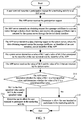
FIG. 1 is amethod flowchart 1 of a service processing method, according to an embodiment of this specification; -
FIG. 2 is amethod flowchart 2 of a service processing method, according to an embodiment of this specification; -
FIG. 3 is a schematic diagram of a scenario of a service processing method, according to an embodiment of this specification; -
FIG. 4 is a method flowchart 3 of a service processing method, according to an embodiment of this specification; -
FIG. 5 is a method flowchart 4 of a service processing method, according to an embodiment of this specification; -
FIG. 6 is a schematic diagram of a module composition of a service processing apparatus, according to an embodiment of this specification; and -
FIG. 7 is a schematic structural diagram of a service processing device, according to an embodiment of this specification. - To enable a person skilled in the art to better understand the technical solutions in this application, the technical solutions of the embodiments of this specification will be described clearly and thoroughly below with reference to the accompanying drawings of the embodiments of this specification. Apparently, the described embodiments are merely some rather than all of the embodiments of this application. All other embodiments obtained by a person of ordinary skill in the art based on the embodiments of this application without creative efforts shall fall within the protection scope of this application.
- The embodiments of this specification provide a service processing method. The method is mainly used for processing a service participation request transmitted by a user terminal with an iOS operating system installed. The method provided in the embodiments of this specification is applicable to a server corresponding to an application (APP) on the user terminal with the iOS operating system installed. In other words, an execution body of the method is a server corresponding to an APP, for example, may be a service processing apparatus installed on the server. The user terminal may be a mobile phone, a tablet computer, a computer, or the like. It should be noted that, the following user terminals in the embodiments of this specification are all user terminals with the iOS operating system installed. For ease of description, each user terminal is no longer described as "with the iOS operating system installed".
- For ease of understanding, the execution body of the method provided in the embodiments of this specification is described with examples.
- For example, an
APP 1 and anAPP 2 are installed on a user terminal. If a service participation request for a target service is transmitted by theAPP 1 installed on the user terminal, the execution body of the method is a server corresponding to theAPP 1. If the service participation request for the target service is transmitted by theAPP 2 installed on the user terminal, the execution body of the method is a server corresponding to theAPP 2. -
FIG. 1 is amethod flowchart 1 of a service processing method, according to an embodiment of this specification. The method shown inFIG. 1 includes at least the following steps. -
Step 102. Receiving a service participation request transmitted by a user terminal for a target service, where the user terminal includes an iOS operating system. - The target service may be a marketing activity carried out by a service platform or a merchant. For example, the marketing activity may be issuing coupons, red packets, discount cards, or discount vouchers. Correspondingly, the user may transmit a participation request for the marketing activity to an APP server by using an APP client installed on the user terminal.
-
Step 104. Obtaining target identification data from a system server according to the service participation request, where the target identification data includes first identification data used for identifying whether the user terminal has participated in the target service, and/or second identification data used for identifying whether device data of the user terminal is modified, and the system server corresponds to the iOS operating system. - The device data of the user terminal may include software information, hardware information, downloaded APPs, and other data of the user terminal.
- For user terminals with the iOS operating system installed, the iOS operating system reserves two bits for each user terminal. APPs installed on the user terminal may write, update, and read values corresponding to the bits, and the values corresponding to the bits do not change when terminal data of the user terminal is modified. Therefore, during specific implementation, the APPs may use the bits to tag some services. In this embodiment of this specification, two bits of the user terminal are used to identify whether the user terminal has participated in the target service and/or whether the device data of the user terminal is modified. Therefore, the target identification data may be a value of a target bit(s), and the value of the target bit(s) includes a value of a first bit used for identifying whether the user terminal has participated in the target service, and/or a value of a second bit used for identifying whether the device data of the user terminal is modified.
- During specific implementation, the APPs may use either or both of the two bits of the user terminal.
- It should be noted that, the target identification data may include only the first identification data used for identifying whether the user terminal has participated in the target service; the foregoing target identification data may include only the second identification data used for identifying whether the device data of the user terminal is modified; or the target identification data includes both the first identification data and the second identification data. Correspondingly, if the target identification data includes only the first identification data or the second identification data, it indicates that the APP uses only one bit of the user terminal; if the target identification data includes both the first identification data and the second identification data, it indicates that the APP uses the two bits of the user terminal.
-
Step 106. Determining, according to the target identification data, whether to allow the user terminal to participate in the target service. - For example, in this embodiment of this specification, if the target identification data indicates that the user terminal has participated in the target service or the device data of the user terminal is modified, the user terminal is not allowed to participate in the target service.
- According to the service processing method provided in this embodiment of this specification, whether the user terminal has participated in the target service and/or whether the device data of the user terminal is modified may be identified by using the two bits reserved by the iOS operating system for the user terminal. The values corresponding to the bits cannot be tampered with, so that whether to allow the user terminal to participate in the target service may be determined conveniently and accurately.
- For ease of understanding the service processing method provided in this embodiment of this specification, specific implementation processes of the foregoing steps are described in detail below.
- In
step 104, the obtaining target identification data from a system server according to the service participation request includes the followingstep 1 and step 2: -
Step 1. Obtaining a passage certificate of the system server, where the passage certificate is used for exchanging with the system server for data, and the passage certificate is valid in a set duration. -
Step 2. Obtaining the target identification data from the system server based on the passage certificate and the service participation request. - In this embodiment of this specification, the passage certificate may be understood as a temporary token, a key, or the like for exchanging with the system server for data. The passage certificate is a temporary passage certificate, and is valid only in a period of time. For example, during specific implementation, a validity period of the passage certificate may be 1 minute, a half minute, or any other time period. This is only for an illustrative description, and does not constitute a limitation to a specific duration corresponding to the validity period of the passage certificate in this embodiment of this specification.
- The system server corresponding to the iOS operating system provides an open interface service, for example, a device check interface. A user terminal with the iOS operating system installed may transmit a data query request or write data to the system server through the device check interface.
- Therefore, in
step 1, the obtaining a passage certificate of the system server includes: transmitting an obtaining request for the passage certificate to the system server through the device check interface; and receiving the passage certificate that is returned by the system server through the device check interface. - In this embodiment of this specification, after receiving the service participation request transmitted by the user terminal, an APP server transmits an obtaining request for a passage certificate to the system server through the device check interface. After receiving the request transmitted by the APP server, the system server delivers a passage certificate (for example, a token) to the APP server through the device check interface.
- After the APP server receives the passage certificate transmitted by the system server,
step 2 is performed to obtain the target identification data from the system server. - During specific implementation, to facilitate finding target identification data corresponding to the APP, the service participation request carries an identifier of the user terminal and an identifier of an APP corresponding to the target service. Correspondingly, in
step 2, the obtaining the target identification data from the system server based on the passage certificate and the service participation request includes: - transmitting a data obtaining request to the system server, where the data obtaining request carries the passage certificate, the identifier of the user terminal, and the identifier of the APP; and receiving the target identification data that corresponds to the identifier of the user terminal and the identifier of the APP and returned by the system server.
- During specific implementation, a plurality of APPs installed on the user terminal may use the bit. Therefore, a value corresponding to the bit varies with different APPs. Therefore, to facilitate accurately obtaining target identification data corresponding to an APP, the data obtaining request transmitted to the system server needs to carry an identifier of the APP. The system server stores target identification data corresponding to each APP on each user terminal. That is, the system server stores identifiers of user terminals, identifiers of the APPs, and target identification data in a one-to-one correspondence manner. A possible storage form is shown in Table 1.
Table 1 Identifier of user terminal Identifier of APP Target identification data Terminal 1 APP 1Value of bit 1, value ofbit 2Terminal 1APP 2Value of bit 1, value ofbit 2Terminal 2APP 3 Value of bit 1, value ofbit 2 - In the foregoing Table 1, the target identification data includes values corresponding to two bits: a value of
bit 1 and a value ofbit 2. Certainly, during specific implementation, the target identification data may alternatively include a value of only one bit. Table 1 is only for an illustrative description, and does not constitute a limitation to this embodiment of this specification. - In this embodiment of this specification, after receiving the data obtaining request transmitted by the APP server, the system server first detects whether the data obtaining request carries a passage certificate; verifies, according to the passage certificate, whether the APP server has permission to obtain data; search, if the APP server is determined to have permission to obtain data, for corresponding target identification data according to the identifier of the user terminal and the identifier of the APP that are carried in the request; and returns the found target identification data to the APP server.
- For ease of understanding, an example is given below for description.
- For example, a user participates in a target service through an
APP 1 installed on auser terminal 1, that is, transmits a service participation request to a server corresponding to theAPP 1 through theuser terminal 1. After receiving the service participation request, the server corresponding to theAPP 1 obtains a temporary passage certificate from the system server, and transmits an obtaining request for target identification data to the system server. The obtaining request for the target identification data carries the temporary passage certificate, an identifier of theuser terminal 1, and an identifier of theAPP 1. The system server searches for target identification data corresponding to the identifier of theuser terminal 1 and the identifier of theAPP 1, and returns the found target identification data to the server of theAPP 1. - In addition, during specific implementation, the target identification data includes the first identification data and the second identification data. Correspondingly, in
step 106, the determining, according to the target identification data, whether to allow the user terminal to participate in the target service includes the following step (1) and step (2): - Step (1). Determining whether the first identification data is a first specified value, and determining whether the second identification data is a second specified value, where the first specified value indicates that the user terminal has participated in the target service, and the second specified value indicates that the device data of the user terminal is modified.
- Step (2). Determining, if a determining result indicates that the first identification data is the first specified value and/or the second identification data is the second specified value, not to allow the user terminal to participate in the target service; otherwise, determining to allow the user terminal to participate in the target service.
- In this embodiment of this specification, if the first identification data is the first specified value, it indicates that the user terminal has participated in the target service; if the second identification data is the second specified value, it indicates that the device data of the user terminal is modified. During specific implementation, at least in the following three cases, the user terminal is not allowed to participate in the target service: 1. it is determined that the user terminal has participated in the target service, but the device data of the user terminal is not modified (that is, it is determined that the first identification data is the first specified value, but the second identification data is not the second specified value); 2. it is determined that the user terminal has not participated in the target service, but the device data of the user terminal is modified (that is, the first identification data is not the first specified value, but the second identification data is the second specified value); 3. it is determined that the user terminal has participated in the target service, and the device data of the user terminal is modified (that is, it is determined that the first identification data is the first specified value, and the second identification data is the second specified value).
- In this embodiments of this specification, if it is determined that the first identification data is not the first specified value, and the second identification data is not the second specified value (that is, it is determined that the user terminal has not participated in the target service, and the device data of the user terminal is not modified), the user terminal is allowed to participate in the target service.
- During specific implementation, the first identification data may be a value of
bit 1, and the second identification data may be a value ofbit 2. - The values of the first specified value and the second specified value may be the same or different. For example, during specific implementation, the first specified value may be set to 1. That is, if it is determined that a value of
bit 1 is 1, it is determined that the user terminal has participated in the target service. If it is determined that a value ofbit 2 is 1, it is determined that the device data of the user terminal is modified. For example, initial values ofbit 1 andbit 2 may be preset, for example, may be zero. When it is detected that the user has participated in the target service, the value ofbit 1 is updated to 1; and if it is determined that the device data of the user terminal is modified, the value ofbit 2 is updated to 1. For ease of understanding the method provided in this embodiment of this specification, an example in which the first identification data is a value ofbit 1, and the second identification data is a value ofbit 2 is used for describing the method provided in this embodiment of this specification.FIG. 2 is amethod flowchart 2 of a service processing method, according to an embodiment of this specification. The method shown inFIG. 2 includes at least the following steps. -
Step 202. Receiving a service participation request transmitted by a user terminal for a target service. -
Step 204. Obtaining a value ofbit 1 and a value ofbit 2 from a system server according to the service participation request. - The value of
bit 1 is used for identifying whether the user terminal has participated in the target service, and the value ofbit 2 is used for identifying whether device data of the user terminal is modified. -
Step 206. Determining whether the value ofbit 1 is a first specified value, and determining whether the value ofbit 2 is a second specified value; and performingstep 208 if the value ofbit 1 is the first specified value and/or the value ofbit 2 is the second specified value; otherwise, performingstep 210. - The first specified value indicates that the user terminal has participated in the target service, and the second specified value indicates that the device data of the user terminal is modified.
-
Step 208. Determining not to allow the user terminal to participate in the target service. -
Step 210. Determining to allow the user terminal to participate in the target service. - Certainly, during specific implementation, if the target identification data includes only the first identification data that indicates whether the user terminal has participated in the target service, in
step 106, the determining, according to the target identification data, whether to allow the user terminal to participate in the target service includes: determining whether the first identification data is the first specified value, and determining that the user terminal has participated in the target service and the user terminal is not allowed to participate in the target service if the first identification data is the first specified value; or the user terminal is allowed to participate in the target service if the first identification data is not the first specified value. If the target identification data includes only the second identification data that identifies whether the device data of the user terminal is modified, instep 106, the determining, according to the target identification data, whether to allow the user terminal to participate in the target service includes: determining whether the second identification data is the second specified value, and determining that the device data of the user terminal is modified and the user terminal is not allowed to participate in the target service if the second identification data is the second specified value; or determining that the device data of the user terminal is not modified and the user terminal is allowed to participate in the target service if the second identification data is not the second specified value. - Certainly, in this embodiment of this specification, to facilitate determining, according to the target identification data, whether to allow the user terminal to participate in the target service, when it is detected that the user terminal has participated in the target service or the device data of the user terminal is modified, the target identification data corresponding to the user terminal may be written or updated. Therefore, the method provided in this embodiment of this specification further includes:
setting the first identification data to the first specified value when it is determined that the user terminal has participated in the target service; and setting the second identification data to the second specified value when it is determined that the device data of the user terminal is modified. - After receiving the first service participation request transmitted by the user terminal for the target service, the APP server writes the value of
bit 1 corresponding to the APP on the user terminal through the device check interface. In this way, when the user terminal requests to participate in the target service again, the value ofbit 1 is read through the device check interface, and whether to allow the user terminal to participate in the target service is determined according to the value ofbit 1. - After it is identified that the device data of the user terminal is modified, the value of
bit 2 corresponding to the APP on the user terminal is written through the device check interface. In this way, when the user terminal requests to participate in the target service again, the value ofbit 2 is read through the device check interface, and whether to allow the user terminal to participate in the target service is determined according to the value ofbit 2. - Whether the device data of the user terminal is modified may be identified through risk control policies corresponding to other services on the APP.
- In addition, in this embodiment of this specification, if it is determined that the first identification data is the first specified value, where the first specified value indicates that the user terminal has participated in the target service, the method provided in this embodiment of this specification further includes the following steps:
detecting whether the device data of the user terminal changes, and determining, according to a detection result, whether the device data of the user terminal is modified. - In some cases, whether the device data of the user terminal is modified may not be identified through other risk control policies, that is, whether the device data of the user terminal is modified cannot be determined according to the second identification data. Alternatively, when the target identification data includes only the first identification data, if the first identification data is the first specified value, it may be considered that the device data of the user terminal is modified. Whether the device data of the user terminal is modified is identified by directly detecting whether the device data of the user terminal changes.
- During specific implementation, if the first identification data is the first specified value, it indicates that the user terminal has participated in the target service. When the user terminal has participated in the target service, if the participation request transmitted by the user terminal for the target service is received again, it indicates that the user repeatedly requests to participate in the target service by using the user terminal, or the user requests to participate in the target service after the device data of the user terminal is tampered with (for example, is modified by the dark industry). Therefore, in either case, if the first identification data is the first specified value, whether the device data of the user terminal changes is detected. If it is detected that the device data of the user terminal changes, it is considered that the device data of the user terminal is modified. Through this method, whether the device data of the user terminal is modified may be simply determined.
- In this embodiment of this specification, after determining that the first identification data is the first specified value, whether the device data of the user terminal is modified may be simply, quickly, and conveniently detected by directly comparing the device data of the user terminal.
- In addition, in this embodiment of this specification, in some cases, the target identification data may not be obtained from the system server in the set duration or an error occurs due to network or other reasons. In this case, in order not to affect a processing manner for the target service, in this embodiment of this specification, if the target identification data cannot be obtained in the set duration, the user terminal is allowed to participate in the target service.
- During specific implementation, the APP server may be configured to enable or disable an operation of invoking the system server to obtain target identification data. If the target identification data cannot be obtained from the system server in the set duration, the APP server may disable the operation of invoking the system server, and directly allow the user terminal to participate in the target service.
-
FIG. 3 is a schematic diagram of a scenario of a service processing method, according to an embodiment of this specification. In the scenario shown inFIG. 3 , a user terminal transmits a service participation request for a target service to an APP server; after receiving the service participation request transmitted by the user terminal, the APP server transmits an obtaining request for target identification data to a system server; and the system server returns the target identification data to the APP server, for the APP server to determine, according to the target identification data, whether to allow the user terminal to participate in the target service. -
FIG. 4 is a method flowchart 3 of a service processing method, according to an embodiment of this specification. The method shown inFIG. 4 includes at least the following steps. -
Step 402. Receiving a service participation request transmitted by a user terminal for a target service. -
Step 404. Transmitting an obtaining request for a passage certificate to a system server through a device check interface; and receiving the passage certificate that is returned by the system server through the device check interface. -
Step 406. Obtaining first identification data and second identification data from the system server based on the passage certificate and the service participation request. - The first identification data is used for indicating whether the user terminal has participated in the target service, and the second identification data is used for indicating whether device data of the user terminal is modified.
-
Step 408. Determining whether the first identification data is a first specified value, and determining whether the second identification data is a second specified value; and performingstep 410 if a determining result indicates that the first identification data is the first specified value and/or the second identification data is the second specified value; otherwise, performingstep 412. -
Step 410. Determining not to allow the user terminal to participate in the target service. -
Step 412. Determining to allow the user terminal to participate in the target service. - During specific implementation, the target service may be a marketing activity, the first identification data may be a value corresponding to
bit 1, and the second identification data may be a value corresponding tobit 2. For this case,FIG. 5 is a method flowchart 4 of a service processing method, according to an embodiment of this specification. The method shown inFIG. 5 includes at least the following steps. -
Step 502. A user terminal transmits a participation request for a marketing activity to an APP server. -
Step 504. The APP server receives the participation request. - Step 506. The APP server transmits an obtaining request for a passage certificate to a system server through a device check interface; and receives the passage certificate that is returned by the system server through the device check interface.
-
Step 508. The APP server transmits a data obtaining request to the system server, where the data obtaining request carries the passage certificate, an identifier of the user terminal, and an identifier of the APP. -
Step 510. The system server determines a value ofbit 1 and a value ofbit 2 that correspond to the identifier of the user terminal and the identifier of the APP. - The value of
bit 1 is used for indicating whether the user terminal has participated in the marketing activity, and the value ofbit 2 is used for indicating whether device data of the user terminal is modified. -
Step 512. The APP server receives the value ofbit 1 and the value ofbit 2 that are returned by the system server. -
Step 514. The APP server determines whether the value ofbit 1 is a first specified value, and determines whether the value ofbit 2 is a second specified value; and performsstep 516 if the value ofbit 1 is the first specified value and/or the value ofbit 2 is the second specified value; otherwise, performsstep 518. -
Step 516. Determining not to allow the user terminal to participate in the marketing activity. -
Step 518. Determining to allow the user terminal to participate in the marketing activity. - For specific implementation processes of steps in the embodiments corresponding to
FIG. 4 andFIG. 5 , reference may be made to specific implementation processes of steps in the embodiments corresponding toFIG. 1 and FIG. 2 , and details are not described herein again. - According to the service processing method provided in the embodiments of this specification, after a service participation request transmitted by a user terminal for a target service is received, target identification data that can identify whether the user terminal has participated in the target service and/or whether device data of the user terminal is modified is obtained from a system server, to determine, according to the target identification data, whether to allow the user terminal to participate in the target service. The user terminal includes an iOS operating system. In the embodiments of this specification, whether the device data of the user terminal is modified and/or whether the user terminal has participated in the target service may be accurately determined through the target identification data to accurately determine whether to allow the user terminal to participate in the target service, since the target identification data stored on the system server is not modified even if the device data of the user terminal is modified. Loss of assets of the target service caused by the same user terminal repeatedly participating in the target service by cheating in device modification or other manners is avoided.
- Corresponding to the method provided in the embodiments of this specification and based on the same idea, the embodiments of this specification further provide a service processing apparatus, configured to perform the method provided in the embodiments of this specification.
FIG. 6 is a schematic diagram of a module composition of a service processing apparatus, according to an embodiment of this specification. The apparatus shown inFIG. 6 includes: - a
receiving module 602, configured to receive a service participation request transmitted by a user terminal for a target service, where the user terminal includes an iOS operating system; - an obtaining
module 604, configured to obtain target identification data from a system server according to the service participation request, where the target identification data includes first identification data used for identifying whether the user terminal has participated in the target service, and/or second identification data used for identifying whether device data of the user terminal is modified, and the system server corresponds to the iOS operating system; and - a first determining
module 606, configured to determine, according to the target identification data, whether to allow the user terminal to participate in the target service. - Optionally, the target identification data includes a value of a target bit(s), and the value of the target bit(s) includes a value of a first bit used for identifying whether the user terminal has participated in the target service, and/or a value of a second bit used for identifying whether the device data of the user terminal is modified.
- Optionally, the obtaining
module 604 includes: - a first obtaining unit, configured to obtain a passage certificate of the system server, where the passage certificate is used for exchanging with the system server for data, and the passage certificate is valid in a set duration; and
- a second obtaining unit, configured to obtain the target identification data from the system server based on the passage certificate and the service participation request.
- Optionally, the service participation request carries an identifier of the user terminal and an identifier of an APP corresponding to the target service.
- Correspondingly, the second obtaining unit is configured to:
transmit a data obtaining request to the system server, where the data obtaining request carries the passage certificate, the identifier of the user terminal, and the identifier of the APP; and receive the target identification data that corresponds to the identifier of the user terminal and the identifier of the APP and returned by the system server. - Optionally, the target identification data includes the first identification data and the second identification data.
- The first determining
module 606 includes: - a judgment unit, configured to determine whether the first identification data is a first specified value, and determine whether the second identification data is a second specified value, where the first specified value indicates that the user terminal has participated in the target service, and the second specified value indicates that the device data of the user terminal is modified, and
- a determining unit, configured to determine, if a determining result indicates that the first identification data is the first specified value and/or the second identification data is the second specified value, not to allow the user terminal to participate in the target service; otherwise, determine to allow the user terminal to participate in the target service.
- Optionally, the apparatus provided in this embodiment of this specification further includes:
a setting module, configured to set a value of the first identification data to the first specified value when it is determined that the user terminal has participated in the target service; and set a value of the second identification data to the second specified value when it is determined that the device data of the user terminal is modified. - Optionally, if it is determined that the first identification data is the first specified value, where the first specified value indicates that the user terminal has participated in the target service, the apparatus provided in this embodiment of this specification further includes:
- a detection module, configured to detect whether the device data of the user terminal changes; and
- a second determining module, configured to determine, according to a detection result, whether the device data of the user terminal is modified.
- Optionally, the first obtaining unit is configured to:
transmit an obtaining request for the passage certificate to the system server through a device check interface; and receive the passage certificate that is returned by the system server through the device check interface. - The service processing apparatus in this embodiment of this specification may further perform the method in
FIG. 1 to FIG. 5 performed by the service processing apparatus, and implement functions of the service processing apparatus in the embodiments shown inFIG. 1 to FIG. 5 , and details are not repeated herein. - According to the service processing apparatus provided in this embodiment of this specification, after a service participation request transmitted by a user terminal for a target service is received, target identification data that can identify whether the user terminal has participated in the target service and/or whether device data of the user terminal is modified is obtained from a system server, to determine, according to the target identification data, whether to allow the user terminal to participate in the target service. The user terminal includes an iOS operating system. In this embodiment of this specification, whether the device data of the user terminal is modified and/or whether the user terminal has participated in the target service may be accurately determined through the target identification data to accurately determine whether to allow the user terminal to participate in the target service, since the target identification data stored on the system server is not modified even if the device data of the user terminal is modified. Loss of assets of the target service caused by the same user terminal repeatedly participating in the target service by cheating in device modification or other manners is avoided.
- Further, as shown in
FIG. 7 , based on the method shown inFIG. 1 to FIG. 5 , an embodiment of this specification further provides a service processing device. - The service processing device may vary greatly with different configurations or performance, and may include one or
more processors 701 and amemory 702. Thememory 702 may store one or more application programs or data. Thememory 702 may implement transient storage or persistent storage. The application program stored in thememory 702 may include one or more modules (not shown). Each module may include a series of computer-executable instruction information in the service processing device. Further, theprocessor 701 may be configured to communicate with thememory 702 to execute, on the service processing device, a series of computer-executable instruction information in thememory 702. The service processing device may further include one ormore power supplies 703, one or more wired or wireless network interfaces 704, one or more input/output interfaces 705, one ormore keyboards 706, and the like. - In a specific embodiment, the service processing device includes a memory and one or more programs. The one or more programs are stored in the memory, and may include one or more modules. Each module may include a series of computer-executable instruction information in the service processing device. The one or more programs, which are configured to be executed by one or more processors, include the following computer-executable instruction information for:
- receiving a service participation request transmitted by a user terminal for a target service, where the user terminal includes an iOS operating system;
- obtaining target identification data from a system server according to the service participation request, where the target identification data includes first identification data used for identifying whether the user terminal has participated in the target service, and/or second identification data used for identifying whether device data of the user terminal is modified, and the system server corresponds to the iOS operating system; and
- determining, according to the target identification data, whether to allow the user terminal to participate in the target service.
- Optionally, when the computer-executable instruction information is executed, the target identification data includes a value of a target bit(s), and the value of the target bit(s) includes a value of a first bit used for identifying whether the user terminal has participated in the target service, and/or a value of a second bit used for identifying whether the device data of the user terminal is modified.
- Optionally, when the computer-executable instruction information is executed, the obtaining target identification data from a system server according to the service participation request includes:
- obtaining a passage certificate of the system server, where the passage certificate is used for exchanging with the system server for data, and the passage certificate is valid in a set duration;
- obtaining the target identification data from the system server based on the passage certificate and the service participation request.
- Optionally, when the computer-executable instruction information is executed, the service participation request carries an identifier of the user terminal and an identifier of an APP corresponding to the target service; and
the obtaining the target identification data from the system server based on the passage certificate and the service participation request includes:
transmitting a data obtaining request to the system server, where the data obtaining request carries the passage certificate, the identifier of the user terminal, and the identifier of the APP; and
receiving the target identification data that corresponds to the identifier of the user terminal and the identifier of the APP and returned by the system server. - Optionally, when the computer-executable instruction information is executed, the target identification data includes the first identification data and the second identification data; and
the determining, according to the target identification data, whether to allow the user terminal to participate in the target service includes:
determining whether the first identification data is a first specified value, and determining whether the second identification data is a second specified value, where the first specified value indicates that the user terminal has participated in the target service, and the second specified value indicates that the device data of the user terminal is modified; and
determining, if a determining result indicates that the first identification data is the first specified value and/or the second identification data is the second specified value, not to allow the user terminal to participate in the target service; otherwise, determining to allow the user terminal to participate in the target service. - Optionally, when the computer-executable instruction information is executed, the following steps may be further performed:
setting a value of the first identification data to the first specified value when it is determined that the user terminal has participated in the target service; and setting a value of the second identification data to the second specified value when it is determined that the device data of the user terminal is modified. - Optionally, when the computer-executable instruction information is executed, if it is determined that the first identification data is the first specified value, and the first specified value indicates that the user terminal has participated in the target service, the following steps may be further performed:
detecting whether the device data of the user terminal changes, and determining, according to a detection result, whether the device data of the user terminal is modified. - Optionally, when the computer-executable instruction information is executed, the obtaining a passage certificate of the system server includes:
transmitting an obtaining request for the passage certificate to the system server through a device check interface; and receiving the passage certificate that is returned by the system server through the device check interface. - According to the service processing device provided in this embodiment of this specification, after a service participation request transmitted by a user terminal for a target service is received, target identification data that can identify whether the user terminal has participated in the target service and/or whether device data of the user terminal is modified is obtained from a system server, to determine, according to the target identification data, whether to allow the user terminal to participate in the target service. The user terminal includes an iOS operating system. In this embodiment of this specification, whether the device data of the user terminal is modified and/or whether the user terminal has participated in the target service may be accurately determined through the target identification data to accurately determine whether to allow the user terminal to participate in the target service, since the target identification data stored on the system server is not modified even if the device data of the user terminal is modified. Loss of assets of the target service caused by the same user terminal repeatedly participating in the target service by cheating in device modification or other manners is avoided.
- Further, based on the method shown in
FIG. 1 to FIG. 5 , an embodiment of this specification further provides a storage medium for storing computer-executable instruction information. In a specific embodiment, the storage medium may be a USB flash drive, an optical disc, a hard disk, or the like. When the computer-executable instruction information stored in the storage medium is executed by a processor, the following procedure can be implemented: - receiving a service participation request transmitted by a user terminal for a target service, where the user terminal includes an iOS operating system;
- obtaining target identification data from a system server according to the service participation request, where the target identification data includes first identification data used for identifying whether the user terminal has participated in the target service, and/or second identification data used for identifying whether device data of the user terminal is modified, and the system server corresponds to the iOS operating system; and
- determining, according to the target identification data, whether to allow the user terminal to participate in the target service.
- Optionally, when the computer-executable instruction information stored in the storage medium is executed by the processor, the target identification data includes a value of a target bit(s), and the value of the target bit(s) includes a value of a first bit used for identifying whether the user terminal has participated in the target service, and/or a value of a second bit used for identifying whether the device data of the user terminal is modified.
- Optionally, when the computer-executable instruction information stored in the storage medium is executed by the processor, the obtaining target identification data from a system server according to the service participation request includes:
- obtaining a passage certificate of the system server, where the passage certificate is used for exchanging with the system server for data, and the passage certificate is valid in a set duration;
- obtaining the target identification data from the system server based on the passage certificate and the service participation request.
- Optionally, when the computer-executable instruction information stored in the storage medium is executed by the processor, the service participation request carries an identifier of the user terminal and an identifier of an APP corresponding to the target service; and
the obtaining the target identification data from the system server based on the passage certificate and the service participation request includes: - transmitting a data obtaining request to the system server, where the data obtaining request carries the passage certificate, the identifier of the user terminal, and the identifier of the APP; and
- receiving the target identification data that corresponds to the identifier of the user terminal and the identifier of the APP and returned by the system server.
- Optionally, when the computer-executable instruction information stored in the storage medium is executed by the processor, the target identification data includes the first identification data and the second identification data; and
the determining, according to the target identification data, whether to allow the user terminal to participate in the target service includes: - determining whether the first identification data is a first specified value, and determining whether the second identification data is a second specified value, where the first specified value indicates that the user terminal has participated in the target service, and the second specified value indicates that the device data of the user terminal is modified; and
- determining, if a determining result indicates that the first identification data is the first specified value and/or the second identification data is the second specified value, not to allow the user terminal to participate in the target service; otherwise, determining to allow the user terminal to participate in the target service.
- Optionally, when the computer-executable instruction information stored in the storage medium is executed by the processor, the following steps may be further performed:
setting a value of the first identification data to the first specified value when it is determined that the user terminal has participated in the target service; and setting a value of the second identification data to the second specified value when it is determined that the device data of the user terminal is modified. - Optionally, when the computer-executable instruction information stored in the storage medium is executed by the processor, if it is determined that the first identification data is the first specified value, and the first specified value indicates that the user terminal has participated in the target service, the following steps may be further performed:
detecting whether the device data of the user terminal changes, and determining, according to a detection result, whether the device data of the user terminal is modified. - Optionally, when the computer-executable instruction information stored in the storage medium is executed by the processor, the obtaining a passage certificate of the system server includes:
transmitting an obtaining request for the passage certificate to the system server through a device check interface; and receiving the passage certificate that is returned by the system server through the device check interface. - When the computer-executable instruction information stored in the storage medium provided in this embodiment of this specification is executed by the processor, after a service participation request transmitted by a user terminal for a target service is received, target identification data that can identify whether the user terminal has participated in the target service and/or whether device data of the user terminal is modified is obtained from a system server, to determine, according to the target identification data, whether to allow the user terminal to participate in the target service. The user terminal includes an iOS operating system. In this embodiment of this specification, whether the device data of the user terminal is modified and/or whether the user terminal has participated in the target service may be accurately determined through the target identification data to accurately determine whether to allow the user terminal to participate in the target service, since the target identification data stored on the system server is not modified even if the device data of the user terminal is modified. Loss of assets of the target service caused by the same user terminal repeatedly participating in the target service by cheating in device modification or other manners is avoided.
- In the 1990s, improvements of a technology can be clearly distinguished between hardware improvements (for example, improvements to a circuit structure such as a diode, a transistor, or a switch) and software improvements (improvements to a method procedure). However, with the development of technology, improvements of many method procedures can be considered as direct improvements of hardware circuit structures. Designers almost all program an improved method procedure to a hardware circuit, to obtain a corresponding hardware circuit structure. Therefore, it does not mean that the improvement of a method procedure cannot be implemented by using a hardware entity module. For example, a programmable logic device (PLD) such as a field programmable gate array (FPGA) is a type of integrated circuit whose logic function is determined by a user by programming the device. The designers perform voluntary programming to "integrate" a digital system into a single PLD without requiring a chip manufacturer to design and prepare a dedicated integrated circuit chip. Moreover, nowadays, instead of manually making integrated circuit chips, this programming is mostly implemented by using "logic compiler" software, which is similar to the software compiler used in program development and writing. The original code is written in a specific programming language before compiling, and this language is referred to as a hardware description language (HDL). There are various kinds of HDLs, for example, advanced Boolean expression language (ABEL), altera hardware description language (AHDL), Confluence, Cornell university programming language (CUPL), HDCal, Java hardware description language (JHDL), Lava, Lola, MyHDL, PALASM, Ruby hardware description language (RHDL), and the like. Currently, the most commonly used HDLs are very-high-speed integrated circuit hardware description language (VHDL) and Verilog. A person skilled in the art should also understand that provided that a method procedure is logically programmed and then programmed to an integrated circuit by using the foregoing hardware description languages, a hardware circuit that implements the logical method procedure can be easily obtained.
- The controller can be implemented in any suitable manner, for example, the controller can take the form of, for example, a microprocessor or processor and a computer-readable medium storing computer-readable program code (for example, software or firmware) executable by the processor, a logic gate, a switch, an application-specific integrated circuit (ASIC), a programmable logic controller and an embedded microcontroller. Examples of the controller include, but are not limited to, the following microcontrollers: ARC 625D, Atmel AT91SAM, Microchip PIC18F26K20, and Silicone Labs C8051F320. The memory controller can also be implemented as part of the memory control logic. A person skilled in the art will also appreciate that, in addition to implementing the controller in the form of pure computer-readable program code, it is also possible to implement, by logically programming the method steps, the controller in the form of a logic gate, switch, ASIC, programmable logic controller, and embedded microcontroller and other forms to achieve the same function. Such a controller can thus be considered as a hardware component and apparatuses included therein for implementing various functions can also be considered as structures inside the hardware component. Alternatively, apparatuses configured to implement various functions can be considered as both software modules implementing the method and structures inside the hardware component.
- The system, the apparatus, the module, or the unit described in the foregoing embodiments can be implemented by a computer chip or an entity, or implemented by a product having a certain function. Atypical implementation device is a computer. The computer can be, for example, a personal computer, a laptop computer, a cellular phone, a camera phone, a smartphone, a personal digital assistant, a media player, a navigation device, an email device, a game console, a tablet computer, a wearable device, or a combination of any of these devices.
- For ease of description, when the apparatus is described, the apparatus is divided into units according to functions, which are separately described. Certainly, in implementation of this application, the function of the units may be implemented in the same piece of or multiple pieces of software and/or hardware.
- A person skilled in the art should understand that the embodiments of this application may be provided as a method, a system, or a computer program product. Therefore, this application may use a form of hardware-only embodiments, software-only embodiments, or embodiments combining software and hardware. In addition, this application may use a form of a computer program product that is implemented on one or more computer-usable storage media (including but not limited to a disk memory, a CD-ROM, an optical memory, and the like) that include computer-usable program code.
- This application is described with reference to flowcharts and/or block diagrams of the method, the device (system), and the computer program product according to the embodiments of this specification. It should be understood that computer program instruction information can implement each procedure and/or block in the flowcharts and/or block diagrams, and a combination of procedures and/or blocks in the flowcharts and/or block diagrams. The computer program instruction information may be provided to a general-purpose computer, a dedicated computer, an embedded processor, or a processor of another programmable data processing device to generate a machine, so that the instruction information executed by the computer or the processor of the another programmable data processing device generate an apparatus for implementing a specified function in one or more processes in the flowcharts and/or in one or more blocks in the block diagrams.
- The computer program instruction information may also be stored in a computer readable memory that can guide a computer or another programmable data processing device to work in a specified manner, so that the instruction information stored in the computer readable memory generate a product including an instruction information apparatus, where the instruction apparatus implements functions specified in one or more procedures in the flowcharts and/or one or more blocks in the block diagrams.
- The computer program instruction information may also be loaded onto a computer or another programmable data processing device, so that a series of operations and steps are performed on the computer or the another programmable device, thereby generating computer-implemented processing. Therefore, the instructions executed on the computer or the another programmable device provide steps for implementing a specific function in one or more processes in the flowcharts and/or in one or more blocks in the block diagrams.
- In a typical configuration, the computer device includes one or more processors (CPUs), an input/output interface, a network interface, and an internal memory.
- The internal memory may include, among computer-readable media, a volatile memory such as a random access memory (RAM) and/or a non-volatile memory such as a read-only memory (ROM) or a flash memory (flash RAM). The internal memory is an example of the computer-readable medium.
- The computer-readable medium includes a persistent medium and a non-persistent medium, a removable medium and a non-removable medium, which may implement storage of information by using any method or technology. The information may be a computer-readable instruction information, a data structure, a program module, or other data. Examples of a storage medium of a computer include, but are not limited to, a phase change memory (PRAM), a static random access memory (SRAM), a dynamic random access memory (DRAM), or other types of random access memory (RAM), a read-only memory (ROM), an erasable programmable read only memory (EEPROM), a flash memory or another storage technology, a compact disc read-only memory (CD-ROM), a digital versatile disc (DVD) or another optical storage, or a cartridge tape. A magnetic storage of a magnetic tape or a disc, another magnetic storage device, or any other non-transmission medium may be configured to store information that can be accessed by a computing device. Based on the definition in this specification, the computer-readable medium does not include transitory computer-readable media (transitory media), such as a modulated data signal and a carrier.
- It should also be noted that the terms "include," "comprise," and any other variants mean to cover the non-exclusive inclusion. Thereby, the process, method, article, or device that includes a series of elements not only include those elements, but also include other elements not clearly listed, or include the inherent elements of the process, method, article and device. Without further limitation, the element defined by a phrase "include one..." does not exclude other same elements in the process, method, article, or device that includes the element.
- A person skilled in the art should understand that the embodiments of this application may be provided as a method, a system, or a computer program product. Therefore, this application may use a form of hardware-only embodiments, software-only embodiments, or embodiments combining software and hardware. In addition, this application may use a form of a computer program product that is implemented on one or more computer-usable storage media (including but not limited to a disk memory, a CD-ROM, an optical memory, and the like) that include computer-usable program code.
- This application can be described in the general context of computer-executable instruction information executed by a computer, for example, a program module. Generally, the program module includes a routine, a program, an object, a component, a data structure, and the like for executing a particular task or implementing a particular abstract data type. This application may also be practiced in distributed computing environments in which tasks are performed by remote processing devices that are connected by using a communication network. In a distributed computing environment, the program module may be located in both local and remote computer storage media including storage devices.
- The embodiments of this specification are all described in a progressive manner, for same or similar parts in the embodiments, refer to such embodiments, and descriptions of each embodiment focus on a difference from other embodiments. Especially, a system embodiment is basically similar to a method embodiment, and therefore is described briefly; for related parts, reference may be made to partial descriptions in the method embodiment.
- The foregoing descriptions are merely embodiments of this application, and are not intended to limit this application. For a person skilled in the art, various modifications and variations can be made to this application. Any modification, equivalent replacement, or improvement made without departing from the spirit and principle of this application shall fall within the scope of the claims of this application.
Claims (16)
- A service processing method, comprising:receiving a service participation request transmitted by a user terminal for a target service, wherein the user terminal comprises an iOS operating system;obtaining target identification data from a system server according to the service participation request, wherein the target identification data comprises first identification data used for identifying whether the user terminal has participated in the target service, and/or second identification data used for identifying whether device data of the user terminal is modified, and the system server corresponds to the iOS operating system; anddetermining, according to the target identification data, whether to allow the user terminal to participate in the target service.
- The method according to claim 1, wherein the target identification data comprises a value of a target bit(s), and the value of the target bit(s) comprises a value of a first bit used for identifying whether the user terminal has participated in the target service, and/or a value of a second bit used for identifying whether the device data of the user terminal is modified.
- The method according to claim 1 or 2, wherein the obtaining target identification data from a system server according to the service participation request comprises:obtaining a passage certificate of the system server, wherein the passage certificate is used for exchanging with the system server for data, and the passage certificate is valid in a set duration; andobtaining the target identification data from the system server based on the passage certificate and the service participation request.
- The method according to claim 3, wherein the service participation request carries an identifier of the user terminal and an identifier of an application (APP) corresponding to the target service; and
the obtaining the target identification data from the system server based on the passage certificate and the service participation request comprises:transmitting a data obtaining request to the system server, wherein the data obtaining request carries the passage certificate, the identifier of the user terminal, and the identifier of the APP; andreceiving the target identification data that corresponds to the identifier of the user terminal and the identifier of the APP, and returned by the system server. - The method according to claim 1 or 2, wherein the target identification data comprises the first identification data and the second identification data; and
the determining, according to the target identification data, whether to allow the user terminal to participate in the target service comprises:determining whether the first identification data is a first specified value, and determining whether the second identification data is a second specified value, wherein the first specified value indicates that the user terminal has participated in the target service, and the second specified value indicates that the device data of the user terminal is modified; anddetermining, if a determining result indicates that the first identification data is the first specified value and/or the second identification data is the second specified value, not to allow the user terminal to participate in the target service; otherwise, determining to allow the user terminal to participate in the target service. - The method according to claim 5, further comprising:
setting a value of the first identification data to the first specified value when it is determined that the user terminal has participated in the target service; and setting a value of the second identification data to the second specified value when it is determined that the device data of the user terminal is modified. - The method according to claim 1, wherein if it is determined that the first identification data is a first specified value, and the first specified value indicates that the user terminal has participated in the target service,
the method further comprises:
detecting whether the device data of the user terminal changes, and determining, according to a detection result, whether the device data of the user terminal is modified. - The method according to claim 3, wherein the obtaining a passage certificate of the system server comprises:transmitting an obtaining request for the passage certificate to the system server through a device check interface; andreceiving the passage certificate that is returned by the system server through the device check interface.
- A service processing apparatus, comprising:a receiving module, configured to receive a service participation request transmitted by a user terminal for a target service, wherein the user terminal comprises an iOS operating system;an obtaining module, configured to obtain target identification data from a system server according to the service participation request, wherein the target identification data comprises first identification data used for identifying whether the user terminal has participated in the target service, and/or second identification data used for identifying whether device data of the user terminal is modified, and the system server corresponds to the iOS operating system; anda first determining module, configured to determine, according to the target identification data, whether to allow the user terminal to participate in the target service.
- The apparatus according to claim 9, wherein the target identification data comprises a value of a target bit(s), and the value of the target bit(s) comprises a value of a first bit used for identifying whether the user terminal has participated in the target service, and/or a value of a second bit used for identifying whether the device data of the user terminal is modified.
- The apparatus according to claim 9 or 10, wherein the obtaining module comprises:a first obtaining unit, configured to obtain a passage certificate of the system server, wherein the passage certificate is used for exchanging with the system server for data, and the passage certificate is valid in a set duration; anda second obtaining unit, configured to obtain the target identification data from the system server based on the passage certificate and the service participation request.
- The apparatus according to claim 9 or 10, wherein the target identification data comprises the first identification data and the second identification data; and
the first determining module comprises:a judgment unit, configured to determine whether the first identification data is a first specified value, and determine whether the second identification data is a second specified value, wherein the first specified value indicates that the user terminal has participated in the target service, and the second specified value indicates that the device data of the user terminal is modified, anda determining unit, configured to determine, if a determining result indicates that the first identification data is the first specified value and/or the second identification data is the second specified value, not to allow the user terminal to participate in the target service; otherwise, determine to allow the user terminal to participate in the target service. - The apparatus according to claim 12, further comprising:
a setting module, configured to set a value of the first identification data to the first specified value when it is determined that the user terminal has participated in the target service; and set a value of the second identification data to the second specified value when it is determined that the device data of the user terminal is modified. - The apparatus according to claim 9, wherein if it is determined that the first identification data is a first specified value, and the first specified value indicates that the user terminal has participated in the target service,
the apparatus further comprises:a detection module, configured to detect whether the device data of the user terminal changes; anda second determining module, configured to determine, according to a detection result, whether the device data of the user terminal is modified. - A service processing device, comprising:a processor; anda memory arranged to store computer-executable instructions, wherein the executable instructions, when executed, cause the processor to:receive a service participation request transmitted by a user terminal for a target service, wherein the user terminal comprises an iOS operating system;obtain target identification data from a system server according to the service participation request, wherein the target identification data comprises first identification data used for identifying whether the user terminal has participated in the target service, and/or second identification data used for identifying whether device data of the user terminal is modified, and the system server corresponds to the operating system of the user terminal; anddetermine, according to the target identification data, whether to allow the user terminal to participate in the target service.
- A storage medium for storing computer-executable instructions, wherein when the executable instructions are executed, the following procedure is implemented:receiving a service participation request transmitted by a user terminal for a target service, wherein the user terminal comprises an iOS operating system;obtaining target identification data from a system server according to the service participation request, wherein the target identification data comprises first identification data used for identifying whether the user terminal has participated in the target service, and/or second identification data used for identifying whether device data of the user terminal is modified, and the system server corresponds to the operating system of the user terminal; anddetermining, according to the target identification data, whether to allow the user terminal to participate in the target service.
Applications Claiming Priority (2)
| Application Number | Priority Date | Filing Date | Title |
|---|---|---|---|
| CN201811445091.4A CN109615423B (en) | 2018-11-29 | 2018-11-29 | Service processing method and device |
| PCT/CN2019/111283 WO2020108136A1 (en) | 2018-11-29 | 2019-10-15 | Service processing method and apparatus |
Publications (2)
| Publication Number | Publication Date |
|---|---|
| EP3848878A1 true EP3848878A1 (en) | 2021-07-14 |
| EP3848878A4 EP3848878A4 (en) | 2021-12-22 |
Family
ID=66006529
Family Applications (1)
| Application Number | Title | Priority Date | Filing Date |
|---|---|---|---|
| EP19891348.5A Withdrawn EP3848878A4 (en) | 2018-11-29 | 2019-10-15 | SERVICE PROCESSING PROCESS AND APPARATUS |
Country Status (6)
| Country | Link |
|---|---|
| US (1) | US11461503B2 (en) |
| EP (1) | EP3848878A4 (en) |
| CN (1) | CN109615423B (en) |
| SG (1) | SG11202103663YA (en) |
| TW (1) | TWI710993B (en) |
| WO (1) | WO2020108136A1 (en) |
Families Citing this family (5)
| Publication number | Priority date | Publication date | Assignee | Title |
|---|---|---|---|---|
| CN109615423B (en) * | 2018-11-29 | 2020-06-16 | 阿里巴巴集团控股有限公司 | Service processing method and device |
| CN114999040B (en) * | 2020-09-09 | 2024-05-31 | 支付宝(杭州)信息技术有限公司 | Business traffic processing method and device |
| WO2022077400A1 (en) * | 2020-10-15 | 2022-04-21 | 北京小米移动软件有限公司 | Method and apparatus for determining service participation, network element device, user equipment and storage medium |
| CN115936724A (en) * | 2022-11-16 | 2023-04-07 | 北京字跳网络技术有限公司 | Service processing method, device, storage medium and electronic device |
| CN116844087A (en) * | 2023-06-29 | 2023-10-03 | 苏州浪潮智能科技有限公司 | Operating system monitoring method, device and BMC |
Family Cites Families (47)
| Publication number | Priority date | Publication date | Assignee | Title |
|---|---|---|---|---|
| US5193180A (en) * | 1991-06-21 | 1993-03-09 | Pure Software Inc. | System for modifying relocatable object code files to monitor accesses to dynamically allocated memory |
| US6845236B2 (en) | 2000-11-01 | 2005-01-18 | Lg Electronics Inc. | Method for concurrent multiple services in a mobile communication system |
| US7181572B2 (en) | 2002-12-02 | 2007-02-20 | Silverbrook Research Pty Ltd | Cache updating method and apparatus |
| EP1513311B1 (en) * | 2003-09-04 | 2011-03-16 | Harman Becker Automotive Systems GmbH | Method and system for controlling service access |
| US7899060B2 (en) | 2004-04-01 | 2011-03-01 | Nortel Networks Limited | Method for providing bearer specific information for wireless networks |
| US7739528B2 (en) | 2006-06-09 | 2010-06-15 | Broadcom Corporation | Method for managing and controlling the low power modes for an integrated circuit device |
| US20180262388A1 (en) | 2006-09-25 | 2018-09-13 | Weaved, Inc. | Remote device deployment |
| BRPI0805829B1 (en) | 2007-05-14 | 2020-05-26 | Samsung Electronics Co., Ltd | METHOD OF TRANSMITTING A MOBILE DIFFUSION SERVICE, AND APPLIANCE FOR TRANSMITTING A MOBILE DIFFUSION SERVICE |
| US10642364B2 (en) | 2009-04-02 | 2020-05-05 | Oblong Industries, Inc. | Processing tracking and recognition data in gestural recognition systems |
| JP4645717B2 (en) | 2008-09-26 | 2011-03-09 | ソニー株式会社 | Interface circuit and video apparatus |
| US8250287B1 (en) * | 2008-12-31 | 2012-08-21 | Micron Technology, Inc. | Enhanced throughput for serial flash memory, including streaming mode operations |
| US10230692B2 (en) | 2009-06-30 | 2019-03-12 | International Business Machines Corporation | Distributed storage processing module |
| US8638799B2 (en) | 2009-07-10 | 2014-01-28 | Hewlett-Packard Development Company, L.P. | Establishing network quality of service for a virtual machine |
| US8819172B2 (en) | 2010-11-04 | 2014-08-26 | Digimarc Corporation | Smartphone-based methods and systems |
| US9218530B2 (en) | 2010-11-04 | 2015-12-22 | Digimarc Corporation | Smartphone-based methods and systems |
| US9183580B2 (en) | 2010-11-04 | 2015-11-10 | Digimarc Corporation | Methods and systems for resource management on portable devices |
| US8838722B2 (en) | 2011-02-16 | 2014-09-16 | Masque Publishing, Inc. | Communications adaptable to mobile devices |
| US8848970B2 (en) | 2011-04-26 | 2014-09-30 | Digimarc Corporation | Salient point-based arrangements |
| US8694367B2 (en) * | 2011-07-29 | 2014-04-08 | Coupons.Com Incorporated | Coupon social networking platform |
| US8799705B2 (en) | 2012-01-04 | 2014-08-05 | Emc Corporation | Data protection in a random access disk array |
| US20130282810A1 (en) | 2012-04-24 | 2013-10-24 | Samuel Lessin | Evaluating claims in a social networking system |
| US20140032297A1 (en) * | 2012-07-24 | 2014-01-30 | Joerg Germann | Mobile device mediated handling of reward points redeemable towards local transportation |
| KR101488268B1 (en) * | 2012-08-30 | 2015-01-30 | 삼성전자주식회사 | Push message service system and method thereof |
| CN102867166B (en) * | 2012-09-19 | 2015-11-11 | 腾讯科技(深圳)有限公司 | A kind of method and apparatus being known interactive information by Quick Response Code |
| EP2800316A1 (en) | 2013-05-01 | 2014-11-05 | Renesas Electronics Europe GmbH | Can fd |
| US20140351052A1 (en) * | 2013-05-24 | 2014-11-27 | Harbhajan S. Khalsa | Contextual Product Recommendation Engine |
| US9774410B2 (en) | 2014-06-10 | 2017-09-26 | PB, Inc. | Radiobeacon data sharing by forwarding low energy transmissions to a cloud host |
| US9703720B2 (en) | 2014-12-23 | 2017-07-11 | Intel Corporation | Method and apparatus to allow secure guest access to extended page tables |
| US9886210B2 (en) | 2015-06-09 | 2018-02-06 | Ultrata, Llc | Infinite memory fabric hardware implementation with router |
| US9864774B2 (en) | 2015-06-23 | 2018-01-09 | International Business Machines Corporation | Granular buffering of metadata changes for journaling file systems |
| US10888789B2 (en) * | 2015-07-10 | 2021-01-12 | Versus Llc | Systems and methods for creating and maintaining real money tournaments for video games |
| CN106469392A (en) * | 2015-08-20 | 2017-03-01 | 阿里巴巴集团控股有限公司 | Select and recommend to show the method and device of object |
| CA3000235A1 (en) * | 2016-02-04 | 2017-08-10 | Clipcart Corp. | Systems and methods for intelligent coupon distribution, redemption, and tracking |
| US10201006B2 (en) | 2016-04-01 | 2019-02-05 | Qualcomm Incorporated | Downlink control information for multi-layer transmissions |
| CN106095877A (en) * | 2016-06-07 | 2016-11-09 | 中国建设银行股份有限公司 | A kind of red packet data processing method and device |
| CN107767151A (en) * | 2016-08-15 | 2018-03-06 | 平安银行股份有限公司 | Processing method, device and the server of favor information |
| CN107872491B (en) * | 2016-09-28 | 2021-09-28 | 腾讯科技(深圳)有限公司 | Data processing method and device |
| CN108171519A (en) * | 2016-12-07 | 2018-06-15 | 阿里巴巴集团控股有限公司 | The processing of business datum, account recognition methods and device, terminal |
| CN106846058A (en) * | 2017-01-19 | 2017-06-13 | 网易无尾熊(杭州)科技有限公司 | Method and apparatus for choosing participant |
| CN108470298B (en) * | 2017-02-23 | 2021-10-26 | 腾讯科技(深圳)有限公司 | Method, device and system for transferring resource numerical value |
| CN107766432A (en) * | 2017-09-18 | 2018-03-06 | 维沃移动通信有限公司 | A kind of data interactive method, mobile terminal and server |
| CN108122128A (en) * | 2017-11-28 | 2018-06-05 | 福建中金在线信息科技有限公司 | A kind of discount coupon method for release management and device |
| CN108280675A (en) * | 2018-01-02 | 2018-07-13 | 佛山市所能网络有限公司 | A kind of online sudden strain of a muscle bat marketing system based on wechat platform |
| CN108537598A (en) * | 2018-04-16 | 2018-09-14 | 西安艾润物联网技术服务有限责任公司 | Electronic coupons distribution method, device and computer readable storage medium |
| TWM567426U (en) * | 2018-04-30 | 2018-09-21 | 崔源茂 | Promotion activity matching system |
| TWM567428U (en) * | 2018-06-22 | 2018-09-21 | 林崇瑜 | Preferential information implementation device |
| CN109615423B (en) * | 2018-11-29 | 2020-06-16 | 阿里巴巴集团控股有限公司 | Service processing method and device |
-
2018
- 2018-11-29 CN CN201811445091.4A patent/CN109615423B/en active Active
-
2019
- 2019-09-09 TW TW108132396A patent/TWI710993B/en not_active IP Right Cessation
- 2019-10-15 WO PCT/CN2019/111283 patent/WO2020108136A1/en not_active Ceased
- 2019-10-15 EP EP19891348.5A patent/EP3848878A4/en not_active Withdrawn
- 2019-10-15 SG SG11202103663YA patent/SG11202103663YA/en unknown
-
2021
- 2021-03-30 US US17/216,823 patent/US11461503B2/en active Active
Also Published As
| Publication number | Publication date |
|---|---|
| TW202020775A (en) | 2020-06-01 |
| TWI710993B (en) | 2020-11-21 |
| WO2020108136A1 (en) | 2020-06-04 |
| EP3848878A4 (en) | 2021-12-22 |
| US20210216664A1 (en) | 2021-07-15 |
| CN109615423A (en) | 2019-04-12 |
| US11461503B2 (en) | 2022-10-04 |
| SG11202103663YA (en) | 2021-05-28 |
| CN109615423B (en) | 2020-06-16 |
Similar Documents
| Publication | Publication Date | Title |
|---|---|---|
| US11461503B2 (en) | Service processing method and apparatus | |
| EP3780541B1 (en) | Identity information identification method and device | |
| JP6869354B2 (en) | Voice function control method and device | |
| KR102195351B1 (en) | Blockchain System and Data Storage Method and Apparatus | |
| EP3554000A1 (en) | Validation code based verification method and device | |
| CN110032857B (en) | Account registration and trusted device identification methods and devices | |
| CN111028084A (en) | Transaction processing method, device and equipment based on block chain | |
| TW202121268A (en) | Risk prediction method and device, risk prediction model training method and device and electronic equipment | |
| US20240232932A1 (en) | Stake sharing processing method and apparatus | |
| CN111523875A (en) | Cross-border payment methods, devices, equipment and systems | |
| CN109166021A (en) | Bookkeeping methods, device and business finance integral system | |
| CN112948785A (en) | Account authentication method, device and equipment | |
| CN107070871A (en) | A method and device for identity verification | |
| CN109345221A (en) | Method and device for checking resource flow | |
| KR20160113143A (en) | Hardware acceleration for inline caches in dynamic languages | |
| CN111798235A (en) | Method and device for storing wind control information | |
| CN110852796A (en) | Position positioning method, device, medium and apparatus | |
| CN110992164B (en) | Blockchain-based transaction processing method, device, system and equipment | |
| US11461776B2 (en) | Method, system, and computer program product for representing an identifier with a sequence of words | |
| WO2025060761A1 (en) | Order settlement processing | |
| CN107483534B (en) | Service processing method and device | |
| CN109063967A (en) | A kind of processing method, device and the electronic equipment of air control scene characteristic tensor | |
| CN110163499A (en) | A kind of method and device of risk identification | |
| JP2017526062A (en) | System and method for detecting and alerting to risks in replenishment transactions | |
| US11526619B2 (en) | System for securing and allowing access to electronic data in a data storage container |
Legal Events
| Date | Code | Title | Description |
|---|---|---|---|
| STAA | Information on the status of an ep patent application or granted ep patent |
Free format text: STATUS: THE INTERNATIONAL PUBLICATION HAS BEEN MADE |
|
| PUAI | Public reference made under article 153(3) epc to a published international application that has entered the european phase |
Free format text: ORIGINAL CODE: 0009012 |
|
| STAA | Information on the status of an ep patent application or granted ep patent |
Free format text: STATUS: REQUEST FOR EXAMINATION WAS MADE |
|
| 17P | Request for examination filed |
Effective date: 20210409 |
|
| AK | Designated contracting states |
Kind code of ref document: A1 Designated state(s): AL AT BE BG CH CY CZ DE DK EE ES FI FR GB GR HR HU IE IS IT LI LT LU LV MC MK MT NL NO PL PT RO RS SE SI SK SM TR |
|
| A4 | Supplementary search report drawn up and despatched |
Effective date: 20211118 |
|
| RIC1 | Information provided on ipc code assigned before grant |
Ipc: G06F 21/44 20130101ALI20211112BHEP Ipc: G06F 21/33 20130101ALI20211112BHEP Ipc: G06Q 30/00 20120101ALI20211112BHEP Ipc: G06Q 30/02 20120101AFI20211112BHEP |
|
| DAV | Request for validation of the european patent (deleted) | ||
| DAX | Request for extension of the european patent (deleted) | ||
| STAA | Information on the status of an ep patent application or granted ep patent |
Free format text: STATUS: EXAMINATION IS IN PROGRESS |
|
| 17Q | First examination report despatched |
Effective date: 20230421 |
|
| STAA | Information on the status of an ep patent application or granted ep patent |
Free format text: STATUS: THE APPLICATION IS DEEMED TO BE WITHDRAWN |
|
| 18D | Application deemed to be withdrawn |
Effective date: 20251111 |