EP3848813B1 - Eingebettetes informationssystem und verfahren zur speicherverwaltung - Google Patents
Eingebettetes informationssystem und verfahren zur speicherverwaltung Download PDFInfo
- Publication number
- EP3848813B1 EP3848813B1 EP20198485.3A EP20198485A EP3848813B1 EP 3848813 B1 EP3848813 B1 EP 3848813B1 EP 20198485 A EP20198485 A EP 20198485A EP 3848813 B1 EP3848813 B1 EP 3848813B1
- Authority
- EP
- European Patent Office
- Prior art keywords
- metadata
- cache
- internal memory
- memory
- control circuit
- Prior art date
- Legal status (The legal status is an assumption and is not a legal conclusion. Google has not performed a legal analysis and makes no representation as to the accuracy of the status listed.)
- Active
Links
Images



Classifications
-
- G—PHYSICS
- G06—COMPUTING OR CALCULATING; COUNTING
- G06F—ELECTRIC DIGITAL DATA PROCESSING
- G06F12/00—Accessing, addressing or allocating within memory systems or architectures
- G06F12/02—Addressing or allocation; Relocation
- G06F12/0223—User address space allocation, e.g. contiguous or non contiguous base addressing
- G06F12/023—Free address space management
- G06F12/0238—Memory management in non-volatile memory, e.g. resistive RAM or ferroelectric memory
-
- G—PHYSICS
- G06—COMPUTING OR CALCULATING; COUNTING
- G06F—ELECTRIC DIGITAL DATA PROCESSING
- G06F12/00—Accessing, addressing or allocating within memory systems or architectures
- G06F12/02—Addressing or allocation; Relocation
- G06F12/08—Addressing or allocation; Relocation in hierarchically structured memory systems, e.g. virtual memory systems
- G06F12/0802—Addressing of a memory level in which the access to the desired data or data block requires associative addressing means, e.g. caches
- G06F12/0866—Addressing of a memory level in which the access to the desired data or data block requires associative addressing means, e.g. caches for peripheral storage systems, e.g. disk cache
- G06F12/0871—Allocation or management of cache space
-
- G—PHYSICS
- G06—COMPUTING OR CALCULATING; COUNTING
- G06F—ELECTRIC DIGITAL DATA PROCESSING
- G06F13/00—Interconnection of, or transfer of information or other signals between, memories, input/output devices or central processing units
- G06F13/14—Handling requests for interconnection or transfer
- G06F13/16—Handling requests for interconnection or transfer for access to memory bus
- G06F13/1668—Details of memory controller
- G06F13/1673—Details of memory controller using buffers
-
- G—PHYSICS
- G06—COMPUTING OR CALCULATING; COUNTING
- G06F—ELECTRIC DIGITAL DATA PROCESSING
- G06F12/00—Accessing, addressing or allocating within memory systems or architectures
- G06F12/02—Addressing or allocation; Relocation
- G06F12/08—Addressing or allocation; Relocation in hierarchically structured memory systems, e.g. virtual memory systems
- G06F12/0802—Addressing of a memory level in which the access to the desired data or data block requires associative addressing means, e.g. caches
- G06F12/0875—Addressing of a memory level in which the access to the desired data or data block requires associative addressing means, e.g. caches with dedicated cache, e.g. instruction or stack
-
- G—PHYSICS
- G06—COMPUTING OR CALCULATING; COUNTING
- G06F—ELECTRIC DIGITAL DATA PROCESSING
- G06F12/00—Accessing, addressing or allocating within memory systems or architectures
- G06F12/02—Addressing or allocation; Relocation
- G06F12/08—Addressing or allocation; Relocation in hierarchically structured memory systems, e.g. virtual memory systems
- G06F12/0802—Addressing of a memory level in which the access to the desired data or data block requires associative addressing means, e.g. caches
- G06F12/0891—Addressing of a memory level in which the access to the desired data or data block requires associative addressing means, e.g. caches using clearing, invalidating or resetting means
-
- G—PHYSICS
- G06—COMPUTING OR CALCULATING; COUNTING
- G06F—ELECTRIC DIGITAL DATA PROCESSING
- G06F12/00—Accessing, addressing or allocating within memory systems or architectures
- G06F12/02—Addressing or allocation; Relocation
- G06F12/08—Addressing or allocation; Relocation in hierarchically structured memory systems, e.g. virtual memory systems
- G06F12/0802—Addressing of a memory level in which the access to the desired data or data block requires associative addressing means, e.g. caches
- G06F12/0893—Caches characterised by their organisation or structure
-
- G—PHYSICS
- G06—COMPUTING OR CALCULATING; COUNTING
- G06F—ELECTRIC DIGITAL DATA PROCESSING
- G06F12/00—Accessing, addressing or allocating within memory systems or architectures
- G06F12/02—Addressing or allocation; Relocation
- G06F12/08—Addressing or allocation; Relocation in hierarchically structured memory systems, e.g. virtual memory systems
- G06F12/12—Replacement control
- G06F12/121—Replacement control using replacement algorithms
- G06F12/126—Replacement control using replacement algorithms with special data handling, e.g. priority of data or instructions, handling errors or pinning
-
- G—PHYSICS
- G06—COMPUTING OR CALCULATING; COUNTING
- G06F—ELECTRIC DIGITAL DATA PROCESSING
- G06F9/00—Arrangements for program control, e.g. control units
- G06F9/06—Arrangements for program control, e.g. control units using stored programs, i.e. using an internal store of processing equipment to receive or retain programs
- G06F9/46—Multiprogramming arrangements
- G06F9/50—Allocation of resources, e.g. of the central processing unit [CPU]
- G06F9/5005—Allocation of resources, e.g. of the central processing unit [CPU] to service a request
- G06F9/5011—Allocation of resources, e.g. of the central processing unit [CPU] to service a request the resources being hardware resources other than CPUs, Servers and Terminals
- G06F9/5016—Allocation of resources, e.g. of the central processing unit [CPU] to service a request the resources being hardware resources other than CPUs, Servers and Terminals the resource being the memory
-
- G—PHYSICS
- G06—COMPUTING OR CALCULATING; COUNTING
- G06F—ELECTRIC DIGITAL DATA PROCESSING
- G06F2212/00—Indexing scheme relating to accessing, addressing or allocation within memory systems or architectures
- G06F2212/10—Providing a specific technical effect
- G06F2212/1016—Performance improvement
- G06F2212/1024—Latency reduction
-
- G—PHYSICS
- G06—COMPUTING OR CALCULATING; COUNTING
- G06F—ELECTRIC DIGITAL DATA PROCESSING
- G06F2212/00—Indexing scheme relating to accessing, addressing or allocation within memory systems or architectures
- G06F2212/45—Caching of specific data in cache memory
- G06F2212/452—Instruction code
-
- G—PHYSICS
- G06—COMPUTING OR CALCULATING; COUNTING
- G06F—ELECTRIC DIGITAL DATA PROCESSING
- G06F2212/00—Indexing scheme relating to accessing, addressing or allocation within memory systems or architectures
- G06F2212/46—Caching storage objects of specific type in disk cache
- G06F2212/466—Metadata, control data
Definitions
- the field of the invention relates to an embedded information system and a method for memory management therein.
- the field of the invention is applicable to, but not limited to, mechanisms for memory management in a memory constrained environment that is supporting software execution in an embedded information system, such as in-vehicle.
- Computer systems often benefit from a hierarchical memory design, for example in which (at least partial) copies of the memory content can be stored (i.e., cached) at different levels within the memory hierarchy.
- the hardware supporting the different memory levels has different capacities, costs, and access times.
- faster and smaller memory circuits are often located closer to processor cores or other processing elements within the system, and serve as caches.
- Slower memories may be larger but are also relatively slow compared to those memories acting as caches.
- a corresponding memory hierarchy also permits to exploit technology differences between semiconductor devices, for example when there are different technologies required for implementing a pure logic device or a device that contains a non-volatile memory.
- a semiconductor device that implements both, namely the compute logic (e.g. processor elements) and a non-volatile memory (NVM) must carry the cost burden of both technologies.
- implementing both functions within two separate semiconductor devices may permit a more cost optimized implementation.
- the main memory within the compute logic semiconductor device may act as a cache for loading instructions and constant data from a further semiconductor device, which implements/provides an external NVM. For performance reasons, execution of these instructions may then be performed by reading the cached copy.
- the main memory may be smaller than the size of the embedded NVM, which is also beneficial in cases where the NVM holds more than one copy of an application; e.g. to support an over-the-air download of a new version of a software application, whilst the 'actual' version the application is being executed. Reducing the available main memory further, for example to a size that is significantly smaller than the executed software application, can provide further cost benefits, which can make the right-sizing of such a memory subsystem a desirable design target.
- main memory as instruction cache in such a memory hierarchy system has distinct characteristics, compared to traditional processor caches (usually referred to as 'Level 1' and 'Level 2' caches), and may also be implemented in addition to those caches.
- a first difference of such an instruction cache is its relative size. Whilst traditional caches are usually small or very small compared to the main memory, the size of a corresponding cache will usually be about 75%-25% of the size of an application image. When the actually used portion of an application is smaller, a further reduction of this size may also be possible.
- RAM random access memory
- United States patent, publication US9892044 B1 discloses a data processing system and methods for performing cache eviction.
- An exemplary method includes maintaining a metadata set for each cache unit of a cache device at a sub-cache unit granularity, wherein the cache device comprises a plurality of cache units, each cache unit having a plurality of segments, wherein the cache device is accessible by a cache client at a segment granularity.
- the exemplary method further includes in response to determining that a cache eviction is to be performed, selecting a predetermined number of cache units from the plurality of cache units, determining a score for each of the selected cache units based on the respective metadata set maintained at the sub-cache unit granularity, and evicting one or more of the selected predetermined number of cache units based on their scores.
- the metadata may include, for example, last access time (LAT) metadata, an access count, and hotness metadata, and metadata may be maintained at a segment or a segment group granularity.
- the present invention provides an embedded information system and a method for memory management therein, as described in the accompanying claims. Specific embodiments of the invention are set forth in the dependent claims. These and other aspects of the invention will be apparent from and elucidated with reference to the embodiments described hereinafter.
- a system is described with a large memory that implements a cache structure in memory, e.g. random access memory (RAM), for instructions and constant data, notably utilizing variable sized load units (which is unlike known processor cache arrangements) and supporting a decoupled load request and cache eviction operation for the cache management.
- RAM random access memory
- a cache controller circuit (preferably in hardware) is provided that is configured to optimize the contents of the large memory, by using a combination of the decoupled load request and cache eviction operation and configured to observe the software being executed to thereby enable the operations to run independently, at different times, but managed from same data set.
- the cache may be quickly pre-loaded with data from the external memory and the cache controller circuit is able to identify the most worthy data elements to be kept in the memory.
- the steering of the loading of corresponding information is able to exploit information that is already in existence.
- the cache controller circuit may also be configured to record related information of the observed software being executed, determined upon a switch from one requested LU to another LU.
- the information collected may also be utilized by the cache management for steering its operation, in accordance with at least one example embodiment.
- Metadata Collected data and other information that is already in existence, also named metadata since it is data about data, is further referred to as raw data.
- Already existing metadata may have been generated by another, eventually external and timely decoupled processing, like a tool flow.
- this metadata may be combined with data collected by the observation.
- Corresponding information may be delivered in form of a data structure that provides related information for every LU or a set of LU instances, where the term LU "instance" refers to a single load unit.
- updating the content of this data structure with the collected information permits to record this data permanently.
- a first element that handles the load request is decoupled from a second element that handles the cache eviction operation for the cache management.
- the first element utilizes the raw data for a first calculation of a first weight that independently controls the load request operation
- the second element utilizes the raw data for a second calculation of a second weight that independently controls the cache eviction operation.
- the first calculation of the first (load request) weight and the second calculation of the second (cache eviction) weight may be based on the same raw data provided by the data structure, thereby utilizing a separate, specific, programmable formula that is capable of specifying a different selection and interpretation of this common raw data.
- corresponding metadata may be loaded from the data structure into an internal processing element in order to enable its utilization.
- the embodiments of the invention propose an embedded information system that includes an internal memory configured to store data for a software application as main system memory in a first part of the internal memory and as a cache for storing instructions and constant data for an execution of at least one application code from an external memory in a second part of the internal memory.
- At least one processor and the internal memory are both coupled to an interconnect.
- the interconnect does further couple (besides other peripherals) to a cache control circuit and to a load control unit.
- the load control unit is coupleable to the external memory that contains instructions and constant data associated with the at least one application code.
- the cache control circuit may include the load control unit.
- the cache control circuit or the load control circuit is also directly coupled to the internal memory.
- the load control circuit is configured to load the LUs associated with the at least one application code from the external memory with a granularity of a single LU into the internal memory.
- the instructions and constant data of the at least one application are organized by load units (LUs), having a different size, and where at least two properties of the LUs is specified within metadata, wherein the at least two properties of a LU that are stored within metadata are the start address, and or the size or an end address of this LU (which basically defines the address range to be loaded).
- Other properties that are beneficial or may be needed include a checksum (e.g. created by a cyclic redundancy check) that may be used to validate the correct loading, or further information that may be utilized to define a sequence for the loading of multiple LUs.
- the load control unit is configured to load the LUs associated with the at least one application code from the external memory with a granularity of a single LU into the internal memory.
- the cache control circuit manages the second part of the internal memory that is configured as a cache, based on metadata corresponding to the LUs, by being configured to: observe the execution of at least a part of the at least one application code by detecting at least one of: an LU being executed, a change from one LU to another LU within the internal memory; load metadata information corresponding to a LU instance from the external memory or the internal memory; specify the next LU to be loaded by the load control unit, and specify the next LU to be evicted from the internal memory when there is insufficient space for loading the next LU.
- a provision of a cache control circuit configured to: specify the next LU to be loaded by the load control unit, specify the next LU to be evicted from the main system memory when there is insufficient space for loading the next LU, and observe the execution of the at least one application by the system with a granularity of a single LU, advantageously improves (and in some instances optimises) the actual cache content in order to cope with the bandwidth and latency limitations of the external memory system.
- a hardware-based solution which also provides (i) the needed concurrency of operations, independent from the application execution, and (ii) the performance required to reduce/minimize any impact on the application execution.
- hardware usage further enables a rapid reaction to a missing LU (e.g. by a high priority "emergency" load operation), which reduces/minimizes any impact of a corresponding stall situation on the application execution.
- a missing LU e.g. by a high priority "emergency" load operation
- Such an observation also facilitates concurrent recording of raw data associated with such incidents, in order to support issue debugging or subsequent runtime optimizations.
- the observation may be of the accesses during an execution of the application code.
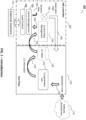
- FIG. 1 an overview of a system 100 that uses a memory as a cache for loading or pre-loading a set of instructions and constant data from an external memory is illustrated, in accordance with some example embodiments of the invention.
- the system 100 identifies a usage of a tool-based flow 120 for an identification of the LUs and its beneficial usage by such an instruction cache implementation.
- a classical software development environment 110 generates the corresponding application code, which is then analysed 122 by the tool-based flow 120. Only the tool-based flow 120 interacts with the software development environment 110, for example to control or update the specification of a load unit (LU).
- LU load unit
- a load unit generation software tool 124 executed by the tool-based flow 120 generates metadata 126 about structuring the application code within a set of LU instances by utilizing the analysis results of the application code.
- This LU information (metadata 126) is then stored within a database, referred to as an LU table 128.
- the LU table 128 provides the metadata (i.e. data about data) about the variable sized LUs in a form of a replicated data structure, where the content of a single data structure specifies a single LU instance and holds related further information.
- the initial content of the LU table 128 may be generated from static information, for example determined by analysing the application code, in particular the set of included functions and their caller/callee and other relationships.
- Combining one or multiple functions into a LU in accordance with these relationships intends to generate LU instances having an acceptable size.
- An organization of a software application into LU instances defines a granularity of the load process, which is required to store at least a start address and a size (or alternatively the end address) of LUs within its metadata.
- dependencies between the LU instances may be used to further specify a load sequence.
- additional properties may be specified for every LU.
- the content of the LU table 128 may be further refined using data collected by a Cache Controller circuit, or gathered otherwise, e.g. by a profiling function.
- the output of the tool-based flow 120 is beneficially the specification of LU instances that combine one (or multiple) software function(s), which is/are itself/themselves assumed as atomic elements by this LU generation step/operation.
- any LU may be envisaged as an address range that combines one or multiple software functions.
- a hardware (HW) controller device 150 that manages such an instruction cache in the context of executing the application software provides a high-level usage of this LU metadata.
- Other elements that are obviously also required for this purpose, in particular the internal memory for storing the load units, or the processing elements running the application software are not shown in this figure, for ease of explanation and not to obfuscate the concepts herein described.
- the generation of the LU table 128 information by the LU generation tool 124 may be decoupled in both a time and spatial sense from using this information by the HW controller device 150.
- the HW controller device 150 employs a Control Data Management Unit 154 that reads metadata 152 from the LU table 128 and provides this read metadata 162 to a cache management circuit 166 that is arranged to steer the instruction cache management.
- a cache management circuit 166 will utilize further information, e.g. dynamically generated data 164 for this purpose. Examples of such dynamic data include:
- the HW controller device 150 will usually include or employ a load control unit 168, which is configured to perform this function.
- the load control unit 168 is connected to the external NVM memory 170.
- such processing steps/operations may be beneficially observed by an observation circuit 160 that is configured to identify events or properties of interest for the usage of this instruction cache in the context of the application execution. Since the instruction cache is utilizing LUs for its management, these events are usually related to LUs. It is envisaged that some examples for collected information include, e.g., the number of usages of a LU, optionally further qualified with its previous cache status, the execution time of a LU, the time when a LU changes, or a corresponding delay. Such information may be beneficially collected in relation to the LUs, since one aim of the observation circuit 160 is to identify potential optimizations related to these LUs.
- the observation circuit 160 may be beneficially coupled to the Control Data Management Unit 154 in order to have access to corresponding information.
- collected information by the observation circuit 160 may then be reported back 156; i.e. to the application software, via status registers (not shown), or by a specific reporting or observation channel that is dedicated for this purpose.
- this reporting back 156 mechanism will block these facilities and functions for being used by their original usage for a temporary period.
- a prime candidate for the usage of this information is the tool-based flow 120, which can utilize this information for further improvements.
- the HW Controller device 150 that is utilized by an instruction cache as described above, needs to take into account very different cache management factors than previously considered in known instruction cache installations.
- known L1/L2 caches have usually 64 - 256 cache sets, which is an unacceptable small number for managing the amount of LU instances of a complete application image.
- the data managed by a single cache set in known instruction cache installations is of fixed length and very small, usually in a range of 4 or 8 times a data way consisting of 16 up to 64 words.
- the metadata associated with a single LU may be relatively large, which makes it imperative to minimize the required hardware elements for storing this information. Therefore, in order to address this issue, together with the previous issues, examples of the invention beneficially use the main memory for also storing the LU table information.
- the metadata may be required by multiple circuits or components within the HW Controller device 150; e.g. by the cache management circuit 166 for managing the cache operation, but also by the observation circuit 160. Any circuit or component in need for metadata must have access to the LUs that are currently being managed by it, which is not necessarily the same LU for all processing elements, circuits or components.
- variable sized LUs e.g. permitting a LU size in the range 1k - 64k (or in some instances 1k - 256k) may cause complications. Supporting a LU size that is smaller than 1k would not be beneficial, since the bandwidth overhead for loading smaller LU instances would be prohibitively large. For example, it is always possible that a single (large) LU must replace multiple (smaller) LUs. On the other hand, loading of a small LU may be possible without replacing another one, when an earlier replacement of a large LU left enough space.
- examples of the invention propose to decouple the corresponding operations, making a load request a distinct operation from the cache eviction operation utilized to provide the free space in which a LU is being stored during the load operation.
- the main characteristic of the described instruction cache is to be a system-wide cache within an embedded information system running a known software application, and not being a cache that is specific for a processor or a processing cluster (as L1/L2 caches are) . Furthermore, its size in relation to the main memory and the external memory enforce corresponding differences in its behaviour and management.
- any similarity to the management of the cache within a disk controller of some aspects of these examples differs in that a disk controller completely lacks an execution observation context of the loaded information (data vs. instructions).
- the performance characteristics of these caches correspond usually to physical properties of the read process (bandwidth provided by the read head, and mechanical times for moving the read head) and thereby have no relationship to the execution of an application (or parts of it). These characteristics are very different from the design goals (that support the execution of a known application) and bandwidth requirements of the described cache, which are related to the access bandwidth of one or multiple embedded processors on one side and the very limited access bandwidth provided by an external NVM in the targeted type of embedded information systems on the other side.
- This difference in approach and implementation also applies to solid state disks, which are also NVM based, but operate in wholly different types of system bandwidth and latency.
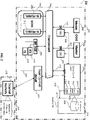
- FIG. 2 an example of an embedded information processing system 200 having an instruction cache that utilizes an internal main memory as storage for software instructions to be performed by the system is illustrated, in accordance with some example embodiments of the invention.
- the information processing system 200 implements the related processing elements within a first integrated circuit 285, while the software instructions to be performed by the information processing system 200 as well as associated constant data 228 are stored in an external, non-volatile memory 216 within a second integrated circuit 222.
- an application image always contains the instructions forming the software part of this application, as well as associated constant data, which is either used as constant read-only data or to initialize a variable value (in both cases the corresponding value is defined during the software development).
- constant read-only data is copied to the volatile memory that holds the application data when starting an application.
- constant read-only data may be directly accessed, equivalent to reading a software instruction.
- Both kinds of read-only constant data are emitted by a compiler into the application code image and should be stored in non-volatile memory. Therefore this type of read-only (constant) data must be managed equivalently to software instructions, especially since it is also part of an application image.
- the first integrated circuit comprises processing structures, such as processor cores or other bus masters (e.g., a direct memory access (DMA) controller or a co-processor) depicted in an exemplary manner as bus masters 250 through 258.
- bus masters e.g., a direct memory access (DMA) controller or a co-processor
- Any number of bus masters (one or multiple) 250-258 and any type of bus master (i.e. processor core, co-processor, or peripheral that can also act as a bus master) may be implemented.
- These processing structures are connected to an interconnect 264 (which may be a single interconnect or a set of specific interconnects) via a plurality of bus interfaces (not shown).
- the interconnect 264 connects these bus masters to bus slaves responding to access requests, such as an internal memory 266 or peripherals represented in an exemplary manner by peripheral-P0 252 and peripheral-P1 254, which are often connected to the interconnect via a specific peripheral bridge 256. Also, in some examples, a direct connection of a peripheral to the interconnect 264 may be possible.
- the internal memory 266 (which implements the main system memory that is used e.g. to store application data) is built from multiple memory blocks, which may be organized in random access memory (RAM) banks, here shown in an exemplary manner as RAM banks 268 through 269.
- RAM random access memory
- a first part of the instruction cache implemented within the information processing system 200 utilizes the internal memory 266 as intermediate storage for instructions and constant data of an application that is read from the external memory 216; in addition to the traditional usage of this memory for storing the data being processed by this application.
- the size of the internal memory is desirably smaller than the size of the application and constant data 228 made available by an application image within the second semiconductor circuit 222. Therefore, there may be only a portion of the application and constant data 228 stored within the second semiconductor circuit 222 that is made available for execution and read access within the cache storage, which is implemented by the portion of the main memory 266 that is dedicated for this purpose.
- a typical ratio for this size would be 25%-75% of the size for the application and constant data 228 stored within the external memory 216 within the second semiconductor circuit 222, which is on top of the memory required for storing application data.
- the corresponding size requirement for the main memory would be 50% of the 16Mbyte (i.e., 8 Mbyte) in addition to the 4Mbyte for the constant data 228 (resulting in a requirement to implement at least 12 Mbyte main memory).
- a second part of the instruction cache implemented within the information processing system 200 utilizes a hardware controller circuit, e.g. a preferred embodiment of the HW Controller 150 of FIG. 1 .
- the hardware controller is operable to perform at least three separate functions, e.g. observation, data loading and data management, and/or contain circuits to perform said functions. In some examples, this functionality may be implemented within a single circuit.
- a first portion of the hardware controller functionality is implemented within a load control circuit 230, which is connected to the external NVM memory 216 and configured to perform the accesses to the application code and constant data 228 stored within it.
- a second portion of the hardware controller functionality is an observation function, here depicted by a set of observation circuits 262, where one of these observation circuits is observing the processing by a bus master 250-258, and in particular observing the accesses corresponding to the instruction execution by software and related accesses to the application code and constant data 228.
- an observation circuit 262 may be connected to an interface 251 connecting a bus master 250-258 to the interconnect 264. It is envisaged that in other examples, other connections may also be used when they permit an identification of an actual request and its source.
- a third portion of the hardware controller functionality is a cache control circuit 260 that utilizes the observation information provided by the observation circuit(s) 262 and steers the loading of data from the external memory 216 by the load control circuit 230.
- such a cache control circuit 260 interfaces with software via a set of programmable registers, similar to peripherals P0 252, P1 254. Equivalent to these peripherals it connects to the interconnect 264, either directly or via a bridge 256 (where this potential connection is not shown in FIG. 2 in order to not obfuscate the description).
- the hardware controller reads metadata information from a LU table 220 in order to determine the load units it utilizes to manage the instruction cache (content).
- this metadata is located within the internal memory 266 within a data structure that contains the metadata information for every LU instance being identified.
- the metadata information for every LU instance being identified may also be stored in form of read-only information within the external memory 216 and directly loaded from this memory. In another embodiment, it may be provided within the external memory 216 and before or during application start loaded into the internal memory 266.
- the hardware controller and in the example of FIG.
- the cache control circuit 260 utilizes one or more additional connections 270 to the interconnect 264 that permit at least access to the content of the internal memory 266.
- the load control circuit 230 requires a similar capability in order to access the internal memory 266, in order to be able to store the application code (instructions and constant data) 228 that it reads from the external memory 216 into the internal memory 266.
- it may use or re-use one of the additional connections 270 of the cache control circuit 260 (to which is must be connected in any case), or in some examples it may alternatively utilize its own dedicated (optional) connection 226 that permits at least a write access to the internal memory 266 (highlighted in a separate dotted box in the figure for clarity purposes only).
- the cache control circuit 260 accesses the metadata 210 provided within the LU table 220, which is located within internal memory 266, via a set of dedicated metadata containers (or elements) 224. Every instance of these metadata containers 224 is operable to receive the metadata related to a single LU instance; and is utilized by particular functionality within the cache control circuit 260. In this manner, an independent usage of these metadata containers 224 within the cache control circuit 260 permits a beneficial concurrency of using the corresponding data, which results in a faster processing and avoids any potential stall or lock condition that may otherwise be caused by multiple functions requesting access to metadata 210 information for a LU instance that is currently being processed.
- FIG. 3 an example approach for using a memory as cache for loading a set of instructions and constant data using variable sized load units from an external memory that employs a beneficial cache management supported by execution observation for the cache management 300 is illustrated, in accordance with some example embodiments of the invention. Also, this example uses a tool based generation flow for the identification of those load units from the application software. Similar to FIG. 1 , FIG. 3 identifies the high-level usage of LU metadata by a hardware (HW) controller circuit 350, which is a preferred embodiment of the controller that manages such an instruction cache.
- HW hardware
- This relates to the fact that the tool flow that is generating the content of the LU table may be executed by a different computer system than information system 200 executing the application generated by the software development process 110; and the execution of the tool flow occurs usually as part of or after the software development, which is at a different time than the execution of the application by an information system 200.
- a classical software development environment 110 generates the corresponding application code, which is then analysed 322 by tool flow 320.
- the main operation of this process is performed by the LU generation software tool 324 within the tool flow 320, which generates metadata 326 about structuring the application code within a set of LU instances.
- This LU metadata is then stored within a database, e.g. the LU table 328. Since the application executes its software with the granularity of functions, the output of the tool flow 320 are beneficially LUs that combine one or multiple software functions, which are itself assumed as atomic elements by this LU generation step.
- the initial content of the LU table 328 is generated in a similar manner to the content of the LU table 128 described in FIG. 1 , holding at least equivalent information that may be further augmented with additional information.
- the metadata generated by the LU generation tool 324 may be optionally further augmented with LU properties that a software developer or an user may provide 312 based on, say, knowledge about the software or its behaviour or that are generated from such information.
- properties that may be defined by an user comprise at least one of the following: code specifics (such as safety relevant code, shared code, start-up code, critical functionality, maintenance code, etc.), and code usage aspects (usage frequency, urgency of usage, code value, replacement need),
- code specifics such as safety relevant code, shared code, start-up code, critical functionality, maintenance code, etc.
- code usage aspects usage frequency, urgency of usage, code value, replacement need
- further information may be recorded within the LU metadata that is generated by observing the execution of the application code, or that is generated by the LU generation tool flow based on information that is collected by observing this execution.
- the left side of FIG. 3 reflects the cache controller hardware, whilst the right side of FIG. 3 reflects the associated tool flow, where both are processing aspects of the application code that is provided by an application software development 110 process.
- the tool flow identifies the LU instance structure for this application code, whilst the cache controller hardware processes the loading and storage of these LU instances in the internal main memory.
- the only feedback to the software development process 314 is over the Linker Control file 316, in order to influence the LU association and code location in memory.
- the left side of FIG. 3 identifies the high-level usage of the LU metadata by some preferred example embodiments of the HW controller circuit 350 that manages such an instruction cache in the context of executing the application software.
- the HW controller circuit 350 employs a Control Data Management circuit 354 that reads metadata 352 from the LU table 328 and provides this data to any part of the HW controller circuit 350 that needs this information.
- the cache management circuit 366 may utilize metadata 352 information directly as is, without any further processing.
- an additional processing operation is performed, using a weight calculation circuit 380.
- the cache management circuit 366, as well as the weight calculation circuit 380 may utilize further information, in a similar manner to the dynamically generated data 164 of FIG. 1 for their processing.
- the Control Data Management circuit 354 loads only information of interest into a specific metadata container element that is provided for this purpose.
- the weight calculation formula of every specific weight may be made controllable by software, which can specify, say, the usage (e.g. by a usage enable bit that selects whether (or not) a constituent is to be included), the sign and a relevance factor (e.g.
- a constituent in this context is one of the calculation factors of the weight calculation factor.
- some of the constituents of the calculation can be made LU specific, or cache state specific, or application specific (e.g. task related, start-up code, or software is in a critical situation).
- the actual calculation of a weight value may then be a summation of intermediate results, where every intermediate result is generated from selected constituents after applying a sign and multiplying it with a relevance factor.
- This enables the calculation of a LU specific weight that can consider important aspects of an application, the instruction cache and its usage. In addition and in particular, it permits to reuse the same raw input with a completely different connotation for distinct aspects of the cache management, which is an important factor to reduce the amount of raw data required to steer the cache management operations.
- This approach is very beneficial to reduce the amount of storage for this data that is required: a) within the HW Controller 350, which can be an important cost factor of the hardware implementation and b) within the LU table 328, where the amount of required data impacts the amount of main memory that is required for this purpose. Such factors play an important part when taking into account the amount of LU instances to be managed by a preferred example embodiment.
- the ability to steer the weight calculation with a formula that can be controlled by software provides the flexibility to support the different needs that may be exhibited by different application setups that are to be supported by the same hardware implementation.
- one function overseen by the cache management circuit 366 is the loading of LUs.
- the HW controller 350 will usually include or employ (when there is one available outside of the HW controller 350) a load control unit 168, which performs this function.
- the load control unit 168 is connected to the external NVM memory 170.
- a further function of the cache management circuit 366 is the removal of a LU from the cache to make space for the next load operation, sometimes referred to as a cache eviction.
- both LU processing operations require a weight calculation: (i) a load request weight to be able to arbitrate between multiple LU instances that may be (pre-)loaded; and (ii) determining the weight of a LU for the cache eviction, for example with a goal of selecting the least valuable LU as the next replacement eviction candidate.
- examples of the invention propose using distinct containers for the corresponding metadata (referred to herein respectively as LSH, SEC). This permits decoupling both operations and performing them independently and concurrently by different parts of the weight calculation circuit 380 and cache management circuit 366.
- a further example of a function that requires this metadata 352 is the LU observation circuit 360, which identifies events or properties of interest for the usage of this instruction cache in the context of the application execution.
- the LU observation circuit 360 is beneficially coupled to the Control Data Management circuit 360 in order to have access to the corresponding metadata information. Since the instruction cache is configured to utilize LUs for its management, these events are usually related to load units.
- the collected metadata information may include, for example, the number of usages of a LU, optionally further qualified with its previous cache status, the execution time of a LU, the time when a LU changes or a corresponding delay.
- Such metadata information is beneficially collected in relation to the LUs, since one intent of this observation activity is to identify potential optimizations related to these LUs.
- Another beneficial usage of the collected metadata information may be a usage by the weight calculation circuit 380. Therefore the observation circuit 360 in one example embodiment is capable of writing this metadata information into the metadata container of a corresponding LU instance 385 that is managed by the control data management circuit 354. The control data management circuit 354 of one example embodiment is further capable of then writing 356 the collected information into the LU Table 328. In this context, the writing 356 of the collected information into the LU Table 328 may have multiple benefits, for example:
- the observation may be of the accesses during an execution of the application code.
- a beneficial later usage of the recorded observation information may be the usage by the weight calculation. This enables an in-the-loop optimization of these calculations based on the observation results.
- Examples for the metadata within the LU table 328 that reflect performance data (e.g. raw common data) collected during the application run time may be one or more of the following: an amount of cache miss events associated with a specific cache state of the corresponding LU, associated delays (e.g. minimum and/or maximum and/or average) in association with a specific cache state of the corresponding LU, execution runtime related information (e.g. minimum and/or maximum and/or average execution time) of the corresponding LU, etc.
- a further beneficial usage of the recorded observation information may be usage by the LU generation tool 324, by reading it back 330 from the LU table 328.
- the reading recorded observation information back 330 from the LU table 328 may occur during, say, a development phase within the software development environment, as well as in a real-world environment after some real usages of an application. Since this information is now part of the LU metadata, it can advantageously be collected for multiple software executions, and thus used to combine information of interest for different scenarios that only arise in distinct software executions. In some examples, it can be further utilized to advantageously identify differences in the collected information for those distinct scenarios.
- another beneficial usage may be the usage to update or optimize other metadata information by the LU generation tool 324, based on information extracted from this data, which now can exhibit a far more holistic view of potential behaviours of the instruction cache.
- the LU generation tool 324 may further utilize information distilled from this data to provide optimization feedback 314 to the software development environment 110; e.g. by updating or enhancing the utilized Linker Control File 316 to include improvements based on findings from or gained from this observation information, thereby resulting in a modified location and/or LU containing an application function or a set of application functions.
- the metadata content of the LU table 328 for a single LU instance within this table may be further refined using data collected by the Cache Controller circuit 350 or gathered otherwise, e.g. by a profiling function.
- any previous definition of LU metadata may be enhanced based on data collected by one application execution run (or multiple runs, say in an iterative process).
- collected information may consist of raw information; e.g. amount of LU miss(es), involved delays, execution times, sequencing information, etc.
- such collected information may be further improved using specific properties, say based on development observations, application knowledge, or user input.
- any of the above processing operations may utilize the collected data in a different way and from a different viewpoint.
- having a dense recording capability that only records the raw data minimizes related processing steps and minimizes the storage requirement for this information.
- the ability to account for the different usages and different viewpoints via a programmable weight calculation within the HW controller 350 enables the usage of the same data to be applicable and useful in all those scenarios, which is an important reduction in size and further reduces the accompanying hardware required to support this.
- any reduction of this metadata, and the amount of container elements has a direct impact on the associated hardware cost. Usage of common, raw metadata further minimizes the storage required by the LU table, which is also an important benefit.
- FIG. 2 describes an example complete embedded system
- FIG. 1 and FIG. 3 primarily describe the cache controller circuit employed by such a system interacting with a tool flow to provide the relevant metadata information, where the tool flow and its interactions may be executed by a different system during the software development phase.
- FIG. 3 also illustrates receiving observation information for optimizations and its effects on the supporting environment. It is envisaged that in some alternative examples, the cache controller functionality and processing may occur in a different system than the described metadata preparation and postprocessing by the supporting environment (e.g. the tool flow), and/or in some instances at a different time (e.g. before responding after executing of the application).
- FIG's 1-3 show only portions of the possible functionality that are relevant for the purpose of describing the corresponding interactions, which is in case of FIG. 1 and FIG. 3 the interaction with the software development environment and the tool flow, and in case of FIG.2 the interaction with the other elements of the system that implements a corresponding instruction cache.
- FIG. 1 and FIG. 3 the interaction with the software development environment and the tool flow
- FIG.2 the interaction with the other elements of the system that implements a corresponding instruction cache.
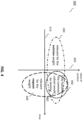
- a graph 400 illustrating benefits of using different criteria for the cache management are shown, in accordance with some example embodiments of the invention.
- different weight values may have different goals, which is especially true when there is a different arbitration or selection criteria.
- the goal of the load request operation e.g. determining the most urgently needed LU, thus minimizing the time for a load operation
- the goal of the cache eviction operation e.g. determining the least valuable LU that can be replaced, thus optimizing the value of the content of the instruction cache
- the goal of the load request operation e.g. determining the most urgently needed LU, thus minimizing the time for a load operation
- the goal of the cache eviction operation e.g. determining the least valuable LU that can be replaced, thus optimizing the value of the content of the instruction cache
- any of these criteria may need to be calculated on the same LU instance (when it is required to be loaded, or it has effectively been determined as a candidate for replacement) but not necessarily at the same time (it is unlikely that a LU is in need to be loaded into the cache and evicted from the cache at the same time). It is envisaged that in some examples some of these different criteria may utilize the same basic information, just in a different manner; e.g. a load request arbitration may prefer smaller LU instances (because they are more quickly loaded), whilst the cache eviction may prefer larger LU instances for the replacement (because they provide more free space).
- the common, basic raw data is the size of the LU instance, which can be preferably utilized by both weight calculations thus reducing the amount of data to be stored.
- some properties stored within the LU metadata may be relevant for a load request (e.g. a load urgency hint) but irrelevant for the cache eviction, and vice-versa (e.g. a data value hint).
- the weight calculation circuit 380 of FIG. 3 is configured to generate a weight value from its inputs, which is then utilized as arbitration or selection criteria. Using a weight as a normalized value for this purpose permits a common definition for a corresponding criterion across multiple applications. Utilizing common, raw data for the weight calculations can reduce the amount of required metadata, when it is possible to encode the different aspects of using this data in a different way. In some examples, this is accomplished by a weight specific, programmable calculation formula that permits to assign a different sign and an independent quantifier to every constituent of the calculation. In this context, the term 'constituent' refers to and encompasses any singular input of the calculation, which may be originated in either LU metadata or provided by internal information of the cache controller circuit, as described earlier. Examples for a weight calculation performed by weight calculation circuit 380 and using the common raw data that is controlled differently is (e.g. just using two of the much larger set of possible input values), include the following.
- a first example for a Load Request weight calculation formula utilizes two common raw inputs, the ⁇ LU size> and the ⁇ state#1 delay>, which reflects the delay experienced in case of a critical (state#1) cache miss.
- the goal of this Load Request weight calculation formula is to prefer smaller LU instances that have experienced a larger delay in such earlier situations; where the later constituent is, say, 4 times more important than the size aspect.
- Potential factors include:
- a second example for a Cache Eviction weight calculation formula again uses two common raw inputs, again the ⁇ LU size> and the factor ⁇ startup>, which only applies when the application software has indicated that the start-up phase has been finished, which is reflected by some dynamic data provided from a software programmable register.
- the goal of this Cache Eviction weight calculation formula is to prefer LU instances that are only used during the start-up phase (but only after this has been finished), otherwise larger LU instances are preferred by the eviction.
- Potential factors include:
- both weights include one common constituent, the ⁇ LU_size> and a second, specific constituent, which is a ⁇ startup> indication flag for the cache eviction weight respective a ⁇ state#1_delay> in case of the load request weight.
- Other examples of a preferred embodiment may utilize much more common raw inputs; e.g. the preferred embodiment calculates every weight from about, say, 30 constituents that can be controlled separately by a calculation formula.
- FIG. 5 an example timing diagram 500 of elements employed in the system diagram of FIG. 1 , FIG. 2 or FIG. 3 , is illustrated, together with a usage of some of these elements during load unit switching, in accordance with some example embodiments of the invention.
- FIG. 5 also identifies the usage of the containers SEC 560, LSH 570, ALE 580 and HBE 590, along a timeline 505.
- the cache replacement operation continuously selects a new candidate for replacement.
- the related metadata container SEC 560 is regularly loaded with the metadata for the selected LU, and in some examples used to calculate the weight for this replacement (@ 510, 511, 512, ... 519).
- an anticipation mechanism selects irregularly a new LU to be anticipated (identified by an event (A) 520, 521, 522, 523.
- the related metadata container LSH 570 is loaded with the LU metadata whenever a new LU has been selected (which in this example is at any of the above events (A)).
- the execution observation identifies whenever an address in another LU is hit by the execution (LU switch event (B) 540, 541, 542, 543, 544).
- the content of the containers ALE 580 and HBE 590 changes upon such an event in a specific order that is detailed in the expanded timing diagram 550 for one of these events.
- the expanded timing diagram 550 identifies related processing for two subsequent switches (e.g. the LU switch events (B) 540, 541) and the usage of the containers ALE 580 and HBE 590.
- Related modifications of the content of these two containers ALE 580 and HBE 590 occur in these LU switch events 530, 531, 532, 533, 534.
- the expanded timing diagram 550 identifies the related usage of the metadata containers ALE and HBE as follows.
- a LU switch event B
- the current content of the ALE element 580 is immediately moved into the HBE element 590 at time 550. In some examples, this movement may occur nearly instantly; e.g. within a single cycle.
- the metadata for the next executed LU is loaded at 560 into the ALE element 580 (which is free after moving its earlier content to the HBE).
- performance data associated with the new LU such as e.g. any delay involved with the LU switch, can now be stored immediately within the ALE container 580. Any performance data remaining to be collected that is related to the earlier LU and corresponding to the LU switch 540, such as the execution time of the earlier LU, can now be stored into the HBE container 590 without causing any interference with an operation related to the next executed LU. As soon as this data collection has been finished, the content of the HBE metadata container 590 can be written into System RAM at 570.
- the usage of a second metadata container HBE provides several benefits:
- this final (iv) benefit is useful because both aspects i) loading of LU metadata for the next LU and ii) writing back performance information collected for the earlier LU must access a common resource, the LU table, and cannot be performed concurrently when this resource is located in System RAM.
- the usage of a second container permits a beneficial decoupling of all required operations listed above in case of the LU switch event.
- the usage of two metadata containers for LU switch observation by the above-described processing operation permits maximum concurrency with a minimum required hardware effort (e.g. using two containers instead of a single container).
- the decoupling advantageously avoids any internal stalling/locking of any associated operation that would otherwise be required to avoid loss of information.
- any weight calculation operation e.g. any cache eviction weight calculation associated with an operation ⁇ 510, ..., 519, ... ⁇ and also any load request weight calculation associated with an operation ⁇ 520, ..., 523, ... ⁇ as shown in FIG. 5
- any weight calculation operation can occur independently and concurrently (not shown in FIG. 6 ) to the execution observation, triggered by a corresponding need for such a weight calculation, e.g.
- an LU switch observation related to a single bus master e.g. the application software execution by a processor core 250 as depicted in FIG.2
- an observation element 262 of this hardware controller circuit 350 as depicted in FIG.2 is performed (e.g. of hardware controller circuit 350 of FIG. 3 and by an observation element 262 of this hardware controller circuit 350 as depicted in FIG.2 ).
- a first processing sequence 607 is performed, where the LU metadata for the new (currently used) LU (which is the one LU instance that owns that address range next to be executed by the application software executed by a bus master) is loaded into the ALE element from the LU table located in internal memory at 620. Potentially concurrently with this operation, the corresponding raw data being part of the new LU metadata needed by the associated bus muster, is recorded at 625. In some examples, the recording at 625 may also be performed after loading the LU metadata.
- the LU metadata is immediately needed to be able to perform related processing by the cache controller for controlling cache activities related to the new used LU at 630.
- An example for corresponding information is the start address and size of this LU that is required by, say, an address mapping function.
- Such an address mapping is a sometimes required function of such an instruction cache, in order to permit an execution of application software that is loaded from an external memory into an arbitrary location within an internal memory.
- corresponding processing operations are performed by the cache controller (e.g. the HW controller circuit 350) after utilizing the LU metadata at 630.
- the loaded LU can be used by the application software when it is already available (cached) within the internal memory; otherwise the instructions and constant data related to the newly used LU must be loaded before they can be used by the application software.
- Another example for an operation that requires the LU metadata is an emergency load operation that is required when the newly used LU has not yet been loaded.
- an optional ⁇ perform LU loading' operation may be employed at 640.
- the corresponding bus master can execute the application code contained in/associated with this LU at 650; this execution is then observed at 645 by the observation part of the cache control circuit. In a case of an already cached LU, this operation can be immediately entered without having to perform the LU loading operation at 640.
- the raw data associated with a start of execution by the associated bus master is recorded by the cache controller at 655.
- This recording is performed in any case, either when the LU must be loaded or also when the LU is already cached.
- one purpose of this data may be to record information related to the cache management, e.g. corresponding delays within the performance data.
- the recording of the raw data associated with some cache management operations or effects of those cache management operations occurs substantially in parallel to these related operations, such as loading of new LUs at 640 or a start of an application execution at 650.
- the execution of the application code contained within the newly used LU is performed by the associated bus master / processor core, which is observed at 645 by the cache controller circuit until a change to a new LU is detected at 660.
- the already-described processing 607 (illustrated as 620 through 660) repeats with metadata related to a next LU being loaded into the ALE element at 620.
- a second, notably independent processing operation 665 is started.
- the second independent processing operation 665 is performed independently and concurrently with the earlier described processing 607.
- the only dependency of these further processing operations 665 to the earlier processing operations 607 is the starting point after detecting a first change to a new LU 660, and the need to finish this processing operation before another, second change to a new LU 660 is being detected (which may be the result of repeating the steps 620 through 660 of operations 607).
- a detection of a LU change may trigger two activities: (i) a movement of LU metadata contained in the ALE element to the HBE element at 670; and (ii) a load of a new content into the ALE container at 620. While the latter is used to repeat the earlier described processing loop, the movement of metadata to a second container enables the independent and concurrent processing of this data, which is now described.
- the performance data corresponding to the LU change (and related to the earlier executed LU) is recorded.
- the recorded LU metadata is written into RAM. In this manner, the write operation persistently records the information within the LU table. In some examples, the write operation may be performed later, but it must occur before another, new LU change is detected at 660.
- the two execution sequences 607 (comprising of the steps 620 ... 660), and 665 (consisting of the steps 670 ... 690) execute concurrently and have as the only synchronization element the common detection of a LU change 660.
- this concurrent execution is made possible by provision of a second metadata container (HBE), instead of using a single one.
- HBE second metadata container
- Some examples of the improvement provided by this decoupling can be appreciated by looking at the operations that would have been required without employing these concepts. For example, writing of collected raw data at 690 would have to be done before new data could be loaded into the ALE element at 620, in order to not overwrite this data.
- the more urgent loading of LU metadata related to the newly used LU can be done before writing the collected observation information.
- the LU metadata contained in the LU table cannot be read and written concurrently.
- a delayed writing permits to decouple both operations and enables a later writing of this information when there is no urgent loading of this data required.
- moving the LU metadata from the ALE to the HBE container can be performed concurrently with the new usage of the ALE container at 620 and 625 (which are writing this data). Unless one of these operations itself requires a longer processing time (which is likely for the loading of LU metadata in 620), any of these operations could be performed concurrently within a single cycle.
- examples of the invention provide one or more of the following features that are not disclosed in known memory systems.
- the caching examples herein described employ criteria where a load request (request weight) and a cache eviction (eviction weight) for a LU use different calculation formulas for both weights.
- the caching examples herein described identify the usage of metadata to specify the multiplicity of load units utilized by an instruction cache.
- the examples describe a beneficial support of an instruction cache that consists of a larger available internal memory, say, in a relation of 25%-75% of an application image when the application image is stored within an external memory.
- some of the examples describe an usage of an internal memory for purposes of instruction caching.
- some examples describe an usage of an internal memory operable with an additional instruction execution or memory access observation.
- the caching examples herein described may be beneficially used where the memory system suffers from a severely limited bandwidth, for example in combination with a relative latency difference that is larger than the one experienced between internal memory types (which is usually within one magnitude of clock cycle) between an internal memory and external memory (which is larger than a single magnitude of clocks).
- the caching examples herein described provide a mechanism to keep the most worthy data elements and thereby avoid frequent reloads (noting that known processor caches do not have such a bandwidth limitation).
- preloading must meet critical timing limitations in the caching examples herein described, which means there can be no trade-off with a LU that is being requested.
- the caching examples herein described do not utilize metadata about a load unit as basis for determining the weight criteria; as the metadata utilized by some examples for both (request weight and eviction weight) calculation formulas.
- processor caches do not utilize metadata.
- the caching examples herein described benefit from having common raw data that is utilized differently, thereby providing a significant reduction of this data which is important.
- the caching examples herein described utilize a minimum amount of internal storage within the cache controller hardware for the purpose of loading metadata, e.g. the metadata container elements to support both the observation and weight calculation (two weights) per observed bus master.
- the caching examples herein described identify the usage of observation results of the cache management and related code execution aspects and in some examples record corresponding performance data.
- This caching example feature may provide multiple benefits.
- the related code execution aspect can be used as debugging aid, permits optimizations during runtime and after a run / across multiple runs, and permits an identification of problematic LU elements that can then be treated specific.
- This caching example feature may also impact the software execution of the application that is supported by the cache memory; as related performance data: amount of execution cycles in a load unit and observed stall cycles due to a cache miss are also observed. Furthermore, the combination of these two observances are providing a critical information for controlling the cache.
- the caching examples herein described support the collection of observed performance data over multiple runs.
- the caching examples herein described may be performed during development, where there are often multiple verification/test runs covering different scenarios, all runs in combination are covering the complete set of intended use cases.
- the caching examples herein described may use collected performance data and/or internal information to influence the weight calculation.
- the benefit of this feature is that it permits a higher dynamic in the control of the cache usage, which can react on changing system states (start-up, normal, critical situation), specific scenarios (lots of cache misses, severe amount of delays), or permit a LU specific behaviour (a LU that always, or very often causes problems is simply kept).
- connections as discussed herein may be any type of connection suitable to transfer signals from or to the respective nodes, units or devices, for example via intermediate devices. Accordingly, unless implied or stated otherwise, the connections may for example be direct connections or indirect connections.
- the connections may be illustrated or described in reference to being a single connection, a plurality of connections, unidirectional connections, or bidirectional connections. However, different embodiments may vary the implementation of the connections. For example, separate unidirectional connections may be used rather than bidirectional connections and vice versa.
- plurality of connections may be replaced with a single connection that transfers multiple signals serially or in a time multiplexed manner. Likewise, single connections carrying multiple signals may be separated out into various different connections carrying subsets of these signals. Therefore, many options exist for transferring signals.
- any two components herein combined to achieve a particular functionality can be seen as 'associated with' each other such that the desired functionality is achieved, irrespective of architectures or intermediary components.
- any two components so associated can also be viewed as being 'operably connected,' or 'operably coupled,' to each other to achieve the desired functionality.
- the illustrated examples may be implemented as circuitry located on a single integrated circuit or within a same device.
- the circuit and/or component examples may be implemented as any number of separate integrated circuits or separate devices interconnected with each other in a suitable manner.
- the examples described herein, or portions thereof may implemented as soft or code representations of physical circuitry or of logical representations convertible into physical circuitry, such as in a hardware description language of any appropriate type.
- the invention is not limited to physical devices or units implemented in non-programmable hardware but can also be applied in programmable devices or units able to perform the desired anti-spying counter measures by operating in accordance with suitable program code, such as minicomputers, personal computers, notepads, personal digital assistants, electronic games, automotive and other embedded information systems, commonly denoted in this application as 'computer systems'.
- suitable program code such as minicomputers, personal computers, notepads, personal digital assistants, electronic games, automotive and other embedded information systems, commonly denoted in this application as 'computer systems'.
- suitable program code such as minicomputers, personal computers, notepads, personal digital assistants, electronic games, automotive and other embedded information systems, commonly denoted in this application as 'computer systems'.
- suitable program code such as minicomputers, personal computers, notepads, personal digital assistants, electronic games, automotive and other embedded information systems, commonly denoted in this application as 'computer systems'.
Landscapes
- Engineering & Computer Science (AREA)
- Theoretical Computer Science (AREA)
- Physics & Mathematics (AREA)
- General Engineering & Computer Science (AREA)
- General Physics & Mathematics (AREA)
- Software Systems (AREA)
- Memory System Of A Hierarchy Structure (AREA)
- Advance Control (AREA)
Claims (14)
- Eingebettetes Informationssystem (200), das Folgendes umfasst:eine Ladesteuerschaltung (168, 230), die an einen externen Speicher (170, 216) koppelbar ist, der Anweisungen und konstante Daten, die mindestens einem Anwendungscode (228) einer Software-Anwendung zugeordnet sind, enthält,mindestens einen Prozessor (250 ... 258), der an mindestens ein "Interconnect" (264) gekoppelt ist und konfiguriert ist, den mindestens einen Anwendungscode (228) auszuführen; dadurch gekennzeichnet, dass das System Folgendes umfasst:einen internen Speicher (266), der an das mindestens eine "Interconnect" (264) gekoppelt ist und konfiguriert ist, Daten für die Software-Anwendung als einen Hauptsystemspeicher in einem ersten Teil des internen Speichers (266) und als einen Zwischenspeicher zum Speichern der Anweisungen und konstanten Daten für eine Ausführung des mindestens einen Anwendungscodes (228) aus dem externen Speicher (170, 216) in einem zweiten Teil des internen Speichers (266) zu speichern;eine Zwischenspeichersteuerschaltung (150, 260, 350), die an das mindestens eine "Interconnect" (264) gekoppelt ist und ferner an die Ladesteuerschaltung (168, 230) gekoppelt ist oder diese umfasst, wobei die Anweisungen und konstanten Daten durch Ladeeinheiten variabler Größe, LUs, organisiert sind und wobei mindestens zwei Eigenschaften einer LU innerhalb Metadaten (128, 220, 328) spezifiziert sind, wobei die mindestens zwei Eigenschaften der LU eine Startadresse der LU in dem internen Speicher und mindestens eines des Folgenden umfassen: eine Größe der LU und eine Endadresse der LU;wobei die Ladesteuerschaltung (168, 230) konfiguriert ist, die LUs, die dem mindestens einen Anwendungscode (228) zugeordnet sind, aus dem externen Speicher (170, 216) mit einer Granularität einer einzelnen LU in den internen Speicher (28, 266, 328) zu laden; undwobei die Zwischenspeichersteuerschaltung (150, 260, 350) konfiguriert ist, den zweiten Teil des internen Speichers (266), der als ein Zwischenspeicher konfiguriert ist, anhand von Metadaten, die den LUs entsprechen, dadurch zu managen, dass er konfiguriert ist zum:Beobachten (645) der Ausführung mindestens eines Teils des mindestens einen Anwendungscodes (228) durch Detektieren mindestens eines des Folgenden: einer LU, die ausgeführt wird, und einer Änderung von einer LU zu einer anderen LU innerhalb des internen Speichers (266) ;Laden von Metadateninformationen, die einer LU-Instanz entsprechen, aus dem externen Speicher (170, 216) oder dem internen Speicher (266); undSpezifizieren einer nächsten LU, die durch die Ladesteuerschaltung (168, 230) in den zweiten Teil des internen Speichers (266) zu laden ist; undSpezifizieren einer nächsten LU, die aus dem zweiten Teil des internen Speichers (266) auszuweisen ist, wenn es nicht genügend Platz zum Laden der nächsten LU gibt.
- Eingebettetes Informationssystem nach Anspruch 1, wobei eine erste Anforderung zum Laden der nächsten LU in den internen Speicher (128, 266, 328) und eine zweite Anforderung zum Ausweisen einer LU aus dem internen Speicher (128, 266, 328) distinkte Vorgänge der Zwischenspeichersteuerschaltung (150, 260, 350) sind, die unabhängig gemäß mindestens einem des Folgenden geschehen: zu einer anderen Zeit, bezüglich einer anderen LU-Instanz.
- Eingebettetes Informationssystem (200) nach Anspruch 2, wobei die erste Anforderung zum Laden einer ersten LU-Instanz einer ersten Gewichtung zum Auswählen der ersten LU entspricht und die zweite Anforderung zum Ausweisen einer zweiten LU-Instanz einer zweiten Gewichtung zum Auswählen einer zweiten LU entspricht.
- Eingebettetes Informationssystem (200) nach Anspruch 3, wobei die erste Gewichtung und die zweite Gewichtung unabhängig unter Verwendung verschiedener Gewichtungsberechnungsformeln, die Metadateninformationen für mindestens einen Bestandteil der ersten Gewichtung und der zweiten Gewichtung verwenden, berechnet werden.
- Eingebettetes Informationssystem (200) nach Anspruch 3 oder Anspruch 4, wobei die Zwischenspeichersteuerschaltung (150, 260, 350) einen ersten dedizierten Hardware-Behälter, LSH, und einen zweiten dedizierten Hardware-Behälter, SEC, zum Speichern von Metadaten, die einer einzigen LU-Instanz zugeordnet sind, umfasst, wobei:die Metadaten in dem LSH für die Berechnung der ersten Gewichtung verwendet werden, die die erste Anforderung zum Laden einer nächsten LU aus dem externen Speicher (170, 216) in den internen Speicher (266) managt, unddie Metadaten in dem SEC für eine Berechnung der zweiten Gewichtung verwendet werden, die die zweite Anforderung zum Ausweisen einer LU aus dem internen Speicher (266) managt.
- Eingebettetes Informationssystem (200) nach Anspruch 5, wobei LU-Metadaten innerhalb des ersten Hardware-Behälters, LSH, und des zweiten Hardware-Behälters, SEC, dieselben gemeinsame Rohdaten für verschiedene LU-Instanzen umfassen und die gemeinsamen Rohdaten verschieden verwendet werden, wenn die erste Gewichtung und die zweite Gewichtung für dieselbe LU-Instanz verwendet werden.
- Eingebettetes Informationssystem (200) nach Anspruch 5 oder Anspruch 6, wobei eine Berechnung mindestens eines des Folgenden: der ersten Gewichtung und der zweiten Gewichtung Folgendes umfasst: eine Summierung von Zwischengewichtungsergebnissen, die aus ausgewählten Bestandteilen der Gewichtungen erzeugt werden, wobei mindestens einer dieser Bestandteile von Rohdaten abgeleitet ist, die durch LU-Metadaten nach dem Anwenden eines Vorzeichens und Multiplizierens eines ausgewählten Bestandteils mit einem Relevanzfaktor bereitgestellt werden.
- Eingebettetes Informationssystem (200) nach einem vorhergehenden Anspruch, wobei die Zwischenspeichersteuerschaltung (150, 260, 350) konfiguriert ist, eine aufgezeichnete Beobachtung der Ausführung zumindest des Teils des Anwendungscodes (288) zu verwenden, um mindestens eines des Folgenden aufzuzeichnen: eine vorher verwendete LU, eine nächste LU und eine Änderung von der vorher verwendeten LU zu der nächsten LU.
- Eingebettetes Informationssystem (200) nach Anspruch 8, wobei die Metadaten mit der aufgezeichneten Beobachtung der Ausführung zumindest des Teils des Anwendungscodes (228) und zusätzlichen internen Informationen (164) erweitert werden, die innerhalb der Zwischenspeichersteuerschaltung (150, 260, 350) verfügbar sind, die mindestens einen weiteren Bestandteil umfassen, der von mindestens einem des Folgenden abgeleitet ist oder mit ihm erweitert wird: einem Zustand einer Anwendung, der der Zwischenspeichersteuerschaltung (150, 260, 350) gemeldet wird, einem internen Zustand der Zwischenspeichersteuerschaltung (150, 260, 350) und einem Zustand der LU, der der ersten Gewichtung oder der zweiten Gewichtung (228) zugeordnet ist.
- Eingebettetes Informationssystem (200) nach einem der vorhergehenden Ansprüche 5 bis 9, wobei die Zwischenspeichersteuerschaltung (150, 260, 350) einen dritten dedizierten Hardware-Behälter, HBE, für Metadaten, die einer vorher ausgeführten LU zugeordnet sind; und einen vierten dedizierten Hardware-Behälter, ALE, für Metadaten, die der aktuell ausgeführten LU zugeordnet sind, umfasst, wobei eine bestimmte Änderung zwischen LU-Instanzen die Metadaten der aktuell ausgeführten LU von dem ALE in den HBE bewegt.
- Eingebettetes Informationssystem (200) nach Anspruch 10, wobei die Zwischenspeichersteuerschaltung (150, 260, 350) konfiguriert ist, Metadaten aus einem Speicher in die dedizierten LSH-, SEC- und ALE-Hardware-Behälter zu lesen, und die Zwischenspeichersteuerschaltung (150, 260, 350) konfiguriert ist, zumindest Metadaten, die aufgezeichneten Beobachtungsinformationen zugeordnet sind, aus dem dedizierten HBE-Hardware-Behälter in einen Speicher zu lesen.
- Verfahren (600) für ein Speichermanagement in einem eingebetteten Informationssystem (200), das mindestens einen Prozessor (250 ... 258), mindestens ein "Interconnect" (264), einen internen Speicher (266) und eine Zwischenspeichersteuerschaltung (150, 260, 350), die an eine Ladesteuerschaltung (168, 230) gekoppelt ist oder diese enthält, umfasst, wobei das Verfahren Folgendes umfasst:Verbinden der Ladesteuerschaltung (168, 230) mit einem externen Speicher (170, 216), der Anweisungen und konstante Daten, die mindestens einem Anwendungscode (228) zugeordnet sind, enthält;Organisieren der Anweisungen und konstanten Daten des mindestens einen Anwendungscodes (228) durch Ladeeinheiten variabler Größe, LUs, wobei mindestens zwei Eigenschaften einer LU innerhalb Metadaten (128, 220, 328) spezifiziert sind, wobei die mindestens zwei Eigenschaften der LU eine Startadresse der LU in dem internen Speicher und mindestens eines des Folgenden umfassen: eine Größe der LU in dem internen Speicher und eine Endadresse der LU;Konfigurieren des internen Speichers (266), Daten für die Software-Anwendung als einen Hauptsystemspeicher in einem ersten Teil des internen Speichers (266) und als einen Zwischenspeicher zum Speichern der Anweisungen und konstanten Daten, die aus dem externen Speicher (170, 216) für eine Ausführung des mindestens einen Anwendungscodes (228) geladen werden, zu speichern,Laden (640) mindestens eines Teils des mindestens einen Anwendungscodes (228) aus dem externen Speicher (170, 216) mit einer Granularität einer einzigen LU in den internen Speicher (260);Ausführen (650) mindestens eines Teils des mindestens einen Anwendungscodes (228), der mindestens einer LU-Instanz zugeordnet ist, die sich innerhalb des internen Speichers (266) befindet, undManagen eines zweiten Teils des internen Speichers (266), der als ein Zwischenspeicher konfiguriert ist, anhand von Metadaten (128, 220, 328), die den LUs entsprechen durch:Beobachten (645) der Ausführung mindestens eines Teils des mindestens einen Anwendungscodes (228) durch Detektieren mindestens eines des Folgenden: einer LU, die ausgeführt wird, und einer Änderung von einer LU zu einer anderen LU innerhalb des internen Speichers (266) ;Laden (620) von Metadateninformationen, die einer LU-Instanz entsprechen, aus dem externen Speicher (170, 216) oder dem internen Speicher (266);Spezifizieren einer nächsten LU, die in den zweiten Teil des internen Speichers (266) zu laden ist; undSpezifizieren einer nächsten LU, die aus dem zweiten Teil des internen Speichers (266) auszuweisen ist, wenn es nicht genügend Platz zum Laden der nächsten LU gibt.
- Verfahren (600) für ein Speichermanagement in einem eingebetteten Informationssystem (200) nach Anspruch 12, das ferner umfasst, eine erste Anforderung zum Laden der nächsten LU in den internen Speicher (128, 266, 328) zu verarbeiten und eine zweite Anforderung zum Ausweisen einer LU aus dem internen Speicher (128, 266, 328) zu verarbeiten, wobei das Verarbeiten der ersten Anforderung und der zweiten Anforderung distinkte Vorgänge sind, die unabhängig gemäß mindestens einem des Folgenden geschehen: zu einer anderen Zeit, bezüglich einer anderen LU-Instanz.
- Verfahren (600) für ein Speichermanagement in einem eingebetteten Informationssystem (200) nach einem der vorhergehenden Ansprüche 12 oder 13, das ferner umfasst, in Metadatenergebnisse der Ausführungsbeobachtungen zu schreiben.
Applications Claiming Priority (1)
| Application Number | Priority Date | Filing Date | Title |
|---|---|---|---|
| RO202000008 | 2020-01-10 |
Publications (2)
| Publication Number | Publication Date |
|---|---|
| EP3848813A1 EP3848813A1 (de) | 2021-07-14 |
| EP3848813B1 true EP3848813B1 (de) | 2023-03-08 |
Family
ID=72659686
Family Applications (1)
| Application Number | Title | Priority Date | Filing Date |
|---|---|---|---|
| EP20198485.3A Active EP3848813B1 (de) | 2020-01-10 | 2020-09-25 | Eingebettetes informationssystem und verfahren zur speicherverwaltung |
Country Status (3)
| Country | Link |
|---|---|
| US (1) | US11397670B2 (de) |
| EP (1) | EP3848813B1 (de) |
| CN (1) | CN113111020B (de) |
Families Citing this family (2)
| Publication number | Priority date | Publication date | Assignee | Title |
|---|---|---|---|---|
| US11366689B2 (en) * | 2019-02-26 | 2022-06-21 | Nxp Usa, Inc. | Hardware for supporting OS driven observation and anticipation based on more granular, variable sized observation units |
| JP7447768B2 (ja) * | 2020-11-12 | 2024-03-12 | トヨタ自動車株式会社 | 車載中継装置 |
Family Cites Families (16)
| Publication number | Priority date | Publication date | Assignee | Title |
|---|---|---|---|---|
| US5375216A (en) * | 1992-02-28 | 1994-12-20 | Motorola, Inc. | Apparatus and method for optimizing performance of a cache memory in a data processing system |
| US6385699B1 (en) | 1998-04-10 | 2002-05-07 | International Business Machines Corporation | Managing an object store based on object replacement penalties and reference probabilities |
| JP2000010860A (ja) | 1998-06-16 | 2000-01-14 | Hitachi Ltd | キャッシュメモリ制御回路及びプロセッサ及びプロセッサシステム及び並列プロセッサシステム |
| JP3512678B2 (ja) | 1999-05-27 | 2004-03-31 | 富士通株式会社 | キャッシュメモリ制御装置および計算機システム |
| US6708155B1 (en) | 1999-07-07 | 2004-03-16 | American Management Systems, Inc. | Decision management system with automated strategy optimization |
| US6478112B2 (en) | 2001-01-04 | 2002-11-12 | Protecta International, Inc. | Rail mounted fall arrest assembly |
| US7038982B2 (en) | 2001-09-27 | 2006-05-02 | Koninklijke Philips Electronics N.V. | Method and recording device for selecting an optimized write strategy and recording medium for use by the method |
| US7496908B2 (en) * | 2004-01-14 | 2009-02-24 | International Business Machines Corporation | Method and apparatus for optimizing code execution using annotated trace information having performance indicator and counter information |
| US7757051B2 (en) * | 2004-05-20 | 2010-07-13 | Broadcom Corporation | Dynamic memory reconfiguration for signal processing |
| US20080165373A1 (en) * | 2007-01-05 | 2008-07-10 | Woo Hong Rok | Image forming apparatus to compensate monochromatic color and method thereof |
| US20100030963A1 (en) | 2008-08-04 | 2010-02-04 | Sandisk Il Ltd. | Managing storage of cached content |
| US8839429B2 (en) * | 2011-11-07 | 2014-09-16 | Qualcomm Incorporated | Methods, devices, and systems for detecting return-oriented programming exploits |
| US9245112B2 (en) * | 2012-06-01 | 2016-01-26 | Apple Inc. | Apparatus and method for managing entitlements to program code |
| US9892044B1 (en) * | 2015-01-30 | 2018-02-13 | EMC IP Holding Company LLC | Methods to efficiently implement coarse granularity cache eviction |
| US10120713B2 (en) | 2016-07-05 | 2018-11-06 | Nxp Usa, Inc. | Hardware controlled instruction pre-fetching |
| US11366689B2 (en) * | 2019-02-26 | 2022-06-21 | Nxp Usa, Inc. | Hardware for supporting OS driven observation and anticipation based on more granular, variable sized observation units |
-
2020
- 2020-09-25 EP EP20198485.3A patent/EP3848813B1/de active Active
- 2020-12-14 US US17/121,682 patent/US11397670B2/en active Active
-
2021
- 2021-01-06 CN CN202110015704.6A patent/CN113111020B/zh active Active
Also Published As
| Publication number | Publication date |
|---|---|
| CN113111020B (zh) | 2025-06-24 |
| US20210216445A1 (en) | 2021-07-15 |
| EP3848813A1 (de) | 2021-07-14 |
| CN113111020A (zh) | 2021-07-13 |
| US11397670B2 (en) | 2022-07-26 |
Similar Documents
| Publication | Publication Date | Title |
|---|---|---|
| Joshi et al. | Atom: Atomic durability in non-volatile memory through hardware logging | |
| US10579531B2 (en) | Multi-line data prefetching using dynamic prefetch depth | |
| Vora et al. | ASPIRE: Exploiting asynchronous parallelism in iterative algorithms using a relaxed consistency based DSM | |
| US5893165A (en) | System and method for parallel execution of memory transactions using multiple memory models, including SSO, TSO, PSO and RMO | |
| US7360069B2 (en) | Systems and methods for executing across at least one memory barrier employing speculative fills | |
| Vijaykumar et al. | Speculative versioning cache | |
| Cook et al. | Virtual local stores: Enabling software-managed memory hierarchies in mainstream computing environments | |
| CN101313285B (zh) | 高速缓存包含性的按组放宽 | |
| US9798590B2 (en) | Post-retire scheme for tracking tentative accesses during transactional execution | |
| US20120198141A1 (en) | Integrating data from symmetric and asymmetric memory | |
| Chen | Data prefetching for high-performance processors | |
| Giles et al. | Bridging the programming gap between persistent and volatile memory using WrAP | |
| JPH09506729A (ja) | 浮動小数点データと整数データを記憶するためのローカルキャッシュとグローバルキャッシュを含むメモリシステム | |
| US5896517A (en) | High performance processor employing background memory move mechanism | |
| US6950909B2 (en) | System and method for reducing contention in a multi-sectored cache | |
| EP3848813B1 (de) | Eingebettetes informationssystem und verfahren zur speicherverwaltung | |
| EP1459169A1 (de) | Aggressives vorabrufen von adressenketten | |
| US20060212654A1 (en) | Method and apparatus for intelligent instruction caching using application characteristics | |
| US6560676B1 (en) | Cache memory system having a replace way limitation circuit and a processor | |
| JP2013532880A (ja) | メモリ領域を埋めるためのプロセッサ支援 | |
| Blake et al. | Bloom filter guided transaction scheduling | |
| JP6800904B2 (ja) | モデル生成装置、情報処理装置、モデル生成方法およびプログラム | |
| Zhang | URSIM reference manual | |
| Wen et al. | On-chip memory system optimization design for the ft64 scientific stream accelerator | |
| Keen et al. | Cache coherence in intelligent memory systems |
Legal Events
| Date | Code | Title | Description |
|---|---|---|---|
| PUAI | Public reference made under article 153(3) epc to a published international application that has entered the european phase |
Free format text: ORIGINAL CODE: 0009012 |
|
| STAA | Information on the status of an ep patent application or granted ep patent |
Free format text: STATUS: THE APPLICATION HAS BEEN PUBLISHED |
|
| AK | Designated contracting states |
Kind code of ref document: A1 Designated state(s): AL AT BE BG CH CY CZ DE DK EE ES FI FR GB GR HR HU IE IS IT LI LT LU LV MC MK MT NL NO PL PT RO RS SE SI SK SM TR |
|
| STAA | Information on the status of an ep patent application or granted ep patent |
Free format text: STATUS: REQUEST FOR EXAMINATION WAS MADE |
|
| 17P | Request for examination filed |
Effective date: 20220114 |
|
| RBV | Designated contracting states (corrected) |
Designated state(s): AL AT BE BG CH CY CZ DE DK EE ES FI FR GB GR HR HU IE IS IT LI LT LU LV MC MK MT NL NO PL PT RO RS SE SI SK SM TR |
|
| GRAP | Despatch of communication of intention to grant a patent |
Free format text: ORIGINAL CODE: EPIDOSNIGR1 |
|
| STAA | Information on the status of an ep patent application or granted ep patent |
Free format text: STATUS: GRANT OF PATENT IS INTENDED |
|
| INTG | Intention to grant announced |
Effective date: 20221125 |
|
| GRAS | Grant fee paid |
Free format text: ORIGINAL CODE: EPIDOSNIGR3 |
|
| GRAA | (expected) grant |
Free format text: ORIGINAL CODE: 0009210 |
|
| STAA | Information on the status of an ep patent application or granted ep patent |
Free format text: STATUS: THE PATENT HAS BEEN GRANTED |
|
| AK | Designated contracting states |
Kind code of ref document: B1 Designated state(s): AL AT BE BG CH CY CZ DE DK EE ES FI FR GB GR HR HU IE IS IT LI LT LU LV MC MK MT NL NO PL PT RO RS SE SI SK SM TR |
|
| REG | Reference to a national code |
Ref country code: CH Ref legal event code: EP Ref country code: AT Ref legal event code: REF Ref document number: 1553065 Country of ref document: AT Kind code of ref document: T Effective date: 20230315 |
|
| REG | Reference to a national code |
Ref country code: IE Ref legal event code: FG4D |
|
| REG | Reference to a national code |
Ref country code: DE Ref legal event code: R096 Ref document number: 602020008676 Country of ref document: DE |
|
| REG | Reference to a national code |
Ref country code: LT Ref legal event code: MG9D |
|
| REG | Reference to a national code |
Ref country code: NL Ref legal event code: MP Effective date: 20230308 |
|
| PG25 | Lapsed in a contracting state [announced via postgrant information from national office to epo] |
Ref country code: RS Free format text: LAPSE BECAUSE OF FAILURE TO SUBMIT A TRANSLATION OF THE DESCRIPTION OR TO PAY THE FEE WITHIN THE PRESCRIBED TIME-LIMIT Effective date: 20230308 Ref country code: NO Free format text: LAPSE BECAUSE OF FAILURE TO SUBMIT A TRANSLATION OF THE DESCRIPTION OR TO PAY THE FEE WITHIN THE PRESCRIBED TIME-LIMIT Effective date: 20230608 Ref country code: LV Free format text: LAPSE BECAUSE OF FAILURE TO SUBMIT A TRANSLATION OF THE DESCRIPTION OR TO PAY THE FEE WITHIN THE PRESCRIBED TIME-LIMIT Effective date: 20230308 Ref country code: LT Free format text: LAPSE BECAUSE OF FAILURE TO SUBMIT A TRANSLATION OF THE DESCRIPTION OR TO PAY THE FEE WITHIN THE PRESCRIBED TIME-LIMIT Effective date: 20230308 Ref country code: HR Free format text: LAPSE BECAUSE OF FAILURE TO SUBMIT A TRANSLATION OF THE DESCRIPTION OR TO PAY THE FEE WITHIN THE PRESCRIBED TIME-LIMIT Effective date: 20230308 Ref country code: ES Free format text: LAPSE BECAUSE OF FAILURE TO SUBMIT A TRANSLATION OF THE DESCRIPTION OR TO PAY THE FEE WITHIN THE PRESCRIBED TIME-LIMIT Effective date: 20230308 |
|
| REG | Reference to a national code |
Ref country code: AT Ref legal event code: MK05 Ref document number: 1553065 Country of ref document: AT Kind code of ref document: T Effective date: 20230308 |
|
| P01 | Opt-out of the competence of the unified patent court (upc) registered |
Effective date: 20230725 |
|
| PG25 | Lapsed in a contracting state [announced via postgrant information from national office to epo] |
Ref country code: SE Free format text: LAPSE BECAUSE OF FAILURE TO SUBMIT A TRANSLATION OF THE DESCRIPTION OR TO PAY THE FEE WITHIN THE PRESCRIBED TIME-LIMIT Effective date: 20230308 Ref country code: NL Free format text: LAPSE BECAUSE OF FAILURE TO SUBMIT A TRANSLATION OF THE DESCRIPTION OR TO PAY THE FEE WITHIN THE PRESCRIBED TIME-LIMIT Effective date: 20230308 Ref country code: GR Free format text: LAPSE BECAUSE OF FAILURE TO SUBMIT A TRANSLATION OF THE DESCRIPTION OR TO PAY THE FEE WITHIN THE PRESCRIBED TIME-LIMIT Effective date: 20230609 Ref country code: FI Free format text: LAPSE BECAUSE OF FAILURE TO SUBMIT A TRANSLATION OF THE DESCRIPTION OR TO PAY THE FEE WITHIN THE PRESCRIBED TIME-LIMIT Effective date: 20230308 |
|
| PG25 | Lapsed in a contracting state [announced via postgrant information from national office to epo] |
Ref country code: SM Free format text: LAPSE BECAUSE OF FAILURE TO SUBMIT A TRANSLATION OF THE DESCRIPTION OR TO PAY THE FEE WITHIN THE PRESCRIBED TIME-LIMIT Effective date: 20230308 Ref country code: RO Free format text: LAPSE BECAUSE OF FAILURE TO SUBMIT A TRANSLATION OF THE DESCRIPTION OR TO PAY THE FEE WITHIN THE PRESCRIBED TIME-LIMIT Effective date: 20230308 Ref country code: PT Free format text: LAPSE BECAUSE OF FAILURE TO SUBMIT A TRANSLATION OF THE DESCRIPTION OR TO PAY THE FEE WITHIN THE PRESCRIBED TIME-LIMIT Effective date: 20230710 Ref country code: EE Free format text: LAPSE BECAUSE OF FAILURE TO SUBMIT A TRANSLATION OF THE DESCRIPTION OR TO PAY THE FEE WITHIN THE PRESCRIBED TIME-LIMIT Effective date: 20230308 Ref country code: CZ Free format text: LAPSE BECAUSE OF FAILURE TO SUBMIT A TRANSLATION OF THE DESCRIPTION OR TO PAY THE FEE WITHIN THE PRESCRIBED TIME-LIMIT Effective date: 20230308 Ref country code: AT Free format text: LAPSE BECAUSE OF FAILURE TO SUBMIT A TRANSLATION OF THE DESCRIPTION OR TO PAY THE FEE WITHIN THE PRESCRIBED TIME-LIMIT Effective date: 20230308 |
|
| PG25 | Lapsed in a contracting state [announced via postgrant information from national office to epo] |
Ref country code: SK Free format text: LAPSE BECAUSE OF FAILURE TO SUBMIT A TRANSLATION OF THE DESCRIPTION OR TO PAY THE FEE WITHIN THE PRESCRIBED TIME-LIMIT Effective date: 20230308 Ref country code: PL Free format text: LAPSE BECAUSE OF FAILURE TO SUBMIT A TRANSLATION OF THE DESCRIPTION OR TO PAY THE FEE WITHIN THE PRESCRIBED TIME-LIMIT Effective date: 20230308 Ref country code: IS Free format text: LAPSE BECAUSE OF FAILURE TO SUBMIT A TRANSLATION OF THE DESCRIPTION OR TO PAY THE FEE WITHIN THE PRESCRIBED TIME-LIMIT Effective date: 20230708 |
|
| REG | Reference to a national code |
Ref country code: DE Ref legal event code: R097 Ref document number: 602020008676 Country of ref document: DE |
|
| PLBE | No opposition filed within time limit |
Free format text: ORIGINAL CODE: 0009261 |
|
| STAA | Information on the status of an ep patent application or granted ep patent |
Free format text: STATUS: NO OPPOSITION FILED WITHIN TIME LIMIT |
|
| PG25 | Lapsed in a contracting state [announced via postgrant information from national office to epo] |
Ref country code: SI Free format text: LAPSE BECAUSE OF FAILURE TO SUBMIT A TRANSLATION OF THE DESCRIPTION OR TO PAY THE FEE WITHIN THE PRESCRIBED TIME-LIMIT Effective date: 20230308 Ref country code: DK Free format text: LAPSE BECAUSE OF FAILURE TO SUBMIT A TRANSLATION OF THE DESCRIPTION OR TO PAY THE FEE WITHIN THE PRESCRIBED TIME-LIMIT Effective date: 20230308 |
|
| 26N | No opposition filed |
Effective date: 20231211 |
|
| REG | Reference to a national code |
Ref country code: CH Ref legal event code: PL |
|
| PG25 | Lapsed in a contracting state [announced via postgrant information from national office to epo] |
Ref country code: LU Free format text: LAPSE BECAUSE OF NON-PAYMENT OF DUE FEES Effective date: 20230925 |
|
| REG | Reference to a national code |
Ref country code: BE Ref legal event code: MM Effective date: 20230930 |
|
| PG25 | Lapsed in a contracting state [announced via postgrant information from national office to epo] |
Ref country code: LU Free format text: LAPSE BECAUSE OF NON-PAYMENT OF DUE FEES Effective date: 20230925 Ref country code: IT Free format text: LAPSE BECAUSE OF FAILURE TO SUBMIT A TRANSLATION OF THE DESCRIPTION OR TO PAY THE FEE WITHIN THE PRESCRIBED TIME-LIMIT Effective date: 20230308 Ref country code: MC Free format text: LAPSE BECAUSE OF FAILURE TO SUBMIT A TRANSLATION OF THE DESCRIPTION OR TO PAY THE FEE WITHIN THE PRESCRIBED TIME-LIMIT Effective date: 20230308 |
|
| REG | Reference to a national code |
Ref country code: IE Ref legal event code: MM4A |
|
| PG25 | Lapsed in a contracting state [announced via postgrant information from national office to epo] |
Ref country code: IE Free format text: LAPSE BECAUSE OF NON-PAYMENT OF DUE FEES Effective date: 20230925 |
|
| PG25 | Lapsed in a contracting state [announced via postgrant information from national office to epo] |
Ref country code: CH Free format text: LAPSE BECAUSE OF NON-PAYMENT OF DUE FEES Effective date: 20230930 |
|
| PG25 | Lapsed in a contracting state [announced via postgrant information from national office to epo] |
Ref country code: IE Free format text: LAPSE BECAUSE OF NON-PAYMENT OF DUE FEES Effective date: 20230925 Ref country code: CH Free format text: LAPSE BECAUSE OF NON-PAYMENT OF DUE FEES Effective date: 20230930 |
|
| PG25 | Lapsed in a contracting state [announced via postgrant information from national office to epo] |
Ref country code: BE Free format text: LAPSE BECAUSE OF NON-PAYMENT OF DUE FEES Effective date: 20230930 |
|
| PG25 | Lapsed in a contracting state [announced via postgrant information from national office to epo] |
Ref country code: BG Free format text: LAPSE BECAUSE OF FAILURE TO SUBMIT A TRANSLATION OF THE DESCRIPTION OR TO PAY THE FEE WITHIN THE PRESCRIBED TIME-LIMIT Effective date: 20230308 |
|
| PG25 | Lapsed in a contracting state [announced via postgrant information from national office to epo] |
Ref country code: BG Free format text: LAPSE BECAUSE OF FAILURE TO SUBMIT A TRANSLATION OF THE DESCRIPTION OR TO PAY THE FEE WITHIN THE PRESCRIBED TIME-LIMIT Effective date: 20230308 |
|
| GBPC | Gb: european patent ceased through non-payment of renewal fee |
Effective date: 20240925 |
|
| PG25 | Lapsed in a contracting state [announced via postgrant information from national office to epo] |
Ref country code: GB Free format text: LAPSE BECAUSE OF NON-PAYMENT OF DUE FEES Effective date: 20240925 |
|
| PG25 | Lapsed in a contracting state [announced via postgrant information from national office to epo] |
Ref country code: CY Free format text: LAPSE BECAUSE OF FAILURE TO SUBMIT A TRANSLATION OF THE DESCRIPTION OR TO PAY THE FEE WITHIN THE PRESCRIBED TIME-LIMIT; INVALID AB INITIO Effective date: 20200925 |
|
| PG25 | Lapsed in a contracting state [announced via postgrant information from national office to epo] |
Ref country code: HU Free format text: LAPSE BECAUSE OF FAILURE TO SUBMIT A TRANSLATION OF THE DESCRIPTION OR TO PAY THE FEE WITHIN THE PRESCRIBED TIME-LIMIT; INVALID AB INITIO Effective date: 20200925 |
|
| PGFP | Annual fee paid to national office [announced via postgrant information from national office to epo] |
Ref country code: DE Payment date: 20250820 Year of fee payment: 6 |
|
| PGFP | Annual fee paid to national office [announced via postgrant information from national office to epo] |
Ref country code: FR Payment date: 20250821 Year of fee payment: 6 |
|
| PG25 | Lapsed in a contracting state [announced via postgrant information from national office to epo] |
Ref country code: TR Free format text: LAPSE BECAUSE OF FAILURE TO SUBMIT A TRANSLATION OF THE DESCRIPTION OR TO PAY THE FEE WITHIN THE PRESCRIBED TIME-LIMIT Effective date: 20230308 |