EP3848342A1 - Method for producing oxide using ?-manganese dioxide - Google Patents
Method for producing oxide using ?-manganese dioxide Download PDFInfo
- Publication number
- EP3848342A1 EP3848342A1 EP19856541.8A EP19856541A EP3848342A1 EP 3848342 A1 EP3848342 A1 EP 3848342A1 EP 19856541 A EP19856541 A EP 19856541A EP 3848342 A1 EP3848342 A1 EP 3848342A1
- Authority
- EP
- European Patent Office
- Prior art keywords
- mno
- manganese dioxide
- producing
- oxidation
- manganese
- Prior art date
- Legal status (The legal status is an assumption and is not a legal conclusion. Google has not performed a legal analysis and makes no representation as to the accuracy of the status listed.)
- Withdrawn
Links
Images


Classifications
-
- C—CHEMISTRY; METALLURGY
- C07—ORGANIC CHEMISTRY
- C07D—HETEROCYCLIC COMPOUNDS
- C07D307/00—Heterocyclic compounds containing five-membered rings having one oxygen atom as the only ring hetero atom
- C07D307/02—Heterocyclic compounds containing five-membered rings having one oxygen atom as the only ring hetero atom not condensed with other rings
- C07D307/34—Heterocyclic compounds containing five-membered rings having one oxygen atom as the only ring hetero atom not condensed with other rings having two or three double bonds between ring members or between ring members and non-ring members
- C07D307/56—Heterocyclic compounds containing five-membered rings having one oxygen atom as the only ring hetero atom not condensed with other rings having two or three double bonds between ring members or between ring members and non-ring members with hetero atoms or with carbon atoms having three bonds to hetero atoms with at the most one bond to halogen, e.g. ester or nitrile radicals, directly attached to ring carbon atoms
- C07D307/68—Carbon atoms having three bonds to hetero atoms with at the most one bond to halogen
-
- B—PERFORMING OPERATIONS; TRANSPORTING
- B01—PHYSICAL OR CHEMICAL PROCESSES OR APPARATUS IN GENERAL
- B01J—CHEMICAL OR PHYSICAL PROCESSES, e.g. CATALYSIS OR COLLOID CHEMISTRY; THEIR RELEVANT APPARATUS
- B01J23/00—Catalysts comprising metals or metal oxides or hydroxides, not provided for in group B01J21/00
- B01J23/16—Catalysts comprising metals or metal oxides or hydroxides, not provided for in group B01J21/00 of arsenic, antimony, bismuth, vanadium, niobium, tantalum, polonium, chromium, molybdenum, tungsten, manganese, technetium or rhenium
- B01J23/32—Manganese, technetium or rhenium
- B01J23/34—Manganese
-
- B—PERFORMING OPERATIONS; TRANSPORTING
- B01—PHYSICAL OR CHEMICAL PROCESSES OR APPARATUS IN GENERAL
- B01J—CHEMICAL OR PHYSICAL PROCESSES, e.g. CATALYSIS OR COLLOID CHEMISTRY; THEIR RELEVANT APPARATUS
- B01J35/00—Catalysts, in general, characterised by their form or physical properties
- B01J35/60—Catalysts, in general, characterised by their form or physical properties characterised by their surface properties or porosity
- B01J35/61—Surface area
- B01J35/613—10-100 m2/g
-
- B—PERFORMING OPERATIONS; TRANSPORTING
- B01—PHYSICAL OR CHEMICAL PROCESSES OR APPARATUS IN GENERAL
- B01J—CHEMICAL OR PHYSICAL PROCESSES, e.g. CATALYSIS OR COLLOID CHEMISTRY; THEIR RELEVANT APPARATUS
- B01J35/00—Catalysts, in general, characterised by their form or physical properties
- B01J35/70—Catalysts, in general, characterised by their form or physical properties characterised by their crystalline properties, e.g. semi-crystalline
-
- B—PERFORMING OPERATIONS; TRANSPORTING
- B01—PHYSICAL OR CHEMICAL PROCESSES OR APPARATUS IN GENERAL
- B01J—CHEMICAL OR PHYSICAL PROCESSES, e.g. CATALYSIS OR COLLOID CHEMISTRY; THEIR RELEVANT APPARATUS
- B01J37/00—Processes, in general, for preparing catalysts; Processes, in general, for activation of catalysts
- B01J37/02—Impregnation, coating or precipitation
- B01J37/03—Precipitation; Co-precipitation
- B01J37/031—Precipitation
-
- B—PERFORMING OPERATIONS; TRANSPORTING
- B01—PHYSICAL OR CHEMICAL PROCESSES OR APPARATUS IN GENERAL
- B01J—CHEMICAL OR PHYSICAL PROCESSES, e.g. CATALYSIS OR COLLOID CHEMISTRY; THEIR RELEVANT APPARATUS
- B01J6/00—Heat treatments such as Calcining; Fusing ; Pyrolysis
- B01J6/001—Calcining
-
- C—CHEMISTRY; METALLURGY
- C01—INORGANIC CHEMISTRY
- C01G—COMPOUNDS CONTAINING METALS NOT COVERED BY SUBCLASSES C01D OR C01F
- C01G45/00—Compounds of manganese
- C01G45/02—Oxides
-
- C—CHEMISTRY; METALLURGY
- C07—ORGANIC CHEMISTRY
- C07B—GENERAL METHODS OF ORGANIC CHEMISTRY; APPARATUS THEREFOR
- C07B33/00—Oxidation in general
-
- C—CHEMISTRY; METALLURGY
- C07—ORGANIC CHEMISTRY
- C07B—GENERAL METHODS OF ORGANIC CHEMISTRY; APPARATUS THEREFOR
- C07B41/00—Formation or introduction of functional groups containing oxygen
- C07B41/06—Formation or introduction of functional groups containing oxygen of carbonyl groups
-
- C—CHEMISTRY; METALLURGY
- C07—ORGANIC CHEMISTRY
- C07B—GENERAL METHODS OF ORGANIC CHEMISTRY; APPARATUS THEREFOR
- C07B41/00—Formation or introduction of functional groups containing oxygen
- C07B41/08—Formation or introduction of functional groups containing oxygen of carboxyl groups or salts, halides or anhydrides thereof
-
- C—CHEMISTRY; METALLURGY
- C07—ORGANIC CHEMISTRY
- C07B—GENERAL METHODS OF ORGANIC CHEMISTRY; APPARATUS THEREFOR
- C07B45/00—Formation or introduction of functional groups containing sulfur
- C07B45/04—Formation or introduction of functional groups containing sulfur of sulfonyl or sulfinyl groups
-
- C—CHEMISTRY; METALLURGY
- C07—ORGANIC CHEMISTRY
- C07C—ACYCLIC OR CARBOCYCLIC COMPOUNDS
- C07C303/00—Preparation of esters or amides of sulfuric acids; Preparation of sulfonic acids or of their esters, halides, anhydrides or amides
- C07C303/36—Preparation of esters or amides of sulfuric acids; Preparation of sulfonic acids or of their esters, halides, anhydrides or amides of amides of sulfonic acids
-
- C—CHEMISTRY; METALLURGY
- C07—ORGANIC CHEMISTRY
- C07C—ACYCLIC OR CARBOCYCLIC COMPOUNDS
- C07C45/00—Preparation of compounds having >C = O groups bound only to carbon or hydrogen atoms; Preparation of chelates of such compounds
- C07C45/27—Preparation of compounds having >C = O groups bound only to carbon or hydrogen atoms; Preparation of chelates of such compounds by oxidation
- C07C45/29—Preparation of compounds having >C = O groups bound only to carbon or hydrogen atoms; Preparation of chelates of such compounds by oxidation of hydroxy groups
- C07C45/298—Preparation of compounds having >C = O groups bound only to carbon or hydrogen atoms; Preparation of chelates of such compounds by oxidation of hydroxy groups with manganese derivatives
-
- C—CHEMISTRY; METALLURGY
- C07—ORGANIC CHEMISTRY
- C07C—ACYCLIC OR CARBOCYCLIC COMPOUNDS
- C07C45/00—Preparation of compounds having >C = O groups bound only to carbon or hydrogen atoms; Preparation of chelates of such compounds
- C07C45/27—Preparation of compounds having >C = O groups bound only to carbon or hydrogen atoms; Preparation of chelates of such compounds by oxidation
- C07C45/32—Preparation of compounds having >C = O groups bound only to carbon or hydrogen atoms; Preparation of chelates of such compounds by oxidation with molecular oxygen
- C07C45/37—Preparation of compounds having >C = O groups bound only to carbon or hydrogen atoms; Preparation of chelates of such compounds by oxidation with molecular oxygen of >C—O—functional groups to >C=O groups
- C07C45/38—Preparation of compounds having >C = O groups bound only to carbon or hydrogen atoms; Preparation of chelates of such compounds by oxidation with molecular oxygen of >C—O—functional groups to >C=O groups being a primary hydroxyl group
-
- C—CHEMISTRY; METALLURGY
- C07—ORGANIC CHEMISTRY
- C07C—ACYCLIC OR CARBOCYCLIC COMPOUNDS
- C07C45/00—Preparation of compounds having >C = O groups bound only to carbon or hydrogen atoms; Preparation of chelates of such compounds
- C07C45/27—Preparation of compounds having >C = O groups bound only to carbon or hydrogen atoms; Preparation of chelates of such compounds by oxidation
- C07C45/32—Preparation of compounds having >C = O groups bound only to carbon or hydrogen atoms; Preparation of chelates of such compounds by oxidation with molecular oxygen
- C07C45/37—Preparation of compounds having >C = O groups bound only to carbon or hydrogen atoms; Preparation of chelates of such compounds by oxidation with molecular oxygen of >C—O—functional groups to >C=O groups
- C07C45/39—Preparation of compounds having >C = O groups bound only to carbon or hydrogen atoms; Preparation of chelates of such compounds by oxidation with molecular oxygen of >C—O—functional groups to >C=O groups being a secondary hydroxyl group
-
- B—PERFORMING OPERATIONS; TRANSPORTING
- B01—PHYSICAL OR CHEMICAL PROCESSES OR APPARATUS IN GENERAL
- B01J—CHEMICAL OR PHYSICAL PROCESSES, e.g. CATALYSIS OR COLLOID CHEMISTRY; THEIR RELEVANT APPARATUS
- B01J2235/00—Indexing scheme associated with group B01J35/00, related to the analysis techniques used to determine the catalysts form or properties
-
- B—PERFORMING OPERATIONS; TRANSPORTING
- B01—PHYSICAL OR CHEMICAL PROCESSES OR APPARATUS IN GENERAL
- B01J—CHEMICAL OR PHYSICAL PROCESSES, e.g. CATALYSIS OR COLLOID CHEMISTRY; THEIR RELEVANT APPARATUS
- B01J2235/00—Indexing scheme associated with group B01J35/00, related to the analysis techniques used to determine the catalysts form or properties
- B01J2235/15—X-ray diffraction
-
- B—PERFORMING OPERATIONS; TRANSPORTING
- B01—PHYSICAL OR CHEMICAL PROCESSES OR APPARATUS IN GENERAL
- B01J—CHEMICAL OR PHYSICAL PROCESSES, e.g. CATALYSIS OR COLLOID CHEMISTRY; THEIR RELEVANT APPARATUS
- B01J2235/00—Indexing scheme associated with group B01J35/00, related to the analysis techniques used to determine the catalysts form or properties
- B01J2235/30—Scanning electron microscopy; Transmission electron microscopy
-
- C—CHEMISTRY; METALLURGY
- C01—INORGANIC CHEMISTRY
- C01P—INDEXING SCHEME RELATING TO STRUCTURAL AND PHYSICAL ASPECTS OF SOLID INORGANIC COMPOUNDS
- C01P2002/00—Crystal-structural characteristics
- C01P2002/70—Crystal-structural characteristics defined by measured X-ray, neutron or electron diffraction data
- C01P2002/72—Crystal-structural characteristics defined by measured X-ray, neutron or electron diffraction data by d-values or two theta-values, e.g. as X-ray diagram
-
- C—CHEMISTRY; METALLURGY
- C01—INORGANIC CHEMISTRY
- C01P—INDEXING SCHEME RELATING TO STRUCTURAL AND PHYSICAL ASPECTS OF SOLID INORGANIC COMPOUNDS
- C01P2002/00—Crystal-structural characteristics
- C01P2002/70—Crystal-structural characteristics defined by measured X-ray, neutron or electron diffraction data
- C01P2002/76—Crystal-structural characteristics defined by measured X-ray, neutron or electron diffraction data by a space-group or by other symmetry indications
-
- C—CHEMISTRY; METALLURGY
- C01—INORGANIC CHEMISTRY
- C01P—INDEXING SCHEME RELATING TO STRUCTURAL AND PHYSICAL ASPECTS OF SOLID INORGANIC COMPOUNDS
- C01P2002/00—Crystal-structural characteristics
- C01P2002/80—Crystal-structural characteristics defined by measured data other than those specified in group C01P2002/70
- C01P2002/88—Crystal-structural characteristics defined by measured data other than those specified in group C01P2002/70 by thermal analysis data, e.g. TGA, DTA, DSC
-
- C—CHEMISTRY; METALLURGY
- C01—INORGANIC CHEMISTRY
- C01P—INDEXING SCHEME RELATING TO STRUCTURAL AND PHYSICAL ASPECTS OF SOLID INORGANIC COMPOUNDS
- C01P2002/00—Crystal-structural characteristics
- C01P2002/90—Other crystal-structural characteristics not specified above
-
- C—CHEMISTRY; METALLURGY
- C01—INORGANIC CHEMISTRY
- C01P—INDEXING SCHEME RELATING TO STRUCTURAL AND PHYSICAL ASPECTS OF SOLID INORGANIC COMPOUNDS
- C01P2004/00—Particle morphology
- C01P2004/01—Particle morphology depicted by an image
- C01P2004/03—Particle morphology depicted by an image obtained by SEM
-
- C—CHEMISTRY; METALLURGY
- C01—INORGANIC CHEMISTRY
- C01P—INDEXING SCHEME RELATING TO STRUCTURAL AND PHYSICAL ASPECTS OF SOLID INORGANIC COMPOUNDS
- C01P2004/00—Particle morphology
- C01P2004/10—Particle morphology extending in one dimension, e.g. needle-like
- C01P2004/16—Nanowires or nanorods, i.e. solid nanofibres with two nearly equal dimensions between 1-100 nanometer
-
- C—CHEMISTRY; METALLURGY
- C01—INORGANIC CHEMISTRY
- C01P—INDEXING SCHEME RELATING TO STRUCTURAL AND PHYSICAL ASPECTS OF SOLID INORGANIC COMPOUNDS
- C01P2004/00—Particle morphology
- C01P2004/30—Particle morphology extending in three dimensions
-
- C—CHEMISTRY; METALLURGY
- C01—INORGANIC CHEMISTRY
- C01P—INDEXING SCHEME RELATING TO STRUCTURAL AND PHYSICAL ASPECTS OF SOLID INORGANIC COMPOUNDS
- C01P2004/00—Particle morphology
- C01P2004/30—Particle morphology extending in three dimensions
- C01P2004/32—Spheres
-
- C—CHEMISTRY; METALLURGY
- C01—INORGANIC CHEMISTRY
- C01P—INDEXING SCHEME RELATING TO STRUCTURAL AND PHYSICAL ASPECTS OF SOLID INORGANIC COMPOUNDS
- C01P2004/00—Particle morphology
- C01P2004/60—Particles characterised by their size
- C01P2004/62—Submicrometer sized, i.e. from 0.1-1 micrometer
-
- C—CHEMISTRY; METALLURGY
- C01—INORGANIC CHEMISTRY
- C01P—INDEXING SCHEME RELATING TO STRUCTURAL AND PHYSICAL ASPECTS OF SOLID INORGANIC COMPOUNDS
- C01P2004/00—Particle morphology
- C01P2004/60—Particles characterised by their size
- C01P2004/64—Nanometer sized, i.e. from 1-100 nanometer
-
- C—CHEMISTRY; METALLURGY
- C01—INORGANIC CHEMISTRY
- C01P—INDEXING SCHEME RELATING TO STRUCTURAL AND PHYSICAL ASPECTS OF SOLID INORGANIC COMPOUNDS
- C01P2006/00—Physical properties of inorganic compounds
- C01P2006/12—Surface area
-
- C—CHEMISTRY; METALLURGY
- C01—INORGANIC CHEMISTRY
- C01P—INDEXING SCHEME RELATING TO STRUCTURAL AND PHYSICAL ASPECTS OF SOLID INORGANIC COMPOUNDS
- C01P2006/00—Physical properties of inorganic compounds
- C01P2006/16—Pore diameter
-
- C—CHEMISTRY; METALLURGY
- C01—INORGANIC CHEMISTRY
- C01P—INDEXING SCHEME RELATING TO STRUCTURAL AND PHYSICAL ASPECTS OF SOLID INORGANIC COMPOUNDS
- C01P2006/00—Physical properties of inorganic compounds
- C01P2006/90—Other properties not specified above
Definitions
- the present invention relates to a method for producing an oxidation product using manganese dioxide having a crystal structure of ⁇ -type, a catalyst for oxidation reaction containing manganese dioxide having a crystal structure of ⁇ -type, and a method for producing high surface area manganese dioxide.
- Renewable biomasses such as lignocellulose and triglyceride have attracted great attention as substitutes for non-renewable fossil resources such as crude oil, coal and natural gas. From such biomasses, various high value-added products such as biofuels, commodity chemicals and bioplastics can be produced.
- Polyethylene furanoate (PEF) that is an analog of polyethylene terephthalate (PET) is a recyclable biomass-derived polymer having excellent characteristics such as gas barrier properties, high heat stability and low-temperature moldability. PEF is applicable to a wide range of products such as bottles, food packages and electronic materials, and its market is expected to greatly grow in near future.
- FDCA 2,5-furandicarboxylic acid
- HMF 5-hydroxymethylfurfural
- Patent Literature 1 cobalt acetate
- Patent Literature 2 catalysts containing ruthenium, cobalt and cerium as main components
- Patent Literature 2 the present inventor has reported a method for efficiently producing FDCA from HMF using activated manganese dioxide as a catalyst (Non Patent Literature 1), and manganese dioxide has been focused on as a highly active catalyst in the FDCA production.
- Manganese dioxide can take a plurality of crystal structures, and crystal structures such as ⁇ -type ( ⁇ -MnO 2 ), ⁇ -type ( ⁇ -MnO 2 ), ⁇ -type ( ⁇ -MnO 2 ), ⁇ -type ( ⁇ -MnO 2 ), and ⁇ -type ( ⁇ -MnO 2 ) are known.
- Non Patent Literature 2 a method of thermally decomposing manganese nitrate in an autoclave (Non Patent Literature 2), a method of precipitating manganese dioxide from an aqueous solution containing manganese ion that is in a subcritical state or a supercritical state (patent Literature 3), a method of immersing manganese dioxide of ⁇ -type in an acetone solution and then heating it (Patent Literature 4), or the like has been reported.
- Non Patent Literature 1 which uses activated manganese dioxide as a catalyst, can efficiently produce FDCA, but taking into consideration an increase in demand for FDCA expected in the future, development of a method for more efficiently producing FDCA is desired.
- the present invention has been made under such circumstances, and it is an object of the present invention to provide manganese dioxide exhibiting higher catalytic activity.
- the present inventor has earnestly studied in order to solve the above problem, and as a result, the present inventor has found that manganese dioxide having a crystal structure of ⁇ -type ( ⁇ -MnO 2 ) exhibits high catalytic activity per surface area.
- the specific surface area of ⁇ -MnO 2 synthesized by a conventional method is generally low, and on this account, the catalytic activity of the ⁇ -MnO 2 per mass was not so high.
- the present inventor has also found a method for synthesizing ⁇ -MnO 2 having a high specific surface area, and he has enabled further improvement in catalytic activity of ⁇ -MnO 2 .
- the present invention has been completed based on the above knowledge.
- the present invention provides the following [1] to [13].
- the present invention provides a novel method for producing an oxidation product using ⁇ -MnO 2 as a catalyst. This method enables efficient production of a useful oxidation product such as FDCA.
- the method for producing an oxidation product of the present invention is a method for producing an oxidation product by oxidizing a raw material compound in the presence of oxygen, and is characterized in that the raw material compound is oxidized in the presence of manganese dioxide having a crystal structure of ⁇ -type.
- the manganese dioxide is not particularly limited as long as it has a crystal structure of ⁇ -type. Whether the crystal structure is ⁇ -type or not can be judged from the X-ray diffraction pattern.
- Manganese dioxide having a crystal structure of ⁇ -type can be produced in accordance with a known method (e.g., hydrothermal method or sol-gel method), but it is preferably produced by a method for producing high surface area manganese dioxide described later. The reason is that the manganese dioxide produced by this method has a high specific surface area and exhibits high catalytic activity.
- the "high specific surface area” referred to herein usually means 50 m 2 g -1 or more, preferably means 60 m 2 g -1 or more, and more preferably means 70 m 2 g -1 or more. Although the upper limit of the specific surface area does not particularly exist, but it is usually 200 m 2 g -1 or less.
- the raw material compound and the oxidation product produced are not limited to specific compounds (e.g., HMF and FDCA), and they may be any compounds as long as the compounds are a raw material compound and an oxidation product in the reaction on which manganese dioxide acts as a catalyst.
- the raw material compound is usually an organic substance but may be an inorganic substance.
- combinations of the raw material compound and the oxidation product produced include not only HMF and FDCA but also alcohols and aldehydes/ketones, amines and imines/nitriles, sulfides and sulfoxides, and thiols and sulfonamides, and more specific examples thereof include benzyl alcohol and benzaldehyde, 1-phenylethanol and acetophenone, benzylamine and benzonitrile, thioanisole and methyl phenyl sulfoxide, and benzenethiol and benzenesulfonamide.
- oxygen pure oxygen may be used, or a gas containing oxygen (e.g., air) may be used.
- a gas containing oxygen e.g., air
- the method for producing an oxidation product of the present invention is usually utilized for producing a useful compound such as FDCA, but can also be utilized for, for example, removal of a harmful substance, such as a deodorization method.
- the raw material compound is a harmful substance such as an odorant, and the oxidation product produced is not particularly a useful compound.
- the oxidation is usually carried out in a liquid phase, particularly in an aqueous phase, but can also be carried out in a gas phase.
- the raw material compound is oxidized in the presence of oxygen and manganese dioxide, and in the oxidation reaction of the raw material compound, substances other than oxygen and manganese dioxide may be present.
- the reaction is carried out in a liquid phase
- the oxidation reaction is carried out in the presence of a solvent (water, organic solvent, or mixed solvent of water and organic solvent).
- the oxidation reaction is usually carried out in the presence of a base.
- the bases include NaHCO 3 , KHCO 3 , Na 2 CO 3 . K 2 CO 3 , NaOH, KOH and K 3 PO 4 .
- weak bases are preferably used, and NaHCO 3 is particularly preferably used.
- the amount of the manganese dioxide used is appropriately set according to the type of the raw material compound, etc.
- the amount of the manganese dioxide is usually 0.05 to 1.0 g, and preferably 0.1 to 0.5 g, based on 1 mmol of HMF.
- the amount of the manganese dioxide is usually 0.02 to 0.5 g, and preferably 0.05 to 0.2 g, based on 1 mmol of the benzenethiol.
- the amount thereof is usually 0.02 to 0.5 g, and preferably 0.05 to 0.2 g, based on 1 mmol of the benzyl alcohol.
- the amount of the base used is appropriately set according to the types of the raw material compound and the base, etc.
- the amount of the base is usually 0.5 to 10 mmol, and preferably 2 to 3 mmol, based on 1 mmol of HMF.
- the amount of the solvent used is appropriately set according to the type of the raw material compound, etc.
- the amount of the solvent is usually 5 to 100 mL, and preferably 10 to 50 mL, based on 1 mmol of HMF.
- the amount of the solvent is usually 0.2 to 5.0 mL, and preferably 0.5 to 2 mL, based on 1 mmol of the benzenethiol.
- the amount of the solvent is usually 0.5 to 10.0 mL, and preferably 1.0 to 5.0 mL, based on 1 mmol of the benzyl alcohol.
- the partial pressure of oxygen is appropriately set according to the type of the raw material compound, etc.
- the partial pressure of oxygen is usually 0.1 to 10 MPa, and preferably 0.5 to 5 MPa.
- the partial pressure of oxygen is usually 0.1 to 10 MPa, and preferably 0.5 to 5 MPa.
- the raw material compound is any of benzyl alcohols, it is usually 0.01 to 1 MPa, and preferably 0.05 to 0.5 MPa.
- the temperature in the oxidation reaction is appropriately set according to the type of the raw material compound, etc.
- the temperature is usually 50 to 200°C, and preferably 80 to 120°C.
- the temperature is usually 50 to 200°C, and preferably 70 to 110°C.
- the temperature is usually 10 to 100°C, and preferably 30 to 80°C.
- the reaction time is appropriately set according to the type of the raw material compound, etc.
- the reaction time is usually 6 to 48 hours, and preferably 12 to 36 hours.
- the reaction time is usually 5 to 60 hours, and preferably 10 to 50 hours.
- the reaction time is usually 6 to 48 hours, and preferably 12 to 36 hours.
- post treatment is carried out by a known method, as needed, and a desired oxidation product can be taken out. That is to say, after completion of the oxidation reaction, post-treatment operations such as filtration, washing, extraction pH adjustment, dehydration and concentration are carried out singly or in combination of two or more, as needed, and a desired oxidation product can be taken out by concentration, crystallization, reprecipitation, column chromatography or the like.
- the catalyst for oxidation reaction of the present invention is characterized by containing manganese dioxide having a crystal structure of ⁇ -type.
- the catalyst for oxidation reaction of the present invention is usually composed of only manganese dioxide having a crystal structure of ⁇ -type, but may contain other substances.
- the manganese dioxide used may be the same as the manganese dioxide used in the aforesaid method for producing an oxidation product of the present invention.
- the first method for producing manganese dioxide of the present invention is characterized by comprising the following steps (1) to (3).
- the manganese dioxide produced by this method has a crystal structure of ⁇ -type and has a high specific surface area.
- the manganese dioxide produced by this first method for producing manganese dioxide is sometimes referred to as " ⁇ -MnO 2 -HS-1".
- step (1) sodium permanganate and a strong acid salt of manganese(II) ion are mixed in water and stirred.
- Examples of the strong acid salts of manganese(II) ion include manganese sulfate and manganese nitrate.
- the amount of water used is not particularly limited, but it is usually 1 to 40 mL, and preferably 5 to 20 mL, based on 1 mmol of sodium permanganate.
- the stirring time is not particularly limited either, but it is usually 1 to 40 min, and preferably 10 to 30 min.
- step (2) a precipitate is collected after the step (1).
- the collection can be carried out by filtration or the like.
- the collected precipitate is usually washed with water or the like, subsequently dried and thereafter used in the next step.
- the precipitate collected in the step (2) is calcined.
- the calcining temperature is not particularly limited, but it can be set to, for example, 200 to 600°C.
- the calcining time is not particularly limited either, but it can be set to, for example, 2 to 10 hours.
- the second method for producing manganese dioxide of the present invention is characterized by comprising the following steps (1) to (3).
- the manganese dioxide produced by this method also has a crystal structure of ⁇ -type and has a high specific surface area.
- the manganese dioxide produced by this second method for producing manganese dioxide is sometimes referred to as " ⁇ -MnO 2 -HS-2".
- step (1) sodium permanganate and a weak acid salt of manganese(II) ion are mixed in water, then a strong acid is added, and thereafter, they are stirred.
- the weak acid salt of manganese(II) ion is, for example, manganese acetate.
- the strong acids include sulfuric acid and nitric acid.
- the amount of water used is not particularly limited, but it is usually 1 to 40 mL, and preferably 5 to 20 mL, based on 1 mmol of sodium permanganate.
- the amount of the strong acid added is not particularly limited, but the strong acid is usually added in such an amount that pH becomes 1.5 or less, and is preferably added in such an amount that pH becomes 0.8 or less.
- the stirring time is not particularly limited either, but it is usually 1 to 120 min, and preferably 10 to 60 min.
- step (2) a precipitate is collected after the step (1).
- the collection can be carried out by filtration or the like.
- the collected precipitate is usually washed with water or the like, subsequently dried and thereafter used in the next step.
- the precipitate collected in the step (2) is calcined.
- the calcining temperature is not particularly limited, but it can be set to, for example, 200 to 600°C.
- the calcining time is not particularly limited either, but it can be set to, for example, 2 to 10 hours.
- the sample was heated at 423 K for 1 hour under vacuum to remove physisorbed water.
- Brunauer-Emmett-Teller (BET) surface area was estimated over a relative pressure (P/P0) range of 0.05 to 0.30.
- the shape of the sample was examined using a scanning electron microscope (SEM; S-5500, Hitachi).
- SEM scanning electron microscope
- TG-DTA measurement was carried out using a differential thermal analyzer (TG8120, Rigaku). TG-DTA analysis was carried out at a heating rate of 10 K min -1 from room temperature to 1273 K in a stream of N 2 (200 mL min -1 ).
- XPS analysis was carried out using Shimadzu ESCA-3400HSE spectrometer using Mg K ⁇ radiation (1253.6 eV) at 10 kV and 25 mA. The sample was pressed to prepare pellets, and the pellets were fixed onto a double-sided carbon tape. The binding energy was calibrated using C 1s band of 284.6 eV. Using the XPS Peak 4.1 program, the spectrum was fitted and evaluated, but the background was subtracted using a Shirley function. The deconvoluted Mn 2p spectrum of MnO 2 shows three peaks having binding energies of 640.8, 641.8, 642.8 and 644.5 eV corresponding to Mn II , Mn III , Mn IV and shake-up peak, respectively.
- H 2 TPR profile was measured by BEL Japan BELCAT-A chemisorption analyzer equipped with a thermal conductivity detector (TCD).
- Oxidation reaction was carried out using a 30 mL capped test tube or an autoclave reaction vessel having a 13 mL Teflon (registered trademark) container.
- Typical oxidation reaction of HMF was carried out in accordance with the following procedure.
- HMF 0.2 mmol
- MnO 2 0.05 g
- NaHCO 3 0.6 mmol
- pure water 5 mL
- O 2 1 MPa
- ⁇ -MnO 2 -HS-1 was synthesized in accordance with the following procedure.
- an aqueous solution (20 mL) of NaMnO 4 (1.28 g, 4 mmol) having been vigorously stirred an aqueous solution (20 mL) of MnSO 4 ⁇ 5H 2 O (1.45 g, 6 mmol) was dropwise added, and after addition of all the solution, they were stirred for 10 minutes. A precipitate was collected by filtration, washed with pure water (300 mL), and then dried at 353 K overnight. The dried precipitate was calcined at 400°C for 5 hours, whereby ⁇ -MnO 2 -HS-1 that was a black powder was obtained. Yield: 0.83 g (96%)
- a surface area of the resulting ⁇ -MnO 2 -HS-1 was 73 m 2 g -1 , and an average pore diameter thereof was 3.5 nm.
- ⁇ -MnO 2 was synthesized in accordance with the procedure previously reported ( Y.Y. Gorbanev, S. Kegnaes, A. Riisager, Top. Catal. 2011, 54, 1318-1324 ).
- NaMnO 4 (1.28 g, 4 mmol) was dissolved, to the solution was added MnSO 4 ⁇ 5H 2 O (2.89 g, 12 mmol) while stirring, and they were further stirred for 30 minutes.
- This mixture was transferred into a stainless steel autoclave equipped with a Teflon (registered trademark) inner cylinder type closed container (TAF-SR type, Taiatsu Techno Corporation).
- Metal content, water content, and average oxidation state (AOS) of the Mn species were determined by ICP-AES, TG-DTA, and iodine reduction titration, respectively. The results are set forth in Table 1.
- the amount of Mn in every MnO 2 catalyst was 47.86 to 62.39 wt%.
- the AOS of each of the ⁇ -, ⁇ - and ⁇ -MnO 2 was about 4, while the AOS of each of the ⁇ -, ⁇ - and ⁇ -MnO 2 was smaller (3.70 to 3.81) because of influence of charge compensation due to the presence of K + ion.
- the ⁇ -, ⁇ -, ⁇ -and ⁇ -MnO 2 exhibited high HMF conversion ratios, but as a main product, FFCA was produced in a ratio of 60 to 69%, and the FDCA yields were of low values (5 to 28%).
- XRD pattern of each catalyst after the reaction and the amount of a metal in the filtrate based on the ICP-AES analysis were measured. In all the catalysts except the ⁇ -MnO 2 , elution of Mn species into the filtrate was not confirmed.
- Figure 2 shows a reaction pathway from HMF to FDCA.
- the reaction pathway from HMF to FFCA depends upon the catalytic system, and the mechanism via HMFCA has been reported in an Au, Pt, Ru, or Pd supported catalyst/NaOH/O 2 reaction system, while the mechanism via DFF and HMFCA has been reported in a Pt/C catalyst/NaHCO 3 /O 2 reaction system.
- k 2 is about 10 times smaller than K 1 , and this suggests that the mechanism from HMF to FFCA is mechanism via DFF. This is also supported by oxidation of alcohol with MnO 2 being generally faster than aldehyde oxidation. From the fact that the value of k 5 is smaller than the values of k 1 , k 3 and k 4 , it has been suggested that the oxidation reaction of FFCA to FDCA is a rate-determining step in the present reaction.
- Binding energy fraction, and average oxidation state of synthetic MnO 2 catalyst a Binding energy of Mn 2p (eV) Binding energy of O 1s (eV) Catalyst Mn (IV) Mn (III) Lattice oxygen Adsorbed oxygen Adsorbed water ⁇ -MnO 2 642.36 (54%) 641.36 (46%) 529.5 (77%) 531.2 (19%) 533.0 (4%) ⁇ -MnO 2 642.23 (44%) 641.23 (56%) 529.2 (74%) 5312 (23%) 533.0 (3%) ⁇ -MnO 2 642.15 (54%) 641.15 (46%) 529.4 (71%) 531.2 (25%) 533.0 (4%) ⁇ -MnO 2 642.46 (36%) 641,46 (64%) 529.7 (73%) 531.4 (21%) 533.0 (6%) ⁇ -MnO 2 b 642.44 (32%) 641.44 (38%) 529.5 (69
- FIG. 4 A plot of the reduction rate against the reaction rate of the FFCA oxidation is shown in Figure 4 . Except for unstable ⁇ - and ⁇ -MnO 2 , an almost linear relationship was confirmed, and it is thought that the oxidation of a substrate supports mechanism of reaction that is promoted by an oxygen atom in MnO 2 .
- Oxidation reaction was carried out using an autoclave reaction vessel having a 13 mL Teflon (registered trademark) container.
- Typical sulfonamide synthesis reaction was carried out in accordance with the following procedure.
- benzenethiol 1.0 mmol
- MnO 2 0.1 g
- a 28% NH 3 aqueous solution 5.0 mmol
- DMF/H 2 O 0.6/0.4 mL
- O 2 (1 MPa
- the catalyst was separated by filtration, and isolation and collection of a product in the filtrate were carried out using an elution position control automated setup medium pressure preparative liquid chromatograph (EPCLC-AI-580S, manufactured by Yamazen Corporation).
- Oxidation reaction was carried out using a 30 mL capped test tube. Typical alcohol oxidation reaction was carried out in accordance with the following procedure. Into the test tube, benzyl alcohol (1.0 mmol), MnO 2 (0.1 g), toluene (2 mL) and O 2 (0.1 MPa) were introduced, and they were allowed to react at 50°C for 24 hours. Qualification and quantification of the reaction products were carried out using a gas chromatograph.
- ⁇ -MnO 2 -HS-2 was synthesized in accordance with the following procedure.
- an aqueous solution (20 mL) of NaMnO 4 ⁇ H 2 O (0.64 g, 4 mmol) having been vigorously stirred, an aqueous solution (20 mL) of Mn(OAc) 2 ⁇ 4H 2 O (1.47 g, 6 mmol) was dropwise added, and a 0.5 M H 2 SO 4 aqueous solution was added to adjust pH to 0.74, following by stirring for 30 minutes.
- a precipitate was collected by filtration, washed with pure water (2 L), and then dried at 80°C overnight. The dried precipitate was calcined at 400°C for 5 hours, whereby ⁇ -MnO 2 -HS-2 that was a black powder was obtained. Yield: 0.8852 g (82%)
- a surface area of the resulting ⁇ -MnO 2 -HS-2 was 129 m 2 g -1 , and an average pore diameter thereof was 5 to 7 nm.
- the method for producing an oxidation product of the present invention can be used for producing useful substances such as FDCA, this method is applicable in industrial fields related to production of such substances.
Landscapes
- Chemical & Material Sciences (AREA)
- Organic Chemistry (AREA)
- Chemical Kinetics & Catalysis (AREA)
- Engineering & Computer Science (AREA)
- Materials Engineering (AREA)
- Inorganic Chemistry (AREA)
- Physics & Mathematics (AREA)
- Thermal Sciences (AREA)
- Catalysts (AREA)
- Furan Compounds (AREA)
- Organic Low-Molecular-Weight Compounds And Preparation Thereof (AREA)
- Low-Molecular Organic Synthesis Reactions Using Catalysts (AREA)
Abstract
Description
- The present invention relates to a method for producing an oxidation product using manganese dioxide having a crystal structure of β-type, a catalyst for oxidation reaction containing manganese dioxide having a crystal structure of β-type, and a method for producing high surface area manganese dioxide.
- Renewable biomasses such as lignocellulose and triglyceride have attracted great attention as substitutes for non-renewable fossil resources such as crude oil, coal and natural gas. From such biomasses, various high value-added products such as biofuels, commodity chemicals and bioplastics can be produced. Polyethylene furanoate (PEF) that is an analog of polyethylene terephthalate (PET) is a recyclable biomass-derived polymer having excellent characteristics such as gas barrier properties, high heat stability and low-temperature moldability. PEF is applicable to a wide range of products such as bottles, food packages and electronic materials, and its market is expected to greatly grow in near future.
- The most important material for producing PEF is 2,5-furandicarboxylic acid (FDCA) that is a biomass-derived chemical substance. FDCA is obtained by oxidizing 5-hydroxymethylfurfural (HMF) in the presence of a catalyst. Regarding the catalyst used in this case, a large number of catalysts have been reported recently, and for example, cobalt acetate (Patent Literature 1), manganese acetate (Patent Literature 1), catalysts containing ruthenium, cobalt and cerium as main components (Patent Literature 2), etc. have been reported. Recently, the present inventor has reported a method for efficiently producing FDCA from HMF using activated manganese dioxide as a catalyst (Non Patent Literature 1), and manganese dioxide has been focused on as a highly active catalyst in the FDCA production.
- Manganese dioxide can take a plurality of crystal structures, and crystal structures such as α-type (α-MnO2), β-type (β-MnO2), γ-type (γ-MnO2), δ-type (δ-MnO2), ε-type (ε-MnO2), and λ-type (λ-MnO2) are known. As a method for producing β-MnO2 among these, a method of thermally decomposing manganese nitrate in an autoclave (Non Patent Literature 2), a method of precipitating manganese dioxide from an aqueous solution containing manganese ion that is in a subcritical state or a supercritical state (patent Literature 3), a method of immersing manganese dioxide of α-type in an acetone solution and then heating it (Patent Literature 4), or the like has been reported.
-
- [Patent Literature 1]
Japanese Patent Laid-Open No. 2011-084540 - [Patent Literature 2]
Japanese Patent Laid-Open No. 2009-001519 - [Patent Literature 3]
Japanese Patent Laid-Open No. 2007-055887 - [Patent Literature 4]
Japanese Patent Laid-Open No. 2000-211923 - "Heterogeneously-catalyzed Aerobic Oxidation of 5-Hydroxymethylfurfural to 2,5-Furandicarboxylic Acid with Manganese Dioxide", Eri Hayashi, Tasuku Komanoya, Keigo Kamata, Michikazu Hara, ChemSusChem, 2017, 10, 654-658
- Kaname Ito, Takehiko Takahashi, "β-nisanka mangan no kesshou no seisei to sono shinhiju (in Japanese, Production of Crystals of β-Manganese Dioxide and Its True Specific Gravity)", the Journal of Chemical Industry, Vol. 64 (1961), No. 8, pp. 1375-1378
- The method described in
Non Patent Literature 1, which uses activated manganese dioxide as a catalyst, can efficiently produce FDCA, but taking into consideration an increase in demand for FDCA expected in the future, development of a method for more efficiently producing FDCA is desired. The present invention has been made under such circumstances, and it is an object of the present invention to provide manganese dioxide exhibiting higher catalytic activity. - The present inventor has earnestly studied in order to solve the above problem, and as a result, the present inventor has found that manganese dioxide having a crystal structure of β-type (β-MnO2) exhibits high catalytic activity per surface area. The specific surface area of β-MnO2 synthesized by a conventional method is generally low, and on this account, the catalytic activity of the β-MnO2 per mass was not so high. The present inventor has also found a method for synthesizing β-MnO2 having a high specific surface area, and he has enabled further improvement in catalytic activity of β-MnO2.
- The present invention has been completed based on the above knowledge.
- That is to say, the present invention provides the following [1] to [13].
- [1] A method for producing an oxidation product by oxidizing a raw material compound in the presence of oxygen, wherein the raw material compound is oxidized in the presence of manganese dioxide having a crystal structure of β-type.
- [2] The method for producing an oxidation product according to [1], wherein the oxidation of the raw material compound is carried out in a liquid phase.
- [3] The method for producing an oxidation product according to [1] or [2], wherein a specific surface area of the manganese dioxide is 50 m2g-1 or more.
- [4] The method for producing an oxidation product according to [3], wherein the manganese dioxide is manganese dioxide produced by a method comprising the following steps:
- (1) mixing sodium permanganate and a strong acid salt of manganese(II) ion in water and stirring them;
- (2) collecting a precipitate after the step (1); and
- (3) calcining the precipitate collected in the step (2) .
- [5] The method for producing an oxidation product according to [3], wherein the manganese dioxide is manganese dioxide produced by a method comprising the following steps:
- (1) mixing sodium permanganate and a weak acid salt of manganese(II) ion in water, then adding a strong acid, and thereafter stirring them;
- (2) collecting a precipitate after the step (1); and
- (3) calcining the precipitate collected in the step (2) .
- [6] The method for producing an oxidation product according to any one of [1] to [5], wherein the raw material compound is an organic substance.
- [7] The method for producing an oxidation product according to any one of [1] to [5], wherein the raw material compound is 5-hydroxymethylfurfural, and the oxidation product is 2,5-furandicarboxylic acid.
- [8] A catalyst for oxidation reaction, comprising manganese dioxide having a crystal structure of β-type.
- [9] The catalyst for oxidation reaction according to [8], wherein a specific surface area of the manganese dioxide is 50 m2g-1 or more.
- [10] The catalyst for oxidation reaction according to [9], wherein the manganese dioxide is manganese dioxide produced by a method comprising the following steps:
- (1) mixing sodium permanganate and a strong acid salt of manganese(II) ion in water and stirring them;
- (2) collecting a precipitate after the step (1); and
- (3) calcining the precipitate collected in the step (2) .
- [11] The catalyst for oxidation reaction according to [9], wherein the manganese dioxide is manganese dioxide produced by a method comprising the following steps:
- (1) mixing sodium permanganate and a weak acid salt of manganese(II) ion in water, then adding a strong acid, and thereafter stirring them;
- (2) collecting a precipitate after the step (1); and
- (3) calcining the precipitate collected in the step (2) .
- [12] A method for producing manganese dioxide, comprising the following steps:
- (1) mixing sodium permanganate and a strong acid salt of manganese(II) ion in water and stirring them;
- (2) collecting a precipitate after the step (1); and
- (3) calcining the precipitate collected in the step (2) .
- [13] A method for producing manganese dioxide, comprising the following steps:
- (1) mixing sodium permanganate and a weak acid salt of manganese(II) ion in water, then adding a strong acid, and thereafter stirring them;
- (2) collecting a precipitate after the step (1); and
- (3) calcining the precipitate collected in the step (2) .
- The present specification includes the contents described in the specification and/or the drawings of a patent application of Japan:
Japanese Patent Application No. 2018-167523 - The present invention provides a novel method for producing an oxidation product using β-MnO2 as a catalyst. This method enables efficient production of a useful oxidation product such as FDCA.
-
- [
Figure 1] Figure 1 shows scanning electron microscopic images of MnO2 synthesized. (a) α-MnO2, (b) β-MnO2, (c) γ-MnO2, (d) δ-MnO2, (e) ε-MnO2, (f) λ-MnO2 - [
Figure 2] Figure 2 is a view showing a pathway of oxidation reaction of HMF to FDCA. In the view, rate constants of aerobic oxidation of HMF using activated MnO2 are also shown. - [
Figure 3] Figure 3 is a view showing results of analyses of MnO2 based on H2-TPR. (a) α-MnO2, (b) β-MnO2, (c) γ-MnO2, (d) δ-MnO2, (e) ε-MnO2, (f) λ-MnO2 - [
Figure 4] Figure 4 is a view showing a relationship between a 5-formyl-2-furancarboxylic acid (FFCA) oxidation rate (R0) and a reduction rate estimated from H2-TPR (■: α-MnO2, ▲: β-MnO2, ●: γ-MnO2, □: δ-MnO2, ◆: ε-MnO2, Δ: λ-MnO2). - [
Figure 5] Figure 5(a) shows XRD patterns of β-MnO2-HS-1 (upper side) and β-MnO2 (lower side, JCPDS 00-024-0735), - and
Figure 5(b) shows a scanning electron microscopic image of β-MnO2-HS-1. - [
Figure 6] Figure 6 is a view showing comparison between catalytic activity of β-MnO2 and that of β-MnO2-HS-1 for the oxidation reaction of HMF to FDCA. - Hereinafter, the present invention will be described in detail.
- The method for producing an oxidation product of the present invention is a method for producing an oxidation product by oxidizing a raw material compound in the presence of oxygen, and is characterized in that the raw material compound is oxidized in the presence of manganese dioxide having a crystal structure of β-type.
- The manganese dioxide is not particularly limited as long as it has a crystal structure of β-type. Whether the crystal structure is β-type or not can be judged from the X-ray diffraction pattern. Manganese dioxide having a crystal structure of β-type can be produced in accordance with a known method (e.g., hydrothermal method or sol-gel method), but it is preferably produced by a method for producing high surface area manganese dioxide described later. The reason is that the manganese dioxide produced by this method has a high specific surface area and exhibits high catalytic activity. The "high specific surface area" referred to herein usually means 50 m2g-1 or more, preferably means 60 m2g-1 or more, and more preferably means 70 m2g-1 or more. Although the upper limit of the specific surface area does not particularly exist, but it is usually 200 m2g-1 or less.
- The raw material compound and the oxidation product produced are not limited to specific compounds (e.g., HMF and FDCA), and they may be any compounds as long as the compounds are a raw material compound and an oxidation product in the reaction on which manganese dioxide acts as a catalyst. The raw material compound is usually an organic substance but may be an inorganic substance. Specific examples of combinations of the raw material compound and the oxidation product produced include not only HMF and FDCA but also alcohols and aldehydes/ketones, amines and imines/nitriles, sulfides and sulfoxides, and thiols and sulfonamides, and more specific examples thereof include benzyl alcohol and benzaldehyde, 1-phenylethanol and acetophenone, benzylamine and benzonitrile, thioanisole and methyl phenyl sulfoxide, and benzenethiol and
benzenesulfonamide. - As oxygen, pure oxygen may be used, or a gas containing oxygen (e.g., air) may be used.
- The method for producing an oxidation product of the present invention is usually utilized for producing a useful compound such as FDCA, but can also be utilized for, for example, removal of a harmful substance, such as a deodorization method. In this case, the raw material compound is a harmful substance such as an odorant, and the oxidation product produced is not particularly a useful compound.
- In the method for producing an oxidation product of the present invention, the oxidation is usually carried out in a liquid phase, particularly in an aqueous phase, but can also be carried out in a gas phase.
- In the method for producing an oxidation product of the present invention, the raw material compound is oxidized in the presence of oxygen and manganese dioxide, and in the oxidation reaction of the raw material compound, substances other than oxygen and manganese dioxide may be present. For example, when the reaction is carried out in a liquid phase, the oxidation reaction is carried out in the presence of a solvent (water, organic solvent, or mixed solvent of water and organic solvent). The oxidation reaction is usually carried out in the presence of a base. Examples of the bases include NaHCO3, KHCO3, Na2CO3. K2CO3, NaOH, KOH and K3PO4. Among these, weak bases are preferably used, and NaHCO3 is particularly preferably used.
- The amount of the manganese dioxide used is appropriately set according to the type of the raw material compound, etc. When the raw material compound is HMF, the amount of the manganese dioxide is usually 0.05 to 1.0 g, and preferably 0.1 to 0.5 g, based on 1 mmol of HMF. When the raw material compound is any of benzenethiols, the amount of the manganese dioxide is usually 0.02 to 0.5 g, and preferably 0.05 to 0.2 g, based on 1 mmol of the benzenethiol. When the raw material compound is any of benzyl alcohols, the amount thereof is usually 0.02 to 0.5 g, and preferably 0.05 to 0.2 g, based on 1 mmol of the benzyl alcohol.
- The amount of the base used is appropriately set according to the types of the raw material compound and the base, etc. When the raw material compound is HMF and the base is NaHCO3, the amount of the base is usually 0.5 to 10 mmol, and preferably 2 to 3 mmol, based on 1 mmol of HMF.
- The amount of the solvent used is appropriately set according to the type of the raw material compound, etc. When the raw material compound is HMF and the solvent is water, the amount of the solvent is usually 5 to 100 mL, and preferably 10 to 50 mL, based on 1 mmol of HMF. When the raw material compound is any of benzenethiols and the solvent is a mixed solvent of DMF and water, the amount of the solvent is usually 0.2 to 5.0 mL, and preferably 0.5 to 2 mL, based on 1 mmol of the benzenethiol. When the raw material compound is any of benzyl alcohols and the solvent is toluene, the amount of the solvent is usually 0.5 to 10.0 mL, and preferably 1.0 to 5.0 mL, based on 1 mmol of the benzyl alcohol.
- The partial pressure of oxygen is appropriately set according to the type of the raw material compound, etc. When the raw material compound is HMF, the partial pressure of oxygen is usually 0.1 to 10 MPa, and preferably 0.5 to 5 MPa. When the raw material compound is any of benzenethiols, the partial pressure of oxygen is usually 0.1 to 10 MPa, and preferably 0.5 to 5 MPa. When the raw material compound is any of benzyl alcohols, it is usually 0.01 to 1 MPa, and preferably 0.05 to 0.5 MPa.
- The temperature in the oxidation reaction is appropriately set according to the type of the raw material compound, etc. When the raw material compound is HMF, the temperature is usually 50 to 200°C, and preferably 80 to 120°C. When the raw material compound is any of benzenethiols, the temperature is usually 50 to 200°C, and preferably 70 to 110°C. When the raw material compound is any of benzyl alcohols, the temperature is usually 10 to 100°C, and preferably 30 to 80°C.
- The reaction time is appropriately set according to the type of the raw material compound, etc. When the raw material compound is HMF, the reaction time is usually 6 to 48 hours, and preferably 12 to 36 hours. When the raw material compound is any of benzenethiols, the reaction time is usually 5 to 60 hours, and preferably 10 to 50 hours. When the raw material compound is any of benzyl alcohols, the reaction time is usually 6 to 48 hours, and preferably 12 to 36 hours.
- After completion of the oxidation reaction, post treatment is carried out by a known method, as needed, and a desired oxidation product can be taken out. That is to say, after completion of the oxidation reaction, post-treatment operations such as filtration, washing, extraction pH adjustment, dehydration and concentration are carried out singly or in combination of two or more, as needed, and a desired oxidation product can be taken out by concentration, crystallization, reprecipitation, column chromatography or the like.
- The catalyst for oxidation reaction of the present invention is characterized by containing manganese dioxide having a crystal structure of β-type.
- The catalyst for oxidation reaction of the present invention is usually composed of only manganese dioxide having a crystal structure of β-type, but may contain other substances.
- The manganese dioxide used may be the same as the manganese dioxide used in the aforesaid method for producing an oxidation product of the present invention.
- The first method for producing manganese dioxide of the present invention is characterized by comprising the following steps (1) to (3). The manganese dioxide produced by this method has a crystal structure of β-type and has a high specific surface area. The manganese dioxide produced by this first method for producing manganese dioxide is sometimes referred to as "β-MnO2-HS-1".
- In the step (1), sodium permanganate and a strong acid salt of manganese(II) ion are mixed in water and stirred.
- Examples of the strong acid salts of manganese(II) ion include manganese sulfate and manganese nitrate.
- The amount of water used is not particularly limited, but it is usually 1 to 40 mL, and preferably 5 to 20 mL, based on 1 mmol of sodium permanganate.
- The stirring time is not particularly limited either, but it is usually 1 to 40 min, and preferably 10 to 30 min.
- Through this step, amorphous manganese dioxide is produced.
- In the step (2), a precipitate is collected after the step (1).
- The collection can be carried out by filtration or the like. The collected precipitate is usually washed with water or the like, subsequently dried and thereafter used in the next step.
- In the step (3), the precipitate collected in the step (2) is calcined.
- The calcining temperature is not particularly limited, but it can be set to, for example, 200 to 600°C.
- The calcining time is not particularly limited either, but it can be set to, for example, 2 to 10 hours.
- The second method for producing manganese dioxide of the present invention is characterized by comprising the following steps (1) to (3). The manganese dioxide produced by this method also has a crystal structure of β-type and has a high specific surface area. The manganese dioxide produced by this second method for producing manganese dioxide is sometimes referred to as "β-MnO2-HS-2".
- In the step (1), sodium permanganate and a weak acid salt of manganese(II) ion are mixed in water, then a strong acid is added, and thereafter, they are stirred.
- The weak acid salt of manganese(II) ion is, for example, manganese acetate. Examples of the strong acids include sulfuric acid and nitric acid.
- The amount of water used is not particularly limited, but it is usually 1 to 40 mL, and preferably 5 to 20 mL, based on 1 mmol of sodium permanganate.
- The amount of the strong acid added is not particularly limited, but the strong acid is usually added in such an amount that pH becomes 1.5 or less, and is preferably added in such an amount that pH becomes 0.8 or less.
- The stirring time is not particularly limited either, but it is usually 1 to 120 min, and preferably 10 to 60 min.
- Through this step, amorphous manganese dioxide is produced.
- In the step (2), a precipitate is collected after the step (1).
- The collection can be carried out by filtration or the like. The collected precipitate is usually washed with water or the like, subsequently dried and thereafter used in the next step.
- In the step (3), the precipitate collected in the step (2) is calcined.
- The calcining temperature is not particularly limited, but it can be set to, for example, 200 to 600°C.
- The calcining time is not particularly limited either, but it can be set to, for example, 2 to 10 hours.
- Hereinafter, the present invention will be described in more detail with reference to examples, but the present invention is in no way limited to these examples.
- On a diffractometer (Ultima IV, Rigaku; Cu K α, λ=1.5405 Å, 40 kV-40 mA) equipped with a high-speed one-dimensional detector (D/teX Ultra, Rigaku), an XRD pattern was recorded. The diffraction data were collected in the range of 2θ = 10 to 80° at a scanning rate of 20° min-1 and a step of 0.02°. ICP-AES analysis was carried out by Shimadzu ICPS-8100 spectrometer. A nitrogen adsorption-desorption isotherm was measured at 77 K using a surface area analyzer (Nova-4200e, Quantachrome). Before the measurement, the sample was heated at 423 K for 1 hour under vacuum to remove physisorbed water. Brunauer-Emmett-Teller (BET) surface area was estimated over a relative pressure (P/P0) range of 0.05 to 0.30. The shape of the sample was examined using a scanning electron microscope (SEM; S-5500, Hitachi). TG-DTA measurement was carried out using a differential thermal analyzer (TG8120, Rigaku). TG-DTA analysis was carried out at a heating rate of 10 K min-1 from room temperature to 1273 K in a stream of N2 (200 mL min-1). XPS analysis was carried out using Shimadzu ESCA-3400HSE spectrometer using Mg Kα radiation (1253.6 eV) at 10 kV and 25 mA. The sample was pressed to prepare pellets, and the pellets were fixed onto a double-sided carbon tape. The binding energy was calibrated using C 1s band of 284.6 eV. Using the XPS Peak 4.1 program, the spectrum was fitted and evaluated, but the background was subtracted using a Shirley function. The deconvoluted Mn 2p spectrum of MnO2 shows three peaks having binding energies of 640.8, 641.8, 642.8 and 644.5 eV corresponding to MnII, MnIII, MnIV and shake-up peak, respectively. Using Mettler Toledo Easy Pro Titrator System, iodine titration was carried out. About 10 mg of MnO2 was added to a mixture of a 0.5 M HCl aqueous solution (12 mL) and a 2 M KI aqueous solution (5 mL), and the resulting solution was titrated with a 0.01 M Na2S3O3 aqueous solution. H2TPR profile was measured by BEL Japan BELCAT-A chemisorption analyzer equipped with a thermal conductivity detector (TCD). In a quartz cell, 50 mg of a sample was placed, and subsequently, the sample was heated at a rate of 10 K min-1 from 323 K to 923 K in a stream of 5% H2/Ar (50 mL min-1). The initial reduction rate was estimated in a range of 553 K up to 593 K, this corresponded to a range of less than 10% of a lattice oxygen atom having been reduced by H2, and all the MnO2 catalysts were stable in this range. Using a photo diode array (PDA) and a refractive index (RI) detector, high performance liquid chromatography (HPLC; LC-2000, Jasco) analysis was carried out with Aminex HPX-87H column (7.8 mm diameter × 300 mm, Bio-Rad Laboratories, Inc. Co. Ltd.; eluent (0.5 mM H2SO4), flow rate (0.5 mL/min), column temperature (308 K)). The retention times of FDCA, 5-hydroxymethyl-2-furancarboxylic acid (HMFCA), FFCA, HMF and 2,5-diformyl furan (DFF) were 20.9, 27.3, 29.4, 41.7, and 52.1 minutes, respectively. The crystal structure was drawn by utilizing visualization of the electronic and structural analysis (VESTA) program.
- Oxidation reaction was carried out using a 30 mL capped test tube or an autoclave reaction vessel having a 13 mL Teflon (registered trademark) container. Typical oxidation reaction of HMF was carried out in accordance with the following procedure. Into the autoclave reaction vessel, HMF (0.2 mmol), MnO2 (0.05 g), NaHCO3 (0.6 mmol), pure water (5 mL) and O2 (1 MPa) were introduced, and they were allowed to react at 100°C for 24 hours. After the reaction, the catalyst was separated by filtration, and the filtrate was diluted to 10 times with pure water and analyzed by HPLC. The collected catalyst was washed with pure water (25 mL), then dried at 80°C, and reused for the experiment.
- β-MnO2-HS-1 was synthesized in accordance with the following procedure. To an aqueous solution (20 mL) of NaMnO4 (1.28 g, 4 mmol) having been vigorously stirred, an aqueous solution (20 mL) of MnSO4·5H2O (1.45 g, 6 mmol) was dropwise added, and after addition of all the solution, they were stirred for 10 minutes. A precipitate was collected by filtration, washed with pure water (300 mL), and then dried at 353 K overnight. The dried precipitate was calcined at 400°C for 5 hours, whereby β-MnO2-HS-1 that was a black powder was obtained. Yield: 0.83 g (96%)
- A surface area of the resulting β-MnO2-HS-1 was 73 m2g-1, and an average pore diameter thereof was 3.5 nm.
- β-MnO2 was synthesized in accordance with the procedure previously reported (Y.Y. Gorbanev, S. Kegnaes, A. Riisager, Top. Catal. 2011, 54, 1318-1324). In water (40 mL), NaMnO4 (1.28 g, 4 mmol) was dissolved, to the solution was added MnSO4·5H2O (2.89 g, 12 mmol) while stirring, and they were further stirred for 30 minutes. This mixture was transferred into a stainless steel autoclave equipped with a Teflon (registered trademark) inner cylinder type closed container (TAF-SR type, Taiatsu Techno Corporation). The mixture was heated at 433 K for 12 hours, and thereafter, a precipitate was collected, washed with water (300 mL) and dried at 353 K overnight, thereby obtaining a black powder of β-MnO2. Yield: 1.66 g (83%)
- Syntheses and characterizations of MnO2 having various crystal structures were carried out, and their oxidation catalytic action was studied. α-, β-, γ-, δ-, ε- and λ-MnO2 were synthesized. From XRD analysis of each sample, production of tetragonal crystal α-MnO2, tetragonal crystal β-MnO2, orthorhombic crystal γ-MnO2, trigonal crystal δ-MnO2, hexagonal crystal ε-MnO2, and cubic crystal λ-MnO2 was confirmed. Metal content, water content, and average oxidation state (AOS) of the Mn species were determined by ICP-AES, TG-DTA, and iodine reduction titration, respectively. The results are set forth in Table 1. The amount of Mn in every MnO2 catalyst was 47.86 to 62.39 wt%. The AOS of each of the β-, γ- and ε-MnO2 was about 4, while the AOS of each of the α-, δ- and λ-MnO2 was smaller (3.70 to 3.81) because of influence of charge compensation due to the presence of K+ ion.
- Scanning electron microscopic (SEM) images of the synthesized MnO2 are shown in
Figure 1 . The shapes and the average sizes are listed in Table 1. The α-, β- and γ-MnO2 were each composed of rod-like particles, and the particle diameter depended upon the sample. The δ- and λ-MnO2 were each composed of spherical particles, and the ε-MnO2 was composed of rose-like particles. Regarding the specific surface areas of MnO2 calculated from the BET plot of the N2 adsorption isotherm (77 K), the specific surface area of the ε-MnO2 (181 m2g-1) was considerably large, but the specific surface areas of the α-, β-, γ-, δ- and λ-MnO2 were of medium values to low values (14 to 67 m2g-1). These results were in good agreement with the average particle diameters obtained from the SEM observation.[Table 1] Bulk content, surface area. particle shape and particle size of MnO2 catalyst a Catalyst Bulk content (wt%) Specific surface area (m2g-1) Particle shape Particle size (nm) 30-60 wide α-MnO2 Mn: 56.75: K: 7.12: water: 0.82 30 rod-like a 60-1000 long 50-70 wide β-MnO2 Mn: 60.81; water; 0,46 14 rod-likea 150-1000 long 10-60 wide γ-MnO2 Mn: 62.03: water: 2.45 39 rod-iike a 40-800 long δ-MnO2 Mn: 52.43: K: 8.67; water: 6.86 35 spherical b 50-150 rose-like c 10-20 thick ε -MnO2 Mn: 47.86; Fe: 6.1: water: 4.84 181 (constituted of nanoplates) 60-200 wide λ-MnO2 Mn: 62.39: water: 3.76 67 sphericalb 40-70 a The nano rod particle size means a diameter and a length. b average particle diameter, c thickness and length of nanoplate. d particle size based on SEM observation - Using the MnO2 catalysts having various crystal structures, oxidation reaction of HMF using O2 (1 MPa) as an oxidizing agent in the presence of NaHCO3 (3 equiv. based on HMF) was studied. The results are set forth in Table 2. In every case, the HMF conversion ratio was in the range of 93 to 99%. Among the catalysts studied, the activated MnO2, the α-MnO2 and the ε-MnO2 exhibited FDCA yields of 59 to 74%. On the other hand, the β-, γ-, δ-and λ-MnO2 exhibited high HMF conversion ratios, but as a main product, FFCA was produced in a ratio of 60 to 69%, and the FDCA yields were of low values (5 to 28%). In order to confirm stability of the MnO2 catalysts, XRD pattern of each catalyst after the reaction and the amount of a metal in the filtrate based on the ICP-AES analysis were measured. In all the catalysts except the ε-MnO2, elution of Mn species into the filtrate was not confirmed. There was almost no change in the positions of the XRD peaks of the α-, β- and ε-MnO2 between before and after the reaction, but the peak intensities of the α- and β-MnO2 slightly increased. In the γ-MnO2, peak shift accompanying the unit cell extension due to H insertion was confirmed. On the other hand, the XRD patterns of the δ- and λ-MnO2 greatly changed after the reaction. In the δ-MnO2, the intensities of (003) and (006) peaks assigned to layer structure greatly decreased, and elution of K+ ion of 55% into the filtrate was confirmed. Moreover, in the XRD pattern of the λ-MnO2 after the reaction, peaks having been observed before the reaction almost disappeared. These results have suggested that the structures of the δ- and λ-MnO2 are unstable under the present reaction conditions.
[Table 2] Influence of MnO2 catalyst on oxidation of HMF to FDCAa 
Yield (%) Catalyst Conversion ratio (%) HMFCA DFF FFCA FDCA Activated MnO2 >99 - - 15 74 α-MnO2 >99 1 0 36 59 β-MnO2 >99 1 - 66 28 γ-MnO2 93 2 3 60 5 δ-MnO2 96 - 1 69 10 ε-MnO2 >99 1 - 27 63 λ-MnO2 >99 - - 66 12 a Reaction conditions: catalyst (0.05 g), HMF (0.2 mmol). NaHCO3 (0.6 mmol), water (5 mL), pO2 (1 MPa), 373 K, 24 h. - Since the oxidation of HMF to FDCA is a complicated successive reaction, it is difficult to evaluate fundamental reactivity of the MnO2 catalyst. Then, determination of a key step in the HMF oxidation with the activated MnO2 catalyst was carried out by the kinetic analysis.
Figure 2 shows a reaction pathway from HMF to FDCA. By the oxidation of a hydroxyl group and a formyl group of HMF, DFF and HMFCA are given, respectively. By the successive oxidation of DFF and HMFCA, FFCA is obtained, and FFCA is finally oxidized into FDCA. The reaction pathway from HMF to FFCA depends upon the catalytic system, and the mechanism via HMFCA has been reported in an Au, Pt, Ru, or Pd supported catalyst/NaOH/O2 reaction system, while the mechanism via DFF and HMFCA has been reported in a Pt/C catalyst/NaHCO3/O2 reaction system. - Assuming that every step is a reaction of primary dependence on a substrate, rate constants (k1 to k5 in
Figure 2 ) are estimated from fitting to time changes, and in the activated MnO2 catalyst, the estimation resulted in k1 = 2.4×10⁻³, k2 = 2.0×10⁻⁴, k3 = 4.2×10⁻², k4 = 1.2×10⁻³, and k5 = 4.6×10⁻⁴. k2 is about 10 times smaller than K1, and this suggests that the mechanism from HMF to FFCA is mechanism via DFF. This is also supported by oxidation of alcohol with MnO2 being generally faster than aldehyde oxidation. From the fact that the value of k5 is smaller than the values of k1, k3 and k4, it has been suggested that the oxidation reaction of FFCA to FDCA is a rate-determining step in the present reaction. - By comparing rates (Ro) of oxidation reaction of FFCA to FDCA, the reaction being a rate-determining step of the oxidation reaction of HMF to FDCA, on the basis of the results of the kinetic analysis, a structure-reactivity correlation in the oxidation reaction with a MnO2 catalyst was studied (Table 3). The initial rate per surface area decreased in the order of β-MnO2 (16.4 µmol h-1 m-2) > λ-MnO2 (12.2 µmol h-1 m-2) > α-MnO2 (7.6 µmol h-1 m-2) > γ-MnO2 (7.4 µmol h-1 m-2) > δ-MnO2 (5.3 µmol h-1 m-2) > ε-MnO2 (2.3 µmol h-1 m-2).
[Table 3] Influence of synthetic MnO2 catalyst on oxidation of FFCA to FDCA a 
FDCA Catalyst Conversion ratio (%) Yield (%) R 0 (µ mol h-1 m-2) Activated MnO 230 34 5.6 α-MnO2 8 12 7.6 β- MnO 27 12 16.4 γ- MnO 210 14 7.4 δ-MnO2 6 9 5.3 ε-MnO2 16 21 2.3 λ-MnO2 47 50 12.2 a Reaction conditions: catalyst (0.05 g), FFCA (0.2 mmol), NaHCO3 (0.6 mmol), water (5 mL), pO2 (1 MPa). 373 K. 2 h. - In order to confirm excellent FFCA oxidation capacity of the β-MnO2 among various MnO2, XPS measurement was carried out. Peak separation results of spectra of the MnO2 catalysts are set forth in Table 4. As surface species, Mn4+, Mn3+ and Mn2+ species were observed, and the surface Mn valences were estimated to be 3.00 to 3.57. The O 1s peak was separable into three peaks assigned to lattice oxygen, adsorbed oxygen and adsorbed water. It has been reported that the valence of a metal or the state of adsorbed oxygen species plays an important role in the oxidation reaction with a metal oxide catalyst, but a correlation between the reactivity and the surface Mn valence or the amount of adsorbed oxygen has not been confirmed. From these results, the reactivity cannot be explained only by the above two factors, and it is thought that a difference in fundamental reactivity of an oxygen atom accompanying the crystal structure plays an important role in the present oxidation reaction.
[Table 4] Binding energy fraction, and average oxidation state of synthetic MnO2 catalysta Binding energy of Mn 2p (eV) Binding energy of O 1s (eV) Catalyst Mn (IV) Mn (III) Lattice oxygen Adsorbed oxygen Adsorbed water α-MnO2 642.36 (54%) 641.36 (46%) 529.5 (77%) 531.2 (19%) 533.0 (4%) β-MnO2 642.23 (44%) 641.23 (56%) 529.2 (74%) 5312 (23%) 533.0 (3%) γ-MnO2 642.15 (54%) 641.15 (46%) 529.4 (71%) 531.2 (25%) 533.0 (4%) δ-MnO2 642.46 (36%) 641,46 (64%) 529.7 (73%) 531.4 (21%) 533.0 (6%) ε-MnO2 b 642.44 (32%) 641.44 (38%) 529.5 (69%) 531.4 (27%) 533.0 (4%) λ-MnO2 642.17 (53%) 641.17 (47%) 529.6 (71%) 531.4 (25%) 533.0 (4%) a Each value in parentheses is a percentage of a peak, b Mn2+ species was observed on a surface of ε-MnO2. - The results of analyses of MnO2 based on the H2 temperature-programmed reduction method (H2-TPR) are shown in
Figure 3 . Reduction of all the MnO2 catalysts started from temperatures of 410 to 470 K, and two main reduction peaks assigned to (i) reduction of MnO2 to Mn3O4 (via Mn2O3) and (ii) reduction of Mn3O4 to MnO were confirmed. The peak top temperature was different for each crystal phase, and a good correlation between the peak top temperature and the reactivity was not confirmed. It has been reported that owing to an increase in diffusion resistance due to a decrease in catalyst surface area, the reduction peak top temperature shifts to a higher temperature, and that the oxidation reaction rate is correlated with the initial reduction rate. Actually, the reactivity depended upon not the reduction peak top temperature but the initial reduction rate, and the reduction rate per surface area estimated from the H2-TPR decreased in the order of β-MnO2 (174 H2 µmol h-1 m-2) > δ-MnO2 (161 H2 µmol h-1 m-2) > λ-MnO2 (95 H2 µmol h-1 m-2) > α-MnO2 (89 H2 µmol h-1 m-2) > γ-MnO2 (69 H2 µmol h-1 m-2) > ε-MnO2 (23 H2 µmol h-1 m-2). A plot of the reduction rate against the reaction rate of the FFCA oxidation is shown inFigure 4 . Except for unstable δ- and λ-MnO2, an almost linear relationship was confirmed, and it is thought that the oxidation of a substrate supports mechanism of reaction that is promoted by an oxygen atom in MnO2. - Synthesis of β-MnO2 by hydrothermal method or sol-gel method has been reported, but their specific surface areas are generally low and restrict catalytic performance. The present inventor has developed a novel synthesis method for β-MnO2 and succeeded in improvement of a specific surface area up to 73 m2g-1 from 14 m2g-1. By calcining an amorphous precursor obtained by mixing Na[MnO4] and Mn(SO4) in a molar ratio of 2:3, pure high surface area β-MnO2 (β-MnO2-HS-1) was obtained. The XRD pattern for the β-MnO2-HS-1 was in good agreement with that of tetragonal crystal β-MnO2 (
Figure 5(a) ), and the SEM image showed a rose-like particle constituted of small nanoplates (Figure 5(b) ). When the β-MnO2-HS-1 was applied to FDCA synthesis due to HMF oxidation, the FDCA yield for 24 hours was 88% and was greatly improved as compared with that of β-MnO2 synthesized by hydrothermal method (Figure 6 ). - Oxidation reaction was carried out using an autoclave reaction vessel having a 13 mL Teflon (registered trademark) container. Typical sulfonamide synthesis reaction was carried out in accordance with the following procedure. Into the autoclave reaction vessel, benzenethiol (1.0 mmol), MnO2 (0.1 g), a 28% NH3 aqueous solution (5.0 mmol), DMF/H2O (0.6/0.4 mL), and O2 (1 MPa) were introduced, and they were allowed to react at 90°C for 20 hours. After the reaction, the catalyst was separated by filtration, and isolation and collection of a product in the filtrate were carried out using an elution position control automated setup medium pressure preparative liquid chromatograph (EPCLC-AI-580S, manufactured by Yamazen Corporation).
- The yields of benzenesulfonamides produced are set forth in the following table.
[Table 5] Oxidative sulfonamidation of compound 1 to compound 2 using β-MnO2-HS-1 [a]entry substrate product yield[b] (%) 1 

88% 2 

88% 3 

82% 4[c] 

83% 5 

80% 6 

85% 7 
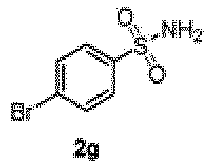
82% 8[d] 

68% 9[c] 

69% 10[c] 

41% [a] Reaction conditions: β-MnO2-HS-1 (0.1 g), thiols (1 mmol), DMF/water (0.6/0.4 mL). 28% NH3 aqueous solution (5 mmol), ρO2 (1 MPa), 90°C, 20 hours [b] Isolated yield; In every reaction, the conversion ratio of the compound 1 became 99% or more, Yield (%) = product (mol)/initial substrate (mol) × 100 [c] The reaction time was set to 40 hours. [d] DMF (1 mL) was used. Instead of the NH3 aqueous solution, NH3 gas (0.5 MPa) was used. [e] β-MnO2-HS-1 (0.15 g) was used. - Oxidation reaction was carried out using a 30 mL capped test tube. Typical alcohol oxidation reaction was carried out in accordance with the following procedure. Into the test tube, benzyl alcohol (1.0 mmol), MnO2 (0.1 g), toluene (2 mL) and O2 (0.1 MPa) were introduced, and they were allowed to react at 50°C for 24 hours. Qualification and quantification of the reaction products were carried out using a gas chromatograph.
[Table 6] Oxidation of alcohol to aldehyde using β-MnO2-HS-1 [a] entry substrate product yield (%) 1 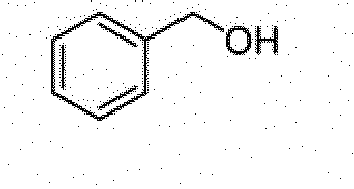

98% 2 

94% 3 

>99% [a] Reaction conditions: β-MnO2-HS-1 (0.1 g), alcohols (1 mmol), toluene (2 mL), ρO2 (0.1 MPa), 50°C, 24 hours; In every reaction, the conversion ratio of each alcohol became 99% or more. Yield (%) = product (mol)/initial substrate (mol) × 100 - β-MnO2-HS-2 was synthesized in accordance with the following procedure. To an aqueous solution (20 mL) of NaMnO4·H2O (0.64 g, 4 mmol) having been vigorously stirred, an aqueous solution (20 mL) of Mn(OAc)2·4H2O (1.47 g, 6 mmol) was dropwise added, and a 0.5 M H2SO4 aqueous solution was added to adjust pH to 0.74, following by stirring for 30 minutes. A precipitate was collected by filtration, washed with pure water (2 L), and then dried at 80°C overnight. The dried precipitate was calcined at 400°C for 5 hours, whereby β-MnO2-HS-2 that was a black powder was obtained. Yield: 0.8852 g (82%)
- A surface area of the resulting β-MnO2-HS-2 was 129 m2g-1, and an average pore diameter thereof was 5 to 7 nm.
- All the publications, the patents and the patent applications cited in the present specification are incorporated into the present specification as references, as they are.
- Since the method for producing an oxidation product of the present invention can be used for producing useful substances such as FDCA, this method is applicable in industrial fields related to production of such substances.
Claims (13)
- A method for producing an oxidation product by oxidizing a raw material compound in the presence of oxygen, wherein the raw material compound is oxidized in the presence of manganese dioxide having a crystal structure of β-type.
- The method for producing an oxidation product according to claim 1, wherein the oxidation of the raw material compound is carried out in a liquid phase.
- The method for producing an oxidation product according to claim 1 or 2, wherein a specific surface area of the manganese dioxide is 50 m2g-1 or more.
- The method for producing an oxidation product according to claim 3, wherein the manganese dioxide is manganese dioxide produced by a method comprising the following steps:(1) mixing sodium permanganate and a strong acid salt of manganese(II) ion in water and stirring them;(2) collecting a precipitate after the step (1); and(3) calcining the precipitate collected in the step (2) .
- The method for producing an oxidation product according to claim 3, wherein the manganese dioxide is manganese dioxide produced by a method comprising the following steps:(1) mixing sodium permanganate and a weak acid salt of manganese(II) ion in water, then adding a strong acid, and thereafter stirring them;(2) collecting a precipitate after the step (1); and(3) calcining the precipitate collected in the step (2) .
- The method for producing an oxidation product according to any one of claims 1 to 5, wherein the raw material compound is an organic substance.
- The method for producing an oxidation product according to any one of claims 1 to 5, wherein the raw material compound is 5-hydroxymethylfurfural, and the oxidation product is 2,5-furandicarboxylic acid.
- A catalyst for oxidation reaction, comprising manganese dioxide having a crystal structure of β-type.
- The catalyst for oxidation reaction according to claim 8, wherein a specific surface area of the manganese dioxide is 50 m2g-1 or more.
- The catalyst for oxidation reaction according to claim 9, wherein the manganese dioxide is manganese dioxide produced by a method comprising the following steps:(1) mixing sodium permanganate and a strong acid salt of manganese(II) ion in water and stirring them;(2) collecting a precipitate after the step (1); and(3) calcining the precipitate collected in the step (2) .
- The catalyst for oxidation reaction according to claim 9, wherein the manganese dioxide is manganese dioxide produced by a method comprising the following steps:(1) mixing sodium permanganate and a weak acid salt of manganese(II) ion in water, then adding a strong acid, and thereafter stirring them;(2) collecting a precipitate after the step (1); and(3) calcining the precipitate collected in the step (2) .
- A method for producing manganese dioxide, comprising the following steps:(1) mixing sodium permanganate and a strong acid salt of manganese(II) ion in water and stirring them;(2) collecting a precipitate after the step (1); and(3) calcining the precipitate collected in the step (2) .
- A method for producing manganese dioxide, comprising the following steps:(1) mixing sodium permanganate and a weak acid salt of manganese(II) ion in water, then adding a strong acid, and thereafter stirring them;(2) collecting a precipitate after the step (1); and(3) calcining the precipitate collected in the step (2) .
Applications Claiming Priority (2)
| Application Number | Priority Date | Filing Date | Title |
|---|---|---|---|
| JP2018167523 | 2018-09-07 | ||
| PCT/JP2019/034432 WO2020050215A1 (en) | 2018-09-07 | 2019-09-02 | METHOD FOR PRODUCING OXIDE USING β-MANGANESE DIOXIDE |
Publications (2)
| Publication Number | Publication Date |
|---|---|
| EP3848342A1 true EP3848342A1 (en) | 2021-07-14 |
| EP3848342A4 EP3848342A4 (en) | 2022-06-01 |
Family
ID=69721850
Family Applications (1)
| Application Number | Title | Priority Date | Filing Date |
|---|---|---|---|
| EP19856541.8A Withdrawn EP3848342A4 (en) | 2018-09-07 | 2019-09-02 | PROCESS FOR THE PREPARATION OF OXIDE USING SS MANGANE DIOXIDE |
Country Status (5)
| Country | Link |
|---|---|
| US (1) | US20210317100A1 (en) |
| EP (1) | EP3848342A4 (en) |
| JP (1) | JPWO2020050215A1 (en) |
| CN (1) | CN112654594A (en) |
| WO (1) | WO2020050215A1 (en) |
Families Citing this family (5)
| Publication number | Priority date | Publication date | Assignee | Title |
|---|---|---|---|---|
| CN114950410B (en) * | 2022-05-20 | 2023-09-01 | 福州大学 | Synthetic method of zirconium-manganese composite material |
| CN115084553A (en) * | 2022-06-16 | 2022-09-20 | 广东工业大学 | Preparation method and application of electrode catalyst for zinc-air battery |
| CN114927358B (en) * | 2022-06-21 | 2023-07-25 | 北京化工大学 | Modification and Preparation of Commercial MnO2 Electrode Material for Capacitive Deionization Technology |
| CN117105272B (en) * | 2023-08-08 | 2025-08-19 | 中南大学 | Preparation method of flaky spherical manganese dioxide, obtained manganese dioxide and application |
| CN119114057B (en) * | 2024-07-19 | 2025-12-12 | 中国科学院宁波材料技术与工程研究所 | An alkali metal modified manganese metal oxide catalyst, its preparation method and application |
Family Cites Families (15)
| Publication number | Priority date | Publication date | Assignee | Title |
|---|---|---|---|---|
| JPS5171299A (en) * | 1974-12-18 | 1976-06-19 | Matsushita Electric Industrial Co Ltd | Katsuseinisankamanganno seizoho |
| JPS5295597A (en) * | 1976-02-09 | 1977-08-11 | Matsushita Electric Ind Co Ltd | Production of activated manganese dioxide |
| GB2147285B (en) * | 1983-09-30 | 1987-04-01 | Union Carbide Corp | Production of manganese dioxide |
| JPH0959511A (en) * | 1995-08-18 | 1997-03-04 | Tokai Rubber Ind Ltd | Thermally conductive resin composition |
| JP2000211923A (en) | 1999-01-20 | 2000-08-02 | Mitsui Chemicals Inc | Production of manganese dioxide crystal |
| JP2007055887A (en) | 2005-07-25 | 2007-03-08 | Matsushita Electric Ind Co Ltd | Manganese dioxide, method and apparatus for producing the same, battery active material produced using the same, and battery using the same |
| JP5147309B2 (en) | 2007-06-21 | 2013-02-20 | キヤノン株式会社 | Process for producing 2,5-furandicarboxylic acid |
| JP2010065064A (en) * | 2008-09-08 | 2010-03-25 | Tokyo Institute Of Technology | Thermally conductive material, thermally conductive sheet, inter-laminar insulation film, and manufacturing method thereof |
| JP5550303B2 (en) | 2009-10-19 | 2014-07-16 | キヤノン株式会社 | Process for producing 2,5-furandicarboxylic acid |
| WO2012167280A1 (en) * | 2011-06-03 | 2012-12-06 | The Regents Of The University Of California | Manganese oxide and activated carbon fibers for removing particle, voc or ozone from a gas |
| CN103906566A (en) * | 2011-08-31 | 2014-07-02 | 阿彻丹尼尔斯米德兰德公司 | Spray oxidation process for the preparation of 2,5-furandicarboxylic acid from hydroxymethylfurfural |
| JP6614429B2 (en) * | 2014-03-27 | 2019-12-04 | 国立研究開発法人理化学研究所 | Catalyst for water splitting and method for producing oxygen and hydrogen using the same |
| CN105732520A (en) * | 2014-12-11 | 2016-07-06 | 中国科学院大连化学物理研究所 | Method of synthesizing quinazolinone-structured compound |
| JP2018167523A (en) | 2017-03-30 | 2018-11-01 | 大日本印刷株式会社 | Glass substrate protective film for solar cell module and thin film type solar cell module using the same |
| CN108002443B (en) * | 2017-12-04 | 2019-06-18 | 清华大学 | Preparation method and application of MnO2 catalyst for deep mineralization of phenol wastewater at room temperature |
-
2019
- 2019-09-02 CN CN201980058062.9A patent/CN112654594A/en active Pending
- 2019-09-02 EP EP19856541.8A patent/EP3848342A4/en not_active Withdrawn
- 2019-09-02 JP JP2020541208A patent/JPWO2020050215A1/en active Pending
- 2019-09-02 US US17/273,865 patent/US20210317100A1/en not_active Abandoned
- 2019-09-02 WO PCT/JP2019/034432 patent/WO2020050215A1/en not_active Ceased
Also Published As
| Publication number | Publication date |
|---|---|
| EP3848342A4 (en) | 2022-06-01 |
| WO2020050215A1 (en) | 2020-03-12 |
| JPWO2020050215A1 (en) | 2021-09-16 |
| US20210317100A1 (en) | 2021-10-14 |
| CN112654594A (en) | 2021-04-13 |
Similar Documents
| Publication | Publication Date | Title |
|---|---|---|
| US20210317100A1 (en) | Method for producing oxide using beta-manganese dioxide | |
| US11964260B2 (en) | Method for manufacturing ammonia synthesis catalyst, and method for manufacturing ammonia | |
| Opre et al. | Promoted Ru–hydroxyapatite: designed structure for the fast and highly selective oxidation of alcohols with oxygen | |
| Kaur et al. | Lithium zirconate as a selective and cost-effective mixed metal oxide catalyst for glycerol carbonate production | |
| Manjunathan et al. | Novel bifunctional Zn–Sn composite oxide catalyst for the selective synthesis of glycerol carbonate by carbonylation of glycerol with urea | |
| KR102113105B1 (en) | Catalyst for the production of higher alcohols | |
| Zhao et al. | Fe-Doped SnO 2 catalysts with both BA and LA sites: facile preparation and biomass carbohydrates conversion to methyl lactate MLA | |
| Guo et al. | Dehydration of lactic acid to acrylic acid over lanthanum phosphate catalysts: the role of Lewis acid sites | |
| EP2964377B1 (en) | Alkaline earth metal aluminate spinels and method for the preparation and use thereof | |
| Mizushima et al. | Synthesis of β-MoO3 through evaporation of HNO3-added molybdic acid solution and its catalytic performance in partial oxidation of methanol | |
| Yang et al. | Effect of the oxygen coordination environment of Ca–Mn oxides on the catalytic performance of Pd supported catalysts for aerobic oxidation of 5-hydroxymethyl-2-furfural | |
| Blasco et al. | Selective oxidation of propane to acrylic acid on K-doped MoVSbO catalysts: catalyst characterization and catalytic performance | |
| EP4680387A1 (en) | Making catalysts for oxidative dehydrogenation | |
| Chen et al. | Cobalt-ceria binary oxide nanojunctions for aqueous-phase aerobic oxidation of 5-hydroxymethylfurfural to 2, 5-furandicarboxylic acid: the role of interfaces | |
| Wen et al. | Dual lattice oxygens in amorphous Zr-doped manganese oxide for highly efficient aerobic oxidation of 5-hydroxymethylfurfural to 2, 5-furandicarboxylic acid | |
| Shringarpure et al. | Liquid phase oxidation of styrene over zirconia supported undecatungstophosphate using different oxidants: a comparative study | |
| Munir et al. | Reusability of Mg/Al catalysts for the aldol condensation of furfural and acetone in a continuous flow reactor | |
| CN106674173B (en) | Dehydrogenation catalyst and method for preparing valerolactone | |
| Chen et al. | Selective aerobic oxidation of 5-hydroxymethylfurfural to 2, 5-furandicarboxylic acid over nanojunctions of cobalt–ceria binary oxide in water | |
| ES2638719B1 (en) | PROCEDURE FOR THE VALUATION OF OXYGEN COMPOUNDS PRESENT IN WATER FRACTIONS DERIVED FROM BIOMASS | |
| KR20210060557A (en) | Catalyst for producing methacrylic acid and method for producing the same, and method for producing methacrylic acid and methacrylic acid ester | |
| JPWO2019156028A1 (en) | Complexes, methods for producing composites, methods for producing catalysts and ammonia | |
| Lee et al. | Physicochemical properties of manganese dioxide synthesized using C2–C5 alcohols as reducing agents and their catalytic activities for CO oxidation | |
| JP7389056B2 (en) | Catalytic process for producing hydrocarbons and aromatic compounds from oxygenates in aqueous mixtures | |
| Wiesfeld | Earth-abundant heterogeneous catalysts for the conversion of biomass into value-added chemical intermediates |
Legal Events
| Date | Code | Title | Description |
|---|---|---|---|
| STAA | Information on the status of an ep patent application or granted ep patent |
Free format text: STATUS: THE INTERNATIONAL PUBLICATION HAS BEEN MADE |
|
| PUAI | Public reference made under article 153(3) epc to a published international application that has entered the european phase |
Free format text: ORIGINAL CODE: 0009012 |
|
| STAA | Information on the status of an ep patent application or granted ep patent |
Free format text: STATUS: REQUEST FOR EXAMINATION WAS MADE |
|
| 17P | Request for examination filed |
Effective date: 20210401 |
|
| AK | Designated contracting states |
Kind code of ref document: A1 Designated state(s): AL AT BE BG CH CY CZ DE DK EE ES FI FR GB GR HR HU IE IS IT LI LT LU LV MC MK MT NL NO PL PT RO RS SE SI SK SM TR |
|
| DAV | Request for validation of the european patent (deleted) | ||
| DAX | Request for extension of the european patent (deleted) | ||
| A4 | Supplementary search report drawn up and despatched |
Effective date: 20220504 |
|
| RIC1 | Information provided on ipc code assigned before grant |
Ipc: C07B 61/00 20060101ALI20220428BHEP Ipc: C07D 307/46 20060101ALI20220428BHEP Ipc: C07C 311/29 20060101ALI20220428BHEP Ipc: C07C 311/16 20060101ALI20220428BHEP Ipc: C07C 303/36 20060101ALI20220428BHEP Ipc: C07C 49/786 20060101ALI20220428BHEP Ipc: C07C 49/78 20060101ALI20220428BHEP Ipc: C07C 47/54 20060101ALI20220428BHEP Ipc: C07C 45/39 20060101ALI20220428BHEP Ipc: C07C 45/38 20060101ALI20220428BHEP Ipc: C07B 45/04 20060101ALI20220428BHEP Ipc: C07B 41/08 20060101ALI20220428BHEP Ipc: C07B 41/06 20060101ALI20220428BHEP Ipc: C01G 45/02 20060101ALI20220428BHEP Ipc: B01J 23/34 20060101ALI20220428BHEP Ipc: C07B 33/00 20060101AFI20220428BHEP |
|
| STAA | Information on the status of an ep patent application or granted ep patent |
Free format text: STATUS: THE APPLICATION IS DEEMED TO BE WITHDRAWN |
|
| 18D | Application deemed to be withdrawn |
Effective date: 20240403 |