EP3846530B1 - Verfahren zur optimierung eines kommunikationsnetzes, und entsprechende vorrichtungen - Google Patents
Verfahren zur optimierung eines kommunikationsnetzes, und entsprechende vorrichtungen Download PDFInfo
- Publication number
- EP3846530B1 EP3846530B1 EP20217779.6A EP20217779A EP3846530B1 EP 3846530 B1 EP3846530 B1 EP 3846530B1 EP 20217779 A EP20217779 A EP 20217779A EP 3846530 B1 EP3846530 B1 EP 3846530B1
- Authority
- EP
- European Patent Office
- Prior art keywords
- route
- segment
- probability
- communication network
- transmission
- Prior art date
- Legal status (The legal status is an assumption and is not a legal conclusion. Google has not performed a legal analysis and makes no representation as to the accuracy of the status listed.)
- Active
Links
Images

Classifications
-
- H—ELECTRICITY
- H04—ELECTRIC COMMUNICATION TECHNIQUE
- H04W—WIRELESS COMMUNICATION NETWORKS
- H04W40/00—Communication routing or communication path finding
- H04W40/24—Connectivity information management, e.g. connectivity discovery or connectivity update
- H04W40/26—Connectivity information management, e.g. connectivity discovery or connectivity update for hybrid routing by combining proactive and reactive routing
-
- H—ELECTRICITY
- H04—ELECTRIC COMMUNICATION TECHNIQUE
- H04W—WIRELESS COMMUNICATION NETWORKS
- H04W28/00—Network traffic management; Network resource management
- H04W28/02—Traffic management, e.g. flow control or congestion control
- H04W28/021—Traffic management, e.g. flow control or congestion control in wireless networks with changing topologies, e.g. ad-hoc networks
-
- H—ELECTRICITY
- H04—ELECTRIC COMMUNICATION TECHNIQUE
- H04W—WIRELESS COMMUNICATION NETWORKS
- H04W28/00—Network traffic management; Network resource management
- H04W28/02—Traffic management, e.g. flow control or congestion control
- H04W28/0247—Traffic management, e.g. flow control or congestion control based on conditions of the access network or the infrastructure network
-
- H—ELECTRICITY
- H04—ELECTRIC COMMUNICATION TECHNIQUE
- H04W—WIRELESS COMMUNICATION NETWORKS
- H04W28/00—Network traffic management; Network resource management
- H04W28/02—Traffic management, e.g. flow control or congestion control
- H04W28/0284—Traffic management, e.g. flow control or congestion control detecting congestion or overload during communication
-
- H—ELECTRICITY
- H04—ELECTRIC COMMUNICATION TECHNIQUE
- H04W—WIRELESS COMMUNICATION NETWORKS
- H04W40/00—Communication routing or communication path finding
- H04W40/02—Communication route or path selection, e.g. power-based or shortest path routing
-
- H—ELECTRICITY
- H04—ELECTRIC COMMUNICATION TECHNIQUE
- H04W—WIRELESS COMMUNICATION NETWORKS
- H04W84/00—Network topologies
- H04W84/18—Self-organising networks, e.g. ad-hoc networks or sensor networks
Definitions
- the present invention relates to a method for optimizing a communication network.
- the present invention also relates to a computer program and a readable information medium capable of implementing the optimization method.
- LTE Long Term Evolution
- SON technology seeks to avoid the tedious tasks of manually configuring network parameters by allowing self-configuration, self-operation and self-optimization by the equipment itself.
- the LTE communication network is optimized, in particular in terms of traffic, by the equipment.
- the subject of the invention is an optimization method according to claim 1.
- the optimization method is according to any one of claims 2 to 7.
- the invention also relates to a computer program product according to claim 8.
- the invention also relates to a readable information medium according to claim 9.
- a system 10 and a computer program product 12 are shown in the figure 1 .
- the interaction between the system 10 and the computer program product 12 allows the implementation of a method for optimizing a communication network.
- the method for optimizing a communication network is thus a computer-implemented method.
- System 10 is a desktop computer.
- system 10 is a rack-mounted computer, laptop, tablet, personal digital assistant (PDA), or smartphone.
- PDA personal digital assistant
- the computer is adapted to operate in real time and/or is in an on-board system, in particular in a vehicle such as an airplane.
- the system 10 comprises a computer 14, a user interface 16 and a communication device 18.
- the calculator 14 is an electronic circuit designed to manipulate and/or transform data represented by electronic or physical quantities in registers of the system 10 and/or memories into other similar data corresponding to physical data in the register memories. or other types of display devices, transmission devices or storage devices.
- the computer 14 includes a single-core or multi-core processor (such as a central processing unit (CPU), a graphics processing unit (GPU), a microcontroller, and a digital signal processor (DSP)) , a programmable logic circuit (such as an application-specific integrated circuit (ASIC), a field -programmable gate array (FPGA), a logic device (PLD) and programmable logic arrays (PLA)), a state machine, a logic gate and discrete hardware components.
- a single-core or multi-core processor such as a central processing unit (CPU), a graphics processing unit (GPU), a microcontroller, and a digital signal processor (DSP)
- DSP digital signal processor
- ASIC application-specific integrated circuit
- FPGA field -programmable gate array
- PLD logic device
- PLA programmable logic arrays
- the computer 14 comprises a data processing unit 20 suitable for processing data, in particular by performing calculations, memories 22 suitable for storing data and a reader 24 suitable for reading a computer-readable medium.
- the user interface 16 includes an input device 26 and an output device 28.
- the input device 26 is a device allowing the user of the system 10 to enter information or commands on the system 10.
- the input device 26 is a keyboard.
- input device 26 is a pointing device (such as a mouse, touchpad, and graphics tablet), voice recognition device, eye tracker, or haptic (motion analysis) device.
- Output device 28 is a graphical user interface, i.e., a display unit designed to provide information to the user of system 10.
- the output device 28 is a display screen allowing a visual presentation of the output.
- the output device is a printer, an augmented and/or virtual display unit, a speaker or other sound generating device for presenting the output in sound form, a unit producing vibrations and/or odors or a unit adapted to produce an electrical signal.
- the input device 26 and the output device 28 are the same component forming human-machine interfaces, such as an interactive screen.
- the communication device 18 allows unidirectional or bidirectional communication between the components of the system 10.
- the communication device 28 is a bus communication system or an input/output interface.
- the presence of the communication device 18 allows that, in certain embodiments, the components of the computer 14 are distant from each other.
- Computer program product 12 includes computer readable medium 32.
- Computer-readable medium 32 is a tangible device readable by reader 24 of calculator 14.
- the computer-readable medium 32 is not a transient signal per se, such as radio waves or other freely propagating electromagnetic waves, such as light pulses or electronic signals.
- Such a computer-readable storage medium 32 is, for example, an electronic storage device, a magnetic storage device, an optical storage device, an electromagnetic storage device, a semiconductor storage device, or any combination thereof. these.
- computer-readable storage medium 32 is a mechanically encoded device, such as punched cards or grooved relief structures, floppy disk, hard disk, ROM (ROM), Random Access Memory (RAM), Erasable Programmable Read Only Memory (EROM), Electrically Erasable Readable Memory (EEPROM), Magneto-Optical Disk, Static Random Access Memory (SRAM), Compact Disc ( CD-ROM), digital versatile disk (DVD), USB flash drive, floppy disk, flash memory, solid state disk (SSD) or PC card such as a PCMCIA memory card.
- ROM Read Only Memory
- EROM Erasable Programmable Read Only Memory
- EEPROM Electrically Erasable Readable Memory
- SRAM Static Random Access Memory
- CD-ROM Compact Disc
- DVD digital versatile disk
- USB flash drive floppy disk
- SSD solid state disk
- PCMCIA memory card such as a PCMCIA memory card.
- a computer program is stored on computer-readable storage medium 32.
- the computer program includes one or more stored program instruction sequences.
- Such program instructions when executed by data processing unit 20, cause steps of the optimization method to be executed.
- the form of program instructions is source code form, computer executable form, or any intermediate form between source code and computer executable form, such as the form resulting from source code conversion through an interpreter , assembler, compiler, linker, or locator.
- the program instructions are microcode, firmware instructions, state definition data, integrated circuit configuration data (eg, VHDL), or object code.
- the program instructions are written in any combination of one or more languages, for example an object-oriented programming language (FORTRAN, C++, JAVA, HTML), a procedural programming language (C language for example).
- object-oriented programming language for example
- C++ JAVA
- HTML JAVA
- C language for example
- program instructions are downloaded from an external source via a network, as is notably the case for applications.
- the computer program product comprises a computer-readable data carrier on which the program instructions are stored or a data carrier signal on which the program instructions are encoded.
- the computer program product 12 comprises instructions which can be loaded into the data processing unit 20 and adapted to cause the execution of the optimization method when they are executed by the processing unit. of data 20.
- the execution is entirely or partially carried out either on the system 10, that is to say a single computer, or in a system distributed between several computers (in particular via the use of cloud computing).
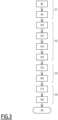
- picture 3 is a flowchart of an example of implementation of a method for optimizing a communication network.
- the optimization method aims to optimize a communication network to obtain an optimized communication network.
- the optimized communication network is the result of the optimization process as indicated by reference 36 in the picture 3 so the optimized communication network is optimized network 36 in the following.
- constraints generally corresponding to hazards caused by the environment and to communication requirements.
- the optimization process comprises a phase of obtaining P1, a phase of evaluation P2, a phase of selection P3 and a phase of use P4.
- the obtaining phase P1 includes an obtaining step 80 and a supply step 90.
- a set of candidate networks 40 is obtained.
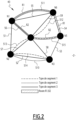
- candidate network 40 An example of candidate communication network 40, called candidate network 40 in the following, is visible on the figure 2 .
- the candidate network 40 is, for example, an ad hoc network.
- the candidate network 40 comprises a plurality of communication nodes N, for example six nodes.
- an element Xi here a node
- element Xi here Ni
- the candidate network 40 comprises a plurality of transmission segments S, for example fifteen segments S1, . . . S15 connecting the nodes N.
- the transmission segment S is called “segment”.
- the nodes N are present in a geographical zone Z.
- Each node N is in particular mobile with respect to the geographical zone Z.
- Each node N has a geographical position included in the geographical zone Z.
- Each node N is identified by an identifier, such as an address according to the internet protocol, also designated by the abbreviation IP referring to the English term “Internet Protocol”.
- each node N comprises a communication device, not shown, adapted to implement one or more communications with one or more other nodes N of the candidate network 40, by using the segments S connecting the nodes N.
- Communication means an exchange of data, for example data packets, between two nodes N of the candidate network 40.
- Each segment S is a communication link connecting two nodes N.
- Each segment S is suitable for use by a protocol and for providing a data transmission capacity.
- each segment S is characterized by the protocol and the data transmission capacity.
- Each segment S is thus in particular suitable for transmitting a plurality of communications, such as data packets or data streams, between two nodes N through the candidate network 40.
- the protocol defines in particular a type of data exchanged by the segment N, and/or the devices able to implement the segment N.
- the protocol is, for example, a type of transmission technology.
- the protocol is thus, for example, chosen from the list consisting of: a satellite transmission protocol, a mobile telephone link protocol, a microwave link protocol and a cable link protocol.
- the satellite transmission protocol uses, for example, a link between two communication nodes N via at least one satellite, for example a satellite of Satcom type.
- the mobile telephone link protocol is, for example, a protocol defined by the 3GPP (from the English “3rd Generation Partnership Project” for 3rd generation partnership project), such as the GPRS (from the English “General Packet Radio Service” for General Packet Radio Service), EDGE (for "Enhanced Data Rates for GSM Evolution” for Data Rates improved for the evolution of GSM), UMTS (for " Universal Mobile Telecommunications System” for Universal Mobile Telecommunications System) or LTE.
- 3GPP from the English “3rd Generation Partnership Project” for 3rd generation partnership project
- GPRS from the English “General Packet Radio Service” for General Packet Radio Service
- EDGE for "Enhanced Data Rates for GSM Evolution” for Data Rates improved for the evolution of GSM
- UMTS for " Universal Mobile Telecommunications System” for Universal Mobile Telecommunications System” or LTE.
- the candidate network 40 is adapted to use at least two distinct protocols.
- the candidate network 40 comprises at least two distinct segments S configured to use distinct protocols with respect to each other. the other.
- the candidate network 40 is, for example, configured to use a first type of protocol and a second type of protocol different from the first type.
- Type of protocol means a protocol specific to a transmission medium capable of processing and transmitting a specific type of data and a specific type of communication, meeting at least one requirement chosen from the list consisting of a requirement a minimum throughput requirement, an average throughput requirement, a specific latency requirement, a specific jitter requirement, and a packet loss ratio requirement.
- segments S1 through S9 are segments implemented by the radio link protocol, referred to as segment type 1.
- segments S10 and S11 are implemented by the satellite transmission protocol, referred to as segment type 1.
- Segments S12, S13 and S14 are implemented by the mobile phone trunk protocol, called segment type 3.
- Each segment S is specific to the nodes N connected by said segment S.
- a first node N is suitable for transmitting communications to a second node N by a segment S suitable for use by a first protocol.
- the first node N is also in particular capable of transmitting communications to a third node N, distinct from the second node N, by a segment S capable of being used by a second protocol.
- the following nodes N are linked by segments presenting the mobile telephony link protocol: the nodes N2 and N4, the nodes N4 and N6, the nodes N4 and N5, as well as the nodes N2 and N3.
- the following nodes are linked by segments presenting the satellite transmission protocol: the nodes N2 and N3, as well as the nodes N1 and N6.
- nodes N4 with each of nodes N1, N2, N3, N5 and N6, node N1 with each of nodes N2 and N6, the node N3 with each of the nodes N2 and N5, as well as the nodes N5 and N6.
- certain nodes of the candidate network 40 are interconnected by several segments presenting distinct protocols.
- the nodes N2 and N3 are interconnected by three segments between them, namely a segment S10 implemented by the satellite transmission protocol, a segment S14 implemented by the mobile telephone link protocol, and a segment S2 implemented by the radio link protocol.
- each segment S has a bidirectional connection.
- at least one segment S has a unidirectional link.
- route R1, R2 Several segments S form a communication route, called route R1, R2 in the following.
- the route R1, R2 comprises a single segment S.
- the candidate network 40 is configured to implement communications between the nodes N via the routes R1, R2. In particular, when two nodes N likely to establish a communication are not directly connected by a segment S, the communication network 40 is configured to transmit the communication by the route R1, R2.
- a communication between the node N1 and N5 is, for example, alternatively implemented by the route R1 connecting these nodes via the node N6 or by the route R2 connecting the nodes N1 and N5 via the node N4.
- the R1 route includes the S11 segment and the S4 segment.
- Route R2 includes segment S6 and segment S15.
- each candidate network 40 is provided directly to the system 10.
- each candidate network 40 is determined by the system 10 as a function of external constraints.
- system 10 determines a candidate network 40 from the geography of where the optimized network 36 will be installed.
- other parameters are taken into account such as the type of network stations, the presence of disturbances (interference), the operation of the station (risk of breakdown, age of the station, technology of the station or others) or the range of the station.
- the optimized network 36 is a candidate network 40 capable of satisfying a certain number of requirements which are provided in the following step.
- the system 10 receives at least one transmission requirement between two nodes N1 to N6 of the optimized network 36, the transmission requirement comprising at least one transmission requirement minimum and/or a need for maximum latency,
- Bit Rate means the number of bits transmitted per second.
- Minimum/maximum bit rate means the minimum/maximum number of bits transmitted per second.
- latency is meant the duration between the instant of transmission and the instant of reception of a communication transmitted between two nodes N of the communication network 40.
- the transmission requirement also includes a maximum jitter requirement as well as a maximum packet loss rate requirement on a given segment.
- “Jitter” is understood to mean the maximum variation in latency between the instant of transmission and the instant of reception of a communication transmitted between two nodes N of the communication network 40.
- packet loss rate is meant the number of packets not correctly transmitted on a segment for 100 packets transmitted.
- the need for transmission further includes a schedule and/or a required communication duration.
- the evaluation phase P2 thus comprises, for each candidate network 40 and each transmission need, a step for obtaining 100, a step for calculating 120, a step for determining 130 and a step for evaluating 140.
- evaluation phase P2 is now described for the candidate network 40 of the figure 2 and for a transmission need between the node N1 and the node N6 of the candidate network 40.
- the transmission need is characterized by a minimum throughput and/or a maximum latency.
- the system 10 obtains the parameters relating to each segment S.
- the parameters include a transmission capacity degradation probability.
- the transmission capacity includes, for example, the maximum and/or minimum rate of the segment S, the latency of the segment S and/or the rate variance or latency during a reference period.
- the maximum and/or minimum rate is, for example, expressed in bits per second capable of being transmitted by the segment S.
- the degradation of the transmission capacity is in particular a degradation of the bit rate, such as the maximum or minimum bit rate of the segment, and/or a degradation of the transmission reliability.
- transmission reliability it is meant the probability that a data packet of the communication will be transmitted without being lost.
- the system 10 calculates, for example, the probability of degradation as a function of an environmental characteristic. According to another example, the system 10 receives the probability of degradation, for example from a database, not shown.
- the environmental characteristic includes, for example, a geographic position of each node N, a probability of interference, a life expectancy of each node N and a probability that each node N will be destroyed taking into account, in particular, its geographical position.
- the probability of interference for a node N is a law of probability which takes into account the estimated geographical position of an interfering transmitter, its distance from node N, the power of node N and the spectral band over which the transmitter is likely to interfere. to act and which in output indicates a probability of occurrence as well as a percentage of impact on any transmission system present in this same spectral band.
- the life expectancy of each node N is, for example, an average life expectancy, such as an arithmetic mean. Life expectancy is, for example, recorded in a life expectancy database, not shown.
- the system 10 interrogates, for example, the life expectancy database to obtain the life expectancy of each node N, and calculates a remaining life expectancy for each node N.
- the node N is unable to transmit communications following destruction of the node N, for example by an adverse party and/or by an electrical fault of the node N.
- the system 10 receives the probability of destruction of each node N by an operator or by supplying a law of probability taking into account the geographical position of the node N
- the system 10 receives the environmental characteristic or a database, not shown.
- the system 10 increases the probability of degradation of a segment S when the geographical positions of the nodes N connected by said segment S are spaced apart by a distance greater than a predetermined range of said segment S, when the expectation remaining lifetime of one of the nodes N connected by the segment S is less than a threshold and/or when the probability of destruction of one of the nodes N connected by the segment S is greater than a threshold.
- the system 10 increases the probability of degradation according to a first predetermined function.
- the environmental characteristic is in particular a function argument of the first predetermined function.
- the parameters further include a traffic parameter.
- the traffic parameter is a parameter relating to a transmission rate allocated to said segment S.
- allocated transmission rate it is understood that at least part of the transmission capacity is reserved on a specific segment.
- the allocated transmission rate is the bit rate reserved for a corresponding traffic of the transmission capacity. For example, a predefined type of traffic is likely to be transmitted by the allocated transmission rate.
- the allocated transmission rate is a predefined transmission rate or a nominal transmission rate.
- the allocated transmission rate is at least a fraction of the transmission capacity.
- the transmission capacity includes, for example, the maximum and/or minimum rate of the segment S.
- the transmission capacity comprises the latency of the segment S and/or the rate variance or latency during a reference period.
- the transmission bit rate is thus a maximum or minimum bit rate of the segment S for a predefined type of traffic.
- the system 10 adds, for each segment S, transmission rates allocated for all the communications for each instant of a control period on the respective segment S.
- each communication transmits data comprising, for each instant of the control period, the probability of implementation of this communication by the respective segment S.
- a law of probability representative of the communications of a deployable network indicates the probability of a simultaneity of communications during said control period.
- the routes followed by the various communications thus borrow, for example, simultaneously the segment S and transmits the probability to the system 10.
- the system 10 thus obtains the traffic parameter in particular according to the law(s) of probability of a simultaneity of a plurality of transmissions on segment S.
- the system 10 calculates, for each segment S, the probability of congestion of the segment S as a function of the transmission capacity of the segment S and of the parameters obtained.
- the probability of congestion also depends on the law(s) of probability of a simultaneity of a plurality of transmissions on the segment S.
- the system 10 calculates the probability of congestion of the segment S according to a second predetermined function.
- the transmission capacity and the parameters obtained are in particular variables of the second predetermined function.
- the system 10 increases the probability of congestion if the transmission capacity decreases, while observing a constant traffic parameter.
- the system 10 increases the probability of congestion if the traffic parameter increases, if the transmission capacity is constant.
- the system 10 determines the route R1, R2 to establish communication between the two nodes N according to the probabilities of congestion of the segments S and according to the transmission need. The system 10 thus obtains a determined route.
- the system 10 determines the route R1, R2 determined according to a third predetermined function.
- the congestion probabilities of the segments S and the transmission need are variables of the third predetermined function.
- the system 10 determines, for each route R1, R2 connecting the two nodes N, the route congestion probability, which is the highest congestion probability of the segments S of the route R1, R2.
- the segment S6 connecting the nodes N1 and N4 has for example a probability of congestion of 40%, and the segment S15 connecting the nodes N4 and N5 a probability of congestion of 35%.
- the probability of road congestion of the road R2 connecting the nodes N1, N4 and N5 is thus equal to 40%.
- the segment S11 connecting the nodes N1 and N6 has for example a congestion probability of 20%, and the segment S4 connecting the nodes N6 and N5 a congestion probability of 50%.
- the probability of road congestion of the road R1 connecting the nodes N1, N6 and N5 is thus equal to 50%.
- the system 10 determines the route R2 as being the determined route.
- the route R2 has a transmission capacity equal to 250 Mbit/s, for example limited by the segment 15 which implements a mobile telephony link protocol.
- the R1 route has a transmission capacity equal to 1 Gbit/s, and the transmission requirement includes a required minimum throughput of 800 Mbit/s.
- the system 10 determines the route R1 as the determined route.
- the system 10 compares the probability of road congestion with a probability threshold.
- the system 10 selects for example the route R1, R2 as candidate route when the probability of road congestion is lower than the probability threshold.
- the system 10 notably chooses the route R1, R2 determined from among the candidate route(s).
- the system 10 evaluates the respect of the transmission need by the candidate network 40 according to the route determined in the determination step 130.
- Such an evaluation is made by the system 10 to obtain an evaluation score.
- the evaluation score is binary, namely that the evaluation score is equal to a first value corresponding to the fact that the need is not met and is equal to a second value corresponding to the fact that the need is met.
- the evaluation score also takes into account the probability of congestion.
- the system 10 evaluates an overall score for the candidate network 40 by aggregating from each evaluation score obtained for each need.
- the aggregation is, according to one embodiment, weighted by the importance of compliance with the need, compliance with which is evaluated by the evaluation score.
- the optimized network 36 is selected from among the set of candidate networks 40 using the evaluation scores (or the overall score).
- the selection phase P3 includes a display step 150 and a selection step 160.
- the evaluation score is displayed to an operator for each candidate network 40, for example using the output device 28.
- the selection step 160 consists of selecting the candidate network 40 which will become the optimized network 36.
- the operator chooses as optimized network 36 the candidate network 40 having the highest evaluation score.
- the operator takes several elements into account and none of the candidate networks 40 meets all of the requirements, so that the operator is led to make compromises.
- the system 10 determines a resilience indicator of the candidate network 40 as a function of the probability of congestion and of the environmental characteristic.
- the resilience indicator is, for example, a probability.
- the resilience indicator is in particular a single probability value.
- the resilience indicator characterizes in particular the resilience of the candidate network 40 for a route R1, R2 chosen as determined route R1, R2.
- the system 10 determines the resilience indicator for each possible route R1, R2. According to an example, the system 10 ranks each route R1, R2 according to the probability of road congestion of said route R1, R2.
- the system 10 determines the resilience indicator according to a fourth predetermined function.
- the probability of congestion and the environmental characteristic are variables of the fourth predetermined function.
- an average, such as an arithmetic mean, of the congestion probability is a variable of the fourth predetermined function.
- the mean probability of congestion of the route R2 is for example 40%, for the segment S6, plus 35%, for the segment S15, divided by two, and is thus equal to 37.5%.
- the average probability of congestion of the route R1 is for example 20%, for the segment S11, plus 50%, for the segment S4, divided by two, and is thus equal to 35%.
- the resilience indicator is higher when the system 10 chooses the route R1, because the average congestion is lower, compared to the case where the system 10 chooses the route R1.
- the operator takes into account the resilience indicator and the evaluation scores (possibly aggregated) to determine the optimized network 36.
- the use phase P4 comprises two steps: an implementation step 170 and an exploitation step 180.
- the optimized network 36 which has been chosen by the operator is implemented.
- the network thus implemented is then used during the exploitation step 180.
- the chosen route is the route determined in the determination step 130.
- the optimization method thus makes it possible to obtain an optimized network 36.
- the probability of congestion of one or more segments S is reduced.
- the optimization method makes it possible to take into account the fact that several segments S use distinct protocols.
- the transmission capacity of several segments S using distinct protocols is taken into account by the optimization method.
- the optimization method described makes it possible to obtain an optimal topology in terms of message transmission reliability, in particular by taking into account the degradation parameter and the traffic parameter to take account of the operational hazards of the communication network. 40.
- the optimization method described makes it possible to obtain an operating communication network suitable for a broader spectrum of situations since the cases with several communication protocols are managed.
- the determination step 130 then comprises the determination of the route determined according to the need for transmission, in particular solely according to said need for transmission.
- the calculation step 120 is implemented after the determination step 130.
- the evaluation step 140 comprises the evaluation of the respect of the transmission need by the candidate communication network 40 according to the probabilities of congestion of the segments S of the determined route, to obtain an evaluation score.
Landscapes
- Engineering & Computer Science (AREA)
- Computer Networks & Wireless Communication (AREA)
- Signal Processing (AREA)
- Mobile Radio Communication Systems (AREA)
- Communication Control (AREA)
- Data Exchanges In Wide-Area Networks (AREA)
Claims (9)
- Verfahren zum Optimieren eines Kommunikationsnetzes (40), um ein optimiertes Kommunikationsnetz (36) zu erlangen, wobei das Verfahren computerimplementiert ist, das Verfahren umfassend:- eine Erlangungsphase, die Erlangungsphase umfassend einen folgenden Schritt:- Erlangen eines Satzes von Kandidaten-Kommunikationsnetzen (40), jedes Kandidaten-Kommunikationsnetz (40) umfassend eine Vielzahl von Knoten (N1, ... N6) und eine Vielzahl von Übertragungssegmenten (S1, ... S15), die die Knoten (N1, ... N6) verbinden, wobei jedes Segment (S1, ... S15) geeignet ist, um von einem Protokoll verwendet zu werden und eine Datenübertragungskapazität bereitzustellen, wobei mindestens zwei verschiedene Protokolle von dem Kandidaten-Kommunikationsnetz (40) verwendet werden, und- Bereitstellen von mindestens einem Übertragungsbedarf zwischen zwei Knoten (N1, ... N6) des optimierten Kommunikationsnetzes (36), der Übertragungsbedarf umfassend mindestens einen Bedarf nach einer minimalen Rate und einen Bedarf nach einer maximalen Latenz;- eine Auswertungsphase, die Auswertungsphase für jeden Übertragungsbedarf und für jedes Kandidaten-Kommunikationsnetz (40) umfassend einen folgenden Schritt:- Erlangen von Parametern, die sich auf jedes Segment (S1, ... S15) beziehen, die Parameter umfassend eine Wahrscheinlichkeit einer Verschlechterung der Übertragungskapazität und einen Verkehrsparameter, wobei der Verkehrsparameter ein Parameter ist, der sich auf Übertragungsraten bezieht, die dem Segment (S1, ... S15) zugewiesen sind,- Bestimmen einer Route (R1, R2), die verwendet werden soll, um eine Kommunikation zwischen den zwei Knoten (N1, ... N6) abhängig von dem Übertragungsbedarf herzustellen, die zu verwendende Route (R1, R2) umfassend mindestens ein Segment (S1, ... S15) und als bestimmte Route bezeichnet wird,- Berechnen, für jedes Segment (S1,... S15) der bestimmten Route, einer Wahrscheinlichkeit einer Überlastung des Segments (S1,... S15) abhängig von der Übertragungskapazität des Segments (S1, ... S15) und den erlangten Parametern,- Bewerten der Einhaltung des Übertragungsbedarfs durch das Kandidaten-Kommunikationsnetz (40) abhängig von den Wahrscheinlichkeiten von Überlastungen der Segmente (S1, ... S15) der bestimmten Route, um eine Bewertungspunktzahl zu erlangen, und- eine Auswahlphase eines optimierten Kommunikationsnetzes (36) aus allen Kandidaten-Kommunikationsnetzen (40) mittels der Bewertungspunktzahlen.
- Optimierungsverfahren nach Anspruch 1, wobei jedes Segment (S1, ... S15) eines Kandidaten-Kommunikationsnetzes (40) durch ein Protokoll implementiert wird, das ausgewählt ist aus einem Satellitenübertragungsprotokoll, einem Mobilfunkverbindungsprotokoll, einem Richtfunkverbindungsprotokoll und einem Kabelverbindungsprotokoll.
- Optimierungsverfahren nach Anspruch 1 oder 2, wobei für jede Route (R1, R2), die die zwei Knoten (N1, ... N6) verbindet, eine Routenüberlastungswahrscheinlichkeit als die höchste Überlastungswahrscheinlichkeit der Segmente (S1, ... S15) der Route (R1, R2) bestimmt wird, wobei die zu verwendende Route (R1, R2) abhängig von jeder Routenüberlastungswahrscheinlichkeit ausgewählt ist.
- Optimierungsverfahren nach Anspruch 3, wobei die Routenüberlastungswahrscheinlichkeit mit einem Wahrscheinlichkeitsschwellenwert verglichen wird, wobei die Route (R1, R2) als Kandidatenroute ausgewählt wird, wenn die Routenüberlastungswahrscheinlichkeit kleiner als der Wahrscheinlichkeitsschwellenwert ist, und die zu verwendende Route (R1, R2) ausgewählt ist aus der oder den Kandidatenrouten.
- Optimierungsverfahren nach Anspruch 3 oder 4, wobei bei dem Schritt eines Erlangens der Bewertungsphase der Verkehrsparameter abhängig von einem Wahrscheinlichkeitsgesetz einer Gleichzeitigkeit einer Vielzahl von Übertragungen auf dem Segment (S1, ... S15) erlangt wird, und wobei in dem Schritt eines Bestimmens die zu verwendende Route (R1, R2) basierend auf der von dem Gleichzeitigkeitsgesetz abhängigen Überlastungswahrscheinlichkeiten bestimmt wird.
- Optimierungsverfahren nach einem der Ansprüche 1 bis 5, wobei das Verfahren ferner einen Schritt eines Bereitstellens eines Umweltmerkmals umfasst, wobei das Umweltmerkmal mindestens ein Merkmal ist, das ausgewählt ist aus der Liste, bestehend aus: einer geografischen Position von jedem Knoten (N1, ... N6), einer Interferenzwahrscheinlichkeit, einer Lebenserwartung von jedem Knoten (N1, ... N6) und einer Wahrscheinlichkeit für die Zerstörung von jedem Knoten (N1, ... N6).
- Optimierungsverfahren nach Anspruch 6, wobei die Bewertungsphase die Berechnung eines Indikators für die Belastbarkeit des Kandidaten-Kommunikationsnetzes (40) abhängig von der Überlastungswahrscheinlichkeit und des Umweltmerkmals umfasst, wobei die Auswahlphase des optimierten Kommunikationsnetzes (36) auch den berechneten Indikator für die Belastbarkeit berücksichtigt.
- Computerprogrammprodukt, umfassend Softwareanweisungen, die, wenn sie von einem Computer ausgeführt werden, ein Verfahren nach einem der Ansprüche 1 bis 7 implementieren.
- Lesbarer Informationsträger, umfassend Programmanweisungen, die ein Computerprogramm bilden, wobei das Computerprogramm auf eine Datenverarbeitungseinheit geladen werden kann und angepasst ist, um die Durchführung von mindestens einem Schritt eines Verfahrens nach einem der Ansprüche 1 bis 7 zu bewirken, wenn das Computerprogramm auf der Datenverarbeitungseinheit ausgeführt wird.
Applications Claiming Priority (1)
| Application Number | Priority Date | Filing Date | Title |
|---|---|---|---|
| FR1915727A FR3105907B1 (fr) | 2019-12-30 | 2019-12-30 | Procede d'optimisation d'un reseau de communication et dispositifs associes |
Publications (2)
| Publication Number | Publication Date |
|---|---|
| EP3846530A1 EP3846530A1 (de) | 2021-07-07 |
| EP3846530B1 true EP3846530B1 (de) | 2023-04-05 |
Family
ID=71094430
Family Applications (1)
| Application Number | Title | Priority Date | Filing Date |
|---|---|---|---|
| EP20217779.6A Active EP3846530B1 (de) | 2019-12-30 | 2020-12-30 | Verfahren zur optimierung eines kommunikationsnetzes, und entsprechende vorrichtungen |
Country Status (2)
| Country | Link |
|---|---|
| EP (1) | EP3846530B1 (de) |
| FR (1) | FR3105907B1 (de) |
Families Citing this family (2)
| Publication number | Priority date | Publication date | Assignee | Title |
|---|---|---|---|---|
| CN115426273B (zh) * | 2022-11-03 | 2022-12-27 | 北京航空航天大学 | 一种网络平台服务聚合协作弹性动态测度方法 |
| CN121771027A (zh) * | 2024-09-29 | 2026-03-31 | 中国移动通信有限公司研究院 | 网络复杂度评估、优化方法、装置、设备、介质和产品 |
Family Cites Families (3)
| Publication number | Priority date | Publication date | Assignee | Title |
|---|---|---|---|---|
| GB0502783D0 (en) * | 2005-02-10 | 2005-03-16 | Univ Edinburgh | Mobile ad-hoc network |
| US8879416B2 (en) * | 2012-09-25 | 2014-11-04 | Parallel Wireless, Inc. | Heterogeneous mesh network and a multi-RAT node used therein |
| US9489838B2 (en) * | 2014-03-11 | 2016-11-08 | Here Global B.V. | Probabilistic road system reporting |
-
2019
- 2019-12-30 FR FR1915727A patent/FR3105907B1/fr active Active
-
2020
- 2020-12-30 EP EP20217779.6A patent/EP3846530B1/de active Active
Also Published As
| Publication number | Publication date |
|---|---|
| EP3846530A1 (de) | 2021-07-07 |
| FR3105907A1 (fr) | 2021-07-02 |
| FR3105907B1 (fr) | 2021-12-03 |
Similar Documents
| Publication | Publication Date | Title |
|---|---|---|
| US11881994B2 (en) | Application service configuration system | |
| US10733384B2 (en) | Emotion detection and expression integration in dialog systems | |
| EP3482553B1 (de) | Optimierung der datenzwischenspeicherung einer benutzerschnittstelle d für spätere aktionen | |
| US9772883B2 (en) | Device operability enhancement with alternative device utilization | |
| US10231083B2 (en) | Cognitive geofencing | |
| US10231081B2 (en) | Cognitive geofencing | |
| US10045276B2 (en) | Data-driven network path selection | |
| EP3923138B1 (de) | Steuerung von rechenaufgaben in multizugangs-peripherierechnern | |
| US12118405B2 (en) | Edge function-guided artificial intelligence request routing | |
| CN114073112A (zh) | 认知地控制数据传送 | |
| CN108270478A (zh) | 卫星路由建立方法及装置 | |
| US11533226B2 (en) | Application service configuration system | |
| US10957002B2 (en) | Sequence dependent or location based operation processing of protocol based data message transmissions | |
| US20230300069A1 (en) | System and Method for IOT Systems of Logic Across a Continuum of Computers | |
| EP3846530A1 (de) | Verfahren zur optimierung eines kommunikationsnetzes, und entsprechende vorrichtungen | |
| JP7721802B2 (ja) | 機械学習に基づく5gサービスベースのアーキテクチャ(sba)通信 | |
| CN110060477A (zh) | 用于推送信息的方法和装置 | |
| EP3539259B1 (de) | Verfahren und vorrichtung zur aktualisierung eines prädiktiven modells einer variablen im zusammenhang mit einem mobilen endgerät | |
| US10652308B2 (en) | Cognitive storage management for a mobile computing device | |
| US10231269B2 (en) | Dynamic generation of geographically bound manet IDs | |
| FR3105698A1 (fr) | procédé de gestion des requêtes d’allocation d’une ressource informatique. | |
| Papakos et al. | VOLARE: Adaptive web service discovery middleware for mobile systems | |
| FR3130487A1 (fr) | Procédé de prédiction d’une variation de qualité de service dans un réseau de communication V2X, dispositif de prédiction et programme d’ordinateur correspondants. | |
| FR3066607A1 (fr) | Procede de gestion de la consommation electrique d'un objet connecte | |
| FR2955448A1 (fr) | Systeme pour ameliorer la precision et la latence de geolocalisation d'appareils wi-fi a l'interieur de la zone de couverture d'un reseau wi-fi. |
Legal Events
| Date | Code | Title | Description |
|---|---|---|---|
| PUAI | Public reference made under article 153(3) epc to a published international application that has entered the european phase |
Free format text: ORIGINAL CODE: 0009012 |
|
| STAA | Information on the status of an ep patent application or granted ep patent |
Free format text: STATUS: THE APPLICATION HAS BEEN PUBLISHED |
|
| AK | Designated contracting states |
Kind code of ref document: A1 Designated state(s): AL AT BE BG CH CY CZ DE DK EE ES FI FR GB GR HR HU IE IS IT LI LT LU LV MC MK MT NL NO PL PT RO RS SE SI SK SM TR |
|
| STAA | Information on the status of an ep patent application or granted ep patent |
Free format text: STATUS: REQUEST FOR EXAMINATION WAS MADE |
|
| 17P | Request for examination filed |
Effective date: 20211209 |
|
| RBV | Designated contracting states (corrected) |
Designated state(s): AL AT BE BG CH CY CZ DE DK EE ES FI FR GB GR HR HU IE IS IT LI LT LU LV MC MK MT NL NO PL PT RO RS SE SI SK SM TR |
|
| GRAP | Despatch of communication of intention to grant a patent |
Free format text: ORIGINAL CODE: EPIDOSNIGR1 |
|
| STAA | Information on the status of an ep patent application or granted ep patent |
Free format text: STATUS: GRANT OF PATENT IS INTENDED |
|
| RIC1 | Information provided on ipc code assigned before grant |
Ipc: H04W 84/18 20090101ALN20221021BHEP Ipc: H04W 40/26 20090101ALI20221021BHEP Ipc: H04W 40/02 20090101ALI20221021BHEP Ipc: H04W 28/02 20090101AFI20221021BHEP |
|
| RIC1 | Information provided on ipc code assigned before grant |
Ipc: H04W 84/18 20090101ALN20221107BHEP Ipc: H04W 40/26 20090101ALI20221107BHEP Ipc: H04W 40/02 20090101ALI20221107BHEP Ipc: H04W 28/02 20090101AFI20221107BHEP |
|
| INTG | Intention to grant announced |
Effective date: 20221122 |
|
| GRAS | Grant fee paid |
Free format text: ORIGINAL CODE: EPIDOSNIGR3 |
|
| GRAA | (expected) grant |
Free format text: ORIGINAL CODE: 0009210 |
|
| STAA | Information on the status of an ep patent application or granted ep patent |
Free format text: STATUS: THE PATENT HAS BEEN GRANTED |
|
| AK | Designated contracting states |
Kind code of ref document: B1 Designated state(s): AL AT BE BG CH CY CZ DE DK EE ES FI FR GB GR HR HU IE IS IT LI LT LU LV MC MK MT NL NO PL PT RO RS SE SI SK SM TR |
|
| REG | Reference to a national code |
Ref country code: GB Ref legal event code: FG4D Free format text: NOT ENGLISH |
|
| REG | Reference to a national code |
Ref country code: DE Ref legal event code: R096 Ref document number: 602020009447 Country of ref document: DE |
|
| REG | Reference to a national code |
Ref country code: CH Ref legal event code: EP |
|
| REG | Reference to a national code |
Ref country code: AT Ref legal event code: REF Ref document number: 1559202 Country of ref document: AT Kind code of ref document: T Effective date: 20230415 |
|
| REG | Reference to a national code |
Ref country code: IE Ref legal event code: FG4D Free format text: LANGUAGE OF EP DOCUMENT: FRENCH |
|
| P01 | Opt-out of the competence of the unified patent court (upc) registered |
Effective date: 20230516 |
|
| P02 | Opt-out of the competence of the unified patent court (upc) changed |
Effective date: 20230529 |
|
| REG | Reference to a national code |
Ref country code: LT Ref legal event code: MG9D |
|
| REG | Reference to a national code |
Ref country code: NL Ref legal event code: MP Effective date: 20230405 |
|
| REG | Reference to a national code |
Ref country code: AT Ref legal event code: MK05 Ref document number: 1559202 Country of ref document: AT Kind code of ref document: T Effective date: 20230405 |
|
| PG25 | Lapsed in a contracting state [announced via postgrant information from national office to epo] |
Ref country code: NL Free format text: LAPSE BECAUSE OF FAILURE TO SUBMIT A TRANSLATION OF THE DESCRIPTION OR TO PAY THE FEE WITHIN THE PRESCRIBED TIME-LIMIT Effective date: 20230405 |
|
| PG25 | Lapsed in a contracting state [announced via postgrant information from national office to epo] |
Ref country code: SE Free format text: LAPSE BECAUSE OF FAILURE TO SUBMIT A TRANSLATION OF THE DESCRIPTION OR TO PAY THE FEE WITHIN THE PRESCRIBED TIME-LIMIT Effective date: 20230405 Ref country code: PT Free format text: LAPSE BECAUSE OF FAILURE TO SUBMIT A TRANSLATION OF THE DESCRIPTION OR TO PAY THE FEE WITHIN THE PRESCRIBED TIME-LIMIT Effective date: 20230807 Ref country code: NO Free format text: LAPSE BECAUSE OF FAILURE TO SUBMIT A TRANSLATION OF THE DESCRIPTION OR TO PAY THE FEE WITHIN THE PRESCRIBED TIME-LIMIT Effective date: 20230705 Ref country code: ES Free format text: LAPSE BECAUSE OF FAILURE TO SUBMIT A TRANSLATION OF THE DESCRIPTION OR TO PAY THE FEE WITHIN THE PRESCRIBED TIME-LIMIT Effective date: 20230405 Ref country code: AT Free format text: LAPSE BECAUSE OF FAILURE TO SUBMIT A TRANSLATION OF THE DESCRIPTION OR TO PAY THE FEE WITHIN THE PRESCRIBED TIME-LIMIT Effective date: 20230405 |
|
| PG25 | Lapsed in a contracting state [announced via postgrant information from national office to epo] |
Ref country code: RS Free format text: LAPSE BECAUSE OF FAILURE TO SUBMIT A TRANSLATION OF THE DESCRIPTION OR TO PAY THE FEE WITHIN THE PRESCRIBED TIME-LIMIT Effective date: 20230405 Ref country code: PL Free format text: LAPSE BECAUSE OF FAILURE TO SUBMIT A TRANSLATION OF THE DESCRIPTION OR TO PAY THE FEE WITHIN THE PRESCRIBED TIME-LIMIT Effective date: 20230405 Ref country code: LV Free format text: LAPSE BECAUSE OF FAILURE TO SUBMIT A TRANSLATION OF THE DESCRIPTION OR TO PAY THE FEE WITHIN THE PRESCRIBED TIME-LIMIT Effective date: 20230405 Ref country code: LT Free format text: LAPSE BECAUSE OF FAILURE TO SUBMIT A TRANSLATION OF THE DESCRIPTION OR TO PAY THE FEE WITHIN THE PRESCRIBED TIME-LIMIT Effective date: 20230405 Ref country code: IS Free format text: LAPSE BECAUSE OF FAILURE TO SUBMIT A TRANSLATION OF THE DESCRIPTION OR TO PAY THE FEE WITHIN THE PRESCRIBED TIME-LIMIT Effective date: 20230805 Ref country code: HR Free format text: LAPSE BECAUSE OF FAILURE TO SUBMIT A TRANSLATION OF THE DESCRIPTION OR TO PAY THE FEE WITHIN THE PRESCRIBED TIME-LIMIT Effective date: 20230405 Ref country code: GR Free format text: LAPSE BECAUSE OF FAILURE TO SUBMIT A TRANSLATION OF THE DESCRIPTION OR TO PAY THE FEE WITHIN THE PRESCRIBED TIME-LIMIT Effective date: 20230706 Ref country code: AL Free format text: LAPSE BECAUSE OF FAILURE TO SUBMIT A TRANSLATION OF THE DESCRIPTION OR TO PAY THE FEE WITHIN THE PRESCRIBED TIME-LIMIT Effective date: 20230405 |
|
| PG25 | Lapsed in a contracting state [announced via postgrant information from national office to epo] |
Ref country code: FI Free format text: LAPSE BECAUSE OF FAILURE TO SUBMIT A TRANSLATION OF THE DESCRIPTION OR TO PAY THE FEE WITHIN THE PRESCRIBED TIME-LIMIT Effective date: 20230405 |
|
| REG | Reference to a national code |
Ref country code: DE Ref legal event code: R097 Ref document number: 602020009447 Country of ref document: DE |
|
| PG25 | Lapsed in a contracting state [announced via postgrant information from national office to epo] |
Ref country code: SK Free format text: LAPSE BECAUSE OF FAILURE TO SUBMIT A TRANSLATION OF THE DESCRIPTION OR TO PAY THE FEE WITHIN THE PRESCRIBED TIME-LIMIT Effective date: 20230405 |
|
| PG25 | Lapsed in a contracting state [announced via postgrant information from national office to epo] |
Ref country code: SM Free format text: LAPSE BECAUSE OF FAILURE TO SUBMIT A TRANSLATION OF THE DESCRIPTION OR TO PAY THE FEE WITHIN THE PRESCRIBED TIME-LIMIT Effective date: 20230405 Ref country code: SK Free format text: LAPSE BECAUSE OF FAILURE TO SUBMIT A TRANSLATION OF THE DESCRIPTION OR TO PAY THE FEE WITHIN THE PRESCRIBED TIME-LIMIT Effective date: 20230405 Ref country code: RO Free format text: LAPSE BECAUSE OF FAILURE TO SUBMIT A TRANSLATION OF THE DESCRIPTION OR TO PAY THE FEE WITHIN THE PRESCRIBED TIME-LIMIT Effective date: 20230405 Ref country code: EE Free format text: LAPSE BECAUSE OF FAILURE TO SUBMIT A TRANSLATION OF THE DESCRIPTION OR TO PAY THE FEE WITHIN THE PRESCRIBED TIME-LIMIT Effective date: 20230405 Ref country code: DK Free format text: LAPSE BECAUSE OF FAILURE TO SUBMIT A TRANSLATION OF THE DESCRIPTION OR TO PAY THE FEE WITHIN THE PRESCRIBED TIME-LIMIT Effective date: 20230405 Ref country code: CZ Free format text: LAPSE BECAUSE OF FAILURE TO SUBMIT A TRANSLATION OF THE DESCRIPTION OR TO PAY THE FEE WITHIN THE PRESCRIBED TIME-LIMIT Effective date: 20230405 |
|
| PLBE | No opposition filed within time limit |
Free format text: ORIGINAL CODE: 0009261 |
|
| STAA | Information on the status of an ep patent application or granted ep patent |
Free format text: STATUS: NO OPPOSITION FILED WITHIN TIME LIMIT |
|
| 26N | No opposition filed |
Effective date: 20240108 |
|
| PG25 | Lapsed in a contracting state [announced via postgrant information from national office to epo] |
Ref country code: SI Free format text: LAPSE BECAUSE OF FAILURE TO SUBMIT A TRANSLATION OF THE DESCRIPTION OR TO PAY THE FEE WITHIN THE PRESCRIBED TIME-LIMIT Effective date: 20230405 |
|
| PG25 | Lapsed in a contracting state [announced via postgrant information from national office to epo] |
Ref country code: SI Free format text: LAPSE BECAUSE OF FAILURE TO SUBMIT A TRANSLATION OF THE DESCRIPTION OR TO PAY THE FEE WITHIN THE PRESCRIBED TIME-LIMIT Effective date: 20230405 Ref country code: IT Free format text: LAPSE BECAUSE OF FAILURE TO SUBMIT A TRANSLATION OF THE DESCRIPTION OR TO PAY THE FEE WITHIN THE PRESCRIBED TIME-LIMIT Effective date: 20230405 |
|
| REG | Reference to a national code |
Ref country code: CH Ref legal event code: PL |
|
| PG25 | Lapsed in a contracting state [announced via postgrant information from national office to epo] |
Ref country code: LU Free format text: LAPSE BECAUSE OF NON-PAYMENT OF DUE FEES Effective date: 20231230 |
|
| PG25 | Lapsed in a contracting state [announced via postgrant information from national office to epo] |
Ref country code: MC Free format text: LAPSE BECAUSE OF FAILURE TO SUBMIT A TRANSLATION OF THE DESCRIPTION OR TO PAY THE FEE WITHIN THE PRESCRIBED TIME-LIMIT Effective date: 20230405 |
|
| REG | Reference to a national code |
Ref country code: BE Ref legal event code: MM Effective date: 20231231 |
|
| PG25 | Lapsed in a contracting state [announced via postgrant information from national office to epo] |
Ref country code: MC Free format text: LAPSE BECAUSE OF FAILURE TO SUBMIT A TRANSLATION OF THE DESCRIPTION OR TO PAY THE FEE WITHIN THE PRESCRIBED TIME-LIMIT Effective date: 20230405 Ref country code: LU Free format text: LAPSE BECAUSE OF NON-PAYMENT OF DUE FEES Effective date: 20231230 |
|
| REG | Reference to a national code |
Ref country code: IE Ref legal event code: MM4A |
|
| PG25 | Lapsed in a contracting state [announced via postgrant information from national office to epo] |
Ref country code: IE Free format text: LAPSE BECAUSE OF NON-PAYMENT OF DUE FEES Effective date: 20231230 |
|
| PG25 | Lapsed in a contracting state [announced via postgrant information from national office to epo] |
Ref country code: BE Free format text: LAPSE BECAUSE OF NON-PAYMENT OF DUE FEES Effective date: 20231231 |
|
| PG25 | Lapsed in a contracting state [announced via postgrant information from national office to epo] |
Ref country code: CH Free format text: LAPSE BECAUSE OF NON-PAYMENT OF DUE FEES Effective date: 20231231 |
|
| PG25 | Lapsed in a contracting state [announced via postgrant information from national office to epo] |
Ref country code: IE Free format text: LAPSE BECAUSE OF NON-PAYMENT OF DUE FEES Effective date: 20231230 Ref country code: CH Free format text: LAPSE BECAUSE OF NON-PAYMENT OF DUE FEES Effective date: 20231231 Ref country code: BE Free format text: LAPSE BECAUSE OF NON-PAYMENT OF DUE FEES Effective date: 20231231 |
|
| PG25 | Lapsed in a contracting state [announced via postgrant information from national office to epo] |
Ref country code: BG Free format text: LAPSE BECAUSE OF FAILURE TO SUBMIT A TRANSLATION OF THE DESCRIPTION OR TO PAY THE FEE WITHIN THE PRESCRIBED TIME-LIMIT Effective date: 20230405 |
|
| PG25 | Lapsed in a contracting state [announced via postgrant information from national office to epo] |
Ref country code: BG Free format text: LAPSE BECAUSE OF FAILURE TO SUBMIT A TRANSLATION OF THE DESCRIPTION OR TO PAY THE FEE WITHIN THE PRESCRIBED TIME-LIMIT Effective date: 20230405 |
|
| PG25 | Lapsed in a contracting state [announced via postgrant information from national office to epo] |
Ref country code: CY Free format text: LAPSE BECAUSE OF FAILURE TO SUBMIT A TRANSLATION OF THE DESCRIPTION OR TO PAY THE FEE WITHIN THE PRESCRIBED TIME-LIMIT; INVALID AB INITIO Effective date: 20201230 |
|
| PG25 | Lapsed in a contracting state [announced via postgrant information from national office to epo] |
Ref country code: HU Free format text: LAPSE BECAUSE OF FAILURE TO SUBMIT A TRANSLATION OF THE DESCRIPTION OR TO PAY THE FEE WITHIN THE PRESCRIBED TIME-LIMIT; INVALID AB INITIO Effective date: 20201230 |
|
| PG25 | Lapsed in a contracting state [announced via postgrant information from national office to epo] |
Ref country code: TR Free format text: LAPSE BECAUSE OF FAILURE TO SUBMIT A TRANSLATION OF THE DESCRIPTION OR TO PAY THE FEE WITHIN THE PRESCRIBED TIME-LIMIT Effective date: 20230405 |
|
| PGFP | Annual fee paid to national office [announced via postgrant information from national office to epo] |
Ref country code: GB Payment date: 20251229 Year of fee payment: 6 |
|
| PGFP | Annual fee paid to national office [announced via postgrant information from national office to epo] |
Ref country code: FR Payment date: 20251230 Year of fee payment: 6 |
|
| PGFP | Annual fee paid to national office [announced via postgrant information from national office to epo] |
Ref country code: DE Payment date: 20251231 Year of fee payment: 6 |