EP3838658B1 - Fahrzeug mit pneumatisch verstellbarem stromabnehmer - Google Patents
Fahrzeug mit pneumatisch verstellbarem stromabnehmer Download PDFInfo
- Publication number
- EP3838658B1 EP3838658B1 EP20208249.1A EP20208249A EP3838658B1 EP 3838658 B1 EP3838658 B1 EP 3838658B1 EP 20208249 A EP20208249 A EP 20208249A EP 3838658 B1 EP3838658 B1 EP 3838658B1
- Authority
- EP
- European Patent Office
- Prior art keywords
- vehicle
- fuel cell
- main
- air tank
- compressed air
- Prior art date
- Legal status (The legal status is an assumption and is not a legal conclusion. Google has not performed a legal analysis and makes no representation as to the accuracy of the status listed.)
- Active
Links
Images


Classifications
-
- B—PERFORMING OPERATIONS; TRANSPORTING
- B60—VEHICLES IN GENERAL
- B60L—PROPULSION OF ELECTRICALLY-PROPELLED VEHICLES; SUPPLYING ELECTRIC POWER FOR AUXILIARY EQUIPMENT OF ELECTRICALLY-PROPELLED VEHICLES; ELECTRODYNAMIC BRAKE SYSTEMS FOR VEHICLES IN GENERAL; MAGNETIC SUSPENSION OR LEVITATION FOR VEHICLES; MONITORING OPERATING VARIABLES OF ELECTRICALLY-PROPELLED VEHICLES; ELECTRIC SAFETY DEVICES FOR ELECTRICALLY-PROPELLED VEHICLES
- B60L58/00—Methods or circuit arrangements for monitoring or controlling batteries or fuel cells, specially adapted for electric vehicles
- B60L58/30—Methods or circuit arrangements for monitoring or controlling batteries or fuel cells, specially adapted for electric vehicles for monitoring or controlling fuel cells
-
- B—PERFORMING OPERATIONS; TRANSPORTING
- B60—VEHICLES IN GENERAL
- B60L—PROPULSION OF ELECTRICALLY-PROPELLED VEHICLES; SUPPLYING ELECTRIC POWER FOR AUXILIARY EQUIPMENT OF ELECTRICALLY-PROPELLED VEHICLES; ELECTRODYNAMIC BRAKE SYSTEMS FOR VEHICLES IN GENERAL; MAGNETIC SUSPENSION OR LEVITATION FOR VEHICLES; MONITORING OPERATING VARIABLES OF ELECTRICALLY-PROPELLED VEHICLES; ELECTRIC SAFETY DEVICES FOR ELECTRICALLY-PROPELLED VEHICLES
- B60L1/00—Supplying electric power to auxiliary equipment of vehicles
- B60L1/003—Supplying electric power to auxiliary equipment of vehicles to auxiliary motors, e.g. for pumps, compressors
-
- B—PERFORMING OPERATIONS; TRANSPORTING
- B60—VEHICLES IN GENERAL
- B60L—PROPULSION OF ELECTRICALLY-PROPELLED VEHICLES; SUPPLYING ELECTRIC POWER FOR AUXILIARY EQUIPMENT OF ELECTRICALLY-PROPELLED VEHICLES; ELECTRODYNAMIC BRAKE SYSTEMS FOR VEHICLES IN GENERAL; MAGNETIC SUSPENSION OR LEVITATION FOR VEHICLES; MONITORING OPERATING VARIABLES OF ELECTRICALLY-PROPELLED VEHICLES; ELECTRIC SAFETY DEVICES FOR ELECTRICALLY-PROPELLED VEHICLES
- B60L5/00—Current collectors for power supply lines of electrically-propelled vehicles
- B60L5/18—Current collectors for power supply lines of electrically-propelled vehicles using bow-type collectors in contact with trolley wire
- B60L5/22—Supporting means for the contact bow
- B60L5/28—Devices for lifting and resetting the collector
- B60L5/32—Devices for lifting and resetting the collector using fluid pressure
-
- B—PERFORMING OPERATIONS; TRANSPORTING
- B60—VEHICLES IN GENERAL
- B60L—PROPULSION OF ELECTRICALLY-PROPELLED VEHICLES; SUPPLYING ELECTRIC POWER FOR AUXILIARY EQUIPMENT OF ELECTRICALLY-PROPELLED VEHICLES; ELECTRODYNAMIC BRAKE SYSTEMS FOR VEHICLES IN GENERAL; MAGNETIC SUSPENSION OR LEVITATION FOR VEHICLES; MONITORING OPERATING VARIABLES OF ELECTRICALLY-PROPELLED VEHICLES; ELECTRIC SAFETY DEVICES FOR ELECTRICALLY-PROPELLED VEHICLES
- B60L50/00—Electric propulsion with power supplied within the vehicle
- B60L50/50—Electric propulsion with power supplied within the vehicle using propulsion power supplied by batteries or fuel cells
- B60L50/70—Electric propulsion with power supplied within the vehicle using propulsion power supplied by batteries or fuel cells using power supplied by fuel cells
- B60L50/71—Arrangement of fuel cells within vehicles specially adapted for electric vehicles
-
- B—PERFORMING OPERATIONS; TRANSPORTING
- B60—VEHICLES IN GENERAL
- B60L—PROPULSION OF ELECTRICALLY-PROPELLED VEHICLES; SUPPLYING ELECTRIC POWER FOR AUXILIARY EQUIPMENT OF ELECTRICALLY-PROPELLED VEHICLES; ELECTRODYNAMIC BRAKE SYSTEMS FOR VEHICLES IN GENERAL; MAGNETIC SUSPENSION OR LEVITATION FOR VEHICLES; MONITORING OPERATING VARIABLES OF ELECTRICALLY-PROPELLED VEHICLES; ELECTRIC SAFETY DEVICES FOR ELECTRICALLY-PROPELLED VEHICLES
- B60L9/00—Electric propulsion with power supply external to the vehicle
-
- H—ELECTRICITY
- H01—ELECTRIC ELEMENTS
- H01M—PROCESSES OR MEANS, e.g. BATTERIES, FOR THE DIRECT CONVERSION OF CHEMICAL ENERGY INTO ELECTRICAL ENERGY
- H01M8/00—Fuel cells; Manufacture thereof
- H01M8/04—Auxiliary arrangements, e.g. for control of pressure or for circulation of fluids
- H01M8/04082—Arrangements for control of reactant parameters, e.g. pressure or concentration
- H01M8/04089—Arrangements for control of reactant parameters, e.g. pressure or concentration of gaseous reactants
- H01M8/04111—Arrangements for control of reactant parameters, e.g. pressure or concentration of gaseous reactants using a compressor turbine assembly
-
- H—ELECTRICITY
- H01—ELECTRIC ELEMENTS
- H01M—PROCESSES OR MEANS, e.g. BATTERIES, FOR THE DIRECT CONVERSION OF CHEMICAL ENERGY INTO ELECTRICAL ENERGY
- H01M8/00—Fuel cells; Manufacture thereof
- H01M8/04—Auxiliary arrangements, e.g. for control of pressure or for circulation of fluids
- H01M8/04298—Processes for controlling fuel cells or fuel cell systems
- H01M8/04694—Processes for controlling fuel cells or fuel cell systems characterised by variables to be controlled
- H01M8/04746—Pressure; Flow
- H01M8/04753—Pressure; Flow of fuel cell reactants
-
- B—PERFORMING OPERATIONS; TRANSPORTING
- B60—VEHICLES IN GENERAL
- B60L—PROPULSION OF ELECTRICALLY-PROPELLED VEHICLES; SUPPLYING ELECTRIC POWER FOR AUXILIARY EQUIPMENT OF ELECTRICALLY-PROPELLED VEHICLES; ELECTRODYNAMIC BRAKE SYSTEMS FOR VEHICLES IN GENERAL; MAGNETIC SUSPENSION OR LEVITATION FOR VEHICLES; MONITORING OPERATING VARIABLES OF ELECTRICALLY-PROPELLED VEHICLES; ELECTRIC SAFETY DEVICES FOR ELECTRICALLY-PROPELLED VEHICLES
- B60L2200/00—Type of vehicles
- B60L2200/26—Rail vehicles
-
- F—MECHANICAL ENGINEERING; LIGHTING; HEATING; WEAPONS; BLASTING
- F15—FLUID-PRESSURE ACTUATORS; HYDRAULICS OR PNEUMATICS IN GENERAL
- F15B—SYSTEMS ACTING BY MEANS OF FLUIDS IN GENERAL; FLUID-PRESSURE ACTUATORS, e.g. SERVOMOTORS; DETAILS OF FLUID-PRESSURE SYSTEMS, NOT OTHERWISE PROVIDED FOR
- F15B21/00—Common features of fluid actuator systems; Fluid-pressure actuator systems or details thereof, not covered by any other group of this subclass
- F15B21/04—Special measures taken in connection with the properties of the fluid
- F15B21/048—Arrangements for compressed air preparation, e.g. comprising air driers, air condensers, filters, lubricators or pressure regulators
-
- F—MECHANICAL ENGINEERING; LIGHTING; HEATING; WEAPONS; BLASTING
- F15—FLUID-PRESSURE ACTUATORS; HYDRAULICS OR PNEUMATICS IN GENERAL
- F15B—SYSTEMS ACTING BY MEANS OF FLUIDS IN GENERAL; FLUID-PRESSURE ACTUATORS, e.g. SERVOMOTORS; DETAILS OF FLUID-PRESSURE SYSTEMS, NOT OTHERWISE PROVIDED FOR
- F15B2211/00—Circuits for servomotor systems
- F15B2211/20—Fluid pressure source, e.g. accumulator or variable axial piston pump
- F15B2211/21—Systems with pressure sources other than pumps, e.g. with a pyrotechnical charge
-
- F—MECHANICAL ENGINEERING; LIGHTING; HEATING; WEAPONS; BLASTING
- F15—FLUID-PRESSURE ACTUATORS; HYDRAULICS OR PNEUMATICS IN GENERAL
- F15B—SYSTEMS ACTING BY MEANS OF FLUIDS IN GENERAL; FLUID-PRESSURE ACTUATORS, e.g. SERVOMOTORS; DETAILS OF FLUID-PRESSURE SYSTEMS, NOT OTHERWISE PROVIDED FOR
- F15B2211/00—Circuits for servomotor systems
- F15B2211/60—Circuit components or control therefor
- F15B2211/63—Electronic controllers
- F15B2211/6303—Electronic controllers using input signals
- F15B2211/6306—Electronic controllers using input signals representing a pressure
-
- F—MECHANICAL ENGINEERING; LIGHTING; HEATING; WEAPONS; BLASTING
- F15—FLUID-PRESSURE ACTUATORS; HYDRAULICS OR PNEUMATICS IN GENERAL
- F15B—SYSTEMS ACTING BY MEANS OF FLUIDS IN GENERAL; FLUID-PRESSURE ACTUATORS, e.g. SERVOMOTORS; DETAILS OF FLUID-PRESSURE SYSTEMS, NOT OTHERWISE PROVIDED FOR
- F15B2211/00—Circuits for servomotor systems
- F15B2211/70—Output members, e.g. hydraulic motors or cylinders or control therefor
- F15B2211/71—Multiple output members, e.g. multiple hydraulic motors or cylinders
- F15B2211/7142—Multiple output members, e.g. multiple hydraulic motors or cylinders the output members being arranged in multiple groups
-
- F—MECHANICAL ENGINEERING; LIGHTING; HEATING; WEAPONS; BLASTING
- F15—FLUID-PRESSURE ACTUATORS; HYDRAULICS OR PNEUMATICS IN GENERAL
- F15B—SYSTEMS ACTING BY MEANS OF FLUIDS IN GENERAL; FLUID-PRESSURE ACTUATORS, e.g. SERVOMOTORS; DETAILS OF FLUID-PRESSURE SYSTEMS, NOT OTHERWISE PROVIDED FOR
- F15B2211/00—Circuits for servomotor systems
- F15B2211/80—Other types of control related to particular problems or conditions
- F15B2211/885—Control specific to the type of fluid, e.g. specific to magnetorheological fluid
- F15B2211/8855—Compressible fluids, e.g. specific to pneumatics
-
- H—ELECTRICITY
- H01—ELECTRIC ELEMENTS
- H01M—PROCESSES OR MEANS, e.g. BATTERIES, FOR THE DIRECT CONVERSION OF CHEMICAL ENERGY INTO ELECTRICAL ENERGY
- H01M2250/00—Fuel cells for particular applications; Specific features of fuel cell system
- H01M2250/20—Fuel cells in motive systems, e.g. vehicle, ship, plane
-
- Y—GENERAL TAGGING OF NEW TECHNOLOGICAL DEVELOPMENTS; GENERAL TAGGING OF CROSS-SECTIONAL TECHNOLOGIES SPANNING OVER SEVERAL SECTIONS OF THE IPC; TECHNICAL SUBJECTS COVERED BY FORMER USPC CROSS-REFERENCE ART COLLECTIONS [XRACs] AND DIGESTS
- Y02—TECHNOLOGIES OR APPLICATIONS FOR MITIGATION OR ADAPTATION AGAINST CLIMATE CHANGE
- Y02E—REDUCTION OF GREENHOUSE GAS [GHG] EMISSIONS, RELATED TO ENERGY GENERATION, TRANSMISSION OR DISTRIBUTION
- Y02E60/00—Enabling technologies; Technologies with a potential or indirect contribution to GHG emissions mitigation
- Y02E60/30—Hydrogen technology
- Y02E60/50—Fuel cells
-
- Y—GENERAL TAGGING OF NEW TECHNOLOGICAL DEVELOPMENTS; GENERAL TAGGING OF CROSS-SECTIONAL TECHNOLOGIES SPANNING OVER SEVERAL SECTIONS OF THE IPC; TECHNICAL SUBJECTS COVERED BY FORMER USPC CROSS-REFERENCE ART COLLECTIONS [XRACs] AND DIGESTS
- Y02—TECHNOLOGIES OR APPLICATIONS FOR MITIGATION OR ADAPTATION AGAINST CLIMATE CHANGE
- Y02T—CLIMATE CHANGE MITIGATION TECHNOLOGIES RELATED TO TRANSPORTATION
- Y02T10/00—Road transport of goods or passengers
- Y02T10/60—Other road transportation technologies with climate change mitigation effect
- Y02T10/70—Energy storage systems for electromobility, e.g. batteries
-
- Y—GENERAL TAGGING OF NEW TECHNOLOGICAL DEVELOPMENTS; GENERAL TAGGING OF CROSS-SECTIONAL TECHNOLOGIES SPANNING OVER SEVERAL SECTIONS OF THE IPC; TECHNICAL SUBJECTS COVERED BY FORMER USPC CROSS-REFERENCE ART COLLECTIONS [XRACs] AND DIGESTS
- Y02—TECHNOLOGIES OR APPLICATIONS FOR MITIGATION OR ADAPTATION AGAINST CLIMATE CHANGE
- Y02T—CLIMATE CHANGE MITIGATION TECHNOLOGIES RELATED TO TRANSPORTATION
- Y02T90/00—Enabling technologies or technologies with a potential or indirect contribution to GHG emissions mitigation
- Y02T90/40—Application of hydrogen technology to transportation, e.g. using fuel cells
Definitions
- the invention relates to vehicles with at least one pneumatically adjustable pantograph for connection to a trackside power supply network, the pantograph in an extended contact position in which it can be in contact with the trackside power supply network, and a retracted disconnected position in which it can be separated from the trackside Power supply network is separated, is adjustable, and with a main air tank in which air can be stored under pressure and for pneumatic pressurization of the pantograph with this can be connected.
- Such vehicles are well known, for example, in the field of rail vehicle technology and, for example, in the article " Automatic pantograph lowering device (AS)" on pages 99-102 of the BahnPraxis trade journal, October 2002 issue , described.
- AS Automatic pantograph lowering device
- the pantographs or lifting drives are each assigned their own pneumatic compressed air system, that is to say lifting drive-related.
- the invention is based on the object of designing vehicles of the type described above in a particularly cost-effective and efficient manner if they are additionally equipped with one or more fuel cells.
- the vehicle has a controllable distribution device, a main compressor and at least one fuel cell, with the controllable distribution device being connected to the main air tank, the main compressor and the at least one fuel cell of the vehicle and, depending on its working position, being available from the main compressor distributed compressed air and direct a portion of the compressed air to the fuel cell and another portion of the compressed air to the main air tank, and the vehicle has a control device which is connected to the controllable distribution device and is designed in such a way that it changes the operating position of the distribution device at least as a function of an oxygen requirement in such a way that the oxygen requirement of the fuel cell is covered.
- a significant advantage of the vehicle according to the invention can be seen in the fact that the supply of the fuel cell or fuel cells and the supply of the current collector or collectors can be carried out by means of one and the same main compressor, so that the pneumatic compressed air system required for the compressed air supply of the components mentioned has a particularly low number of components and is therefore cost-effective can be.
- control device also selects the working position of the distribution device as a function of the fill level of the main air tank.
- control device directs this by means of the distribution device preferably (according to an advantageous specification) the compressed air not required by the fuel cell in the direction of the main air tank, at least when the main air tank is not yet filled to the desired level.
- control device preferably reduces the pumping capacity of the main compressor to that required for operation the level required for the fuel cell.
- control device preferably increases the pumping capacity of the main compressor and directs it through the increase in additionally available compressed air via the distribution device to the main air tank.
- the control device calculates the desired amount to which the main air tank should be filled and which accordingly forms an advantageous specification, preferably at least also on the basis of route data.
- control device determines the desired level in each case, taking into account the electrification of the route to be traveled and/or the adjustment movements of the pantograph(s) to be expected during the journey.
- the distribution device preferably comprises a valve device having at least three connections, one or more intermediate pressure stores and/or one or more gas flow regulators.
- the distribution device has a 3/2-way valve or an infinitely variable valve that enables any gas flow distribution on the outlet side.
- auxiliary air tank and/or an auxiliary compressor that can fill the auxiliary air tank are present, and the air from the auxiliary air tank and/or the auxiliary compressor is used for the pantograph or pantographs adjustable if the main air reservoir cannot provide sufficient compressed air.
- the main air tank is formed by one or more individual air tanks.
- the invention also relates to a method for operating a vehicle that is equipped with at least one pneumatically adjustable pantograph that can be in contact with a trackside power supply network in an extended contact position and is separated from the trackside power supply network in a retracted disconnected position, and with a main air tank in which air can be stored under pressure and which can be connected to the pantograph for pneumatic pressurization of the pantograph.
- the working position of a controllable distribution device which is connected to the main air tank, a main compressor and a fuel cell of the vehicle, is set at least as a function of an oxygen requirement of the fuel cell in such a way that the oxygen requirement of the fuel cell is covered, and depending on the working position, the compressed air provided by the main compressor is divided and a portion of the compressed air goes to the fuel cell and a other portion of the compressed air is directed to the main air tank.
- the figure 1 shows a schematic representation of components of an exemplary embodiment of a vehicle 10 according to the invention, which is preferably a rail vehicle.
- the vehicle 10 includes two pantographs 20, which are pneumatically adjustable and in the figure 1 shown position electrical contact to a trackside Have power supply network 30. From the in the figure 1 extended contact position, the pantographs 20 can be moved into a retracted disconnected position in which they are disconnected from the trackside power supply network 30 .
- lifting drives 40 are provided, which work pneumatically and can be acted upon pneumatically via a current collector adjustment valve 50 with compressed air.
- the pantograph adjustment valve 50 is connected to a main air reservoir 60 which—when filled—can feed the pantograph adjustment valve 50 and thus the lifting drives 40 .
- the level or the pressure of the main air tank 60 is monitored by a pressure monitor 70 which is connected to a control device 80 and which transmits a pressure value MP indicating the level of the main air tank 60 for further processing.
- the main air tank 60 is fed or filled with compressed air via a controllable distribution device 90 by a main compressor 100 which is driven by a main compressor motor 110 .
- a flow controller 91 and an adjustable valve device 92 are controlled or adjusted by the control device 80 via a control signal ST1.
- a fuel cell 120 is connected to the controllable distribution device 90, in particular the flow regulator 91, and is fed with oxygen during operation, namely via the flow regulator 91, the adjustable valve device 92 and the main compressor 100.
- the main compressor motor 110 is controlled by the control device 80 controlled for example via a control signal ST2.
- the control device 80 is also connected to the fuel cell 120 or at least to a device that controls the operation of the fuel cell 120 and receives operating data BD from it, which data indicate the respective operating state of the fuel cell 120 and thus directly or indirectly the respective oxygen range of the fuel cell 120.
- control device 80 is also connected to a device, for example a driver assistance device FAS, from which it receives route data SD.
- the route data SD include, among other things, information on the electrification of the route to be traveled and/or expected adjustment movements of the pantographs 20, so that the compressed air requirement of the lifting drives 40 and thus the compressed air to be provided by the main air tank 60 can be predicted.
- the adjustable valve device 92 shown schematically is preferably designed in such a way that it allows any gas flow distribution on the outlet side and thus enables the control device 80 to use the control signal ST1 to specify the extent to which the compressed air provided by the main compressor 100 is distributed to the fuel cell 120 and the main air tank 60 shall be.
- the adjustment of the distribution device 90 or the adjustable valve device 92 is carried out by the control device 80 by means of the control signal ST1, preferably both as a function of the respective oxygen requirement of the fuel cell 120 and as a function of the respective filling level of the main air tank 60.
- the control device 80 will always adjust the distribution device 90 in such a way that the oxygen requirement of the fuel cell 120 is covered at all times.
- control device 80 will preferably direct the compressed air not required by the fuel cell 120 in the direction of the main air tank 60 by means of the distribution device 90, at least when the main air tank 60 is not yet filled to the desired extent according to the pressure value MP .
- control device 80 will increase the pump capacity of main compressor 100 or main compressor motor 110 by means of the Reduce the control signal ST2 to the level required for the operation of the fuel cell 120 and set a further filling of the main air tank 60 .
- control device 80 will increase the pump capacity of main compressor 100 or main compressor motor 110 by means of the control signal Increase ST2 (if still possible) and direct the additional compressed air that is available as a result of the increase via the distribution device 90 in the direction of the main air tank 60.
- controller 80 for example via an in the figure 1 further control signal not shown - reduce the power of the fuel cell 120 if it wants to fill compressed air into the main air tank 60, which would not be available before a reduction in the power of the fuel cell 120. A complete shutdown of the fuel cell power is preferably avoided.
- the desired level to which the main air tank 60 is to be filled is preferably calculated by the control device 80 at least also on the basis of the route data SD.
- the control device 80 is preferably the electrification determine the route to be traveled and the adjustment movements of the pantographs 20 to be expected during the journey, calculate the compressed air requirement and, depending on the compressed air requirement, set the optimum fill level of the main air tank 60 for further operation. This procedure advantageously allows the filling of the main air tank 60 to be limited to a level that is necessary on the track side.
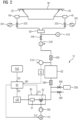
- the figure 2 shows a variant of the embodiment according to FIG figure 1 .
- the vehicle 10 has a large number of other components, namely control valves 200, valve devices 201 for activating control valves, main switch 210, pressure relief valves 220, condensate separator 230 and compressed air flow measuring devices 240.
- the components mentioned allow the pressure and compressed air flow rate to be individually adjusted at different points within the in the overall pneumatic system shown in FIG. 2, so that optimal control and optimal operation of all components can be guaranteed and failure and damage to components due to any excess pressure can be avoided.
- the figure 3 shows components of a third exemplary embodiment of a vehicle 10 according to the invention.
- auxiliary compressor 300 an auxiliary compressor motor 310 and an auxiliary air tank 320 which, in the event of a failure of the compressed air supply on the part of the main air tank 60 or in the event of a failure of the main compressor 100 and/or the main compressor motor 110, can make compressed air available as a substitute in order to To ensure emergency operation of the lifting drives 40 and an adjustment of the pantograph 20.
- main air tank 60 in the embodiment according to FIG figure 3 by two individual air reservoirs 61 and 62 formed, which in series - can be connected or in parallel - as shown.
- the air mass content of the main air tank 60 is preferably monitored by one of the pressure monitors 70 .
- the main compressor 100 can react to different alarm levels and, for example, press more air in the direction of the lifting drives 40 if the power of the fuel cell 120 is correspondingly reduced.
- the fuel cell 120 should not be switched off since frequent starting and switching off of the fuel cell 120 negatively affects the service life.
- an auxiliary compressor 300 can also be provided, which feeds the auxiliary air tank 320. If the pressure in the main air tank 60 is too low, for example, the air from the auxiliary air tank 320 can also be used for the lifting drives 40 of the current collectors 20 . In the case of such an embodiment, it is generally not necessary to shut down the fuel cell output.
Landscapes
- Engineering & Computer Science (AREA)
- Life Sciences & Earth Sciences (AREA)
- Sustainable Development (AREA)
- Sustainable Energy (AREA)
- Power Engineering (AREA)
- Mechanical Engineering (AREA)
- Transportation (AREA)
- Manufacturing & Machinery (AREA)
- Chemical & Material Sciences (AREA)
- Chemical Kinetics & Catalysis (AREA)
- Electrochemistry (AREA)
- General Chemical & Material Sciences (AREA)
- Physics & Mathematics (AREA)
- Fluid Mechanics (AREA)
- Fuel Cell (AREA)
Description
- Die Erfindung bezieht sich auf Fahrzeuge mit zumindest einem pneumatisch verstellbaren Stromabnehmer zum Anschluss an ein streckenseitiges Energieversorgungsnetz, wobei der Stromabnehmer in eine ausgefahrene Kontaktstellung, in der er mit dem streckenseitigen Energieversorgungsnetz in Kontakt stehen kann, und eine eingefahrene Trennstellung, in der er von dem streckenseitigen Energieversorgungsnetz getrennt ist, verstellbar ist, und mit einem Hauptluftbehälter, in dem Luft unter Druck speicherbar ist und der zur pneumatischen Druckbeaufschlagung des Stromabnehmers mit diesem verbindbar ist.
- Derartige Fahrzeuge sind beispielsweise im Bereich der Schienenfahrzeugtechnik allgemein bekannt und zum Beispiel in dem Artikel "Automatische Stromabnehmer-Senkeinrichtung (AS)" auf S. 99-102 der Fachzeitschrift BahnPraxis, Ausgabe Oktober 2002, beschrieben. Bei vorbekannten Fahrzeugen dieser Art ist den Stromabnehmern bzw. Hubantrieben jeweils ein eigenes, also hubantriebbezogenes, pneumatisches Druckluftsystem zugeordnet.
- Aus dem Dokument
WO 2017/042131 A1 ist die Versorgung eines Schienenfahrzeugs mit Druckluft als Betriebsenergie bekannt. Das DokumentEP 1 724 147 A2 offenbart eine Steuerungseinrichtung für eine elektrische Lokomotive mit einer Brennstoffzelle sowie das DokumentEP 0 755 088 A2 ein regeneratives Versorgungssystem mit einer Brennstoffzelle sowie einer Elektrolyseeinrichtung. Schließlich offenbart das DokumentWO 2015/028291 A2 ein Druckluftsystem zum Antreiben eines Stromabnehmers eines Schienenfahrzeugs. - Der Erfindung liegt die Aufgabe zugrunde, Fahrzeuge der oben beschriebenen Art im Falle einer zusätzlichen Ausstattung mit einer oder mehreren Brennstoffzellen besonders kostengünstig und effizient auszugestalten.
- Diese Aufgabe wird erfindungsgemäß durch ein Fahrzeug sowie ein Verfahren mit den jeweiligen Merkmalen der unabhängigen Patentansprüche gelöst. Vorteilhafte Ausgestaltungen des erfindungsgemäßen Fahrzeugs sind in abhängigen Patentansprüchen angegeben.
- Danach ist erfindungsgemäß vorgesehen, dass das Fahrzeug eine steuerbare Verteileinrichtung, einen Hauptkompressor und zumindest eine Brennstoffzelle aufweist, wobei die steuerbare Verteileinrichtung mit dem Hauptluftbehälter, dem Hauptkompressor und der zumindest einen Brennstoffzelle des Fahrzeugs in Verbindung steht und je nach ihrer Arbeitsstellung die vom Hauptkompressor zur Verfügung gestellte Druckluft aufteilen und einen Anteil der Druckluft zur Brennstoffzelle und einen anderen Anteil der Druckluft zum Hauptluftbehälter lenken kann, und das Fahrzeug eine mit der steuerbaren Verteileinrichtung in Verbindung stehende Steuereinrichtung aufweist, die derart ausgestaltet ist, dass sie die Arbeitsstellung der Verteileinrichtung zumindest in Abhängigkeit von einem Sauerstoffbedarf so einstellt, dass der Sauerstoffbedarf der Brennstoffzelle gedeckt wird.
- Ein wesentlicher Vorteil des erfindungsgemäßen Fahrzeugs ist darin zu sehen, dass die Versorgung der Brennstoffzelle bzw. Brennstoffzellen und die Versorgung des oder der Stromabnehmer mittels ein und desselben Hauptkompressors erfolgen kann, sodass das zur Druckluftversorgung der genannten Komponenten nötige pneumatische Druckluftsystem besonders komponentenarm und damit kostengünstig ausgeführt werden kann.
- Besonders bevorzugt wählt die Steuereinrichtung die Arbeitsstellung der Verteileinrichtung auch in Abhängigkeit von dem Füllzustand des Hauptluftbehälters.
- Im Falle, dass der Hauptkompressor mehr Druckluft zur Verfügung stellt, als die Brennstoffzelle zum Betrieb benötigt, lenkt die Steuereinrichtung mittels der Verteileinrichtung vorzugsweise (gemäß einer vorteilhaften Vorgabe) die von der Brennstoffzelle nicht benötigte Druckluft in Richtung Hauptluftbehälter, zumindest dann, wenn der Hauptluftbehälter noch nicht bis zu einem gewünschten Maß gefüllt ist.
- Im Falle, dass der Hauptkompressor mehr Druckluft zur Verfügung stellt, als die Brennstoffzelle zum Betrieb benötigt, und der Hauptluftbehälter bereits bis zu dem gewünschten Maß gefüllt ist, reduziert die Steuereinrichtung (gemäß einer vorteilhaften Vorgabe) vorzugsweise die Pumpleistung des Hauptkompressors auf das für den Betrieb der Brennstoffzelle nötige Maß.
- Im Falle, dass der Hauptkompressor die Druckluft zur Verfügung stellt, die die Brennstoffzelle zum Betrieb benötigt, jedoch der Hauptluftbehälter noch nicht bis zu dem gewünschten Maß gefüllt ist, erhöht die Steuereinrichtung (gemäß einer vorteilhaften Vorgabe) vorzugsweise die Pumpleistung des Hauptkompressors und lenkt die durch die Erhöhung zusätzlich zur Verfügung stehende Druckluft über die Verteileinrichtung zum Hauptluftbehälter.
- Die Steuereinrichtung errechnet das jeweils gewünschte Maß, auf das der Hauptluftbehälter befüllt sein soll und das demgemäß eine vorteilhafte Vorgabe bildet, bevorzugt zumindest auch anhand von Streckendaten.
- Besonders vorteilhaft ist es, wenn die Steuereinrichtung das jeweils gewünschte Maß unter Berücksichtigung der Elektrifizierung der zu befahrenden Strecke und/oder der zu erwartenden Verstellbewegungen des oder der Stromabnehmer während der Fahrt ermittelt.
- Die Verteileinrichtung umfasst vorzugsweise eine zumindest drei Anschlüsse aufweisende Ventileinrichtung, einen oder mehrere Druckzwischenspeicher und/oder einen oder mehrere Gasflussregler.
- Auch ist es vorteilhaft, wenn die Verteileinrichtung ein 3/2-Wegeventil oder ein stufenlos arbeitendes Ventil aufweist, das ausgangsseitig eine beliebige Gasstromverteilung ermöglicht.
- Mit Blick auf eine sichere Versorgung der Stromabnehmer mit Druckluft wird es außerdem als vorteilhaft angesehen, wenn ein Hilfsluftbehälter und/oder ein Hilfskompressor, der den Hilfsluftbehälter befüllen kann, vorhanden sind, und mit der Luft des Hilfsluftbehälters und/oder des Hilfskompressors der oder die Stromabnehmer verstellbar sind, wenn der Hauptluftbehälter nicht ausreichend Druckluft zur Verfügung stellen kann.
- Der Hauptluftbehälter wird bei einer bevorzugten Ausgestaltung durch einen oder mehrere Einzelluftbehälter gebildet.
- Die Erfindung bezieht sich darüber hinaus auf ein Verfahren zum Betreiben eines Fahrzeugs, das ausgestattet ist mit zumindest einem pneumatisch verstellbaren Stromabnehmer, der in einer ausgefahrenen Kontaktstellung mit einem streckenseitigen Energieversorgungsnetz in Kontakt stehen kann und in einer eingefahrenen Trennstellung von dem streckenseitigen Energieversorgungsnetz getrennt ist, und mit einem Hauptluftbehälter, in dem Luft unter Druck speicherbar ist und der zur pneumatischen Druckbeaufschlagung des Stromabnehmers mit diesem verbindbar ist.
- Erfindungsgemäß ist bezüglich des Verfahrens vorgesehen, dass die Arbeitsstellung einer steuerbaren Verteileinrichtung, die mit dem Hauptluftbehälter, einem Hauptkompressor und einer Brennstoffzelle des Fahrzeugs in Verbindung steht, zumindest in Abhängigkeit von einem Sauerstoffbedarf der Brennstoffzelle so eingestellt wird, dass der Sauerstoffbedarf der Brennstoffzelle gedeckt wird, und je nach Arbeitsstellung die vom Hauptkompressor zur Verfügung gestellte Druckluft aufgeteilt wird und ein Anteil der Druckluft zur Brennstoffzelle und ein anderer Anteil der Druckluft zum Hauptluftbehälter gelenkt wird.
- Bezüglich der Vorteile des erfindungsgemäßen Verfahrens sowie vorteilhafter Ausgestaltungen des erfindungsgemäßen Verfahrens sei auf die obigen Ausführungen im Zusammenhang mit dem erfindungsgemäßen Fahrzeug sowie dessen vorteilhafte Ausgestaltungen verwiesen.
- Die Erfindung wird nachfolgend anhand von Ausführungsbeispielen näher erläutert, dabei zeigen beispielhaft
- Figur 1
- Bestandteile eines ersten Ausführungsbeispiels für ein erfindungsgemäßes Fahrzeug, bei dem es sich vorzugsweise um ein Schienenfahrzeug handelt,
- Figur 2
- Bestandteile eines zweiten Ausführungsbeispiels für ein erfindungsgemäßes Fahrzeug, das verglichen mit dem ersten Ausführungsbeispiel mit weiteren Komponenten ausgestattet ist, und
- Figur 3
- Bestandteile eines dritten Ausführungsbeispiels für ein erfindungsgemäßes Fahrzeug, das verglichen mit dem zweiten Ausführungsbeispiel zusätzlich mit einem Hilfskompressor und einem Hilfsluftbehälter ausgestattet ist.
- In den Figuren werden für identische oder vergleichbare Komponenten stets dieselben Bezugszeichen verwendet.
- Die
Figur 1 zeigt in einer schematischen Darstellung Bestandteile eines Ausführungsbeispiels für ein erfindungsgemäßes Fahrzeug 10, bei dem es sich vorzugsweise um ein Schienenfahrzeug handelt. Das Fahrzeug 10 umfasst zwei Stromabnehmer 20, die pneumatisch verstellbar sind und in der in derFigur 1 gezeigten Stellung elektrischen Kontakt zu einem streckenseitigen Energieversorgungsnetz 30 aufweisen. Von der in derFigur 1 ausgefahrenen Kontaktstellung können die Stromabnehmer 20 in eine eingefahrene Trennstellung verfahren werden, in der sie von dem streckenseitigen Energieversorgungsnetz 30 getrennt sind. Zum Verstellen der verstellbaren Stromabnehmer 20 sind Hubantriebe 40 vorgesehen, die pneumatisch arbeiten und pneumatisch über ein Stromabnehmereinstellventil 50 mit Druckluft beaufschlagt werden können. - Das Stromabnehmereinstellventil 50 steht mit einem Hauptluftbehälter 60 in Verbindung, der - im gefüllten Zustand - das Stromabnehmereinstellventil 50 und damit die Hubantriebe 40 speisen kann.
- Der Füllzustand bzw. der Druckzustand des Hauptluftbehälters 60 wird von einem Druckwächter 70 überwacht, der mit einer Steuereinrichtung 80 in Verbindung steht und dieser einen den jeweiligen Füllstand des Hauptluftbehälters 60 angebenden Druckwert MP zur weiteren Verarbeitung übermittelt. Gespeist bzw. mit Druckluft gefüllt wird der Hauptluftbehälter 60 über eine steuerbare Verteileinrichtung 90 von einem Hauptkompressor 100, der von einem Hauptkompressormotor 110 angetrieben wird.
- Die steuerbare Verteileinrichtung 90 umfasst bei dem Ausführungsbeispiel gemäß
Figur 1 einen Flussregler 91 und eine verstellbare Ventileinrichtung 92. Die verstellbare Ventileinrichtung 92 und der Flussregler 91 werden von der Steuereinrichtung 80 über ein Steuersignal ST1 gesteuert bzw. eingestellt. - An die steuerbare Verteileinrichtung 90, insbesondere den Flussregler 91, ist eine Brennstoffzelle 120 angeschlossen, die während des Betriebes mit Sauerstoff gespeist wird, und zwar über den Flussregler 91, die verstellbare Ventileinrichtung 92 und den Hauptkompressor 100. Der Hauptkompressormotor 110 wird von der Steuereinrichtung 80 beispielsweise über ein Steuersignal ST2 gesteuert.
- Die Steuereinrichtung 80 ist darüber hinaus mit der Brennstoffzelle 120 oder zumindest einer den Betrieb der Brennstoffzelle 120 steuernden Einrichtung verbunden und erhält von dieser Betriebsdaten BD, die den jeweiligen Betriebszustand der Brennstoffzelle 120 sowie damit unmittelbar oder mittelbar den jeweiligen Sauerstoffbereich der Brennstoffzelle 120 angeben.
- Eingangsseitig steht die Steuereinrichtung 80 darüber hinaus mit einer Einrichtung, beispielsweise einer Fahrerassistenzeinrichtung FAS, in Verbindung, von der sie Streckendaten SD erhält. Die Streckendaten SD umfassen unter anderem Angaben zur Elektrifizierung der zu befahrenden Strecke und/oder zu erwartenden Verstellbewegungen der Stromabnehmer 20, sodass der Druckluftbedarf der Hubantriebe 40 und damit die vom Hauptluftbehälter 60 bereitzustellende Druckluft prognostizierbar sind.
- Die in der
Figur 1 schematisch dargestellte verstellbare Ventileinrichtung 92 ist vorzugsweise derart ausgestaltet, dass sie ausgangsseitig eine beliebige Gasstromverteilung erlaubt und es somit der Steuereinrichtung 80 ermöglicht, mittels des Steuersignals ST1 festzulegen, in welchem Maße die von dem Hauptkompressor 100 bereitgestellte Druckluft auf die Brennstoffzelle 120 und den Hauptluftbehälter 60 verteilt werden soll. Die Einstellung der Verteileinrichtung 90 bzw. der verstellbaren Ventileinrichtung 92 wird die Steuereinrichtung 80 mittels des Steuersignals ST1 vorzugsweise sowohl in Abhängigkeit von dem jeweiligen Sauerstoffbedarf der Brennstoffzelle 120 als auch in Abhängigkeit vom jeweiligen Füllstand des Hauptluftbehälters 60 vornehmen. Dabei wird die Steuereinrichtung 80 die Verteileinrichtung 90 stets jeweils so einstellen, dass der Sauerstoffbedarf der Brennstoffzelle 120 zu jedem Zeitpunkt gedeckt wird. - Im Falle, dass der Hauptkompressor 100 mehr Druckluft zur Verfügung stellt oder zur Verfügung stellen kann, als die Brennstoffzelle 120 zum Betrieb benötigt, wird die Steuereinrichtung 80 vorzugsweise mittels der Verteileinrichtung 90 die von der Brennstoffzelle 120 nicht benötigte Druckluft in Richtung des Hauptluftbehälters 60 lenken, zumindest dann, wenn der Hauptluftbehälter 60 gemäß dem Druckwert MP noch nicht bis zu einem gewünschten Maße gefüllt ist.
- Im Falle, dass der Hauptkompressor 100 mehr Druckluft zur Verfügung stellt, als die Brennstoffzelle 120 zum Betrieb benötigt, und der Hauptluftbehälter 60 bereits bis zu dem gewünschten Maße gefüllt ist, wird die Steuereinrichtung 80 die Pumpleistung des Hauptkompressors 100 bzw. des Hauptkompressormotors 110 mittels des Steuersignals ST2 auf das für den Betrieb der Brennstoffzelle 120 nötige Maß reduzieren und ein weiteres Befüllen des Hauptluftbehälters 60 einstellen.
- Andernfalls, wenn also der Hauptkompressor 100 die Druckluft zur Verfügung stellt, die die Brennstoffzelle 120 benötigt, jedoch der Hauptluftbehälter 60 noch nicht bis zu dem gewünschten Maß gefüllt ist, wird die Steuereinrichtung 80 die Pumpleistung des Hauptkompressors 100 bzw. des Hauptkompressormotors 110 mittels des Steuersignals ST2 (sofern noch möglich) erhöhen, und die durch die Erhöhung zusätzlich zur Verfügung stehende Druckluft über die Verteileinrichtung 90 in Richtung des Hauptluftbehälters 60 lenken.
- Auch kann die Steuereinrichtung 80 - beispielsweise über ein in der
Figur 1 nicht gezeigtes weiteres Steuersignal - die Leistung der Brennstoffzelle 120 reduzieren, wenn sie Druckluft in den Hauptluftbehälter 60 füllen will, die vor einer Reduktion der Leistung der Brennstoffzelle 120 nicht zur Verfügung stehen würde. Ein vollständiges Herunterfahren der Brennstoffzellenleistung wird dabei vorzugsweise vermieden. - Das gewünschte Maß, auf das der Hauptluftbehälter 60 befüllt sein soll, wird vorzugsweise zumindest auch anhand der Streckendaten SD von der Steuereinrichtung 80 berechnet. Dabei wird die Steuereinrichtung 80 vorzugsweise die Elektrifizierung der zu befahrenden Strecke sowie die zu erwartenden Verstellbewegungen der Stromabnehmer 20 während der Fahrt ermitteln, den Druckluftbedarf errechnen und in Abhängigkeit von dem Druckluftbedarf den jeweils optimalen Füllstand des Hauptluftbehälters 60 für den weiteren Betrieb einstellen. Es lässt sich durch diese Vorgehensweise in vorteilhafter Weise die Befüllung des Hauptluftbehälters 60 auf ein streckenseitig notwendiges Maß begrenzen.
- Die
Figur 2 zeigt eine Ausführungsvariante des Ausführungsbeispiels gemäßFigur 1 . Bei der Ausführungsvariante gemäßFigur 2 weist das Fahrzeug 10 eine Vielzahl weiterer Komponenten auf, nämlich Steuerventile 200, Ventileinrichtungen 201 zum Ansteuern von Steuerventilen, Hauptschalter 210, Überdruckventile 220, Kondensatabscheider 230 und Druckluftflussmesseinrichtungen 240. Die genannten Komponenten ermöglichen ein individuelles Einstellen von Druck und Druckluftdurchfluss an verschiedenen Stellen innerhalb des in der Figur 2 gezeigten pneumatischen Gesamtsystems, sodass eine optimale Steuerung und ein optimaler Betrieb aller Komponenten gewährleistet werden kann und ein Ausfall und eine Beschädigung von Komponenten durch einen etwaigen Überdruck vermieden werden können. - Die
Figur 3 zeigt Bestandteile eines dritten Ausführungsbeispiels für ein erfindungsgemäßes Fahrzeug 10. Bei dem Ausführungsbeispiel gemäßFigur 3 sind zusätzlich ein Hilfskompressor 300, ein Hilfskompressormotor 310 sowie ein Hilfsluftbehälter 320 vorhanden, die im Falle eines Ausfalls der Druckluftversorgung seitens des Hauptluftbehälters 60 bzw. im Falle eines Ausfalls des Hauptkompressors 100 und/oder des Hauptkompressormotors 110 ersatzweise Druckluft zur Verfügung stellen können, um einen Notbetrieb der Hubantriebe 40 und ein Verstellen der Stromabnehmer 20 zu gewährleisten. - Außerdem ist der Hauptluftbehälter 60 bei dem Ausführungsbeispiel gemäß
Figur 3 durch zwei Einzelluftbehälter 61 und 62 gebildet, die in Reihe - wie gezeigt - oder parallel geschaltet sein können. - Zusammengefasst ermöglichen die im Zusammenhang mit den
Figu-ren 1 bis 3 oben beispielhaft erläuterten Ausführungsbeispiele eine Doppelnutzung des Hauptkompressors 100, da das Stromabnehmerhubsystem und das Brennstoffzellensystem jeweils an dasselbe Luftdruckversorgungssystem angeschlossen sind. Der Luftbedarf der Brennstoffzelle 120 ist durch die jeweilige Leistungsanforderung sehr genau definierbar. Da die Brennstoffzelle 120 im Idealfall mit konstanter Leistung gefahren werden soll, ist der Luftbedarf also bekannt. Zeitgleich sind die Streckendaten SD bekannt, woraus man den Einsatzzeitpunkt der Stromabnehmer 20 schlussfolgern kann. Durch die beschriebene intelligente Nutzung und Speicherung der Luft können die Stromabnehmer 20 und die Brennstoffzelle 120 gemeinsam gespeist werden. - Der Luftmasseninhalt des Hauptluftbehälters 60 wird vorzugsweise durch einen der Druckwächter 70 überwacht. Durch verschiedene Alarmstufen kann der Hauptkompressor 100 reagieren und beispielsweise mehr Luft in Richtung Hubantriebe 40 pressen, wenn die Leistung der Brennstoffzelle 120 dementsprechend reduziert wird. Die Brennstoffzelle 120 sollte nicht ausgeschaltet werden, da häufiges Starten und Ausschalten der Brennstoffzelle 120 die Lebensdauer negativ beeinflusst.
- Aus diesem Grund kann - wie bei dem Ausführungsbeispiel gemäß
Figur 3 gezeigt - auch ein Hilfskompressor 300 vorgesehen werden, welcher den Hilfsluftbehälter 320 speist. Sollte der Druck in dem Hauptluftbehälter 60 beispielsweise zu niedrig sein, so kann die Luft aus dem Hilfsluftbehälter 320 ebenfalls für die Hubantriebe 40 der Stromabnehmer 20 verwendet werden. Ein Herunterfahren der Brennstoffzellenleistung ist im Fall einer solchen Ausgestaltung in der Regel nicht nötig. - Ein Vorteil der oben beschriebenen Ausführungsbeispiele besteht zusammengefasst darin, das ein separater bzw. eigener Hubantriebskompressor für die Hubantriebe 40 der Stromabnehmer 20 eingespart werden kann. Es entfallen somit die hierfür entstehenden Service- und Anschaffungskosten. Auch lässt sich der Gesamtwirkungsgrad des Fahrzeugs 10 wegen des resultierenden Gewichtswegfalls und verkleinerter Hilfsbetriebeumrichter(HBU)-Leistung reduzieren. Ebenfalls wird Bauraum freigegeben, welcher sonst durch die zusätzlich nötige Verrohrung und den zusätzlichen Hubantriebskompressor beansprucht werden würde.
- Obwohl die Erfindung im Detail durch bevorzugte Ausführungsbeispiele näher illustriert und beschrieben wurde, so ist die Erfindung nicht durch die offenbarten Beispiele eingeschränkt und andere Variationen können vom Fachmann hieraus abgeleitet werden, ohne den Schutzumfang der Ansprüche zu verlassen.
-
- 10
- Fahrzeug
- 20
- Stromabnehmer
- 30
- Energieversorgungsnetz
- 40
- Hubantrieb
- 50
- Stromabnehmereinstellventil
- 60
- Hauptluftbehälter
- 61
- Einzelluftbehälter
- 62
- Einzelluftbehälter
- 70
- Druckwächter
- 80
- Steuereinrichtung
- 90
- Verteileinrichtung
- 91
- Flussregler
- 92
- verstellbare Ventileinrichtung
- 100
- Hauptkompressor
- 110
- Hauptkompressormotor
- 120
- Brennstoffzelle
- 200
- Steuerventil
- 201
- Ventileinrichtung
- 210
- Hauptschalter
- 220
- Überdruckventil
- 230
- Kondensatabscheider
- 240
- Druckluftflussmesseinrichtung
- 300
- Hilfskompressor
- 310
- Hilfskompressormotor
- 320
- Hilfsluftbehälter
- BD
- Betriebsdaten
- FAS
- Fahrerassistenzeinrichtung
- MP
- Druckwert
- SD
- Streckendaten
- ST1
- Steuersignal
- ST2
- Steuersignal
Claims (12)
- Fahrzeug (10) mit- zumindest einem pneumatisch verstellbaren Stromabnehmer (20) zum Anschluss an ein streckenseitiges Energieversorgungsnetz (30), wobei der Stromabnehmer (20) in eine ausgefahrene Kontaktstellung, in der er mit dem streckenseitigen Energieversorgungsnetz (30) in Kontakt stehen kann, und eine eingefahrene Trennstellung, in der er von dem streckenseitigen Energieversorgungsnetz (30) getrennt ist, verstellbar ist, und- mit einem Hauptluftbehälter (60), in dem Luft unter Druck speicherbar ist und der zur pneumatischen Druckbeaufschlagung des Stromabnehmers (20) mit diesem verbindbar ist,
dadurch gekennzeichnet, dass- das Fahrzeug (10) eine steuerbare Verteileinrichtung (90), einen Hauptkompressor (100) und zumindest eine Brennstoffzelle (120) aufweist, wobei die steuerbare Verteileinrichtung (90) mit dem Hauptluftbehälter (60), dem Hauptkompressor (100) und der zumindest einen Brennstoffzelle (120) des Fahrzeugs (10) in Verbindung steht und je nach ihrer Arbeitsstellung die vom Hauptkompressor (100) zur Verfügung gestellte Druckluft aufteilen und einen Anteil der Druckluft zur Brennstoffzelle (120) und einen anderen Anteil der Druckluft zum Hauptluftbehälter (60) lenken kann, und- das Fahrzeug (10) eine mit der steuerbaren Verteileinrichtung (90) in Verbindung stehende Steuereinrichtung (80) aufweist, die derart ausgestaltet ist, dass sie die Arbeitsstellung der Verteileinrichtung (90) zumindest in Abhängigkeit von einem Sauerstoffbedarf der Brennstoffzelle (120) so einstellt, dass der Sauerstoffbedarf der Brennstoffzelle (120) gedeckt wird. - Fahrzeug (10) nach Anspruch 1,
dadurch gekennzeichnet, dass
die Steuereinrichtung (80) die Arbeitsstellung der Verteileinrichtung (90) in Abhängigkeit von einem Füllzustand des Hauptluftbehälters (60) wählt. - Fahrzeug (10) nach einem der voranstehenden Ansprüche,
dadurch gekennzeichnet, dass
im Falle, dass der Hauptkompressor (100) mehr Druckluft zur Verfügung stellt, als die Brennstoffzelle (120) zum Betrieb benötigt, die Steuereinrichtung (80) mittels der Verteileinrichtung (90) die von der Brennstoffzelle (120) nicht benötigte Druckluft in Richtung Hauptluftbehälter (60) lenkt, zumindest dann, wenn der Hauptluftbehälter (60) noch nicht bis zu einem gewünschten Maß gefüllt ist. - Fahrzeug (10) nach einem der voranstehenden Ansprüche,
dadurch gekennzeichnet, dass
im Falle, dass der Hauptkompressor (100) mehr Druckluft zur Verfügung stellt, als die Brennstoffzelle (120) zum Betrieb benötigt, und der Hauptluftbehälter (60) bis zu einem gewünschten Maß gefüllt ist, die Steuereinrichtung (80) die Pumpleistung des Hauptkompressors (100) auf das für den Betrieb der Brennstoffzelle (120) nötige Maß reduziert. - Fahrzeug (10) nach einem der voranstehenden Ansprüche,
dadurch gekennzeichnet, dass
im Falle, dass der Hauptkompressor (100) die Druckluft zur Verfügung stellt, die die Brennstoffzelle (120) zum Betrieb benötigt, jedoch der Hauptluftbehälter (60) noch nicht bis zu einem gewünschten Maß gefüllt ist, die Steuereinrichtung (80) die Pumpleistung des Hauptkompressors (100) erhöht und die durch die Erhöhung zusätzlich zur Verfügung stehende Druckluft über die Verteileinrichtung (90) zum Hauptluftbehälter (60) lenkt. - Fahrzeug (10) nach einem der voranstehenden Ansprüche,
dadurch gekennzeichnet, dass
die Steuereinrichtung (80) das jeweils gewünschte Maß, auf das der Hauptluftbehälter (60) befüllt sein soll, anhand von Streckendaten (SD) errechnet. - Fahrzeug (10) nach Anspruch 6,
dadurch gekennzeichnet, dass
die Steuereinrichtung (80) das jeweils gewünschte Maß unter Berücksichtigung der Elektrifizierung der zu befahrenden Strecke und/oder der zu erwartenden Verstellbewegungen des Stromabnehmers (20) während der Fahrt ermittelt. - Fahrzeug (10) nach einem der voranstehenden Ansprüche,
dadurch gekennzeichnet, dass
die Verteileinrichtung (90) eine zumindest drei Anschlüsse aufweisende Ventileinrichtung (92), einen oder mehrere Druckzwischenspeicher und/oder einen oder mehrere Gasflussregler (91) aufweist. - Fahrzeug (10) nach einem der voranstehenden Ansprüche,
dadurch gekennzeichnet, dass
die Verteileinrichtung (90) ein 3/2-Wegeventil oder ein stufenlos arbeitendes Ventil aufweist, das ausgangsseitig eine beliebige Gasstromverteilung ermöglicht. - Fahrzeug (10) nach einem der voranstehenden Ansprüche,
dadurch gekennzeichnet, dass- ein Hilfsluftbehälter (320) und/oder ein Hilfskompressor (300), der den Hilfsluftbehälter (320) befüllen kann, vorhanden sind, und- mit der Luft des Hilfsluftbehälters (320) und/oder des Hilfskompressors (300) der Stromabnehmer (20) verstellbar ist, wenn der Hauptluftbehälter (60) nicht ausreichend Druckluft zur Verfügung stellen kann. - Fahrzeug (10) nach einem der voranstehenden Ansprüche,
dadurch gekennzeichnet, dass
der Hauptluftbehälter (60) durch einen oder mehrere Einzelluftbehälter (61, 62) gebildet wird. - Verfahren zum Betreiben eines Fahrzeugs (10), das ausgestattet ist- mit zumindest einem pneumatisch verstellbaren Stromabnehmer (20), der in einer ausgefahrenen Kontaktstellung mit einem streckenseitigen Energieversorgungsnetz (30) in Kontakt stehen kann und in einer eingefahrenen Trennstellung von dem streckenseitigen Energieversorgungsnetz (30) getrennt ist, und- mit einem Hauptluftbehälter (60), in dem Luft unter Druck speicherbar ist und der zur pneumatischen Druckbeaufschlagung des Stromabnehmers (20) mit diesem verbindbar ist,dadurch gekennzeichnet, dass- die Arbeitsstellung einer steuerbaren Verteileinrichtung (90), die mit dem Hauptluftbehälter (60), einem Hauptkompressor (100) und einer Brennstoffzelle (120) des Fahrzeugs (10) in Verbindung steht, zumindest in Abhängigkeit von einem Sauerstoffbedarf der Brennstoffzelle (120) so eingestellt wird, dass der Sauerstoffbedarf der Brennstoffzelle (120) gedeckt wird, und je nach Arbeitsstellung die vom Hauptkompressor (100) zur Verfügung gestellte Druckluft aufgeteilt wird und ein Anteil der Druckluft zur Brennstoffzelle (120) und ein anderer Anteil der Druckluft zum Hauptluftbehälter (60) gelenkt wird.
Applications Claiming Priority (1)
| Application Number | Priority Date | Filing Date | Title |
|---|---|---|---|
| DE102019220068.0A DE102019220068A1 (de) | 2019-12-18 | 2019-12-18 | Fahrzeug mit pneumatisch verstellbarem Stromabnehmer |
Publications (2)
| Publication Number | Publication Date |
|---|---|
| EP3838658A1 EP3838658A1 (de) | 2021-06-23 |
| EP3838658B1 true EP3838658B1 (de) | 2023-08-23 |
Family
ID=73475924
Family Applications (1)
| Application Number | Title | Priority Date | Filing Date |
|---|---|---|---|
| EP20208249.1A Active EP3838658B1 (de) | 2019-12-18 | 2020-11-18 | Fahrzeug mit pneumatisch verstellbarem stromabnehmer |
Country Status (3)
| Country | Link |
|---|---|
| EP (1) | EP3838658B1 (de) |
| DE (1) | DE102019220068A1 (de) |
| ES (1) | ES2963472T3 (de) |
Family Cites Families (5)
| Publication number | Priority date | Publication date | Assignee | Title |
|---|---|---|---|---|
| JPH0937412A (ja) * | 1995-07-21 | 1997-02-07 | Railway Technical Res Inst | 再生型燃料電池 |
| JP4568169B2 (ja) * | 2005-05-18 | 2010-10-27 | 株式会社東芝 | 電気車制御装置 |
| DE102013217429A1 (de) * | 2013-09-02 | 2015-03-05 | Siemens Aktiengesellschaft | Druckluftsystem |
| DE102015115368A1 (de) * | 2015-09-11 | 2017-03-16 | Knorr-Bremse Systeme für Schienenfahrzeuge GmbH | Verfahren und Einrichtung zur Steuerung einer Lufttrocknereinheit einer Luftversorgungsanlage für die Haupt- und Hilfsluftversorgung, insbesondere für ein Schienenfahrzeug |
| DE102015115369A1 (de) * | 2015-09-11 | 2017-03-16 | Knorr-Bremse Systeme für Schienenfahrzeuge GmbH | Verfahren und Einrichtung zur Ansteuerung von Energiequellen für die Haupt- und Hilfsluftversorgung, insbesondere eines Schienenfahrzeuges |
-
2019
- 2019-12-18 DE DE102019220068.0A patent/DE102019220068A1/de not_active Withdrawn
-
2020
- 2020-11-18 ES ES20208249T patent/ES2963472T3/es active Active
- 2020-11-18 EP EP20208249.1A patent/EP3838658B1/de active Active
Also Published As
| Publication number | Publication date |
|---|---|
| DE102019220068A1 (de) | 2021-06-24 |
| ES2963472T3 (es) | 2024-03-27 |
| EP3838658A1 (de) | 2021-06-23 |
Similar Documents
| Publication | Publication Date | Title |
|---|---|---|
| EP2109550B1 (de) | Magnetschwebebahn und verfahren zu deren betrieb | |
| EP3013624B1 (de) | Druckluftsystem | |
| DE102013207952A1 (de) | Vorrichtung zum Betreiben zumindest eines elektrischen Verbrauchers eines Schienenfahrzeugs | |
| EP3921543B1 (de) | Kompressorsystem und verfahren zum betreiben eines kompressorsystems in abhängigkeit des druckluftbedarfs eines betriebszustands des fahrzeugs | |
| DE102018117949A1 (de) | Hydrauliksystem und Verfahren zum Steuern eines Hydrauliksystems | |
| DE112009005042T5 (de) | Brennstoffzellensystem und Verfahren zum Betreiben eines Brennstoffzellensystems | |
| EP1577257B1 (de) | Hydraulische Hubvorrichtung für batteriebetriebene Flurförderzeuge | |
| EP3838658B1 (de) | Fahrzeug mit pneumatisch verstellbarem stromabnehmer | |
| DE102015004677A1 (de) | Verfahren zur Leistungsregelung | |
| DE102016224125A1 (de) | Verfahren zur Steuerung von Nebenverbrauchern von Schienenfahrzeugen | |
| DE102014226081A1 (de) | Schienenfahrzeug mit Akkumulatormodulen | |
| EP2885191B1 (de) | Verfahren zur verteilung einer leistung über eine vielzahl von verbrauchereinheiten eines schienenfahrzeugs | |
| EP2130260B1 (de) | Brennstoffzellensystem und verfahren zur regelung eines brennstoffzellensystems | |
| EP3665032A1 (de) | Vorrichtung zur steuerung einer anpresskraft eines stromabnehmers mit einem relaisventil | |
| EP4279317A1 (de) | Leistungssteuereinrichtung zur steuerung der elektrischen ladeleistung einer energiequelle | |
| EP4158710A1 (de) | Verfahren zum betanken von brennstoffzellensystemen und brennstoffzellensystemverbund | |
| WO2016071130A1 (de) | Selbstregelndes netzwerk zur optimierten luftversorgung von schienenfahrzeugen | |
| EP2130259A2 (de) | Brennstoffzellensystem und verfahren zur regelung eines brennstoffzellensystems | |
| EP4371801A1 (de) | Elektrisches fahrzeug und verfahren zu dessen betrieb | |
| EP4063232A1 (de) | Fahrzeug, insbesondere schienenfahrzeug, und verfahren zu dessen betrieb | |
| DE102024114570A1 (de) | Verfahren zum Betreiben zweier Bordnetze mit unterschiedlichen Spannungsleveln | |
| DE9313792U1 (de) | Vorrichtung zur gleisbogenabhängigen Wagenkastensteuerung | |
| EP3665031A1 (de) | Elektropneumatisch geregelte ansteuerung eines stromabnehmers | |
| DE102006032586A1 (de) | Strombegrenzer für ein System aus einer Brennstoffzelle und ein hieran angekoppeltes elektrisches Netz mit mindestens einem Verbraucher | |
| EP3587666A1 (de) | Verfahren und einrichtung zum verstärkten beheizen von fahrwegelementen |
Legal Events
| Date | Code | Title | Description |
|---|---|---|---|
| PUAI | Public reference made under article 153(3) epc to a published international application that has entered the european phase |
Free format text: ORIGINAL CODE: 0009012 |
|
| STAA | Information on the status of an ep patent application or granted ep patent |
Free format text: STATUS: THE APPLICATION HAS BEEN PUBLISHED |
|
| AK | Designated contracting states |
Kind code of ref document: A1 Designated state(s): AL AT BE BG CH CY CZ DE DK EE ES FI FR GB GR HR HU IE IS IT LI LT LU LV MC MK MT NL NO PL PT RO RS SE SI SK SM TR |
|
| STAA | Information on the status of an ep patent application or granted ep patent |
Free format text: STATUS: REQUEST FOR EXAMINATION WAS MADE |
|
| 17P | Request for examination filed |
Effective date: 20211220 |
|
| RBV | Designated contracting states (corrected) |
Designated state(s): AL AT BE BG CH CY CZ DE DK EE ES FI FR GB GR HR HU IE IS IT LI LT LU LV MC MK MT NL NO PL PT RO RS SE SI SK SM TR |
|
| STAA | Information on the status of an ep patent application or granted ep patent |
Free format text: STATUS: EXAMINATION IS IN PROGRESS |
|
| 17Q | First examination report despatched |
Effective date: 20220829 |
|
| RIC1 | Information provided on ipc code assigned before grant |
Ipc: H01M 8/04746 20160101ALI20230116BHEP Ipc: H01M 8/04694 20160101ALI20230116BHEP Ipc: F15B 21/048 20190101ALI20230116BHEP Ipc: B60L 9/00 20060101ALI20230116BHEP Ipc: B60L 1/00 20060101ALI20230116BHEP Ipc: H01M 8/04111 20160101ALI20230116BHEP Ipc: B60L 5/32 20060101ALI20230116BHEP Ipc: B60L 50/71 20190101ALI20230116BHEP Ipc: B60L 58/30 20190101AFI20230116BHEP |
|
| GRAP | Despatch of communication of intention to grant a patent |
Free format text: ORIGINAL CODE: EPIDOSNIGR1 |
|
| STAA | Information on the status of an ep patent application or granted ep patent |
Free format text: STATUS: GRANT OF PATENT IS INTENDED |
|
| GRAJ | Information related to disapproval of communication of intention to grant by the applicant or resumption of examination proceedings by the epo deleted |
Free format text: ORIGINAL CODE: EPIDOSDIGR1 |
|
| STAA | Information on the status of an ep patent application or granted ep patent |
Free format text: STATUS: EXAMINATION IS IN PROGRESS |
|
| GRAP | Despatch of communication of intention to grant a patent |
Free format text: ORIGINAL CODE: EPIDOSNIGR1 |
|
| STAA | Information on the status of an ep patent application or granted ep patent |
Free format text: STATUS: GRANT OF PATENT IS INTENDED |
|
| INTG | Intention to grant announced |
Effective date: 20230228 |
|
| INTC | Intention to grant announced (deleted) | ||
| INTG | Intention to grant announced |
Effective date: 20230329 |
|
| GRAS | Grant fee paid |
Free format text: ORIGINAL CODE: EPIDOSNIGR3 |
|
| GRAA | (expected) grant |
Free format text: ORIGINAL CODE: 0009210 |
|
| STAA | Information on the status of an ep patent application or granted ep patent |
Free format text: STATUS: THE PATENT HAS BEEN GRANTED |
|
| AK | Designated contracting states |
Kind code of ref document: B1 Designated state(s): AL AT BE BG CH CY CZ DE DK EE ES FI FR GB GR HR HU IE IS IT LI LT LU LV MC MK MT NL NO PL PT RO RS SE SI SK SM TR |
|
| REG | Reference to a national code |
Ref country code: GB Ref legal event code: FG4D Free format text: NOT ENGLISH |
|
| REG | Reference to a national code |
Ref country code: CH Ref legal event code: EP |
|
| REG | Reference to a national code |
Ref country code: DE Ref legal event code: R096 Ref document number: 502020004836 Country of ref document: DE |
|
| REG | Reference to a national code |
Ref country code: IE Ref legal event code: FG4D Free format text: LANGUAGE OF EP DOCUMENT: GERMAN |
|
| REG | Reference to a national code |
Ref country code: LT Ref legal event code: MG9D |
|
| REG | Reference to a national code |
Ref country code: NL Ref legal event code: MP Effective date: 20230823 |
|
| PG25 | Lapsed in a contracting state [announced via postgrant information from national office to epo] |
Ref country code: GR Free format text: LAPSE BECAUSE OF FAILURE TO SUBMIT A TRANSLATION OF THE DESCRIPTION OR TO PAY THE FEE WITHIN THE PRESCRIBED TIME-LIMIT Effective date: 20231124 |
|
| PG25 | Lapsed in a contracting state [announced via postgrant information from national office to epo] |
Ref country code: IS Free format text: LAPSE BECAUSE OF FAILURE TO SUBMIT A TRANSLATION OF THE DESCRIPTION OR TO PAY THE FEE WITHIN THE PRESCRIBED TIME-LIMIT Effective date: 20231223 |
|
| PG25 | Lapsed in a contracting state [announced via postgrant information from national office to epo] |
Ref country code: SE Free format text: LAPSE BECAUSE OF FAILURE TO SUBMIT A TRANSLATION OF THE DESCRIPTION OR TO PAY THE FEE WITHIN THE PRESCRIBED TIME-LIMIT Effective date: 20230823 Ref country code: RS Free format text: LAPSE BECAUSE OF FAILURE TO SUBMIT A TRANSLATION OF THE DESCRIPTION OR TO PAY THE FEE WITHIN THE PRESCRIBED TIME-LIMIT Effective date: 20230823 Ref country code: PT Free format text: LAPSE BECAUSE OF FAILURE TO SUBMIT A TRANSLATION OF THE DESCRIPTION OR TO PAY THE FEE WITHIN THE PRESCRIBED TIME-LIMIT Effective date: 20231226 Ref country code: NO Free format text: LAPSE BECAUSE OF FAILURE TO SUBMIT A TRANSLATION OF THE DESCRIPTION OR TO PAY THE FEE WITHIN THE PRESCRIBED TIME-LIMIT Effective date: 20231123 Ref country code: NL Free format text: LAPSE BECAUSE OF FAILURE TO SUBMIT A TRANSLATION OF THE DESCRIPTION OR TO PAY THE FEE WITHIN THE PRESCRIBED TIME-LIMIT Effective date: 20230823 Ref country code: LV Free format text: LAPSE BECAUSE OF FAILURE TO SUBMIT A TRANSLATION OF THE DESCRIPTION OR TO PAY THE FEE WITHIN THE PRESCRIBED TIME-LIMIT Effective date: 20230823 Ref country code: LT Free format text: LAPSE BECAUSE OF FAILURE TO SUBMIT A TRANSLATION OF THE DESCRIPTION OR TO PAY THE FEE WITHIN THE PRESCRIBED TIME-LIMIT Effective date: 20230823 Ref country code: IS Free format text: LAPSE BECAUSE OF FAILURE TO SUBMIT A TRANSLATION OF THE DESCRIPTION OR TO PAY THE FEE WITHIN THE PRESCRIBED TIME-LIMIT Effective date: 20231223 Ref country code: HR Free format text: LAPSE BECAUSE OF FAILURE TO SUBMIT A TRANSLATION OF THE DESCRIPTION OR TO PAY THE FEE WITHIN THE PRESCRIBED TIME-LIMIT Effective date: 20230823 Ref country code: GR Free format text: LAPSE BECAUSE OF FAILURE TO SUBMIT A TRANSLATION OF THE DESCRIPTION OR TO PAY THE FEE WITHIN THE PRESCRIBED TIME-LIMIT Effective date: 20231124 Ref country code: FI Free format text: LAPSE BECAUSE OF FAILURE TO SUBMIT A TRANSLATION OF THE DESCRIPTION OR TO PAY THE FEE WITHIN THE PRESCRIBED TIME-LIMIT Effective date: 20230823 |
|
| PG25 | Lapsed in a contracting state [announced via postgrant information from national office to epo] |
Ref country code: PL Free format text: LAPSE BECAUSE OF FAILURE TO SUBMIT A TRANSLATION OF THE DESCRIPTION OR TO PAY THE FEE WITHIN THE PRESCRIBED TIME-LIMIT Effective date: 20230823 |
|
| REG | Reference to a national code |
Ref country code: ES Ref legal event code: FG2A Ref document number: 2963472 Country of ref document: ES Kind code of ref document: T3 Effective date: 20240327 |
|
| PG25 | Lapsed in a contracting state [announced via postgrant information from national office to epo] |
Ref country code: SM Free format text: LAPSE BECAUSE OF FAILURE TO SUBMIT A TRANSLATION OF THE DESCRIPTION OR TO PAY THE FEE WITHIN THE PRESCRIBED TIME-LIMIT Effective date: 20230823 Ref country code: RO Free format text: LAPSE BECAUSE OF FAILURE TO SUBMIT A TRANSLATION OF THE DESCRIPTION OR TO PAY THE FEE WITHIN THE PRESCRIBED TIME-LIMIT Effective date: 20230823 Ref country code: EE Free format text: LAPSE BECAUSE OF FAILURE TO SUBMIT A TRANSLATION OF THE DESCRIPTION OR TO PAY THE FEE WITHIN THE PRESCRIBED TIME-LIMIT Effective date: 20230823 Ref country code: DK Free format text: LAPSE BECAUSE OF FAILURE TO SUBMIT A TRANSLATION OF THE DESCRIPTION OR TO PAY THE FEE WITHIN THE PRESCRIBED TIME-LIMIT Effective date: 20230823 Ref country code: CZ Free format text: LAPSE BECAUSE OF FAILURE TO SUBMIT A TRANSLATION OF THE DESCRIPTION OR TO PAY THE FEE WITHIN THE PRESCRIBED TIME-LIMIT Effective date: 20230823 Ref country code: SK Free format text: LAPSE BECAUSE OF FAILURE TO SUBMIT A TRANSLATION OF THE DESCRIPTION OR TO PAY THE FEE WITHIN THE PRESCRIBED TIME-LIMIT Effective date: 20230823 |
|
| REG | Reference to a national code |
Ref country code: DE Ref legal event code: R097 Ref document number: 502020004836 Country of ref document: DE |
|
| PG25 | Lapsed in a contracting state [announced via postgrant information from national office to epo] |
Ref country code: IT Free format text: LAPSE BECAUSE OF FAILURE TO SUBMIT A TRANSLATION OF THE DESCRIPTION OR TO PAY THE FEE WITHIN THE PRESCRIBED TIME-LIMIT Effective date: 20230823 |
|
| PLBE | No opposition filed within time limit |
Free format text: ORIGINAL CODE: 0009261 |
|
| STAA | Information on the status of an ep patent application or granted ep patent |
Free format text: STATUS: NO OPPOSITION FILED WITHIN TIME LIMIT |
|
| REG | Reference to a national code |
Ref country code: CH Ref legal event code: PL |
|
| PG25 | Lapsed in a contracting state [announced via postgrant information from national office to epo] |
Ref country code: MC Free format text: LAPSE BECAUSE OF FAILURE TO SUBMIT A TRANSLATION OF THE DESCRIPTION OR TO PAY THE FEE WITHIN THE PRESCRIBED TIME-LIMIT Effective date: 20230823 |
|
| PG25 | Lapsed in a contracting state [announced via postgrant information from national office to epo] |
Ref country code: LU Free format text: LAPSE BECAUSE OF NON-PAYMENT OF DUE FEES Effective date: 20231118 |
|
| PG25 | Lapsed in a contracting state [announced via postgrant information from national office to epo] |
Ref country code: CH Free format text: LAPSE BECAUSE OF NON-PAYMENT OF DUE FEES Effective date: 20231130 |
|
| 26N | No opposition filed |
Effective date: 20240524 |
|
| PG25 | Lapsed in a contracting state [announced via postgrant information from national office to epo] |
Ref country code: MC Free format text: LAPSE BECAUSE OF FAILURE TO SUBMIT A TRANSLATION OF THE DESCRIPTION OR TO PAY THE FEE WITHIN THE PRESCRIBED TIME-LIMIT Effective date: 20230823 Ref country code: LU Free format text: LAPSE BECAUSE OF NON-PAYMENT OF DUE FEES Effective date: 20231118 Ref country code: CH Free format text: LAPSE BECAUSE OF NON-PAYMENT OF DUE FEES Effective date: 20231130 Ref country code: SI Free format text: LAPSE BECAUSE OF FAILURE TO SUBMIT A TRANSLATION OF THE DESCRIPTION OR TO PAY THE FEE WITHIN THE PRESCRIBED TIME-LIMIT Effective date: 20230823 |
|
| REG | Reference to a national code |
Ref country code: BE Ref legal event code: MM Effective date: 20231130 |
|
| REG | Reference to a national code |
Ref country code: IE Ref legal event code: MM4A |
|
| PG25 | Lapsed in a contracting state [announced via postgrant information from national office to epo] |
Ref country code: IE Free format text: LAPSE BECAUSE OF NON-PAYMENT OF DUE FEES Effective date: 20231118 |
|
| PG25 | Lapsed in a contracting state [announced via postgrant information from national office to epo] |
Ref country code: BE Free format text: LAPSE BECAUSE OF NON-PAYMENT OF DUE FEES Effective date: 20231130 |
|
| PG25 | Lapsed in a contracting state [announced via postgrant information from national office to epo] |
Ref country code: IE Free format text: LAPSE BECAUSE OF NON-PAYMENT OF DUE FEES Effective date: 20231118 Ref country code: BE Free format text: LAPSE BECAUSE OF NON-PAYMENT OF DUE FEES Effective date: 20231130 |
|
| PG25 | Lapsed in a contracting state [announced via postgrant information from national office to epo] |
Ref country code: BG Free format text: LAPSE BECAUSE OF FAILURE TO SUBMIT A TRANSLATION OF THE DESCRIPTION OR TO PAY THE FEE WITHIN THE PRESCRIBED TIME-LIMIT Effective date: 20230823 |
|
| PG25 | Lapsed in a contracting state [announced via postgrant information from national office to epo] |
Ref country code: BG Free format text: LAPSE BECAUSE OF FAILURE TO SUBMIT A TRANSLATION OF THE DESCRIPTION OR TO PAY THE FEE WITHIN THE PRESCRIBED TIME-LIMIT Effective date: 20230823 |
|
| PG25 | Lapsed in a contracting state [announced via postgrant information from national office to epo] |
Ref country code: CY Free format text: LAPSE BECAUSE OF FAILURE TO SUBMIT A TRANSLATION OF THE DESCRIPTION OR TO PAY THE FEE WITHIN THE PRESCRIBED TIME-LIMIT; INVALID AB INITIO Effective date: 20201118 |
|
| PG25 | Lapsed in a contracting state [announced via postgrant information from national office to epo] |
Ref country code: HU Free format text: LAPSE BECAUSE OF FAILURE TO SUBMIT A TRANSLATION OF THE DESCRIPTION OR TO PAY THE FEE WITHIN THE PRESCRIBED TIME-LIMIT; INVALID AB INITIO Effective date: 20201118 |
|
| REG | Reference to a national code |
Ref country code: DE Ref legal event code: R081 Ref document number: 502020004836 Country of ref document: DE Owner name: SIEMENS MOBILITY GMBH, DE Free format text: FORMER OWNER: SIEMENS MOBILITY GMBH, 81739 MUENCHEN, DE |
|
| PG25 | Lapsed in a contracting state [announced via postgrant information from national office to epo] |
Ref country code: TR Free format text: LAPSE BECAUSE OF FAILURE TO SUBMIT A TRANSLATION OF THE DESCRIPTION OR TO PAY THE FEE WITHIN THE PRESCRIBED TIME-LIMIT Effective date: 20230823 |
|
| PGFP | Annual fee paid to national office [announced via postgrant information from national office to epo] |
Ref country code: GB Payment date: 20251211 Year of fee payment: 6 |
|
| PGFP | Annual fee paid to national office [announced via postgrant information from national office to epo] |
Ref country code: AT Payment date: 20260113 Year of fee payment: 5 |
|
| PGFP | Annual fee paid to national office [announced via postgrant information from national office to epo] |
Ref country code: FR Payment date: 20251114 Year of fee payment: 6 |
|
| PGFP | Annual fee paid to national office [announced via postgrant information from national office to epo] |
Ref country code: ES Payment date: 20260220 Year of fee payment: 6 |
|
| PGFP | Annual fee paid to national office [announced via postgrant information from national office to epo] |
Ref country code: DE Payment date: 20260119 Year of fee payment: 6 |