EP3838301A1 - Verfahren zur herstellung eines cellulosederivathaltigen polymers für medizinische zwecke, insbesondere für die wundbehandlung - Google Patents
Verfahren zur herstellung eines cellulosederivathaltigen polymers für medizinische zwecke, insbesondere für die wundbehandlung Download PDFInfo
- Publication number
- EP3838301A1 EP3838301A1 EP19217799.6A EP19217799A EP3838301A1 EP 3838301 A1 EP3838301 A1 EP 3838301A1 EP 19217799 A EP19217799 A EP 19217799A EP 3838301 A1 EP3838301 A1 EP 3838301A1
- Authority
- EP
- European Patent Office
- Prior art keywords
- weight
- reaction mixture
- prepolymer
- polymer
- proportion
- Prior art date
- Legal status (The legal status is an assumption and is not a legal conclusion. Google has not performed a legal analysis and makes no representation as to the accuracy of the status listed.)
- Granted
Links
Images


Classifications
-
- A—HUMAN NECESSITIES
- A61—MEDICAL OR VETERINARY SCIENCE; HYGIENE
- A61L—METHODS OR APPARATUS FOR STERILISING MATERIALS OR OBJECTS IN GENERAL; DISINFECTION, STERILISATION OR DEODORISATION OF AIR; CHEMICAL ASPECTS OF BANDAGES, DRESSINGS, ABSORBENT PADS OR SURGICAL ARTICLES; MATERIALS FOR BANDAGES, DRESSINGS, ABSORBENT PADS OR SURGICAL ARTICLES
- A61L26/00—Chemical aspects of, or use of materials for, wound dressings or bandages in liquid, gel or powder form
- A61L26/0009—Chemical aspects of, or use of materials for, wound dressings or bandages in liquid, gel or powder form containing macromolecular materials
- A61L26/0019—Chemical aspects of, or use of materials for, wound dressings or bandages in liquid, gel or powder form containing macromolecular materials obtained otherwise than by reactions only involving carbon-to-carbon unsaturated bonds
-
- A—HUMAN NECESSITIES
- A61—MEDICAL OR VETERINARY SCIENCE; HYGIENE
- A61L—METHODS OR APPARATUS FOR STERILISING MATERIALS OR OBJECTS IN GENERAL; DISINFECTION, STERILISATION OR DEODORISATION OF AIR; CHEMICAL ASPECTS OF BANDAGES, DRESSINGS, ABSORBENT PADS OR SURGICAL ARTICLES; MATERIALS FOR BANDAGES, DRESSINGS, ABSORBENT PADS OR SURGICAL ARTICLES
- A61L15/00—Chemical aspects of, or use of materials for, bandages, dressings or absorbent pads
- A61L15/16—Bandages, dressings or absorbent pads for physiological fluids such as urine or blood, e.g. sanitary towels, tampons
- A61L15/22—Bandages, dressings or absorbent pads for physiological fluids such as urine or blood, e.g. sanitary towels, tampons containing macromolecular materials
- A61L15/26—Macromolecular compounds obtained otherwise than by reactions only involving carbon-to-carbon unsaturated bonds; Derivatives thereof
-
- A—HUMAN NECESSITIES
- A61—MEDICAL OR VETERINARY SCIENCE; HYGIENE
- A61L—METHODS OR APPARATUS FOR STERILISING MATERIALS OR OBJECTS IN GENERAL; DISINFECTION, STERILISATION OR DEODORISATION OF AIR; CHEMICAL ASPECTS OF BANDAGES, DRESSINGS, ABSORBENT PADS OR SURGICAL ARTICLES; MATERIALS FOR BANDAGES, DRESSINGS, ABSORBENT PADS OR SURGICAL ARTICLES
- A61L15/00—Chemical aspects of, or use of materials for, bandages, dressings or absorbent pads
- A61L15/16—Bandages, dressings or absorbent pads for physiological fluids such as urine or blood, e.g. sanitary towels, tampons
- A61L15/22—Bandages, dressings or absorbent pads for physiological fluids such as urine or blood, e.g. sanitary towels, tampons containing macromolecular materials
- A61L15/28—Polysaccharides or their derivatives
-
- A—HUMAN NECESSITIES
- A61—MEDICAL OR VETERINARY SCIENCE; HYGIENE
- A61L—METHODS OR APPARATUS FOR STERILISING MATERIALS OR OBJECTS IN GENERAL; DISINFECTION, STERILISATION OR DEODORISATION OF AIR; CHEMICAL ASPECTS OF BANDAGES, DRESSINGS, ABSORBENT PADS OR SURGICAL ARTICLES; MATERIALS FOR BANDAGES, DRESSINGS, ABSORBENT PADS OR SURGICAL ARTICLES
- A61L26/00—Chemical aspects of, or use of materials for, wound dressings or bandages in liquid, gel or powder form
- A61L26/0009—Chemical aspects of, or use of materials for, wound dressings or bandages in liquid, gel or powder form containing macromolecular materials
- A61L26/0023—Polysaccharides
-
- C—CHEMISTRY; METALLURGY
- C08—ORGANIC MACROMOLECULAR COMPOUNDS; THEIR PREPARATION OR CHEMICAL WORKING-UP; COMPOSITIONS BASED THEREON
- C08G—MACROMOLECULAR COMPOUNDS OBTAINED OTHERWISE THAN BY REACTIONS ONLY INVOLVING UNSATURATED CARBON-TO-CARBON BONDS
- C08G18/00—Polymeric products of isocyanates or isothiocyanates
- C08G18/06—Polymeric products of isocyanates or isothiocyanates with compounds having active hydrogen
- C08G18/08—Processes
- C08G18/10—Prepolymer processes involving reaction of isocyanates or isothiocyanates with compounds having active hydrogen in a first reaction step
-
- C—CHEMISTRY; METALLURGY
- C08—ORGANIC MACROMOLECULAR COMPOUNDS; THEIR PREPARATION OR CHEMICAL WORKING-UP; COMPOSITIONS BASED THEREON
- C08G—MACROMOLECULAR COMPOUNDS OBTAINED OTHERWISE THAN BY REACTIONS ONLY INVOLVING UNSATURATED CARBON-TO-CARBON BONDS
- C08G18/00—Polymeric products of isocyanates or isothiocyanates
- C08G18/06—Polymeric products of isocyanates or isothiocyanates with compounds having active hydrogen
- C08G18/28—Polymeric products of isocyanates or isothiocyanates with compounds having active hydrogen characterised by the compounds used containing active hydrogen
- C08G18/40—High-molecular-weight compounds
- C08G18/48—Polyethers
- C08G18/4833—Polyethers containing oxyethylene units
- C08G18/4837—Polyethers containing oxyethylene units and other oxyalkylene units
-
- C—CHEMISTRY; METALLURGY
- C08—ORGANIC MACROMOLECULAR COMPOUNDS; THEIR PREPARATION OR CHEMICAL WORKING-UP; COMPOSITIONS BASED THEREON
- C08G—MACROMOLECULAR COMPOUNDS OBTAINED OTHERWISE THAN BY REACTIONS ONLY INVOLVING UNSATURATED CARBON-TO-CARBON BONDS
- C08G18/00—Polymeric products of isocyanates or isothiocyanates
- C08G18/06—Polymeric products of isocyanates or isothiocyanates with compounds having active hydrogen
- C08G18/28—Polymeric products of isocyanates or isothiocyanates with compounds having active hydrogen characterised by the compounds used containing active hydrogen
- C08G18/40—High-molecular-weight compounds
- C08G18/64—Macromolecular compounds not provided for by groups C08G18/42 - C08G18/63
- C08G18/6484—Polysaccharides and derivatives thereof
-
- C—CHEMISTRY; METALLURGY
- C08—ORGANIC MACROMOLECULAR COMPOUNDS; THEIR PREPARATION OR CHEMICAL WORKING-UP; COMPOSITIONS BASED THEREON
- C08G—MACROMOLECULAR COMPOUNDS OBTAINED OTHERWISE THAN BY REACTIONS ONLY INVOLVING UNSATURATED CARBON-TO-CARBON BONDS
- C08G18/00—Polymeric products of isocyanates or isothiocyanates
- C08G18/06—Polymeric products of isocyanates or isothiocyanates with compounds having active hydrogen
- C08G18/70—Polymeric products of isocyanates or isothiocyanates with compounds having active hydrogen characterised by the isocyanates or isothiocyanates used
- C08G18/72—Polyisocyanates or polyisothiocyanates
- C08G18/74—Polyisocyanates or polyisothiocyanates cyclic
- C08G18/75—Polyisocyanates or polyisothiocyanates cyclic cycloaliphatic
- C08G18/751—Polyisocyanates or polyisothiocyanates cyclic cycloaliphatic containing only one cycloaliphatic ring
- C08G18/752—Polyisocyanates or polyisothiocyanates cyclic cycloaliphatic containing only one cycloaliphatic ring containing at least one isocyanate or isothiocyanate group linked to the cycloaliphatic ring by means of an aliphatic group
- C08G18/753—Polyisocyanates or polyisothiocyanates cyclic cycloaliphatic containing only one cycloaliphatic ring containing at least one isocyanate or isothiocyanate group linked to the cycloaliphatic ring by means of an aliphatic group containing one isocyanate or isothiocyanate group linked to the cycloaliphatic ring by means of an aliphatic group having a primary carbon atom next to the isocyanate or isothiocyanate group
- C08G18/755—Polyisocyanates or polyisothiocyanates cyclic cycloaliphatic containing only one cycloaliphatic ring containing at least one isocyanate or isothiocyanate group linked to the cycloaliphatic ring by means of an aliphatic group containing one isocyanate or isothiocyanate group linked to the cycloaliphatic ring by means of an aliphatic group having a primary carbon atom next to the isocyanate or isothiocyanate group and at least one isocyanate or isothiocyanate group linked to a secondary carbon atom of the cycloaliphatic ring, e.g. isophorone diisocyanate
-
- C—CHEMISTRY; METALLURGY
- C08—ORGANIC MACROMOLECULAR COMPOUNDS; THEIR PREPARATION OR CHEMICAL WORKING-UP; COMPOSITIONS BASED THEREON
- C08G—MACROMOLECULAR COMPOUNDS OBTAINED OTHERWISE THAN BY REACTIONS ONLY INVOLVING UNSATURATED CARBON-TO-CARBON BONDS
- C08G2110/00—Foam properties
- C08G2110/0083—Foam properties prepared using water as the sole blowing agent
-
- C—CHEMISTRY; METALLURGY
- C08—ORGANIC MACROMOLECULAR COMPOUNDS; THEIR PREPARATION OR CHEMICAL WORKING-UP; COMPOSITIONS BASED THEREON
- C08G—MACROMOLECULAR COMPOUNDS OBTAINED OTHERWISE THAN BY REACTIONS ONLY INVOLVING UNSATURATED CARBON-TO-CARBON BONDS
- C08G2210/00—Compositions for preparing hydrogels
Definitions
- the present invention relates to a method for producing a polymer for medical purposes, in particular for wound treatment.
- the invention also relates to the polymer obtained with the method as such and its use in medicine and in wound dressings.
- a hydrogel is a disperse system made up of at least one solid hydrophilic phase and one liquid, aqueous phase.
- Wound dressings with a hydrogel layer are known in the prior art. Such wound dressings can both absorb wound exudate and moisten the wound and thus accelerate wound healing.
- the solid phase of the hydrogels is often made from fully synthetic substances, which can be problematic in terms of biocompatibility, sustainability and environmental compatibility.
- the object of the present invention was to provide a new material for medical purposes.
- the material should be more biocompatible, sustainable and environmentally friendly. It has been shown that a polymer produced by the method of claim 1 can meet the aforementioned objects and requirements.
- the order of steps i. and ii. can also be interchanged and is not essential to the invention.
- the isocyanate-terminated prepolymer is also referred to as prepolymer for short in the present document. If reference is therefore made in the present document to the prepolymer, the isocyanate-terminated prepolymer is meant, unless otherwise stated.
- Cellulose derivatives in the context of the present invention are chemically modified celluloses, which are obtained in particular by means of polymer-analogous reactions.
- Cellulose derivatives include products in which the hydroxyl hydrogen atoms of the glucose units of the cellulose are substituted by inorganic or organic groups, as well as products in which entire hydroxyl groups of the glucose units of the cellulose have been exchanged (deoxy celluloses). Only some of the hydroxyl groups of the glucose units of the cellulose can be affected by the substitution or exchange. Furthermore, cellulose derivatives can also be products which are obtained from cellulose by intramolecular elimination of water (anhydrocelluloses), oxidation reactions (aldehyde, keto and carboxycelluloses) or splitting of the C 2 , C 3 carbon bonds of the glucose units (dialdehyde and dicarboxyl celluloses) become.
- anhydrocelluloses anhydrocelluloses
- oxidation reactions aldehyde, keto and carboxycelluloses
- splitting of the C 2 , C 3 carbon bonds of the glucose units dialdehyde and dicarboxyl celluloses
- chitosan is not a cellulose derivative according to the invention because it is obtained from chitin and not from cellulose (i.e. it is a modified chitin and not a modified cellulose).
- the cellulose derivative is included in the polymer. This is achieved in particular in that the prepolymer in the reaction mixture can react with the cellulose derivative and thus at least part of the cellulose derivative or preferably the entire amount of the cellulose derivative is covalently bonded in the polymer. So that the prepolymer can react with the cellulose derivative, the cellulose derivative usually has corresponding functional groups such as hydroxyl groups. The cellulose derivative is therefore usually selected so that it contains hydroxyl groups or other functional groups which are reactive with the prepolymer. The reaction mechanisms occurring during the reaction of the prepolymer with such a cellulose derivative are described in more detail below.
- the polymer according to the invention provides a hydrated polyurethane hydrogel system or a hydrated polyurethane foam system, in the cross-linked polymer structure of which a cellulose derivative is firmly enclosed, in particular by covalent incorporation.
- Cellulose derivatives are comparatively inexpensive and can be obtained from renewable, naturally occurring raw materials such as cotton and wood. Cellulose derivatives can have many beneficial properties. For example, cellulose derivatives can be non-toxic, biocompatible and biodegradable. By using a cellulose derivative for the production of the polymer according to the invention and therefore having to resort to fewer fully synthetic starting materials, the biocompatibility, sustainability and environmental compatibility can be improved compared to a conventional hydrogel.
- the polymer according to the invention can therefore have better compatibility with human and animal tissues and protect the environment.
- the polymer according to the invention can produce a moist wound climate that supports wound healing at least as well as a conventional hydrogel in that it can absorb wound exudate and / or release moisture to the wound. It does not stick to the wound. These properties enable an effective and gentle treatment of many different types of wounds.
- Another advantage of the polymer according to the invention is that it is easy to manufacture.
- the prepolymer has at least three branches (in particular precisely three branches) and the polyalkylene oxide units are formed by polyethylene oxide and / or polypropylene oxide units.
- an isocyanate-terminated prepolymer with at least three branches and containing polyethylene oxide and / or polypropylene oxide units is then provided.
- the weight ratio of ethylene oxide to propylene oxide units can be 3: 1 to 7: 1.
- the polymer can be produced particularly well with such a connection.
- An isocyanate-terminated prepolymer according to the above-mentioned particularly preferred embodiment is, for example, a three-armed copolymer of ethylene oxide and propylene oxide units, which has been reacted at the end with one molecule of isophorone diisocyanate. It has a content of reactive isocyanate end groups (NCO groups) of 2.5% to 4.0%, preferably 3.0% to 3.4%, particularly preferably 3.2%, and a molar ratio of ethylene oxide units to propylene oxide units of 3 : 1 to 4: 1.
- NCO groups reactive isocyanate end groups
- Such isocyanate-terminated prepolymer with aliphatic isocyanate groups is commercially available, for example, as Aquapol® PI-13000-31 (Carpenter; Richmond, USA).
- the following figure illustrates the schematic structure of a three-armed branched isocyanate-terminated prepolymer containing polyethylene oxide and polypropylene oxide units (as in Aquapol®).
- a glycerol molecule forms the center of the prepolymer.
- the three "arms" of the prepolymer, each with a terminal isocyanate group, are linked to the hydroxyl groups of the glycerol molecule.
- the glycerol molecule itself is not shown in the figure. It would be in the right half of the picture where the three "arms", shown schematically as a wavy line, meet. In the left half of the picture, the chemical structure of an "arm" is shown in more detail.
- the cellulose derivative used can be carboxymethyl cellulose (CMC), in particular sodium carboxymethyl cellulose, or hydroxypropylmethyl cellulose (HPMC). These cellulose derivatives can be water-soluble and contain hydroxyl groups and can therefore be suitable for the production process according to the invention.
- the carboxymethyl cellulose or the sodium carboxymethyl cellulose can have an average degree of substitution of 0.5 to 1.5.
- a sodium carboxymethyl cellulose suitable for the present invention is commercially available, for example, from Sigma-Aldrich (Steinheim, Germany).
- a suitable hydroxypropylmethyl cellulose is commercially available under the name “Arbocel CE 20M N” (JRS Pharma, Rosenberg, Germany).
- the aqueous liquid has a water content of at least 50% by weight. Normally, however, the aqueous liquid used in the present case has a significantly higher water content, for example at least 80% by weight, at least 85% by weight, at least 90% by weight or at least 95% by weight. It is preferably the aqueous liquid to water, to which a base is optionally added to better dissolve the cellulose derivative.
- the base can in particular be sodium hydroxide.
- the aqueous liquid can consist of water.
- the aqueous liquid is used to bring the cellulose derivative into solution. This gives an aqueous, cellulose derivative-containing preparation which can also be a liquid.
- the viscosity of the preparation can depend on the concentration of the cellulose derivative.
- the other components that are used with the prepolymer and the aqueous, cellulose derivative-containing preparation in production step iii. can optionally be mixed, it can be, for example, a humectant or an inorganic salt.
- a humectant or an inorganic salt This allows the chemical and physical properties of the polymer to be influenced and adapted for the respective application. Nevertheless, the presence of the other components is not absolutely necessary, which is why they are also shown here as optional.
- the reaction mixture then consists of the prepolymer and the aqueous, cellulose derivative-containing preparation.
- Ethylene glycol, propylene glycol, PEG300, PEG2000, glycerol, sucrose or sorbitol can be used as humectants. Glycerol is particularly preferred.
- the humectants can increase the absorbency of the polymer as well as decrease the moisture loss of the polymer.
- Sodium chloride, potassium chloride, magnesium chloride, calcium chloride or a mixture of at least two of these salts can be used as the inorganic salt.
- Sodium chloride is particularly preferred as the sole salt.
- a preferred salt mixture contains sodium chloride, potassium chloride and calcium chloride. These three salts are also used to make Ringer's solution.
- the inorganic salts can simulate the electrolyte content in a wound serum released from a wound.
- the polymer thus provides a wound with a climate that is particularly conducive to wound healing.
- the further component can also be a propellant.
- the propellant comprises sodium hydrogen carbonate.
- the propellant consists of sodium hydrogen carbonate and an acid such as citric acid, tartaric acid or hydrochloric acid. With the blowing agent, the porosity and thus the suction force of the polymer can be increased.
- the use of the propellant is particularly useful and advantageous when a foam is to be produced.
- the proportion of the prepolymer based on the total weight of the reaction mixture is 5 to 80% by weight. In particular, the proportion of the prepolymer, based on the total weight of the reaction mixture, is 20 to 80% by weight.
- the proportion of the cellulose derivative based on the total weight of the reaction mixture is 0.5 to 5% by weight. In particular, the proportion of the cellulose derivative based on the total weight of the reaction mixture is 0.5 to 2% by weight.
- the proportion of the aqueous liquid based on the total weight of the reaction mixture is 20 to 90% by weight.
- the proportion of the aqueous liquid based on the total weight of the reaction mixture is 20 to 75% by weight.
- the proportion of the one or more further components based on the total weight of the reaction mixture is 0 to 30% by weight.
- the range from 0 to 30% by weight relates to the sum of all other components present.
- the proportion of the prepolymer, the proportion of the cellulose derivative, the proportion of the aqueous liquid and the proportion of the other components add up to 100% by weight. If no further components are provided (i.e. the optional further components are missing), the proportion of the prepolymer, the proportion of the cellulose derivative and the proportion of the aqueous liquid together add up to 100% by weight.
- the polymers proposed here are usually hydrogels.
- a hydrogel is a disperse system composed of at least one solid hydrophilic phase and one liquid phase, namely water.
- the solid phase forms a spongy, three-dimensional polymer network that is filled with the water.
- the external appearance of the polymers can differ depending on the quantity ratio of prepolymer to aqueous liquid in the reaction mixture.
- the polymer can be present as a gel, as a gel foam or as a foam.
- the polymer is in the form of a gel, it contains no or only a few cavities or cells.
- the polymer can then form a coherent, discrete layer.
- the polymer can also be transparent as a gel.
- the gel-like polymer has a high water-releasing capacity and is therefore particularly suitable for the treatment of dry wounds.
- the polymer When the polymer is present as a foam, it is porous and contains a large number of open and / or closed cavities or cells.
- the foam polymer is usually white and opaque and is bulkier when compared to a gel polymer of equal mass.
- the foam polymer contains a higher solid polymer content and less water than a gel polymer of the same mass.
- the foam-like polymer has a high water absorption capacity and is therefore particularly suitable for the treatment of heavily exuding wounds.
- gel foam represents a transition form between gel and foam.
- the “gel foam” can also be understood as a pre-swollen hydrophilic foam.
- the gel foam can both release a comparatively large amount of water and absorb a comparatively large amount of water and is therefore suitable for the treatment of a wide variety of wound types.
- the ranges can be selected as follows:
- the proportion of the prepolymer based on the total weight of the reaction mixture is 5 to 30% by weight.
- the proportion of the cellulose derivative based on the total weight of the reaction mixture is preferably 1.8 to 5% by weight.
- the proportion of the aqueous liquid based on the total weight of the reaction mixture is 68 to 90% by weight.
- the ranges can be selected as follows:
- the proportion of the prepolymer based on the total weight of the reaction mixture is 32 to 45% by weight.
- the proportion of the cellulose derivative based on the total weight of the reaction mixture is preferably 1.5 to 1.7% by weight.
- the proportion of the aqueous liquid based on the total weight of the reaction mixture is 55 to 65% by weight.
- the ranges can be selected as follows:
- the proportion of the prepolymer based on the total weight of the reaction mixture is 50 to 80% by weight.
- the proportion of the cellulose derivative based on the total weight of the reaction mixture is preferably 0.5 to 1.3% by weight.
- the proportion of the aqueous liquid based on the total weight of the reaction mixture is 22 to 50% by weight.
- a humectant such as glycerol
- this can advantageously have a proportion of 10 to 25% by weight, in particular 15 to 25% by weight, based on the total weight of the reaction mixture.
- an inorganic salt such as sodium chloride
- this can advantageously have a proportion of 0.1 to 5% by weight, preferably 0.1 to 3% by weight and particularly preferably 0.5 to 1.5 % By weight based on the total weight of the reaction mixture.
- a propellant such as sodium hydrogen carbonate
- this can advantageously have a proportion of 1 to 10% by weight, preferably 2 to 10% by weight and particularly preferably 5 to 10% by weight, based on the total weight of the Have reaction mixture.
- reaction of the prepolymer usually starts automatically as soon as the reaction mixture has been prepared.
- the conversion of the prepolymer in the reaction mixture can be understood as a polymerization process that leads to the formation of the polymer.
- the conversion of the prepolymer in the reaction mixture is essentially complete. There are then no longer any isocyanate groups that are toxic to human or animal cells in the polymer. Evidence as to whether the prepolymer has essentially completely reacted in the reaction mixture can be provided, for example, with the aid of IR spectroscopy. A missing absorption band at 2260 cm -1 for the isocyanate group serves as evidence of complete conversion of the prepolymer.
- One or more reactions selected from the group comprising reaction a), reaction b) and reaction c) can thus be involved in converting the prepolymer in the reaction mixture, at least reaction a) being involved in converting the prepolymer.
- the aforementioned group can also include further reactions involved in the conversion of the prepolymer.
- reaction a) to c) are involved in the conversion of the prepolymer.
- One or more reactions selected from the group consisting of reaction a), reaction b) and reaction c) would then be involved in converting the prepolymer in the reaction mixture, at least reaction a) being involved in converting the prepolymer.
- the conversion of the prepolymer can be limited to reactions a) to c) if the aqueous liquid consists of water and the reaction mixture consists of the prepolymer and the aqueous, cellulose derivative-containing preparation.
- the reaction mixture does not contain any amine-terminated prepolymer, in particular no amine-terminated prepolymer containing polyalkylene oxide units.
- amine-terminated prepolymers are commercially available (for example as Jeffamin® ED-2003; Huntsman, Everberg, Belgium) and, instead of the cellulose derivative in the prior art, are often reacted with isocyanate-terminated prepolymers in order to obtain hydrogels.
- the approach followed is to react the isocyanate-terminated prepolymer with a natural substance derivative, namely a cellulose derivative, and not with a completely artificially produced amine-terminated prepolymer in order to be able to obtain a more biocompatible, more sustainable and environmentally friendly polymer.
- the reaction mixture does not contain any component with an amine group.
- the reaction mixture can then also not contain the aforementioned amine-terminated prepolymer.
- apart from the cellulose derivative no component with a hydroxyl group is contained in the reaction mixture.
- the reaction mixture can then, however, also do not contain the aforementioned humectants. If the reaction mixture does not contain any component with an amine group and / or, apart from the cellulose derivative, does not contain any component with a hydroxyl group, the covalent incorporation of the cellulose derivative into the polymer can be ensured particularly well.
- a gas is introduced into the reaction mixture when the prepolymer is reacted.
- the gas is carbon dioxide.
- the porosity and consequently the suction force of the polymer can thus be increased, which can be of interest in particular in the case of a polymer in the form of a foam.
- the suction power of the polymer can be improved by removing a superficial layer of the polymer, so that a porous structure of the polymer is exposed.
- the production method then comprises an additional step which is based on step iv according to the invention. and in which a superficial layer of the polymer is removed. This additional process step is also possible again, especially when the polymer is in the form of a foam.
- the polymer was developed for medicine and in particular for wound treatment.
- claim 14 also claims the use of the polymer in all of its embodiments in medicine (1st medical indication) and in particular in wound treatment (2nd medical indication).
- a wound dressing with the polymer in all of its embodiments is also claimed in the present case with claim 15.
- a wound dressing can for example comprise a backing layer and a wound-contacting layer, the polymer forming the wound-contacting layer. Then the polymer can best exert its advantageous properties, such as, for example, the absorption of wound exudate.
- Table 1 lists the composition and consistency of the polymers produced, consisting of prepolymer, cellulose derivative and water.
- Table 1 Composition and consistency of the polymers produced Example number Stock solution [g] Prepolymer [% by weight] CMC [% by weight] HPMC [% by weight] Water [% by weight] consistency 1 1.5 76.92 0.62 - 22.46 Foam 2 2.5 66.67 0.89 - 32.44 Foam 3 5.0 50.00 1.33 - 48.67 Foam 4th 7.5 40.00 1.60 - 58.40 Gel foam 5 10.0 33.33 1.78 - 64.89 Gel foam 6th 12.5 28.57 1.90 - 69.52 gel 7th 15.0 25.00 2.00 - 73.00 gel 8th 1.5 76.92 - 0.62 22.46 Foam 9 2.5 66.67 - 0.89 32.44 Foam 10 5.0 50.00 - 1.33 48.67 Foam 11 7.5 40.00 - 1.60 58.40 Gel foam 12th
- Step 1 production of the aqueous, cellulose derivative-containing preparation according to the claims: 2 g of sodium carboxymethyl cellulose were dissolved in 75 ml of demineralized water (aqueous liquid according to the claims). The preparation accordingly had a sodium carboxymethyl cellulose concentration of 2.67% by weight.
- Step 2 preparation of the reaction mixture according to the claims: 5 g of prepolymer were mixed with 5 g of the preparation prepared in step 1 (referred to as "stock solution” in Table 1). The reaction mixture thus obtained consisted of 5.0 g of prepolymer, 0.13 g of sodium carboxymethyl cellulose and 4.87 g of water.
- the proportions of the prepolymer, the sodium carboxymethyl cellulose and the water were based on the total weight of the reaction mixture consequently 50.0% by weight, 1.33% by weight and 48.67% by weight, respectively.
- the reaction mixture was placed in a petri dish. Larger amounts of the reaction mixture were also produced when several Petri dishes were to be filled or one Petri dish was to be completely filled with the reaction mixture.
- Step 3 (obtaining the polymer): The reaction mixture was left to rest in the Petri dish until the polymerization process and thus the conversion of the prepolymer was complete. The polymerization process was considered complete when the sample had solidified (i.e. had reached the gel point) and was no longer sticky on its surface. This could be checked manually on a laboratory scale with a spatula.
- Example 1 The other examples listed in Table 1 were prepared in a manner similar to Example 3. The difference in the preparation of the other examples was limited to the amount of stock solution mixed with the prepolymer in step 2 and the replacement of sodium carboxymethyl cellulose by hydroxypropylmethyl cellulose (Examples 8 to 14). In Example 5, 10 g of stock solution were mixed with 5 g of prepolymer to obtain the reaction mixture.
- the polymers from Table 2 also contain one or more other components such as a humectant and / or an inorganic salt.
- Table 2 Composition of polymers with humectant and / or salt Example number Prepolymer wt .-% CMC wt% Water wt% Humectant wt% Salt wt% 15th 41.67 1.08 40.58 16.67 - 16 49.02 1.27 47.75 - 1.96 17th 40.98 1.07 39.92 16.39 1.64
- Examples 15 to 17 have a similar composition to Example 3.
- Example 15 differs from Example 3 in that it additionally contains a humectant.
- Example 16 contains an inorganic salt.
- Example 17 contains both a humectant and an inorganic salt.
- ethylene glycol, propylene glycol, PEG300, PEG2000, glycerol, sucrose or sorbitol can be used as humectants.
- Sodium chloride in particular can be used as the inorganic salt.
- Examples 15 to 17 could be produced very similarly to Example 3.
- the aqueous preparation with the sodium carboxymethyl cellulose was produced as described in step 1 above. Then 5 g of prepolymer, 5 g of the preparation and the other components (2 g of humectant in Examples 15 and 17 and 0.2 g of salt in Examples 16 and 17) were mixed with one another, poured into a Petri dish and allowed to harden.
- the humectants used and the salt used could be mixed well with the prepolymer and the preparation due to their high solubility in water and especially when larger amounts of the reaction mixture were used.
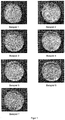
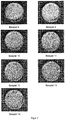
- the Figures 1 and 2 show photographs of Examples 1 to 14 from Table 1.
- the figures are intended to illustrate what the polymer can look like as a gel, gel foam and foam.
- the numbers of the examples are marked under the respective samples.
- Examples 1 to 3 and 8 to 10 formed white foams.
- Examples 4 and 5 and 11 and 12 formed white gel foams.
- Examples 6 and 7 and 13 and 14 eventually formed white gels.
- the polymers went from Example 1 to Example 7 respectively from Example 8 to Example 14 increasingly transparent.
- the polymers with sodium carboxymethyl cellulose tended to be softer than the polymers with hydroxypropylmethyl cellulose.
- Examples 1 to 14 The preparation of Examples 1 to 14 has shown that ultimately the quantitative ratio of prepolymer to aqueous liquid decides whether a polymer is obtained in the form of a gel, a gel foam or a foam.
- the polymer changes from a gel-like to a foam-like state when the prepolymer concentration in the reaction mixture is increased and the amount of water in the reaction mixture is decreased. Accordingly, the polymer changes from a foam-like to a gel-like state when the prepolymer concentration in the reaction mixture is reduced and the amount of water in the reaction mixture is increased.
- the Figures 3 and 4 show the results of the absorption tests for Examples 1 to 7 and for Examples 8 to 14 from Table 1. All the samples examined have shown satisfactory absorption capacities for use in wound therapy. If, however, the highest possible absorption capacity is desired (for example, if highly exuding wounds are to be treated), the foam polymers (Examples 1 to 3 and 8 to 10) can be preferred.
- the polymers with HPMC achieved higher values in the tests compared to the polymers with CMC, so that in particular the HPMC-containing foam polymers are advantageous with regard to the absorption capacity.
- Figure 5 shows FT-IR spectra of the sodium carboxymethyl cellulose used and the prepolymer (Aquapol®) used and of selected examples from Table 1.
- the figure shows the spectra of the following samples (from top to bottom): sodium carboxymethyl cellulose, prepolymer , Example 1, Example 4, Example 7.
- the polymers produced (Examples 1, 4 and 7) were dried for recording the FT-IR spectra.
- Figure 6 shows FT-IR spectra of the hydroxypropylmethylcellulose used (Arbocel CE 20M N) and the prepolymer used (Aquapol®) as well as of selected examples from Table 1.
- the figure shows the spectra of the following samples (from top to bottom): Hydroxypropylmethylcellulose, prepolymer, Example 8, Example 11, Example 14.
- the polymers produced were dried for recording the FT-IR spectra.
- Isocyanate groups, urethane groups and urea groups lead in the IR spectra to absorption bands at 2260 cm -1 , 1714 cm -1 and 1654 cm -1, respectively.
- the recorded IR spectra show that the polymers produced no longer have any isocyanate groups and that a complete conversion of the prepolymers took place.
- FIG. 7 shows a wound dressing with a polymer according to the invention in schematic form.
- the wound dressing comprises a backing layer 1 , which is equipped with an adhesive layer 2 over the entire surface.
- the backing layer 1 can, for example, be a water-impermeable, water-vapor-permeable polyurethane film which is coated over the entire surface with an acrylate adhesive as the adhesive layer 2.
- the backing layer 1 serves as a load-bearing and covering layer in the wound dressing.
- the adhesive layer 2 enables the wound dressing to be attached to the patient's body.
- the wound dressing comprises a wound contact layer 3 which is formed from the polymer according to the invention. When the wound dressing is attached to the patient's body, the wound contact layer 3 is placed directly on the wound. With the wound contact layer 3 , the wound dressing can absorb wound exudate and release moisture to the wound.
- the wound dressing also comprises further layers.
- a further, absorbent layer can be arranged between the adhesive layer 2 and the wound contact layer 3 in order to increase the absorption capacity of the wound dressing.
- the absorbent layer can comprise, for example, a hydrophilic polyurethane foam or a nonwoven.
- the wound dressing can be produced by pouring the polymer in the liquid state (that is, the reaction mixture according to the claims ) directly onto the backing layer 1 or its adhesive layer 2. The finished wound dressing is then available after the polymer has cured.
- the wound contact layer 3 can also be produced in a separate casting mold and then connected to the backing layer 1 via its adhesive layer 2 .
Landscapes
- Health & Medical Sciences (AREA)
- Chemical & Material Sciences (AREA)
- Chemical Kinetics & Catalysis (AREA)
- Materials Engineering (AREA)
- Life Sciences & Earth Sciences (AREA)
- Organic Chemistry (AREA)
- Veterinary Medicine (AREA)
- Engineering & Computer Science (AREA)
- Medicinal Chemistry (AREA)
- Epidemiology (AREA)
- Polymers & Plastics (AREA)
- Animal Behavior & Ethology (AREA)
- General Health & Medical Sciences (AREA)
- Public Health (AREA)
- Hematology (AREA)
- Materials For Medical Uses (AREA)
- Polyurethanes Or Polyureas (AREA)
Abstract
Description
- Die vorliegende Erfindung betrifft ein Verfahren zur Herstellung eines Polymers für medizinische Zwecke, insbesondere für die Wundbehandlung. Die Erfindung betrifft auch das mit dem Verfahren erhaltene Polymer als solches sowie dessen Einsatz in der Medizin und in Wundauflagen.
- Ein Hydrogel ist ein disperses System aus mindestens einer festen hydrophilen Phase und einer flüssigen, wässrigen Phase. Wundverbände mit einer Hydrogelschicht sind im Stand der Technik bekannt. Derartige Wundverbände können sowohl Wundexsudat absorbieren als auch die Wunde befeuchten und so die Wundheilung beschleunigen. Die feste Phase der Hydrogele wird dabei häufig aus vollsynthetischen Stoffen hergestellt, welche im Hinblick auf die Biokompatibilität, die Nachhaltigkeit sowie die Umweltverträglichkeit problematisch sein können.
- Aufgabe der vorliegenden Erfindung war es, ein neues Material für medizinische Zwecke bereitzustellen. Insbesondere war es die Aufgabe der vorliegenden Erfindung, ein neues Material für die Wundbehandlung zur Verfügung zu stellen. Das Material sollte dabei insbesondere biokompatibler, nachhaltiger und umweltverträglicher sein. Es hat sich gezeigt, dass ein Polymer, hergestellt nach dem Verfahren von Anspruch 1, die zuvor genannten Aufgaben und Anforderungen erfüllen kann.
- Das erfindungsgemäße Polymer wird mit den nachfolgenden Schritten hergestellt:
- i. Bereitstellen eines Isocyanat-terminierten Präpolymers enthaltend Polyalkylenoxideinheiten.
- ii. Lösen eines Cellulosederivats in einer wässrigen Flüssigkeit, um eine wässrige, cellulosederivathaltige Zubereitung zu erhalten.
- iii. Mischen des Präpolymers, der wässrigen, cellulosederivathaltigen Zubereitung und optional einer oder mehrerer weiterer Komponenten, um eine Reaktionsmischung zu erhalten.
- iv. Umsetzen des Präpolymers in der Reaktionsmischung, um das Polymer zu erhalten.
- Die Reihenfolge der Schritte i. und ii. kann auch vertauscht werden und ist nicht erfindungswesentlich.
Das Isocyanat-terminierte Präpolymer wird im vorliegenden Dokument auch verkürzt als Präpolymer bezeichnet. Wird also im vorliegenden Dokument auf das Präpolymer Bezug genommen, so ist insofern nicht anders angegeben das Isocyanat-terminierte Präpolymer gemeint.
Cellulosederivate im Sinne der vorliegenden Erfindung sind chemisch modifizierte Cellulosen, welche insbesondere mittels polymeranaloger Reaktionen erhalten werden. So umfassen Cellulosederivate Produkte, bei denen die Hydroxylwasserstoff-Atome der Glucose-Einheiten der Cellulose durch anorganische oder organische Gruppen substituiert sind sowie Produkte, bei denen ein Austausch ganzer Hydroxyl-Gruppen der Glucose-Einheiten der Cellulose erfolgt ist (Desoxycellulosen). Von der Substitution beziehungsweise dem Austausch können dabei auch nur ein Teil der Hydroxyl-Gruppen der Glucose-Einheiten der Cellulose betroffen sein. Weiterhin können Cellulosederivate auch Produkte sein, welche durch intramolekulare Wasserabspaltung (Anhydrocellulosen), Oxidationsreaktionen (Aldehyd-, Keto- und Carboxycellulosen) oder Spaltung der C2, C3-Kohlenstoff-Bindung der Glucose-Einheiten (Dialdehyd- und Dicarboxylcellulosen) aus Cellulose gewonnen werden. Trotz seiner strukturellen Ähnlichkeit zu Cellulose ist zum Beispiel Chitosan kein erfindungsgemäßes Cellulosederivat, weil es aus Chitin und nicht aus Cellulose gewonnen wird (es also ein modifiziertes Chitin und keine modifizierte Cellulose ist). - Kennzeichnend für die vorliegende Erfindung ist, dass das Cellulosederivat in das Polymer eingeschlossen ist. Dies wird insbesondere dadurch erreicht, indem das Präpolymer in der Reaktionsmischung mit dem Cellulosederivat reagieren kann und somit in dem Polymer zumindest ein Teil des Cellulosederivats oder vorzugsweise die Gesamtmenge des Cellulosederivats kovalent gebunden vorliegt. Damit das Präpolymer mit dem Cellulosederivat reagieren kann, weist das Cellulosederivat üblicherweise entsprechende funktionelle Gruppen wie zum Beispiel Hydroxyl-Gruppen auf. Das Cellulosederivat ist also üblicherweise so ausgewählt, dass es Hydroxyl-Gruppen oder andere mit dem Präpolymer reaktionsfähige funktionelle Gruppen enthält. Die bei der Reaktion des Präpolymers mit einem solchen Cellulosederivat ablaufenden Reaktionsmechanismen werden nachfolgend noch genauer beschrieben.
- Grundsätzlich wird mit dem erfindungsgemäßen Polymer ein hydratisiertes Polyurethan-Hydrogel-System beziehungsweise ein hydratisiertes Polyurethan-Schaum-System bereitgestellt, in dessen quervernetzte Polymerstruktur ein Cellulosederivat insbesondere durch kovalenten Einbau fest eingeschlossen ist. Cellulosederivate sind vergleichsweise kostengünstig und können auf Basis von nachwachsenden, natürlich vorkommenden Rohstoffen, zum Beispiel Baumwolle und Holz, gewonnen werden. Cellulosederivate können viele vorteilhafte Eigenschaften besitzen. So können Cellulosederivate zum Beispiel ungiftig, biokompatibel und bioabbaubar sein. Indem für die Herstellung des erfindungsgemäßen Polymers ein Cellulosederivat verwendet wird und dadurch auf weniger vollsynthetische Ausgangstoffe zurückgegriffen werden muss, kann die Biokompatibilität, Nachhaltigkeit und Umweltverträglichkeit im Vergleich zu einem konventionellen Hydrogel verbessert werden. Das erfindungsgemäße Polymer kann daher eine bessere Verträglichkeit für menschliche und tierische Gewebe aufweisen und die Umwelt schonen. Das erfindungsgemäße Polymer kann mindestens ebenso gut wie ein konventionelles Hydrogel ein die Wundheilung unterstützendes feuchtes Wundklima erzeugen, indem es Wundexsudat absorbieren und/oder Feuchtigkeit an die Wunde abgeben kann. Es verklebt dabei nicht mit der Wunde. Diese Eigenschaften ermöglichen eine effektive und schonende Behandlung von vielen unterschiedlichen Wundtypen. Ein weiterer Vorteil des erfindungsgemäßen Polymers ist seine einfache Herstellbarkeit.
- In einer besonders bevorzugten Ausführungsform der Erfindung ist das Präpolymer mindestens dreiarmig (insbesondere genau dreiarmig) verzweigt und die Polyalkylenoxideinheiten werden durch Polyethylenoxid- und/oder Polypropylenoxideinheiten gebildet. Im obigen Schritt i. wird dann also ein mindestens dreiarmig verzweigtes Isocyanat-terminiertes Präpolymer enthaltend Polyethylenoxid- und/oder Polypropylenoxideinheiten bereitgestellt. Dabei kann das Gewichtsverhältnis von Ethylenoxid- zu Propylenoxideinheiten 3 : 1 bis 7 : 1 betragen. Mit einer solchen Verbindung lässt sich das Polymer besonders gut herstellen.
- Ein Isocyanat-terminiertes Präpolymer gemäß der zuvor genannten besonders bevorzugten Ausführungsform ist beispielsweise ein dreiarmiges Copolymer aus Ethylenoxid- und Propylenoxideinheiten, welches endständig jeweils mit einem Molekül Isophorondiisocyanat umgesetzt wurde. Es weist einen Gehalt reaktiver Isocyanatendgruppen (NCO-Gruppen) von 2,5 % bis 4,0 %, bevorzugt 3,0 % bis 3,4 %, besonders bevorzugt 3,2 %, und ein molares Verhältnis von Ethylenoxideinheiten zu Propylenoxideinheiten von 3 : 1 bis 4 : 1 auf. Ein derartiges Isocyanat-terminiertes Präpolymer mit aliphatischen Isocyanat-Gruppen ist zum Beispiel als Aquapol® PI-13000-31 (Carpenter; Richmond, USA) kommerziell erhältlich.
- Die nachfolgende Abbildung veranschaulicht die schematische Struktur eines dreiarmig verzweigten Isocyanat-terminierten Präpolymers enthaltend Polyethylenoxid- und Polypropylenoxideinheiten (wie bei Aquapol®). Ein Glycerol-Molekül bildet das Zentrum des Präpolymers. Die drei "Arme" des Präpolymers mit jeweils einer endständigen Isocyanat-Gruppe sind mit den Hydroxyl-Gruppen des Glycerol-Moleküles verknüpft. Das Glycerol-Molekül selber ist in der Abbildung nicht dargestellt. Es würde sich in der rechten Bildhälfte dort befinden, wo die als Wellenlinie schematisiert dargestellten drei "Arme" aufeinandertreffen. In der linken Bildhälfte ist die chemische Struktur eines "Arms" genauer dargestellt.

- Das verwendete Cellulosederivat kann Carboxymethylcellulose (CMC), insbesondere Natrium-Carboxymethylcellulose, oder Hydroxypropylmethylcellulose (HPMC) sein. Diese Cellulosederivate können wasserlöslich sein sowie Hydroxyl-Gruppen enthalten und daher für das erfindungsgemäße Herstellungsverfahren geeignet sein. Die Carboxymethylcellulose beziehungsweise die Natrium-Carboxymethylcellulose kann einen durchschnittlichen Substitutionsgrad von 0,5 bis 1,5 aufweisen. Eine für die vorliegende Erfindung geeignete Natrium-Carboxymethylcellulose wird zum Beispiel von der Firma Sigma-Aldrich (Steinheim, Deutschland) im Handel angeboten. Eine geeignete Hydroxypropylmethylcellulose ist unter der Bezeichnung "Arbocel CE 20M N" (JRS Pharma, Rosenberg, Deutschland) im Handel erhältlich.
- Die wässrige Flüssigkeit hat einen Wassergehalt von mindestens 50 Gew.-%. Normalerweise hat die vorliegend eingesetzte wässrige Flüssigkeit jedoch einen deutlich höheren Wassergehalt, zum Beispiel mindestens 80 Gew.-%, mindestens 85 Gew.-%, mindestens 90 Gew.-% oder mindestens 95 Gew.-%. Bevorzugt handelt es sich bei der wässrigen Flüssigkeit um Wasser, dem gegebenenfalls zum besseren Lösen des Cellulosederivats noch eine Base zugesetzt ist. Die Base kann insbesondere Natriumhydroxid sein. Insbesondere kann die wässrige Flüssigkeit jedoch aus Wasser bestehen. Die wässrige Flüssigkeit wird anspruchsgemäß dazu eingesetzt, um das Cellulosederivat in Lösung zu bringen. Dabei wird eine wässrige, cellulosederivathaltige Zubereitung erhalten, welche gleichfalls eine Flüssigkeit sein kann. Die Viskosität der Zubereitung kann von der Konzentration des Cellulosederivats abhängen.
- Bei den weiteren Komponenten, die mit dem Präpolymer und der wässrigen, cellulosederivathaltigen Zubereitung im Herstellungsschritt iii. optional gemischt werden können, kann es sich zum Beispiel um ein Feuchthaltemittel oder ein anorganisches Salz handeln. Damit können die chemischen und physikalischen Eigenschaften des Polymers beeinflusst und für die jeweilige Anwendung angepasst werden. Dennoch ist die Anwesenheit der weiteren Komponenten nicht zwingend erforderlich, weshalb sie vorliegend auch als optional ausgewiesen sind. So kann es vorgesehen sein, dass zum Erhalt der Reaktionsmischung nur das Präpolymer mit der wässrigen, cellulosederivathaltigen Zubereitung gemischt wird. Die Reaktionsmischung besteht dann aus dem Präpolymer und der wässrigen, cellulosederivathaltigen Zubereitung.
Als Feuchthaltemittel kann Ethylenglykol, Propylenglykol, PEG300, PEG2000, Glycerol, Saccharose oder Sorbitol verwendet werden. Besonders bevorzugt ist dabei Glycerol. Die Feuchthaltemittel können die Absorptionsfähigkeit des Polymers erhöhen sowie den Feuchtigkeitsverlust des Polymers verringern.
Als anorganisches Salz kann Natriumchlorid, Kaliumchlorid, Magnesiumchlorid, Calciumchlorid oder eine Mischung aus mindestens zwei dieser Salze verwendet werden. Besonders bevorzugt ist dabei Natriumchlorid als alleiniges Salz. Eine bevorzugte Salzmischung enthält Natriumchlorid, Kaliumchlorid und Calciumchlorid. Diese drei Salze werden auch zur Herstellung der Ringerlösung verwendet. Die anorganischen Salze können den Elektrolyt-Gehalt in einem von einer Wunde abgegebenen Wundserum simulieren. Damit stellt das Polymer einer Wunde ein besonders wundheilungsförderndes Klima zur Verfügung.
Die weitere Komponente kann auch ein Treibmittel sein. Vorzugsweise umfasst das Treibmittel Natriumhydrogencarbonat. Insbesondere besteht das Treibmittel aus Natriumhydrogencarbonat und einer Säure wie zum Beispiel Citronensäure, Weinsäure oder Salzsäure. Mit dem Treibmittel kann die Porosität und damit die Saugkraft des Polymers erhöht werden. Der Einsatz des Treibmittels ist insbesondere dann sinnvoll und vorteilhaft, wenn ein Schaumstoff hergestellt werden soll. - Die nachfolgenden Bereiche haben sich als geeignet für die Herstellung des Polymers mit einem kovalent gebundenen Cellulosederivat herausgestellt:
Der Anteil an dem Präpolymer bezogen auf das Gesamtgewicht der Reaktionsmischung beträgt 5 bis 80 Gew.-%. Insbesondere beträgt der Anteil an dem Präpolymer bezogen auf das Gesamtgewicht der Reaktionsmischung 20 bis 80 Gew.-%.
Der Anteil an dem Cellulosederivat bezogen auf das Gesamtgewicht der Reaktionsmischung beträgt 0,5 bis 5 Gew.-%. Insbesondere beträgt der Anteil an dem Cellulosederivat bezogen auf das Gesamtgewicht der Reaktionsmischung 0,5 bis 2 Gew.-%.
Der Anteil der wässrigen Flüssigkeit bezogen auf das Gesamtgewicht der Reaktionsmischung beträgt 20 bis 90 Gew.-%. Insbesondere beträgt der Anteil der wässrigen Flüssigkeit bezogen auf das Gesamtgewicht der Reaktionsmischung 20 bis 75 Gew.-%.
Der Anteil der einen oder mehreren weiteren Komponenten bezogen auf das Gesamtgewicht der Reaktionsmischung beträgt 0 bis 30 Gew.-%. Der Bereich von 0 bis 30 Gew.-% bezieht sich dabei auf die Summe aller vorhandenen weiteren Komponenten.
Dabei ergeben der Anteil an dem Präpolymer, der Anteil an dem Cellulosederivat, der Anteil der wässrigen Flüssigkeit und der Anteil der weiteren Komponenten zusammen 100 Gew.-%. Wenn keine weiteren Komponenten vorgesehen sind (die optionalen weiteren Komponenten also fehlen), ergeben der Anteil an dem Präpolymer, der Anteil an dem Cellulosederivat und der Anteil der wässrigen Flüssigkeit zusammen 100 Gew.-%. - Chemisch gesehen handelt es sich bei den hier vorgeschlagenen Polymeren üblicherweise um Hydrogele. Ein Hydrogel ist wie bereits eingangs erwähnt ein disperses System aus mindestens einer festen hydrophilen Phase und einer flüssigen Phase, nämlich Wasser. Dabei bildet die feste Phase ein schwammartiges, dreidimensionales polymeres Netzwerk, welches durch das Wasser ausgefüllt ist. In Abhängigkeit von dem Mengenverhältnis Präpolymer zu wässriger Flüssigkeit in der Reaktionsmischung kann sich das äußere Erscheinungsbild der Polymere jedoch unterscheiden. So kann das Polymer hinsichtlich seines äußeren Erscheinungsbildes als ein Gel, als ein Gelschaum oder als ein Schaumstoff vorliegen.
- Wenn das Polymer als ein Gel vorliegt, enthält es keine oder nur wenige Hohlräume beziehungsweise Zellen. Das Polymer kann dann eine zusammenhängende, diskrete Schicht ausbilden. Das Polymer kann als Gel auch transparent sein. Wenn das Polymer als ein Gel vorliegt, weist es also ein für Hydrogele übliches äußeres Erscheinungsbild auf. Das gelartige Polymer hat ein hohes Wasserabgabevermögen und ist somit besonders gut für die Behandlung von trockenen Wunden geeignet.
- Wenn das Polymer als ein Schaumstoff vorliegt, ist es porös und enthält eine Vielzahl offener und/oder geschlossener Hohlräume beziehungsweise Zellen. Das Schaumstoff-Polymer ist normalerweise weiß und undurchsichtig sowie im Vergleich zu einem Gelpolymer mit gleicher Masse voluminöser. Außerdem enthält das Schaumstoff-Polymer gegenüber einem Gelpolymer mit gleicher Masse einen höheren festen polymeren Anteil und weniger Wasser. Das schaumstoffartige Polymer hat ein hohes Wasseraufnahmevermögen und ist somit besonders gut für die Behandlung von stark exsudierenden Wunden geeignet.
- Die als "Gelschaum" bezeichnete Variante des Polymers stellt eine Übergangsform zwischen Gel und Schaumstoff dar. Der "Gelschaum" kann auch als ein vorgequollener hydrophiler Schaumstoff aufgefasst werden. Der Gelschaum kann sowohl vergleichsweise viel Wasser abgeben als auch vergleichsweise viel Wasser aufnehmen und ist somit für die Behandlung von unterschiedlichsten Wundtypen geeignet.
- Nachfolgend werden drei alternative Ausführungsformen der Erfindung genannt, in denen die zuvor genannten Bereiche für das Präpolymer, das Cellulosederivat und die wässrige Flüssigkeit weiter spezifiziert werden, so dass die Polymere entweder als Gel, Gelschaum oder Schaumstoff vorliegen. Der Übergang von einem Gel zu einem Gelschaum bis hin zu einem Schaumstoff kann insbesondere dadurch erzielt werden, indem der Anteil an Präpolymer erhöht und der Anteil an der wässrigen Flüssigkeit verringert wird.
- Wenn nach dem Umsetzen des Präpolymers in der Reaktionsmischung ein Polymer in der Form eines Gels erhalten werden soll, können die Bereiche wie folgt gewählt werden:
Der Anteil an dem Präpolymer bezogen auf das Gesamtgewicht der Reaktionsmischung beträgt 5 bis 30 Gew.-%.
Der Anteil an dem Cellulosederivat bezogen auf das Gesamtgewicht der Reaktionsmischung beträgt vorzugsweise 1,8 bis 5 Gew.-% beträgt.
Der Anteil der wässrigen Flüssigkeit bezogen auf das Gesamtgewicht der Reaktionsmischung beträgt 68 bis 90 Gew.-%. - Wenn nach dem Umsetzen des Präpolymers in der Reaktionsmischung ein Polymer in der Form eines Gelschaums erhalten werden soll, können die Bereiche wie folgt gewählt werden:
Der Anteil an dem Präpolymer bezogen auf das Gesamtgewicht der Reaktionsmischung beträgt 32 bis 45 Gew.-%.
Der Anteil an dem Cellulosederivat bezogen auf das Gesamtgewicht der Reaktionsmischung beträgt vorzugsweise 1,5 bis 1,7 Gew.-%.
Der Anteil der wässrigen Flüssigkeit bezogen auf das Gesamtgewicht der Reaktionsmischung beträgt 55 bis 65 Gew.-%. - Wenn nach dem Umsetzen des Präpolymers in der Reaktionsmischung ein Polymer in der Form eines Schaumstoffs erhalten werden soll, können die Bereiche wie folgt gewählt werden:
Der Anteil an dem Präpolymer bezogen auf das Gesamtgewicht der Reaktionsmischung beträgt 50 bis 80 Gew.-%.
Der Anteil an dem Cellulosederivat bezogen auf das Gesamtgewicht der Reaktionsmischung beträgt vorzugsweise 0,5 bis 1,3 Gew.-%.
Der Anteil der wässrigen Flüssigkeit bezogen auf das Gesamtgewicht der Reaktionsmischung beträgt 22 bis 50 Gew.-%. - Falls ein Feuchthaltemittel wie zum Beispiel Glycerol vorgesehen ist, so kann dieses vorteilhafterweise einen Anteil von 10 bis 25 Gew.-%, insbesondere 15 bis 25 Gew.-%, bezogen auf das Gesamtgewicht der Reaktionsmischung haben.
- Falls ein anorganisches Salz wie zum Beispiel Natriumchlorid vorgesehen ist, so kann dieses vorteilhafterweise einen Anteil von 0,1 bis 5 Gew.-%, bevorzugt von 0,1 bis 3 Gew.-% und besonders bevorzugt von 0,5 bis 1,5 Gew.-% bezogen auf das Gesamtgewicht der Reaktionsmischung haben.
- Falls ein Treibmittel wie zum Beispiel Natriumhydrogencarbonat vorgesehen ist, so kann dieses vorteilhafterweise einen Anteil von 1 bis 10 Gew.-%, bevorzugt von 2 bis 10 Gew.-% und besonders bevorzugt von 5 bis 10 Gew.-% bezogen auf das Gesamtgewicht der Reaktionsmischung haben.
- Bei dem Umsetzen des Präpolymers finden Reaktionen statt, an denen die Isocyanat-Gruppen des Präpolymers beteiligt sind. Das Umsetzen des Präpolymers setzt üblicherweise automatisch ein, sobald die Reaktionsmischung hergestellt worden ist. Das Umsetzen des Präpolymers in der Reaktionsmischung kann als ein Polymerisationsprozess verstanden werden, der zur Ausbildung des Polymers führt.
- Normalerweise erfolgt das Umsetzen des Präpolymers in der Reaktionsmischung im Wesentlichen vollständig. Es liegen dann keine für menschliche und tierische Zellen toxischen Isocyanat-Gruppen in dem Polymer mehr vor. Der Nachweis ob das Präpolymer in der Reaktionsmischung im Wesentlichen vollständig umgesetzt worden ist kann beispielsweise mit Hilfe der IR-Spektroskopie erbracht werden. Eine fehlende Absorptionsbande bei 2260 cm-1 für die Isocyanat-Gruppe dient dabei als Nachweis für ein vollständiges Umsetzen des Präpolymers.
- An dem Umsetzen des Präpolymers in der Reaktionsmischung können insbesondere die folgenden Reaktionen a) bis c) beteiligt sein, wobei Reaktion a) schneller als Reaktion b) abläuft:
- a) Reaktion einer Isocyanat-Gruppe des Präpolymers mit einer Hydroxyl-Gruppe des Cellulosederivats, wobei eine Urethan-Bindung gebildet wird.
- b) Reaktion einer Isocyanat-Gruppe des Präpolymers mit einem Wassermolekül, wobei die Isocyanat-Gruppe unter Freisetzung von Kohlendioxid in eine Amin-Gruppe umgewandelt wird.
- c) Reaktion einer Isocyanat-Gruppe des Präpolymers mit einer nach Reaktion b) gebildeten Amin-Gruppe, wobei eine Harnstoff-Bindung gebildet wird.
- An dem Umsetzen des Präpolymers in der Reaktionsmischung können also eine oder mehrere Reaktionen ausgewählt aus der Gruppe umfassend Reaktion a), Reaktion b) und Reaktion c) beteiligt sein, wobei zumindest Reaktion a) an dem Umsetzen des Präpolymers beteiligt ist. Die zuvor genannte Gruppe kann hierbei auch noch weitere, an der Umsetzung des Präpolymers beteiligte Reaktionen umfassen.
- Es kann vorgesehen sein, dass nur die zuvor genannten Reaktionen a) bis c) an dem Umsetzen des Präpolymers beteiligt sind. An dem Umsetzen des Präpolymers in der Reaktionsmischung wären dann eine oder mehrere Reaktionen ausgewählt aus der Gruppe bestehend aus Reaktion a), Reaktion b) und Reaktion c) beteiligt, wobei zumindest Reaktion a) an dem Umsetzen des Präpolymers beteiligt ist. Das Umsetzen des Präpolymers kann auf die Reaktionen a) bis c) beschränkt sein, wenn die wässrige Flüssigkeit aus Wasser besteht und die Reaktionsmischung aus dem Präpolymer und der wässrigen, cellulosederivathaltigen Zubereitung besteht.
- In der Regel ist es weiterhin vorgesehen, dass in der Reaktionsmischung kein Amin-terminiertes Präpolymer, insbesondere kein Amin-terminiertes Präpolymer enthaltend Polyalkylenoxideinheiten, enthalten ist. Derartige Amin-terminierte Präpolymere sind im Handel erhältlich (zum Beispiel als Jeffamin® ED-2003; Huntsman, Everberg, Belgien) und werden anstelle von dem Cellulosederivat im Stand der Technik häufig mit Isocyanat-terminierten Präpolymeren zur Reaktion gebracht, um Hydrogele zu erhalten. Vorliegend wird aber der Ansatz verfolgt, das Isocyanat-terminierte Präpolymer mit einem Naturstoffderivat, nämlich einem Cellulosederivat, und nicht mit einem vollständig künstlich hergestellten Amin-terminierten Präpolymer umzusetzen, um ein biokompatibleres, nachhaltigeres und umweltverträglicheres Polymer erhalten zu können.
- Es kann auch vorteilhafterweise vorgesehen sein, dass in der Reaktionsmischung gar keine Komponente mit einer Amin-Gruppe enthalten ist. Die Reaktionsmischung kann dann auch das zuvor genannte Amin-terminierte Präpolymer nicht enthalten. Alternativ oder zusätzlich dazu kann vorgesehen sein, dass in der Reaktionsmischung außer dem Cellulosederivat keine Komponente mit einer Hydroxyl-Gruppe enthalten ist. Die Reaktionsmischung kann dann jedoch auch die zuvor genannten Feuchthaltemittel nicht enthalten. Wenn die Reaktionsmischung keine Komponente mit einer Amin-Gruppe und/oder außer dem Cellulosederivat keine Komponente mit einer Hydroxyl-Gruppe enthält, kann der kovalente Einbau des Cellulosederivats in das Polymer besonders gut sichergestellt werden.
- In einer weiteren Ausführungsform der Erfindung wird beim Umsetzen des Präpolymers ein Gas in die Reaktionsmischung eingebracht. Vorzugsweise ist das Gas Kohlendioxid. Ähnlich wie mit dem zuvor genannten Treibmittel kann damit die Porosität und in der Folge die Saugkraft des Polymers erhöht werden, was insbesondere bei einem Polymer in der Form eines Schaumstoffs von Interesse sein kann. Außerdem kann die Saugkraft des Polymers dadurch verbessert werden, indem eine oberflächliche Schicht des Polymers abgetragen wird, so dass eine poröse Struktur des Polymers freigelegt wird. Das Herstellungsverfahren umfasst dann einen zusätzlichen Schritt, welcher sich an den erfindungsgemäßen Schritt iv. anschließt und in dem eine oberflächliche Schicht des Polymers abgetragen wird. Dieser zusätzliche Verfahrensschritt kommt gleichfalls wieder vor allem dann infrage, wenn das Polymer als Schaumstoff vorliegt.
- Das Polymer wurde vorliegend für die Medizin und insbesondere für die Wundbehandlung entwickelt. Entsprechend wird vorliegend mit Anspruch 14 auch die Verwendung des Polymers in allen seinen Ausführungsformen in der Medizin (1. medizinische Indikation) sowie insbesondere in der Wundbehandlung (2. medizinische Indikation) beansprucht.
- Bei der Verwendung des Polymers in der Wundbehandlung wird dieses meistens in einen Wundverband integriert. Entsprechend wird vorliegend mit Anspruch 15 auch ein Wundverband mit dem Polymer in allen seinen Ausführungsformen beansprucht. Ein solcher Wundverband kann zum Beispiel eine Rückschicht und eine wundkontaktierende Schicht umfassen, wobei das Polymer die wundkontaktierende Schicht bildet. Dann kann das Polymer seine vorteilhaften Eigenschaften wie zum Beispiel die Absorption von Wundexsudat am besten ausüben.
- Mit den nachfolgend beschriebenen Beispielen und Figuren soll die Erfindung exemplarisch näher erläutert werden.
- Es wurden verschiedene Polymere hergestellt und deren Eigenschaften untersucht. Tabelle 1 listet die Zusammensetzung und Konsistenz der hergestellten Polymere bestehend aus Präpolymer, Cellulosederivat und Wasser auf.
Tabelle 1: Zusammensetzung und Konsistenz der hergestellten Polymere Beispiel Nummer Stocklösung [g] Präpolymer [Gew.-%] CMC [Gew.-%] HPMC [Gew.-%] Wasser [Gew.-%] Konsistenz 1 1,5 76,92 0,62 - 22,46 Schaumstoff 2 2,5 66,67 0,89 - 32,44 Schaumstoff 3 5,0 50,00 1,33 - 48,67 Schaumstoff 4 7,5 40,00 1,60 - 58,40 Gelschaum 5 10,0 33,33 1,78 - 64,89 Gelschaum 6 12,5 28,57 1,90 - 69,52 Gel 7 15,0 25,00 2,00 - 73,00 Gel 8 1,5 76,92 - 0,62 22,46 Schaumstoff 9 2,5 66,67 - 0,89 32,44 Schaumstoff 10 5,0 50,00 - 1,33 48,67 Schaumstoff 11 7,5 40,00 - 1,60 58,40 Gelschaum 12 10,0 33,33 - 1,78 64,89 Gelschaum 13 12,5 28,57 - 1,90 69,52 Gel 14 15,0 25,00 - 2,00 73,00 Gel - Die Herstellung der Polymere soll anhand von Beispiel 3 näher erläutert werden: Schritt 1 (Herstellung der anspruchsgemäßen wässrigen, cellulosederivathaltigen Zubereitung):
2 g Natrium-Carboxymethylcellulose wurden in 75 ml demineralisiertem Wasser (anspruchsgemäße wässrige Flüssigkeit) gelöst. Entsprechend besaß die Zubereitung eine Natrium-Carboxymethylcellulose-Konzentration von 2,67 Gew.-%.
Schritt 2 (Herstellung der anspruchsgemäßen Reaktionsmischung):
5 g Präpolymer wurden mit 5 g der in Schritt 1 hergestellten Zubereitung (in Tabelle 1 als "Stocklösung" bezeichnet) gemischt. Die dabei erhaltene Reaktionsmischung bestand demnach aus 5,0 g Präpolymer, 0,13 g Natrium-Carboxymethylcellulose und 4,87 g Wasser. Die Anteile an dem Präpolymer, der Natrium-Carboxymethylcellulose und dem Wasser bezogen auf das Gesamtgewicht der Reaktionsmischung betrugen folglich 50,0 Gew.-%, 1,33 Gew.-% beziehungsweise 48,67 Gew.-%. Die Reaktionsmischung wurde in eine Petrischale eingebracht. Es wurden auch größere Mengen der Reaktionsmischung hergestellt, wenn mehrere Petrischalen befüllt werden sollten oder eine Petrischale vollständig mit der Reaktionsmischung zu befüllen war.
Schritt 3 (Erhalt des Polymers):
Die Reaktionsmischung wurde in der Petrischale ruhen gelassen, bis der Polymerisationsprozess und somit die Umsetzung des Präpolymers abgeschlossen war. Der Polymerisationsprozess wurde als abgeschlossen angesehen, wenn die Probe verfestigt war (also den Gelpunkt erreicht hatte) und an ihrer Oberfläche nicht mehr klebrig war. Dies konnte im Labormaßstab mit einem Spatel manuell überprüft werden. - Die anderen in Tabelle 1 aufgeführten Beispiele wurden in ähnlicher Weise wie Beispiel 3 hergestellt. Der Unterschied bei der Herstellung der anderen Beispiele beschränkte sich auf die Menge an der in Schritt 2 mit dem Präpolymer gemischten Stocklösung sowie den Austausch von Natrium-Carboxymethylcellulose gegen Hydroxypropylmethylcellulose (Beispiele 8 bis 14). So wurden bei Beispiel 5 10 g Stocklösung mit 5 g Präpolymer gemischt, um die Reaktionsmischung zu erhalten.
- Die verwendete Natrium-Carboxymethylcellulose wurde von Sigma-Aldrich (Steinheim, Deutschschland) bezogen. Die verwendete Hydroxypropylmethylcellulose mit der Bezeichnung "Arbocel CE 20M N" wurde von JRS Pharma (Rosenberg, Deutschland) bezogen. Die folgenden drei Angaben treffen auf alle Beispiele aus Tabelle 1 zu. Auf die Beispiele aus Tabelle 2 treffen nur die ersten zwei Angaben zu.
- Die Flüssigkeit zum Auflösen der Cellulosederivate bestand aus demineralisiertem Wasser.
- Das Präpolymer war Aquapol® PI-13000-31 von Carpenter (Richmond, USA). Wie bereits erwähnt, handelt es sich dabei um ein dreiarmig verzweigtes Isocyanat-terminiertes Präpolymer enthaltend Polyethylenoxid- und Polypropylenoxideinheiten.
- Die Reaktionsmischung enthielt nur das Präpolymer und die wässrige, cellulosederivathaltige Zubereitung.
- Die Polymere aus Tabelle 2 enthalten neben Präpolymer, Natrium-Carboxymethylcellulose und Wasser noch eine oder mehrere weitere Komponenten wie ein Feuchthaltemittel und/oder ein anorganisches Salz.
Tabelle 2: Zusammensetzung von Polymeren mit Feuchthaltemittel und/oder Salz Beispiel Nummer Präpolymer Gew.-% CMC Gew.-% Wasser Gew.-% Feuchthaltemittel Gew.-% Salz Gew.-% 15 41,67 1,08 40,58 16,67 - 16 49,02 1,27 47,75 - 1,96 17 40,98 1,07 39,92 16,39 1,64 - Die Beispiele 15 bis 17 sind ähnlich zusammengesetzt wie das Beispiel 3. Das Beispiel 15 unterscheidet sich von Beispiel 3 dadurch, dass es zusätzlich ein Feuchthaltemittel enthält. Das Beispiel 16 enthält im Unterschied zu Beispiel 3 ein anorganisches Salz. Das Beispiel 17 enthält im Unterschied zu Beispiel 3 sowohl ein Feuchthaltemittel als auch ein anorganisches Salz. Als Feuchthaltemittel können zum Beispiel Ethylenglykol, Propylenglykol, PEG300, PEG2000, Glycerol, Saccharose oder Sorbitol verwendet werden. Als anorganisches Salz kann insbesondere Natriumchlorid verwendet werden.
- Die Beispiele 15 bis 17 konnten ganz ähnlich wie Beispiel 3 hergestellt werden. Die wässrige Zubereitung mit der Natrium-Carboxymethylcellulose wurde wie zuvor in Schritt 1 beschrieben hergestellt. Anschließend wurden 5 g Präpolymer, 5 g der Zubereitung und die weiteren Komponenten (2 g Feuchthaltemittel bei den Beispielen 15 und 17 und 0,2 g Salz bei den Beispielen 16 und 17) miteinander gemischt, in eine Petrischale gegossen und aushärten gelassen. Die verwendeten Feuchthaltemittel sowie das eingesetzte Salz ließen sich aufgrund ihrer hohen Wasserlöslichkeit und insbesondere bei Ansatz größerer Mengen der Reaktionsmischung gut mit dem Präpolymer und der Zubereitung mischen. Ein größerer Ansatz der Reaktionsmischung konnte bezogen auf Polymer 17 beispielsweise durch Mischen von 25 g Präpolymer, 25 g Zubereitung, 10 g Feuchthaltemittel, zum Beispiel 10 g Glycerol, und 1 g Salz, zum Beispiel 1 g Natriumchlorid, erhalten werden (= 5-facher Ansatz).
- Die
Figuren 1 und2 zeigen Fotografien der Beispiele 1 bis 14 aus Tabelle 1. Die Figuren sollen veranschaulichen, wie das Polymer als Gel, Gelschaum und Schaumstoff aussehen kann. Die Nummern der Beispiele sind unter den jeweiligen Proben gekennzeichnet. Die Beispiele 1 bis 3 sowie 8 bis 10 bildeten weiße Schaumstoffe. Die Beispiele 4 und 5 sowie 11 und 12 bildeten weiße Gelschäume. Die Beispiele 6 und 7 sowie 13 und 14 bildeten schließlich weiße Gele. Die Polymere wurden von Beispiel 1 zu Beispiel 7 beziehungsweise von Beispiel 8 zu Beispiel 14 zunehmend durchsichtiger. Die Polymere mit Natrium-Carboxymethylcellulose waren tendenziell weicher als die Polymere mit Hydroxypropylmethylcellulose. - Die Herstellung der Beispiele 1 bis 14 hat gezeigt, dass letztlich das Mengenverhältnis Präpolymer zu wässriger Flüssigkeit darüber entscheidet, ob ein Polymer in Form eines Gels, eines Gelschaums oder eines Schaumstoffs erhalten wird. So geht das Polymer von einem gelartigen zu einem schaumstoffartigen Zustand über, wenn die Präpolymerkonzentration in der Reaktionsmischung erhöht und die Wassermenge in der Reaktionsmischung erniedrigt wird. Entsprechend geht das Polymer von einem schaumstoffartigen zu einem gelartigen Zustand über, wenn die Präpolymerkonzentration in der Reaktionsmischung erniedrigt und die Wassermenge in der Reaktionsmischung erhöht wird.
- Die Beispiele 1 bis 14 aus Tabelle 1 wurden hinsichtlich ihrer Absorptionskapazität untersucht. Zur Messung der Absorptionskapazität wurden Probenstücke mit einer Größe von 3 cm x 3 cm ausgestanzt und gewogen. Anschließend wurden sie in ein Becherglas mit demineralisiertem Wasser für 30 Minuten, 60 Minuten, 90 Minuten und 120 Minuten gegeben. Daraufhin wurden sie erneut gewogen. Die Berechnung der Absorptionskapazität erfolgt nach folgender Gleichung und wird in der Einheit g/g angegeben:

- Die
Figuren 3 und 4 zeigen die Ergebnisse der Absorptionstests für die Beispiele 1 bis 7 beziehungsweise für die Beispiele 8 bis 14 aus Tabelle 1.
Alle untersuchten Proben haben für die Anwendung in der Wundtherapie zufriedenstellende Absorptionskapazitäten gezeigt. Wenn allerdings ein möglichst hohes Absorptionsvermögen erwünscht ist (zum Beispiel wenn stark exsudierende Wunden behandelt werden sollen), können die Schaumstoff-Polymere (Beispiele 1 bis 3 sowie 8 bis 10) vorgezogen werden. Die Polymere mit HPMC haben in den Tests im Vergleich zu den Polymeren mit CMC höhere Werte erzielt, so dass insbesondere die HPMC-haltigen Schaumstoff-Polymere im Hinblick auf die Absorptionskapazität vorteilhaft sind. -
Figur 5 zeigt FT-IR-Spektren von der eingesetzten Natrium-Carboxymethylcellulose und dem eingesetzten Präpolymer (Aquapol®) sowie von ausgewählten Beispielen aus Tabelle 1. In der Figur sind die Spektren folgender Proben zu sehen (von oben nach unten): Natrium-Carboxymethylcellulose, Präpolymer, Beispiel 1, Beispiel 4, Beispiel 7. Die hergestellten Polymere (Beispiele 1, 4 und 7) wurden für die Aufnahme der FT-IR-Spektren getrocknet. -
Figur 6 zeigt dann FT-IR-Spektren von der eingesetzten Hydroxypropylmethylcellulose (Arbocel CE 20M N) und dem eingesetzten Präpolymer (Aquapol®) sowie von ausgewählten Beispielen aus Tabelle 1. In der Figur sind die Spektren folgender Proben zu sehen (von oben nach unten): Hydroxypropylmethylcellulose, Präpolymer, Beispiel 8, Beispiel 11, Beispiel 14. Die hergestellten Polymere (Beispiele 8, 11 und 14) wurden für die Aufnahme der FT-IR-Spektren getrocknet. - Isocyanat-Gruppen, Urethan-Gruppen und Harnstoff-Gruppen führen in den IR-Spektren zu Absorptionsbanden bei 2260 cm-1, 1714 cm-1 beziehungsweise 1654 cm-1. Die aufgenommenen IR-Spektren belegen, dass die hergestellten Polymere keine Isocyanat-Gruppen mehr besitzen und somit eine vollständige Umsetzung der Präpolymere stattfand.
-
Figur 7 zeigt einen Wundverband mit einem erfindungsgemäßen Polymer in schematischer Form. Der Wundverband umfasst eine Rückschicht 1, welche mit einer Klebeschicht 2 vollflächig ausgerüstet ist. Die Rückschicht 1 kann zum Beispiel ein wasserundurchlässiger, wasserdampfdurchlässiger Polyurethanfilm sein, welcher vollflächig mit einem Acrylatkleber als Klebeschicht 2 beschichtet ist. Die Rückschicht 1 dient als tragende und abdeckende Lage in dem Wundverband. Die Klebeschicht 2 ermöglicht die Befestigung des Wundverbands am Körper des Patienten. Weiterhin umfasst der Wundverband eine Wundkontaktschicht 3, welche von dem erfindungsgemäßen Polymer gebildet wird. Beim Befestigen des Wundverbandes am Körper des Patienten wird die Wundkontaktschicht 3 direkt auf der Wunde platziert. Mit der Wundkontaktschicht 3 kann der Wundverband Wundexsudat absorbieren und Feuchtigkeit an die Wunde abgeben. - Es ist auch denkbar, dass der Wundverband noch weitere Schichten umfasst. Zum Beispiel kann eine weitere, absorbierende Schicht zwischen der Klebeschicht 2 und der Wundkontaktschicht 3 angeordnet werden, um die Absorptionskapazität des Wundverbandes zu steigern. Die absorbierende Schicht kann dabei beispielsweise einen hydrophilen Polyurethanschaumstoff oder einen Vliesstoff umfassen.
- Der Wundverband kann hergestellt werden, indem das Polymer in flüssigem Zustand (also die anspruchsgemäße Reaktionsmischung) auf die Rückschicht 1 beziehungsweise deren Klebeschicht 2 direkt aufgegossen wird. Der fertige Wundverband liegt dann nach dem Aushärten des Polymers vor. Alternativ kann die Wundkontaktschicht 3 auch in einer separaten Gießform hergestellt und dann mit der Rückschicht 1 über deren Klebeschicht 2 verbunden werden.
- Abschließend werden Merkmale der vorliegenden Erfindung in den nachfolgenden Absätzen 1 bis 29 nochmals in Anspruchsform wiedergegeben.
- 1. Verfahren zur Herstellung eines Polymers für medizinische Zwecke, insbesondere für die Wundbehandlung, umfassend die Schritte
- i. Bereitstellen eines Isocyanat-terminierten Präpolymers enthaltend Polyalkylenoxideinheiten,
- ii. Lösen eines Cellulosederivats in einer wässrigen Flüssigkeit, um eine wässrige, cellulosederivathaltige Zubereitung zu erhalten,
- iii. Mischen des Präpolymers, der wässrigen, cellulosederivathaltigen Zubereitung und optional einer oder mehrerer weiterer Komponenten, um eine Reaktionsmischung zu erhalten,
- iv. Umsetzen des Präpolymers in der Reaktionsmischung, um das Polymer zu erhalten.
- 2. Verfahren nach Absatz 1, wobei das Präpolymer mindestens dreiarmig verzweigt ist und die Polyalkylenoxideinheiten durch Polyethylenoxid- und/oder Polypropylenoxideinheiten gebildet werden, wobei das Gewichtsverhältnis von Ethylenoxid- zu Propylenoxideinheiten vorzugsweise 3 : 1 bis 7 : 1 beträgt.
- 3. Verfahren nach Absatz 1 oder 2, wobei das Präpolymer ein dreiarmiges Copolymer aus Ethylenoxid- und Propylenoxideinheiten, welches endständig jeweils mit einem Molekül Isophorondiisocyanat umgesetzt wurde, ist, wobei das Präpolymer einen Gehalt reaktiver Isocyanatendgruppen von 2,5 % bis 4,0 %, bevorzugt von 3,0 % bis 3,4 % und besonders bevorzugt von 3,2 % aufweist und ein molares Verhältnis von Ethylenoxideinheiten zu Propylenoxideinheiten von 3 : 1 bis 4 : 1 aufweist.
- 4. Verfahren nach einem der vorangehenden Absätze, wobei es sich bei dem Cellulosederivat um Carboxymethylcellulose, insbesondere Natrium-Carboxymethylcellulose, oder Hydroxypropylmethylcellulose handelt.
- 5. Verfahren nach einem der vorangehenden Absätze, wobei die wässrige Flüssigkeit Wasser ist.
- 6. Verfahren nach einem der vorangehenden Absätze, wobei ein Feuchthaltemittel als weitere Komponente vorhanden ist, wobei das Feuchthaltemittel vorzugsweise Ethylenglykol, Propylenglykol, PEG300, PEG2000, Glycerol, Saccharose oder Sorbitol ist.
- 7. Verfahren nach einem der vorangehenden Absätze, wobei ein anorganisches Salz als weitere Komponente vorhanden ist, wobei das Salz vorzugsweise Natriumchlorid, Kaliumchlorid, Magnesiumchlorid, Calciumchlorid oder eine Mischung aus mindestens zwei dieser Salze ist.
- 8. Verfahren nach einem der vorangehenden Absätze, wobei ein Treibmittel als weitere Komponente vorhanden ist, wobei das Treibmittel vorzugsweise Natriumhydrogencarbonat umfasst.
- 9. Verfahren nach einem der vorangehenden Absätze, wobei
- der Anteil an dem Präpolymer bezogen auf das Gesamtgewicht der Reaktionsmischung 5 bis 80 Gew.-%, insbesondere 20 bis 80 Gew.-%, beträgt,
- der Anteil an dem Cellulosederivat bezogen auf das Gesamtgewicht der Reaktionsmischung 0,5 bis 5 Gew.-%, insbesondere 0,5 bis 2 Gew.-%, beträgt,
- der Anteil der wässrigen Flüssigkeit bezogen auf das Gesamtgewicht der Reaktionsmischung 20 bis 90 Gew.-%, insbesondere 20 bis 75 Gew.-%, beträgt, und
- der Anteil der einen oder mehreren weiteren Komponenten bezogen auf das Gesamtgewicht der Reaktionsmischung 0 bis 30 Gew.-% beträgt.
- 10. Verfahren nach einem der vorangehenden Absätze, wobei das Polymer als ein Gel, ein Gelschaum oder ein Schaumstoff vorliegt.
- 11. Verfahren nach einem der Absätze 1 bis 10, wobei
- der Anteil an dem Präpolymer bezogen auf das Gesamtgewicht der Reaktionsmischung 5 bis 30 Gew.-% beträgt,
- der Anteil an dem Cellulosederivat bezogen auf das Gesamtgewicht der Reaktionsmischung vorzugsweise 1,8 bis 5 Gew.-% beträgt, und
- der Anteil der wässrigen Flüssigkeit bezogen auf das Gesamtgewicht der Reaktionsmischung 68 bis 90 Gew.-% beträgt.
- 12. Verfahren nach einem der Absätze 1 bis 10, wobei
- der Anteil an dem Präpolymer bezogen auf das Gesamtgewicht der Reaktionsmischung 32 bis 45 Gew.-% beträgt,
- der Anteil an dem Cellulosederivat bezogen auf das Gesamtgewicht der Reaktionsmischung vorzugsweise 1,5 bis 1,7 Gew.-% beträgt, und
- der Anteil der wässrigen Flüssigkeit bezogen auf das Gesamtgewicht der Reaktionsmischung 55 bis 65 Gew.-% beträgt.
- 13. Verfahren nach einem der Absätze 1 bis 10, wobei
- der Anteil an dem Präpolymer bezogen auf das Gesamtgewicht der Reaktionsmischung 50 bis 80 Gew.-% beträgt,
- der Anteil an dem Cellulosederivat bezogen auf das Gesamtgewicht der Reaktionsmischung vorzugsweise 0,5 bis 1,3 Gew.-% beträgt, und
- der Anteil der wässrigen Flüssigkeit bezogen auf das Gesamtgewicht der Reaktionsmischung 22 bis 50 Gew.-% beträgt.
- 14. Verfahren nach einem der Absätze 6 bis 13, wobei der Anteil an dem Feuchthaltemittel bezogen auf das Gesamtgewicht der Reaktionsmischung 10 bis 25 Gew.-%, insbesondere 15 bis 25 Gew.-%, beträgt.
- 15. Verfahren nach einem der Absätze 7 bis 14, wobei der Anteil an dem anorganischen Salz bezogen auf das Gesamtgewicht der Reaktionsmischung 0,1 bis 5 Gew.-%, bevorzugt 0,1 bis 3 Gew.-% und besonders bevorzugt 0,5 bis 1,5 Gew.-% beträgt.
- 16. Verfahren nach einem der Absätze 8 bis 15, wobei der Anteil an dem Treibmittel bezogen auf das Gesamtgewicht der Reaktionsmischung 1 bis 10 Gew.-%, bevorzugt 2 bis 10 Gew.-% und besonders bevorzugt 5 bis 10 Gew.-% beträgt.
- 17. Verfahren nach einem der vorangehenden Absätze, wobei das Umsetzen des Präpolymers in der Reaktionsmischung im Wesentlichen vollständig erfolgt.
- 18. Verfahren nach einem der vorangehenden Absätze, wobei an dem Umsetzen des Präpolymers in der Reaktionsmischung eine oder mehrere Reaktionen ausgewählt aus der Gruppe umfassend
- a) Reaktion einer Isocyanat-Gruppe des Präpolymers mit einer Hydroxyl-Gruppe des Cellulosederivats, wobei eine Urethan-Bindung gebildet wird,
- b) Reaktion einer Isocyanat-Gruppe des Präpolymers mit einem Wassermolekül, wobei die Isocyanat-Gruppe unter Freisetzung von Kohlendioxid in eine Amin-Gruppe umgewandelt wird, und
- c) Reaktion einer Isocyanat-Gruppe des Präpolymers mit einer nach Reaktion b) gebildeten Amin-Gruppe, wobei eine Harnstoff-Bindung gebildet wird,
- 19. Verfahren nach einem der vorangehenden Absätze, wobei an dem Umsetzen des Präpolymers in der Reaktionsmischung eine oder mehrere Reaktionen ausgewählt aus der Gruppe bestehend aus
- a) Reaktion einer Isocyanat-Gruppe des Präpolymers mit einer Hydroxyl-Gruppe des Cellulosederivats, wobei eine Urethan-Bindung gebildet wird,
- b) Reaktion einer Isocyanat-Gruppe des Präpolymers mit einem Wassermolekül, wobei die Isocyanat-Gruppe unter Freisetzung von Kohlendioxid in eine Amin-Gruppe umgewandelt wird, und
- c) Reaktion einer Isocyanat-Gruppe des Präpolymers mit einer nach Reaktion b) gebildeten Amin-Gruppe, wobei eine Harnstoff-Bindung gebildet wird,
- 20. Verfahren nach einem der vorangehenden Absätze, wobei in der Reaktionsmischung kein Amin-terminiertes Präpolymer, insbesondere kein Amin-terminiertes Präpolymer enthaltend Polyalkylenoxideinheiten, enthalten ist.
- 21. Verfahren nach einem der vorangehenden Absätze, wobei in der Reaktionsmischung keine Komponente mit einer Amin-Gruppe und/oder außer dem Cellulosederivat keine Komponente mit einer Hydroxyl-Gruppe enthalten ist.
- 22. Verfahren nach einem der vorangehenden Absätze, wobei beim Umsetzen des Präpolymers ein Gas in die Reaktionsmischung eingebracht wird, wobei das Gas vorzugsweise Kohlendioxid ist.
- 23. Verfahren nach einem der vorangehenden Absätze, wobei das Verfahren einen zusätzlichen Schritt umfasst, wobei in dem zusätzlichen Schritt eine oberflächliche Schicht des Polymers abgetragen wird.
- 24. Polymer, erhältlich durch ein Verfahren nach einem der vorangehenden Absätze.
- 25. Polymer nach Absatz 24 zur Anwendung in der Medizin, insbesondere zur Anwendung in der Wundbehandlung.
- 26. Wundverband, umfassend ein Polymer nach Absatz 24.
- 27. Wundverband nach Absatz 26, wobei der Wundverband eine Rückschicht (1) und eine wundkontaktierende Schicht (3) umfasst, wobei das Polymer die wundkontaktierende Schicht (3) bildet.
- 28. Wundverband nach Absatz 27, wobei der Wundverband weiterhin eine absorbierende Schicht umfasst, wobei die absorbierende Schicht zwischen der Rückschicht (1) und der wundkontaktierenden Schicht (3) angeordnet ist.
- 29. Wundverband nach Absatz 28, wobei die absorbierende Schicht einen hydrophilen Polyurethanschaumstoff oder einen Vliesstoff umfasst.
Insbesondere ist die obige Reaktionen a) an dem Umsetzen des Präpolymers beteiligt, so dass wie eingangs erwähnt zumindest ein Teil des Cellulosederivats oder vorzugsweise die Gesamtmenge des Cellulosederivats kovalent an das Präpolymer gebunden wird. Falls nur ein Teil des Cellulosederivats kovalent gebunden wird (zum Beispiel wenn wenig Präpolymer und viel Cellulosederivat eingesetzt wird), ist der verbleibende, nicht kovalent gebundene Teil des Cellulosederivats in der Regel gleichfalls fest in die Struktur des Polymers eingeschlossen und kann aus diesem nicht austreten. Hierfür können hydrophile Wechselwirkungen der Cellulosederivat-Moleküle mit dem Polymer verantwortlich sein. Nicht kovalent gebundenes Cellulosederivat kann aber auch einfach deshalb in das Polymer eingeschlossen werden, weil die Cellulosederivat-Moleküle größer als die "Maschen" des Polymernetzes sind.
Der Nachweis ob das Präpolymer mit dem Cellulosederivat gemäß Reaktion a) umgesetzt worden ist kann beispielsweise mit Hilfe der IR-Spektroskopie erbracht werden. Hierfür kann die Absorption bei 1654 cm-1 (für die Harnstoff-Bindung) beziehungsweise 1714 cm-1 (für die Urethan-Bindung) im IR-Spektrum des Polymers ausgewertet werden. Insbesondere kann der kovalente Einbau des Cellulosederivats an einer stärkeren Absorptionsbande bei 1714 cm-1 (Urethan-Bindung) im Vergleich zu einem Polymer mit gleichem Präpolymergehalt, aber ohne Cellulosederivat erkannt werden.
Claims (16)
- Verfahren zur Herstellung eines Polymers für medizinische Zwecke, insbesondere für die Wundbehandlung, umfassend die Schrittei. Bereitstellen eines Isocyanat-terminierten Präpolymers enthaltend Polyalkylenoxideinheiten,ii. Lösen eines Cellulosederivats in einer wässrigen Flüssigkeit, um eine wässrige, cellulosederivathaltige Zubereitung zu erhalten,iii. Mischen des Präpolymers, der wässrigen, cellulosederivathaltigen Zubereitung und optional einer oder mehrerer weiterer Komponenten, um eine Reaktionsmischung zu erhalten,iv. Umsetzen des Präpolymers in der Reaktionsmischung, um das Polymer zu erhalten.
- Verfahren nach Anspruch 1, wobei das Präpolymer mindestens dreiarmig verzweigt ist und die Polyalkylenoxideinheiten durch Polyethylenoxid- und/oder Polypropylenoxideinheiten gebildet werden, wobei das Gewichtsverhältnis von Ethylenoxid- zu Propylenoxideinheiten vorzugsweise 3 : 1 bis 7 : 1 beträgt.
- Verfahren nach Anspruch 1 oder 2, wobei es sich bei dem Cellulosederivat um Carboxymethylcellulose, insbesondere Natrium-Carboxymethylcellulose, oder Hydroxypropylmethylcellulose handelt.
- Verfahren nach einem der vorangehenden Ansprüche, wobei ein Feuchthaltemittel als weitere Komponente vorhanden ist, wobei das Feuchthaltemittel vorzugsweise Ethylenglykol, Propylenglykol, PEG300, PEG2000, Glycerol, Saccharose oder Sorbitol ist.
- Verfahren nach einem der vorangehenden Ansprüche, wobei ein anorganisches Salz als weitere Komponente vorhanden ist, wobei das Salz vorzugsweise Natriumchlorid, Kaliumchlorid, Magnesiumchlorid, Calciumchlorid oder eine Mischung aus mindestens zwei dieser Salze ist.
- Verfahren nach einem der vorangehenden Ansprüche, wobei- der Anteil an dem Präpolymer bezogen auf das Gesamtgewicht der Reaktionsmischung 5 bis 80 Gew.-%, insbesondere 20 bis 80 Gew.-%, beträgt,- der Anteil an dem Cellulosederivat bezogen auf das Gesamtgewicht der Reaktionsmischung 0,5 bis 5 Gew.-%, insbesondere 0,5 bis 2 Gew.-%, beträgt,- der Anteil der wässrigen Flüssigkeit bezogen auf das Gesamtgewicht der Reaktionsmischung 20 bis 90 Gew.-%, insbesondere 20 bis 75 Gew.-%, beträgt, und- der Anteil der einen oder mehreren weiteren Komponenten bezogen auf das Gesamtgewicht der Reaktionsmischung 0 bis 30 Gew.-% beträgt.
- Verfahren nach einem der vorangehenden Ansprüche, wobei das Polymer als ein Gel, ein Gelschaum oder ein Schaumstoff vorliegt.
- Verfahren nach einem der Ansprüche 1 bis 7, wobei- der Anteil an dem Präpolymer bezogen auf das Gesamtgewicht der Reaktionsmischung 5 bis 30 Gew.-% beträgt, und- der Anteil der wässrigen Flüssigkeit bezogen auf das Gesamtgewicht der Reaktionsmischung 68 bis 90 Gew.-% beträgt.
- Verfahren nach einem der Ansprüche 1 bis 7, wobei- der Anteil an dem Präpolymer bezogen auf das Gesamtgewicht der Reaktionsmischung 32 bis 45 Gew.-% beträgt, und- der Anteil der wässrigen Flüssigkeit bezogen auf das Gesamtgewicht der Reaktionsmischung 55 bis 65 Gew.-% beträgt.
- Verfahren nach einem der Ansprüche 1 bis 7, wobei- der Anteil an dem Präpolymer bezogen auf das Gesamtgewicht der Reaktionsmischung 50 bis 80 Gew.-% beträgt, und- der Anteil der wässrigen Flüssigkeit bezogen auf das Gesamtgewicht der Reaktionsmischung 22 bis 50 Gew.-% beträgt.
- Verfahren nach einem der vorangehenden Ansprüche, wobei in der Reaktionsmischung kein Amin-terminiertes Präpolymer, insbesondere kein Amin-terminiertes Präpolymer enthaltend Polyalkylenoxideinheiten, enthalten ist.
- Verfahren nach einem der vorangehenden Ansprüche, wobei das Verfahren einen zusätzlichen Schritt umfasst, wobei in dem zusätzlichen Schritt eine oberflächliche Schicht des Polymers abgetragen wird.
- Polymer, erhältlich durch ein Verfahren nach einem der vorangehenden Ansprüche.
- Polymer nach Anspruch 13 zur Anwendung in der Medizin, insbesondere zur Anwendung in der Wundbehandlung.
- Wundverband, umfassend ein Polymer nach Anspruch 13.
- Wundverband nach Anspruch 15, wobei der Wundverband eine Rückschicht (1) und eine wundkontaktierende Schicht (3) umfasst, wobei das Polymer die wundkontaktierende Schicht (3) bildet.
Priority Applications (2)
| Application Number | Priority Date | Filing Date | Title |
|---|---|---|---|
| EP19217799.6A EP3838301B1 (de) | 2019-12-19 | 2019-12-19 | Verfahren zur herstellung eines cellulosederivathaltigen polymers für medizinische zwecke, insbesondere für die wundbehandlung |
| PL19217799.6T PL3838301T3 (pl) | 2019-12-19 | 2019-12-19 | Sposób wytwarzania polimeru zawierającego pochodną celulozy do celów medycznych, zwłaszcza do leczenia ran |
Applications Claiming Priority (1)
| Application Number | Priority Date | Filing Date | Title |
|---|---|---|---|
| EP19217799.6A EP3838301B1 (de) | 2019-12-19 | 2019-12-19 | Verfahren zur herstellung eines cellulosederivathaltigen polymers für medizinische zwecke, insbesondere für die wundbehandlung |
Publications (2)
| Publication Number | Publication Date |
|---|---|
| EP3838301A1 true EP3838301A1 (de) | 2021-06-23 |
| EP3838301B1 EP3838301B1 (de) | 2023-08-23 |
Family
ID=68965769
Family Applications (1)
| Application Number | Title | Priority Date | Filing Date |
|---|---|---|---|
| EP19217799.6A Active EP3838301B1 (de) | 2019-12-19 | 2019-12-19 | Verfahren zur herstellung eines cellulosederivathaltigen polymers für medizinische zwecke, insbesondere für die wundbehandlung |
Country Status (2)
| Country | Link |
|---|---|
| EP (1) | EP3838301B1 (de) |
| PL (1) | PL3838301T3 (de) |
Citations (2)
| Publication number | Priority date | Publication date | Assignee | Title |
|---|---|---|---|---|
| EP3235520A1 (de) * | 2016-04-22 | 2017-10-25 | Covestro Deutschland AG | Verfahren zur herstellung eines partikel umfassenden schaums, schaum mit hoher retention und wundauflage umfassend einen solchen schaum |
| KR101879643B1 (ko) * | 2017-02-22 | 2018-07-18 | 주식회사 원바이오젠 | 스프레이형 연질 폴리우레탄 폼 창상피복재 및 그 제조방법 |
-
2019
- 2019-12-19 EP EP19217799.6A patent/EP3838301B1/de active Active
- 2019-12-19 PL PL19217799.6T patent/PL3838301T3/pl unknown
Patent Citations (2)
| Publication number | Priority date | Publication date | Assignee | Title |
|---|---|---|---|---|
| EP3235520A1 (de) * | 2016-04-22 | 2017-10-25 | Covestro Deutschland AG | Verfahren zur herstellung eines partikel umfassenden schaums, schaum mit hoher retention und wundauflage umfassend einen solchen schaum |
| KR101879643B1 (ko) * | 2017-02-22 | 2018-07-18 | 주식회사 원바이오젠 | 스프레이형 연질 폴리우레탄 폼 창상피복재 및 그 제조방법 |
Also Published As
| Publication number | Publication date |
|---|---|
| EP3838301B1 (de) | 2023-08-23 |
| PL3838301T3 (pl) | 2024-02-19 |
Similar Documents
| Publication | Publication Date | Title |
|---|---|---|
| DE4227681C2 (de) | Wundabdeckungsmaterial auf der Basis von Kollagenfasern und Verfahren zu seiner Herstellung | |
| DE68907362T2 (de) | Hydrophile Schaumzusammensetzungen. | |
| DE69817574T2 (de) | Herstellungsmethode für ein faserfreies, poröses material | |
| EP2268715B1 (de) | Verfahren zur herstellung eines schnell benetzbaren formkörpers | |
| DE60103894T2 (de) | Sprühfähige Wundversorgungszusammensetzungen | |
| EP2726113B2 (de) | Wundversorgungsprodukt | |
| EP2338529B1 (de) | Hydrogelmatrix mit verbesserten Klebeeigenschaften | |
| EP2310057B1 (de) | Wundauflage mit hydrogelmatrix | |
| EP1747247A2 (de) | Verfahren zur herstellung von formkörpern auf basis von vernetzter gelatine | |
| EP2322232B1 (de) | Verfahren zur herstellung einer schichtförmigen wundauflage | |
| DE112013006917T5 (de) | Carboxymethylcelluloseschaum zur hämostatischen Behandlung und zur Wundbehandlung und Verfahren zur Herstellung desselben | |
| DE10003397A1 (de) | Polyelektrolyt-Feststoffsystem, Verfahren zur Herstellung desselben sowie Wundverband | |
| DE1811290C3 (de) | Verfahren zur Herstellung von Kollagenfasergeflechten in Form von filzartigen Membranen oder schwammartigen Schichten | |
| EP0633789B1 (de) | Wundverband, wundauflage oder trägermatrix | |
| DE19654745C2 (de) | Biologisch abbaubares Absorptionsmittel, dessen Herstellung und Verwendung | |
| DE112022005304T5 (de) | Biokompatibles pulverförmiges hämostatisches mittel und verfahren zu dessen herstellung | |
| EP3587456B1 (de) | Verfahren zur herstellung eines antibakteriellen chitosanhaltigen polymers für medizinische zwecke, insbesondere für die wundbehandlung | |
| EP3838301B1 (de) | Verfahren zur herstellung eines cellulosederivathaltigen polymers für medizinische zwecke, insbesondere für die wundbehandlung | |
| EP3838300B1 (de) | Verfahren zur herstellung eines alginathaltigen polymers für medizinische zwecke, insbesondere für die wundbehandlung | |
| EP3838965B1 (de) | Verfahren zur herstellung eines stärkederivathaltigen polymers für medizinische zwecke, insbesondere für die wundbehandlung | |
| EP4134107B1 (de) | Wundauflage mit einer hydrogelschicht und einer wundkontaktschicht umfassend hyaluronsäure | |
| DE60131955T2 (de) | Absorbierbare schutzüberzüge für wunden unter verwendung von celluloseschwämmen und prozess zu ihrer herstellung | |
| DE202023100113U1 (de) | Dreidimensional vernetztes Hydrogel | |
| DE102020130778A1 (de) | Verfahren zur Herstellung von Fibrinogen-Netzwerken | |
| DE102008048227A1 (de) | Verfahren zur Generierung von formstabilen Polyelektrolythydrogel-Körpern mit definierter dreidimensionaler Gestalt sowie deren Verwendung |
Legal Events
| Date | Code | Title | Description |
|---|---|---|---|
| PUAI | Public reference made under article 153(3) epc to a published international application that has entered the european phase |
Free format text: ORIGINAL CODE: 0009012 |
|
| STAA | Information on the status of an ep patent application or granted ep patent |
Free format text: STATUS: THE APPLICATION HAS BEEN PUBLISHED |
|
| AK | Designated contracting states |
Kind code of ref document: A1 Designated state(s): AL AT BE BG CH CY CZ DE DK EE ES FI FR GB GR HR HU IE IS IT LI LT LU LV MC MK MT NL NO PL PT RO RS SE SI SK SM TR |
|
| STAA | Information on the status of an ep patent application or granted ep patent |
Free format text: STATUS: REQUEST FOR EXAMINATION WAS MADE |
|
| 17P | Request for examination filed |
Effective date: 20211203 |
|
| RBV | Designated contracting states (corrected) |
Designated state(s): AL AT BE BG CH CY CZ DE DK EE ES FI FR GB GR HR HU IE IS IT LI LT LU LV MC MK MT NL NO PL PT RO RS SE SI SK SM TR |
|
| GRAP | Despatch of communication of intention to grant a patent |
Free format text: ORIGINAL CODE: EPIDOSNIGR1 |
|
| STAA | Information on the status of an ep patent application or granted ep patent |
Free format text: STATUS: GRANT OF PATENT IS INTENDED |
|
| INTG | Intention to grant announced |
Effective date: 20230322 |
|
| GRAS | Grant fee paid |
Free format text: ORIGINAL CODE: EPIDOSNIGR3 |
|
| GRAA | (expected) grant |
Free format text: ORIGINAL CODE: 0009210 |
|
| STAA | Information on the status of an ep patent application or granted ep patent |
Free format text: STATUS: THE PATENT HAS BEEN GRANTED |
|
| AK | Designated contracting states |
Kind code of ref document: B1 Designated state(s): AL AT BE BG CH CY CZ DE DK EE ES FI FR GB GR HR HU IE IS IT LI LT LU LV MC MK MT NL NO PL PT RO RS SE SI SK SM TR |
|
| REG | Reference to a national code |
Ref country code: GB Ref legal event code: FG4D Free format text: NOT ENGLISH |
|
| REG | Reference to a national code |
Ref country code: CH Ref legal event code: EP |
|
| REG | Reference to a national code |
Ref country code: DE Ref legal event code: R096 Ref document number: 502019009036 Country of ref document: DE |
|
| REG | Reference to a national code |
Ref country code: IE Ref legal event code: FG4D Free format text: LANGUAGE OF EP DOCUMENT: GERMAN |
|
| P01 | Opt-out of the competence of the unified patent court (upc) registered |
Effective date: 20230830 |
|
| REG | Reference to a national code |
Ref country code: LT Ref legal event code: MG9D |
|
| REG | Reference to a national code |
Ref country code: NL Ref legal event code: MP Effective date: 20230823 |
|
| PG25 | Lapsed in a contracting state [announced via postgrant information from national office to epo] |
Ref country code: GR Free format text: LAPSE BECAUSE OF FAILURE TO SUBMIT A TRANSLATION OF THE DESCRIPTION OR TO PAY THE FEE WITHIN THE PRESCRIBED TIME-LIMIT Effective date: 20231124 |
|
| PG25 | Lapsed in a contracting state [announced via postgrant information from national office to epo] |
Ref country code: IS Free format text: LAPSE BECAUSE OF FAILURE TO SUBMIT A TRANSLATION OF THE DESCRIPTION OR TO PAY THE FEE WITHIN THE PRESCRIBED TIME-LIMIT Effective date: 20231223 |
|
| PG25 | Lapsed in a contracting state [announced via postgrant information from national office to epo] |
Ref country code: SE Free format text: LAPSE BECAUSE OF FAILURE TO SUBMIT A TRANSLATION OF THE DESCRIPTION OR TO PAY THE FEE WITHIN THE PRESCRIBED TIME-LIMIT Effective date: 20230823 Ref country code: RS Free format text: LAPSE BECAUSE OF FAILURE TO SUBMIT A TRANSLATION OF THE DESCRIPTION OR TO PAY THE FEE WITHIN THE PRESCRIBED TIME-LIMIT Effective date: 20230823 Ref country code: PT Free format text: LAPSE BECAUSE OF FAILURE TO SUBMIT A TRANSLATION OF THE DESCRIPTION OR TO PAY THE FEE WITHIN THE PRESCRIBED TIME-LIMIT Effective date: 20231226 Ref country code: NO Free format text: LAPSE BECAUSE OF FAILURE TO SUBMIT A TRANSLATION OF THE DESCRIPTION OR TO PAY THE FEE WITHIN THE PRESCRIBED TIME-LIMIT Effective date: 20231123 Ref country code: NL Free format text: LAPSE BECAUSE OF FAILURE TO SUBMIT A TRANSLATION OF THE DESCRIPTION OR TO PAY THE FEE WITHIN THE PRESCRIBED TIME-LIMIT Effective date: 20230823 Ref country code: LV Free format text: LAPSE BECAUSE OF FAILURE TO SUBMIT A TRANSLATION OF THE DESCRIPTION OR TO PAY THE FEE WITHIN THE PRESCRIBED TIME-LIMIT Effective date: 20230823 Ref country code: LT Free format text: LAPSE BECAUSE OF FAILURE TO SUBMIT A TRANSLATION OF THE DESCRIPTION OR TO PAY THE FEE WITHIN THE PRESCRIBED TIME-LIMIT Effective date: 20230823 Ref country code: IS Free format text: LAPSE BECAUSE OF FAILURE TO SUBMIT A TRANSLATION OF THE DESCRIPTION OR TO PAY THE FEE WITHIN THE PRESCRIBED TIME-LIMIT Effective date: 20231223 Ref country code: HR Free format text: LAPSE BECAUSE OF FAILURE TO SUBMIT A TRANSLATION OF THE DESCRIPTION OR TO PAY THE FEE WITHIN THE PRESCRIBED TIME-LIMIT Effective date: 20230823 Ref country code: GR Free format text: LAPSE BECAUSE OF FAILURE TO SUBMIT A TRANSLATION OF THE DESCRIPTION OR TO PAY THE FEE WITHIN THE PRESCRIBED TIME-LIMIT Effective date: 20231124 Ref country code: FI Free format text: LAPSE BECAUSE OF FAILURE TO SUBMIT A TRANSLATION OF THE DESCRIPTION OR TO PAY THE FEE WITHIN THE PRESCRIBED TIME-LIMIT Effective date: 20230823 |
|
| PG25 | Lapsed in a contracting state [announced via postgrant information from national office to epo] |
Ref country code: ES Free format text: LAPSE BECAUSE OF FAILURE TO SUBMIT A TRANSLATION OF THE DESCRIPTION OR TO PAY THE FEE WITHIN THE PRESCRIBED TIME-LIMIT Effective date: 20230823 |
|
| PG25 | Lapsed in a contracting state [announced via postgrant information from national office to epo] |
Ref country code: SM Free format text: LAPSE BECAUSE OF FAILURE TO SUBMIT A TRANSLATION OF THE DESCRIPTION OR TO PAY THE FEE WITHIN THE PRESCRIBED TIME-LIMIT Effective date: 20230823 Ref country code: RO Free format text: LAPSE BECAUSE OF FAILURE TO SUBMIT A TRANSLATION OF THE DESCRIPTION OR TO PAY THE FEE WITHIN THE PRESCRIBED TIME-LIMIT Effective date: 20230823 Ref country code: ES Free format text: LAPSE BECAUSE OF FAILURE TO SUBMIT A TRANSLATION OF THE DESCRIPTION OR TO PAY THE FEE WITHIN THE PRESCRIBED TIME-LIMIT Effective date: 20230823 Ref country code: EE Free format text: LAPSE BECAUSE OF FAILURE TO SUBMIT A TRANSLATION OF THE DESCRIPTION OR TO PAY THE FEE WITHIN THE PRESCRIBED TIME-LIMIT Effective date: 20230823 Ref country code: DK Free format text: LAPSE BECAUSE OF FAILURE TO SUBMIT A TRANSLATION OF THE DESCRIPTION OR TO PAY THE FEE WITHIN THE PRESCRIBED TIME-LIMIT Effective date: 20230823 Ref country code: CZ Free format text: LAPSE BECAUSE OF FAILURE TO SUBMIT A TRANSLATION OF THE DESCRIPTION OR TO PAY THE FEE WITHIN THE PRESCRIBED TIME-LIMIT Effective date: 20230823 Ref country code: SK Free format text: LAPSE BECAUSE OF FAILURE TO SUBMIT A TRANSLATION OF THE DESCRIPTION OR TO PAY THE FEE WITHIN THE PRESCRIBED TIME-LIMIT Effective date: 20230823 |
|
| REG | Reference to a national code |
Ref country code: DE Ref legal event code: R097 Ref document number: 502019009036 Country of ref document: DE |
|
| PG25 | Lapsed in a contracting state [announced via postgrant information from national office to epo] |
Ref country code: IT Free format text: LAPSE BECAUSE OF FAILURE TO SUBMIT A TRANSLATION OF THE DESCRIPTION OR TO PAY THE FEE WITHIN THE PRESCRIBED TIME-LIMIT Effective date: 20230823 |
|
| PLBE | No opposition filed within time limit |
Free format text: ORIGINAL CODE: 0009261 |
|
| STAA | Information on the status of an ep patent application or granted ep patent |
Free format text: STATUS: NO OPPOSITION FILED WITHIN TIME LIMIT |
|
| 26N | No opposition filed |
Effective date: 20240524 |
|
| PG25 | Lapsed in a contracting state [announced via postgrant information from national office to epo] |
Ref country code: SI Free format text: LAPSE BECAUSE OF FAILURE TO SUBMIT A TRANSLATION OF THE DESCRIPTION OR TO PAY THE FEE WITHIN THE PRESCRIBED TIME-LIMIT Effective date: 20230823 |
|
| REG | Reference to a national code |
Ref country code: CH Ref legal event code: PL |
|
| PG25 | Lapsed in a contracting state [announced via postgrant information from national office to epo] |
Ref country code: LU Free format text: LAPSE BECAUSE OF NON-PAYMENT OF DUE FEES Effective date: 20231219 |
|
| PG25 | Lapsed in a contracting state [announced via postgrant information from national office to epo] |
Ref country code: MC Free format text: LAPSE BECAUSE OF FAILURE TO SUBMIT A TRANSLATION OF THE DESCRIPTION OR TO PAY THE FEE WITHIN THE PRESCRIBED TIME-LIMIT Effective date: 20230823 |
|
| REG | Reference to a national code |
Ref country code: BE Ref legal event code: MM Effective date: 20231231 |
|
| PG25 | Lapsed in a contracting state [announced via postgrant information from national office to epo] |
Ref country code: MC Free format text: LAPSE BECAUSE OF FAILURE TO SUBMIT A TRANSLATION OF THE DESCRIPTION OR TO PAY THE FEE WITHIN THE PRESCRIBED TIME-LIMIT Effective date: 20230823 Ref country code: LU Free format text: LAPSE BECAUSE OF NON-PAYMENT OF DUE FEES Effective date: 20231219 |
|
| REG | Reference to a national code |
Ref country code: IE Ref legal event code: MM4A |
|
| PG25 | Lapsed in a contracting state [announced via postgrant information from national office to epo] |
Ref country code: IE Free format text: LAPSE BECAUSE OF NON-PAYMENT OF DUE FEES Effective date: 20231219 |
|
| PG25 | Lapsed in a contracting state [announced via postgrant information from national office to epo] |
Ref country code: BE Free format text: LAPSE BECAUSE OF NON-PAYMENT OF DUE FEES Effective date: 20231231 |
|
| PG25 | Lapsed in a contracting state [announced via postgrant information from national office to epo] |
Ref country code: CH Free format text: LAPSE BECAUSE OF NON-PAYMENT OF DUE FEES Effective date: 20231231 |
|
| PG25 | Lapsed in a contracting state [announced via postgrant information from national office to epo] |
Ref country code: IE Free format text: LAPSE BECAUSE OF NON-PAYMENT OF DUE FEES Effective date: 20231219 Ref country code: CH Free format text: LAPSE BECAUSE OF NON-PAYMENT OF DUE FEES Effective date: 20231231 Ref country code: BE Free format text: LAPSE BECAUSE OF NON-PAYMENT OF DUE FEES Effective date: 20231231 |
|
| PG25 | Lapsed in a contracting state [announced via postgrant information from national office to epo] |
Ref country code: BG Free format text: LAPSE BECAUSE OF FAILURE TO SUBMIT A TRANSLATION OF THE DESCRIPTION OR TO PAY THE FEE WITHIN THE PRESCRIBED TIME-LIMIT Effective date: 20230823 |
|
| PG25 | Lapsed in a contracting state [announced via postgrant information from national office to epo] |
Ref country code: BG Free format text: LAPSE BECAUSE OF FAILURE TO SUBMIT A TRANSLATION OF THE DESCRIPTION OR TO PAY THE FEE WITHIN THE PRESCRIBED TIME-LIMIT Effective date: 20230823 |
|
| PG25 | Lapsed in a contracting state [announced via postgrant information from national office to epo] |
Ref country code: CY Free format text: LAPSE BECAUSE OF FAILURE TO SUBMIT A TRANSLATION OF THE DESCRIPTION OR TO PAY THE FEE WITHIN THE PRESCRIBED TIME-LIMIT; INVALID AB INITIO Effective date: 20191219 |
|
| PG25 | Lapsed in a contracting state [announced via postgrant information from national office to epo] |
Ref country code: HU Free format text: LAPSE BECAUSE OF FAILURE TO SUBMIT A TRANSLATION OF THE DESCRIPTION OR TO PAY THE FEE WITHIN THE PRESCRIBED TIME-LIMIT; INVALID AB INITIO Effective date: 20191219 |
|
| PG25 | Lapsed in a contracting state [announced via postgrant information from national office to epo] |
Ref country code: TR Free format text: LAPSE BECAUSE OF FAILURE TO SUBMIT A TRANSLATION OF THE DESCRIPTION OR TO PAY THE FEE WITHIN THE PRESCRIBED TIME-LIMIT Effective date: 20230823 |
|
| PGFP | Annual fee paid to national office [announced via postgrant information from national office to epo] |
Ref country code: GB Payment date: 20251218 Year of fee payment: 7 |
|
| PGFP | Annual fee paid to national office [announced via postgrant information from national office to epo] |
Ref country code: FR Payment date: 20251217 Year of fee payment: 7 |
|
| PGFP | Annual fee paid to national office [announced via postgrant information from national office to epo] |
Ref country code: PL Payment date: 20251212 Year of fee payment: 7 |
|
| REG | Reference to a national code |
Ref country code: AT Ref legal event code: MM01 Ref document number: 1601824 Country of ref document: AT Kind code of ref document: T Effective date: 20241219 |
|
| PGFP | Annual fee paid to national office [announced via postgrant information from national office to epo] |
Ref country code: DE Payment date: 20251222 Year of fee payment: 7 |
|
| PG25 | Lapsed in a contracting state [announced via postgrant information from national office to epo] |
Ref country code: AT Free format text: LAPSE BECAUSE OF NON-PAYMENT OF DUE FEES Effective date: 20241219 |
|
| PGFP | Annual fee paid to national office [announced via postgrant information from national office to epo] |
Ref country code: AT Payment date: 20260410 Year of fee payment: 5 |