EP3837436B1 - Method of starting an internal combustion engine - Google Patents
Method of starting an internal combustion engine Download PDFInfo
- Publication number
- EP3837436B1 EP3837436B1 EP19850482.1A EP19850482A EP3837436B1 EP 3837436 B1 EP3837436 B1 EP 3837436B1 EP 19850482 A EP19850482 A EP 19850482A EP 3837436 B1 EP3837436 B1 EP 3837436B1
- Authority
- EP
- European Patent Office
- Prior art keywords
- crankshaft
- engine
- piston
- electromechanical device
- rotation
- Prior art date
- Legal status (The legal status is an assumption and is not a legal conclusion. Google has not performed a legal analysis and makes no representation as to the accuracy of the status listed.)
- Active
Links
Images





Classifications
-
- F—MECHANICAL ENGINEERING; LIGHTING; HEATING; WEAPONS; BLASTING
- F02—COMBUSTION ENGINES; HOT-GAS OR COMBUSTION-PRODUCT ENGINE PLANTS
- F02N—STARTING OF COMBUSTION ENGINES; STARTING AIDS FOR SUCH ENGINES, NOT OTHERWISE PROVIDED FOR
- F02N19/00—Starting aids for combustion engines, not otherwise provided for
- F02N19/005—Aiding engine start by starting from a predetermined position, e.g. pre-positioning or reverse rotation
-
- F—MECHANICAL ENGINEERING; LIGHTING; HEATING; WEAPONS; BLASTING
- F02—COMBUSTION ENGINES; HOT-GAS OR COMBUSTION-PRODUCT ENGINE PLANTS
- F02N—STARTING OF COMBUSTION ENGINES; STARTING AIDS FOR SUCH ENGINES, NOT OTHERWISE PROVIDED FOR
- F02N11/00—Starting of engines by means of electric motors
- F02N11/04—Starting of engines by means of electric motors the motors being associated with current generators
-
- F—MECHANICAL ENGINEERING; LIGHTING; HEATING; WEAPONS; BLASTING
- F02—COMBUSTION ENGINES; HOT-GAS OR COMBUSTION-PRODUCT ENGINE PLANTS
- F02D—CONTROLLING COMBUSTION ENGINES
- F02D27/00—Controlling engines characterised by their being reversible
-
- F—MECHANICAL ENGINEERING; LIGHTING; HEATING; WEAPONS; BLASTING
- F02—COMBUSTION ENGINES; HOT-GAS OR COMBUSTION-PRODUCT ENGINE PLANTS
- F02N—STARTING OF COMBUSTION ENGINES; STARTING AIDS FOR SUCH ENGINES, NOT OTHERWISE PROVIDED FOR
- F02N19/00—Starting aids for combustion engines, not otherwise provided for
- F02N19/005—Aiding engine start by starting from a predetermined position, e.g. pre-positioning or reverse rotation
- F02N2019/007—Aiding engine start by starting from a predetermined position, e.g. pre-positioning or reverse rotation using inertial reverse rotation
-
- F—MECHANICAL ENGINEERING; LIGHTING; HEATING; WEAPONS; BLASTING
- F02—COMBUSTION ENGINES; HOT-GAS OR COMBUSTION-PRODUCT ENGINE PLANTS
- F02N—STARTING OF COMBUSTION ENGINES; STARTING AIDS FOR SUCH ENGINES, NOT OTHERWISE PROVIDED FOR
- F02N2200/00—Parameters used for control of starting apparatus
- F02N2200/02—Parameters used for control of starting apparatus said parameters being related to the engine
- F02N2200/021—Engine crank angle
-
- F—MECHANICAL ENGINEERING; LIGHTING; HEATING; WEAPONS; BLASTING
- F02—COMBUSTION ENGINES; HOT-GAS OR COMBUSTION-PRODUCT ENGINE PLANTS
- F02N—STARTING OF COMBUSTION ENGINES; STARTING AIDS FOR SUCH ENGINES, NOT OTHERWISE PROVIDED FOR
- F02N2200/00—Parameters used for control of starting apparatus
- F02N2200/04—Parameters used for control of starting apparatus said parameters being related to the starter motor
- F02N2200/044—Starter current
-
- F—MECHANICAL ENGINEERING; LIGHTING; HEATING; WEAPONS; BLASTING
- F02—COMBUSTION ENGINES; HOT-GAS OR COMBUSTION-PRODUCT ENGINE PLANTS
- F02N—STARTING OF COMBUSTION ENGINES; STARTING AIDS FOR SUCH ENGINES, NOT OTHERWISE PROVIDED FOR
- F02N2300/00—Control related aspects of engine starting
- F02N2300/20—Control related aspects of engine starting characterised by the control method
- F02N2300/2002—Control related aspects of engine starting characterised by the control method using different starting modes, methods, or actuators depending on circumstances, e.g. engine temperature or component wear
Definitions
- the present invention relates to a method of starting an internal combustion engine. More specifically, the invention relates to a method of starting an internal combustion engine equipped with an integrated starter-generator, with reduced torque.
- Integrated starter generators for internal combustion engines are well known in the art. Such systems are described, for example, in US patent application number US20120216770A1 , and in US granted patent no US6484596B2 . Methods of starting internal combustion engines equipped with an integrated starter-generator are also described in US patent number US6781252B2 . While, Japanese patent application JP2010223135A describes a method of starting an engine using an integrated starter generator during a start-stop condition, i.e. when the engine switches off for example, while it is stopped at a traffic light.
- EP 1233175 A1 , DE 10 2015 009 235 A1 and EP 1 321 667 A1 constitute further relevant prior art, related to methods for starting a combustion engine.
- the present invention describes a method of starting an internal combustion engine according to claim 1.
- the engine includes one cylinder, one piston associated to the cylinder, and a crankshaft coupled to the piston.
- the method comprising the steps of receiving an engine start command; rotating the crankshaft from an initial position in the direction of rotation (forward direction) of the engine by means of an electromechanical device coupled to the crankshaft, until either the piston reaches a top dead centre (TDC) position, or an system parameter reaches a predefined value; following a path C or a path D,
- the path C includes rotating the crankshaft in a direction opposite to the direction of rotation (reverse direction) of the engine by means of the electromechanical device coupled to the crankshaft by a fourth predefined angle so that the piston reaches the region of reverse compression.
- path D includes rotating the crankshaft in a direction opposite to the direction of rotation of the engine by means of the electromechanical device coupled to the crankshaft, until the at least one piston reaches the top dead centre position.
- the method further includes the step of rotating the crankshaft opposite to the direction of rotation of the engine by means of the electromechanical device coupled to the crankshaft by a fourth predefined angle so that the piston reaches the region of reverse compression and rotating the crankshaft in the direction of rotation of the engine by means of the electromechanical device coupled to the crankshaft to start the engine.
- IC engine refers to an internal combustion engine that is well known in the art.
- the engine comprises at least one cylinder.
- at least one piston which is in turn coupled to a crankshaft.
- the crankshaft is enclosed in a crankcase.
- a generator used to generate electrical power for engine operation and auxiliary requirements such as lights, may be coupled to the crankshaft.
- a starter motor used to start the engine by drawing power from a power source, such as a battery or a capacitor, may also be coupled to the crankshaft.
- top dead centre used in relation to an internal combustion engine, refers to the position of the piston when it is farthest away from the crankshaft. Top dead centre may refer to “compression top dead centre” or “exhaust top dead centre” which refer to the top dead centre positions during the compression stroke or the exhaust stroke of the at least one piston.
- TDC as used herein would typically include both the “compression top dead centre” and the “exhaust top dead centre, unless specified.
- Form compression region used in relation to an internal combustion engine, refers to the region of combustion cycle of the engine where the compression pressure of air fuel mixture inside the cylinder opposes the motion of the piston when the crank shaft is rotating in the direction of forward rotation of the engine.
- Reverse compression region or Stop region used in relation to an internal combustion engine refers to the region of combustion cycle of the engine where the compression pressure of air fuel mixture inside the cylinder opposes the motion of the piston when the crank shaft is rotating in the direction of reverse rotation of the engine
- Fig. 1 illustrates an exemplary system (100), in accordance with an embodiment of the present invention.
- the system (100) comprises of an Internal Combustion engine (sometimes herein also referred to as "IC engine") (102) and Engine Starting Unit (104).
- the IC engine (102) can be a single stroke engine, a two-stroke engine, four-stroke engine, and variants of these engines.
- the IC engine (102) includes at least one cylinder (106); at least one piston (108) associated with the at least one cylinder (106).
- the at least one piston (108) is in turn coupled to a crankshaft (110).
- the at least one cylinder (106) may be equipped with at least one sensor to detect the position of the at least one piston (108); more specifically, the at least one cylinder (106) may be equipped with at least one sensor to detect the "top dead centre" position of the at least one piston (108).
- the Engine Starting Unit (104) further comprises an engine control unit (ECU) (112), an electromechanical device (114) and a Sensor Unit (116).
- the engine control unit (ECU) (112) further includes a starter control unit (118) and an ignition control unit (120).
- the electromechanical device (114) may be coupled to the crankshaft (110).
- the electromechanical device may be controlled by a starter control unit (118), which in turn may be controlled by the engine control unit (112).
- the electromechanical device is an integrated starter - generator (ISG).
- the integrated starter generator is operated as a motor during a start-up phase of engine and as an alternating current generator to supply an electric load demand of the vehicle when the engine is running.
- the electromechanical device is a starter motor.
- a sensor unit (116) may be associated with the crankshaft in order to detect the angular position, direction of rotation and rotational speed of the crankshaft. In one embodiment of the present invention, the sensor unit (116) may be present on the crankshaft in order to detect the angular position, direction of rotation and rotational speed of the crankshaft. In yet another embodiment of the present invention the sensor unit (116) may be present around the crankshaft in order to detect the angular position, direction of rotation and rotational speed of the crankshaft. In an embodiment of the present invention, sensor unit 116 detects rotational angle of the crankshaft (110).
- the rotational angle may be co-related to the periodic pulses from the sensor unit (116) during the movement of the crankshaft (110).
- the sensor unit (116) may include at least one magnetic sensor, such as a Hall sensor.
- the sensor unit (116) may include at least one current sensor to measure the value of current through the input power source of the motor or the winding current of the motor.
- the engine control unit (ECU) (112) further includes an electronic oscillator (122) to measure the duration for which the crankshaft is rotated by the electromechanical device.
- Fig. 2 illustrates an exemplary method (200) of starting an internal combustion engine not in accordance with the appending claims.
- an engine start command is received (202) from the driver
- the crankshaft is rotated from an initial position in the direction of rotation of the engine (forward direction) (204) by means of an electromechanical device, with a predefined torque.
- a path A (208) is followed.
- the path A includes the following steps: the crankshaft is rotated in the direction opposite to the direction of rotation of the engine (reverse direction) through a second predefined angle - ⁇ 1 + ⁇ (210) so that the piston reaches the region of reverse compression.
- a path B if the predefined rotational time elapses (212) first, a path B (214) is followed.
- the path B includes the following steps: the crankshaft is rotated in the direction opposite to the direction of rotation of the engine (reverse direction) by a third predefined angle - ⁇ 2 (216) so that the piston reaches the region of reverse compression.
- crankshaft is rotated in the direction of rotation of the engine (forward direction) from the reverse compression region to start engine (218).
- method reverts to (204).
- Fig 3 illustrates a representation (300) of the starting torque requirement (302) of an IC engine with respect to various positions of the piston in the combustion cycle (304).
- one combustion cycle includes expansion stroke (306), exhaust stroke (308), suction stroke (310) and compression stroke (312).
- the combustion cycle is divided into four regions.
- Region1 - R1 (314) is the region of reverse compression or stop region with rotational angle sweep ' ⁇ ' (316). In the region of reverse compression, the compression pressure of air fuel mixture inside the cylinder opposes the motion of the piston when the crank shaft is rotated in the direction of opposite to the direction of the engine.
- Region2 - R2 (318) and Region3 - R3 (320) are adjacent regions to reverse compression region (314) with a rotational angle sweep ⁇ (322) and ⁇ 1 (324) respectively.
- the rotational angle sweep ' ⁇ ' (316) , (322) would typically be of same value, unless specified.
- Region 4 - R4 (326) is the rest of the region over one combustion cycle apart from R1 (314), R2 (318) and R3 (320).
- starting torque (302) in forward direction (325) is high when the piston is at the compression stroke (312) due to compressed air-fuel mixture inside the cylinder.
- the crankshaft is forced to rotate in forward direction by compression force in R1 (314) and hence the piston will be settle in either R2 (318) or R3 (320).
- the crankshaft is forced to rotate in reverse direction by compression force in R4 (326) and hence the piston will be settle in either R2 (318) or R3 (320).
- Fig 4 illustrates a representation (400) of starting an internal combustion when the initial position of piston (402) before starting engine is in region R2 (406).
- the predefined torque is defined such that it does not overcome the maximum engine torque in the region R4.
- the predefined time is defined such that, when the piston is in R2 (406), if a predefined torque is applied, the crankshaft displaces in the forward direction (412) by an angle ⁇ 1 (414) before the predefined time lapses.
- the crank shaft is rotated in the reverse direction (418) by an angle ⁇ 1+ ⁇ (420) so that the piston reaches to R1 (404) where compression force assists the forward rotation.
- Fig 5 illustrates a representation (500) of starting an internal combustion engine given the initial position of piston (502) before starting the engine is in region R3 (508).
- applying a predefined torque cannot rotate the crankshaft in the forward direction (512) by angle ⁇ 1 (514), since the displacement by ⁇ 1 (514) from initial position (502) in R3 (508) ends in R4 (510).
- the predefined torque does not allow the crankshaft to rotate and the predefined time elapses first (514).
- the crank shaft is rotated in reverse direction (518) by an angle ⁇ 2 (520) so that the piston reaches to R1 (504) where compression force assists the forward rotation.
- the initial position of the piston includes any position in the Region R2 and Region R3.
- the starting position of R1 is typically displaced by 190 to 220 degrees from exhaust top dead centre in the direction of reverse rotation of the engine.
- the value of the first predefined angle ( ⁇ 1) for a typical single cylinder engine ranges from 340 to 400 degrees.
- the second predefined angle equals to ⁇ 1+ ⁇ .
- the value of ⁇ for a typical single cylinder engine ranges from 120 to 150 degrees.
- the value of the third predefined angle ( ⁇ 2) for a typical single cylinder engine ranges from 550 to 600 degrees.
- Fig. 6 illustrates a method (600) of starting an internal combustion engine, in accordance with an embodiment of the invention.
- an engine start command is received (602) from the driver
- the crankshaft is rotated from an initial position in the direction of rotation of the engine (forward direction) (604) by means of an electromechanical device coupled to the crankshaft until a top dead centre position is detected (606). If the top dead centre position is not detected (610), the method follows the step (612) to determine if the system parameter has reached its predefined value.
- a path C if the top dead center position is detected (606) first, a path C (614) is followed.
- the path C (614) includes the following steps: the crank shaft is rotated in a direction opposite to the direction of rotation of the engine (reverse direction) by a fourth predefined reverse rotational angle (618) so that the piston reaches the reverse compression region.
- a path D (618) is followed.
- the path D (618) includes the following steps: the crankshaft is rotated in a direction opposite to the direction of rotation of the engine (620) until the top dead center position is detected (622). After a top dead center position is detected, the crankshaft is further rotated in a direction opposite to the direction of the engine by a fourth predefined angle (616) so that the piston reaches the reverse compression region.
- crankshaft is rotated in direction opposite to the direction of rotation of the engine (forward direction) (624) from reverse compression region to start engine.
- system parameter is not detected (626)
- method reverts to (604).
- TDC is not detected (628) when path D (618) is followed, method reverts to (620).
- a top dead center position is detected first, it may be indicative that the initial position of the piston is in between compression top dead center position and exhaust top dead center position.
- a predefined system parameter is reached first, it can imply that the initial position of the piston is in between exhaust top dead center position and compression top dead center position.
- Fig 7 illustrates is a representation (700) of the starting torque requirement (702) of an Internal Combustion engine with respect to various position of the piston in the combustion cycle (704).
- the engine starting torque (702) is maximum at the compression TDC (706) which exponentially reduces and becomes minimum at exhaust TDC (708). From exhaust TDC (708), engine starting torque (702) increases exponentially and becomes maximum at compression TDC (710).
- Stop region (712) is the region of reverse compression in which the compression pressure of the cylinder assists the crankshaft to rotate in forward direction. This stop region is located at an angle of ⁇ 3 (714) from exhaust TDC (708) when rotating in the reverse direction.
- Forward compression region (716) is the region where the compression pressure of air fuel mixture inside the cylinder opposes the motion of the piston when the crank shaft is rotating in the direction of forward rotation (718) of the engine
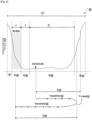
- Fig 8 illustrates a representation (800) of starting an internal combustion engine, given that the initial position (802) of the piston is in between reverse compression region(804) and exhaust top dead centre (806).
- the crankshaft from the initial position (802) is rotated in forward direction (808) with a predefined torque until a TDC signal is detected (810) from the TDC sensor output (812).
- the predefined torque is defined in a way that, it cannot move the piston to the forward compression region (814) in the forward direction.
- the detected TDC signal (810) must correspond to the exhaust TDC (806). From this position, the crankshaft is rotated in reverse direction (816) by an angle ⁇ 3 (818) to reach stop region (820).
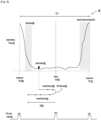
- Fig 9 illustrates is a representation (900) of starting an internal combustion engine , given that the initial position (902) of the piston is in between exhaust top dead centre (906) and forward compression region(908).
- the crankshaft is rotated in forward direction (910) with a predefined torque.
- TDC time since the piston is located after the exhaust TDC (906), TDC signal cannot be obtained.
- the system parameter will reach the predefined limit (912) when the piston is driven to the forward compression region (908).
- the crankshaft is rotated in reverse direction (914) until a TDC signal is detected (916) is obtained via TDC sensor output (918).
- the detected TDC signal (916) must correspond to the exhaust TDC (906).
- the crank shaft is rotated from this point in reverse direction (920) by an angle ⁇ 3 (922) to reach the stop region (924).
- initial position of the piston includes any position between the compression top dead centre and exhaust top dead centre. In another embodiment of the present invention, the initial position of the piston could include any position between the exhaust top dead centre and compression top dead centre.
- the system parameter is the current drawn by the electromechanical device.
- the system parameter is the duration for which the crankshaft is rotated in the direction of rotation of the engine by means of an electromechanical device coupled to the crankshaft.
- the system parameter is the duration for which the crankshaft is rotated by the electromechanical device in the direction of rotation of the engine so as to move the piston from reverse compression region to exhaust top dead centre at the condition of maximum torque requirement.
- the value of the fourth predefined angle ( ⁇ 3) for a typical single cylinder engine ranges from 220 to 350 degrees.
- the method of starting the engine is initiated after the start command is received from a driver.
- the internal combustion engine to which the method of the present invention is applied is a single cylinder engine. In an embodiment of the present invention, the internal combustion engine to which the method of the present invention is applied, is an engine comprising at least two cylinders.
- the internal combustion engine to which the method of the present invention is applied is mounted on a vehicle with at least about two wheels. In an embodiment of the present invention, the internal combustion engine to which the method of the present invention is applied is mounted on a vehicle capable of moving on land, on or in water, and in the air, or combinations thereof.
Landscapes
- Engineering & Computer Science (AREA)
- Chemical & Material Sciences (AREA)
- Combustion & Propulsion (AREA)
- Mechanical Engineering (AREA)
- General Engineering & Computer Science (AREA)
- Combined Controls Of Internal Combustion Engines (AREA)
Description
- This application claims benefit of and priority to the Indian Provisional Patent Application Nos.
IN201821030493, filed Aug 14, 2018 IN 20182142984, filed on Nov 15, 2018 - The present invention relates to a method of starting an internal combustion engine. More specifically, the invention relates to a method of starting an internal combustion engine equipped with an integrated starter-generator, with reduced torque.
- Integrated starter generators for internal combustion engines are well known in the art. Such systems are described, for example, in US patent application number
US20120216770A1 , and inUS granted patent no US6484596B2 . Methods of starting internal combustion engines equipped with an integrated starter-generator are also described inUS patent number US6781252B2 . While, Japanese patent applicationJP2010223135A - Most of the prior art describes a method to start the engine which involves the step of rotating the crankshaft in the reverse or forward direction to a specific predetermined position. Thereafter, the crankshaft is rotated forward to drive the engine with a higher inertia to overcome a compression torque and to facilitate the engine start. However, it is difficult to achieve a precise positioning of a specific angle of the crankshaft. Also, the cost for a controlling device to aid the crankshaft to attain a precise position is high. In addition, starting an internal combustion engine requires high torque to overcome the forward compression pressure. This requires the integrated starter-generator to be designed for high torque, which results in increase of the size and cost of the integrated starter generator.
- Therefore, there is a need in the art for a method of starting internal combustion engines equipped with an integrated starter-generator, using reduced torque and which does not require the need to rotate the crankshaft to a specific predetermined position.
-
EP 1233175 A1 ,DE 10 2015 009 235 A1 andEP 1 321 667 A1 constitute further relevant prior art, related to methods for starting a combustion engine. - It is an object of the present invention to provide a method of starting an engine system to optimize the process of starting an engine with reduced torque.
- The present invention describes a method of starting an internal combustion engine according to claim 1. The engine includes one cylinder, one piston associated to the cylinder, and a crankshaft coupled to the piston. The method comprising the steps of receiving an engine start command; rotating the crankshaft from an initial position in the direction of rotation (forward direction) of the engine by means of an electromechanical device coupled to the crankshaft, until either the piston reaches a top dead centre (TDC) position, or an system parameter reaches a predefined value; following a path C or a path D,
- The path C includes rotating the crankshaft in a direction opposite to the direction of rotation (reverse direction) of the engine by means of the electromechanical device coupled to the crankshaft by a fourth predefined angle so that the piston reaches the region of reverse compression. While, path D includes rotating the crankshaft in a direction opposite to the direction of rotation of the engine by means of the electromechanical device coupled to the crankshaft, until the at least one piston reaches the top dead centre position. The method further includes the step of rotating the crankshaft opposite to the direction of rotation of the engine by means of the electromechanical device coupled to the crankshaft by a fourth predefined angle so that the piston reaches the region of reverse compression and rotating the crankshaft in the direction of rotation of the engine by means of the electromechanical device coupled to the crankshaft to start the engine.
- The foregoing and other features of embodiments of the present invention will become more apparent from the following detailed description of embodiments when read in conjunction with the accompanying drawings. In the drawings, like reference numerals refer to like elements.
-
Fig. 1
Fig. 1 illustrates an exemplary engine system, in accordance with an embodiment of the present invention. -
Fig. 2
Fig. 2 illustrates a method of starting an internal combustion engine not in accordance with the appending claims. -
Fig. 3
Fig 3 is a representation of a starting torque requirement of an Internal Combustion engine with respect to various position of the piston in the combustion cycle. -
Fig. 4
Fig 4 is a representation of starting an internal combustion engine given the initial position of piston before starting engine is in region R2. -
Fig. 5
Fig 5 is a representation of starting an internal combustion engine, given the initial position of piston before starting engine is in region R3. -
Fig. 6
Fig. 6 : illustrates a method of starting an internal combustion engine, in accordance with an embodiment of the invention. -
Fig. 7
Fig 7 is a representation of the starting torque requirement of an Internal Combustion engine with respect to various position of the piston in the combustion cycle, in accordance with an embodiment of the invention. -
Fig. 8
Fig 8 illustrates an exemplary representation of starting an internal combustion engine, when the initial position of the piston is in between reverse compression region and exhaust top dead center, in accordance with an embodiment of the invention. -
Fig. 9
Fig 9 is a representation of starting an internal combustion engine, if the initial position of the piston is in between exhaust top dead centre and forward compression region in accordance with an embodiment of the invention. - While various embodiments of the invention have been shown and described herein, it will be obvious to those skilled in the art that such embodiments are provided by way of example only. Numerous variations, changes, and substitutions may occur to those skilled in the art without departing from the appended claims.
- In the specification and the claims which follow, reference will be made to a number of terms which shall be defined to have the following meanings:
- The singular forms "a", "an" and "the" include plural referents unless the context clearly dictates otherwise. "Optional" or "optionally" means that the subsequently described event or circumstance may or may not occur, and that the description includes instances where the event occurs and instances where it does not. "Substantially" means a range of values that is known in the art to refer to a range of values that are close to, but not necessarily equal to a certain value.
- Other than in the examples or where otherwise indicated, all numbers or expressions referring to quantities of ingredients, reaction conditions, and the like, used in the specification and claims are to be understood as modified in all instances by the term "about." In some aspects of the current disclosure, the terms "about" or "approximately" are defined as being close to as understood by one of ordinary skill in the art.
- As used herein, the term "substantially" and its variations are defined as being largely but not necessarily wholly what is specified as understood by one of ordinary skill in the art
- Various numerical ranges are disclosed herein. Because these ranges are continuous, they include every value between the minimum and maximum values. The endpoints of all ranges reciting the same characteristic or component are independently combinable and inclusive of the recited endpoint. Unless expressly indicated otherwise, the various numerical ranges specified in this application are approximations. The endpoints of all ranges directed to the same component or property are inclusive of the endpoint and independently combinable. The term "from more than 0 to an amount" means that the named component is present in some amount more than 0, and up to and including the higher named amount.
- As used herein the term "internal combustion engine" or "IC engine" refers to an internal combustion engine that is well known in the art. The engine comprises at least one cylinder. Associated with the at least one cylinder is at least one piston, which is in turn coupled to a crankshaft. The crankshaft is enclosed in a crankcase. A generator used to generate electrical power for engine operation and auxiliary requirements such as lights, may be coupled to the crankshaft. A starter motor used to start the engine by drawing power from a power source, such as a battery or a capacitor, may also be coupled to the crankshaft.
- As used herein the term "top dead centre (TDC)" used in relation to an internal combustion engine, refers to the position of the piston when it is farthest away from the crankshaft. Top dead centre may refer to "compression top dead centre" or "exhaust top dead centre" which refer to the top dead centre positions during the compression stroke or the exhaust stroke of the at least one piston. The term TDC as used herein would typically include both the "compression top dead centre" and the "exhaust top dead centre, unless specified.
- As used herein the term "Forward compression region" used in relation to an internal combustion engine, refers to the region of combustion cycle of the engine where the compression pressure of air fuel mixture inside the cylinder opposes the motion of the piston when the crank shaft is rotating in the direction of forward rotation of the engine.
- As used herein the term "Reverse compression region or Stop region" used in relation to an internal combustion engine refers to the region of combustion cycle of the engine where the compression pressure of air fuel mixture inside the cylinder opposes the motion of the piston when the crank shaft is rotating in the direction of reverse rotation of the engine
-
Fig. 1 illustrates an exemplary system (100), in accordance with an embodiment of the present invention. The system (100) comprises of an Internal Combustion engine (sometimes herein also referred to as "IC engine") (102) and Engine Starting Unit (104). The IC engine (102) can be a single stroke engine, a two-stroke engine, four-stroke engine, and variants of these engines. According to an embodiment of the present invention, the IC engine (102) includes at least one cylinder (106); at least one piston (108) associated with the at least one cylinder (106). The at least one piston (108) is in turn coupled to a crankshaft (110). In an embodiment of the present invention, the at least one cylinder (106) may be equipped with at least one sensor to detect the position of the at least one piston (108); more specifically, the at least one cylinder (106) may be equipped with at least one sensor to detect the "top dead centre" position of the at least one piston (108). The Engine Starting Unit (104) further comprises an engine control unit (ECU) (112), an electromechanical device (114) and a Sensor Unit (116). The engine control unit (ECU) (112) further includes a starter control unit (118) and an ignition control unit (120). - In one embodiment of the present invention, the electromechanical device (114) may be coupled to the crankshaft (110). The electromechanical device may be controlled by a starter control unit (118), which in turn may be controlled by the engine control unit (112). In another embodiment of the present invention, the electromechanical device is an integrated starter - generator (ISG). In yet another embodiment of the present invention, the integrated starter generator is operated as a motor during a start-up phase of engine and as an alternating current generator to supply an electric load demand of the vehicle when the engine is running. In an embodiment of the present invention, the electromechanical device is a starter motor.
- In one embodiment of the present invention, a sensor unit (116) may be associated with the crankshaft in order to detect the angular position, direction of rotation and rotational speed of the crankshaft. In one embodiment of the present invention, the sensor unit (116) may be present on the crankshaft in order to detect the angular position, direction of rotation and rotational speed of the crankshaft. In yet another embodiment of the present invention the sensor unit (116) may be present around the crankshaft in order to detect the angular position, direction of rotation and rotational speed of the crankshaft. In an embodiment of the present invention,
sensor unit 116 detects rotational angle of the crankshaft (110). Typically, the rotational angle may be co-related to the periodic pulses from the sensor unit (116) during the movement of the crankshaft (110). In another embodiment of the present invention, the sensor unit (116) may include at least one magnetic sensor, such as a Hall sensor. - In an embodiment of the present invention, the sensor unit (116) may include at least one current sensor to measure the value of current through the input power source of the motor or the winding current of the motor.
- In an embodiment of the present invention, the engine control unit (ECU) (112) further includes an electronic oscillator (122) to measure the duration for which the crankshaft is rotated by the electromechanical device.
-
Fig. 2 illustrates an exemplary method (200) of starting an internal combustion engine not in accordance with the appending claims. When an engine start command is received (202) from the driver, the crankshaft is rotated from an initial position in the direction of rotation of the engine (forward direction) (204) by means of an electromechanical device, with a predefined torque. According to an embodiment of the present invention, if the first predefined angle - θ1 elapses (206) before a predefined rotational time, a path A (208) is followed. In one embodiment of the present invention, the path A includes the following steps: the crankshaft is rotated in the direction opposite to the direction of rotation of the engine (reverse direction) through a second predefined angle - θ1 + δ (210) so that the piston reaches the region of reverse compression. According to an embodiment of the present invention, if the predefined rotational time elapses (212) first, a path B (214) is followed. In one embodiment of the present invention, the path B (214) includes the following steps: the crankshaft is rotated in the direction opposite to the direction of rotation of the engine (reverse direction) by a third predefined angle - θ2 (216) so that the piston reaches the region of reverse compression. Thereafter the crankshaft is rotated in the direction of rotation of the engine (forward direction) from the reverse compression region to start engine (218). According to an embodiment of the present invention, if the predefined rotational time does not elapse (220) first, method reverts to (204). -
Fig 3 illustrates a representation (300) of the starting torque requirement (302) of an IC engine with respect to various positions of the piston in the combustion cycle (304). As depicted inFig 3 , one combustion cycle includes expansion stroke (306), exhaust stroke (308), suction stroke (310) and compression stroke (312). According to an embodiment of the present invention, the combustion cycle is divided into four regions. Region1 - R1 (314) is the region of reverse compression or stop region with rotational angle sweep 'δ' (316). In the region of reverse compression, the compression pressure of air fuel mixture inside the cylinder opposes the motion of the piston when the crank shaft is rotated in the direction of opposite to the direction of the engine. Region2 - R2 (318) and Region3 - R3 (320) are adjacent regions to reverse compression region (314) with a rotational angle sweep δ (322) and θ1 (324) respectively. The rotational angle sweep 'δ' (316) , (322) would typically be of same value, unless specified. - Region 4 - R4 (326) is the rest of the region over one combustion cycle apart from R1 (314), R2 (318) and R3 (320). As depicted in the figure
Fig 4 according to an example embodiment of the present invention, starting torque (302) in forward direction (325) is high when the piston is at the compression stroke (312) due to compressed air-fuel mixture inside the cylinder. If the engine is shut down, when the piston is in the region R1 (314), the crankshaft is forced to rotate in forward direction by compression force in R1 (314) and hence the piston will be settle in either R2 (318) or R3 (320). If the engine is shut down when the piston is in the region R4 (326), the crankshaft is forced to rotate in reverse direction by compression force in R4 (326) and hence the piston will be settle in either R2 (318) or R3 (320). -
Fig 4 illustrates a representation (400) of starting an internal combustion when the initial position of piston (402) before starting engine is in region R2 (406). The predefined torque is defined such that it does not overcome the maximum engine torque in the region R4. In an embodiment of the present invention, the predefined time is defined such that, when the piston is in R2 (406), if a predefined torque is applied, the crankshaft displaces in the forward direction (412) by an angle θ1 (414) before the predefined time lapses. When the displacement of crank shaft by θ1 is detected (416), the crank shaft is rotated in the reverse direction (418) by an angle θ1+δ (420) so that the piston reaches to R1 (404) where compression force assists the forward rotation. -
Fig 5 illustrates a representation (500) of starting an internal combustion engine given the initial position of piston (502) before starting the engine is in region R3 (508). As depicted inFig 5 , if the piston is in R3 (508), applying a predefined torque cannot rotate the crankshaft in the forward direction (512) by angle θ1 (514), since the displacement by θ1 (514) from initial position (502) in R3 (508) ends in R4 (510). The predefined torque does not allow the crankshaft to rotate and the predefined time elapses first (514). After detecting the predefined time lapse, the crank shaft is rotated in reverse direction (518) by an angle θ2 (520) so that the piston reaches to R1 (504) where compression force assists the forward rotation. - In an implementation of the above method (not claimed), the initial position of the piston includes any position in the Region R2 and Region R3.
- In an implementation of the above method (not claimed), the starting position of R1 is typically displaced by 190 to 220 degrees from exhaust top dead centre in the direction of reverse rotation of the engine.
- In an implementation of the above method (not claimed), the value of the first predefined angle (θ1) for a typical single cylinder engine ranges from 340 to 400 degrees.
- In an implementation of the above method (not claimed), the second predefined angle equals to θ1+ δ. In an embodiment of the present invention, the value of δ for a typical single cylinder engine ranges from 120 to 150 degrees.
- In an implementation of the above method (not claimed), the value of the third predefined angle (θ2) for a typical single cylinder engine ranges from 550 to 600 degrees.
-
Fig. 6 illustrates a method (600) of starting an internal combustion engine, in accordance with an embodiment of the invention. When an engine start command is received (602) from the driver, the crankshaft is rotated from an initial position in the direction of rotation of the engine (forward direction) (604) by means of an electromechanical device coupled to the crankshaft until a top dead centre position is detected (606). If the top dead centre position is not detected (610), the method follows the step (612) to determine if the system parameter has reached its predefined value. According to an embodiment of the present invention, if the top dead center position is detected (606) first, a path C (614) is followed. The path C (614) includes the following steps: the crank shaft is rotated in a direction opposite to the direction of rotation of the engine (reverse direction) by a fourth predefined reverse rotational angle (618) so that the piston reaches the reverse compression region. According to an embodiment of the present invention, if the predefined system parameter is reached first (612), a path D (618) is followed. The path D (618) includes the following steps: the crankshaft is rotated in a direction opposite to the direction of rotation of the engine (620) until the top dead center position is detected (622). After a top dead center position is detected, the crankshaft is further rotated in a direction opposite to the direction of the engine by a fourth predefined angle (616) so that the piston reaches the reverse compression region. The crankshaft is rotated in direction opposite to the direction of rotation of the engine (forward direction) (624) from reverse compression region to start engine. According to an embodiment of the present invention, if the system parameter is not detected (626), method reverts to (604). According to an embodiment of the present invention, if the TDC is not detected (628) when path D (618) is followed, method reverts to (620). - According to an embodiment of the present invention, if a top dead center position is detected first, it may be indicative that the initial position of the piston is in between compression top dead center position and exhaust top dead center position. According to an embodiment of the present invention, if a predefined system parameter is reached first, it can imply that the initial position of the piston is in between exhaust top dead center position and compression top dead center position.
-
Fig 7 illustrates is a representation (700) of the starting torque requirement (702) of an Internal Combustion engine with respect to various position of the piston in the combustion cycle (704). As depicted inFig 7 , the engine starting torque (702) is maximum at the compression TDC (706) which exponentially reduces and becomes minimum at exhaust TDC (708). From exhaust TDC (708), engine starting torque (702) increases exponentially and becomes maximum at compression TDC (710). Stop region (712) is the region of reverse compression in which the compression pressure of the cylinder assists the crankshaft to rotate in forward direction. This stop region is located at an angle of θ3 (714) from exhaust TDC (708) when rotating in the reverse direction. Forward compression region (716) is the region where the compression pressure of air fuel mixture inside the cylinder opposes the motion of the piston when the crank shaft is rotating in the direction of forward rotation (718) of the engine -
Fig 8 illustrates a representation (800) of starting an internal combustion engine, given that the initial position (802) of the piston is in between reverse compression region(804) and exhaust top dead centre (806). The crankshaft from the initial position (802) is rotated in forward direction (808) with a predefined torque until a TDC signal is detected (810) from the TDC sensor output (812). The predefined torque is defined in a way that, it cannot move the piston to the forward compression region (814) in the forward direction. As the predefined torque cannot bring the piston to forward compression region (814), the detected TDC signal (810) must correspond to the exhaust TDC (806). From this position, the crankshaft is rotated in reverse direction (816) by an angle θ3 (818) to reach stop region (820). -
Fig 9 illustrates is a representation (900) of starting an internal combustion engine , given that the initial position (902) of the piston is in between exhaust top dead centre (906) and forward compression region(908). As depicted inFig 9 , the crankshaft is rotated in forward direction (910) with a predefined torque. As the piston is located after the exhaust TDC (906), TDC signal cannot be obtained. The system parameter will reach the predefined limit (912) when the piston is driven to the forward compression region (908). Thereafter, the crankshaft is rotated in reverse direction (914) until a TDC signal is detected (916) is obtained via TDC sensor output (918). As the crankshaft moves in the reverse direction from the forward compression region (908), the detected TDC signal (916) must correspond to the exhaust TDC (906). The crank shaft is rotated from this point in reverse direction (920) by an angle θ3 (922) to reach the stop region (924). - In an embodiment of the present invention, initial position of the piston includes any position between the compression top dead centre and exhaust top dead centre. In another embodiment of the present invention, the initial position of the piston could include any position between the exhaust top dead centre and compression top dead centre.
- In an embodiment of the present invention, the system parameter is the current drawn by the electromechanical device. In an embodiment of the present invention, the system parameter is the duration for which the crankshaft is rotated in the direction of rotation of the engine by means of an electromechanical device coupled to the crankshaft. In an embodiment of the present invention, the system parameter is the duration for which the crankshaft is rotated by the electromechanical device in the direction of rotation of the engine so as to move the piston from reverse compression region to exhaust top dead centre at the condition of maximum torque requirement.
- In an embodiment of the present invention, the value of the fourth predefined angle (θ3) for a typical single cylinder engine ranges from 220 to 350 degrees.
- In an embodiment of the present invention, the method of starting the engine is initiated after the start command is received from a driver.
- In an embodiment of the present invention, the internal combustion engine to which the method of the present invention is applied, is a single cylinder engine. In an embodiment of the present invention, the internal combustion engine to which the method of the present invention is applied, is an engine comprising at least two cylinders.
- In an embodiment of the present invention, the internal combustion engine to which the method of the present invention is applied is mounted on a vehicle with at least about two wheels. In an embodiment of the present invention, the internal combustion engine to which the method of the present invention is applied is mounted on a vehicle capable of moving on land, on or in water, and in the air, or combinations thereof.
Claims (4)
- A method (600) of starting an internal combustion engine comprising a single cylinder (106), a piston (108) associated to the single cylinder (106), and a crankshaft (110) coupled to the piston (108), an electromechanical device (114) coupled to the crankshaft (110) and to rotate the crankshaft (110) either in forward direction or reverse direction, a starter control unit (118) to control the rotation of the said electromechanical device (114), a sensor unit (116) comprising of a sensor to detect the TDC of the said internal combustion engine and a sensor to measure a system parameter,wherein the system parameter is selected from a group consisting of a current drawn by the electromechanical device (114) or a duration for which the crankshaft (110) is rotated in the direction of rotation of the engine by the electromechanical device (114);the method comprising the steps of:receiving an engine start command (602);rotating the crankshaft (110) from an initial position in the direction of rotation of the engine (604) by means of the electromechanical device (114) coupled to the crankshaft (110), until the piston (108) reaches top dead centre (TDC) position (606), or a system parameter reaches a predefined threshold value (612);following a path C (614) or a path D (618), wherein the path C is followed when the piston (108) reaches-top dead centre (TDC) position (606) and the path D is followed when the system parameter reaches the predefined threshold value (612), wherein the path C (614) comprises rotating the crankshaft (110) in a direction opposite to the direction of rotation of the engine by means of the electromechanical device (114) coupled to the crankshaft (110) by a fourth predefined angle (616) with respect to TDC, so that the piston (108) reaches the region of reverse compression and wherein the path D (618) comprises rotating the crankshaft (110) in a direction opposite to the direction of rotation of the engine (620) by means of the electromechanical device (114) coupled to the crankshaft (110), until- the piston reaches top dead centre position (622), and then rotating the crankshaft (110) further opposite to the direction of rotation of the engine by means of the electromechanical device (114) coupled to the crankshaft (110) by the fourth predefined angle (616) with respect to TDC so that the piston (108) reaches the region of reverse compression; and,rotating the crankshaft (110) in the direction of rotation of the engine (624) by means of the electromechanical device (114) coupled to the crankshaft (110) to start the engine after execution of the path C or the path D.
- The method of Claim 1, wherein the crankshaft (110) from an initial position in the direction of rotation of the engine by means of the electromechanical device (114) coupled to the crankshaft (110), with a predefined torque.
- The method of Claim 1, wherein the internal combustion engine further comprises of an engine control unit (112) which is configured to control the rotation of the said crankshaft (110) by means of said electromechanical device (114) by the fourth predefined angle.
- The method of Claim 1, wherein the electromechanical device (114) is an integrated starter generator.
Applications Claiming Priority (3)
| Application Number | Priority Date | Filing Date | Title |
|---|---|---|---|
| IN201821030493 | 2018-08-14 | ||
| IN201821042984 | 2018-11-15 | ||
| PCT/IN2019/050597 WO2020035882A1 (en) | 2018-08-14 | 2019-08-14 | Method of starting an internal combustion engine |
Publications (4)
| Publication Number | Publication Date |
|---|---|
| EP3837436A1 EP3837436A1 (en) | 2021-06-23 |
| EP3837436A4 EP3837436A4 (en) | 2023-03-08 |
| EP3837436C0 EP3837436C0 (en) | 2025-05-14 |
| EP3837436B1 true EP3837436B1 (en) | 2025-05-14 |
Family
ID=69525294
Family Applications (1)
| Application Number | Title | Priority Date | Filing Date |
|---|---|---|---|
| EP19850482.1A Active EP3837436B1 (en) | 2018-08-14 | 2019-08-14 | Method of starting an internal combustion engine |
Country Status (2)
| Country | Link |
|---|---|
| EP (1) | EP3837436B1 (en) |
| WO (1) | WO2020035882A1 (en) |
Family Cites Families (10)
| Publication number | Priority date | Publication date | Assignee | Title |
|---|---|---|---|---|
| WO2001038728A1 (en) * | 1999-11-24 | 2001-05-31 | Mitsuba Corporation | Starter, start control device, and crank angle detector of internal combustion engine |
| DE19960366C1 (en) | 1999-12-14 | 2001-02-01 | Kontec Gmbh | Crankshaft starter-generator for vehicle internal combustion engine has belt drive disc for engine drive belt integrated within external rotor of starter-generator |
| AU2001292289A1 (en) * | 2000-09-28 | 2002-04-08 | Mitsuba Corporation | Engine starter |
| JP3832231B2 (en) * | 2000-11-16 | 2006-10-11 | トヨタ自動車株式会社 | Internal combustion engine rotation start device |
| JP3690596B2 (en) * | 2001-12-05 | 2005-08-31 | 本田技研工業株式会社 | Engine start control device |
| US6781252B2 (en) | 2002-03-14 | 2004-08-24 | Ford Global Technologies, Llc | Method and apparatus for starting an engine using a starter/alternator and an accessory drive |
| JP4273838B2 (en) * | 2002-09-30 | 2009-06-03 | トヨタ自動車株式会社 | Start control device for internal combustion engine |
| JP5247554B2 (en) | 2009-03-24 | 2013-07-24 | 本田技研工業株式会社 | Engine start control device |
| JP2013517405A (en) | 2009-12-17 | 2013-05-16 | ドイツ アクチェンゲゼルシャフト | Mobile work machine with integrated starter generator |
| JP6398412B2 (en) * | 2014-07-17 | 2018-10-03 | スズキ株式会社 | Engine start control device |
-
2019
- 2019-08-14 EP EP19850482.1A patent/EP3837436B1/en active Active
- 2019-08-14 WO PCT/IN2019/050597 patent/WO2020035882A1/en not_active Ceased
Also Published As
| Publication number | Publication date |
|---|---|
| EP3837436C0 (en) | 2025-05-14 |
| EP3837436A4 (en) | 2023-03-08 |
| EP3837436A1 (en) | 2021-06-23 |
| WO2020035882A1 (en) | 2020-02-20 |
Similar Documents
| Publication | Publication Date | Title |
|---|---|---|
| US7891330B2 (en) | Engine starting method and device | |
| EP1233175B1 (en) | Starter, start control device, and crank angle detector of internal combustion engine | |
| CN1214184C (en) | Engine starting device | |
| US20070204827A1 (en) | Engine starting device | |
| JP2009533592A (en) | Synchronizing device and method, memory medium and program element for camshaft adjusting device | |
| US10060403B2 (en) | System for controlling starting of engine | |
| US8049349B2 (en) | Power generation control device | |
| US11136930B2 (en) | Engine start control device | |
| US6988477B2 (en) | Control apparatus for an internal combustion engine and control method thereof | |
| JP6398412B2 (en) | Engine start control device | |
| JP6615862B2 (en) | Engine start process | |
| JP2006514222A (en) | Method for control of direct injection in an internal combustion engine | |
| GB2369160A (en) | Improving the re-starting of an i.c. engine having a starter/generator | |
| EP3332113B1 (en) | Process for managing the re-start of an internal combustion engine in a start and stop system | |
| US11280307B2 (en) | Engine drive system | |
| JP6019246B2 (en) | Engine start control device | |
| EP3837436B1 (en) | Method of starting an internal combustion engine | |
| US10024293B2 (en) | System for controlling torque applied to rotating shaft of engine | |
| KR20010039696A (en) | Fuel injection control system for internal combustion engine | |
| JP6668830B2 (en) | Engine stop position control device | |
| JP2009127539A (en) | Stop control device for internal combustion engine | |
| KR20200047157A (en) | Apparatus for engine synchronization and controlling method thereof | |
| KR20170126232A (en) | A device and the method for control vibration of a engine start | |
| JPWO2001038728A1 (en) | Starting device for internal combustion engine, starting control device for internal combustion engine, and crank angle detection device for internal combustion engine | |
| JP2007032479A (en) | Control device for internal combustion engine |
Legal Events
| Date | Code | Title | Description |
|---|---|---|---|
| STAA | Information on the status of an ep patent application or granted ep patent |
Free format text: STATUS: THE INTERNATIONAL PUBLICATION HAS BEEN MADE |
|
| PUAI | Public reference made under article 153(3) epc to a published international application that has entered the european phase |
Free format text: ORIGINAL CODE: 0009012 |
|
| STAA | Information on the status of an ep patent application or granted ep patent |
Free format text: STATUS: REQUEST FOR EXAMINATION WAS MADE |
|
| 17P | Request for examination filed |
Effective date: 20210215 |
|
| AK | Designated contracting states |
Kind code of ref document: A1 Designated state(s): AL AT BE BG CH CY CZ DE DK EE ES FI FR GB GR HR HU IE IS IT LI LT LU LV MC MK MT NL NO PL PT RO RS SE SI SK SM TR |
|
| DAV | Request for validation of the european patent (deleted) | ||
| DAX | Request for extension of the european patent (deleted) | ||
| RAP3 | Party data changed (applicant data changed or rights of an application transferred) |
Owner name: VARROC ENGINEERING LIMITED |
|
| RIC1 | Information provided on ipc code assigned before grant |
Ipc: F02D 27/00 20060101ALI20221102BHEP Ipc: F02N 11/04 20060101AFI20221102BHEP |
|
| A4 | Supplementary search report drawn up and despatched |
Effective date: 20230208 |
|
| RIC1 | Information provided on ipc code assigned before grant |
Ipc: F02D 27/00 20060101ALI20230202BHEP Ipc: F02N 11/04 20060101AFI20230202BHEP |
|
| STAA | Information on the status of an ep patent application or granted ep patent |
Free format text: STATUS: EXAMINATION IS IN PROGRESS |
|
| 17Q | First examination report despatched |
Effective date: 20240320 |
|
| REG | Reference to a national code |
Ref country code: DE Ref legal event code: R079 Ipc: F02N0019000000 Ref country code: DE Ref legal event code: R079 Ref document number: 602019070051 Country of ref document: DE Free format text: PREVIOUS MAIN CLASS: F02N0011040000 Ipc: F02N0019000000 |
|
| RIC1 | Information provided on ipc code assigned before grant |
Ipc: F02D 27/00 20060101ALN20241120BHEP Ipc: F02N 11/04 20060101ALI20241120BHEP Ipc: F02N 19/00 20100101AFI20241120BHEP |
|
| GRAP | Despatch of communication of intention to grant a patent |
Free format text: ORIGINAL CODE: EPIDOSNIGR1 |
|
| STAA | Information on the status of an ep patent application or granted ep patent |
Free format text: STATUS: GRANT OF PATENT IS INTENDED |
|
| RIC1 | Information provided on ipc code assigned before grant |
Ipc: F02D 27/00 20060101ALN20241213BHEP Ipc: F02N 11/04 20060101ALI20241213BHEP Ipc: F02N 19/00 20100101AFI20241213BHEP |
|
| INTG | Intention to grant announced |
Effective date: 20250103 |
|
| GRAS | Grant fee paid |
Free format text: ORIGINAL CODE: EPIDOSNIGR3 |
|
| GRAA | (expected) grant |
Free format text: ORIGINAL CODE: 0009210 |
|
| STAA | Information on the status of an ep patent application or granted ep patent |
Free format text: STATUS: THE PATENT HAS BEEN GRANTED |
|
| AK | Designated contracting states |
Kind code of ref document: B1 Designated state(s): AL AT BE BG CH CY CZ DE DK EE ES FI FR GB GR HR HU IE IS IT LI LT LU LV MC MK MT NL NO PL PT RO RS SE SI SK SM TR |
|
| REG | Reference to a national code |
Ref country code: GB Ref legal event code: FG4D |
|
| REG | Reference to a national code |
Ref country code: CH Ref legal event code: EP |
|
| REG | Reference to a national code |
Ref country code: IE Ref legal event code: FG4D |
|
| REG | Reference to a national code |
Ref country code: DE Ref legal event code: R096 Ref document number: 602019070051 Country of ref document: DE |
|
| U01 | Request for unitary effect filed |
Effective date: 20250613 |
|
| U07 | Unitary effect registered |
Designated state(s): AT BE BG DE DK EE FI FR IT LT LU LV MT NL PT RO SE SI Effective date: 20250624 |
|
| U20 | Renewal fee for the european patent with unitary effect paid |
Year of fee payment: 7 Effective date: 20250827 |
|
| PG25 | Lapsed in a contracting state [announced via postgrant information from national office to epo] |
Ref country code: ES Free format text: LAPSE BECAUSE OF FAILURE TO SUBMIT A TRANSLATION OF THE DESCRIPTION OR TO PAY THE FEE WITHIN THE PRESCRIBED TIME-LIMIT Effective date: 20250514 |
|
| PG25 | Lapsed in a contracting state [announced via postgrant information from national office to epo] |
Ref country code: NO Free format text: LAPSE BECAUSE OF FAILURE TO SUBMIT A TRANSLATION OF THE DESCRIPTION OR TO PAY THE FEE WITHIN THE PRESCRIBED TIME-LIMIT Effective date: 20250814 Ref country code: GR Free format text: LAPSE BECAUSE OF FAILURE TO SUBMIT A TRANSLATION OF THE DESCRIPTION OR TO PAY THE FEE WITHIN THE PRESCRIBED TIME-LIMIT Effective date: 20250815 |
|
| PG25 | Lapsed in a contracting state [announced via postgrant information from national office to epo] |
Ref country code: PL Free format text: LAPSE BECAUSE OF FAILURE TO SUBMIT A TRANSLATION OF THE DESCRIPTION OR TO PAY THE FEE WITHIN THE PRESCRIBED TIME-LIMIT Effective date: 20250514 |
|
| PG25 | Lapsed in a contracting state [announced via postgrant information from national office to epo] |
Ref country code: HR Free format text: LAPSE BECAUSE OF FAILURE TO SUBMIT A TRANSLATION OF THE DESCRIPTION OR TO PAY THE FEE WITHIN THE PRESCRIBED TIME-LIMIT Effective date: 20250514 |
|
| PG25 | Lapsed in a contracting state [announced via postgrant information from national office to epo] |
Ref country code: RS Free format text: LAPSE BECAUSE OF FAILURE TO SUBMIT A TRANSLATION OF THE DESCRIPTION OR TO PAY THE FEE WITHIN THE PRESCRIBED TIME-LIMIT Effective date: 20250814 |
|
| PG25 | Lapsed in a contracting state [announced via postgrant information from national office to epo] |
Ref country code: IS Free format text: LAPSE BECAUSE OF FAILURE TO SUBMIT A TRANSLATION OF THE DESCRIPTION OR TO PAY THE FEE WITHIN THE PRESCRIBED TIME-LIMIT Effective date: 20250914 |
|
| PG25 | Lapsed in a contracting state [announced via postgrant information from national office to epo] |
Ref country code: SM Free format text: LAPSE BECAUSE OF FAILURE TO SUBMIT A TRANSLATION OF THE DESCRIPTION OR TO PAY THE FEE WITHIN THE PRESCRIBED TIME-LIMIT Effective date: 20250514 |
|
| PG25 | Lapsed in a contracting state [announced via postgrant information from national office to epo] |
Ref country code: CZ Free format text: LAPSE BECAUSE OF FAILURE TO SUBMIT A TRANSLATION OF THE DESCRIPTION OR TO PAY THE FEE WITHIN THE PRESCRIBED TIME-LIMIT Effective date: 20250514 |
|
| PG25 | Lapsed in a contracting state [announced via postgrant information from national office to epo] |
Ref country code: SK Free format text: LAPSE BECAUSE OF FAILURE TO SUBMIT A TRANSLATION OF THE DESCRIPTION OR TO PAY THE FEE WITHIN THE PRESCRIBED TIME-LIMIT Effective date: 20250514 |
|
| PLBE | No opposition filed within time limit |
Free format text: ORIGINAL CODE: 0009261 |
|
| STAA | Information on the status of an ep patent application or granted ep patent |
Free format text: STATUS: NO OPPOSITION FILED WITHIN TIME LIMIT |
|
| REG | Reference to a national code |
Ref country code: CH Ref legal event code: H13 Free format text: ST27 STATUS EVENT CODE: U-0-0-H10-H13 (AS PROVIDED BY THE NATIONAL OFFICE) Effective date: 20260324 |
|
| REG | Reference to a national code |
Ref country code: CH Ref legal event code: L10 Free format text: ST27 STATUS EVENT CODE: U-0-0-L10-L00 (AS PROVIDED BY THE NATIONAL OFFICE) Effective date: 20260325 |
|
| PG25 | Lapsed in a contracting state [announced via postgrant information from national office to epo] |
Ref country code: MC Free format text: LAPSE BECAUSE OF FAILURE TO SUBMIT A TRANSLATION OF THE DESCRIPTION OR TO PAY THE FEE WITHIN THE PRESCRIBED TIME-LIMIT Effective date: 20250514 |
|
| 26N | No opposition filed |
Effective date: 20260217 |
|
| PG25 | Lapsed in a contracting state [announced via postgrant information from national office to epo] |
Ref country code: CH Free format text: LAPSE BECAUSE OF NON-PAYMENT OF DUE FEES Effective date: 20250831 |