EP3836735B1 - Verfahren und vorrichtung zur wiederherstellung eines datenträgers - Google Patents
Verfahren und vorrichtung zur wiederherstellung eines datenträgers Download PDFInfo
- Publication number
- EP3836735B1 EP3836735B1 EP19846050.3A EP19846050A EP3836735B1 EP 3836735 B1 EP3836735 B1 EP 3836735B1 EP 19846050 A EP19846050 A EP 19846050A EP 3836735 B1 EP3836735 B1 EP 3836735B1
- Authority
- EP
- European Patent Office
- Prior art keywords
- data radio
- radio bearer
- scg
- network element
- configuration information
- Prior art date
- Legal status (The legal status is an assumption and is not a legal conclusion. Google has not performed a legal analysis and makes no representation as to the accuracy of the status listed.)
- Active
Links
Images
Classifications
-
- H—ELECTRICITY
- H04—ELECTRIC COMMUNICATION TECHNIQUE
- H04W—WIRELESS COMMUNICATION NETWORKS
- H04W28/00—Network traffic management; Network resource management
- H04W28/02—Traffic management, e.g. flow control or congestion control
- H04W28/0252—Traffic management, e.g. flow control or congestion control per individual bearer or channel
-
- H—ELECTRICITY
- H04—ELECTRIC COMMUNICATION TECHNIQUE
- H04W—WIRELESS COMMUNICATION NETWORKS
- H04W28/00—Network traffic management; Network resource management
- H04W28/02—Traffic management, e.g. flow control or congestion control
- H04W28/0268—Traffic management, e.g. flow control or congestion control using specific QoS parameters for wireless networks, e.g. QoS class identifier [QCI] or guaranteed bit rate [GBR]
-
- H—ELECTRICITY
- H04—ELECTRIC COMMUNICATION TECHNIQUE
- H04W—WIRELESS COMMUNICATION NETWORKS
- H04W28/00—Network traffic management; Network resource management
- H04W28/02—Traffic management, e.g. flow control or congestion control
- H04W28/0278—Traffic management, e.g. flow control or congestion control using buffer status reports
-
- H—ELECTRICITY
- H04—ELECTRIC COMMUNICATION TECHNIQUE
- H04W—WIRELESS COMMUNICATION NETWORKS
- H04W76/00—Connection management
- H04W76/10—Connection setup
- H04W76/11—Allocation or use of connection identifiers
-
- H—ELECTRICITY
- H04—ELECTRIC COMMUNICATION TECHNIQUE
- H04W—WIRELESS COMMUNICATION NETWORKS
- H04W76/00—Connection management
- H04W76/10—Connection setup
- H04W76/15—Setup of multiple wireless link connections
-
- H—ELECTRICITY
- H04—ELECTRIC COMMUNICATION TECHNIQUE
- H04W—WIRELESS COMMUNICATION NETWORKS
- H04W76/00—Connection management
- H04W76/10—Connection setup
- H04W76/19—Connection re-establishment
-
- H—ELECTRICITY
- H04—ELECTRIC COMMUNICATION TECHNIQUE
- H04W—WIRELESS COMMUNICATION NETWORKS
- H04W76/00—Connection management
- H04W76/20—Manipulation of established connections
- H04W76/27—Transitions between radio resource control [RRC] states
-
- H—ELECTRICITY
- H04—ELECTRIC COMMUNICATION TECHNIQUE
- H04W—WIRELESS COMMUNICATION NETWORKS
- H04W80/00—Wireless network protocols or protocol adaptations to wireless operation
- H04W80/02—Data link layer protocols
Definitions
- the present invention relates to the field of communications, in particular to methods and a device for activating a Secondary Cell Group, SCG.
- RRC Radio Resource Control
- UE User Equipment
- DC Dual Connection
- MN Master Node
- SN Secondary Node
- a method for resuming a data radio bearer used by the UE in the RRC connection resume process does not consider the problem that for the UE configured with DC, how to resume the data radio bearer configured for the corresponding connection in the RRC connection resume process.
- the UE uses the method of resuming all the data radio bearers configured by the UE in the RRC connection resume process, so the RRC connection resume process cannot be optimized in a new radio access network structure.
- TSG RAN no. La Jolla, USA; 20180611 - 20180614, 8 June 2018, Retrieved from the Internet: URL:http://www.3gpp.org/ ftp/tsg%5Fran/TSG%5FRAN/TSGR%5F80/Docs/RP%2D181279%2Ezip , document WO 2015/030483 A1 , and document ERICSSON: "Secondary Node Resume in NE-DC and NN - DC (TP to 38.300", 3GPP TSG-RAN WG2#AH1807 R2-1810251, 6 July 2018 .
- Embodiments of the invention provide methods and a device for activating a Secondary Cell Group, SCG, to at least solve the problem in the related art of how to selectively resume a part of the required data radio bearers in the process of resuming data radio bearers.
- SCG Secondary Cell Group
- a method for activating an SCG, performed by a UE, as according to claim 1 is provided.
- a method for activating an SCG, performed by a network-side network element, as according to claim 7 is provided.
- a device for activating an SCG, allocated in a UE, as according to claim 12 is provided.
- the network-side network element returns, according to the indication information sent by the UE, the configuration information to the UE for the first data radio bearer needing to send the uplink data, so that the UE resumes the first data radio bearer according to the configuration information, so the problem in the related art of how to selectively resume a part of the required data radio bearers in the process of resuming data radio bearers can be solved, and the effect of resuming only a part of the data radio bearers according to the demand can be achieved.
- context information of an Access Stratum (AS) of the UE is maintained in both a network-side network element and the UE.
- the context information of the AS includes a security context of the UE, configuration information of a Signaling Radio Bearer (SRB) and a Data Radio Bearer (DRB), information of a Protocol Data Unit (PDU) session and a Quality of Service (QoS) flow, configuration information of a Packet Data Convergence Protocol (PDCP) and a Radio Link Control (RLC) protocol and possible existing state information.
- SRB Signaling Radio Bearer
- DRB Data Radio Bearer
- PDU Protocol Data Unit
- QoS Quality of Service
- PDCP Packet Data Convergence Protocol
- RLC Radio Link Control
- the UE in the RRC_INACTlVE state behaves similar to the UE in an RRC_IDLE state, that is, there are no dedicated radio resources.
- the network-side network element maintains for the UE in an inactive state a connection between a control plane and a user plane from a Core Network (CN) and an access network element.
- the access network element that maintains the AS context of the UE is called an anchor node.
- the DRB of the UE in an RRC_INACTIVE state is in a suspended state.
- the UE is resumed from the RRC_INACTlVE state to an RRC connected state through an RRC connection resume process. Specifically, the UE sends an RRC connection resume request message through a message MSG3 in an RACH procedure, the RRC connection resume request message carrying an Identity (ID) of the UE, the reason for connection resume, security verification information, etc. After receiving a message MSG4 sent by the network-side network element, the UE resumes the DRB that is in a suspended state of the UE according to the configuration in the locally saved AS context and the configuration information carried in the MSG4.
- ID Identity
- the UE For the UE in a DC mode, in the DC mode, the UE simultaneously establishes data radio bearers with two different network-side network elements.
- One of the two different network-side network elements is called an MN of the UE, and the other is called an SN.
- the signaling radio bearers SRB0, SRB1 and optional SRB2 are established between the UE and the MN.
- the radio resource of an MCG that is configured for the UE by a network under an MN network element is called MCG configuration
- the radio resource of a Secondary Cell Group (SCG) configured under an SN network element is called SCG configuration.
- the data radio bearers include: an MN terminated MCG bearer, an MN terminated SCG bearer, an MN terminated split bearer, an SN terminated MCG bearer, an SN terminated SCG bearer and an SN terminated split bearer.
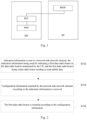
- Fig. 1 is a schematic diagram of protocol entity distribution of an SN terminated Master Cell Group bearer. As shown in Fig.
- the SN terminated Master Cell Group bearer is a radio bearer form in which a PDCP entity of the data radio bearer is established in the SN network element, and an RLC protocol entity and a Medium Access Control (MAC) protocol entity is established in the MN network element
- the SN terminated split bearer is a radio bearer form in which the PDCP entity of the data radio bearer is established in the SN network element, and the RLC protocol entity and the MAC protocol entity of the data radio bearer are respectively established in the MN network element and the SN network element.
- the UE when the UE configured with DC in the RRC connected state is switched to the RRC_INACTIVE state, the UE will locally save configuration information of Resource Blocks (RB) established in the MN and the SN (the configuration information of the RB includes: configuration information of the data radio bearer, the PDU session, the QoS flow and connection with the user plane of the CN), and will also save MCG configuration information and SCG configuration information, which respectively include the configuration information of an RLC bearer established in cells under the MN and the SN.
- RB Resource Blocks
- Fig. 2 is a flowchart (1) of a method for resuming a data radio bearer, wherein, however, not all of the features required by the claimed invention are shown in Fig. 2 .
- the flow includes the following steps.
- indication information is sent to a network-side network element, the indication information being used for indicating a first data radio bearer in the data radio bearers maintained by the UE, and the first data radio bearer being a data radio bearer needing to send uplink data.
- configuration information returned by the network-side network element according to the indication information is received.
- the first data radio bearer is resumed according to the configuration information.
- the network-side network element returns, according to the indication information sent by the UE, the configuration information to the UE for the first data radio bearer needing to send uplink data, so that the UE resumes the first data radio bearer according to the configuration information, so the problem in the related art of how to selectively resume a part of the required data radio bearers in the process of resuming data radio bearers can be solved, and the effect of resuming only a part of the data radio bearers according to the demand can be achieved.
- the side, needing to send uplink data, of the DC may be specifically selected to resume data radio bearer, so that the UE configured with DC may resume the corresponding data radio bearer.
- the RRC resume process of the UE is optimized to save signaling overhead, battery consumption and processing delay of the network and the UE.
- the execution body of the above steps is the UE or a terminal.
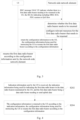
- Fig. 3 is an interactive schematic diagram of a method for resuming a data radio bearer, wherein, however, not all of the features required by the claimed invention are shown in Fig. 3 .
- the interaction between the UE and the network-side network element may also be implemented in the following way: the UE indicates, through an RRC message/a Medium Access Control Element (MAC CE), whether there is a first data radio bearer needing to be resumed in the UE to the network-side network element.
- the IDs for indicating include the DRB, the SCG, the PDU session or the QoS flow.
- the network-side network element determines whether the first data radio bearer needs to be resumed, and configures relevant resources for the first data radio bearer that needs to be resumed.
- the network-side network element returns the configuration information to the UE.
- the configuration information is used for instructing the UE to resume the first data radio bearer according to the configuration information.
- the UE resumes the first data radio bearer according to the configuration information sent by the network-side network element.
- the indication information includes a first ID.
- the first ID is used for indicating the type of radio resource used by the first data radio bearer.
- the first ID is used for indicating that radio data resources used in first data radio resources are MCG resources or SCG resources (the latter is according to the claimed invention).
- the first ID may specifically include at least one of the following objects (object a) is according to the claimed invention):
- the type of relevant radio resources used in the first data radio resources may be effectively marked through the above objects in the first ID, so for the UE configured with the DC, in the RRC connection resume process, it can be clear through the first ID which type of data radio bearer corresponding to UE needs to be resumed.
- the indication information includes a second ID.
- the second ID is used for indicating a relevant ID of the first data radio bearer.
- the second ID includes at least one of the following objects: an ID of the first data radio bearer; an ID of a logical channel and/or an ID of a logical channel group corresponding to the first data radio bearer; an ID of the PDU session corresponding to the first data radio bearer; and an ID of the QoS flow corresponding to the first data radio bearer.
- the second ID is used for indicating the specific object of the first data radio bearer or the specific position of the first data radio bearer.
- the expression forms of multiple objects in the second ID are as follows.
- the ID of the first data radio bearer in the second ID may be expressed in one of the following forms:
- the ID of the logical channel and/or the ID of the logical channel group corresponding to the first data radio bearer in the second ID may be expressed in one of the following forms:
- the ID of the PDU session corresponding to the first data radio bearer in the second ID may be expressed in one of the following forms: a list of PDU session IDs, each item in the list including the ID of the PDU session which indicates that the corresponding PDU session has or does not have the uplink data needing to be sent.
- the ID of the QoS flow corresponding to the first data radio bearer in the second ID may be expressed in one of the following forms: a list of QoS flow IDs, which indicates that the corresponding QoS flow has or does not have the uplink data needing to be sent.
- the list includes a set of information as follows: a PDU Session ID and a set of QoS flow IDs under the PDU session.
- the specific object of the first data radio bearer may be learned through the second ID, so in the RRC connection resume process of the UE, the second ID may clarify the specific object of the data radio bearer needing to be resumed.
- the cooperative use of the first ID and the second ID enables the UE to achieve selective resume of the data radio bearer when it is configured with the DC or replaces a new connection object, so as to optimize the RRC connection resume process.
- the indication information is sent to the network-side network element through at least one of the following: an information element included in an RRC message sent to the network-side network element and a MAC CE sent to the network-side network element.
- the specific object of the RRC message may be selected according to the different RRC states of the UE in the following way: for the UE in an RRC inactive state, the above information is carried in MSG1 or MSG3 in an RACH procedure, the RRC message may be the RRC connection resume request message.
- the above information is carried in an uplink RRC message.
- the UE carries the above information through an SCG failure information message.
- the behavior of the UE sending the SCG failure information message means that there is uplink data needing to be sent through the data radio bearer mapped in the SCG.
- the UE carries the above information through an RRC connection resume completion message.
- that the indication information is sent to the network-side network element through the MAC CE sent to the network-side network element includes:
- the RRC state of the UE does not influence the selection of the MAC CE.
- That the configuration information sent by the network-side network element is received includes: in the case that the UE in the RRC_INACTlVE state sends the indication information to the network-side network element (not covered by the claimed invention), the RRC connection resume message sent by the network-side network element is received; and in the case that the UE in the RRC connected state sends the indication information to the network-side network element (as according to the claimed invention), the RRC connection reconfiguration message sent by the network-side network element is received.
- the network-side network element also indicates the state information of the data radio bearer corresponding to the SN of the UE.
- the RRC connection resume message is obtained by the network-side network element according to the following objects: Access stratum (AS) context information of the UE, which is obtained by the network-side network element according to the following objects: the indication information and the ID of the UE.
- AS Access stratum
- the return of configuration information realized by the network-side network element may be performed by referring to the following step: when the UE is in the RRC_INACTIVE state, the UE sends the indication information during the initiated RRC connection resume process, and the network-side network element determines the network-side network element where the AS context of the UE is (which is called the anchor node of the UE) according to the ID of the UE (UE Identity, UE resume ID or I-RNTI) carried in the received RRC connection resume request message, and sends a retrieve UE context request message to the anchor node.
- the AS context of the UE which is called the anchor node of the UE
- the ID of the UE UE Identity, UE resume ID or I-RNTI
- the anchor node of the UE carries the AS context information corresponding to the UE in a retrieve UE context response message sent to the network-side network element.
- the AS context information of the UE includes: an RRC message including the configuration information of the UE and security context information of the UE.
- the network-side network element may take the configuration information of the UE protected by the RRC message as the configuration information corresponding to the indication information.
- the RRC connection reconfiguration message (according to the claimed invention) or the RRC connection resume message (not covered by the claimed invention) includes at least one of the following objects:
- the SCG configuration information is used for instructing the UE to process the SCG.
- the SCG configuration information includes explicit indication or implicit indication to instruct the UE to activate the SCG.
- the explicit indication is to indicate whether the UE activates the SCG through an information element included in the RRC message.
- the implicit indication mode is that, by agreement, if the RRC message includes SCG configuration, the SCG is to be activated.
- the network-side network element also needs to determine whether to configure the resources in the SN network element for the UE. If it is determined to configure the resources in the SN network element for the UE, the network-side network element determines the SN network element of the UE, instructs the SN network element of the UE to configure the radio resources for the UE according to the SCG configuration of the UE, and carries the SCG configuration of the UE in the RRC message to instruct the UE to activate the SCG.
- the network-side network element does not include the SCG configuration in the RRC message sent to the UE, or includes the SCG configuration, but explicitly instructs the UE not to activate the SCG.
- the data radio bearer state indication information is used for indicating the state of the data radio bearer maintained by the UE, and instructing the UE to process the data radio bearer according to the state of the data radio bearer.
- the data radio bearer state indication information includes explicit or implicit data radio bearer state indication.
- the explicit data radio bearer state indication is used for indicating the UE whether the corresponding data radio bearer is in a resumed state or a suspended state.
- the data radio bearer state indication information may be a bit defined by a data radio bearer.
- the implicit data radio bearer state indication is that if the configuration information of the data radio bearer is carried in the RRC message, it indicates that the data radio bearer is to be activated.
- the network-side network element determines whether to activate a certain data radio bearer of the UE. If it is determined to activate a certain data radio bearer of the UE, the network-side network element configures the radio resources for the data radio bearer to be activated as indicated above, and instructs explicitly or implicitly, in the RRC message, the UE to activate the data radio bearer. If it is determined not to activate a certain data radio bearer of the UE, a serving node instructs explicitly or implicitly, in the RRC message, the UE to suspend or continue to suspend the corresponding data radio bearer.
- the PDU session state indication information When the RRC connection reconfiguration message or the RRC connection resume message includes the PDU session state indication information of the UE, that the PDU session state indication information is used for indicating the state of the PDU session corresponding to the data radio bearer maintained by the UE, and instructing the UE to process the PDU session according to the state of the PDU session corresponding to the data radio bearer.
- the PDU session state indication information indicates the UE whether the corresponding PDU session state is an active state or a suspended state.
- the PDU session state indication information may be the value of a bit.
- the network-side network element configures the radio resources for the data radio bearer corresponding to all QoS flows that corresponds to the PDU session indicated as the active state.
- the QoS flow state indication information is used for indicating the state of the QoS flow corresponding to the data radio bearer maintained by the UE, and instructing the UE to process the QoS flow according to the state of the QoS flow.
- the QoS flow state indication information is used to indicate the UE whether the state of the corresponding QoS flow is an active state or a suspended state.
- the QoS flow state indication information may be the value of a bit.
- the network-side network element configures the radio resources for the data radio bearer corresponding to the QoS flow indicated as the active state.
- that the first data radio bearer is resumed according to the configuration information includes at least one of the followings:
- the UE when the RRC connection reconfiguration message or the RRC connection resume message includes the SCG configuration information of the UE, the UE further performs the following operation: if the RRC message indicates to activate the SCG configuration, the UE applies the SCG configuration included in the RRC message or the locally saved SCG configuration, or applies the combination of the SCG configuration included in the RRC message and the locally saved SCG configuration, and activates the SCG, specifically synchronizing to the specified SCG Primary Cell (PCell) through the RACH procedure, and activating the data radio bearer using the SCG resources.
- PCell Primary Cell
- the UE When the RRC connection reconfiguration message or the RRC connection resume message includes the data radio bearer state indication information of the UE, the UE further performs the following operation: if the message indicates that the state of a data radio bearer is the active state and the RRC message includes the configuration of the data radio bearer, then the UE applies the configuration of the data radio bearer included in the RRC message, or the UE applies the locally saved configuration of the data radio bearer and activates the data radio bearer. If the RRC message indicates that the state of a data radio bearer is the suspended state, then the UE suspends the data radio bearer or maintains it in the suspended state.
- the UE When the RRC connection reconfiguration message or the RRC connection resume message includes the PDU session state indication information of the UE, the UE further performs the following operation: if the RRC message indicates that the state of a PDU session is the active state, the UE activates the data radio bearer mapped by all the QoS flows under the PDU session.
- the UE When the RRC connection reconfiguration message or the RRC connection resume message includes the QoS flow state indication information of the UE, the UE further performs the following operation: if the RRC message indicates that the state of a QoS flow is the active state, the UE activates the data radio bearer mapped by the QoS flow.
- the technical solution of the application can be embodied in the form of software product; the computer software product is stored in a storage medium (for example, a Read-Only Memory (ROM)/Random Access Memory (RAM), a magnetic disk, and a compact disc) and includes a number of instructions to make a computer device (which can be a personal computer, a server or a network device, etc.) perform all or part of the method in each embodiment of the present invention.
- a storage medium for example, a Read-Only Memory (ROM)/Random Access Memory (RAM), a magnetic disk, and a compact disc
- a computer device which can be a personal computer, a server or a network device, etc.
- Fig. 4 is a flowchart (2) of a method for resuming a data radio bearer, wherein, however, not all of the features required by the claimed invention are shown in Fig. 4 . As shown in Fig. 4 , the flow includes the following steps.
- indication information sent by the UE is received, the indication information being used for indicating the first data radio bearer in the data radio bearers maintained by the UE, and the first data radio bearer being a data radio bearer needing to send uplink data.
- the configuration information is returned to the UE according to the indication information, the configuration information being used for instructing the UE to resume the first data radio bearer according to the configuration information.
- the network-side network element returns, according to the indication information sent by the UE, the configuration information to the UE for the first data radio bearer needing to send uplink data, so that the UE resumes the first data radio bearer according to the configuration information, so the problem in the related art of how to selectively resume a part of the required data radio bearers in the process of resuming data radio bearers can be solved, and the effect of resuming only a part of the data radio bearers according to the demand can be achieved.
- the indication information includes a first ID.
- the first ID is used for indicating the type of radio resource used by the first data radio bearer.
- the first ID is used for indicating that radio data resources used in first data radio resources are MCG resources or SCG resources (the latter is according to the claimed invention).
- the first ID may specifically include at least one of the following objects (object a) is according to the claimed invention):
- the type of relevant radio resources used in the first data radio resources may be effectively marked through the above objects in the first ID, so for the UE configured with DC, in the RRC connection resume process, it can be clear through the first ID which type of data radio bearer corresponding to UE needs to be resumed.
- the indication information includes a second ID.
- the second ID is used for indicating a specific object of the first data radio bearer.
- the second ID includes at least one of the following objects: an ID of the first data radio bearer; an ID of a logical channel and/or an ID of a logical channel group corresponding to the first data radio bearer; an ID of the PDU session corresponding to the first data radio bearer; and an ID of the QoS flow corresponding to the first data radio bearer.
- the second ID is used for indicating the specific object of the first data radio bearer or the specific position of the first data radio bearer.
- the expression forms of multiple objects in the second ID are as follows.
- the ID of the first data radio bearer in the second ID may be expressed in one of the following forms:
- the ID of the logical channel and/or the ID of the logical channel group corresponding to the first data radio bearer in the second ID may be expressed in one of the following forms:
- the ID of the PDU session corresponding to the first data radio bearer in the second ID may be expressed in one of the following forms: a list of PDU session IDs, each item in the list including the ID of the PDU session which indicates that the corresponding PDU session has or does not have the uplink data needing to be sent.
- the ID of the QoS flow corresponding to the first data radio bearer in the second ID may be expressed in one of the following forms: a list of QoS flow IDs, which indicates that the corresponding QoS flow has or does not have the uplink data needing to be sent.
- the list includes a set of information as follows: a PDU Session ID and a set of QoS flow IDs under the PDU session.
- the specific object of the first data radio bearer may be learned through the second ID, so in the RRC connection resume process of the UE, the second ID may clarify the specific object of the data radio bearer needing to be resumed.
- the cooperative use of the first ID and the second ID enables the UE to achieve selective resume of the data radio bearer when it is configured with DC or replaces a new connection object, so as to optimize the RRC connection resume process.
- that the configuration information is returned to the UE according to the indication information includes: when the received indication information is sent by the UE in the RRC_INACTIVE state (not according to the claimed invention), the RRC connection resume message is returned to the UE; and when received indication information is sent by the UE in the RRC connected state (as according to the claimed invention), the RRC connection reconfiguration message is returned to the UE.
- the RRC connection reconfiguration message or the RRC connection resume message includes at least one of the following objects:
- the SCG configuration information is used for instructing the UE to process the SCG.
- the SCG configuration information includes explicit or implicit indication to instruct the UE to activate the SCG.
- the explicit indication is to indicate whether the UE activates the SCG through an information element included in the RRC message.
- the implicit indication is that, by agreement, if the RRC message includes SCG configuration, the SCG is to be activated.
- the network-side network element also needs to determine whether the resources in the SN network element are configured for the UE. If it is determined to configure the resources in the SN network element for the UE, the network-side network element determines the SN network element of the UE, instructs the SN network element of the UE to configure the radio resources for the UE according to the SCG configuration of the UE, and carries the SCG configuration of the UE in the RRC message to instruct the UE to activate the SCG.
- the network-side network element does not include the SCG configuration in the RRC message sent to the UE, or includes the SCG configuration, but explicitly instructs the UE not to activate the SCG.
- the data radio bearer state indication information is used for indicating the state of the data radio bearer maintained by the UE, and instructing the UE to process the data radio bearer according to the state of the data radio bearer.
- the data radio bearer indication information includes explicit or implicit data radio bearer state indication information.
- the explicit data radio bearer state indication is used for indicating the UE whether the corresponding data radio bearer is in a resumed state or a suspended state.
- the data radio bearer state indication information may be a bit defined by a data radio bearer.
- the implicit data radio bearer state indication isthat if the configuration information of the data radio bearer is carried in the RRC message, it indicates that the data radio bearer is to be activated.
- the network-side network element determines whether to activate a certain data radio bearer of the UE. If it is determined to activate a certain data radio bearer of the UE, the network-side network element configures the radio resources for the data radio bearer to be activated as indicated above, and instructs explicitly or implicitly, in the RRC message, the UE to activate the data radio bearer. If it is determined not to activate a certain data radio bearer of the UE, the serving node instructs explicitly or implicitly, in the RRC message, the UE to suspend or continue to suspend the corresponding data radio bearer.
- the PDU session state indication information When the RRC connection reconfiguration message or the RRC connection resume message includes the PDU session state indication information of the UE, that the PDU session state indication information is used for indicating the state of the PDU session corresponding to the data radio bearer maintained by the UE, and instructing the UE to process the PDU session according to the state of the PDU session corresponding to the data radio bearer.
- the PDU session state indication information indicates the UE whether the corresponding PDU session state is an active state or a suspended state.
- the PDU session state indication information may be the value of a bit.
- the network-side network element configures the radio resources for the data radio bearer corresponding to all QoS flows that corresponds to the PDU session indicated as the active state.
- the QoS flow state indication information is used for indicating the state of the QoS flow corresponding to the data radio bearer maintained by the UE, and instructing the UE to process the QoS flow according to the state of the QoS flow.
- the QoS flow state indication information is used to indicate the UE whether the state of the corresponding QoS flow is an active state or a suspended state.
- the QoS flow state indication information can be a bit value.
- the network-side network element configures the radio resources for the data radio bearer corresponding to the QoS flow indicated as the active state.
- the method according to the above embodiments may be implemented by means of software plus a necessary common hardware platform, certainly by means of hardware; but in many cases, the former is the better implementation.
- the technical solution of the application substantially or the part making a contribution to the related technology can be embodied in the form of software product; the computer software product is stored in a storage medium (for example, an ROM/an RAM, a magnetic disk, and a compact disc) and includes a number of instructions to make a computer device (which can be a personal computer, a server or a network device, etc.) perform all or part of the method in each embodiment of the present invention.
- a storage medium for example, an ROM/an RAM, a magnetic disk, and a compact disc
- a device for resuming a data radio bearer is also provided, which is configured to implement the above embodiments and preferred implementations.
- the embodiments which have been elaborated will not be repeated here.
- the term "module” used below can realize a combination of software and/or hardware with an intended function.
- the device described in the following embodiment is realized through software better, the realization through hardware or a combination of software and hardware is possible and conceived.
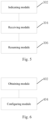
- Fig. 5 is a structural block diagram (1) of a device for resuming a data radio bearer, wherein not all of the features required by the claimed invention are shown in Fig. 5 .
- the device includes: an indicating module 302, a receiving module 304 and a resuming module 306.
- the indicating module 302 is configured to send indication information to the network-side network element, the indication information being used for indicating the first data radio bearer in the data radio bearers maintained by the UE, and the first data radio bearer being a data radio bearer needing to send the uplink data.
- the receiving module 304 is configured to receive the configuration information returned by the network-side network element according to the indication information.
- the resuming module 306 is configured to resume the first data radio bearer according to the configuration information.
- the network-side network element returns, according to the indication information sent by the UE, the configuration information to the UE for the first data radio bearer needing to send uplink data, so that the UE resumes the first data radio bearer according to the configuration information, so the problem in the related art of how to selectively resume a part of the required data radio bearers in the process of resuming data radio bearers can be solved, and the effect of resuming only a part of the data radio bearers according to the demand can be achieved.
- the indication information sent by the indicating module 302 includes a first ID.
- the first ID is used for indicating the type of radio resource used by the first data radio bearer.
- the first ID is used for indicating that radio data resources used in first data radio resources are MCG resources or SCG resources (the latter is according to the claimed invention).
- the first ID may specifically include at least one of the following objects (object a) is according to the claimed invention):
- the type of relevant radio resources used in the first data radio resources may be effectively marked through the above objects in the first ID, so for the UE configured with the DC, in the RRC connection resume process, it can be clear through the first ID which type of data radio bearer corresponding to UE needs to be resumed.
- the indication information sent by the indicating module 302 includes a second ID.
- the second ID is used for indicating the specific object of the first data radio bearer.
- the second ID includes at least one of the following objects: an ID of the first data radio bearer; an ID of a logical channel and/or an ID of a logical channel group corresponding to the first data radio bearer; an ID of the PDU session corresponding to the first data radio bearer; and an ID of the QoS flow corresponding to the first data radio bearer.
- the second ID is used for indicating the specific object of the first data radio bearer or the specific position of the first data radio bearer.
- the expression forms of multiple objects in the second ID are as follows.
- the ID of the first data radio bearer in the second ID may be expressed in one of the following forms:
- the ID of the logical channel and/or the ID of the logical channel group corresponding to the first data radio bearer in the second ID may be expressed in one of the following forms:
- the ID of the PDU session corresponding to the first data radio bearer in the second ID may be expressed in one of the following forms: a list of PDU session IDs, each item in the list including the ID of the PDU session which indicates that the corresponding PDU session has or does not have the uplink data needing to be sent.
- the ID of the QoS flow corresponding to the first data radio bearer in the second ID may be expressed in one of the following forms: a list of QoS flow IDs, which indicates that the corresponding QoS flow has or does not have the uplink data needing to be sent.
- the list includes a set of information as follows: a PDU Session ID and a set of QoS flow IDs under the PDU session.
- the specific object of the first data radio bearer may be learned through the second ID, so in the RRC connection resume process of the UE, the second ID may clarify the specific object of the data radio bearer needing to be resumed.
- the cooperative use of the first ID and the second ID enables the UE to achieve selective resume of the data radio bearer when it is configured with the DC or replaces a new connection object, so as to optimize the RRC connection resume process.
- that the configuration information sent by the network-side network element is received includes that: in the case that the UE in the RRC_INACTlVE state sends the indication information to the network-side network element (not according to the claimed invention), the RRC connection resume message sent by the network-side network element is received; and in the case that the UE in the RRC connected state sends the indication information to the network-side network element (as according to the claimed invention), the RRC connection reconfiguration message sent by the network-side network element is received.
- the RRC connection resume message is obtained by the network-side network element according to the following objects: the AS context information of the UE, which is obtained by the network-side network element according to the following objects: the indication information and the ID of the UE.
- the return of configuration information realized by the network-side network element may be performed by referring to the following steps: when the UE is in the RRC_INACTIVE state, the UE sends the indication information during the initiated RRC connection resume process, and the network-side network element determines the network-side network element where the AS context of the UE is (which is called the anchor node of the UE) according to the ID of the UE (UE Identity, UE resume ID or I-RNTI) carried in the received RRC connection resume request message, and sends a retrieve UE context request message to the anchor node.
- the AS context of the UE which is called the anchor node of the UE
- the ID of the UE UE Identity, UE resume ID or I-RNTI
- the anchor node of the UE carries the AS context information corresponding to the UE in a retrieve UE context response message sent to the network-side network element.
- the AS context information of the UE includes: an RRC message including the configuration information of the UE and security context information of the UE.
- the network-side network element may take the configuration information of the UE protected by the RRC message as the configuration information corresponding to the indication information.
- the RRC connection reconfiguration message or the RRC connection resume message includes at least one of the following objects:
- the SCG configuration information is used for instructing the UE to process the SCG.
- the SCG configuration information includes explicit or implicit indication to instruct the UE to activate the SCG.
- the explicit indication is to indicate whether the UE activates the SCG through an information element included in the RRC message.
- the implicit indication is that, by agreement, if the RRC message includes SCG configuration, the SCG is to be activated.
- the network-side network element also needs to determine whether the resources in the SN network element are configured for the UE. If it is determined to configure the resources in the SN network element for the UE, the network-side network element determines the SN network element of the UE, instructs the SN network element of the UE to configure the radio resources for the UE according to the SCG configuration of the UE, and carries the SCG configuration of the UE in the RRC message to instruct the UE to activate the SCG.
- the network-side network element does not include the SCG configuration in the RRC message sent to the UE, or includes the SCG configuration, but explicitly instructs the UE not to activate the SCG.
- the data radio bearer state indication information includes explicit or implicit data radio bearer state indication.
- the explicit data radio bearer state indication is used for indicating the UE whether the corresponding data radio bearer is in a resumed state or a suspended state.
- the data radio bearer state indication information may be a bit defined by a data radio bearer.
- the implicit data radio bearer state indication is that if the configuration information of the data radio bearer is carried in the RRC message, it indicates that the data radio bearer is to be activated.
- the network-side network element determines whether to activate a certain data radio bearer of the UE. If it is determined to activate a certain data radio bearer of the UE, the network-side network element configures the radio resources for the data radio bearer to be activated as indicated above, and instructs explicitly or implicitly, in the RRC message, the UE to activate the data radio bearer. If it is determined not to activate a certain data radio bearer of the UE, the serving node instructs explicitly or implicitly, in the RRC message, the UE to suspend or continue to suspend the corresponding data radio bearer.
- the PDU session state indication information When the RRC connection reconfiguration message or the RRC connection resume message includes the PDU session state indication information of the UE, that the PDU session state indication information is used for indicating the state of the PDU session corresponding to the data radio bearer maintained by the UE, and instructing the UE to process the PDU session according to the state of the PDU session corresponding to the data radio bearer.
- the PDU session state indication information indicates the UE whether the corresponding PDU session state is an active state or a suspended state.
- the PDU session state indication information may be the value of a bit.
- the network-side network element configures the radio resources for the data radio bearer corresponding to all QoS flows that corresponds to the PDU session indicated as the active state.
- the QoS flow state indication information is used for indicating the state of the QoS flow corresponding to the data radio bearer maintained by the UE, and instructing the UE to process the QoS flow according to the state of the QoS flow.
- the QoS flow state indication information is used to indicate the UE whether the state of the corresponding QoS flow is an active state or a suspended state.
- the QoS flow state indication information can be a bit value.
- the network-side network element configures the radio resources for the data radio bearer corresponding to the QoS flow indicated as the active state.
- each of the above modules may be realized by software or hardware.
- the each of the above modules may be realized by, but not limited to, the following way: all of the above modules are in the same processor; or, the above modules are respectively in different processors in form of any combination.
- Embodiment four (not covered by the claimed invention)
- a device for resuming a data radio bearer is also provided, which is configured to implement the above embodiments and preferred implementations.
- the embodiments which have been elaborated will not be repeated here.
- the term "module” used below can realize a combination of software and/or hardware with an intended function.
- the device described in the following embodiment is realized through software better, the realization through hardware or a combination of software and hardware is possible and conceived.
- Fig. 6 is a structural block diagram (2) of a device for resuming a data radio bearer according to an embodiment not covered by the claimed invention. As shown in Fig. 6 , the device includes: an obtaining module 402 and a configuring module 404.
- the obtaining module 402 is configured to receive indication information sent by the UE, the indication information being used for indicating the first data radio bearer in the data radio bearers maintained by the UE, and the first data radio bearer being a data radio bearer needing to send the uplink data.
- the configuring module 404 is configured to return the configuration information to the UE according to the indication information, the configuration information being used for instructing the UE to resume the first data radio bearer according to the configuration information.
- the network-side network element may return, according to the indication information sent by the UE, the configuration information to the UE for the first data radio bearer needing to send uplink data, so that the UE resumes the first data radio bearer according to the configuration information, so the problem in the related art of how to selectively resume a part of the required data radio bearers in the process of resuming data radio bearers can be solved, and the effect of resuming only a part of the data radio bearers according to the demand can be achieved.
- the indication information includes: a first ID.
- the first ID is used for indicating the type of radio resource used by the first data radio bearer.
- the first ID is used for indicating that radio data resources used in first data radio resources are MCG resources or SCG resources.
- the first ID may specifically include at least one of the following objects:
- the type of relevant radio resources used in the first data radio resources may be effectively marked through the above objects in the first ID, so for the UE configured with DC, in the RRC connection resume process, it can be clear through the first ID which type of data radio bearer corresponding to UE needs to be resumed.
- the indication information includes: a second ID.
- the second ID is used for indicating the specific object of the first data radio bearer.
- the second ID includes at least one of the following objects: the ID of the first data radio bearer; the ID of a logical channel and/or the ID of a logical channel group corresponding to the first data radio bearer; the ID of the PDU session corresponding to the first data radio bearer; and the ID of the QoS flow corresponding to the first data radio bearer.
- the second ID is used for indicating the specific object of the first data radio bearer or the specific position of the first data radio bearer.
- the expression forms of multiple objects in the second ID are as follows.
- the ID of the first data radio bearer in the second ID may be expressed in one of the following forms:
- the ID of the logical channel and/or the ID of the logical channel group corresponding to the first data radio bearer in the second ID may be expressed in one of the following forms:
- the ID of the PDU session corresponding to the first data radio bearer in the second ID may be expressed in one of the following forms: a list of PDU session IDs, each item in the list including the ID of the PDU session which indicates that the corresponding PDU session has or does not have the uplink data needing to be sent.
- the ID of the QoS flow corresponding to the first data radio bearer in the second ID may be expressed in one of the following forms: a list of QoS flow IDs, which indicates that the corresponding QoS flow has or does not have the uplink data needing to be sent.
- the list includes a set of information as follows: a PDU Session ID and a set of QoS flow IDs under the PDU session.
- the specific object of the first data radio bearer may be learned through the second ID, so in the RRC connection resume process of the UE, the second ID may clarify the specific object of the data radio bearer needing to be resumed.
- the cooperative use of the first ID and the second ID enables the UE to achieve selective resume of the data radio bearer when it is configured with the DC or replaces a new connection object, so as to optimize the RRC connection resume process.
- the configuration information is returned to the UE according to the indication information includes that: when the received indication information is sent by the UE in the RRC_INACTIVE state, the RRC connection resume message is returned to the UE; and when received indication information is sent by the UE in the RRC connected state, the RRC connection reconfiguration message is returned to the UE.
- the RRC connection reconfiguration message or the RRC connection resume message includes at least one of the following objects:
- the SCG configuration information is used for instructing the UE to process the SCG.
- the SCG configuration information includes explicit or implicit indication for instructing the UE to activate the SCG.
- the explicit indication is to indicate whether the UE activates the SCG through an information element included in the RRC message.
- the implicit indication is that by agreement, if the RRC message includes SCG configuration, the SCG is to be activated.
- the network-side network element also needs to determine whether the resources in the SN network element are configured for the UE. If it is determined to configure the resources in the SN network element for the UE, the network-side network element determines the SN network element of the UE, instructs the SN network element of the UE to configure the radio resources for the UE according to the SCG configuration of the UE, and carries the SCG configuration of the UE in the RRC message to instruct the UE to activate the SCG.
- the network-side network element does not include the SCG configuration in the RRC message sent to the UE, or includes the SCG configuration, but explicitly instructs the UE not to activate the SCG.
- the data radio bearer state indication includes explicit or implicit data radio bearer state indication.
- the explicit data radio bearer state indication is used for indicating the UE whether the corresponding data radio bearer is in a resumed state or a suspended state.
- the data radio bearer state indication information may be a bit defined by a data radio bearer.
- the implicit data radio bearer state indication isthat if the configuration information of the data radio bearer is carried in the RRC message, it indicates that the data radio bearer is to be activated.
- the network-side network element determines whether to activate a certain data radio bearer of the UE. If it is determined to activate a certain data radio bearer of the UE, the network-side network element configures the radio resources for the data radio bearer to be activated as indicated above, and instructs explicitly or implicitly, in the RRC message, the UE to activate the data radio bearer. If it is determined not to activate a certain data radio bearer of the UE, the serving node instructs explicitly or implicitly, in the RRC message, the UE to suspend or continue to suspend the corresponding data radio bearer.
- the PDU session state indication information When the RRC connection reconfiguration message or the RRC connection resume message includes the PDU session state indication information of the UE, that the PDU session state indication information is used for indicating the state of the PDU session corresponding to the data radio bearer maintained by the UE, and instructing the UE to process the PDU session according to the state of the PDU session corresponding to the data radio bearer.
- the PDU session state indication information indicates the UE whether the corresponding PDU session state is an active state or a suspended state.
- the PDU session state indication information may be the value of a bit.
- the network-side network element configures the radio resources for the data radio bearer corresponding to all QoS flows that corresponds to the PDU session indicated as the active state.
- the QoS flow state indication information is used for indicating the state of the QoS flow corresponding to the data radio bearer maintained by the UE, and instructing the UE to process the QoS flow according to the state of the QoS flow.
- the QoS flow state indication information is used for indicating the UE whether the state of the corresponding QoS flow is an active state or a suspended state.
- the QoS flow state indication information can be a bit value.
- the network-side network element configures the radio resources for the data radio bearer corresponding to the QoS flow indicated as the active state.
- each of the above modules may be realized by software or hardware.
- the each of the above modules may be realized by, but not limited to, the following way: all of the above modules are in the same processor; or, the above modules are respectively in different processors in form of any combination.
- Embodiment five (not covered by the claimed invention)
- An embodiment not covered by the claimed invention also provides a storage medium.
- the storage medium stores a computer program. When configured to run, the computer program performs the method in any of the above embodiments.
- the storage medium may be set to store a computer program for performing the following steps.
- indication information is sent to the network-side network element, the indication information being used for indicating the first data radio bearer in the data radio bearers maintained by the UE, and the first data radio bearer being a data radio bearer needing to send uplink data.
- the configuration information returned by the network-side network element according to the indication information is received.
- the storage medium is also set to store a computer program for performing the following steps.
- indication information sent by the UE is received, the indication information being used for indicating the first data radio bearer in the data radio bearers maintained by the UE, and the first data radio bearer being a data radio bearer needing to send uplink data.
- the configuration information is returned to the UE according to the indication information, the configuration information being used for instructing the UE to resume the first data radio bearer according to the configuration information.
- the storage media may include, but is not limited to, a USB flash disk, an ROM, an RAM, a mobile hard disk, a magnetic disk, a compact disc, and other media capable of storing the computer program.
- Embodiment six (not covered by the claimed invention)
- An embodiment of the present invention also provides an electronic device, which includes a memory and a processor.
- the memory stores a computer program.
- the processor is configured to run the computer program, so as to perform the method in any of the above embodiments.
- the electronic device may also include a transmission device and an input/output device.
- the transmission device is connected with the processor, and the input/output device is connected with the processor.
- the processor may be configured to perform the following steps through the computer program.
- indication information is sent to the network-side network element, the indication information being used for indicating the first data radio bearer in the data radio bearers maintained by the UE, and the first data radio bearer being a data radio bearer needing to send uplink data.
- the configuration information returned by the network-side network element according to the indication information is received.
- the first data radio bearer is resumed according to the configuration information.
- the processor is also set to perform the following steps through the computer program.
- indication information sent by the UE is received, the indication information being used for indicating the first data radio bearer in the data radio bearers maintained by the UE, and the first data radio bearer being a data radio bearer needing to send uplink data.
- the configuration information is returned to the UE according to the indication information, the configuration information being used for instructing the UE to resume the first data radio bearer according to the configuration information.
- the specific examples in the present embodiment may refer to the examples described in the above embodiments and alternative embodiments.
- modules and steps of the present invention may be implemented by a general-purpose computing device, and they may be centralized in a single computing device or distributed on a network composed of multiple computing devices; optionally, they may be implemented by a program code which is capable of being executed by the computing device, so that they may be stored in a storage device and executed by the computing device; and in some situations, the presented or described steps may be executed in an order different from that described here; or they are made into integrated circuit modules, respectively; or multiple modules and steps of them are made into a single integrated circuit module to realize. Therefore, the application is not limited to any particular combination of hardware and software.
Landscapes
- Engineering & Computer Science (AREA)
- Computer Networks & Wireless Communication (AREA)
- Signal Processing (AREA)
- Mobile Radio Communication Systems (AREA)
Claims (12)
- Verfahren zum Aktivieren einer sekundären Zellgruppe, SCG, umfassend:Senden (S102) von Meldungsinformationen durch ein UE an ein netzwerkseitiges Netzwerkelement, wobei die Meldungsinformationen zum Melden eines ersten Datenfunkträgers in Datenfunkträgern verwendet werden, die vom UE verwaltet werden, und wobei es sich beim ersten Datenfunkträger um einen Datenfunkträger handelt, der Uplink-Daten senden muss;Empfangen (S104) von Konfigurationsinformationen, die vom netzwerkseitigen Netzwerkelement gemäß den Meldungsinformationen zurückgesendet werden, durch das UE; undWiederaufnehmen (S106) des ersten Datenfunkträgers durch das UE gemäß den Konfigurationsinformationen,wobei das Empfangen (S104) von Konfigurationsinformationen, die vom netzwerkseitigen Netzwerkelement gemäß den Meldungsinformationen zurückgesendet werden, umfasst:Empfangen einer vom netzwerkseitigen Netzwerkelement gesendeten Funkressourcenkontroll- RRC-, Verbindungsneukonfigurationsnachricht durch das UE, wobei die RRC-Verbindungsneukonfigurationsnachricht SCG-Konfigurationsinformationen des UE einschließt und die SCG-Konfigurationsinformationen verwendet werden, um das UE anzuweisen, eine SCG zu aktivieren oder nicht zu aktivieren, in einem Fall, in dem das UE in einem RRC-verbundenen Zustand die Meldungsinformationen an das netzwerkseitige Netzwerkelement sendet, Empfangen der vom netzwerkseitigen Netzwerkelement gesendeten RRC-Verbindungsneukonfigurationsnachricht;Bestimmen durch das UE, ob die SCG gemäß den SCG-Konfigurationsinformationen aktiviert werden soll,wobei die Meldungsinformationen umfassen: eine erste Identität, ID, zum Melden eines Typs einer vom ersten Datenfunkträger verwendeten Funkressource oder zum Melden, dass Uplink-Daten des Datenfunkträgers, der SCG-Ressourcen verwendet, gesendet werden müssen.
- Verfahren nach Anspruch 1, wobei die Meldungsinformationen umfassen:
eine zweite ID zum Melden einer relevanten ID des ersten Datenfunkträgers, wobei die zweite ID mindestens eines der Folgenden umfasst:eine ID des ersten Datenfunkträgers,eine ID eines Logikkanals, der dem ersten Funkdatenträger entspricht, und/oder eine ID einer Logikkanalgruppe, die dem ersten Funkdatenträger entspricht,eine ID einer Protokolldateneinheit-, PDU-, Sitzung, die dem ersten Datenfunkträger entspricht, undeine ID eines Servicequalitäts-, QoS-, Flusses, der dem ersten Datenfunkträger entspricht. - Verfahren nach Anspruch 1, wobei das Senden (S102) der Meldungsinformationen an das netzwerkseitige Netzwerkelement umfasst:
Senden (S102) der Meldungsinformationen an das netzwerkseitige Netzwerkelement durch mindestens eines der Folgenden: ein Informationselement, das in einer an das netzwerkseitige Netzwerkelement gesendeten RRC-Nachricht enthalten ist, und ein an das netzwerkseitige Netzwerkelement gesendetes Medienzugangskontrollelement, MAC CE. - Verfahren nach Anspruch 3, wobei die an das netzwerkseitige Netzwerkelement gesendete RRC-Nachricht mindestens eines der Folgenden umfasst:eine RRC-Wiederaufnahmeanforderungsnachricht, eine RRC-Wiederaufnahmeabschlussnachricht und eine SCG-Fehlerinformationsnachricht;oder wobei das Senden (S102) der Meldungsinformationen an das netzwerkseitige Netzwerkelement durch das an das netzwerkseitige Netzwerkelement gesendete MAC CE umfasst:Neudefinieren des an das netzwerkseitige Netzwerkelement gesendeten MAC CE, wobei das neudefinierte MAC CE zum Melden eines SCG-Pufferstatusberichts, SCG BSR, mit Pufferinformationen der in der SCG abgebildeten Logikkanalgruppe verwendet wird, und Senden der Meldungsinformationen über das neudefinierte MAC CE an das netzwerkseitige Netzwerkelement; oderHinzufügen von Informationen zum Melden des Logikkanalgruppenpuffers in der SCG in einem BSR MAC CE und Senden der Meldungsinformationen an das netzwerkseitige Netzwerkelement über das BSR MAC CE.
- Verfahren nach Anspruch 1, wobei das Aktivieren der SCG gemäß den Konfigurationsinformationen umfasst:
in dem Fall, dass die RRC-Verbindungsneukonfigurationsnachricht die SCG-Konfigurationsinformationen des UE umfasst, nimmt das UE gemäß den SCG-Konfigurationsinformationen des UE und den vom UE gespeicherten lokalen SCG-Konfigurationsinformationen den ersten Datenfunkträger, der den SCG-Konfigurationsinformationen des UE entspricht, und den ersten Datenfunkträger, der den lokalen SCG-Konfigurationsinformationen entspricht, wieder auf oder das UE nimmt den ersten Datenfunkträger wieder auf, der den SCG-Konfigurationsinformationen des UE gemäß den SCG-Konfigurationsinformationen des UE entspricht, oder das UE nimmt den ersten Datenfunkträger wieder auf, der den lokalen SCG-Konfigurationsinformationen gemäß den vom UE gespeicherten lokalen SCG-Konfigurationsinformationen entspricht. - Verfahren nach Anspruch 1, wobei die SCG-Konfigurationsinformationen eine explizite Meldung oder eine implizite Meldung einschließen, wobei die explizite Meldung dazu dient, dem UE durch ein in der RRC-Nachricht eingeschlossenes Informationselement zu melden, ob die SCG aktiviert werden soll, und die implizite Angabe darin besteht, dass gemäß einer Vereinbarung die SCG aktiviert werden soll, wenn die RRC-Nachricht eine SCG-Konfiguration einschließt.
- Verfahren zum Aktivieren einer sekundären Zellgruppe, SCG, umfassend:Empfangen (S202) von Meldungsinformationen, die von einem Benutzergerät, UE, gesendet wurden, durch ein netzwerkseitiges Netzwerkelement, wobei die Meldungsinformationen zum Melden eines ersten Datenfunkträgers in Datenfunkträgern verwendet werden, die vom UE verwaltet werden, und wobei es sich beim ersten Datenfunkträger um einen Datenfunkträger handelt, der Uplink-Daten senden muss;Zurücksenden (S204) von Konfigurationsinformationen durch das netzwerkseitige Netzwerkelement an das UE gemäß den Meldungsinformationen, wobei die Konfigurationsinformationen verwendet werden, um das UE anzuweisen, den ersten Datenfunkträger gemäß den Konfigurationsinformationen wieder aufzunehmen;wobei das Zurücksenden (S204) von Konfigurationsinformationen an das UE gemäß den Meldungsinformationen umfasst:Senden einer Funkressourcenkontroll-, RRC-, Verbindungsneukonfigurationsnachricht an das UE durch das netzwerkseitige Netzwerkelement, wobei die RRC-Verbindungsneukonfigurationsnachricht SCG-Konfigurationsinformationen des UE einschließt und die SCG-Konfigurationsinformationen verwendet werden, um das UE anzuweisen, eine SCG zu aktivieren oder nicht zu aktivieren, in einem Fall, in dem das UE in einem RRC-verbundenen Zustand die Meldungsinformationen an das netzwerkseitige Netzwerkelement sendet, Senden der RRC-Verbindungsneukonfigurationsnachricht an das UE durch das netzwerkseitige Netzwerkelement;wobei die Meldungsinformationen umfassen: eine erste Identität, ID, zum Melden eines Typs einer vom ersten Datenfunkträger verwendeten Funkressource oder zum Melden, dass Uplink-Daten des Datenfunkträgers, der SCG-Ressourcen verwendet, gesendet werden müssen.
- Verfahren nach Anspruch 7, wobei die Meldungsinformationen umfassen:
eine zweite ID zum Melden eines bestimmten Ziels des ersten Datenfunkträgers, wobei die zweite ID mindestens eines der Folgenden umfasst:eine ID des ersten Datenfunkträgers,eine ID eines Logikkanals, der dem ersten Funkdatenträger entspricht, und/oder eine ID einer Logikkanalgruppe, die dem ersten Funkdatenträger entspricht,eine ID einer Protokolldateneinheit-, PDU-, Sitzung, die dem ersten Datenfunkträger entspricht, undeine ID eines Servicequalitäts-, QoS-, Flusses, der dem ersten Datenfunkträger entspricht. - Verfahren nach Anspruch 7, wobei die SCG-Konfigurationsinformationen eine explizite Meldung oder eine implizite Meldung einschließen, wobei die explizite Meldung dazu dient, dem UE durch ein in der RRC-Nachricht eingeschlossenes Informationselement zu melden, ob die SCG aktiviert werden soll, und die implizite Angabe darin besteht, dass gemäß einer Vereinbarung die SCG aktiviert werden soll, wenn die RRC-Nachricht eine SCG-Konfiguration einschließt.
- Verfahren nach Anspruch 7, das vor dem Senden RCC-Verbindungsneukonfigurationsnachricht an das UE ferner umfasst:
Bestimmen durch das netzwerkseitige Netzwerkelement, ob Ressourcen in einem sekundären Knoten, SN, des UE konfiguriert werden sollen. - Verfahren nach Anspruch 10, wobei das Verfahren ferner umfasst:wenn bestimmt wird, dass die Ressourcen im SN des UE konfiguriert werden sollen, Bestimmen des SN des UE durch das netzwerkseitige Netzwerkelement und Anweisen des SN, Funkressourcen für das UE gemäß der SCG-Konfiguration des UE zu konfigurieren, und Übertragen der SCG-Konfiguration des UE in der RRC-Nachricht, um das UE anzuweisen, die SCG zu aktivieren, oderwenn bestimmt wird, dass die Ressourcen im SN des UE nicht konfiguriert werden sollen, Nichteinschließen der SCG-Konfiguration in die an das UE gesendete RRC-Nachricht oder Einschließen der SCG-Konfiguration, aber ausdrückliches Anweisen des UE, die SCG nicht zu aktivieren, durch das das netzwerkseitige Netzwerkelement.
- Vorrichtung zum Aktivieren einer sekundären Zellgruppe, SCG, die in einem UE zugewiesen ist, umfassend:ein Meldungsmodul (302), das zum Senden von Meldungsinformationen an ein netzwerkseitiges Netzwerkelement konfiguriert ist, wobei die Meldungsinformationen zum Melden eines ersten Datenfunkträgers in vom UE verwalteten Datenfunkträgern verwendet werden und der erste Datenfunkträger ein Datenfunkträger ist, der Uplink-Daten senden muss;ein erstes Empfangsmodul (304), das dazu konfiguriert ist, Konfigurationsinformationen zu empfangen, die vom netzwerkseitigen Netzwerkelement gemäß den Meldungsinformationen zurückgesendet werden, undein Wiederaufnahmemodul (306), das dazu konfiguriert ist, den ersten Datenfunkträger gemäß den Konfigurationsinformationen wieder aufzunehmen;wobei die Meldungsinformationen umfassen: eine erste Identität, ID, zum Melden eines Typs einer vom ersten Datenfunkträger verwendeten Funkressource oder zum Melden, dass Uplink-Daten des Datenfunkträgers, der SCG-Ressourcen verwendet, gesendet werden müssen;wobei die Vorrichtung ferner umfasst:ein zweites Empfangsmodul, das zum Empfangen einer von einem netzwerkseitigen Netzwerkelement gesendeten Funkressourcenkontroll-, RRC-, Verbindungsneukonfigurationsnachricht konfiguriert ist, wobei die RRC-Verbindungsneukonfigurationsnachricht SCG-Konfigurationsinformationen des UE einschießt und die SCG-Konfigurationsinformationen verwendet werden, um das UE anzuweisen, eine SCG zu aktivieren oder nicht zu aktivieren, in einem Fall, in dem das UE in einem RRC-verbundenen Zustand die Meldungsinformationen an das netzwerkseitige Netzwerkelement sendet, Senden der RRC-Verbindungsneukonfigurationsnachricht an das UE durch das netzwerkseitige Netzwerkelement;ein Bestimmungsmodul, das dazu konfiguriert ist, gemäß den SCG-Konfigurationsinformationen zu bestimmen, ob die SCG aktiviert werden soll.
Applications Claiming Priority (2)
| Application Number | Priority Date | Filing Date | Title |
|---|---|---|---|
| CN201810904576.9A CN110831256B (zh) | 2018-08-09 | 2018-08-09 | 数据无线承载的恢复方法及装置、存储介质、电子装置 |
| PCT/CN2019/099977 WO2020030110A1 (zh) | 2018-08-09 | 2019-08-09 | 数据无线承载的恢复方法及装置、存储介质、电子装置 |
Publications (3)
| Publication Number | Publication Date |
|---|---|
| EP3836735A1 EP3836735A1 (de) | 2021-06-16 |
| EP3836735A4 EP3836735A4 (de) | 2021-09-15 |
| EP3836735B1 true EP3836735B1 (de) | 2024-10-23 |
Family
ID=69414023
Family Applications (1)
| Application Number | Title | Priority Date | Filing Date |
|---|---|---|---|
| EP19846050.3A Active EP3836735B1 (de) | 2018-08-09 | 2019-08-09 | Verfahren und vorrichtung zur wiederherstellung eines datenträgers |
Country Status (6)
| Country | Link |
|---|---|
| US (1) | US11602001B2 (de) |
| EP (1) | EP3836735B1 (de) |
| KR (1) | KR102854942B1 (de) |
| CN (1) | CN110831256B (de) |
| BR (1) | BR112021002395A2 (de) |
| WO (1) | WO2020030110A1 (de) |
Families Citing this family (8)
| Publication number | Priority date | Publication date | Assignee | Title |
|---|---|---|---|---|
| SG11202101188PA (en) | 2018-08-08 | 2021-03-30 | Guangdong Oppo Mobile Telecommunications Corp Ltd | Information configuration method and apparatus, terminal and network device |
| CN111294823B (zh) * | 2018-12-21 | 2021-10-08 | 展讯通信(上海)有限公司 | Dc操作中的测量方法及装置 |
| CN113692070B (zh) * | 2020-05-18 | 2025-08-29 | 夏普株式会社 | 由用户设备执行的方法及用户设备 |
| EP4593521A3 (de) * | 2020-07-10 | 2025-09-24 | Guangdong Oppo Mobile Telecommunications Corp., Ltd. | Aktivierung und deaktivierung eines scg |
| CN115669200B (zh) * | 2020-07-10 | 2024-08-23 | Oppo广东移动通信有限公司 | 无线通信方法、终端设备和网络设备 |
| US11825542B2 (en) * | 2020-08-13 | 2023-11-21 | Shanghai Langbo Communication Technology Company Limited | Method and device used in communication node for wireless communication |
| CN114095138B (zh) * | 2020-08-24 | 2023-05-30 | 维沃移动通信有限公司 | 用户面数据的传输方法和网络节点 |
| WO2022052103A1 (zh) * | 2020-09-14 | 2022-03-17 | 深圳传音控股股份有限公司 | 激活连接的方法、设备、系统及存储介质 |
Family Cites Families (12)
| Publication number | Priority date | Publication date | Assignee | Title |
|---|---|---|---|---|
| CN101964954B (zh) * | 2009-07-24 | 2015-08-12 | 中兴通讯股份有限公司 | 一种用户数据无线承载需求的通知方法及系统 |
| EP3879892A1 (de) * | 2013-08-27 | 2021-09-15 | Samsung Electronics Co., Ltd. | Verfahren und system für direktzugriffsverfahren und funkverbindungsfehler in der inter-enb-trägeraggregation |
| US10292142B2 (en) * | 2014-09-08 | 2019-05-14 | Blackberry Limited | Method and apparatus for simultaneous use of both licensed and unlicensed wireless spectrum |
| US20160073428A1 (en) * | 2014-09-08 | 2016-03-10 | Blackberry Limited | Method and Apparatus to Determine a Pseudo-Grant Size for Data to be Transmitted |
| CN104219787A (zh) * | 2014-09-10 | 2014-12-17 | 电信科学技术研究院 | 一种恢复无线链路的方法和设备 |
| JP2018507627A (ja) * | 2015-01-29 | 2018-03-15 | 華為技術有限公司Huawei Technologies Co.,Ltd. | 無線ベアラ再構成方法、無線ベアラ確立方法、ユーザ機器、および基地局 |
| CN106332046A (zh) * | 2015-06-16 | 2017-01-11 | 北京信威通信技术股份有限公司 | 一种双连接dc模式下动态选择无线资源的方法 |
| CN107113811A (zh) * | 2015-08-06 | 2017-08-29 | 华为技术有限公司 | 一种建立数据无线承载的方法及装置 |
| US10367677B2 (en) | 2016-05-13 | 2019-07-30 | Telefonaktiebolaget Lm Ericsson (Publ) | Network architecture, methods, and devices for a wireless communications network |
| CN107666692B (zh) * | 2016-07-29 | 2019-09-17 | 电信科学技术研究院 | 一种状态转移方法、用户终端和基站 |
| EP3520548B1 (de) * | 2016-09-28 | 2021-01-27 | Sony Corporation | Telekommunikationsvorrichtung und verfahren zur handhabung von geteilten funkträgern |
| JP7000449B2 (ja) * | 2017-03-23 | 2022-02-10 | エルジー エレクトロニクス インコーポレイティド | 無線通信システムにおける次のメッセージのために使われるベアラのタイプを指示する方法及び装置 |
-
2018
- 2018-08-09 CN CN201810904576.9A patent/CN110831256B/zh active Active
-
2019
- 2019-08-09 KR KR1020217004724A patent/KR102854942B1/ko active Active
- 2019-08-09 WO PCT/CN2019/099977 patent/WO2020030110A1/zh not_active Ceased
- 2019-08-09 EP EP19846050.3A patent/EP3836735B1/de active Active
- 2019-08-09 US US17/265,588 patent/US11602001B2/en active Active
- 2019-08-09 BR BR112021002395-0A patent/BR112021002395A2/pt unknown
Also Published As
| Publication number | Publication date |
|---|---|
| US11602001B2 (en) | 2023-03-07 |
| KR20210042328A (ko) | 2021-04-19 |
| KR102854942B1 (ko) | 2025-09-04 |
| CN110831256A (zh) | 2020-02-21 |
| EP3836735A1 (de) | 2021-06-16 |
| CN110831256B (zh) | 2024-03-15 |
| WO2020030110A1 (zh) | 2020-02-13 |
| EP3836735A4 (de) | 2021-09-15 |
| BR112021002395A2 (pt) | 2021-05-04 |
| US20210168893A1 (en) | 2021-06-03 |
Similar Documents
| Publication | Publication Date | Title |
|---|---|---|
| EP3836735B1 (de) | Verfahren und vorrichtung zur wiederherstellung eines datenträgers | |
| EP3454623B1 (de) | Verfahren und vorrichtung für rrc-zustandssteuerung | |
| EP4027730B1 (de) | Datenübertragungsverfahren, zentralisierte einheit und verteilte einheit | |
| WO2021062797A1 (zh) | 配置方法和装置 | |
| JP7157813B2 (ja) | Rrc状態遷移方法、端末、cu、du、およびコンピュータ可読記憶媒体 | |
| CN111385830A (zh) | 通信方法和装置 | |
| WO2013166670A1 (zh) | 上行信道资源配置方法和设备 | |
| CN113543311B (zh) | 用户设备的无线资源控制状态的控制方法及相关装置 | |
| WO2012136087A1 (zh) | 一种资源调度的方法及系统及一种终端 | |
| EP4013086B1 (de) | Verwaltung der inaktiven zustandsmobilität über verschiedene schnittstellen eines zugangsnetzwerkgeräts | |
| CN101262279A (zh) | 一种时分同步码分多址接入系统的上行调度接入控制方法 | |
| WO2014173355A1 (zh) | 业务管理方法和装置 | |
| WO2010111820A1 (zh) | 一种随机接入方法、演进基站及终端设备 | |
| CN114095138B (zh) | 用户面数据的传输方法和网络节点 | |
| WO2022078867A1 (en) | Methods, apparatuses and computer program for data transmission in inactive state | |
| CN105009663B (zh) | 一种消息传输方法及设备 | |
| KR102908098B1 (ko) | 페이징 방법 및 기기 | |
| EP4561208A1 (de) | Datenübertragungsverfahren, -vorrichtung und -system sowie endgerät und netzwerkvorrichtung | |
| CN109788580B (zh) | Rrc连接重建方法及装置、存储介质、用户设备、网络设备 | |
| US20240365423A1 (en) | Method and apparatus for small data transmission | |
| US20260040364A1 (en) | Managing Communication Over Multiple Transmit and/or Receive Points | |
| WO2019028920A1 (zh) | 一种数据传输方法及设备 | |
| KR20250139349A (ko) | 단말 장치, 기지국 장치 및 무선 통신 시스템 | |
| CN120569995A (zh) | 用于小数据传输的方法和装置 | |
| CN117082628A (zh) | 一种通信方法及设备 |
Legal Events
| Date | Code | Title | Description |
|---|---|---|---|
| STAA | Information on the status of an ep patent application or granted ep patent |
Free format text: STATUS: THE INTERNATIONAL PUBLICATION HAS BEEN MADE |
|
| PUAI | Public reference made under article 153(3) epc to a published international application that has entered the european phase |
Free format text: ORIGINAL CODE: 0009012 |
|
| STAA | Information on the status of an ep patent application or granted ep patent |
Free format text: STATUS: REQUEST FOR EXAMINATION WAS MADE |
|
| 17P | Request for examination filed |
Effective date: 20210304 |
|
| AK | Designated contracting states |
Kind code of ref document: A1 Designated state(s): AL AT BE BG CH CY CZ DE DK EE ES FI FR GB GR HR HU IE IS IT LI LT LU LV MC MK MT NL NO PL PT RO RS SE SI SK SM TR |
|
| A4 | Supplementary search report drawn up and despatched |
Effective date: 20210812 |
|
| RIC1 | Information provided on ipc code assigned before grant |
Ipc: H04W 76/27 20180101ALN20210806BHEP Ipc: H04W 76/15 20180101ALN20210806BHEP Ipc: H04W 76/11 20180101ALI20210806BHEP Ipc: H04W 76/19 20180101AFI20210806BHEP |
|
| DAV | Request for validation of the european patent (deleted) | ||
| DAX | Request for extension of the european patent (deleted) | ||
| STAA | Information on the status of an ep patent application or granted ep patent |
Free format text: STATUS: EXAMINATION IS IN PROGRESS |
|
| 17Q | First examination report despatched |
Effective date: 20230612 |
|
| GRAP | Despatch of communication of intention to grant a patent |
Free format text: ORIGINAL CODE: EPIDOSNIGR1 |
|
| STAA | Information on the status of an ep patent application or granted ep patent |
Free format text: STATUS: GRANT OF PATENT IS INTENDED |
|
| RIC1 | Information provided on ipc code assigned before grant |
Ipc: H04W 76/27 20180101ALN20240523BHEP Ipc: H04W 76/15 20180101ALN20240523BHEP Ipc: H04W 80/02 20090101ALI20240523BHEP Ipc: H04W 28/02 20090101ALI20240523BHEP Ipc: H04W 76/11 20180101ALI20240523BHEP Ipc: H04W 76/19 20180101AFI20240523BHEP |
|
| INTG | Intention to grant announced |
Effective date: 20240607 |
|
| RAP3 | Party data changed (applicant data changed or rights of an application transferred) |
Owner name: ZTE CORPORATION |
|
| GRAS | Grant fee paid |
Free format text: ORIGINAL CODE: EPIDOSNIGR3 |
|
| GRAA | (expected) grant |
Free format text: ORIGINAL CODE: 0009210 |
|
| STAA | Information on the status of an ep patent application or granted ep patent |
Free format text: STATUS: THE PATENT HAS BEEN GRANTED |
|
| AK | Designated contracting states |
Kind code of ref document: B1 Designated state(s): AL AT BE BG CH CY CZ DE DK EE ES FI FR GB GR HR HU IE IS IT LI LT LU LV MC MK MT NL NO PL PT RO RS SE SI SK SM TR |
|
| REG | Reference to a national code |
Ref country code: GB Ref legal event code: FG4D |
|
| REG | Reference to a national code |
Ref country code: CH Ref legal event code: EP |
|
| REG | Reference to a national code |
Ref country code: DE Ref legal event code: R096 Ref document number: 602019060889 Country of ref document: DE |
|
| REG | Reference to a national code |
Ref country code: IE Ref legal event code: FG4D |
|
| REG | Reference to a national code |
Ref country code: LT Ref legal event code: MG9D |
|
| REG | Reference to a national code |
Ref country code: NL Ref legal event code: MP Effective date: 20241023 |
|
| REG | Reference to a national code |
Ref country code: AT Ref legal event code: MK05 Ref document number: 1735910 Country of ref document: AT Kind code of ref document: T Effective date: 20241023 |
|
| PG25 | Lapsed in a contracting state [announced via postgrant information from national office to epo] |
Ref country code: NL Free format text: LAPSE BECAUSE OF FAILURE TO SUBMIT A TRANSLATION OF THE DESCRIPTION OR TO PAY THE FEE WITHIN THE PRESCRIBED TIME-LIMIT Effective date: 20241023 |
|
| PG25 | Lapsed in a contracting state [announced via postgrant information from national office to epo] |
Ref country code: NL Free format text: LAPSE BECAUSE OF FAILURE TO SUBMIT A TRANSLATION OF THE DESCRIPTION OR TO PAY THE FEE WITHIN THE PRESCRIBED TIME-LIMIT Effective date: 20241023 |
|
| PG25 | Lapsed in a contracting state [announced via postgrant information from national office to epo] |
Ref country code: HR Free format text: LAPSE BECAUSE OF FAILURE TO SUBMIT A TRANSLATION OF THE DESCRIPTION OR TO PAY THE FEE WITHIN THE PRESCRIBED TIME-LIMIT Effective date: 20241023 Ref country code: PT Free format text: LAPSE BECAUSE OF FAILURE TO SUBMIT A TRANSLATION OF THE DESCRIPTION OR TO PAY THE FEE WITHIN THE PRESCRIBED TIME-LIMIT Effective date: 20250224 Ref country code: IS Free format text: LAPSE BECAUSE OF FAILURE TO SUBMIT A TRANSLATION OF THE DESCRIPTION OR TO PAY THE FEE WITHIN THE PRESCRIBED TIME-LIMIT Effective date: 20250223 |
|
| PG25 | Lapsed in a contracting state [announced via postgrant information from national office to epo] |
Ref country code: FI Free format text: LAPSE BECAUSE OF FAILURE TO SUBMIT A TRANSLATION OF THE DESCRIPTION OR TO PAY THE FEE WITHIN THE PRESCRIBED TIME-LIMIT Effective date: 20241023 |
|
| PG25 | Lapsed in a contracting state [announced via postgrant information from national office to epo] |
Ref country code: BG Free format text: LAPSE BECAUSE OF FAILURE TO SUBMIT A TRANSLATION OF THE DESCRIPTION OR TO PAY THE FEE WITHIN THE PRESCRIBED TIME-LIMIT Effective date: 20241023 |
|
| PG25 | Lapsed in a contracting state [announced via postgrant information from national office to epo] |
Ref country code: ES Free format text: LAPSE BECAUSE OF FAILURE TO SUBMIT A TRANSLATION OF THE DESCRIPTION OR TO PAY THE FEE WITHIN THE PRESCRIBED TIME-LIMIT Effective date: 20241023 |
|
| PG25 | Lapsed in a contracting state [announced via postgrant information from national office to epo] |
Ref country code: NO Free format text: LAPSE BECAUSE OF FAILURE TO SUBMIT A TRANSLATION OF THE DESCRIPTION OR TO PAY THE FEE WITHIN THE PRESCRIBED TIME-LIMIT Effective date: 20250123 |
|
| PG25 | Lapsed in a contracting state [announced via postgrant information from national office to epo] |
Ref country code: LV Free format text: LAPSE BECAUSE OF FAILURE TO SUBMIT A TRANSLATION OF THE DESCRIPTION OR TO PAY THE FEE WITHIN THE PRESCRIBED TIME-LIMIT Effective date: 20241023 Ref country code: AT Free format text: LAPSE BECAUSE OF FAILURE TO SUBMIT A TRANSLATION OF THE DESCRIPTION OR TO PAY THE FEE WITHIN THE PRESCRIBED TIME-LIMIT Effective date: 20241023 Ref country code: GR Free format text: LAPSE BECAUSE OF FAILURE TO SUBMIT A TRANSLATION OF THE DESCRIPTION OR TO PAY THE FEE WITHIN THE PRESCRIBED TIME-LIMIT Effective date: 20250124 |
|
| PG25 | Lapsed in a contracting state [announced via postgrant information from national office to epo] |
Ref country code: PL Free format text: LAPSE BECAUSE OF FAILURE TO SUBMIT A TRANSLATION OF THE DESCRIPTION OR TO PAY THE FEE WITHIN THE PRESCRIBED TIME-LIMIT Effective date: 20241023 |
|
| PG25 | Lapsed in a contracting state [announced via postgrant information from national office to epo] |
Ref country code: RS Free format text: LAPSE BECAUSE OF FAILURE TO SUBMIT A TRANSLATION OF THE DESCRIPTION OR TO PAY THE FEE WITHIN THE PRESCRIBED TIME-LIMIT Effective date: 20250123 |
|
| PG25 | Lapsed in a contracting state [announced via postgrant information from national office to epo] |
Ref country code: SM Free format text: LAPSE BECAUSE OF FAILURE TO SUBMIT A TRANSLATION OF THE DESCRIPTION OR TO PAY THE FEE WITHIN THE PRESCRIBED TIME-LIMIT Effective date: 20241023 |
|
| PG25 | Lapsed in a contracting state [announced via postgrant information from national office to epo] |
Ref country code: DK Free format text: LAPSE BECAUSE OF FAILURE TO SUBMIT A TRANSLATION OF THE DESCRIPTION OR TO PAY THE FEE WITHIN THE PRESCRIBED TIME-LIMIT Effective date: 20241023 |
|
| PG25 | Lapsed in a contracting state [announced via postgrant information from national office to epo] |
Ref country code: EE Free format text: LAPSE BECAUSE OF FAILURE TO SUBMIT A TRANSLATION OF THE DESCRIPTION OR TO PAY THE FEE WITHIN THE PRESCRIBED TIME-LIMIT Effective date: 20241023 |
|
| PG25 | Lapsed in a contracting state [announced via postgrant information from national office to epo] |
Ref country code: RO Free format text: LAPSE BECAUSE OF FAILURE TO SUBMIT A TRANSLATION OF THE DESCRIPTION OR TO PAY THE FEE WITHIN THE PRESCRIBED TIME-LIMIT Effective date: 20241023 |
|
| REG | Reference to a national code |
Ref country code: DE Ref legal event code: R097 Ref document number: 602019060889 Country of ref document: DE |
|
| PG25 | Lapsed in a contracting state [announced via postgrant information from national office to epo] |
Ref country code: SK Free format text: LAPSE BECAUSE OF FAILURE TO SUBMIT A TRANSLATION OF THE DESCRIPTION OR TO PAY THE FEE WITHIN THE PRESCRIBED TIME-LIMIT Effective date: 20241023 |
|
| PG25 | Lapsed in a contracting state [announced via postgrant information from national office to epo] |
Ref country code: CZ Free format text: LAPSE BECAUSE OF FAILURE TO SUBMIT A TRANSLATION OF THE DESCRIPTION OR TO PAY THE FEE WITHIN THE PRESCRIBED TIME-LIMIT Effective date: 20241023 |
|
| PG25 | Lapsed in a contracting state [announced via postgrant information from national office to epo] |
Ref country code: IT Free format text: LAPSE BECAUSE OF FAILURE TO SUBMIT A TRANSLATION OF THE DESCRIPTION OR TO PAY THE FEE WITHIN THE PRESCRIBED TIME-LIMIT Effective date: 20241023 |
|
| PLBE | No opposition filed within time limit |
Free format text: ORIGINAL CODE: 0009261 |
|
| STAA | Information on the status of an ep patent application or granted ep patent |
Free format text: STATUS: NO OPPOSITION FILED WITHIN TIME LIMIT |
|
| PG25 | Lapsed in a contracting state [announced via postgrant information from national office to epo] |
Ref country code: SE Free format text: LAPSE BECAUSE OF FAILURE TO SUBMIT A TRANSLATION OF THE DESCRIPTION OR TO PAY THE FEE WITHIN THE PRESCRIBED TIME-LIMIT Effective date: 20241023 |
|
| 26N | No opposition filed |
Effective date: 20250724 |
|
| PGFP | Annual fee paid to national office [announced via postgrant information from national office to epo] |
Ref country code: DE Payment date: 20250820 Year of fee payment: 7 |
|
| PGFP | Annual fee paid to national office [announced via postgrant information from national office to epo] |
Ref country code: GB Payment date: 20250820 Year of fee payment: 7 |
|
| PGFP | Annual fee paid to national office [announced via postgrant information from national office to epo] |
Ref country code: FR Payment date: 20250828 Year of fee payment: 7 |
|
| PGFP | Annual fee paid to national office [announced via postgrant information from national office to epo] |
Ref country code: CH Payment date: 20250901 Year of fee payment: 7 |