EP3835151B1 - Verfahren zur steuerung eines bremssystems eines fahrzeugs - Google Patents
Verfahren zur steuerung eines bremssystems eines fahrzeugs Download PDFInfo
- Publication number
- EP3835151B1 EP3835151B1 EP20203743.8A EP20203743A EP3835151B1 EP 3835151 B1 EP3835151 B1 EP 3835151B1 EP 20203743 A EP20203743 A EP 20203743A EP 3835151 B1 EP3835151 B1 EP 3835151B1
- Authority
- EP
- European Patent Office
- Prior art keywords
- vehicle
- failure
- brake control
- control function
- wheel
- Prior art date
- Legal status (The legal status is an assumption and is not a legal conclusion. Google has not performed a legal analysis and makes no representation as to the accuracy of the status listed.)
- Active
Links
Images

Classifications
-
- B—PERFORMING OPERATIONS; TRANSPORTING
- B60—VEHICLES IN GENERAL
- B60T—VEHICLE BRAKE CONTROL SYSTEMS OR PARTS THEREOF; BRAKE CONTROL SYSTEMS OR PARTS THEREOF, IN GENERAL; ARRANGEMENT OF BRAKING ELEMENTS ON VEHICLES IN GENERAL; PORTABLE DEVICES FOR PREVENTING UNWANTED MOVEMENT OF VEHICLES; VEHICLE MODIFICATIONS TO FACILITATE COOLING OF BRAKES
- B60T8/00—Arrangements for adjusting wheel-braking force to meet varying vehicular or ground-surface conditions, e.g. limiting or varying distribution of braking force
- B60T8/32—Arrangements for adjusting wheel-braking force to meet varying vehicular or ground-surface conditions, e.g. limiting or varying distribution of braking force responsive to a speed condition, e.g. acceleration or deceleration
- B60T8/88—Arrangements for adjusting wheel-braking force to meet varying vehicular or ground-surface conditions, e.g. limiting or varying distribution of braking force responsive to a speed condition, e.g. acceleration or deceleration with failure responsive means, i.e. means for detecting and indicating faulty operation of the speed responsive control means
- B60T8/885—Arrangements for adjusting wheel-braking force to meet varying vehicular or ground-surface conditions, e.g. limiting or varying distribution of braking force responsive to a speed condition, e.g. acceleration or deceleration with failure responsive means, i.e. means for detecting and indicating faulty operation of the speed responsive control means using electrical circuitry
-
- B—PERFORMING OPERATIONS; TRANSPORTING
- B60—VEHICLES IN GENERAL
- B60T—VEHICLE BRAKE CONTROL SYSTEMS OR PARTS THEREOF; BRAKE CONTROL SYSTEMS OR PARTS THEREOF, IN GENERAL; ARRANGEMENT OF BRAKING ELEMENTS ON VEHICLES IN GENERAL; PORTABLE DEVICES FOR PREVENTING UNWANTED MOVEMENT OF VEHICLES; VEHICLE MODIFICATIONS TO FACILITATE COOLING OF BRAKES
- B60T8/00—Arrangements for adjusting wheel-braking force to meet varying vehicular or ground-surface conditions, e.g. limiting or varying distribution of braking force
- B60T8/32—Arrangements for adjusting wheel-braking force to meet varying vehicular or ground-surface conditions, e.g. limiting or varying distribution of braking force responsive to a speed condition, e.g. acceleration or deceleration
- B60T8/88—Arrangements for adjusting wheel-braking force to meet varying vehicular or ground-surface conditions, e.g. limiting or varying distribution of braking force responsive to a speed condition, e.g. acceleration or deceleration with failure responsive means, i.e. means for detecting and indicating faulty operation of the speed responsive control means
- B60T8/92—Arrangements for adjusting wheel-braking force to meet varying vehicular or ground-surface conditions, e.g. limiting or varying distribution of braking force responsive to a speed condition, e.g. acceleration or deceleration with failure responsive means, i.e. means for detecting and indicating faulty operation of the speed responsive control means automatically taking corrective action
- B60T8/96—Arrangements for adjusting wheel-braking force to meet varying vehicular or ground-surface conditions, e.g. limiting or varying distribution of braking force responsive to a speed condition, e.g. acceleration or deceleration with failure responsive means, i.e. means for detecting and indicating faulty operation of the speed responsive control means automatically taking corrective action on speed responsive control means
-
- B—PERFORMING OPERATIONS; TRANSPORTING
- B60—VEHICLES IN GENERAL
- B60Q—ARRANGEMENT OF SIGNALLING OR LIGHTING DEVICES, THE MOUNTING OR SUPPORTING THEREOF OR CIRCUITS THEREFOR, FOR VEHICLES IN GENERAL
- B60Q5/00—Arrangement or adaptation of acoustic signal devices
- B60Q5/005—Arrangement or adaptation of acoustic signal devices automatically actuated
-
- B—PERFORMING OPERATIONS; TRANSPORTING
- B60—VEHICLES IN GENERAL
- B60Q—ARRANGEMENT OF SIGNALLING OR LIGHTING DEVICES, THE MOUNTING OR SUPPORTING THEREOF OR CIRCUITS THEREFOR, FOR VEHICLES IN GENERAL
- B60Q9/00—Arrangement or adaptation of signal devices not provided for in one of main groups B60Q1/00 - B60Q7/00, e.g. haptic signalling
-
- B—PERFORMING OPERATIONS; TRANSPORTING
- B60—VEHICLES IN GENERAL
- B60T—VEHICLE BRAKE CONTROL SYSTEMS OR PARTS THEREOF; BRAKE CONTROL SYSTEMS OR PARTS THEREOF, IN GENERAL; ARRANGEMENT OF BRAKING ELEMENTS ON VEHICLES IN GENERAL; PORTABLE DEVICES FOR PREVENTING UNWANTED MOVEMENT OF VEHICLES; VEHICLE MODIFICATIONS TO FACILITATE COOLING OF BRAKES
- B60T17/00—Component parts, details, or accessories of power brake systems not covered by groups B60T8/00, B60T13/00 or B60T15/00, or presenting other characteristic features
- B60T17/18—Safety devices; Monitoring
- B60T17/22—Devices for monitoring or checking brake systems; Signal devices
- B60T17/221—Procedure or apparatus for checking or keeping in a correct functioning condition of brake systems
-
- B—PERFORMING OPERATIONS; TRANSPORTING
- B60—VEHICLES IN GENERAL
- B60T—VEHICLE BRAKE CONTROL SYSTEMS OR PARTS THEREOF; BRAKE CONTROL SYSTEMS OR PARTS THEREOF, IN GENERAL; ARRANGEMENT OF BRAKING ELEMENTS ON VEHICLES IN GENERAL; PORTABLE DEVICES FOR PREVENTING UNWANTED MOVEMENT OF VEHICLES; VEHICLE MODIFICATIONS TO FACILITATE COOLING OF BRAKES
- B60T8/00—Arrangements for adjusting wheel-braking force to meet varying vehicular or ground-surface conditions, e.g. limiting or varying distribution of braking force
- B60T8/17—Using electrical or electronic regulation means to control braking
-
- B—PERFORMING OPERATIONS; TRANSPORTING
- B60—VEHICLES IN GENERAL
- B60T—VEHICLE BRAKE CONTROL SYSTEMS OR PARTS THEREOF; BRAKE CONTROL SYSTEMS OR PARTS THEREOF, IN GENERAL; ARRANGEMENT OF BRAKING ELEMENTS ON VEHICLES IN GENERAL; PORTABLE DEVICES FOR PREVENTING UNWANTED MOVEMENT OF VEHICLES; VEHICLE MODIFICATIONS TO FACILITATE COOLING OF BRAKES
- B60T8/00—Arrangements for adjusting wheel-braking force to meet varying vehicular or ground-surface conditions, e.g. limiting or varying distribution of braking force
- B60T8/32—Arrangements for adjusting wheel-braking force to meet varying vehicular or ground-surface conditions, e.g. limiting or varying distribution of braking force responsive to a speed condition, e.g. acceleration or deceleration
- B60T8/321—Arrangements for adjusting wheel-braking force to meet varying vehicular or ground-surface conditions, e.g. limiting or varying distribution of braking force responsive to a speed condition, e.g. acceleration or deceleration deceleration
-
- B—PERFORMING OPERATIONS; TRANSPORTING
- B60—VEHICLES IN GENERAL
- B60T—VEHICLE BRAKE CONTROL SYSTEMS OR PARTS THEREOF; BRAKE CONTROL SYSTEMS OR PARTS THEREOF, IN GENERAL; ARRANGEMENT OF BRAKING ELEMENTS ON VEHICLES IN GENERAL; PORTABLE DEVICES FOR PREVENTING UNWANTED MOVEMENT OF VEHICLES; VEHICLE MODIFICATIONS TO FACILITATE COOLING OF BRAKES
- B60T2201/00—Particular use of vehicle brake systems; Special systems using also the brakes; Special software modules within the brake system controller
- B60T2201/02—Active or adaptive cruise control system; Distance control
- B60T2201/024—Collision mitigation systems
-
- B—PERFORMING OPERATIONS; TRANSPORTING
- B60—VEHICLES IN GENERAL
- B60T—VEHICLE BRAKE CONTROL SYSTEMS OR PARTS THEREOF; BRAKE CONTROL SYSTEMS OR PARTS THEREOF, IN GENERAL; ARRANGEMENT OF BRAKING ELEMENTS ON VEHICLES IN GENERAL; PORTABLE DEVICES FOR PREVENTING UNWANTED MOVEMENT OF VEHICLES; VEHICLE MODIFICATIONS TO FACILITATE COOLING OF BRAKES
- B60T2220/00—Monitoring, detecting driver behaviour; Signalling thereof; Counteracting thereof
-
- B—PERFORMING OPERATIONS; TRANSPORTING
- B60—VEHICLES IN GENERAL
- B60T—VEHICLE BRAKE CONTROL SYSTEMS OR PARTS THEREOF; BRAKE CONTROL SYSTEMS OR PARTS THEREOF, IN GENERAL; ARRANGEMENT OF BRAKING ELEMENTS ON VEHICLES IN GENERAL; PORTABLE DEVICES FOR PREVENTING UNWANTED MOVEMENT OF VEHICLES; VEHICLE MODIFICATIONS TO FACILITATE COOLING OF BRAKES
- B60T2240/00—Monitoring, detecting wheel/tyre behaviour; counteracting thereof
-
- B—PERFORMING OPERATIONS; TRANSPORTING
- B60—VEHICLES IN GENERAL
- B60T—VEHICLE BRAKE CONTROL SYSTEMS OR PARTS THEREOF; BRAKE CONTROL SYSTEMS OR PARTS THEREOF, IN GENERAL; ARRANGEMENT OF BRAKING ELEMENTS ON VEHICLES IN GENERAL; PORTABLE DEVICES FOR PREVENTING UNWANTED MOVEMENT OF VEHICLES; VEHICLE MODIFICATIONS TO FACILITATE COOLING OF BRAKES
- B60T2250/00—Monitoring, detecting, estimating vehicle conditions
- B60T2250/03—Vehicle yaw rate
-
- B—PERFORMING OPERATIONS; TRANSPORTING
- B60—VEHICLES IN GENERAL
- B60T—VEHICLE BRAKE CONTROL SYSTEMS OR PARTS THEREOF; BRAKE CONTROL SYSTEMS OR PARTS THEREOF, IN GENERAL; ARRANGEMENT OF BRAKING ELEMENTS ON VEHICLES IN GENERAL; PORTABLE DEVICES FOR PREVENTING UNWANTED MOVEMENT OF VEHICLES; VEHICLE MODIFICATIONS TO FACILITATE COOLING OF BRAKES
- B60T2270/00—Further aspects of brake control systems not otherwise provided for
- B60T2270/10—ABS control systems
-
- B—PERFORMING OPERATIONS; TRANSPORTING
- B60—VEHICLES IN GENERAL
- B60T—VEHICLE BRAKE CONTROL SYSTEMS OR PARTS THEREOF; BRAKE CONTROL SYSTEMS OR PARTS THEREOF, IN GENERAL; ARRANGEMENT OF BRAKING ELEMENTS ON VEHICLES IN GENERAL; PORTABLE DEVICES FOR PREVENTING UNWANTED MOVEMENT OF VEHICLES; VEHICLE MODIFICATIONS TO FACILITATE COOLING OF BRAKES
- B60T2270/00—Further aspects of brake control systems not otherwise provided for
- B60T2270/40—Failsafe aspects of brake control systems
- B60T2270/402—Back-up
-
- B—PERFORMING OPERATIONS; TRANSPORTING
- B60—VEHICLES IN GENERAL
- B60T—VEHICLE BRAKE CONTROL SYSTEMS OR PARTS THEREOF; BRAKE CONTROL SYSTEMS OR PARTS THEREOF, IN GENERAL; ARRANGEMENT OF BRAKING ELEMENTS ON VEHICLES IN GENERAL; PORTABLE DEVICES FOR PREVENTING UNWANTED MOVEMENT OF VEHICLES; VEHICLE MODIFICATIONS TO FACILITATE COOLING OF BRAKES
- B60T2270/00—Further aspects of brake control systems not otherwise provided for
- B60T2270/40—Failsafe aspects of brake control systems
- B60T2270/416—Wheel speed sensor failure
Definitions
- the invention relates to a method for controlling a braking system of a vehicle.
- driving assistance functions In modern vehicles, drivers are supported by a variety of driving assistance functions when driving the vehicle.
- driving assistance functions are anti-lock braking systems or stability programs, which regulate the deceleration or acceleration behavior of the vehicle requested by the driver in such a way that the driving stability of the vehicle is always guaranteed.
- driving assistance functions in particular functions that relate to regulating the braking behavior of the vehicle (brake control functions), are based on monitoring the speeds of the vehicle wheels (wheel speeds). For example, in anti-lock braking systems, the braking force on a vehicle wheel is usually reduced as soon as the monitored wheel speeds indicate that the vehicle wheel has too much slip.
- a standstill time until the motor vehicle comes to a standstill is calculated and the braking intervention is carried out with the predetermined delay for a period of time that corresponds to the standstill time.
- the DE 195 11 161 A1 and DE 10 2007 046 692 A1 disclose anti-lock braking systems that continue anti-lock braking control until the end of braking even in the event of a wheel speed sensor failure.
- a brake control function is also carried out at the time of failure, it is often provided that at least the wheel affected by the failure is immediately excluded from the brake control function. It can either be provided that a braking request is passed on to the affected wheel in an unregulated manner, or the affected wheel is no longer controlled to decelerate the vehicle. In the first case, blocking of the affected wheel can no longer be effectively prevented, while in the second case the available deceleration power is significantly reduced.
- the present invention is based on the object of creating a method for controlling a braking system of a vehicle which overcomes the disadvantages described above and in particular improves the availability and effectiveness of brake control functions in the event of a failure of corresponding sensor means for determining wheel speeds. This task is solved using the method according to claim 1.
- Advantageous embodiments of the invention are the subject of the dependent claims.
- the invention relates to a method for controlling a braking system of a vehicle, wherein the braking system has at least one wheel brake for each vehicle wheel having. Sensor means for determining wheel speeds of the vehicle wheels are provided for the wheel brakes.
- the brake system is designed to carry out brake control functions based on the wheel speeds determined by the sensor means.
- the method includes detecting a failure of the sensor means for at least one of the vehicle wheels and checking whether a brake control function is being carried out by the brake system at the time of the failure. If a brake control function is being executed by the brake system at the time of failure, the method includes continuing the brake control function and deactivating the brake control function when the execution of the brake control function is completed.
- the method includes checking whether a brake control function is triggered within a defined period of time after the time of failure. If a brake control function is triggered within the defined period of time after the time of failure, the method provides for the brake control function to be executed. Furthermore, the method includes deactivating the brake control function when the execution of the brake control function has been completed and the time period has expired, or if no brake control function has been triggered within the defined time period after the time of failure.
- a “brake control function” basically means a function that controls or regulates a braking torque generated by the wheel brakes of the vehicle as a result of a braking request in some form.
- the corresponding braking request can be triggered both by a vehicle driver and by a (partially) autonomous driving function, such as an autopilot or emergency braking assistant.
- the brake control function can be a function that, after detecting an accident in the vehicle, automatically brings the vehicle to a standstill and preferably with the maximum possible deceleration.
- Such a function can also make use of other brake control functions, which, for example, are intended to ensure maximum deceleration while maintaining the controllability of the vehicle.
- the “deactivation” of a brake control function means that from the time of deactivation, the corresponding brake control function can no longer be triggered and is therefore no longer available. For example, it can be provided that the deactivation lasts until the brake control function is activated again by a corresponding control command. Such a control command could, for example, be triggered by a mechanic as soon as faulty sensor means have been replaced or repaired.
- the method according to the invention has the advantage that despite a failure of sensor means for determining the wheel speed, the affected brake control functions remain available at least for a certain period of time. Consequently, for example, after an accident, a brake control function, such as automatic deceleration of the vehicle until it comes to a standstill, can be implemented for a short time. Furthermore, for example, after a failure of the affected sensor means during ongoing (partially) automated driving, there is sufficient time available to inform the vehicle driver of the failure and to safely transfer control of the vehicle to the vehicle driver.
- the brake control function is an anti-lock control, wherein after a failure of the sensor means for at least one of the vehicle wheels is detected when the anti-lock control is carried out, the vehicle wheel for which the failure of the sensor means was detected is provided with a predefined Deceleration torque is applied.
- a “deceleration torque” is understood to mean a torque exerted on the vehicle wheel by the wheel brake, which leads to: slowing down the rotation of the vehicle wheel.
- the deceleration torque is preferably selected so that, under given conditions, a strong deceleration is achieved, but there is no fear of the decelerated wheel blocking.
- the deceleration torque can be selected such that if all wheel brakes were applied with corresponding deceleration torques under normal conditions, for example on a dry, asphalted road, a deceleration of the vehicle of 0.7g would be achieved. In this way it is ensured that, despite a failure of the corresponding sensor means, a certain contribution to the overall deceleration of the vehicle continues to be made by the wheel brake of the wheel for which the failure of the sensor means was detected.
- the yaw angle of the Vehicle is monitored, whereby upon detection of a change in the yaw angle that does not correspond to a steering command from a vehicle driver, the wheel brake of the vehicle wheel for which the failure of the sensor means was detected is at least partially released.
- This approach is based on the idea that if the wheel brakes overbrake on one side, i.e. increased slip on at least one of the wheels on one side of the vehicle, a yaw moment arises that can be detected by appropriate sensors. As soon as a yaw moment is detected that does not correspond to a steering command from the driver, it can be assumed that one of the wheels is blocked due to an excessive deceleration moment. It can be provided that when such a yaw moment is detected, a wheel affected by the failure of the sensor means is completely unbraked, i.e. the corresponding wheel brake is completely released. Alternatively, the deceleration torque on the affected wheel can also be slow be reduced until the change in the yaw angle again follows a steering command from the driver.
- the sensor means comprise at least one wheel speed sensor per vehicle wheel. Furthermore, it can also be provided that the sensor means are designed redundantly, i.e. the wheel speed of each vehicle wheel is monitored by at least two wheel speed sensors.
- the duration of the defined period of time is between 1 and 30 seconds, in particular between 1 and 5 seconds, in particular 2.5 seconds.
- a further embodiment provides that when a failure of the sensor means is detected for at least one of the vehicle wheels, a visual and/or acoustic warning is issued to a vehicle driver.
- a detected failure can be indicated by activating a corresponding light in a dashboard of the vehicle.
- the Figure 1 shows a schematic representation of an exemplary embodiment of the method 100 according to the invention.
- a braking system of a vehicle is provided, the braking system having at least one wheel brake for each vehicle wheel, sensor means for determining wheel speeds of the vehicle wheels being provided for the wheel brakes, and the braking system being designed to carry out brake control functions based on the wheel speeds determined by the sensor means .
- each vehicle wheel can have a wheel speed sensor for each wheel.
- a failure of the sensor means of the vehicle for at least one of the vehicle wheels is detected.
- a failure can be caused, for example, by an accident of the vehicle or by normal wear and tear on vehicle elements.
- the interruption of a data connection between the wheel speed sensor and a brake control unit can also be interpreted as a failure of the sensor means, since in this case too the necessary information regarding the speed of the affected vehicle wheel is no longer available.
- a timer is started in step 104 which measures a predefined period of time, for example a period of 2.5 seconds.
- step 106 It is then checked in step 106 whether a brake control function, such as an anti-lock control, is being carried out at the time of the failure. If this is the case, the brake control function is continued in step 108 until the execution of the brake control function is completed, for example the vehicle has come to a standstill or there is no longer a corresponding brake request.
- a brake control function such as an anti-lock control
- step 110 in which it is checked whether the timer has expired, i.e. the predefined period of time has elapsed. After completing the execution of the brake control function in step 108, the method also proceeds to step 110.
- step 110 If it is determined in step 110 that the timer has already expired, the brake control function is deactivated in step 112 and the method ends at this point.
- a visual and/or acoustic warning can be issued to a vehicle driver, indicating a failure of the sensor means or the deactivation of the brake control function.
- step 110 it is then checked in step 114 whether a brake control function has been triggered.
- a brake control function can be triggered, for example, by actuation of the vehicle brake by the vehicle driver, or by a (partially) autonomous driving function.
- step 110 If it is determined that no brake control function has been triggered, the method jumps back to step 110, so that continuous monitoring for the activation of brake control functions is effectively carried out as long as the timer has not expired.
- step 116 the corresponding brake control function is then carried out in step 116.
- the execution of the brake control function is preferably adjusted so that the missing wheel speed information of the affected wheel is compensated.
- the method jumps back to step 110, so that it continues to be checked whether the timer has expired, i.e. whether the defined period of time has elapsed.
- a brake control function as a result of a failure of the sensor means for at least one of the vehicle wheels is only deactivated when a defined period of time has elapsed and no brake control functions are any longer active.
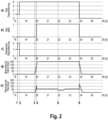
- the Figure 2 shows a schematic representation of different parameters of a vehicle during an exemplary implementation of the method.
- an anti-lock braking control is considered as a brake control function.
- the top diagram a) shows the degradation state of an anti-lock control system, which provides information about which operating mode the anti-lock control system is in.
- the second diagram b) shows the activation state of the anti-lock braking control, with state 1 indicating activation of the anti-lock braking control.
- the third diagram c) shows an example of the degradation state of a wheel speed sensor, i.e. information about its operating mode.
- the fourth diagram d) shows the course of a brake pressure requested by a vehicle driver by actuating the brake, while the fifth and lowest diagram e) shows the brake pressure actually present in a wheel brake.
- the five diagrams are plotted over a common, horizontal time axis.
- diagrams b), d) and e) start at the value 0.
- the degradation state of the anti-lock braking control (diagram a)) as well as the degradation state of the wheel speed sensor (diagram c)) is in the normal state 1.
- the degradation state of the anti-lock control (diagram a) is switched to a fallback mode, represented by stage 4.
- this fallback mode it can be provided, for example, that when the anti-lock control is activated, a predefined deceleration torque is applied to the wheel affected by the failure of the wheel speed sensor.
- an ABS warning lamp in the vehicle can be activated, which alerts the driver to the malfunction.
- a timer is started, which in the present example measures a period of 2.5 seconds after which the anti-lock braking control should be deactivated.
- the vehicle driver presses the vehicle brake or a corresponding brake pedal at time 3, so that the brake pressure requested by the vehicle driver increases in diagram d).
- the brake pressure requested by the vehicle driver exceeds a locking pressure level at which the wheel locks. Consequently, at this time the anti-lock braking control is activated, as shown in diagram b). Since the anti-lock braking control is in fallback mode (diagram a)), the brake pressure and therefore the deceleration torque on the wheel affected by the failure is limited to a predefined value.
- the vehicle driver has released the brake so that the requested brake pressure drops.
- the brake pressure has fallen below the blocking pressure level, so that the anti-lock control is deactivated (stage 0 in diagram b)). Since the defined period of time has elapsed at this point and the anti-lock control is no longer active, the degradation level of the anti-lock control is switched to mode 0, which indicates that the function is no longer available, i.e. deactivated.
Landscapes
- Engineering & Computer Science (AREA)
- Mechanical Engineering (AREA)
- Transportation (AREA)
- Human Computer Interaction (AREA)
- Physics & Mathematics (AREA)
- Acoustics & Sound (AREA)
- Regulating Braking Force (AREA)
- Valves And Accessory Devices For Braking Systems (AREA)
Description
- Die Erfindung betrifft ein Verfahren zur Steuerung eines Bremssystems eines Fahrzeugs.
- In modernen Fahrzeugen werden Fahrzeugführer durch eine Vielzahl von Fahrassistenzfunktion beim Führen des Fahrzeugs unterstützt. Bekannte Beispiele für derartige Fahrassistenzfunktion sind Antiblockiersysteme oder Stabilitätsprogramme, die ein durch den Fahrzeugführer angefordertes Verzögerungs- oder Beschleunigungsverhalten des Fahrzeugs so regeln, dass die Fahrstabilität des Fahrzeugs stets gewährleistet bleibt.
- Viele dieser Fahrassistenzfunktionen, insbesondere Funktionen, die sich auf eine Regelung eines Bremsverhaltens des Fahrzeugs beziehen (Bremsregelfunktionen), stützen sich auf eine Überwachung der Drehzahlen der Fahrzeugräder (Raddrehzahlen). So wird beispielsweise bei Antiblockiersystemen üblicherweise die Bremskraft an einem Fahrzeugrad reduziert, sobald die überwachten Raddrehzahlen darauf hinweisen, dass das Fahrzeugrad einen zu großen Schlupf aufweist.
- Bei einem Ausfall eines oder mehrerer Raddrehzahlsensoren ist üblicherweise vorgesehen, dass derartige Bremsregelfunktionen deaktiviert werden, da eine zuverlässige Regelung bei Fehlen der entsprechenden Raddrehzahlinformationen nicht oder nur eingeschränkt möglich ist.
- Hierzu beschreibt die
DE 10 2014 209 162 A1 beispielhaft ein Verfahren zur Steuerung einer Bremsanlage eines Kraftfahrzeuges mit zwei Bremskreisen und Raddrehzahlsensoren, bei welchem das Vorliegen einer Gefahrensituation des Kraftfahrzeuges, insbesondere das Auftreten einer Kollision, überwacht wird und bei einer erkannten Gefahrensituation, insbesondere Kollision, ein fahrerunabhängiger Bremseingriff durchgeführt wird. Dazu ist vorgesehen, dass bei Erkennen des Fehlens des Signals wenigstens eines Raddrehzahlsensors und/oder der Momentangeschwindigkeit des Kraftfahrzeuges nach Auftreten der Gefahrensituation mittels des letzten bekannten Momentangeschwindigkeitswertes und eines vorgegebenen oder bestimmten Verzögerungswertes eine Stillstandszeit bis zum Stillstand des Kraftfahrzeuges berechnet wird und für eine Zeitspanne, die der Stillstandszeit entspricht, der Bremseingriff mit der vorgegebenen Verzögerung durchgeführt wird. - Die
DE 195 11 161 A1 undDE 10 2007 046 692 A1 offenbaren Antiblockiersystemen, die auch im Falle eines Ausfalls eines Raddrehzahlsensors die Antiblockierregelung bis zum Ende der Bremsung fortführen. - Wird ferner zum Zeitpunkt des Ausfalls eine Bremsregelfunktion durchgeführt, ist häufig vorgesehen, dass zumindest das vom Ausfall betroffene Rad sofort aus der Bremsregelfunktion ausgenommen wird. Dabei kann entweder vorgesehen sein, dass eine Bremsanforderung ungeregelt an das betroffene Rad weitergegeben wird, oder das betroffene Rad wird nicht mehr zur Verzögerung des Fahrzeugs angesteuert. Im ersten Fall kann ein Blockieren des betroffenen Rades nicht mehr effektiv verhindert werden, während im zweiten Fall die verfügbare Verzögerungsleistung deutlich reduziert wird.
- Das zuvor beschriebene Vorgehen kann insbesondere problematisch sein, wenn der Ausfall eines Raddrehzahlsensors auf einen Unfall des Fahrzeugs zurückzuführen ist. In diesem Fall wären nach dem Unfall Sicherheitsroutinen, die auf derartigen Bremsregelfunktionen aufbauen und die beispielsweise ein automatisches Bremsen nach dem Unfall umsetzen sollen (Post Crash Braking), nicht mehr verfügbar.
- Demgegenüber liegt der vorliegenden Erfindung die Aufgabe zugrunde, ein Verfahren zur Steuerung eines Bremssystems eines Fahrzeugs zu schaffen, das die vorstehend beschriebenen Nachteile überwindet und insbesondere die Verfügbarkeit und die Wirksamkeit von Bremsregelfunktionen bei einem Ausfall von entsprechenden Sensormitteln zur Bestimmung von Raddrehzahlen verbessert. Diese Aufgabe wird mit dem Verfahren gemäß Anspruch 1 gelöst. Vorteilhafte Ausgestaltungen der Erfindung sind Gegenstand der abhängigen Ansprüche.
- Die Erfindung betrifft ein Verfahren zur Steuerung eines Bremssystems eines Fahrzeugs, wobei das Bremssystem je Fahrzeugrad wenigstens eine Radbremse aufweist. Für die Radbremsen sind Sensormittel zur Bestimmung von Raddrehzahlen der Fahrzeugräder vorgesehen. Das Bremssystem ist dabei dazu ausgebildet, Bremsregelfunktionen auf Grundlage der durch die Sensormittel bestimmten Raddrehzahlen auszuführen. Das Verfahren weist dabei das Erkennen eines Ausfalls der Sensormittel für wenigstens eines der Fahrzeugräder und das Prüfen, ob zum Zeitpunkt des Ausfalls eine Bremsregelfunktion durch das Bremssystem ausgeführt wird, auf. Wenn zum Zeitpunkt des Ausfalls eine Bremsregelfunktion durch das Bremssystem ausgeführt wird, weist das Verfahren das Fortführen der Bremsregelfunktion und das Deaktivieren der Bremsregelfunktion, wenn die Ausführung der Bremsregelfunktion abgeschlossen ist, auf. Wenn zum Zeitpunkt des Ausfalls keine Bremsregelfunktion durch das Bremssystem ausgeführt wird, weist das Verfahren das Prüfen, ob innerhalb einer definierten Zeitspanne nach dem Zeitpunkt des Ausfalls eine Bremsregelfunktion ausgelöst wird, auf. Wenn innerhalb der definierten Zeitspanne nach dem Zeitpunkt des Ausfalls eine Bremsregelfunktion ausgelöst wird, sieht das Verfahren das Ausführen der Bremsregelfunktion vor. Ferner weist das Verfahren das Deaktivieren der Bremsenregelfunktion vor, wenn die Ausführung der Bremsregelfunktion abgeschlossen und die Zeitspanne abgelaufen ist, oder wenn innerhalb der definierten Zeitspanne nach dem Zeitpunkt des Ausfalls keine Bremsregelfunktion ausgelöst wurde.
- Unter einer "Bremsregelfunktion" ist dabei grundsätzlich eine Funktion zu verstehen, die ein durch die Radbremsen des Fahrzeugs erzeugtes Bremsmoment infolge einer Bremsanforderung in irgendeiner Form steuert oder regelt. Dabei kann die entsprechende Bremsanforderung sowohl durch einen Fahrzeugführer ausgelöst werden, als auch durch eine (teil)autonome Fahrfunktion, wie beispielsweise ein Autopilot oder Notbremsassistent. Beispielsweise kann es sich bei der Bremsregelfunktion um eine Funktion handeln, die nach Erkennen eines Unfalls des Fahrzeugs das Fahrzeug automatisch und vorzugsweise maximal möglichen Verzögerung zum Stillstand bringt. Eine solche Funktion kann dabei auch auf weitere Bremsregelfunktionen zurückgreifen, die beispielsweise eine maximale Verzögerung bei gleichbleibender Kontrollierbarkeit des Fahrzeugs gewährleisten sollen.
- Das erfindungsgemäße "Deaktivieren" einer Bremsregelfunktion bedeutet dabei, dass ab dem Zeitpunkt der Deaktivierung die entsprechende Bremsregelfunktion nicht mehr ausgelöst werden kann, also nicht mehr zur Verfügung steht. Dabei kann beispielsweise vorgesehen sein, dass die Deaktivierung so lange Bestand hat, bis durch einen entsprechenden Steuerbefehl die Bremsregelfunktion wieder aktiviert wird. Ein solcher Steuerbefehl könnte beispielsweise durch einen Mechaniker ausgelöst werden, sobald fehlerhafte Sensormittel ausgetauscht oder repariert wurden.
- Das erfindungsgemäße Verfahren hat dabei den Vorteil, dass trotz eines Ausfalls von Sensormitteln zur Bestimmung der Raddrehzahl die betroffenen Bremsregelfunktionen weiterhin zumindest für eine bestimmte Zeitspanne weiterhin verfügbar bleiben. Folglich kann beispielsweise nach einem Unfall noch für eine kurze Zeit eine Bremsregelfunktion, wie beispielsweise eine automatische Verzögerung des Fahrzeugs bis zu dessen Stillstand umgesetzt werden. Ferner steht beispielsweise nach einem Ausfall der betroffenen Sensormittel im laufenden (teil)automatisierten Fahrbetrieb ausreichend Zeit zur Verfügung, um den Fahrzeugführer über den Ausfall in Kenntnis zu setzen und eine sichere Übergabe der Kontrolle über das Fahrzeug an den Fahrzeugführer durchzuführen.
- Gleichzeitig ist vorgesehen, dass zum Zeitpunkt des Ausfalls bereits ausgeführte Bremsenregelfunktionen weiterhin ausgeführt werden und eine Deaktivierung der entsprechenden Bremsenregelfunktion erst erfolgt, wenn laufende Ausführung beendet wurde.
- Dabei ist nach einer weiteren Ausführungsform vorgesehen, dass es sich bei der Bremsenregelfunktion um eine Antiblockierregelung handelt, wobei nach Erkennen eines Ausfalls der Sensormittel für wenigstens eines der Fahrzeugräder beim Ausführen der Antiblockierregelung das Fahrzeugrad, für das der Ausfall der Sensormittel erkannt wurde, mit einem vordefinierten Verzögerungsmoment beaufschlagt wird. Unter einem "Verzögerungsmoment" ist dabei ein auf das Fahrzeugrad durch die Radbremse ausgeübtes Drehmoment zu verstehen, was zu einer Verlangsamung der Rotation des Fahrzeugrades führt. Das Verzögerungsmoment ist dabei vorzugsweise so gewählt, dass unter gegebenen Bedingungen zwar eine starke Verzögerung erreicht wird, jedoch kein Blockieren des verzögerten Rades zu befürchten ist. Beispielsweise kann das Verzögerungsmoment so gewählt sein, dass bei einer Beaufschlagung aller Radbremsen mit entsprechenden Verzögerungsmomenten unter Normalbedingungen, also beispielsweise bei trockener, asphaltierter Straße, eine Verzögerung des Fahrzeugs von 0,7g erreicht würde. Auf diese Weise wird gewährleistet, dass trotz eines Ausfalls der entsprechenden Sensormittel auch weiterhin ein gewisser Beitrag zur Gesamtverzögerung des Fahrzeugs durch die Radbremse jenes Rades geleistet wird, für das der Ausfall der Sensormittel erkannt wurde.
- Um bei der Ausführung einer Bremsregelfunktion nach Erkennen eines Ausfalls der Sensormittel für wenigstens eines der Fahrzeugräder weiterhin die Fahrstabilität des Fahrzeugs zu gewährleisten, ist nach einer weiteren Ausführungsform vorgesehen, dass bei erkanntem Ausfall der Sensormittel für wenigstens eines der Fahrzeugräder bei Ausführen der Bremsregelfunktion der Gierwinkel des Fahrzeugs überwacht wird, wobei bei Erkennung einer Änderung des Gierwinkels, der nicht einem Lenkbefehl eines Fahrzeugführers entspricht, die Radbremse des Fahrzeugrades, für das der Ausfall der Sensormittel erkannt wurde, zumindest teilweise gelöst wird.
- Dieser Ansatz beruht auf der Überlegung, dass bei einem einseitigen Überbremsen der Radbremsen, also einem erhöhten Schlupf an wenigstens einem der Räder einer Fahrzeugseite ein Giermoment entsteht, das durch eine entsprechende Sensorik erkannt werden kann. Sobald dabei ein Giermoment erkannt wird, das nicht mit einem Lenkbefehl des Fahrzeugführers übereinstimmt, ist von einem Blockieren eines der Räder infolge eines zu starken Verzögerungsmoments auszugehen. Dabei kann vorgesehen sein, dass bei Erkennen eines solchen Giermoments eine von dem Ausfall der Sensormittel betroffenes Rad vollständig entbremst wird, also die entsprechende Radbremse vollständig gelöst wird. Alternativ kann auch das Verzögerungsmoment an dem betroffenen Rad langsam reduziert werden, bis die Änderung des Gierwinkels wieder einem Lenkbefehl des Fahrzeugführers folgt.
- Nach einer weiteren Ausführungsform ist ferner vorgesehen, dass die Sensormittel wenigstens einen Raddrehzahlsensor pro Fahrzeugrad umfassen. Ferner kann auch vorgesehen sein, dass die Sensormittel redundant ausgelegt sind, also die Raddrehzahl jedes Fahrzeugrades durch wenigstens zwei Raddrehzahlsensoren überwacht wird.
- Nach einer weiteren Ausführungsform ist vorgesehen, dass die Dauer der definierten Zeitspanne zwischen 1 und 30 Sekunden, insbesondere zwischen 1 und 5 Sekunden, insbesondere 2,5 Sekunden beträgt.
- Zur Information Fahrzeugführers über einen erkannten Ausfall der Sensormittel ist nach einer weiteren Ausführungsform vorgesehen, dass bei erkanntem Ausfall der Sensormittel für wenigstens eines der Fahrzeugräder eine optische und/oder akustische Warnung an einen Fahrzeugführer ausgegeben wird. Insbesondere kann durch Aktivierung einer entsprechenden Leuchte in einem Armaturenbrett des Fahrzeugs auf einen erkannten Ausfall hingewiesen werden.
- Im Folgenden werden bevorzugte Ausgestaltungen der Erfindung anhand der Zeichnungen näher erläutert. Dabei zeigen:
- Figur 1
- ein Flussdiagramm einer beispielhaften Ausgestaltung des Verfahrens,
- Figur 2
- schematische Diagramme unterschiedlicher Parameter eines Fahrzeugs während einer beispielhaften Umsetzung des Verfahrens.
- Im Folgenden werden einander ähnliche oder identische Merkmale mit denselben Bezugszeichen gekennzeichnet.
- Die
Figur 1 zeigt eine schematische Darstellung einer beispielhaften Ausgestaltung des erfindungsgemäßen Verfahrens 100. Zur Implementierung des Verfahrens 100 ist dabei ein Bremssystem eines Fahrzeugs vorgesehen, wobei das Bremssystem je Fahrzeugrad wenigstens eine Radbremse aufweist, wobei für die Radbremsen Sensormittel zur Bestimmung von Raddrehzahlen der Fahrzeugräder vorgesehen sind, und wobei das Bremssystem dazu ausgebildet ist, Bremsregelfunktionen auf Grundlage der durch die Sensormittel bestimmten Raddrehzahlen auszuführen. Insbesondere kann dabei jedes Fahrzeugrad über einen radindividuellen Raddrehzahlsensor verfügen. - Dabei wird in einem ersten Verfahrensschritt 102 ein Ausfall der Sensormittel des Fahrzeugs für wenigstens eines der Fahrzeugräder erkannt. Ein derartiger Ausfall kann beispielsweise in einem Unfall des Fahrzeugs, oder in üblichen Abnutzungserscheinungen von Fahrzeugelementen begründet sein. Neben einem Ausfall eines Raddrehzahlsensors an sich, kann auch die Unterbrechung einer Datenverbindung zwischen dem Raddrehzahlsensor und einem Bremsensteuergerät als Ausfall der Sensormittel interpretiert werden, da auch in diesem Fall die notwendigen Informationen hinsichtlich der Drehzahl des betroffenen Fahrzeugrades nicht mehr zur Verfügung stehen.
- Nachdem in Schritt 102 der Ausfall der Sensormittel erkannt wurde, wird in Schritt 104 ein Timer gestartet, der eine vordefinierte Zeitspanne abmisst, beispielsweise eine Zeitspanne von 2,5 Sekunden.
- Anschließend wird in Schritt 106 geprüft, ob zum Zeitpunkt des Ausfalls eine Bremsregelfunktion, wie beispielsweise eine Antiblockierregelung, ausgeführt wird. Ist dies der Fall, wird die Bremsregelfunktion in Schritt 108 fortgeführt, bis die Ausführung der Bremsregelfunktion abgeschlossen ist, also beispielsweise das Fahrzeug zum Stillstand gekommen ist, oder eine entsprechende Bremsanforderung nicht mehr vorliegt. Bei einer Antiblockierregelung kann dabei vorgesehen sein, dass das von dem Ausfall der Sensormittel betroffene Rad mit einem vordefinierten Verzögerungsmoment beaufschlagt wird, das beispielsweise eine Fahrzeugverzögerung von 0,7g entspricht.
- Wird hingegen in Schritt 106 festgestellt, dass zum Zeitpunkt des Ausfalls keine Bremsregelfunktion ausgeführt wird, geht das Verfahren zu Schritt 110 über, in dem überprüft wird, ob der Timer abgelaufen, also die vordefinierte Zeitspanne verstrichen ist. Nach Abschluss der Ausführung der Bremsregelfunktion in Schritt 108 geht das Verfahren ebenfalls zu Schritt 110 über.
- Wird in Schritt 110 festgestellt, dass der Timer bereits abgelaufen ist, wird in Schritt 112 die Bremsregelfunktion deaktiviert und das Verfahren endet an dieser Stelle. Zusätzlich kann eine optische und/oder akustische Warnung an einen Fahrzeugführer ausgegeben werden, die auf einen Ausfall der Sensormittel oder die Deaktivierung der Bremsregelfunktion hinweisen.
- Wird hingegen in Schritt 110 festgestellt, dass der Timer noch nicht abgelaufen ist, wird anschließend in Schritt 114 geprüft, ob eine Bremsregelfunktion ausgelöst wurde. Eine Bremsregelfunktion kann dabei beispielsweise durch eine Betätigung der Fahrzeugbremse durch den Fahrzeugführer, oder durch eine (teil)autonome Fahrfunktion ausgelöst werden.
- Wird hierbei festgestellt, dass keine Bremsregelfunktion ausgelöst wurde, springt das Verfahren zurück zu Schritt 110, sodass effektiv eine fortlaufende Überwachung auf die Aktivierung von Bremsregelfunktionen ausgeführt wird, solange der Timer nicht abgelaufen ist.
- Wird in Schritt 114 hingegen festgestellt, dass eine Bremsregelfunktion ausgelöst wurde, wird anschließend in Schritt 116 die entsprechende Bremsregelfunktion ausgeführt. Wie zuvor bereits mit Bezug zu Schritt 108 ausgeführt wurde, wird die Ausführung der Bremsregelfunktion vorzugsweise so angepasst, dass die fehlenden Raddrehzahlinformationen des betroffenen Rades kompensiert werden. Sobald die Bremsregelfunktion aus Schritt 116 beendet wurde, springt das Verfahren wieder zurück zu Schritt 110, sodass weiterhin geprüft wird, ob der Timer abgelaufen, also die definierte Zeitspanne verstrichen ist.
- Folglich wird mit dem beschriebenen Verfahren eine Bremsregelfunktion infolge eines Ausfalls der Sensormittel für wenigstens eines der Fahrzeugräder erst dann deaktiviert, wenn eine definierte Zeitspanne abgelaufen ist und keine Bremsregelfunktionen mehr aktiv sind.
- Die
Figur 2 zeigt eine schematische Darstellung unterschiedlicher Parameter eines Fahrzeugs während einer beispielhaften Umsetzung des Verfahrens. Dabei wird beispielhaft eine Antiblockierregelung als Bremsregelfunktion betrachtet. - Dabei ist in dem obersten Diagramm a) der Degradierungszustand einer Antiblockierregelung dargestellt, der Auskunft darüber gibt, in welchem Betriebsmodus sich die Antiblockierregelung befindet. In dem zweiten Diagramm b) ist der Aktivierungszustand der Antiblockierregelung dargestellt, wobei der Zustand 1 eine Aktivierung der Antiblockierregelung anzeigt. In dem dritten Diagramm c) ist beispielhaft der Degradierungszustand eines Raddrehzahlsensors dargestellt, also eine Information über dessen Betriebsmodus. Das vierte Diagramm d) zeigt den Verlauf eines von einem Fahrzeugführer durch Betätigung der Bremse angeforderten Bremsdrucks, während das fünfte und unterste Diagramm e) den tatsächlich in einer Radbremse anliegenden Bremsdruck darstellt.
- Die fünf Diagramme sind dabei über einer gemeinsamen, horizontalen Zeitachse aufgetragen.
- Im Ausgangszustand liegt keine Bremsanforderung vor, sodass die Diagramme b) d) und e) bei dem Wert 0 beginnen. Der Degradierungszustand der Antiblockierregelung (Diagramm a)), wie auch der Degradierungszustand des Raddrehzahlsensors (Diagramm c)) ist im Normalzustand 1.
- Zum Zeitpunkt 1 tritt nun ein Fehler des betrachteten Raddrehzahlsensors auf, der durch eine entsprechende Überwachungsroutine jedoch noch nicht bestätigt wurde. Folglich springt der Degradierungszustand des Raddrehzahlsensors auf einen entsprechenden Betriebsmodus 2. Die übrigen Parameter bleiben zunächst unverändert.
- Zum Zeitpunkt 2 wurde der Fehler des Raddrehzahlsensors bestätigt, sodass der Degradierungszustand des Raddrehzahlsensors auf Stufe 0 springt, die anzeigt, dass der Raddrehzahlsensor nicht mehr verfügbar ist. Als Folge hiervon wird der Degradierungszustand der Antiblockierregelung (Diagramm a) in eine Rückfallbetriebsart geschaltet, dargestellt durch die Stufe 4. In dieser Rückfallbetriebsart kann beispielsweise vorgesehen sein, dass bei Aktivierung der Antiblockierregelung von dem Ausfall des Raddrehzahlsensors betroffene Rad mit einem vordefinierten Verzögerungsmoment beaufschlagt wird.
- Gleichzeitig kann eine ABS-Warnlampe des Fahrzeugs aktiviert werden, die den Fahrzeugführer auf die vorliegende Fehlfunktion hinweist. Zu diesem Zeitpunkt wird ein Timer gestartet, der in dem vorliegenden Beispiel eine Zeitspanne von 2,5 Sekunden abmisst, nach der die Antiblockierregelung deaktiviert werden soll.
- Innerhalb dieser Zeitspanne betätigt der Fahrzeugführer zum Zeitpunkt 3 die Fahrzeugbremse bzw. ein entsprechendes Bremspedal, sodass der durch den Fahrzeugführer angeforderte Bremsdruck in Diagramm d) ansteigt.
- Zum Zeitpunkt 4 übersteigt der von dem Fahrzeugführer angeforderte Bremsdruck ein Blockierdruckniveau, bei dem ein Blockieren des Rades auftritt. Folglich wird zu diesem Zeitpunkt die Antiblockierregelung aktiviert, wie in Diagramm b) angezeigt. Da die Antiblockierregelung in der Rückfallbetriebsart ist (Diagramm a)), wird der Bremsdruck und mithin das Verzögerungsmoment an dem von dem Ausfall betroffenen Rad auf einen vordefinierten Wert limitiert.
- Obwohl bei fortlaufender Antiblockierregelung die Zeitspanne von 2,5 Sekunden bereits verstrichen ist, wird die Deaktivierung der Antiblockierregelung verzögert, bis deren Ausführung abgeschlossen ist. Folglich bleibt die Antiblockierregelung zunächst weiterhin aktiv.
- Dabei wird zum Zeitpunkt 5 beispielsweise anhand einer Überwachung des Gierwinkel des Fahrzeugs eine Instabilität des Fahrzeugs infolge des Bremsvorgangs festgestellt. Als Folge hiervon wird automatisch der Bremsdruck an dem betroffenen Rad abgesenkt, bis das Fahrzeug wieder stabil ist. Anschließend wird der Bremsdruck wieder auf den zuvor festgelegten Wert eingestellt.
- Zum Zeitpunkt 6 hat der Fahrzeugführer die Bremse gelöst, sodass der angeforderte Bremsdruck abfällt. Dabei ist im Zeitpunkt 6 der Bremsdruck unter das Blockierdruckniveau gefallen, sodass die Antiblockierregelung deaktiviert wird (Stufe 0 in Diagramm b)). Da zu diesem Zeitpunkt die definierte Zeitspanne verstrichen ist und die Antiblockierregelung nicht mehr aktiv ist, wird die Degradierungsstufe der Antiblockierregelung auf den Modus 0 geschaltet, der anzeigt, dass die Funktion nicht mehr verfügbar, also deaktiviert ist.
Claims (6)
- Verfahren zur Steuerung eines Bremssystem eines Fahrzeugs, wobei das Bremssystem je Fahrzeugrad wenigstens eine Radbremse aufweist, wobei für die Radbremsen Sensormittel zur Bestimmung von Raddrehzahlen der Fahrzeugräder vorgesehen sind, und wobei das Bremssystem dazu ausgebildet ist, Bremsregelfunktionen auf Grundlage der durch die Sensormittel bestimmten Raddrehzahlen auszuführen, wobei das Verfahren die folgenden Schritte aufweist:• Erkennen (102) eines Ausfalls der Sensormittel für wenigstens eines der Fahrzeugräder,• Prüfen (106), ob zum Zeitpunkt des Ausfalls eine Bremsregelfunktion durch das Bremssystem ausgeführt wird,• Wenn zum Zeitpunkt des Ausfalls eine Bremsregelfunktion durch das Bremssystem ausgeführt wird, Fortführen (108) der Bremsregelfunktion und Deaktivieren (112) der Bremsregelfunktion, wenn die Ausführung der Bremsregelfunktion abgeschlossen ist,• Wenn zum Zeitpunkt des Ausfalls keine Bremsregelfunktion durch das Bremssystem ausgeführt wird, Prüfen (114), ob innerhalb einer definierten Zeitspanne nach dem Zeitpunkt des Ausfalls eine Bremsregelfunktion ausgelöst wird,• Wenn innerhalb der definierten Zeitspanne nach dem Zeitpunkt des Ausfalls eine Bremsregelfunktion ausgelöst wird, Ausführen (116) der Bremsregelfunktion und• Deaktivieren (112) der Bremsenregelfunktion, wenn die Ausführung der Bremsregelfunktion abgeschlossen und die Zeitspanne abgelaufen ist, oder wenn innerhalb der definierten Zeitspanne nach dem Zeitpunkt des Ausfalls keine Bremsregelfunktion ausgelöst wurde.
- Verfahren nach Anspruch 1, dadurch gekennzeichnet, dass es sich bei der Bremsenregelfunktion um eine Antiblockierregelung handelt, wobei nach Erkennen eines Ausfalls der Sensormittel für wenigstens eines der Fahrzeugräder beim Ausführen der Antiblockierregelung, das Fahrzeugrad, für das der Ausfall der Sensormittel erkannt wurde, mit einem vordefinierten Verzögerungsmoment beaufschlagt wird.
- Verfahren nach Anspruch 1 oder 2, dadurch gekennzeichnet, dass bei erkanntem Ausfall der Sensormittel für wenigstens eines der Fahrzeugräder bei Ausführen der Bremsregelfunktion der Gierwinkel des Fahrzeugs überwacht wird, wobei bei Erkennung einer Änderung des Gierwinkels, der nicht einem Lenkbefehl eines Fahrzeugführers entspricht, die Radbremse des Fahrzeugrades, für das der Ausfall der Sensormittel erkannt wurde, zumindest teilweise gelöst wird.
- Verfahren nach einem der vorherigen Ansprüche, dadurch gekennzeichnet, dass die Sensormittel wenigstens einen Raddrehzahlsensor pro Fahrzeugrad umfassen.
- Verfahren nach einem der vorherigen Ansprüche, dadurch gekennzeichnet, dass die Dauer der definierten Zeitspanne zwischen 1 und 30 Sekunden, insbesondere zwischen 1 und 5 Sekunden, insbesondere 2,5 Sekunden beträgt.
- Verfahren nach einem der vorherigen Ansprüche, dadurch gekennzeichnet, dass bei erkanntem Ausfall der Sensormittel für wenigstens eines der Fahrzeugräder eine optische und/oder akustische Warnung an einen Fahrzeugführer ausgegeben wird.
Applications Claiming Priority (1)
| Application Number | Priority Date | Filing Date | Title |
|---|---|---|---|
| DE102019219328.5A DE102019219328A1 (de) | 2019-12-11 | 2019-12-11 | Verfahren zur Steuerung eines Bremssystems eines Fahrzeugs |
Publications (2)
| Publication Number | Publication Date |
|---|---|
| EP3835151A1 EP3835151A1 (de) | 2021-06-16 |
| EP3835151B1 true EP3835151B1 (de) | 2023-12-06 |
Family
ID=73014395
Family Applications (1)
| Application Number | Title | Priority Date | Filing Date |
|---|---|---|---|
| EP20203743.8A Active EP3835151B1 (de) | 2019-12-11 | 2020-10-26 | Verfahren zur steuerung eines bremssystems eines fahrzeugs |
Country Status (3)
| Country | Link |
|---|---|
| US (1) | US12024151B2 (de) |
| EP (1) | EP3835151B1 (de) |
| DE (1) | DE102019219328A1 (de) |
Families Citing this family (2)
| Publication number | Priority date | Publication date | Assignee | Title |
|---|---|---|---|---|
| DE102021108524A1 (de) * | 2021-04-06 | 2022-10-06 | Audi Aktiengesellschaft | Bremssystem für ein autonomes Fahrzeug |
| DE102022107335B3 (de) * | 2022-03-29 | 2023-07-20 | Daimler Truck AG | Verfahren und Vorrichtung zum Betrieb eines Fahrzeugs |
Family Cites Families (13)
| Publication number | Priority date | Publication date | Assignee | Title |
|---|---|---|---|---|
| DE19511161A1 (de) * | 1995-03-27 | 1996-10-02 | Bosch Gmbh Robert | Bremssystem für ein Kraftfahrzeug |
| JP4293138B2 (ja) * | 2005-02-03 | 2009-07-08 | トヨタ自動車株式会社 | 内燃機関の制御装置及びその制御装置を備えた自動車 |
| JP4982983B2 (ja) * | 2005-08-29 | 2012-07-25 | 株式会社アドヴィックス | 車輪速度センサ異常検出装置 |
| DE102007046692B4 (de) * | 2007-09-28 | 2021-04-29 | Volkswagen Ag | Antiblockiersystem für ein Kraftfahrzeug |
| US8083295B2 (en) * | 2008-07-16 | 2011-12-27 | Hydro-Aire, Inc. | Method of maintaining optimal braking and skid protection for a two-wheeled vehicle having a speed sensor failure on a single wheel |
| DE102008042962A1 (de) * | 2008-10-20 | 2010-04-22 | Robert Bosch Gmbh | Verfahren zur Einstellung eines Bremssystems eines Fahrzeugs |
| DE102012202467A1 (de) * | 2012-02-17 | 2013-08-22 | Continental Teves Ag & Co. Ohg | Verfahren zur Ansteuerung eines Bremssystems, Bremssystem und Verwendung |
| DE102012209519B4 (de) * | 2012-06-06 | 2015-01-08 | Saf-Holland Gmbh | Verfahren zur Sicherstellung der Bremswirkung einer Bremse |
| DE102014209162B4 (de) * | 2014-05-14 | 2026-03-19 | Aumovio Germany Gmbh | Verfahren und Vorrichtung zur Steuerung einer Bremsanlage eines Kraftfahrzeuges |
| JP6260561B2 (ja) * | 2015-03-19 | 2018-01-17 | トヨタ自動車株式会社 | 異常情報生成装置及び車両制御システム |
| DE102016005317A1 (de) * | 2016-05-02 | 2017-11-02 | Wabco Gmbh | Verfahren zum automatisierten elektronischen Steuern eines Bremssystems sowie elektronisch steuerbares Bremssystem in einem Nutzfahrzeug |
| DE102017012110A1 (de) * | 2017-12-28 | 2019-07-04 | Lucas Automotive Gmbh | Einrichtung zur Bremsdruckberechnung |
| DE102017012130A1 (de) * | 2017-12-28 | 2019-07-04 | Lucas Automotive Gmbh | Signalverarbeitungsvorrichtung für ein Fahrzeug mit einer Antiblockier-Einrichtung |
-
2019
- 2019-12-11 DE DE102019219328.5A patent/DE102019219328A1/de not_active Withdrawn
-
2020
- 2020-10-26 EP EP20203743.8A patent/EP3835151B1/de active Active
- 2020-12-10 US US17/117,349 patent/US12024151B2/en active Active
Also Published As
| Publication number | Publication date |
|---|---|
| US12024151B2 (en) | 2024-07-02 |
| US20210179045A1 (en) | 2021-06-17 |
| DE102019219328A1 (de) | 2021-06-17 |
| EP3835151A1 (de) | 2021-06-16 |
Similar Documents
| Publication | Publication Date | Title |
|---|---|---|
| EP3044056B2 (de) | Fahrassistenzsystem mit gesteigerter ausfallsicherheit und verfügbarkeit | |
| EP1771324B1 (de) | Bremsvorrichtung für ein fahrzeug mit elektrischer feststellbremsanlage und verfahren zu ihrer steuerung | |
| EP3317162B1 (de) | Kraftfahrzeug für ein pilotiertes fahren mit einem vorderachslenksystem und einem hinterachslenksystem | |
| EP1638824B1 (de) | Verfahren und vorrichtung zur deaktivierung einer hillholderfunktion | |
| DE19950028B4 (de) | Verfahren und Vorrichtung zur Steuerung eines Fahrzeugs | |
| EP2603406B1 (de) | Verfahren zum absichern einer elektrisch betätigten feststellbremse | |
| WO2009065754A2 (de) | Verfahren zur ansteuerung von zumindest einer elektromechanischen parkbremseneinheit eines elektromechanischen parkbremssystems | |
| DE19632251A1 (de) | Vorrichtung und Verfahren zur Lenkung eines Kraftfahrzeuges | |
| DE112017002954B4 (de) | Fahrzeugbremskraftsteuereinrichtung | |
| EP3353026B1 (de) | Verfahren zum einstellen von bremsdrücken eines kraftfahrzeugs, bremsanlage zur durchführung des verfahrens sowie kraftfahrzeug | |
| WO2017102266A1 (de) | Verfahren zum betreiben eines kraftfahrzeugs, steuergerät für ein bremssystem und bremssystem für ein kraftfahrzeug | |
| DE102013203775B4 (de) | Verfahren zur Steuerung eines automatischen Notbremssystems | |
| DE102019108502B4 (de) | Verfahren und Steuervorrichtung zur Steuerung eines selbsttätigen Notbremssystems | |
| EP3653457A1 (de) | Bremssystem für ein kraftfahrzeug, kraftfahrzeug mit einem derartigen bremssystem sowie verfahren zum betreiben eines derartigen bremssystems | |
| EP3835151B1 (de) | Verfahren zur steuerung eines bremssystems eines fahrzeugs | |
| EP3300974A1 (de) | Verfahren und vorrichtung zum steuern einer bremsanlage für ein fahrzeug, bremsanlage und fahrzeug | |
| EP3697651B1 (de) | Automatische bremsvorrichtung für ein fahrzeug und verfahren zum automatischen abbremsen eines fahrzeugs | |
| DE19946482B4 (de) | Bremssteuervorrichtung | |
| EP4132824A2 (de) | Systemeinheit mit einem ersten aktorsystem und einem zweiten aktorsystem | |
| DE102008007714A1 (de) | Verfahren zur Regelung des Druckes in einem elektronisch gesteuerten Bremssystem und elektronisches Bremssystem | |
| DE102019121969A1 (de) | Verfahren zum Steuern eines Fahrzeuges bei einer Bremsung mit seitenweise unterschiedlich wirkenden Bremskräften, Steuersystem und Fahrzeug | |
| WO1999008913A1 (de) | Vorrichtung und verfahren zum ansteuern einer kraftfahrzeugbremsanlage | |
| AT526381B1 (de) | Verfahren zum Verringern einer Wegrollgeschwindigkeit einer fahrbaren, einen elektrischen Antriebsmotor umfassenden Maschine | |
| EP3468849B1 (de) | Verfahren zum überwachen einer abs-regelung in einem elektrisch steuerbaren bremssystem sowie elektronisch steuerbares bremssystem | |
| DE102004023497A1 (de) | Verfahren zum Verbessern des Fahrzeugverhaltens |
Legal Events
| Date | Code | Title | Description |
|---|---|---|---|
| PUAI | Public reference made under article 153(3) epc to a published international application that has entered the european phase |
Free format text: ORIGINAL CODE: 0009012 |
|
| STAA | Information on the status of an ep patent application or granted ep patent |
Free format text: STATUS: THE APPLICATION HAS BEEN PUBLISHED |
|
| AK | Designated contracting states |
Kind code of ref document: A1 Designated state(s): AL AT BE BG CH CY CZ DE DK EE ES FI FR GB GR HR HU IE IS IT LI LT LU LV MC MK MT NL NO PL PT RO RS SE SI SK SM TR |
|
| STAA | Information on the status of an ep patent application or granted ep patent |
Free format text: STATUS: REQUEST FOR EXAMINATION WAS MADE |
|
| 17P | Request for examination filed |
Effective date: 20211216 |
|
| RBV | Designated contracting states (corrected) |
Designated state(s): AL AT BE BG CH CY CZ DE DK EE ES FI FR GB GR HR HU IE IS IT LI LT LU LV MC MK MT NL NO PL PT RO RS SE SI SK SM TR |
|
| RAP1 | Party data changed (applicant data changed or rights of an application transferred) |
Owner name: CONTINENTAL AUTOMOTIVE TECHNOLOGIES GMBH |
|
| GRAP | Despatch of communication of intention to grant a patent |
Free format text: ORIGINAL CODE: EPIDOSNIGR1 |
|
| STAA | Information on the status of an ep patent application or granted ep patent |
Free format text: STATUS: GRANT OF PATENT IS INTENDED |
|
| INTG | Intention to grant announced |
Effective date: 20230712 |
|
| GRAS | Grant fee paid |
Free format text: ORIGINAL CODE: EPIDOSNIGR3 |
|
| GRAA | (expected) grant |
Free format text: ORIGINAL CODE: 0009210 |
|
| STAA | Information on the status of an ep patent application or granted ep patent |
Free format text: STATUS: THE PATENT HAS BEEN GRANTED |
|
| AK | Designated contracting states |
Kind code of ref document: B1 Designated state(s): AL AT BE BG CH CY CZ DE DK EE ES FI FR GB GR HR HU IE IS IT LI LT LU LV MC MK MT NL NO PL PT RO RS SE SI SK SM TR |
|
| REG | Reference to a national code |
Ref country code: GB Ref legal event code: FG4D Free format text: NOT ENGLISH |
|
| REG | Reference to a national code |
Ref country code: CH Ref legal event code: EP |
|
| REG | Reference to a national code |
Ref country code: DE Ref legal event code: R096 Ref document number: 502020006289 Country of ref document: DE |
|
| REG | Reference to a national code |
Ref country code: IE Ref legal event code: FG4D Free format text: LANGUAGE OF EP DOCUMENT: GERMAN |
|
| REG | Reference to a national code |
Ref country code: DE Ref legal event code: R081 Ref document number: 502020006289 Country of ref document: DE Owner name: CONTINENTAL AUTOMOTIVE TECHNOLOGIES GMBH, DE Free format text: FORMER OWNER: CONTINENTAL AUTOMOTIVE TECHNOLOGIES GMBH, 30165 HANNOVER, DE Ref country code: DE Ref legal event code: R081 Ref document number: 502020006289 Country of ref document: DE Owner name: AUMOVIO GERMANY GMBH, DE Free format text: FORMER OWNER: CONTINENTAL AUTOMOTIVE TECHNOLOGIES GMBH, 30165 HANNOVER, DE |
|
| REG | Reference to a national code |
Ref country code: LT Ref legal event code: MG9D |
|
| PG25 | Lapsed in a contracting state [announced via postgrant information from national office to epo] |
Ref country code: GR Free format text: LAPSE BECAUSE OF FAILURE TO SUBMIT A TRANSLATION OF THE DESCRIPTION OR TO PAY THE FEE WITHIN THE PRESCRIBED TIME-LIMIT Effective date: 20240307 |
|
| REG | Reference to a national code |
Ref country code: NL Ref legal event code: MP Effective date: 20231206 |
|
| PG25 | Lapsed in a contracting state [announced via postgrant information from national office to epo] |
Ref country code: LT Free format text: LAPSE BECAUSE OF FAILURE TO SUBMIT A TRANSLATION OF THE DESCRIPTION OR TO PAY THE FEE WITHIN THE PRESCRIBED TIME-LIMIT Effective date: 20231206 |
|
| RAP4 | Party data changed (patent owner data changed or rights of a patent transferred) |
Owner name: CONTINENTAL AUTOMOTIVE TECHNOLOGIES GMBH |
|
| PG25 | Lapsed in a contracting state [announced via postgrant information from national office to epo] |
Ref country code: ES Free format text: LAPSE BECAUSE OF FAILURE TO SUBMIT A TRANSLATION OF THE DESCRIPTION OR TO PAY THE FEE WITHIN THE PRESCRIBED TIME-LIMIT Effective date: 20231206 |
|
| PG25 | Lapsed in a contracting state [announced via postgrant information from national office to epo] |
Ref country code: LT Free format text: LAPSE BECAUSE OF FAILURE TO SUBMIT A TRANSLATION OF THE DESCRIPTION OR TO PAY THE FEE WITHIN THE PRESCRIBED TIME-LIMIT Effective date: 20231206 Ref country code: GR Free format text: LAPSE BECAUSE OF FAILURE TO SUBMIT A TRANSLATION OF THE DESCRIPTION OR TO PAY THE FEE WITHIN THE PRESCRIBED TIME-LIMIT Effective date: 20240307 Ref country code: ES Free format text: LAPSE BECAUSE OF FAILURE TO SUBMIT A TRANSLATION OF THE DESCRIPTION OR TO PAY THE FEE WITHIN THE PRESCRIBED TIME-LIMIT Effective date: 20231206 Ref country code: BG Free format text: LAPSE BECAUSE OF FAILURE TO SUBMIT A TRANSLATION OF THE DESCRIPTION OR TO PAY THE FEE WITHIN THE PRESCRIBED TIME-LIMIT Effective date: 20240306 |
|
| REG | Reference to a national code |
Ref country code: CH Ref legal event code: PK Free format text: DIE PUBLIKATION VOM 27.03.2024 WURDE AM 24.04.2024 IRRTUEMLICHERWEISE ERNEUT PUBLIZIERT. LA PUBLICATION DU 27.03.2024 A ETE REPUBLIEE PAR ERREUR LE 24.04.2024. LA PUBBLICAZIONE DEL 27.03.2024 E STATA ERRONEAMENTE RIPUBBLICATA IL 24.04.2024. |
|
| PG25 | Lapsed in a contracting state [announced via postgrant information from national office to epo] |
Ref country code: NL Free format text: LAPSE BECAUSE OF FAILURE TO SUBMIT A TRANSLATION OF THE DESCRIPTION OR TO PAY THE FEE WITHIN THE PRESCRIBED TIME-LIMIT Effective date: 20231206 |
|
| PG25 | Lapsed in a contracting state [announced via postgrant information from national office to epo] |
Ref country code: SE Free format text: LAPSE BECAUSE OF FAILURE TO SUBMIT A TRANSLATION OF THE DESCRIPTION OR TO PAY THE FEE WITHIN THE PRESCRIBED TIME-LIMIT Effective date: 20231206 Ref country code: RS Free format text: LAPSE BECAUSE OF FAILURE TO SUBMIT A TRANSLATION OF THE DESCRIPTION OR TO PAY THE FEE WITHIN THE PRESCRIBED TIME-LIMIT Effective date: 20231206 Ref country code: NO Free format text: LAPSE BECAUSE OF FAILURE TO SUBMIT A TRANSLATION OF THE DESCRIPTION OR TO PAY THE FEE WITHIN THE PRESCRIBED TIME-LIMIT Effective date: 20240306 Ref country code: NL Free format text: LAPSE BECAUSE OF FAILURE TO SUBMIT A TRANSLATION OF THE DESCRIPTION OR TO PAY THE FEE WITHIN THE PRESCRIBED TIME-LIMIT Effective date: 20231206 Ref country code: LV Free format text: LAPSE BECAUSE OF FAILURE TO SUBMIT A TRANSLATION OF THE DESCRIPTION OR TO PAY THE FEE WITHIN THE PRESCRIBED TIME-LIMIT Effective date: 20231206 Ref country code: HR Free format text: LAPSE BECAUSE OF FAILURE TO SUBMIT A TRANSLATION OF THE DESCRIPTION OR TO PAY THE FEE WITHIN THE PRESCRIBED TIME-LIMIT Effective date: 20231206 |
|
| PG25 | Lapsed in a contracting state [announced via postgrant information from national office to epo] |
Ref country code: IS Free format text: LAPSE BECAUSE OF FAILURE TO SUBMIT A TRANSLATION OF THE DESCRIPTION OR TO PAY THE FEE WITHIN THE PRESCRIBED TIME-LIMIT Effective date: 20240406 |
|
| PG25 | Lapsed in a contracting state [announced via postgrant information from national office to epo] |
Ref country code: CZ Free format text: LAPSE BECAUSE OF FAILURE TO SUBMIT A TRANSLATION OF THE DESCRIPTION OR TO PAY THE FEE WITHIN THE PRESCRIBED TIME-LIMIT Effective date: 20231206 |
|
| PG25 | Lapsed in a contracting state [announced via postgrant information from national office to epo] |
Ref country code: SK Free format text: LAPSE BECAUSE OF FAILURE TO SUBMIT A TRANSLATION OF THE DESCRIPTION OR TO PAY THE FEE WITHIN THE PRESCRIBED TIME-LIMIT Effective date: 20231206 |
|
| PG25 | Lapsed in a contracting state [announced via postgrant information from national office to epo] |
Ref country code: SM Free format text: LAPSE BECAUSE OF FAILURE TO SUBMIT A TRANSLATION OF THE DESCRIPTION OR TO PAY THE FEE WITHIN THE PRESCRIBED TIME-LIMIT Effective date: 20231206 Ref country code: SK Free format text: LAPSE BECAUSE OF FAILURE TO SUBMIT A TRANSLATION OF THE DESCRIPTION OR TO PAY THE FEE WITHIN THE PRESCRIBED TIME-LIMIT Effective date: 20231206 Ref country code: RO Free format text: LAPSE BECAUSE OF FAILURE TO SUBMIT A TRANSLATION OF THE DESCRIPTION OR TO PAY THE FEE WITHIN THE PRESCRIBED TIME-LIMIT Effective date: 20231206 Ref country code: IT Free format text: LAPSE BECAUSE OF FAILURE TO SUBMIT A TRANSLATION OF THE DESCRIPTION OR TO PAY THE FEE WITHIN THE PRESCRIBED TIME-LIMIT Effective date: 20231206 Ref country code: IS Free format text: LAPSE BECAUSE OF FAILURE TO SUBMIT A TRANSLATION OF THE DESCRIPTION OR TO PAY THE FEE WITHIN THE PRESCRIBED TIME-LIMIT Effective date: 20240406 Ref country code: EE Free format text: LAPSE BECAUSE OF FAILURE TO SUBMIT A TRANSLATION OF THE DESCRIPTION OR TO PAY THE FEE WITHIN THE PRESCRIBED TIME-LIMIT Effective date: 20231206 Ref country code: CZ Free format text: LAPSE BECAUSE OF FAILURE TO SUBMIT A TRANSLATION OF THE DESCRIPTION OR TO PAY THE FEE WITHIN THE PRESCRIBED TIME-LIMIT Effective date: 20231206 |
|
| PG25 | Lapsed in a contracting state [announced via postgrant information from national office to epo] |
Ref country code: PL Free format text: LAPSE BECAUSE OF FAILURE TO SUBMIT A TRANSLATION OF THE DESCRIPTION OR TO PAY THE FEE WITHIN THE PRESCRIBED TIME-LIMIT Effective date: 20231206 Ref country code: PT Free format text: LAPSE BECAUSE OF FAILURE TO SUBMIT A TRANSLATION OF THE DESCRIPTION OR TO PAY THE FEE WITHIN THE PRESCRIBED TIME-LIMIT Effective date: 20240408 |
|
| PG25 | Lapsed in a contracting state [announced via postgrant information from national office to epo] |
Ref country code: PT Free format text: LAPSE BECAUSE OF FAILURE TO SUBMIT A TRANSLATION OF THE DESCRIPTION OR TO PAY THE FEE WITHIN THE PRESCRIBED TIME-LIMIT Effective date: 20240408 Ref country code: PL Free format text: LAPSE BECAUSE OF FAILURE TO SUBMIT A TRANSLATION OF THE DESCRIPTION OR TO PAY THE FEE WITHIN THE PRESCRIBED TIME-LIMIT Effective date: 20231206 |
|
| REG | Reference to a national code |
Ref country code: DE Ref legal event code: R097 Ref document number: 502020006289 Country of ref document: DE |
|
| PG25 | Lapsed in a contracting state [announced via postgrant information from national office to epo] |
Ref country code: DK Free format text: LAPSE BECAUSE OF FAILURE TO SUBMIT A TRANSLATION OF THE DESCRIPTION OR TO PAY THE FEE WITHIN THE PRESCRIBED TIME-LIMIT Effective date: 20231206 |
|
| PLBE | No opposition filed within time limit |
Free format text: ORIGINAL CODE: 0009261 |
|
| STAA | Information on the status of an ep patent application or granted ep patent |
Free format text: STATUS: NO OPPOSITION FILED WITHIN TIME LIMIT |
|
| PG25 | Lapsed in a contracting state [announced via postgrant information from national office to epo] |
Ref country code: SI Free format text: LAPSE BECAUSE OF FAILURE TO SUBMIT A TRANSLATION OF THE DESCRIPTION OR TO PAY THE FEE WITHIN THE PRESCRIBED TIME-LIMIT Effective date: 20231206 |
|
| PG25 | Lapsed in a contracting state [announced via postgrant information from national office to epo] |
Ref country code: SI Free format text: LAPSE BECAUSE OF FAILURE TO SUBMIT A TRANSLATION OF THE DESCRIPTION OR TO PAY THE FEE WITHIN THE PRESCRIBED TIME-LIMIT Effective date: 20231206 Ref country code: DK Free format text: LAPSE BECAUSE OF FAILURE TO SUBMIT A TRANSLATION OF THE DESCRIPTION OR TO PAY THE FEE WITHIN THE PRESCRIBED TIME-LIMIT Effective date: 20231206 |
|
| 26N | No opposition filed |
Effective date: 20240909 |
|
| REG | Reference to a national code |
Ref country code: CH Ref legal event code: PL |
|
| GBPC | Gb: european patent ceased through non-payment of renewal fee |
Effective date: 20241026 |
|
| PG25 | Lapsed in a contracting state [announced via postgrant information from national office to epo] |
Ref country code: MC Free format text: LAPSE BECAUSE OF FAILURE TO SUBMIT A TRANSLATION OF THE DESCRIPTION OR TO PAY THE FEE WITHIN THE PRESCRIBED TIME-LIMIT Effective date: 20231206 |
|
| PG25 | Lapsed in a contracting state [announced via postgrant information from national office to epo] |
Ref country code: GB Free format text: LAPSE BECAUSE OF NON-PAYMENT OF DUE FEES Effective date: 20241026 |
|
| PG25 | Lapsed in a contracting state [announced via postgrant information from national office to epo] |
Ref country code: BE Free format text: LAPSE BECAUSE OF NON-PAYMENT OF DUE FEES Effective date: 20241031 Ref country code: LU Free format text: LAPSE BECAUSE OF NON-PAYMENT OF DUE FEES Effective date: 20241026 |
|
| PG25 | Lapsed in a contracting state [announced via postgrant information from national office to epo] |
Ref country code: CH Free format text: LAPSE BECAUSE OF NON-PAYMENT OF DUE FEES Effective date: 20241031 |
|
| REG | Reference to a national code |
Ref country code: BE Ref legal event code: MM Effective date: 20241031 |
|
| PG25 | Lapsed in a contracting state [announced via postgrant information from national office to epo] |
Ref country code: FI Free format text: LAPSE BECAUSE OF FAILURE TO SUBMIT A TRANSLATION OF THE DESCRIPTION OR TO PAY THE FEE WITHIN THE PRESCRIBED TIME-LIMIT Effective date: 20231207 |
|
| PG25 | Lapsed in a contracting state [announced via postgrant information from national office to epo] |
Ref country code: IE Free format text: LAPSE BECAUSE OF NON-PAYMENT OF DUE FEES Effective date: 20241026 |
|
| PGFP | Annual fee paid to national office [announced via postgrant information from national office to epo] |
Ref country code: DE Payment date: 20251031 Year of fee payment: 6 |
|
| PGFP | Annual fee paid to national office [announced via postgrant information from national office to epo] |
Ref country code: AT Payment date: 20260113 Year of fee payment: 5 |
|
| PGFP | Annual fee paid to national office [announced via postgrant information from national office to epo] |
Ref country code: FR Payment date: 20251027 Year of fee payment: 6 |
|
| REG | Reference to a national code |
Ref country code: DE Ref legal event code: R081 Ref document number: 502020006289 Country of ref document: DE Owner name: AUMOVIO GERMANY GMBH, DE Free format text: FORMER OWNER: CONTINENTAL AUTOMOTIVE TECHNOLOGIES GMBH, 30175 HANNOVER, DE |
|
| PG25 | Lapsed in a contracting state [announced via postgrant information from national office to epo] |
Ref country code: CY Free format text: LAPSE BECAUSE OF FAILURE TO SUBMIT A TRANSLATION OF THE DESCRIPTION OR TO PAY THE FEE WITHIN THE PRESCRIBED TIME-LIMIT; INVALID AB INITIO Effective date: 20201026 |
|
| PG25 | Lapsed in a contracting state [announced via postgrant information from national office to epo] |
Ref country code: HU Free format text: LAPSE BECAUSE OF FAILURE TO SUBMIT A TRANSLATION OF THE DESCRIPTION OR TO PAY THE FEE WITHIN THE PRESCRIBED TIME-LIMIT; INVALID AB INITIO Effective date: 20201026 |