EP3835147B1 - Überwachung der nutzung und intaktheit von flugzeugscheibenwischern - Google Patents
Überwachung der nutzung und intaktheit von flugzeugscheibenwischern Download PDFInfo
- Publication number
- EP3835147B1 EP3835147B1 EP20213920.0A EP20213920A EP3835147B1 EP 3835147 B1 EP3835147 B1 EP 3835147B1 EP 20213920 A EP20213920 A EP 20213920A EP 3835147 B1 EP3835147 B1 EP 3835147B1
- Authority
- EP
- European Patent Office
- Prior art keywords
- blade
- wiper
- wiper blade
- duty cycle
- usage
- Prior art date
- Legal status (The legal status is an assumption and is not a legal conclusion. Google has not performed a legal analysis and makes no representation as to the accuracy of the status listed.)
- Active
Links
Images





Classifications
-
- B—PERFORMING OPERATIONS; TRANSPORTING
- B60—VEHICLES IN GENERAL
- B60S—SERVICING, CLEANING, REPAIRING, SUPPORTING, LIFTING, OR MANOEUVRING OF VEHICLES, NOT OTHERWISE PROVIDED FOR
- B60S1/00—Cleaning of vehicles
- B60S1/02—Cleaning windscreens, windows or optical devices
- B60S1/04—Wipers or the like, e.g. scrapers
- B60S1/32—Wipers or the like, e.g. scrapers characterised by constructional features of wiper blade arms or blades
- B60S1/38—Wiper blades
-
- B—PERFORMING OPERATIONS; TRANSPORTING
- B64—AIRCRAFT; AVIATION; COSMONAUTICS
- B64F—GROUND OR AIRCRAFT-CARRIER-DECK INSTALLATIONS SPECIALLY ADAPTED FOR USE IN CONNECTION WITH AIRCRAFT; DESIGNING, MANUFACTURING, ASSEMBLING, CLEANING, MAINTAINING OR REPAIRING AIRCRAFT, NOT OTHERWISE PROVIDED FOR; HANDLING, TRANSPORTING, TESTING OR INSPECTING AIRCRAFT COMPONENTS, NOT OTHERWISE PROVIDED FOR
- B64F5/00—Designing, manufacturing, assembling, cleaning, maintaining or repairing aircraft, not otherwise provided for; Handling, transporting, testing or inspecting aircraft components, not otherwise provided for
- B64F5/60—Testing or inspecting aircraft components or systems
-
- B—PERFORMING OPERATIONS; TRANSPORTING
- B64—AIRCRAFT; AVIATION; COSMONAUTICS
- B64C—AEROPLANES; HELICOPTERS
- B64C1/00—Fuselages; Constructional features common to fuselages, wings, stabilising surfaces or the like
- B64C1/14—Windows; Doors; Hatch covers or access panels; Surrounding frame structures; Canopies; Windscreens accessories therefor, e.g. pressure sensors, water deflectors, hinges, seals, handles, latches, windscreen wipers
-
- G—PHYSICS
- G06—COMPUTING OR CALCULATING; COUNTING
- G06K—GRAPHICAL DATA READING; PRESENTATION OF DATA; RECORD CARRIERS; HANDLING RECORD CARRIERS
- G06K19/00—Record carriers for use with machines and with at least a part designed to carry digital markings
- G06K19/06—Record carriers for use with machines and with at least a part designed to carry digital markings characterised by the kind of the digital marking, e.g. shape, nature, code
- G06K19/067—Record carriers with conductive marks, printed circuits or semiconductor circuit elements, e.g. credit or identity cards also with resonating or responding marks without active components
- G06K19/07—Record carriers with conductive marks, printed circuits or semiconductor circuit elements, e.g. credit or identity cards also with resonating or responding marks without active components with integrated circuit chips
- G06K19/077—Constructional details, e.g. mounting of circuits in the carrier
- G06K19/07701—Constructional details, e.g. mounting of circuits in the carrier the record carrier comprising an interface suitable for human interaction
- G06K19/07703—Constructional details, e.g. mounting of circuits in the carrier the record carrier comprising an interface suitable for human interaction the interface being visual
- G06K19/07705—Constructional details, e.g. mounting of circuits in the carrier the record carrier comprising an interface suitable for human interaction the interface being visual the visual interface being a single light or small number of lights capable of being switched on or off, e.g. a series of LEDs
-
- G—PHYSICS
- G07—CHECKING-DEVICES
- G07C—TIME OR ATTENDANCE REGISTERS; REGISTERING OR INDICATING THE WORKING OF MACHINES; GENERATING RANDOM NUMBERS; VOTING OR LOTTERY APPARATUS; ARRANGEMENTS, SYSTEMS OR APPARATUS FOR CHECKING NOT PROVIDED FOR ELSEWHERE
- G07C5/00—Registering or indicating the working of vehicles
- G07C5/006—Indicating maintenance
-
- G—PHYSICS
- G07—CHECKING-DEVICES
- G07C—TIME OR ATTENDANCE REGISTERS; REGISTERING OR INDICATING THE WORKING OF MACHINES; GENERATING RANDOM NUMBERS; VOTING OR LOTTERY APPARATUS; ARRANGEMENTS, SYSTEMS OR APPARATUS FOR CHECKING NOT PROVIDED FOR ELSEWHERE
- G07C5/00—Registering or indicating the working of vehicles
- G07C5/008—Registering or indicating the working of vehicles communicating information to a remotely located station
-
- G—PHYSICS
- G07—CHECKING-DEVICES
- G07C—TIME OR ATTENDANCE REGISTERS; REGISTERING OR INDICATING THE WORKING OF MACHINES; GENERATING RANDOM NUMBERS; VOTING OR LOTTERY APPARATUS; ARRANGEMENTS, SYSTEMS OR APPARATUS FOR CHECKING NOT PROVIDED FOR ELSEWHERE
- G07C5/00—Registering or indicating the working of vehicles
- G07C5/08—Registering or indicating performance data other than driving, working, idle, or waiting time, with or without registering driving, working, idle or waiting time
- G07C5/0841—Registering performance data
- G07C5/085—Registering performance data using electronic data carriers
-
- B—PERFORMING OPERATIONS; TRANSPORTING
- B60—VEHICLES IN GENERAL
- B60S—SERVICING, CLEANING, REPAIRING, SUPPORTING, LIFTING, OR MANOEUVRING OF VEHICLES, NOT OTHERWISE PROVIDED FOR
- B60S1/00—Cleaning of vehicles
- B60S1/02—Cleaning windscreens, windows or optical devices
- B60S1/04—Wipers or the like, e.g. scrapers
- B60S1/32—Wipers or the like, e.g. scrapers characterised by constructional features of wiper blade arms or blades
- B60S1/38—Wiper blades
- B60S2001/3844—Wiper blades equipped with means to indicate wear or usage of blade
Definitions
- the present invention relates to a wiper and wash system, and more specifically to the monitoring of aircraft windscreen wiper blade usage and health.
- Windscreen wiper and wash systems are used to clean and remove the debris from the windscreen. These windscreen wiper and wash systems can be equipped on different types of vehicles including aircraft, automobiles, and marine vehicles. The size and operation of the windscreen wiper and wash systems can vary depending on its application, and the operation of the windscreen wiper and wash system can be controlled by an operator. For example, the speed of the wiper system and the number of wash cycles can be selected and controlled by the operator. These aircraft wipers are controlled by pilot/copilot controls for start, stop, and speed control based on external environmental conditions to which the screen of the aircraft is exposed.
- DE 102013010639 A1 relates to a windshield wiper device.
- a method for monitoring a wiper system includes reading a radio frequency identification (RFID) tag embedded in a wiper blade using a reader; comparing the read RFID tag to stored wiper blade information; determining a blade usage ratio for the wiper blade based on determining whether the wiper blade has been replaced; and providing an indication of a status of the wiper blade based at least in part on the blade usage ratio.
- RFID radio frequency identification
- further embodiments include responsive to an unsuccessful reading of the RFID tag, providing a fault indication.
- further embodiments include responsive to determining the wiper blade has been replaced, resetting the blade usage, otherwise continuing to increment the blade usage for the wiper blade.
- further embodiments include a status that is determined by comparing the blade usage ratio to a blade usage ratio threshold.
- further embodiments include illuminating a corresponding LED based on comparing the blade usage ratio to a blade usage ratio threshold.
- further embodiments include responsive to installing a new wiper blade, storing the RFID of the new wiper blade; and resetting the total duty cycle stored for new wiper blade.
- a system comprising one or more wiper blades; an electronic control unit configured to monitor the one or more wiper blades and determine a health status of the one or more wiper blades; and a radio-frequency identification (RFID) tag embedded in the one or more wiper blades, wherein the system is configured to perform the method of claim 1.
- RFID radio-frequency identification
- further embodiments include a motor control unit that is configured to drive the one or more wiper arms and is coupled to the ECU, wherein the ECU is configured to monitor a duty cycle for each mode of operation of the wiper system.
- further embodiments include an LED indicator system that is configured to provide an indication of the health status of the one or more wiper blades.
- further embodiments include an ECU that is configured to automatically detect a replaced wiper blade based on the RFID tag.
- further embodiments include an interface to communicate with a ground maintenance server or cockpit for preventive maintenance to indicate a health status of the one or more wiper blades.
- further embodiments include a scanner configured to read the embedded RFID tag.
- Aircraft are equipped with wipers to perform cleaning of the windscreen surface through wiper blades to prevent the accumulation of rain, dust, snow, insects, etc.
- Faulty wipers can cause visibility problems and can cause delays of operation due to unscheduled maintenance.
- Inspections are performed manually by visually inspecting the wiper blades, and the wiper blades degrade over a period of time and become non-functional.
- the low-speed operation can provide longer life while high-speed operation and heavy usage of the wiper blades can reduce its life.
- Lack of automatic techniques to identify failures in the wiper system may cause the airlines to delay/cancel the flights due to the unscheduled maintenance.
- the techniques described herein provide for the life history of the wiper blade for easy maintenance and avoids the unnecessary replacement of wiper blades.
- FIG. 1 depicts a high-level architecture of the windscreen wiper and wash system 100.
- the system 100 includes a pilot wiper system 102 and a co-pilot wiper system 104.
- Each of the wiper systems 102 and 104 include an arm, blade and spray bar 120, 122; gearbox/converter 124, 126, brushless motor, motor drive, and motor control unit (MCU) 128, 130; and an electronic control unit 132, 134.
- MCU motor control unit
- the system 100 also includes a wash system 106.
- the wash system 106 includes a wash tank and a wash fluid level sensor.
- the wash tank stores the wash fluid used when the wiper system is activated and is provided to the spray bar 120, 122 through the wash tubes 142.
- the level of the wash fluid in the wash tank is sensed using the fluid level sensor installed in the wash tank. In the event a low fluid level or below predefined threshold in the wash tank is detected, a fault can be reported to the wiper systems.
- the wiper system can further transmit the fault to the cockpit to alert the operators.
- the system 100 includes avionics systems 108 and communicate with the pilot and co-pilot wiper systems via the aircraft avionics bus 138.
- the avionics systems 108 address both wiper systems independently using their assigned unique addresses.
- the avionics systems 108 implement logic to dynamically communicate and configure the wiper parameters (wiper speed, sweep angle, sweep area, wash control, wiper control, etc.).
- the avionics systems 108 are also configured to retrieve the maintenance fault logs from the fault log repository in the wiper system.
- the avionics system 108 can also monitor the wiper and wash systems status.
- the system 100 also includes a cockpit I/O 110 which is configured to receive faults that may be encountered in the wiper system and the low-level wash fluid status.
- the cockpit I/O 110 also provides cockpit input to the wiper and wash systems such as setting the operational mode, wiping speed, washing operation, etc.
- the aircraft avionics communication bus 138 can include wired communication interface such as ARINC 429, CAN, Ethernet, RS422/RS232, etc. or a wireless communication interface such as Bluetooth, Wi-Fi, wireless avionics intra-communication (WAIC), etc.
- wired communication interface such as ARINC 429, CAN, Ethernet, RS422/RS232, etc.
- a wireless communication interface such as Bluetooth, Wi-Fi, wireless avionics intra-communication (WAIC), etc.
- FIG. 2 depicts a detailed architecture of the wiper system and wash system in accordance with one or more embodiments.
- the wiper system 200 includes multiple components in addition to those described with respect to FIG. 1 .
- the wiper systems 202, 204 include a plurality of sensors. For example, a first sensor is coupled to the output of the motor drive and the ECU, a second sensor is coupled to the output of the brushless motor and the ECU, and a third sensor is coupled to the output of the gearbox/converter and the ECU. It should be understood that additional sensors can be coupled to the ECU and other components of the wiper system to detect the proper operation of the wiper system. These sensors include current sensors, speed sensors, and position sensors.
- FIG. 3 depicts a system architecture similar to that shown in FIG. 1 having a common ECU 310 in accordance with one or more embodiments.
- the pilot windscreen wiper system and the co-pilot windscreen wiper system can be configured with respective MCUs for controlling the wiper systems.
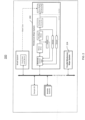
- FIG. 4 depicts a high-level architecture of the wiper system 400 for wiper blade monitoring in the windscreen wiper system.
- the ECU 402 is shown including an RFID module 404, Control Module 406, and Avionics Interface Module 408.
- the control module 406 of the ECU 402 includes a configurable usage limit and persistent memory.
- the blade replacement interval and blade retirement interval can be configured and stored in the persistent memory of the control module 406.
- the computing unit of the ECU 402 is configured to determine whether the wiper blade has been replaced by comparing the currently read blade information associated with the RFID tag against the previously stored blade information from the persistent memory.
- the computing unit interfaces with the avionics interface module 408 for reporting the current blade usage status to the cockpit and to a computing device such as but not limited to a ground maintenance computer or server, or other maintenance device such a laptop, PED, smart device, etc. for preventive maintenance.
- a computing device such as but not limited to a ground maintenance computer or server, or other maintenance device such a laptop, PED, smart device, etc. for preventive maintenance.
- the RFID module 404 of the ECU 402 includes an RFID reader that is configured to communicate with the RFID tag of the wiper blade.
- the RFID reader is configured to energize the passive RFID tags, responsively the RFID tag transmits a unique serial number to the RFID reader.
- the RFID antenna is used to communicate with the RFID tag of the wiper blade.
- the RFID reader obtains the blade information from the RFID tags such as the unique serial number that identifies the individual wiper blades.
- the computing unit upon power-up or during initial built-in test (IBIT) process, the computing unit reads the blade information through the RFID reader and stores it in the persistent memory, and the computing unit compares the currently read blade information against the previously stored blade information from the persistent memory.
- IBIT initial built-in test
- the Avionics Interface Module 408 also includes a communication interface that is configured to communicate over a wireless or wired communication channel.
- the communication interface is coupled to a wireless transceiver and wireless antenna to communicate over the wireless channel.
- the communication interface can be coupled to or directly connected to the wired connection such as the avionics bus.
- Blade Usage Ratio BUR Current Blade Usage Blade Replacement Interval where the current blade usage is based on a duration of operation of the wiper blades or a number/count of sweeps during operation of the wiper blades, and the replacement interval can be configured for a particular type, model, or material used for the blade.
- Blade Usage Status Normal , 0 ⁇ BUR ⁇ Threshold 1 Warning , Threshold 1 ⁇ BUR ⁇ Threshold 2 Error Continue , Threshold 2 ⁇ BUR ⁇ Threshold 3 Error Stop , Threshold 3 ⁇ BUR
- the ECU continuously monitors the wiper blade usage and determines the blade usage status. If the calculated BUR is less than a first threshold1, the wiper blades are healthy and the normal indicator is annunciated. If the BUR is between a first threshold 1 and a second threshold2 a warning indicator is annunciated. If the BUR is between a second threshold2 and a third thresholds an error continue alert is annunciated. In this error state operation of the wiper system is allowed to continue. If the BUR exceeds the third thresholds, and error stop alert is annunciated. In this error state, further operation is not recommended and the wiper system should be stopped to replace the wiper blades.
- the thresholds can be configured based on different levels of alarms and types of wipers.
- the thresholds can be stored in the memory and used by the ECU to compare the current status of the wiper blades to the thresholds to determine the corresponding status indicator.
- the rubber wear out in the blade that can occur during use causes cuts in the tracks in the passive RFID tag.
- the computing unit identifies the installation of incompatible blades and/or blade rubber wear out in the wiper system by monitoring the unresponsiveness of the passive RFID tag embedded in the wiper blade.
- FIG. 5 depicts another diagram of a system 500 used for monitoring the health of the wiper blades system.
- the ECU 132 is coupled to the MCU 128 which controls the operation of the wipers 510, an LED indicators 514 configured to provide a health status of the wiper blades, and a PED 516 configured to communicate with the ECU 132.
- the data collected from the ECU 132 can be provided to and displayed on the PED for maintenance personnel.
- the PED can be configured to communicate with the ECU over the communication interface or the wireless transceiver shown in FIG. 4 .
- the PED can be connected to the ECU using a wired/wireless connection to download the wiper blade health and usage data.
- the PED can also receive the generated replacement indicators and reports.
- the PED provides an interface to alert the maintenance/crew of the detailed health status and replacement advisory of the wiper blade.
- the RFID tags 512 are embedded in the wiper blades 510 that are attached to the wiper arms on the pilot side and the co-pilot side of the windscreen.
- the indication system 514 having LED indicators can include a number of light indicators that can be activated by signals from the ECU. This can indicate the current health of the wipers based on the usage history of the wiper system based on the total duty cycle and motor commands processed during operation.
- the ECU 132 can be configured with additional modules to run in a maintenance mode and perform the computation for the wiper blade usage.
- the wiper information in the event, the RFID reader or scanner is unavailable the wiper information (installation date and time, wiper blade identification, etc.) can be manually entered into the system.
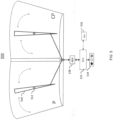
- FIG. 6 depicts another view of the system of FIG. 5 used for health monitoring of the wiper blades system in accordance with one or more embodiments.
- FIG. 6 depicts the windscreen portion 602 and the cockpit portion 604 of the system.
- the windscreen portion 602 includes an RFID tag 512 that is embedded in the wiper blade 510 and is configured to communicate with an RFID scanner 608.
- the RFID tag 512 contains the wiper blade installation date and time stored.
- an RFID scanner device is used to collect the data from the RFID tag 512.
- the cockpit portion includes the ECU 132, the MCU 128, the LED indicators 514, and the PED 516.
- the ECU 132 is configured to continuously monitor the information and usage history of the blades and stored the information in the storage section 610 of the ECU 132.
- the application section 612 of the ECU 132 analyzes the data stored and applies arithmetic computations defined in the algorithms to compute the wiper blade usage.
- the estimated duty cycle is based on the life of the wiper blade.
- the ECU 132 calculates the total duty cycle remaining and various indicators can be provided upon reaching configurable thresholds and/or levels. For example, the red LED can be illuminated when the wiper blade usage has reached the maximum limit. When the total duty cycle is half the life of the wiper blades a yellow LED can be illuminated and a green LED can be illuminated until the half age is reached. The ECU 132 can generate reports and logs for the processed data to indicate the health of the wiper blades.
- any number and color of indicators can be used to provide various status levels.
- various alarms, alerts, feedback, etc. can also be coupled with the indicators to provide the status levels.
- FIG. 7 depicts an illustration of the storage section 610 and the application section 612 of the ECU 132 in accordance with one or more embodiments.
- the storage section 610 of the ECU 132 stores the data in the storage 706.
- the storage 706 can include a non-volatile memory (NVM).
- NVM non-volatile memory
- the storage 706 is configured to store the duration of time or a number of sweeps in which the wiper blades are operated in the various modes. For example, duration t1 is recorded in the storage 706 when operating the wiper system in the low-speed mode, duration t2 and t3 are recorded when operating in the medium-speed mode and high-speed mode, respectively. As shown, when operating in the low-speed mode the duty cycle for operating the windscreen wipers is lower than that of the medium-speed and high-speed modes.
- the application section 612 processes the logs and generates various reports such as the blade usage details 716, remaining hours details 718, blade replacement history 720. It should be understood the application section 704 of the ECU can be configured to processing additional data and/or generate additional reports and is not limited by that provided in FIG. 7 .
- FIG. 8 depicts a method 800 for providing monitoring of the wiper system in accordance with one or more embodiments.
- the method 800 begins at block 802 and proceeds to block 804 which provides for reading an RFID tag embedded in a wiper blade using a reader.
- the reader energizes the RFID tag and obtains the blade information transmitted from the RFID tag.
- the read blade information can be stored in the memory of the ECU.
- Block 806 determines when the wiper blade was put into service based on a state corresponding to the read RFID tag.
- an ECU compares the read RFID tag to the stored wiper blade information. If the blade information does not result in a match, it is determined that the blade has been replaced and the usage count/blade usage ratio for the blade is reset. If there is a match, it is determined that the blades have not been replaced and the usage count/blade usage ratio continues to be added to the current count. In addition, in the event the reader is unable to obtain a successful read from the RFID tag, it can be determined that the RFID tag is damaged due to overuse or some other fault that requires further inspection exists.
- Block 808 determines a blade usage based on time elapsed since the wiper blade was placed into service.
- Block 810 determines a blade usage ration for the wiper blade based on time elapsed and the blade replacement, and block 812 provides an indication of a status of the wiper blade based at least in part on the blade usage ratio.
- the blade replacement interval and blade retirement interval can be stored in the persistent memory.
- the replacement interval and blade retirement interval are configurable parameter and can be based on the specific windscreen wiper that is being used.
- the method 800 can end at block 814. In other embodiments, the method 800 can continue to monitor the wiper blade as provided with reference to the method 900 of FIG. 9 .
- the method 900 for monitoring the health of a windscreen wiper system begins at block 902 and proceeds to block 904 which monitors, via an ECU, an operation of the wipers of the wiper system.
- the ECU is configured to monitor the duty cycle and motor commands from the MCU that are used to drive the wipers of the wiper system.
- Block 906 calculates a total duty cycle of operation for the wiper blades, and Block 908 compares the total duty cycle to a duty cycle threshold.
- Block 910 provides an indication based at least in part on the comparison of the total duty cycle to the duty cycle threshold for the wiper blade.
- the method 900 ends at 912. It should be understood that the method 900 can continuously monitor the wiper blades in accordance with the method.
- an aircraft 1000 is shown that can implement the systems described herein. It should be understood the wiper system and wash system can be implemented on other types of vehicles not limited to rotorcrafts, trains, boats, and other vehicles.
- the technical effects and benefits include automatic monitoring of the wiper blade usage of the wiper system in a variety of modes which can aid in the accurate planning of the maintenance of the wiper system.
- embodiments can be in the form of processor-implemented processes and devices for practicing those processes, such as a processor.
- Embodiments can also be in the form of computer program code containing instructions embodied in tangible media, such as network cloud storage, SD cards, flash drives, floppy diskettes, CD ROMs, hard drives, or any other computer-readable storage medium, wherein, when the computer program code is loaded into and executed by a computer, the computer becomes a device for practicing the embodiments.
- Embodiments can also be in the form of computer program code, for example, whether stored in a storage medium, loaded into and/or executed by a computer, or transmitted over some transmission medium, loaded into and/or executed by a computer, or transmitted over some transmission medium, such as over electrical wiring or cabling, through fiber optics, or via electromagnetic radiation, wherein, when the computer program code is loaded into an executed by a computer, the computer becomes an device for practicing the embodiments.
- the computer program code segments configure the microprocessor to create specific logic circuits.
Landscapes
- Engineering & Computer Science (AREA)
- Physics & Mathematics (AREA)
- General Physics & Mathematics (AREA)
- Aviation & Aerospace Engineering (AREA)
- Mechanical Engineering (AREA)
- Computer Hardware Design (AREA)
- Microelectronics & Electronic Packaging (AREA)
- Theoretical Computer Science (AREA)
- Manufacturing & Machinery (AREA)
- Transportation (AREA)
- Management, Administration, Business Operations System, And Electronic Commerce (AREA)
Claims (10)
- Verfahren zum Überwachen eines Wischersystems, wobei das Verfahren Folgendes umfasst:Lesen (804) eines in einem Wischerblatt eingebetteten Radiofrequenz-Identifikations-Tags (RFID) mithilfe eines Lesegeräts;Bestimmen (806), wann das Wischerblatt in Betrieb genommen wurde, basierend auf den gespeicherten Daten, die dem gelesenen RFID-Tag entsprechen;Bestimmen (808) der Wischblattnutzung auf Grundlage der seit der Inbetriebnahme des Wischblatts verstrichenen Zeit;Bestimmen (810) eines Wischerblattnutzungsverhältnisses für das Wischerblatt auf der Grundlage der verstrichenen Zeit und eines Blattaustauschintervalls,Bereitstellen (812) einer Anzeige eines Status des Wischerblatts, die zumindest teilweise auf dem Blattnutzungsverhältnis basiert;Überwachen des Betriebs des Wischerblatts des Wischersystems durch eine elektronische Steuereinheit;Berechnen eines Gesamtarbeitszyklus zum Betrieb des Wischerblatts;Vergleichen des gesamten Arbeitszyklus mit einem Arbeitszyklusschwellenwert;Bereitstellung eines Hinweises auf den Gesundheitszustand des Wischerblatts, der zumindest teilweise auf dem Vergleich des Gesamtarbeitszyklus mit dem Arbeitszyklusschwellenwert basiert Betreiben des Wischerblattsystems in mindestens einem Niedriggeschwindigkeitsmodus, einem Mittelgeschwindigkeitsmodus und einem Hochgeschwindigkeitsmodus;Berechnen eines Arbeitszyklus, der jedem Betriebsmodus des Wischerblattsystems entspricht, wobei das Berechnen des gesamten Arbeitszyklus eine Funktion der Zeitdauer umfasst, in der das Wischerblatt in jedem Modus betrieben wird, undVerbinden der ECU mit mindestens einem LED-Anzeigesystem oder einem externen Gerät (PED), um den Gesundheitszustand des Wischerblatts basierend auf dem gesamten Arbeitszyklus anzuzeigen;wobei beim Betrieb im Niedriggeschwindigkeitsmodus der Arbeitszyklus zum Betrieb der Scheibenwischer niedriger ist als im Mittelgeschwindigkeits- und Hochgeschwindigkeitsmodus.
- Verfahren nach Anspruch 1, das ferner als Reaktion auf ein erfolgloses Lesen des RFID-Tags das Bereitstellen einer Fehlermeldung umfasst.
- Verfahren nach Anspruch 1 oder 2, das ferner als Reaktion auf die Feststellung, dass das Wischerblatt ausgetauscht wurde, das Zurücksetzen der Blattnutzung umfasst, andernfalls das Fortsetzen der Erhöhung der Blattnutzung für das Wischerblatt ausgehend von einer aktuellen Blattnutzung.
- Verfahren nach Anspruch 3, wobei der Gesundheitszustand durch Vergleichen des Blattnutzungsverhältnisses mit einem Blattnutzungsverhältnisschwellenwert bestimmt wird.
- Verfahren nach Anspruch 4, wobei das Blattnutzungsverhältnis aus der folgenden Gleichung bestimmt wird:

- Verfahren nach Anspruch 1, das ferner das Speichern der RFID-Tags des neuen Wischerblatts als Reaktion auf die Installation eines neuen Wischerblatts umfasst; und
Zurücksetzen des für ein neues Wischerblatt gespeicherten Gesamtarbeitszyklus. - System, das Folgendes umfasst:ein oder mehrere Wischerblätter;eine elektronische Steuereinheit (ECU), die für Folgendes konfiguriert ist:Überwachen des einen oder der mehreren Wischerblätter und Bestimmen des Gesundheitszustands des einen oder der mehreren Wischerblätter;ein in einem oder mehreren Wischerblättern eingebettetes RFID-Tag (Radio Frequency Identification);ein RFID-Lesegerät, das zum Lesen des in einem oder mehreren Wischerblättern eingebetteten RFID-Tags konfiguriert ist; undein tragbares elektronisches Gerät (PED), das so konfiguriert ist, dass es mit der elektronischen Steuereinheit kommuniziert, und/oder das ferner ein LED-Anzeigesystem umfasst, das so konfiguriert ist, dass es eine Anzeige des Gesundheitszustands der einen oder mehreren Wischerblätter liefert,wobei das System so konfiguriert ist, dass es das Verfahren eines der vorhergehenden Ansprüche ausführt.
- Das System nach Anspruch 7, das ferner eine Motorsteuereinheit umfasst, die zum Antreiben eines oder mehrerer Wischerarme konfiguriert ist und mit der ECU gekoppelt ist, wobei die ECU zum Überwachen eines Arbeitszyklus für jeden Betriebsmodus für das Wischersystems konfiguriert ist.
- Das System nach einem der Ansprüche 7 oder 8, das außerdem eine Schnittstelle zur Kommunikation mit einem Bodenwartungsserver oder Cockpit zur vorbeugenden Wartung umfasst, um einen Funktionszustand der einen oder mehreren Wischerblätter anzuzeigen.
- Das System gemäß einem der Ansprüche 7 bis 9 umfasst außerdem einen Scanner, der zum Lesen des eingebetteten RFID-Tags konfiguriert ist.
Applications Claiming Priority (1)
| Application Number | Priority Date | Filing Date | Title |
|---|---|---|---|
| IN201911051847 | 2019-12-13 |
Publications (2)
| Publication Number | Publication Date |
|---|---|
| EP3835147A1 EP3835147A1 (de) | 2021-06-16 |
| EP3835147B1 true EP3835147B1 (de) | 2025-02-19 |
Family
ID=73835517
Family Applications (1)
| Application Number | Title | Priority Date | Filing Date |
|---|---|---|---|
| EP20213920.0A Active EP3835147B1 (de) | 2019-12-13 | 2020-12-14 | Überwachung der nutzung und intaktheit von flugzeugscheibenwischern |
Country Status (2)
| Country | Link |
|---|---|
| US (1) | US11414216B2 (de) |
| EP (1) | EP3835147B1 (de) |
Families Citing this family (3)
| Publication number | Priority date | Publication date | Assignee | Title |
|---|---|---|---|---|
| US11414216B2 (en) * | 2019-12-13 | 2022-08-16 | Rosemount Aerospace Inc. | Monitoring aircraft windscreen blade usage and health |
| KR20230041375A (ko) * | 2021-09-17 | 2023-03-24 | 현대자동차주식회사 | 차량 및 안테나를 구비한 차량용 와이퍼 |
| DE102023210585A1 (de) * | 2023-10-26 | 2025-04-30 | Robert Bosch Gesellschaft mit beschränkter Haftung | Computerimplementiertes Verfahren, Vorrichtung und Computerprogramm zum Montieren eines Wischblatts an einen Wischarm eines Kraftfahrzeugs und Verfahren zum Montieren eines Wischblatts |
Citations (1)
| Publication number | Priority date | Publication date | Assignee | Title |
|---|---|---|---|---|
| US20160207500A1 (en) * | 2015-01-19 | 2016-07-21 | GM Global Technology Operations LLC | Methods and systems for monitoring wiper blades |
Family Cites Families (8)
| Publication number | Priority date | Publication date | Assignee | Title |
|---|---|---|---|---|
| DE102009002523A1 (de) | 2009-04-21 | 2010-10-28 | Robert Bosch Gmbh | Wischerblatt und Scheibenwischersystem |
| KR101053022B1 (ko) | 2009-05-19 | 2011-08-01 | 에이디엠이십일 주식회사 | 와이퍼블레이드용 경보장치, 그 구동방법 및 경보장치를 구비한 와이퍼블레이드 |
| DE102011089906A1 (de) | 2011-12-27 | 2013-06-27 | Robert Bosch Gmbh | Wischblattvorrichtung |
| DE102013010639A1 (de) | 2013-06-25 | 2015-01-08 | Daimler Ag | Vorrichtung und Verfahren zur Bestimmung eines Wischerverschleißes mittels Transponder, insbesondere RFID-Transponder |
| DE102016220087B4 (de) | 2016-10-14 | 2025-10-09 | Robert Bosch Gmbh | Wischerblatt und Scheibenwischersystem |
| FR3062500A1 (fr) | 2017-02-02 | 2018-08-03 | Valeo Systemes D'essuyage | Procede de suivi de l'utilisation d'un systeme d'essuyage d'un vehicule automobile |
| US20180341794A1 (en) * | 2017-05-29 | 2018-11-29 | Goodrich Corporation | Rfid based prognostic and diagnostic data communication |
| US11414216B2 (en) * | 2019-12-13 | 2022-08-16 | Rosemount Aerospace Inc. | Monitoring aircraft windscreen blade usage and health |
-
2020
- 2020-02-12 US US16/788,391 patent/US11414216B2/en active Active
- 2020-12-14 EP EP20213920.0A patent/EP3835147B1/de active Active
Patent Citations (1)
| Publication number | Priority date | Publication date | Assignee | Title |
|---|---|---|---|---|
| US20160207500A1 (en) * | 2015-01-19 | 2016-07-21 | GM Global Technology Operations LLC | Methods and systems for monitoring wiper blades |
Also Published As
| Publication number | Publication date |
|---|---|
| EP3835147A1 (de) | 2021-06-16 |
| US20210179296A1 (en) | 2021-06-17 |
| US11414216B2 (en) | 2022-08-16 |
Similar Documents
| Publication | Publication Date | Title |
|---|---|---|
| EP3835147B1 (de) | Überwachung der nutzung und intaktheit von flugzeugscheibenwischern | |
| US6219597B1 (en) | Process and device for aiding the maintenance of a complex system, especially an aircraft | |
| EP2329459B1 (de) | Verfahren und vorrichtung zum erhalten von fahrzeugdaten | |
| CN114490161B (zh) | 一种故障诊断方法、装置、车辆及存储介质 | |
| EP3488307B1 (de) | Verfahren zur vorhersage und verhinderung von defekten bei instrumenten für die in-vitro-diagnose | |
| US6442511B1 (en) | Method and apparatus for determining the severity of a trend toward an impending machine failure and responding to the same | |
| US10062219B2 (en) | Method for determining the cause of failure in a vehicle | |
| KR102062855B1 (ko) | 무인 비행체용 이상상태 감지 장치 | |
| US8812267B2 (en) | Device for detecting contamination level of operating oil | |
| CN105008875B (zh) | 基于所感测的振动确定用于机动车辆的矫正动作 | |
| EP2366974B1 (de) | Virtuelle Eisansatzmessgerätanzeige | |
| US11661035B2 (en) | Fault diagnostics in aircraft windshield wiper systems | |
| WO2015166349A1 (en) | Trending machine health data using rfid transponders | |
| EP3680653B1 (de) | Echtzeit-leistungs- und zustandsüberwachung von eisdetektorsystemen und schätzung der verbleibenden lebensdauer | |
| US9218694B1 (en) | Recommendations for time to replace parts on machines | |
| EP3328089B1 (de) | Filterelementanalysesystem und zugehörige verfahren | |
| EP2597602A1 (de) | Flugzeugtrendverfolgungssysteme und -verfahren | |
| US20250045660A1 (en) | Equipment repair system and method | |
| CN114396415B (zh) | 用于液压故障自诊断的装置、方法及液压系统 | |
| CN116136683A (zh) | 修复和维护车辆系统的系统和方法 | |
| US20250360933A1 (en) | Maintenance System And Maintenance Method For An Indirect Vision System Of A Vehicle | |
| CZ33791U1 (cs) | Systém pro analýzu a diagnostiku technologických zařízení tunelových staveb |
Legal Events
| Date | Code | Title | Description |
|---|---|---|---|
| PUAI | Public reference made under article 153(3) epc to a published international application that has entered the european phase |
Free format text: ORIGINAL CODE: 0009012 |
|
| STAA | Information on the status of an ep patent application or granted ep patent |
Free format text: STATUS: THE APPLICATION HAS BEEN PUBLISHED |
|
| AK | Designated contracting states |
Kind code of ref document: A1 Designated state(s): AL AT BE BG CH CY CZ DE DK EE ES FI FR GB GR HR HU IE IS IT LI LT LU LV MC MK MT NL NO PL PT RO RS SE SI SK SM TR |
|
| STAA | Information on the status of an ep patent application or granted ep patent |
Free format text: STATUS: REQUEST FOR EXAMINATION WAS MADE |
|
| 17P | Request for examination filed |
Effective date: 20211215 |
|
| RBV | Designated contracting states (corrected) |
Designated state(s): AL AT BE BG CH CY CZ DE DK EE ES FI FR GB GR HR HU IE IS IT LI LT LU LV MC MK MT NL NO PL PT RO RS SE SI SK SM TR |
|
| STAA | Information on the status of an ep patent application or granted ep patent |
Free format text: STATUS: EXAMINATION IS IN PROGRESS |
|
| 17Q | First examination report despatched |
Effective date: 20230209 |
|
| GRAP | Despatch of communication of intention to grant a patent |
Free format text: ORIGINAL CODE: EPIDOSNIGR1 |
|
| STAA | Information on the status of an ep patent application or granted ep patent |
Free format text: STATUS: GRANT OF PATENT IS INTENDED |
|
| INTG | Intention to grant announced |
Effective date: 20240903 |
|
| GRAS | Grant fee paid |
Free format text: ORIGINAL CODE: EPIDOSNIGR3 |
|
| GRAA | (expected) grant |
Free format text: ORIGINAL CODE: 0009210 |
|
| STAA | Information on the status of an ep patent application or granted ep patent |
Free format text: STATUS: THE PATENT HAS BEEN GRANTED |
|
| AK | Designated contracting states |
Kind code of ref document: B1 Designated state(s): AL AT BE BG CH CY CZ DE DK EE ES FI FR GB GR HR HU IE IS IT LI LT LU LV MC MK MT NL NO PL PT RO RS SE SI SK SM TR |
|
| REG | Reference to a national code |
Ref country code: GB Ref legal event code: FG4D |
|
| REG | Reference to a national code |
Ref country code: CH Ref legal event code: EP |
|
| REG | Reference to a national code |
Ref country code: IE Ref legal event code: FG4D |
|
| REG | Reference to a national code |
Ref country code: DE Ref legal event code: R096 Ref document number: 602020046256 Country of ref document: DE |
|
| REG | Reference to a national code |
Ref country code: NL Ref legal event code: MP Effective date: 20250219 |
|
| PG25 | Lapsed in a contracting state [announced via postgrant information from national office to epo] |
Ref country code: RS Free format text: LAPSE BECAUSE OF FAILURE TO SUBMIT A TRANSLATION OF THE DESCRIPTION OR TO PAY THE FEE WITHIN THE PRESCRIBED TIME-LIMIT Effective date: 20250519 |
|
| PG25 | Lapsed in a contracting state [announced via postgrant information from national office to epo] |
Ref country code: FI Free format text: LAPSE BECAUSE OF FAILURE TO SUBMIT A TRANSLATION OF THE DESCRIPTION OR TO PAY THE FEE WITHIN THE PRESCRIBED TIME-LIMIT Effective date: 20250219 |
|
| PG25 | Lapsed in a contracting state [announced via postgrant information from national office to epo] |
Ref country code: PL Free format text: LAPSE BECAUSE OF FAILURE TO SUBMIT A TRANSLATION OF THE DESCRIPTION OR TO PAY THE FEE WITHIN THE PRESCRIBED TIME-LIMIT Effective date: 20250219 |
|
| PG25 | Lapsed in a contracting state [announced via postgrant information from national office to epo] |
Ref country code: ES Free format text: LAPSE BECAUSE OF FAILURE TO SUBMIT A TRANSLATION OF THE DESCRIPTION OR TO PAY THE FEE WITHIN THE PRESCRIBED TIME-LIMIT Effective date: 20250219 |
|
| REG | Reference to a national code |
Ref country code: LT Ref legal event code: MG9D |
|
| PG25 | Lapsed in a contracting state [announced via postgrant information from national office to epo] |
Ref country code: IS Free format text: LAPSE BECAUSE OF FAILURE TO SUBMIT A TRANSLATION OF THE DESCRIPTION OR TO PAY THE FEE WITHIN THE PRESCRIBED TIME-LIMIT Effective date: 20250619 Ref country code: NO Free format text: LAPSE BECAUSE OF FAILURE TO SUBMIT A TRANSLATION OF THE DESCRIPTION OR TO PAY THE FEE WITHIN THE PRESCRIBED TIME-LIMIT Effective date: 20250519 |
|
| PG25 | Lapsed in a contracting state [announced via postgrant information from national office to epo] |
Ref country code: NL Free format text: LAPSE BECAUSE OF FAILURE TO SUBMIT A TRANSLATION OF THE DESCRIPTION OR TO PAY THE FEE WITHIN THE PRESCRIBED TIME-LIMIT Effective date: 20250219 |
|
| PG25 | Lapsed in a contracting state [announced via postgrant information from national office to epo] |
Ref country code: HR Free format text: LAPSE BECAUSE OF FAILURE TO SUBMIT A TRANSLATION OF THE DESCRIPTION OR TO PAY THE FEE WITHIN THE PRESCRIBED TIME-LIMIT Effective date: 20250219 |
|
| PG25 | Lapsed in a contracting state [announced via postgrant information from national office to epo] |
Ref country code: PT Free format text: LAPSE BECAUSE OF FAILURE TO SUBMIT A TRANSLATION OF THE DESCRIPTION OR TO PAY THE FEE WITHIN THE PRESCRIBED TIME-LIMIT Effective date: 20250620 Ref country code: LV Free format text: LAPSE BECAUSE OF FAILURE TO SUBMIT A TRANSLATION OF THE DESCRIPTION OR TO PAY THE FEE WITHIN THE PRESCRIBED TIME-LIMIT Effective date: 20250219 |
|
| PG25 | Lapsed in a contracting state [announced via postgrant information from national office to epo] |
Ref country code: GR Free format text: LAPSE BECAUSE OF FAILURE TO SUBMIT A TRANSLATION OF THE DESCRIPTION OR TO PAY THE FEE WITHIN THE PRESCRIBED TIME-LIMIT Effective date: 20250520 Ref country code: BG Free format text: LAPSE BECAUSE OF FAILURE TO SUBMIT A TRANSLATION OF THE DESCRIPTION OR TO PAY THE FEE WITHIN THE PRESCRIBED TIME-LIMIT Effective date: 20250219 |
|
| REG | Reference to a national code |
Ref country code: AT Ref legal event code: MK05 Ref document number: 1768029 Country of ref document: AT Kind code of ref document: T Effective date: 20250219 |
|
| PG25 | Lapsed in a contracting state [announced via postgrant information from national office to epo] |
Ref country code: SE Free format text: LAPSE BECAUSE OF FAILURE TO SUBMIT A TRANSLATION OF THE DESCRIPTION OR TO PAY THE FEE WITHIN THE PRESCRIBED TIME-LIMIT Effective date: 20250219 |
|
| PG25 | Lapsed in a contracting state [announced via postgrant information from national office to epo] |
Ref country code: SM Free format text: LAPSE BECAUSE OF FAILURE TO SUBMIT A TRANSLATION OF THE DESCRIPTION OR TO PAY THE FEE WITHIN THE PRESCRIBED TIME-LIMIT Effective date: 20250219 |
|
| PG25 | Lapsed in a contracting state [announced via postgrant information from national office to epo] |
Ref country code: DK Free format text: LAPSE BECAUSE OF FAILURE TO SUBMIT A TRANSLATION OF THE DESCRIPTION OR TO PAY THE FEE WITHIN THE PRESCRIBED TIME-LIMIT Effective date: 20250219 |
|
| PG25 | Lapsed in a contracting state [announced via postgrant information from national office to epo] |
Ref country code: IT Free format text: LAPSE BECAUSE OF FAILURE TO SUBMIT A TRANSLATION OF THE DESCRIPTION OR TO PAY THE FEE WITHIN THE PRESCRIBED TIME-LIMIT Effective date: 20250219 |
|
| PG25 | Lapsed in a contracting state [announced via postgrant information from national office to epo] |
Ref country code: AT Free format text: LAPSE BECAUSE OF FAILURE TO SUBMIT A TRANSLATION OF THE DESCRIPTION OR TO PAY THE FEE WITHIN THE PRESCRIBED TIME-LIMIT Effective date: 20250219 |
|
| PG25 | Lapsed in a contracting state [announced via postgrant information from national office to epo] |
Ref country code: EE Free format text: LAPSE BECAUSE OF FAILURE TO SUBMIT A TRANSLATION OF THE DESCRIPTION OR TO PAY THE FEE WITHIN THE PRESCRIBED TIME-LIMIT Effective date: 20250219 Ref country code: CZ Free format text: LAPSE BECAUSE OF FAILURE TO SUBMIT A TRANSLATION OF THE DESCRIPTION OR TO PAY THE FEE WITHIN THE PRESCRIBED TIME-LIMIT Effective date: 20250219 |
|
| PG25 | Lapsed in a contracting state [announced via postgrant information from national office to epo] |
Ref country code: RO Free format text: LAPSE BECAUSE OF FAILURE TO SUBMIT A TRANSLATION OF THE DESCRIPTION OR TO PAY THE FEE WITHIN THE PRESCRIBED TIME-LIMIT Effective date: 20250219 |
|
| PG25 | Lapsed in a contracting state [announced via postgrant information from national office to epo] |
Ref country code: SK Free format text: LAPSE BECAUSE OF FAILURE TO SUBMIT A TRANSLATION OF THE DESCRIPTION OR TO PAY THE FEE WITHIN THE PRESCRIBED TIME-LIMIT Effective date: 20250219 |
|
| REG | Reference to a national code |
Ref country code: DE Ref legal event code: R097 Ref document number: 602020046256 Country of ref document: DE |
|
| PLBE | No opposition filed within time limit |
Free format text: ORIGINAL CODE: 0009261 |
|
| STAA | Information on the status of an ep patent application or granted ep patent |
Free format text: STATUS: NO OPPOSITION FILED WITHIN TIME LIMIT |
|
| PGFP | Annual fee paid to national office [announced via postgrant information from national office to epo] |
Ref country code: DE Payment date: 20251126 Year of fee payment: 6 |
|
| PGFP | Annual fee paid to national office [announced via postgrant information from national office to epo] |
Ref country code: GB Payment date: 20251119 Year of fee payment: 6 |
|
| PGFP | Annual fee paid to national office [announced via postgrant information from national office to epo] |
Ref country code: FR Payment date: 20251120 Year of fee payment: 6 |
|
| 26N | No opposition filed |
Effective date: 20251120 |