EP3835106A1 - Agent management device, program, and agent management method - Google Patents
Agent management device, program, and agent management method Download PDFInfo
- Publication number
- EP3835106A1 EP3835106A1 EP20201980.8A EP20201980A EP3835106A1 EP 3835106 A1 EP3835106 A1 EP 3835106A1 EP 20201980 A EP20201980 A EP 20201980A EP 3835106 A1 EP3835106 A1 EP 3835106A1
- Authority
- EP
- European Patent Office
- Prior art keywords
- control content
- change
- occupant
- unit
- moving body
- Prior art date
- Legal status (The legal status is an assumption and is not a legal conclusion. Google has not performed a legal analysis and makes no representation as to the accuracy of the status listed.)
- Withdrawn
Links
Images



Classifications
-
- B—PERFORMING OPERATIONS; TRANSPORTING
- B60—VEHICLES IN GENERAL
- B60W—CONJOINT CONTROL OF VEHICLE SUB-UNITS OF DIFFERENT TYPE OR DIFFERENT FUNCTION; CONTROL SYSTEMS SPECIALLY ADAPTED FOR HYBRID VEHICLES; ROAD VEHICLE DRIVE CONTROL SYSTEMS FOR PURPOSES NOT RELATED TO THE CONTROL OF A PARTICULAR SUB-UNIT
- B60W50/00—Details of control systems for road vehicle drive control not related to the control of a particular sub-unit, e.g. process diagnostic or vehicle driver interfaces
- B60W50/08—Interaction between the driver and the control system
- B60W50/10—Interpretation of driver requests or demands
-
- G—PHYSICS
- G01—MEASURING; TESTING
- G01C—MEASURING DISTANCES, LEVELS OR BEARINGS; SURVEYING; NAVIGATION; GYROSCOPIC INSTRUMENTS; PHOTOGRAMMETRY OR VIDEOGRAMMETRY
- G01C21/00—Navigation; Navigational instruments not provided for in groups G01C1/00 - G01C19/00
- G01C21/26—Navigation; Navigational instruments not provided for in groups G01C1/00 - G01C19/00 specially adapted for navigation in a road network
-
- B—PERFORMING OPERATIONS; TRANSPORTING
- B60—VEHICLES IN GENERAL
- B60K—ARRANGEMENT OR MOUNTING OF PROPULSION UNITS OR OF TRANSMISSIONS IN VEHICLES; ARRANGEMENT OR MOUNTING OF PLURAL DIVERSE PRIME-MOVERS IN VEHICLES; AUXILIARY DRIVES FOR VEHICLES; INSTRUMENTATION OR DASHBOARDS FOR VEHICLES; ARRANGEMENTS IN CONNECTION WITH COOLING, AIR INTAKE, GAS EXHAUST OR FUEL SUPPLY OF PROPULSION UNITS IN VEHICLES
- B60K35/00—Instruments specially adapted for vehicles; Arrangement of instruments in or on vehicles
- B60K35/10—Input arrangements, i.e. from user to vehicle, associated with vehicle functions or specially adapted therefor
-
- G—PHYSICS
- G05—CONTROLLING; REGULATING
- G05D—SYSTEMS FOR CONTROLLING OR REGULATING NON-ELECTRIC VARIABLES
- G05D1/00—Control of position, course, altitude or attitude of land, water, air or space vehicles, e.g. using automatic pilots
-
- G—PHYSICS
- G06—COMPUTING OR CALCULATING; COUNTING
- G06F—ELECTRIC DIGITAL DATA PROCESSING
- G06F16/00—Information retrieval; Database structures therefor; File system structures therefor
- G06F16/30—Information retrieval; Database structures therefor; File system structures therefor of unstructured textual data
- G06F16/33—Querying
- G06F16/332—Query formulation
- G06F16/3329—Natural language query formulation
-
- B—PERFORMING OPERATIONS; TRANSPORTING
- B60—VEHICLES IN GENERAL
- B60K—ARRANGEMENT OR MOUNTING OF PROPULSION UNITS OR OF TRANSMISSIONS IN VEHICLES; ARRANGEMENT OR MOUNTING OF PLURAL DIVERSE PRIME-MOVERS IN VEHICLES; AUXILIARY DRIVES FOR VEHICLES; INSTRUMENTATION OR DASHBOARDS FOR VEHICLES; ARRANGEMENTS IN CONNECTION WITH COOLING, AIR INTAKE, GAS EXHAUST OR FUEL SUPPLY OF PROPULSION UNITS IN VEHICLES
- B60K35/00—Instruments specially adapted for vehicles; Arrangement of instruments in or on vehicles
- B60K35/20—Output arrangements, i.e. from vehicle to user, associated with vehicle functions or specially adapted therefor
- B60K35/26—Output arrangements, i.e. from vehicle to user, associated with vehicle functions or specially adapted therefor using acoustic output
- B60K35/265—Voice
-
- B—PERFORMING OPERATIONS; TRANSPORTING
- B60—VEHICLES IN GENERAL
- B60R—VEHICLES, VEHICLE FITTINGS, OR VEHICLE PARTS, NOT OTHERWISE PROVIDED FOR
- B60R16/00—Electric or fluid circuits specially adapted for vehicles and not otherwise provided for; Arrangement of elements of electric or fluid circuits specially adapted for vehicles and not otherwise provided for
- B60R16/02—Electric or fluid circuits specially adapted for vehicles and not otherwise provided for; Arrangement of elements of electric or fluid circuits specially adapted for vehicles and not otherwise provided for electric constitutive elements
-
- B—PERFORMING OPERATIONS; TRANSPORTING
- B60—VEHICLES IN GENERAL
- B60R—VEHICLES, VEHICLE FITTINGS, OR VEHICLE PARTS, NOT OTHERWISE PROVIDED FOR
- B60R16/00—Electric or fluid circuits specially adapted for vehicles and not otherwise provided for; Arrangement of elements of electric or fluid circuits specially adapted for vehicles and not otherwise provided for
- B60R16/02—Electric or fluid circuits specially adapted for vehicles and not otherwise provided for; Arrangement of elements of electric or fluid circuits specially adapted for vehicles and not otherwise provided for electric constitutive elements
- B60R16/037—Electric or fluid circuits specially adapted for vehicles and not otherwise provided for; Arrangement of elements of electric or fluid circuits specially adapted for vehicles and not otherwise provided for electric constitutive elements for occupant comfort, e.g. for automatic adjustment of appliances according to personal settings, e.g. seats, mirrors, steering wheel
- B60R16/0373—Voice control
-
- B—PERFORMING OPERATIONS; TRANSPORTING
- B60—VEHICLES IN GENERAL
- B60W—CONJOINT CONTROL OF VEHICLE SUB-UNITS OF DIFFERENT TYPE OR DIFFERENT FUNCTION; CONTROL SYSTEMS SPECIALLY ADAPTED FOR HYBRID VEHICLES; ROAD VEHICLE DRIVE CONTROL SYSTEMS FOR PURPOSES NOT RELATED TO THE CONTROL OF A PARTICULAR SUB-UNIT
- B60W50/00—Details of control systems for road vehicle drive control not related to the control of a particular sub-unit, e.g. process diagnostic or vehicle driver interfaces
- B60W50/08—Interaction between the driver and the control system
- B60W50/087—Interaction between the driver and the control system where the control system corrects or modifies a request from the driver
-
- B—PERFORMING OPERATIONS; TRANSPORTING
- B62—LAND VEHICLES FOR TRAVELLING OTHERWISE THAN ON RAILS
- B62J—CYCLE SADDLES OR SEATS; AUXILIARY DEVICES OR ACCESSORIES SPECIALLY ADAPTED TO CYCLES AND NOT OTHERWISE PROVIDED FOR, e.g. ARTICLE CARRIERS OR CYCLE PROTECTORS
- B62J45/00—Electrical equipment arrangements specially adapted for use as accessories on cycles, not otherwise provided for
-
- B—PERFORMING OPERATIONS; TRANSPORTING
- B63—SHIPS OR OTHER WATERBORNE VESSELS; RELATED EQUIPMENT
- B63B—SHIPS OR OTHER WATERBORNE VESSELS; EQUIPMENT FOR SHIPPING
- B63B49/00—Arrangements of nautical instruments or navigational aids
-
- B—PERFORMING OPERATIONS; TRANSPORTING
- B64—AIRCRAFT; AVIATION; COSMONAUTICS
- B64D—EQUIPMENT FOR FITTING IN OR TO AIRCRAFT; FLIGHT SUITS; PARACHUTES; ARRANGEMENT OR MOUNTING OF POWER PLANTS OR PROPULSION TRANSMISSIONS IN AIRCRAFT
- B64D43/00—Arrangements or adaptations of instruments
-
- G—PHYSICS
- G06—COMPUTING OR CALCULATING; COUNTING
- G06F—ELECTRIC DIGITAL DATA PROCESSING
- G06F16/00—Information retrieval; Database structures therefor; File system structures therefor
- G06F16/30—Information retrieval; Database structures therefor; File system structures therefor of unstructured textual data
- G06F16/33—Querying
- G06F16/3331—Query processing
- G06F16/334—Query execution
- G06F16/3343—Query execution using phonetics
-
- G—PHYSICS
- G06—COMPUTING OR CALCULATING; COUNTING
- G06F—ELECTRIC DIGITAL DATA PROCESSING
- G06F16/00—Information retrieval; Database structures therefor; File system structures therefor
- G06F16/30—Information retrieval; Database structures therefor; File system structures therefor of unstructured textual data
- G06F16/33—Querying
- G06F16/3331—Query processing
- G06F16/334—Query execution
- G06F16/3344—Query execution using natural language analysis
-
- G—PHYSICS
- G06—COMPUTING OR CALCULATING; COUNTING
- G06F—ELECTRIC DIGITAL DATA PROCESSING
- G06F21/00—Security arrangements for protecting computers, components thereof, programs or data against unauthorised activity
- G06F21/30—Authentication, i.e. establishing the identity or authorisation of security principals
- G06F21/31—User authentication
-
- G—PHYSICS
- G06—COMPUTING OR CALCULATING; COUNTING
- G06N—COMPUTING ARRANGEMENTS BASED ON SPECIFIC COMPUTATIONAL MODELS
- G06N3/00—Computing arrangements based on biological models
- G06N3/02—Neural networks
- G06N3/04—Architecture, e.g. interconnection topology
- G06N3/044—Recurrent networks, e.g. Hopfield networks
-
- G—PHYSICS
- G06—COMPUTING OR CALCULATING; COUNTING
- G06N—COMPUTING ARRANGEMENTS BASED ON SPECIFIC COMPUTATIONAL MODELS
- G06N3/00—Computing arrangements based on biological models
- G06N3/02—Neural networks
- G06N3/04—Architecture, e.g. interconnection topology
- G06N3/045—Combinations of networks
-
- G—PHYSICS
- G10—MUSICAL INSTRUMENTS; ACOUSTICS
- G10L—SPEECH ANALYSIS TECHNIQUES OR SPEECH SYNTHESIS; SPEECH RECOGNITION; SPEECH OR VOICE PROCESSING TECHNIQUES; SPEECH OR AUDIO CODING OR DECODING
- G10L15/00—Speech recognition
- G10L15/08—Speech classification or search
- G10L15/16—Speech classification or search using artificial neural networks
-
- G—PHYSICS
- G10—MUSICAL INSTRUMENTS; ACOUSTICS
- G10L—SPEECH ANALYSIS TECHNIQUES OR SPEECH SYNTHESIS; SPEECH RECOGNITION; SPEECH OR VOICE PROCESSING TECHNIQUES; SPEECH OR AUDIO CODING OR DECODING
- G10L15/00—Speech recognition
- G10L15/08—Speech classification or search
- G10L15/18—Speech classification or search using natural language modelling
- G10L15/1822—Parsing for meaning understanding
-
- G—PHYSICS
- G10—MUSICAL INSTRUMENTS; ACOUSTICS
- G10L—SPEECH ANALYSIS TECHNIQUES OR SPEECH SYNTHESIS; SPEECH RECOGNITION; SPEECH OR VOICE PROCESSING TECHNIQUES; SPEECH OR AUDIO CODING OR DECODING
- G10L15/00—Speech recognition
- G10L15/22—Procedures used during a speech recognition process, e.g. man-machine dialogue
-
- G—PHYSICS
- G10—MUSICAL INSTRUMENTS; ACOUSTICS
- G10L—SPEECH ANALYSIS TECHNIQUES OR SPEECH SYNTHESIS; SPEECH RECOGNITION; SPEECH OR VOICE PROCESSING TECHNIQUES; SPEECH OR AUDIO CODING OR DECODING
- G10L15/00—Speech recognition
- G10L15/26—Speech to text systems
-
- B—PERFORMING OPERATIONS; TRANSPORTING
- B60—VEHICLES IN GENERAL
- B60K—ARRANGEMENT OR MOUNTING OF PROPULSION UNITS OR OF TRANSMISSIONS IN VEHICLES; ARRANGEMENT OR MOUNTING OF PLURAL DIVERSE PRIME-MOVERS IN VEHICLES; AUXILIARY DRIVES FOR VEHICLES; INSTRUMENTATION OR DASHBOARDS FOR VEHICLES; ARRANGEMENTS IN CONNECTION WITH COOLING, AIR INTAKE, GAS EXHAUST OR FUEL SUPPLY OF PROPULSION UNITS IN VEHICLES
- B60K2360/00—Indexing scheme associated with groups B60K35/00 or B60K37/00 relating to details of instruments or dashboards
- B60K2360/148—Instrument input by voice
-
- B—PERFORMING OPERATIONS; TRANSPORTING
- B60—VEHICLES IN GENERAL
- B60W—CONJOINT CONTROL OF VEHICLE SUB-UNITS OF DIFFERENT TYPE OR DIFFERENT FUNCTION; CONTROL SYSTEMS SPECIALLY ADAPTED FOR HYBRID VEHICLES; ROAD VEHICLE DRIVE CONTROL SYSTEMS FOR PURPOSES NOT RELATED TO THE CONTROL OF A PARTICULAR SUB-UNIT
- B60W2540/00—Input parameters relating to occupants
- B60W2540/045—Occupant permissions
-
- G—PHYSICS
- G10—MUSICAL INSTRUMENTS; ACOUSTICS
- G10L—SPEECH ANALYSIS TECHNIQUES OR SPEECH SYNTHESIS; SPEECH RECOGNITION; SPEECH OR VOICE PROCESSING TECHNIQUES; SPEECH OR AUDIO CODING OR DECODING
- G10L15/00—Speech recognition
- G10L15/22—Procedures used during a speech recognition process, e.g. man-machine dialogue
- G10L2015/223—Execution procedure of a spoken command
-
- G—PHYSICS
- G10—MUSICAL INSTRUMENTS; ACOUSTICS
- G10L—SPEECH ANALYSIS TECHNIQUES OR SPEECH SYNTHESIS; SPEECH RECOGNITION; SPEECH OR VOICE PROCESSING TECHNIQUES; SPEECH OR AUDIO CODING OR DECODING
- G10L15/00—Speech recognition
- G10L15/22—Procedures used during a speech recognition process, e.g. man-machine dialogue
- G10L2015/225—Feedback of the input speech
Definitions
- the present disclosure relates to an agent management device, a program, and an agent management method.
- a technique for recommending optimum information to a user is known (see JP 2006-195578 A , for example).
- a communication action with a user is determined based on a learning result of learning a driving situation of a vehicle and information obtained outside the vehicle accumulated in a mobile terminal device of the user, and recommendations such as explanation of operation functions are performed by an agent in which this communication action is personified.
- JP 2006-195578 A described above even when the operation function is explained by the agent in response to the user's inquiry, the user may not be able to understand the contents of the explanation of the operation function and make a determination. In this case, there is a problem that the user himself cannot execute the operation function explained by the agent.
- an agent management device including a processor configured to: generate a response to an inquiry from an occupant of a moving body; determine whether or not a change in a control content of the moving body to correspond to the response is possible; output a question whether or not to execute the change to the control content to the occupant when determining that the change to the control content is possible; and execute the change to the control content when the occupant approves the change to the control content.
- FIG. 1 is a schematic diagram illustrating a schematic configuration of a driver-assistance system according to an embodiment.
- a driver-assistance system 1 illustrated in FIG. 1 includes a driver-assistance device 10 mounted on a moving body 2, and an agent management device 30 that bidirectionally communicates with the driver-assistance device 10 via a network 20.
- This network 20 includes, for example, an Internet network or a mobile phone network.
- an automobile is used as an example of the moving body 2, but the moving body 2 is not limited to this, and may be a motorcycle, an electric kickboard, a drone, an airplane, a ship, a train, or the like.
- FIG. 2 is a block diagram illustrating the functional configuration of the driver-assistance device 10.
- the driver-assistance device 10 illustrated in FIG. 2 is mounted on the moving body 2 and assists an operation of an occupant inside the moving body 2 during driving in cooperation with another Electronic Control Unit (ECU) mounted on the moving body 2.
- the driver-assistance device 10 includes a sound input unit 11, a sound output unit 12, a display unit 13, a communication unit 14, a detection unit 15, a recording unit 16, and a control unit 17.
- the sound input unit 11 receives sound input from an occupant or the like and generates sound data by performing A/D conversion processing or the like on the received sound.
- the sound input unit 11 outputs the sound data to the control unit 17.
- the sound input unit 11 is realized by using a microphone that receives sound input and generates a sound signal, an amplifier that amplifies the analog sound signal input from the microphone, an A/D conversion circuit that converts the analog sound signal input from the amplifier into a digital sound signal, and the like.
- the sound output unit 12 outputs sound corresponding to the sound signal input from the control unit 17.
- the sound output unit 12 is realized by a D/A conversion circuit that converts the digital sound signal input from the control unit 17 into an analog sound signal, an amplifier that amplifies the analog sound signal, a speaker that outputs sound corresponding to the sound signal input from the amplifier, and the like.
- the display unit 13 displays various pieces of information under the control of the control unit 17. For example, the display unit 13 displays an explanation regarding the control operation of the moving body 2 under the control of the control unit 17.
- the display unit 13 is realized by using a display monitor such as an organic Electro Luminescence (EL) or liquid crystal or the like.
- EL organic Electro Luminescence
- the communication unit 14 communicates with the agent management device 30 according to a predetermined communication standard.
- the predetermined communication standard is, for example, 4G, 5G, Wireless Fidelity (Wi-Fi) (registered trademark) or Bluetooth (registered trademark).
- the communication unit 14 is realized by using a communication module enabling wireless communication.
- the detection unit 15 detects the state of the moving body 2 and outputs the detection result to the control unit 17. Specifically, the detection unit 15 detects the current operation mode or state of the moving body 2 and outputs the detection result to the control unit 17. For example, the detection unit 15 detects an on/off state of traction control, which is one of a plurality of control operations that the moving body 2 can execute, and outputs the detection result to the control unit 17.
- the detection unit 15 is realized by using various sensors such as a sensor that detects rotation of wheels of the moving body 2 and a sensor that detects vehicle speed, a sensor that detects the on/off state of various actuators mounted on the moving body 2, an ECU, and the like.
- the recording unit 16 records various pieces of information regarding the driver-assistance device 10, various programs executed by the driver-assistance device 10, and various pieces of information being processed by the control unit 17. Further, the recording unit 16 also records vehicle type information indicating the vehicle type of the moving body 2.
- the vehicle type information is a vehicle type name and a model year of the vehicle type.
- the recording unit 16 is realized by using a Dynamic Random Access Memory (DRAM), a Read Only Memory (ROM), a Flash memory, and the like.
- DRAM Dynamic Random Access Memory
- ROM Read Only Memory
- Flash memory and the like.
- the control unit 17 controls the operation of each unit included in the driver-assistance device 10.
- the control unit 17 is realized by using a memory and a processor having hardware such as a Central Processing Unit (CPU). Further, the control unit 17 changes the control of the moving body 2 according to the instruction signal input from the agent management device 30 via the communication unit 14. For example, the control unit 17 changes the traction control of the moving body 2 from the ON state to the OFF state when the instruction signal input from the agent management device 30 via the communication unit 14 is an instruction signal to turn off the traction control.
- CPU Central Processing Unit
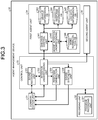
- FIG. 3 is a block diagram illustrating a functional configuration of the agent management device 30.
- the agent management device 30 illustrated in FIG. 3 understands the intent of a question asked from an occupant via the network 20 and the driver-assistance device 10 mounted on and the moving body 2, responses according to the contents of the understood question, inquires of an occupant, and changes the control of the moving body 2.
- the agent management device 30 includes a communication unit 31, a recording unit 32, a control unit 33, a first agent unit 34, and a second agent unit 35.
- the communication unit 31 communicates with the driver-assistance device 10 according to a predetermined communication standard.
- the communication unit 31 is realized by using a communication module enabling wireless communication.
- the recording unit 32 records various programs executed by the agent management device 30 and various pieces of information being processed by the agent management device 30.
- the recording unit 32 is realized by using a hard disk drive (HDD), a solid state drive (SSD), a Flash memory, a DRAM, a ROM, and the like.
- the recording unit 32 includes a program recording unit 321 that records various programs executed by the agent management device 30.
- the control unit 33 controls each unit included in the agent management device 30.
- the control unit 33 is configured using a processor having hardware such as a CPU, a field programmable gate array (FPGA), and an application specific integrated circuit (ASIC).
- the control unit 33 includes a sound recognition unit 331, an intention understanding unit 332, a response generation unit 333, and a sound synthesis unit 334.
- the sound recognition unit 331 performs sound recognition on the sound signal input from the communication unit 31, and outputs the sound recognition result to the intention understanding unit 332.
- the sound recognition unit 331 converts, for example, the sound signal into text data and outputs the text data to the intention understanding unit 332.
- the sound recognition unit 331 is realized by using a well-known sound conversion technique.
- the intention understanding unit 332 estimates the intention of inquiry (question) by an occupant as a processing intent ID (intent label) based on the sound recognition result input from the sound recognition unit 331.
- the processing intent ID is a number that associates each of a plurality of control contents (operation functions) executable by the moving body 2 with a plurality of responses. Then, the intention understanding unit 332 selects an agent that can give an optimal response corresponding to the content of the estimated question from a plurality of agent units, and requests the selected agent unit to respond the occupant's inquiry.
- the intention understanding unit 332 is realized by using a learning model learned in advance for a plurality of questions.
- the intention understanding unit 332 uses the text data converted by the sound recognition unit 331 as input data, estimates, as output data, an agent suitable for responding the content of the question from the plurality of agents, and outputs it.
- the intention understanding unit 332 is realized by using a learning model that, for example, performs machine learning using text data or sound data of a plurality of questions as teacher data in advance, and estimates (selects) and outputs an agent suitable for responding the content of the question from the plurality of agents as an output, and the like.
- the type of machine learning is not particularly limited, but, for example, the learning may be performed such that teacher data or learning data in which a question and a response are associated with each other is prepared, and this teacher data or learning data is input to a calculation model based on a multi-layer neural network.
- a machine learning method for example, a method based on a deep neural network (DNN) of a multilayer neural network such as convolutional neural network (CNN) or 3D-CNN is used.
- DNN deep neural network
- CNN convolutional neural network
- 3D-CNN convolutional neural network
- temporally continuous time series data such as sound data is an object
- a method based on recurrent neural network (RNN) and a long short-term memory unit (LSTM) which is an extension of RNN is used.
- RNN recurrent neural network
- LSTM long short-term memory unit
- the response generation unit 333 generates a response according to the processing intent ID indicating the control content (operation function) of the moving body 2 input from any of the plurality of agent units via the intention understanding unit 332, and outputs the response to the moving body 2 via the communication unit 31. Specifically, the response generation unit 333 selects the response according to the processing intent ID input via the intention understanding unit 332 from the plurality of responses respectively associated with the plurality of prerecorded processing intent IDs of the moving body 2. Then, the response generation unit 333 generates the response selected according to the processing intent ID input from the intention understanding unit 332 or a change signal for changing the control content of the moving body 2.
- the sound synthesis unit 334 generates sound data according to the processing intent ID input from the intention understanding unit 332, and outputs this sound data to the moving body 2 via the communication unit 31. Specifically, the sound synthesis unit 334 selects the sound data corresponding to the processing intent ID input from the intention understanding unit 332 from a plurality of sound data respectively associated with the plurality of prerecorded control contents. Then, the sound synthesis unit 334 generates the sound data selected according to the processing intent ID input from the intention understanding unit 332.
- the first agent unit 34 estimates the information about the control change of the moving body 2 corresponding to the response to the occupant's inquiry input from the intention understanding unit 332, and outputs the estimation result to the intention understanding unit 332.
- the first agent unit 34 includes a dialogue control unit 341 and an agent intention understanding unit 342.
- the first agent unit 34 includes a vehicle information database 343 (hereinafter, referred to as “vehicle information DB 343”), a response information database 344 (hereinafter, referred to as “response information DB333”), a log data information database 345 (hereinafter, referred to as "log data information DB 345"), and a word normalization database 346 (hereinafter referred to as "word normalization DB 346").
- the dialogue control unit 341 controls a dialogue and a human machine interface (HMI) according to the occupant's inquiry input from the intention understanding unit 332.
- the dialogue control unit 341 is realized by using a processor having CPU hardware and the like.
- the agent intention understanding unit 342 estimates a processing intent ID corresponding to the occupant's inquiry (question) based on the sound recognition result input from the sound recognition unit 331 via the dialogue control unit 341 and the intention understanding unit 332. Specifically, the agent intention understanding unit 342 refers to the vehicle information DB 343, the response information DB 344, the log data information DB 345, and the word normalization DB 346, which will be described later, and estimates a processing intent ID according to the occupant's inquiry (question). The agent intention understanding unit 342 outputs the estimated processing intent ID to the response generation unit 333 via the dialogue control unit 341 and the intention understanding unit 332.
- the agent intention understanding unit 342 is realized by using a learning model learned in advance for a plurality of questions. Specifically, the agent intention understanding unit 342 uses the text data converted by the sound recognition unit 331 as input data, estimates, as output data, a processing intent ID corresponding to the response corresponding to the occupant's inquiry, and outputs it.
- the vehicle information DB 343 records vehicle information with which the vehicle type, the year, and the operation manual of the moving body 2 are associated.
- the vehicle information DB 343 is realized by using a solid state drive (SSD), a hard disk drive (HDD), and the like.
- the response information DB 344 records response information for replying corresponding to each of the plurality of processing intent IDs.
- the response information DB 344 is realized by using an SSD, an HDD, and the like.
- the log data information DB 345 records operation information indicating the operation content of an occupant, response information indicating the response content of the first agent unit 34, and the like.
- the log data information DB 345 is realized by using an SSD, an HDD, and the like.
- the word normalization DB 346 records data for normalizing words used by the agent intention understanding unit 342 in preprocessing for intention understanding.
- the word normalization DB 346 is realized by using an SSD, an HDD, and the like.
- the second agent unit 35 estimates the information about other changes of the moving body 2 corresponding to the response to the occupant's inquiry input from the intention understanding unit 332, and outputs the estimation result to the intention understanding unit 332.
- the other changes are, for example, music changes, destination changes by navigation, and the like. Since the second agent unit 35 has the same configuration as the first agent unit 34, detailed description of the configuration is omitted.
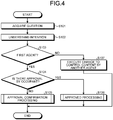
- FIG. 4 is a flowchart illustrating an outline of processing executed by the agent management device 30.
- processing in a state where an occupant of the moving body 2 inquires of the agent management device 30, for example, the occupant inquires as "agent”, and the agent management device 30 is activated will be described.
- the sound recognition unit 331 acquires the question asked by the occupant of the moving body 2 via the communication unit 31 (Step S101). Specifically, the sound recognition unit 331 acquires the sound signal of the question asked by the occupant of the moving body 2 via the communication unit 31. In this case, the sound recognition unit 331 performs sound recognition on the sound signal of the question asked by the occupant of the moving body 2, which is acquired via the communication unit 31.
- the intention understanding unit 332 understands the intention of the question asked by the occupant based on the sound recognition result input from the sound recognition unit 331 (Step S102).
- the intention understanding unit 332 estimates whether or not the inquiry from the occupant is the first agent unit 34 that can respond to the intent regarding the control content of the moving body 2 (Step S103).
- the agent management device 30 proceeds to Step S104 described later.
- the agent management device 30 proceeds to Step S107 described later.
- Step S104 the intention understanding unit 332 estimates whether or not the content that approves the change of the control content of the moving body 2 is included in the inquiry from the occupant based on the sound recognition result input from the sound recognition unit 331.
- the agent management device 30 proceeds to Step S106 described below. For example, when the content of the inquiry from the occupant is "Vehicle slips on a snowy road and cannot travel. You may turn off traction control", "You may turn off traction control” is included, and hence the intention understanding unit 332 estimates that approval for changing the control content of the moving body 2 is included.
- Step S104 when it is estimated by the intention understanding unit 332 that the content that approves the change of the control content of the moving body 2 is not included in the inquiry from the occupant (Step S104: No), the agent management device 30 proceeds to Step S105 described below. For example, when the content of the inquiry from the occupant is "Vehicle slips on a snowy road and cannot travel", the intention understanding unit 332 estimates that the approval for changing the control content of the moving body 2 is not included.
- Step S105 the agent management device 30 asks the occupant whether or not to change the control content of the moving body 2 corresponding to the response to the occupant's inquiry, and when the occupant approves it, the agent management device 30 executes approval confirmation processing of changing the control content of the moving body 2. After Step S105, the agent management device 30 ends this processing. The details of the approval confirmation processing will be described later.
- Step S106 the agent management device 30 estimates that approval has been obtained from the occupant, does not output a question as to whether or not to execute the change to the control content of the moving body 2 to the occupant, and executes approved processing of changing the control content of the moving body 2. After Step S106, the agent management device 30 ends this processing. The details of the approved processing will be described later.
- Step S107 the second agent unit 35 executes change to a control content by another agent estimated by the intention understanding unit 332. For example, in a case where the question by the occupant is "play music", when sound data is not played in the moving body 2, the second agent unit 35 executes change to a control content of transmitting music data to the moving body 2 and reproducing it.
- the agent management device 30 ends this processing.
- FIG. 5 is a flowchart illustrating an outline of the approval confirmation processing.
- the intention understanding unit 332 transmits a processing intent ID indicating the estimation result of estimating the control content of the moving body 2 corresponding to the response to the inquiry from the occupant to the first agent unit 34 (Step S201).
- the first agent unit 34 explains the function of the processing intent ID based on the processing intent ID estimated by the intention understanding unit 332 (Step S202). Specifically, first, the agent intention understanding unit 342 estimates whether or not it is related to the moving body 2 or the control content of the moving body 2 based on the processing intent ID. Then, the dialogue control unit 341 acquires a response corresponding to the processing intent ID from one of the vehicle information DB 343 and the response information DB 344 based on the estimation result of the agent intention understanding unit 342. After acquiring the circuit, the dialogue control unit 341 outputs a response regarding the function of the acquired processing intent ID to the response generation unit 333.
- the response generation unit 333 generates text data of the response regarding the function of the processing intent ID, and transmits this text data to the driver-assistance device 10 via the communication unit 31.
- the sound synthesis unit 334 generates sound data of the response regarding the function of the processing intent ID, and transmits the sound data to the driver-assistance device 10 via the communication unit 31.
- the control unit 17 of the driver-assistance device 10 receives the text data and the sound data via the communication unit 14, displays the information corresponding to the received text data on the display unit 13, and causes the sound output unit 12 to output sound corresponding to the sound data.
- the control unit 17 causes the sound output unit 12 to output as sound, "If the traction control is turned off, it will be easier to escape from the snowy road".
- the dialogue control unit 341 confirms the operation status of the moving body 2 having the control content corresponding to the processing intent ID based on the processing intent ID (Step S203). Specifically, the dialogue control unit 341 acquires the current operation status of the moving body 2 from the driver-assistance device 10 via the communication unit 31. More specifically, the dialogue control unit 341 acquires the current operation mode of the moving body 2, for example, the on/off status of traction control, from the driver-assistance device 10 via the communication unit 31. Note that the dialogue control unit 341 may acquire the current operation status of the moving body 2 not only from the driver-assistance device 10 but also from, for example, an external server to which the driver-assistance device 10 sequentially transmits the operation status of the moving body 2 at predetermined intervals.
- the dialogue control unit 341 determines whether or not the change to the control content corresponding to the processing intent ID is possible based on the current operation status of the moving body 2 (Step S204).
- the agent management device 30 proceeds to Step S205 described later.
- the agent management device 30 proceeds to Step S212 described later.
- Step S205 the dialogue control unit 341 outputs the result of determination as to whether or not the change to the control content corresponding to the processing intent ID is possible to the control unit 33.
- the dialogue control unit 341 outputs information indicating that the change to the control content corresponding to the processing intent ID is possible to the control unit 33.
- the control unit 33 outputs a question as to whether or not to execute the change to the control content corresponding to the processing intent ID to the driver-assistance device 10 (Step S206).
- the response generation unit 333 generates text data for asking whether or not execute the change to the control content corresponding to the processing intent ID, and transmits this text data to driver-assistance device 10 via the communication unit 31.
- the sound synthesis unit 334 generates sound data for asking whether or not execute the change to the control content corresponding to the processing intent ID, and transmits this sound data to driver-assistance device 10 via the communication unit 31.
- control unit 17 of the driver-assistance device 10 receives the text data and the sound data via the communication unit 14, displays the information corresponding to the received text data on the display unit 13, and causes the sound output unit 12 to output sound corresponding to the sound data.
- the control unit 17 causes the sound output unit 12 to output "Shall I turn it off?” as sound.
- the intention understanding unit 332 acquires the occupant's response from the driver-assistance device 10 via the communication unit 31 (Step S207), and estimates whether or not the occupant's response is approved (Step S208).
- the agent management device 30 proceeds to Step S209 described later.
- the intention understanding unit 332 estimates that the response from the occupant is approved when the response from the occupant includes "please", "OK", "do", and "execute”.
- the agent management device 30 proceeds to Step S212 described later.
- Step S209 the intention understanding unit 332 estimates whether or not the occupant's response is approval of the series of questions. For example, the intention understanding unit 332 estimates whether or not the occupant's response is the approval corresponding to the content asked by the agent management device 30 within a fixed time (for example, within 5 seconds).
- the agent management device 30 proceeds to Step S210 described later.
- the agent management device 30 proceeds to Step S211 described later.
- Step S210 the response generation unit 333 executes the change to the control content corresponding to the processing intent ID. Specifically, the response generation unit 333 transmits a change signal for executing the change to the control content corresponding to the processing intent ID to the driver-assistance device 10 of the moving body 2 via the communication unit 31.
- the control unit 17 of the driver-assistance device 10 changes the state of the moving body 2 to the control content corresponding to the change signal received from the agent management device 30 via the communication unit 14.
- the driver-assistance device 10 receives a change signal for changing the state of the traction control of the moving body 2 to the off state input from the agent management device 30, the driver-assistance device 10 changes the traction control of the moving body 2 to the off state.
- the sound synthesis unit 334 generates sound data indicating that the change to the control content corresponding to the processing intent ID is executed, and transmits this sound data to driver-assistance device 10 via the communication unit 31. Then, the driver-assistance device 10 causes the sound output unit 12 to output sound corresponding to the sound data received from the agent management device 30, for example, "Sure". Thereby, the occupant can grasp that the traction control of the moving body 2 is brought into the off state under the control of the agent management device 30. After Step S210, the agent management device 30 returns to the main routine of FIG. 4 and ends this processing.
- Step S211 since the response of the occupant is an unintended response, the sound synthesis unit 334 outputs that the change to the control content corresponding to the processing intent ID is not possible. Specifically, the sound synthesis unit 334 generates sound data indicating that the operation of the control corresponding to the processing intent ID cannot be changed, and outputs this sound data to the driver-assistance device 10 via the communication unit 31. In this case, the driver-assistance device 10 causes the sound output unit 12 to output sound corresponding to the sound data received from the agent management device 30, for example, "I cannot assist you, sorry" via the communication unit 14. After Step S211, the agent management device 30 returns to the main routine of FIG. 4 and ends this processing.
- Step S212 when a predetermined time (for example, 3 seconds) has elapsed since the occupant's response was obtained from the driver-assistance device 10 via the communication unit 31 (Step S212: Yes), the agent management device 30 returns to the main routine of FIG. 4 and ends this processing. On the other hand, when the predetermined time has not elapsed since the occupant's response was obtained from the driver-assistance device 10 via the communication unit 31 (Step S212: No), the agent management device 30 returns to Step S207.
- a predetermined time for example, 3 seconds
- Step S213 the dialogue control unit 341 outputs the result of determination as to whether or not the change to the control content corresponding to the processing intent ID is possible to the control unit 33.
- the dialogue control unit 341 outputs information indicating that the change to the control content corresponding to the processing intent ID is not possible to the control unit 33.
- the sound synthesis unit 334 outputs that the change to the control content corresponding to the processing intent ID is not possible (Step S214). Specifically, the sound synthesis unit 334 generates sound data indicating that the operation of the control corresponding to the processing intent ID cannot be changed, and outputs this sound data to the driver-assistance device 10 via the communication unit 31. In this case, the driver-assistance device 10 causes the sound output unit 12 to output sound corresponding to the sound data received from the agent management device 30, for example, "I cannot assist you, sorry" via the communication unit 14. After Step S214, the agent management device 30 returns to the main routine of FIG. 4 and ends this processing.
- FIG. 6 is a flowchart illustrating an outline of the approved processing.
- the intention understanding unit 332 transmits a processing intent ID indicating the estimation result of estimating the control change of the moving body 2 corresponding to the response to the inquiry from the occupant to the first agent unit 34 (Step S301).
- the dialogue control unit 341 confirms the operation status of the moving body 2 having the control content corresponding to the processing intent ID based on the processing intent ID (Step S302).
- Step S303 determines whether or not the change to the control content corresponding to the processing intent ID is possible based on the current operation status of the moving body 2 (Step S303).
- the agent management device 30 proceeds to Step S304 described later.
- Step S303: No when it is determined that the change to the control content corresponding to the processing intent ID is not possible (Step S303: No), the agent management device 30 proceeds to Step S305 described later.
- Step S304 the response generation unit 333 executes the change to the control content corresponding to the processing intent ID. Specifically, the response generation unit 333 outputs a change signal for executing the change to the control content corresponding to the processing intent ID to the driver-assistance device 10 of the moving body 2 via the communication unit 31.
- the control unit 17 of the driver-assistance device 10 changes the state of the moving body 2 to the control content corresponding to the change signal received from the agent management device 30 via the communication unit 14.
- the driver-assistance device 10 receives a change signal for changing the state of the traction control of the moving body 2 to the off state input from the agent management device 30, the driver-assistance device 10 changes the traction control of the moving body 2 to the off state.
- the sound synthesis unit 334 generates sound data indicating that the change to the control content corresponding to the processing intent ID is executed, and transmits this sound data to driver-assistance device 10 via the communication unit 31. Then, the driver-assistance device 10 causes the sound output unit 12 to output sound corresponding to the sound data received from the agent management device 30, for example, "Sure". Thereby, the occupant can grasp that the traction control of the moving body 2 is brought into the off state under the control of the agent management device 30. After Step S210, the agent management device 30 returns to the main routine of FIG. 4 and ends this processing.
- Step S305 and Step S306 correspond to the above-described Step S213 and Step S214 in FIG. 5 , respectively.
- the agent management device 30 returns to the main routine of FIG. 4 and ends this processing.
- the agent management device 30 determines whether or not the change of the control content of the moving body 2 or the change of the control content of the moving body 2 corresponding to the response to the inquiry from the occupant is possible. Then, when the agent management device 30 determines that the change of the control content of the moving body 2 is possible, the agent management device 30 outputs a question as to whether or not to execute the control change of the moving body 2 to the occupant. Then, when the occupant approves the change to the control content, the agent management device 30 executes the change to the control content of the moving body 2 corresponding to the response to the inquiry from the occupant. Therefore, the operation content proposed in response to the user's inquiry can be executed on behalf of the user with the user's approval. As a result, the difficulty level of the driving operation of the moving body 2 can be reduced.
- the agent management device 30 determines whether or not the inquiry from the occupant includes a content that approves the change to the control content of the moving body 2.
- the agent management device 30 determines that the approval of the occupant is included, the agent management device 30 does not output a question as to whether or not to execute the change to the control content to the occupant, and executes the change to the control content of the moving body 2 corresponding to the response to the inquiry from the occupant.
- change to the control content of the moving body 2 instructed by the occupant can be smoothly executed.
- the agent management device 30 estimates whether or not the inquiry from the occupant is a content related to the control content of the moving body 2. Then, when the agent management device 30 estimates that the inquiry is the content related to the control content of the moving body 2, the agent management device 30 determines whether or not the change to the control content of the moving body 2 corresponding to the response to the inquiry from the occupant is possible. For this reason, it is possible to select an agent suitable for the response for changing the control content of the moving body 2 from a plurality of agents, so that the agent management device 30 can smoothly respond to the content of the control change of the moving body 2 asked by the occupant.
- the agent management device 30 determines that the change to the control content of the moving body 2 corresponding to the response to the inquiry from the occupant is possible, the agent management device 30 gives an explanation about the control content of the moving body 2 to the occupant. Thereby, the occupant can grasp the control content of the moving body 2.
- the agent management device 30 acquires the operation status of the moving body 2 and determines whether or not the change of the control content of the moving body 2 is possible based on the operation status of the moving body 2. Then, when the agent management device 30 determines that the change to the control content of the moving body 2 corresponding to the response to the inquiry from the occupant is possible, the agent management device 30 changes the control content of the moving body 2. Therefore, change to the control content of the moving body 2 approved by the occupant can be smoothly executed.
- the agent management device 30 determines whether or not the response from the occupant is a series of responses for approving the change to the control content of the moving body 2. Then, when the response is the series of responses, the agent management device 30 executes the change to the control content of the moving body 2 corresponding to the response to the inquiry from the occupant. As a result, it is possible to prevent the control change that is not intended by the occupant from being executed.
- the agent management device 30 inquires of the occupant as to whether or not to change the control content of the moving body 2, when the occupant approves the change to the control content of the moving body 2 within a predetermined time, the agent management device 30 outputs a response that the change to the control content is executed. On the other hand, when the occupant does not approve the change to the control content within the predetermined time, the agent management device 30 outputs a response that the control content of the moving body 2 is not changed. As a result, the occupant can grasp the result of changing the control content by the agent management device 30.
- the aforementioned "units” can be replaced with “circuits”.
- the control unit can be replaced with a control circuit.
- a program to be executed by the agent management device is provided by recording installable or executable file data on a computer-readable recording medium such as a CD-ROM, a flexible disk (FD), a CD-R, a digital versatile disk (DVD), a USB medium, and a flash memory.
- a computer-readable recording medium such as a CD-ROM, a flexible disk (FD), a CD-R, a digital versatile disk (DVD), a USB medium, and a flash memory.
- the program to be executed by the agent management device may be provided by storing the program on a computer connected to a network such as the Internet and downloading the program via the network.
Landscapes
- Engineering & Computer Science (AREA)
- Physics & Mathematics (AREA)
- Theoretical Computer Science (AREA)
- Computational Linguistics (AREA)
- Human Computer Interaction (AREA)
- Health & Medical Sciences (AREA)
- Mechanical Engineering (AREA)
- General Physics & Mathematics (AREA)
- Automation & Control Theory (AREA)
- Acoustics & Sound (AREA)
- Audiology, Speech & Language Pathology (AREA)
- Multimedia (AREA)
- General Engineering & Computer Science (AREA)
- Artificial Intelligence (AREA)
- Data Mining & Analysis (AREA)
- Radar, Positioning & Navigation (AREA)
- Remote Sensing (AREA)
- Transportation (AREA)
- Mathematical Physics (AREA)
- Software Systems (AREA)
- Evolutionary Computation (AREA)
- Databases & Information Systems (AREA)
- General Health & Medical Sciences (AREA)
- Combustion & Propulsion (AREA)
- Chemical & Material Sciences (AREA)
- Computer Security & Cryptography (AREA)
- Life Sciences & Earth Sciences (AREA)
- Biomedical Technology (AREA)
- Biophysics (AREA)
- Aviation & Aerospace Engineering (AREA)
- Molecular Biology (AREA)
- Computing Systems (AREA)
- Computer Hardware Design (AREA)
- Ocean & Marine Engineering (AREA)
- Navigation (AREA)
- Traffic Control Systems (AREA)
- User Interface Of Digital Computer (AREA)
Abstract
An agent management device includes a processor configured to: generate a response to an inquiry from an occupant of a moving body; determine whether or not a change in a control content of the moving body to correspond to the response is possible; output a question whether or not to execute the change to the control content to the occupant when determining that the change to the control content is possible; and execute the change to the control content when the occupant approves the change to the control content.
Description
- The present disclosure relates to an agent management device, a program, and an agent management method.
- A technique for recommending optimum information to a user is known (see
JP 2006-195578 A - In
JP 2006-195578 A - There is a need for an agent management device, a program, and an agent management method capable of executing an operation function proposed in response to a user's inquiry on behalf of the user.
- According to one aspect of the present disclosure, there is provided an agent management device including a processor configured to: generate a response to an inquiry from an occupant of a moving body; determine whether or not a change in a control content of the moving body to correspond to the response is possible; output a question whether or not to execute the change to the control content to the occupant when determining that the change to the control content is possible; and execute the change to the control content when the occupant approves the change to the control content.
-
-
FIG. 1 is a schematic view illustrating a schematic configuration of a driver-assistance system according to an embodiment; -
FIG. 2 is a block diagram illustrating a functional configuration of a driver-assistance device; -
FIG. 3 is a block diagram illustrating a functional configuration of an agent management device; -
FIG. 4 is a flowchart illustrating an outline of processing executed by the agent management device; -
FIG. 5 is a flowchart illustrating an outline of approval confirmation processing ofFIG. 4 ; and -
FIG. 6 is a flowchart illustrating an outline of approved processing ofFIG. 4 . - Hereinafter, an embodiment of the present disclosure will be described in detail with reference to the drawings. Note that the present disclosure is not limited to the following embodiment. Further, in the following description, the same parts will be denoted by the same reference numerals.
-
FIG. 1 is a schematic diagram illustrating a schematic configuration of a driver-assistance system according to an embodiment. A driver-assistance system 1 illustrated inFIG. 1 includes a driver-assistance device 10 mounted on a movingbody 2, and anagent management device 30 that bidirectionally communicates with the driver-assistance device 10 via anetwork 20. Thisnetwork 20 includes, for example, an Internet network or a mobile phone network. Further, in the following description, an automobile is used as an example of the movingbody 2, but the movingbody 2 is not limited to this, and may be a motorcycle, an electric kickboard, a drone, an airplane, a ship, a train, or the like. - First, a description will be given of a functional configuration of the driver-
assistance device 10.FIG. 2 is a block diagram illustrating the functional configuration of the driver-assistance device 10. - The driver-
assistance device 10 illustrated inFIG. 2 is mounted on the movingbody 2 and assists an operation of an occupant inside the movingbody 2 during driving in cooperation with another Electronic Control Unit (ECU) mounted on the movingbody 2. The driver-assistance device 10 includes a sound input unit 11, a sound output unit 12, adisplay unit 13, acommunication unit 14, a detection unit 15, arecording unit 16, and a control unit 17. - The sound input unit 11 receives sound input from an occupant or the like and generates sound data by performing A/D conversion processing or the like on the received sound. The sound input unit 11 outputs the sound data to the control unit 17. The sound input unit 11 is realized by using a microphone that receives sound input and generates a sound signal, an amplifier that amplifies the analog sound signal input from the microphone, an A/D conversion circuit that converts the analog sound signal input from the amplifier into a digital sound signal, and the like.
- The sound output unit 12 outputs sound corresponding to the sound signal input from the control unit 17. The sound output unit 12 is realized by a D/A conversion circuit that converts the digital sound signal input from the control unit 17 into an analog sound signal, an amplifier that amplifies the analog sound signal, a speaker that outputs sound corresponding to the sound signal input from the amplifier, and the like.
- The
display unit 13 displays various pieces of information under the control of the control unit 17. For example, thedisplay unit 13 displays an explanation regarding the control operation of the movingbody 2 under the control of the control unit 17. Thedisplay unit 13 is realized by using a display monitor such as an organic Electro Luminescence (EL) or liquid crystal or the like. - Under the control of the control unit 17, the
communication unit 14 communicates with theagent management device 30 according to a predetermined communication standard. Here, the predetermined communication standard is, for example, 4G, 5G, Wireless Fidelity (Wi-Fi) (registered trademark) or Bluetooth (registered trademark). Thecommunication unit 14 is realized by using a communication module enabling wireless communication. - The detection unit 15 detects the state of the moving
body 2 and outputs the detection result to the control unit 17. Specifically, the detection unit 15 detects the current operation mode or state of the movingbody 2 and outputs the detection result to the control unit 17. For example, the detection unit 15 detects an on/off state of traction control, which is one of a plurality of control operations that themoving body 2 can execute, and outputs the detection result to the control unit 17. The detection unit 15 is realized by using various sensors such as a sensor that detects rotation of wheels of themoving body 2 and a sensor that detects vehicle speed, a sensor that detects the on/off state of various actuators mounted on themoving body 2, an ECU, and the like. - The
recording unit 16 records various pieces of information regarding the driver-assistance device 10, various programs executed by the driver-assistance device 10, and various pieces of information being processed by the control unit 17. Further, therecording unit 16 also records vehicle type information indicating the vehicle type of the movingbody 2. The vehicle type information is a vehicle type name and a model year of the vehicle type. Therecording unit 16 is realized by using a Dynamic Random Access Memory (DRAM), a Read Only Memory (ROM), a Flash memory, and the like. - The control unit 17 controls the operation of each unit included in the driver-
assistance device 10. The control unit 17 is realized by using a memory and a processor having hardware such as a Central Processing Unit (CPU). Further, the control unit 17 changes the control of the movingbody 2 according to the instruction signal input from theagent management device 30 via thecommunication unit 14. For example, the control unit 17 changes the traction control of the movingbody 2 from the ON state to the OFF state when the instruction signal input from theagent management device 30 via thecommunication unit 14 is an instruction signal to turn off the traction control. - Next, a functional configuration of the
agent management device 30 will be described.FIG. 3 is a block diagram illustrating a functional configuration of theagent management device 30. - The
agent management device 30 illustrated inFIG. 3 understands the intent of a question asked from an occupant via thenetwork 20 and the driver-assistance device 10 mounted on and the movingbody 2, responses according to the contents of the understood question, inquires of an occupant, and changes the control of the movingbody 2. Theagent management device 30 includes acommunication unit 31, a recording unit 32, acontrol unit 33, a first agent unit 34, and asecond agent unit 35. - Under the control of the
control unit 33, thecommunication unit 31 communicates with the driver-assistance device 10 according to a predetermined communication standard. Thecommunication unit 31 is realized by using a communication module enabling wireless communication. - The recording unit 32 records various programs executed by the
agent management device 30 and various pieces of information being processed by theagent management device 30. The recording unit 32 is realized by using a hard disk drive (HDD), a solid state drive (SSD), a Flash memory, a DRAM, a ROM, and the like. The recording unit 32 includes a program recording unit 321 that records various programs executed by theagent management device 30. - The
control unit 33 controls each unit included in theagent management device 30. Thecontrol unit 33 is configured using a processor having hardware such as a CPU, a field programmable gate array (FPGA), and an application specific integrated circuit (ASIC). Thecontrol unit 33 includes asound recognition unit 331, an intention understanding unit 332, a response generation unit 333, and a sound synthesis unit 334. - The
sound recognition unit 331 performs sound recognition on the sound signal input from thecommunication unit 31, and outputs the sound recognition result to the intention understanding unit 332. Thesound recognition unit 331 converts, for example, the sound signal into text data and outputs the text data to the intention understanding unit 332. Thesound recognition unit 331 is realized by using a well-known sound conversion technique. - The intention understanding unit 332 estimates the intention of inquiry (question) by an occupant as a processing intent ID (intent label) based on the sound recognition result input from the
sound recognition unit 331. Here, the processing intent ID is a number that associates each of a plurality of control contents (operation functions) executable by the movingbody 2 with a plurality of responses. Then, the intention understanding unit 332 selects an agent that can give an optimal response corresponding to the content of the estimated question from a plurality of agent units, and requests the selected agent unit to respond the occupant's inquiry. The intention understanding unit 332 is realized by using a learning model learned in advance for a plurality of questions. Specifically, the intention understanding unit 332 uses the text data converted by thesound recognition unit 331 as input data, estimates, as output data, an agent suitable for responding the content of the question from the plurality of agents, and outputs it. The intention understanding unit 332 is realized by using a learning model that, for example, performs machine learning using text data or sound data of a plurality of questions as teacher data in advance, and estimates (selects) and outputs an agent suitable for responding the content of the question from the plurality of agents as an output, and the like. The type of machine learning is not particularly limited, but, for example, the learning may be performed such that teacher data or learning data in which a question and a response are associated with each other is prepared, and this teacher data or learning data is input to a calculation model based on a multi-layer neural network. Further, as a machine learning method, for example, a method based on a deep neural network (DNN) of a multilayer neural network such as convolutional neural network (CNN) or 3D-CNN is used. Furthermore, when temporally continuous time series data such as sound data is an object, as a machine learning method, a method based on recurrent neural network (RNN) and a long short-term memory unit (LSTM) which is an extension of RNN is used. - The response generation unit 333 generates a response according to the processing intent ID indicating the control content (operation function) of the moving
body 2 input from any of the plurality of agent units via the intention understanding unit 332, and outputs the response to the movingbody 2 via thecommunication unit 31. Specifically, the response generation unit 333 selects the response according to the processing intent ID input via the intention understanding unit 332 from the plurality of responses respectively associated with the plurality of prerecorded processing intent IDs of the movingbody 2. Then, the response generation unit 333 generates the response selected according to the processing intent ID input from the intention understanding unit 332 or a change signal for changing the control content of the movingbody 2. - The sound synthesis unit 334 generates sound data according to the processing intent ID input from the intention understanding unit 332, and outputs this sound data to the moving
body 2 via thecommunication unit 31. Specifically, the sound synthesis unit 334 selects the sound data corresponding to the processing intent ID input from the intention understanding unit 332 from a plurality of sound data respectively associated with the plurality of prerecorded control contents. Then, the sound synthesis unit 334 generates the sound data selected according to the processing intent ID input from the intention understanding unit 332. - The first agent unit 34 estimates the information about the control change of the moving
body 2 corresponding to the response to the occupant's inquiry input from the intention understanding unit 332, and outputs the estimation result to the intention understanding unit 332. The first agent unit 34 includes a dialogue control unit 341 and an agentintention understanding unit 342. Furthermore, the first agent unit 34 includes a vehicle information database 343 (hereinafter, referred to as "vehicle information DB 343"), a response information database 344 (hereinafter, referred to as "response information DB333"), a log data information database 345 (hereinafter, referred to as "logdata information DB 345"), and a word normalization database 346 (hereinafter referred to as "word normalization DB 346"). - The dialogue control unit 341 controls a dialogue and a human machine interface (HMI) according to the occupant's inquiry input from the intention understanding unit 332. The dialogue control unit 341 is realized by using a processor having CPU hardware and the like.
- The agent
intention understanding unit 342 estimates a processing intent ID corresponding to the occupant's inquiry (question) based on the sound recognition result input from thesound recognition unit 331 via the dialogue control unit 341 and the intention understanding unit 332. Specifically, the agentintention understanding unit 342 refers to thevehicle information DB 343, the response information DB 344, the logdata information DB 345, and theword normalization DB 346, which will be described later, and estimates a processing intent ID according to the occupant's inquiry (question). The agentintention understanding unit 342 outputs the estimated processing intent ID to the response generation unit 333 via the dialogue control unit 341 and the intention understanding unit 332. The agentintention understanding unit 342 is realized by using a learning model learned in advance for a plurality of questions. Specifically, the agentintention understanding unit 342 uses the text data converted by thesound recognition unit 331 as input data, estimates, as output data, a processing intent ID corresponding to the response corresponding to the occupant's inquiry, and outputs it. - The
vehicle information DB 343 records vehicle information with which the vehicle type, the year, and the operation manual of the movingbody 2 are associated. Thevehicle information DB 343 is realized by using a solid state drive (SSD), a hard disk drive (HDD), and the like. - The response information DB 344 records response information for replying corresponding to each of the plurality of processing intent IDs. The response information DB 344 is realized by using an SSD, an HDD, and the like.
- The log
data information DB 345 records operation information indicating the operation content of an occupant, response information indicating the response content of the first agent unit 34, and the like. The logdata information DB 345 is realized by using an SSD, an HDD, and the like. - The
word normalization DB 346 records data for normalizing words used by the agentintention understanding unit 342 in preprocessing for intention understanding. Theword normalization DB 346 is realized by using an SSD, an HDD, and the like. - The
second agent unit 35 estimates the information about other changes of the movingbody 2 corresponding to the response to the occupant's inquiry input from the intention understanding unit 332, and outputs the estimation result to the intention understanding unit 332. Here, the other changes are, for example, music changes, destination changes by navigation, and the like. Since thesecond agent unit 35 has the same configuration as the first agent unit 34, detailed description of the configuration is omitted. - Next, the processing by the
agent management device 30 will be described.FIG. 4 is a flowchart illustrating an outline of processing executed by theagent management device 30. In the following, processing in a state where an occupant of the movingbody 2 inquires of theagent management device 30, for example, the occupant inquires as "agent", and theagent management device 30 is activated will be described. - As illustrated in
FIG. 4 , first, thesound recognition unit 331 acquires the question asked by the occupant of the movingbody 2 via the communication unit 31 (Step S101). Specifically, thesound recognition unit 331 acquires the sound signal of the question asked by the occupant of the movingbody 2 via thecommunication unit 31. In this case, thesound recognition unit 331 performs sound recognition on the sound signal of the question asked by the occupant of the movingbody 2, which is acquired via thecommunication unit 31. - Subsequently, the intention understanding unit 332 understands the intention of the question asked by the occupant based on the sound recognition result input from the sound recognition unit 331 (Step S102).
- Then, the intention understanding unit 332 estimates whether or not the inquiry from the occupant is the first agent unit 34 that can respond to the intent regarding the control content of the moving body 2 (Step S103). When it is estimated that the inquiry from the occupant is the first agent unit 34 corresponding to the content regarding the control content of the moving body 2 (Step S103: Yes), the
agent management device 30 proceeds to Step S104 described later. On the other hand, when it is estimated that the inquiry from the occupant is not the first agent unit 34 capable of responding the content regarding the control content of the moving body 2 (Step S103: No), theagent management device 30 proceeds to Step S107 described later. - In Step S104, the intention understanding unit 332 estimates whether or not the content that approves the change of the control content of the moving
body 2 is included in the inquiry from the occupant based on the sound recognition result input from thesound recognition unit 331. When it is estimated by the intention understanding unit 332 that the content that approves the change of the control content of the movingbody 2 is included in the inquiry from the occupant (Step S104: Yes), theagent management device 30 proceeds to Step S106 described below. For example, when the content of the inquiry from the occupant is "Vehicle slips on a snowy road and cannot travel. You may turn off traction control", "You may turn off traction control" is included, and hence the intention understanding unit 332 estimates that approval for changing the control content of the movingbody 2 is included. On the other hand, when it is estimated by the intention understanding unit 332 that the content that approves the change of the control content of the movingbody 2 is not included in the inquiry from the occupant (Step S104: No), theagent management device 30 proceeds to Step S105 described below. For example, when the content of the inquiry from the occupant is "Vehicle slips on a snowy road and cannot travel", the intention understanding unit 332 estimates that the approval for changing the control content of the movingbody 2 is not included. - In Step S105, the
agent management device 30 asks the occupant whether or not to change the control content of the movingbody 2 corresponding to the response to the occupant's inquiry, and when the occupant approves it, theagent management device 30 executes approval confirmation processing of changing the control content of the movingbody 2. After Step S105, theagent management device 30 ends this processing. The details of the approval confirmation processing will be described later. - In Step S106, the
agent management device 30 estimates that approval has been obtained from the occupant, does not output a question as to whether or not to execute the change to the control content of the movingbody 2 to the occupant, and executes approved processing of changing the control content of the movingbody 2. After Step S106, theagent management device 30 ends this processing. The details of the approved processing will be described later. - In Step S107, the
second agent unit 35 executes change to a control content by another agent estimated by the intention understanding unit 332. For example, in a case where the question by the occupant is "play music", when sound data is not played in the movingbody 2, thesecond agent unit 35 executes change to a control content of transmitting music data to the movingbody 2 and reproducing it. After Step S107, theagent management device 30 ends this processing. - Next, details of the approval confirmation processing described in Step S105 of
FIG. 4 will be described.FIG. 5 is a flowchart illustrating an outline of the approval confirmation processing. - As illustrated in
FIG. 5 , the intention understanding unit 332 transmits a processing intent ID indicating the estimation result of estimating the control content of the movingbody 2 corresponding to the response to the inquiry from the occupant to the first agent unit 34 (Step S201). - Subsequently, the first agent unit 34 explains the function of the processing intent ID based on the processing intent ID estimated by the intention understanding unit 332 (Step S202). Specifically, first, the agent
intention understanding unit 342 estimates whether or not it is related to the movingbody 2 or the control content of the movingbody 2 based on the processing intent ID. Then, the dialogue control unit 341 acquires a response corresponding to the processing intent ID from one of thevehicle information DB 343 and the response information DB 344 based on the estimation result of the agentintention understanding unit 342. After acquiring the circuit, the dialogue control unit 341 outputs a response regarding the function of the acquired processing intent ID to the response generation unit 333. In this case, the response generation unit 333 generates text data of the response regarding the function of the processing intent ID, and transmits this text data to the driver-assistance device 10 via thecommunication unit 31. Further, the sound synthesis unit 334 generates sound data of the response regarding the function of the processing intent ID, and transmits the sound data to the driver-assistance device 10 via thecommunication unit 31. In this case, the control unit 17 of the driver-assistance device 10 receives the text data and the sound data via thecommunication unit 14, displays the information corresponding to the received text data on thedisplay unit 13, and causes the sound output unit 12 to output sound corresponding to the sound data. For example, the control unit 17 causes the sound output unit 12 to output as sound, "If the traction control is turned off, it will be easier to escape from the snowy road". - The dialogue control unit 341 confirms the operation status of the moving
body 2 having the control content corresponding to the processing intent ID based on the processing intent ID (Step S203). Specifically, the dialogue control unit 341 acquires the current operation status of the movingbody 2 from the driver-assistance device 10 via thecommunication unit 31. More specifically, the dialogue control unit 341 acquires the current operation mode of the movingbody 2, for example, the on/off status of traction control, from the driver-assistance device 10 via thecommunication unit 31. Note that the dialogue control unit 341 may acquire the current operation status of the movingbody 2 not only from the driver-assistance device 10 but also from, for example, an external server to which the driver-assistance device 10 sequentially transmits the operation status of the movingbody 2 at predetermined intervals. - Subsequently, the dialogue control unit 341 determines whether or not the change to the control content corresponding to the processing intent ID is possible based on the current operation status of the moving body 2 (Step S204). When the dialogue control unit 341 determines that the change to the control content corresponding to the processing intent ID is possible (Step S204: Yes), the
agent management device 30 proceeds to Step S205 described later. On the other hand, when it is determined that the change to the control content corresponding to the processing intent ID is not possible (Step S204: No), theagent management device 30 proceeds to Step S212 described later. - In Step S205, the dialogue control unit 341 outputs the result of determination as to whether or not the change to the control content corresponding to the processing intent ID is possible to the
control unit 33. In this case, the dialogue control unit 341 outputs information indicating that the change to the control content corresponding to the processing intent ID is possible to thecontrol unit 33. - Subsequently, the
control unit 33 outputs a question as to whether or not to execute the change to the control content corresponding to the processing intent ID to the driver-assistance device 10 (Step S206). Specifically, the response generation unit 333 generates text data for asking whether or not execute the change to the control content corresponding to the processing intent ID, and transmits this text data to driver-assistance device 10 via thecommunication unit 31. Further, the sound synthesis unit 334 generates sound data for asking whether or not execute the change to the control content corresponding to the processing intent ID, and transmits this sound data to driver-assistance device 10 via thecommunication unit 31. In this case, the control unit 17 of the driver-assistance device 10 receives the text data and the sound data via thecommunication unit 14, displays the information corresponding to the received text data on thedisplay unit 13, and causes the sound output unit 12 to output sound corresponding to the sound data. For example, the control unit 17 causes the sound output unit 12 to output "Shall I turn it off?" as sound. - Then, the intention understanding unit 332 acquires the occupant's response from the driver-
assistance device 10 via the communication unit 31 (Step S207), and estimates whether or not the occupant's response is approved (Step S208). When the intention understanding unit 332 estimates that the response from the occupant is approved (Step S208: Yes), theagent management device 30 proceeds to Step S209 described later. For example, the intention understanding unit 332 estimates that the response from the occupant is approved when the response from the occupant includes "please", "OK", "do", and "execute". On the other hand, when the intention understanding unit 332 estimates that the response from the occupant is not approved (Step S208: No), theagent management device 30 proceeds to Step S212 described later. - In Step S209, the intention understanding unit 332 estimates whether or not the occupant's response is approval of the series of questions. For example, the intention understanding unit 332 estimates whether or not the occupant's response is the approval corresponding to the content asked by the
agent management device 30 within a fixed time (for example, within 5 seconds). When the intention understanding unit 332 estimates that the occupant's response is the approval of the series of questions (Step S209: Yes), theagent management device 30 proceeds to Step S210 described later. On the other hand, when the intention understanding unit 332 estimates that the occupant's response is not the approval of the series of questions (Step S209: No), theagent management device 30 proceeds to Step S211 described later. - In Step S210, the response generation unit 333 executes the change to the control content corresponding to the processing intent ID. Specifically, the response generation unit 333 transmits a change signal for executing the change to the control content corresponding to the processing intent ID to the driver-
assistance device 10 of the movingbody 2 via thecommunication unit 31. In this case, the control unit 17 of the driver-assistance device 10 changes the state of the movingbody 2 to the control content corresponding to the change signal received from theagent management device 30 via thecommunication unit 14. For example, when the driver-assistance device 10 receives a change signal for changing the state of the traction control of the movingbody 2 to the off state input from theagent management device 30, the driver-assistance device 10 changes the traction control of the movingbody 2 to the off state. In this case, the sound synthesis unit 334 generates sound data indicating that the change to the control content corresponding to the processing intent ID is executed, and transmits this sound data to driver-assistance device 10 via thecommunication unit 31. Then, the driver-assistance device 10 causes the sound output unit 12 to output sound corresponding to the sound data received from theagent management device 30, for example, "Sure". Thereby, the occupant can grasp that the traction control of the movingbody 2 is brought into the off state under the control of theagent management device 30. After Step S210, theagent management device 30 returns to the main routine ofFIG. 4 and ends this processing. - In Step S211, since the response of the occupant is an unintended response, the sound synthesis unit 334 outputs that the change to the control content corresponding to the processing intent ID is not possible. Specifically, the sound synthesis unit 334 generates sound data indicating that the operation of the control corresponding to the processing intent ID cannot be changed, and outputs this sound data to the driver-
assistance device 10 via thecommunication unit 31. In this case, the driver-assistance device 10 causes the sound output unit 12 to output sound corresponding to the sound data received from theagent management device 30, for example, "I cannot assist you, sorry" via thecommunication unit 14. After Step S211, theagent management device 30 returns to the main routine ofFIG. 4 and ends this processing. - In Step S212, when a predetermined time (for example, 3 seconds) has elapsed since the occupant's response was obtained from the driver-
assistance device 10 via the communication unit 31 (Step S212: Yes), theagent management device 30 returns to the main routine ofFIG. 4 and ends this processing. On the other hand, when the predetermined time has not elapsed since the occupant's response was obtained from the driver-assistance device 10 via the communication unit 31 (Step S212: No), theagent management device 30 returns to Step S207. - In Step S213, the dialogue control unit 341 outputs the result of determination as to whether or not the change to the control content corresponding to the processing intent ID is possible to the
control unit 33. In this case, the dialogue control unit 341 outputs information indicating that the change to the control content corresponding to the processing intent ID is not possible to thecontrol unit 33. - Subsequently, the sound synthesis unit 334 outputs that the change to the control content corresponding to the processing intent ID is not possible (Step S214). Specifically, the sound synthesis unit 334 generates sound data indicating that the operation of the control corresponding to the processing intent ID cannot be changed, and outputs this sound data to the driver-
assistance device 10 via thecommunication unit 31. In this case, the driver-assistance device 10 causes the sound output unit 12 to output sound corresponding to the sound data received from theagent management device 30, for example, "I cannot assist you, sorry" via thecommunication unit 14. After Step S214, theagent management device 30 returns to the main routine ofFIG. 4 and ends this processing. - Next, details of the approved processing described in Step S106 of
FIG. 4 will be described.FIG. 6 is a flowchart illustrating an outline of the approved processing. - As illustrated in
FIG. 6 , first, the intention understanding unit 332 transmits a processing intent ID indicating the estimation result of estimating the control change of the movingbody 2 corresponding to the response to the inquiry from the occupant to the first agent unit 34 (Step S301). - Subsequently, the dialogue control unit 341 confirms the operation status of the moving
body 2 having the control content corresponding to the processing intent ID based on the processing intent ID (Step S302). - Then, the dialogue control unit 341 determines whether or not the change to the control content corresponding to the processing intent ID is possible based on the current operation status of the moving body 2 (Step S303). When the dialogue control unit 341 determines that the operation of the control corresponding to the processing intent ID can be changed (Step S303: Yes), the
agent management device 30 proceeds to Step S304 described later. On the other hand, when it is determined that the change to the control content corresponding to the processing intent ID is not possible (Step S303: No), theagent management device 30 proceeds to Step S305 described later. - In Step S304, the response generation unit 333 executes the change to the control content corresponding to the processing intent ID. Specifically, the response generation unit 333 outputs a change signal for executing the change to the control content corresponding to the processing intent ID to the driver-
assistance device 10 of the movingbody 2 via thecommunication unit 31. In this case, the control unit 17 of the driver-assistance device 10 changes the state of the movingbody 2 to the control content corresponding to the change signal received from theagent management device 30 via thecommunication unit 14. For example, when the driver-assistance device 10 receives a change signal for changing the state of the traction control of the movingbody 2 to the off state input from theagent management device 30, the driver-assistance device 10 changes the traction control of the movingbody 2 to the off state. In this case, the sound synthesis unit 334 generates sound data indicating that the change to the control content corresponding to the processing intent ID is executed, and transmits this sound data to driver-assistance device 10 via thecommunication unit 31. Then, the driver-assistance device 10 causes the sound output unit 12 to output sound corresponding to the sound data received from theagent management device 30, for example, "Sure". Thereby, the occupant can grasp that the traction control of the movingbody 2 is brought into the off state under the control of theagent management device 30. After Step S210, theagent management device 30 returns to the main routine ofFIG. 4 and ends this processing. - Step S305 and Step S306 correspond to the above-described Step S213 and Step S214 in
FIG. 5 , respectively. After Step S306, theagent management device 30 returns to the main routine ofFIG. 4 and ends this processing. - According to the embodiment described above, the
agent management device 30 determines whether or not the change of the control content of the movingbody 2 or the change of the control content of the movingbody 2 corresponding to the response to the inquiry from the occupant is possible. Then, when theagent management device 30 determines that the change of the control content of the movingbody 2 is possible, theagent management device 30 outputs a question as to whether or not to execute the control change of the movingbody 2 to the occupant. Then, when the occupant approves the change to the control content, theagent management device 30 executes the change to the control content of the movingbody 2 corresponding to the response to the inquiry from the occupant. Therefore, the operation content proposed in response to the user's inquiry can be executed on behalf of the user with the user's approval. As a result, the difficulty level of the driving operation of the movingbody 2 can be reduced. - Further, according to the embodiment, the
agent management device 30 determines whether or not the inquiry from the occupant includes a content that approves the change to the control content of the movingbody 2. When theagent management device 30 determines that the approval of the occupant is included, theagent management device 30 does not output a question as to whether or not to execute the change to the control content to the occupant, and executes the change to the control content of the movingbody 2 corresponding to the response to the inquiry from the occupant. As a result, change to the control content of the movingbody 2 instructed by the occupant can be smoothly executed. - Further, according to the embodiment, the
agent management device 30 estimates whether or not the inquiry from the occupant is a content related to the control content of the movingbody 2. Then, when theagent management device 30 estimates that the inquiry is the content related to the control content of the movingbody 2, theagent management device 30 determines whether or not the change to the control content of the movingbody 2 corresponding to the response to the inquiry from the occupant is possible. For this reason, it is possible to select an agent suitable for the response for changing the control content of the movingbody 2 from a plurality of agents, so that theagent management device 30 can smoothly respond to the content of the control change of the movingbody 2 asked by the occupant. - Further, according to the embodiment, after the
agent management device 30 determines that the change to the control content of the movingbody 2 corresponding to the response to the inquiry from the occupant is possible, theagent management device 30 gives an explanation about the control content of the movingbody 2 to the occupant. Thereby, the occupant can grasp the control content of the movingbody 2. - Further, according to the embodiment, the
agent management device 30 acquires the operation status of the movingbody 2 and determines whether or not the change of the control content of the movingbody 2 is possible based on the operation status of the movingbody 2. Then, when theagent management device 30 determines that the change to the control content of the movingbody 2 corresponding to the response to the inquiry from the occupant is possible, theagent management device 30 changes the control content of the movingbody 2. Therefore, change to the control content of the movingbody 2 approved by the occupant can be smoothly executed. - Further, according to the embodiment, after the
agent management device 30 outputs a question as to whether or not to execute the change to the control content of the movingbody 2 to the occupant, theagent management device 30 determines whether or not the response from the occupant is a series of responses for approving the change to the control content of the movingbody 2. Then, when the response is the series of responses, theagent management device 30 executes the change to the control content of the movingbody 2 corresponding to the response to the inquiry from the occupant. As a result, it is possible to prevent the control change that is not intended by the occupant from being executed. - Further, according to the embodiment, after the
agent management device 30 inquires of the occupant as to whether or not to change the control content of the movingbody 2, when the occupant approves the change to the control content of the movingbody 2 within a predetermined time, theagent management device 30 outputs a response that the change to the control content is executed. On the other hand, when the occupant does not approve the change to the control content within the predetermined time, theagent management device 30 outputs a response that the control content of the movingbody 2 is not changed. As a result, the occupant can grasp the result of changing the control content by theagent management device 30. - Also, in the above-mentioned embodiment, the aforementioned "units" can be replaced with "circuits". For example, the control unit can be replaced with a control circuit.
- Also, a program to be executed by the agent management device according to the above-mentioned embodiment is provided by recording installable or executable file data on a computer-readable recording medium such as a CD-ROM, a flexible disk (FD), a CD-R, a digital versatile disk (DVD), a USB medium, and a flash memory.
- Also, the program to be executed by the agent management device according to the above-mentioned embodiment may be provided by storing the program on a computer connected to a network such as the Internet and downloading the program via the network.
- Meanwhile, in the description of the flowcharts in the present specification, although the expressions "first", "then", "subsequently", and the like are used to clarify a processing order of the steps, the processing order required to carry out the present embodiment shall not be defined uniquely by these expressions. Thus, the order of processing in the flowcharts described herein can be changed without contradiction.
- According to the present disclosure, there is obtained an effect of being capable of executing an operation function proposed in response to a user's inquiry on behalf of the user.
- Although the disclosure has been described with respect to specific embodiments for a complete and clear disclosure, the appended claims are not to be thus limited but are to be construed as embodying all modifications and alternative constructions that may occur to one skilled in the art that fairly fall within the basic teaching herein set forth.
Claims (20)
- An agent management device comprising
a processor configured to:generate a response to an inquiry from an occupant of a moving body;determine whether or not a change in a control content of the moving body to correspond to the response is possible;output a question whether or not to execute the change to the control content to the occupant when determining that the change to the control content is possible; andexecute the change to the control content when the occupant approves the change to the control content. - The agent management device according to claim 1, wherein the processor is configured to:determine whether or not the inquiry includes a content approving the change to the control content; andexecute the change to the control content without outputting the question when determining that the inquiry includes the content approving the change to the control content.
- The agent management device according to claim 1 or 2, wherein the processor is configured to:estimate whether or not the inquiry relates to the control content; anddetermines whether or not the change to the control content is possible when the inquiry is estimated to relate to the control content.
- The agent management device according to any one of claims 1 to 3, wherein the processor is configured to output an explanation about the control content to the occupant after determining that the change to the control content is possible.
- The agent management device according to any one of claims 1 to 4, wherein the processor is configured to:acquire an operation status of the moving body;determine whether or not the change to the control content is possible based on the operation status; andexecute the change to the control content when determining that the change to the control content is possible.
- The agent management device according to any one of claims 1 to 5, wherein the processor is configured to:determine whether or not the response includes a series of responses for approving the change to the control content after the processor outputs the question; andexecute the change to the control content when determining that the response includes the series of responses.
- The agent management device according to any one of claims 1 to 6, wherein the processor is configured to:output a response that the change to the control content is executed after the processor outputs the question when the occupant approves the change to the control content within a predetermined time; andoutputs a response that the change to the control content is not executed when the occupant does not approve the change to the control content within the predetermined time.
- A program causing a processor of a computer to execute:generating a response to an inquiry from an occupant of a moving body;determining whether or not a change in a control content of the moving body to correspond to the response is possible;outputting a question whether or not to execute the change to the control content to the occupant when determining that the change to the control content is possible; andexecuting the change to the control content when the occupant approves the change to the control content.
- The program according to claim 8, causing the processor to execute:determining whether or not the inquiry includes a content approving the change to the control content; andexecuting the change to the control content without outputting the question when determining that the inquiry includes the content approving the change to the control content.
- The program according to claim 8 or 9, causing the processor to execute:estimating whether or not the inquiry relates to the control content; anddetermining whether or not the change to the control content is possible when the inquiry is estimated to relate to the control content.
- The program according to any one of claims 8 to 10, causing the processor to execute outputting an explanation about the control content to the occupant after determining that the change to the control content is possible.
- The program according to any one of claims 8 to 11, causing the processor to execute:acquiring an operation status of the moving body;determining whether or not the change to the control content is possible based on the operation status; andexecuting the change to the control content when determining that the change to the control content is possible.
- The program according to any one of claims 8 to 12, causing the processor to execute:determining whether or not the response includes a series of responses for approving the change to the control content after the processor outputs the question; andexecuting the change to the control content when determining that the response includes the series of responses.
- The program according to any one of claims 8 to 13, causing the processor to execute:outputting a response that the change to the control content is executed after the processor outputs the question when the occupant approves the change to the control content within a predetermined time; andoutputting a response that the change to the control content is not executed when the occupant does not approve the change to the control content within the predetermined time.
- An agent management method comprising:generating a response to an inquiry from an occupant of a moving body;determining whether or not a change in a control content of the moving body to correspond to the response is possible;outputting a question whether or not to execute the change to the control content to the occupant when determining that the change to the control content is possible; andexecuting the change to the control content when the occupant approves the change to the control content.
- The agent management method according to claim 15, comprising:determining whether or not the inquiry includes a content approving the change to the control content; andexecuting the change to the control content without outputting the question when determining that the inquiry includes the content approving the change to the control content.
- The agent management method according to claim 15 or 16, comprising:estimating whether or not the inquiry relates to the control content; anddetermining whether or not the change to the control content is possible when the inquiry is estimated to relate to the control content.
- The agent management method according to any one of claims 15 to 17, comprising outputting an explanation about the control content to the occupant after determining that the change to the control content is possible.
- The agent management method according to any one of claims 15 to 18, comprising:acquiring an operation status of the moving body;determining whether or not the change to the control content is possible based on the operation status; andexecuting the change to the control content when determining that the change to the control content is possible.
- The agent management method according to any one of claims 15 to 19, comprising:determining whether or not the response includes a series of responses for approving the change to the control content after the processor outputs the question; andexecuting the change to the control content when determining that the response includes the series of responses.
Applications Claiming Priority (1)
| Application Number | Priority Date | Filing Date | Title |
|---|---|---|---|
| JP2019222932A JP7287258B2 (en) | 2019-12-10 | 2019-12-10 | Agent management device, program and agent management method |
Publications (1)
| Publication Number | Publication Date |
|---|---|
| EP3835106A1 true EP3835106A1 (en) | 2021-06-16 |
Family
ID=73020036
Family Applications (1)
| Application Number | Title | Priority Date | Filing Date |
|---|---|---|---|
| EP20201980.8A Withdrawn EP3835106A1 (en) | 2019-12-10 | 2020-10-15 | Agent management device, program, and agent management method |
Country Status (7)
| Country | Link |
|---|---|
| US (1) | US11505200B2 (en) |
| EP (1) | EP3835106A1 (en) |
| JP (1) | JP7287258B2 (en) |
| KR (1) | KR102467397B1 (en) |
| CN (1) | CN113051377A (en) |
| BR (1) | BR102020024696A2 (en) |
| RU (1) | RU2764958C1 (en) |
Families Citing this family (5)
| Publication number | Priority date | Publication date | Assignee | Title |
|---|---|---|---|---|
| JP7198122B2 (en) * | 2019-03-07 | 2022-12-28 | 本田技研工業株式会社 | AGENT DEVICE, CONTROL METHOD OF AGENT DEVICE, AND PROGRAM |
| JP7643317B2 (en) * | 2021-12-09 | 2025-03-11 | トヨタ自動車株式会社 | DISPLAY CONTROL DEVICE, VEHICLE DISPLAY DEVICE, VEHICLE, DISPLAY CONTROL METHOD, AND DISPLAY CONTROL PROGRAM |
| CN116418692A (en) * | 2021-12-29 | 2023-07-11 | 华为技术有限公司 | Method and communication device for intent management |
| JP2025015205A (en) * | 2023-07-20 | 2025-01-30 | トヨタ自動車株式会社 | Drive support device, drive support method, and program |
| JP2026007218A (en) * | 2024-07-02 | 2026-01-16 | パナソニックIpマネジメント株式会社 | Data processing device, data processing method and program |
Citations (3)
| Publication number | Priority date | Publication date | Assignee | Title |
|---|---|---|---|---|
| JP2006195578A (en) | 2005-01-11 | 2006-07-27 | Toyota Motor Corp | Vehicle agent device and agent system |
| EP1691343A1 (en) * | 2003-12-05 | 2006-08-16 | Kabushiki Kaisha Kenwood | Audio device control device,audio device control method, and program |
| EP1699042A1 (en) * | 2003-12-26 | 2006-09-06 | Kabushiki Kaisha Kenwood | Device control device, speech recognition device, agent device, on-vehicle device control device, navigation device, audio device, device control method, speech recognition method, agent processing method, on-vehicle device control method, navigation method, and audio device control method, and prog |
Family Cites Families (24)
| Publication number | Priority date | Publication date | Assignee | Title |
|---|---|---|---|---|
| US6209037B1 (en) * | 1995-05-30 | 2001-03-27 | Roy-G-Biv Corporation | Motion control systems using communication map to facilitating communication with motion control hardware |
| DE10030819A1 (en) * | 2000-06-23 | 2002-01-10 | Werner Wolfgang Baum | Satellite based vehicle warning system in which an onboard route database is used together with vehicle details, e.g. height and weight, and satellite positioning to warn driver of approaching obstacles such as a low bridge |
| DE102006008381A1 (en) * | 2006-02-21 | 2007-08-30 | Ford Global Technologies, LLC, Dearborn | Method and system for informing a driver of a motor vehicle about occurring messages of a vehicle monitoring system |
| JP4983587B2 (en) * | 2007-12-19 | 2012-07-25 | 株式会社デンソー | Single syllable input device |
| GB201215968D0 (en) * | 2012-09-06 | 2012-10-24 | Jaguar Cars | Vehicle control system and method |
| KR101527518B1 (en) * | 2012-09-25 | 2015-06-09 | 한라비스테온공조 주식회사 | Control device for automotive vehicles |
| KR20140054652A (en) * | 2012-10-29 | 2014-05-09 | 한라비스테온공조 주식회사 | Control device for automotive vehicles |
| US9085303B2 (en) | 2012-11-15 | 2015-07-21 | Sri International | Vehicle personal assistant |
| US9342074B2 (en) | 2013-04-05 | 2016-05-17 | Google Inc. | Systems and methods for transitioning control of an autonomous vehicle to a driver |
| US8874301B1 (en) * | 2013-07-09 | 2014-10-28 | Ford Global Technologies, Llc | Autonomous vehicle with driver presence and physiological monitoring |
| US9443507B2 (en) * | 2013-07-15 | 2016-09-13 | GM Global Technology Operations LLC | System and method for controlling a speech recognition system |
| US9454150B2 (en) * | 2013-07-17 | 2016-09-27 | Toyota Motor Engineering & Manufacturing North America, Inc. | Interactive automated driving system |
| US20150066284A1 (en) | 2013-09-05 | 2015-03-05 | Ford Global Technologies, Llc | Autonomous vehicle control for impaired driver |
| JP6236303B2 (en) * | 2013-11-26 | 2017-11-22 | 株式会社デンソーアイティーラボラトリ | Control device, control method and program |
| GB2523203B (en) * | 2014-02-18 | 2017-01-11 | Jaguar Land Rover Ltd | Control System and method |
| JP6011584B2 (en) * | 2014-07-08 | 2016-10-19 | トヨタ自動車株式会社 | Speech recognition apparatus and speech recognition system |
| US10106173B2 (en) * | 2014-07-22 | 2018-10-23 | GM Global Technology Operations LLC | Systems and methods of an adaptive interface to improve user experience within a vehicle |
| DE102014225383A1 (en) | 2014-12-10 | 2016-06-16 | Robert Bosch Gmbh | Method for operating a motor vehicle, motor vehicle |
| US9752370B2 (en) * | 2015-07-13 | 2017-09-05 | Ford Global Technologies, Llc | Rain onset detection auto-close user interface |
| US9467839B1 (en) * | 2015-12-16 | 2016-10-11 | International Business Machines Corporation | Management of dynamic events and moving objects |
| US10166995B2 (en) * | 2016-01-08 | 2019-01-01 | Ford Global Technologies, Llc | System and method for feature activation via gesture recognition and voice command |
| US10347245B2 (en) * | 2016-12-23 | 2019-07-09 | Soundhound, Inc. | Natural language grammar enablement by speech characterization |
| JP6787269B2 (en) * | 2017-07-21 | 2020-11-18 | トヨタ自動車株式会社 | Speech recognition system and speech recognition method |
| KR102441067B1 (en) * | 2017-10-12 | 2022-09-06 | 현대자동차주식회사 | Vehicle user input processing device and user input processing method |
-
2019
- 2019-12-10 JP JP2019222932A patent/JP7287258B2/en active Active
-
2020
- 2020-10-01 US US17/060,357 patent/US11505200B2/en active Active
- 2020-10-15 EP EP20201980.8A patent/EP3835106A1/en not_active Withdrawn
- 2020-11-11 RU RU2020136954A patent/RU2764958C1/en active
- 2020-11-30 CN CN202011373750.5A patent/CN113051377A/en not_active Withdrawn
- 2020-12-03 BR BR102020024696-8A patent/BR102020024696A2/en not_active IP Right Cessation
- 2020-12-03 KR KR1020200167353A patent/KR102467397B1/en active Active
Patent Citations (3)
| Publication number | Priority date | Publication date | Assignee | Title |
|---|---|---|---|---|
| EP1691343A1 (en) * | 2003-12-05 | 2006-08-16 | Kabushiki Kaisha Kenwood | Audio device control device,audio device control method, and program |
| EP1699042A1 (en) * | 2003-12-26 | 2006-09-06 | Kabushiki Kaisha Kenwood | Device control device, speech recognition device, agent device, on-vehicle device control device, navigation device, audio device, device control method, speech recognition method, agent processing method, on-vehicle device control method, navigation method, and audio device control method, and prog |
| JP2006195578A (en) | 2005-01-11 | 2006-07-27 | Toyota Motor Corp | Vehicle agent device and agent system |
Also Published As
| Publication number | Publication date |
|---|---|
| US20210171053A1 (en) | 2021-06-10 |
| KR102467397B1 (en) | 2022-11-16 |
| RU2764958C1 (en) | 2022-01-24 |
| BR102020024696A2 (en) | 2021-06-15 |
| KR20210073461A (en) | 2021-06-18 |
| JP7287258B2 (en) | 2023-06-06 |
| JP2021092651A (en) | 2021-06-17 |
| US11505200B2 (en) | 2022-11-22 |
| CN113051377A (en) | 2021-06-29 |
Similar Documents
| Publication | Publication Date | Title |
|---|---|---|
| US11505200B2 (en) | System and method for voice command vehicle systems control | |
| JP6953464B2 (en) | Information push method and equipment | |
| JP2024026816A (en) | Information processing system, information processing device, information processing method, and program | |
| CN110505837B (en) | Information processing device, information processing method, and recording medium | |
| CN110214107B (en) | Autonomous vehicles that provide driver education | |
| US10929652B2 (en) | Information providing device and information providing method | |
| CN111381673A (en) | Two-way in-vehicle virtual personal assistant | |
| US11270689B2 (en) | Detection of anomalies in the interior of an autonomous vehicle | |
| CN113905938A (en) | System and method for improving interaction between a plurality of autonomous vehicles and their driving environment | |
| JP2020077000A (en) | Interaction device, interaction method, program, and vehicle control method | |
| CN111128143A (en) | Driving assistance device, vehicle, driving assistance method, and non-transitory storage medium for storing programs | |
| CN109059953A (en) | It wakes up support system and wakes up support method | |
| CN116161051B (en) | Warning method, device, equipment, medium and vehicle for vehicle driver | |
| JPWO2020079755A1 (en) | Information providing device and information providing method | |
| JP7854840B2 (en) | Estimation device, estimation method, and program | |
| JP2023160628A (en) | specific equipment | |
| US12504292B2 (en) | Interactive voice navigation | |
| JP4316997B2 (en) | Vehicle monitoring apparatus and vehicle monitoring method | |
| JP2025133470A (en) | Vehicle operation control method, program, in-vehicle control device, and in-vehicle system | |
| CN121053635A (en) | Methods, devices, equipment, media, and vehicles for monitoring dangerous driving behaviors | |
| JP2023118800A (en) | Information processing system, information processing device, information processing method, and program | |
| JP2026041196A (en) | system | |
| CN117999211A (en) | Vehicle and voice escort method, device and storage medium thereof | |
| JP2020061177A (en) | Information provision device | |
| US20170063769A1 (en) | Communication support device, communication support method, and computer program product |
Legal Events
| Date | Code | Title | Description |
|---|---|---|---|
| PUAI | Public reference made under article 153(3) epc to a published international application that has entered the european phase |
Free format text: ORIGINAL CODE: 0009012 |
|
| STAA | Information on the status of an ep patent application or granted ep patent |
Free format text: STATUS: REQUEST FOR EXAMINATION WAS MADE |
|
| 17P | Request for examination filed |
Effective date: 20201015 |
|
| AK | Designated contracting states |
Kind code of ref document: A1 Designated state(s): AL AT BE BG CH CY CZ DE DK EE ES FI FR GB GR HR HU IE IS IT LI LT LU LV MC MK MT NL NO PL PT RO RS SE SI SK SM TR |
|
| STAA | Information on the status of an ep patent application or granted ep patent |
Free format text: STATUS: THE APPLICATION HAS BEEN WITHDRAWN |
|
| 18W | Application withdrawn |
Effective date: 20230630 |