EP3830752B1 - Verfahren und vorrichtung zum ermitteln einer erklärungskarte - Google Patents
Verfahren und vorrichtung zum ermitteln einer erklärungskarte Download PDFInfo
- Publication number
- EP3830752B1 EP3830752B1 EP19739224.4A EP19739224A EP3830752B1 EP 3830752 B1 EP3830752 B1 EP 3830752B1 EP 19739224 A EP19739224 A EP 19739224A EP 3830752 B1 EP3830752 B1 EP 3830752B1
- Authority
- EP
- European Patent Office
- Prior art keywords
- image
- activation
- map
- explanation
- neural network
- Prior art date
- Legal status (The legal status is an assumption and is not a legal conclusion. Google has not performed a legal analysis and makes no representation as to the accuracy of the status listed.)
- Active
Links
Images


Classifications
-
- G—PHYSICS
- G06—COMPUTING OR CALCULATING; COUNTING
- G06V—IMAGE OR VIDEO RECOGNITION OR UNDERSTANDING
- G06V10/00—Arrangements for image or video recognition or understanding
- G06V10/40—Extraction of image or video features
- G06V10/44—Local feature extraction by analysis of parts of the pattern, e.g. by detecting edges, contours, loops, corners, strokes or intersections; Connectivity analysis, e.g. of connected components
- G06V10/443—Local feature extraction by analysis of parts of the pattern, e.g. by detecting edges, contours, loops, corners, strokes or intersections; Connectivity analysis, e.g. of connected components by matching or filtering
- G06V10/449—Biologically inspired filters, e.g. difference of Gaussians [DoG] or Gabor filters
- G06V10/451—Biologically inspired filters, e.g. difference of Gaussians [DoG] or Gabor filters with interaction between the filter responses, e.g. cortical complex cells
- G06V10/454—Integrating the filters into a hierarchical structure, e.g. convolutional neural networks [CNN]
-
- G—PHYSICS
- G06—COMPUTING OR CALCULATING; COUNTING
- G06F—ELECTRIC DIGITAL DATA PROCESSING
- G06F18/00—Pattern recognition
- G06F18/20—Analysing
- G06F18/24—Classification techniques
- G06F18/241—Classification techniques relating to the classification model, e.g. parametric or non-parametric approaches
- G06F18/2413—Classification techniques relating to the classification model, e.g. parametric or non-parametric approaches based on distances to training or reference patterns
- G06F18/24133—Distances to prototypes
-
- G—PHYSICS
- G06—COMPUTING OR CALCULATING; COUNTING
- G06V—IMAGE OR VIDEO RECOGNITION OR UNDERSTANDING
- G06V10/00—Arrangements for image or video recognition or understanding
- G06V10/70—Arrangements for image or video recognition or understanding using pattern recognition or machine learning
- G06V10/764—Arrangements for image or video recognition or understanding using pattern recognition or machine learning using classification, e.g. of video objects
-
- G—PHYSICS
- G06—COMPUTING OR CALCULATING; COUNTING
- G06V—IMAGE OR VIDEO RECOGNITION OR UNDERSTANDING
- G06V10/00—Arrangements for image or video recognition or understanding
- G06V10/70—Arrangements for image or video recognition or understanding using pattern recognition or machine learning
- G06V10/82—Arrangements for image or video recognition or understanding using pattern recognition or machine learning using neural networks
-
- G—PHYSICS
- G06—COMPUTING OR CALCULATING; COUNTING
- G06V—IMAGE OR VIDEO RECOGNITION OR UNDERSTANDING
- G06V2201/00—Indexing scheme relating to image or video recognition or understanding
- G06V2201/03—Recognition of patterns in medical or anatomical images
Definitions
- the invention relates to a method for determining an explanation card, a computer program, one or more machine-readable storage media and one or more computers, a machine classification system and a display system.
- the method with the features of independent claim 1 has the advantage that an improved determination of an explanation map is made possible, which in particular enables a pixel-precise representation. This is what makes the information contained in the explanation map accessible to human perception in the first place.
- the invention therefore relates to a method for determining an explanation map of an image, i.e. the regions of an image that are relevant for a classification result, which is classified by means of a deep neural network (ie the image is assigned to a class from a predeterminable plurality of classes), in which the pixels of the image are changed depending on how relevant they are to the classification of the image, the explanation map being chosen in such a way that as small a subset as possible of the pixels of the image are changed, which is done in such a way that the explanation map then, if it is fed to the deep neural network for classification, if possible does not lead to the same classification result as the image, the explanation map being chosen in such a way that in feature maps (English: "feature map") of the deep neural network, an activation caused by the explanation map causes a the image evoked activation then (i.e. with appropriate supply to the deep neural network) essentially does not exceed.
- a deep neural network i.e. the regions of an image that are relevant for a classification result
- the fact that the explanation map does not lead to the same classification result as the image can mean, for example, that possible classification results are each assigned a probability and that the probability of the same classification result is minimized.
- the change in the pixels can be done, for example, in such a way that all those pixels of the image that are decisive for the classification of the image are changed. For example, these pixels can be highlighted or deleted.
- a deep neural network is usually a neural network which comprises a plurality of layers.
- the explanation map is selected in such a way that a cost function L (English: "loss function") is optimized.
- connection between the image x and the representation s x ⁇ * can then go through the initial state s x 0 by s x (or by a corresponding start condition of the mask b), as well as by the constraint of the optimization.
- the representation s x * only contains characteristics that are also contained in image x.
- the additive components can of course be weighted differently by parameters, but these parameters can also be integrated into the definition of the components. When solving the optimization problem from Equation (1), these weighting parameters can optionally be adjusted.
- the second component can be implemented in regions, in particular pixel-by-pixel, using a function that characterizes how much a respective pixel contributes to the classification result that results for the image.
- the explanation map determined in this way can now advantageously be determined and displayed, in particular next to the image. Due to the location-true resolution and the selection of only the irrelevant pixels, it is thus possible to generate a representation that can be checked by a human expert, in particular a doctor.
- figure 1 1 shows, in a preferred embodiment of the invention, a machine classification system 40 arranged to carry out the invention.
- the machine classification system 40 includes a computer 45 and a machine-readable storage medium 46. It also includes a machine learning system 60, which determines an output signal y from an image x supplied to it.
- the image x can be determined, for example, via an optional input interface 50 from a sensor signal S that was determined by an imaging sensor 30 .
- the machine learning system uses a deep neural network f to determine a classification f ( x
- the deep neural network f is parameterized with parameters ⁇ that are stored in a parameter memory Q.
- the machine learning system 60 also determines an explanation map s x ⁇ , e.g. with the in figure 2 illustrated procedures.
- ⁇ ) together form the output signal y, from which together with a control signal A is determined from the image x, for example with an optional output interface 80.
- the control signal A can, for example, be an explanation card s x ⁇ , classification f ( x
- the control signal is then fed to a display unit 10, which includes two monitors 11, 12, for example.
- the image x is fed to the first monitor 11 and displayed, and the second monitor 12 becomes the explanation card s x ⁇ supplied and displayed.
- ⁇ ) can also be displayed.
- figure 2 illustrates an embodiment of the method for determining the explanation map s x ⁇ .
- the deep neural network f is trained, for example in order to be able to discriminate different clinical pictures in images.
- (1100) for an image x supplied to the machine learning system 60, a classification f ( x
- These steps are not necessarily part of the method according to the invention, but rather determine its context and can, for example, have been carried out in advance by separate units.
- the imaging sensor 30 is implemented in a manufacturing facility. The method can then be used to display reject parts for a human operator via the display unit in a way that they can be detected, so that the operator is actually able to recognize via the display on the display unit 10 whether a reject part is actually present.
- any image acquisition unit is provided, which is an imaging sensor 30, or which, for example, loads and provides images from a database.
- the method can then be used to check the functionality of the deep neural network f in order to enable a human developer to be able to analyze via the display on the display unit 10 which image regions have led to a possible misclassification.
- imaging sensor 30 is part of a surveillance system.
- the display on the display unit 10 enables a human expert to recognize whether an abnormal scene (e.g. an abandoned suitcase) presumably recognized by the machine learning system 60 actually exists.
- the computer 46 can also be provided by a plurality of computers, and the machine-readable storage medium 45 by a plurality of machine-readable storage media.
Landscapes
- Engineering & Computer Science (AREA)
- Theoretical Computer Science (AREA)
- Evolutionary Computation (AREA)
- Computer Vision & Pattern Recognition (AREA)
- Artificial Intelligence (AREA)
- General Physics & Mathematics (AREA)
- Physics & Mathematics (AREA)
- Health & Medical Sciences (AREA)
- Multimedia (AREA)
- General Health & Medical Sciences (AREA)
- Databases & Information Systems (AREA)
- Software Systems (AREA)
- Medical Informatics (AREA)
- Computing Systems (AREA)
- Life Sciences & Earth Sciences (AREA)
- Data Mining & Analysis (AREA)
- Biodiversity & Conservation Biology (AREA)
- Biomedical Technology (AREA)
- Molecular Biology (AREA)
- Bioinformatics & Computational Biology (AREA)
- Evolutionary Biology (AREA)
- General Engineering & Computer Science (AREA)
- Bioinformatics & Cheminformatics (AREA)
- Image Analysis (AREA)
Description
- Die Erfindung betrifft Verfahren zum Ermitteln einer Erklärungskarte, ein Computerprogramm, eine Ein- oder Mehrzahl maschinenlesbarer Speichermedien und eine Ein- oder Mehrzahl Computer, ein maschinelles Klassifikationssystem sowie ein Anzeigesystem.
- Aus der nicht vorveröffentlichten
DE 10 2018 205 561 ist eine Vorrichtung zur Klassifizierung einer Netzhaut bekannt, umfassend ein künstliches neuronales Netzwerk mit mindestens einer Faltungsschicht, - wobei die Faltungsschicht eine Mehrzahl von trainierbaren Faltungskernen enthält und zu jedem Faltungskern eine Aktivierungskarte liefert, die diskreten Positionen in der Eingabe der mindestens einen Faltungsschicht jeweils einen Ausgabewert zuordnet, welcher ein Maß für die lokale Übereinstimmung der Eingabe mit dem jeweiligen Faltungskern ist,
- wobei der mindestens einen Faltungsschicht mindestens eine Klassifikatorschicht nachgeschaltet ist, die ihre Eingabe mittels trainierbarer Gewichte auf einen Satz Wahrscheinlichkeiten dafür abbildet, dass diese Eingabe zu einer von mehreren vorgegebenen Klassen, insbesondere ob das Gewebe gesund oder krankhaft verändert ist, zugehörig ist,
- wobei eine Auswerteeinheit vorgesehen ist, welche dazu ausgebildet ist, durch gewichtete Summation der von der mindestens einen Faltungsschicht erhaltenen Aktivierungskarten mit in einer Aggregationsschicht hinterlegten Gewichten eine Relevanzkarte der Ausgabe der mindestens einen Faltungsschicht zu ermitteln, wobei die Relevanzkarte diejenigen Stellen des Gewebes, die für die Beurteilung maßgeblich gewesen sind, aufzeigt.
- Das Verfahren mit den Merkmalen des unabhängigen Anspruchs 1 hat demgegenüber den Vorteil, dass eine verbesserte Ermittlung einer Erklärungskarte ermöglicht wird, die insbesondere eine pixelgenaue Darstellung ermöglicht. Hierdurch wird die in der Erklärungskarte enthaltene Information der menschlichen Wahrnehmung überhaupt erst zugänglich.
- Vorteilhafte Weiterbildungen sind Gegenstand der abhängigen Ansprüche.
- Die gegenwärtige Erfindung ist im angehängten Anspruchsatz definiert.
- Insbesondere bei einem System zur Unterstützung medizinischer Diagnostik, bei dem mittels eines tiefen neuronalen Netzes aufgrund gewisser Merkmale eines Bildes auf eine mögliche Diagnose erkannt wird, ist es wichtig, einem behandelnden Arzt klar anzuzeigen, welche Teile des Bildes zu dieser Diagnose geführt haben.
- In einem ersten Aspekt betrifft die Erfindung daher ein Verfahren zum Ermitteln einer Erklärungskarte_eines Bildes, also der für ein Klassifikationsergebnis maßgeblichen Regionen eines Bildes, welches mittels eines tiefen neuronalen Netzes klassifiziert wird (d.h. das Bild wird einer Klasse aus einer vorgebbaren Mehrzahl von Klassen zugeordnet), in der Pixel des Bildes abhängig davon verändert werden, wie maßgeblich sie für die Klassifikation des Bildes sind, wobei die Erklärungskarte derart gewählt wird, dass eine möglichst kleine Untermenge der Pixel des Bildes verändert werden, was so geschieht, dass die Erklärungskarte, dann, wenn sie dem tiefen neuronalen Netz zur Klassifikation zugeführt wird, möglichst nicht zum gleichen Klassifikationsergebnis führt wie das Bild, wobei die Erklärungskarte derart gewählt wird, dass in Merkmalskarten (Englisch: "feature map") des tiefen neuronalen Netzes eine durch die Erklärungskarte hervorgerufene Aktivierung eine durch das Bild hervorgerufene Aktivierung dann (d.h. bei entsprechender Zuführung zum tiefen neuronalen Netz) im Wesentlichen nicht übersteigt.
- Dass die Erklärungskarte möglichst nicht zum gleichen Klassifikationsergebnis führt wie das Bild kann beispielsweise bedeuten, dass möglichen Klassifikationsergebnissen jeweils eine Wahrscheinlichkeit zugeordnet wird, und dass die Wahrscheinlichkeit des gleichen Klassifikationsergebnisses minimiert wird.
- Die Veränderung der Pixel kann beispielsweise derart geschehen, dass all jene Pixel des Bildes verändert werden, die maßgeblich für die Klassifikation des Bildes sprechen. Diese Pixel können beispielsweise hervorgehoben oder gelöscht werden.
- Das heißt es ist vorgesehen, dass nicht nur das Bild, sondern ebenfalls die Erklärungskarte dem tiefen neuronalen Netz zugeführt werden, wobei die als Ausgangsgröße des tiefen neuronalen Netzes jeweils erhaltenen Klassifikationen möglichst nicht gleich sein sollen.
- Ein tiefes neuronales Netz ist hierbei in üblicher Weise ein neuronales Netz, welches eine Mehrzahl von Schichten umfasst.
- Dadurch, dass die Erklärungskarte in der Größe des eingehenden Bildes erstellt wird, und nicht in der Größe einer Aktivierungskarte bzw. einer Ausgangsgröße einer (insbesondere der letzten) Konvolutionsschicht erstellt wird, ergibt sich eine besonders genaue Darstellung, da die Erklärungskarte in den beschriebenen alternativen Ansätzen auf die Größe des eingehenden Bildes hochskaliert werden müsste. Relevante Kanten- und Farbinformationen bleiben erhalten
- In einer Weiterbildung kann vorgesehen sein, dass die Erklärungskarte derart gewählt wird, dass einer Kostenfunktion L (Englisch: "loss function") optimiert wird. Mit anderen Worten baut das vorgeschlagene Verfahren auf einem Optimierungsproblem mit Nebenbedingung auf, also z.B.

- Gleichung (1) kann vorteilhafterweise mittels einer Maske b gelöst werden, die beispielsweise multiplikativ sein kann, also sx = x · b, wobei b ∈[0,1] optimiert wird, vorteilhafterweise mit einer Startbedingung b(0)=1. Alternativ kann die Maske b auch additiv sein, also sx = x + b,, wobei b optimiert wird mit der Startbedingung b(0)=0. Wird die optimierte Maske mit b* bezeichnet, ergibt sich für die Lösung des Optimierungsproblems aus Gleichung (1)


- In dem Optimierungsproblem wird ausgehend von einem Bild x, eine Erklärungskarte bzw. Darstellung

- Der Zusammenhang zwischen dem Bild x und der Darstellung


- Vorteilhafterweise weist die Kostenfunktion mehrere (additive) Anteile auf, also L = Lh + Lw + Lc. Die additiven Anteile können selbstverständlich durch Parameter unterschiedlich gewichtet sein, diese Parameter können aber auch in die Definition der Anteile integriert sein. Beim Lösen des Optimierungsproblems aus Gleichung (1) können diese gewichtenden Parameter optional mit angepasst werden. Ein erster Anteil Lh = lh (sx ) kann so gewählt werden, dass er charakterisiert, wie viele Pixel des Bildes verändert sind. Beispielsweise kann dieser Anteil durch die L1-Norm lh (sx ) = ∥sx - x∥1 gegeben sein. Alternativ kann dieser Anteil durch die L1-Norm ∥1 - b∥1 der multiplikativen Maske b für sx=x·b (b ∈ [0,1]) verwendet werden. Dieser Anteil würde dann bewirken, dass alle irrelevanten Pixel aus x in sx unverändert enthalten sind.
- Alternativ kann der zweite Anteil bereichsweise, insbesondere pixelweise, durch eine Funktion geschieht, die charakterisiert, wie sehr ein jeweiliger Pixel zu dem Klassifikationsergebnis, das sich für das Bild ergibt, beiträgt. Diese Funktion kann beispielsweise durch eine Logit-Funktion


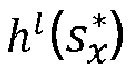
- Die Realisierung der Nebenbedingung, dass die Aktivierung durch die Erklärungskarte die Aktivierung durch das Bild im Wesentliche nicht übersteigt kann durch den Optimierungsansatz besonders einfach durch einen dritten Anteil Lc in der Kostenfunktion realisiert werden, der ein solches Übersteigen bestraft, also z.B. Lc = ∥maximum(hl (sx ) - hl (x), 0)∥1, Andere Normen sind möglich, beispielsweise eine L2-Norm.
- Alternativ wird die Erfüllung dieser Nebenbedingung dadurch erreicht, dass die Aktivierungen hl (sx ) in der Merkmalskarte beim Ermitteln der Erklärungskarte auf einen vorgebbaren Wert, insbesondere auf den gemäß der Nebenbedingung maximal zulässigen Wert gesetzt wird, beispielsweise durch h'l (sx ) = min (hl (x), hl (sx )). Wird ein Gradienten-basiertes Optimierungsverfahren benutzt, kann ein entsprechender Gradient δl in der Rückwärts-Propagation (Englisch: "backpropagation") dann gegeben sein durch δ'l = δl · [hl (sx ) < hl (x)]. Die Notation [...] bedeutet hierbei in üblicher Weise, dass der Wert = 1 ist, wenn die Bedingung erfüllt ist und = 0, wenn sie nicht erfüllt ist.
- Alternativ wird die Einhaltung der Nebenbedingung dadurch erreicht, dass beim Einsatz des Gradienten-basierten Optimierungsverfahren der Gradient δl der Rückwärts-Propagation einer Merkmalskarte hl einer Schicht mit Aktivierungsfunktionen, insbesondere einer ReLU-Schicht, (d.h. der am Ausgang der Aktivierungsfunktion anliegende Gradient) des tiefen neuronalen Netzes gleich einem vorgebbaren Gradientenwert, insbesondere gleich Null gesetzt wird, wenn die Aktivierung hl (sx ) durch die Erklärungskarte sx die Aktivierung hl (x) durch das Bild x in der Schicht übersteigt, also z.B. δ'l = δl · [hl (sx ) < hl (x)].
- Die so ermittelte Erklärungskarte kann nun vorteilhafterweise ermittelt und angezeigt werden, insbesondere neben dem Bild. Durch die ortsgetreue Auflösung und die Auswahl nur der irrelevanten Pixel ist es somit möglich, eine Darstellung zu generieren, die einer Überprüfung durch einen menschlichen Experten, insbesondere einen Mediziner, zugänglich ist.
- Nachfolgend werden Ausführungsformen der Erfindung unter Bezugnahme auf die beiliegenden Zeichnungen näher erläutert. In den Zeichnungen zeigen:
- Figur 1
- schematisch einen Aufbau von Ausführungsformen der Erfindung;
- Figur 2
- in einem Flussdiagramm den Ablauf des Verfahrens gemäß eines Aspekts der Erfindung.
-
Figur 1 zeigt in einer bevorzugten Ausführungsform der Erfindung ein maschinelles Klassifikationssystem 40, das eingerichtet ist, die Erfindung auszuführen. Das maschinelle Klassifikationssystem 40 umfasst einen Computer 45 und ein maschinenlesbares Speichermedium 46. Es umfasst ferner ein maschinelles Lernsystem 60, welches aus einem ihm zugeführten Bild x ein Ausgangssignal y ermittelt. Das Bild x kann beispielsweise über eine optionale Eingangsschnittstelle 50 aus einem Sensorsignal S ermittelt werden, das von einem bildgebenden Sensor 30 ermittelt wurde. - Das maschinelle Lernsystem ermittelt mittels eines tiefen neuronalen Netzes f eine Klassifikation f(x|θ) des Bildes x. Das tiefe neuronale Netz f ist hierbei parametriert mit Parametern θ, die in einem Parameterspeicher Q hinterlegt sind. Das maschinelle Lernsystem 60 ermittelt ferner eine Erklärungskarte

Figur 2 illustrierten Verfahren. Erklärungskarte


-
Figur 2 illustriert eine Ausführungsform des Verfahrens zum Ermitteln der Erklärungskarte
- Im Anschluss (1200) wird ein initialer Wert


- Erklärungskarte

- In einer anderen Ausführungsform ist der bildgebende Sensor 30 in einer Fertigungsanlage implementiert. Das Verfahren kann dann dazu genutzt werden, über die Anzeigeeinheit Ausschussteile für einen menschlichen Operator erfassbar darzustellen, sodass dieser über die Anzeige auf der Anzeigeeinheit 10 überhaupt in die Lage versetzt wird, zu erkennen, ob tatsächlich ein Ausschussteil vorliegt.
- In einer weiteren Ausführungsform ist an Stelle des bildgebenden Sensors 30 eine beliebige Bilderfassungseinheit, vorgesehen, die ein bildgebender Sensor 30 sein kann, oder die beispielsweise Bilder aus einer Datenbank lädt und bereitstellt. Das Verfahren kann dann zum Überprüfen der Funktionsfähigkeit des tiefen neuronalen Netzes f eingesetzt werden, um einen menschlichen Entwickler in die Lage zu versetzen, über die Anzeige auf der Anzeigeeinheit 10 analysieren zu können, welche Bildregionen zu einer möglichen Fehlklassifikation geführt haben.
- In einer noch weiteren Ausführungsform ist der bildgebende Sensor 30 Teil eines Überwachungssystems. Durch die Anzeige auf der Anzeigeeinheit 10 wird ein menschlicher Experte in die Lage versetzt, zu erkennen, ob vom maschinellen Lernsystem 60 mutmaßlich erkannte anomale Szene (z.B. ein herrenloser Koffer) tatsächlich vorliegt.
- Es versteht sich für den Fachmann, dass der Computer 46 auch durch eine Mehrzahl von Computern gegeben sein kann, und das maschinenlesbare Speichermedium 45 durch eine Mehrzahl maschinenlesbarer Speichermedien.
Claims (7)
- Computerimplementiertes Verfahren zum Ermitteln einer Erklärungskarte
 wobei die Erklärungskarte
 wobei das Optimierungsproblem mittels einer Maske b gelöst wird, die entweder multiplikativ, also sx = x · b, wobei b ∈ [0,1] optimiert wird, oder additiv, also sx = x + b, wobei b optimiert wird mit der Startbedingung b(0) = 0, ist;wobei die Erklärungskarte


 wobei die Kostenfunktion L einen ersten Anteil (Lh) aufweist, wobei der erste Anteil (Lh) durch eine L1 -Norm gegeben ist: lh (sx ) = ∥sx ∥1 der charakterisiert, wie viele Pixel des Bildes x verändert sind, undwobei die Kostenfunktion L einen zweiten Anteil (Lw) aufweist, wobei der zweite Anteil pixelweise durch eine Funktion geschieht, die charakterisiert wie hoch die Wahrscheinlichkeit ist, dass das Klassifikationsergebnis für die Erklärungskarte
 wobei die Nebenbedingung hl (sx ) ≤ hl (x), dass für alle Aktivierungsfunktions-Schichten eine Aktivierung hl (sx ) der I'ten-Aktivierungsfunktions-Schicht tiefen neuronalen Netz f durch die Erklärungskarte sx eine Aktivierung hl (x) der I'ten-Aktivierungsfunktions-Schicht des tiefen neuronalen Netzes f durch das Bild x nicht übersteigt, dadurch erreicht wird,dass ein dritter Anteil (Lc ) in der Kostenfunktion L realisiert wird, der ein solches Übersteigen bestraft, oder dadurch erreicht wird,dass die Aktivierung hl ( sx ) der jeweiligen I'ten-Aktivierungsfunktions-Schicht beim Ermitteln der Erklärungskarte sx auf einen vorgebbaren Wert, insbesondere den gemäß der Nebenbedingung maximal zulässigen Aktivierung hl (x), gesetzt wird, oder dadurch erreicht wird,dass ein Gradienten-basiertes Optimierungsverfahren eingesetzt wird und ein Gradient (δl ) einer Rückwärts-Propagation (Englisch: "backpropagation") der Aktivierung hl (sx ) einer Schicht l des tiefen neuronalen Netzes gleich einem vorgebbaren Gradienten, insbesondere gleich Null, gesetzt wird, wenn die Aktivierung durch die Erklärungskarte sx die Aktivierung hl (x) durch das Bild x in der Schicht übersteigt.
 - Verfahren zum Anzeigen eines Bildes, wobei mit dem Verfahren nach Anspruch 1 die Erklärungskarte ermittelt und angezeigt wird,
- Verfahren nach Anspruch 2, wobei auch das Bild x, insbesondere neben der Erklärungskarte, angezeigt wird.
- Computerprogramm, das eingerichtet ist, das Verfahren nach einem der Ansprüche 1 bis 3 auszuführen.
- Ein- oder Mehrzahl maschinenlesbarer Speichermedien (45), auf der das Computerprogramm nach Anspruch 4 gespeichert ist.
- Vorrichtung, die eingerichtet ist, das Verfahren nach einem der Ansprüche 1 bis 3 auszuführen.
- Anzeigesystem (13), das eingerichtet ist, das Verfahren nach einem der Ansprüche 2 oder 3 auszuführen.
Applications Claiming Priority (2)
| Application Number | Priority Date | Filing Date | Title |
|---|---|---|---|
| DE102018213056.6A DE102018213056A1 (de) | 2018-08-03 | 2018-08-03 | Verfahren und Vorrichtung zum Ermitteln einer Erklärungskarte |
| PCT/EP2019/067841 WO2020025245A1 (de) | 2018-08-03 | 2019-07-03 | Verfahren und vorrichtung zum ermitteln einer erklärungskarte |
Publications (2)
| Publication Number | Publication Date |
|---|---|
| EP3830752A1 EP3830752A1 (de) | 2021-06-09 |
| EP3830752B1 true EP3830752B1 (de) | 2023-09-06 |
Family
ID=67253861
Family Applications (1)
| Application Number | Title | Priority Date | Filing Date |
|---|---|---|---|
| EP19739224.4A Active EP3830752B1 (de) | 2018-08-03 | 2019-07-03 | Verfahren und vorrichtung zum ermitteln einer erklärungskarte |
Country Status (5)
| Country | Link |
|---|---|
| US (1) | US11645828B2 (de) |
| EP (1) | EP3830752B1 (de) |
| CN (1) | CN112513878B (de) |
| DE (1) | DE102018213056A1 (de) |
| WO (1) | WO2020025245A1 (de) |
Family Cites Families (19)
| Publication number | Priority date | Publication date | Assignee | Title |
|---|---|---|---|---|
| US6605478B2 (en) * | 2001-03-30 | 2003-08-12 | Appleid Materials, Inc, | Kill index analysis for automatic defect classification in semiconductor wafers |
| AU2004203059A1 (en) * | 2004-06-08 | 2005-12-22 | The Government Of The United States Of America As Represented By The Secretary Of The Department Of Health And Human Services, Centers For Disease Control And Prevention | Apparatus and method for assessing peripheral circulation to evaluate a physiological condition |
| US9672609B1 (en) * | 2011-11-11 | 2017-06-06 | Edge 3 Technologies, Inc. | Method and apparatus for improved depth-map estimation |
| EP3271863B1 (de) * | 2015-03-20 | 2021-07-28 | Fraunhofer Gesellschaft zur Förderung der angewandten Forschung E.V. | Relevanzpunktezuweisung für ein künstliches neuronales netzwerk |
| US10354204B2 (en) * | 2016-04-21 | 2019-07-16 | Sas Institute Inc. | Machine learning predictive labeling system |
| CN106372390B (zh) * | 2016-08-25 | 2019-04-02 | 汤一平 | 一种基于深度卷积神经网络的预防肺癌自助健康云服务系统 |
| EP3388981B1 (de) * | 2017-04-13 | 2021-09-01 | Nxp B.V. | Faltungsverarbeitungssystem |
| CN107240102A (zh) * | 2017-04-20 | 2017-10-10 | 合肥工业大学 | 基于深度学习算法的恶性肿瘤计算机辅助早期诊断方法 |
| DE102018205561A1 (de) | 2017-08-18 | 2019-02-21 | Robert Bosch Gmbh | Vorrichtung zur Klassifizierung von Signalen |
| KR20190021724A (ko) * | 2017-08-23 | 2019-03-06 | 삼성전자주식회사 | 보안성이 향상된 이미지 표시 방법 및 이를 수행하는 전자 장치 |
| CN107967484B (zh) * | 2017-11-14 | 2021-03-16 | 中国计量大学 | 一种基于多分辨率的图像分类方法 |
| JP6345332B1 (ja) * | 2017-11-21 | 2018-06-20 | 国立研究開発法人理化学研究所 | 分類装置、分類方法、プログラム、ならびに、情報記録媒体 |
| TWI644264B (zh) * | 2017-12-22 | 2018-12-11 | 晶睿通訊股份有限公司 | 影像辨識方法及其影像辨識裝置 |
| CN108154504A (zh) * | 2017-12-25 | 2018-06-12 | 浙江工业大学 | 一种基于卷积神经网络的钢板表面缺陷的检测方法 |
| CN108229379A (zh) * | 2017-12-29 | 2018-06-29 | 广东欧珀移动通信有限公司 | 图像识别方法、装置、计算机设备和存储介质 |
| US10679333B2 (en) * | 2018-03-14 | 2020-06-09 | Kla-Tencor Corporation | Defect detection, classification, and process window control using scanning electron microscope metrology |
| TWI664586B (zh) * | 2018-03-22 | 2019-07-01 | National Taiwan Normal University | 透過瑕疵複數光場之透明基板瑕疵檢測方法 |
| JP7109996B2 (ja) * | 2018-05-30 | 2022-08-01 | Hoya株式会社 | マスクブランク、位相シフトマスクおよび半導体デバイスの製造方法 |
| US10796152B2 (en) * | 2018-09-21 | 2020-10-06 | Ancestry.Com Operations Inc. | Ventral-dorsal neural networks: object detection via selective attention |
-
2018
- 2018-08-03 DE DE102018213056.6A patent/DE102018213056A1/de not_active Withdrawn
-
2019
- 2019-07-03 US US17/261,758 patent/US11645828B2/en active Active
- 2019-07-03 EP EP19739224.4A patent/EP3830752B1/de active Active
- 2019-07-03 CN CN201980051444.9A patent/CN112513878B/zh active Active
- 2019-07-03 WO PCT/EP2019/067841 patent/WO2020025245A1/de not_active Ceased
Also Published As
| Publication number | Publication date |
|---|---|
| CN112513878B (zh) | 2024-11-15 |
| US20210342653A1 (en) | 2021-11-04 |
| DE102018213056A1 (de) | 2020-02-06 |
| EP3830752A1 (de) | 2021-06-09 |
| CN112513878A (zh) | 2021-03-16 |
| US11645828B2 (en) | 2023-05-09 |
| WO2020025245A1 (de) | 2020-02-06 |
Similar Documents
| Publication | Publication Date | Title |
|---|---|---|
| DE69630935T2 (de) | Bilverarbeitungsverfahren und -vorrichtung zur automatischen Erfassung von Bereichen eines vorbestimmten Krebstyps in einem Intensitätsbild | |
| DE102019100575A1 (de) | Verfahren und system zum erzeugen eines bereichsbildes unter verwendung von daten mit geringer tiefe | |
| EP3701434B1 (de) | Verfahren und vorrichtung zum automatischen erzeugen eines künstlichen neuronalen netzes | |
| DE102012208625B4 (de) | Verfahren und System zur Verarbeitung von MRT-Daten des menschlichen Gehirns | |
| DE102011016691A1 (de) | Verfahren und System zur Unterstützung bei der Auswahl wenigstens eines Objektes aus einer Gruppe von gespeicherten Objekten | |
| DE102018214198A1 (de) | System zum Bewerten eines Bildes, Betriebsassistenzverfahren und Steuereinheit für eine Arbeitsvorrichtung sowie Arbeitsvorrichtung | |
| DE102020206059A1 (de) | Computerimplementiertes Verfahren und System zum Trainieren eines Auswertungsalgorithmus, Computerprogramm und elektronisch lesbarer Datenträger | |
| EP3830754B1 (de) | Verfahren und vorrichtung zum ermitteln einer erklärungskarte | |
| DE102018205561A1 (de) | Vorrichtung zur Klassifizierung von Signalen | |
| DE102019217300A1 (de) | Verfahren zum Trainieren eines künstlichen neuronalen Netzes, Computerprogramm, Speichermedium, Vorrichtung, künstliches neuronales Netz und Anwendung des künstlichen neuronalen Netzes | |
| WO2016156377A1 (de) | Verfahren zum bereitstellen von höheninformationen eines objekts in einem umgebungsbereich eines kraftfahrzeugs an einer kommunikationsschnittstelle, sensoreinrichtung, verarbeitungseinrichtung und kraftfahrzeug | |
| DE102018220608A1 (de) | Maschinelles Lernsystem, sowie ein Verfahren, ein Computerprogramm und eine Vorrichtung zum Erstellen des maschinellen Lernsystems | |
| DE102018211875A1 (de) | Verfahren und Vorrichtung zum Betreiben eines Steuerungssystems | |
| DE102024211895A1 (de) | Verfahren und vorrichtung zur einschätzung des ermüdungszustands eines probanden | |
| DE102018213056A1 (de) | Verfahren und Vorrichtung zum Ermitteln einer Erklärungskarte | |
| DE102023213095A1 (de) | Computerimplementiertes Verfahren und Vorrichtung zum Generieren von Trainingsdaten und zum Trainieren auf Basis der generierten Trainingsdaten | |
| EP3155588B1 (de) | Ganzkörperbildaufnahme- und bildverarbeitungssystem sowie verfahren zu dessen betrieb | |
| DE102019202523A1 (de) | Verfahren und Vorrichtung zum Betreiben eines Steuerungssystems | |
| DE102023103652A1 (de) | Computerimplementiertes Verfahren zur Berechnung einer Berechnungsausgangsgröße aus einer Berechnungseingangsgröße | |
| DE602004011478T2 (de) | Anzeige der genauigkeit einer quantitativen analyse | |
| DE102009035377A1 (de) | Einrichtung und Verfahren zur Transformation von Objektklassifikation-Ergebnissen | |
| DE102007001738B4 (de) | Verfahren und Computerprogrammprodukt zur Blickerfassung | |
| DE102024117877B3 (de) | Verfahren zur Ermittlung wenigstens einer Wahrnehmungsanforderung an eine Funktion eines Fahrzeugsystems eines Kraftfahrzeugs, Recheneinrichtung und Computerprogramm | |
| DE102015110605B3 (de) | Verfahren und Vorrichtung zur Ermittlung von Blutgefäßtypen von Netzhautblutgefäßen, sowie computerlesbares Medium mit Anweisungen | |
| DE102022203199A1 (de) | Verfahren zum Klassifizieren von Bewegungen |
Legal Events
| Date | Code | Title | Description |
|---|---|---|---|
| STAA | Information on the status of an ep patent application or granted ep patent |
Free format text: STATUS: UNKNOWN |
|
| STAA | Information on the status of an ep patent application or granted ep patent |
Free format text: STATUS: THE INTERNATIONAL PUBLICATION HAS BEEN MADE |
|
| PUAI | Public reference made under article 153(3) epc to a published international application that has entered the european phase |
Free format text: ORIGINAL CODE: 0009012 |
|
| STAA | Information on the status of an ep patent application or granted ep patent |
Free format text: STATUS: REQUEST FOR EXAMINATION WAS MADE |
|
| 17P | Request for examination filed |
Effective date: 20210303 |
|
| AK | Designated contracting states |
Kind code of ref document: A1 Designated state(s): AL AT BE BG CH CY CZ DE DK EE ES FI FR GB GR HR HU IE IS IT LI LT LU LV MC MK MT NL NO PL PT RO RS SE SI SK SM TR |
|
| DAV | Request for validation of the european patent (deleted) | ||
| DAX | Request for extension of the european patent (deleted) | ||
| STAA | Information on the status of an ep patent application or granted ep patent |
Free format text: STATUS: EXAMINATION IS IN PROGRESS |
|
| 17Q | First examination report despatched |
Effective date: 20220209 |
|
| REG | Reference to a national code |
Ref country code: DE Free format text: PREVIOUS MAIN CLASS: G06K0009460000 Ipc: G06V0010420000 Ref country code: DE Ref legal event code: R079 Ref document number: 502019009272 Country of ref document: DE Free format text: PREVIOUS MAIN CLASS: G06K0009460000 Ipc: G06V0010420000 |
|
| RIC1 | Information provided on ipc code assigned before grant |
Ipc: G06V 10/82 20220101ALI20230312BHEP Ipc: G06V 10/42 20220101AFI20230312BHEP |
|
| GRAP | Despatch of communication of intention to grant a patent |
Free format text: ORIGINAL CODE: EPIDOSNIGR1 |
|
| STAA | Information on the status of an ep patent application or granted ep patent |
Free format text: STATUS: GRANT OF PATENT IS INTENDED |
|
| GRAJ | Information related to disapproval of communication of intention to grant by the applicant or resumption of examination proceedings by the epo deleted |
Free format text: ORIGINAL CODE: EPIDOSDIGR1 |
|
| GRAP | Despatch of communication of intention to grant a patent |
Free format text: ORIGINAL CODE: EPIDOSNIGR1 |
|
| INTG | Intention to grant announced |
Effective date: 20230517 |
|
| INTG | Intention to grant announced |
Effective date: 20230530 |
|
| GRAS | Grant fee paid |
Free format text: ORIGINAL CODE: EPIDOSNIGR3 |
|
| GRAA | (expected) grant |
Free format text: ORIGINAL CODE: 0009210 |
|
| STAA | Information on the status of an ep patent application or granted ep patent |
Free format text: STATUS: THE PATENT HAS BEEN GRANTED |
|
| AK | Designated contracting states |
Kind code of ref document: B1 Designated state(s): AL AT BE BG CH CY CZ DE DK EE ES FI FR GB GR HR HU IE IS IT LI LT LU LV MC MK MT NL NO PL PT RO RS SE SI SK SM TR |
|
| REG | Reference to a national code |
Ref country code: GB Ref legal event code: FG4D Free format text: NOT ENGLISH |
|
| REG | Reference to a national code |
Ref country code: CH Ref legal event code: EP |
|
| REG | Reference to a national code |
Ref country code: IE Ref legal event code: FG4D Free format text: LANGUAGE OF EP DOCUMENT: GERMAN |
|
| REG | Reference to a national code |
Ref country code: DE Ref legal event code: R096 Ref document number: 502019009272 Country of ref document: DE |
|
| REG | Reference to a national code |
Ref country code: LT Ref legal event code: MG9D |
|
| REG | Reference to a national code |
Ref country code: NL Ref legal event code: MP Effective date: 20230906 |
|
| PG25 | Lapsed in a contracting state [announced via postgrant information from national office to epo] |
Ref country code: GR Free format text: LAPSE BECAUSE OF FAILURE TO SUBMIT A TRANSLATION OF THE DESCRIPTION OR TO PAY THE FEE WITHIN THE PRESCRIBED TIME-LIMIT Effective date: 20231207 |
|
| PG25 | Lapsed in a contracting state [announced via postgrant information from national office to epo] |
Ref country code: SE Free format text: LAPSE BECAUSE OF FAILURE TO SUBMIT A TRANSLATION OF THE DESCRIPTION OR TO PAY THE FEE WITHIN THE PRESCRIBED TIME-LIMIT Effective date: 20230906 Ref country code: RS Free format text: LAPSE BECAUSE OF FAILURE TO SUBMIT A TRANSLATION OF THE DESCRIPTION OR TO PAY THE FEE WITHIN THE PRESCRIBED TIME-LIMIT Effective date: 20230906 Ref country code: NO Free format text: LAPSE BECAUSE OF FAILURE TO SUBMIT A TRANSLATION OF THE DESCRIPTION OR TO PAY THE FEE WITHIN THE PRESCRIBED TIME-LIMIT Effective date: 20231206 Ref country code: LV Free format text: LAPSE BECAUSE OF FAILURE TO SUBMIT A TRANSLATION OF THE DESCRIPTION OR TO PAY THE FEE WITHIN THE PRESCRIBED TIME-LIMIT Effective date: 20230906 Ref country code: LT Free format text: LAPSE BECAUSE OF FAILURE TO SUBMIT A TRANSLATION OF THE DESCRIPTION OR TO PAY THE FEE WITHIN THE PRESCRIBED TIME-LIMIT Effective date: 20230906 Ref country code: HR Free format text: LAPSE BECAUSE OF FAILURE TO SUBMIT A TRANSLATION OF THE DESCRIPTION OR TO PAY THE FEE WITHIN THE PRESCRIBED TIME-LIMIT Effective date: 20230906 Ref country code: GR Free format text: LAPSE BECAUSE OF FAILURE TO SUBMIT A TRANSLATION OF THE DESCRIPTION OR TO PAY THE FEE WITHIN THE PRESCRIBED TIME-LIMIT Effective date: 20231207 Ref country code: FI Free format text: LAPSE BECAUSE OF FAILURE TO SUBMIT A TRANSLATION OF THE DESCRIPTION OR TO PAY THE FEE WITHIN THE PRESCRIBED TIME-LIMIT Effective date: 20230906 |
|
| PG25 | Lapsed in a contracting state [announced via postgrant information from national office to epo] |
Ref country code: NL Free format text: LAPSE BECAUSE OF FAILURE TO SUBMIT A TRANSLATION OF THE DESCRIPTION OR TO PAY THE FEE WITHIN THE PRESCRIBED TIME-LIMIT Effective date: 20230906 |
|
| PG25 | Lapsed in a contracting state [announced via postgrant information from national office to epo] |
Ref country code: IS Free format text: LAPSE BECAUSE OF FAILURE TO SUBMIT A TRANSLATION OF THE DESCRIPTION OR TO PAY THE FEE WITHIN THE PRESCRIBED TIME-LIMIT Effective date: 20240106 |
|
| PG25 | Lapsed in a contracting state [announced via postgrant information from national office to epo] |
Ref country code: ES Free format text: LAPSE BECAUSE OF FAILURE TO SUBMIT A TRANSLATION OF THE DESCRIPTION OR TO PAY THE FEE WITHIN THE PRESCRIBED TIME-LIMIT Effective date: 20230906 |
|
| PG25 | Lapsed in a contracting state [announced via postgrant information from national office to epo] |
Ref country code: SM Free format text: LAPSE BECAUSE OF FAILURE TO SUBMIT A TRANSLATION OF THE DESCRIPTION OR TO PAY THE FEE WITHIN THE PRESCRIBED TIME-LIMIT Effective date: 20230906 Ref country code: RO Free format text: LAPSE BECAUSE OF FAILURE TO SUBMIT A TRANSLATION OF THE DESCRIPTION OR TO PAY THE FEE WITHIN THE PRESCRIBED TIME-LIMIT Effective date: 20230906 Ref country code: IS Free format text: LAPSE BECAUSE OF FAILURE TO SUBMIT A TRANSLATION OF THE DESCRIPTION OR TO PAY THE FEE WITHIN THE PRESCRIBED TIME-LIMIT Effective date: 20240106 Ref country code: ES Free format text: LAPSE BECAUSE OF FAILURE TO SUBMIT A TRANSLATION OF THE DESCRIPTION OR TO PAY THE FEE WITHIN THE PRESCRIBED TIME-LIMIT Effective date: 20230906 Ref country code: EE Free format text: LAPSE BECAUSE OF FAILURE TO SUBMIT A TRANSLATION OF THE DESCRIPTION OR TO PAY THE FEE WITHIN THE PRESCRIBED TIME-LIMIT Effective date: 20230906 Ref country code: CZ Free format text: LAPSE BECAUSE OF FAILURE TO SUBMIT A TRANSLATION OF THE DESCRIPTION OR TO PAY THE FEE WITHIN THE PRESCRIBED TIME-LIMIT Effective date: 20230906 Ref country code: SK Free format text: LAPSE BECAUSE OF FAILURE TO SUBMIT A TRANSLATION OF THE DESCRIPTION OR TO PAY THE FEE WITHIN THE PRESCRIBED TIME-LIMIT Effective date: 20230906 Ref country code: PT Free format text: LAPSE BECAUSE OF FAILURE TO SUBMIT A TRANSLATION OF THE DESCRIPTION OR TO PAY THE FEE WITHIN THE PRESCRIBED TIME-LIMIT Effective date: 20240108 |
|
| PG25 | Lapsed in a contracting state [announced via postgrant information from national office to epo] |
Ref country code: PL Free format text: LAPSE BECAUSE OF FAILURE TO SUBMIT A TRANSLATION OF THE DESCRIPTION OR TO PAY THE FEE WITHIN THE PRESCRIBED TIME-LIMIT Effective date: 20230906 Ref country code: IT Free format text: LAPSE BECAUSE OF FAILURE TO SUBMIT A TRANSLATION OF THE DESCRIPTION OR TO PAY THE FEE WITHIN THE PRESCRIBED TIME-LIMIT Effective date: 20230906 |
|
| REG | Reference to a national code |
Ref country code: DE Ref legal event code: R097 Ref document number: 502019009272 Country of ref document: DE |
|
| PG25 | Lapsed in a contracting state [announced via postgrant information from national office to epo] |
Ref country code: DK Free format text: LAPSE BECAUSE OF FAILURE TO SUBMIT A TRANSLATION OF THE DESCRIPTION OR TO PAY THE FEE WITHIN THE PRESCRIBED TIME-LIMIT Effective date: 20230906 |
|
| PLBE | No opposition filed within time limit |
Free format text: ORIGINAL CODE: 0009261 |
|
| STAA | Information on the status of an ep patent application or granted ep patent |
Free format text: STATUS: NO OPPOSITION FILED WITHIN TIME LIMIT |
|
| PG25 | Lapsed in a contracting state [announced via postgrant information from national office to epo] |
Ref country code: DK Free format text: LAPSE BECAUSE OF FAILURE TO SUBMIT A TRANSLATION OF THE DESCRIPTION OR TO PAY THE FEE WITHIN THE PRESCRIBED TIME-LIMIT Effective date: 20230906 Ref country code: SI Free format text: LAPSE BECAUSE OF FAILURE TO SUBMIT A TRANSLATION OF THE DESCRIPTION OR TO PAY THE FEE WITHIN THE PRESCRIBED TIME-LIMIT Effective date: 20230906 |
|
| 26N | No opposition filed |
Effective date: 20240607 |
|
| PG25 | Lapsed in a contracting state [announced via postgrant information from national office to epo] |
Ref country code: BG Free format text: LAPSE BECAUSE OF FAILURE TO SUBMIT A TRANSLATION OF THE DESCRIPTION OR TO PAY THE FEE WITHIN THE PRESCRIBED TIME-LIMIT Effective date: 20230906 |
|
| PG25 | Lapsed in a contracting state [announced via postgrant information from national office to epo] |
Ref country code: BG Free format text: LAPSE BECAUSE OF FAILURE TO SUBMIT A TRANSLATION OF THE DESCRIPTION OR TO PAY THE FEE WITHIN THE PRESCRIBED TIME-LIMIT Effective date: 20230906 |
|
| PG25 | Lapsed in a contracting state [announced via postgrant information from national office to epo] |
Ref country code: MC Free format text: LAPSE BECAUSE OF FAILURE TO SUBMIT A TRANSLATION OF THE DESCRIPTION OR TO PAY THE FEE WITHIN THE PRESCRIBED TIME-LIMIT Effective date: 20230906 |
|
| REG | Reference to a national code |
Ref country code: CH Ref legal event code: PL |
|
| PG25 | Lapsed in a contracting state [announced via postgrant information from national office to epo] |
Ref country code: LU Free format text: LAPSE BECAUSE OF NON-PAYMENT OF DUE FEES Effective date: 20240703 |
|
| GBPC | Gb: european patent ceased through non-payment of renewal fee |
Effective date: 20240703 |
|
| PG25 | Lapsed in a contracting state [announced via postgrant information from national office to epo] |
Ref country code: LU Free format text: LAPSE BECAUSE OF NON-PAYMENT OF DUE FEES Effective date: 20240703 |
|
| PG25 | Lapsed in a contracting state [announced via postgrant information from national office to epo] |
Ref country code: BE Free format text: LAPSE BECAUSE OF NON-PAYMENT OF DUE FEES Effective date: 20240731 Ref country code: CH Free format text: LAPSE BECAUSE OF NON-PAYMENT OF DUE FEES Effective date: 20240731 |
|
| PG25 | Lapsed in a contracting state [announced via postgrant information from national office to epo] |
Ref country code: FR Free format text: LAPSE BECAUSE OF NON-PAYMENT OF DUE FEES Effective date: 20240731 |
|
| PG25 | Lapsed in a contracting state [announced via postgrant information from national office to epo] |
Ref country code: GB Free format text: LAPSE BECAUSE OF NON-PAYMENT OF DUE FEES Effective date: 20240703 |
|
| REG | Reference to a national code |
Ref country code: BE Ref legal event code: MM Effective date: 20240731 |
|
| PG25 | Lapsed in a contracting state [announced via postgrant information from national office to epo] |
Ref country code: IE Free format text: LAPSE BECAUSE OF NON-PAYMENT OF DUE FEES Effective date: 20240703 |
|
| REG | Reference to a national code |
Ref country code: AT Ref legal event code: MM01 Ref document number: 1609561 Country of ref document: AT Kind code of ref document: T Effective date: 20240703 |
|
| PGFP | Annual fee paid to national office [announced via postgrant information from national office to epo] |
Ref country code: DE Payment date: 20250924 Year of fee payment: 7 |
|
| PG25 | Lapsed in a contracting state [announced via postgrant information from national office to epo] |
Ref country code: AT Free format text: LAPSE BECAUSE OF NON-PAYMENT OF DUE FEES Effective date: 20240703 |
|
| PG25 | Lapsed in a contracting state [announced via postgrant information from national office to epo] |
Ref country code: CY Free format text: LAPSE BECAUSE OF FAILURE TO SUBMIT A TRANSLATION OF THE DESCRIPTION OR TO PAY THE FEE WITHIN THE PRESCRIBED TIME-LIMIT; INVALID AB INITIO Effective date: 20190703 |
|
| PG25 | Lapsed in a contracting state [announced via postgrant information from national office to epo] |
Ref country code: HU Free format text: LAPSE BECAUSE OF FAILURE TO SUBMIT A TRANSLATION OF THE DESCRIPTION OR TO PAY THE FEE WITHIN THE PRESCRIBED TIME-LIMIT; INVALID AB INITIO Effective date: 20190703 |