EP3828013B1 - Self-powered sensing and transmitting device - Google Patents
Self-powered sensing and transmitting device Download PDFInfo
- Publication number
- EP3828013B1 EP3828013B1 EP20000428.1A EP20000428A EP3828013B1 EP 3828013 B1 EP3828013 B1 EP 3828013B1 EP 20000428 A EP20000428 A EP 20000428A EP 3828013 B1 EP3828013 B1 EP 3828013B1
- Authority
- EP
- European Patent Office
- Prior art keywords
- self
- transmitting device
- powered sensing
- encapsulation
- support structure
- Prior art date
- Legal status (The legal status is an assumption and is not a legal conclusion. Google has not performed a legal analysis and makes no representation as to the accuracy of the status listed.)
- Active
Links
Images




Classifications
-
- B—PERFORMING OPERATIONS; TRANSPORTING
- B60—VEHICLES IN GENERAL
- B60C—VEHICLE TYRES; TYRE INFLATION; TYRE CHANGING; CONNECTING VALVES TO INFLATABLE ELASTIC BODIES IN GENERAL; DEVICES OR ARRANGEMENTS RELATED TO TYRES
- B60C23/00—Devices for measuring, signalling, controlling, or distributing tyre pressure or temperature, specially adapted for mounting on vehicles; Arrangement of tyre inflating devices on vehicles, e.g. of pumps or of tanks; Tyre cooling arrangements
- B60C23/02—Signalling devices actuated by tyre pressure
- B60C23/04—Signalling devices actuated by tyre pressure mounted on the wheel or tyre
- B60C23/0408—Signalling devices actuated by tyre pressure mounted on the wheel or tyre transmitting the signals by non-mechanical means from the wheel or tyre to a vehicle body mounted receiver
- B60C23/041—Means for supplying power to the signal- transmitting means on the wheel
- B60C23/0411—Piezoelectric generators
-
- A—HUMAN NECESSITIES
- A43—FOOTWEAR
- A43B—CHARACTERISTIC FEATURES OF FOOTWEAR; PARTS OF FOOTWEAR
- A43B3/00—Footwear characterised by the shape or the use
- A43B3/34—Footwear characterised by the shape or the use with electrical or electronic arrangements
-
- A—HUMAN NECESSITIES
- A43—FOOTWEAR
- A43B—CHARACTERISTIC FEATURES OF FOOTWEAR; PARTS OF FOOTWEAR
- A43B3/00—Footwear characterised by the shape or the use
- A43B3/34—Footwear characterised by the shape or the use with electrical or electronic arrangements
- A43B3/38—Footwear characterised by the shape or the use with electrical or electronic arrangements with power sources
-
- B—PERFORMING OPERATIONS; TRANSPORTING
- B60—VEHICLES IN GENERAL
- B60C—VEHICLE TYRES; TYRE INFLATION; TYRE CHANGING; CONNECTING VALVES TO INFLATABLE ELASTIC BODIES IN GENERAL; DEVICES OR ARRANGEMENTS RELATED TO TYRES
- B60C23/00—Devices for measuring, signalling, controlling, or distributing tyre pressure or temperature, specially adapted for mounting on vehicles; Arrangement of tyre inflating devices on vehicles, e.g. of pumps or of tanks; Tyre cooling arrangements
- B60C23/02—Signalling devices actuated by tyre pressure
- B60C23/04—Signalling devices actuated by tyre pressure mounted on the wheel or tyre
- B60C23/0491—Constructional details of means for attaching the control device
- B60C23/0493—Constructional details of means for attaching the control device for attachment on the tyre
-
- H—ELECTRICITY
- H02—GENERATION; CONVERSION OR DISTRIBUTION OF ELECTRIC POWER
- H02N—ELECTRIC MACHINES NOT OTHERWISE PROVIDED FOR
- H02N2/00—Electric machines in general using piezoelectric effect, electrostriction or magnetostriction
- H02N2/18—Electric machines in general using piezoelectric effect, electrostriction or magnetostriction producing electrical output from mechanical input, e.g. generators
-
- H—ELECTRICITY
- H02—GENERATION; CONVERSION OR DISTRIBUTION OF ELECTRIC POWER
- H02N—ELECTRIC MACHINES NOT OTHERWISE PROVIDED FOR
- H02N2/00—Electric machines in general using piezoelectric effect, electrostriction or magnetostriction
- H02N2/18—Electric machines in general using piezoelectric effect, electrostriction or magnetostriction producing electrical output from mechanical input, e.g. generators
- H02N2/186—Vibration harvesters
-
- H—ELECTRICITY
- H10—SEMICONDUCTOR DEVICES; ELECTRIC SOLID-STATE DEVICES NOT OTHERWISE PROVIDED FOR
- H10N—ELECTRIC SOLID-STATE DEVICES NOT OTHERWISE PROVIDED FOR
- H10N30/00—Piezoelectric or electrostrictive devices
- H10N30/30—Piezoelectric or electrostrictive devices with mechanical input and electrical output, e.g. functioning as generators or sensors
-
- H—ELECTRICITY
- H10—SEMICONDUCTOR DEVICES; ELECTRIC SOLID-STATE DEVICES NOT OTHERWISE PROVIDED FOR
- H10N—ELECTRIC SOLID-STATE DEVICES NOT OTHERWISE PROVIDED FOR
- H10N30/00—Piezoelectric or electrostrictive devices
- H10N30/80—Constructional details
- H10N30/88—Mounts; Supports; Enclosures; Casings
-
- B—PERFORMING OPERATIONS; TRANSPORTING
- B29—WORKING OF PLASTICS; WORKING OF SUBSTANCES IN A PLASTIC STATE IN GENERAL
- B29D—PRODUCING PARTICULAR ARTICLES FROM PLASTICS OR FROM SUBSTANCES IN A PLASTIC STATE
- B29D30/00—Producing pneumatic or solid tyres or parts thereof
- B29D30/0061—Accessories, details or auxiliary operations not otherwise provided for
- B29D2030/0072—Attaching fasteners to tyres, e.g. patches, in order to connect devices to tyres
Definitions
- the present invention relates to a self-powered sensing and transmitting device, and more particularly, to a device using piezoelectricity for sensing and transmitting.
- TPMS Tire Pressure Monitoring System
- a traditional commercial TPMS is typically powered by a disposable battery.
- detection and transmission frequency is set to once every 30 to 60 seconds in order to conserve power. If the detection and transmission frequency is increased, the power of the disposable battery can soon be depleted.
- the disposable battery in the traditional commercial TPMS is usually sealed by an encapsulant, which cannot be replaced by consumers. As such, the adoption of the TPMS still fails to prevent tire blowouts. One reason may be that the interval between detections and transmissions of tire pressure information is too long, which suggests a poor safety factor.
- the traditional commercial TPMS is screwed on the rim (e.g., aluminum rim) of a tire. Therefore, it can only detect the air pressure and/or temperature in the tire, but not parameters that best reflect the conditions of the tire that is in contact with the ground, such as the thickness of the tire, the acceleration, the vertical load, etc. In fact, it is imperative to be able to detect the irregular vibrations that often precede a tire blowout.
- a piezoelectric power generator including a piezoelectric power-generating element is disclosed in US 2013/0181578 A1 .
- a bridge patch attached to the inner liner of a tire that carries an electrical circuit with an electromechanical transducer element is disclosed in EP 1614552 A1 .
- a footwear incorporating at least one piezoelectric element which, when activated, enables the wearer of the footwear to harvest energy from the deformation of the piezoelectric element is disclosed in US 2006/0021261 A1 .
- a tire including electronic packages for monitoring tire performance and for tire identification is disclosed in WO 99/041093 A1 .
- a self-powered sensing and transmitting device of the present invention includes a piezoelectric generator 1, a carrying structure 2, an encapsulation support structure 3 and a fixed support structure 4.
- the piezoelectric generator 1 includes a piezoelectric thin film 11 and two conductive electrodes 12 on the upper and lower sides of the piezoelectric thin film 11, and is stacked with the carrying structure 2.
- the piezoelectric generator 1 is, for example, a piezoelectric ceramic generator.
- the carrying structure 2 is, for example, an elastic thin metal plate. As shown in FIG. 1A , the piezoelectric generator 1 is adhered to one side of the carrying structure 2; or as shown in FIG. 1B , the piezoelectric generators 1 are adhered to two opposite sides of the carrying structure 2, such that when the carrying structure 2 is deformed as a result of mechanical energy, the piezoelectric generator 1 can convert the mechanical energy into electrical energy.
- the encapsulation support structure 3 includes an encapsulation portion 31 for encapsulating the piezoelectric generator 1 and the carrying structure 2, and two supporting portions 32 connected to two ends of the encapsulation portion 31.
- the encapsulation support structure 3 can be made of an elastic or moldable material, such as rubber, silicone or plastic. It should be noted that the encapsulation portion 31 and the supporting portions 32 are basically integrally formed, such that the two supporting portions 32 function like bridge piers supporting the encapsulation portion 31 and allow the encapsulation portion 31 in which the piezoelectric generator 1 and the carrying structure 2 are encapsulated to vibrate under the support of the two supporting portions 32.
- the fixed support structure 4 is used for correspondingly coupling with the two supporting portions 32, and the fixed support structure 4 is fixed on a flexible surface S.
- a self-powered sensing and transmitting device 10 of the present invention can be installed on the flexible surface S, which is, for example, the inner surface of a tire 20 (see FIG. 3 ), or for example, the inner surface of a shoe 30 (see FIG. 8 ).
- the fixed support structure 4 includes two first mating components 41, while each of the two supporting portions 32 includes a second mating component 321, wherein the first mating components 41 and the second mating components 321 are physically coupled together in an embedded fashion.
- the first mating component 41 can be a convex component
- the second mating component 321 can be a concave component.
- the first mating component 41 includes a head portion 411 and a neck portion 412
- the second mating component 321 includes a through hole 3211 penetrating through the supporting portion 32 and an opening 3212 extending from the through hole 3211 to an edge of the supporting portion 32.
- the size (width) of the opening 3212 is substantially smaller than or equal to the size (width) of the neck portion 412.
- the first mating component 41 or more specifically, the neck portion 412 having a smaller dimension relative to the head portion 411 is forced into the through hole 3211 from the opening 3212 of the second mating component 321.
- the neck portion 412 will be slightly squeezed by the edges of the opening 3212 when passing through the opening 3212, and then be allowed to return to its original shape once it reaches the through hole 3211.
- the head portion 411 prevents the first mating component 41 from passing through the through hole 3211, thereby accomplishing the correspondingly coupling between the fixed support structure 4 and the encapsulation support structure 3.
- the first mating component 41 of the fixed support structure 4 can be a concave component
- the second mating component 321 of the encapsulation support structure 3 can be a convex component, thereby accomplishing the correspondingly coupling between the fixed support structure 4 and the encapsulation support structure 3.
- the fixed support structure 4 can be attached to the flexible surface S by an adhesive, for example.
- the fixed support structure 4 is attached to the inner crown area of the tire.
- the fixed support structure 4 can be integrally formed by molding during manufacturing of the tire. Simply put, the fixed support structure 4 is fixed on the flexible surface S and cannot be easily removed.
- the correspondingly coupling of encapsulation support structure 3 with the fixed support structure 4 is carried out in such a way that the radius of curvature of the encapsulation portion 31 is smaller than or equal to the radius of curvature of the flexible surface S, so the curvature of the encapsulation portion 31 is greater than or equal to the curvature of the flexible surface S.
- the fixed support structure 4 applies a pre-stress on the encapsulation support structure 3.
- the degree to which the flexible surface S is curved i.e., the curvature
- the radius of curvature of a plane is infinite.
- the fixed support structure 4 includes two first mating components 41.
- each of the first mating components 41 includes, from top to bottom, a head portion, a neck portion and a base portion, wherein the two base portions can be separated from each other or integrally formed.
- the two first mating components 41 become progressively closer to each other as they extend further away from the flexible surface S (i.e., extending in a tapered fashion).
- the encapsulation portion 31 bends towards the direction of the flexible surface S (i.e., the center of the encapsulation portion 31 is closer to the flexible surface S than the two supporting portions 32), and the encapsulation portion 31 can partially touch the flexible surface S or not at all.
- the fixed support structure 4 is attached to the inner surface of a shoe, for example, as shown in FIG. 8 .
- the fixed support structure 4 includes two first mating components 41, each of the first mating components 41 includes a head portion 411, a neck portion 412 and a base portion 413, wherein the two base portions 413 are in principle separated from each other.
- the two first mating components 41 become further apart from each other as they extend further away from the flexible surface S (i.e., extending in a progressively widening fashion).
- the encapsulation portion 31 bends in a direction away from the flexible surface S (i.e., the center of the encapsulation portion 31 is further from the flexible surface S than the two supporting portions 32), and the encapsulation portion 31 can partially touch the flexible surface S or not at all.
- the flexible surface S is deformed (e.g., deformations of the inner surface of the shoe caused by walking)
- mechanical energy is transferred to the encapsulation portion 31 being caused to vibrate, and the carrying structure 2 encapsulated in the encapsulation portion 31 is deformed by this mechanical energy, and the piezoelectric generator 1 converts the mechanical energy to electrical energy.
- the self-powered sensing and transmitting device of the present invention further includes a circuit module 5 and connectors 6 connecting the circuit module 5 to the piezoelectric generator 1 and the carrying structure 2, wherein the circuit module 5 and the connectors 6 can be encapsulated by the encapsulation portion 31 of the encapsulation support structure 3.
- the circuit module 5 includes a rectifier 51, an electrical storage 52 (e.g., a temporary storage control circuit or a rechargeable battery) and a sensor 53 (e.g., including a sensing module and a signal transmission module).
- the circuit module 5 rectifies and stores the alternating current generated by the piezoelectric generator 1 in the temporary storage control circuit, wherein a voltage regulating IC and a capacitor are used for controlling the output voltage level, and power can then be directly provided from the temporary storage control circuit to the sensing module and the signal transmission module for use.
- the circuit module 5 rectifies and stores the alternating current generated by the piezoelectric generator 1 to the rechargeable battery.
- the piezoelectric generator 1 can be provided as a single unit stacked on the carrying structure 2, as shown in FIG.
- a thin metal plate can be stacked on the piezoelectric generator 1, such that if a crack occurs in the piezoelectric generator 1, electrical conduction with the circuit module 5 can be maintained through the thin metal plate.
- a conductive adhesive can be used for connecting the piezoelectric generator 1, the carrying structure 2 and the circuit module 5 to ensure proper electrical connections between the piezoelectric generator 1, the carrying structure 2 and the circuit module 5 during vibrations of the carrying structure 2.
- an encapsulation conductive adhesive can be used for encapsulating the piezoelectric generator 1 with the circuit module 5, and the carrying structure 2 with the circuit module 5, so as to ensure proper electrical connections with the circuit module 5.
- a circuit with a minimum loss of electrical energy in which the alternating current generated by the piezoelectric generator 1 is rectified and stored in the electrical storage 52 of the circuit module 5 (e.g., a temporary storage control circuit or a rechargeable battery) with a voltage regulating IC and a capacitor for controlling the level of the output voltage, and power is directly provided from the electrical storage 52 for use by a load of the sensor 53 (e.g., including a sensing module and a signal transmitting module).
- the circuit module 5 e.g., a temporary storage control circuit or a rechargeable battery
- a voltage regulating IC and a capacitor for controlling the level of the output voltage
- the piezoelectric generator 1 in order to reduce the risk of puncturing of the device when on the road, can be designed as two separate units, or as two electrode areas cut on the same ultra-thin piezoelectric ceramic to form two separate generators.
- the alternating current generated by one of the piezoelectric generators can be rectified and stored in the electrical storage 52 of the circuit module 5 (e.g., a temporary storage control circuit or a rechargeable battery), and when the G value sensed by the accelerometer is greater than zero (i.e., when vehicle is moving) , then the sensor 53 is directly powered by the electrical energy generated by this piezoelectric generator.
- electrical energy generated by the other generator while the vehicle is moving can be inputted into the electrical storage 52 instead of being used to power the load. It only supplies electricity when the vehicle is stationary and detection is required.
- the fixed support structure 4 of the self-powered sensing and transmitting device 10 of the present invention can be secured onto the flexible surface S (inner surface of the tire), and the piezoelectric generator 1, the carrying structure 2, the circuit module 5 and the connectors 6 can be encapsulated by the encapsulation support structure 3 as one unit.
- the correspondingly coupling between the supporting portions 32 and the fixed support structure 4 allows the encapsulation portion 31 to have a radius of curvature that is smaller than or equal to the radius of curvature of the flexible surface S, and the encapsulation portion 31 can partially touch the flexible surface S or not at all, so as to create vibrations during deformation of the flexible surface S.
- the electrical storage 52 of the circuit module 5 can be designed to replace disposable batteries.
- the piezoelectric generator 1 that has an adjustable curvature, sufficient electrical energy can be generated to provide the power needed by the sensing module (e.g., the temperature and tire pressure sensors and the accelerometer) and the signal transmission module.
- the self-powered sensing and transmitting device 10 of the present mention is applicable to TPMS, and can be designed as a detachable and reusable tire parameter sensing device that can be attached to the inner wall of a tire, and can be removed from the old tire reaching the end of its life and installed on a new tire to be used again.
- the self-powered sensing and transmitting device 10 when the tire 20 starts to rotate, the self-powered sensing and transmitting device 10 receives mechanical energy, and the carrying structure 2 is deformed to cause vibrations in the piezoelectric generator 1.
- the piezoelectric generator 1 already has a radius of curvature smaller than that of the inner wall of the tire.
- the self-powered sensing and transmitting device 10 receives mechanical energy, the carrying structure 2 is deformed to cause vibrations in the piezoelectric generator 1.
- FIG. 6A when the tire 20 starts to rotate, the self-powered sensing and transmitting device 10 receives mechanical energy, and the carrying structure 2 is deformed to cause vibrations in the piezoelectric generator 1.
- the self-powered sensing and transmitting device 10 installed in the inner surface of the tire can provide power to itself in order to perform sensing and signal transmissions.
- the relationships between the thickness the piezoelectric generator and the voltage and current generated are explained using Table 1B below.
- a piezoelectric ceramic with a size of 75 mm*30 mm is used as the piezoelectric generator, and a metal plate with a size of 100 mm*32 mm*0.1 mm (L* W * T) is used as the carrying structure.
- the radius of curvature of the piezoelectric ceramic is 15 cm.
- the piezoelectric generator is connected to a load of 1 kS2, and the load voltage (V max ) is measured.
- Table 1B Thickness (mm) 0.04 0.07 0.1 0.12 0.15 Voltage (V) 9.3 11.2 14.5 15.1 16.7 Current (mA) 18 15 12 8 7
- the self-powered sensing and transmitting device of the present invention is installed in the inner surface of a tire to create a smart tire. More specifically, the fixed support structure of the self-powered sensing and transmitting device is secured to the inner surface of the tire or integrally formed with the tire, and the encapsulation support structure of the self-powered sensing and transmitting device is correspondingly coupled with the fixed support structure to facilitate removal.
- feasibility of the applications of the present invention is illustrated below using a standard 16-inch (about 35 cm) sedan tire and a truck tire (about 65 cm).
- the sedan tire is essentially composed of a special rubber embedded with multilayers of steel wire coils, and the truck tire has even more layers of steel wire coils tightly embedded in the rubber, therefore, during testing, signals are transmitted using a radio frequency of 433 MHz for the sedan tire, and using Bluetooth communication method of 2.4 GHz for the truck tire.
- the self-powered sensing and transmitting devices of the present invention are installed at the centers of the inner crowns of the tires in conformity with the tires (i.e., with the same radius of curvature).
- the generator used in the sedan tire is a single ultra-thin piezoelectric ceramic with a thickness of 45 ⁇ m; while the generator used in the truck tire is composed of two ultra-thin piezoelectric ceramics (a bimorph) with a same thickness of 45 ⁇ m and a slighter larger area.
- the two piezoelectric ceramics are stacked on the same metal plate as a bimorph to save space. Test conditions start from a standstill and accelerate to a maximum of 120 km/h.
- the tires are run at 30 km/h, 60 km/h, and 120 km/h for 1 hour, respectively.
- Signal receivers are placed ten meters away from the tires and intervals of transmitted signals related to tire pressure, temperature and acceleration are recorded.
- Table 2A Area of Piezoelectric Generator (cm2) Type of Tires Tested (radius of curvature in cm) Static Capacitance ( ⁇ F) Signal Transmission Method 30 km/h Signal Transmission Interval (sec) 60 km/h Signal Transmission Interval (sec) 120 km/h Signal Transmission Interval (sec) 15 cm 2 16 inch Sedan Tire (35 cm) 1 433 MHz (RF) 5 1 1 22 cm 2 ⁇ 2 (bimorph) Truck Tire (65 cm) 2.3 2.4 GHz 15 8 1
- the receiver receives parameter information sent from the inner tire at an interval of 5 seconds.
- the sedan tire can achieve a signal transmission frequency of once per second.
- the truck tire shows similar trend as the sedan tire.
- the diameter of truck tire is considerably larger, and one revolution of the truck tire is more than 4 meters in length, the intervals between power generation due to the deformations of the sedan tire and truck tire touching the ground at a speed of 30 km/h is found to be 0.264 seconds for the sedan tire and 0.49 seconds for the truck tire.
- the truck tire can also achieve Bluetooth signal transmissions almost once every second.
- Table 2B Area of Piezoelectric Generator (cm2) Type of Tires Tested (radius of curvature in cm) Static Capacitance ( ⁇ F) Signal Transmission Method 30 km/h Signal Transmission Interval (sec) 60 km/h Signal Transmission Interval (sec) 120 km/h Signal Transmission Interval (sec) 15 cm 2 16 inch Sedan Tire (35 cm) 1 433 MHz (RF) 3 1 1 22 cm 2 ⁇ 2 (bimorph) Truck tire (65 cm) 2.3 2.4 GHz 10 5 1
- the signal transmission interval is shortened to about 3 seconds, which means that the self-powered sensing and transmitting device can still capture slow and small changes in mechanical energy (such as when the vehicle is moving through the city slowly or in a traffic jam), and convert the mechanical energy into power required by the tire sensors and the signal transmitter.
- the results for the truck tire also indicate that the power generation efficiency of the self-powered sensing and transmitting device is improved due to the pre-stress, and as speed increases, the transmission intervals of the Bluetooth signals are greatly reduced to 10 seconds (at 30 km/h), 5 seconds (at 60 km/h) and 1 second (at 120 km/h).
- the much larger generator (22 cm 2 ⁇ 2 [i.e., bimorph]) is used for testing a sedan tire that is secured in the same way as in the test described with respect to Table 2B, and observations are made on the number of cumulative signal transmissions over a period of time.
- the speed starts from 30 km/h, and is increased to a maximum speed of 150 km/h sequentially with the duration of each speed being 5 minutes (300 seconds).
- the results are shown in FIG. 7 .
- the number of signal transmissions is increased since the area of the generator is larger.
- the sedan tire is running at low speeds (30-40 km/h), it can transmit tire pressure signals nearly once every second, and as the speed increases, the signal transmission intervals are less than one second in the higher speed range.
- the total test duration is 3900 seconds from the lowest to the highest speeds, and the receiver receives a total of 5017 signals.
- sending tire pressure signals once per second, or even less than one second can provide continuous detections of the tire pressure status.
- the detection frequency provided by the self-powered sensing and transmitting device of the present invention is significantly higher. This increases the safety factor. For example, if the tire is punctured when on the road, tire pressure will leak quickly. With the self-powered sensing and transmitting device of the present invention, it will be possible to accurately determine the tire pressure in real time whether the tire is studded or punctured by a foreign object.
- the encapsulation support structure of the self-powered sensing and transmitting device can be removed from the fixed support structure. After another tire provided with a fixed support structure is fitted, the encapsulation support structure can then be correspondingly coupled to the fixed support structure of the new tire for further sensing of tire pressure, temperature, acceleration, etc.
- a system includes a plurality of the self-powered sensing and transmitting devices 10, 10', wherein one of one or more self-powered sensing and transmitting devices 10, 10' is provided on the inner surface of the shoe 30 near a toe of the shoe 30, and another one of the self-powered sensing and transmitting devices 10, 10' is provided on the inner surface of the shoe 30 near a heel of the shoe 30, and wherein one of the encapsulation portions of the encapsulation support structures of the one or more self-powered sensing and transmitting devices 10, 10' is curved in an opposite direction to the encapsulation portion of the encapsulation support structure of the another one self-powered sensing and transmitting device 10 or 10'.
- the self-powered sensing and transmitting device 10 or 10' of the present invention can also be applicable to a motion monitoring system, and can be installed on the inner surface of a shoe 30.
- a smart shoe can be provided, in which the self-powered sensing and transmitting device 10 or 10' of the present disclosure can be disposed on the inner surface of the shoe 30 near the toe, sole, heel or other areas of a human foot in order to output sensed data related to the foot, e.g., weight, walking or running status, steps taken or distances travelled during an motion, etc.
- the self-powered sensing and transmitting device 10 is provided on the inner surface of the shoe 30 near the toe or sole area, and the self-powered sensing and transmitting device 10' is provided on the inner surface of the shoe 30 near the heel area.
- the radius of curvature of the encapsulation support structure in the self-powered sensing and transmitting device 10 or 10' is smaller than or equal to that of the bottom surface of the shoe where the self-powered sensing and transmitting device 10 or 10' is located, and the bending direction of the encapsulation support structure can be opposite to or the same as that of the bottom surface of the shoe.
- the self-powered sensing and transmitting device of the present invention is applied to a motion monitoring system, and the self-powered sensing and transmitting devices 10 and 10' are installed on the inner surface (i.e., the flexible surface S) of the shoe 30, one of the self-powered sensing and transmitting devices (shown as the self-powered sensing and transmitting device 10 in FIG.
- the encapsulation portion of the encapsulation support structure of the one self-powered sensing and transmitting device is curved in the opposite direction to the encapsulation portion of the encapsulation support structure of the other one self-powered sensing and transmitting device.
- the self-powered sensing and transmitting device of the present invention is a detachable and reusable device attached to, for example, the inner surface of a tire or the inner bottom surface of a shoe for sensing tire or motion parameters.
- the sensing module for sensing temperature, pressure, acceleration, etc.
- the self-powered sensing and transmitting device of the present invention captures the changes in mechanical energy from the tire (shoe) in contact with the ground using an ultra-thin piezoelectric ceramic capable of converting mechanical energy to electrical energy.
- the ultra-thin piezoelectric ceramic attached to the inner surface of the tire (or the inner bottom surface of the shoe) has a radius of curvature smaller than or equal to that of the inner surface of the tire (or the inner bottom surface of the shoe).
- the self-powered sensing and transmitting device of the present invention can also be detached and reused, so when a tire has reached the end of its life, the self-powered sensing and transmitting device can be reinstalled on a new tire, which is both environmental friendly and economical.
Landscapes
- Engineering & Computer Science (AREA)
- Mechanical Engineering (AREA)
- Microelectronics & Electronic Packaging (AREA)
- Force Measurement Appropriate To Specific Purposes (AREA)
- General Electrical Machinery Utilizing Piezoelectricity, Electrostriction Or Magnetostriction (AREA)
- Measuring Pulse, Heart Rate, Blood Pressure Or Blood Flow (AREA)
- Geophysics And Detection Of Objects (AREA)
- Tires In General (AREA)
Description
- The present invention relates to a self-powered sensing and transmitting device, and more particularly, to a device using piezoelectricity for sensing and transmitting.
- Despite the fact that Tire Pressure Monitoring System (TPMS) has been a standard motor vehicle equipment in many parts of the world, road accidents caused by tire blowouts still happen very frequently. Although the causes for tire blowouts are intricate, insufficient tire pressure remains one of the main causes.
- A traditional commercial TPMS is typically powered by a disposable battery. When the pressure is above the lower limit of the TPMS, detection and transmission frequency is set to once every 30 to 60 seconds in order to conserve power. If the detection and transmission frequency is increased, the power of the disposable battery can soon be depleted. In addition, since the environment in the tires is usually high in both temperature and humidity, the disposable battery in the traditional commercial TPMS is usually sealed by an encapsulant, which cannot be replaced by consumers. As such, the adoption of the TPMS still fails to prevent tire blowouts. One reason may be that the interval between detections and transmissions of tire pressure information is too long, which suggests a poor safety factor.
- In addition, the traditional commercial TPMS is screwed on the rim (e.g., aluminum rim) of a tire. Therefore, it can only detect the air pressure and/or temperature in the tire, but not parameters that best reflect the conditions of the tire that is in contact with the ground, such as the thickness of the tire, the acceleration, the vertical load, etc. In fact, it is imperative to be able to detect the irregular vibrations that often precede a tire blowout.
- Additionally, a piezoelectric power generator including a piezoelectric power-generating element is disclosed in
US 2013/0181578 A1 . A bridge patch attached to the inner liner of a tire that carries an electrical circuit with an electromechanical transducer element is disclosed inEP 1614552 A1 . A footwear incorporating at least one piezoelectric element which, when activated, enables the wearer of the footwear to harvest energy from the deformation of the piezoelectric element is disclosed inUS 2006/0021261 A1 . A tire including electronic packages for monitoring tire performance and for tire identification is disclosed inWO 99/041093 A1 - It is an object of the invention to provide a self-powered sensing and transmitting device as well as a system comprising a plurality of the self-powered sensing and transmitting devices with which the above mentioned drawbacks can be overcome. This object is solved by the subject matter of the independent claims. Preferred embodiments are the subject matter of dependent claims.
-
-
FIGs. 1A and 1B are schematic diagrams depicting a piezoelectric generator and a carrying structure of a self-powered sensing and transmitting device. -
FIG. 2 is a schematic diagram depicting an encapsulation support structure and a fixed support structure of the self-powered sensing and transmitting device in accordance with the present invention. -
FIG. 3 is a schematic diagram depicting the self-powered sensing and transmitting device in accordance with the present invention installed on a flexible surface. -
FIGs. 4A and 4B are schematic diagrams depicting corresponding couplings of the encapsulation support structure and the fixed support structure of the self-powered sensing and transmitting device in accordance with the present invention. -
FIGs. 5A and 5B are schematic diagrams depicting a circuit module and connectors of the self-powered sensing and transmitting device in accordance with the present invention. -
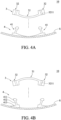
FIGs. 6A to 6C are schematic diagrams depicting a self-powered sensing and transmitting device in accordance with the present invention installed on the inner surface of a tire and coming into contact with the ground as the tire rotates. -
FIG. 7 is a chart illustrating signal transmission results of the self-powered sensing and transmitting device in accordance with the present invention. -
FIG. 8 is a schematic diagram depicting a self-powered sensing and transmitting device in accordance with the present invention installed on the inner surface of a shoe. - Referring to
FIGs. 1A, 1B and2 , a self-powered sensing and transmitting device of the present invention includes apiezoelectric generator 1, acarrying structure 2, anencapsulation support structure 3 and afixed support structure 4. - The
piezoelectric generator 1 includes a piezoelectricthin film 11 and twoconductive electrodes 12 on the upper and lower sides of the piezoelectricthin film 11, and is stacked with thecarrying structure 2. Thepiezoelectric generator 1 is, for example, a piezoelectric ceramic generator. Thecarrying structure 2 is, for example, an elastic thin metal plate. As shown inFIG. 1A , thepiezoelectric generator 1 is adhered to one side of thecarrying structure 2; or as shown inFIG. 1B , thepiezoelectric generators 1 are adhered to two opposite sides of thecarrying structure 2, such that when thecarrying structure 2 is deformed as a result of mechanical energy, thepiezoelectric generator 1 can convert the mechanical energy into electrical energy. - The
encapsulation support structure 3 includes anencapsulation portion 31 for encapsulating thepiezoelectric generator 1 and thecarrying structure 2, and two supportingportions 32 connected to two ends of theencapsulation portion 31. Theencapsulation support structure 3 can be made of an elastic or moldable material, such as rubber, silicone or plastic. It should be noted that theencapsulation portion 31 and the supportingportions 32 are basically integrally formed, such that the two supportingportions 32 function like bridge piers supporting theencapsulation portion 31 and allow theencapsulation portion 31 in which thepiezoelectric generator 1 and thecarrying structure 2 are encapsulated to vibrate under the support of the two supportingportions 32. - The
fixed support structure 4 is used for correspondingly coupling with the two supportingportions 32, and thefixed support structure 4 is fixed on a flexible surface S. As shown inFIG. 3 , in an embodiment, a self-powered sensing and transmittingdevice 10 of the present invention can be installed on the flexible surface S, which is, for example, the inner surface of a tire 20 (seeFIG. 3 ), or for example, the inner surface of a shoe 30 (seeFIG. 8 ). - Referring to
FIG. 2 again, thefixed support structure 4 includes twofirst mating components 41, while each of the two supportingportions 32 includes asecond mating component 321, wherein thefirst mating components 41 and thesecond mating components 321 are physically coupled together in an embedded fashion. For example, thefirst mating component 41 can be a convex component, and thesecond mating component 321 can be a concave component. More specifically, thefirst mating component 41 includes ahead portion 411 and aneck portion 412, and thesecond mating component 321 includes athrough hole 3211 penetrating through the supportingportion 32 and an opening 3212 extending from thethrough hole 3211 to an edge of the supportingportion 32. Furthermore, the size (width) of theopening 3212 is substantially smaller than or equal to the size (width) of theneck portion 412. Thefirst mating component 41, or more specifically, theneck portion 412 having a smaller dimension relative to thehead portion 411 is forced into thethrough hole 3211 from the opening 3212 of thesecond mating component 321. In this process, since thefirst mating component 41 has characteristics similar to those of a rubber plug, theneck portion 412 will be slightly squeezed by the edges of the opening 3212 when passing through the opening 3212, and then be allowed to return to its original shape once it reaches the throughhole 3211. At this point, thehead portion 411 prevents thefirst mating component 41 from passing through thethrough hole 3211, thereby accomplishing the correspondingly coupling between thefixed support structure 4 and theencapsulation support structure 3. On the other hand, thefirst mating component 41 of thefixed support structure 4 can be a concave component, and thesecond mating component 321 of theencapsulation support structure 3 can be a convex component, thereby accomplishing the correspondingly coupling between thefixed support structure 4 and theencapsulation support structure 3. - Referring to
FIGs. 4A and 4B , schematic diagrams depictingfixed support structures 4 installed on flexible surfaces S are shown. First, thefixed support structure 4 can be attached to the flexible surface S by an adhesive, for example. In an embodiment, as shown inFIG. 3 , thefixed support structure 4 is attached to the inner crown area of the tire. Alternatively, thefixed support structure 4 can be integrally formed by molding during manufacturing of the tire. Simply put, thefixed support structure 4 is fixed on the flexible surface S and cannot be easily removed. In addition, the correspondingly coupling ofencapsulation support structure 3 with thefixed support structure 4 is carried out in such a way that the radius of curvature of theencapsulation portion 31 is smaller than or equal to the radius of curvature of the flexible surface S, so the curvature of theencapsulation portion 31 is greater than or equal to the curvature of the flexible surface S. In other words, thefixed support structure 4 applies a pre-stress on theencapsulation support structure 3. It should be noted that the degree to which the flexible surface S is curved (i.e., the curvature) is defined as the reciprocal of the radius, i.e., the smaller the radius, the larger the curvature. The radius of curvature of a plane is infinite. - For installation, force is first exerted on the
encapsulation support structure 3 to bend it slightly, such that the two supportingportions 32 of theencapsulation support structure 3 fit between the twofirst mating components 41. Then, theopenings 3212 of the supportingportions 32 are aligned with thefirst mating components 41, meanwhile force exerted upon theencapsulation support structure 3 is eased slightly to cause thefirst mating components 41 to squeeze pass theopenings 3212 and into the through holes 3211. Once thefirst mating components 41 are correspondingly coupled with the supportingportions 32, theencapsulation portion 31 is pre-stressed. - As shown in
FIG. 4A , the fixedsupport structure 4 includes twofirst mating components 41. In the drawing, each of thefirst mating components 41 includes, from top to bottom, a head portion, a neck portion and a base portion, wherein the two base portions can be separated from each other or integrally formed. The twofirst mating components 41 become progressively closer to each other as they extend further away from the flexible surface S (i.e., extending in a tapered fashion). Theencapsulation portion 31 bends towards the direction of the flexible surface S (i.e., the center of theencapsulation portion 31 is closer to the flexible surface S than the two supporting portions 32), and theencapsulation portion 31 can partially touch the flexible surface S or not at all. As such, when the flexible surface S is deformed (e.g., deformations of the inner surface of the tire due to rotations of the tire), mechanical energy is transferred to theencapsulation portion 31 being caused to vibrate, and the carryingstructure 2 encapsulated in theencapsulation portion 31 is deformed by this mechanical energy, and thepiezoelectric generator 1 converts the mechanical energy to electrical energy. - In another embodiment, the fixed
support structure 4 is attached to the inner surface of a shoe, for example, as shown inFIG. 8 . As shown inFIG. 4B , the fixedsupport structure 4 includes twofirst mating components 41, each of thefirst mating components 41 includes ahead portion 411, aneck portion 412 and abase portion 413, wherein the twobase portions 413 are in principle separated from each other. The twofirst mating components 41 become further apart from each other as they extend further away from the flexible surface S (i.e., extending in a progressively widening fashion). Theencapsulation portion 31 bends in a direction away from the flexible surface S (i.e., the center of theencapsulation portion 31 is further from the flexible surface S than the two supporting portions 32), and theencapsulation portion 31 can partially touch the flexible surface S or not at all. As such, when the flexible surface S is deformed (e.g., deformations of the inner surface of the shoe caused by walking), mechanical energy is transferred to theencapsulation portion 31 being caused to vibrate, and the carryingstructure 2 encapsulated in theencapsulation portion 31 is deformed by this mechanical energy, and thepiezoelectric generator 1 converts the mechanical energy to electrical energy. - Referring to
FIGs. 5A and 5B , the self-powered sensing and transmitting device of the present invention further includes acircuit module 5 andconnectors 6 connecting thecircuit module 5 to thepiezoelectric generator 1 and the carryingstructure 2, wherein thecircuit module 5 and theconnectors 6 can be encapsulated by theencapsulation portion 31 of theencapsulation support structure 3. In addition, thecircuit module 5 includes arectifier 51, an electrical storage 52 (e.g., a temporary storage control circuit or a rechargeable battery) and a sensor 53 (e.g., including a sensing module and a signal transmission module). Thecircuit module 5 rectifies and stores the alternating current generated by thepiezoelectric generator 1 in the temporary storage control circuit, wherein a voltage regulating IC and a capacitor are used for controlling the output voltage level, and power can then be directly provided from the temporary storage control circuit to the sensing module and the signal transmission module for use. Alternatively, thecircuit module 5 rectifies and stores the alternating current generated by thepiezoelectric generator 1 to the rechargeable battery. When an accelerometer chip in the sensing module detects that the G value is greater than or equal to zero, power needed can be obtained from the rechargeable battery. In addition, thepiezoelectric generator 1 can be provided as a single unit stacked on the carryingstructure 2, as shown inFIG. 5A , or as a plurality of separate units individually stacked on the carryingstructure 2, as shown inFIG. 5B , in whichpiezoelectric generators 1' and 1" are connected to theirrespective circuit modules 5' and 5". In an embodiment, a thin metal plate can be stacked on thepiezoelectric generator 1, such that if a crack occurs in thepiezoelectric generator 1, electrical conduction with thecircuit module 5 can be maintained through the thin metal plate. In another embodiment, a conductive adhesive can be used for connecting thepiezoelectric generator 1, the carryingstructure 2 and thecircuit module 5 to ensure proper electrical connections between thepiezoelectric generator 1, the carryingstructure 2 and thecircuit module 5 during vibrations of the carryingstructure 2. In yet another embodiment, an encapsulation conductive adhesive can be used for encapsulating thepiezoelectric generator 1 with thecircuit module 5, and the carryingstructure 2 with thecircuit module 5, so as to ensure proper electrical connections with thecircuit module 5. - In an embodiment, for example, when the vehicle stops, it will be difficult for the self-powered sensing and transmitting device to capture energy, so a circuit with a minimum loss of electrical energy can be designed, in which the alternating current generated by the
piezoelectric generator 1 is rectified and stored in theelectrical storage 52 of the circuit module 5 (e.g., a temporary storage control circuit or a rechargeable battery) with a voltage regulating IC and a capacitor for controlling the level of the output voltage, and power is directly provided from theelectrical storage 52 for use by a load of the sensor 53 (e.g., including a sensing module and a signal transmitting module). In another embodiment, for example, in order to reduce the risk of puncturing of the device when on the road, thepiezoelectric generator 1 can be designed as two separate units, or as two electrode areas cut on the same ultra-thin piezoelectric ceramic to form two separate generators. In addition, the alternating current generated by one of the piezoelectric generators can be rectified and stored in theelectrical storage 52 of the circuit module 5 (e.g., a temporary storage control circuit or a rechargeable battery), and when the G value sensed by the accelerometer is greater than zero (i.e., when vehicle is moving) , then thesensor 53 is directly powered by the electrical energy generated by this piezoelectric generator. At the same time, electrical energy generated by the other generator while the vehicle is moving can be inputted into theelectrical storage 52 instead of being used to power the load. It only supplies electricity when the vehicle is stationary and detection is required. - Therefore, based on the above descriptions in conjunction with
FIGs. 1A, 1B ,2 ,3 ,4A-4B and5A-5B , the fixedsupport structure 4 of the self-powered sensing and transmittingdevice 10 of the present invention can be secured onto the flexible surface S (inner surface of the tire), and thepiezoelectric generator 1, the carryingstructure 2, thecircuit module 5 and theconnectors 6 can be encapsulated by theencapsulation support structure 3 as one unit. The correspondingly coupling between the supportingportions 32 and the fixedsupport structure 4 allows theencapsulation portion 31 to have a radius of curvature that is smaller than or equal to the radius of curvature of the flexible surface S, and theencapsulation portion 31 can partially touch the flexible surface S or not at all, so as to create vibrations during deformation of the flexible surface S. - Moreover, in an embodiment, the
electrical storage 52 of thecircuit module 5 can be designed to replace disposable batteries. By capturing the energy of a rotating tire by thepiezoelectric generator 1 that has an adjustable curvature, sufficient electrical energy can be generated to provide the power needed by the sensing module (e.g., the temperature and tire pressure sensors and the accelerometer) and the signal transmission module. In other words, the self-powered sensing and transmittingdevice 10 of the present mention is applicable to TPMS, and can be designed as a detachable and reusable tire parameter sensing device that can be attached to the inner wall of a tire, and can be removed from the old tire reaching the end of its life and installed on a new tire to be used again. - Referring to
FIG. 6A and in conjunction withFIGs. 1A, 1B and2 , in an embodiment, as shown inFIG. 6A , when thetire 20 starts to rotate, the self-powered sensing and transmittingdevice 10 receives mechanical energy, and the carryingstructure 2 is deformed to cause vibrations in thepiezoelectric generator 1. Thepiezoelectric generator 1 already has a radius of curvature smaller than that of the inner wall of the tire. As shown inFIG. 6B , during rotation of thetire 20, the self-powered sensing and transmittingdevice 10 receives mechanical energy, the carryingstructure 2 is deformed to cause vibrations in thepiezoelectric generator 1. As shown inFIG. 6C , when a portion of thetire 20 is flat against the ground, the deformation of the carryingstructure 2 in theencapsulation portion 31 is at the greatest, and the degree of vibration and the radius of curvature of thepiezoelectric generator 1 are also at the greatest. Therefore, with the rotations of thetire 20, the self-powered sensing and transmittingdevice 10 installed in the inner surface of the tire can provide power to itself in order to perform sensing and signal transmissions. - Next, the relationship between the radius of curvature of the piezoelectric generator and the voltage generated is explained using Table 1A below. A piezoelectric ceramic with a size of 75 mm*30 mm*0.04 m (Lp* Wp * Tp) is used as the piezoelectric generator, and a metal plate with a size of 100 mm*32 mm*0.1 mm (L* W * T) is used as the carrying structure. The piezoelectric generator is connected to a load of 1 kQ, and the load voltage (Vmax) is measured.
Table 1A Radius of Curvature (cm) 15 20 25 30 35 40 Voltage (V) 9.3 7.4 6.3 3.4 2.5 1.9 - As can be seen from Table 1A, the smaller the radius of curvature of the piezoelectric ceramic, the larger the voltage generated.
- The relationships between the thickness the piezoelectric generator and the voltage and current generated are explained using Table 1B below. A piezoelectric ceramic with a size of 75 mm*30 mm is used as the piezoelectric generator, and a metal plate with a size of 100 mm*32 mm*0.1 mm (L* W * T) is used as the carrying structure. The radius of curvature of the piezoelectric ceramic is 15 cm. The piezoelectric generator is connected to a load of 1 kS2, and the load voltage (Vmax) is measured.
Table 1B Thickness (mm) 0.04 0.07 0.1 0.12 0.15 Voltage (V) 9.3 11.2 14.5 15.1 16.7 Current (mA) 18 15 12 8 7 - As can be seen from Table 1B, the smaller the thickness of the piezoelectric ceramic, the larger the electrical energy generated.
- Referring to Tables 2A and 2B below, the self-powered sensing and transmitting device of the present invention is installed in the inner surface of a tire to create a smart tire. More specifically, the fixed support structure of the self-powered sensing and transmitting device is secured to the inner surface of the tire or integrally formed with the tire, and the encapsulation support structure of the self-powered sensing and transmitting device is correspondingly coupled with the fixed support structure to facilitate removal. Next, feasibility of the applications of the present invention is illustrated below using a standard 16-inch (about 35 cm) sedan tire and a truck tire (about 65 cm). The sedan tire is essentially composed of a special rubber embedded with multilayers of steel wire coils, and the truck tire has even more layers of steel wire coils tightly embedded in the rubber, therefore, during testing, signals are transmitted using a radio frequency of 433 MHz for the sedan tire, and using Bluetooth communication method of 2.4 GHz for the truck tire.
- For Table 2A, the self-powered sensing and transmitting devices of the present invention are installed at the centers of the inner crowns of the tires in conformity with the tires (i.e., with the same radius of curvature). The generator used in the sedan tire is a single ultra-thin piezoelectric ceramic with a thickness of 45 µm; while the generator used in the truck tire is composed of two ultra-thin piezoelectric ceramics (a bimorph) with a same thickness of 45 µm and a slighter larger area. The two piezoelectric ceramics are stacked on the same metal plate as a bimorph to save space. Test conditions start from a standstill and accelerate to a maximum of 120 km/h. The tires are run at 30 km/h, 60 km/h, and 120 km/h for 1 hour, respectively. Signal receivers are placed ten meters away from the tires and intervals of transmitted signals related to tire pressure, temperature and acceleration are recorded.
Table 2A Area of Piezoelectric Generator (cm2) Type of Tires Tested (radius of curvature in cm) Static Capacitance (µF) Signal Transmission Method 30 km/h Signal Transmission Interval (sec) 60 km/h Signal Transmission Interval (sec) 120 km/h Signal Transmission Interval (sec) 15 cm2 16 inch Sedan Tire (35 cm) 1 433 MHz (RF) 5 1 1 22 cm2∗2 (bimorph) Truck Tire (65 cm) 2.3 2.4 GHz 15 8 1 - It can be seen from the Table 2A that, for the sedan tire, at a speed of 30 km/h, the receiver receives parameter information sent from the inner tire at an interval of 5 seconds. When the speed is increased to above 60 km/h, the sedan tire can achieve a signal transmission frequency of once per second. The truck tire shows similar trend as the sedan tire. However, the diameter of truck tire is considerably larger, and one revolution of the truck tire is more than 4 meters in length, the intervals between power generation due to the deformations of the sedan tire and truck tire touching the ground at a speed of 30 km/h is found to be 0.264 seconds for the sedan tire and 0.49 seconds for the truck tire. As the speed of the tire increases, at a speed of 120 km/h, the truck tire can also achieve Bluetooth signal transmissions almost once every second.
- For Table 2B, a second test is conducted at the same testing speeds as the previous test. The only difference is in that the encapsulation support structure and the fixed support structure in the self-powered sensing and transmitting device have matching inclinations as shown in
FIG. 4A , such that the self-powered sensing and transmitting device has a smaller radius of curvature than the inner wall of the tire, in other words, it has a more curved initial status.Table 2B Area of Piezoelectric Generator (cm2) Type of Tires Tested (radius of curvature in cm) Static Capacitance (µF) Signal Transmission Method 30 km/h Signal Transmission Interval (sec) 60 km/h Signal Transmission Interval (sec) 120 km/h Signal Transmission Interval (sec) 15 cm2 16 inch Sedan Tire (35 cm) 1 433 MHz (RF) 3 1 1 22 cm2∗2 (bimorph) Truck tire (65 cm) 2.3 2.4 GHz 10 5 1 - As can be seen from Table 2B, when the sedan tire is at a low speed of 30 km/h, the signal transmission interval is shortened to about 3 seconds, which means that the self-powered sensing and transmitting device can still capture slow and small changes in mechanical energy (such as when the vehicle is moving through the city slowly or in a traffic jam), and convert the mechanical energy into power required by the tire sensors and the signal transmitter. The results for the truck tire also indicate that the power generation efficiency of the self-powered sensing and transmitting device is improved due to the pre-stress, and as speed increases, the transmission intervals of the Bluetooth signals are greatly reduced to 10 seconds (at 30 km/h), 5 seconds (at 60 km/h) and 1 second (at 120 km/h).
- Referring to
FIG. 7 , the much larger generator (22 cm2∗2 [i.e., bimorph]) is used for testing a sedan tire that is secured in the same way as in the test described with respect to Table 2B, and observations are made on the number of cumulative signal transmissions over a period of time. The speed starts from 30 km/h, and is increased to a maximum speed of 150 km/h sequentially with the duration of each speed being 5 minutes (300 seconds).The results are shown inFIG. 7 . The number of signal transmissions is increased since the area of the generator is larger. When the sedan tire is running at low speeds (30-40 km/h), it can transmit tire pressure signals nearly once every second, and as the speed increases, the signal transmission intervals are less than one second in the higher speed range. The total test duration is 3900 seconds from the lowest to the highest speeds, and the receiver receives a total of 5017 signals. As demonstrated inFIG. 7 , sending tire pressure signals once per second, or even less than one second, can provide continuous detections of the tire pressure status. Compared to the traditional TPMS with a disposable battery in which signals are transmitted once only every 30 seconds, the detection frequency provided by the self-powered sensing and transmitting device of the present invention is significantly higher. This increases the safety factor. For example, if the tire is punctured when on the road, tire pressure will leak quickly. With the self-powered sensing and transmitting device of the present invention, it will be possible to accurately determine the tire pressure in real time whether the tire is studded or punctured by a foreign object. Furthermore, during replacement of the tire, the encapsulation support structure of the self-powered sensing and transmitting device can be removed from the fixed support structure. After another tire provided with a fixed support structure is fitted, the encapsulation support structure can then be correspondingly coupled to the fixed support structure of the new tire for further sensing of tire pressure, temperature, acceleration, etc. - Referring to
FIG. 8 , a system includes a plurality of the self-powered sensing and transmittingdevices 10, 10', wherein one of one or more self-powered sensing and transmittingdevices 10, 10' is provided on the inner surface of theshoe 30 near a toe of theshoe 30, and another one of the self-powered sensing and transmittingdevices 10, 10' is provided on the inner surface of theshoe 30 near a heel of theshoe 30, and wherein one of the encapsulation portions of the encapsulation support structures of the one or more self-powered sensing and transmittingdevices 10, 10' is curved in an opposite direction to the encapsulation portion of the encapsulation support structure of the another one self-powered sensing and transmittingdevice 10 or 10'. The self-powered sensing and transmittingdevice 10 or 10' of the present invention can also be applicable to a motion monitoring system, and can be installed on the inner surface of ashoe 30. In an embodiment, a smart shoe can be provided, in which the self-powered sensing and transmittingdevice 10 or 10' of the present disclosure can be disposed on the inner surface of theshoe 30 near the toe, sole, heel or other areas of a human foot in order to output sensed data related to the foot, e.g., weight, walking or running status, steps taken or distances travelled during an motion, etc. For example, the self-powered sensing and transmittingdevice 10 is provided on the inner surface of theshoe 30 near the toe or sole area, and the self-powered sensing and transmitting device 10' is provided on the inner surface of theshoe 30 near the heel area. The radius of curvature of the encapsulation support structure in the self-powered sensing and transmittingdevice 10 or 10' is smaller than or equal to that of the bottom surface of the shoe where the self-powered sensing and transmittingdevice 10 or 10' is located, and the bending direction of the encapsulation support structure can be opposite to or the same as that of the bottom surface of the shoe. When the bottom of the shoe touches the ground, mechanical energy is provided to the self-powered sensing and transmittingdevice 10 or 10', and the thin metal plate in the encapsulation portion is deformed to allow the thin piezoelectric ceramic to convert the mechanical energy into electrical energy to supply power needed for outputting data sensed. As shown inFIG. 8 , in an embodiment, the self-powered sensing and transmitting device of the present invention is applied to a motion monitoring system, and the self-powered sensing and transmittingdevices 10 and 10' are installed on the inner surface (i.e., the flexible surface S) of theshoe 30, one of the self-powered sensing and transmitting devices (shown as the self-powered sensing and transmittingdevice 10 inFIG. 8 ) is provided on the inner surface of the shoe near the toe of the shoe, whereas the other one of the self-powered sensing and transmitting devices (shown as the self-powered sensing and transmitting device 10' inFIG. 8 ) is provided on the inner surface of the shoe near the heel of the shoe, and the encapsulation portion of the encapsulation support structure of the one self-powered sensing and transmitting device is curved in the opposite direction to the encapsulation portion of the encapsulation support structure of the other one self-powered sensing and transmitting device. - In conclusion, the self-powered sensing and transmitting device of the present invention is a detachable and reusable device attached to, for example, the inner surface of a tire or the inner bottom surface of a shoe for sensing tire or motion parameters. By capturing the energy of the rotating tire (the shoe in motion), power can be provided to the sensing module (for sensing temperature, pressure, acceleration, etc.) and the signal transmission module. The self-powered sensing and transmitting device of the present invention captures the changes in mechanical energy from the tire (shoe) in contact with the ground using an ultra-thin piezoelectric ceramic capable of converting mechanical energy to electrical energy. The ultra-thin piezoelectric ceramic attached to the inner surface of the tire (or the inner bottom surface of the shoe) has a radius of curvature smaller than or equal to that of the inner surface of the tire (or the inner bottom surface of the shoe). When the self-powered sensing and transmitting device is continuously subjected to the changes in mechanical energy from the tire (shoe) touching the ground, the piezoelectric ceramic is stretched in the lengthwise direction, its thickness changes and thus creates electrical energy that is sufficient for powering the sensing module and signal transmission module to sense and transmit real-time parameter signals, such as pressure and/or temperature, thereby addressing the issues associated with the traditional TPMS with disposable batteries. Moreover, the self-powered sensing and transmitting device of the present invention can also be detached and reused, so when a tire has reached the end of its life, the self-powered sensing and transmitting device can be reinstalled on a new tire, which is both environmental friendly and economical.
- The above embodiments are set forth to illustrate the principles of the present invention, and should not be interpreted as to limit the present invention in any way. The above embodiments can be modified by one of ordinary skill in the art without departing from the scope of the present invention as defined in the appended claims.
Claims (15)
- A self-powered sensing and transmitting device, comprising:a piezoelectric generator (1, 1', 1");a carrying structure (2) stacked with the piezoelectric generator (1, 1', 1");characterized in that:an encapsulation support structure (3) including an encapsulation portion (31) and two supporting portions (32) connected to two ends of the encapsulation portion (31), the encapsulation portion (31) encapsulating the piezoelectric generator (1, 1', 1") and the carrying structure (2); wherein the encapsulation portion (31) and the two supporting portions (32) are integrally formed, and wherein the two supporting portions (32) function like bridge piers supporting the encapsulation portion (31) and allow the encapsulation portion (31) in which the piezoelectric generator (1, 1', 1") and the carrying structure (2) are encapsulated to vibrate under support of the supporting portions (32); anda fixed support structure (4) for being correspondingly coupled with the two supporting portions (32) and fixed on a flexible surface (S),wherein the fixed support structure (4) includes two first mating components (41), and each of the two supporting portions (32) includes a second mating component (321) correspondingly and physically coupled with a respective first mating component (41) in an embedded fashion.
- The self-powered sensing and transmitting device of claim 1, wherein the fixed support structure (4) is correspondingly coupled with the two supporting portions (32), such that a radius of curvature of the encapsulation portion (31) is smaller than or equal to a radius of curvature of the flexible surface (S).
- The self-powered sensing and transmitting device of any of the preceding claims, wherein the encapsulation portion (31) is closer to the flexible surface (S) than the two supporting portions (32).
- The self-powered sensing and transmitting device of any of the preceding claims, wherein the encapsulation portion (31) is further away from the flexible surface (S) than the two supporting portions (32).
- The self-powered sensing and transmitting device of any of the preceding claims, wherein the fixed support structure (4) is correspondingly coupled with the two supporting portions (32), such that the encapsulation portion (31) partially touches the flexible surface (S) or the encapsulation portion (31) does not touch the flexible surface (S) at all.
- The self-powered sensing and transmitting device of any of the preceding claims, wherein the fixed support structure (4) is fixed on the flexible surface (S), and the two first mating components (41) are progressively closer to or progressively further apart from each other as the two first mating components (41) extend in a direction away from the flexible surface (S), wherein the first mating components (41) are convex components, and the second mating components (321) are concave components, and wherein the first mating component (41) includes a head portion (411) and a neck portion (421), and the second mating component (321) includes a through hole (3211) penetrating through the support portion (32) and an opening (3212) extending from the through hole (3211) to an edge of the support portion (32), a size of the opening (3212) being smaller than or equal to a size of the neck portion (412).
- The self-powered sensing and transmitting device of any of the preceding claims, wherein the encapsulation support structure (3) is made of rubber, silicone or plastic.
- The self-powered sensing and transmitting device of any of the preceding claims, further comprising a circuit module (5, 5', 5") and connectors (6), wherein the circuit module (5, 5', 5") is connected to the piezoelectric generator (1, 1', 1") and the carrying structure (2) via the connectors (6), and the circuit module (5, 5', 5") and the connectors (6) are encapsulated by the encapsulation portion (31) of the encapsulation support structure (3), wherein the circuit module includes a rectifier (51), an electrical storage (52) and a sensor (53), and wherein when the flexible surface (S) is deformed, mechanical energy is transferred to the supporting portions (32) of the encapsulation support structure (3), and to the piezoelectric generator (1, 1', 1") through the carrying structure (2), electrical energy is then generated by the piezoelectric generator (1, 1', 1") and transmitted to the electrical storage (52) via the rectifier (51), and the electrical energy is then provided from the electrical storage (52) to the sensor (53).
- The self-powered sensing and transmitting device of any of the preceding claims, wherein the piezoelectric generator (1, 1', 1") includes a piezoelectric thin film (11) and two conductive electrodes (12) disposed at two sides of the piezoelectric thin film (11).
- The self-powered sensing and transmitting device of any of the preceding claims, wherein the piezoelectric generator (1, 1', 1") is stacked on one side or two opposite sides of the carrying structure (2).
- The self-powered sensing and transmitting device of any of the preceding claims, wherein the piezoelectric generator (1', 1") is formed of a plurality of separate units and each of the units is individually stacked on the carrying structure (2).
- The self-powered sensing and transmitting device of any of the preceding claims, wherein the piezoelectric generator (1) is one single unit and stacked on the carrying structure (2).
- The self-powered sensing and transmitting device of any of the preceding claims, which is applied to a tire monitoring system, wherein the flexible surface (S) is an inner surface of a tire (20).
- The self-powered sensing and transmitting device of any of the preceding claims, which is applied to a motion monitoring system, wherein the flexible surface (S) is an inner surface of a shoe (30).
- A system comprising a plurality of the self-powered sensing and transmitting devices of claim 14, wherein one of one or more self-powered sensing and transmitting devices is provided on the inner surface of the shoe (30) near a toe of the shoe (30), and another one of the self-powered sensing and transmitting devices is provided on the inner surface of the shoe (30) near a heel of the shoe (30), and wherein one of the encapsulation portions (31) of the encapsulation support structures (3) of the one or more self-powered sensing and transmitting devices is curved in an opposite direction to the encapsulation portion (31) of the encapsulation support structure (3) of the another one self-powered sensing and transmitting device.
Applications Claiming Priority (1)
| Application Number | Priority Date | Filing Date | Title |
|---|---|---|---|
| US201962941017P | 2019-11-27 | 2019-11-27 |
Publications (2)
| Publication Number | Publication Date |
|---|---|
| EP3828013A1 EP3828013A1 (en) | 2021-06-02 |
| EP3828013B1 true EP3828013B1 (en) | 2023-09-27 |
Family
ID=73834134
Family Applications (1)
| Application Number | Title | Priority Date | Filing Date |
|---|---|---|---|
| EP20000428.1A Active EP3828013B1 (en) | 2019-11-27 | 2020-11-25 | Self-powered sensing and transmitting device |
Country Status (5)
| Country | Link |
|---|---|
| US (1) | US11919336B2 (en) |
| EP (1) | EP3828013B1 (en) |
| JP (1) | JP7270590B2 (en) |
| CN (2) | CN214057141U (en) |
| TW (2) | TWI771808B (en) |
Families Citing this family (5)
| Publication number | Priority date | Publication date | Assignee | Title |
|---|---|---|---|---|
| DE102018221053A1 (en) * | 2018-04-05 | 2019-10-10 | Continental Reifen Deutschland Gmbh | Apparatus for measuring a mechanical force comprising first, second, third, fourth and fifth layers and the uses of the apparatus and tires or engineering rubber articles comprising the apparatus |
| CN214057141U (en) | 2019-11-27 | 2021-08-27 | 财团法人工业技术研究院 | Power Generation Sensing Transmission Device |
| DE102020121337A1 (en) * | 2020-08-13 | 2022-02-17 | Tdk Electronics Ag | Piezoelectric transducer and method for adjusting the electromechanical properties of a piezoelectric transducer |
| TWI777704B (en) * | 2021-07-30 | 2022-09-11 | 建大工業股份有限公司 | Tire with sensor (2) |
| EP4556260A1 (en) * | 2023-11-16 | 2025-05-21 | Nxp B.V. | Uwb tyre monitoring sensor, system and associated method |
Family Cites Families (37)
| Publication number | Priority date | Publication date | Assignee | Title |
|---|---|---|---|---|
| AU536679B2 (en) * | 1979-11-27 | 1984-05-17 | Imperial Clevite Inc. | Vibrating transducer power supply in abnormal tire condition warning systems |
| US5869189A (en) | 1994-04-19 | 1999-02-09 | Massachusetts Institute Of Technology | Composites for structural control |
| FR2745476B1 (en) * | 1996-03-01 | 1998-04-03 | Thomson Csf | ENERGY RECOVERY SHOE SOLE |
| US5781104A (en) * | 1996-12-23 | 1998-07-14 | Huang; Tien-Tsai | Pressure gauge with self-generating power capability for a tire pressure indicator |
| WO1999041093A1 (en) * | 1998-02-12 | 1999-08-19 | Michelin Recherche Et Technique S.A. | Attachment means for a tire electronic package |
| BR9916272A (en) | 1998-12-17 | 2001-09-04 | Hoffmann La Roche | 4 and 5-alkynyloxindols and 4 and 5-alkenyloxindols |
| US6629341B2 (en) * | 1999-10-29 | 2003-10-07 | The United States Of America As Represented By The Administrator Of The National Aeronautics And Space Administration | Method of fabricating a piezoelectric composite apparatus |
| US6885291B1 (en) * | 1999-11-15 | 2005-04-26 | The Goodyear Tire & Rubber Company | Mouting transponders and antennas in pneumatic tires |
| DE10203024B4 (en) | 2002-01-26 | 2009-11-26 | Robert Bosch Gmbh | Process for the preparation of a ceramic substrate |
| US7096727B2 (en) | 2002-05-10 | 2006-08-29 | Michelin Recherche Et Technique S.A. | System and method for generating electric power from a rotating tire's mechanical energy |
| US6725713B2 (en) | 2002-05-10 | 2004-04-27 | Michelin & Recherche Et Technique S.A. | System for generating electric power from a rotating tire's mechanical energy using reinforced piezoelectric materials |
| JP2004053329A (en) * | 2002-07-18 | 2004-02-19 | Hitachi Ltd | Semiconductor sensor assembly and tire monitor sensor |
| KR100555659B1 (en) * | 2003-12-22 | 2006-03-03 | 삼성전자주식회사 | Self-generated sensing module and tire pressure monitoring system using it |
| US7047800B2 (en) | 2004-06-10 | 2006-05-23 | Michelin Recherche Et Technique S.A. | Piezoelectric ceramic fibers having metallic cores |
| US7353720B2 (en) | 2004-07-09 | 2008-04-08 | Michelin Recherche Et Technique, S.A. | Bridge patch for electromechanical transducer elements in tire assemblies |
| WO2006014622A2 (en) * | 2004-07-19 | 2006-02-09 | Face Bradbury R | Footwear incorporating piezoelectric energy harvesting system |
| KR100698438B1 (en) | 2005-05-18 | 2007-03-22 | 한국과학기술연구원 | Piezoelectric linear motor with displacement expanding mechanism |
| US7343787B2 (en) * | 2005-05-19 | 2008-03-18 | Oguzhan Oflaz | Piezoelectric tire sensor and method |
| JP4778786B2 (en) | 2005-12-12 | 2011-09-21 | 株式会社ブリヂストン | Electronic device mounting structure and pneumatic tire |
| FR2899150B1 (en) | 2006-04-04 | 2010-09-10 | Michelin Soc Tech | DEVICE FOR FASTENING A MODULE ON THE INTERNAL WALL OF A TIRE |
| US7523656B1 (en) | 2007-11-01 | 2009-04-28 | Infineon Technologies Ag | Tire sensor system and monitoring method |
| DE102008007774A1 (en) * | 2008-02-06 | 2009-08-13 | Robert Bosch Gmbh | Bending transducer for generating electrical energy from mechanical deformations |
| WO2012002121A1 (en) * | 2010-07-02 | 2012-01-05 | 株式会社村田製作所 | Piezoelectric power generating device |
| JP5819047B2 (en) | 2010-07-27 | 2015-11-18 | 横浜ゴム株式会社 | Pneumatic tire |
| TWM396766U (en) | 2010-09-03 | 2011-01-21 | Univ Kao Yuan | Wireless-tire pressure sensor with piezoelectric power generation |
| CN102069686B (en) | 2010-12-14 | 2012-11-28 | 吉林大学 | Automobile tire monitoring device based on organic piezoelectric material |
| WO2013153088A1 (en) | 2012-04-11 | 2013-10-17 | Huf Hülsbeck & Fürst Gmbh & Co. Kg | Tyre module with piezo‑electric transducer and tyre equipped therewith |
| JP5837851B2 (en) | 2012-04-24 | 2015-12-24 | 株式会社ブリヂストン | Electronic component mounting structure on the inner surface of a pneumatic tire |
| TWI584975B (en) | 2013-10-31 | 2017-06-01 | 國立臺灣師範大學 | Transportation |
| CN105099264A (en) | 2014-05-04 | 2015-11-25 | 闫世伟 | Piezoelectric generating device and application thereof |
| CN104337107A (en) | 2014-11-15 | 2015-02-11 | 达宁 | Human body kinetic energy power supply intelligent shoes based on piezoelectric material |
| US10035385B2 (en) | 2015-03-03 | 2018-07-31 | The Goodyear Tire & Rubber Company | Tire producing electrical power |
| CN107471927A (en) | 2016-06-08 | 2017-12-15 | 滴滴(中国)科技有限公司 | A kind of device for monitoring tyre pressure based on piezoelectric ceramics, tire and vehicle |
| JP7014495B2 (en) | 2017-03-22 | 2022-02-01 | ムネカタ株式会社 | Power generation insoles |
| CN208544059U (en) | 2018-07-12 | 2019-02-26 | 江苏通用科技股份有限公司 | A kind of tire construction |
| CN109738095A (en) | 2018-12-18 | 2019-05-10 | 中北大学 | Flexible wearable sensor and corresponding wearable device and preparation method thereof |
| CN214057141U (en) | 2019-11-27 | 2021-08-27 | 财团法人工业技术研究院 | Power Generation Sensing Transmission Device |
-
2020
- 2020-11-25 CN CN202022763290.9U patent/CN214057141U/en active Active
- 2020-11-25 JP JP2020195269A patent/JP7270590B2/en active Active
- 2020-11-25 US US17/104,214 patent/US11919336B2/en active Active
- 2020-11-25 TW TW109141302A patent/TWI771808B/en active
- 2020-11-25 TW TW109215540U patent/TWM609142U/en unknown
- 2020-11-25 EP EP20000428.1A patent/EP3828013B1/en active Active
- 2020-11-25 CN CN202011336843.0A patent/CN112848815A/en active Pending
Also Published As
| Publication number | Publication date |
|---|---|
| EP3828013A1 (en) | 2021-06-02 |
| TW202120349A (en) | 2021-06-01 |
| CN214057141U (en) | 2021-08-27 |
| US11919336B2 (en) | 2024-03-05 |
| CN112848815A (en) | 2021-05-28 |
| JP2021101606A (en) | 2021-07-08 |
| US20210155059A1 (en) | 2021-05-27 |
| JP7270590B2 (en) | 2023-05-10 |
| TWI771808B (en) | 2022-07-21 |
| TWM609142U (en) | 2021-03-11 |
Similar Documents
| Publication | Publication Date | Title |
|---|---|---|
| EP3828013B1 (en) | Self-powered sensing and transmitting device | |
| RU2377137C2 (en) | System for generation of electric energy from mechanical energy of rotating tyre | |
| CN104302490B (en) | Tire module and the tire for being equipped with the module | |
| US8578767B2 (en) | Tire module and tires equipped therewith | |
| RU2388621C2 (en) | Tire assembly with built-in electric power generation devices | |
| US20210370727A1 (en) | Functional component, structure for attaching functional component to tire, and tire | |
| EP2318221B1 (en) | 1 -d tire patch apparatus | |
| JP4312153B2 (en) | Power generator | |
| EP1605528B1 (en) | Piezoelectric ceramic fibers having metallic cores | |
| JP2005525265A5 (en) | ||
| CN1549776A (en) | System for generating electrical energy from rotating tire mechanical energy using reinforced piezoelectric materials | |
| KR101725115B1 (en) | Power Supplier Using a Flexible PCB Based Self-powering and Sensor Node Using The Same | |
| EP2113953A1 (en) | Improvements in or relating to energy conversion | |
| US12235102B2 (en) | Measuring device and measuring system | |
| EP2415619A1 (en) | Self-powered sensing module and system for monitoring the conditions of the tyres of a vehicle provided with at least one self-powered sensing module | |
| CN110367994B (en) | Piezoelectric matrix active monitoring device for gait and its working method | |
| CN113165452A (en) | Tyre comprising a monitoring device | |
| CN206049260U (en) | A kind of tire pressure monitoring system | |
| WO2020235415A1 (en) | Power source for tire monitoring system, tire monitoring system, and tire assembly |
Legal Events
| Date | Code | Title | Description |
|---|---|---|---|
| PUAI | Public reference made under article 153(3) epc to a published international application that has entered the european phase |
Free format text: ORIGINAL CODE: 0009012 |
|
| STAA | Information on the status of an ep patent application or granted ep patent |
Free format text: STATUS: THE APPLICATION HAS BEEN PUBLISHED |
|
| AK | Designated contracting states |
Kind code of ref document: A1 Designated state(s): AL AT BE BG CH CY CZ DE DK EE ES FI FR GB GR HR HU IE IS IT LI LT LU LV MC MK MT NL NO PL PT RO RS SE SI SK SM TR |
|
| STAA | Information on the status of an ep patent application or granted ep patent |
Free format text: STATUS: REQUEST FOR EXAMINATION WAS MADE |
|
| 17P | Request for examination filed |
Effective date: 20210706 |
|
| RBV | Designated contracting states (corrected) |
Designated state(s): AL AT BE BG CH CY CZ DE DK EE ES FI FR GB GR HR HU IE IS IT LI LT LU LV MC MK MT NL NO PL PT RO RS SE SI SK SM TR |
|
| RIC1 | Information provided on ipc code assigned before grant |
Ipc: H10N 30/88 20230101ALI20230227BHEP Ipc: H10N 30/30 20230101ALI20230227BHEP Ipc: H02N 2/18 20060101ALI20230227BHEP Ipc: B29D 30/00 20060101ALI20230227BHEP Ipc: A43B 3/00 20060101ALI20230227BHEP Ipc: B60C 23/04 20060101AFI20230227BHEP |
|
| GRAP | Despatch of communication of intention to grant a patent |
Free format text: ORIGINAL CODE: EPIDOSNIGR1 |
|
| STAA | Information on the status of an ep patent application or granted ep patent |
Free format text: STATUS: GRANT OF PATENT IS INTENDED |
|
| RAP3 | Party data changed (applicant data changed or rights of an application transferred) |
Owner name: INDUSTRIAL TECHNOLOGY RESEARCH INSTITUTE |
|
| INTG | Intention to grant announced |
Effective date: 20230419 |
|
| GRAS | Grant fee paid |
Free format text: ORIGINAL CODE: EPIDOSNIGR3 |
|
| GRAA | (expected) grant |
Free format text: ORIGINAL CODE: 0009210 |
|
| STAA | Information on the status of an ep patent application or granted ep patent |
Free format text: STATUS: THE PATENT HAS BEEN GRANTED |
|
| AK | Designated contracting states |
Kind code of ref document: B1 Designated state(s): AL AT BE BG CH CY CZ DE DK EE ES FI FR GB GR HR HU IE IS IT LI LT LU LV MC MK MT NL NO PL PT RO RS SE SI SK SM TR |
|
| REG | Reference to a national code |
Ref country code: GB Ref legal event code: FG4D |
|
| REG | Reference to a national code |
Ref country code: CH Ref legal event code: EP |
|
| REG | Reference to a national code |
Ref country code: DE Ref legal event code: R096 Ref document number: 602020018100 Country of ref document: DE |
|
| REG | Reference to a national code |
Ref country code: IE Ref legal event code: FG4D |
|
| REG | Reference to a national code |
Ref country code: LT Ref legal event code: MG9D |
|
| PG25 | Lapsed in a contracting state [announced via postgrant information from national office to epo] |
Ref country code: GR Free format text: LAPSE BECAUSE OF FAILURE TO SUBMIT A TRANSLATION OF THE DESCRIPTION OR TO PAY THE FEE WITHIN THE PRESCRIBED TIME-LIMIT Effective date: 20231228 |
|
| PG25 | Lapsed in a contracting state [announced via postgrant information from national office to epo] |
Ref country code: SE Free format text: LAPSE BECAUSE OF FAILURE TO SUBMIT A TRANSLATION OF THE DESCRIPTION OR TO PAY THE FEE WITHIN THE PRESCRIBED TIME-LIMIT Effective date: 20230927 Ref country code: RS Free format text: LAPSE BECAUSE OF FAILURE TO SUBMIT A TRANSLATION OF THE DESCRIPTION OR TO PAY THE FEE WITHIN THE PRESCRIBED TIME-LIMIT Effective date: 20230927 Ref country code: NO Free format text: LAPSE BECAUSE OF FAILURE TO SUBMIT A TRANSLATION OF THE DESCRIPTION OR TO PAY THE FEE WITHIN THE PRESCRIBED TIME-LIMIT Effective date: 20231227 Ref country code: LV Free format text: LAPSE BECAUSE OF FAILURE TO SUBMIT A TRANSLATION OF THE DESCRIPTION OR TO PAY THE FEE WITHIN THE PRESCRIBED TIME-LIMIT Effective date: 20230927 Ref country code: LT Free format text: LAPSE BECAUSE OF FAILURE TO SUBMIT A TRANSLATION OF THE DESCRIPTION OR TO PAY THE FEE WITHIN THE PRESCRIBED TIME-LIMIT Effective date: 20230927 Ref country code: HR Free format text: LAPSE BECAUSE OF FAILURE TO SUBMIT A TRANSLATION OF THE DESCRIPTION OR TO PAY THE FEE WITHIN THE PRESCRIBED TIME-LIMIT Effective date: 20230927 Ref country code: GR Free format text: LAPSE BECAUSE OF FAILURE TO SUBMIT A TRANSLATION OF THE DESCRIPTION OR TO PAY THE FEE WITHIN THE PRESCRIBED TIME-LIMIT Effective date: 20231228 Ref country code: FI Free format text: LAPSE BECAUSE OF FAILURE TO SUBMIT A TRANSLATION OF THE DESCRIPTION OR TO PAY THE FEE WITHIN THE PRESCRIBED TIME-LIMIT Effective date: 20230927 |
|
| REG | Reference to a national code |
Ref country code: NL Ref legal event code: MP Effective date: 20230927 |
|
| REG | Reference to a national code |
Ref country code: AT Ref legal event code: MK05 Ref document number: 1615066 Country of ref document: AT Kind code of ref document: T Effective date: 20230927 |
|
| PG25 | Lapsed in a contracting state [announced via postgrant information from national office to epo] |
Ref country code: NL Free format text: LAPSE BECAUSE OF FAILURE TO SUBMIT A TRANSLATION OF THE DESCRIPTION OR TO PAY THE FEE WITHIN THE PRESCRIBED TIME-LIMIT Effective date: 20230927 |
|
| PG25 | Lapsed in a contracting state [announced via postgrant information from national office to epo] |
Ref country code: IS Free format text: LAPSE BECAUSE OF FAILURE TO SUBMIT A TRANSLATION OF THE DESCRIPTION OR TO PAY THE FEE WITHIN THE PRESCRIBED TIME-LIMIT Effective date: 20240127 |
|
| PG25 | Lapsed in a contracting state [announced via postgrant information from national office to epo] |
Ref country code: AT Free format text: LAPSE BECAUSE OF FAILURE TO SUBMIT A TRANSLATION OF THE DESCRIPTION OR TO PAY THE FEE WITHIN THE PRESCRIBED TIME-LIMIT Effective date: 20230927 |
|
| PG25 | Lapsed in a contracting state [announced via postgrant information from national office to epo] |
Ref country code: ES Free format text: LAPSE BECAUSE OF FAILURE TO SUBMIT A TRANSLATION OF THE DESCRIPTION OR TO PAY THE FEE WITHIN THE PRESCRIBED TIME-LIMIT Effective date: 20230927 |
|
| PG25 | Lapsed in a contracting state [announced via postgrant information from national office to epo] |
Ref country code: SM Free format text: LAPSE BECAUSE OF FAILURE TO SUBMIT A TRANSLATION OF THE DESCRIPTION OR TO PAY THE FEE WITHIN THE PRESCRIBED TIME-LIMIT Effective date: 20230927 Ref country code: RO Free format text: LAPSE BECAUSE OF FAILURE TO SUBMIT A TRANSLATION OF THE DESCRIPTION OR TO PAY THE FEE WITHIN THE PRESCRIBED TIME-LIMIT Effective date: 20230927 Ref country code: IS Free format text: LAPSE BECAUSE OF FAILURE TO SUBMIT A TRANSLATION OF THE DESCRIPTION OR TO PAY THE FEE WITHIN THE PRESCRIBED TIME-LIMIT Effective date: 20240127 Ref country code: ES Free format text: LAPSE BECAUSE OF FAILURE TO SUBMIT A TRANSLATION OF THE DESCRIPTION OR TO PAY THE FEE WITHIN THE PRESCRIBED TIME-LIMIT Effective date: 20230927 Ref country code: EE Free format text: LAPSE BECAUSE OF FAILURE TO SUBMIT A TRANSLATION OF THE DESCRIPTION OR TO PAY THE FEE WITHIN THE PRESCRIBED TIME-LIMIT Effective date: 20230927 Ref country code: CZ Free format text: LAPSE BECAUSE OF FAILURE TO SUBMIT A TRANSLATION OF THE DESCRIPTION OR TO PAY THE FEE WITHIN THE PRESCRIBED TIME-LIMIT Effective date: 20230927 Ref country code: AT Free format text: LAPSE BECAUSE OF FAILURE TO SUBMIT A TRANSLATION OF THE DESCRIPTION OR TO PAY THE FEE WITHIN THE PRESCRIBED TIME-LIMIT Effective date: 20230927 Ref country code: PT Free format text: LAPSE BECAUSE OF FAILURE TO SUBMIT A TRANSLATION OF THE DESCRIPTION OR TO PAY THE FEE WITHIN THE PRESCRIBED TIME-LIMIT Effective date: 20240129 Ref country code: SK Free format text: LAPSE BECAUSE OF FAILURE TO SUBMIT A TRANSLATION OF THE DESCRIPTION OR TO PAY THE FEE WITHIN THE PRESCRIBED TIME-LIMIT Effective date: 20230927 |
|
| PG25 | Lapsed in a contracting state [announced via postgrant information from national office to epo] |
Ref country code: PL Free format text: LAPSE BECAUSE OF FAILURE TO SUBMIT A TRANSLATION OF THE DESCRIPTION OR TO PAY THE FEE WITHIN THE PRESCRIBED TIME-LIMIT Effective date: 20230927 Ref country code: IT Free format text: LAPSE BECAUSE OF FAILURE TO SUBMIT A TRANSLATION OF THE DESCRIPTION OR TO PAY THE FEE WITHIN THE PRESCRIBED TIME-LIMIT Effective date: 20230927 |
|
| REG | Reference to a national code |
Ref country code: DE Ref legal event code: R097 Ref document number: 602020018100 Country of ref document: DE Ref country code: CH Ref legal event code: PL |
|
| PG25 | Lapsed in a contracting state [announced via postgrant information from national office to epo] |
Ref country code: MC Free format text: LAPSE BECAUSE OF FAILURE TO SUBMIT A TRANSLATION OF THE DESCRIPTION OR TO PAY THE FEE WITHIN THE PRESCRIBED TIME-LIMIT Effective date: 20230927 |
|
| PG25 | Lapsed in a contracting state [announced via postgrant information from national office to epo] |
Ref country code: DK Free format text: LAPSE BECAUSE OF FAILURE TO SUBMIT A TRANSLATION OF THE DESCRIPTION OR TO PAY THE FEE WITHIN THE PRESCRIBED TIME-LIMIT Effective date: 20230927 |
|
| PG25 | Lapsed in a contracting state [announced via postgrant information from national office to epo] |
Ref country code: LU Free format text: LAPSE BECAUSE OF NON-PAYMENT OF DUE FEES Effective date: 20231125 |
|
| PG25 | Lapsed in a contracting state [announced via postgrant information from national office to epo] |
Ref country code: CH Free format text: LAPSE BECAUSE OF NON-PAYMENT OF DUE FEES Effective date: 20231130 |
|
| PG25 | Lapsed in a contracting state [announced via postgrant information from national office to epo] |
Ref country code: MC Free format text: LAPSE BECAUSE OF FAILURE TO SUBMIT A TRANSLATION OF THE DESCRIPTION OR TO PAY THE FEE WITHIN THE PRESCRIBED TIME-LIMIT Effective date: 20230927 Ref country code: LU Free format text: LAPSE BECAUSE OF NON-PAYMENT OF DUE FEES Effective date: 20231125 Ref country code: DK Free format text: LAPSE BECAUSE OF FAILURE TO SUBMIT A TRANSLATION OF THE DESCRIPTION OR TO PAY THE FEE WITHIN THE PRESCRIBED TIME-LIMIT Effective date: 20230927 Ref country code: CH Free format text: LAPSE BECAUSE OF NON-PAYMENT OF DUE FEES Effective date: 20231130 |
|
| REG | Reference to a national code |
Ref country code: BE Ref legal event code: MM Effective date: 20231130 |
|
| PLBE | No opposition filed within time limit |
Free format text: ORIGINAL CODE: 0009261 |
|
| STAA | Information on the status of an ep patent application or granted ep patent |
Free format text: STATUS: NO OPPOSITION FILED WITHIN TIME LIMIT |
|
| 26N | No opposition filed |
Effective date: 20240628 |
|
| REG | Reference to a national code |
Ref country code: IE Ref legal event code: MM4A |
|
| PG25 | Lapsed in a contracting state [announced via postgrant information from national office to epo] |
Ref country code: IE Free format text: LAPSE BECAUSE OF NON-PAYMENT OF DUE FEES Effective date: 20231125 |
|
| PG25 | Lapsed in a contracting state [announced via postgrant information from national office to epo] |
Ref country code: BE Free format text: LAPSE BECAUSE OF NON-PAYMENT OF DUE FEES Effective date: 20231130 |
|
| PG25 | Lapsed in a contracting state [announced via postgrant information from national office to epo] |
Ref country code: SI Free format text: LAPSE BECAUSE OF FAILURE TO SUBMIT A TRANSLATION OF THE DESCRIPTION OR TO PAY THE FEE WITHIN THE PRESCRIBED TIME-LIMIT Effective date: 20230927 |
|
| PG25 | Lapsed in a contracting state [announced via postgrant information from national office to epo] |
Ref country code: SI Free format text: LAPSE BECAUSE OF FAILURE TO SUBMIT A TRANSLATION OF THE DESCRIPTION OR TO PAY THE FEE WITHIN THE PRESCRIBED TIME-LIMIT Effective date: 20230927 Ref country code: IE Free format text: LAPSE BECAUSE OF NON-PAYMENT OF DUE FEES Effective date: 20231125 Ref country code: BE Free format text: LAPSE BECAUSE OF NON-PAYMENT OF DUE FEES Effective date: 20231130 |
|
| PG25 | Lapsed in a contracting state [announced via postgrant information from national office to epo] |
Ref country code: BG Free format text: LAPSE BECAUSE OF FAILURE TO SUBMIT A TRANSLATION OF THE DESCRIPTION OR TO PAY THE FEE WITHIN THE PRESCRIBED TIME-LIMIT Effective date: 20230927 |
|
| PG25 | Lapsed in a contracting state [announced via postgrant information from national office to epo] |
Ref country code: BG Free format text: LAPSE BECAUSE OF FAILURE TO SUBMIT A TRANSLATION OF THE DESCRIPTION OR TO PAY THE FEE WITHIN THE PRESCRIBED TIME-LIMIT Effective date: 20230927 |
|
| PG25 | Lapsed in a contracting state [announced via postgrant information from national office to epo] |
Ref country code: CY Free format text: LAPSE BECAUSE OF FAILURE TO SUBMIT A TRANSLATION OF THE DESCRIPTION OR TO PAY THE FEE WITHIN THE PRESCRIBED TIME-LIMIT; INVALID AB INITIO Effective date: 20201125 |
|
| PG25 | Lapsed in a contracting state [announced via postgrant information from national office to epo] |
Ref country code: HU Free format text: LAPSE BECAUSE OF FAILURE TO SUBMIT A TRANSLATION OF THE DESCRIPTION OR TO PAY THE FEE WITHIN THE PRESCRIBED TIME-LIMIT; INVALID AB INITIO Effective date: 20201125 |
|
| PG25 | Lapsed in a contracting state [announced via postgrant information from national office to epo] |
Ref country code: TR Free format text: LAPSE BECAUSE OF FAILURE TO SUBMIT A TRANSLATION OF THE DESCRIPTION OR TO PAY THE FEE WITHIN THE PRESCRIBED TIME-LIMIT Effective date: 20230927 |
|
| PGFP | Annual fee paid to national office [announced via postgrant information from national office to epo] |
Ref country code: DE Payment date: 20251128 Year of fee payment: 6 |
|
| PGFP | Annual fee paid to national office [announced via postgrant information from national office to epo] |
Ref country code: GB Payment date: 20251127 Year of fee payment: 6 |
|
| PGFP | Annual fee paid to national office [announced via postgrant information from national office to epo] |
Ref country code: FR Payment date: 20251125 Year of fee payment: 6 |