EP3827366B1 - Verfahren zum trainieren und testen eines verschleierungsnetzwerkes, das zur verarbeitung von für datenschutzzwecke zu verdeckenden daten fähig ist, sowie trainingsvorrichtung und testvorrichtung damit - Google Patents
Verfahren zum trainieren und testen eines verschleierungsnetzwerkes, das zur verarbeitung von für datenschutzzwecke zu verdeckenden daten fähig ist, sowie trainingsvorrichtung und testvorrichtung damit Download PDFInfo
- Publication number
- EP3827366B1 EP3827366B1 EP19765402.3A EP19765402A EP3827366B1 EP 3827366 B1 EP3827366 B1 EP 3827366B1 EP 19765402 A EP19765402 A EP 19765402A EP 3827366 B1 EP3827366 B1 EP 3827366B1
- Authority
- EP
- European Patent Office
- Prior art keywords
- training data
- network
- error
- characteristic information
- learning
- Prior art date
- Legal status (The legal status is an assumption and is not a legal conclusion. Google has not performed a legal analysis and makes no representation as to the accuracy of the status listed.)
- Active
Links
Images


Classifications
-
- G—PHYSICS
- G06—COMPUTING OR CALCULATING; COUNTING
- G06F—ELECTRIC DIGITAL DATA PROCESSING
- G06F21/00—Security arrangements for protecting computers, components thereof, programs or data against unauthorised activity
- G06F21/60—Protecting data
- G06F21/62—Protecting access to data via a platform, e.g. using keys or access control rules
- G06F21/6218—Protecting access to data via a platform, e.g. using keys or access control rules to a system of files or objects, e.g. local or distributed file system or database
- G06F21/6245—Protecting personal data, e.g. for financial or medical purposes
- G06F21/6254—Protecting personal data, e.g. for financial or medical purposes by anonymising data, e.g. decorrelating personal data from the owner's identification
-
- G—PHYSICS
- G06—COMPUTING OR CALCULATING; COUNTING
- G06F—ELECTRIC DIGITAL DATA PROCESSING
- G06F16/00—Information retrieval; Database structures therefor; File system structures therefor
- G06F16/30—Information retrieval; Database structures therefor; File system structures therefor of unstructured textual data
- G06F16/35—Clustering; Classification
-
- G—PHYSICS
- G06—COMPUTING OR CALCULATING; COUNTING
- G06F—ELECTRIC DIGITAL DATA PROCESSING
- G06F18/00—Pattern recognition
- G06F18/20—Analysing
- G06F18/21—Design or setup of recognition systems or techniques; Extraction of features in feature space; Blind source separation
- G06F18/214—Generating training patterns; Bootstrap methods, e.g. bagging or boosting
-
- G—PHYSICS
- G06—COMPUTING OR CALCULATING; COUNTING
- G06F—ELECTRIC DIGITAL DATA PROCESSING
- G06F18/00—Pattern recognition
- G06F18/20—Analysing
- G06F18/21—Design or setup of recognition systems or techniques; Extraction of features in feature space; Blind source separation
- G06F18/214—Generating training patterns; Bootstrap methods, e.g. bagging or boosting
- G06F18/2148—Generating training patterns; Bootstrap methods, e.g. bagging or boosting characterised by the process organisation or structure, e.g. boosting cascade
-
- G—PHYSICS
- G06—COMPUTING OR CALCULATING; COUNTING
- G06F—ELECTRIC DIGITAL DATA PROCESSING
- G06F21/00—Security arrangements for protecting computers, components thereof, programs or data against unauthorised activity
- G06F21/10—Protecting distributed programs or content, e.g. vending or licensing of copyrighted material ; Digital rights management [DRM]
- G06F21/12—Protecting executable software
- G06F21/14—Protecting executable software against software analysis or reverse engineering, e.g. by obfuscation
-
- G—PHYSICS
- G06—COMPUTING OR CALCULATING; COUNTING
- G06F—ELECTRIC DIGITAL DATA PROCESSING
- G06F21/00—Security arrangements for protecting computers, components thereof, programs or data against unauthorised activity
- G06F21/60—Protecting data
- G06F21/606—Protecting data by securing the transmission between two devices or processes
-
- G—PHYSICS
- G06—COMPUTING OR CALCULATING; COUNTING
- G06F—ELECTRIC DIGITAL DATA PROCESSING
- G06F21/00—Security arrangements for protecting computers, components thereof, programs or data against unauthorised activity
- G06F21/60—Protecting data
- G06F21/62—Protecting access to data via a platform, e.g. using keys or access control rules
- G06F21/6218—Protecting access to data via a platform, e.g. using keys or access control rules to a system of files or objects, e.g. local or distributed file system or database
- G06F21/6245—Protecting personal data, e.g. for financial or medical purposes
-
- G—PHYSICS
- G06—COMPUTING OR CALCULATING; COUNTING
- G06F—ELECTRIC DIGITAL DATA PROCESSING
- G06F40/00—Handling natural language data
- G06F40/20—Natural language analysis
- G06F40/279—Recognition of textual entities
-
- G—PHYSICS
- G06—COMPUTING OR CALCULATING; COUNTING
- G06N—COMPUTING ARRANGEMENTS BASED ON SPECIFIC COMPUTATIONAL MODELS
- G06N20/00—Machine learning
-
- G—PHYSICS
- G06—COMPUTING OR CALCULATING; COUNTING
- G06N—COMPUTING ARRANGEMENTS BASED ON SPECIFIC COMPUTATIONAL MODELS
- G06N20/00—Machine learning
- G06N20/20—Ensemble learning
-
- G—PHYSICS
- G06—COMPUTING OR CALCULATING; COUNTING
- G06N—COMPUTING ARRANGEMENTS BASED ON SPECIFIC COMPUTATIONAL MODELS
- G06N3/00—Computing arrangements based on biological models
- G06N3/02—Neural networks
- G06N3/04—Architecture, e.g. interconnection topology
-
- G—PHYSICS
- G06—COMPUTING OR CALCULATING; COUNTING
- G06N—COMPUTING ARRANGEMENTS BASED ON SPECIFIC COMPUTATIONAL MODELS
- G06N3/00—Computing arrangements based on biological models
- G06N3/02—Neural networks
- G06N3/04—Architecture, e.g. interconnection topology
- G06N3/045—Combinations of networks
-
- G—PHYSICS
- G06—COMPUTING OR CALCULATING; COUNTING
- G06N—COMPUTING ARRANGEMENTS BASED ON SPECIFIC COMPUTATIONAL MODELS
- G06N3/00—Computing arrangements based on biological models
- G06N3/02—Neural networks
- G06N3/04—Architecture, e.g. interconnection topology
- G06N3/045—Combinations of networks
- G06N3/0455—Auto-encoder networks; Encoder-decoder networks
-
- G—PHYSICS
- G06—COMPUTING OR CALCULATING; COUNTING
- G06N—COMPUTING ARRANGEMENTS BASED ON SPECIFIC COMPUTATIONAL MODELS
- G06N3/00—Computing arrangements based on biological models
- G06N3/02—Neural networks
- G06N3/04—Architecture, e.g. interconnection topology
- G06N3/0464—Convolutional networks [CNN, ConvNet]
-
- G—PHYSICS
- G06—COMPUTING OR CALCULATING; COUNTING
- G06N—COMPUTING ARRANGEMENTS BASED ON SPECIFIC COMPUTATIONAL MODELS
- G06N3/00—Computing arrangements based on biological models
- G06N3/02—Neural networks
- G06N3/04—Architecture, e.g. interconnection topology
- G06N3/048—Activation functions
-
- G—PHYSICS
- G06—COMPUTING OR CALCULATING; COUNTING
- G06N—COMPUTING ARRANGEMENTS BASED ON SPECIFIC COMPUTATIONAL MODELS
- G06N3/00—Computing arrangements based on biological models
- G06N3/02—Neural networks
- G06N3/08—Learning methods
-
- G—PHYSICS
- G06—COMPUTING OR CALCULATING; COUNTING
- G06N—COMPUTING ARRANGEMENTS BASED ON SPECIFIC COMPUTATIONAL MODELS
- G06N3/00—Computing arrangements based on biological models
- G06N3/02—Neural networks
- G06N3/08—Learning methods
- G06N3/084—Backpropagation, e.g. using gradient descent
-
- G—PHYSICS
- G06—COMPUTING OR CALCULATING; COUNTING
- G06N—COMPUTING ARRANGEMENTS BASED ON SPECIFIC COMPUTATIONAL MODELS
- G06N3/00—Computing arrangements based on biological models
- G06N3/02—Neural networks
- G06N3/08—Learning methods
- G06N3/09—Supervised learning
-
- G—PHYSICS
- G06—COMPUTING OR CALCULATING; COUNTING
- G06N—COMPUTING ARRANGEMENTS BASED ON SPECIFIC COMPUTATIONAL MODELS
- G06N3/00—Computing arrangements based on biological models
- G06N3/02—Neural networks
- G06N3/08—Learning methods
- G06N3/094—Adversarial learning
-
- G—PHYSICS
- G06—COMPUTING OR CALCULATING; COUNTING
- G06T—IMAGE DATA PROCESSING OR GENERATION, IN GENERAL
- G06T3/00—Geometric image transformations in the plane of the image
- G06T3/14—Transformations for image registration, e.g. adjusting or mapping for alignment of images
-
- G—PHYSICS
- G06—COMPUTING OR CALCULATING; COUNTING
- G06V—IMAGE OR VIDEO RECOGNITION OR UNDERSTANDING
- G06V10/00—Arrangements for image or video recognition or understanding
- G06V10/70—Arrangements for image or video recognition or understanding using pattern recognition or machine learning
- G06V10/77—Processing image or video features in feature spaces; using data integration or data reduction, e.g. principal component analysis [PCA] or independent component analysis [ICA] or self-organising maps [SOM]; Blind source separation
- G06V10/774—Generating sets of training patterns; Bootstrap methods, e.g. bagging or boosting
- G06V10/7747—Organisation of the process, e.g. bagging or boosting
-
- G—PHYSICS
- G06—COMPUTING OR CALCULATING; COUNTING
- G06V—IMAGE OR VIDEO RECOGNITION OR UNDERSTANDING
- G06V10/00—Arrangements for image or video recognition or understanding
- G06V10/70—Arrangements for image or video recognition or understanding using pattern recognition or machine learning
- G06V10/82—Arrangements for image or video recognition or understanding using pattern recognition or machine learning using neural networks
-
- G—PHYSICS
- G06—COMPUTING OR CALCULATING; COUNTING
- G06V—IMAGE OR VIDEO RECOGNITION OR UNDERSTANDING
- G06V20/00—Scenes; Scene-specific elements
- G06V20/50—Context or environment of the image
- G06V20/52—Surveillance or monitoring of activities, e.g. for recognising suspicious objects
-
- G—PHYSICS
- G06—COMPUTING OR CALCULATING; COUNTING
- G06N—COMPUTING ARRANGEMENTS BASED ON SPECIFIC COMPUTATIONAL MODELS
- G06N20/00—Machine learning
- G06N20/10—Machine learning using kernel methods, e.g. support vector machines [SVM]
-
- G—PHYSICS
- G06—COMPUTING OR CALCULATING; COUNTING
- G06N—COMPUTING ARRANGEMENTS BASED ON SPECIFIC COMPUTATIONAL MODELS
- G06N3/00—Computing arrangements based on biological models
- G06N3/004—Artificial life, i.e. computing arrangements simulating life
- G06N3/006—Artificial life, i.e. computing arrangements simulating life based on simulated virtual individual or collective life forms, e.g. social simulations or particle swarm optimisation [PSO]
-
- G—PHYSICS
- G06—COMPUTING OR CALCULATING; COUNTING
- G06N—COMPUTING ARRANGEMENTS BASED ON SPECIFIC COMPUTATIONAL MODELS
- G06N3/00—Computing arrangements based on biological models
- G06N3/02—Neural networks
- G06N3/04—Architecture, e.g. interconnection topology
- G06N3/047—Probabilistic or stochastic networks
-
- G—PHYSICS
- G06—COMPUTING OR CALCULATING; COUNTING
- G06N—COMPUTING ARRANGEMENTS BASED ON SPECIFIC COMPUTATIONAL MODELS
- G06N5/00—Computing arrangements using knowledge-based models
- G06N5/01—Dynamic search techniques; Heuristics; Dynamic trees; Branch-and-bound
-
- H—ELECTRICITY
- H04—ELECTRIC COMMUNICATION TECHNIQUE
- H04L—TRANSMISSION OF DIGITAL INFORMATION, e.g. TELEGRAPHIC COMMUNICATION
- H04L2209/00—Additional information or applications relating to cryptographic mechanisms or cryptographic arrangements for secret or secure communication H04L9/00
- H04L2209/16—Obfuscation or hiding, e.g. involving white box
Definitions
- the present disclosure relates to a learning method of an obfuscation network for concealing original data for personal information protection and a learning device using the same, and to a testing method of the learned obfuscation network for concealing the original data for personal information protection and a testing device using the same.
- Big data refers to data including all of unstructured data and semi-structured data not utilized so far, like e-commerce data, metadata, web log data, radio frequency identification (RFID) data, sensor network data, social network data, data of Internet text and documents, Internet search indexing data, as well as all of structured data used by conventional enterprises or public institutions. Data as such is referred to as big data in the sense that common software tools and computer systems cannot handle such a huge volume of data.
- RFID radio frequency identification
- a technique is disclosed in Korean Patent Registration No. 1861520 .
- a face-concealing method which includes a detection step of detecting a facial region of a person in an input image to be transformed, a first concealing step of transforming the detected facial region into a distorted first image that does not have a facial shape of the person so that the person in the input image is prevented from being identified, and a second concealing step of generating a second image having a predetermined facial shape based on the first image, transforming the first image into the second image, in the input image, where the second image is generated to have a facial shape different from that of the facial region detected in the detection step.
- a conventional security camera performs an anonymizing process by blurring all pixels having a change between frames in a video image, and when the anonymizing process is performed in this manner, critical information such as facial expression of an anonymized face becomes different from information contained in an original video image, and the personal identification information missing during face detection may remain on the original video image.
- the blurred video image may be reverted to the original image using one of conventional video deblurring techniques.
- the inventors of the present disclosure propose a method for generating obfuscated data such that the obfuscated data is different from the original data while an output result of inputting the original data into a machine learning model and an output result of inputting the obfuscated data into the learning model are same or similar to each other.
- Jourabloo Amin et al discloses a method for de-identifying a face image while preserving a large set of facial attributes. The method comprises:
- US2014/328547 A1 discloses a method that facilitates training of an automatic facial expression recognition system through distributed anonymization of facial images, thereby allowing people to submit their own facial images without divulging their identities.
- Original facial images are accessed and perturbed to generate synthesized facial images.
- personal identities contained in the original facial images are no longer discernable from the synthesized facial images.
- each synthesized facial image preserves at least part of the emotional expression contained in the corresponding original facial image.
- Meden Blaz et al discloses a face deidentification pipeline, which ensures anonymity by synthesizing artificial surrogate faces using generative neural networks (GNNs).
- the generated faces are used to deidentify subjects in images or video, while preserving non-identity-related aspects of the data and consequently enabling data utilization.
- a method for learning an obfuscation network used for concealing original data to protect personal information including steps of: (a) a learning device, if training data is acquired, inputting the training data into an obfuscation network and instructing the obfuscation network to obfuscate the training data and thus to generate obfuscated training data; (b) the learning device (i) inputting the obfuscated training data into a learning network having its own one or more learned parameters, and allowing the learning network to (i-1) apply a network operation to the obfuscated training data using the learned parameters and thus to (i-2) generate 1-st characteristic information corresponding to the obfuscated training data, and (ii) inputting the training data into the learning network, and allowing the learning network to (ii-1) apply a network operation to the training data using the learned parameters and thus to (ii-2) generate 2-nd characteristic information
- the learning network includes a 1-st learning network to an n-th learning network respectively having one or more 1-st learned parameters to one or more n-th learned parameters wherein n is an integer greater than 0, wherein, at the step of (b), the learning device (i) inputs the obfuscated training data into each of the 1-st learning network to the n-th learning network, and allows each of the 1-st learning network to the n-th learning network to (i-1) apply its corresponding network operation to the obfuscated training data using respectively the 1-st learned parameters to the n-th learned parameters of the 1-st learning network to the n-th learning network, and thus to (i-2) output each piece of (1_1)-st characteristic information to (1_n)-th characteristic information on the obfuscated training data, and (ii) inputs the training data into each of the 1-st learning network to the n-th learning network, and allows each of the 1-st learning network to the n-th learning network,
- the learning network includes a 1-st learning network to an n-th learning network respectively having one or more 1-st learned parameters to one or more n-th learned parameters wherein n is an integer greater than 0, wherein, at the step of (a), the learning device inputs the training data into the obfuscation network, and allows the obfuscation network to obfuscate the training data and thus to generate 1-st obfuscated training data, wherein, at the step of (b), the learning device (i) inputs the 1-st obfuscated training data into the 1-st learning network, and allows the 1-st learning network to (i-1) apply a network operation to the 1-st obfuscated training data using the 1-st learned parameters of the 1-st learning network and thus to (i-2) output (1_1)-st characteristic information on the 1-st obfuscated training data, and (ii) inputs the training data into the 1-st learning network, and
- the learning device (i) learns the obfuscation network such that the 1-st error is minimized and that the 2-nd error is maximized, and (ii) learns the discriminator such that at least one modified training data score or at least one modified obfuscated training data score corresponding to modified training data or modified obfuscated training data inputted into the discriminator is maximized and that the obfuscated training data score is minimized wherein the modified training data or the modified obfuscated training data is generated respectively by modifying the training data or the obfuscated training data.
- the learning network includes a 1-st learning network to an n-th learning network respectively having one or more 1-st learned parameters to one or more n-th learned parameters wherein n is an integer greater than 0, wherein, at the step of (b), the learning device (i) inputs the obfuscated training data into each of the 1-st learning network to the n-th learning network, and allows each of the 1-st learning network to the n-th learning network to (i-1) apply its corresponding network operation to the obfuscated training data using respectively the 1-st learned parameters to the n-th learned parameters of the 1-st learning network to the n-th learning network, and thus to (i-2) output each piece of (1_1)-st characteristic information to (1_n)-th characteristic information on the obfuscated training data, and (ii) inputs the training data into each of the 1-st learning network to the n-th learning network, and allows each of the 1-st learning network to the n-th learning network,
- the learning network includes a 1-st learning network to an n-th learning network respectively having one or more 1-st learned parameters to one or more n-th learned parameters wherein n is an integer greater than 0, wherein, at the step of (a), the learning device inputs the training data into the obfuscation network, and allows the obfuscation network to obfuscate the training data and thus to generate 1-st obfuscated training data, wherein, at the step of (b), the learning device (i) inputs the 1-st obfuscated training data into the 1-st learning network, and allows the 1-st learning network to (i-1) apply a network operation to the 1-st obfuscated training data using the 1-st learned parameters of the 1-st learning network and thus to (i-2) output (1_1)-st characteristic information on the 1-st obfuscated training data, and (ii) inputs the training data into the 1-st learning network, and
- a maximum of the modified training data score or the modified obfuscated training data score corresponding to the modified training data or the modified obfuscated training data inputted into the discriminator is 1 as a value for determining the modified training data or the modified obfuscated training data as real, and a minimum of the obfuscated training data score corresponding to the obfuscated training data inputted into the discriminator is 0 as a value for determining the obfuscated training data as fake.
- the learning device acquires the 1-st error by referring to at least part of (i) difference between the 1-st characteristic information and the 2-nd characteristic information and (ii) at least one difference between the task specific output and the ground truth, and acquires the 2-nd error by referring to at least one difference between the training data and the obfuscated training data.
- the learning device acquires the 1-st error by referring to a norm or a cosine similarity between the 1-st characteristic information and the 2-nd characteristic information.
- the learning device measures at least one quality by referring to at least part of an entropy and a degree of noise of the obfuscated training data, and acquires the 1-st error by further referring to the measured quality.
- a testing method for learning an obfuscation network used for concealing original data to protect personal information including steps of: (a) a testing device, on condition that a learning device has performed processes of (i) acquiring and inputting training data into an obfuscation network and instructing the obfuscation network to obfuscate the training data and thus to generate obfuscated training data, (ii) inputting the obfuscated training data into a learning network having its own one or more learned parameters, and allowing the learning network to (ii-1) apply a network operation to the obfuscated training data using the learned parameters and thus to (ii-2) generate 1-st characteristic information corresponding to the obfuscated training data, and (iii) inputting the training data into the learning network, and allowing the learning network to (iii-1) apply a network operation to the training data using the learned parameters and thus to (
- the learning network includes a 1-st learning network to an n-th learning network respectively having one or more 1-st learned parameters to one or more n-th learned parameters wherein n is an integer greater than 0, and wherein, the learning device has performed processes of (i) inputting the obfuscated training data into each of the 1-st learning network to the n-th learning network, and allowing each of the 1-st learning network to the n-th learning network to (i-1) apply its corresponding network operation to the obfuscated training data using respectively the 1-st learned parameters to the n-th learned parameters of the 1-st learning network to the n-th learning network, and thus to (i-2) output each piece of (1_1)-st characteristic information to (1_n)-th characteristic information on the obfuscated training data, and (ii) inputting the training data into each of the 1-st learning network to the n-th learning network, and allowing each of the 1-st learning
- the learning device has acquired at least one obfuscated training data score as the 2-nd error which corresponds to the obfuscated training data inputted into a discriminator for determining whether inputted data is real or fake, (ii) has learned the obfuscation network such that the 1-st error is minimized and that the 2-nd error is maximized, and (iii) has learned the discriminator such that at least one modified training data score or at least one modified obfuscated training data score corresponding to modified training data or modified obfuscated training data inputted into the discriminator is maximized and that the obfuscated training data score is minimized wherein the modified training data or the modified obfuscated training data is generated respectively by modifying the training data or the obfuscated training data.
- the learning network includes a 1-st learning network to an n-th learning network respectively having one or more 1-st learned parameters to one or more n-th learned parameters wherein n is an integer greater than 0, and wherein, the learning device has performed processes of (i) inputting the obfuscated training data into each of the 1-st learning network to the n-th learning network, and allowing each of the 1-st learning network to the n-th learning network to (i-1) apply its corresponding network operation to the obfuscated training data using respectively the 1-st learned parameters to the n-th learned parameters of the 1-st learning network to the n-th learning network, and thus to (i-2) output each piece of (1_1)-st characteristic information to (1_n)-th characteristic information on the obfuscated training data, and (ii) inputting the training data into each of the 1-st learning network to the n-th learning network, and allowing each of the 1-st learning
- a learning device for learning an obfuscation network used for concealing original data to protect personal information including: at least one memory that stores instructions; and at least one processor configured to execute the instructions to perform or support another device to perform processes of: (I) if training data is acquired, inputting the training data into an obfuscation network and instructing the obfuscation network to obfuscate the training data and thus to generate obfuscated training data, (II) (i) inputting the obfuscated training data into a learning network having its own one or more learned parameters, and allowing the learning network to (i-1) apply a network operation to the obfuscated training data using the learned parameters and thus to (i-2) generate 1-st characteristic information corresponding to the obfuscated training data, and (ii) inputting the training data into the learning network, and allowing the learning network to (ii-1) apply a network
- the learning network includes a 1-st learning network to an n-th learning network respectively having one or more 1-st learned parameters to one or more n-th learned parameters wherein n is an integer greater than 0, wherein, at the process of (II), the processor (i) inputs the obfuscated training data into each of the 1-st learning network to the n-th learning network, and allows each of the 1-st learning network to the n-th learning network to (i-1) apply its corresponding network operation to the obfuscated training data using respectively the 1-st learned parameters to the n-th learned parameters of the 1-st learning network to the n-th learning network, and thus to (i-2) output each piece of (1_1)-st characteristic information to (1_n)-th characteristic information on the obfuscated training data, and (ii) inputs the training data into each of the 1-st learning network to the n-th learning network, and allows each of the 1-st learning network to the n-th learning network,
- the learning network includes a 1-st learning network to an n-th learning network respectively having one or more 1-st learned parameters to one or more n-th learned parameters wherein n is an integer greater than 0, wherein, at the process of (I), the processor inputs the training data into the obfuscation network, and allows the obfuscation network to obfuscate the training data and thus to generate 1-st obfuscated training data, wherein, at the process of (II), the processor (i) inputs the 1-st obfuscated training data into the 1-st learning network, and allows the 1-st learning network to (i-1) apply a network operation to the 1-st obfuscated training data using the 1-st learned parameters of the 1-st learning network and thus to (i-2) output (1_1)-st characteristic information on the 1-st obfuscated training data, and (ii) inputs the training data into the 1-st learning network, and allows
- the processor on condition that at least one obfuscated training data score has been acquired as the 2-nd error which corresponds to the obfuscated training data inputted into a discriminator for determining whether inputted data is real or fake, the processor (i) learns the obfuscation network such that the 1-st error is minimized and that the 2-nd error is maximized, and (ii) learns the discriminator such that at least one modified training data score or at least one modified obfuscated training data score corresponding to modified training data or modified obfuscated training data inputted into the discriminator is maximized and that the obfuscated training data score is minimized wherein the modified training data or the modified obfuscated training data is generated respectively by modifying the training data or the obfuscated training data.
- the learning network includes a 1-st learning network to an n-th learning network respectively having one or more 1-st learned parameters to one or more n-th learned parameters wherein n is an integer greater than 0, wherein, at the process of (II), the processor (i) inputs the obfuscated training data into each of the 1-st learning network to the n-th learning network, and allows each of the 1-st learning network to the n-th learning network to (i-1) apply its corresponding network operation to the obfuscated training data using respectively the 1-st learned parameters to the n-th learned parameters of the 1-st learning network to the n-th learning network, and thus to (i-2) output each piece of (1_1)-st characteristic information to (1_n)-th characteristic information on the obfuscated training data, and (ii) inputs the training data into each of the 1-st learning network to the n-th learning network, and allows each of the 1-st learning network to the n-th learning network,
- the learning network includes a 1-st learning network to an n-th learning network respectively having one or more 1-st learned parameters to one or more n-th learned parameters wherein n is an integer greater than 0, wherein, at the process of (I), the processor inputs the training data into the obfuscation network, and allows the obfuscation network to obfuscate the training data and thus to generate 1-st obfuscated training data, wherein, at the process of (II), the processor (i) inputs the 1-st obfuscated training data into the 1-st learning network, and allows the 1-st learning network to (i-1) apply a network operation to the 1-st obfuscated training data using the 1-st learned parameters of the 1-st learning network and thus to (i-2) output (1_1)-st characteristic information on the 1-st obfuscated training data, and (ii) inputs the training data into the 1-st learning network, and allows
- a maximum of the modified training data score or the modified obfuscated training data score corresponding to the modified training data or the modified obfuscated training data inputted into the discriminator is 1 as a value for determining the modified training data or the modified obfuscated training data as real, and a minimum of the obfuscated training data score corresponding to the obfuscated training data inputted into the discriminator is 0 as a value for determining the obfuscated training data as fake.
- the processor acquires the 1-st error by referring to at least part of (i) difference between the 1-st characteristic information and the 2-nd characteristic information and (ii) at least one difference between the task specific output and the ground truth, and acquires the 2-nd error by referring to at least one difference between the training data and the obfuscated training data.
- the processor acquires the 1-st error by referring to a norm or a cosine similarity between the 1-st characteristic information and the 2-nd characteristic information.
- the processor measures at least one quality by referring to at least part of an entropy and a degree of noise of the obfuscated training data, and acquires the 1-st error by further referring to the measured quality.
- a testing device for learning an obfuscation network used for concealing original data to protect personal information including: at least one memory that stores instructions; and at least one processor configured to execute the instructions to perform or support another device to perform processes of: (I) on condition that a learning device has performed processes of (i) acquiring and inputting training data into an obfuscation network and instructing the obfuscation network to obfuscate the training data and thus to generate obfuscated training data, (ii) inputting the obfuscated training data into a learning network having its own one or more learned parameters, and allowing the learning network to (ii-1) apply a network operation to the obfuscated training data using the learned parameters and thus to (ii-2) generate 1-st characteristic information corresponding to the obfuscated training data, and (iii) inputting the training data into the learning network, and allowing the learning network
- the learning network includes a 1-st learning network to an n-th learning network respectively having one or more 1-st learned parameters to one or more n-th learned parameters wherein n is an integer greater than 0, and wherein, the learning device has performed processes of (i) inputting the obfuscated training data into each of the 1-st learning network to the n-th learning network, and allowing each of the 1-st learning network to the n-th learning network to (i-1) apply its corresponding network operation to the obfuscated training data using respectively the 1-st learned parameters to the n-th learned parameters of the 1-st learning network to the n-th learning network, and thus to (i-2) output each piece of (1_1)-st characteristic information to (1_n)-th characteristic information on the obfuscated training data, and (ii) inputting the training data into each of the 1-st learning network to the n-th learning network, and allowing each of the 1-st learning
- the learning device has acquired at least one obfuscated training data score as the 2-nd error which corresponds to the obfuscated training data inputted into a discriminator for determining whether inputted data is real or fake, (ii) has learned the obfuscation network such that the 1-st error is minimized and that the 2-nd error is maximized, and (iii) has learned the discriminator such that at least one modified training data score or at least one modified obfuscated training data score corresponding to modified training data or modified obfuscated training data inputted into the discriminator is maximized and that the obfuscated training data score is minimized wherein the modified training data or the modified obfuscated training data is generated respectively by modifying the training data or the obfuscated training data.
- the learning network includes a 1-st learning network to an n-th learning network respectively having one or more 1-st learned parameters to one or more n-th learned parameters wherein n is an integer greater than 0, and wherein, the learning device has performed processes of (i) inputting the obfuscated training data into each of the 1-st learning network to the n-th learning network, and allowing each of the 1-st learning network to the n-th learning network to (i-1) apply its corresponding network operation to the obfuscated training data using respectively the 1-st learned parameters to the n-th learned parameters of the 1-st learning network to the n-th learning network, and thus to (i-2) output each piece of (1_1)-st characteristic information to (1_n)-th characteristic information on the obfuscated training data, and (ii) inputting the training data into each of the 1-st learning network to the n-th learning network, and allowing each of the 1-st learning
- recordable media that are readable by a computer for storing a computer program to execute the method of the present disclosure are further provided.
- the present disclosure has an effect of performing concealment in a simple and accurate way, since processes of finding personal identification information in data are eliminated.
- the present disclosure has another effect of protecting privacy and security of the original data by generating irreversibly obfuscated and concealed data from the original data.
- the present disclosure has still another effect of generating data recognized as similar or same by a computer but recognized as different by a human.
- the present disclosure has still yet another effect of stimulating a big data trade market.
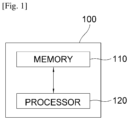
- Fig. 1 is a drawing schematically illustrating a learning device for learning an obfuscation network capable of concealing, e.g., anonymizing, original data in accordance with one example embodiment of the present disclosure.
- the learning device 100 in accordance with one example embodiment of the present disclosure may include a memory 110 for storing instructions to learn the obfuscation network capable of obfuscating training data such that a learning network 100 outputs a result, calculated by using the obfuscated training data as an input, same or similar to a result calculated by using the training data as an input, and a processor 120 for performing processes to learn the obfuscation network according to the instructions in the memory 110.
- a memory 110 for storing instructions to learn the obfuscation network capable of obfuscating training data such that a learning network 100 outputs a result, calculated by using the obfuscated training data as an input, same or similar to a result calculated by using the training data as an input
- a processor 120 for performing processes to learn the obfuscation network according to the instructions in the memory 110.
- the learning device 100 may typically achieve a desired system performance by using combinations of at least one computing device and at least one computer software, e.g., a computer processor, a memory, a storage, an input device, an output device, or any other conventional computing components, an electronic communication device such as a router or a switch, an electronic information storage system such as a network-attached storage (NAS) device and a storage area network (SAN) as the computing device and any instructions that allow the computing device to function in a specific way as the computer software.
- a computer software e.g., a computer processor, a memory, a storage, an input device, an output device, or any other conventional computing components, an electronic communication device such as a router or a switch, an electronic information storage system such as a network-attached storage (NAS) device and a storage area network (SAN) as the computing device and any instructions that allow the computing device to function in a specific way as the computer software.
- NAS network-attached storage
- SAN storage area network
- processors of such devices may include hardware configuration of MPU (Micro Processing Unit) or CPU (Central Processing Unit), cache memory, data bus, etc. Additionally, the computing device may further include OS and software configuration of applications that achieve specific purposes.
- MPU Micro Processing Unit
- CPU Central Processing Unit
- cache memory data bus
- computing device may further include OS and software configuration of applications that achieve specific purposes.
- Such description of the computing device does not exclude an integrated device including any combination of a processor, a memory, a medium, or any other computing components for implementing the present disclosure.
- the processor 120 of the learning device 100 may input the training data into the obfuscation network, and allow the obfuscation network to obfuscate the training data and thus to generate the obfuscated training data.
- the learning device 100 may perform or support another device to perform processes of (i) inputting the obfuscated training data into the learning network having its own one or more learned parameters, and allowing the learning network to (i-1) apply a network operation to the obfuscated training data using the learned parameters and thus to (i-2) generate 1-st characteristic information corresponding to the obfuscated training data, and (ii) inputting the training data into the learning network, and allowing the learning network to (ii-1) apply a network operation to the training data using the learned parameters and thus to (ii-2) generate 2-nd characteristic information corresponding to the training data.
- the learning device 100 may learn the obfuscation network such that (i) at least one 1-st error is minimized which is calculated by referring to at least part of (i-1) at least one (1_1)-st error acquired by referring to the 1-st characteristic information and the 2-nd characteristic information, and (i-2) at least one (1_2)-nd error acquired by referring to at least one task specific output generated by using the 1-st characteristic information and by further referring to at least one ground truth corresponding to the task specific output, and such that (ii) at least one 2-nd error is maximized which is calculated by referring to the training data and the obfuscated training data.
- the learning device 100 may (i) learn the obfuscation network such that the 1-st error is minimized and such that the 2-nd error is maximized, and (ii) learn the discriminator such that at least one modified training data score or at least one modified obfuscated training data score corresponding to the modified training data or the modified obfuscated training data inputted into the discriminator is maximized and such that the obfuscated training data score is minimized.
- a method for learning the obfuscation network capable of concealing, e.g., anonymizing, the original data to protect personal information by using the learning device 100 in accordance with one example embodiment of the present disclosure is described by referring to Figs. 2 to 5 as follows.
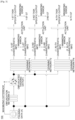
- Fig. 2 is a drawing schematically illustrating a learning method for learning the obfuscation network capable of concealing the original data in accordance with one example embodiment of the present disclosure.
- the learning device 100 may input the training data x into the obfuscation network O, and allow the obfuscation network O to obfuscate the training data x and thus to generate the obfuscated training data x', i.e., O(x).
- the training data x may be original training data which is the original data to be used for learning, or may be the modified training data generated by modifying the original training data, and the modified training data may be generated by adding at least one random noise created through a random noise generating network (not illustrated) to the original training data.
- the random noise generating network may be instructed to generate the random noise having a normal distribution N(0, ⁇ ), and the generated noise may be added to the original training data, to thereby generate the modified training data.
- the modified training data may be generated by blurring the original training data, or changing a resolution of the original training data, as well as using the random noise, but the scope of the present disclosure is not limited thereto, and various ways of modifying the original training data may be used.
- the obfuscated training data x' may be recognized as data different from the training data x by a human, but may be recognized as data similar or same as the training data x by the learning network.
- the obfuscation network O may include an encoder having one or more convolutional layers for applying one or more convolution operations to images as the training data x, and a decoder having one or more deconvo-lutional layers for applying one or more deconvolution operations to at least one feature map outputted from the encoder and for generating the obfuscated training data x', but the scope of the present disclosure is not limited thereto, and may include any learning networks having various structures capable of obfuscating the inputted training data.
- the learning device 100 may perform or support another device to perform processes of (i) inputting the obfuscated training data x' into the learning network F having its own one or more learned parameters, and allowing the learning network F to (i-1) apply a network operation to the obfuscated training data x' using the learned parameters and thus to (i-2) generate 1-st characteristic information F(x') corresponding to the obfuscated training data x', and (ii) inputting the training data x into the learning network F, and allowing the learning network F to (ii-1) apply a network operation to the training data x using the learned parameters and thus to (ii-2) generate 2-nd characteristic information F(x) corresponding to the training data x.
- the learning network F may include a machine learning network, but the scope of the present disclosure is not limited thereto, and may include any learning networks capable of, using their own learned parameters, generating the 1-st characteristic information F(x') by applying a network operation to the obfuscated training data x', and generating the 2-nd characteristic information F(x) by applying a network operation to the training data x.
- the machine learning network may include at least one of a k-Nearest Neighbors, a Linear Regression, a Logistic Regression, a Support Vector Machine (SVM), a Decision Tree and Random Forest, a Neural Network, a Clustering, a Visualization and a Dimensionality Reduction, an Association Rule Learning, a Deep Belief Network, a Reinforcement Learning, and a Deep learning algorithm, but the machine learning network is not limited thereto and may include various learning algorithms.
- a subject to be concealed e.g., a subject to be anonymized, may be personal information included in the original data x.
- the personal information may include any information related to a person, such as personal identification information, personal medical information, personal biometric information, personal behavioral information, etc.
- the 1-st characteristic information F(x') and the 2-nd characteristic information F(x) may be features or logits respectively corresponding to the obfuscated training data x' and the training data x.
- the 1-st characteristic information F(x') and the 2-nd characteristic information F(x) may be feature values related to certain features respectively in the obfuscated training data x' and the training data x, or the logits including values related to at least one of vectors, matrices, and coordinates related to the certain features.
- the training data x are facial image data
- the result above may be classes for face recognition, facial features, e.g., laughing expressions, coordinates of facial landmark points, e.g., both end points on far sides of an eye.
- the learning device 100 may learn the obfuscation network O such that (i) at least one 1-st error is minimized which is calculated by referring to at least part of (i-1) at least one (1_1)-st error acquired by referring to the 1-st characteristic information F(x') and the 2-nd characteristic information F(x), and (i-2) at least one (1_2)-nd error acquired by referring to at least one task specific output generated by using the 1-st characteristic information F(x') and by further referring to at least one ground truth corresponding to the task specific output, and such that (ii) at least one 2-nd error is maximized which is calculated by referring to the training data x and the obfuscated training data x'.
- the learning device 100 may learn the obfuscation network O, such that the obfuscation network O outputs the obfuscated training data x' much different from the training data x by using the 2-nd error, and such that the obfuscation network O obfuscates the training data by using the 1-st error, in order for the learning network F to recognize the obfuscated training data x' as same or similar to the training data x, to thereby output the obfuscated training data x'.
- the learning device 100 may acquire the 1-st error by referring to at least part of (i) difference between the 1-st characteristic information F(x') and the 2-nd characteristic information F(x) and (ii) at least one difference between the task specific output and its corresponding ground truth.
- the learning device 100 may acquire the 1-st error by referring to a norm or a cosine similarity between the 1-st characteristic information F(x') and the 2-nd characteristic information F(x), but the scope of the present disclosure is not limited thereto, and any various algorithms capable of calculating difference between the 1-st characteristic information F(x') and the 2-nd characteristic information F(x) may be used.
- the learning device 100 may acquire the 2-nd error by referring to at least one difference between the training data x and the obfuscated training data x'.
- the learning device 100 may measure at least one quality by referring to at least part of an entropy and a degree of noise of the obfuscated training data x', and may acquire the 1-st error by further referring to the measured quality. That is, the learning device 100 may learn the obfuscation network O, such that the quality of the obfuscated training data x' is minimized, for example, such that the entropy, noise, etc. of the obfuscated training data x' is maximized.
- the learning device 100 may fix and not update learned parameters of the learning network F, and may proceed with learning the obfuscation network O only.
- the task specific output may be an output of a task to be performed by the learning network F, and may have various results according to the task learned by the learning network F, such as a probability of a class for classification, coordinates resulting from regression for location detection, etc., and an activation function of an activation unit may be applied to characteristic information outputted from the learning network F, to thereby generate the task specific output according to the task to be performed by the learning network F.
- the activation function may include a sigmoid function, a linear function, a softmax function, an rlinear function, a square function, a sqrt function, an srlinear function, an abs function, a tanh function, a brlinear function, etc. but the scope of the present disclosure is not limited thereto.
- the learning device 100 may map the 1-st characteristic information outputted from the learning network F onto each of classes, to thereby generate one or more probabilities of the obfuscated training data, for each of the classes.
- the probabilities for each of the classes may represent probabilities of the 1-st characteristic information F(x'), outputted for each of the classes from the learning network F, being correct.
- the training data are the facial image data
- a probability of the face having a laughing expression may be outputted as 0.75
- a probability of the face not having the laughing expression may be outputted as 0.25, and the like.
- a softmax algorithm may be used for mapping the 1-st characteristic information F(x') outputted from the learning network F onto each of the classes, but the scope of the present disclosure is not limited thereto, and various algorithms may be used for mapping the 1-st characteristic information F(x') onto each of the classes.
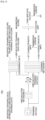
- Fig. 3 is a drawing schematically illustrating another learning method for learning the obfuscation network capable of concealing the original data in accordance with one example embodiment of the present disclosure, that is, the learning network F in Fig. 2 is configured as multiple learning network F1, F2, ..., and Fn having their own learned parameters.
- each of the multiple learning networks F1, F2, ..., and Fn may have completed learning to perform tasks at least part of which may be different from each other.
- the part easily deducible from the explanation of Fig. 2 will be omitted.
- the learning device 100 may input the training data x into the obfuscation network O, and allow the obfuscation network O to obfuscate the training data x and thus to generate the obfuscated training data x', i.e., O(x).
- the training data x may be the original training data which is the original data to be used for learning, or may be the modified training data x' generated by modifying the original training data, and the obfuscated training data x' may be recognized as data different from the training data x by a human, but may be recognized as data similar or same as the training data x by the learning network.
- the learning device 100 may input the obfuscated training data x' into each of the 1-st learning network F1 to the n-th learning network Fn, and allow each of the 1-st learning network F1 to the n-th learning network Fn to (i) apply its corresponding network operation to the obfuscated training data x' using respectively the 1-st learned parameters to the n-th learned parameters of the 1-st learning network F1 to the n-th learning network Fn, and thus to (ii) generate each piece of (1_1)-st characteristic information F1(x') to (1_n)-th characteristic information Fn(x') corresponding to the obfuscated training data x'.
- the learning device 100 may input the training data x into each of the 1-st learning network F1 to the n-th learning network Fn, and allow each of the 1-st learning network F1 to the n-th learning network Fn to (i) apply its corresponding network operation to the training data x using respectively the 1-st learned parameters to the n-th learned parameters of the 1-st learning network F1 to the n-th learning network Fn, and thus to (ii) generate each piece of (2_1)-st characteristic information F1(x) to (2_n)-th characteristic information Fn(x) corresponding to the training data x.
- the learning device 100 may learn the obfuscation network O such that (i) the 1-st error is minimized which is calculated by referring to at least part of (i-1) the (1_1)-st error which is an average over a (1_1)_1-st error to a (1_1) n-th error wherein the (1_1)_1-st error is acquired by referring to the (1_1)-st characteristic information F1(x')and the (2_1)-st characteristic information F1(x) and the (1_1)_n-th error is acquired by referring to the (1_n)-th characteristic information Fn(x') and the (2_n)-th characteristic information Fn(x), and (i-2) the (1_2)-nd error which is an average over a (1_2)_1-st error to a (1_2)_n-th error wherein the (1_2)_1-st error is acquired by referring to at least one 1-st task specific output created by using the (1_1)-st characteristic information F1
- the learning device 100 may acquire the (1_1)_1-st error calculated by referring to the (1_1)-st characteristic information F1(x') and the (2_1)-st characteristic information F1(x), acquire the (1_1) 2-nd error calculated by referring to the (1_2)-nd characteristic information F2(x') and the (2_2)-nd characteristic information F2(x), and similarly acquire the (1_1) n-th error calculated by referring to the (1_n)-th characteristic information Fn(x') and the (2_n)-th characteristic information Fn(x), and thus acquire a (1_1)-st error which is an average over the acquired (1_1)_1-st error to the acquired (1_1) n-th error.
- the learning device 100 may acquire a (1_2)_1-st error to a (1_2)_n-th error where the (1_2)_1-st error is calculated by referring to the 1-st task specific output created by using the (1_1)-st characteristic information F1(x') and the 1-st ground truth corresponding to the 1-st task specific output and the (1_2)_n-th error is calculated by referring to the n-th task specific output created by using the (1_n)-th characteristic information Fn(x') and the n-th ground truth corresponding to the n-th task specific output, and thus acquire a (1_2)-nd error which is an average over the acquired (1 2)_1-st error to the (1_2)_n-th error.
- the learning device 100 may learn the obfuscation network O such that the 1-st error is minimized which is calculated by referring to at least part of the (1_1)-st error and the (1_2)-nd error, and such that the 2-nd error is maximized. That is, the 1-st error may be one of the (1_1)-st error, the (1_2)-nd error, and a sum of the (1_1)-st error and the (1_2)-nd error, but the scope of the present disclosure is not limited thereto.
- the learning device 100 may measure at least one quality by referring to at least part of an entropy and a degree of noise of the obfuscated training data x', and may acquire the 1-st error by further referring to the measured quality. That is, the learning device 100 may learn the obfuscation network O, such that the quality of the obfuscated training data x' is minimized, for example, such that the entropy, noise, etc. of the obfuscated training data x' is maximized.
- the learning device 100 may fix and not update the learned parameters of the learning network F, and may proceed with learning the obfuscation network O only.
- the learning device 100 may learn the obfuscation network O such that (i) the 1-st error is minimized which is calculated by referring to at least part of (i-1) the (1_1)-st error which is an average over the (1_1)_1-st error to the (1_1) n-th error wherein the (1_1)_1-st error is acquired by referring to the (1_1)-st characteristic information F1(x') and the (2_1)-st characteristic information F1(x) and the (1_1) n-th error is acquired by referring to the (1_n)-th characteristic information Fn(x') and the (2_n)-th characteristic information Fn(x), and (i-2) the (1_2)-nd error which is an average over the (1_2)_1-st error to the (1_2)_n-th error wherein the (1_2)_1-st error is acquired by referring to the 1-st task specific output created by using the (1_1)-st characteristic information F1(
- the obfuscation network O may be sequentially learned such that the (1_1)-st error to the (1_n)-th error are minimized where the (1_1)-st error is calculated by referring to at least part of the (1_1)_1-st error and the (1_2)_1-st error, and the (1_n)-th error is calculated by referring to at least part of the (1_1)n-th error and the (1_2)_n-th error.
- the learning device 100 may input the training data x into the obfuscation network O, and allow the obfuscation network O to obfuscate the training data x and thus to generate 1-st obfuscated training data x1'.
- the learning device 100 may perform or support another device to perform processes of (i) inputting the 1-st obfuscated training data x1' into the 1-st learning network F1, and allowing the 1-st learning network F1 to (i-1) apply a network operation to the 1-st obfuscated training data x1' using the 1-st learned parameters of the 1-st learning network F1 and thus to (i-2) output (1_1)-st characteristic information F1(x1') corresponding to the 1-st obfuscated training data x1', and (ii) inputting the training data x into the 1-st learning network F1, and allowing the 1-st learning network F1 to (ii-1) apply a network operation to the training data x using the 1-st learned parameters and thus to (ii-2) output the (2_1)-st characteristic information F1(x) corresponding to the training data x.
- the learning device 100 may learn the obfuscation network O, such that (i) at least one (1_1)-st error is minimized which is calculated by referring to at least part of (i-1) at least one (1_1)_1-st error acquired by referring to the (1_1)-st characteristic information F1(x1') and the (2_1)-st characteristic information F1(x), and (i-2) at least one (1_2)_1-st error acquired by referring to at least one 1-st task specific output generated by using the (1_1)-st characteristic information F1(x') and by further referring to at least one 1-st ground truth corresponding to the 1-st task specific output, and such that (ii) at least one (2_1)-st error is maximized which is calculated by referring to the training data x and the 1-st obfuscated training data x1', to thereby allow the obfuscation network O to be a 1-st learned obfuscation
- the learning device 100 while increasing an integer k from 2 to n, may repeat the processes above up to the n-th learning network Fn, to thereby acquire an n-th obfuscation network On.
- the learning device 100 may input the training data x into a (k_1)-st learned obfuscation network O(k_1), and allow the (k_1)-st learned obfuscation network O(k_1) to obfuscate the training data x and thus to generate k-th obfuscated training data xk'.
- the learning device 100 may (i) input the k-th obfuscated training data xk' into a k-th learning network Fk, and allow the k-th learning network Fk to apply a network operation to the k-th obfuscated training data xk' using one or more k-th learned parameters of the k-th learning network Fk and thus to output (1_k)-th characteristic information Fk(xk') corresponding to the k-th obfuscated training data xk', and (ii) input the training data x into the k-th learning network Fk, and allow the k-th learning network Fk to apply a network operation to the training data x using the k-th learned parameters and thus to output (2_k)-th characteristic information Fk(xk) corresponding to the training data x.
- the learning device 100 may learn the (k_1)-st learned obfuscation network O(k_1), such that (i) at least one (1_k)-th error is minimized which is calculated by referring to at least part of (i-1) at least one (1_1)_k-th error acquired by referring to the (1_k)-th characteristic information Fk(xk') and the (2_k)-th characteristic information Fk(x), and (i-2) at least one (1_2)_k-th error acquired by referring to at least one k-th task specific output generated by using the (1_k)-th characteristic information and by further referring to at least one k-th ground truth corresponding to the k-th task specific output, and such that (ii) at least one (2_k)-th error is maximized which is calculated by referring to the training data x and the k-th obfuscated training data xk', to thereby allow the (k_1)-st learned obfuscation network
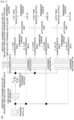
- Fig. 4 is a drawing schematically illustrating a learning method for learning the obfuscation network capable of concealing the original data in accordance with another example embodiment of the present disclosure.
- the part easily deducible from the explanation of Figs. 2 and 3 will be omitted.
- the learning device 100 may input the training data x into the obfuscation network O, and allow the obfuscation network O to obfuscate the training data x and thus to generate the obfuscated training data x', i.e., O(x).
- the learning device 100 may perform or support another device to perform processes of (i) inputting the obfuscated training data x' into the learning network F having its own one or more learned parameters, and allowing the learning network F to (i-1) apply a network operation to the obfuscated training data x' using the learned parameters and thus to (i-2) generate the 1-st characteristic information F(x') corresponding to the obfuscated training data x', and (ii) inputting the training data x into the learning network F, and allowing the learning network F to (ii-1) apply a network operation to the training data x using the learned parameters and thus to (ii-2) generate the 2-nd characteristic information F(x) corresponding to the training data x.
- the learning device 100 may (i) learn the obfuscation network O such that the 1-st error is minimized and such that the 2-nd error is maximized, and (ii) learn the discriminator D such that at least one modified training data score or at least one modified obfuscated training data score corresponding to the modified training data or the modified obfuscated training data inputted into the discriminator D is maximized and that the obfuscated training data score is minimized.
- the modified training data or the modified obfuscated training data may be respectively generated by adding at least one random noise created through a random noise generating network (not illustrated) to the training data x or the obfuscated training data x'.
- the random noise generating network may be instructed to generate the random noise having a normal distribution N(0, ⁇ ), and the generated noise may be added to the training data x or obfuscated training data x', to thereby respectively generate the modified training data or the modified obfuscated training data.
- the modified training data or the modified obfuscated training data may be generated by blurring the training data x or the obfuscated training data x', or changing a resolution of the training data x or the obfuscated training data x', but the scope of the present disclosure is not limited thereto, and various ways of modifying the training data or modifying the obfuscated training data may be used.
- the learning device 100 may learn the obfuscation network O, such that the learning network F obfuscates the training data x by using the 1-st error, to thereby output the obfuscated training data x' in order for the obfuscated training data x' to be recognized as same or similar to the training data x, and such that the learning network F outputs, by using the 2-nd error, the obfuscated training data x' which is different from the training data x but difficult to differentiate from the training data x.
- a maximum of the modified training data score or the modified obfuscated training data score corresponding to the modified training data x or the modified obfuscated training data inputted into the discriminator D may be 1 as a value for determining the modified training data or the modified obfuscated training data as real, and a minimum of the obfuscated training data score corresponding to the obfuscated training data x' inputted into the discriminator D may be 0 as a value for determining the obfuscated training data x' as fake. That is, the discriminator D may be learned to recognize the obfuscated training data x' as the modified training data or the modified obfuscated training data.
- Fig. 5 is a drawing schematically illustrating another learning method for learning the obfuscation network capable of concealing the original data in accordance with another example embodiment of the present disclosure, that is, the learning network F in Fig. 4 is configured as the multiple learning network F1, F2, ..., and Fn having their own learned parameters.
- the part easily deducible from the explanation of Figs. 2 to 4 will be omitted.
- the learning device 100 may input the training data x into the obfuscation network O, and allow the obfuscation network O to obfuscate the training data x and thus to generate the obfuscated training data x', i.e., O(x).
- the learning device 100 may input the obfuscated training data x' into each of the 1-st learning network F1 to the n-th learning network Fn, and allow each of the 1-st learning network F1 to the n-th learning network Fn to (i) apply its corresponding network operation to the obfuscated training data x' using respectively the 1-st learned parameters to the n-th learned parameters of the 1-st learning network F1 to the n-th learning network Fn, and thus to (ii) generate each piece of the (1_1)-st characteristic information F1(x') to the (1_n)-th characteristic information Fn(x') corresponding to the obfuscated training data x'.
- the learning device 100 may input the training data x into each of the 1-st learning network F1 to the n-th learning network Fn, and allow each of the 1-st learning network F1 to the n-th learning network Fn to (i) apply its corresponding network operation to the training data x using respectively the 1-st learned parameters to the n-th learned parameters of the 1-st learning network F1 to the n-th learning network Fn, and thus to (ii) generate each piece of the (2_1)-st characteristic information F1(x) to the (2_n)-th characteristic information Fn(x) corresponding to the training data x.
- the learning device 100 may learn the obfuscation network O such that (i) the 1-st error is minimized which is calculated by referring to at least part of (i-1) the (1_1)-st error which is an average over a (1_1)_1-st error to a (1_1) n-th error wherein the (1_1)_1-st error is acquired by referring to the (1_1)-st characteristic information F1(x') and the (2_1)-st characteristic information F1(x) and the (1_1)_n-th error is acquired by referring to the (1_n)-th characteristic information Fn(x') and the (2_n)-th characteristic information Fn(x), and (i-2) the (1_2)-nd error which is an average over a (1_2)_1-st error to a (1_2)_n-th error wherein the (1_2)_1-st error is acquired by referring to at least one 1-st task specific output created by using the (1_1)-st characteristic information F1
- the learning device 100 may learn the discriminator D such that the modified training data score or the modified obfuscated training data score is maximized which corresponds to the modified training data or the modified obfuscated training data inputted into the discriminator D, and that the obfuscated training data score is minimized.
- the learning device 100 may acquire the (1_1)_1-st error calculated by referring to the (1_1)-st characteristic information F1(x') and the (2_1)-st characteristic information F1(x), acquire the (1_1) 2-nd error calculated by referring to the (1_2)-nd characteristic information F2(x') and the (2_2)-nd characteristic information F2(x), and similarly acquire the (1_1) n-th error calculated by referring to the (1_n)-th characteristic information Fn(x') and the (2_n)-th characteristic information Fn(x), and thus acquire a (1_1)-st error which is an average over the acquired (1_1)_1-st error to the acquired (1_1) n-th error.
- the learning device 100 may acquire a (1_2)_1-st error to a (1_2)_n-th error where the (1_2)_1-st error is calculated by referring to the 1-st task specific output created by using the (1_1)-st characteristic information F1(x') and the 1-st ground truth corresponding to the 1-st task specific output and the (1_2)_n-th error is calculated by referring to the n-th task specific output created by using the (1_n)-th characteristic information Fn(x') and the n-th ground truth corresponding to the n-th task specific output, and thus acquire a (1_2)-nd error which is an average over the acquired (1 2)_1-st error to the (1_2)_n-th error.
- the learning device 100 may learn the obfuscation network O such that the 1-st error is minimized which is calculated by referring to at least part of the (1_1)-st error and the (1_2)-nd error, and that the 2-nd error is maximized.
- the learning device 100 may learn the obfuscation network O such that (i) the 1-st error is minimized which is calculated by referring to at least part of (i-1) the (1_1)-st error which is an average over the (1_1)_1-st error to the (1_1) n-th error wherein the (1_1)_1-st error is acquired by referring to the (1_1)-st characteristic information F1(x') and the (2_1)-st characteristic information F1(x) and the (1_1) n-th error is acquired by referring to the (1_n)-th characteristic information Fn(x') and the (2_n)-th characteristic information Fn(x), and (i-2) the (1_2)-nd error which is an average over the (1_2)_1-st error to the (1_2)_n-th error wherein the (1_2)_1-st error is acquired by referring to the 1-st task specific output created by using the (1_1)-st characteristic information F1(
- the obfuscation network O may be sequentially learned such that the (1_1)-st error to the (1_n)-th error are minimized where the (1_1)-st error is calculated by referring to at least part of the (1_1)_1-st error and the (1_2)_1-st error, and the (1_n)-th error is calculated by referring to at least part of the (1_1) n-th error and the (1_2)_n-th error.
- the learning device 100 may input the training data x into the obfuscation network O, and allow the obfuscation network O to obfuscate the training data x and thus to generate the 1-st obfuscated training data x1'.
- the learning device 100 may perform or support another device to perform processes of (i) inputting the 1-st obfuscated training data x1' into the 1-st learning network F1, and allowing the 1-st learning network F1 to (i-1) apply a network operation to the 1-st obfuscated training data x1' using the 1-st learned parameters of the 1-st learning network F1 and thus to (i-2) output (1_1)-st characteristic information F1(x1') corresponding to the 1-st obfuscated training data x1', and (ii) inputting the training data x into the 1-st learning network F1, and allowing the 1-st learning network F1 to (ii-1) apply a network operation to the training data x using the 1-st learned parameters and thus to (ii-2) output the (2_1)-st characteristic information F1(x) corresponding to the training data x.
- the learning device 100 may learn the obfuscation network O, such that (i) at least one (1_1)-st error is minimized which is calculated by referring to at least part of (i-1) at least one (1_1)_1-st error acquired by referring to the (1_1)-st characteristic information F1(x1') and the (2_1)-st characteristic information F1(x), and (i-2) at least one (1_2)_1-st error acquired by referring to at least one 1-st task specific output generated by using the (1_1)-st characteristic information F1(x') and by further referring to at least one 1-st ground truth corresponding to the 1-st task specific output, and such that (ii) at least one (2_1)-st error is maximized which is at least one 1-st obfuscated training data score corresponding to the 1-st obfuscated training data x1' inputted into the discriminator D, to thereby allow the obfuscation network O
- the learning device 100 may learn the discriminator D, such that at least one 1-st modified training data score or at least one 1-st modified obfuscated training data score is maximized which corresponds to the modified training data or the modified obfuscated training data inputted into the discriminator D and that at least one 1-st obfuscated training data score is minimized, to thereby allow the discriminator D to be a 1-st learned discriminator D1.
- the learning device 100 while increasing an integer k from 2 to n, may repeat the processes above up to the n-th learning network Fn, to thereby acquire an n-th obfuscation network On.
- the learning device 100 may input the training data x into a (k_1)-st learned obfuscation network O(k_1), and allow the (k_1)-st learned obfuscation network O(k_1) to obfuscate the training data x and thus to generate k-th obfuscated training data xk'.
- the learning device 100 may (i) input the k-th obfuscated training data xk' into the k-th learning network Fk, and allow the k-th learning network Fk to apply a network operation to the k-th obfuscated training data xk' using one or more k-th learned parameters of the k-th learning network Fk and thus to output the (1_k)-th characteristic information Fk(xk') corresponding to the k-th obfuscated training data xk', and (ii) input the training data x into the k-th learning network Fk, and allow the k-th learning network Fk to apply a network operation to the training data x using the k-th learned parameters and thus to output the (2_k)-th characteristic information Fk(xk) corresponding to the training data x.
- the learning device 100 may learn the (k_1)-st learned obfuscation network O(k_1), such that (i) at least one (1_k)-th error is minimized which is calculated by referring to at least part of (i-1) at least one (1_1)_k-th error acquired by referring to the (1_k)-th characteristic information Fk(xk') and the (2_k)-th characteristic information Fk(x), and (i-2) at least one (1_2)_k-th error acquired by referring to at least one k-th task specific output generated by using the (1_k)-th characteristic information Fk(x') and by further referring to at least one k-th ground truth corresponding to the k-th task specific output, and such that (ii) at least one (2_k)-th error is maximized which is at least one k-th obfuscated training data score corresponding to k-th obfuscated training data xk' inputted into a (k_1)
- the learning device 100 may learn the (k_1)-st learned discriminator D(k_1), such that at least one k-th modified training data score or at least one k-th modified obfuscated training data score is maximized which corresponds to the modified training data or the modified obfuscated training data inputted into the (k_1)-st learned discriminator D(k_1) and that at least one k-th obfuscated training data score is minimized, to thereby allow the (k_1)-st learned discriminator D(k_1) to be a k-th learned discriminator Dk.
- Fig. 6 is a drawing schematically illustrating a testing device for testing a learned obfuscation network O in accordance with one example embodiment of the present disclosure.
- the testing device 200 in accordance with one example embodiment of the present disclosure may include a memory 210 for storing instructions to test the learned obfuscation network which has been learned to obfuscate test data such that the learning network outputs a result, calculated by using the obfuscated test data, same or similar to a result calculated by using the test data, and a processor 220 for performing processes to test the learned obfuscation network according to the instructions in the memory 210.
- a memory 210 for storing instructions to test the learned obfuscation network which has been learned to obfuscate test data such that the learning network outputs a result, calculated by using the obfuscated test data, same or similar to a result calculated by using the test data
- a processor 220 for performing processes to test the learned obfuscation network according to the instructions in the memory 210.
- the testing device 200 may typically achieve a desired system performance by using combinations of at least one computing device and at least one computer software, e.g., a computer processor, a memory, a storage, an input device, an output device, or any other conventional computing components, an electronic communication device such as a router or a switch, an electronic information storage system such as a network-attached storage (NAS) device and a storage area network (SAN) as the computing device and any instructions that allow the computing device to function in a specific way as the computer software.
- NAS network-attached storage
- SAN storage area network
- processors of such devices may include hardware configuration of MPU (Micro Processing Unit) or CPU (Central Processing Unit), cache memory, data bus, etc. Additionally, the computing device may further include OS and software configuration of applications that achieve specific purposes.
- MPU Micro Processing Unit
- CPU Central Processing Unit
- cache memory data bus
- computing device may further include OS and software configuration of applications that achieve specific purposes.
- Such description of the computing device does not exclude an integrated device including any combination of a processor, a memory, a medium, or any other computing components for implementing the present disclosure.
- the learning device (i) has inputted the training data into the obfuscation network, and has allowed the obfuscation network to obfuscate the training data and thus to generate the obfuscated training data
- the training data has inputted the training data into the learning network, and has allowed the learning network to apply a network operation to the training data using the learned parameters and thus to output the 2-nd characteristic information corresponding to the training data
- the learning device (i) has inputted the training data into the obfuscation network, and has allowed the obfuscation network to obfuscate the training data to generate the obfuscated training data
- the training data has inputted the training data into the learning network, and has allowed the learning network to apply a network operation to the training data using the learned parameters and thus to output the 2-nd characteristic information corresponding to the training data
- Fig. 7 is a drawing schematically illustrating a testing method for testing the learned obfuscation network in accordance with one example embodiment of the present disclosure.
- the testing device 200 may input the test data, for example, original images on a left side of Fig. 7 , into the obfuscation network O which has been learned to obfuscate the original data such that the learning network outputs a result, generated by using the obfuscated data, same or similar to a result generated by using the original data, and allow the obfuscation network O to obfuscate the test data according to the learned parameters and thus to output the obfuscated test data, e.g., obfuscated images on a right side of Fig. 7 .
- Fig. 7 represents a drawing exemplarily illustrating 64 image samples selected from the CIFAR-10 dataset which includes images collected and labeled by Canadian Institute for Advanced Research (CIFAR) for image classification.
- CIFAR Canadian Institute for Advanced Research
- the 64 obfuscated data on the right side of Fig. 7 which are concealed in accordance with the present disclosure are visually different from the 64 original data on the left side of Fig. 7 , but if the 64 obfuscated data are inputted into the learning network, the learning network outputs a result same or similar to that of the original data.
- the learned obfuscation network O may have been learned beforehand by processes similar to those in description of Figs. 2 to 5 .
- the learning device may (i) have inputted the training data into the obfuscation network, and have allowed the obfuscation network to obfuscate the training data to generate the obfuscated training data, (ii) have inputted the obfuscated training data into the learning network having its own learned parameters, and have allowed the learning network to apply a network operation to the obfuscated training data using the learned parameters and thus to generate the 1-st characteristic information corresponding to the obfuscated training data, and have inputted the training data into the learning network, and have allowed the learning network to apply a network operation to the training data using the learned parameters and thus to output the 2-nd characteristic information corresponding to the training data, and (iii) have learned the obfuscation network O, such that the 1-st error is minimized which is calculated by referring to at least part of (iii-1) the (1-1)-st error acquired by referring to the 1-st characteristic information and the
- the learning network may include the 1-st learning network to the n-th learning network respectively having the 1-st learned parameters to the n-th learned parameters
- the learning device may (i) have inputted the obfuscated training data into each of the 1-st learning network to the n-th learning network, and have allowed each of the 1-st learning network to the n-th learning network to (i-1) apply its corresponding network operation to the obfuscated training data using respectively the 1-st learned parameters to the n-th learned parameters of the 1-st learning network to the n-th learning network, and thus to (i-2) output each piece of the (1_1)-st characteristic information to the (1_n)-th characteristic information on the obfuscated training data, and (ii) have inputted the training data into each of the 1-st learning network to the n-th learning network, and have allowed each of the 1-st learning network to the n-th learning network to (ii-1) apply its corresponding
- the learning device may (i) have inputted the training data into the obfuscation network, and have allowed the obfuscation network to obfuscate the training data to generate the obfuscated training data, (ii) have inputted the obfuscated training data into the learning network having its own learned parameters, and have allowed the learning network to apply a network operation to the obfuscated training data using the learned parameters and thus to generate the 1-st characteristic information corresponding to the obfuscated training data, and have inputted the training data into the learning network, and have allowed the learning network to apply a network operation to the training data using the learned parameters and thus to output the 2-nd characteristic information corresponding to the training data, (iii) have learned the obfuscation network O such that the 1-st error is minimized which is calculated by referring to at least part of (i-1) the (1_1)-st error which is an average over a (1_1)_1-st error to a
- the learning network may include the 1-st learning network to the n-th learning network respectively having the 1-st learned parameters to the n-th learned parameters
- the learning device may (i) have inputted the obfuscated training data into each of the 1-st learning network to the n-th learning network, and have allowed each of the 1-st learning network to the n-th learning network to (i-1) apply its corresponding network operation to the obfuscated training data using respectively the 1-st learned parameters to the n-th learned parameters of the 1-st learning network to the n-th learning network, and thus to (i-2) output each piece of the (1_1)-st characteristic information to the (1_n)-th characteristic information on the obfuscated training data, and (ii) have inputted the training data into each of the 1-st learning network to the n-th learning network, and have allowed each of the 1-st learning network to the n-th learning network to (ii-1) apply its corresponding
- the obfuscated data which are concealed by the learned obfuscation network in accordance with the present disclosure may be provided or sold to a buyer of image big data.
- the testing method of the learned obfuscation network may be provided as implemented in a form of program instructions executable by a variety of computer components and recorded to computer readable media.
- the buyer may execute the program instructions recorded in the computer readable media by using the computer devices, to thereby generate concealed data from the original data owned by the buyer or acquired from other sources, and use the concealed data for his/her own learning network.
- the buyer may use at least two of the concealed data, the original image data owned by the buyer or acquired from other sources, and the concealed image data provided or sold to the buyer, together for the buyer's learning network.
- the testing method of the learned obfuscation network is implemented as the program instructions that can be executed by a variety of computer components, then computational overhead may occur in the computing devices of the buyer when the accuracy is set as high, thus the buyer is allowed to lower the accuracy to prevent the computational overhead.
- the "average” mentioned in this specification may represent a weighted average but it is not limited thereto.
- the embodiments of the present disclosure as explained above can be implemented in a form of executable program command through a variety of computer means recordable in computer readable media.
- the computer readable media may include solely or in combination, program commands, data files, and data structures.
- the program commands recorded to the media may be components specially designed for the present disclosure or may be usable to those skilled in the art of computer software.
- Computer readable media include magnetic media such as hard disk, floppy disk, and magnetic tape, optical media such as CD-ROM and DVD, magneto-optical media such as floptical disk and hardware devices such as ROM, RAM, and flash memory specially designed to store and carry out program commands.
- Program commands may include not only a machine language code made by a complier but also a high level code that can be used by an interpreter etc., which may be executed by a computer.
- the aforementioned hardware device can work as more than a software module to perform the action of the present disclosure and vice versa.
Landscapes
- Engineering & Computer Science (AREA)
- Theoretical Computer Science (AREA)
- Physics & Mathematics (AREA)
- General Physics & Mathematics (AREA)
- Software Systems (AREA)
- General Health & Medical Sciences (AREA)
- Health & Medical Sciences (AREA)
- General Engineering & Computer Science (AREA)
- Evolutionary Computation (AREA)
- Artificial Intelligence (AREA)
- Data Mining & Analysis (AREA)
- Computing Systems (AREA)
- Mathematical Physics (AREA)
- Life Sciences & Earth Sciences (AREA)
- Computational Linguistics (AREA)
- Biomedical Technology (AREA)
- Molecular Biology (AREA)
- Biophysics (AREA)
- Medical Informatics (AREA)
- Bioethics (AREA)
- Databases & Information Systems (AREA)
- Computer Vision & Pattern Recognition (AREA)
- Multimedia (AREA)
- Computer Security & Cryptography (AREA)
- Computer Hardware Design (AREA)
- Evolutionary Biology (AREA)
- Bioinformatics & Computational Biology (AREA)
- Bioinformatics & Cheminformatics (AREA)
- Technology Law (AREA)
- Audiology, Speech & Language Pathology (AREA)
- Facsimile Transmission Control (AREA)
- Digital Transmission Methods That Use Modulated Carrier Waves (AREA)
- Image Analysis (AREA)
- Filters That Use Time-Delay Elements (AREA)
Claims (14)
- Verfahren zum Lernen eines Verschleierungsnetzwerks, das zum Verbergen von Originaldaten verwendet wird, um persönliche Informationen zu schützen, umfassend die folgenden Schritte:(a0) Erfassen von Trainingsdaten;(a1) Verschleiern der Trainingsdaten über ein Verschleierungsnetzwerk, um verschleierte Trainingsdaten zu erzeugen;(b) Anwenden einer Netzwerkoperation über ein lernendes Netzwerk mit einem oder mehreren eigenen gelernten Parametern, die einer auszuführenden Aufgabe entsprechen, auf die verschleierten Trainingsdaten unter Verwendung der gelernten Parameter, um erste charakteristische Informationen zu erzeugen, die den verschleierten Trainingsdaten entsprechen, und(ii) Anwenden der Netzwerkoperation über das lernende Netzwerk auf die Trainingsdaten unter Verwendung der gelernten Parameter, um zweite charakteristische Informationen zu erzeugen, die den Trainingsdaten entsprechen; und(c) Lernen des Verschleierungsnetzwerks sodass(i) mindestens ein erster Fehler minimiert wird, der unter Bezugnahme auf mindestens einen Teil von (i-1) mindestens einem (1_1)-ten Fehler, der unter Bezugnahme auf die ersten charakteristische Informationen und die zweiten charakteristische Informationen gewonnen wird, berechnet wird und (i-2) mindestens einem (1_2)-ten Fehler, der unter Bezugnahme auf mindestens eine aufgabenspezifische Ausgabe, die durch Verwendung der ersten charakteristischen Informationen erzeugt wird, und mindestens einer Ground Truth, die der aufgabenspezifischen Ausgabe entspricht, gewonnen wird, wobei das Verschleierungsnetzwerk weiter so gelernt wird, dass (ii) mindestens ein zweiter Fehler maximiert wird, der unter Bezugnahme auf mindestens eine Differenz zwischen den Trainingsdaten und den verschleierten Trainingsdaten berechnet wird.
- Verfahren nach Anspruch 1, wobei das lernende Netzwerk ein erstes lernendes Netzwerk bis zu einem n-ten lernenden Netzwerk umfasst, das jeweils einen oder mehrere erste gelernte Parameter bis zu einem oder mehreren n-ten gelernten Parametern aufweist, wobei n eine ganze Zahl größer als 0 ist,wobei im Schritt (b) die lernende Vorrichtung (i) die verschleierten Trainingsdaten in jedes der ersten lernenden Netzwerke bis zu dem n-ten lernenden Netzwerk eingibt, und es jedem der ersten lernenden Netzwerke bis zum n-ten lernenden Netzwerk ermöglicht, (i-1) seine entsprechende Netzwerkoperation auf die verschleierten Trainingsdaten anzuwenden, wobei jeweils die ersten gelernten Parameter bis zu den n-ten gelernten Parametern des ersten lernenden Netzwerks bis zum n-ten lernenden Netzwerk verwendet werden, und somit (i-2) jedes Stück der (1_1)-ten charakteristischen Informationen bis zu den (1_n)-ten charakteristischen Informationen auf die verschleierten Trainingsdaten auszugeben, und (ii) die Trainingsdaten in jedes des ersten lernenden Netzwerks bis zum n-ten lernenden Netzwerk eingibt und jedem des ersten lernenden Netzwerks bis zum n-ten lernenden Netzwerk ermöglicht, (ii-1) seine entsprechende Netzwerkoperation auf die Trainingsdaten unter Verwendung der jeweiligen ersten gelernten Parameter bis zu den n-ten gelernten Parametern zu betreiben und somit (ii-2) jedes Stück der (2_1)-ten charakteristischen Informationen zu den (2_n)-ten charakteristischen Informationen über die Trainingsdaten auszugeben, undwobei im Schritt (c) die lernende Vorrichtung das Verschleierungsnetzwerk so lernt, dass (i) der erste Fehler minimiert wird, der unter Bezugnahme auf mindestens einen Teil (i-1) des (1_1)-ten Fehlers berechnet wird, der ein Durchschnitt über einen (1_1) ersten Fehler zu einem (1_1) n-ten Fehler ist, wobei der (1_1) erste Fehler unter Bezugnahme auf die (1_1)-ten charakteristischen Informationen und die (2_1)-ten charakteristischen Informationen gewonnen wird und der (1_1)_n-te Fehler unter Bezugnahme auf die (1_n)-ten charakteristischen Informationen und die (2_n)-ten charakteristischen Informationen gewonnen wird, und (i-2) der (1_2)_n-te Fehler, der ein Mittelwert über einen (1_2)_ersten Fehler bis zu einem (1_2)_n-ten Fehler ist, wobei der (1_2)_erste Fehler unter Bezugnahme auf (i-2a) mindestens eine erste aufgabenspezifische Ausgabe, die unter Verwendung der (1_1)-ersten charakteristischen Informationen erzeugt wird, und (i-2b) mindestens eine erste Ground Truth, die der ersten aufgabenspezifischen Ausgabe entspricht, gewonnen wird, und der (1_2)_n-te Fehler unter Bezugnahme auf (i-2a) mindestens eine n-te aufgabenspezifische Ausgabe, die unter Verwendung der (1_n)-ten charakteristischen Informationen erzeugt wird, und (i-2b) mindestens eine n-te Ground Truth, die der n-ten aufgabenspezifischen Ausgabe entspricht, gewonnen wird, und so, dass (ii) der zweite Fehler maximiert wird, der unter Bezugnahme auf die Trainingsdaten und die verschleierten Trainingsdaten berechnet wird.
- Verfahren nach Anspruch 1, wobei das lernende Netzwerk ein erstes lernendes Netzwerk bis zu einem n-ten lernenden Netzwerk umfasst, das jeweils einen oder mehrere erste gelernte Parameter bis zu einem oder mehreren n-ten gelernten Parametern aufweist, wobei n eine ganze Zahl größer als 0 ist,wobei im Schritt (a) die lernende Vorrichtung die Trainingsdaten in das Verschleierungsnetzwerk eingibt und es dem Verschleierungsnetzwerk ermöglicht, die Trainingsdaten zu verschleiern und somit erste verschleierte Trainingsdaten zu erzeugen,wobei im Schritt (b) die lernende Vorrichtung (i) die ersten verschleierten Trainingsdaten in das erste lernende Netzwerk eingibt und dem ersten lernenden Netzwerk ermöglicht, (i-1) eine Netzwerkoperation auf die ersten verschleierten Trainingsdaten unter Verwendung der ersten gelernten Parameter des ersten lernenden Netzwerks anzuwenden und somit (i-2) (1_1)-te charakteristische Informationen über die ersten verschleierten Trainingsdaten auszugeben, und (ii) die Trainingsdaten in das erste lernende Netzwerk eingibt und dem ersten lernenden Netzwerk ermöglicht, (ii-1) eine Netzwerkoperation auf die Trainingsdaten unter Verwendung der ersten gelernten Parameter anzuwenden und somit (ii-2) (2_1)-te charakteristische Informationen über die Trainingsdaten auszugeben,wobei im Schritt (c) die lernende Vorrichtung das Verschleierungsnetzwerk so lernt, dass (i) mindestens ein (1_1)-er Fehler minimiert wird, der unter Bezugnahme auf mindestens einen Teil von (i-1) mindestens einem (1_1) ersten Fehler berechnet wird, der unter Bezugnahme auf die (1_1)-en charakteristischen Informationen und die (2_1)-en charakteristischen Informationen gewonnen wird, und (i-2) mindestens ein (1_2)_erster Fehler, der unter Bezugnahme auf (i-2a) mindestens eine erste aufgabenspezifische Ausgabe, die unter Verwendung der (1_1)-sten charakteristischen Informationen erzeugt wird, und (i-2b) mindestens eine erste Ground Truth, die der ersten aufgabenspezifischen Ausgabe entspricht, gewonnen wird und so, dass (ii) mindestens ein (2_1)-ter Fehler maximiert wird, der unter Bezugnahme auf die Trainingsdaten und die ersten verschleierten Trainingsdaten berechnet wird, um dadurch zu ermöglichen, dass das Verschleierungsnetzwerk ein erstes gelerntes Verschleierungsnetzwerk ist, undwobei, während eine ganze Zahl k von 2 bis n erhöht wird, die lernende Vorrichtung (i) die Trainingsdaten in das (k_1)-te gelernte Verschleierungsnetzwerk eingibt und dem (k_1)-ten gelernten Verschleierungsnetzwerk ermöglicht, die Trainingsdaten zu verschleiern, um k-te verschleierte Trainingsdaten zu erzeugen, (ii) (ii-1) die k-ten verschleierten Trainingsdaten in ein k-tes lernendes Netzwerk eingibt und dem k-ten lernenden Netzwerk ermöglicht, eine Netzwerkoperation auf die k-ten verschleierten Trainingsdaten unter Verwendung eines oder mehrerer k-ter gelernter Parameter des k-ten lernenden Netzwerks anzuwenden und somit die (1_k)-ten charakteristische Informationen über die k-ten verschleierten Trainingsdaten auszugeben, und (ii-2) die Trainingsdaten in das k-te lernende Netzwerk eingibt und dem k-ten lernenden Netzwerk ermöglicht, eine Netzwerkoperation auf die Trainingsdaten unter Verwendung der k-ten gelernten Parameter anzuwenden und somit (2_k)-te charakteristische Informationen über die Trainingsdaten auszugeben, und (iii) das (k_1)-te gelernte Verschleierungsnetzwerk so lernt, dass (iii-1) mindestens ein (1_k)-ter Fehler minimiert wird, der unter Bezugnahme auf mindestens einen Teil von (iii-la) mindestens einem (1_1) k-ten Fehler berechnet wird, der unter Bezugnahme auf die (1_k)-ten charakteristischen Informationen und die (2_k)-ten charakteristischen Informationen gewonnen wird und (iii-lb) mindestens ein (1_2)_k-ten Fehler, der unter Bezugnahme auf mindestens eine k-te aufgabenspezifische Ausgabe, die unter Verwendung der (1_k)-ten charakteristischen Informationen erzeugt wird, und durch weitere Bezugnahme auf mindestens eine k-te Ground Truth, die der k-ten aufgabenspezifischen Ausgabe entspricht, gewonnen wird und so, dass (iii-2) mindestens ein (2_k)-ter Fehler maximiert wird, der unter Bezugnahme auf die Trainingsdaten und die k-ten verschleierten Trainingsdaten berechnet wird, um dadurch zu ermöglichen, dass das (k_1)-te gelernte Verschleierungsnetzwerk ein k-tes gelerntes Verschleierungsnetzwerk ist.
- Verfahren nach Anspruch 1, wobei im Schritt (c) unter der Bedingung, dass mindestens ein verschleierter Trainingsdatenwert als der zweite Fehler gewonnen wurde, der den in einen Diskriminator eingegebenen verschleierten Trainingsdaten entspricht, um zu bestimmen, ob die eingegebenen Daten echt oder gefälscht sind, die lernende Vorrichtung (i) das Verschleierungsnetzwerk so lernt, dass der erste Fehler minimiert und der zweite Fehler maximiert wird, und (ii) den Diskriminator so lernt, dass mindestens ein modifizierter Trainingsdatenwert oder mindestens ein modifizierter verschleierter Trainingsdatenwert, der modifizierten Trainingsdaten oder modifizierten verschleierten Trainingsdaten entspricht, die in den Diskriminator eingegeben werden, maximiert wird und dass der verschleierte Trainingsdatenwert minimiert wird, wobei die modifizierten Trainingsdaten oder die modifizierten verschleierten Trainingsdaten jeweils durch Modifizieren der Trainingsdaten oder der verschleierten Trainingsdaten erzeugt werden.
- Verfahren nach Anspruch 4, wobei das lernende Netzwerk ein erstes lernendes Netzwerk bis zu einem n-ten lernenden Netzwerk umfasst, das jeweils einen oder mehrere erste gelernte Parameter bis zu einem oder mehreren n-ten gelernten Parametern aufweist, wobei n eine ganze Zahl größer als 0 ist,wobei im Schritt (b) die lernende Vorrichtung (i) die verschleierten Trainingsdaten in jedes der ersten lernenden Netzwerke bis zu dem n-ten lernenden Netzwerk eingibt, und es jedem der ersten lernenden Netzwerke bis zum n-ten lernenden Netzwerk ermöglicht, (i-1) seine entsprechende Netzwerkoperation auf die verschleierten Trainingsdaten anzuwenden, wobei jeweils die ersten gelernten Parameter bis zu den n-ten gelernten Parametern des ersten lernenden Netzwerks bis zum n-ten lernenden Netzwerk verwendet werden, und somit (i-2) jedes Stück der (1_1)-ten charakteristischen Informationen bis zu den (1_n)-ten charakteristischen Informationen auf die verschleierten Trainingsdaten auszugeben, und (ii) die Trainingsdaten in jedes des ersten lernenden Netzwerks bis zum n-ten lernenden Netzwerk eingibt und jedem des ersten lernenden Netzwerks bis zum n-ten lernenden Netzwerk ermöglicht, (ii-1) seine entsprechende Netzwerkoperation auf die Trainingsdaten unter Verwendung der jeweiligen ersten gelernten Parameter bis zu den n-ten gelernten Parametern zu betreiben und somit (ii-2) jedes Stück der (2_1)-ten charakteristischen Informationen zu den (2_n)-te charakteristischen Informationen über die Trainingsdaten auszugeben, undwobei im Schritt (c) die lernende Vorrichtung das Verschleierungsnetzwerk so lernt, dass der erste Fehler minimiert wird, der unter Bezugnahme auf mindestens einen Teil (i-1) des (1_1)-ten Fehlers berechnet wird, der ein Durchschnitt über einen (1_1) ersten Fehler zu einem (1_1) n-ten Fehler ist, wobei der (1_1) erste Fehler unter Bezugnahme auf die (1_1)-ten charakteristischen Informationen und die (2_1)-ten charakteristischen Informationen gewonnen wird und der (1_1)_n-te Fehler unter Bezugnahme auf die (1_n)-ten charakteristischen Informationen und die (2_n)-ten charakteristischen Informationen gewonnen wird, und (i-2) der (1_2)_n-te Fehler, der ein Mittelwert über einen (1_2)_ersten Fehler bis zu einem (1_2)_n-ten Fehler ist, wobei der (1_2)_erste Fehler unter Bezugnahme auf (i-2a) mindestens eine erste aufgabenspezifische Ausgabe, die unter Verwendung der (1_1)-ersten charakteristischen Informationen erzeugt wird, und (i-2b) mindestens eine erste Ground Truth, die der ersten aufgabenspezifischen Ausgabe entspricht, gewonnen wird, und der (1_2)_n-te Fehler unter Bezugnahme auf (i-2a) mindestens eine n-te aufgabenspezifische Ausgabe, die unter Verwendung der (1_n)-ten charakteristischen Informationen erzeugt wird, und (i-2b) mindestens eine n-te Ground Truth, die der n-ten aufgabenspezifischen Ausgabe entspricht, gewonnen wird, und so, dass der zweite Fehler maximiert wird, welcher der verschleierte Trainingsdatenwert ist, der den verschleierten Trainingsdaten entspricht, die in den Diskriminator eingegeben werden, und (ii) den Diskriminator so lernt, dass der modifizierte Trainingsdatenwert oder der modifizierte verschleierte Trainingsdatenwert, der den modifizierten Trainingsdaten oder den modifizierten verschleierten Trainingsdaten entspricht, die in den Diskriminator eingegeben werden, maximiert wird und dass der verschleierte Trainingsdatenwert minimiert wird.
- Verfahren nach Anspruch 4, wobei das lernende Netzwerk ein erstes lernendes Netzwerk bis zu einem n-ten lernenden Netzwerk umfasst, das jeweils einen oder mehrere erste gelernte Parameter bis zu einem oder mehreren n-ten gelernten Parametern aufweist, wobei n eine ganze Zahl größer als 0 ist,wobei im Schritt (a) die lernende Vorrichtung die Trainingsdaten in das Verschleierungsnetzwerk eingibt und es dem Verschleierungsnetzwerk ermöglicht, die Trainingsdaten zu verschleiern und somit erste verschleierte Trainingsdaten zu erzeugen,wobei im Schritt (b) die lernende Vorrichtung (i) die ersten verschleierten Trainingsdaten in das erste lernende Netzwerk eingibt und dem ersten lernenden Netzwerk ermöglicht, (i-1) eine Netzwerkoperation auf die ersten verschleierten Trainingsdaten unter Verwendung der ersten gelernten Parameter des ersten lernenden Netzwerks anzuwenden und somit (i-2) (1_1)-te charakteristische Informationen über die ersten verschleierten Trainingsdaten auszugeben, und (ii) die Trainingsdaten in das erste lernende Netzwerk eingibt und dem ersten lernenden Netzwerk ermöglicht, (ii-1) eine Netzwerkoperation auf die Trainingsdaten unter Verwendung der ersten gelernten Parameter anzuwenden und somit (ii-2) (2_1)-te charakteristische Informationen über die Trainingsdaten auszugeben,wobei im Schritt (c) die lernende Vorrichtung das Verschleierungsnetzwerk so lernt, dass (i) mindestens ein (1_1)-er Fehler minimiert wird, der unter Bezugnahme auf mindestens einen Teil von (i-1) mindestens einem (1_1) ersten Fehler berechnet wird, der unter Bezugnahme auf die (1_1)-en charakteristischen Informationen und die (2_1)-en charakteristischen Informationen gewonnen wird, und (i-2) mindestens ein (1_2)_erster Fehler, der unter Bezugnahme auf (i-2a) mindestens eine erste aufgabenspezifische Ausgabe, die unter Verwendung der (1_1)-sten charakteristischen Informationen erzeugt wird, und (i-2b) mindestens eine erste Ground Truth, die der ersten aufgabenspezifischen Ausgabe entspricht, gewonnen wird und (ii) mindestens ein (2_1)-ter Fehler maximiert wird, der mindestens ein erster verschleierter Trainingsdatenwert ist, der den ersten verschleierten Trainingsdaten entspricht, die in den Diskriminator eingegeben wurden, um dadurch zu ermöglichen, dass das Verschleierungsnetzwerk ein erstes gelerntes Verschleierungsnetzwerk ist, und die lernende Vorrichtung den Diskriminator so lernt, dass (i) mindestens ein erster modifizierter Trainingsdatenwert oder mindestens ein erster modifizierter verschleierter Trainingsdatenwert maximiert wird, der den modifizierten Trainingsdaten oder den modifizierten verschleierten Trainingsdaten entspricht, die in den Diskriminator eingegeben werden, und so, dass (ii) der erste verschleierte Trainingsdatenwert minimiert wird, um dadurch zu ermöglichen, dass der Diskriminator ein erster gelernter Diskriminator ist, undwobei, während eine ganze Zahl k von 2 bis n erhöht wird, die lernende Vorrichtung (i) die Trainingsdaten in das (k_1)-te gelernte Verschleierungsnetzwerk eingibt und dem (k_1)-ten gelernten Verschleierungsnetzwerk ermöglicht, die Trainingsdaten zu verschleiern, um k-te verschleierte Trainingsdaten zu erzeugen, (ii) (ii-1) die k-ten verschleierten Trainingsdaten in ein k-tes lernendes Netzwerk eingibt und dem k-ten lernenden Netzwerk ermöglicht, eine Netzwerkoperation auf die k-ten verschleierten Trainingsdaten unter Verwendung eines oder mehrerer k-ter gelernter Parameter des k-ten lernenden Netzwerks anzuwenden und somit die (1_k)-te charakteristische Information über die k-ten verschleierten Trainingsdaten auszugeben, und (ii-2) die Trainingsdaten in das k-te lernende Netzwerk eingibt und dem k-ten lernenden Netzwerk ermöglicht, eine Netzwerkoperation auf die Trainingsdaten unter Verwendung der k-ten gelernten Parameter anzuwenden und somit (2_k)-te charakteristische Informationen über die Trainingsdaten auszugeben, (iii) ein (k_1)-tes gelerntes Verschleierungsnetzwerk so lernt, dass mindestens ein (1_k)-ter Fehler minimiert wird, der unter Bezugnahme auf mindestens einen Teil von (iii-1) mindestens einem (1_1) k-ten Fehler berechnet wird, der unter Bezugnahme auf die (1_k)-te charakteristische Information und die (2_k)-te charakteristische Information gewonnen wird und (iii-2) mindestens ein (1_2)_k-ten Fehler, der unter Bezugnahme auf mindestens eine k-te aufgabenspezifische Ausgabe, die unter Verwendung der (1_k)-ten charakteristischen Information erzeugt wird, und durch weitere Bezugnahme auf mindestens eine k-te Ground Truth, die der k-ten aufgabenspezifischen Ausgabe entspricht, gewonnen wird und so, dass mindestens ein (2_k)-ter Fehler maximiert wird, und sodass mindestens ein (2_k)-ter Fehler maximiert wird, der mindestens ein k-ter verschleierter Trainingsdatenwert ist, der den k-ten verschleierten Trainingsdaten entspricht, die in den (k_1)-ten gelernten Diskriminator eingegeben wurden, um dadurch zu ermöglichen, dass das (k_1)-te gelernte Verschleierungsnetzwerk das k-te gelernte Verschleierungsnetzwerk ist, und (iv) den (k_1)-ten gelernten Diskriminator so lernt, dass mindestens ein k-ter modifizierter Trainingsdatenwert oder mindestens ein k-ter modifizierter verschleierter Trainingsdatenwert, der den modifizierten Trainingsdaten oder den modifizierten verschleierten Trainingsdaten entspricht, die in den (k_1)-ten gelernten Diskriminator eingegeben werden, maximiert wird, und sodass der k-te verschleierte Trainingsdatenwert minimiert wird, um dadurch zu ermöglichen, dass der (k_1)-te gelernte Diskriminator ein k-ter gelernter Diskriminator ist.
- Testverfahren zum Erlernen eines Verschleierungsnetzwerks, das zum Verbergen von Originaldaten verwendet wird, um persönliche Informationen zu schützen, einschließlich der Schritte des Verfahrens nach Anspruch 1, und umfassend die folgenden Schritte:
(b) eine Vorrichtung, die Prozesse zur Verschleierung der Testdaten über das Verschleierungsnetzwerk unter Verwendung der erlernten Parameter des Verschleierungsnetzwerks durchführt, um dadurch verschleierte Testdaten als verborgene Testdaten auszugeben. - Lernende Vorrichtung zum Lernen eines Verschleierungsnetzwerks, das zum Verbergen von Originaldaten verwendet wird, um persönliche Informationen zu schützen, umfassend:mindestens einen Speicher, der Anweisungen speichert; undmindestens einen Prozessor, der so konfiguriert ist, dass er die Anweisungen ausführt, um folgende Prozesse durchzuführen oder eine andere Vorrichtung bei der Durchführung zu unterstützen:(Ia) Erfassen von Trainingsdaten,(Ib) Verschleiern der Trainingsdaten über ein Verschleierungsnetzwerk, um verschleierte Trainingsdaten zu erzeugen,(II) Anwenden einer Netzwerkoperation auf die verschleierten Trainingsdaten mit einem lernenden Netzwerk, das seinen eigenen einen oder mehrere gelernte Parameter aufweist, die einer auszuführenden Aufgabe entsprechen, um erste charakteristische Informationen zu erzeugen, die den verschleierten Trainingsdaten entsprechen, und (ii) Anwenden einer Netzwerkoperation auf die Trainingsdaten mit dem lernenden Netzwerk, um (ii-2) zweite charakteristische Informationen zu erzeugen, die den Trainingsdaten entsprechen, und(III) Lernen des Verschleierungsnetzwerks sodass (i) mindestens ein erster Fehler minimiert wird, der unter Bezugnahme auf mindestens einen Teil von (i-1) mindestens einem (1_1)-ten Fehler, der unter Bezugnahme auf die ersten charakteristischen Informationen und die zweiten charakteristischen Informationen gewonnen wird, berechnet wird und (i-2) mindestens einem (1_2)-ten Fehler, der unter Bezugnahme auf mindestens eine aufgabenspezifische Ausgabe, die durch Verwendung der ersten charakteristischen Informationen erzeugt wird, und durch weitere Bezugnahme auf mindestens eine Ground Truth, die der aufgabenspezifischen Ausgabe entspricht, gewonnen wird, wobei das Verschleierungsnetzwerk weiter so gelernt wird, dass (ii) mindestens ein zweiter Fehler maximiert wird, der unter Bezugnahme auf eine Differenz zwischen den Trainingsdaten und den verschleierten Trainingsdaten berechnet wird.
- Lernende Vorrichtung nach Anspruch 8, wobei das lernende Netzwerk ein erstes lernendes Netzwerk bis zu einem n-ten lernenden Netzwerk umfasst, das jeweils einen oder mehrere erste gelernte Parameter bis zu einem oder mehreren n-ten gelernten Parametern aufweist, wobei n eine ganze Zahl größer als 0 ist,wobei bei dem Verfahren von (II) jedes des ersten lernenden Netzwerks bis zum n-ten lernenden Netzwerk seine entsprechende Netzwerkoperation auf die verschleierten Trainingsdaten anwendet, wobei jeweils die ersten gelernten Parameter zu den n-ten gelernten Parametern des ersten lernenden Netzwerks bis zum n-ten lernenden Netzwerk verwendet werden, um (i-2) jedes Stück der (1_1)-ten charakteristischen Informationen zu (1_n)-ten charakteristischen Informationen auf den verschleierten Trainingsdaten auszugeben, und (ii) jedes der ersten lernenden Netzwerke bis zum n-ten lernenden Netzwerk seine entsprechende Netzwerkoperation auf die Trainingsdaten anwendet, wobei jeweils die ersten gelernten Parameter bis zu den n-ten gelernten Parametern verwendet werden, um jedes Stück der (2_1)-ten charakteristischen Informationen als (2_n)-te charakteristische Informationen auf den Trainingsdaten auszugeben, undwobei bei dem Verfahren von (III) der Prozessor das Verschleierungsnetzwerk so lernt, dass (i) der erste Fehler minimiert wird, der unter Bezugnahme auf mindestens einen Teil des (i-1) (1_1)-ten Fehlers berechnet wird, der ein Durchschnitt über einen (1_1)_1-ten Fehler zu einem (1_1) n-ten Fehler ist, wobei der (1_1) erste Fehler unter Bezugnahme auf die (1_1)-ten charakteristische Informationen und die (2_1)-ten charakteristischen Informationen erfasst wird und der (1_1) n-te Fehler unter Bezugnahme auf die (1_n)-ten charakteristische Informationen und die (2_n)-ten charakteristische Informationen gewonnen wird, und (i-2) der (1_2)_n-te Fehler, der ein Mittelwert über einen (1_2)_ersten Fehler zu einem (1_2)_n-ten Fehler ist, wobei der (1_2)_erste Fehler unter Bezugnahme auf mindestens eine erste aufgabenspezifische Ausgabe, die unter Verwendung der (1_1)-ersten charakteristischen Informationen erzeugt wird, und unter weiterer Bezugnahme auf mindestens eine erste Ground Truth, die der ersten aufgabenspezifischen Ausgabe entspricht, gewonnen wird, und der (1_2)_n-te Fehler unter Bezugnahme auf mindestens eine n-te aufgabenspezifische Ausgabe, die unter Verwendung der (1_n)-ten charakteristischen Informationen erzeugt wird, und unter weiterer Bezugnahme auf mindestens eine n-te Ground Truth, die der n-ten aufgabenspezifischen Ausgabe entspricht, gewonnen wird, und sodass (ii) der 2-te Fehler maximiert wird, der unter Bezugnahme auf die Trainingsdaten und die verschleierten Trainingsdaten berechnet wird.
- Lernende Vorrichtung nach Anspruch 8, wobei das lernende Netzwerk ein erstes lernendes Netzwerk bis zu einem n-ten lernenden Netzwerk umfasst, das jeweils einen oder mehrere erste gelernte Parameter bis zu einem oder mehreren n-ten gelernten Parametern aufweist, wobei n eine ganze Zahl größer als 0 ist,wobei bei dem Verfahren von (I) das verschleiernde Netzwerk die Trainingsdaten verschleiert, um erste verschleierte Trainingsdaten zu erzeugen,wobei bei dem Verfahren von (II) das erste lernende Netzwerk eine Netzwerkoperation auf die ersten verschleierten Trainingsdaten unter Verwendung der ersten gelernten Parameter des ersten lernenden Netzwerks anwendet, um (1_1)-te charakteristische Informationen über die ersten verschleierten Trainingsdaten auszugeben, und das erste lernende Netzwerk eine Netzwerkoperation auf die Trainingsdaten unter Verwendung der ersten gelernten Parameter anwendet, um (2_1)-te charakteristische Informationen über die Trainingsdaten auszugeben,wobei bei dem Verfahren von (III) der Prozessor das Verschleierungsnetzwerk so lernt, dass (i) mindestens ein (1_1)-erster Fehler minimiert wird, der unter Bezugnahme auf mindestens einen Teil von (i-1) mindestens einem (1_1)_ersten Fehler, der unter Bezugnahme auf die (1_1)-ersten charakteristischen Informationen und die (2_1)-ersten charakteristischen Informationen gewonnen wird, berechnet wird, und (i-2) mindestens einen (1_2)_ersten Fehler, der unter Bezugnahme auf mindestens eine erste aufgabenspezifische Ausgabe, die unter Verwendung der (1_1)-ersten charakteristischen Informationen erzeugt wird, und durch weitere Bezugnahme auf mindestens eine erste Ground Truth, die der aufgabenspezifischen Ausgabe entspricht, gewonnen wird, und sodass (ii) mindestens ein (2_1)-ter Fehler maximiert wird, der unter Bezugnahme auf eine Differenz zwischen den Trainingsdaten und den ersten verschleierten Trainingsdaten berechnet wird, um dadurch zu ermöglichen, dass das Verschleierungsnetzwerk ein erstes gelerntes Verschleierungsnetzwerk ist, undwobei, während eine ganze Zahl k von 2 bis n erhöht wird, das (k_1)-te gelernte Verschleierungsnetzwerk die Trainingsdaten verschleiert, um k-te verschleierte Trainingsdaten zu erzeugen, (ii) das k-te lernende Netzwerk eine Netzwerkoperation auf die k-ten verschleierten Trainingsdaten unter Verwendung eines oder mehrerer k-ter gelernter Parameter des k-ten lernenden Netzwerks anwendet, um (1_k)-te charakteristische Informationen über die k-ten verschleierten Trainingsdaten auszugeben, und das k-te lernende Netzwerk eine Netzwerkoperation auf die Trainingsdaten unter Verwendung der k-ten gelernten Parameter anwendet, um die (2_k)-te charakteristischen Informationen über die Trainingsdaten auszugeben, und (iii) das (k_1)-te gelernte Verschleierungsnetzwerk so lernt, dass (iii-1) mindestens ein (1_k)-ter Fehler minimiert wird, der unter Bezugnahme auf mindestens einen Teil von (iii-la) mindestens einem (1_1)_k-ten Fehler berechnet wird, der unter Bezugnahme auf die (1_k)-ten charakteristischen Informationen und die (2_k)-ten charakteristischen Informationen gewonnen wird und (iii-1b) mindestens ein (1_2)_k-ter Fehler, der unter Bezugnahme auf mindestens eine k-te aufgabenspezifische Ausgabe, die unter Verwendung der (1_k)-ten charakteristischen Informationen erzeugt wird, und durch weitere Bezugnahme auf mindestens eine k-te Ground Truth, die der k-ten aufgabenspezifischen Ausgabe entspricht, gewonnen wird und so, dass (iii-2) mindestens ein (2_k)-ter Fehler maximiert wird, der unter Bezugnahme auf eine Differenz zwischen den Trainingsdaten und den k-ten verschleierten Trainingsdaten berechnet wird, um dadurch zu ermöglichen, dass das (k_1)-te gelernte Verschleierungsnetzwerk ein k-tes gelerntes Verschleierungsnetzwerk ist.
- Lernende Vorrichtung nach Anspruch 8, wobei bei dem Verfahren von (III) unter der Bedingung, dass mindestens ein verschleierter Trainingsdatenwert als der zweite Fehler gewonnen wurde, der den in einen Diskriminator eingegebenen verschleierten Trainingsdaten entspricht, um zu bestimmen, ob die eingegebenen Daten echt oder gefälscht sind, der Prozessor (i) das Verschleierungsnetzwerk so lernt, dass der erste Fehler minimiert und der zweite Fehler maximiert wird, und (ii) den Diskriminator so lernt, dass mindestens ein modifizierter Trainingsdatenwert oder mindestens ein modifizierter verschleierter Trainingsdatenwert, der modifizierten Trainingsdaten bzw. modifizierten verschleierten Trainingsdaten entspricht, die in den Diskriminator eingegeben werden, maximiert wird und dass der verschleierte Trainingsdatenwert minimiert wird, wobei die modifizierten Trainingsdaten oder die modifizierten verschleierten Trainingsdaten jeweils durch Modifizieren der Trainingsdaten oder der verschleierten Trainingsdaten erzeugt werden.
- Lernende Vorrichtung nach Anspruch 11, wobei das lernende Netzwerk ein erstes lernendes Netzwerk bis zu einem n-ten lernenden Netzwerk umfasst, das jeweils einen oder mehrere erste gelernte Parameter bis zu einem oder mehreren n-ten gelernten Parametern aufweist, wobei n eine ganze Zahl größer als 0 ist,wobei bei dem Verfahren von (II) das erste lernende Netzwerk auf das n-te lernende Netzwerk (i-1) seine entsprechende Netzwerkoperation auf die verschleierten Trainingsdaten anwendet, wobei jeweils die ersten gelernten Parameter zu den n-ten gelernten Parametern des ersten lernenden Netzwerks bis zum n-ten lernenden Netzwerk verwendet werden, um jedes Stück der (1_1)-ten charakteristischen Informationen zu (1_n)-ten charakteristischen Informationen auf den verschleierten Trainingsdaten auszugeben, und (ii) jedes der ersten lernenden Netzwerke zum n-ten lernenden Netzwerk, um (ii-1) seine entsprechende Netzwerkoperation auf die Trainingsdaten anzuwenden, wobei jeweils die ersten gelernten Parameter bis zu den n-ten gelernten Parametern verwendet werden, um jedes Stück der (2_1)-ten charakteristischen Informationen als (2_n)-te charakteristische Informationen auf den Trainingsdaten auszugeben, undwobei bei dem Verfahren von (III) der Prozessor (i) das Verschleierungsnetzwerk so lernt, dass der erste Fehler minimiert wird, der unter Bezugnahme auf mindestens einen Teil des (i-1) (1_1)-ten Fehlers berechnet wird, der ein Durchschnitt über einen (1_1)_1-ten Fehler zu einem (1_1) n-ten Fehler ist, wobei der (1_1) erste Fehler unter Bezugnahme auf die (1_1)-ten charakteristische Informationen und die (2_1)-ten charakteristischen Informationen erfasst wird und der (1_1) n-te Fehler unter Bezugnahme auf die (1_n)-ten charakteristische Informationen und die (2_n)-ten charakteristische Informationen gewonnen wird, und (i-2) der (1_2)_n-te Fehler, der ein Mittelwert über einen (1_2)_ersten Fehler zu einem (1_2)_n-ten Fehler ist, wobei der (1_2)_erste Fehler unter Bezugnahme auf mindestens eine erste aufgabenspezifische Ausgabe, die unter Verwendung der (1_1)-ersten charakteristischen Informationen erzeugt wird, und unter weiterer Bezugnahme auf mindestens eine erste Ground Truth, die der ersten aufgabenspezifischen Ausgabe entspricht, gewonnen wird, und der (1_2)_n-te Fehler unter Bezugnahme auf mindestens eine n-te aufgabenspezifische Ausgabe, die unter Verwendung der (1_n)-ten charakteristischen Informationen erzeugt wird, und unter weiterer Bezugnahme auf mindestens eine n-te Ground Truth, die der n-ten aufgabenspezifischen Ausgabe entspricht, gewonnen wird, und so, dass der zweite Fehler maximiert wird, welcher der verschleierte Trainingsdatenwert ist, der den verschleierten Trainingsdaten entspricht, die in den Diskriminator eingegeben werden, und (ii) den Diskriminator so lernt, dass der modifizierte Trainingsdatenwert oder der modifizierte verschleierte Trainingsdatenwert, der den modifizierten Trainingsdaten bzw. den modifizierten verschleierten Trainingsdaten entspricht, die in den Diskriminator eingegeben werden, maximiert wird und dass der verschleierte Trainingsdatenwert minimiert wird.
- Lernende Vorrichtung nach Anspruch 11, wobei das lernende Netzwerk ein erstes lernendes Netzwerk bis zu einem n-ten lernenden Netzwerk umfasst, das jeweils einen oder mehrere erste gelernte Parameter bis zu einem oder mehreren n-ten gelernten Parametern aufweist, wobei n eine ganze Zahl größer als 0 ist,wobei bei dem Verfahren von (I) das verschleiernde Netzwerk die Trainingsdaten verschleiert, um erste verschleierte Trainingsdaten zu erzeugen,wobei bei dem Verfahren von (II) das erste lernende Netzwerk eine Netzwerkoperation auf die ersten verschleierten Trainingsdaten unter Verwendung der ersten gelernten Parameter des ersten lernenden Netzwerks anwendet, um (1_1)-te charakteristische Informationen über die ersten verschleierten Trainingsdaten auszugeben, und (ii) das erste lernende Netzwerk eine Netzwerkoperation auf die Trainingsdaten unter Verwendung der ersten gelernten Parameter anwendet, um (2_1)-te charakteristische Informationen über die Trainingsdaten auszugeben,wobei bei dem Verfahren von (III) der Prozessor das Verschleierungsnetzwerk so lernt, dass (i) mindestens ein (1_1)-er Fehler minimiert wird, der unter Bezugnahme auf mindestens einen Teil von (i-1) mindestens einem (1_1) ersten Fehler berechnet wird, der unter Bezugnahme auf die (1_1)-en charakteristischen Informationen und die (2_1)-en charakteristischen Informationen gewonnen wird, und (i-2) mindestens ein (1_2)_erster Fehler, der unter Bezugnahme auf (i-2a) mindestens eine erste aufgabenspezifische Ausgabe, die unter Verwendung der (1_1)-sten charakteristischen Informationen erzeugt wird, und (i-2b) mindestens eine erste Ground Truth, die der ersten aufgabenspezifischen Ausgabe entspricht, gewonnen wird und (ii) mindestens ein (2_1)-ter Fehler maximiert wird, der mindestens ein erster verschleierter Trainingsdatenwert ist, der den ersten verschleierten Trainingsdaten entspricht, die in den Diskriminator eingegeben wurden, um dadurch zu ermöglichen, dass das Verschleierungsnetzwerk ein erstes gelerntes Verschleierungsnetzwerk ist, und der Prozessor den Diskriminator so lernt, dass (i) mindestens ein erster modifizierter Trainingsdatenwert oder mindestens ein erster modifizierter verschleierter Trainingsdatenwert maximiert wird, der den modifizierten Trainingsdaten oder den modifizierten verschleierten Trainingsdaten entspricht, die in den Diskriminator eingegeben werden, und so, dass (ii) der erste verschleierte Trainingsdatenwert minimiert wird, um dadurch zu ermöglichen, dass der Diskriminator ein erster gelernter Diskriminator ist, undwobei, während eine ganze Zahl k von 2 bis n erhöht wird, das (k_1)-te gelernte Verschleierungsnetzwerk die Trainingsdaten verschleiert, um k-te verschleierte Trainingsdaten zu erzeugen, (ii) (ii-1) das k-te lernende Netzwerk eine Netzwerkoperation auf die k-ten verschleierten Trainingsdaten unter Verwendung eines oder mehrerer k-ter gelernter Parameter des k-ten lernenden Netzwerks anwendet, um (1_k)-te charakteristische Informationen über die k-ten verschleierten Trainingsdaten auszugeben, und das k-te lernende Netzwerk eine Netzwerkoperation auf die Trainingsdaten unter Verwendung der k-ten gelernten Parameter anwendet, um (2_k)-te charakteristische Informationen über die Trainingsdaten auszugeben, (iii) ein (k_1)-tes gelerntes Verschleierungsnetzwerk so lernt, dass mindestens ein (1_k)-ter Fehler minimiert wird, der unter Bezugnahme auf mindestens einen Teil von (iii-1) mindestens einem (1_1) k-ten Fehler berechnet wird, der unter Bezugnahme auf die (1_k)-te charakteristische Information und die (2_k)-te charakteristische Information gewonnen wird und (iii-2) mindestens ein (1_2)_k-ten Fehler, der unter Bezugnahme auf mindestens eine k-te aufgabenspezifische Ausgabe, die unter Verwendung der (1_k)-ten charakteristischen Information erzeugt wird, und durch weitere Bezugnahme auf mindestens eine k-te Ground Truth, die der k-ten aufgabenspezifischen Ausgabe entspricht, gewonnen wird und so, dass mindestens ein (2_k)-ter Fehler maximiert wird, und sodass mindestens ein (2_k)-ter Fehler maximiert wird, der mindestens ein k-ter verschleierter Trainingsdatenwert ist, der den k-ten verschleierten Trainingsdaten entspricht, die in den (k_1)-ten gelernten Diskriminator eingegeben wurden, um dadurch zu ermöglichen, dass das (k_1)-te gelernte Verschleierungsnetzwerk das k-te gelernte Verschleierungsnetzwerk ist, und (iv) den (k_1)-ten gelernten Diskriminator so lernt, dass mindestens ein k-ter modifizierter Trainingsdatenwert oder mindestens ein k-ter modifizierter verschleierter Trainingsdatenwert, der den modifizierten Trainingsdaten oder den modifizierten verschleierten Trainingsdaten entspricht, die in den (k_1)-ten gelernten Diskriminator eingegeben werden, maximiert wird, und sodass der k-te verschleierte Trainingsdatenwert minimiert wird, um dadurch zu ermöglichen, dass der (k_1)-te gelernte Diskriminator ein k-ter gelernter Diskriminator ist.
- Testvorrichtung zum Testen eines mit der lernenden Vorrichtung nach Anspruch 8 erhaltenen Verschleierungsnetzwerks, das zum Verbergen von Originaldaten verwendet werden soll, um persönliche Informationen zu schützen, wobei die Testvorrichtung Folgendes umfasst:mindestens einen Speicher, der Anweisungen speichert; undmindestens einen Prozessor, der so konfiguriert ist, dass er die Anweisungen ausführt, um folgende Prozesse durchzuführen oder eine andere Vorrichtung bei der Durchführung zu unterstützen:
Erfassen von Testdaten und (II) Verschleiern der Testdaten unter Verwendung der gelernten Parameter des Verschleierungsnetzwerks, um dadurch verschleierte Testdaten als verborgene Testdaten auszugeben.
Applications Claiming Priority (2)
| Application Number | Priority Date | Filing Date | Title |
|---|---|---|---|
| KR1020180086929A KR102035796B1 (ko) | 2018-07-26 | 2018-07-26 | 데이터를 비식별 처리하는 방법, 시스템 및 비일시성의 컴퓨터 판독 가능 기록 매체 |
| PCT/KR2019/008939 WO2020022704A1 (en) | 2018-07-26 | 2019-07-19 | Method for training and testing obfuscation network capable of processing data to be concealed for privacy, and training device and testing device using the same |
Publications (4)
| Publication Number | Publication Date |
|---|---|
| EP3827366A1 EP3827366A1 (de) | 2021-06-02 |
| EP3827366A4 EP3827366A4 (de) | 2022-06-08 |
| EP3827366B1 true EP3827366B1 (de) | 2024-02-07 |
| EP3827366C0 EP3827366C0 (de) | 2024-02-07 |
Family
ID=68423357
Family Applications (2)
| Application Number | Title | Priority Date | Filing Date |
|---|---|---|---|
| EP19765402.3A Active EP3827366B1 (de) | 2018-07-26 | 2019-07-19 | Verfahren zum trainieren und testen eines verschleierungsnetzwerkes, das zur verarbeitung von für datenschutzzwecke zu verdeckenden daten fähig ist, sowie trainingsvorrichtung und testvorrichtung damit |
| EP19765400.7A Active EP3827365B1 (de) | 2018-07-26 | 2019-07-19 | Verfahren zum verbergen von daten und datenverschleierungsvorrichtung damit |
Family Applications After (1)
| Application Number | Title | Priority Date | Filing Date |
|---|---|---|---|
| EP19765400.7A Active EP3827365B1 (de) | 2018-07-26 | 2019-07-19 | Verfahren zum verbergen von daten und datenverschleierungsvorrichtung damit |
Country Status (6)
| Country | Link |
|---|---|
| US (3) | US10635788B2 (de) |
| EP (2) | EP3827366B1 (de) |
| JP (2) | JP7040712B2 (de) |
| KR (1) | KR102035796B1 (de) |
| CN (1) | CN111373403B (de) |
| WO (3) | WO2020022619A1 (de) |
Families Citing this family (41)
| Publication number | Priority date | Publication date | Assignee | Title |
|---|---|---|---|---|
| JP7353032B2 (ja) * | 2018-11-15 | 2023-09-29 | 株式会社Preferred Networks | データ生成装置、データ生成方法及びプログラム |
| US11934558B2 (en) * | 2018-12-26 | 2024-03-19 | University Of Tsukuba | Distributed data integration device, distributed data integration method, and program |
| JP7268368B2 (ja) * | 2019-01-30 | 2023-05-08 | 富士通株式会社 | 学習装置、学習方法および学習プログラム |
| US11562134B2 (en) * | 2019-04-02 | 2023-01-24 | Genpact Luxembourg S.à r.l. II | Method and system for advanced document redaction |
| KR102260039B1 (ko) * | 2019-08-13 | 2021-06-03 | 주식회사 딥핑소스 | 개인 정보 보호를 위하여 원본 데이터를 컨실링 처리하는 변조 네트워크를 학습하는 방법 및 테스트하는 방법, 그리고, 이를 이용한 학습 장치 및 테스트 장치 |
| US11456855B2 (en) * | 2019-10-17 | 2022-09-27 | Arm Limited | Obfuscating data at-transit |
| US10621378B1 (en) * | 2019-10-24 | 2020-04-14 | Deeping Source Inc. | Method for learning and testing user learning network to be used for recognizing obfuscated data created by concealing original data to protect personal information and learning device and testing device using the same |
| CN111078825A (zh) * | 2019-12-20 | 2020-04-28 | 北京百度网讯科技有限公司 | 结构化处理方法、装置、计算机设备及介质 |
| US11321430B2 (en) * | 2020-01-08 | 2022-05-03 | Bank Of America Corporation | Big data distributed processing and secure data transferring with obfuscation |
| US11334408B2 (en) * | 2020-01-08 | 2022-05-17 | Bank Of America Corporation | Big data distributed processing and secure data transferring with fault handling |
| US11379603B2 (en) * | 2020-01-08 | 2022-07-05 | Bank Of America Corporation | Big data distributed processing and secure data transferring with fallback control |
| US11314874B2 (en) * | 2020-01-08 | 2022-04-26 | Bank Of America Corporation | Big data distributed processing and secure data transferring with resource allocation and rebate |
| US11363029B2 (en) * | 2020-01-08 | 2022-06-14 | Bank Of America Corporation | Big data distributed processing and secure data transferring with hyper fencing |
| KR102126197B1 (ko) * | 2020-01-29 | 2020-06-24 | 주식회사 카카오뱅크 | 비식별화된 이미지를 이용한 신경망 학습 방법 및 이를 제공하는 서버 |
| WO2021178911A1 (en) * | 2020-03-06 | 2021-09-10 | The Regents Of The University Of California | Methods of providing data privacy for neural network based inference |
| US20210303662A1 (en) * | 2020-03-31 | 2021-09-30 | Irdeto B.V. | Systems, methods, and storage media for creating secured transformed code from input code using a neural network to obscure a transformation function |
| US10956598B1 (en) * | 2020-04-24 | 2021-03-23 | Deeping Source Inc. | Method for preventing breach of original data for deep learning and data breach preventing device using them |
| EP3905087B1 (de) | 2020-04-27 | 2023-01-18 | Brighter AI Technologies GmbH | Verfahren und system zur selektiven und datenschutzbewahrenden anonymisierung |
| US11709954B2 (en) * | 2020-05-01 | 2023-07-25 | Microsoft Technology Licensing, Llc | Image content obfuscation using a neural network |
| US20210350264A1 (en) * | 2020-05-07 | 2021-11-11 | Baidu Usa Llc | Method for obfuscated ai model training for data processing accelerators |
| US11017319B1 (en) * | 2020-06-23 | 2021-05-25 | Deeping Source Inc. | Method for training obfuscation network which conceals original data to be used for machine learning and training surrogate network which uses obfuscated data generated by obfuscation network and method for testing trained obfuscation network and learning device and testing device using the same |
| US11017320B1 (en) * | 2020-06-24 | 2021-05-25 | Deeping Source Inc. | Method for training obfuscation network which conceals original data to be used for machine learning and training surrogate network which uses obfuscated data generated by obfuscation network and learning device using the same and method for testing trained obfuscation network and testing device using the same |
| US11334773B2 (en) | 2020-06-26 | 2022-05-17 | Amazon Technologies, Inc. | Task-based image masking |
| CN112019502B (zh) * | 2020-07-20 | 2021-06-29 | 北京邮电大学 | 一种环形守卫网络用户节点匿名保护方法及电子设备 |
| US11023777B1 (en) * | 2020-09-25 | 2021-06-01 | Deeping Source Inc. | Methods for training and testing obfuscation network capable of performing distinct concealing processes for distinct regions of original image and learning and testing devices using the same |
| US11200342B1 (en) * | 2020-10-21 | 2021-12-14 | Deeping Source Inc. | Method for training and testing obfuscation network capable of processing data to be obfuscated for privacy, and training device and testing device using the same |
| US11244248B1 (en) * | 2020-10-21 | 2022-02-08 | Deeping Source Inc. | Method for training and testing user learning network to be used for recognizing obfuscated data created by obfuscating original data to protect personal information and user learning device and testing device using the same |
| US11200494B1 (en) * | 2020-10-21 | 2021-12-14 | Deeping Source Inc. | Method for training and testing obfuscation network capable of obfuscating data for privacy, and training device and testing device using the same |
| US12013968B2 (en) * | 2020-10-22 | 2024-06-18 | Robert Bosch Gmbh | Data anonymization for data labeling and development purposes |
| KR102531368B1 (ko) * | 2020-11-26 | 2023-05-12 | 주식회사 딥핑소스 | 원본 의료 이미지의 영역별로 서로 다른 컨실링 프로세스가 수행되도록 하여 원본 의료 이미지를 컨실링 처리하는 변조 네트워크를 학습하는 방법 및 테스트하는 방법, 그리고 이를 이용한 학습 장치 및 테스트 장치 |
| US11164046B1 (en) | 2020-12-07 | 2021-11-02 | Deeping Source Inc. | Method for producing labeled image from original image while preventing private information leakage of original image and server using the same |
| EP4280468A4 (de) | 2021-01-13 | 2024-12-11 | LG Electronics Inc. | Bildanzeigevorrichtung |
| US11366930B1 (en) * | 2021-08-23 | 2022-06-21 | Deeping Source Inc. | Method for training and testing obfuscation network capable of obfuscating data to protect personal information, and learning device and testing device using the same |
| US11308359B1 (en) * | 2021-10-27 | 2022-04-19 | Deeping Source Inc. | Methods for training universal discriminator capable of determining degrees of de-identification for images and obfuscation network capable of obfuscating images and training devices using the same |
| US11669635B1 (en) * | 2021-11-29 | 2023-06-06 | Deeping Source Inc. | Learning method and learning device for training obfuscation network capable of obfuscating original data for privacy and testing method and testing device using the same |
| US11423643B1 (en) * | 2021-11-29 | 2022-08-23 | Deeping Source Inc. | Method for generating obfuscated image to be used in training learning net work and labeling device using the same |
| US11886955B2 (en) | 2022-02-16 | 2024-01-30 | Protopia AI, Inc. | Self-supervised data obfuscation in foundation models |
| EP4266216B1 (de) * | 2022-04-20 | 2025-11-19 | Deeping Source Inc. | Lernverfahren und lernvorrichtung zum trainieren eines obfuskationsnetzwerks mit fähigkeit zur obfuskation von originaldaten für datenschutz zur erreichung von informationsbeschränkungsobfuskation sowie prüfverfahren und prüfvorrichtung damit |
| CN116049840B (zh) * | 2022-07-25 | 2023-10-20 | 荣耀终端有限公司 | 一种数据保护方法、装置、相关设备及系统 |
| KR102648905B1 (ko) | 2023-02-21 | 2024-03-18 | (주)이지서티 | 프라이버시 보호 수준을 설정할 수 있는 데이터 변조 방법 및 장치 |
| CN119475256B (zh) * | 2025-01-16 | 2025-03-25 | 旭日蓝天(武汉)科技有限公司 | 一种基于飞机端多传感器的数据融合方法及系统 |
Family Cites Families (30)
| Publication number | Priority date | Publication date | Assignee | Title |
|---|---|---|---|---|
| US5671335A (en) * | 1991-05-23 | 1997-09-23 | Allen-Bradley Company, Inc. | Process optimization using a neural network |
| JPH07105165A (ja) * | 1993-09-30 | 1995-04-21 | Nri & Ncc Co Ltd | ニューラルネットワーク情報処理装置 |
| JP3974763B2 (ja) * | 2000-10-25 | 2007-09-12 | 富士通株式会社 | 予測分析装置及び予測分析プログラム |
| JP4591211B2 (ja) | 2005-05-31 | 2010-12-01 | 富士ゼロックス株式会社 | 画像処理装置、画像処理方法、媒体、符号読取装置、及びプログラム |
| JP4424364B2 (ja) * | 2007-03-19 | 2010-03-03 | ソニー株式会社 | 画像処理装置、画像処理方法 |
| US8577387B2 (en) | 2009-03-17 | 2013-11-05 | Qualcomm Incorporated | Position location using multiple carriers |
| US8667301B2 (en) * | 2010-04-01 | 2014-03-04 | Apple Inc. | Obfuscating transformations on data array content and addresses |
| US9105119B2 (en) * | 2013-05-02 | 2015-08-11 | Emotient, Inc. | Anonymization of facial expressions |
| US9275308B2 (en) * | 2013-05-31 | 2016-03-01 | Google Inc. | Object detection using deep neural networks |
| US10043035B2 (en) * | 2013-11-01 | 2018-08-07 | Anonos Inc. | Systems and methods for enhancing data protection by anonosizing structured and unstructured data and incorporating machine learning and artificial intelligence in classical and quantum computing environments |
| JP6286329B2 (ja) * | 2014-09-19 | 2018-02-28 | 株式会社沖データ | 画像形成装置及び情報提供方法 |
| US9454713B2 (en) | 2014-12-30 | 2016-09-27 | Ebay Inc. | Similar item detection |
| WO2016145516A1 (en) * | 2015-03-13 | 2016-09-22 | Deep Genomics Incorporated | System and method for training neural networks |
| US9773196B2 (en) * | 2016-01-25 | 2017-09-26 | Adobe Systems Incorporated | Utilizing deep learning for automatic digital image segmentation and stylization |
| US9847974B2 (en) * | 2016-04-28 | 2017-12-19 | Xerox Corporation | Image document processing in a client-server system including privacy-preserving text recognition |
| KR101784265B1 (ko) * | 2016-06-09 | 2017-10-12 | 주식회사 그리즐리 | 빅데이터의 비식별화 처리 방법 |
| US20180129900A1 (en) * | 2016-11-04 | 2018-05-10 | Siemens Healthcare Gmbh | Anonymous and Secure Classification Using a Deep Learning Network |
| US10733530B2 (en) | 2016-12-08 | 2020-08-04 | Resurgo, Llc | Machine learning model evaluation in cyber defense |
| JP6567488B2 (ja) * | 2016-12-22 | 2019-08-28 | 日本電信電話株式会社 | 学習データ生成装置、開発データ生成装置、モデル学習装置、それらの方法、及びプログラム |
| KR101861520B1 (ko) * | 2017-03-15 | 2018-05-28 | 광주과학기술원 | 얼굴 비식별화 방법 |
| KR101877372B1 (ko) * | 2017-05-19 | 2018-07-13 | 주식회사 하루컴퍼니 | 워터마크 데이터의 임베딩 및 추출 방법 |
| US10642830B2 (en) * | 2017-06-12 | 2020-05-05 | Google Llc | Context aware chat history assistance using machine-learned models |
| US11023593B2 (en) * | 2017-09-25 | 2021-06-01 | International Business Machines Corporation | Protecting cognitive systems from model stealing attacks |
| US11481641B2 (en) * | 2017-09-29 | 2022-10-25 | Oracle International Corporation | Methods and systems for configuring communication decision trees based on connected positionable elements on canvas |
| US10475169B2 (en) * | 2017-11-28 | 2019-11-12 | Adobe Inc. | High dynamic range illumination estimation |
| US10535120B2 (en) * | 2017-12-15 | 2020-01-14 | International Business Machines Corporation | Adversarial learning of privacy protection layers for image recognition services |
| US10748247B2 (en) * | 2017-12-26 | 2020-08-18 | Facebook, Inc. | Computing high-resolution depth images using machine learning techniques |
| US10475538B2 (en) * | 2018-01-11 | 2019-11-12 | Siemens Healthcare Gmbh | System for predicting computed tomography data from surface data |
| US10709394B2 (en) * | 2018-01-15 | 2020-07-14 | Siemens Healthcare Gmbh | Method and system for 3D reconstruction of X-ray CT volume and segmentation mask from a few X-ray radiographs |
| US10535141B2 (en) * | 2018-02-06 | 2020-01-14 | Google Llc | Differentiable jaccard loss approximation for training an artificial neural network |
-
2018
- 2018-07-26 KR KR1020180086929A patent/KR102035796B1/ko active Active
-
2019
- 2019-05-03 WO PCT/KR2019/005364 patent/WO2020022619A1/ko not_active Ceased
- 2019-07-17 US US16/513,725 patent/US10635788B2/en active Active
- 2019-07-17 US US16/513,715 patent/US10747854B2/en active Active
- 2019-07-19 JP JP2020562066A patent/JP7040712B2/ja active Active
- 2019-07-19 CN CN201980005836.1A patent/CN111373403B/zh active Active
- 2019-07-19 EP EP19765402.3A patent/EP3827366B1/de active Active
- 2019-07-19 WO PCT/KR2019/008939 patent/WO2020022704A1/en not_active Ceased
- 2019-07-19 WO PCT/KR2019/008937 patent/WO2020022703A1/en not_active Ceased
- 2019-07-19 JP JP2020564388A patent/JP7041823B2/ja active Active
- 2019-07-19 EP EP19765400.7A patent/EP3827365B1/de active Active
-
2020
- 2020-03-03 US US16/807,168 patent/US10896246B2/en active Active
Also Published As
| Publication number | Publication date |
|---|---|
| JP2021512442A (ja) | 2021-05-13 |
| JP2021523489A (ja) | 2021-09-02 |
| WO2020022703A1 (en) | 2020-01-30 |
| EP3827365C0 (de) | 2024-12-25 |
| US20200034520A1 (en) | 2020-01-30 |
| KR102035796B1 (ko) | 2019-10-24 |
| WO2020022704A1 (en) | 2020-01-30 |
| US10635788B2 (en) | 2020-04-28 |
| US10747854B2 (en) | 2020-08-18 |
| WO2020022619A1 (ko) | 2020-01-30 |
| EP3827366A1 (de) | 2021-06-02 |
| CN111373403B (zh) | 2024-04-23 |
| JP7041823B2 (ja) | 2022-03-25 |
| JP7040712B2 (ja) | 2022-03-23 |
| US20200034565A1 (en) | 2020-01-30 |
| EP3827365B1 (de) | 2024-12-25 |
| EP3827365A1 (de) | 2021-06-02 |
| EP3827366A4 (de) | 2022-06-08 |
| EP3827366C0 (de) | 2024-02-07 |
| US10896246B2 (en) | 2021-01-19 |
| CN111373403A (zh) | 2020-07-03 |
| EP3827365A4 (de) | 2022-04-27 |
| US20200201957A1 (en) | 2020-06-25 |
Similar Documents
| Publication | Publication Date | Title |
|---|---|---|
| EP3827366B1 (de) | Verfahren zum trainieren und testen eines verschleierungsnetzwerkes, das zur verarbeitung von für datenschutzzwecke zu verdeckenden daten fähig ist, sowie trainingsvorrichtung und testvorrichtung damit | |
| US10621378B1 (en) | Method for learning and testing user learning network to be used for recognizing obfuscated data created by concealing original data to protect personal information and learning device and testing device using the same | |
| US11200494B1 (en) | Method for training and testing obfuscation network capable of obfuscating data for privacy, and training device and testing device using the same | |
| US10621379B1 (en) | Method for training and testing adaption network corresponding to obfuscation network capable of processing data to be concealed for privacy, and training device and testing device using the same | |
| US11017319B1 (en) | Method for training obfuscation network which conceals original data to be used for machine learning and training surrogate network which uses obfuscated data generated by obfuscation network and method for testing trained obfuscation network and learning device and testing device using the same | |
| US11200342B1 (en) | Method for training and testing obfuscation network capable of processing data to be obfuscated for privacy, and training device and testing device using the same | |
| US11366930B1 (en) | Method for training and testing obfuscation network capable of obfuscating data to protect personal information, and learning device and testing device using the same | |
| US11017320B1 (en) | Method for training obfuscation network which conceals original data to be used for machine learning and training surrogate network which uses obfuscated data generated by obfuscation network and learning device using the same and method for testing trained obfuscation network and testing device using the same | |
| US11244248B1 (en) | Method for training and testing user learning network to be used for recognizing obfuscated data created by obfuscating original data to protect personal information and user learning device and testing device using the same | |
| US11669635B1 (en) | Learning method and learning device for training obfuscation network capable of obfuscating original data for privacy and testing method and testing device using the same | |
| US11023777B1 (en) | Methods for training and testing obfuscation network capable of performing distinct concealing processes for distinct regions of original image and learning and testing devices using the same | |
| US11308359B1 (en) | Methods for training universal discriminator capable of determining degrees of de-identification for images and obfuscation network capable of obfuscating images and training devices using the same | |
| KR102260039B1 (ko) | 개인 정보 보호를 위하여 원본 데이터를 컨실링 처리하는 변조 네트워크를 학습하는 방법 및 테스트하는 방법, 그리고, 이를 이용한 학습 장치 및 테스트 장치 | |
| KR102244190B1 (ko) | 데이터를 컨실링 처리하는 방법 및 이를 이용한 데이터 변조 장치 | |
| khandelwal et al. | Biometric Identification for Advanced Cloud Security | |
| KR20250079677A (ko) | 타깃 특성을 유지하면서 데이터를 비식별화하는 방법 및 데이터처리장치 |
Legal Events
| Date | Code | Title | Description |
|---|---|---|---|
| STAA | Information on the status of an ep patent application or granted ep patent |
Free format text: STATUS: UNKNOWN |
|
| STAA | Information on the status of an ep patent application or granted ep patent |
Free format text: STATUS: THE INTERNATIONAL PUBLICATION HAS BEEN MADE |
|
| PUAI | Public reference made under article 153(3) epc to a published international application that has entered the european phase |
Free format text: ORIGINAL CODE: 0009012 |
|
| STAA | Information on the status of an ep patent application or granted ep patent |
Free format text: STATUS: REQUEST FOR EXAMINATION WAS MADE |
|
| 17P | Request for examination filed |
Effective date: 20190917 |
|
| AK | Designated contracting states |
Kind code of ref document: A1 Designated state(s): AL AT BE BG CH CY CZ DE DK EE ES FI FR GB GR HR HU IE IS IT LI LT LU LV MC MK MT NL NO PL PT RO RS SE SI SK SM TR |
|
| DAV | Request for validation of the european patent (deleted) | ||
| DAX | Request for extension of the european patent (deleted) | ||
| A4 | Supplementary search report drawn up and despatched |
Effective date: 20220506 |
|
| RIC1 | Information provided on ipc code assigned before grant |
Ipc: G06V 20/52 20220101ALI20220429BHEP Ipc: G06V 10/82 20220101ALI20220429BHEP Ipc: G06N 20/20 20190101ALI20220429BHEP Ipc: G06N 5/00 20060101ALI20220429BHEP Ipc: G06N 3/04 20060101ALI20220429BHEP Ipc: G06N 3/00 20060101ALI20220429BHEP Ipc: G06K 9/62 20060101ALI20220429BHEP Ipc: G06F 21/60 20130101ALI20220429BHEP Ipc: G06N 20/00 20190101ALI20220429BHEP Ipc: G06N 3/08 20060101ALI20220429BHEP Ipc: G06T 3/00 20060101ALI20220429BHEP Ipc: G06F 16/35 20190101ALI20220429BHEP Ipc: G06F 21/62 20130101AFI20220429BHEP |
|
| GRAP | Despatch of communication of intention to grant a patent |
Free format text: ORIGINAL CODE: EPIDOSNIGR1 |
|
| STAA | Information on the status of an ep patent application or granted ep patent |
Free format text: STATUS: GRANT OF PATENT IS INTENDED |
|
| RIC1 | Information provided on ipc code assigned before grant |
Ipc: G06N 3/006 20230101ALI20230227BHEP Ipc: G06N 3/048 20230101ALI20230227BHEP Ipc: G06N 3/045 20230101ALI20230227BHEP Ipc: G06V 10/774 20220101ALI20230227BHEP Ipc: G06N 3/084 20230101ALI20230227BHEP Ipc: G06F 16/35 20190101ALI20230227BHEP Ipc: G06T 3/00 20060101ALI20230227BHEP Ipc: G06N 3/08 20060101ALI20230227BHEP Ipc: G06N 20/00 20190101ALI20230227BHEP Ipc: G06F 21/60 20130101ALI20230227BHEP Ipc: G06N 3/00 20060101ALI20230227BHEP Ipc: G06N 3/04 20060101ALI20230227BHEP Ipc: G06N 5/00 20060101ALI20230227BHEP Ipc: G06N 20/20 20190101ALI20230227BHEP Ipc: G06V 10/82 20220101ALI20230227BHEP Ipc: G06V 20/52 20220101ALI20230227BHEP Ipc: G06F 21/62 20130101AFI20230227BHEP |
|
| INTG | Intention to grant announced |
Effective date: 20230323 |
|
| GRAJ | Information related to disapproval of communication of intention to grant by the applicant or resumption of examination proceedings by the epo deleted |
Free format text: ORIGINAL CODE: EPIDOSDIGR1 |
|
| STAA | Information on the status of an ep patent application or granted ep patent |
Free format text: STATUS: REQUEST FOR EXAMINATION WAS MADE |
|
| GRAP | Despatch of communication of intention to grant a patent |
Free format text: ORIGINAL CODE: EPIDOSNIGR1 |
|
| STAA | Information on the status of an ep patent application or granted ep patent |
Free format text: STATUS: GRANT OF PATENT IS INTENDED |
|
| INTC | Intention to grant announced (deleted) | ||
| INTG | Intention to grant announced |
Effective date: 20230824 |
|
| GRAS | Grant fee paid |
Free format text: ORIGINAL CODE: EPIDOSNIGR3 |
|
| GRAA | (expected) grant |
Free format text: ORIGINAL CODE: 0009210 |
|
| STAA | Information on the status of an ep patent application or granted ep patent |
Free format text: STATUS: THE PATENT HAS BEEN GRANTED |
|
| AK | Designated contracting states |
Kind code of ref document: B1 Designated state(s): AL AT BE BG CH CY CZ DE DK EE ES FI FR GB GR HR HU IE IS IT LI LT LU LV MC MK MT NL NO PL PT RO RS SE SI SK SM TR |
|
| REG | Reference to a national code |
Ref country code: GB Ref legal event code: FG4D |
|
| REG | Reference to a national code |
Ref country code: CH Ref legal event code: EP |
|
| REG | Reference to a national code |
Ref country code: DE Ref legal event code: R096 Ref document number: 602019046197 Country of ref document: DE |
|
| REG | Reference to a national code |
Ref country code: IE Ref legal event code: FG4D |
|
| U01 | Request for unitary effect filed |
Effective date: 20240305 |
|
| U07 | Unitary effect registered |
Designated state(s): AT BE BG DE DK EE FI FR IT LT LU LV MT NL PT SE SI Effective date: 20240313 |
|
| PG25 | Lapsed in a contracting state [announced via postgrant information from national office to epo] |
Ref country code: IS Free format text: LAPSE BECAUSE OF FAILURE TO SUBMIT A TRANSLATION OF THE DESCRIPTION OR TO PAY THE FEE WITHIN THE PRESCRIBED TIME-LIMIT Effective date: 20240607 |
|
| PG25 | Lapsed in a contracting state [announced via postgrant information from national office to epo] |
Ref country code: GR Free format text: LAPSE BECAUSE OF FAILURE TO SUBMIT A TRANSLATION OF THE DESCRIPTION OR TO PAY THE FEE WITHIN THE PRESCRIBED TIME-LIMIT Effective date: 20240508 |
|
| PG25 | Lapsed in a contracting state [announced via postgrant information from national office to epo] |
Ref country code: RS Free format text: LAPSE BECAUSE OF FAILURE TO SUBMIT A TRANSLATION OF THE DESCRIPTION OR TO PAY THE FEE WITHIN THE PRESCRIBED TIME-LIMIT Effective date: 20240507 Ref country code: HR Free format text: LAPSE BECAUSE OF FAILURE TO SUBMIT A TRANSLATION OF THE DESCRIPTION OR TO PAY THE FEE WITHIN THE PRESCRIBED TIME-LIMIT Effective date: 20240207 |
|
| PG25 | Lapsed in a contracting state [announced via postgrant information from national office to epo] |
Ref country code: ES Free format text: LAPSE BECAUSE OF FAILURE TO SUBMIT A TRANSLATION OF THE DESCRIPTION OR TO PAY THE FEE WITHIN THE PRESCRIBED TIME-LIMIT Effective date: 20240207 |
|
| PG25 | Lapsed in a contracting state [announced via postgrant information from national office to epo] |
Ref country code: RS Free format text: LAPSE BECAUSE OF FAILURE TO SUBMIT A TRANSLATION OF THE DESCRIPTION OR TO PAY THE FEE WITHIN THE PRESCRIBED TIME-LIMIT Effective date: 20240507 Ref country code: NO Free format text: LAPSE BECAUSE OF FAILURE TO SUBMIT A TRANSLATION OF THE DESCRIPTION OR TO PAY THE FEE WITHIN THE PRESCRIBED TIME-LIMIT Effective date: 20240507 Ref country code: IS Free format text: LAPSE BECAUSE OF FAILURE TO SUBMIT A TRANSLATION OF THE DESCRIPTION OR TO PAY THE FEE WITHIN THE PRESCRIBED TIME-LIMIT Effective date: 20240607 Ref country code: HR Free format text: LAPSE BECAUSE OF FAILURE TO SUBMIT A TRANSLATION OF THE DESCRIPTION OR TO PAY THE FEE WITHIN THE PRESCRIBED TIME-LIMIT Effective date: 20240207 Ref country code: GR Free format text: LAPSE BECAUSE OF FAILURE TO SUBMIT A TRANSLATION OF THE DESCRIPTION OR TO PAY THE FEE WITHIN THE PRESCRIBED TIME-LIMIT Effective date: 20240508 Ref country code: ES Free format text: LAPSE BECAUSE OF FAILURE TO SUBMIT A TRANSLATION OF THE DESCRIPTION OR TO PAY THE FEE WITHIN THE PRESCRIBED TIME-LIMIT Effective date: 20240207 |
|
| U20 | Renewal fee for the european patent with unitary effect paid |
Year of fee payment: 6 Effective date: 20240625 |
|
| PG25 | Lapsed in a contracting state [announced via postgrant information from national office to epo] |
Ref country code: PL Free format text: LAPSE BECAUSE OF FAILURE TO SUBMIT A TRANSLATION OF THE DESCRIPTION OR TO PAY THE FEE WITHIN THE PRESCRIBED TIME-LIMIT Effective date: 20240207 |
|
| PG25 | Lapsed in a contracting state [announced via postgrant information from national office to epo] |
Ref country code: PL Free format text: LAPSE BECAUSE OF FAILURE TO SUBMIT A TRANSLATION OF THE DESCRIPTION OR TO PAY THE FEE WITHIN THE PRESCRIBED TIME-LIMIT Effective date: 20240207 |
|
| PG25 | Lapsed in a contracting state [announced via postgrant information from national office to epo] |
Ref country code: SM Free format text: LAPSE BECAUSE OF FAILURE TO SUBMIT A TRANSLATION OF THE DESCRIPTION OR TO PAY THE FEE WITHIN THE PRESCRIBED TIME-LIMIT Effective date: 20240207 |
|
| PG25 | Lapsed in a contracting state [announced via postgrant information from national office to epo] |
Ref country code: CZ Free format text: LAPSE BECAUSE OF FAILURE TO SUBMIT A TRANSLATION OF THE DESCRIPTION OR TO PAY THE FEE WITHIN THE PRESCRIBED TIME-LIMIT Effective date: 20240207 |
|
| PG25 | Lapsed in a contracting state [announced via postgrant information from national office to epo] |
Ref country code: SK Free format text: LAPSE BECAUSE OF FAILURE TO SUBMIT A TRANSLATION OF THE DESCRIPTION OR TO PAY THE FEE WITHIN THE PRESCRIBED TIME-LIMIT Effective date: 20240207 |
|
| PG25 | Lapsed in a contracting state [announced via postgrant information from national office to epo] |
Ref country code: SM Free format text: LAPSE BECAUSE OF FAILURE TO SUBMIT A TRANSLATION OF THE DESCRIPTION OR TO PAY THE FEE WITHIN THE PRESCRIBED TIME-LIMIT Effective date: 20240207 Ref country code: SK Free format text: LAPSE BECAUSE OF FAILURE TO SUBMIT A TRANSLATION OF THE DESCRIPTION OR TO PAY THE FEE WITHIN THE PRESCRIBED TIME-LIMIT Effective date: 20240207 Ref country code: RO Free format text: LAPSE BECAUSE OF FAILURE TO SUBMIT A TRANSLATION OF THE DESCRIPTION OR TO PAY THE FEE WITHIN THE PRESCRIBED TIME-LIMIT Effective date: 20240207 Ref country code: CZ Free format text: LAPSE BECAUSE OF FAILURE TO SUBMIT A TRANSLATION OF THE DESCRIPTION OR TO PAY THE FEE WITHIN THE PRESCRIBED TIME-LIMIT Effective date: 20240207 |
|
| REG | Reference to a national code |
Ref country code: DE Ref legal event code: R097 Ref document number: 602019046197 Country of ref document: DE |
|
| PLBE | No opposition filed within time limit |
Free format text: ORIGINAL CODE: 0009261 |
|
| STAA | Information on the status of an ep patent application or granted ep patent |
Free format text: STATUS: NO OPPOSITION FILED WITHIN TIME LIMIT |
|
| 26N | No opposition filed |
Effective date: 20241108 |
|
| PG25 | Lapsed in a contracting state [announced via postgrant information from national office to epo] |
Ref country code: MC Free format text: LAPSE BECAUSE OF FAILURE TO SUBMIT A TRANSLATION OF THE DESCRIPTION OR TO PAY THE FEE WITHIN THE PRESCRIBED TIME-LIMIT Effective date: 20240207 |
|
| REG | Reference to a national code |
Ref country code: CH Ref legal event code: PL |
|
| GBPC | Gb: european patent ceased through non-payment of renewal fee |
Effective date: 20240719 |
|
| PG25 | Lapsed in a contracting state [announced via postgrant information from national office to epo] |
Ref country code: CH Free format text: LAPSE BECAUSE OF NON-PAYMENT OF DUE FEES Effective date: 20240731 |
|
| PG25 | Lapsed in a contracting state [announced via postgrant information from national office to epo] |
Ref country code: GB Free format text: LAPSE BECAUSE OF NON-PAYMENT OF DUE FEES Effective date: 20240719 |
|
| PG25 | Lapsed in a contracting state [announced via postgrant information from national office to epo] |
Ref country code: IE Free format text: LAPSE BECAUSE OF NON-PAYMENT OF DUE FEES Effective date: 20240719 |
|
| U20 | Renewal fee for the european patent with unitary effect paid |
Year of fee payment: 7 Effective date: 20250728 |
|
| PG25 | Lapsed in a contracting state [announced via postgrant information from national office to epo] |
Ref country code: CY Free format text: LAPSE BECAUSE OF FAILURE TO SUBMIT A TRANSLATION OF THE DESCRIPTION OR TO PAY THE FEE WITHIN THE PRESCRIBED TIME-LIMIT; INVALID AB INITIO Effective date: 20190719 |