EP3825431A1 - Shape memory alloy particle toughening of cast or additive manufactured al-cu-mg-ag-tib2 - Google Patents
Shape memory alloy particle toughening of cast or additive manufactured al-cu-mg-ag-tib2 Download PDFInfo
- Publication number
- EP3825431A1 EP3825431A1 EP20197820.2A EP20197820A EP3825431A1 EP 3825431 A1 EP3825431 A1 EP 3825431A1 EP 20197820 A EP20197820 A EP 20197820A EP 3825431 A1 EP3825431 A1 EP 3825431A1
- Authority
- EP
- European Patent Office
- Prior art keywords
- sma
- aluminum alloy
- alloy
- aircraft component
- aluminum
- Prior art date
- Legal status (The legal status is an assumption and is not a legal conclusion. Google has not performed a legal analysis and makes no representation as to the accuracy of the status listed.)
- Pending
Links
Images


Classifications
-
- C—CHEMISTRY; METALLURGY
- C22—METALLURGY; FERROUS OR NON-FERROUS ALLOYS; TREATMENT OF ALLOYS OR NON-FERROUS METALS
- C22F—CHANGING THE PHYSICAL STRUCTURE OF NON-FERROUS METALS AND NON-FERROUS ALLOYS
- C22F1/00—Changing the physical structure of non-ferrous metals or alloys by heat treatment or by hot or cold working
- C22F1/006—Resulting in heat recoverable alloys with a memory effect
-
- B—PERFORMING OPERATIONS; TRANSPORTING
- B22—CASTING; POWDER METALLURGY
- B22F—WORKING METALLIC POWDER; MANUFACTURE OF ARTICLES FROM METALLIC POWDER; MAKING METALLIC POWDER; APPARATUS OR DEVICES SPECIALLY ADAPTED FOR METALLIC POWDER
- B22F1/00—Metallic powder; Treatment of metallic powder, e.g. to facilitate working or to improve properties
- B22F1/09—Mixtures of metallic powders
-
- B—PERFORMING OPERATIONS; TRANSPORTING
- B22—CASTING; POWDER METALLURGY
- B22F—WORKING METALLIC POWDER; MANUFACTURE OF ARTICLES FROM METALLIC POWDER; MAKING METALLIC POWDER; APPARATUS OR DEVICES SPECIALLY ADAPTED FOR METALLIC POWDER
- B22F3/00—Manufacture of workpieces or articles from metallic powder characterised by the manner of compacting or sintering; Apparatus specially adapted therefor ; Presses and furnaces
- B22F3/17—Manufacture of workpieces or articles from metallic powder characterised by the manner of compacting or sintering; Apparatus specially adapted therefor ; Presses and furnaces by forging
-
- B—PERFORMING OPERATIONS; TRANSPORTING
- B22—CASTING; POWDER METALLURGY
- B22F—WORKING METALLIC POWDER; MANUFACTURE OF ARTICLES FROM METALLIC POWDER; MAKING METALLIC POWDER; APPARATUS OR DEVICES SPECIALLY ADAPTED FOR METALLIC POWDER
- B22F3/00—Manufacture of workpieces or articles from metallic powder characterised by the manner of compacting or sintering; Apparatus specially adapted therefor ; Presses and furnaces
- B22F3/20—Manufacture of workpieces or articles from metallic powder characterised by the manner of compacting or sintering; Apparatus specially adapted therefor ; Presses and furnaces by extruding
-
- B—PERFORMING OPERATIONS; TRANSPORTING
- B22—CASTING; POWDER METALLURGY
- B22F—WORKING METALLIC POWDER; MANUFACTURE OF ARTICLES FROM METALLIC POWDER; MAKING METALLIC POWDER; APPARATUS OR DEVICES SPECIALLY ADAPTED FOR METALLIC POWDER
- B22F3/00—Manufacture of workpieces or articles from metallic powder characterised by the manner of compacting or sintering; Apparatus specially adapted therefor ; Presses and furnaces
- B22F3/22—Manufacture of workpieces or articles from metallic powder characterised by the manner of compacting or sintering; Apparatus specially adapted therefor ; Presses and furnaces for producing castings from a slip
-
- B—PERFORMING OPERATIONS; TRANSPORTING
- B22—CASTING; POWDER METALLURGY
- B22F—WORKING METALLIC POWDER; MANUFACTURE OF ARTICLES FROM METALLIC POWDER; MAKING METALLIC POWDER; APPARATUS OR DEVICES SPECIALLY ADAPTED FOR METALLIC POWDER
- B22F5/00—Manufacture of workpieces or articles from metallic powder characterised by the special shape of the product
- B22F5/12—Manufacture of workpieces or articles from metallic powder characterised by the special shape of the product of wires
-
- B—PERFORMING OPERATIONS; TRANSPORTING
- B22—CASTING; POWDER METALLURGY
- B22F—WORKING METALLIC POWDER; MANUFACTURE OF ARTICLES FROM METALLIC POWDER; MAKING METALLIC POWDER; APPARATUS OR DEVICES SPECIALLY ADAPTED FOR METALLIC POWDER
- B22F7/00—Manufacture of composite layers, workpieces, or articles, comprising metallic powder, by sintering the powder, with or without compacting wherein at least one part is obtained by sintering or compression
- B22F7/06—Manufacture of composite layers, workpieces, or articles, comprising metallic powder, by sintering the powder, with or without compacting wherein at least one part is obtained by sintering or compression of composite workpieces or articles from parts, e.g. to form tipped tools
- B22F7/08—Manufacture of composite layers, workpieces, or articles, comprising metallic powder, by sintering the powder, with or without compacting wherein at least one part is obtained by sintering or compression of composite workpieces or articles from parts, e.g. to form tipped tools with one or more parts not made from powder
-
- C—CHEMISTRY; METALLURGY
- C22—METALLURGY; FERROUS OR NON-FERROUS ALLOYS; TREATMENT OF ALLOYS OR NON-FERROUS METALS
- C22C—ALLOYS
- C22C1/00—Making non-ferrous alloys
- C22C1/02—Making non-ferrous alloys by melting
- C22C1/026—Alloys based on aluminium
-
- C—CHEMISTRY; METALLURGY
- C22—METALLURGY; FERROUS OR NON-FERROUS ALLOYS; TREATMENT OF ALLOYS OR NON-FERROUS METALS
- C22C—ALLOYS
- C22C14/00—Alloys based on titanium
-
- C—CHEMISTRY; METALLURGY
- C22—METALLURGY; FERROUS OR NON-FERROUS ALLOYS; TREATMENT OF ALLOYS OR NON-FERROUS METALS
- C22C—ALLOYS
- C22C19/00—Alloys based on nickel or cobalt
- C22C19/03—Alloys based on nickel or cobalt based on nickel
-
- C—CHEMISTRY; METALLURGY
- C22—METALLURGY; FERROUS OR NON-FERROUS ALLOYS; TREATMENT OF ALLOYS OR NON-FERROUS METALS
- C22C—ALLOYS
- C22C21/00—Alloys based on aluminium
-
- C—CHEMISTRY; METALLURGY
- C22—METALLURGY; FERROUS OR NON-FERROUS ALLOYS; TREATMENT OF ALLOYS OR NON-FERROUS METALS
- C22C—ALLOYS
- C22C47/00—Making alloys containing metallic or non-metallic fibres or filaments
- C22C47/08—Making alloys containing metallic or non-metallic fibres or filaments by contacting the fibres or filaments with molten metal, e.g. by infiltrating the fibres or filaments placed in a mould
-
- C—CHEMISTRY; METALLURGY
- C22—METALLURGY; FERROUS OR NON-FERROUS ALLOYS; TREATMENT OF ALLOYS OR NON-FERROUS METALS
- C22C—ALLOYS
- C22C47/00—Making alloys containing metallic or non-metallic fibres or filaments
- C22C47/14—Making alloys containing metallic or non-metallic fibres or filaments by powder metallurgy, i.e. by processing mixtures of metal powder and fibres or filaments
-
- C—CHEMISTRY; METALLURGY
- C22—METALLURGY; FERROUS OR NON-FERROUS ALLOYS; TREATMENT OF ALLOYS OR NON-FERROUS METALS
- C22C—ALLOYS
- C22C49/00—Alloys containing metallic or non-metallic fibres or filaments
- C22C49/02—Alloys containing metallic or non-metallic fibres or filaments characterised by the matrix material
- C22C49/04—Light metals
- C22C49/06—Aluminium
-
- C—CHEMISTRY; METALLURGY
- C22—METALLURGY; FERROUS OR NON-FERROUS ALLOYS; TREATMENT OF ALLOYS OR NON-FERROUS METALS
- C22C—ALLOYS
- C22C49/00—Alloys containing metallic or non-metallic fibres or filaments
- C22C49/14—Alloys containing metallic or non-metallic fibres or filaments characterised by the fibres or filaments
-
- B—PERFORMING OPERATIONS; TRANSPORTING
- B22—CASTING; POWDER METALLURGY
- B22F—WORKING METALLIC POWDER; MANUFACTURE OF ARTICLES FROM METALLIC POWDER; MAKING METALLIC POWDER; APPARATUS OR DEVICES SPECIALLY ADAPTED FOR METALLIC POWDER
- B22F2301/00—Metallic composition of the powder or its coating
- B22F2301/05—Light metals
- B22F2301/052—Aluminium
-
- B—PERFORMING OPERATIONS; TRANSPORTING
- B22—CASTING; POWDER METALLURGY
- B22F—WORKING METALLIC POWDER; MANUFACTURE OF ARTICLES FROM METALLIC POWDER; MAKING METALLIC POWDER; APPARATUS OR DEVICES SPECIALLY ADAPTED FOR METALLIC POWDER
- B22F2998/00—Supplementary information concerning processes or compositions relating to powder metallurgy
- B22F2998/10—Processes characterised by the sequence of their steps
-
- B—PERFORMING OPERATIONS; TRANSPORTING
- B22—CASTING; POWDER METALLURGY
- B22F—WORKING METALLIC POWDER; MANUFACTURE OF ARTICLES FROM METALLIC POWDER; MAKING METALLIC POWDER; APPARATUS OR DEVICES SPECIALLY ADAPTED FOR METALLIC POWDER
- B22F2999/00—Aspects linked to processes or compositions used in powder metallurgy
-
- B—PERFORMING OPERATIONS; TRANSPORTING
- B33—ADDITIVE MANUFACTURING TECHNOLOGY
- B33Y—ADDITIVE MANUFACTURING, i.e. MANUFACTURING OF THREE-DIMENSIONAL [3D] OBJECTS BY ADDITIVE DEPOSITION, ADDITIVE AGGLOMERATION OR ADDITIVE LAYERING, e.g. BY 3D PRINTING, STEREOLITHOGRAPHY OR SELECTIVE LASER SINTERING
- B33Y10/00—Processes of additive manufacturing
-
- B—PERFORMING OPERATIONS; TRANSPORTING
- B33—ADDITIVE MANUFACTURING TECHNOLOGY
- B33Y—ADDITIVE MANUFACTURING, i.e. MANUFACTURING OF THREE-DIMENSIONAL [3D] OBJECTS BY ADDITIVE DEPOSITION, ADDITIVE AGGLOMERATION OR ADDITIVE LAYERING, e.g. BY 3D PRINTING, STEREOLITHOGRAPHY OR SELECTIVE LASER SINTERING
- B33Y70/00—Materials specially adapted for additive manufacturing
-
- B—PERFORMING OPERATIONS; TRANSPORTING
- B33—ADDITIVE MANUFACTURING TECHNOLOGY
- B33Y—ADDITIVE MANUFACTURING, i.e. MANUFACTURING OF THREE-DIMENSIONAL [3D] OBJECTS BY ADDITIVE DEPOSITION, ADDITIVE AGGLOMERATION OR ADDITIVE LAYERING, e.g. BY 3D PRINTING, STEREOLITHOGRAPHY OR SELECTIVE LASER SINTERING
- B33Y80/00—Products made by additive manufacturing
Definitions
- the present disclosure relates to aluminum alloys for use in aircraft components and, more particularly, to aluminum alloys formed to have improved elongation, ductility, and fracture resistance properties.
- Aluminum and aluminum alloys may provide desirable combinations of material strength and relatively low weight. However, such aluminum alloys may have some undesirable characteristics such as relatively low elongation properties, relatively low ductility, and relatively low fracture resistance.
- the method includes mixing a shape memory alloy (SMA) with an aluminum alloy to form a combination of the SMA and the aluminum alloy.
- the method further includes forming the aircraft component with the combination of the SMA and the aluminum alloy.
- SMA shape memory alloy
- the aluminum alloy includes aluminum (Al), copper (Cu), magnesium (Mg), silver (Ag), titanium (Ti), and boron (B).
- the aluminum alloy is Al-Cu-Mg-Ag-TiB2.
- the SMA includes a nickel titanium alloy.
- forming the aircraft component includes forming the aircraft component using at least one of casting, forging, powder metal, extrusion, or additive manufacturing.
- mixing the SMA with the aluminum alloy includes at least one of mixing particles of the SMA in powder form with particles of the aluminum alloy in powder form or mixing the SMA in the powder form with liquid aluminum alloy.
- mixing the SMA with the aluminum alloy includes: providing the SMA in wire form having a length that is less than 0.0197 inches; retaining the SMA in the wire form in a single location; melting the aluminum alloy; and pouring the aluminum alloy over the SMA in the wire form.
- mixing the SMA with the aluminum alloy includes: melting the aluminum alloy; and mixing the SMA with the aluminum alloy during the melting of the aluminum alloy.
- the combination of the SMA and the aluminum alloy includes between 0.1 percent (0.1%) and 18% of the SMA by volume.
- the method includes mixing a shape memory alloy (SMA) an aluminum alloy including aluminum (Al), copper (Cu), magnesium (Mg), silver (Ag), titanium (Ti), and boron (B);to form a combination of the SMA and the aluminum alloy, the SMA including a nickel titanium alloy.
- the method further includes forming the aircraft component with the combination of the SMA and the aluminum alloy.
- mixing the SMA with the aluminum alloy includes at least one of mixing particles of the SMA in powder form with particles of the aluminum alloy in powder form or mixing the SMA in the powder form with liquid aluminum alloy.
- mixing the SMA with the aluminum alloy includes: providing the SMA in wire form having a length that is less than 0.0197 inches; retaining the SMA in the wire form in a single location; melting the aluminum alloy; and pouring the aluminum alloy over the SMA in the wire form.
- the combination of the SMA and the aluminum alloy includes between 0.1 percent (0.1%) and 18% of the SMA by volume.
- the component includes an aluminum alloy.
- the component further includes a shape memory alloy (SMA) mixed together with the aluminum alloy to form a combination of the SMA and the aluminum alloy.
- SMA shape memory alloy
- the aluminum alloy includes aluminum (Al), copper (Cu), magnesium (Mg), silver (Ag), titanium (Ti), and boron (B).
- the aluminum alloy is Al-Cu-Mg-Ag-TiB2.
- the SMA includes a nickel titanium alloy.
- the SMA is provided in powder form and the aluminum alloy is provided in powder form, and the SMA and the aluminum alloy are combined while both in the powder form.
- the SMA is provided in wire form having a length that is less than 0.0197 inches and the aluminum alloy is combined with the SMA while the aluminum alloy is melted.
- the combination of the SMA and the aluminum alloy includes between 0.1 percent (0.1%) and 18% of the SMA by volume.
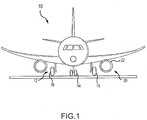
- an aircraft 10 in accordance with various embodiments can include multiple landing gear including a first landing gear 12, a second landing gear 14, and a third landing gear 16.
- the first landing gear 12 and the third landing gear 16 may be main landing gear and the second landing gear 14 may be a nose landing gear.
- Each landing gear may include one or more wheel assemblies.
- the first landing gear 12 includes a wheel assembly 18. The landing gear 12, 14, 16 and the wheel assembly 18 support the aircraft 10 in response to the aircraft 10 being parked and during taxi, takeoff, and landing of the aircraft 10.
- the aircraft 10 may further include one or more gas turbine engine 20.
- the gas turbine engine 20 may be controlled by a pilot (such as by controlling a throttle in a cockpit) to generate thrust to accelerate the aircraft 10.
- the gas turbine engine 20 may include a nacelle 22.
- any of the landing gear 12, 14, 16 (including corresponding wheel assemblies 18), the gas turbine engine 20 (including the nacelle 22), and any other component of the aircraft 10 may include an aluminum alloy.
- Aluminum alloys may exhibit desirable characteristics in aircraft components due to their relatively light weight and relatively great tensile strength. However, such aluminum alloys may include undesirable characteristics such as relatively low ductility, fracture resistance, and elongation. Relatively great ductility, fracture resistance, and elongation may be desirable in certain situations such as in response to a bird strike. For example, it may be desirable for the wheel assembly 18 to return to an original form after striking a bird.
- the present disclosure reveals systems and methods for forming aluminum alloys that include a shape memory alloy (SMA) which provides improved ductility, fracture resistance, and elongation.
- the components of the aircraft 10 may include a combined alloy including aluminum alloy and SMA.
- the components may include either a combination alloy that includes both aluminum and SMA or a combination of an aluminum alloy or magnesium alloy and a SMA that have not been alloyed together.
- the method begins in block 102 where an aluminum alloy is provided.
- the aluminum alloy may include an alpha-phase with presence of a theta-phase that provides strengthening.
- the aluminum alloy may be a relatively high-strength aluminum alloy such as an aluminum alloy including aluminum (Al), copper (Cu), magnesium (Mg), silver (Ag), titanium (Ti), and boron (B) (e.g., Al-Cu-Mg-Ag-TiB2).
- Example cast aluminum alloys may conform to SAE Aerospace Materials standards, and/or registered with the Aluminum Association including aluminum A205, 355, or A356 aluminum alloys, including cast alloys 2XX or 3XX series aluminum cast alloys. Wrought aluminum alloys may conform to standards set by SAE Aerospace Materials standards, and /or registered with the Aluminum Association including aluminum 6061, 2014, 2040, or 7050 aluminum alloys, including other 6XXX, 2XXX, or 7XXX series aluminum alloys, or the like.
- the aluminum alloy may be provided in any form such as a powder form, a solid form, a molten form, or the like.
- a SMA may also be provided in block 102.
- the SMA may include any SMA such as a nickel titanium alloy available under the trade name Nitinol and available from Memry Corporation of Bethel, CT.
- the SMA may be provided in any form such as a powder form (including a short fiber form or particulate form) or a wire form.
- the SMA may be mixed with the aluminum alloy to form a combination alloy.
- a method 200 provides an example of mixing a SMA with an aluminum alloy.
- the method 200 corresponds to a method of mixing powdered SMA with powdered aluminum alloy.
- the particles of the SMA may be mixed with the particles of the aluminum alloy. Because both the SMA and the aluminum alloy are powdered, the particles may be blended together using any known method, such as a powder blender (e.g., a V-cone blender).
- the aluminum alloy may be melted and then the SMA particles may be added to the molten aluminum alloy. Because many SMA materials have a greater melting temperature than aluminum alloys, adding the SMA particles to the molten aluminum alloy may desirably fail to melt the SMA particles (or fiber particulates).
- the SMA may be provided in a wire form.
- the wire form may include single-strands of SMA wires, multiple strands of SMA wires coupled together, a mesh of SMA wires, particulates of SMA fibers, cut SMA wire particulates, or the like.
- the SMA wires may be purchased in wire form or may be formed to have the wire form.
- each of the wires of the SMA may have a length that is less than 0.0197 inches (0.5 millimeters). In that regard, the wires of the SMA may be chopped and may thus be referred to as chopped SMA wire.
- the SMA may be retained in a single location.
- the SMA may be retained in a cast.
- the SMA may be reduced or otherwise reshaped to have a shape of the resulting aircraft component.
- the SMA wires may be placed in a cast and excess wire may be cut such that the SMA wires are located only within the cast.
- the SMA wires may be held in place using any technique such as an adhesive, a clamp, or the like.
- the cast may retain the SMA wires in place due to a cavity shape within the cast.
- the aluminum alloy may be melted to a liquid form.
- the aluminum alloy may be heated to its melting temperature to cause it to liquefy.
- the aluminum alloy may be poured over the SMA wires, thus mixing the aluminum alloy with the SMA wires.
- SMA typically has a greater melting temperature than aluminum alloys. In that regard, pouring the melted aluminum alloy over the SMA wires is unlikely to melt or otherwise deform the SMA wires. Thus, the SMA wires retain their original shape within the melted (and later re-solidified) aluminum alloy.
- the SMA and the aluminum alloy may be mixed to have a specific percentage by volume of the SMA.
- the combination alloy may have between 0.1 percent (0.1%) and 25% SMA by volume, between 0.1% and 18% SMA by volume, between 0.1% and 15% SMA by volume, or the like.
- an aircraft component may be formed using the combination alloy.
- the combination alloy includes powdered aluminum alloy and powdered SMA
- the combination alloy may be melted (e.g., by heating to the melting temperature of the aluminum alloy or to the SMA) and then maybe cast, forged, extruded, or the like into the aircraft component.
- the powder mixture may be used in additive manufacturing to form the component.
- the aircraft component may be formed by the mixing step (i.e., by pouring the aluminum alloy into the cast with the wire SMA or the chopped wire SMA).
- the aluminum alloy may be mixed with the wire SMA to form a block or other shape, and the block or other shape may be reduced to the final aircraft component.
- the aircraft component 300 may include SMA particles 302 and an aluminum alloy 304.
- the SMA particles 302 may have been provided in powder form and may have been mixed with molten or powdered aluminum alloy 304.
- the mixture may have been formed into the aircraft component 300 such as by additive manufacturing, casting, forging, poiser metal forging, extrusion, or the like.
- the aircraft component 400 may include SMA wires 402 and an aluminum alloy 404.
- the SMA wires 402 may have been provided in wire form or chopped wire form and may have been mixed with molten aluminum alloy 404.
- the SMA wires 402 may have been held in place within a casting having a shape corresponding to the aircraft component 400 and the molten aluminum alloy 404 may have been poured into the cast and around the SMA wires 402.
- the molted aluminum alloy 404 may have been mixed with chopped SMA wires before being poured into the cast.
- the systems, methods, and aircraft components disclosed herein provide various benefits and advantages over conventional systems, methods, and aircraft components.
- addition of the SMA increases elongation, ductility, and fracture resistance relative to aluminum alloys without SMA. This results in an increase in fracture toughness from single-digit values to double-digit values. This further reduces slows or eliminates crack propagation through a resulting aircraft component due to the phenomenon of crack bridging, whereas the fracture resistance increases with increasing crack extension. This is typically characterized by R-curve testing.
- references to "one embodiment”, “an embodiment”, “an example embodiment”, etc. indicate that the embodiment described may include a particular feature, structure, or characteristic, but every embodiment may not necessarily include the particular feature, structure, or characteristic. Moreover, such phrases are not necessarily referring to the same embodiment. Further, when a particular feature, structure, or characteristic is described in connection with an embodiment, it is submitted that it is within the knowledge of one skilled in the art to affect such feature, structure, or characteristic in connection with other embodiments whether or not explicitly described. After reading the description, it will be apparent to one skilled in the relevant art(s) how to implement the disclosure in alternative embodiments.
Landscapes
- Chemical & Material Sciences (AREA)
- Engineering & Computer Science (AREA)
- Mechanical Engineering (AREA)
- Materials Engineering (AREA)
- Metallurgy (AREA)
- Organic Chemistry (AREA)
- Manufacturing & Machinery (AREA)
- Physics & Mathematics (AREA)
- Thermal Sciences (AREA)
- Crystallography & Structural Chemistry (AREA)
- Composite Materials (AREA)
- Powder Metallurgy (AREA)
Abstract
Description
- The present disclosure relates to aluminum alloys for use in aircraft components and, more particularly, to aluminum alloys formed to have improved elongation, ductility, and fracture resistance properties.
- Many aircraft include various components such as landing gear having wheel assemblies to allow the aircraft to travel along the ground during taxi, takeoff, and landing. It is desirable for such aircraft components to have a relatively large tensile strength and to be relatively lightweight. Aluminum and aluminum alloys may provide desirable combinations of material strength and relatively low weight. However, such aluminum alloys may have some undesirable characteristics such as relatively low elongation properties, relatively low ductility, and relatively low fracture resistance.
- Disclosed herein is a method of forming an aircraft component. The method includes mixing a shape memory alloy (SMA) with an aluminum alloy to form a combination of the SMA and the aluminum alloy. The method further includes forming the aircraft component with the combination of the SMA and the aluminum alloy.
- In any of the foregoing embodiments, the aluminum alloy includes aluminum (Al), copper (Cu), magnesium (Mg), silver (Ag), titanium (Ti), and boron (B).
- In any of the foregoing embodiments, the aluminum alloy is Al-Cu-Mg-Ag-TiB2.
- In any of the foregoing embodiments, the SMA includes a nickel titanium alloy.
- In any of the foregoing embodiments, forming the aircraft component includes forming the aircraft component using at least one of casting, forging, powder metal, extrusion, or additive manufacturing.
- In any of the foregoing embodiments, mixing the SMA with the aluminum alloy includes at least one of mixing particles of the SMA in powder form with particles of the aluminum alloy in powder form or mixing the SMA in the powder form with liquid aluminum alloy.
- In any of the foregoing embodiments, mixing the SMA with the aluminum alloy includes: providing the SMA in wire form having a length that is less than 0.0197 inches; retaining the SMA in the wire form in a single location; melting the aluminum alloy; and pouring the aluminum alloy over the SMA in the wire form.
- In any of the foregoing embodiments, mixing the SMA with the aluminum alloy includes: melting the aluminum alloy; and mixing the SMA with the aluminum alloy during the melting of the aluminum alloy.
- In any of the foregoing embodiments, the combination of the SMA and the aluminum alloy includes between 0.1 percent (0.1%) and 18% of the SMA by volume.
- Also disclosed is a method of forming an aircraft component. The method includes mixing a shape memory alloy (SMA) an aluminum alloy including aluminum (Al), copper (Cu), magnesium (Mg), silver (Ag), titanium (Ti), and boron (B);to form a combination of the SMA and the aluminum alloy, the SMA including a nickel titanium alloy. The method further includes forming the aircraft component with the combination of the SMA and the aluminum alloy.
- In any of the foregoing embodiments, mixing the SMA with the aluminum alloy includes at least one of mixing particles of the SMA in powder form with particles of the aluminum alloy in powder form or mixing the SMA in the powder form with liquid aluminum alloy.
- In any of the foregoing embodiments, mixing the SMA with the aluminum alloy includes: providing the SMA in wire form having a length that is less than 0.0197 inches; retaining the SMA in the wire form in a single location; melting the aluminum alloy; and pouring the aluminum alloy over the SMA in the wire form.
- In any of the foregoing embodiments, the combination of the SMA and the aluminum alloy includes between 0.1 percent (0.1%) and 18% of the SMA by volume.
- Also disclosed is an aircraft component. The component includes an aluminum alloy. The component further includes a shape memory alloy (SMA) mixed together with the aluminum alloy to form a combination of the SMA and the aluminum alloy.
- In any of the foregoing embodiments, the aluminum alloy includes aluminum (Al), copper (Cu), magnesium (Mg), silver (Ag), titanium (Ti), and boron (B).
- In any of the foregoing embodiments, the aluminum alloy is Al-Cu-Mg-Ag-TiB2.
- In any of the foregoing embodiments, the SMA includes a nickel titanium alloy.
- In any of the foregoing embodiments, the SMA is provided in powder form and the aluminum alloy is provided in powder form, and the SMA and the aluminum alloy are combined while both in the powder form.
- In any of the foregoing embodiments, the SMA is provided in wire form having a length that is less than 0.0197 inches and the aluminum alloy is combined with the SMA while the aluminum alloy is melted.
- In any of the foregoing embodiments, the combination of the SMA and the aluminum alloy includes between 0.1 percent (0.1%) and 18% of the SMA by volume.
- The forgoing features and elements may be combined in various combinations without exclusivity, unless expressly indicated herein otherwise. These features and elements as well as the operation of the disclosed embodiments will become more apparent in light of the following description and accompanying drawings.
- The subject matter of the present disclosure is particularly pointed out and distinctly claimed in the concluding portion of the specification. A more complete understanding of the present disclosures, however, may best be obtained by referring to the detailed description and claims when considered in connection with the drawing figures, wherein like numerals denote like elements.
-
FIG. 1 illustrates an aircraft having multiple landing gear, in accordance with various embodiments; -
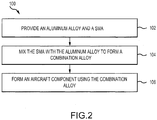
FIG. 2 illustrates a method of forming an aircraft component with a combined alloy having an aluminum alloy and a shape memory alloy, in accordance with various embodiments; -
FIG. 3A illustrates a method of mixing an aluminum alloy with a shape memory alloy, in accordance with various embodiments; -
FIG. 3B illustrates a method of mixing an aluminum alloy with a shape memory alloy, in accordance with various embodiments; -
FIG. 4 illustrates an aircraft component having a combined alloy with an aluminum alloy and a shape memory alloy, in accordance with various embodiments; and -
FIG. 5 illustrates an aircraft component having a combined alloy with an aluminum alloy and a shape memory alloy, in accordance with various embodiments. - The detailed description of exemplary embodiments herein makes reference to the accompanying drawings, which show exemplary embodiments by way of illustration and their best mode. While these exemplary embodiments are described in sufficient detail to enable those skilled in the art to practice the disclosure, it should be understood that other embodiments may be realized and that logical, chemical, and mechanical changes may be made without departing from the spirit and scope of the disclosure. Thus, the detailed description herein is presented for purposes of illustration only and not of limitation. For example, the steps recited in any of the method or process descriptions may be executed in any order and are not necessarily limited to the order presented. Furthermore, any reference to singular includes plural embodiments, and any reference to more than one component or step may include a singular embodiment or step. Also, any reference to attached, fixed, connected or the like may include permanent, removable, temporary, partial, full and/or any other possible attachment option. Additionally, any reference to without contact (or similar phrases) may also include reduced contact or minimal contact.
- Referring now to
FIG. 1 , anaircraft 10 in accordance with various embodiments can include multiple landing gear including afirst landing gear 12, asecond landing gear 14, and athird landing gear 16. In various embodiments, thefirst landing gear 12 and thethird landing gear 16 may be main landing gear and thesecond landing gear 14 may be a nose landing gear. Each landing gear may include one or more wheel assemblies. For example, thefirst landing gear 12 includes awheel assembly 18. Thelanding gear wheel assembly 18 support theaircraft 10 in response to theaircraft 10 being parked and during taxi, takeoff, and landing of theaircraft 10. - The
aircraft 10 may further include one or moregas turbine engine 20. Thegas turbine engine 20 may be controlled by a pilot (such as by controlling a throttle in a cockpit) to generate thrust to accelerate theaircraft 10. Thegas turbine engine 20 may include anacelle 22. - Any of the
landing gear aircraft 10 may include an aluminum alloy. Aluminum alloys may exhibit desirable characteristics in aircraft components due to their relatively light weight and relatively great tensile strength. However, such aluminum alloys may include undesirable characteristics such as relatively low ductility, fracture resistance, and elongation. Relatively great ductility, fracture resistance, and elongation may be desirable in certain situations such as in response to a bird strike. For example, it may be desirable for thewheel assembly 18 to return to an original form after striking a bird. In that regard, the present disclosure reveals systems and methods for forming aluminum alloys that include a shape memory alloy (SMA) which provides improved ductility, fracture resistance, and elongation. The components of theaircraft 10 may include a combined alloy including aluminum alloy and SMA. In that regard, the components may include either a combination alloy that includes both aluminum and SMA or a combination of an aluminum alloy or magnesium alloy and a SMA that have not been alloyed together. - Referring now to
FIG. 2 , amethod 100 forming an aircraft component to have a relatively great tensile strength, ductility, fracture resistance, and elongation is shown. The method begins inblock 102 where an aluminum alloy is provided. The aluminum alloy may include an alpha-phase with presence of a theta-phase that provides strengthening. The aluminum alloy may be a relatively high-strength aluminum alloy such as an aluminum alloy including aluminum (Al), copper (Cu), magnesium (Mg), silver (Ag), titanium (Ti), and boron (B) (e.g., Al-Cu-Mg-Ag-TiB2). Example cast aluminum alloys may conform to SAE Aerospace Materials standards, and/or registered with the Aluminum Association including aluminum A205, 355, or A356 aluminum alloys, including cast alloys 2XX or 3XX series aluminum cast alloys. Wrought aluminum alloys may conform to standards set by SAE Aerospace Materials standards, and /or registered with the Aluminum Association including aluminum 6061, 2014, 2040, or 7050 aluminum alloys, including other 6XXX, 2XXX, or 7XXX series aluminum alloys, or the like. The aluminum alloy may be provided in any form such as a powder form, a solid form, a molten form, or the like. - A SMA may also be provided in
block 102. The SMA may include any SMA such as a nickel titanium alloy available under the trade name Nitinol and available from Memry Corporation of Bethel, CT. The SMA may be provided in any form such as a powder form (including a short fiber form or particulate form) or a wire form. - In
block 104, the SMA may be mixed with the aluminum alloy to form a combination alloy. For example and referring toFIG. 3A , amethod 200 provides an example of mixing a SMA with an aluminum alloy. Themethod 200 corresponds to a method of mixing powdered SMA with powdered aluminum alloy. Inblock 202, the particles of the SMA may be mixed with the particles of the aluminum alloy. Because both the SMA and the aluminum alloy are powdered, the particles may be blended together using any known method, such as a powder blender (e.g., a V-cone blender). In various embodiments, the aluminum alloy may be melted and then the SMA particles may be added to the molten aluminum alloy. Because many SMA materials have a greater melting temperature than aluminum alloys, adding the SMA particles to the molten aluminum alloy may desirably fail to melt the SMA particles (or fiber particulates). - Referring to
FIG. 3B , anothermethod 250 provides an example of mixing SMA in wire form with an aluminum alloy. Inblock 252, the SMA may be provided in a wire form. The wire form may include single-strands of SMA wires, multiple strands of SMA wires coupled together, a mesh of SMA wires, particulates of SMA fibers, cut SMA wire particulates, or the like. The SMA wires may be purchased in wire form or may be formed to have the wire form. In various embodiments, each of the wires of the SMA may have a length that is less than 0.0197 inches (0.5 millimeters). In that regard, the wires of the SMA may be chopped and may thus be referred to as chopped SMA wire. - In
block 254, the SMA may be retained in a single location. For example, the SMA may be retained in a cast. As part ofblock 254, the SMA may be reduced or otherwise reshaped to have a shape of the resulting aircraft component. For example, the SMA wires may be placed in a cast and excess wire may be cut such that the SMA wires are located only within the cast. The SMA wires may be held in place using any technique such as an adhesive, a clamp, or the like. In various embodiments, the cast may retain the SMA wires in place due to a cavity shape within the cast. - In
block 256, the aluminum alloy may be melted to a liquid form. For example, the aluminum alloy may be heated to its melting temperature to cause it to liquefy. - In
block 258, the aluminum alloy may be poured over the SMA wires, thus mixing the aluminum alloy with the SMA wires. SMA typically has a greater melting temperature than aluminum alloys. In that regard, pouring the melted aluminum alloy over the SMA wires is unlikely to melt or otherwise deform the SMA wires. Thus, the SMA wires retain their original shape within the melted (and later re-solidified) aluminum alloy. - Returning reference to
FIG. 2 , the SMA and the aluminum alloy may be mixed to have a specific percentage by volume of the SMA. For example, the combination alloy may have between 0.1 percent (0.1%) and 25% SMA by volume, between 0.1% and 18% SMA by volume, between 0.1% and 15% SMA by volume, or the like. - In
block 106, an aircraft component may be formed using the combination alloy. For example, if the combination alloy includes powdered aluminum alloy and powdered SMA, the combination alloy may be melted (e.g., by heating to the melting temperature of the aluminum alloy or to the SMA) and then maybe cast, forged, extruded, or the like into the aircraft component. As another example of forming the aircraft component using a powdered combination alloy, the powder mixture may be used in additive manufacturing to form the component. - If the combination alloy includes the wire SMA and the molten aluminum alloy, the aircraft component may be formed by the mixing step (i.e., by pouring the aluminum alloy into the cast with the wire SMA or the chopped wire SMA). In various embodiments, the aluminum alloy may be mixed with the wire SMA to form a block or other shape, and the block or other shape may be reduced to the final aircraft component.
- Turning now to
FIG. 4 , anaircraft component 300 is shown. Theaircraft component 300 may includeSMA particles 302 and analuminum alloy 304. TheSMA particles 302 may have been provided in powder form and may have been mixed with molten orpowdered aluminum alloy 304. The mixture may have been formed into theaircraft component 300 such as by additive manufacturing, casting, forging, poweder metal forging, extrusion, or the like. - Referring now to
FIG. 5 , anotheraircraft component 400 is shown. Theaircraft component 400 may includeSMA wires 402 and analuminum alloy 404. TheSMA wires 402 may have been provided in wire form or chopped wire form and may have been mixed withmolten aluminum alloy 404. For example, theSMA wires 402 may have been held in place within a casting having a shape corresponding to theaircraft component 400 and themolten aluminum alloy 404 may have been poured into the cast and around theSMA wires 402. In various embodiments, the moltedaluminum alloy 404 may have been mixed with chopped SMA wires before being poured into the cast. - The systems, methods, and aircraft components disclosed herein provide various benefits and advantages over conventional systems, methods, and aircraft components. For example, addition of the SMA increases elongation, ductility, and fracture resistance relative to aluminum alloys without SMA. This results in an increase in fracture toughness from single-digit values to double-digit values. This further reduces slows or eliminates crack propagation through a resulting aircraft component due to the phenomenon of crack bridging, whereas the fracture resistance increases with increasing crack extension. This is typically characterized by R-curve testing.
- Benefits, other advantages, and solutions to problems have been described herein with regard to specific embodiments. Furthermore, the connecting lines shown in the various figures contained herein are intended to represent exemplary functional relationships and/or physical couplings between the various elements. It should be noted that many alternative or additional functional relationships or physical connections may be present in a practical system. However, the benefits, advantages, solutions to problems, and any elements that may cause any benefit, advantage, or solution to occur or become more pronounced are not to be construed as critical, required, or essential features or elements of the disclosure. The scope of the disclosure is accordingly to be limited by nothing other than the appended claims, in which reference to an element in the singular is not intended to mean "one and only one" unless explicitly so stated, but rather "one or more." Moreover, where a phrase similar to "at least one of A, B, or C" is used in the claims, it is intended that the phrase be interpreted to mean that A alone may be present in an embodiment, B alone may be present in an embodiment, C alone may be present in an embodiment, or that any combination of the elements A, B and C may be present in a single embodiment; for example, A and B, A and C, B and C, or A and B and C. Different cross-hatching is used throughout the figures to denote different parts but not necessarily to denote the same or different materials.
- Systems, methods and apparatus are provided herein. In the detailed description herein, references to "one embodiment", "an embodiment", "an example embodiment", etc., indicate that the embodiment described may include a particular feature, structure, or characteristic, but every embodiment may not necessarily include the particular feature, structure, or characteristic. Moreover, such phrases are not necessarily referring to the same embodiment. Further, when a particular feature, structure, or characteristic is described in connection with an embodiment, it is submitted that it is within the knowledge of one skilled in the art to affect such feature, structure, or characteristic in connection with other embodiments whether or not explicitly described. After reading the description, it will be apparent to one skilled in the relevant art(s) how to implement the disclosure in alternative embodiments.
- Furthermore, no element, component, or method step in the present disclosure is intended to be dedicated to the public regardless of whether the element, component, or method step is explicitly recited in the claims. As used herein, the terms "comprises", "comprising", or any other variation thereof, are intended to cover a non-exclusive inclusion, such that a process, method, article, or apparatus that comprises a list of elements does not include only those elements but may include other elements not expressly listed or inherent to such process, method, article, or apparatus.
Claims (15)
- A method (100) of forming an aircraft component, the method comprising:mixing (104) a shape memory alloy (SMA) with an aluminum alloy to form a combination of the SMA and the aluminum alloy; andforming the aircraft component with the combination of the SMA and the aluminum alloy.
- The method of claim 1, wherein the aluminum alloy includes aluminum (Al), copper (Cu), magnesium (Mg), silver (Ag), titanium (Ti), and boron (B).
- The method of claim 2, wherein the aluminum alloy is Al-Cu-Mg-Ag-TiB2, and/or wherein the SMA includes a nickel titanium alloy.
- The method of any preceding claim, wherein forming the aircraft component includes forming the aircraft component using at least one of casting, powder metal, forging, extrusion, or additive manufacturing.
- The method of any preceding claim, wherein mixing the SMA with the aluminum alloy includes:providing the SMA in wire form having a length that is less than 0.0197 inches;retaining the SMA in the wire form in a single location;melting the aluminum alloy; andpouring the aluminum alloy over the SMA in the wire form.
- The method of any preceding claim, wherein mixing the SMA with the aluminum alloy includes:melting the aluminum alloy; andmixing the SMA with the aluminum alloy during the melting of the aluminum alloy.
- A method (200) of forming an aircraft component, the method comprising:mixing (2020) a shape memory alloy (SMA) an aluminum alloy including aluminum (Al), copper (Cu), magnesium (Mg), silver (Ag), titanium (Ti), and boron (B);to form acombination of the SMA and the aluminum alloy, the SMA including a nickel titanium alloy; andforming the aircraft component with the combination of the SMA and the aluminum alloy.
- The method of any preceding claim, wherein mixing the SMA with the aluminum alloy includes at least one of mixing particles of the SMA in powder form with particles of the aluminum alloy in powder form or mixing the SMA in the powder form with liquid aluminum alloy.
- The method of claim 7 or 8, wherein mixing the SMA with the aluminum alloy includes:retaining the SMA in a wire form in a single location, the SMA in the wire form having a length that is less than 0.0197 inches;melting the aluminum alloy; andpouring the aluminum alloy over the SMA in the wire form.
- The method of any preceding claim, wherein the combination of the SMA and the aluminum alloy includes between 0.1 percent (0.1%) and 18% of the SMA by volume.
- An aircraft component, comprising:an aluminum alloy; anda shape memory alloy (SMA) mixed together with the aluminum alloy to form a combination of the SMA and the aluminum alloy.
- The aircraft component of claim 11, wherein the aluminum alloy includes aluminum (Al), copper (Cu), magnesium (Mg), silver (Ag), titanium (Ti), and boron (B).
- The aircraft component of claim 12, wherein the aluminum alloy is Al-Cu-Mg-Ag-TiB2, and/or wherein the SMA includes a nickel titanium alloy.
- The aircraft component of any of claims 11 to 13, wherein the SMA is provided in powder form and the aluminum alloy is provided in powder form, and the SMA and the aluminum alloy are combined while both in the powder form, or wherein the SMA is provided in wire form having a length that is less than 0.0197 inches and the aluminum alloy is combined with the SMA while the aluminum alloy is melted.
- The aircraft component of any of claims 11 to 14, wherein the combination of the SMA and the aluminum alloy includes between 0.1 percent (0.1%) and 18% of the SMA by volume.
Applications Claiming Priority (2)
| Application Number | Priority Date | Filing Date | Title |
|---|---|---|---|
| US201962926272P | 2019-10-25 | 2019-10-25 | |
| US16/719,590 US20210121949A1 (en) | 2019-10-25 | 2019-12-18 | Shape memory alloy particle toughening of cast or additive manufactured al-cu-mg-ag-tib2 |
Publications (1)
| Publication Number | Publication Date |
|---|---|
| EP3825431A1 true EP3825431A1 (en) | 2021-05-26 |
Family
ID=72644026
Family Applications (1)
| Application Number | Title | Priority Date | Filing Date |
|---|---|---|---|
| EP20197820.2A Pending EP3825431A1 (en) | 2019-10-25 | 2020-09-23 | Shape memory alloy particle toughening of cast or additive manufactured al-cu-mg-ag-tib2 |
Country Status (2)
| Country | Link |
|---|---|
| US (2) | US20210121949A1 (en) |
| EP (1) | EP3825431A1 (en) |
Families Citing this family (1)
| Publication number | Priority date | Publication date | Assignee | Title |
|---|---|---|---|---|
| US20200164963A1 (en) * | 2018-11-26 | 2020-05-28 | Embraer S.A. | Thermally configurable structural elements especially useful for aircraft components |
Citations (6)
| Publication number | Priority date | Publication date | Assignee | Title |
|---|---|---|---|---|
| US5508116A (en) * | 1995-04-28 | 1996-04-16 | The United States Of America As Represented By The Secretary Of The Navy | Metal matrix composite reinforced with shape memory alloy |
| US20070040702A1 (en) * | 2005-05-02 | 2007-02-22 | Mosher Todd J | Method for creating highly integrated satellite systems |
| WO2007111634A2 (en) * | 2005-09-07 | 2007-10-04 | Alcoa Inc. | 2000 series aluminium alloys with enhanced damage tolerance performance for aerospace applications aluminium-legierungen der 2000er-serie mit verbesserter schadenstoleranzleistung fur luftfahrtanwendungen |
| GB2477744A (en) * | 2010-02-10 | 2011-08-17 | Aeromet Internat Plc | An aluminium-copper-titanium alloy comprising insoluble particles |
| EP2942412A1 (en) * | 2014-05-06 | 2015-11-11 | Goodrich Corporation | Lithium-free elevated temperature aluminium copper magnesium silver alloy for forged aerospace products |
| EP3656491A1 (en) * | 2018-11-26 | 2020-05-27 | Embraer S.A. | Thermally configurable structural elements especially useful for aircraft components |
Family Cites Families (6)
| Publication number | Priority date | Publication date | Assignee | Title |
|---|---|---|---|---|
| US5217816A (en) | 1984-10-19 | 1993-06-08 | Martin Marietta Corporation | Metal-ceramic composites |
| US6346132B1 (en) | 1997-09-18 | 2002-02-12 | Daimlerchrysler Ag | High-strength, high-damping metal material and method of making the same |
| GB2382819A (en) | 2001-12-07 | 2003-06-11 | Qinetiq Ltd | Composite element comprising a shape memory alloy |
| US6699015B2 (en) | 2002-02-19 | 2004-03-02 | The Boeing Company | Blades having coolant channels lined with a shape memory alloy and an associated fabrication method |
| US8201648B2 (en) | 2009-01-29 | 2012-06-19 | Baker Hughes Incorporated | Earth-boring particle-matrix rotary drill bit and method of making the same |
| CN109722582B (en) | 2017-10-31 | 2023-01-10 | 史密斯国际有限公司 | Metal matrix composite materials for additive manufacturing of downhole tools |
-
2019
- 2019-12-18 US US16/719,590 patent/US20210121949A1/en not_active Abandoned
-
2020
- 2020-09-23 EP EP20197820.2A patent/EP3825431A1/en active Pending
-
2022
- 2022-03-18 US US17/698,842 patent/US11873549B2/en active Active
Patent Citations (6)
| Publication number | Priority date | Publication date | Assignee | Title |
|---|---|---|---|---|
| US5508116A (en) * | 1995-04-28 | 1996-04-16 | The United States Of America As Represented By The Secretary Of The Navy | Metal matrix composite reinforced with shape memory alloy |
| US20070040702A1 (en) * | 2005-05-02 | 2007-02-22 | Mosher Todd J | Method for creating highly integrated satellite systems |
| WO2007111634A2 (en) * | 2005-09-07 | 2007-10-04 | Alcoa Inc. | 2000 series aluminium alloys with enhanced damage tolerance performance for aerospace applications aluminium-legierungen der 2000er-serie mit verbesserter schadenstoleranzleistung fur luftfahrtanwendungen |
| GB2477744A (en) * | 2010-02-10 | 2011-08-17 | Aeromet Internat Plc | An aluminium-copper-titanium alloy comprising insoluble particles |
| EP2942412A1 (en) * | 2014-05-06 | 2015-11-11 | Goodrich Corporation | Lithium-free elevated temperature aluminium copper magnesium silver alloy for forged aerospace products |
| EP3656491A1 (en) * | 2018-11-26 | 2020-05-27 | Embraer S.A. | Thermally configurable structural elements especially useful for aircraft components |
Non-Patent Citations (6)
| Title |
|---|
| FURUYA YASUBUMI ET AL: "Enhanced mechanical properties of TiNi shape memory fiber/Al matrix composite", MATERIALS TRANSACTIONS. JIM, SENDAI, JP, vol. 34, no. 3, 1 March 1993 (1993-03-01), pages 224 - 227, XP002100336, ISSN: 0916-1821 * |
| HAHNLEN RYAN ET AL: "NiTi-Al interface strength in ultrasonic additive manufacturing compos", COMPOSITES PART B, ELSEVIER, AMSTERDAM, NL, vol. 59, 9 December 2013 (2013-12-09), pages 101 - 108, XP028809882, ISSN: 1359-8368, DOI: 10.1016/J.COMPOSITESB.2013.10.024 * |
| PORTER G A ET AL: "NI-TI SMA-REINFORCED AL COMPOSITES", JOM: JOURNAL OF METALS, SPRINGER NEW YORK LLC, UNITED STATES, vol. 52, no. 10, 1 October 2000 (2000-10-01), pages 52 - 56, XP001145785, ISSN: 1047-4838, DOI: 10.1007/S11837-000-0084-2 * |
| SHISHKOVSKY IGOR ET AL: "Metal matrix composites with ternary intermetallic inclusions fabricated by laser direct energy deposition", COMPOSITE STRUCTURES, vol. 183, 14 September 2017 (2017-09-14), pages 663 - 670, XP085280202, ISSN: 0263-8223, DOI: 10.1016/J.COMPSTRUCT.2017.09.004 * |
| WEI Z G ET AL: "DESIGN AND FABRICATION OF INTELLIGENT COMPOSITES BASED ON SHAPE MEMORY ALLOYS", JOURNAL OF MATERIALS PROCESSING TECHNOLOGY, ELSEVIER, NL, vol. 69, no. 1-03, 1 January 1997 (1997-01-01), pages 68 - 74, XP001145535, ISSN: 0924-0136, DOI: 10.1016/S0924-0136(96)00041-6 * |
| YOUNG-CHUL PARK ET AL: "Fatigue design curve of a TiNi/Al shape memory alloy composite for aircraft stringer design", SMART MATERIALS AND STRUCTURES, IOP PUBLISHING LTD., BRISTOL, GB, vol. 18, no. 5, 1 May 2009 (2009-05-01), pages 55009, XP020153600, ISSN: 0964-1726, DOI: 10.1088/0964-1726/18/5/055009 * |
Also Published As
| Publication number | Publication date |
|---|---|
| US20210121949A1 (en) | 2021-04-29 |
| US11873549B2 (en) | 2024-01-16 |
| US20220203436A1 (en) | 2022-06-30 |
Similar Documents
| Publication | Publication Date | Title |
|---|---|---|
| US6939416B2 (en) | Weldable high strenght Al-Mg-Si alloy | |
| RU2184166C2 (en) | Aluminum-based high-strength alloy and product manufactured therefrom | |
| CA2741587C (en) | Aluminium alloy products for manufacturing structural components and method of producing the same | |
| JP4115936B2 (en) | Weldable high strength Al-Mg-Si alloy | |
| US20040062946A1 (en) | Method of producing a high strength balanced Al-Mg-Si alloy and a weldable product of that alloy | |
| JP5415655B1 (en) | Compressor impeller made of Al alloy casting and manufacturing method thereof | |
| JPH0711374A (en) | Magnesium alloy | |
| CN102395693A (en) | Weldable metal article | |
| US20180298471A1 (en) | Aluminum alloy | |
| JP3012506B2 (en) | Brazing sheet | |
| US11873549B2 (en) | Shape memory alloy particle toughening of cast or additive manufactured Al—Cu—Mg—Ag—TiB2 | |
| EP3265264A1 (en) | Process for manufacturing welded parts comprising arc-welded wrought components made of 6xxx series aluminium alloy using a 5xxx series aluminium filler wire | |
| JP3164587B2 (en) | Alloys with excellent thermal fatigue resistance, aluminum alloys with excellent thermal fatigue resistance, and aluminum alloy members with excellent thermal fatigue resistance | |
| EP2942412B1 (en) | Forged aerospace products from lithium-free aluminium alloy containing copper magnesium and silver | |
| US6719859B2 (en) | High strength aluminum base alloy | |
| CN101680061B (en) | Magnetically permeable liquid forged articles | |
| CN105401020B (en) | A kind of middle strength corrosion resistant Al alloy powder | |
| RU2215055C2 (en) | Aluminum-based alloy and product therefrom | |
| JPH07145440A (en) | Aluminum alloy forging stock | |
| JPH07150312A (en) | Manufacture of aluminum alloy forged base stock | |
| JP4058398B2 (en) | Aluminum alloy forging with excellent high-temperature fatigue strength | |
| JPH07207400A (en) | Composite structure consisting of Nb-Ti-Al-Hf alloy matrix and Nb-based reinforcement | |
| EP3070183A1 (en) | Heat treatment of titanium alloy | |
| JP2746520B2 (en) | Method for producing Al-Zn-Mg based alloy | |
| JP6821419B2 (en) | Composite members, aluminum alloy members for joining and their manufacturing methods |
Legal Events
| Date | Code | Title | Description |
|---|---|---|---|
| PUAI | Public reference made under article 153(3) epc to a published international application that has entered the european phase |
Free format text: ORIGINAL CODE: 0009012 |
|
| STAA | Information on the status of an ep patent application or granted ep patent |
Free format text: STATUS: THE APPLICATION HAS BEEN PUBLISHED |
|
| AK | Designated contracting states |
Kind code of ref document: A1 Designated state(s): AL AT BE BG CH CY CZ DE DK EE ES FI FR GB GR HR HU IE IS IT LI LT LU LV MC MK MT NL NO PL PT RO RS SE SI SK SM TR |
|
| STAA | Information on the status of an ep patent application or granted ep patent |
Free format text: STATUS: REQUEST FOR EXAMINATION WAS MADE |
|
| 17P | Request for examination filed |
Effective date: 20211125 |
|
| RBV | Designated contracting states (corrected) |
Designated state(s): AL AT BE BG CH CY CZ DE DK EE ES FI FR GB GR HR HU IE IS IT LI LT LU LV MC MK MT NL NO PL PT RO RS SE SI SK SM TR |
|
| STAA | Information on the status of an ep patent application or granted ep patent |
Free format text: STATUS: EXAMINATION IS IN PROGRESS |
|
| 17Q | First examination report despatched |
Effective date: 20230921 |
|
| P01 | Opt-out of the competence of the unified patent court (upc) registered |
Effective date: 20230922 |