EP3816992A2 - Verfahren und apparatus zum training eines models zur generierung von sprachspektren, und elektronisches gerät - Google Patents
Verfahren und apparatus zum training eines models zur generierung von sprachspektren, und elektronisches gerät Download PDFInfo
- Publication number
- EP3816992A2 EP3816992A2 EP21163034.8A EP21163034A EP3816992A2 EP 3816992 A2 EP3816992 A2 EP 3816992A2 EP 21163034 A EP21163034 A EP 21163034A EP 3816992 A2 EP3816992 A2 EP 3816992A2
- Authority
- EP
- European Patent Office
- Prior art keywords
- sequence
- analog spectrum
- loss value
- spectrum
- spectrum sequence
- Prior art date
- Legal status (The legal status is an assumption and is not a legal conclusion. Google has not performed a legal analysis and makes no representation as to the accuracy of the status listed.)
- Ceased
Links
Images

Classifications
-
- G—PHYSICS
- G10—MUSICAL INSTRUMENTS; ACOUSTICS
- G10L—SPEECH ANALYSIS TECHNIQUES OR SPEECH SYNTHESIS; SPEECH RECOGNITION; SPEECH OR VOICE PROCESSING TECHNIQUES; SPEECH OR AUDIO CODING OR DECODING
- G10L13/00—Speech synthesis; Text to speech systems
- G10L13/08—Text analysis or generation of parameters for speech synthesis out of text, e.g. grapheme to phoneme translation, prosody generation or stress or intonation determination
-
- G—PHYSICS
- G10—MUSICAL INSTRUMENTS; ACOUSTICS
- G10L—SPEECH ANALYSIS TECHNIQUES OR SPEECH SYNTHESIS; SPEECH RECOGNITION; SPEECH OR VOICE PROCESSING TECHNIQUES; SPEECH OR AUDIO CODING OR DECODING
- G10L13/00—Speech synthesis; Text to speech systems
- G10L13/02—Methods for producing synthetic speech; Speech synthesisers
- G10L13/04—Details of speech synthesis systems, e.g. synthesiser structure or memory management
- G10L13/047—Architecture of speech synthesisers
-
- G—PHYSICS
- G06—COMPUTING OR CALCULATING; COUNTING
- G06N—COMPUTING ARRANGEMENTS BASED ON SPECIFIC COMPUTATIONAL MODELS
- G06N3/00—Computing arrangements based on biological models
- G06N3/02—Neural networks
- G06N3/08—Learning methods
- G06N3/088—Non-supervised learning, e.g. competitive learning
-
- G—PHYSICS
- G06—COMPUTING OR CALCULATING; COUNTING
- G06N—COMPUTING ARRANGEMENTS BASED ON SPECIFIC COMPUTATIONAL MODELS
- G06N3/00—Computing arrangements based on biological models
- G06N3/02—Neural networks
- G06N3/04—Architecture, e.g. interconnection topology
- G06N3/045—Combinations of networks
-
- G—PHYSICS
- G06—COMPUTING OR CALCULATING; COUNTING
- G06N—COMPUTING ARRANGEMENTS BASED ON SPECIFIC COMPUTATIONAL MODELS
- G06N3/00—Computing arrangements based on biological models
- G06N3/02—Neural networks
- G06N3/04—Architecture, e.g. interconnection topology
- G06N3/0464—Convolutional networks [CNN, ConvNet]
-
- G—PHYSICS
- G06—COMPUTING OR CALCULATING; COUNTING
- G06N—COMPUTING ARRANGEMENTS BASED ON SPECIFIC COMPUTATIONAL MODELS
- G06N3/00—Computing arrangements based on biological models
- G06N3/02—Neural networks
- G06N3/04—Architecture, e.g. interconnection topology
- G06N3/047—Probabilistic or stochastic networks
-
- G—PHYSICS
- G06—COMPUTING OR CALCULATING; COUNTING
- G06N—COMPUTING ARRANGEMENTS BASED ON SPECIFIC COMPUTATIONAL MODELS
- G06N3/00—Computing arrangements based on biological models
- G06N3/02—Neural networks
- G06N3/04—Architecture, e.g. interconnection topology
- G06N3/0475—Generative networks
-
- G—PHYSICS
- G06—COMPUTING OR CALCULATING; COUNTING
- G06N—COMPUTING ARRANGEMENTS BASED ON SPECIFIC COMPUTATIONAL MODELS
- G06N3/00—Computing arrangements based on biological models
- G06N3/02—Neural networks
- G06N3/08—Learning methods
- G06N3/09—Supervised learning
-
- G—PHYSICS
- G06—COMPUTING OR CALCULATING; COUNTING
- G06N—COMPUTING ARRANGEMENTS BASED ON SPECIFIC COMPUTATIONAL MODELS
- G06N3/00—Computing arrangements based on biological models
- G06N3/02—Neural networks
- G06N3/08—Learning methods
- G06N3/094—Adversarial learning
-
- G—PHYSICS
- G10—MUSICAL INSTRUMENTS; ACOUSTICS
- G10L—SPEECH ANALYSIS TECHNIQUES OR SPEECH SYNTHESIS; SPEECH RECOGNITION; SPEECH OR VOICE PROCESSING TECHNIQUES; SPEECH OR AUDIO CODING OR DECODING
- G10L13/00—Speech synthesis; Text to speech systems
- G10L13/02—Methods for producing synthetic speech; Speech synthesisers
- G10L13/027—Concept to speech synthesisers; Generation of natural phrases from machine-based concepts
-
- G—PHYSICS
- G10—MUSICAL INSTRUMENTS; ACOUSTICS
- G10L—SPEECH ANALYSIS TECHNIQUES OR SPEECH SYNTHESIS; SPEECH RECOGNITION; SPEECH OR VOICE PROCESSING TECHNIQUES; SPEECH OR AUDIO CODING OR DECODING
- G10L25/00—Speech or voice analysis techniques not restricted to a single one of groups G10L15/00 - G10L21/00
- G10L25/03—Speech or voice analysis techniques not restricted to a single one of groups G10L15/00 - G10L21/00 characterised by the type of extracted parameters
- G10L25/18—Speech or voice analysis techniques not restricted to a single one of groups G10L15/00 - G10L21/00 characterised by the type of extracted parameters the extracted parameters being spectral information of each sub-band
-
- G—PHYSICS
- G10—MUSICAL INSTRUMENTS; ACOUSTICS
- G10L—SPEECH ANALYSIS TECHNIQUES OR SPEECH SYNTHESIS; SPEECH RECOGNITION; SPEECH OR VOICE PROCESSING TECHNIQUES; SPEECH OR AUDIO CODING OR DECODING
- G10L25/00—Speech or voice analysis techniques not restricted to a single one of groups G10L15/00 - G10L21/00
- G10L25/27—Speech or voice analysis techniques not restricted to a single one of groups G10L15/00 - G10L21/00 characterised by the analysis technique
- G10L25/30—Speech or voice analysis techniques not restricted to a single one of groups G10L15/00 - G10L21/00 characterised by the analysis technique using neural networks
Definitions
- the present disclosure relates to the technical field of data processing, in particular of speech synthesis and deep learning, and specifically to a method and an apparatus for training a speech spectrum generation model and an electronic device.
- Spectrum generation technique is a very important technique in speech synthesis, in which a spectrum acts as a bridge to connect an input text sequence with a finally synthesized audio.
- the speech spectrum generation model uses a mean square error (MSE) loss function to feed back an error of the generated spectrum, but modeling based on the MSE loss function cannot reflect the nature of the spectrum, and may result in a very fuzzy spectrum. If a vocoder is trained with a real clear spectrum, inputting the fuzzy spectrum into the vocoder will lead to inconsistency between the training and judgment of the vocoder, which will seriously affect the stability of the vocoder and thus the tone quality of the finally synthesized audio.
- MSE mean square error
- the present disclosure provides a method and an apparatus for training a speech spectrum generation model, a device and a storage medium.
- a method for training a speech spectrum generation model including:
- an apparatus for training a speech spectrum generation model including:
- the technique according to the present application can make the spectrum sequence generated by the speech spectrum generation model clearer and closer to the distribution of the real spectrum sequence.
- Spectrum generation technique as a very important part of speech synthesis technique, realizes the conversion from a text sequence to a spectrum sequence which is used as a bridge to connect the input text sequence with the finally synthesized audio.
- the spectrum generation technique in the related art usually uses a Tacotron model, in which a text sequence is used as an input and a spectrum sequence as an output, and which realizes end-to-end speech synthesis modeling based on Attention technique and uses an MSE function as a loss function.
- the MSE loss function calculates a loss value through a point-by-point comparison. Due to the multimode of the generated spectrum sequence, the above-mentioned calculation method cannot characterize a spectrum sequence in essence, and thus cannot accurately reflect the authenticity of the spectrum. As a result, a relatively fuzzy spectrum sequence which differs greatly from the real spectrum sequence is generated by the Tacotron model, which results in poor tone quality of the finally synthesized audio.
- the present application is based on a universal approximation theorem for neural networks, which makes approximations by characterizing an expected loss function using a neural network model and trains it based on generative adversarial networks, so that the neural network model can accurately determine the authenticity of the spectrum sequence, and then feed it back to a spectrum generation model, so as to makes the spectrum sequence generated by the speech spectrum generation model closer to a real distribution.
- the present application provides a method for training a speech spectrum generation model.
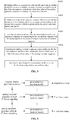
- FIG. 1 is a flowchart of a method for training a speech spectrum generation model provided by an embodiment of the present application, the method includes the following steps S101 to S103.
- step S101 a first text sequence is input into a speech spectrum generation model to generate an analog spectrum sequence corresponding to the first text sequence, and obtain a first loss value of the analog spectrum sequence according to a preset loss function.
- the first text sequence as a training sample of the speech spectrum generation model, can be a single text sequence or a collection of multiple text sequences.
- a gap between a spectrum sequence generated by the current speech spectrum generation model and a real spectrum can be accurately reflected by means of a large number of training samples, and the real spectrum sequence corresponding to the first text sequence can be directly obtained from a sound bank.
- the speech spectrum generation model can be a Tacotron model, or another Text To Speech (TTS) model.
- TTS Text To Speech
- the Tacotron model is used as an example to illustrate the embodiments of the present application, and does not constitute any particular limitation.
- the preset loss function may be an MSE loss function, and a loss value of the MSE loss function may represent an expected value of the square of a difference between the spectrum sequence generated by the Tacotron model and the real spectrum sequence, and may be responsible for training intelligibility of the spectrum sequence generated by the speech spectrum generation model; of course, the preset loss function may be another loss function.
- the MSE loss function is taken as an example to illustrate the embodiments of the present application, and does not constitute any particular limitation.
- the text sequence is input into the Tacotron model.
- the Tacotron model can generate an analog spectrum sequence corresponding to the text sequence, which is different from the real spectrum sequence corresponding to the text sequence, based on random initialization parameters.
- a first loss value corresponding to the analog spectrum sequence which can represent a loss of the intelligibility of the analog spectrum sequence relative to the real spectrum sequence, can be calculated.
- step S102 the analog spectrum sequence corresponding to the first text sequence is input into an adversarial loss function model, which is a generative confrontational network model, to obtain a second loss value of the analog spectrum sequence.
- an adversarial loss function model which is a generative confrontational network model
- the adversarial loss function model can approximate a loss function, and it is, in essence, a deep learning model for generative adversarial networks, and can be trained based on an adversarial learning method to characterize a loss function.
- the loss function can characterize the characteristics of the spectrum sequence in essence, and can be responsible for training the clarity of the spectrum sequence generated by the speech spectrum generation model.
- the analog spectrum sequence generated in step S101 is input into the adversarial loss function model so that a second loss value can be output.
- the second loss value represents a loss in the clarity of the analog spectrum sequence relative to the real spectrum sequence.
- step S103 the speech spectrum generation model is trained based on the first loss value and the second loss value.
- the preset loss function taking the MSE loss function as an example, can be responsible for training the intelligibility of the spectrum sequence generated by the speech spectrum generation model, and the adversarial loss function model can be responsible for training the clarity of the spectrum sequence generated by the speech spectrum generation model.
- the first loss value and the second loss value may be fed back to the speech spectrum generation model according to a preset ratio, so that the speech spectrum generation model can learn by itself based on the loss values to optimize the parameters.
- the preset ratio can be determined depending on characteristics of speakers in different sound banks, and is not particularly limited in the present application. Feeding the first loss value and the second loss value back to the speech spectrum generation model according to the preset ratio can be understood as feeding the first loss value and the second loss value back to the speech spectrum generation model according to their weights of the preset ratio.
- the above two loss functions are combined and fed back to the speech spectrum generation model together, so that the parameters of the speech spectrum generation model can be further optimized as compared with training it with the preset loss function alone, and the spectrum sequence generated by the trained speech spectrum generation model has further improved clarity while having ensured intelligibility.
- the above-mentioned embodiment of the present application has the following advantages or beneficial effects: by inputting the first text sequence into the speech spectrum generation model to generate the analog spectrum sequence corresponding to the first text sequence and obtain the first loss value of the analog spectrum sequence according to the preset loss function, inputting the analog spectrum sequence corresponding to the first text sequence into the adversarial loss function model to obtain the second loss value of the analog spectrum sequence, and training the speech spectrum generation model based on the first loss value and the second loss value, the adversarial loss function model learns a loss function based on generative adversarial networks, and trains the speech spectrum generation model jointly with the preset loss function, which can make the spectrum sequence generated by the speech spectrum generation model clearer, thereby improving the stability in subsequent audio conversion and the tone quality of the finally synthesized audio.
- FIG. 3 is a flowchart of another method for training a speech spectrum generation model provided by an embodiment of the present application, the method includes the following steps S301 to S305.
- a first text sequence is input into a speech spectrum generation model to generate an analog spectrum sequence corresponding to the first text sequence, and obtain a first loss value of the analog spectrum sequence according to a preset loss function.
- step S302 a real spectrum sequence corresponding to a second text sequence and an analog spectrum sequence corresponding to the second text sequence are obtained, wherein the analog spectrum sequence corresponding to the second text sequence is generated by the speech spectrum generation model.
- the second text sequence may be a single text sequence or a collection of multiple text sequences.
- the second text sequence may be a collection of text sequences that are exactly the same as the first text sequence, or that are partially identical to the first text sequence, or that are completely different from the first text sequence, and it is not particularly defined in the present application.
- the real spectrum sequence corresponding to the second text sequence can be obtained directly from a sound bank, and the analog spectrum sequence corresponding to the second text sequence is generated by the speech spectrum generation model.
- step S303 the adversarial loss function model is trained based on the real spectrum sequence corresponding to the second text sequence and the analog spectrum sequence corresponding to the second text sequence.
- the real spectrum sequence corresponding to the second text sequence and the analog spectrum sequence corresponding to the second text sequence can be understood as training samples for the adversarial loss function model.
- the adversarial loss function model is a deep learning model based on the generative adversarial networks and can learn by itself based on the generative adversarial networks by means of a large number of sample data of real spectrum sequences and analog spectrum sequences corresponding to the same text sequence, the loss function represented by it can more accurately reflect the essence of the spectrum sequence as well as the difference between the real spectrum sequence and the analog spectrum sequence.
- training the adversarial loss function model based on the real spectrum sequence corresponding to the second text sequence and the analog spectrum sequence corresponding to the second text sequence includes: inputting the real spectrum sequence corresponding to the second text sequence and the analog spectrum sequence corresponding to the second text sequence into the adversarial loss function model seperately to obtain a third loss value; and training the adversarial loss function model based on the third loss value, wherein the third loss value represents a loss of the analog spectrum sequence corresponding to the second text sequence relative to the real spectrum sequence corresponding to the second text sequence.
- the real spectrum sequence corresponding to the second text sequence and the analog spectrum sequence corresponding to the second text sequence can be input separately into the adversarial loss function model which can extract and analyze characteristics of the real spectrum sequence and the analog spectrum sequence separately.
- a larger output value of the spectrum sequence means that the spectrum sequence is closer to the real spectrum sequence, and a smaller output value of the spectrum sequence means a larger difference between the spectrum sequence and the real spectrum sequence.
- the third loss value can be calculated according to the loss function of the adversarial loss function model itself.
- the adversarial loss function model by inputting the real spectrum sequence and the analog spectrum sequence of the same text sequence into the adversarial loss function model, the adversarial loss function model can compare and learn the difference between the characteristics of the real spectrum sequence and the analog spectrum sequence, so that the loss function represented by the adversarial loss function model can more accurately reflect the authenticity of the spectrum sequence.
- step S304 the analog spectrum sequence corresponding to the first text sequence is input into the trained adversarial loss function model to obtain a second loss value.
- the parameters of the adversarial loss function model are updated, and at this moment, the adversarial loss function model will be closer to an expected loss function than the adversarial loss function model at initialization.
- the analog spectrum sequence corresponding to the first text sequence is input to the trained adversarial loss function model, and the obtained second loss value is fed back together with the first loss value to the speech spectrum generation model to enable the speech spectrum generation model to be trained again based on a new loss value, so that the parameters of the speech spectrum generation model will be further optimized.
- inputting the analog spectrum sequence corresponding to the first text sequence into the trained adversarial loss function model to obtain the second loss value includes: inputting the analog spectrum sequence corresponding to the first text sequence into the adversarial loss function model to obtain an original loss value; down-sampling the analog spectrum sequence corresponding to the first text sequence N times to obtain each down-sampled analog spectrum sequence; inputting each down-sampled analog spectrum sequence into the adversarial loss function model separately to obtain a loss value corresponding to said down-sampled analog spectrum sequence; and obtaining the second loss value based on the loss values corresponding to all the down-sampled analog spectrum sequences and the original loss value.
- the adversarial loss function model can down-sample the spectrum sequence input therein several times, and each down-sampled spectrum sequence is input into the adversarial loss function model separately to extract and analyze its characteristics for discrimination.
- the original analog spectrum sequence corresponding to the first text sequence is first down-sampled n times and each down-sampled spectrum sequence is obtained; thereafter, each down-sampled spectrum sequence is input into the adversarial loss function model separately for characteristic extraction and analysis, and an original loss value can be output corresponding to the original analog spectrum sequence, and a sub-loss value can be output corresponding to each down-sampled spectrum sequence.
- the loss values corresponding to the down-sampled spectrum sequences need to be fed back to the adversarial loss function model. Specifically, an i th sub-loss value corresponding to an i th down-sampled spectrum sequence is fed back to the adversarial loss function model, and thus to the i th down-sampled spectrum sequence. Thereafter, the sub-loss value corresponding to each down-sampling is returned to the original analog spectrum sequence layer by layer to obtain the second loss value.
- the adversarial loss function model can extract and analyze the characteristics of the input spectrum on different scales, and achieve the function of determining the authenticity of the spectrum in a high-dimensional space.
- the down-sampling of the analog spectrum sequence corresponding to the first text sequence can be implemented as follows: assuming that the analog spectrum sequence corresponding to the first text sequence can be expressed as a characteristic matrix of 100 frames ⁇ 80 dimensions, data of two adjacent frames can be averaged so that the characteristic matrix can be down-sampled into a characteristic matrix of 50 frames ⁇ 80 dimensions, and so on. It can be understood that the implementation of the down-sampling is not limited thereto, and it is not particularly defined in the embodiment of the present application.
- the real spectrum sequence and the analog spectrum sequence input into the adversarial loss function model can be each down-sampled several times as described above so as to train a characteristic extraction capability and a discriminating power of the adversarial loss function model on multiple scales.
- the adversarial loss function model after inputting the analog spectrum sequence corresponding to the first text sequence into the adversarial loss function model, the adversarial loss function model can down-sample the spectrum sequence several times and extract and analyze the characteristics of the input spectrum on different scales, so that the adversarial loss function can more accurately determine the authenticity of the spectrum sequence.
- the adversarial loss function model adopts a deep convolutional neural network model.
- the adversarial loss function model adopts a multi-layered deep convolutional neural network model, in which the characteristics of the spectrum sequence can be extracted from multiple perspectives through a plurality of convolutional layers. For example, only some low-level characteristics such as edges, lines and corners can be extracted through a first convolutional layer, and more complicated characteristics can be iteratively extracted from low-level characteristics through a plurality of layers of networks, and when the spectrum is abstracted through convolutional neural networks, context information of the spectrum sequence can be retained, so that the characteristic extraction is more comprehensive and accurate.
- the number of convolutional layers can be determined as required, and it is not particularly limited in the embodiment of the present application.
- step S305 the speech spectrum generation model is trained based on the first loss value and the second loss value.
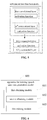
- the speech spectrum generation model and the adversarial loss function model are alternately and cyclically trained, which can be understood as steps S401 to S403.
- step S401 when the speech spectrum generation model is in a state of initialization, parameters can be initialized randomly, and a corresponding analog spectrum sequence is generated according to a second text sequence that is input.
- step S402 the analog spectrum sequence corresponding to the second text sequence as generated above and the real spectrum sequence corresponding to the second text sequence are input into the initialized adversarial loss function model to train the adversarial loss function model once.
- step S403 the first text sequence is input into the initialized speech spectrum generation model to generate an analog spectrum sequence corresponding to the first text sequence, and the trained adversarial loss function is used as the loss function of the speech spectrum generation model to train the speech spectrum generation model once in combination with the preset loss function. At this point, it is a training cycle.
- steps S402 to S403 are repeated by using the analog spectrum sequence generated by the trained speech spectrum generation model, so that the speech spectrum generation model and the adversarial loss function model are sequentially and alternately trained.
- the speech spectrum generation model and the adversarial loss function model can be alternately and cyclically trained.
- the adversarial loss function model gradually approaches an expected loss function, and the spectrum sequence generated by the speech spectrum generation model thus gradually approaches the real spectrum sequence.
- a graphic data processing method in the embodiment of the present application has added many optional implementations on the basis of the embodiment shown in FIG. 1 , each of which can further make the generated spectrum sequence clearer.
- the present application further provides an apparatus for training a speech spectrum generation model.
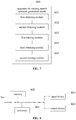
- the apparatus 600 for training the speech spectrum generation model includes: a first obtaining module 601 configured to input a first text sequence into the speech spectrum generation model to generate an analog spectrum sequence corresponding to the first text sequence, and obtain a first loss value of the analog spectrum sequence according to a preset loss function; a second obtaining module 602 configured to input the analog spectrum sequence corresponding to the first text sequence into an adversarial loss function model, which is a generative adversarial network model, to obtain a second loss value of the analog spectrum sequence; and a first training module 603, configured to train the speech spectrum generation model based on the first loss value and the second loss value.
- a first obtaining module 601 configured to input a first text sequence into the speech spectrum generation model to generate an analog spectrum sequence corresponding to the first text sequence, and obtain a first loss value of the analog spectrum sequence according to a preset loss function
- a second obtaining module 602 configured to input the analog spectrum sequence corresponding to the first text sequence into an adversarial loss function model, which is a generative adversarial
- the apparatus 600 for training the speech spectrum generation model further includes a third obtaining module 604 configured to obtain a real spectrum sequence corresponding to a second text sequence, and an analog spectrum sequence corresponding to the second text sequence, which is generated by the speech spectrum generation model, and a second training module 605 configured to train the adversarial loss function model based on the real spectrum sequence corresponding to the second text sequence and the analog spectrum sequence corresponding to the second text sequence.
- a third obtaining module 604 configured to obtain a real spectrum sequence corresponding to a second text sequence, and an analog spectrum sequence corresponding to the second text sequence, which is generated by the speech spectrum generation model
- a second training module 605 configured to train the adversarial loss function model based on the real spectrum sequence corresponding to the second text sequence and the analog spectrum sequence corresponding to the second text sequence.
- the second obtaining module 602 is specifically configured to input the analog spectrum sequence corresponding to the first text sequence into the trained adversarial loss function model to obtain the second loss value.
- the second training module 605 includes a first obtaining unit configured to input the real spectrum sequence corresponding to the second text sequence and the analog spectrum sequence corresponding to the second text sequence into the adversarial loss function model separately to obtain a third loss value, and a training unit configured to train the adversarial loss function model based on the third loss value, wherein the third loss value represents a loss of the analog spectrum sequence corresponding to the second text sequence relative to the real spectrum sequence corresponding to the second text sequence.
- the second obtaining module 602 includes a second obtaining unit configured to input the analog spectrum sequence corresponding to the first text sequence into the adversarial loss function model to obtain an original loss value, a down-sampling unit configured to down-sample the analog spectrum sequence corresponding to the first text sequence N times to obtain each down-sampled analog spectrum sequence, a third obtaining unit configured to input each down-sampled analog spectrum sequence into the adversarial loss function model separately to obtain a loss value corresponding to said down-sampled analog spectrum sequence, and a fourth obtaining unit configured to obtain the second loss value based on the loss values corresponding to all the down-sampled analog spectrum sequences and the original loss value.
- the adversarial loss function model adopts a deep convolutional neural network model.
- the apparatus 600 for training the speech spectrum generation model can implement the various processes implemented in the method embodiments as shown in FIGS. 1 and 3 , and can achieve the same beneficial effects, and this will not be detailed here in order to avoid repetition.
- the present application further provides an electronic device and a readable storage medium.
- FIG. 8 it is a block diagram of electronic devices for a method for training a speech spectrum generation model according to an embodiment of the present application.
- the electronic devices are intended to represent various forms of digital computers, such as laptop computers, desktop computers, platforms, personal digital assistants, servers, blade servers, mainframe computers, or other suitable computers.
- the electronic devices can also represent various forms of mobile devices, such as personal digital assistants, cellular phones, smart phones, wearable devices, and other similar computing devices.
- the components, their connections and relationships as well as their functions shown herein are merely examples, and are not intended to limit the implementation of the present application described and/or claimed herein.
- the electronic devices include one or more processors 801, a memory 802, and interfaces for connecting various components, including high-speed interfaces and low-speed interfaces.
- the various components are connected to each other via different buses, and can be mounted on a common mainboard, or mounted in another manner as required.
- the processor can process instructions that are executed in the electronic devices, including instructions stored in or on the memory to display graphical information of the GUI on an external input/output device, such as a display device coupled to the interface.
- multiple processors and/or multiple buses may be used with multiple memories, if necessary.
- multiple electronic devices can be connected, each providing some necessary operations (for example, serving as a server array, a group of blade servers, or a multi-processor system).
- One processor 801 is shown as an example in FIG. 8 .
- the memory 802 is a non-transitory computer-readable storage medium provided by the present application.
- the memory has stored thereon instructions that are executable by at least one processor so that the at least one processor executes the method for training the speech spectrum generation model provided in the present application.
- the non-transitory computer-readable storage medium of the present application has stored thereon computer instructions, which are used to cause the computer to execute the method for training the speech spectrum generation model provided by the present application.
- the memory 802 can be used to store non-transitory software programs, non-transitory computer executable programs, and modules, such as program instructions/modules corresponding to the method for training the speech spectrum generation model in the embodiment of the present application, for example, the first obtaining module 601, the second obtaining module 602, and the first training module 603 as shown in FIG. 6 .
- the processor 801 executes various functional applications of the server and data processing by running the non-transient software programs, instructions and modules stored in the memory 802. That is, it realizes the method for training the speech spectrum generation model in the foregoing method embodiments.
- the memory 802 can include a program storage area, which can store an operating system and an application required by at least one function, and a data storage area, which can store data created according to the use of the electronic devices for the method for training the speech spectrum generation model, or the like.
- the memory 802 may include a high-speed random access memory, and may also include a non-transitory memory, such as at least one magnetic disk storage device, flash memory devices, or other non-transitory solid-state storage devices.
- the memory 802 may optionally include storages that are remotely located from the processor 801, and these remote storages may be connected to the electronic devices for the method for training the speech spectrum generation model via a network. Examples of the aforementioned network include, but are not limited to, internets, corporate intranets, local area networks, mobile communication networks, and combinations thereof.
- the electronic devices for the method for training the speech spectrum generation model may further include an input device 803 and an output device 804.
- the processor 801, the memory 802, the input device 803, and the output device 804 may be connected via buses or in other ways. The connections via buses are shown as an example in FIG. 8 .
- the input device 803 can receive input digital or character information, and generate key signal inputs related to user settings and function control of the electronic devices for the method for training the speech spectrum generation model, and may be, for example, a touch screen, a keypad, a mouse, a trackpad, a touchpad, a pointing stick, one or more mouse buttons, a trackball or a joystick.
- the output device 804 may include a display device, an auxiliary lighting device such as a light-emitting diode (LED), and a tactile feedback device such as a vibration motor.
- the display device may include, but is not limited to, a liquid crystal display (LCD), a light-emitting diode (LED) display, and a plasma display. In some embodiments, the display device may be a touch screen.
- Various implementations of the systems and techniques described herein can be implemented in a digital electronic circuit system, an integrated circuit system, an application specific integrated circuit (ASIC), computer hardware, firmware, software, and/or a combination thereof. These various implementations may include implementation in one or more computer programs, which may be executed and/or interpreted on a programmable system including at least one programmable processor.
- the programmable processor can be a dedicated or general-purpose programmable processor that can receive data and instructions from, and transmit data and instructions to, a storage system, at least one input device, and at least one output device.
- the systems and techniques described herein can be implemented on a computer having a display device (e.g., a CRT (cathode ray tube) or LCD (liquid crystal display) monitor) for displaying information to the user and a keyboard and a pointing device (e.g., a mouse or a trackball) by which the user can provide input to the computer.
- a display device e.g., a CRT (cathode ray tube) or LCD (liquid crystal display) monitor
- a keyboard and a pointing device e.g., a mouse or a trackball
- Other kinds of devices can be used to provide for interaction with a user as well; for example, feedback provided to the user can be any form of sensory feedback (e.g., visual feedback, auditory feedback, or tactile feedback); and input from the user can be received in any form, including acoustic, speech, or tactile input.
- the systems and techniques described herein can be implemented in a computing system that includes a back end component (e.g., as a data server), or that includes a middleware component (e.g., an application server), or that includes a front end component (e.g., a client computer having a graphical user interface or a Web browser through which a user can interact with an implementation of the systems and techniques described herein), or any combination of such back end, middleware, or front end components.
- the components of the system can be interconnected by any form or medium of digital data communication (e.g., a communication network). Examples of communication networks include a local area network ("LAN”), a wide area network (“WAN”), and the Internet.
- LAN local area network
- WAN wide area network
- the Internet the global information network
- the computing system can include clients and servers.
- a client and server are generally remote from each other and typically interact through a communication network.
- the relationship of client and server arises by virtue of computer programs running on the respective computers and having a client-server relationship to each other.
- the server can be a cloud server, also known as a cloud computing server or a cloud host, which is a host product in the cloud computing service system to solve defects of difficult management and weak business scalability existing in traditional physical host and VPS ("Virtual Private Server", or "VPS" for short) service.
- VPS Virtual Private Server
- the first text sequence is input into the speech spectrum generation model to generate the analog spectrum sequence corresponding to the first text sequence, and obtain the first loss value of the analog spectrum sequence according to the preset loss function;
- the analog spectrum sequence corresponding to the first text sequence is input into the adversarial loss function model to obtain the second loss value of the analog spectrum sequence; and the speech spectrum generation model is trained based on the first loss value and the second loss value.
- the adversarial loss function model learns a loss function based on the generative adversarial networks, and the speech spectrum generation model is trained by the adversarial loss function together with the preset loss function, which can make the spectrum sequence generated by the speech spectrum generation model clearer and closer to the distribution of the real spectrum sequence, thereby improving the stability in subsequent audio conversion and improving the tone quality of the finally synthesized audio.
Landscapes
- Engineering & Computer Science (AREA)
- Physics & Mathematics (AREA)
- Computational Linguistics (AREA)
- Health & Medical Sciences (AREA)
- Theoretical Computer Science (AREA)
- Audiology, Speech & Language Pathology (AREA)
- Multimedia (AREA)
- Acoustics & Sound (AREA)
- Human Computer Interaction (AREA)
- Artificial Intelligence (AREA)
- Evolutionary Computation (AREA)
- Software Systems (AREA)
- Biomedical Technology (AREA)
- General Engineering & Computer Science (AREA)
- General Physics & Mathematics (AREA)
- Mathematical Physics (AREA)
- Biophysics (AREA)
- Molecular Biology (AREA)
- Computing Systems (AREA)
- Data Mining & Analysis (AREA)
- General Health & Medical Sciences (AREA)
- Life Sciences & Earth Sciences (AREA)
- Signal Processing (AREA)
- Spectroscopy & Molecular Physics (AREA)
- Probability & Statistics with Applications (AREA)
- Machine Translation (AREA)
- Electrically Operated Instructional Devices (AREA)
- Cable Transmission Systems, Equalization Of Radio And Reduction Of Echo (AREA)
Applications Claiming Priority (1)
| Application Number | Priority Date | Filing Date | Title |
|---|---|---|---|
| CN202010858104.1A CN112037760B (zh) | 2020-08-24 | 2020-08-24 | 语音频谱生成模型的训练方法、装置及电子设备 |
Publications (2)
| Publication Number | Publication Date |
|---|---|
| EP3816992A2 true EP3816992A2 (de) | 2021-05-05 |
| EP3816992A3 EP3816992A3 (de) | 2021-10-27 |
Family
ID=73581872
Family Applications (1)
| Application Number | Title | Priority Date | Filing Date |
|---|---|---|---|
| EP21163034.8A Ceased EP3816992A3 (de) | 2020-08-24 | 2021-03-17 | Verfahren und vorrichtung zum trainieren eines sprachspektrumerzeugungsmodells und elektronische vorrichtung |
Country Status (5)
| Country | Link |
|---|---|
| US (1) | US11488578B2 (de) |
| EP (1) | EP3816992A3 (de) |
| JP (1) | JP7146991B2 (de) |
| KR (1) | KR102488010B1 (de) |
| CN (1) | CN112037760B (de) |
Cited By (2)
| Publication number | Priority date | Publication date | Assignee | Title |
|---|---|---|---|---|
| CN113743110A (zh) * | 2021-11-08 | 2021-12-03 | 京华信息科技股份有限公司 | 一种基于微调生成式对抗网络模型的漏词检测方法及系统 |
| CN114141228A (zh) * | 2021-12-07 | 2022-03-04 | 北京百度网讯科技有限公司 | 语音合成模型的训练方法、语音合成方法和装置 |
Families Citing this family (19)
| Publication number | Priority date | Publication date | Assignee | Title |
|---|---|---|---|---|
| CN112863529B (zh) * | 2020-12-31 | 2023-09-22 | 平安科技(深圳)有限公司 | 基于对抗学习的说话人语音转换方法及相关设备 |
| CN112837670B (zh) * | 2021-01-19 | 2024-05-10 | 北京捷通华声科技股份有限公司 | 语音合成方法、装置及电子设备 |
| CN114970651B (zh) * | 2021-02-26 | 2024-10-29 | 北京达佳互联信息技术有限公司 | 和弦生成模型的训练方法、和弦生成方法、装置及设备 |
| CN113362836B (zh) * | 2021-06-02 | 2024-06-11 | 腾讯音乐娱乐科技(深圳)有限公司 | 训练声码器方法、终端及存储介质 |
| CN113823296B (zh) * | 2021-06-15 | 2024-11-22 | 腾讯科技(深圳)有限公司 | 语音数据处理方法、装置、计算机设备及存储介质 |
| CN113611281B (zh) * | 2021-07-16 | 2024-07-12 | 北京捷通华声科技股份有限公司 | 一种语音合成方法、装置、电子设备及存储介质 |
| CN113823258B (zh) * | 2021-07-19 | 2025-06-10 | 腾讯科技(深圳)有限公司 | 一种语音处理方法及装置 |
| CN113838450B (zh) * | 2021-08-11 | 2022-11-25 | 北京百度网讯科技有限公司 | 音频合成及相应的模型训练方法、装置、设备及存储介质 |
| CN113889076B (zh) * | 2021-09-13 | 2022-11-01 | 北京百度网讯科技有限公司 | 语音识别及编解码方法、装置、电子设备及存储介质 |
| CN114492526B (zh) * | 2022-01-25 | 2022-11-22 | 太原科技大学 | 一种面向多星光谱自动识别的SPEC-Net网络架构及识别方法 |
| CN115223538B (zh) * | 2022-07-13 | 2025-07-25 | 深圳市腾讯计算机系统有限公司 | 声码器模型的训练方法、装置、设备、介质及程序产品 |
| CN115424604B (zh) * | 2022-07-20 | 2024-03-15 | 南京硅基智能科技有限公司 | 一种基于对抗生成网络的语音合成模型的训练方法 |
| CN115240680B (zh) * | 2022-08-05 | 2025-04-11 | 安徽大学 | 一种模糊耳语音的转换方法、系统及其装置 |
| CN115171651B (zh) * | 2022-09-05 | 2022-11-29 | 中邮消费金融有限公司 | 一种儿化音合成方法、装置、电子设备及存储介质 |
| CN115762465A (zh) * | 2022-11-18 | 2023-03-07 | 奇安信网神信息技术(北京)股份有限公司 | 语音生成模型的训练、使用方法以及训练、使用装置 |
| CN116266457A (zh) * | 2023-02-27 | 2023-06-20 | 上海格子互动信息技术有限公司 | 一种基于生成对抗式神经网络模型的语音转换方法 |
| CN115953009B (zh) * | 2023-03-01 | 2023-07-21 | 阿里巴巴(中国)有限公司 | 电力系统的调度方法、调度决策模型的训练方法 |
| CN115910027B (zh) * | 2023-03-08 | 2023-05-09 | 深圳市九天睿芯科技有限公司 | 一种辅助发声方法及装置 |
| US20240412039A1 (en) * | 2023-06-12 | 2024-12-12 | Fmr Llc | Generating parallel synthetic training data for a machine learning model to predict compliance with rulesets |
Family Cites Families (27)
| Publication number | Priority date | Publication date | Assignee | Title |
|---|---|---|---|---|
| JP5457706B2 (ja) | 2009-03-30 | 2014-04-02 | 株式会社東芝 | 音声モデル生成装置、音声合成装置、音声モデル生成プログラム、音声合成プログラム、音声モデル生成方法および音声合成方法 |
| US9972314B2 (en) * | 2016-06-01 | 2018-05-15 | Microsoft Technology Licensing, Llc | No loss-optimization for weighted transducer |
| JP6542823B2 (ja) | 2017-03-07 | 2019-07-10 | 日本電信電話株式会社 | 音響モデル学習装置、音声合成装置、それらの方法、及びプログラム |
| KR102481885B1 (ko) | 2017-09-08 | 2022-12-28 | 삼성전자주식회사 | 클래스 인식을 위한 뉴럴 네트워크 학습 방법 및 디바이스 |
| JP6733644B2 (ja) | 2017-11-29 | 2020-08-05 | ヤマハ株式会社 | 音声合成方法、音声合成システムおよびプログラム |
| CN108597496B (zh) * | 2018-05-07 | 2020-08-28 | 广州势必可赢网络科技有限公司 | 一种基于生成式对抗网络的语音生成方法及装置 |
| CN112368719A (zh) * | 2018-05-17 | 2021-02-12 | 奇跃公司 | 神经网络的梯度对抗性训练 |
| CN108630190B (zh) | 2018-05-18 | 2019-12-10 | 百度在线网络技术(北京)有限公司 | 用于生成语音合成模型的方法和装置 |
| US11462209B2 (en) * | 2018-05-18 | 2022-10-04 | Baidu Usa Llc | Spectrogram to waveform synthesis using convolutional networks |
| CN109147810B (zh) * | 2018-09-30 | 2019-11-26 | 百度在线网络技术(北京)有限公司 | 建立语音增强网络的方法、装置、设备和计算机存储介质 |
| US11017307B2 (en) * | 2018-10-17 | 2021-05-25 | Fujitsu Limited | Explanations generation with different cognitive values using generative adversarial networks |
| US10388272B1 (en) * | 2018-12-04 | 2019-08-20 | Sorenson Ip Holdings, Llc | Training speech recognition systems using word sequences |
| JP7108147B2 (ja) * | 2019-05-23 | 2022-07-27 | グーグル エルエルシー | 表現用エンドツーエンド音声合成における変分埋め込み容量 |
| US10713821B1 (en) * | 2019-06-27 | 2020-07-14 | Amazon Technologies, Inc. | Context aware text-to-image synthesis |
| CN110390950B (zh) | 2019-08-17 | 2021-04-09 | 浙江树人学院(浙江树人大学) | 一种基于生成对抗网络的端到端语音增强方法 |
| CN110600013B (zh) * | 2019-09-12 | 2021-11-02 | 思必驰科技股份有限公司 | 非平行语料声音转换数据增强模型训练方法及装置 |
| CN110739002B (zh) * | 2019-10-16 | 2022-02-22 | 中山大学 | 基于生成对抗网络的复数域语音增强方法、系统及介质 |
| CN110930976B (zh) * | 2019-12-02 | 2022-04-15 | 北京声智科技有限公司 | 一种语音生成方法及装置 |
| CN111316352B (zh) * | 2019-12-24 | 2023-10-10 | 深圳市优必选科技股份有限公司 | 语音合成方法、装置、计算机设备和存储介质 |
| CN111128137B (zh) * | 2019-12-30 | 2023-05-30 | 广州市百果园信息技术有限公司 | 一种声学模型的训练方法、装置、计算机设备和存储介质 |
| CN111243572B (zh) * | 2020-01-14 | 2022-09-06 | 哈尔滨工业大学(深圳)(哈尔滨工业大学深圳科技创新研究院) | 基于说话人博弈的多人语音转换方法与系统 |
| US11251896B2 (en) * | 2020-03-03 | 2022-02-15 | Mitsubishi Electric Research Laboratories, Inc. | Generative model for inverse design of materials, devices, and structures |
| CN111462768B (zh) * | 2020-03-12 | 2023-04-25 | 南京邮电大学 | 基于共享训练的多尺度StarGAN的语音转换方法 |
| US11222620B2 (en) * | 2020-05-07 | 2022-01-11 | Google Llc | Speech recognition using unspoken text and speech synthesis |
| CN111444731B (zh) * | 2020-06-15 | 2020-11-03 | 深圳市友杰智新科技有限公司 | 模型训练方法、装置和计算机设备 |
| US11574622B2 (en) * | 2020-07-02 | 2023-02-07 | Ford Global Technologies, Llc | Joint automatic speech recognition and text to speech conversion using adversarial neural networks |
| CN112489621B (zh) * | 2020-11-20 | 2022-07-12 | 北京有竹居网络技术有限公司 | 语音合成方法、装置、可读介质及电子设备 |
-
2020
- 2020-08-24 CN CN202010858104.1A patent/CN112037760B/zh active Active
-
2021
- 2021-03-17 EP EP21163034.8A patent/EP3816992A3/de not_active Ceased
- 2021-03-18 KR KR1020210035374A patent/KR102488010B1/ko active Active
- 2021-03-18 US US17/205,121 patent/US11488578B2/en active Active
- 2021-03-23 JP JP2021048816A patent/JP7146991B2/ja active Active
Cited By (2)
| Publication number | Priority date | Publication date | Assignee | Title |
|---|---|---|---|---|
| CN113743110A (zh) * | 2021-11-08 | 2021-12-03 | 京华信息科技股份有限公司 | 一种基于微调生成式对抗网络模型的漏词检测方法及系统 |
| CN114141228A (zh) * | 2021-12-07 | 2022-03-04 | 北京百度网讯科技有限公司 | 语音合成模型的训练方法、语音合成方法和装置 |
Also Published As
| Publication number | Publication date |
|---|---|
| US11488578B2 (en) | 2022-11-01 |
| JP2021119381A (ja) | 2021-08-12 |
| US20210201887A1 (en) | 2021-07-01 |
| CN112037760B (zh) | 2022-01-07 |
| KR102488010B1 (ko) | 2023-01-12 |
| EP3816992A3 (de) | 2021-10-27 |
| CN112037760A (zh) | 2020-12-04 |
| JP7146991B2 (ja) | 2022-10-04 |
| KR20210038470A (ko) | 2021-04-07 |
Similar Documents
| Publication | Publication Date | Title |
|---|---|---|
| US11488578B2 (en) | Method and apparatus for training speech spectrum generation model, and electronic device | |
| JP7166322B2 (ja) | モデルを訓練するための方法、装置、電子機器、記憶媒体およびコンピュータプログラム | |
| KR102677454B1 (ko) | 이벤트 아규먼트 추출 방법, 장치, 및 전자 기기 | |
| US20210200947A1 (en) | Event argument extraction method and apparatus and electronic device | |
| US20220147695A1 (en) | Model training method and apparatus, font library establishment method and apparatus, and storage medium | |
| JP7285874B2 (ja) | 巡航制御方法、装置、電子デバイス、車両、コンピュータ可読記憶媒体、およびコンピュータプログラム | |
| CN111582477B (zh) | 神经网络模型的训练方法和装置 | |
| CN111862277A (zh) | 用于生成动画的方法、装置、设备以及存储介质 | |
| CN111582453A (zh) | 生成神经网络模型的方法和装置 | |
| CN111832613B (zh) | 模型训练方法、装置、电子设备和存储介质 | |
| CN111553428A (zh) | 用于训练判别模型的方法、装置、设备及可读存储介质 | |
| JP2021111334A (ja) | 検索データに基づくヒューマンコンピュータ対話型インタラクションの方法、装置及び電子機器 | |
| US11670029B2 (en) | Method and apparatus for processing character image data | |
| JP7264957B2 (ja) | 音声インタラクション方法、装置、電子機器、コンピュータ読取可能な記憶媒体及びコンピュータプログラム | |
| US20210210112A1 (en) | Model Evaluation Method and Device, and Electronic Device | |
| CN111241838B (zh) | 文本实体的语义关系处理方法、装置及设备 | |
| CN111680517A (zh) | 用于训练模型的方法、装置、设备以及存储介质 | |
| CN111709252A (zh) | 基于预训练的语义模型的模型改进方法及装置 | |
| US20210209143A1 (en) | Document type recommendation method and apparatus, electronic device and readable storage medium | |
| CN111539897A (zh) | 用于生成图像转换模型的方法和装置 | |
| CN113657468A (zh) | 预训练模型的生成方法、装置、电子设备和存储介质 | |
| CN116580212A (zh) | 图像生成方法、图像生成模型的训练方法、装置和设备 | |
| JP7256857B2 (ja) | 対話処理方法、装置、電子機器及び記憶媒体 | |
| US20210406480A1 (en) | Method for generating conversation, electronic device, and storage medium | |
| CN112541956A (zh) | 动画合成方法、装置、移动终端和电子设备 |
Legal Events
| Date | Code | Title | Description |
|---|---|---|---|
| PUAI | Public reference made under article 153(3) epc to a published international application that has entered the european phase |
Free format text: ORIGINAL CODE: 0009012 |
|
| STAA | Information on the status of an ep patent application or granted ep patent |
Free format text: STATUS: REQUEST FOR EXAMINATION WAS MADE |
|
| 17P | Request for examination filed |
Effective date: 20210317 |
|
| AK | Designated contracting states |
Kind code of ref document: A2 Designated state(s): AL AT BE BG CH CY CZ DE DK EE ES FI FR GB GR HR HU IE IS IT LI LT LU LV MC MK MT NL NO PL PT RO RS SE SI SK SM TR |
|
| REG | Reference to a national code |
Ref country code: DE Ref legal event code: R079 Free format text: PREVIOUS MAIN CLASS: G10L0013080000 Ipc: G10L0013027000 |
|
| PUAL | Search report despatched |
Free format text: ORIGINAL CODE: 0009013 |
|
| AK | Designated contracting states |
Kind code of ref document: A3 Designated state(s): AL AT BE BG CH CY CZ DE DK EE ES FI FR GB GR HR HU IE IS IT LI LT LU LV MC MK MT NL NO PL PT RO RS SE SI SK SM TR |
|
| RIC1 | Information provided on ipc code assigned before grant |
Ipc: G06N 3/08 20060101ALN20210922BHEP Ipc: G06N 3/04 20060101ALI20210922BHEP Ipc: G10L 13/027 20130101AFI20210922BHEP |
|
| STAA | Information on the status of an ep patent application or granted ep patent |
Free format text: STATUS: EXAMINATION IS IN PROGRESS |
|
| 17Q | First examination report despatched |
Effective date: 20220720 |
|
| STAA | Information on the status of an ep patent application or granted ep patent |
Free format text: STATUS: THE APPLICATION HAS BEEN REFUSED |
|
| 18R | Application refused |
Effective date: 20230909 |