EP3816309A1 - Method for separating copper from nickel and cobalt - Google Patents
Method for separating copper from nickel and cobalt Download PDFInfo
- Publication number
- EP3816309A1 EP3816309A1 EP19825075.5A EP19825075A EP3816309A1 EP 3816309 A1 EP3816309 A1 EP 3816309A1 EP 19825075 A EP19825075 A EP 19825075A EP 3816309 A1 EP3816309 A1 EP 3816309A1
- Authority
- EP
- European Patent Office
- Prior art keywords
- nickel
- cobalt
- copper
- sulfide
- acid solution
- Prior art date
- Legal status (The legal status is an assumption and is not a legal conclusion. Google has not performed a legal analysis and makes no representation as to the accuracy of the status listed.)
- Granted
Links
Images



Classifications
-
- C—CHEMISTRY; METALLURGY
- C22—METALLURGY; FERROUS OR NON-FERROUS ALLOYS; TREATMENT OF ALLOYS OR NON-FERROUS METALS
- C22B—PRODUCTION AND REFINING OF METALS; PRETREATMENT OF RAW MATERIALS
- C22B23/00—Obtaining nickel or cobalt
- C22B23/04—Obtaining nickel or cobalt by wet processes
- C22B23/0407—Leaching processes
- C22B23/0415—Leaching processes with acids or salt solutions except ammonium salts solutions
-
- C—CHEMISTRY; METALLURGY
- C22—METALLURGY; FERROUS OR NON-FERROUS ALLOYS; TREATMENT OF ALLOYS OR NON-FERROUS METALS
- C22B—PRODUCTION AND REFINING OF METALS; PRETREATMENT OF RAW MATERIALS
- C22B23/00—Obtaining nickel or cobalt
- C22B23/04—Obtaining nickel or cobalt by wet processes
- C22B23/0453—Treatment or purification of solutions, e.g. obtained by leaching
- C22B23/0461—Treatment or purification of solutions, e.g. obtained by leaching by chemical methods
-
- C—CHEMISTRY; METALLURGY
- C22—METALLURGY; FERROUS OR NON-FERROUS ALLOYS; TREATMENT OF ALLOYS OR NON-FERROUS METALS
- C22B—PRODUCTION AND REFINING OF METALS; PRETREATMENT OF RAW MATERIALS
- C22B1/00—Preliminary treatment of ores or scrap
- C22B1/14—Agglomerating; Briquetting; Binding; Granulating
- C22B1/24—Binding; Briquetting ; Granulating
-
- C—CHEMISTRY; METALLURGY
- C22—METALLURGY; FERROUS OR NON-FERROUS ALLOYS; TREATMENT OF ALLOYS OR NON-FERROUS METALS
- C22B—PRODUCTION AND REFINING OF METALS; PRETREATMENT OF RAW MATERIALS
- C22B15/00—Obtaining copper
-
- C—CHEMISTRY; METALLURGY
- C22—METALLURGY; FERROUS OR NON-FERROUS ALLOYS; TREATMENT OF ALLOYS OR NON-FERROUS METALS
- C22B—PRODUCTION AND REFINING OF METALS; PRETREATMENT OF RAW MATERIALS
- C22B15/00—Obtaining copper
- C22B15/0002—Preliminary treatment
- C22B15/0004—Preliminary treatment without modification of the copper constituent
- C22B15/0006—Preliminary treatment without modification of the copper constituent by dry processes
-
- C—CHEMISTRY; METALLURGY
- C22—METALLURGY; FERROUS OR NON-FERROUS ALLOYS; TREATMENT OF ALLOYS OR NON-FERROUS METALS
- C22B—PRODUCTION AND REFINING OF METALS; PRETREATMENT OF RAW MATERIALS
- C22B15/00—Obtaining copper
- C22B15/0063—Hydrometallurgy
- C22B15/0065—Leaching or slurrying
- C22B15/0067—Leaching or slurrying with acids or salts thereof
- C22B15/0069—Leaching or slurrying with acids or salts thereof containing halogen
-
- C—CHEMISTRY; METALLURGY
- C22—METALLURGY; FERROUS OR NON-FERROUS ALLOYS; TREATMENT OF ALLOYS OR NON-FERROUS METALS
- C22B—PRODUCTION AND REFINING OF METALS; PRETREATMENT OF RAW MATERIALS
- C22B15/00—Obtaining copper
- C22B15/0063—Hydrometallurgy
- C22B15/0065—Leaching or slurrying
- C22B15/0067—Leaching or slurrying with acids or salts thereof
- C22B15/0071—Leaching or slurrying with acids or salts thereof containing sulfur
-
- C—CHEMISTRY; METALLURGY
- C22—METALLURGY; FERROUS OR NON-FERROUS ALLOYS; TREATMENT OF ALLOYS OR NON-FERROUS METALS
- C22B—PRODUCTION AND REFINING OF METALS; PRETREATMENT OF RAW MATERIALS
- C22B15/00—Obtaining copper
- C22B15/0063—Hydrometallurgy
- C22B15/0084—Treating solutions
- C22B15/0089—Treating solutions by chemical methods
-
- C—CHEMISTRY; METALLURGY
- C22—METALLURGY; FERROUS OR NON-FERROUS ALLOYS; TREATMENT OF ALLOYS OR NON-FERROUS METALS
- C22B—PRODUCTION AND REFINING OF METALS; PRETREATMENT OF RAW MATERIALS
- C22B23/00—Obtaining nickel or cobalt
-
- C—CHEMISTRY; METALLURGY
- C22—METALLURGY; FERROUS OR NON-FERROUS ALLOYS; TREATMENT OF ALLOYS OR NON-FERROUS METALS
- C22B—PRODUCTION AND REFINING OF METALS; PRETREATMENT OF RAW MATERIALS
- C22B23/00—Obtaining nickel or cobalt
- C22B23/005—Preliminary treatment of ores, e.g. by roasting or by the Krupp-Renn process
-
- C—CHEMISTRY; METALLURGY
- C22—METALLURGY; FERROUS OR NON-FERROUS ALLOYS; TREATMENT OF ALLOYS OR NON-FERROUS METALS
- C22B—PRODUCTION AND REFINING OF METALS; PRETREATMENT OF RAW MATERIALS
- C22B23/00—Obtaining nickel or cobalt
- C22B23/04—Obtaining nickel or cobalt by wet processes
- C22B23/0407—Leaching processes
- C22B23/0415—Leaching processes with acids or salt solutions except ammonium salts solutions
- C22B23/0423—Halogenated acids or salts thereof
-
- C—CHEMISTRY; METALLURGY
- C22—METALLURGY; FERROUS OR NON-FERROUS ALLOYS; TREATMENT OF ALLOYS OR NON-FERROUS METALS
- C22B—PRODUCTION AND REFINING OF METALS; PRETREATMENT OF RAW MATERIALS
- C22B23/00—Obtaining nickel or cobalt
- C22B23/04—Obtaining nickel or cobalt by wet processes
- C22B23/0407—Leaching processes
- C22B23/0415—Leaching processes with acids or salt solutions except ammonium salts solutions
- C22B23/043—Sulfurated acids or salts thereof
-
- C—CHEMISTRY; METALLURGY
- C22—METALLURGY; FERROUS OR NON-FERROUS ALLOYS; TREATMENT OF ALLOYS OR NON-FERROUS METALS
- C22B—PRODUCTION AND REFINING OF METALS; PRETREATMENT OF RAW MATERIALS
- C22B3/00—Extraction of metal compounds from ores or concentrates by wet processes
- C22B3/04—Extraction of metal compounds from ores or concentrates by wet processes by leaching
- C22B3/06—Extraction of metal compounds from ores or concentrates by wet processes by leaching in inorganic acid solutions, e.g. with acids generated in situ; in inorganic salt solutions other than ammonium salt solutions
- C22B3/08—Sulfuric acid, other sulfurated acids or salts thereof
-
- C—CHEMISTRY; METALLURGY
- C22—METALLURGY; FERROUS OR NON-FERROUS ALLOYS; TREATMENT OF ALLOYS OR NON-FERROUS METALS
- C22B—PRODUCTION AND REFINING OF METALS; PRETREATMENT OF RAW MATERIALS
- C22B3/00—Extraction of metal compounds from ores or concentrates by wet processes
- C22B3/04—Extraction of metal compounds from ores or concentrates by wet processes by leaching
- C22B3/06—Extraction of metal compounds from ores or concentrates by wet processes by leaching in inorganic acid solutions, e.g. with acids generated in situ; in inorganic salt solutions other than ammonium salt solutions
- C22B3/10—Hydrochloric acid, other halogenated acids or salts thereof
-
- C—CHEMISTRY; METALLURGY
- C22—METALLURGY; FERROUS OR NON-FERROUS ALLOYS; TREATMENT OF ALLOYS OR NON-FERROUS METALS
- C22B—PRODUCTION AND REFINING OF METALS; PRETREATMENT OF RAW MATERIALS
- C22B7/00—Working up raw materials other than ores, e.g. scrap, to produce non-ferrous metals and compounds thereof; Methods of a general interest or applied to the winning of more than two metals
- C22B7/006—Wet processes
- C22B7/007—Wet processes by acid leaching
-
- Y—GENERAL TAGGING OF NEW TECHNOLOGICAL DEVELOPMENTS; GENERAL TAGGING OF CROSS-SECTIONAL TECHNOLOGIES SPANNING OVER SEVERAL SECTIONS OF THE IPC; TECHNICAL SUBJECTS COVERED BY FORMER USPC CROSS-REFERENCE ART COLLECTIONS [XRACs] AND DIGESTS
- Y02—TECHNOLOGIES OR APPLICATIONS FOR MITIGATION OR ADAPTATION AGAINST CLIMATE CHANGE
- Y02P—CLIMATE CHANGE MITIGATION TECHNOLOGIES IN THE PRODUCTION OR PROCESSING OF GOODS
- Y02P10/00—Technologies related to metal processing
- Y02P10/20—Recycling
Definitions
- the present invention relates to a method for separating copper from nickel and cobalt from a sulfide containing copper, nickel and cobalt.
- nickel matte (a sulfide containing nickel and cobalt) used in a nickel smelting plant contains a small amount of copper, and not only nickel and cobalt but copper is also simultaneously leached during refining by leaching treatment (e.g., Patent Document 1). Therefore, a smelting method using nickel matte needs to have a copper removal process of removing leached copper. Therefore, when nickel matte is used in a large quantity to increase the production amount of nickel, it is required to increase loading on the copper removal process at the same time.
- leaching copper also increases the loading on the copper removal process.
- increasing the loading on the copper removal process results in practical problems such as operation balance and a cost increase.
- Patent Document 1 Japanese Unexamined Patent Application, Publication No. H2-197533
- the present invention is proposed and it is an object of the present invention to provide a method for efficiently separating copper from nickel and cobalt from a sulfide containing copper together with nickel and cobalt.
- the present inventors have conducted extensive studies to solve the above-described problems. As a result, the inventors have found that, by pulverizing a sulfide containing copper, nickel and cobalt to a predetermined size and subjecting the sulfide to a leaching treatment under a condition of a specific redox potential (ORP) using an acid solution, nickel and cobalt can be selectively leached, and at the same time, copper can be left as a solid residue in the form of copper sulfide and separated, thereby completing the present invention.
- ORP specific redox potential
- a first aspect of the present invention relates to a method for separating copper from nickel and cobalt, in which a sulfide containing copper, nickel and cobalt is pulverized to a predetermined size, and the pulverized sulfide is subjected to a leaching treatment by stirring the pulverized sulfide in an acid solution under a condition in which a redox potential (reference electrode: silver/silver chloride electrode) is less than 100 mV.
- a redox potential reference electrode: silver/silver chloride electrode
- a second aspect of the present invention relates to the method for separating copper from nickel and cobalt as described in the first aspect, in which the leaching treatment produces a leachate in which nickel and cobalt are leached, and a leach residue containing copper sulfide.
- a third invention of the present invention relates to the method for separating copper from nickel and cobalt as described in the first or second aspect, in which the sulfide is pulverized so as to have a particle size of 150 ⁇ m or less as a D90 value.
- a fourth aspect of the present invention relates to the method for separating copper from nickel and cobalt as described in any one of the first to third aspects, in which the leaching treatment is performed at an acid solution temperature in a range of 60°C or more and less than 100°C.
- a fifth aspect of the present invention relates to the method for separating copper from nickel and cobalt as described in any one of the first to fourth aspects, in which a hydrochloric acid solution or a sulfuric acid solution is used as the acid solution.
- a sixth aspect of the present invention relates to the method for separating copper from nickel and cobalt as described in any one of the first to fifth aspects, in which the sulfide is nickel matte.
- the separation method according to the present embodiment is a method of separating copper from nickel and cobalt from a sulfide containing copper, nickel and cobalt (hereinafter, simply referred to as "sulfide").
- sulfide a sulfide containing copper, nickel and cobalt
- nickel matte examples of the sulfide containing copper together with nickel and cobalt
- this separation method is characterized in that the leaching treatment is conducted by pulverizing a sulfide containing copper, nickel and cobalt to a predetermined size, and stirring the pulverized sulfide using an acid solution under a condition in which a redox potential (ORP) (silver/silver chloride electrode is referenced) is less than 100 mV.
- ORP redox potential
- nickel and cobalt can be selectively leached from a sulfide of a raw material, such as nickel matte, and separated from copper in the raw material, so that loading on a copper removal process can be effectively suppressed.
- the sulfide containing copper, nickel and cobalt is pulverized so as to have a particle size of a predetermined size.
- the particle size of the sulfide to be subjected to the leaching treatment is preferably 150 ⁇ m or less, more preferably 100 ⁇ m or less, and most preferably 40 ⁇ m or less, as a particle size (D90) value at 90% in terms of volume determined from the particle size distribution.
- Particle size of a sulfide (D90 value) can be measured by a particle size distribution measuring apparatus or the like using a laser diffraction scattering method.
- the lower limit value of the particle size of a sulfide is not particularly limited as long as the particle size value is a value exceeding 0 ⁇ m, and may be, for example, 5 ⁇ m or more from the viewpoint of handling and the like, and is more preferably 10 ⁇ m or more.
- a method of pulverizing a sulfide is not particularly limited, and may be performed by various known methods such as dry pulverization by a jet mill, a braun mill, a ball mill, or the like, or wet pulverization by a ball mill, a bead mill, a wet jet mill, or the like.
- a sulfide is pulverized and then the sulfide is subjected to a leaching treatment using an acid solution.
- the present embodiment is characterized in that an acid solution containing a sulfide is stirred in a condition in which the oxidation-reduction potential (ORP) of the acid solution is less than 100 mV as measured using a silver/silver chloride electrode as a reference electrode.
- ORP oxidation-reduction potential
- the acid solution is not particularly limited, and for example, a hydrochloric acid solution, a sulfuric acid solution, a nitric acid solution, or the like can be used. Among them, a hydrochloric acid solution or a sulfuric acid solution is preferably used.
- the present inventors have found that the reaction of the above reaction formula (5) can be significantly suppressed by setting the oxidation-reduction potential of the acidic solution containing the sulfide to be leached to a specific range in the leaching treatment, specifically, to less than 100 mV.
- the condition of the redox potential (ORP) (silver/silver chloride electrode is referenced) in the leaching treatment is set to less than 100 mV as described above. Further, more preferably, the redox potential is set to less than -50 mV.
- ORP redox potential
- the reaction of the above formula (5) can be more effectively suppressed, and the copper concentration contained in the obtained leachate can be reduced to less than 0.1 g/L.
- copper can be more efficiently fixed in the leach residue and separability of copper from nickel and cobalt can be further improved.
- the redox potential can be controlled by temporarily increasing the addition amount of the sulfide to be leached or adding an oxidant, for example, by blowing air.
- the addition concentration of acid solution is required to be added so as to be 1 equivalent or more, preferably 1.5 equivalents or more, and more preferably 2 equivalents or more, with respect to nickel and cobalt contained in the sulfide to be treated.
- the lower limit value of addition concentration of acid solution is preferably 3.0 equivalents or less, and more preferably 2.5 equivalents or less. Note that, when the addition concentration of acid solution exceeds 3.0 equivalents, a large amount of neutralization agent is required in a step after the leaching treatment, resulting in a decrease in economic efficiency.
- the concentration of slurry generated by adding an acid solution to the sulfide is, for example, preferably 20 g/L or more, and more preferably 30 g/L or more.
- the temperature of acid solution i.e., the reaction temperature of leaching treatment
- the temperature of acid solution is preferably set to 60°C or more and less 100°C, and more preferably to 75°C or more and 98°C or less. In particular, considering the reaction rate, it is preferable to set the temperature to about 95°C.
- the treatment time of leaching treatment it is preferable to appropriately set the treatment time depending on the addition concentration of acid solution, but it is preferable to set the treatment time, for example, to 2 hours or more and 6 hours or less, and more preferably to 4 hours or more and 6 hours or less.
- an acid solution is added to a sulfide to be treated (e.g., a nickel matte or the like), and then the sulfide and the acid solution are stirred under the condition in which the redox potential is less than 100 mV.
- a method of stirring is not particularly limited, and may be performed using, for example, a stirring device provided with a stirring blade or the like. By carrying out leaching while stirring in this manner, the leaching ratio of nickel and cobalt can be increased.
- the redox potential of solution is constantly monitored and a time point at which the redox potential is confirmed to exceed 100 mV or more and it becomes impossible to maintain the redox potential to less than 100 mV is determined as a time point at which the reaction is terminated. Then, the reaction is suppressed by cooling and a solid-liquid separation treatment is conducted to separate a leachate containing nickel and cobalt and a leach residue containing copper sulfide. Note that the solid-liquid separation process can be performed by a known method.
- Nickel matte which is a sulfide containing copper, nickel and cobalt, was pulverized using a planetary ball mill, and three types of nickel matte samples having different particle sizes (un-pulverized sample, pulverized sample (A), and pulverized sample (B)) were prepared. Then, 6 g of each nickel matte sample was collected and 20.4 ml of a 11.64 N hydrochloric acid solution, which corresponds to 2 equivalents of nickel and cobalt in the nickel matte, was diluted to 300 ml with purified water. The liquid temperature of the solution was increased to 95°C, and then each of the nickel matte samples was added and stirred for 1 hour to 6 hours.
- FIG. 1 is a graph showing the relationship between the particle diameter (D90) of the nickel matte and the leaching ratio.
- the leaching ratio refers to a percentage value represented by an amount of target component (metal) (g) in a leachate/an amount of target component (metal) (g) in nickel matte.
- Nickel matte analysis value [%] Ni Co Cu Fe S Si Mg Al B Na Nickel matte 57 0.84 13 6 23 0.03 0.01 ⁇ 0.01 ⁇ 0.01 ⁇ 0.
- nickel matte of pulverized sample (A) shown in Table 2 was collected and used.
- Hydrochloric acid corresponding to 1.5 equivalents to 2.2 equivalents of nickel and cobalt in the nickel matte was diluted to 300 ml with purified water, the temperature of the solution was increased to 95°C, and then the nickel matte sample was added and stirred for 0.5 hours to 6 hours.
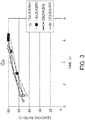
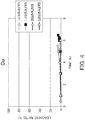
- FIGS. 2 , 3 and 4 are graphs showing the relationship between the leaching treatment time and the leaching ratio of each component ( FIG. 2 : Ni, FIG. 3 : Co, FIG. 4 : Cu) with respect to each of the hydrochloric acid equivalents.
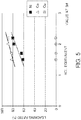
- FIG. 5 is a graph showing the relationship between the hydrochloric acid equivalent and the leaching ratio of each component in the leaching treatment time of 3 hours.
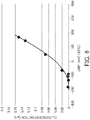
- FIG.6 is a graph showing the relationship between the redox potential (ORP, silver/silver chloride electrode was referenced) and the copper concentration in the leachate, during the leaching treatment.
- FIG.7 is a graph showing the relationship between the ORP and the copper leaching ratio (the data of Example 1 was also used).
Landscapes
- Chemical & Material Sciences (AREA)
- Engineering & Computer Science (AREA)
- Manufacturing & Machinery (AREA)
- Materials Engineering (AREA)
- Mechanical Engineering (AREA)
- Metallurgy (AREA)
- Organic Chemistry (AREA)
- Life Sciences & Earth Sciences (AREA)
- Environmental & Geological Engineering (AREA)
- General Life Sciences & Earth Sciences (AREA)
- Geology (AREA)
- Geochemistry & Mineralogy (AREA)
- Inorganic Chemistry (AREA)
- Chemical Kinetics & Catalysis (AREA)
- General Chemical & Material Sciences (AREA)
- Manufacture And Refinement Of Metals (AREA)
Abstract
Description
- The present invention relates to a method for separating copper from nickel and cobalt from a sulfide containing copper, nickel and cobalt.
- Generally, nickel matte (a sulfide containing nickel and cobalt) used in a nickel smelting plant contains a small amount of copper, and not only nickel and cobalt but copper is also simultaneously leached during refining by leaching treatment (e.g., Patent Document 1). Therefore, a smelting method using nickel matte needs to have a copper removal process of removing leached copper. Therefore, when nickel matte is used in a large quantity to increase the production amount of nickel, it is required to increase loading on the copper removal process at the same time.
- There is also a method in which copper contained in nickel matte, i.e., a raw material, is left as copper sulfide in a residue by leaching nickel and cobalt in the form of ion exchange in an autoclave, using a copper oxalate solution as a solvent. However, since this method necessitates the treatment of copper in the solvent as well, in addition to copper in the raw material, copper loading on the entire process increases and the process becomes complicated.
- Similarly, when a low-grade nickel matte having a high copper grade is used, leaching copper also increases the loading on the copper removal process. As described above, increasing the loading on the copper removal process results in practical problems such as operation balance and a cost increase.
- When taking into account these problems, there is a need for a simple method for separating copper by selectively leaching nickel and cobalt in order to suppress the loading on the copper removal process using nickel matte.
- Patent Document 1: Japanese Unexamined Patent Application, Publication No.
H2-197533 - In view of such circumstances, the present invention is proposed and it is an object of the present invention to provide a method for efficiently separating copper from nickel and cobalt from a sulfide containing copper together with nickel and cobalt.
- The present inventors have conducted extensive studies to solve the above-described problems. As a result, the inventors have found that, by pulverizing a sulfide containing copper, nickel and cobalt to a predetermined size and subjecting the sulfide to a leaching treatment under a condition of a specific redox potential (ORP) using an acid solution, nickel and cobalt can be selectively leached, and at the same time, copper can be left as a solid residue in the form of copper sulfide and separated, thereby completing the present invention.
- A first aspect of the present invention relates to a method for separating copper from nickel and cobalt, in which a sulfide containing copper, nickel and cobalt is pulverized to a predetermined size, and the pulverized sulfide is subjected to a leaching treatment by stirring the pulverized sulfide in an acid solution under a condition in which a redox potential (reference electrode: silver/silver chloride electrode) is less than 100 mV.
- A second aspect of the present invention relates to the method for separating copper from nickel and cobalt as described in the first aspect, in which the leaching treatment produces a leachate in which nickel and cobalt are leached, and a leach residue containing copper sulfide.
- A third invention of the present invention relates to the method for separating copper from nickel and cobalt as described in the first or second aspect, in which the sulfide is pulverized so as to have a particle size of 150 µm or less as a D90 value.
- A fourth aspect of the present invention relates to the method for separating copper from nickel and cobalt as described in any one of the first to third aspects, in which the leaching treatment is performed at an acid solution temperature in a range of 60°C or more and less than 100°C.
- A fifth aspect of the present invention relates to the method for separating copper from nickel and cobalt as described in any one of the first to fourth aspects, in which a hydrochloric acid solution or a sulfuric acid solution is used as the acid solution.
- A sixth aspect of the present invention relates to the method for separating copper from nickel and cobalt as described in any one of the first to fifth aspects, in which the sulfide is nickel matte.
- According to the present invention, it is possible to efficiently separate copper from nickel and cobalt from a sulfide containing copper together with nickel and cobalt.
-
-
FIG. 1 is a graph showing a relationship between a particle size of nickel matte (D90) and a leaching ratio; -
FIG. 2 is a graph showing a relationship between a leaching treatment time and Nickel (Ni) leaching ratio by hydrochloric acid equivalent; -
FIG. 3 is a graph showing a relationship between the leaching treatment time and Cobalt (Co) leaching ratio by hydrochloric acid equivalent; -
FIG. 4 is a graph showing a relationship between the leaching treatment time and Cupper (Cu) leaching ratio by hydrochloric acid equivalent; -
FIG. 5 is a graph showing a relationship between the hydrochloric acid equivalent and the leaching ratio of each component (Ni, Co, Cu) at the leaching treatment time of 3 hours; -
FIG. 6 is a graph showing a relationship between a redox potential during the leaching treatment (ORP, a silver/silver chloride electrode was referenced) and a Cu concentration in the obtained leachates; and -
FIG. 7 is a graph showing a relationship between the ORP and the copper leaching ratio. - Below, specific embodiments of the present invention (hereinafter, referred to as a "present embodiment") are described in detail, but the present invention is not limited to the following embodiments, and can be implemented with appropriate modifications within a scope in which the gist of the present invention is not changed. Note that, in this specification, the notation "X to Y" (X and Y are arbitrary numerical values) means "X or more and Y or less".
- The separation method according to the present embodiment is a method of separating copper from nickel and cobalt from a sulfide containing copper, nickel and cobalt (hereinafter, simply referred to as "sulfide"). Examples of the sulfide containing copper together with nickel and cobalt include nickel matte.
- Specifically, this separation method is characterized in that the leaching treatment is conducted by pulverizing a sulfide containing copper, nickel and cobalt to a predetermined size, and stirring the pulverized sulfide using an acid solution under a condition in which a redox potential (ORP) (silver/silver chloride electrode is referenced) is less than 100 mV. By this leaching treatment, a leachate in which nickel and cobalt are leached and a solid residue in which copper is in a form of copper sulfide are produced, and copper is separated from nickel and cobalt.
- According to such a method, nickel and cobalt can be selectively leached from a sulfide of a raw material, such as nickel matte, and separated from copper in the raw material, so that loading on a copper removal process can be effectively suppressed.
- In the leaching treatment, prior to addition of acid solution, the sulfide containing copper, nickel and cobalt is pulverized so as to have a particle size of a predetermined size.
- The particle size of the sulfide to be subjected to the leaching treatment is preferably 150 µm or less, more preferably 100 µm or less, and most preferably 40 µm or less, as a particle size (D90) value at 90% in terms of volume determined from the particle size distribution. Particle size of a sulfide (D90 value), for example, can be measured by a particle size distribution measuring apparatus or the like using a laser diffraction scattering method. Note that the lower limit value of the particle size of a sulfide is not particularly limited as long as the particle size value is a value exceeding 0 µm, and may be, for example, 5 µm or more from the viewpoint of handling and the like, and is more preferably 10 µm or more.
- A method of pulverizing a sulfide is not particularly limited, and may be performed by various known methods such as dry pulverization by a jet mill, a braun mill, a ball mill, or the like, or wet pulverization by a ball mill, a bead mill, a wet jet mill, or the like.
- A sulfide is pulverized and then the sulfide is subjected to a leaching treatment using an acid solution. At this time, the present embodiment is characterized in that an acid solution containing a sulfide is stirred in a condition in which the oxidation-reduction potential (ORP) of the acid solution is less than 100 mV as measured using a silver/silver chloride electrode as a reference electrode. In this way, by conducting the leaching treatment under the condition in which the oxidation-reduction potential of the acid solution is less than 100 mV, nickel and cobalt contained in the sulfide can be selectively leached, while copper can remain in the form of copper sulfide.
- In other words, by performing the leaching treatment under the above-described conditions, a leachate in which nickel and cobalt are selectively leached and a leach residue (solid residue) containing copper sulfide are generated.
- The acid solution is not particularly limited, and for example, a hydrochloric acid solution, a sulfuric acid solution, a nitric acid solution, or the like can be used. Among them, a hydrochloric acid solution or a sulfuric acid solution is preferably used.
- Generally, when the leaching treatment is performed with respect to a sulfide containing copper, nickel and cobalt using an acid solution (e.g., a hydrochloric acid solution), the following reactions (1) to (5) occur.





- The present inventors have found that the reaction of the above reaction formula (5) can be significantly suppressed by setting the oxidation-reduction potential of the acidic solution containing the sulfide to be leached to a specific range in the leaching treatment, specifically, to less than 100 mV.
- The condition of the redox potential (ORP) (silver/silver chloride electrode is referenced) in the leaching treatment is set to less than 100 mV as described above. Further, more preferably, the redox potential is set to less than -50 mV. In the leaching treatment, more preferably, by setting the redox potential of the solution to a condition of less than -50 mV, the reaction of the above formula (5) can be more effectively suppressed, and the copper concentration contained in the obtained leachate can be reduced to less than 0.1 g/L. Thus, copper can be more efficiently fixed in the leach residue and separability of copper from nickel and cobalt can be further improved.
- There is no particular limitation on the method of controlling the redox potential. For example, when the redox potential is increased, the redox potential can be controlled by temporarily increasing the addition amount of the sulfide to be leached or adding an oxidant, for example, by blowing air.
- The addition concentration of acid solution is required to be added so as to be 1 equivalent or more, preferably 1.5 equivalents or more, and more preferably 2 equivalents or more, with respect to nickel and cobalt contained in the sulfide to be treated. Further, the lower limit value of addition concentration of acid solution is preferably 3.0 equivalents or less, and more preferably 2.5 equivalents or less. Note that, when the addition concentration of acid solution exceeds 3.0 equivalents, a large amount of neutralization agent is required in a step after the leaching treatment, resulting in a decrease in economic efficiency.
- The concentration of slurry generated by adding an acid solution to the sulfide is, for example, preferably 20 g/L or more, and more preferably 30 g/L or more.
- The temperature of acid solution, i.e., the reaction temperature of leaching treatment, is preferably set to 60°C or more and less 100°C, and more preferably to 75°C or more and 98°C or less. In particular, considering the reaction rate, it is preferable to set the temperature to about 95°C. With respect to the treatment time of leaching treatment, it is preferable to appropriately set the treatment time depending on the addition concentration of acid solution, but it is preferable to set the treatment time, for example, to 2 hours or more and 6 hours or less, and more preferably to 4 hours or more and 6 hours or less. Although depending on the addition concentration of acid solution, if the treatment time is too short, the leaching ratio of nickel and cobalt is not increased, and there is a possibility that separation from copper becomes insufficient. On the other hand, although longer treatment time improves the leaching ratio of nickel and cobalt, the leaching ratio of copper in the sulfide is also gradually increased, and there is possibility that copper is contained in the leachate.
- In the leaching treatment, an acid solution is added to a sulfide to be treated (e.g., a nickel matte or the like), and then the sulfide and the acid solution are stirred under the condition in which the redox potential is less than 100 mV. A method of stirring is not particularly limited, and may be performed using, for example, a stirring device provided with a stirring blade or the like. By carrying out leaching while stirring in this manner, the leaching ratio of nickel and cobalt can be increased.
- Note that, in the leaching treatment, the redox potential of solution is constantly monitored and a time point at which the redox potential is confirmed to exceed 100 mV or more and it becomes impossible to maintain the redox potential to less than 100 mV is determined as a time point at which the reaction is terminated. Then, the reaction is suppressed by cooling and a solid-liquid separation treatment is conducted to separate a leachate containing nickel and cobalt and a leach residue containing copper sulfide. Note that the solid-liquid separation process can be performed by a known method.
- Hereinafter, the present invention is described more specifically by illustrating the Examples of the present invention, but the present invention is not limited to the following Examples in any event.
- Nickel matte, which is a sulfide containing copper, nickel and cobalt, was pulverized using a planetary ball mill, and three types of nickel matte samples having different particle sizes (un-pulverized sample, pulverized sample (A), and pulverized sample (B)) were prepared. Then, 6 g of each nickel matte sample was collected and 20.4 ml of a 11.64 N hydrochloric acid solution, which corresponds to 2 equivalents of nickel and cobalt in the nickel matte, was diluted to 300 ml with purified water. The liquid temperature of the solution was increased to 95°C, and then each of the nickel matte samples was added and stirred for 1 hour to 6 hours.
- After stirring for a certain time period, filtration was performed for solid-liquid separation, and the content of each component in the leachate was determined by analyzing the obtained filtrate by an ICP-analyzer. Table 1 below shows the analytical values of the nickel matte, Table 2 below shows measured particle size distribution values of the nickel matte samples, and Tables 3 and 4 below show leaching conditions and results thereof. The redox potential (ORP) during the leaching treatment was relative to a silver/silver chloride electrode as a reference electrode. Note that the particle size distributions of the nickel matte samples were measured using a measuring device manufactured by Microtrac.
FIG. 1 is a graph showing the relationship between the particle diameter (D90) of the nickel matte and the leaching ratio. Here, the leaching ratio refers to a percentage value represented by an amount of target component (metal) (g) in a leachate/an amount of target component (metal) (g) in nickel matte.[Table 1] Nickel matte analysis value [%] Ni Co Cu Fe S Si Mg Al B Na Nickel matte 57 0.84 13 6 23 0.03 0.01 <0.01 <0.01 <0. 01 [Table 2] Nickel matte Particle size [µm] D10 D50 D90 Un-pulverized sample 5.8 49.4 134 Pulverized sample (A) 1.5 12.4 37.6 Pulverized sample (B) 1.5 6.9 18.5 [Table 3] Nickel matte HCl equivalent Time [h] Filtrate [ml] ORP [mV] Residue [g] ICP filtration analysis[g/L] Ni Co Cu Fe S Un-pulverized sample 2 1 275 - 3.65 5.64 0.12 0.0 1.10 0.01 3 48 - - 8.18 0.14 0.001 1.06 0.016 Pulverized sample (A) 2 1 300 -106 - 5.80 0.12 0.003 1.09 0.07 3 300 -63 - 8.95 0.15 0.020 1.07 0.01 6 297 -90 0.78 11.84 0.17 0.0 1.17 0.01 Pulverized sample (B) 2 1 300 -179 - 6.09 0.13 0.003 1.16 0.1 3 270 -180 - 10.06 0.16 0.002 1.15 0.1 4.5 270 200 - 11.85 0.17 0.187 1.17 0.014 6 270 367 0.76 12.95 0.19 1.1 1.28 0.01 [Table 4] Nickel matte HCl equivalent Time [h] Filtrate [ml] ORP [mV] Residue [g] Residue grade[%] Leachate[%] Ni Co Cu Fe S Ni Co Cu Fe S Un-pulverized sample 2 1 275 - 3.65 51 0.46 21 1.1 25 45 65 0.0 84 0.1 3 48 - - - - - - - 69 80 0.0 85 0.3 Pulverized sample (A) 2 1 300 - 106 - - - - - - 51 71 0.1 91 1.5 3 300 -63 - - - - - - 79 89 0.8 89 0.2 6 297 -90 0.78 4.8 0.02 69 0.06 20 99 96 0.0 93 0.1 Pulverized sample (B) 2 1 300 -179 - - - - - - 53 77 0.1 97 2.2 3 270 - 180 - - - - - - 68 95 0.1 96 2.2 4.5 270 200 - - - - - - 100 100 7.2 98 0.3 6 270 367 0.76 2.7 0.02 64 0.04 29 100 100 38.1 96 0.1 - From Tables 3 and 4 and
FIG. 1 , as a result of the leaching treatment for 3 hours, it can be seen that as the particle size of the nickel matte is smaller by pulverization, the leaching ratio of nickel or cobalt is more improved. For example, the leaching ratio was 85% or more in pulverized sample (B). It could be confirmed that, at that time, the leaching ratio of copper could be suppressed to less than 1%. Therefore, it was found that the selective leaching of nickel and cobalt was possible. - However, it was found in the test of pulverized sample (B) that when the reaction was continued over 3 hours as leaching treatment time, the leaching ratio of copper increased. This is considered to be attributable to the fact that the redox potential gradually increased with the progress of the reaction.
- Next, 6 g of nickel matte of pulverized sample (A) shown in Table 2 was collected and used. Hydrochloric acid corresponding to 1.5 equivalents to 2.2 equivalents of nickel and cobalt in the nickel matte was diluted to 300 ml with purified water, the temperature of the solution was increased to 95°C, and then the nickel matte sample was added and stirred for 0.5 hours to 6 hours.
- After stirring for a certain time period, filtration was performed for solid-liquid separation, and the content of each component in the leachate was determined by analyzing the obtained filtrate by an ICP-analyzer. The leaching conditions and the results are shown in Table 5 and Table 6 below. Further,
FIGS. 2 ,3 and4 are graphs showing the relationship between the leaching treatment time and the leaching ratio of each component (FIG. 2 : Ni,FIG. 3 : Co,FIG. 4 : Cu) with respect to each of the hydrochloric acid equivalents. In addition,FIG. 5 is a graph showing the relationship between the hydrochloric acid equivalent and the leaching ratio of each component in the leaching treatment time of 3 hours.FIG.6 is a graph showing the relationship between the redox potential (ORP, silver/silver chloride electrode was referenced) and the copper concentration in the leachate, during the leaching treatment.FIG.7 is a graph showing the relationship between the ORP and the copper leaching ratio (the data of Example 1 was also used).[Table 5] Nickel matte HCl equivalent Time [h] Filtrate [ml] ORP [mV] Residue [g] ICP filtration analysis[g/L] Ni Co Cu Fe S 2 1 300 -106 - 5.80 0.12 0.003 1.09 0.07 3 300 -83 - 8.95 0.15 0.02 1.07 0.01 6 297 - 90 0.78 11.84 0.17 0.0 1.17 0.01 1.5 1 300 -190 - 4.35 0.11 0.002 1.06 0.12 3 300 - - 7.00 0.14 0.02 1.10 0.02 6 285 -132 1.52 10.91 0.17 0.0 1.20 0.01 1.7 1 300 -199 - 5.05 0.12 0.009 1.05 0.013 3 300 - 188 - 7.31 0.14 0.014 1.03 0.011 5 300 -100 - 9.94 0.16 0.028 1.08 0.012 Pulverized sample (A) 6 300 20 - 11.32 0.17 0.081 1.13 0.009 6.25 300 47 - 11.61 0.17 0.07 1.16 0.019 6.5 296 141 1.03 11.34 0.17 0.13 1.12 0.01 2.2 0.5 300 -201 4.82 0.12 0.01 1.04 0.019 1 300 -167 - 6.15 0.13 0.012 1.10 0.015 3 300 - - 9.16 0.15 0.038 1.10 0.014 4 300 - - 10.14 0.16 0.059 1.08 0.014 5 300 - - 10.94 0.17 0.126 1.08 0.01 5.25 300 55 - 11.45 0.17 0.133 1.13 0.014 5.5 289 166 0.97 12.21 0.18 0.15 1.19 0.01 [Table 6] Nickel matte HCl equivalent Time [h] Filtrate [ml] ORP [mV] Residue [g] Residue grade[%] Leachate[%] Ni Co Cu Fe S Ni Co Cu Fe S 2 1 300 -106 - - - - - - 51 71 0.1 91 1.5 3 300 -83 - - - - - - 79 89 0.8 89 0.2 6 297 -90 0.78 4.8 0.02 69 0.06 20 100 100 0 97 0.1 1.5 1 300 -190 - - - - - - 38 65 0.1 88 2.6 3 300 - - - - - - - 61 83 0.8 92 0.4 6 285 -132 1.52 24 0.12 50 0.19 22 91 96 0 95 0.1 1.7 1 300 - 199 - - - - - 44 71 0.3 88 0.3 3 300 -188 - - - - - 64 83 0.5 86 0.2 Pulverized 5 300 -100 - - - - - 87 95 1.1 90 0.3 sample (A) 6 300 20 - - - - - 99 100 3.1 94 0.2 6.25 300 47 - - - - - 100 100 2.7 97 0.4 6.5 296 141 1.03 4.3 0.03 70 0.04 22 98 100 4.9 92 0.1 2.2 0.5 300 -201 - - - - - - 42 71 0.4 87 0.4 1 300 -167 - - - - - - 54 71 0.5 92 0.3 3 300 - - - - - - - 80 89 1.5 92 0.3 4 300 - - - - - - - 89 95 2.3 90 0.3 5 300 - - - - - - - 96 98 4.8 90 0.2 5.25 300 55 - - - - - - 100 100 5.1 94 0.3 5.5 289 166 0.97 2.3 0.01 74 0.04 23 100 100 5.6 96 0.1 - As shown in the Tables and the Figures, it can be seen that the higher the hydrochloric acid equivalent, the greater the reaction rate and the higher the leaching ratio of nickel and cobalt. In addition, it can be confirmed that although the leaching ratio of copper was as low as less than 6%, the leaching ratio of copper gradually increased as the hydrochloric acid equivalent was increased, and the leaching ratio of copper increased around when the leaching ratio of nickel and cobalt had exceeded about 90%.
- In addition, it can be seen that when the ORP during the reaction was less than 100 mV, the copper concentration in the resulting leachate became very low, as low as 0.01 g/L or less. On the other hand, it can be confirmed that the copper level in the leachate during the reaction increased as the ORP increased. From this, it can be seen that, by controlling the ORP, specifically by performing the leaching treatment under the condition of ORP being less than 100 mV, leaching of copper could be significantly suppressed, and nickel and cobalt could be selectively leached, while copper could be left as a leach residue containing copper sulfide.
Claims (6)
- A method for separating copper from nickel and cobalt, wherein a sulfide comprising copper, nickel and cobalt is pulverized to a predetermined size, and the pulverized sulfide is subjected to a leaching treatment by stirring the pulverized sulfide in an acid solution under a condition wherein a redox potential (reference electrode: silver/silver chloride electrode) is less than 100 mV.
- The method for separating copper from nickel and cobalt according to claim 1, wherein the leaching treatment produces a leachate in which nickel and cobalt are leached, and a leach residue comprising copper sulfide.
- The method for separating copper from nickel and cobalt according to claim 1 or 2, wherein the sulfide is pulverized so as to have a particle size of 150 µm or less as a D90 value.
- The method for separating copper from nickel and cobalt according to any one of claims 1 to 3, wherein the leaching treatment is performed at an acid solution temperature in a range of 60°C or more and less than 100°C.
- The method for separating copper from nickel and cobalt according to any one of claims 1 to 4, wherein a hydrochloric acid solution or a sulfuric acid solution is used as the acid solution.
- The method for separating copper from nickel and cobalt according to any one of claims 1 to 5, wherein the sulfide is nickel matte.
Applications Claiming Priority (2)
| Application Number | Priority Date | Filing Date | Title |
|---|---|---|---|
| JP2018121733A JP7277084B2 (en) | 2018-06-27 | 2018-06-27 | Method for separating copper from nickel and cobalt |
| PCT/JP2019/024805 WO2020004285A1 (en) | 2018-06-27 | 2019-06-21 | Method for separating copper from nickel and cobalt |
Publications (3)
| Publication Number | Publication Date |
|---|---|
| EP3816309A1 true EP3816309A1 (en) | 2021-05-05 |
| EP3816309A4 EP3816309A4 (en) | 2022-03-23 |
| EP3816309B1 EP3816309B1 (en) | 2025-04-02 |
Family
ID=68986919
Family Applications (1)
| Application Number | Title | Priority Date | Filing Date |
|---|---|---|---|
| EP19825075.5A Active EP3816309B1 (en) | 2018-06-27 | 2019-06-21 | Method for separating copper from nickel and cobalt |
Country Status (7)
| Country | Link |
|---|---|
| US (1) | US20210262060A1 (en) |
| EP (1) | EP3816309B1 (en) |
| JP (1) | JP7277084B2 (en) |
| KR (2) | KR20210011446A (en) |
| CN (1) | CN112272711A (en) |
| CA (1) | CA3103645C (en) |
| WO (1) | WO2020004285A1 (en) |
Families Citing this family (1)
| Publication number | Priority date | Publication date | Assignee | Title |
|---|---|---|---|---|
| CN118369447A (en) * | 2021-12-06 | 2024-07-19 | 住友金属矿山株式会社 | Alloy treatment method |
Family Cites Families (16)
| Publication number | Priority date | Publication date | Assignee | Title |
|---|---|---|---|---|
| US3880653A (en) * | 1971-03-18 | 1975-04-29 | Falconbridge Nickel Mines Ltd | Chlorine leach process |
| FI64188C (en) * | 1979-06-29 | 1983-10-10 | Outokumpu Oy | FOER FARING FOR SELECTIVE LAKING AV NICKEL-KOPPARSKAERSTEN |
| JPH0791599B2 (en) | 1989-01-25 | 1995-10-04 | 住友金属鉱山株式会社 | Valuable metal separation method |
| CN1058056C (en) * | 1997-07-28 | 2000-11-01 | 中国科学院化工冶金研究所 | Process of chlorine complexing oxidation method for slective leaching nickel cobalt copper sulfurized ore |
| JP3738716B2 (en) * | 2001-09-11 | 2006-01-25 | 住友金属鉱山株式会社 | Nickel smelting method |
| JP4124071B2 (en) * | 2003-09-17 | 2008-07-23 | 住友金属鉱山株式会社 | Purification method of nickel chloride aqueous solution |
| JP4923584B2 (en) * | 2006-01-20 | 2012-04-25 | 住友金属鉱山株式会社 | Method for removing copper ions from aqueous nickel chloride solution |
| JP5405768B2 (en) * | 2007-09-27 | 2014-02-05 | Jx日鉱日石金属株式会社 | Valuables recovery from precious metal-containing metal sulfides |
| CN101195858B (en) * | 2007-12-20 | 2010-08-25 | 金川集团有限公司 | Method for extracting nickel with pressure leaching of non-metal high nickel sulfonium material |
| JP5440070B2 (en) * | 2008-09-29 | 2014-03-12 | 住友金属鉱山株式会社 | Method for leaching nickel from mixed sulfides |
| JP6495780B2 (en) * | 2015-08-13 | 2019-04-03 | Jx金属株式会社 | Lithium-ion battery processing method |
| JP6613962B2 (en) * | 2016-03-01 | 2019-12-04 | 住友金属鉱山株式会社 | Method for removing copper ion from copper-containing nickel chloride aqueous solution and method for producing electrolytic nickel |
| JP6540548B2 (en) * | 2016-03-01 | 2019-07-10 | 住友金属鉱山株式会社 | Method for removing copper ions from aqueous solution of nickel chloride, copper ion removal treatment apparatus |
| JP6735192B2 (en) * | 2016-09-07 | 2020-08-05 | Jx金属株式会社 | Lithium-ion battery scrap processing method |
| CN107058730B (en) * | 2017-04-10 | 2018-10-16 | 中南大学 | A kind of method and its system to cu-ni sulphide ore comprehensive utilization |
| CN107779595B (en) * | 2017-10-23 | 2019-06-25 | 金川集团股份有限公司 | A kind of method that low nickel matte wet-treating is directly separated ambrose alloy |
-
2018
- 2018-06-27 JP JP2018121733A patent/JP7277084B2/en active Active
-
2019
- 2019-06-21 US US17/252,354 patent/US20210262060A1/en not_active Abandoned
- 2019-06-21 WO PCT/JP2019/024805 patent/WO2020004285A1/en not_active Ceased
- 2019-06-21 CA CA3103645A patent/CA3103645C/en active Active
- 2019-06-21 CN CN201980039093.XA patent/CN112272711A/en active Pending
- 2019-06-21 EP EP19825075.5A patent/EP3816309B1/en active Active
- 2019-06-21 KR KR1020207037004A patent/KR20210011446A/en not_active Ceased
- 2019-06-21 KR KR1020237022015A patent/KR20230098930A/en not_active Ceased
Also Published As
| Publication number | Publication date |
|---|---|
| KR20230098930A (en) | 2023-07-04 |
| WO2020004285A1 (en) | 2020-01-02 |
| US20210262060A1 (en) | 2021-08-26 |
| JP7277084B2 (en) | 2023-05-18 |
| JP2020002418A (en) | 2020-01-09 |
| CA3103645C (en) | 2024-01-16 |
| EP3816309A4 (en) | 2022-03-23 |
| KR20210011446A (en) | 2021-02-01 |
| EP3816309B1 (en) | 2025-04-02 |
| CN112272711A (en) | 2021-01-26 |
| CA3103645A1 (en) | 2020-01-02 |
Similar Documents
| Publication | Publication Date | Title |
|---|---|---|
| DE60122914T2 (en) | EXTRACTION OF NICKEL AND COBALT FROM SULPHIDIC FLOTATION CONCENTRATES BY OXIDIZING EXTRACTION UNDER INCREASED PRESSURE IN CHLORIDE-CONTAINING SULFURIC ACID SOLUTION | |
| EP4108349B1 (en) | Method for treating alloy | |
| EP3690068B1 (en) | Method for separating copper from nickel and cobalt | |
| EP2584055B1 (en) | Method for removal of copper ions from copper-containing nickel chloride solution, and process for production of electrolytic nickel | |
| EP2784166A1 (en) | Method for producing high-purity nickel sulfate | |
| EP2668303B1 (en) | Improved method of ore processing | |
| EP3093354A1 (en) | Scandium recovery method | |
| EP4209604A1 (en) | Method for leaching lithium ion battery scrap and method for recovering metals from lithium ion battery scrap | |
| EP4140558A1 (en) | Method for producing metal mixture solution and method for producing mixed metal salt | |
| EP3276015A1 (en) | Method for recovering scandium | |
| CN107429313A (en) | The method of copper and the method for recovery metal are removed from lithium ion battery waste material | |
| EP4140956A1 (en) | Method for producing mixed metal salt | |
| EP2977474A1 (en) | Method for wet-smelting of nickel oxide ore | |
| EP3421627A1 (en) | Method for recovering scandium | |
| EP3550041A1 (en) | Ion exchange processing method, and scandium recovery method | |
| US20080241024A1 (en) | Method for Leaching Metal Sulphide Minerals | |
| EP3279342A1 (en) | Method for removing iron from iron-containing solution, and method for recovering valuable metals | |
| AU2002300995B2 (en) | Nickel Refining Method | |
| EP3395968B1 (en) | Method for removing sulfurizing agent | |
| EP3816309B1 (en) | Method for separating copper from nickel and cobalt | |
| EP3575420A1 (en) | Bismuth purification method | |
| EP3266885B1 (en) | Method for producing nickel sulfide and hydrometallurgical method for nickel oxide ore | |
| EP3508592A1 (en) | Method for recovering scandium | |
| EP3091093A1 (en) | Scandium recovery process | |
| EP2326737A1 (en) | A hydrometallurgical method for leaching base metals |
Legal Events
| Date | Code | Title | Description |
|---|---|---|---|
| STAA | Information on the status of an ep patent application or granted ep patent |
Free format text: STATUS: THE INTERNATIONAL PUBLICATION HAS BEEN MADE |
|
| PUAI | Public reference made under article 153(3) epc to a published international application that has entered the european phase |
Free format text: ORIGINAL CODE: 0009012 |
|
| STAA | Information on the status of an ep patent application or granted ep patent |
Free format text: STATUS: REQUEST FOR EXAMINATION WAS MADE |
|
| 17P | Request for examination filed |
Effective date: 20210106 |
|
| AK | Designated contracting states |
Kind code of ref document: A1 Designated state(s): AL AT BE BG CH CY CZ DE DK EE ES FI FR GB GR HR HU IE IS IT LI LT LU LV MC MK MT NL NO PL PT RO RS SE SI SK SM TR |
|
| DAV | Request for validation of the european patent (deleted) | ||
| DAX | Request for extension of the european patent (deleted) | ||
| A4 | Supplementary search report drawn up and despatched |
Effective date: 20220221 |
|
| RIC1 | Information provided on ipc code assigned before grant |
Ipc: C22B 3/00 20060101ALI20220215BHEP Ipc: C22B 7/00 20060101ALI20220215BHEP Ipc: C22B 3/10 20060101ALI20220215BHEP Ipc: C22B 3/08 20060101ALI20220215BHEP Ipc: C22B 23/00 20060101AFI20220215BHEP |
|
| GRAP | Despatch of communication of intention to grant a patent |
Free format text: ORIGINAL CODE: EPIDOSNIGR1 |
|
| STAA | Information on the status of an ep patent application or granted ep patent |
Free format text: STATUS: GRANT OF PATENT IS INTENDED |
|
| INTG | Intention to grant announced |
Effective date: 20241209 |
|
| GRAS | Grant fee paid |
Free format text: ORIGINAL CODE: EPIDOSNIGR3 |
|
| GRAA | (expected) grant |
Free format text: ORIGINAL CODE: 0009210 |
|
| STAA | Information on the status of an ep patent application or granted ep patent |
Free format text: STATUS: THE PATENT HAS BEEN GRANTED |
|
| AK | Designated contracting states |
Kind code of ref document: B1 Designated state(s): AL AT BE BG CH CY CZ DE DK EE ES FI FR GB GR HR HU IE IS IT LI LT LU LV MC MK MT NL NO PL PT RO RS SE SI SK SM TR |
|
| REG | Reference to a national code |
Ref country code: GB Ref legal event code: FG4D |
|
| REG | Reference to a national code |
Ref country code: CH Ref legal event code: EP |
|
| REG | Reference to a national code |
Ref country code: IE Ref legal event code: FG4D |
|
| REG | Reference to a national code |
Ref country code: DE Ref legal event code: R096 Ref document number: 602019068184 Country of ref document: DE |
|
| REG | Reference to a national code |
Ref country code: NL Ref legal event code: MP Effective date: 20250402 |
|
| PG25 | Lapsed in a contracting state [announced via postgrant information from national office to epo] |
Ref country code: NL Free format text: LAPSE BECAUSE OF FAILURE TO SUBMIT A TRANSLATION OF THE DESCRIPTION OR TO PAY THE FEE WITHIN THE PRESCRIBED TIME-LIMIT Effective date: 20250402 |
|
| REG | Reference to a national code |
Ref country code: AT Ref legal event code: MK05 Ref document number: 1781326 Country of ref document: AT Kind code of ref document: T Effective date: 20250402 |
|
| PG25 | Lapsed in a contracting state [announced via postgrant information from national office to epo] |
Ref country code: FI Free format text: LAPSE BECAUSE OF FAILURE TO SUBMIT A TRANSLATION OF THE DESCRIPTION OR TO PAY THE FEE WITHIN THE PRESCRIBED TIME-LIMIT Effective date: 20250402 Ref country code: ES Free format text: LAPSE BECAUSE OF FAILURE TO SUBMIT A TRANSLATION OF THE DESCRIPTION OR TO PAY THE FEE WITHIN THE PRESCRIBED TIME-LIMIT Effective date: 20250402 Ref country code: PT Free format text: LAPSE BECAUSE OF FAILURE TO SUBMIT A TRANSLATION OF THE DESCRIPTION OR TO PAY THE FEE WITHIN THE PRESCRIBED TIME-LIMIT Effective date: 20250804 |
|
| REG | Reference to a national code |
Ref country code: LT Ref legal event code: MG9D |
|
| PG25 | Lapsed in a contracting state [announced via postgrant information from national office to epo] |
Ref country code: NO Free format text: LAPSE BECAUSE OF FAILURE TO SUBMIT A TRANSLATION OF THE DESCRIPTION OR TO PAY THE FEE WITHIN THE PRESCRIBED TIME-LIMIT Effective date: 20250702 Ref country code: GR Free format text: LAPSE BECAUSE OF FAILURE TO SUBMIT A TRANSLATION OF THE DESCRIPTION OR TO PAY THE FEE WITHIN THE PRESCRIBED TIME-LIMIT Effective date: 20250703 |
|
| PG25 | Lapsed in a contracting state [announced via postgrant information from national office to epo] |
Ref country code: PL Free format text: LAPSE BECAUSE OF FAILURE TO SUBMIT A TRANSLATION OF THE DESCRIPTION OR TO PAY THE FEE WITHIN THE PRESCRIBED TIME-LIMIT Effective date: 20250402 |
|
| PG25 | Lapsed in a contracting state [announced via postgrant information from national office to epo] |
Ref country code: BG Free format text: LAPSE BECAUSE OF FAILURE TO SUBMIT A TRANSLATION OF THE DESCRIPTION OR TO PAY THE FEE WITHIN THE PRESCRIBED TIME-LIMIT Effective date: 20250402 |
|
| PG25 | Lapsed in a contracting state [announced via postgrant information from national office to epo] |
Ref country code: HR Free format text: LAPSE BECAUSE OF FAILURE TO SUBMIT A TRANSLATION OF THE DESCRIPTION OR TO PAY THE FEE WITHIN THE PRESCRIBED TIME-LIMIT Effective date: 20250402 |
|
| PG25 | Lapsed in a contracting state [announced via postgrant information from national office to epo] |
Ref country code: AT Free format text: LAPSE BECAUSE OF FAILURE TO SUBMIT A TRANSLATION OF THE DESCRIPTION OR TO PAY THE FEE WITHIN THE PRESCRIBED TIME-LIMIT Effective date: 20250402 |
|
| PG25 | Lapsed in a contracting state [announced via postgrant information from national office to epo] |
Ref country code: RS Free format text: LAPSE BECAUSE OF FAILURE TO SUBMIT A TRANSLATION OF THE DESCRIPTION OR TO PAY THE FEE WITHIN THE PRESCRIBED TIME-LIMIT Effective date: 20250702 |
|
| PG25 | Lapsed in a contracting state [announced via postgrant information from national office to epo] |
Ref country code: IS Free format text: LAPSE BECAUSE OF FAILURE TO SUBMIT A TRANSLATION OF THE DESCRIPTION OR TO PAY THE FEE WITHIN THE PRESCRIBED TIME-LIMIT Effective date: 20250802 |
|
| PG25 | Lapsed in a contracting state [announced via postgrant information from national office to epo] |
Ref country code: LV Free format text: LAPSE BECAUSE OF FAILURE TO SUBMIT A TRANSLATION OF THE DESCRIPTION OR TO PAY THE FEE WITHIN THE PRESCRIBED TIME-LIMIT Effective date: 20250402 |
|
| REG | Reference to a national code |
Ref country code: DE Ref legal event code: R119 Ref document number: 602019068184 Country of ref document: DE |
|
| PG25 | Lapsed in a contracting state [announced via postgrant information from national office to epo] |
Ref country code: DK Free format text: LAPSE BECAUSE OF FAILURE TO SUBMIT A TRANSLATION OF THE DESCRIPTION OR TO PAY THE FEE WITHIN THE PRESCRIBED TIME-LIMIT Effective date: 20250402 Ref country code: SM Free format text: LAPSE BECAUSE OF FAILURE TO SUBMIT A TRANSLATION OF THE DESCRIPTION OR TO PAY THE FEE WITHIN THE PRESCRIBED TIME-LIMIT Effective date: 20250402 |
|
| PG25 | Lapsed in a contracting state [announced via postgrant information from national office to epo] |
Ref country code: CZ Free format text: LAPSE BECAUSE OF FAILURE TO SUBMIT A TRANSLATION OF THE DESCRIPTION OR TO PAY THE FEE WITHIN THE PRESCRIBED TIME-LIMIT Effective date: 20250402 |
|
| PG25 | Lapsed in a contracting state [announced via postgrant information from national office to epo] |
Ref country code: EE Free format text: LAPSE BECAUSE OF FAILURE TO SUBMIT A TRANSLATION OF THE DESCRIPTION OR TO PAY THE FEE WITHIN THE PRESCRIBED TIME-LIMIT Effective date: 20250402 |
|
| PG25 | Lapsed in a contracting state [announced via postgrant information from national office to epo] |
Ref country code: SK Free format text: LAPSE BECAUSE OF FAILURE TO SUBMIT A TRANSLATION OF THE DESCRIPTION OR TO PAY THE FEE WITHIN THE PRESCRIBED TIME-LIMIT Effective date: 20250402 Ref country code: RO Free format text: LAPSE BECAUSE OF FAILURE TO SUBMIT A TRANSLATION OF THE DESCRIPTION OR TO PAY THE FEE WITHIN THE PRESCRIBED TIME-LIMIT Effective date: 20250402 |
|
| REG | Reference to a national code |
Ref country code: CH Ref legal event code: H13 Free format text: ST27 STATUS EVENT CODE: U-0-0-H10-H13 (AS PROVIDED BY THE NATIONAL OFFICE) Effective date: 20260127 |
|
| PG25 | Lapsed in a contracting state [announced via postgrant information from national office to epo] |
Ref country code: IT Free format text: LAPSE BECAUSE OF FAILURE TO SUBMIT A TRANSLATION OF THE DESCRIPTION OR TO PAY THE FEE WITHIN THE PRESCRIBED TIME-LIMIT Effective date: 20250402 |
|
| PG25 | Lapsed in a contracting state [announced via postgrant information from national office to epo] |
Ref country code: MC Free format text: LAPSE BECAUSE OF FAILURE TO SUBMIT A TRANSLATION OF THE DESCRIPTION OR TO PAY THE FEE WITHIN THE PRESCRIBED TIME-LIMIT Effective date: 20250402 |
|
| PLBE | No opposition filed within time limit |
Free format text: ORIGINAL CODE: 0009261 |
|
| STAA | Information on the status of an ep patent application or granted ep patent |
Free format text: STATUS: NO OPPOSITION FILED WITHIN TIME LIMIT |
|
| REG | Reference to a national code |
Ref country code: CH Ref legal event code: L10 Free format text: ST27 STATUS EVENT CODE: U-0-0-L10-L00 (AS PROVIDED BY THE NATIONAL OFFICE) Effective date: 20260211 |
|
| PG25 | Lapsed in a contracting state [announced via postgrant information from national office to epo] |
Ref country code: LU Free format text: LAPSE BECAUSE OF NON-PAYMENT OF DUE FEES Effective date: 20250621 |
|
| 26N | No opposition filed |
Effective date: 20260105 |
|
| GBPC | Gb: european patent ceased through non-payment of renewal fee |
Effective date: 20250702 |
|
| PG25 | Lapsed in a contracting state [announced via postgrant information from national office to epo] |
Ref country code: GB Free format text: LAPSE BECAUSE OF NON-PAYMENT OF DUE FEES Effective date: 20250702 |
|
| PG25 | Lapsed in a contracting state [announced via postgrant information from national office to epo] |
Ref country code: IE Free format text: LAPSE BECAUSE OF NON-PAYMENT OF DUE FEES Effective date: 20250621 Ref country code: DE Free format text: LAPSE BECAUSE OF NON-PAYMENT OF DUE FEES Effective date: 20260101 |
|
| PG25 | Lapsed in a contracting state [announced via postgrant information from national office to epo] |
Ref country code: FR Free format text: LAPSE BECAUSE OF NON-PAYMENT OF DUE FEES Effective date: 20250630 |
|
| PG25 | Lapsed in a contracting state [announced via postgrant information from national office to epo] |
Ref country code: CH Free format text: LAPSE BECAUSE OF NON-PAYMENT OF DUE FEES Effective date: 20250630 |
|
| PG25 | Lapsed in a contracting state [announced via postgrant information from national office to epo] |
Ref country code: LT Free format text: LAPSE BECAUSE OF FAILURE TO SUBMIT A TRANSLATION OF THE DESCRIPTION OR TO PAY THE FEE WITHIN THE PRESCRIBED TIME-LIMIT Effective date: 20250402 |
|
| PGFP | Annual fee paid to national office [announced via postgrant information from national office to epo] |
Ref country code: BE Payment date: 20260513 Year of fee payment: 8 |
|
| PG25 | Lapsed in a contracting state [announced via postgrant information from national office to epo] |
Ref country code: CY Free format text: LAPSE BECAUSE OF FAILURE TO SUBMIT A TRANSLATION OF THE DESCRIPTION OR TO PAY THE FEE WITHIN THE PRESCRIBED TIME-LIMIT Effective date: 20250402 Ref country code: SE Free format text: LAPSE BECAUSE OF FAILURE TO SUBMIT A TRANSLATION OF THE DESCRIPTION OR TO PAY THE FEE WITHIN THE PRESCRIBED TIME-LIMIT Effective date: 20250402 |