EP3815933B1 - Portable tire changer system for kart tires - Google Patents
Portable tire changer system for kart tires Download PDFInfo
- Publication number
- EP3815933B1 EP3815933B1 EP20205494.6A EP20205494A EP3815933B1 EP 3815933 B1 EP3815933 B1 EP 3815933B1 EP 20205494 A EP20205494 A EP 20205494A EP 3815933 B1 EP3815933 B1 EP 3815933B1
- Authority
- EP
- European Patent Office
- Prior art keywords
- wheel rim
- tire
- supporting
- centring
- external
- Prior art date
- Legal status (The legal status is an assumption and is not a legal conclusion. Google has not performed a legal analysis and makes no representation as to the accuracy of the status listed.)
- Active
Links
Images




Classifications
-
- B—PERFORMING OPERATIONS; TRANSPORTING
- B60—VEHICLES IN GENERAL
- B60C—VEHICLE TYRES; TYRE INFLATION; TYRE CHANGING; CONNECTING VALVES TO INFLATABLE ELASTIC BODIES IN GENERAL; DEVICES OR ARRANGEMENTS RELATED TO TYRES
- B60C25/00—Apparatus or tools adapted for mounting, removing or inspecting tyres
- B60C25/01—Apparatus or tools adapted for mounting, removing or inspecting tyres for removing tyres from or mounting tyres on wheels
- B60C25/05—Machines
- B60C25/132—Machines for removing and mounting tyres
- B60C25/135—Machines for removing and mounting tyres having a tyre support or a tool, movable along wheel axis
- B60C25/138—Machines for removing and mounting tyres having a tyre support or a tool, movable along wheel axis with rotary motion of tool or tyre support
-
- B—PERFORMING OPERATIONS; TRANSPORTING
- B60—VEHICLES IN GENERAL
- B60C—VEHICLE TYRES; TYRE INFLATION; TYRE CHANGING; CONNECTING VALVES TO INFLATABLE ELASTIC BODIES IN GENERAL; DEVICES OR ARRANGEMENTS RELATED TO TYRES
- B60C25/00—Apparatus or tools adapted for mounting, removing or inspecting tyres
- B60C25/01—Apparatus or tools adapted for mounting, removing or inspecting tyres for removing tyres from or mounting tyres on wheels
- B60C25/05—Machines
- B60C25/0563—Tools interacting with the tyre and moved in relation to the tyre during operation
- B60C25/0569—Tools interacting with the tyre and moved in relation to the tyre during operation gliding only
-
- B—PERFORMING OPERATIONS; TRANSPORTING
- B60—VEHICLES IN GENERAL
- B60B—VEHICLE WHEELS; CASTORS; AXLES FOR WHEELS OR CASTORS; INCREASING WHEEL ADHESION
- B60B2900/00—Purpose of invention
- B60B2900/50—Improvement of
- B60B2900/521—Tyre mounting or removal
-
- B—PERFORMING OPERATIONS; TRANSPORTING
- B60—VEHICLES IN GENERAL
- B60B—VEHICLE WHEELS; CASTORS; AXLES FOR WHEELS OR CASTORS; INCREASING WHEEL ADHESION
- B60B2900/00—Purpose of invention
- B60B2900/50—Improvement of
- B60B2900/523—Tyre fixation on rim, e.g. fixing axially or circumferentially thereon
-
- B—PERFORMING OPERATIONS; TRANSPORTING
- B60—VEHICLES IN GENERAL
- B60B—VEHICLE WHEELS; CASTORS; AXLES FOR WHEELS OR CASTORS; INCREASING WHEEL ADHESION
- B60B7/00—Wheel cover discs, rings, or the like, for ornamenting, protecting, venting, or obscuring, wholly or in part, the wheel body, rim, hub, or tyre sidewall, e.g. wheel cover discs, wheel cover discs with cooling fins
- B60B7/0006—Wheel cover discs, rings, or the like, for ornamenting, protecting, venting, or obscuring, wholly or in part, the wheel body, rim, hub, or tyre sidewall, e.g. wheel cover discs, wheel cover discs with cooling fins for cycle wheels or similar
-
- B—PERFORMING OPERATIONS; TRANSPORTING
- B60—VEHICLES IN GENERAL
- B60Y—INDEXING SCHEME RELATING TO ASPECTS CROSS-CUTTING VEHICLE TECHNOLOGY
- B60Y2200/00—Type of vehicle
- B60Y2200/80—Other vehicles not covered by groups B60Y2200/10 - B60Y2200/60
Definitions
- the invention relates to tire changer apparatuses and in particular to a portable tire changer system for go-kart tires.
- the invention also relates to methods of mounting or dismounting a tire on or from a wheel rim using the aforementioned portable tire changer apparatus.
- Tire changer apparatuses which allow to mount and/or dismount a tire, or wheel, on/from a respective wheel rim.
- the tire can be mounted on the wheel rim with or without the introduction of an inner tube.
- the tire without inner tube so-called tubeless tire, is mounted on the wheel rim so that the inner edges thereof, called beads, engage and adhere airtightly to the outer and inner edges of the wheel rim.
- the wheel rim can be made by moulding or by casting and typically comprises an axial-symmetrical or external annular channel suitable to receive the tire and provided with two shoulders or side walls which define the depth of the channel and which have shaped edges which are engaged by the tire beads.
- the wheel rim further comprises at least one internal cavity, so-called well, formed by the channel itself and within which a central fixing disc is provided that is connected to the channel and comprises holes for centring and fixing the wheel rim to the hub of a vehicle wheel is provided.
- the cavity is defined as internal because it is not visible when the wheel rim is mounted on the vehicle.
- wheel rims typically for wide racing tires, which comprise, in addition to the internal cavity, an external cavity; the two cavities are separated by the central fixing disc.
- tire changer apparatuses designed according to the different sizes and types of tires to be dismounted/mounted (light, heavy vehicles, motorcycles, etc.) and the volume of work which they must guarantee. These apparatuses are generally classified as manual, semi-automatic, automatic depending on the number of operations which must be manually carried out by the operator to dismount and remount the tire.
- All known tire changer apparatuses comprise a supporting platform or plate, rotatable about a vertical axis and on which the wheel rim can be positioned and fixed generally with the outer edge facing upwards.
- the outer edge of the wheel rim means the edge visible when the wheel rim is mounted on the vehicle hub, while the inner edge means the edge which is not visible.
- the two wheel rim edges are coplanar to respective planes orthogonal to a rotation axis of the wheel rim, i.e. of the wheel.
- the procedure for dismounting a tire from the wheel rim involves first "beading" the tire, i.e. detaching the beads from the wheel rim edges using a lever or a special pusher which compresses the side of the tire at the wheel rim edge causing the beads to detach.
- This operation can be carried out before mounting the wheel rim with the tire on the supporting plate, for example by using a special presser device operated manually or by an actuator, or can be performed when the wheel rim is mounted on the supporting plate. In this case, in order to detach the beads along the entire circumference, the tire is rotated together with the supporting plate.
- the tire is extracted from the wheel rim by inserting a lever, in the case of manual or semi-automatic tire changers, under the upper or external bead of the tire in order to detach the bead and lift it locally above the outer edge of the wheel rim. Keeping the lever in place, the wheel rim is rotated so that the external bead is completely extracted from the outer edge of the wheel rim. A similar procedure is performed to remove the lower bead of the tire from the wheel rim, using the lever or a pressing device.
- the mounting procedure essentially involves the same operations performed backwards, using the lever inserted between the bead and the edge of the wheel rim to insert the two beads of the tire inside the latter, suitably rotating the wheel rim placed on the supporting plate.
- the tire changer apparatuses normally used for light vehicles cannot be used due to the overall dimensions and weight which make them unsuitable for transport.
- These apparatuses are also quite expensive.
- portable manual tire changer apparatuses are used, which are not only simpler and cheaper, but also lighter and more compact for an easy transport.
- the wheel rim is fixed on a rotating table or base and the tire is dismounted and/or mounted on the wheel rim using a metal working lever which is inserted between the bead of the tire and the edge of the wheel rim both in the dismounting procedure and mounting procedure.
- the rotation of the table is usually carried out by hand.
- additional scratches and nicks may be caused by the supporting plate, also made of metal, when mounting/dismounting the wheel rim.
- WO 2007/005892 discloses an apparatus and methods for mounting and dismounting tires, wherein the apparatus typically comprises a pressing assembly positionable relative to a fixed wheel rim such that the pressing assembly controls force distribution across selected portions of a tire causing a tire bead to be eased onto the wheel rim.
- the apparatus typically includes an axis of rotation perpendicular to the wheel rim axis and wherein the axis of rotation is positionable in a plane that includes the wheel rim axis.
- the wheel rim can be fixed to a base assembly and handles allow positioning and transmittal of force to the pressing assembly.
- a bead breaking assembly for deflating an inflated tire may be provided.
- US 2018/050560 discloses a device for protecting the embellished surface of a wheel rim; the device comprises a tool that can be installed on the surface of a wheel rim for the protection of said rim, the tool comprising a circular structure formed in such way as to be held detachably on said wheel rim, the circular structure comprising an inwardly bent contour; the circular structure preferably comprises two semi-annular sub-structures connected by at least one resilient element bringing the two sub-structures closer to each other, said semi-annular sub-structures being held detachably in an adjustable manner on wheel rims of variable dimensions.
- DE 102016208855 discloses a tire changer for mounting and/or dismounting a tire on/from a rim comprising a turntable for receiving a rim with or without a tire mounted which has a powder coating.
- the document discloses also a method for coating a surface of a tire turntable of a tire mounting machine.
- An object of the present invention is to improve the known portable tire changer apparatuses, in particular for kart tires.
- Another object is to obtain a portable tire changer system which allows to dismount or mount a kart tire without marking, cutting, nicking or damaging the wheel rim thereof.
- a further object is to provide a portable tire changer system which allows even an inexperienced user to quickly and easily dismount or mount a kart tire.
- Another object is to obtain a compact and lightweight portable tire changer apparatus, easy to transport and at the same time economical, robust and reliable.
- a portable tire changer system according to claim 1 is provided.
- a method for dismounting a tire from a respective wheel rim according to claim 12 is provided.
- the portable tire changer system 50 according to the invention for kart tires 200 is illustrated, the kart tires being mounted on metal wheel rims 100, in particular made of light aluminium or magnesium alloy.
- Each wheel rim 100 substantially comprises an annular external or axial-symmetrical channel 101, formed by an external side wall 102 and an inner side wall 103, which respectively have an external annular edge 104 and an inner annular edge 105 suitable to airtightly engage respective an external bead 201 and internal bead 202 of a tire 200.
- the external channel 101 defines or forms an external cavity 106 and an internal cavity 107 separated by a central disc 108 for fixing to a kart wheel hub.
- External part of the wheel rim 100 means the part which is visible from the exterior when the wheel rim is mounted on the kart.
- the wheel rim 100 for a kart wheel may have different dimensions, in particular different diameter and width of the external channel 101. More precisely, as is known, the wheel rims for front wheels 100 (front wheel rims) and the wheel rims for rear wheels (rear wheel rims) generally both have a diameter of 5 or 6 inches (12.7 or 15.24 cm), but different widths in order to accommodate front tires of 4.5 inches (11.43 cm) in width and rear tires of 7.1 inches (18.034 mm) in width, respectively.
- the portable tire changer system 50 comprises a portable tire changer apparatus 1 which in turn comprises a supporting base 2 and supporting means 3 fixed thereto, rotatable about a rotation axis X, for example almost vertical, and comprising a supporting plate 4 and connecting means 5.
- the supporting plate 4 is provided with a respective layer 41 of non-metallic material, in particular plastic or rubber or the like, and is arranged to support a wheel rim 100 on the inner annular edge 105 thereof.
- the connecting means 5, projecting from the supporting plate 4 along the rotation axis X are arranged and configured to be inserted into the internal cavity 107 of the wheel rim 100, when supported by the supporting plate 4, so as to engage centring and fixing holes 110, 111 of the central disc 108 in a mounting configuration A of the wheel rim 100 on the portable tire changer apparatus 1.
- the latter also comprises driving means 6 fixed to the supporting base 2 and arranged to rotate the supporting means 3 about the rotation axis X.
- the portable tire changer system 50 also comprises a covering element 10 and a working lever 70.
- the covering element 10 is made of non-metallic material, for example plastic with low friction coefficient, and is configured to engage and cover at least the external annular edge 104 of the wheel rim 100 so as to prevent the latter from being directly abutted and contacted by the working lever 70, of a known type and not described in detail, used to remove a tire 200 from the wheel rim 100 in a dismounting procedure, as better explained below.
- the covering element 10 is substantially shaped like a cap and comprises a first substantially flat portion 10a intended to abut the external annular edge 104 of the wheel rim and a second portion 10b extending from said first portion 10a and configured to be custom-fitted into the external cavity 106 of the wheel rim 200 so as to prevent lateral or radial displacements of the covering element 10 with respect to the wheel rim 100 ( figure 4 ).
- the portable tire changer apparatus 1 further includes mounting means 7 comprising a movable arm 8 having a first end 18 connected to the supporting base 2 and a second end 19 movable, and an introducer element 9 fixed thereto, made of non-metallic material, in particular plastic with a low friction coefficient, configured to abut, in a procedure of mounting a tire 200, the external annular edge 104 of the wheel rim 100 to allow the tire 200 to be inserted and mounted by rotating the supporting means 3.
- mounting means 7 comprising a movable arm 8 having a first end 18 connected to the supporting base 2 and a second end 19 movable, and an introducer element 9 fixed thereto, made of non-metallic material, in particular plastic with a low friction coefficient, configured to abut, in a procedure of mounting a tire 200, the external annular edge 104 of the wheel rim 100 to allow the tire 200 to be inserted and mounted by rotating the supporting means 3.
- the connecting means 5 comprise a centring pin 12 fixed to the supporting plate 4 and a centring ring 13 inserted in, and fixed to, the centring pin 12 and provided, at a peripheral portion thereof, with a plurality of centring pegs 14.
- the centring pin 12 In the case of a front wheel rim 100 for a front kart wheel, thus having an external channel 101 with smaller width, in the mounting configuration A ( figure 4 ) the centring pin 12, and in particular a free end 12a thereof that is opposite the end fixed to the supporting plate 4, is inserted in a centring hole 110 of the central disc 108 of the wheel rim 100, while the centring pegs 14 are inserted in respective fixing holes 111 of the central disc 108.
- the free end 12a of the centring pin 12 is provided with a longitudinal outer groove 12c, parallel to the rotation axis X, intended to receive a valve mounted on the wheel rim 100.
- Coupling the centring pin 12 with the centring hole 110 ensures that the wheel rim 100 is substantially coaxial with the rotation axis X, while coupling the centring pegs 14 with the fixing holes 111 ensures the rotation of the wheel rim together with the supporting plate, i.e. the transmission of a rotation torque necessary to overcome the resistance to rotation of the wheel rim 100 during the mounting and dismounting of the tire 200.
- the centring pin 12 is parallel and coaxial to the rotation axis X and the centring pegs 14 are fixed to the centring ring 3 parallel to the rotation axis X.
- the number of centring pegs 14 and the angular distance thereof are equal to number and angular distance of the fixing holes 111 of the central disc 108; in the illustrated example, there are three fixing holes 111 and centring pegs 14, angularly spaced by 120°.
- the supporting means 3 also comprises a spacer ring 16 which is inserted in the mounting configuration A in the centring pin 12, resting on the supporting plate 4 to support the inner annular edge 105 of the front wheel rim 100 and thus allow the connecting means 5 to couple to the centring holes 110 and 111 of the central disc 108.
- the spacer ring 16 comprises a respective upper face 16a suitable to abut the wheel rim 100, the inner annular edge 105 thereof, and provided with a respective layer 42 of non-metallic material, for example plastic or rubber or the like, so as not to cause scratches, cuts, nicks on the wheel rim 100 (in particular on the inner annular edge 105 thereof), made of light alloy, during the mounting/dismounting thereof on/from the supporting means 3.
- the inner annular edge 105 of the wheel rim 100 rest directly on a respective upper face 4a of the supporting plate 4 which is provided with a respective layer 41 of non-metallic material, for example plastic or rubber or the like, so as not to cause scratches, cuts, nicks on the wheel rim 100 (in particular on the inner annular edge 105 thereof), during the mounting/dismounting thereof on/from the supporting means 3 ( figures 1 and 6 ).
- an auxiliary connecting element 15 of the connecting means 5 is used to secure the rear wheel rim 100 to the supporting means 3, which allows the connection with the centring holes 110 and 111 of the central disc 108 of the wheel rim 100.
- the centring pin 12 and the centring pegs 14 would not be able to reach the central disc 108 and insert into the centring holes 110 and 111 of the latter.
- the auxiliary connecting element 15 intended to be inserted in the mounting configuration A in the external cavity 106, is configured to couple to both the centring holes 110 and the fixing holes 111 of the central disc 108 and the centring pin 12 so as to position the rear wheel rim correctly and aligned with the rotation axis X and transfer the rotation torque imparted to the supporting means 3 by the driving means 6.
- the auxiliary connecting element 15 comprises a main body 24 to which a central pin 25 is fixed and arranged to couple to the free end 12a of the centring pin 12, through the centring hole 110 of the central disc 108, and a plurality of further centring pegs 26 that are provided in a peripheral portion of the main body and can be inserted into the fixing holes 111.
- the central pin 25 is parallel and coaxial to the rotation axis X and the further centring pegs 26 are fixed to the main body 24 parallel to the rotation axis X.
- the number of further centring pegs 26 and the angular distance thereof are equal to number and angular distance of fixing holes 111 of the central disc 108.
- a free end of the central pin 25 is inserted into an open cavity 12b of the free end 12a of the centring pin 12; the transmission of the rotational torque between the two pins 12, 25 is ensured by a shape coupling, for example by a key 28.
- the connecting means 5 further comprise a supporting pin 31, 32 associable and aligned with the centring pin 12 and protruding from a passage hole provided in the covering element 10 to facilitate the dismounting of the tire 200 from the wheel rim 100.
- the supporting pin 31 is coupled to the free end 12a of the centring pin 12 and more precisely is partially inserted into the open cavity 12b of the free end 12a of the centring pin.
- the centring pin 32 is fixed to the main body 24 of the auxiliary connecting element 15 on the opposite side of the central pin 25.
- the arm 8 is U-shaped and comprises a first hollow tubular portion 38, substantially vertical, namely parallel to the rotation axis X, which includes the first end 18 and is configured to receive internally, in a rotatable and sliding manner, a first vertical section 39a of a second U-shaped portion 39 of the arm 8.
- the second portion 39 further includes a second vertical section 39b provided with the second end 19, which supports the introducer element 9.
- a third substantially horizontal section 39c of the second portion 39 connects the two vertical sections 39a, 39b.
- the introducer element 9 can thus be moved manually by the operator, rotationally and vertically so as to be brought near to or away from the wheel rim 100, in the different operating steps, as better explained below.
- the introducer element 9, in particular a contact portion 9a thereof, is shaped ( figures 9 and 10 ) so as to abut and slidably engage the external annular edge 104 of the wheel rim 100 in a mounting procedure of the tire 100 and is fixed to the second end 19 of the arm 8 by means of a plate 37.
- the contact portion 9a of the introducer element 9 has a complementary shape to that of the external annular edge 104 and the external side wall 102 of the wheel rim 100, so as to abut a portion of defined angular width of said external annular edge 104 and external side wall 102.
- the plate 37 is connectable to the covering element 10, in particular by means of a fixing pin 33, so as to block the introducer element 9 in a settle position with respect to the wheel rim 100 in the mounting procedure of the tire 200.
- the plate 37 comprises an outer part to which the introducer element 9 is fixed below and an opposite inner part provided with a hole 37a for the passage of the fixing pin 33.
- the driving means 6 comprise, for example, an electric motor 60 powered by an electric battery (not shown), for example at a voltage of 12 or 24 V, that can be mounted on the supporting base 2 or directly by an electrical mains and a speed reducer 62 driven by the electric motor 60 and provided with a vertical output shaft 61 connected to, and supporting, the supporting means 3.
- an electric motor 60 powered by an electric battery (not shown), for example at a voltage of 12 or 24 V, that can be mounted on the supporting base 2 or directly by an electrical mains and a speed reducer 62 driven by the electric motor 60 and provided with a vertical output shaft 61 connected to, and supporting, the supporting means 3.
- the electric motor 60 and the speed reducer 62 are integrated into a single unit (gearmotor). Alternatively, the electric motor may be directly connected to the supporting means 3.
- the driving means 6, i.e. the electric motor 60, are activable in order to rotate the supporting means 3, via a pedal button operated by an operator during the mounting and dismounting procedures of the tire 200.
- the operation of the portable tire changer system 50 of the invention comprises the steps described below, manually performed by an operator or user. Said steps coincide with the steps of the method of the invention for mounting/dismounting a tire 200 on/from a respective wheel rim 100 using the portable tire changer system 50 described above.
- the covering element 10 in particular made of plastic with low friction coefficient, is positioned on the external annular edge 104 of the wheel rim 100, this external annular edge 104 being opposite the supporting plate 4 on which the wheel rim 100 rests with the inner annular edge 105.
- the arm 8 of the mounting means 7 It is then provided to move the arm 8 of the mounting means 7 in order to position the introducer element 9, made of plastic and fixed to the second end 19 of the arm 8, so as to abut the external annular edge 104.
- the contact portion 9a of the introducer element 9 is shaped so as to abut the external annular edge 104 and the external side wall 102 of the wheel rim 100.
- the introducer element 9 is then connected to the covering element 10, in particular by connecting thereto the plate 37 by means of the fixing pin 33.
- a tire 200 is partially inserted in the wheel rim 100, positioning a portion of an internal bead 202 of the tire 200 under the introducer element 9.
- the supporting means 3 and the wheel rim 100 are rotated by the driving means 6 about the rotation axis X so that the introducer element 9 can guide and progressively and completely insert the internal bead 202 of the tire 200 under the external annular edge 104 inside the external annular channel 101 of the wheel rim 100.
- the supporting means 3 and the wheel rim 100 are rotated by the driving means 6 about the rotation axis X so that the introducer element 9 can guide and progressively and completely insert the external bead 201 of the tire 200 under the external annular edge 104 thus inserting the tire 100 with both beads 201, 202 entirely inside the external annular channel 101.
- a spacer ring 16 which can be inserted in the centring pin 12 of connecting means 5 and is arranged to abut and support the inner annular edge 105 of the wheel rim 100 with a respective upper face 16a provided with a respective layer 42 made of non-metallic material, in particular plastic or rubber or the like.
- an initial step is provided wherein the wheel rim 100 is positioned on the supporting plate 4 of the rotatable supporting means 3 so that the connecting means 5 are inserted into the internal cavity 107 of the wheel rim 100 so as to engage the centring and fixing holes 110, 111 of the central disc 108.
- the plastic covering element 10 is then positioned on the external annular edge 104 of the wheel rim 100 which is opposite the supporting plate 4.
- the end of the working lever 70 is inserted inside the tire 200 and lifts a portion of an external bead 201 of the tire out of and above the external annular edge 104 of the wheel rim 100, using the covering element 10 as a fulcrum, i.e., without contacting any part of the wheel rim 100.
- the supporting means 3 with the wheel rim 100 are rotated about the vertical rotation axis X so as to completely remove the external bead 201 of the tire 200 from the wheel rim 100, in particular from the external channel 101, also using the supporting pin 31; 32 on which the tire 200 rests.
- the supporting means 3 with the wheel rim 100 are rotated about the vertical rotation axis X so as to completely remove the internal bead 202 from the external channel 101 and thus the tire from the wheel rim 100.
- the portable tire changer system 50 of the invention it is therefore possible to dismount/mount a front or rear tire 200 for a kart wheel from/on the respective wheel rim 100 in a simple and quick way, without the risk of damaging the wheel rim, and in particular without accidentally causing scratches, cuts, nicks on the wheel rim, which is made of light alloy, that could damage it not only aesthetically, but also functionally.
- the wheel rim 100 does not come into contact with metal surfaces or hard materials which could mark or scratch it.
- the wheel rim 100 in fact rests on a respective upper face 4a of the supporting plate 4 (rear wheel rim) or on an upper face 16a of the spacer ring 16 (front wheel rim), both upper faces 4a, 16a being provided with respective layers 41, 42 of non-metallic material, for example plastic or rubber or the like, which prevent the formation of scratches, cuts, nicks on the wheel rim 100 (in particular on the inner annular edge 105 thereof), during the mounting/dismounting procedures of the wheel rim on/from the supporting means 3.
- both upper faces 4a, 16a being provided with respective layers 41, 42 of non-metallic material, for example plastic or rubber or the like, which prevent the formation of scratches, cuts, nicks on the wheel rim 100 (in particular on the inner annular edge 105 thereof), during the mounting/dismounting procedures of the wheel rim on/from the supporting means 3.
- the external annular edge 104 of the wheel rim 100 is abutted and slidably engaged during the rotation thereof about the rotation axis X only by the introducer element 9 which is made of non-metallic material, in particular plastic with low friction coefficient.
- the covering element 10 which is positioned above the external annular edge 104, the latter does not come into contact with the working lever 70 when the lever is inserted inside the tire 200 in order to lift and remove the external and internal beads 201, 202 from the wheel rim 100.
- the lever 70 is slidably supported by the covering element 10 whose upper peripheral portion acts as a fulcrum in lifting of the beads 201, 202.
- the wheel rim is prevented from being damaged, for example deformed, this compromising the pressure seal of the tire.
- the driving means 6 which rotates the supporting means 3, i.e. the wheel rim 100, all the steps of the mounting/dismounting procedures of the tire are easy and quick and can be easily performed even by inexperienced persons.
- the portable tire changer apparatus 1 of the invention which has a supporting base 2 on which the supporting means 3, the driving means 6 and the mounting means 7 are fixed is thus particularly compact and light, easy to transport and at the same time economical, robust and reliable.
Landscapes
- Engineering & Computer Science (AREA)
- Mechanical Engineering (AREA)
- Tires In General (AREA)
Description
- The invention relates to tire changer apparatuses and in particular to a portable tire changer system for go-kart tires. The invention also relates to methods of mounting or dismounting a tire on or from a wheel rim using the aforementioned portable tire changer apparatus.
- Tire changer apparatuses are known which allow to mount and/or dismount a tire, or wheel, on/from a respective wheel rim. The tire can be mounted on the wheel rim with or without the introduction of an inner tube. The tire without inner tube, so-called tubeless tire, is mounted on the wheel rim so that the inner edges thereof, called beads, engage and adhere airtightly to the outer and inner edges of the wheel rim.
- As is known, the wheel rim can be made by moulding or by casting and typically comprises an axial-symmetrical or external annular channel suitable to receive the tire and provided with two shoulders or side walls which define the depth of the channel and which have shaped edges which are engaged by the tire beads. The wheel rim further comprises at least one internal cavity, so-called well, formed by the channel itself and within which a central fixing disc is provided that is connected to the channel and comprises holes for centring and fixing the wheel rim to the hub of a vehicle wheel is provided. The cavity is defined as internal because it is not visible when the wheel rim is mounted on the vehicle.
- Also known are wheel rims, typically for wide racing tires, which comprise, in addition to the internal cavity, an external cavity; the two cavities are separated by the central fixing disc.
- There are several types of tire changer apparatuses designed according to the different sizes and types of tires to be dismounted/mounted (light, heavy vehicles, motorcycles, etc.) and the volume of work which they must guarantee. These apparatuses are generally classified as manual, semi-automatic, automatic depending on the number of operations which must be manually carried out by the operator to dismount and remount the tire.
- All known tire changer apparatuses comprise a supporting platform or plate, rotatable about a vertical axis and on which the wheel rim can be positioned and fixed generally with the outer edge facing upwards. The outer edge of the wheel rim means the edge visible when the wheel rim is mounted on the vehicle hub, while the inner edge means the edge which is not visible. The two wheel rim edges are coplanar to respective planes orthogonal to a rotation axis of the wheel rim, i.e. of the wheel.
- The procedure for dismounting a tire from the wheel rim involves first "beading" the tire, i.e. detaching the beads from the wheel rim edges using a lever or a special pusher which compresses the side of the tire at the wheel rim edge causing the beads to detach. This operation can be carried out before mounting the wheel rim with the tire on the supporting plate, for example by using a special presser device operated manually or by an actuator, or can be performed when the wheel rim is mounted on the supporting plate. In this case, in order to detach the beads along the entire circumference, the tire is rotated together with the supporting plate.
- Then, the tire is extracted from the wheel rim by inserting a lever, in the case of manual or semi-automatic tire changers, under the upper or external bead of the tire in order to detach the bead and lift it locally above the outer edge of the wheel rim. Keeping the lever in place, the wheel rim is rotated so that the external bead is completely extracted from the outer edge of the wheel rim. A similar procedure is performed to remove the lower bead of the tire from the wheel rim, using the lever or a pressing device.
- The mounting procedure essentially involves the same operations performed backwards, using the lever inserted between the bead and the edge of the wheel rim to insert the two beads of the tire inside the latter, suitably rotating the wheel rim placed on the supporting plate.
- The operations above described can be carried out partially or completely automatically by tire changer apparatuses in which, instead of the lever, special devices are used that act on the tire beads to detach them or insert them inside the wheel rim.
- These automatic tire changer apparatuses are quite complex, bulky and expensive and are mainly used in the case of high volumes of work, typically in big garages.
- In the sector of go-karts or karts, small four-wheel vehicles with tubular steel frame, without suspensions and equipped with internal combustion engines of small power capacity, used in karting (one of the specialities of motor sports), the use of tire changer apparatuses is necessary because the frequent replacement of the tires used, which have very limited durability. These tires, typically having a width of 7.1 inches (18.034 mm) for the rear wheels and 4.5 inches (11.43 cm) for the front wheels, are mounted on light aluminium or magnesium alloy wheel rims with a diameter of 5 or 6 inches (12.7 or 15.24 cm).
- For the replacement of these tires, the tire changer apparatuses normally used for light vehicles (cars or motorcycles) cannot be used due to the overall dimensions and weight which make them unsuitable for transport. These apparatuses are also quite expensive. For this reason, portable manual tire changer apparatuses are used, which are not only simpler and cheaper, but also lighter and more compact for an easy transport.
- In such tire changer apparatuses, the wheel rim is fixed on a rotating table or base and the tire is dismounted and/or mounted on the wheel rim using a metal working lever which is inserted between the bead of the tire and the edge of the wheel rim both in the dismounting procedure and mounting procedure. The rotation of the table is usually carried out by hand.
- One of the disadvantages of such portable tire changer apparatuses is that use of the lever causes scratches, cuts, nicks on the wheel rim, made of light alloy, this causing damage not only aesthetically but also functionally. In some places the edges of the wheel rim can be damaged by the lever (for example deformed) so as to no longer ensure the pressure seal of the tire.
- Furthermore, additional scratches and nicks may be caused by the supporting plate, also made of metal, when mounting/dismounting the wheel rim.
- In addition to being complex and laborious, the use of the lever in all the steps of the mounting/dismounting procedures of the tire takes time.
-
WO 2007/005892 discloses an apparatus and methods for mounting and dismounting tires, wherein the apparatus typically comprises a pressing assembly positionable relative to a fixed wheel rim such that the pressing assembly controls force distribution across selected portions of a tire causing a tire bead to be eased onto the wheel rim. The apparatus typically includes an axis of rotation perpendicular to the wheel rim axis and wherein the axis of rotation is positionable in a plane that includes the wheel rim axis. The wheel rim can be fixed to a base assembly and handles allow positioning and transmittal of force to the pressing assembly. A bead breaking assembly for deflating an inflated tire may be provided. -
US 2018/050560 discloses a device for protecting the embellished surface of a wheel rim; the device comprises a tool that can be installed on the surface of a wheel rim for the protection of said rim, the tool comprising a circular structure formed in such way as to be held detachably on said wheel rim, the circular structure comprising an inwardly bent contour; the circular structure preferably comprises two semi-annular sub-structures connected by at least one resilient element bringing the two sub-structures closer to each other, said semi-annular sub-structures being held detachably in an adjustable manner on wheel rims of variable dimensions. -
DE 102016208855 discloses a tire changer for mounting and/or dismounting a tire on/from a rim comprising a turntable for receiving a rim with or without a tire mounted which has a powder coating. The document discloses also a method for coating a surface of a tire turntable of a tire mounting machine. - An object of the present invention is to improve the known portable tire changer apparatuses, in particular for kart tires.
- Another object is to obtain a portable tire changer system which allows to dismount or mount a kart tire without marking, cutting, nicking or damaging the wheel rim thereof.
- A further object is to provide a portable tire changer system which allows even an inexperienced user to quickly and easily dismount or mount a kart tire.
- Another object is to obtain a compact and lightweight portable tire changer apparatus, easy to transport and at the same time economical, robust and reliable.
- In a first aspect of the invention a portable tire changer system according to claim 1 is provided.
- In a second aspect of the invention a method for mounting a tire on a respective wheel rim according to claim 11 is provided.
- In a third aspect of the invention a method for dismounting a tire from a respective wheel rim according to
claim 12 is provided. - The invention can be better understood and implemented with reference to the attached drawings which illustrate an exemplifying and non-limiting embodiment thereof, in which:
-
figure 1 is a perspective view of the tire changer apparatus of the portable tire changer system of the invention; -
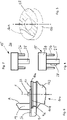
figure 2 is a perspective view of a front wheel rim for a front kart tire to be mounted on the portable tire changer apparatus offigure 1 ; -
figure 3 is an enlarged partial view offigure 1 showing in particular supporting means and connecting means of the tire changer apparatus configured for the front wheel rim offigure 2 ; -
figure 4 is a front, partial and partially sectioned view of the supporting means and connecting means offigure 3 associated with the wheel rim offigure 2 ; -
figure 5 is an enlarged perspective view of a spacer ring of the connecting means offigures 3 and4 ; -
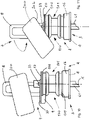
figure 6 is a partial view of the supporting means and connecting means configured for a rear wheel rim for a rear kart tire; - figure 7 is a perspective view of an auxiliary connecting element of the connecting means of
figure 6 ; -
figure 8 is a front view of the auxiliary connecting element of figure 7; -
figure 9 is a front, partial, and enlarged view of an introducer element of mounting means fixed to the wheel rim in a mounting configuration of a tire; -
figures 10 to 15 illustrate respective steps of a procedure for mounting a tire on the wheel rim using the portable tire changer apparatus offigure 1 . - With reference to
figures 1 to 9 , the portabletire changer system 50 according to the invention forkart tires 200 is illustrated, the kart tires being mounted onmetal wheel rims 100, in particular made of light aluminium or magnesium alloy. - Each
wheel rim 100, of known type, substantially comprises an annular external or axial-symmetrical channel 101, formed by anexternal side wall 102 and aninner side wall 103, which respectively have an externalannular edge 104 and an innerannular edge 105 suitable to airtightly engage respective anexternal bead 201 andinternal bead 202 of atire 200. Theexternal channel 101 defines or forms anexternal cavity 106 and aninternal cavity 107 separated by acentral disc 108 for fixing to a kart wheel hub. External part of thewheel rim 100 means the part which is visible from the exterior when the wheel rim is mounted on the kart. - The
wheel rim 100 for a kart wheel may have different dimensions, in particular different diameter and width of theexternal channel 101. More precisely, as is known, the wheel rims for front wheels 100 (front wheel rims) and the wheel rims for rear wheels (rear wheel rims) generally both have a diameter of 5 or 6 inches (12.7 or 15.24 cm), but different widths in order to accommodate front tires of 4.5 inches (11.43 cm) in width and rear tires of 7.1 inches (18.034 mm) in width, respectively. - The portable
tire changer system 50 comprises a portable tire changer apparatus 1 which in turn comprises a supportingbase 2 and supportingmeans 3 fixed thereto, rotatable about a rotation axis X, for example almost vertical, and comprising a supportingplate 4 and connectingmeans 5. The supportingplate 4 is provided with arespective layer 41 of non-metallic material, in particular plastic or rubber or the like, and is arranged to support awheel rim 100 on the innerannular edge 105 thereof. - The connecting means 5, projecting from the supporting
plate 4 along the rotation axis X are arranged and configured to be inserted into theinternal cavity 107 of thewheel rim 100, when supported by the supportingplate 4, so as to engage centring and fixingholes central disc 108 in a mounting configuration A of thewheel rim 100 on the portable tire changer apparatus 1. - The latter also comprises driving means 6 fixed to the supporting
base 2 and arranged to rotate the supportingmeans 3 about the rotation axis X. - The portable
tire changer system 50 also comprises a coveringelement 10 and a workinglever 70. The coveringelement 10 is made of non-metallic material, for example plastic with low friction coefficient, and is configured to engage and cover at least the externalannular edge 104 of thewheel rim 100 so as to prevent the latter from being directly abutted and contacted by the workinglever 70, of a known type and not described in detail, used to remove atire 200 from thewheel rim 100 in a dismounting procedure, as better explained below. - The covering
element 10 is substantially shaped like a cap and comprises a first substantially flat portion 10a intended to abut the externalannular edge 104 of the wheel rim and asecond portion 10b extending from said first portion 10a and configured to be custom-fitted into theexternal cavity 106 of thewheel rim 200 so as to prevent lateral or radial displacements of the coveringelement 10 with respect to the wheel rim 100 (figure 4 ). - The portable tire changer apparatus 1 further includes mounting means 7 comprising a
movable arm 8 having afirst end 18 connected to the supportingbase 2 and asecond end 19 movable, and anintroducer element 9 fixed thereto, made of non-metallic material, in particular plastic with a low friction coefficient, configured to abut, in a procedure of mounting atire 200, the externalannular edge 104 of thewheel rim 100 to allow thetire 200 to be inserted and mounted by rotating the supportingmeans 3. - The connecting means 5 comprise a
centring pin 12 fixed to the supportingplate 4 and acentring ring 13 inserted in, and fixed to, thecentring pin 12 and provided, at a peripheral portion thereof, with a plurality of centring pegs 14. - In the case of a
front wheel rim 100 for a front kart wheel, thus having anexternal channel 101 with smaller width, in the mounting configuration A (figure 4 ) thecentring pin 12, and in particular afree end 12a thereof that is opposite the end fixed to the supportingplate 4, is inserted in acentring hole 110 of thecentral disc 108 of thewheel rim 100, while the centring pegs 14 are inserted in respective fixingholes 111 of thecentral disc 108. Thefree end 12a of thecentring pin 12 is provided with a longitudinal outer groove 12c, parallel to the rotation axis X, intended to receive a valve mounted on thewheel rim 100. - Coupling the
centring pin 12 with thecentring hole 110 ensures that thewheel rim 100 is substantially coaxial with the rotation axis X, while coupling the centring pegs 14 with the fixingholes 111 ensures the rotation of the wheel rim together with the supporting plate, i.e. the transmission of a rotation torque necessary to overcome the resistance to rotation of thewheel rim 100 during the mounting and dismounting of thetire 200. - The
centring pin 12 is parallel and coaxial to the rotation axis X and the centring pegs 14 are fixed to thecentring ring 3 parallel to the rotation axis X. The number of centring pegs 14 and the angular distance thereof are equal to number and angular distance of the fixingholes 111 of thecentral disc 108; in the illustrated example, there are three fixingholes 111 and centring pegs 14, angularly spaced by 120°. - The supporting means 3 also comprises a
spacer ring 16 which is inserted in the mounting configuration A in thecentring pin 12, resting on the supportingplate 4 to support the innerannular edge 105 of thefront wheel rim 100 and thus allow the connectingmeans 5 to couple to the centring holes 110 and 111 of thecentral disc 108. More precisely, thespacer ring 16 comprises a respectiveupper face 16a suitable to abut thewheel rim 100, the innerannular edge 105 thereof, and provided with arespective layer 42 of non-metallic material, for example plastic or rubber or the like, so as not to cause scratches, cuts, nicks on the wheel rim 100 (in particular on the innerannular edge 105 thereof), made of light alloy, during the mounting/dismounting thereof on/from the supportingmeans 3. - In the case of mounting/dismounting a rear kart tire on/from a respective rear wheel rim, thus having an external
annular channel 101 with larger width, in the mounting configuration A, the innerannular edge 105 of thewheel rim 100 rest directly on a respective upper face 4a of the supportingplate 4 which is provided with arespective layer 41 of non-metallic material, for example plastic or rubber or the like, so as not to cause scratches, cuts, nicks on the wheel rim 100 (in particular on the innerannular edge 105 thereof), during the mounting/dismounting thereof on/from the supporting means 3 (figures 1 and6 ). - In this case, an auxiliary connecting
element 15 of the connectingmeans 5 is used to secure therear wheel rim 100 to the supportingmeans 3, which allows the connection with the centring holes 110 and 111 of thecentral disc 108 of thewheel rim 100. In this case, in fact, since the depth of the external cavity is greater than that of the internal cavity of the front wheel rim, thecentring pin 12 and the centring pegs 14 would not be able to reach thecentral disc 108 and insert into the centring holes 110 and 111 of the latter. - The auxiliary connecting
element 15, intended to be inserted in the mounting configuration A in theexternal cavity 106, is configured to couple to both the centring holes 110 and the fixingholes 111 of thecentral disc 108 and thecentring pin 12 so as to position the rear wheel rim correctly and aligned with the rotation axis X and transfer the rotation torque imparted to the supportingmeans 3 by the driving means 6. - In detail and with particular reference to
figures 6 to 8 , the auxiliary connectingelement 15 comprises amain body 24 to which acentral pin 25 is fixed and arranged to couple to thefree end 12a of thecentring pin 12, through thecentring hole 110 of thecentral disc 108, and a plurality of further centring pegs 26 that are provided in a peripheral portion of the main body and can be inserted into the fixing holes 111. - The
central pin 25 is parallel and coaxial to the rotation axis X and the further centring pegs 26 are fixed to themain body 24 parallel to the rotation axis X. The number of further centring pegs 26 and the angular distance thereof are equal to number and angular distance of fixingholes 111 of thecentral disc 108. - In the illustrated embodiment, a free end of the
central pin 25 is inserted into an open cavity 12b of thefree end 12a of thecentring pin 12; the transmission of the rotational torque between the twopins - The connecting means 5 further comprise a supporting
pin centring pin 12 and protruding from a passage hole provided in the coveringelement 10 to facilitate the dismounting of thetire 200 from thewheel rim 100. - In the case of a
front wheel rim 100 mounted on thespacer ring 16 and with thecentring pin 12 and centring pegs 14 inserted in the centring holes 110 and fixingholes 111 of thecentral disc 108, the supportingpin 31 is coupled to thefree end 12a of thecentring pin 12 and more precisely is partially inserted into the open cavity 12b of thefree end 12a of the centring pin. - In the case of a rear wheel rim resting directly on the supporting
plate 4 and with the auxiliary connectingelement 15 coupled by means of thecentral pin 25 and the further centring pegs 26 to the centring holes 110 and 111 of thecentral disc 108, thecentring pin 32 is fixed to themain body 24 of the auxiliary connectingelement 15 on the opposite side of thecentral pin 25. - With particular reference to
figure 1 , thearm 8 is U-shaped and comprises a firsthollow tubular portion 38, substantially vertical, namely parallel to the rotation axis X, which includes thefirst end 18 and is configured to receive internally, in a rotatable and sliding manner, a firstvertical section 39a of a secondU-shaped portion 39 of thearm 8. Thesecond portion 39 further includes a second vertical section 39b provided with thesecond end 19, which supports theintroducer element 9. A third substantially horizontal section 39c of thesecond portion 39 connects the twovertical sections 39a, 39b. - The
introducer element 9 can thus be moved manually by the operator, rotationally and vertically so as to be brought near to or away from thewheel rim 100, in the different operating steps, as better explained below. - The
introducer element 9, in particular acontact portion 9a thereof, is shaped (figures 9 and10 ) so as to abut and slidably engage the externalannular edge 104 of thewheel rim 100 in a mounting procedure of thetire 100 and is fixed to thesecond end 19 of thearm 8 by means of aplate 37. - More precisely, the
contact portion 9a of theintroducer element 9 has a complementary shape to that of the externalannular edge 104 and theexternal side wall 102 of thewheel rim 100, so as to abut a portion of defined angular width of said externalannular edge 104 andexternal side wall 102. - The
plate 37 is connectable to the coveringelement 10, in particular by means of a fixingpin 33, so as to block theintroducer element 9 in a settle position with respect to thewheel rim 100 in the mounting procedure of thetire 200. - More in detail, the
plate 37 comprises an outer part to which theintroducer element 9 is fixed below and an opposite inner part provided with a hole 37a for the passage of the fixingpin 33. - The driving means 6 comprise, for example, an
electric motor 60 powered by an electric battery (not shown), for example at a voltage of 12 or 24 V, that can be mounted on the supportingbase 2 or directly by an electrical mains and aspeed reducer 62 driven by theelectric motor 60 and provided with avertical output shaft 61 connected to, and supporting, the supportingmeans 3. - In the illustrated embodiment, the
electric motor 60 and thespeed reducer 62 are integrated into a single unit (gearmotor). Alternatively, the electric motor may be directly connected to the supportingmeans 3. - The driving means 6, i.e. the
electric motor 60, are activable in order to rotate the supportingmeans 3, via a pedal button operated by an operator during the mounting and dismounting procedures of thetire 200. - In the procedure for mounting/dismounting a
tire 200 on/from a respective wheel rim 100 the operation of the portabletire changer system 50 of the invention comprises the steps described below, manually performed by an operator or user. Said steps coincide with the steps of the method of the invention for mounting/dismounting atire 200 on/from a respective wheel rim 100 using the portabletire changer system 50 described above. - In the procedure of mounting a tire, in an initial step it is provided to position a
wheel rim 100 on the supportingplate 4 of the supportingmeans 3 of the portable tire changer apparatus 1 so that the connectingmeans 5 are inserted in aninternal cavity 107 of thewheel rim 100 so as to engage the centring and fixingholes central disc 108 of thewheel rim 100, thecentral disc 108 allowing the wheel rim to be fixed to a kart wheel hub. - In a following step, the covering
element 10, in particular made of plastic with low friction coefficient, is positioned on the externalannular edge 104 of thewheel rim 100, this externalannular edge 104 being opposite the supportingplate 4 on which thewheel rim 100 rests with the innerannular edge 105. - It is then provided to move the
arm 8 of the mounting means 7 in order to position theintroducer element 9, made of plastic and fixed to thesecond end 19 of thearm 8, so as to abut the externalannular edge 104. For this purpose, thecontact portion 9a of theintroducer element 9 is shaped so as to abut the externalannular edge 104 and theexternal side wall 102 of thewheel rim 100. - The
introducer element 9 is then connected to the coveringelement 10, in particular by connecting thereto theplate 37 by means of the fixingpin 33. - At this point, a
tire 200 is partially inserted in thewheel rim 100, positioning a portion of aninternal bead 202 of thetire 200 under theintroducer element 9. - The supporting means 3 and the
wheel rim 100 are rotated by the driving means 6 about the rotation axis X so that theintroducer element 9 can guide and progressively and completely insert theinternal bead 202 of thetire 200 under the externalannular edge 104 inside the externalannular channel 101 of thewheel rim 100. - Once the rotation of the supporting
means 3 has stopped, a portion of theexternal bead 201 of thetire 200 is arranged under theintroducer element 9. - The supporting means 3 and the
wheel rim 100 are rotated by the driving means 6 about the rotation axis X so that theintroducer element 9 can guide and progressively and completely insert theexternal bead 201 of thetire 200 under the externalannular edge 104 thus inserting thetire 100 with bothbeads annular channel 101. - It is therefore provided to move the
arm 8 of the mounting means 7 so as to detach and remove theintroducer element 9 from thewheel rim 100 having thetire 200. - In the case of a wider wheel rim, i.e. a rear wheel rim for a rear kart tire, after positioning the
wheel rim 100 on the supportingplate 4 it is provided to insert an auxiliary connectingelement 15 of the connectingmeans 5 into anexternal cavity 106 of thewheel rim 100 so that acentral pin 25 of the auxiliary connectingelement 15 is connected, through thecentring hole 110 of thecentral disc 108, to thecentring pin 12 of the connectingmeans 5 and further centring pegs 26 of the auxiliary connectingelement 15 are inserted in the fixingholes 111 of thecentral disc 108, so that the supportingmeans 3 can rotate thewheel rim 100 about the rotation axis X. - Differently, in the case of a
wheel rim 100 of smaller width, i.e. a front wheel rim for a front kart tire, before having positioned thewheel rim 100 on the supportingplate 4 it is provided to position on the latter aspacer ring 16 which can be inserted in thecentring pin 12 of connectingmeans 5 and is arranged to abut and support the innerannular edge 105 of thewheel rim 100 with a respectiveupper face 16a provided with arespective layer 42 made of non-metallic material, in particular plastic or rubber or the like. - In the procedure of dismounting a
tire 200 from the respective wheel rim 100 an initial step is provided wherein thewheel rim 100 is positioned on the supportingplate 4 of the rotatable supporting means 3 so that the connectingmeans 5 are inserted into theinternal cavity 107 of thewheel rim 100 so as to engage the centring and fixingholes central disc 108. - The
plastic covering element 10 is then positioned on the externalannular edge 104 of thewheel rim 100 which is opposite the supportingplate 4. - It is then provided to associate a supporting
pin 31; 32 with the connectingmeans 5; the supportingpin 31; 32 protrudes from the passage hole 11 of the coveringelement 10. - In the next step, the end of the working
lever 70 is inserted inside thetire 200 and lifts a portion of anexternal bead 201 of the tire out of and above the externalannular edge 104 of thewheel rim 100, using thecovering element 10 as a fulcrum, i.e., without contacting any part of thewheel rim 100. - The supporting means 3 with the
wheel rim 100 are rotated about the vertical rotation axis X so as to completely remove theexternal bead 201 of thetire 200 from thewheel rim 100, in particular from theexternal channel 101, also using the supportingpin 31; 32 on which thetire 200 rests. - It is then provided to stop the rotation of the supporting
means 3 and to insert the end of the workinglever 70 inside thetire 200 so as to lift a portion of aninternal bead 202 of the latter outside and above the externalannular edge 104. - The supporting means 3 with the
wheel rim 100 are rotated about the vertical rotation axis X so as to completely remove theinternal bead 202 from theexternal channel 101 and thus the tire from thewheel rim 100. - Also in the dismounting procedure, in the case of a rear wheel rim provided with a rear kart tire, after positioning the
wheel rim 100 directly on the supportingplate 4 it is provided to insert the auxiliary connectingelement 15 of the connectingmeans 5 into theexternal cavity 106 of thewheel rim 100 so that thecentral pin 25 and the further centring pegs 26 of the auxiliary connectingelement 15 engage respectively thecentring pin 12 of connectingmeans 5 and the fixingholes 111 ofcentral disc 108 to allow the supporting means 3 to rotate the wheel rim with the tire about the rotation axis X. - Differently, in the case of a
front wheel rim 100 for afront kart tire 200, before positioning thewheel rim 100 on the supportingplate 4 it is provided to position on the latter thespacer ring 16 on which thewheel rim 100 rests. - Thanks to the portable
tire changer system 50 of the invention, it is therefore possible to dismount/mount a front orrear tire 200 for a kart wheel from/on the respective wheel rim 100 in a simple and quick way, without the risk of damaging the wheel rim, and in particular without accidentally causing scratches, cuts, nicks on the wheel rim, which is made of light alloy, that could damage it not only aesthetically, but also functionally. During all the steps of the tire mounting/dismounting procedures, thewheel rim 100 does not come into contact with metal surfaces or hard materials which could mark or scratch it. In the mounting configuration A, thewheel rim 100 in fact rests on a respective upper face 4a of the supporting plate 4 (rear wheel rim) or on anupper face 16a of the spacer ring 16 (front wheel rim), bothupper faces 4a, 16a being provided withrespective layers annular edge 105 thereof), during the mounting/dismounting procedures of the wheel rim on/from the supportingmeans 3. - In the mounting procedure of the
tire 200, the externalannular edge 104 of thewheel rim 100 is abutted and slidably engaged during the rotation thereof about the rotation axis X only by theintroducer element 9 which is made of non-metallic material, in particular plastic with low friction coefficient. - Similarly, in the dismounting procedure of the
tire 200, thanks to the coveringelement 10, which is positioned above the externalannular edge 104, the latter does not come into contact with the workinglever 70 when the lever is inserted inside thetire 200 in order to lift and remove the external andinternal beads wheel rim 100. In fact, during the rotation of the wheel rim thelever 70 is slidably supported by the coveringelement 10 whose upper peripheral portion acts as a fulcrum in lifting of thebeads - By avoiding any contact of the
lever 70 with theexternal edge 104 of thewheel rim 100, the wheel rim is prevented from being damaged, for example deformed, this compromising the pressure seal of the tire. - Thanks to the driving means 6 which rotates the supporting
means 3, i.e. thewheel rim 100, all the steps of the mounting/dismounting procedures of the tire are easy and quick and can be easily performed even by inexperienced persons. - The portable tire changer apparatus 1 of the invention which has a supporting
base 2 on which the supportingmeans 3, the driving means 6 and the mounting means 7 are fixed is thus particularly compact and light, easy to transport and at the same time economical, robust and reliable.
Claims (14)
- Portable tire changer system (50) for a kart tire (200) mounted on a metal wheel rim (100) comprising an annular external channel (101) that is formed by an external side wall (102) and an inner side wall (103), which have respectively an external annular edge (104) and an inner annular edge (105) capable to engage airtightly respective beads (201, 202) of a tire (200), and forms an external cavity (106) and an internal cavity (107) separated by a central disc (108) for fixing to a kart wheel hub, said system (50) comprising a portable tire changer apparatus (1) that includes:- a supporting base (2);- supporting means (3) fixed to said supporting base (2), rotatable about an rotation axis (X) and comprising a supporting plate (4), which has a respective upper face (4a) provided with a respective layer (41) of non-metallic material, in particular plastic or rubber, and arranged for supporting said wheel rim (100) on the inner annular edge (105) thereof, and connecting means (5) projecting from said supporting plate (4) along said rotation axis (X) and configured to be inserted into said internal cavity (107) of said wheel rim (100) so as to engage centring and fixing holes (110, 111) of said central disc (108) in a mounting configuration (A) of said wheel rim (100) on said portable tire changer apparatus (1);said portable tire changer system (50) being characterized in that it further comprises a covering element (10), in particular made of plastic, and a working lever (70), said covering element (10) being configured to engage and cover at least said external annular edge (104) of said wheel rim (100) so as to prevent said working lever (70) used for removing a tire (200) from said wheel rim (100) during a dismounting procedure to contact directly said external annular edge (104), and in that said portable tire changer apparatus (1) comprises:- driving means (6) fixed to said supporting base (2) and arranged to rotate said supporting means (3) about said rotation axis (X); and- mounting means (7) comprising an arm (8), movable and having a first end (18) fixed to said supporting base (2) and a second end (19) movable, and an introducer element (9) fixed to said second end, made of non-metallic material, in particular plastic, and configured to abut said external annular edge (104) of said wheel rim (100) in a mounting procedure in order to allow inserting and mounting a tire (200) on said wheel rim (100) by rotating said supporting means (3).
- Portable tire changer system (50) according to claim 1, wherein said connecting means (5) of said portable tire changer apparatus (1) comprises a centring pin (12) fixed to said supporting plate (4) and arranged to be inserted in a centring hole (110) of said central disc (108) of said wheel rim (100), and a centring ring (13) inserted in, and fixed to, said centring pin (12) and provided with a plurality of centring pegs (14) arranged to be inserted in respective fixing holes (111) of said central disc (108) in said mounting configuration (A).
- Portable tire changer system (50) according to claim 2, wherein said connecting means (5) further comprises an auxiliary connecting element (15) which can be inserted into an external cavity (106), in particular of a wheel rim having an external channel of greater width, in particular for a rear kart wheel, said auxiliary connecting element (15) comprising a main body (24) to which a central pin (25) is fixed that is suitable to couple with a free end (12a) of said centring pin (12) through said centring hole (110) and provided with further centring pegs (26) which can be inserted in said fixing holes (111) of said central disc (108).
- Portable tire changer system (50) according to claim 2 or 3, wherein said supporting means (3) of said portable tire changer apparatus (1) comprises a spacer ring (16) which can be inserted in said centring pin (12) resting on said supporting plate (4) in order to support an external annular edge (104), in particular of a wheel rim (100) having an external channel (101) of smaller width, in particular for a front kart wheel, said spacer ring (16) comprising a respective upper face (16a) suitable to abut said wheel rim (100) and provided with a respective layer (42) made of non-metallic material, in particular plastic or rubber.
- Portable tire changer system (50) according to any of claims 2 to 4, wherein said connecting means (5) further comprises a supporting pin (31; 32) associable and aligned with said centring pin (12) and protruding from a passage hole (11) of said covering element (10) to facilitate dismounting the tire (200) from the wheel rim (100).
- Portable tire changer system (50) according to claim 5, wherein said supporting pin (31) can be coupled with a free end (12a) of said centring pin (12).
- Portable tire changer system (50) according to claim 5 or 6, as claim 5 is appended to claim 3, wherein said centring pin (32) can be coupled with said main body (24) of said auxiliary connecting element (15).
- Portable tire changer system (50) according to any preceding claim, wherein said arm (8) is "U" shaped and comprises a first hollow tubular portion (38), which is substantially vertical, includes said first end (18) and is configured to receive rotatably and slidably a first vertical section (39a) of a U-shaped second portion (39) of said arm (8), a second vertical section (39b) of said second portion (39) comprising said second end (19) supporting said introducer element (9).
- Portable tire changer system (50) according to claim 8, wherein said introducer element (9) is shaped so as to engage said external annular edge (104) and is fixed to said second end (19) of said arm (8) by means of a plate (37), the latter being connectable to said covering element (10), in particular by means of a fixing pin (33), so as to lock said introducer element (9) in a defined position with respect to said wheel rim (100) in a dismounting procedure.
- Portable tire changer system (50) according to any preceding claim, wherein said driving means (6) comprise an electric motor (60) powered by a battery that can be installed on said supporting base (2) and a speed reducer (62 ) actuated by said electric motor (60) and provided with a vertical output shaft (61) connected to and supporting said supporting means (3), in particular said actuating means (6) being activable in order to rotate said supporting means (3) via a pedal button operated by an operator during the mounting and dismounting procedures.
- Method for mounting a tire (200) on a respective wheel rim (100) using the portable tire changing system (50) according to any preceding claim, comprising the steps of:- positioning said wheel rim (100) on a supporting plate (4) of rotatable supporting means (3) so that connecting means (5) thereof are inserted into an internal cavity (107) of said wheel rim (100) so as to engage centring and fixing holes (110, 111) of a central disc (108) of said wheel rim (100);- positioning a covering element (10), in particular made of plastic, on an external annular edge (104) of said wheel rim (100);- moving an arm (8) of mounting means (7) so as to position an introducer element (9) made of non-metallic material, in particular plastic, and fixed to a second end of said arm (8) against said external annular edge (104);- connecting said introducer element (9) to said covering element (10);- inserting said tire (200) partially inside said wheel rim (100) and positioning a portion of an internal bead (202) of said tire (200) under said introducer element (9);- rotating said supporting means (3) with said wheel rim (100) about a rotation axis (X) so as to enable said introducer element (9) to guide and insert progressively and completely the internal bead (202) of said tire (200) under said external annular edge (104) inside an external channel (101) of said wheel rim (100);- stopping rotating said supporting means (3) and positioning a portion of an external bead (201) of said tire (200) under said introducer element (9);- rotating said supporting means (3) with said wheel rim (100) about a rotation axis (X) so as to enable said introducer element (9) to guide and insert progressively and completely said external bead (201) of said tire (200) under said external annular edge (104) and insert said tire (100) with both beads (201, 202) entirely inside said external channel (101);- moving said arm (8) of mounting means (7) so as to detach and remove said introducer element (9) from said wheel rim (100) provided with tire (200).
- Method for dismounting a tire (200) from a respective wheel rim (100) using the portable tire changer system (50) according to any of claims 1 to 10, comprising the steps of:- positioning said wheel rim (100) on a supporting plate (4) of rotatable supporting means (3) so that connecting means (5) thereof are inserted into an internal cavity (107) of said wheel rim (100) so as to engage centring and fixing holes (110, 111) of a central disc (108) of said wheel rim (100);- positioning a covering element (10), in particular made of plastic, on an external annular edge (104) of said wheel rim (100);- associating a supporting pin (31; 32) with said connecting means (5), said supporting pin (31; 32) protruding from a passage hole (11) of said covering element (10);- inserting an end of a working lever (70) inside said tire (200) and lifting a portion of an external bead (201) of said tire outside and above said external annular edge (104) using said covering element (10) as a fulcrum;- rotating said supporting means (3) with said wheel rim (100) about a rotation axis (X) so as to completely remove said external bead (201) from the wheel rim (100) also using said supporting pin (31; 32 );- stopping rotating said supporting means (3) and inserting the end of the working lever (70) inside said tire (200) and lifting a portion of an internal bead (202) of the tire outside and above said external annular edge (104);- rotating said supporting means (3) with said wheel rim (100) about the rotation axis (X) so as to completely remove said internal bead (202) and thus said tire from the wheel rim (100).
- Method according to claim 11 or 12, comprising, in particular in case of a wheel rim having an external channel of greater width, in particular for a rear kart wheel, after said positioning said wheel rim (100) on said supporting plate (4), inserting an auxiliary connecting element (15) of said connecting means (5) into an external cavity (106) of said wheel rim (100), said auxiliary connecting element (15) being provided with a central pin (25), configured to couple through a centring hole (110) of said central disc (108) with a centring pin (12) of said connecting means (5) that is fixed to said supporting plate (4), and provided with further centring pegs (26) which can be inserted in fixing holes (111) of said central disc (108).
- Method according to claim 11 or 12, comprising, in particular in case of a wheel rim (100) having an external channel (101) of smaller width, in particular for a front kart wheel, before said positioning said wheel rim (100) on said supporting plate (4), positioning on this latter a spacer ring (16) which can be inserted in a centring pin (12) of said connecting means (5) and is arranged to support said inner annular edge (105) of said wheel rim (100) with a respective upper face (16a) provided with a respective layer (42) of non-metallic material, in particular plastic or rubber.
Applications Claiming Priority (1)
| Application Number | Priority Date | Filing Date | Title |
|---|---|---|---|
| IT102019000020302A IT201900020302A1 (en) | 2019-11-04 | 2019-11-04 | Portable tire changer for kart tires |
Publications (2)
| Publication Number | Publication Date |
|---|---|
| EP3815933A1 EP3815933A1 (en) | 2021-05-05 |
| EP3815933B1 true EP3815933B1 (en) | 2022-10-12 |
Family
ID=69811644
Family Applications (1)
| Application Number | Title | Priority Date | Filing Date |
|---|---|---|---|
| EP20205494.6A Active EP3815933B1 (en) | 2019-11-04 | 2020-11-03 | Portable tire changer system for kart tires |
Country Status (2)
| Country | Link |
|---|---|
| EP (1) | EP3815933B1 (en) |
| IT (1) | IT201900020302A1 (en) |
Families Citing this family (2)
| Publication number | Priority date | Publication date | Assignee | Title |
|---|---|---|---|---|
| EE01582U1 (en) | 2021-08-25 | 2022-10-17 | Tõnu Kallast | Portable tyre changing stand |
| GB2613366B (en) * | 2021-12-01 | 2024-04-10 | Rabaconda Oue | Method and apparatus for tyre handling |
Family Cites Families (3)
| Publication number | Priority date | Publication date | Assignee | Title |
|---|---|---|---|---|
| WO2007005892A1 (en) * | 2005-06-30 | 2007-01-11 | Robert Levin | Tire mounting and dismounting method and apparatus |
| CA2973579A1 (en) * | 2015-01-15 | 2016-07-21 | Eric Boucher | Wheel rim protector |
| DE102016208855A1 (en) * | 2016-05-23 | 2017-11-23 | Robert Bosch Gmbh | Tire changer and method for coating a surface of a tire plate |
-
2019
- 2019-11-04 IT IT102019000020302A patent/IT201900020302A1/en unknown
-
2020
- 2020-11-03 EP EP20205494.6A patent/EP3815933B1/en active Active
Also Published As
| Publication number | Publication date |
|---|---|
| EP3815933A1 (en) | 2021-05-05 |
| IT201900020302A1 (en) | 2021-05-04 |
Similar Documents
| Publication | Publication Date | Title |
|---|---|---|
| US6619362B2 (en) | Automatic tyre removal and mounting device and tyre removal machines equipped therewith | |
| EP1157860B1 (en) | Automatic bead release device for tyre removal machines, and tyre removal machines equipped therewith | |
| US7343955B2 (en) | Tire changing machine | |
| EP3815933B1 (en) | Portable tire changer system for kart tires | |
| EP2233325B1 (en) | Machine for fitting and removing the wheel tyres of vehicle | |
| EP0947360B1 (en) | Tyre removal machine and relative accessories | |
| US8376018B2 (en) | Chuck for a tyre changing machine | |
| US7395849B2 (en) | Method and device for dismounting self-supporting tyres | |
| US20070158033A1 (en) | Tire changer | |
| US8464775B2 (en) | Tool for tire uninstalling and installing machines | |
| EP1026017B1 (en) | Machine for mounting and removing special tires | |
| EP1844959B1 (en) | Method and machine for removing a tyre fitted with a rigid inner run-flat ring | |
| EP1844960B1 (en) | Machine for assembling and disassembling a tyre fitted with a rigid inner run-flat ring | |
| CN211195734U (en) | Convenient tire taking-off device | |
| CN205890424U (en) | A machine that is used for dismantlement and assembly of wheel tire of vehicle | |
| CN101003247A (en) | Auxiliary tool for mounting the tire on the rim | |
| EP1236589A2 (en) | Improved implement for demounting and mounting self-supporting tyres of the system pax type and the like | |
| US20080251176A1 (en) | Method and unit for mounting on a rim a tire provided with a safety support | |
| KR20050014003A (en) | Method and unit for mounting on a rim a tyre provided with a safety support | |
| JP5954932B2 (en) | Tire attachment / detachment device | |
| KR102226539B1 (en) | Apparatus for separating and combining a wheel and a tire | |
| CN211892053U (en) | Tire assembling device | |
| JPH08169218A (en) | Tire mounting/demounting device | |
| CN111775640A (en) | Large horizontal tire dismounting machine capable of preventing inner tube from being damaged | |
| GB2055707A (en) | Removing tyres from, and replacing tyres on, rims |
Legal Events
| Date | Code | Title | Description |
|---|---|---|---|
| PUAI | Public reference made under article 153(3) epc to a published international application that has entered the european phase |
Free format text: ORIGINAL CODE: 0009012 |
|
| STAA | Information on the status of an ep patent application or granted ep patent |
Free format text: STATUS: THE APPLICATION HAS BEEN PUBLISHED |
|
| AK | Designated contracting states |
Kind code of ref document: A1 Designated state(s): AL AT BE BG CH CY CZ DE DK EE ES FI FR GB GR HR HU IE IS IT LI LT LU LV MC MK MT NL NO PL PT RO RS SE SI SK SM TR |
|
| STAA | Information on the status of an ep patent application or granted ep patent |
Free format text: STATUS: REQUEST FOR EXAMINATION WAS MADE |
|
| 17P | Request for examination filed |
Effective date: 20211028 |
|
| RBV | Designated contracting states (corrected) |
Designated state(s): AL AT BE BG CH CY CZ DE DK EE ES FI FR GB GR HR HU IE IS IT LI LT LU LV MC MK MT NL NO PL PT RO RS SE SI SK SM TR |
|
| GRAP | Despatch of communication of intention to grant a patent |
Free format text: ORIGINAL CODE: EPIDOSNIGR1 |
|
| STAA | Information on the status of an ep patent application or granted ep patent |
Free format text: STATUS: GRANT OF PATENT IS INTENDED |
|
| INTG | Intention to grant announced |
Effective date: 20220504 |
|
| GRAS | Grant fee paid |
Free format text: ORIGINAL CODE: EPIDOSNIGR3 |
|
| GRAA | (expected) grant |
Free format text: ORIGINAL CODE: 0009210 |
|
| STAA | Information on the status of an ep patent application or granted ep patent |
Free format text: STATUS: THE PATENT HAS BEEN GRANTED |
|
| AK | Designated contracting states |
Kind code of ref document: B1 Designated state(s): AL AT BE BG CH CY CZ DE DK EE ES FI FR GB GR HR HU IE IS IT LI LT LU LV MC MK MT NL NO PL PT RO RS SE SI SK SM TR |
|
| REG | Reference to a national code |
Ref country code: GB Ref legal event code: FG4D |
|
| REG | Reference to a national code |
Ref country code: CH Ref legal event code: EP |
|
| REG | Reference to a national code |
Ref country code: DE Ref legal event code: R096 Ref document number: 602020005580 Country of ref document: DE |
|
| REG | Reference to a national code |
Ref country code: IE Ref legal event code: FG4D |
|
| REG | Reference to a national code |
Ref country code: AT Ref legal event code: REF Ref document number: 1523947 Country of ref document: AT Kind code of ref document: T Effective date: 20221115 |
|
| REG | Reference to a national code |
Ref country code: LT Ref legal event code: MG9D |
|
| REG | Reference to a national code |
Ref country code: NL Ref legal event code: MP Effective date: 20221012 |
|
| REG | Reference to a national code |
Ref country code: AT Ref legal event code: MK05 Ref document number: 1523947 Country of ref document: AT Kind code of ref document: T Effective date: 20221012 |
|
| PG25 | Lapsed in a contracting state [announced via postgrant information from national office to epo] |
Ref country code: NL Free format text: LAPSE BECAUSE OF FAILURE TO SUBMIT A TRANSLATION OF THE DESCRIPTION OR TO PAY THE FEE WITHIN THE PRESCRIBED TIME-LIMIT Effective date: 20221012 |
|
| PG25 | Lapsed in a contracting state [announced via postgrant information from national office to epo] |
Ref country code: SE Free format text: LAPSE BECAUSE OF FAILURE TO SUBMIT A TRANSLATION OF THE DESCRIPTION OR TO PAY THE FEE WITHIN THE PRESCRIBED TIME-LIMIT Effective date: 20221012 Ref country code: PT Free format text: LAPSE BECAUSE OF FAILURE TO SUBMIT A TRANSLATION OF THE DESCRIPTION OR TO PAY THE FEE WITHIN THE PRESCRIBED TIME-LIMIT Effective date: 20230213 Ref country code: NO Free format text: LAPSE BECAUSE OF FAILURE TO SUBMIT A TRANSLATION OF THE DESCRIPTION OR TO PAY THE FEE WITHIN THE PRESCRIBED TIME-LIMIT Effective date: 20230112 Ref country code: LT Free format text: LAPSE BECAUSE OF FAILURE TO SUBMIT A TRANSLATION OF THE DESCRIPTION OR TO PAY THE FEE WITHIN THE PRESCRIBED TIME-LIMIT Effective date: 20221012 Ref country code: FI Free format text: LAPSE BECAUSE OF FAILURE TO SUBMIT A TRANSLATION OF THE DESCRIPTION OR TO PAY THE FEE WITHIN THE PRESCRIBED TIME-LIMIT Effective date: 20221012 Ref country code: ES Free format text: LAPSE BECAUSE OF FAILURE TO SUBMIT A TRANSLATION OF THE DESCRIPTION OR TO PAY THE FEE WITHIN THE PRESCRIBED TIME-LIMIT Effective date: 20221012 Ref country code: AT Free format text: LAPSE BECAUSE OF FAILURE TO SUBMIT A TRANSLATION OF THE DESCRIPTION OR TO PAY THE FEE WITHIN THE PRESCRIBED TIME-LIMIT Effective date: 20221012 |
|
| PG25 | Lapsed in a contracting state [announced via postgrant information from national office to epo] |
Ref country code: RS Free format text: LAPSE BECAUSE OF FAILURE TO SUBMIT A TRANSLATION OF THE DESCRIPTION OR TO PAY THE FEE WITHIN THE PRESCRIBED TIME-LIMIT Effective date: 20221012 Ref country code: PL Free format text: LAPSE BECAUSE OF FAILURE TO SUBMIT A TRANSLATION OF THE DESCRIPTION OR TO PAY THE FEE WITHIN THE PRESCRIBED TIME-LIMIT Effective date: 20221012 Ref country code: LV Free format text: LAPSE BECAUSE OF FAILURE TO SUBMIT A TRANSLATION OF THE DESCRIPTION OR TO PAY THE FEE WITHIN THE PRESCRIBED TIME-LIMIT Effective date: 20221012 Ref country code: IS Free format text: LAPSE BECAUSE OF FAILURE TO SUBMIT A TRANSLATION OF THE DESCRIPTION OR TO PAY THE FEE WITHIN THE PRESCRIBED TIME-LIMIT Effective date: 20230212 Ref country code: HR Free format text: LAPSE BECAUSE OF FAILURE TO SUBMIT A TRANSLATION OF THE DESCRIPTION OR TO PAY THE FEE WITHIN THE PRESCRIBED TIME-LIMIT Effective date: 20221012 Ref country code: GR Free format text: LAPSE BECAUSE OF FAILURE TO SUBMIT A TRANSLATION OF THE DESCRIPTION OR TO PAY THE FEE WITHIN THE PRESCRIBED TIME-LIMIT Effective date: 20230113 |
|
| P01 | Opt-out of the competence of the unified patent court (upc) registered |
Effective date: 20230515 |
|
| REG | Reference to a national code |
Ref country code: DE Ref legal event code: R097 Ref document number: 602020005580 Country of ref document: DE |
|
| PG25 | Lapsed in a contracting state [announced via postgrant information from national office to epo] |
Ref country code: SM Free format text: LAPSE BECAUSE OF FAILURE TO SUBMIT A TRANSLATION OF THE DESCRIPTION OR TO PAY THE FEE WITHIN THE PRESCRIBED TIME-LIMIT Effective date: 20221012 Ref country code: RO Free format text: LAPSE BECAUSE OF FAILURE TO SUBMIT A TRANSLATION OF THE DESCRIPTION OR TO PAY THE FEE WITHIN THE PRESCRIBED TIME-LIMIT Effective date: 20221012 Ref country code: IT Free format text: LAPSE BECAUSE OF NON-PAYMENT OF DUE FEES Effective date: 20221103 Ref country code: EE Free format text: LAPSE BECAUSE OF FAILURE TO SUBMIT A TRANSLATION OF THE DESCRIPTION OR TO PAY THE FEE WITHIN THE PRESCRIBED TIME-LIMIT Effective date: 20221012 Ref country code: DK Free format text: LAPSE BECAUSE OF FAILURE TO SUBMIT A TRANSLATION OF THE DESCRIPTION OR TO PAY THE FEE WITHIN THE PRESCRIBED TIME-LIMIT Effective date: 20221012 Ref country code: CZ Free format text: LAPSE BECAUSE OF FAILURE TO SUBMIT A TRANSLATION OF THE DESCRIPTION OR TO PAY THE FEE WITHIN THE PRESCRIBED TIME-LIMIT Effective date: 20221012 |
|
| PLBE | No opposition filed within time limit |
Free format text: ORIGINAL CODE: 0009261 |
|
| STAA | Information on the status of an ep patent application or granted ep patent |
Free format text: STATUS: NO OPPOSITION FILED WITHIN TIME LIMIT |
|
| PG25 | Lapsed in a contracting state [announced via postgrant information from national office to epo] |
Ref country code: SK Free format text: LAPSE BECAUSE OF FAILURE TO SUBMIT A TRANSLATION OF THE DESCRIPTION OR TO PAY THE FEE WITHIN THE PRESCRIBED TIME-LIMIT Effective date: 20221012 Ref country code: AL Free format text: LAPSE BECAUSE OF FAILURE TO SUBMIT A TRANSLATION OF THE DESCRIPTION OR TO PAY THE FEE WITHIN THE PRESCRIBED TIME-LIMIT Effective date: 20221012 |
|
| 26N | No opposition filed |
Effective date: 20230713 |
|
| PG25 | Lapsed in a contracting state [announced via postgrant information from national office to epo] |
Ref country code: SI Free format text: LAPSE BECAUSE OF FAILURE TO SUBMIT A TRANSLATION OF THE DESCRIPTION OR TO PAY THE FEE WITHIN THE PRESCRIBED TIME-LIMIT Effective date: 20221012 |
|
| PG25 | Lapsed in a contracting state [announced via postgrant information from national office to epo] |
Ref country code: IT Free format text: LAPSE BECAUSE OF NON-PAYMENT OF DUE FEES Effective date: 20221103 |
|
| PGRI | Patent reinstated in contracting state [announced from national office to epo] |
Ref country code: IT Effective date: 20221130 |
|
| PG25 | Lapsed in a contracting state [announced via postgrant information from national office to epo] |
Ref country code: CY Free format text: LAPSE BECAUSE OF FAILURE TO SUBMIT A TRANSLATION OF THE DESCRIPTION OR TO PAY THE FEE WITHIN THE PRESCRIBED TIME-LIMIT Effective date: 20221012 |
|
| PG25 | Lapsed in a contracting state [announced via postgrant information from national office to epo] |
Ref country code: MK Free format text: LAPSE BECAUSE OF FAILURE TO SUBMIT A TRANSLATION OF THE DESCRIPTION OR TO PAY THE FEE WITHIN THE PRESCRIBED TIME-LIMIT Effective date: 20221012 |
|
| PG25 | Lapsed in a contracting state [announced via postgrant information from national office to epo] |
Ref country code: HU Free format text: LAPSE BECAUSE OF FAILURE TO SUBMIT A TRANSLATION OF THE DESCRIPTION OR TO PAY THE FEE WITHIN THE PRESCRIBED TIME-LIMIT; INVALID AB INITIO Effective date: 20201103 Ref country code: BG Free format text: LAPSE BECAUSE OF FAILURE TO SUBMIT A TRANSLATION OF THE DESCRIPTION OR TO PAY THE FEE WITHIN THE PRESCRIBED TIME-LIMIT Effective date: 20221012 |
|
| PG25 | Lapsed in a contracting state [announced via postgrant information from national office to epo] |
Ref country code: MT Free format text: LAPSE BECAUSE OF FAILURE TO SUBMIT A TRANSLATION OF THE DESCRIPTION OR TO PAY THE FEE WITHIN THE PRESCRIBED TIME-LIMIT Effective date: 20221012 |
|
| PGFP | Annual fee paid to national office [announced via postgrant information from national office to epo] |
Ref country code: LU Payment date: 20241121 Year of fee payment: 5 |
|
| PGFP | Annual fee paid to national office [announced via postgrant information from national office to epo] |
Ref country code: MC Payment date: 20241127 Year of fee payment: 5 |
|
| REG | Reference to a national code |
Ref country code: CH Ref legal event code: U11 Free format text: ST27 STATUS EVENT CODE: U-0-0-U10-U11 (AS PROVIDED BY THE NATIONAL OFFICE) Effective date: 20251201 |
|
| PG25 | Lapsed in a contracting state [announced via postgrant information from national office to epo] |
Ref country code: TR Free format text: LAPSE BECAUSE OF FAILURE TO SUBMIT A TRANSLATION OF THE DESCRIPTION OR TO PAY THE FEE WITHIN THE PRESCRIBED TIME-LIMIT Effective date: 20221012 |
|
| PGFP | Annual fee paid to national office [announced via postgrant information from national office to epo] |
Ref country code: DE Payment date: 20251128 Year of fee payment: 6 |
|
| PGFP | Annual fee paid to national office [announced via postgrant information from national office to epo] |
Ref country code: GB Payment date: 20251127 Year of fee payment: 6 |
|
| PGFP | Annual fee paid to national office [announced via postgrant information from national office to epo] |
Ref country code: IT Payment date: 20251119 Year of fee payment: 6 |
|
| PGFP | Annual fee paid to national office [announced via postgrant information from national office to epo] |
Ref country code: FR Payment date: 20251125 Year of fee payment: 6 |
|
| PGFP | Annual fee paid to national office [announced via postgrant information from national office to epo] |
Ref country code: BE Payment date: 20251127 Year of fee payment: 6 |
|
| PGFP | Annual fee paid to national office [announced via postgrant information from national office to epo] |
Ref country code: CH Payment date: 20251201 Year of fee payment: 6 |
|
| PGFP | Annual fee paid to national office [announced via postgrant information from national office to epo] |
Ref country code: IE Payment date: 20251127 Year of fee payment: 6 |