EP3815397B1 - Method for determining a geographical location of an access point in a wireless local access network - Google Patents
Method for determining a geographical location of an access point in a wireless local access network Download PDFInfo
- Publication number
- EP3815397B1 EP3815397B1 EP19752214.7A EP19752214A EP3815397B1 EP 3815397 B1 EP3815397 B1 EP 3815397B1 EP 19752214 A EP19752214 A EP 19752214A EP 3815397 B1 EP3815397 B1 EP 3815397B1
- Authority
- EP
- European Patent Office
- Prior art keywords
- access point
- terminal
- network
- access
- core network
- Prior art date
- Legal status (The legal status is an assumption and is not a legal conclusion. Google has not performed a legal analysis and makes no representation as to the accuracy of the status listed.)
- Active
Links
Images

Classifications
-
- H—ELECTRICITY
- H04—ELECTRIC COMMUNICATION TECHNIQUE
- H04W—WIRELESS COMMUNICATION NETWORKS
- H04W4/00—Services specially adapted for wireless communication networks; Facilities therefor
- H04W4/02—Services making use of location information
- H04W4/023—Services making use of location information using mutual or relative location information between multiple location based services [LBS] targets or of distance thresholds
-
- G—PHYSICS
- G01—MEASURING; TESTING
- G01S—RADIO DIRECTION-FINDING; RADIO NAVIGATION; DETERMINING DISTANCE OR VELOCITY BY USE OF RADIO WAVES; LOCATING OR PRESENCE-DETECTING BY USE OF THE REFLECTION OR RERADIATION OF RADIO WAVES; ANALOGOUS ARRANGEMENTS USING OTHER WAVES
- G01S19/00—Satellite radio beacon positioning systems; Determining position, velocity or attitude using signals transmitted by such systems
- G01S19/38—Determining a navigation solution using signals transmitted by a satellite radio beacon positioning system
- G01S19/39—Determining a navigation solution using signals transmitted by a satellite radio beacon positioning system the satellite radio beacon positioning system transmitting time-stamped messages, e.g. GPS [Global Positioning System], GLONASS [Global Orbiting Navigation Satellite System] or GALILEO
- G01S19/42—Determining position
- G01S19/51—Relative positioning
-
- G—PHYSICS
- G01—MEASURING; TESTING
- G01S—RADIO DIRECTION-FINDING; RADIO NAVIGATION; DETERMINING DISTANCE OR VELOCITY BY USE OF RADIO WAVES; LOCATING OR PRESENCE-DETECTING BY USE OF THE REFLECTION OR RERADIATION OF RADIO WAVES; ANALOGOUS ARRANGEMENTS USING OTHER WAVES
- G01S5/00—Position-fixing by co-ordinating two or more direction or position line determinations; Position-fixing by co-ordinating two or more distance determinations
- G01S5/0009—Transmission of position information to remote stations
- G01S5/0018—Transmission from mobile station to base station
- G01S5/0027—Transmission from mobile station to base station of actual mobile position, i.e. position determined on mobile
-
- H—ELECTRICITY
- H04—ELECTRIC COMMUNICATION TECHNIQUE
- H04L—TRANSMISSION OF DIGITAL INFORMATION, e.g. TELEGRAPHIC COMMUNICATION
- H04L65/00—Network arrangements, protocols or services for supporting real-time applications in data packet communication
- H04L65/10—Architectures or entities
- H04L65/1016—IP multimedia subsystem [IMS]
-
- H—ELECTRICITY
- H04—ELECTRIC COMMUNICATION TECHNIQUE
- H04L—TRANSMISSION OF DIGITAL INFORMATION, e.g. TELEGRAPHIC COMMUNICATION
- H04L65/00—Network arrangements, protocols or services for supporting real-time applications in data packet communication
- H04L65/1066—Session management
- H04L65/1073—Registration or de-registration
-
- H—ELECTRICITY
- H04—ELECTRIC COMMUNICATION TECHNIQUE
- H04L—TRANSMISSION OF DIGITAL INFORMATION, e.g. TELEGRAPHIC COMMUNICATION
- H04L65/00—Network arrangements, protocols or services for supporting real-time applications in data packet communication
- H04L65/1066—Session management
- H04L65/1101—Session protocols
- H04L65/1104—Session initiation protocol [SIP]
-
- H—ELECTRICITY
- H04—ELECTRIC COMMUNICATION TECHNIQUE
- H04W—WIRELESS COMMUNICATION NETWORKS
- H04W64/00—Locating users or terminals or network equipment for network management purposes, e.g. mobility management
- H04W64/003—Locating users or terminals or network equipment for network management purposes, e.g. mobility management locating network equipment
-
- H—ELECTRICITY
- H04—ELECTRIC COMMUNICATION TECHNIQUE
- H04W—WIRELESS COMMUNICATION NETWORKS
- H04W48/00—Access restriction; Network selection; Access point selection
- H04W48/08—Access restriction or access information delivery, e.g. discovery data delivery
- H04W48/10—Access restriction or access information delivery, e.g. discovery data delivery using broadcasted information
-
- H—ELECTRICITY
- H04—ELECTRIC COMMUNICATION TECHNIQUE
- H04W—WIRELESS COMMUNICATION NETWORKS
- H04W84/00—Network topologies
- H04W84/02—Hierarchically pre-organised networks, e.g. paging networks, cellular networks, WLAN [Wireless Local Area Network] or WLL [Wireless Local Loop]
- H04W84/10—Small scale networks; Flat hierarchical networks
- H04W84/12—WLAN [Wireless Local Area Networks]
Definitions
- the invention relates to the general field of telecommunications.
- the location of a user or more particularly of a user terminal registered with a multimedia IP core network is important, both from a regulatory point of view, for example to be able to manage emergency calls made by the terminal, and from the point of view of the multiple services which can be offered by the core network operator and which rely on such location (e.g. personalized services based on the user's location).
- Access to a multimedia IP core network can be done, as is known, via different access technologies.
- Current telecommunications networks increasingly rely on access technologies using local access networks, such as WiFI (Wireless FIdelity) technology, to handle their users' communications.
- WiFI Wireless FIdelity
- These access technologies make it possible to handle both telephone calls (for example via VoWiFI technology for Voice over WiFI) and to exchange instant messages (such as SMS for Short Message Service or MMS for Multimedia Message Service).
- the multimedia IP core network has at most access to an identifier of the local access network (for example an identifier of the SSID type for Service Set IDentification) used by the user's terminal to connect to the core network and to a hardware identifier (for example a MAC (Medium Access Control) address) of the access point of this local access network to which the terminal is connected.
- an identifier of the local access network for example an identifier of the SSID type for Service Set IDentification
- a hardware identifier for example a MAC (Medium Access Control) address
- this data does not provide any location information strictly speaking to the multimedia IP core network to locate the user's terminal. Indeed, the access point (and the local access network based on this access point) may have to move, for example if the installation is moved by the user to another location.
- US2018/041879 A1 discloses a communication device may transmit messages to an IMS network via an untrusted non-3GPP radio access network (RAN).
- a process to be performed on a communication device may include generating a message having a location identifier (ID) that indicates a current location of the communication device, and transmitting the message, via an untrusted non-3GPP RAN reliable, to a node in the IMS network.
- a process performed on one or more nodes in the IMS network includes receiving, from a communication device and via an untrusted non-3GPP RAN, a message having a location identifier, and in response to receiving the message, estimating a current location of the communication device based on that identifier.
- US2017/195849 A1 discloses a device and method for associating communication service sessions with geographic locations.
- the invention makes it possible in particular to remedy the aforementioned drawbacks of the state of the art by proposing a method for determining a geographical location of an access point of a wireless local access network according to claim 1.
- the invention aims at a server located at the entrance of a multimedia IP network core according to claim 11.
- the invention proposes to correlate, at a server located at the input of the multimedia IP core network through which the messages intended to be processed by the core network pass (in other words at a proxy server), location information inserted by certain terminals in their messages with a hardware identifier of the access points used by these terminals.
- the terminals in question may in particular be terminals equipped with a GPS (Global Positioning System) module and whose location function is activated. They are configured in a known manner to insert, in a field of the signaling of their messages provided for this purpose, their current geographical position in the form of a set of GPS coordinates.
- the invention is not limited to the insertion of GPS coordinates in the signaling by the terminals as location information.
- the signaling may also include other types of location information inserted by the terminal such as for example a civic address, etc.
- the server located at the entrance to the multimedia IP network core detects the presence of such a geographical position inserted by the terminal in a message that it receives via an access point of a local access network (or more generally of location information inserted by the terminal), it extracts this geographical position and associates it with the hardware identifier of the access point itself contained in the signaling of the message.
- the server has several geographical positions associated with the same hardware identifier of the access point, extracted from different messages (or not coming from different terminals), it determines a geographical location of the access point from this plurality of positions.
- the invention is therefore based on the fact that on the one hand, even though the access points may be moved occasionally by their users, they are equipment, which by their function and by their use, are intended to be rather fixed and which, on the other hand, serve terminals generally located in their proximity (these terminals share approximately the same location).
- the access points may be moved occasionally by their users, they are equipment, which by their function and by their use, are intended to be rather fixed and which, on the other hand, serve terminals generally located in their proximity (these terminals share approximately the same location).
- the invention therefore allows the multimedia IP network core to easily have the geographical location of all the terminals registered with it, whether they are connected to the multimedia IP network core by a cellular access technology or by an access technology based on a local network (for example wireless such as WiFI). In this way, it is possible for the operator of the multimedia IP network core to offer personalized services and/or services based on the location of users.
- the geographic location of the access point is determined by means of a number of location information items, stored in association with the hardware identifier of the access point, greater than a determined threshold.
- This threshold can be determined experimentally. It can also take into account the dispersion of location information sent back by the terminals (for example with a view to detect as mentioned above a possible movement of the access point).
- the geographical locations sent by the terminals can be associated in particular with temporal information reflecting their relevance (in other words, the time at which they were acquired or sent).
- the geographic location of the access point is determined by calculating a barycenter of said plurality of location information items.
- the geographic location of the access point may be determined from the most recent or most frequent (within a small deviation) location information stored in association with the hardware identifier of the access point.
- the geographic location of the access point is determined by further using location information of a cell of a cellular access network to which a terminal is attached during a re-registration of the terminal with the multimedia IP core network, this re-registration following a previous registration of the terminal with the IP core network using the local access network and said access point.
- This embodiment has a preferred application in the context of telecommunications networks using the SIP (Session Initiation Protocol) protocol, such as for example networks based on an IMS (IP Multimedia Subsystem) architecture, and which require terminals in particular to re-register with the core network when they change access technologies (for example when they switch from Wi-Fi access to cellular access).
- SIP Session Initiation Protocol
- IMS IP Multimedia Subsystem
- the geographic location of the access point is determined by further using location information of a cell of a cellular access network to which a terminal was previously attached before registering or re-registering with the multimedia IP core network using the local access network and said access point.
- the server according to the invention is located at the input of the multimedia IP network core, in particular so that this server has visibility on the access networks used by the terminals.
- this server is preferably a P-CSCF (Proxy-Call Session Control Function) server of the multimedia IP network core.
- P-CSCF Proxy-Call Session Control Function
- assigning the access point location function to a server located at the entrance to the multimedia IP network core offers the possibility of exploiting this information within the multimedia IP network core itself.
- the invention also aims at a multimedia IP network core comprising a first database and a server according to the invention configured to store in this first database for said at least one access point, the hardware identifier of said at least one access point in association with the geographical location of the access point determined by the server determination module.
- the location information of the access points obtained by the server according to the invention is advantageously used to feed a (first) database of the multimedia IP core network, accessible by the other equipment of the multimedia IP core network. It is also possible to envisage making this first database accessible to third-party applications for the provision of services based on the location of users of the multimedia IP core network.
- the server according to the invention uses the information present in the signaling of the messages that pass through it to feed a second database of the Multimedia IP network core, this information being able to then be easily used by the network core equipment or third-party applications as mentioned previously for the first database. It is noted that the first database and the second database can be grouped within a single database.
- the management method further comprises, when the terminal is attached to a cell of a cellular network, a step of storing in a third database of the multimedia IP network core a geographical location of the cell in association with the identifier of the cell.
- the multimedia IP network core further comprises, in this embodiment, a third database containing, for at least one cell of a cellular access network allowing access to the multimedia IP network core, an identifier of this cell in association with a geographical location of this cell.
- the third database may be distinct from or confused with the first database and/or the second database.
- the location information and other information collected by the server and used to feed the first, second and/or third databases can be easily exploited by the multimedia network core equipment or by third-party applications.
- the server By providing the geographical location of the terminal in the message relayed to the other devices of the multimedia IP network core, the server according to the invention allows these devices to use this location information including for terminals which do not have the ability or which are not configured to provide it.
- the system according to the invention benefits from the same advantages cited above as the management method and the multimedia IP network core.
- the different steps of the determination method and/or the management method are determined by computer program instructions.
- the invention also relates to a computer program according to claim 16 on an information medium, this program being capable of being implemented in a server or more generally in a computer, this program comprising instructions adapted to the implementation implementing steps of a determination method and/or the management method as described above.
- This program may use any programming language, and may be in the form of source code, object code, or code intermediate between source code and object code, such as in a partially compiled form, or in any other desirable form.
- the invention also relates to an information or recording medium readable by a computer, and comprising instructions of a computer program as mentioned above.
- the information or recording medium may be any entity or device capable of storing the program.
- the medium may include a storage medium, such as a ROM, for example a CD ROM or a microelectronic circuit ROM, or a magnetic recording medium, for example a hard disk.
- the information or recording medium may be a transmissible medium such as an electrical or optical signal, which may be conveyed via an electrical or optical cable, by radio or by other means.
- the program according to the invention may in particular be downloaded from a network such as the Internet.
- the information or recording medium may be an integrated circuit in which the program is incorporated, the circuit being adapted to execute or to be used in the execution of the method in question.
- the determination method, the server, the management method, the multimedia IP network core and the system according to the invention have in combination all or part of the aforementioned characteristics.
- Appendix 1 reproduces part of the signaling of a SIP REGISTER message containing information exploited by the invention.
- FIG. 1 represents, in its environment, a system 1 in accordance with the invention.
- the system 1 comprises a multimedia IP core network 2, in accordance with the invention, and a software application 3, capable of providing one or more services to users, this or these services being here personalized according to the location of the users.
- the software application 3 can for example provide a weather alert service to its users and in particular inform users located in a given geographical area if violent or dangerous weather phenomena (e.g. storm, thunderstorm, flood, etc.) are to occur in this geographical area.
- violent or dangerous weather phenomena e.g. storm, thunderstorm, flood, etc.
- the software application 3 can be provided by the operator of the core network 2 (it can be hosted by equipment of the core network 2) or by any other service provider.
- the core network 2 comprises various equipment, and in particular a server 4 in accordance with the invention, located at the entrance to the core network 2 (from the point of view of the users of the multimedia IP core network 2, and more particularly of the users' terminals: the server 4 is the entry point into the core network 2 for messages sent by the terminals registered with the core network 2 to the latter). It acts as a proxy server and transmits to the other equipment of the core network 2 (generally referenced by 5) the messages that it receives from the terminals registered with the core network 2 for processing.
- the server 4 located at the entrance to the core network 2 (from the point of view of the users of the multimedia IP core network 2, and more particularly of the users' terminals: the server 4 is the entry point into the core network 2 for messages sent by the terminals registered with the core network 2 to the latter). It acts as a proxy server and transmits to the other equipment of the core network 2 (generally referenced by 5) the messages that it receives from the terminals registered with the core network 2 for processing.
- the core network 2 is based on an IMS architecture and uses the SIP protocol: the server 4 according to the invention is here (or is hosted by) a P-CSCF proxy server to which are connected different access points and base stations of various access networks allowing a plurality of terminals to access the multimedia IP core network 2.
- These terminals are designated on the figure 1 and in the remainder of the description generally by reference 6, or more specifically by references 6-1, 6-2, etc. when one is interested in one of these terminals in particular. No limitation is attached to the nature of these terminals: they may be so-called smart phones (or "smartphones" in English), portable computers, digital tablets, etc.
- the terminals 6 are terminals implementing the SIP protocol.
- the terminals 6 can access the multimedia IP core network 2 via an access point 7 of a local wireless access network L-NW (using WiFI technology) or via a base station 8 of a cellular access network C-NW such as for example a 2G, 3G or 4G network.
- L-NW local wireless access network
- C-NW cellular access network
- no limitation is attached to the access technologies used respectively by the local access network L-NW and by the cellular access network C-NW considered, and other technologies than WiFI and 2G/3G/4G technologies as well as a different number of access networks can be envisaged for access the multimedia IP network core 2.
- the invention applies in particular to any local network likely to use a non-3GPP access technology and in particular an unsecured non-3GPP access technology such as for example a WiMax technology.
- the devices 5 of the core network 2 are for example an S-CSCF server (Serving CSCF), application servers, other SIP proxy servers, a PCRF server (Policy and Charging Rules Function), etc. No limitation is attached to the nature of these devices well known in an IMS architecture.
- S-CSCF server Server CSCF
- application servers application servers
- other SIP proxy servers other SIP proxy servers
- PCRF server Policy and Charging Rules Function
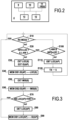
- the server 4 has the hardware architecture of a computer, as schematically illustrated in FIG. figure 2 .
- It comprises in particular a processor 9, a random access memory 10, a read-only memory 11, a non-volatile flash memory 12, as well as communication means 13 enabling it to communicate with the other equipment of the core network 2, but also with the various access points and base stations of the access networks enabling access to the multimedia IP core network 2 (namely in the example envisaged here with the access point 7 and with the base station 8).
- These communication means 13 also implement here a communication interface allowing the server 4 to supply and query various databases of the core network 2, and in particular in the embodiment described here, a first database DB1, a second database DB2 and a third database DB3.
- This communication interface uses for example the Diameter application protocol, known per se and commonly used in the cores of telecommunications networks.
- the database DB3 contains a map of the cellular networks likely to be used by the terminals 6 to access the core network 2: for each of these cellular networks (and therefore in particular for the cellular network C-NW illustrated in figure 1 ), the DB3 database lists all the cells in the cellular network (each identified by a unique identifier) and their geographical locations: thus, each cell identifier is associated in the DB3 database with a geographical position which corresponds for example to the center of the cell or to the position of the base station covering this cell.
- a database is known in itself, and is not described in more detail here.
- the contents of the DB1 and DB2 databases are however detailed in more detail later.
- the read-only memory 11 of the server 4 constitutes a recording medium in accordance with the invention, readable by the processor 9 and on which a computer program PROG in accordance with the invention is recorded:
- the program PROG here comprises instructions for executing the steps of the determination method according to the invention and for executing the steps of the management method according to the invention.
- separate programs can be envisaged for the two methods.
- FIG 3 represents the main steps of a determination method and a management method according to the invention as implemented by the server 4, in a particular embodiment. It is noted that in accordance with the invention, the management method integrates the steps of the determination method.
- terminals 6-1, 6-2 and 6-3 are equipped with location modules such as GPS modules and that these modules are activated, such that terminals 6-1 and 6-2 are able to communicate their geographical positions to the core network 2, for example in the form of GPS coordinates.
- terminal 6-3 does not have such a location module in the example considered here, or, if it has a location module, that its location function is deactivated: terminal 6-3 therefore does not provide any information on its geographical location when it communicates, in particular with core network 2.
- Terminals 6-1, 6-2 and 6-3 are also assumed to be initially connected to access point 7 of the local WiFI access network L-NW.
- terminal 6-1 sends a registration message to core network 2.
- server 4 applies the same processing to all messages sent by terminals attached to it, whether they are registration messages, communication initiation messages, etc.
- This geographic location information of the 6-1 terminal is inserted by the terminal itself in the "gp:location-info" field of the SIP REGISTER message signaling, when the terminal has (activated) location capabilities. They are described in more detail in the RFC 3863 document published by the IETF (August 2004).
- the server 4 On receipt of the SIP REGISTER message from the terminal 6-1 (yes response to test step E10), the server 4, via its extraction module 4A, determines whether the SIP REGISTER message received from the terminal 6-1 contains location information for the terminal inserted by the latter in the signaling of the message (test step E20). For this purpose, it examines here whether the signaling of the message contains a “gp: location-info” field.
- the server 4 also detects, via its extraction module 4A, that the terminal 6-1 used a local access network of the IEEE 802.11 type (WiFi access network) to send its message, and that it was connected for this purpose to the access point 7 whose hardware identifier (MAC address here) is given in the “P-Access-Network-Info” field of the SIP REGISTER message.
- the storage module 4B stores, in the first database DB1 here, in association with the hardware identifier ID(7) of the access point 7, the geographical location LOC(6-1) provided in the SIP REGISTER message by the terminal 6-1 (step E40).
- the updating of the database DB1 is carried out via an interface implementing the Diameter protocol, known per se.
- the extraction module 4A can further extract from the signaling of the SIP REGISTER message other location information of the terminal 6-1 than its GPS coordinates, such as for example the civic address corresponding to these coordinates, these information that can also be stored by the storage module 4B in the database DB1 in association with the hardware identifier ID(7) of the access point 7.
- steps E20 to E40 which have just been described can be implemented indifferently by the server 4 on receipt of the SIP REGISTER message or only after having been informed by the S-CSCF server of the multimedia IP core network 2 of the positive authentication of the terminal 6-1.
- the server 4 by means of its extraction module 4A, extracts other information from the signaling of the SIP REGISTER message received from the terminal 6-1, namely for example the IMSI identifier "208014449145219" of the terminal 6-1 included in the "username” field (step E50), and stores this IMSI identifier in association with the hardware identifier ID(7) of the access point 7 in the DB2 database (step E60).
- the DB2 database is updated via an interface implementing the Diameter protocol, known per se.
- the server 4 determines via its determination module 4C how many geographic locations are stored in association with the hardware identifier of the access point 7 in the database DB1 (test step E70). Indeed, as mentioned previously, steps E10 to E60 are implemented by the server 4 for all messages received from all terminals attached to it. In other words, for each message received via an access point of a local access network, the server 4 examines whether the message contains location information inserted by the terminal at the origin of the message and, if necessary, stores it in association with the hardware identifier of the access point in the database DB1. At a given time, there may therefore be several geographic locations of terminals (distinct or not) associated with the same hardware identifier of an access point.
- the server 4 processes the SIP REGISTER message from the terminal 6-1 as it usually does, and returns to waiting for a new message from a terminal.
- server 4 considers that there is sufficient information stored in database DB1 to reliably determine the geographic location of access point 7: more precisely, the module of determination 4C of the server 4 then determines from all the geographical locations of the terminals associated in the database DB1 the geographical location of the access point 7 (step E80).
- the threshold THR can be determined experimentally or be configurable.
- the geographic location of the access point 7 may be determined from the most recent or most frequent geographic location (stored in the DB1 database in association with the hardware identifier of the access point 7) (possibly taking into account a small maximum deviation between the geographic locations of the terminals considered to determine the most frequent location).
- the storage module 4C stores this location LOC(7) in association with the hardware identifier of the access point 7 in the database DB1 (step E90). Then the server 4 processes the SIP REGISTER message sent by the terminal 6-1 in the usual manner, and transmits it in the conventional manner to the other equipment of the core network 2 for processing.
- the determination module 4C determines the location LOC(7) of the access point 7 by calculating the barycenter of all the location information stored in association with the hardware identifier of the access point 7 in the database DB1.
- the determination module 4C only takes into account the location information stored in a predetermined time interval, in order to not take into account in particular information that is too old and that might no longer be relevant (the location information can be time-stamped for this purpose when it is recorded in the database DB1; the same applies to the geographical location determined for each access point).
- the determination module 4C can evaluate in advance whether certain geographical locations are aberrant on the basis of predetermined criteria, and not take the latter into account when determining the geographical location of the access point 7.
- steps E10 to E90 are repeated on each message received by the server 4 from terminals connected to various local access networks allowing access to the multimedia IP core network 2, and containing in their signaling, location information inserted by the terminals.
- the server 4 can proceed in a similar manner to what it does for local networks during steps E50 and E60 and extract from the signaling of the messages received an identifier of the cell to which the terminal is attached as well as other information such as a communication identifier (e.g. MSISDN) allocated to the user of the terminal, or a communication identifier of the terminal used on the core network (e.g. IMSI) or even a reachability address (IP address or URI) of the terminal, and store this information in association with an identifier of the cell in the second database (step not shown in the figure). figure 3 ).
- a communication identifier e.g. MSISDN
- IMSI IP address or URI
- the server 4 can furthermore store in the database DB1 in association with the hardware identifier of the access point in question, the geographical location of the cell to which the terminal is attached during its re-registration, and take into account this geographical location to determine the geographical location of the access point in question (or to update this geographical location). It is noted that the geographical location of the cell can be obtained by the server 4 by querying the database DB3 from the cell identifier included in the re-registration message received from the terminal.
- the server 4 can determine the geographic location of an access point by further using location information of a cell of a cellular access network to which the terminal was previously attached before registering or re-registering with the multimedia IP core network using the local access network and this access point.
- the geographical location of the access points of the local access networks used to access the core network 2 is important information that can be used in different ways.
- SIP REGISTER registration message (or SIP INVITE communication initiation) sent, via the local access network L-NW and the access point 7, by the terminal 6-3 which does not have a GPS location module or an activated location function.
- This SIP REGISTER message when received by the server 4 therefore does not contain any location information for the terminal 6-3 (response "no" to the test step E20 and response "yes" to the test step E100).
- the server 4 then extracts, via its extraction module 4A, the hardware identifier ID(7) of the access point 7 used by the terminal 6-1. Then it queries the database DB1 using this hardware identifier ID(7) to determine the geographical location LOC(7) of the access point 7 (step E110).
- the server 4 then inserts into the signaling of the message received from the terminal 6-1, the geographical location LOC(7) of the access point 7 as the geographical location of the terminal 6-1, and transfers the message thus modified to the relevant equipment of the core network.
- multimedia 2 for processing step E120.
- This equipment thus has information on the geographic location of the terminal 6-1 provided by the network, and can use it as needed to provide services based on this location.
- this information is provided by the network whether or not the message received by the server 4 contains location information provided by the terminal 6-3 (i.e., in the present example of use, the test E100 is not implemented).
- the latter can be distinguished by means, for example, of a valuation of the field ' ⁇ gp:method>' to 'networkHeuristic' in the presence information "application/pidf" (mentioned above) used to transmit the location information.
Landscapes
- Engineering & Computer Science (AREA)
- Computer Networks & Wireless Communication (AREA)
- Signal Processing (AREA)
- Radar, Positioning & Navigation (AREA)
- Remote Sensing (AREA)
- Multimedia (AREA)
- Physics & Mathematics (AREA)
- General Physics & Mathematics (AREA)
- Business, Economics & Management (AREA)
- General Business, Economics & Management (AREA)
- Mobile Radio Communication Systems (AREA)
Description
L'invention se rapporte au domaine général des télécommunications.The invention relates to the general field of telecommunications.
Elle concerne plus particulièrement la localisation d'utilisateurs enregistrés auprès d'un coeur de réseau IP multimédia.It particularly concerns the location of users registered with a multimedia IP network core.
La localisation d'un utilisateur ou plus particulièrement d'un terminal d'un utilisateur enregistré auprès d'un coeur de réseau IP multimédia est importante, tant au point de vue réglementaire, pour être en mesure par exemple de gérer les appels d'urgence émis par le terminal, que du point de vue des services multiples qui peuvent être offerts par l'opérateur du coeur de réseau et qui s'appuient sur une telle localisation (ex. services personnalisés en fonction de la localisation de l'utilisateur).The location of a user or more particularly of a user terminal registered with a multimedia IP core network is important, both from a regulatory point of view, for example to be able to manage emergency calls made by the terminal, and from the point of view of the multiple services which can be offered by the core network operator and which rely on such location (e.g. personalized services based on the user's location).
L'accès à un coeur de réseau IP multimédia peut se faire, de façon connue, via différentes technologies d'accès. Les réseaux de télécommunications actuels s'appuient de plus en plus pour écouler les communications de leurs utilisateurs sur des technologies d'accès utilisant des réseaux d'accès locaux comme par exemple sur la technologie WiFI (Wireless FIdelity). Ces technologies d'accès permettent d'écouler aussi bien des appels téléphoniques (par exemple via la technologie VoWiFI pour Voice over WiFI) que d'échanger des messages instantanés (de type SMS pour Short Message Service ou MMS pour Multimedia Message Service).Access to a multimedia IP core network can be done, as is known, via different access technologies. Current telecommunications networks increasingly rely on access technologies using local access networks, such as WiFI (Wireless FIdelity) technology, to handle their users' communications. These access technologies make it possible to handle both telephone calls (for example via VoWiFI technology for Voice over WiFI) and to exchange instant messages (such as SMS for Short Message Service or MMS for Multimedia Message Service).
Contrairement aux technologies d'accès s'appuyant sur un réseau cellulaire (ex. réseau à commutation de circuits, 3G, 4G ou 5G), il n'existe pas pour les technologies d'accès s'appuyant sur les réseaux d'accès locaux et notamment pour la technologie WiFI, de cartographie prédéfinie qui permette au coeur de réseau IP multimédia d'associer à une zone desservie via cette technologie d'accès une localisation géographique particulière. Le coeur de réseau IP multimédia a tout au plus accès à un identifiant du réseau d'accès local (par exemple un identifiant de type SSID pour Service Set IDentification) utilisé par le terminal de l'utilisateur pour se connecter au coeur de réseau et à un identifiant matériel (par exemple une adresse MAC (Medium Access Control)) du point d'accès de ce réseau d'accès local auquel le terminal est connecté. Ces données ne fournissent toutefois aucune information de localisation à proprement parler au coeur de réseau IP multimédia pour localiser le terminal de l'utilisateur. En effet, le point d'accès (et le réseau d'accès local s'appuyant sur ce point d'accès) peut être amené à se déplacer, par exemple si l'installation est déménagée par l'utilisateur dans un autre lieu.Unlike access technologies based on a cellular network (e.g. circuit-switched network, 3G, 4G or 5G), for access technologies based on local access networks and in particular for Wi-Fi technology, there is no predefined mapping that allows the multimedia IP core network to associate a particular geographic location with an area served via this access technology. The multimedia IP core network has at most access to an identifier of the local access network (for example an identifier of the SSID type for Service Set IDentification) used by the user's terminal to connect to the core network and to a hardware identifier (for example a MAC (Medium Access Control) address) of the access point of this local access network to which the terminal is connected. However, this data does not provide any location information strictly speaking to the multimedia IP core network to locate the user's terminal. Indeed, the access point (and the local access network based on this access point) may have to move, for example if the installation is moved by the user to another location.
Le document US2018/041879 A1 divulgue un dispositif de communication peut transmettre des messages à un réseau IMS via un réseau d'accès radio (RAN) non 3GPP non fiable. Un processus à mettre en oeuvre sur un dispositif de communication peut comprendre la génération d'un message ayant un identifiant d'emplacement (ID) qui indique un emplacement actuel du dispositif de communication, et la transmission du message, via un RAN non 3GPP non fiable, à un noeud dans le réseau IMS. Un processus mis en oeuvre sur un ou plusieurs noeuds du réseau IMS comprend la réception, à partir d'un dispositif de communication et via un RAN non 3GPP non fiable, d'un message ayant un identifiant d'emplacement, et en réponse à la réception du message, l'estimation d'un emplacement actuel du dispositif de communication sur la base de cet identifiant.US2018/041879 A1 discloses a communication device may transmit messages to an IMS network via an untrusted non-3GPP radio access network (RAN). A process to be performed on a communication device may include generating a message having a location identifier (ID) that indicates a current location of the communication device, and transmitting the message, via an untrusted non-3GPP RAN reliable, to a node in the IMS network. A process performed on one or more nodes in the IMS network includes receiving, from a communication device and via an untrusted non-3GPP RAN, a message having a location identifier, and in response to receiving the message, estimating a current location of the communication device based on that identifier.
Le document
L'invention permet notamment de remédier aux inconvénients précités de l'état de la technique en proposant un procédé de détermination d'une localisation géographique d'un point d'accès d'un réseau d'accès local sans fil selon la revendication 1.The invention makes it possible in particular to remedy the aforementioned drawbacks of the state of the art by proposing a method for determining a geographical location of an access point of a wireless local access network according to
Corrélativement, l'invention vise un serveur situé en entrée d'un coeur de réseau IP multimédia selon la revendication 11.Correlatively, the invention aims at a server located at the entrance of a multimedia IP network core according to
Autrement dit, l'invention propose de corréler, au niveau d'un serveur situé en entrée du coeur de réseau IP multimédia par lequel transitent les messages destinés à être traités par le coeur de réseau (autrement dit au niveau d'un serveur proxy), des informations de localisation insérées par certains terminaux dans leurs messages avec un identifiant matériel des points d'accès empruntés par ces terminaux. Les terminaux en question peuvent être notamment des terminaux équipés d'un module GPS (Global Positioning System) et dont la fonction de localisation est activée. Ils sont configurés de façon connue pour insérer, dans un champ de la signalisation de leurs messages prévu à cet effet, leur position géographique courante sous la forme d'un ensemble de coordonnées GPS. Toutefois l'invention ne se limite pas à l'insertion de coordonnées GPS dans la signalisation par les terminaux comme information de localisation. La signalisation peut également comprendre d'autres types d'informations de localisation insérées par le terminal comme par exemple une adresse civique, etc.In other words, the invention proposes to correlate, at a server located at the input of the multimedia IP core network through which the messages intended to be processed by the core network pass (in other words at a proxy server), location information inserted by certain terminals in their messages with a hardware identifier of the access points used by these terminals. The terminals in question may in particular be terminals equipped with a GPS (Global Positioning System) module and whose location function is activated. They are configured in a known manner to insert, in a field of the signaling of their messages provided for this purpose, their current geographical position in the form of a set of GPS coordinates. However, the invention is not limited to the insertion of GPS coordinates in the signaling by the terminals as location information. The signaling may also include other types of location information inserted by the terminal such as for example a civic address, etc.
Conformément à l'invention, quand le serveur situé à l'entrée du coeur de réseau IP multimédia détecte la présence d'une telle position géographique insérée par le terminal dans un message qu'il reçoit via un point d'accès d'un réseau d'accès local (ou de manière plus générale d'une information de localisation insérée par le terminal), il extrait cette position géographique et l'associe à l'identifiant matériel du point d'accès lui-même contenu dans la signalisation du message. Lorsque le serveur dispose de plusieurs positions géographiques associées à un même identifiant matériel de point d'accès, extraits de différents messages (provenant ou non de terminaux différents), il détermine une localisation géographique du point d'accès à partir de cette pluralité de positions.According to the invention, when the server located at the entrance to the multimedia IP network core detects the presence of such a geographical position inserted by the terminal in a message that it receives via an access point of a local access network (or more generally of location information inserted by the terminal), it extracts this geographical position and associates it with the hardware identifier of the access point itself contained in the signaling of the message. When the server has several geographical positions associated with the same hardware identifier of the access point, extracted from different messages (or not coming from different terminals), it determines a geographical location of the access point from this plurality of positions.
On note qu'aucune limitation n'est attachée à la nature des messages considérés par le serveur pour extraire les informations de localisation des terminaux. Il peut s'agir par exemple d'un message d'enregistrement d'un terminal auprès du coeur de réseau IP multimédia ou d'un message d'initiation d'une communication par le terminal via le coeur de réseau IP multimédia, etc.It is noted that no limitation is attached to the nature of the messages considered by the server to extract the location information of the terminals. This may be, for example, a message for registering a terminal with the multimedia IP core network or a message for initiating a communication by the terminal via the multimedia IP core network, etc.
L'invention s'appuie donc sur le fait que d'une part, quand bien même les points d'accès peuvent être amenés à être déplacés ponctuellement par leurs usagers, il s'agit d'équipements, qui par leur fonction et par leur usage, ont vocation à être plutôt fixes et qui, d'autre part, desservent des terminaux généralement situés à leur proximité (ces terminaux partagent approximativement la même localisation). En utilisant les positions géographiques remontées par les terminaux empruntant un point d'accès pour accéder au coeur de réseau IP multimédia, il est donc possible d'obtenir une estimation relativement précise de la localisation géographique de ce point d'accès.The invention is therefore based on the fact that on the one hand, even though the access points may be moved occasionally by their users, they are equipment, which by their function and by their use, are intended to be rather fixed and which, on the other hand, serve terminals generally located in their proximity (these terminals share approximately the same location). By using the geographical positions sent back by the terminals using an access point to access the multimedia IP network core, it is therefore possible to obtain a relatively precise estimate of the geographical location of this access point.
Réciproquement, en s'appuyant sur les mêmes hypothèses, il est également possible grâce à l'invention d'obtenir la localisation de terminaux qui sont attachés à un point d'accès donné et qui n'ont pas la faculté de remonter leur position géographique, par exemple parce que leur fonction de localisation est désactivée. L'invention permet donc au coeur de réseau IP multimédia de disposer aisément de la localisation géographique de tous les terminaux enregistrés auprès de lui, qu'ils soient connectés au coeur de réseau IP multimédia par une technologie d'accès cellulaire ou par une technologie d'accès s'appuyant sur un réseau local (par exemple sans fil tel que WiFI). De cette manière, il est possible à l'opérateur du coeur de réseau IP multimédia de proposer des services personnalisés et/ou s'appuyant sur la localisation des utilisateurs.Conversely, based on the same assumptions, it is also possible, thanks to the invention, to obtain the location of terminals that are attached to a given access point and that do not have the ability to trace their geographical position, for example because their location function is deactivated. The invention therefore allows the multimedia IP network core to easily have the geographical location of all the terminals registered with it, whether they are connected to the multimedia IP network core by a cellular access technology or by an access technology based on a local network (for example wireless such as WiFI). In this way, it is possible for the operator of the multimedia IP network core to offer personalized services and/or services based on the location of users.
Le fait de considérer (optionnellement) une pluralité de positions géographiques pour estimer la localisation géographique du point d'accès permet d'améliorer l'estimation réalisée. En outre, elle permet de détecter et de tenir compte d'un éventuel déplacement du point d'accès. Ainsi, dans un mode particulier de réalisation, on détermine la localisation géographique du point d'accès au moyen d'un nombre d'informations de localisation, mémorisées en association avec l'identifiant matériel du point d'accès, supérieur à un seuil déterminé.Considering (optionally) a plurality of geographic positions to estimate the geographic location of the access point makes it possible to improve the estimation made. In addition, it makes it possible to detect and take into account a possible movement of the access point. Thus, in a particular embodiment, the geographic location of the access point is determined by means of a number of location information items, stored in association with the hardware identifier of the access point, greater than a determined threshold.
Ce seuil peut être déterminé expérimentalement. Il peut en outre tenir compte de la dispersion des informations de localisation remontées par les terminaux (par exemple en vue de détecter comme mentionné précédemment un éventuel déplacement du point d'accès). Les localisations géographiques remontées par les terminaux peuvent être notamment associées à une information temporelle traduisant leur actualité (autrement dit, l'instant auquel elles ont été acquises ou remontées).This threshold can be determined experimentally. It can also take into account the dispersion of location information sent back by the terminals (for example with a view to detect as mentioned above a possible movement of the access point). The geographical locations sent by the terminals can be associated in particular with temporal information reflecting their relevance (in other words, the time at which they were acquired or sent).
Par ailleurs, différentes manières de calculer la localisation géographique du point d'accès à partir des localisations géographiques remontées par les terminaux attachés à ce point d'accès peuvent être envisages.Furthermore, different ways of calculating the geographic location of the access point from the geographic locations sent by the terminals attached to this access point can be envisaged.
Ainsi, dans un mode particulier de réalisation, lors de l'étape de détermination, en cas de pluralité d'informations de localisation, la localisation géographique du point d'accès est déterminée en calculant un barycentre de ladite pluralité d'informations de localisation.Thus, in a particular embodiment, during the determination step, in the case of a plurality of location information items, the geographic location of the access point is determined by calculating a barycenter of said plurality of location information items.
En variante, la localisation géographique du point d'accès peut être déterminée à partir de l'information de localisation, mémorisée en association avec l'identifiant matériel du point d'accès, la plus récente ou la plus fréquente (à un faible écart près).Alternatively, the geographic location of the access point may be determined from the most recent or most frequent (within a small deviation) location information stored in association with the hardware identifier of the access point.
Dans un autre mode de réalisation, la localisation géographique du point d'accès est déterminée en utilisant en outre une information de localisation d'une cellule d'un réseau d'accès cellulaire à laquelle est rattaché un terminal lors d'un réenregistrement du terminal auprès du coeur de réseau IP multimédia, ce réenregistrement faisant suite à un précédent enregistrement du terminal auprès du coeur de réseau IP en utilisant le réseau d'accès local et ledit point d'accès.In another embodiment, the geographic location of the access point is determined by further using location information of a cell of a cellular access network to which a terminal is attached during a re-registration of the terminal with the multimedia IP core network, this re-registration following a previous registration of the terminal with the IP core network using the local access network and said access point.
Ce mode de réalisation a une application privilégiée dans le contexte de réseaux de télécommunications utilisant le protocole SIP (Session Initiation Protocol), comme par exemple les réseaux s'appuyant sur une architecture IMS (IP Multimedia Subsytem), et qui imposent aux terminaux notamment de se réenregistrer auprès du coeur de réseau lorsqu'ils changent de technologies d'accès (par exemple lorsqu'ils basculent d'un accès WiFI vers un accès cellulaire). Comme mentionné précédemment, il existe pour les technologies d'accès cellulaires une cartographie accessible par le coeur de réseau IP multimédia associant aux identifiants des cellules des réseaux leurs positions géographiques. En utilisant la cellule du réseau cellulaire via laquelle le terminal se réenregistre auprès du coeur de réseau, après avoir basculé vers ce réseau cellulaire d'un réseau d'accès local, il est possible de fiabiliser la connaissance de la position géographique du point d'accès du réseau d'accès local auquel le terminal était précédemment rattaché en faisant l'hypothèse que cette cellule se trouve à proximité du point d'accès en question.This embodiment has a preferred application in the context of telecommunications networks using the SIP (Session Initiation Protocol) protocol, such as for example networks based on an IMS (IP Multimedia Subsystem) architecture, and which require terminals in particular to re-register with the core network when they change access technologies (for example when they switch from Wi-Fi access to cellular access). As mentioned previously, for cellular access technologies there is a map accessible by the multimedia IP core network associating the identifiers of the cells of the networks with their geographical positions. By using the cell of the cellular network via which the terminal re-registers with the core network, after having switched to this cellular network of a local access network, it is possible to make reliable the knowledge of the geographical position of the access point of the local access network to which the terminal was previously attached by assuming that this cell is located near the access point in question.
Dans un autre mode de réalisation, la localisation géographique du point d'accès est déterminée en utilisant en outre une information de localisation d'une cellule d'un réseau d'accès cellulaire à laquelle était précédemment rattaché un terminal avant de s'enregistrer ou de se réenregistrer auprès du coeur de réseau IP multimédia en utilisant le réseau d'accès local et ledit point d'accès.In another embodiment, the geographic location of the access point is determined by further using location information of a cell of a cellular access network to which a terminal was previously attached before registering or re-registering with the multimedia IP core network using the local access network and said access point.
Comme mentionné précédemment, le serveur selon l'invention est situé en entrée du coeur de réseau IP multimédia, afin notamment que ce serveur ait une visibilité sur les réseaux d'accès utilisés par les terminaux. Dans une architecture de type IMS, ce serveur est préférentiellement un serveur P-CSCF (Proxy-Call Session Control Function) du coeur de réseau IP multimédia.As mentioned above, the server according to the invention is located at the input of the multimedia IP network core, in particular so that this server has visibility on the access networks used by the terminals. In an IMS type architecture, this server is preferably a P-CSCF (Proxy-Call Session Control Function) server of the multimedia IP network core.
En outre, le fait d'attribuer la fonction de localisation du point d'accès à un serveur situé en entrée du coeur de réseau IP multimédia offre la possibilité d'exploiter cette information au sein même du coeur de réseau IP multimédia.Furthermore, assigning the access point location function to a server located at the entrance to the multimedia IP network core offers the possibility of exploiting this information within the multimedia IP network core itself.
Selon un autre aspect, l'invention vise également un procédé de gestion d'au moins une base de données d'un coeur de réseau IP multimédia par un serveur situé en entrée du coeur de réseau IP multimédia, ce procédé de gestion comprenant, pour au moins un point d'accès d'au moins un réseau d'accès local permettant d'accéder au coeur de réseau IP multimédia :
- une étape de détermination d'une localisation géographique du point d'accès en utilisant un procédé de détermination selon l'invention ; et
- une étape de mémorisation dans une première base de données du coeur de réseau IP multimédia de ladite localisation géographique du point d'accès en association avec un identifiant matériel du point d'accès.
- a step of determining a geographical location of the access point using a determination method according to the invention; and
- a step of storing in a first database of the multimedia IP network core said geographical location of the access point in association with a hardware identifier of the access point.
Corrélativement, l'invention vise également un coeur de réseau IP multimédia comprenant une première base de données et un serveur selon l'invention configuré pour mémoriser dans cette première base de données pour ledit au moins un point d'accès, l'identifiant matériel dudit au moins un point d'accès en association avec la localisation géographique du point d'accès déterminée par le module de détermination du serveur.Correlatively, the invention also aims at a multimedia IP network core comprising a first database and a server according to the invention configured to store in this first database for said at least one access point, the hardware identifier of said at least one access point in association with the geographical location of the access point determined by the server determination module.
Ainsi, les informations de localisation des points d'accès obtenues par le serveur selon l'invention sont avantageusement utilisées pour alimenter une (première) base de données du coeur de réseau IP multimédia, accessible par les autres équipements du coeur de réseau IP multimédia. On peut également envisager de rendre accessible cette première base de données à des applications tierces pour la fourniture de services s'appuyant sur la localisation des utilisateurs du coeur de réseau IP multimédia.Thus, the location information of the access points obtained by the server according to the invention is advantageously used to feed a (first) database of the multimedia IP core network, accessible by the other equipment of the multimedia IP core network. It is also possible to envisage making this first database accessible to third-party applications for the provision of services based on the location of users of the multimedia IP core network.
Dans un mode particulier de réalisation, le procédé de gestion comprend en outre, sur réception d'au moins un message en provenance d'un terminal via un point d'accès d'un réseau d'accès local ou via une cellule d'un réseau cellulaire auquel est rattaché le terminal :
- une étape d'extraction de la signalisation du message d'un identifiant matériel du point d'accès ou d'un identifiant de la cellule, et d'au moins une information parmi :
- ∘ un identifiant de communication alloué à un utilisateur du terminal, tel que par exemple un identifiant MSISDN (Mobile Station ISDN Number), aussi couramment désigné par numéro de téléphone, alloué à l'utilisateur ;
- ∘ un identifiant de communication du terminal utilisé sur le coeur de réseau IP multimédia, tel que par exemple un identifiant IMSI (International Mobile Subscriber Identity) stocké dans la carte SIM (Subscriber Identity Module) ou USIM (Universal SIM) du terminal ; et
- ∘ une adresse de joignabilité du terminal, telle que par exemple une adresse IP (Internet Protocol) ou URI (Universal Resource Identifier) ; et
- une étape de mémorisation dans une deuxième base de données du coeur de réseau IP multimédia de ladite au moins une information en association avec l'identifiant matériel du point d'accès ou avec l'identifiant de la cellule.
- a step of extracting the signaling of the message from a hardware identifier of the access point or from a cell identifier, and from at least one piece of information among:
- ∘ a communication identifier allocated to a user of the terminal, such as for example an MSISDN (Mobile Station ISDN Number) identifier, also commonly referred to as a telephone number, allocated to the user;
- ∘ a communication identifier of the terminal used on the multimedia IP core network, such as for example an IMSI (International Mobile Subscriber Identity) identifier stored in the SIM (Subscriber Identity Module) or USIM (Universal SIM) card of the terminal; and
- ∘ a terminal reachability address, such as an Internet Protocol (IP) address or a Universal Resource Identifier (URI); and
- a step of storing in a second database of the multimedia IP network core said at least one piece of information in association with the hardware identifier of the access point or with the identifier of the cell.
Corrélativement, le coeur de réseau IP multimédia comprend en outre, dans ce mode de réalisation, une deuxième base de données, et le module d'extraction du serveur est configuré pour extraire de la signalisation d'au moins un message reçu en provenance d'un terminal via un point d'accès d'un réseau d'accès local ou une cellule d'un réseau cellulaire auquel est rattaché le terminal, un identifiant matériel du point d'accès ou un identifiant de la cellule ainsi qu'au moins une information parmi :
- un identifiant de communication alloué à un utilisateur du terminal ;
- un identifiant de communication utilisé par le terminal sur le coeur de réseau IP multimédia ; et
- une adresse de joignabilité du terminal ;
- a communication identifier allocated to a user of the terminal;
- a communication identifier used by the terminal on the multimedia IP core network; and
- a terminal reachability address;
Dans ce mode de réalisation, le serveur selon l'invention exploite les informations présentes dans la signalisation des messages qui transitent par lui pour alimenter une deuxième base de données du coeur de réseau IP Multimédia, ces informations pouvant être ensuite aisément exploitées par les équipements du coeur de réseau ou des applications tierces comme mentionné précédemment pour la première base de données. On note que la première base de données et la deuxième base de données peuvent être regroupées au sein d'une seule base de données.In this embodiment, the server according to the invention uses the information present in the signaling of the messages that pass through it to feed a second database of the Multimedia IP network core, this information being able to then be easily used by the network core equipment or third-party applications as mentioned previously for the first database. It is noted that the first database and the second database can be grouped within a single database.
Dans un mode particulier de réalisation, le procédé de gestion comprend en outre, lorsque le terminal est rattaché à une cellule d'un réseau cellulaire, une étape de mémorisation dans une troisième base de données du coeur de réseau IP multimédia d'une localisation géographique de la cellule en association avec l'identifiant de la cellule.In a particular embodiment, the management method further comprises, when the terminal is attached to a cell of a cellular network, a step of storing in a third database of the multimedia IP network core a geographical location of the cell in association with the identifier of the cell.
Corrélativement, le coeur de réseau IP multimédia comprend en outre, dans ce mode de réalisation, une troisième base de données contenant, pour au moins une cellule d'un réseau d'accès cellulaire permettant d'accéder au coeur de réseau IP multimédia, un identifiant de cette cellule en association avec une localisation géographique de cette cellule.Correlatively, the multimedia IP network core further comprises, in this embodiment, a third database containing, for at least one cell of a cellular access network allowing access to the multimedia IP network core, an identifier of this cell in association with a geographical location of this cell.
De même la troisième base de données peut être distincte ou confondue avec la première base de données et/ou la deuxième base de données.Similarly, the third database may be distinct from or confused with the first database and/or the second database.
Comme mentionné ci-avant, les informations de localisation et autres informations collectées par le serveur et utilisées pour alimenter les première, deuxième et/ou troisième bases de données peuvent être aisément exploitées par les équipements du coeur de réseau multimédia ou par des applications tierces.As mentioned above, the location information and other information collected by the server and used to feed the first, second and/or third databases can be easily exploited by the multimedia network core equipment or by third-party applications.
Ainsi, dans un mode de réalisation, le procédé de gestion comprend en outre, suite à la réception par le serveur d'un message en provenance d'un terminal via un point d'accès d'un réseau d'accès local permettant d'accéder au coeur de réseau IP multimédia :
- une étape d'extraction de ce message d'un identifiant matériel du point d'accès ;
- une étape de détermination en interrogeant la première base de données, d'une localisation géographique du point d'accès associée à l'identifiant matériel extrait du message ; et
- une étape d'insertion dans la signalisation du message, comme localisation géographique du terminal, de la localisation géographique du point d'accès déterminée lors de l'étape de détermination, avant de transmettre ce message vers un autre équipement du coeur de réseau IP multimédia.
- a step of extracting this message from a hardware identifier of the access point;
- a step of determining, by querying the first database, a geographic location of the access point associated with the hardware identifier extracted from the message; and
- a step of inserting into the signaling of the message, as geographical location of the terminal, the geographical location of the access point determined during the determination step, before transmitting this message to another device in the multimedia IP network core.
En renseignant la localisation géographique du terminal dans le message relayé vers les autres équipements du coeur de réseau IP multimédia, le serveur selon l'invention permet à ces équipements d'exploiter cette information de localisation y compris pour des terminaux qui n'ont pas la faculté ou qui ne sont pas configurés pour la fournir.By providing the geographical location of the terminal in the message relayed to the other devices of the multimedia IP network core, the server according to the invention allows these devices to use this location information including for terminals which do not have the ability or which are not configured to provide it.
L'invention vise également un système comprenant :
- un coeur de réseau IP multimédia selon l'invention comprenant une première, une deuxième et une troisième base de données telles que décrites précédemment ; et
- une application logicielle apte à fournir un service, ladite application logicielle étant configurée pour, lors de la fourniture dudit service :
- ∘ identifier une localisation d'un utilisateur d'un terminal à partir d'un identifiant de communication alloué audit utilisateur ; et/ou
- ∘ identifier des identifiants de communication alloués à des utilisateurs se trouvant dans une zone géographique déterminée ; et/ou
- ∘ identifier une localisation d'un point d'accès d'un réseau d'accès local permettant d'accéder au coeur de réseau IP multimédia à partir d'un identifiant matériel de ce point d'accès ; et/ou
- ∘ identifier un point d'accès d'un réseau d'accès local situé à proximité d'une zone géographique déterminée ;
- a multimedia IP network core according to the invention comprising a first, a second and a third database as described above; and
- a software application capable of providing a service, said software application being configured to, when providing said service:
- ∘ identify a location of a user of a terminal from a communication identifier allocated to said user; and/or
- ∘ identify communication identifiers allocated to users located in a specific geographic area; and/or
- ∘ identify a location of an access point of a local access network allowing access to the multimedia IP network core from a hardware identifier of this access point; and/or
- ∘ identify an access point of a local access network located near a specific geographic area;
Le système selon l'invention bénéficie des mêmes avantages cités précédemment que le procédé de gestion et le coeur de réseau IP multimédia.The system according to the invention benefits from the same advantages cited above as the management method and the multimedia IP network core.
Dans un mode particulier de réalisation, les différentes étapes du procédé de détermination et/ou du procédé de gestion sont déterminées par des instructions de programmes d'ordinateurs.In a particular embodiment, the different steps of the determination method and/or the management method are determined by computer program instructions.
En conséquence, l'invention vise aussi un programme d'ordinateur selon la revendication 16 sur un support d'informations, ce programme étant susceptible d'être mis en oeuvre dans un serveur ou plus généralement dans un ordinateur, ce programme comportant des instructions adaptées à la mise en oeuvre des étapes d'un procédé de détermination et/ou du procédé de gestion tel que décrit ci-dessus.Consequently, the invention also relates to a computer program according to claim 16 on an information medium, this program being capable of being implemented in a server or more generally in a computer, this program comprising instructions adapted to the implementation implementing steps of a determination method and/or the management method as described above.
Ce programme peut utiliser n'importe quel langage de programmation, et être sous la forme de code source, code objet, ou de code intermédiaire entre code source et code objet, tel que dans une forme partiellement compilée, ou dans n'importe quelle autre forme souhaitable.This program may use any programming language, and may be in the form of source code, object code, or code intermediate between source code and object code, such as in a partially compiled form, or in any other desirable form.
L'invention vise aussi un support d'informations ou d'enregistrement lisible par un ordinateur, et comportant des instructions d'un programme d'ordinateur tel que mentionné ci-dessus.The invention also relates to an information or recording medium readable by a computer, and comprising instructions of a computer program as mentioned above.
Le support d'informations ou d'enregistrement peut être n'importe quelle entité ou dispositif capable de stocker le programme. Par exemple, le support peut comporter un moyen de stockage, tel qu'une ROM, par exemple un CD ROM ou une ROM de circuit microélectronique, ou encore un moyen d'enregistrement magnétique, par exemple un disque dur.The information or recording medium may be any entity or device capable of storing the program. For example, the medium may include a storage medium, such as a ROM, for example a CD ROM or a microelectronic circuit ROM, or a magnetic recording medium, for example a hard disk.
D'autre part, le support d'informations ou d'enregistrement peut être un support transmissible tel qu'un signal électrique ou optique, qui peut être acheminé via un câble électrique ou optique, par radio ou par d'autres moyens. Le programme selon l'invention peut être en particulier téléchargé sur un réseau de type Internet.On the other hand, the information or recording medium may be a transmissible medium such as an electrical or optical signal, which may be conveyed via an electrical or optical cable, by radio or by other means. The program according to the invention may in particular be downloaded from a network such as the Internet.
Alternativement, le support d'informations ou d'enregistrement peut être un circuit intégré dans lequel le programme est incorporé, le circuit étant adapté pour exécuter ou pour être utilisé dans l'exécution du procédé en question.Alternatively, the information or recording medium may be an integrated circuit in which the program is incorporated, the circuit being adapted to execute or to be used in the execution of the method in question.
On peut également envisager, dans d'autres modes de réalisation, que le procédé de détermination, le serveur, le procédé de gestion, le coeur de réseau IP multimédia et le système selon l'invention présentent en combinaison tout ou partie des caractéristiques précitées.It is also possible to envisage, in other embodiments, that the determination method, the server, the management method, the multimedia IP network core and the system according to the invention have in combination all or part of the aforementioned characteristics.
D'autres caractéristiques et avantages de la présente invention ressortiront de la description faite ci-dessous, en référence aux dessins annexés qui en illustrent un exemple de réalisation dépourvu de tout caractère limitatif. Sur les figures :
- la
figure 1 représente, de façon schématique, un système et un serveur conformes à l'invention, dans un mode particulier de réalisation ; - la
figure 2 illustre un exemple d'architecture matérielle du serveur représenté sur lafigure 1 , dans un mode particulier de réalisation ; et - la
figure 3 représente les principales étapes d'un procédé de détermination et d'un procédé de gestion selon l'invention telles qu'elles sont mises en oeuvre par le serveur de lafigure 1 dans un mode particulier de réalisation.
- there
figure 1 schematically represents a system and a server in accordance with the invention, in a particular embodiment; - there
figure 2 illustrates an example of the hardware architecture of the server shown in thefigure 1 , in a particular embodiment; and - there
figure 3 represents the main steps of a determination method and a management method according to the invention as implemented by the server of thefigure 1 in a particular embodiment.
L'annexe 1 reproduit une partie de la signalisation d'un message SIP REGISTER contenant des informations exploitées par l'invention.
La
Dans l'exemple envisagé à la
Conformément à l'invention, le coeur de réseau 2 comprend différents équipements, et notamment un serveur 4 conforme à l'invention, situé à l'entrée du coeur de réseau 2 (du point de vue des usagers du coeur de réseau IP multimédia 2, et plus particulièrement des terminaux des utilisateurs : le serveur 4 est le point d'entrée dans le coeur de réseau 2 des messages envoyés par les terminaux enregistrés auprès du coeur de réseau 2 à destination de ce dernier). Il agit comme un serveur proxy et transmet aux autres équipements du coeur de réseau 2 (référencés de manière générale par 5) les messages qu'il reçoit des terminaux enregistrés auprès du coeur de réseau 2 pour traitement.In accordance with the invention, the
Dans le mode de réalisation décrit ici, le coeur de réseau 2 s'appuie sur une architecture IMS et utilise le protocole SIP : le serveur 4 selon l'invention est ici (ou est hébergé par) un serveur proxy P-CSCF auquel sont connectés différents points d'accès et stations de base de divers réseaux d'accès permettant à une pluralité de terminaux d'accéder au coeur de réseau IP multimédia 2. Ces terminaux sont désignés sur la
Dans l'exemple considéré à la
Les équipements 5 du coeur de réseau 2 sont par exemple un serveur S-CSCF (Serving CSCF), des serveurs d'application, d'autres serveurs proxys SIP, un serveur PCRF (Policy and Charging Rules Function), etc. Aucune limitation n'est attachée à la nature de ces équipements bien connus dans une architecture IMS.The
Dans le mode de réalisation décrit ici, le serveur 4 a l'architecture matérielle d'un ordinateur, telle qu'illustrée schématiquement à la
Il comprend notamment un processeur 9, une mémoire vive 10, une mémoire morte 11, une mémoire flash non volatile 12, ainsi que des moyens de communication 13 lui permettant de communiquer avec les autres équipements du coeur de réseau 2, mais également avec les différents points d'accès et stations de base des réseaux d'accès permettant d'accéder au coeur de réseau IP multimédia 2 (à savoir dans l'exemple envisagé ici avec le point d'accès 7 et avec la station de base 8).It comprises in particular a
Ces moyens de communication 13 mettent également en oeuvre ici une interface de communication permettant au serveur 4 d'alimenter et d'interroger diverses bases de données du coeur de réseau 2, et notamment dans le mode de réalisation décrit ici, une première base de données DB1, une deuxième base de données DB2 et une troisième base de données DB3. Cette interface de communication utilise par exemple le protocole applicatif Diameter, connu en soi et couramment utilisé dans les coeurs des réseaux de télécommunications. Dans le mode de réalisation décrit ici, la base de données DB3 contient une cartographie des réseaux cellulaires susceptibles d'être utilisés par les terminaux 6 pour accéder au coeur de réseau 2 : pour chacun de ces réseaux cellulaires (et donc en particulier pour le réseau cellulaire C-NW illustré à la
La mémoire morte 11 du serveur 4 constitue un support d'enregistrement conforme à l'invention, lisible par le processeur 9 et sur lequel est enregistré un programme d'ordinateur PROG conforme à l'invention : le programme PROG comporte ici des instructions pour l'exécution des étapes du procédé de détermination selon l'invention et pour l'exécution des étapes du procédé de gestion selon l'invention. En variante, des programmes distincts peuvent être envisagés pour les deux procédés.The read-
Plus particulièrement, le programme d'ordinateur PROG définit ici des modules fonctionnels et donc logiciels ici du serveur 4 qui utilisent ou s'appuient sur les éléments matériels 9-13 du serveur 4 mentionnés précédemment. Ces modules comprennent notamment, comme illustré à la
- des modules d'extraction 4A et de mémorisation 4B, activés suite à la réception d'un message par le serveur 4 via un point d'accès d'un réseau d'accès local (comme par exemple
le point d'accès 7 du réseau local L-NW), en provenance d'un terminal connecté à ce point d'accès et dont une signalisation contient une information de localisation du terminal insérée par celui-ci.Le module d'extraction 4A est configuré pour extraire de la signalisation du message, un identifiant matériel du point d'accès emprunté par le terminal et l'information de localisation insérée par le terminal. Le module de mémorisation 4B est configuré pour mémoriser les données extraites parle module d'extraction 4A, et plus précisément l'identifiant matériel du point d'accès en association avec l'information de localisation insérée. Ces données peuvent être mémorisées dans une mémoire du serveur 4, comme par exemple dans sa mémoire non volatile 12, ou dans une base de données du coeur de réseau 2, comme par exemple dans la première base de données DB1. Dans le mode de réalisation décrit ici,le module d'extraction 4A et le module de mémorisation 4B sont en outre configurés pour, respectivement, extraire de la signalisation de chaque message reçu en provenance d'un terminal via un point d'accès d'un réseau d'accès local (comme par exemple viale point d'accès 7 du réseau local L-NW) ou une cellule d'un réseau cellulaire (comme par exemple la cellule couverte par la station debase 8 du réseau cellulaire C-NW) auquel est rattaché le terminal, un identifiant matériel du point d'accès ou un identifiant de la cellule ainsi qu'au moins une information parmi :- ∘ un identifiant de communication alloué à un utilisateur du terminal, tel que par exemple un numéro MSISDN ;
- ∘ un identifiant de communication utilisé par le terminal sur le coeur de réseau IP multimédia, tel que par exemple un identifiant IMSI ;
- ∘ une adresse de joignabilité du terminal telle que par exemple une adresse URI ou une adresse IP ;
- un module de détermination 4C, configuré pour déterminer une localisation géographique d'un point d'accès à partir d'au moins une information de localisation mémorisée par son module de mémorisation 4B en association avec l'identifiant matériel du point d'accès. Dans le mode de réalisation décrit ici, le serveur 4 est configuré pour mémoriser dans la première base de données DB1 la localisation géographique du point d'accès déterminée par le module de détermination 4C en association avec l'identifiant matériel de ce point d'accès.
-
extraction modules 4A andstorage modules 4B, activated following the reception of a message by theserver 4 via an access point of a local access network (such as for example theaccess point 7 of the local network L-NW), coming from a terminal connected to this access point and whose signaling contains information on the location of the terminal inserted by the latter. Theextraction module 4A is configured to extract from the signaling of the message, a hardware identifier of the access point used by the terminal and the location information inserted by the terminal. Thestorage module 4B is configured to store the data extracted by theextraction module 4A, and more precisely the hardware identifier of the access point in association with the location information inserted. These data can be stored in a memory of theserver 4, such as for example in itsnon-volatile memory 12, or in a database of thecore network 2, such as for example in the first database DB1. In the embodiment described here, theextraction module 4A and thestorage module 4B are further configured to, respectively, extract from the signaling of each message received from a terminal via an access point of a local access network (such as for example via theaccess point 7 of the local network L-NW) or a cell of a cellular network (such as for example the cell covered by thebase station 8 of the cellular network C-NW) to which the terminal is attached, a hardware identifier of the access point or an identifier of the cell as well as at least one piece of information from:- ∘ a communication identifier allocated to a user of the terminal, such as for example an MSISDN number;
- ∘ a communication identifier used by the terminal on the multimedia IP core network, such as for example an IMSI identifier;
- ∘ a terminal reachability address such as for example a URI address or an IP address;
core network 2, such as for example in the second database DB2, the information extracted in association with the hardware identifier of the access point or with the identifier of the cell; and - a
determination module 4C, configured to determine a geographic location of an access point from at least one location information stored by itsstorage module 4B in association with the hardware identifier of the access point. In the embodiment described here, theserver 4 is configured to store in the first database DB1 the geographic location of the access point determined by thedetermination module 4C in association with the hardware identifier of this access point.
Les fonctions de ces modules sont décrites plus en détail maintenant, en référence aux étapes du procédé de localisation et du procédé de gestion selon l'invention.The functions of these modules are now described in more detail, with reference to the steps of the localization method and the management method according to the invention.
La
Pour illustrer les différentes étapes du procédé de détermination selon l'invention, on s'intéresse ici aux terminaux 6-1, 6-2 et 6-3 et on suppose que les terminaux 6-1 et 6-2 sont équipés de modules de localisation tels que des modules GPS et que ces modules sont activés, de sorte que les terminaux 6-1 et 6-2 sont en mesure de communiquer au coeur de réseau 2 leurs positions géographiques, par exemple sous formes de coordonnées GPS. En revanche, on suppose que le terminal 6-3 ne dispose pas dans l'exemple envisagé ici d'un tel module de localisation, ou, s'il dispose d'un module de localisation, que sa fonction de localisation est désactivée : le terminal 6-3 ne fournit donc aucune information sur sa localisation géographique quand il communique, en particulier avec le coeur de réseau 2.To illustrate the various steps of the determination method according to the invention, we are interested here in terminals 6-1, 6-2 and 6-3 and it is assumed that terminals 6-1 and 6-2 are equipped with location modules such as GPS modules and that these modules are activated, such that terminals 6-1 and 6-2 are able to communicate their geographical positions to the
Les terminaux 6-1, 6-2 et 6-3 sont par ailleurs supposés être tous connectés dans un premier temps au point d'accès 7 du réseau d'accès local WiFI L-NW.Terminals 6-1, 6-2 and 6-3 are also assumed to be initially connected to access
On suppose maintenant que le terminal 6-1 émet un message d'enregistrement auprès du coeur de réseau 2. Nous allons décrire comment ce message est traité par le serveur 4. Il convient de noter que le serveur 4 applique le même traitement à tous les messages émis par des terminaux qui lui sont rattachés, qu'il s'agisse de messages d'enregistrements, d'initiation de communication, etc.We now assume that terminal 6-1 sends a registration message to
Dans le mode de réalisation décrit ici, le message d'enregistrement émis par le terminal 6-1 est un message SIP REGISTER adressé au coeur de réseau 2, qui est envoyé via le point d'accès 7 du réseau local L-NW et qui transite par le serveur 4 situé en entrée du coeur de réseau 2. Un exemple de la signalisation de ce message SIP REGISTER est donné en Annexe 1. De façon connue, la signalisation du message SIP REGISTER comprend un certain nombre de champs, non décrits en détail ici, et notamment :
- un champ « username » contenant l'élément « 208014449145219@ims.mnc001.mcc208.3gppnetwork.org » désignant l'identifiant IMSI alloué au terminal 6-1 (identifiant de communication alloué au terminal au sens de l'invention) ;
- un champ « P-Access-Network-Info » contenant les éléments « IEEE-802.11 ; i-wlan-node-id=d84710fed998 », ce champ caractérisant l'accès sans fil utilisé par le terminal 6-1 et fournissant un identifiant matériel (id=d84710fed998) du point d'accès emprunté par le terminal c'est-à-dire ici du
point d'accès 7. Dans l'exemple envisagé ici, cet identifiant matériel est une adresse MAC identifiant de manière uniquele point d'accès 7 ; et - dans l'information de présence encapsulée « application/pidf », un champ « gp: location-info » contenant diverses informations relatives à la localisation du terminal 6-1 obtenues par celui-ci grâce à son module GPS de localisation (et le cas échéant la fonction de localisation activée au niveau du terminal 6-1 et faisant appel à ce module GPS). Ces informations comprennent ici notamment la position (localisation) géographique du terminal 6-1 exprimée sous forme de coordonnées GPS « <gml :pos> 48.7601868 -3.4733915 </gml :pos> », ainsi que l'adresse civique correspondant à cette localisation GPS :
                  « <c1 :civicAddress>
                       <c1 :country> FR </c1 :country>
                       <c1 :A3> Lannion </c1 :A3>
                       <c1 :A6> Rue Blaise Pascal </c1 :A6>
                       <c1 :PC> 22300 </c1 :PC>
                  </c1 :civicAddress> »
In the embodiment described here, the registration message sent by the terminal 6-1 is a SIP REGISTER message addressed to the - a “username” field containing the element “208014449145219@ims.mnc001.mcc208.3gppnetwork.org” designating the IMSI identifier allocated to the terminal 6-1 (communication identifier allocated to the terminal within the meaning of the invention);
- a “P-Access-Network-Info” field containing the elements “IEEE-802.11; i-wlan-node-id=d84710fed998”, this field characterizing the wireless access used by the terminal 6-1 and providing a hardware identifier (id=d84710fed998) of the access point used by the terminal, i.e. here the
access point 7. In the example envisaged here, this hardware identifier is a MAC address uniquely identifying theaccess point 7; and - in the encapsulated presence information “application/pidf”, a field “gp:location-info” containing various information relating to the location of the terminal 6-1 obtained by the latter using its GPS location module (and where applicable the location function activated at level of terminal 6-1 and using this GPS module). This information includes in particular the geographic position (location) of terminal 6-1 expressed in the form of GPS coordinates “<gml:pos> 48.7601868 -3.4733915 </gml:pos>”, as well as the civic address corresponding to this GPS location:
"<c1:civicAddress><c1:country> FR </c1:country><c1:A3>Lannion</c1:A3><c1:A6> Rue Blaise Pascal </c1:A6><c1:PC> 22300 </c1:PC></c1:civicAddress> »
Ces informations de localisation géographique du terminal 6-1 sont insérées par le terminal lui-même dans le champ « gp: location-info » de la signalisation du message SIP REGISTER, lorsque le terminal dispose de facultés (activées) de localisation. Elles sont décrites plus en détail dans le document RFC 3863 édité par l'IETF (août 2004).This geographic location information of the 6-1 terminal is inserted by the terminal itself in the "gp:location-info" field of the SIP REGISTER message signaling, when the terminal has (activated) location capabilities. They are described in more detail in the RFC 3863 document published by the IETF (August 2004).
Sur réception du message SIP REGISTER du terminal 6-1 (réponse oui à l'étape test E10), le serveur 4, par l'intermédiaire de son module d'extraction 4A, détermine si le message SIP REGISTER reçu du terminal 6-1 contient une information de localisation du terminal insérée par celui-ci dans la signalisation du message (étape test E20). Il examine à cet effet ici si la signalisation du message contient un champ « gp: location-info ».On receipt of the SIP REGISTER message from the terminal 6-1 (yes response to test step E10), the
Le cas échéant (réponse oui à l'étape test E20), le module d'extraction 4A du serveur 4 extrait du champ <gml :pos> contenu dans le champ « gp: location-info » la localisation géographique du terminal 6-1 donnée par ses coordonnées GPS, notée ici LOC(6-1)= 48.7601868 - 3.4733915 (étape E30).If applicable (yes response to test step E20), the
Le serveur 4 détecte par ailleurs, via l'entremise de son module d'extraction 4A, que le terminal 6-1 a utilisé un réseau d'accès local de type IEEE 802.11 (réseau d'accès WiFI) pour envoyer son message, et qu'il était connecté à cet effet au point d'accès 7 dont l'identifiant matériel (adresse MAC ici) est donné dans le champ « P-Access-Network-Info » du message SIP REGISTER. Le module d'extraction 4A extrait ainsi l'identifiant matériel ID(7)=d84710fed998 du point d'accès 7 de la signalisation du message SIP REGISTER.The
Puis le module de mémorisation 4B mémorise, dans la première base de données DB1 ici, en association avec l'identifiant matériel ID(7) du point d'accès 7, la localisation géographique LOC(6-1) renseignée dans le message SIP REGISTER par le terminal 6-1 (étape E40). Dans le mode de réalisation décrit ici, la mise à jour de la base de données DB1 est réalisée par l'intermédiaire d'une interface mettant en oeuvre le protocole Diameter, connue en soi.Then the
Dans une variante de réalisation, le module d'extraction 4A peut en outre extraire de la signalisation du message SIP REGISTER d'autres informations de localisation du terminal 6-1 que ses coordonnées GPS, comme par exemple l'adresse civique correspondant à ces coordonnées, ces informations pouvant être également mémorisées par le module de mémorisation 4B dans la base de données DB1 en association avec l'identifiant matériel ID(7) du point d'accès 7.In an alternative embodiment, the
On note que les étapes E20 à E40 qui viennent d'être décrites peuvent être mises en oeuvre indifféremment par le serveur 4 sur réception du message SIP REGISTER ou seulement après avoir été informé par le serveur S-CSCF du coeur de réseau IP multimédia 2 de l'authentification positive du terminal 6-1.It is noted that the steps E20 to E40 which have just been described can be implemented indifferently by the
Dans le mode de réalisation décrit ici, le serveur 4, par le biais de son module d'extraction 4A, extrait d'autres informations de la signalisation du message SIP REGISTER reçu du terminal 6-1, à savoir par exemple l'identifiant IMSI « 208014449145219 » du terminal 6-1 compris dans le champ « username » (étape E50), et mémorise cet identifiant IMSI en association avec l'identifiant matériel ID(7) du point d'accès 7 dans la base de données DB2 (étape E60). Dans le mode de réalisation décrit ici, la mise à jour de la base de données DB2 est réalisée par l'intermédiaire d'une interface implémentant le protocole Diameter, connue en soi.In the embodiment described here, the
En variante, d'autres informations peuvent être extraites par le serveur 4 de la signalisation du message SIP REGISTER et stockées dans la base de données DB2 comme par exemple :
- un identifiant de communication alloué à un utilisateur du terminal, tel que son numéro MSISDN ; ou
- une adresse de joignabilité du terminal, telle qu'une adresse IP ou une URI.
- a communication identifier allocated to a user of the terminal, such as its MSISDN number; or
- a terminal reachability address, such as an IP address or URI.
Puis, dans le mode de réalisation décrit ici, le serveur 4 détermine par l'intermédiaire de son module de détermination 4C combien de localisations géographiques sont mémorisées en association avec l'identifiant matériel du point d'accès 7 dans la base de données DB1 (étape test E70). En effet, comme mentionné précédemment, les étapes E10 à E60 sont mises en oeuvre par le serveur 4 pour tous les messages reçus de tous les terminaux qui lui sont rattachés. Autrement dit, pour chaque message reçu via un point d'accès d'un réseau d'accès local, le serveur 4 examine si le message contient une information de localisation insérée par le terminal à l'origine du message et le cas échéant la stocke en association avec l'identifiant matériel du point d'accès dans la base de données DB1. A un instant donné, il peut donc y avoir plusieurs localisations géographiques de terminaux (distincts ou non) associées à un même identifiant matériel d'un point d'accès.Then, in the embodiment described here, the
Si le nombre de localisations géographiques enregistrées en association avec l'identifiant matériel du point d'accès 7 (noté NB-LOC(AP) avec AP=7 dans l'exemple considéré ici) est inférieur à un seuil prédéterminé THR (réponse « non » à l'étape test E70), le serveur 4 traite le message SIP REGISTER du terminal 6-1 comme il le fait habituellement, et se replace en attente d'un nouveau message d'un terminal.If the number of geographic locations recorded in association with the hardware identifier of the access point 7 (denoted NB-LOC(AP) with AP=7 in the example considered here) is less than a predetermined threshold THR (response “no” to the test step E70), the
Sinon (réponse « oui » à l'étape test E70), le serveur 4 considère qu'il y a suffisamment d'informations stockées dans la base de données DB1 pour déterminer de manière fiable la localisation géographique du point d'accès 7 : plus précisément, le module de détermination 4C du serveur 4 détermine alors à partir de l'ensemble des localisations géographiques des terminaux associées dans la base de données DB1 la localisation géographique du point d'accès 7 (étape E80). Le seuil THR peut être déterminé expérimentalement ou être paramétrable.Otherwise (response "yes" to test step E70),
A cet effet, dans le mode de réalisation décrit ici, le module de détermination 4C détermine la localisation LOC(AP) (avec AP=7 ici) du point d'accès 7 en calculant le barycentre des informations de localisation stockées en association avec l'identifiant matériel du point d'accès 7. Pour mémoire, ces informations de localisation sont ici des coordonnées GPS.For this purpose, in the embodiment described here, the
En variante, d'autres façons de déterminer la localisation géographique du point d'accès 7 à partir des localisations géographiques des terminaux stockées dans la base de données DB1 en association avec l'identifiant matériel du point d'accès 7 peuvent être envisagées. Ainsi, par exemple, la localisation géographique du point d'accès peut être déterminée à partir de la localisation géographique (stockée dans la base de données DB1 en association avec l'identifiant matériel du point d'accès 7) la plus récente ou la plus fréquente (en tenant compte éventuellement d'un faible écart maximal entre les localisations géographiques des terminaux considérées pour déterminer la localisation la plus fréquente).Alternatively, other ways of determining the geographic location of the
Suite à la détermination de la localisation géographique du point d'accès 7, le module de mémorisation 4C mémorise cette localisation LOC(7) en association avec l'identifiant matériel du point d'accès 7 dans la base de données DB1 (étape E90). Puis le serveur 4 traite de façon habituelle le message SIP REGISTER émis par le terminal 6-1, et le transmet de manière conventionnelle aux autres équipements du coeur de réseau 2 pour traitement.Following the determination of the geographical location of the
Dans le mode de réalisation décrit ici, le module de détermination 4C détermine la localisation LOC(7) du point d'accès 7 en calculant le barycentre de toutes les informations de localisation stockées en association avec l'identifiant matériel du point d'accès 7 dans la base de données DB1. En variante, on peut envisager que le module de détermination 4C ne tienne compte que des informations de localisation mémorisées dans un intervalle de temps prédéterminé, pour ne pas tenir compte notamment d'informations trop anciennes qui pourraient ne plus être pertinentes (les informations de localisation peuvent être à cet effet horodatées lors de leur enregistrement dans la base de données DB1 ; il en est de même de la localisation géographique déterminée pour chaque point d'accès). Dans une autre variante encore, le module de détermination 4C peut évaluer au préalable si certaines localisations géographiques sont aberrantes sur la base de critères prédéterminés, et ne pas tenir compte de ces dernières lors de la détermination de la localisation géographique du point d'accès 7.In the embodiment described here, the
Comme mentionné précédemment, les étapes E10 à E90 sont réitérées sur chaque message reçu par le serveur 4 de terminaux connectés à divers réseaux d'accès locaux permettant d'accéder au coeur de réseau IP multimédia 2, et contenant dans leur signalisation, une information de localisation insérée par les terminaux. Lorsque les terminaux utilisent pour envoyer leurs messages à destination du coeur de réseau 2 des réseaux d'accès cellulaires, le serveur 4 peut procéder de façon similaire à ce qu'il fait pour les réseaux locaux lors des étapes E50 et E60 et extraire de la signalisation des messages reçus un identifiant de la cellule à laquelle est rattaché le terminal ainsi que d'autres informations telles qu'un identifiant de communication (ex. MSISDN) alloué à l'utilisateur du terminal, ou un identifiant de communication du terminal utilisé sur le coeur de réseau (ex. IMSI) ou encore une adresse de joignabilité (adresse IP ou URI) du terminal, et stocker ces informations en association avec un identifiant de la cellule dans la deuxième base de données (étape non représentée sur la
Si le message reçu est un message de réenregistrement du terminal auprès du coeur de réseau 2, que ce réenregistrement est requis via un réseau d'accès cellulaire et qu'il fait suite à un précédent enregistrement du terminal auprès du coeur de réseau via un réseau d'accès local et un point d'accès donné, le serveur 4 peut en outre mémoriser dans la base de données DB1 en association avec l'identifiant matériel du point d'accès en question, la localisation géographique de la cellule à laquelle est rattaché le terminal lors de son réenregistrement, et tenir compte de cette localisation géographique pour déterminer la localisation géographique du point d'accès en question (ou pour mettre à jour cette localisation géographique). On note que la localisation géographique de la cellule peut être obtenue par le serveur 4 en interrogeant la base de données DB3 à partir de l'identifiant de cellule inclus dans le message de réenregistrement reçu du terminal.If the message received is a message for re-registration of the terminal with the
Dans un autre mode de réalisation, le serveur 4 peut déterminer la localisation géographique d'un point d'accès en utilisant en outre une information de localisation d'une cellule d'un réseau d'accès cellulaire à laquelle était précédemment rattaché le terminal avant de s'enregistrer ou de se réenregistrer auprès du coeur de réseau IP multimédia en utilisant le réseau d'accès local et ce point d'accès.In another embodiment, the
Comme évoqué précédemment, la localisation géographique des points d'accès des réseaux d'accès locaux utilisés pour accéder au coeur de réseau 2 est une information importante qui peut être valorisée de différentes façons.As mentioned above, the geographical location of the access points of the local access networks used to access the
Nous allons maintenant décrire un exemple d'utilisation de cette information en considérant un message d'enregistrement SIP REGISTER (ou d'initiation d'une communication SIP INVITE) envoyé, via le réseau d'accès local L-NW et le point d'accès 7, par le terminal 6-3 qui ne dispose pas de module de localisation GPS ou de fonction de localisation activée. Ce message SIP REGISTER lorsqu'il est reçu par le serveur 4 ne contient donc aucune information de localisation du terminal 6-3 (réponse « non » à l'étape test E20 et réponse « oui » à l'étape test E100).We will now describe an example of use of this information by considering a SIP REGISTER registration message (or SIP INVITE communication initiation) sent, via the local access network L-NW and the
Le serveur 4 extrait alors, via son module d'extraction 4A, l'identifiant matériel ID(7) du point d'accès 7 utilisé par le terminal 6-1. Puis il interroge la base de données DB1 en utilisant cet identifiant matériel ID(7) pour déterminer la localisation géographique LOC(7) du point d'accès 7 (étape E110).The
Le serveur 4 insère ensuite dans la signalisation du message reçu du terminal 6-1, la localisation géographique LOC(7) du point d'accès 7 en tant que localisation géographique du terminal 6-1, et transfère le message ainsi modifié aux équipements concernés du coeur de réseau multimédia 2 pour traitement (étape E120). Ces équipements disposent ainsi d'une information de localisation géographique du terminal 6-1 fournie par le réseau, et peuvent l'utiliser selon les besoins pour fournir des services reposant sur cette localisation.The
Selon un autre exemple d'utilisation de l'information de localisation, cette information est fournie par le réseau que le message reçu par le serveur 4 contienne ou non une information de localisation fournie par le terminal 6-3 (i.e., dans le présent exemple d'utilisation, on ne met pas en oeuvre le test E100). Pour distinguer la localisation éventuellement fournie par le terminal de celle fournie par le réseau, on pourra distinguer cette dernière au moyen, par exemple, d'une valorisation du champ '<gp:method>' à 'networkHeuristic' dans l'information de présence « application/pidf » (mentionnée ci-dessus) utilisée pour transmettre les informations de localisation.According to another example of use of the location information, this information is provided by the network whether or not the message received by the
Bien entendu ces exemples ne sont donnés qu'à titre illustratif, et d'autres applications de l'invention peuvent être envisagées. Ainsi par exemple, tout équipement 5 du coeur de réseau 2 ou toute application (via une interface de programmation appropriée ou API pour Application Programmation Interface, par exemple une API REST (Representational State Transfer)), qu'elle soit fournie par l'opérateur du coeur de réseau 2 ou par un autre opérateur, est en mesure en interrogeant les bases de données DB1, DB2 et/ou DB3 :
- d'identifier une localisation d'un utilisateur d'un terminal à partir d'un identifiant de communication alloué audit utilisateur ; et/ou
- d'identifier des identifiants de communication alloués à des utilisateurs se trouvant dans une zone géographique déterminée ; et/ou
- d'identifier une localisation d'un point d'accès d'un réseau d'accès local permettant d'accéder au coeur de réseau IP multimédia à partir d'un identifiant matériel de ce point d'accès ; et/ou
- d'identifier un point d'accès d'un réseau d'accès local situé à proximité d'une zone géographique déterminée ;
- to identify a location of a user of a terminal from a communication identifier allocated to said user; and/or
- to identify communication identifiers allocated to users located in a specific geographic area; and/or
- to identify a location of an access point of a local access network allowing access to the multimedia IP network core from a hardware identifier of this access point; and/or
- to identify an access point of a local access network located near a specific geographic area;
          REGISTER sip:ims.mnc001.mcc208.3gppnetwork.org SIP/2.0
 Via: SIP/2.0/UDP 10.3.0.1:6100;branch=z9hG4bK-524287-1---
 4a581ac5b8117c17;rport;keep;transport= UDP
 Max-Forwards: 70
 Proxy-Require: sec-agree
 Require: sec-agree
 Contact: <sip:208014449145210@10.3.0.1:6100>;+sip.instance="<urn:gsma:imei:35508908-
 102734-0>";q=1.0;+g.3gpp.icsi-ref="urn%3Aurn-7%3A3gpp-service.ims.icsi.mmtel"
 To: <sip:208014449145210@ims.mnc001.mcc208.3gppnetwork.org>
 From: <sip:208014449145210@ims.mnc001.mcc208.3gppnetwork.org>;tag=cf73504d
 Call-ID: DwFkOcyAz2uXqUFQn3mkmQ..@10.3.0.1
 CSeq: 2 REGISTER
 Expires: 600000
 Allow: INVITE, ACK, OPTIONS, CANCEL, BYE, UPDATE, INFO, REFER, NOTIFY, MESSAGE, PRACK
 Content-Type: application/pidf+xml
 Supported: path, sec-agree
 User-Agent: My favorite mobile
 Authorization: Digest
 username="208014449145210@ims.mnc001.mcc208.3gppnetwork.org",realm="ims.mnc01.mcc20
 8.3gppnetwork.org",uri="sip:ims.mnc001.mcc208.3gppnetwork.org",nonce="YIJBdnIMVWs5YUJZQ
 VhWTQn+vbYHNgAA7uahzS2X4t0=",response="2b042e38cccc964e170544ba30749af9",algorithm
 =AKAv1-MD5,nc=00000001,qop=auth,cnonce="90c1ae23b290e6f68d99f8e00104057c"
 Security-Client: ipsec-3gpp;prot=esp;mod=trans;spi-c=48021;spi-s=48022;port-c=6101;port-
 s=6100;alg=hmac-md5-96;ealg=null, ipsec-3gpp;prot=esp;mod=trans;spi-c=48021;spi-
 s=48022;port-c= 610 1 ;port-s=6100 ;alg = hmac-sha-1-96;ealg = null
 Security-Verify: ipsec-3gpp;q=0.1;alg=hmac-sha-1-96;spi-c=1489052182;spi-s=1489052183;port-
 c=32921;port-s=5067, ipsec-3gpp;q=0.2;alg=hmac-md5-96;spi-c=1489052184;spi-
 s= 1489052185; port-c=32921; port-s=5067
 Geolocation-Routing: yes
 Geolocation: <cid:sip:208014449145210@ims.mnc001.mcc208.3gppnetwork.org>
 P-Access-Network-Info: IEEE-802.11;i-wlan-node-id=d84710fed998
 Content-Length: 1451
 Extrait de l'information encapsulée « application/pidf » contenue dans le message SIP REGISTER
 <?xml version="1.0" encoding="UTF-8"?>
 <presence entity="sip:208014449145210@ims.mnc001.mcc208.3gppnetwork.org"
 xmlns="urn:ietf:params:xml:ns:pidf" xmlns:c="urn:ietf:params:xml:ns:pidf:cipid"
 xmlns:caps="urn:ietf:params:xml:ns:pidf:caps"
 xmlns:cI = "u rn: ietf: params:xml: ns: pidf:geopriv10:civicLoc"
 xmlns:con="urn:ietf:params:xml:ns:geopriv:conf"
 xmlns:gml="urn:opengis:specification:gml:schema-xsd:feature:v3.0"
 xmlns:g p= "urn: ietf: params:xml: ns: pidf:geopriv10" xmlns:op="urn:oma:xml:prs:pidf:oma-pres"
 xmlns: pdm = "urn: ietf: params:xml: ns: pidf:data-model"
 xmlns:rpid="urn:ietf:params:xml:ns:pidf:rpid">
 <tuple>
 <status>
 <gp:geopriv>
 <gp:location-info>
 <gs:Circle srsName="urn:ogc:def:crs:EPSG::4326"
 xmlns:gs="http://www.opengis.net/pidflo/1.0">
 <gml:pos>48.7601868 -3.4744915</gml:pos>
 <gs:radius uom="urn:ogc:def:uom:EPSG::9001">18.118</gs:radius>
 </gs:Circle>
 <con:confidence pdf="normal">68</con:confidence>
 <cl:civicAddress>
 <cl:country>FR</cl:country>
 <cl:A3>Lannion</cl:A3>
 <cl:A6>Rue Blaise Pascal</cl:A6>
 <cl:PC>22300</cl:PC>
 </cl:civicAddress>
 </gp:location-info>
 <gp:usage-rules>
 <gp:retransmission-allowed>no</gp:retransmission-allowed>
 <gp:retention-expiry>2017-03-10T10:35:57.00Z</gp:retention-expiry>
 </gp:usage-rules>
 <gp:method>DHCP</gp:method>
 </gp:geopriv>
 </status>
 <timestamp>2017-03-09T10:36:22Z</timestamp>
 </tuple>
 </presence> REGISTER sip:ims.mnc001.mcc208.3gppnetwork.org SIP/2.0 Via: SIP/2.0/UDP 10.3.0.1:6100;branch=z9hG4bK-524287-1--- 4a581ac5b8117c17;rport;keep;transport= UDP Max-Forwards : 70 Proxy-Require: sec-agree Require: sec-agree Contact: <sip:208014449145210@10.3.0.1:6100>;+sip.instance="<urn:gsma:imei:35508908- 102734-0>";q=1.0;+g.3gpp.icsi-ref="urn%3Aurn-7%3A3gpp-service.ims.icsi.mmtel" To: <sip:208014449145210@ims.mnc001.mcc208.3gppnetwork .org> From: <sip:208014449145210@ims.mnc001.mcc208.3gppnetwork.org>;tag=cf73504d Call-ID: DwFkOcyAz2uXqUFQn3mkmQ..@10.3.0.1 CSeq: 2 REGISTER Expires: 600000 Allow: INVITE, ACK, OPTIONS , CANCEL, BYE, UPDATE, INFO, REFER, NOTIFY, MESSAGE, PRACK Content-Type: application/pidf+xml Supported: path, sec-agree User-Agent: My favorite mobile Authorization: Digest username="208014449145210@ims.mnc001.mcc208.3gppnetwork.org",realm="ims. mnc01.mcc20 8.3gppnetwork.org",uri="sip:ims.mnc001.mcc208.3gppnetwork.org",nonce="YIJBdnIMVWs5YUJZQ VhWTQn+vbYHNgAA7uahzS2X4t0=",response="2b042e38cccc964e170544ba30749 af9",algorithm =AKAv1-MD5,nc=00000001,qop=auth,cnonce="90c1ae23b290e6f68d99f8e00104057c" Security-Client: ipsec-3gpp;prot=esp;mod=trans;spi-c=48021;spi-s=48022;port-c= 6101;port-s=6100;alg=hmac-md5-96;ealg=null, ipsec-3gpp;prot=esp;mod=trans;spi-c=48021;spi-s=48022;port-c= 610 1 ;port-s=6100 ;alg = hmac-sha-1-96;ealg = null Security-Verify: ipsec-3gpp;q=0.1;alg=hmac-sha-1-96;spi-c=1489052182;spi-s=1489052183;port-c=32921;port-s=5067, ipsec-3gpp;q=0.2; alg=hmac-md5-96;spi-c=1489052184;spi-s= 1489052185; port-c=32921; port-s=5067 Geolocation-Routing: yes Geolocation: <cid:sip:208014449145210@ims.mnc001.mcc208.3gppnetwork.org> P-Access-Network-Info: IEEE-802.11;i-wlan-node-id=d84710fed998 Content-Length: 1451  Extract from the encapsulated “application/pidf” information contained in the SIP REGISTER message <?xml version="1.0"encoding="UTF-8"?><presenceentity="sip:208014449145210@ims.mnc001.mcc208.3gppnetwork.org"xmlns="urn:ietf:params:xml:ns:pidf"xmlns:c="urn:ietf:params:xml:ns:pidf:cipid"xmlns:caps="urn:ietf:params:xml:ns:pidf:caps" xmlns:cI = "u rn: ietf: params:xml: ns: pidf:geopriv10:civicLoc"xmlns:con="urn:ietf:params:xml:ns:geopriv:conf"xmlns:gml="urn:opengis:specification:gml:schema-xsd:feature:v3.0" xmlns:gp= "urn: ietf: params:xml: ns: pidf:geopriv10"xmlns:op="urn:oma:xml:prs:pidf:oma-pres"xmlns:pdm="urn:ietf:params:xml:ns:pidf:data-model"xmlns:rpid="urn:ietf:params:xml:ns:pidf:rpid"><tuple><status><gp:geopriv><gp:location-info><gs:CirclesrsName="urn:ogc:def:crs:EPSG::4326"xmlns:gs="http://www.opengis.net/pidflo/1.0"><gml:pos>48.7601868-3.4744915</gml:pos><gs:radiusuom="urn:ogc:def:uom:EPSG::9001">18.118</gs:radius></gs:Circle><con :confidence pdf="normal">68</con:confidence><cl:civicAddress><cl:country>FR</cl:country><cl:A3>Lannion</cl:A3><cl:A6>Street Blaise Pascal</cl:A6><cl:PC>22300</cl:PC></cl:civicAddress></gp:location-info><gp:usage-rules><gp:retransmission-allowed>no</gp:retransmission-allowed><gp:retention-expiry>2017-03-10T10:35:57.00Z</gp:retention-expiry></gp:usage-rules><gp:method>DHCP</gp:method></gp:geopriv></status><timestamp>2017-03-09T10:36:22Z</timestamp></tuple></presence>
Claims (17)
- Method for determining a geographical location of an access point (7) of a wireless local access network (L-NW) which makes it possible to access an IP multimedia core network (2), said method being intended to be implemented by a server (4) situated at the input of the IP multimedia core network and comprising:- after at least one message is received (E10) from at least one terminal (6-1) via said access point containing an item (LOC(6)) of information on the location of the terminal inserted by the latter into a signalling of the message:∘ a step (E30) of extracting, from said signalling, a hardware identifier (ID(AP)) of said access point; and∘ a step (E40) of storing, in association with the hardware identifier (ID(AP)) of said access point, said item (LOC(6)) of location information inserted (E40) into the message by the terminal in a database (DB1); and- a step (E80) of determining a geographical location (LOC(AP)) of the access point (7) on the basis of at least one said item of location information stored in association with the hardware identifier of the access point, said determination taking account of said at least one item of location information only if it was stored within a predetermined time interval, said at least one item of location information being timestamped for this purpose when it is stored in the database (DB1).
- Determination method according to Claim 1, wherein, during the determination step, in the event of a plurality of items of location information, the geographical location of the access point is determined (E80) :- by calculating a barycentre of said plurality of items of location information; or- on the basis of the most recent item of location information stored in association with the hardware identifier of the access point; or- on the basis of the most frequent item of location information stored in association with the hardware identifier of the access point.
- Determination method according to Claim 1 or 2, wherein, during the determination step (E80), the geographical location of the access point is determined by means of a number of items of location information, stored in association with the hardware identifier of the access point, which is above a determined threshold (THR) .
- Determination method according to any one of Claims 1 to 3, wherein the item (LOC(6)) of location information inserted by the terminal into the message comprises GPS (Global Positioning System) coordinates or a street address of the terminal.
- Determination method according to any one of Claims 1 to 4, wherein the geographical location (LOC(AP)) of the access point is determined by furthermore using an item of information on the location of a cell of a cellular access network to which a terminal is attached when the terminal is re-registered with the IP multimedia core network, this re-registration following a previous registration of the terminal with the IP core network using the local access network and said access point.
- Determination method according to any one of Claims 1 to 5, wherein the geographical location of the access point is determined by furthermore using an item of information on the location of a cell of a cellular access network to which a terminal was previously attached before being registered or re-registered with the IP multimedia core network using the local access network and said access point.
- Method for managing at least one database (DB1, DB2, DB3) of an IP multimedia core network (2) by means of a server (4) situated at the input of the IP multimedia core network, said method comprising, for at least one access point of at least one local access network which makes it possible to access the IP multimedia core network:- a step (E80) of determining a geographical location of the access point by using a determination method according to any one of Claims 1 to 6; and- a step (E90) of storing, in a first database of the IP multimedia core network, said geographical location of the access point in association with a hardware identifier of the access point.
- Management method according to Claim 7, further comprising, when at least one message is received from a terminal via an access point of a local access network or via a cell of a cellular network to which the terminal is attached:- a step of extracting, from the signalling of the message, a hardware identifier of the access point or an identifier of the cell, and at least one item of information from among:∘ a communication identifier allocated to a user of the terminal;∘ a communication identifier of the terminal used on the IP multimedia core network; and∘ a reachability address of the terminal; and- a step of storing, in a second database (DB2) of the IP multimedia core network, said at least one item of information in association with the hardware identifier of the access point or with the identifier of the cell.
- Management method according to Claim 8, further comprising, when the terminal is attached to a cell of a cellular network, a step of storing, in a third database (DB3) of the IP multimedia core network, a geographical location of the cell in association with the identifier of the cell.
- Management method according to any one of Claims 7 to 9, further comprising, after a message is received (E10) by the server from a terminal via an access point of a local access network which makes it possible to access the IP multimedia core network:- a step of extracting, from this message, a hardware identifier of the access point;- a step (E110) of determining, by querying the first database, a geographical location of the access point associated with the hardware identifier extracted from the message; and- a step (E120) of inserting, into the signalling of the message, as the geographical location of the terminal, the geographical location of the access point determined during the determination step, before transmitting said message to another equipment of the IP multimedia core network.
- Server (4) configured to be situated at the input of an IP multimedia core network comprising modules, which are configured to be activated for at least one access point of at least one local access network which makes it possible to access the IP multimedia core network, said modules comprising:- an extraction module (4A) and a storage module (4B), which are configured to be activated after at least one message is received via said access point, from at least one terminal (6-1) connected to the access point, a signalling of which contains an item (LOC(6)) of information on the location of the terminal inserted by the latter, said extraction module being configured to extract, from said signalling, a hardware identifier (ID(AP)) of the access point and said storage module being configured to store, in association with the hardware identifier of the access point extracted by the extraction module, the item (LOC(6)) of location information inserted by the terminal into the message in a database (DB1); and- a determination module (4C), configured to determine a geographical location of the access point on the basis of at least one said item of location information stored by its storage module in association with the hardware identifier of the access point, said determination module (4C) being configured to take account of said at least one item of location information only if it was stored within a predetermined time interval, said at least one item of location information being timestamped for this purpose when it is stored in the database (DB1).
- IP multimedia core network (2) comprising a first database (DB1) and a server (4) according to Claim 11, which is configured to store, in said first database, for said at least one access point, the hardware identifier of said at least one access point in association with the geographical location of said access point determined by the determination module of the server.
- IP multimedia core network (2) according to Claim 12, further comprising a second database (DB2), and wherein the extraction module of the server is configured to extract, from the signalling of at least one message received from a terminal via an access point of a local access network or a cell of a cellular network to which the terminal is attached, a hardware identifier of the access point or an identifier of the cell as well as at least one item of information from among:- a communication identifier allocated to a user of the terminal;- a communication identifier used by the terminal on the IP multimedia core network; and- a reachability address of the terminal;the storage module of the server being configured to store, in said second database, said at least one item of information in association with the hardware identifier of the access point or with the identifier of the cell.
- IP multimedia core network according to Claim 12 or 13, further comprising a third database (DB3) containing, for at least one cell of a cellular access network which makes it possible to access the IP multimedia core network, an identifier of this cell in association with a geographical location of this cell.
- System (1) comprising:- an IP multimedia core network (2) according to Claim 14; and- a software application (3) which is able to provide a service, said software application being configured to, when said service is provided:by querying said first and/or said second and/or said third database of the IP multimedia core network.∘ identify a location of a user of a terminal on the basis of a communication identifier allocated to said user; and/or∘ identify communication identifiers allocated to users in a determined geographical area; and/or∘ identify a location of an access point of a local access network which makes it possible to access the IP multimedia core network on the basis of a hardware identifier of this access point; and/or∘ identify an access point of a local access network situated close to a determined geographical area;
- Computer program (PROG) comprising instructions which, when they are executed by a computer, lead said computer to implement the steps of the determination method according to any one of Claims 1 to 6 or of the management method according to any one of Claims 7 to 10.
- Computer-readable storage medium (10) on which a computer program according to Claim 16 is stored.
Applications Claiming Priority (2)
| Application Number | Priority Date | Filing Date | Title |
|---|---|---|---|
| FR1856021A FR3081666A1 (en) | 2018-06-29 | 2018-06-29 | METHOD FOR DETERMINING A GEOGRAPHIC LOCATION OF A POINT OF ACCESS OF A WIRELESS LOCAL ACCESS NETWORK |
| PCT/FR2019/051603 WO2020002852A1 (en) | 2018-06-29 | 2019-06-28 | Method for determining a geographical location of an access point in a wireless local access network |
Publications (2)
| Publication Number | Publication Date |
|---|---|
| EP3815397A1 EP3815397A1 (en) | 2021-05-05 |
| EP3815397B1 true EP3815397B1 (en) | 2024-10-30 |
Family
ID=65031338
Family Applications (1)
| Application Number | Title | Priority Date | Filing Date |
|---|---|---|---|
| EP19752214.7A Active EP3815397B1 (en) | 2018-06-29 | 2019-06-28 | Method for determining a geographical location of an access point in a wireless local access network |
Country Status (4)
| Country | Link |
|---|---|
| US (1) | US11785573B2 (en) |
| EP (1) | EP3815397B1 (en) |
| FR (1) | FR3081666A1 (en) |
| WO (1) | WO2020002852A1 (en) |
Family Cites Families (11)
| Publication number | Priority date | Publication date | Assignee | Title |
|---|---|---|---|---|
| ITMI20070412A1 (en) * | 2007-03-01 | 2008-09-02 | Vodafone Omnitel Nv | METHOD OF CALCULATING THE GEOGRAPHIC POSITION OF A MOBILE TERMINAL. |
| JP5517199B2 (en) * | 2010-01-19 | 2014-06-11 | 日本電気株式会社 | Broadcast distribution control apparatus, call state control apparatus, femtocell base station, communication system, method and apparatus program |
| US9185139B2 (en) * | 2010-04-13 | 2015-11-10 | Verizon Patent And Licensing Inc. | Location based routing |
| US20120262335A1 (en) * | 2011-04-15 | 2012-10-18 | Qualcomm Incorporated | Network coverage and demand maps |
| US9161253B2 (en) * | 2011-10-03 | 2015-10-13 | Mediatel Inc. | QoS verification and throughput measurement for minimization of drive test |
| US8996052B1 (en) * | 2012-06-19 | 2015-03-31 | Google Inc. | Relating time-to-live information with location data |
| WO2015185118A1 (en) * | 2014-06-03 | 2015-12-10 | Telefonaktiebolaget L M Ericsson (Publ) | Establishing the location of unmanaged network access points |
| US9826370B2 (en) * | 2014-10-10 | 2017-11-21 | T-Mobile Usa, Inc. | Location identifiers in mobile messaging |
| US10205731B2 (en) * | 2015-09-25 | 2019-02-12 | Microsoft Technology Licensing, Llc | Contextually-aware location sharing services |
| WO2017142995A1 (en) * | 2016-02-16 | 2017-08-24 | Aisle411, Inc. | Systems and methods for improving indoor position detection |
| US10798182B2 (en) * | 2018-05-17 | 2020-10-06 | Cisco Technology, Inc. | Application function control of IP address allocation |
-
2018
- 2018-06-29 FR FR1856021A patent/FR3081666A1/en not_active Withdrawn
-
2019
- 2019-06-28 EP EP19752214.7A patent/EP3815397B1/en active Active
- 2019-06-28 WO PCT/FR2019/051603 patent/WO2020002852A1/en not_active Ceased
- 2019-06-28 US US17/255,377 patent/US11785573B2/en active Active
Also Published As
| Publication number | Publication date |
|---|---|
| US20210266862A1 (en) | 2021-08-26 |
| WO2020002852A1 (en) | 2020-01-02 |
| EP3815397A1 (en) | 2021-05-05 |
| FR3081666A1 (en) | 2019-11-29 |
| US11785573B2 (en) | 2023-10-10 |
Similar Documents
| Publication | Publication Date | Title |
|---|---|---|
| EP2772035B1 (en) | Method for managing a communication intended for a user, and application server | |
| EP3417591B1 (en) | Method and server for selecting a registration server in an ims communication network | |
| EP1782608A1 (en) | Method and system for localising users for services based on sip or h.323 protocols with dynamic ip address allocation | |
| EP2504982B1 (en) | Method for moving a primary hss to a backup hss in an ip network | |
| EP3158709B1 (en) | Dynamic selection, by a caller, from a plurality of terminals of a callee | |
| EP3815397B1 (en) | Method for determining a geographical location of an access point in a wireless local access network | |
| EP3583757B1 (en) | Method for changing mobile network | |
| EP3472993B1 (en) | Method for determining a set of encoding formats in order to establish a communication | |
| WO2017203118A1 (en) | Fallback method in a telecommunications network | |
| EP3391615B1 (en) | Method of communication between a calling terminal and a plurality of called terminals | |
| FR2980328A1 (en) | Method for treating request for e.g. emergency service, in Internet protocol multimedia subsystem network, involves querying cellular mapping function by real time collaboration server to obtain geographical identifier of mobile terminal | |
| WO2012085429A2 (en) | Method of locating and identifying a subscriber connected to a network emulating the stc/isdn | |
| FR3004612A1 (en) | SERVICE RESTORATION METHOD IN IMS NETWORK | |
| EP2801178B1 (en) | Dynamic method for determining a list of services in an sip network | |
| EP2429145B1 (en) | Method for displaying a call in an IMS network and application server suitable for implementing said method | |
| EP2859704A1 (en) | Application server and method for processing a message intended for a public identity shared by a plurality of devices | |
| FR2985135A1 (en) | METHOD FOR PROPAGATION OF ASSOCIATIONS BETWEEN CONTACT ADDRESSES AND PRIVATE IDENTITLES IN AN IP NETWORK | |
| EP2073494A1 (en) | Verfahren zur Signalisierung von Kommunikationssitzungen | |
| WO2012117178A1 (en) | Method of managing public identities by a user of an ims network | |
| FR3034275A1 (en) | METHOD AND DEVICE FOR NAMING A TERMINAL | |
| WO2012049404A1 (en) | Method of processing presence streams in an sip network |
Legal Events
| Date | Code | Title | Description |
|---|---|---|---|
| STAA | Information on the status of an ep patent application or granted ep patent |
Free format text: STATUS: UNKNOWN |
|
| STAA | Information on the status of an ep patent application or granted ep patent |
Free format text: STATUS: THE INTERNATIONAL PUBLICATION HAS BEEN MADE |
|
| PUAI | Public reference made under article 153(3) epc to a published international application that has entered the european phase |
Free format text: ORIGINAL CODE: 0009012 |
|
| STAA | Information on the status of an ep patent application or granted ep patent |
Free format text: STATUS: REQUEST FOR EXAMINATION WAS MADE |
|
| 17P | Request for examination filed |
Effective date: 20210106 |
|
| AK | Designated contracting states |
Kind code of ref document: A1 Designated state(s): AL AT BE BG CH CY CZ DE DK EE ES FI FR GB GR HR HU IE IS IT LI LT LU LV MC MK MT NL NO PL PT RO RS SE SI SK SM TR |
|
| RAP3 | Party data changed (applicant data changed or rights of an application transferred) |
Owner name: ORANGE |
|
| DAV | Request for validation of the european patent (deleted) | ||
| DAX | Request for extension of the european patent (deleted) | ||
| STAA | Information on the status of an ep patent application or granted ep patent |
Free format text: STATUS: EXAMINATION IS IN PROGRESS |
|
| 17Q | First examination report despatched |
Effective date: 20221222 |
|
| GRAP | Despatch of communication of intention to grant a patent |
Free format text: ORIGINAL CODE: EPIDOSNIGR1 |
|
| STAA | Information on the status of an ep patent application or granted ep patent |
Free format text: STATUS: GRANT OF PATENT IS INTENDED |
|
| RIC1 | Information provided on ipc code assigned before grant |
Ipc: H04W 64/00 20090101ALI20240507BHEP Ipc: H04W 48/10 20090101ALI20240507BHEP Ipc: H04L 65/1104 20220101ALI20240507BHEP Ipc: H04L 65/1073 20220101ALI20240507BHEP Ipc: H04L 65/1016 20220101ALI20240507BHEP Ipc: G01S 19/51 20100101ALI20240507BHEP Ipc: G01S 5/00 20060101ALI20240507BHEP Ipc: H04W 4/02 20180101AFI20240507BHEP |
|
| INTG | Intention to grant announced |
Effective date: 20240529 |
|
| GRAS | Grant fee paid |
Free format text: ORIGINAL CODE: EPIDOSNIGR3 |
|
| GRAA | (expected) grant |
Free format text: ORIGINAL CODE: 0009210 |
|
| STAA | Information on the status of an ep patent application or granted ep patent |
Free format text: STATUS: THE PATENT HAS BEEN GRANTED |
|
| AK | Designated contracting states |
Kind code of ref document: B1 Designated state(s): AL AT BE BG CH CY CZ DE DK EE ES FI FR GB GR HR HU IE IS IT LI LT LU LV MC MK MT NL NO PL PT RO RS SE SI SK SM TR |
|
| REG | Reference to a national code |
Ref country code: GB Ref legal event code: FG4D Free format text: NOT ENGLISH |
|
| REG | Reference to a national code |
Ref country code: CH Ref legal event code: EP |
|
| REG | Reference to a national code |
Ref country code: IE Ref legal event code: FG4D Free format text: LANGUAGE OF EP DOCUMENT: FRENCH |
|
| REG | Reference to a national code |
Ref country code: DE Ref legal event code: R096 Ref document number: 602019061132 Country of ref document: DE |
|
| REG | Reference to a national code |
Ref country code: LT Ref legal event code: MG9D |
|
| REG | Reference to a national code |
Ref country code: NL Ref legal event code: MP Effective date: 20241030 |
|
| PG25 | Lapsed in a contracting state [announced via postgrant information from national office to epo] |
Ref country code: IS Free format text: LAPSE BECAUSE OF FAILURE TO SUBMIT A TRANSLATION OF THE DESCRIPTION OR TO PAY THE FEE WITHIN THE PRESCRIBED TIME-LIMIT Effective date: 20250228 Ref country code: HR Free format text: LAPSE BECAUSE OF FAILURE TO SUBMIT A TRANSLATION OF THE DESCRIPTION OR TO PAY THE FEE WITHIN THE PRESCRIBED TIME-LIMIT Effective date: 20241030 Ref country code: PT Free format text: LAPSE BECAUSE OF FAILURE TO SUBMIT A TRANSLATION OF THE DESCRIPTION OR TO PAY THE FEE WITHIN THE PRESCRIBED TIME-LIMIT Effective date: 20250228 |
|
| PG25 | Lapsed in a contracting state [announced via postgrant information from national office to epo] |
Ref country code: FI Free format text: LAPSE BECAUSE OF FAILURE TO SUBMIT A TRANSLATION OF THE DESCRIPTION OR TO PAY THE FEE WITHIN THE PRESCRIBED TIME-LIMIT Effective date: 20241030 Ref country code: NL Free format text: LAPSE BECAUSE OF FAILURE TO SUBMIT A TRANSLATION OF THE DESCRIPTION OR TO PAY THE FEE WITHIN THE PRESCRIBED TIME-LIMIT Effective date: 20241030 |
|
| REG | Reference to a national code |
Ref country code: AT Ref legal event code: MK05 Ref document number: 1738121 Country of ref document: AT Kind code of ref document: T Effective date: 20241030 |
|
| PG25 | Lapsed in a contracting state [announced via postgrant information from national office to epo] |
Ref country code: BG Free format text: LAPSE BECAUSE OF FAILURE TO SUBMIT A TRANSLATION OF THE DESCRIPTION OR TO PAY THE FEE WITHIN THE PRESCRIBED TIME-LIMIT Effective date: 20241030 |
|
| PG25 | Lapsed in a contracting state [announced via postgrant information from national office to epo] |
Ref country code: ES Free format text: LAPSE BECAUSE OF FAILURE TO SUBMIT A TRANSLATION OF THE DESCRIPTION OR TO PAY THE FEE WITHIN THE PRESCRIBED TIME-LIMIT Effective date: 20241030 |
|
| PG25 | Lapsed in a contracting state [announced via postgrant information from national office to epo] |
Ref country code: NO Free format text: LAPSE BECAUSE OF FAILURE TO SUBMIT A TRANSLATION OF THE DESCRIPTION OR TO PAY THE FEE WITHIN THE PRESCRIBED TIME-LIMIT Effective date: 20250130 |
|
| PG25 | Lapsed in a contracting state [announced via postgrant information from national office to epo] |
Ref country code: AT Free format text: LAPSE BECAUSE OF FAILURE TO SUBMIT A TRANSLATION OF THE DESCRIPTION OR TO PAY THE FEE WITHIN THE PRESCRIBED TIME-LIMIT Effective date: 20241030 Ref country code: GR Free format text: LAPSE BECAUSE OF FAILURE TO SUBMIT A TRANSLATION OF THE DESCRIPTION OR TO PAY THE FEE WITHIN THE PRESCRIBED TIME-LIMIT Effective date: 20250131 Ref country code: LV Free format text: LAPSE BECAUSE OF FAILURE TO SUBMIT A TRANSLATION OF THE DESCRIPTION OR TO PAY THE FEE WITHIN THE PRESCRIBED TIME-LIMIT Effective date: 20241030 |
|
| PG25 | Lapsed in a contracting state [announced via postgrant information from national office to epo] |
Ref country code: PL Free format text: LAPSE BECAUSE OF FAILURE TO SUBMIT A TRANSLATION OF THE DESCRIPTION OR TO PAY THE FEE WITHIN THE PRESCRIBED TIME-LIMIT Effective date: 20241030 |
|
| PG25 | Lapsed in a contracting state [announced via postgrant information from national office to epo] |
Ref country code: RS Free format text: LAPSE BECAUSE OF FAILURE TO SUBMIT A TRANSLATION OF THE DESCRIPTION OR TO PAY THE FEE WITHIN THE PRESCRIBED TIME-LIMIT Effective date: 20250130 |
|
| PG25 | Lapsed in a contracting state [announced via postgrant information from national office to epo] |
Ref country code: SM Free format text: LAPSE BECAUSE OF FAILURE TO SUBMIT A TRANSLATION OF THE DESCRIPTION OR TO PAY THE FEE WITHIN THE PRESCRIBED TIME-LIMIT Effective date: 20241030 |
|
| PGFP | Annual fee paid to national office [announced via postgrant information from national office to epo] |
Ref country code: DE Payment date: 20250520 Year of fee payment: 7 |
|
| PG25 | Lapsed in a contracting state [announced via postgrant information from national office to epo] |
Ref country code: DK Free format text: LAPSE BECAUSE OF FAILURE TO SUBMIT A TRANSLATION OF THE DESCRIPTION OR TO PAY THE FEE WITHIN THE PRESCRIBED TIME-LIMIT Effective date: 20241030 |
|
| PGFP | Annual fee paid to national office [announced via postgrant information from national office to epo] |
Ref country code: GB Payment date: 20250520 Year of fee payment: 7 |
|
| PG25 | Lapsed in a contracting state [announced via postgrant information from national office to epo] |
Ref country code: EE Free format text: LAPSE BECAUSE OF FAILURE TO SUBMIT A TRANSLATION OF THE DESCRIPTION OR TO PAY THE FEE WITHIN THE PRESCRIBED TIME-LIMIT Effective date: 20241030 |
|
| PGFP | Annual fee paid to national office [announced via postgrant information from national office to epo] |
Ref country code: FR Payment date: 20250520 Year of fee payment: 7 |
|
| PG25 | Lapsed in a contracting state [announced via postgrant information from national office to epo] |
Ref country code: RO Free format text: LAPSE BECAUSE OF FAILURE TO SUBMIT A TRANSLATION OF THE DESCRIPTION OR TO PAY THE FEE WITHIN THE PRESCRIBED TIME-LIMIT Effective date: 20241030 |
|
| PG25 | Lapsed in a contracting state [announced via postgrant information from national office to epo] |
Ref country code: SK Free format text: LAPSE BECAUSE OF FAILURE TO SUBMIT A TRANSLATION OF THE DESCRIPTION OR TO PAY THE FEE WITHIN THE PRESCRIBED TIME-LIMIT Effective date: 20241030 |
|
| PG25 | Lapsed in a contracting state [announced via postgrant information from national office to epo] |
Ref country code: CZ Free format text: LAPSE BECAUSE OF FAILURE TO SUBMIT A TRANSLATION OF THE DESCRIPTION OR TO PAY THE FEE WITHIN THE PRESCRIBED TIME-LIMIT Effective date: 20241030 |
|
| PG25 | Lapsed in a contracting state [announced via postgrant information from national office to epo] |
Ref country code: IT Free format text: LAPSE BECAUSE OF FAILURE TO SUBMIT A TRANSLATION OF THE DESCRIPTION OR TO PAY THE FEE WITHIN THE PRESCRIBED TIME-LIMIT Effective date: 20241030 |
|
| REG | Reference to a national code |
Ref country code: DE Ref legal event code: R097 Ref document number: 602019061132 Country of ref document: DE |
|
| PLBE | No opposition filed within time limit |
Free format text: ORIGINAL CODE: 0009261 |
|
| STAA | Information on the status of an ep patent application or granted ep patent |
Free format text: STATUS: NO OPPOSITION FILED WITHIN TIME LIMIT |
|
| PG25 | Lapsed in a contracting state [announced via postgrant information from national office to epo] |
Ref country code: SE Free format text: LAPSE BECAUSE OF FAILURE TO SUBMIT A TRANSLATION OF THE DESCRIPTION OR TO PAY THE FEE WITHIN THE PRESCRIBED TIME-LIMIT Effective date: 20241030 |
|
| 26N | No opposition filed |
Effective date: 20250731 |
|
| REG | Reference to a national code |
Ref country code: CH Ref legal event code: H13 Free format text: ST27 STATUS EVENT CODE: U-0-0-H10-H13 (AS PROVIDED BY THE NATIONAL OFFICE) Effective date: 20260127 |
|
| PG25 | Lapsed in a contracting state [announced via postgrant information from national office to epo] |
Ref country code: MC Free format text: LAPSE BECAUSE OF FAILURE TO SUBMIT A TRANSLATION OF THE DESCRIPTION OR TO PAY THE FEE WITHIN THE PRESCRIBED TIME-LIMIT Effective date: 20241030 |