EP3815397B1 - Verfahren zur bestimmung eines geografischen standorts eines zugangspunktes in einem drahtlosen lokalen zugangsnetz - Google Patents
Verfahren zur bestimmung eines geografischen standorts eines zugangspunktes in einem drahtlosen lokalen zugangsnetz Download PDFInfo
- Publication number
- EP3815397B1 EP3815397B1 EP19752214.7A EP19752214A EP3815397B1 EP 3815397 B1 EP3815397 B1 EP 3815397B1 EP 19752214 A EP19752214 A EP 19752214A EP 3815397 B1 EP3815397 B1 EP 3815397B1
- Authority
- EP
- European Patent Office
- Prior art keywords
- access point
- terminal
- network
- access
- core network
- Prior art date
- Legal status (The legal status is an assumption and is not a legal conclusion. Google has not performed a legal analysis and makes no representation as to the accuracy of the status listed.)
- Active
Links
Images

Classifications
-
- H—ELECTRICITY
- H04—ELECTRIC COMMUNICATION TECHNIQUE
- H04W—WIRELESS COMMUNICATION NETWORKS
- H04W4/00—Services specially adapted for wireless communication networks; Facilities therefor
- H04W4/02—Services making use of location information
- H04W4/023—Services making use of location information using mutual or relative location information between multiple location based services [LBS] targets or of distance thresholds
-
- G—PHYSICS
- G01—MEASURING; TESTING
- G01S—RADIO DIRECTION-FINDING; RADIO NAVIGATION; DETERMINING DISTANCE OR VELOCITY BY USE OF RADIO WAVES; LOCATING OR PRESENCE-DETECTING BY USE OF THE REFLECTION OR RERADIATION OF RADIO WAVES; ANALOGOUS ARRANGEMENTS USING OTHER WAVES
- G01S19/00—Satellite radio beacon positioning systems; Determining position, velocity or attitude using signals transmitted by such systems
- G01S19/38—Determining a navigation solution using signals transmitted by a satellite radio beacon positioning system
- G01S19/39—Determining a navigation solution using signals transmitted by a satellite radio beacon positioning system the satellite radio beacon positioning system transmitting time-stamped messages, e.g. GPS [Global Positioning System], GLONASS [Global Orbiting Navigation Satellite System] or GALILEO
- G01S19/42—Determining position
- G01S19/51—Relative positioning
-
- G—PHYSICS
- G01—MEASURING; TESTING
- G01S—RADIO DIRECTION-FINDING; RADIO NAVIGATION; DETERMINING DISTANCE OR VELOCITY BY USE OF RADIO WAVES; LOCATING OR PRESENCE-DETECTING BY USE OF THE REFLECTION OR RERADIATION OF RADIO WAVES; ANALOGOUS ARRANGEMENTS USING OTHER WAVES
- G01S5/00—Position-fixing by co-ordinating two or more direction or position line determinations; Position-fixing by co-ordinating two or more distance determinations
- G01S5/0009—Transmission of position information to remote stations
- G01S5/0018—Transmission from mobile station to base station
- G01S5/0027—Transmission from mobile station to base station of actual mobile position, i.e. position determined on mobile
-
- H—ELECTRICITY
- H04—ELECTRIC COMMUNICATION TECHNIQUE
- H04L—TRANSMISSION OF DIGITAL INFORMATION, e.g. TELEGRAPHIC COMMUNICATION
- H04L65/00—Network arrangements, protocols or services for supporting real-time applications in data packet communication
- H04L65/10—Architectures or entities
- H04L65/1016—IP multimedia subsystem [IMS]
-
- H—ELECTRICITY
- H04—ELECTRIC COMMUNICATION TECHNIQUE
- H04L—TRANSMISSION OF DIGITAL INFORMATION, e.g. TELEGRAPHIC COMMUNICATION
- H04L65/00—Network arrangements, protocols or services for supporting real-time applications in data packet communication
- H04L65/1066—Session management
- H04L65/1073—Registration or de-registration
-
- H—ELECTRICITY
- H04—ELECTRIC COMMUNICATION TECHNIQUE
- H04L—TRANSMISSION OF DIGITAL INFORMATION, e.g. TELEGRAPHIC COMMUNICATION
- H04L65/00—Network arrangements, protocols or services for supporting real-time applications in data packet communication
- H04L65/1066—Session management
- H04L65/1101—Session protocols
- H04L65/1104—Session initiation protocol [SIP]
-
- H—ELECTRICITY
- H04—ELECTRIC COMMUNICATION TECHNIQUE
- H04W—WIRELESS COMMUNICATION NETWORKS
- H04W64/00—Locating users or terminals or network equipment for network management purposes, e.g. mobility management
- H04W64/003—Locating users or terminals or network equipment for network management purposes, e.g. mobility management locating network equipment
-
- H—ELECTRICITY
- H04—ELECTRIC COMMUNICATION TECHNIQUE
- H04W—WIRELESS COMMUNICATION NETWORKS
- H04W48/00—Access restriction; Network selection; Access point selection
- H04W48/08—Access restriction or access information delivery, e.g. discovery data delivery
- H04W48/10—Access restriction or access information delivery, e.g. discovery data delivery using broadcasted information
-
- H—ELECTRICITY
- H04—ELECTRIC COMMUNICATION TECHNIQUE
- H04W—WIRELESS COMMUNICATION NETWORKS
- H04W84/00—Network topologies
- H04W84/02—Hierarchically pre-organised networks, e.g. paging networks, cellular networks, WLAN [Wireless Local Area Network] or WLL [Wireless Local Loop]
- H04W84/10—Small scale networks; Flat hierarchical networks
- H04W84/12—WLAN [Wireless Local Area Networks]
Definitions
- the invention relates to the general field of telecommunications.
- the location of a user or more particularly of a user terminal registered with a multimedia IP core network is important, both from a regulatory point of view, for example to be able to manage emergency calls made by the terminal, and from the point of view of the multiple services which can be offered by the core network operator and which rely on such location (e.g. personalized services based on the user's location).
- Access to a multimedia IP core network can be done, as is known, via different access technologies.
- Current telecommunications networks increasingly rely on access technologies using local access networks, such as WiFI (Wireless FIdelity) technology, to handle their users' communications.
- WiFI Wireless FIdelity
- These access technologies make it possible to handle both telephone calls (for example via VoWiFI technology for Voice over WiFI) and to exchange instant messages (such as SMS for Short Message Service or MMS for Multimedia Message Service).
- the multimedia IP core network has at most access to an identifier of the local access network (for example an identifier of the SSID type for Service Set IDentification) used by the user's terminal to connect to the core network and to a hardware identifier (for example a MAC (Medium Access Control) address) of the access point of this local access network to which the terminal is connected.
- an identifier of the local access network for example an identifier of the SSID type for Service Set IDentification
- a hardware identifier for example a MAC (Medium Access Control) address
- this data does not provide any location information strictly speaking to the multimedia IP core network to locate the user's terminal. Indeed, the access point (and the local access network based on this access point) may have to move, for example if the installation is moved by the user to another location.
- US2018/041879 A1 discloses a communication device may transmit messages to an IMS network via an untrusted non-3GPP radio access network (RAN).
- a process to be performed on a communication device may include generating a message having a location identifier (ID) that indicates a current location of the communication device, and transmitting the message, via an untrusted non-3GPP RAN reliable, to a node in the IMS network.
- a process performed on one or more nodes in the IMS network includes receiving, from a communication device and via an untrusted non-3GPP RAN, a message having a location identifier, and in response to receiving the message, estimating a current location of the communication device based on that identifier.
- US2017/195849 A1 discloses a device and method for associating communication service sessions with geographic locations.
- the invention makes it possible in particular to remedy the aforementioned drawbacks of the state of the art by proposing a method for determining a geographical location of an access point of a wireless local access network according to claim 1.
- the invention aims at a server located at the entrance of a multimedia IP network core according to claim 11.
- the invention proposes to correlate, at a server located at the input of the multimedia IP core network through which the messages intended to be processed by the core network pass (in other words at a proxy server), location information inserted by certain terminals in their messages with a hardware identifier of the access points used by these terminals.
- the terminals in question may in particular be terminals equipped with a GPS (Global Positioning System) module and whose location function is activated. They are configured in a known manner to insert, in a field of the signaling of their messages provided for this purpose, their current geographical position in the form of a set of GPS coordinates.
- the invention is not limited to the insertion of GPS coordinates in the signaling by the terminals as location information.
- the signaling may also include other types of location information inserted by the terminal such as for example a civic address, etc.
- the server located at the entrance to the multimedia IP network core detects the presence of such a geographical position inserted by the terminal in a message that it receives via an access point of a local access network (or more generally of location information inserted by the terminal), it extracts this geographical position and associates it with the hardware identifier of the access point itself contained in the signaling of the message.
- the server has several geographical positions associated with the same hardware identifier of the access point, extracted from different messages (or not coming from different terminals), it determines a geographical location of the access point from this plurality of positions.
- the invention is therefore based on the fact that on the one hand, even though the access points may be moved occasionally by their users, they are equipment, which by their function and by their use, are intended to be rather fixed and which, on the other hand, serve terminals generally located in their proximity (these terminals share approximately the same location).
- the access points may be moved occasionally by their users, they are equipment, which by their function and by their use, are intended to be rather fixed and which, on the other hand, serve terminals generally located in their proximity (these terminals share approximately the same location).
- the invention therefore allows the multimedia IP network core to easily have the geographical location of all the terminals registered with it, whether they are connected to the multimedia IP network core by a cellular access technology or by an access technology based on a local network (for example wireless such as WiFI). In this way, it is possible for the operator of the multimedia IP network core to offer personalized services and/or services based on the location of users.
- the geographic location of the access point is determined by means of a number of location information items, stored in association with the hardware identifier of the access point, greater than a determined threshold.
- This threshold can be determined experimentally. It can also take into account the dispersion of location information sent back by the terminals (for example with a view to detect as mentioned above a possible movement of the access point).
- the geographical locations sent by the terminals can be associated in particular with temporal information reflecting their relevance (in other words, the time at which they were acquired or sent).
- the geographic location of the access point is determined by calculating a barycenter of said plurality of location information items.
- the geographic location of the access point may be determined from the most recent or most frequent (within a small deviation) location information stored in association with the hardware identifier of the access point.
- the geographic location of the access point is determined by further using location information of a cell of a cellular access network to which a terminal is attached during a re-registration of the terminal with the multimedia IP core network, this re-registration following a previous registration of the terminal with the IP core network using the local access network and said access point.
- This embodiment has a preferred application in the context of telecommunications networks using the SIP (Session Initiation Protocol) protocol, such as for example networks based on an IMS (IP Multimedia Subsystem) architecture, and which require terminals in particular to re-register with the core network when they change access technologies (for example when they switch from Wi-Fi access to cellular access).
- SIP Session Initiation Protocol
- IMS IP Multimedia Subsystem
- the geographic location of the access point is determined by further using location information of a cell of a cellular access network to which a terminal was previously attached before registering or re-registering with the multimedia IP core network using the local access network and said access point.
- the server according to the invention is located at the input of the multimedia IP network core, in particular so that this server has visibility on the access networks used by the terminals.
- this server is preferably a P-CSCF (Proxy-Call Session Control Function) server of the multimedia IP network core.
- P-CSCF Proxy-Call Session Control Function
- assigning the access point location function to a server located at the entrance to the multimedia IP network core offers the possibility of exploiting this information within the multimedia IP network core itself.
- the invention also aims at a multimedia IP network core comprising a first database and a server according to the invention configured to store in this first database for said at least one access point, the hardware identifier of said at least one access point in association with the geographical location of the access point determined by the server determination module.
- the location information of the access points obtained by the server according to the invention is advantageously used to feed a (first) database of the multimedia IP core network, accessible by the other equipment of the multimedia IP core network. It is also possible to envisage making this first database accessible to third-party applications for the provision of services based on the location of users of the multimedia IP core network.
- the server according to the invention uses the information present in the signaling of the messages that pass through it to feed a second database of the Multimedia IP network core, this information being able to then be easily used by the network core equipment or third-party applications as mentioned previously for the first database. It is noted that the first database and the second database can be grouped within a single database.
- the management method further comprises, when the terminal is attached to a cell of a cellular network, a step of storing in a third database of the multimedia IP network core a geographical location of the cell in association with the identifier of the cell.
- the multimedia IP network core further comprises, in this embodiment, a third database containing, for at least one cell of a cellular access network allowing access to the multimedia IP network core, an identifier of this cell in association with a geographical location of this cell.
- the third database may be distinct from or confused with the first database and/or the second database.
- the location information and other information collected by the server and used to feed the first, second and/or third databases can be easily exploited by the multimedia network core equipment or by third-party applications.
- the server By providing the geographical location of the terminal in the message relayed to the other devices of the multimedia IP network core, the server according to the invention allows these devices to use this location information including for terminals which do not have the ability or which are not configured to provide it.
- the system according to the invention benefits from the same advantages cited above as the management method and the multimedia IP network core.
- the different steps of the determination method and/or the management method are determined by computer program instructions.
- the invention also relates to a computer program according to claim 16 on an information medium, this program being capable of being implemented in a server or more generally in a computer, this program comprising instructions adapted to the implementation implementing steps of a determination method and/or the management method as described above.
- This program may use any programming language, and may be in the form of source code, object code, or code intermediate between source code and object code, such as in a partially compiled form, or in any other desirable form.
- the invention also relates to an information or recording medium readable by a computer, and comprising instructions of a computer program as mentioned above.
- the information or recording medium may be any entity or device capable of storing the program.
- the medium may include a storage medium, such as a ROM, for example a CD ROM or a microelectronic circuit ROM, or a magnetic recording medium, for example a hard disk.
- the information or recording medium may be a transmissible medium such as an electrical or optical signal, which may be conveyed via an electrical or optical cable, by radio or by other means.
- the program according to the invention may in particular be downloaded from a network such as the Internet.
- the information or recording medium may be an integrated circuit in which the program is incorporated, the circuit being adapted to execute or to be used in the execution of the method in question.
- the determination method, the server, the management method, the multimedia IP network core and the system according to the invention have in combination all or part of the aforementioned characteristics.
- Appendix 1 reproduces part of the signaling of a SIP REGISTER message containing information exploited by the invention.
- FIG. 1 represents, in its environment, a system 1 in accordance with the invention.
- the system 1 comprises a multimedia IP core network 2, in accordance with the invention, and a software application 3, capable of providing one or more services to users, this or these services being here personalized according to the location of the users.
- the software application 3 can for example provide a weather alert service to its users and in particular inform users located in a given geographical area if violent or dangerous weather phenomena (e.g. storm, thunderstorm, flood, etc.) are to occur in this geographical area.
- violent or dangerous weather phenomena e.g. storm, thunderstorm, flood, etc.
- the software application 3 can be provided by the operator of the core network 2 (it can be hosted by equipment of the core network 2) or by any other service provider.
- the core network 2 comprises various equipment, and in particular a server 4 in accordance with the invention, located at the entrance to the core network 2 (from the point of view of the users of the multimedia IP core network 2, and more particularly of the users' terminals: the server 4 is the entry point into the core network 2 for messages sent by the terminals registered with the core network 2 to the latter). It acts as a proxy server and transmits to the other equipment of the core network 2 (generally referenced by 5) the messages that it receives from the terminals registered with the core network 2 for processing.
- the server 4 located at the entrance to the core network 2 (from the point of view of the users of the multimedia IP core network 2, and more particularly of the users' terminals: the server 4 is the entry point into the core network 2 for messages sent by the terminals registered with the core network 2 to the latter). It acts as a proxy server and transmits to the other equipment of the core network 2 (generally referenced by 5) the messages that it receives from the terminals registered with the core network 2 for processing.
- the core network 2 is based on an IMS architecture and uses the SIP protocol: the server 4 according to the invention is here (or is hosted by) a P-CSCF proxy server to which are connected different access points and base stations of various access networks allowing a plurality of terminals to access the multimedia IP core network 2.
- These terminals are designated on the figure 1 and in the remainder of the description generally by reference 6, or more specifically by references 6-1, 6-2, etc. when one is interested in one of these terminals in particular. No limitation is attached to the nature of these terminals: they may be so-called smart phones (or "smartphones" in English), portable computers, digital tablets, etc.
- the terminals 6 are terminals implementing the SIP protocol.
- the terminals 6 can access the multimedia IP core network 2 via an access point 7 of a local wireless access network L-NW (using WiFI technology) or via a base station 8 of a cellular access network C-NW such as for example a 2G, 3G or 4G network.
- L-NW local wireless access network
- C-NW cellular access network
- no limitation is attached to the access technologies used respectively by the local access network L-NW and by the cellular access network C-NW considered, and other technologies than WiFI and 2G/3G/4G technologies as well as a different number of access networks can be envisaged for access the multimedia IP network core 2.
- the invention applies in particular to any local network likely to use a non-3GPP access technology and in particular an unsecured non-3GPP access technology such as for example a WiMax technology.
- the devices 5 of the core network 2 are for example an S-CSCF server (Serving CSCF), application servers, other SIP proxy servers, a PCRF server (Policy and Charging Rules Function), etc. No limitation is attached to the nature of these devices well known in an IMS architecture.
- S-CSCF server Server CSCF
- application servers application servers
- other SIP proxy servers other SIP proxy servers
- PCRF server Policy and Charging Rules Function
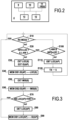
- the server 4 has the hardware architecture of a computer, as schematically illustrated in FIG. figure 2 .
- It comprises in particular a processor 9, a random access memory 10, a read-only memory 11, a non-volatile flash memory 12, as well as communication means 13 enabling it to communicate with the other equipment of the core network 2, but also with the various access points and base stations of the access networks enabling access to the multimedia IP core network 2 (namely in the example envisaged here with the access point 7 and with the base station 8).
- These communication means 13 also implement here a communication interface allowing the server 4 to supply and query various databases of the core network 2, and in particular in the embodiment described here, a first database DB1, a second database DB2 and a third database DB3.
- This communication interface uses for example the Diameter application protocol, known per se and commonly used in the cores of telecommunications networks.
- the database DB3 contains a map of the cellular networks likely to be used by the terminals 6 to access the core network 2: for each of these cellular networks (and therefore in particular for the cellular network C-NW illustrated in figure 1 ), the DB3 database lists all the cells in the cellular network (each identified by a unique identifier) and their geographical locations: thus, each cell identifier is associated in the DB3 database with a geographical position which corresponds for example to the center of the cell or to the position of the base station covering this cell.
- a database is known in itself, and is not described in more detail here.
- the contents of the DB1 and DB2 databases are however detailed in more detail later.
- the read-only memory 11 of the server 4 constitutes a recording medium in accordance with the invention, readable by the processor 9 and on which a computer program PROG in accordance with the invention is recorded:
- the program PROG here comprises instructions for executing the steps of the determination method according to the invention and for executing the steps of the management method according to the invention.
- separate programs can be envisaged for the two methods.
- FIG 3 represents the main steps of a determination method and a management method according to the invention as implemented by the server 4, in a particular embodiment. It is noted that in accordance with the invention, the management method integrates the steps of the determination method.
- terminals 6-1, 6-2 and 6-3 are equipped with location modules such as GPS modules and that these modules are activated, such that terminals 6-1 and 6-2 are able to communicate their geographical positions to the core network 2, for example in the form of GPS coordinates.
- terminal 6-3 does not have such a location module in the example considered here, or, if it has a location module, that its location function is deactivated: terminal 6-3 therefore does not provide any information on its geographical location when it communicates, in particular with core network 2.
- Terminals 6-1, 6-2 and 6-3 are also assumed to be initially connected to access point 7 of the local WiFI access network L-NW.
- terminal 6-1 sends a registration message to core network 2.
- server 4 applies the same processing to all messages sent by terminals attached to it, whether they are registration messages, communication initiation messages, etc.
- This geographic location information of the 6-1 terminal is inserted by the terminal itself in the "gp:location-info" field of the SIP REGISTER message signaling, when the terminal has (activated) location capabilities. They are described in more detail in the RFC 3863 document published by the IETF (August 2004).
- the server 4 On receipt of the SIP REGISTER message from the terminal 6-1 (yes response to test step E10), the server 4, via its extraction module 4A, determines whether the SIP REGISTER message received from the terminal 6-1 contains location information for the terminal inserted by the latter in the signaling of the message (test step E20). For this purpose, it examines here whether the signaling of the message contains a “gp: location-info” field.
- the server 4 also detects, via its extraction module 4A, that the terminal 6-1 used a local access network of the IEEE 802.11 type (WiFi access network) to send its message, and that it was connected for this purpose to the access point 7 whose hardware identifier (MAC address here) is given in the “P-Access-Network-Info” field of the SIP REGISTER message.
- the storage module 4B stores, in the first database DB1 here, in association with the hardware identifier ID(7) of the access point 7, the geographical location LOC(6-1) provided in the SIP REGISTER message by the terminal 6-1 (step E40).
- the updating of the database DB1 is carried out via an interface implementing the Diameter protocol, known per se.
- the extraction module 4A can further extract from the signaling of the SIP REGISTER message other location information of the terminal 6-1 than its GPS coordinates, such as for example the civic address corresponding to these coordinates, these information that can also be stored by the storage module 4B in the database DB1 in association with the hardware identifier ID(7) of the access point 7.
- steps E20 to E40 which have just been described can be implemented indifferently by the server 4 on receipt of the SIP REGISTER message or only after having been informed by the S-CSCF server of the multimedia IP core network 2 of the positive authentication of the terminal 6-1.
- the server 4 by means of its extraction module 4A, extracts other information from the signaling of the SIP REGISTER message received from the terminal 6-1, namely for example the IMSI identifier "208014449145219" of the terminal 6-1 included in the "username” field (step E50), and stores this IMSI identifier in association with the hardware identifier ID(7) of the access point 7 in the DB2 database (step E60).
- the DB2 database is updated via an interface implementing the Diameter protocol, known per se.
- the server 4 determines via its determination module 4C how many geographic locations are stored in association with the hardware identifier of the access point 7 in the database DB1 (test step E70). Indeed, as mentioned previously, steps E10 to E60 are implemented by the server 4 for all messages received from all terminals attached to it. In other words, for each message received via an access point of a local access network, the server 4 examines whether the message contains location information inserted by the terminal at the origin of the message and, if necessary, stores it in association with the hardware identifier of the access point in the database DB1. At a given time, there may therefore be several geographic locations of terminals (distinct or not) associated with the same hardware identifier of an access point.
- the server 4 processes the SIP REGISTER message from the terminal 6-1 as it usually does, and returns to waiting for a new message from a terminal.
- server 4 considers that there is sufficient information stored in database DB1 to reliably determine the geographic location of access point 7: more precisely, the module of determination 4C of the server 4 then determines from all the geographical locations of the terminals associated in the database DB1 the geographical location of the access point 7 (step E80).
- the threshold THR can be determined experimentally or be configurable.
- the geographic location of the access point 7 may be determined from the most recent or most frequent geographic location (stored in the DB1 database in association with the hardware identifier of the access point 7) (possibly taking into account a small maximum deviation between the geographic locations of the terminals considered to determine the most frequent location).
- the storage module 4C stores this location LOC(7) in association with the hardware identifier of the access point 7 in the database DB1 (step E90). Then the server 4 processes the SIP REGISTER message sent by the terminal 6-1 in the usual manner, and transmits it in the conventional manner to the other equipment of the core network 2 for processing.
- the determination module 4C determines the location LOC(7) of the access point 7 by calculating the barycenter of all the location information stored in association with the hardware identifier of the access point 7 in the database DB1.
- the determination module 4C only takes into account the location information stored in a predetermined time interval, in order to not take into account in particular information that is too old and that might no longer be relevant (the location information can be time-stamped for this purpose when it is recorded in the database DB1; the same applies to the geographical location determined for each access point).
- the determination module 4C can evaluate in advance whether certain geographical locations are aberrant on the basis of predetermined criteria, and not take the latter into account when determining the geographical location of the access point 7.
- steps E10 to E90 are repeated on each message received by the server 4 from terminals connected to various local access networks allowing access to the multimedia IP core network 2, and containing in their signaling, location information inserted by the terminals.
- the server 4 can proceed in a similar manner to what it does for local networks during steps E50 and E60 and extract from the signaling of the messages received an identifier of the cell to which the terminal is attached as well as other information such as a communication identifier (e.g. MSISDN) allocated to the user of the terminal, or a communication identifier of the terminal used on the core network (e.g. IMSI) or even a reachability address (IP address or URI) of the terminal, and store this information in association with an identifier of the cell in the second database (step not shown in the figure). figure 3 ).
- a communication identifier e.g. MSISDN
- IMSI IP address or URI
- the server 4 can furthermore store in the database DB1 in association with the hardware identifier of the access point in question, the geographical location of the cell to which the terminal is attached during its re-registration, and take into account this geographical location to determine the geographical location of the access point in question (or to update this geographical location). It is noted that the geographical location of the cell can be obtained by the server 4 by querying the database DB3 from the cell identifier included in the re-registration message received from the terminal.
- the server 4 can determine the geographic location of an access point by further using location information of a cell of a cellular access network to which the terminal was previously attached before registering or re-registering with the multimedia IP core network using the local access network and this access point.
- the geographical location of the access points of the local access networks used to access the core network 2 is important information that can be used in different ways.
- SIP REGISTER registration message (or SIP INVITE communication initiation) sent, via the local access network L-NW and the access point 7, by the terminal 6-3 which does not have a GPS location module or an activated location function.
- This SIP REGISTER message when received by the server 4 therefore does not contain any location information for the terminal 6-3 (response "no" to the test step E20 and response "yes" to the test step E100).
- the server 4 then extracts, via its extraction module 4A, the hardware identifier ID(7) of the access point 7 used by the terminal 6-1. Then it queries the database DB1 using this hardware identifier ID(7) to determine the geographical location LOC(7) of the access point 7 (step E110).
- the server 4 then inserts into the signaling of the message received from the terminal 6-1, the geographical location LOC(7) of the access point 7 as the geographical location of the terminal 6-1, and transfers the message thus modified to the relevant equipment of the core network.
- multimedia 2 for processing step E120.
- This equipment thus has information on the geographic location of the terminal 6-1 provided by the network, and can use it as needed to provide services based on this location.
- this information is provided by the network whether or not the message received by the server 4 contains location information provided by the terminal 6-3 (i.e., in the present example of use, the test E100 is not implemented).
- the latter can be distinguished by means, for example, of a valuation of the field ' ⁇ gp:method>' to 'networkHeuristic' in the presence information "application/pidf" (mentioned above) used to transmit the location information.
Landscapes
- Engineering & Computer Science (AREA)
- Computer Networks & Wireless Communication (AREA)
- Signal Processing (AREA)
- Radar, Positioning & Navigation (AREA)
- Remote Sensing (AREA)
- Multimedia (AREA)
- Physics & Mathematics (AREA)
- General Physics & Mathematics (AREA)
- Business, Economics & Management (AREA)
- General Business, Economics & Management (AREA)
- Mobile Radio Communication Systems (AREA)
Claims (17)
- Verfahren zur Bestimmung eines geografischen Standorts eines Zugangspunkts (7) eines drahtlosen lokalen Zugangsnetzes (L-NW), das es ermöglicht, auf ein IP-Multimedia-Kernnetz (2) zuzugreifen, wobei das Verfahren dazu bestimmt ist, von einem im Eingang des IP-Multimedia-Kernnetzes angeordneten Server (4) durchgeführt zu werden, und umfasst:- nach dem Empfangen (E10) mindestens einer Nachricht von mindestens einem Endgerät (6-1) über den Zugangspunkt, die eine Standortinformation (LOC(6)) des Endgeräts enthält, die von diesem in eine Signalisierung der Nachricht eingefügt wurde:o einen Schritt des Extrahierens (E30) einer Hardware-Kennung (ID(AP)) des Zugangspunkts aus der Signalisierung; undo einen Schritt des Speicherns (E40) der Standortinformation (LOC(6)), die von dem Endgerät in die Nachricht eingefügt wurde (E40), unter Zuordnung zu der Hardware-Kennung des Zugangspunkts (ID(AP)) in einer Datenbank (DB1);und- einen Schritt des Bestimmens (E80) eines geografischen Standorts (LOC(AP)) des Zugangspunkts (7) ausgehend von mindestens einer solchen unter Zuordnung zu der Hardware-Kennung des Zugangspunkts gespeicherten Standortinformation, wobei das Bestimmen die mindestens eine Standortinformation nur berücksichtigt, wenn sie in einem vorbestimmten Zeitintervall gespeichert worden ist, wobei die mindestens eine Standortinformation zu diesem Zweck bei ihrem Registrieren in der Datenbank (DB1) zeitgestempelt wird.
- Verfahren zur Bestimmung nach Anspruch 1, wobei bei dem Schritt des Bestimmens der geografische Standort des Zugangspunkts im Fall einer Mehrzahl von Standortinformationen bestimmt wird (E80):- indem ein Baryzentrum der Mehrzahl von Standortinformationen berechnet wird; oder- ausgehend von der neuesten Standortinformation, die unter Zuordnung zu der Hardware-Kennung des Zugangspunkts gespeichert wurde; oder- ausgehend von der häufigsten Standortinformation, die unter Zuordnung zu der Hardware-Kennung des Zugangspunkts gespeichert wurde.
- Verfahren zur Bestimmung nach Anspruch 1 oder 2, wobei bei dem Schritt des Bestimmens (E80) der geografische Standort des Zugangspunkts mittels einer Anzahl von Standortinformationen, die unter Zuordnung zu der Hardware-Kennung des Zugangspunkts gespeichert wurden, bestimmt wird, die größer als ein bestimmter Schwellenwert (THR) ist.
- Verfahren zur Bestimmung nach einem der Ansprüche 1 bis 3, wobei die Standortinformation (LOC(6)), die von dem Endgerät in die Nachricht eingefügt wird, GPS-Koordinaten (Global Positioning System) oder eine Straßenadresse des Endgeräts umfasst.
- Verfahren zur Bestimmung nach einem der Ansprüche 1 bis 4, wobei der geografische Standort des Zugangspunkts (LOC(AP)) bestimmt wird, indem ferner eine Standortinformation einer Zelle eines zellularen Zugangsnetzes verwendet wird, mit dem ein Endgerät bei einer Wiederregistrierung des Endgeräts bei dem IP-Multimedia-Kernnetz verbunden ist, wobei diese Wiederregistrierung auf eine vorhergehende Registrierung des Endgeräts bei dem IP-Kernnetz unter Verwendung des lokalen Zugangsnetzes und des Zugangspunkts erfolgt.
- Verfahren zur Bestimmung nach einem der Ansprüche 1 bis 5, wobei der geografische Standort des Zugangspunkts bestimmt wird, indem ferner eine Standortinformation einer Zelle eines zellularen Zugangsnetzes verwendet wird, mit dem ein Endgerät zuvor verbunden war, bevor es sich bei dem IP-Kernnetz unter Verwendung des lokalen Zugangsnetzes und des Zugangspunkts registriert oder wieder registriert.
- Verfahren zur Verwaltung mindestens einer Datenbank (DB1,DB2,DB3) eines IP-Multimedia-Kernnetzes (2) durch einen im Eingang des IP-Multimedia-Kernnetzes angeordneten Server (4), wobei das Verfahren, für mindestens einen Zugangspunkt mindestens eines lokalen Zugangsnetzes, das es ermöglicht, auf das IP-Multimedia-Kernnetz zuzugreifen, umfasst:- einen Schritt des Bestimmens (E80) eines geografischen Standorts des Zugangspunkts unter Verwendung eines Verfahrens zur Bestimmung nach einem der Ansprüche 1 bis 6; und- einen Schritt des Speicherns (E90) des geografischen Standorts des Zugangspunkts unter Zuordnung zu einer Hardware-Kennung des Zugangspunkts in einer ersten Datenbank des IP-Multimedia-Kernnetzes.
- Verfahren zur Verwaltung nach Anspruch 7, umfassend ferner, beim Empfangen mindestens einer Nachricht von einem Endgerät über einen Zugangspunkt eines lokalen Zugangsnetzes oder über eine Zelle eines zellularen Netzes, mit dem das Endgerät verbunden ist:- einen Schritt des Extrahierens, aus der Signalisierung der Nachricht, einer Hardware-Kennung des Zugangspunkts oder einer Kennung der Zelle und mindestens einer Information unter:o einer Verbindungskennung, die einem Benutzer des Endgeräts zugewiesen ist;o einer Verbindungskennung des Endgeräts, die in dem IP-Multimedia-Kernnetz verwendet wird; undo einer Erreichbarkeitsadresse des Endgeräts; und- einen Schritt des Speicherns der mindestens einen Information unter Zuordnung zu der Hardware-Kennung des Zugangspunkts oder zu der Kennung der Zelle in einer zweiten Datenbank (DB2) des IP-Multimedia-Kernnetzes.
- Verfahren zur Verwaltung nach Anspruch 8, umfassend ferner, wenn das Endgerät mit einer Zelle eines zellularen Netzes verbunden ist, einen Schritt des Speicherns eines geografischen Standorts der Zelle unter Zuordnung zu der Kennung der Zelle in einer dritten Datenbank (DB3) des IP-Multimedia-Kernnetzes.
- Verfahren zur Verwaltung nach einem der Ansprüche 7 bis 9, umfassend ferner, nach dem Empfangen (E10), durch den Server, einer Nachricht von einem Endgerät über einen Zugangspunkt eines lokalen Zugangsnetzes, das es ermöglicht, auf das IP-Multimedia-Kernnetz zuzugreifen:- einen Schritt des Extrahierens einer Hardware-Kennung des Zugangspunkts aus dieser Nachricht;- einen Schritt des Bestimmens (E110) eines geografischen Standorts des Zugangspunkts, welcher der aus der Nachricht extrahierten Hardware-Kennung zugeordnet ist, indem die erste Datenbank abgefragt wird; und- einen Schritt des Einfügens (E120) des geografischen Standorts des Zugangspunkts, der bei dem Schritt des Bestimmens bestimmt wurde, als geografischen Standort des Endgeräts in die Signalisierung der Nachricht, bevor die Nachricht an eine andere Einrichtung des IP-Multimedia-Kernnetzes weitergeleitet wird.
- Server (4), der dazu ausgestaltet ist, im Eingang eines IP-Multimedia-Kernnetzes angeordnet zu sein, umfassend Module, die dazu ausgestaltet sind, für mindestens einen Zugangspunkt mindestens eines lokalen Zugangsnetzes, das es ermöglicht, auf das IP-Multimedia-Netzwerk zuzugreifen, aktiviert zu werden, wobei die Module umfassen:- Extraktions- (4A) und Speichermodule (4B), die dazu ausgestaltet sind, nach dem Empfangen mindestens einer Nachricht über den Zugangspunkt von mindestens einem mit dem Zugangspunkt verbundenen Endgerät (6-1), deren Signalisierung eine Standortinformation des Endgeräts (LOC(6)) enthält, die von diesem eingefügt wurde, aktiviert zu werden, wobei das Extraktionsmodul dazu ausgestaltet ist, aus der Signalisierung eine Hardware-Kennung des Zugangspunkts (ID(AP)) zu extrahieren, und wobei das Speichermodul dazu ausgestaltet ist, die von dem Endgerät in die Nachricht eingefügte Standortinformation (LOC(6)) unter Zuordnung zu der von dem Extraktionsmodul extrahierten Hardware-Kennung des Zugangspunkts in einer Datenbank (DB1) zu speichern; und- ein Bestimmungsmodul (4C), das dazu ausgestaltet ist, einen geografischen Standort des Zugangspunkts ausgehend von mindestens einer solchen Standortinformation zu bestimmen, die von seinem Speichermodul unter Zuordnung zu der Hardware-Kennung des Zugangspunkts gespeichert wurde, wobei das Bestimmungsmodul (4C) dazu ausgestaltet ist, die mindestens eine Standortinformation nur zu berücksichtigen, wenn sie in einem vorbestimmten Zeitintervall gespeichert worden ist, wobei die mindestens eine Standortinformation zu diesem Zweck bei ihrem Registrieren in der Datenbank (DB1) zeitgestempelt wird.
- IP-Multimedia-Kernnetz (2), umfassend eine erste Datenbank (DB1) und einen Server (4) nach Anspruch 11, der dazu ausgestaltet ist, in der ersten Datenbank für den mindestens einen Zugangspunkt die Hardware-Kennung des mindestens einen Zugangspunkts unter Zuordnung zu dem von dem Bestimmungsmodul des Servers bestimmten geografischen Standort des Zugangspunkts zu speichern.
- IP-Multimedia-Kernnetz (2) nach Anspruch 12, das ferner eine zweite Datenbank (DB2) umfasst und bei dem das Extraktionsmodul des Servers dazu ausgestaltet ist, aus der Signalisierung mindestens einer Nachricht, die von einem Endgerät über einen Zugangspunkt eines lokalen Zugangsnetzes oder eine Zelle eines zellularen Netzes, mit dem das Endgerät verbunden ist, empfangen wird, eine Hardware-Kennung des Zugangspunkts oder eine Kennung der Zelle zu extrahieren sowie mindestens eine Information unter:- einer Verbindungskennung, die einem Benutzer des Endgeräts zugewiesen ist;- einer Verbindungskennung, die von dem Endgerät in dem IP-Multimedia-Kernnetz verwendet wird; und- einer Erreichbarkeitsadresse des Endgeräts;wobei das Speichermodul des Servers dazu ausgestaltet ist, die mindestens eine Information unter Zuordnung zu der Hardware-Kennung des Zugangspunkts oder zu der Kennung der Zelle in der zweiten Datenbank zu speichern.
- IP-Multimedia-Kernnetz nach Anspruch 12 oder 13, umfassend ferner eine dritte Datenbank (DB3), die für mindestens eine Zelle eines zellularen Zugangsnetzes, das den Zugriff auf das IP-Multimedia-Netz ermöglicht, eine Kennung dieser Zelle unter Zuordnung zu einem geografischen Standort dieser Zelle enthält.
- System (1), umfassend:- ein IP-Multimedia-Kernnetz (2) nach Anspruch 14; und- eine Software-Anwendung (3), die geeignet ist, einen Dienst bereitzustellen, wobei die Software-Anwendung dazu ausgestaltet ist, bei der Bereitstellung des Dienstes:indem die erste und/oder die zweite und/oder die dritte Datenbank des IP-Multimedia-Kernnetzes abgefragt wird.o einen Standort eines Benutzers eines Endgeräts ausgehend von einer dem Benutzer zugewiesenen Verbindungskennung zu identifizieren; und/odero Verbindungskennungen zu identifizieren, die Benutzern zugewiesen sind, die sich in einem bestimmten geografischen Bereich befinden; und/odero einen Standort eines Zugangspunkts eines lokalen Zugangsnetzes, das es ermöglicht, auf ein IP-Multimedia-Kernnetz zuzugreifen, ausgehend von einer Hardware-Kennung dieses Zugangspunkts zu identifizieren; und/odero einen Zugangspunkt eines lokalen Zugangsnetzes zu identifizieren, das in der Nähe eines bestimmten geografischen Bereichs gelegen ist;
- Computerprogramm (PROG), das Anweisungen enthält, die bei der Ausführung durch einen Computer den Computer veranlassen, die Schritte des Verfahrens nach einem der Ansprüche 1 bis 6 oder des Verfahren zur Verwaltung nach einem der Ansprüche 7 bis 10 auszuführen.
- Computerlesbares Speichermedium (10), auf dem ein Computerprogramm nach Anspruch 16 gespeichert ist.
Applications Claiming Priority (2)
| Application Number | Priority Date | Filing Date | Title |
|---|---|---|---|
| FR1856021A FR3081666A1 (fr) | 2018-06-29 | 2018-06-29 | Procede de determination d'une localisation geographique d'un point d'acces d'un reseau d'acces local sans fil |
| PCT/FR2019/051603 WO2020002852A1 (fr) | 2018-06-29 | 2019-06-28 | Procédé de détermination d'une localisation géographique d'un point d'accès d'un réseau d'accès local sans fil |
Publications (2)
| Publication Number | Publication Date |
|---|---|
| EP3815397A1 EP3815397A1 (de) | 2021-05-05 |
| EP3815397B1 true EP3815397B1 (de) | 2024-10-30 |
Family
ID=65031338
Family Applications (1)
| Application Number | Title | Priority Date | Filing Date |
|---|---|---|---|
| EP19752214.7A Active EP3815397B1 (de) | 2018-06-29 | 2019-06-28 | Verfahren zur bestimmung eines geografischen standorts eines zugangspunktes in einem drahtlosen lokalen zugangsnetz |
Country Status (4)
| Country | Link |
|---|---|
| US (1) | US11785573B2 (de) |
| EP (1) | EP3815397B1 (de) |
| FR (1) | FR3081666A1 (de) |
| WO (1) | WO2020002852A1 (de) |
Family Cites Families (11)
| Publication number | Priority date | Publication date | Assignee | Title |
|---|---|---|---|---|
| ITMI20070412A1 (it) * | 2007-03-01 | 2008-09-02 | Vodafone Omnitel Nv | Metodo per calcolare la posizione geografica di un terminale mobile. |
| JP5517199B2 (ja) * | 2010-01-19 | 2014-06-11 | 日本電気株式会社 | 同報配信制御装置、コール状態制御装置、フェムトセル用基地局、通信システム、方法および装置のプログラム |
| US9185139B2 (en) * | 2010-04-13 | 2015-11-10 | Verizon Patent And Licensing Inc. | Location based routing |
| US20120262335A1 (en) * | 2011-04-15 | 2012-10-18 | Qualcomm Incorporated | Network coverage and demand maps |
| US9161253B2 (en) * | 2011-10-03 | 2015-10-13 | Mediatel Inc. | QoS verification and throughput measurement for minimization of drive test |
| US8996052B1 (en) * | 2012-06-19 | 2015-03-31 | Google Inc. | Relating time-to-live information with location data |
| WO2015185118A1 (en) * | 2014-06-03 | 2015-12-10 | Telefonaktiebolaget L M Ericsson (Publ) | Establishing the location of unmanaged network access points |
| US9826370B2 (en) * | 2014-10-10 | 2017-11-21 | T-Mobile Usa, Inc. | Location identifiers in mobile messaging |
| US10205731B2 (en) * | 2015-09-25 | 2019-02-12 | Microsoft Technology Licensing, Llc | Contextually-aware location sharing services |
| WO2017142995A1 (en) * | 2016-02-16 | 2017-08-24 | Aisle411, Inc. | Systems and methods for improving indoor position detection |
| US10798182B2 (en) * | 2018-05-17 | 2020-10-06 | Cisco Technology, Inc. | Application function control of IP address allocation |
-
2018
- 2018-06-29 FR FR1856021A patent/FR3081666A1/fr not_active Withdrawn
-
2019
- 2019-06-28 EP EP19752214.7A patent/EP3815397B1/de active Active
- 2019-06-28 WO PCT/FR2019/051603 patent/WO2020002852A1/fr not_active Ceased
- 2019-06-28 US US17/255,377 patent/US11785573B2/en active Active
Also Published As
| Publication number | Publication date |
|---|---|
| US20210266862A1 (en) | 2021-08-26 |
| WO2020002852A1 (fr) | 2020-01-02 |
| EP3815397A1 (de) | 2021-05-05 |
| FR3081666A1 (fr) | 2019-11-29 |
| US11785573B2 (en) | 2023-10-10 |
Similar Documents
| Publication | Publication Date | Title |
|---|---|---|
| EP2772035B1 (de) | Verfahren zur verwaltung einer kommunikation für einen benutzer und anwendungsserver | |
| EP3417591B1 (de) | Verfahren und server zur auswahl eines eingabeservers eines ims-kommunikationsnetzwerks | |
| EP1782608A1 (de) | Verfahren und system zur benutzerlokalisierung für dienste auf der grundlage von sip- oder h.323-protokollen mit dynamischer ip-adressen-zuweisung | |
| EP2504982B1 (de) | Verfahren zur bewegung eines primären hss zu einem sicherheits hss in einem ip netzwerk | |
| EP3158709B1 (de) | Dynamische auswahl seitens eines anrufers aus einer vielzahl von endgeräten eines angerufenen | |
| EP3815397B1 (de) | Verfahren zur bestimmung eines geografischen standorts eines zugangspunktes in einem drahtlosen lokalen zugangsnetz | |
| EP3583757B1 (de) | Verfahren zum wechseln eines mobilnetzes | |
| EP3472993B1 (de) | Verfahren zur bestimmung eines satzes von codierungsformaten zum aufbau einer kommunikation | |
| WO2017203118A1 (fr) | Procédé de repli dans un réseau de télécommunication | |
| EP3391615B1 (de) | Verfahren zur kommunikation zwischen einem anrufenden endgerät und einer vielzahl angerufener endgeräte | |
| FR2980328A1 (fr) | Procede de traitement d'une requete d'un service dependant de la localisation d'un terminal mobile | |
| WO2012085429A2 (fr) | Procédé de localisation et d'identification d'un abonné connecté à un réseau émulant le rtc/rnis | |
| FR3004612A1 (fr) | Procede de restauration de service dans un reseau ims | |
| EP2801178B1 (de) | Dynamisches verfahren zur bestimmung einer liste von diensten in einem sip-netzwerk | |
| EP2429145B1 (de) | Rufpräsentationsverfahren in einem IMS-Netzwerk und Anwendungsserver zur Umsetzung dieses Verfahrens | |
| EP2859704A1 (de) | Anwendungsserver und verfahren zur verarbeitung einer nachricht für eine von mehreren vorrichtungen geteilte öffentliche identität | |
| FR2985135A1 (fr) | Procede de propagation des associations entre adresses de contact et identites privees dans un reseau ip. | |
| EP2073494A1 (de) | Communication session signalling method | |
| WO2012117178A1 (fr) | Procédé de gestion d'identites publiques par un utilisateur d'un reseau ims | |
| FR3034275A1 (fr) | Procede et dispositif du nommage d'un terminal | |
| WO2012049404A1 (fr) | Procede de traitement des flux de presence dans un reseau sip |
Legal Events
| Date | Code | Title | Description |
|---|---|---|---|
| STAA | Information on the status of an ep patent application or granted ep patent |
Free format text: STATUS: UNKNOWN |
|
| STAA | Information on the status of an ep patent application or granted ep patent |
Free format text: STATUS: THE INTERNATIONAL PUBLICATION HAS BEEN MADE |
|
| PUAI | Public reference made under article 153(3) epc to a published international application that has entered the european phase |
Free format text: ORIGINAL CODE: 0009012 |
|
| STAA | Information on the status of an ep patent application or granted ep patent |
Free format text: STATUS: REQUEST FOR EXAMINATION WAS MADE |
|
| 17P | Request for examination filed |
Effective date: 20210106 |
|
| AK | Designated contracting states |
Kind code of ref document: A1 Designated state(s): AL AT BE BG CH CY CZ DE DK EE ES FI FR GB GR HR HU IE IS IT LI LT LU LV MC MK MT NL NO PL PT RO RS SE SI SK SM TR |
|
| RAP3 | Party data changed (applicant data changed or rights of an application transferred) |
Owner name: ORANGE |
|
| DAV | Request for validation of the european patent (deleted) | ||
| DAX | Request for extension of the european patent (deleted) | ||
| STAA | Information on the status of an ep patent application or granted ep patent |
Free format text: STATUS: EXAMINATION IS IN PROGRESS |
|
| 17Q | First examination report despatched |
Effective date: 20221222 |
|
| GRAP | Despatch of communication of intention to grant a patent |
Free format text: ORIGINAL CODE: EPIDOSNIGR1 |
|
| STAA | Information on the status of an ep patent application or granted ep patent |
Free format text: STATUS: GRANT OF PATENT IS INTENDED |
|
| RIC1 | Information provided on ipc code assigned before grant |
Ipc: H04W 64/00 20090101ALI20240507BHEP Ipc: H04W 48/10 20090101ALI20240507BHEP Ipc: H04L 65/1104 20220101ALI20240507BHEP Ipc: H04L 65/1073 20220101ALI20240507BHEP Ipc: H04L 65/1016 20220101ALI20240507BHEP Ipc: G01S 19/51 20100101ALI20240507BHEP Ipc: G01S 5/00 20060101ALI20240507BHEP Ipc: H04W 4/02 20180101AFI20240507BHEP |
|
| INTG | Intention to grant announced |
Effective date: 20240529 |
|
| GRAS | Grant fee paid |
Free format text: ORIGINAL CODE: EPIDOSNIGR3 |
|
| GRAA | (expected) grant |
Free format text: ORIGINAL CODE: 0009210 |
|
| STAA | Information on the status of an ep patent application or granted ep patent |
Free format text: STATUS: THE PATENT HAS BEEN GRANTED |
|
| AK | Designated contracting states |
Kind code of ref document: B1 Designated state(s): AL AT BE BG CH CY CZ DE DK EE ES FI FR GB GR HR HU IE IS IT LI LT LU LV MC MK MT NL NO PL PT RO RS SE SI SK SM TR |
|
| REG | Reference to a national code |
Ref country code: GB Ref legal event code: FG4D Free format text: NOT ENGLISH |
|
| REG | Reference to a national code |
Ref country code: CH Ref legal event code: EP |
|
| REG | Reference to a national code |
Ref country code: IE Ref legal event code: FG4D Free format text: LANGUAGE OF EP DOCUMENT: FRENCH |
|
| REG | Reference to a national code |
Ref country code: DE Ref legal event code: R096 Ref document number: 602019061132 Country of ref document: DE |
|
| REG | Reference to a national code |
Ref country code: LT Ref legal event code: MG9D |
|
| REG | Reference to a national code |
Ref country code: NL Ref legal event code: MP Effective date: 20241030 |
|
| PG25 | Lapsed in a contracting state [announced via postgrant information from national office to epo] |
Ref country code: IS Free format text: LAPSE BECAUSE OF FAILURE TO SUBMIT A TRANSLATION OF THE DESCRIPTION OR TO PAY THE FEE WITHIN THE PRESCRIBED TIME-LIMIT Effective date: 20250228 Ref country code: HR Free format text: LAPSE BECAUSE OF FAILURE TO SUBMIT A TRANSLATION OF THE DESCRIPTION OR TO PAY THE FEE WITHIN THE PRESCRIBED TIME-LIMIT Effective date: 20241030 Ref country code: PT Free format text: LAPSE BECAUSE OF FAILURE TO SUBMIT A TRANSLATION OF THE DESCRIPTION OR TO PAY THE FEE WITHIN THE PRESCRIBED TIME-LIMIT Effective date: 20250228 |
|
| PG25 | Lapsed in a contracting state [announced via postgrant information from national office to epo] |
Ref country code: FI Free format text: LAPSE BECAUSE OF FAILURE TO SUBMIT A TRANSLATION OF THE DESCRIPTION OR TO PAY THE FEE WITHIN THE PRESCRIBED TIME-LIMIT Effective date: 20241030 Ref country code: NL Free format text: LAPSE BECAUSE OF FAILURE TO SUBMIT A TRANSLATION OF THE DESCRIPTION OR TO PAY THE FEE WITHIN THE PRESCRIBED TIME-LIMIT Effective date: 20241030 |
|
| REG | Reference to a national code |
Ref country code: AT Ref legal event code: MK05 Ref document number: 1738121 Country of ref document: AT Kind code of ref document: T Effective date: 20241030 |
|
| PG25 | Lapsed in a contracting state [announced via postgrant information from national office to epo] |
Ref country code: BG Free format text: LAPSE BECAUSE OF FAILURE TO SUBMIT A TRANSLATION OF THE DESCRIPTION OR TO PAY THE FEE WITHIN THE PRESCRIBED TIME-LIMIT Effective date: 20241030 |
|
| PG25 | Lapsed in a contracting state [announced via postgrant information from national office to epo] |
Ref country code: ES Free format text: LAPSE BECAUSE OF FAILURE TO SUBMIT A TRANSLATION OF THE DESCRIPTION OR TO PAY THE FEE WITHIN THE PRESCRIBED TIME-LIMIT Effective date: 20241030 |
|
| PG25 | Lapsed in a contracting state [announced via postgrant information from national office to epo] |
Ref country code: NO Free format text: LAPSE BECAUSE OF FAILURE TO SUBMIT A TRANSLATION OF THE DESCRIPTION OR TO PAY THE FEE WITHIN THE PRESCRIBED TIME-LIMIT Effective date: 20250130 |
|
| PG25 | Lapsed in a contracting state [announced via postgrant information from national office to epo] |
Ref country code: AT Free format text: LAPSE BECAUSE OF FAILURE TO SUBMIT A TRANSLATION OF THE DESCRIPTION OR TO PAY THE FEE WITHIN THE PRESCRIBED TIME-LIMIT Effective date: 20241030 Ref country code: GR Free format text: LAPSE BECAUSE OF FAILURE TO SUBMIT A TRANSLATION OF THE DESCRIPTION OR TO PAY THE FEE WITHIN THE PRESCRIBED TIME-LIMIT Effective date: 20250131 Ref country code: LV Free format text: LAPSE BECAUSE OF FAILURE TO SUBMIT A TRANSLATION OF THE DESCRIPTION OR TO PAY THE FEE WITHIN THE PRESCRIBED TIME-LIMIT Effective date: 20241030 |
|
| PG25 | Lapsed in a contracting state [announced via postgrant information from national office to epo] |
Ref country code: PL Free format text: LAPSE BECAUSE OF FAILURE TO SUBMIT A TRANSLATION OF THE DESCRIPTION OR TO PAY THE FEE WITHIN THE PRESCRIBED TIME-LIMIT Effective date: 20241030 |
|
| PG25 | Lapsed in a contracting state [announced via postgrant information from national office to epo] |
Ref country code: RS Free format text: LAPSE BECAUSE OF FAILURE TO SUBMIT A TRANSLATION OF THE DESCRIPTION OR TO PAY THE FEE WITHIN THE PRESCRIBED TIME-LIMIT Effective date: 20250130 |
|
| PG25 | Lapsed in a contracting state [announced via postgrant information from national office to epo] |
Ref country code: SM Free format text: LAPSE BECAUSE OF FAILURE TO SUBMIT A TRANSLATION OF THE DESCRIPTION OR TO PAY THE FEE WITHIN THE PRESCRIBED TIME-LIMIT Effective date: 20241030 |
|
| PGFP | Annual fee paid to national office [announced via postgrant information from national office to epo] |
Ref country code: DE Payment date: 20250520 Year of fee payment: 7 |
|
| PG25 | Lapsed in a contracting state [announced via postgrant information from national office to epo] |
Ref country code: DK Free format text: LAPSE BECAUSE OF FAILURE TO SUBMIT A TRANSLATION OF THE DESCRIPTION OR TO PAY THE FEE WITHIN THE PRESCRIBED TIME-LIMIT Effective date: 20241030 |
|
| PGFP | Annual fee paid to national office [announced via postgrant information from national office to epo] |
Ref country code: GB Payment date: 20250520 Year of fee payment: 7 |
|
| PG25 | Lapsed in a contracting state [announced via postgrant information from national office to epo] |
Ref country code: EE Free format text: LAPSE BECAUSE OF FAILURE TO SUBMIT A TRANSLATION OF THE DESCRIPTION OR TO PAY THE FEE WITHIN THE PRESCRIBED TIME-LIMIT Effective date: 20241030 |
|
| PGFP | Annual fee paid to national office [announced via postgrant information from national office to epo] |
Ref country code: FR Payment date: 20250520 Year of fee payment: 7 |
|
| PG25 | Lapsed in a contracting state [announced via postgrant information from national office to epo] |
Ref country code: RO Free format text: LAPSE BECAUSE OF FAILURE TO SUBMIT A TRANSLATION OF THE DESCRIPTION OR TO PAY THE FEE WITHIN THE PRESCRIBED TIME-LIMIT Effective date: 20241030 |
|
| PG25 | Lapsed in a contracting state [announced via postgrant information from national office to epo] |
Ref country code: SK Free format text: LAPSE BECAUSE OF FAILURE TO SUBMIT A TRANSLATION OF THE DESCRIPTION OR TO PAY THE FEE WITHIN THE PRESCRIBED TIME-LIMIT Effective date: 20241030 |
|
| PG25 | Lapsed in a contracting state [announced via postgrant information from national office to epo] |
Ref country code: CZ Free format text: LAPSE BECAUSE OF FAILURE TO SUBMIT A TRANSLATION OF THE DESCRIPTION OR TO PAY THE FEE WITHIN THE PRESCRIBED TIME-LIMIT Effective date: 20241030 |
|
| PG25 | Lapsed in a contracting state [announced via postgrant information from national office to epo] |
Ref country code: IT Free format text: LAPSE BECAUSE OF FAILURE TO SUBMIT A TRANSLATION OF THE DESCRIPTION OR TO PAY THE FEE WITHIN THE PRESCRIBED TIME-LIMIT Effective date: 20241030 |
|
| REG | Reference to a national code |
Ref country code: DE Ref legal event code: R097 Ref document number: 602019061132 Country of ref document: DE |
|
| PLBE | No opposition filed within time limit |
Free format text: ORIGINAL CODE: 0009261 |
|
| STAA | Information on the status of an ep patent application or granted ep patent |
Free format text: STATUS: NO OPPOSITION FILED WITHIN TIME LIMIT |
|
| PG25 | Lapsed in a contracting state [announced via postgrant information from national office to epo] |
Ref country code: SE Free format text: LAPSE BECAUSE OF FAILURE TO SUBMIT A TRANSLATION OF THE DESCRIPTION OR TO PAY THE FEE WITHIN THE PRESCRIBED TIME-LIMIT Effective date: 20241030 |
|
| 26N | No opposition filed |
Effective date: 20250731 |
|
| REG | Reference to a national code |
Ref country code: CH Ref legal event code: H13 Free format text: ST27 STATUS EVENT CODE: U-0-0-H10-H13 (AS PROVIDED BY THE NATIONAL OFFICE) Effective date: 20260127 |
|
| PG25 | Lapsed in a contracting state [announced via postgrant information from national office to epo] |
Ref country code: MC Free format text: LAPSE BECAUSE OF FAILURE TO SUBMIT A TRANSLATION OF THE DESCRIPTION OR TO PAY THE FEE WITHIN THE PRESCRIBED TIME-LIMIT Effective date: 20241030 |