EP3815246B1 - Vom hintergrundpegel abhängige dynamische lautstärkepegel - Google Patents
Vom hintergrundpegel abhängige dynamische lautstärkepegel Download PDFInfo
- Publication number
- EP3815246B1 EP3815246B1 EP19820967.8A EP19820967A EP3815246B1 EP 3815246 B1 EP3815246 B1 EP 3815246B1 EP 19820967 A EP19820967 A EP 19820967A EP 3815246 B1 EP3815246 B1 EP 3815246B1
- Authority
- EP
- European Patent Office
- Prior art keywords
- volume
- background noise
- delta
- loudness
- noise level
- Prior art date
- Legal status (The legal status is an assumption and is not a legal conclusion. Google has not performed a legal analysis and makes no representation as to the accuracy of the status listed.)
- Active
Links
Images




Classifications
-
- H—ELECTRICITY
- H04—ELECTRIC COMMUNICATION TECHNIQUE
- H04R—LOUDSPEAKERS, MICROPHONES, GRAMOPHONE PICK-UPS OR LIKE ACOUSTIC ELECTROMECHANICAL TRANSDUCERS; ELECTRIC HEARING AIDS; PUBLIC ADDRESS SYSTEMS
- H04R3/00—Circuits for transducers
- H04R3/04—Circuits for transducers for correcting frequency response
-
- H—ELECTRICITY
- H03—ELECTRONIC CIRCUITRY
- H03G—CONTROL OF AMPLIFICATION
- H03G7/00—Volume compression or expansion in amplifiers
- H03G7/008—Control by a pilot signal
-
- G—PHYSICS
- G10—MUSICAL INSTRUMENTS; ACOUSTICS
- G10L—SPEECH ANALYSIS TECHNIQUES OR SPEECH SYNTHESIS; SPEECH RECOGNITION; SPEECH OR VOICE PROCESSING TECHNIQUES; SPEECH OR AUDIO CODING OR DECODING
- G10L21/00—Speech or voice signal processing techniques to produce another audible or non-audible signal, e.g. visual or tactile, in order to modify its quality or its intelligibility
- G10L21/02—Speech enhancement, e.g. noise reduction or echo cancellation
- G10L21/0208—Noise filtering
- G10L21/0216—Noise filtering characterised by the method used for estimating noise
- G10L21/0232—Processing in the frequency domain
-
- H—ELECTRICITY
- H03—ELECTRONIC CIRCUITRY
- H03G—CONTROL OF AMPLIFICATION
- H03G3/00—Gain control in amplifiers or frequency changers
- H03G3/20—Automatic control
- H03G3/30—Automatic control in amplifiers having semiconductor devices
- H03G3/32—Automatic control in amplifiers having semiconductor devices the control being dependent upon ambient noise level or sound level
-
- H—ELECTRICITY
- H04—ELECTRIC COMMUNICATION TECHNIQUE
- H04R—LOUDSPEAKERS, MICROPHONES, GRAMOPHONE PICK-UPS OR LIKE ACOUSTIC ELECTROMECHANICAL TRANSDUCERS; ELECTRIC HEARING AIDS; PUBLIC ADDRESS SYSTEMS
- H04R5/00—Stereophonic arrangements
- H04R5/027—Spatial or constructional arrangements of microphones, e.g. in dummy heads
-
- H—ELECTRICITY
- H04—ELECTRIC COMMUNICATION TECHNIQUE
- H04R—LOUDSPEAKERS, MICROPHONES, GRAMOPHONE PICK-UPS OR LIKE ACOUSTIC ELECTROMECHANICAL TRANSDUCERS; ELECTRIC HEARING AIDS; PUBLIC ADDRESS SYSTEMS
- H04R5/00—Stereophonic arrangements
- H04R5/04—Circuit arrangements, e.g. for selective connection of amplifier inputs/outputs to loudspeakers, for loudspeaker detection, or for adaptation of settings to personal preferences or hearing impairments
-
- H—ELECTRICITY
- H04—ELECTRIC COMMUNICATION TECHNIQUE
- H04R—LOUDSPEAKERS, MICROPHONES, GRAMOPHONE PICK-UPS OR LIKE ACOUSTIC ELECTROMECHANICAL TRANSDUCERS; ELECTRIC HEARING AIDS; PUBLIC ADDRESS SYSTEMS
- H04R2430/00—Signal processing covered by H04R, not provided for in its groups
- H04R2430/01—Aspects of volume control, not necessarily automatic, in sound systems
Definitions
- Each device may have a default quantity of increments between a minimum volume and a maximum volume. Each device may have a different default increase or decrease in volume from one increment to the next adjacent increment.
- a user may provide an input. The input may increase or decrease the volume one increment at a time. A user may have to provide numerous inputs to obtain a desired volume.
- determining a background noise level may, for example, be based on at least one audio signal generated by one or more microphones listening to the background noise.
- One aspect of the disclosure provides for a device having one or more microphones, and one or more processors in communication with the one or more microphones.
- the one or more processors are configured to determine a background noise level and adjust a quantity of volume levels based on the determined background noise level.
- the quantity of volume levels is the total number of increments between a minimum volume and a maximum volume. Based on a single volume adjustment command the volume level may be changed, i.e., increased or decreased, by an increment from one volume level to another.
- the volume levels are incremental increases in volume between a minimum volume for the device and a maximum volume for the device. Accordingly, by adjusting the quantity of volume levels the number of volume adjustment commands required for changing a volume level from a minimum volume to a maximum volume or from a maximum volume to a minimum volume is adjusted.
- the one or more processors are configured to adjust a loudness delta based on the determined background noise level.
- the loudness delta is the difference between a first volume level and a second volume level.
- the difference between one volume level and an adjacent volume level is the loudness delta.
- the loudness delta may, for example, be dynamically adjusted as the background noise level exceeds or falls below a threshold value or as a change in the background noise level is greater than a threshold difference value.
- the loudness delta may thus be changed upon determining an absolute background noise level above a (high) threshold value or below a (low) threshold value. Additionally or alternatively, the loudness delta may be changed upon determining a change in the background noise level above a threshold delta.
- the quantity of volume levels may decrease in response to an increased background noise level or the quantity of volume levels may increase in response to a lower background noise level.
- the quantity of volume levels may, for example, be dynamically adjusted as the background noise level exceeds or falls below a threshold value or as a change in the background noise level is greater than a threshold difference value. The quantity may thus be changed upon determining an absolute background noise level above a (high) threshold value or below a (low) threshold value. Additionally or alternatively, the quantity may be changed upon determining a change in the background noise level above a threshold delta.
- the loudness delta may increase in response to an increased background noise level or the loudness delta may decrease in response to a lower background noise level.
- quantity of volume levels may be adjusted to a quantity different from a default quantity and/or the loudness delta may be adjusted to a delta different from a default delta.
- Another aspect of the invention provides a method of dynamically adjusting a quantity of volume levels and/or a loudness delta.
- the method includes receiving a volume adjustment command for adjusting a volume, determining a background noise level, and determining a current playback volume.
- the method includes adjusting, based on the determined background noise level and/or current playback volume, the quantity of volume levels, the quantity of volume levels being a total number of increments between a minimum volume and a maximum volume, and/or a loudness delta, the loudness delta being the difference between a first volume level and a second adjacent volume, adjusting the quantity of volume levels and/or the loudness delta thereby resulting in adjusting a number of volume adjustment commands required for changing a volume level from the minimum volume to the maximum level or from the maximum volume to the minimum volume.
- the systems and methods described herein relates to a device that may allow for dynamic adjustment of the quantity of volume levels and/or the loudness delta based on a background noise level.
- the device may have a default quantity of volume levels between a minimum volume and a maximum volume, where the default quantity is automatically adjusted to more or fewer volume levels depending on a background noise level when the device is in use.
- the device may also have a default loudness delta. In some instances, the loudness delta may be measured in decibels ("dB”) or decibels of sound pressure level (“dB SPL").
- Figure 1A illustrates a first quantity of volume levels, each with a first loudness delta.
- the first quantity of volume levels and first loudness delta may be the default quantity and default loudness delta.
- the default quantity and the default loudness delta may be different.
- Figure 1B illustrates the quantity of volume levels and the loudness delta when the device is in an environment with increased, or loud, background noise, according to one example.
- the quantity of volume levels 104 may decrease as compared to the default quantity of volume levels 102.
- the quantity of volume levels 104 may decrease to three between the minimum volume MIN and the maximum volume MAX, as compared to seven default volume levels 102.
- the loudness delta 114 may increase as compared to the default loudness delta 112.
- Figure 1C illustrates an example of the quantity of volume levels and the loudness delta when in an environment with decreased, or low, background noise.
- the quantity of volume levels 106 may decrease as compared to the default quantity of volume levels 102.
- the quantity of volume levels 106 may increase to eleven between the minimum volume MIN and the maximum volume MAX, as compared to seven default volume levels 102.
- Figures 1A-1C provide several examples of how the quantity of volume levels and/or the loudness deltas can change, it should be understood that any number of additional levels of adjustment are possible.
- background noise levels can be categories into a number of ranges.
- three ranges may include: (1) 0-30dB; (2) 31-60dB; and (3) 61dB+.
- five ranges may include: (1) 0-20db; (2) 21-40dB; (3) 41-60dB; (4) 61-80dB; (5) 81dB+.
- Each range may be associated with a different quantity of volume levels between the minimum and maximum outputs played by an audio accessory, or each range may be associated with a different loudness delta between each volume level between the minimum and maximum.
- each of Figures 1A-1C depict the loudness delta between each volume level as being the same (e.g., loudness deltas 112 are all the same; loudness deltas 114 are all the same, etc.), in some examples the loudness delta may vary from one pair of adjacent volume levels to another pair of adjacent volume levels.
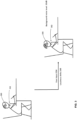
- Figure 2 illustrates the dynamic adjustment of the quantity of volume levels and loudness delta in a location with an increased or relatively loud background noise level.
- the background noise level may be between 80-90dB.
- a user 202 may increase the playback volume to hear the output better.
- volume adjustment is performed with a tap, swipe, or the like, the user 202 may not want to provide numerous taps, swipes, etc. to achieve an audible playback level through the audio device.
- the user 202 may provide one or two input commands to reach a desired volume, instead of eight or twelve.
- the quantity of volume levels and the loudness delta may dynamically adjust to decrease the quantity of volume levels and increase the loudness delta, as seen in comparing Figure 1A and Figure 1B .
- the default loudness delta may be 3dB.
- the loudness delta may be 5dB, an increase of 2dB from the default. Therefore, according to some examples, this may result in requiring fewer user inputs to reach the desired volume.
- the change in quantity of volume levels or loudness delta may be more or less.
- the loudness delta may change from 3dB to 8dB, or the quantity of volume levels may change from 10 to 5, etc.
- Figure 3 illustrates the dynamic adjustment of the quantity of volume levels and the loudness delta in a location with a decreased, or relatively quiet or low, background noise level.
- the background noise level may be 30dB.
- the user 202 may increase the playback volume to hear the output better.
- the user 302 may provide an input command multiple times to adjust the playback volume from their earbuds 200.
- the user 202 may provide numerous taps, swipes, etc. to achieve the desired playback volume level through the device.
- the user 202 may provide numerous taps, swipes, etc.
- the user 202 may provide one or two input commands to reach a desired volume, instead of eight or twelve. Accordingly, when a user 302 provides a user input 304 to the earbuds 300, the quantity of volume levels and the loudness delta may dynamically adjust to increase the quantity of volume levels and decrease the loudness delta between adjacent volume levels, as seen in comparing Figure 1A and Figure 1C . According to some examples, the default loudness delta may be 3dB. However, in response to a low background noise level the loudness delta may be 2dB. This may result in requiring more user inputs 304 to reach a desired playback volume.
- the volume delta may be smaller which may allow for a user to more easily select the appropriate, or preferred, playback volume in a setting with a low background noise level.
- the change in quantity of volume levels or loudness delta may be more or less.
- the loudness delta may change from 3dB to 1dB, or the quantity of volume levels may change from 5 to 10, etc.
- a user transition from a first location with a relatively loud background noise level to a second location with a decreased background noise level.
- the device may dynamically adjust quantity of volume levels and the loudness delta.
- the dynamic adjustment may be seen as a transition from the quantity of volume levels and the loudness delta shown Figure 1B to those shown in Figure 1C .
- the quantity of volume levels may increase and the loudness delta may decrease.
- the change in the quantity of volume levels may be more going from a location with a relatively loud background noise level to a location with a relatively low background noise level, e.g., Figure 1B where there are 3 volume levels to Figure 1C where there are 11 volume levels, as compared to when a user goes from default quantity of volume levels to area location with a relatively low background noise level, e.g., Figure 1A where there are 7 volume levels to Figure 1C where there are 11 volume levels.
- the same comparison may apply for the adjustment of the loudness delta.
- the difference between the loudness delta when in a location with a relatively loud background noise level to a loudness delta in a location with a relatively low background noise level may be greater than the difference between the default loudness delta and the loudness delta in a low background noise level.
- a user may transition from a first location with a relatively low background noise level to a second location with an increased background noise level as compared to the first location.
- the device may determine the background noise level may be determined as well as the current playback volume. Based on the determined background noise level and current playback volume, the device may dynamically adjust the quantity of volume levels and the loudness delta.
- the dynamic adjustment for example, may be seen as a transition from the quantity of volume levels and the loudness delta shown in Figure 1C to those shown in Figure 1B . For instance, the quantity of volume levels may decrease and the loudness delta may increase.
- Figure 4A illustrates an example device capable of dynamically adjusting the quantity of volume levels based on the background noise level.
- the device 400 is a pair of earbuds.
- any of a variety of other devices may be used, such as augmented reality and/or virtual reality headsets 450 ( Figure 4B ), Bluetooth enabled headsets 460 ( Figure 4C ), glasses, head-mountable displays, smart watches, mobile phones and/or smart phones, tablets, music players, game consoles, motorcycle helmets, etc.
- the device 400 may be configured to wirelessly couple with another device, such as a phone, laptop, tablet, music player, or the like.
- the wireless coupling may be established using any of a variety of techniques, such as Bluetooth, Bluetooth low energy (BLE), etc.
- the device 400 may be configured to output audio independent of a connection to another device.
- the device 400 may include a memory for storing audio content, may stream audio content from the cloud, etc.
- the device 400 may include an inner portion 410, for being inserted into a user's ear.
- the inner portion may include inner microphone 415 and an output, or speaker, not shown, at or near the same location as inner microphone 415.
- the device 400 may also include an outer portion 420 which may include an outer surface 425.
- touch input may be provided to an outer portion 420, such as to outer surface 425.
- Such touch input may, by way of example only, switch the device 400 to a different mode, such as an input mode where user's voice is detected as opposed to a sound emission only mode.
- the touch input may change a song being played, adjust volume, switch from a music player mode to answer an incoming call, etc.
- the device 400 may be adapted to perform a plurality of different functions, detecting which function is desired based on a duration of the touch input. For example, whereas a held touch may place the device 400 into voice reception mode, a short tap may change a song being played, and a swipe may increase or decrease the volume.
- Fig. 5 provides an example block diagram illustrating components of the device 500.
- the device 500 includes various components, such as one or more processors 502, memory 504, and other components typically present in microprocessors, general purpose computers, or the like.
- Device 500 also includes input 510, an inner microphone 512, one or more outer microphones 514 and an output 516.
- the one or more processors 502 may be any conventional processors, such as commercially available microprocessors. Alternatively, the one or more processors may be a dedicated device such as an application specific integrated circuit (ASIC) or other hardware-based processor.
- ASIC application specific integrated circuit
- FIG. 5 functionally illustrates the processor, memory, and other elements of device 500 as being within the same block, it will be understood by those of ordinary skill in the art that the processor, computing device, or memory may actually include multiple processors, computing devices, or memories that may or may not be stored within the same physical housing. Similarly, the memory may be a hard drive or other storage media located in a housing different from that of device 200. Accordingly, references to a processor or computing device will be understood to include references to a collection of processors or computing devices or memories that may or may not operate in parallel.
- Memory 504 may store information that is accessible by the processors 502, including instructions 506 that may be executed by the processors 502, and data 508.
- the memory 504 may be of a type of memory operative to store information accessible by the processors 502, including a non-transitory computer-readable medium, or other medium that stores data that may be read with the aid of an electronic device, such as a hard-drive, memory card, read-only memory (“ROM”), random access memory (“RAM”), optical disks, as well as other write-capable and read-only memories.
- ROM read-only memory
- RAM random access memory
- optical disks as well as other write-capable and read-only memories.
- Data 508 may be retrieved, stored or modified by processors 502 in accordance with the instructions 506.
- the data 508 may be stored in computer registers, in a relational database as a table having a plurality of different fields and records, XML documents, or flat files.
- the data 508 may also be formatted in a computer-readable format such as, but not limited to, binary values, ASCII or Unicode.
- the data 508 may be stored as bitmaps comprised of pixels that are stored in compressed or uncompressed, or various image formats (e.g., JPEG), vector-based formats (e.g., SVG) or computer instructions for drawing graphics.
- the data 508 may comprise information sufficient to identify the relevant information, such as numbers, descriptive text, proprietary codes, pointers, references to data stored in other memories (including other network locations) or information that is used by a function to calculate the relevant data.
- the instructions 506 can be any set of instructions to be executed directly, such as machine code, or indirectly, such as scripts, by the processor 502.
- the terms "instructions,” “application,” “steps,” and “programs” can be used interchangeably herein.
- the instructions can be stored in object code format for direct processing by the processor, or in any other computing device language including scripts or collections of independent source code modules that are interpreted on demand or compiled in advance. Functions, methods and routines of the instructions are explained in more detail below.
- the device 500 may further include an input 510 for receiving volume adjustment commands.
- the input 510 may be, for example, a touch sensor.
- the device 500 may also include an output 516.
- the output 516 may be, for example, a speaker.
- Device 500 may have one or more microphones in a variety of locations.
- inner microphone 512 may be located such that it can determine a playback volume.
- the device 500 may include other components which are not shown, such as a battery, charging input for the battery, signals processing components, etc. Such components may also be utilized in execution of the instructions 506.
- Figure 6 illustrates a sequence of steps that may occur when the device dynamically adjusts the quantity of volume steps and/or the loudness delta.
- the device may receive volume adjustment commands to adjust the volume.
- the device may include at least one or more touch sensors for generating volume adjustment commands.
- the volume adjustment command may, in some examples, be generated by a touch input.
- a user may swipe the input in a particular direction to increase the volume or swipe in a different direction to decrease the volume.
- the device may determine a background noise level.
- the one or more microphones may be listening to the background noise.
- the outer microphone(s) may be listening to the background noise.
- the inner microphone may be listening to the background noise.
- the background noise picked up by the one or more microphones may then be processed to determine the outside noise level.
- the background noise level in a quiet place such as a library, may be 30dB.
- the background noise level in a busy place, such as on a city street may be between 80-90dB.
- the background noise level may be 90dB and above when the user is performing a noisy activity, such as mowing the lawn using a gas powered lawnmower or attending a concert.
- the device may have one or more microphones to determine a current playback volume.
- an inner microphone may determine the current playback volume.
- the outer microphone(s) may determine the current playback volume. While determining the current playback volume is shown as occurring after determining the background noise level, determining the current playback volume may occur before or at the same time the background noise level is determined.
- the one or more microphone(s) may be listening to what the user may hear.
- the playback volume picked up by the one or more microphone(s) may then be processed to determine the playback volume.
- a false trigger may include the device dynamically adjusting the quantity of volume levels and/or the loudness delta when it is unwanted or unnecessary.
- the device may compare the background noise level picked up by the outer microphone and the playback volume picked up by the inner microphone. For example, the comparison of the background noise level and the playback volume may allow the device to differentiate between a user who is a loud talker and a user who is talking loud to be heard over the loud background noise level. This may prevent the device from dynamically adjusting the quantity of volume levels and/or the loudness delta when it is unnecessary.
- the device may compare the sound heard by any two microphones on the device, such as two outer microphones, to prevent a false trigger.
- the device may adjust a quantity of volume levels.
- the quantity of volume levels may decrease.
- the quantity of volume levels may increase.
- the device may not adjust the quantity of volume levels.
- the quantity of volume levels may decrease.
- the device in block 650, may adjust a loudness delta.
- the loudness delta may be adjusted at the same time, before, or after the quantity of volume levels is adjusted.
- the device may adjust a loudness delta without adjusting the quantity of volume levels.
- the device may not adjust a loudness delta and may only adjust the quantity of volume levels.
- the loudness delta may increase when the determined background noise level has increased.
- the background noise level decreases, the loudness delta may decrease.
- the device may not adjust the loudness delta.
- the loudness delta may increase.
- the device may adjust the volume.
Landscapes
- Engineering & Computer Science (AREA)
- Physics & Mathematics (AREA)
- Acoustics & Sound (AREA)
- Signal Processing (AREA)
- Computational Linguistics (AREA)
- Quality & Reliability (AREA)
- Health & Medical Sciences (AREA)
- Audiology, Speech & Language Pathology (AREA)
- Human Computer Interaction (AREA)
- Multimedia (AREA)
- Circuit For Audible Band Transducer (AREA)
- Telephone Function (AREA)
Claims (13)
- Vorrichtung, umfassend:ein oder mehrere Mikrofone (512, 514); undeinen oder mehrere Prozessoren (502) in Kommunikation mit dem einen oder den mehreren Mikrofonen, wobei der eine oder die mehreren Prozessoren konfiguriert sind zum:Empfangen von Lautstärkeanpassungsbefehlen;Ermitteln eines Hintergrundgeräuschpegels; undAnpassen, basierend auf dem ermittelten Hintergrundgeräuschpegel, zumindest eines von einer Menge von Lautstärkepegeln (102), wobei die Menge von Lautstärkepegeln eine Gesamtanzahl an Erhöhungen zwischen einer minimalen Lautstärke und einer maximalen Lautstärke ist, und einem Lautstärkedelta (112), wobei das Lautstärkedelta die Differenz zwischen einem ersten Lautstärkepegel und einem zweiten angrenzenden Lautstärkepegel ist, der in Reaktion auf einen einzelnen Lautstärkeanpassungsbefehl erhalten wird,wobei das Anpassen zumindest eines von der Menge von Lautstärkepegeln und dem Lautstärkedelta ein Anpassen einer Anzahl an Lautstärkeanpassungsbefehlen bewirkt, die zum Ändern eines Lautstärkepegels von der minimalen Lautstärke zu der maximalen Lautstärke oder von der maximalen Lautstärke zu der minimalen Lautstärke erforderlich sind.
- Vorrichtung nach Anspruch 1, wobei der eine oder die mehreren Prozessoren konfiguriert sind, die Menge von Lautstärkepegeln und/oder das Lautstärkedelta dynamisch anzupassen, wenn eine Änderung des Hintergrundgeräuschpegels ermittelt wird.
- Vorrichtung nach Anspruch 2, wobei der eine oder die mehreren Prozessoren konfiguriert sind, die Menge von Lautstärkepegeln und/oder das Lautstärkedelta dynamisch anzupassen, wenn der Hintergrundgeräuschpegel einen Schwellenwert übersteigt oder unterschreitet oder wenn eine Änderung des Hintergrundgeräuschpegels größer als ein Schwellendifferenzwert ist.
- Vorrichtung nach Anspruch 2 oder 3, wobei die Menge von Lautstärkepegeln in Reaktion auf einen erhöhten Hintergrundgeräuschpegel abnimmt und/oder die Menge von Lautstärkepegeln in Reaktion auf ein niedrigeres Hintergrundgeräusch zunimmt.
- Vorrichtung nach Anspruch 2, 3 oder 4, wobei das Lautstärkedelta in Reaktion auf einen erhöhten Hintergrundgeräuschpegel zunimmt und/oder das Lautstärkedelta in Reaktion auf einen niedrigeren Hintergrundgeräuschpegel abnimmt.
- Vorrichtung nach einem der vorhergehenden Ansprüche, wobei der eine oder die mehreren Prozessoren konfiguriert sind, die Menge von Lautstärkepegeln auf eine sich von einer Standardmenge unterscheidenden Menge einzustellen, und/oder der eine oder die mehreren Prozessoren konfiguriert sind, das Lautstärkedelta auf eine Menge einzustellen, die sich von einem Standard-Lautstärkedelta unterscheidet.
- Vorrichtung nach einem der vorhergehenden Ansprüche, wobei das eine oder die mehreren Mikrofone ein inneres Mikrofon umfassen, das eine Lautstärke erfasst, das von einem Benutzer gehört wird.
- Vorrichtung nach einem der vorhergehenden Ansprüche, wobei das eine oder die mehreren Mikrofone ein äußeres Mikrofon umfassen, das den Hintergrundgeräuschpegel erfasst.
- Vorrichtung nach einem der vorhergehenden Ansprüche, wobei die Vorrichtung ferner zumindest einen oder mehrere Berührungssensoren zum Erzeugen der Lautstärkeanpassungsbefehle umfasst.
- Verfahren, umfassend:Empfangen eines Lautstärkeanpassungsbefehls;Ermitteln eines Hintergrundgeräuschpegels;Ermitteln einer aktuellen Wiedergabelautstärke; undAnpassen, basierend auf dem ermittelten Hintergrundgeräuschpegel, zumindest eines von einer Menge von Lautstärkepegeln (102), wobei die Menge von Lautstärkepegeln eine Gesamtanzahl an Erhöhungen zwischen einer minimalen Lautstärke und einer maximalen Lautstärke ist, und einem Lautstärkedelta (112), wobei das Lautstärkedelta die Differenz zwischen einem ersten Lautstärkepegel und einem zweiten angrenzenden Lautstärkepegel ist, der in Reaktion auf einen einzelnen Lautstärkeanpassungsbefehl erhalten wird, wobei das Anpassen der Menge von Lautstärkepegeln und/oder des Lautstärkedeltas ein Anpassen einer Anzahl an Lautstärkeanpassungsbefehlen bewirkt, die zum Ändern eines Lautstärkepegels von der minimalen Lautstärke zu der maximalen Lautstärke oder von der maximalen Lautstärke zu der minimalen Lautstärke erforderlich sind.
- Verfahren nach Anspruch 10, ferner folgende Schritte umfassend:Verringern der Menge von Lautstärkepegeln in Reaktion auf einen erhöhten Hintergrundgeräuschpegel und/oder Erhöhen der Menge von Lautstärkepegeln in Reaktion auf einen niedrigeren Hintergrundgeräuschpegel; und/oderErhöhen des Lautstärkedeltas in Reaktion auf einen erhöhten Hintergrundgeräuschpegel und/oder Verringern des Lautstärkedeltas in Reaktion auf einen niedrigeren Hintergrundgeräuschpegel.
- Verfahren nach Anspruch 10 oder 11, wobei das Ermitteln des Hintergrundgeräuschpegels auf einem Geräuschpegel basiert, der von einem oder mehreren Mikrofonen erfasst wird, wobei das eine oder die mehreren Mikrofone ein inneres Mikrofon, das eine von einem Benutzer gehörte Lautstärke erfasst, und ein äußeres Mikrofon, das den Hintergrundgeräuschpegel erfasst, umfassen.
- Verfahren nach einem der Ansprüche 10 bis 12, ferner umfassend den Schritt des Anpassens der Lautstärke in Reaktion auf eine Benutzereingabe.
Applications Claiming Priority (2)
| Application Number | Priority Date | Filing Date | Title |
|---|---|---|---|
| US16/395,360 US10674265B1 (en) | 2019-04-26 | 2019-04-26 | Background level dependent dynamic volume levels |
| PCT/US2019/062792 WO2020219106A1 (en) | 2019-04-26 | 2019-11-22 | Background level dependent dynamic volume levels |
Publications (2)
| Publication Number | Publication Date |
|---|---|
| EP3815246A1 EP3815246A1 (de) | 2021-05-05 |
| EP3815246B1 true EP3815246B1 (de) | 2023-08-02 |
Family
ID=68887155
Family Applications (1)
| Application Number | Title | Priority Date | Filing Date |
|---|---|---|---|
| EP19820967.8A Active EP3815246B1 (de) | 2019-04-26 | 2019-11-22 | Vom hintergrundpegel abhängige dynamische lautstärkepegel |
Country Status (4)
| Country | Link |
|---|---|
| US (1) | US10674265B1 (de) |
| EP (1) | EP3815246B1 (de) |
| CN (1) | CN112385143B (de) |
| WO (1) | WO2020219106A1 (de) |
Families Citing this family (2)
| Publication number | Priority date | Publication date | Assignee | Title |
|---|---|---|---|---|
| US10943598B2 (en) | 2019-03-18 | 2021-03-09 | Rovi Guides, Inc. | Method and apparatus for determining periods of excessive noise for receiving smart speaker voice commands |
| WO2021138102A1 (en) * | 2019-12-30 | 2021-07-08 | Arris Enterprises Llc | Apparatus and method for automatic volume control with ambient noise compensation |
Family Cites Families (16)
| Publication number | Priority date | Publication date | Assignee | Title |
|---|---|---|---|---|
| US6944474B2 (en) * | 2001-09-20 | 2005-09-13 | Sound Id | Sound enhancement for mobile phones and other products producing personalized audio for users |
| MX2007005027A (es) * | 2004-10-26 | 2007-06-19 | Dolby Lab Licensing Corp | Calculo y ajuste de la sonoridad percibida y/o el balance espectral percibido de una senal de audio. |
| US7469155B2 (en) * | 2004-11-29 | 2008-12-23 | Cisco Technology, Inc. | Handheld communications device with automatic alert mode selection |
| US20120101819A1 (en) * | 2009-07-02 | 2012-04-26 | Bonetone Communications Ltd. | System and a method for providing sound signals |
| US9449612B2 (en) * | 2010-04-27 | 2016-09-20 | Yobe, Inc. | Systems and methods for speech processing via a GUI for adjusting attack and release times |
| US9037276B2 (en) * | 2011-04-06 | 2015-05-19 | International Business Machines Corporation | Dynamic setting of increments on an amplitude scale |
| US8964998B1 (en) * | 2011-06-07 | 2015-02-24 | Sound Enhancement Technology, Llc | System for dynamic spectral correction of audio signals to compensate for ambient noise in the listener's environment |
| TWI578755B (zh) | 2012-07-06 | 2017-04-11 | 鴻海精密工業股份有限公司 | 遠端多方會議音量調整系統及方法 |
| KR101956577B1 (ko) | 2012-09-20 | 2019-03-11 | 삼성전자주식회사 | 음량을 조절하기 위한 방법 및 그 전자 장치 |
| US9413322B2 (en) * | 2012-11-19 | 2016-08-09 | Harman International Industries, Incorporated | Audio loudness control system |
| KR102175295B1 (ko) | 2014-01-09 | 2020-11-06 | 엘지전자 주식회사 | 가전제품 및 가전제품 제어방법 |
| US10027299B2 (en) * | 2014-08-25 | 2018-07-17 | Lenovo (Singapore) Pte. Ltd. | Volume control |
| US20160260445A1 (en) * | 2015-03-05 | 2016-09-08 | Adobe Systems Incorporated | Audio Loudness Adjustment |
| US10374564B2 (en) * | 2017-04-20 | 2019-08-06 | Dts, Inc. | Loudness control with noise detection and loudness drop detection |
| CN109151634B (zh) * | 2018-07-27 | 2020-03-10 | Oppo广东移动通信有限公司 | 无线耳机音量控制方法、无线耳机及移动终端 |
| CN109587603B (zh) * | 2018-12-10 | 2020-11-10 | 北京达佳互联信息技术有限公司 | 音量控制方法、装置及存储介质 |
-
2019
- 2019-04-26 US US16/395,360 patent/US10674265B1/en active Active
- 2019-11-22 EP EP19820967.8A patent/EP3815246B1/de active Active
- 2019-11-22 WO PCT/US2019/062792 patent/WO2020219106A1/en not_active Ceased
- 2019-11-22 CN CN201980044468.1A patent/CN112385143B/zh active Active
Also Published As
| Publication number | Publication date |
|---|---|
| CN112385143A (zh) | 2021-02-19 |
| WO2020219106A9 (en) | 2021-05-06 |
| CN112385143B (zh) | 2024-06-28 |
| EP3815246A1 (de) | 2021-05-05 |
| WO2020219106A1 (en) | 2020-10-29 |
| US10674265B1 (en) | 2020-06-02 |
Similar Documents
| Publication | Publication Date | Title |
|---|---|---|
| CN107580113B (zh) | 提示方法、装置、存储介质及终端 | |
| CN107509153B (zh) | 声音播放器件的检测方法、装置、存储介质及终端 | |
| EP3038255B1 (de) | Intelligente schnittstelle zur lautstärkeregelung | |
| WO2017215657A1 (zh) | 音效处理方法及终端设备 | |
| EP3710925B1 (de) | Einstellen der sendeleistung basierend auf berührungsnachweis | |
| EP4026242B1 (de) | Automatischer progressiver übergang von volumenanpassung zu umgebungsgeräusch | |
| KR101659410B1 (ko) | 개인사용 스마트기기와 이어폰 조합의 사운드최적화 장치 및 방법 | |
| EP3444718A1 (de) | Verfahren und vorrichtung zur anpassung des volumens, endgerätevorrichtung und speichermedium | |
| WO2022031260A1 (en) | A gesture input for a wearable device | |
| EP3815246B1 (de) | Vom hintergrundpegel abhängige dynamische lautstärkepegel | |
| US20080056504A1 (en) | Dynamic Range Control Of An Audio Signal And Method Of Its Operation | |
| WO2017032012A1 (zh) | 一种音量调节方法及用户终端 | |
| CN115474927A (zh) | 听力检测方法、装置、电子设备及存储介质 | |
| EP4150759B1 (de) | Intelligenter hintergrundgeräuschschätzer | |
| US20200366986A1 (en) | Controller, control method, and program | |
| EP3895448B1 (de) | Mischen von mikrofonen für drahtlose kopfhörer | |
| CN109511040B (zh) | 一种耳语放大方法、装置及耳机 | |
| CN106406808A (zh) | 一种音量处理方法、装置及终端 | |
| WO2020061985A1 (en) | Method for operating a device having a speaker so as to prevent unexpected audio output | |
| CN116132869A (zh) | 耳机音量的调节方法、耳机及存储介质 | |
| CN106791252A (zh) | 一种来电铃声的播放方法及装置 | |
| US20250159406A1 (en) | Hearing apparatus, control method, and program | |
| US20250112984A1 (en) | Mobile electronic device and call volume adjustment method thereof | |
| KR100561774B1 (ko) | 벨소리를 이용한 음량 자동 조절방법 | |
| CN117202011A (zh) | 音量控制方法、电子设备及存储介质 |
Legal Events
| Date | Code | Title | Description |
|---|---|---|---|
| STAA | Information on the status of an ep patent application or granted ep patent |
Free format text: STATUS: UNKNOWN |
|
| STAA | Information on the status of an ep patent application or granted ep patent |
Free format text: STATUS: THE INTERNATIONAL PUBLICATION HAS BEEN MADE |
|
| PUAI | Public reference made under article 153(3) epc to a published international application that has entered the european phase |
Free format text: ORIGINAL CODE: 0009012 |
|
| STAA | Information on the status of an ep patent application or granted ep patent |
Free format text: STATUS: REQUEST FOR EXAMINATION WAS MADE |
|
| 17P | Request for examination filed |
Effective date: 20210129 |
|
| AK | Designated contracting states |
Kind code of ref document: A1 Designated state(s): AL AT BE BG CH CY CZ DE DK EE ES FI FR GB GR HR HU IE IS IT LI LT LU LV MC MK MT NL NO PL PT RO RS SE SI SK SM TR |
|
| DAV | Request for validation of the european patent (deleted) | ||
| DAX | Request for extension of the european patent (deleted) | ||
| GRAP | Despatch of communication of intention to grant a patent |
Free format text: ORIGINAL CODE: EPIDOSNIGR1 |
|
| STAA | Information on the status of an ep patent application or granted ep patent |
Free format text: STATUS: GRANT OF PATENT IS INTENDED |
|
| INTG | Intention to grant announced |
Effective date: 20230414 |
|
| GRAS | Grant fee paid |
Free format text: ORIGINAL CODE: EPIDOSNIGR3 |
|
| GRAA | (expected) grant |
Free format text: ORIGINAL CODE: 0009210 |
|
| STAA | Information on the status of an ep patent application or granted ep patent |
Free format text: STATUS: THE PATENT HAS BEEN GRANTED |
|
| P01 | Opt-out of the competence of the unified patent court (upc) registered |
Effective date: 20230527 |
|
| AK | Designated contracting states |
Kind code of ref document: B1 Designated state(s): AL AT BE BG CH CY CZ DE DK EE ES FI FR GB GR HR HU IE IS IT LI LT LU LV MC MK MT NL NO PL PT RO RS SE SI SK SM TR |
|
| REG | Reference to a national code |
Ref country code: GB Ref legal event code: FG4D |
|
| REG | Reference to a national code |
Ref country code: CH Ref legal event code: EP |
|
| REG | Reference to a national code |
Ref country code: DE Ref legal event code: R096 Ref document number: 602019034206 Country of ref document: DE |
|
| REG | Reference to a national code |
Ref country code: IE Ref legal event code: FG4D |
|
| REG | Reference to a national code |
Ref country code: LT Ref legal event code: MG9D |
|
| REG | Reference to a national code |
Ref country code: NL Ref legal event code: MP Effective date: 20230802 |
|
| REG | Reference to a national code |
Ref country code: AT Ref legal event code: MK05 Ref document number: 1595964 Country of ref document: AT Kind code of ref document: T Effective date: 20230802 |
|
| PG25 | Lapsed in a contracting state [announced via postgrant information from national office to epo] |
Ref country code: GR Free format text: LAPSE BECAUSE OF FAILURE TO SUBMIT A TRANSLATION OF THE DESCRIPTION OR TO PAY THE FEE WITHIN THE PRESCRIBED TIME-LIMIT Effective date: 20231103 |
|
| PG25 | Lapsed in a contracting state [announced via postgrant information from national office to epo] |
Ref country code: IS Free format text: LAPSE BECAUSE OF FAILURE TO SUBMIT A TRANSLATION OF THE DESCRIPTION OR TO PAY THE FEE WITHIN THE PRESCRIBED TIME-LIMIT Effective date: 20231202 |
|
| PG25 | Lapsed in a contracting state [announced via postgrant information from national office to epo] |
Ref country code: SE Free format text: LAPSE BECAUSE OF FAILURE TO SUBMIT A TRANSLATION OF THE DESCRIPTION OR TO PAY THE FEE WITHIN THE PRESCRIBED TIME-LIMIT Effective date: 20230802 Ref country code: RS Free format text: LAPSE BECAUSE OF FAILURE TO SUBMIT A TRANSLATION OF THE DESCRIPTION OR TO PAY THE FEE WITHIN THE PRESCRIBED TIME-LIMIT Effective date: 20230802 Ref country code: PT Free format text: LAPSE BECAUSE OF FAILURE TO SUBMIT A TRANSLATION OF THE DESCRIPTION OR TO PAY THE FEE WITHIN THE PRESCRIBED TIME-LIMIT Effective date: 20231204 Ref country code: NO Free format text: LAPSE BECAUSE OF FAILURE TO SUBMIT A TRANSLATION OF THE DESCRIPTION OR TO PAY THE FEE WITHIN THE PRESCRIBED TIME-LIMIT Effective date: 20231102 Ref country code: NL Free format text: LAPSE BECAUSE OF FAILURE TO SUBMIT A TRANSLATION OF THE DESCRIPTION OR TO PAY THE FEE WITHIN THE PRESCRIBED TIME-LIMIT Effective date: 20230802 Ref country code: LV Free format text: LAPSE BECAUSE OF FAILURE TO SUBMIT A TRANSLATION OF THE DESCRIPTION OR TO PAY THE FEE WITHIN THE PRESCRIBED TIME-LIMIT Effective date: 20230802 Ref country code: LT Free format text: LAPSE BECAUSE OF FAILURE TO SUBMIT A TRANSLATION OF THE DESCRIPTION OR TO PAY THE FEE WITHIN THE PRESCRIBED TIME-LIMIT Effective date: 20230802 Ref country code: IS Free format text: LAPSE BECAUSE OF FAILURE TO SUBMIT A TRANSLATION OF THE DESCRIPTION OR TO PAY THE FEE WITHIN THE PRESCRIBED TIME-LIMIT Effective date: 20231202 Ref country code: HR Free format text: LAPSE BECAUSE OF FAILURE TO SUBMIT A TRANSLATION OF THE DESCRIPTION OR TO PAY THE FEE WITHIN THE PRESCRIBED TIME-LIMIT Effective date: 20230802 Ref country code: GR Free format text: LAPSE BECAUSE OF FAILURE TO SUBMIT A TRANSLATION OF THE DESCRIPTION OR TO PAY THE FEE WITHIN THE PRESCRIBED TIME-LIMIT Effective date: 20231103 Ref country code: FI Free format text: LAPSE BECAUSE OF FAILURE TO SUBMIT A TRANSLATION OF THE DESCRIPTION OR TO PAY THE FEE WITHIN THE PRESCRIBED TIME-LIMIT Effective date: 20230802 Ref country code: AT Free format text: LAPSE BECAUSE OF FAILURE TO SUBMIT A TRANSLATION OF THE DESCRIPTION OR TO PAY THE FEE WITHIN THE PRESCRIBED TIME-LIMIT Effective date: 20230802 |
|
| PG25 | Lapsed in a contracting state [announced via postgrant information from national office to epo] |
Ref country code: PL Free format text: LAPSE BECAUSE OF FAILURE TO SUBMIT A TRANSLATION OF THE DESCRIPTION OR TO PAY THE FEE WITHIN THE PRESCRIBED TIME-LIMIT Effective date: 20230802 |
|
| PG25 | Lapsed in a contracting state [announced via postgrant information from national office to epo] |
Ref country code: ES Free format text: LAPSE BECAUSE OF FAILURE TO SUBMIT A TRANSLATION OF THE DESCRIPTION OR TO PAY THE FEE WITHIN THE PRESCRIBED TIME-LIMIT Effective date: 20230802 |
|
| PG25 | Lapsed in a contracting state [announced via postgrant information from national office to epo] |
Ref country code: SM Free format text: LAPSE BECAUSE OF FAILURE TO SUBMIT A TRANSLATION OF THE DESCRIPTION OR TO PAY THE FEE WITHIN THE PRESCRIBED TIME-LIMIT Effective date: 20230802 Ref country code: RO Free format text: LAPSE BECAUSE OF FAILURE TO SUBMIT A TRANSLATION OF THE DESCRIPTION OR TO PAY THE FEE WITHIN THE PRESCRIBED TIME-LIMIT Effective date: 20230802 Ref country code: ES Free format text: LAPSE BECAUSE OF FAILURE TO SUBMIT A TRANSLATION OF THE DESCRIPTION OR TO PAY THE FEE WITHIN THE PRESCRIBED TIME-LIMIT Effective date: 20230802 Ref country code: EE Free format text: LAPSE BECAUSE OF FAILURE TO SUBMIT A TRANSLATION OF THE DESCRIPTION OR TO PAY THE FEE WITHIN THE PRESCRIBED TIME-LIMIT Effective date: 20230802 Ref country code: DK Free format text: LAPSE BECAUSE OF FAILURE TO SUBMIT A TRANSLATION OF THE DESCRIPTION OR TO PAY THE FEE WITHIN THE PRESCRIBED TIME-LIMIT Effective date: 20230802 Ref country code: CZ Free format text: LAPSE BECAUSE OF FAILURE TO SUBMIT A TRANSLATION OF THE DESCRIPTION OR TO PAY THE FEE WITHIN THE PRESCRIBED TIME-LIMIT Effective date: 20230802 Ref country code: SK Free format text: LAPSE BECAUSE OF FAILURE TO SUBMIT A TRANSLATION OF THE DESCRIPTION OR TO PAY THE FEE WITHIN THE PRESCRIBED TIME-LIMIT Effective date: 20230802 |
|
| REG | Reference to a national code |
Ref country code: DE Ref legal event code: R097 Ref document number: 602019034206 Country of ref document: DE |
|
| PG25 | Lapsed in a contracting state [announced via postgrant information from national office to epo] |
Ref country code: IT Free format text: LAPSE BECAUSE OF FAILURE TO SUBMIT A TRANSLATION OF THE DESCRIPTION OR TO PAY THE FEE WITHIN THE PRESCRIBED TIME-LIMIT Effective date: 20230802 |
|
| PLBE | No opposition filed within time limit |
Free format text: ORIGINAL CODE: 0009261 |
|
| STAA | Information on the status of an ep patent application or granted ep patent |
Free format text: STATUS: NO OPPOSITION FILED WITHIN TIME LIMIT |
|
| REG | Reference to a national code |
Ref country code: CH Ref legal event code: PL |
|
| PG25 | Lapsed in a contracting state [announced via postgrant information from national office to epo] |
Ref country code: MC Free format text: LAPSE BECAUSE OF FAILURE TO SUBMIT A TRANSLATION OF THE DESCRIPTION OR TO PAY THE FEE WITHIN THE PRESCRIBED TIME-LIMIT Effective date: 20230802 |
|
| 26N | No opposition filed |
Effective date: 20240503 |
|
| PG25 | Lapsed in a contracting state [announced via postgrant information from national office to epo] |
Ref country code: LU Free format text: LAPSE BECAUSE OF NON-PAYMENT OF DUE FEES Effective date: 20231122 |
|
| PG25 | Lapsed in a contracting state [announced via postgrant information from national office to epo] |
Ref country code: CH Free format text: LAPSE BECAUSE OF NON-PAYMENT OF DUE FEES Effective date: 20231130 |
|
| PG25 | Lapsed in a contracting state [announced via postgrant information from national office to epo] |
Ref country code: MC Free format text: LAPSE BECAUSE OF FAILURE TO SUBMIT A TRANSLATION OF THE DESCRIPTION OR TO PAY THE FEE WITHIN THE PRESCRIBED TIME-LIMIT Effective date: 20230802 Ref country code: LU Free format text: LAPSE BECAUSE OF NON-PAYMENT OF DUE FEES Effective date: 20231122 Ref country code: CH Free format text: LAPSE BECAUSE OF NON-PAYMENT OF DUE FEES Effective date: 20231130 Ref country code: SI Free format text: LAPSE BECAUSE OF FAILURE TO SUBMIT A TRANSLATION OF THE DESCRIPTION OR TO PAY THE FEE WITHIN THE PRESCRIBED TIME-LIMIT Effective date: 20230802 |
|
| REG | Reference to a national code |
Ref country code: BE Ref legal event code: MM Effective date: 20231130 |
|
| REG | Reference to a national code |
Ref country code: IE Ref legal event code: MM4A |
|
| PG25 | Lapsed in a contracting state [announced via postgrant information from national office to epo] |
Ref country code: IE Free format text: LAPSE BECAUSE OF NON-PAYMENT OF DUE FEES Effective date: 20231122 |
|
| PG25 | Lapsed in a contracting state [announced via postgrant information from national office to epo] |
Ref country code: BE Free format text: LAPSE BECAUSE OF NON-PAYMENT OF DUE FEES Effective date: 20231130 |
|
| PG25 | Lapsed in a contracting state [announced via postgrant information from national office to epo] |
Ref country code: IE Free format text: LAPSE BECAUSE OF NON-PAYMENT OF DUE FEES Effective date: 20231122 Ref country code: BE Free format text: LAPSE BECAUSE OF NON-PAYMENT OF DUE FEES Effective date: 20231130 |
|
| PG25 | Lapsed in a contracting state [announced via postgrant information from national office to epo] |
Ref country code: BG Free format text: LAPSE BECAUSE OF FAILURE TO SUBMIT A TRANSLATION OF THE DESCRIPTION OR TO PAY THE FEE WITHIN THE PRESCRIBED TIME-LIMIT Effective date: 20230802 |
|
| PG25 | Lapsed in a contracting state [announced via postgrant information from national office to epo] |
Ref country code: BG Free format text: LAPSE BECAUSE OF FAILURE TO SUBMIT A TRANSLATION OF THE DESCRIPTION OR TO PAY THE FEE WITHIN THE PRESCRIBED TIME-LIMIT Effective date: 20230802 |
|
| PG25 | Lapsed in a contracting state [announced via postgrant information from national office to epo] |
Ref country code: CY Free format text: LAPSE BECAUSE OF FAILURE TO SUBMIT A TRANSLATION OF THE DESCRIPTION OR TO PAY THE FEE WITHIN THE PRESCRIBED TIME-LIMIT; INVALID AB INITIO Effective date: 20191122 |
|
| PG25 | Lapsed in a contracting state [announced via postgrant information from national office to epo] |
Ref country code: HU Free format text: LAPSE BECAUSE OF FAILURE TO SUBMIT A TRANSLATION OF THE DESCRIPTION OR TO PAY THE FEE WITHIN THE PRESCRIBED TIME-LIMIT; INVALID AB INITIO Effective date: 20191122 |
|
| PG25 | Lapsed in a contracting state [announced via postgrant information from national office to epo] |
Ref country code: TR Free format text: LAPSE BECAUSE OF FAILURE TO SUBMIT A TRANSLATION OF THE DESCRIPTION OR TO PAY THE FEE WITHIN THE PRESCRIBED TIME-LIMIT Effective date: 20230802 |
|
| PGFP | Annual fee paid to national office [announced via postgrant information from national office to epo] |
Ref country code: DE Payment date: 20251128 Year of fee payment: 7 |
|
| PGFP | Annual fee paid to national office [announced via postgrant information from national office to epo] |
Ref country code: GB Payment date: 20251127 Year of fee payment: 7 |
|
| PGFP | Annual fee paid to national office [announced via postgrant information from national office to epo] |
Ref country code: FR Payment date: 20251125 Year of fee payment: 7 |